
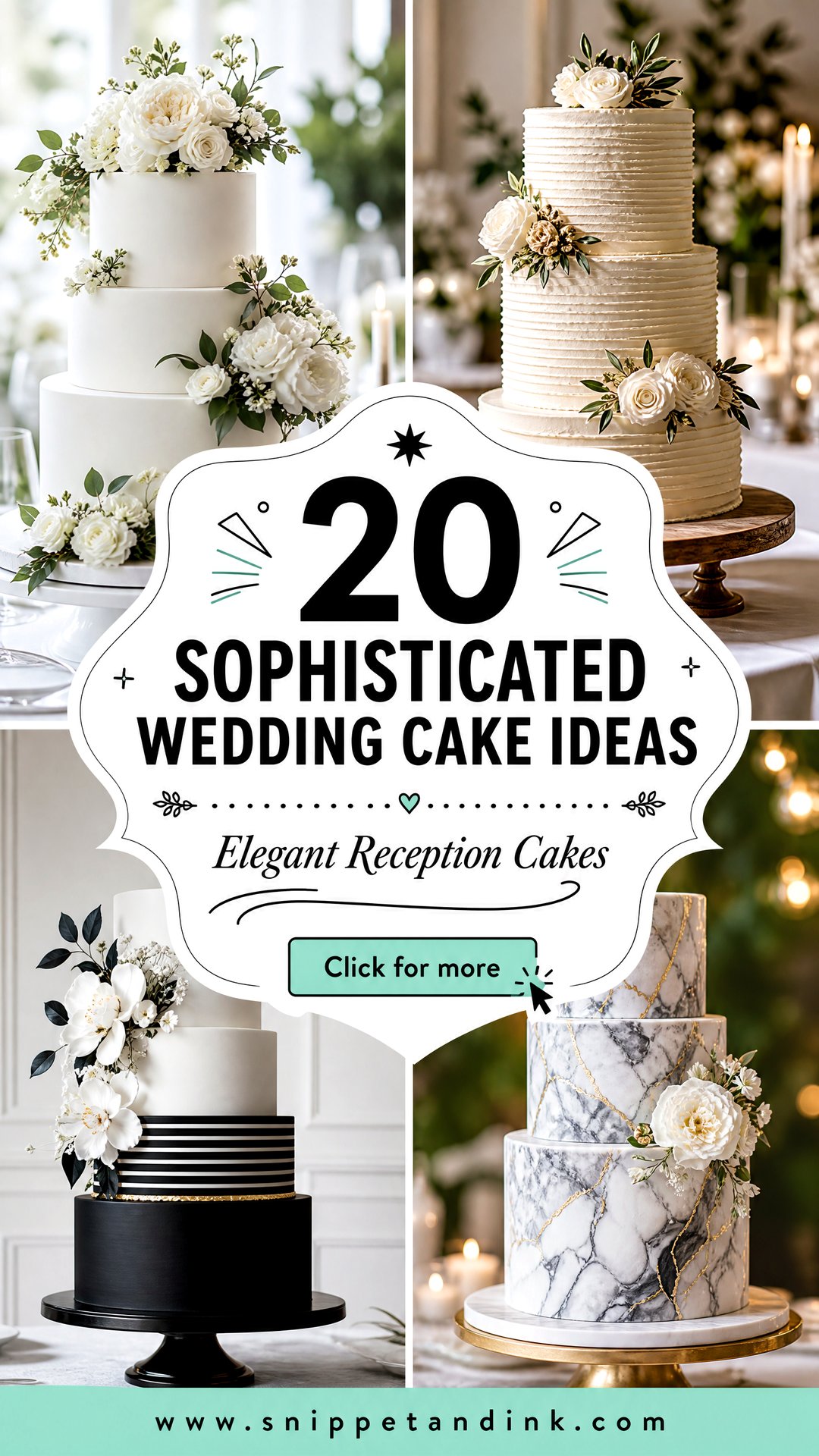
A refined cake isn’t about size. It’s about a clear idea finished cleanly, whether that idea is texture, a sculpted shape, pearls or a single run of sugar flowers. Some couples come to me wanting tall white tiers; others want one tier that reads like a piece of art. Either way, the cake has to sit comfortably beside your flowers, your dress and the room it will stand in, and it has to survive the hours between delivery and cutting. Below are twenty designs I’d happily build for a formal reception, each with a note on how it’s made and where it can go wrong, so you can walk into your consultation knowing what to ask.
Bringing a Restrained Design to Your Cake Consultation
The most useful thing a couple can bring me is two or three photos with a sentence about each one: the piping on this cake, the colour of that one, the height of another. A single photo invites a copy, and a board of forty tells me nothing. I also want your guest count, the venue and the month, because those decide the finish before taste does.
- Guest count sets the tiers. If the design you love is smaller than your list, a kitchen cake can make up the slices.
- Buttercream gives soft texture and tastes lighter; fondant gives sharp lines and copes better with a long display.
- Ganache under either finish is what produces crisp edges on minimal, square and sculptural designs.
- Sugar flowers and gold leaf are priced on hours of handwork, so they move the quote more than an extra tier of sponge.
Book the tasting early for a busy season. Ask to see the baker’s own photos of a design close to yours, not inspiration images, so you know their edges and piping match what you’re picturing.
1. White Wedding Cake With Fresh Flowers
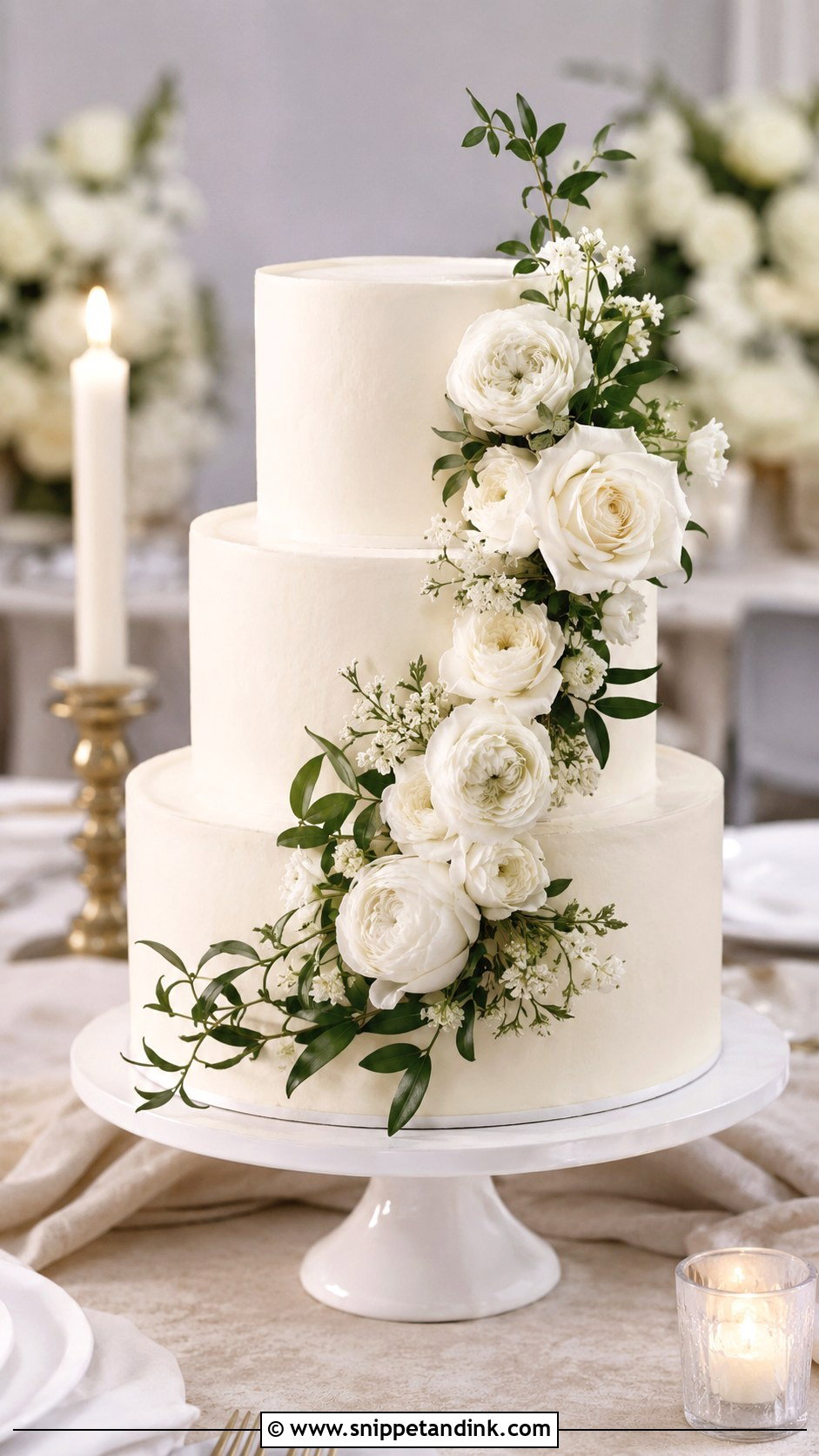
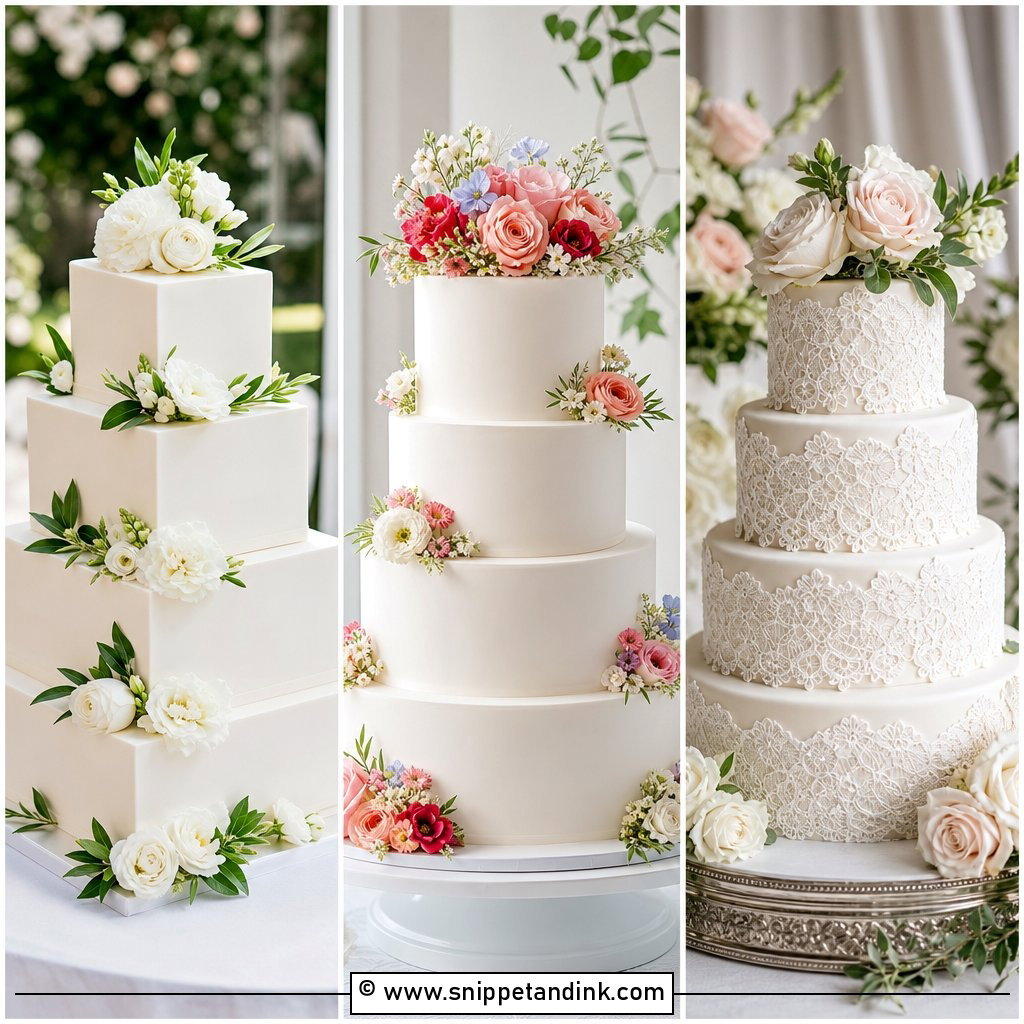
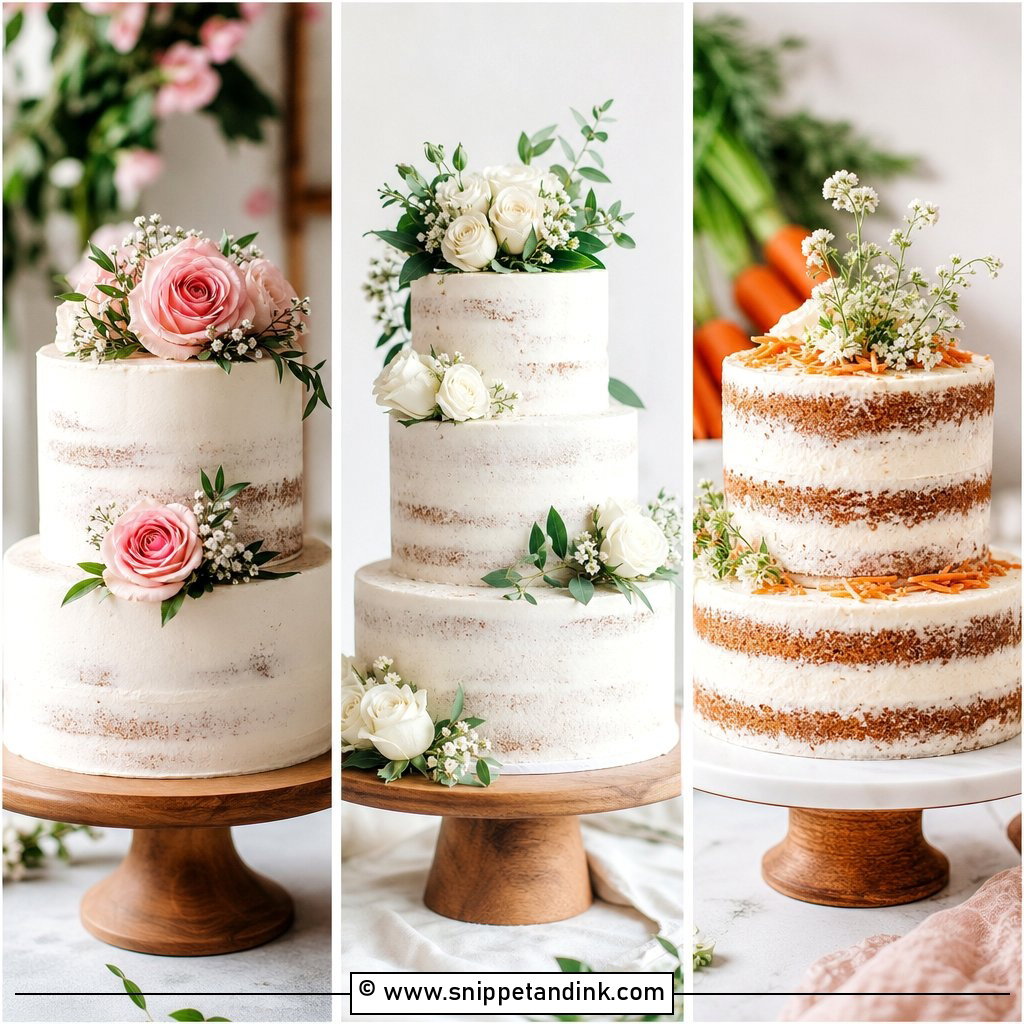
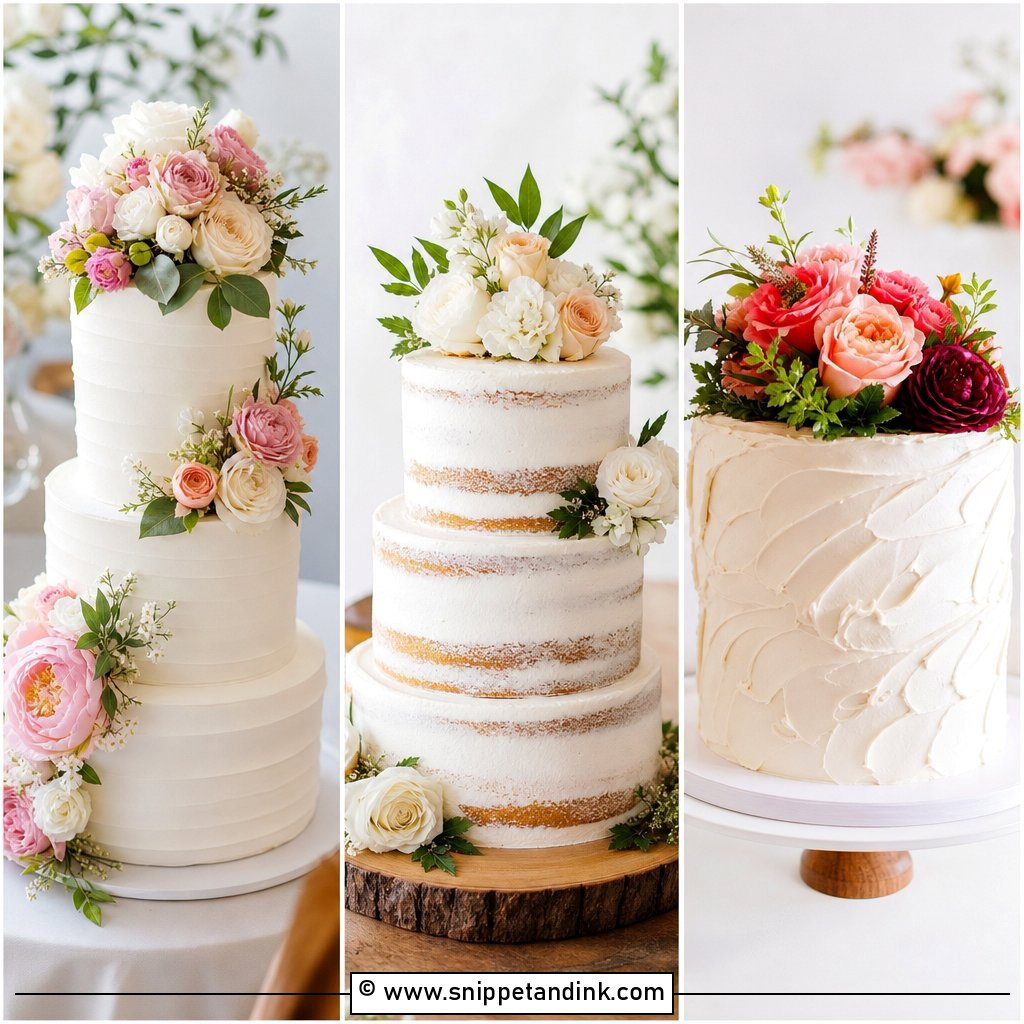
Ivory icing with bouquet flowers is the design I’m asked for most at formal receptions, and placement decides whether it looks polished or messy. I keep the blooms to two or three clusters and leave clear stretches of icing between them so the tiers still read as tiers. Roses, ranunculus, orchids and peonies cope well out of water for a few hours. Sweet peas look delicate, but they’re toxic, so they only go on a barrier and never touch the icing. A plain pedestal, white linens and candlelight are all it needs.
2. Pearl Wedding Cake
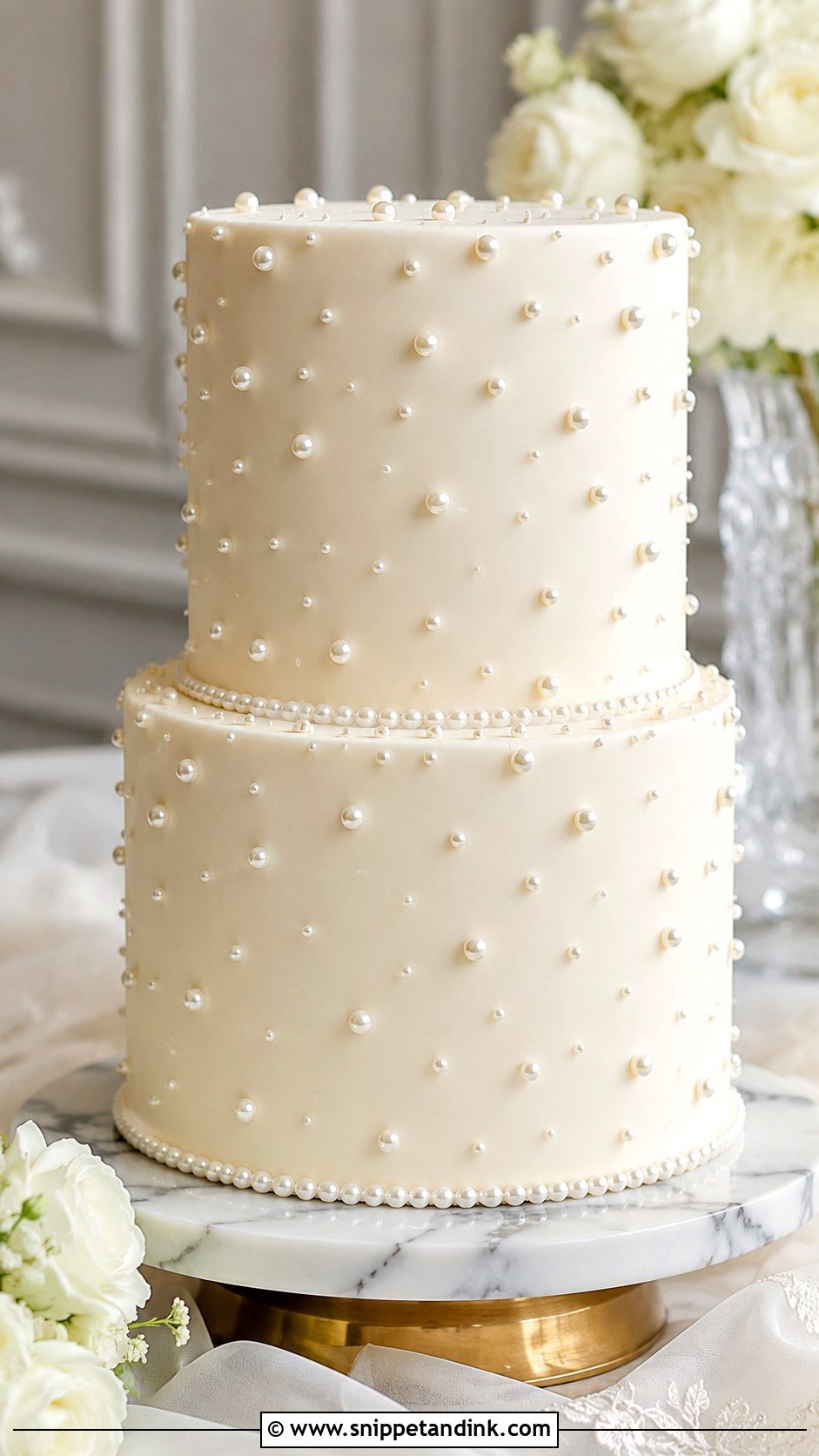
Sugar pearls look simple. Laying them in straight rows is slow, fiddly work, though, and any wobble in the line shows from across the room, so I usually suggest scattering them lightly or running a border around the base of each tier. Ivory, champagne or pale blush pearls read warmer than pure white beside an ivory gown. Keep the large ones decorative: big sugar pearls set hard and nobody enjoys biting into one. Vanilla bean or almond sponge lets the design lead.
3. Textured Buttercream Wedding Cake
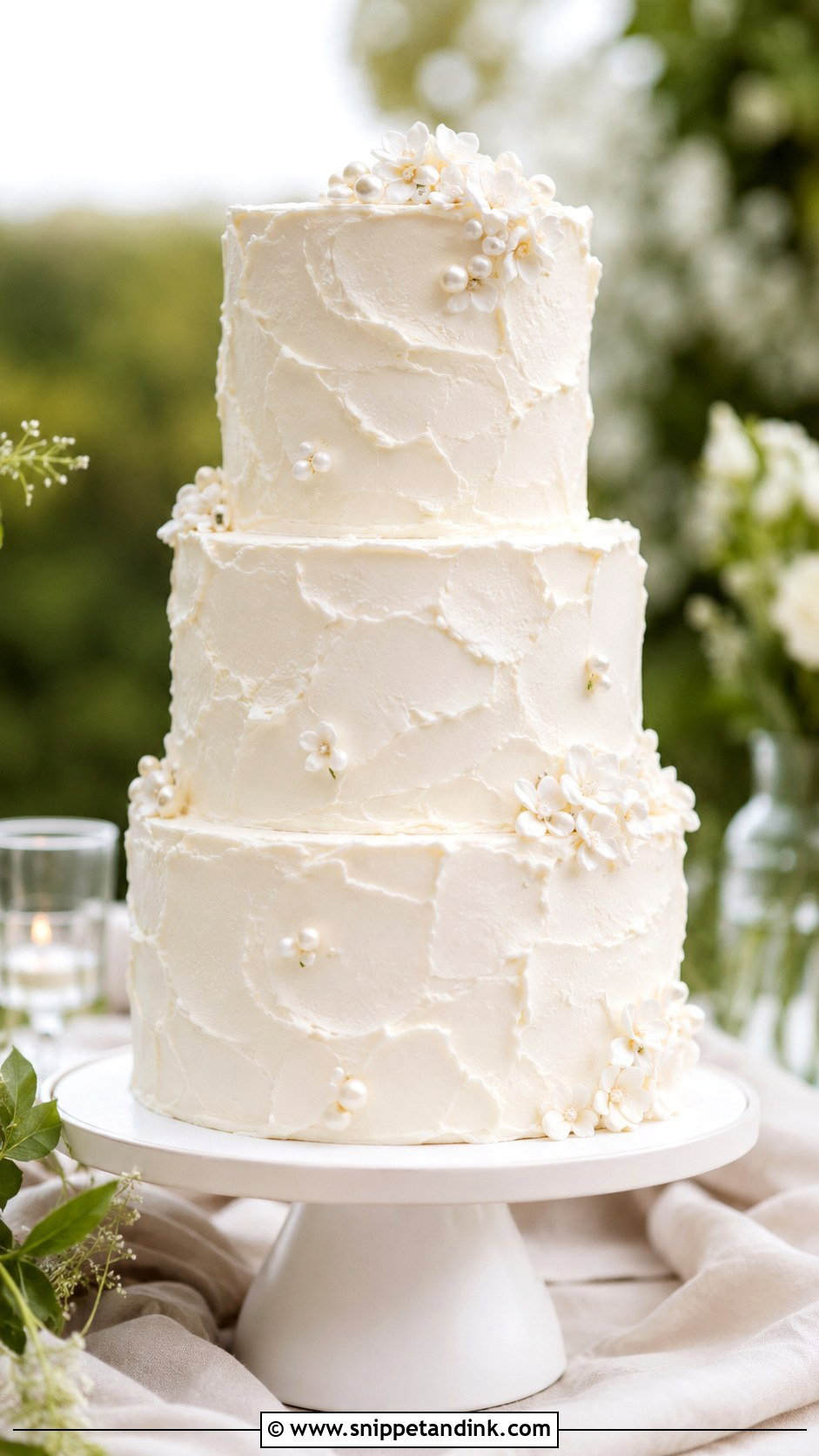
Textured buttercream is my usual answer for couples who want something modern without fondant. The ridges, waves and pleats are pulled with combs and palette knives while the icing is still soft, so every tier is slightly different by hand. A practical bonus: texture hides a small knock in the van far better than a flat, sharp finish does. Two or three tiers in ivory, cream or warm beige, with a few blooms or one pearl detail, is plenty.
4. Lambeth Wedding Cake
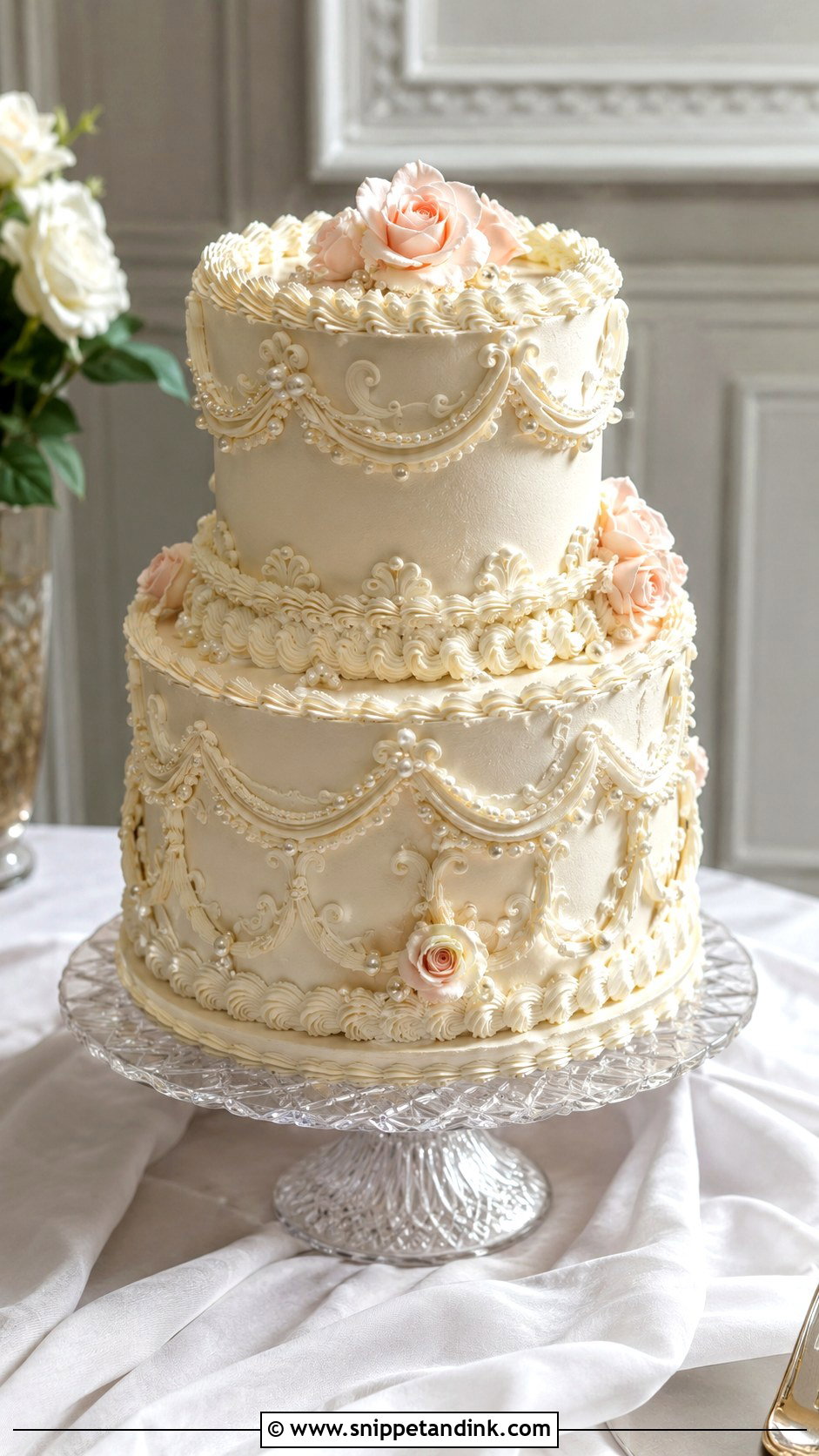
Lambeth piping is built in layers. Shells and scrolls are piped, left to set, then overpiped again, which is where those deep shadows come from. Because this cake carries ornate piped buttercream details on every tier, I keep the palette to white on white or ivory with champagne; add a third colour and the eye has nowhere to rest. A tall two-tier or heart-shaped version feels current. Bear in mind it’s buttercream on buttercream, so it’s rich and it softens faster than a smooth finish in a hot marquee.
5. Bow Wedding Cake
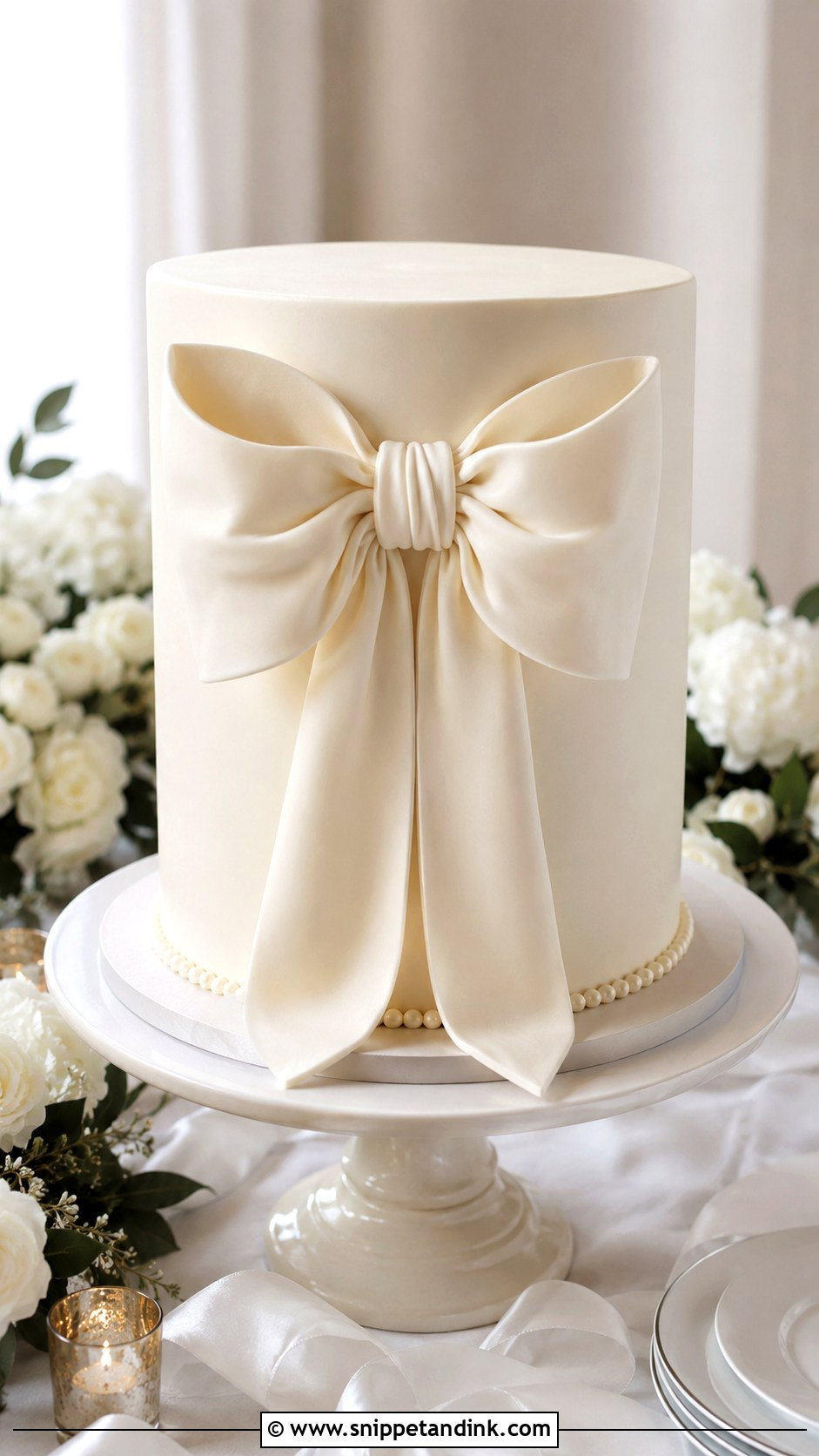
With bows, the material matters more than the shape. Wafer paper is light but wilts in damp air, fondant holds its loops once it has firmed for a day or two, and real silk ribbon needs a food-safe backing or it soaks up grease from the icing and spots. On a bow wedding cake I’d use one large bow on the front of a smooth tier, or as the topper, rather than a dozen small ones. Ivory, blush and champagne are the easiest shades to match to linens.
6. Minimalist Wedding Cake
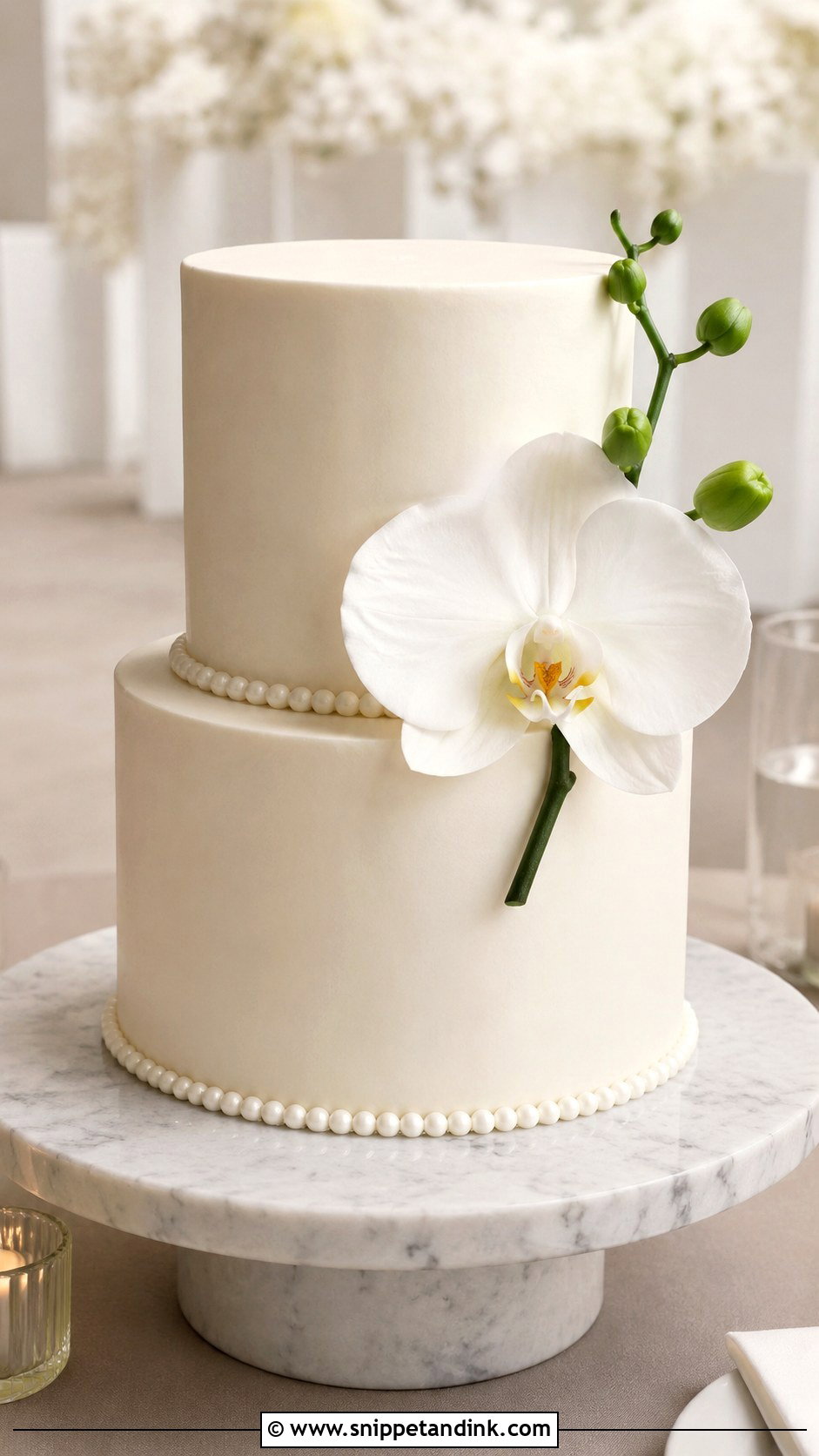
Minimal cakes are some of the hardest I make. Flat sides and sharp edges leave nowhere to hide a bulge or an air bubble, so ask your baker how they get their edges; a ganache coat under the icing gives the crispest result. Then pick one detail and stop: an orchid stem, a narrow ribbon or a pearl border. Lemon, almond or coconut keep the flavour bright, and a stone or matte ceramic stand finishes it.
7. Black And White Wedding Cake
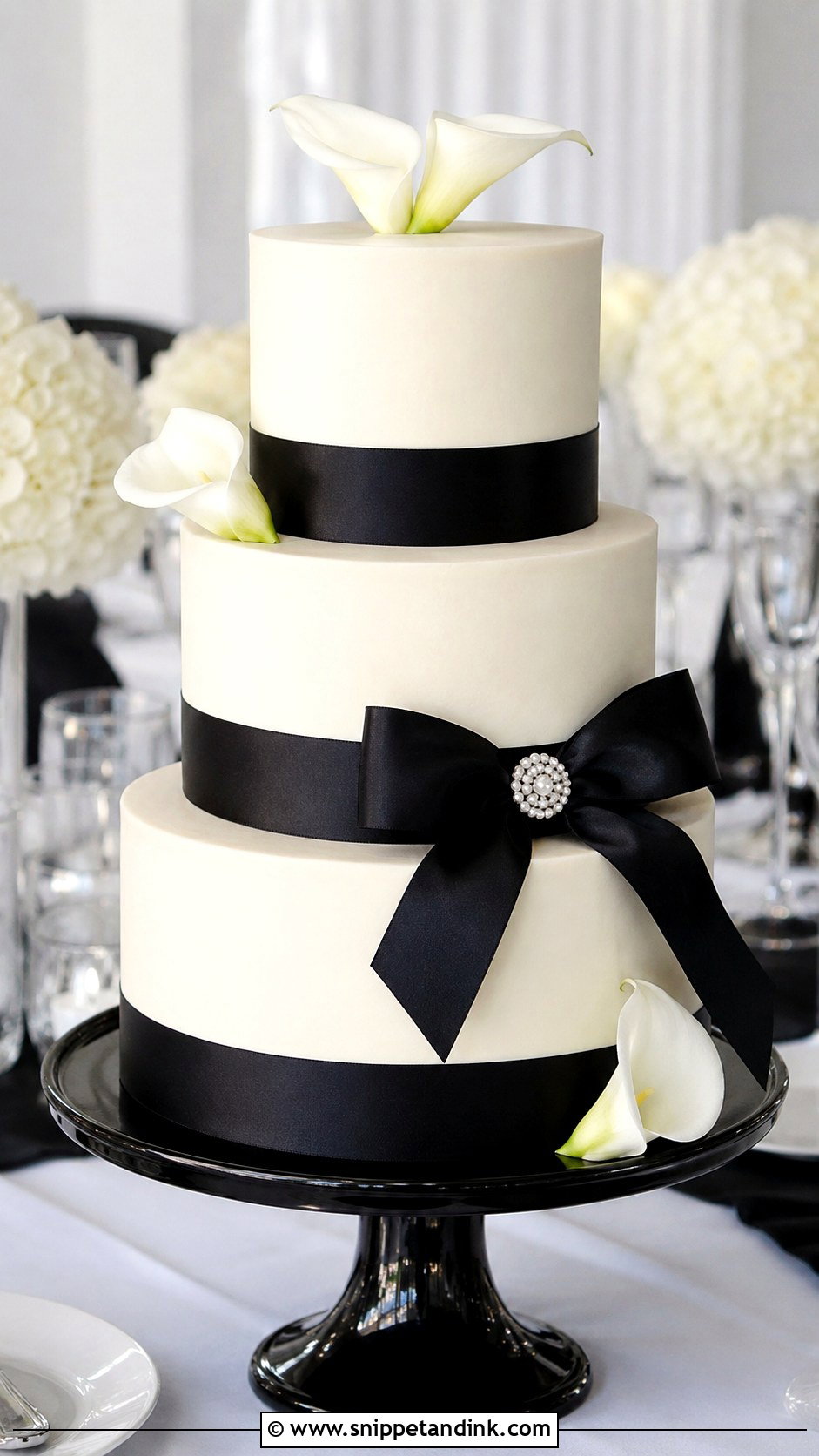
Black icing is the tricky part here. A true black takes a lot of colouring, which can taste bitter and stain teeth, so I prefer a cocoa-based black or keep the black to ribbon, piping or hand-painted lines on a white base. One bold contrast is enough. A black base tier under white upper tiers is the most dramatic version and suits an evening ballroom, next to tuxedos, black bridesmaid dresses and calla lilies.
8. Gold Wedding Cake
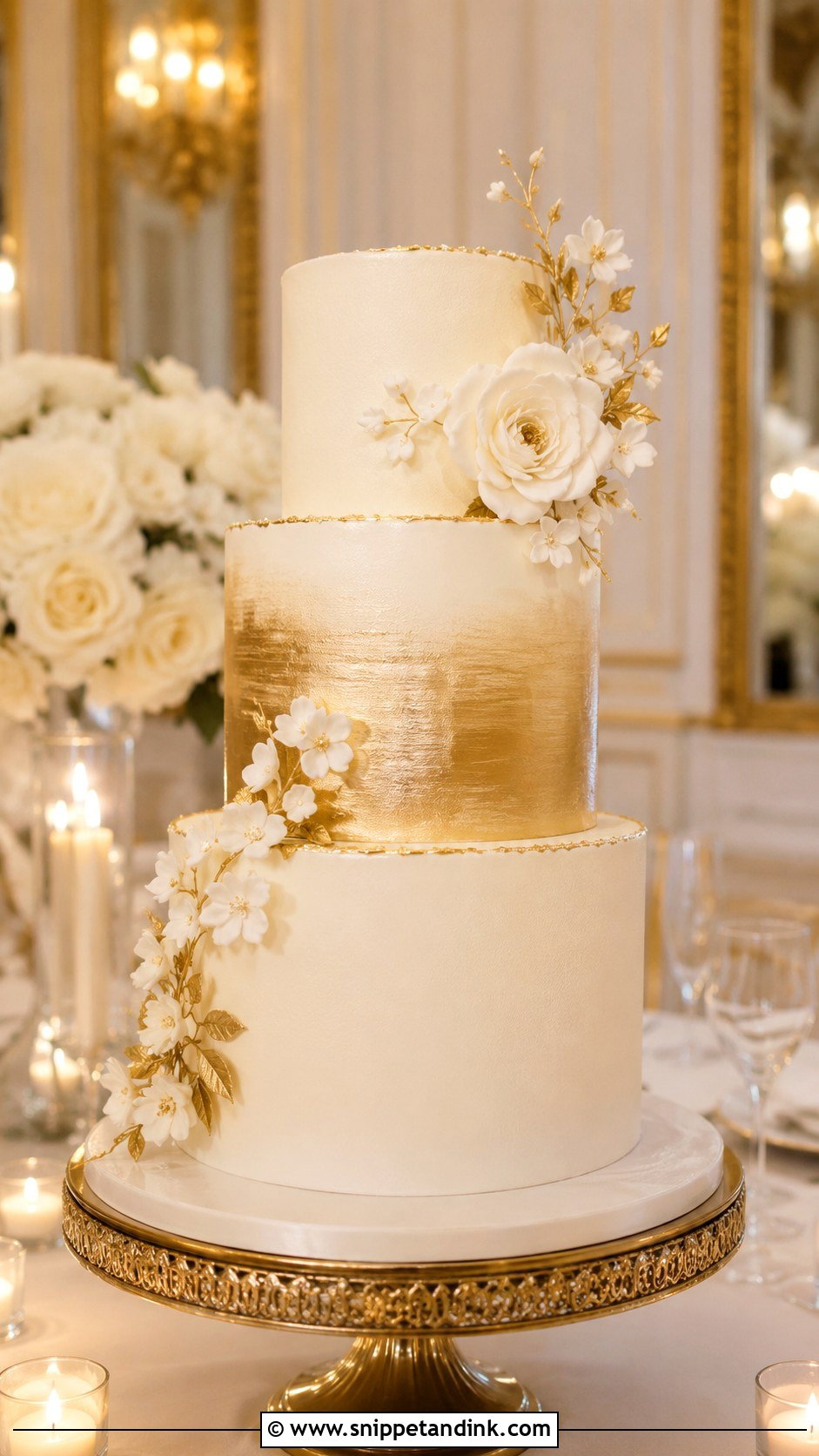
Gold looks more expensive in small doses. Leaf on the edges, a brushed tier or fine gold piping catches candlelight, while a fully metallic cake can look like plastic under flash. Edible leaf is applied by hand and lifts with a breath, so expect it to be priced for the labour, and know that it grips fondant or well-chilled buttercream far better than soft icing. Pair it with ivory and white or blush flowers in a ballroom or historic venue, and keep the silhouette simple.
9. Floral Cascade Wedding Cake
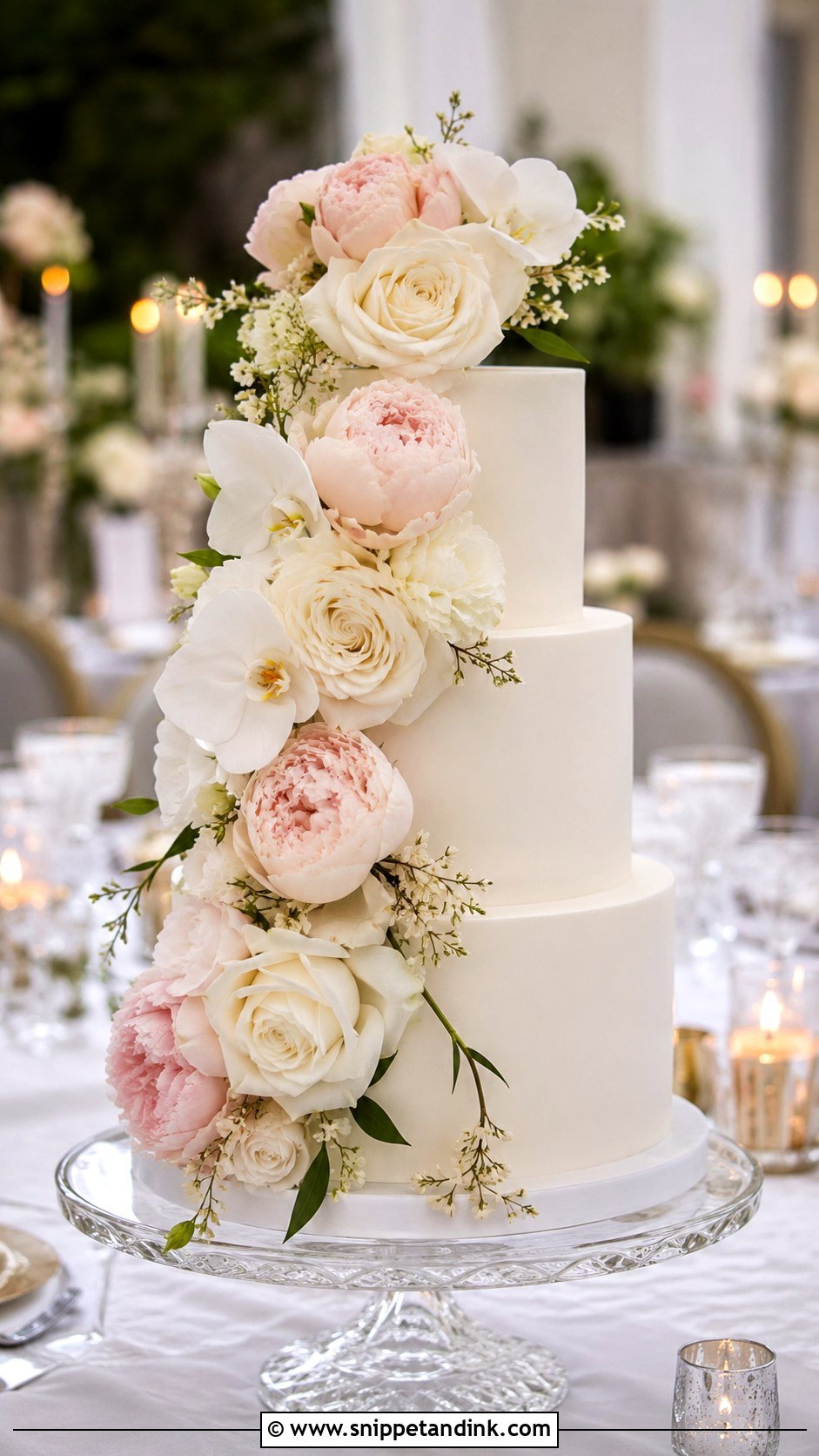
A cascade has to be planned from the top tier down, because the flowers should follow a curve rather than stick out at random. I sketch the line before the florist arrives, leave gaps of bare icing so the cake still shows, and favour blooms that can sit out of water for hours; roses, orchids and spray roses hold up better than peonies in a warm room. Smooth buttercream or fondant underneath makes the cascade look deliberate. It belongs at garden and estate receptions with big floral installations.
10. Sculptural Wedding Cake
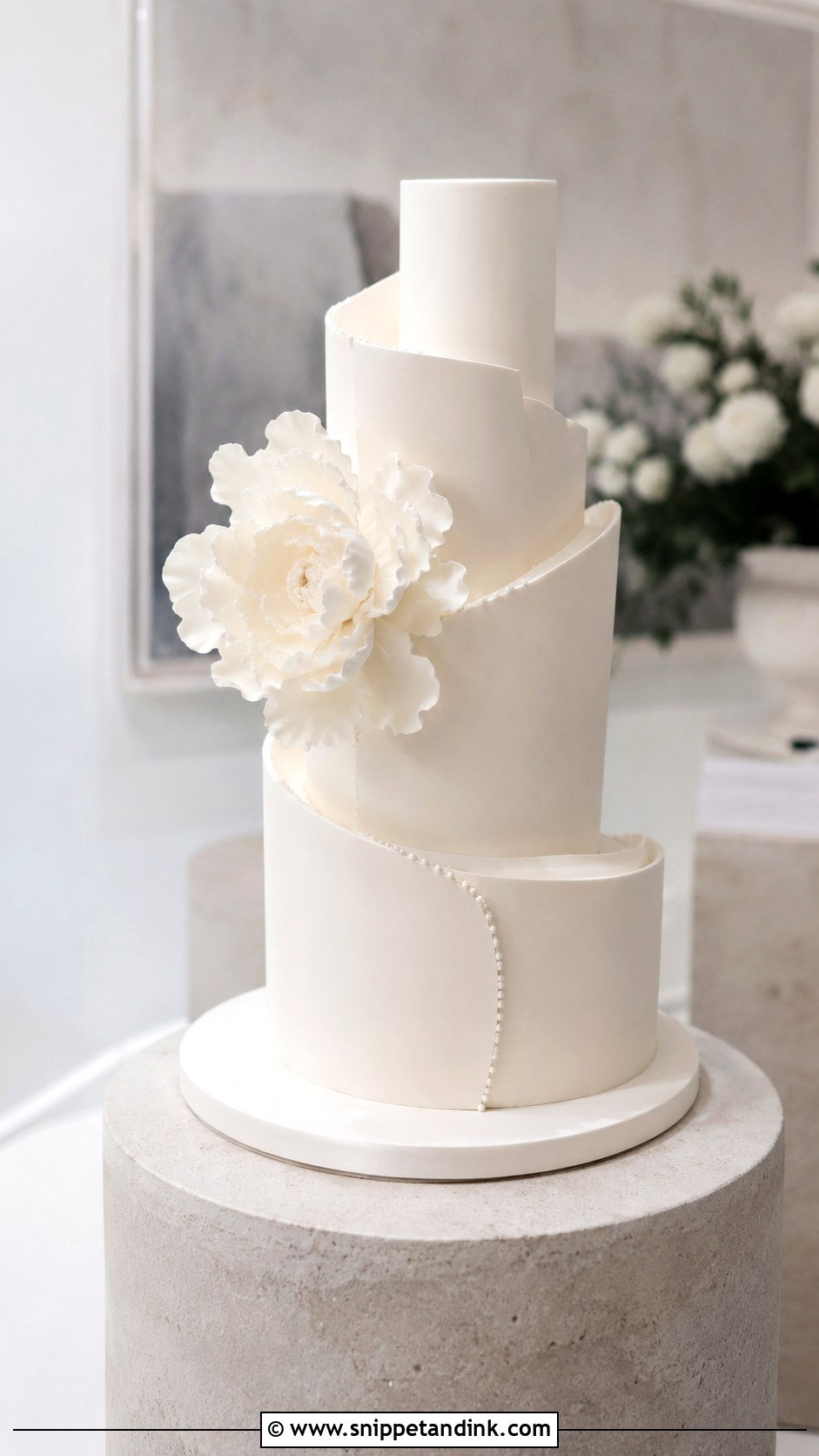
Offset tiers, curves and pleated shapes all rely on hidden structure, from dowels and boards to sometimes a central rod, so ask early whether your baker builds them. Not everyone does. Keep the colour soft (ivory, stone, pearl, pale champagne) and the decoration nearly absent, since the shape already carries the design. A single sugar flower or a fondant drape is enough. Galleries and modern venues suit it; a windy rooftop is a real risk for any tall, asymmetric cake, so plan an indoor display spot.
11. Marble Wedding Cake
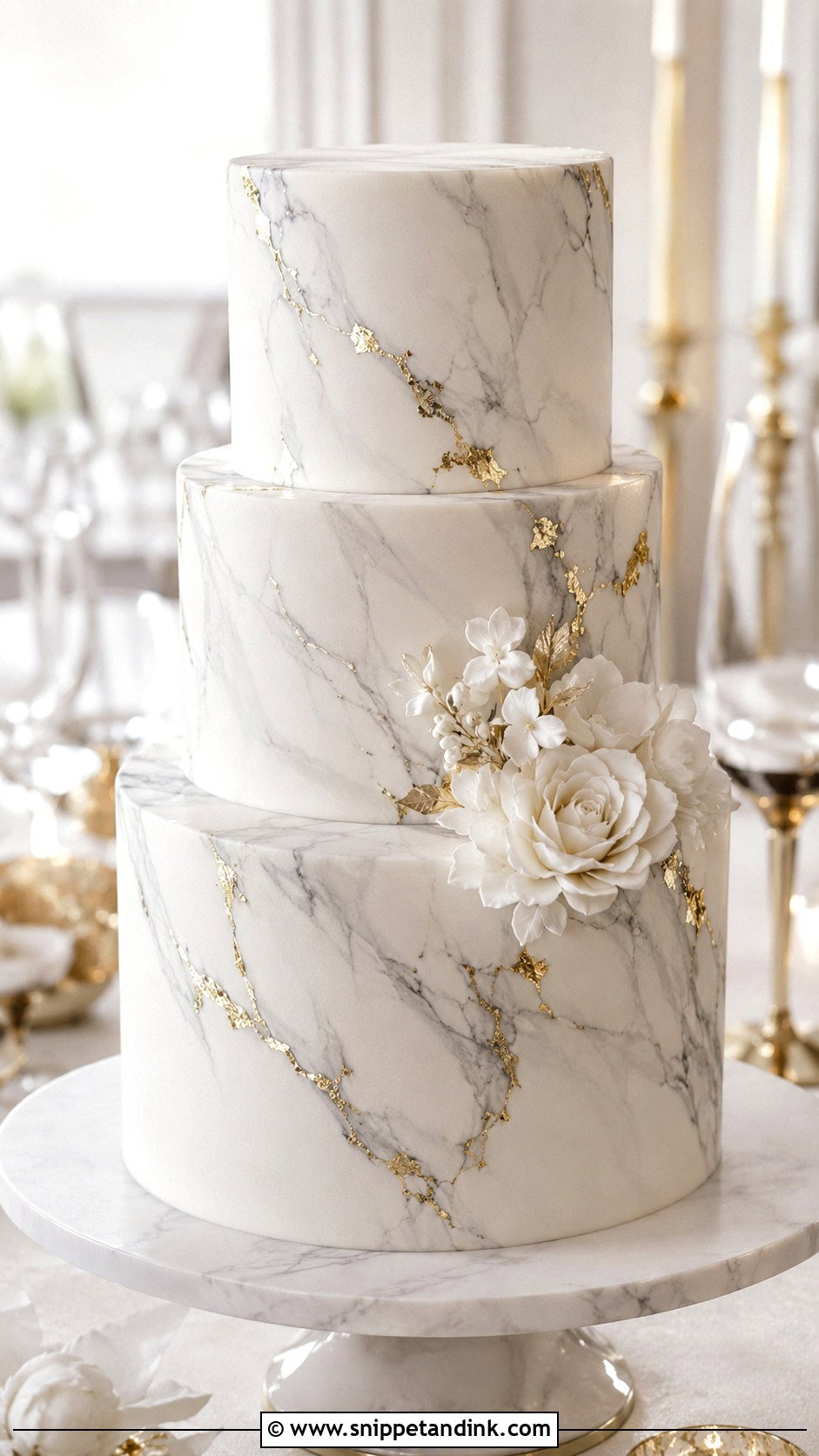
Marbling is done by folding colour through fondant and rolling it out, so no two tiers come out quite alike. I keep the veining fine and pale, in soft grey, beige, blush or pale blue, because dark heavy streaks start to look like a kitchen worktop. A thread of gold leaf along a vein, or one cluster of white flowers, finishes it without clutter. Tall tiers show the pattern best, and it suits a hotel ballroom with a neutral scheme.
12. Ruffle Wedding Cake
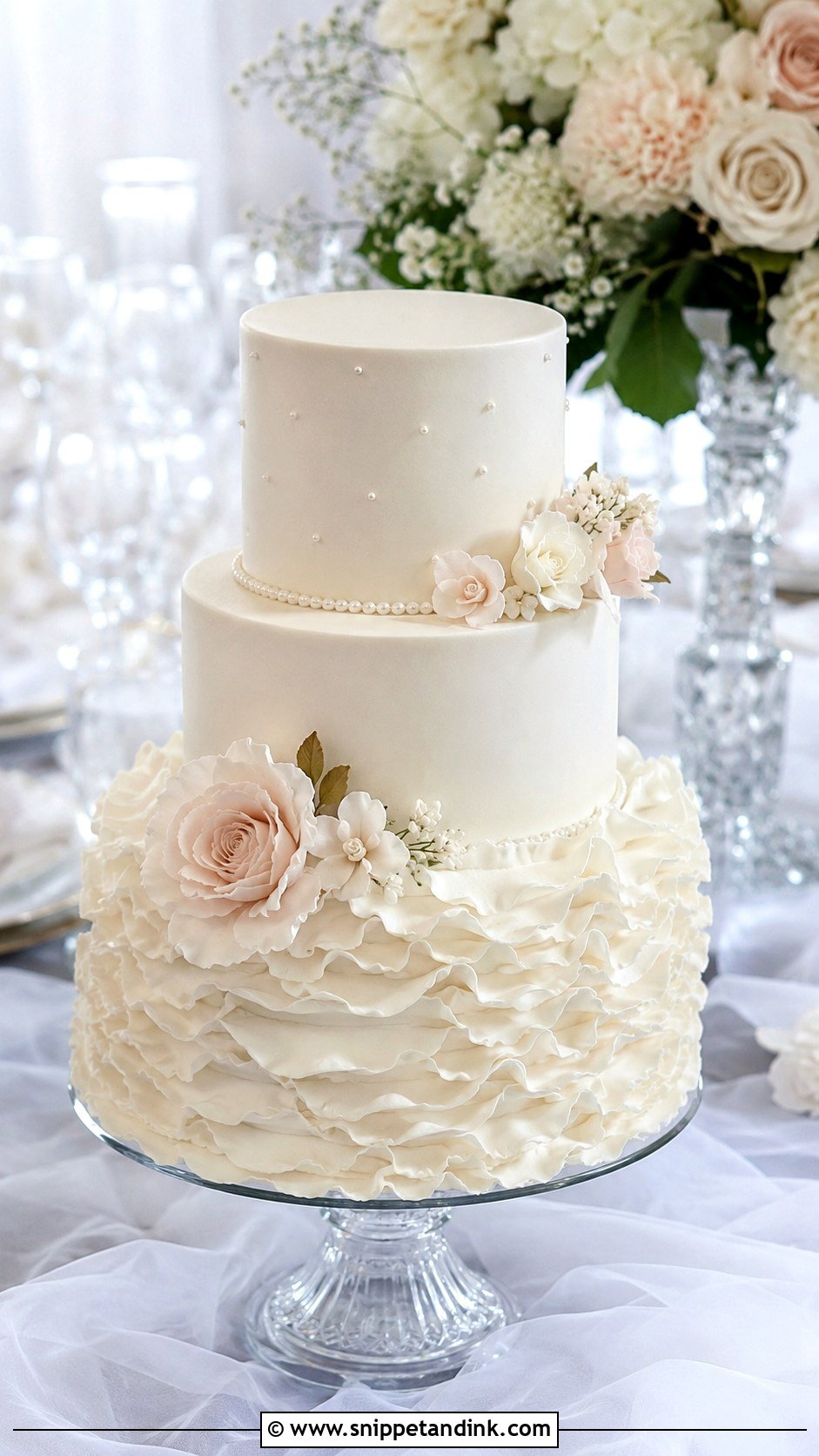
Fondant ruffles are thin strips frilled at the edge and layered row by row, which takes hours on a single tier. That’s why I often suggest ruffling one tier and keeping the rest smooth: it balances the design and the bill. Ivory or soft white keeps it formal. The weak spot is humidity, since thin ruffles droop and lose their edge in a damp tent, so they’re safer indoors, where the shadows between each row give the cake real depth.
13. Monogram Wedding Cake
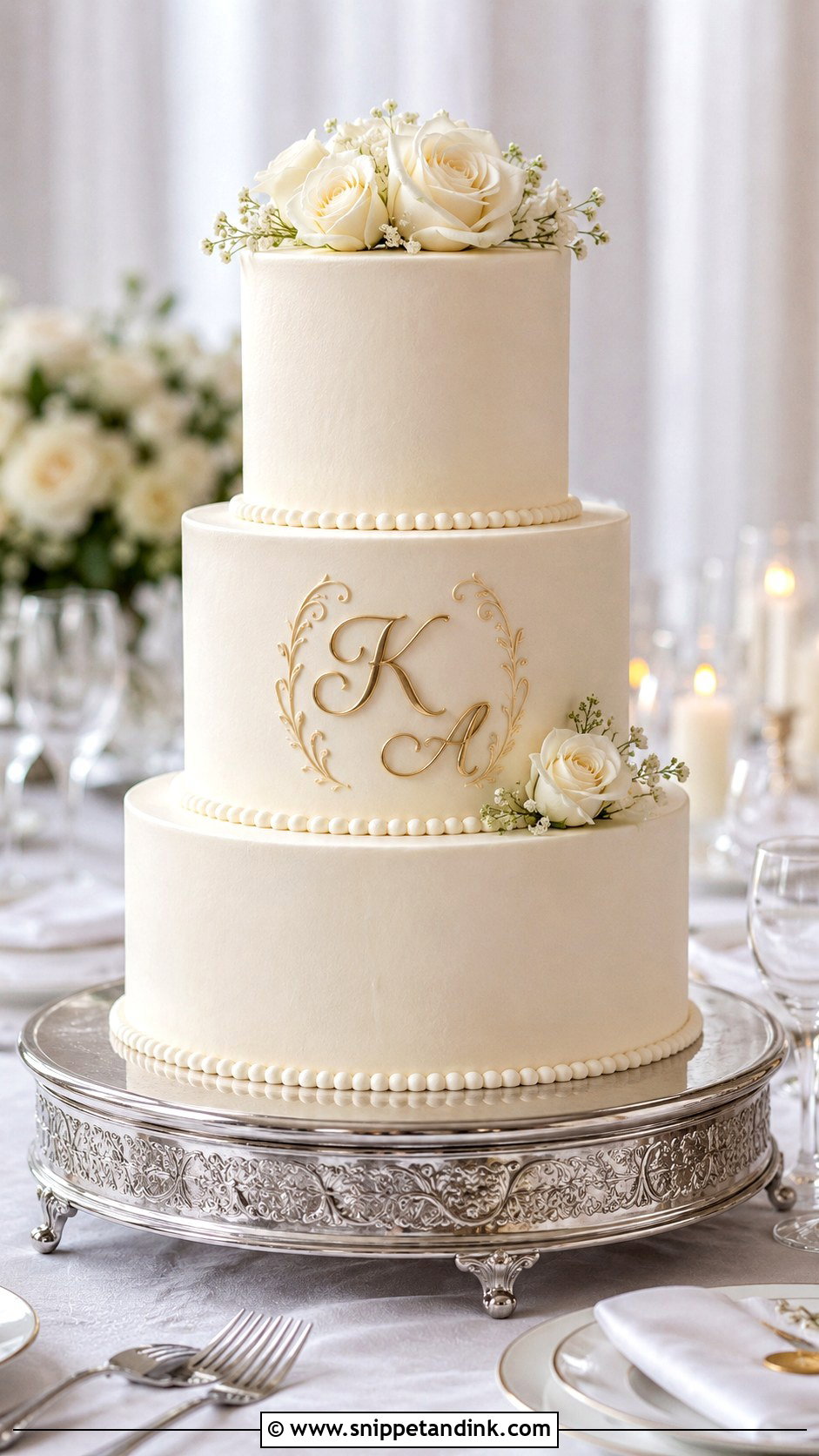
Initials can be piped, embossed, painted or set on a small sugar plaque, and I’d put them on one tier only. The couple’s initials look most refined when they copy the lettering on your invitations, so bring a printed card to the consultation; a piper matches a script far better from paper than from a phone screen. Smooth ivory buttercream with a fine piped border keeps the whole thing formal and traditional.
14. Tall Single Tier Wedding Cake
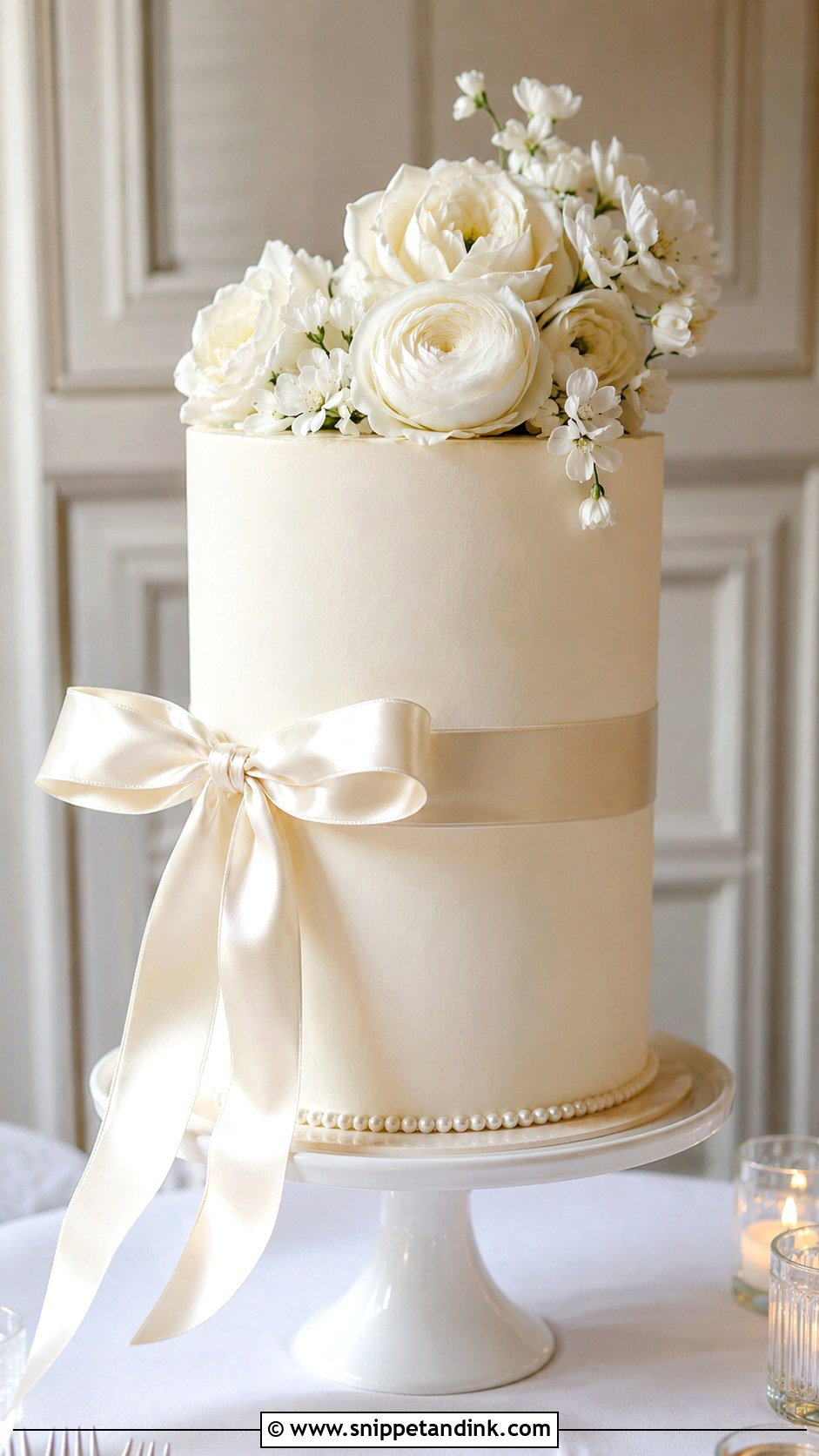
A tall single tier wedding cake is usually two or three cakes stacked to double height, with supports inside so it doesn’t bulge under its own weight. It suits intimate weddings, courthouse celebrations and restaurant receptions. For a bigger guest list, I pair it with a plain kitchen cake: the tall one is cut for photos, the kitchen cake feeds the room. A smooth finish with a bow or a few fresh stems on a tall pedestal is all it needs.
15. Square Wedding Cake
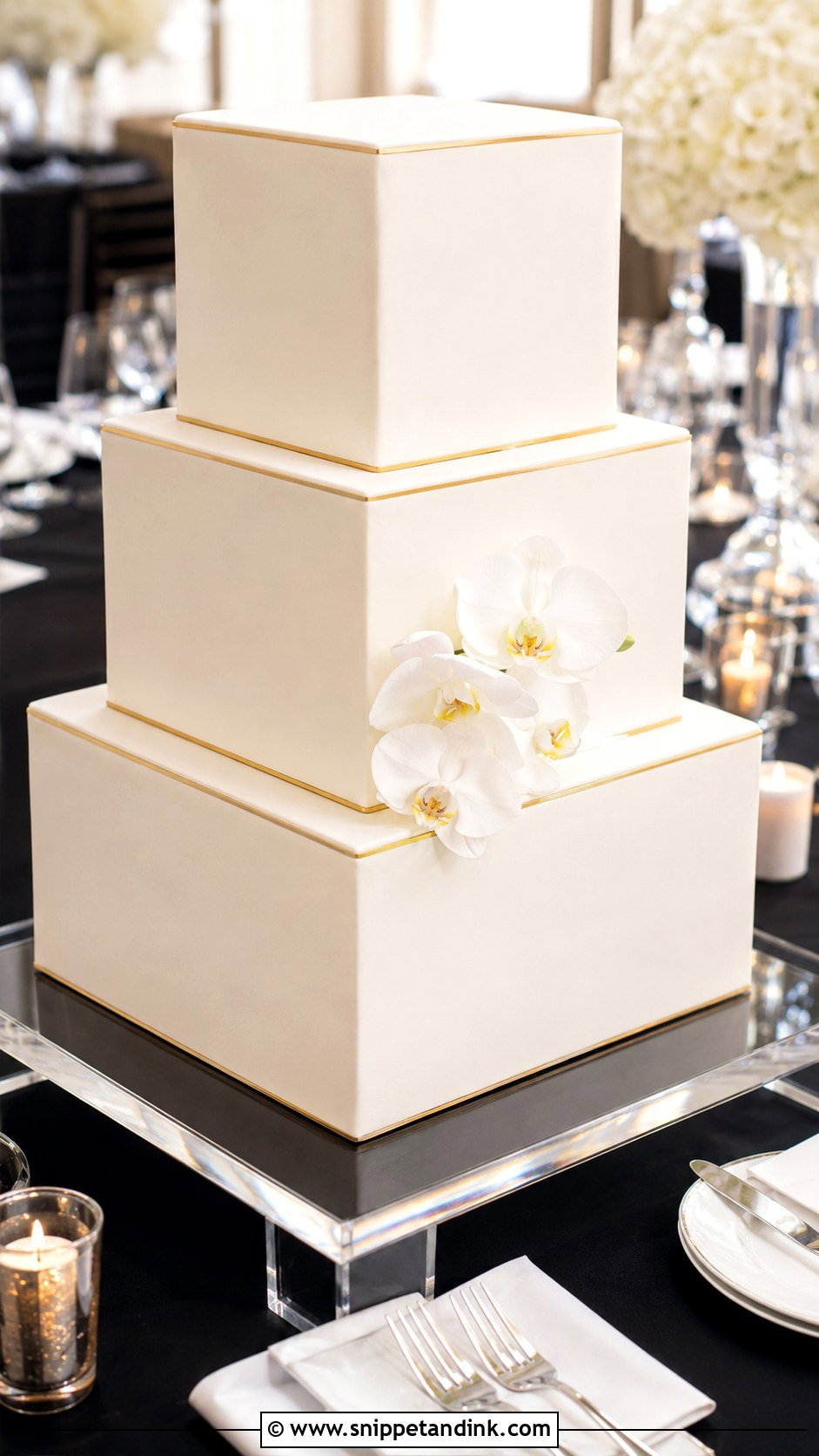
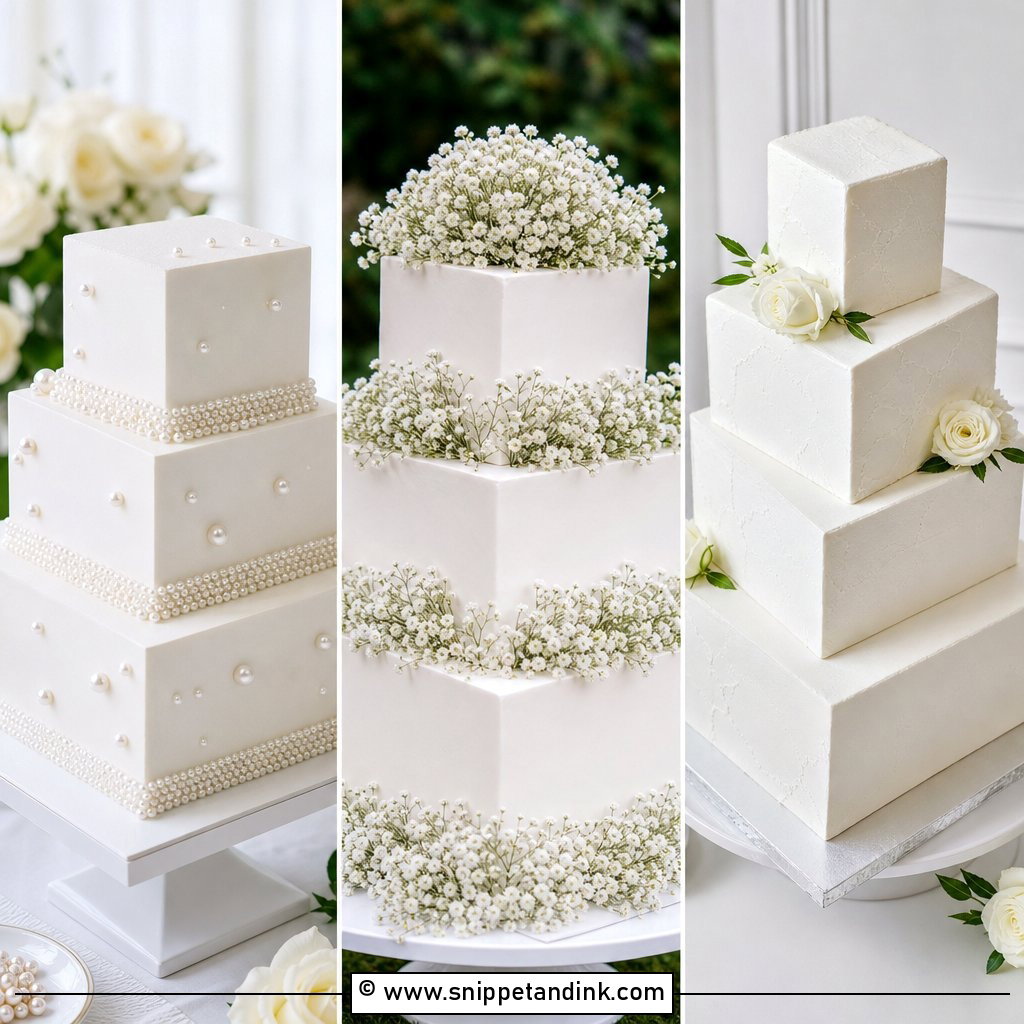
Square tiers are less forgiving than round ones. Every corner has to be sharp and every side straight, and corners are the first place to crack in transit, so I deliver square cakes well chilled and stack them on site when the venue allows. Let the shape do the work, softened by a few orchids or a satin ribbon. One practical point in its favour: a square tier gives a few more servings than a round tier of the same width. Modern hotels and black-tie receptions suit it.
16. Watercolor Wedding Cake
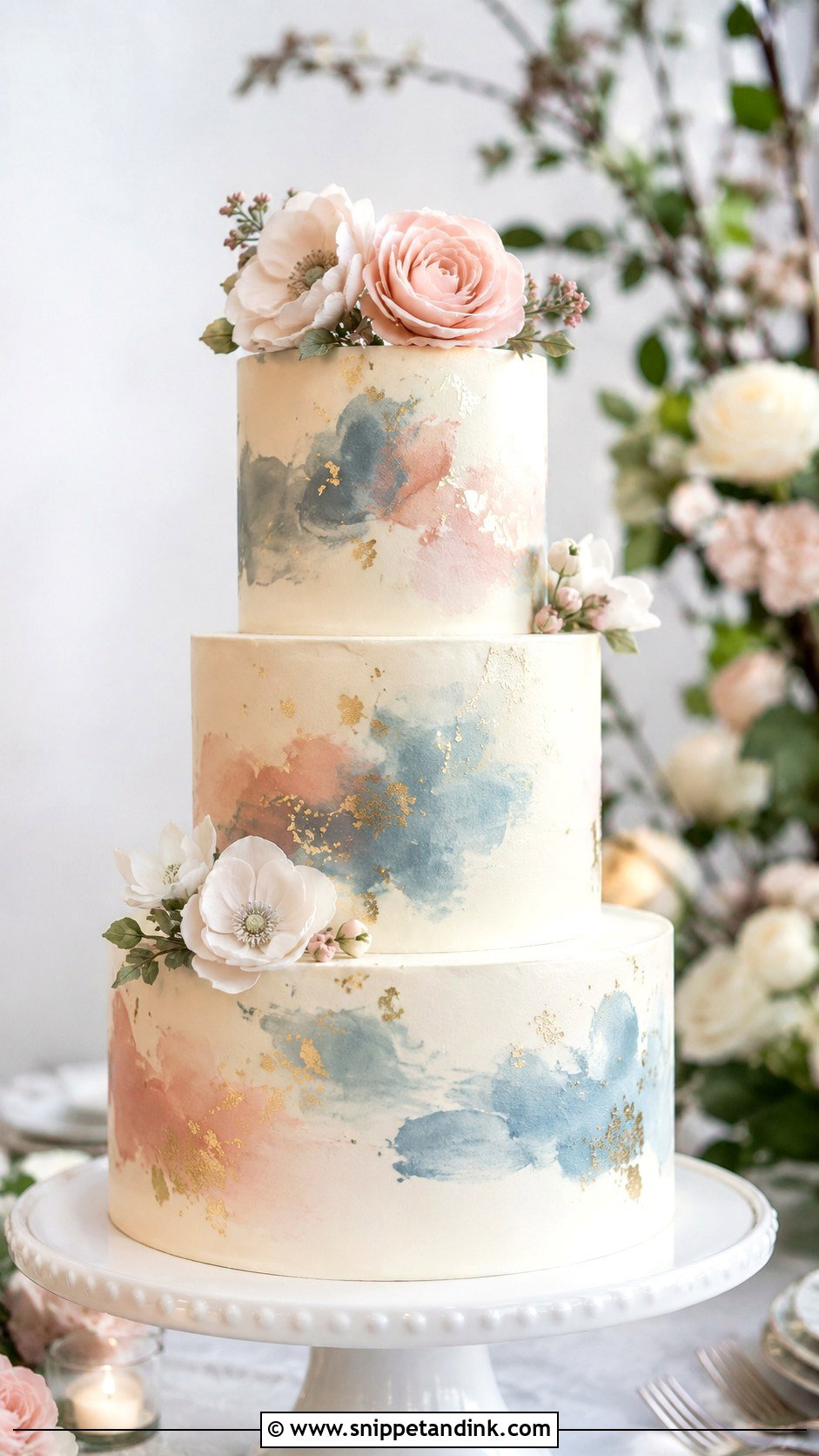
Watercolour icing is made by smearing several shades onto the tier and smoothing them together with a scraper, so it’s quick to do and hard to repeat exactly. I mix every colour a shade lighter than asked, because buttercream colours deepen as they sit. Muted tones like dusty blue, sage or pale lavender look more grown-up than brights. Keep the edges clean and the decoration light; spring and garden receptions suit it.
17. Greenery Wedding Cake
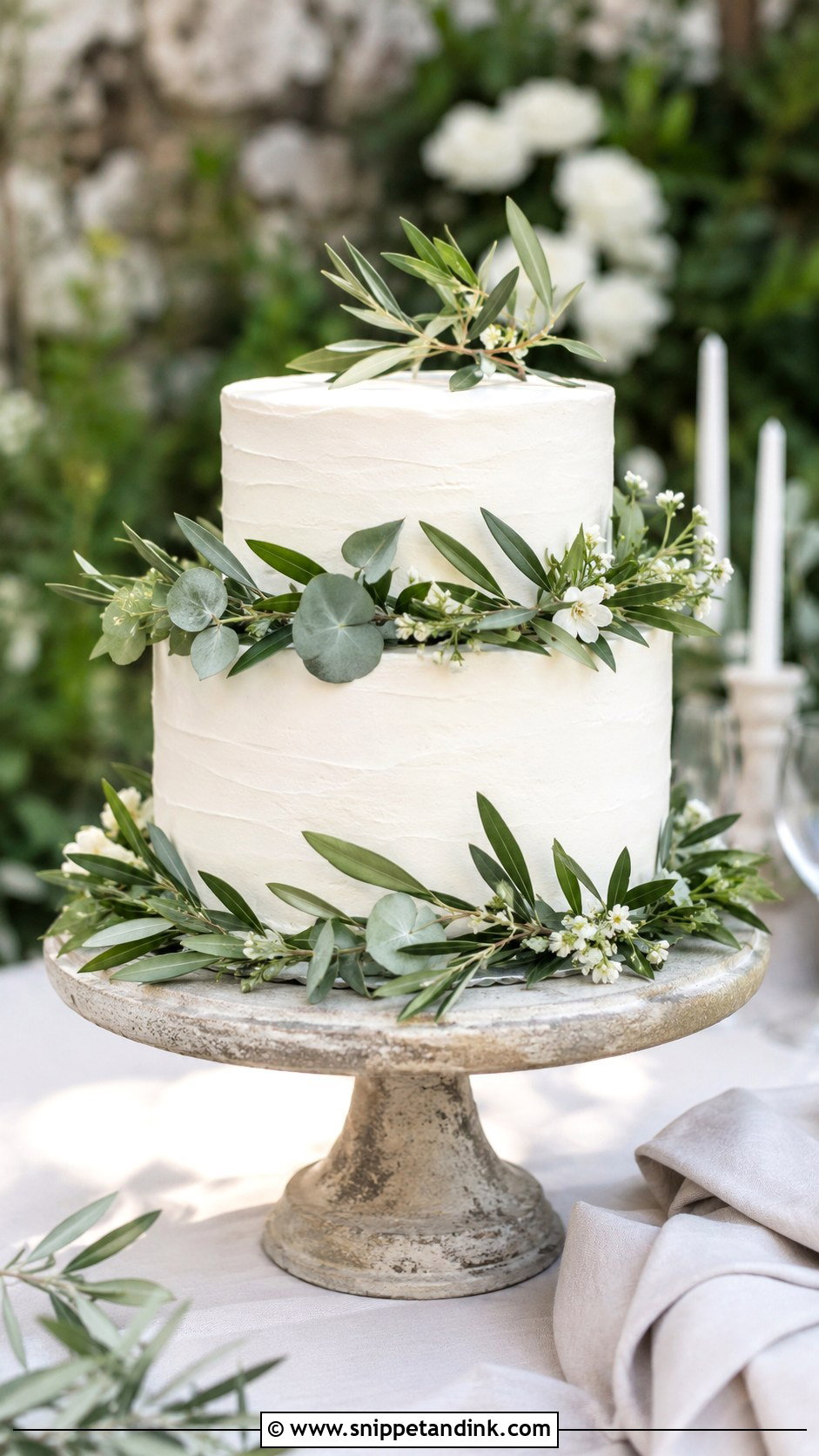
Greenery looks easy, but not every leaf is food-safe. Eucalyptus is one I never press straight into icing; it sits on a barrier or a separate board. Olive branches, bay and rosemary are safer, and sugar or wafer-paper leaves avoid the question entirely. A light trail around ivory buttercream fits outdoor venues with wood and stone, and a few white flowers make it read more bridal.
18. Sugar Flower Wedding Cake
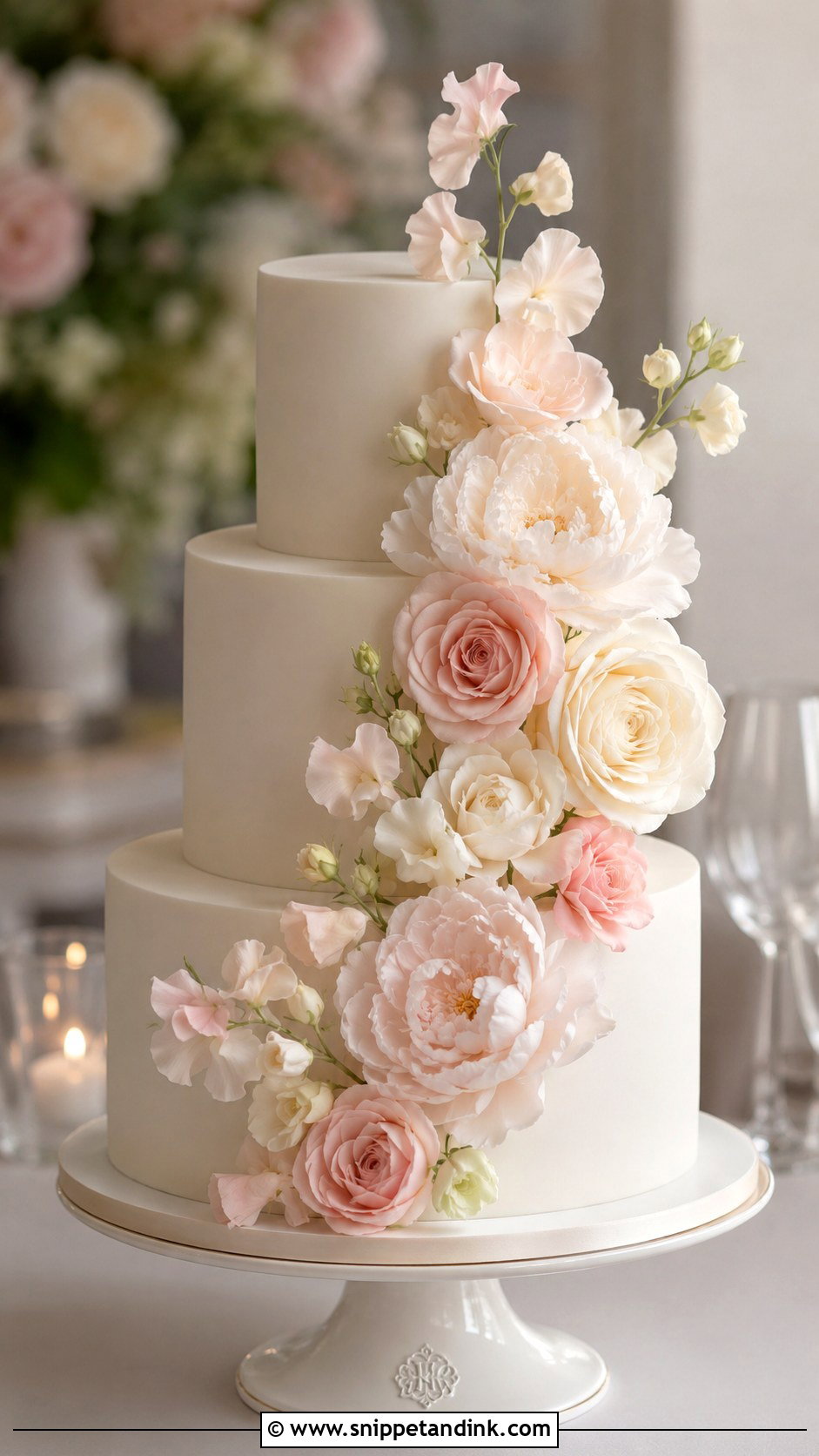
Sugar flowers are built petal by petal from gum paste, wired and left to dry, so they need booking weeks ahead, not days. They can be shaped to match your bouquet or the lace on your dress, they won’t wilt under lights, and they keep for years afterwards in a sealed box away from damp and sun. They aren’t for eating, though, as they set hard and contain wire. I group them in one strong arrangement on smooth icing rather than dotting them around.
19. Draped Fondant Wedding Cake
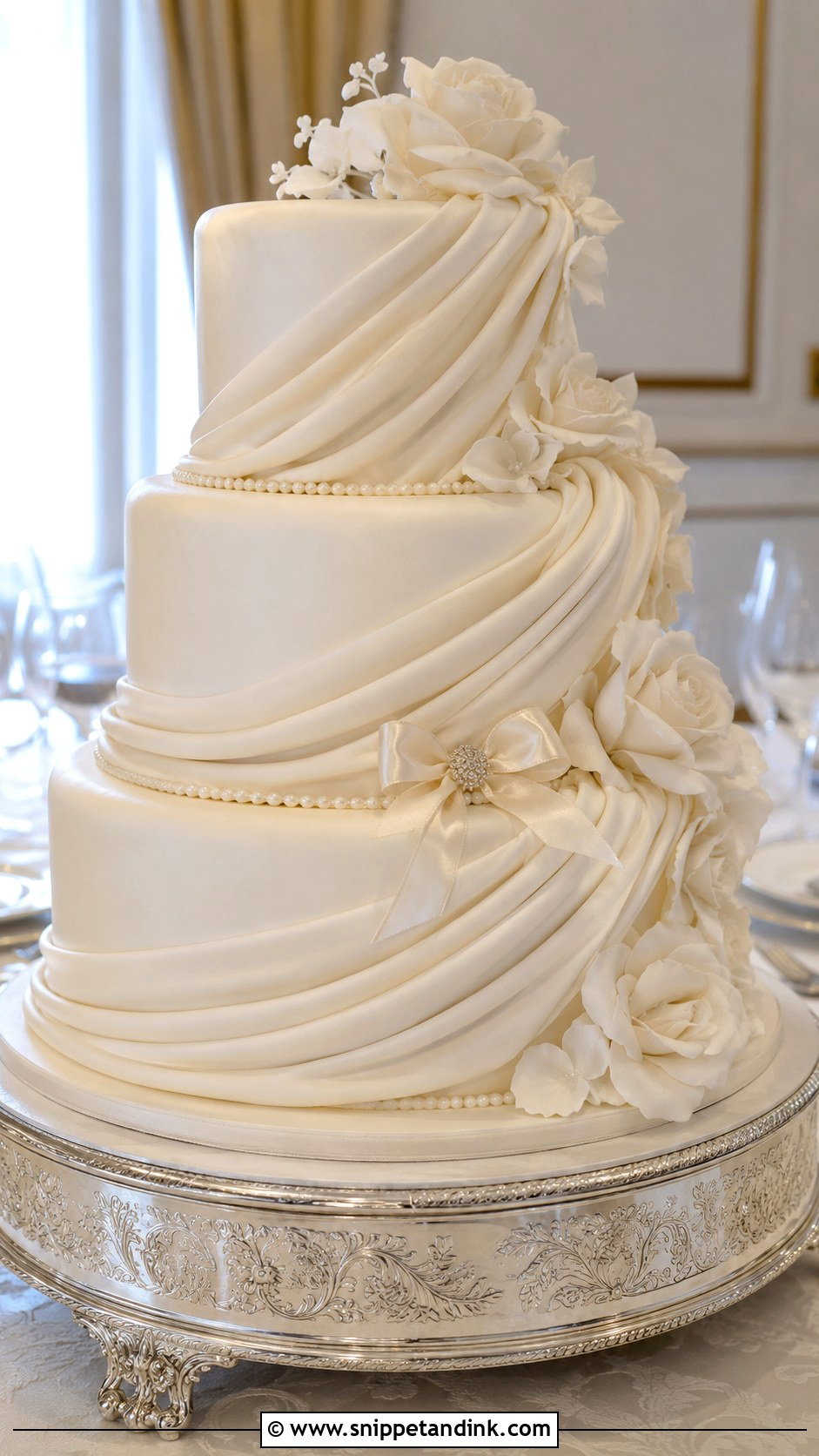
Draping is soft fondant gathered into folds, which is why it reminds people of a gown. It needs a little thickness to look right; rolled too thin, it tears at the gathers and the folds go flat. I keep it ivory, pearl or warm white and add only pearls, a small bow or a few sugar flowers. It’s one of the few designs that can echo a pleated bodice directly, and it suits formal venues.


20. Champagne Wedding Cake
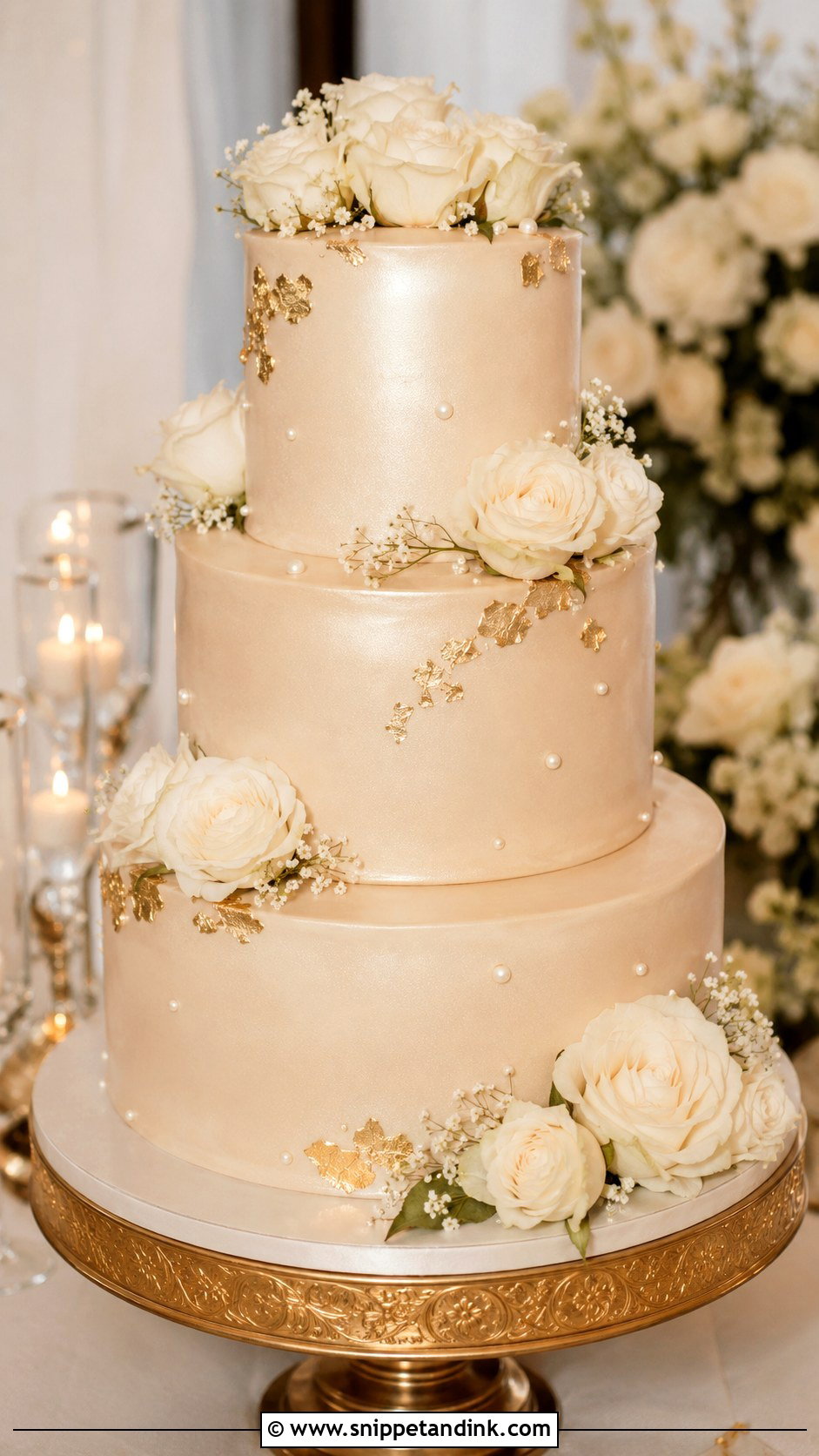
Champagne covers anything from pale beige to a soft metallic, and it shifts with the light. Under warm candlelight it glows; under cool daylight it can turn slightly grey, so I like to check a sample board in the venue’s own light before committing. A dusting of edible shimmer gives the glow without full metallic paint. White roses, pearls or a ribbon finish it, and it sits easily in an evening ballroom with a neutral palette.
How Each Finish Copes With a Warm Reception Room
A cake on display for three or four hours is under more stress than people expect. Buttercream softens as the room warms, and meringue-based buttercreams hold their shape a little better than very sweet butter-and-sugar ones. Fondant doesn’t melt, but a cold cake carried into a humid room beads with condensation until it comes up to temperature, so I let it settle before anyone touches the decorations.
Sugar flowers and wafer paper both pull moisture from the air, so a damp marquee can make petals droop. Gold leaf stays put once it’s on, but it shows every fingerprint. I always ask for a table away from windows, heaters and the dance floor speakers, which shake a tall cake more than you’d think.
Fresh Blooms Need a Barrier Before They Touch Icing
Florist flowers are grown to be looked at, not eaten, and many are sprayed. I wrap every stem in floral tape and set it into a food-safe pick or straw, so nothing but petals touches the cake. Lily of the valley, hydrangea, sweet peas and foxglove stay off the icing entirely.
Agree in advance who places them. I prefer the florist to deliver a small box of prepared stems and leave the placing to me, because a stray wire pushed in at the wrong angle can crack a fondant tier. Ask for unsprayed flowers if your florist can source them, and have the stems removed before the cake is sliced.
Restraint Is What Reads as Expensive
Refinement rarely comes from size or spend. The cakes that look most considered commit to one idea, a texture, a shape, a colour or a single detail, and carry it out cleanly. Bring your baker two or three favourites, tell them exactly what you like in each picture, and ask what they would change for your guest count, venue and season. A good baker will be honest about which designs will last on your day and which won’t.
You'll Like These Ideas:











Leave a Reply