
A classic wedding cake isn’t a plain one. It’s a cake where every choice, from the frosting to the height of each tier, has been made so it still looks right in the photos decades later and still tastes good at ten at night. In my studio the conversation always starts with three practical facts: how many guests, what the room temperature will be, and how the cake gets there. The ideas below cover the finishes and flavors I build most often for traditional receptions, with notes on how each one behaves, what it costs in labor and where it can go wrong.
Tier Sizes and How Far Each One Feeds a Room
Before we talk about pearls or roses, I need your guest count, because it decides the tier sizes and those decide the silhouette. Wedding slices are cut smaller than party slices, usually about one inch wide and two inches across, and four inches tall. Cut that way, round tiers serve roughly the following.
- 6-inch round: around 12 slices
- 8-inch round: around 24 slices
- 10-inch round: around 38 slices
- 12-inch round: around 56 slices
- 14-inch round: around 78 slices
Exact numbers vary with the baker and how the caterer cuts, so treat these as a guide. Square tiers of the same width serve a little more. If you’d love the look of four tiers but only need to feed sixty people, ask about a decorated dummy tier made from foam, or a smaller display cake backed by a plain sheet cake in the kitchen. Both are common, and nobody at the tables can tell.
1. White Tiered Wedding Cake
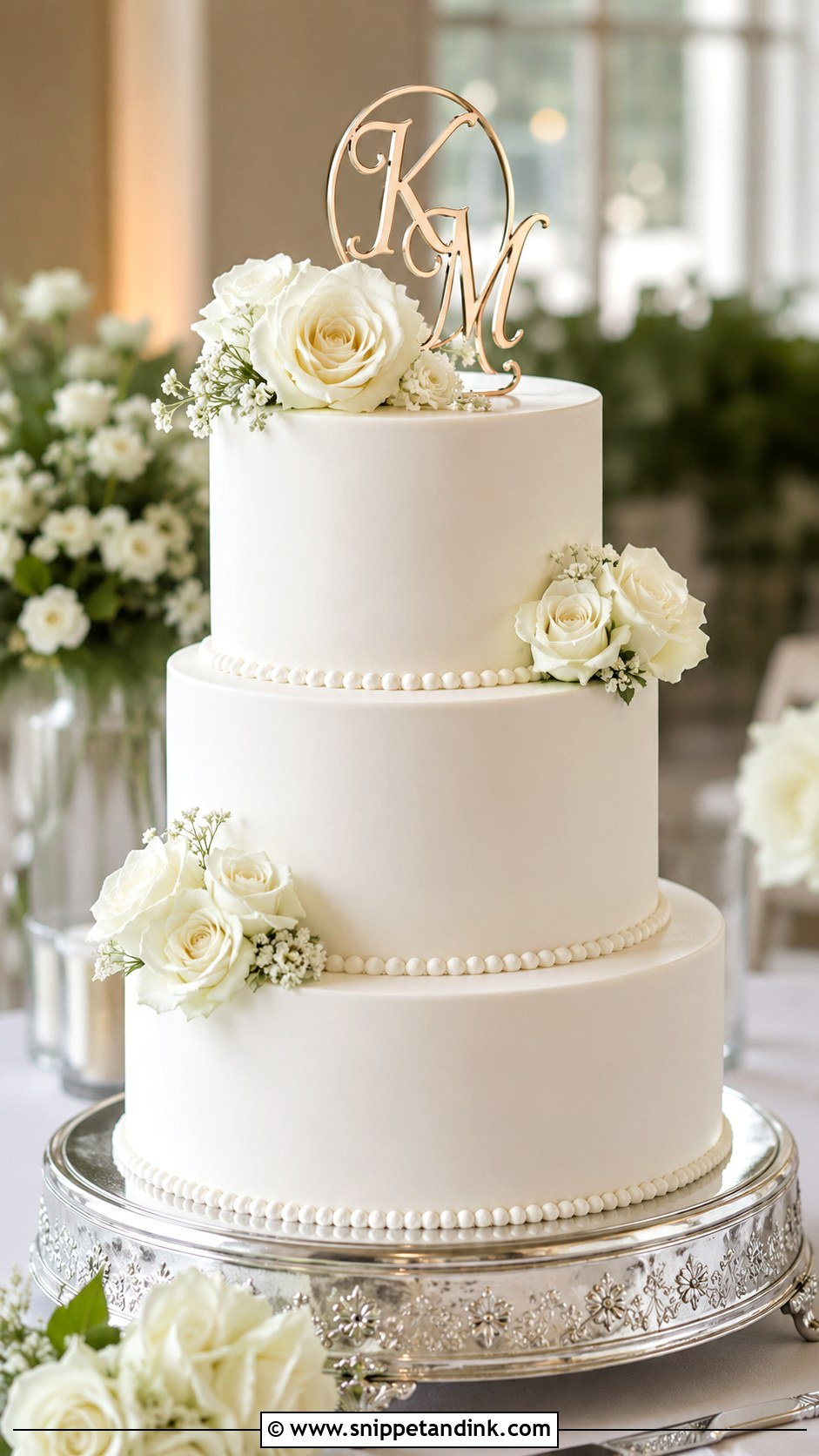
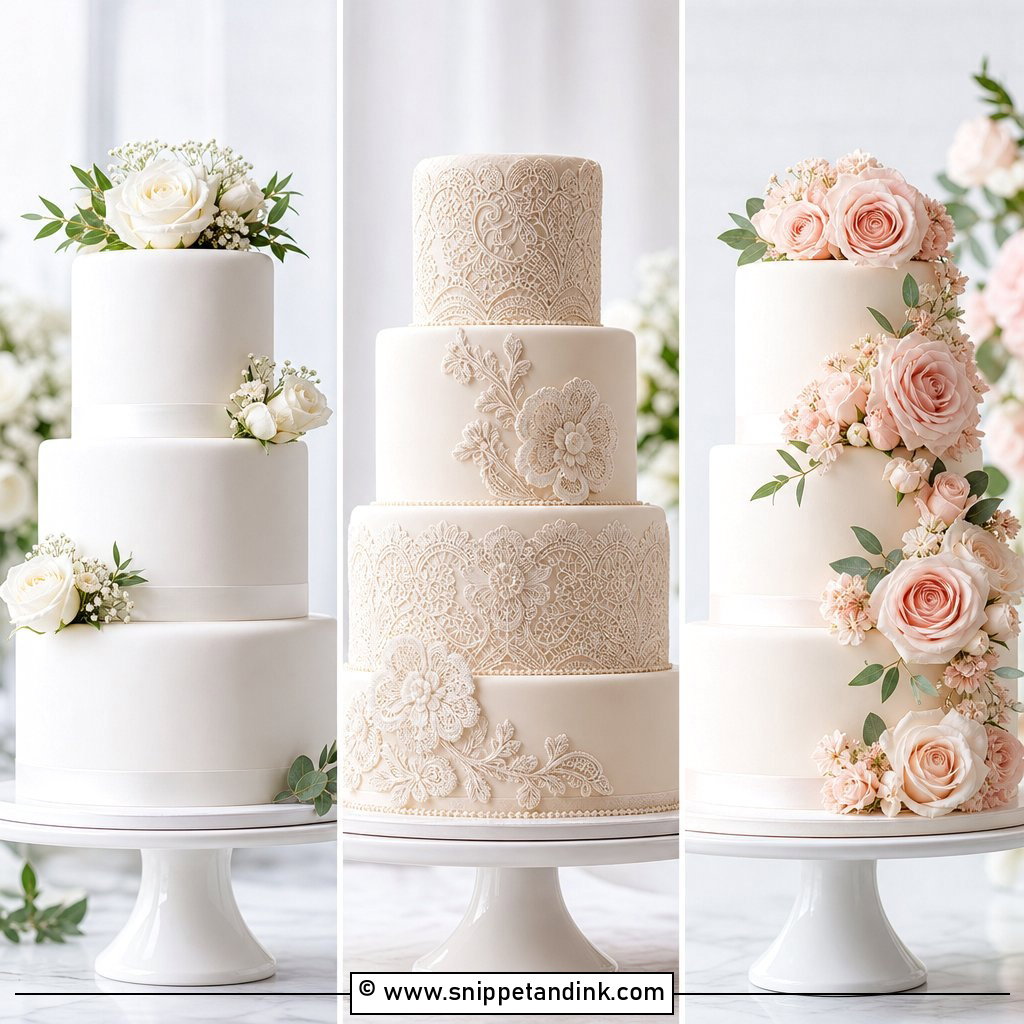
A white tiered wedding cake reads as a wedding cake from across any room, which is exactly why it endures. The white itself is worth discussing with your baker: pure white buttercream needs a clear vanilla and sometimes a tiny touch of violet to cancel the yellow of butter, while ivory looks warmer against a cream gown. Two tiers suit a small dinner, four suit a ballroom. A monogram topper or a cluster of white roses adds detail without fighting the clean silhouette.
2. Buttercream Wedding Cake
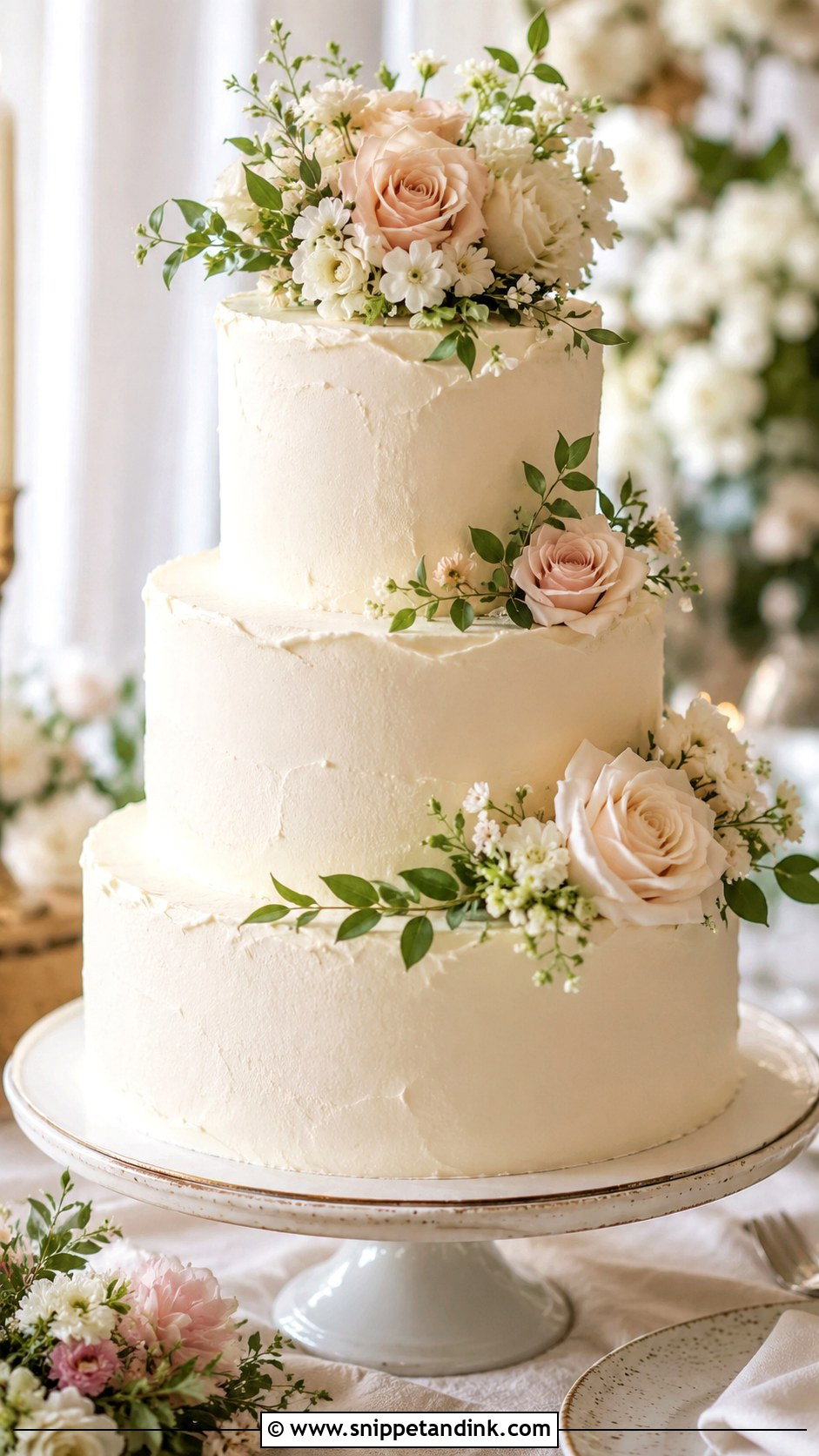
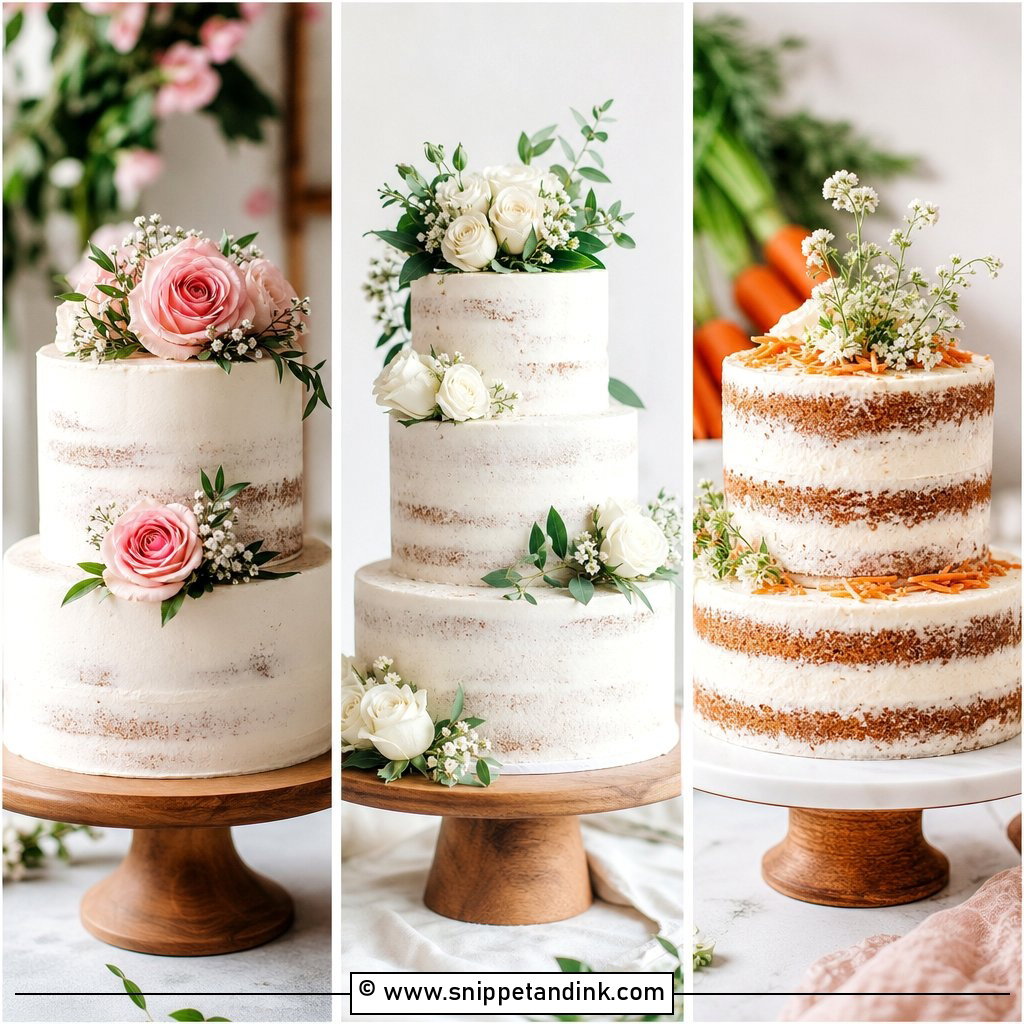
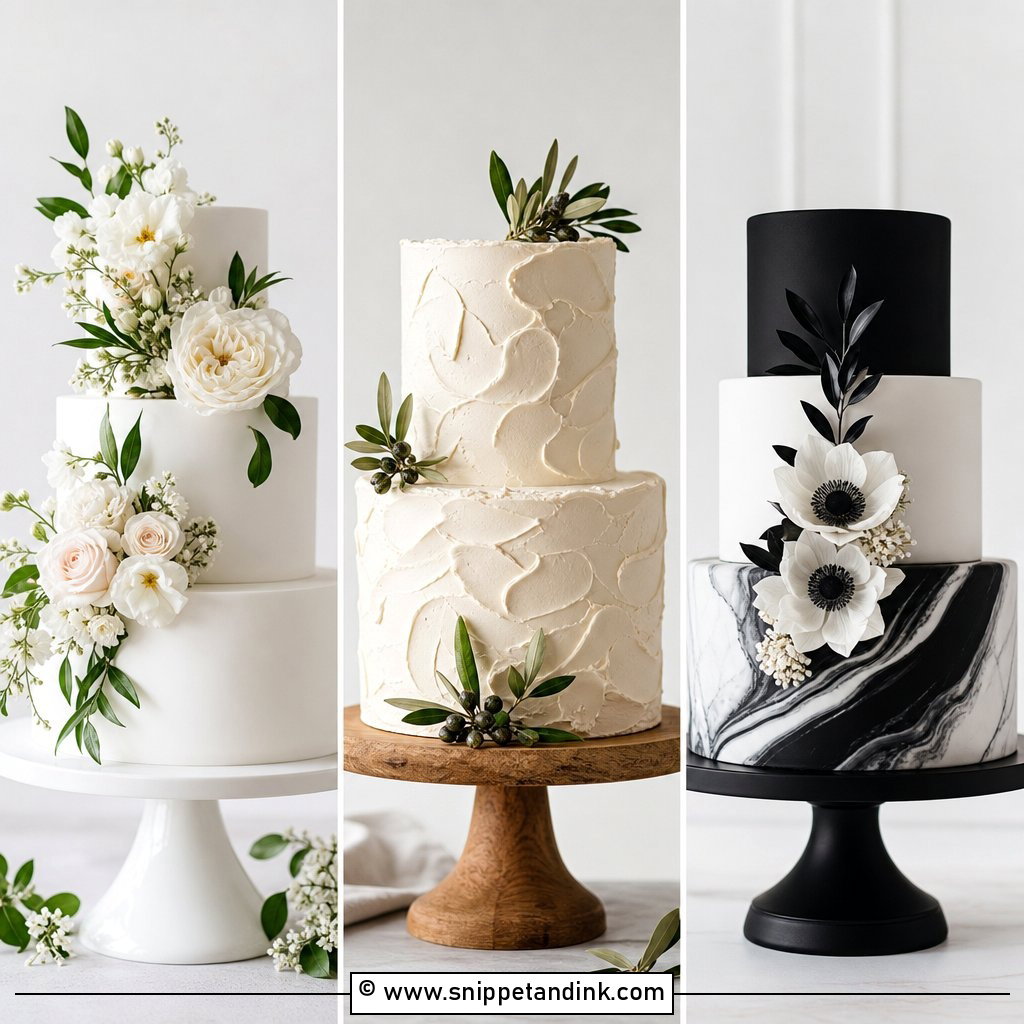
Buttercream is what most couples actually want to eat, and it has a softer, more handmade look than fondant. The trade-off is heat. American buttercream crusts and holds up reasonably well, while Swiss and Italian meringue versions taste lighter but soften quickly once a room passes about seventy-five degrees, so I ask about the venue before recommending one. Vanilla, almond and lemon sponges all pair with it. Leaving visible palette-knife texture rather than chasing perfectly sharp edges also hides the small marks that come with transport.
3. Fondant Wedding Cake
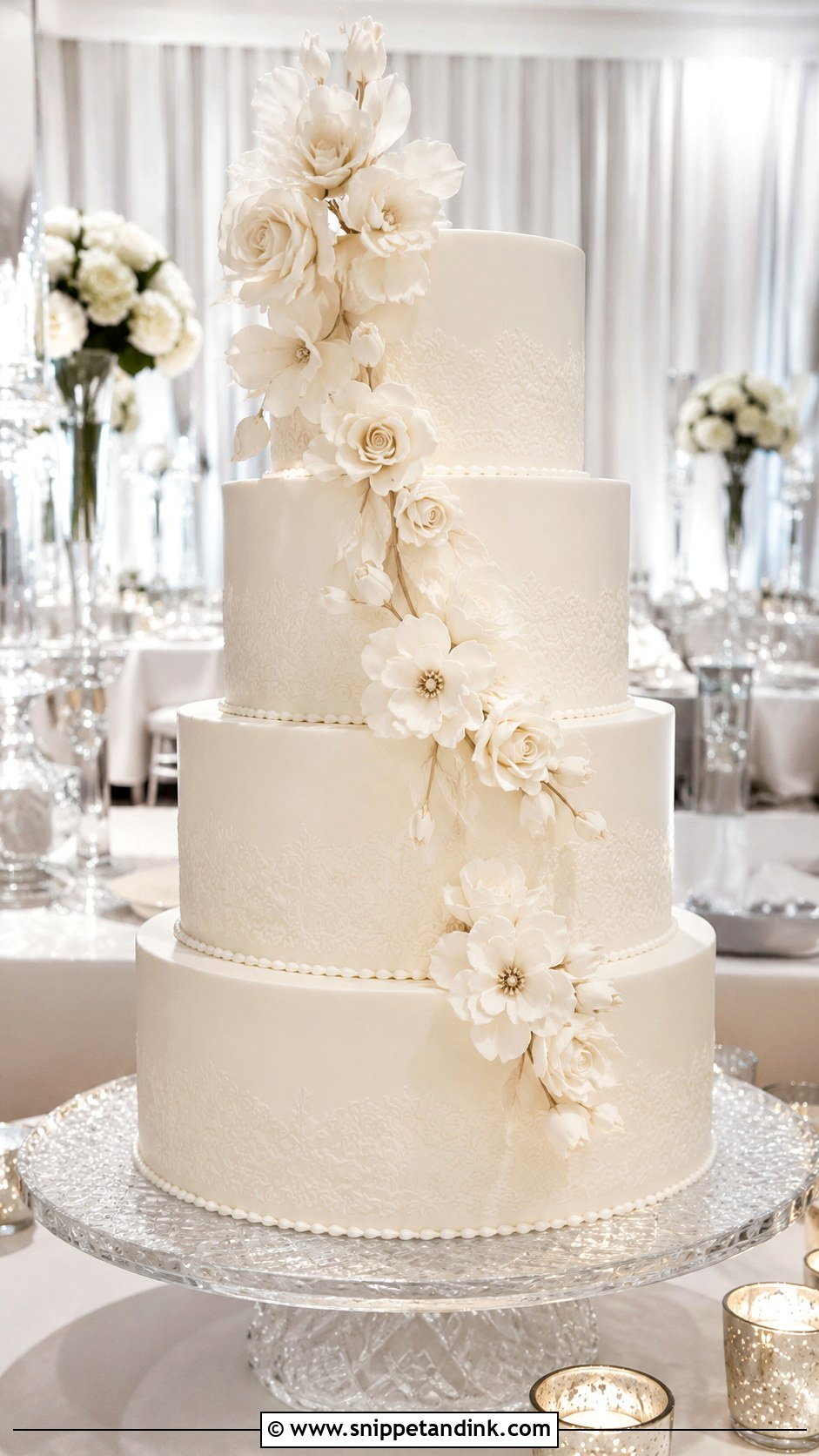
Fondant gives the crisp, porcelain finish that black-tie receptions often call for, and it protects the cake underneath from drying out. Most of my fondant cakes have a full layer of buttercream or ganache beneath the sugar paste, which is where the flavor really comes from; many guests peel the fondant off, and that’s fine. Sugar flowers, thin ribbon borders and embossed patterns sit well on it. One warning: a fondant cake taken from a fridge into a warm, humid room will bead with condensation, so I keep them in a cool, dry space rather than refrigerating right before delivery.
4. Wedding Cake With Fresh Flowers
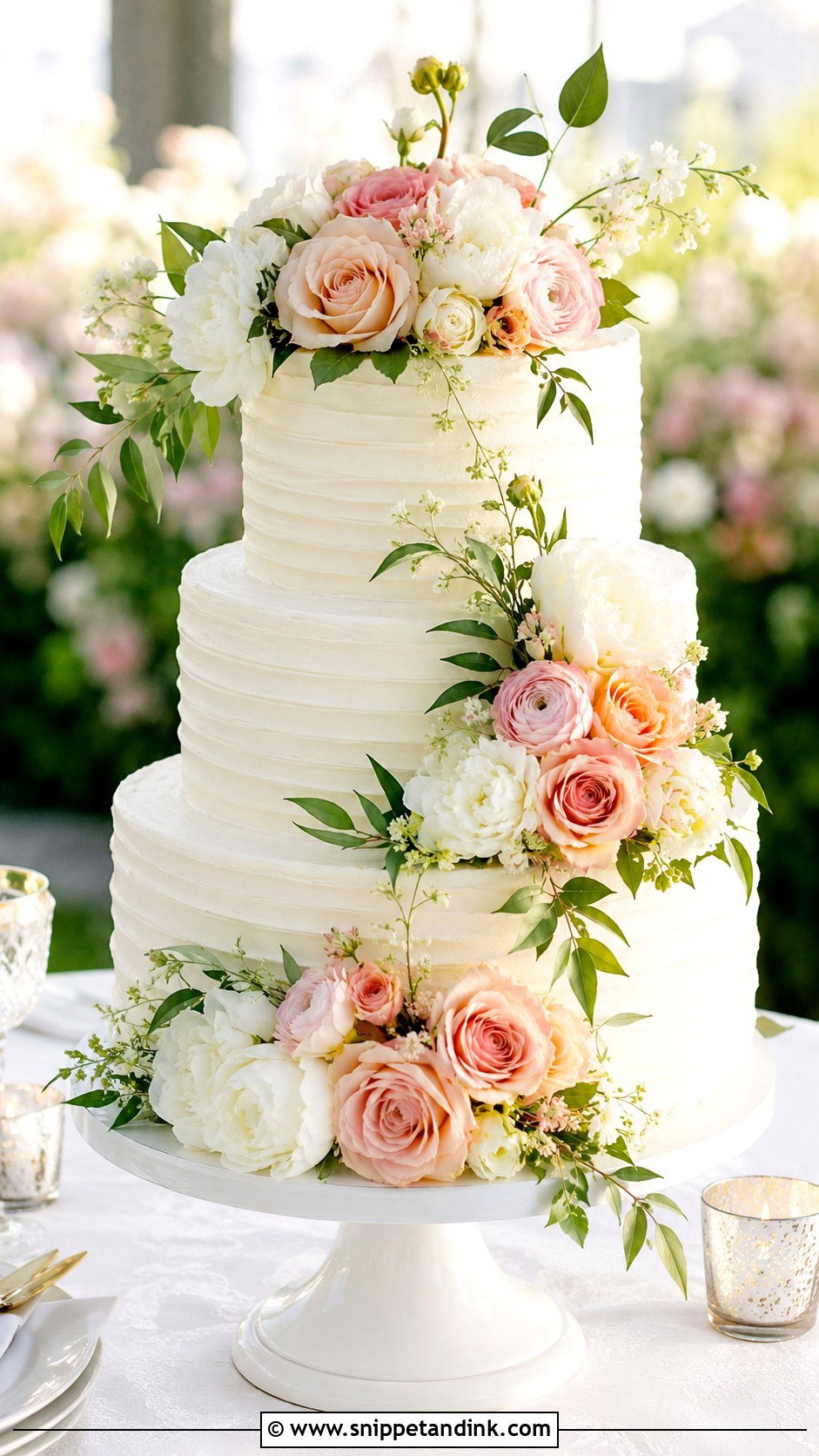
Fresh flowers tie the cake to the bouquet and centerpieces, and they’re usually cheaper than sugar work. They also carry a real food-safety question. Many common blooms are sprayed or toxic, so I ask the florist for unsprayed stems and never push a bare stem into the sponge; each one goes into a floral pick, a plastic straw or a wrap of floral tape first. Roses, ranunculus and garden spray roses sit well on cakes, while anything that wilts fast in warm rooms, like hydrangea, droops by the speeches. A smooth ivory base gives the flowers room.
5. Wedding Cake With Sugar Flowers
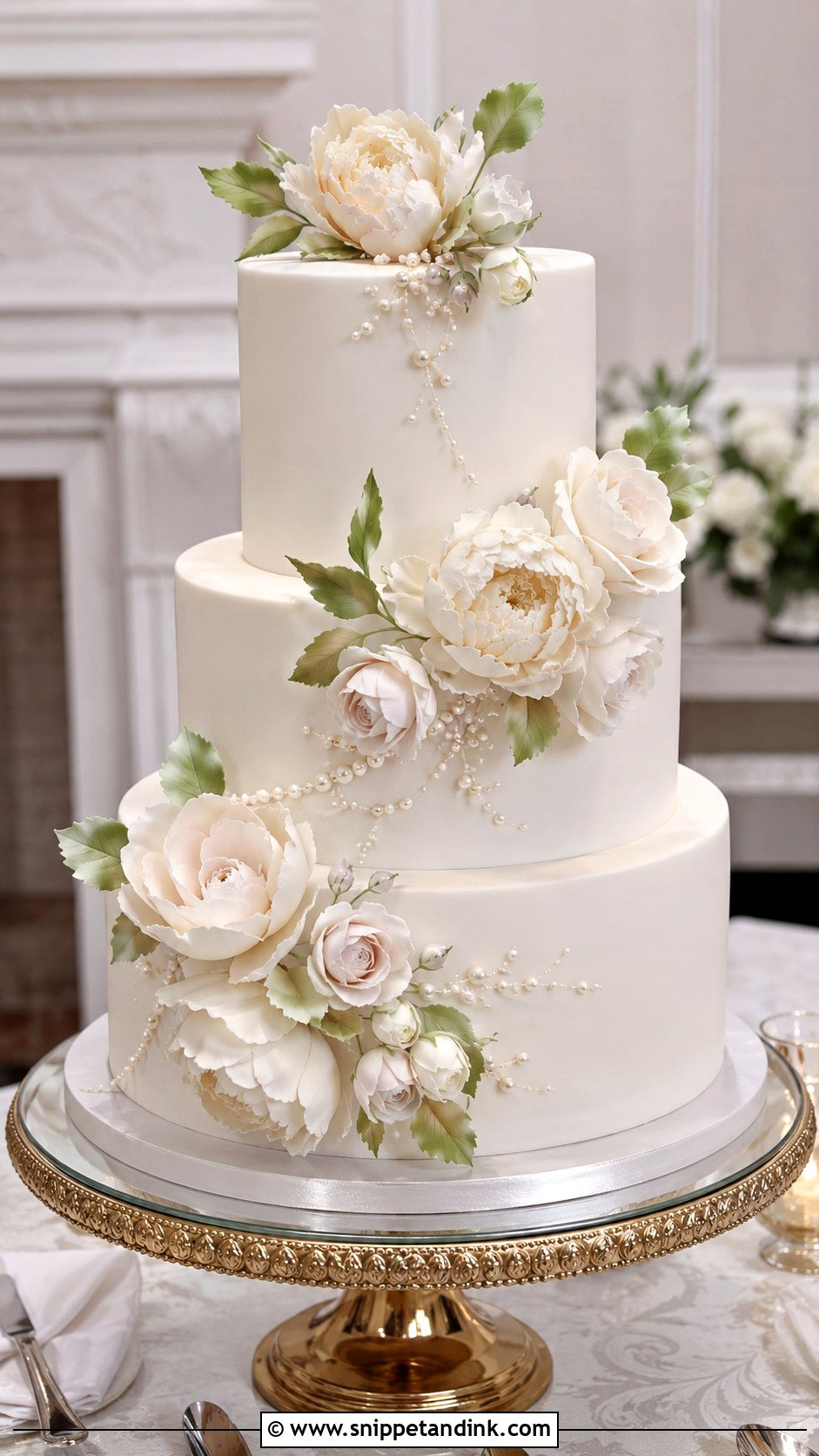
Sugar flowers are made petal by petal from gum paste, wired, dried and then dusted with color, so they can match a bouquet exactly and never wilt. That handwork is why they cost more than fresh flowers: a single detailed peony can take hours. They’re the right call when your favorite bloom is out of season or too fragile for a cake table. Keep in mind that gum paste flowers are edible in theory but contain wires, so they come off before cutting, and many couples keep them as a memento.
6. Pearl Wedding Cake
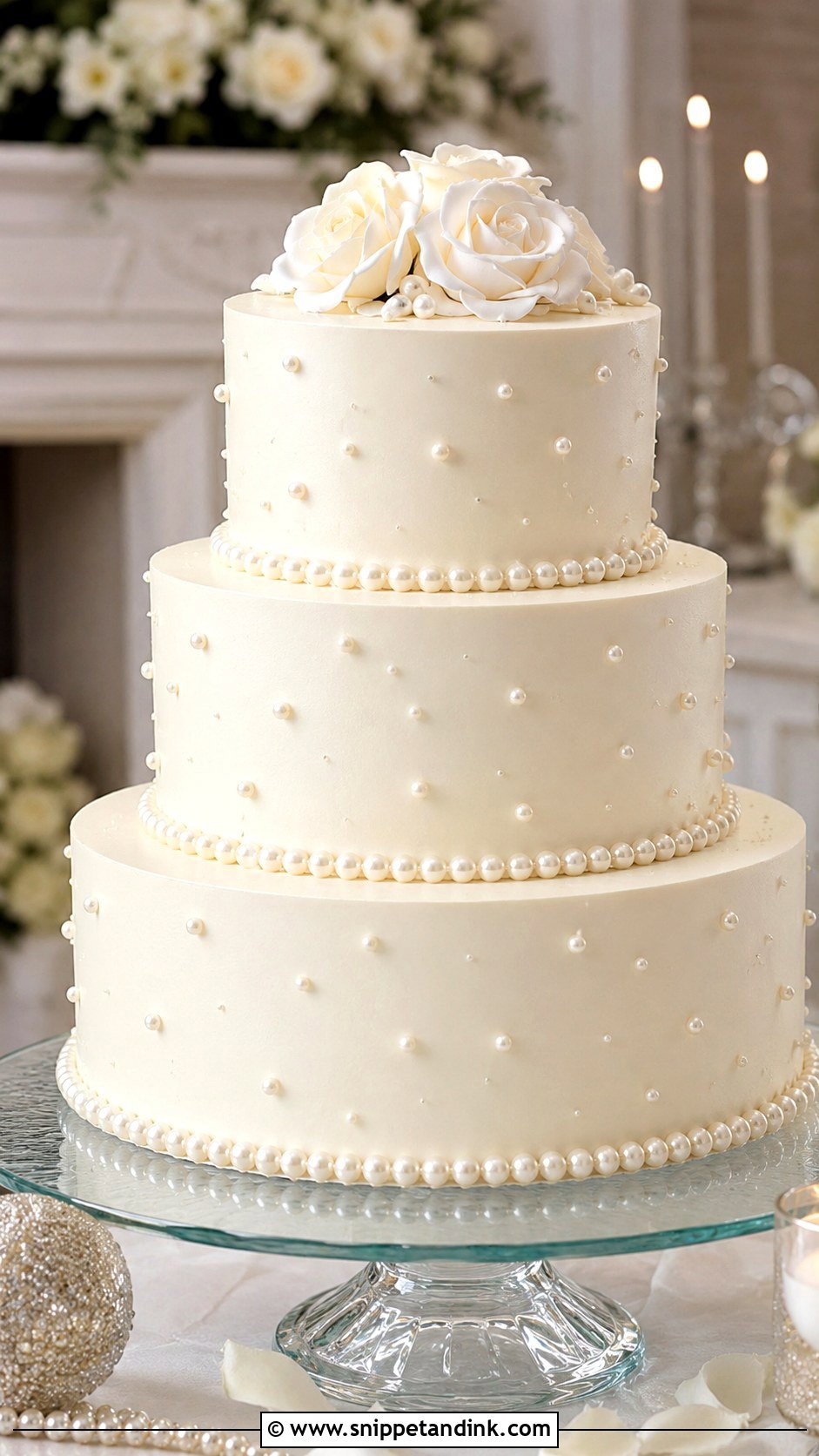
Pearls on a cake are usually small sugar dragées or piped royal icing dots, placed one by one around the base of each tier. The piped version can be colored to match the frosting exactly; the dragées add a little shine. Pearls look right on white, ivory, blush and champagne cakes and echo pearl jewelry or a lace gown. I keep everything else minimal so the eye isn’t pulled in two directions, and a three-tier cake with a pearl border and a satin ribbon stays quiet and very bridal.
7. Lace Wedding Cake
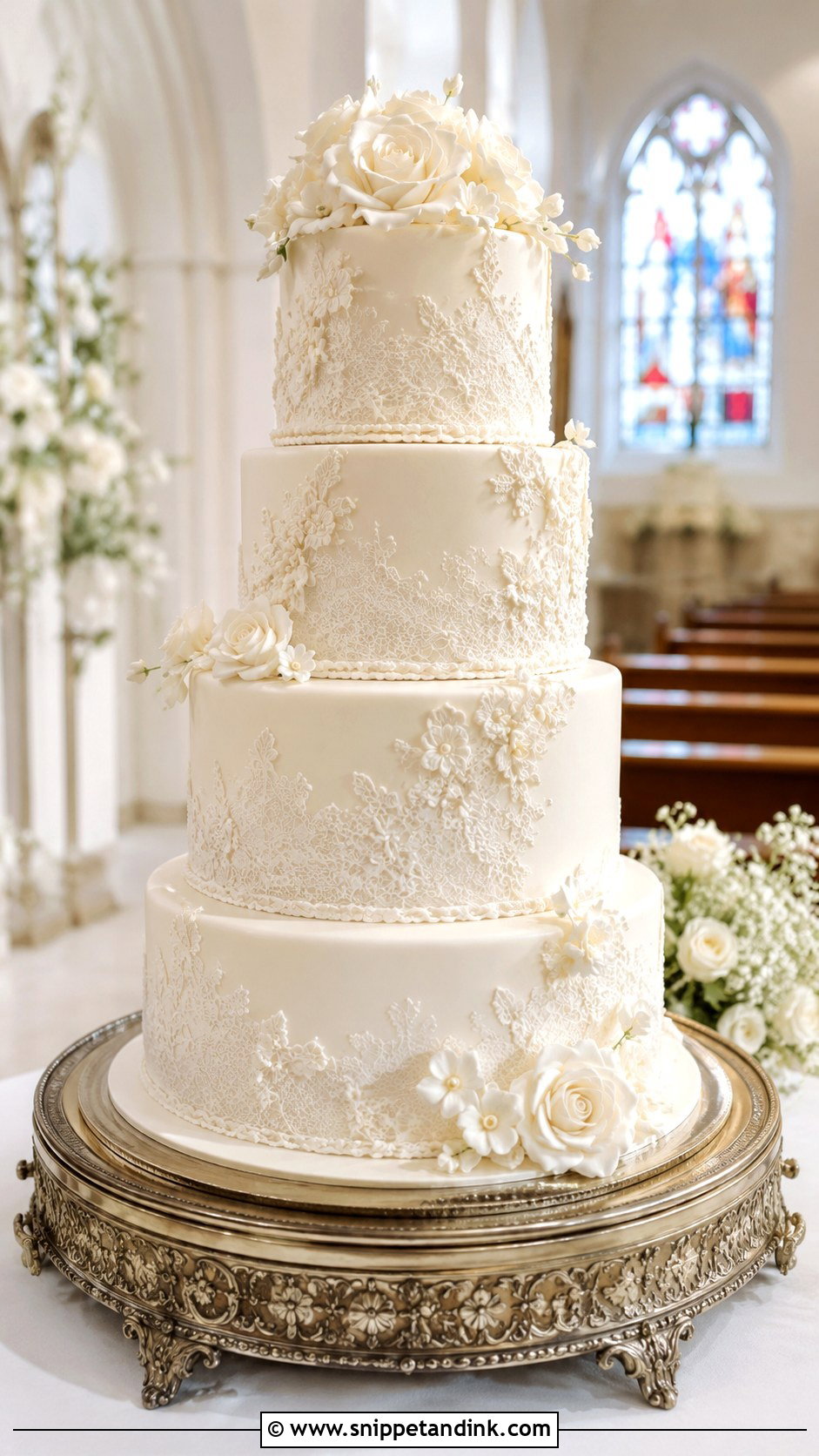
Lace on a cake can echo the bodice of your gown, and the method changes how it looks. Silicone mold lace in sugar paste gives a flat, regular pattern; piped royal icing lace is raised and freehand; stencilled lace is quick and subtle. If you’d like the cake to match your dress, bring a fabric swatch or a close photo of the lace to your consultation. I often put lace on one tier only and keep the others plain, sometimes adding small sugar flowers where the lace meets the base. Lace works well for church weddings and garden venues.
8. Vintage Wedding Cake
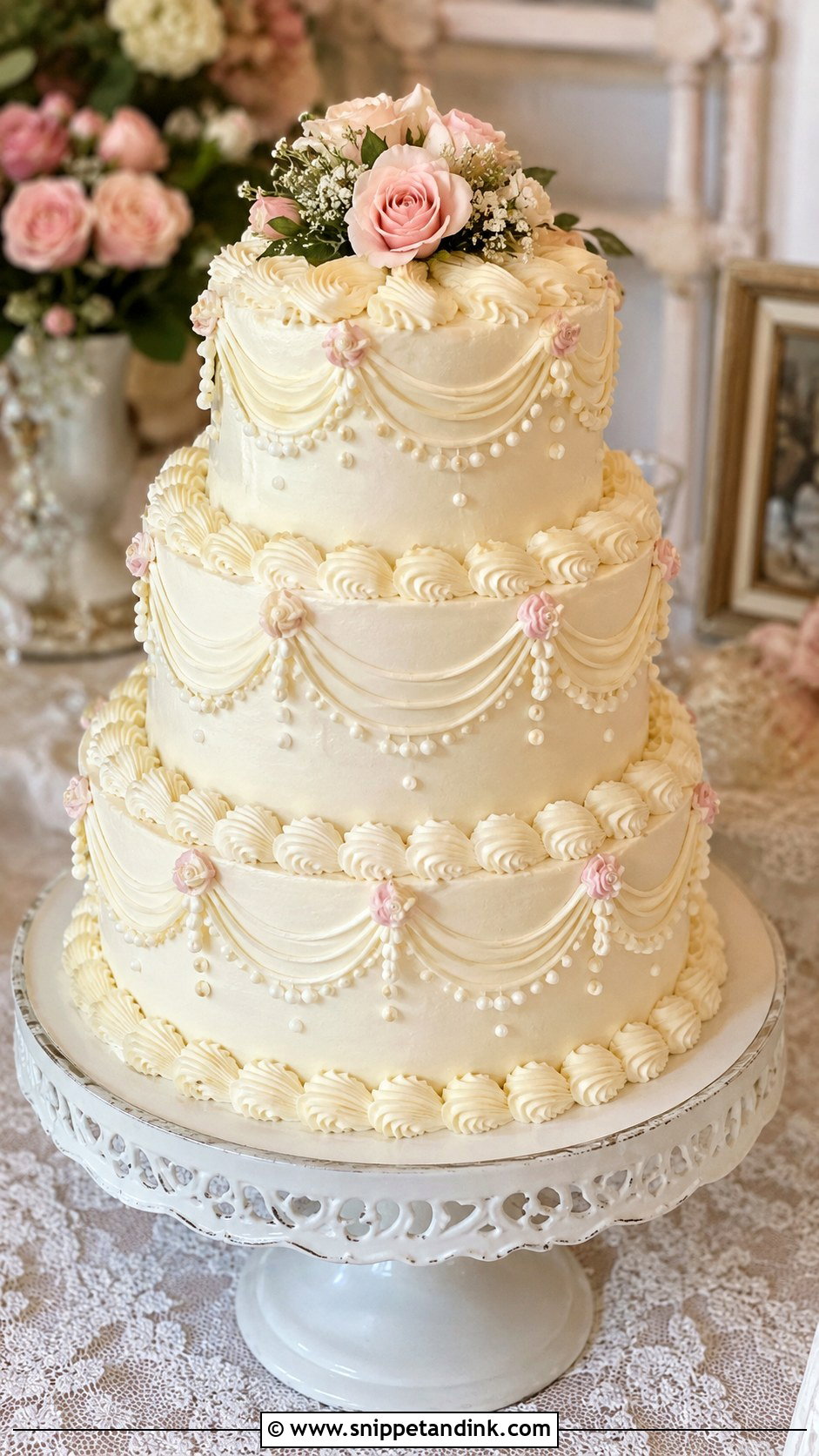
Vintage cakes have come back with heavy shell borders, swags, ruffles and pastel accents, often with a heart-shaped or round tier. The piping takes skill and time, and the difference between charming and cluttered is restraint: decide on two or three piping motifs and repeat them. Vanilla sponge or white cake with raspberry filling suits the mood. Pastel buttercream can fade in direct sunlight, so I keep vintage cakes out of bright windows until cutting time.
9. Lambeth Wedding Cake
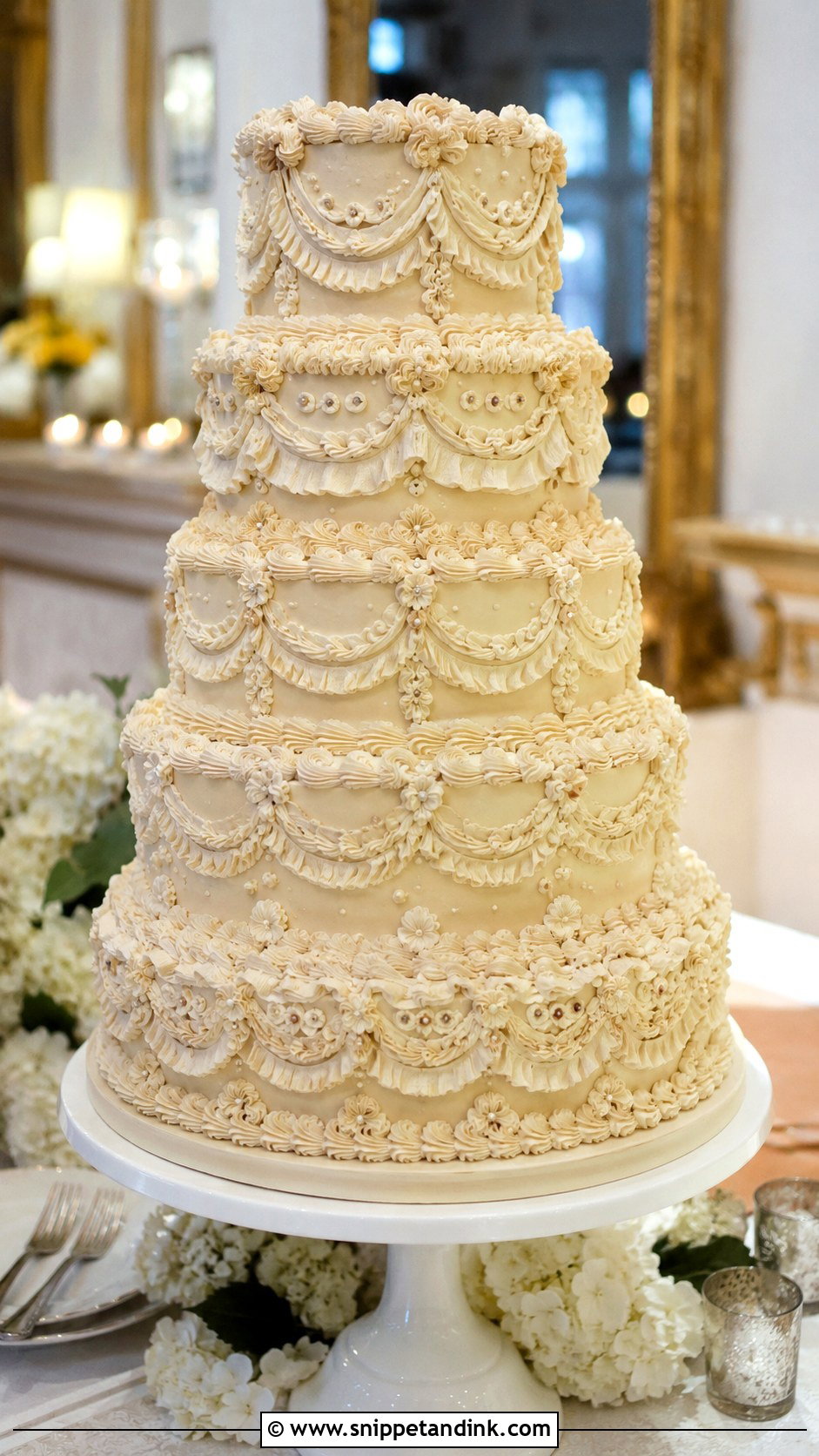
Lambeth piping is the most elaborate form of overpiping, with layer upon layer of shells, scrolls and drapes built out from the cake. It’s slow work and tends to be priced by the hour. I recommend it for couples who love traditional bakery craft and want the cake to feel like the centerpiece of the room. White on white is the classic version; pale blue or blush softens it. On a large tiered cake, I space the piping carefully so the tiers still read as separate shapes, and a simple topper is all it needs.
10. Simple Wedding Cake
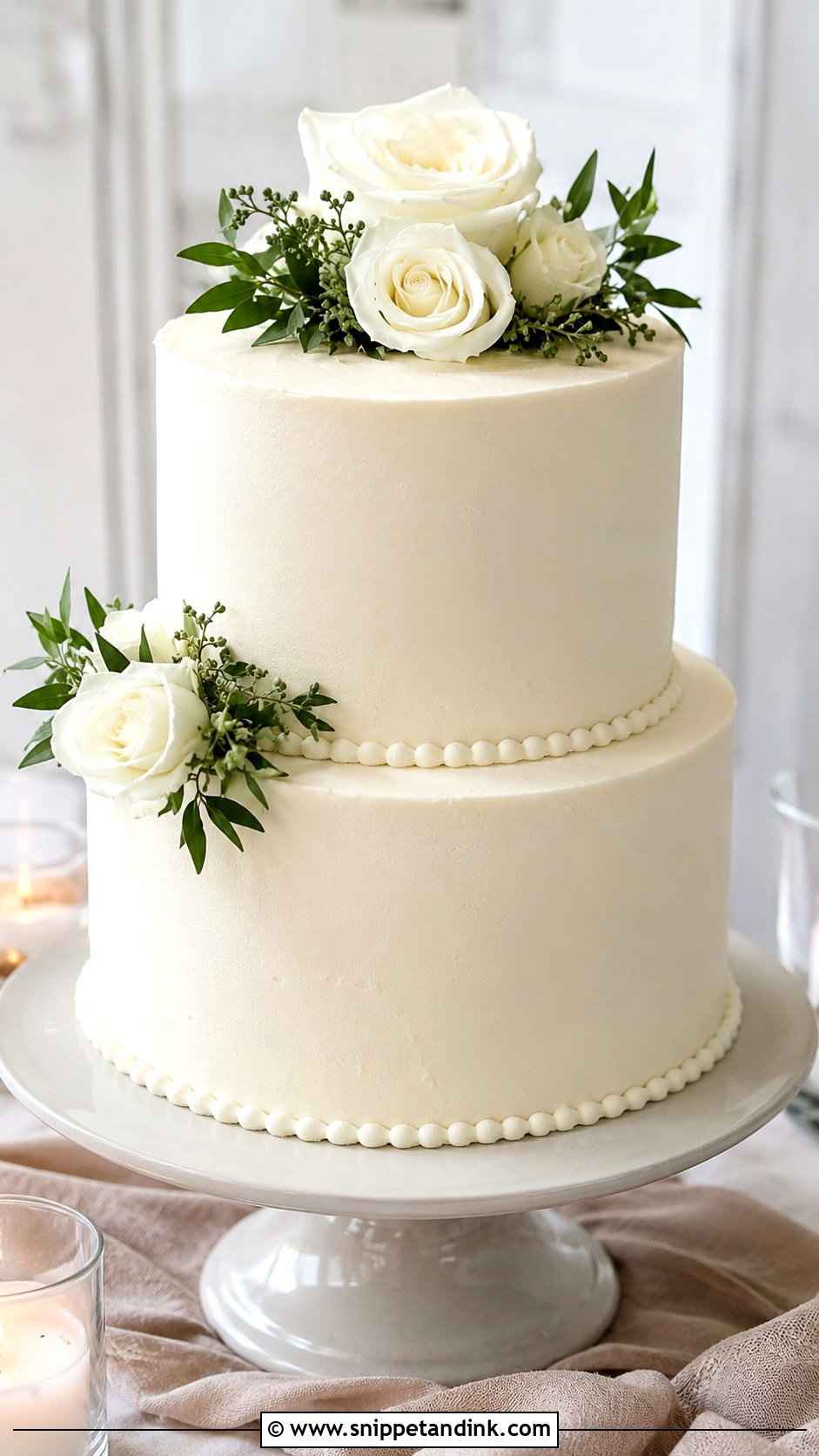
A simple cake is the hardest one to fake, since there’s no decoration to hide an uneven tier. Clean tiers, smooth frosting and one detail placed with intent tend to look the most elegant on a table full of flowers and linens. Two or three tiers in ivory buttercream with a few fresh blooms and a neat base border never feel underdone. Vanilla, almond, lemon and white chocolate all suit it. For small weddings, simplicity makes the cake feel chosen rather than scaled down.
11. Small Wedding Cake
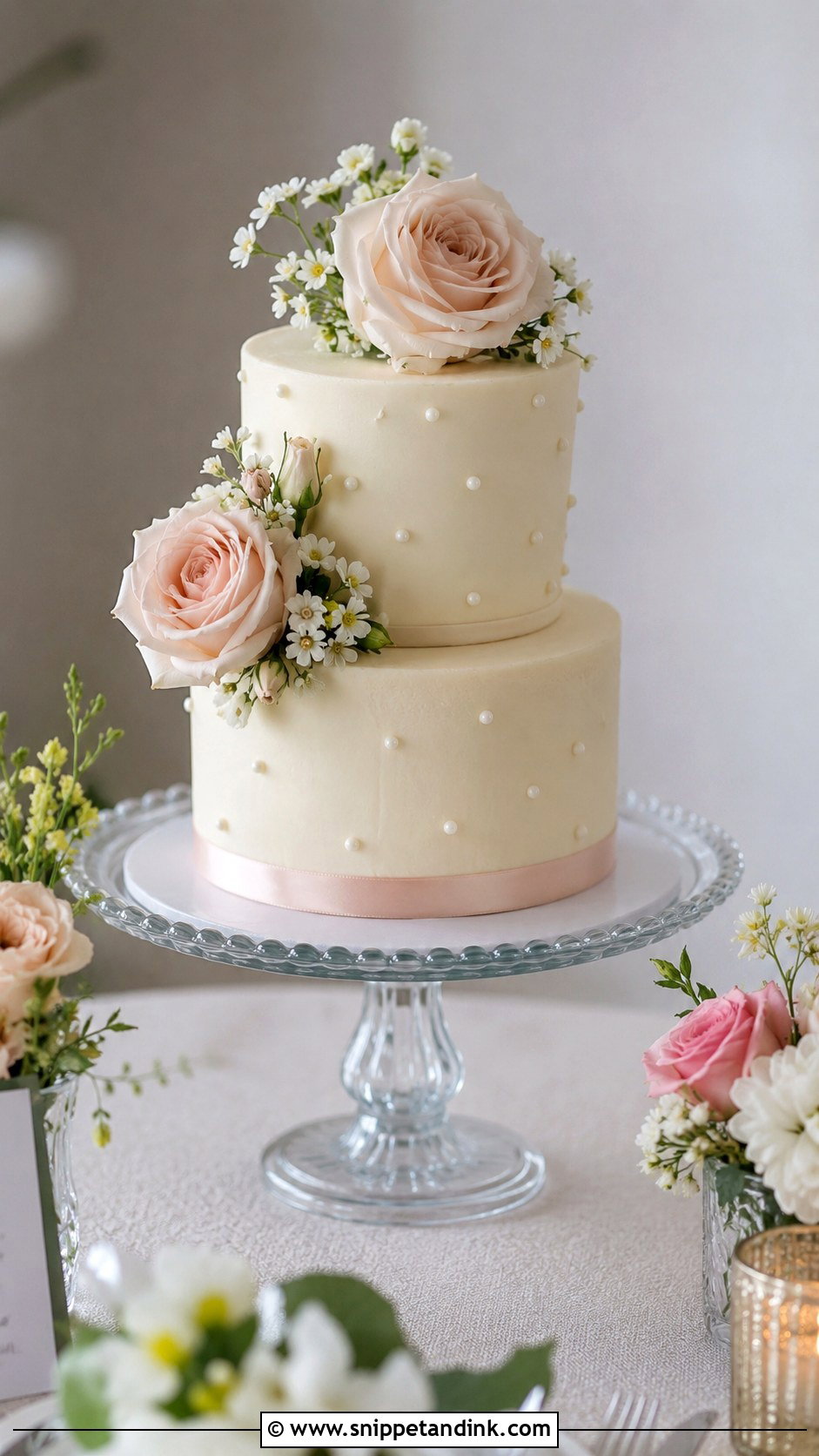
A small cake suits courthouse receptions, intimate dinners and weddings with a separate dessert table. A six-inch tier stacked on an eight-inch gives a balanced shape and serves roughly three dozen wedding-sized slices, while a single tall tier looks modern. Fresh flowers, pearls or ribbon keep it special without crowding such a small surface. A smaller cake also leaves room in the budget for better fillings or sugar work. I always suggest a pedestal stand, because a small cake sitting flat on a table can look lost in photos.
12. Three Tier Wedding Cake
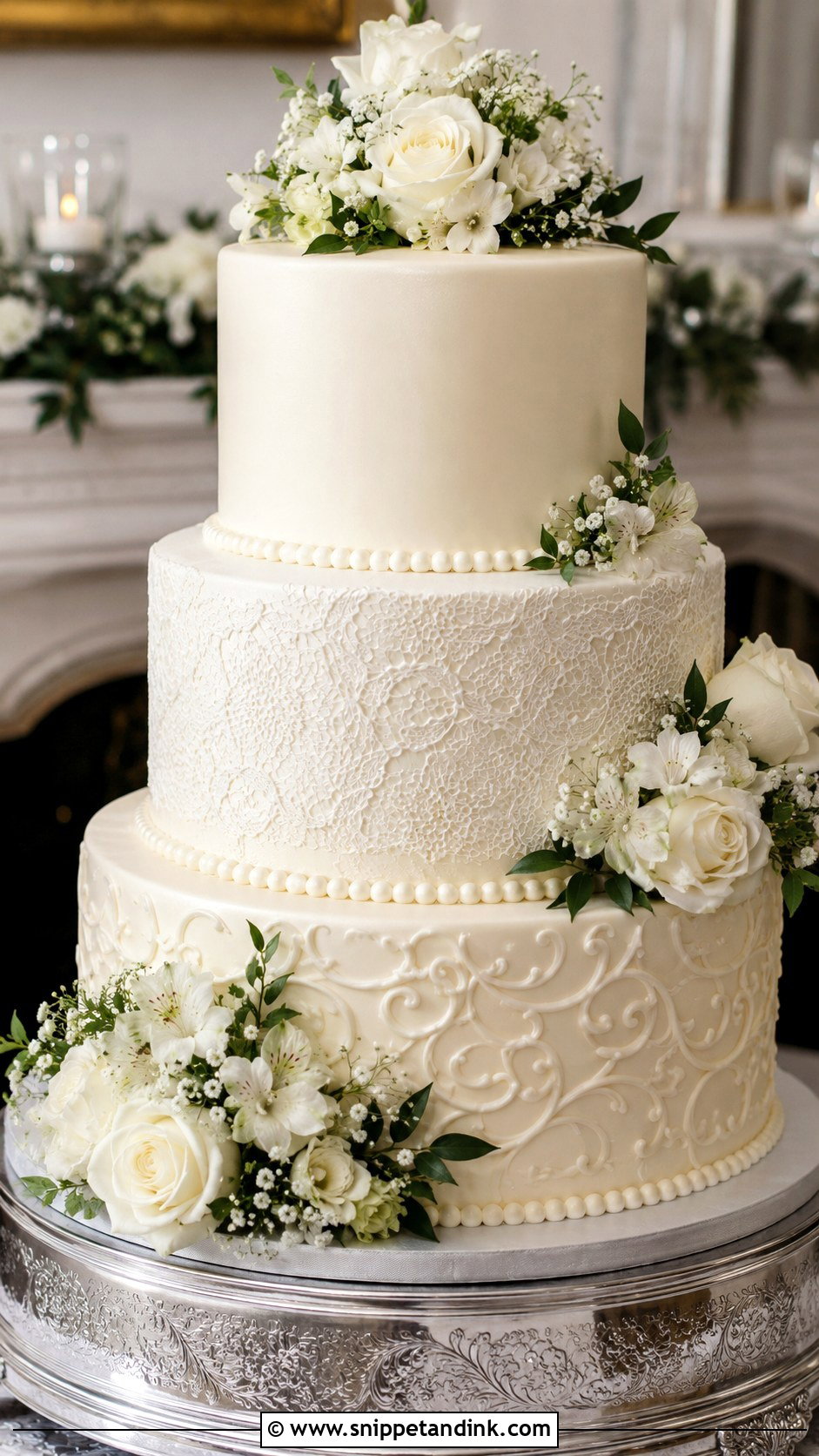
A three tier wedding cake is the size I build most often. It’s tall enough for photos and gives three surfaces for decoration without overwhelming a standard cake table. You can keep all tiers alike or alternate textures, such as one lace tier between two plain ones. Each tier sits on its own board supported by dowels, which is what keeps the bottom tier from collapsing under the weight above. Vanilla almond, lemon raspberry and classic white cake are reliable fillings for a crowd.
13. Square Wedding Cake
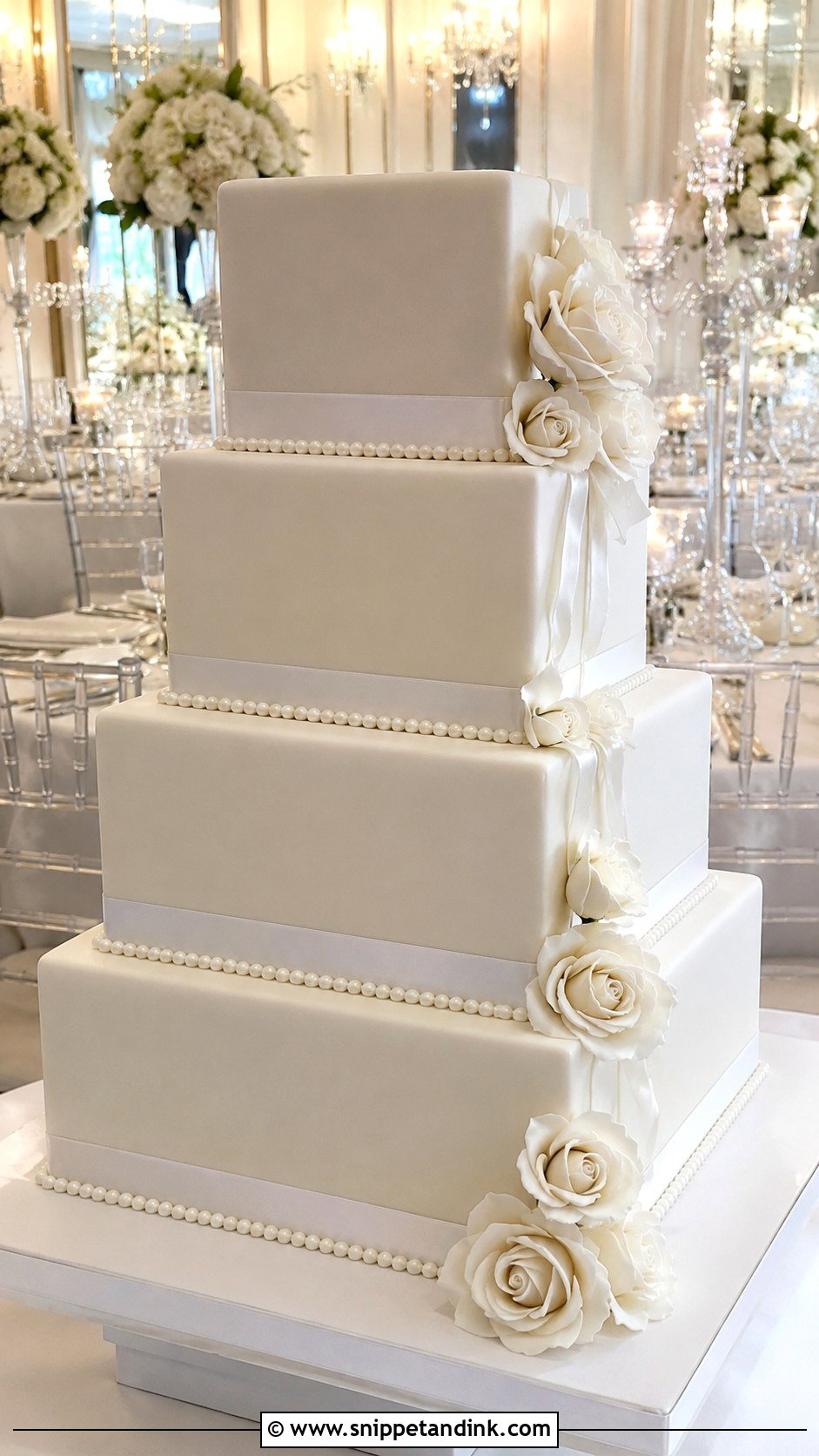
Square tiers give a cake a tailored, slightly architectural feel, and they suit hotels, clubs and ballrooms. They’re also harder to finish than round tiers, because each corner needs a sharp edge and fondant tends to tear or crack at the points; I use a ganache base under the fondant to keep those corners crisp. A white or ivory square cake with thin ribbon borders looks polished. Rounded sugar flowers or pearls soften the straight lines, and flowers placed on one corner give it movement.
14. Round Wedding Cake
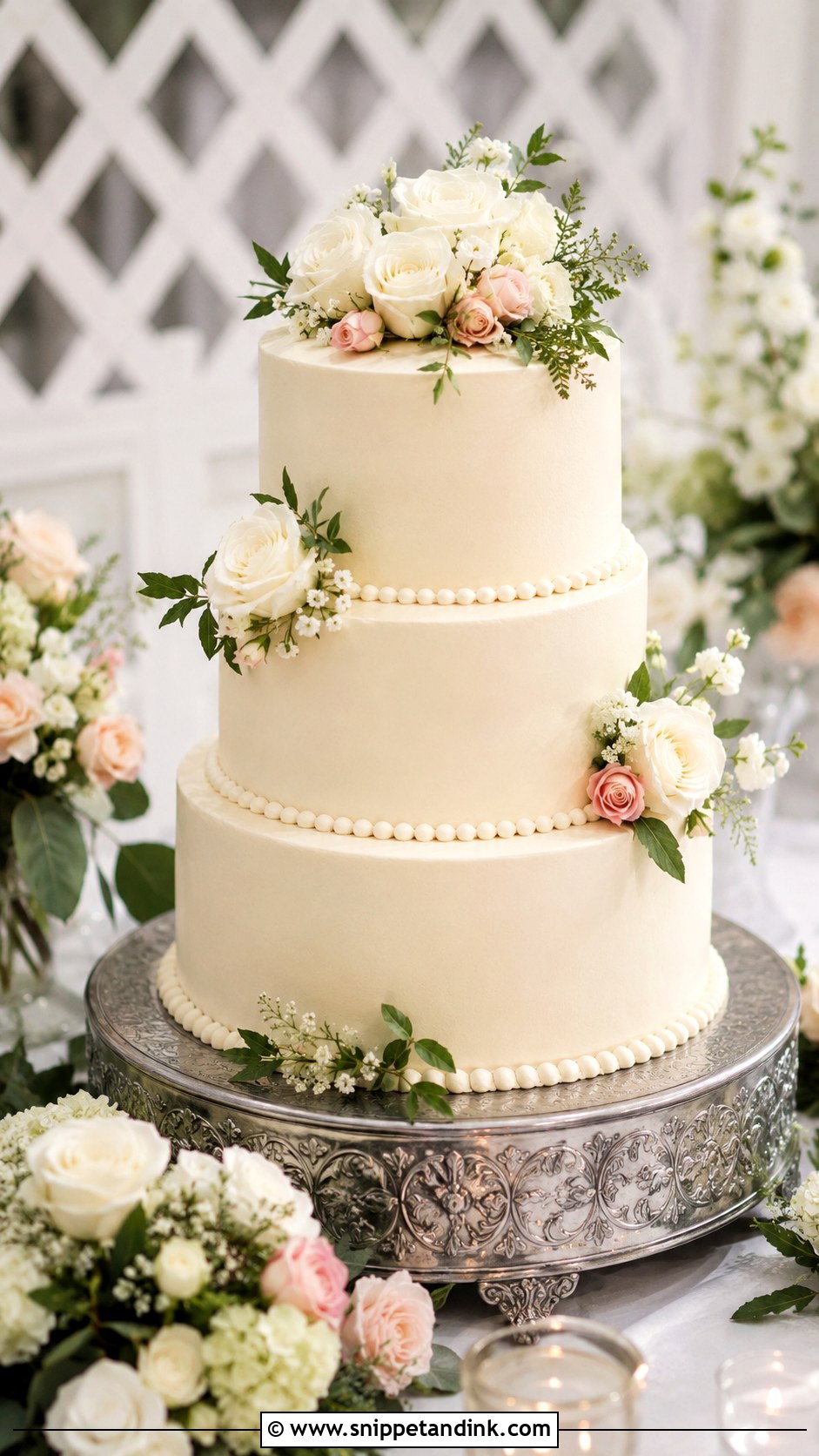
Round tiers are my default recommendation when a couple can’t decide. They work with every frosting, decoration and venue, they’re the easiest to cut evenly, and buttercream finishes cleanly on a curve. The stand changes the mood more than you’d expect: silver feels formal, wood feels rustic and glass disappears altogether. If you’re unsure about shape, start round and let the decoration carry the personality.

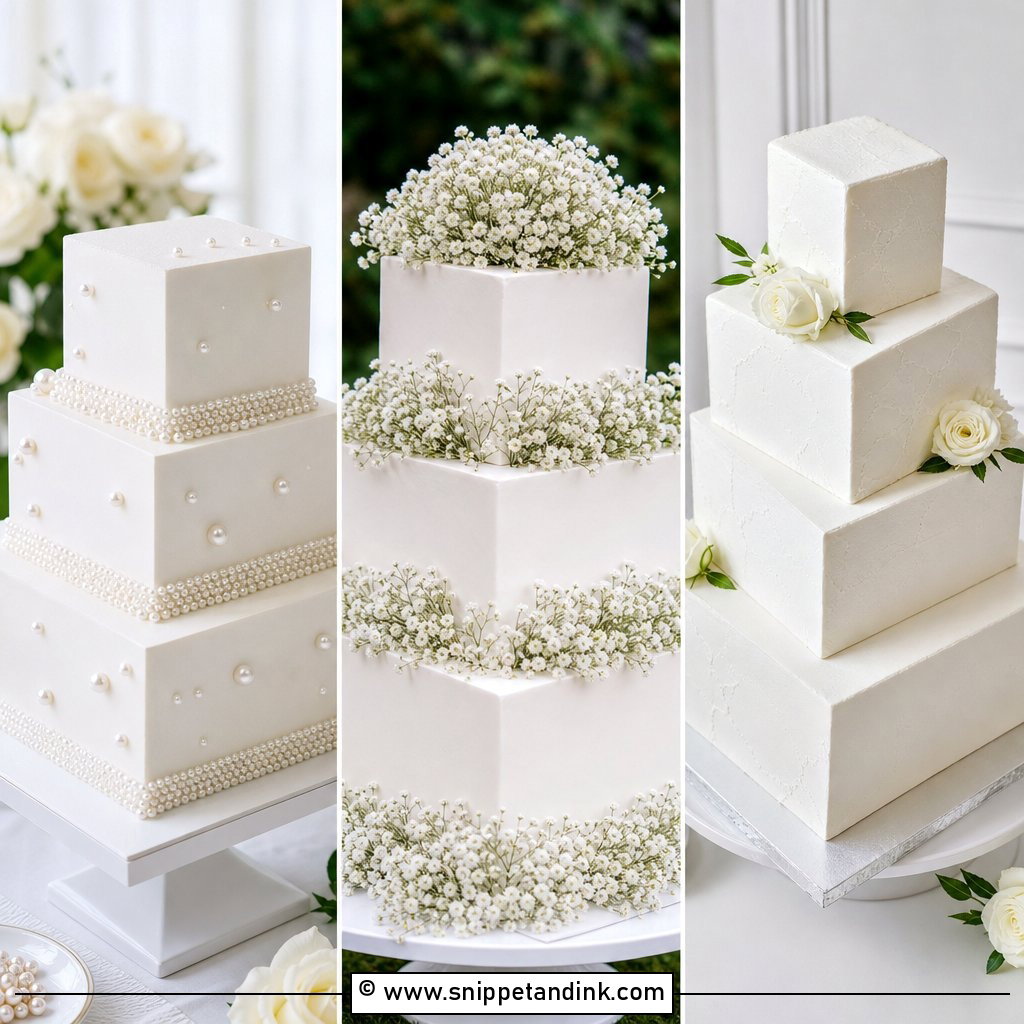
15. Wedding Cake With Ribbon
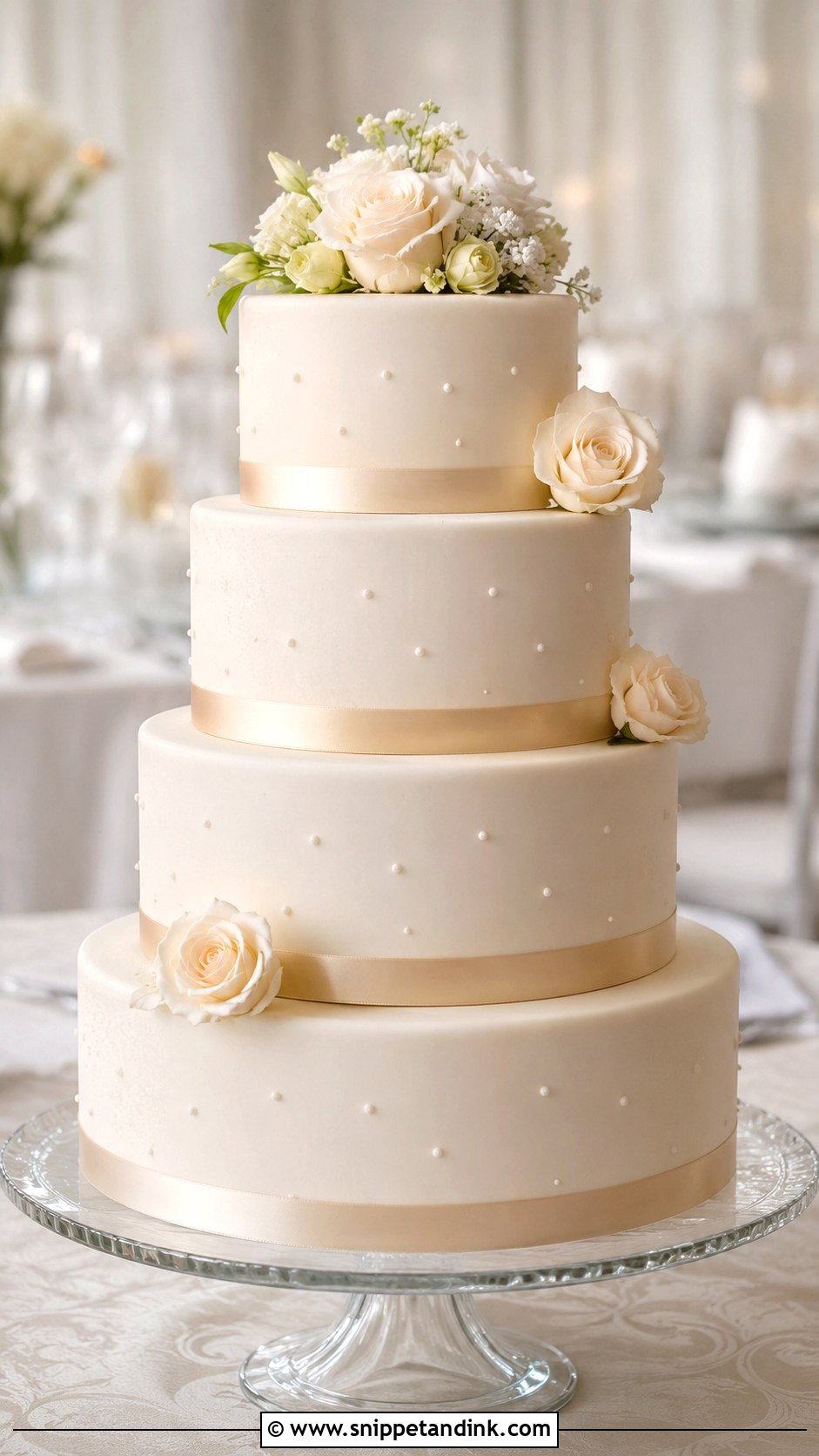
Ribbon is the simplest finishing detail, yet there’s a practical catch. Real satin ribbon pressed against buttercream absorbs grease and develops dark spots within hours, so I either back it with a strip of wax paper or use a fondant ribbon instead. White ribbon on ivory reads traditional; champagne, blush or pale blue can tie into the wedding palette. Smooth buttercream or fondant keeps the ribbon line straight. A small floral topper adds just enough detail.
16. Wedding Cake With Roses
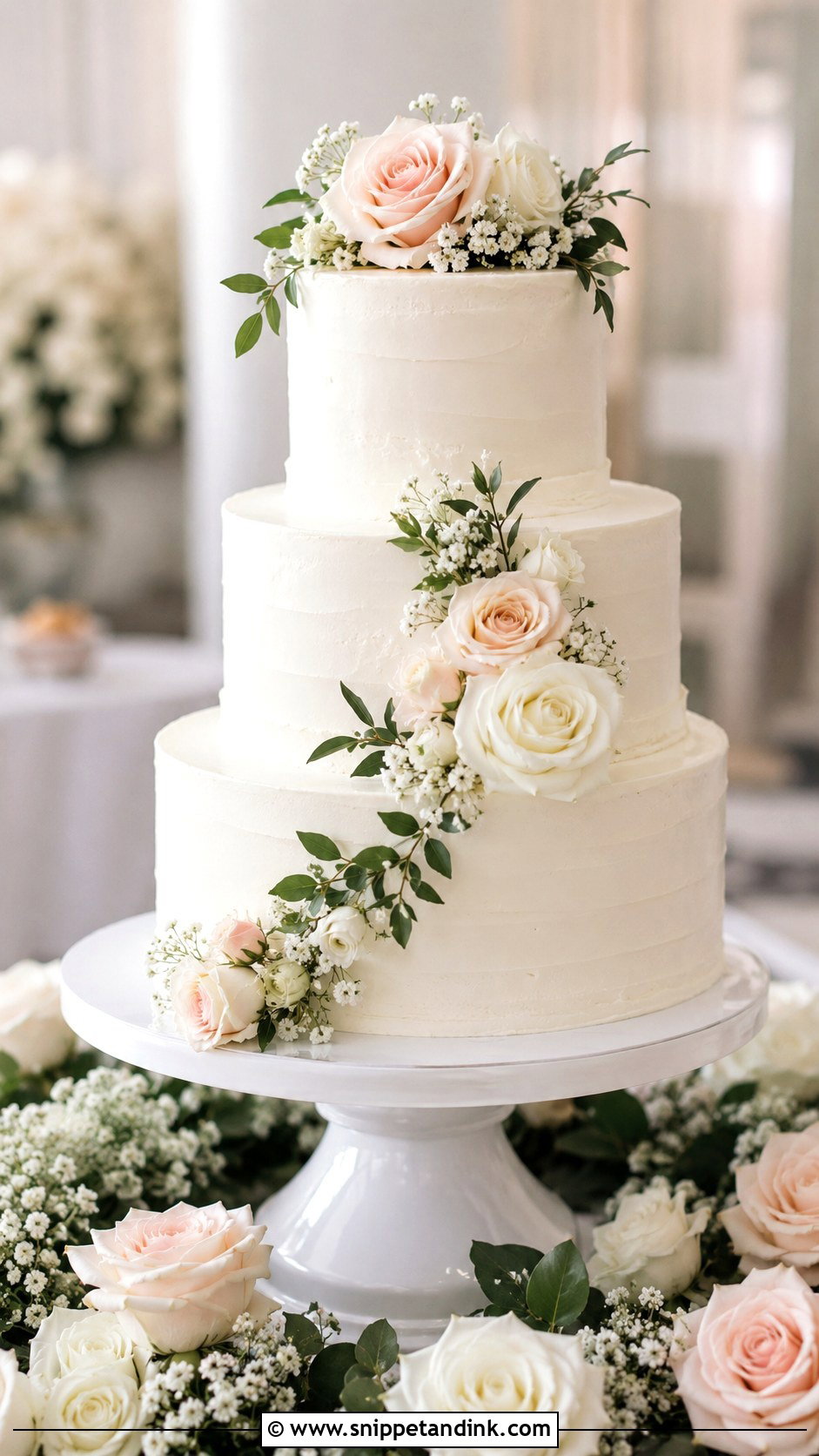
Roses suit almost every season and every finish. A white cake with fresh or sugar roses can look formal, garden-inspired or vintage depending only on where they sit: clustered on top, trailing down one side or tucked between tiers. White, ivory, blush and pale pink are the safest colors. If using fresh roses, I remove the outer petals, which bruise easily, and use the tight inner heads. Few cakes are as low-risk if you’re nervous about the design.
17. Wedding Cake With Piping
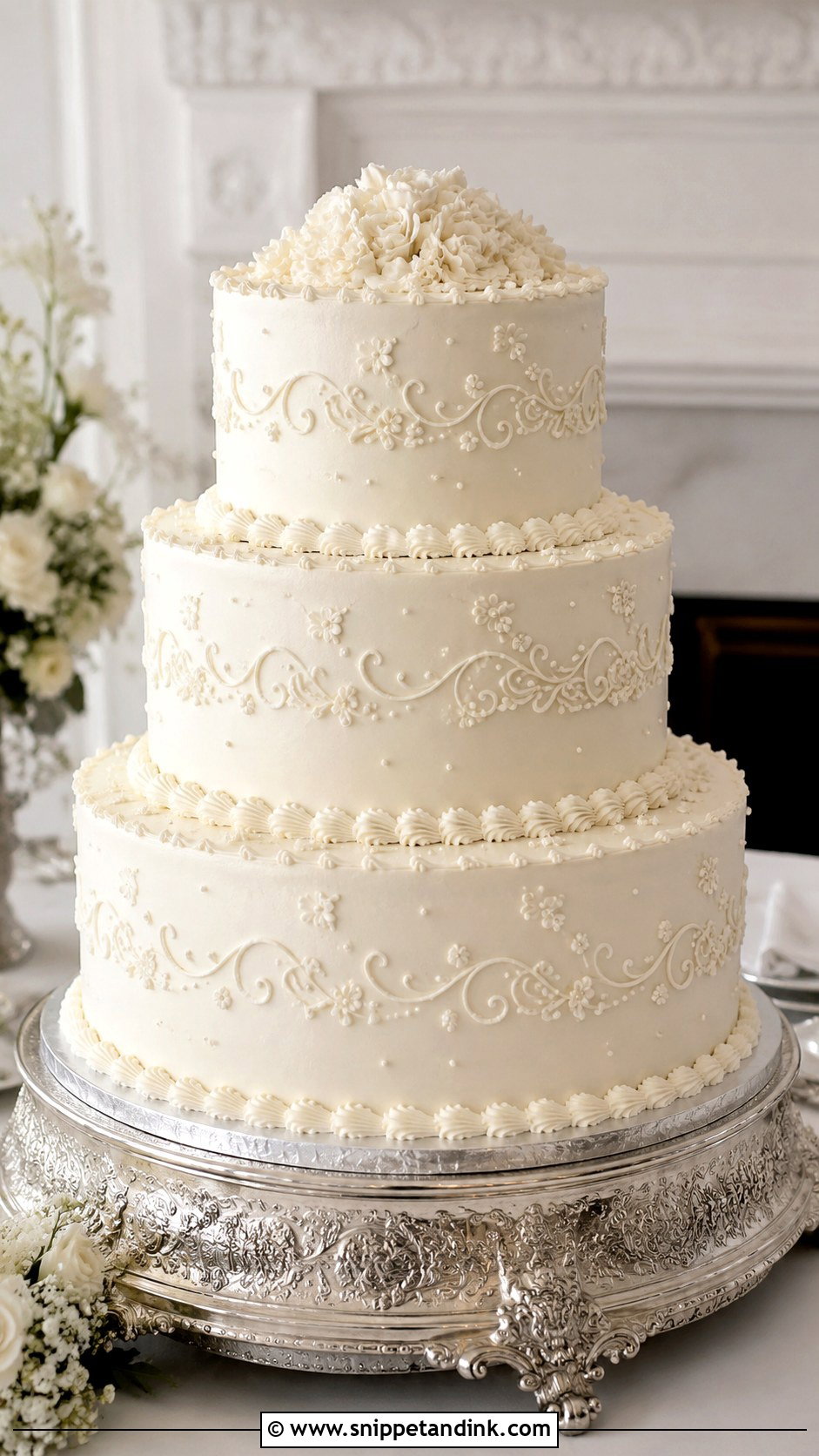
Piping is classic cake craft, from dots and shells to scrolls and floral details. Buttercream piping looks soft and slightly organic, while royal icing gives precise, raised lines that hold their shape in heat. White on white adds texture without color. I sketch the piping pattern for each tier before starting, because the line between a delicate cake and a cluttered one is usually one motif too many. A few piped accents on each tier can be enough.
18. Wedding Cake With Fruit Filling
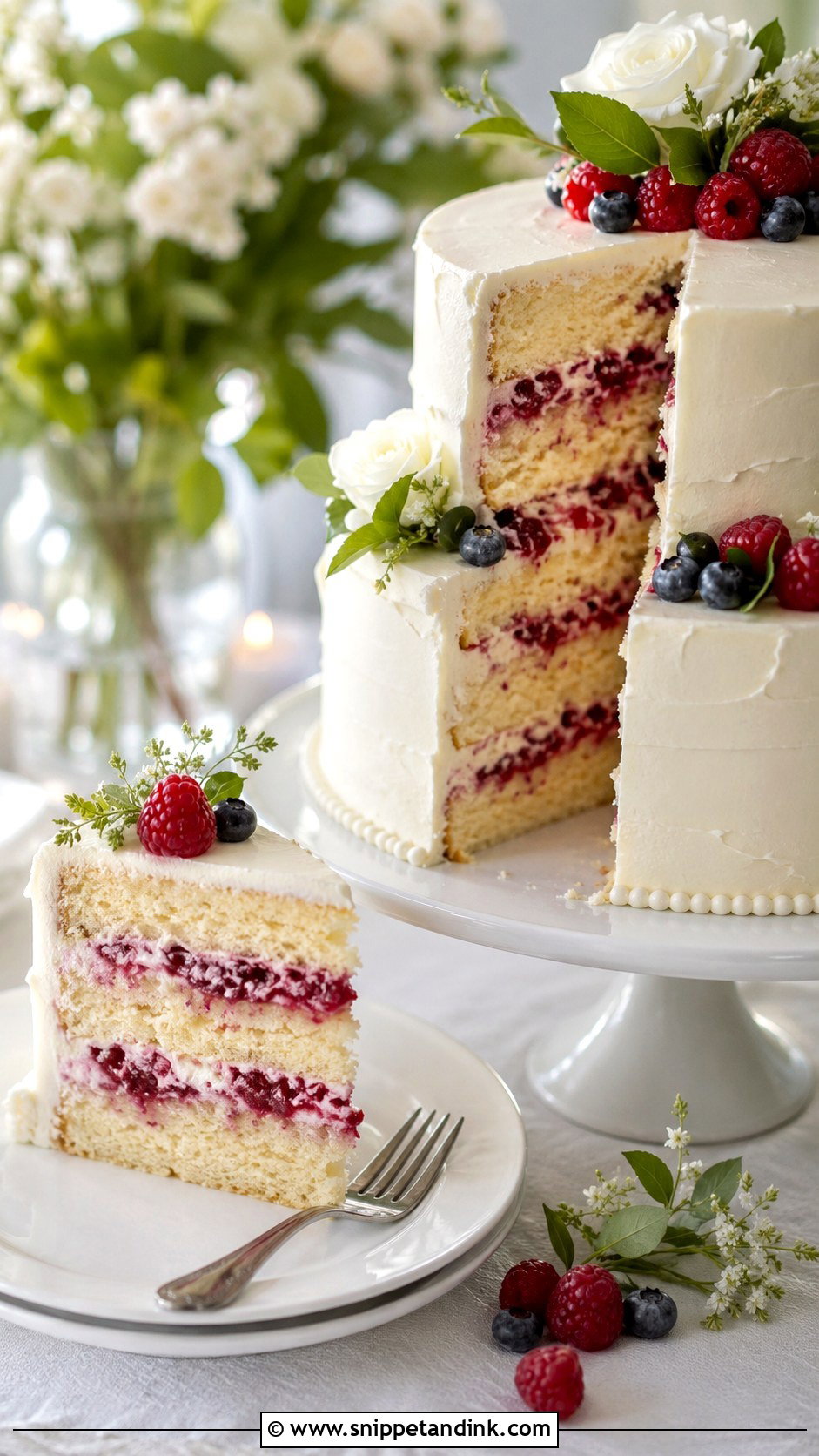
Fruit filling keeps the outside of the cake formal while giving guests a burst of color when it’s sliced. Raspberry with vanilla, blueberry with lemon and strawberry with almond are pairings I bake often. Fresh fruit releases liquid over time, so I usually use a cooked fruit filling or a thickened compote with a buttercream dam piped around the edge of each layer to stop it bleeding into the frosting. That technique is what makes fruit-filled tiers safe to stack. Spring and summer weddings suit fresh berries, but preserved fruit fillings work all year.
19. Almond Wedding Cake
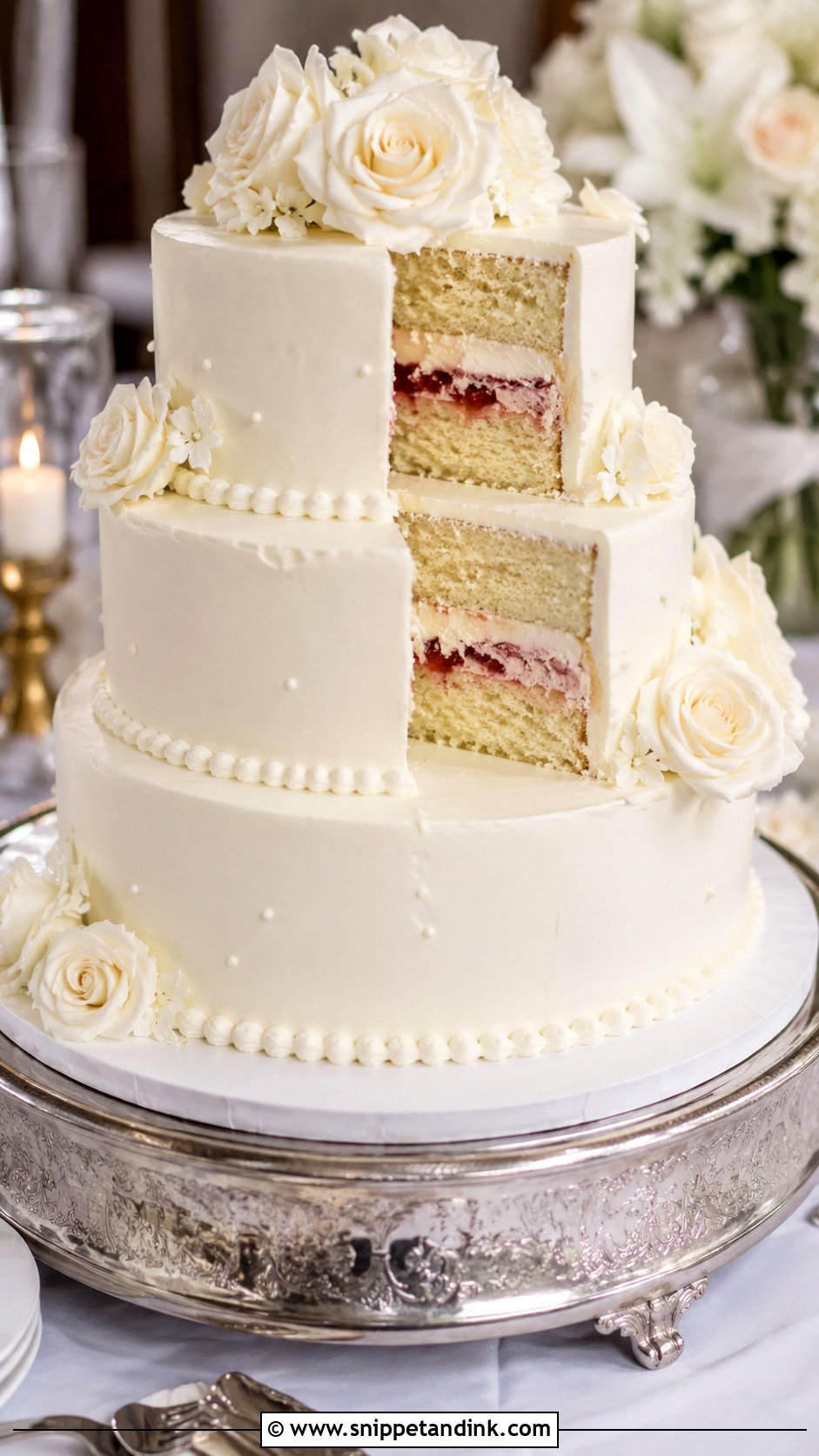
Almond wedding cake has a fragrance many guests associate with weddings, and it’s distinct enough to feel like a choice without being unfamiliar. It pairs well with vanilla buttercream, raspberry, apricot or white chocolate mousse. Do confirm guest allergies early, since almond extract and almond flour can cause a problem for anyone with a nut allergy, and some bakers bake a separate small nut-free tier. Outside, ivory frosting with pearl borders and a few sugar roses keeps it traditional.

20. Vanilla Wedding Cake
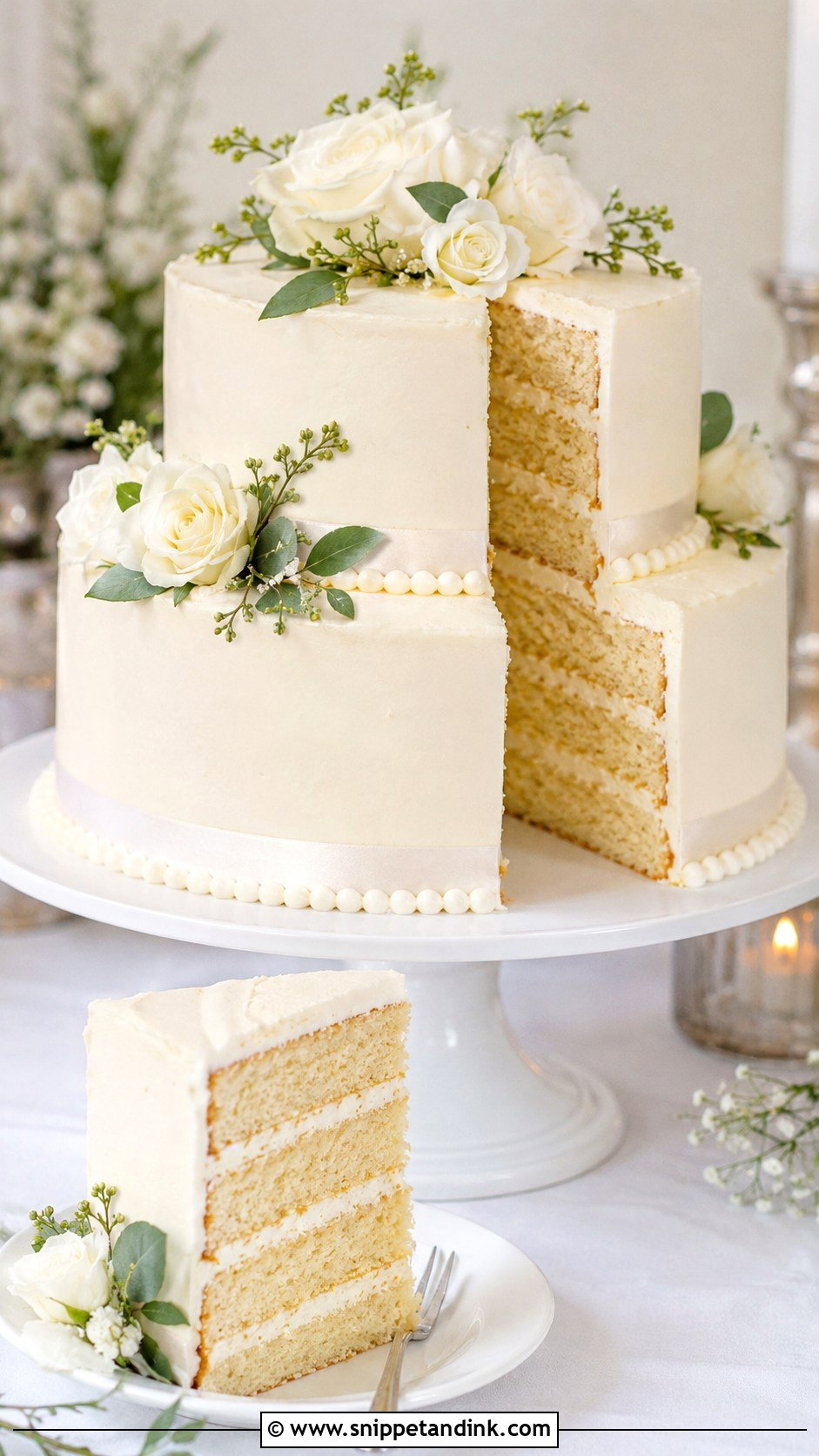
A good vanilla cake should taste of butter and real vanilla, not just sugar, and it’s the flavor I recommend for the bottom tier when a guest list is large and varied. It pairs with buttercream, fondant, whipped frosting, fruit preserves, pastry cream and chocolate ganache. White or ivory frosting decorated with roses, pearls or lace keeps it classic. Ask to taste the plain sponge at your tasting before any filling, because that tells you more about the baker than the decorated sample does.
From Tasting Appointment to the Moment You Cut
Popular cake designers often book months ahead, so I’d start contacting bakers around four to six months before the wedding, and earlier for peak summer weekends or anything with heavy sugar work. Tastings are usually held after a deposit or for a small fee. Lock in the final guest count about a month before the date so the tiers can be sized.
Delivery and the Cake Table
- Ask whether the cake arrives fully stacked or is assembled on site. Tall cakes are usually stacked at the venue.
- Choose a sturdy, level table away from windows, heaters and dance floor traffic.
- Buttercream in a hot tent or sunny room starts to slump, so a cool indoor spot matters more than the view.
- Give the venue coordinator the baker’s arrival time and a contact number.
Saving the Top Tier Without Ruining It
Freezing the top tier for your first anniversary is still a popular tradition, and it works far better if you plan it. Ask the caterer to box the tier before the evening ends. Chill it until the frosting is firm, wrap it tightly in several layers of plastic wrap, then foil, and put it in the coldest part of the freezer. Thaw it slowly in the fridge, still wrapped, so condensation forms on the wrapping instead of the frosting.
Even well wrapped, a sponge cake loses some texture after a year, and fresh fruit fillings fare worst of all. Many bakers now offer a small fresh anniversary cake in the original flavor instead, which tastes much better.
One Detail, One Flavor, and a Cake Table Out of the Sun
Smooth white tiers, buttercream texture, fondant, lace, pearls, roses and piping all last because they look right in the room and in old photographs. Your best choice comes down to your venue, guest count, season and taste. If you love detail, look at lace, Lambeth piping, pearls or sugar flowers. If you prefer something softer, buttercream, fresh flowers and a simple tiered shape suit you better. Either way, bring photos of your gown and flowers to the tasting, and let your baker tell you what will hold up in your venue.
You'll Like These Ideas:









Leave a Reply