
Gold makes a cake look finished without piling on decoration, and on four tiers it can lean soft, modern, vintage or regal depending on how it’s applied. A few flakes of leaf give an organic shimmer. A gold separator adds height. A metallic stencil turns plain white tiers into something custom. Four tiers are already a strong centrepiece, so the real skill is restraint: when I sketch one of these, I decide where the gold goes first and design everything else around it. Use the ideas below to compare finishes and textures, and notice how often the best ones leave whole tiers plain.
Telling Gold Leaf from Painted Lustre Before You Order
Most of the gold on a wedding cake comes from three materials, and they behave very differently. Knowing which one your baker plans to use tells you a lot about how the cake will look under reception lights.
Edible gold leaf
Real edible leaf is very high-carat gold beaten almost transparent. It gives the most convincing metal finish and catches light in irregular flashes. It’s also delicate and costly, so I use it in patches rather than as a full wrap unless the budget allows. It needs a firm, dry surface; on soft or sweating icing it wrinkles.
Painted lustre
Painted gold is lustre dust mixed with a little alcohol or clear extract, brushed on in thin coats. It covers large areas evenly and works for stencils, monograms and full gold tiers. One thing to check: some gold dusts are labelled non-toxic but are not actually sold as edible. I only use dusts labelled edible on anything that will be served, and I’d ask any baker the same question.
Gold accents that aren’t sugar
Separators, acrylic monograms, wraps and toppers add gold without touching the icing. They’re removed before cutting, so they’re the safest choice if you’re unsure about edible metallics.
When you brief your designer, bring photos of your table linens, chargers and any gold in the room. Gold comes in yellow, rose and champagne tones, and a cake painted in bright yellow gold can look brassy next to soft champagne cutlery.
1. Gold Leaf 4 Tier Wedding Cake
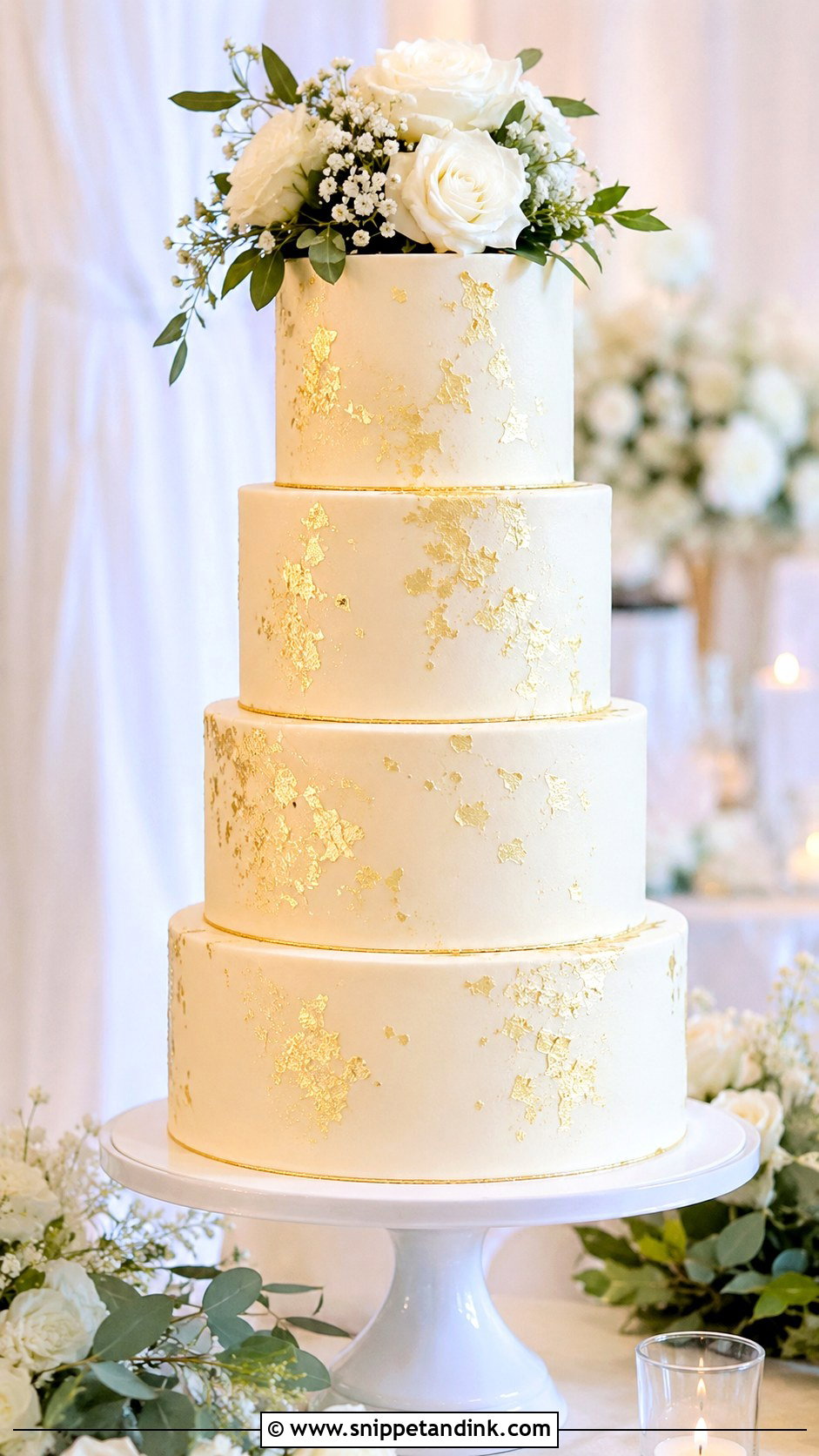
Scattered leaf is the quickest way to make a white cake feel modern. It doesn’t need to cover every tier; edible gold leaf placed with restraint usually looks more expensive than a full wrap. I lay it on smooth ivory fondant or well-chilled buttercream with a dry brush, pressing it into uneven patches near the edges so it looks like it settled there naturally. Leaf is so thin it tears if you breathe on it, which is why it’s applied in a still room, never on a warm, damp tier. White roses, orchids or a little greenery finish it.
2. White And Gold 4 Tier Wedding Cake
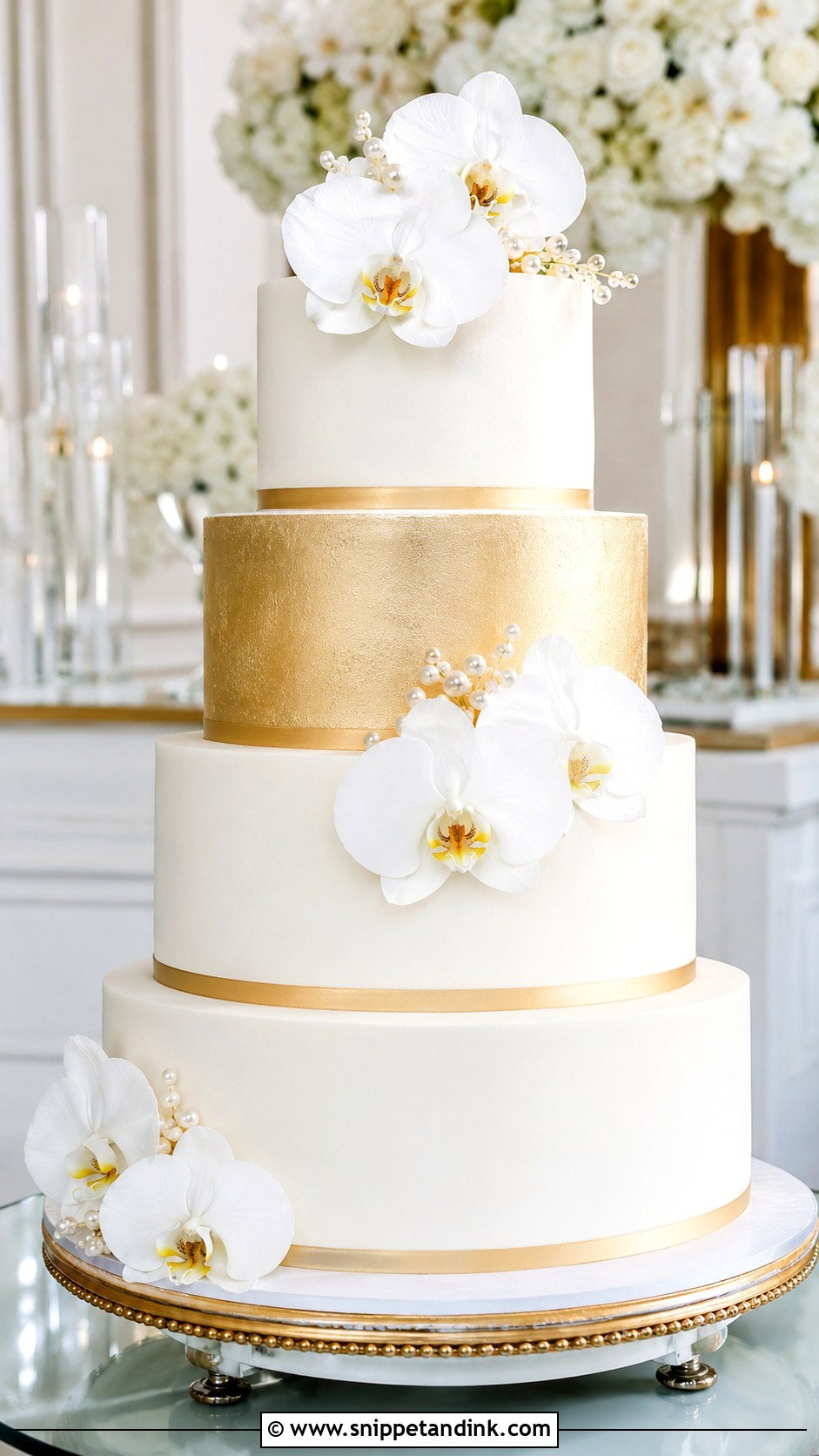
White with one strong gold moment is the version I’d steer most formal couples toward. Clean white tiers keep it bridal, and a single feature, such as a painted bottom tier, a thin metallic band or a gold monogram, gives it formality without fuss. Where you put that feature matters: a gold base tier grounds the cake, while gold near the top draws the eye up and makes it look taller. White florals keep it crisp; blush flowers soften it.
3. Gold Drip 4 Tier Wedding Cake
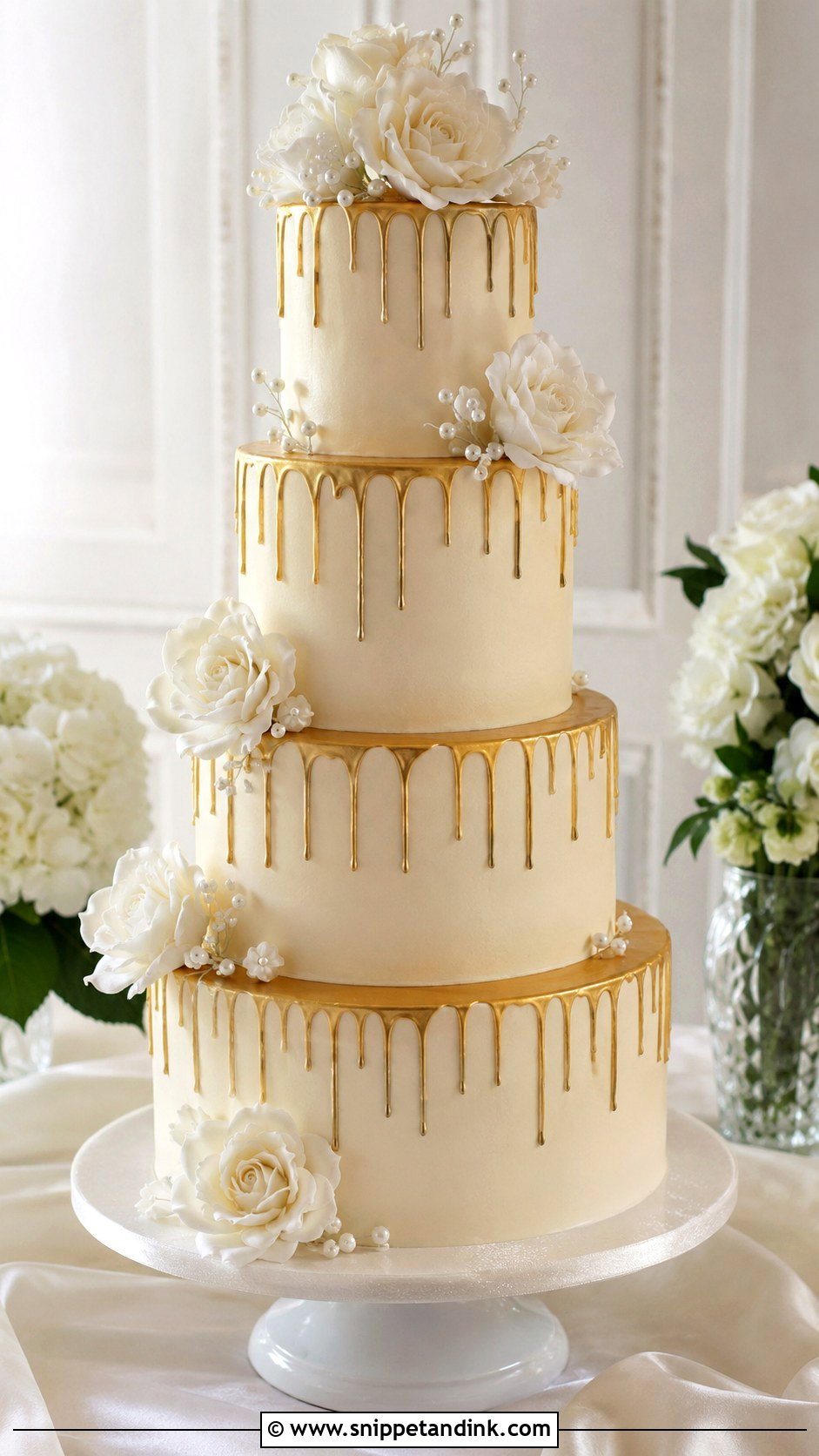
A drip has to look controlled on a wedding cake, not messy. I pour a thin ganache drip over well-chilled ivory buttercream, let it set, then paint it with gold, because metallic paint on a warm drip slides and pools at the base. Pale flavours inside, such as vanilla, almond, champagne or lemon, suit the look when the cake is cut. A few sugar flowers or pearls near the drip lines are enough; on a modern design I’d leave the flowers off and let the drips carry the movement.
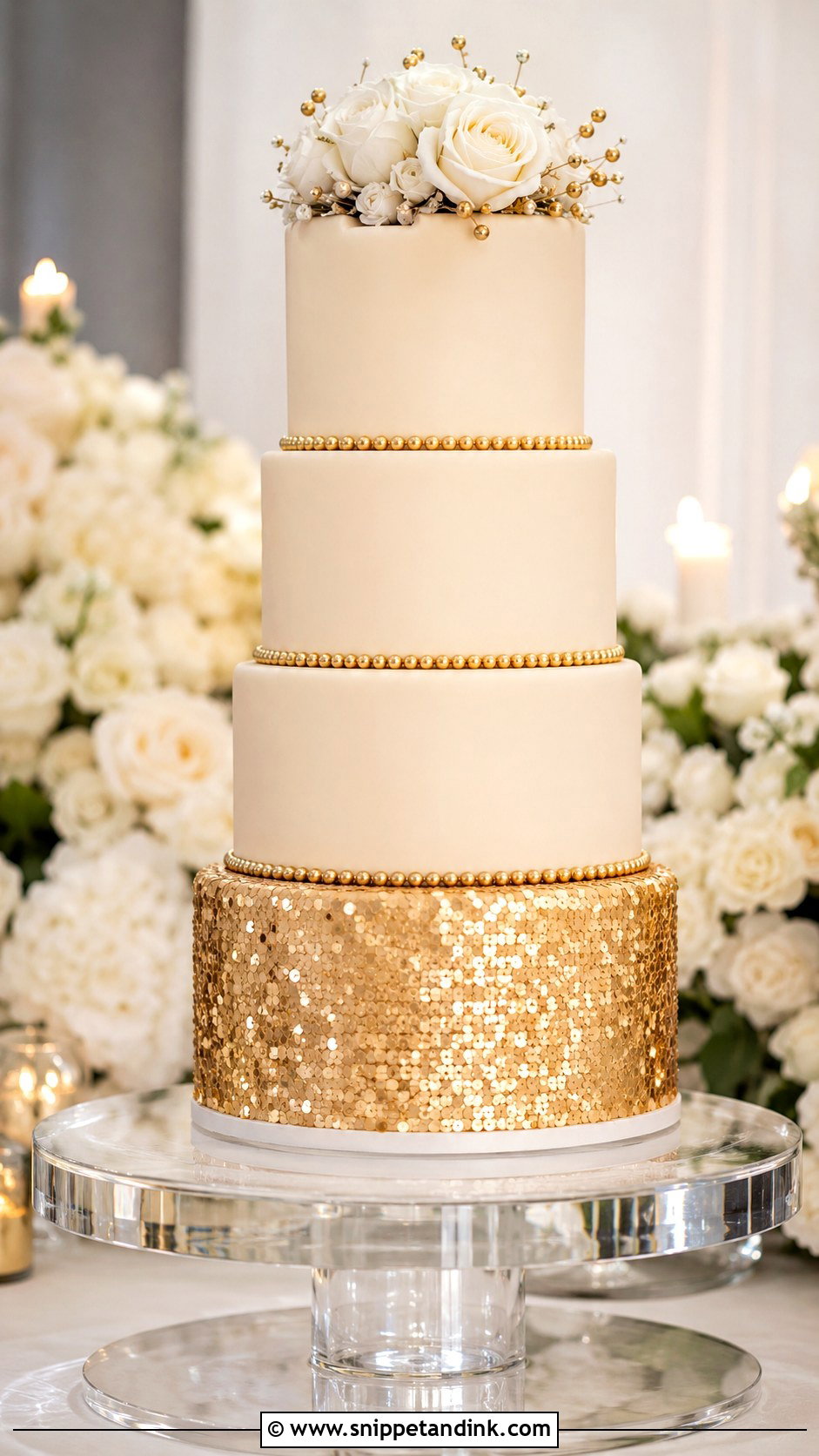
4. Gold Sequin 4 Tier Wedding Cake
Usually just one tier is covered in tiny edible sequins while the others stay white or ivory, which gives contrast without the cake feeling heavy. Each sequin is pressed on by hand, so a fully sequinned tier is slow work and priced accordingly. It comes alive at evening receptions, where candlelight and uplighting bounce off the texture; in flat daylight it can look surprisingly matte. Smooth fondant on the other tiers lets the sequin band stand out, and it pairs naturally with satin linens and gold flatware.
5. Gold Lace 4 Tier Wedding Cake
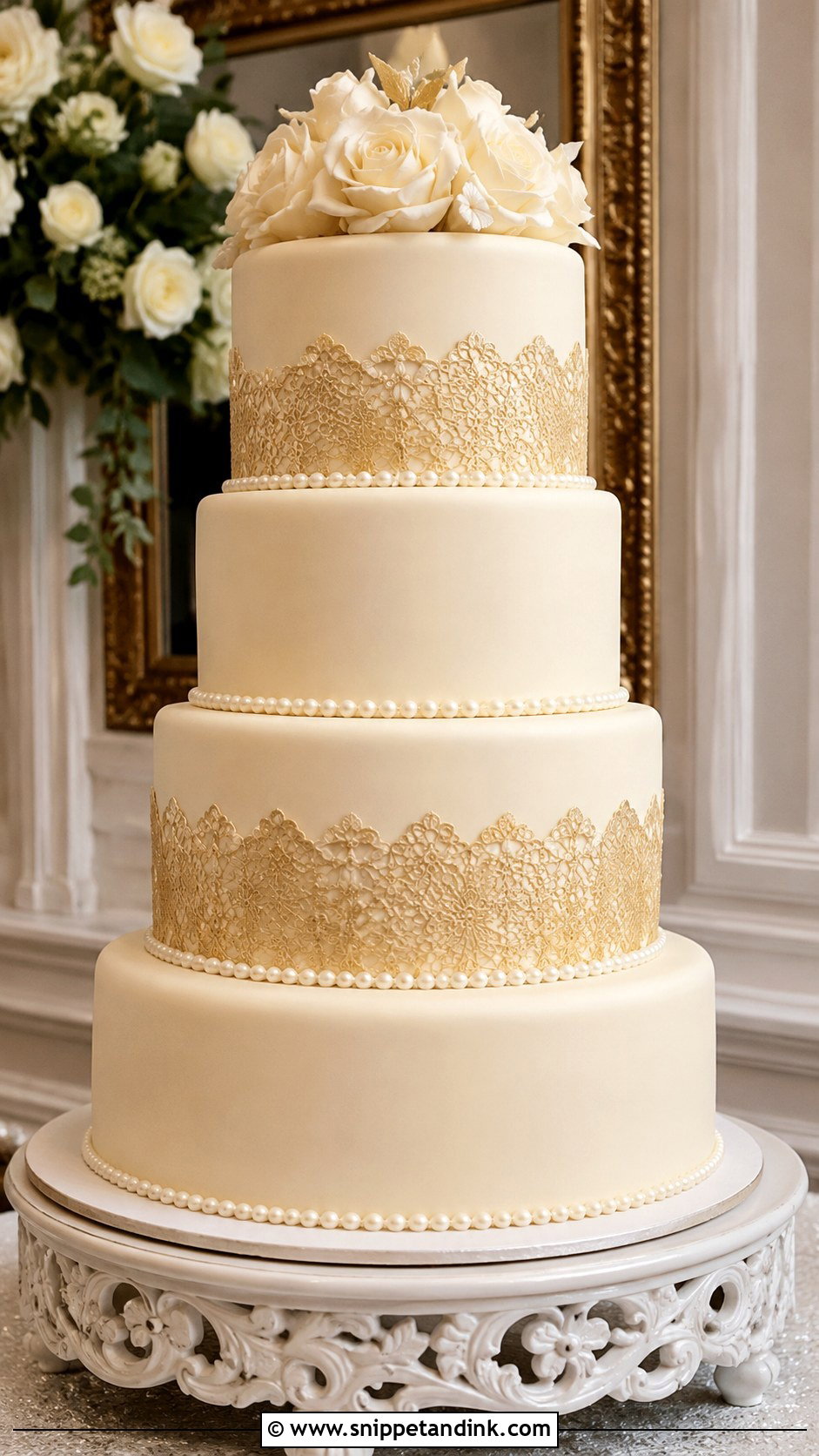
Lace can be piped, stencilled or pressed from a silicone mould in fondant, then brushed with soft gold lustre. It gives the look of embroidery without feeling busy, especially on alternating tiers with smooth ivory between them. I’d ask to bring a swatch or photo of your dress lace, because matching the motif is the detail guests notice up close. Moulded lace holds its shape best on fondant; on buttercream I’d pipe it instead. Ballrooms, estate venues and candlelit indoor receptions suit it.
6. Gold Stencil 4 Tier Wedding Cake
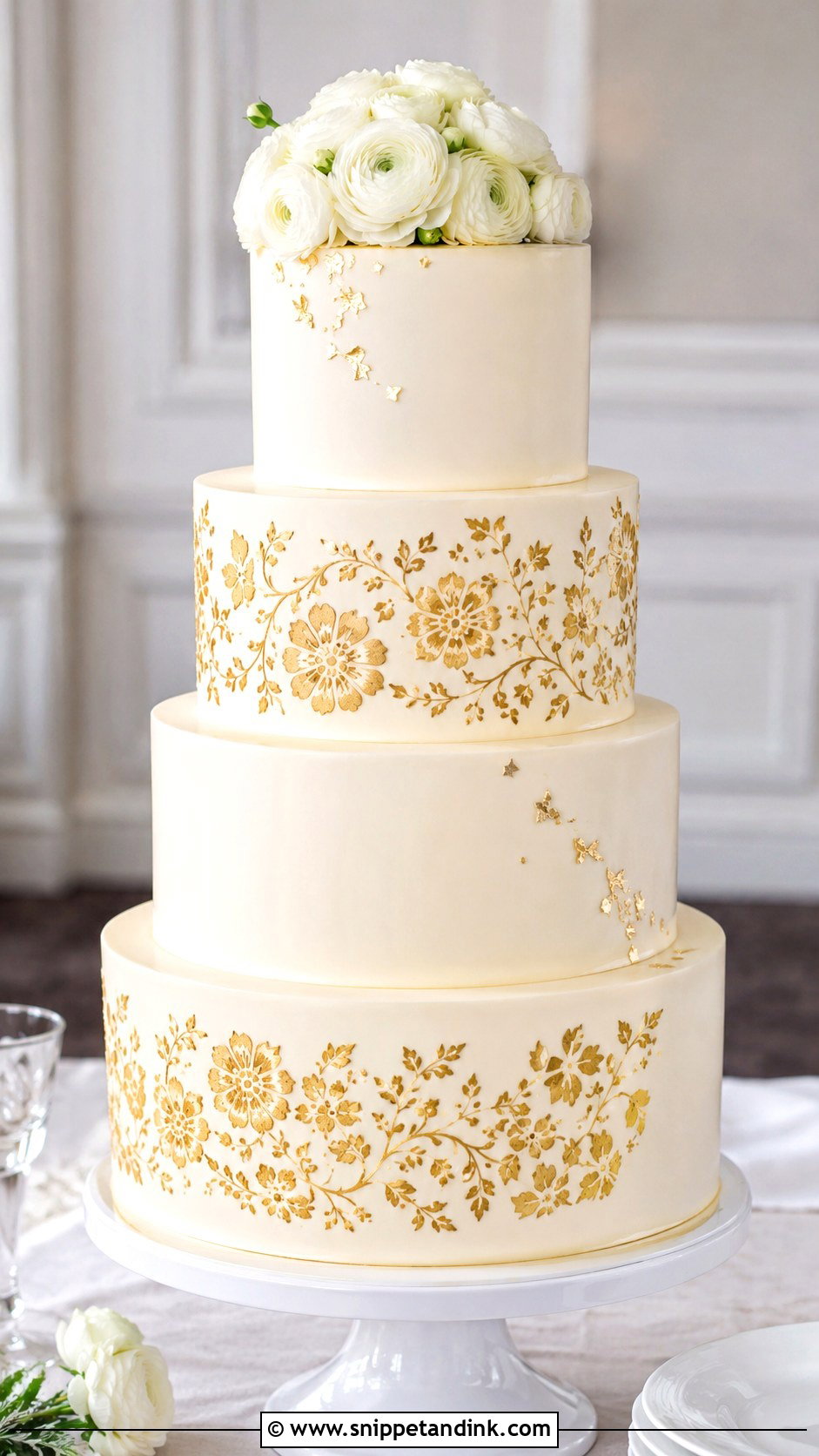
Stencilling gives you a detailed pattern without the cost or weight of heavy sugar work. Damask, vines, floral scrolls or geometric patterns go onto smooth fondant or firm buttercream in edible metallic colour. The stencil must sit perfectly flat, so I only stencil fondant that has firmed up overnight; on soft icing the edges bleed. One or two stencilled tiers are plenty, letting the pattern stand out without fighting the shape. Ivory roses or a pearl border finish it neatly.
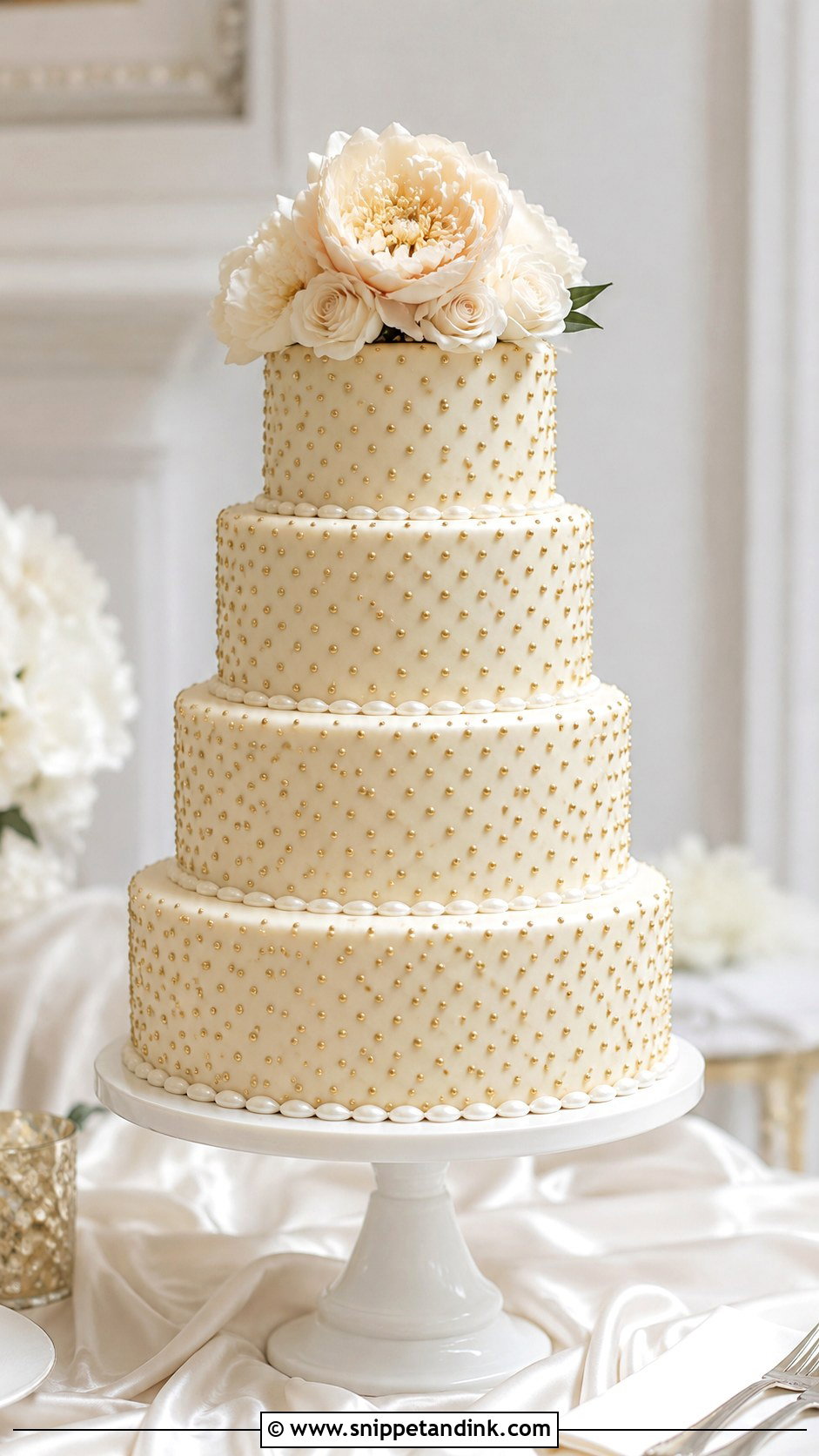
7. Gold Pearl 4 Tier Wedding Cake
Small edible pearls can run around tier borders, scatter across smooth icing or line up in neat rows, and brushing some of them gold warms the whole cake without making it flashy. Sugar pearls soften if they sit on damp buttercream for hours, so for a long reception I attach them to a firm crusted surface or to fondant. Inside, almond sponge with vanilla bean filling suits the mood. Keep the flowers plain, perhaps white roses or cream peonies, so the pearl detail stays visible.
8. Gold Geode 4 Tier Wedding Cake
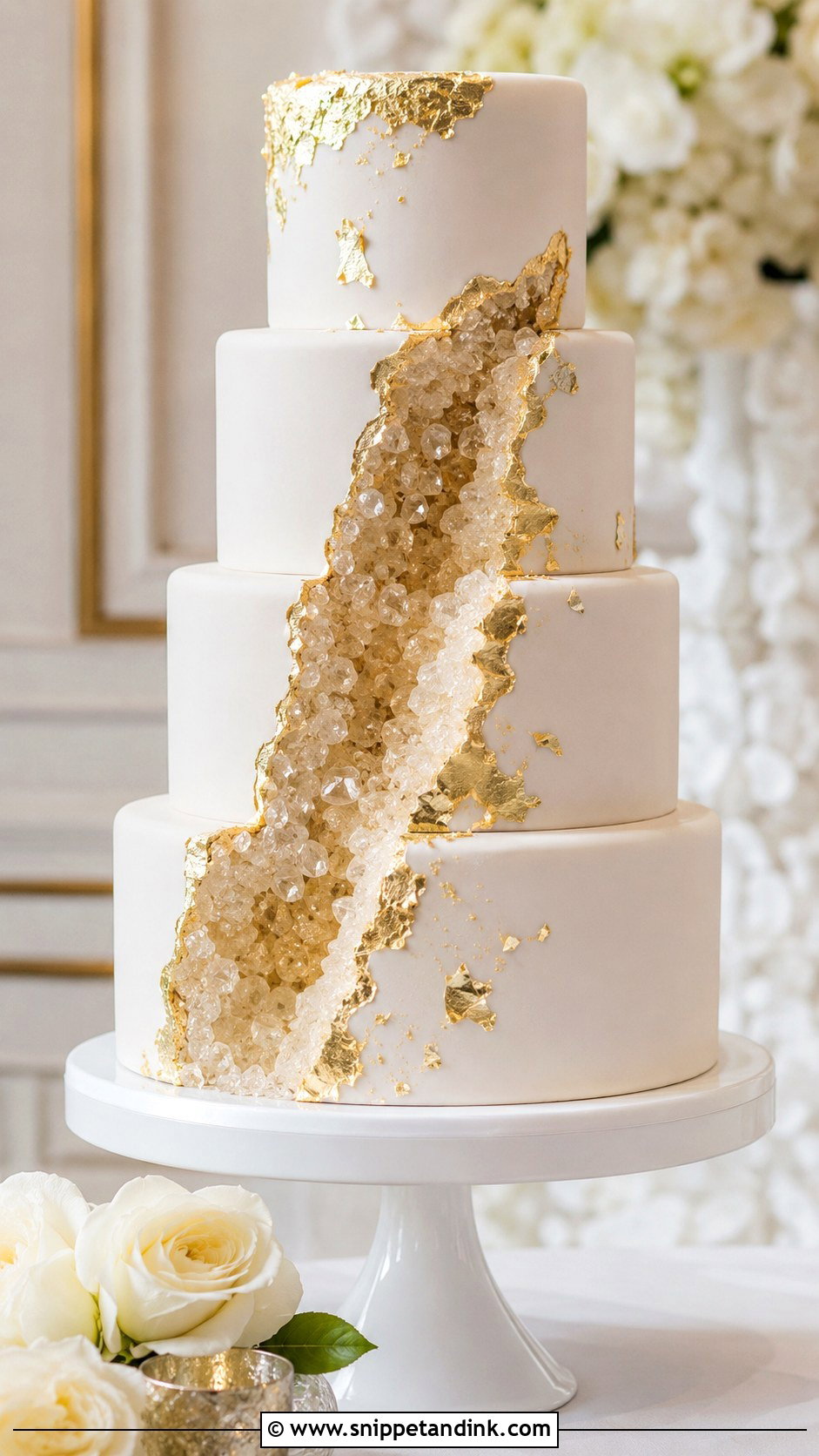
The geode is carved into the side of the tiers, filled with sugar crystals and edged with edible gold. For a wedding I’d choose clear, champagne or pale blush crystals over bright amethyst or teal, which can clash with the room. Four tiers give the crack room to travel upward across more than one tier, which looks more natural than a single small cut. Isomalt crystals are glass-like and can be sharp, so I make sure the carving sits where it won’t be served to guests. Smooth white fondant and minimal flowers keep it from looking crowded.
9. Gold Floral 4 Tier Wedding Cake
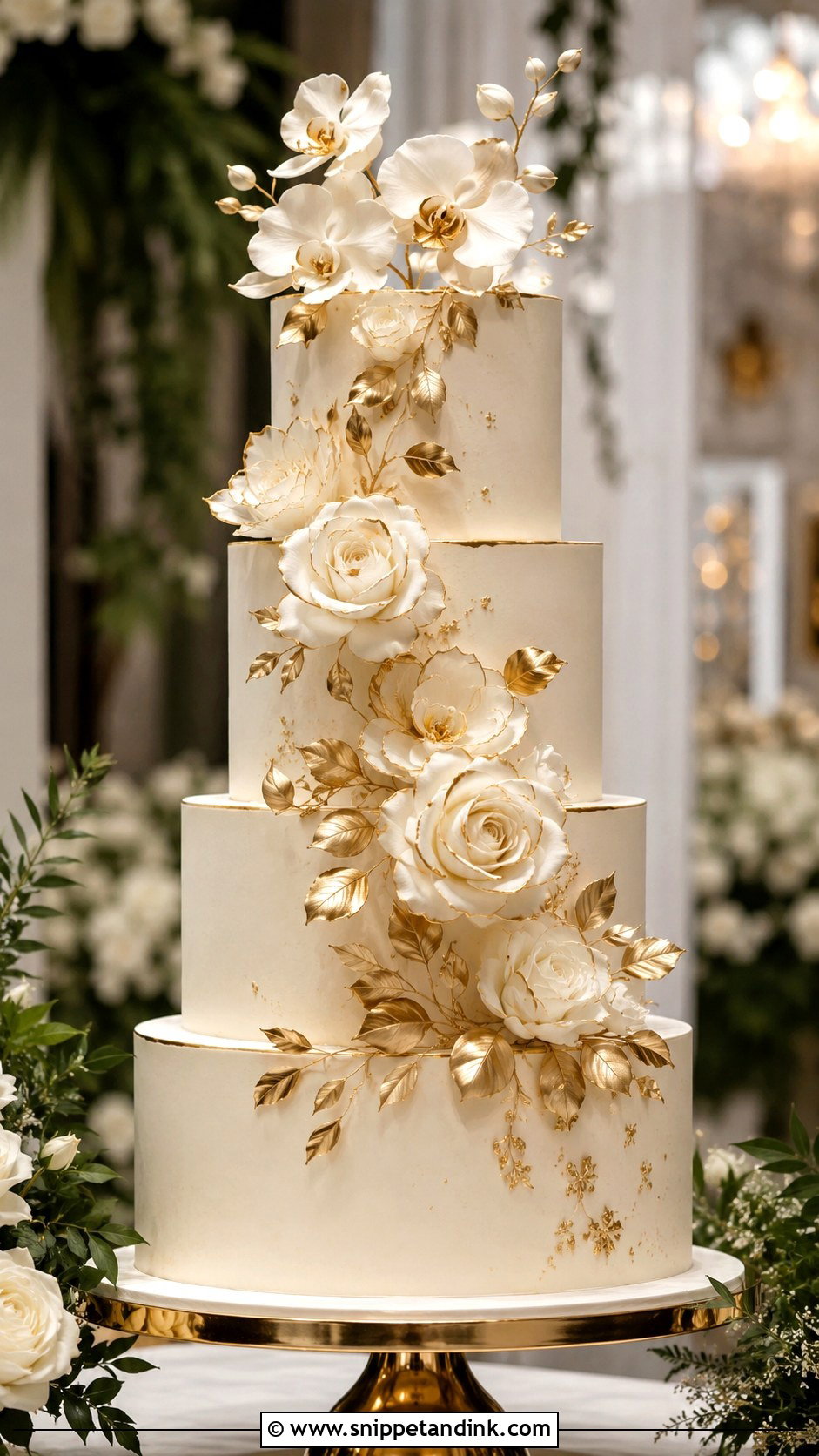
Here gold lives on the flowers: painted petal edges, tiny leaf accents, stems or the rims of sugar blooms. The floral theme stays front and centre with a soft shimmer over it. White, ivory, blush and champagne flowers let the gold read delicately. A cascading arrangement also softens the height of four tiers. If you love a garden feel but need a formal finish, this is a sensible middle ground, and sugar flowers have the bonus of being kept afterwards.
10. Gold Buttercream 4 Tier Wedding Cake
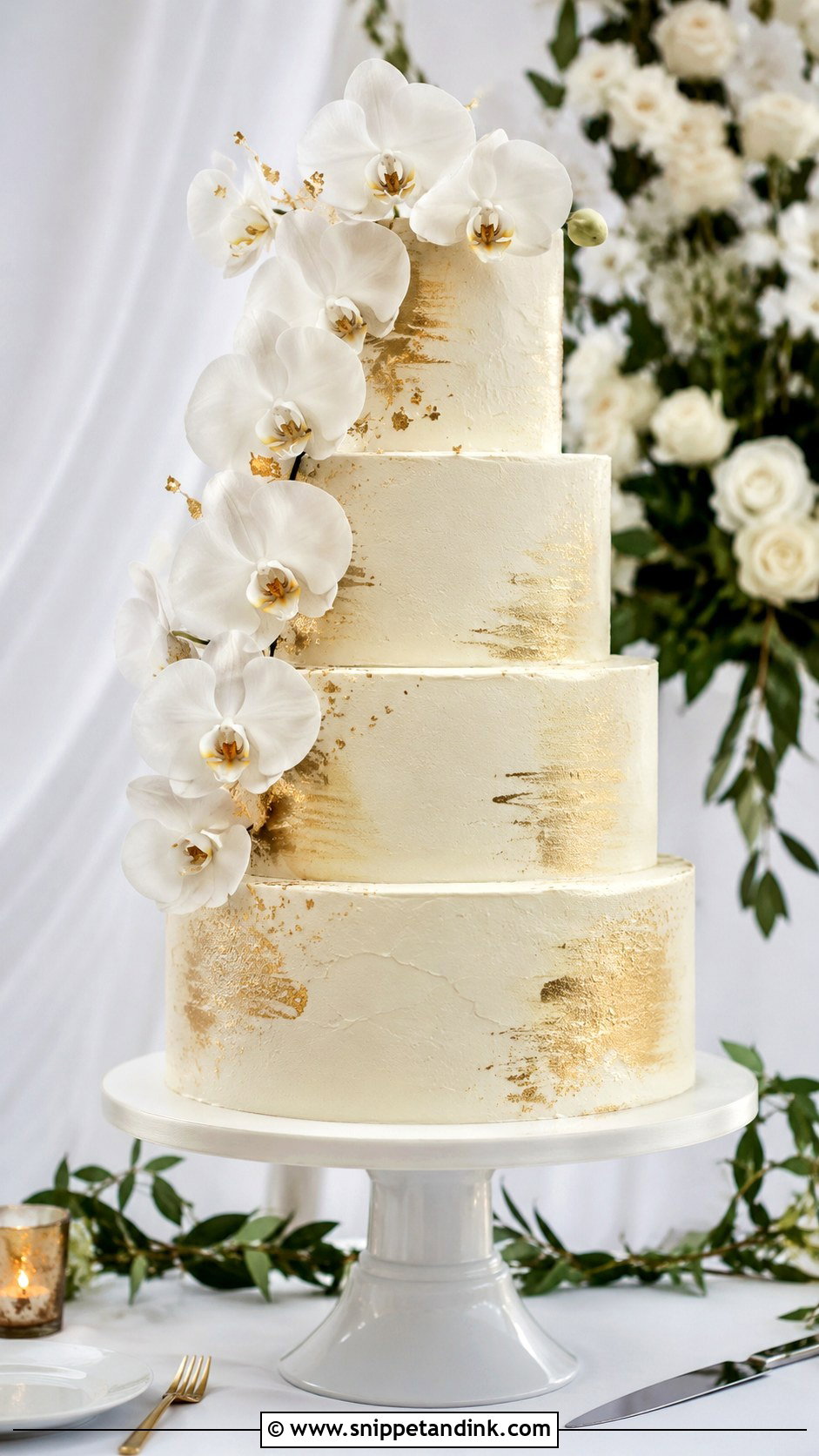
Buttercream has a softer, more natural texture than fondant, and many couples prefer the taste. Gold goes on as painted edges, leaf patches, brushstrokes or a slim border between tiers. Buttercream is the finish most affected by heat, though. I chill each tier before painting so the gold sits on a firm surface, and I’d avoid this option for a hot outdoor reception where the icing will soften and the gold will smear when touched. A little texture in the icing helps the metal catch light.
11. Gold Fondant 4 Tier Wedding Cake
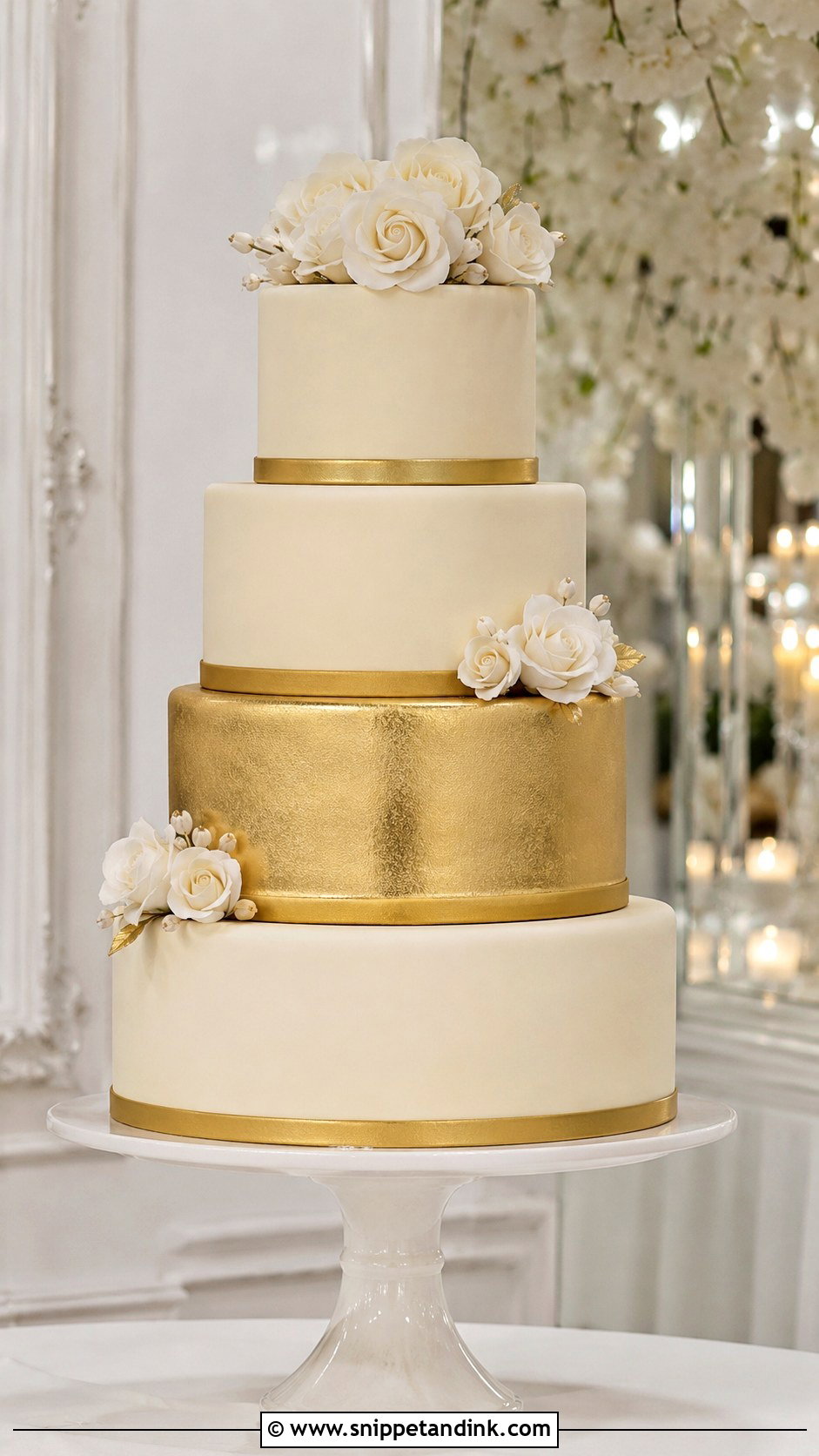
Fondant gives the cleanest, sharpest finish for a formal wedding. It’s the surface I use for crisp edges, painted metallic details and structured decorations that need something smooth underneath. One fully gold tier looks striking when the other three stay ivory or white. Painting a whole tier evenly takes several thin coats of lustre mixed with alcohol, because one thick coat leaves brush streaks that show under spotlights. Gold bands, bows or geometric panels also suit fondant, and white sugar flowers soften the architectural feel.
12. Gold Marble 4 Tier Wedding Cake
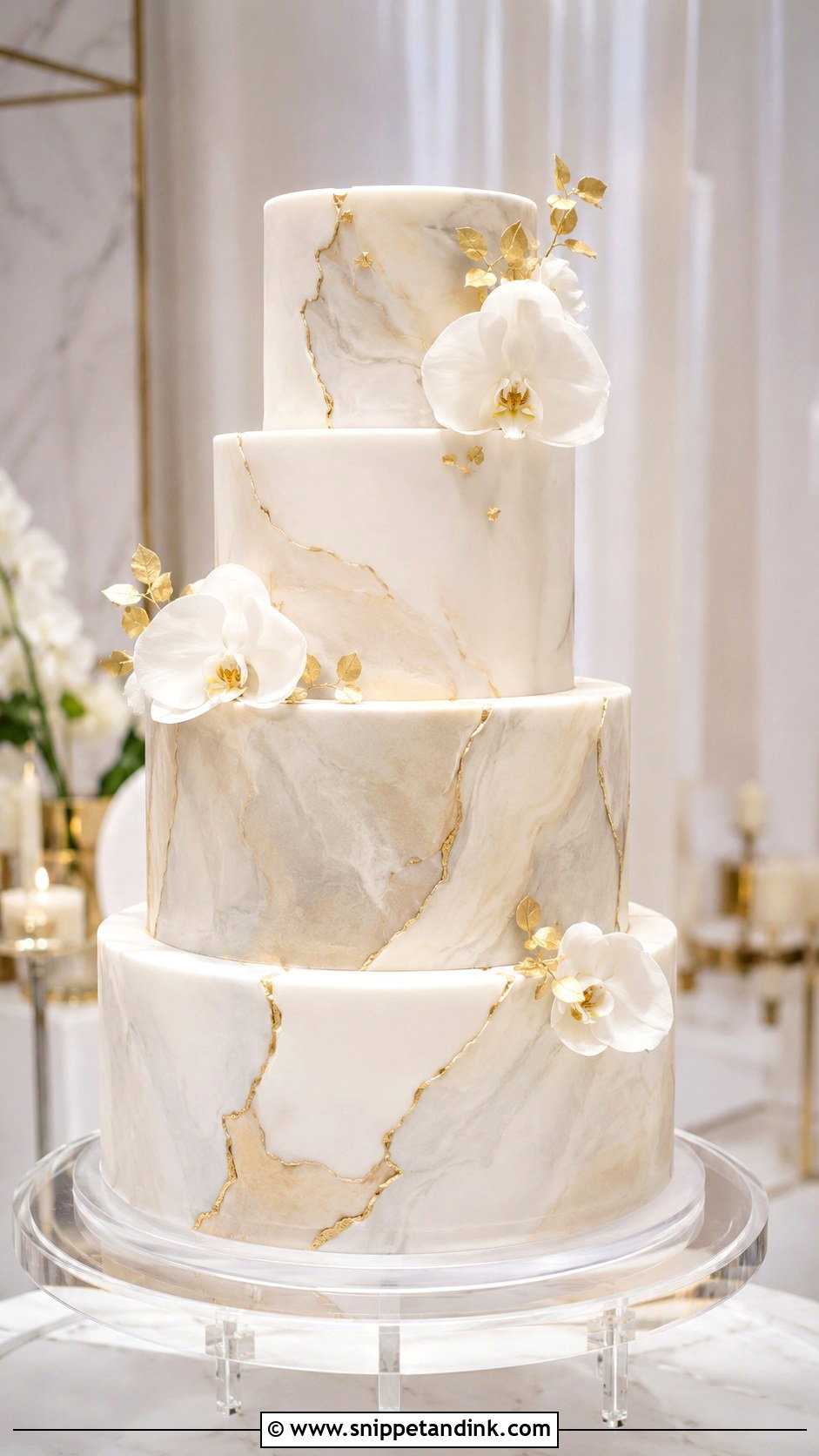
Marbling can be soft grey, ivory, beige or blush, with fine gold veins running through it like stone. It works best on fondant, where the surface stays smooth and the veining can be painted with a fine brush. Real marble has irregular, branching veins, so I paint them freehand and vary the thickness; evenly spaced lines look printed. Use marble on one or two tiers to avoid a heavy look, and stand it on a clear acrylic stand or a plain white table.
13. Gold Ombre 4 Tier Wedding Cake
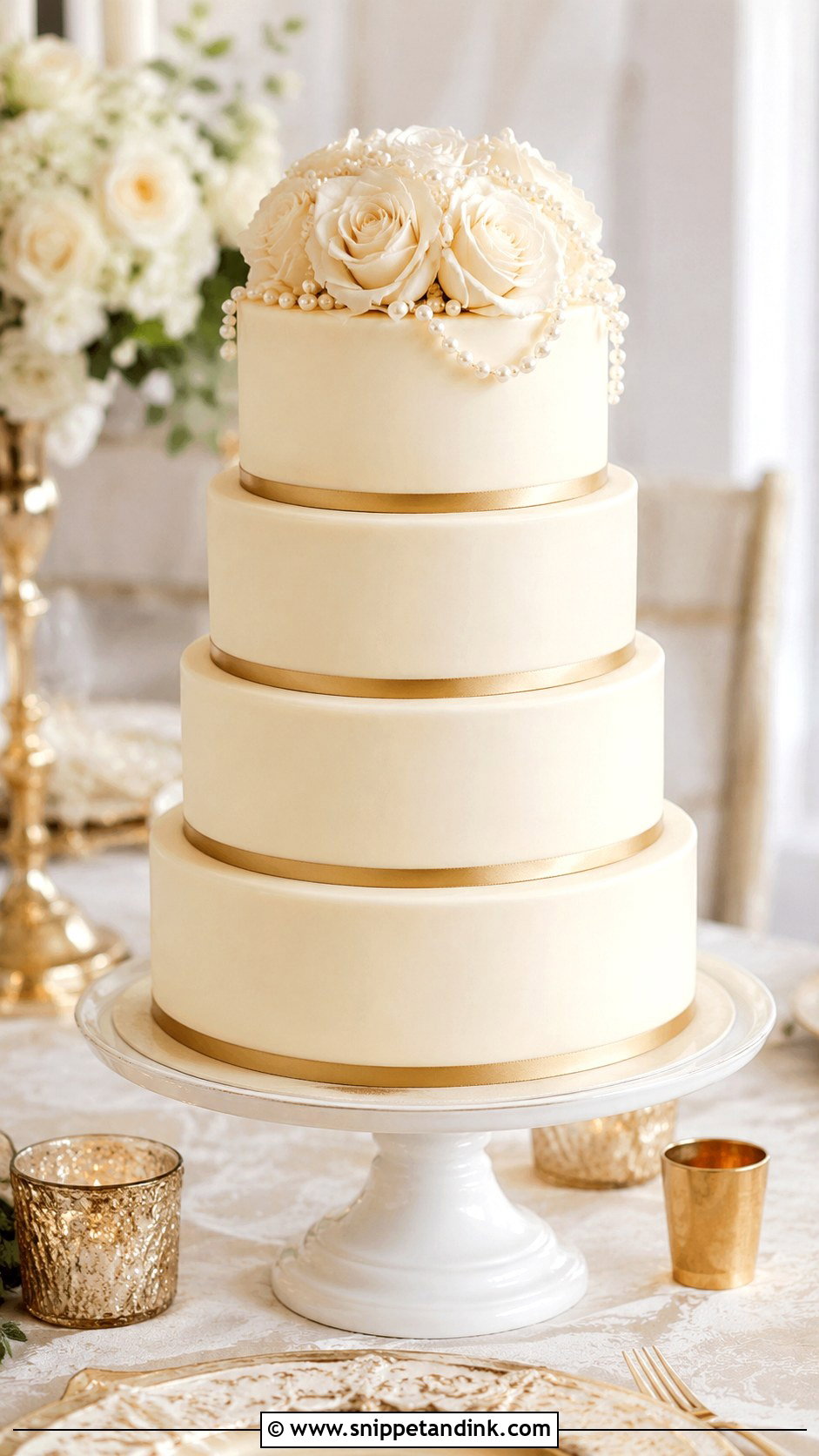
An ombre can move from ivory at the top to champagne gold at the bottom, or from pale blush into warm metal. Smooth buttercream suits it because the colour change can be blended while the icing is soft. The challenge on four tiers is keeping the steps even, so I mix every shade before I start rather than tinting as I go. Keep decoration minimal so the fade stays visible: white florals, a few leaf flakes or a thin pearl border. It suits couples who want gold but prefer a gentle look.
14. Gold Monogram 4 Tier Wedding Cake
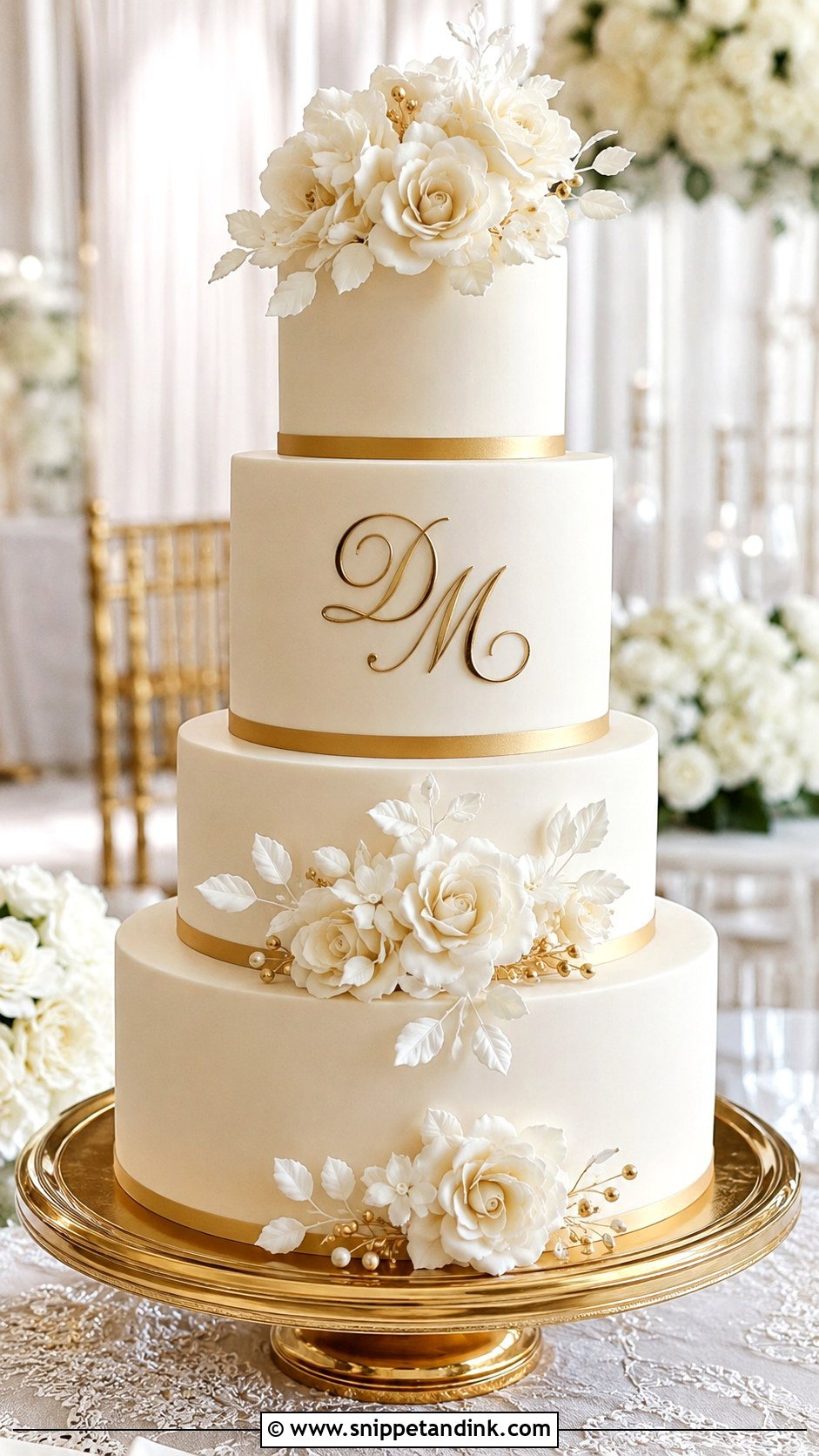
Initials on the front of one tier make a cake personal without tying it to a trend. They can be edible gold, fondant or a small acrylic piece. I keep the letters simple and set them on smooth white or ivory, and I check the spacing from a few metres back, because a monogram that looks right on the work bench can look cramped from the guests’ side of the room. Thin gold bands or small floral clusters frame it. It also reads clearly in cake-cutting photos.


15. Gold Baroque 4 Tier Wedding Cake
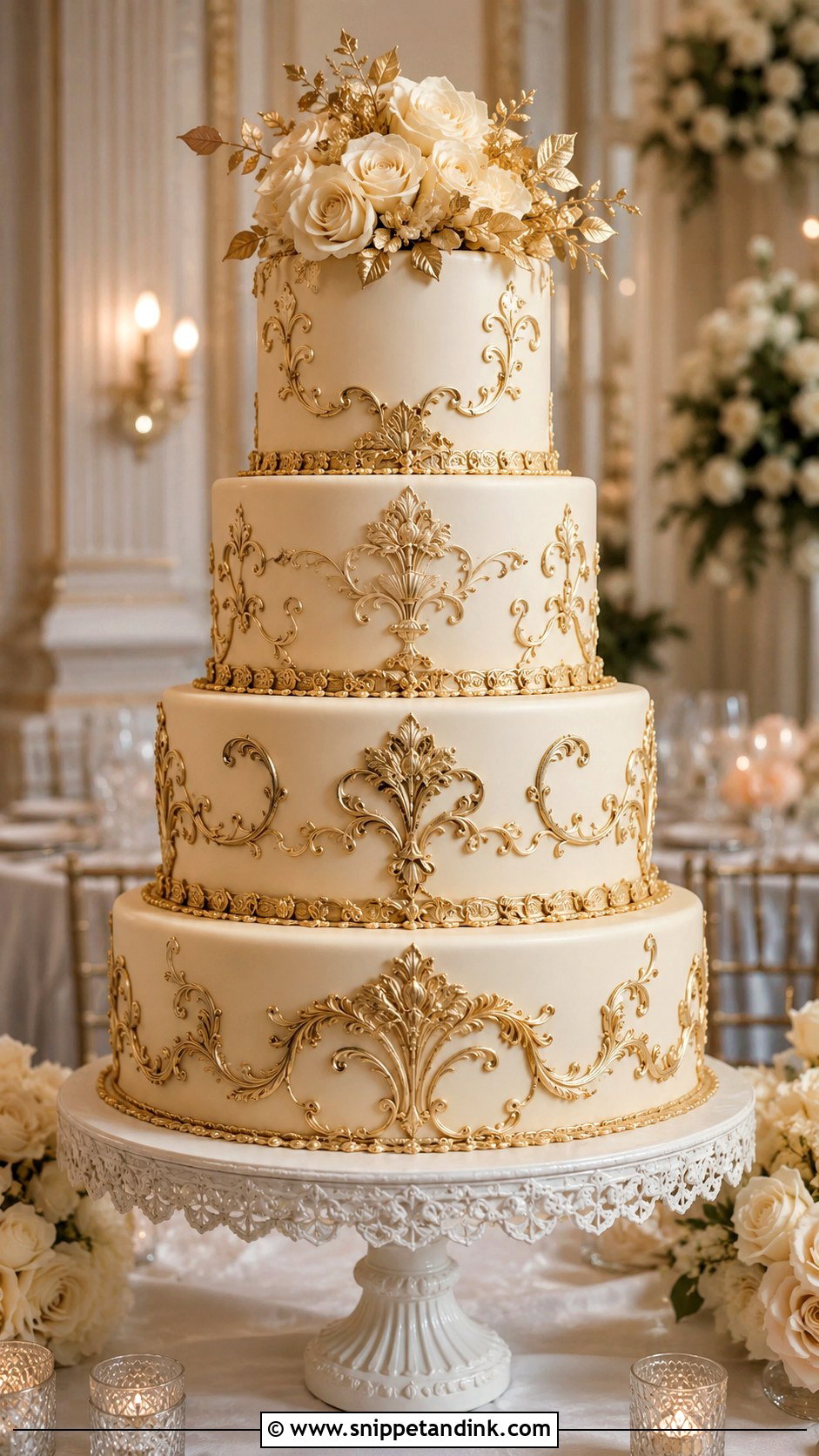
Baroque means raised scrollwork, gold appliques, sculpted borders and dramatic patterns. These details feel rich quickly, so I keep the base a soft ivory and use gold only to pick out the curves and raised edges rather than coating the whole cake. Heavy sugar decoration adds real weight, which means proper internal supports in every tier. White roses or cream orchids suit it, and it belongs in a mansion venue, a grand ballroom or a formal evening wedding.
16. Gold Art Deco 4 Tier Wedding Cake
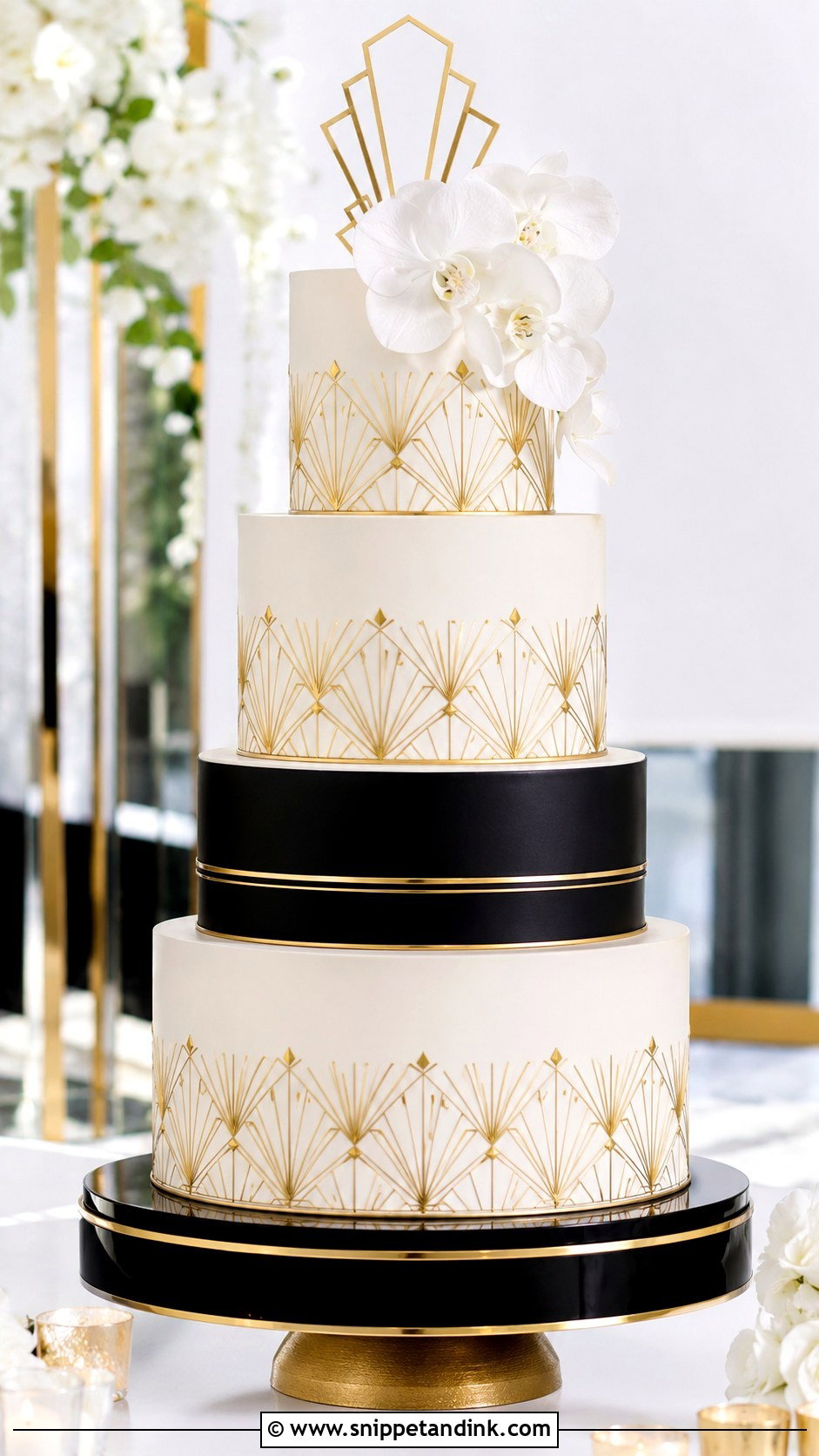
A gold art deco design relies on strong lines and symmetry: fan shapes, stepped patterns, sharp borders and sometimes black accents. Deco is unforgiving of wobbly lines, so I cut the geometric pieces from thin fondant with templates instead of painting them freehand. Ivory or white should still be the main colour, with gold defining the pattern. One black tier can look striking if lighter tiers balance it. City venues and hotel receptions with geometric decor are its natural home.
17. Gold Ribbon 4 Tier Wedding Cake
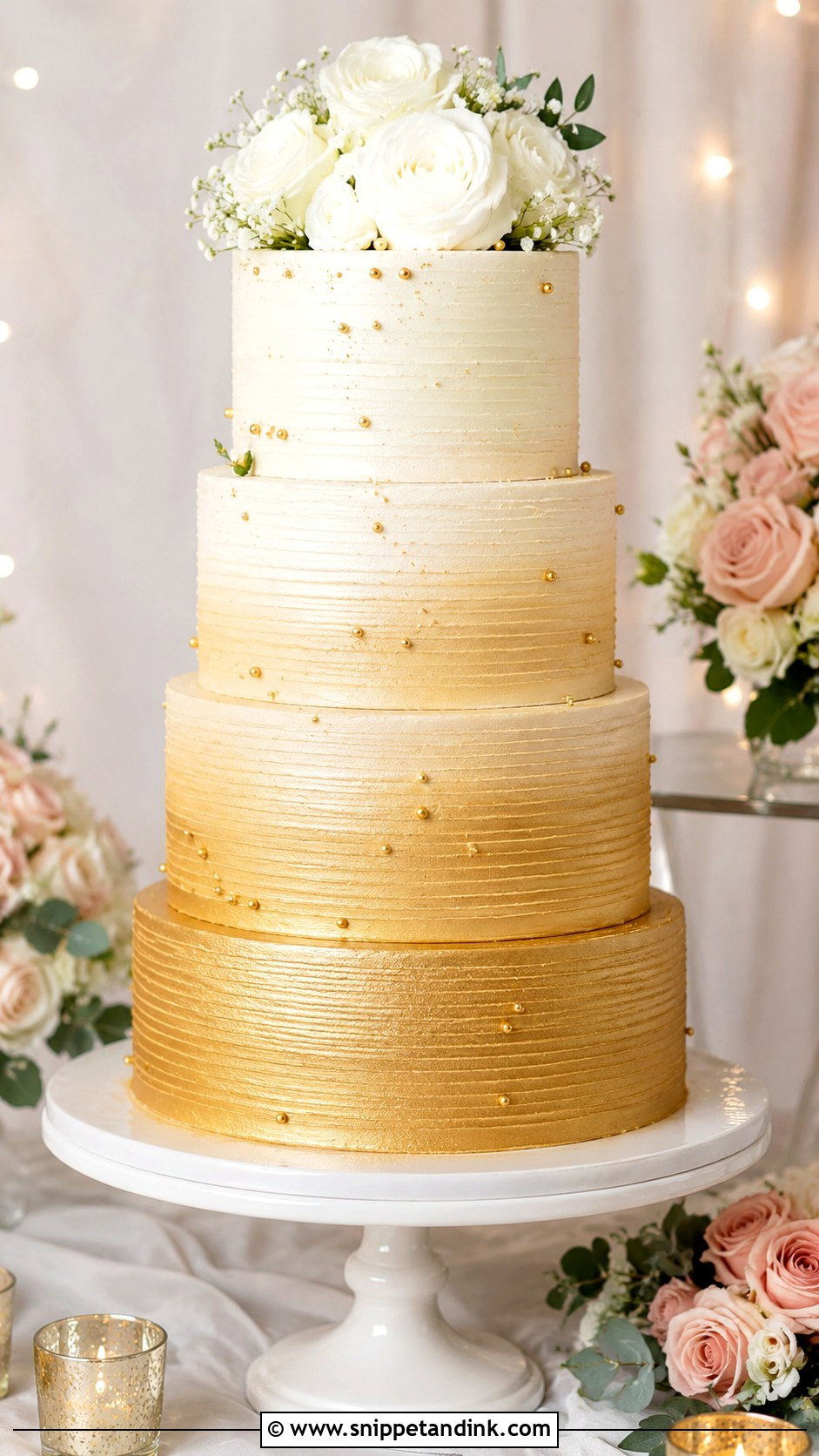
A metallic ribbon around the base of each tier gives a neat finished edge and suits couples who prefer straight lines to heavy decoration. It can be fondant, a sugar ribbon with a satin finish, or a real decorative ribbon chosen by your baker. Fabric ribbon looks lovely but absorbs grease from buttercream and can stain, so I back it with a strip of food-safe tape or switch to sugar. It’s a smart match when the room already has gold chairs, chargers or table accents.
18. Gold Ruffle 4 Tier Wedding Cake
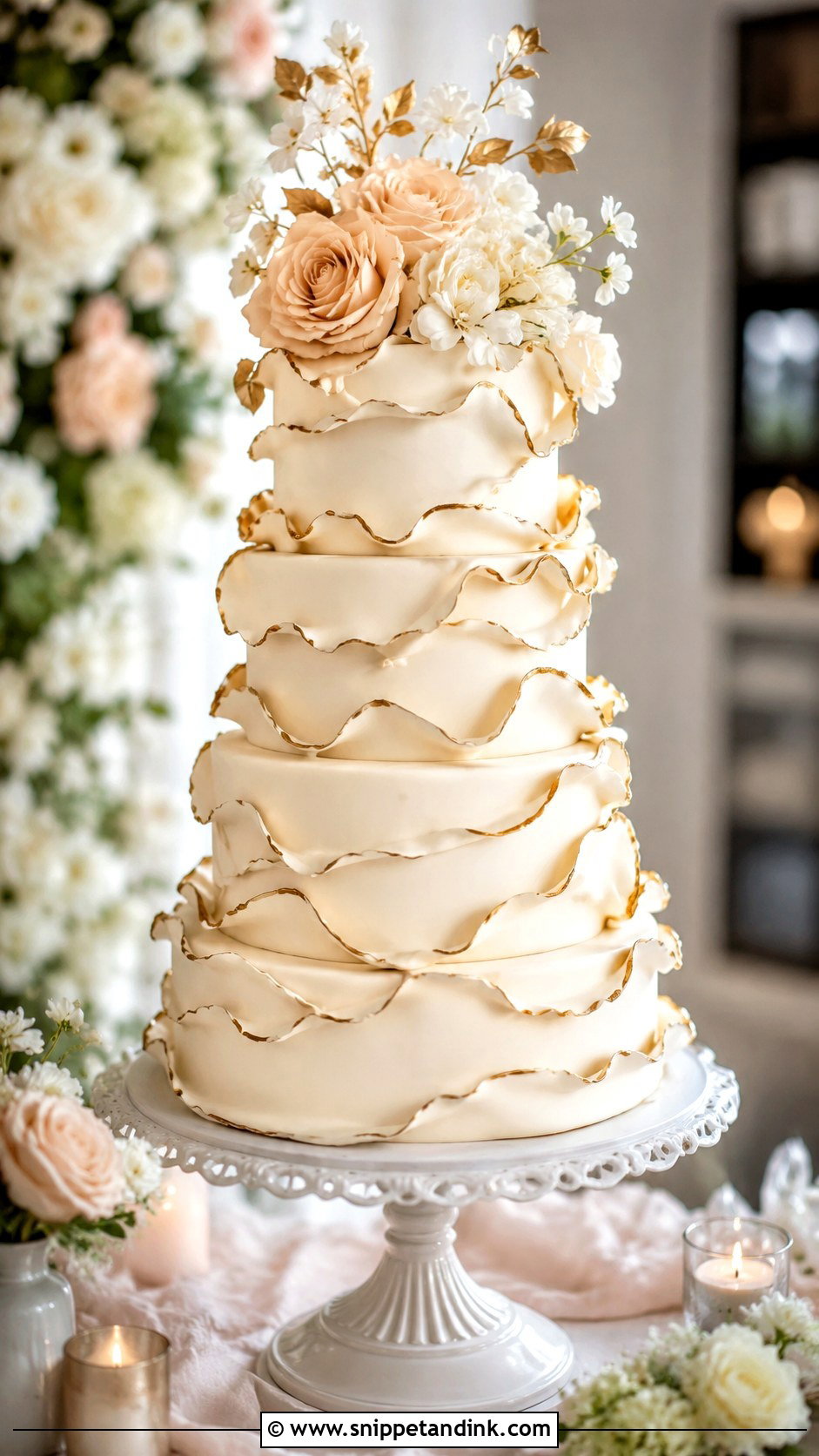
Ruffles can be made from fondant, wafer paper or buttercream, and a gold ruffle 4 tier cake gets its shimmer from gold brushed along the edges, almost like fabric catching light. Wafer paper is my choice when ruffles need to look light, but it hates humidity and can wilt in a steamy room, so for summer I’d use thin fondant. One or two ruffled tiers with smooth tiers between keeps the shape elegant. White flowers or champagne roses suit it.
19. Gold Watercolor 4 Tier Wedding Cake
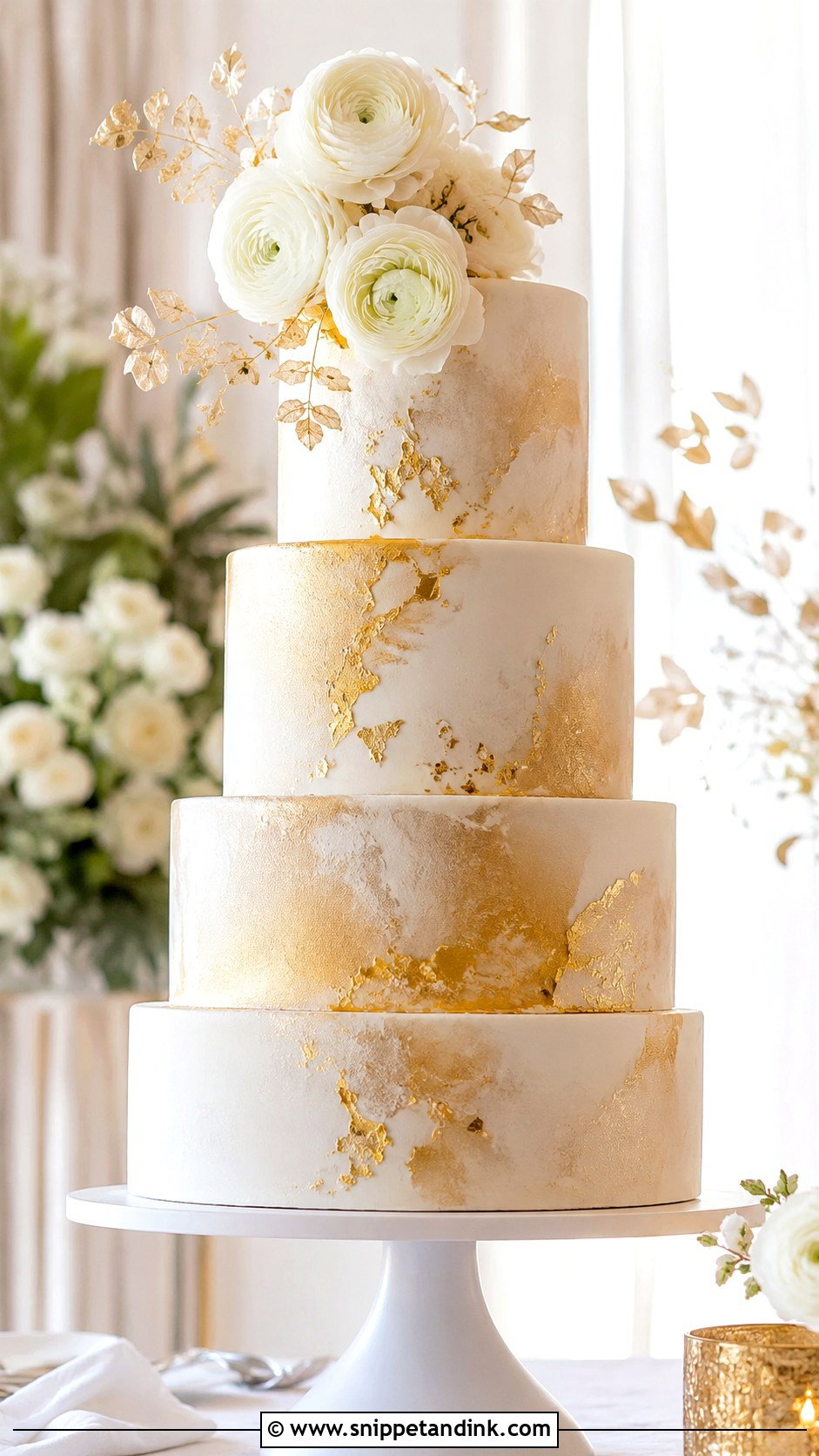
Watercolour gives an artistic effect that’s still soft: ivory, champagne, blush, beige or pale grey washes with touches of metallic gold. The colour should drift across the tiers rather than form hard blocks. I paint it with thinned food colour on fondant, building layers lightly, because overworking the surface makes it tacky and blotchy. A few leaf accents or fine painted lines add depth, and airy flowers, such as white ranunculus or small garden roses, keep it from feeling heavy.
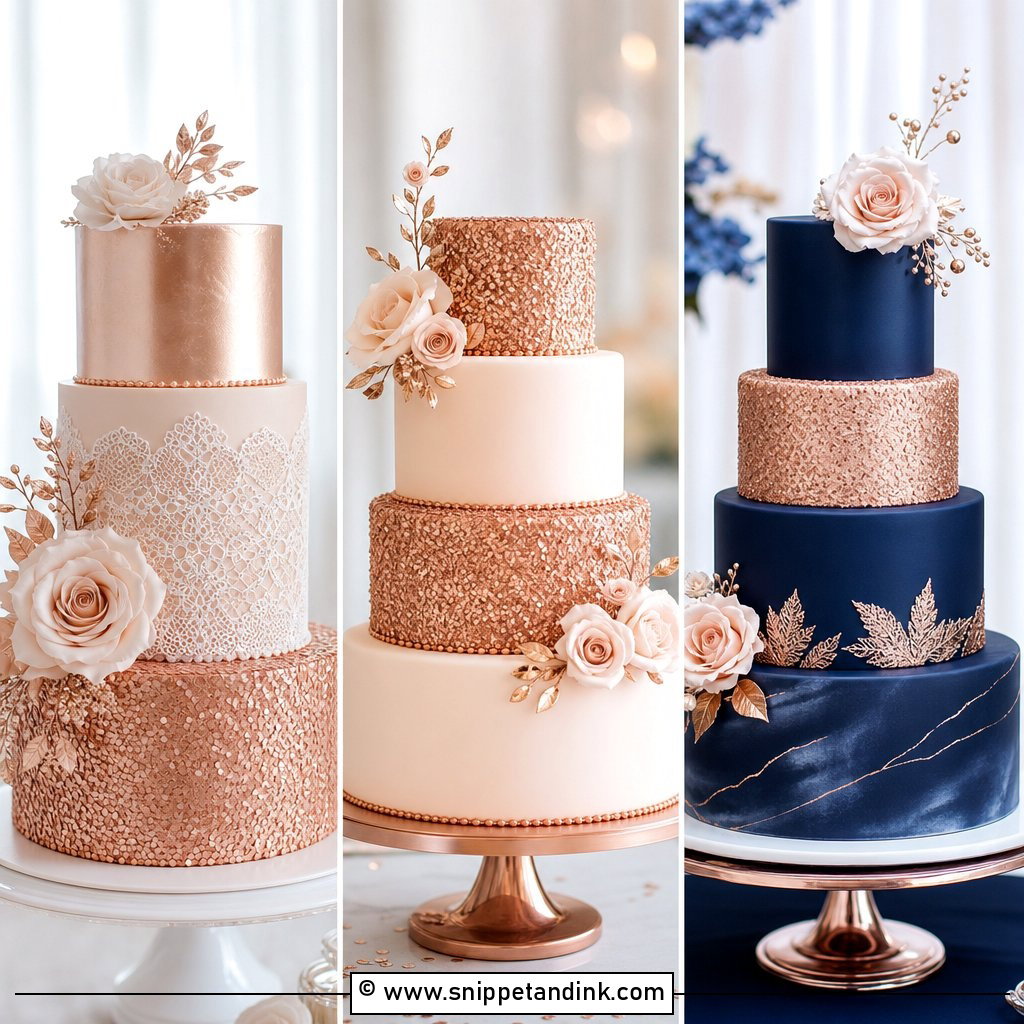



20. Gold Floral Cascade 4 Tier Wedding Cake
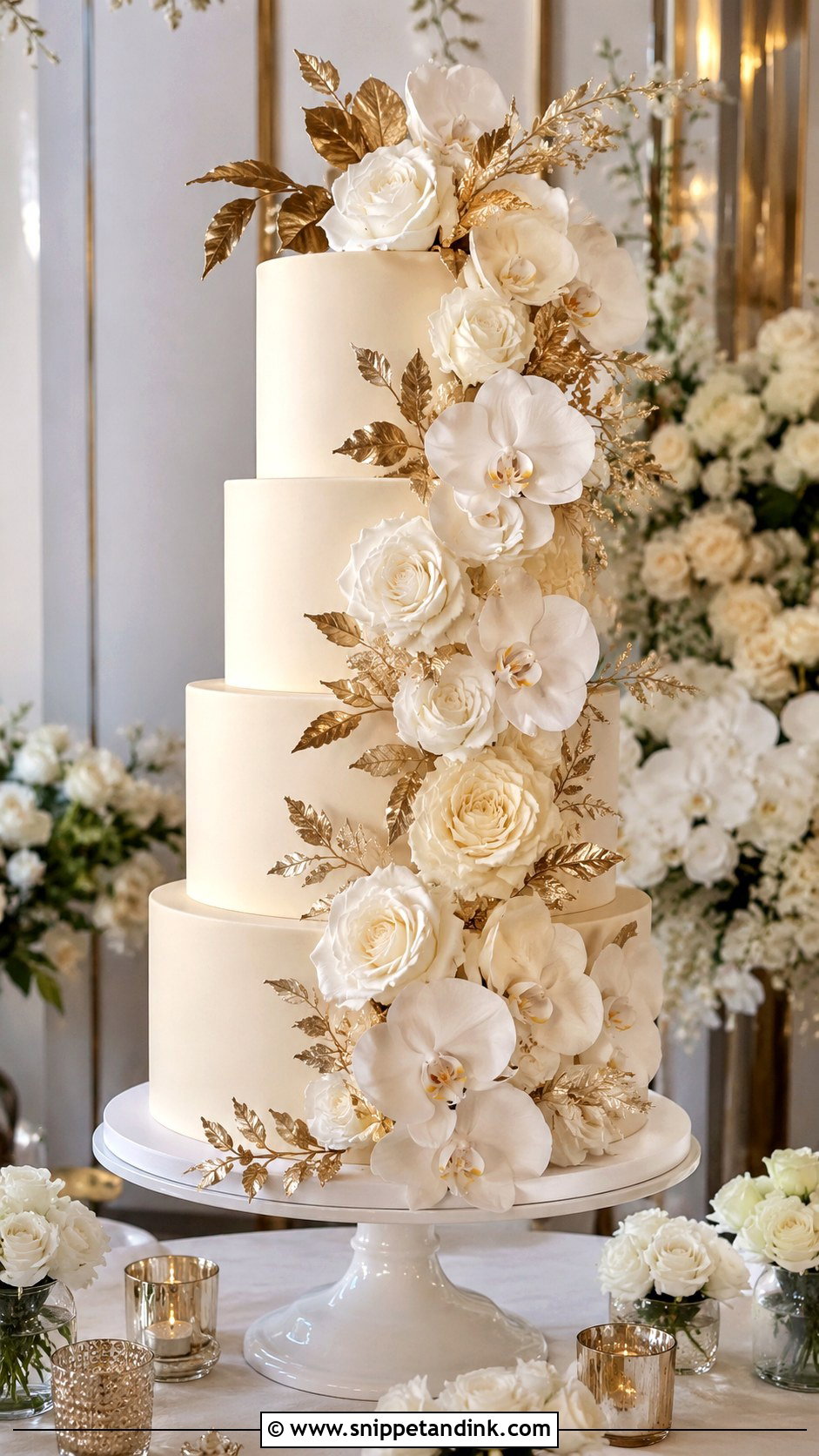
A cascade draws one long line from the top tier to the bottom. The flowers can be fresh, sugar or a mix. White orchids, roses, peonies and ranunculus look especially good with gold leaf details, painted petals or small metallic separators. Fresh stems must never go straight into the cake; I wrap them or use food-safe picks, and I check the varieties with the florist, as some popular blooms are toxic. Keep the base icing smooth so the flowers aren’t competing with texture.
21. Gold And Blush 4 Tier Wedding Cake
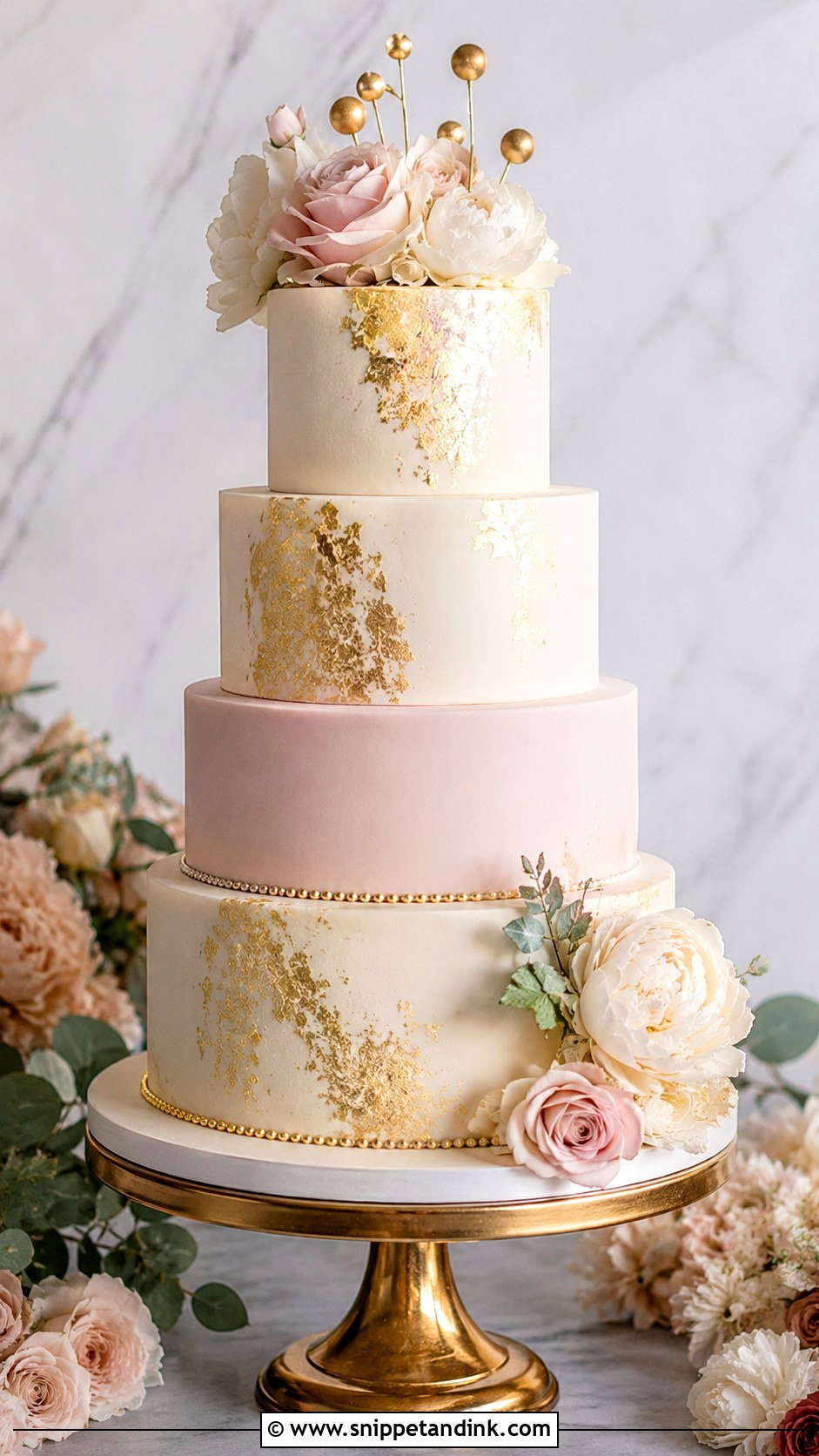
Blush brings warmth, and gold keeps it formal. For a gentle version, I keep the blush to the flowers alone; for something bolder, one tier goes blush and the rest stay ivory. Pale pink icing can fade under strong light or sunlight over a few hours, so I place blush tiers away from windows. Garden roses, peonies and champagne-toned decor pick up the colour. It’s an easy fit for spring and summer, and works indoors with candlelight too.
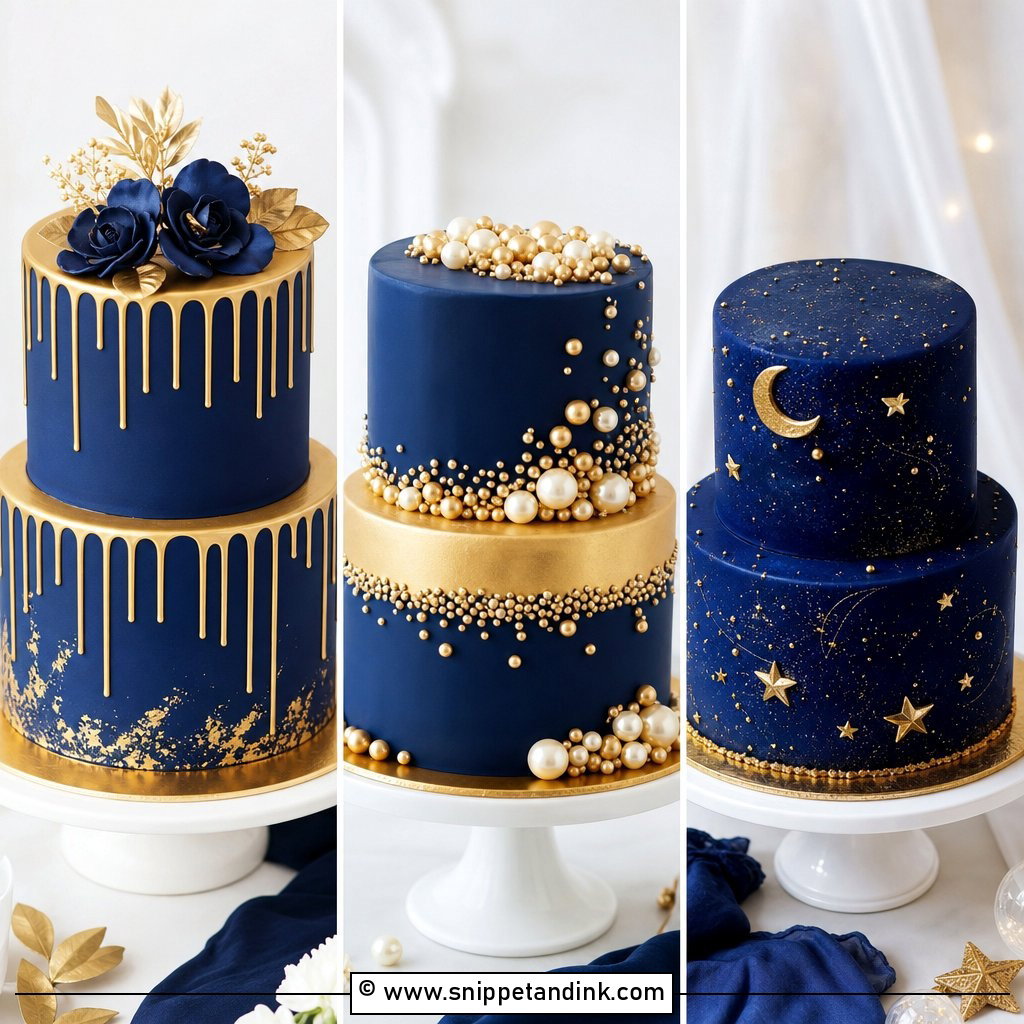
22. Gold And Navy 4 Tier Wedding Cake
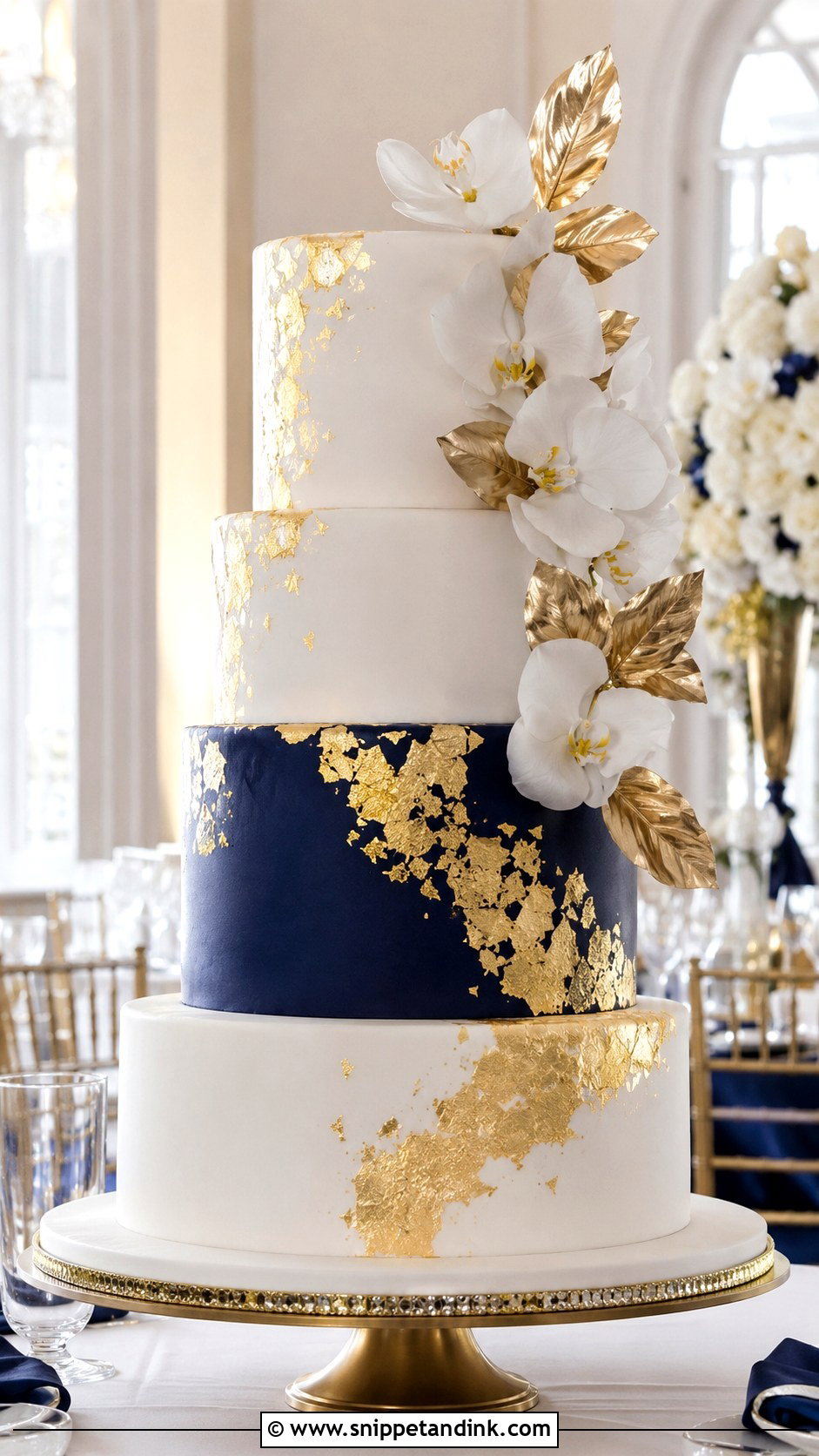
Navy gives a cake depth and gold adds warmth. I’d use navy as one accent tier or a painted detail rather than covering every tier: smooth ivory tiers with one navy tier, a little leaf and white florals strike the balance. Dark icing needs a lot of colouring, which can taste bitter and stain mouths, so I often cover the navy tier in fondant over a lighter cake. It suits evening receptions, city weddings and formal venues.
23. Gold And Green 4 Tier Wedding Cake
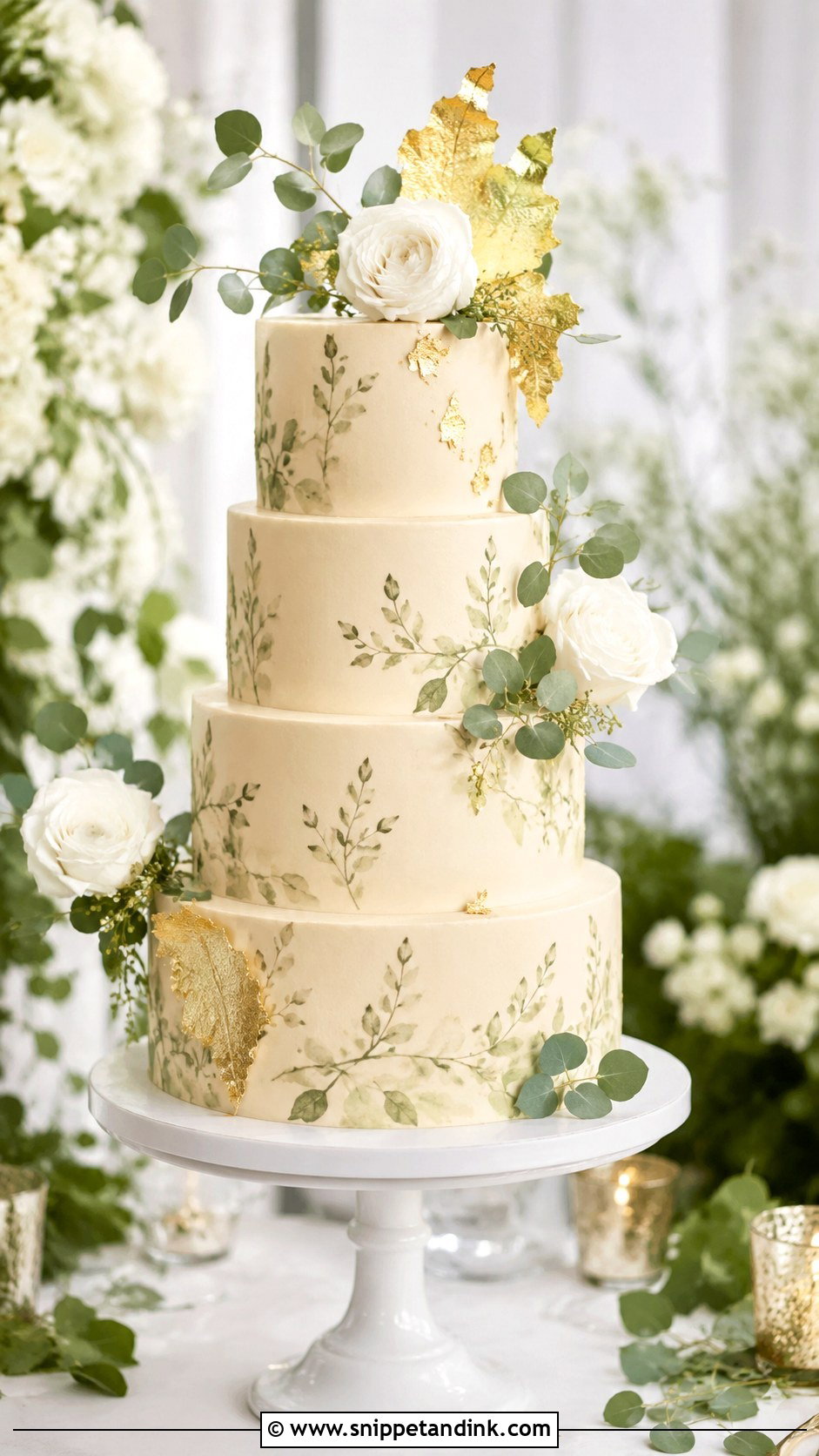
Green can come from eucalyptus, olive leaves, painted vines, sage fondant or emerald accents, and gold leaf sits well against all of them. For a softer style, keep ivory tiers with greenery and small gold touches; for more drama, make one tier deep green with hand-painted gold detail. If you use real foliage, ask your baker to confirm it is food-safe or kept off the icing, because some decorative greenery, including eucalyptus, shouldn’t touch food. Garden and greenhouse venues suit it best.
24. Gold And Black 4 Tier Wedding Cake
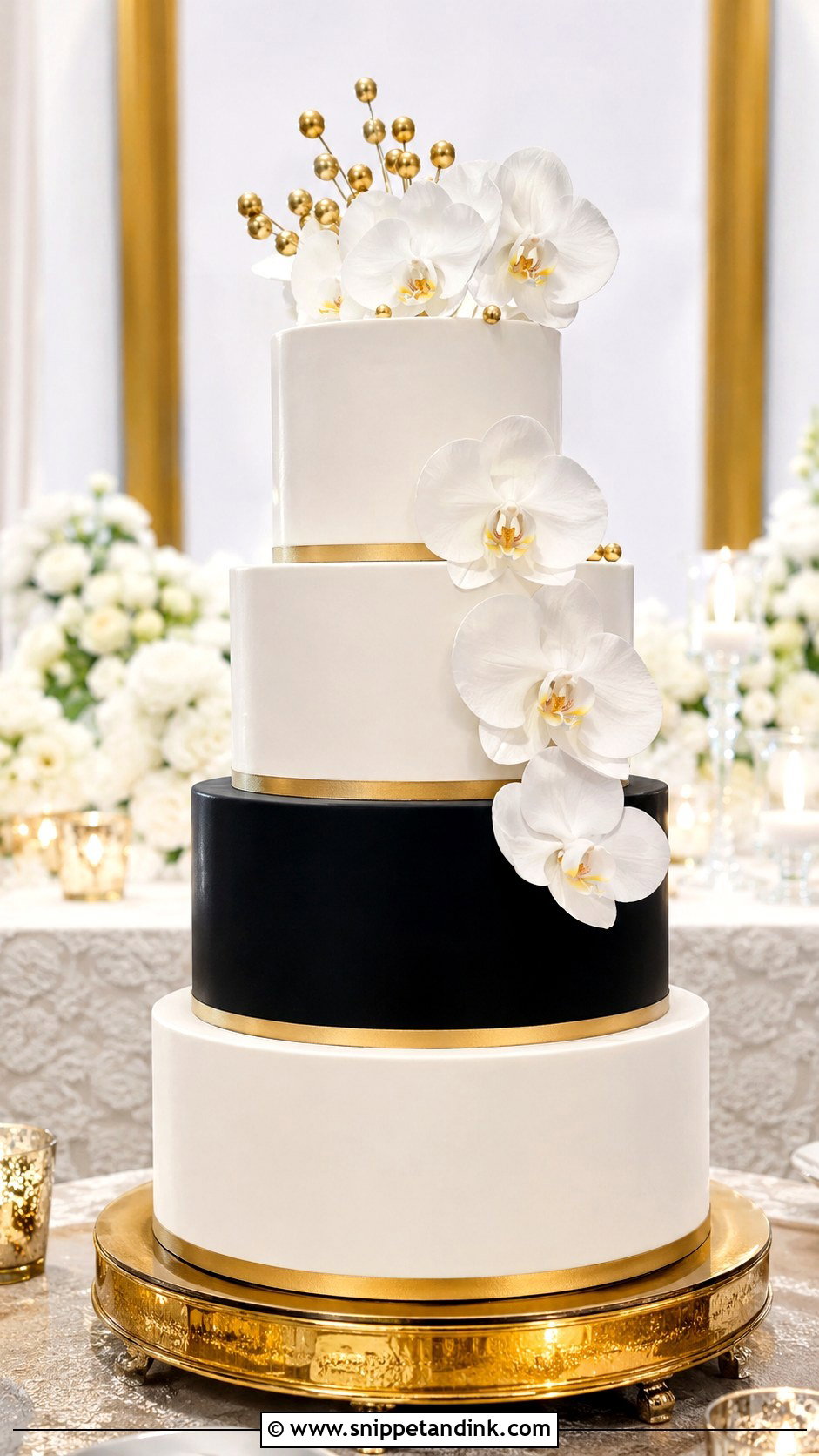
Black is striking but needs careful balance. I use it as a sharp accent, such as a thin tier, a ribbon band, a stencilled pattern or a painted line, and let ivory or white tiers keep the cake bridal. Gold softens the contrast. Black fondant shows every fingerprint and speck of icing sugar, so it’s the last tier I handle and it gets a final wipe with a little shortening before delivery. Crisp edges and minimal flowers suit it, and it’s at home at formal evening receptions.
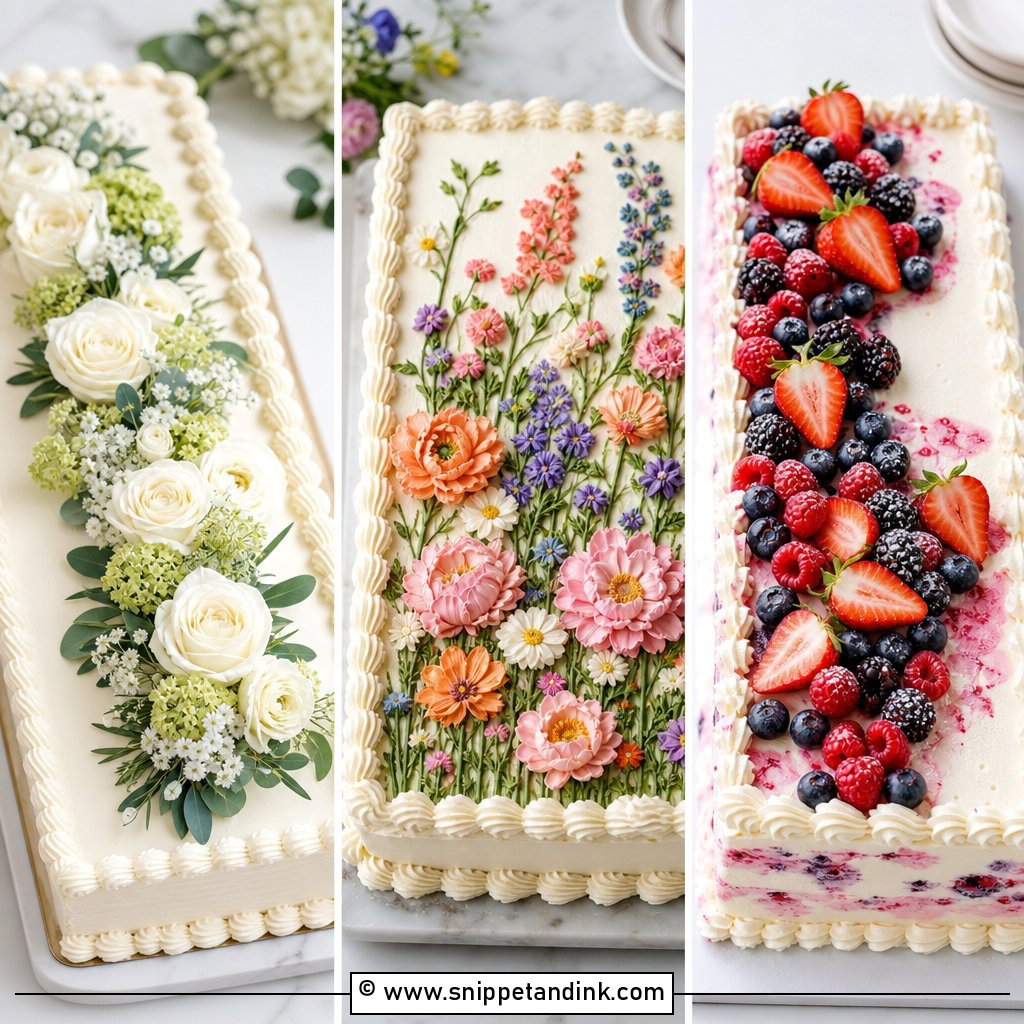


25. Gold Minimalist 4 Tier Wedding Cake
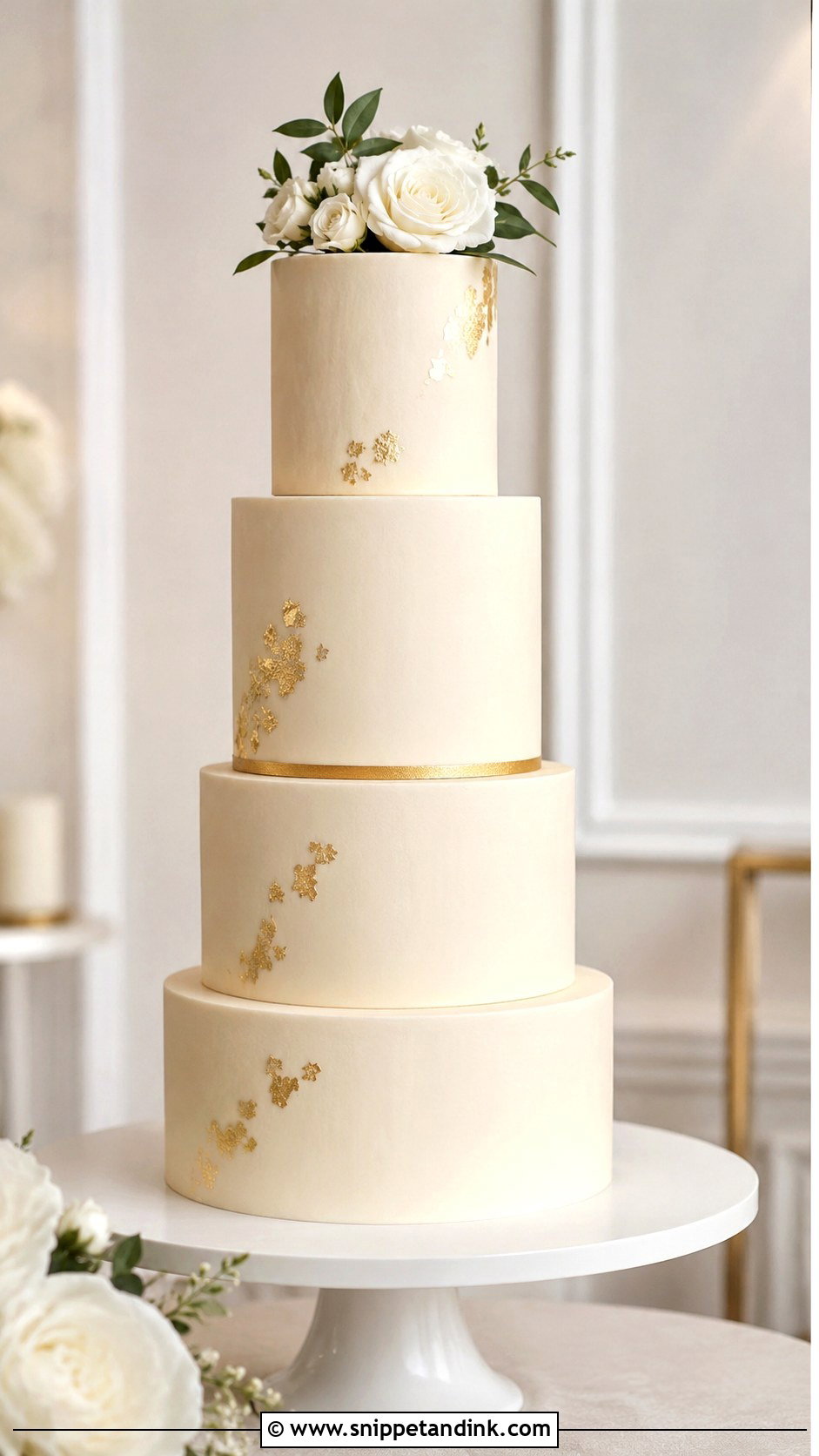
A tall cake doesn’t need heavy decoration. Height, shape and a clean finish do most of the work here: smooth white or ivory icing, sharp tier edges and one gold detail, such as a slim band, small leaf patches or a simple topper. Minimalism is actually the hardest finish to get right, because nothing hides a bulge or a soft edge. I spend more time on sharp edges for these cakes than on any decorated design. One small flower cluster or nothing at all completes it.
Four Tiers, One Delivery Van and a Warm Reception Room
A four-tier cake is heavy and tall, and the gold finish is usually the first thing to suffer if anything goes wrong between the kitchen and the cake table. These are the points I go through with every couple ordering one.
- Servings: four tiers feed a lot of people, often well over a hundred depending on tier sizes and portion cut. If your guest list is smaller, ask about a dummy tier, which keeps the height without the extra cake.
- Support: every tier sits on its own board with dowels underneath, and tall cakes usually get a central dowel through the whole stack. Heavy sugar decoration makes this non-negotiable.
- Transport: many designers deliver the tiers separately and stack on site. Gold leaf and painted edges get touched up after stacking, so allow time for that before guests arrive.
- Temperature: a chilled fondant cake moved into a warm, humid room can sweat. Beads of moisture make lustre streak and leaf wrinkle, so the cake should settle at room temperature well before photos.
- Placement: keep the table out of direct sun and away from candles placed right beside the tiers. Buttercream softens, and blush or navy colours can fade under hours of strong light.
Ordering timeline varies by designer, but sugar flowers, hand painting and lace work take days of labour, so I’d book a detailed gold cake several months out and confirm the final design a few weeks before the wedding.
Gold That Still Looks Right When the Knife Goes In
Gold suits almost any wedding style on a four-tier cake when the details are chosen with care. Blush flowers, pearl borders, ruffles or leaf lean romantic. Marble, geometric lines, watercolour and minimal finishes lean modern. Lace, baroque piping, art deco patterns or a monogram feel formal and custom. Match the design to your venue, flowers and dress, keep the gold to one or two features, and the cake will look as good on the table as it does in photos.
You'll Like These Ideas:








Leave a Reply