
Three tiers is the size I build most often, and it’s not an accident. It’s tall enough for a proper cutting moment and a good photo, yet it doesn’t need the heavy support or the extra hands a five-tier stack does. Within that frame, almost any style fits: clean and modern, floral, piped and vintage, or sculptural. Right now couples are asking me for textured buttercream, Lambeth piping, pressed flowers, pearls and soft colour. Here are the three-tier designs I’d show a couple at a tasting, with notes on how each one behaves in a real reception room.
How Many Guests Three Tiers Will Really Feed
Couples are often surprised how many people a three-tier cake serves, and how much the answer depends on the slice. Bakers usually quote wedding portions: tall, narrow fingers about an inch wide. Party portions are roughly double that, so the same cake feeds far fewer.
As a rough guide, with standard four-inch-tall tiers and wedding-size slices:
- 6, 8 and 10 inch rounds: about 70 to 75 portions
- 6, 9 and 12 inch rounds: about 100
- 8, 10 and 12 inch rounds: about 115 to 120
- Square tiers of the same sizes give noticeably more, because the corners add cake
Numbers vary between bakers, so ask how they measure a slice. If your guest list is larger than the cake you love, there are two honest fixes. A kitchen cake, a plain sheet cake in the same flavour cut out of sight, costs less than another tier. Or one tier can be a styrofoam dummy decorated to match, which keeps the look while you serve the real cake and the kitchen cake. I wouldn’t use a dummy on the bottom tier of a stack carrying real tiers above it without checking the baker’s support method.
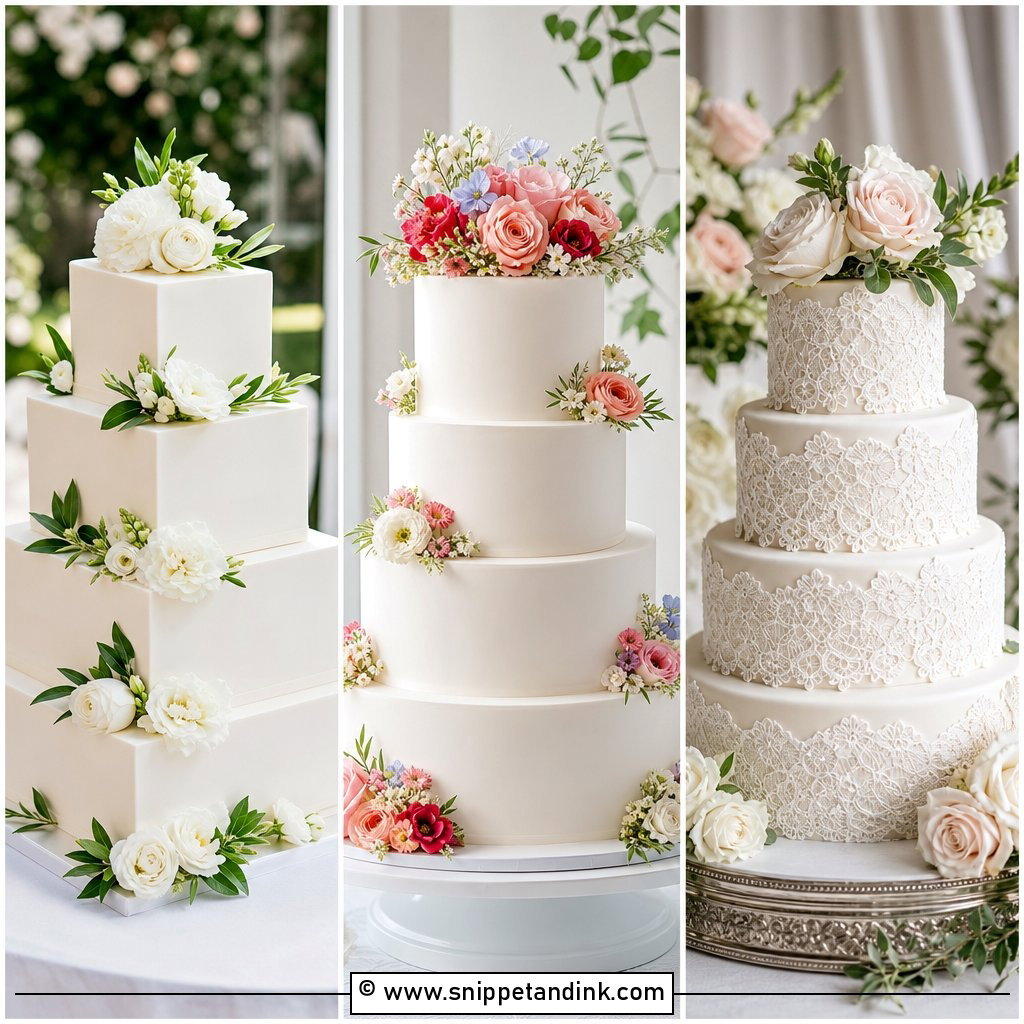
1. 3 Tier Wedding Cake With Fresh Flowers
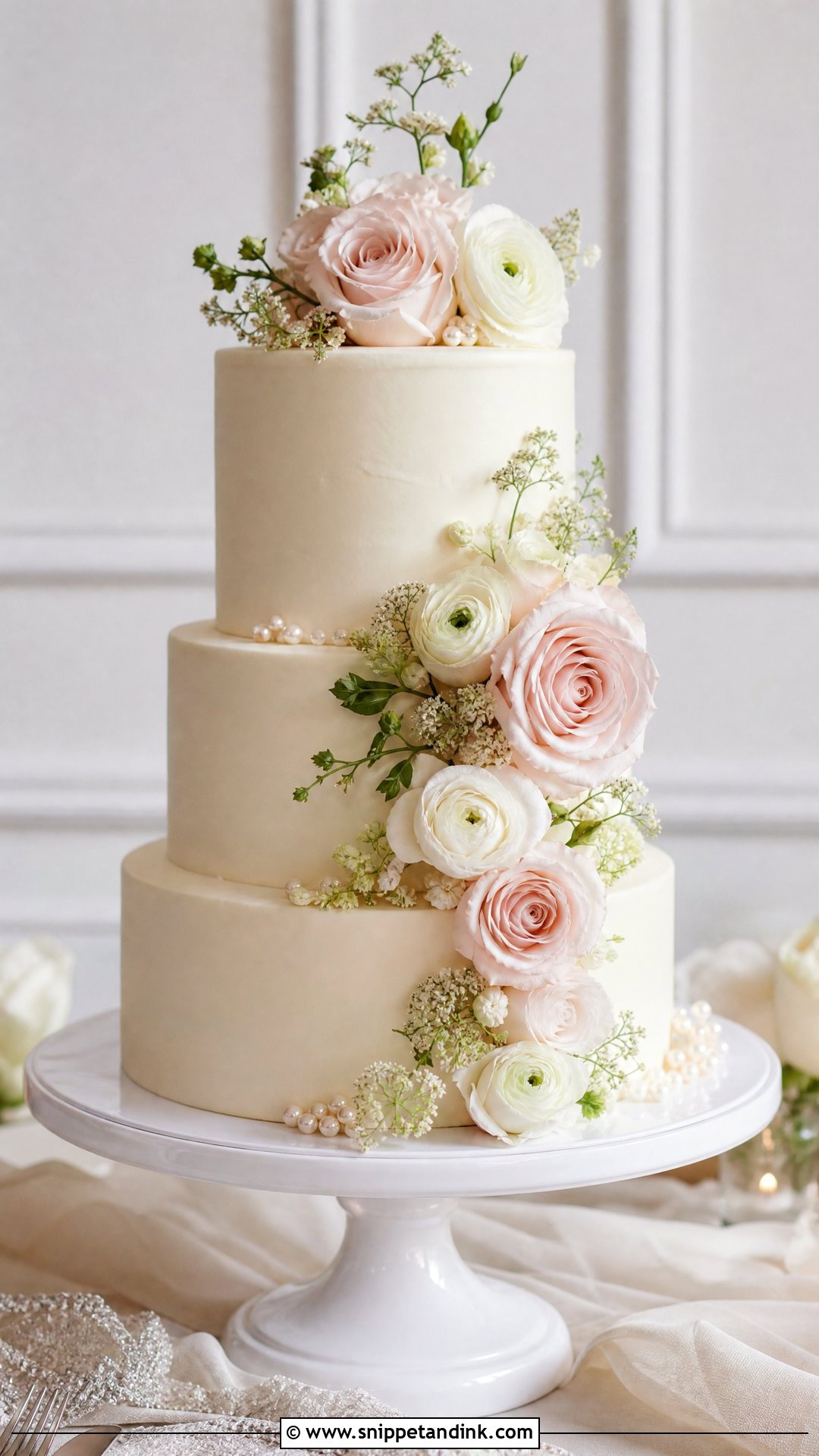
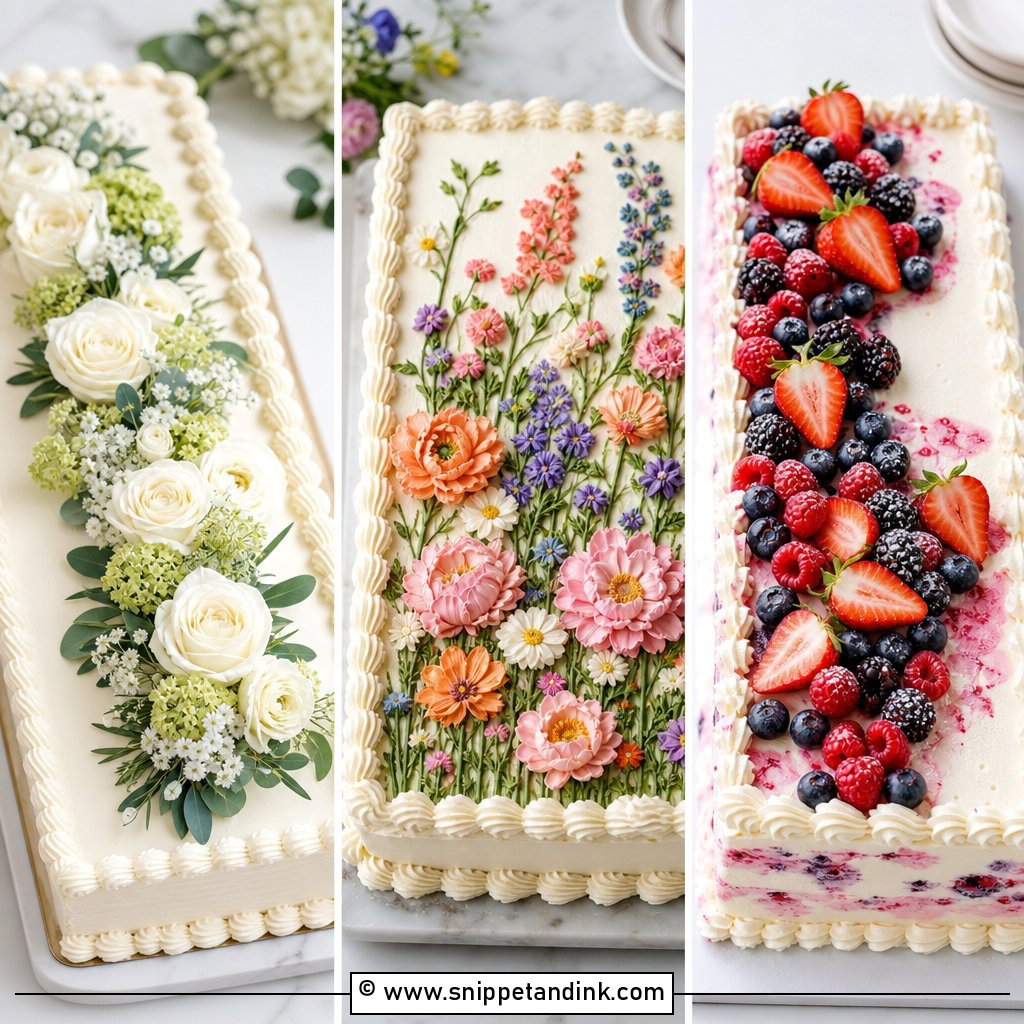
Fresh flowers tie the cake to the rest of the wedding, since they can come from the same stems as the bouquets. Roses, ranunculus, peonies, orchids or small edible blooms in a loose cascade all work. I always get the florist and baker talking early, because only pesticide-free, food-safe flowers should touch the cake, and each stem needs wrapping or a pick so sap and wire stay out of the frosting. Smooth or lightly textured frosting keeps the flowers in charge. Ivory buttercream with blush, white and greenery is a safe palette; at a garden wedding I’ll tuck flowers between tiers and around the base too.
2. 3 Tier Wedding Cake With Buttercream
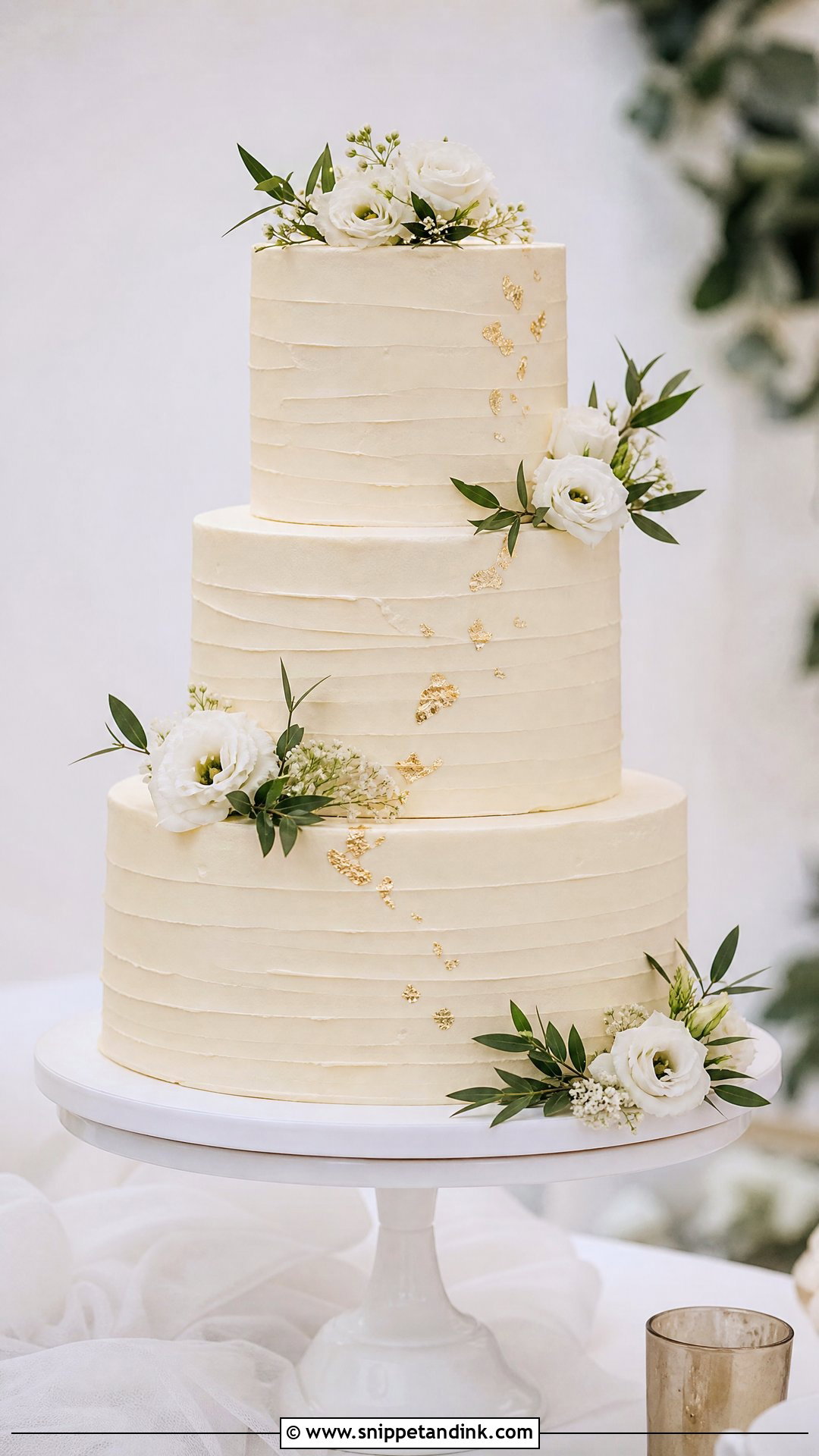
Most guests would rather eat buttercream than anything else, and it can be finished smooth or with soft spatula marks. It takes fresh flowers, fruit, pearls, piping and gold leaf without complaint. The two main types behave differently. American buttercream is sweeter and crusts slightly; Swiss meringue is silkier and less sweet but softens faster in heat. For an outdoor reception, ask your baker how long the cake can sit out and which recipe they’d use for your month. A three-tier buttercream cake is the one I recommend most often for a first tasting.
3. 3 Tier Wedding Cake With Fondant
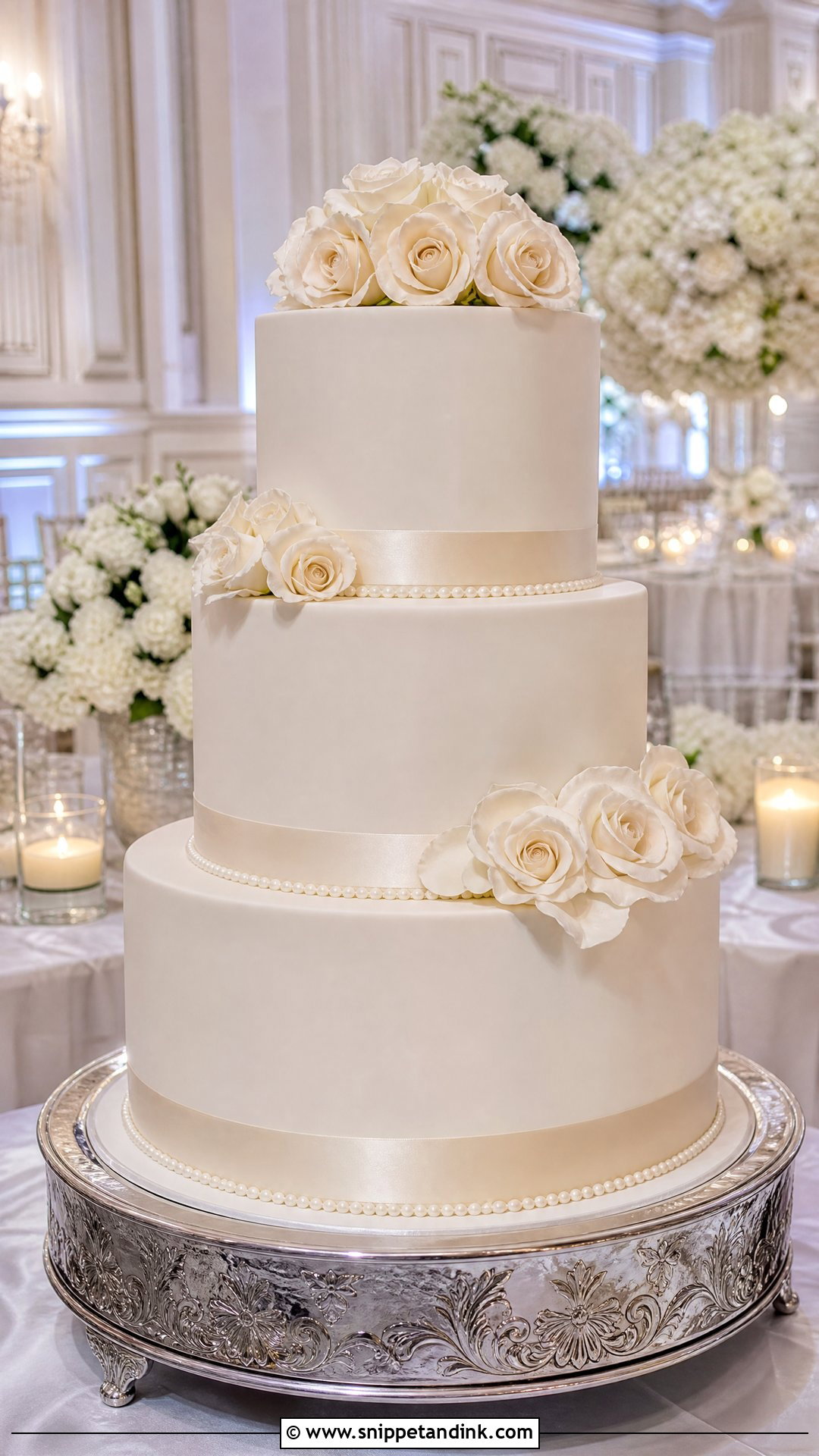
Fondant is about finish: razor edges, sculpted bows, drapes, hand-painted patterns and metallic panels that buttercream can’t hold. I put it over ganache rather than buttercream when I want the sharpest corners, because ganache sets firm underneath. The trade-off is taste. Plenty of guests peel fondant off, so the sponge and filling have to carry the flavour. Sugar flowers, pearl borders, lace texture or a soft colour wash keep a fondant cake from looking plain. Ballrooms and black-tie receptions are where it looks most at home, and it stays crisp under bright venue lighting.
4. 3 Tier Wedding Cake With Lambeth Piping
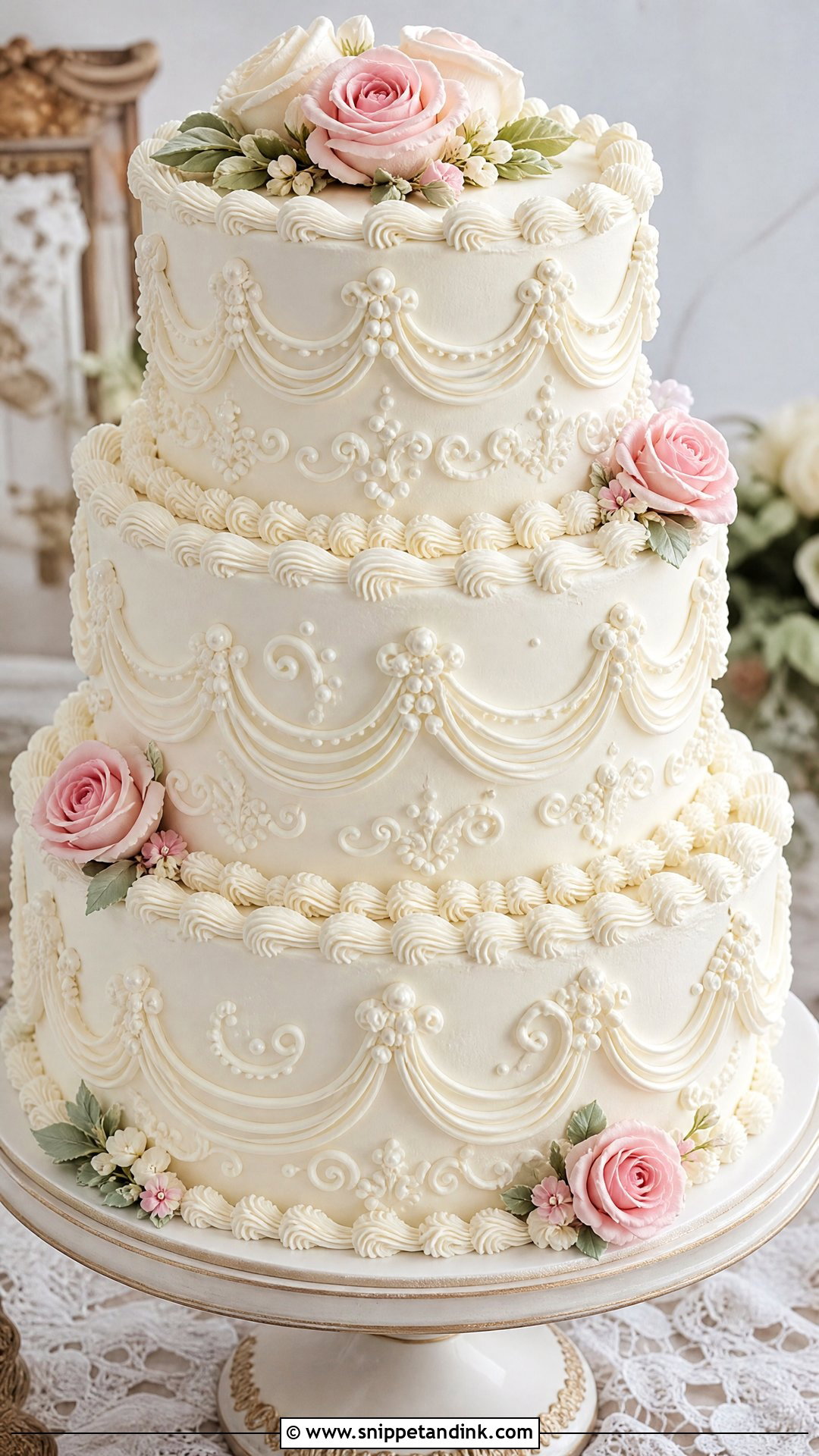
Overpiped Lambeth work, with shell borders, swags, scrolls, drop strings, ruffles and tiny piped pearls layered over each tier, is the most-requested vintage look I see at the moment. It’s slow to do well, and a three-tier Lambeth cake can take a full day of piping alone, so give your baker plenty of notice. The design needs a plan; random piping just looks busy. Ivory is classic, while pale blue, pink or butter yellow feel fresher. Cherries, sugar roses or pearls add character. Romantic venues and texture-loving couples get the most from it.
5. 3 Tier Wedding Cake With Pearls
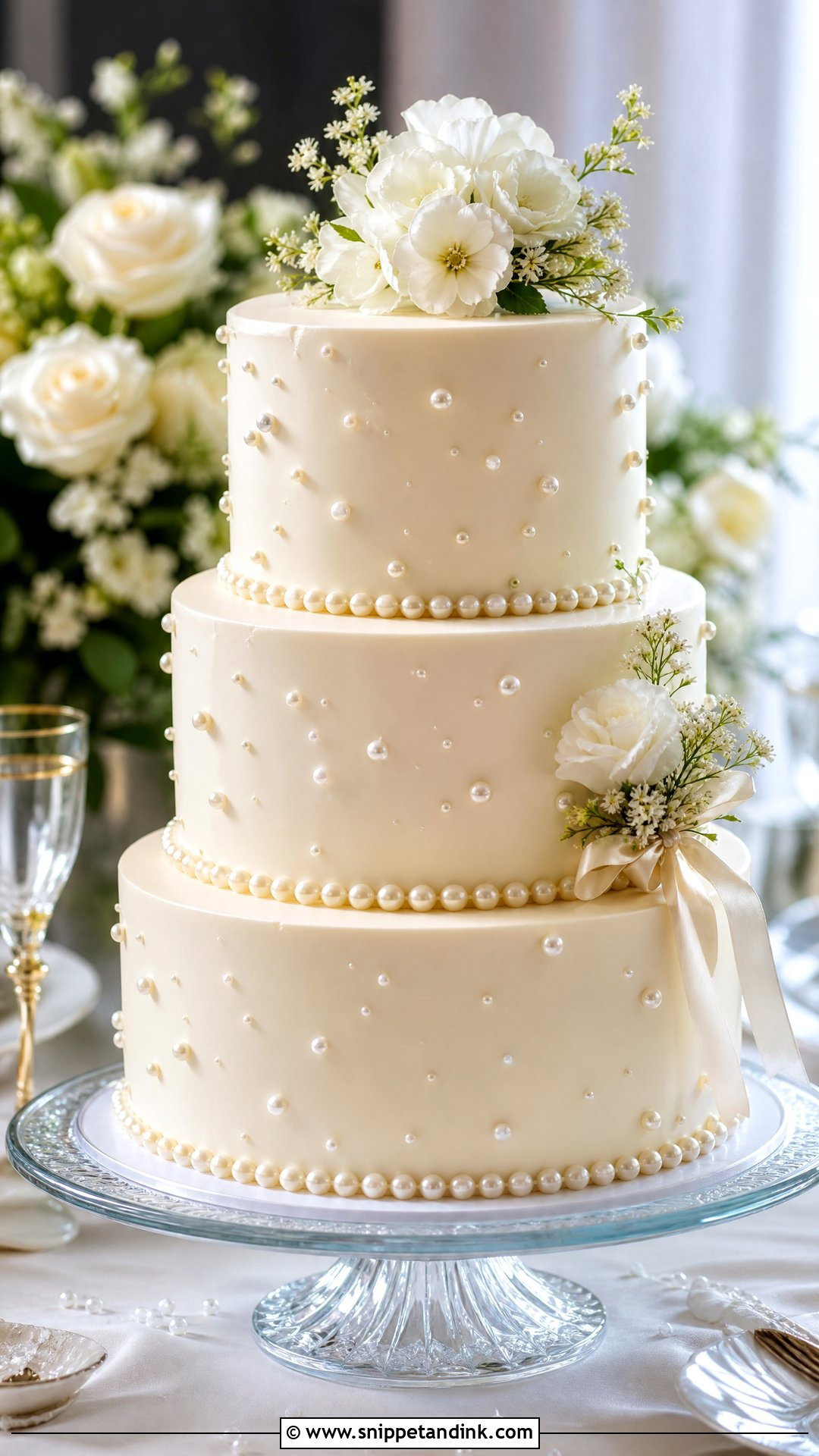
Pearls add polish without weight. I place them in neat rows, scatter them over smooth buttercream, use them as borders or work them into piping. Sugar pearls are hard, and some guests won’t love biting into a dense band of them, so I keep heavy rows to the cake’s edges where they’re easy to leave on the plate. Mixing sizes gives a modern, moving look; symmetrical rows with satin ribbon and small white flowers feel classic. They suit ivory, champagne, blush or soft blue frosting, and hotel, coastal and formal receptions.
6. 3 Tier Wedding Cake With Gold
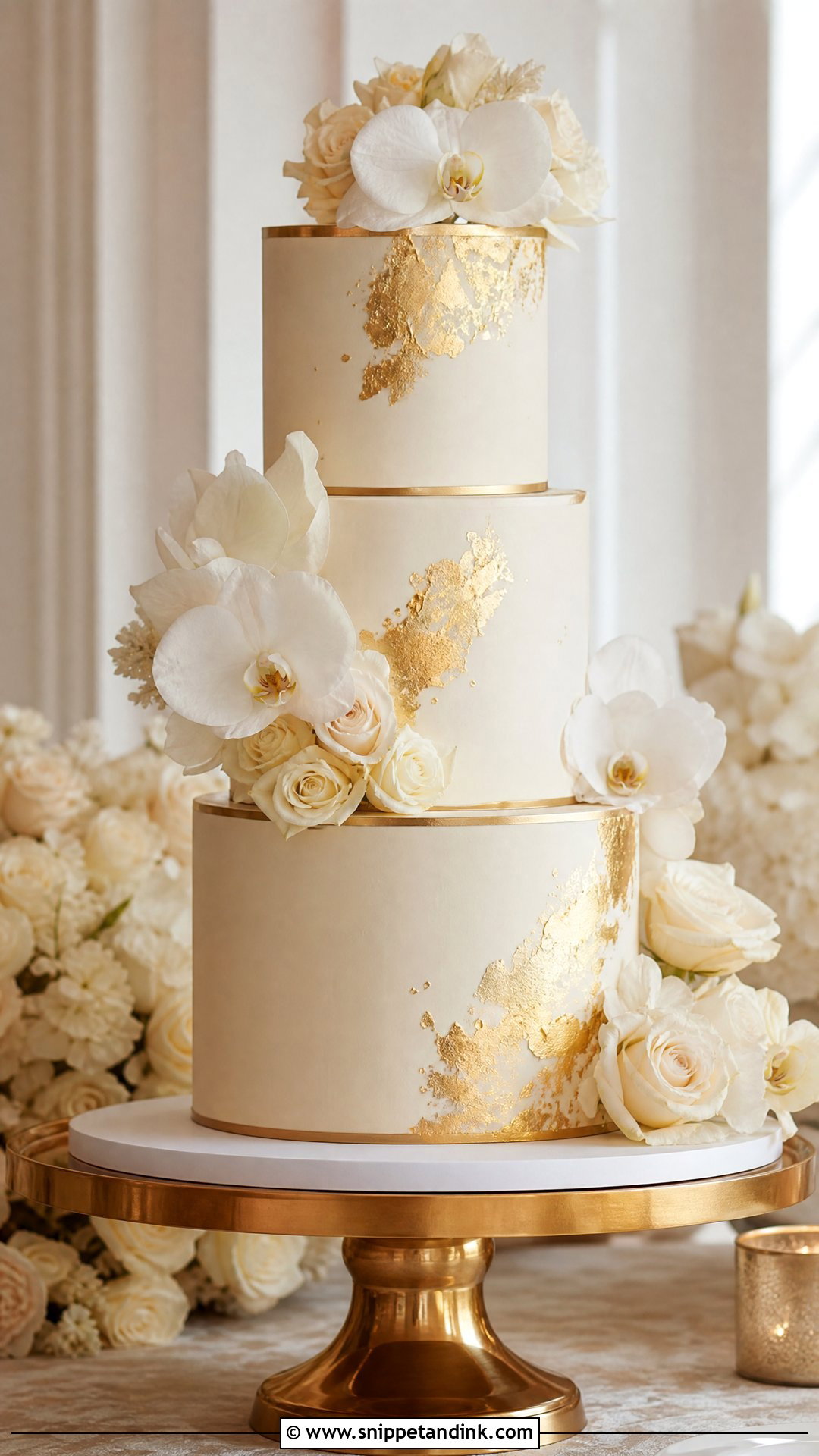
Gold should be an accent, not a coat. Torn gold leaf on one side, a thin metallic rim at each tier or a soft brushed texture over ivory frosting is usually enough. Leaf is applied with a dry brush and clings to anything slightly tacky, so I put it on chilled frosting just before the cake leaves my kitchen. Gold sits nicely beside white roses, orchids, caramel tones, deep greenery and champagne linens, and it pairs well with marble fondant. Indoor evening receptions show it best, since candlelight catches the metal.
7. 3 Tier Wedding Cake With Roses
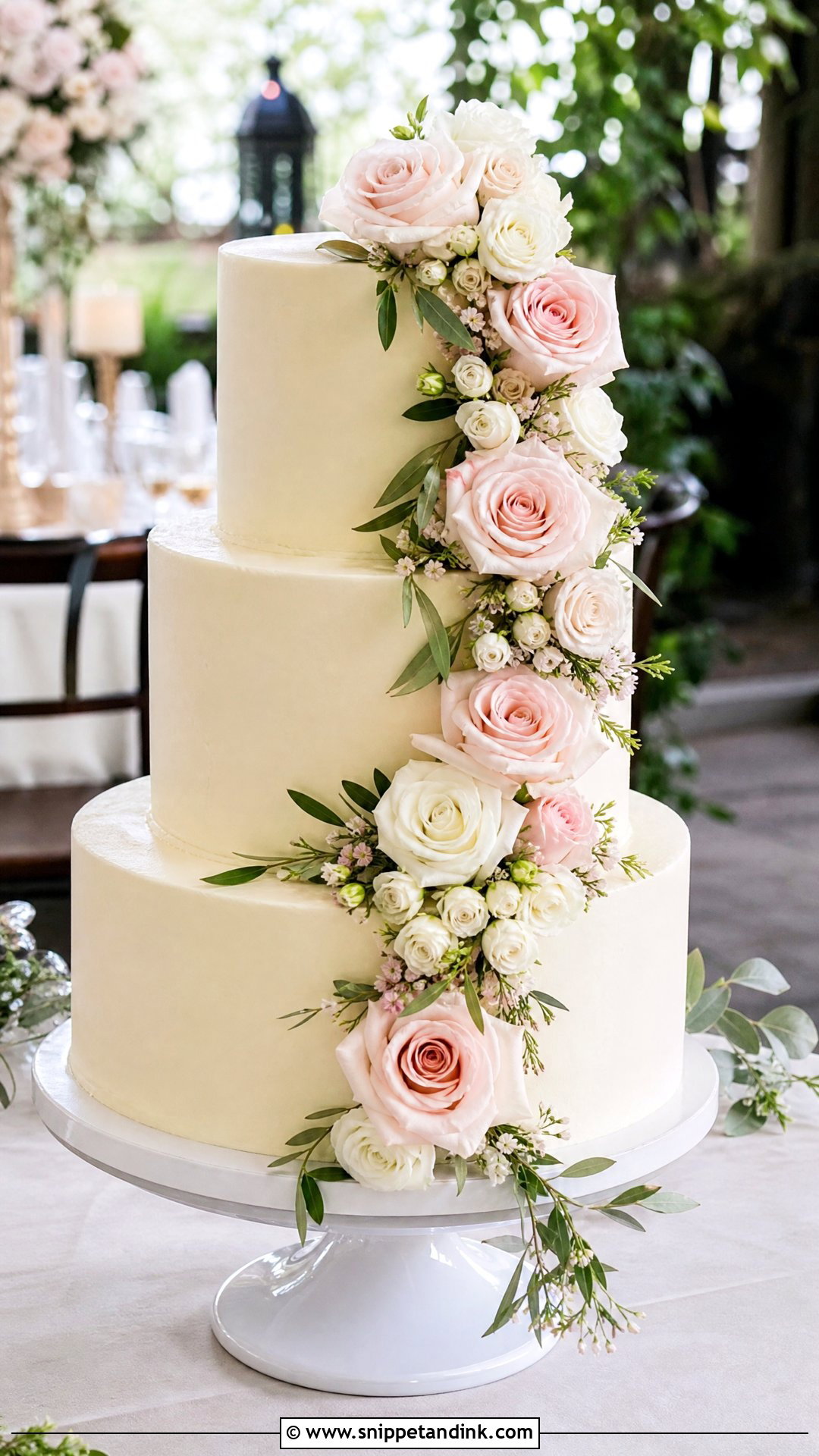
Roses have stayed on wedding cakes for generations because they adapt to any mood. A full cascade is dramatic; a few tucked between tiers feels quieter. White reads classic, blush romantic, dusty mauve more modern. Fresh garden roses drop petals in a warm room within hours, so for long displays I’d lean toward sugar roses or a florist’s hardiest variety. Smooth buttercream, faint texture or delicate piping all suit them. Spring weddings and estate venues are their natural setting.
8. 3 Tier Wedding Cake With Ruffles
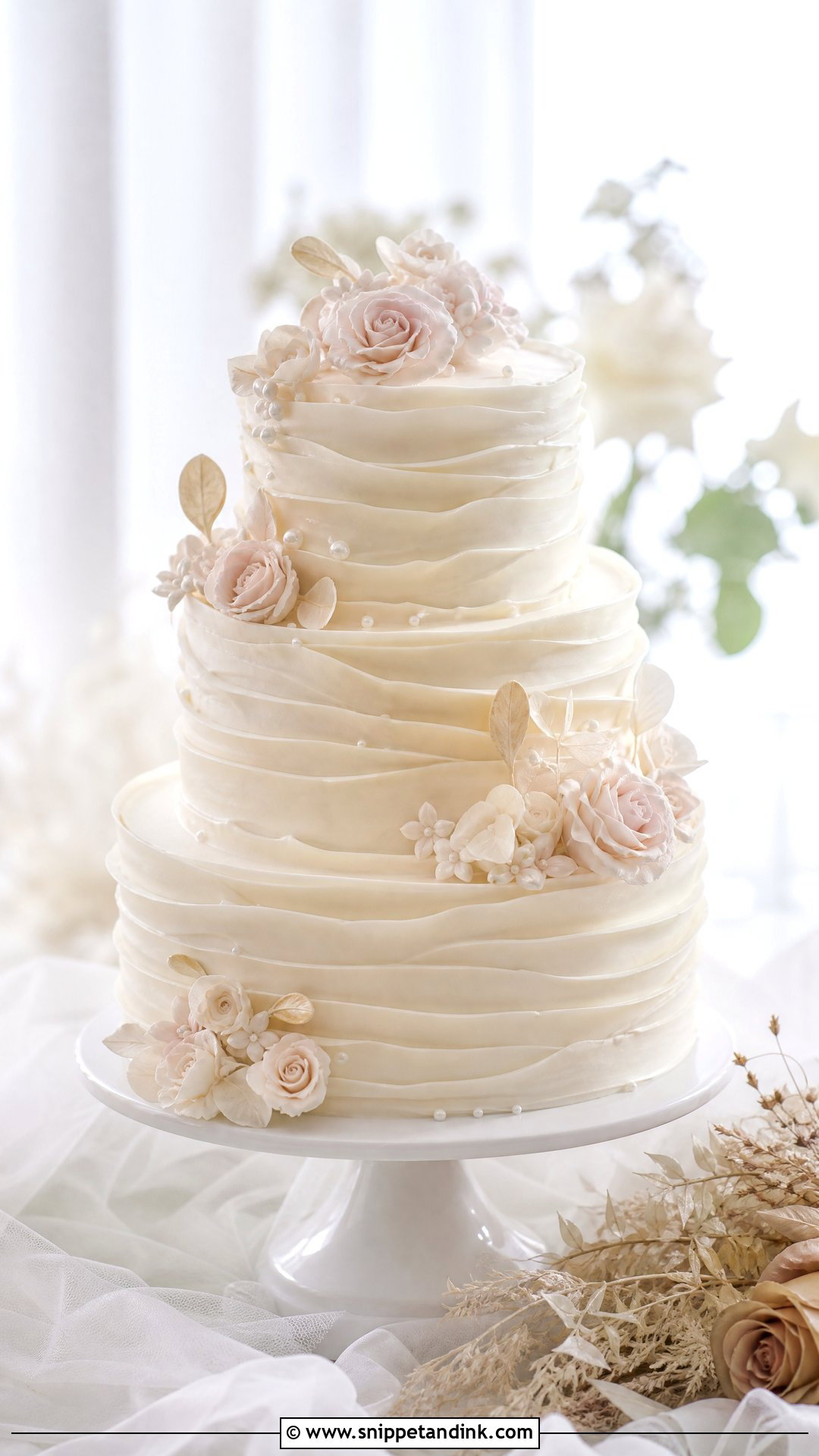
Ruffles add movement, and the material changes the result: buttercream ruffles are soft and edible, fondant ruffles hold crisp folds, wafer paper ruffles look feather-light but go limp in humidity. Three fully ruffled tiers is dramatic. One ruffled tier between two smooth ones is easier on the eye and on the budget. Ivory, blush, champagne or pale peach suit the texture. Keep added flowers or pearls light. Garden weddings, barns dressed with fabric and candlelit neutral rooms are where ruffles come into their own.
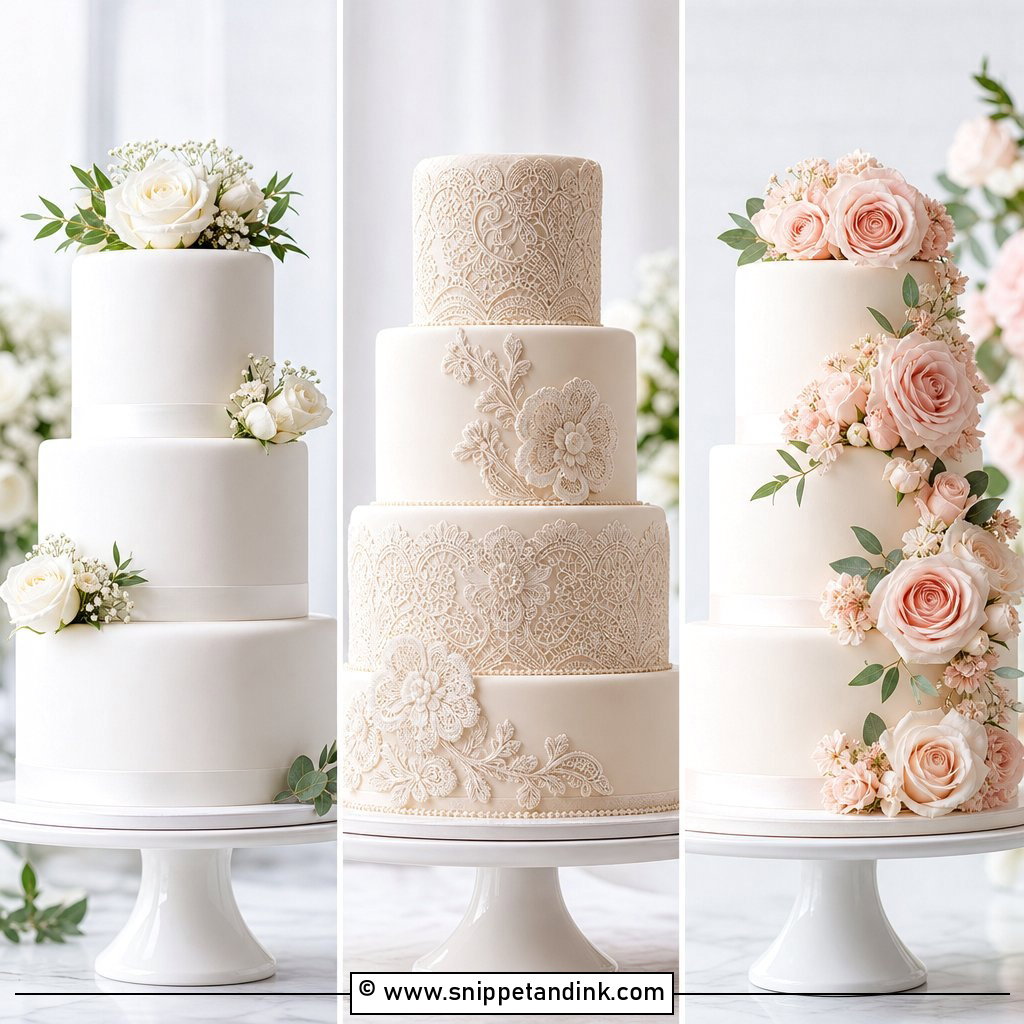
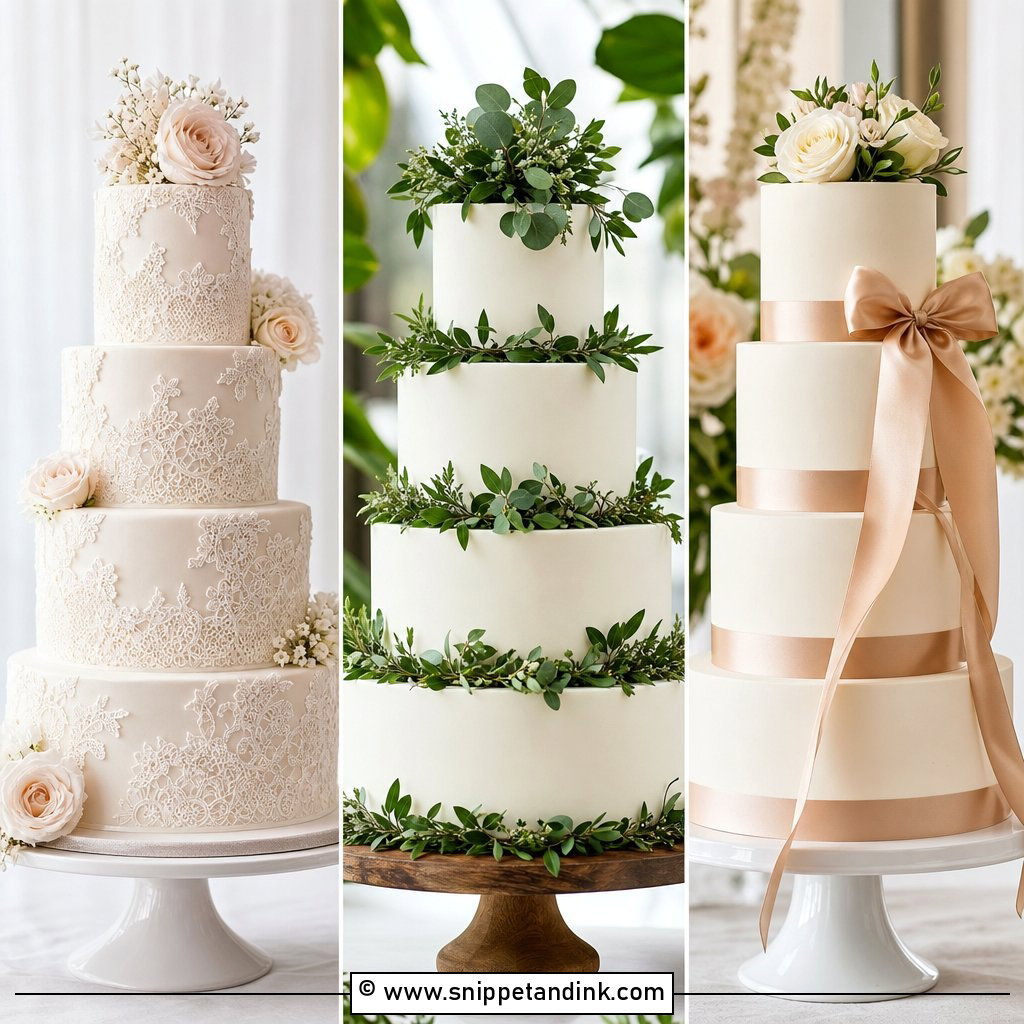
9. 3 Tier Wedding Cake With Lace
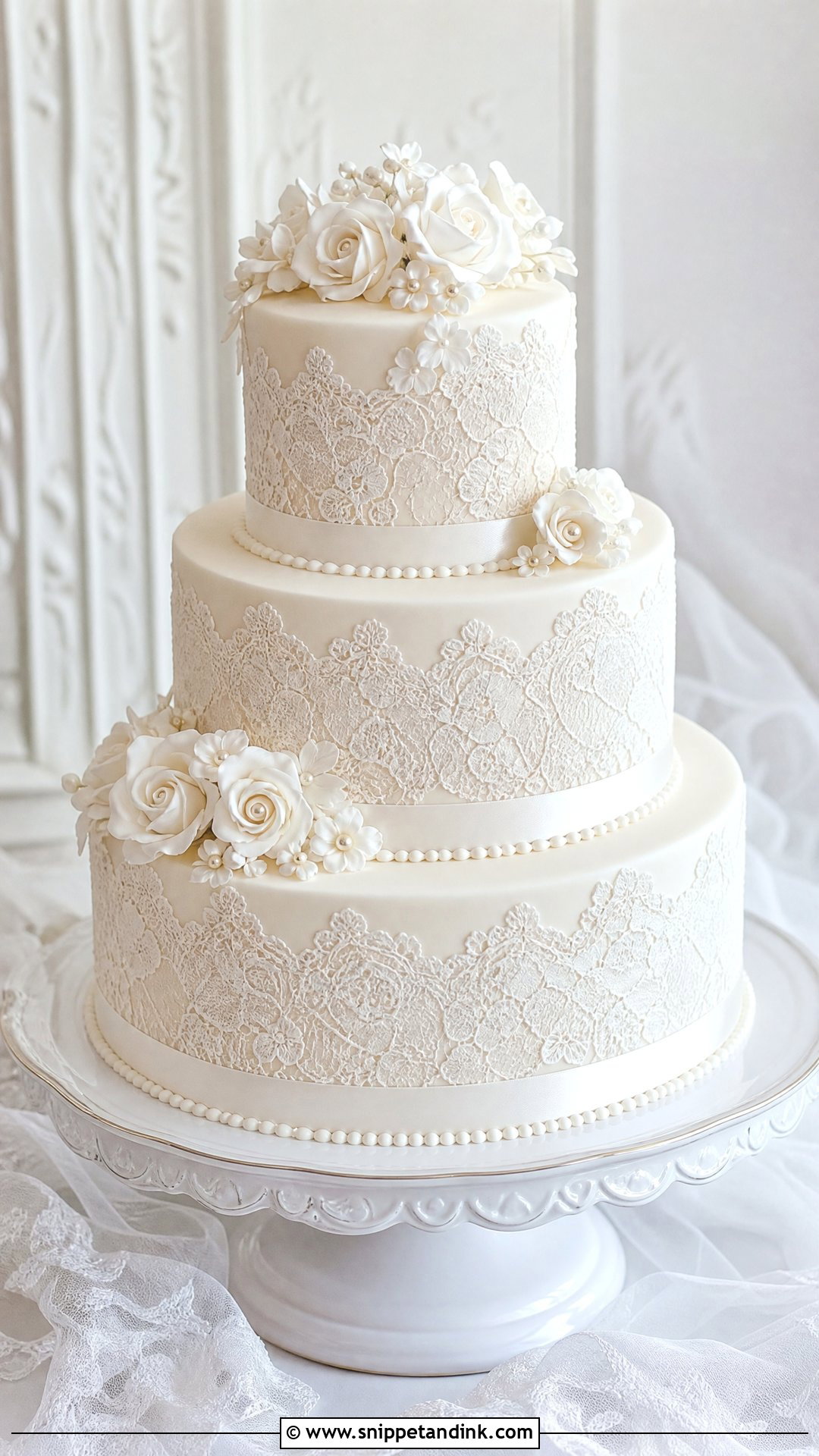
Lace connects the cake to the dress, and I’m always happy when a bride brings a fabric swatch to the consultation. Copying the pattern of her dress, veil or invitations is a thoughtful custom touch that guests notice up close. Lace can be fondant appliqué, royal icing piped by hand, a stencil or piped buttercream; the hand-piped kind is finest and slowest. One lace tier with two smooth ones looks clean; pearls, florals and soft piping push it vintage. Ivory on ivory never dates. White lace over blush feels more romantic.
10. 3 Tier Wedding Cake With Greenery
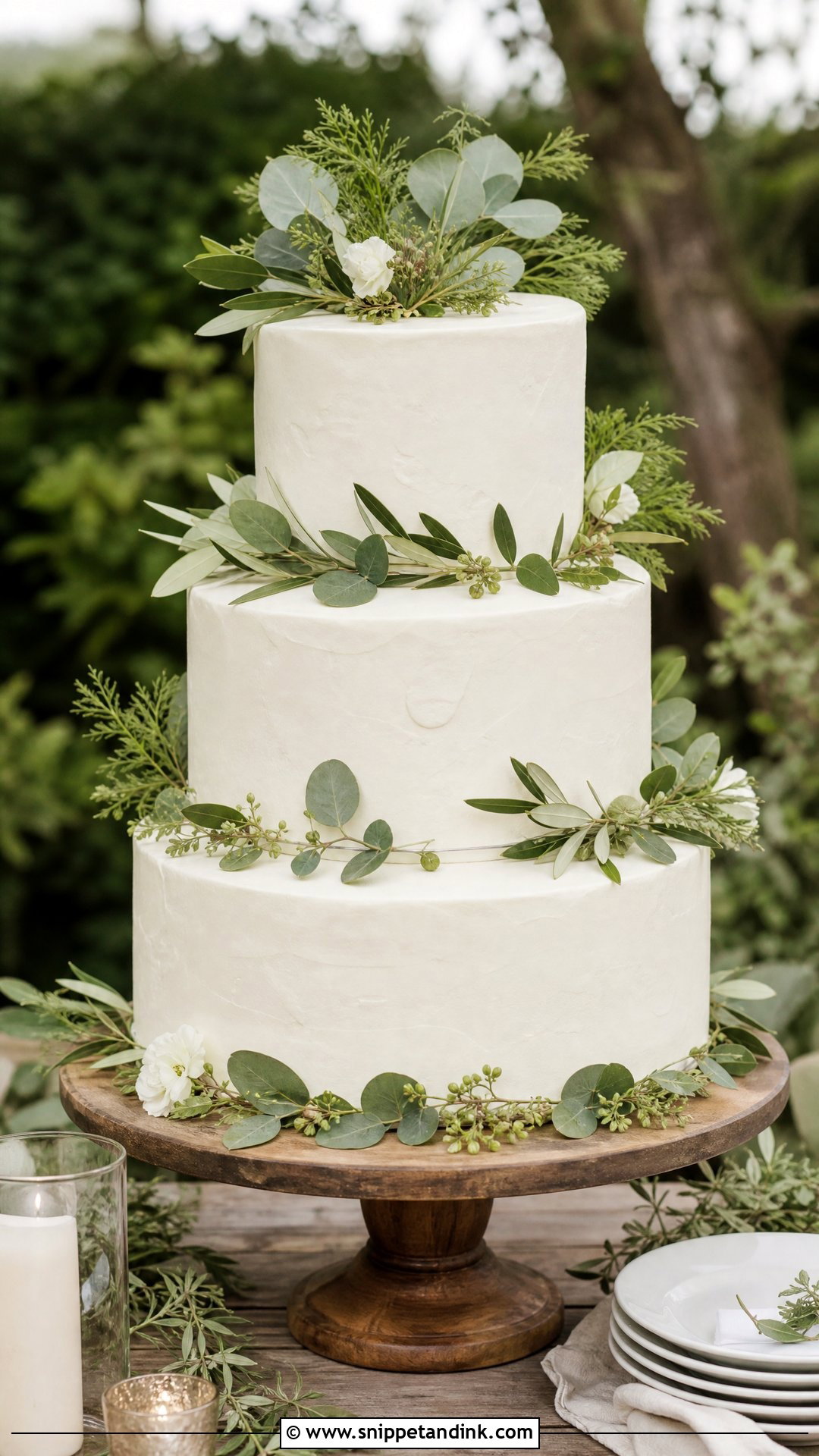
Greenery gives a fresh look with fewer flowers, which helps when the floral budget is stretched. Eucalyptus, olive leaves, rosemary and soft vines can frame each tier. Eucalyptus is not food safe, so it needs a barrier between leaf and frosting; rosemary and olive are friendlier. It works on smooth buttercream, semi-naked frosting or textured white icing. Small clusters, a ring at the base or a diagonal cascade all keep it tidy. A few white flowers soften it. Outdoor weddings and natural palettes suit it.
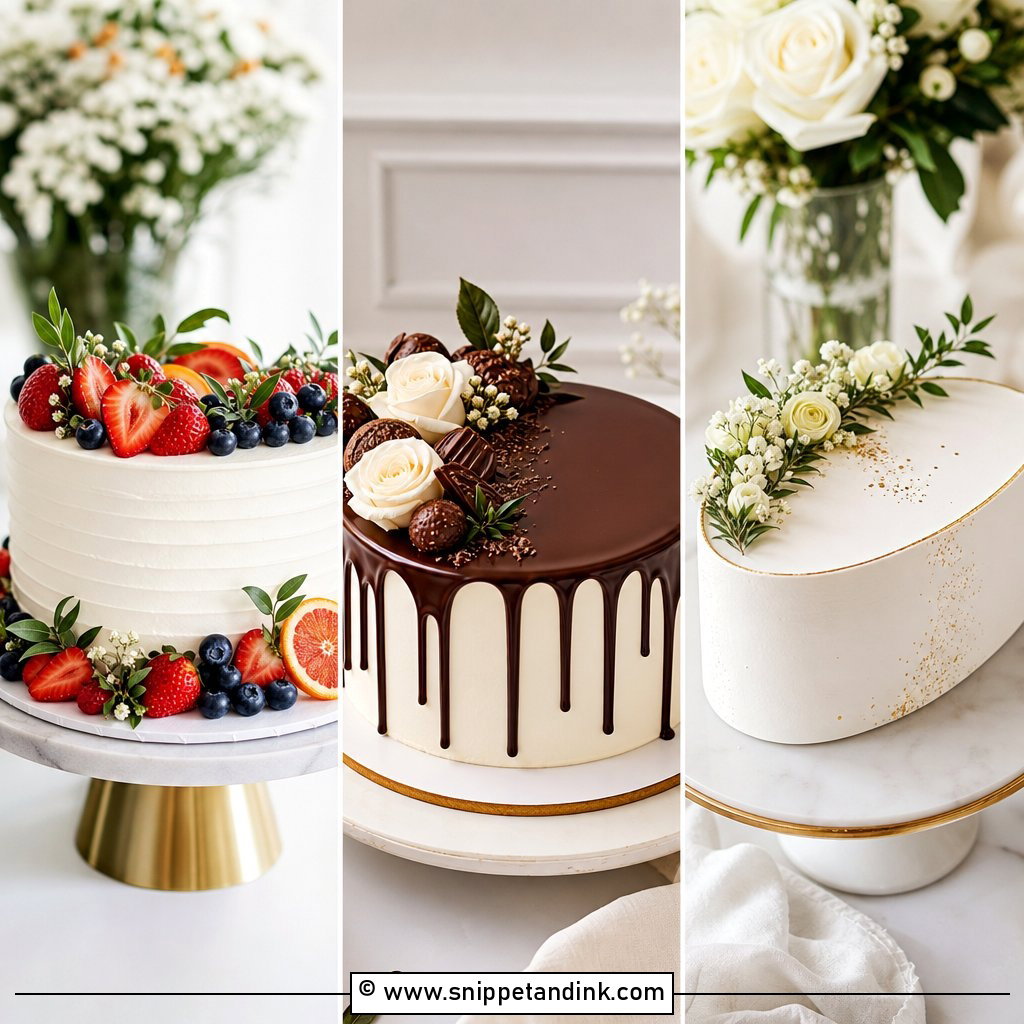
11. 3 Tier Wedding Cake With Fruit
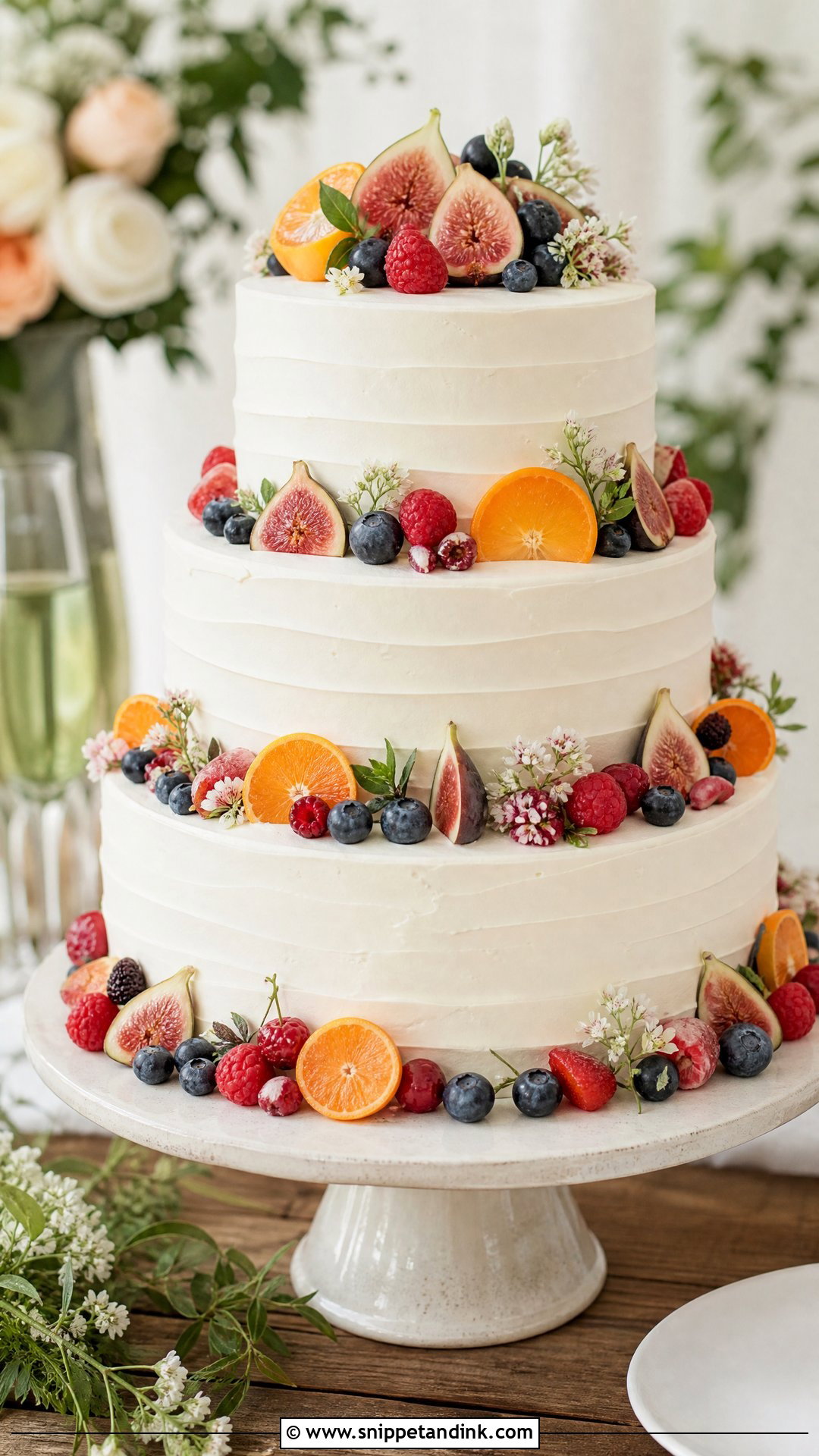
Fruit brings colour and season. Berries sit well against white frosting and go with most flavours; figs, citrus slices, grapes, pears and cherries give a more styled finish. In summer I use strawberries, raspberries and blueberries over whipped buttercream; in autumn, figs and blackberries with caramel tones. Cut fruit weeps juice, so I keep it whole where I can and add it at the venue, often brushed with a thin glaze to stop it drying. Place it with intention rather than piling it on. Brunch receptions and farm-to-table menus are its home.
12. 3 Tier Wedding Cake With Marble
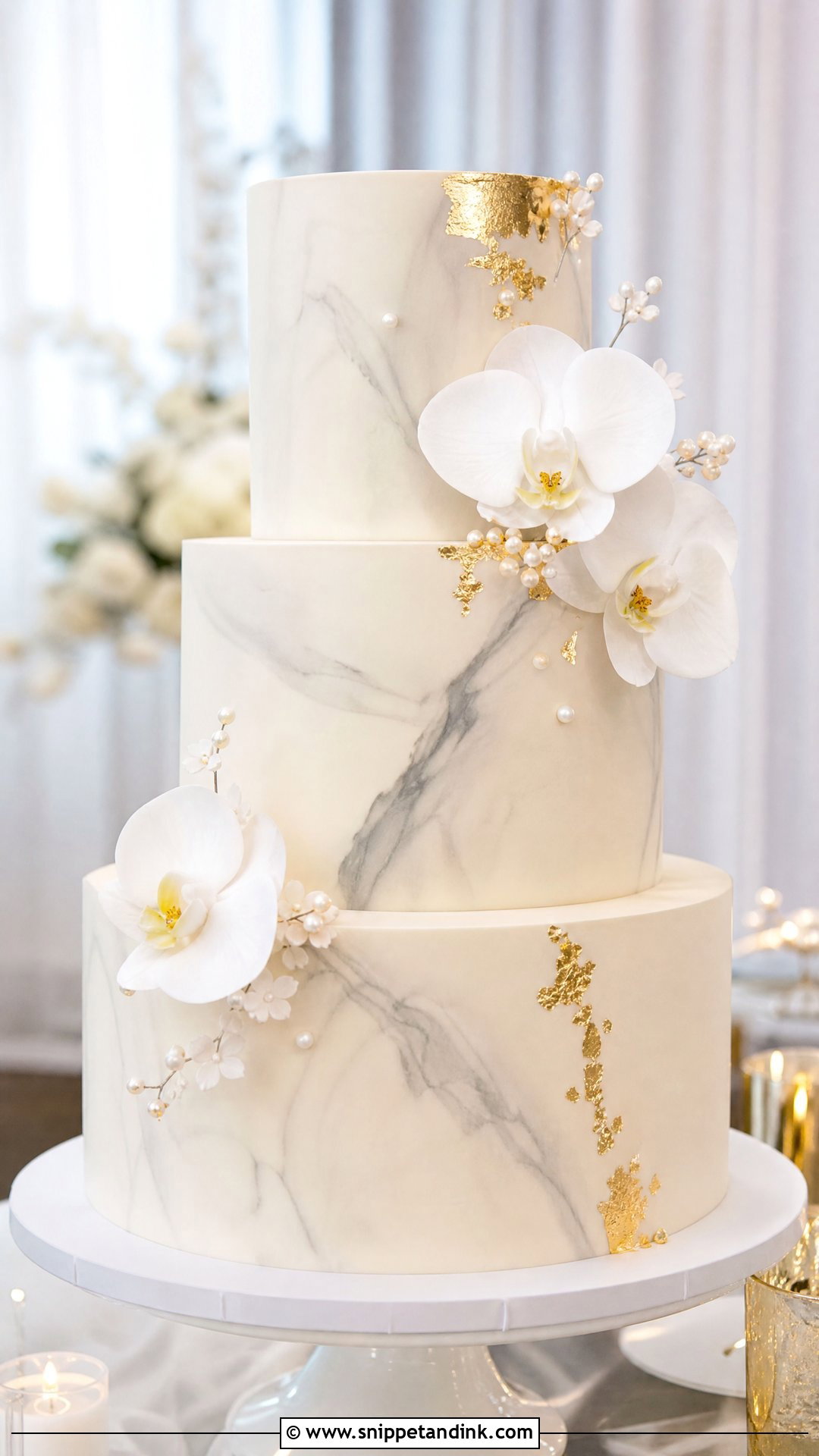
Marbling is done by folding colours through fondant before it’s rolled, or by streaking buttercream as it’s smoothed, so no two cakes match. Grey veining on white is classic; blush, beige or sage marble feels warmer. It pairs well with gold leaf, clear acrylic separators, orchids or a few sugar flowers. I usually marble one or two tiers and leave one plain, which keeps the pattern from overwhelming the stack. Gallery receptions, city venues and modern rooms suit it.
13. 3 Tier Wedding Cake With Black And White
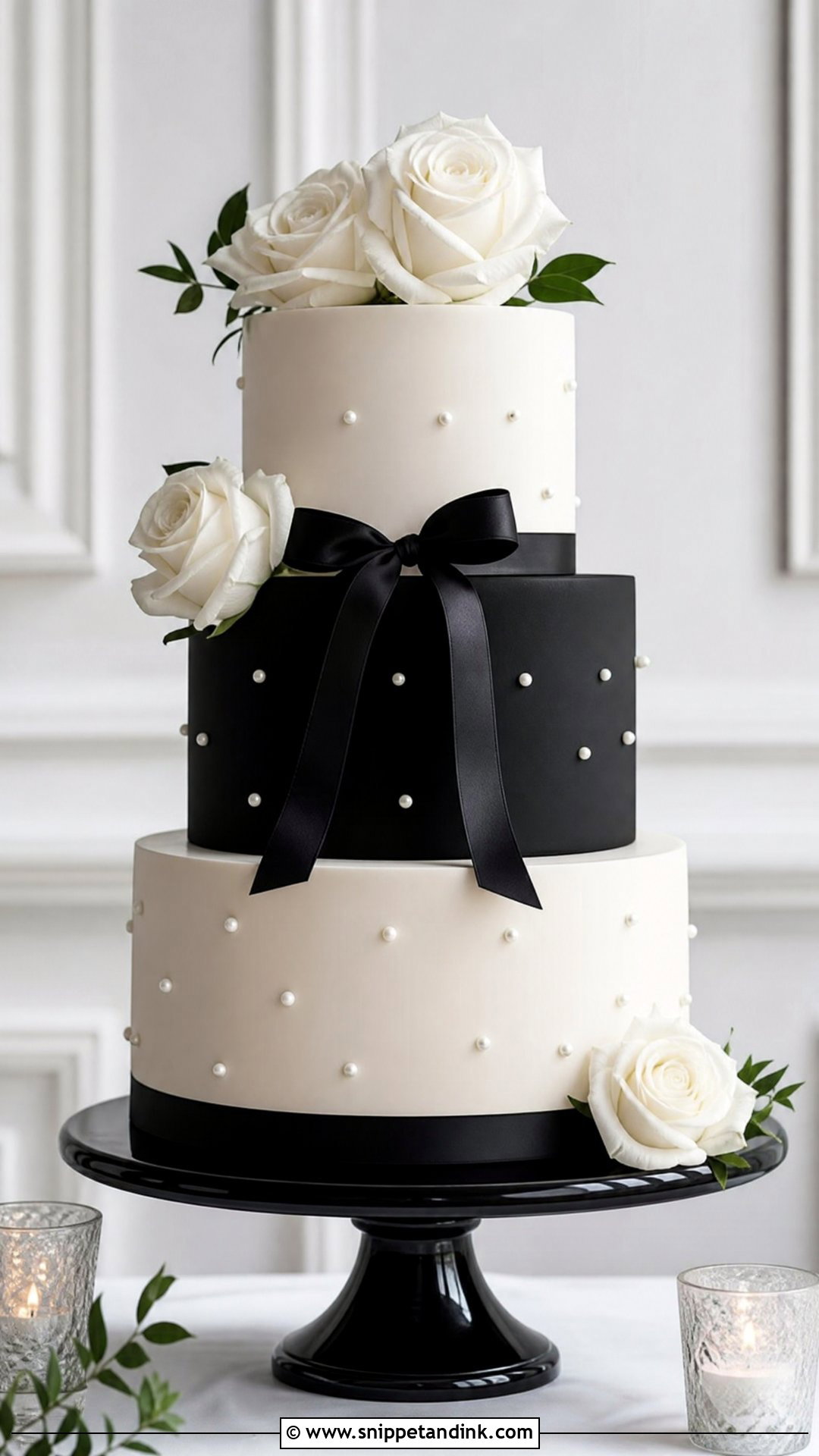
Black and white is all about control. Black fondant with white flowers gives the sharpest contrast; white buttercream with black ribbon is softer. True black frosting takes a lot of colouring and can stain teeth, so I prefer black fondant or a dark cocoa base for any black tier. One black tier with two white ones, a few pearls or flowers, black piping, painted florals or a big bow are all ways to play it. Clean lines are essential. Formal ballrooms and rooftop receptions suit it.
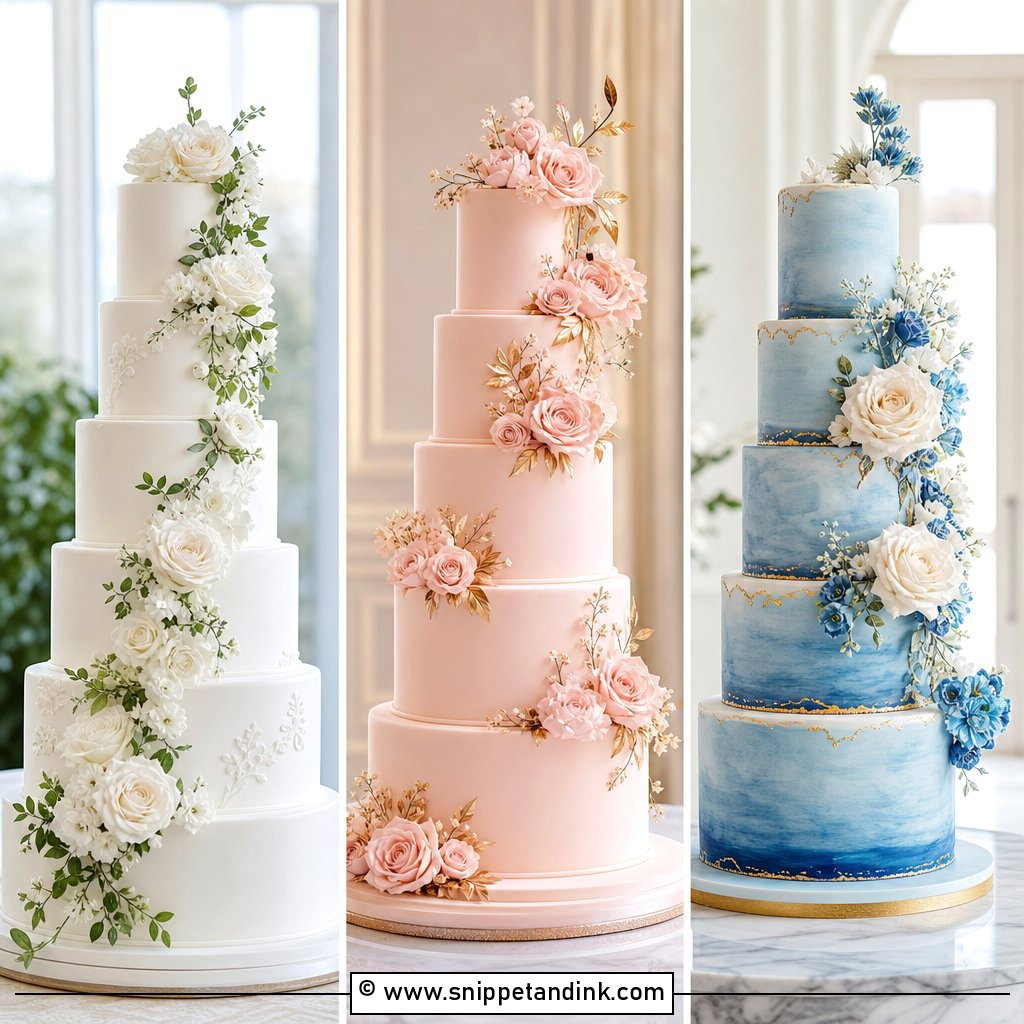
14. 3 Tier Wedding Cake With Blue
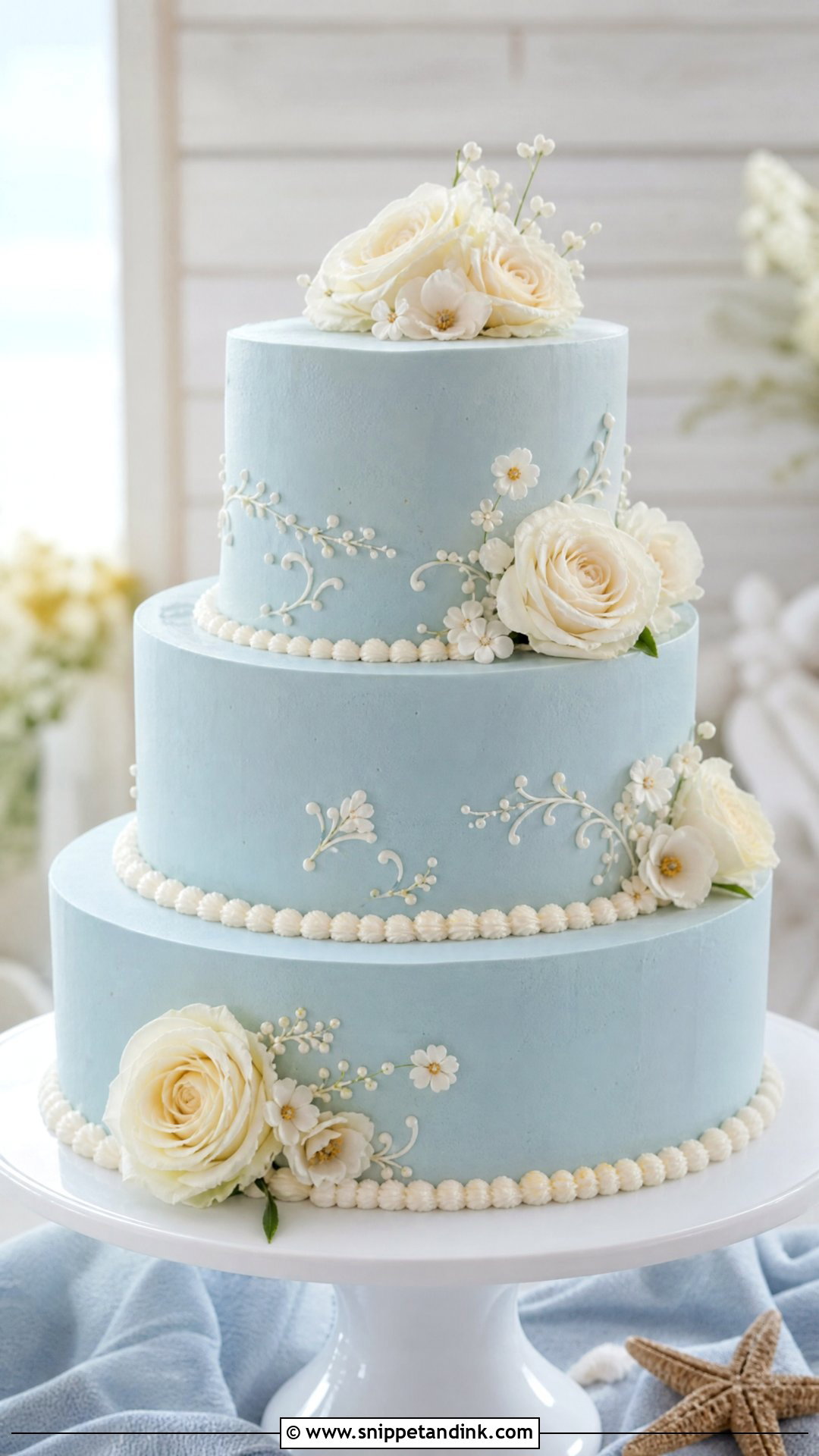
Blue covers a lot of ground. Pale blue goes with Lambeth piping and pearls, dusty blue with greenery and white flowers, navy with a formal evening. Getting an even blue in buttercream is tricky, since butter is yellow and yellow pushes blue toward green; a touch of violet in the mix corrects it. Smooth blue buttercream with ivory flowers feels romantic; white piping and pearl borders make it vintage. It’s also a neat way to carry something blue. Silver, white, cream and soft gold all sit well beside it.


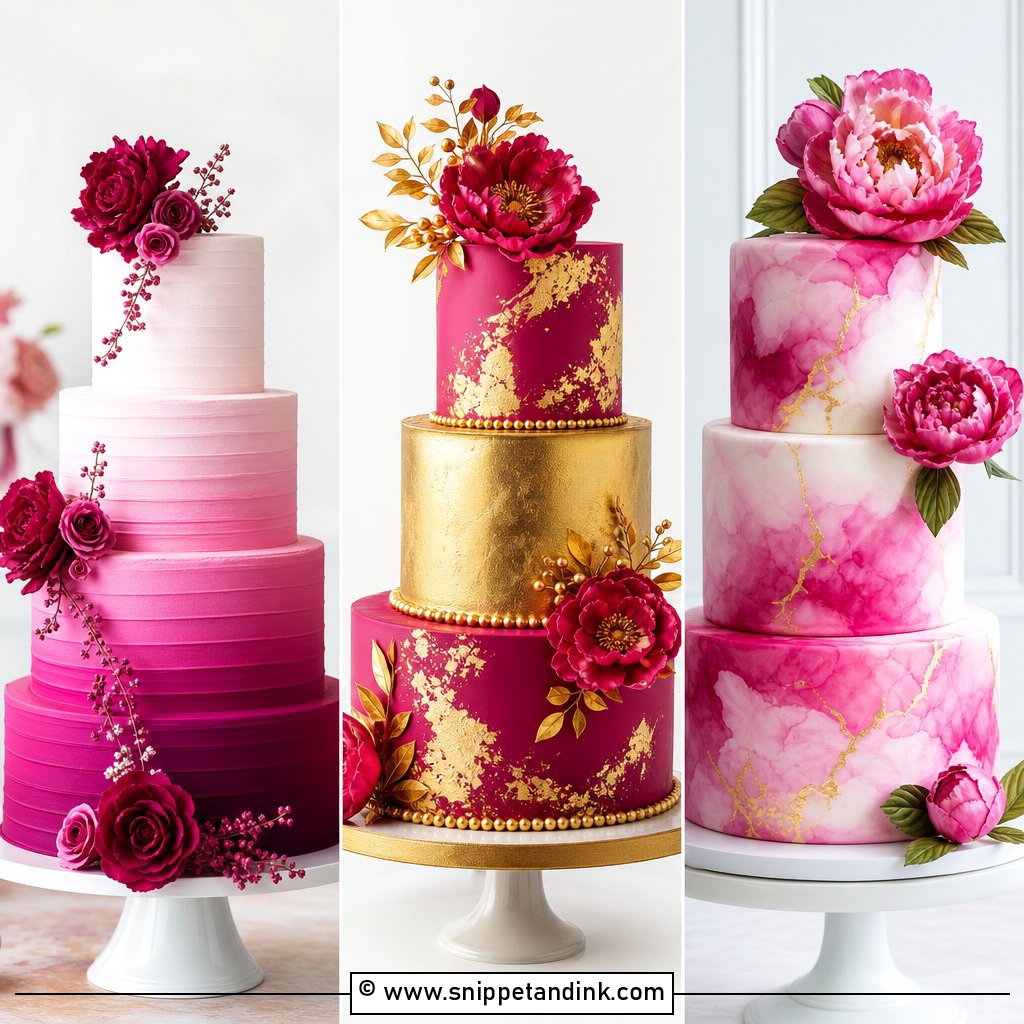
15. 3 Tier Wedding Cake With Blush Pink
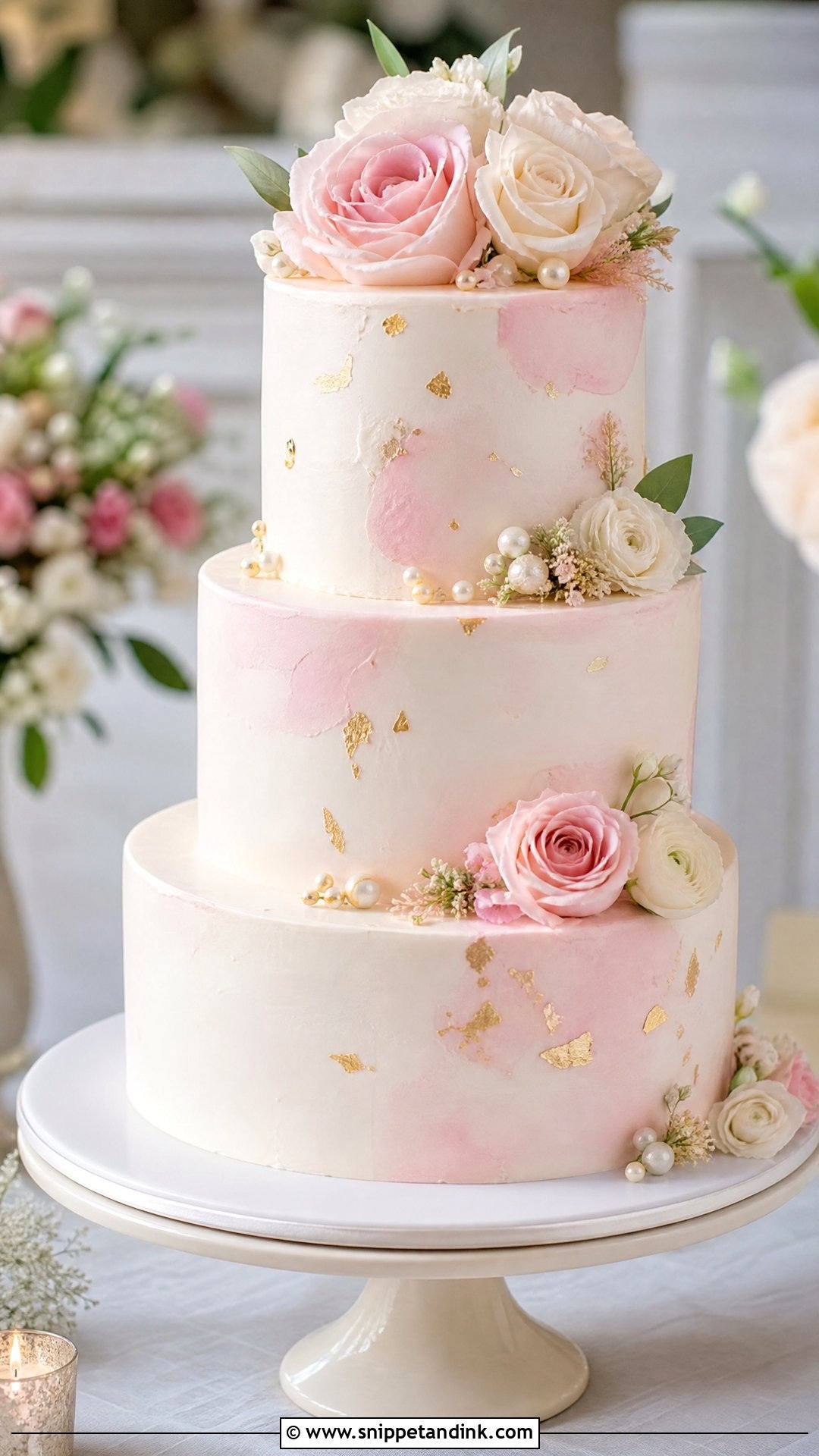
Blush is the colour I’m asked for most, and the risk is going too sweet. A barely-there pink reads grown-up; a strong pink reads birthday party. I either tint all three tiers very lightly or brush blush on as a watercolour wash over white. Ivory, champagne, gold and greenery all sit well with it. Fresh roses, ranunculus, pearls and gold leaf finish it. Sharp edges and minimal flowers make it modern; ruffles or buttercream texture make it softer. Spring weddings and pastel palettes are natural partners.
16. 3 Tier Wedding Cake With White Flowers
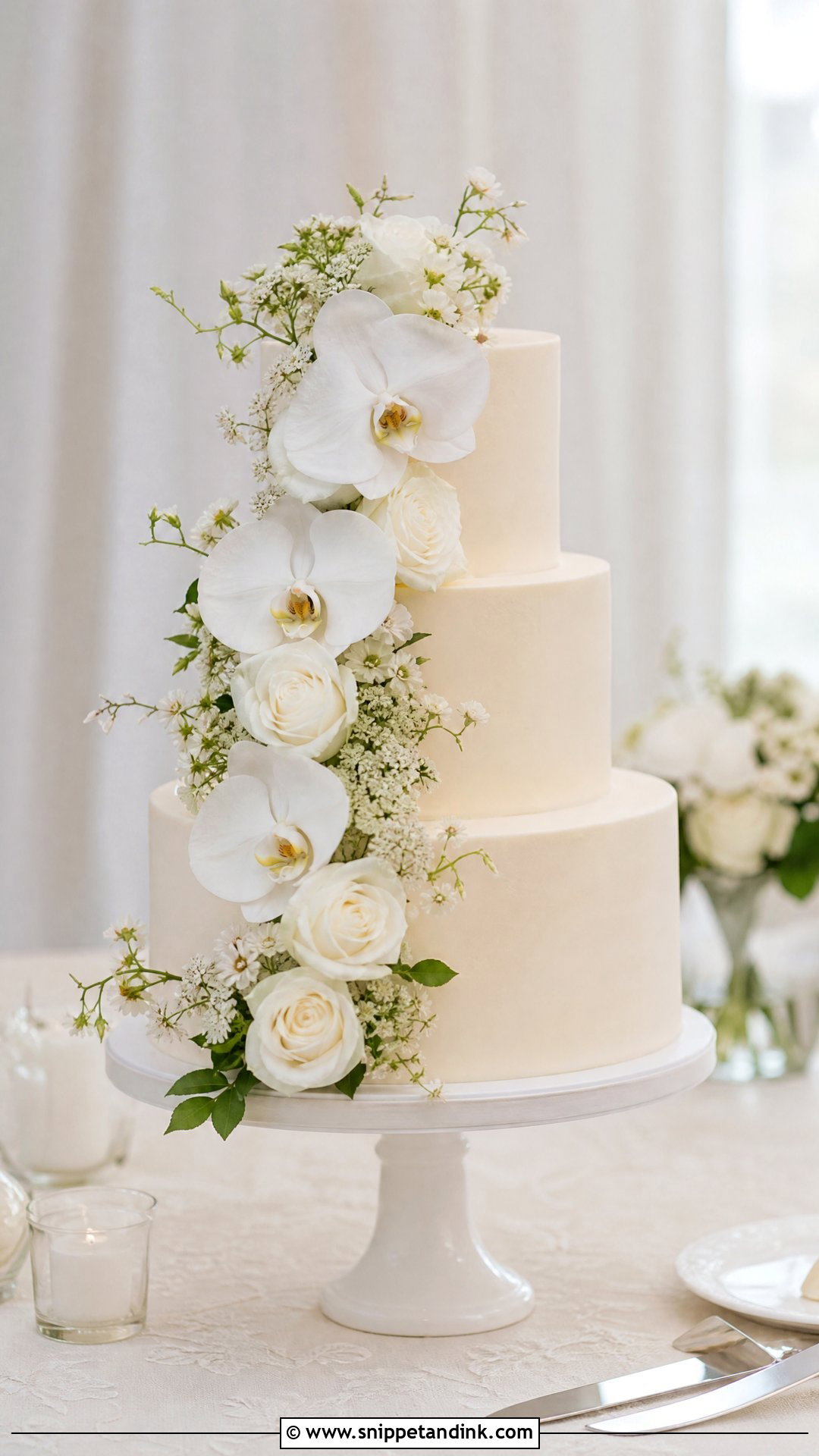
White flowers add texture with no colour to fight anything else in the room, so this cake rarely dates. Orchids, roses, anemones, ranunculus and sugar blossoms all work. White petals show bruising and browning quickly, so I check every stem under good light before it goes on. On smooth ivory buttercream it looks classic; on textured frosting, more relaxed. A vertical cascade adds height, while small clusters between tiers feel understated. Hotel receptions and modern ceremonies both suit it.
17. 3 Tier Wedding Cake With Sugar Flowers
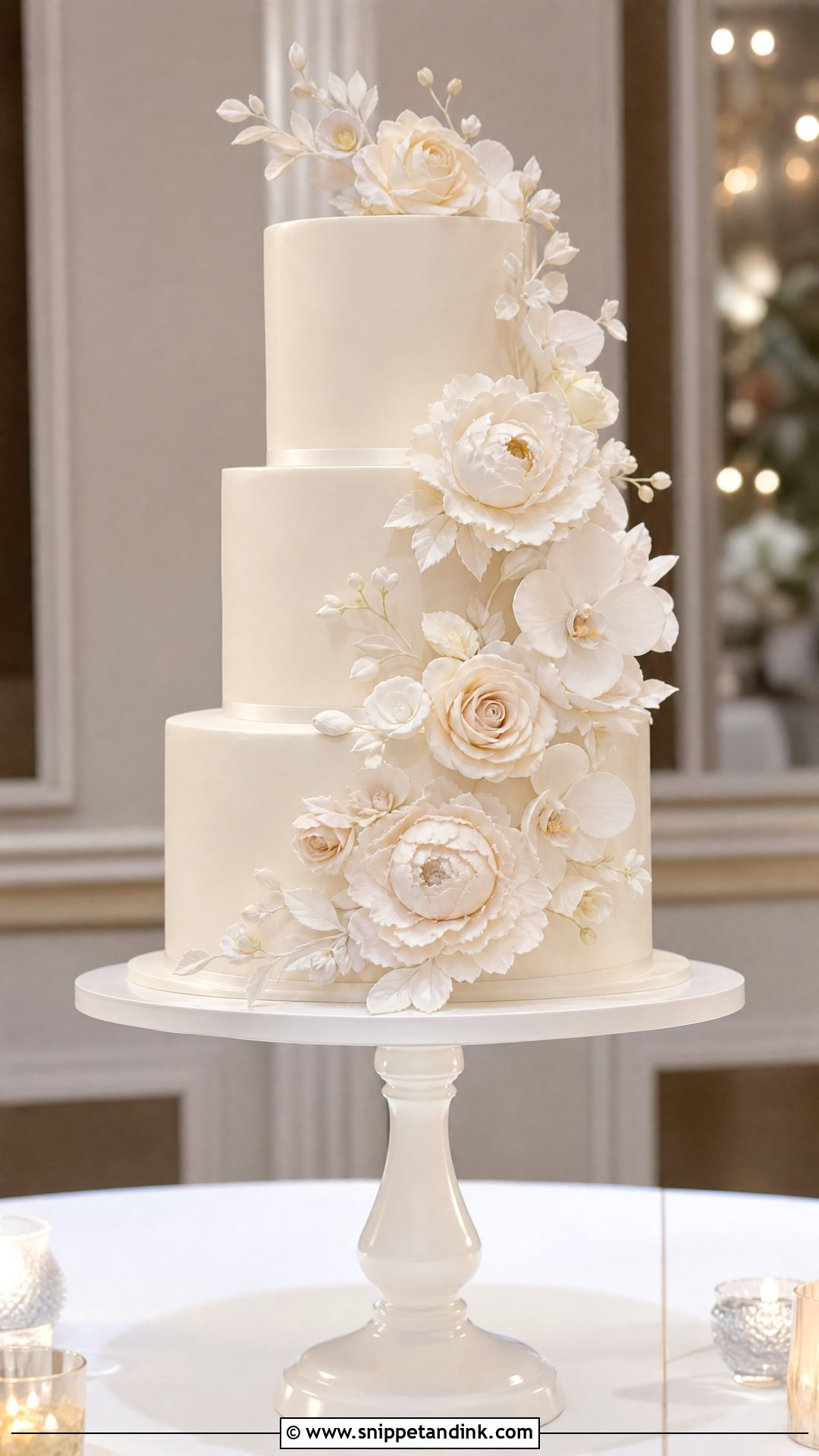
Sugar flowers are made petal by petal from gum paste, wired, dusted and left to dry, so a full cascade can take days of work. That’s why they cost more, and why they’re worth it when the flowers you love aren’t food safe or are out of season. Sugar roses, orchids, peonies, lilies and blossoms can look remarkably real from an experienced hand. They don’t wilt, and they can be kept afterwards. Keep the base simple: smooth fondant, soft buttercream or a pale watercolour finish lets them lead.
18. 3 Tier Wedding Cake With Pressed Flowers
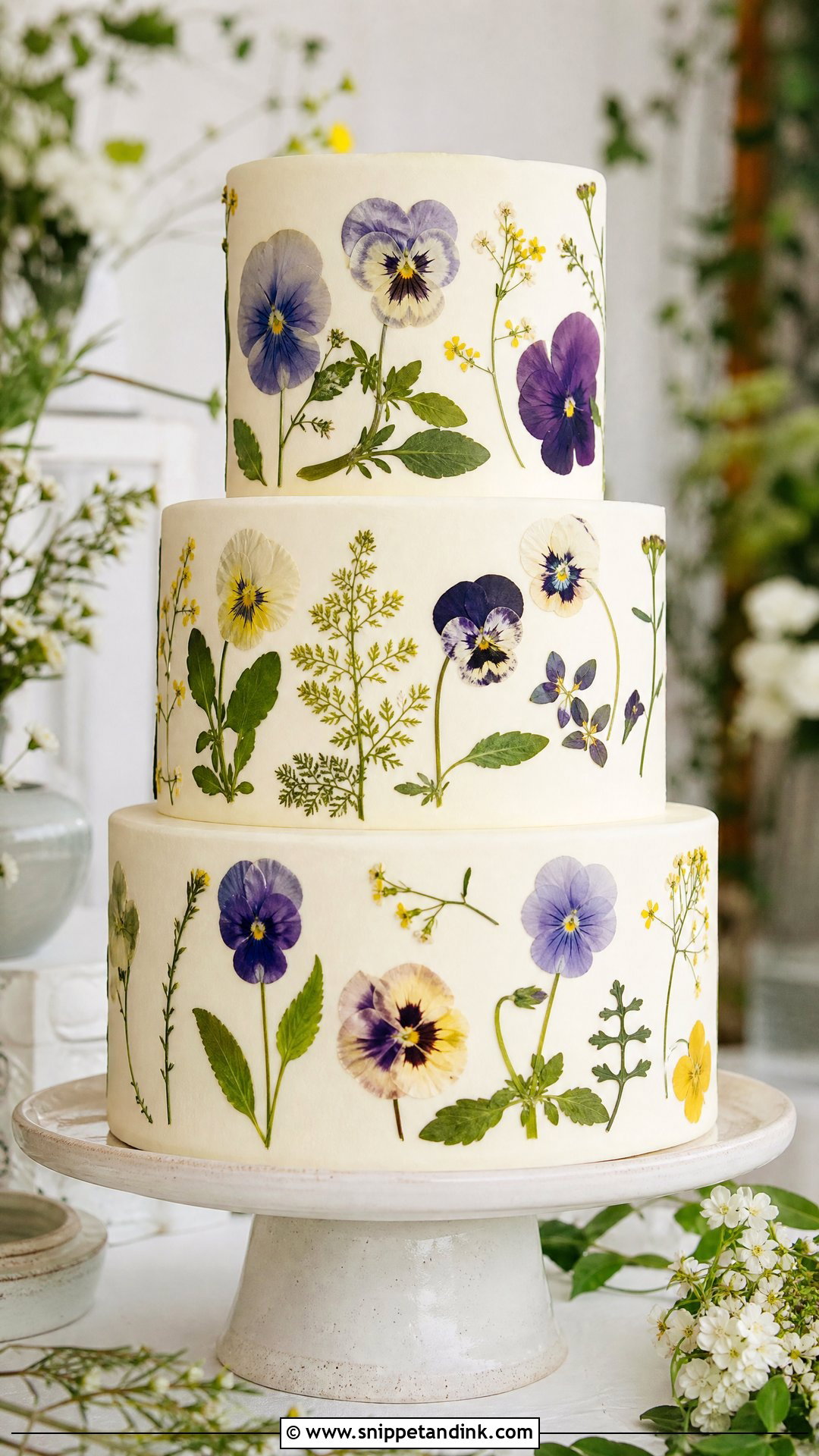
Pressed flowers are pressed flat and dried, then laid into fresh buttercream or onto fondant, where they look like a botanical print. Only edible flowers should be used: pansies, violas, calendula and other small blooms in soft colours. They fade if they sit in strong sun, so I keep pressed-flower cakes in shade until the cutting. White or ivory frosting shows them clearly. A tidy pattern looks modern; a loose scatter feels like a garden. Outdoor ceremonies and spring weddings fit it well.
19. 3 Tier Wedding Cake With Textured Buttercream
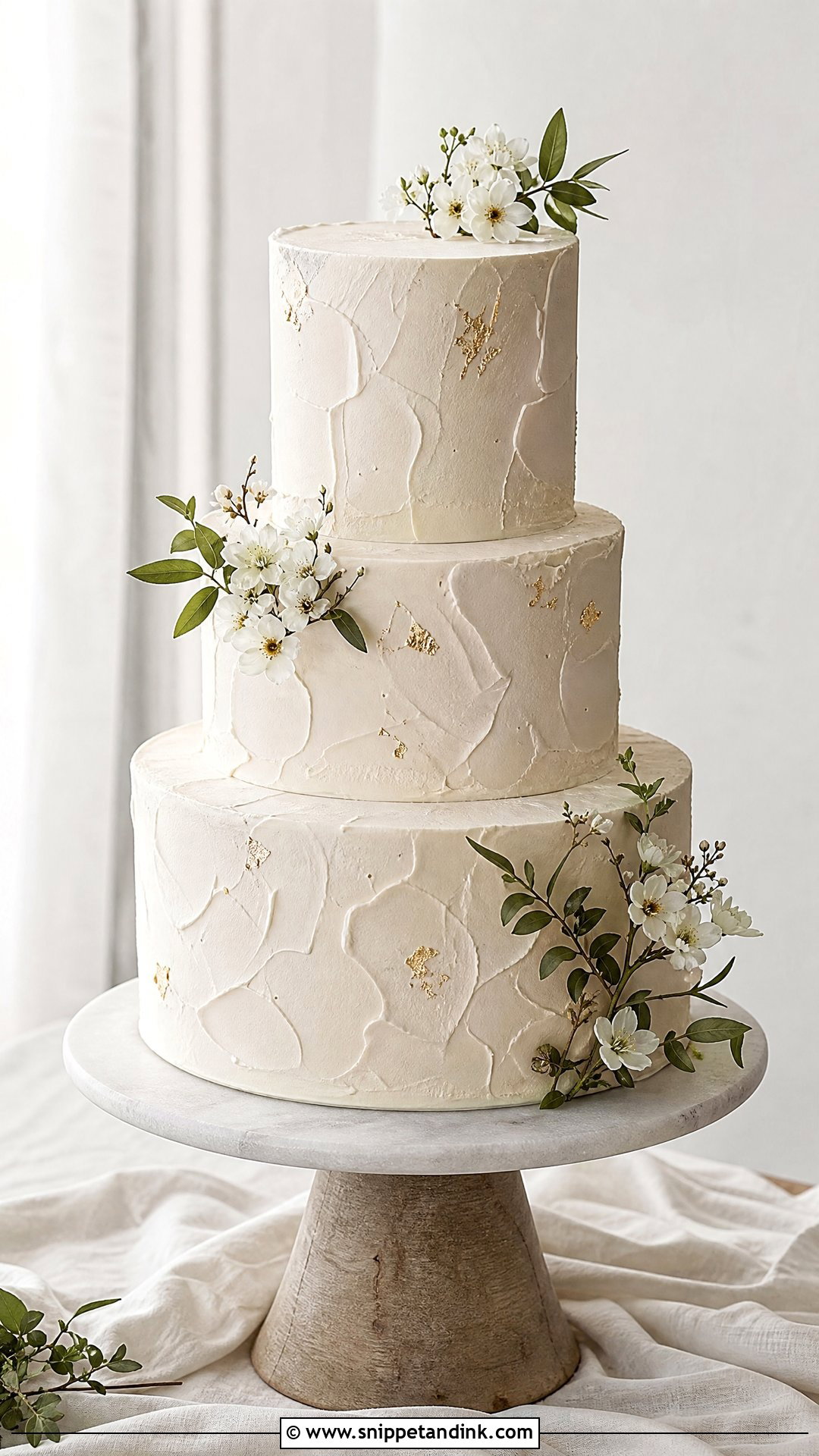
Texture hides small marks that a glassy finish would show, which makes it a smart choice for outdoor or long receptions. The finish can be soft waves, plaster, stucco, palette-knife strokes or gentle ridges. It catches side light in photos and looks especially rich on ivory, cream or soft beige. Keep additions minimal: a few flowers, greenery, pearls or fruit so the texture still shows. It manages to look handmade and polished at once.
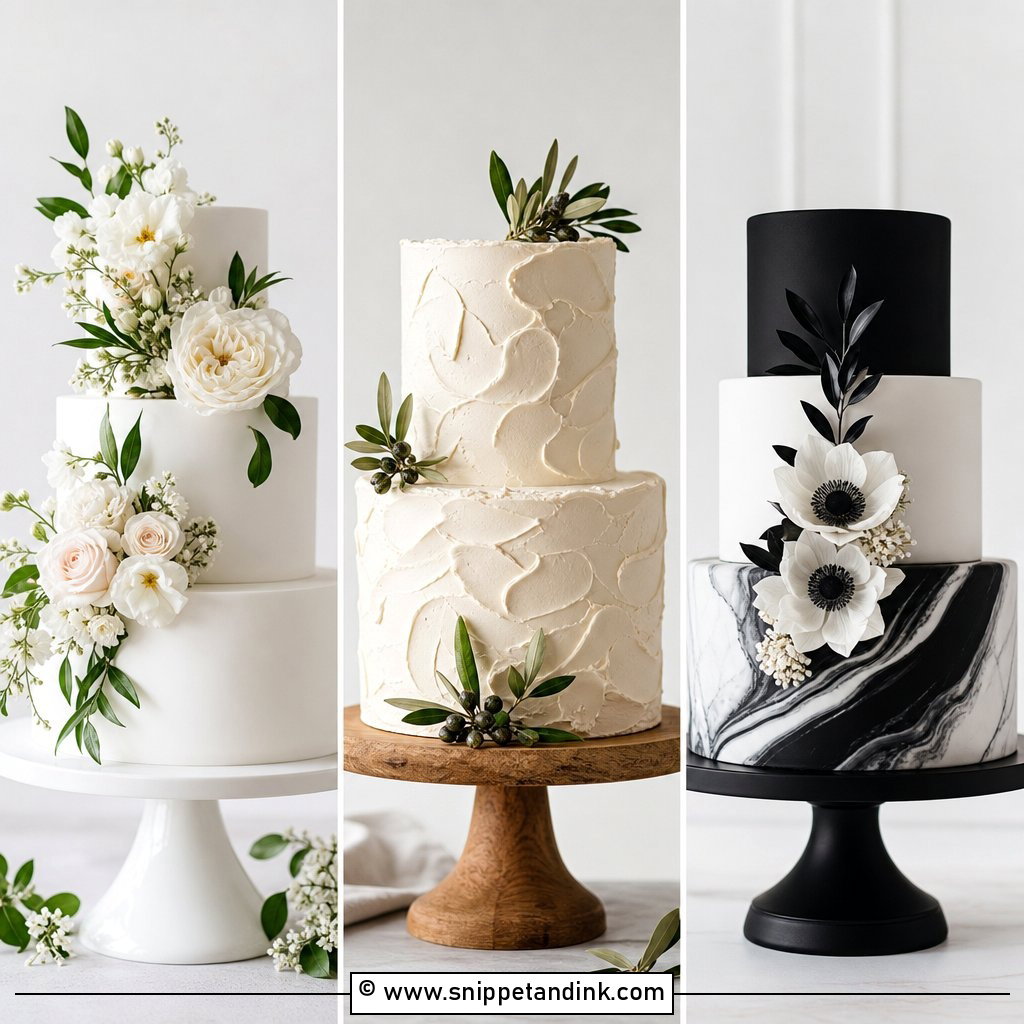
20. 3 Tier Wedding Cake With Watercolor
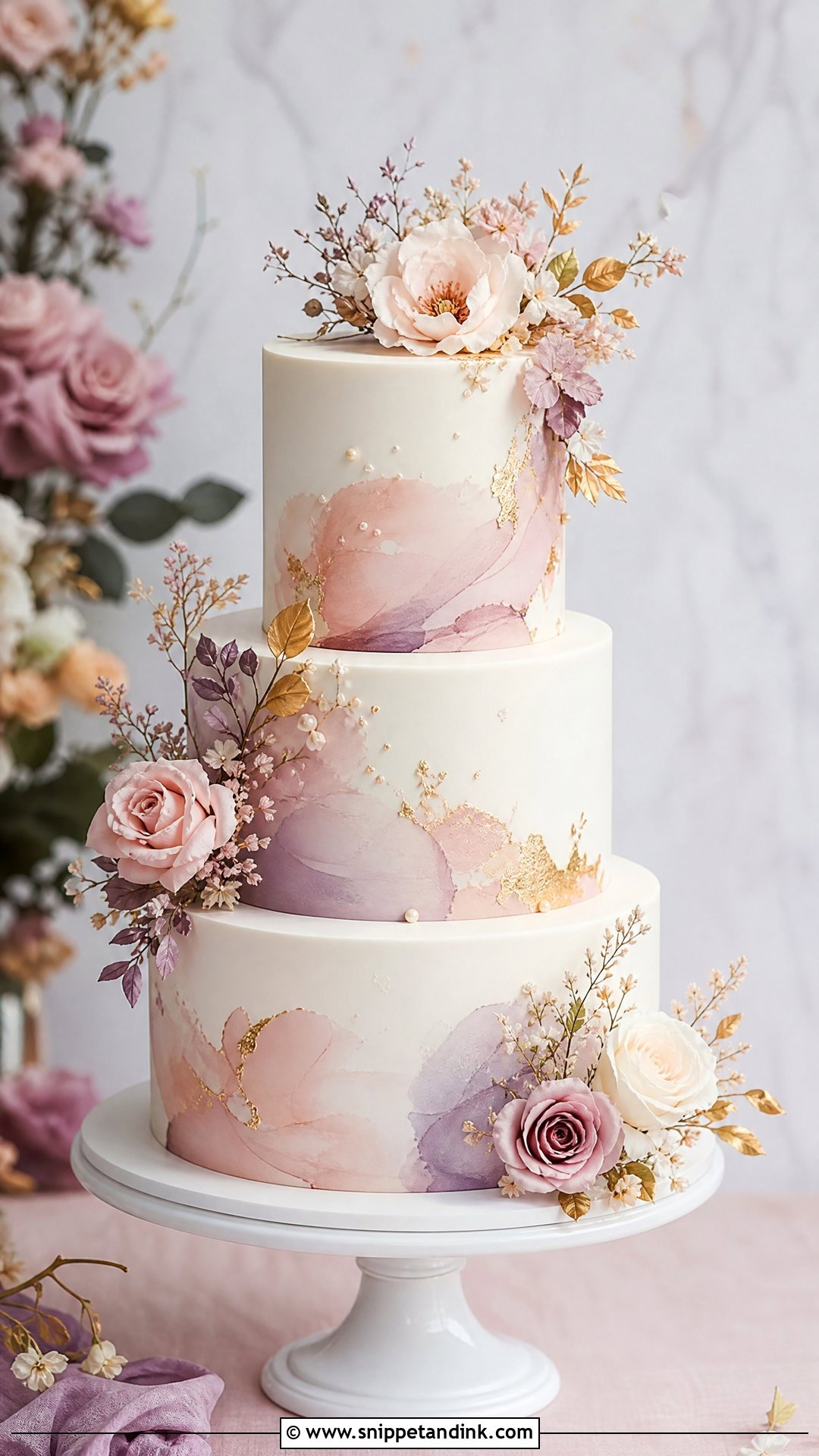
Watercolour is painted by hand with thinned food colour, usually on fondant, where the smooth surface lets the paint pool and blend. On buttercream the effect is softer and more blurred. The palette can be pale blush, lavender, blue, peach, sage or a mix matched to the wedding colours. Keep decorations light, since sugar flowers, gold leaf or pearls on top of a painted surface quickly crowd it. Bring your invitation or a fabric swatch to the tasting; matching paint by eye is much easier with the real thing in hand.
21. 3 Tier Wedding Cake With Bows
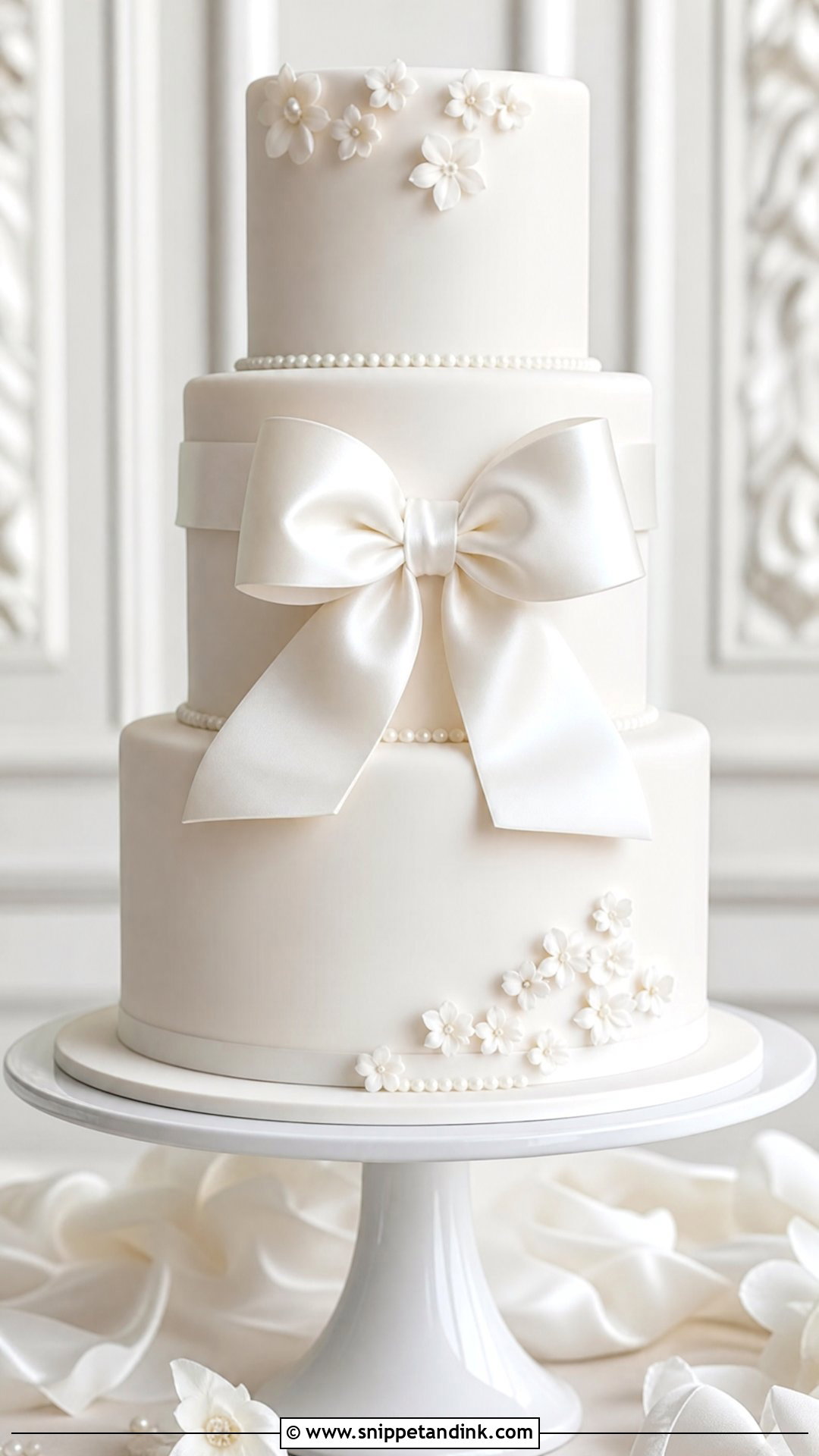
Bows are everywhere right now, and on a cake the whole trick is scale. One oversized fondant bow reads fashion; small ribbon bows on each tier read sweet and vintage. Satin ribbon wrapped at each base gives a clean bridal line, as long as there’s a fondant or acetate strip behind it to stop grease spotting. A big fondant bow needs drying time to hold its loops, so it’s made days ahead. Smooth frosting keeps the bow the star. White, ivory, blush, black or pale blue each change the mood.
22. 3 Tier Wedding Cake With Floating Tiers
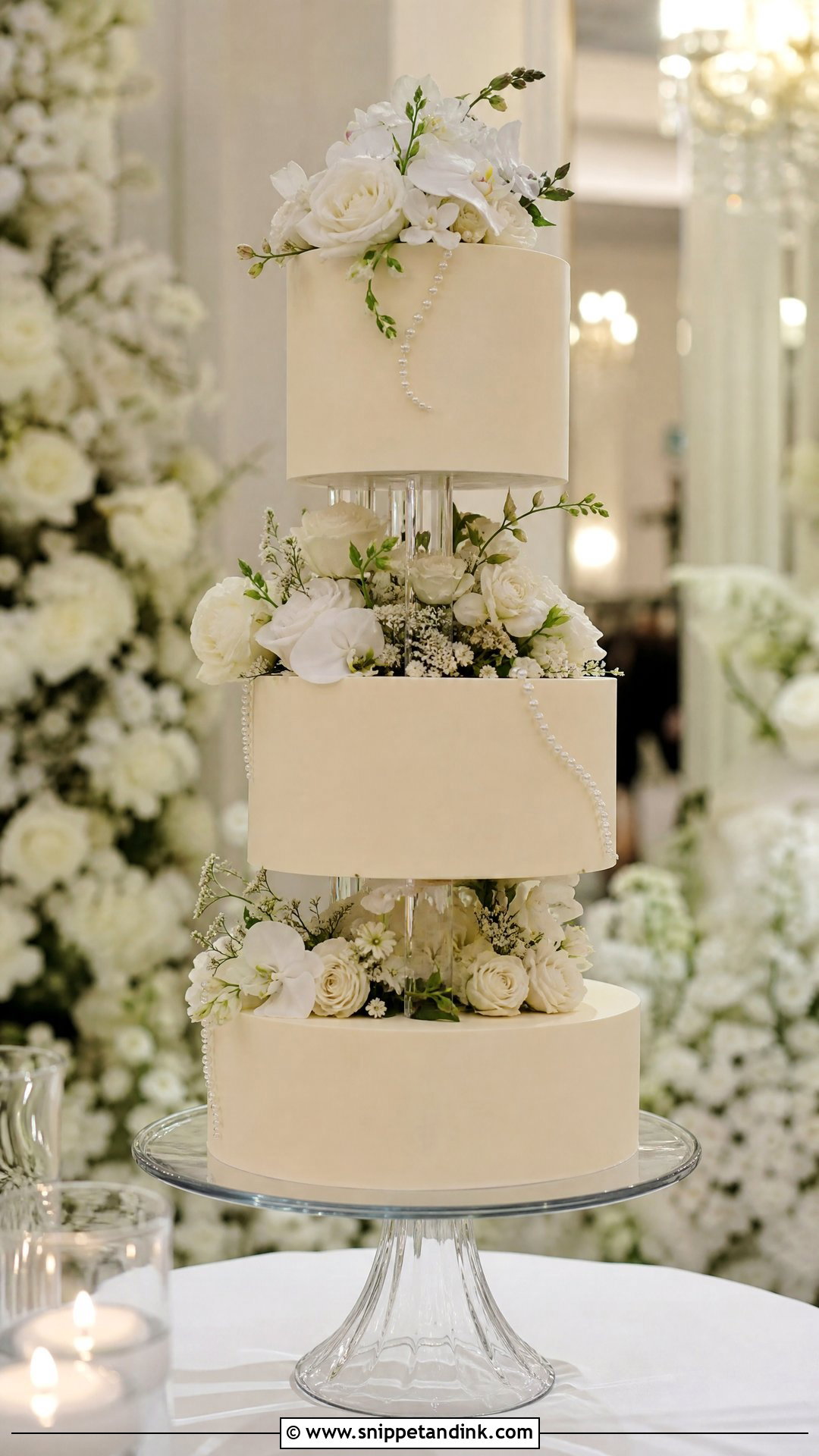
Floating tiers are really an engineering job. Clear separators or hidden stands hold each tier on its own support, so the gap can be filled with flowers, greenery, pearls or, if your baker offers it safely, battery lights. You get extra height without paying for more cake. Clean, structured frosting matters because every edge is on show. Separated tiers can’t be moved once set up, so the cake must be assembled on its final table. Ballrooms and modern venues show off the height best.
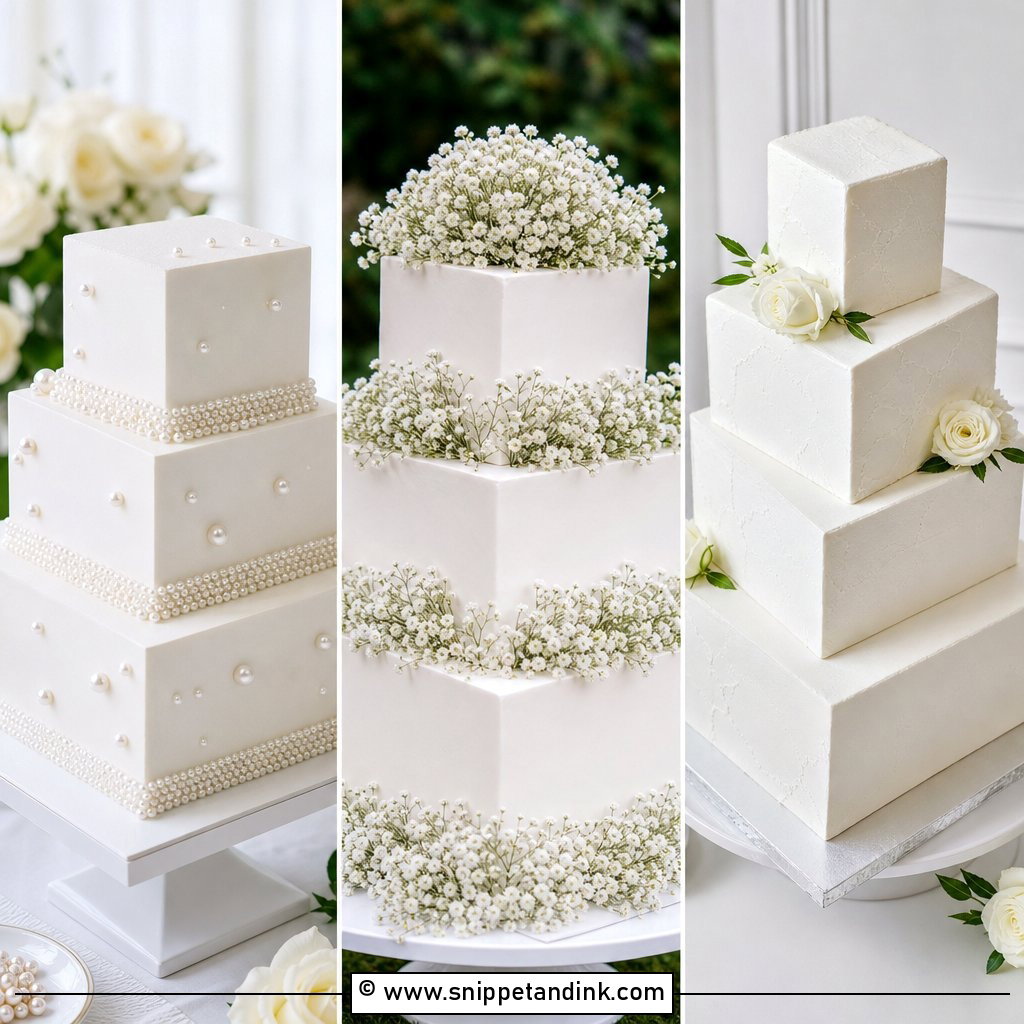
23. 3 Tier Wedding Cake With Square Tiers
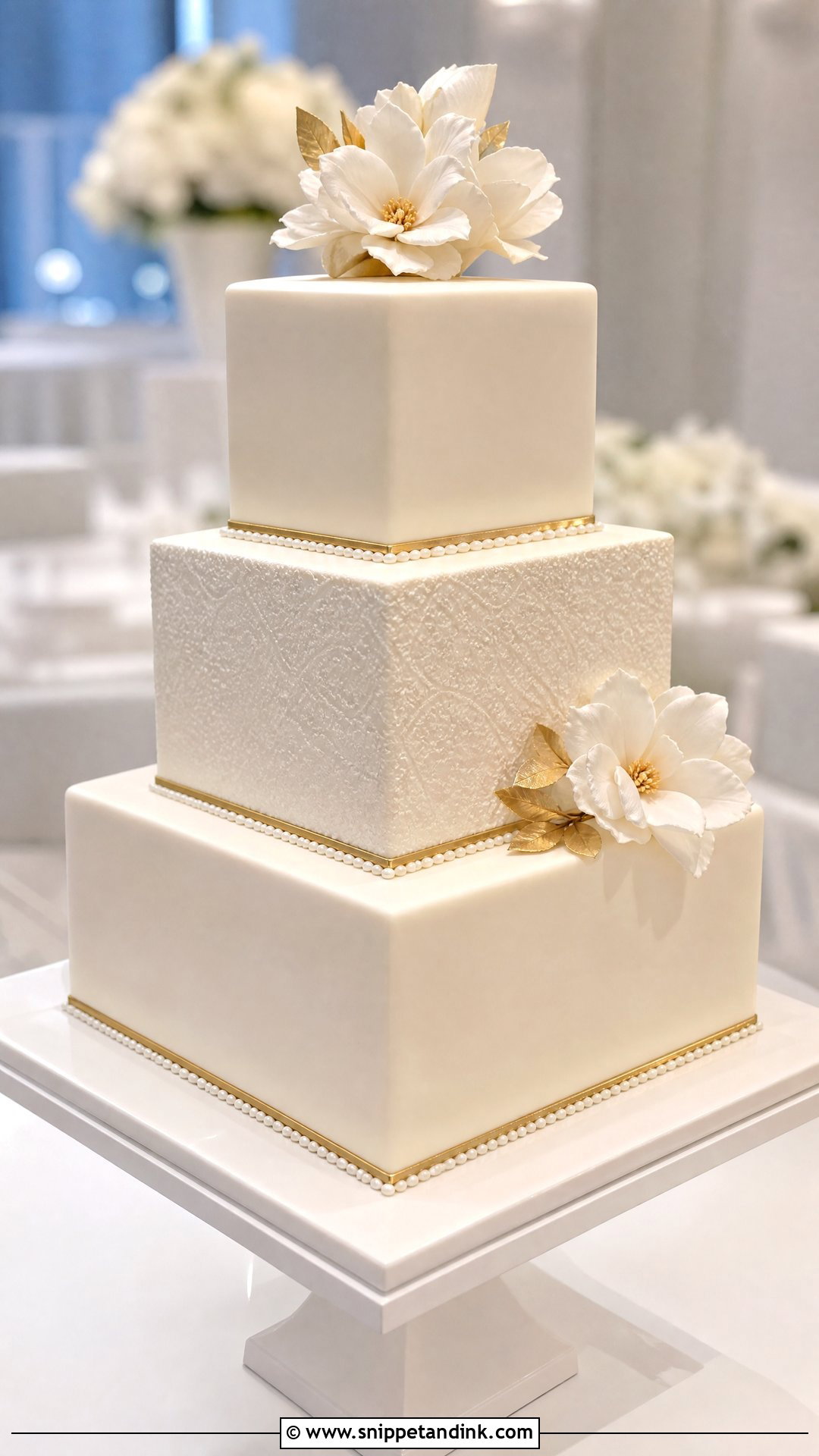
Square tiers look crisp and formal, but they’re harder to make well. Every corner has to be sharp and every tier stacked dead centre, or the eye catches the error immediately. Fondant gives the cleanest result. Geometric patterns, ribbon, metallic accents and structured flowers all suit the shape. Cascading flowers or lace soften it; one marble, textured or bold-coloured accent tier modernises it. Square slices are also easy to cut into neat portions. City weddings, ballrooms and art deco themes suit it.
24. 3 Tier Wedding Cake With Semi Naked Frosting
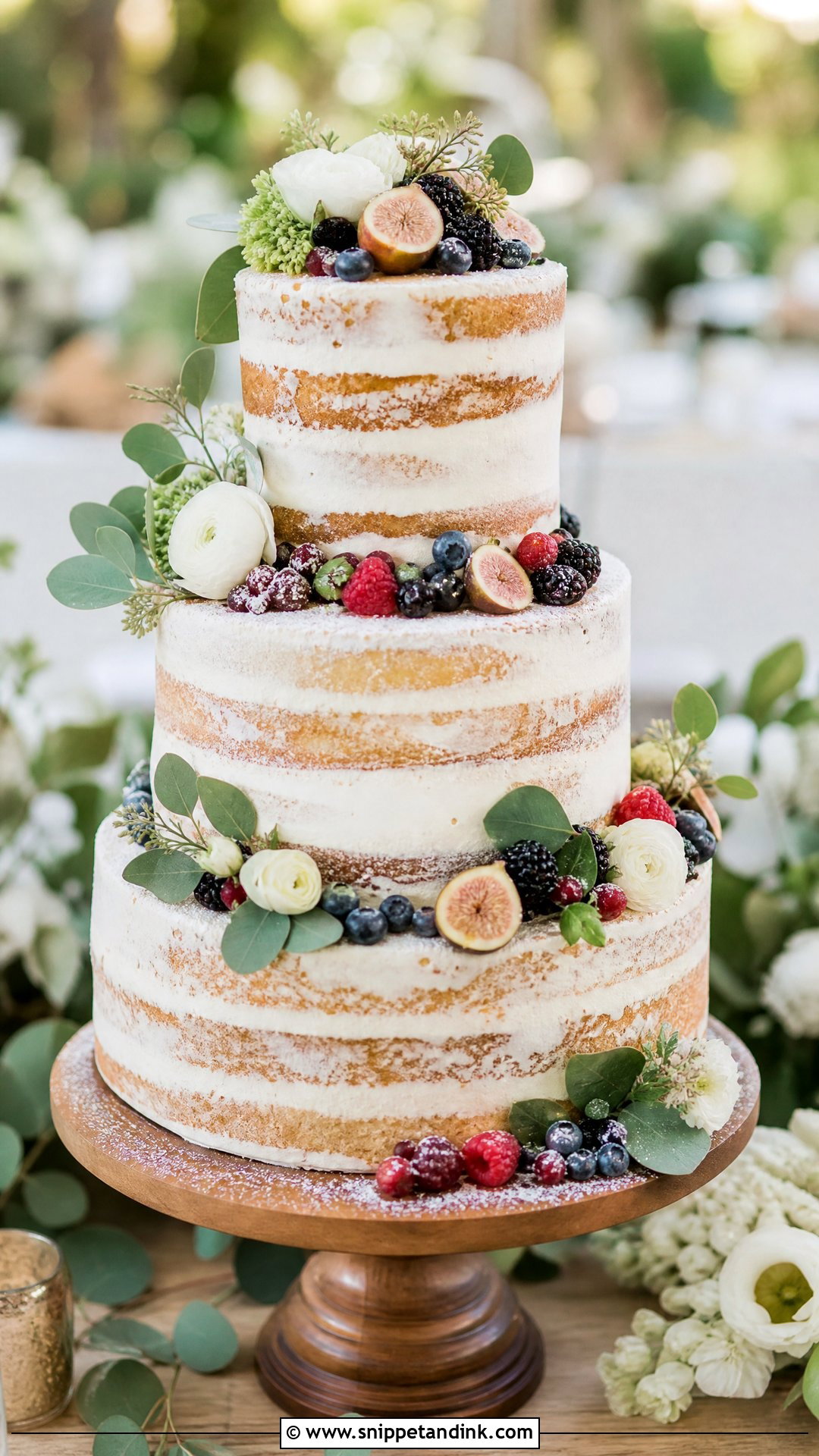
A semi-naked finish is a thin scrape of buttercream that lets the sponge show through. It’s relaxed and pairs naturally with fresh flowers, greenery, berries, figs and wooden or ceramic stands. Exposed sponge dries out fast, so I’d only choose it if the cake will be cut within a couple of hours of going out, and I brush the layers with syrup to help. Sturdy sponges such as vanilla, almond, lemon or spice hold up best. Barns and garden receptions are its natural setting.

25. 3 Tier Wedding Cake With Modern Minimalist Style
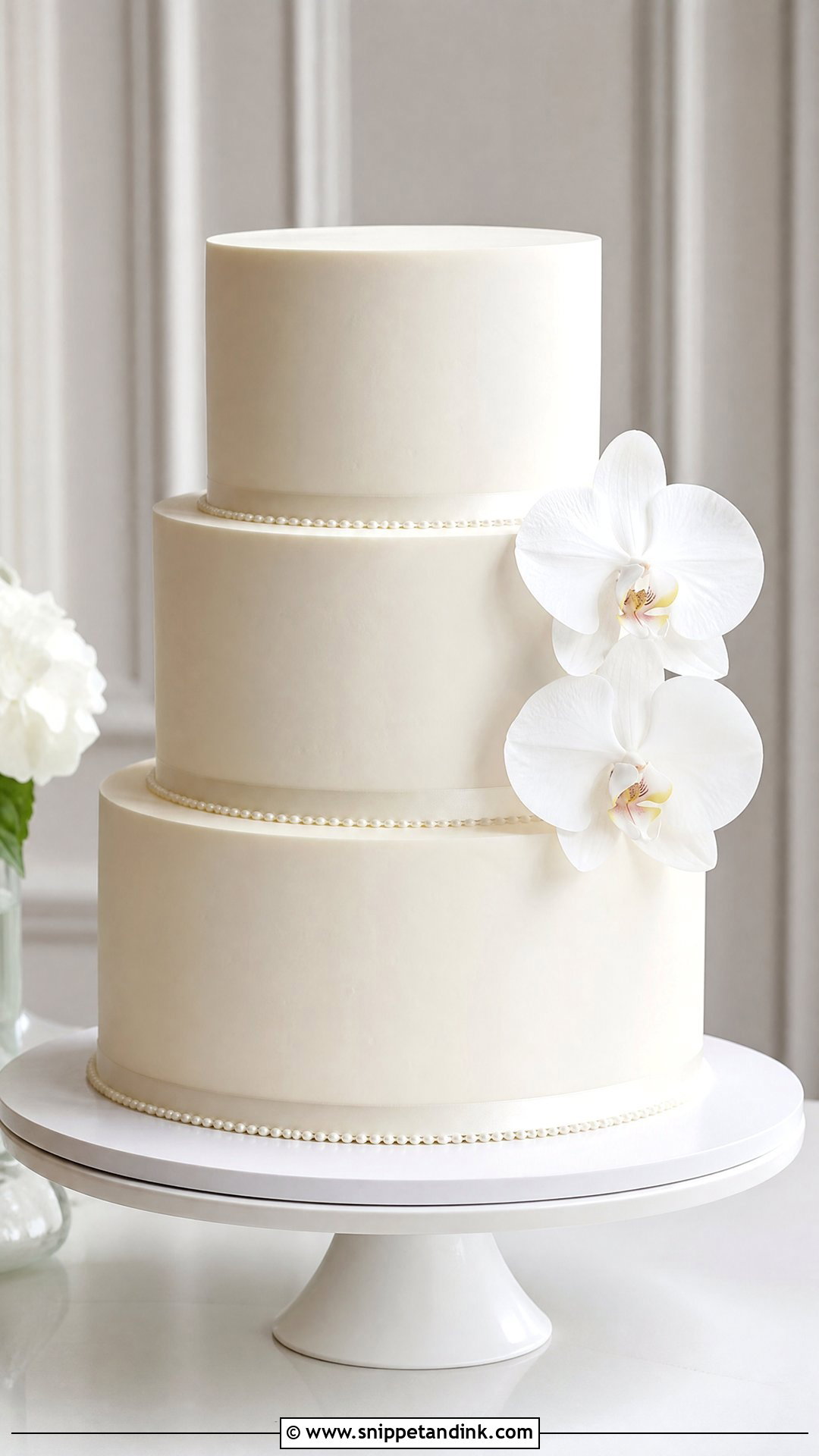
Simple doesn’t have to be boring, but it does have to be exact. Clean edges, smooth frosting, careful spacing and one strong detail: a single floral cluster, one ribbon, a slim pearl border or one textured tier. Every detail should look chosen. Minimal cakes also behave well in busy or striking venues because they don’t compete with the room. I’d point couples who love calm, contemporary design toward it.
The Part of the Day Your Baker Worries About
Most of the risk to a three-tier cake happens between my van and your cake knife. A few things decide whether it looks the same at nine o’clock as it did at three.
The table
It needs to be sturdy, level and away from the dance floor, where vibration and bumping hips are a real threat. Wobbly folding tables are the most common problem I meet at venues. A cake table should never sit near a heater, a sunny window or the path to the bar.
Heat and display time
Buttercream softens and fresh flowers wilt in a warm room. If the reception is outdoors or in summer, ask that the cake stay inside, in the coolest available spot, until shortly before it’s revealed. Fondant over ganache is the most heat-tolerant finish; whipped cream and cream cheese are the least.
The cutting
Make sure someone at the venue knows how to cut a tiered cake. The dowels and boards inside each tier have to come out as it’s served, and flowers with wires or picks must be removed before anyone takes a slice. A quick word between your planner and the catering team saves a lot of trouble.
Three Tiers, One Afternoon, and a Knife
A three-tier cake can go classic with white flowers, romantic with blush roses, modern with marble, vintage with Lambeth piping or natural with greenery and fruit. The style is the fun part. Venue, season, guest count, colour palette and display time are what decide whether that style works on the day. Talk through frosting stability, flower safety, delivery, setup and portion size with your baker before you sign. A cake that tastes good, holds its shape and looks like it belongs to the rest of the wedding is the one I’d want to make.
You'll Like These Ideas:










Leave a Reply