
A plain cake is the hardest one to fake. With no cascade of sugar work to draw the eye, every wobbly edge, air bubble and uneven tier shows, so the simple designs below depend on good proportions and a clean finish more than on decoration. Most of them rely on smooth buttercream or fondant with one accent: a few flowers, pearls, a ribbon or a band of colour from your palette. They suit almost any room, from a backyard reception to a ballroom, and they let the flavour do more of the talking.
Plain Icing Hides Nothing, So Start Your Brief With Structure
When a couple tells me they want something simple, I start with numbers, not flowers. A simple cake looks right or wrong almost entirely because of its proportions, so these are the details I settle first.
- Guest count and portions. Wedding portions are cut smaller than party slices. As a rough guide, a 6, 8 and 10 inch round stack feeds somewhere around seventy to eighty guests, but charts vary by baker, so ask for hers.
- Tier height. Taller tiers look more elegant and modern than standard ones. Ask whether the price includes extra layers.
- Icing type. Buttercream tastes better to most people, fondant gives the cleanest finish, and ganache sits in between and copes best with warmth.
- Colour. Bring a fabric swatch or a paint chip. White means different things to different bakers.
If the guest list is large and the budget isn’t, ask about a smaller display cake with plain sheet cakes cut in the kitchen. Guests can’t tell the difference on the plate, and it keeps the cake you show off at a sensible size.
1. Simple White Buttercream Wedding Cake
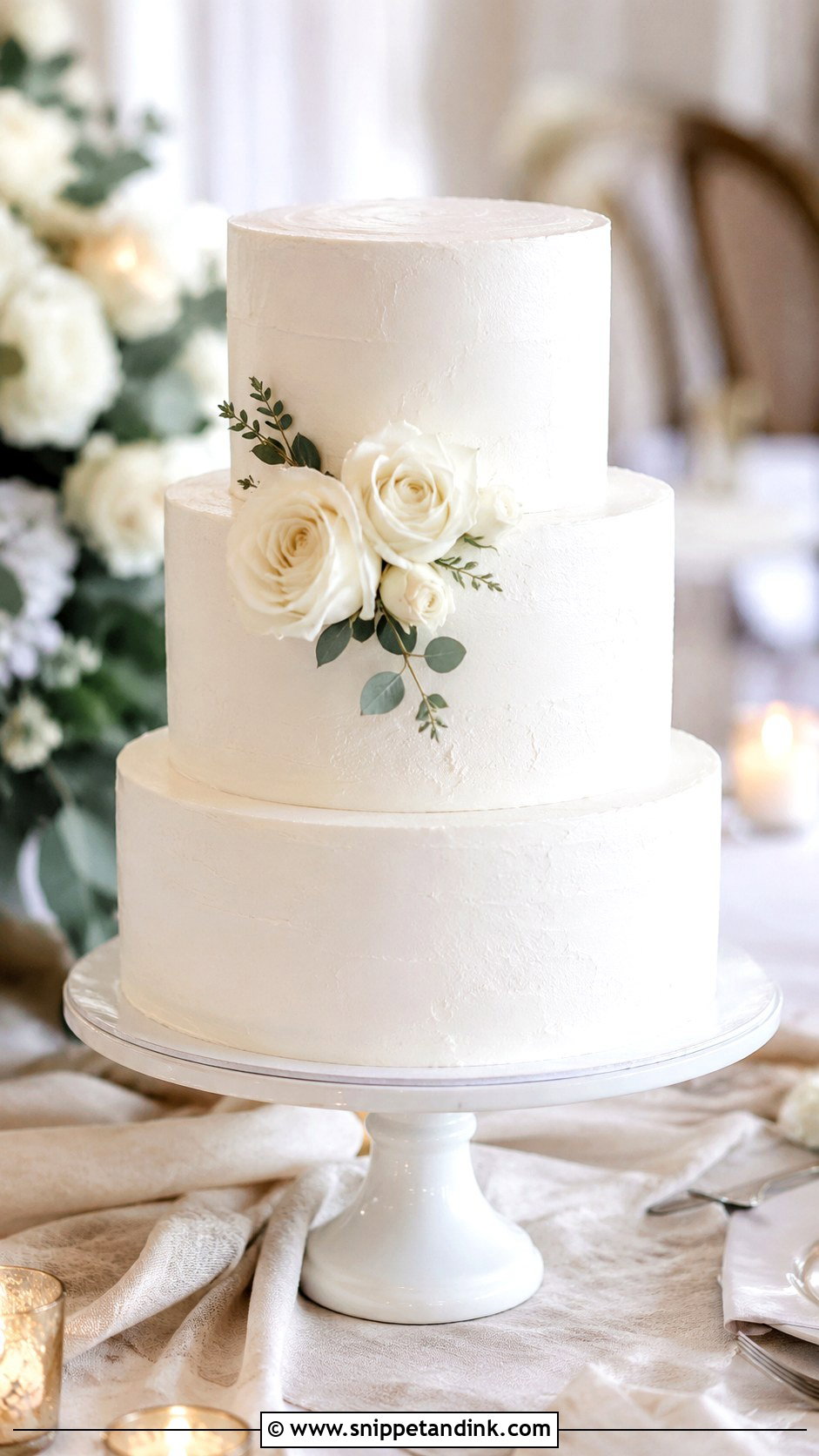
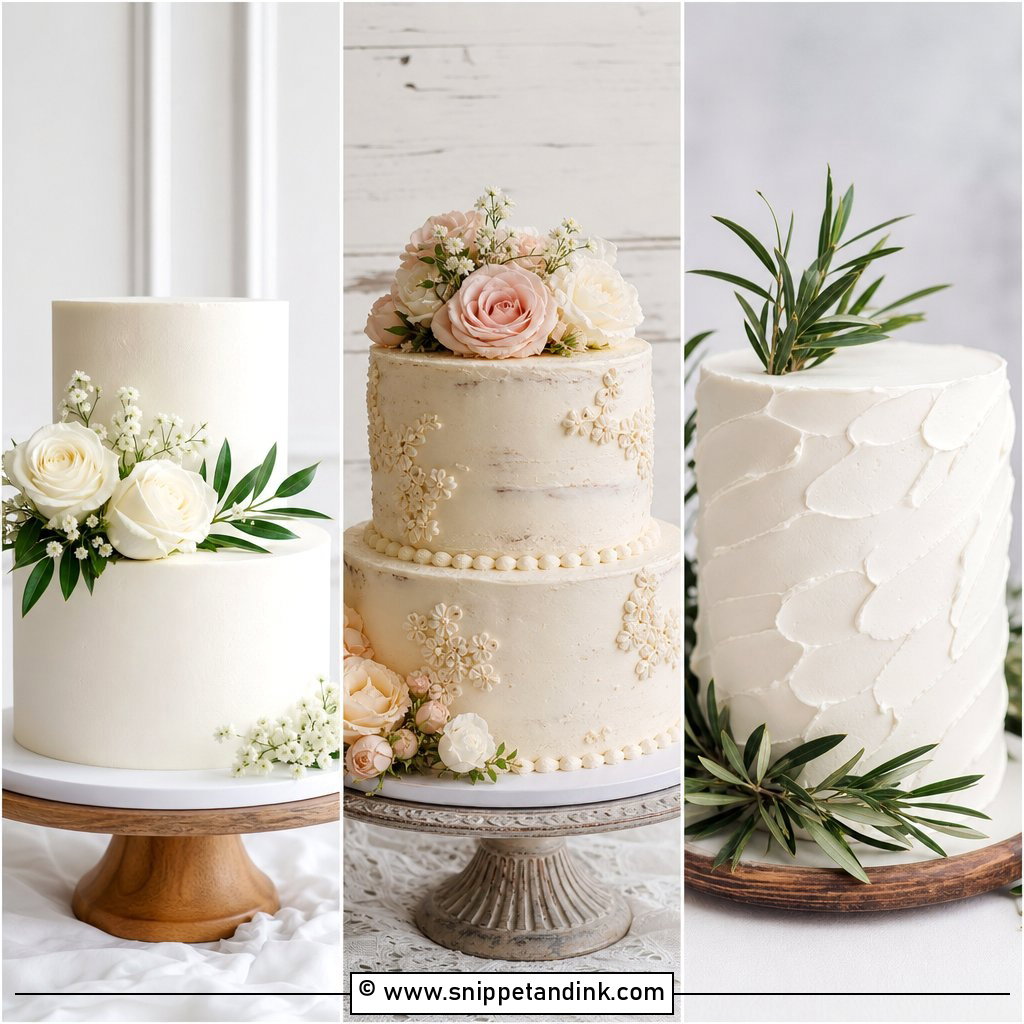
White buttercream is the cake I’m asked for more than any other, and it’s the one where technique matters most. Pure white is hard to achieve with real butter, which tints the icing ivory, so if your dress and linens are bright white, ask your baker how she whitens it or whether she uses a meringue-based buttercream. Two or three tiers with sharp edges and a small cluster of flowers near the base is plenty. Vanilla, almond, lemon and champagne sponges all sit comfortably under it.
2. Two Tier Wedding Cake With Fresh Flowers
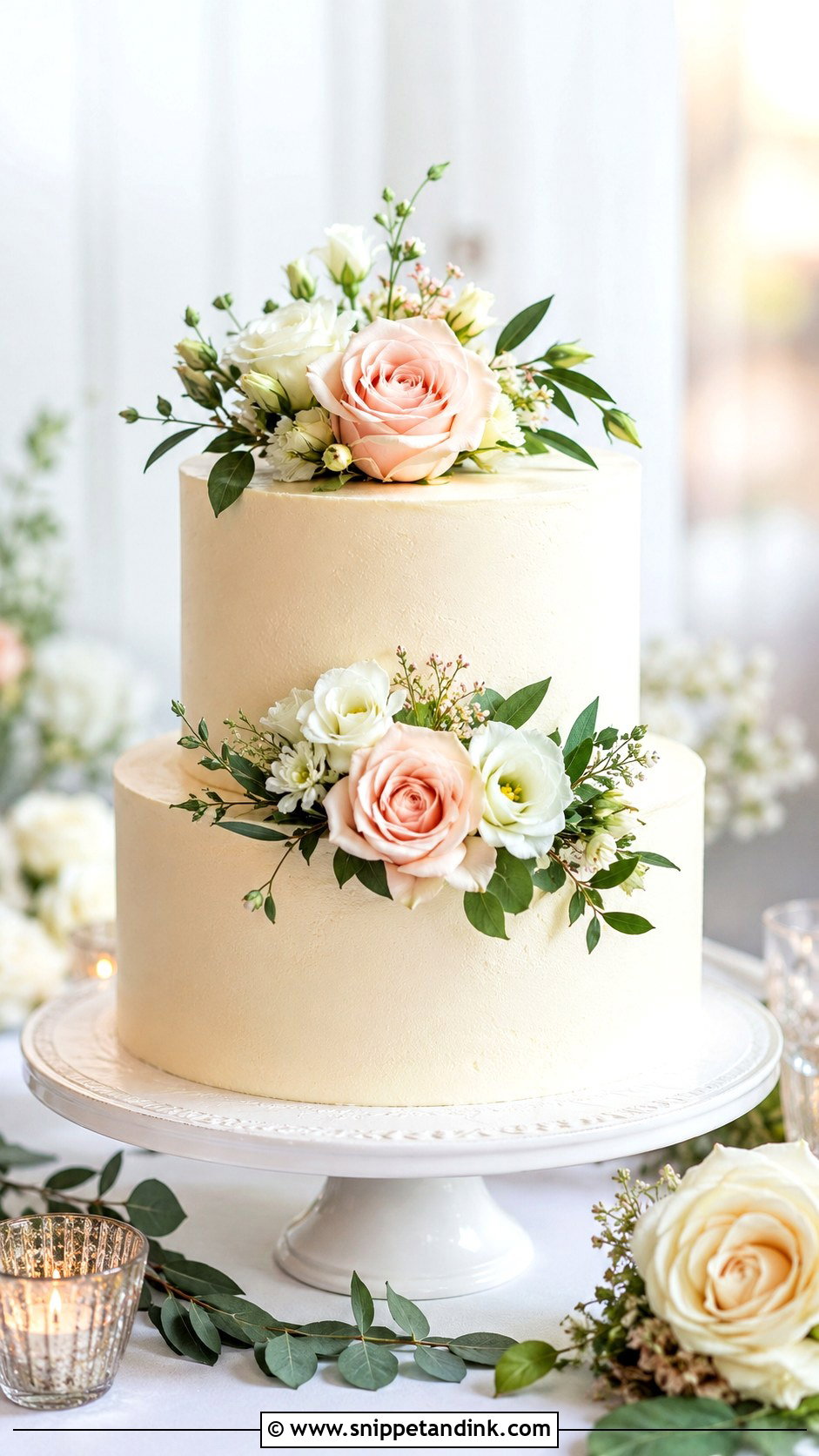
A two tier cake is my usual suggestion for receptions under about sixty guests, or for couples serving a dessert table alongside it. Keep the icing smooth or lightly textured and add blooms that echo the bouquet: roses, ranunculus, lisianthus and orchids all hold up well. I place one grouping on the top tier and a smaller one low on the opposite side, which balances the cake visually. Overloading a short cake with flowers makes it look squat in photos.
3. Semi Naked Wedding Cake
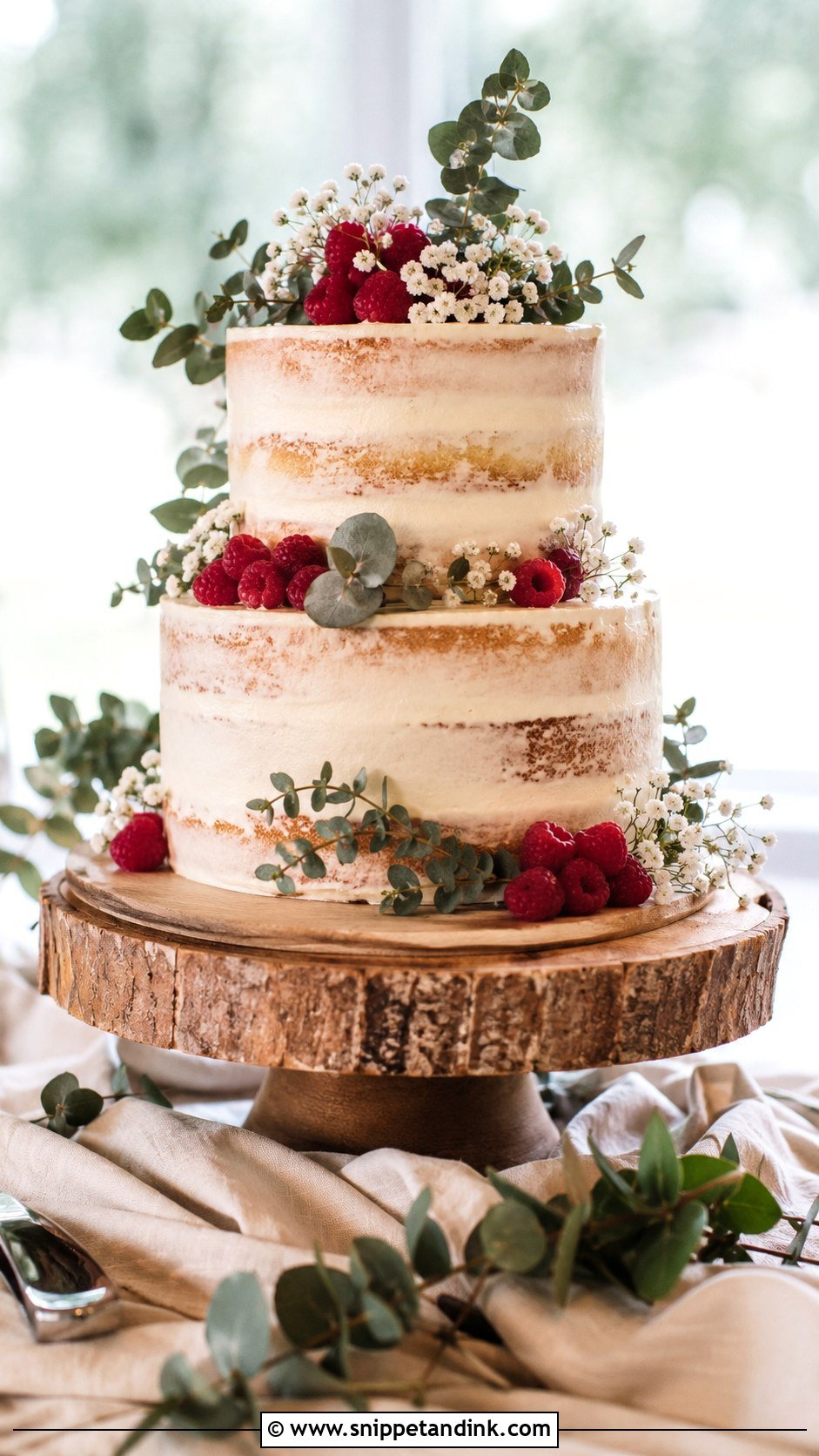
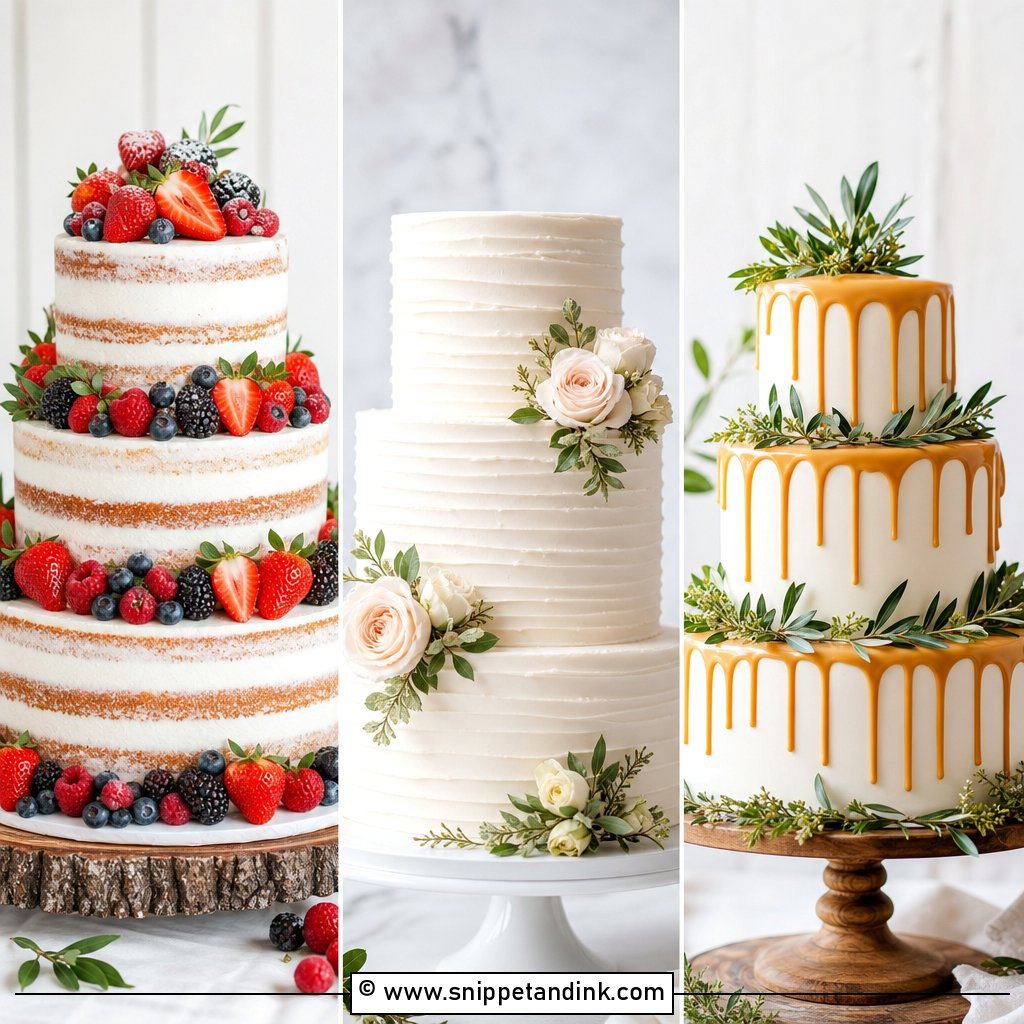
A semi naked wedding cake shows a little sponge through a thin scrape of buttercream, which gives it that homemade warmth. The trade-off is that exposed sponge dries out faster than a fully iced cake, so I don’t assemble these more than a day ahead and I keep them covered until the last moment. Vanilla, spice, carrot and lemon sponges look best through the icing; dark chocolate can look patchy. Berries or small flowers finish it. Barn and garden receptions suit it, but think twice for a hot outdoor afternoon.
4. Single Tier Wedding Cake
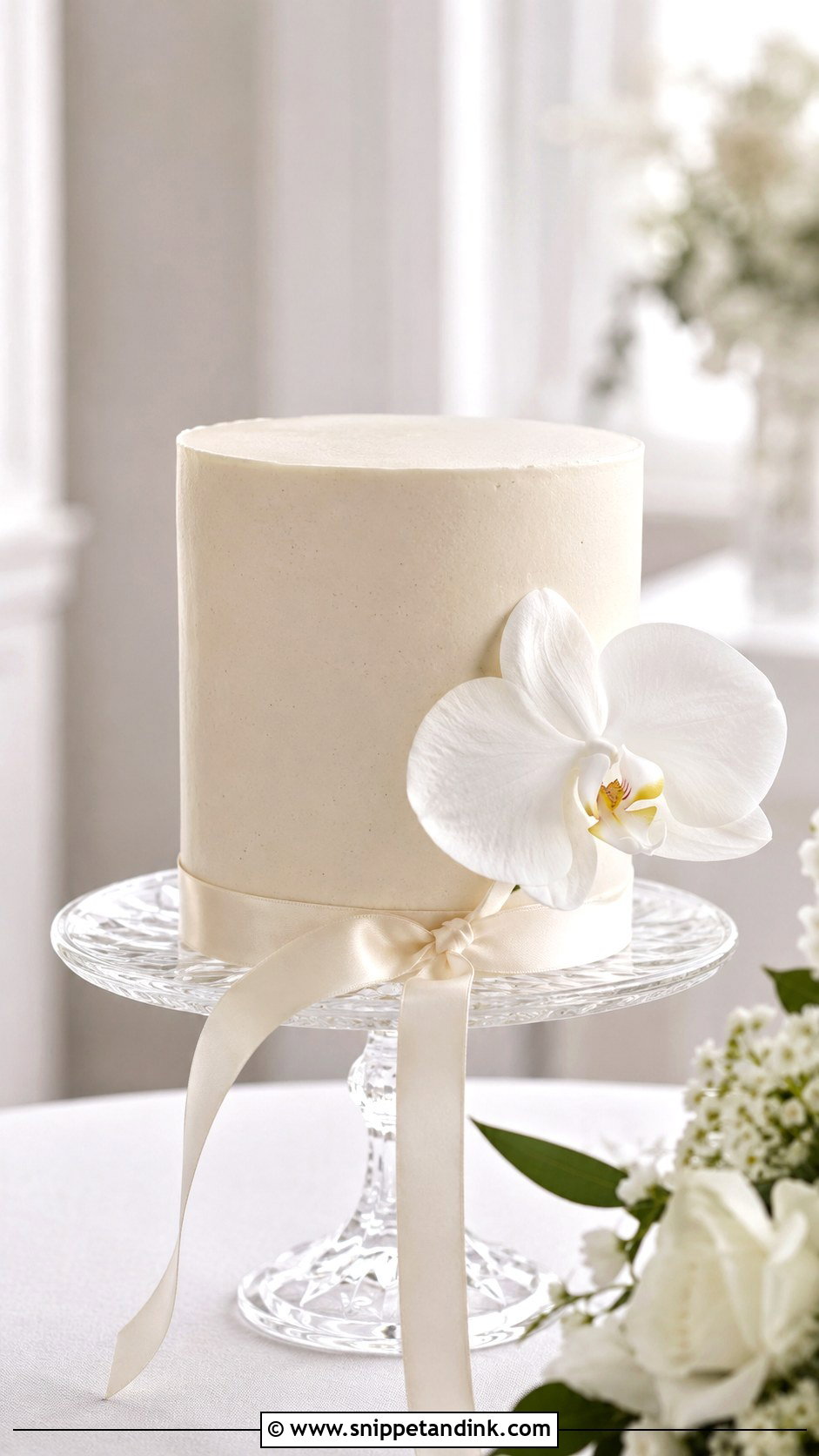
A single tier wedding cake works for elopements, courthouse ceremonies and micro weddings, and it’s where I encourage couples to spend their budget on flavour. A tall round of four or more sponge layers looks modern and gives you more height than a standard tier. Lemon raspberry, vanilla bean, chocolate ganache and almond cream all work well. Finish with smooth buttercream and one detail, then raise it on a stand so it doesn’t disappear on a long table.
5. Pearl Wedding Cake
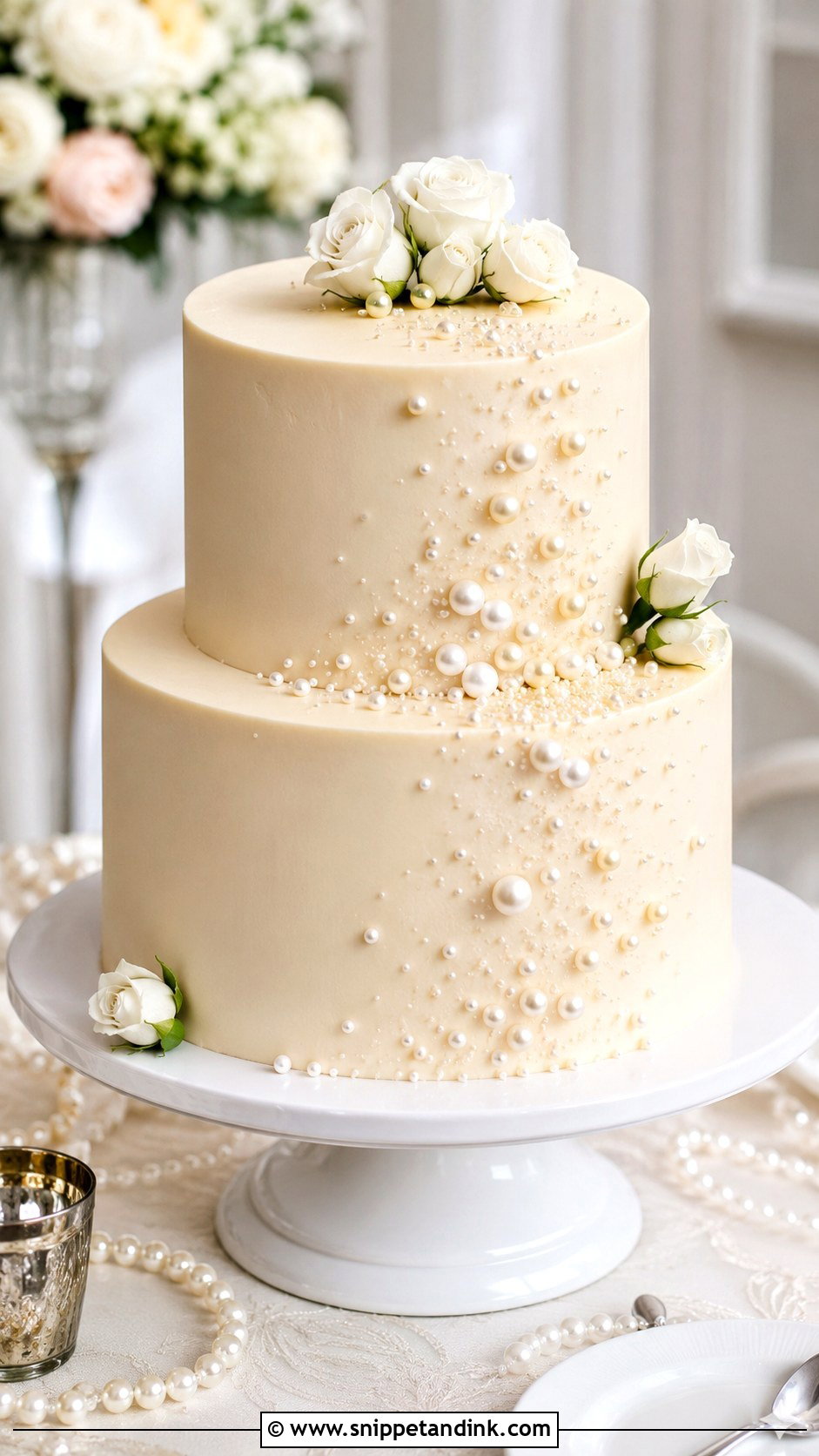
Sugar pearls are an easy way to add detail without busy piping. I scatter them lightly over smooth buttercream or press them into a cascade down one side. They need to go on while the icing is still slightly tacky, and placed one by one with tweezers if you want a clean line. On white, ivory, blush or champagne icing they look refined; on a dark cake they can look like sprinkles. Keep everything else bare so the pearls are the feature.
6. Minimalist Wedding Cake
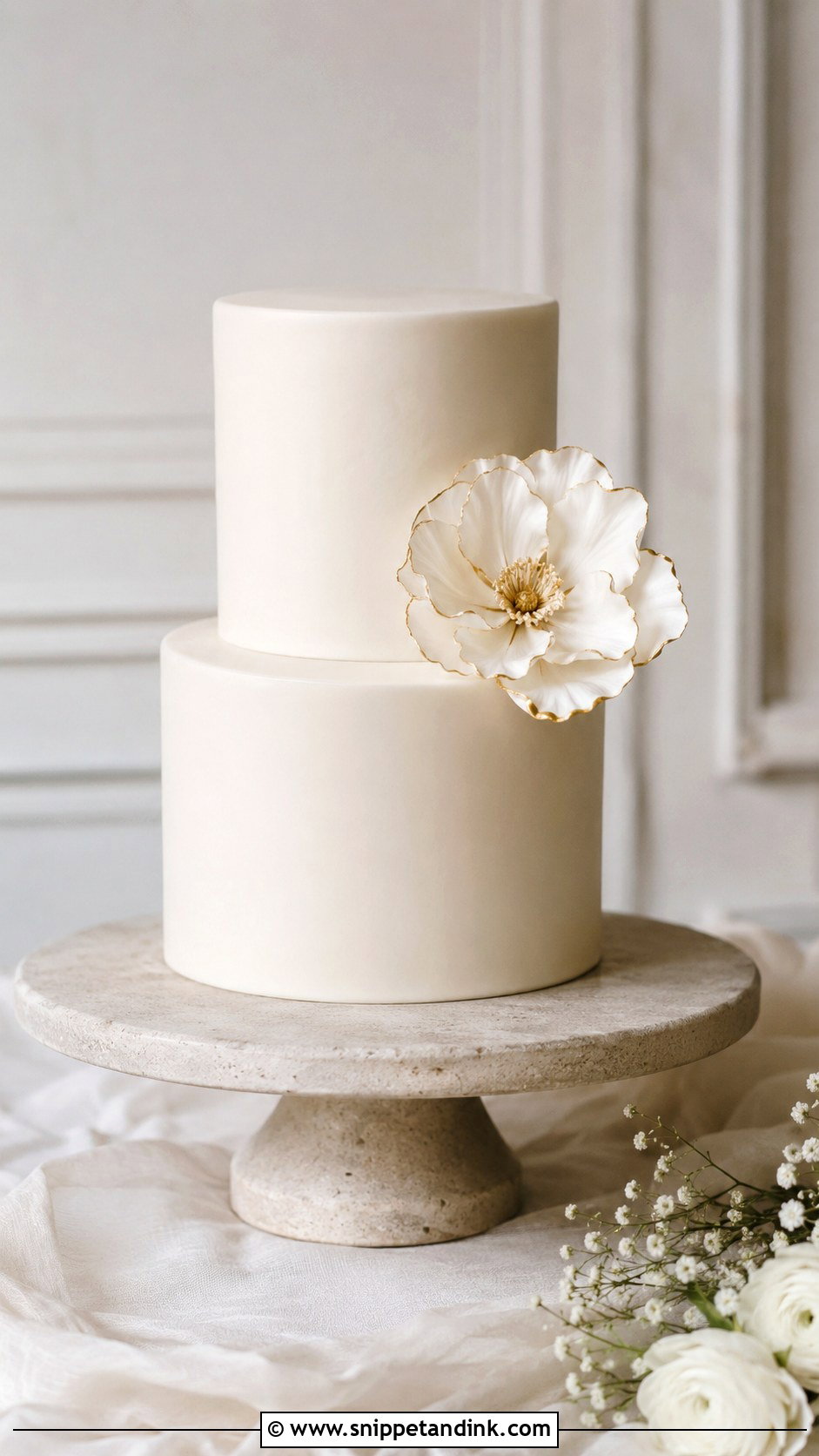
Minimalism is unforgiving. With one accent, perhaps a single flower, a thin ribbon or a gold edge, the proportions have to be right, so I usually make each tier slightly taller than standard and step the sizes down evenly. White and ivory are classic, but soft beige, sage or pale blue can be just as quiet. It suits gallery spaces, restaurants and modern venues where the room itself does most of the decorating.
7. Small Wedding Cake With Greenery
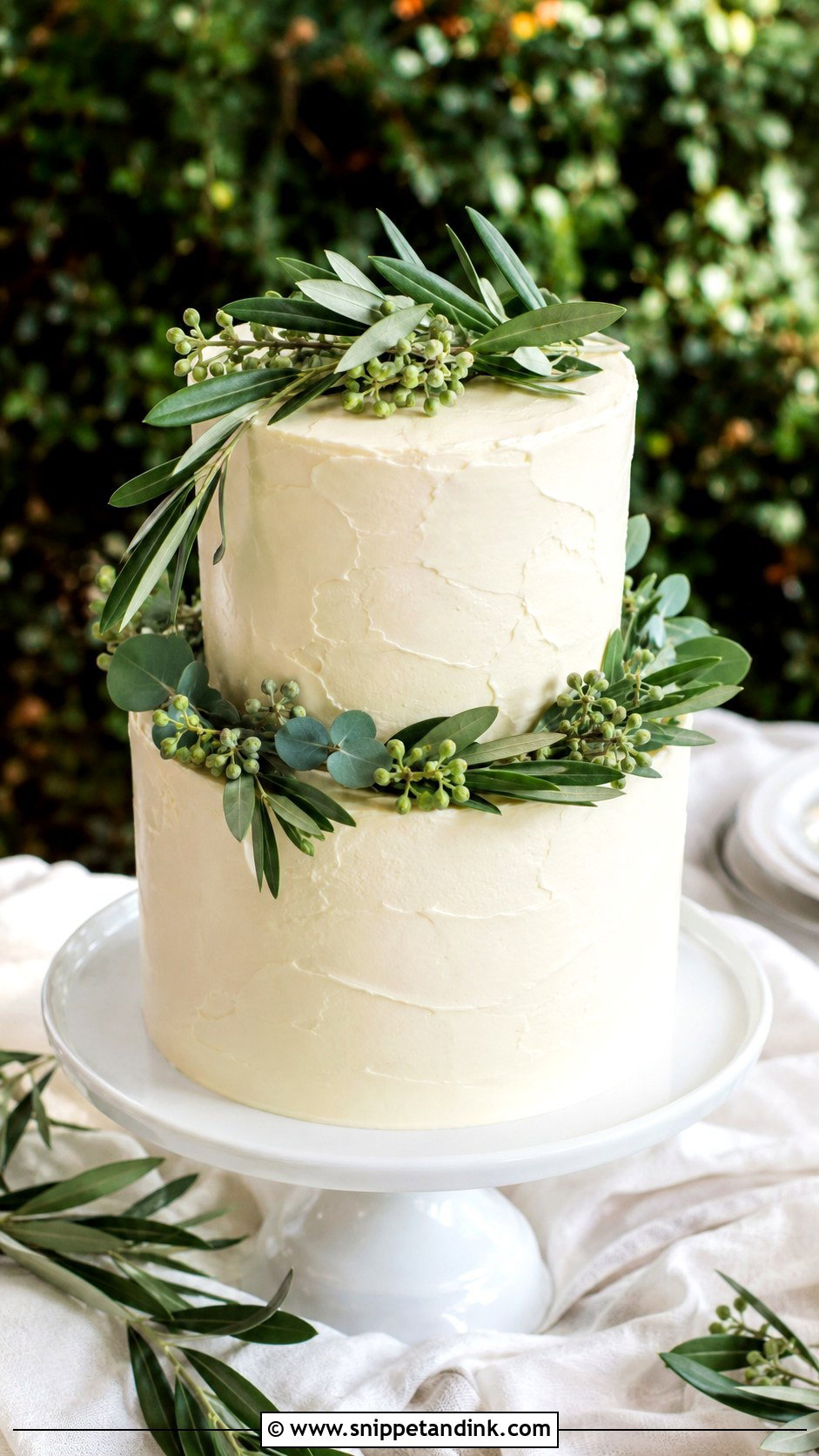
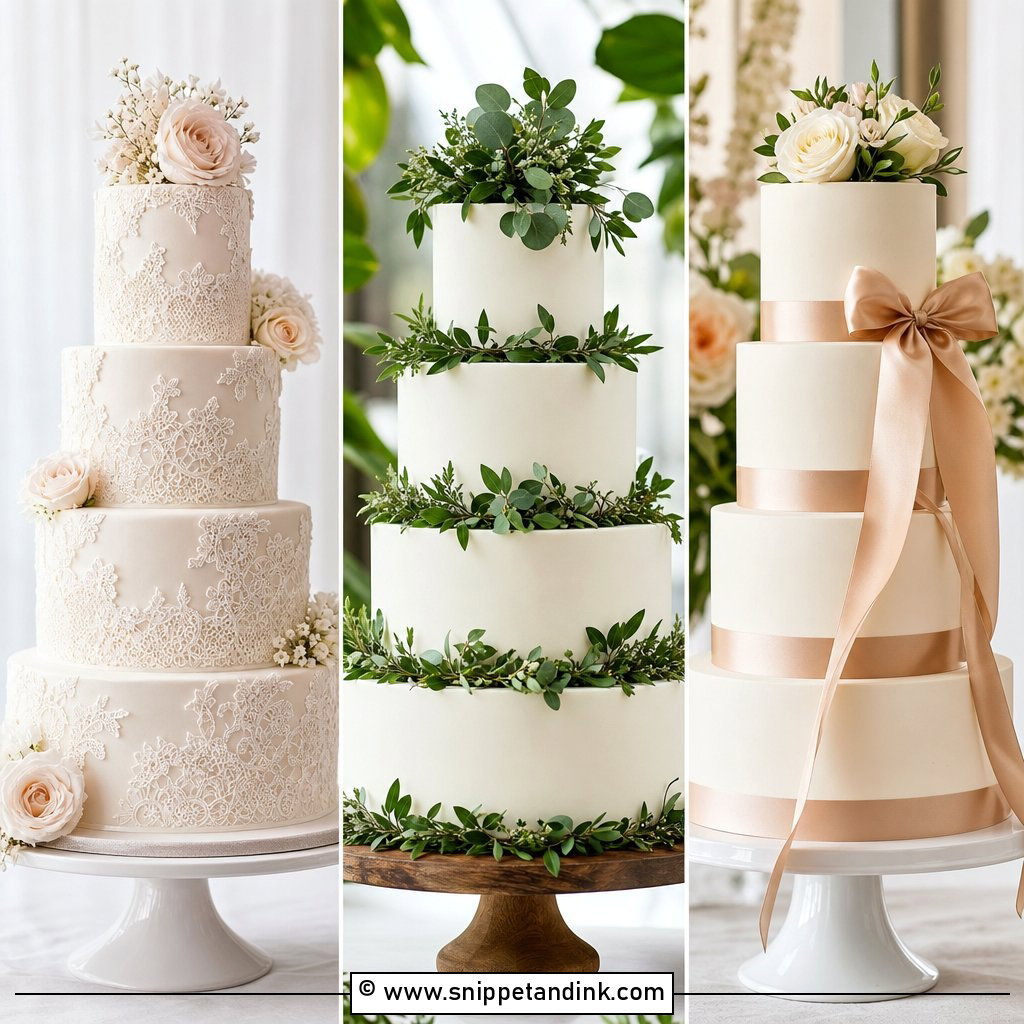
Greenery is gentler on a cake than most flowers, but not all of it belongs on food. Eucalyptus is very common in wedding florals and isn’t food-safe, so I always wrap its stems and keep the leaves off the icing, or swap in rosemary, olive or bay, which are edible herbs. Small clean clusters look better than a wreath around every tier. On white or pale cream icing the greens read clearly in photos. It’s a relaxed fit for garden and rustic venues.
8. Simple Wedding Cake With Roses
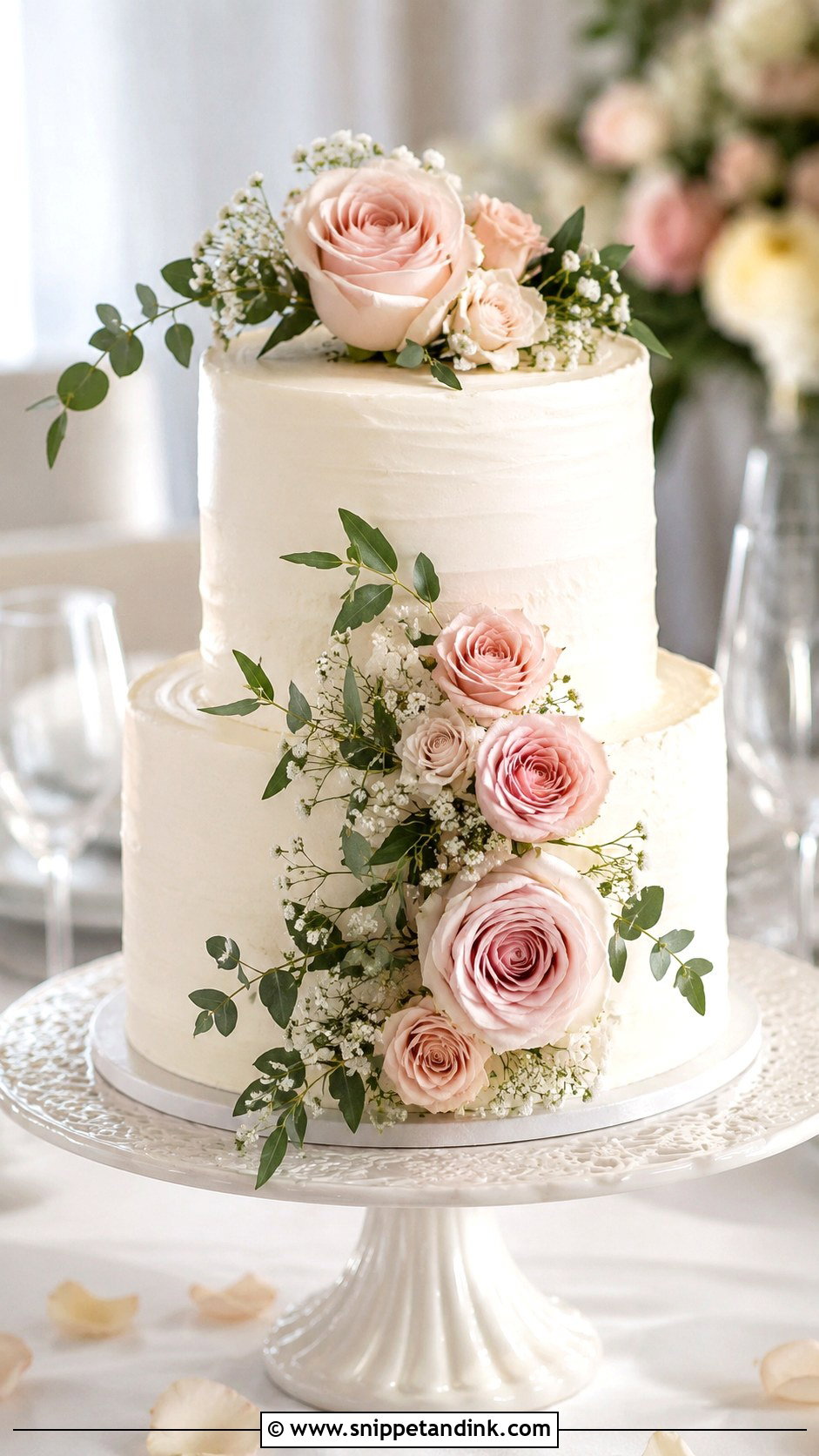
You don’t need a full cascade for roses to change a plain cake. Three or four carefully placed heads, with a few small leaves or tiny filler blooms, can be enough. White reads classic, blush reads softer, and dusty pink or peach adds warmth. If you’re using real roses, ask your florist for spray-free stems; supermarket and imported roses are often treated. This works on one, two or three tiers, and it’s just as at home at a formal reception as at an intimate dinner.
9. Vintage Buttercream Wedding Cake
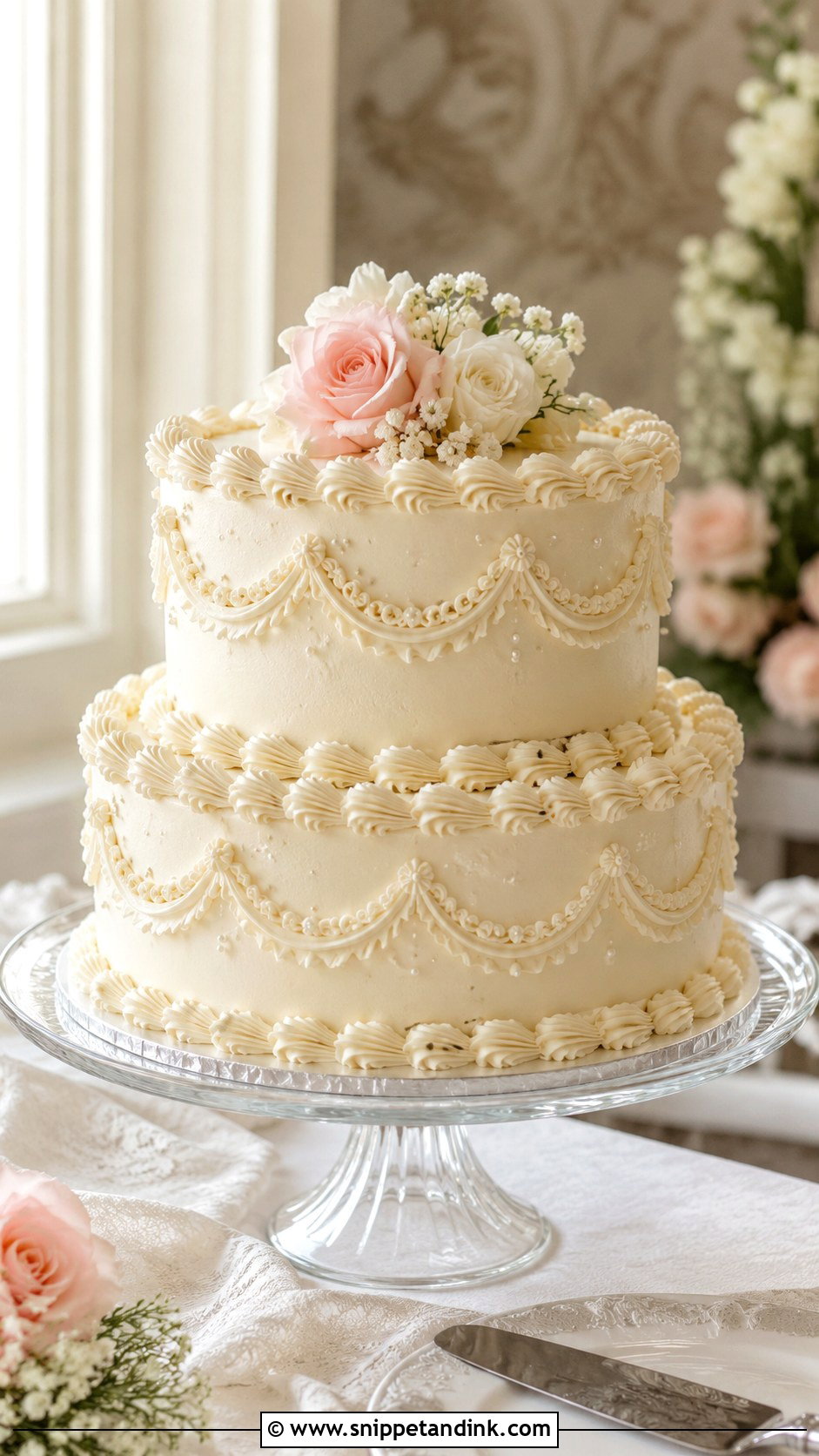
Vintage piping, those shell borders, swags and scrolls, takes real hand skill, so ask to see photos of your baker’s own piped work, not just smooth cakes. Done well, it feels nostalgic without looking heavy, especially in ivory with tiny pearls or pale blush accents. The piping should be evenly spaced around each tier; one crowded section is obvious from the top table. A glass stand or simple white pedestal suits it better than rustic wood.
10. Square Wedding Cake
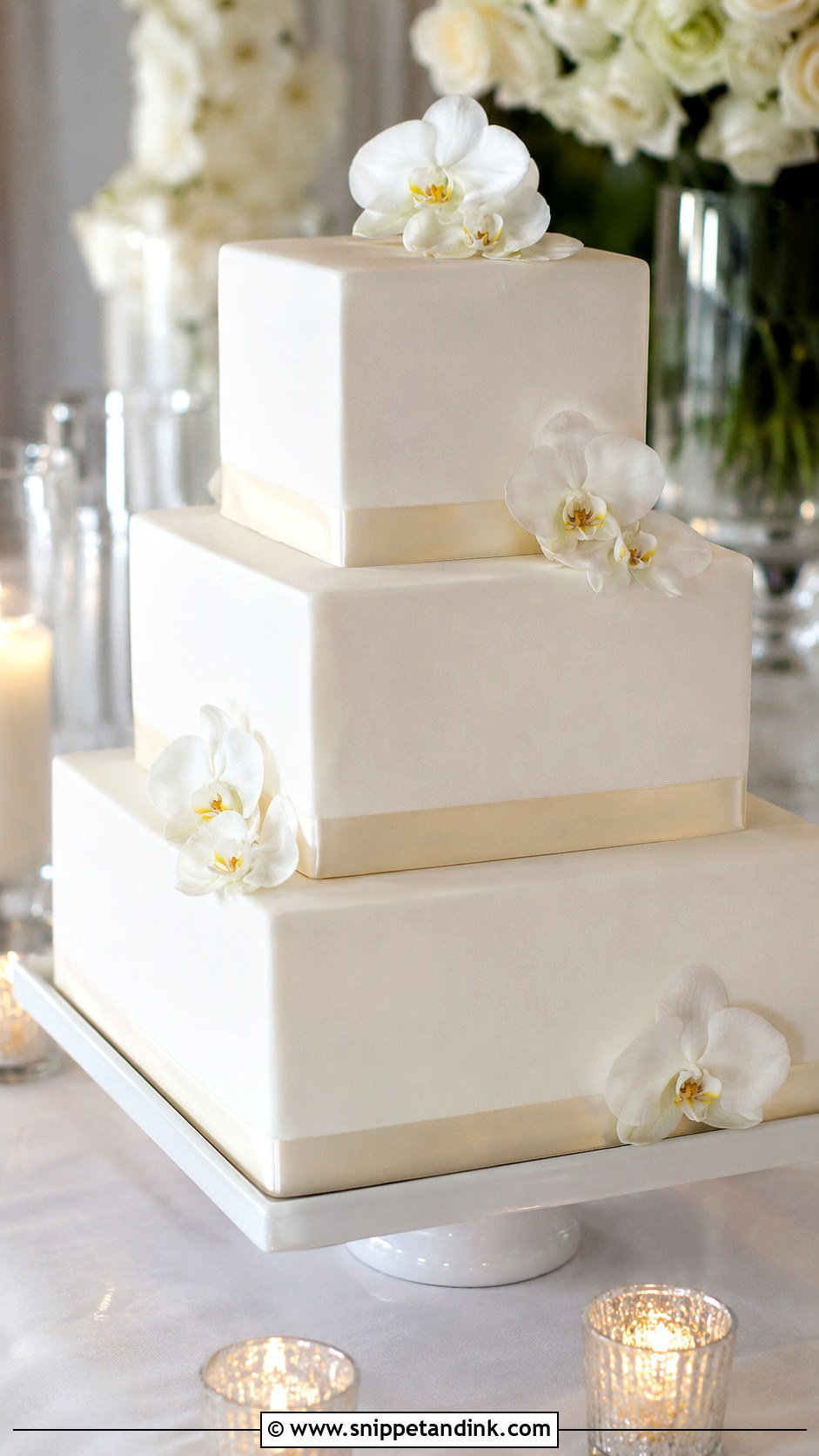
Square tiers give a simple cake a sharper, more modern outline. The corners are the hard part: sharp buttercream corners take patience, and fondant can tear or crack at the corners if it’s rolled too thin. Smooth white icing highlights the structure, and a thin ribbon, a few orchids or some pearls soften it. A square cake also cuts more evenly into portions than a round one, which your caterer will appreciate. Ivory looks gentler than stark white under warm lighting.
11. Wedding Cake With Gold Accents
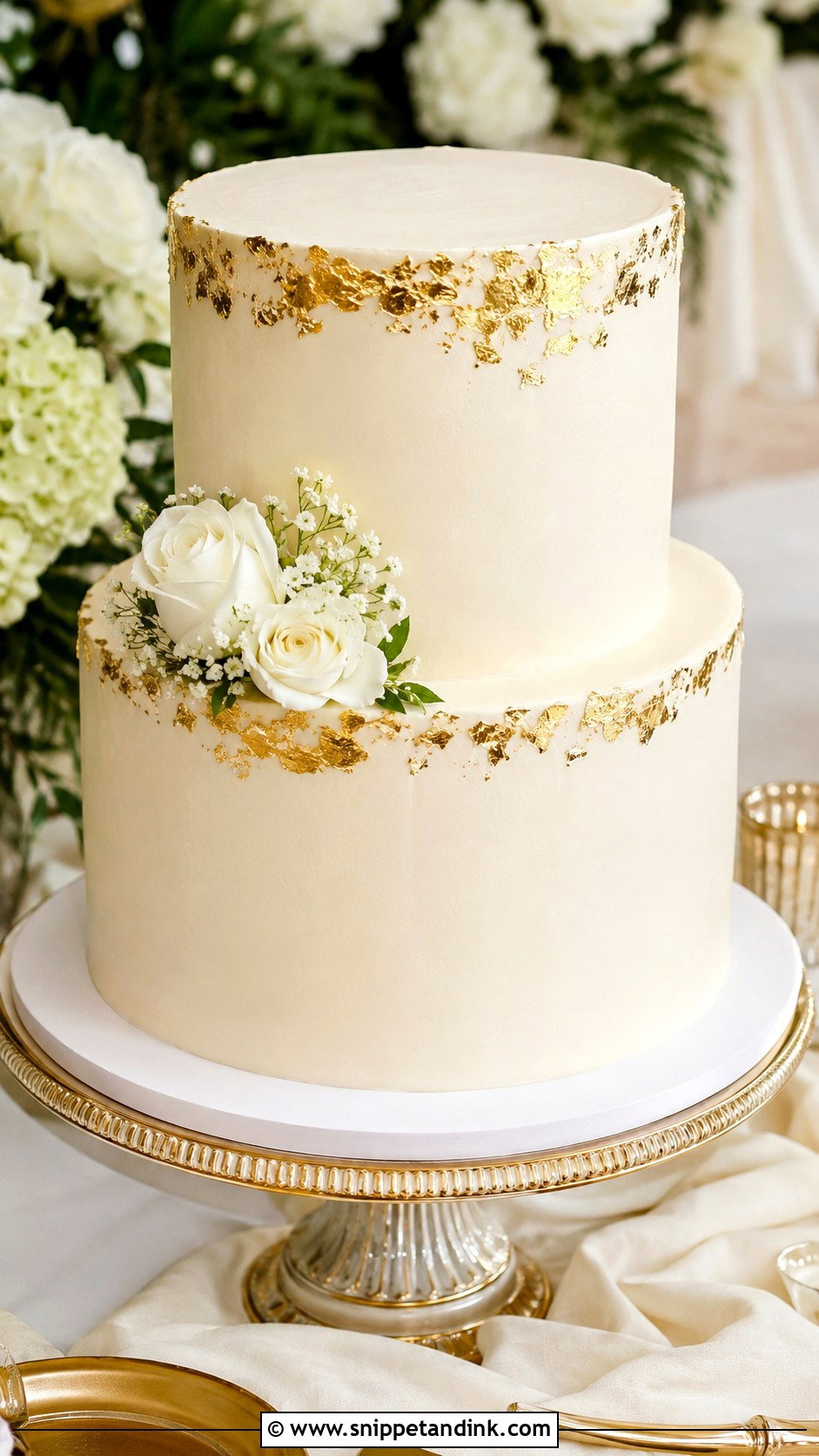
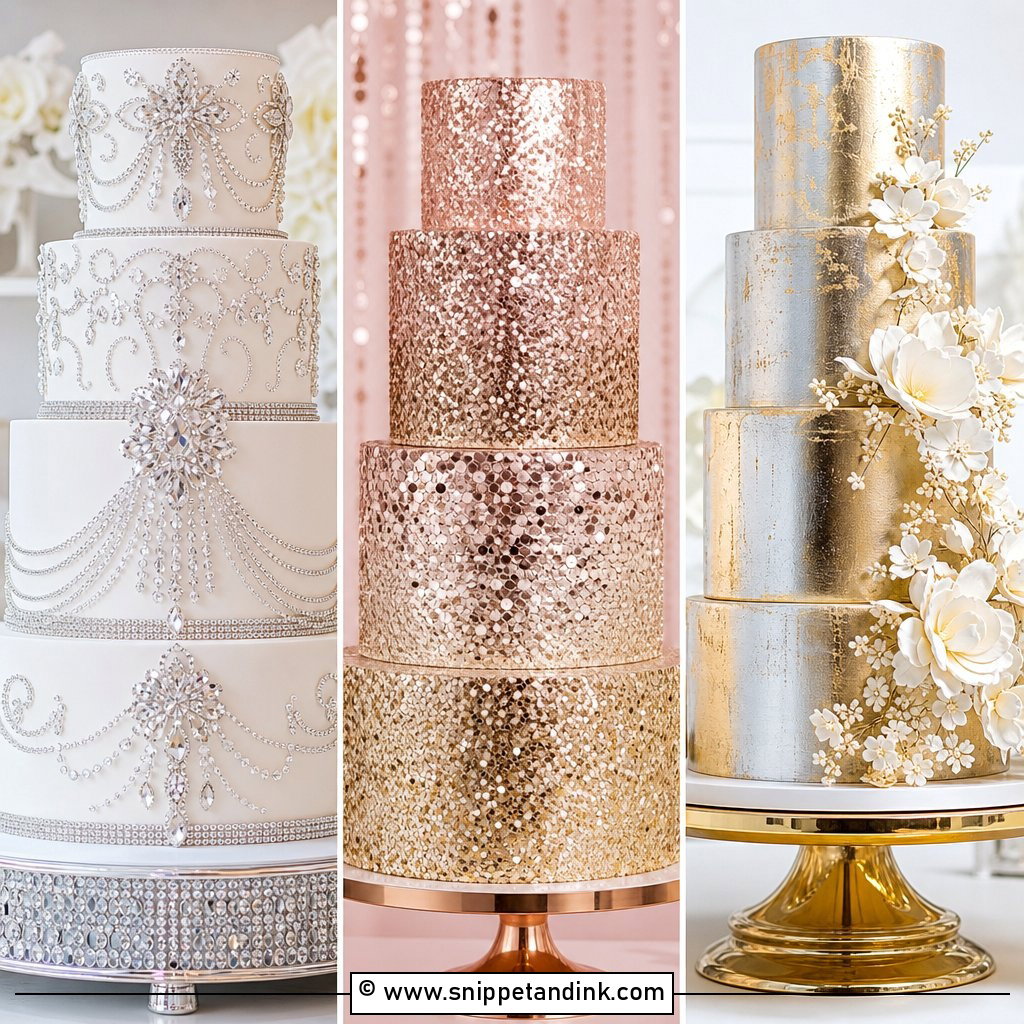
Gold works best in small amounts. A thin painted rim, a few flecks of edible gold leaf or a delicate edge on one tier is enough to make a plain white cake look finished. Real gold leaf is edible, but some metallic dusts and paints are labelled for decoration only, so check that whatever touches the icing is food-grade. Pair it with ivory buttercream or a clean fondant finish. It suits evening receptions and hotel ballrooms, and it sits well with black, blush, emerald or champagne palettes.
12. Textured Buttercream Wedding Cake
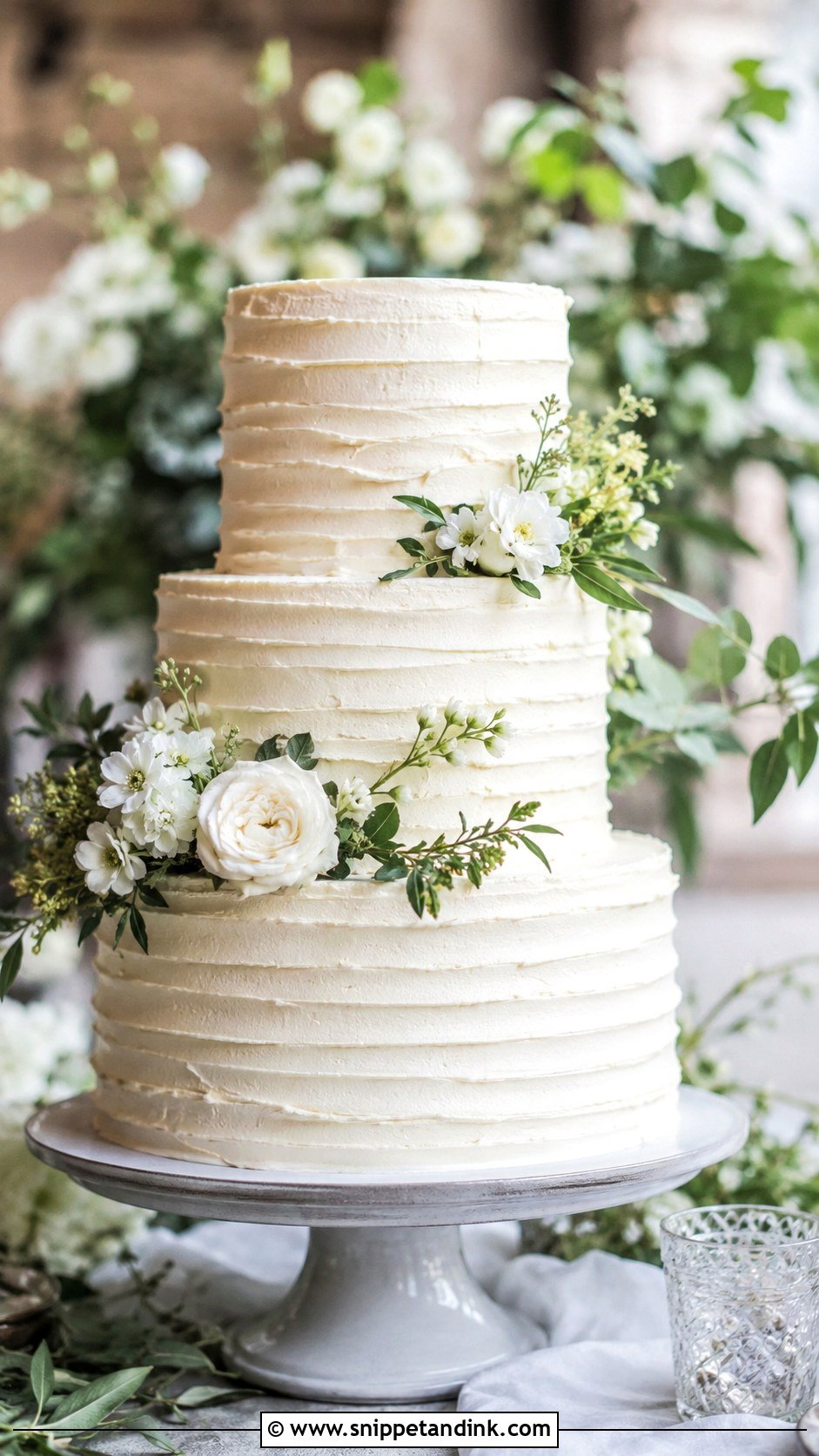
Textured buttercream hides small flaws better than a mirror-smooth finish, which is part of why I recommend it for outdoor and summer weddings. The icing can be combed into ridges, swept with a palette knife or waved with a spatula. One floral cluster or a little fruit is enough on top of that movement. White, ivory and pale pastels all work. It suits couples who would rather have something that looks made by hand than something that looks machine-perfect.
13. Wedding Cake With Baby Breath
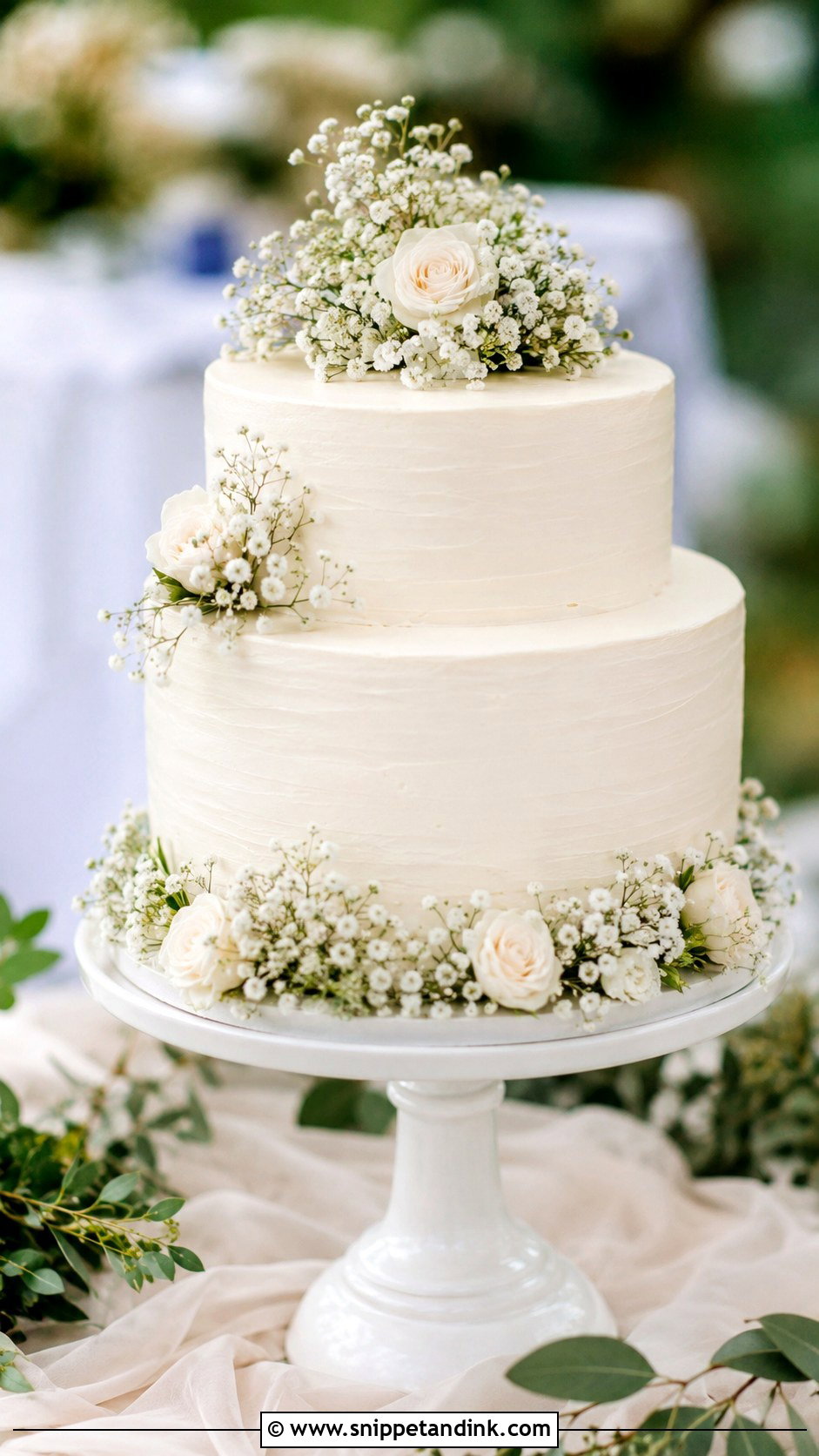
Baby’s breath gives a soft, cloudy edge to a plain cake, but it’s one flower I won’t put directly into icing. It’s mildly toxic, so I wrap or tape the stems and keep the sprigs sitting against the cake rather than pushed into it, or arrange it around the base of the stand instead. Small bunches around the tiers look best when the rest of the cake is clean. It pairs well with white roses, pale greenery and ivory icing, and it holds up well out of water through a long reception.
14. Blush Wedding Cake
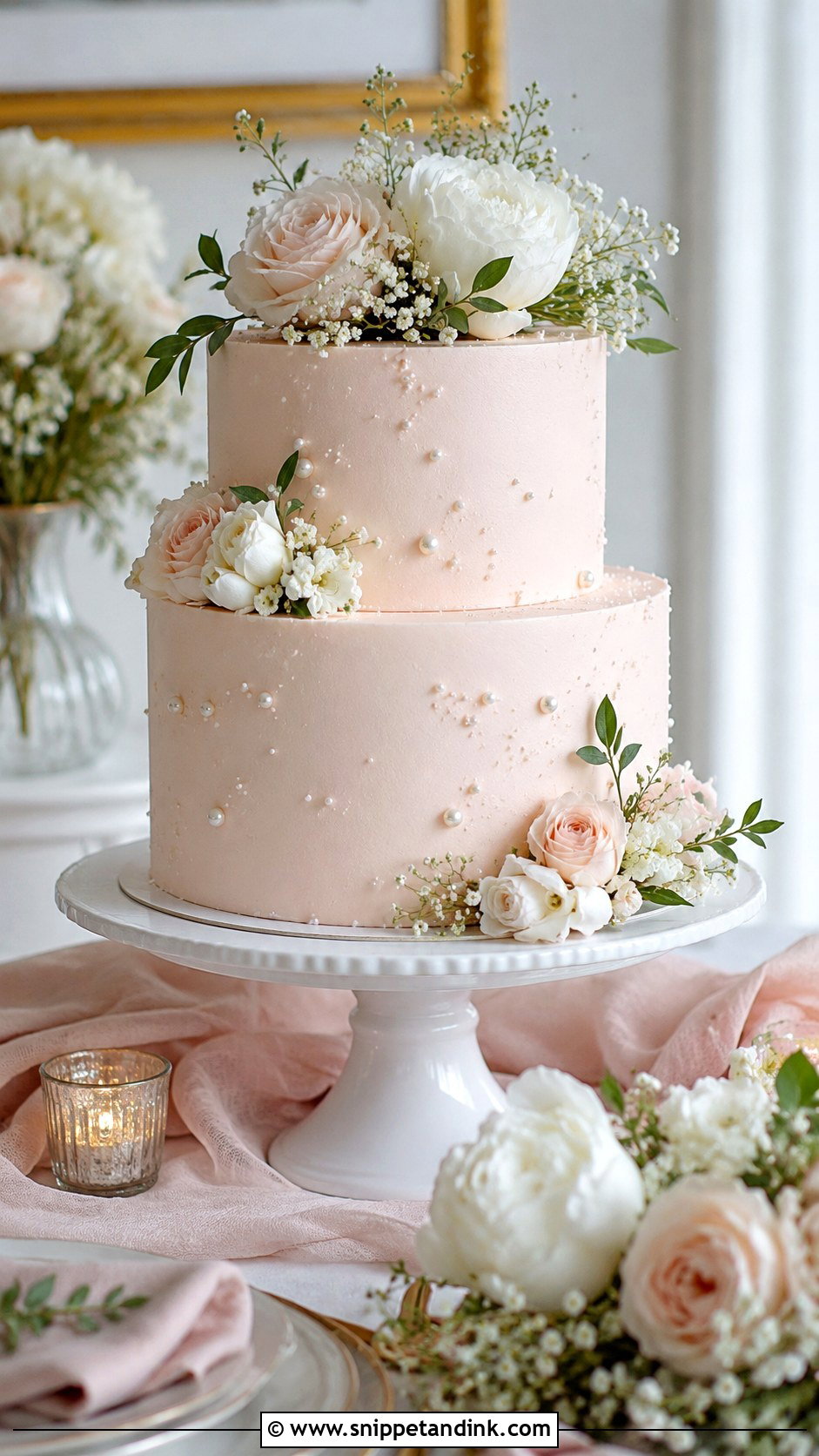
Blush is harder to colour consistently than people expect. A little too much pink gel and it turns bubblegum, and buttercream colours deepen for a few hours after mixing, so I tint it lighter than the target and let it rest. Ask your baker to match a fabric swatch from your bridesmaids or linens rather than describing the shade in words. A full blush cake or a gentle ombre both work. Spring weddings and garden receptions suit it, with white flowers or pearls as the only extras.

15. White Fondant Wedding Cake
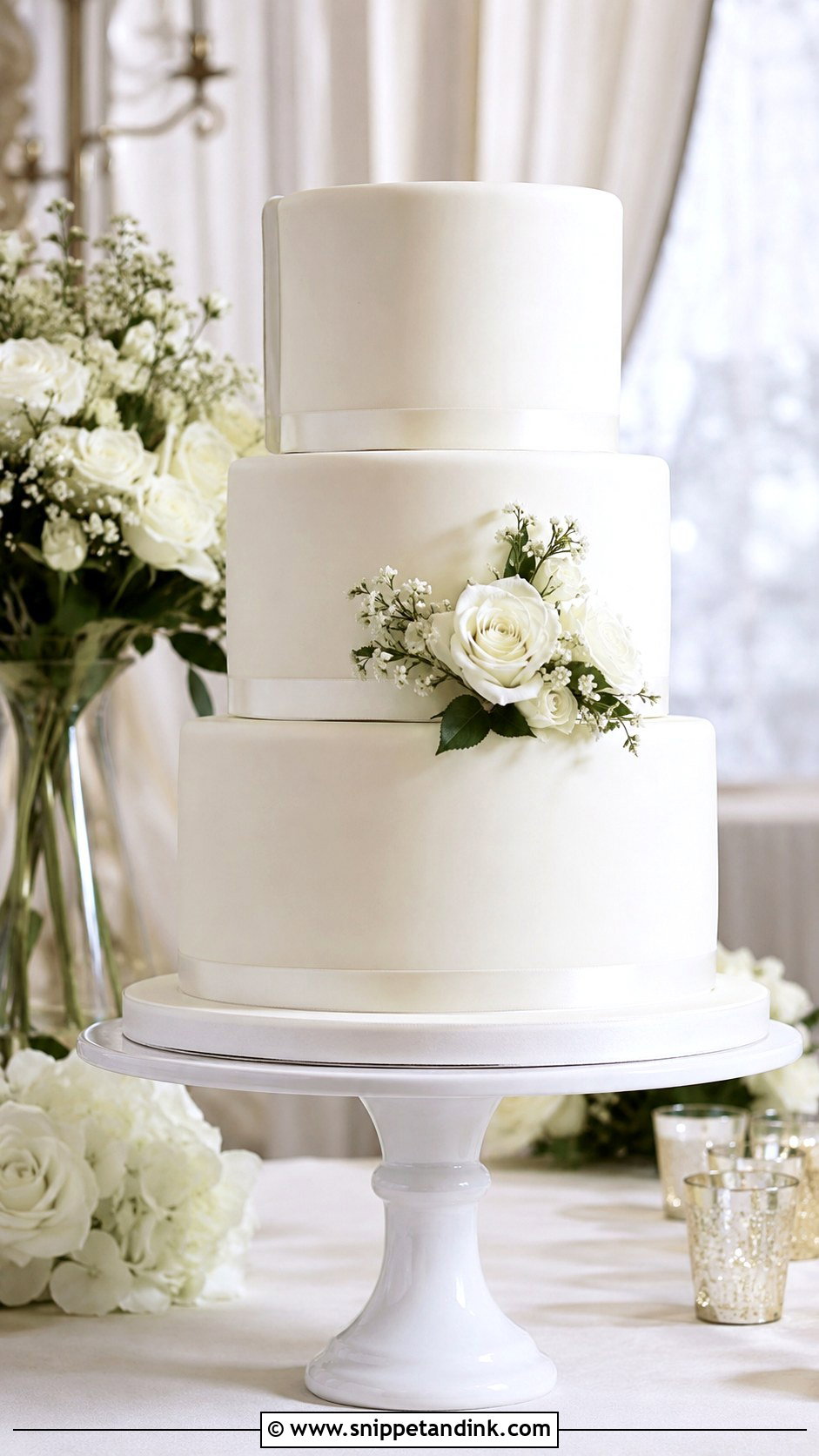
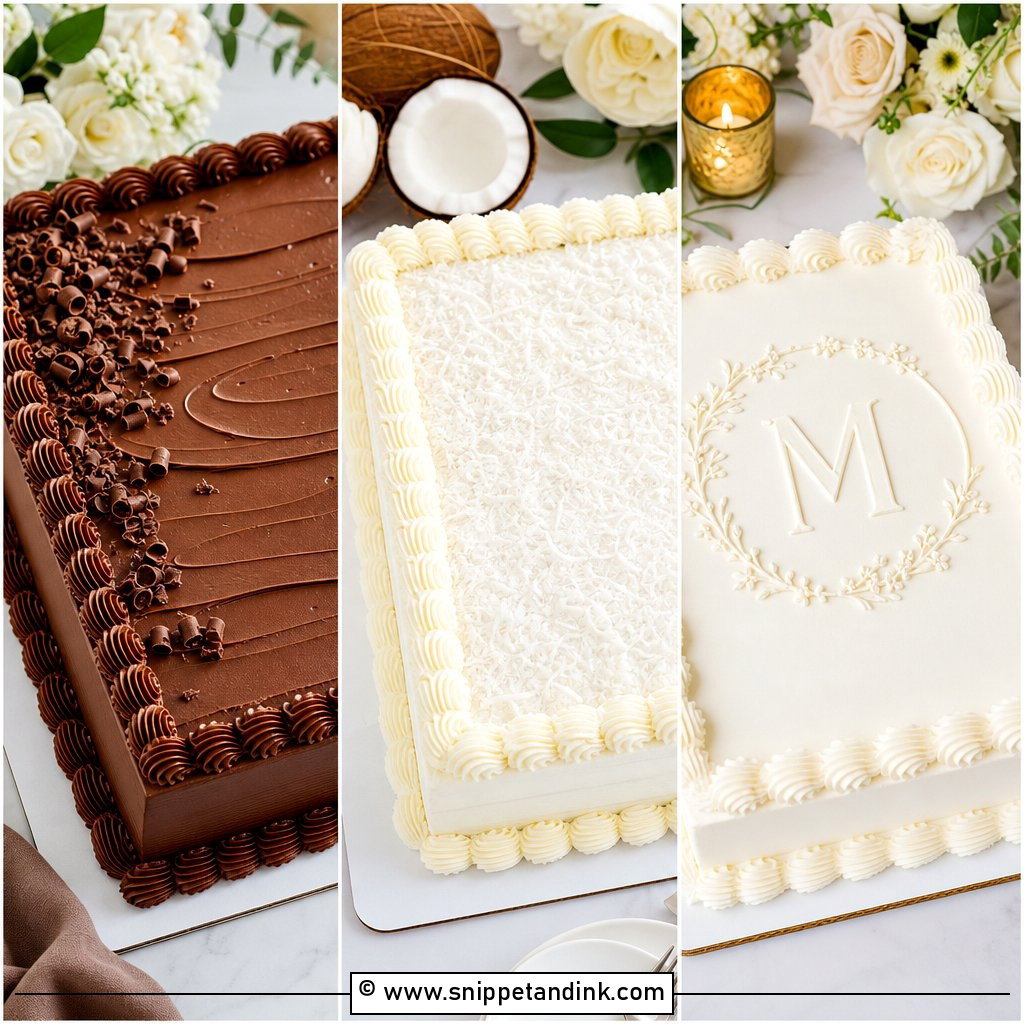
Fondant gives the sleekest finish possible: very smooth sides, crisp tier edges and no visible texture. I’m honest with couples that many guests peel it off, so the sponge and filling underneath need to carry the flavour. One or two details are enough, maybe a thin ribbon, sugar pearls or a little piping. Fondant also copes better than buttercream with a warm room. Next to a dramatic floral installation, a calm white fondant cake is often the better partner.
16. Wedding Cake With Dried Flowers
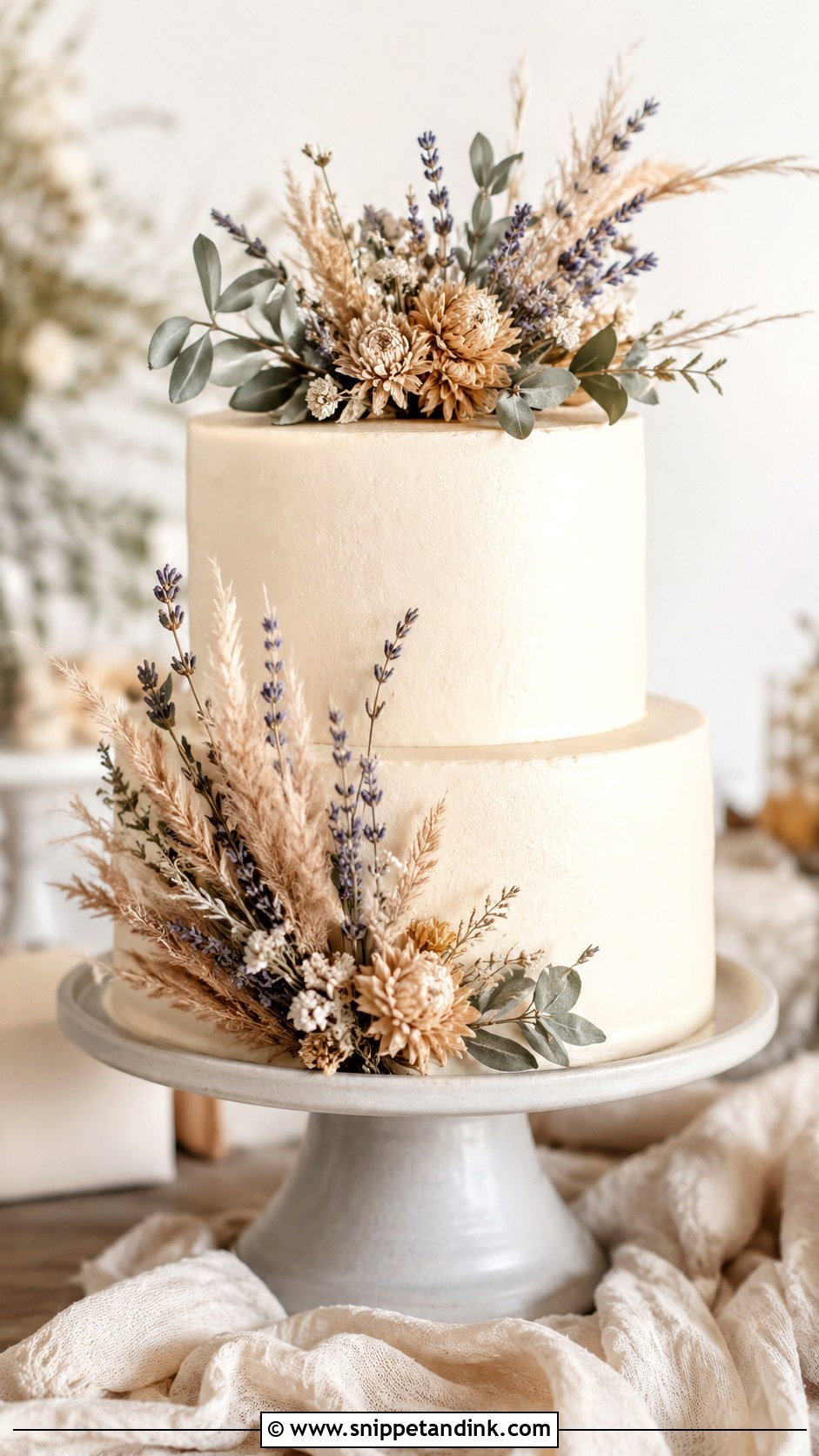
Dried flowers add warm colour and texture without wilting, which makes them reliable for long receptions. Pampas grass, pressed petals, dried lavender, strawflowers and preserved greenery all work. The catch is that dried and preserved flowers are often dyed or treated, so they should never touch the icing directly. I put them on a small food-safe barrier or wrap the stems. They look right on ivory, beige, taupe or soft peach icing and suit boho, desert and autumn weddings.
17. Round Wedding Cake With Ribbon
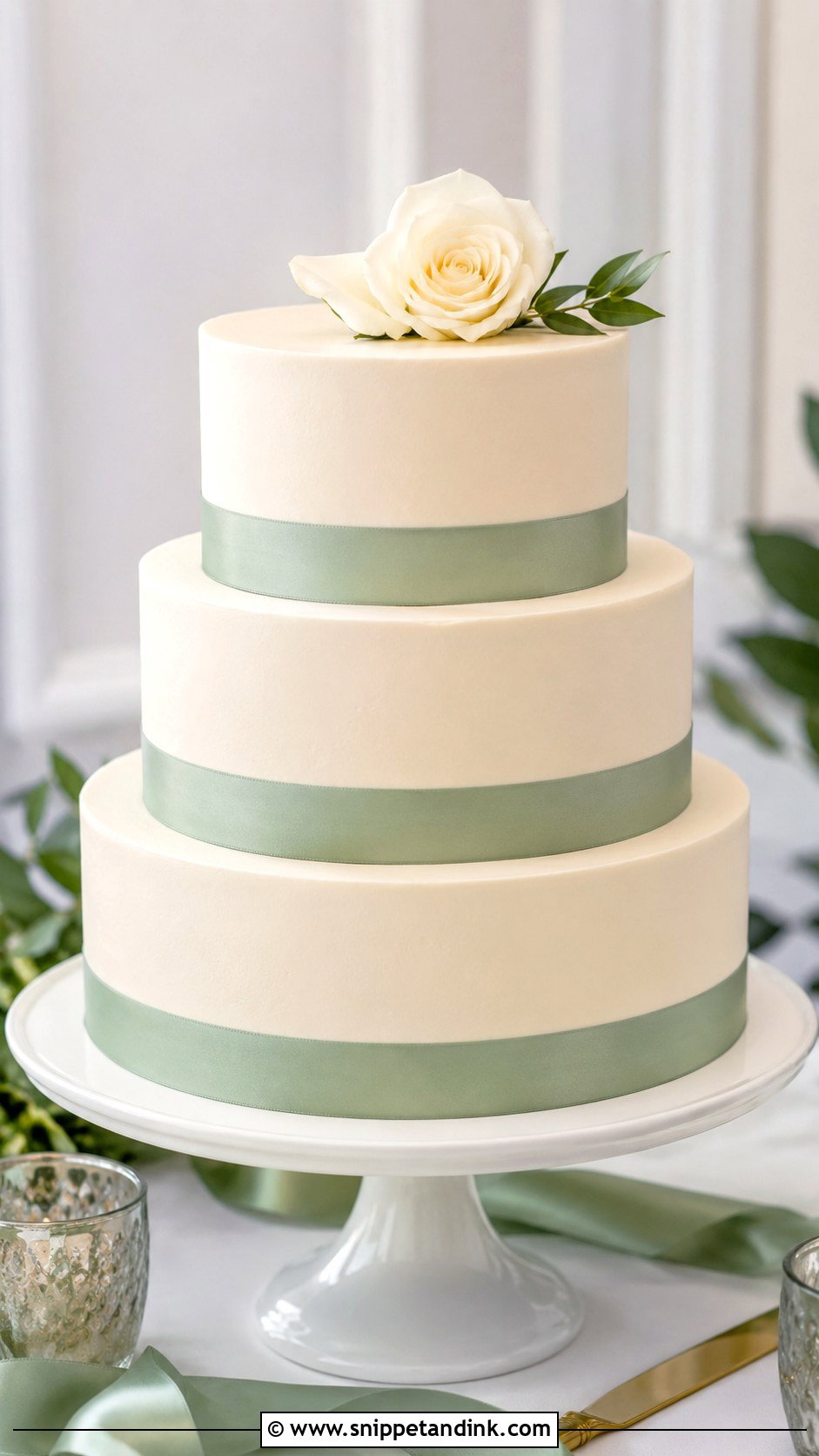
Ribbon is the simplest way to make a plain cake look finished. A satin, velvet or silk ribbon around the base of each tier adds colour and polish, in white, blush, black or sage depending on the palette. On buttercream, grease from the icing will soak into fabric ribbon and leave dark patches, so I back it with a strip of food-safe tape or a thin layer of fondant first. The cake underneath can stay plain.
18. Wedding Cake With Sugar Flowers
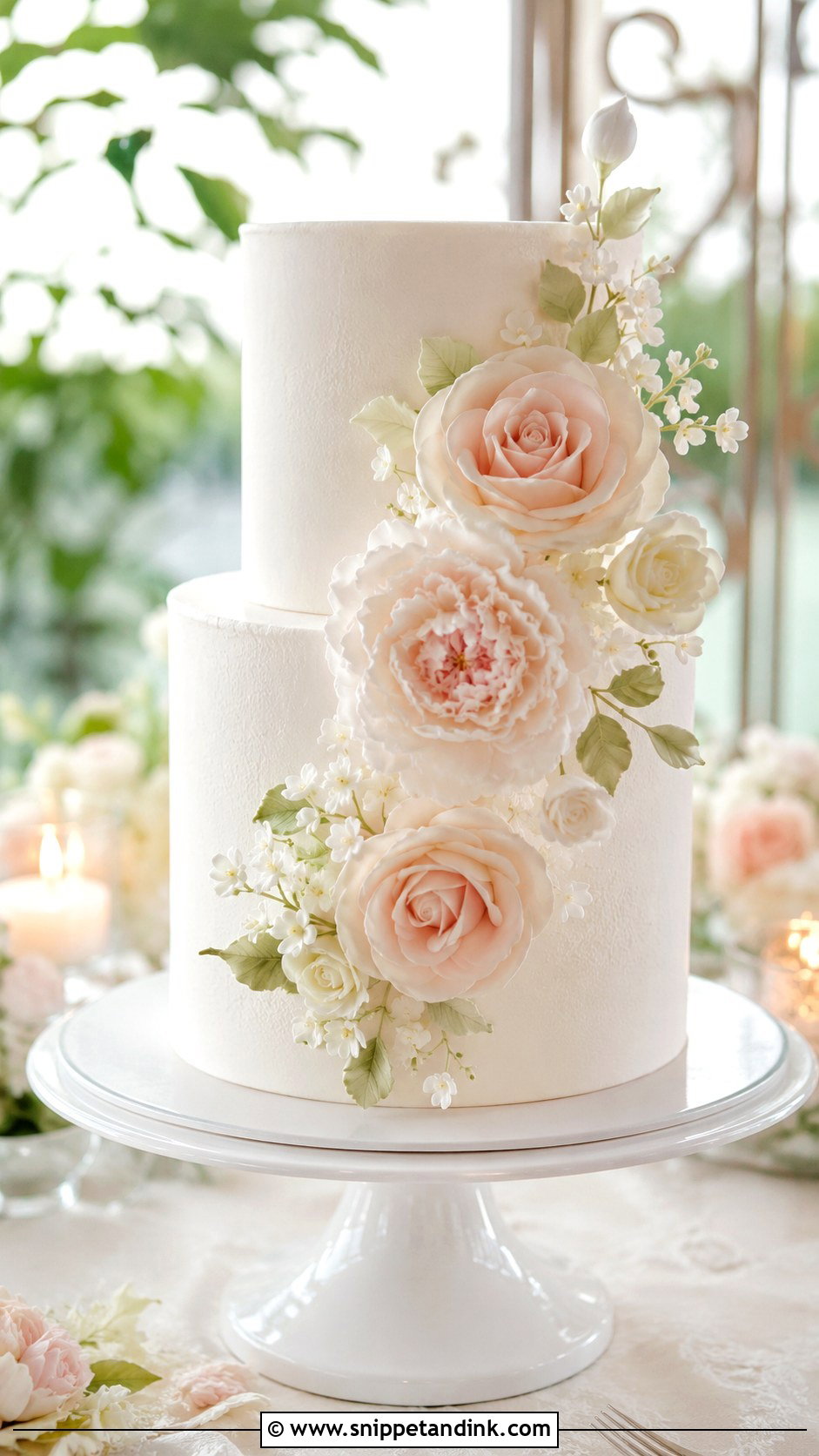
Sugar flowers stay perfect all night, which is why I suggest them when fresh blooms aren’t practical, in strong heat or when the bouquet flowers aren’t food-safe. They can be modelled to match your bouquet, but they take time, so order them early in the planning. One large sugar rose, a small group of blossoms or a trail down one side all look refined on a white or ivory cake. Most couples keep a sugar flower afterwards; they last for years if kept dry and out of sunlight.
19. Simple Chocolate Wedding Cake
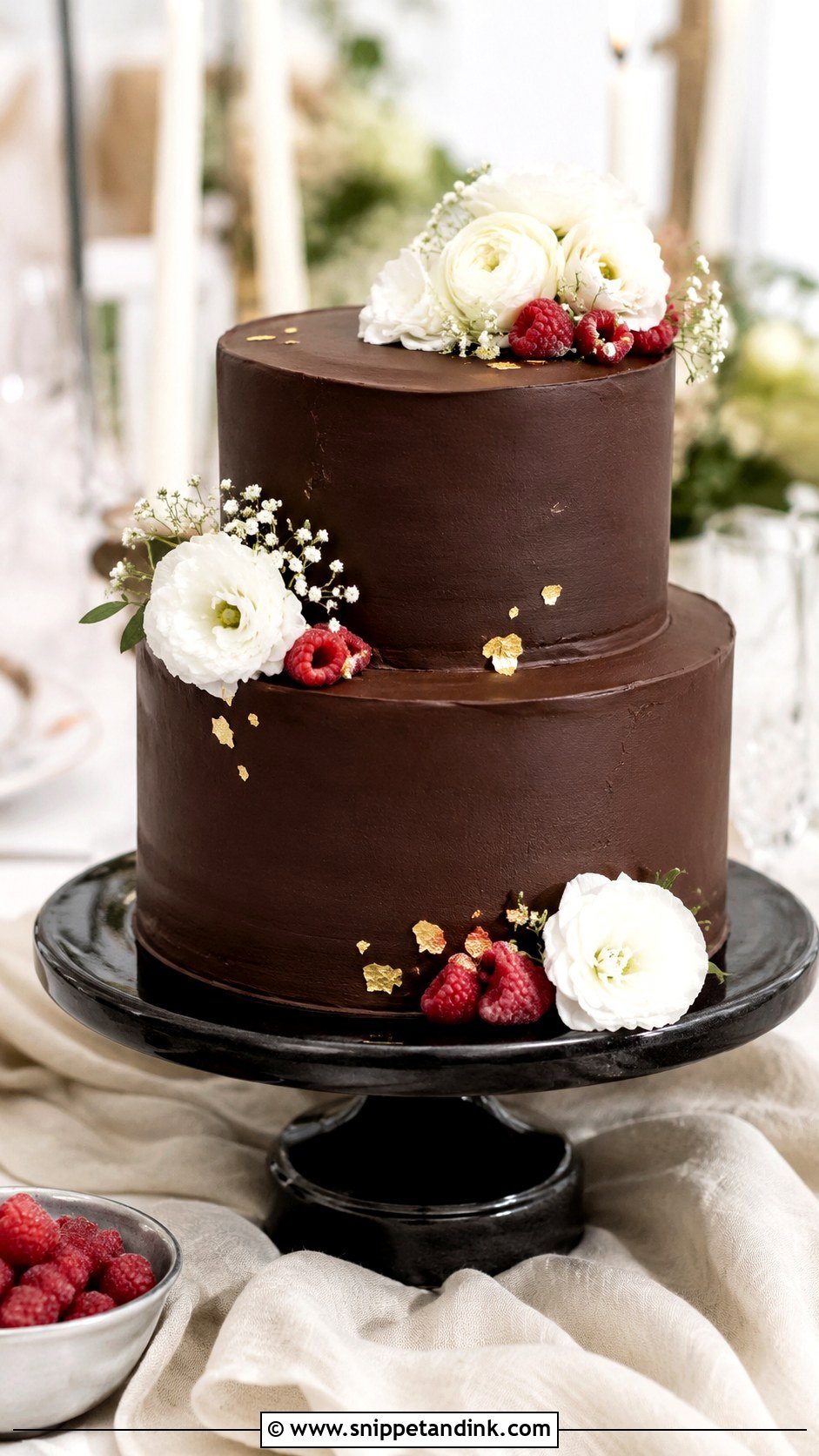
Chocolate surprises guests in a good way. A dark ganache finish sets firmer than buttercream, so it gives you sharp edges and holds better in a warm room, which suits evening receptions well. Fresh berries, white flowers or a little gold soften the deep colour. Keep the shape clean and the decoration minimal, because detail gets lost against dark icing in low reception lighting. Chocolate buttercream is softer and more relaxed if ganache feels too formal.



20. Lemon Wedding Cake With Flowers
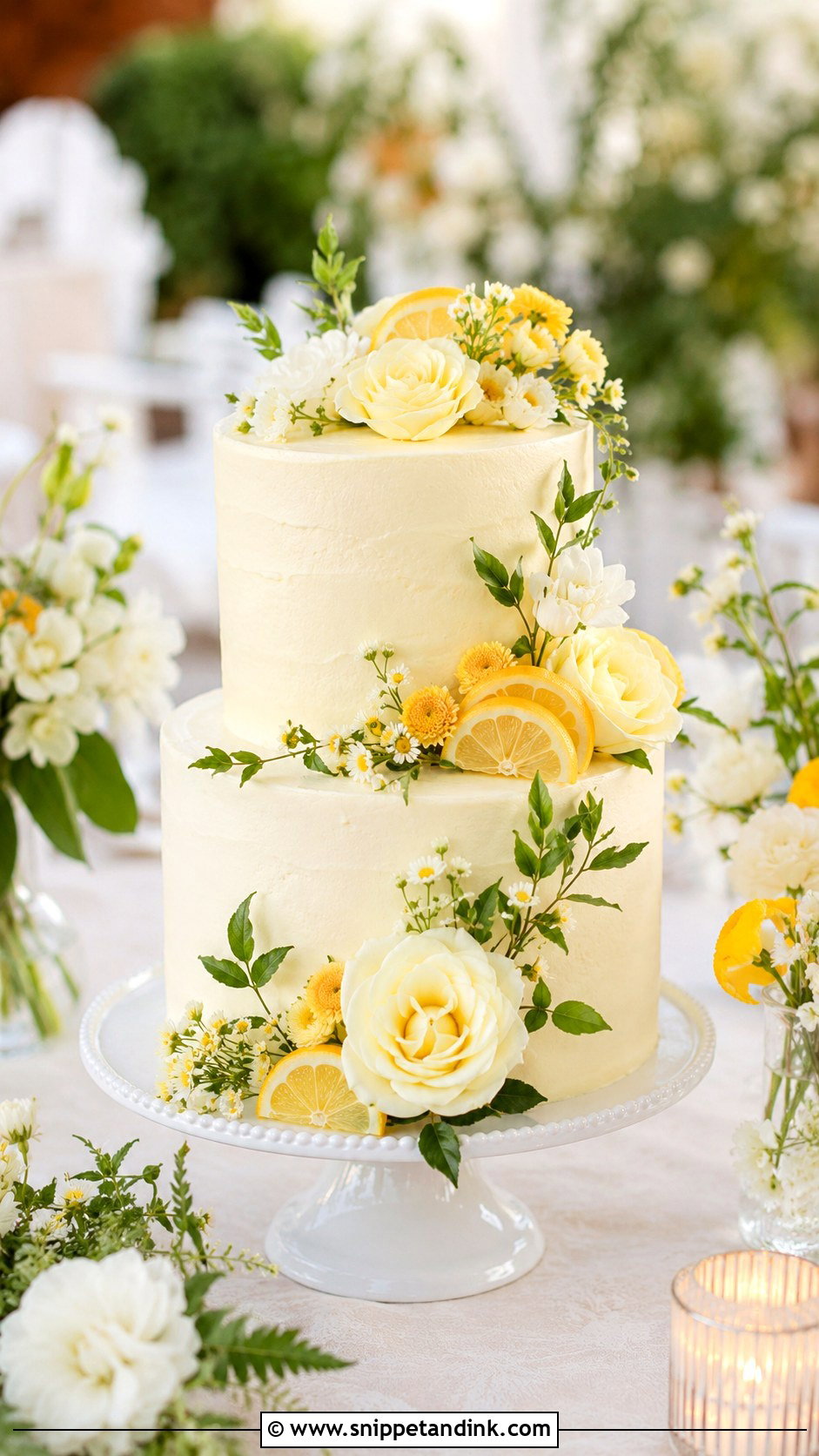
A lemon wedding cake is a smart choice for warm-weather weddings because it tastes light after a big meal. Lemon sponge with vanilla buttercream, cream cheese icing or lemon curd filling all work. Curd and cream cheese need to be kept cool, though, so for an outdoor afternoon I’d suggest a lemon buttercream filling instead. White or pale ivory icing with small yellow flowers or greenery keeps the look bright for garden weddings and brunch receptions.
Florals That Are Safe Against Buttercream
Many popular wedding flowers are either toxic or sprayed, and the cake is the one place where that matters. I go through the flower list with the florist before the wedding, not on the morning.
- Generally safe to place on a cake when grown without sprays: roses, pansies, violas, chamomile, lavender and edible herbs.
- Keep off the cake or fully isolate: lily of the valley, hydrangea, foxglove, sweet pea and most lilies.
- Every stem gets wrapped in floral tape or set into a food-safe flower pick, never pushed straight into the sponge.
- If you can’t confirm how the flowers were grown, use sugar flowers or put the blooms around the base of the stand instead.
Surviving a Warm Room and a Long Reception
Buttercream starts to soften in a warm room, and a stacked cake left in sun or under hot lights can bulge or lean. Ask your venue where the cake table will stand. Keep it away from windows, heaters and the dance floor, and out of direct afternoon sun at outdoor receptions. I like the cake delivered as late as the timeline allows and cut within a couple of hours of setting it out.
Moving a cake from a cold fridge into a humid room makes the surface sweat, especially on fondant, so a short rest at room temperature before display is normal. If you’re saving the top tier, wrap it well once it’s chilled and freeze it. Most bakers suggest eating it within a few months rather than waiting a full year.
One Clean Cake, Chosen for Your Room and Your Season
Simple wedding cakes look special when the shape, colour, icing and one finishing detail all agree with each other. Start with the practical things: the temperature of your venue, your guest count, and whether the cake will sit out for hours. Then let your style decide the detail. Roses, pearls or blush icing lean romantic; greenery, dried flowers or a semi naked finish feel natural; fondant, gold or minimalist tiers read modern. And taste before you decide on any of it.
You'll Like These Ideas:











Leave a Reply