
Three tiers is the size I build most often, and for good reason. A 3 tier wedding cake has enough height to anchor a reception table without towering over a dessert spread, and it is still manageable to transport and stack. Plain white frosting is only one option now. I pipe, texture and decorate these with sugar flowers, pearls, metallic leaf and fresh blooms, often in soft color. Whatever the finish, it has to suit the venue, the season and the flowers, and feel personal without getting busy. Here are twenty directions, with what I’d watch for on each one.
How Many Guests Three Tiers Will Really Feed
Three tiers covers a much wider range of guest counts than most couples expect, because the number depends on the diameters, not the number of tiers. These are rough figures for round tiers about four inches tall, cut into standard wedding slices. Every baker’s chart differs a little, so treat them as a starting point:
- 4, 6 and 8 inch: about 45 servings, a good size for a small wedding.
- 6, 8 and 10 inch: around 70 to 75 servings, the combination I make most.
- 8, 10 and 12 inch: roughly 115 to 120 servings.
- 10, 12 and 14 inch: about 170 servings, and a genuinely heavy cake to lift and stack.
I usually keep a two inch step between diameters. Tighter steps look like a column, and wider ones leave broad ledges that look empty unless you fill them with flowers.
Taller tiers instead of a fourth tier
If you want height but not more cake, ask for one double-barrel tier. That’s two cakes stacked with a board and supports between them so the tier stands roughly twice the usual height. It changes the silhouette far more than it changes the serving count, and it suits sleek, modern designs especially well.
1. Classic White 3 Tier Wedding Cake
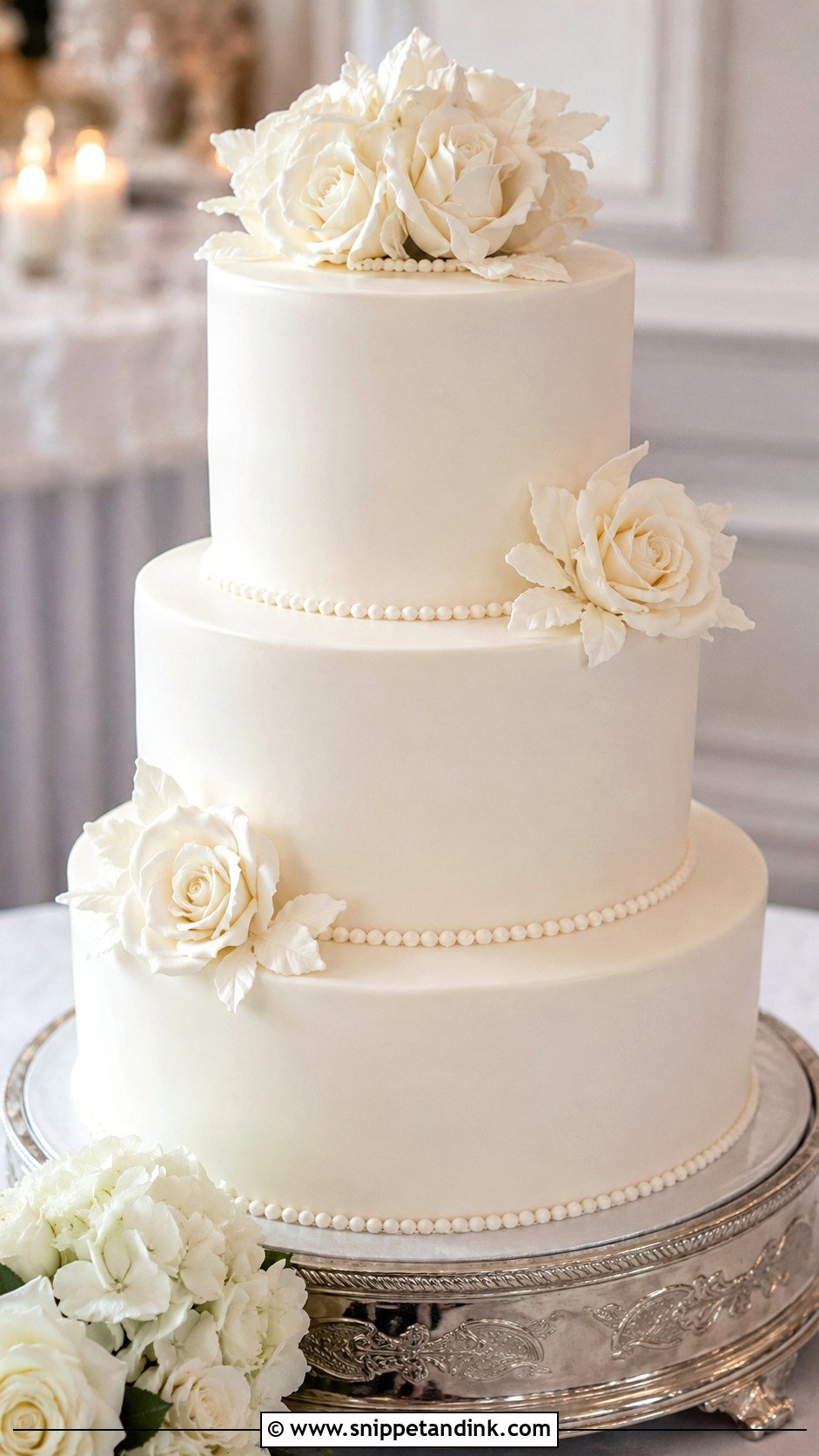
Plain white is the version I’m asked for most, and it is the one that exposes a decorator’s finishing, since there’s no color or texture to hide a dent. Smooth fondant or sharp-edged buttercream gives crisp tier lines, and a few white roses, orchids or ranunculus soften the structure. It suits a ballroom, a church hall, a garden or a black-tie dinner equally well. One thing couples rarely expect: buttercream made with real butter is naturally ivory, so if you need a bright white beside a stark gown, tell your baker early so the recipe can be adjusted.
2. White Buttercream 3 Tier Wedding Cake
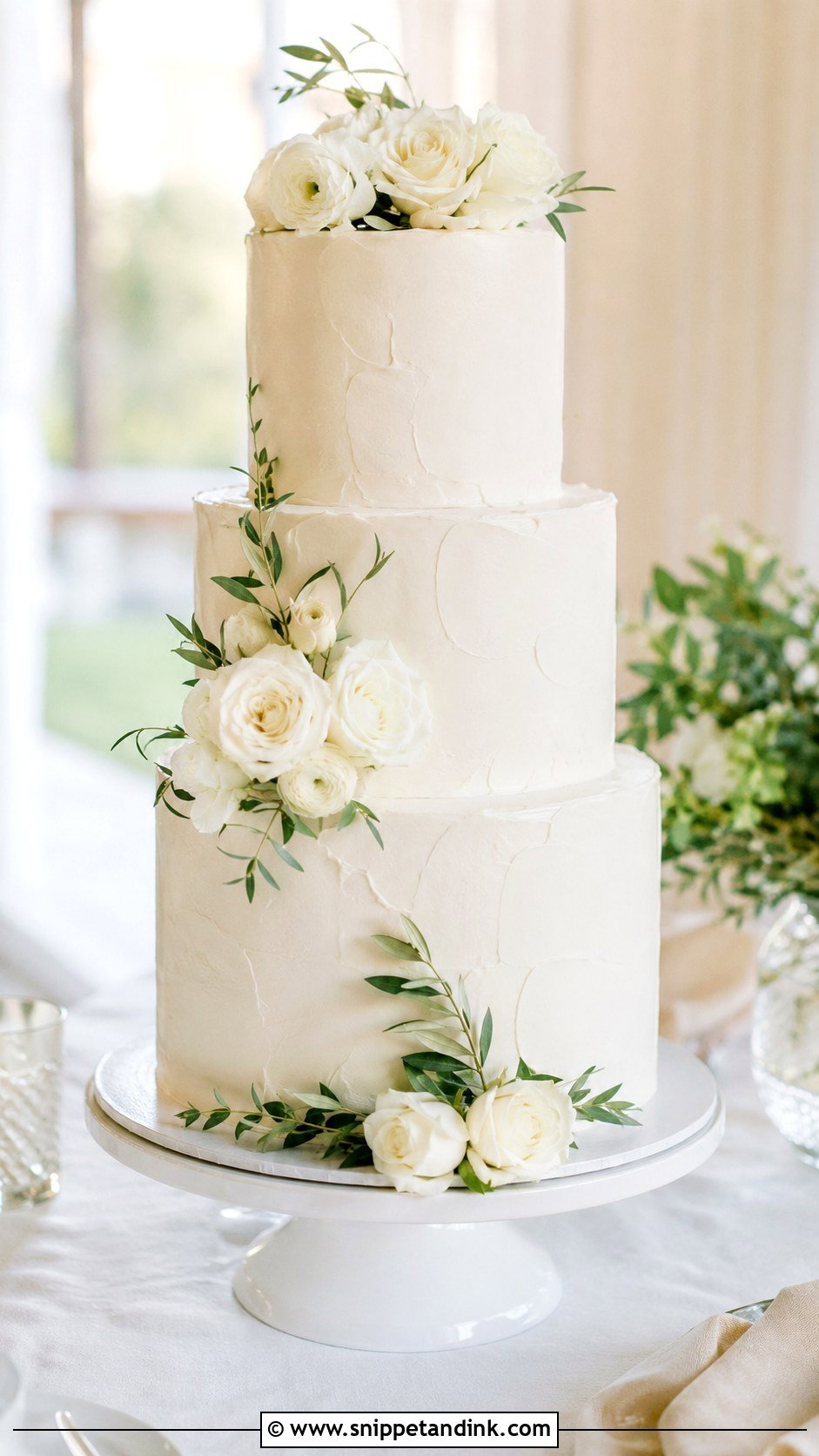
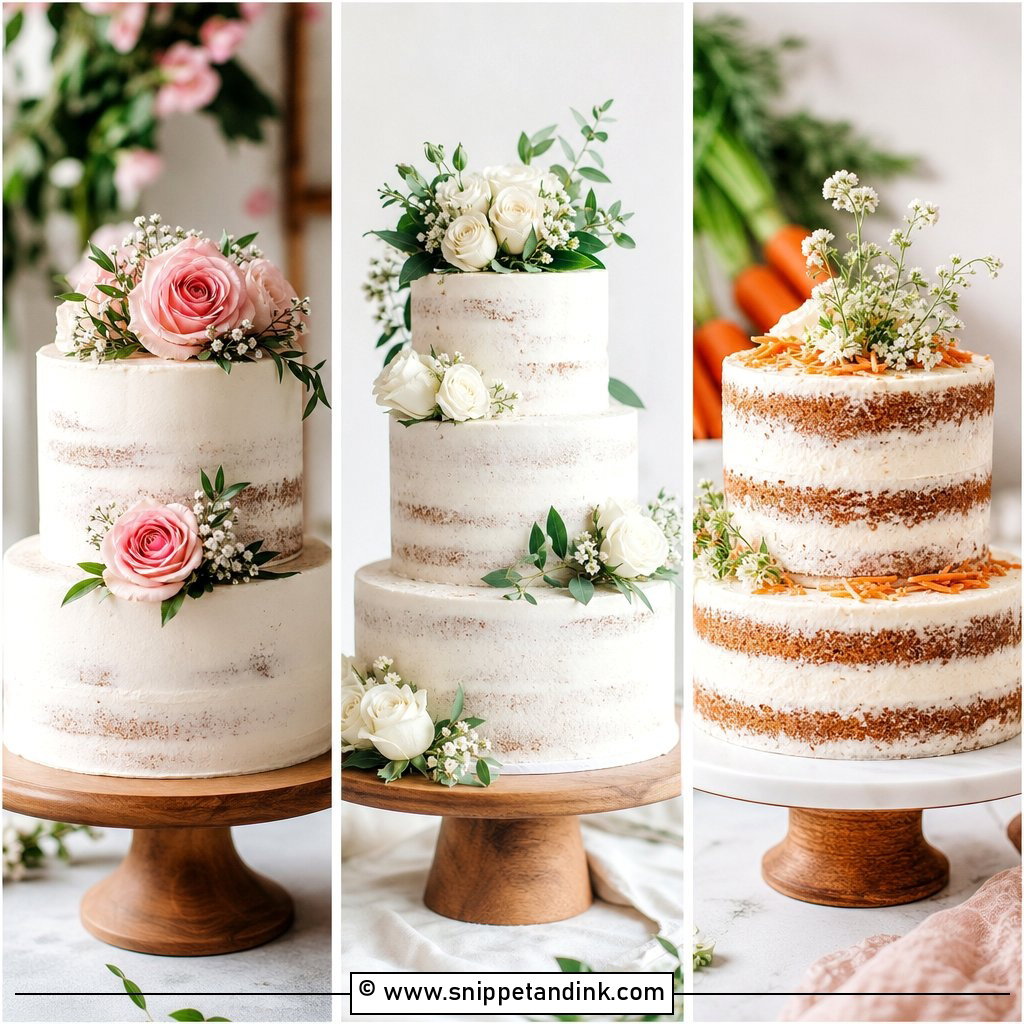
Buttercream is softer to eat and warmer to look at than fondant. I can leave it glass-smooth, comb it lightly or keep a few spatula marks so it looks handmade, and that texture shows far more in close-up photos than from across the room. Keep it white or ivory and tuck small floral clusters between the tiers. Vanilla bean, almond, lemon or champagne sponge all suit it. The trade-off is temperature. Buttercream softens in a warm room, so for a summer garden reception I’d use a firmer, heat-tolerant recipe and ask for a shaded spot.
3. 3 Tier Wedding Cake With Fresh Flowers
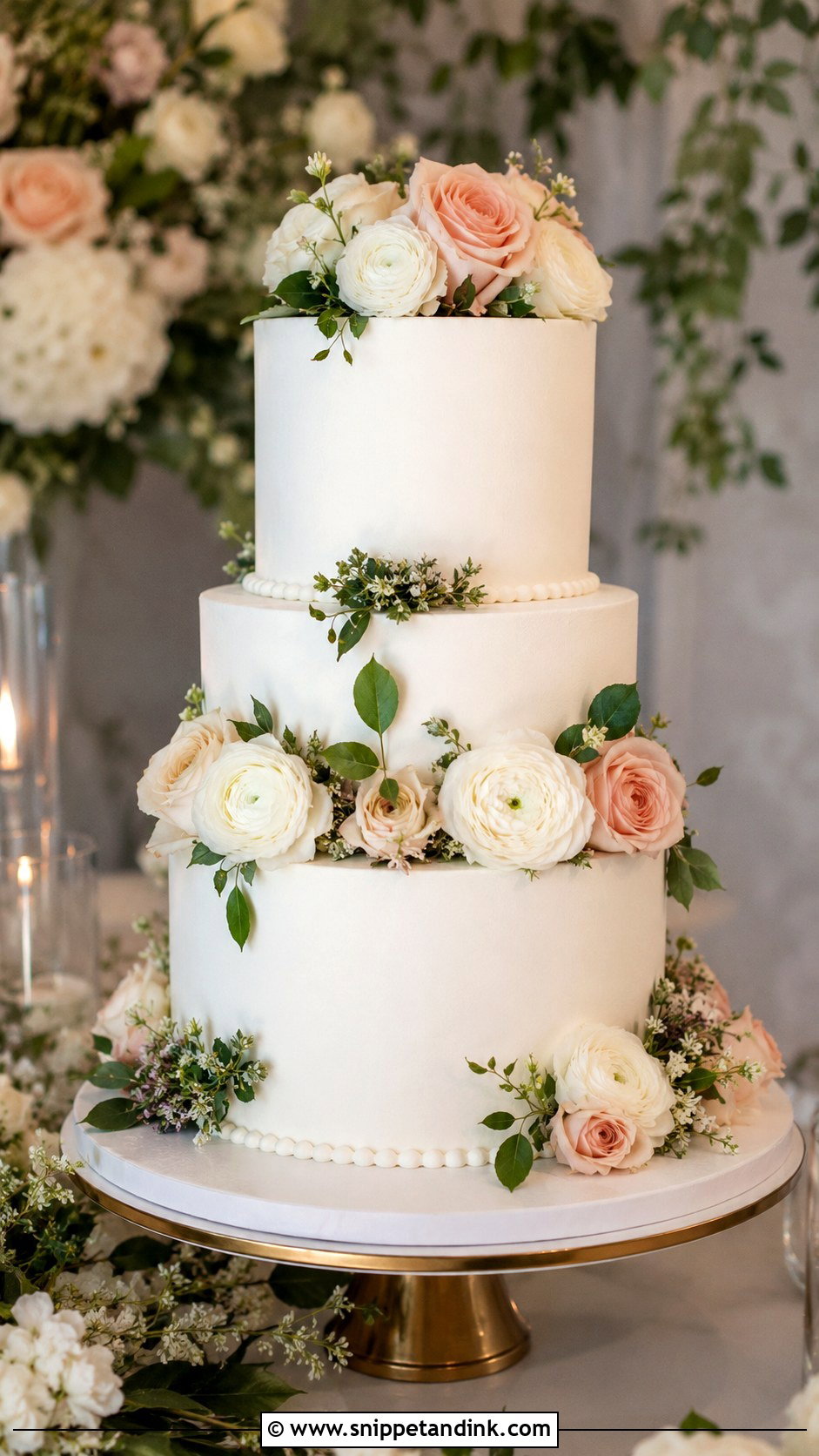
Fresh flowers tie the cake to the bouquet and the reception arrangements, so I always ask for the florist’s stem list before I sketch anything. Roses, peonies, orchids, lisianthus and ranunculus are the usual picks; a cascade adds drama, and small clusters look cleaner. Many flowers are sprayed or simply not safe near food, so every stem is wrapped in floral tape or set into a pick, and nothing raw goes straight into the sponge. Agree in advance who places them. It goes smoothest when the florist delivers prepared stems and the cake designer arranges them on site. Keep the frosting simple so the flowers carry the design.
4. 3 Tier Wedding Cake With Sugar Flowers
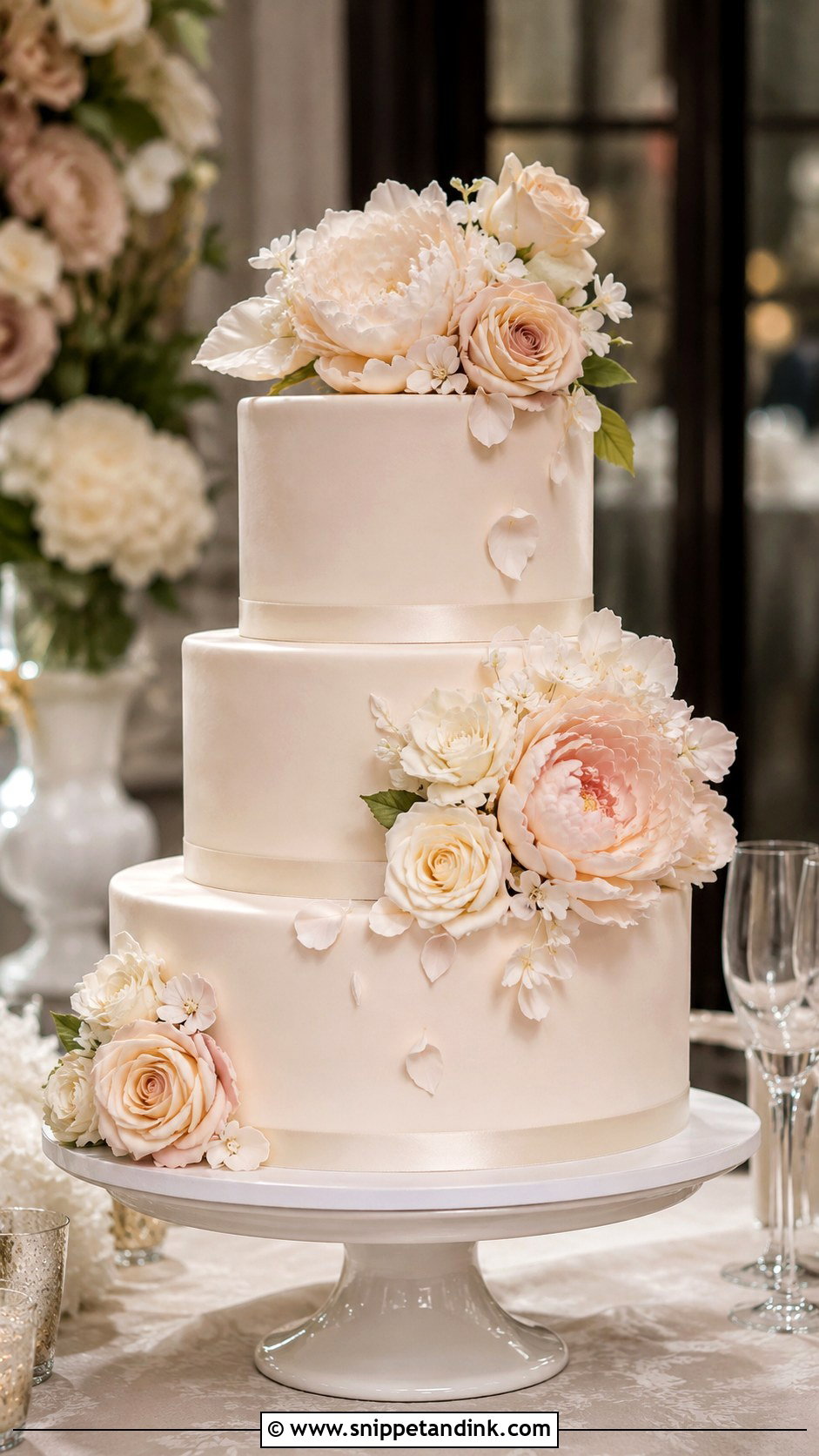
Sugar flowers give me a control that fresh blooms never will. Every petal is shaped, tinted and placed exactly where it helps the design, and nothing wilts between the first look and the cake cutting. Roses, peonies or orchids across three tiers feel luxurious because the hours of handwork are visible. They also solve the problem of a favorite flower being out of season or too delicate for the venue. Keep the base smooth and let the flowers create the movement. Ask whether they’ll be wired; wired flowers have to come off before slicing and are not for eating.
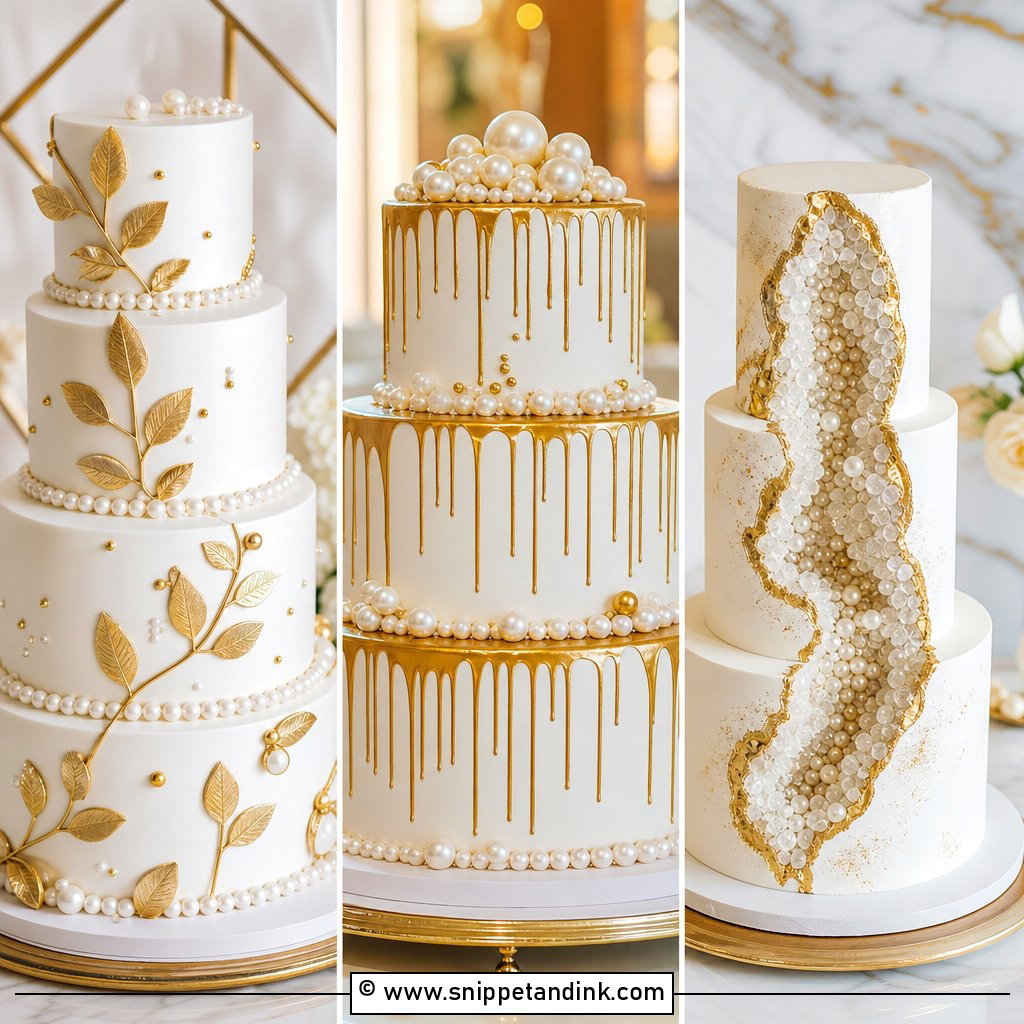
5. 3 Tier Wedding Cake With Gold Accents
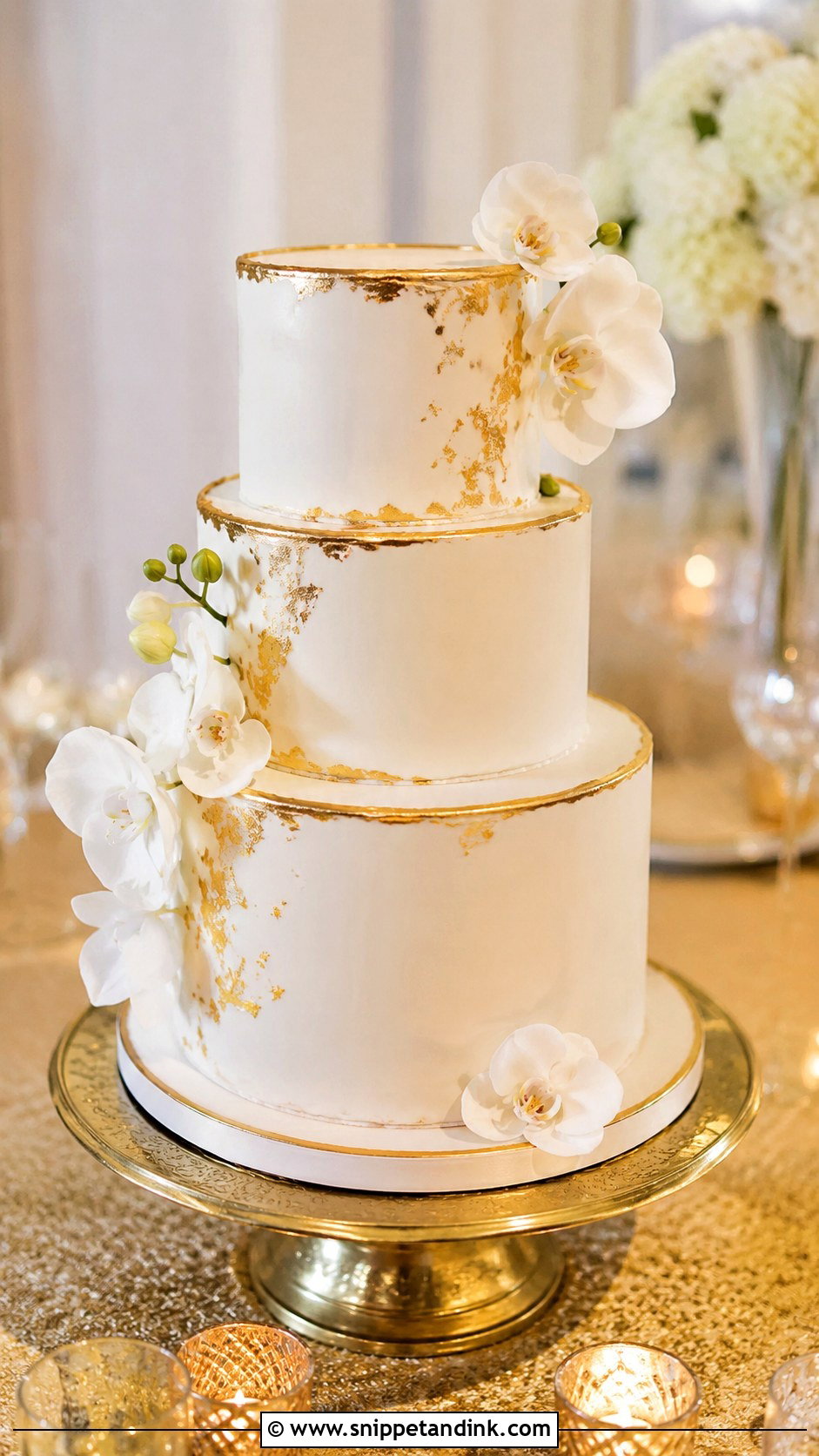
Gold accents warm up three tiers quickly, provided they stay small. Thin leaf, a painted edge, a scatter of flecks or one metallic middle tier are all options, and ivory buttercream or white fondant lets the gold glow rather than glare. Painted gold on a cake should be edible luster dust mixed with alcohol or extract, never a craft metallic, and I’d confirm that with any baker you hire. It sits naturally in a room with chandeliers and gold flatware. White flowers, a few blush blooms or a little greenery keep it tasteful.
6. 3 Tier Wedding Cake With Pearl Details
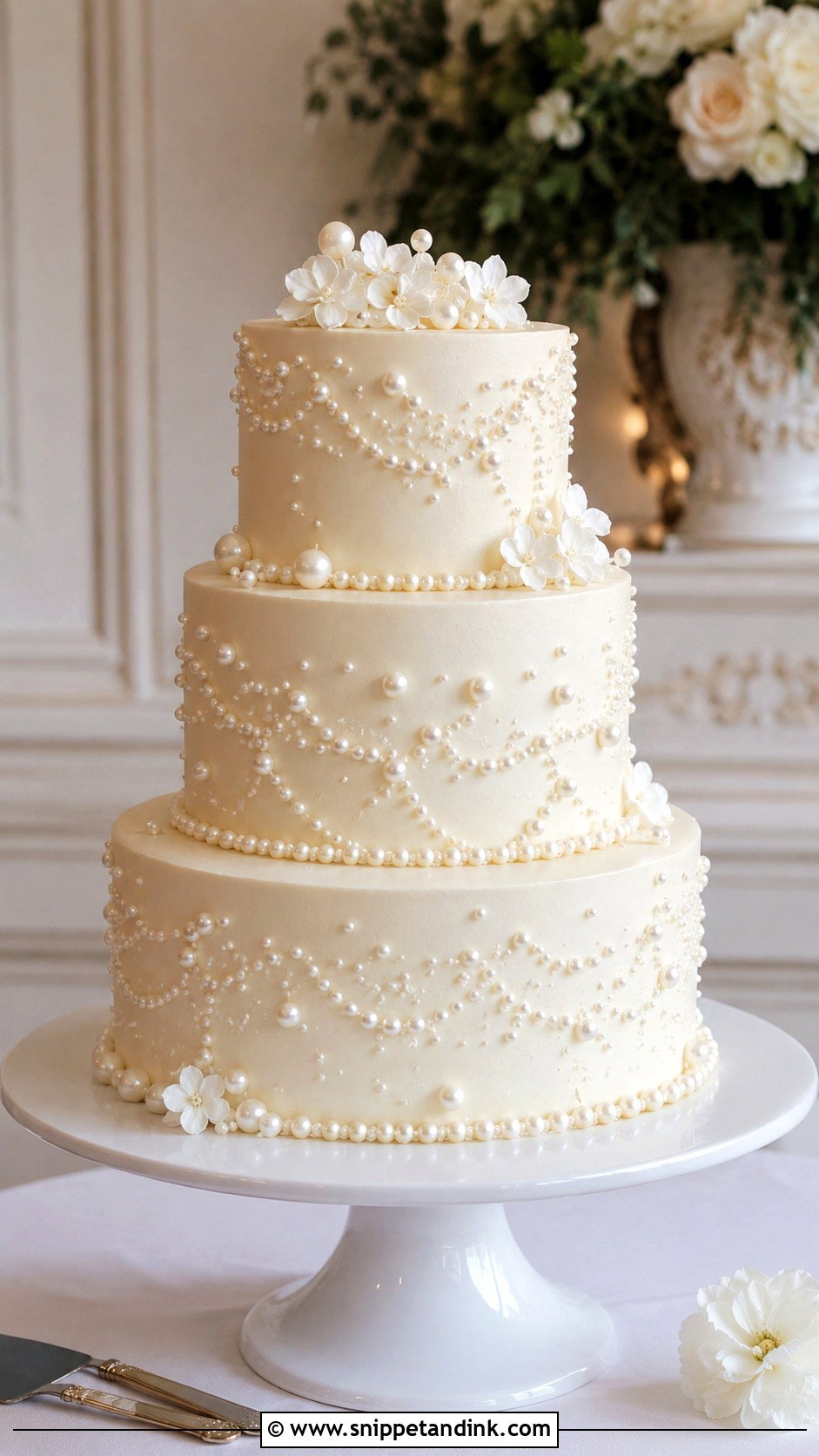
Pearls read as bridal straight away. I use them as tiny borders at the base of each tier, scattered over the surface, or set in neat formal patterns, and they look best on white, ivory or pale blush. If you’re in satin with pearl jewelry and a lace veil, this is an easy echo. For a modern take, keep the tiers smooth and use them sparingly; for something traditional, combine them with piped borders and small florals. Sugar pearls are very hard, so I let the caterer know guests may want them brushed aside when plating.
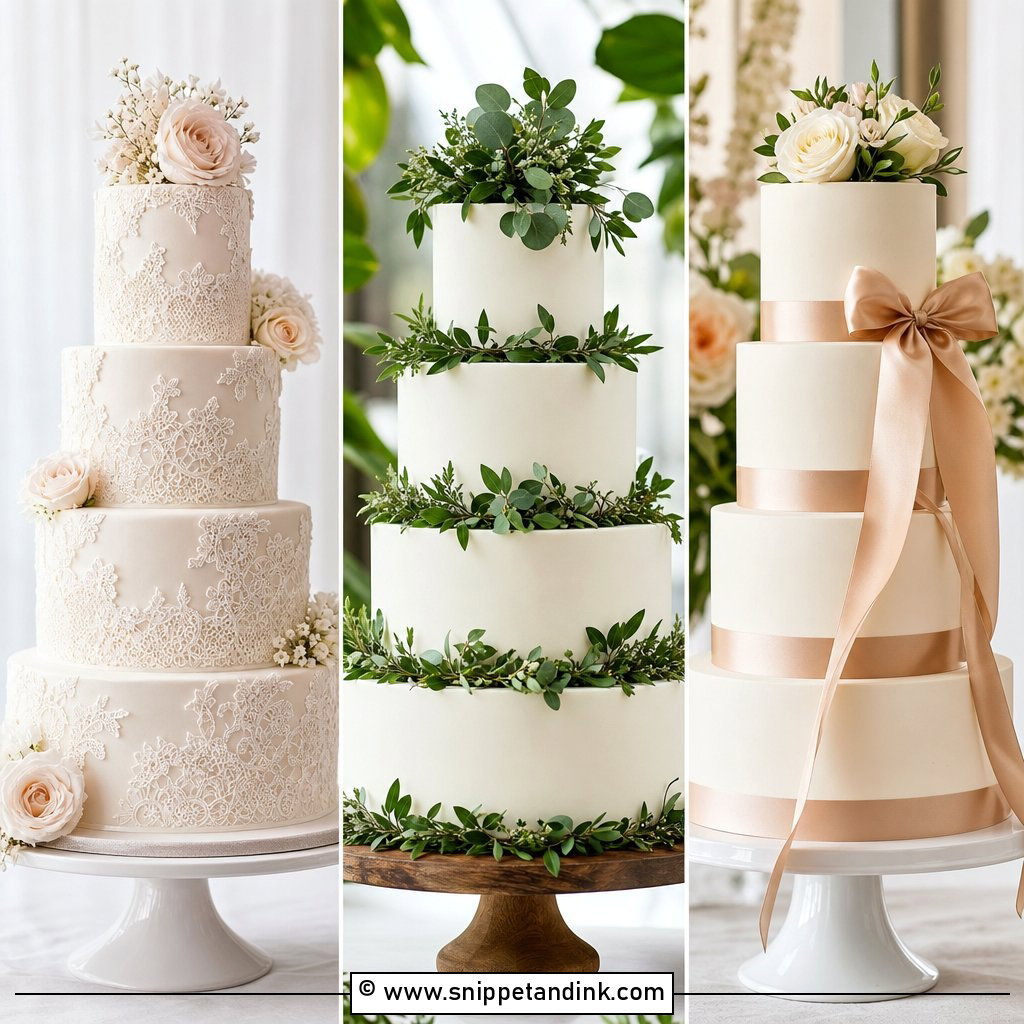
7. 3 Tier Wedding Cake With Lace
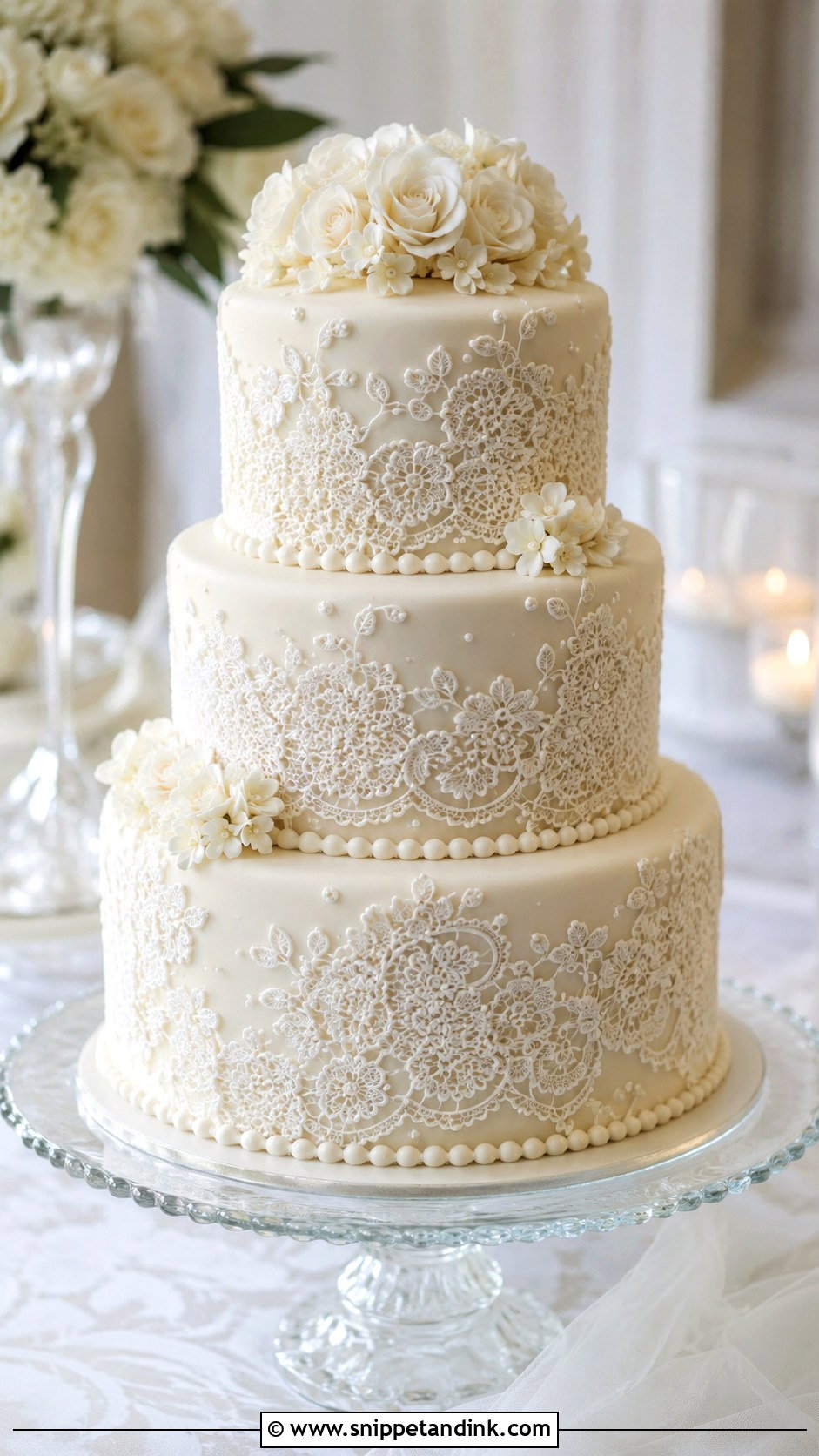
Lace means more when the pattern comes from something real: the gown, the veil or the invitation suite. I can recreate it with fondant appliqué, royal icing, stenciling or fine piping. Bring a close-up photo of the actual lace and I’ll pick the method that copies it best. Open, airy lace translates well to piping, while dense floral lace is easier to match with a mold. Keep the palette in ivory, white, champagne or pale blush. One statement tier feels modern, all three feel traditional, and a few small sugar flowers or pearls are enough on top of either.
8. 3 Tier Wedding Cake With Texture
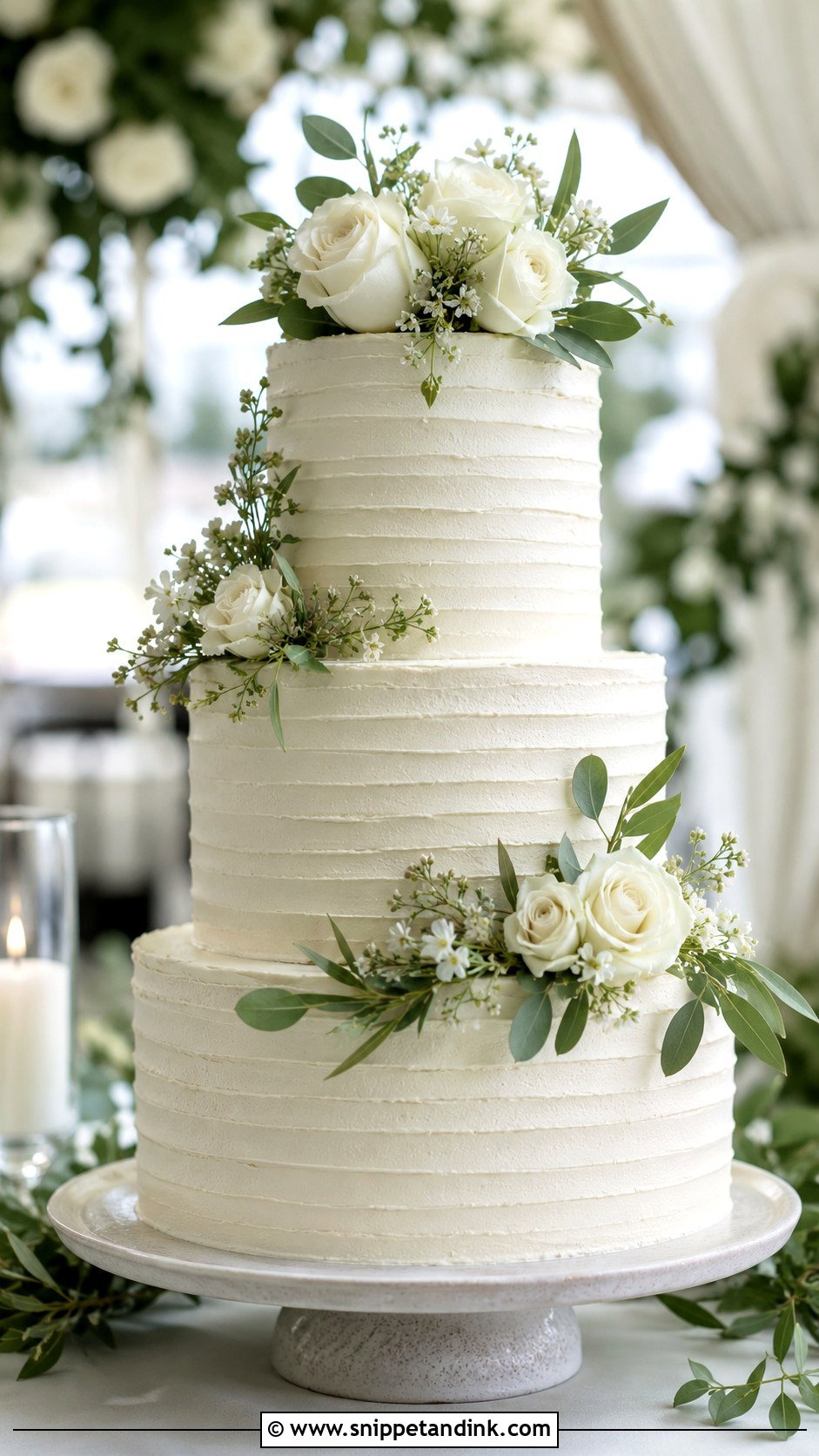
Texture is the most forgiving finish I offer. Combed ridges, palette knife strokes, stucco or soft waves move the light around and hide the small marks a perfectly smooth tier would show, which also means it survives a bumpy drive better. White or ivory keeps it bridal, and fresh flowers or greenery soften it. Textured cakes sit comfortably in barns, gardens and coastal venues. Bring a close photo of the exact finish you like, though. To a decorator, the word rustic covers a dozen different looks.
9. 3 Tier Wedding Cake With Blush Flowers
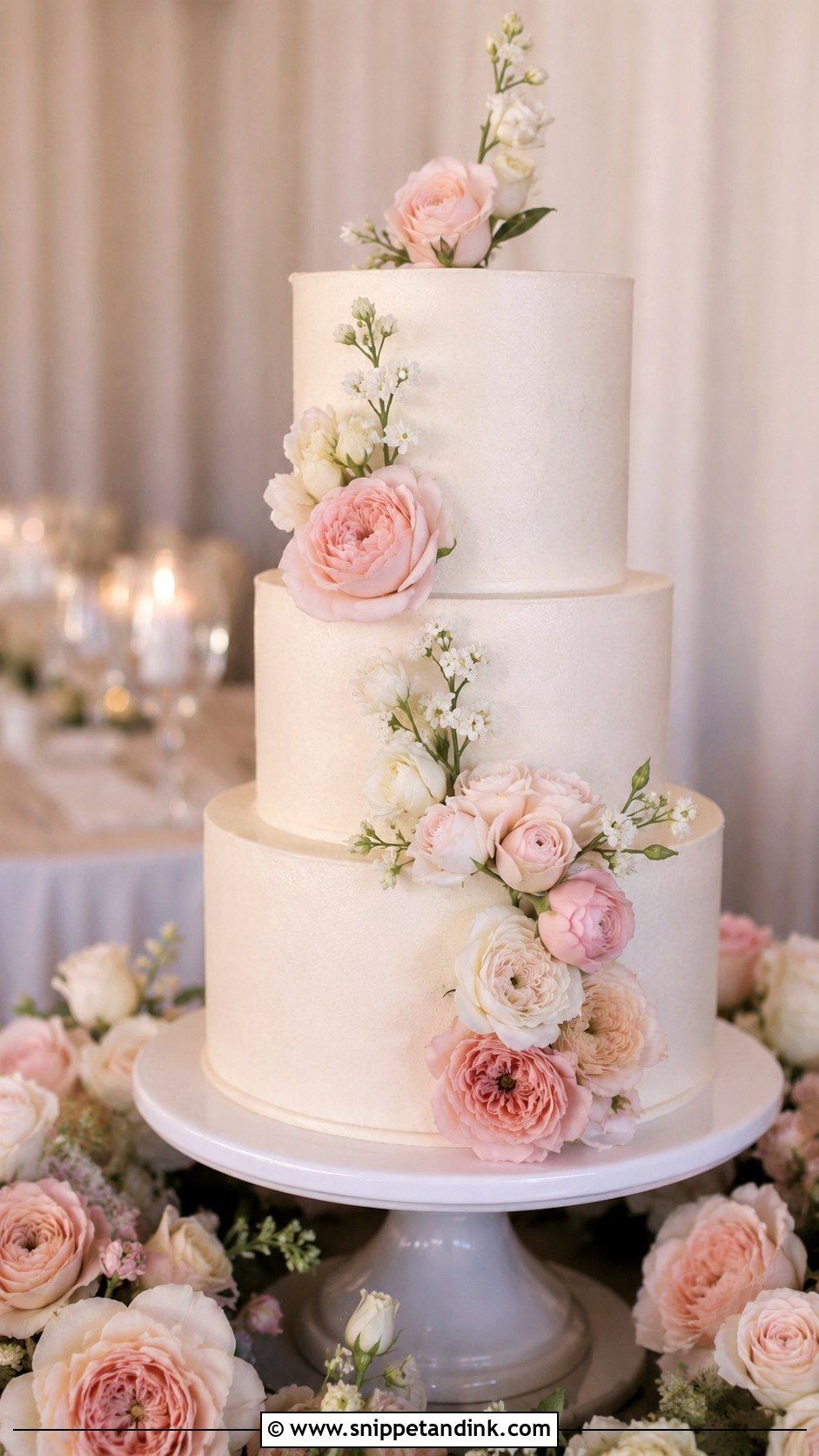
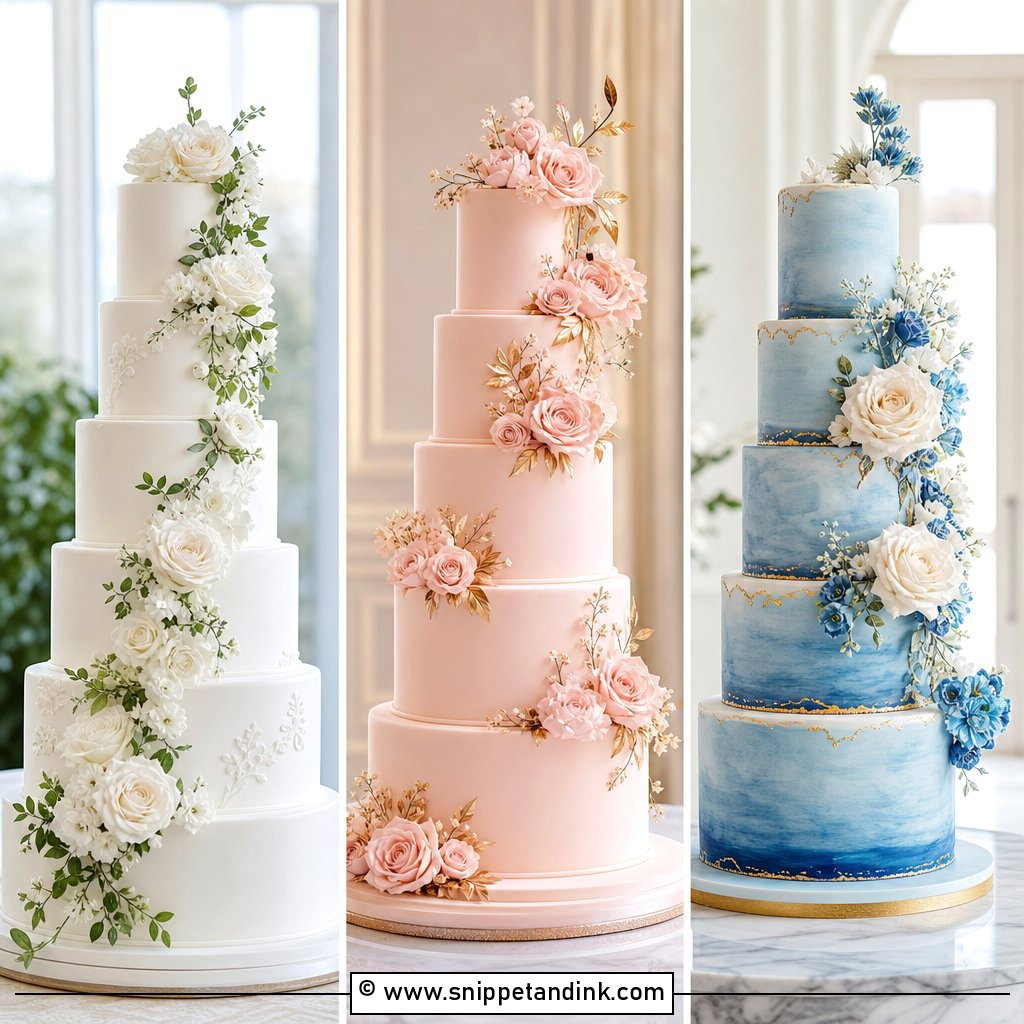
Blush flowers warm a white or ivory cake with very little risk. Pale pink roses, garden roses, ranunculus or sugar peonies are what I reach for first. Restraint matters more than color: one cascade down a side or a few clusters at the tier edges is usually enough, and packing every ledge makes three tiers look shorter than they are. Blush sits easily beside champagne, gold, sage and dusty rose decor. Real blush blooms vary from week to week, so if you need an exact match to the bridesmaid dresses, sugar is safer.
10. 3 Tier Wedding Cake With Greenery
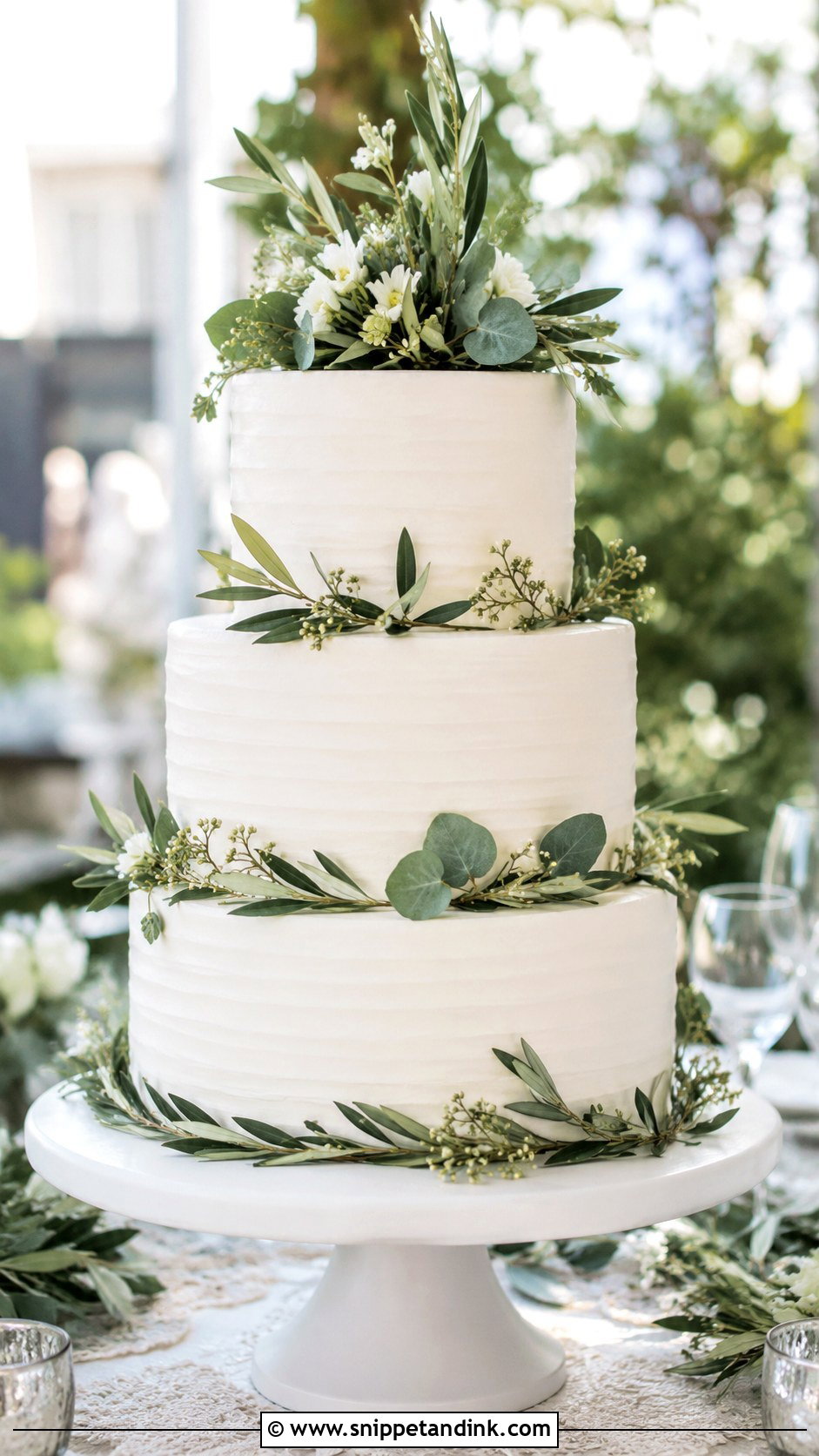
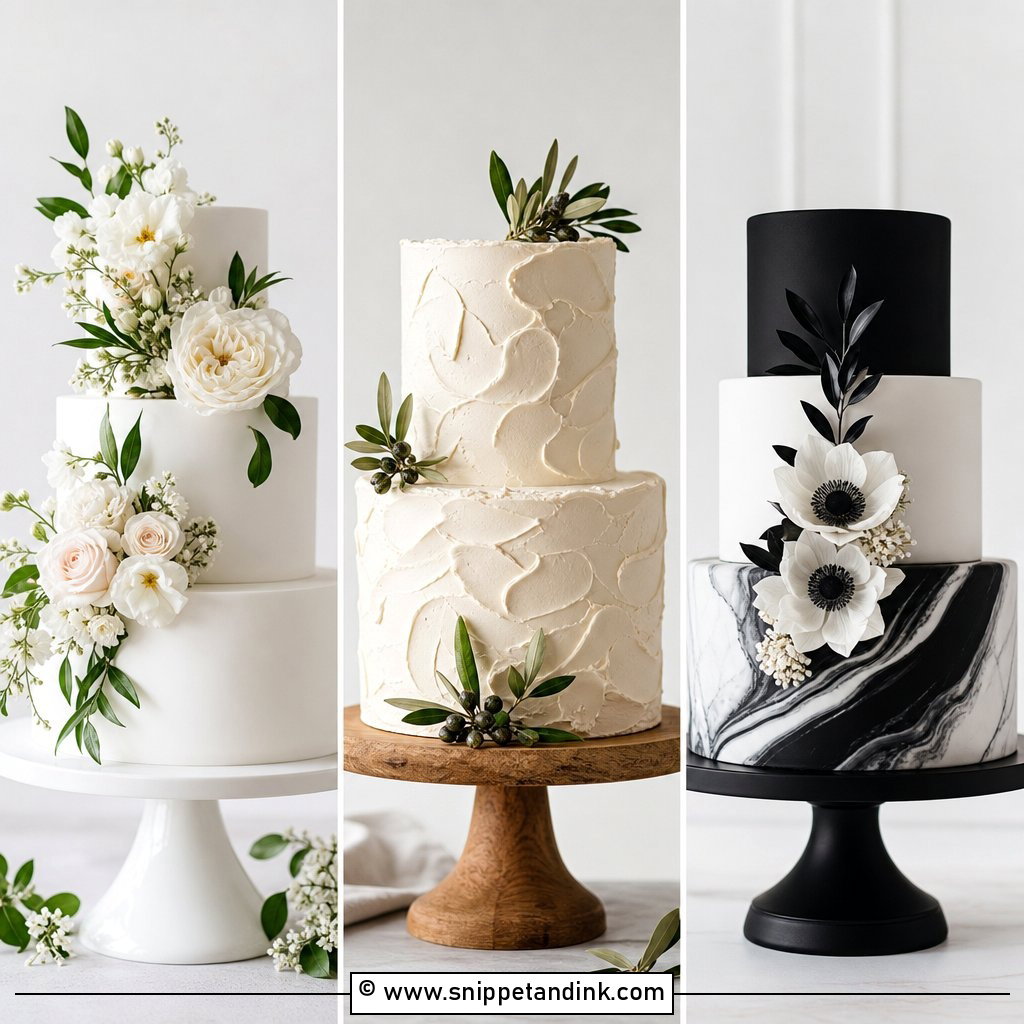
Greenery freshens a cake without adding color. Eucalyptus, olive leaves, ferns or small herb sprigs can wrap around the tiers or frame a floral cluster, and on white buttercream or fondant they look very clean. Eucalyptus needs care, because it isn’t food safe, so it always goes on over a barrier and never into the cake. Add a few white roses for softness, or leave the leaves alone on sharp, smooth tiers for a modern finish. Cut foliage wilts faster than you’d think outdoors, so I place it as late as possible.
11. 3 Tier Wedding Cake With Roses
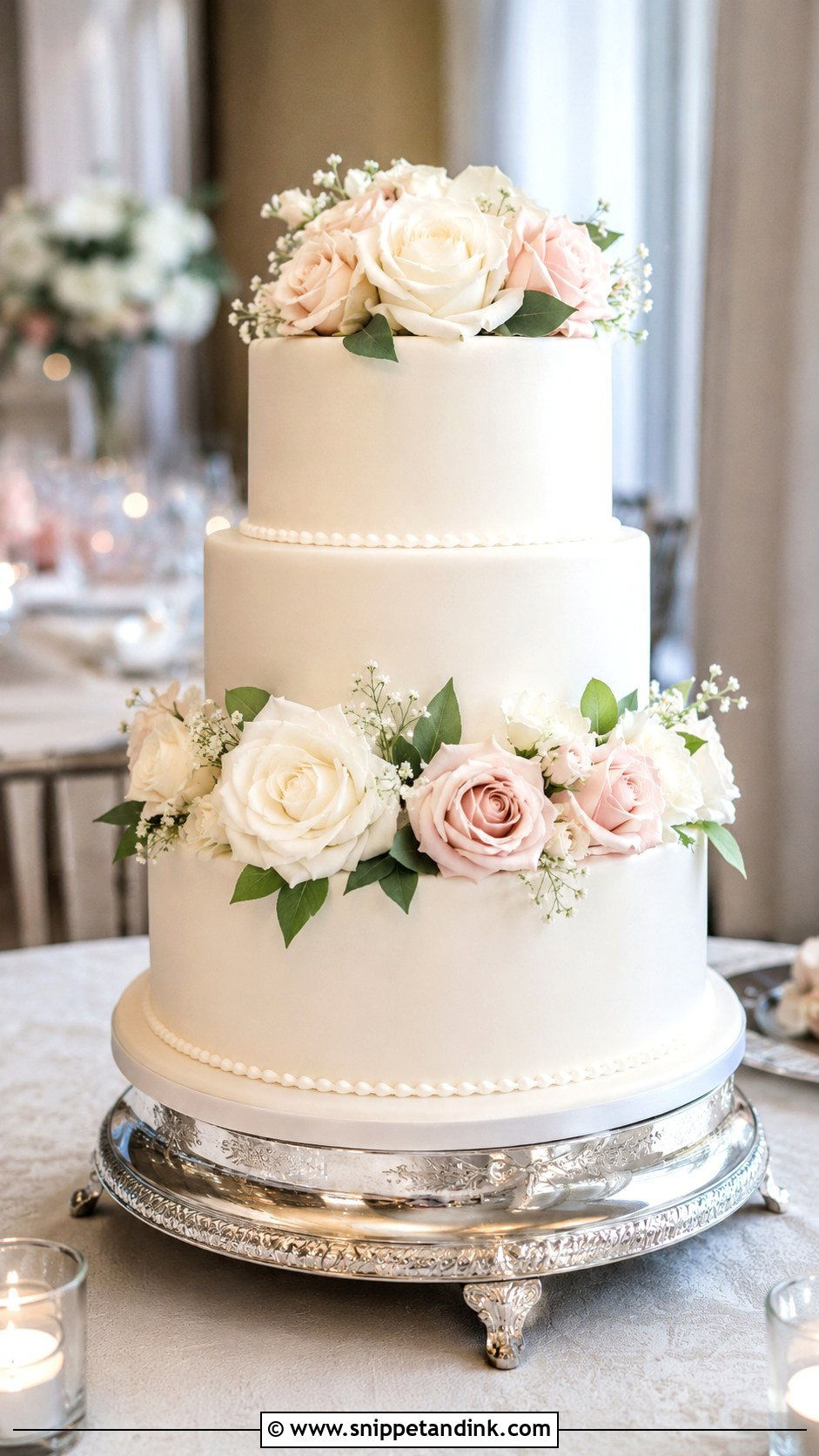
Roses are the flower I’m asked to put on cakes more than any other. Fresh, sugar or piped buttercream roses each read differently: piped ones look homey and vintage, sugar roses are the most refined, and fresh garden roses bring scent to the table. White feels classic, blush is soft and dusty pink feels current. A cascade down one side is dramatic, while a few set between the tiers looks restrained. Keep the frosting plain so they aren’t competing with other detail, and the cake will suit almost any venue.
12. 3 Tier Wedding Cake With Orchids
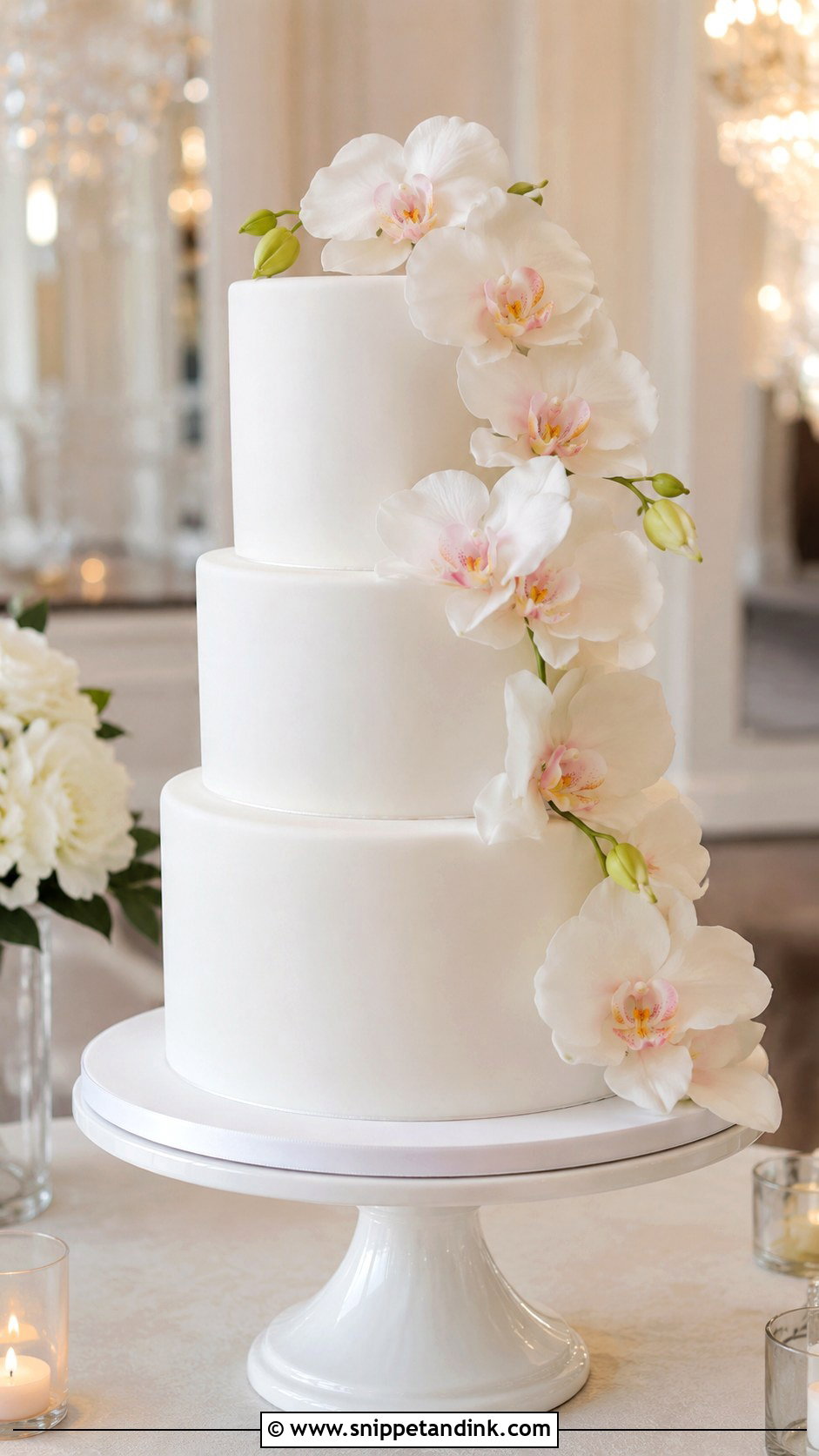
Orchids have a sculptural, slightly architectural shape that suits a sleek cake. White orchids look crisp, and pale pink or soft mauve brings gentle color. Smooth fondant is the right background, since a heavy texture fights their clean lines. I’ll set them in a vertical cascade, tuck them between tiers or group them at the base. A long orchid spray is heavier than it looks, so the top tier needs proper support if stems hang from it. Hotel ballrooms, modern venues and destination weddings are where they feel most at home.
13. 3 Tier Wedding Cake With Ruffles
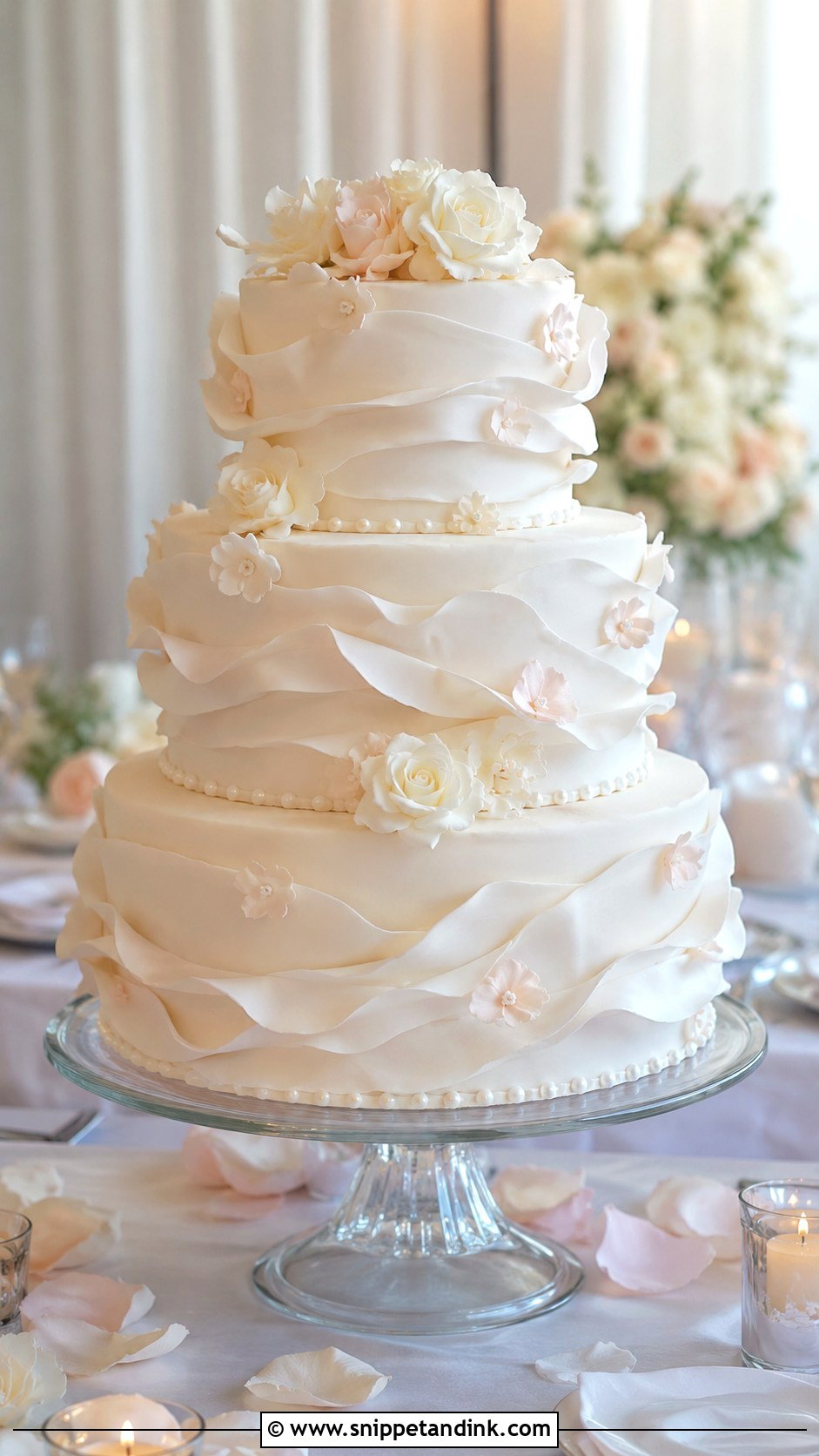
Ruffles can be made from fondant, wafer paper or buttercream, and each one behaves differently. Thin fondant ruffles look like fabric. Wafer paper is feather-light but goes limp in humidity, and buttercream ruffles are relaxed and dreamy until the room warms up. I’d ruffle one or two tiers and keep the third smooth so the outline still reads. White, ivory or pale blush suit it, and because the ruffles carry the texture, everything else can stay quiet.
14. 3 Tier Wedding Cake With Marble
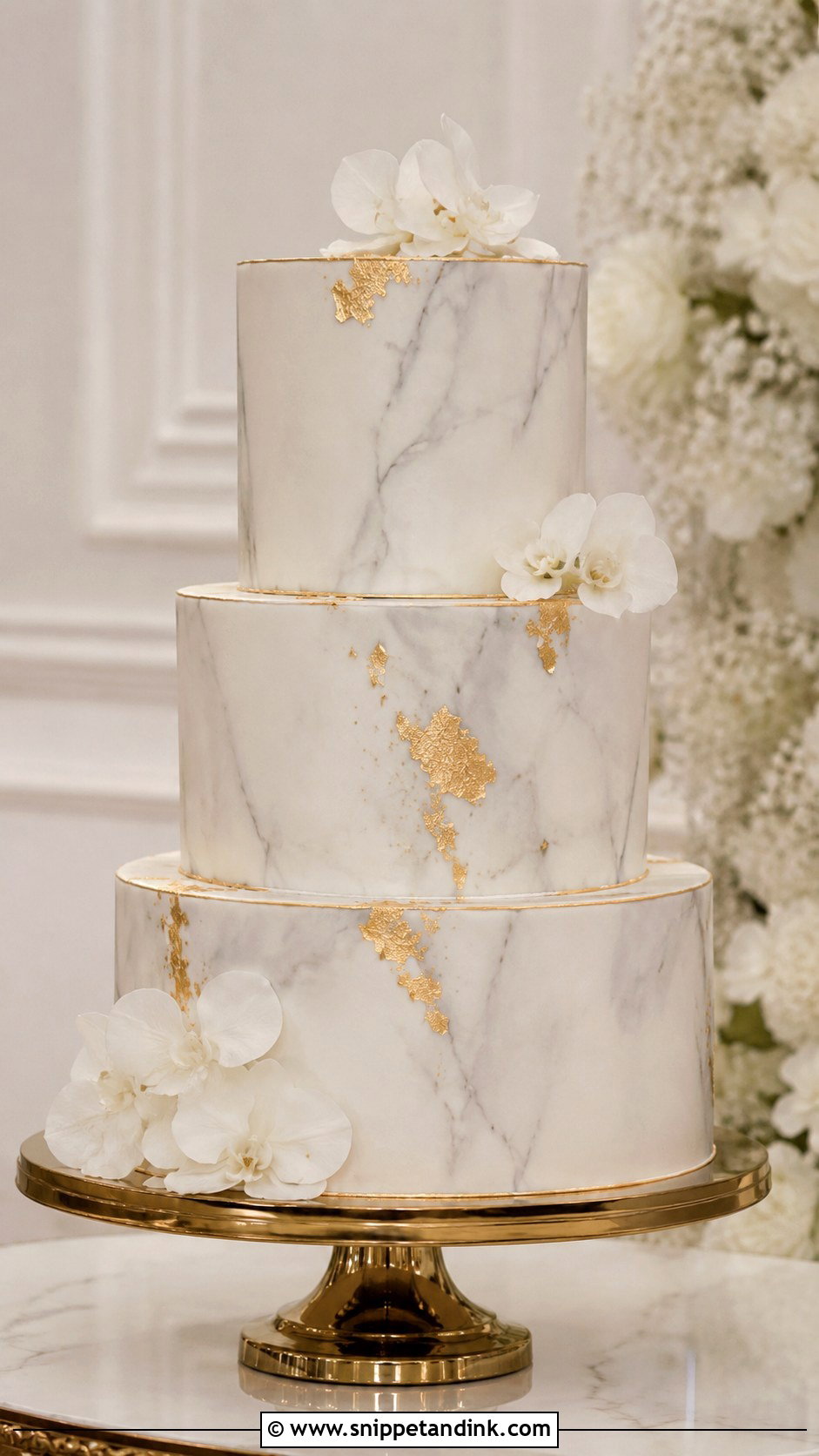
Marble gives a modern cake interest with no extra decoration. White and gray is the classic pairing, while ivory with champagne veins or a pale blush marble looks softer. A thin painted gold edge or a few flakes of leaf suit it, and flowers should stay minimal so the veining shows. I marble each tier’s covering by hand, so every tier comes out slightly different. If you want perfect symmetry, this isn’t your cake. City weddings, galleries and contemporary hotel receptions are where I make it most.

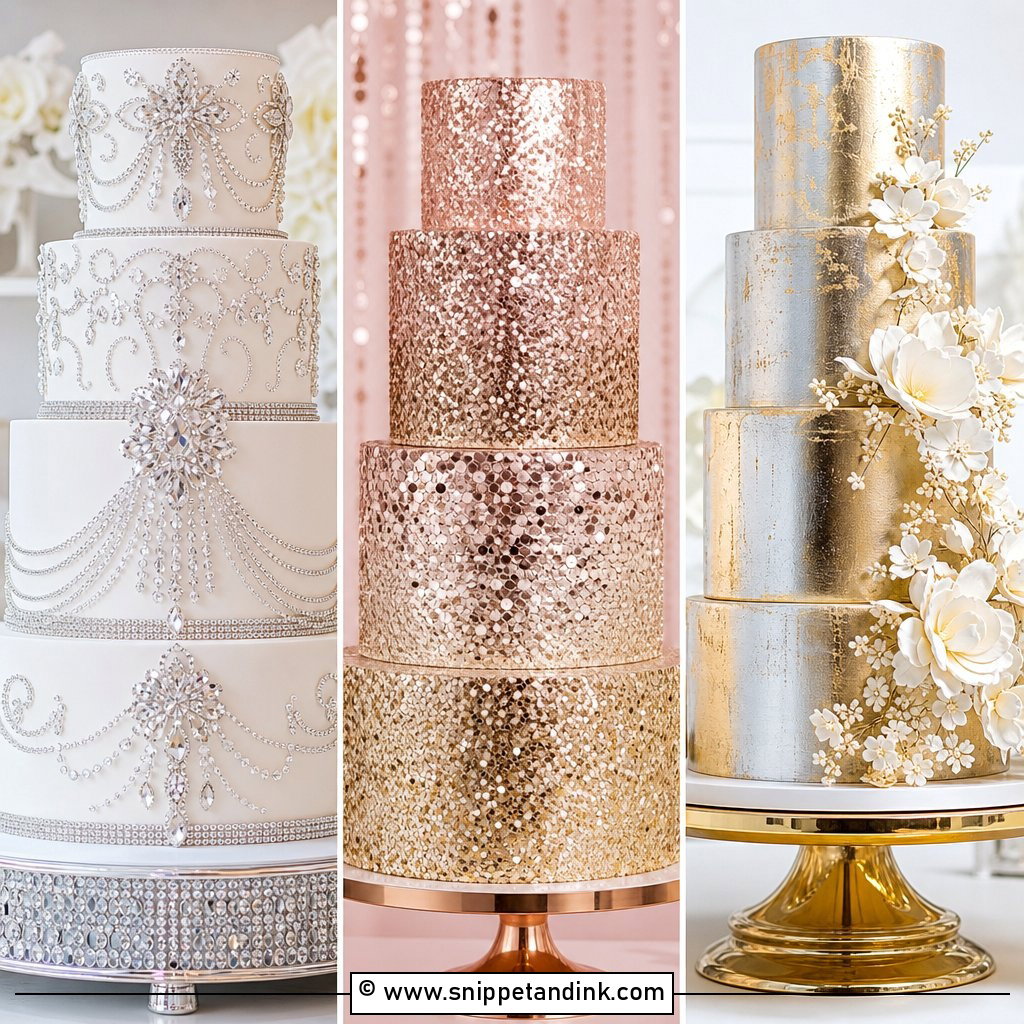

15. 3 Tier Wedding Cake With Black And White
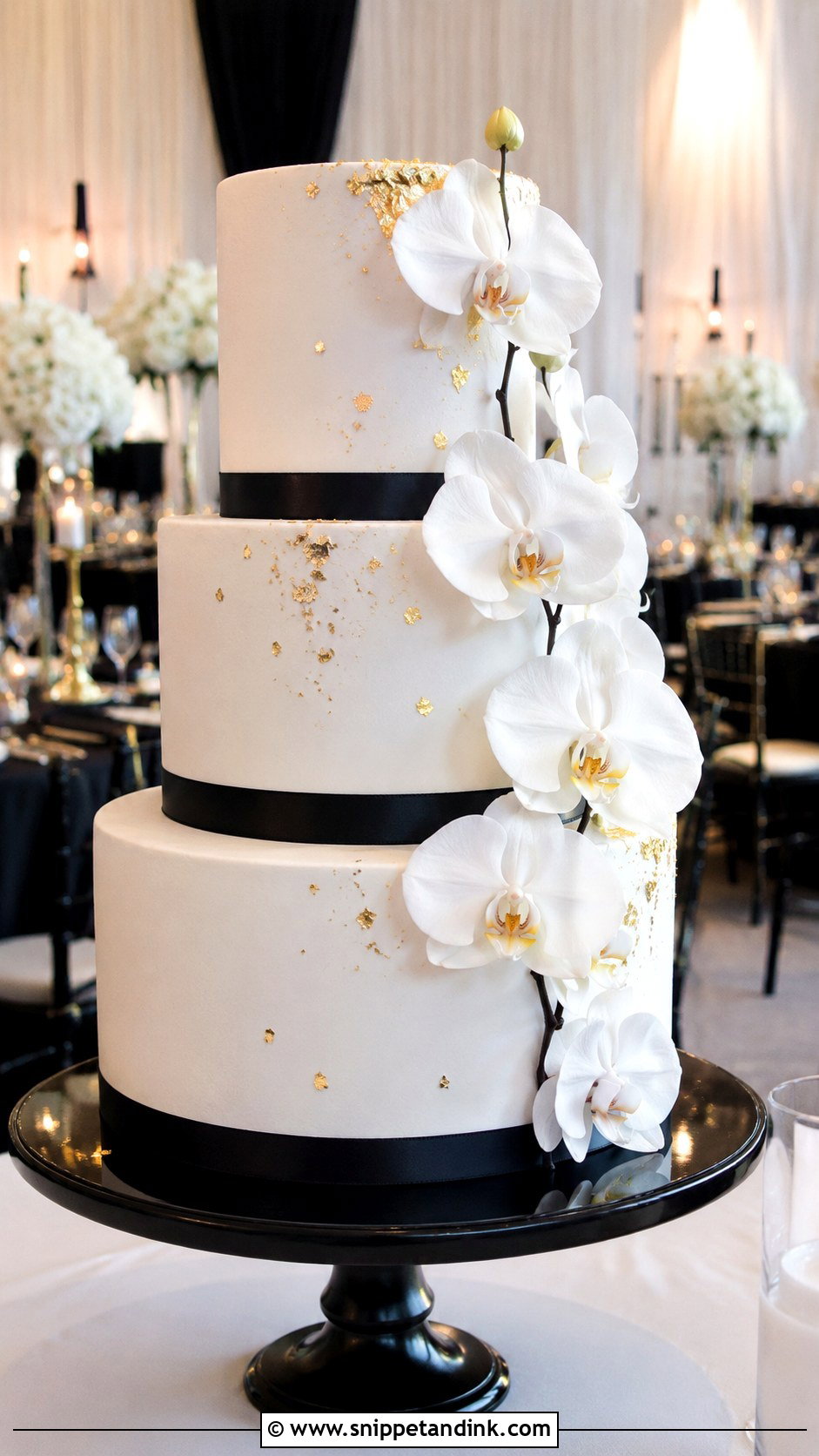
Black works best as an accent: a ribbon, some piping, a few floral details or one statement tier. A mostly black cake gets heavy quickly, and dark icing can stain teeth and fingers, so I keep it away from the parts people eat most. White keeps the look bridal and the black supplies the contrast. I’d use it for a formal evening reception or a black-tie dinner in a modern space. White orchids, anemones or sugar roses soften the contrast, and a touch of gold warms it up. With the proportion right, it’s the cake people point out in the reception photos.
16. 3 Tier Wedding Cake With Champagne Color
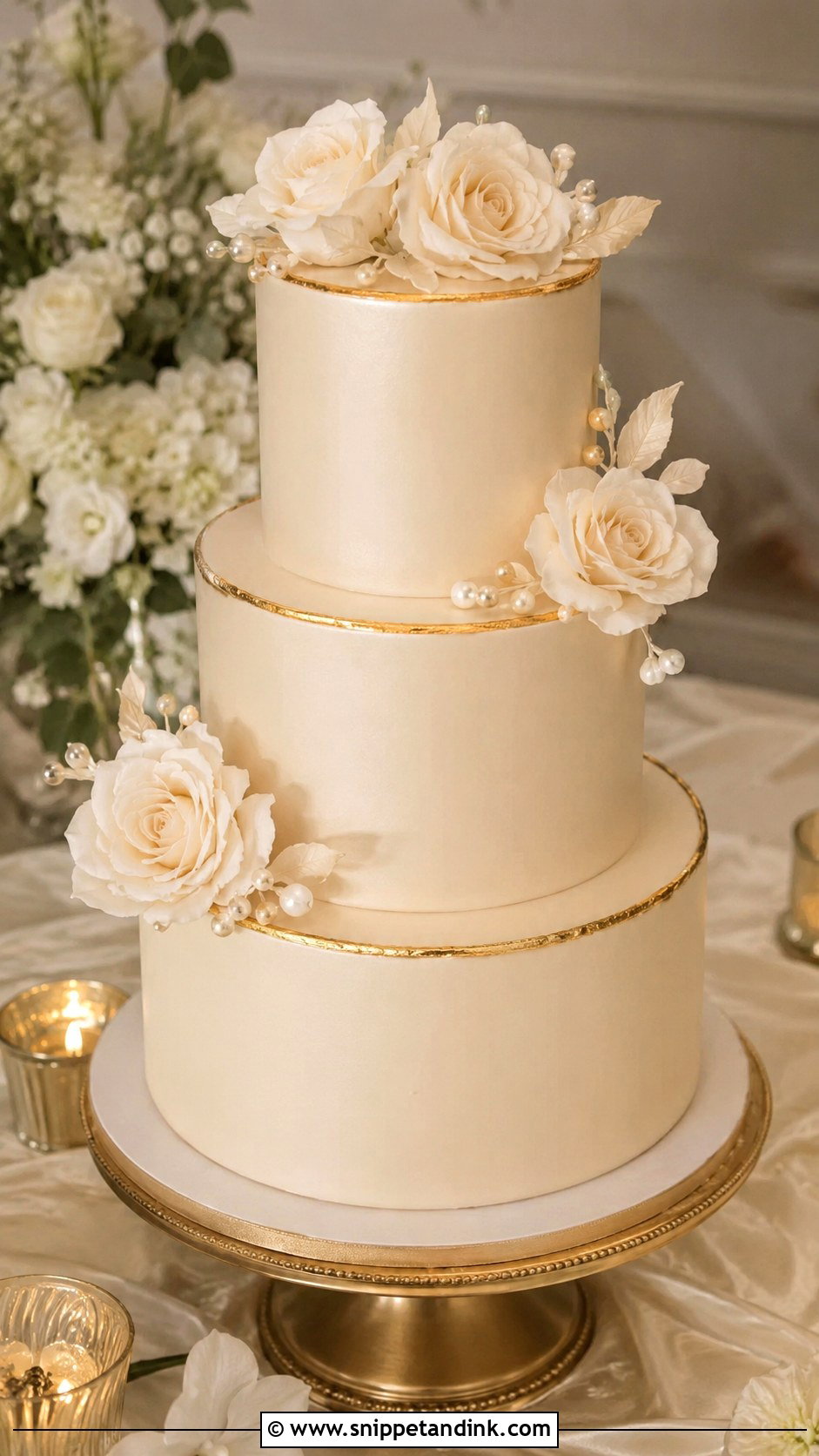
Champagne gives a soft glow without the starkness of pure white. It works with ivory flowers, pearls, gold details and satin-like textures, and it fits neutral palettes and warm lighting naturally. Smooth fondant makes the tone look polished, while buttercream softens it. Candlelight is where it really shows. Because champagne is a mixed shade, I tint a small sample and hold it against the linen swatch before coloring enough for three tiers. Small sugar flowers or delicate piping add detail if you want it.
17. 3 Tier Wedding Cake With Blue Flowers
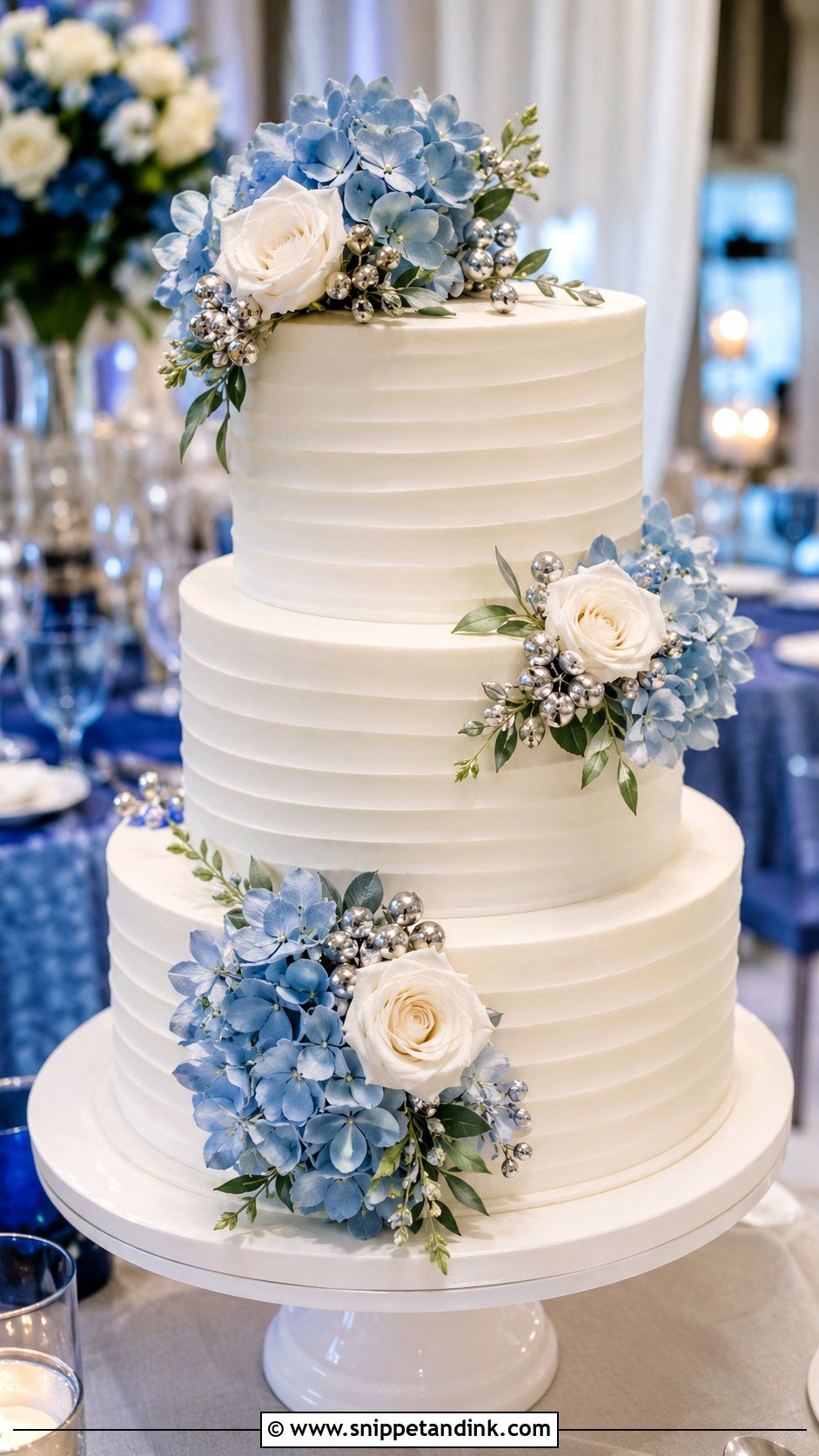
Blue flowers give a cool, refined edge to a white or ivory cake, and they’re a sweet way to carry something blue into the reception. Soft blue hydrangeas, sugar flowers or tiny pressed florals all work. Keep the shade gentle, such as dusty blue, powder blue or pale slate, and finish with silver accents, white roses or light greenery. Fresh hydrangeas drink a lot of water and droop fast once they’re out of it, so I usually make them in sugar or ask the florist for well-hydrated heads placed at the very last minute. Coastal and spring weddings suit it.
18. 3 Tier Wedding Cake With Rustic Flowers
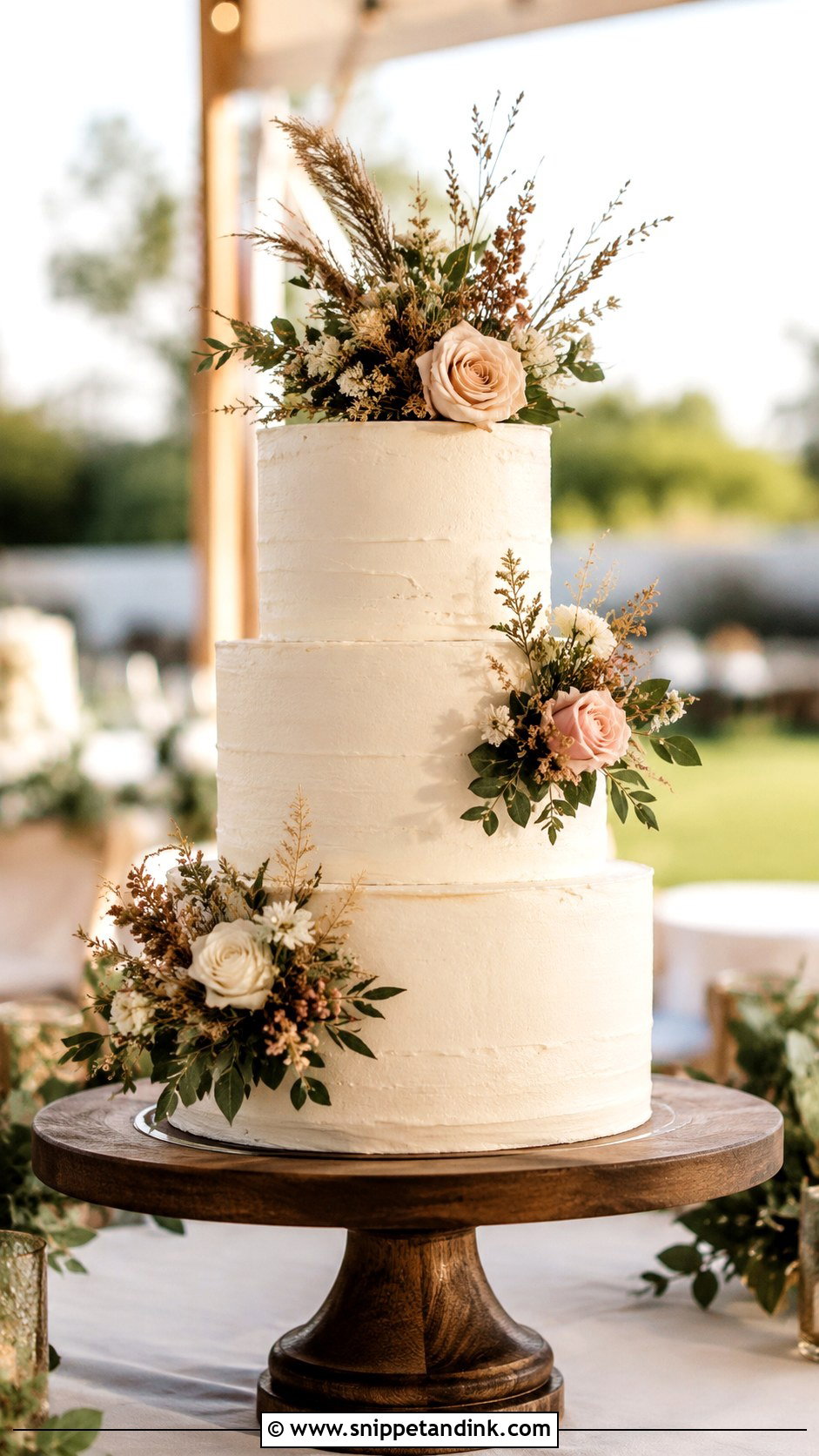
Rustic only works on a cake if the structure underneath stays neat. I keep the tiers straight and level and let the decoration carry the organic feel: textured buttercream, ivory frosting, small wildflowers, dried grasses and greenery. Barns, vineyard-style venues, gardens and outdoor receptions suit it. Muted cream, beige, sage, blush or dusty peach keep it refined. Dried grasses shed, so I wrap the stems and keep them clear of where the slices will be cut. A few carefully placed flowers always look better than a crowded ledge.
19. 3 Tier Wedding Cake With Minimal Flowers
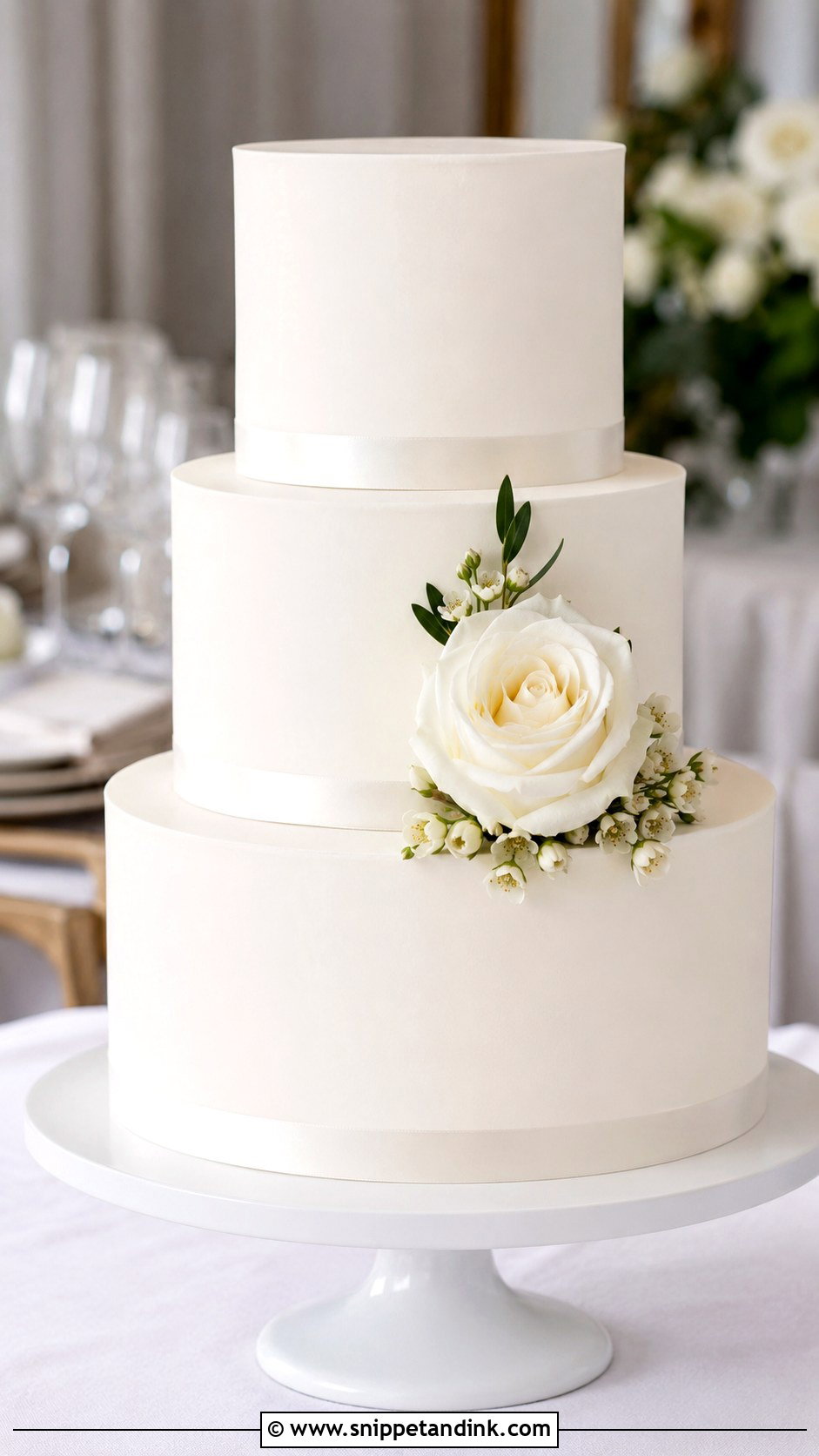
This is the hardest cake to fake. With smooth buttercream or fondant and just one small floral cluster, a single stem or a few tiny blooms at the base, proportion is everything: tier heights, the step between diameters, how sharp the edges are. White, ivory or soft beige keep it easy to style for a courthouse wedding, an intimate dinner or a minimalist room. A thin ribbon or a subtle piped border is plenty of extra detail. If you add ribbon over buttercream, ask for it to be backed, or butter will seep through and spot it.



20. 3 Tier Wedding Cake With Cascading Flowers
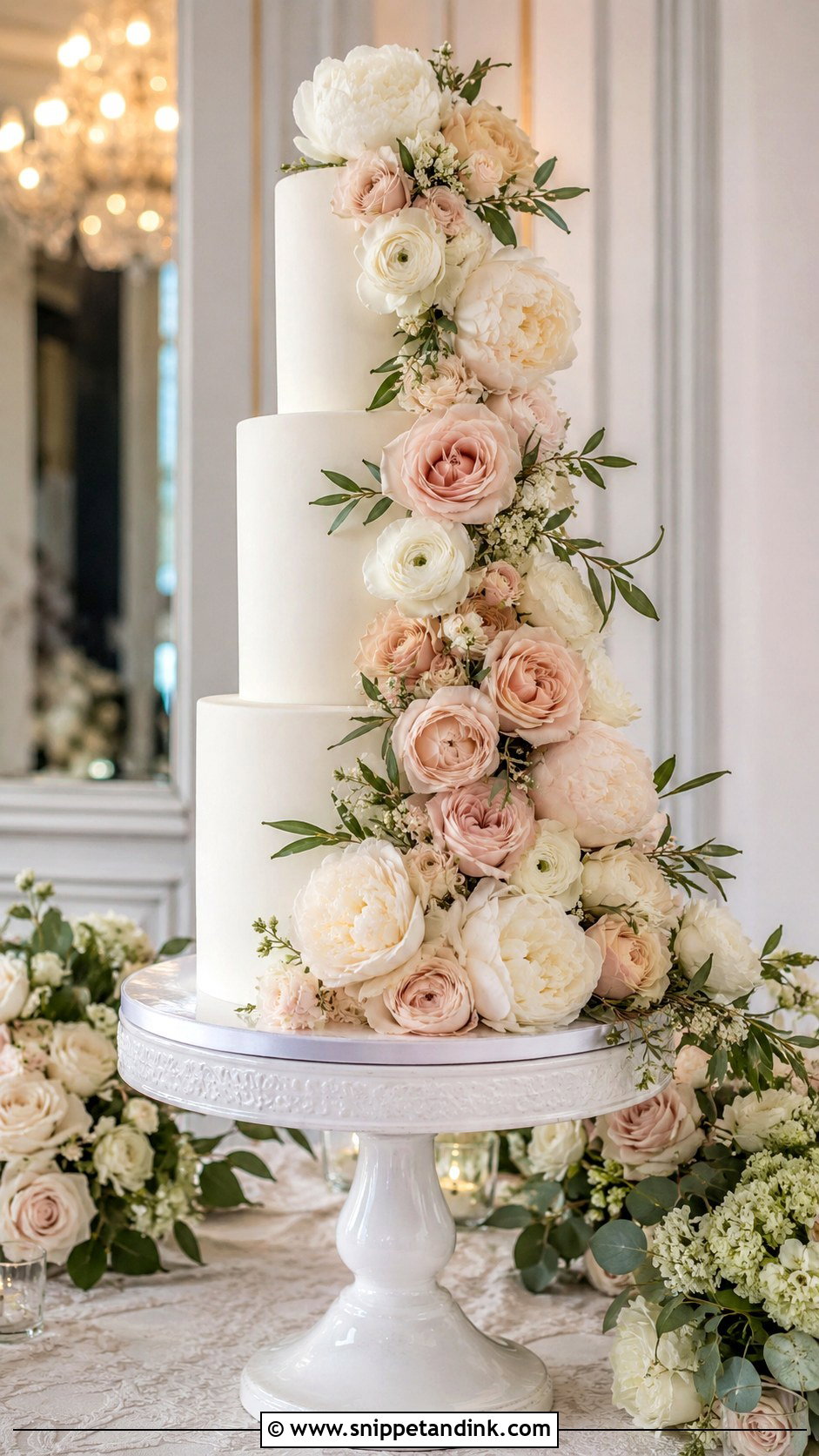
A cascade turns three tiers into the main reception centerpiece. Flowers flow from the top tier down the side, leading the eye and making the cake look taller than it is. Roses, orchids, peonies, ranunculus or sugar flowers in the wedding colors all work, over a smooth finish so the cascade supplies the movement. I set the line on a diagonal rather than a straight drop, which looks far more natural. Then I check it from where guests will stand and where the photographer will shoot the cutting, because one side of the cake always ends up being the front.
One Flavor per Tier, and Fillings That Last on Display
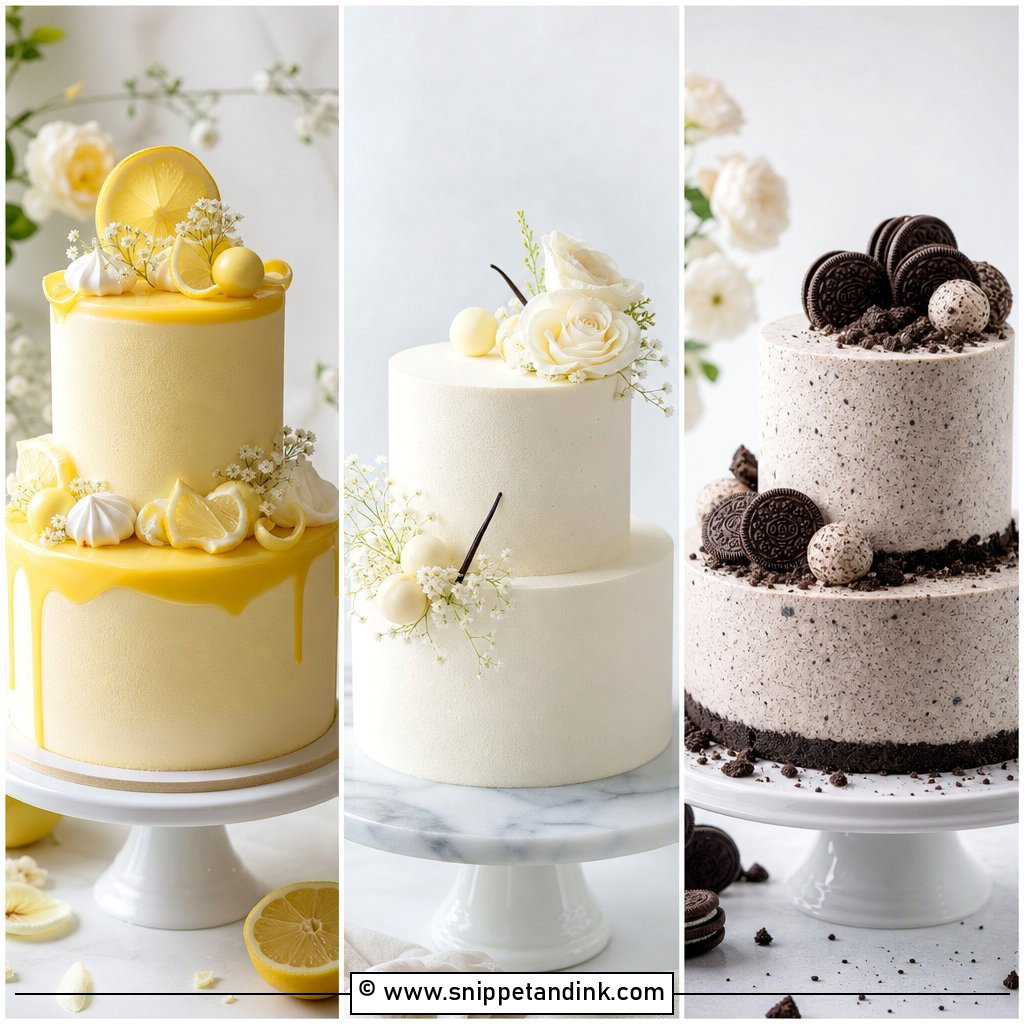
Three tiers gives you a natural excuse for three flavors. Guests rarely get to choose which slice they’re handed, though, so I’d keep the largest tier crowd-friendly, something like vanilla bean or chocolate, and put the more adventurous flavor in the smallest one. Ask to taste each flavor with its actual filling, not just the sponge on its own.
Filling choice matters more for a display cake than people think. Ganache, buttercreams and firm fruit curds hold up for hours. Fresh whipped cream, custard and light mousses need refrigeration, and on a stacked cake standing in a warm room they can soften and bulge out between the layers. Soft fillings like jam or curd also need a ring of stiff buttercream piped around the edge of each layer, or they’ll seep through to the outside and stain a pale finish.
If the top tier is going home with you
Plenty of couples still freeze the top tier for their first anniversary. Pick a flavor that freezes well, such as a butter sponge or chocolate cake with buttercream, rather than anything with fresh fruit or cream. Remove all flowers, chill it until firm, then wrap it tightly in several layers before freezing. A year is a long time, so expect it to taste of the occasion more than of a freshly baked cake.
Let the Venue and the Flowers Decide the Finish
A three tier cake should sit comfortably with everything around it. Classic white, fresh flowers, pearls, gold, marble or soft color can all work, and the right one is whichever matches your wedding and feels like the two of you. Look at the venue, the florals, the table decor, the dress and the season before you settle. Bring clear photos to your baker, then listen to their advice on structure, servings and finish. Get those details right and the cake stops being only dessert.
You'll Like These Ideas:









Leave a Reply