
Sage and lavender sit close together on the color wheel’s quiet side, which is why they look calm on a cake instead of sugary. Sage gives an earthy base; lavender adds just enough purple to feel romantic. They suit spring gardens and rustic venues, and with sharper finishes they hold up in a modern room too. What decides whether the pairing works is how muted each shade is, and that is harder to control in frosting than most couples expect. Below are 25 cakes in this palette, from textured buttercream to pressed flowers and plain stacked tiers, with notes on how I’d make each one.
Why Lavender Frosting Turns Grey, and How I Stop It
Buttercream made with real butter has a yellow tint. Purple and yellow sit opposite each other on the color wheel, so when I add lavender coloring to it, the two partly cancel out and the frosting goes grey or muddy. Sage has the opposite problem: green over a yellow base can come out too bright or olive.
What I do instead:
- Whip the butter for longer, which pales it, or use part white vegetable fat if you’re happy with that.
- Add a very small amount of violet first to neutralise the yellow, then build the lavender on top.
- Mix sage from a soft green with a touch of brown or ivory, not straight green, so it stays dusty.
- Color the frosting the day before. Gel colors deepen over a few hours, and what looks right at mixing is often a shade darker by morning.
Purple Fades in Daylight
Purple and pink food colors are the least stable under light. A lavender cake left by a sunny window or under a bright marquee can fade toward blue or grey over an afternoon. I keep cakes boxed until they’re needed and ask for the cake table to be placed away from direct sun.
1. Sage Green And Lavender Buttercream Wedding Cake
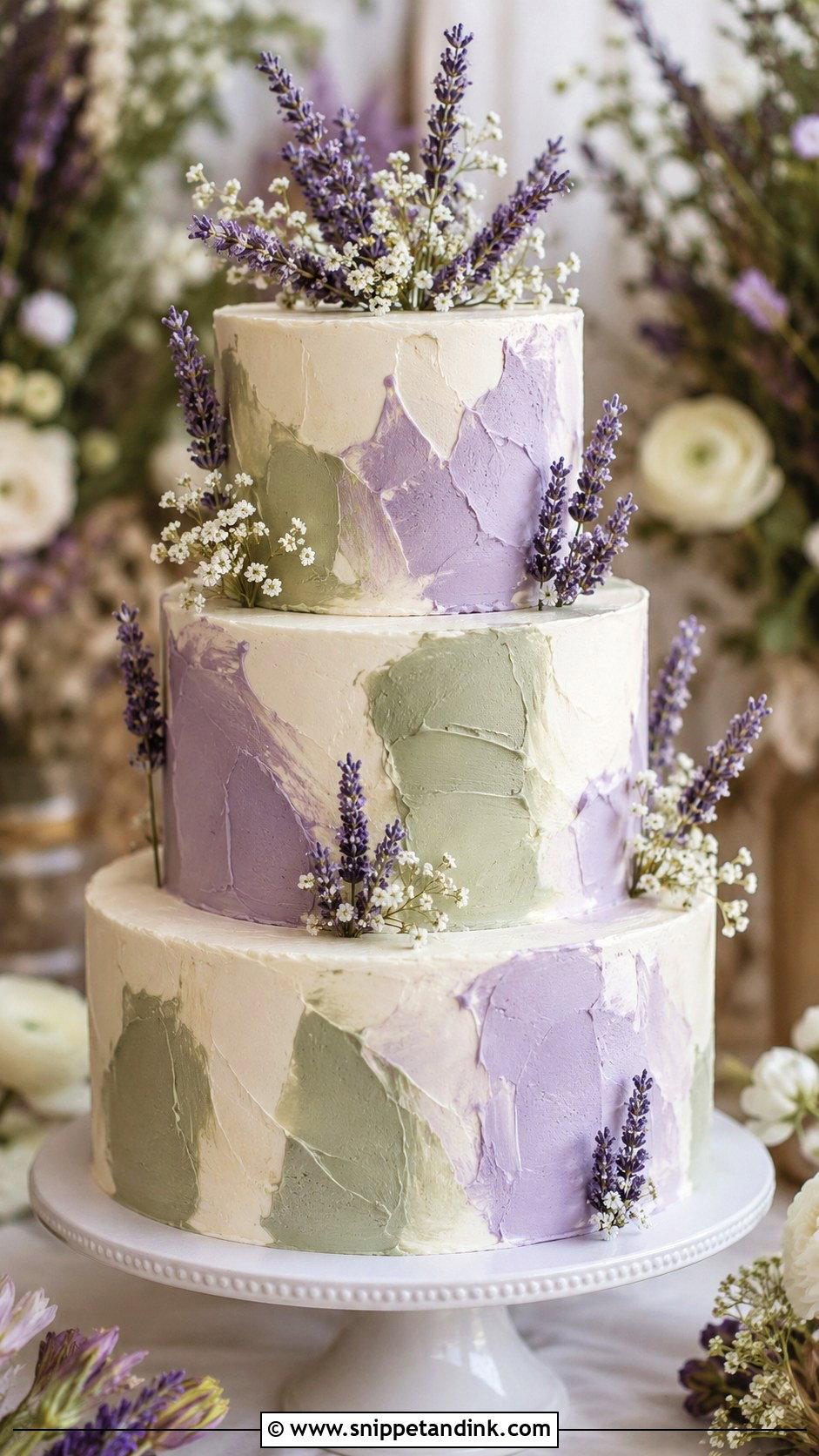
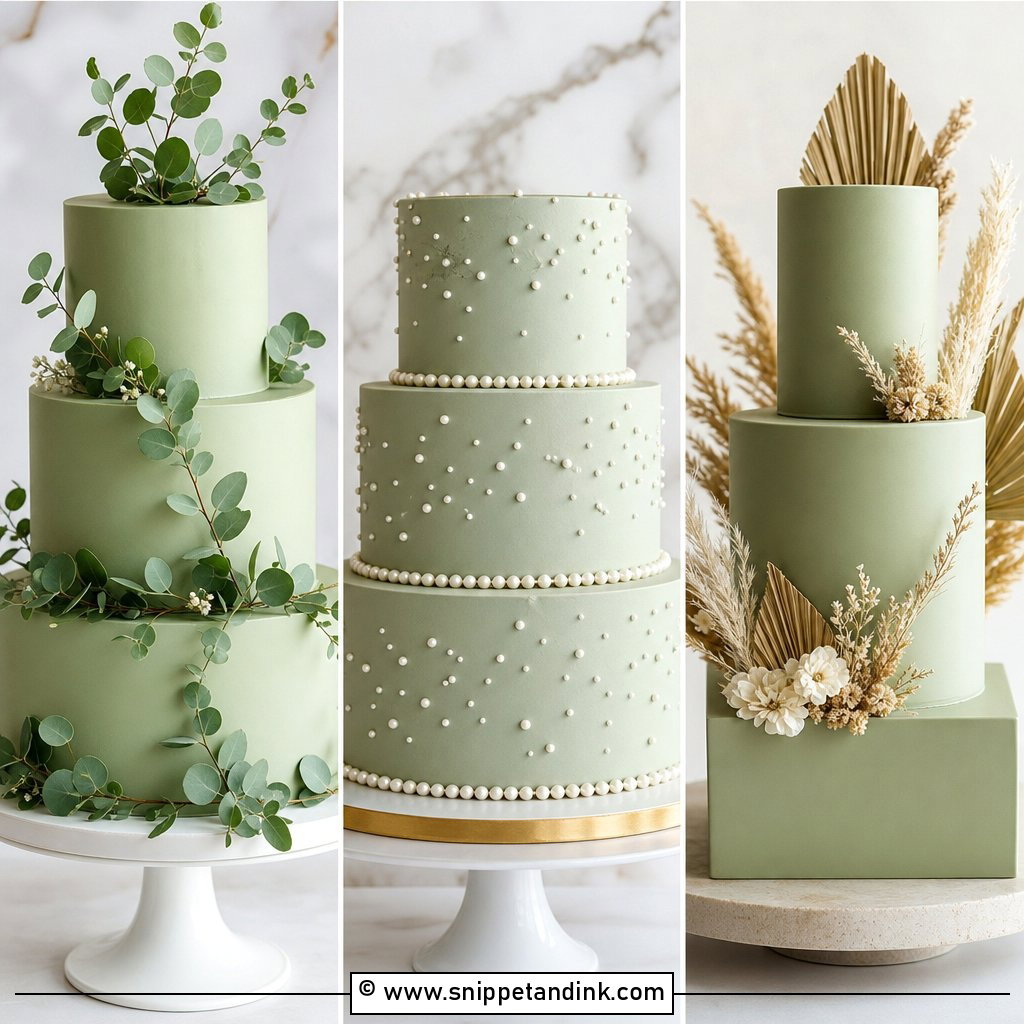
Smooth buttercream is the most approachable way into this palette. I color the two shades separately and use them in soft panels, a brushed ombre or alternating tiers. The thing I watch is saturation: a bright violet next to sage looks like a children’s party, so I keep the lavender pale and slightly grey. Vanilla, lemon, almond or a lavender honey sponge all suit the floral mood. Small sugar flowers or a few ivory blooms finish it.
2. Sage Green And Lavender Floral Wedding Cake
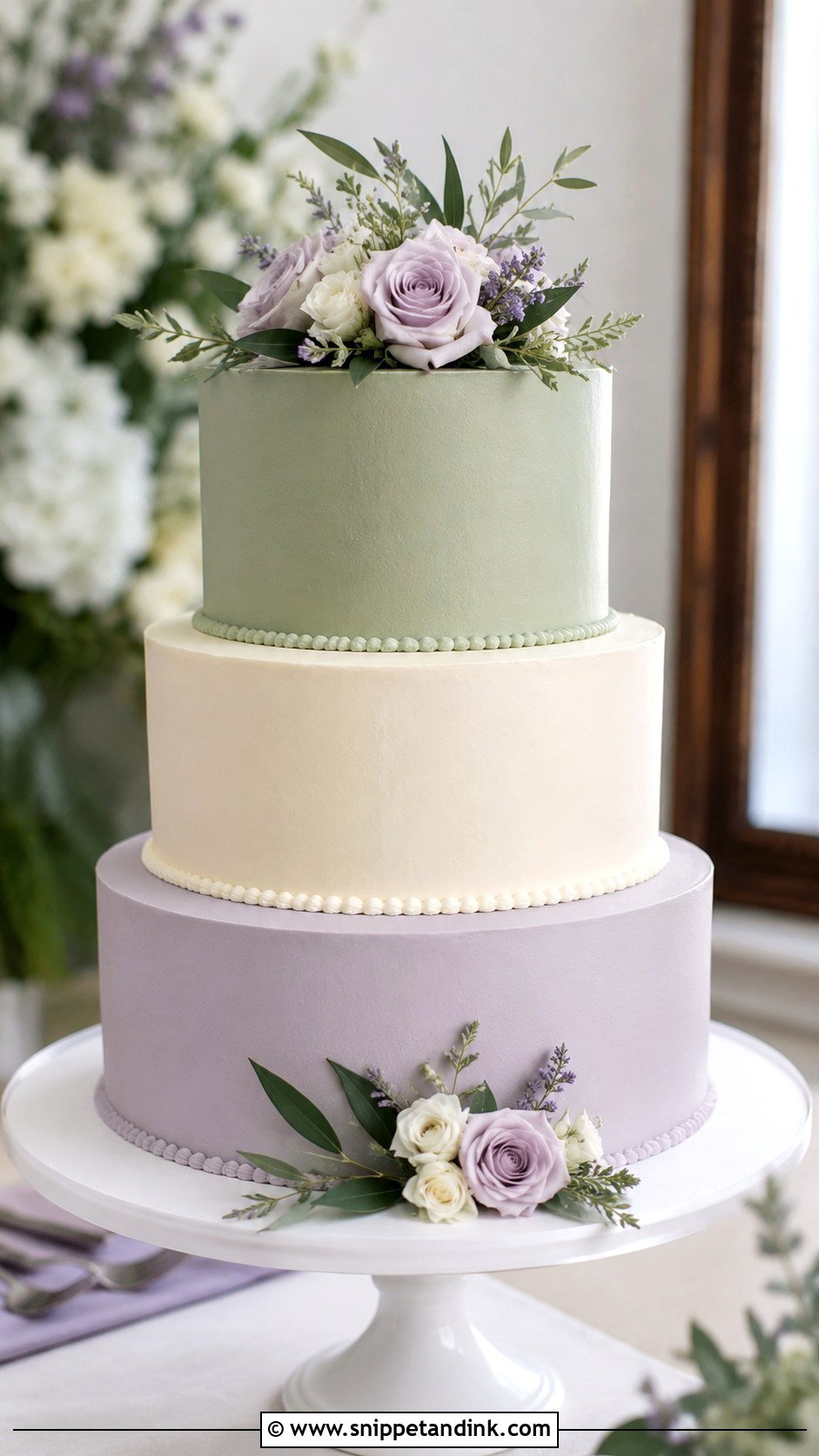
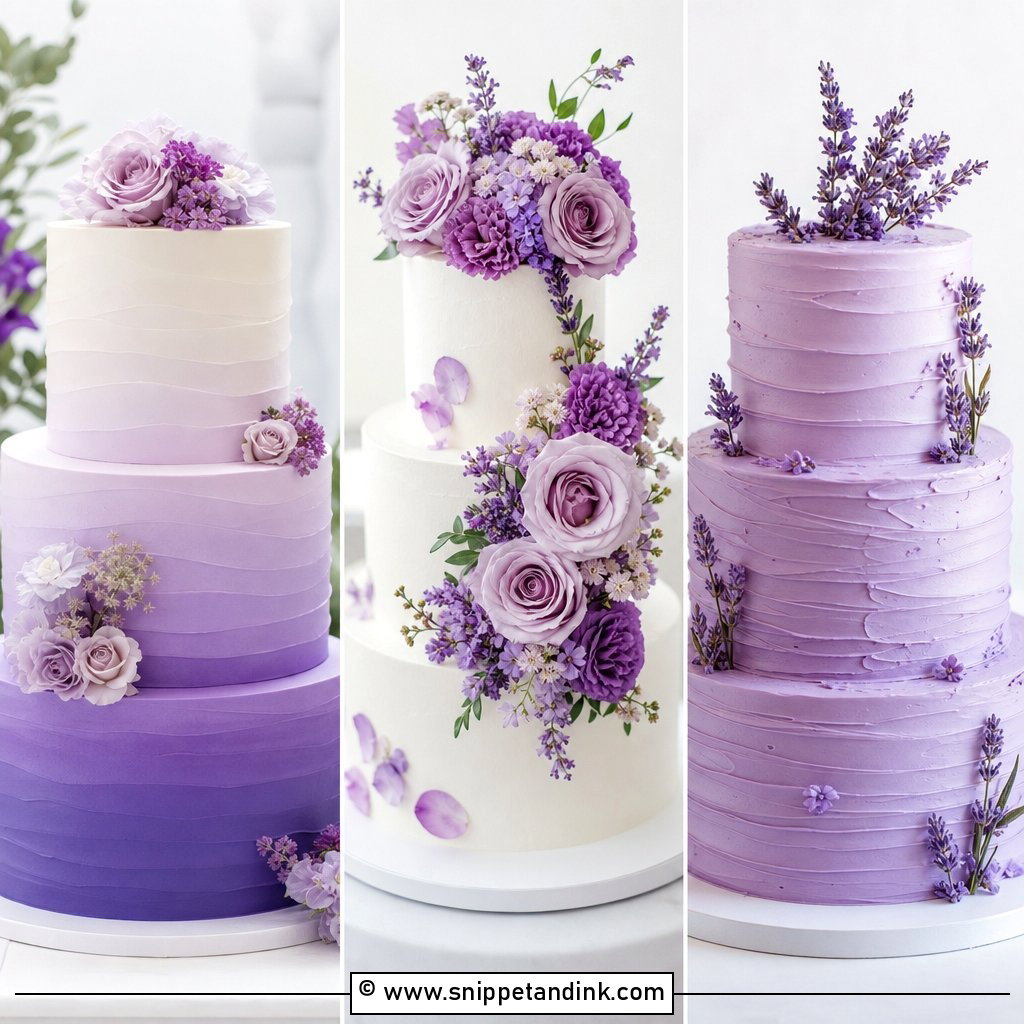
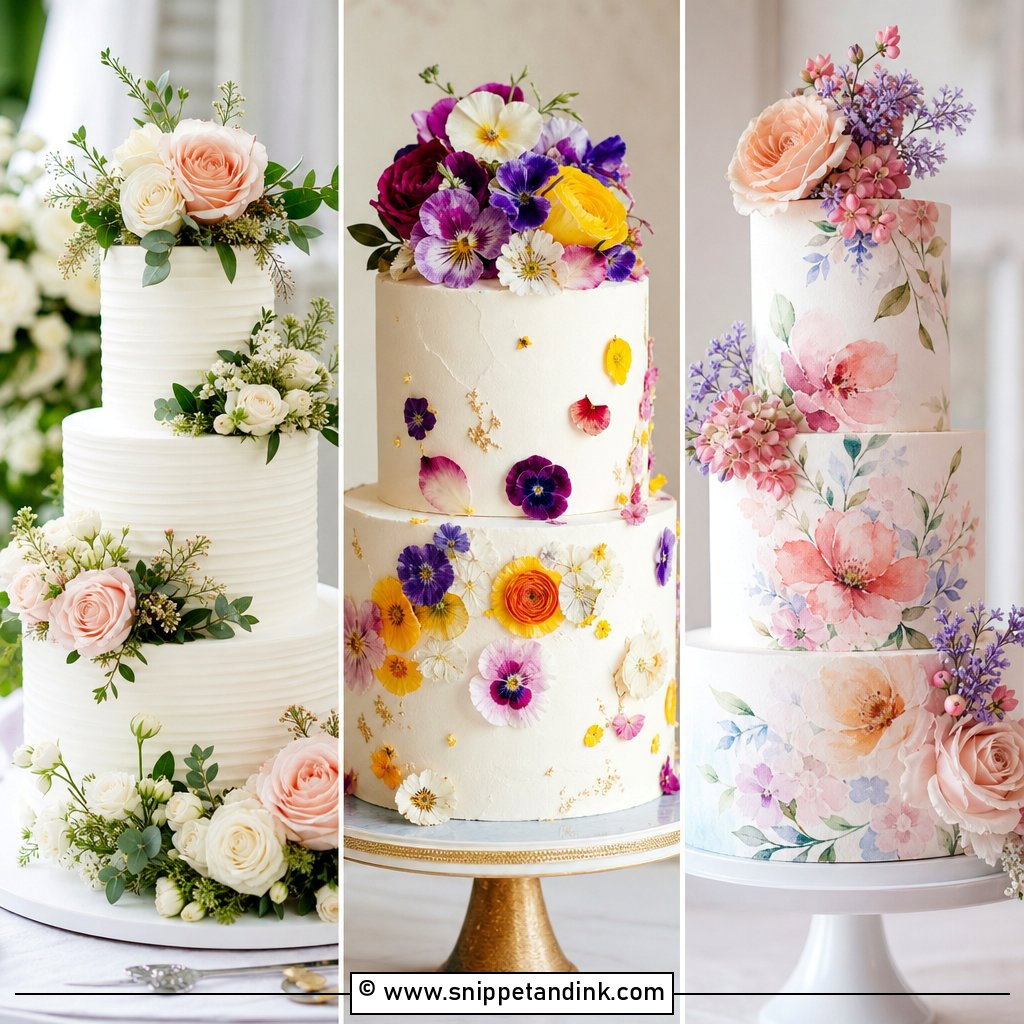
This is the version I’d point a garden wedding toward. The base can be ivory, sage or a mix, with lavender roses, lilac, sweet peas or pressed edible flowers placed on a diagonal or in a loose cluster between tiers. Cream flowers and some green soften the purple. If the florist is supplying eucalyptus, the stems must be wrapped and kept off the sponge, since it isn’t food-safe. Simple frosting lets the flowers lead.
3. Sage Green And Lavender Fondant Wedding Cake
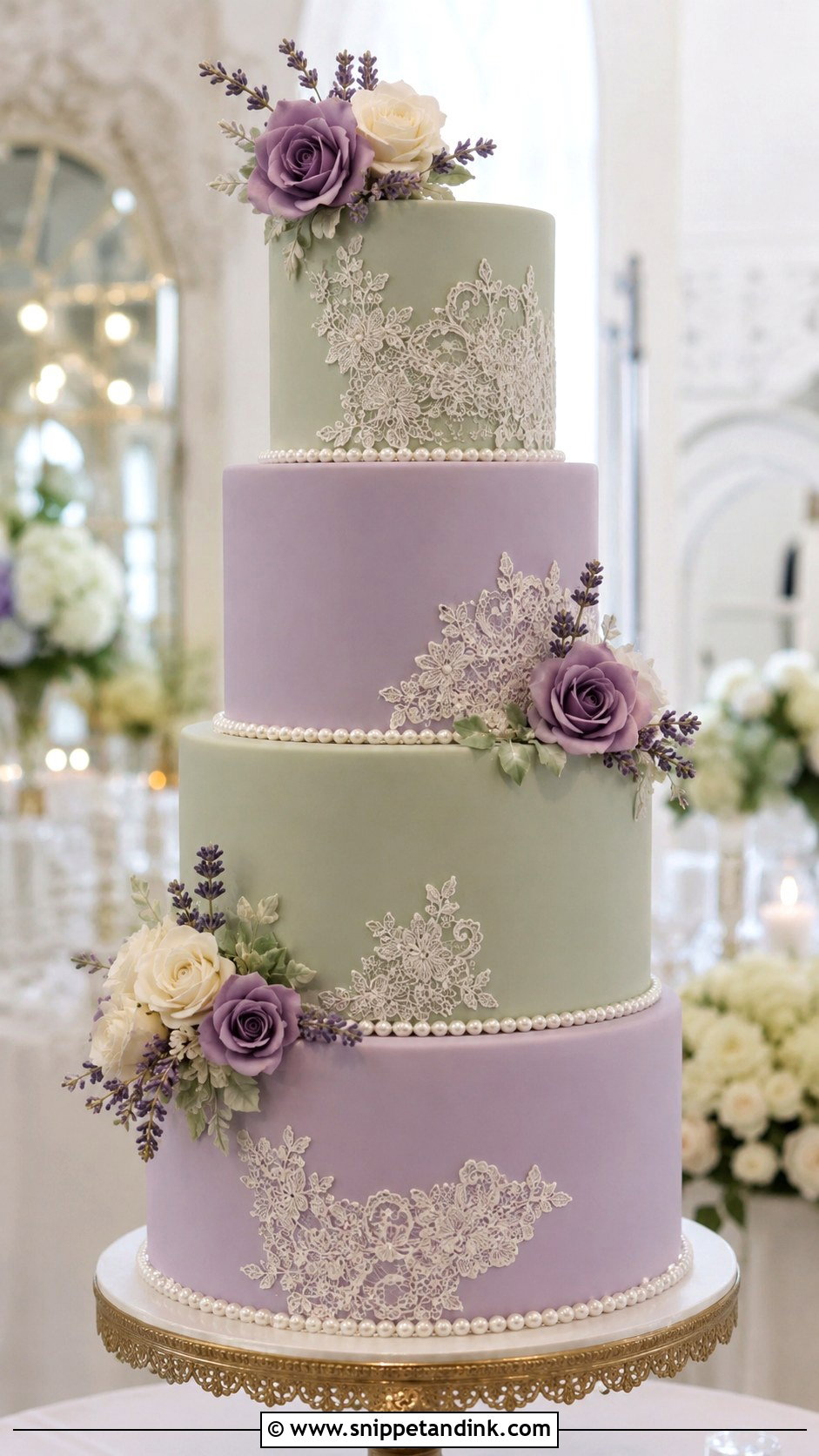
Fondant is my pick for a formal ballroom or estate wedding, because it gives sharp edges and a flat surface that makes soft colors look crisp. Sage fondant tiers with lavender ribbon bands work well, or an ivory cake with fondant flowers in both colors. A plain pastel fondant can look flat, so I add texture with an embossed lace pattern, a pearl border or fine piping. Real ribbon needs a strip of parchment or a fat-resistant backing, or the butter will stain it within hours.
4. Sage Green And Lavender Three Tier Wedding Cake
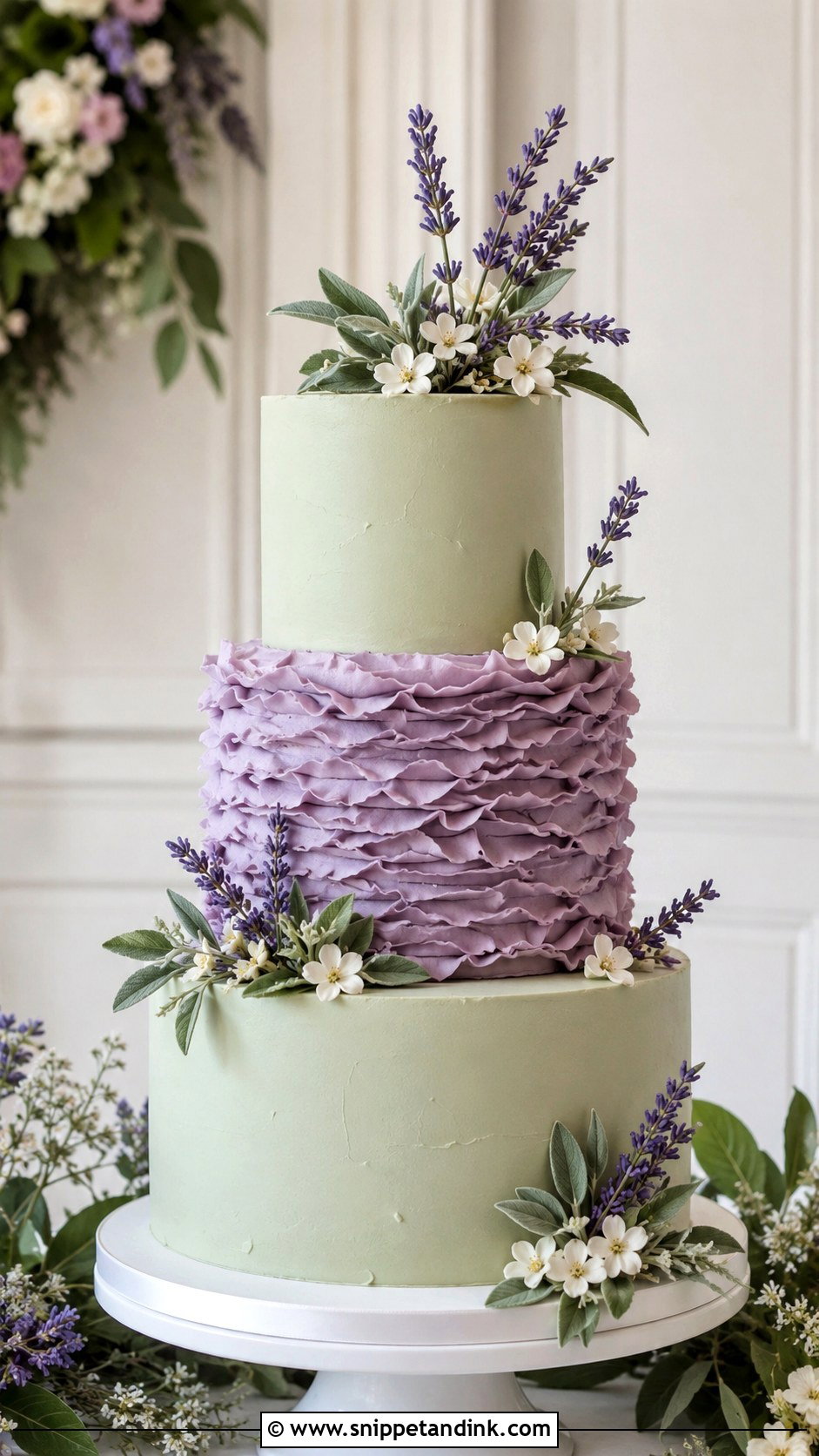
Three tiers give enough height to anchor a dessert table at a medium-sized wedding. One option is a tier in each color, sage at the base, ivory in the middle, lavender on top; the other is a mostly ivory cake with colored flowers. I like mixing textures across tiers here, smooth on one and soft ruffles on another. A small floral cluster on top with a matching one at the base ties it together.
5. Sage Green And Lavender Rustic Wedding Cake
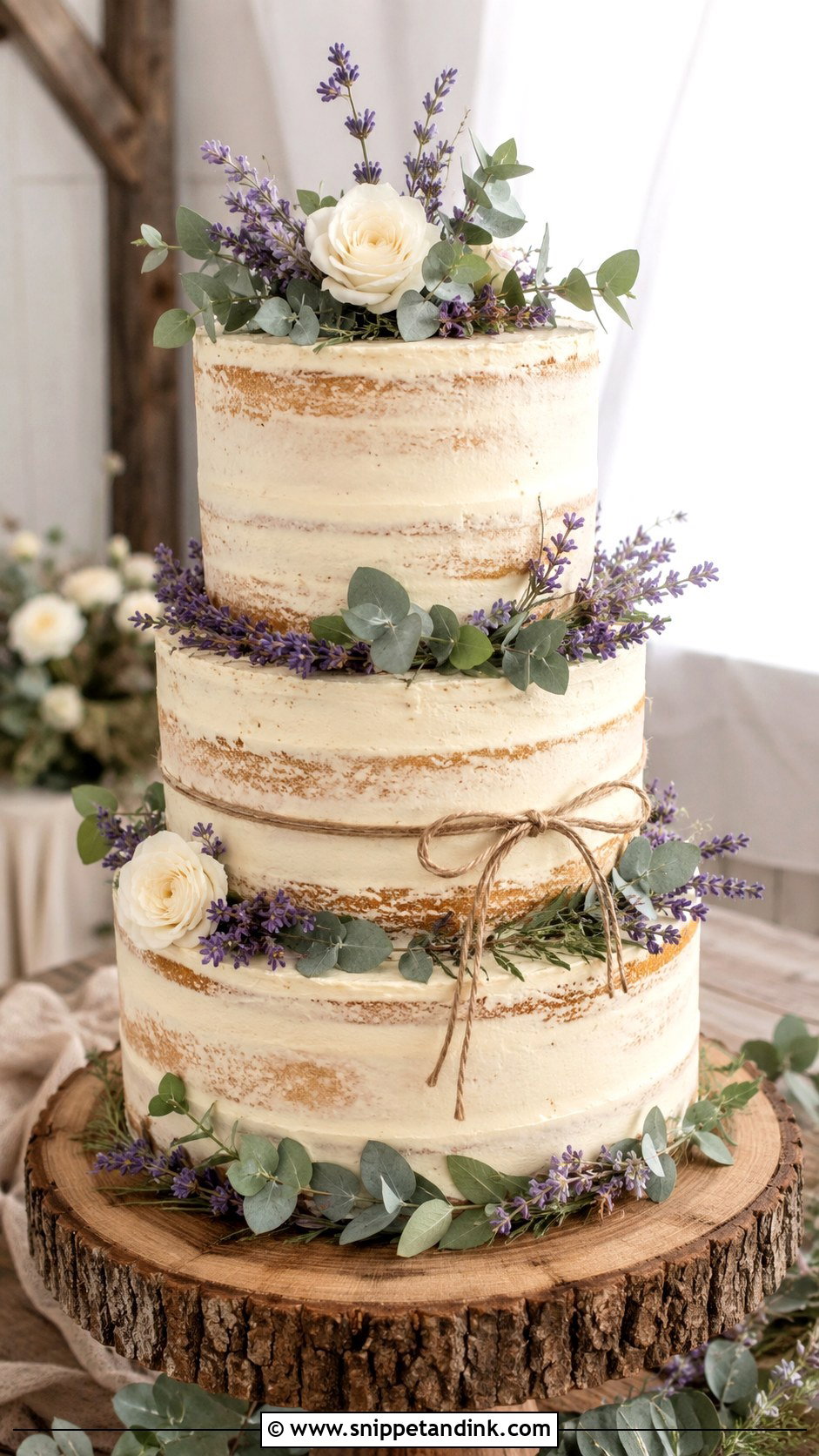
Rustic venues call for texture over gloss: palette-knife strokes, a semi-naked scrape or a stucco finish. Sage greenery and lavender flowers give the just-picked look, and culinary lavender sprigs are safe to place directly on the frosting. Wood stands and linen runners finish the barn feel. Vanilla bean, honey, lemon or almond all suit it. I keep the decoration loose and slightly asymmetrical.
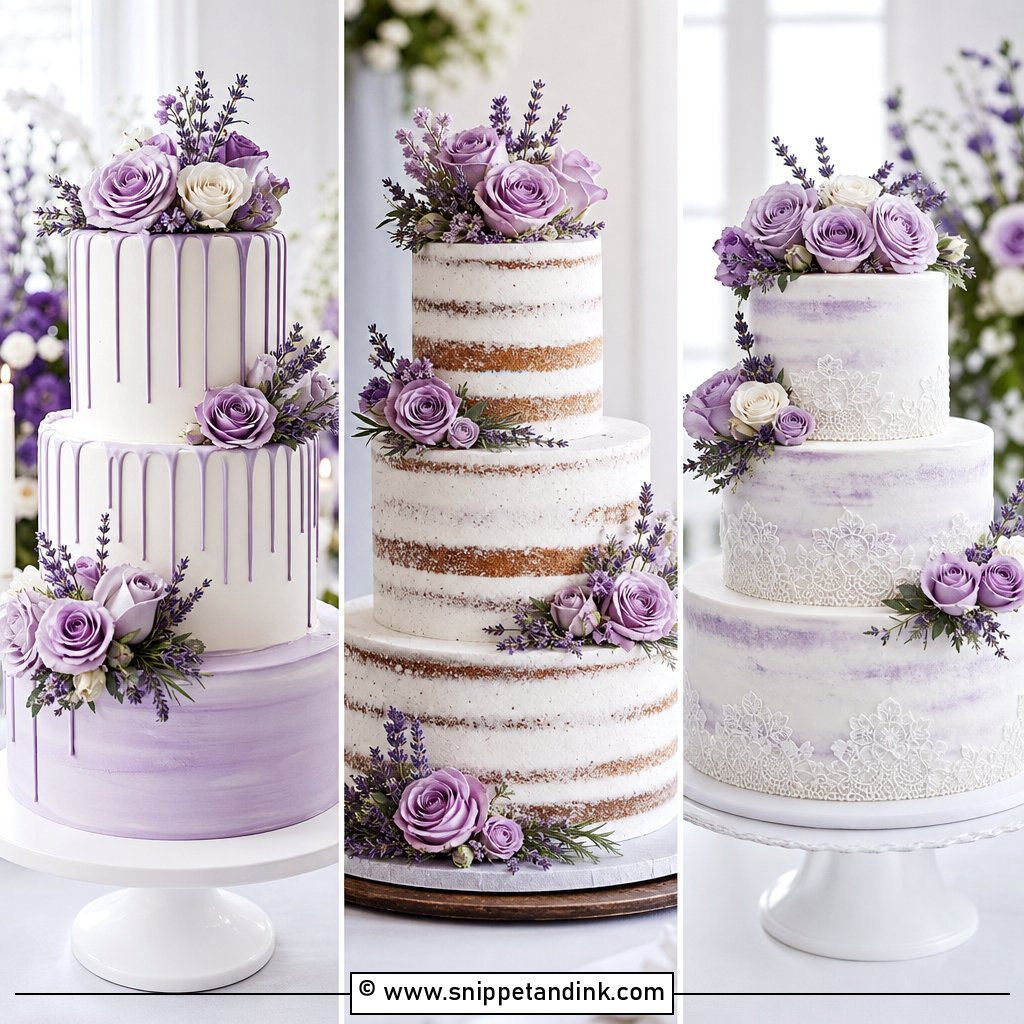
6. Sage Green And Lavender Naked Wedding Cake
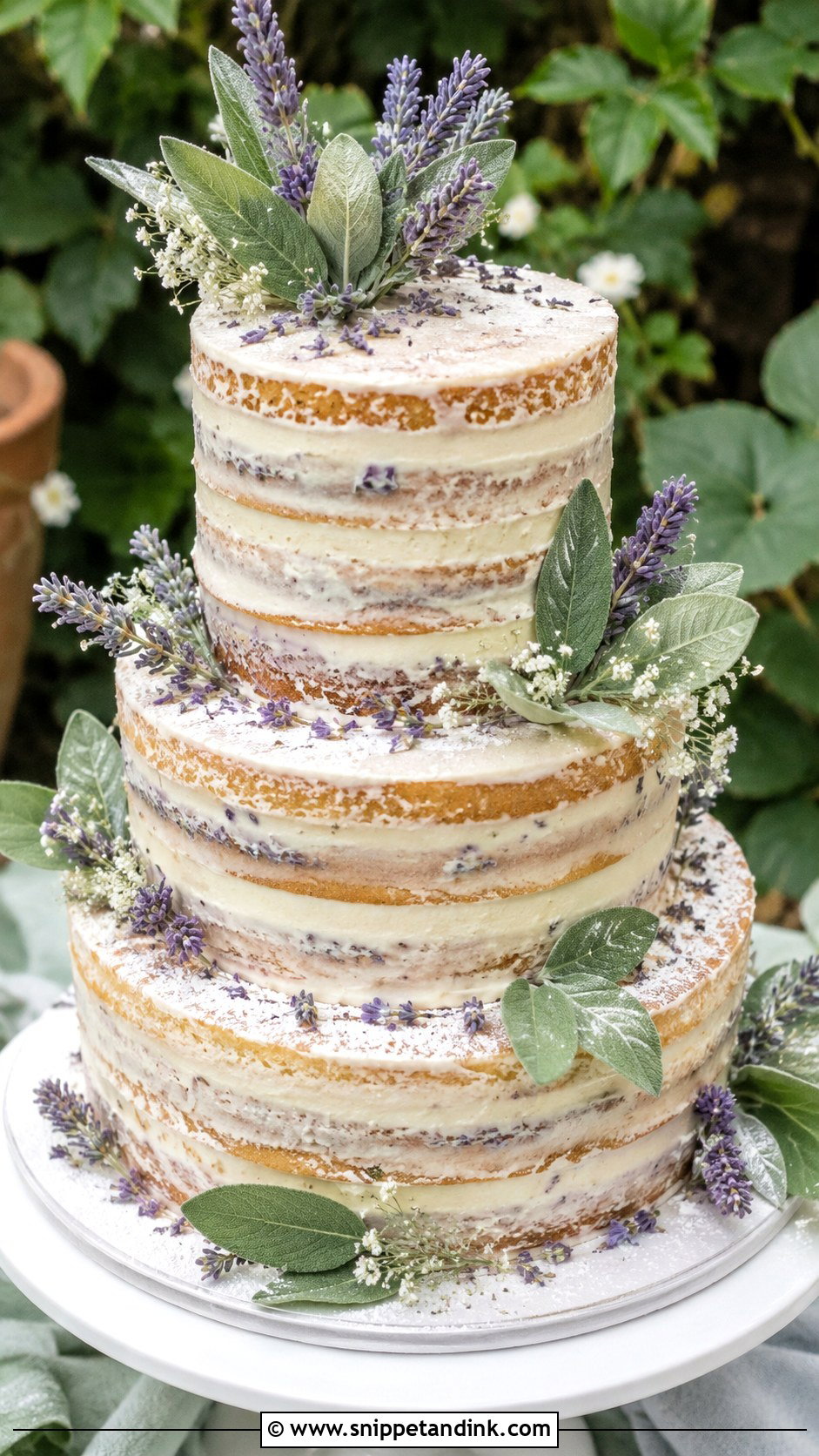
A naked cake shows the sponge layers, so the bake has to look as good as it tastes: level layers with an even crumb. I use lavender-tinted buttercream between the layers, with sage accents and edible flowers or herbs at the edges. Naked cakes dry out quickly once exposed, so they’re assembled as close to the wedding as possible and kept wrapped until display. A light dusting of icing sugar finishes it. It suits brunch receptions and outdoor weddings.
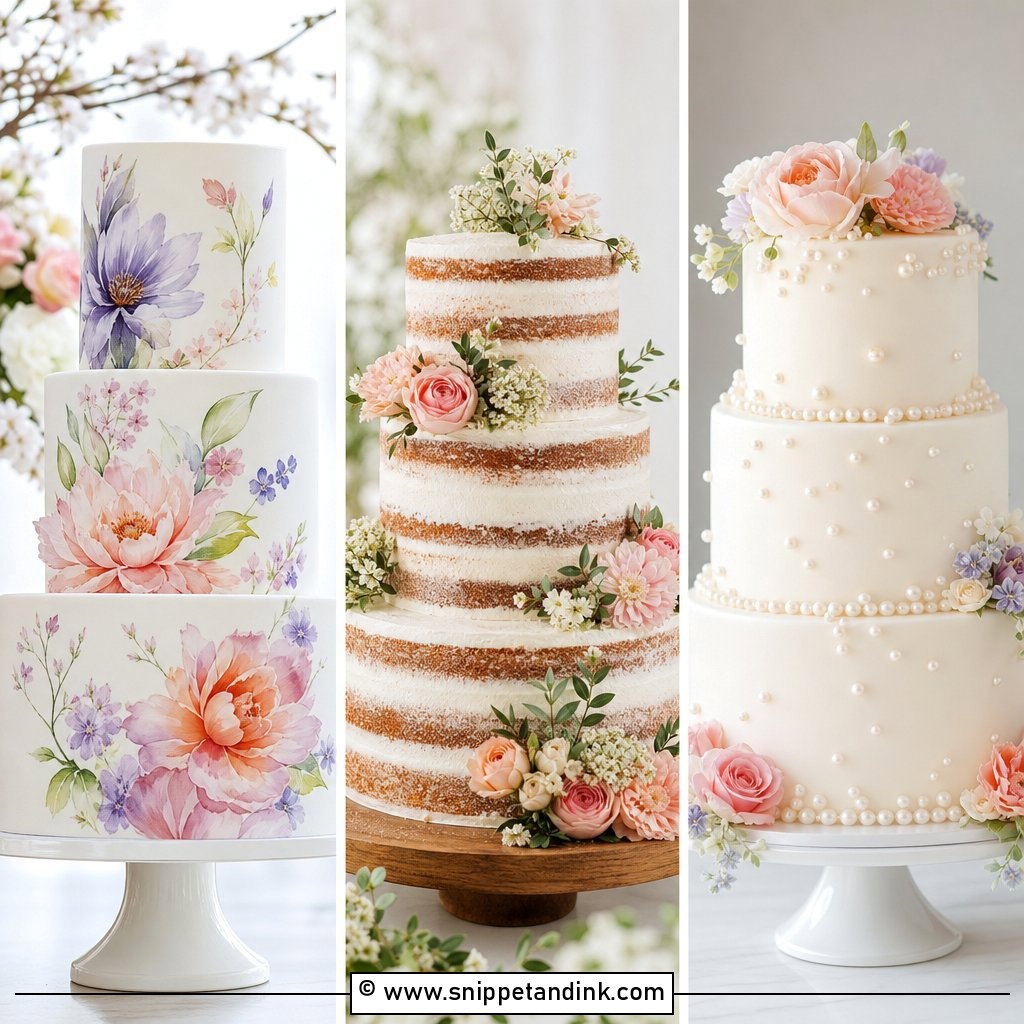
7. Sage Green And Lavender Watercolor Wedding Cake
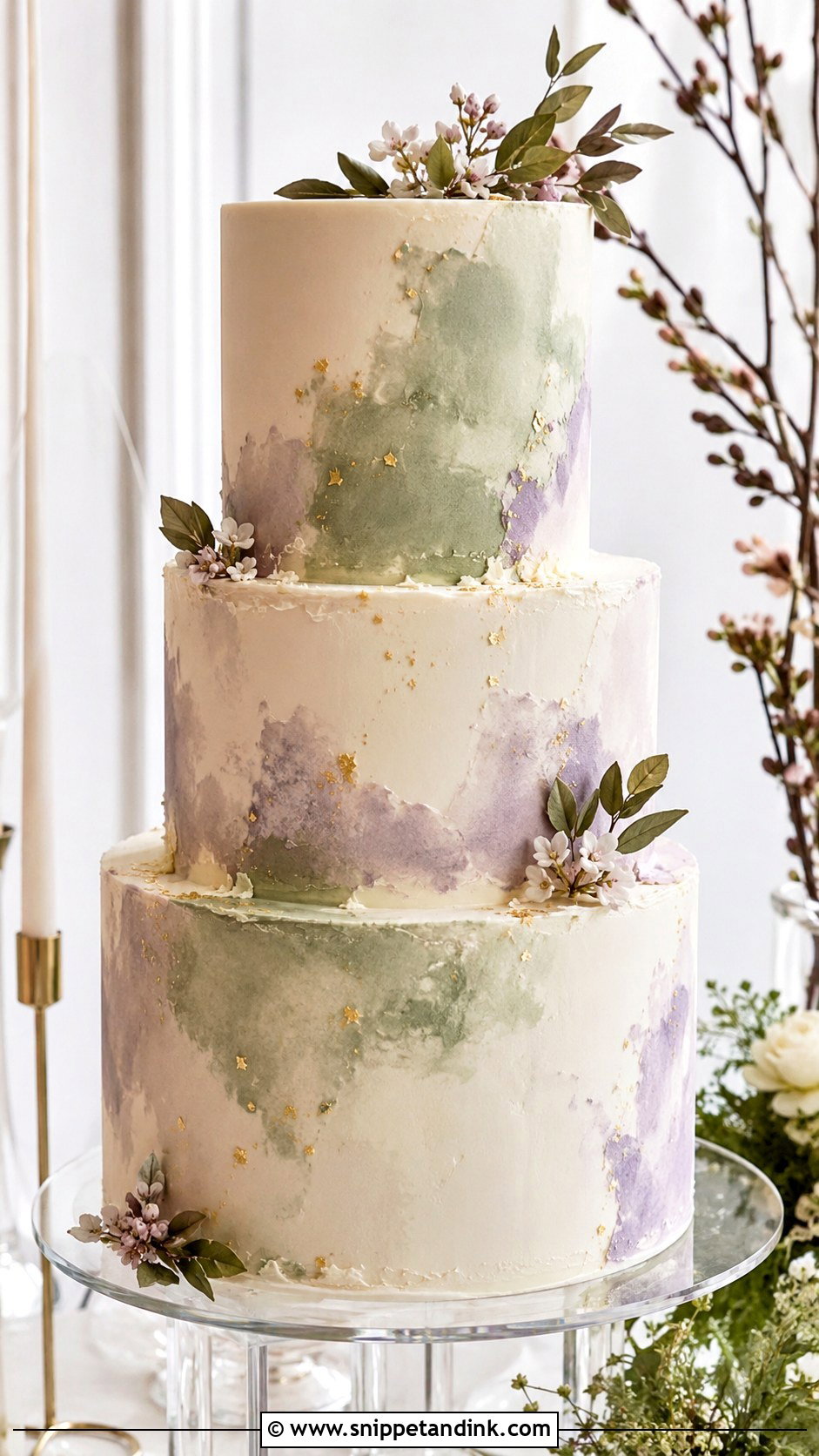
Watercolor works by brushing very diluted color over an ivory base, layer by layer, so the shades stay translucent and soft. On buttercream I do it on a well-chilled surface with a damp brush or a palette knife; on fondant I paint with gel thinned in clear alcohol. The aim is a wash, not stripes. A few sugar flowers or gold flecks give some depth. Keep the shape plain so the painting stays the main feature.
8. Sage Green And Lavender Gold Leaf Wedding Cake
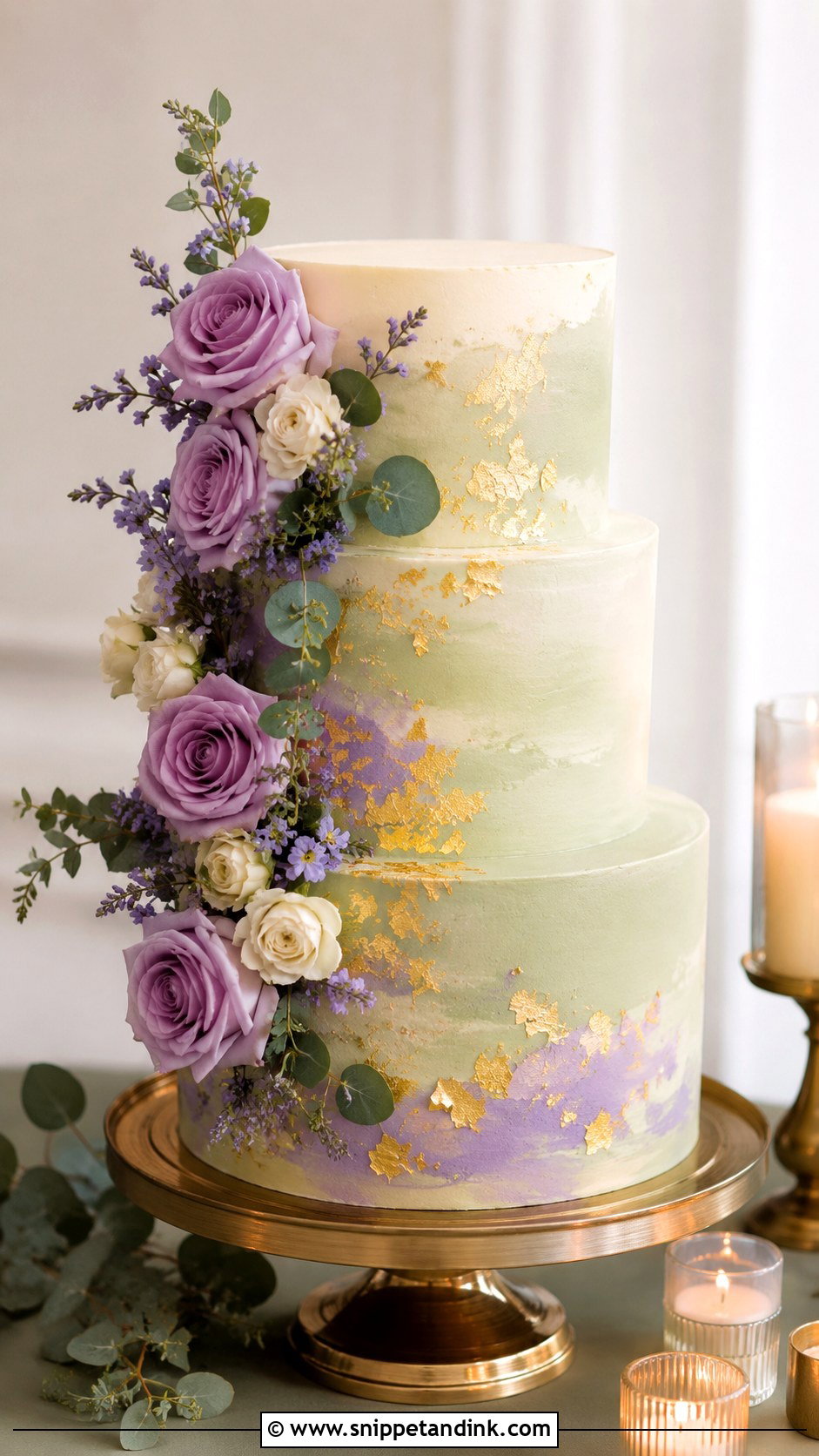
Gold leaf brings warmth to this cool palette. I use it in small broken pieces along tier edges or tucked near the flowers, rather than covering a tier. A sage buttercream base with lavender flowers and flecks of gold suits evening receptions and venues with gold flatware or champagne decor. Keep the gold as an accent; too much of it overwhelms two such soft colors.
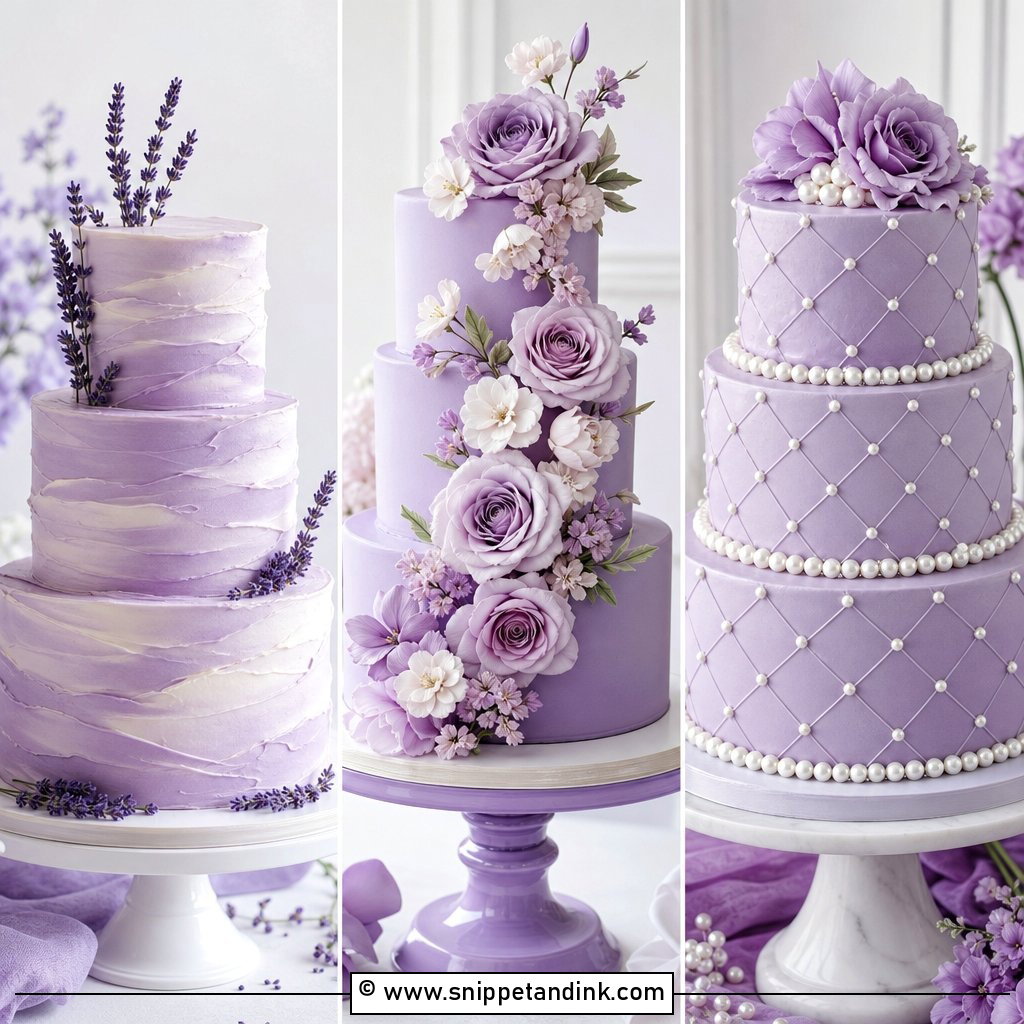
9. Sage Green And Lavender Pearl Wedding Cake
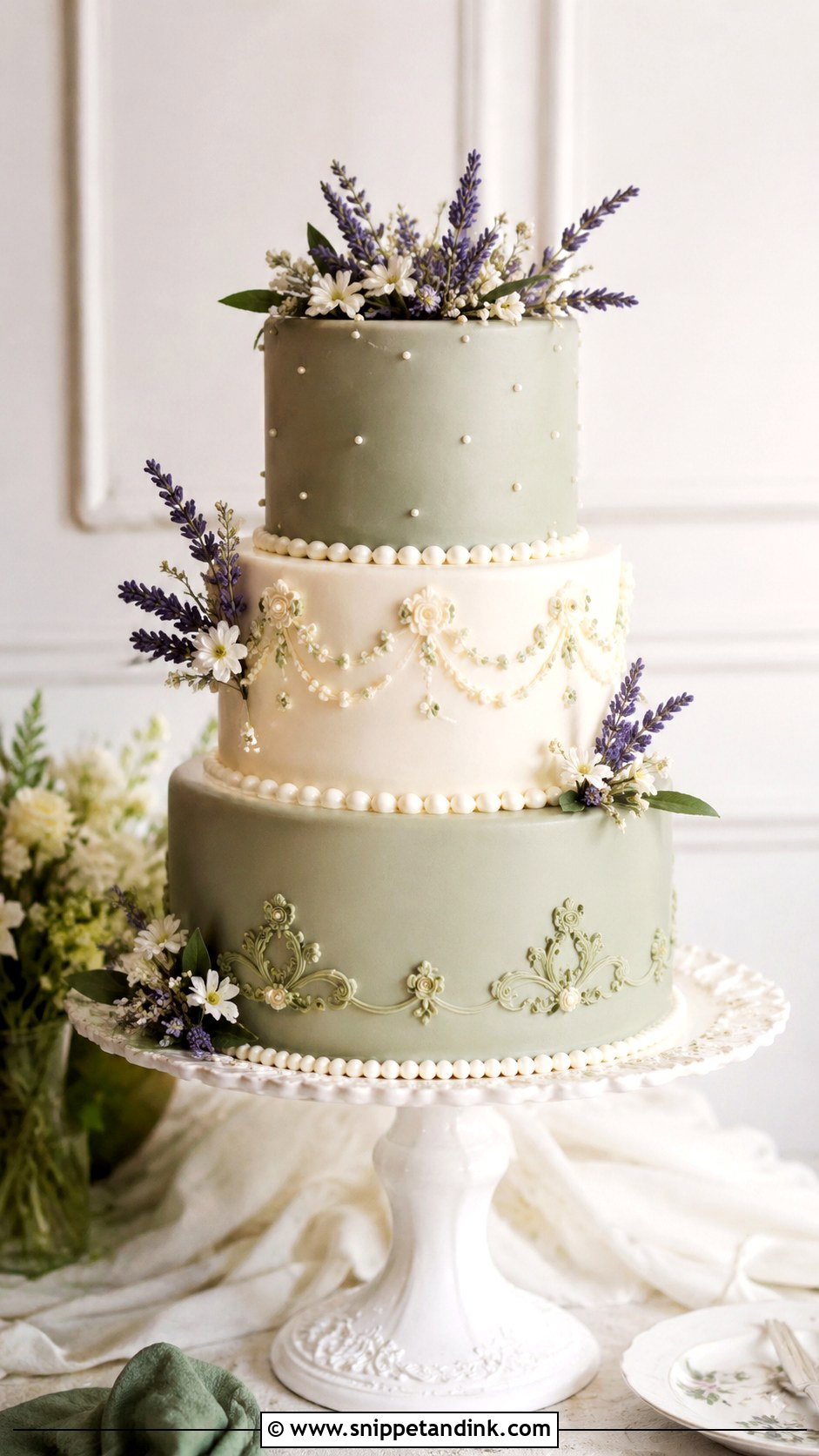
Pearls lend a classic bridal touch. I pipe them in buttercream, roll them from sugar or use edible dragees around the tier borders. They sit well on smooth sage fondant, ivory buttercream or pale lavender tiers. Lavender buds and small white flowers pair with them. Spacing matters more than quantity: one even pearl border per tier looks graceful, several crowd the cake.
10. Sage Green And Lavender Ruffle Wedding Cake
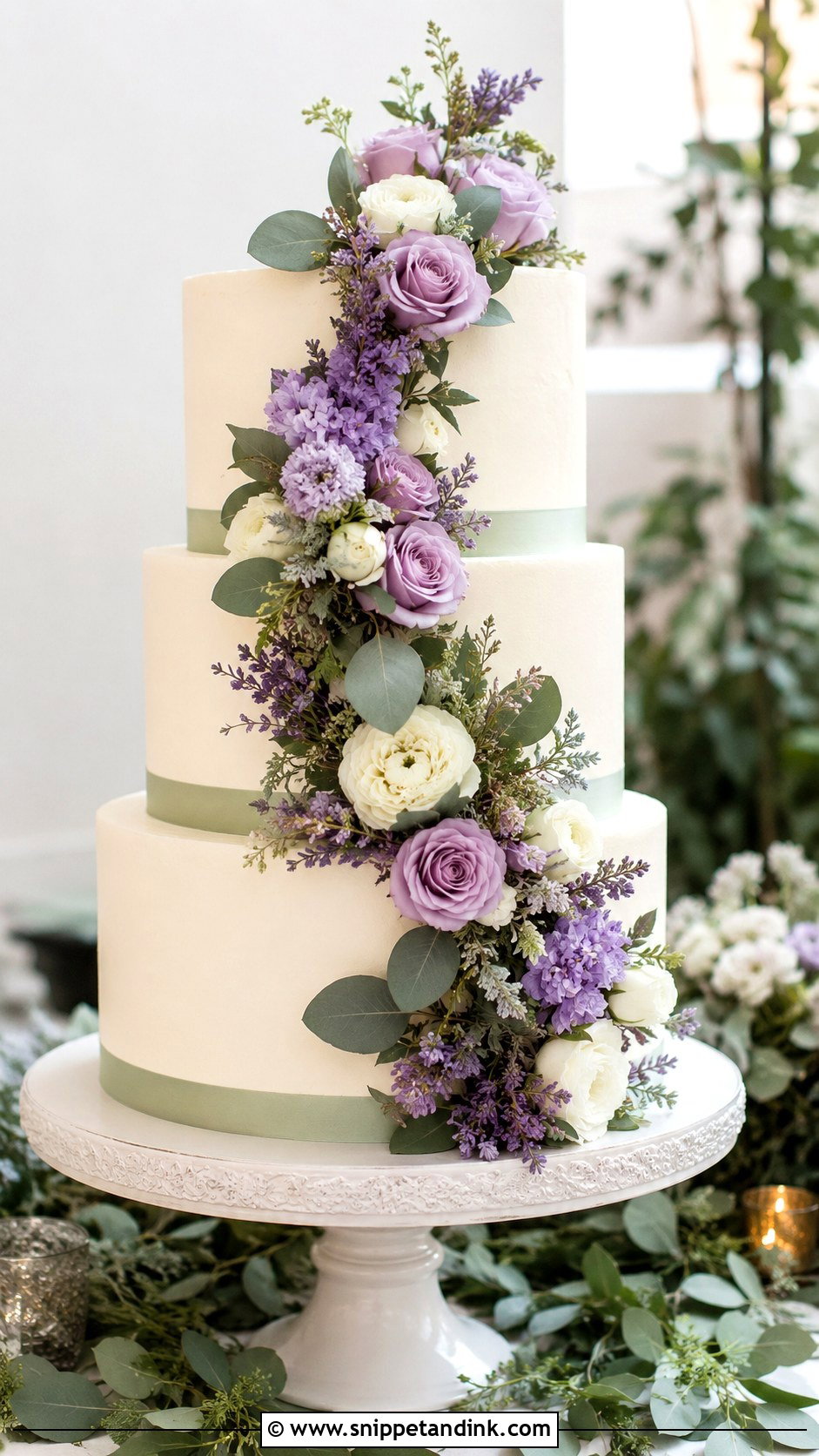
Ruffles add movement, and one ruffled tier between smooth ones is plenty. Buttercream ruffles are soft and relaxed; fondant ruffles hold a crisper edge but add weight that needs dowelling. A lavender ruffle tier against sage tiers gives a clear contrast, while ivory ruffles with sage and lavender flowers are gentler. Because the ruffles already carry texture, I keep flowers to a few stems.
11. Sage Green And Lavender Pressed Flower Wedding Cake
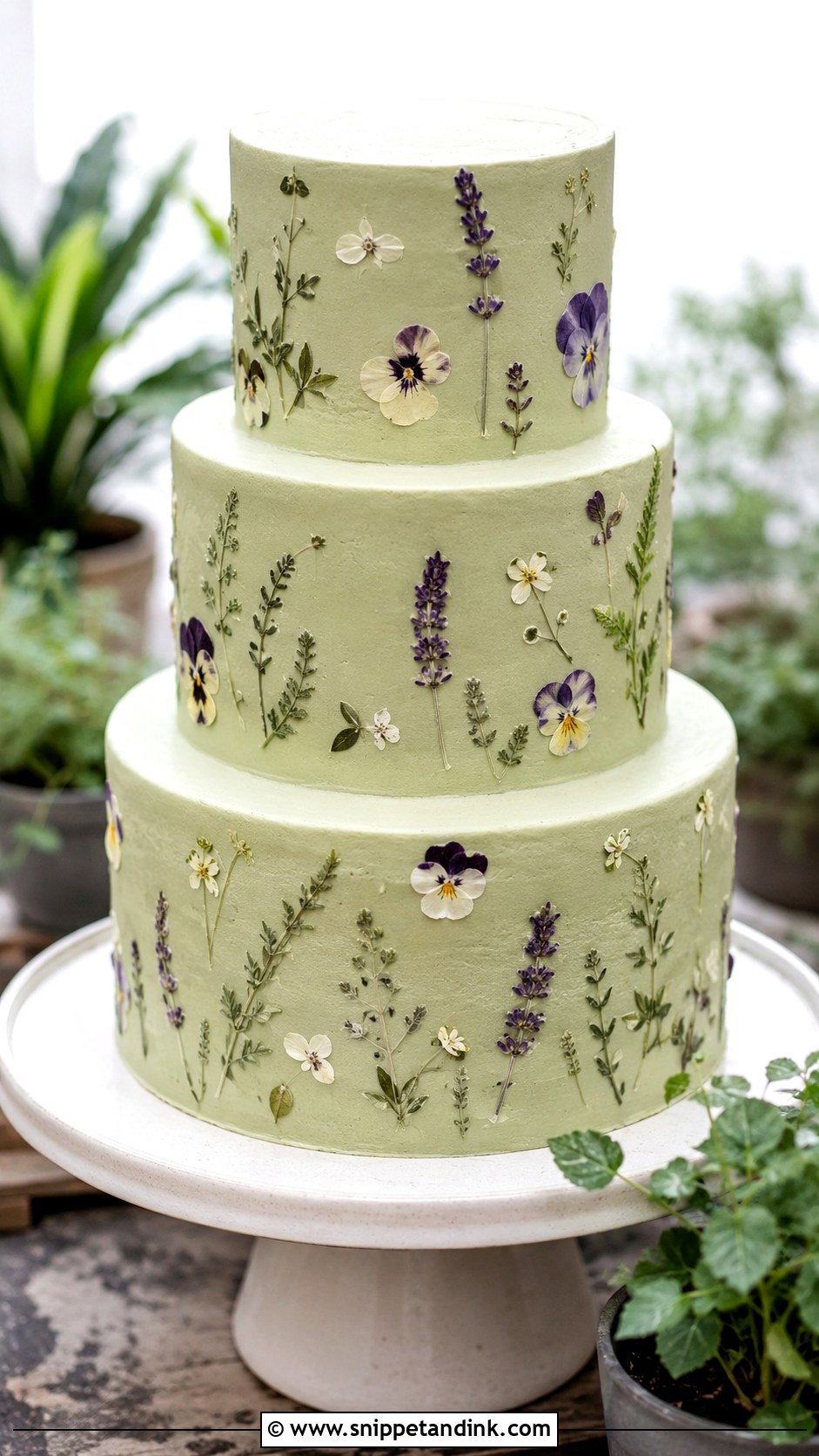
Pressed edible flowers give a flat botanical pattern across buttercream or fondant. Violas, pansies, cornflower petals and lavender buds all work over a sage base. I press them myself for a few days between paper so they’re truly dry, then attach them with a thin brush of piping gel. Leave space between each one. Only edible, unsprayed flowers belong here, so check where your baker sources them.
12. Sage Green And Lavender Square Wedding Cake
Square tiers sharpen a soft palette and make it feel more modern. Sharp corners take skill on buttercream and are easier in fondant. I’d keep the decoration to one idea: a ribbon band, gold edges or pressed flowers following the corners. It suits hotel weddings and minimalist receptions. Square tiers also yield more servings than round tiers of the same size.
13. Sage Green And Lavender Cupcake Wedding Cake
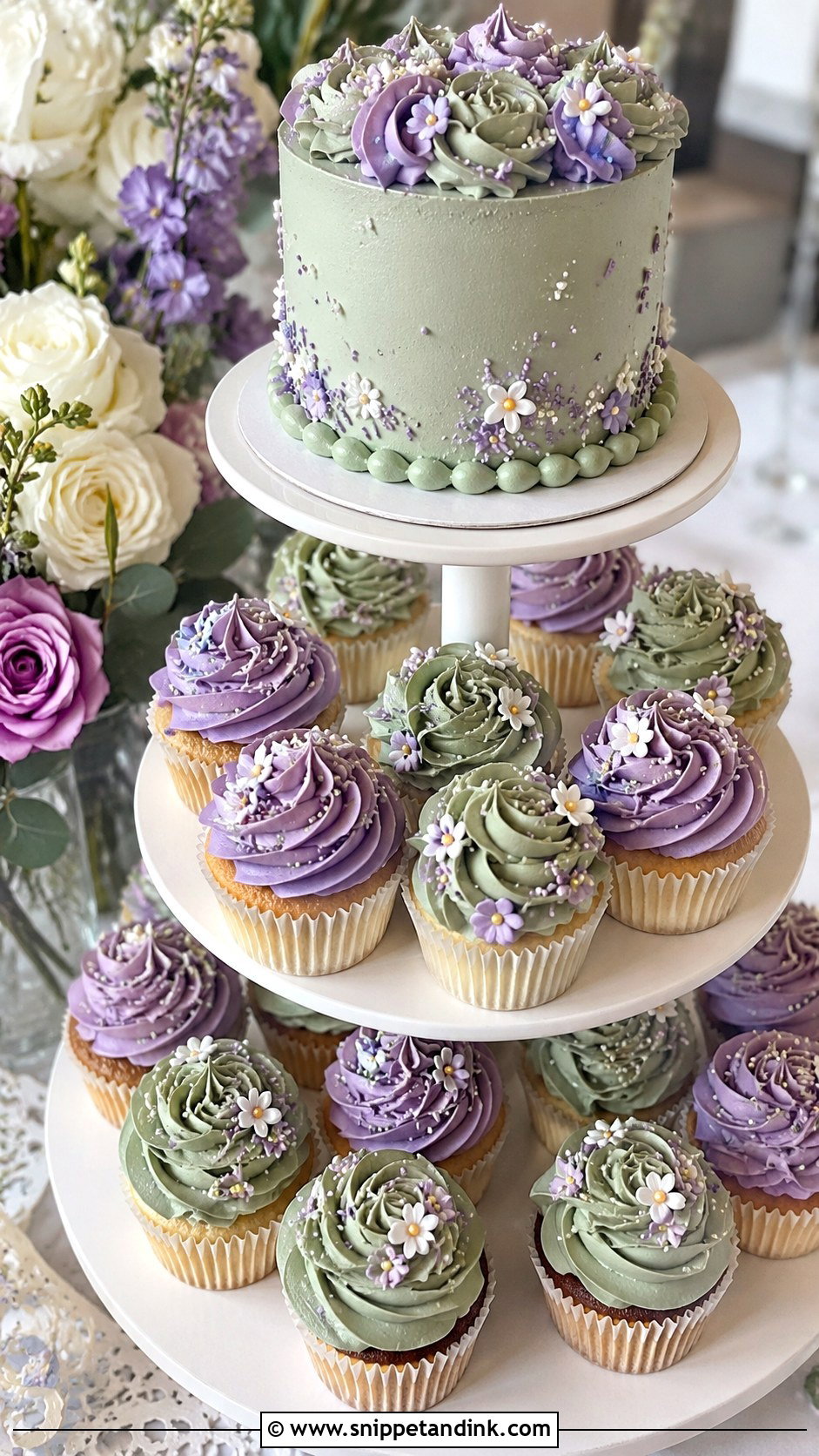
Cupcakes make serving quick and let you offer more than one flavor. A small cutting cake sits at the top, with cupcakes in sage and lavender swirls around it: vanilla, lemon, almond and lavender honey work as a set. Pearls, tiny flowers or green picks add a wedding finish. A tiered cupcake stand gives the display height. I’d swirl both colors in the same piping tip for a two-tone rosette.
14. Sage Green And Lavender Mini Wedding Cake
Mini cakes suit elopements and micro weddings, and every detail shows at that size. Try a sage buttercream finish with lavender flowers, or a lavender top tier with sage greenery at the base. I’d choose one strong feature, flowers or ruffles or gold leaf, and keep the rest clean. A vintage stand or marble slab gives it presence.


15. Sage Green And Lavender Drip Wedding Cake
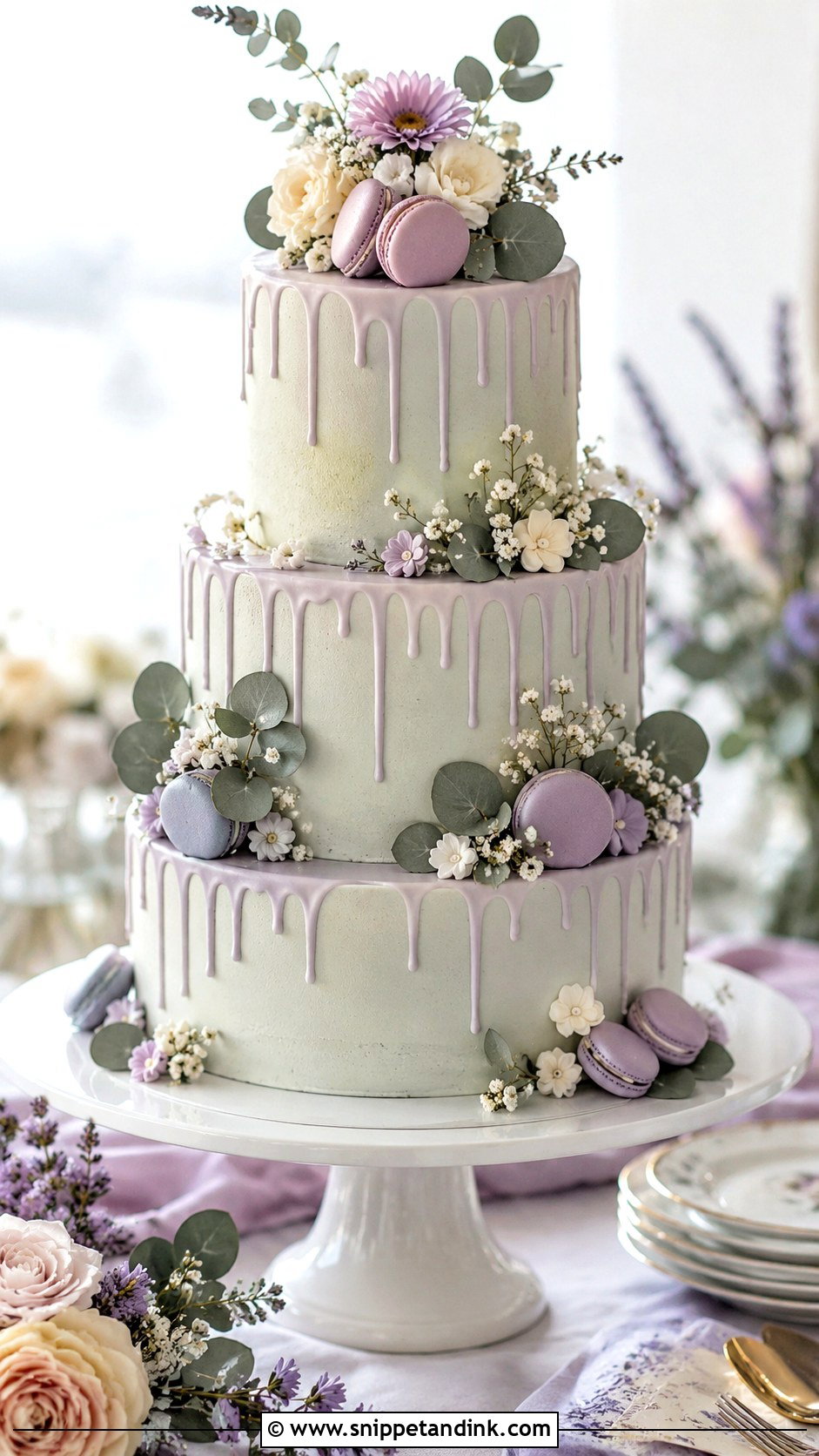
A drip gives this palette a modern feel. I use white chocolate ganache tinted lavender or sage, or left ivory. White chocolate can seize if it’s tinted with water-based color, so I use an oil-based or powdered color. The ganache goes on a cold cake so the drips stop neatly. Macarons, berries or sugar blossoms sit well at the top. Keep the drips short and the colors muted.
16. Sage Green And Lavender Marble Wedding Cake
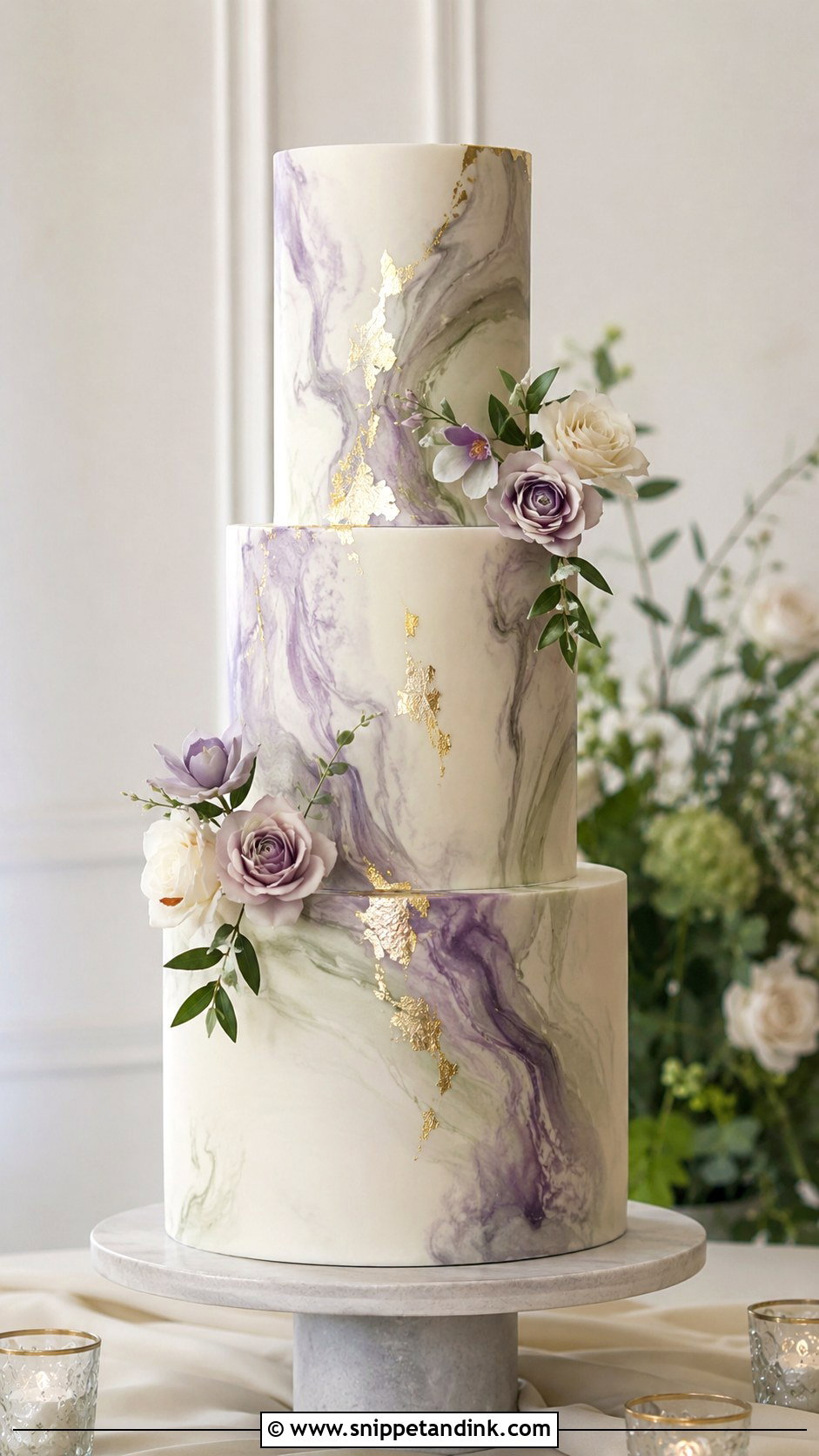
Marbling folds sage and lavender through an ivory base, in fondant or buttercream, to give a soft stone effect. The more I knead, the subtler the veins, so I stop early. Gold leaf, sugar flowers or crisp tier edges all suit it. Strong contrast between veins makes the cake look busy; soft veining keeps it calm. It works in galleries and contemporary rooms.
17. Sage Green And Lavender Lambeth Wedding Cake
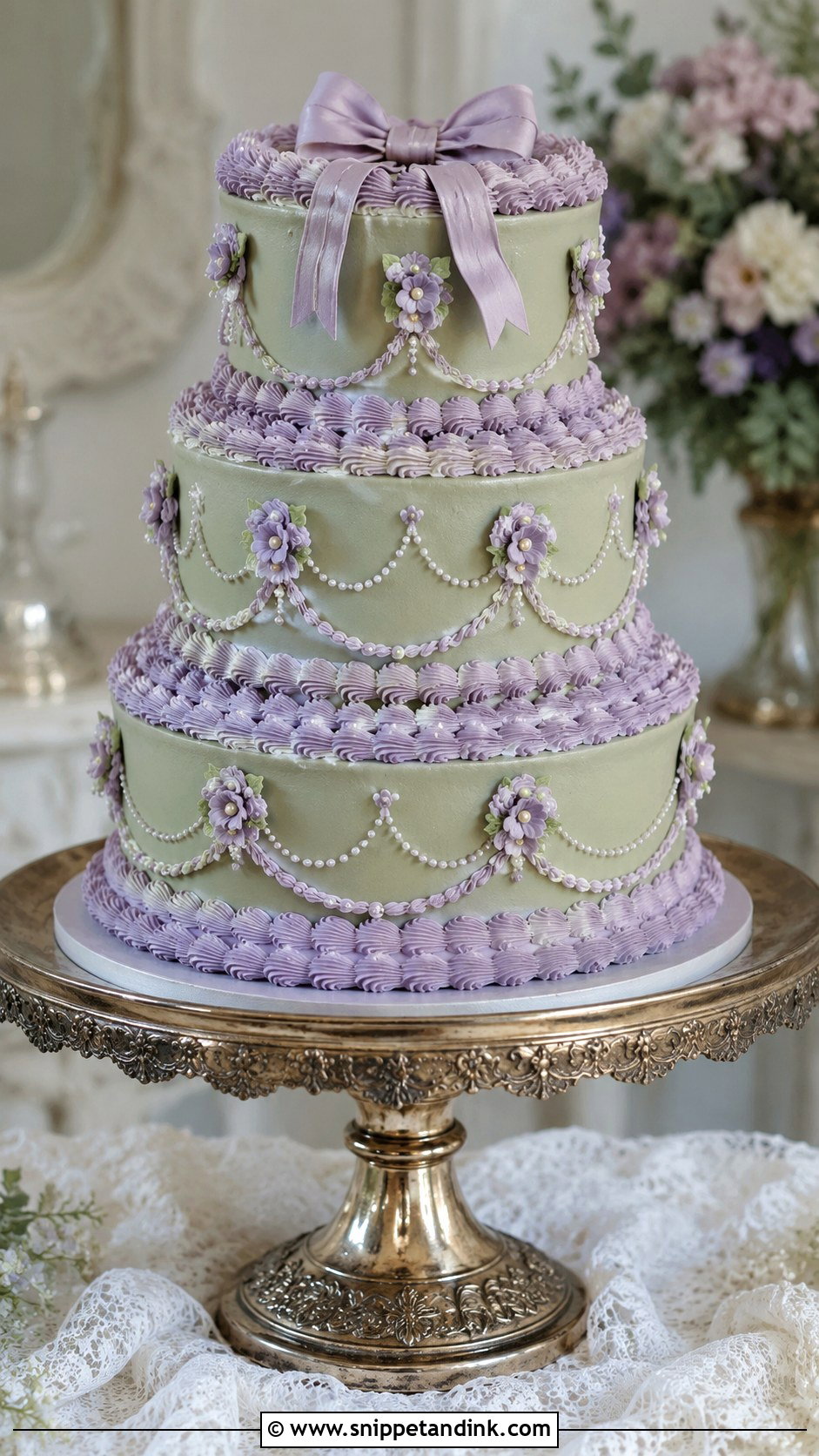
Lambeth piping uses layered borders, shells, swags and overpiping, a vintage technique that looks fresh in pastel colors. I pipe it in a firm buttercream so the shells hold their shape. Sage as the base with lavender piping, or the reverse, both work. With this much detail, I keep the palette to those two colors and white. Small sugar pearls or a simple bow finish it. Lambeth takes hours to pipe, which often shows up in the price.
18. Sage Green And Lavender Textured Buttercream Wedding Cake
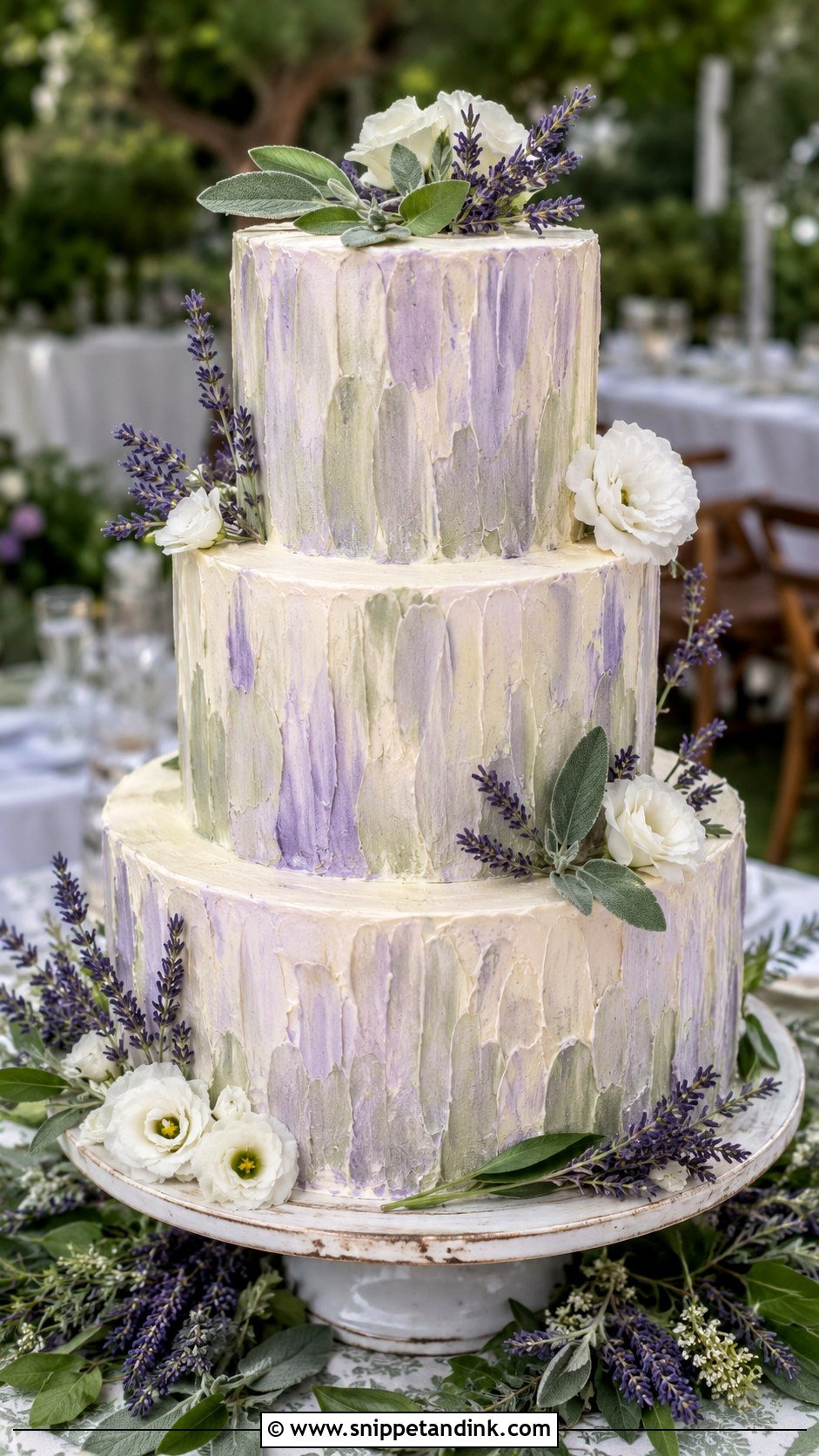
Textured buttercream feels handmade: spatula strokes, stucco, vertical lines or loose waves. The two colors can be blended into the frosting or used in separate tiers for a layered look. Fresh flowers, dried lavender and sage greenery suit it. Vanilla bean, lemon elderflower or lavender honey match the floral style. It’s more relaxed than fondant and easier to cut neatly.
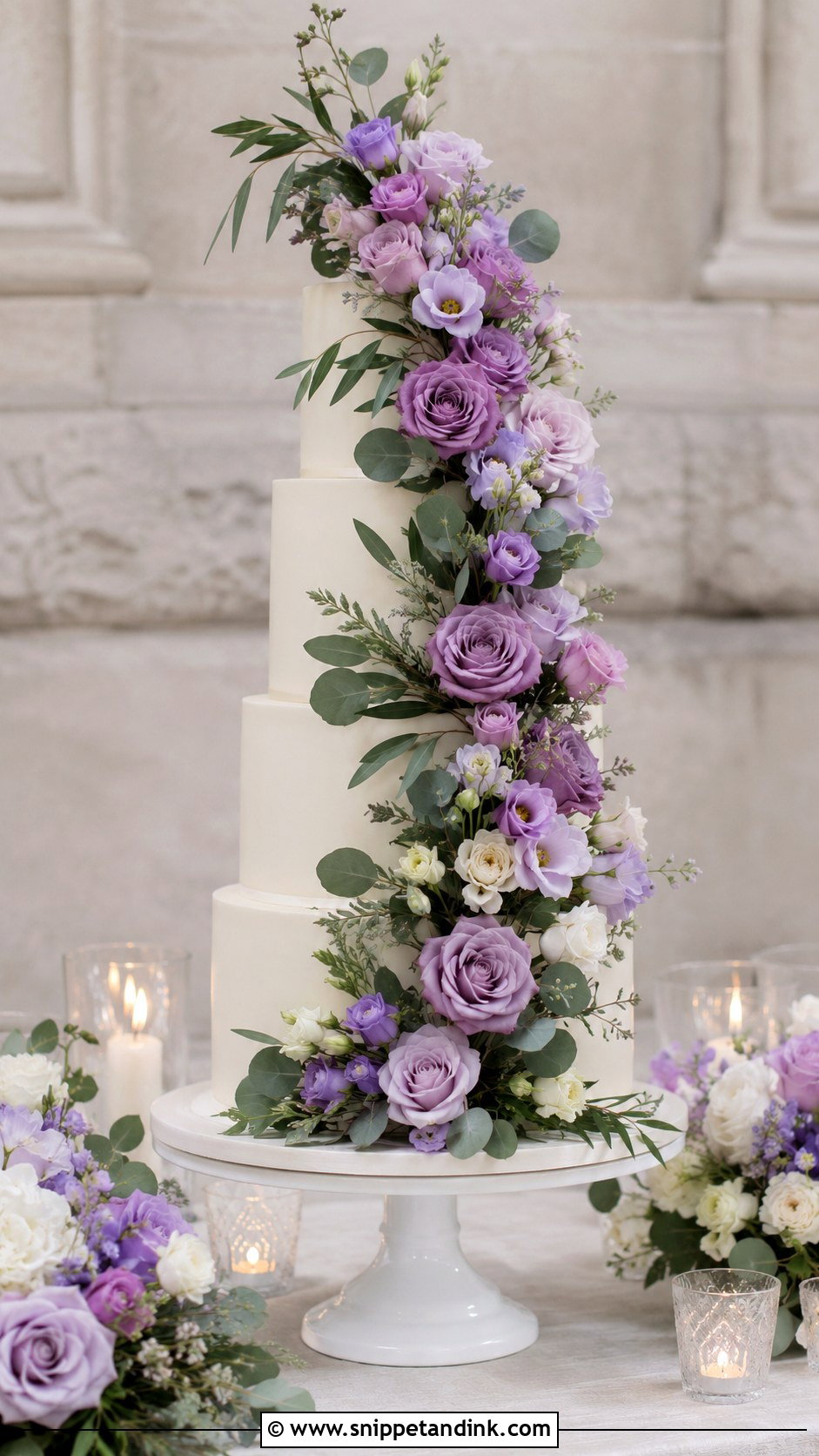
19. Sage Green And Lavender Cascade Wedding Cake
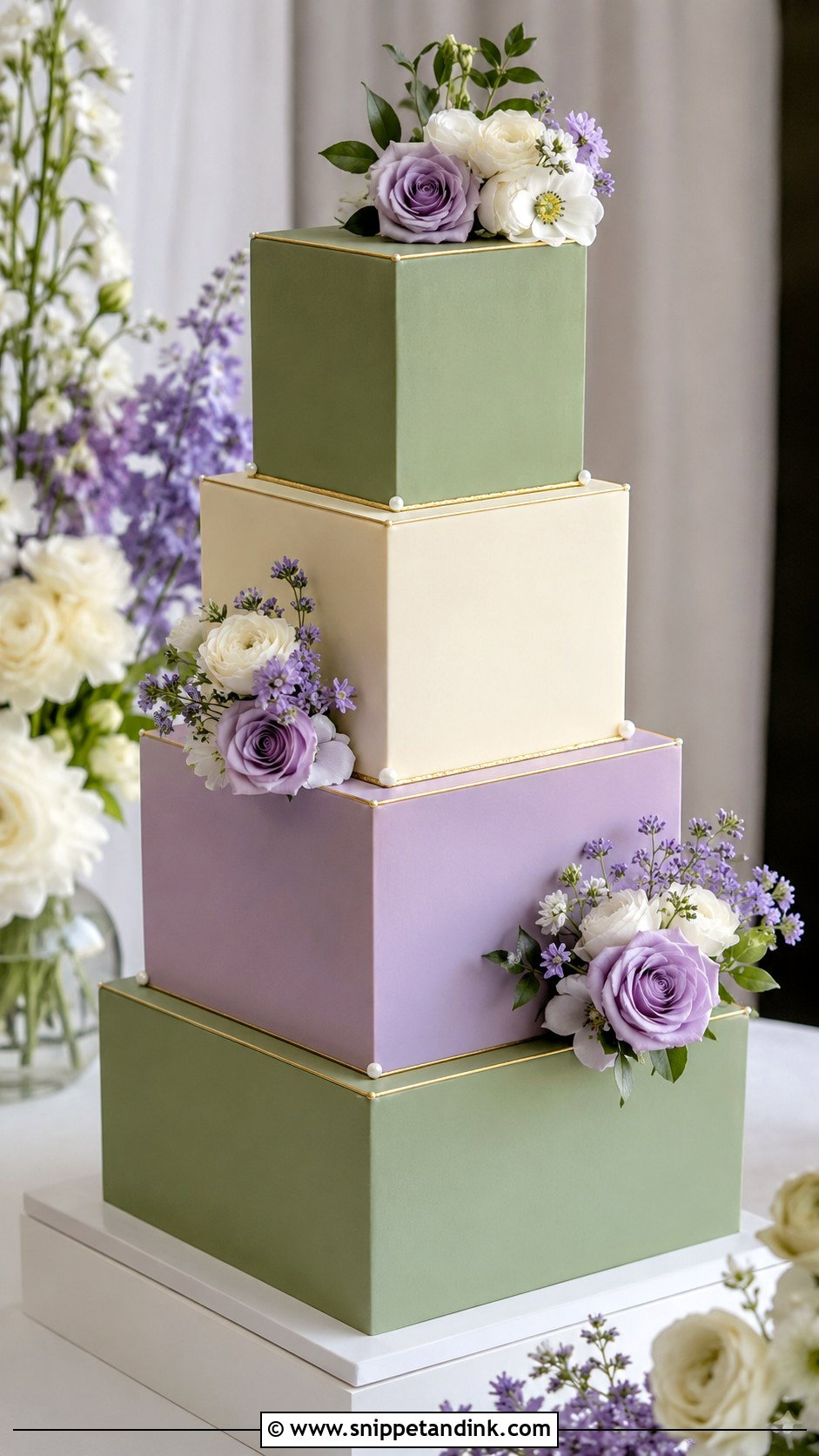
A cascade gives a large cake a focal point without bright colors. The base stays ivory or sage, with lavender flowers and greenery running from top to bottom. Roses, lisianthus, lavender sprigs and wrapped eucalyptus all work. I balance flower sizes so no single bloom dominates. It suits big receptions and venues with floral installations, and I agree the cascade’s placement with the florist ahead of the day.



20. Sage Green And Lavender Single Tier Wedding Cake
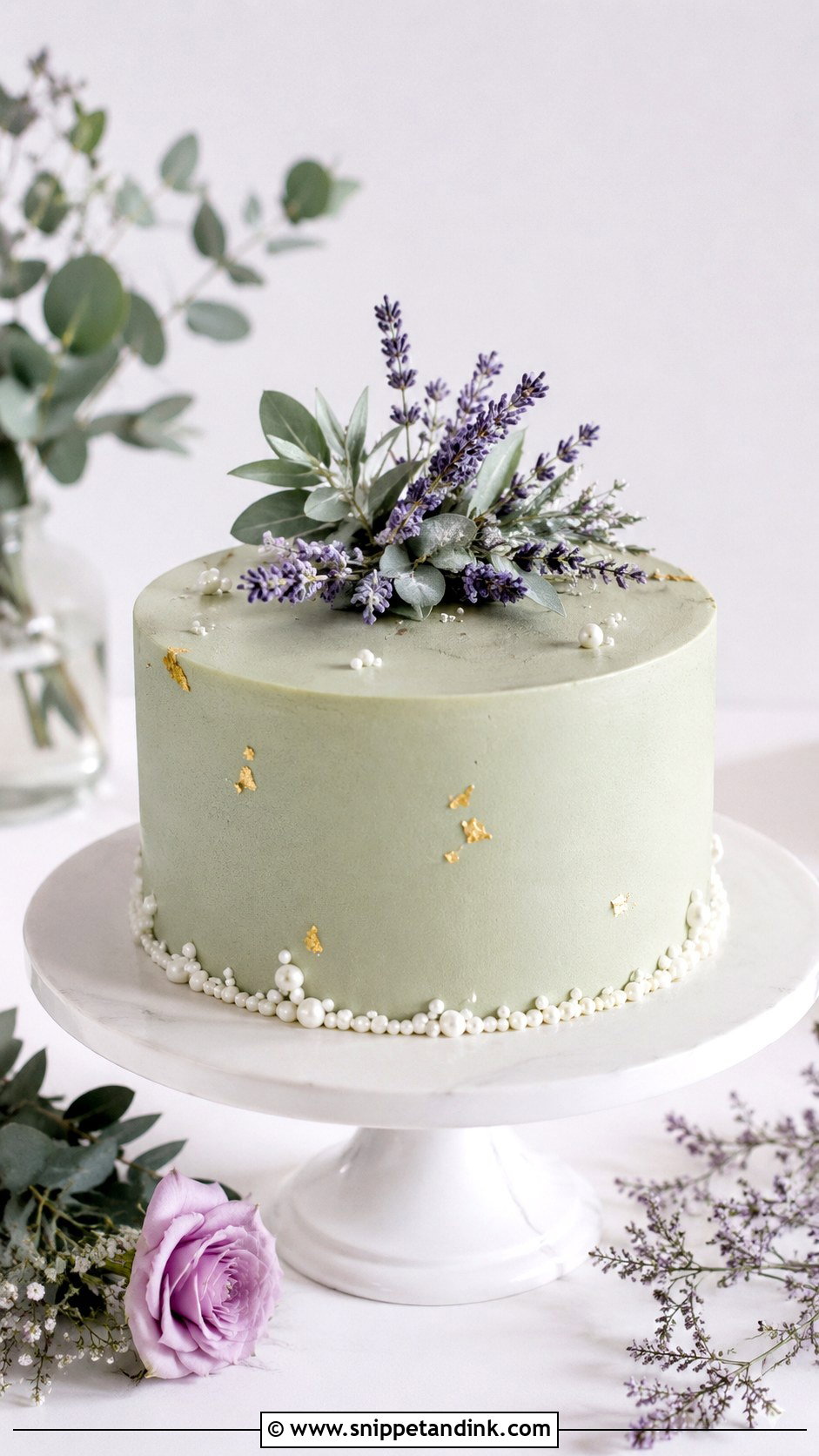
A single tier can feel as finished as a tall cake if the top is well decorated. A smooth sage buttercream with lavender flowers is simple and elegant; pressed petals, pearl piping or a hint of gold add detail. It’s a good fit for intimate weddings or tables with lots of other sweets. A raised stand gives it presence.
21. Sage Green And Lavender Sheet Wedding Cake
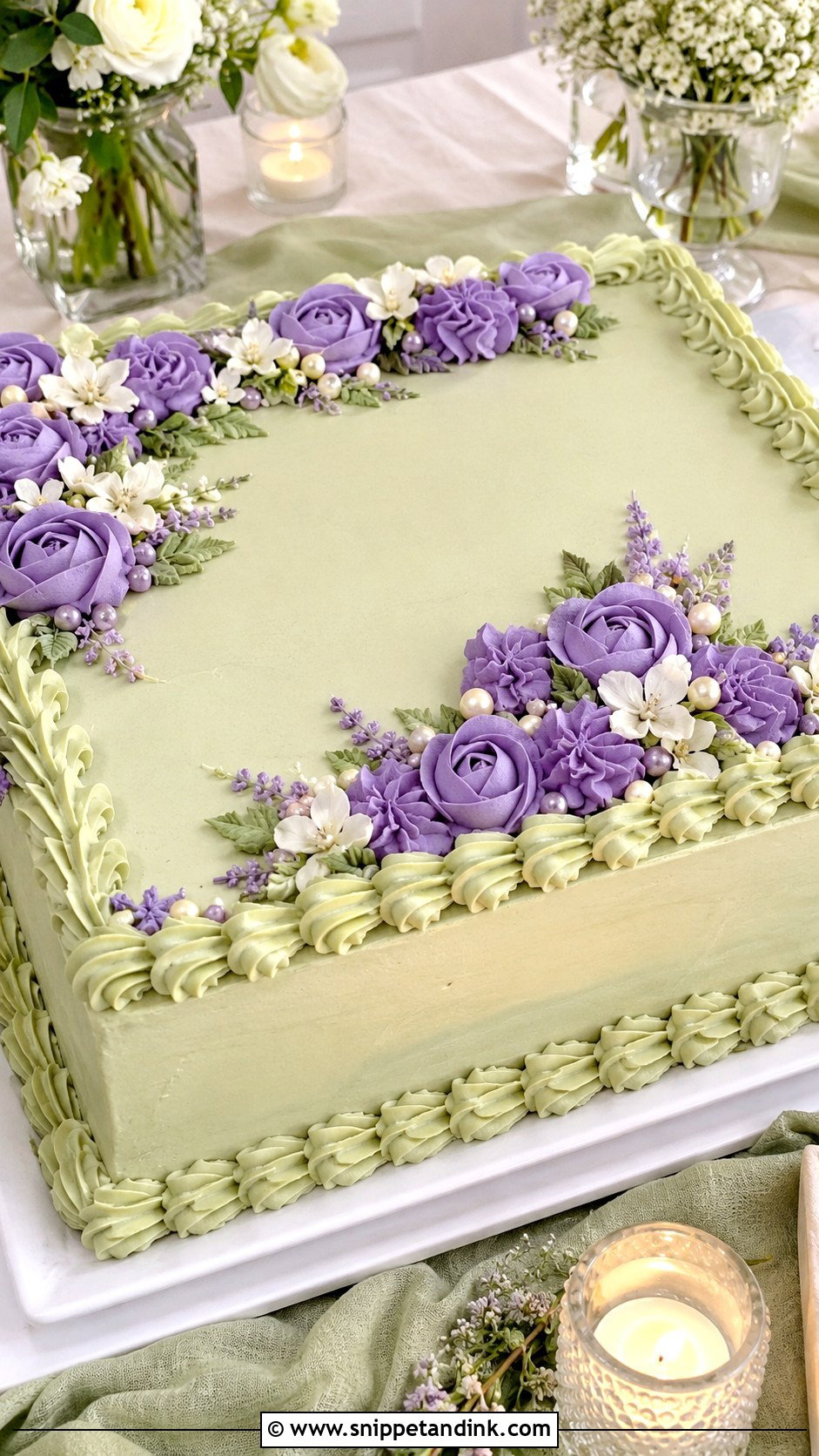
Sheet cakes are practical for large guest counts, often as a kitchen cake behind a smaller display cake. I decorate the top with sage buttercream, piped lavender flowers, white borders and pearls, or with a painted meadow. Keep the finish neat so it still looks like part of the wedding. Cut in clean squares, it serves more people for less money.
22. Sage Green And Lavender Arch Wedding Cake
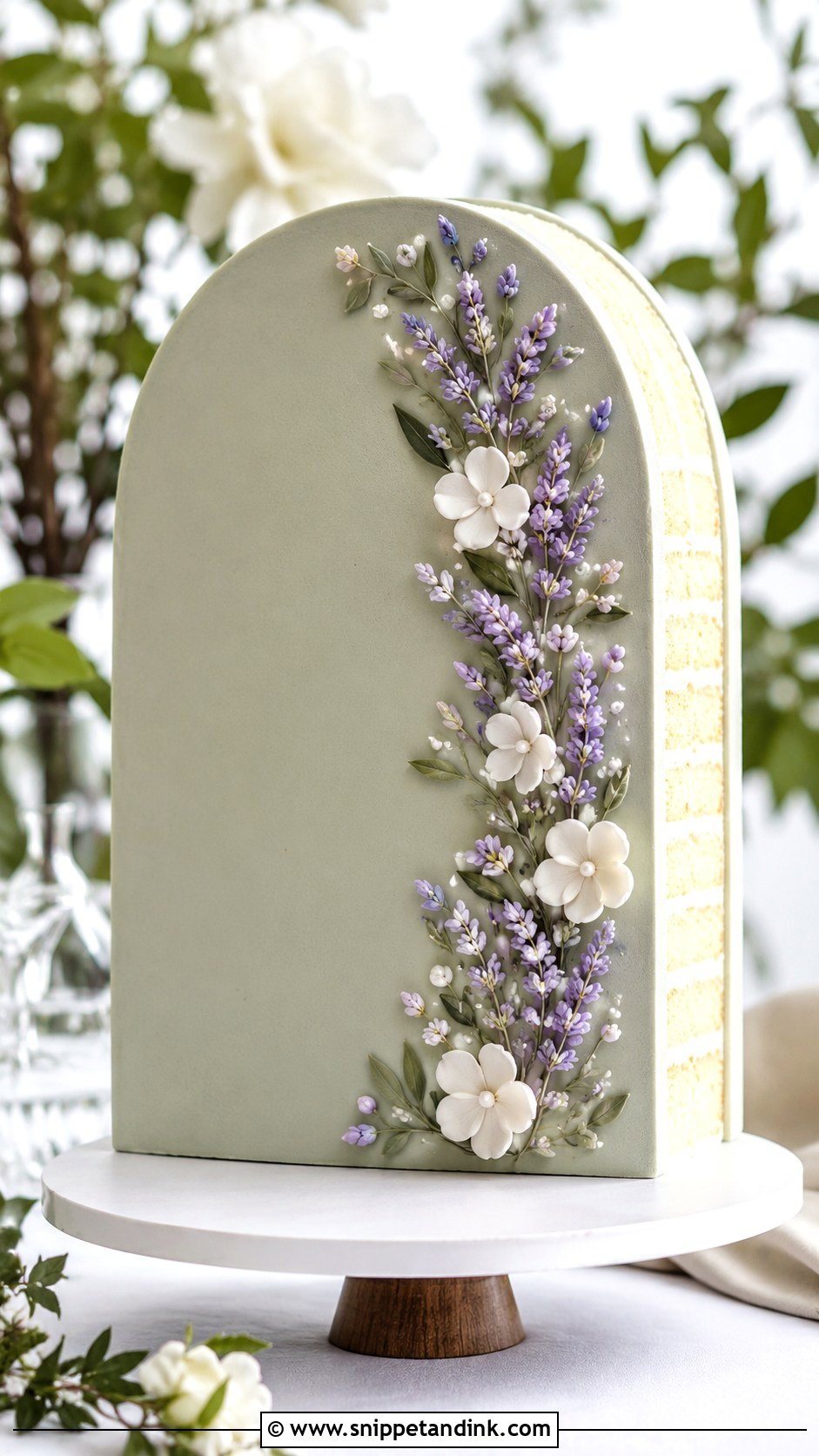
An arch cake has a curved top, which is unusual and photographs well. It’s carved from a tall sheet or stacked layers and needs a firm sponge and internal support. Smooth buttercream, minimal flowers and clean color blocking suit it. Lavender flowers along one side of a sage arch, or painted accents on an ivory one, both work. Keep the decoration light so the shape stays the focus.
23. Sage Green And Lavender Ombre Wedding Cake
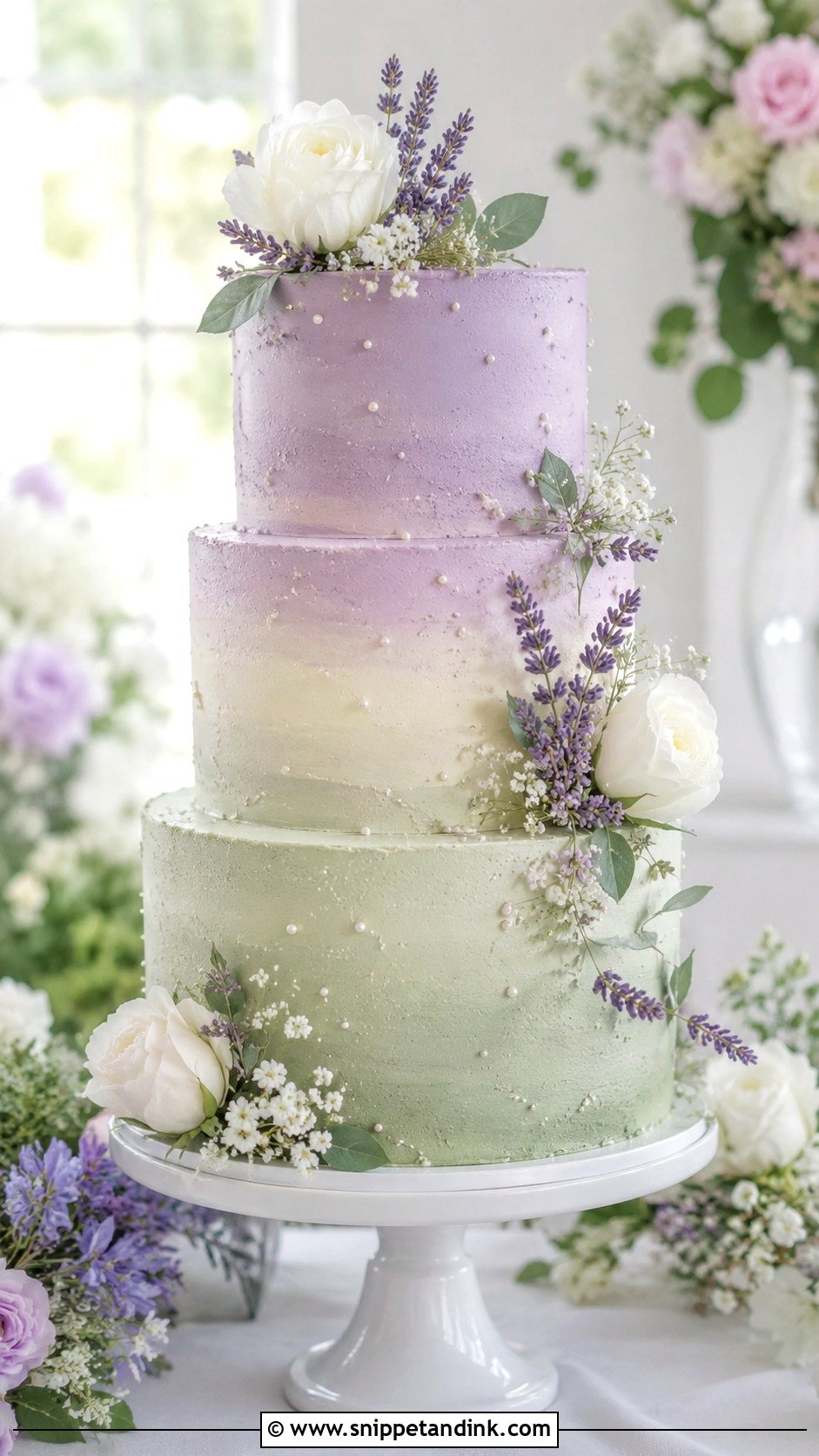
An ombre fades sage at the bottom into lavender at the top, sometimes through ivory for a subtler step. Buttercream blends easily with a scraper and gives a soft finish. The two colors mix to grey in the middle if they’re blended too closely, so I put a band of ivory between them. White flowers or lavender sprigs complete it. It suits spring and summer receptions.
24. Sage Green And Lavender Hand Painted Wedding Cake
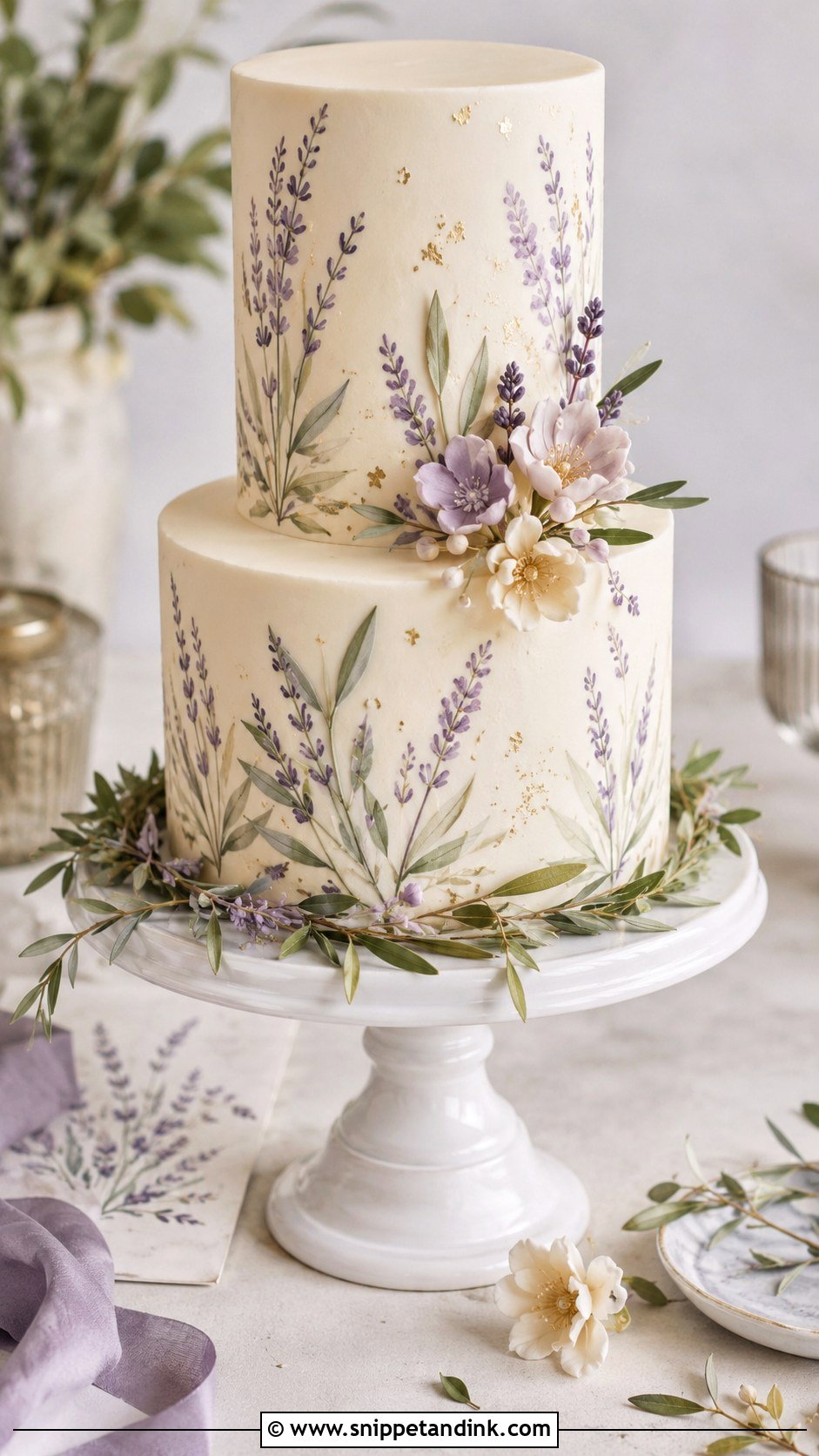
Hand painting can echo your invitations, florals or venue, which makes the cake feel personal. Lavender stems, sage leaves, watercolor florals or soft botanical patterns all suit it. Fondant gives the cleanest surface for painting; smooth buttercream works if it’s very cold and firm. Keep the design spaced out. A few sugar flowers can be added, but the painting should remain the main feature.





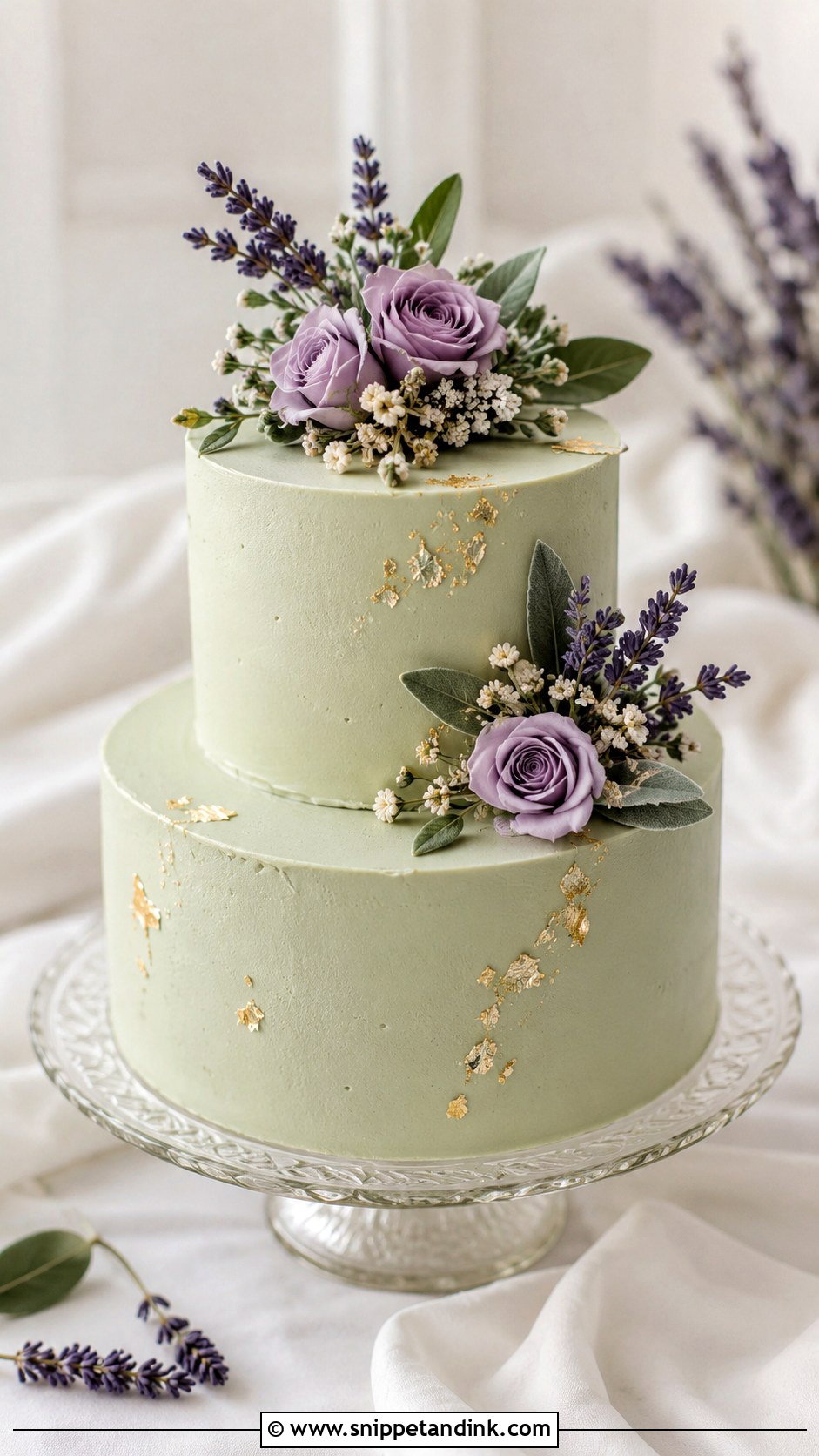
25. Sage Green And Lavender Two Tier Wedding Cake
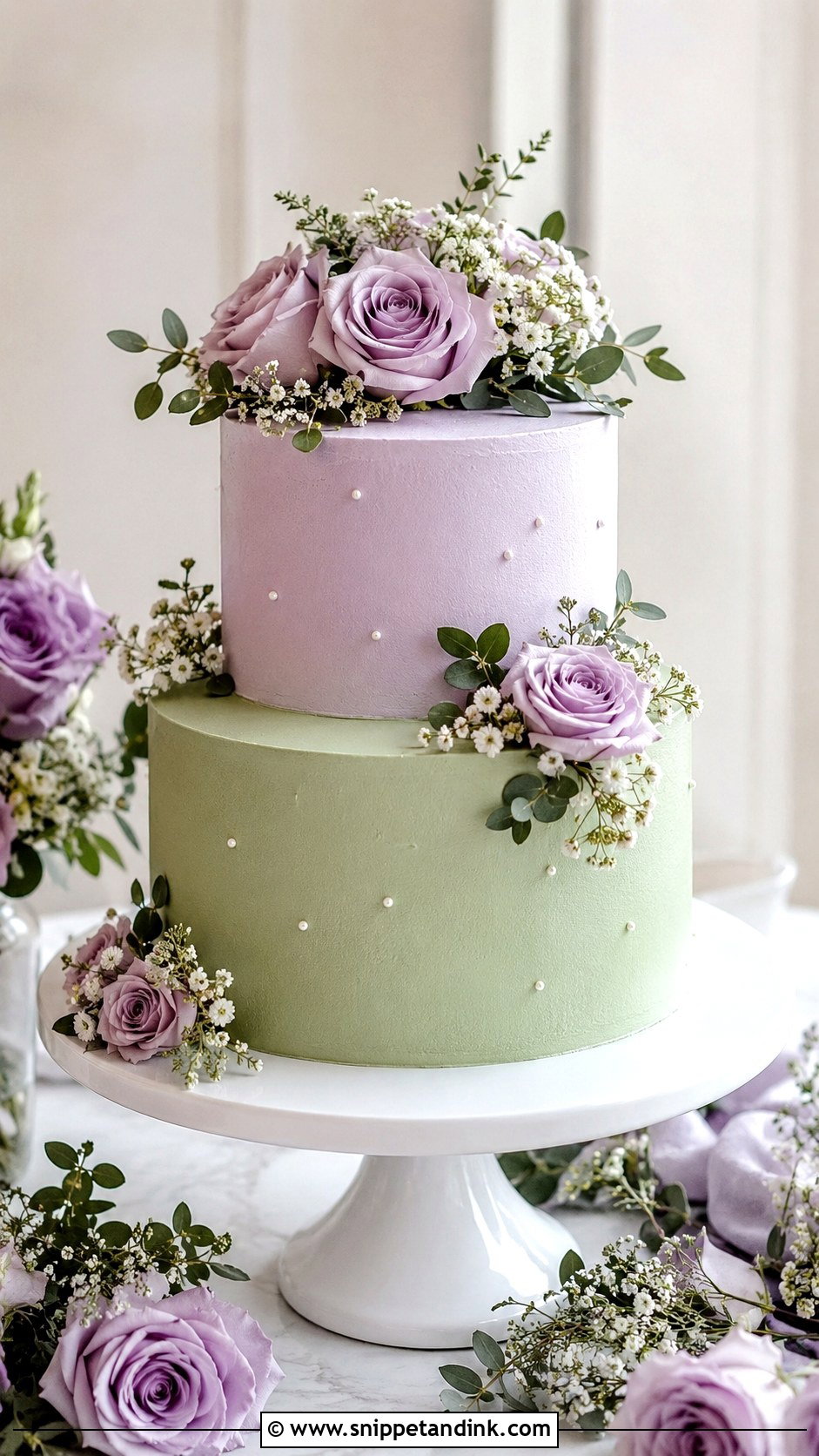
Two tiers suit smaller weddings that still want a cutting moment. A sage bottom tier with an ivory or lavender top, finished with a small floral cluster, gives enough contrast without looking too large. Buttercream, fondant, pressed flowers or simple piping all work. A matching flower ring around the base of the stand ties it to the table.
Lavender You Can Taste, Without the Soap
Many couples who choose this palette want lavender in the flavor too. It’s lovely when it’s subtle, but too much lavender tastes like soap. I infuse it rather than adding the buds directly: steep dried culinary lavender in warm milk or cream, strain it, and use the liquid in the sponge or a syrup. That gives a gentle floral note without bits in the crumb.
- Use culinary lavender only. Garden and florist lavender is often a different variety and may be sprayed.
- Pair it with something that lifts it, like lemon, honey, blueberry or white chocolate.
- Taste the sponge and the syrup separately at the tasting, so you can ask for more or less without guessing which part to change.
- Offer one tier in a plainer flavor. Floral cakes divide people, and some guests will be glad of vanilla.
Two Muted Shades and One Clear Reference
Sage and lavender wedding cakes are adaptable: rustic, modern, vintage or formal depending on frosting, flowers, shape and display. For the most cohesive look, choose muted shades that match your florals, linens and venue. Bring your baker clear color references, because sage and lavender look different in buttercream, in fondant and under different lighting. Whichever cake you choose, matching the color is the step that deserves most of your attention.
You'll Like These Ideas:




Leave a Reply