
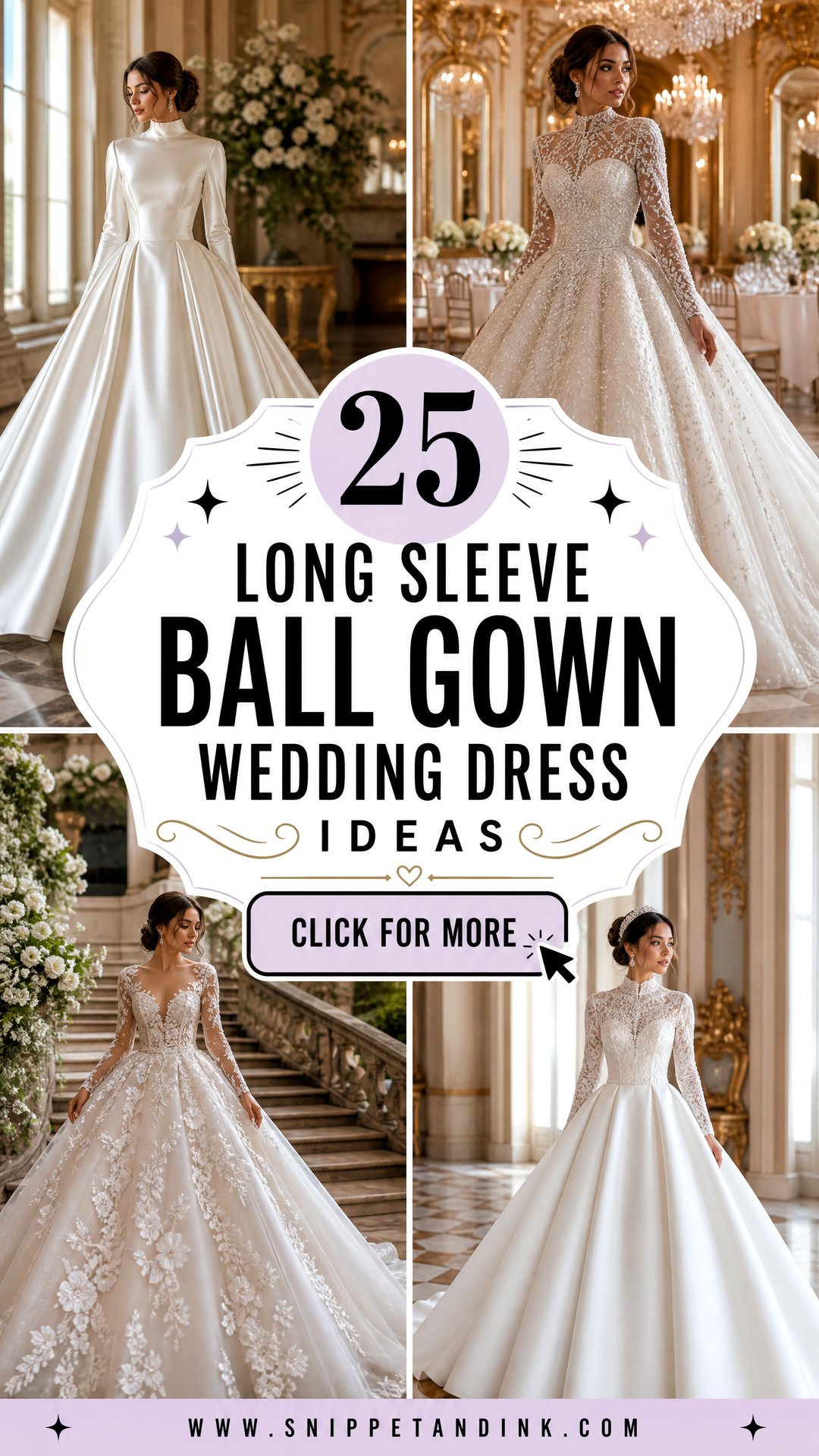
Long sleeves on a full skirt is one of the oldest bridal shapes there is, and yet two of these gowns can look nothing alike. Lace makes it romantic. Satin makes it regal. Tulle softens it, and mikado gives it crisp architecture. What I care about at a fitting is less the label and more how the gown behaves: how much it weighs, whether you can lift your arms, how it fits through a church door and how it feels at hour eight. Below are the variations I see brides choose most, with the practical notes I’d give each one, from neckline to train.
Where a Ball Gown’s Weight Actually Sits
A ball gown’s volume comes from somewhere, and that decides how it feels to wear. Some gowns build fullness into the skirt with many layers of tulle or a stiff fabric like mikado. Others rely on a separate petticoat or a hooped crinoline underneath. I always ask the shop which one a gown uses, because it changes everything from weight to how you sit.
- Layered skirts spread their weight around the waist and hips. Heavy ones can feel tiring by evening, so wear the gown for a full hour at a fitting.
- Hoops are light but flip upward when you sit carelessly. Sit by lifting the back of the hoop slightly and lowering yourself onto the front edge of the chair.
- Separate petticoats can be removed or swapped for a smaller one at the reception, which is a real relief on a warm night.
Sleeves add to the load, too. On a heavy gown, the bodice has to anchor the skirt and carry the sleeves at the same time, so a waist stay, a firm inner band hooked at the waist, is worth asking for. It takes weight off your shoulders and stops the bodice slipping as the hours pass.
1. Lace Long Sleeve Ball Gown Wedding Dress
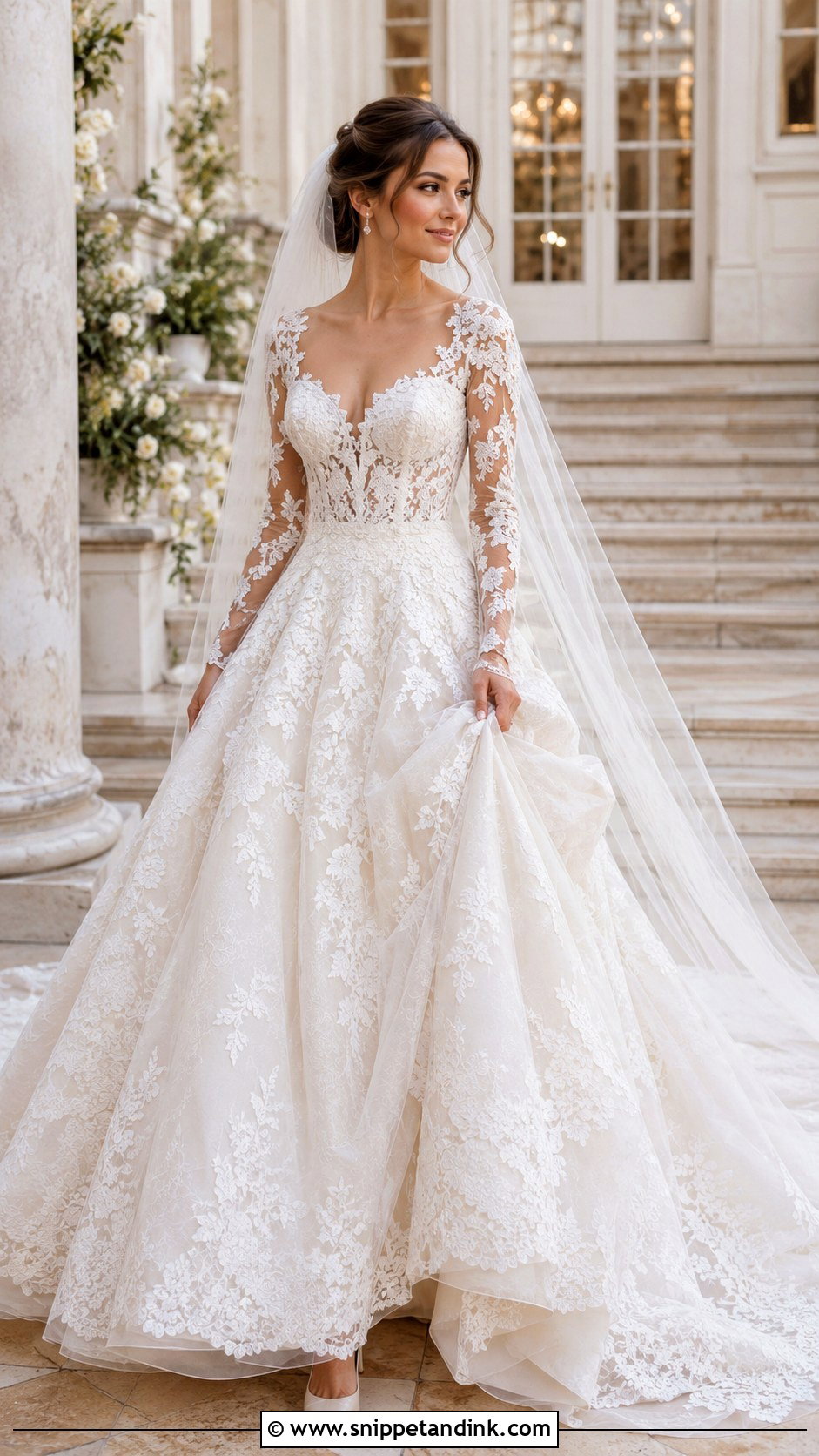
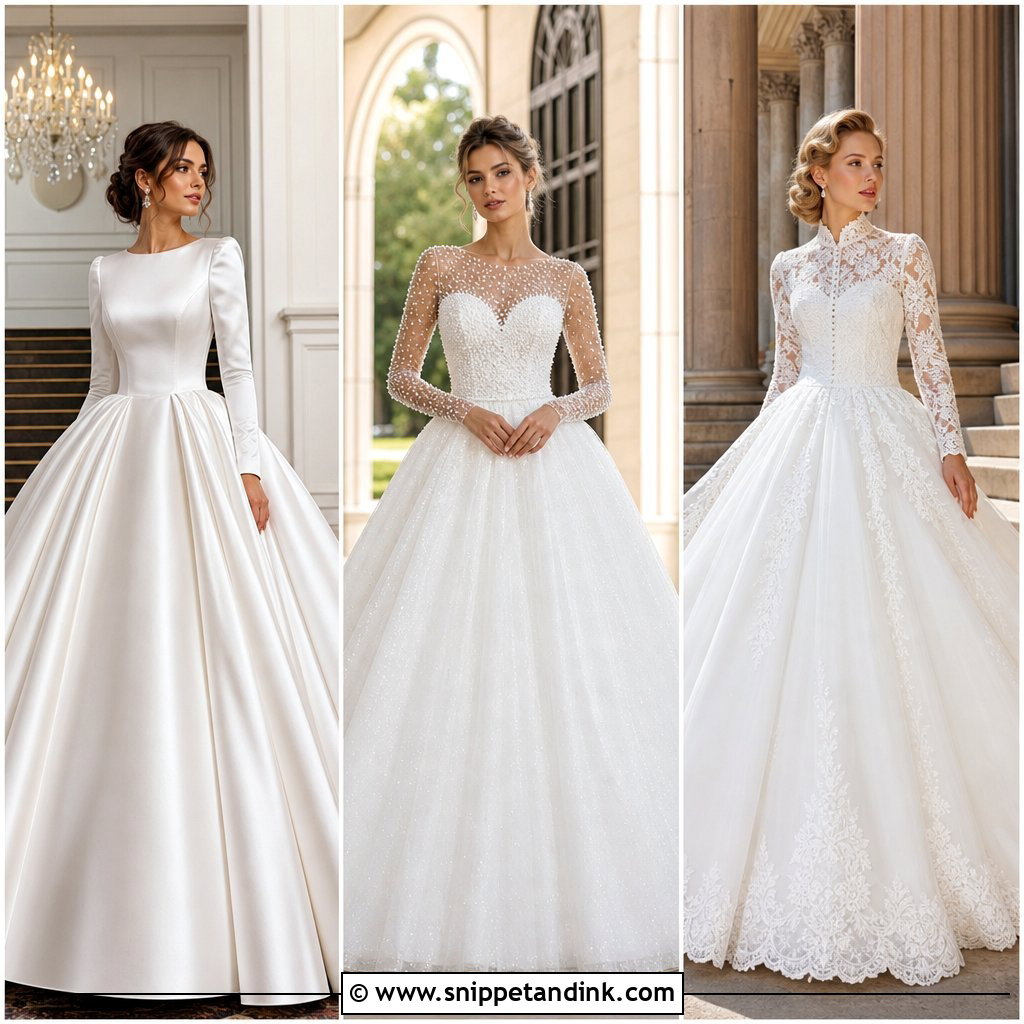
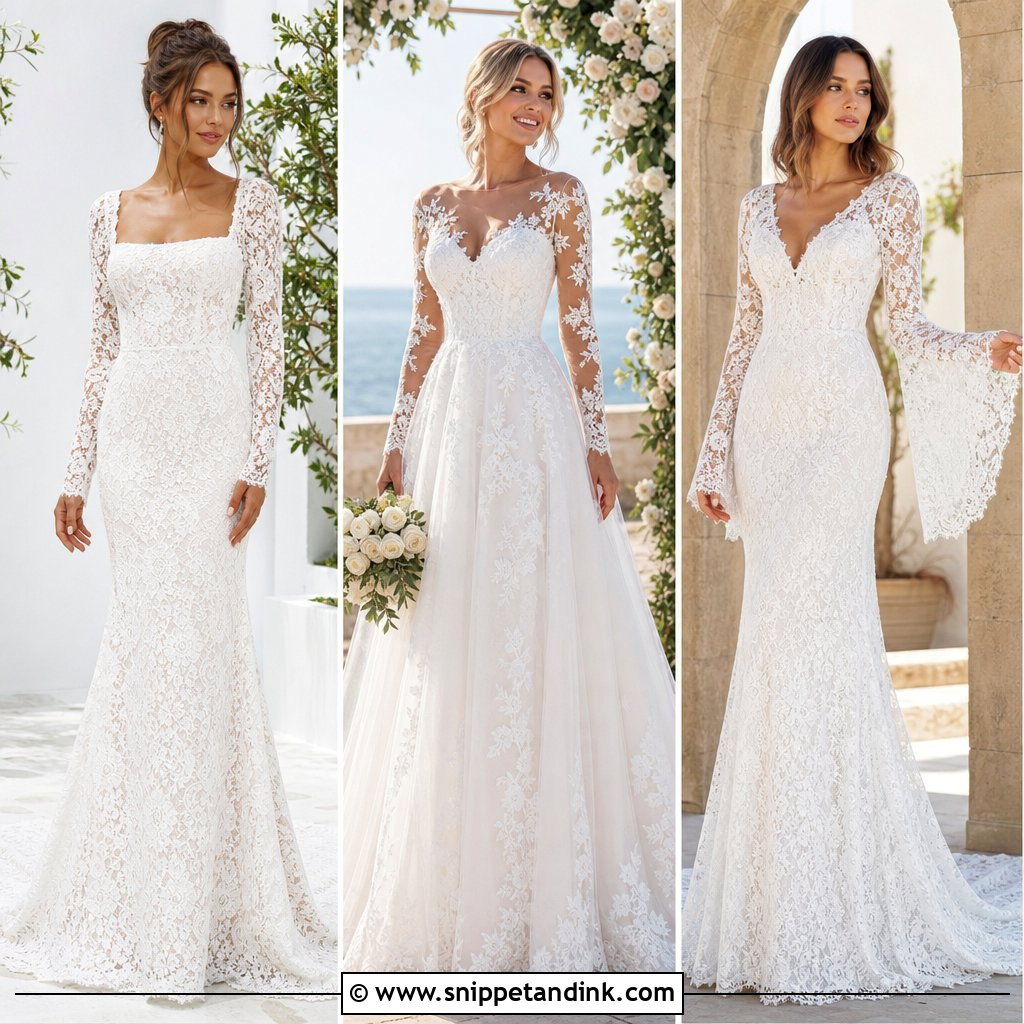
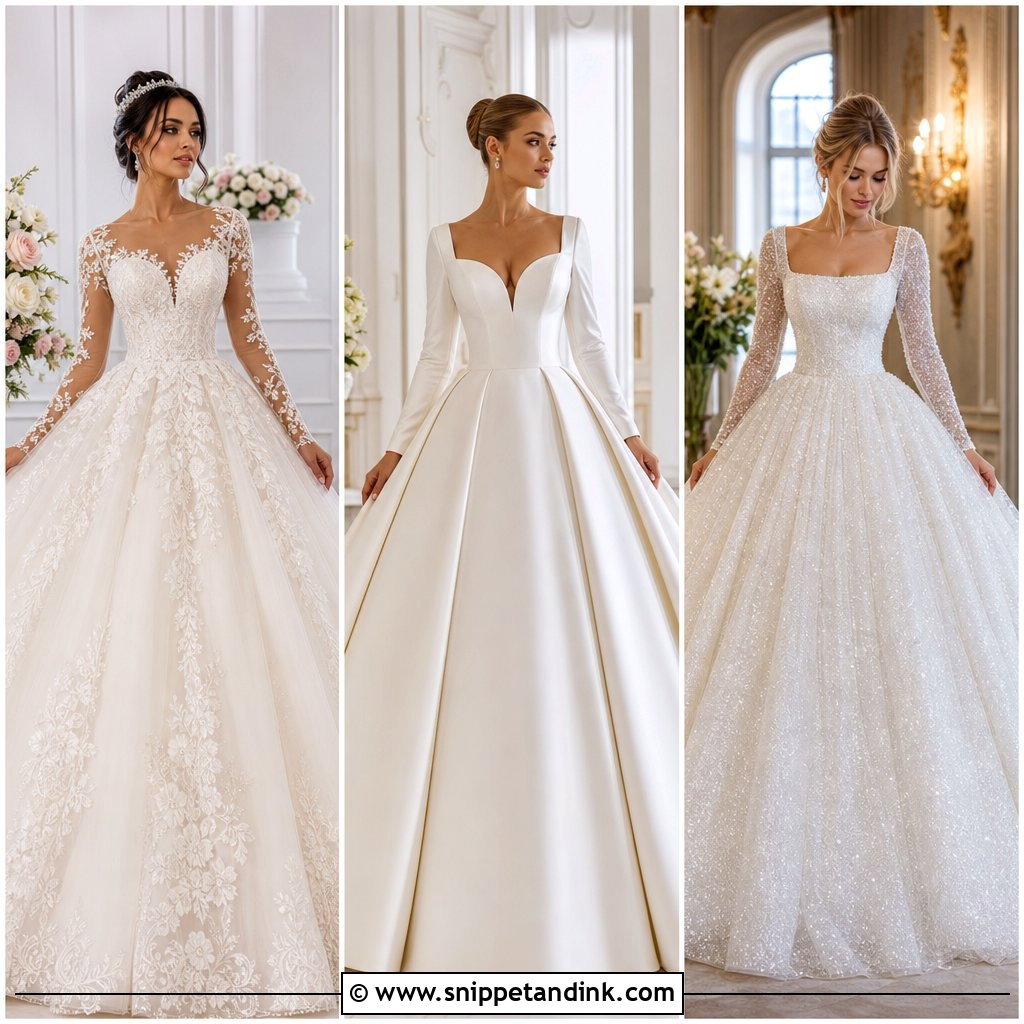
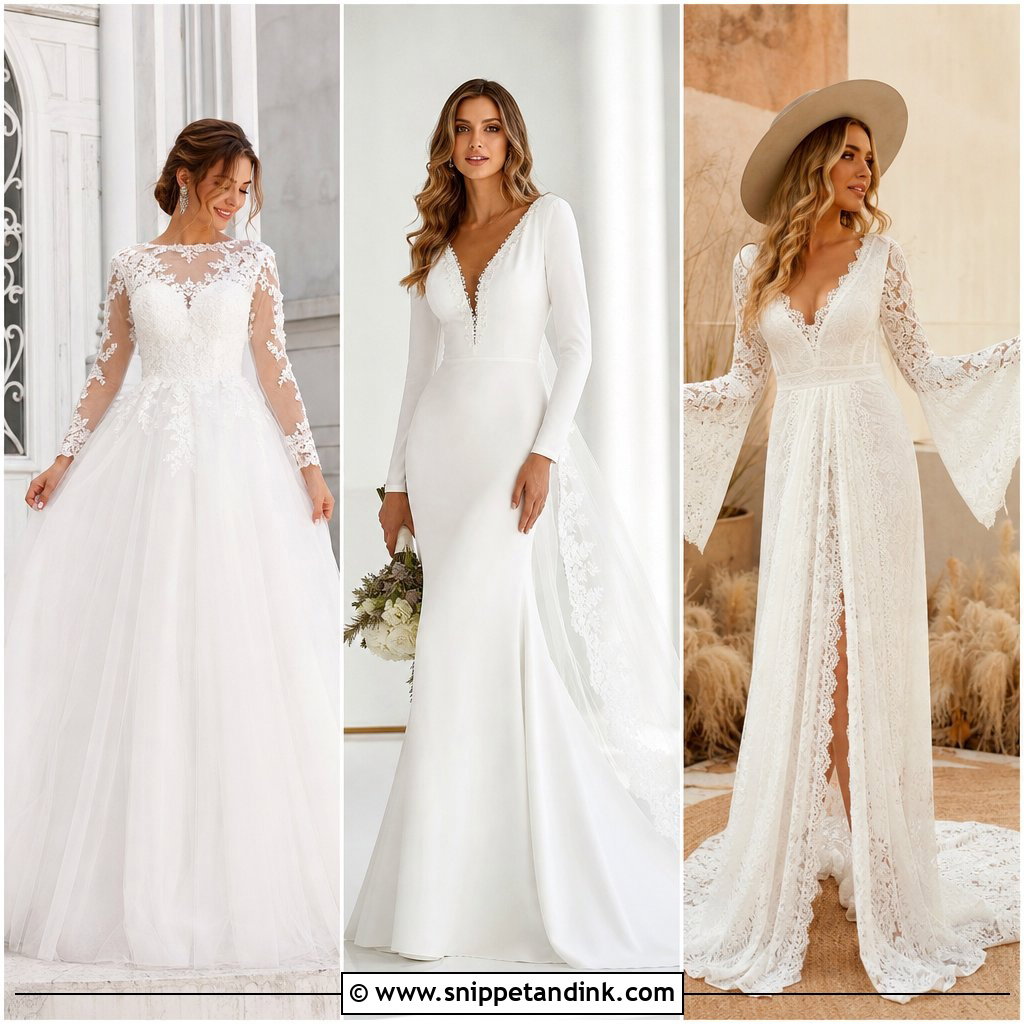
Lace on a fitted bodice and sleeves, over a full skirt, is the classic, and it rarely dates. Floral lace reads soft; geometric lace looks more current. For spring or early autumn I’d suggest sheer illusion sleeves with lace motifs rather than solid lace, which can feel warm under a full skirt. Pearl earrings, a plain veil and soft waves keep attention on the lace. Ask how the lace is joined at the seams; on good gowns the motifs are hand-cut and overlapped so you can’t see where one panel ends.
2. Satin Long Sleeve Ball Gown Wedding Dress
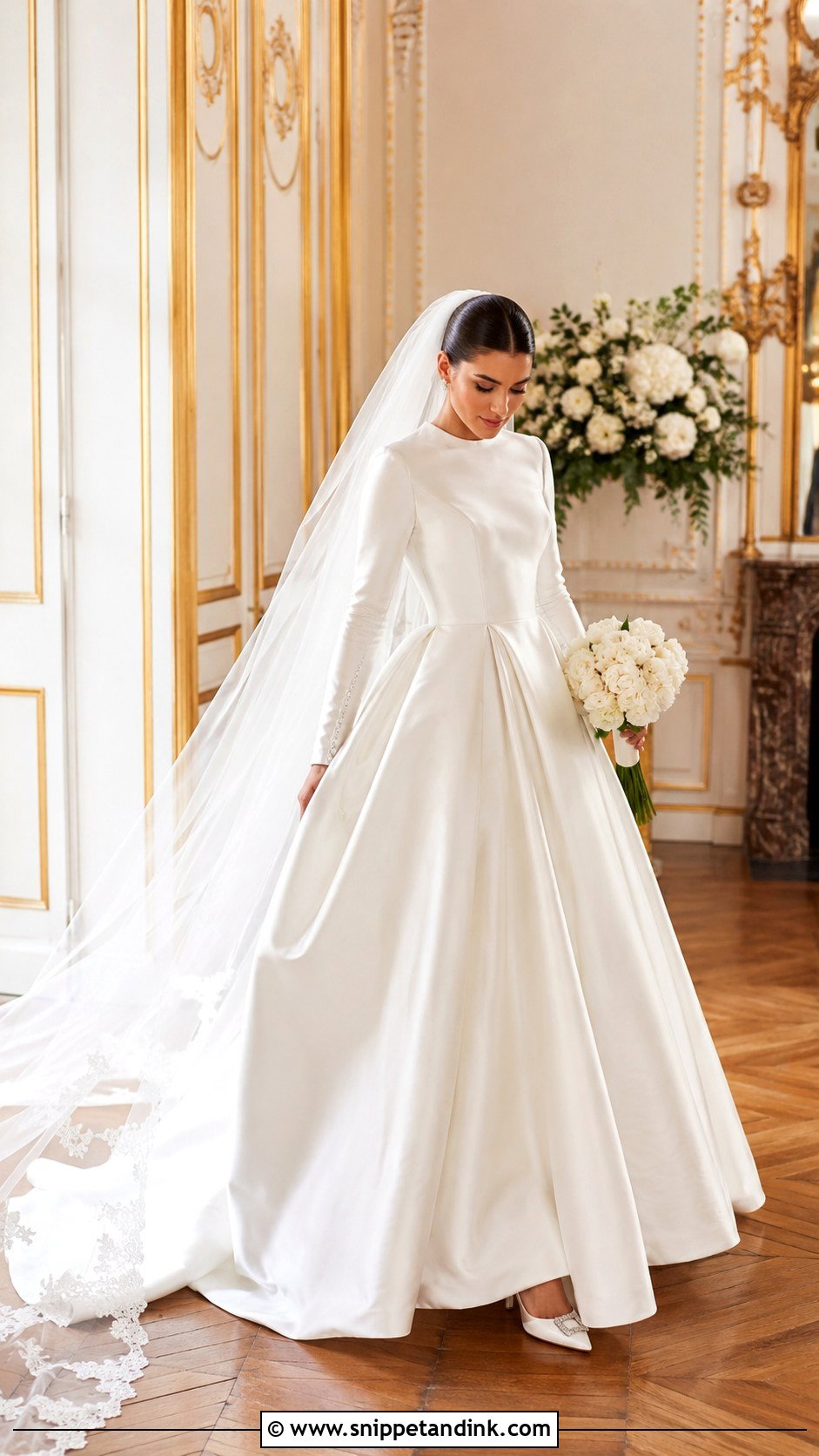
Satin is for brides who like clean lines and rich fabric. A structured bodice, a bateau or square neckline and covered buttons down the back are all it needs. Satin’s sheen shows every wrinkle, so I tell brides to plan a steam at the venue rather than trusting the dress to survive the car ride. Diamond studs, a sleek bun and a cathedral veil finish it. It looks most at home in formal indoor venues and winter evenings.
3. Tulle Long Sleeve Ball Gown Wedding Dress
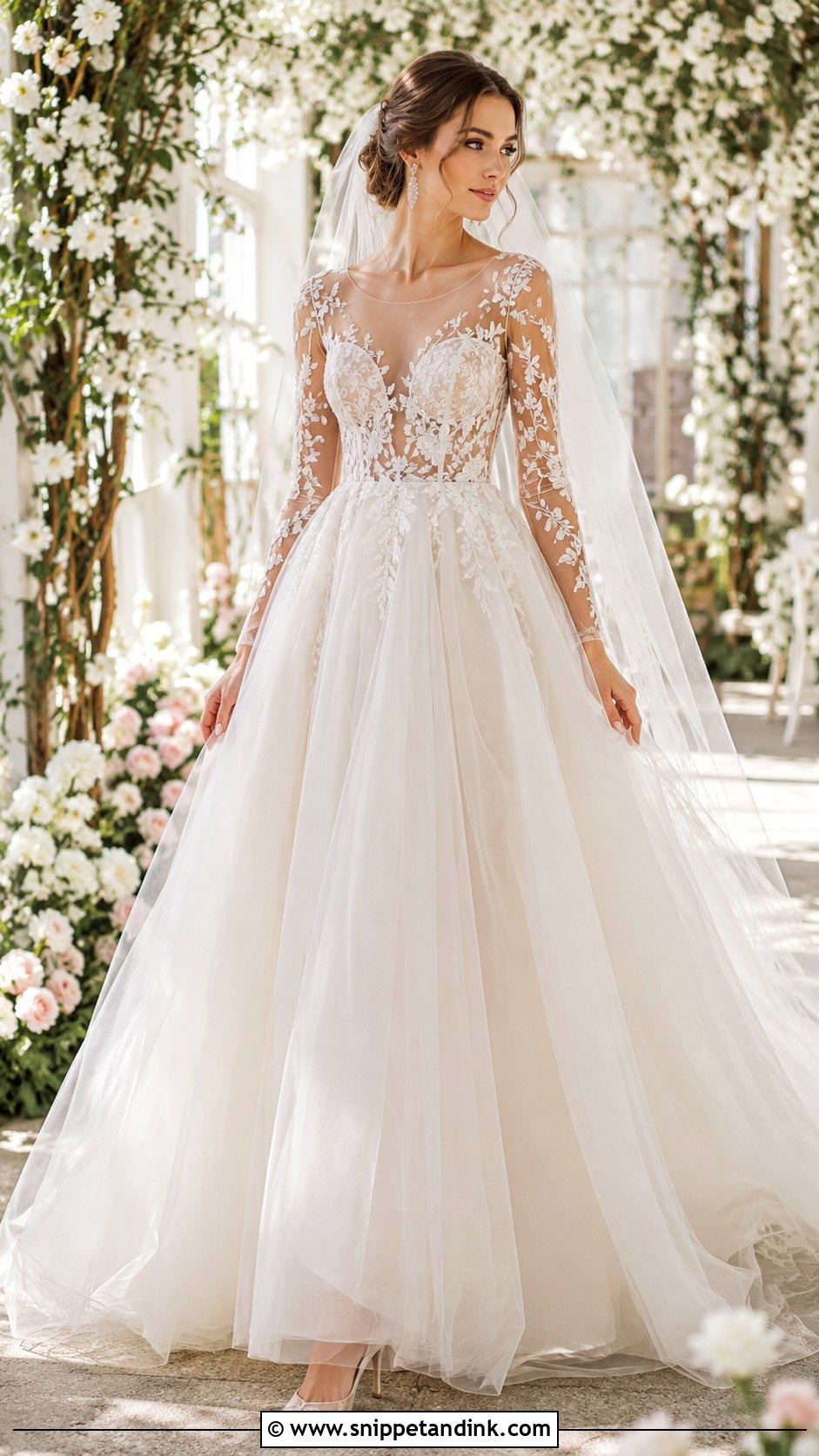
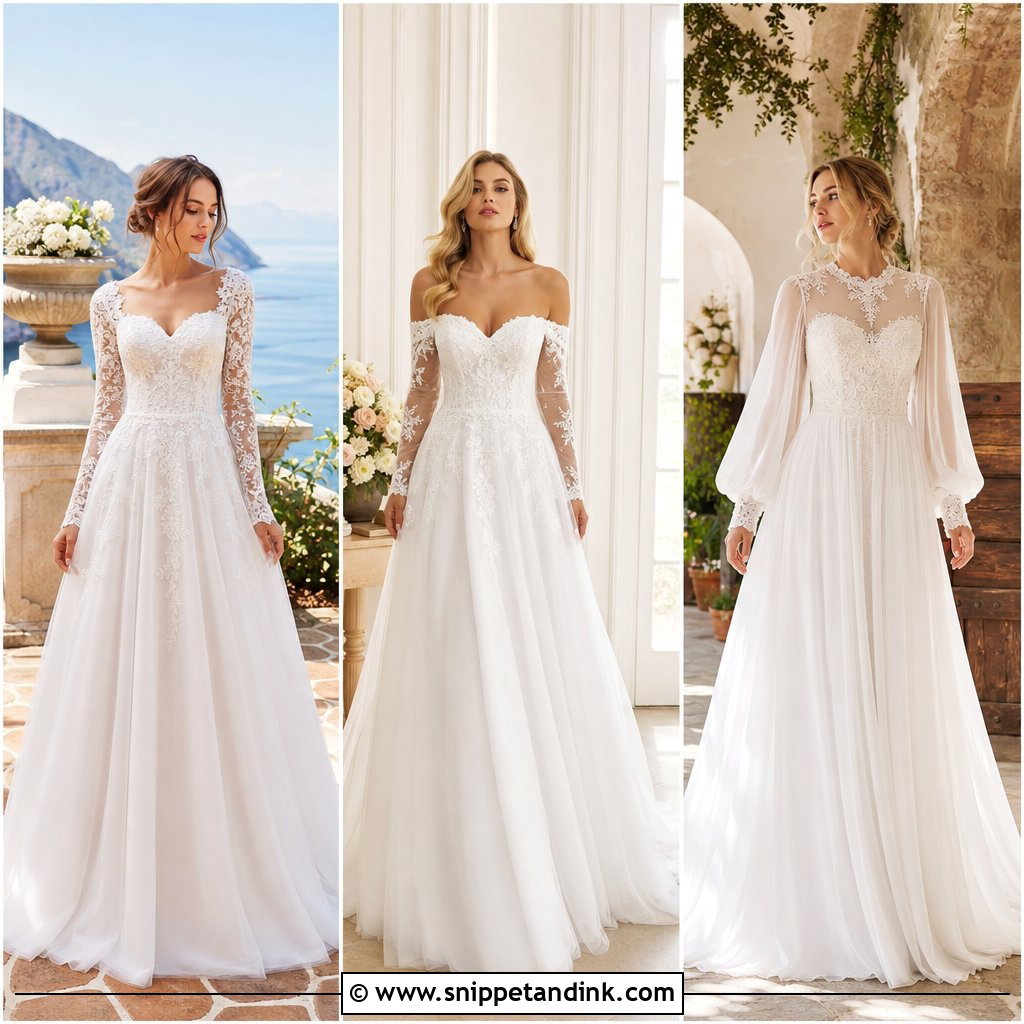
Tulle gives the volume of a ball gown with a fraction of the weight. Layers move as you walk, and long sleeves balance the width of the skirt. Sheer sleeves with fine embroidery suit a dreamy style; plain tulle and a fitted bodice keep it cleaner. The catch is that tulle snags on rough stone, bracelets and Velcro, and it crushes when sat on for hours. I’d fluff the skirt after the ceremony and keep a lint roller in the emergency kit. Soft curls and drop earrings suit it, and it shines in gardens.
4. Mikado Long Sleeve Ball Gown Wedding Dress
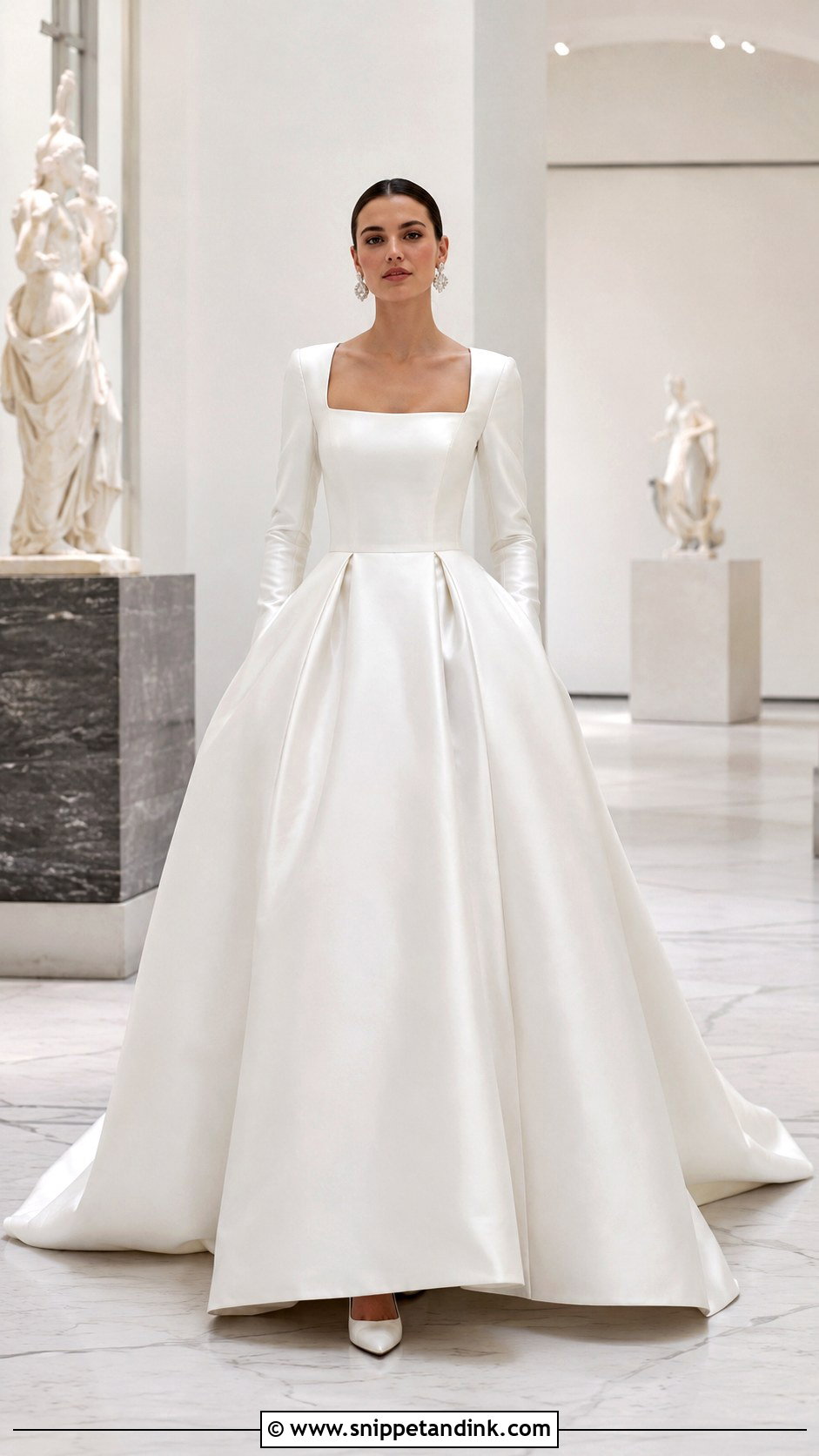
Mikado is heavier and stiffer than satin, which is exactly why it holds a ball-gown skirt so well without much petticoat underneath. A crisp skirt, a defined waist and a clean neckline are the whole story; heavy embellishment would only fight the fabric. High necks, square necks or off-the-shoulder sleeves all work. I’d pair it with a sleek veil, pointed heels and sculptural earrings for a modern royal effect. It suits autumn and winter and formal city venues. Mikado creases sharply at the hip when you sit, so stand for photos where you can.
5. Beaded Long Sleeve Ball Gown Wedding Dress
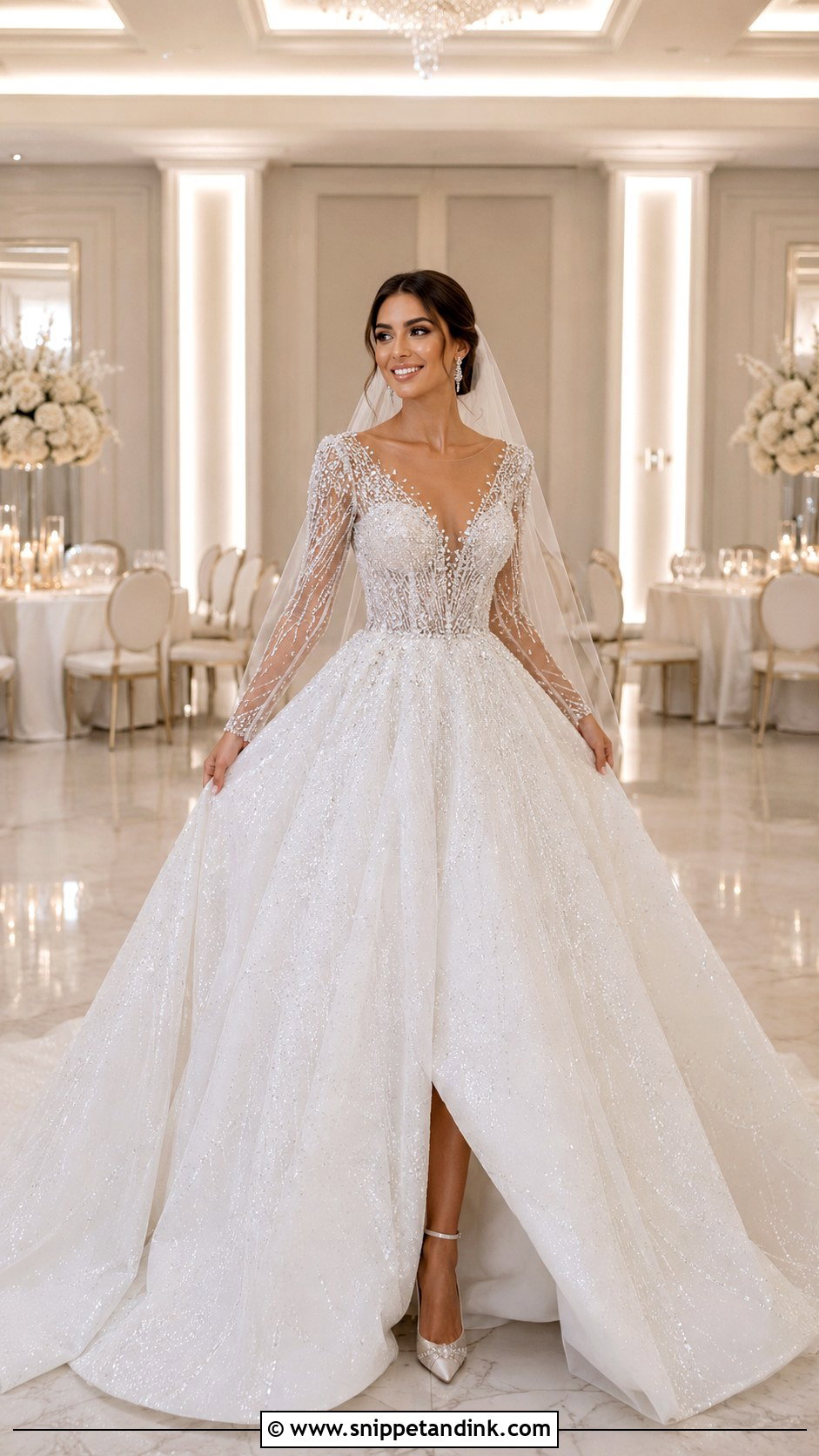
Beading across the bodice and sleeves adds sparkle without any need for bold jewelry, and a full skirt keeps the shape grand. Allover beading feels glamorous; scattered beads feel softer. Beaded sleeves are heavy, though, and they rub against the beaded sides of the bodice every time your arms move, so check the underarms for scratching. A simple veil, a smooth updo and delicate earrings are enough. It belongs to evening weddings and black-tie receptions.
6. Illusion Long Sleeve Ball Gown Wedding Dress
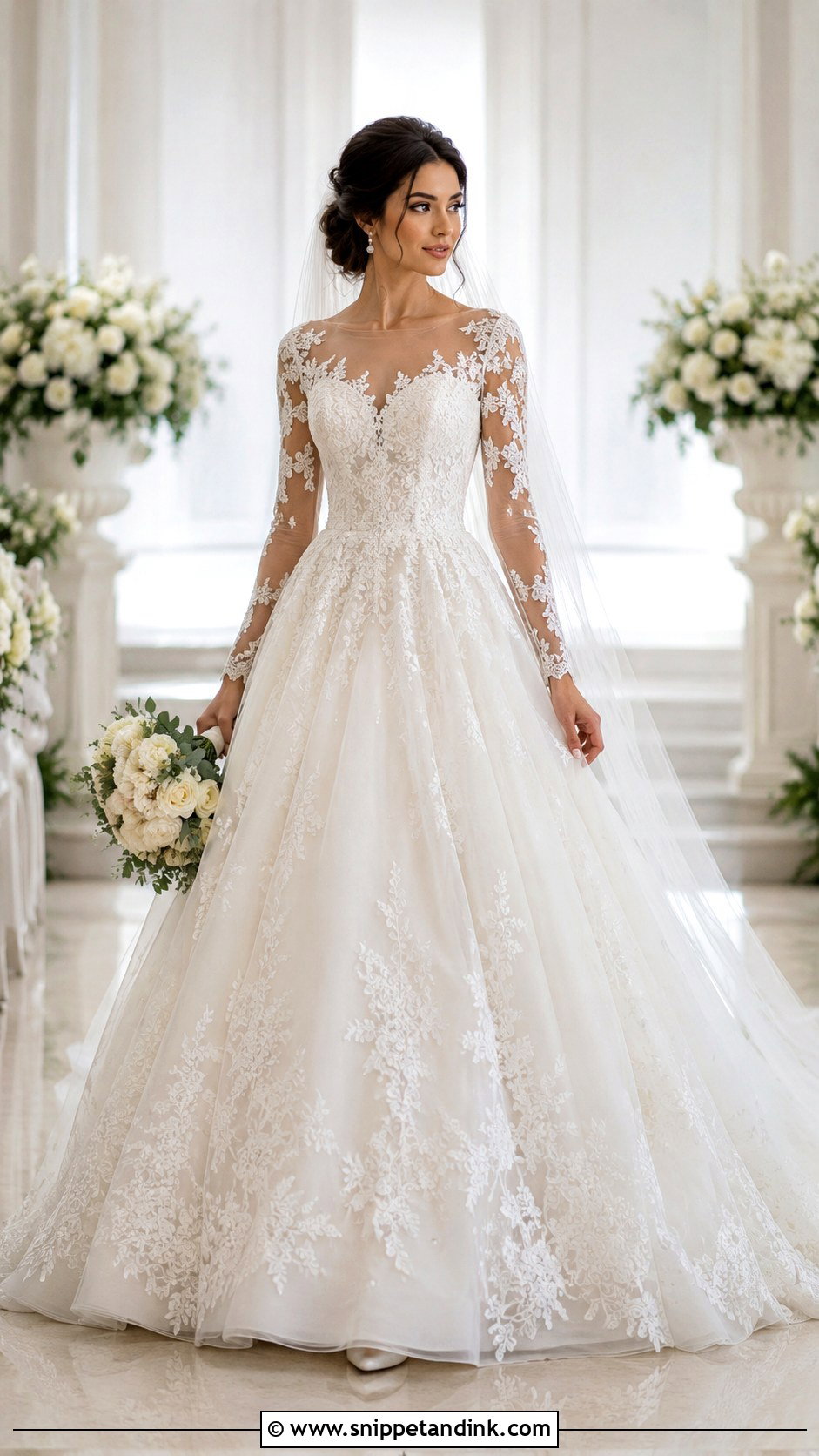
Illusion sleeves give coverage that still feels light. Sheer mesh finished with lace, embroidery, pearls or tiny beads covers the arms without bulk, and the effect pairs well with high necklines, deep Vs and open backs. The mesh color should disappear against your skin, so I compare swatches against your arm in daylight before alterations. A soft veil and natural makeup keep the focus on the detail. It suits almost any venue.
7. Off The Shoulder Long Sleeve Ball Gown Wedding Dress
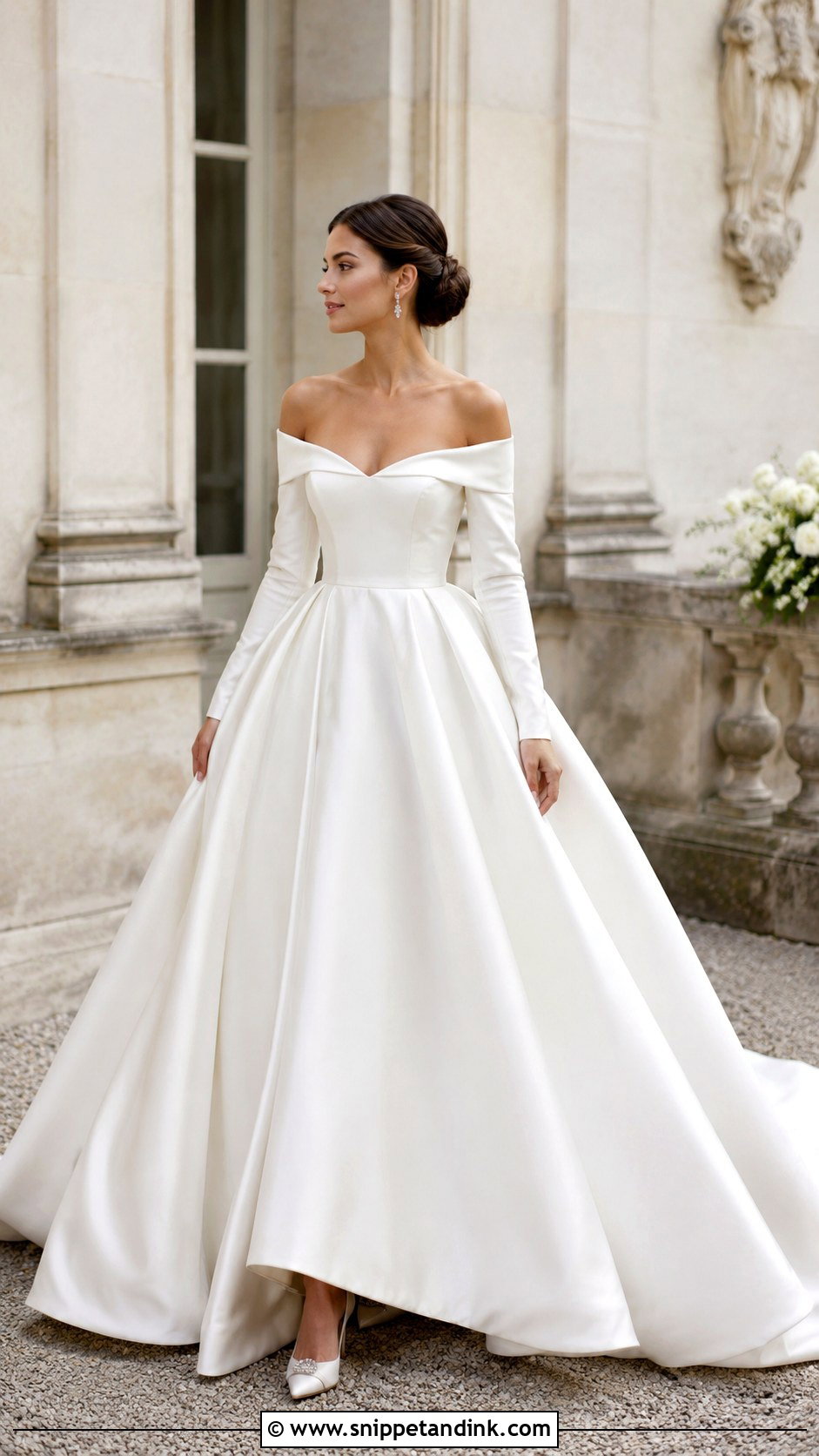
Off-shoulder sleeves open the collarbones and frame the arms, which balances a wide skirt nicely. Satin looks regal; lace or tulle feels more whimsical. The bodice carries all the weight of the gown here, since nothing sits on the shoulders, so it needs firm boning. I’d skip the necklace and wear statement earrings with a low bun. Raise your arms in the fitting; off-shoulder sleeves restrict how high you can lift them, and you’ll want to know that before the first dance.
8. High Neck Long Sleeve Ball Gown Wedding Dress
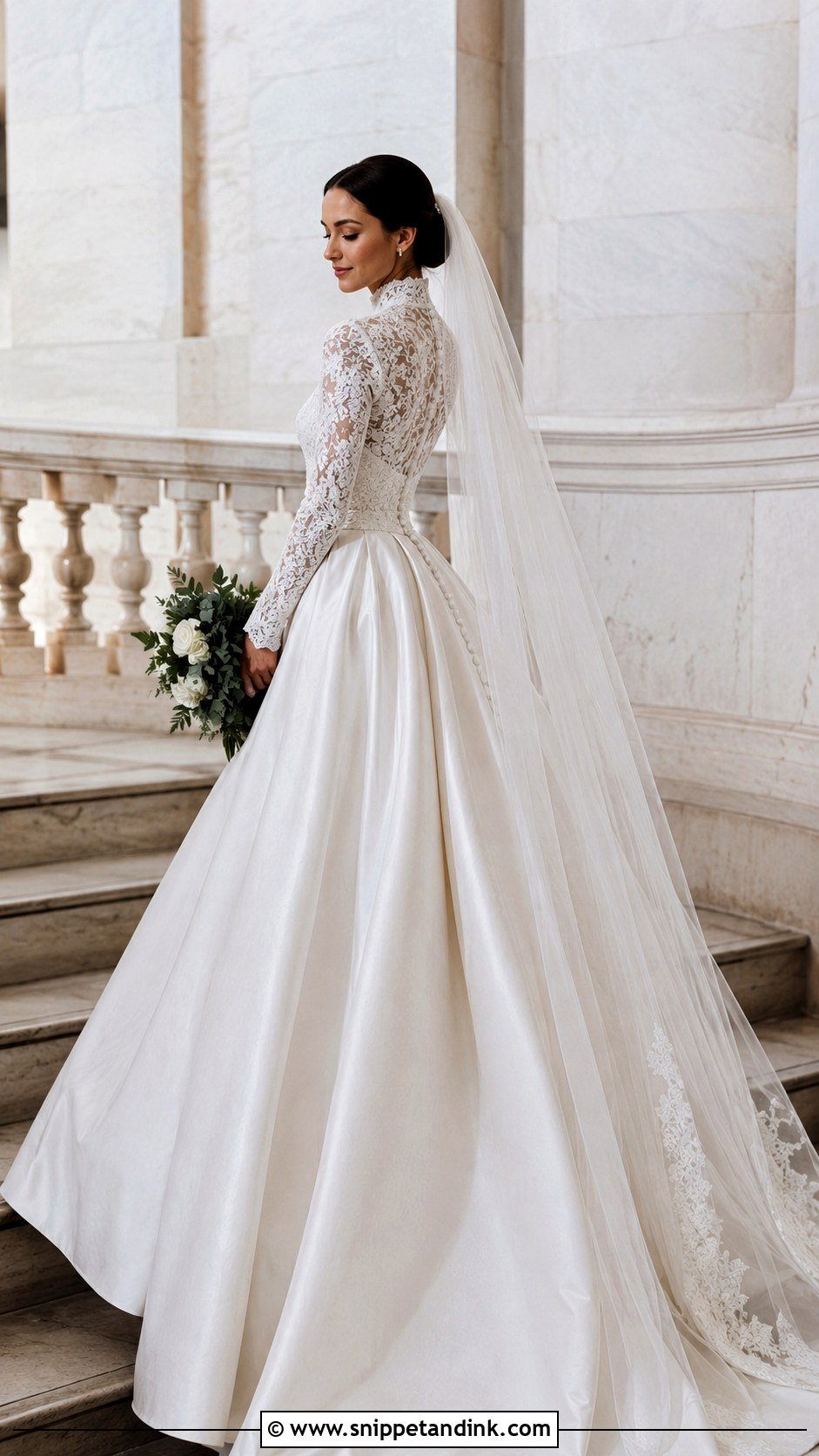
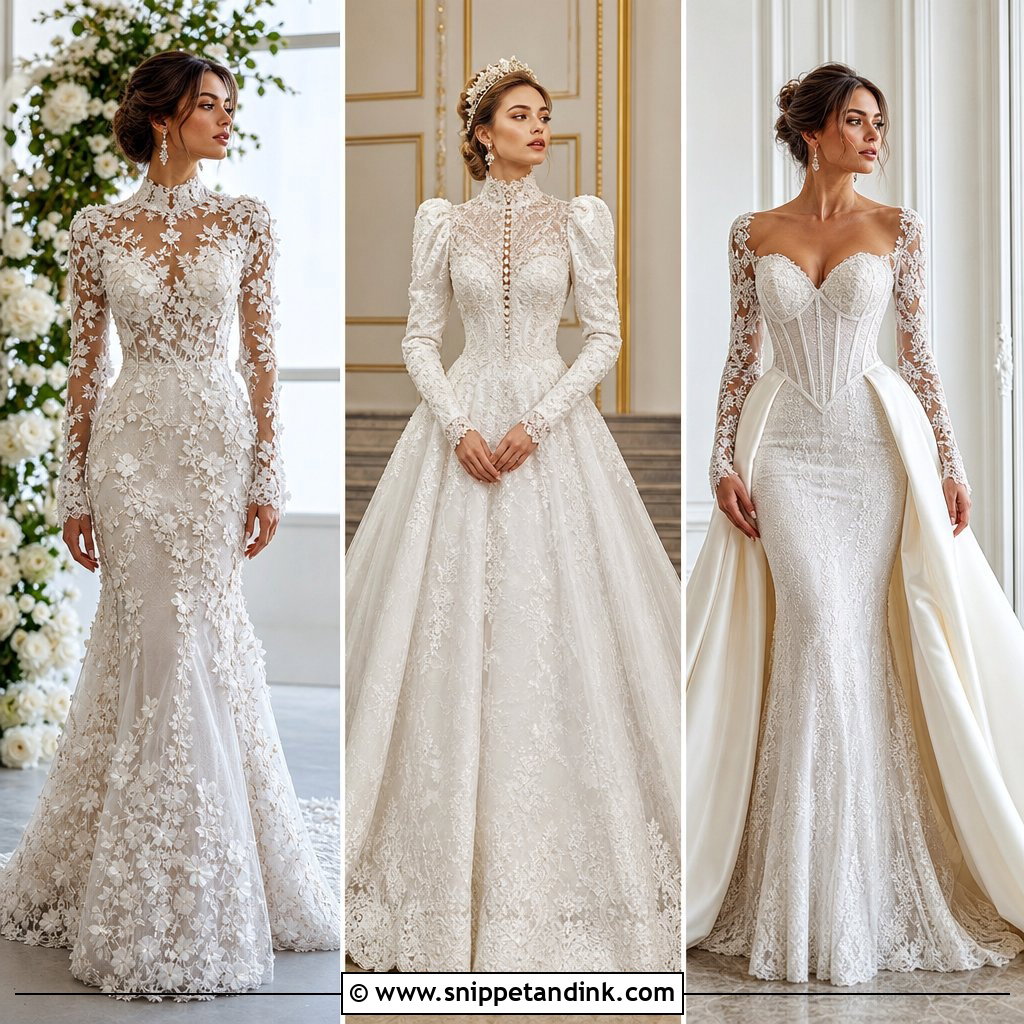
A high neck draws attention to the face and to posture. Lace, crepe, satin or illusion fabric all suit it. With a closed neckline, a full skirt stops the gown from feeling severe. Covered buttons down the back are a good addition, as long as there’s a hidden zip beneath them. Keep jewelry to small earrings and wear a neat bun with a long veil. The collar should sit a finger’s width from your neck so it doesn’t feel tight by dinner.
9. Square Neck Long Sleeve Ball Gown Wedding Dress
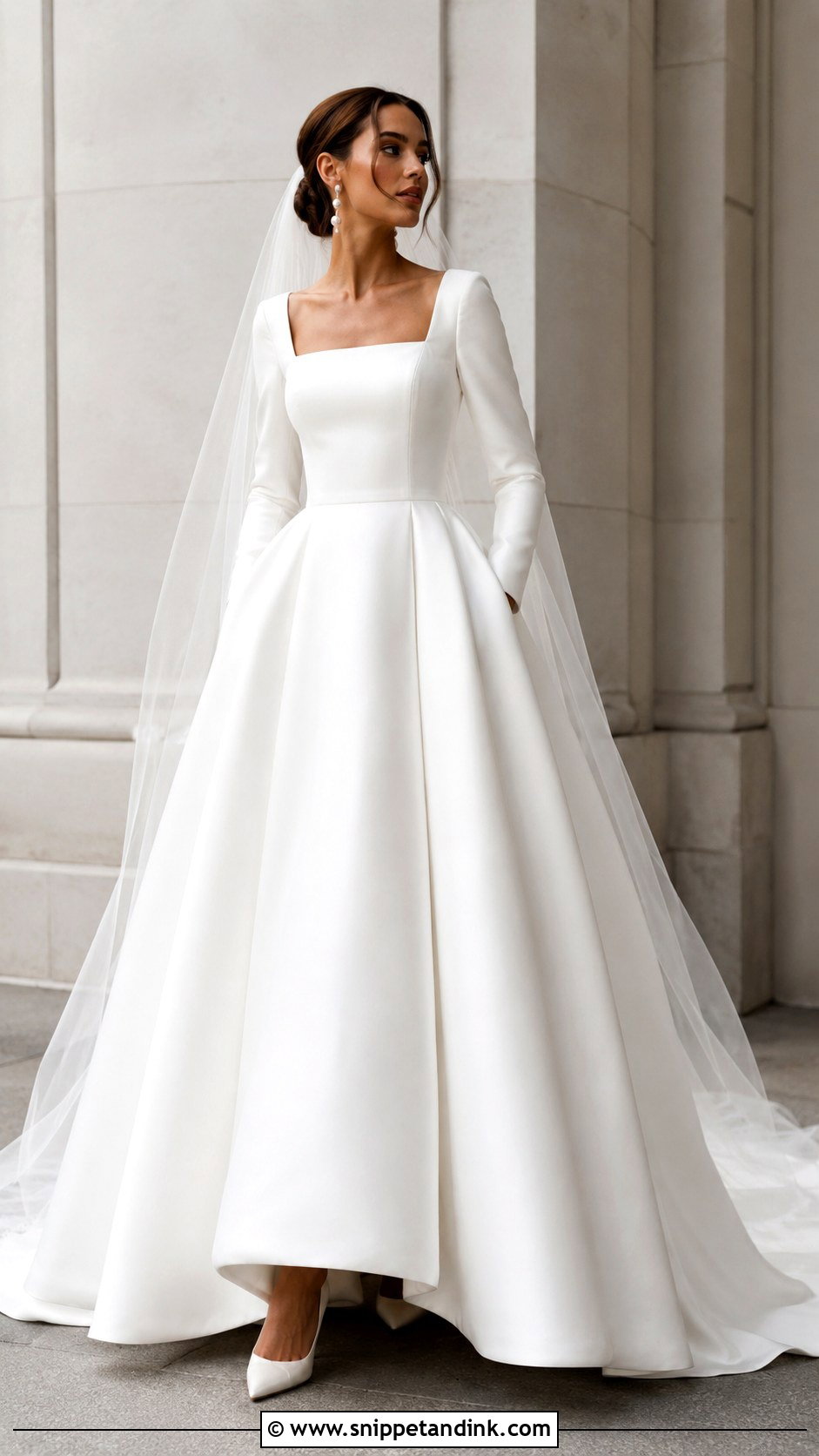
A square neck gives the bodice structure and opens the chest without feeling revealing. Satin or mikado looks crisp; lace softens the edges. Add a basque waist if you want even more shape. The straight line of a square neck shows any gaping as soon as you lean forward, so I’d have the bodice fitted with your actual undergarments on. Pearl drops and a smooth veil complete it, and it suits autumn and city ceremonies.
10. V Neck Long Sleeve Ball Gown Wedding Dress
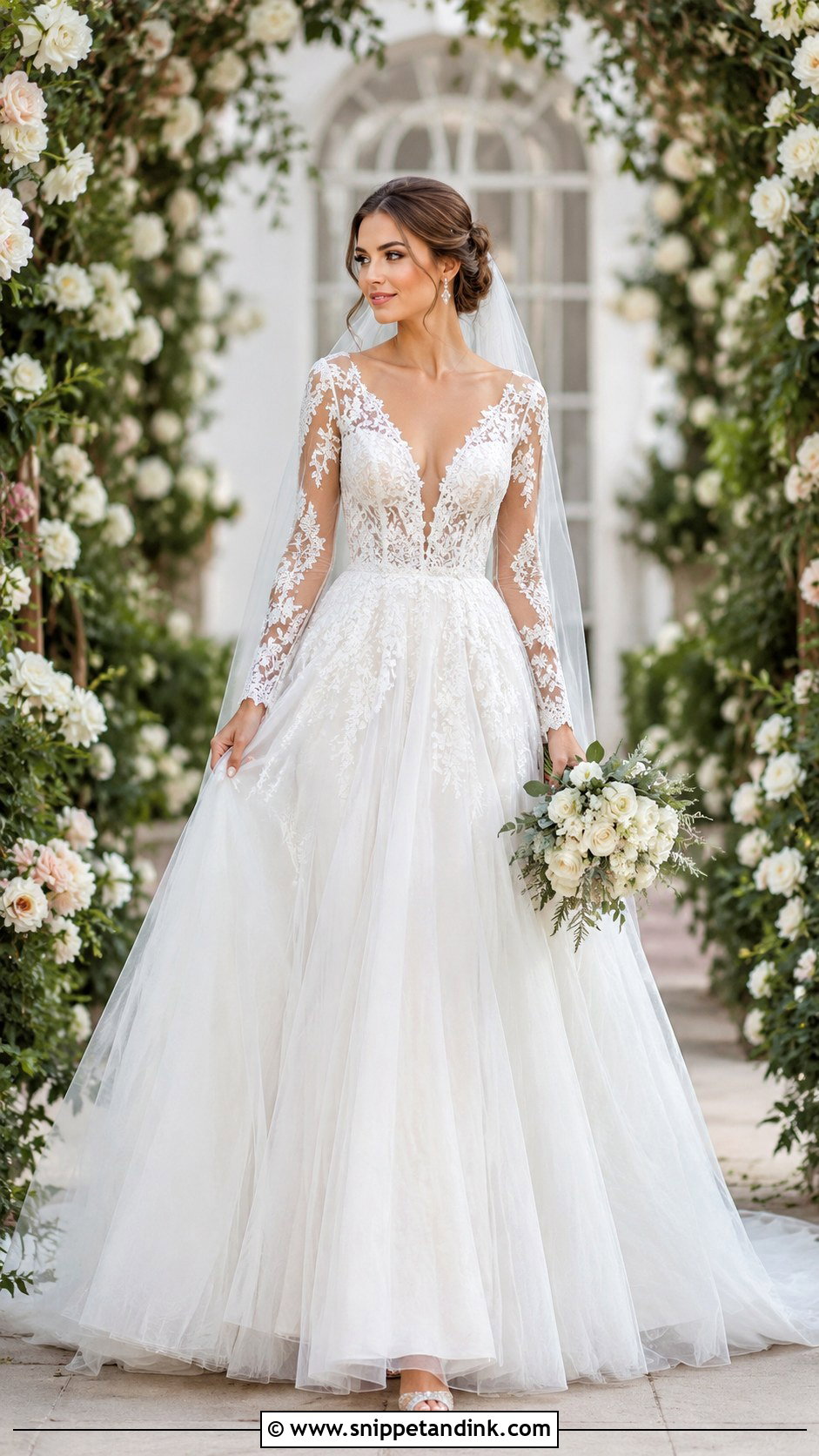
A V neck lengthens the upper body, which helps balance the volume below. It can be modest or deep. Lace sleeves feel romantic; satin sleeves look cleaner. Choose a delicate pendant or skip the necklace for earrings. If you’re tall or long-waisted, a deeper V suits you; if you’re petite, a shallower one keeps the proportion. The veil length can follow the venue, fingertip for gardens and cathedral for a long aisle.
11. Corset Long Sleeve Ball Gown Wedding Dress
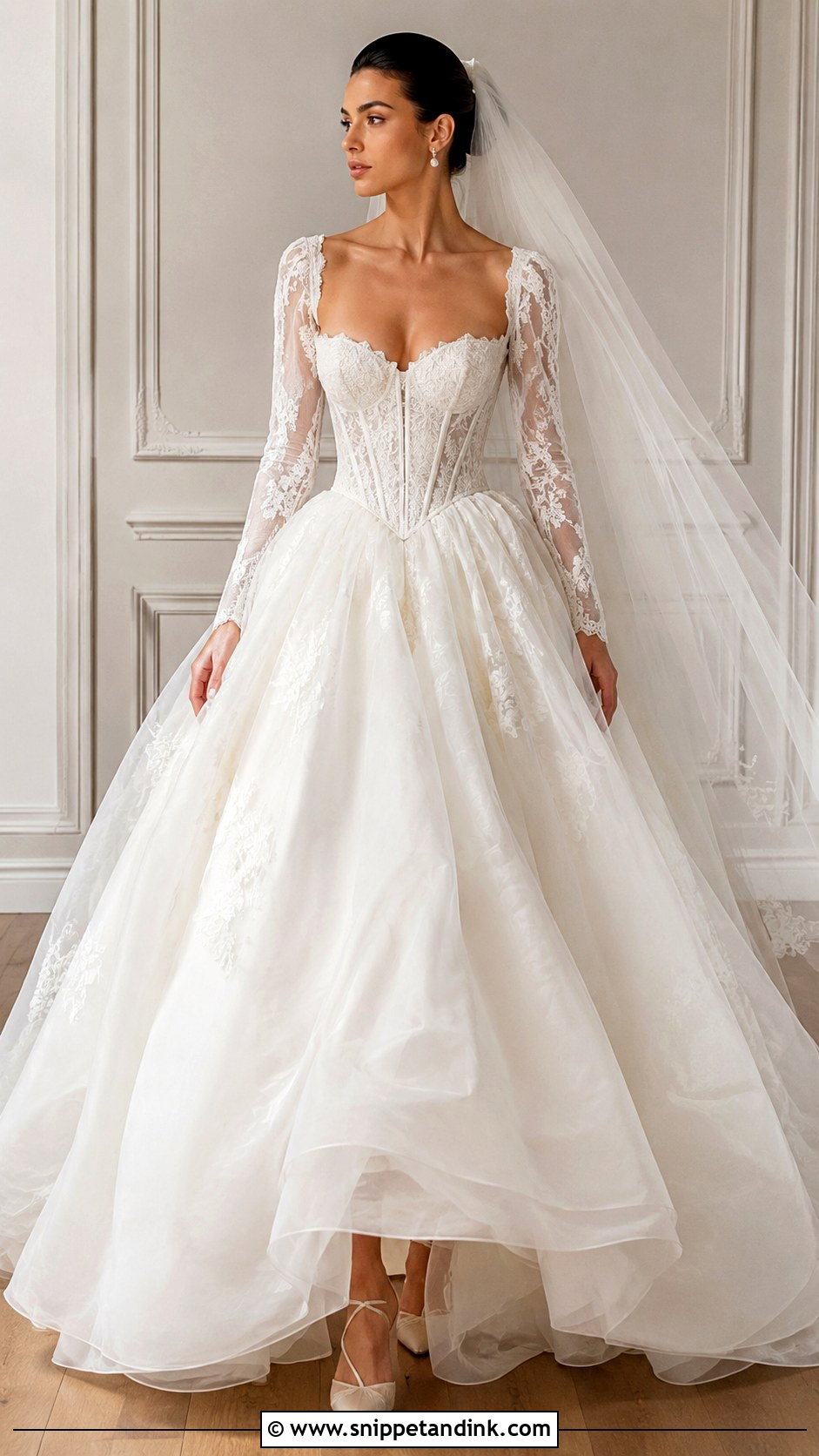
A corset bodice sculpts the waist, and long sleeves soften the effect. Some gowns show the boning for a modern look; others hide it under lace or satin. The narrow waist makes a dramatic contrast with a tulle, organza or mikado skirt. At fittings, I ask brides to sit, breathe deeply and laugh, because a corset that hurts while standing still will feel much worse during dinner. Keep styling simple so the silhouette does the talking.
12. Basque Waist Long Sleeve Ball Gown Wedding Dress
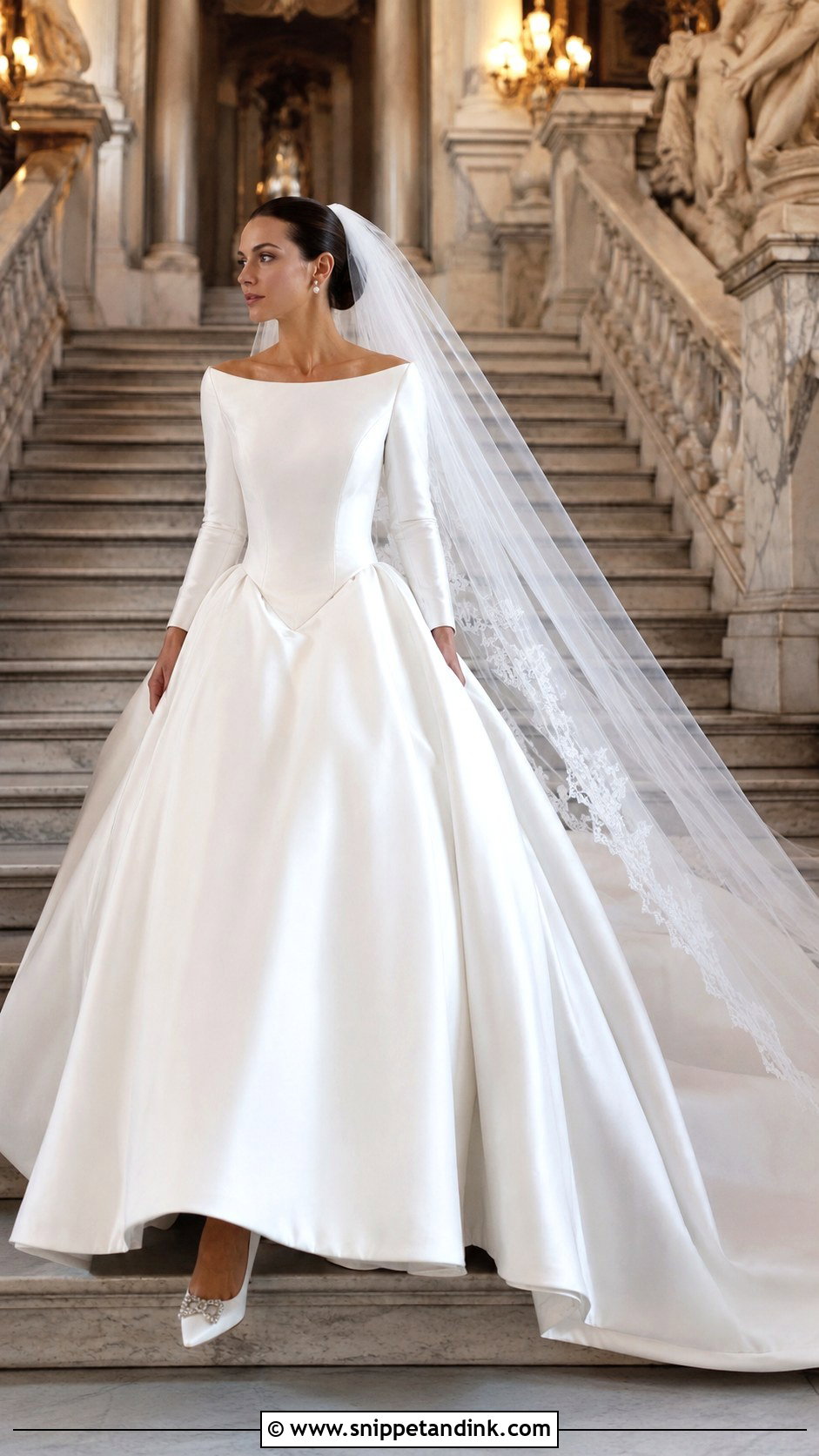
A basque waist dips into a V below the natural waistline, drawing the eye inward before the skirt opens out. It lengthens the torso and suits most figures, especially with a ball gown. Satin and mikado make it structured; lace and tulle soften it. The point of the V should sit centered over your navel, and I’d check that after any alteration, since a shifted point looks lopsided in photos. A long veil, pearl earrings and classic shoes finish this strong princess-style silhouette.
13. Floral Applique Long Sleeve Ball Gown Wedding Dress
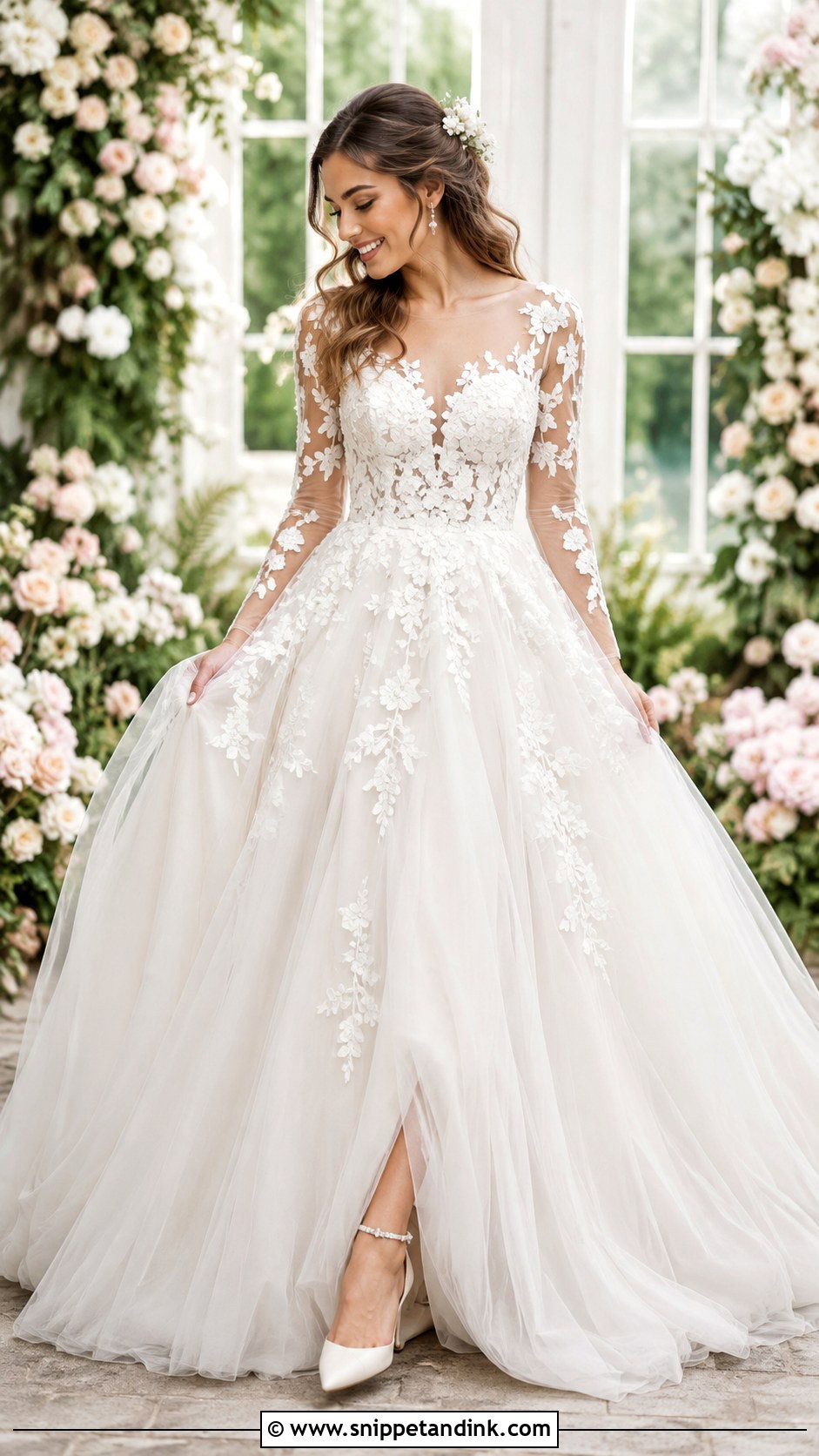
Raised floral appliques add dimension across the bodice, sleeves and skirt. Oversized flowers feel bold; tiny scattered ones feel gentle. I suggest this when someone wants texture but not sparkle, and sheer sleeves with appliques are pretty for spring and summer. Keep the veil plain so the flowers stay the focus. When the gown is altered, ask for appliques to be lifted and replaced across new seams rather than cut through.
14. Embroidered Long Sleeve Ball Gown Wedding Dress
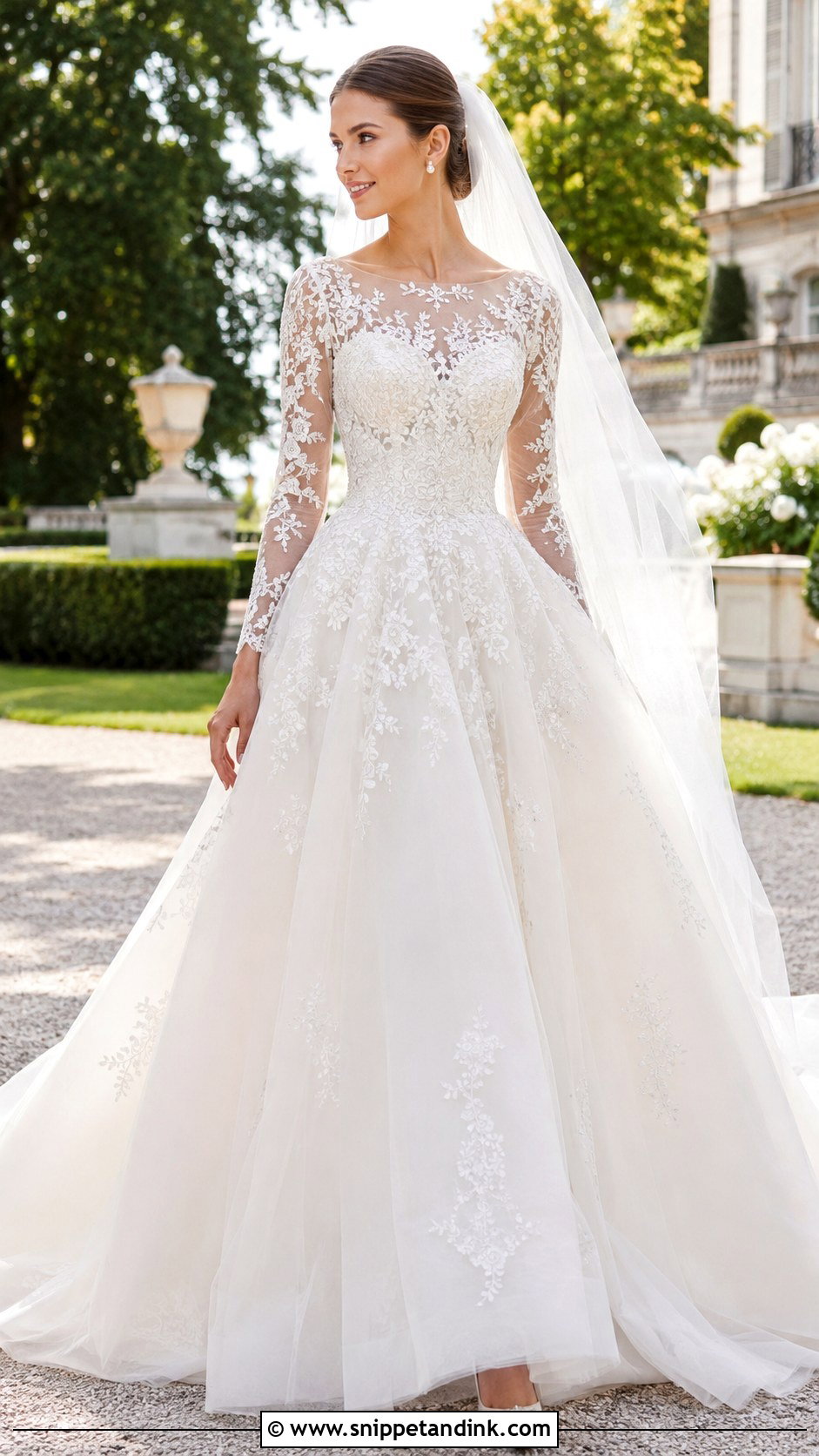
Embroidery gives a hand-worked feel that plain satin can’t. It can be floral, vine-like, baroque or modern, on sheer sleeves, across a fitted bodice or lightly scattered over tulle. It’s less shiny than beading, which some brides prefer under flash. A sheer veil with matching embroidery at the edge can tie the look together, provided the motifs are close in scale. Keep accessories soft, perhaps pearl studs or a thin bracelet.
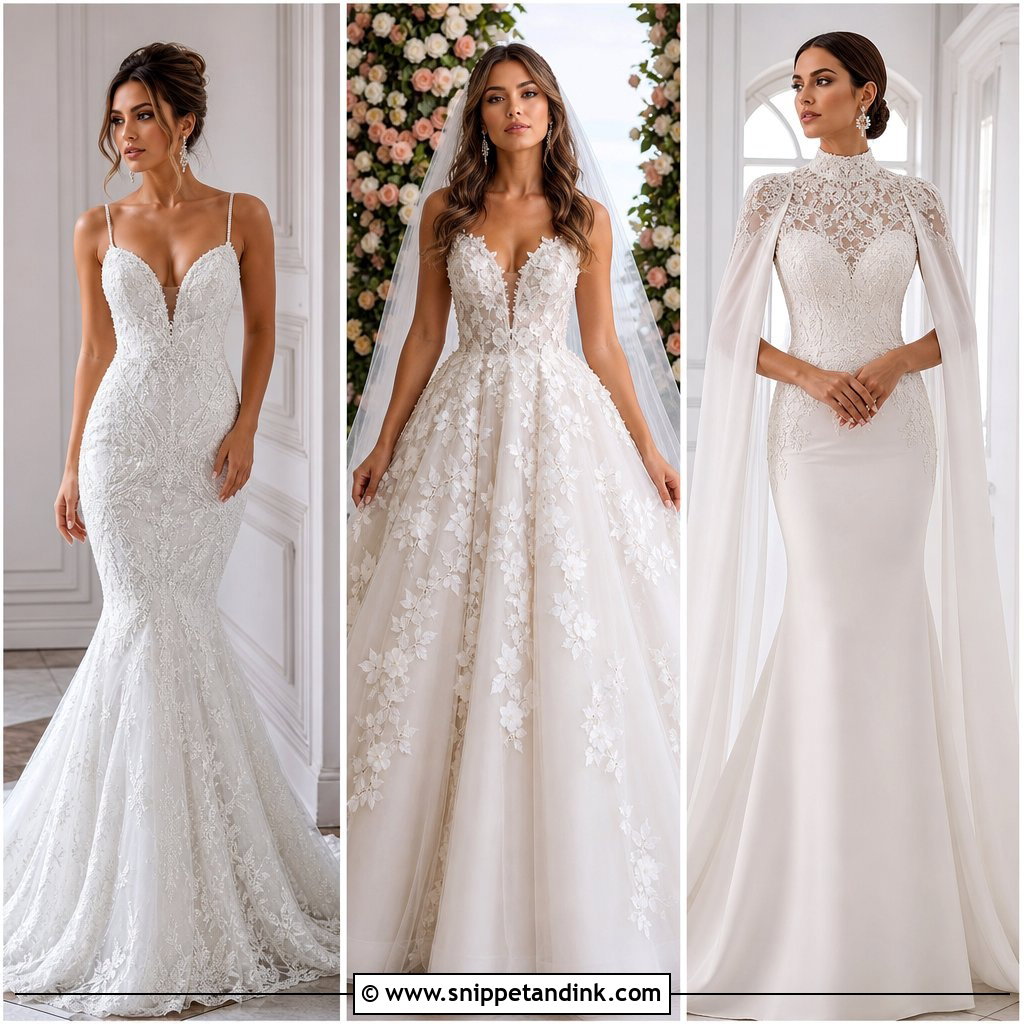

15. Pearl Long Sleeve Ball Gown Wedding Dress
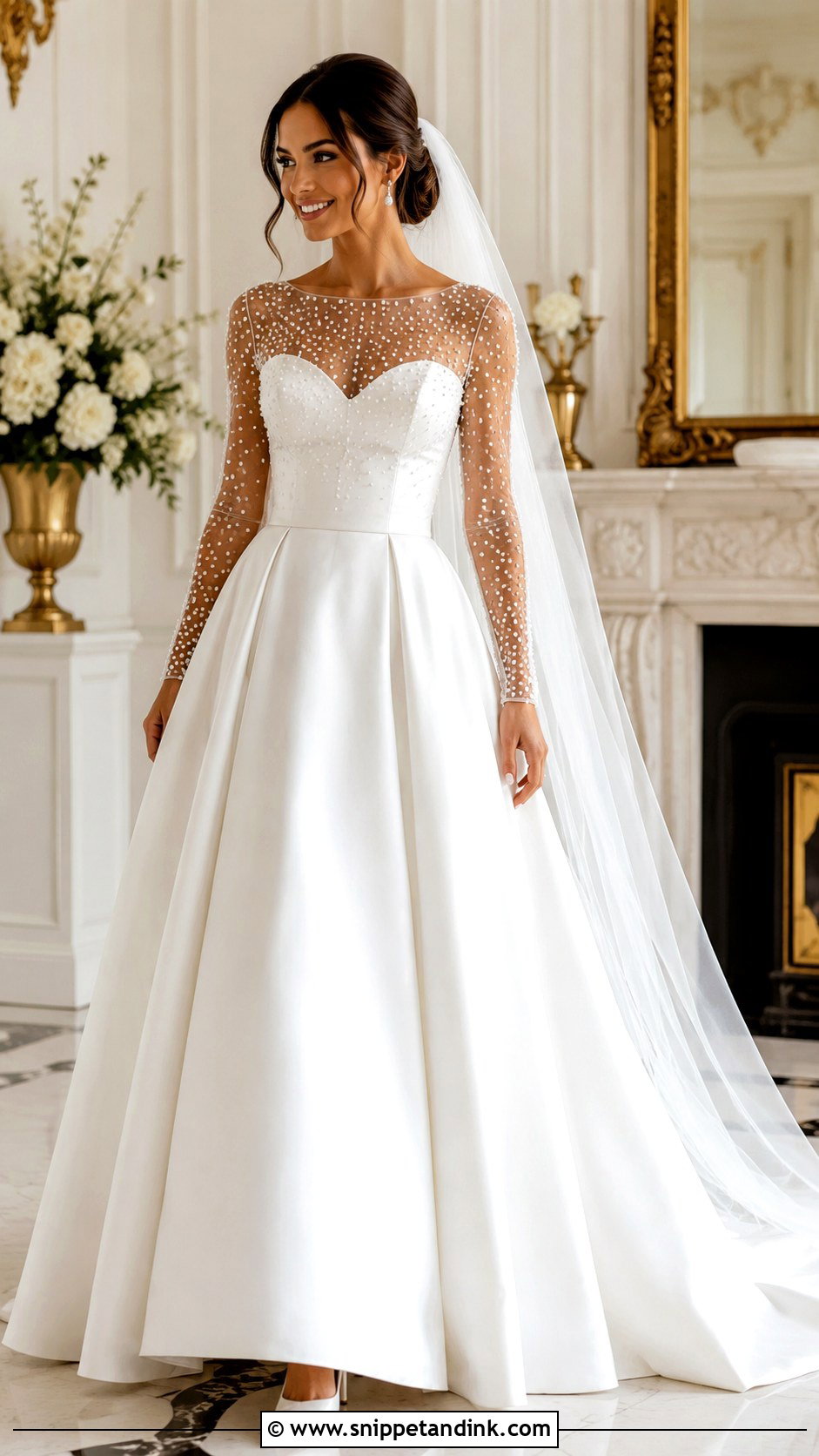
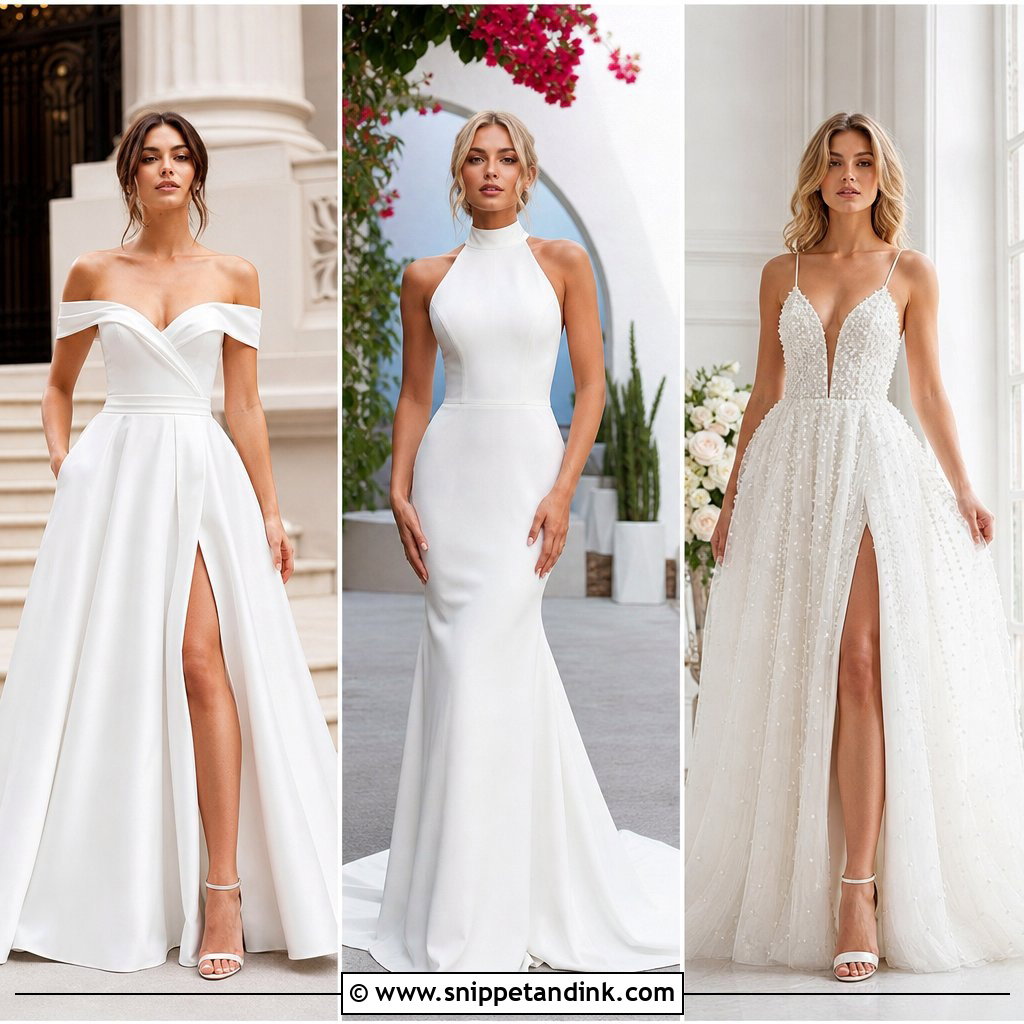
Pearls give a softer glow than crystals or sequins. Tiny pearls scattered over illusion sleeves, along the bodice or as delicate accents on the skirt look polished without flash. Tulle or organza keeps it romantic; satin makes it cleaner. Pearl earrings and classic white heels complete it. Sit at a table during the fitting; pearls stitched along the inner sleeve can press into your forearms.
16. Sparkle Tulle Long Sleeve Ball Gown Wedding Dress
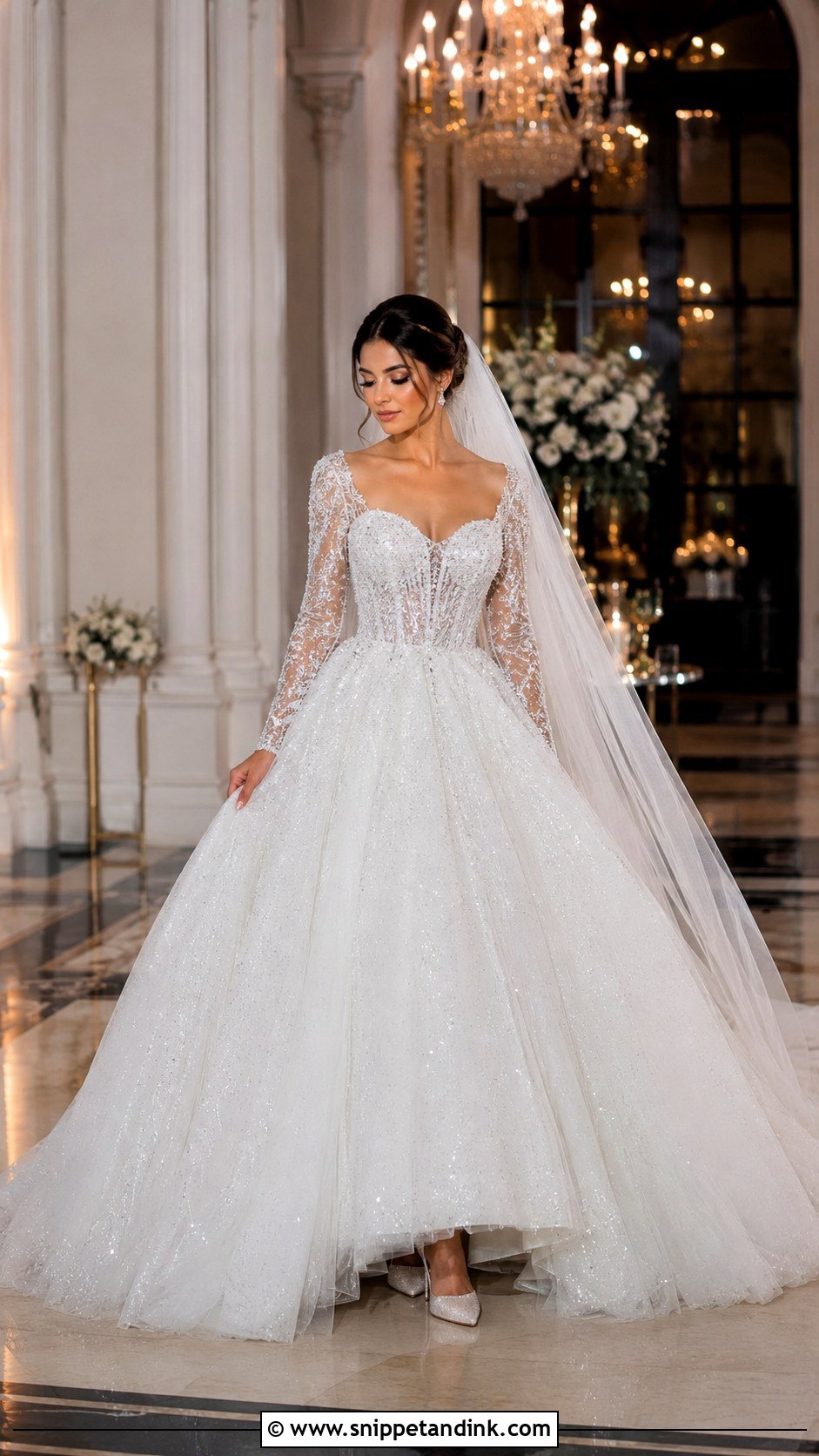
Sparkle tulle catches the light with every step. It can be a light dusting across the skirt or full glitter tulle with beaded sleeves. A fitted bodice keeps the shape balanced. Keep jewelry simple, and choose a clean veil or skip it. Be warned: some glitter tulle sheds, and you’ll find sparkles on your partner’s suit for weeks. I’d rub a swatch firmly before buying. It’s at its best at evening receptions and winter balls.
17. Minimalist Long Sleeve Ball Gown Wedding Dress
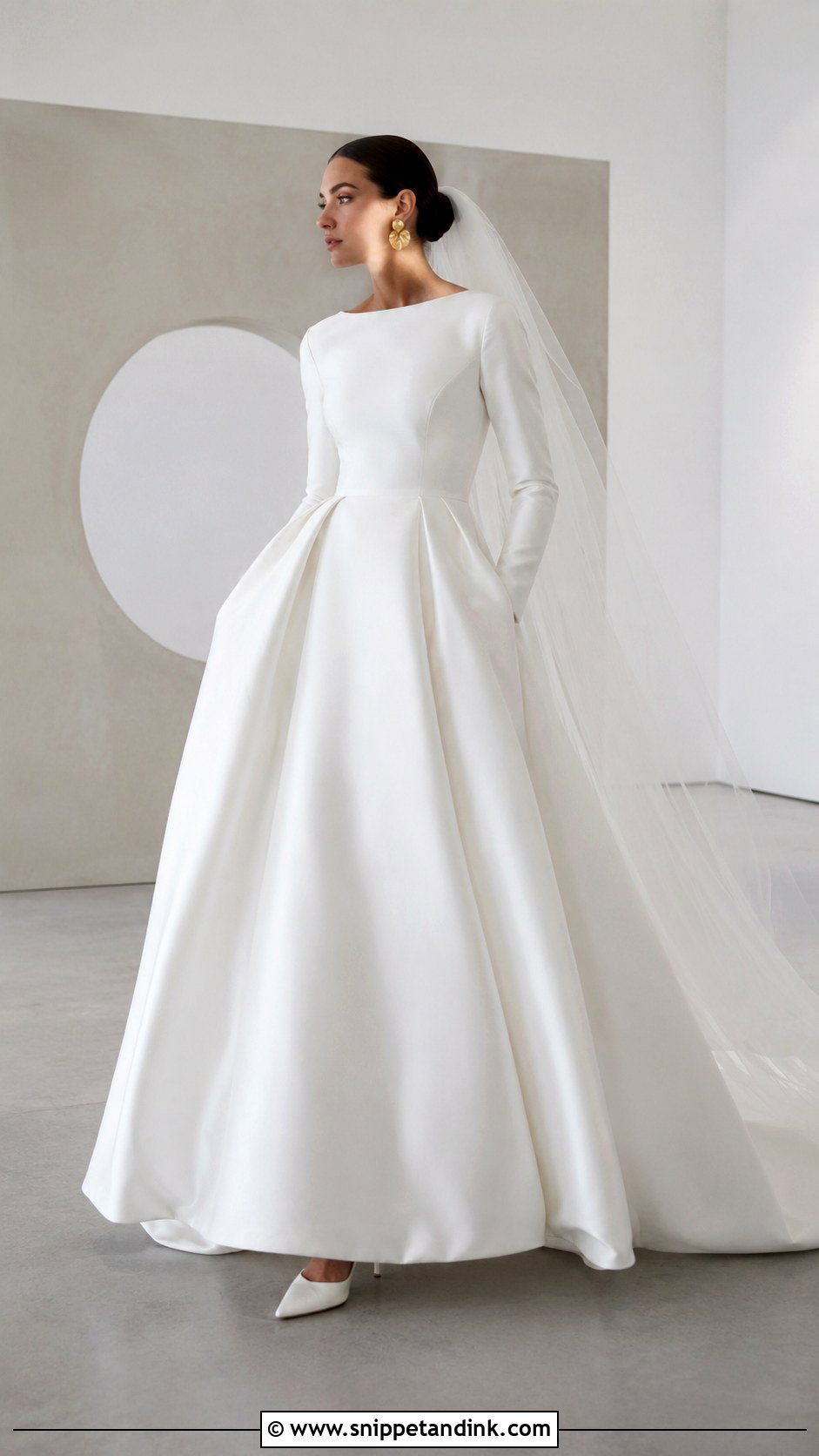
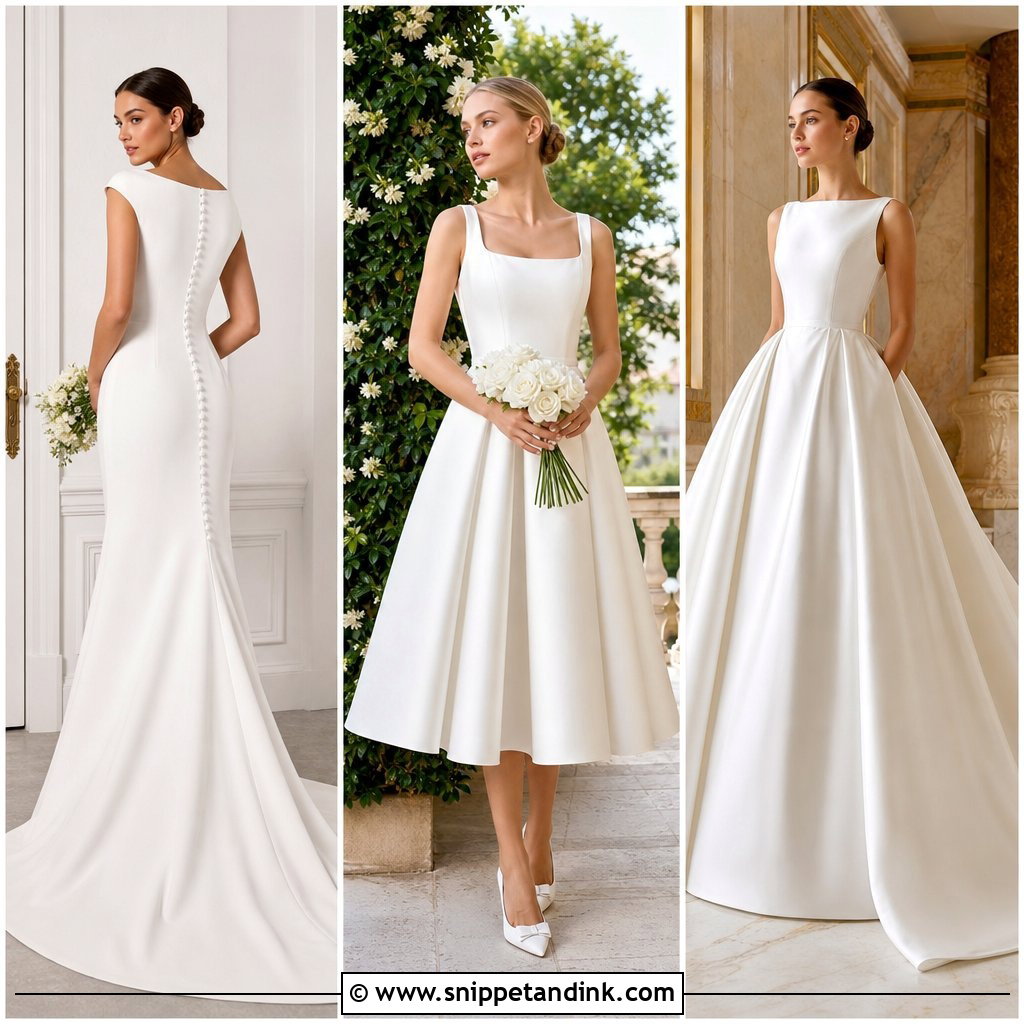
A minimalist ball gown proves volume and drama don’t need decoration. Clean fabric, a fitted bodice and a full skirt create the whole effect, so cut, fit and fabric quality matter more than in any other gown here. Satin, mikado and crepe are the strongest choices. A square, high or bateau neckline looks refined. Sculptural earrings, a sleek bun and a long plain veil finish it for a city or museum venue.
18. Modest Long Sleeve Ball Gown Wedding Dress
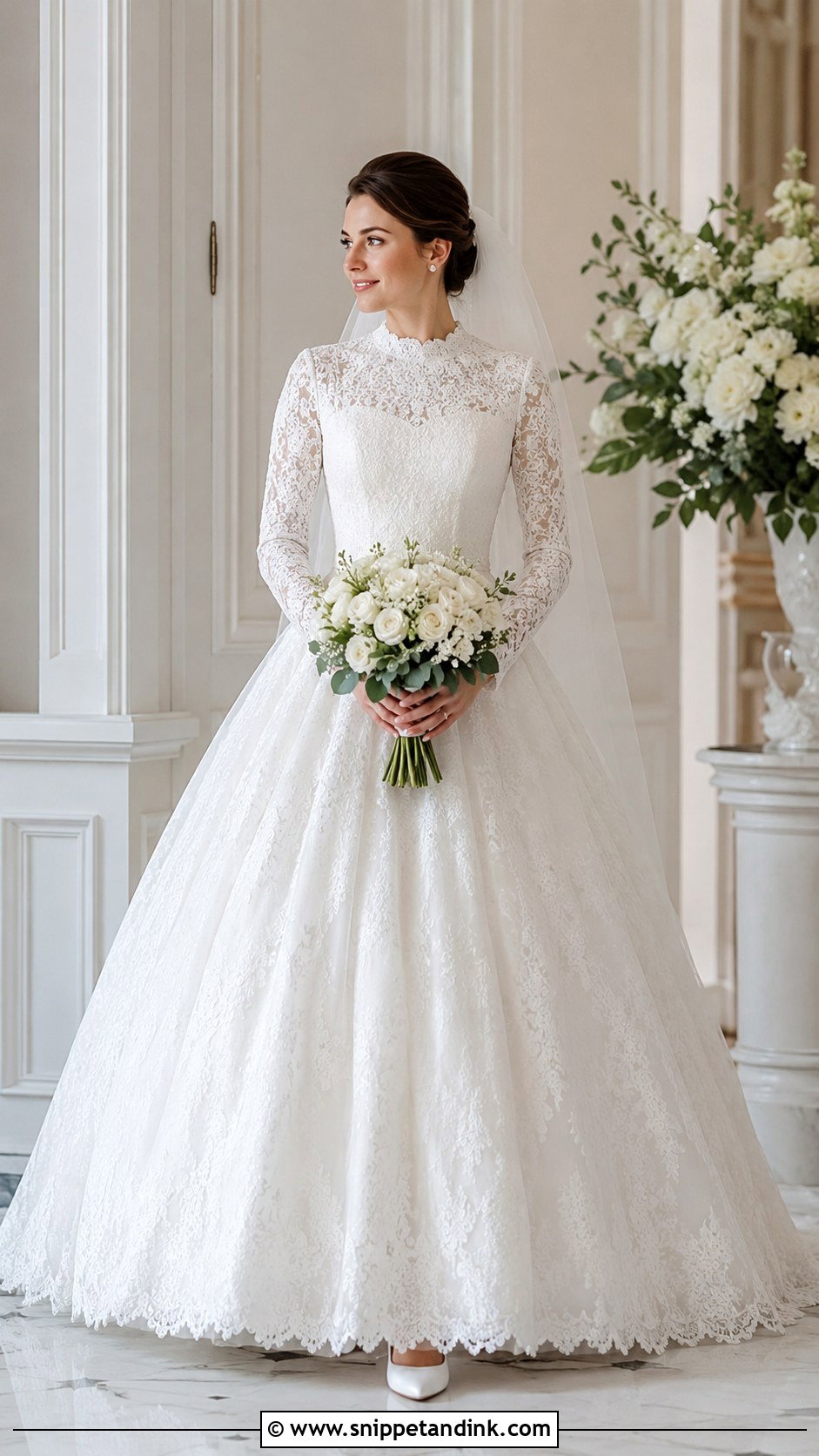
A modest gown should look intentional, not plain. A higher neckline, lined sleeves and a full skirt that moves comfortably are the base; covered buttons, soft pleating, a defined waist or subtle embroidery add interest. Lace, satin, crepe and mikado all work. I make sure the sleeves are lined, so they’re fully opaque under flash, and that the neckline stays put when you bend. Pair it with a classic veil, closed-toe heels and simple jewelry.
19. Vintage Long Sleeve Ball Gown Wedding Dress
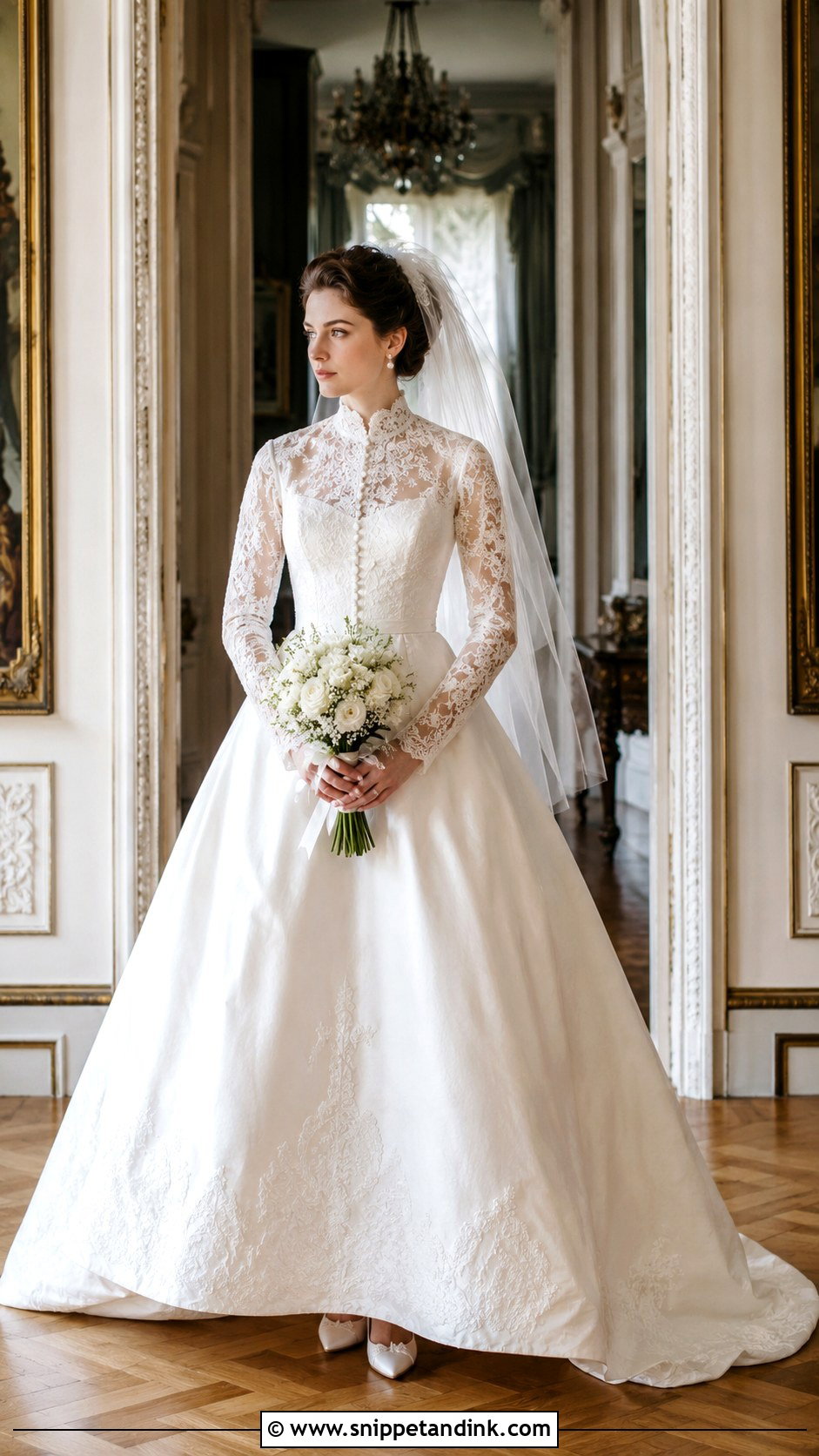
A vintage gown leans on lace sleeves, covered buttons, high necks, basque waists or soft puff shoulders for old-fashioned romance. Lean Victorian with a high lace neck, or choose a 1950s fitted waist and full skirt. Accessories should support the mood without tipping into costume, so pearl earrings, a soft veil and classic pumps are enough. Real vintage lace can be fragile, so check for weak spots at the cuffs and neckline where hands pull most.
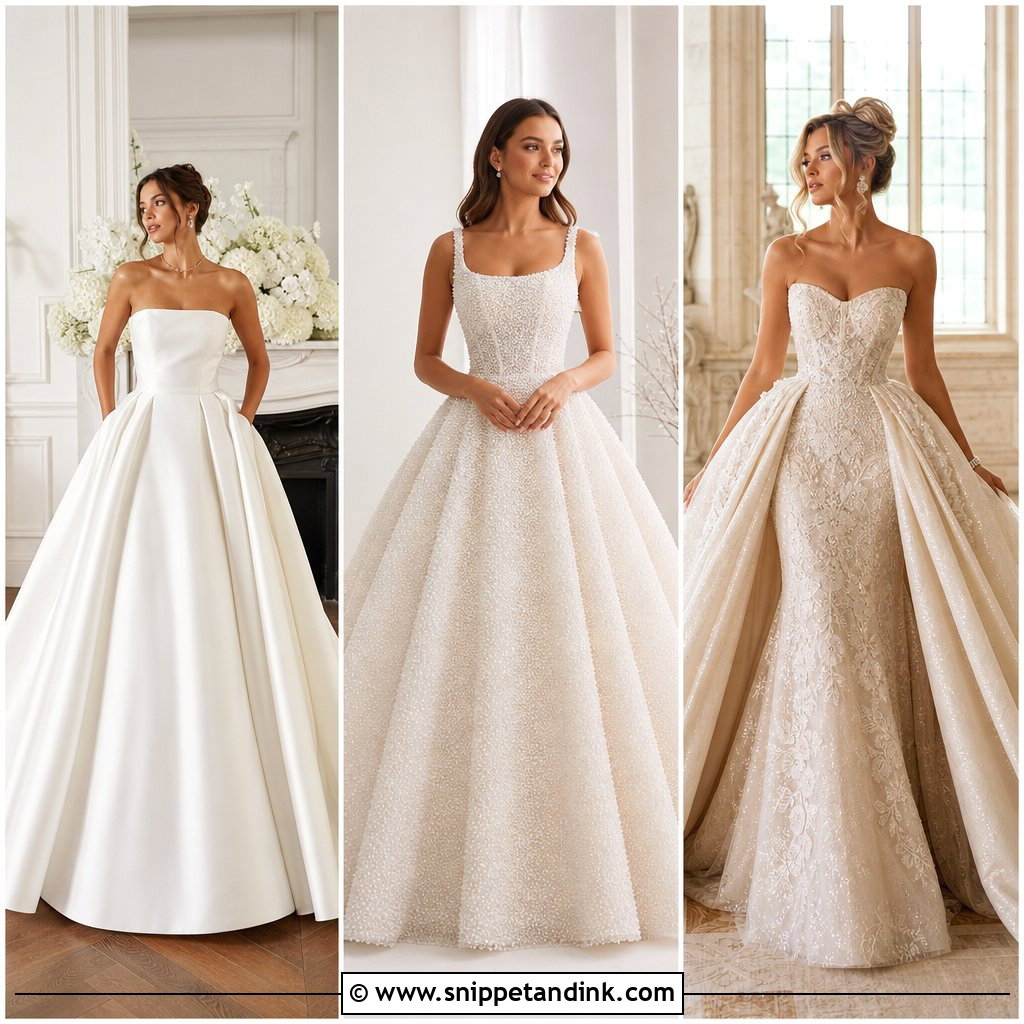
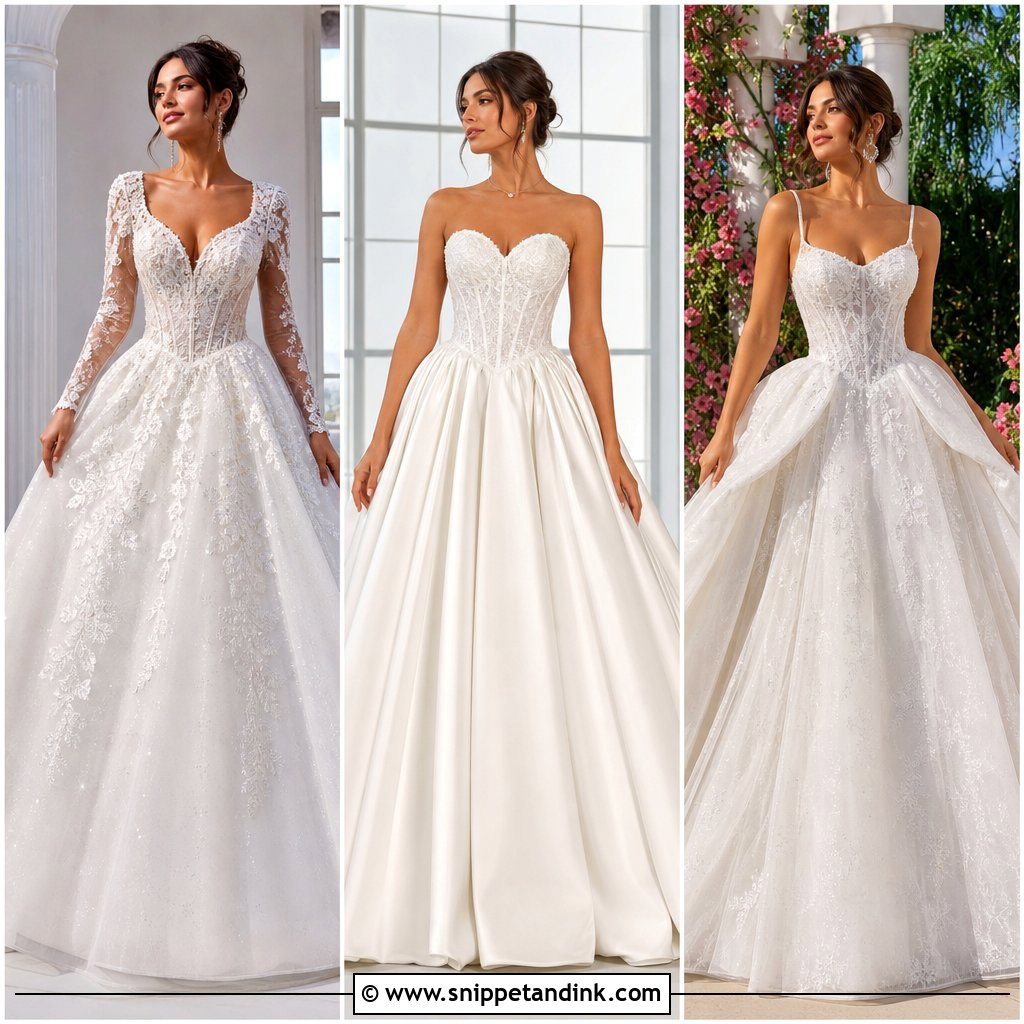

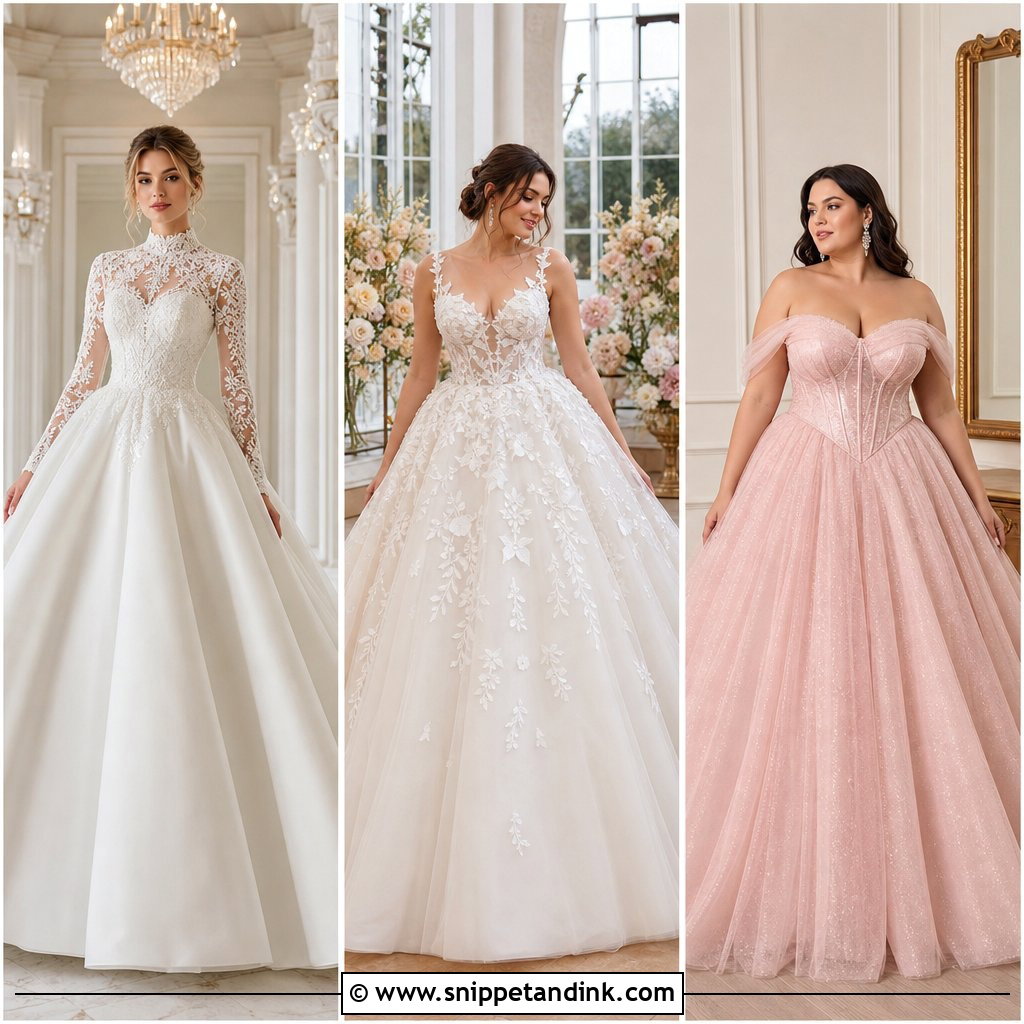
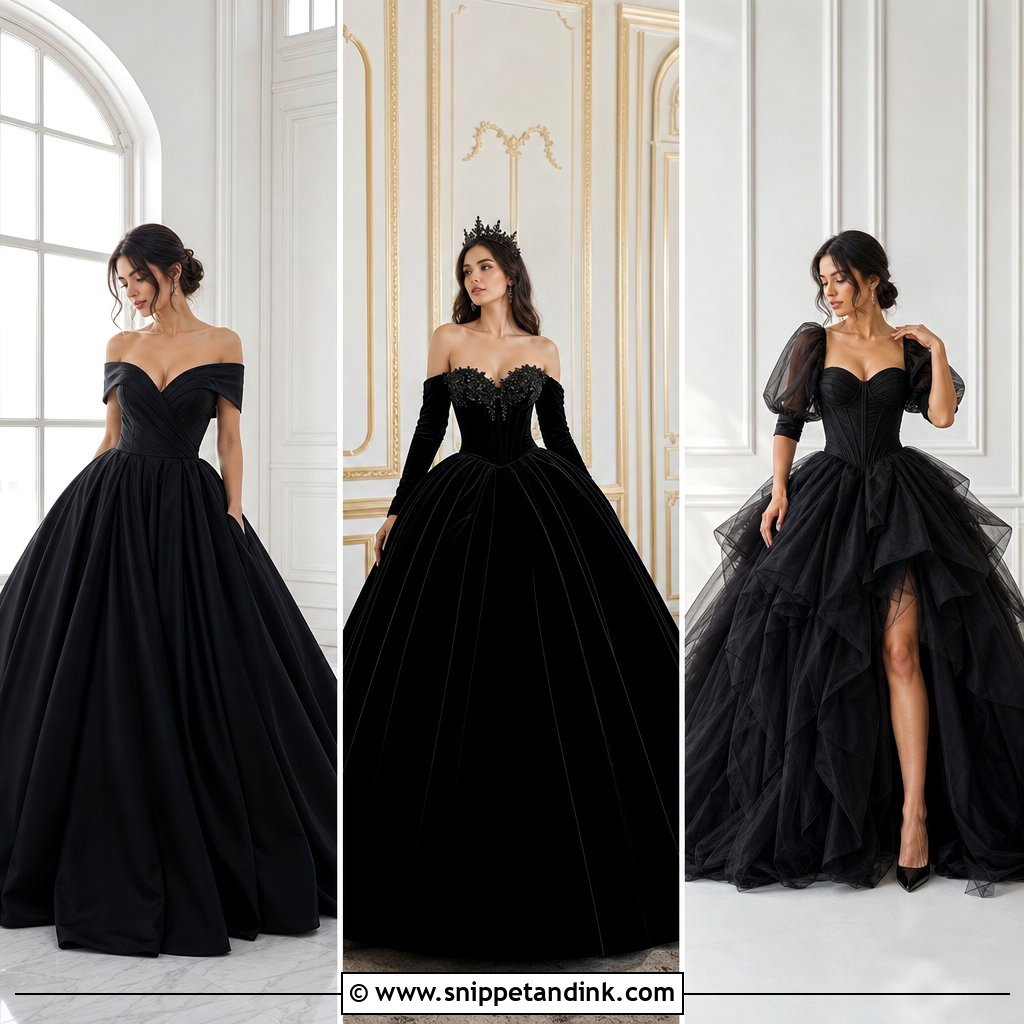
20. Royal Long Sleeve Ball Gown Wedding Dress
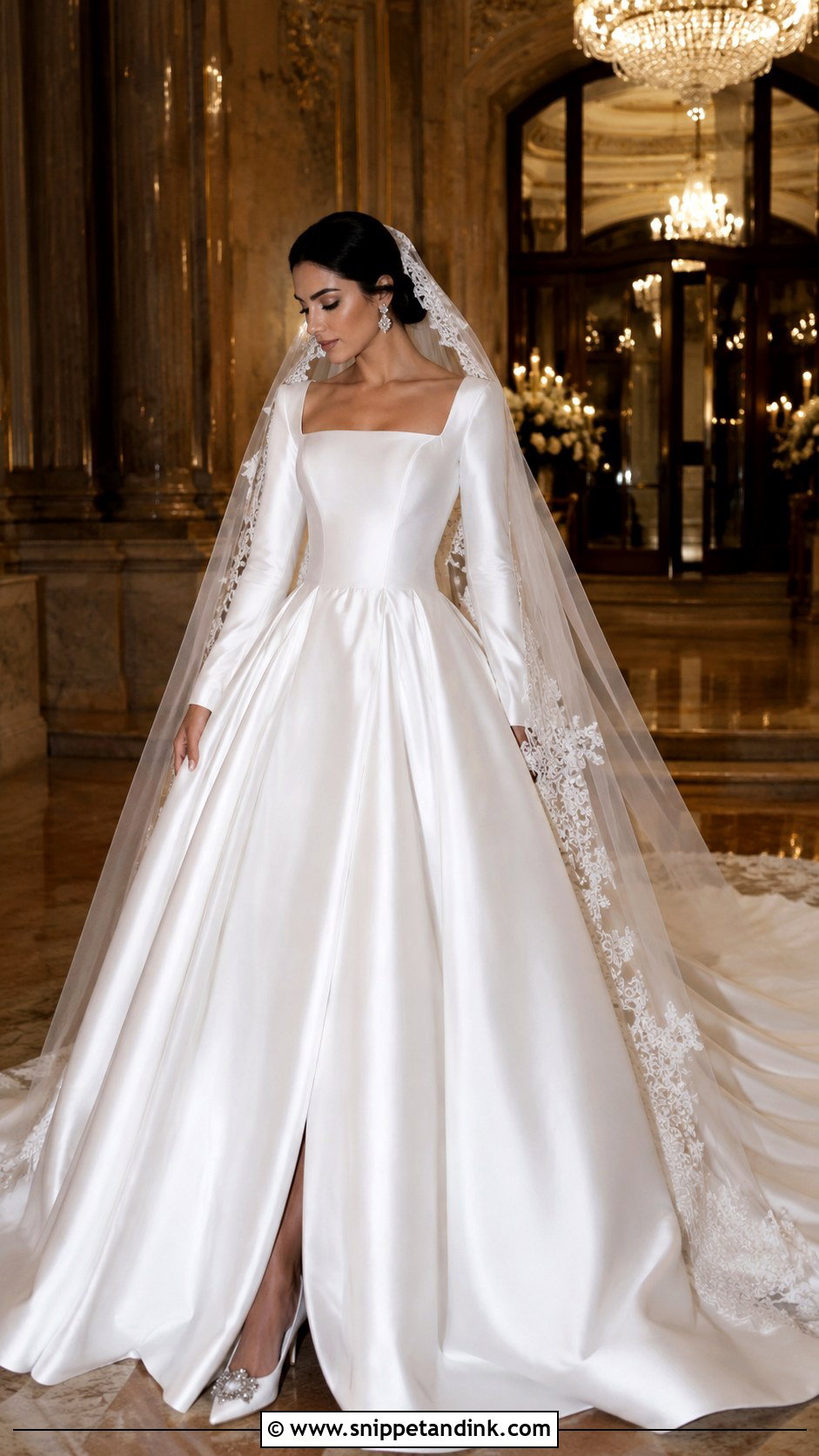
A royal-style gown is all about the entrance: structured bodice, full skirt, long train and refined sleeves. Satin, mikado and lace are the strongest fabrics. A high neckline feels traditional; off-the-shoulder softens it. Since guests watch you walk away down the aisle, the back matters most, with covered buttons, a sweeping train and a cathedral veil. Keep jewelry classic. Long trains need a confident bridesmaid to arrange them at the altar.
21. Winter Long Sleeve Ball Gown Wedding Dress
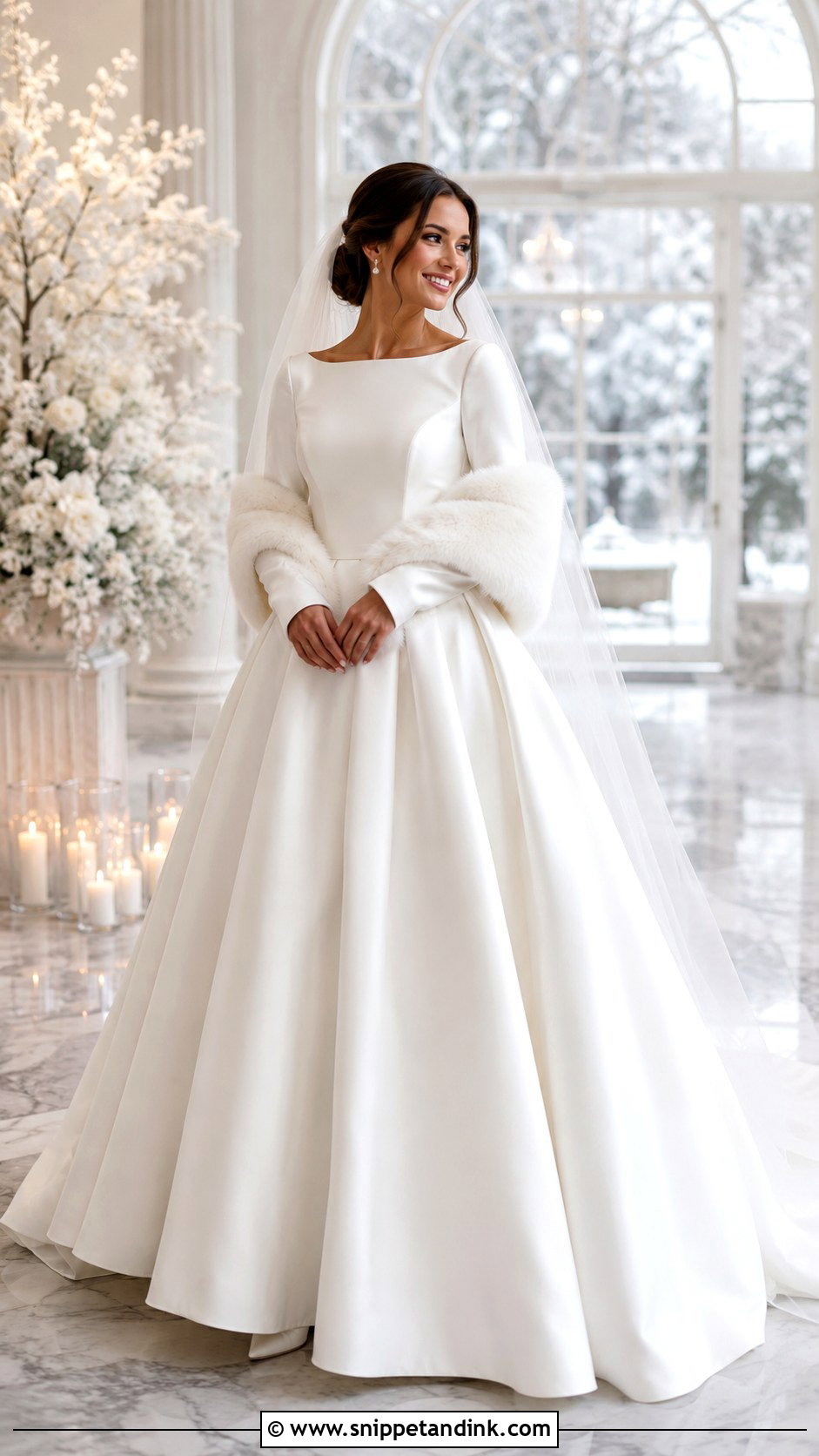
In winter, heavier fabrics like mikado, satin, brocade or lined lace give structure and warmth, and long sleeves suit the season naturally. Add subtle sparkle, pearls or embroidered lace for a festive feel. A faux-fur wrap, closed-toe heels and a long veil complete the outfit for snowy portraits. Wet hems are the winter problem. Ask for a bustle that lifts the train completely clear of the ground for outdoor photos and walking on slushy paths.
22. Spring Long Sleeve Ball Gown Wedding Dress
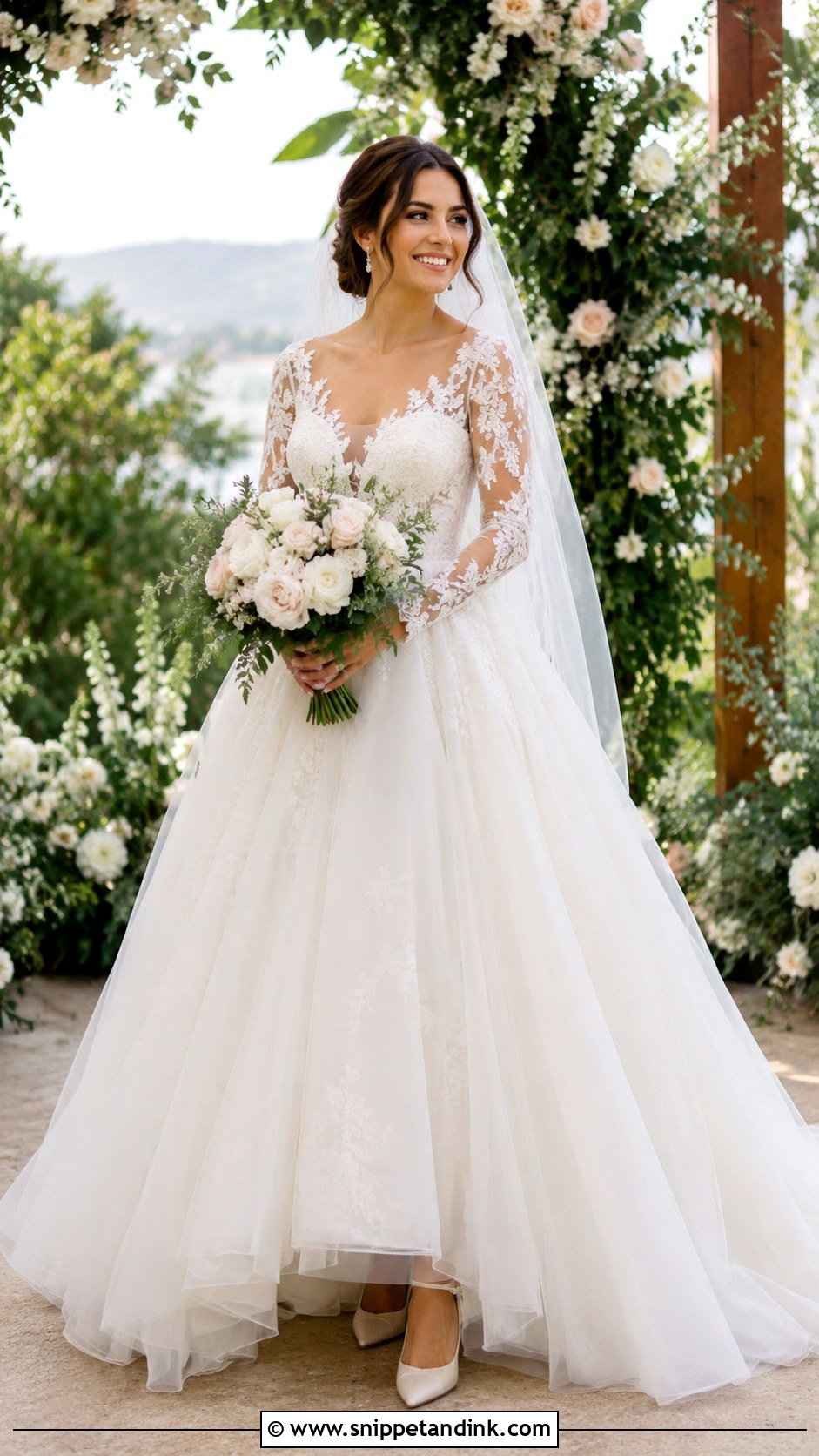
A spring gown should feel lighter. Sheer lace sleeves, floral appliques, soft tulle or airy organza keep the volume while cutting the weight, which makes garden paths easier. Floral embroidery suits the season well. Soft waves, delicate earrings and a sheer veil finish it. Spring weather swings, so a tulle skirt that keeps you cool at noon might feel thin by evening; plan a wrap.
23. Plus Size Long Sleeve Ball Gown Wedding Dress
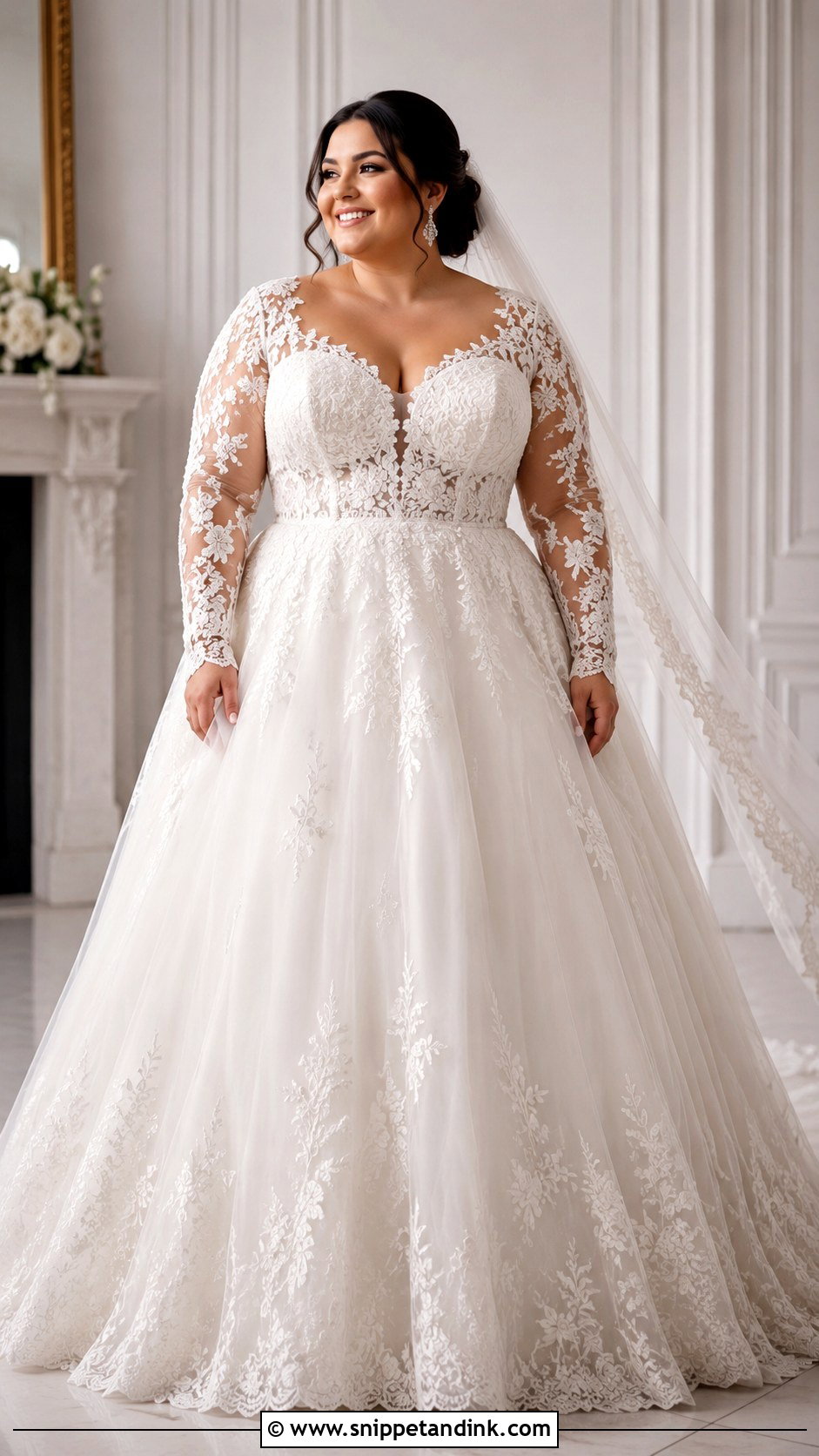
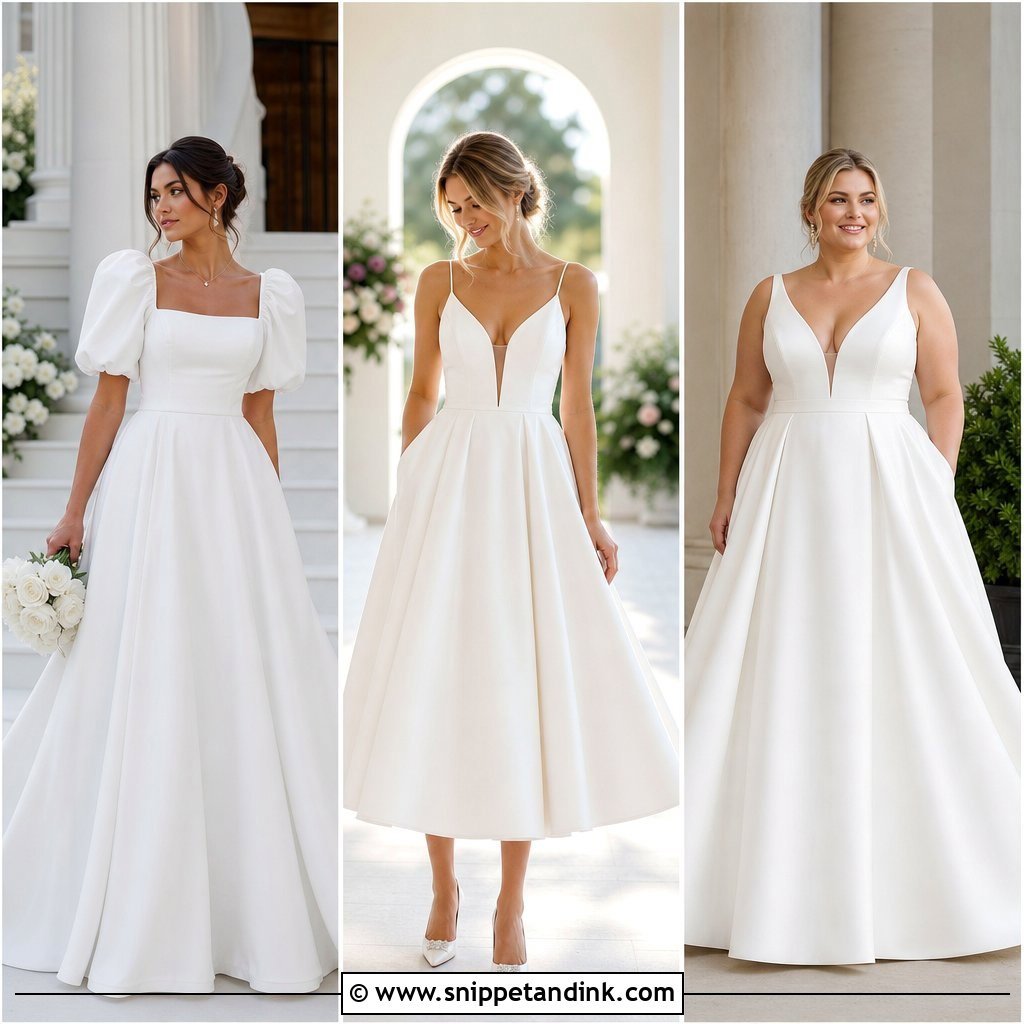
Plus-size brides look magnificent in ball gowns when the structure is right. I look for a supportive bodice, a defined waist that feels secure rather than tight, and sleeves cut with room in the upper arm. A ball gown skirt balances well with a V neck, square neck or off-the-shoulder neckline. Lace sleeves, satin bodices and corset details all work. Plan undergarments before the first fitting so the bodice is fitted to them. Sit, walk, hug and dance in it before you commit.
24. Petite Long Sleeve Ball Gown Wedding Dress
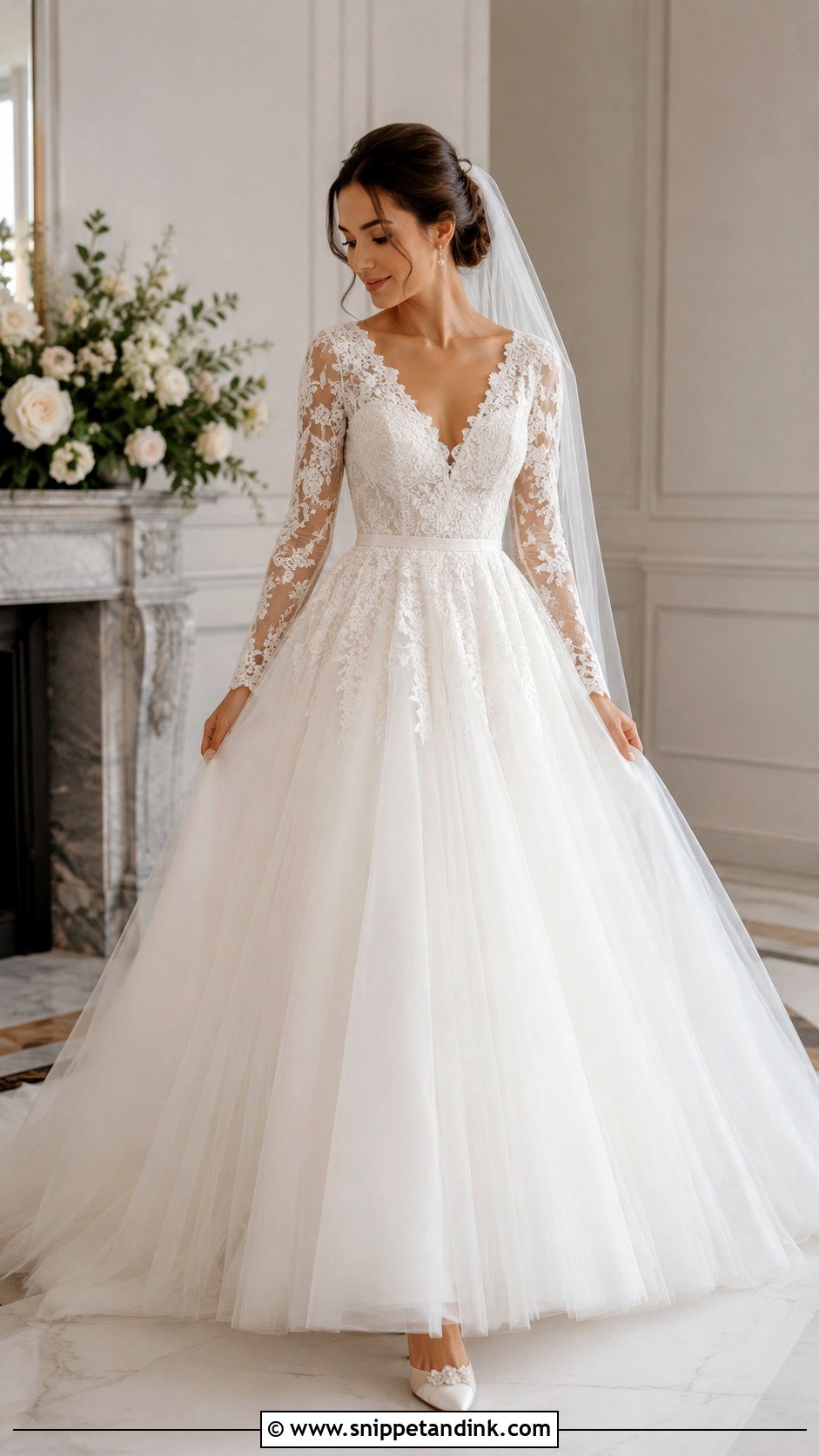
A petite bride can wear a ball gown; the volume just has to be scaled. Choose a skirt with fullness that doesn’t overwhelm your frame, and consider a slightly higher waist, a vertical lace pattern or a V neck to lengthen the body. Tulle and organza are easier than very heavy satin. Sleeves should end exactly at the wrist bone; extra length bunches and shortens the arm. A slim veil and delicate earrings keep the scale right for a princess shape.

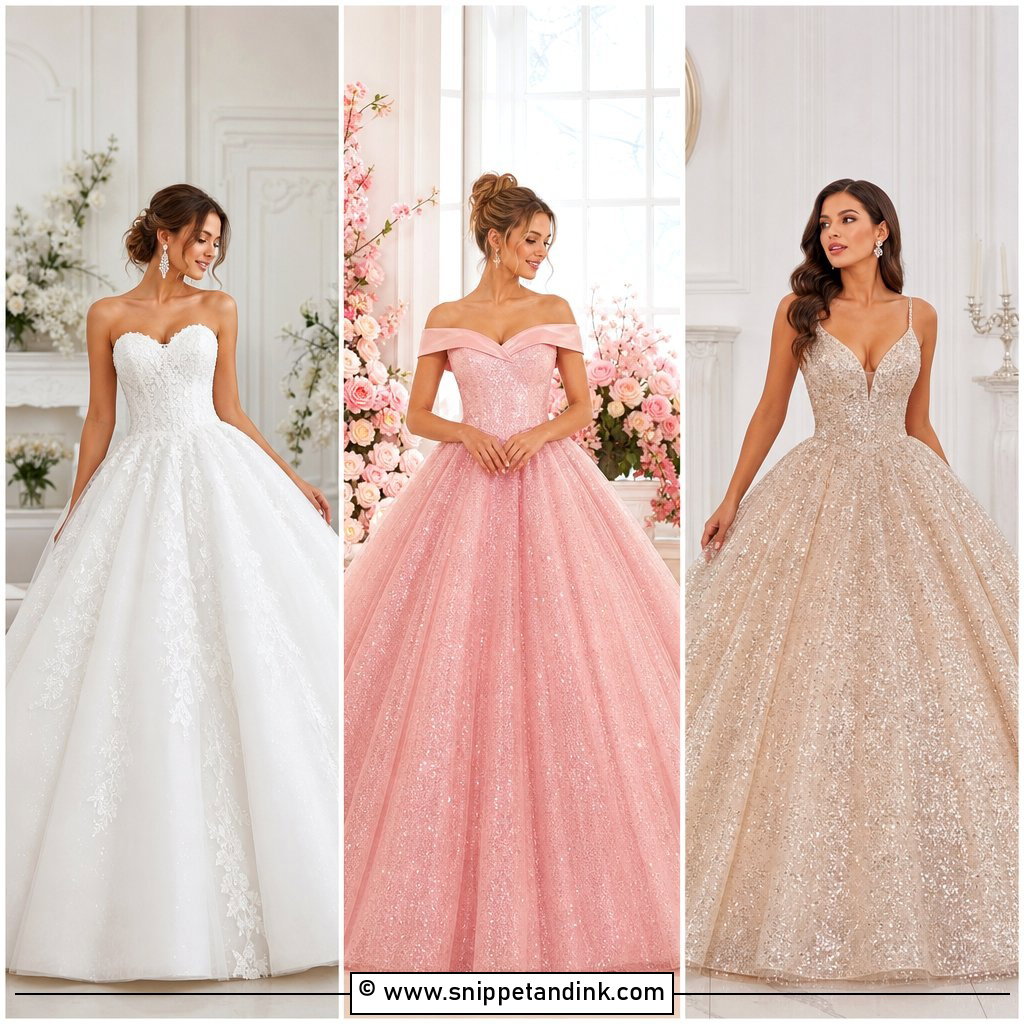

25. Detachable Sleeve Ball Gown Wedding Dress
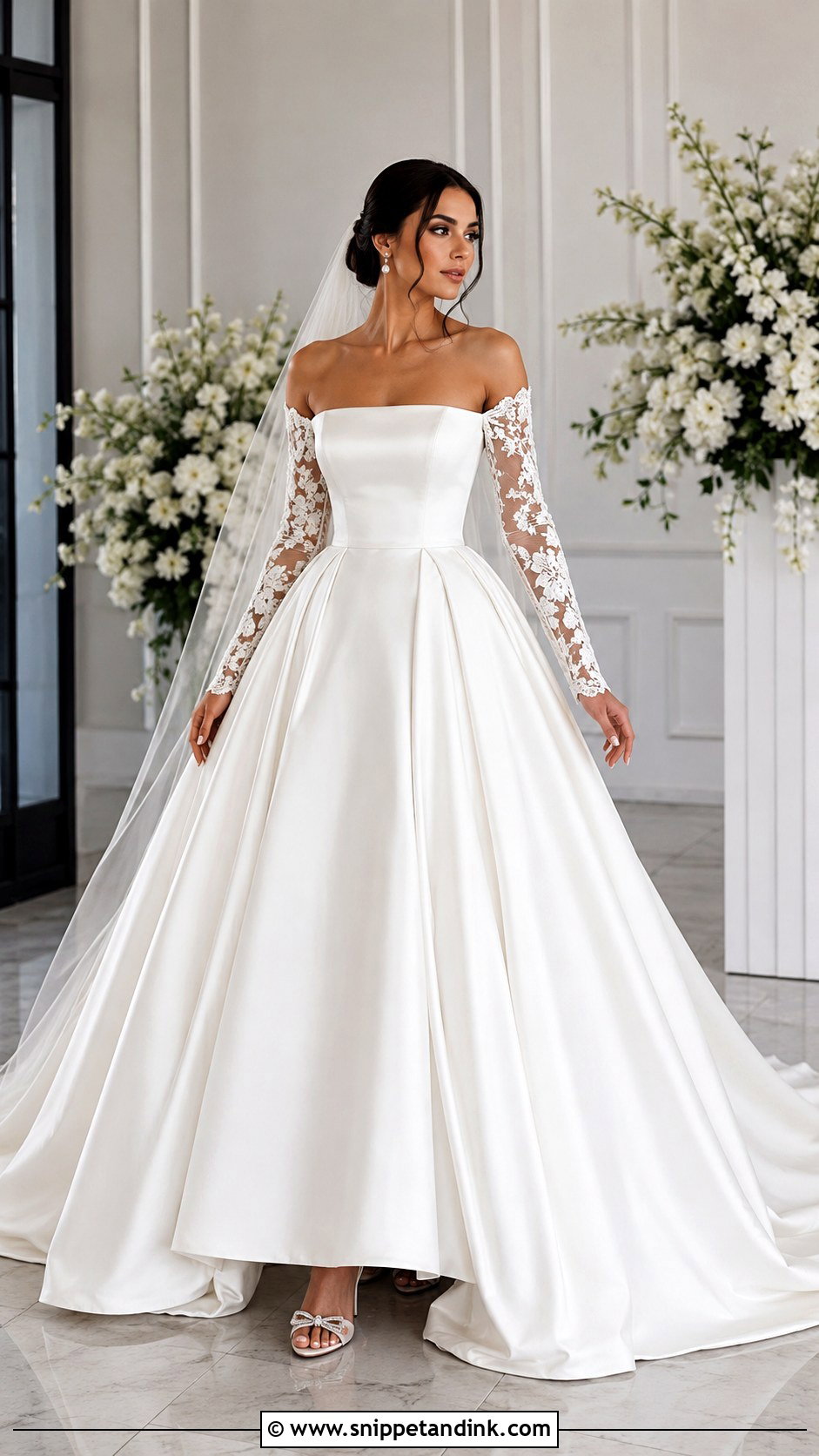
Detachable sleeves give you two looks: covered and formal for the ceremony and portraits, then lighter for the reception. They can be lace, tulle, satin, puffed or off-the-shoulder. I check two things: that they attach with hidden hooks or snaps that hold through a hug, and that the fabric matches the gown exactly. Plan one jewelry and veil choice that works both ways. Have a bridesmaid practice removing them, since you can’t reach the fastenings yourself.
Bustling a Full Skirt for the Reception
After the ceremony, the train has to go up or it will be stepped on within minutes. The way a seamstress bustles it changes the look of the skirt for the rest of the night.
- Over bustle: the train is lifted and hooked to points on the back of the skirt. Quick and secure, and it suits satin and mikado.
- Under bustle: the train is tucked and tied beneath itself with ribbons, giving a softer, layered look.
- Ballroom bustle: many small tie points spread the train evenly so the skirt looks floor-length all the way round. It suits a ball gown best but takes the longest to tie.
Ask for the ribbons to be numbered or color-coded, bring the bridesmaid who will do it to your final fitting, and have her film the steps on her phone. In a dim reception room, with guests waiting, that video saves a lot of fumbling.
Cars, doors and restrooms
A full skirt needs a plan for the dull parts of the day. Get into the car backwards: sit first, then swing your legs in and let a helper gather the skirt around you. Check the venue’s doorways and aisle width if your skirt is very wide. And for restroom trips, bring a helper, or try a slip that gathers the skirt up so you can manage alone. Practice once at a fitting, not on the day.
Sit, Hug, Dance: The Last Test Before You Order
Long sleeve ball gowns last because they combine structure and presence in one silhouette. Your venue, season and comfort level should narrow the field before anything else. Lace reads romantic, satin regal, tulle soft and mikado polished; basque waists, illusion sleeves, pearls and detachable sleeves make the gown more personal. Look at it from every angle in the fitting room, and choose the one you can move in, not just stand in.
You'll Like These Ideas:



Leave a Reply