
Covered arms and a bare back is a pairing I never tire of, because it gives you a quiet front for the vows and a reveal as you walk away. It works in lace, satin, crepe, chiffon and tulle, and in rooms as different as a ballroom and a meadow. Open backs now come with high necks, square necks, fitted skirts, appliqué sleeves and clean A-lines, so there’s real choice. The catch is engineering. With no fabric across the back, the shoulders and sleeves carry the dress, which means alterations should start early and your undergarments should come to every fitting. Below are 25 complete looks, styled from hair to shoes, with notes on what I’d check in each.
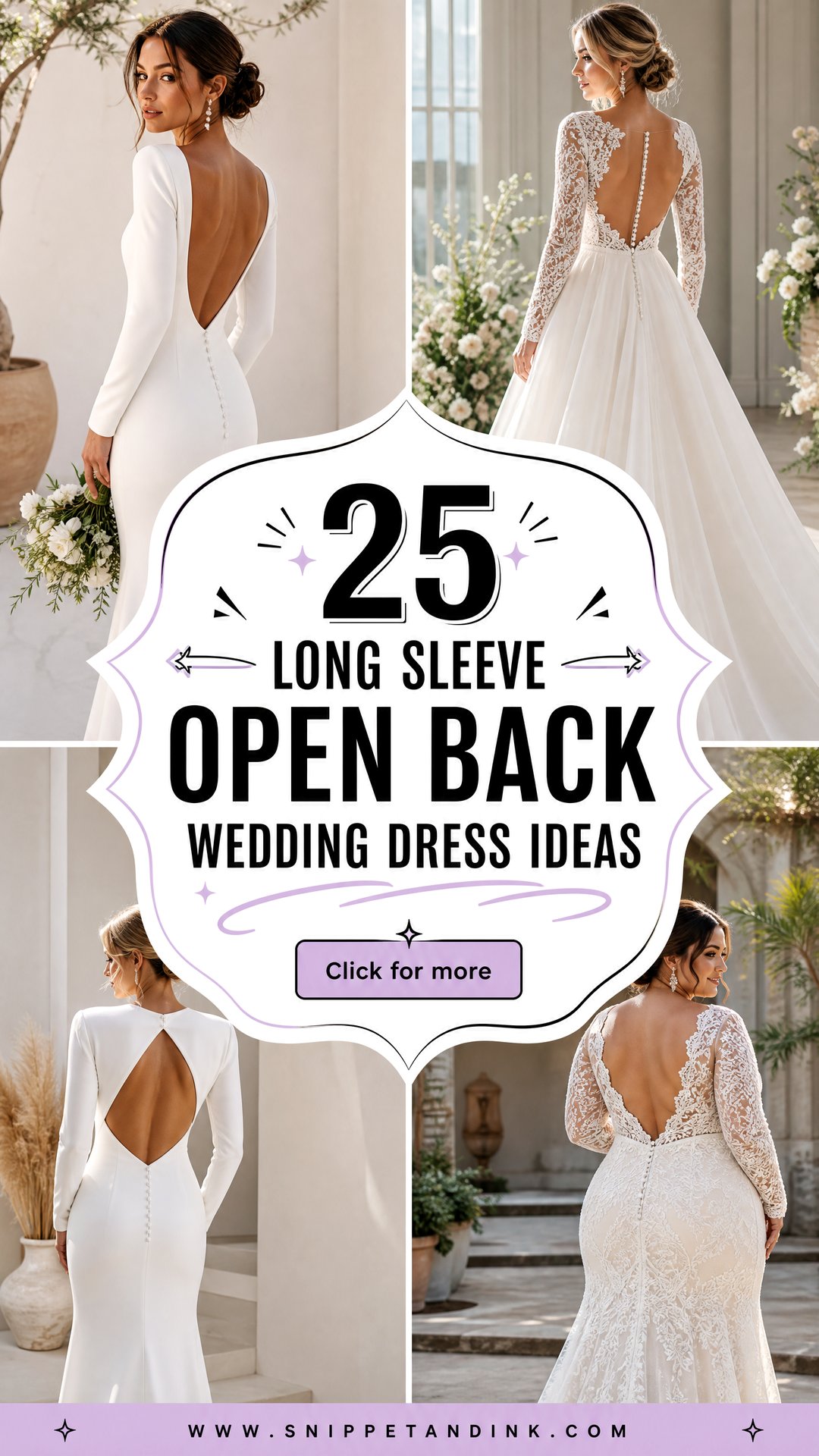
How Deep the Opening Goes Changes What You Wear Underneath
Most brides fall for the back first and ask about support later. I’d reverse that. Where the opening ends decides your undergarment options, and some depths rule out a bra entirely.
- Shoulder-blade depth: a low-back or convertible bra with straps crossed lower can usually hide beneath the fabric.
- Mid-back, around the bra line: you need cups sewn into the bodice or a low-back longline that wraps around the waist.
- Waist depth or lower: only built-in cups, internal boning and a firmly fitted bodice will hold. Adhesive bras help on smaller busts but tend to loosen with heat and hours of dancing.
Ask your seamstress about sewing cups into the dress early on. It changes the fit, so it needs to happen before the bodice is taken in, not at the last appointment. Buy any shapewear before the first fitting too, and choose styles that sit below the opening, since a waistband showing at the base of a low back is the most common last-minute surprise I see.
1. Lace Long Sleeve Open Back Wedding Dress
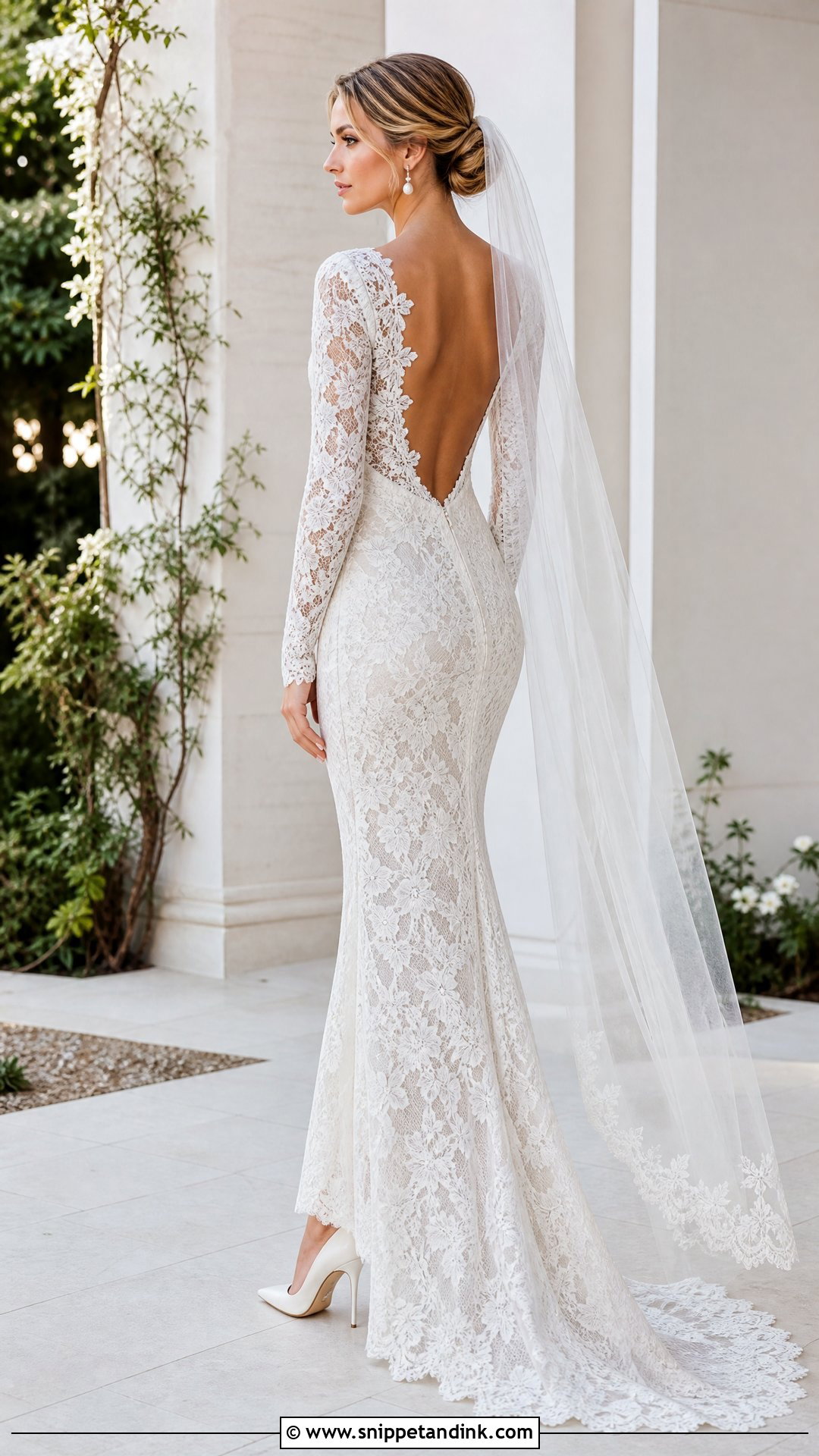
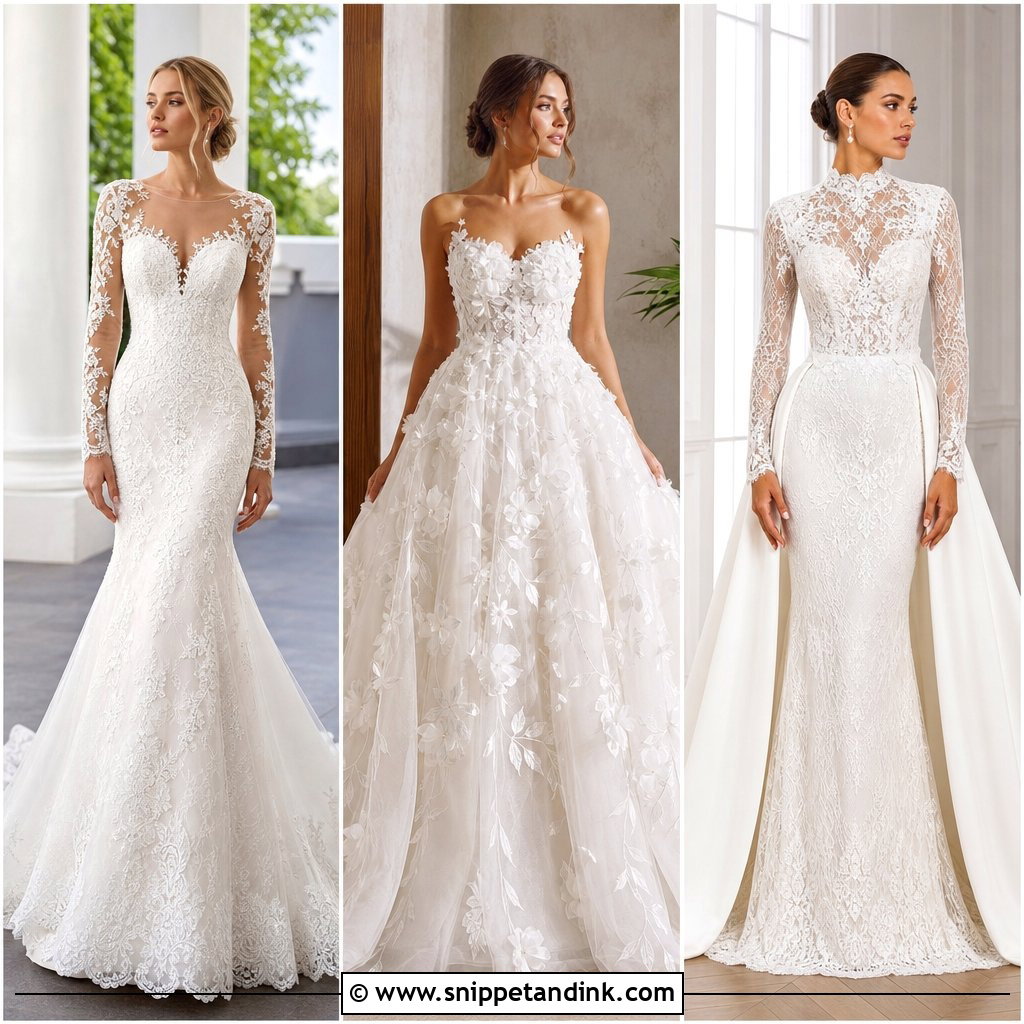
Lace that runs from the sleeves into the bodice and around a low back is the classic version. Pick a floral pattern scaled to your frame; oversized motifs can swamp a small back. A soft fitted or gentle A-line skirt keeps it balanced, and a low textured bun keeps the back on show. Pearl drops, ivory pumps and a fingertip veil are enough. The area I always check first is shoulder tension, since that seam is what holds an open lace back flat. Nude lining gives more contrast; ivory reads softer and more traditional.
2. Satin Long Sleeve Open Back Wedding Dress
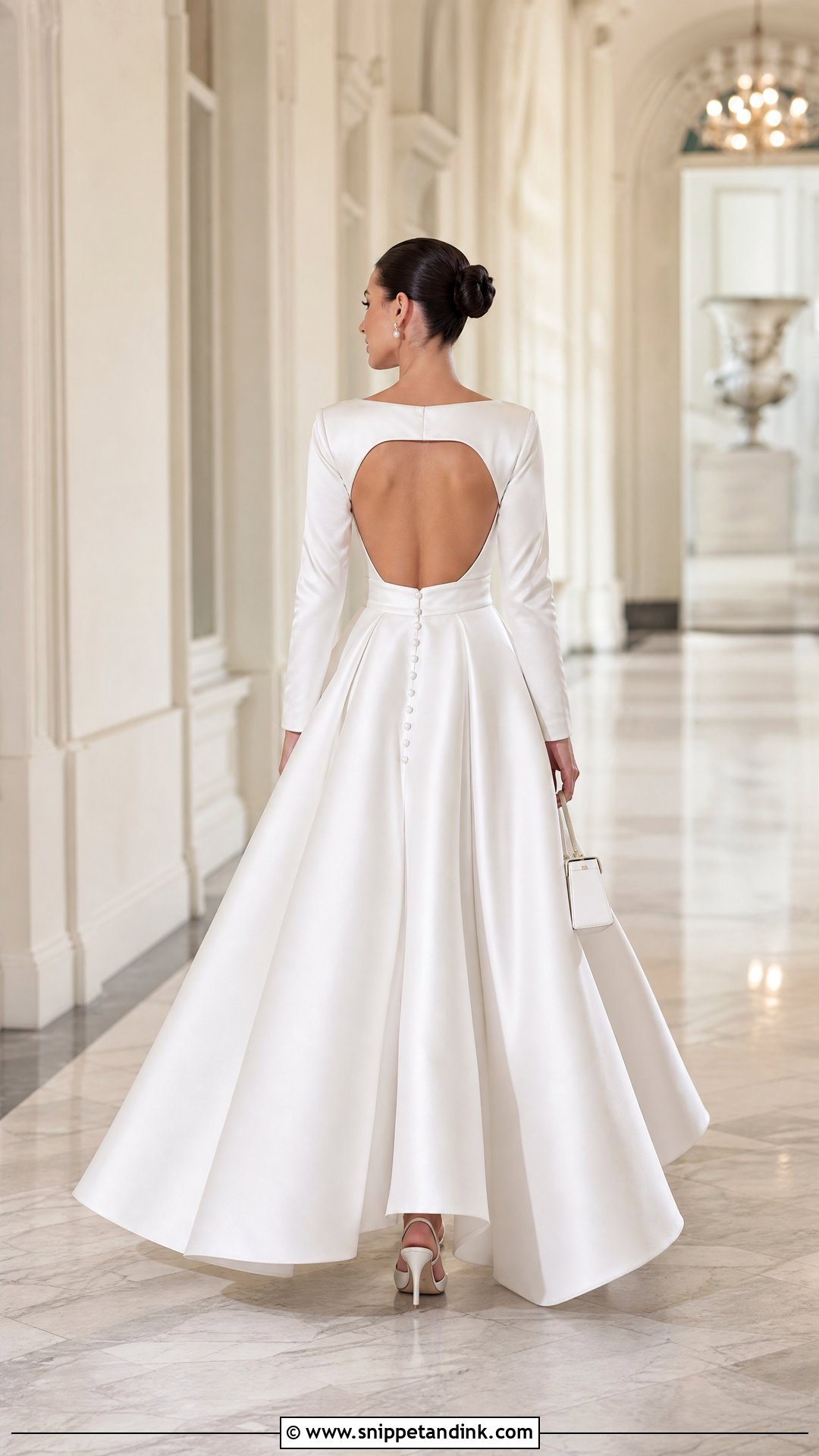
Satin is clean and luminous, and it has enough body to feel formal. A bateau or shallow scoop neckline balances a deep rounded back, and covered buttons below the opening add a tidy finish. Full A-line for classic, narrow column for modern. Satin is unforgiving, though. It shows every pull line and crease, so the tailoring must be exact and the dress needs a professional steam on the day. Pearl studs, a neat chignon and ivory slingbacks suit it.
3. Crepe Long Sleeve Open Back Wedding Dress
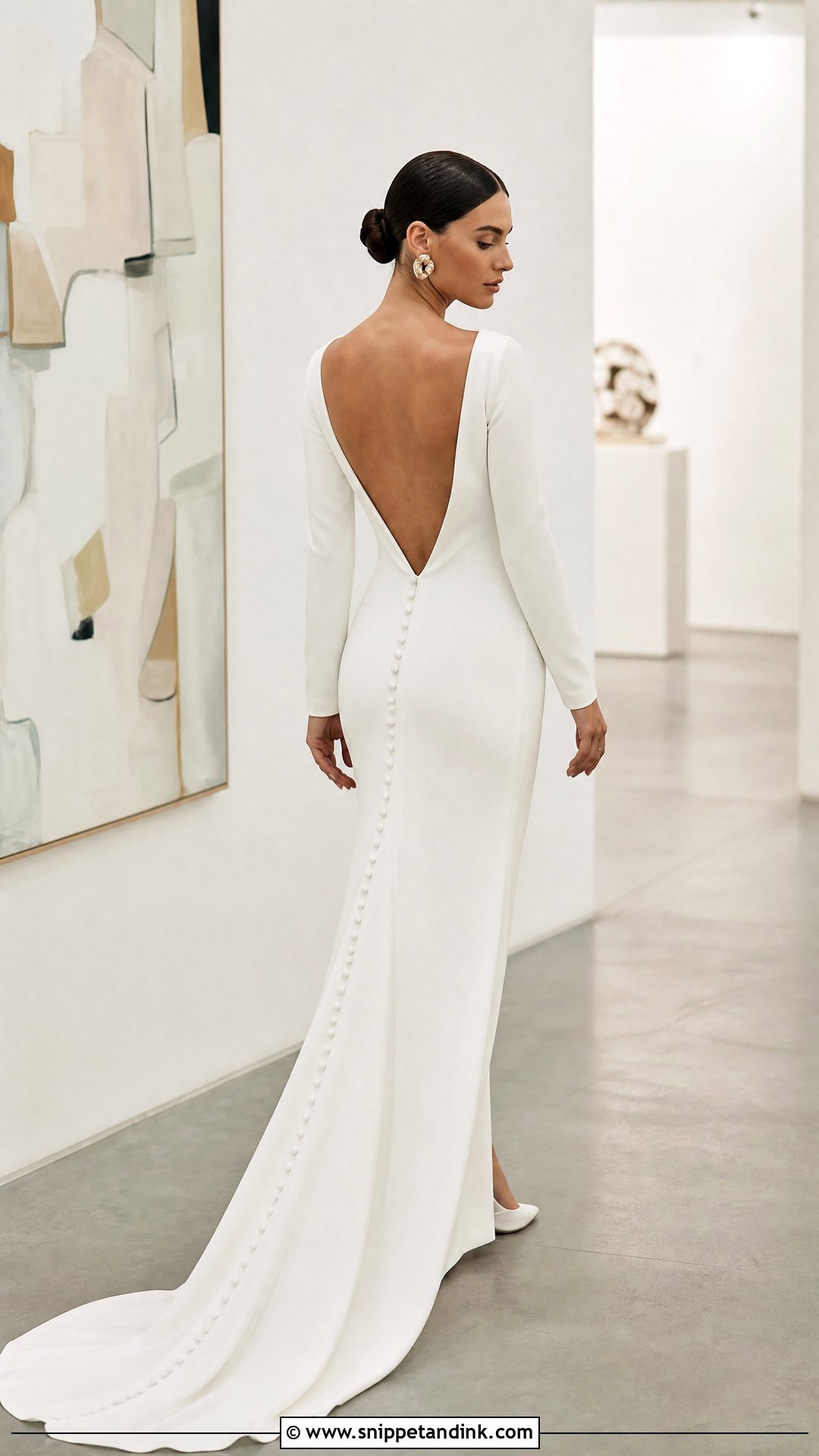
Crepe gives a matte finish and drapes beautifully, so the cut does all the work. A sheath or soft fit-and-flare with narrow sleeves and a deep V-back is about as pared back as bridal gets, perhaps with a short row of covered buttons running toward the train. Lining matters more than people expect: thin crepe shows seams and underwear lines. In the fitting, I ask brides to walk, sit and lift both arms, and watch whether the back edges lift away from the skin. Sculptural earrings, ivory heels and a centre-parted bun finish it.
4. Square Neck Long Sleeve Open Back Wedding Dress
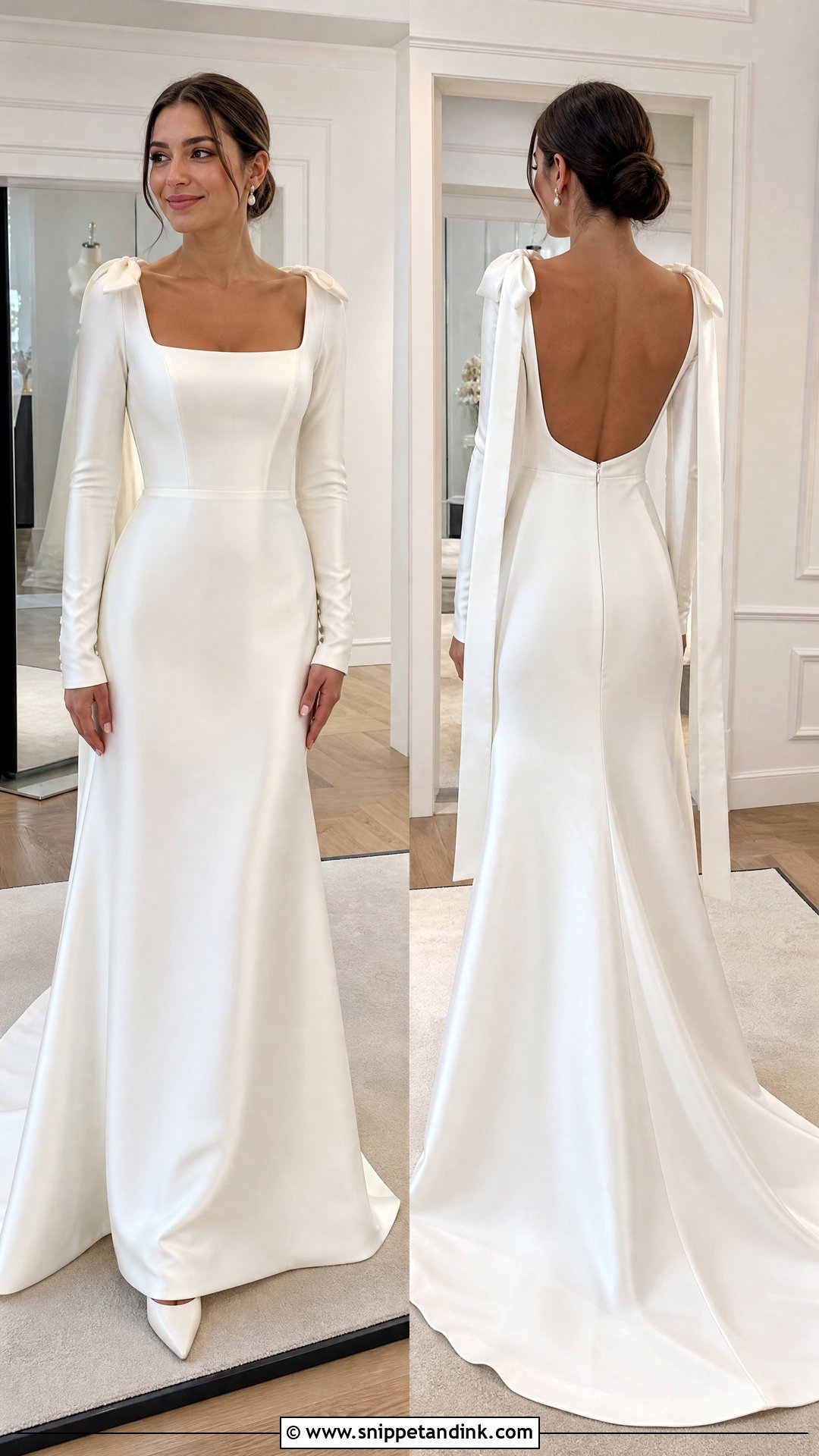
A square front gives this style a structured, fresh look and frames the collarbones neatly against the bare back. Smooth crepe or satin with a defined waist and soft flare suits it, and the back can be square, curved or crossed with a narrow bow. On a fuller bust, this works if the bodice has supportive boning and properly placed cups, because there’s no back band to help. Settle front support and shoulder stability first, then decide how deep the back can go. Pearl drops and closed-toe pumps keep the styling restrained.
5. High Neck Long Sleeve Open Back Wedding Dress
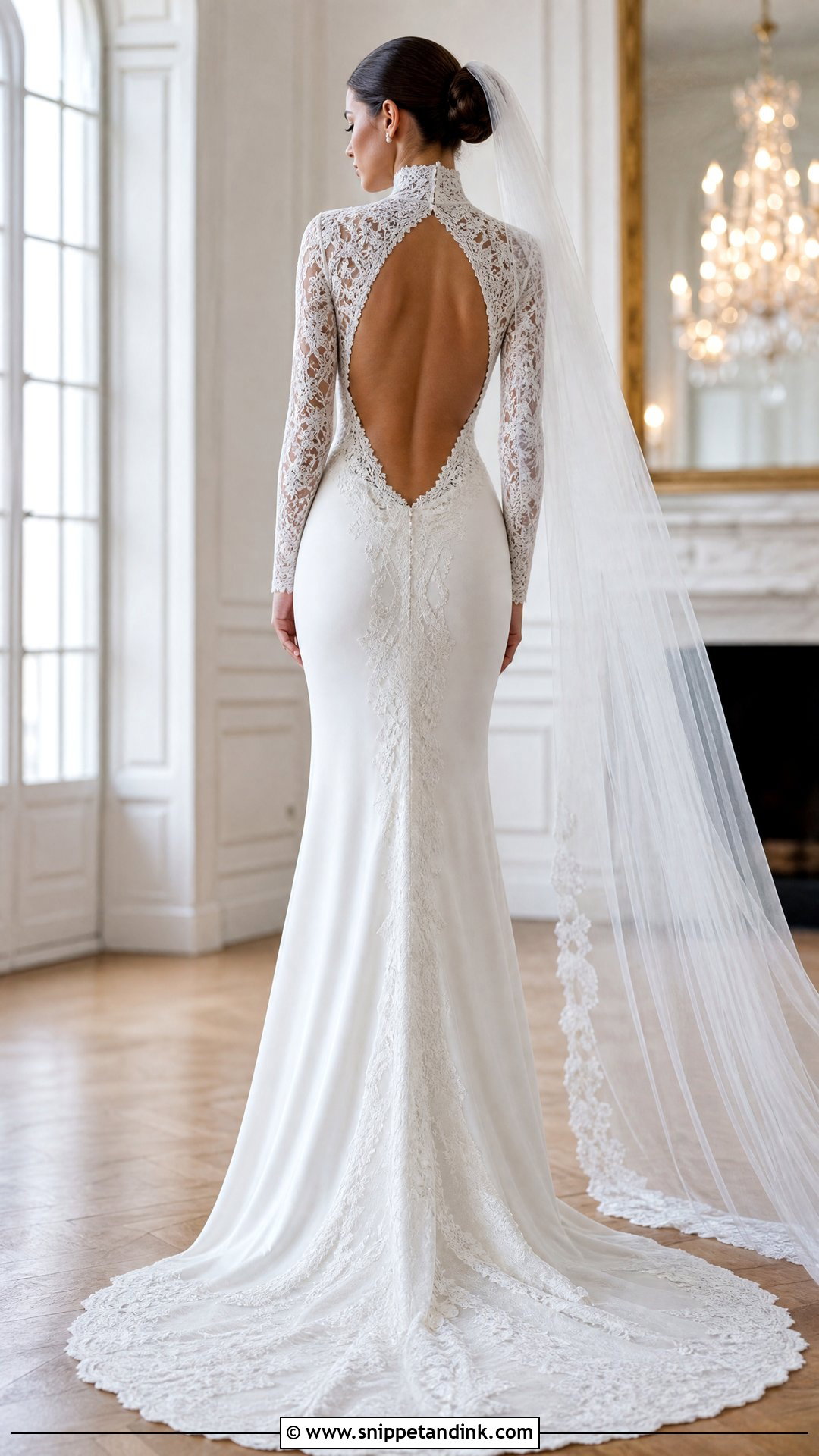
Covered to the chin in front, open behind: few contrasts in bridal wear land as well. A fitted lace or crepe bodice with slim sleeves can open into a keyhole, teardrop, or low rounded opening. The high neck already draws the eye up, so statement earrings are unnecessary; studs will do. Pin a chapel veil below the bun so it falls over, not across, the opening. Check that the neck closure isn’t tight when you turn your head, and that the back edges stay flat when you hug and sit.
6. V-Neck Long Sleeve Open Back Wedding Dress
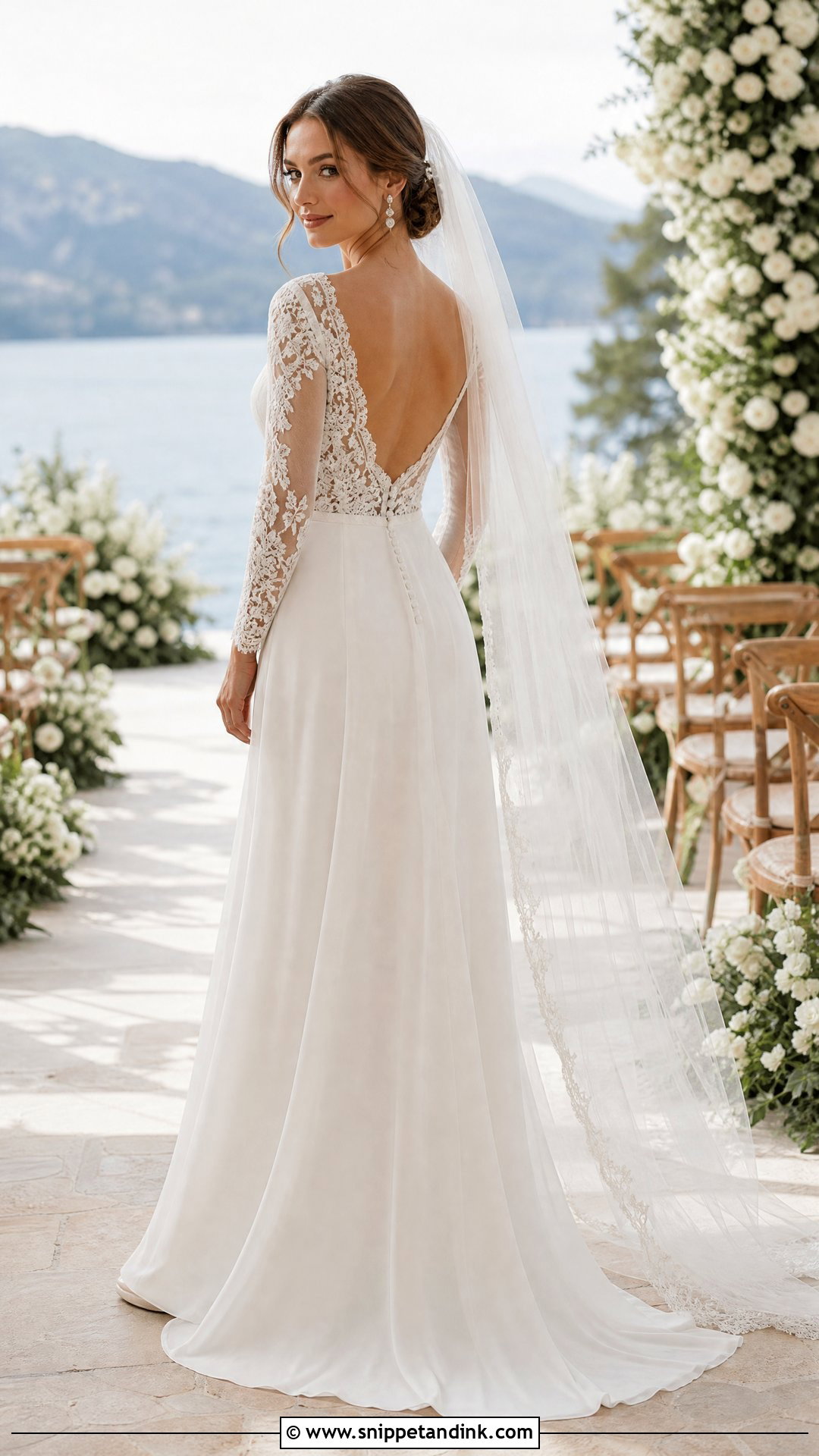
Two V shapes, front and back, draw long lines through the whole gown. They don’t need to match: I usually suggest a modest front and a lower back, which looks more balanced and is easier to support. Fitted lace reads romantic, smooth crepe modern. Bust cups, fine mesh or internal boning hold the front V without showing. Teardrop earrings, ivory pumps, a removable sheer veil and a loose low bun complete it. Look at yourself side-on in the fitting mirror; that’s where a gaping edge shows.
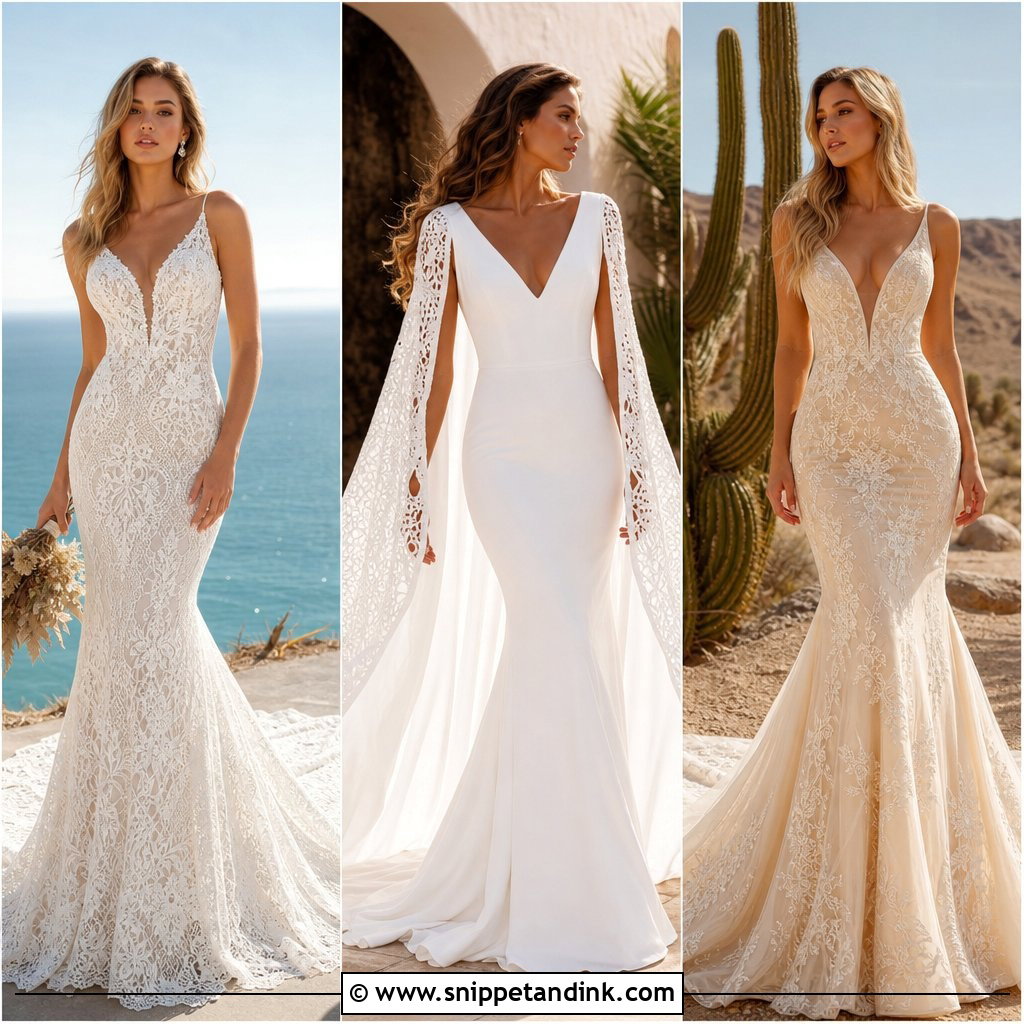
7. Mermaid Long Sleeve Open Back Wedding Dress
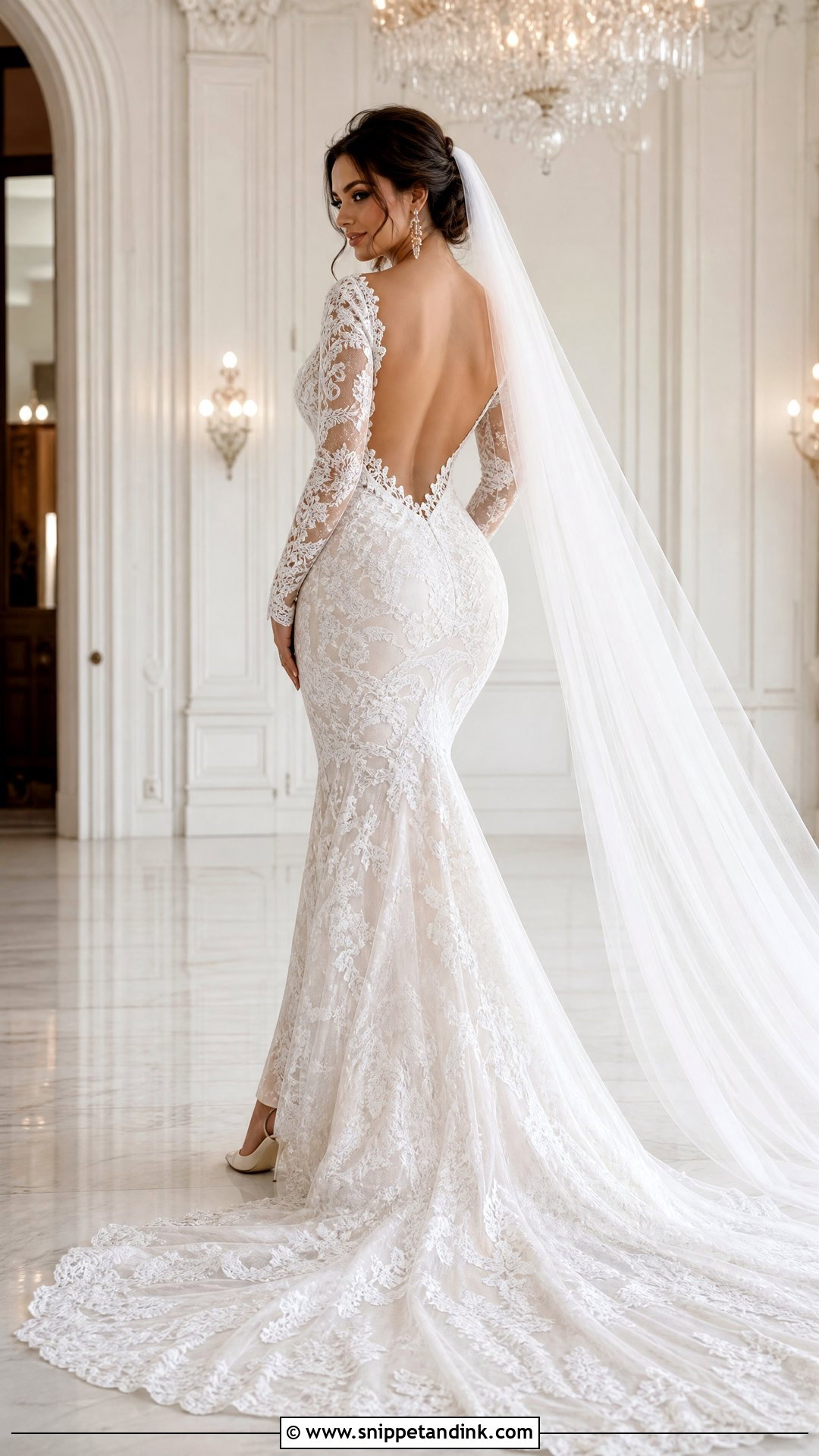
A mermaid shape with a bare back is high glamour: fitted through waist and hips, flaring near the knee, with lace sleeves to soften the sculpting. The fit has to follow your curves without pulling at the opening, because tension in a fitted skirt travels up and drags the back edges. Practise sitting, walking and dancing at every fitting, and plan a bustle for the train. Crystal drops, pointed heels, a long sheer veil and a sleek updo keep the line uninterrupted.
8. A-Line Long Sleeve Open Back Wedding Dress
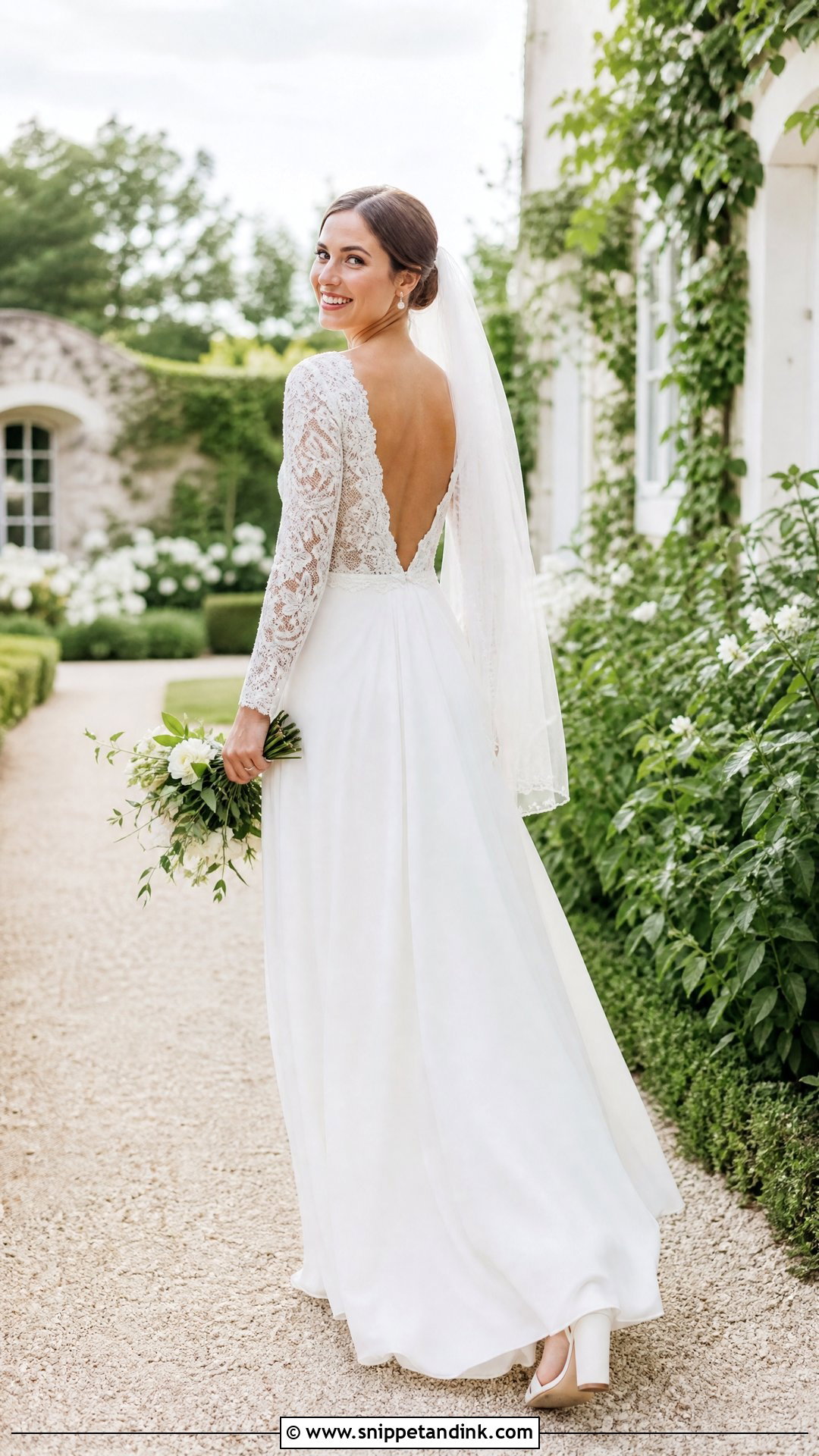
If you’re planning a long day on your feet, an A-line is the kindest choice here. The bodice can be lace, satin or crepe, and the skirt falls gradually from the waist, much lighter than a layered ball gown. A rounded or V-shaped opening adds interest without feeling too revealing. Look at where the waist seam sits: a natural waist defines, a slightly raised one lengthens the leg. A waist-length veil, pearl earrings, block heels and a low twist or side-swept waves suit it.
9. Ball Gown Long Sleeve Open Back Wedding Dress
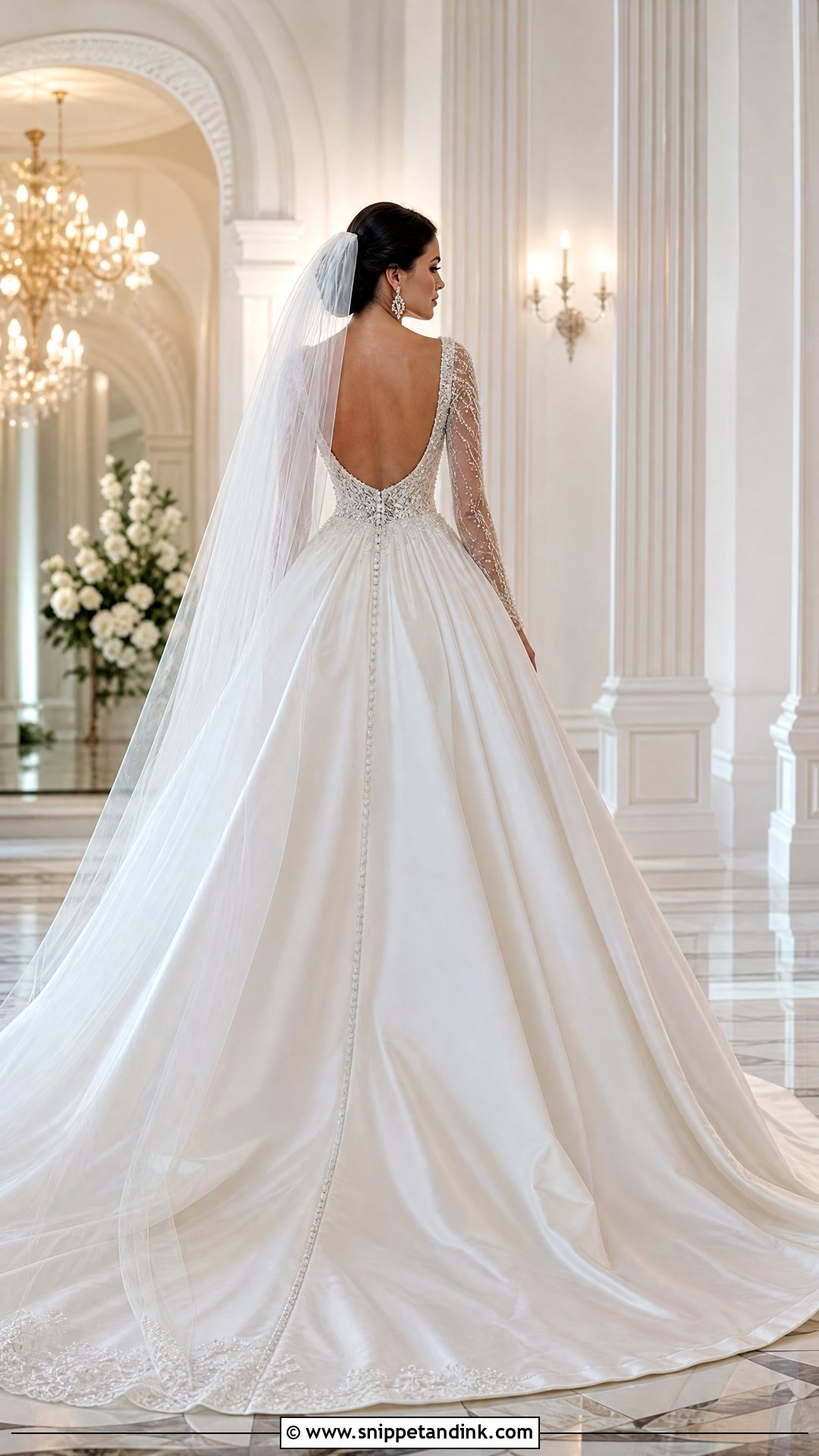
A full skirt makes an open back feel regal rather than daring. The fitted long-sleeve bodice in lace, satin or light beading leads into real volume, and that volume is heavy. The bodice structure and waist support have to carry the skirt so the back opening doesn’t sag forward. Ask to see the bustle working before you collect the dress. A cathedral veil, pearl or crystal earrings, hidden platform heels and a polished updo balance the scale, with a medium bouquet so the frame doesn’t get crowded.
10. Boho Long Sleeve Open Back Wedding Dress
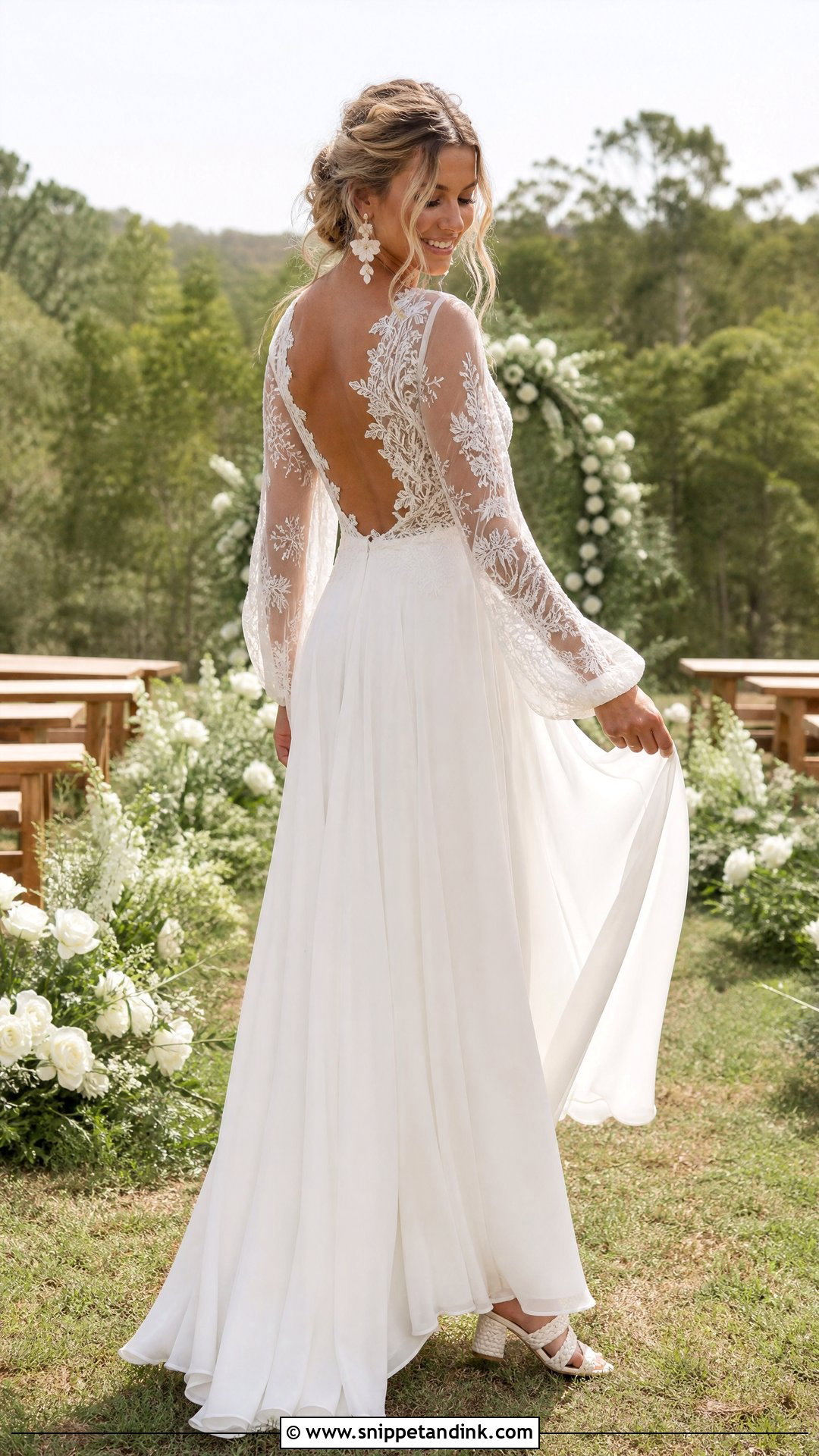
A boho version pairs soft botanical lace and a gently plunging back with a flowing chiffon or tulle skirt that moves outdoors. Bishop sleeves feel looser, fitted lace sleeves tidier. Openwork lace and breathable lining help in warm weather. One or two organic details are enough; woven sandals, small floral earrings and a braided updo with a few pins already say it. A light veil or sheer cape can come off after the ceremony. Check the hem length on grass or sand before the final fitting.
11. Vintage Long Sleeve Open Back Wedding Dress
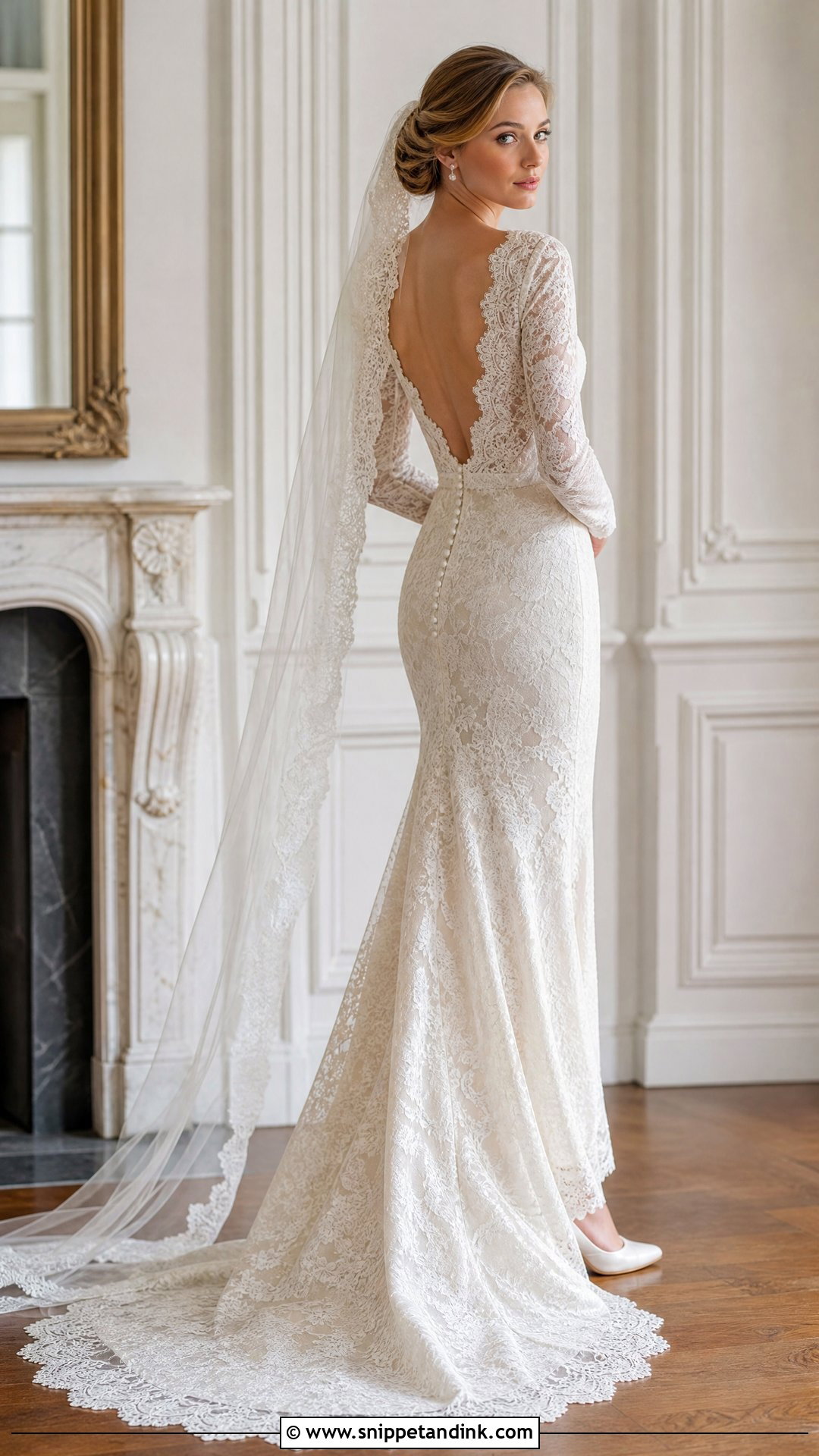
Vintage-leaning gowns tend to combine detailed lace, covered buttons and a soft skirt. A bateau neck, fitted sleeves and scalloped lace around the opening suit the style, and a tea-stained ivory brings out a nostalgic mood without tipping into costume. Finger waves or a low rolled updo add period character and keep the back clear. A lace-edged veil works if its pattern complements the dress. The upside of a modern version is internal support that genuine vintage pieces rarely have.
12. Minimalist Long Sleeve Open Back Wedding Dress
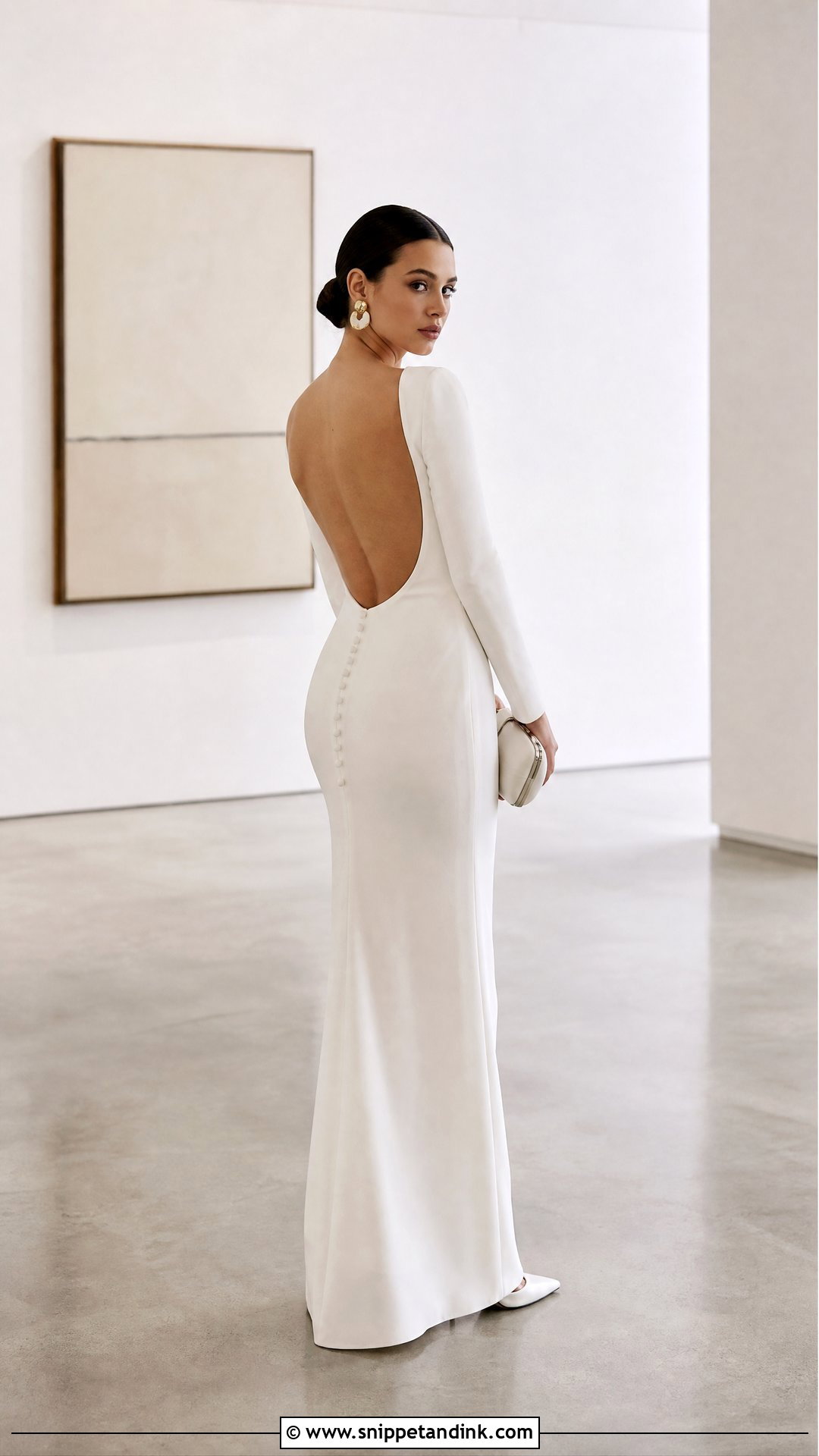
In a minimalist gown, every proportion shows. Smooth crepe or matte satin, narrow sleeves, a simple neck and a precisely cut opening are the whole design, perhaps with one row of buttons or a small bow. A column, sheath or restrained A-line keeps it uncluttered. Because there’s nothing to hide behind, uneven seams are obvious, so I’d test your undergarments under the dress in bright light before the final fitting. Architectural earrings, pointed pumps and a sharp bun or short polished hair suit the mood.
13. Beaded Long Sleeve Open Back Wedding Dress
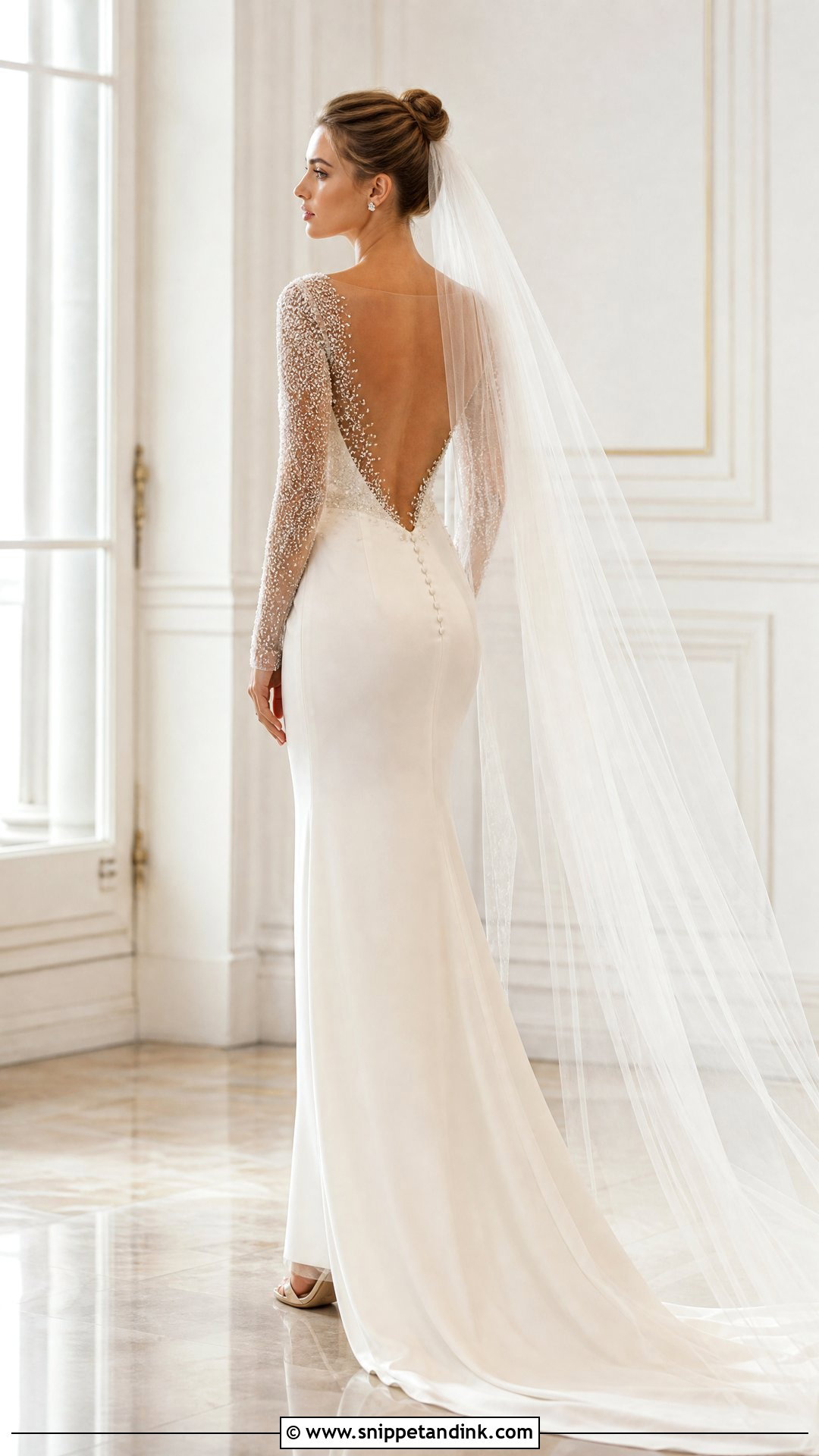
Beading turns long sleeves into a source of light. I prefer the embellishment concentrated on the bodice and sleeves with a quieter skirt, and a sheer back edged in matching beads gives support while still reading as open. Hair goes up, because loose strands catch on beads. At fittings, check the underarm for rubbing and look over the beadwork for loose threads. A lined sleeve feels smoother on the skin but warmer. Understated studs, metallic ivory heels and a plain tulle veil are enough.
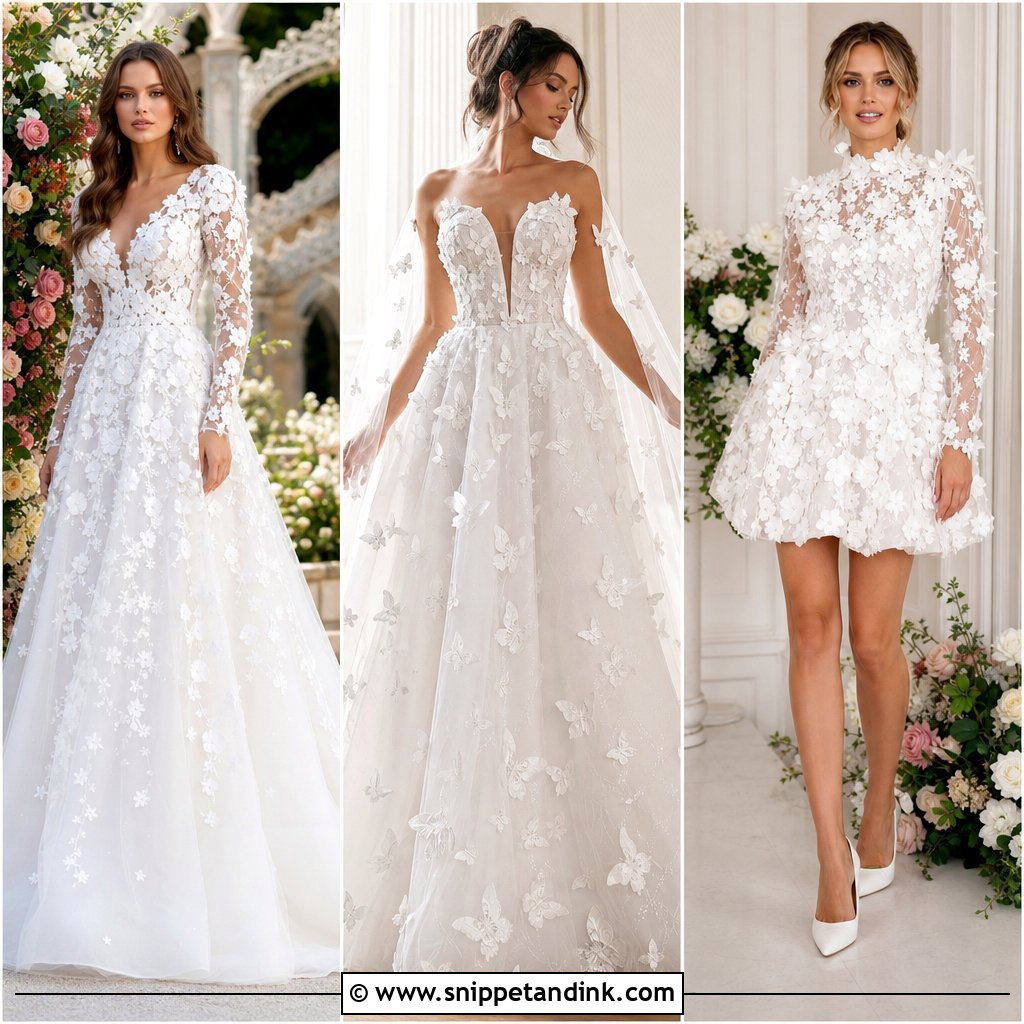
14. Floral Appliqué Long Sleeve Open Back Wedding Dress
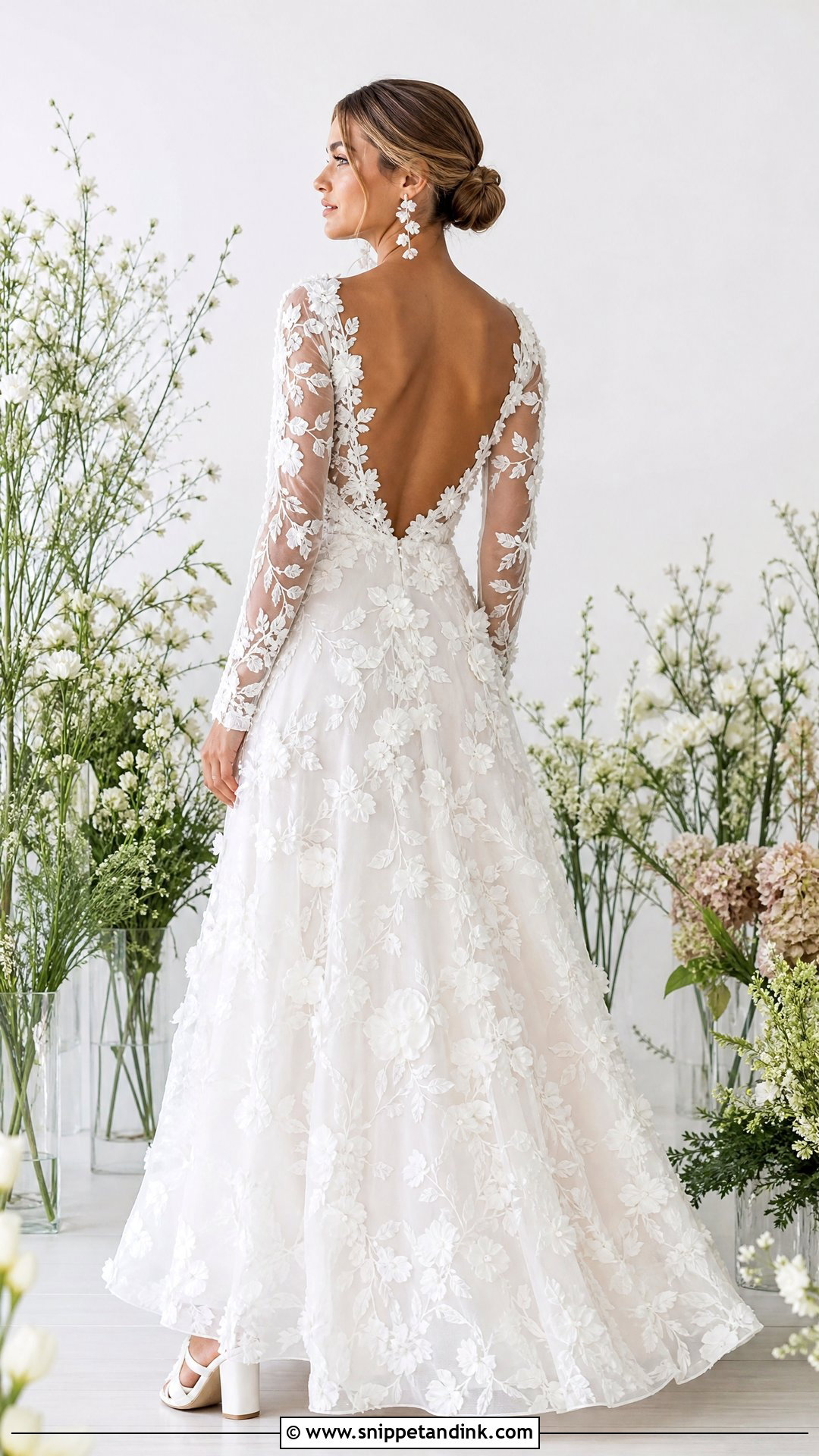
Floral appliqués can climb from the skirt onto the bodice, sleeves and edges of the open back in one continuous line. Tone-on-tone flowers read soft; contrasting ones read bold. Their placement is something I’d fuss over at alterations, because clusters at the waist define your shape while clusters on the hips or upper shoulder can add bulk you didn’t want. A plain veil won’t hide the flowers. Floral drop earrings, ivory block heels and a loose low bun complete the garden feel.
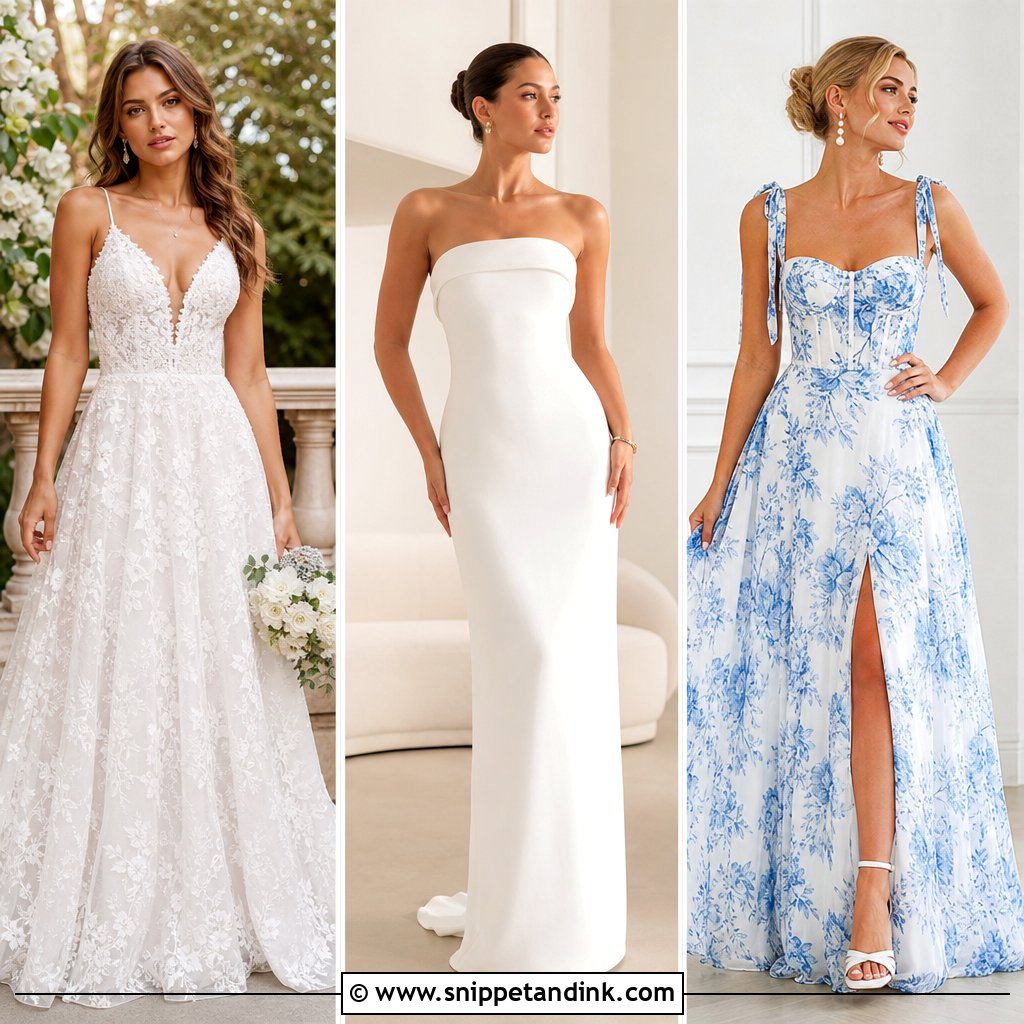
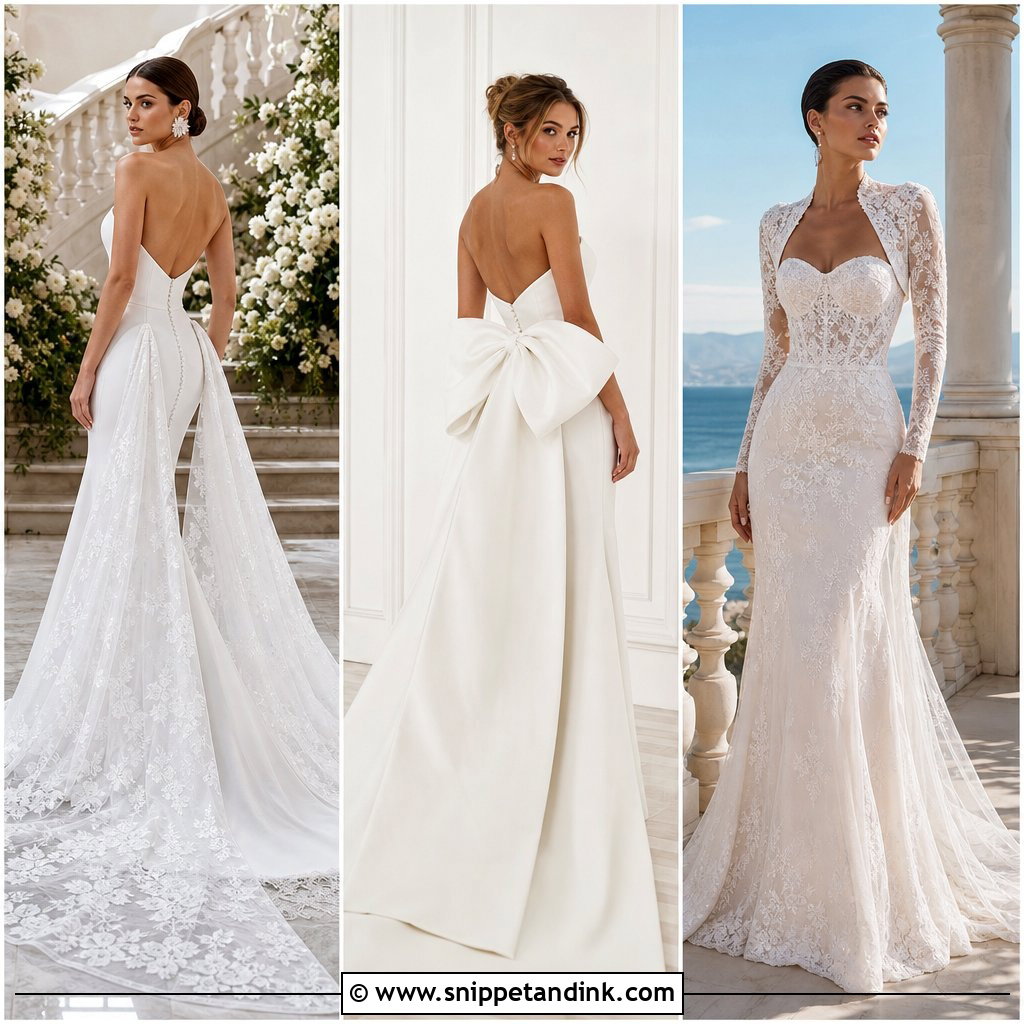
15. Pearl Long Sleeve Open Back Wedding Dress
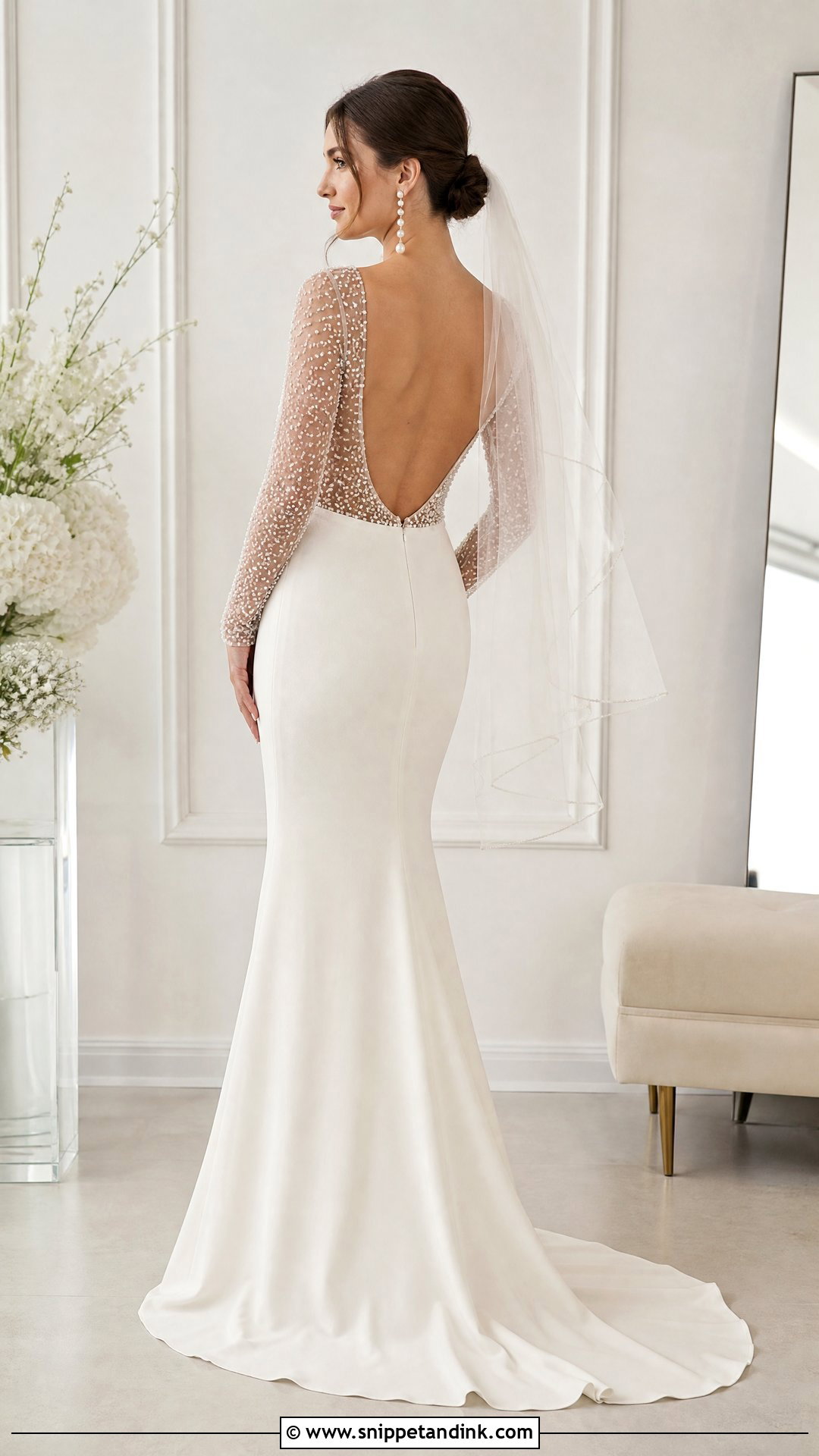
Pearls scattered over sheer sleeves and along the edge of the opening look best on a plain crepe or tulle base where they can be seen. A fitted bodice and gentle flare keep it graceful rather than ornate. Hair up again, so strands don’t snag. Ask the shop whether spare pearls come with the dress, since a few always loosen after a day of hugging. Pearl studs or small drops, ivory satin pumps, a soft veil and a simple bouquet let the sleeves and back carry the detail.
16. Illusion Long Sleeve Open Back Wedding Dress
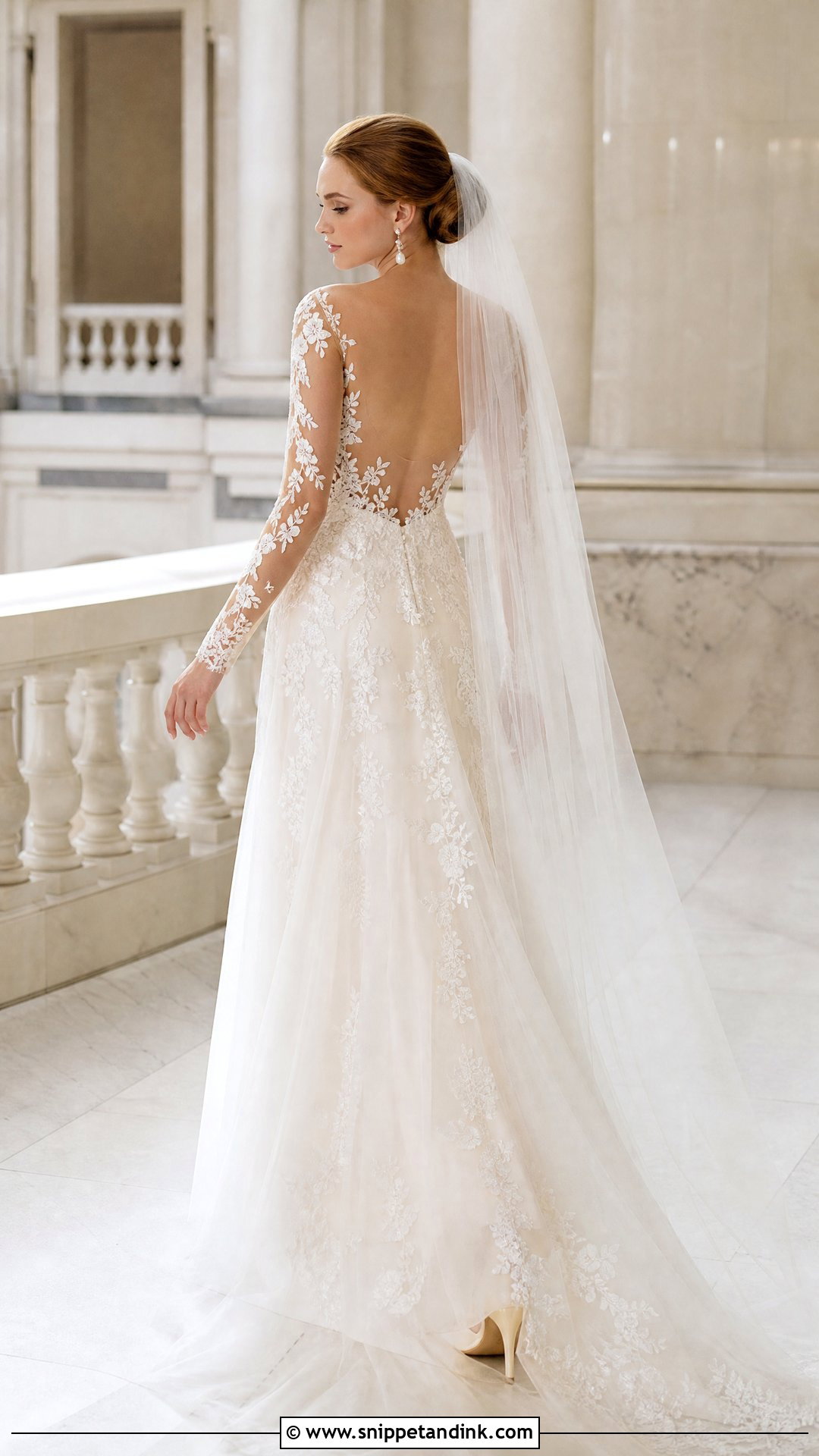
Illusion tulle makes a back look fully open while it quietly does structural work. Fine, skin-toned mesh with lace placed around the shoulders, sleeves and waist gives the floating-appliqué effect from a distance. The shade match is everything; I check it in daylight against the bride’s back, not her hand. Loose illusion wrinkles, so the shoulder and back need careful fitting with enough ease to lift your arms. Drop earrings, a low bun and a sheer veil pinned beneath it suit fitted or A-line skirts.
17. Button Back Long Sleeve Wedding Dress
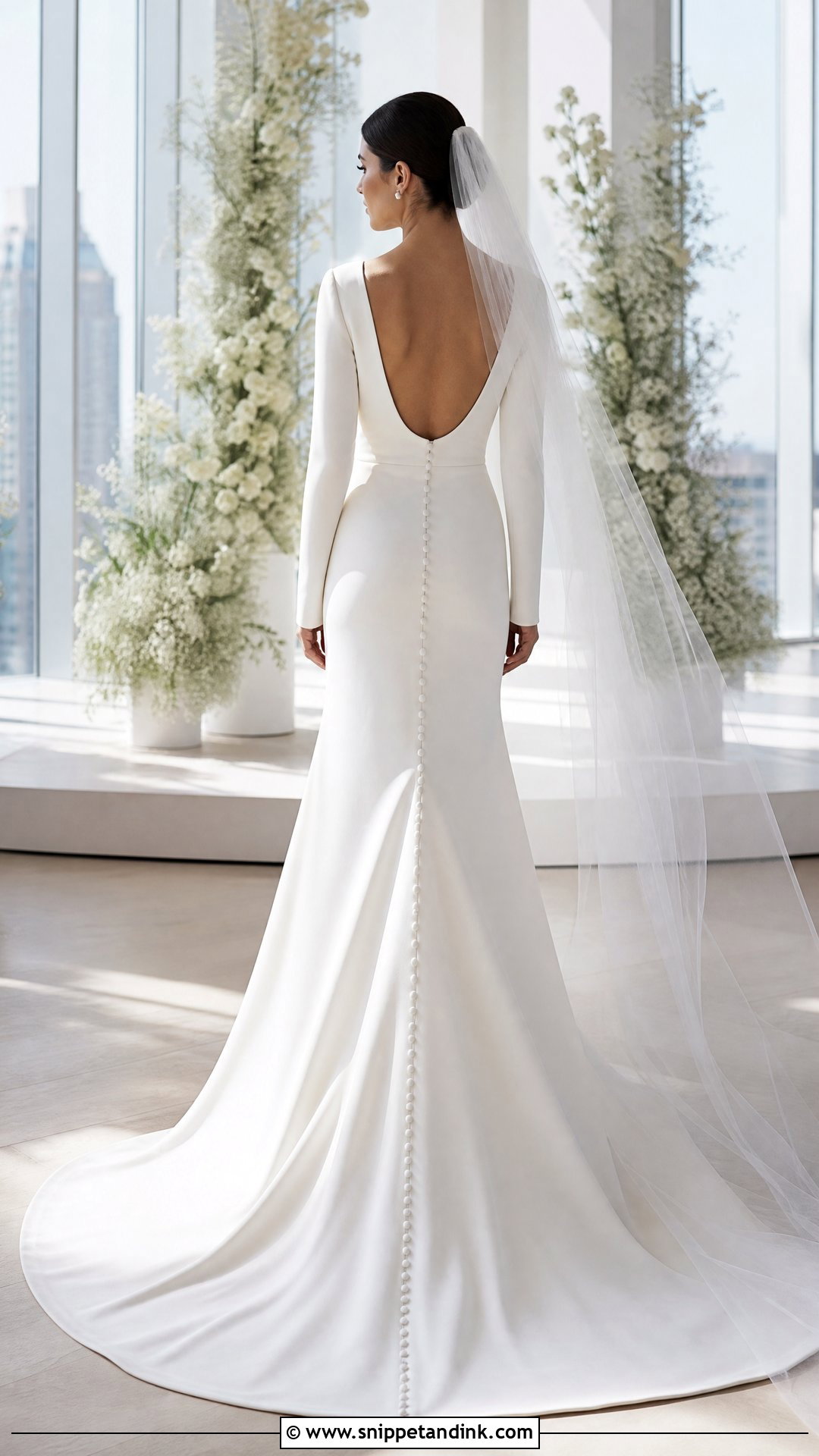
Covered buttons give a traditional finish without closing the whole back. The upper back stays open and a buttoned lower panel carries on into the skirt or train, which looks especially clean on crepe, satin and mikado. Square neck and slim sleeves read modern; lace sleeves and a rounded back softer. Many decorative buttons hide a zip. If yours are real loops, someone in your party should learn the closure and carry a button hook. Pearl earrings, pointed pumps and a plain cathedral veil finish it.
18. Bow Back Long Sleeve Wedding Dress
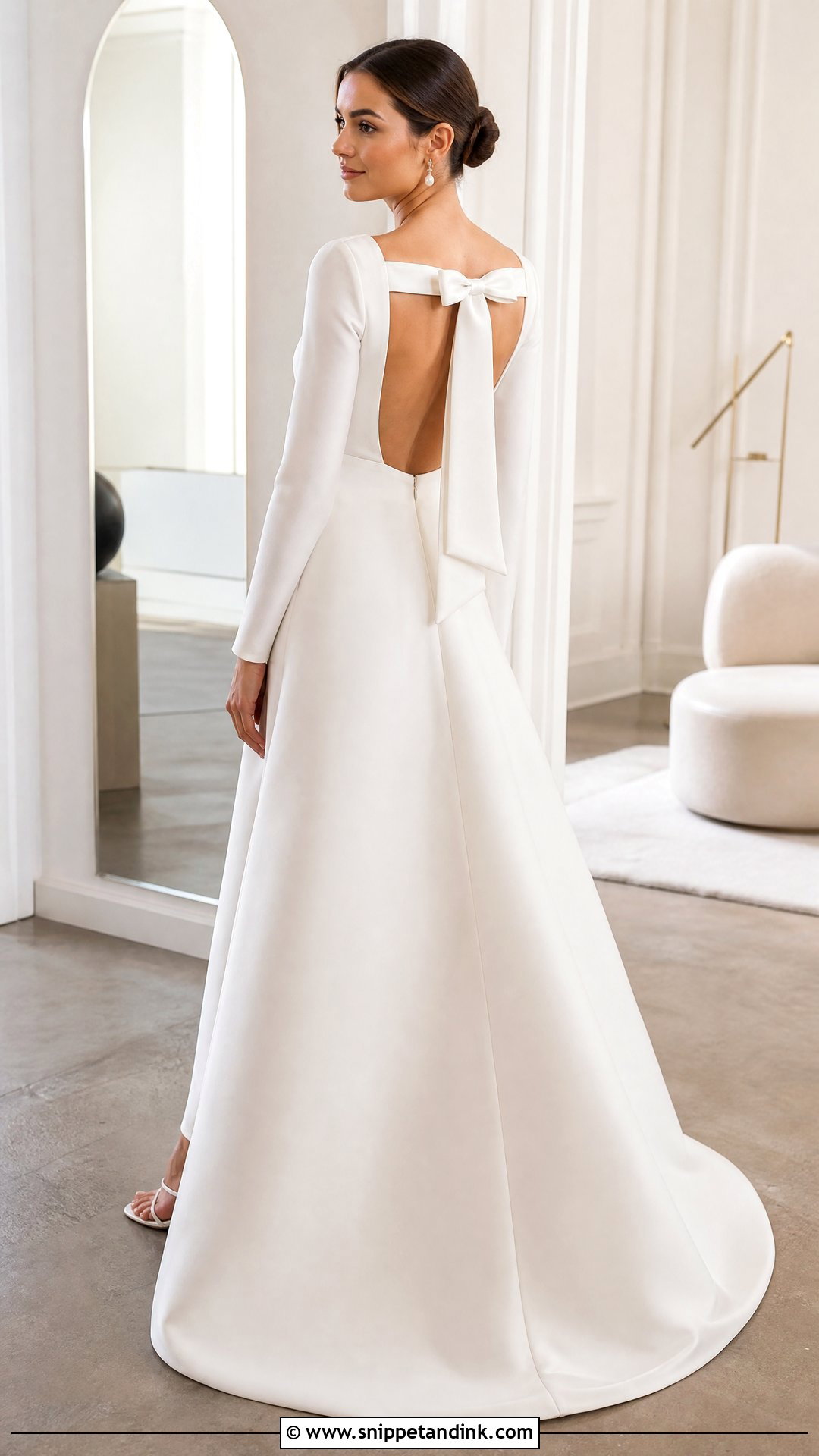
A narrow bow across the back softens the opening without covering it. It can sit between the shoulder blades, at the waist or above a row of buttons, and it looks best on plain crepe or satin where it has no competition. Scale it to the dress: a small structured bow is refined, long trailing tails add movement with a simple train. I’d either skip the veil or choose one sheer enough to see the bow through. Pearl drops, slingbacks and a clean low bun round it out.
19. Bishop Sleeve Open Back Wedding Dress
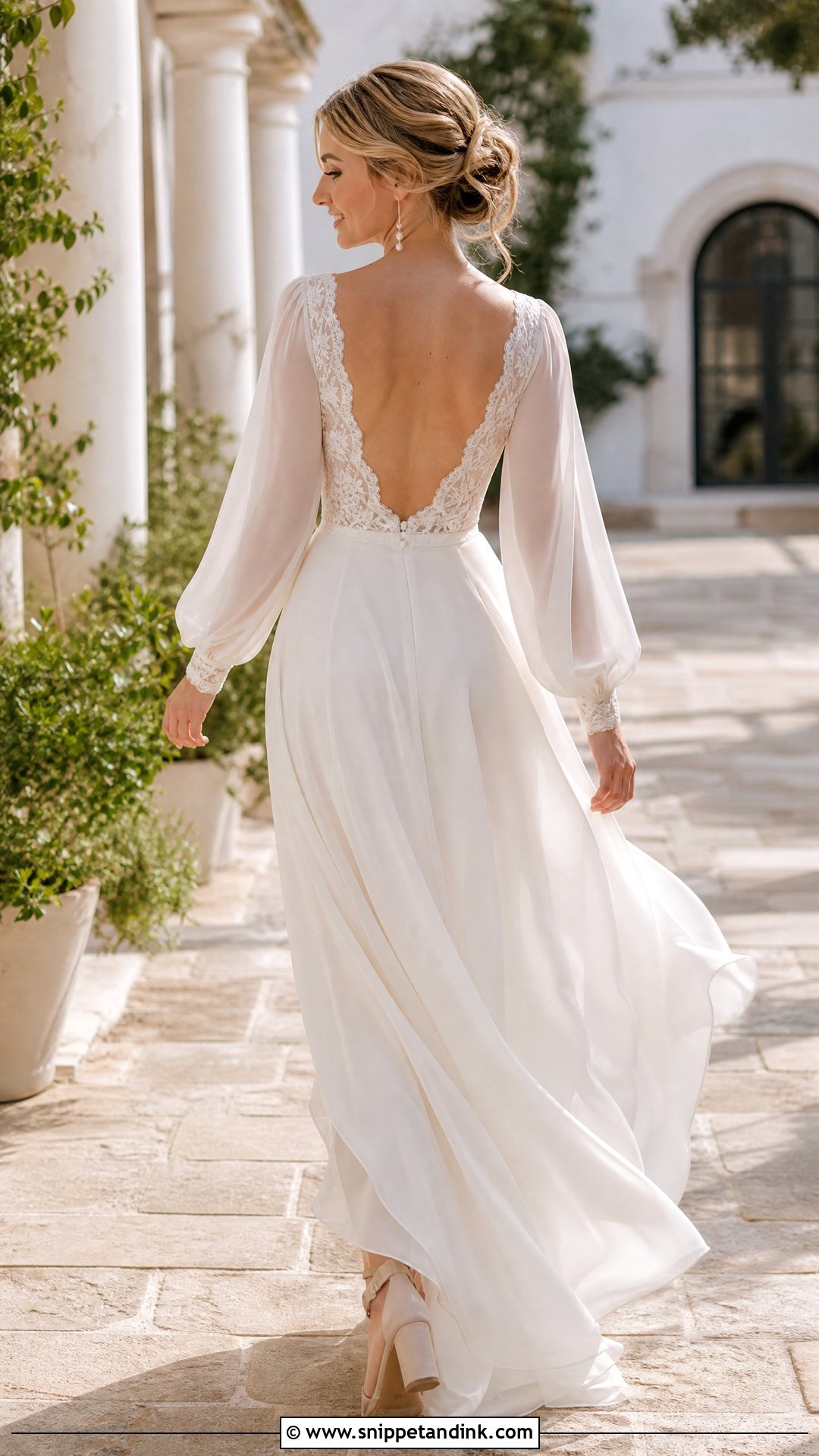
Bishop sleeves stay full through the arm and gather into slim cuffs, giving softness and movement against a fitted bodice and bare back. Chiffon, organza or light lace keep the volume from feeling heavy; check breathability if it’s a warm wedding. The cuff is already detail, so skip bracelets. During alterations, raise and stretch your arms forward, because full sleeves set into an open back can pull the shoulders and distort the opening. A flowing A-line or narrow crepe skirt, delicate earrings and a loosely pinned updo suit it.
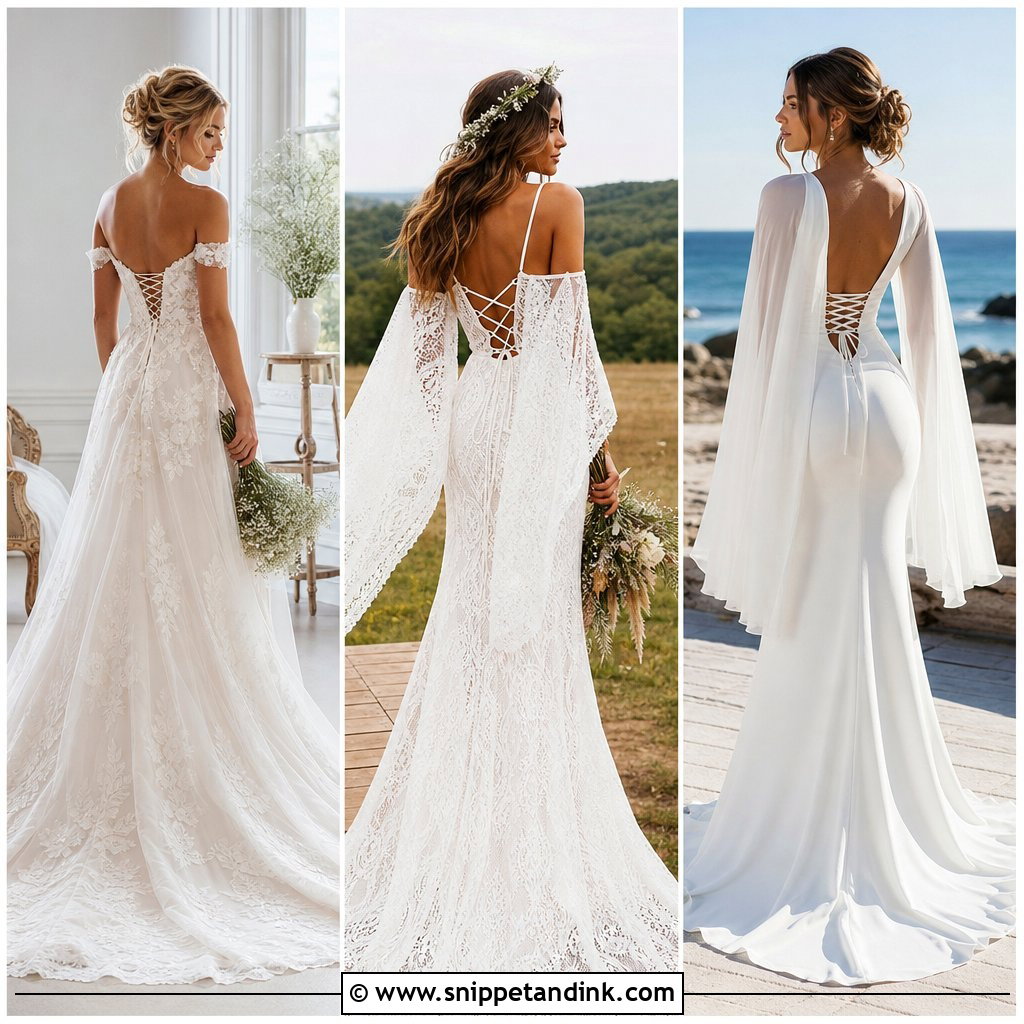
20. Detachable Sleeve Open Back Wedding Dress
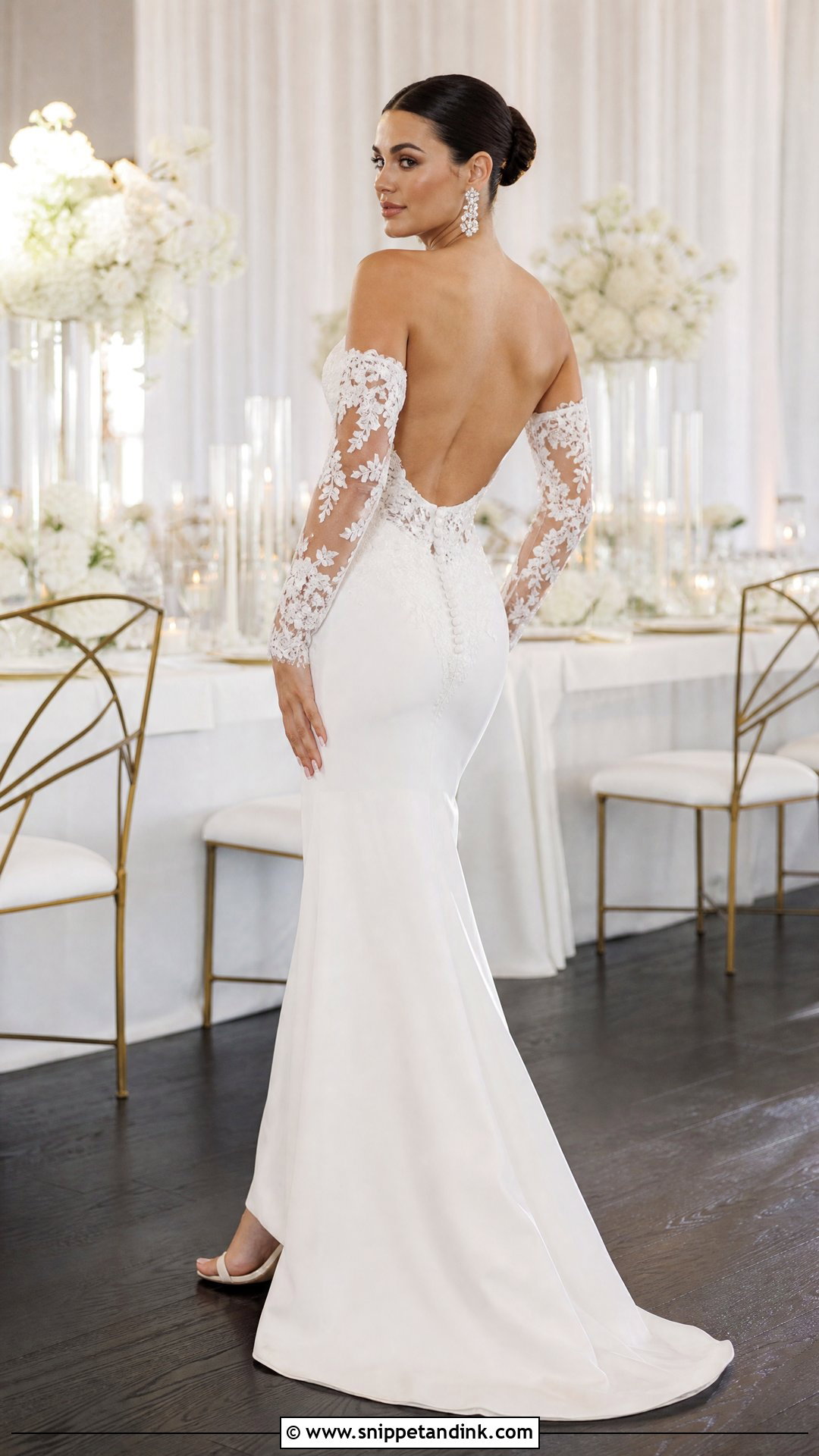
Removable sleeves give you a ceremony look and a lighter reception look from one gown. Lace, tulle or satin sleeves can come off a base with narrow straps, an off-shoulder neck or a fitted bodice, and they should match its lace or finish so both versions look intended. Choose a hairstyle that works with and without them. Test the fastenings beforehand and have an attendant practise removing them; hidden snaps should hold firm without leaving bulky edges. Store the sleeves in a labeled garment bag once they’re off.
21. Winter Long Sleeve Open Back Wedding Dress
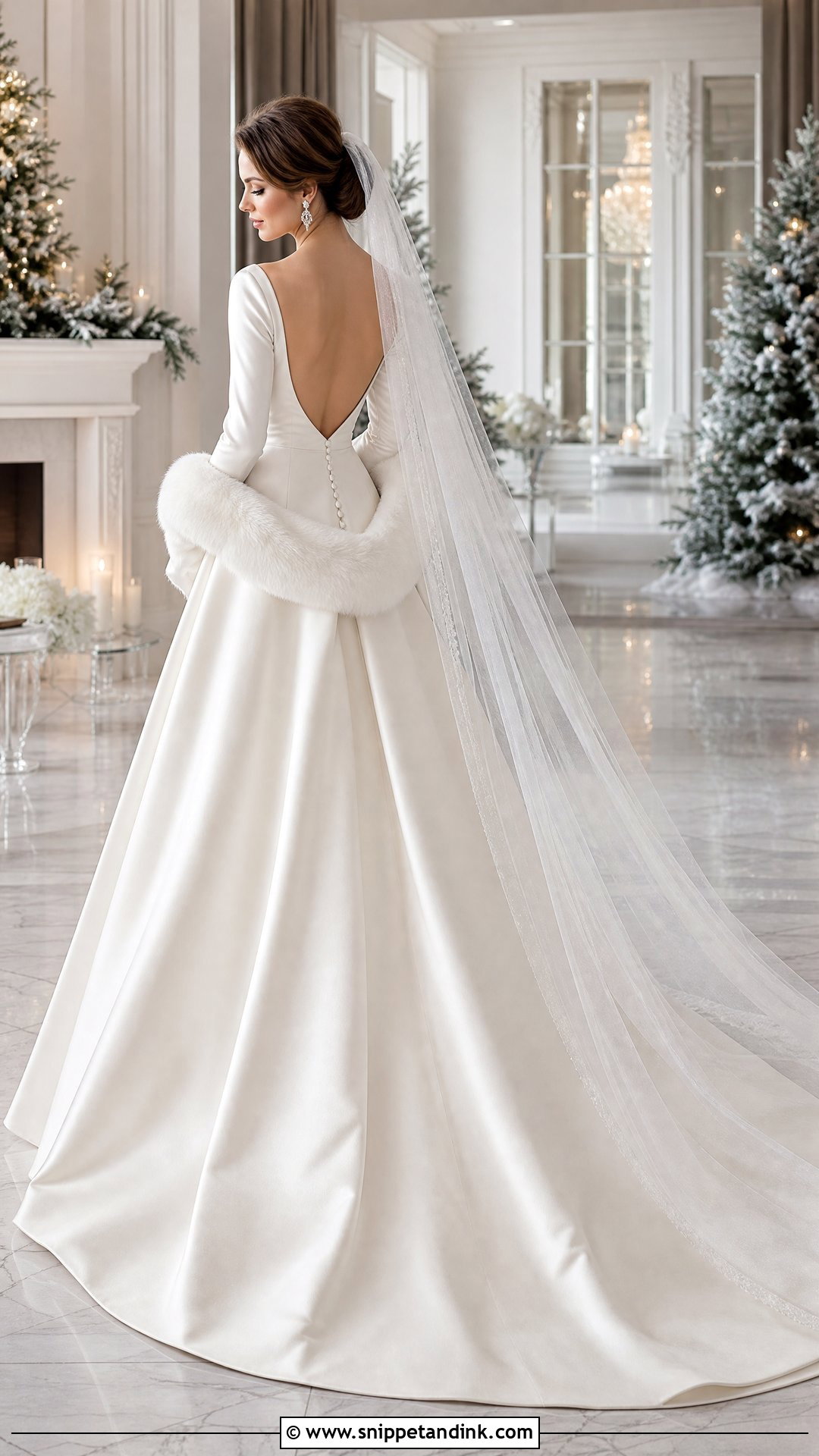
Cold months suit heavier satin, dense crepe, velvet accents and layered lace. A structured bodice and full skirt add warmth without hiding the back. Long sleeves alone don’t make a gown warm, so ask about lining and fabric weight, and consider a higher opening or illusion panel if the ceremony space is chilly. Plan a proper outer layer, such as a removable faux-fur wrap for outdoor shots, rather than improvising on the day. Closed-toe pumps, crystal earrings, a long veil and a polished bun suit it.
22. Summer Long Sleeve Open Back Wedding Dress
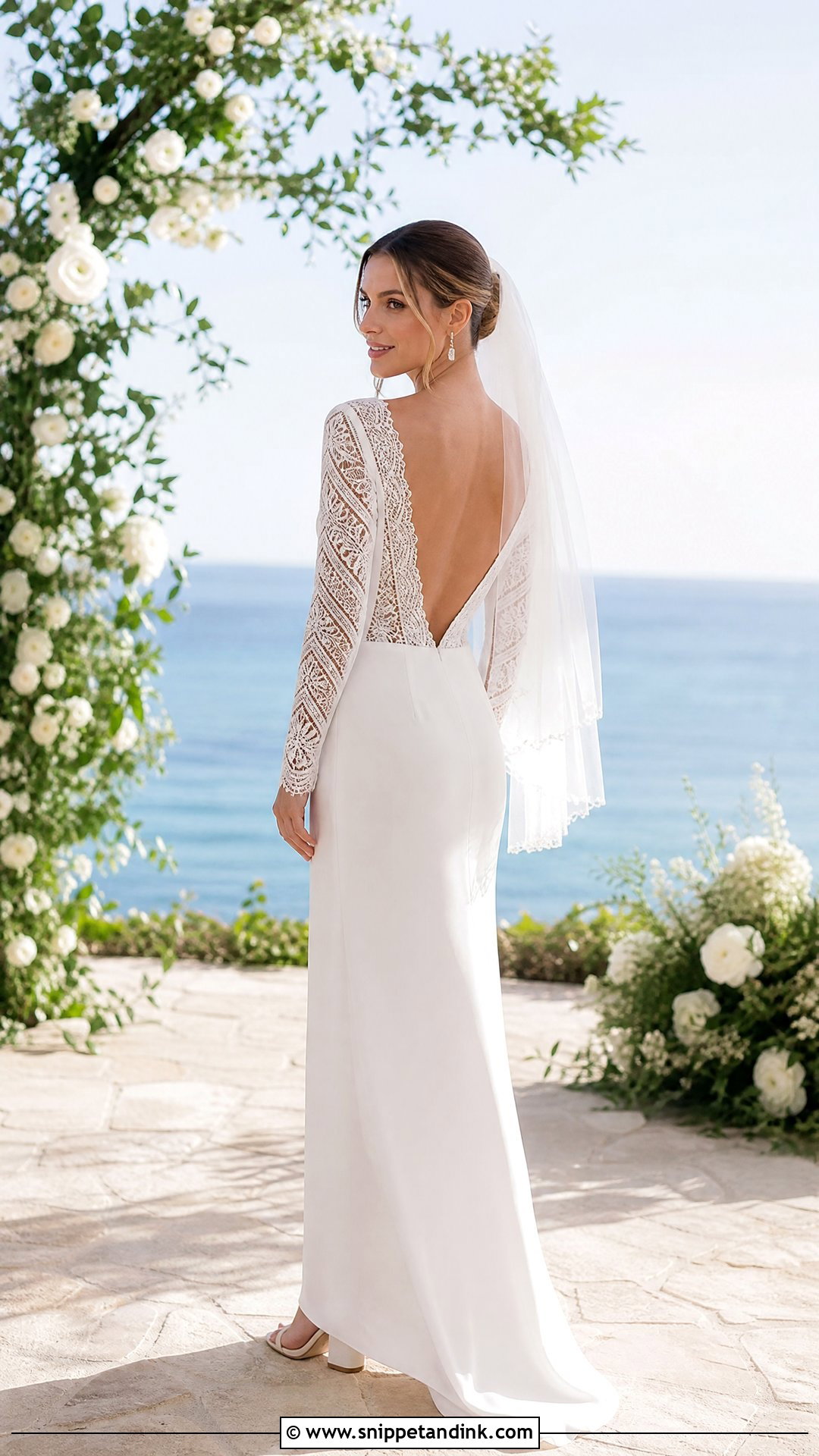
Can long sleeves work in summer? Yes, if the fabric is light. Openwork lace, fine tulle, chiffon or unlined illusion sleeves with a low back let air move. A soft A-line or sheath is easier than layers of skirt. Avoid dense beading and thick satin outdoors. Ask whether the gown’s lining or cups can be removed to cut down on extra layers underneath. Block-heel sandals, delicate earrings, a simple updo and a fingertip veil keep it airy; try it on in warm conditions before the final fitting if you can.
23. Plus Size Long Sleeve Open Back Wedding Dress
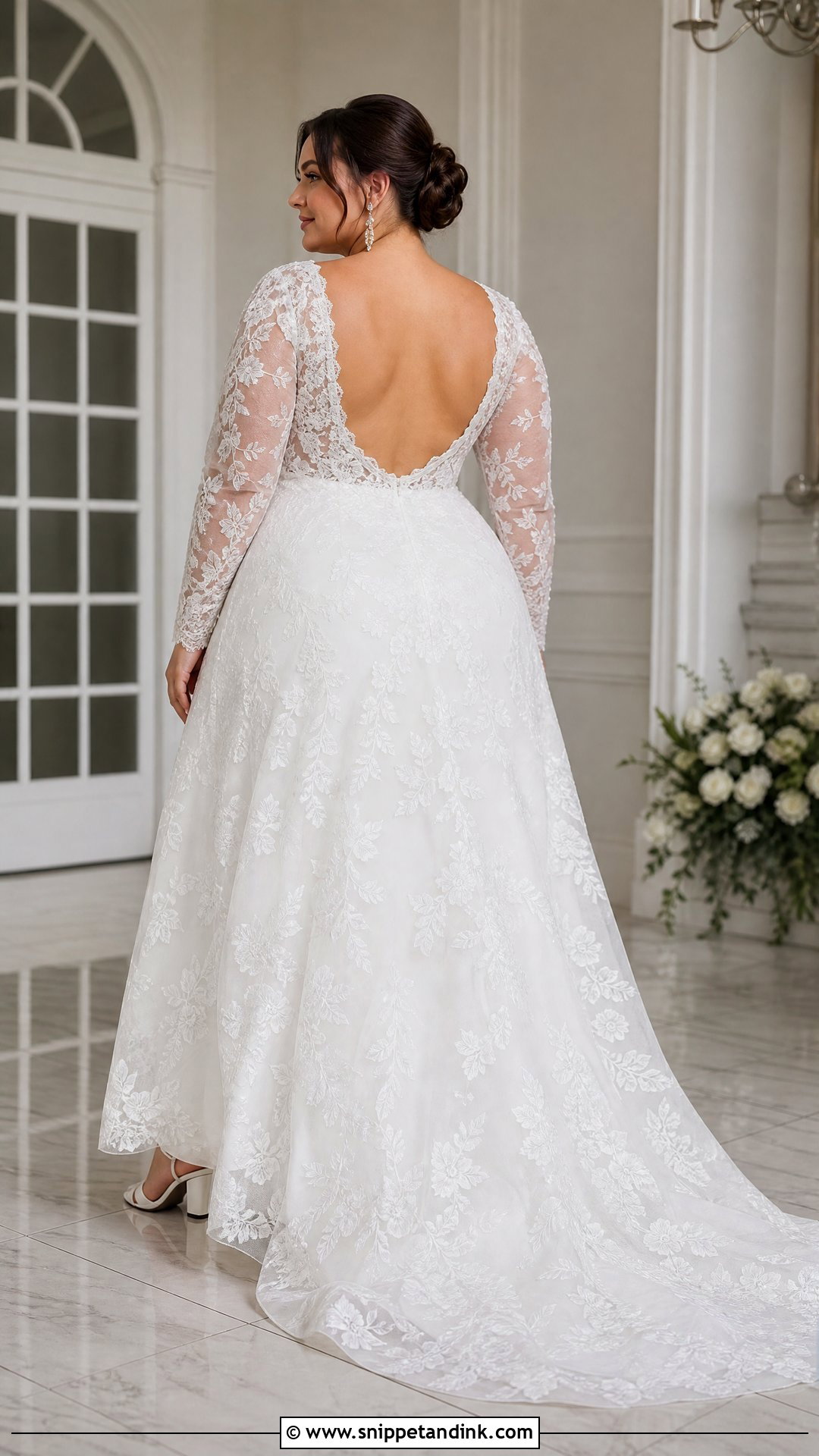
An open back can look right at any size when the construction is strong. I look for solid bodice support, seams placed to follow the body, and an opening positioned where you feel most confident, which is not necessarily the lowest point. Built-in cups, internal boning and discreet illusion panels add security without changing the design. Lined lace sleeves give coverage; sheer ones feel lighter. Work with a tailor experienced in supportive alterations, and sit, bend and dance in every fitting. Drop earrings, block heels and an updo show the back.
24. Petite Long Sleeve Open Back Wedding Dress
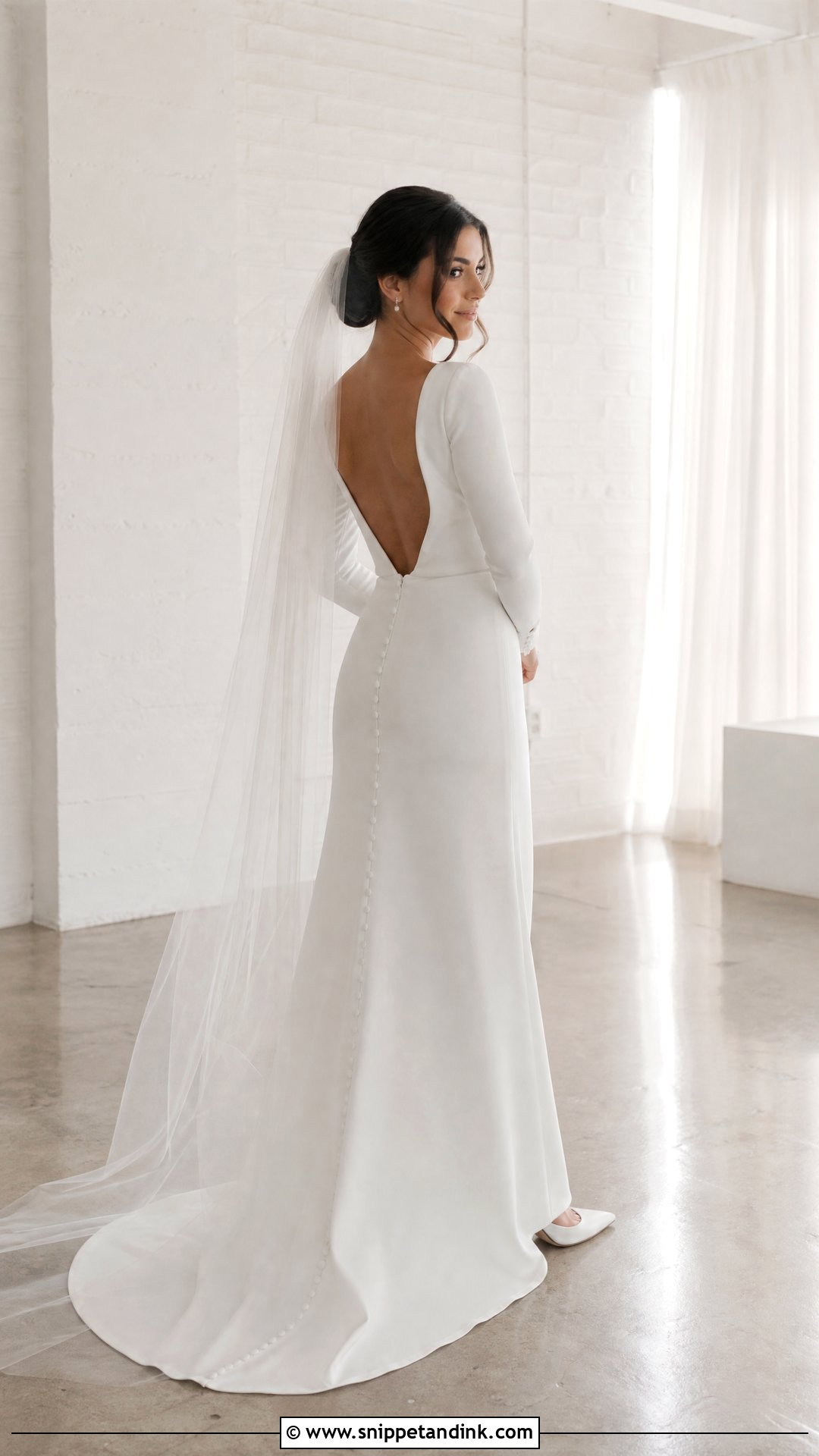
For a petite frame, the trick is keeping one unbroken vertical line so long sleeves and a full-length skirt don’t overwhelm you. A fitted bodice, clear waist and a back opening that runs straight down help. Sheath, modified A-line or gentle fit-and-flare give movement without bulk. Scale lace, buttons and bows down. Standard gowns are cut for a longer torso, so ask whether the bodice can be shortened at the pattern level rather than just lifting the shoulder seams, which distorts an open back. Pointed toes and a sleek updo add height.
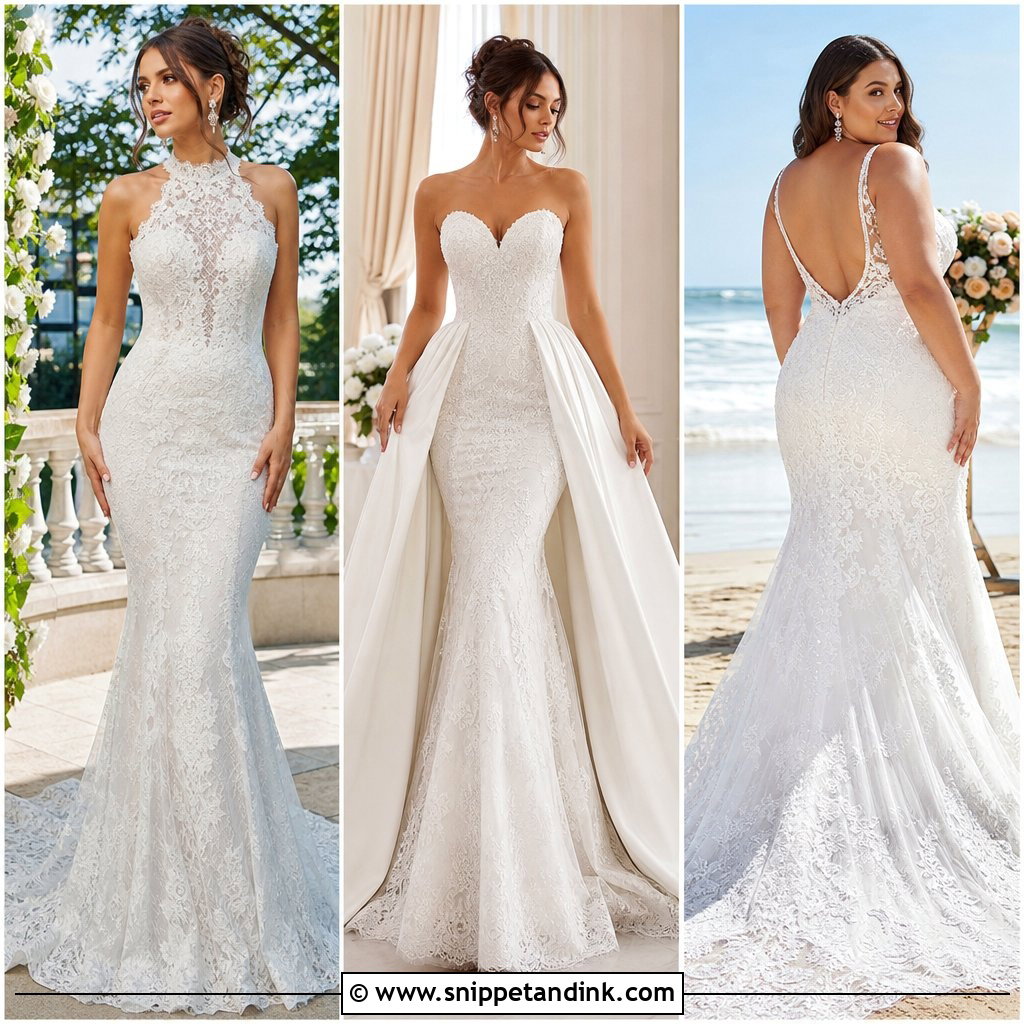
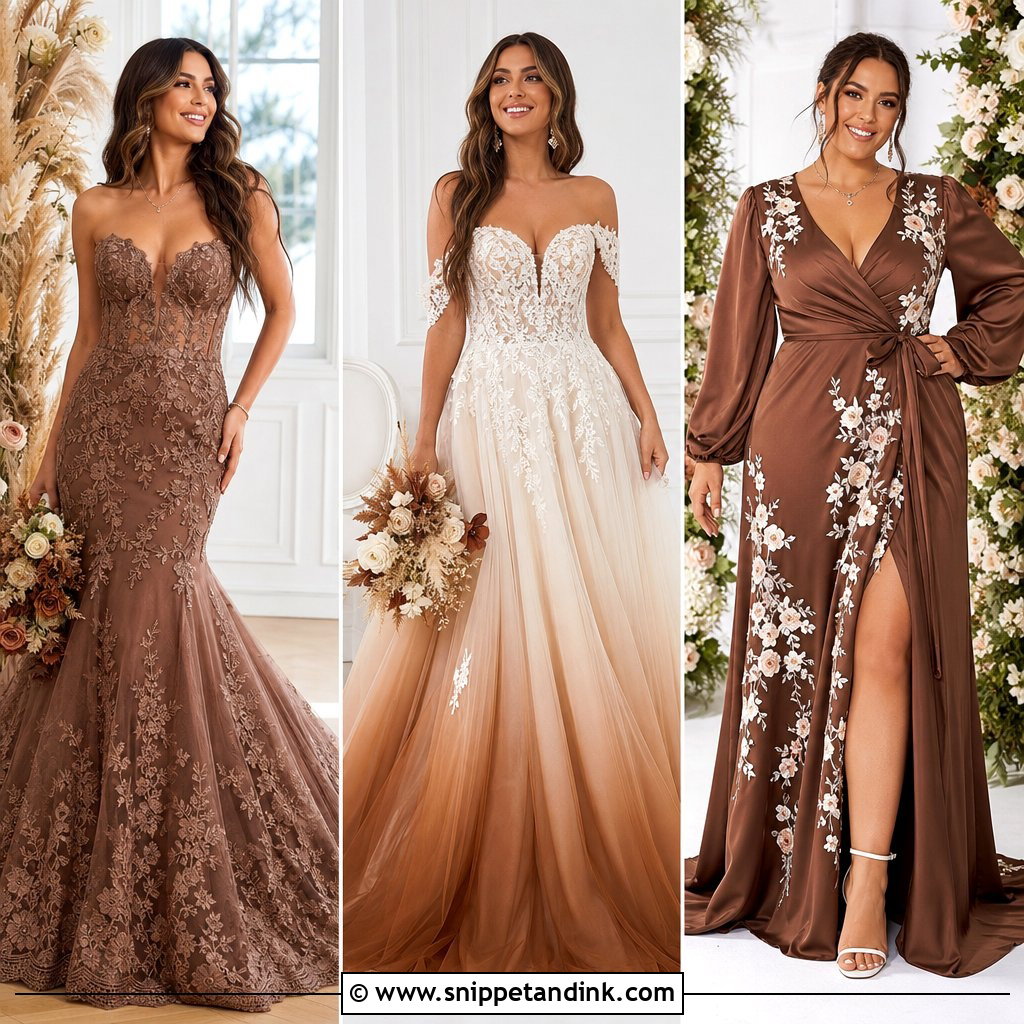
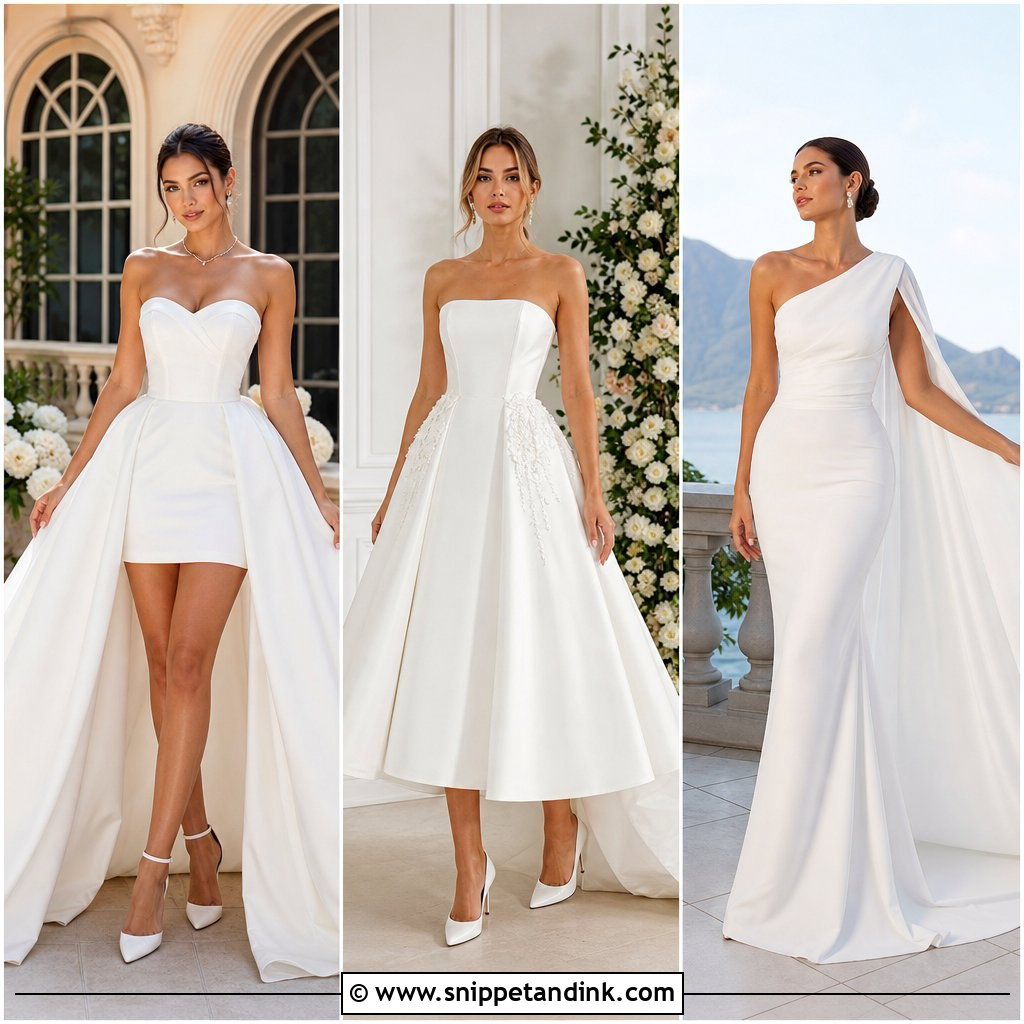
25. Black Long Sleeve Open Back Wedding Dress
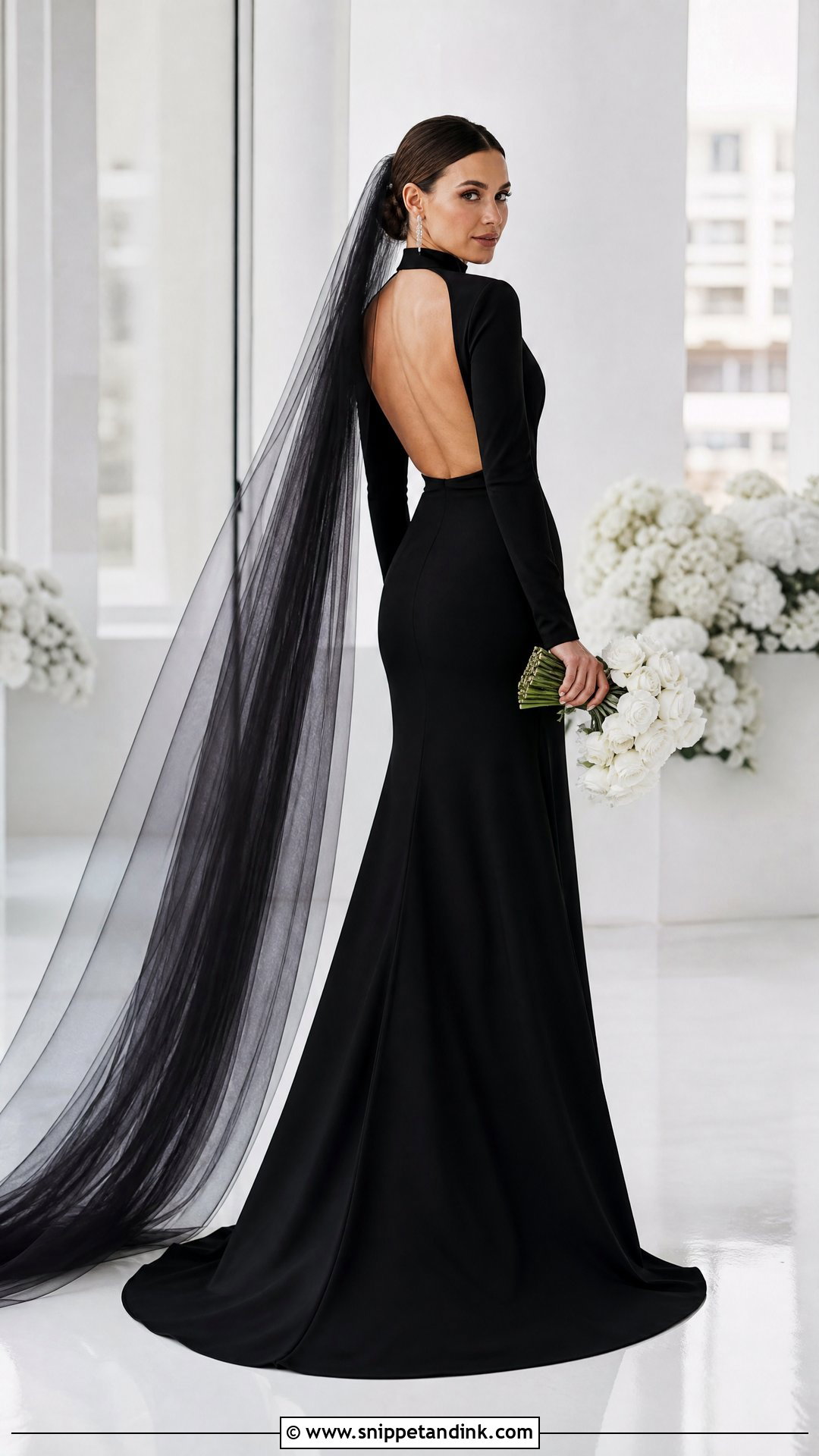
Black is a deliberate choice, and it photographs differently. Matte crepe looks modern, satin dramatic, floral lace romantic. A high front with long sleeves balances a deep back. Dark fabric flattens detail in photos, so I’d favor visible texture, a defined waist and good venue lighting. A black tulle veil makes a full statement; ivory gives contrast. Crystal earrings, black or metallic heels and white flowers with green foliage keep it polished rather than themed.
A Veil That Shows the Back Rather Than Hiding It
A veil sits right over the feature you chose the dress for, so its fabric and placement matter more here than with most gowns.
- Choose soft, sheer tulle with a plain or narrow edge. Heavy lace borders land across the opening and blur it.
- Anchor the comb below an updo, not on the crown, so the veil drops straight down the spine instead of fanning across the shoulders.
- A single-tier veil reads more clearly than a two-tier one over a bare back.
- Plan to remove it after the ceremony or for some portraits, so you get photos of the back on its own.
Skin and Posture Once the Back Is On Show
An open back means half your ceremony photos show skin most people never think about. A few weeks before, I’d suggest regular exfoliation, and if breakouts on the back are a concern, a facialist can help. Ask your makeup artist to even out the tone across the shoulders so it matches the face and arms.
Posture shows too. Shoulders rolled forward make the opening gape, so practise standing with them gently back while holding your bouquet low. Photographers often catch the back during the processional and when you turn to face your partner, so those are the moments to remember it.
Look Over Your Shoulder in the Fitting Room Mirror
The dress worth keeping looks right from every side and still feels comfortable hours later. Whether it’s lace, crepe, satin, statement sleeves or a seasonal fabric, balance the neckline, skirt and back depth for your body and venue. Then add an updo, jewelry scaled to the dress, comfortable shoes and a veil that doesn’t permanently hide the back. Book alterations early and bring your undergarments to every fitting. With good support underneath, an open back feels secure enough that you stop thinking about it.
You'll Like These Ideas:




Leave a Reply