
Pearls are one of the few cake decorations that look finished on almost any finish I work with: white fondant, soft buttercream, vintage piping, draped sugar, bows, lace and pared-back modern tiers. They add light without colour, so they rarely clash with the flowers or the dress. Most pearl cakes fall somewhere between a grand cascade down a tall cake and a single tier with one neat border. Where yours lands should depend on the room, the light and how much else is going on at the reception. Below are twenty ways I’d use them, with notes on how each holds up in practice.
Sugar Pearls, Dragées and Fondant Beads Are Not the Same Thing
Every pearl on a wedding cake is made from something, and that something affects how it looks, tastes and travels. When a couple shows me a picture, the first thing I work out is which kind I’d use.
- Sugar pearls: small, hard, round sweets, often coated with an edible pearl sheen. Crunchy, fully edible, great for borders and scattering.
- Hand-rolled fondant or gumpaste pearls: softer, any size I choose, and can be dusted with edible lustre. Best for big cascades and graduated sizes.
- Metallic dragées: very hard on teeth, and in some places sold as decoration only. I treat them as something guests remove, not eat.
- Isomalt pearls: glassy and catch light beautifully, but they can turn tacky in humid rooms.
If your guests include small children, I lean toward softer fondant pearls. Hard little beads look sweet on the cake and are a real choking worry for a toddler.
Colour is the other decision. Pure white, ivory, champagne and soft gold pearls all exist, and I always hold a few against the icing sample before ordering, because a bead that looks ivory in the jar can read yellow on a cool white cake.
1. Pearl Wedding Cake With White Fondant
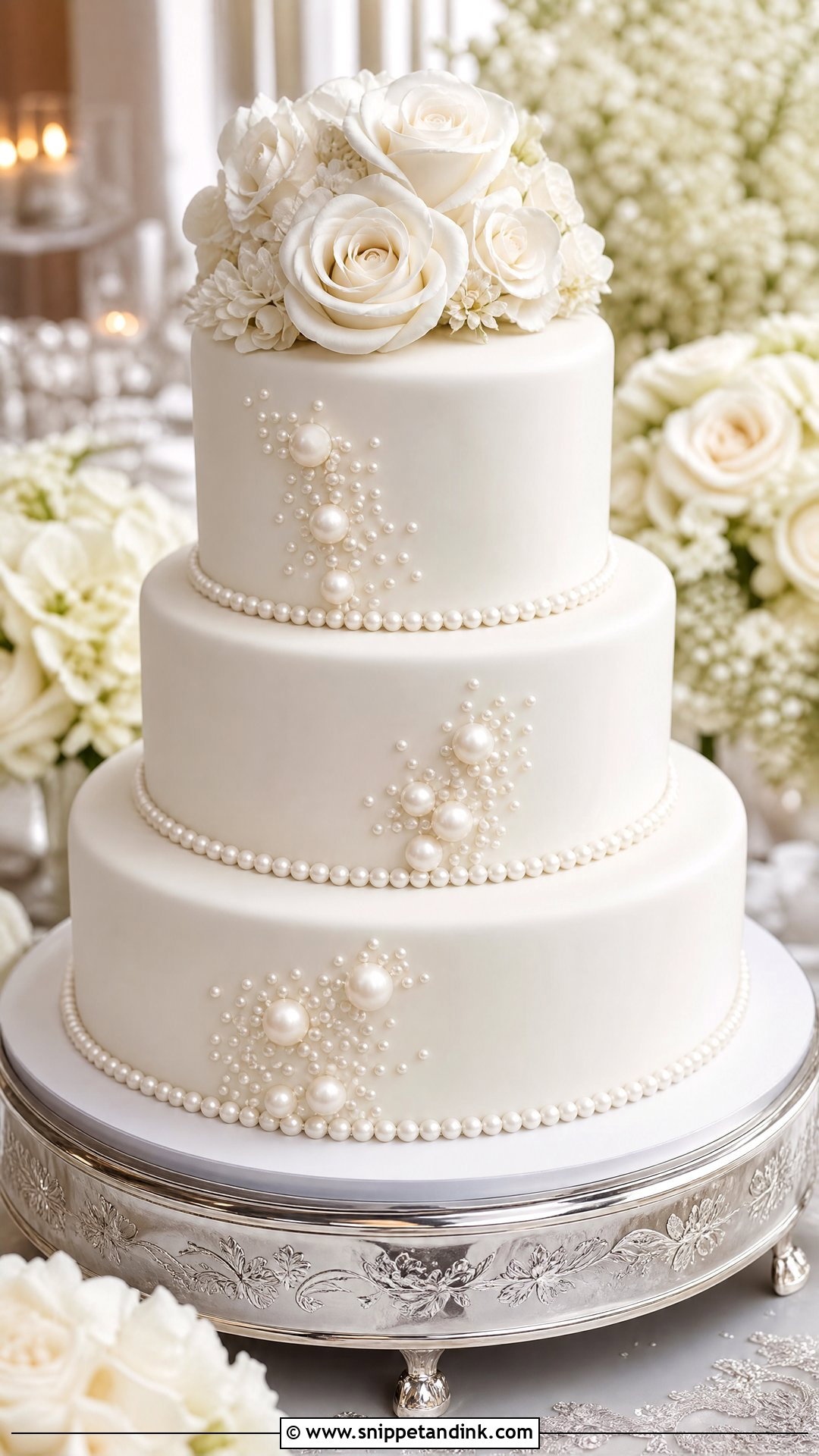
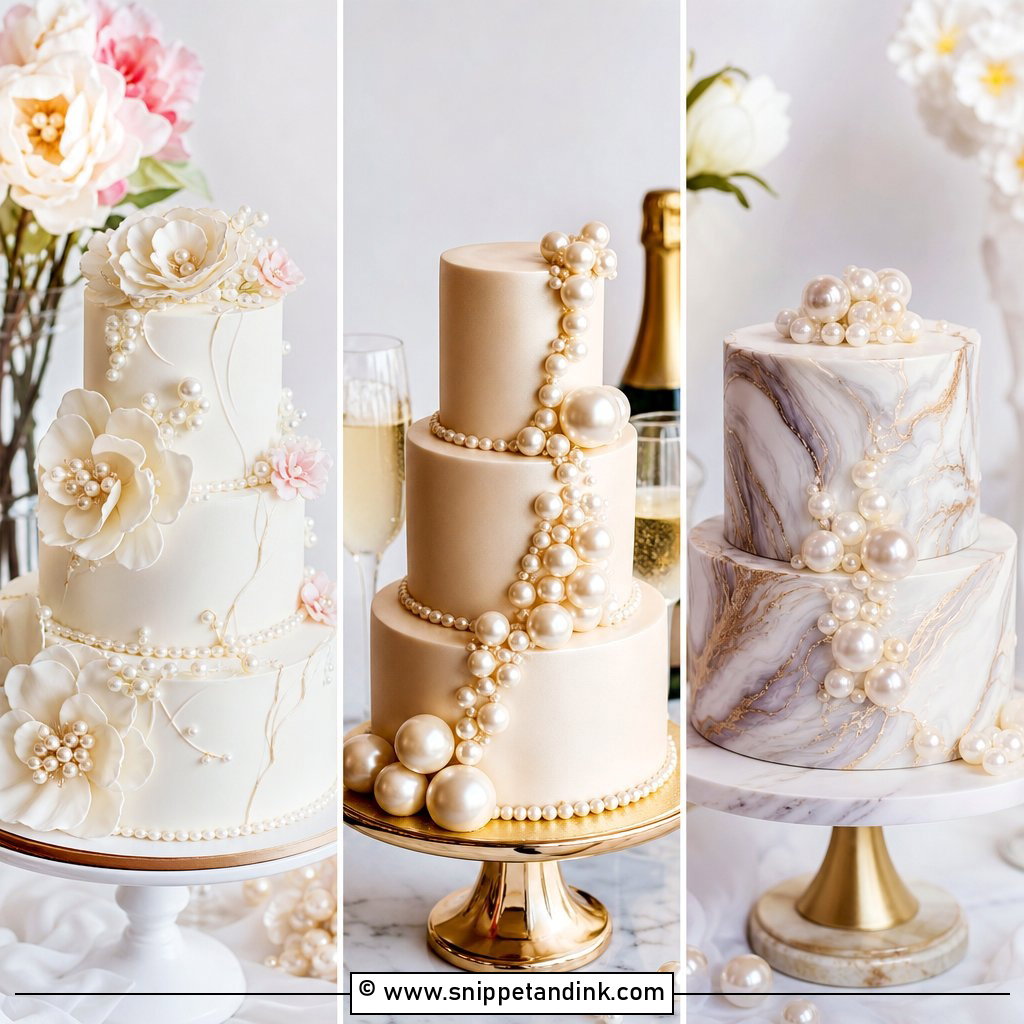
Fondant gives pearls the smoothest possible backdrop, so every bead sits exactly where it’s placed and nothing looks accidental. Three round tiers with a thin pearl border at each base is the version I’m asked for most, sometimes with a small cluster at the front of the middle tier. Underneath, vanilla bean, almond, champagne or white chocolate sponge all suit it. I’d suggest ivory sugar pearls rather than bright white; pure white beads can look slightly blue against white fondant under warm reception lights.
2. Pearl Wedding Cake With Buttercream
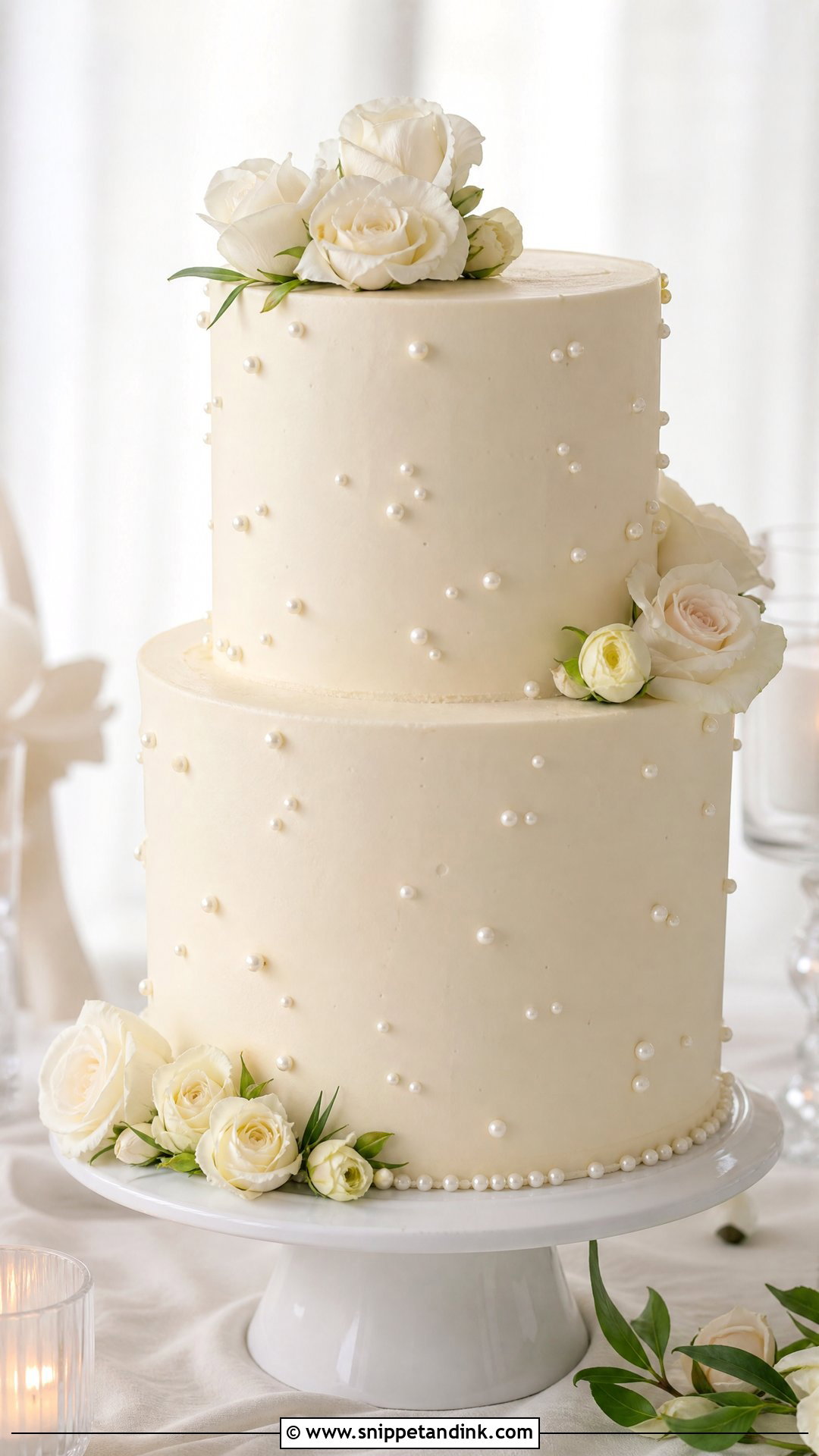
Buttercream reads softer and creamier than fondant, and a well-scraped finish can come surprisingly close to fondant smoothness. Tiny edible pearls press straight into the crust once it has set a little, scattered, in rows, or as borders. The catch is temperature. Press pearls into buttercream that’s too soft and they sink or slide; I chill the tiers until the surface is firm to the touch before placing anything. Ivory buttercream over vanilla, lemon or almond sponge is a natural match, kept smooth for a modern room or given gentle piping and a few flowers for a romantic one.
3. Pearl Wedding Cake With Cascading Pearls
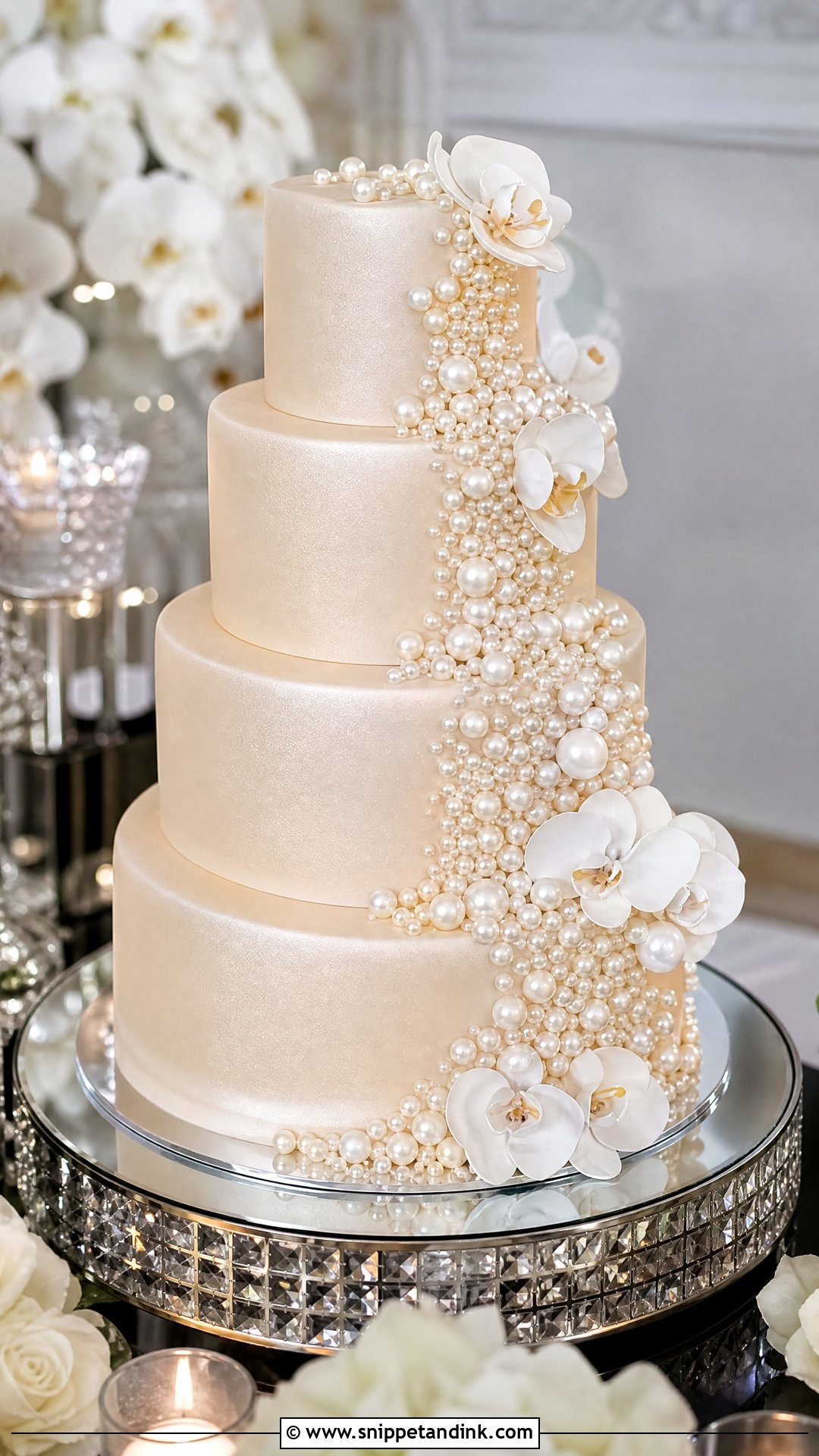
Rather than covering every tier, the pearls fall down one side like water, which gives the cake a strong vertical line. That suits tall tiered cakes best, where the drop has room to travel. I mix sizes, larger beads up near a flower cluster and smaller ones trailing toward the board, so it looks like it settled naturally. A cascade on fondant can be attached with edible glue; on buttercream it needs a cool, firm surface. Keep the rest of the design quiet. It suits a ballroom or a garden equally well.
4. Pearl Wedding Cake With Sugar Flowers
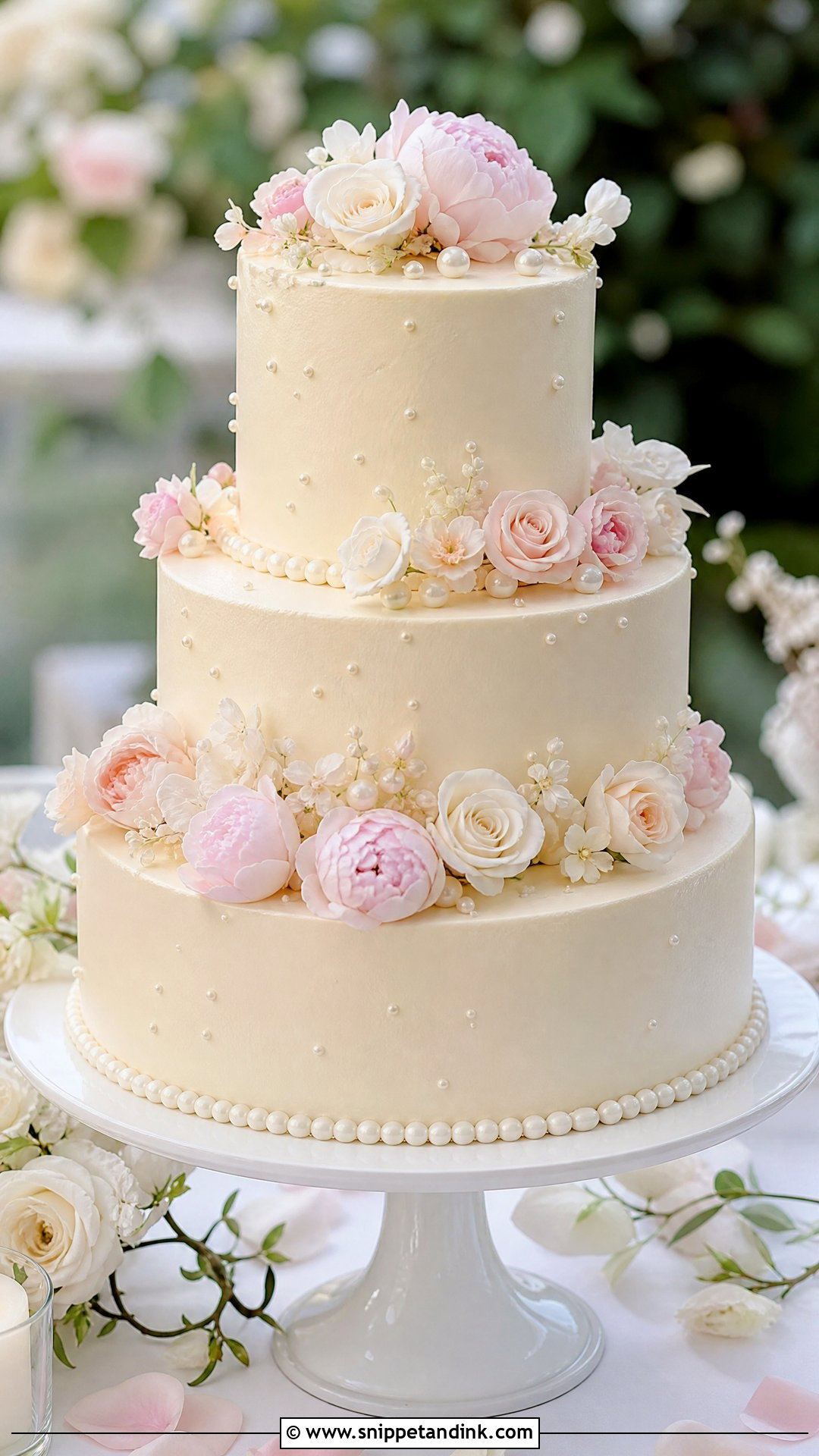
Sugar flowers bring softness and the pearls bring shine, and between them you get a cake that looks properly custom. Roses, peonies, orchids or small blossoms between tiers, with pearls framing or trailing from the arrangement, is the usual layout. Gumpaste flowers take real time to make and dry, so this design needs ordering well ahead. If your bouquet is already strongly coloured, I’d keep the sugar flowers paler, blush, cream or pale peach on ivory, so the cake doesn’t compete with it on the table.
5. Pearl Wedding Cake With Lace Piping
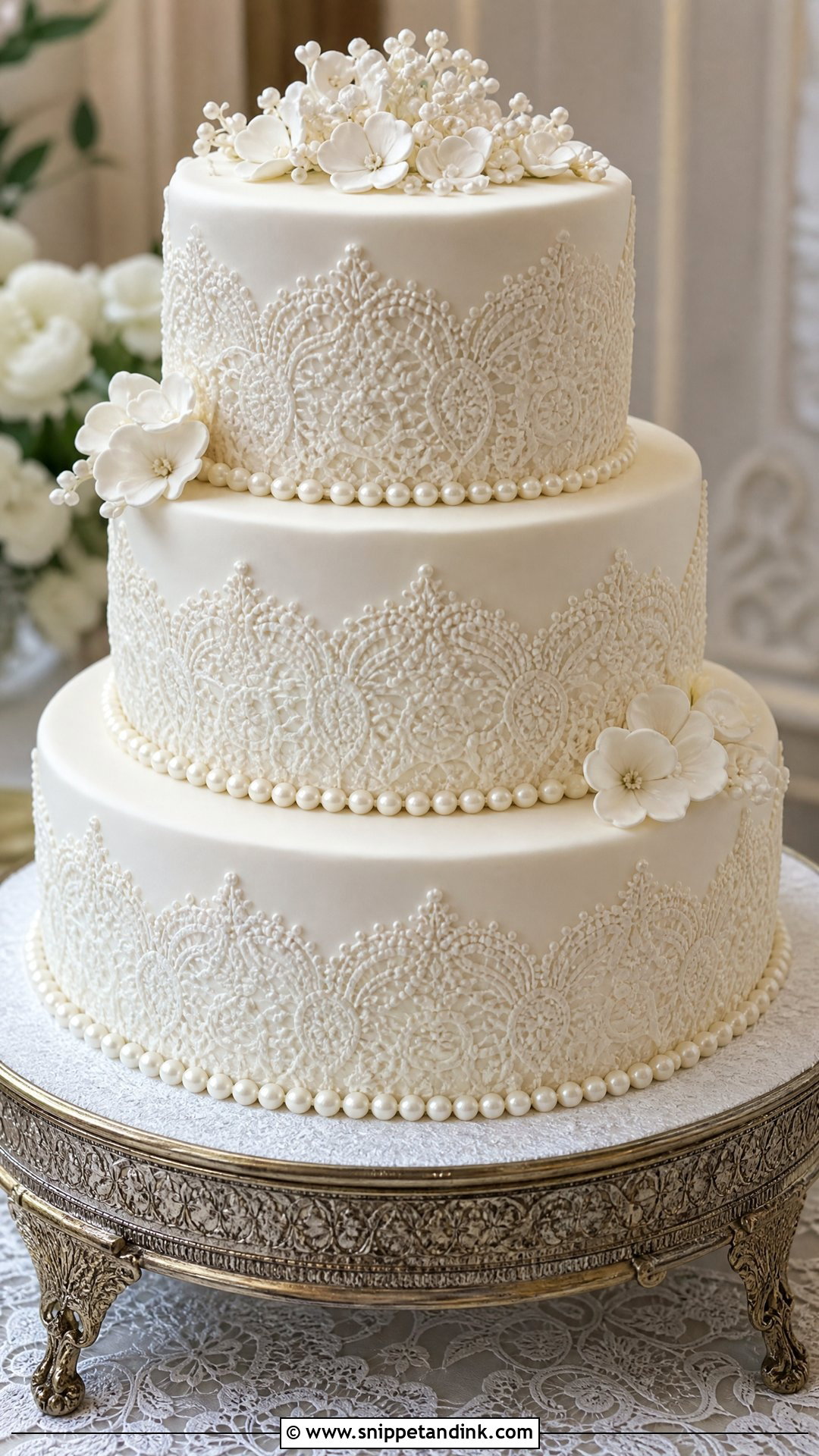
Piped lace takes its cue from bridal fabric, and edible pearls placed within the pattern give it tiny points of light. On white, ivory or champagne tiers it can cover the whole cake, or alternate tiers for a cleaner look, with pearl borders to finish each edge. If you’d like the lace to echo your actual gown, bring a close photo of it; I can match the motif’s scale far more closely than from a description. It suits formal rooms, vintage venues and candlelit receptions. Keep the colours gentle.
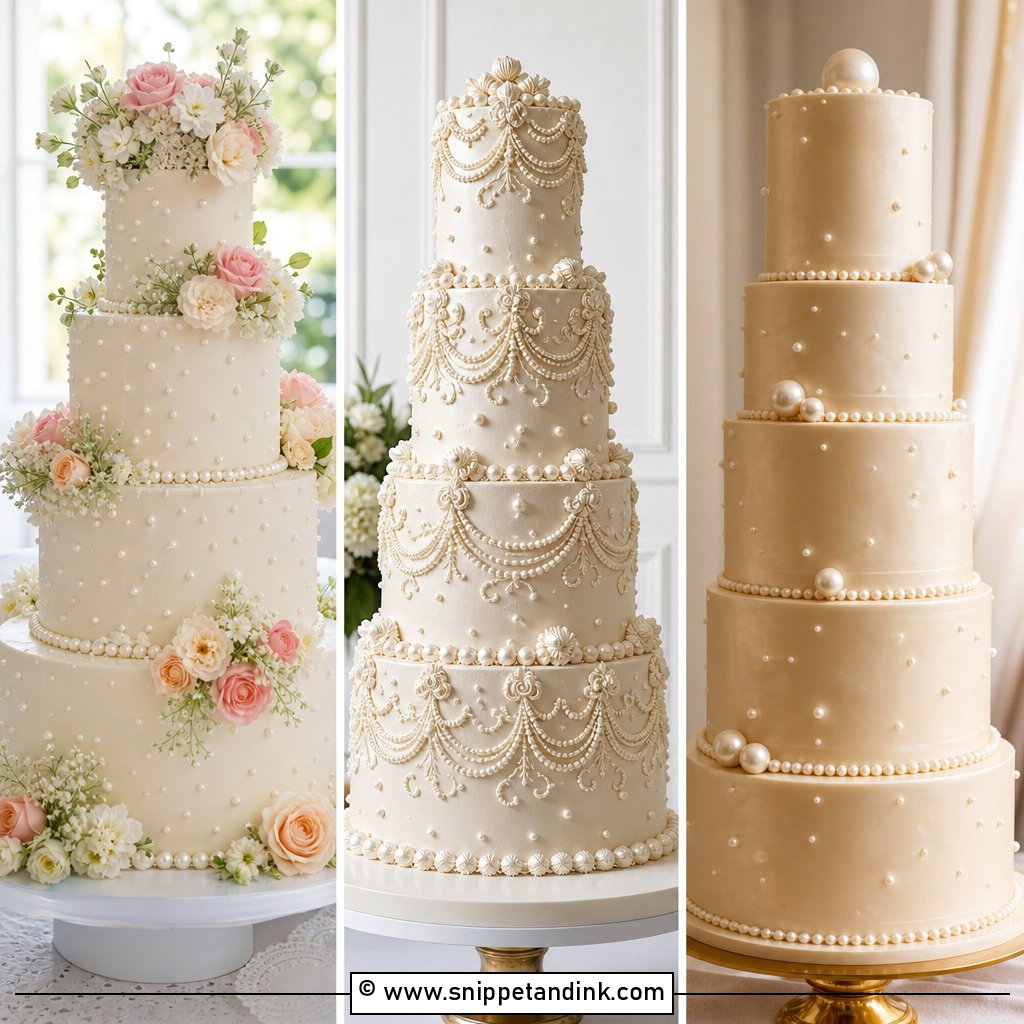
6. Pearl Wedding Cake With Vintage Piping
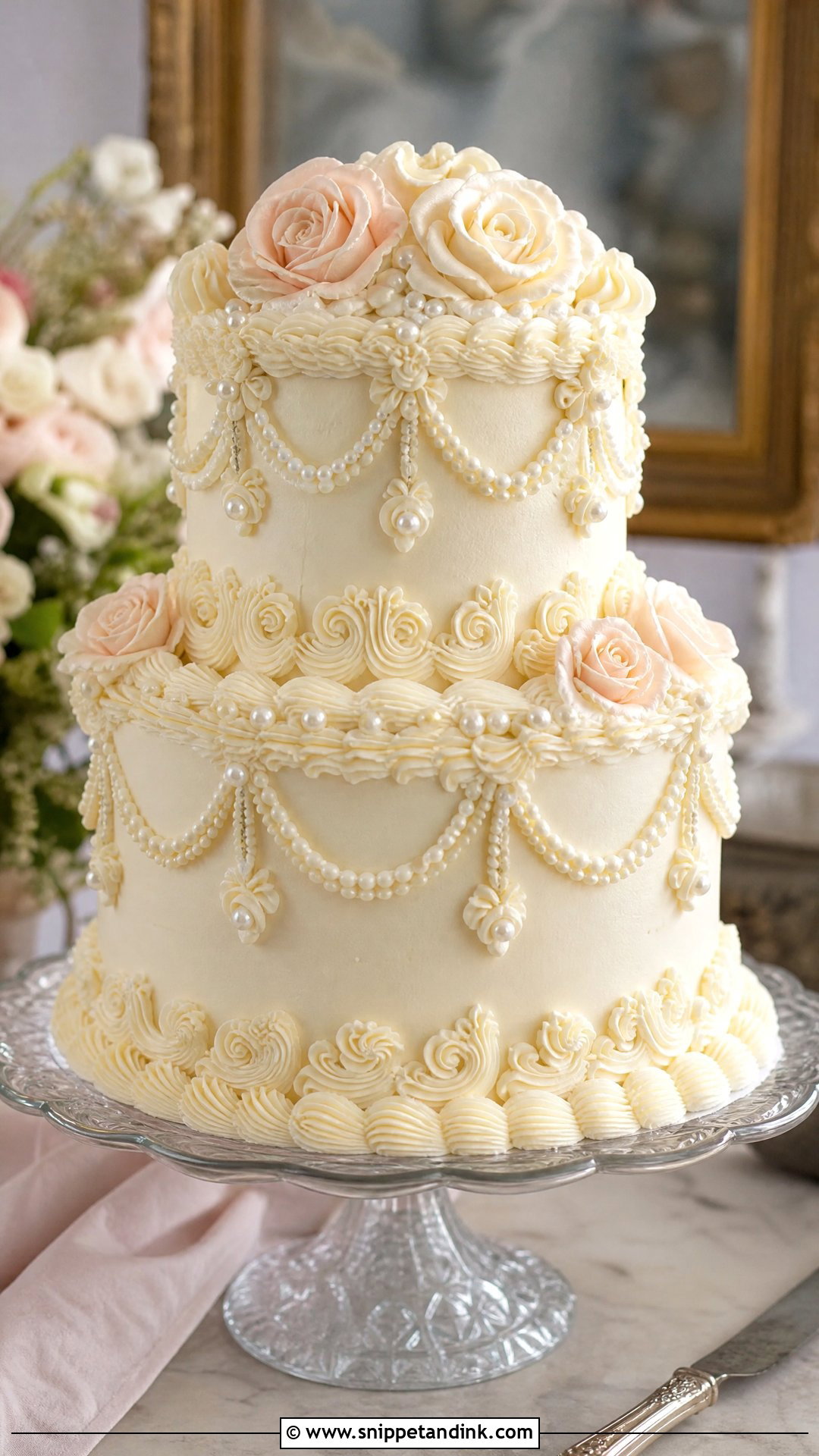
Scalloped borders, buttercream swags, shell piping and rosettes, with tiny pearls tucked into the details, are having a real moment. This style is very forgiving in buttercream, since the piping hides small imperfections a smooth finish would show. It suits two tiers or a heart-shaped cake for a small wedding, and it scales up to three or four tiers if you want drama. Ivory, cream, blush and pale blue all work. My one rule: pearls should sit like jewellery on the piping, at points and centres, never stuffed into every gap.
7. Pearl Wedding Cake With Pearl Borders
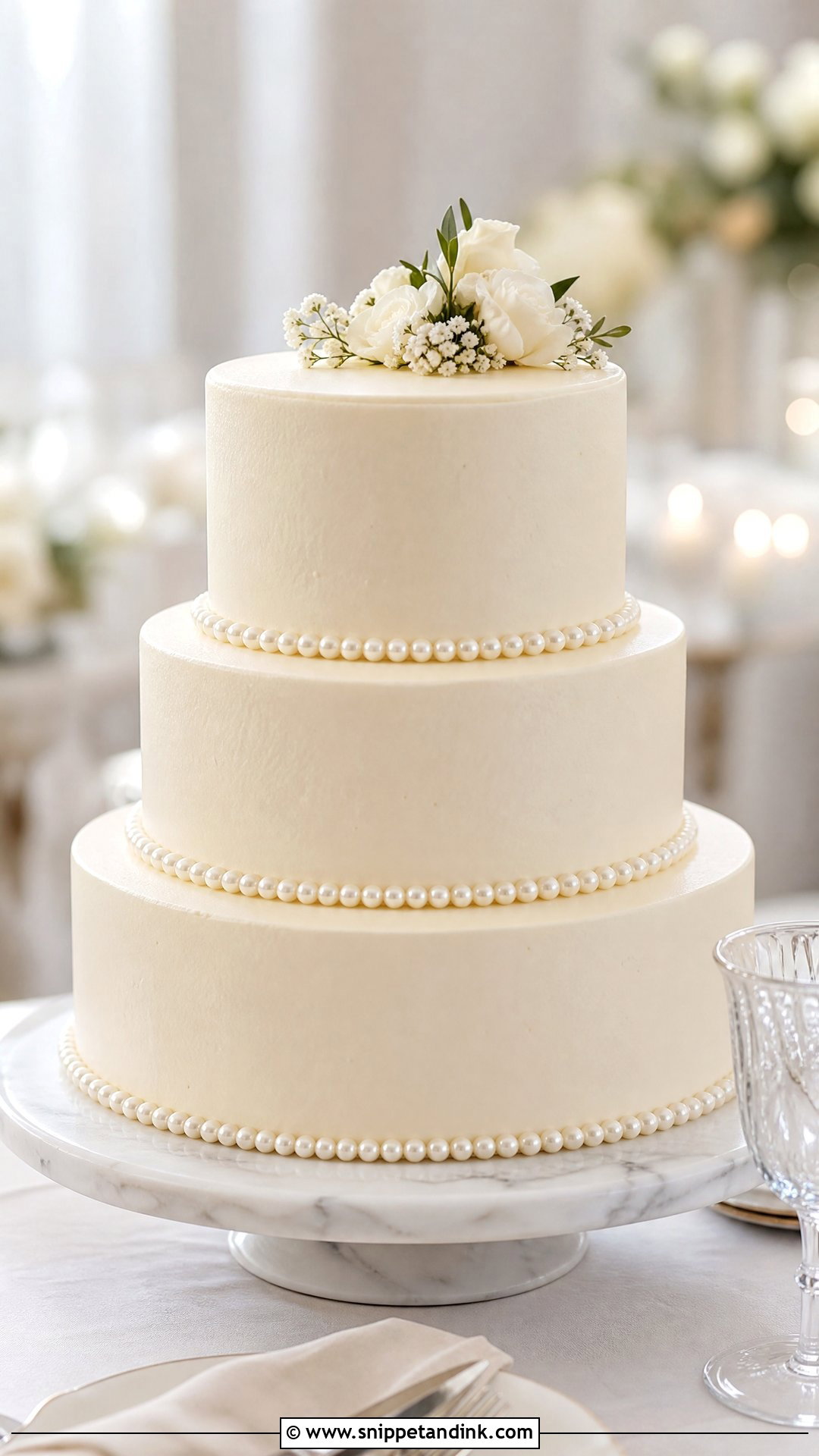
A single neat row of pearls around each tier base is the most tailored option here. It’s also the one I’d recommend if you’re nervous about a design looking fussy. The finish underneath can be buttercream, fondant or lightly textured, all white or with one accent such as a satin ribbon, fresh flowers or a small monogram topper. Since the decoration is so restrained, it works with any flavour. Practically, a pearl border also neatly hides the join where a tier meets its board.
8. Pearl Wedding Cake With Bow
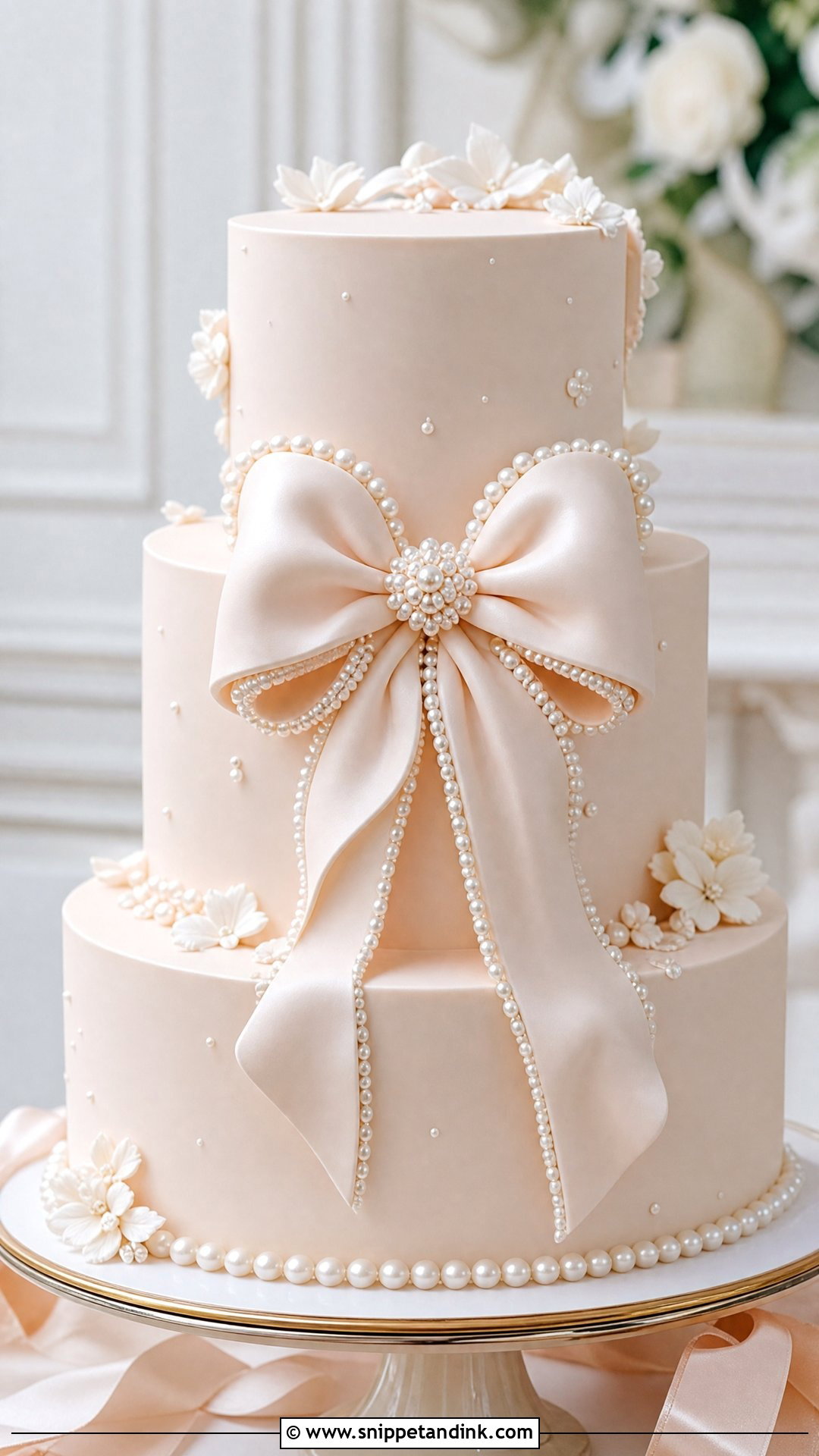
A bow keeps this design modern only if the tiers around it stay clean. I make it from fondant or gumpaste, often with a little tylose kneaded in so the loops hold their shape and don’t slump overnight. It can sit on the front of the middle tier or drape from the top. Pearls look right around the loops, along the tier edges or lightly scattered. Ivory, blush and champagne all work. Keep the bow structured and modest in size; an oversized one starts to look like a gift box.
9. Pearl Wedding Cake With Ruffles
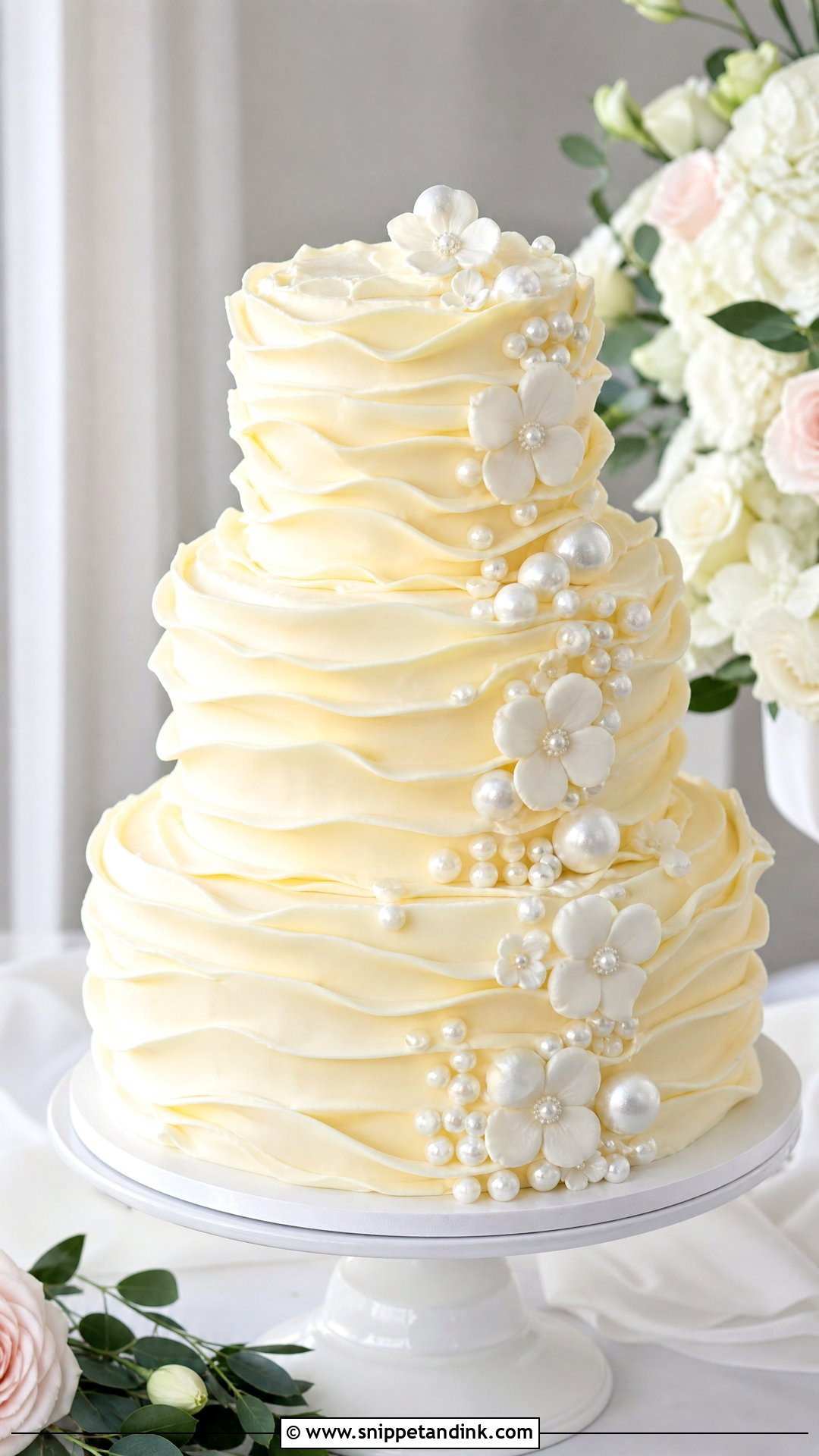
Ruffles already bring so much movement that the pearls need restraint. Buttercream or fondant frills wrap the tiers like fabric, and a pearl border, a few small clusters or a single side cascade is plenty. White and ivory are classic, and pale blush or champagne ruffles look gorgeous too. Fondant ruffles hold their edge better in a warm marquee; buttercream ruffles are softer to eat but droop if the room is hot. That’s worth knowing before you commit for a summer garden reception.
10. Pearl Wedding Cake With Gold Accents
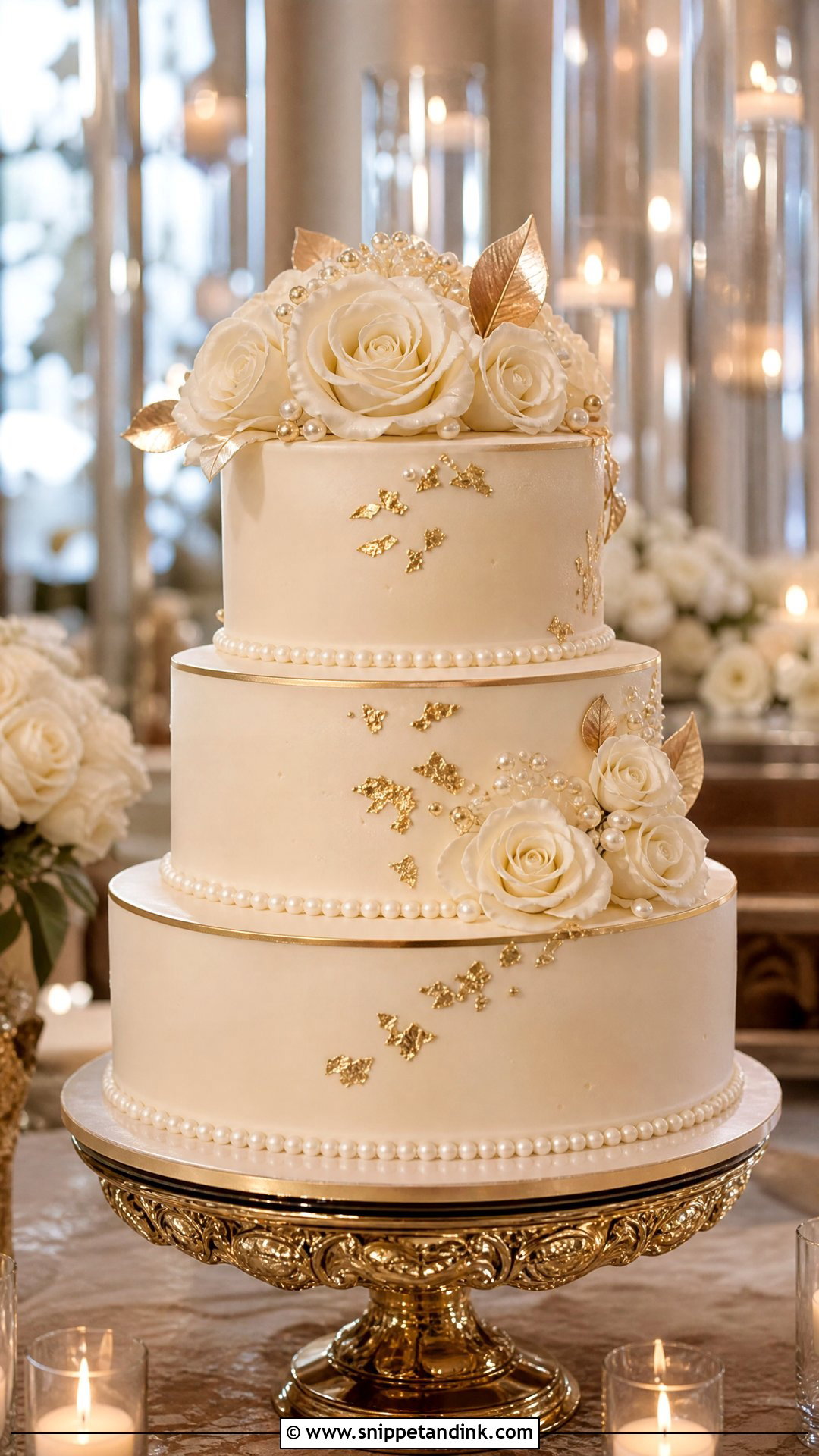
Gold leaf, piped gold or a thin metallic band adds warmth, and the pearls keep it soft. On smooth white or ivory tiers, I’d limit gold to one element: a narrow band, gold-edged sugar flowers, or leaf on one tier. Too much and the pearls disappear. Worth asking your baker whether their gold is edible leaf or a lustre labelled non-toxic, which is for decoration only and shouldn’t be eaten in quantity. It’s at its best at evening and hotel receptions with gold flatware and candlelight.
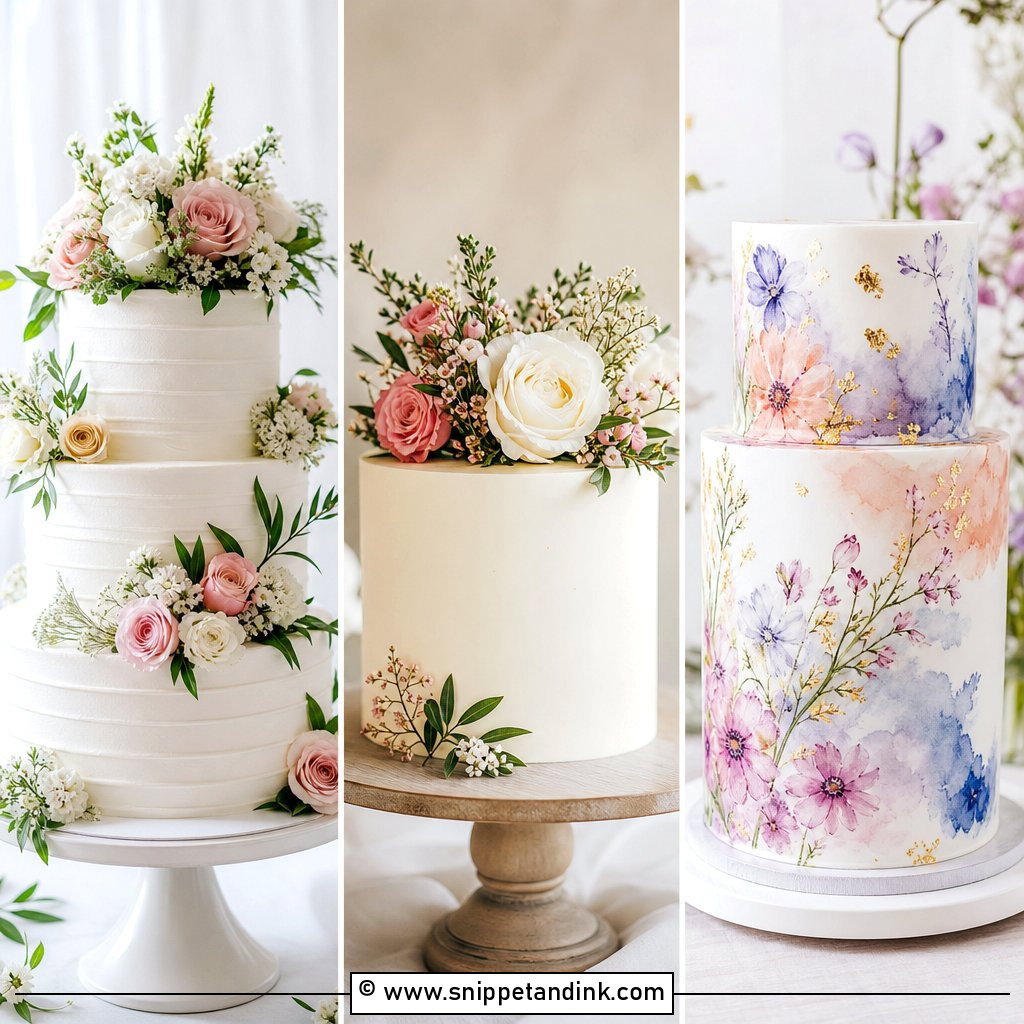
11. Pearl Wedding Cake With Fresh Flowers
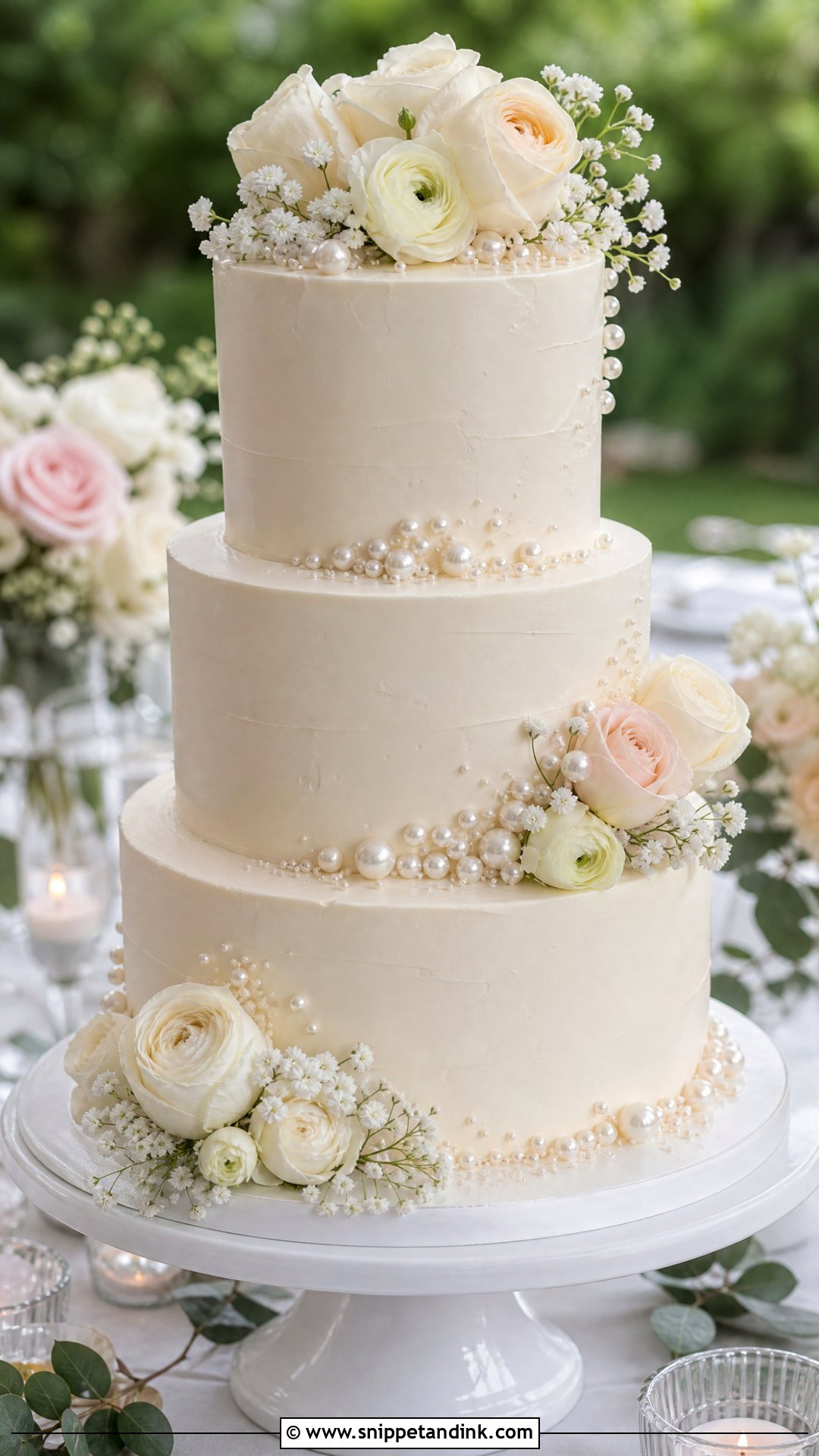
Fresh flowers tie the cake to the bouquet and centrepieces, and pearls add the bridal polish. Roses, ranunculus, orchids, baby’s breath and small seasonal blooms all work, but they must be food-safe and arranged properly by the baker or florist: stems wrapped or placed in picks so they never push straight into the sponge, and nothing sprayed with pesticide. Pearls can circle the clusters, trail down a side or border each tier. An ivory base lets the flowers stand out. It suits gardens, marquees and outdoor celebrations.
12. Pearl Wedding Cake With Pressed Flowers
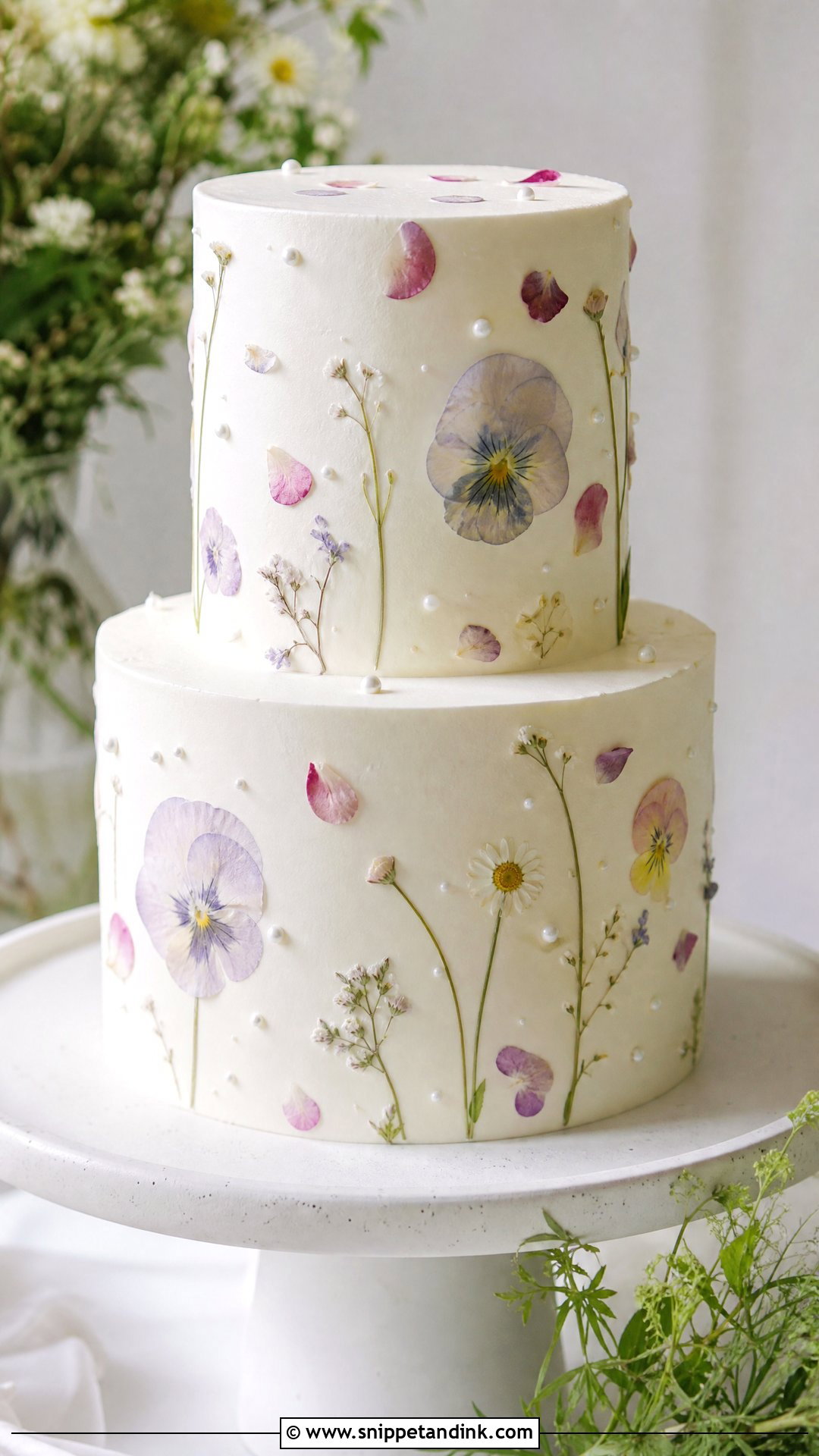
Pressed edible flowers lie flat against smooth white buttercream and look as if they’re floating on the surface, which is the appeal. I apply them on the morning of delivery or the day before at most, because moisture from the buttercream slowly darkens and softens delicate petals. Pearls should stay small and scattered to give structure without crowding the botanicals. Soft pink, lavender, yellow or blue flowers can follow your palette. It’s a natural fit for spring weddings, brunch receptions and outdoor parties.
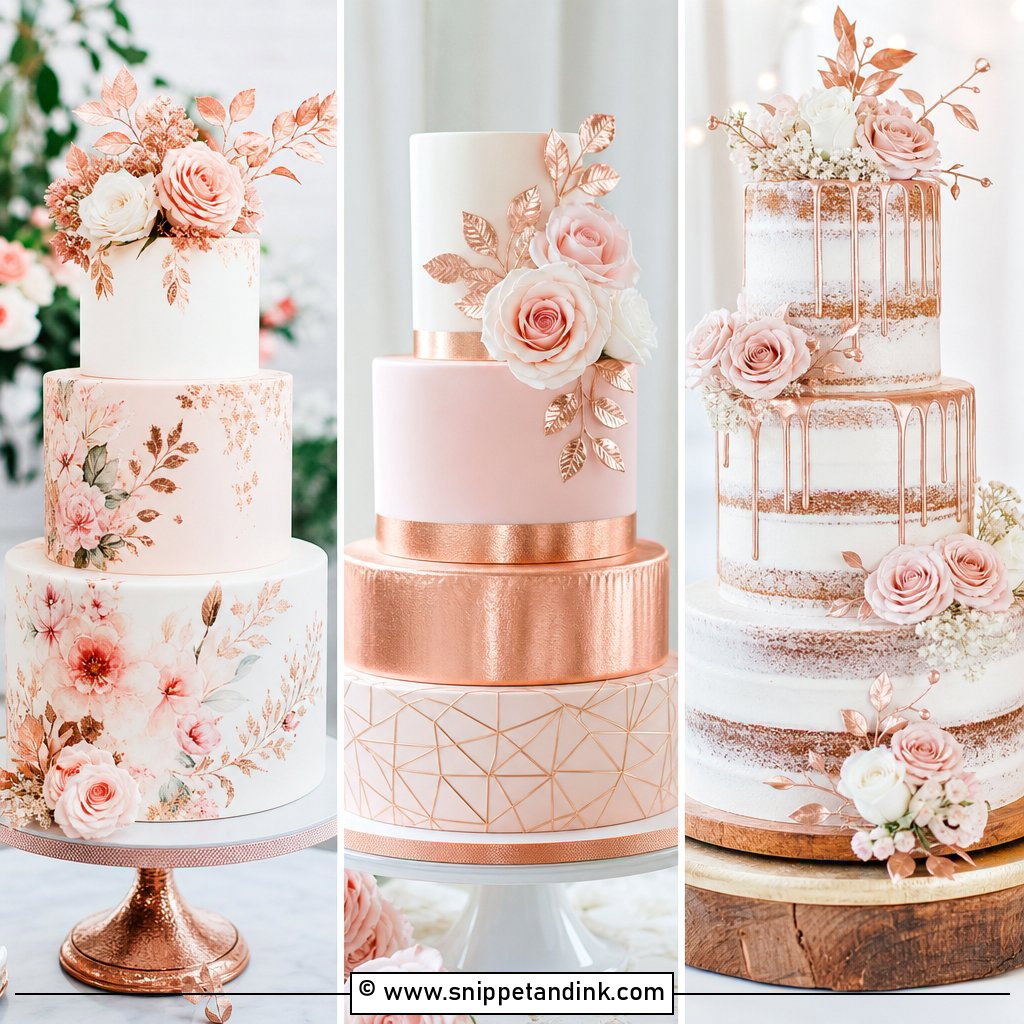
13. Pearl Wedding Cake With Blush Pink
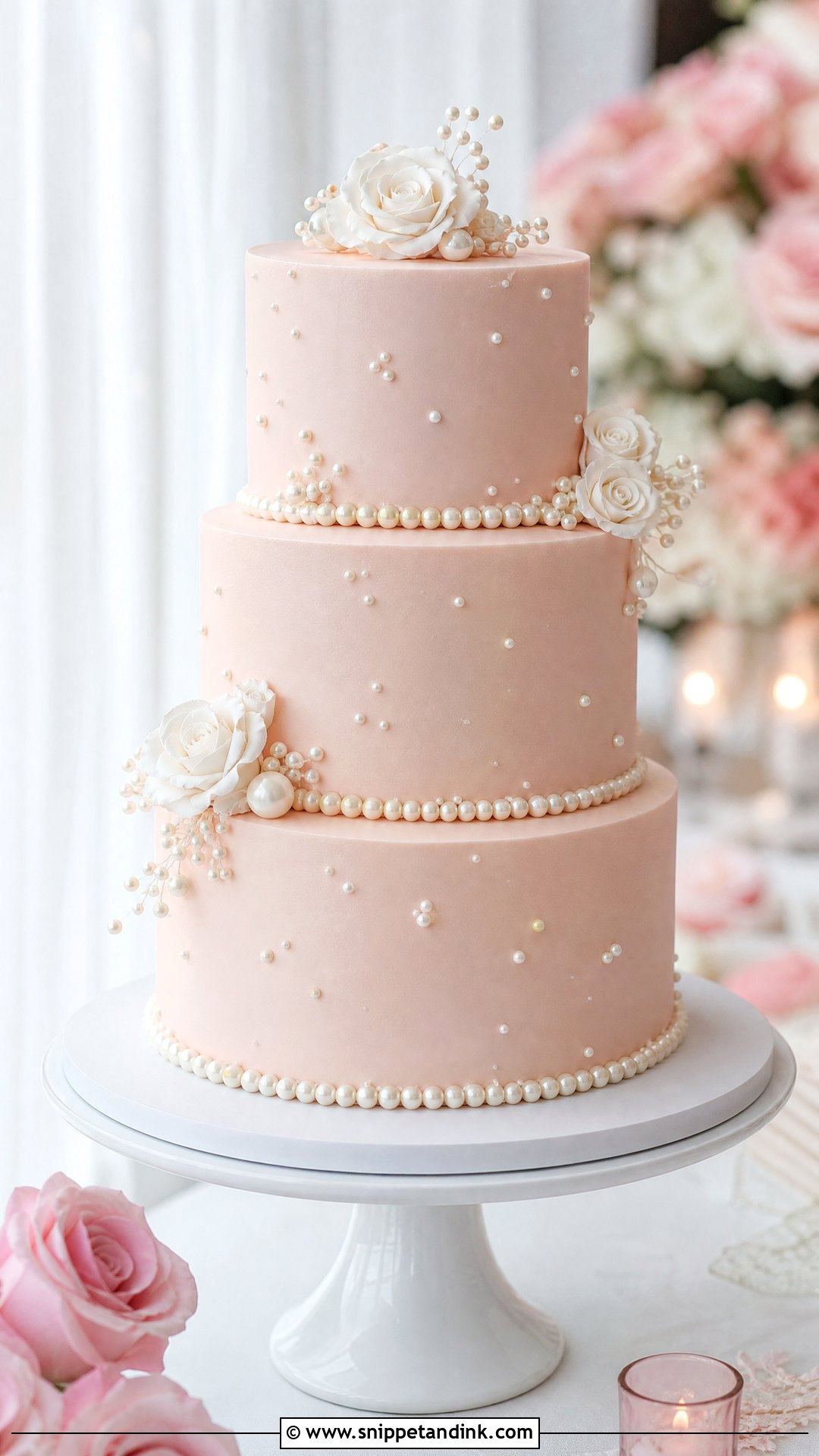
Blush can be a full buttercream coat, one fondant tier, watercolour shading or a gentle ombré, and pearls stand out against it without harsh contrast. White sugar flowers, pearl borders and a couple of small clusters finish it. A tip from the mixing bowl: pink buttercream tends to deepen a little as it sits, so I mix it a shade lighter than the target. Strawberry, raspberry, vanilla or rose sponge suits the mood. Pale pink roses, champagne linens and candlelight are its natural surroundings.
14. Pearl Wedding Cake With Champagne Color
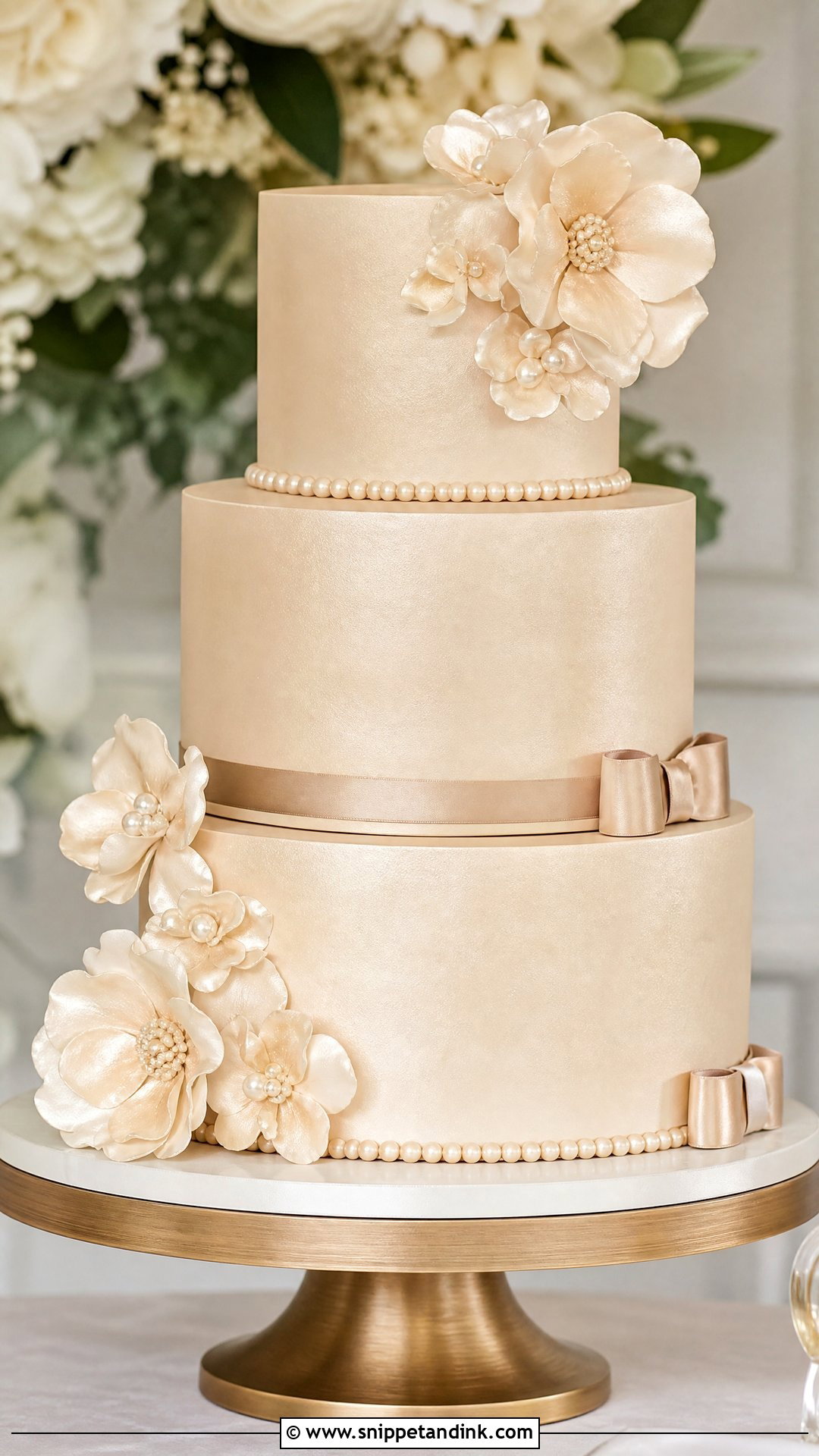
Champagne is warmer than white and reads a touch more modern. The soft beige-gold tone sits naturally with ivory pearls, satin textures and warm flowers. It can be smooth buttercream, fondant or brushed with a fine pearlescent sheen. Pearl borders and small clusters keep it refined, and sugar flowers or a bow add romance. It belongs in neutral palettes with ivory, taupe, gold and soft brown. One honest caution: under strong yellow lighting, champagne can look beige rather than gold, so see a sample in similar light if you can.
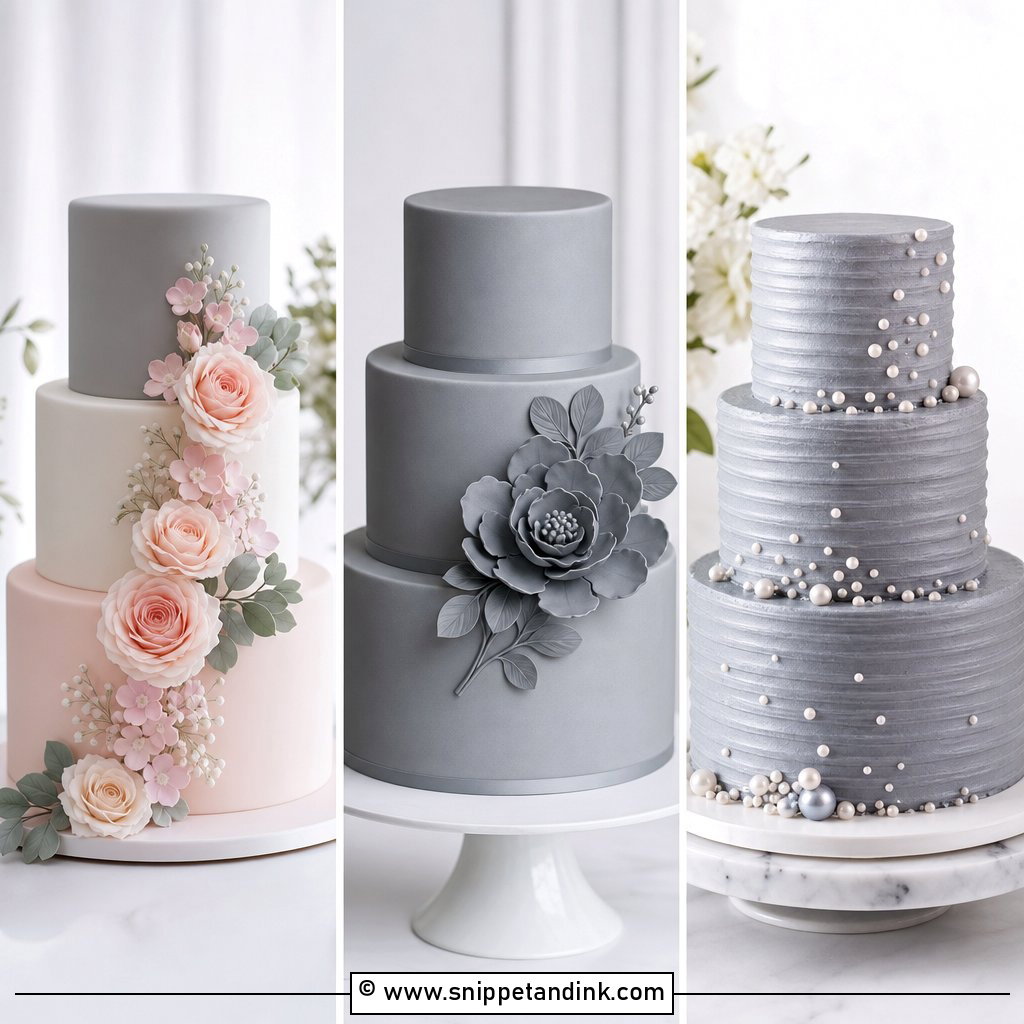

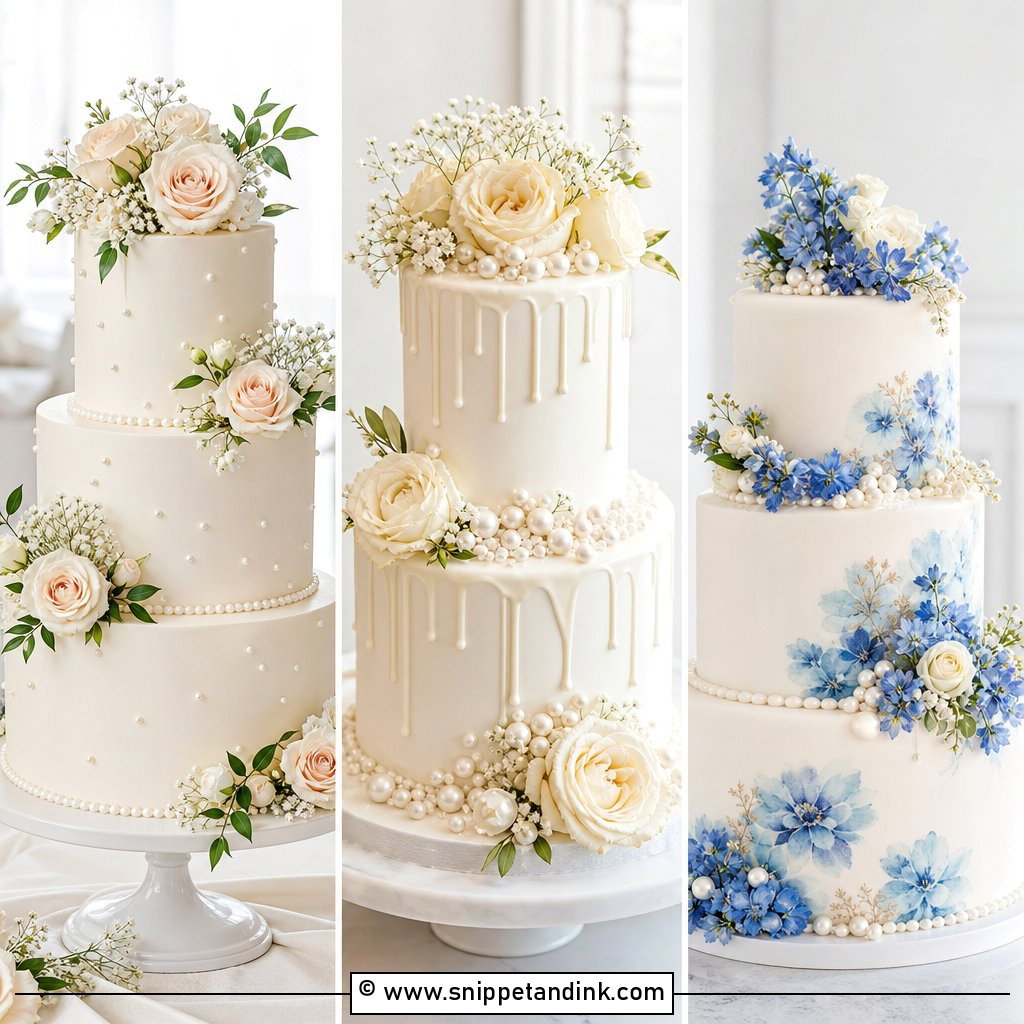
15. Pearl Wedding Cake With Blue Accent
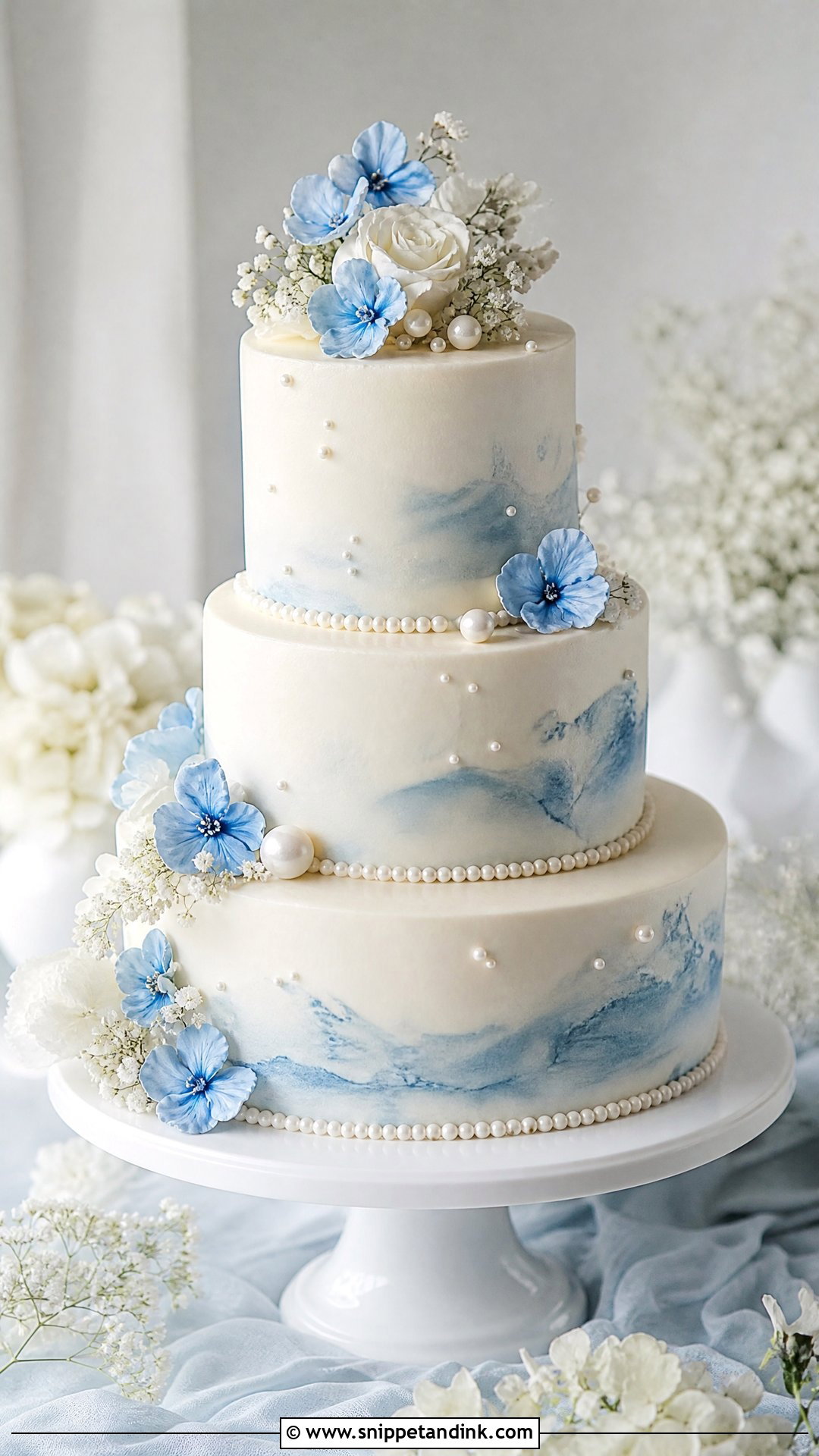
Soft blue gives the pearl look a fresh twist and a quiet nod to something blue. It can be a single tier, painted details, watercolor shading, ribbon-style fondant or tiny piped flowers. I keep everything else ivory, white or pale silver so the blue reads clearly. Getting a soft blue to stay soft takes care, as gel colour develops over a few hours, so I always mix ahead and check it before covering. Vanilla, almond, lemon or blueberry sponge fits. It’s well suited to coastal venues and gardens.
16. Pearl Wedding Cake With Square Tiers
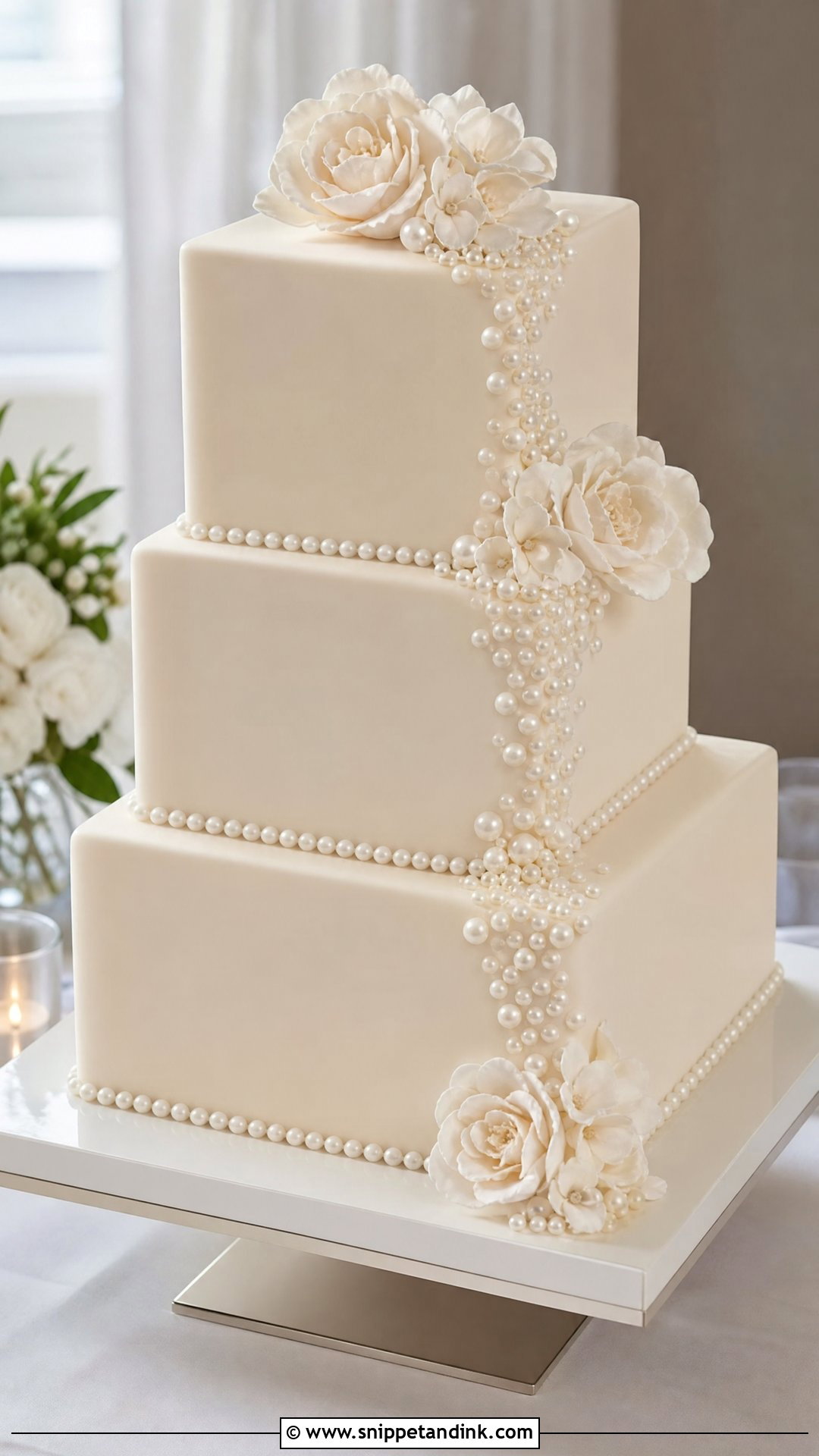
Square tiers feel crisp and tailored, and pearls soften the hard lines. Pearl borders are especially effective here because they define each tier edge clearly. Piping, lace or a cascade down one corner adds interest. Fondant is the easier route to razor-sharp corners; buttercream can get there, but it takes a confident baker and a very cold cake, and the corners are the first thing to soften in a warm room. It suits formal and modern venues and couples who want classic details on a stronger shape.
17. Pearl Wedding Cake With Tall Tiers
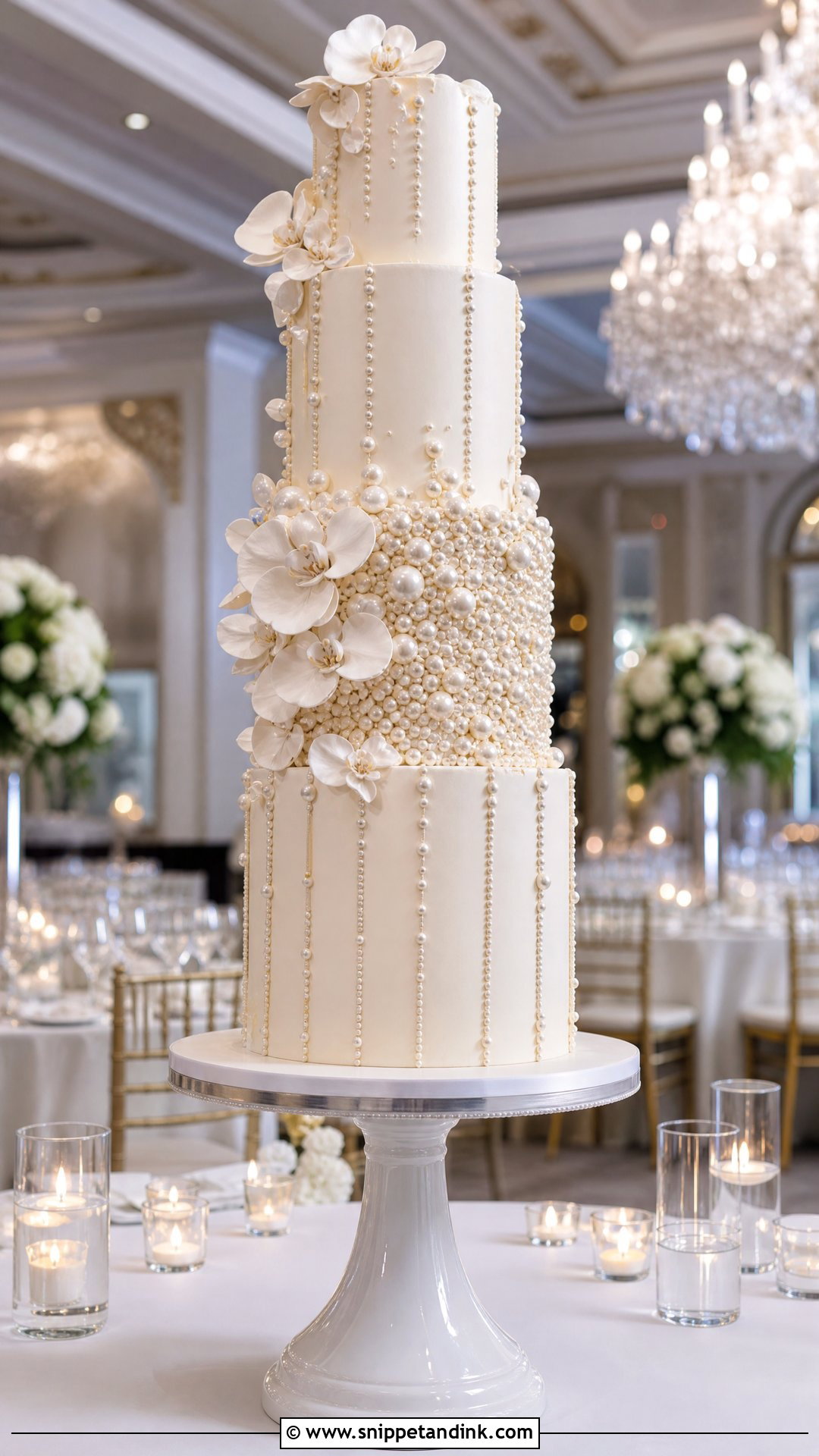
Extra-height tiers give room for cascades, vertical pearl lines, flowers or texture, and the whole cake reads grand from across the room. Structurally they need more support: each tall tier is usually two stacked cakes on a hidden board with its own dowels, which adds to the build time and the price. Keep the decoration measured so the height does the work. Ivory buttercream, white fondant or champagne finishes all suit it, with pearls in mixed sizes for depth. It’s for large receptions and ballrooms where the cake should anchor the room.
18. Pearl Wedding Cake With Heart Shape
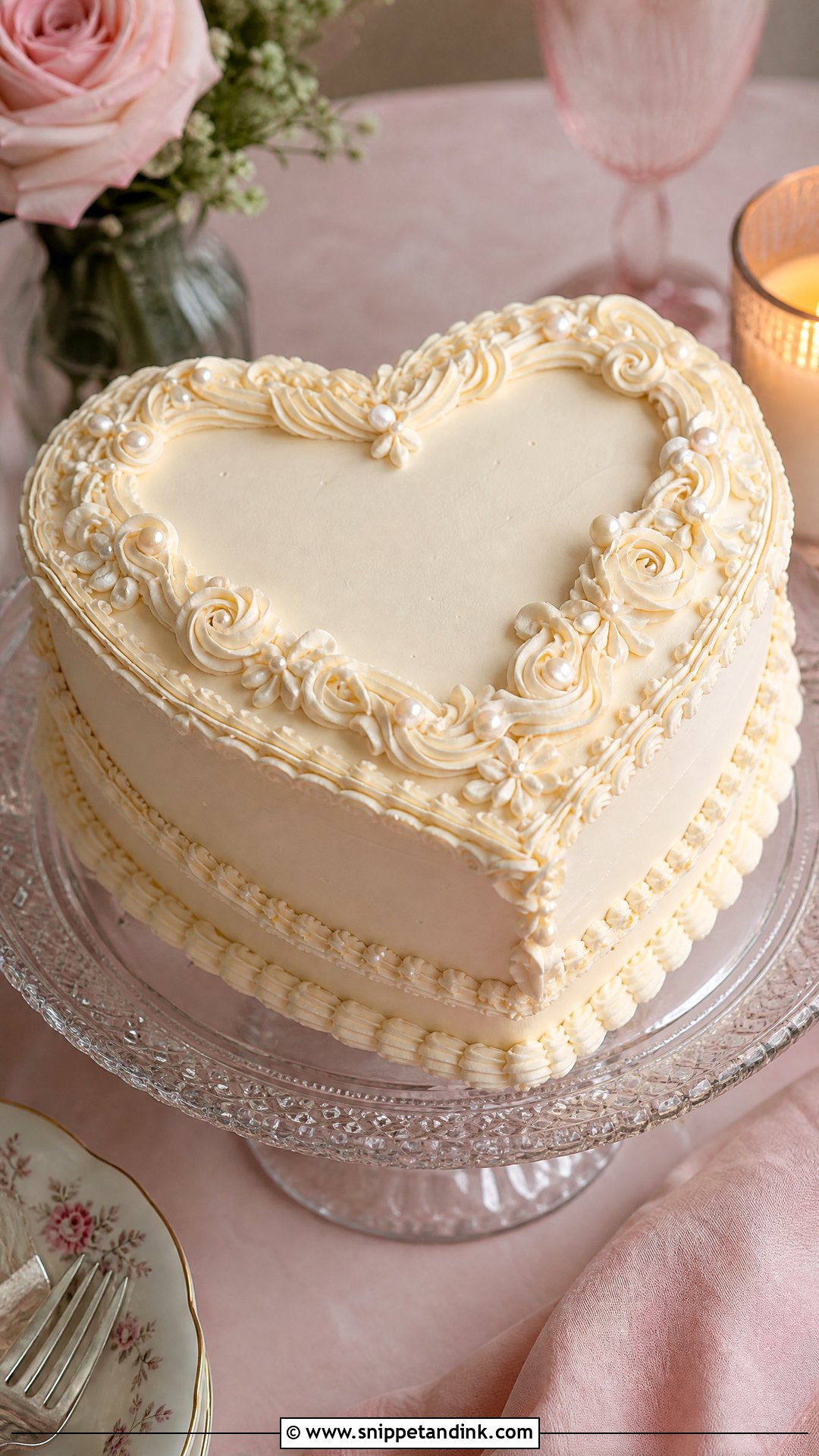
A heart shape is already romantic, so the pearls only need to frame it: borders, piped swags, small rosettes and a few clusters along the top edge. As a single tier it’s right for a small reception, or it can crown a larger cake. Ivory, blush or pale pink buttercream fits. Heart cakes are harder to cut neatly than rounds, so I’d plan a kitchen cake if you need many portions. Couples who love retro bakery cakes and soft piping tend to gravitate to this one.
19. Pearl Wedding Cake With Draped Fondant
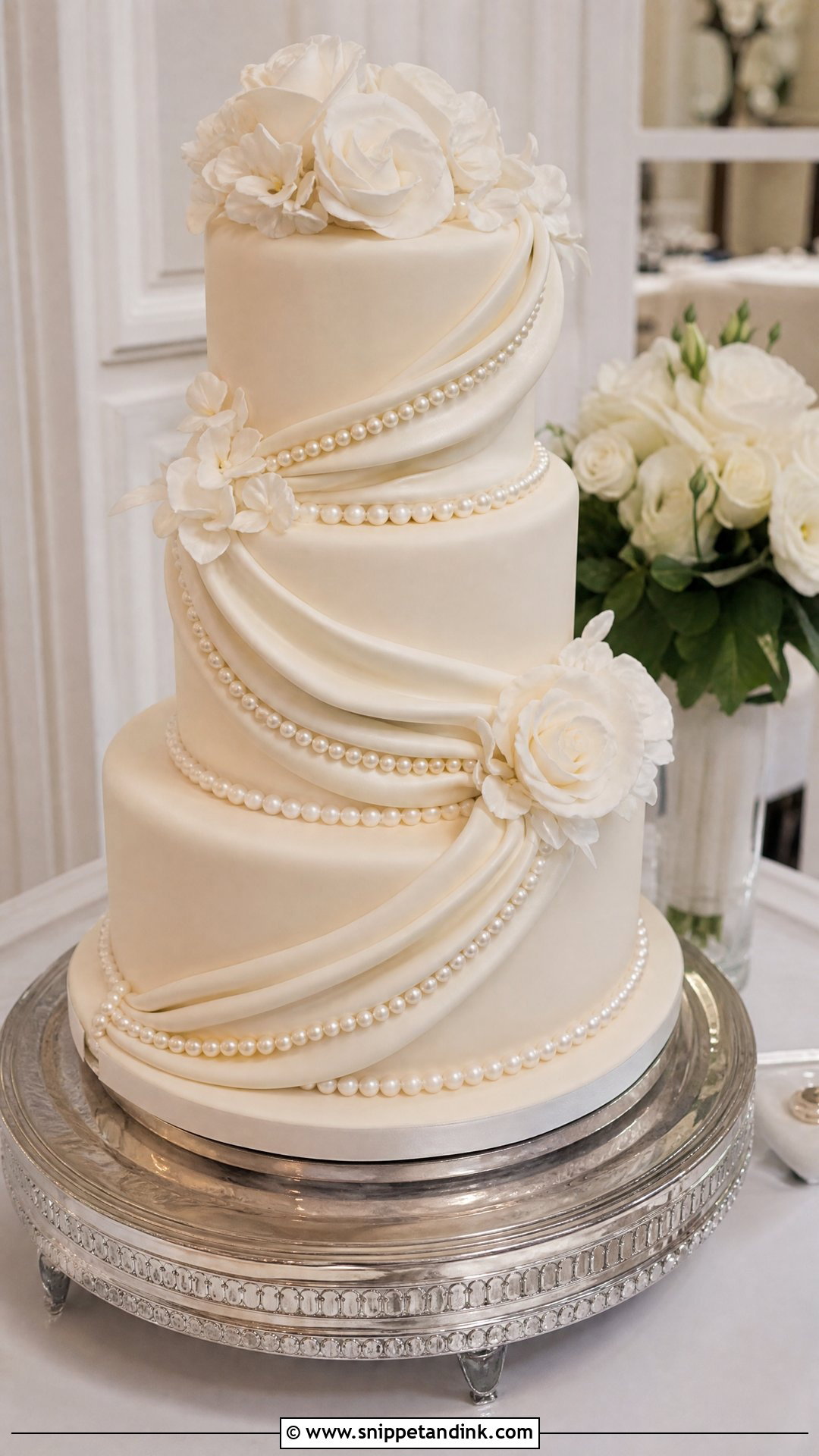
A cake with draped fondant looks like satin wrapped around the tiers, and pearls placed along the folds give it a jewellery-like finish. I roll the drapes thin and add a little gum to the paste so the folds keep their shape instead of flattening. Sugar flowers can sit where the drape gathers. Smooth white or ivory tiers suit it best, and the cake needs enough height to show the movement. It belongs at formal weddings, especially beside a satin gown and pearl accessories.
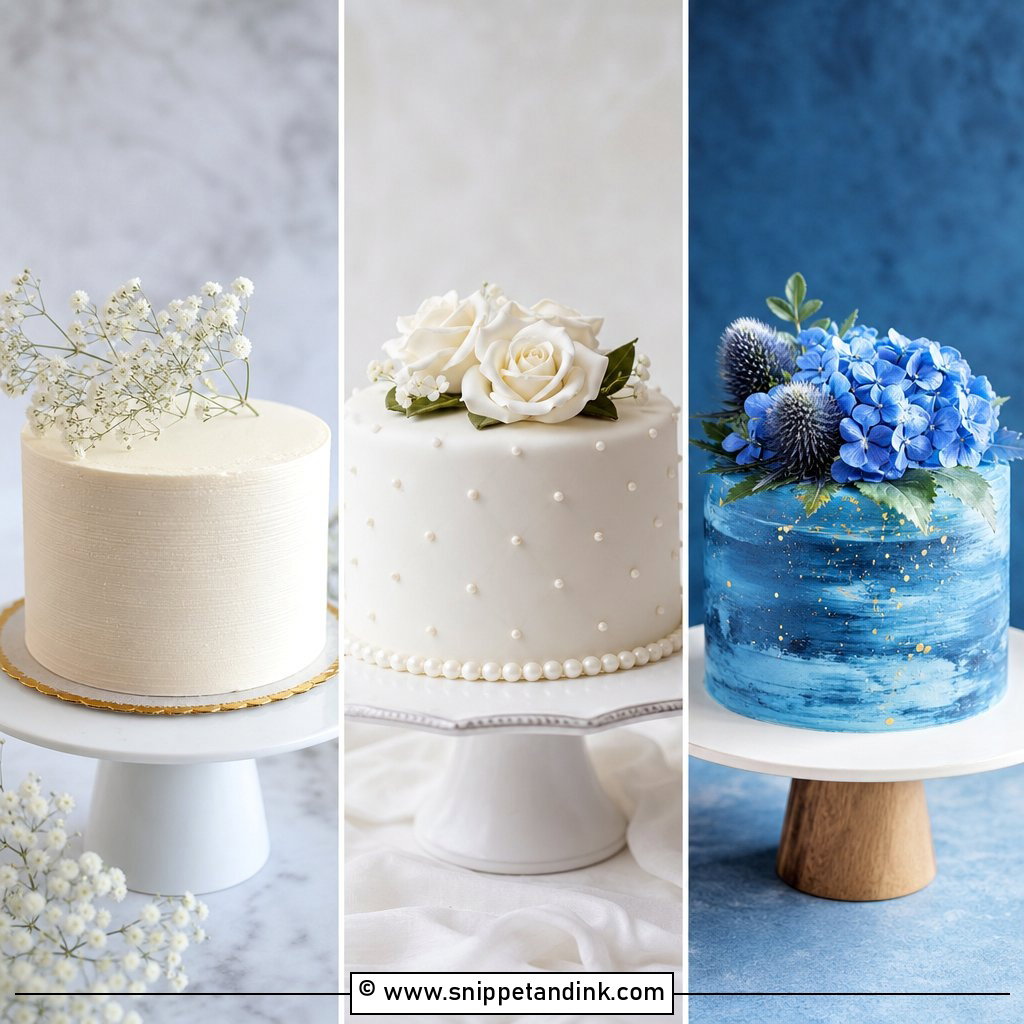
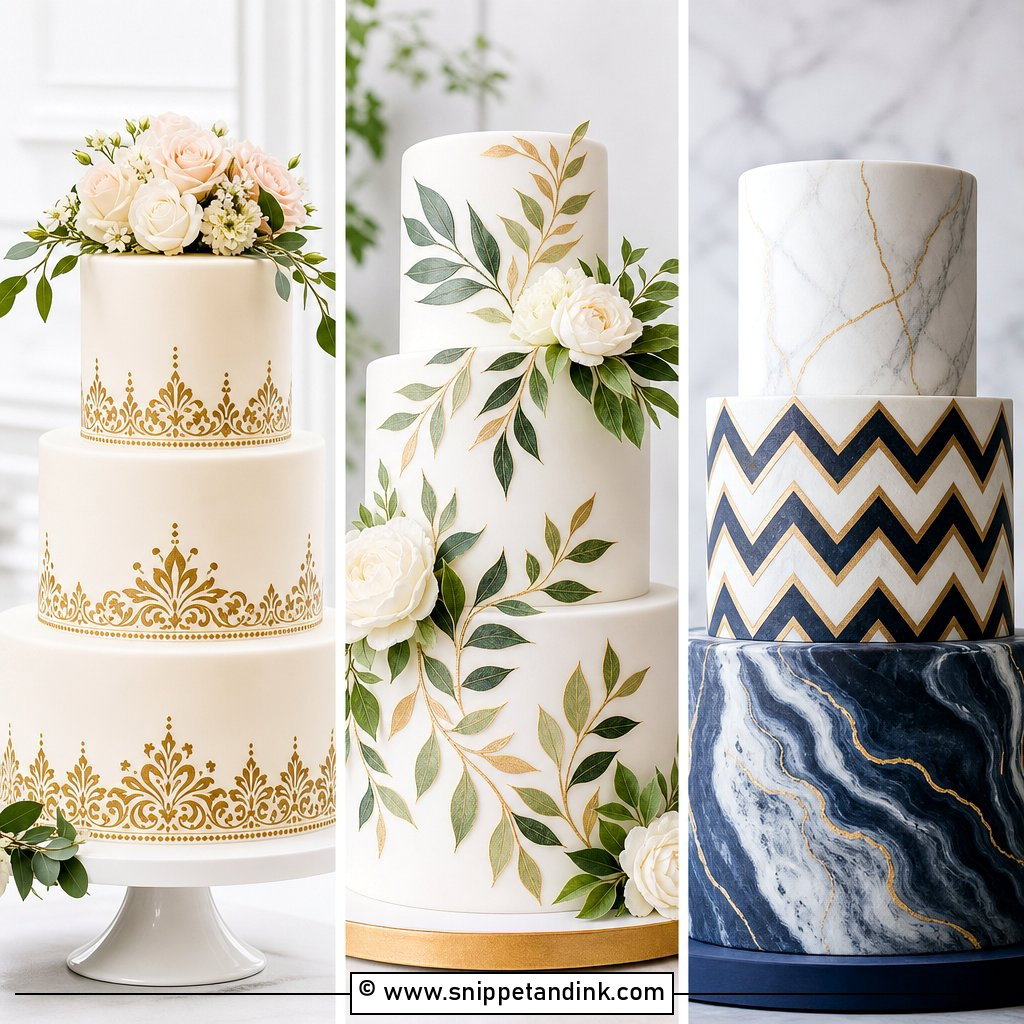
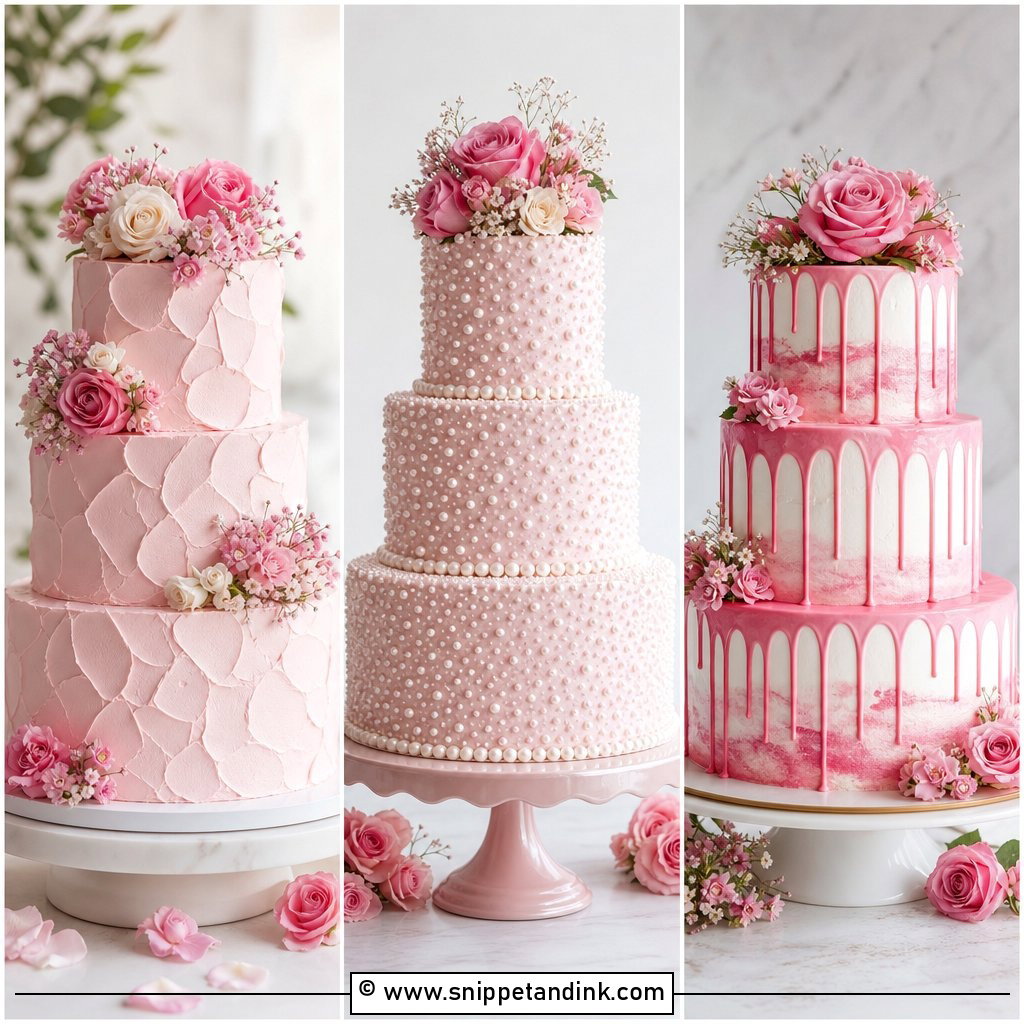
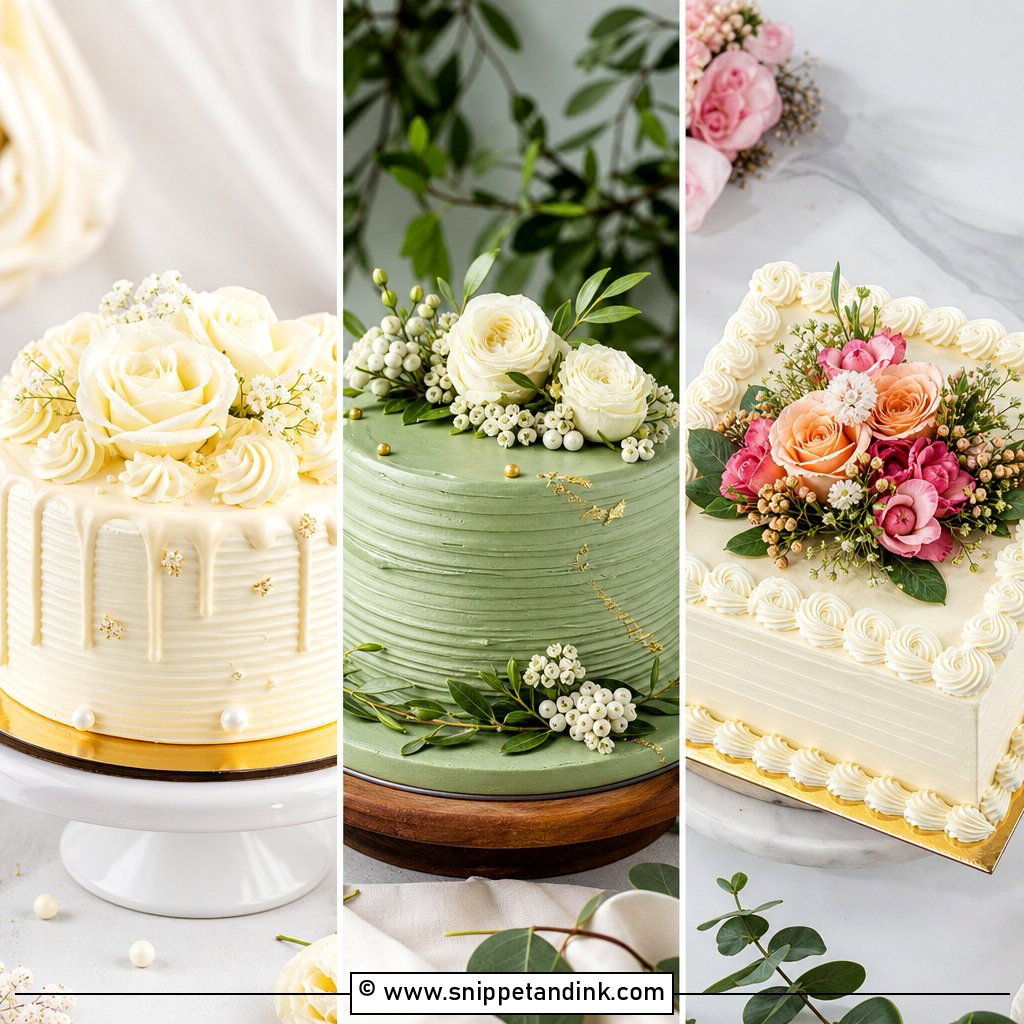
20. Pearl Wedding Cake With Minimalist Style
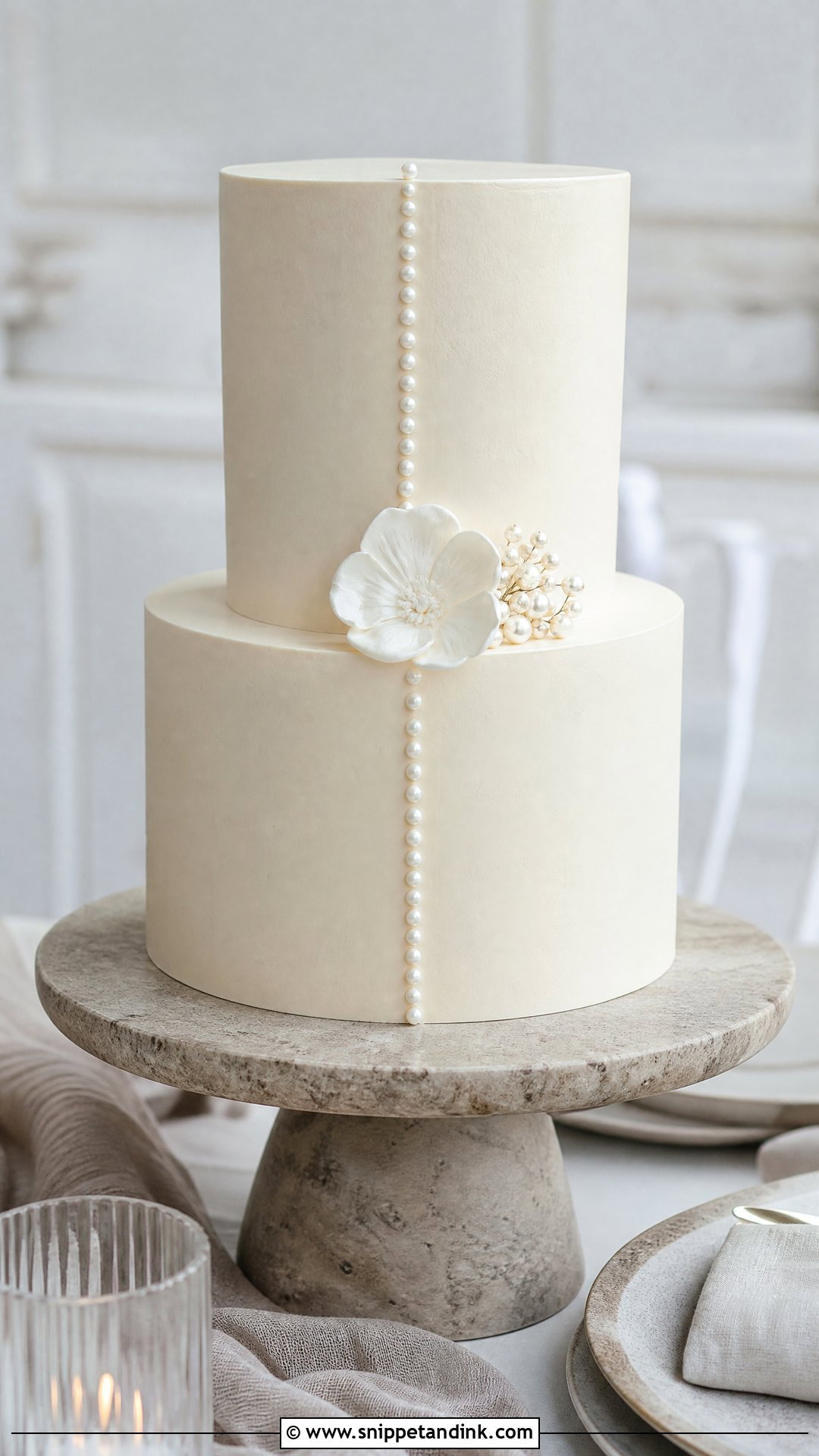
Pearls don’t have to be ornate. Two or three smooth tiers with a handful of carefully spaced pearls look modern and fresh. Choose one focal point: a single border, a small cluster at the front or a vertical line down one side, and leave the rest bare. White, ivory and pale champagne suit this restraint. Minimal cakes show every flaw, though, so the finish has to be immaculate; this is not the cheaper option it might appear to be.
Hundreds of Tiny Beads, One Van, a Warm Room
Pearls are where delivery problems show first. A cake kept cold for transport and then set up in a warm, humid room will form condensation on its surface. On fondant that dampness can make lustre streak and loosen beads; on buttercream, coloured pearls can start to bleed into the icing. So for detailed pearl work I attach the most delicate pieces at the venue, once the cake has had time to settle at room temperature.
Questions I’d want you to ask any baker
- Which kind of pearls will you use, and are all of them edible?
- Will the cake be stacked at the venue or delivered fully assembled?
- How long can it stand out on display in a warm room?
- Where will it be placed? Away from direct sun, windows and the dance floor speakers, please.
- Who removes any non-edible decoration before cutting?
Highly detailed pearl cakes usually need booking months ahead, especially with sugar flowers, so start conversations early in your planning rather than in the final month.
Where Pearls Do the Most for a Wedding Cake
How the pearls are used decides whether the cake reads classic, vintage, modern or minimal. A border gives a tidy finish, a cascade adds drama, and sugar flowers, bows, ruffles, lace, gold or soft colour all pair well when one element leads. Bring your venue details, a photo of the dress and your flower palette to the tasting, and tell your baker what the room will be like on the day. Small as they are, pearls are what make the finished cake look considered.
You'll Like These Ideas:







Leave a Reply