
Wedding cakes are a different business from birthday cakes. The orders are booked months out, the cake has to stand for hours in a room you’ve never seen, and the couple will judge it in photographs for the rest of their lives. What keeps a cake business profitable is a short, clear menu of designs you can make well and repeat, with the real labor of each one priced in. Below are 25 styles I’d consider for a working portfolio, with what each costs you in time, where it can go wrong and how to sell it honestly.
Price the Hours Before You Price the Sugar
New bakers almost always underprice wedding cakes because they cost the butter and flour and forget the time. Ingredients are often the smallest part of the bill. Before you add any design from this list to your menu, make one, time every stage honestly and write it down.
- Consultation and tasting, including the boxes and the hour you spend talking
- Baking, leveling, filling and crumb coating
- Decoration, which for piping or sugar flowers can take longer than everything else together
- Structure: cake boards, dowels and a central support for tall cakes
- Delivery, setup and the time spent waiting at the venue
Prices vary widely by region and by how established you are, so look at what local wedding bakers charge per serving and place yourself honestly within that range. Then add a separate fee for delivery and setup rather than hiding it in the serving price.
1. Classic White Wedding Cake
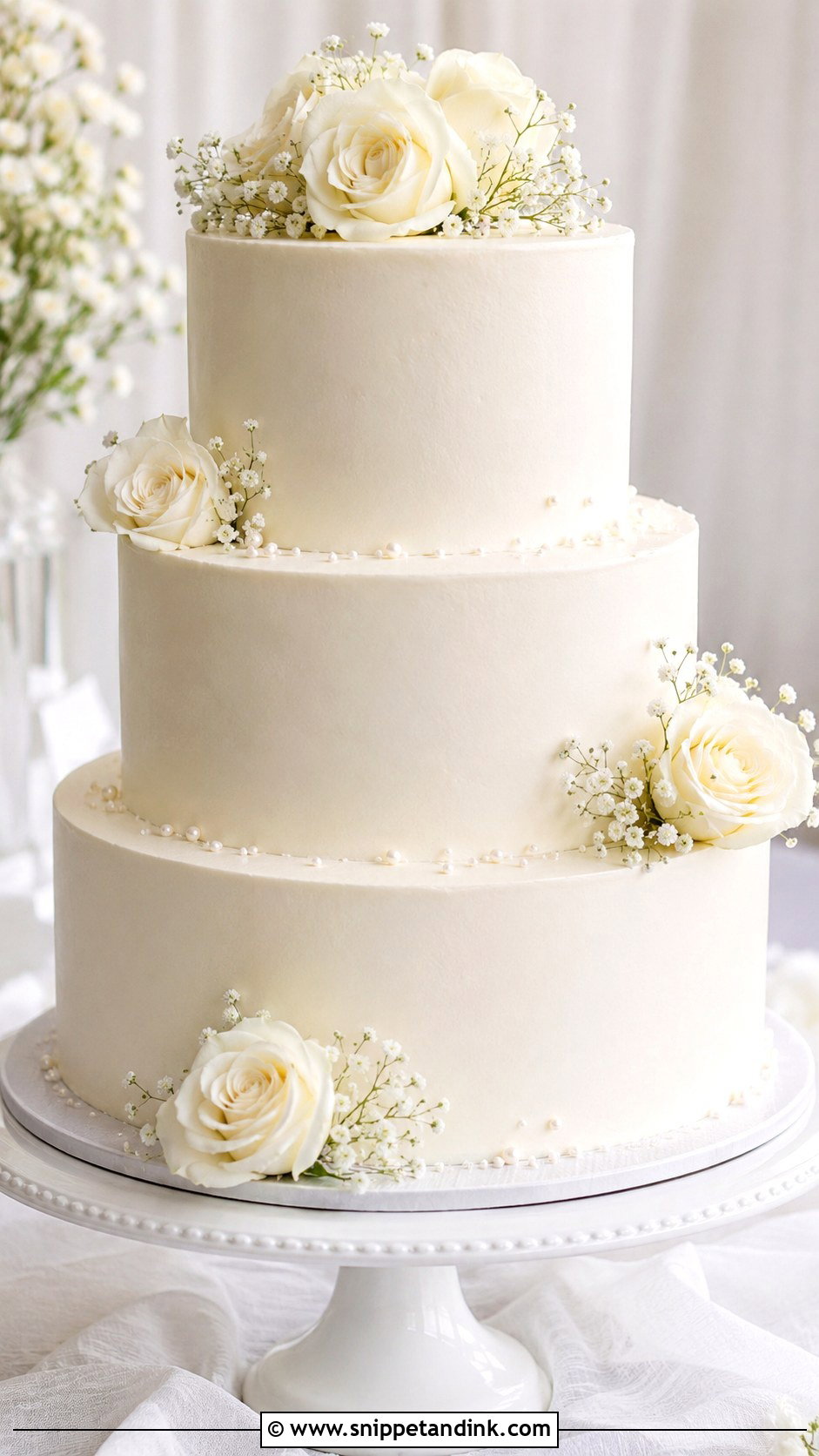
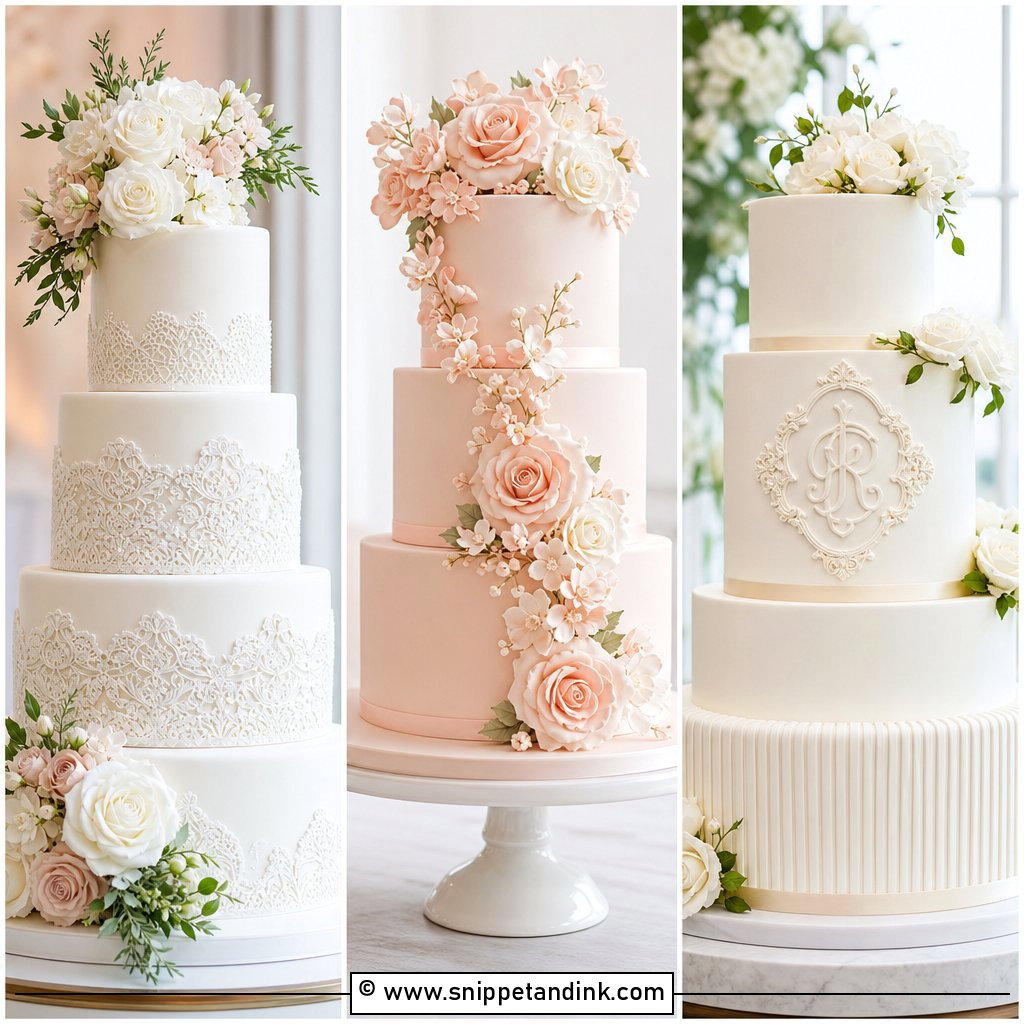
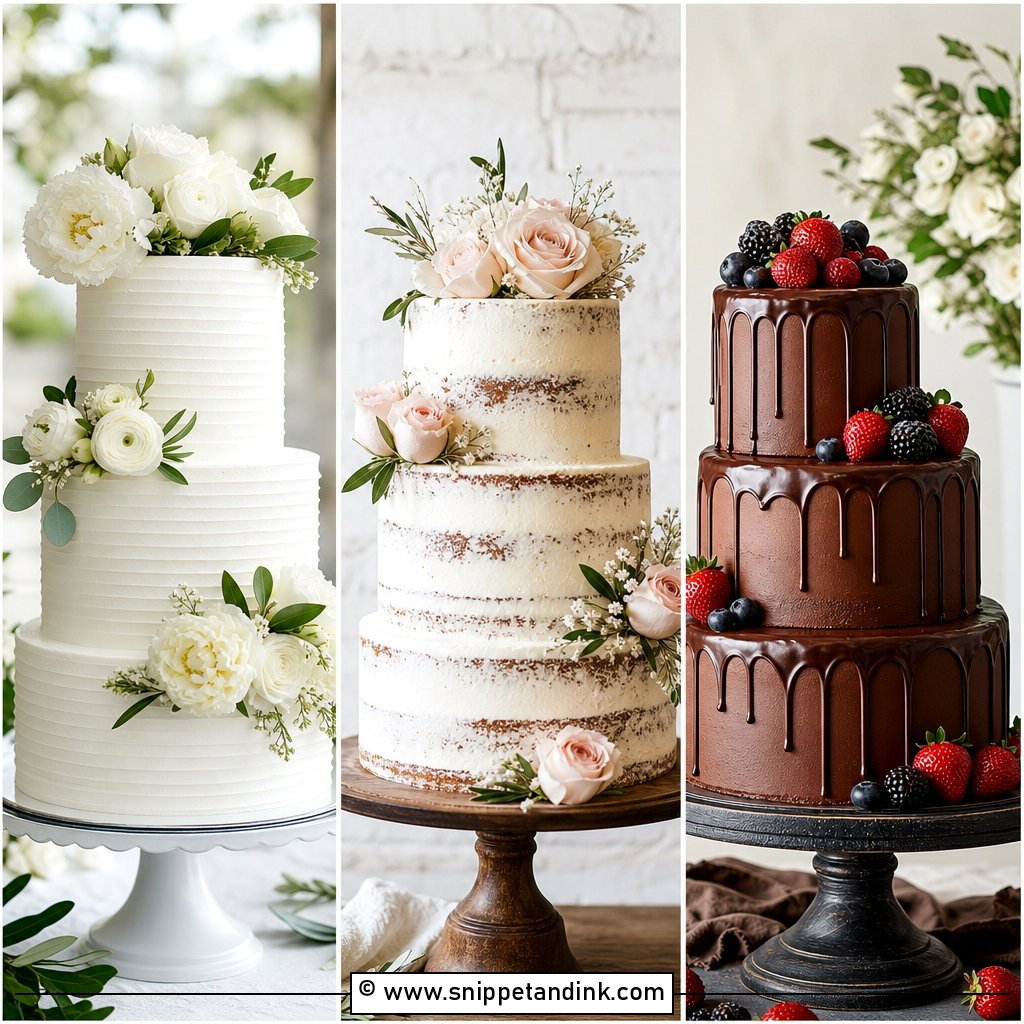
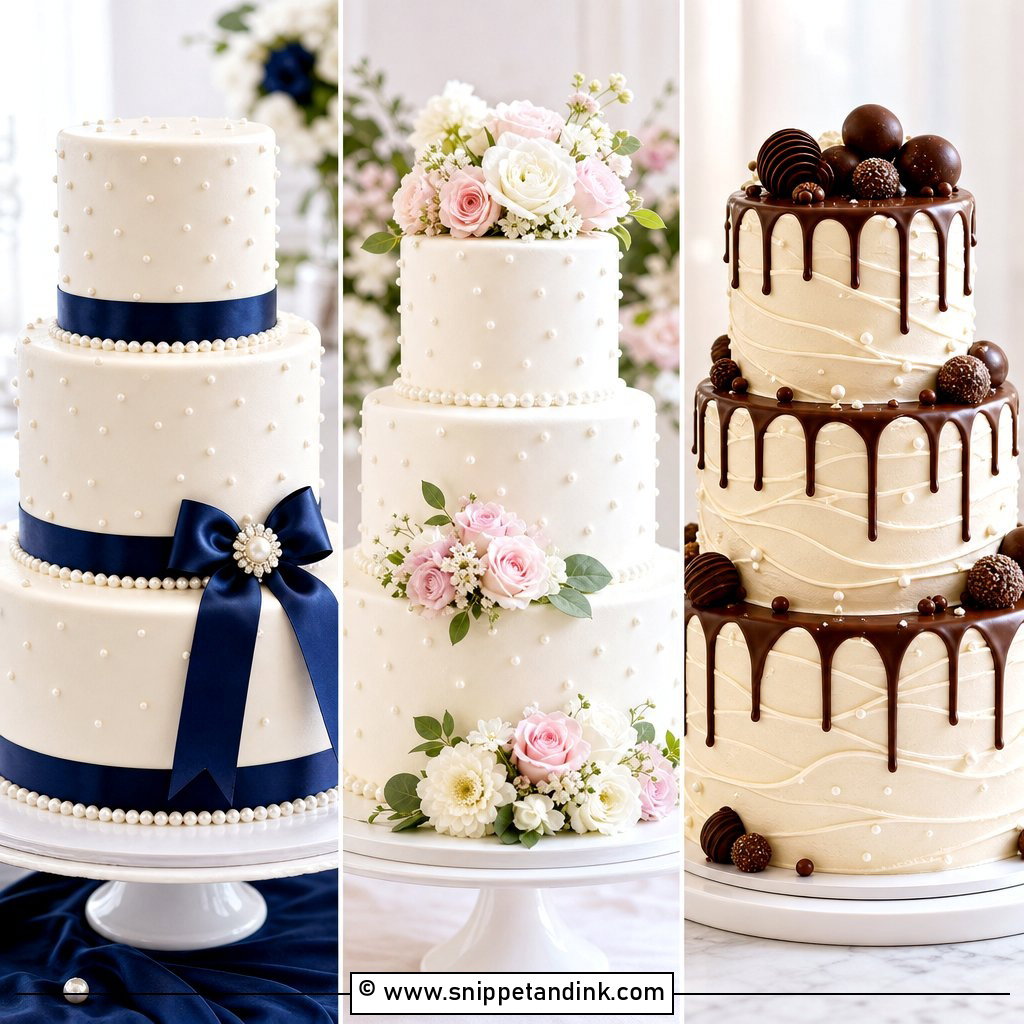
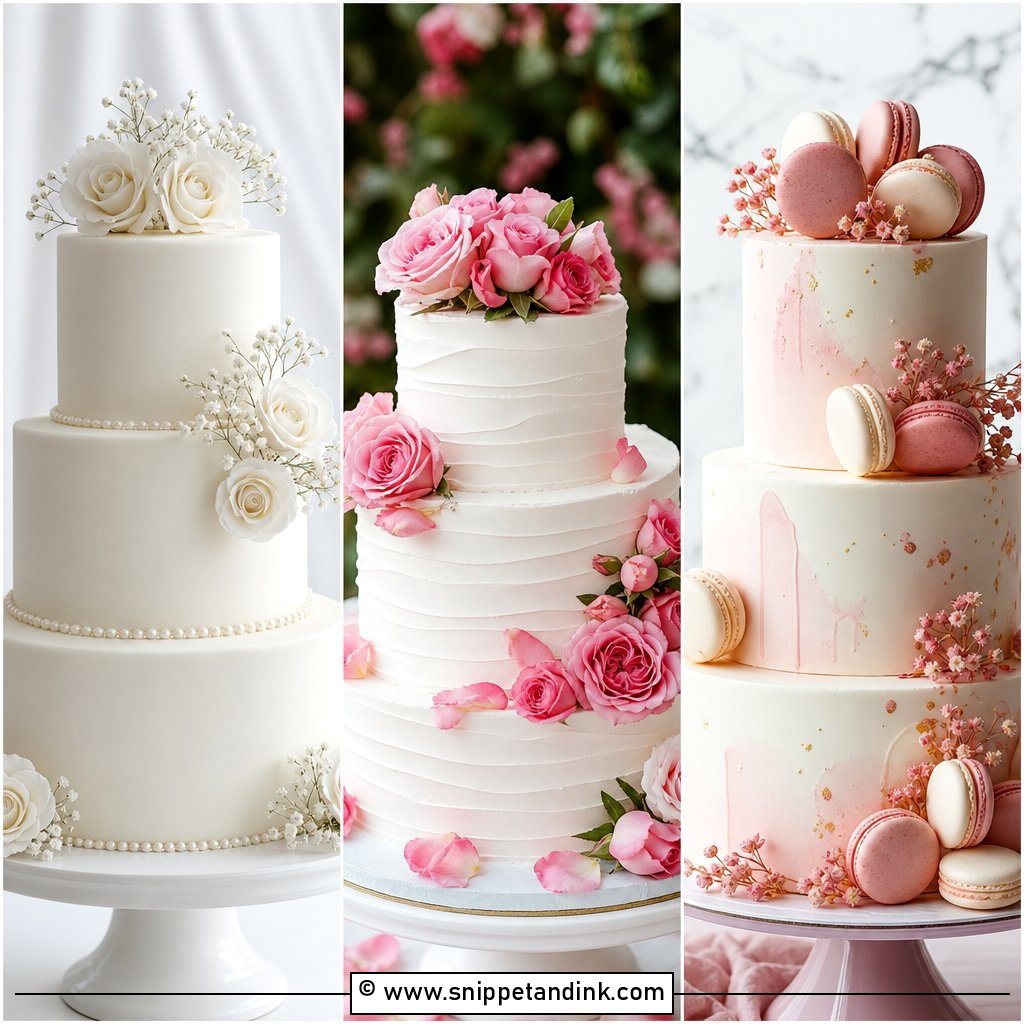
The classic white cake is the backbone of most menus, and I’d make it your base package. Ivory sponge, smooth vanilla buttercream and simple pearl piping or white flowers suits almost every venue, and nervous couples find it reassuring. It also scales cleanly from two tiers to five, which makes quoting fast. Build everything else as add-ons around it: flavor upgrades, flower placement, delivery, tasting boxes. The one thing to get right every time is a truly smooth finish, since a plain white cake hides nothing.
2. Vintage Lambeth Wedding Cake
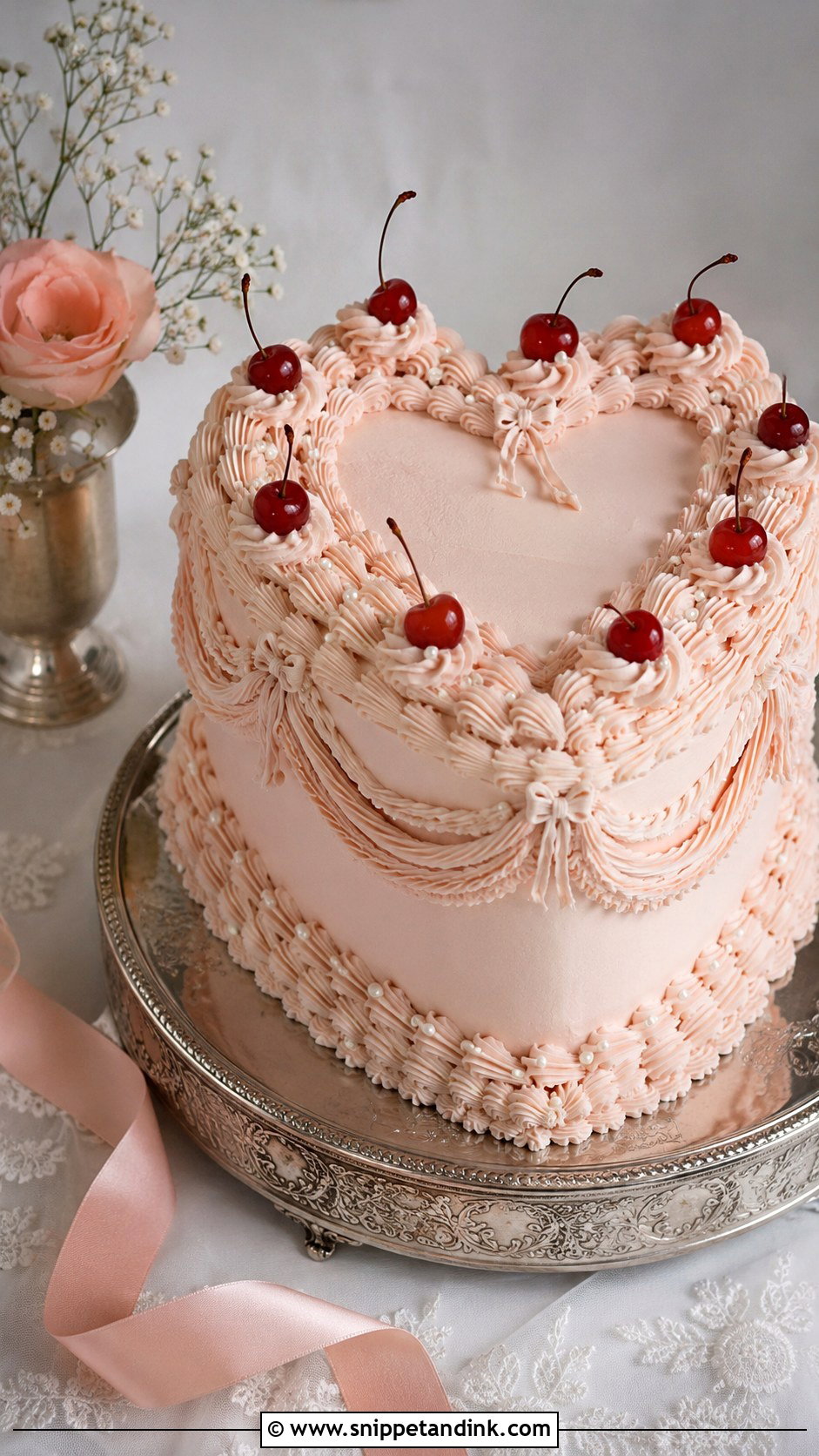
Vintage Lambeth wedding cake styles are built from layer upon layer of overpiping: shells, swags, borders, bows, each piped on top of the last. That’s slow, skilled work, and it should be priced as premium. I’d practice the full design on a dummy cake before you sell it, because stiff buttercream at the wrong temperature cracks along every scroll. Pale colors like ivory, blush or butter yellow suit it, and close-up photos of the piping show buyers exactly what they are paying for.
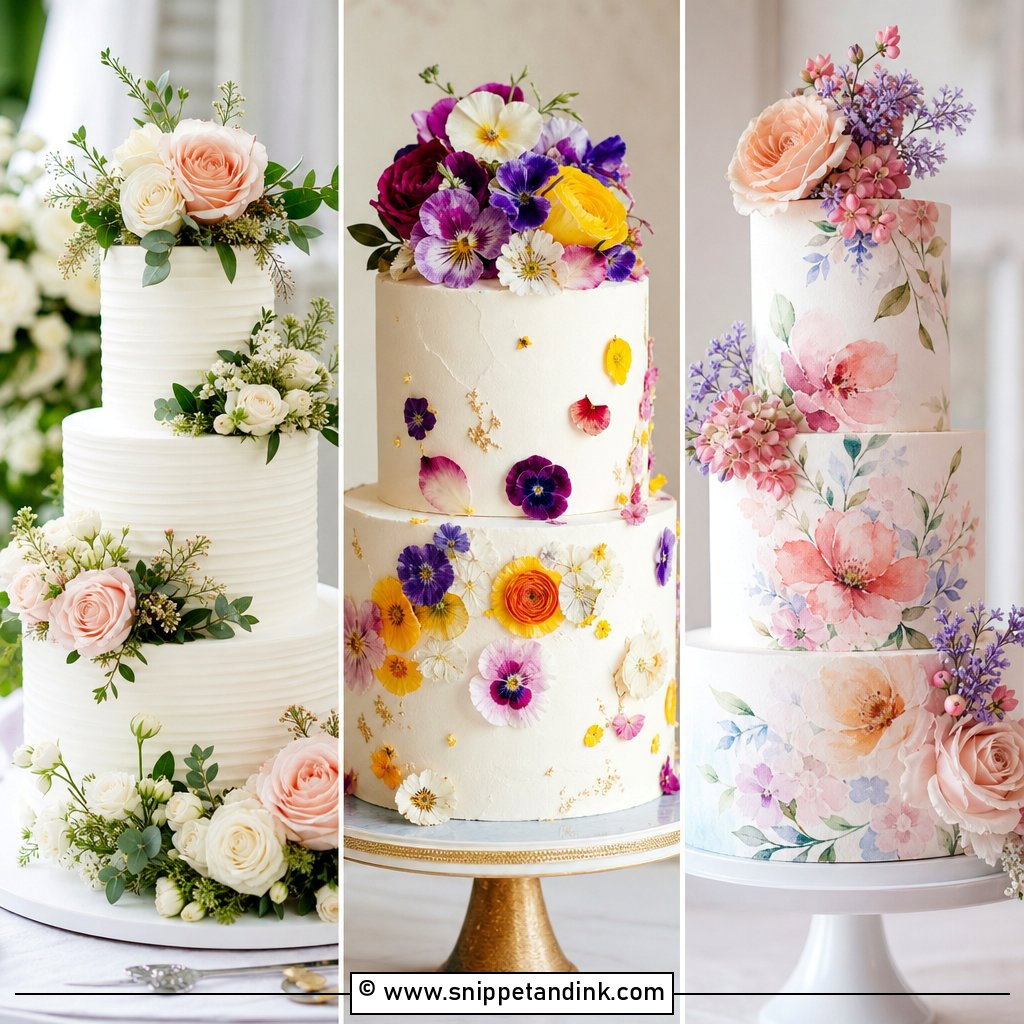
3. Fresh Flower Wedding Cake
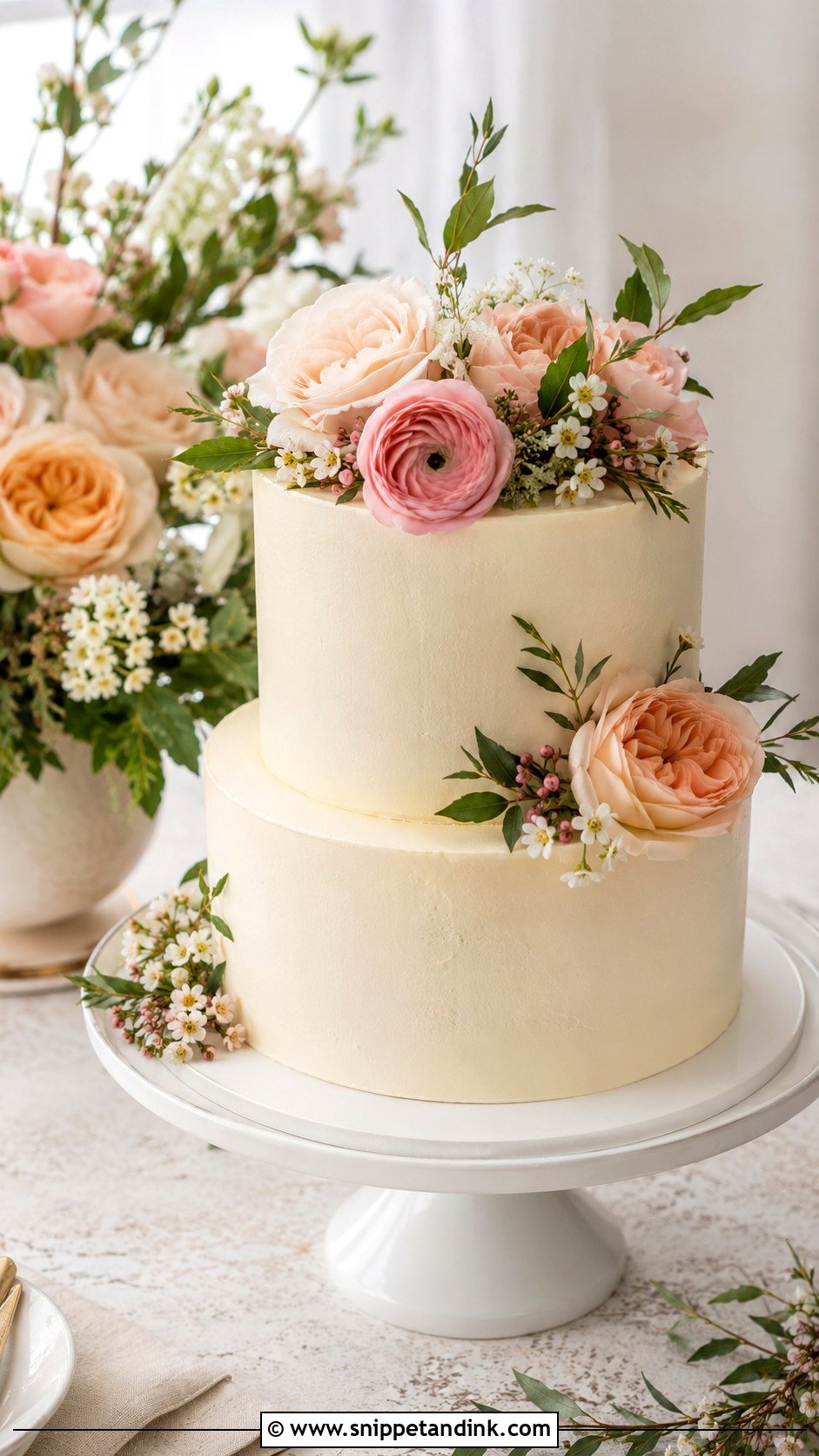
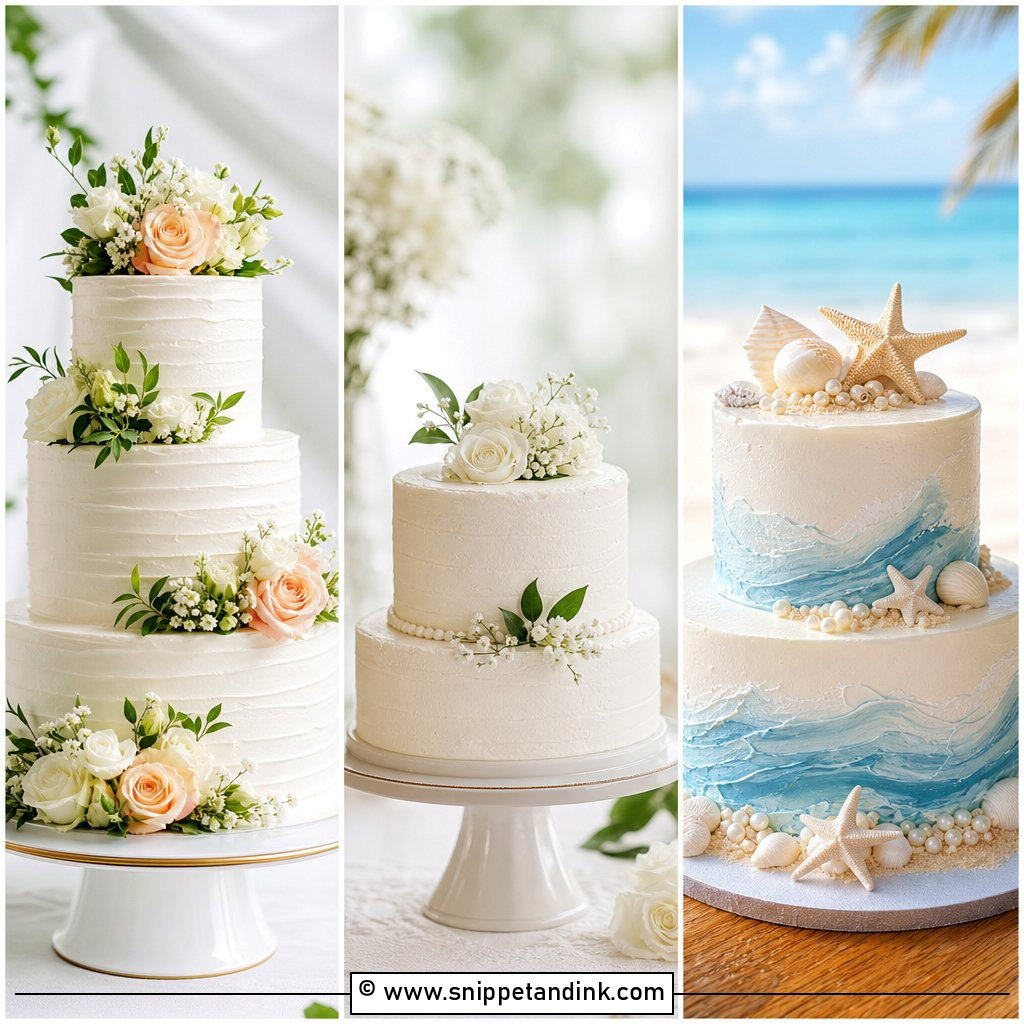
Couples understand fresh flower cakes at a glance, which makes them easy to sell, but they come with food safety homework. Many popular blooms are not edible and some are toxic, so stems should be wrapped in floral tape or set in picks and never pushed straight into sponge. Work with a florist you trust, agree who supplies and places the flowers, and charge for setup time. Keep the cake underneath plain so roses, ranunculus or seasonal blooms carry the design.
4. Buttercream Wedding Cake
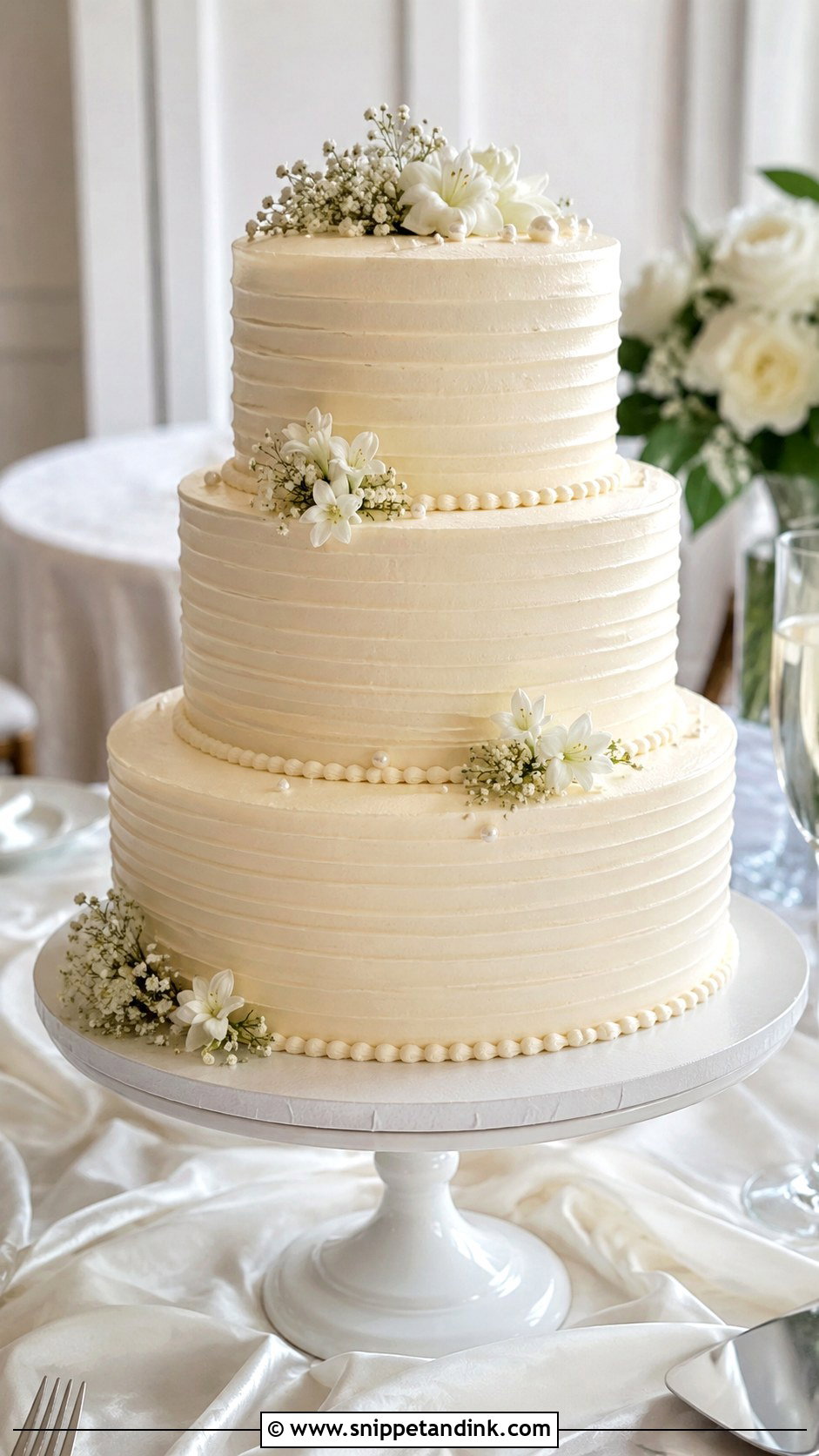
Buttercream is the finish most couples actually want to eat. I’d offer it at three clear levels: smooth, lightly textured and detailed, each with its own price. American buttercream crusts and holds shape well; Swiss meringue tastes lighter but softens sooner in a warm room, so match the recipe to the season and the venue. Showing one base cake finished three ways helps clients see how flexible a single design is.
5. Fondant Wedding Cake
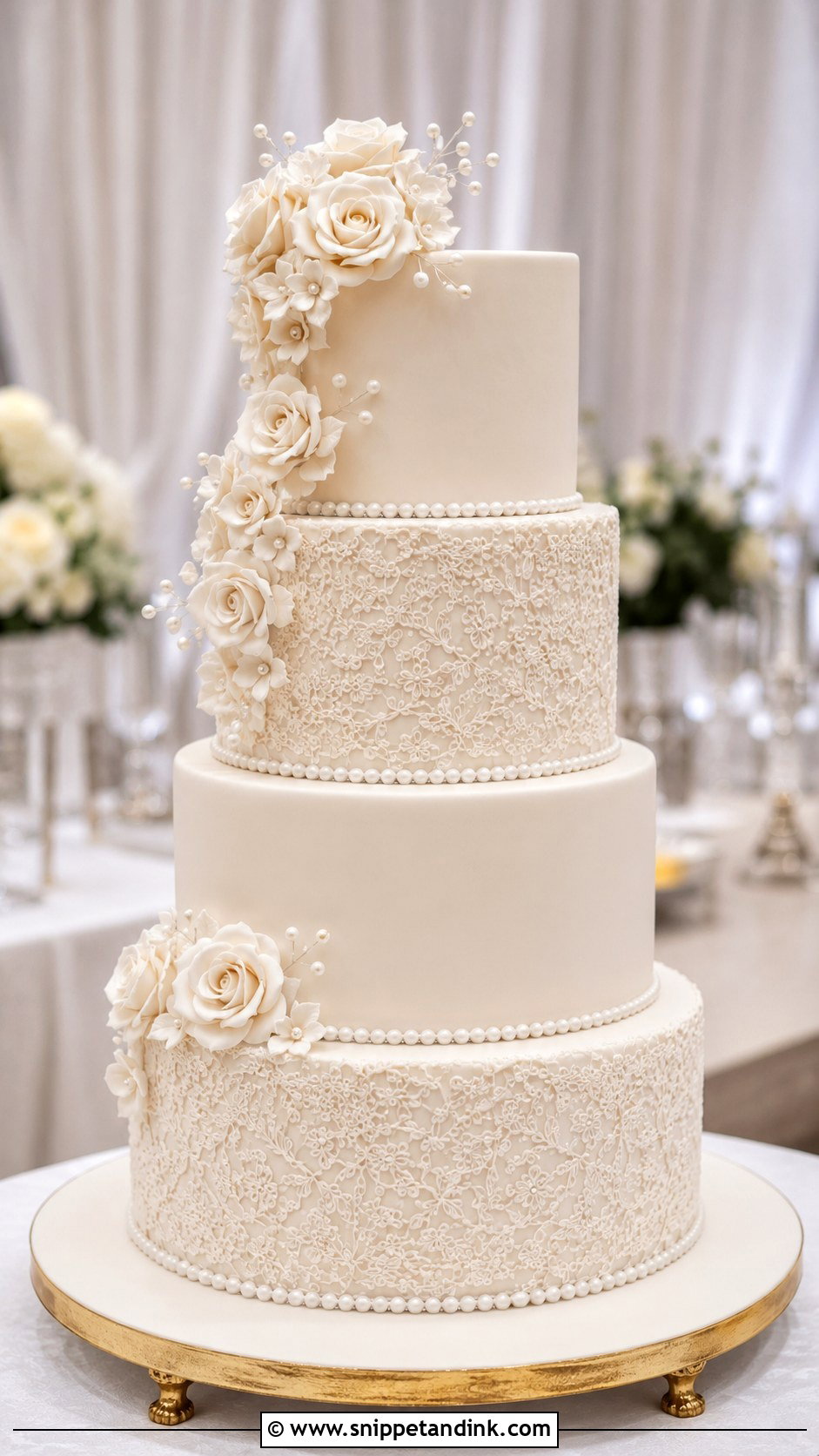
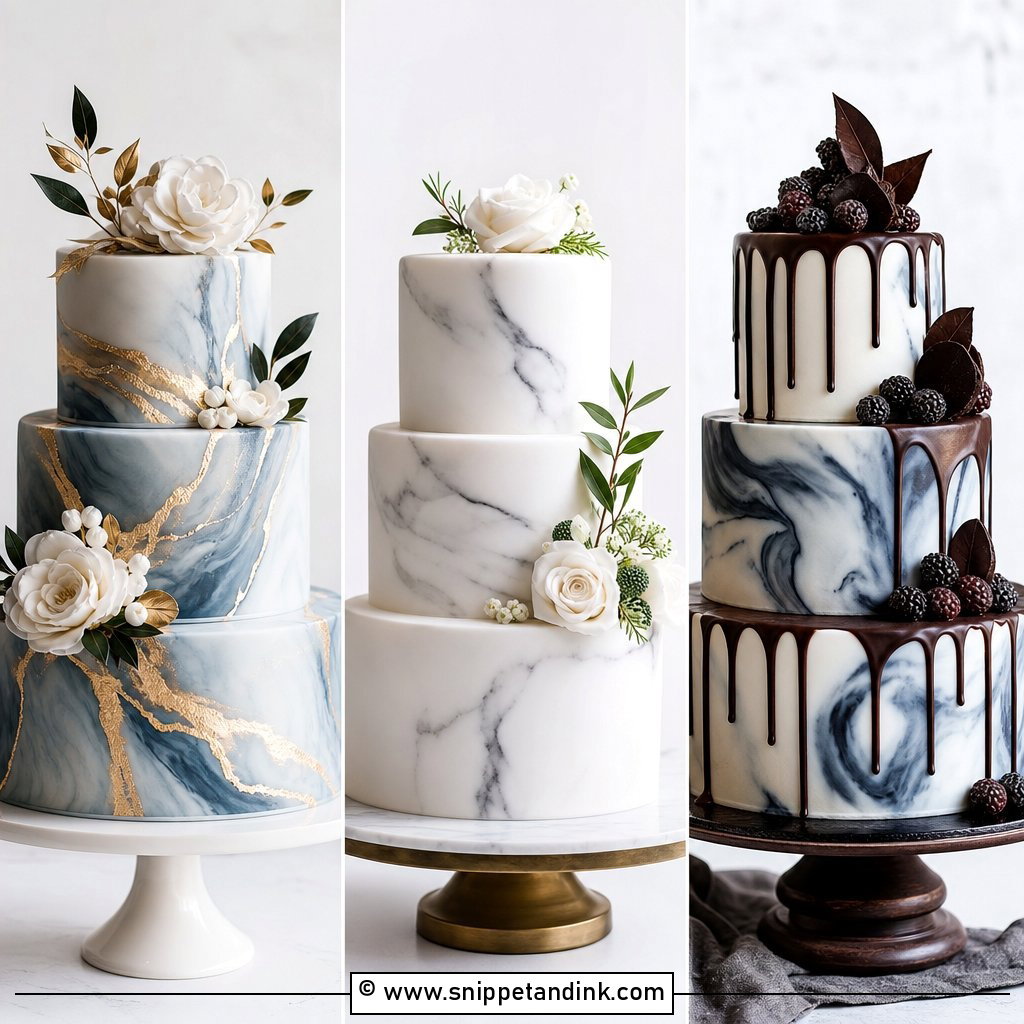
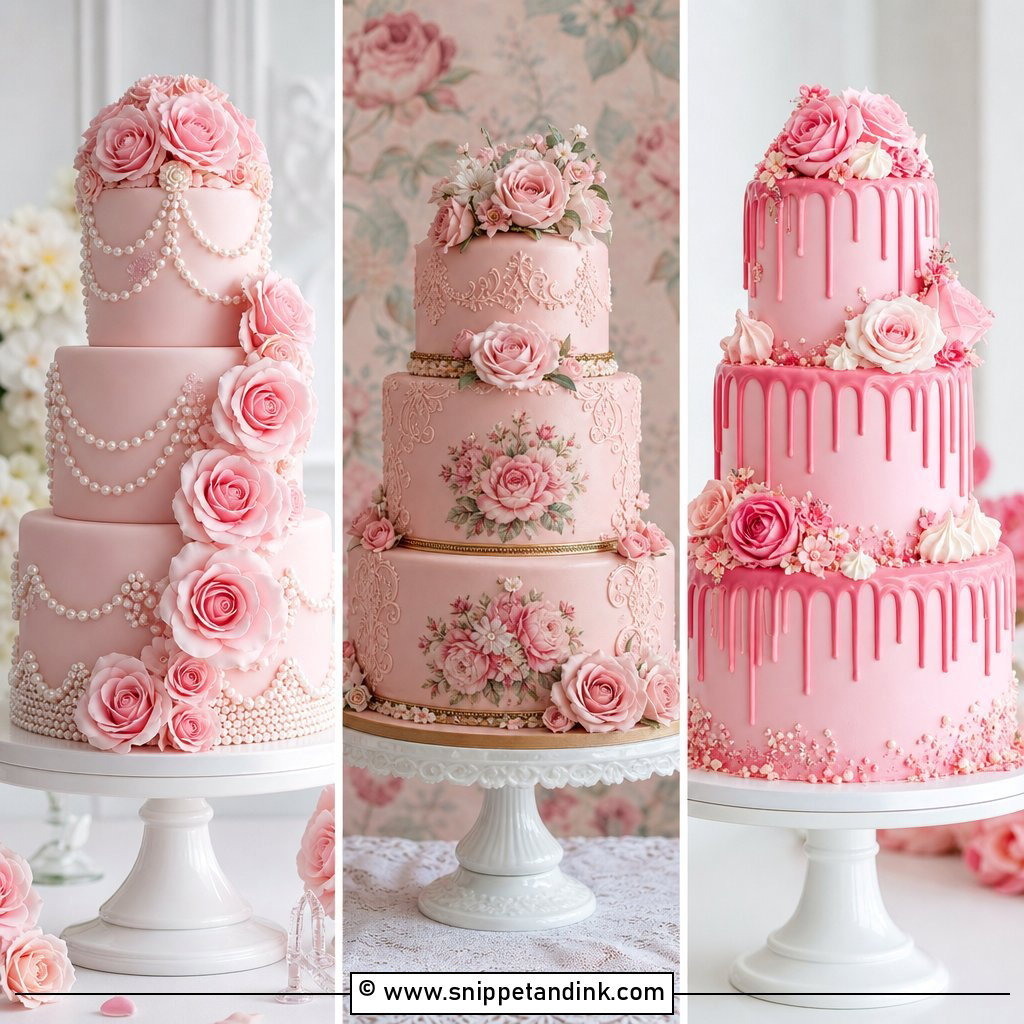
Fondant gives the sharpest edges and the cleanest surface, and it takes longer, so position it higher on your menu. Its weak spot is moisture: a fondant cake brought from a fridge into a humid room sweats beads of condensation that can mark the surface. Let it come up to room temperature in its box before setup. Marble, embossed and sugar-flower finishes all build on the same skill, and buyers will zoom in on your corners, so photograph them honestly. Pair it with well-flavored fillings, because many guests peel fondant off.
6. Small Wedding Cake
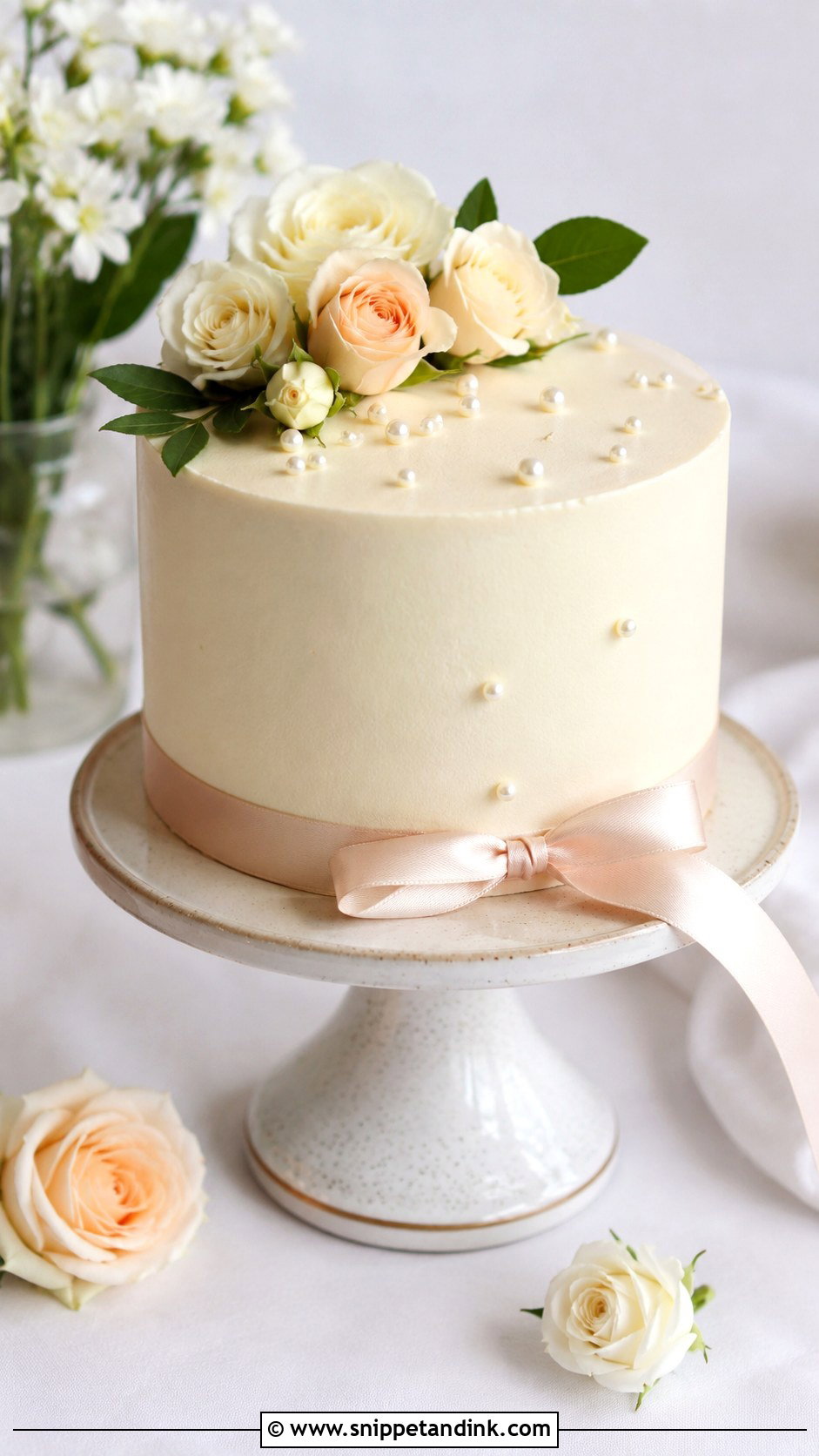
Small wedding cakes are a steady line of work as more couples plan intimate weddings and elopements. A one or two tier cake still needs to look finished, so give it height with a tall tier or a raised stand, and finish with smooth buttercream, fresh blooms or ribbon. These are good starter products when you’re new, because the structure is simple. Don’t underprice them, though: consultation, design and delivery take almost as long as for a bigger cake.
7. Two Tier Wedding Cake
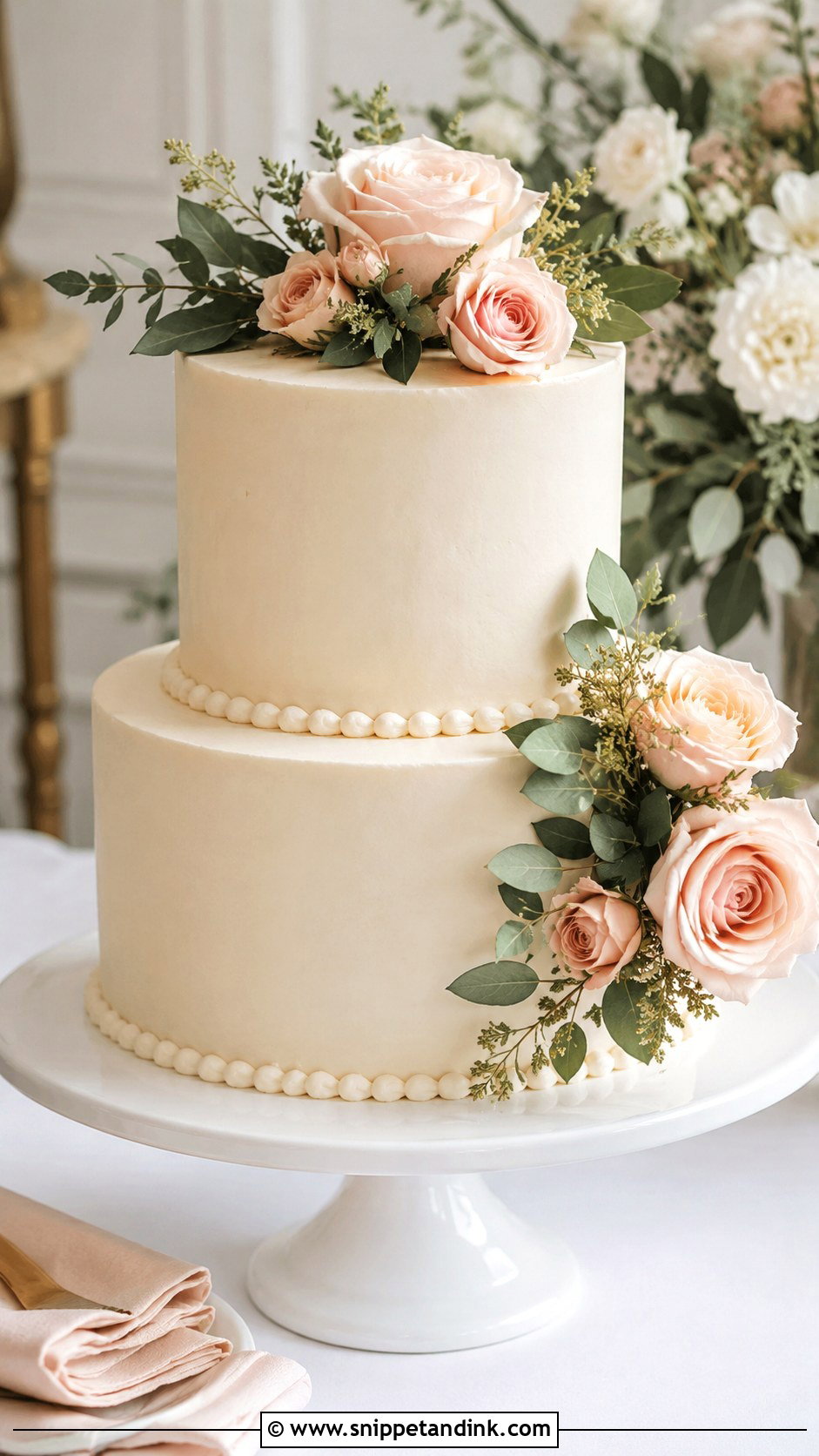
The two tier cake is often the most requested size once couples see it in several finishes. It suits smaller guest counts and dessert tables. Show it in ivory with roses, textured with greenery and in fondant with pearls, then add a simple serving guide. Clear sizing up front cuts the long message threads that eat into your evenings, and it stops couples ordering more cake than they need.
8. Three Tier Wedding Cake
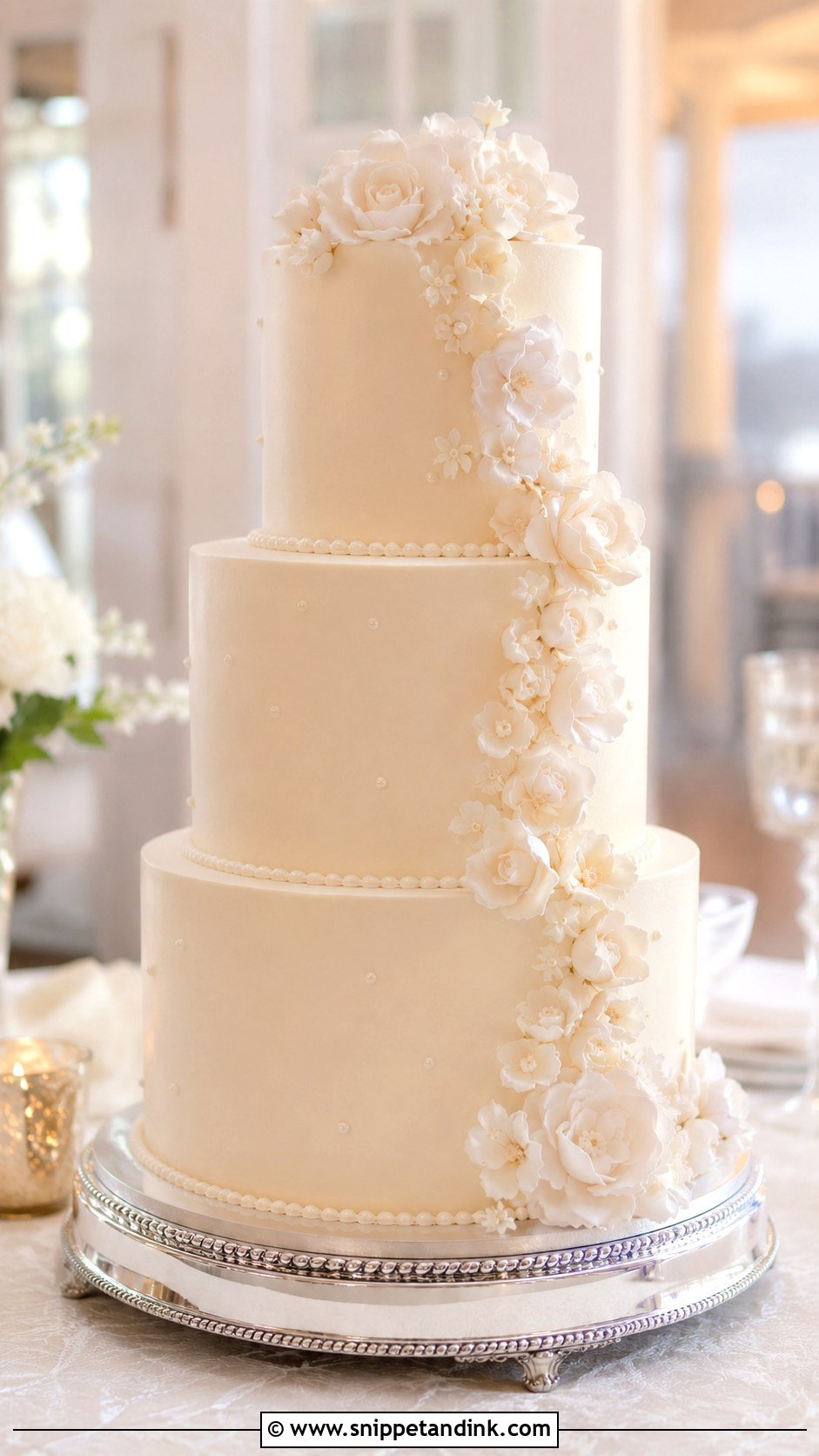
Three tiers is the size most people picture when they hear wedding cake, and it’s where your structural work starts to matter. Each tier needs its own board and support dowels so its weight isn’t resting on the sponge below. Design one signature three tier cake that becomes recognizable as yours. In the quote, list flavor options, delivery requirements and setup fees, so the client sees the full cost before booking.
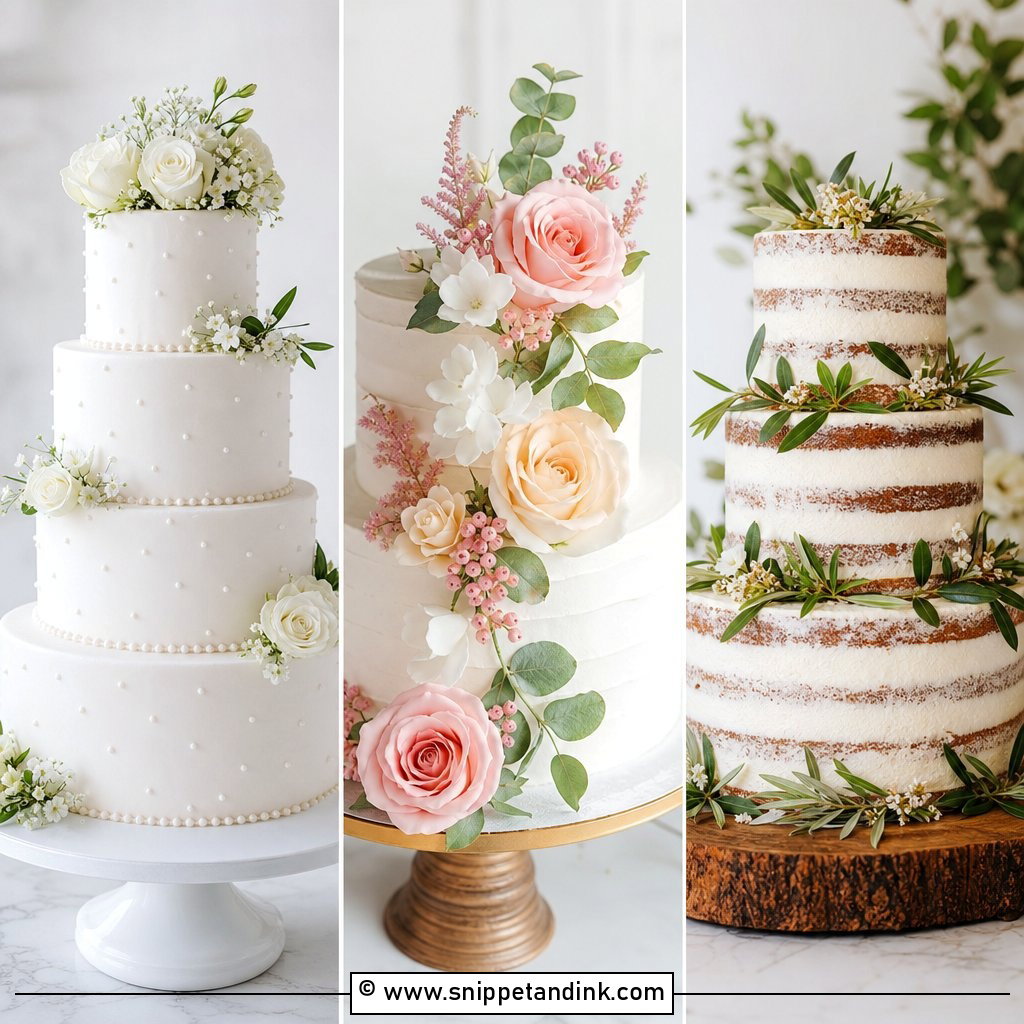
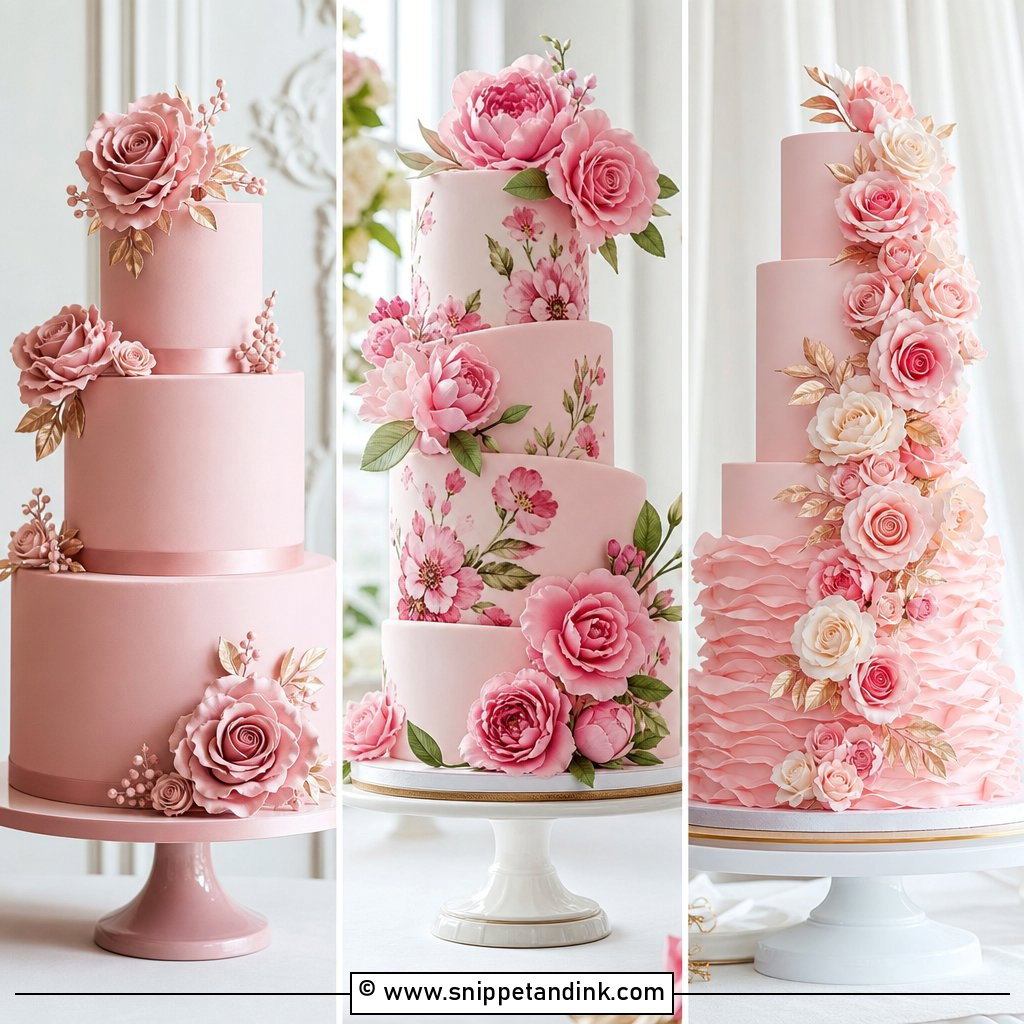
9. Floral Cascade Wedding Cake
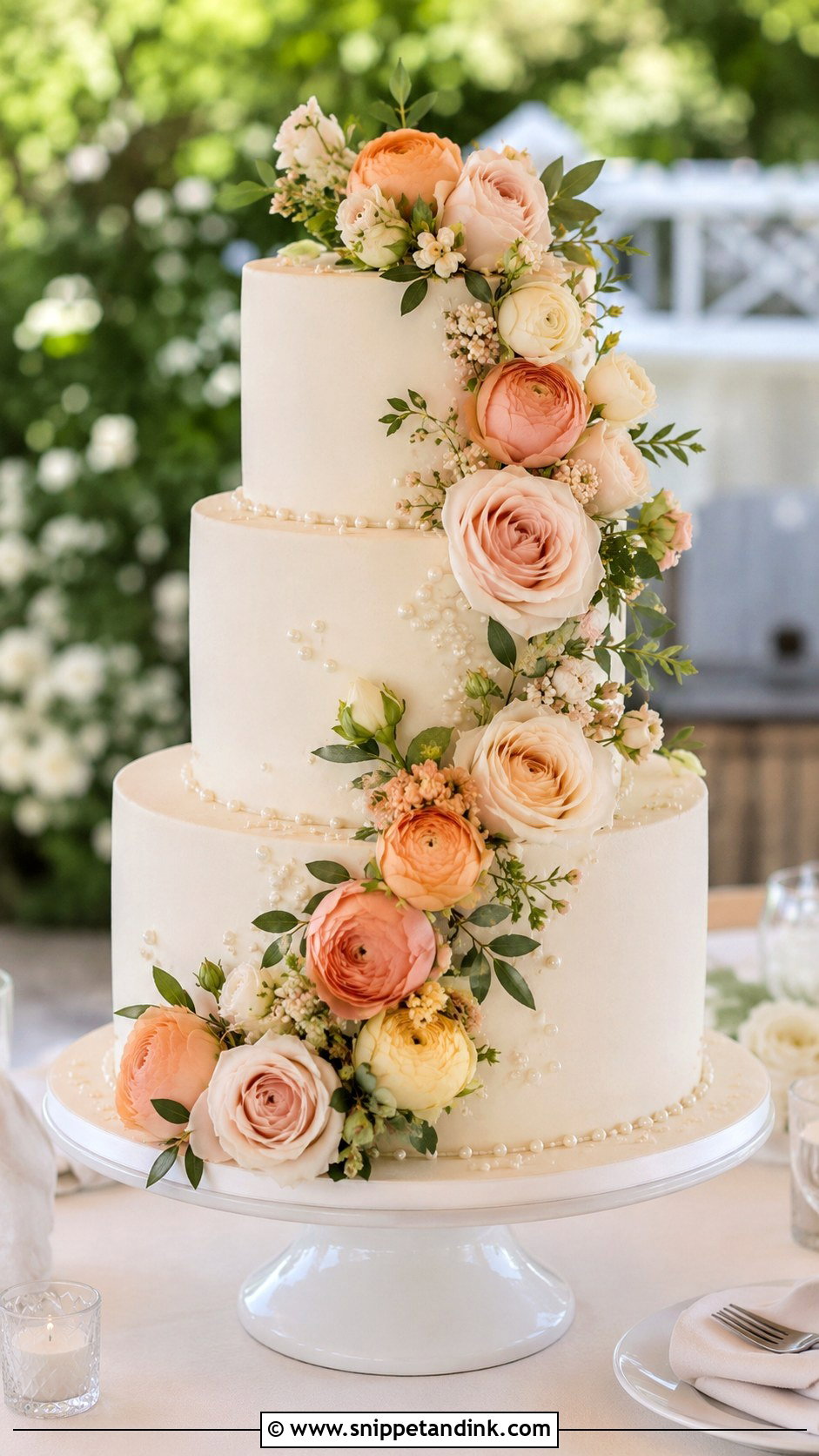
A floral cascade looks full from the front and dramatic in height, but it takes coordination. The baker, florist and planner should agree in writing who places the flowers, at what time and what is used to protect the cake. I keep the cake surface very simple under a cascade so the design doesn’t look crowded. Sell it as a premium floral package, especially for spring and garden weddings.
10. Pearl Wedding Cake
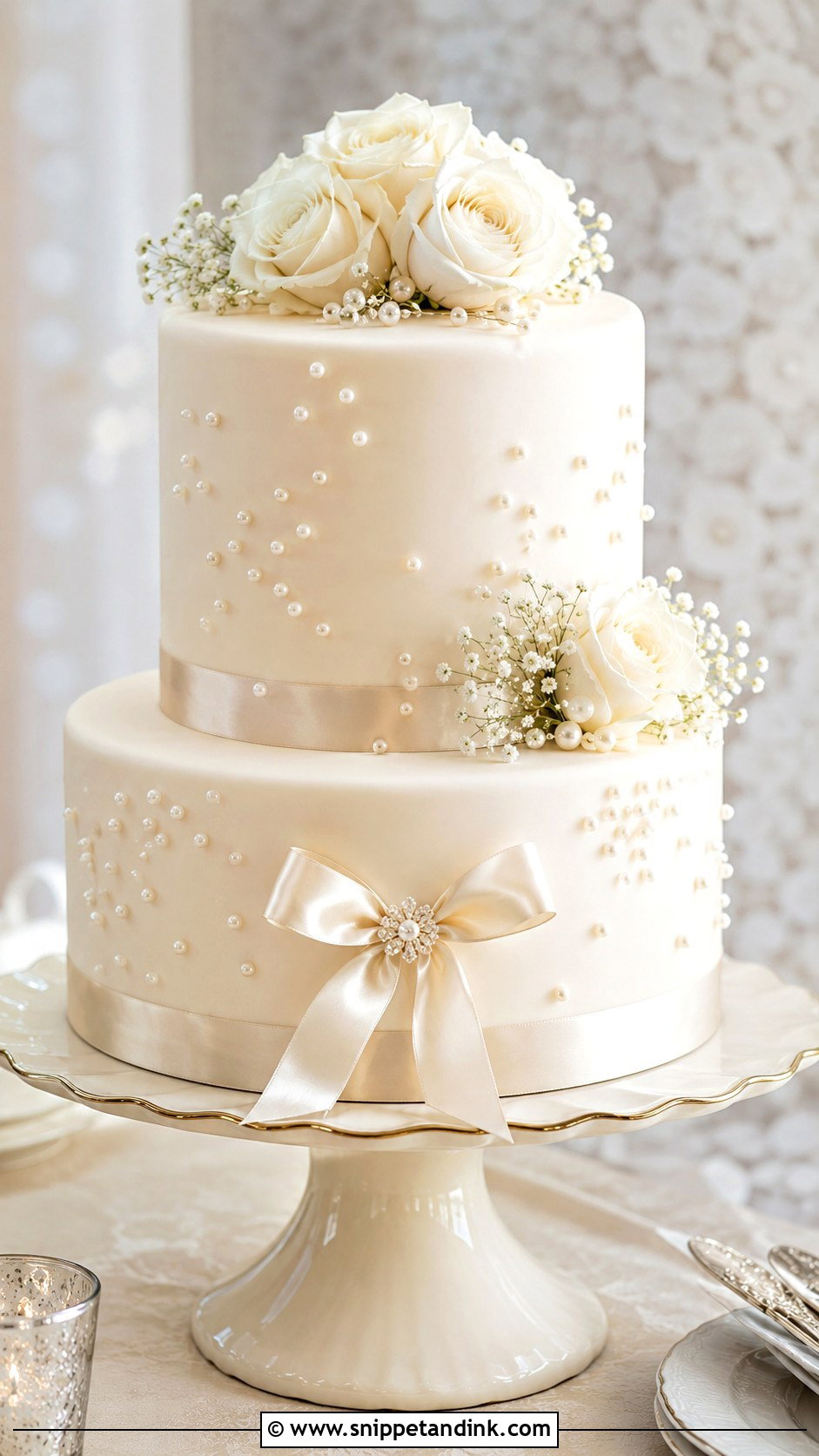
Edible pearls add detail without any heavy color. They can be scattered, set as borders or placed in neat grids, and each one is applied by hand with tweezers and a dot of piping gel, which takes far longer than couples expect. Charge for it as an upsell. Ivory, champagne or blush pearls sit well against smooth buttercream or fondant, and satin ribbon and white roses finish the look.
11. Bow Wedding Cake
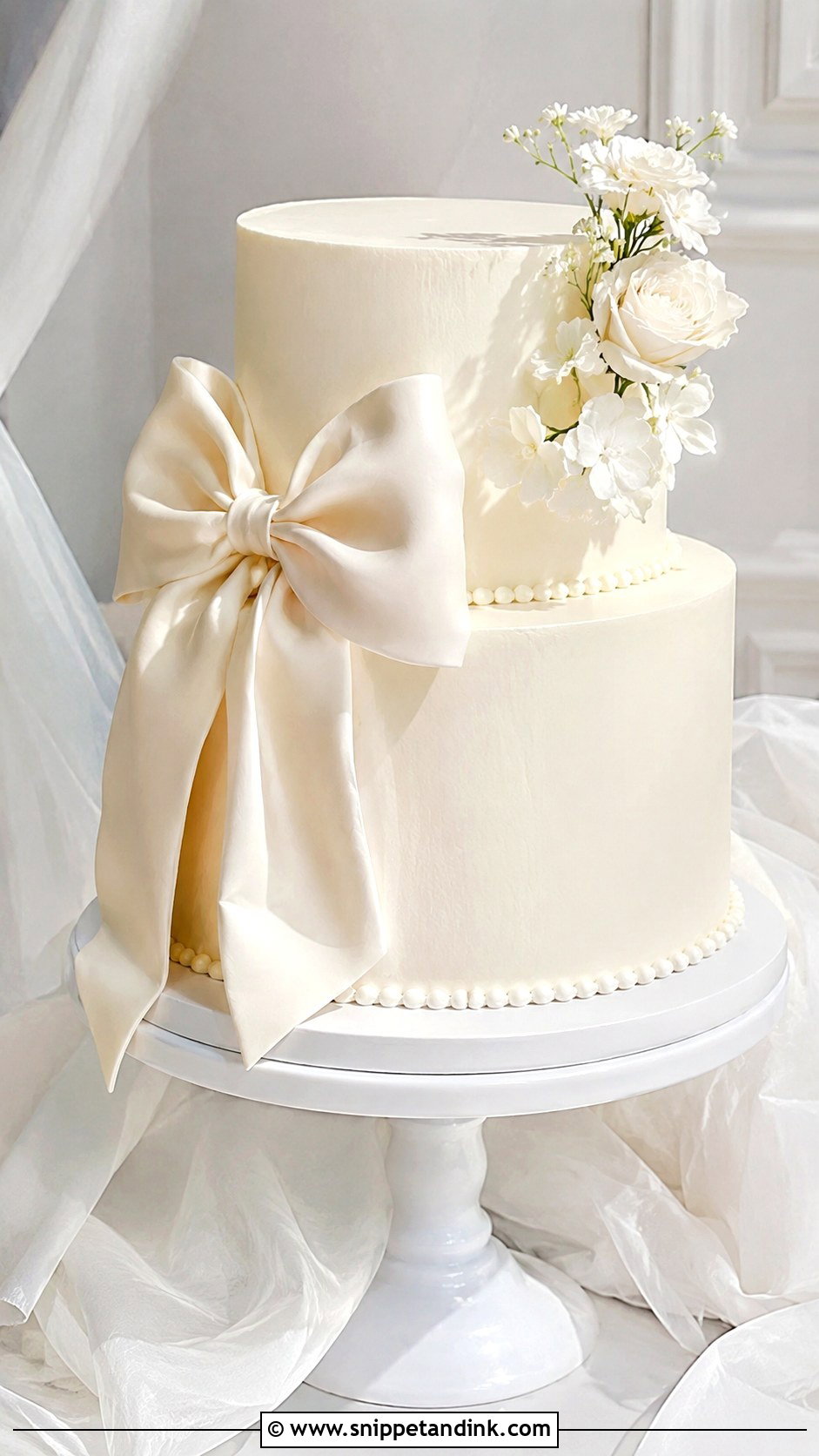
Bows have moved from bridal fashion onto cakes, and they suit a simple white or pale blue design. They can be fondant, wafer paper, buttercream or real ribbon, and each behaves differently. Wafer paper goes limp in humidity, so I’d avoid it for a summer outdoor reception. Real ribbon needs a barrier strip so buttercream grease doesn’t seep through. One oversized bow can make a small cake feel custom-made.
12. Textured Wedding Cake
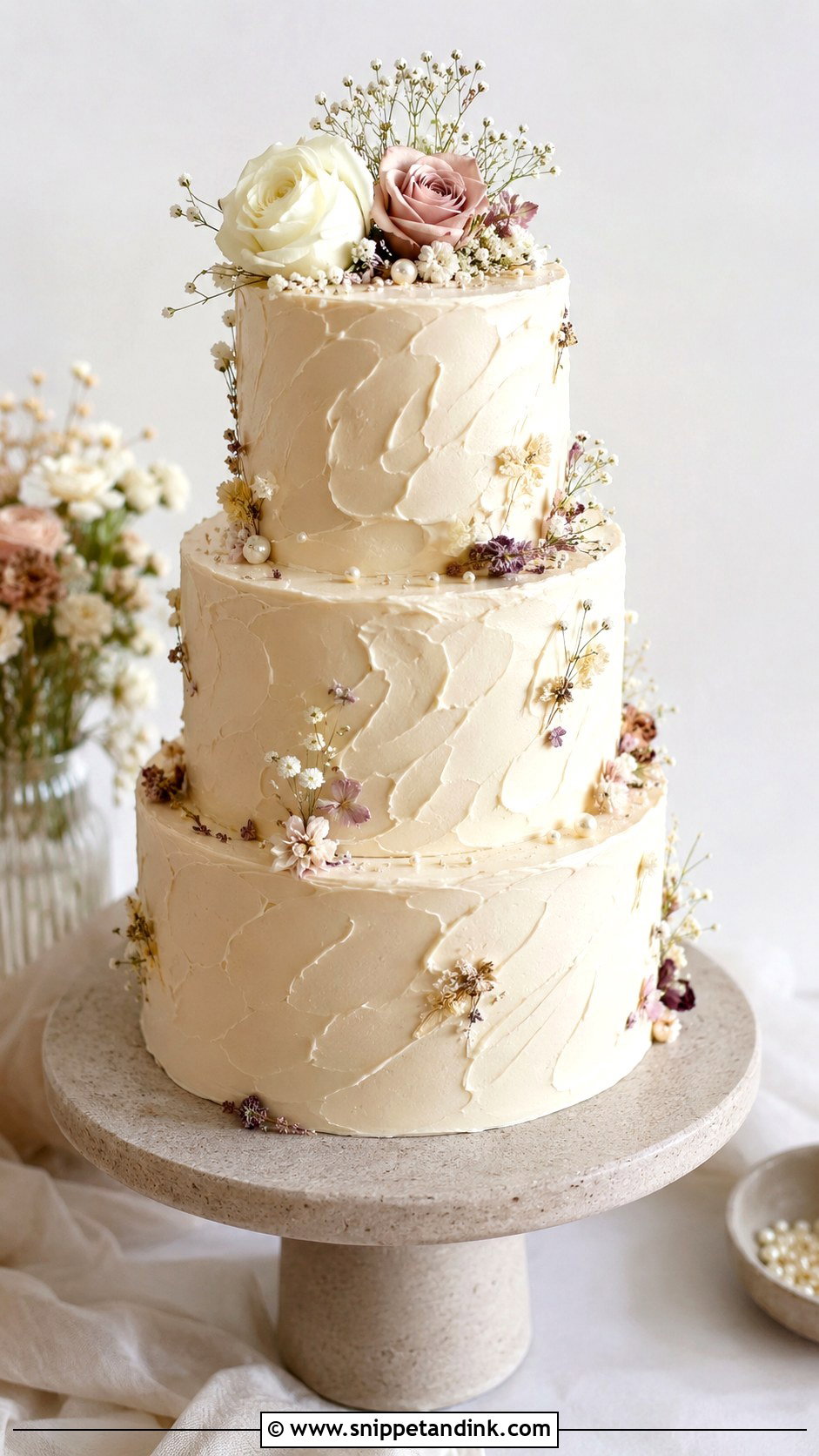
Texture is a good margin finish because ridges, palette knife strokes and stucco surfaces hide small imperfections that a perfectly smooth coat would reveal. Offer light texture as a standard upgrade and sculpted texture as premium. Ivory, sand and pale sage tones look current, and a few flowers or slices of fruit soften it. It also photographs well in plain light, which helps when your portfolio photos are taken in a home kitchen.
13. Modern Square Wedding Cake
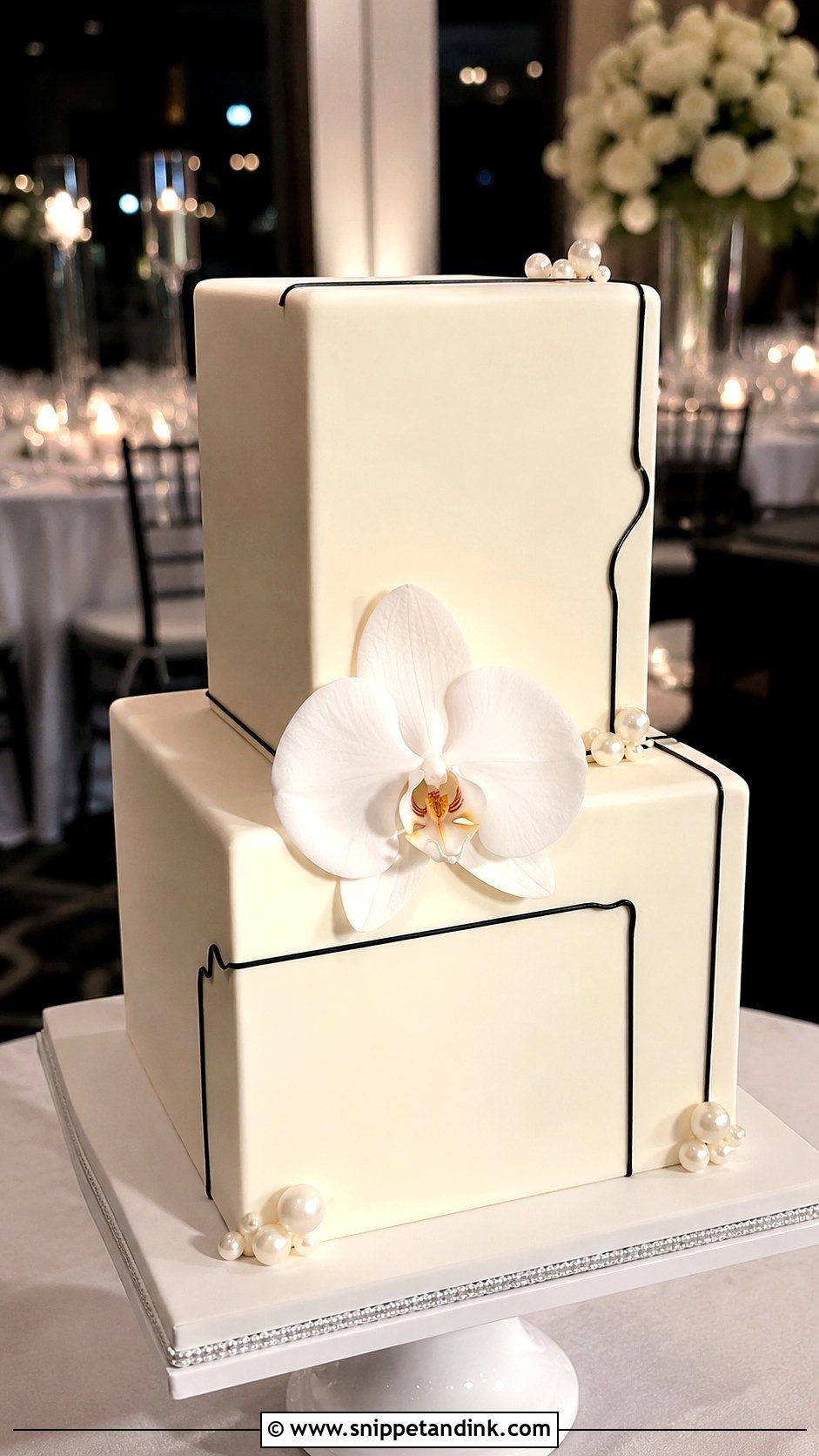
Square tiers read as modern and precise, and they need more time than round ones to get crisp corners in buttercream or fondant. Price that extra time in. A useful selling point is that square tiers cut into neat, even portions and serve more guests than a round tier of the same width, which helps with venue planning. Keep the decoration to clean lines, pearls or one sculptural flower.
14. Sculptural Wedding Cake
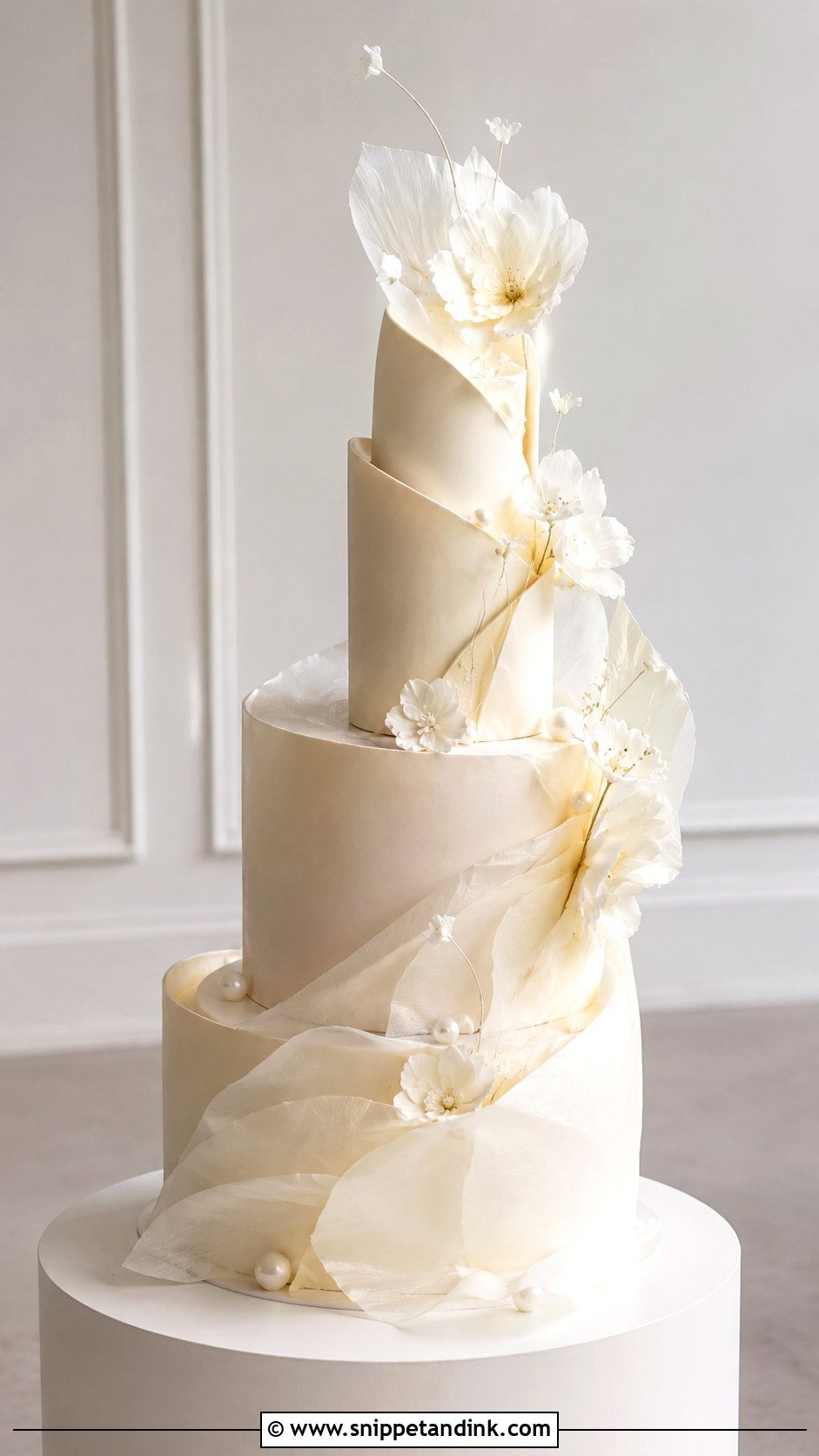
Sculptural cakes with curved tiers, asymmetric stacking or carved shapes show what you can do creatively. They also need engineering: a central dowel through all tiers, internal supports and a plan for how the cake travels in one piece or assembles on site. Not every couple wants one, and that’s fine. Price each by complexity, keep the palette controlled, and include one in your portfolio even if you only sell a few a year.



15. Painted Wedding Cake
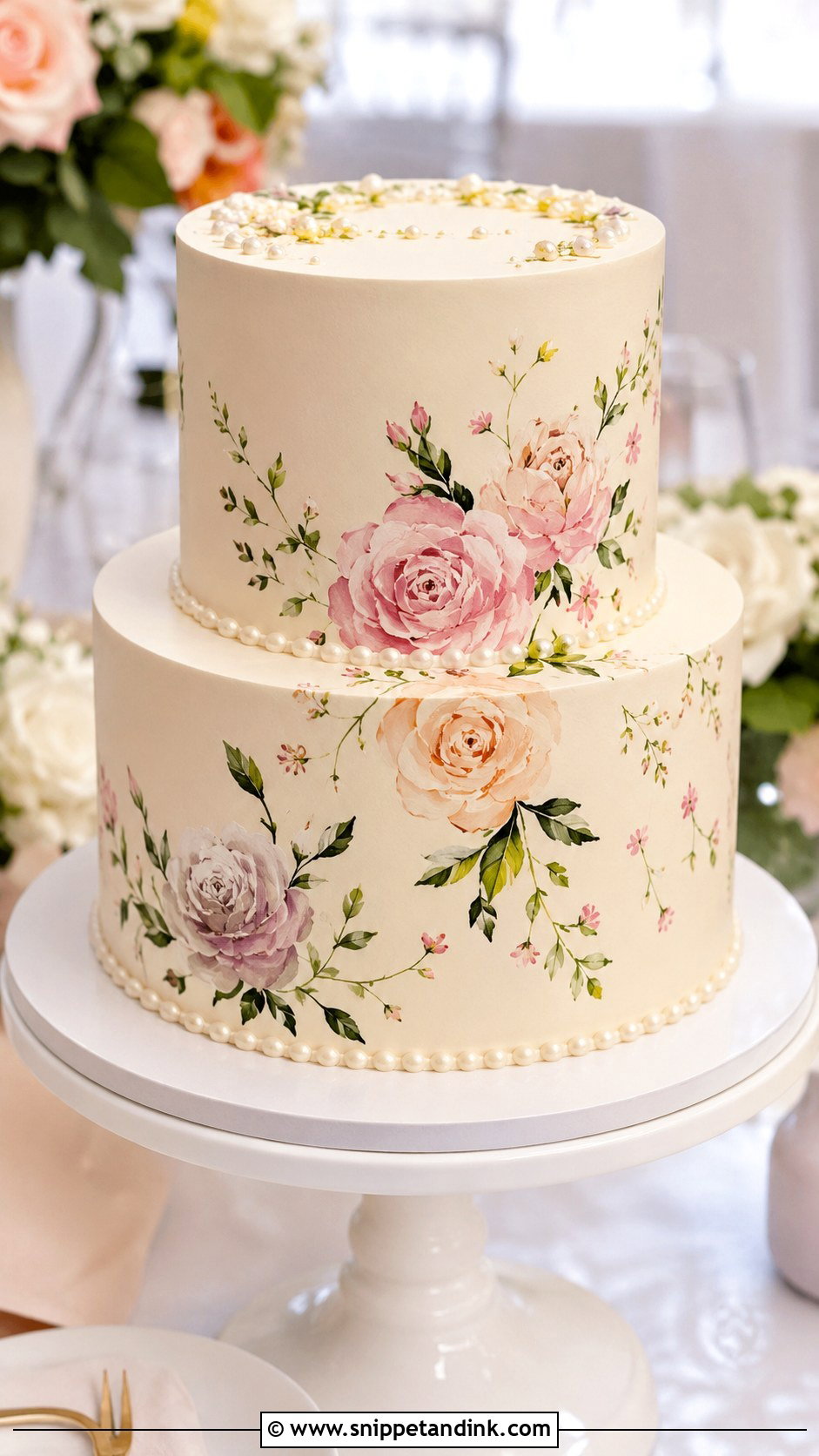
Hand-painted cakes let you sell one-of-a-kind work without bulky decoration. On fondant I paint with food coloring thinned with a clear alcohol-based extract, which dries quickly; on buttercream the cake must be fully chilled so the brush doesn’t drag the surface. Practice on fondant panels before offering it. Watercolor florals, vines or a monogram on an ivory base suit couples who want something personal.
16. Pressed Flower Wedding Cake
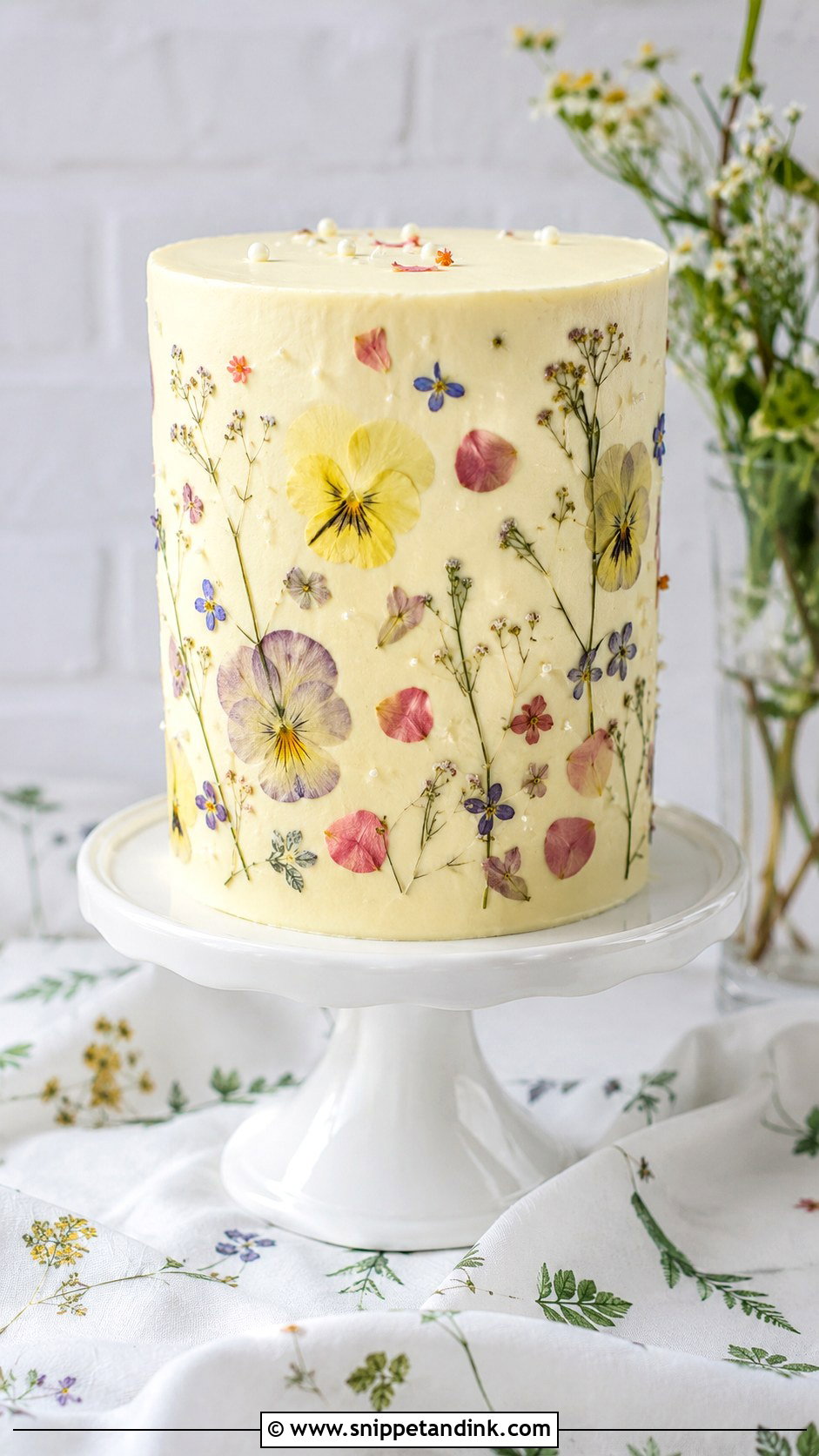
Pressed flowers give a botanical look that is very different from fresh clusters. Only use edible varieties, such as violas, pansies or cornflowers, grown without pesticides, and source them from a supplier who sells them for food. They are fragile, so press them gently into chilled buttercream or apply them to fondant with a little piping gel. Pastel petals stand out on ivory frosting, and the look sells well in spring and summer.
17. Fruit Wedding Cake
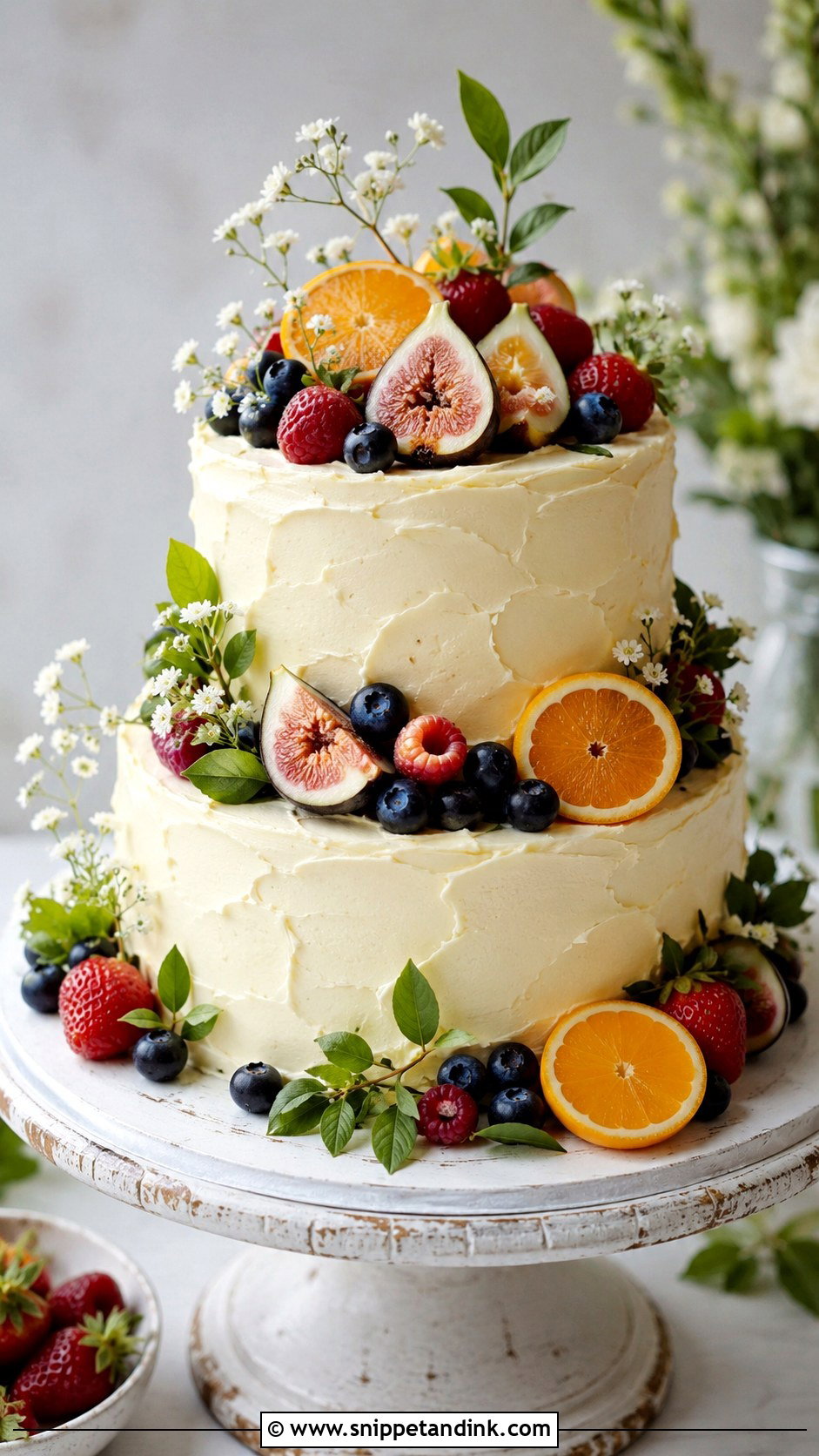
Fruit adds color and flavor at once, but cut fruit weeps juice onto frosting within hours. Wash and dry berries well, keep cut citrus and stone fruit to a minimum, and place fruit as close to serving time as possible, ideally at setup. Pair it with lemon, vanilla, almond or pistachio fillings and a light frosting, whipped buttercream or mascarpone-style filling. It suits warm-weather and brunch receptions, as long as the cake stays out of direct sun.
18. Drip Wedding Cake
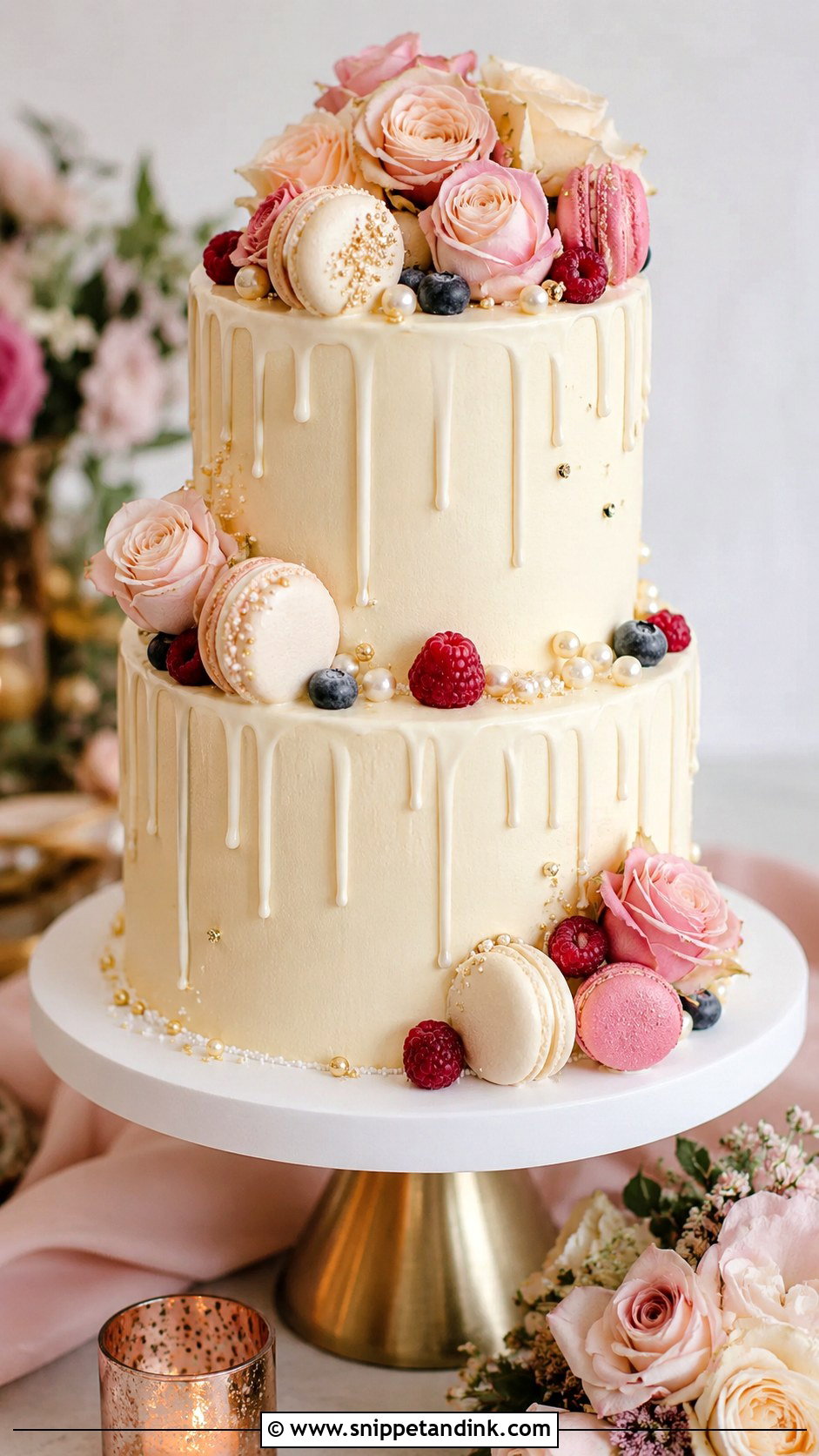
A drip cake can look bridal if you control the finish. The length of each drip depends on the ganache temperature and on how cold the cake is, so I test a few drips on the back before going round. White chocolate, caramel or a soft gold tone keeps it from looking like a birthday cake. Keep the top uncluttered. It works best as a smaller cake, a dessert table centerpiece or a second flavor for the reception.
19. Semi Naked Wedding Cake
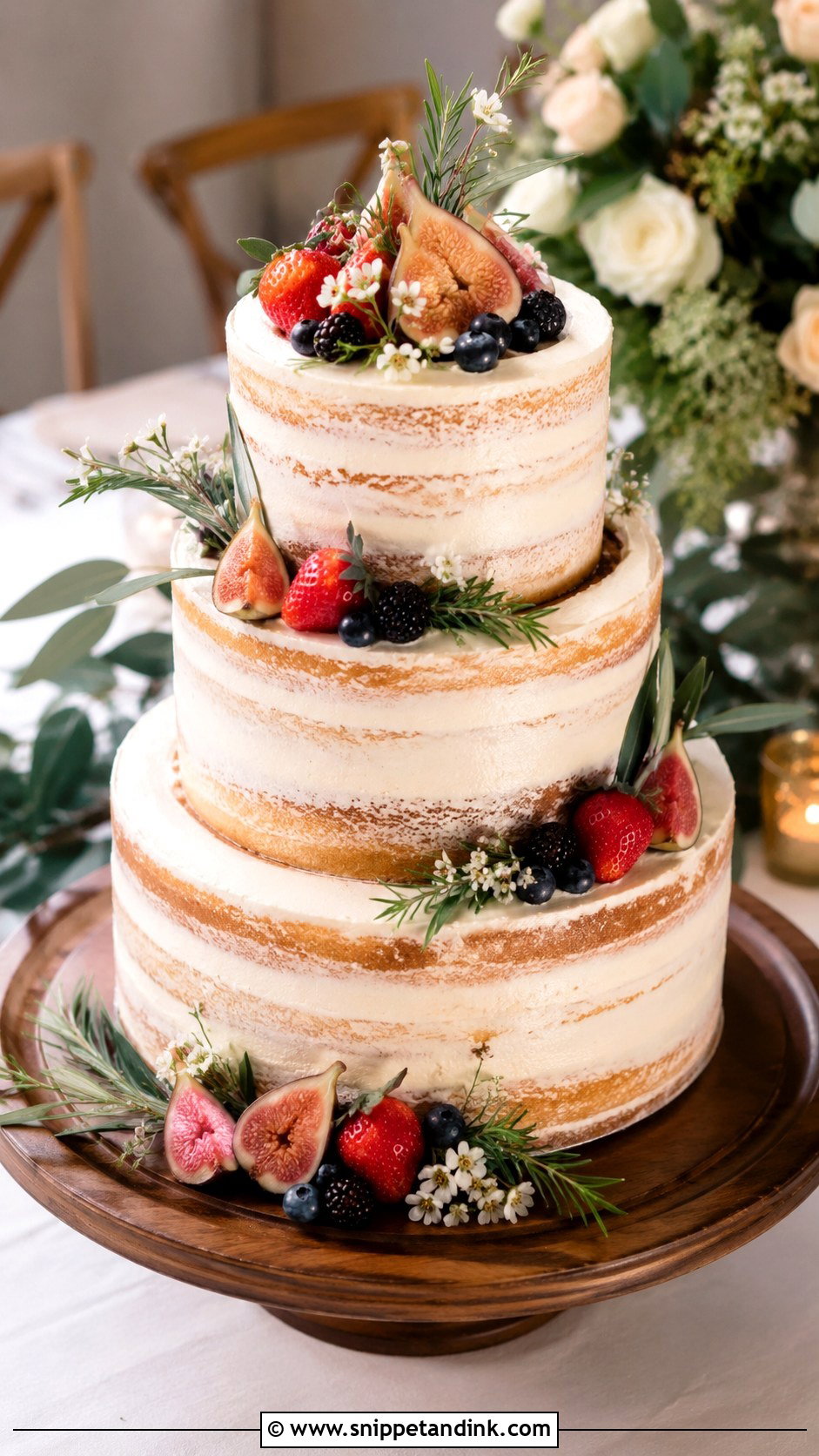
Semi naked cakes look relaxed, but with so much sponge exposed they dry out faster than a fully frosted cake. I brush the layers with a light syrup, keep the cake wrapped until the last moment and deliver close to the start. The scrape coat must be neat because every crumb shows. Decoration can be lighter than detailed piping, but delivery and support still need the same care. Keep it chilled and well dowelled.


20. Dessert Table Wedding Cake
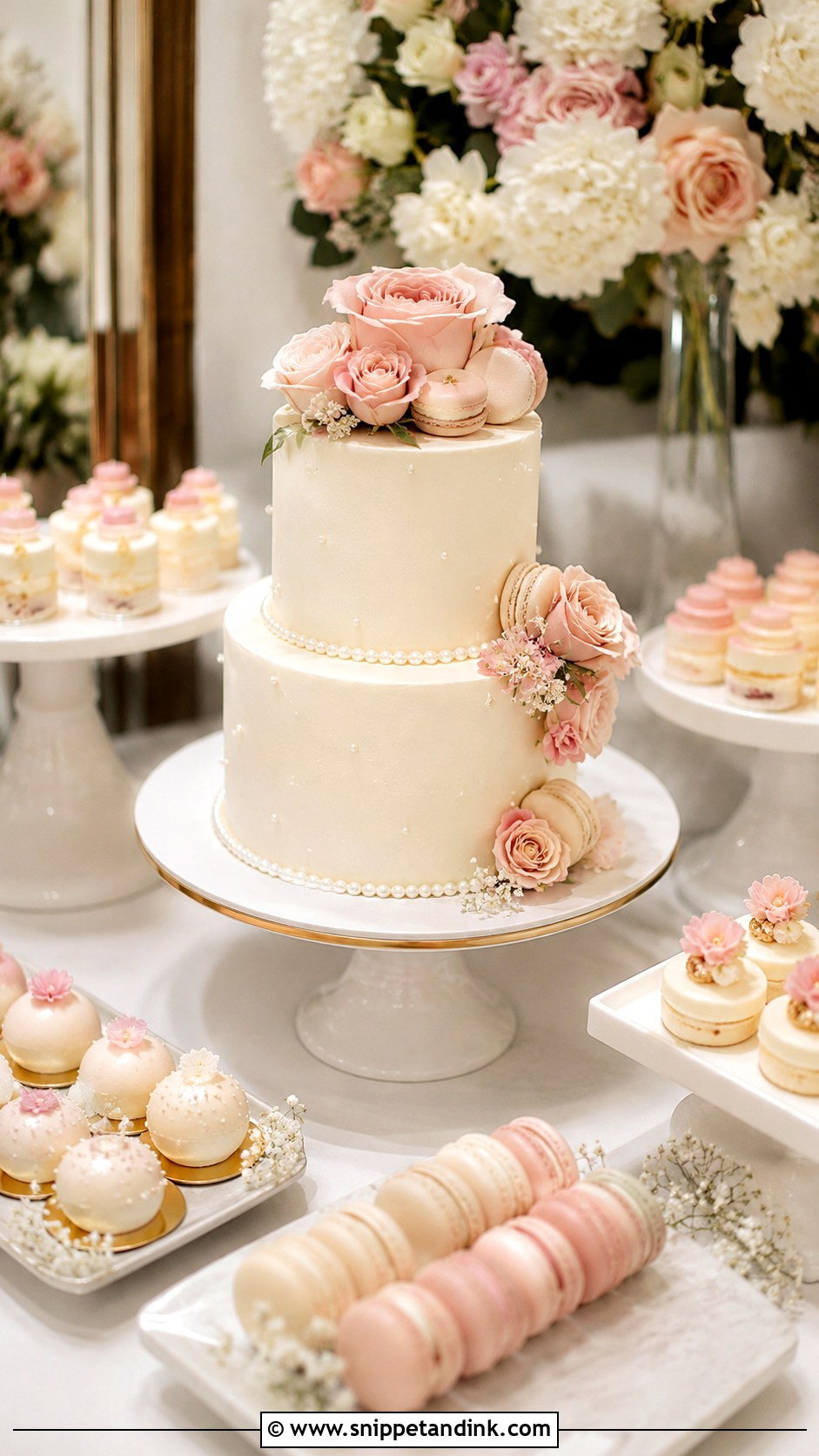
Selling a dessert table lets you earn from more than one item per wedding. The main cake can be smaller while cupcakes, mini cakes, cookies, bars or macarons fill the display. Match colors and finishes across everything, for example an ivory buttercream cake with blush flowers beside mini vanilla cakes and pink macarons. Price packages by guest count, and include setup styling so the table looks finished. Check which items hold safely at room temperature for the length of the reception.
21. Sheet Cake Wedding Cake
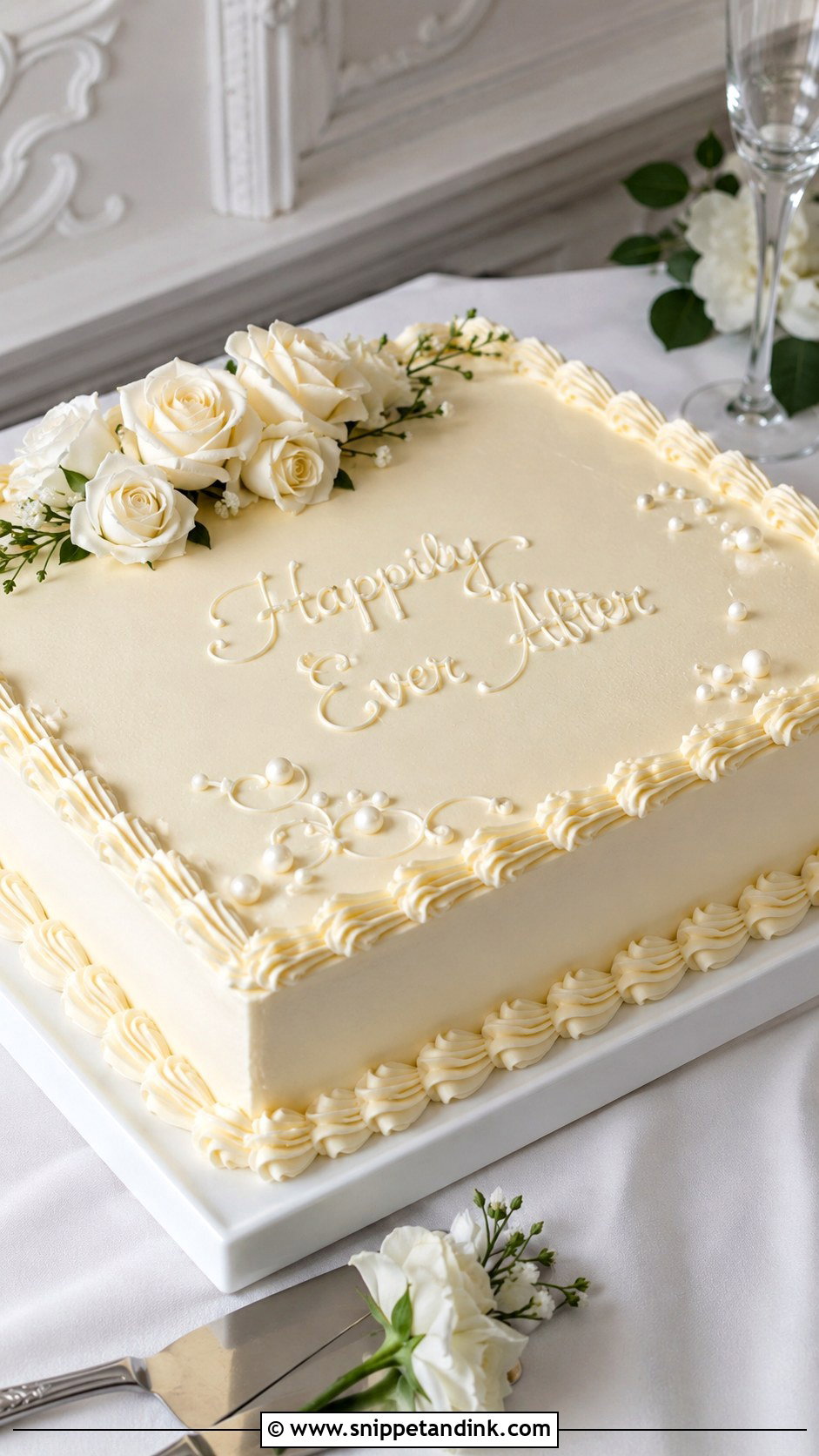
Kitchen cakes are rarely seen, but they can be very useful. A small display cake goes out for the cutting, and plainly frosted sheet cakes in the same flavors are sliced in the kitchen. Couples save money and you serve large weddings without building a six tier cake. Give the venue clear cutting instructions, since staff may not slice to wedding portions unless told.
22. Cupcake Wedding Cake
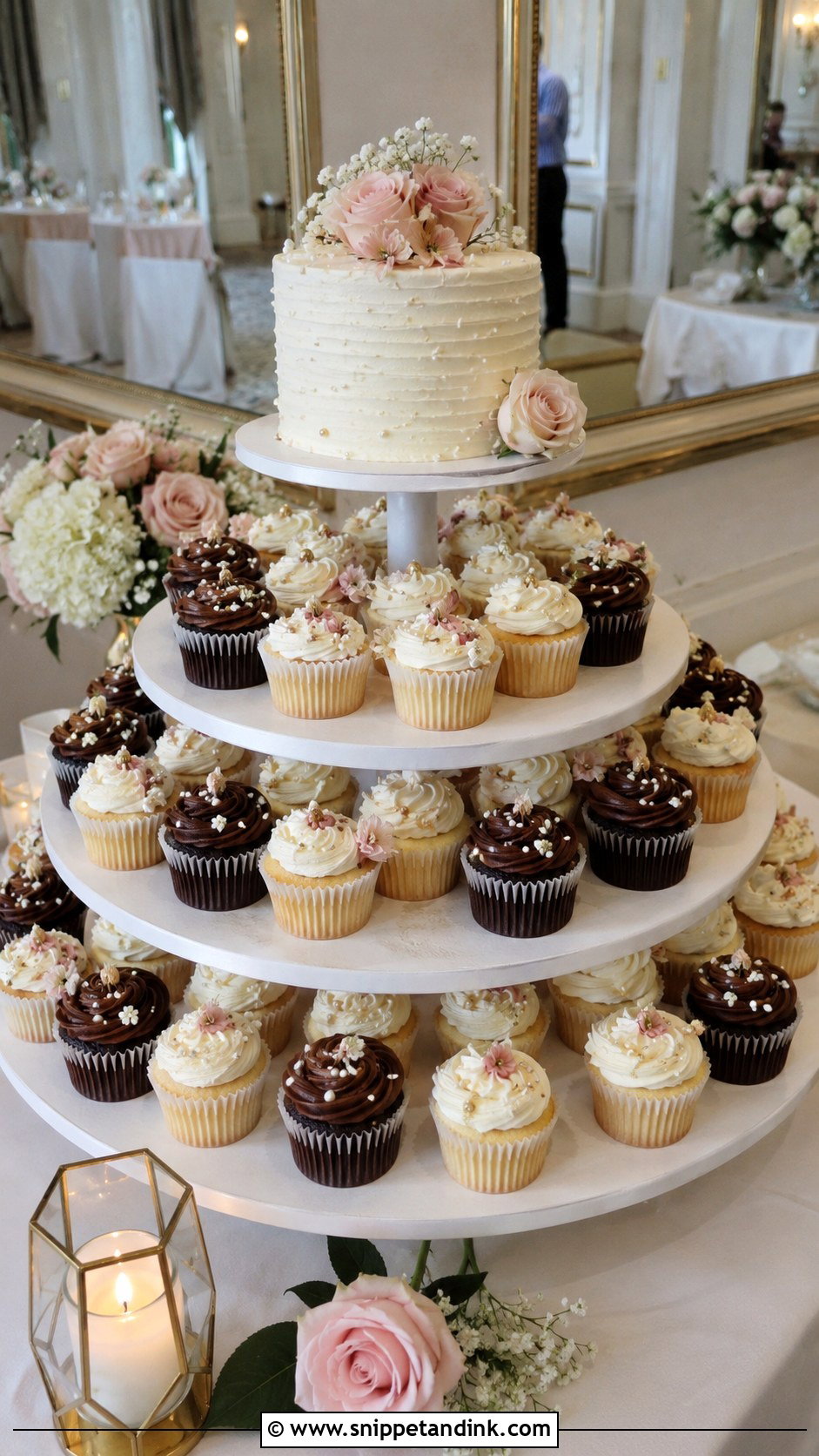
A cupcake wedding cake display means less slicing at the venue, which matters where staff are limited, and some venues charge a cake cutting fee that cupcakes can avoid. A small cutting cake on top of a tiered stand gives the couple their moment. Keep the swirls matched and the toppings bridal: pearl sprinkles, small flowers or fruit. Flavors can vary across the stand, which is easy for you to batch.
23. Mini Wedding Cake
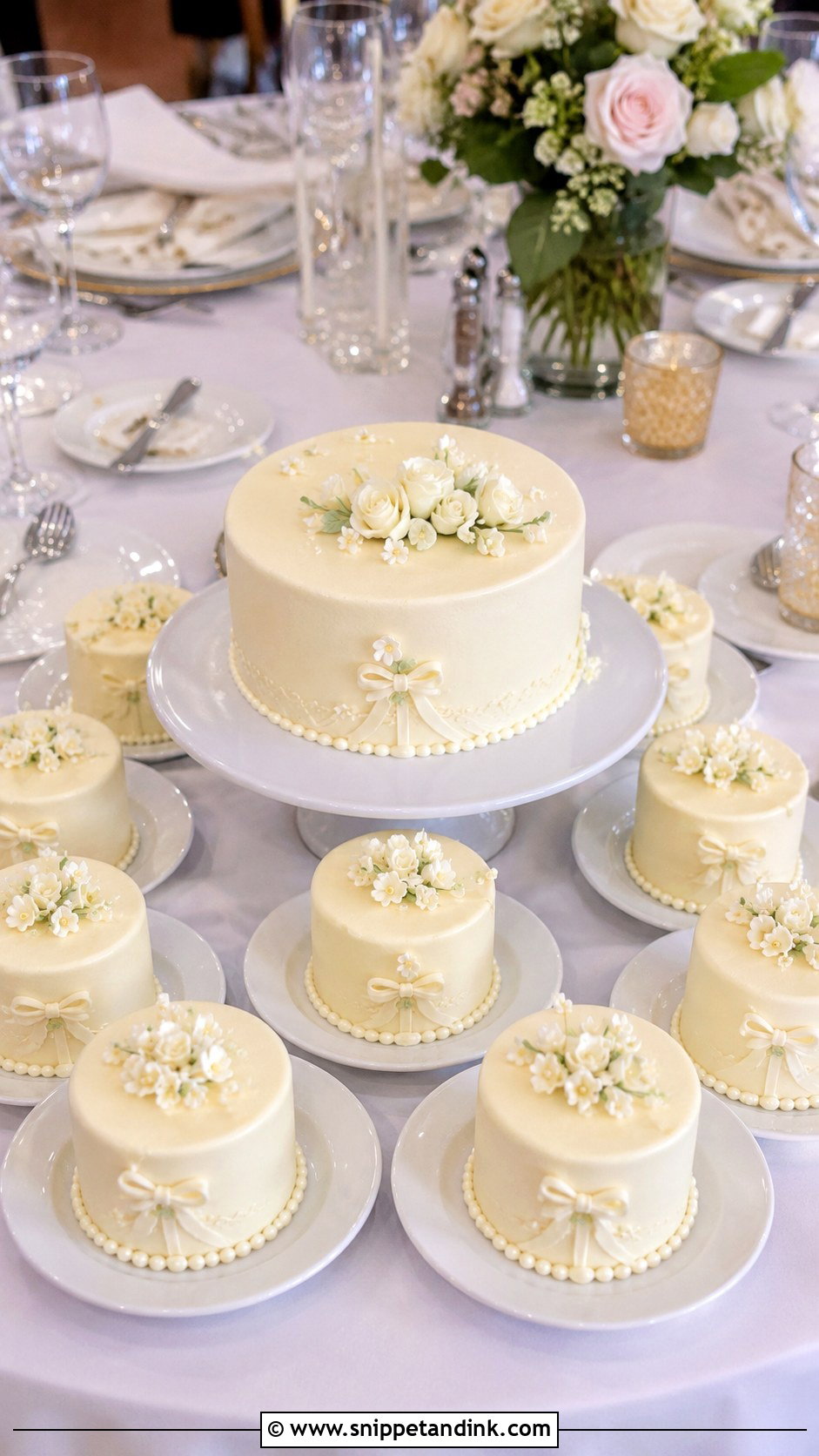
Mini cakes, one per guest, take much more labor than slices of a single cake. Each one needs to be leveled, filled, coated and decorated by hand, so price them per cake and count the boxes and packaging. They suit plated dinners and micro weddings. Keep flavors to one or two so production stays manageable, and finish them simply with a border, a bow or one sugar flower.
24. Black And White Wedding Cake
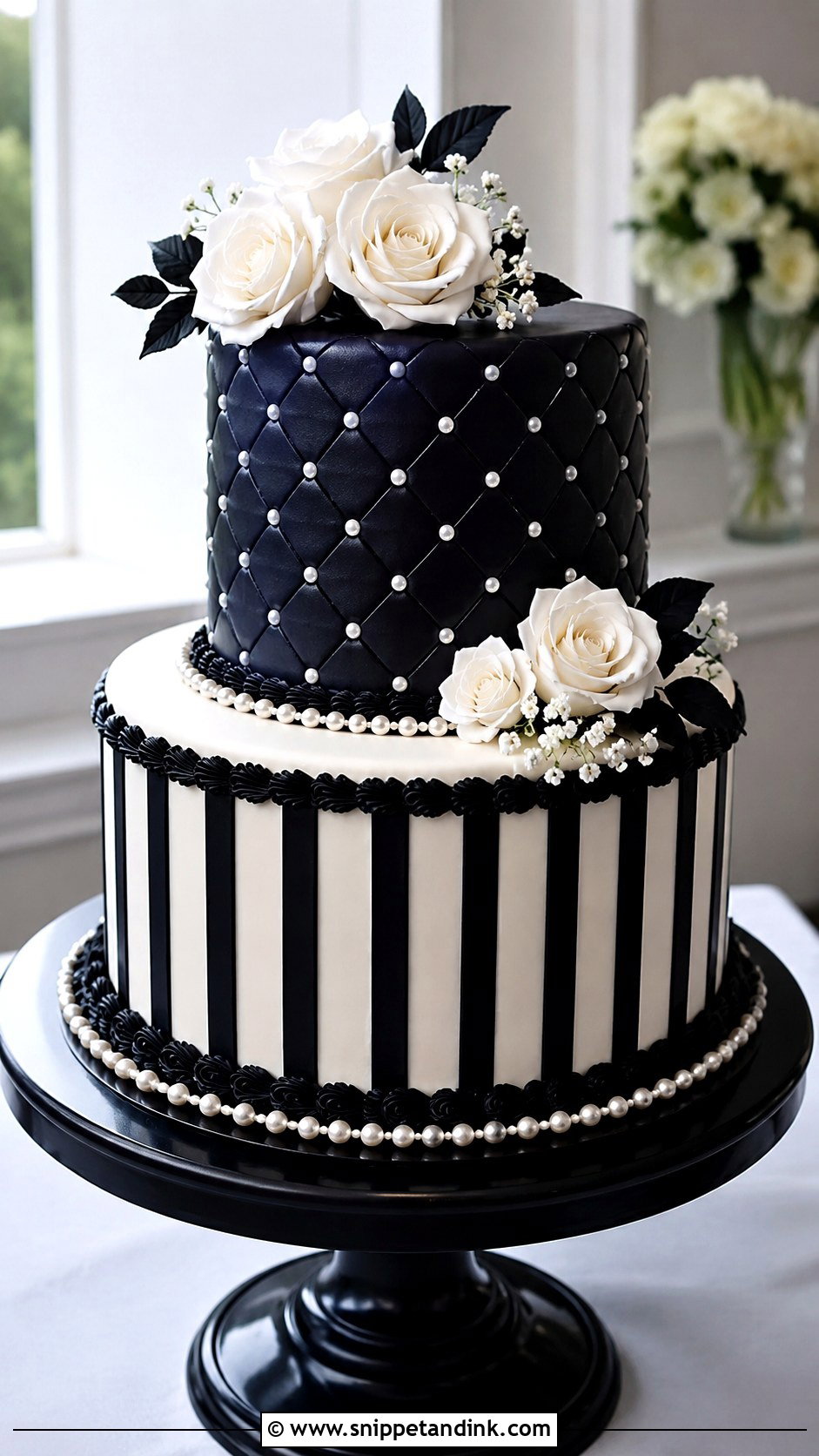
Black and white cakes give a dramatic option for modern city weddings. True black is the tricky part. Black buttercream needs a lot of gel color and can taste bitter, so I start from a chocolate base, and black fondant can stain lips and teeth if the black areas are large. Use it as an accent: piping, stripes or a dark floral spray against white. Photograph it simply so the contrast reads clearly.


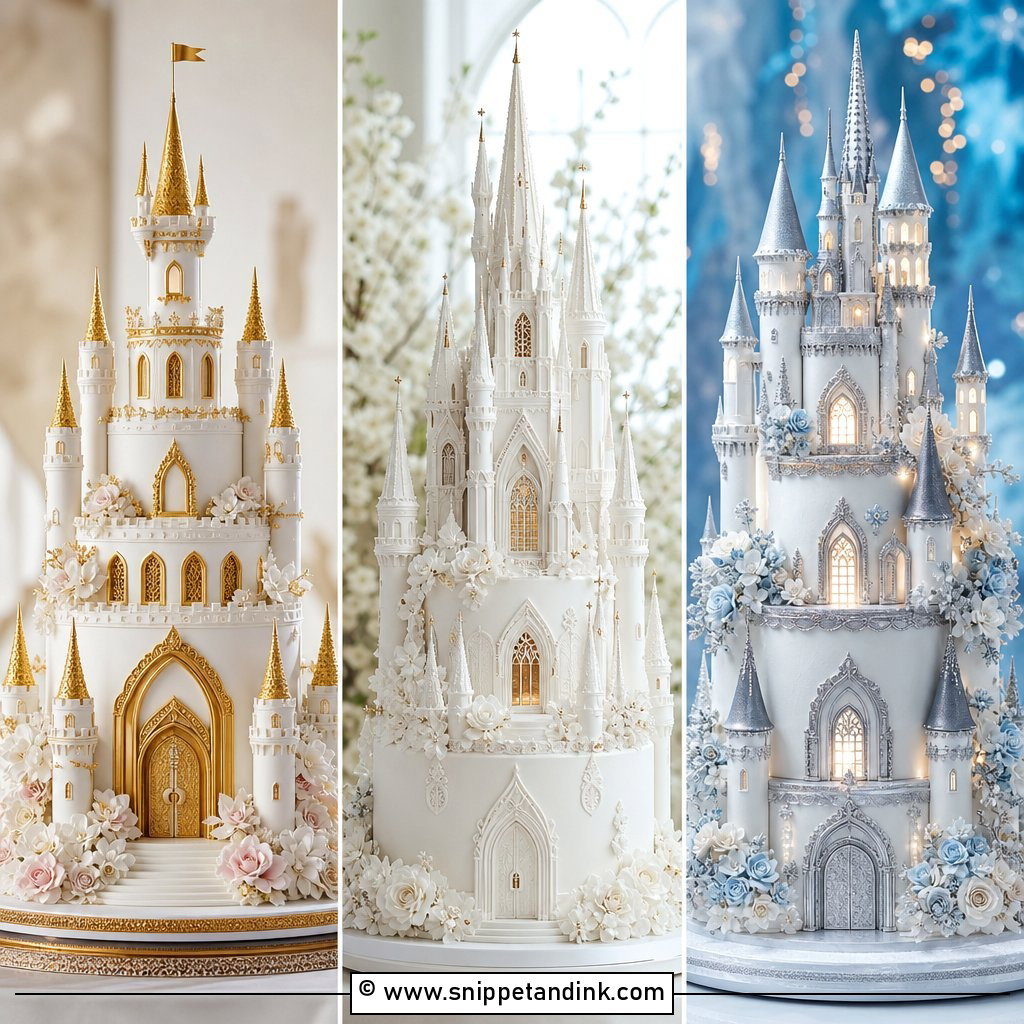
25. Colorful Wedding Cake
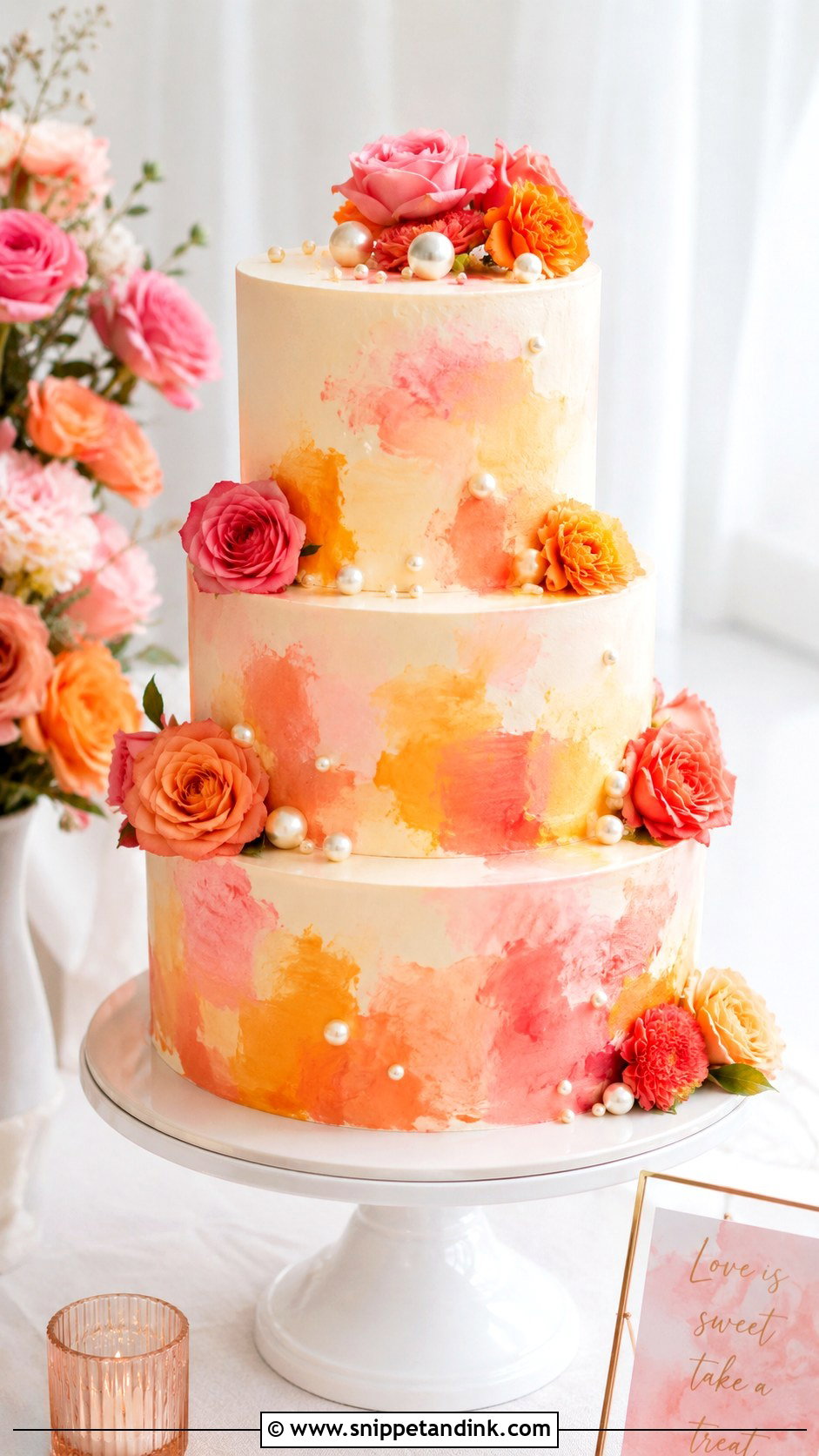
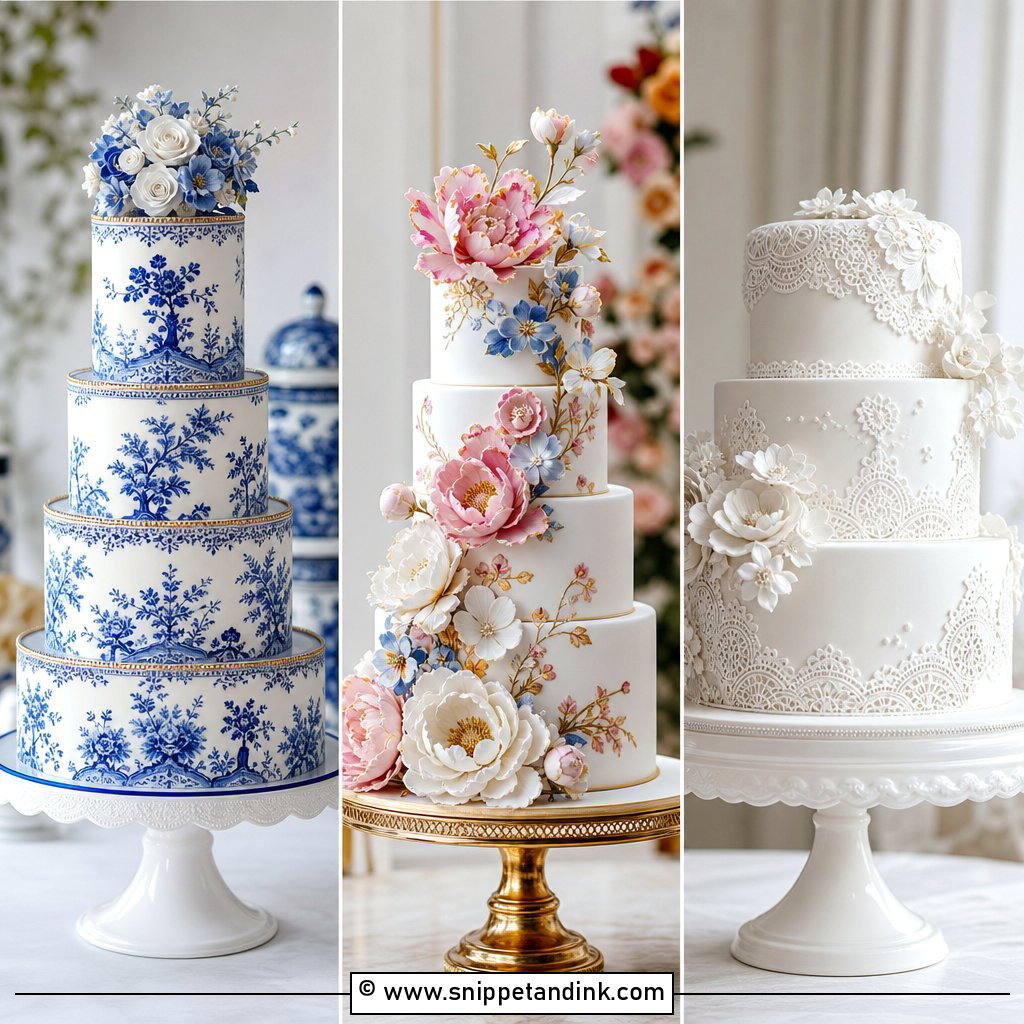
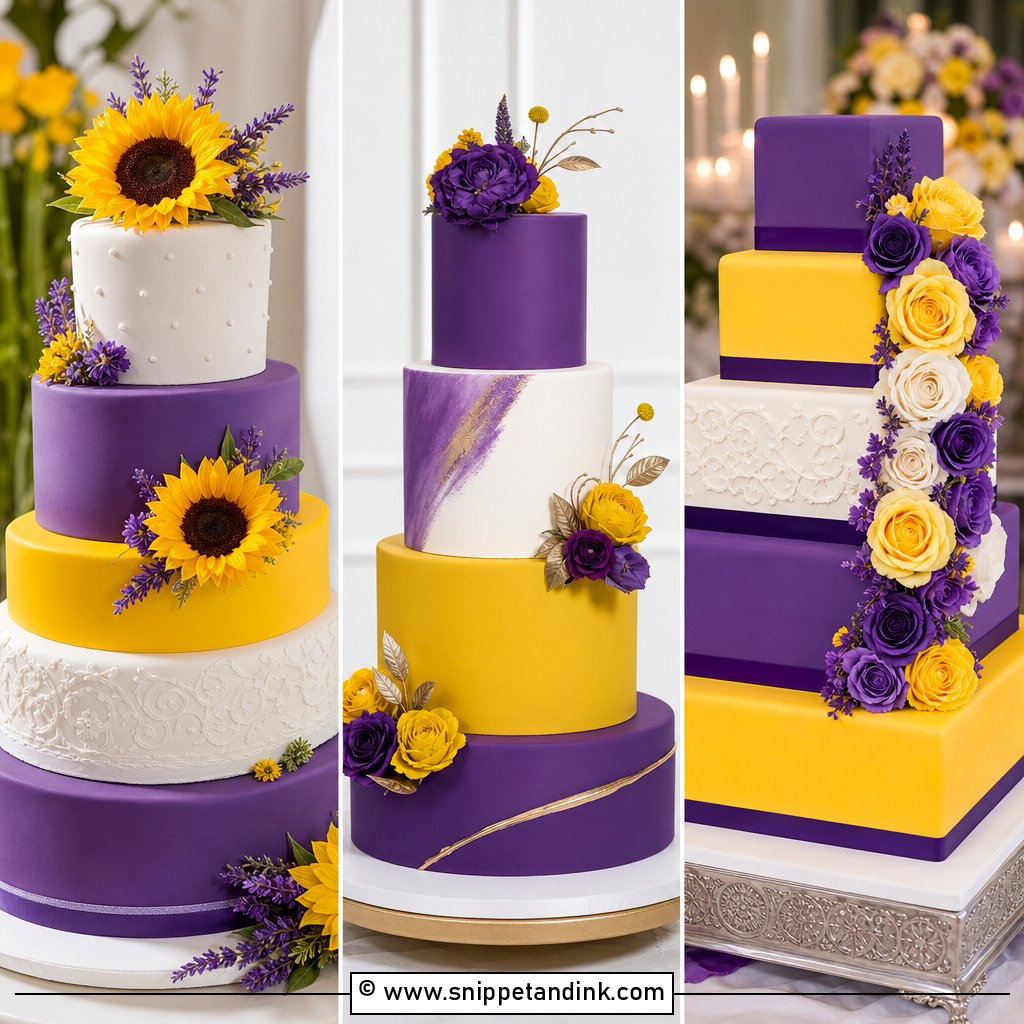
Color sets a cake apart and attracts couples with strong personal style. Plan the palette from the invitations and flowers, and keep the shape clean so the color doesn’t look messy. Pinks and purples can fade in strong light, so a colorful cake should stay out of direct sun and be colored a shade deeper than the target. Sage and ivory, blue watercolor and lavender buttercream are all popular.
A Production Week for a Saturday Wedding
Wedding cakes are made over several days, not one. A typical schedule I’d suggest for a Saturday delivery looks like this, though dense or very large cakes may need an extra day.
- Early in the week: sugar flowers and any decorations that need to dry
- Wednesday: bake the sponges, cool and wrap them
- Thursday: level, fill, dowel and crumb coat, then chill
- Friday: final coat and decoration
- Saturday: load, deliver, assemble and finish on site
That timetable is also why you should cap how many weddings you take on a single weekend. Fridge space usually runs out before your energy does.
Contract Clauses That Protect You in a Heatwave
Most cake disasters happen after the baker leaves, so your contract should say where responsibility changes hands. Spell out the retainer and when the balance is due, the date the final guest count is fixed, and that liability passes to the venue once the cake is set up and signed for.
Add a clause that the cake must be displayed indoors or in full shade, on a sturdy level table, away from heaters and direct sun, and that you may change the design if the forecast makes a buttercream finish unsafe. Check your local licensing rules and get liability insurance before you take paid orders. Many venues will ask to see both.
Start Small, Then Let Your Menu Grow
Start with a handful of designs you can make perfectly, and photograph them well. Build packages around size, flavor, finish, delivery and setup, and write down what each one really costs you in hours as well as ingredients. Once every cake on the menu has a clear role, inquiries become easier to answer and your bookings start to look like a business rather than a run of favors.
You'll Like These Ideas:




Leave a Reply