
Simple, modern wedding cakes are what most couples ask me for now, and a two tier cake is usually where that conversation lands. It suits a guest list of around forty, a city hall lunch or a restaurant back room, because it stays in scale with the table instead of towering over it. Minimal is harder to bake than it looks, though. With no piping to hide behind, every bulge in the frosting and every slightly off-centre tier shows, so the real work goes into straight sides and sharp edges. Below are thirty versions I’d happily make, each with the detail that decides how it turns out.
Two Tiers Feed Fewer Guests Than Most Couples Expect
The first thing I ask at a consultation is how many people need a slice, because two tiers covers a narrower range than most couples assume. Wedding portions are cut as small fingers, roughly one inch by two inches and the full height of the tier, which is a lot smaller than a birthday slice. Rough numbers for standard four inch tiers:
- A 6 inch tier on an 8 inch base gives about 35 to 40 wedding portions.
- An 8 inch tier on a 10 inch base gives about 60 to 65.
- Double barrel tiers roughly double the portions of a standard tier of the same width.
- Square tiers cut into a few more portions than round tiers of the same size.
If your guest list is longer than the cake, don’t add a third tier just to feed people. I’d rather bake a plain kitchen cake in the same flavour for the caterer to cut out of sight. Nobody can tell the difference on a plate, and the display cake keeps the proportions you fell in love with.
Bring your venue photos and your florist’s flower list to the tasting, and find out whether the venue has a fridge, air conditioning and step-free access to the cake table. Those three answers shape the frosting I recommend more than any picture on a mood board.
1. 2 Tier White Buttercream Wedding Cake
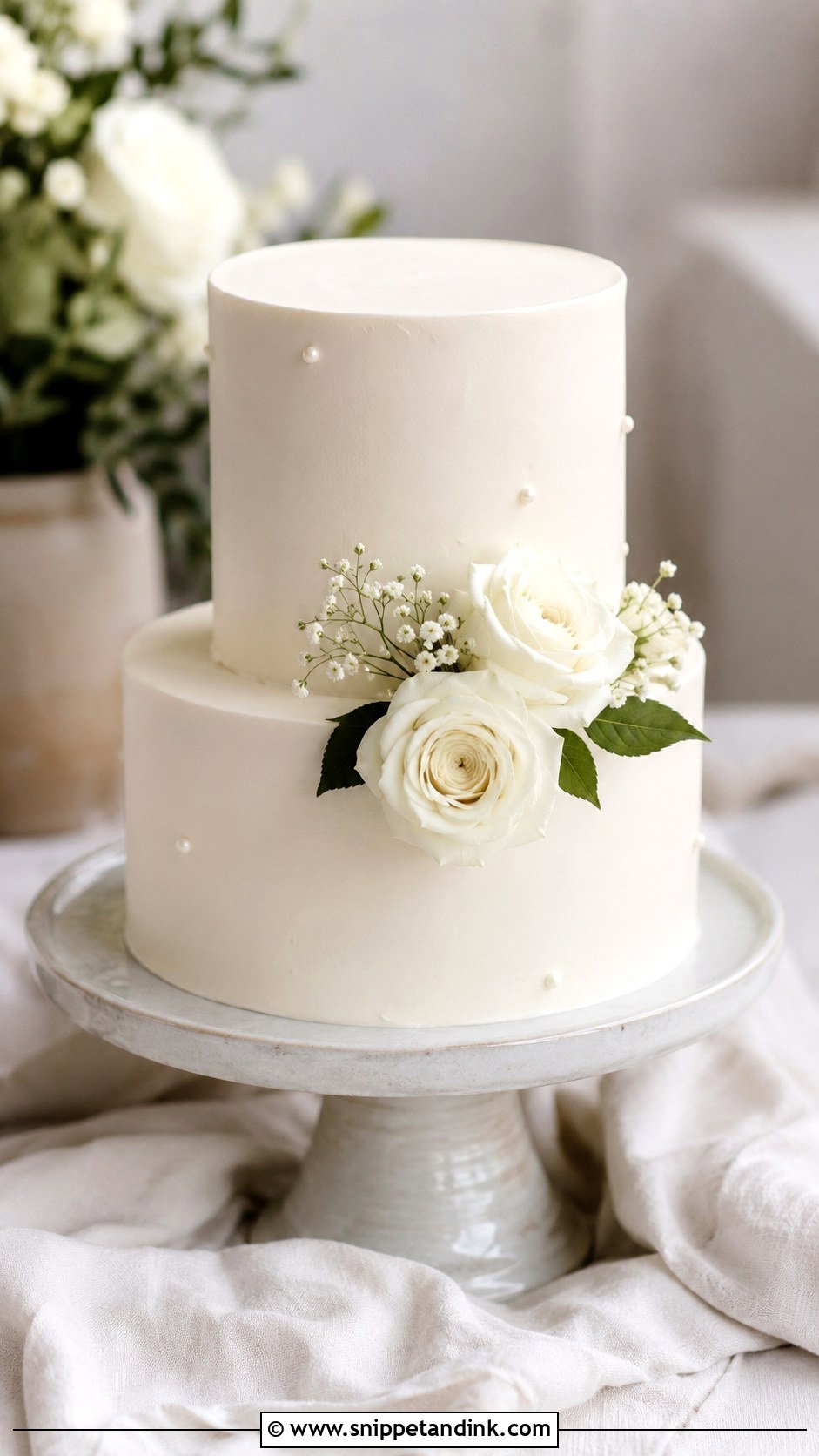
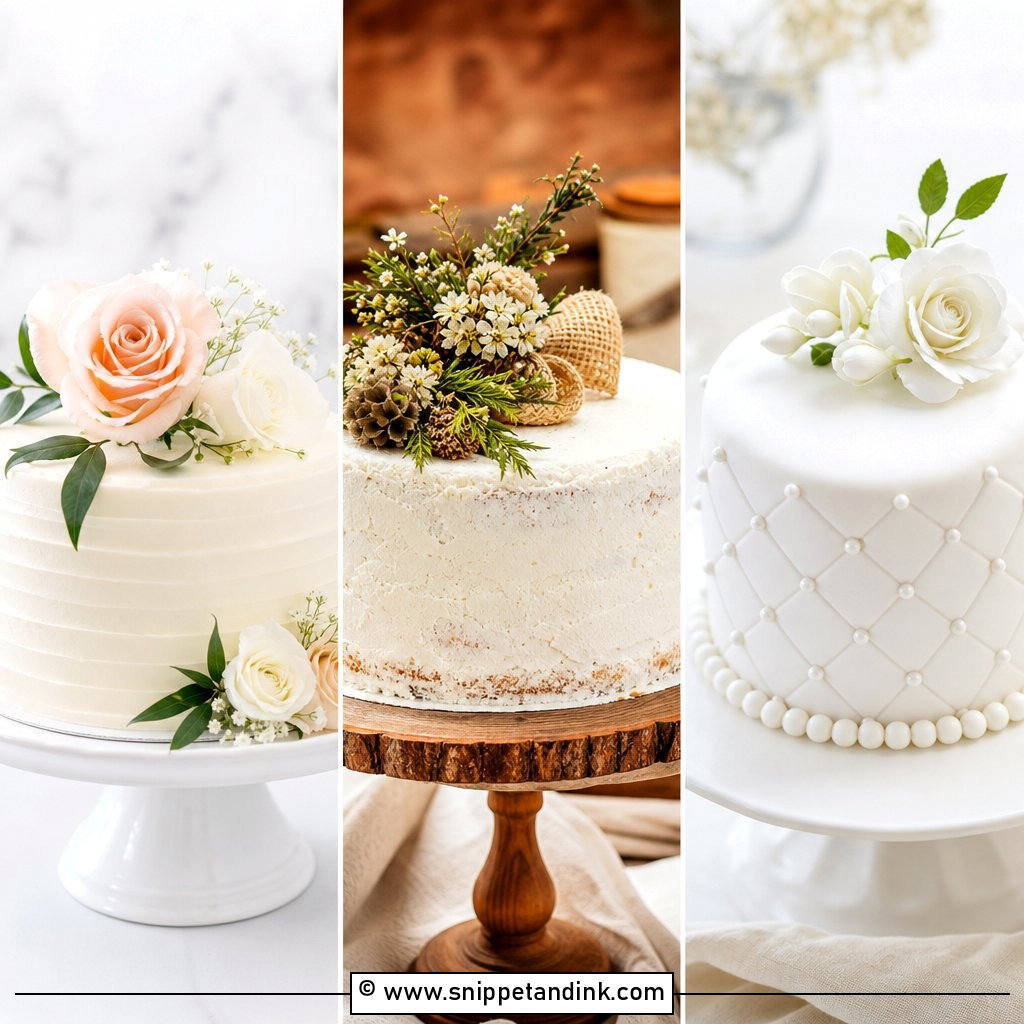
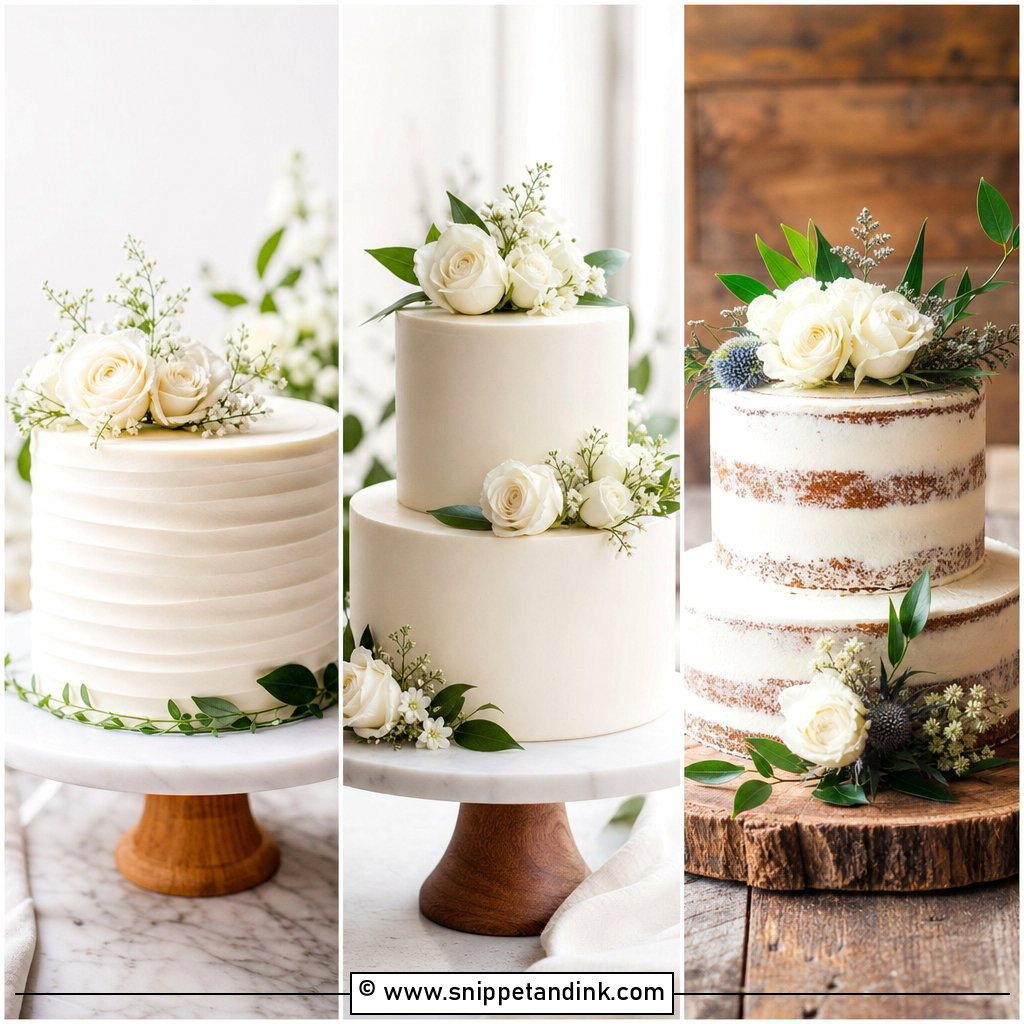
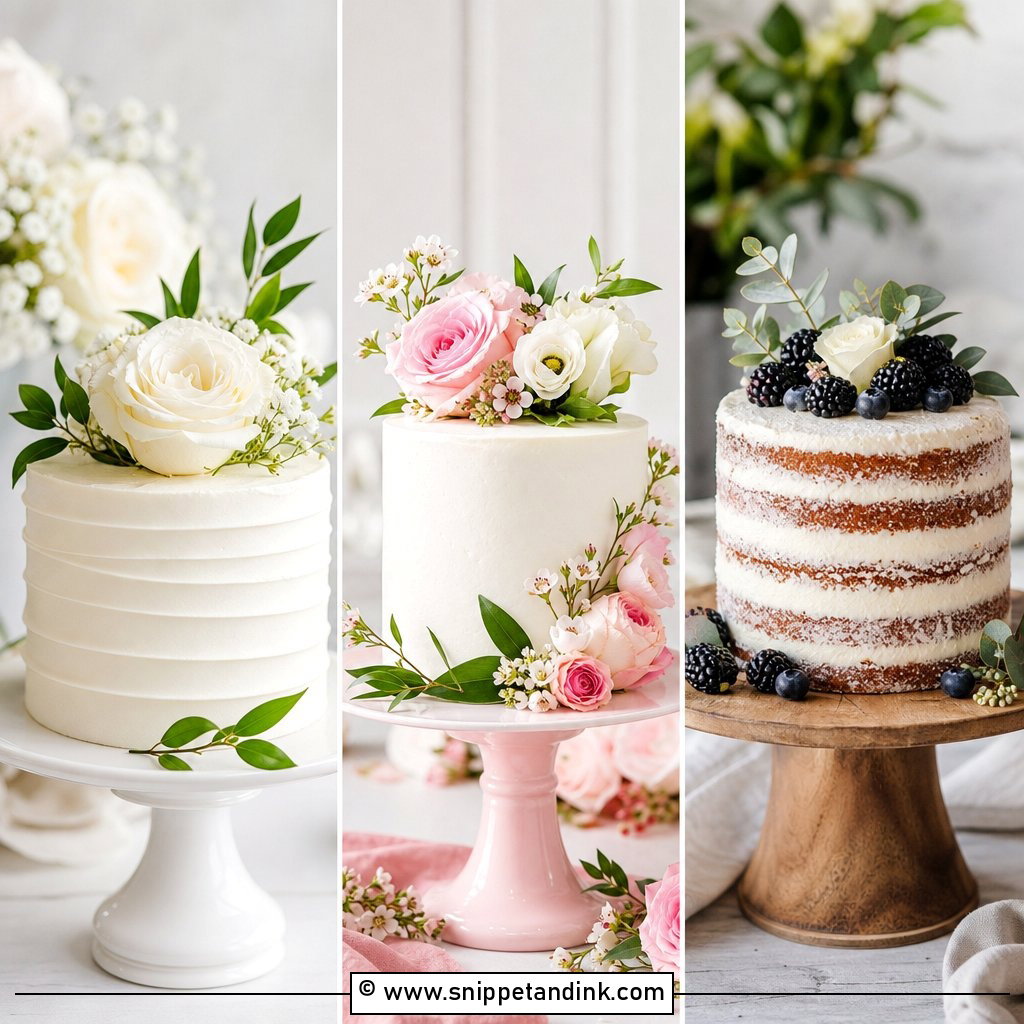
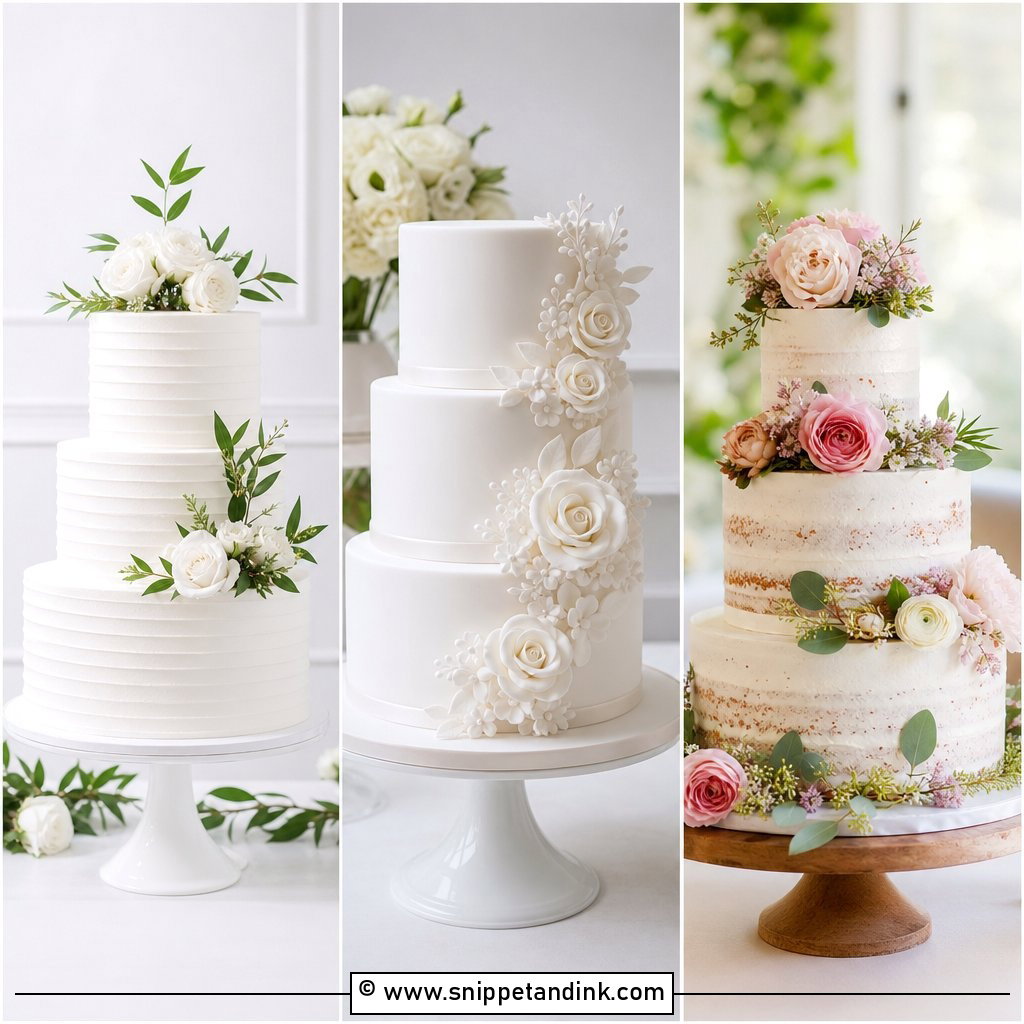
Smooth white buttercream is where I’d start most couples, because it ages well in photos and suits nearly any room. The finish matters more than any decoration. I chill the cake, then pull a bench scraper around it until the edges come out crisp, and I aim for a satin surface rather than a glossy one, since gloss flashes under camera light. Real butter keeps the colour a soft ivory rather than paper white, which is no bad thing. A low cluster of white roses or lisianthus on one side is enough, set on a plain ceramic or glass stand.
2. 2 Tier Smooth Fondant Wedding Cake
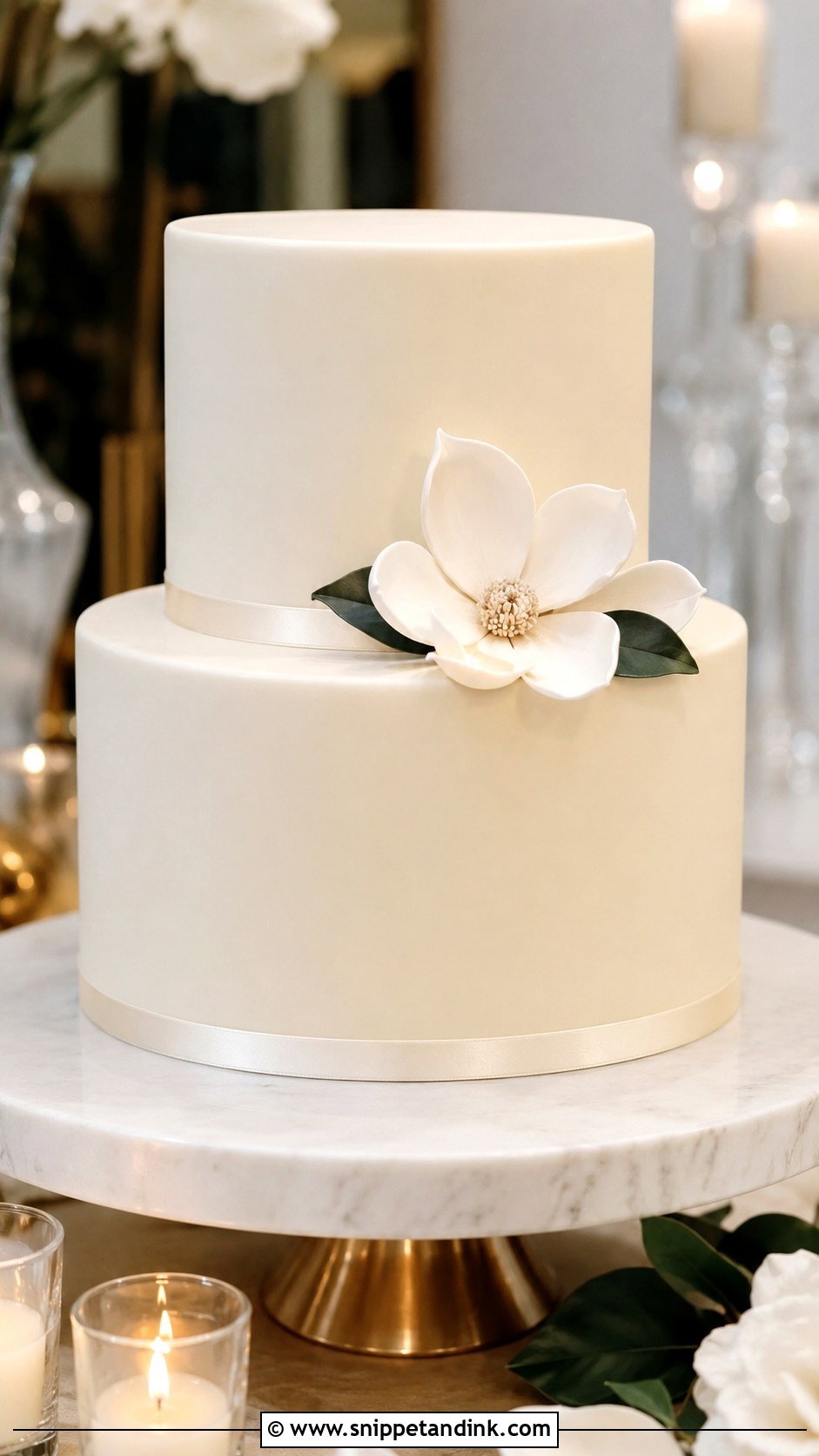
Fondant gives a two tier minimalist wedding cake that gallery finish with razor edges, and it’s the covering I trust most for a warm afternoon because it seals the buttercream underneath. The catch is taste. Plenty of guests peel it off, so I roll it thin and put the flavour into the filling. Pick one quiet shade such as warm white and let a narrow ribbon mark the base of each tier. Taking a fondant cake straight from a fridge into a humid room makes it sweat, so I let it come up to temperature inside its box.
3. 2 Tier Pearl Wedding Cake
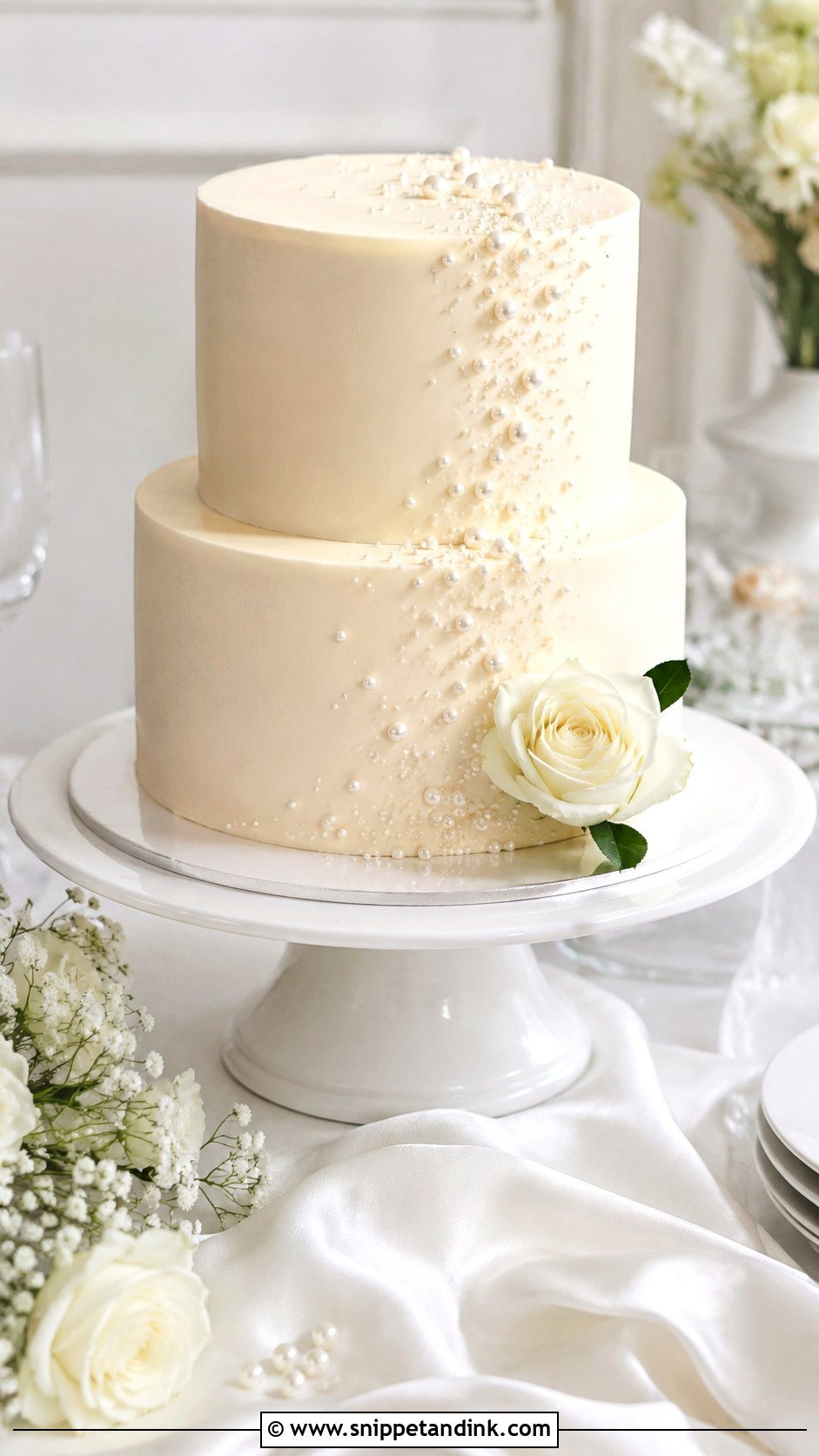
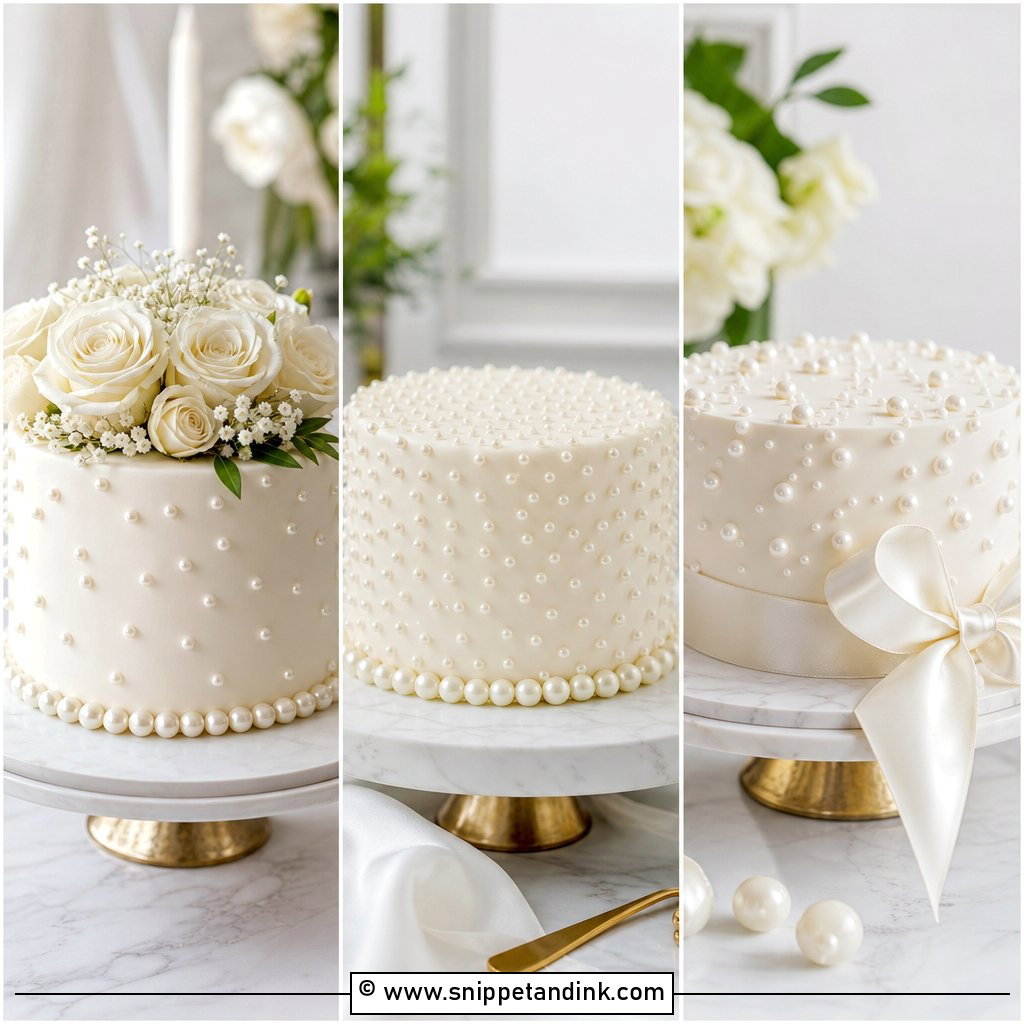
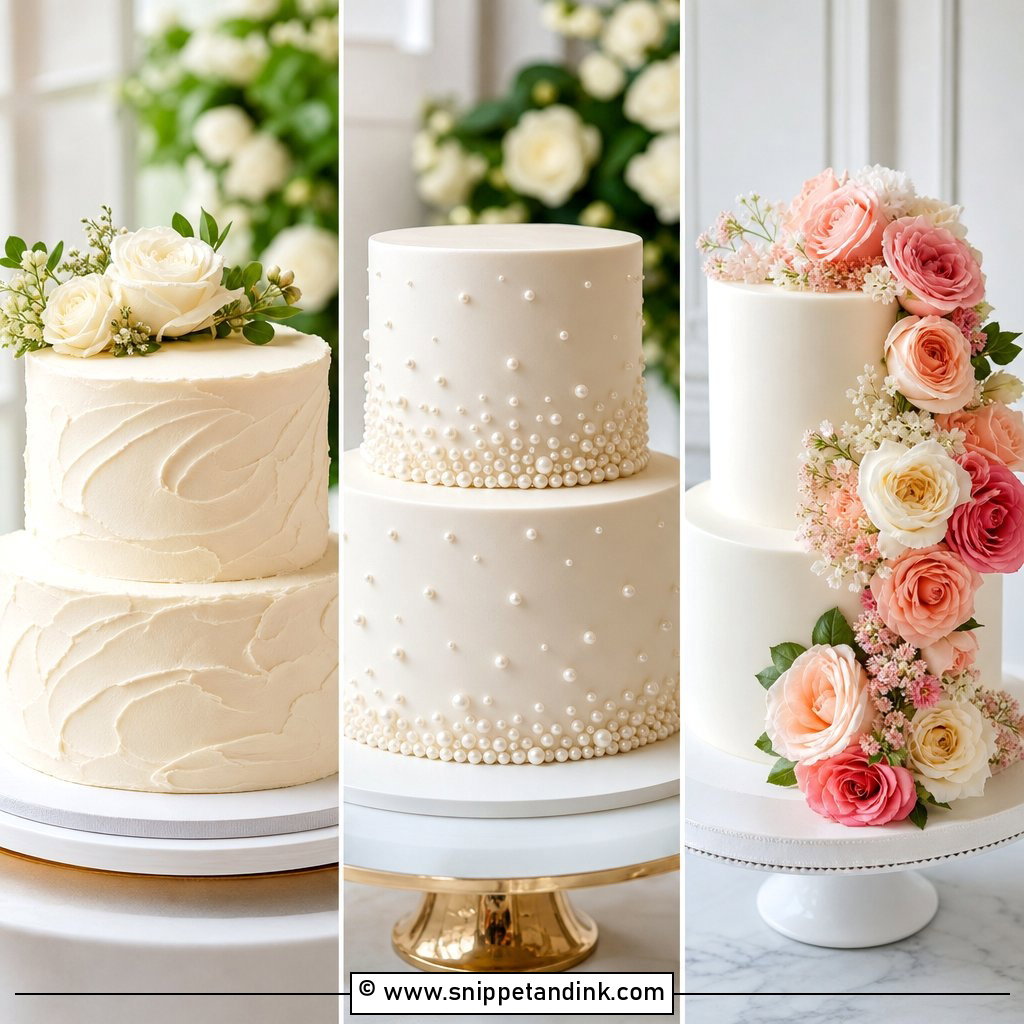
Pearls read as bridal very quickly, which is exactly why they need restraint. I scatter tiny edible pearls down one side or ring them around the tier bases, and stop there; a fully pearled cake stops being minimal. Hard sugar dragées are tough on teeth if someone bites one whole, so for a big guest list I’d rather hand-roll soft fondant pearls. Ivory buttercream over almond or vanilla bean sponge suits them, and they echo pearl earrings or a satin gown without anyone having to plan it.
4. 2 Tier Gold Leaf Wedding Cake
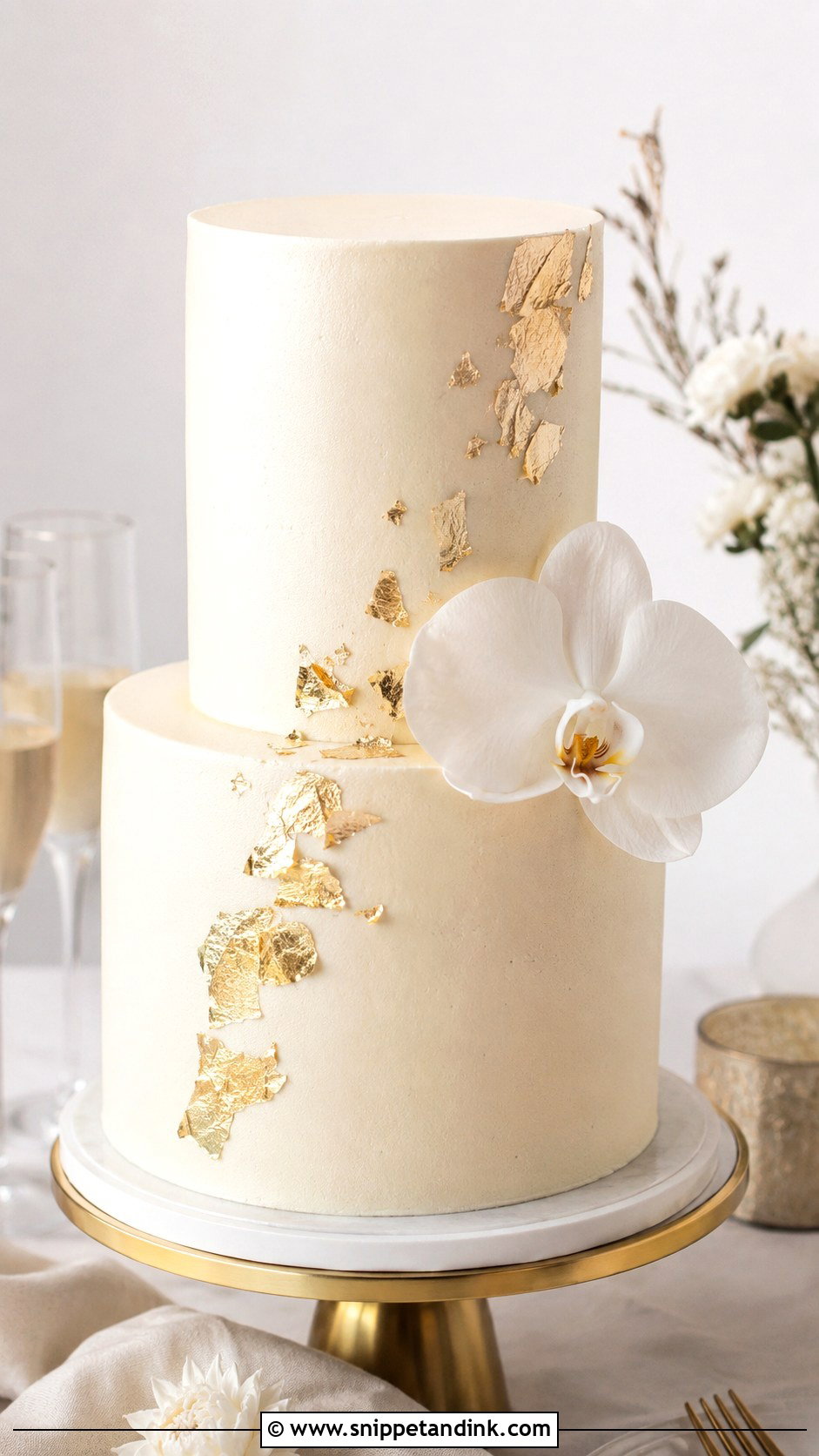
A few torn flakes of gold leaf do more than a painted band ever will. I lift them with a dry soft brush and press them onto a slightly tacky surface, uneven on purpose, usually up one side of the top tier. Warm ivory frosting lets the gold sit softly, while bright white can make it look brassy. Make sure your baker uses edible-grade leaf, because craft leaf is often brass. One white orchid is all I’d add, and the gold catches best at an evening reception under candlelight.
5. 2 Tier Textured Buttercream Wedding Cake
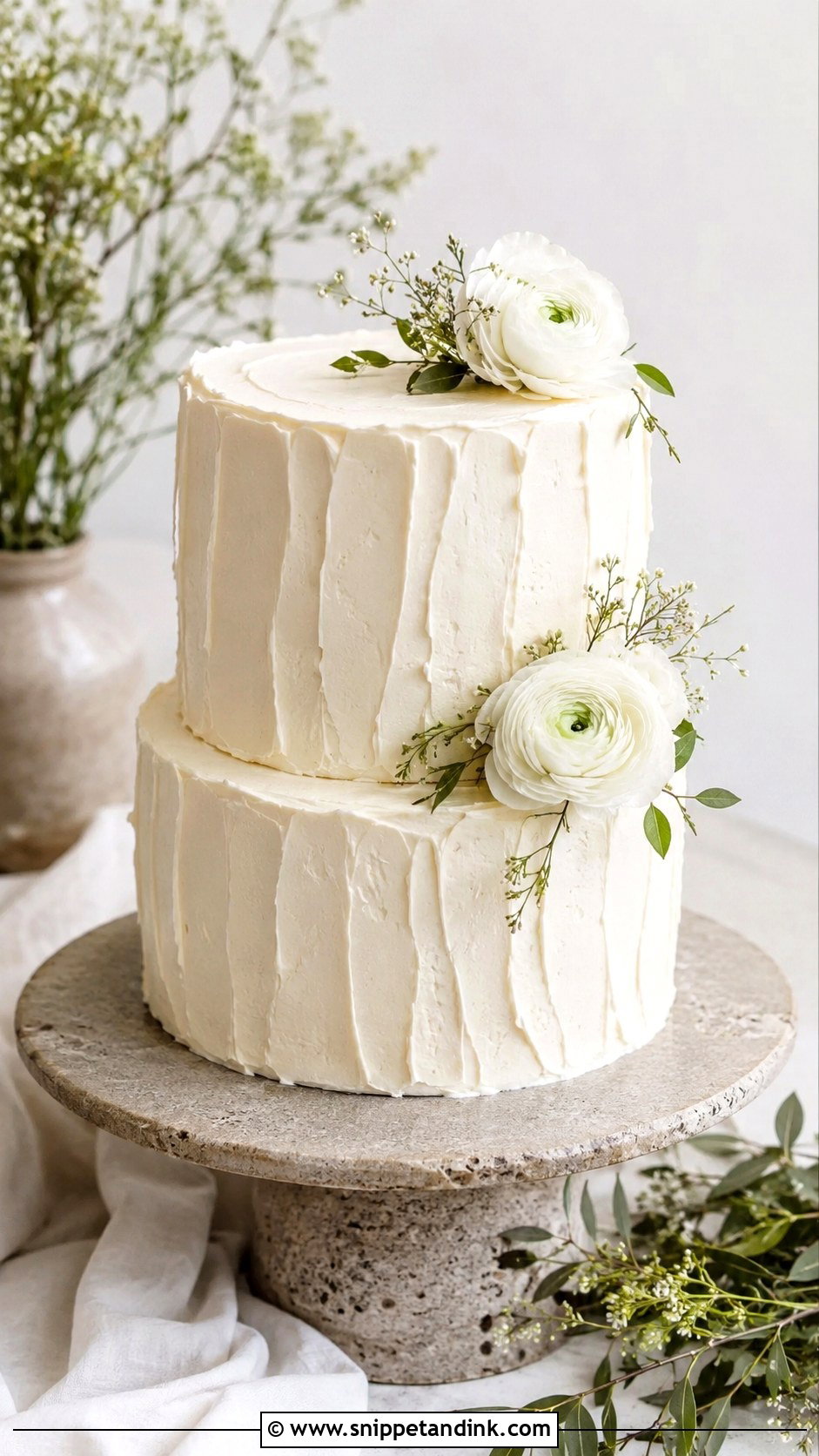
Textured buttercream forgives a lot. The vertical strokes or plaster-style swipes come from a palette knife on the final coat, so small dents underneath don’t matter the way they would on a smooth finish. That makes it my pick for outdoor receptions, where a perfectly flat surface would soften and drag in the heat anyway. Keep the colour to cream or pale stone and add a few stems of greenery at most. The texture is already the decoration.
6. 2 Tier Semi Naked Wedding Cake
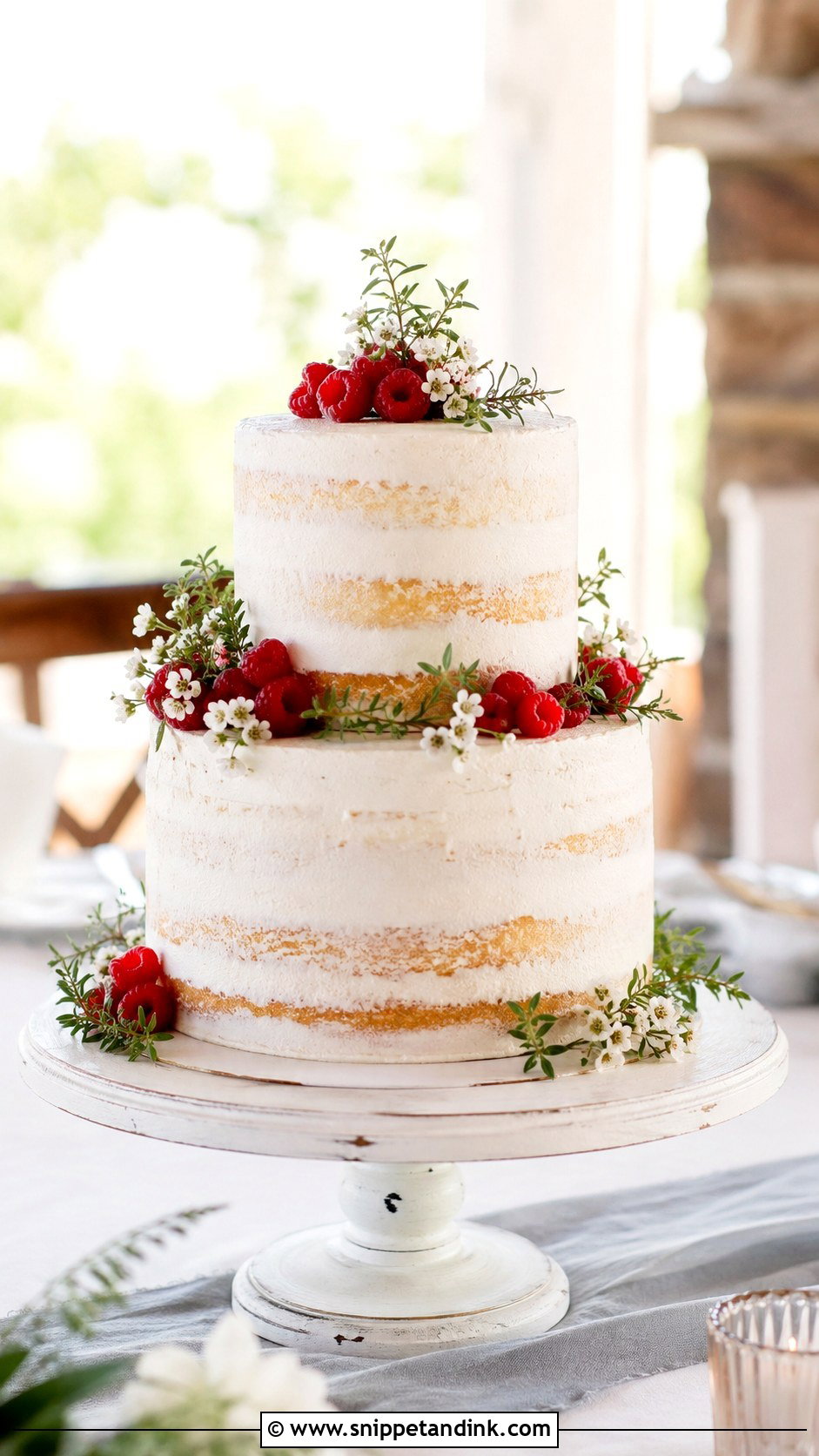
A semi naked cake shows its layers through a thin scraped coat, so the inside has to look good too. I choose sponges with an even crumb colour, like vanilla bean, almond or lemon, and I’m wary of dark chocolate against pale filling, which can look patchy through the frosting. Exposed sponge dries faster than a fully iced cake, so I brush every layer with syrup and never set one out hours before cutting. A small floral cluster or a few berries is enough, and a clean white stand stops it tipping into rustic.
7. 2 Tier Square Wedding Cake
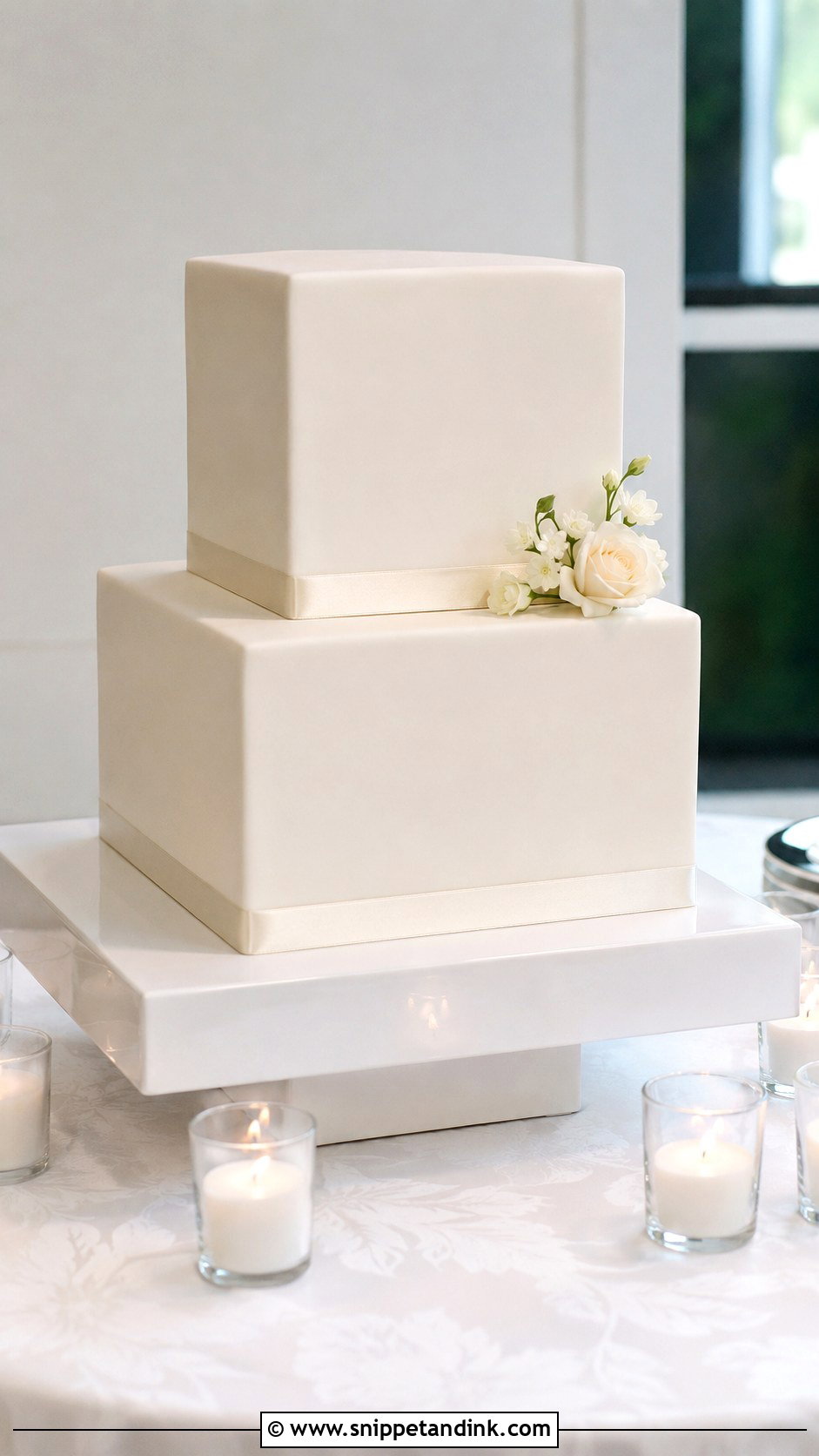
A square two tier wedding cake looks modern immediately, but corners are the hardest thing in cake decorating to get sharp. I ice each side against a board and chill between passes, and if a baker isn’t confident with square buttercream, I’d ask for fondant instead. One thin ribbon or a small gold accent is plenty. Square tiers also cut into more portions than round tiers of the same width, and they sit naturally on a long rectangular dessert table.
8. 2 Tier Round Wedding Cake
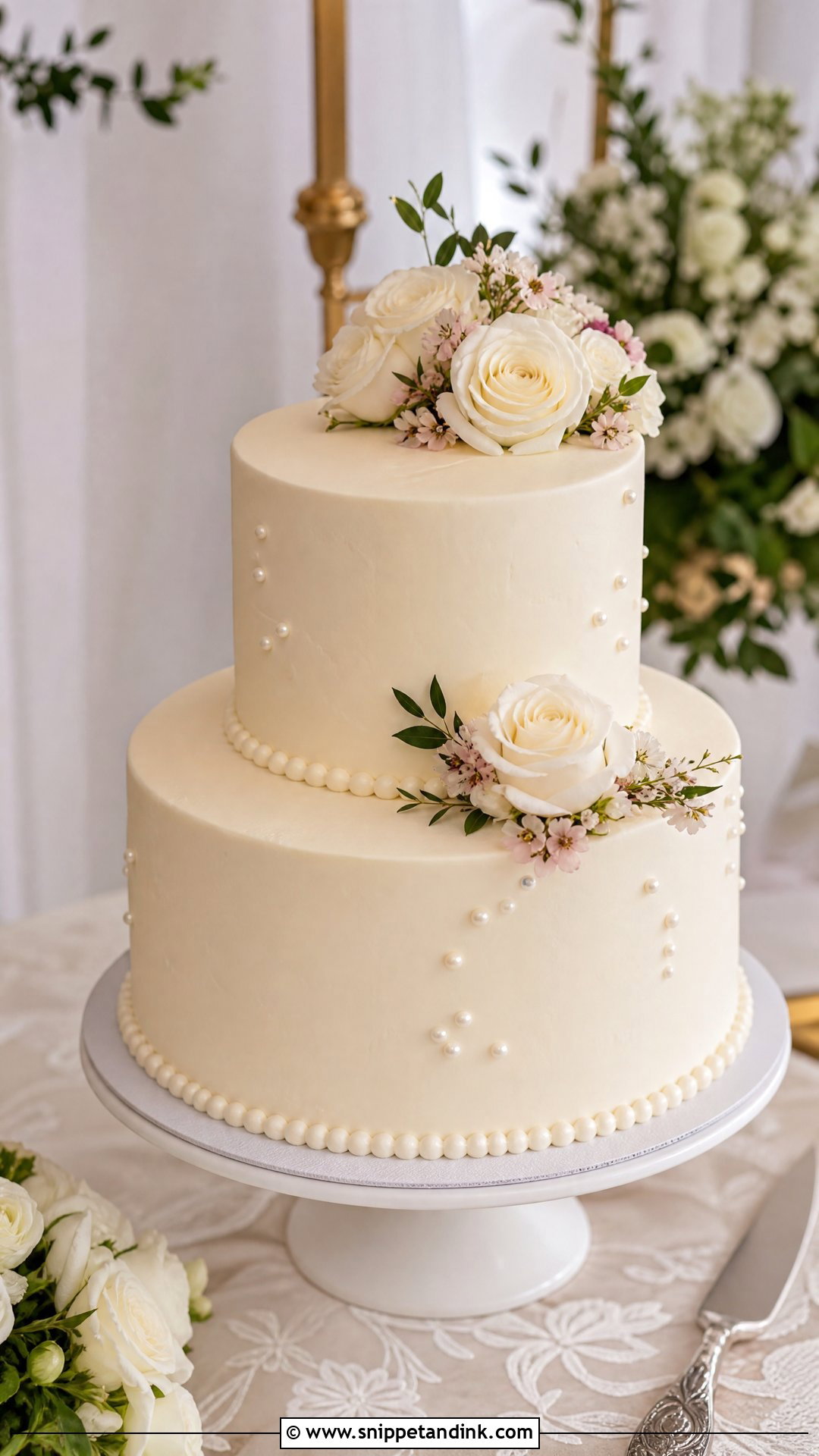
Round tiers are the safest shape if you aren’t sure how minimal you want to go. They stack and travel well, they cut predictably, and every baker owns the pans and boards for them. To keep a round cake from looking old-fashioned, I skip piped borders entirely and finish with one silk ribbon or a single flower. Almost any flavour works, from vanilla almond to lemon raspberry, since nothing in the design competes with it.
9. 2 Tier Tall Wedding Cake
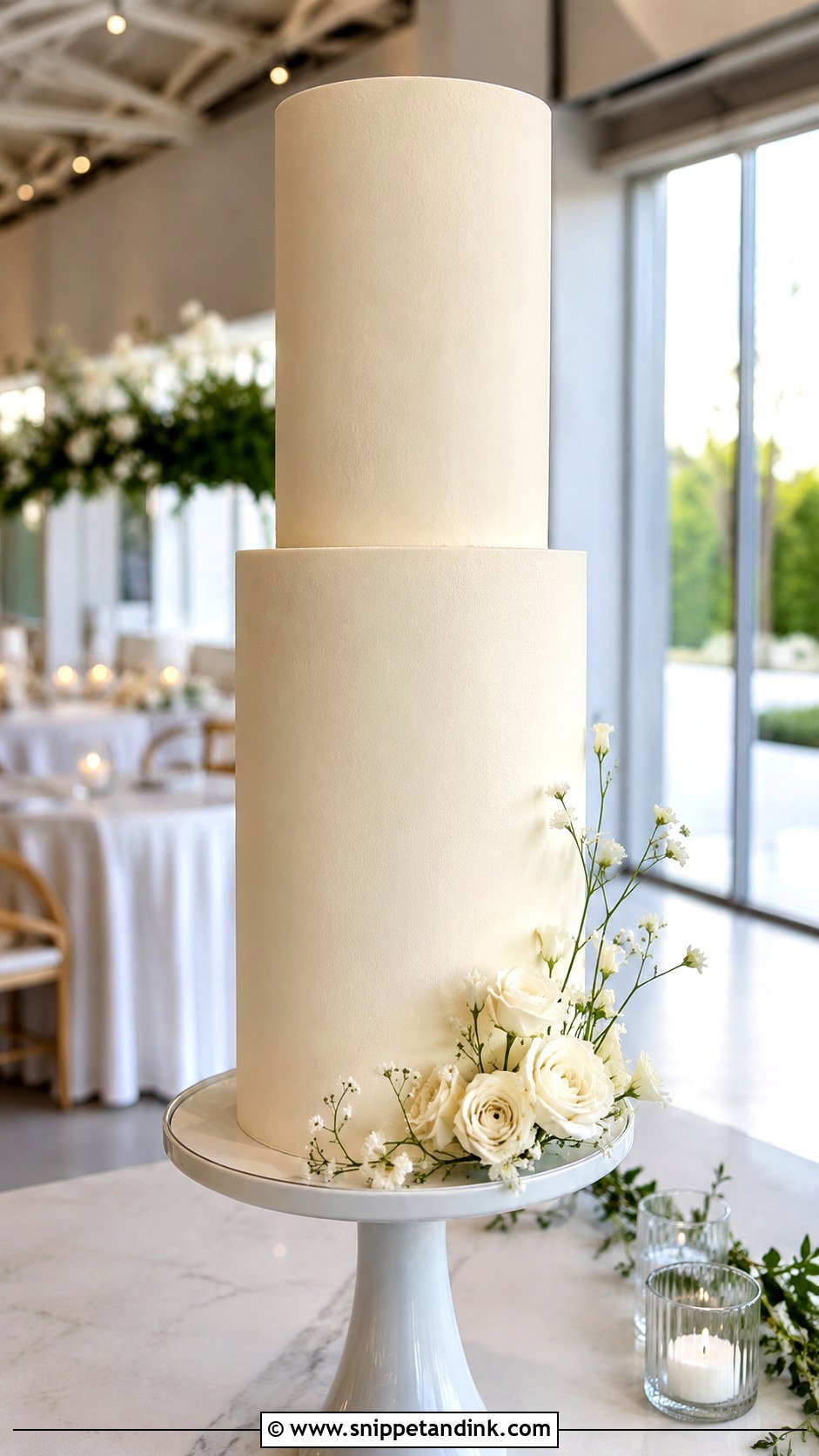
Extra-tall tiers, often called double barrel, give a slim column without adding a third tier. Each tall tier is really two cakes stacked, so it needs its own board halfway up with dowels beneath it; without that, the bottom layers compress and bulge by the evening. Ask your baker directly how they support it. I keep the frosting smooth and the colour plain so height is the whole design, with one bloom on top at most. The extra height also helps the cake read across a crowded room.
10. 2 Tier Short Wedding Cake
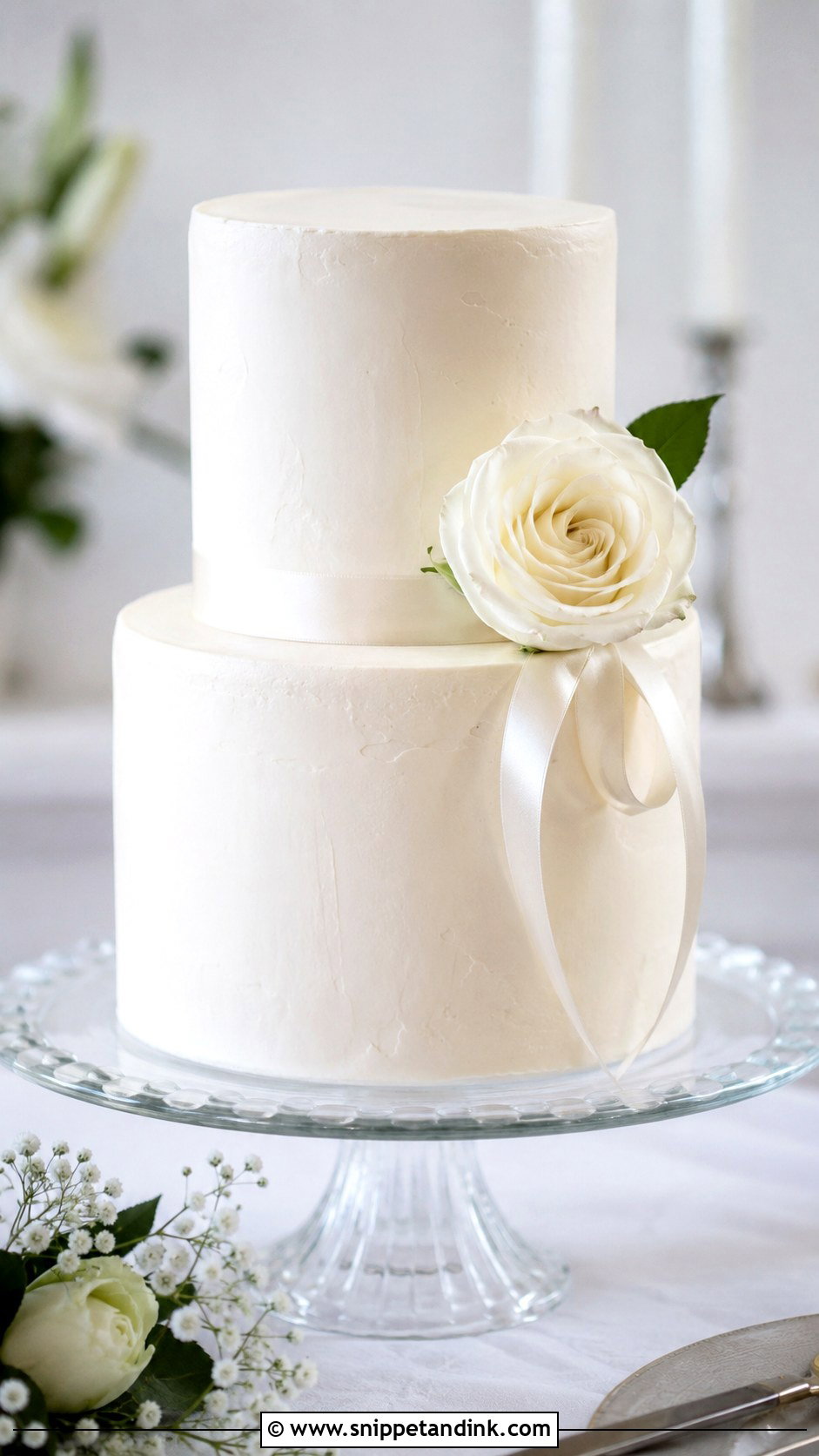
A short two tier wedding cake is what I suggest for elopements and backyard dinners, where a tall cake would feel out of place. Standard tiers of around four inches still feel like a proper wedding cake once they sit on a raised stand, because the stand does the work that extra height would. Keep the buttercream smooth and the decoration to a small topper or a few flowers. It’s also the easiest size to drive yourself, which matters when there’s no delivery van.
11. 2 Tier Floral Wedding Cake
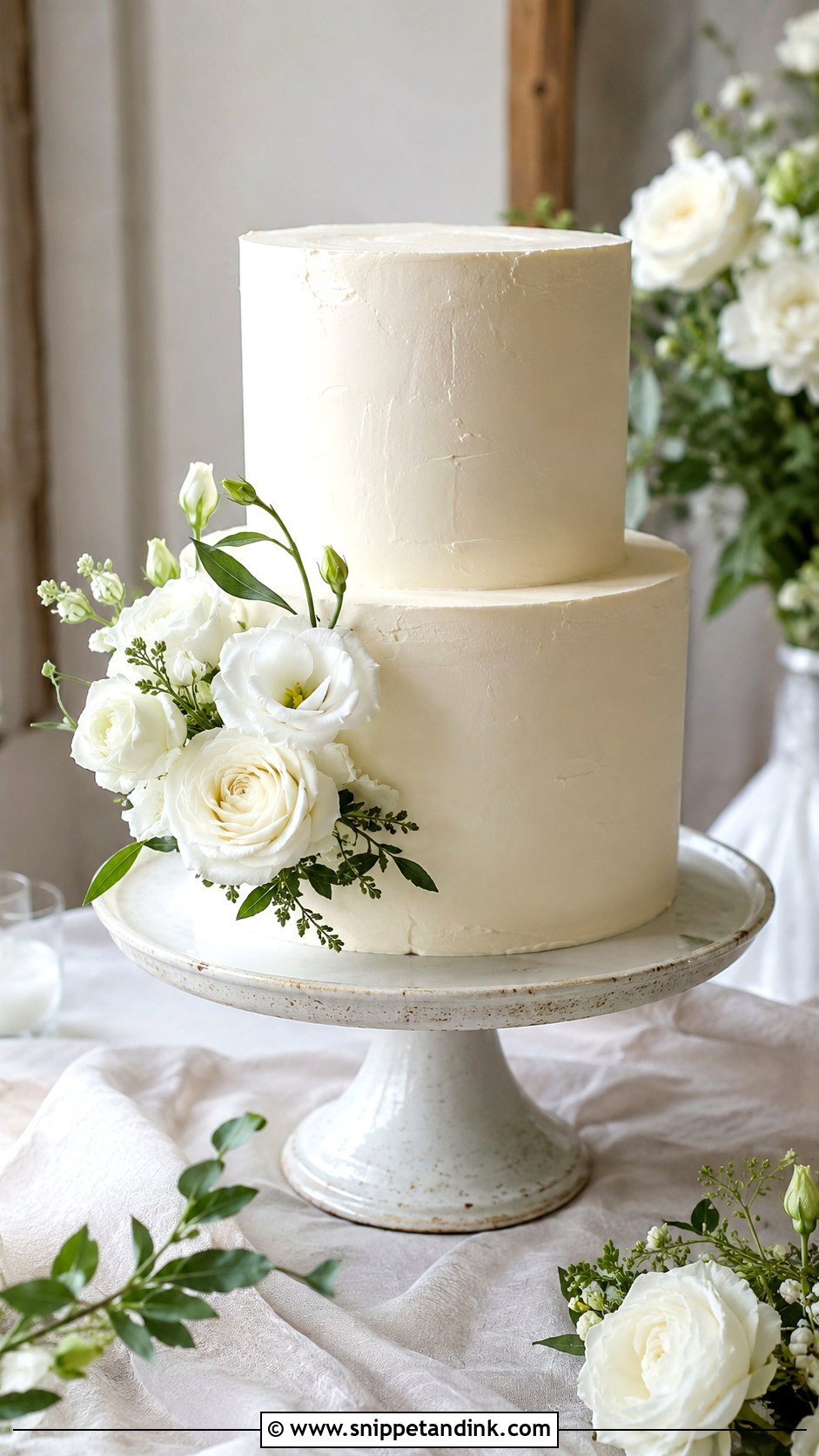
Flowers on a minimal cake should look placed, not piled. I agree one placement early, a cluster on the lower tier or a thin diagonal line, and then I speak to the florist well before the morning of the wedding. Not every flower is safe near food, so I avoid anything toxic, wrap stems in floral tape and push them into straws or picks so sap never touches the sponge. White roses, ranunculus and lisianthus behave well. Ask for unsprayed blooms if they come from a wholesaler.
12. 2 Tier Orchid Wedding Cake
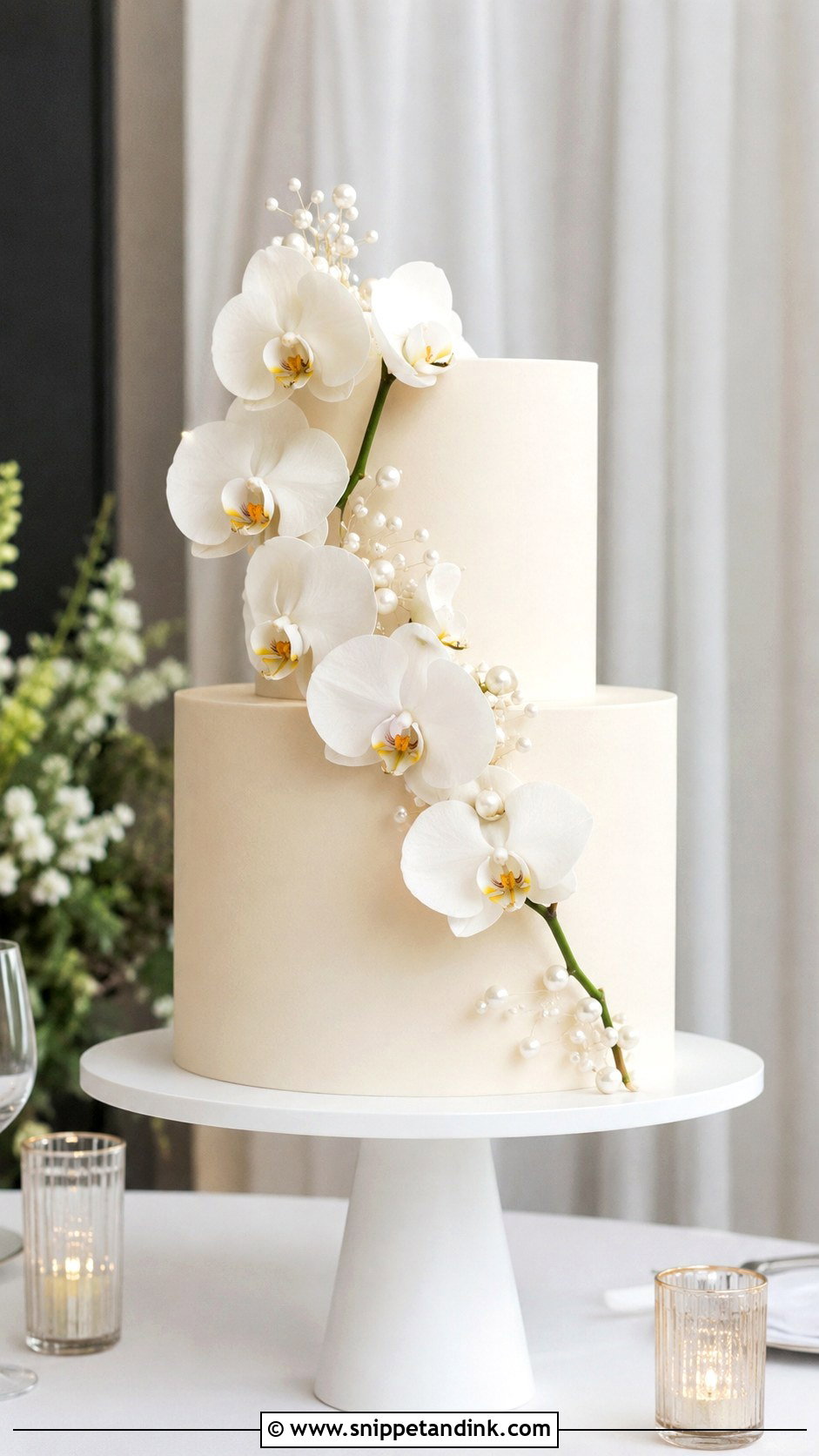
Orchids suit a minimal cake because one or two stems already carry a strong, sculptural line. I cascade white phalaenopsis down one side of a smooth ivory cake and add nothing else. They’re generally considered non-toxic, but the stems still go into picks rather than straight into the cake. Blush or cream orchids soften things if pure white feels stark. Keep the table around it bare, since busy décor fights with the curve of the flower.
13. 2 Tier Baby Breath Wedding Cake
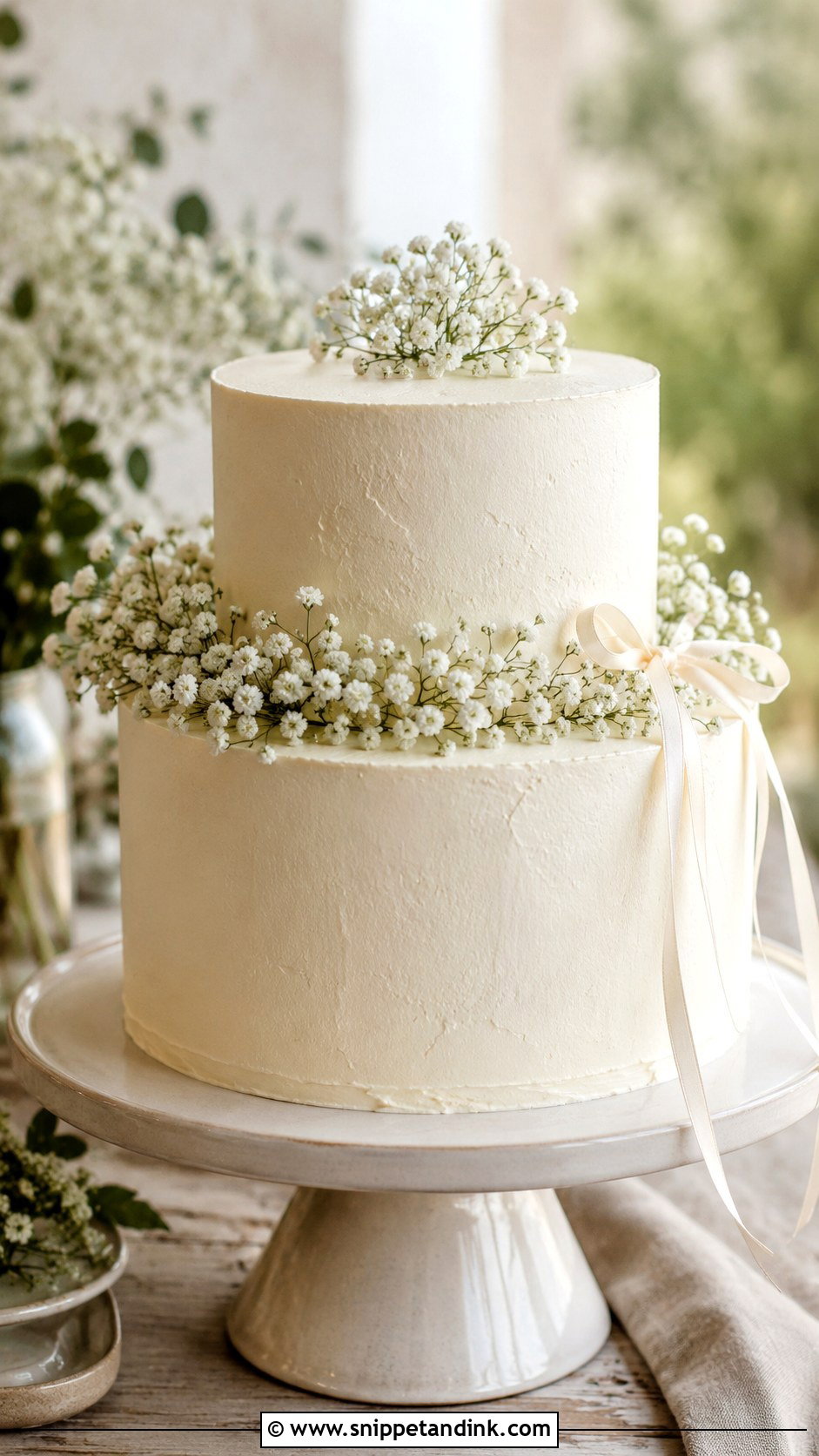
Baby’s breath is inexpensive and airy, but it needs care near food. Gypsophila is mildly toxic if eaten, so I keep it on the stand or the cake board rather than pushing stems into the frosting. Used as a small cloud around the base or a tuck between tiers, it reads soft without looking sparse. It sits well against ivory buttercream on a wood or ceramic stand, and it lasts out of water longer than most delicate flowers do.
14. 2 Tier Greenery Wedding Cake
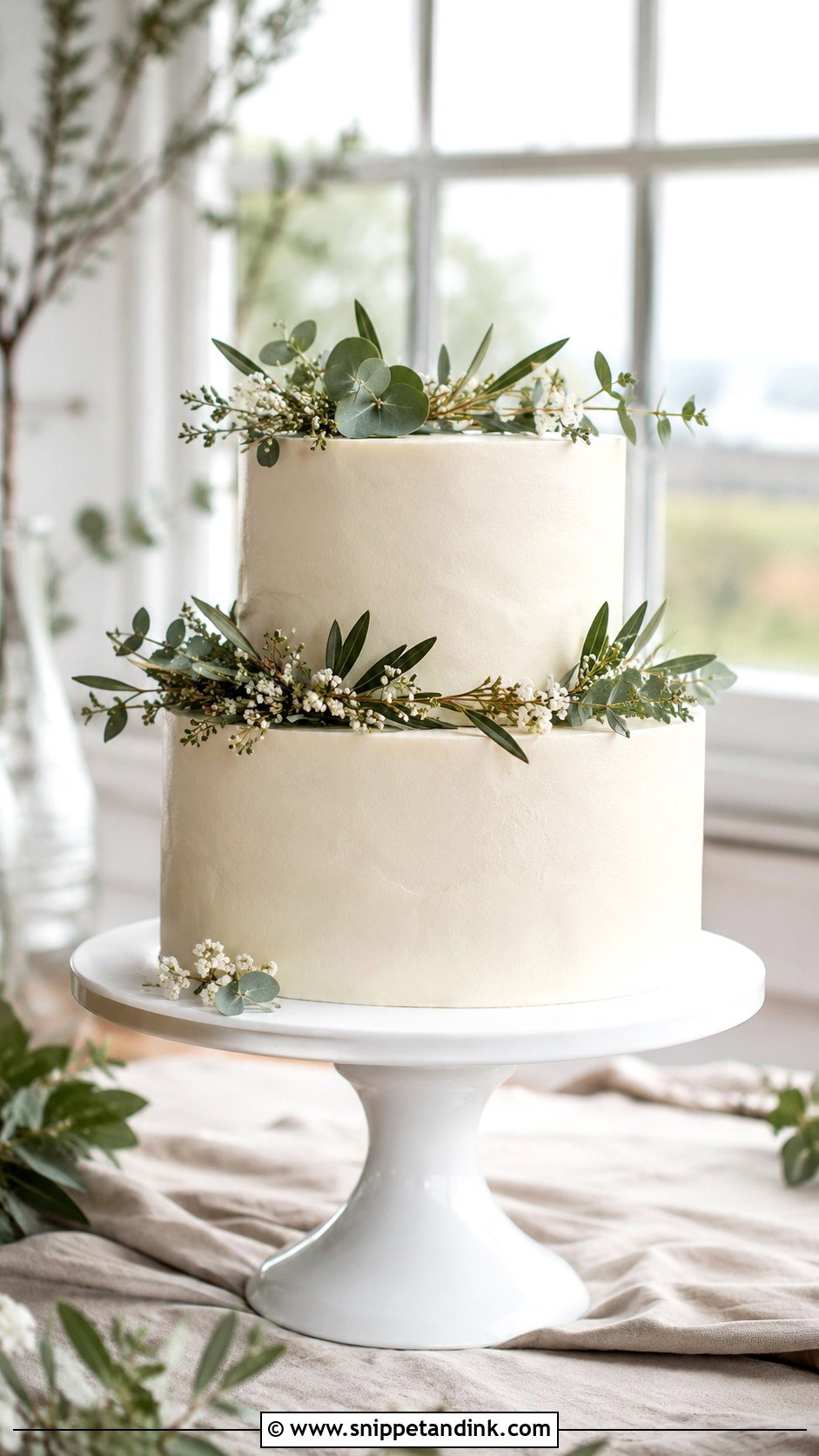
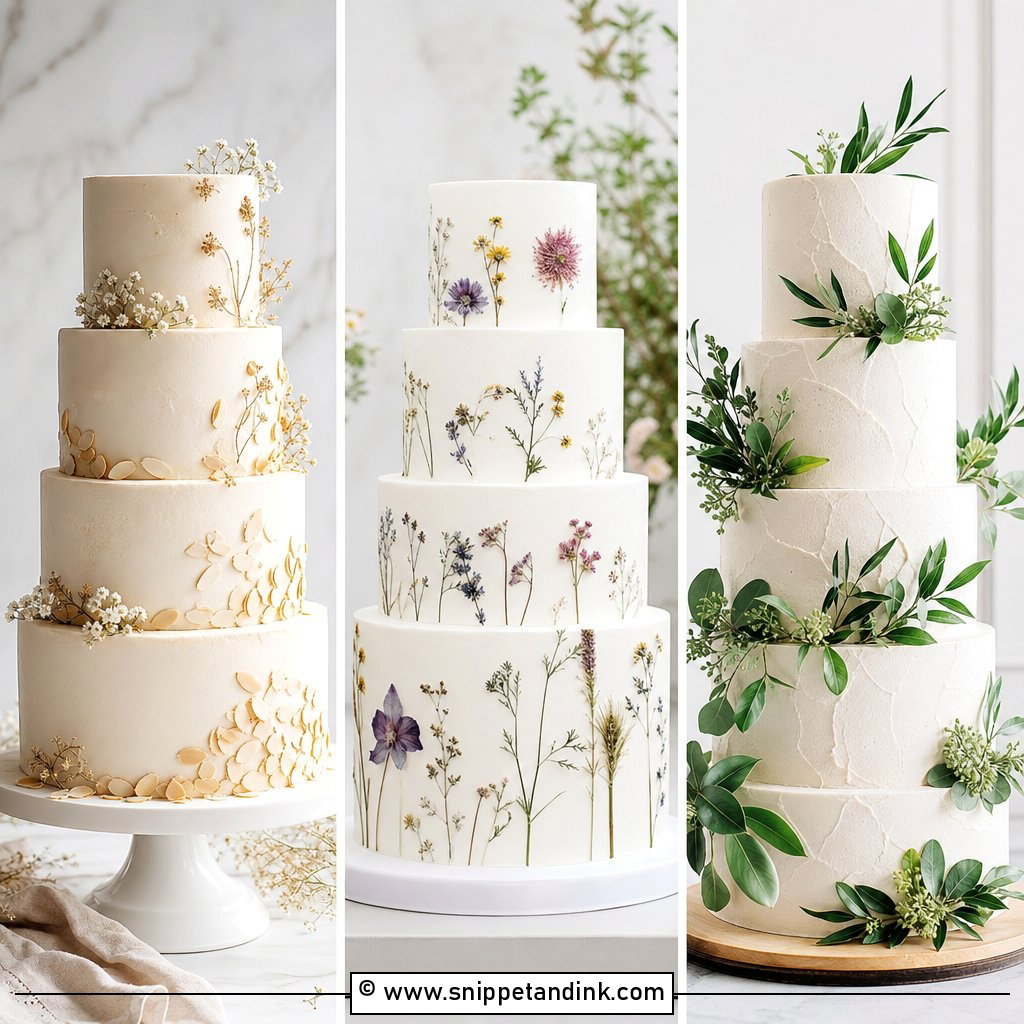
Greenery adds life without adding a second colour. Eucalyptus, olive and ruscus all hold up out of water through a long reception, which is why I reach for them over soft herbs that wilt within the hour. Eucalyptus isn’t something you want touching frosting, so those stems sit on picks or around the base. A few sprigs framing the tiers keeps the cake modern; a full wreath pulls it toward rustic. White or pale beige frosting is the right backdrop.



15. 2 Tier Monochrome Wedding Cake
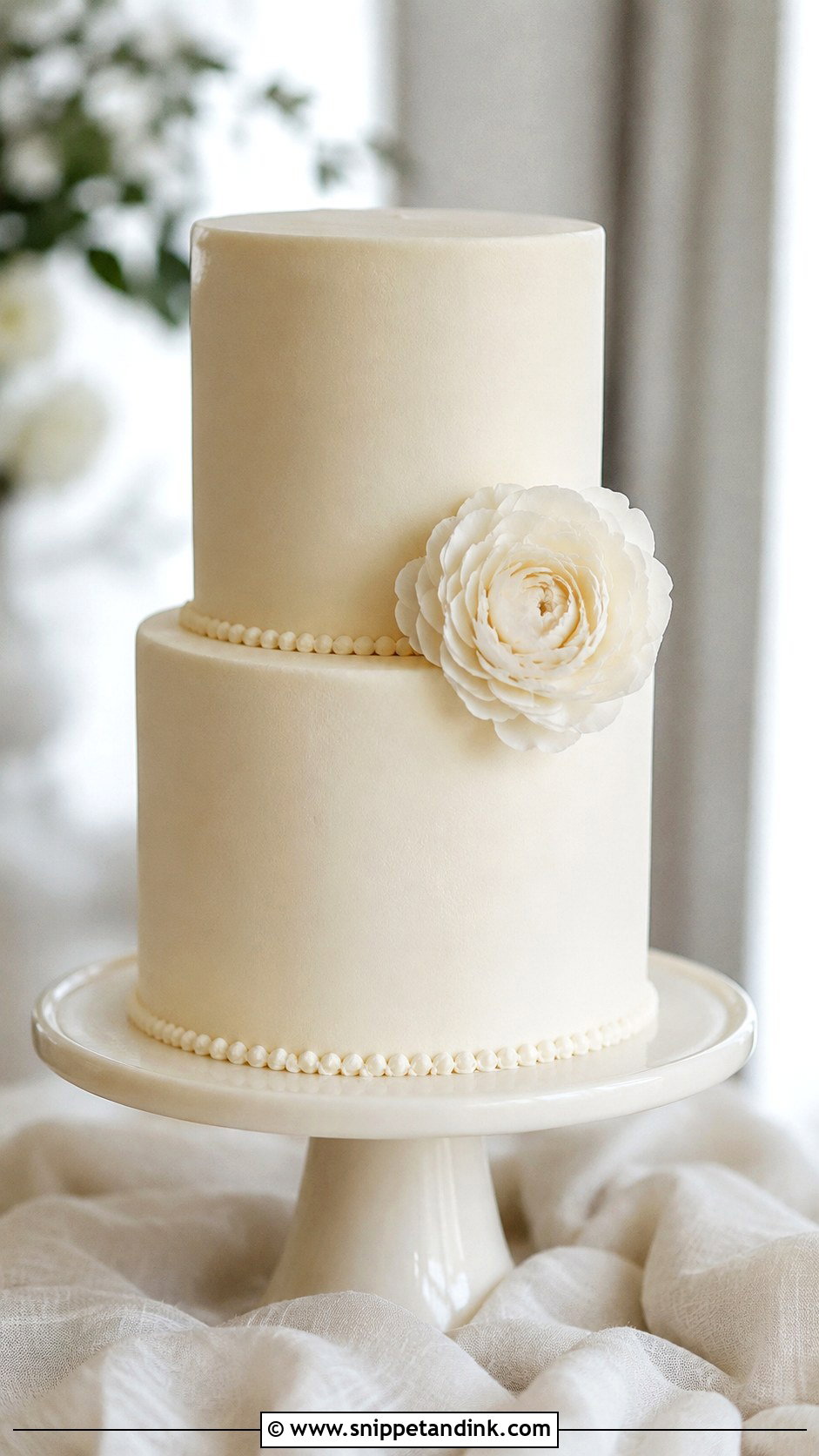
A one-colour cake lives or dies on texture, since there’s no contrast to carry it. I give the eye somewhere to land with a same-shade detail, maybe a piped dot border or a ribbon dyed to match. White is the classic version, but stone grey and warm ivory are kinder to photograph, because pure white can blow out in bright light. It works best when the same colour shows up elsewhere, in the linens or the invitations.
16. 2 Tier Beige Wedding Cake
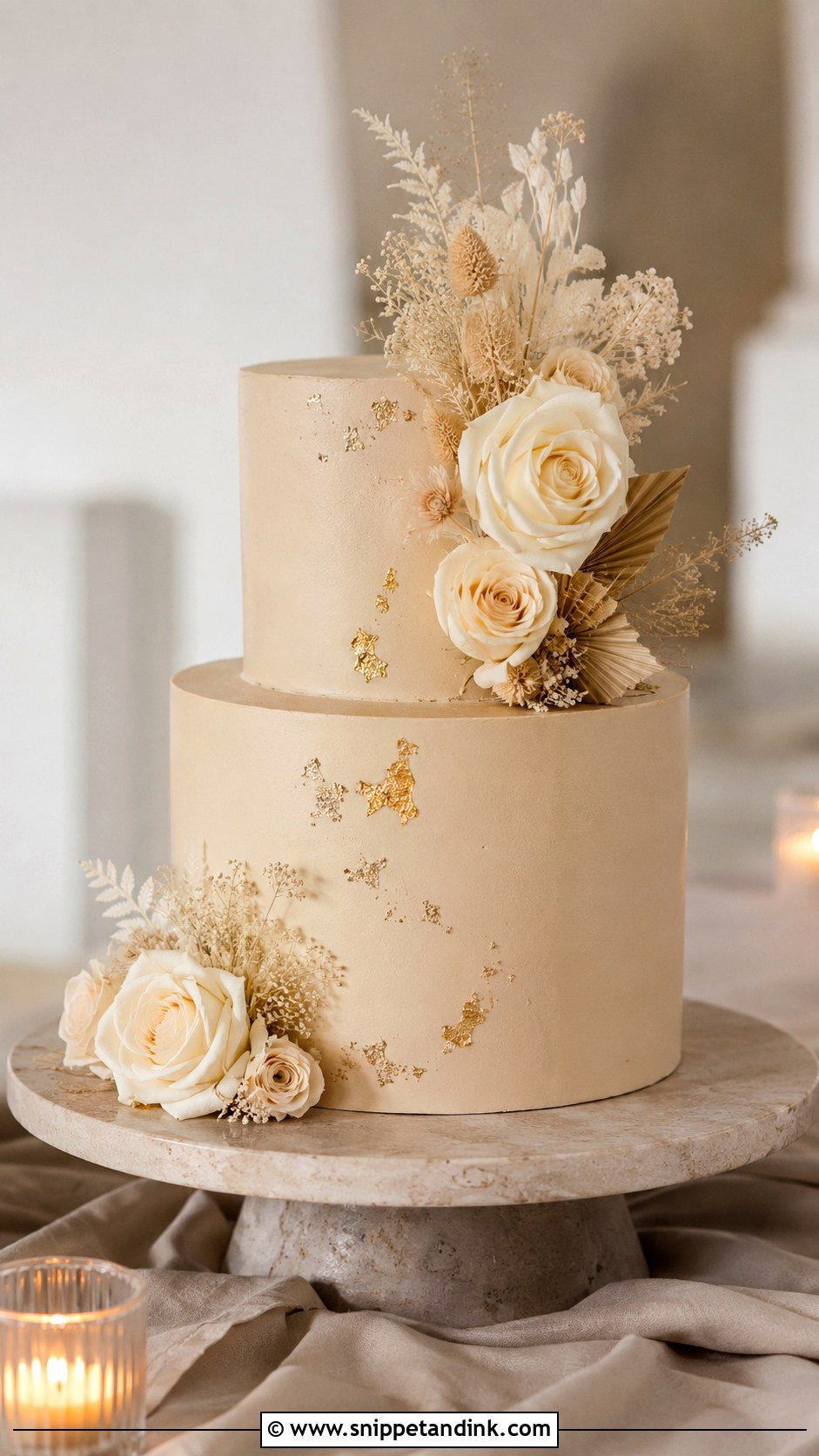
Beige beats bright white if your palette leans toward champagne, sand or clay, because the cake won’t look stark next to warm linens. Getting an even beige is fiddly. I tint the buttercream with a touch of brown and ivory, then let it rest, because the colour deepens over a few hours and I don’t want it darker on the day than at the tasting. Smooth or lightly textured both work, finished with dried-look florals or one touch of gold leaf.
17. 2 Tier Blush Wedding Cake
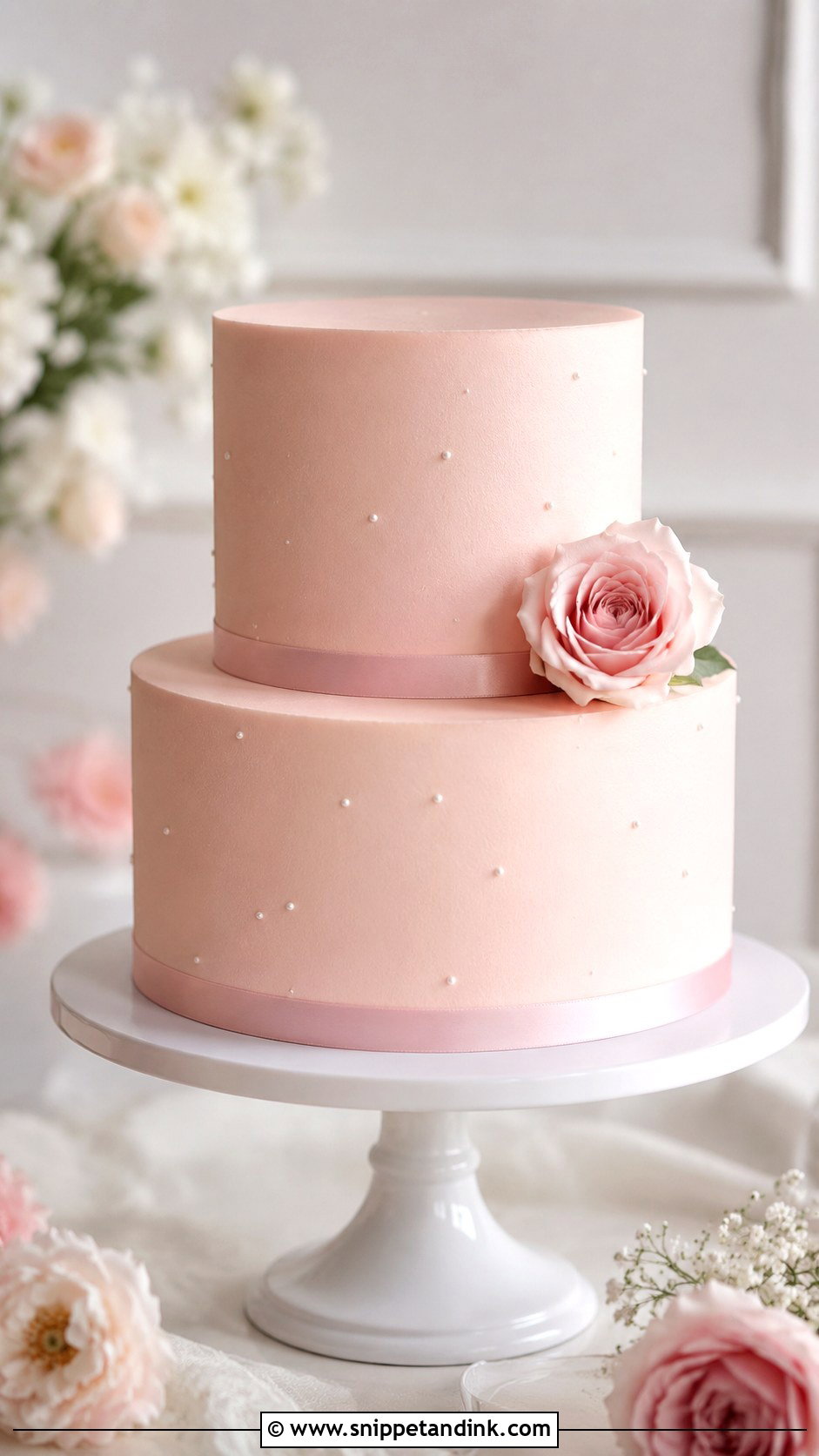
Blush is where I see the most colour mistakes. Pink buttercream can fade under strong light and turn salmon when the butter is very yellow, so I mix it a shade paler than requested and check it in daylight. Keep decoration to one blush rose or a satin ribbon. Pair it with ivory, champagne or soft green for a spring garden wedding, and stay away from deep pinks if you want the cake to read as minimal.
18. 2 Tier Black And White Wedding Cake
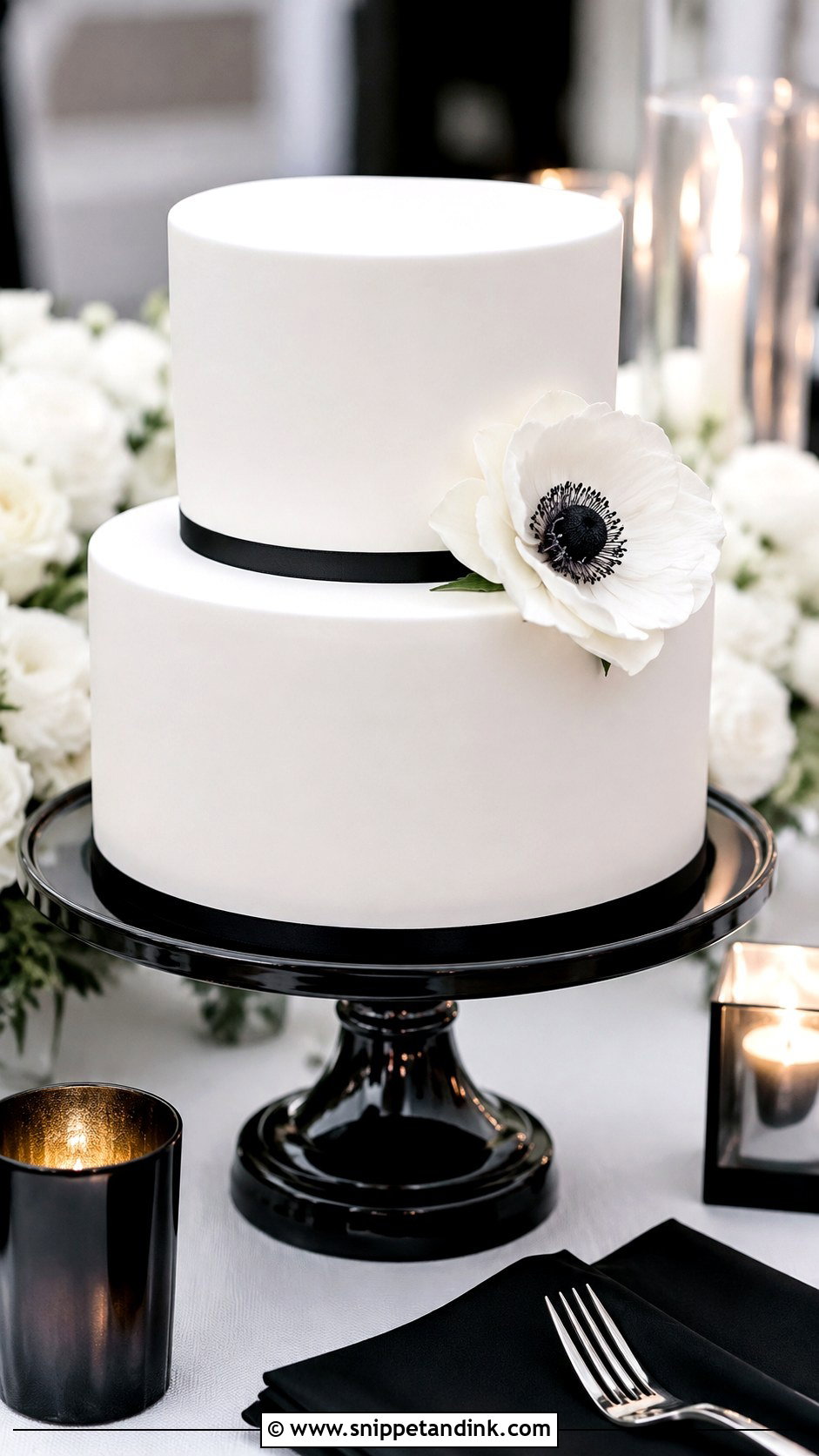
Black on a white cake is all about control. One thin ribbon, a fine painted line or a small bow is enough; any more and the cake looks heavy. True black icing takes a lot of colouring, which stains mouths and can taste bitter, so I keep black to ribbon or a small fondant accent rather than a frosted panel. It suits a city wedding or an evening reception, especially on a black stand with white flowers or none at all.
19. 2 Tier White And Sage Wedding Cake
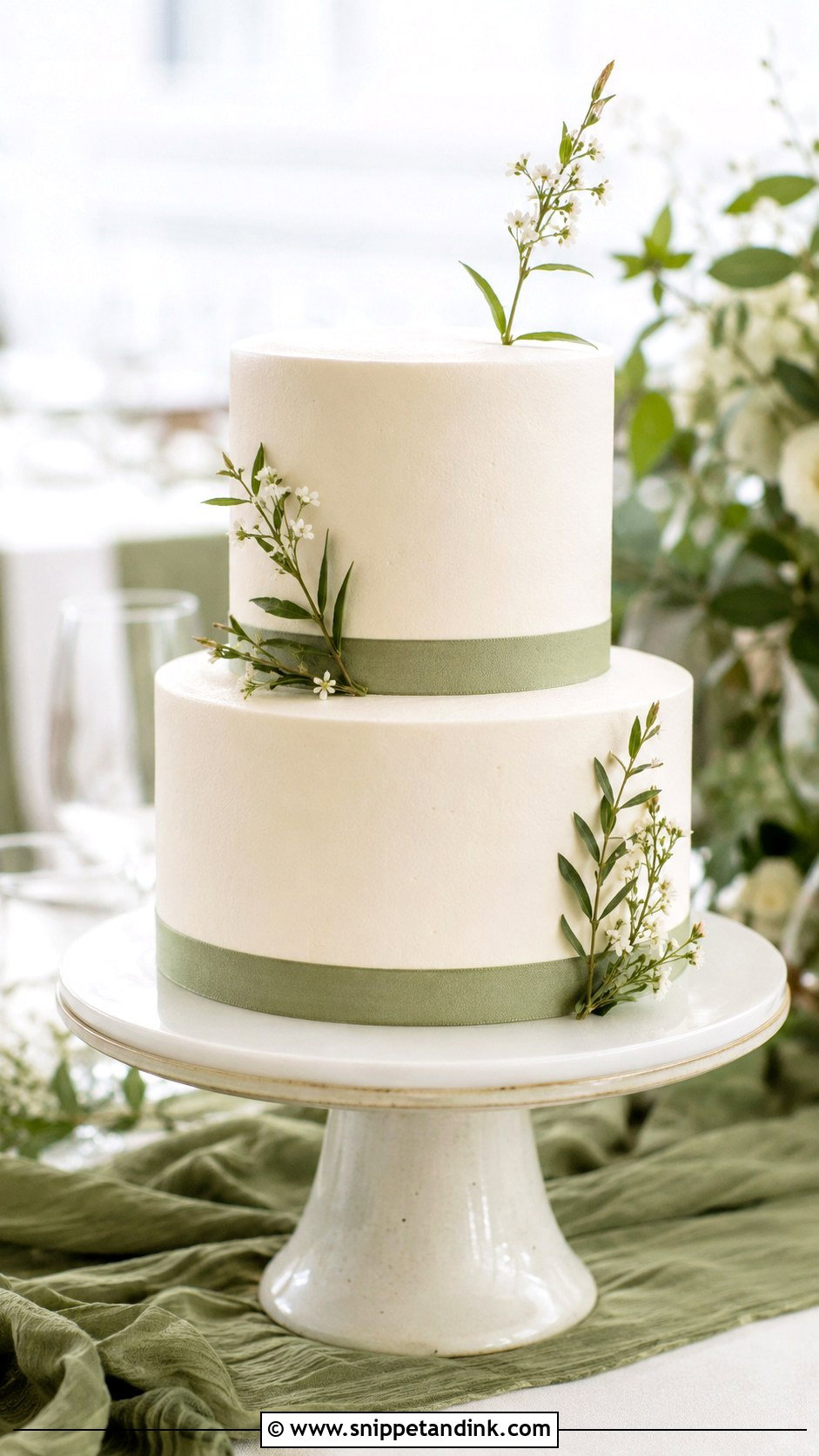
White and sage is a pairing I like because sage reads as natural rather than as a colour statement. The cake stays mostly white, with sage showing up in a thin ribbon, a few stems or a soft watercolour wash brushed on with diluted colour. Green tints drift toward olive or mint in buttercream, so I test a swatch against the couple’s actual linen sample before committing. Keep the top clean and let the accent sit low on one side.

20. 2 Tier White And Gold Wedding Cake
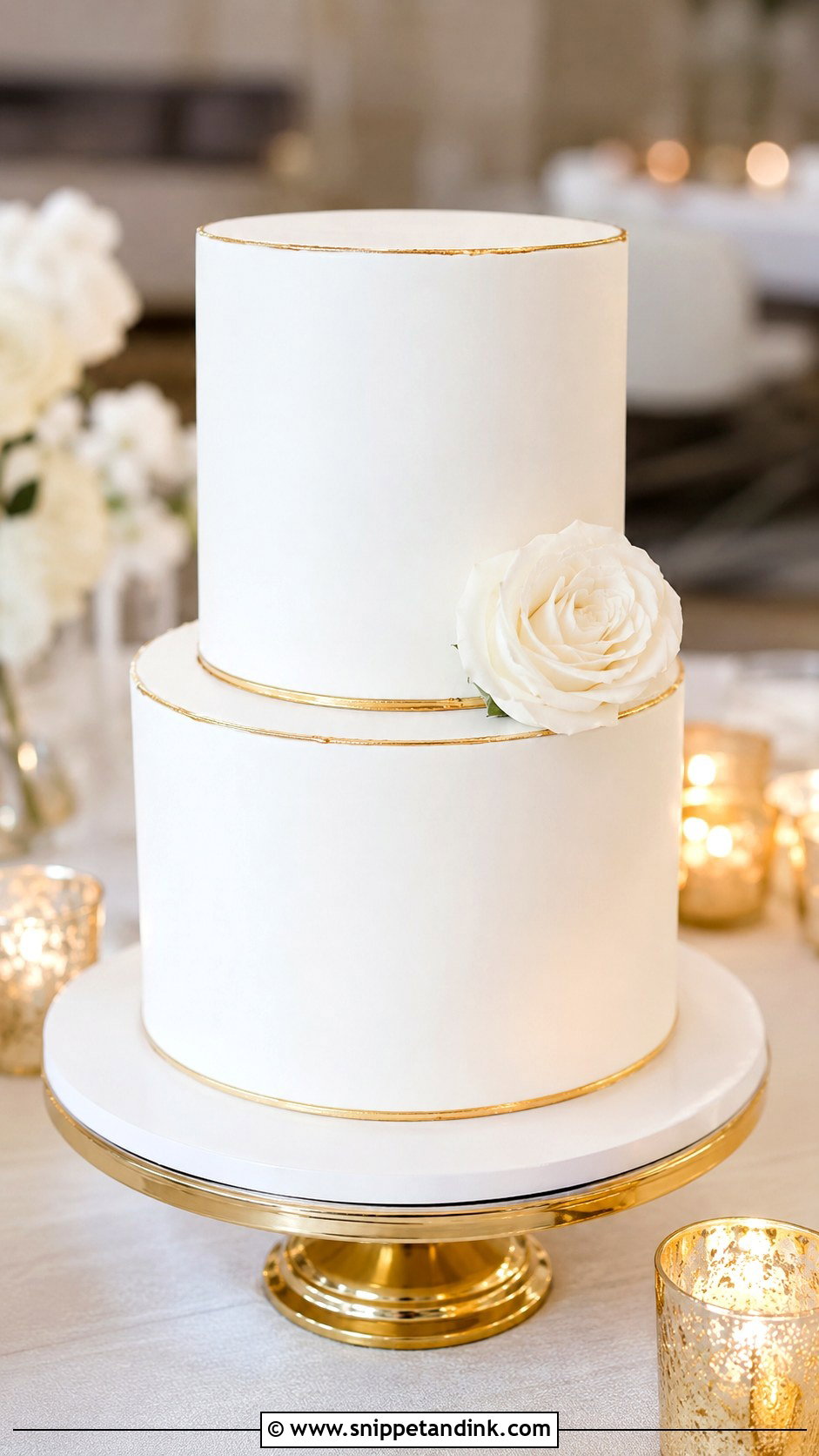
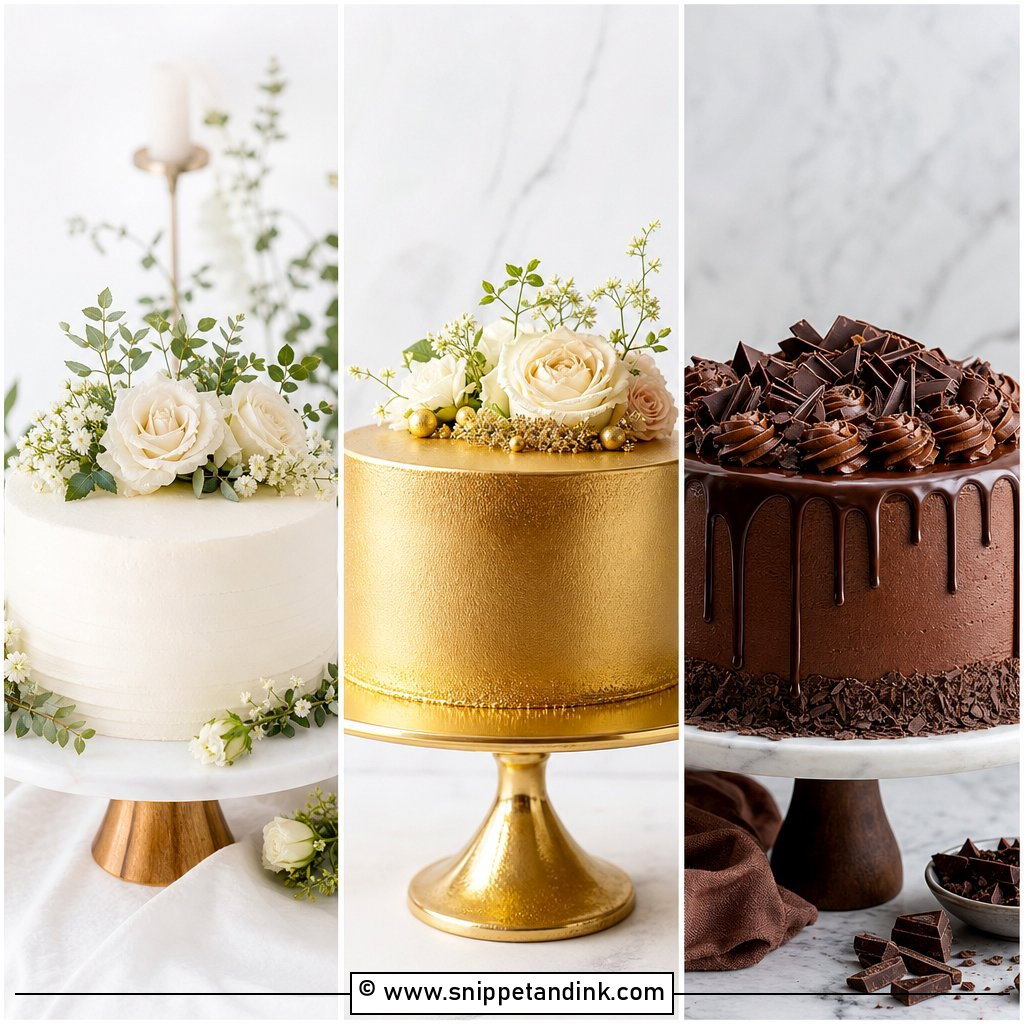
With white and gold, I hold to one gold detail. A painted line around each tier, a few flakes of leaf or a simple topper: pick one and let it work. Gold paint goes on best over fondant or chilled, firm buttercream, because soft frosting smears under the brush. Keep the shape clean and the frosting smooth. Candlelight catches even a small amount of gold, so it reads richer at an evening ballroom or restaurant reception than you’d guess from the photo.
21. 2 Tier Ruffle Wedding Cake
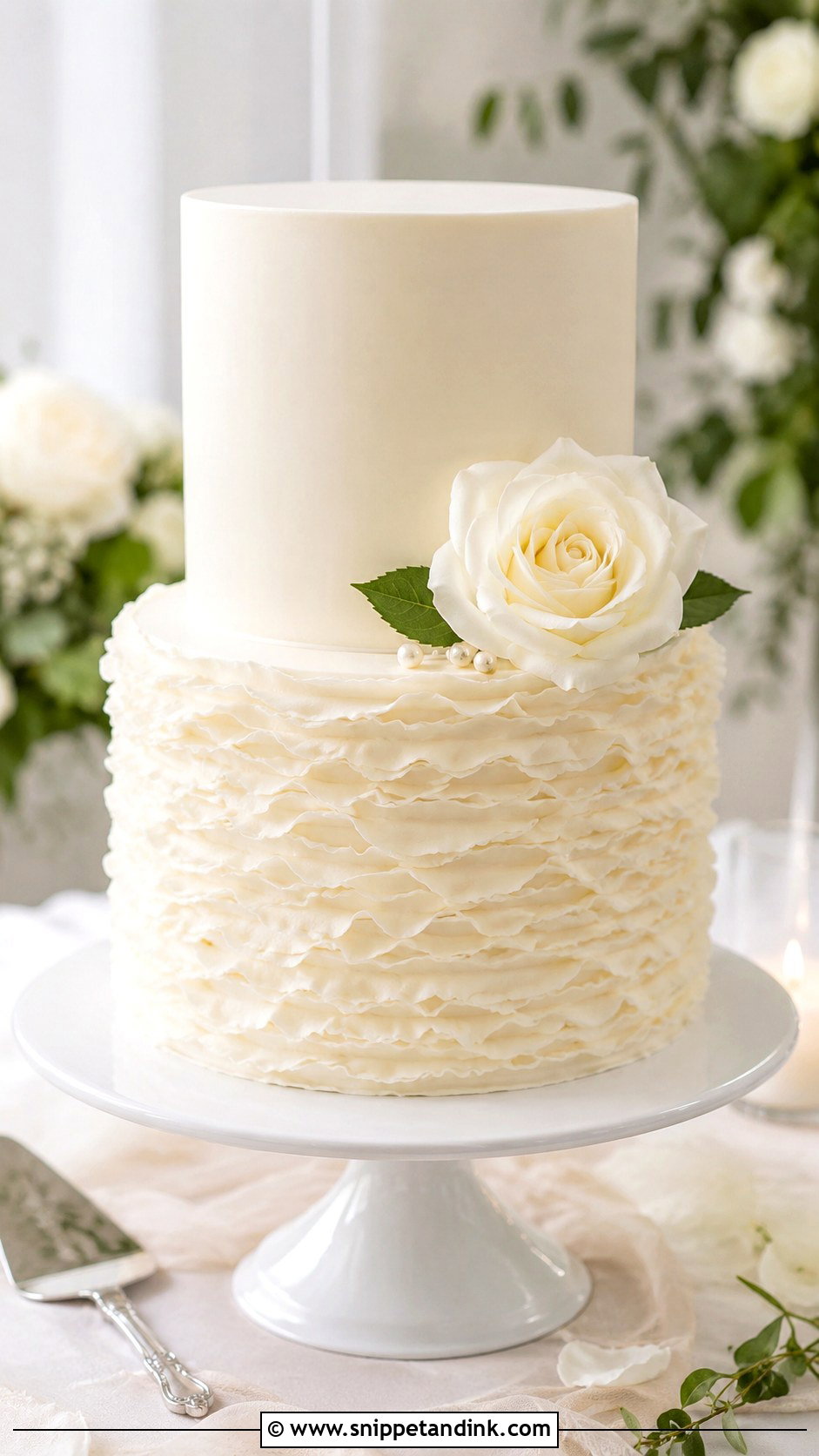
Ruffles stay minimal only if they’re confined. I usually keep the top tier smooth and ruffle the bottom one, either piped with a petal tip or layered from thin fondant strips. Buttercream ruffles are the most heat-sensitive finish here, because thin edges soften first, so I’d only suggest them indoors or in cool weather. White or ivory keeps it bridal, and the cake doesn’t need flowers on top of the texture.
22. 2 Tier Pleated Wedding Cake
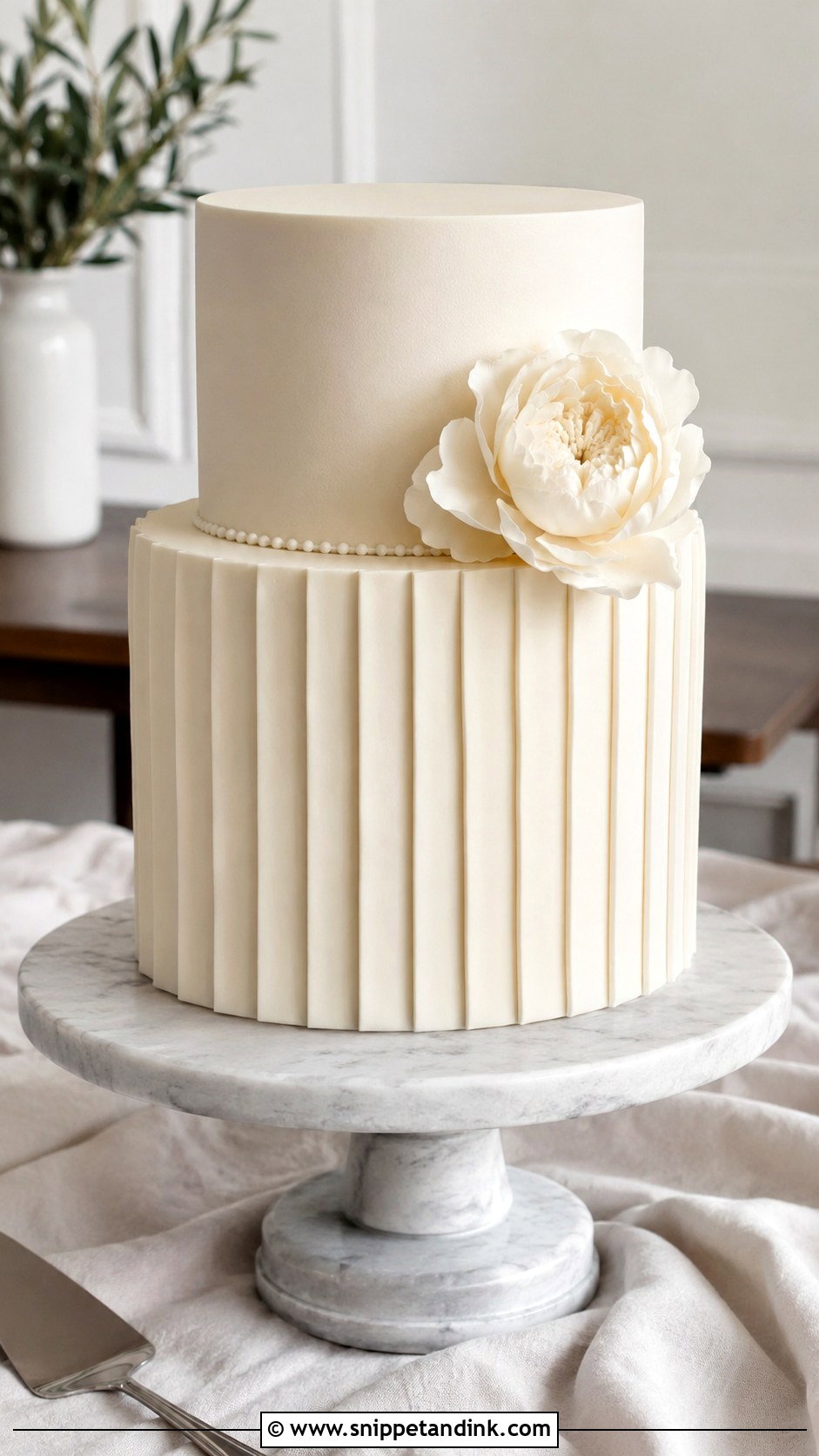
Pleats give a tailored look, a bit like a pleated skirt. They’re usually fondant strips folded and pressed into place one by one, which is slow work, so expect the price to sit above a plain finish. I pleat the bottom tier only and leave the top smooth, in ivory or pale beige. A single bloom or a small pearl detail finishes it, and it pairs naturally with a pleated gown or structured table linens.
23. 2 Tier Bow Wedding Cake
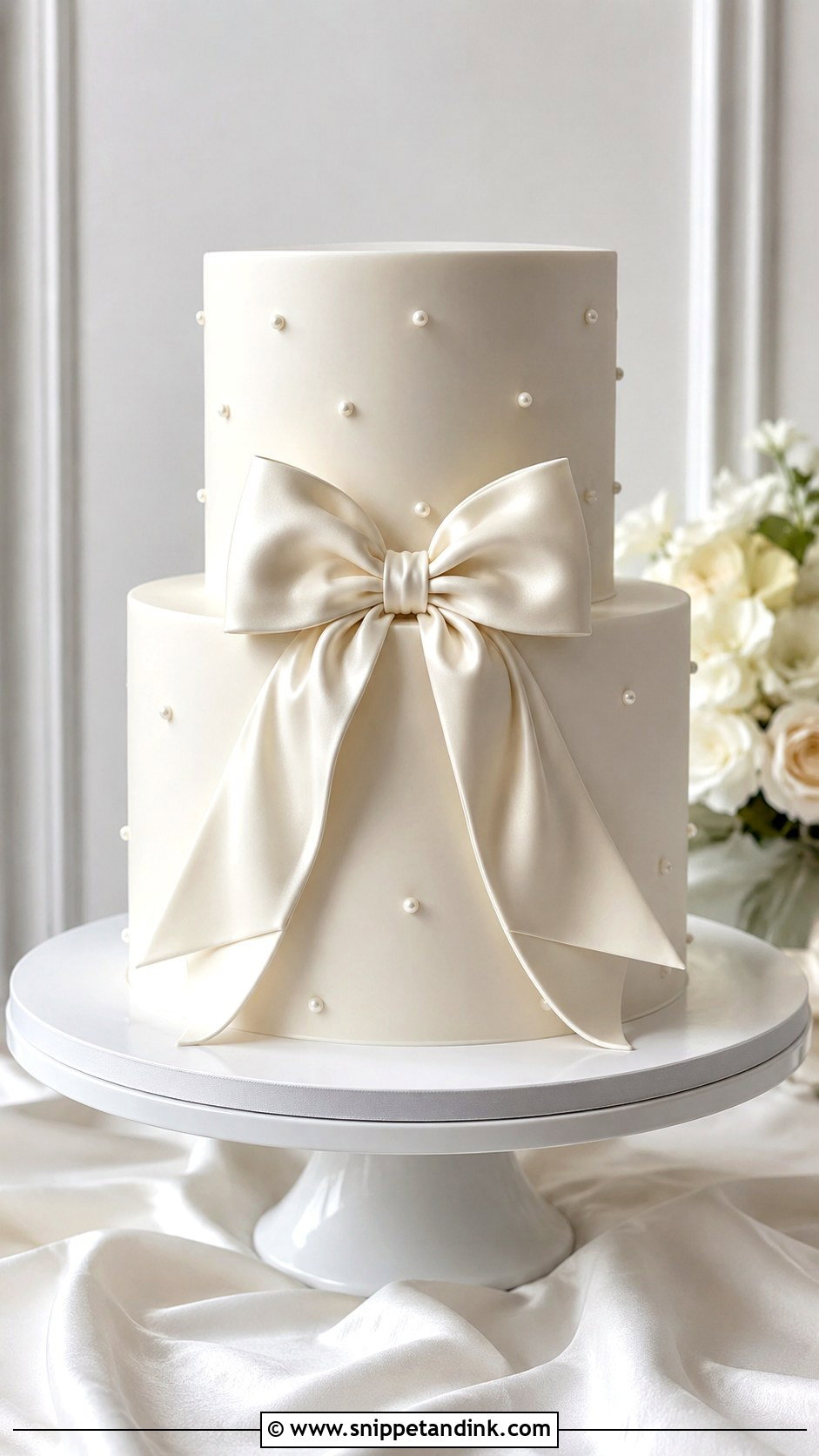
A bow can carry the whole design when nothing else competes with it. I make mine from fondant kneaded with a little gum paste so the loops dry firm and don’t sag over a long evening, or I tie real silk ribbon for a softer drape. Place it on the front of the lower tier or at the base of the top one, and keep it modest. A cream or black bow on white looks sharp. Oversized bows are the quickest way to lose the minimal feel.
24. 2 Tier Ribbon Wedding Cake
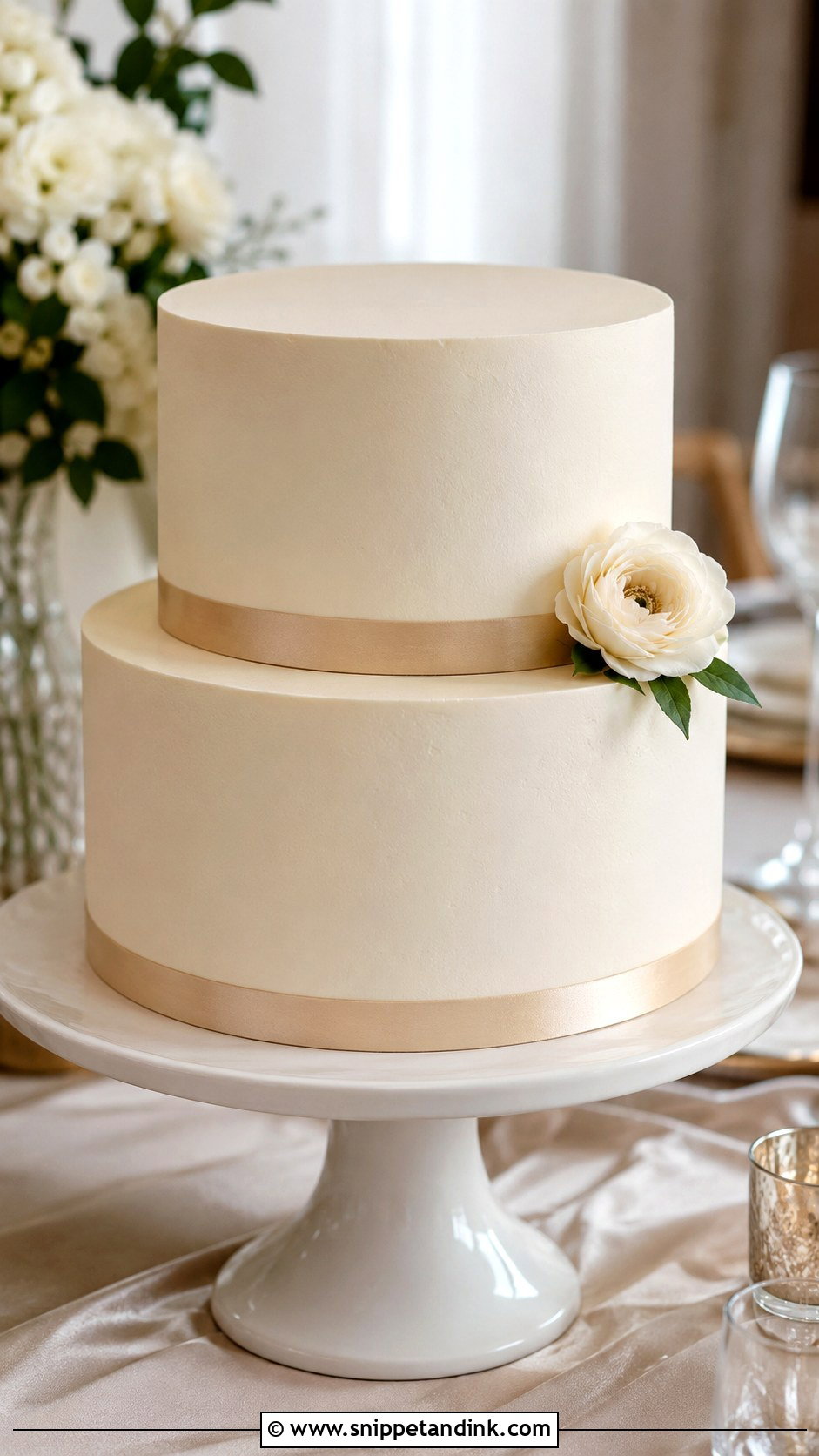
Ribbon is the cheapest finish that still looks deliberate, and it hides the seam where each tier meets its board. Real ribbon needs a barrier, though. I back satin with a thin strip of acetate or tape so butter can’t seep through and leave grease spots by the time you cut. Velvet looks richer in autumn and winter. Choose one colour, maybe champagne or sage, and keep the frosting smooth so the ribbon looks intentional.




25. 2 Tier Arch Wedding Cake
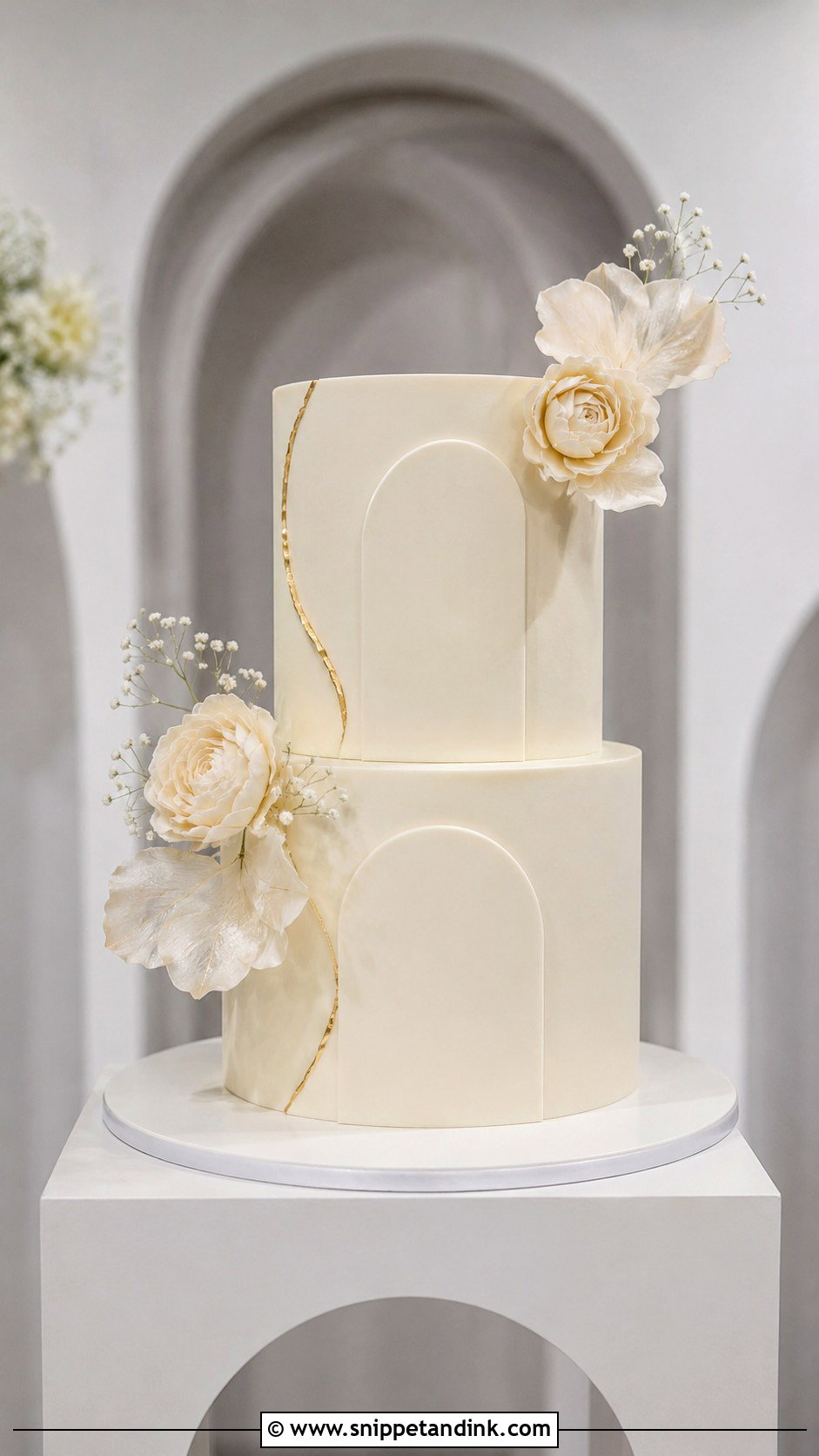
Arch details borrow the curved shapes you see on stationery and ceremony backdrops right now. The cake usually stays round; the arch comes from a fondant cutout, curved piping or an arched line of flowers. I keep the palette neutral so the shape stays the focus, on a simple pedestal stand. If your invitations already use an arch, repeating it on the cake ties the day together quietly.
26. 2 Tier Wavy Wedding Cake
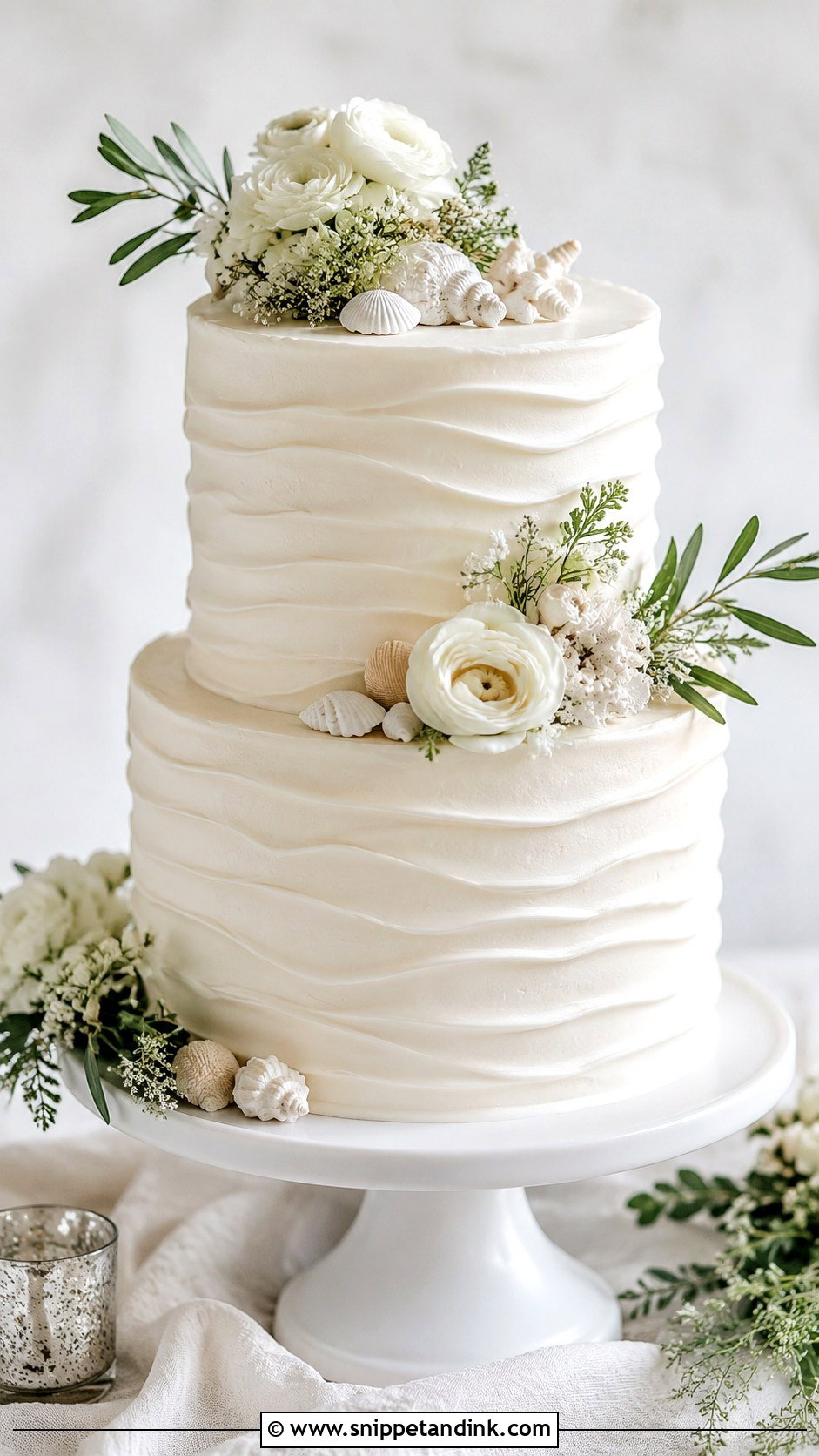
Waves come from a scraper or palette knife pulled in a slow curve on the final coat, which gives movement without flowers or toppers. I’d keep the colour white or pale cream. Since the texture is the whole design, the stand should be plain, clear or white. It suits a coastal wedding, and uneven buttercream hides small transport bumps far better than a smooth finish does.
27. 2 Tier Geometric Wedding Cake
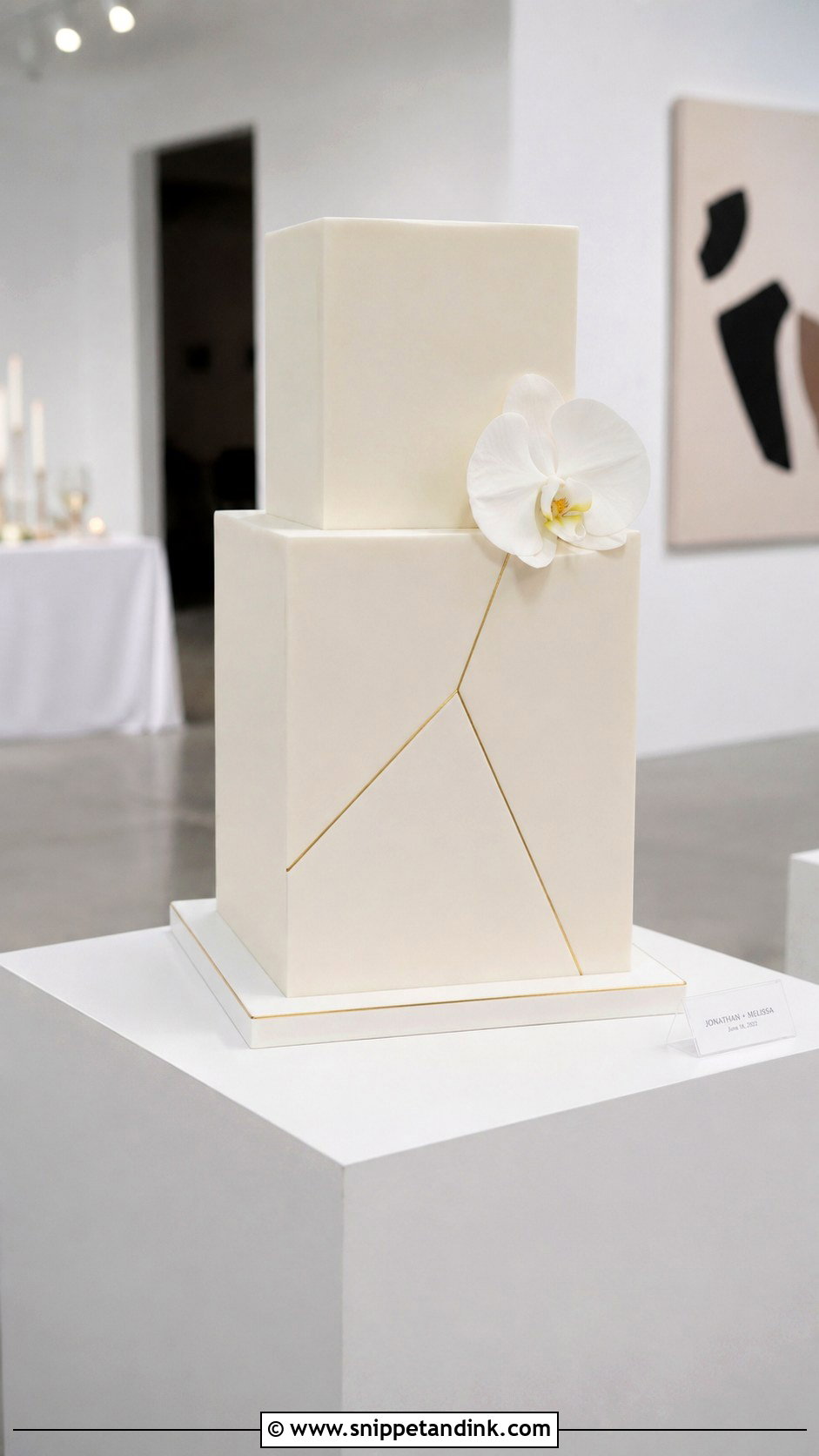
Geometric cakes need precision, so book this one only with a baker whose portfolio shows sharp work. Angled panels, hexagon accents or a square base under a round top tier all work, but choose one feature. White, beige or soft grey lets the shapes cast their own shadows, which is where the interest comes from. A tiny metallic accent is fine if it stays small. Loft venues and gallery spaces suit it best.
28. 2 Tier Marble Wedding Cake
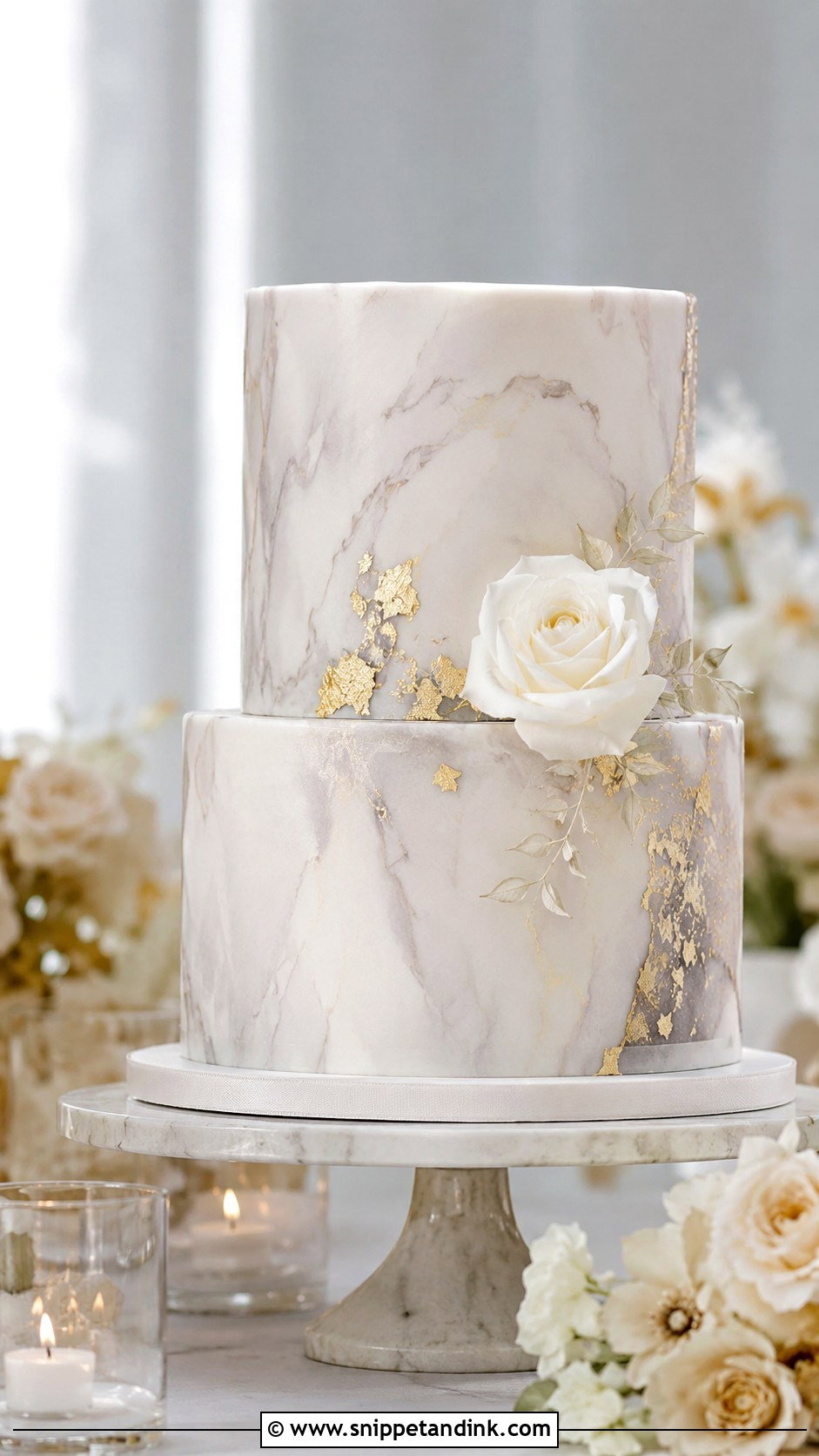
Soft marbling reads calm; high-contrast streaks read busy. I marble fondant by twisting in a little grey or beige before rolling, and how far I twist decides how fine the veins come out, so I always roll a test piece first. Some bakers can get a similar effect in buttercream with a scraper, though it’s softer. Keep decoration light, a little gold or one white flower. It sits well beside stone, glass and candlelight.
29. 2 Tier Lambeth Minimalist Wedding Cake
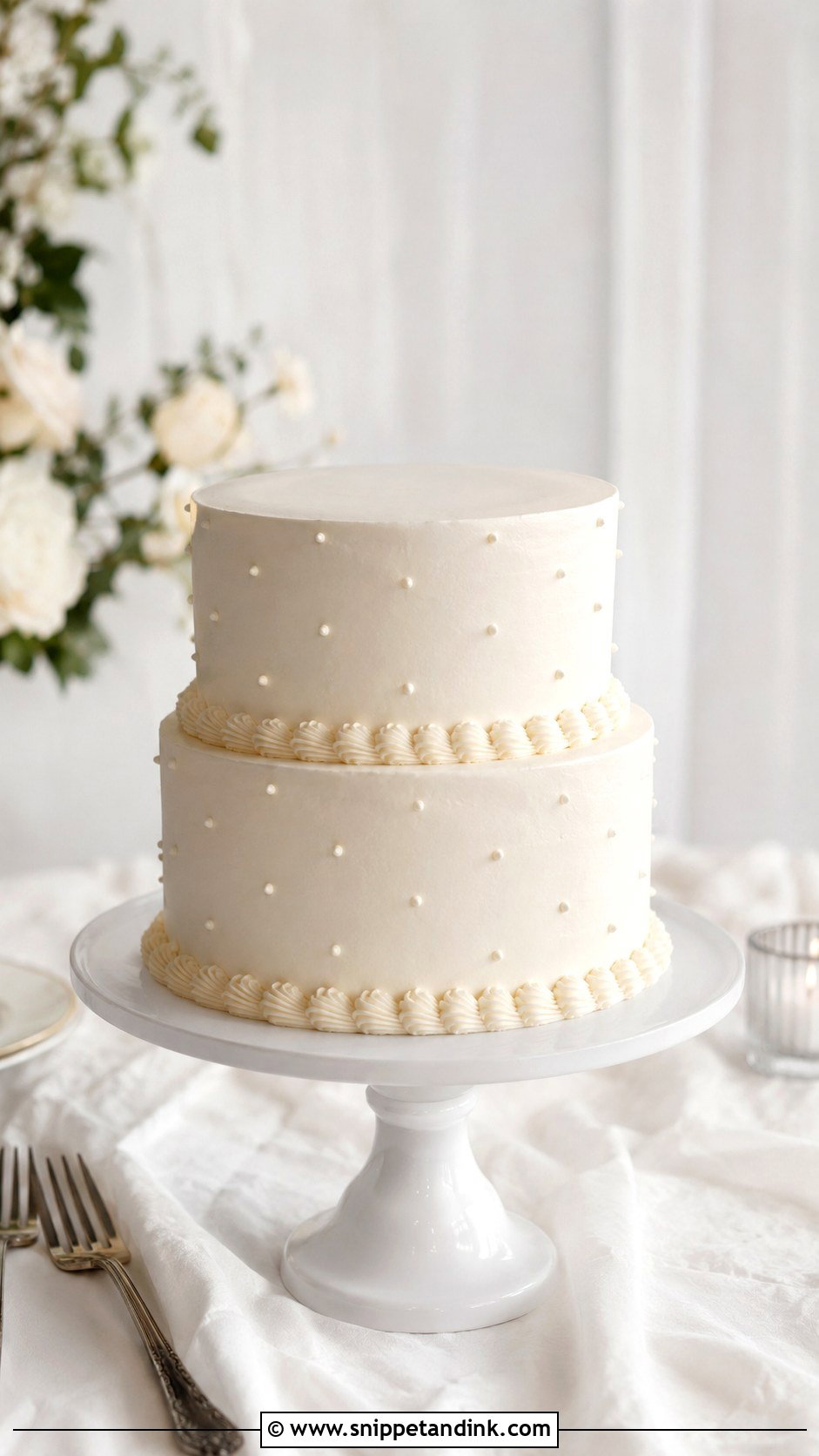
Lambeth piping is heavy and layered by tradition, so a minimal version is really an edit of it. I keep it to one or two piped rows, a small shell border or a line of dots, and make it symmetrical. White on white gives the vintage nod without any colour. It needs a stiff buttercream, a steady hand and plenty of time, so budget for the hours. Skip the flowers and toppers; the piping is enough.
30. 2 Tier Fruit Wedding Cake
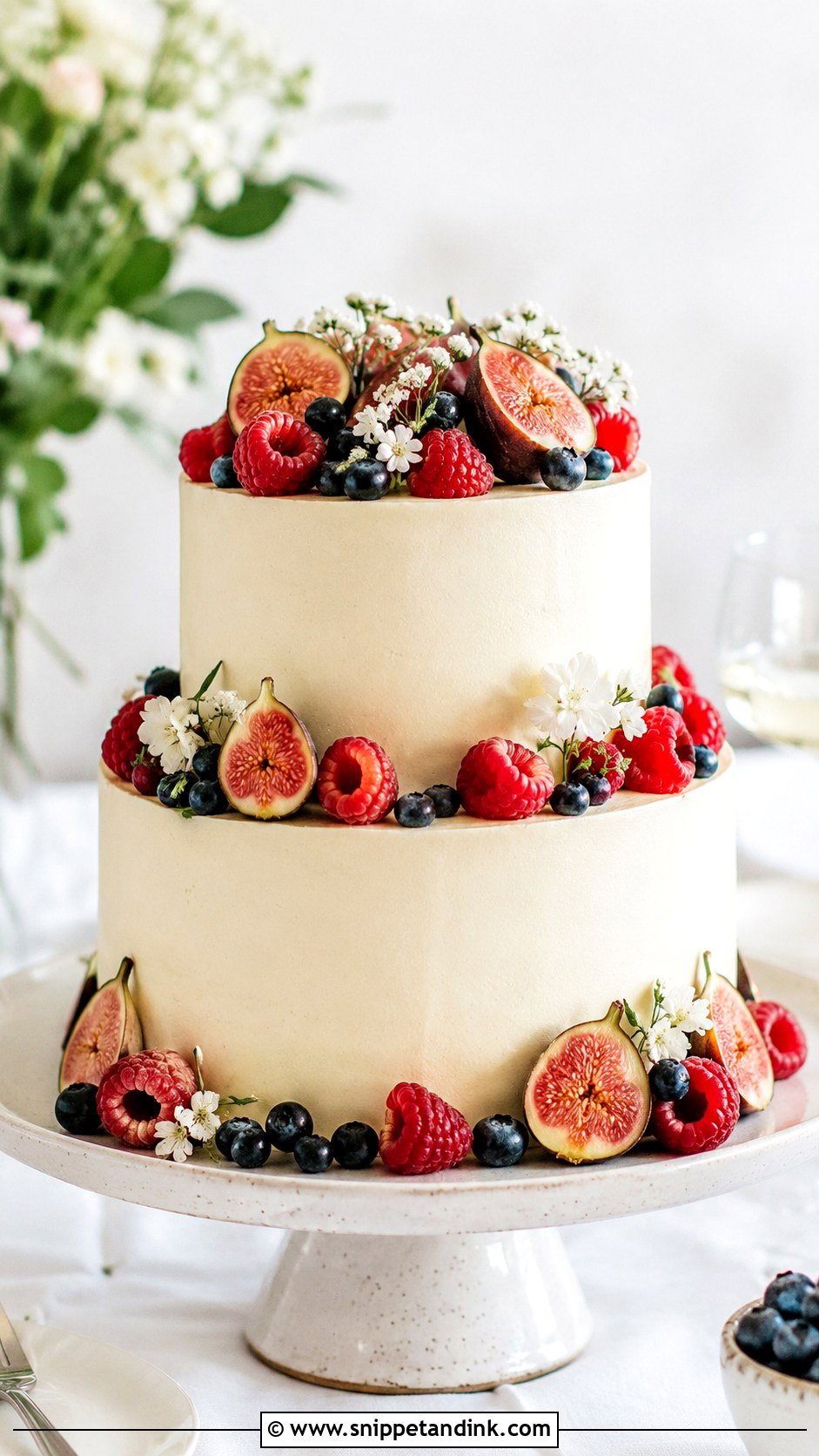
Fruit should match the filling, so the outside hints at what’s inside. I place figs, pears or berries at the base and between tiers as close to service as I can, because cut fruit weeps juice into buttercream within hours and berries bleed colour. A light brush of glaze slows that down, and whole fruit lasts longer than slices. It suits a brunch wedding or a summer reception outdoors.
Plain Frosting Shows Every Hour It Spends in a Warm Room
Minimal cakes have nowhere to hide. A bulge at the base of a tier, a fingerprint on a smooth side or a top tier leaning a few degrees is obvious when the frosting is plain, so what happens between my kitchen and your cake table matters more than it would on a cake covered in flowers.
Heat and timing on the day
Buttercream made with real butter softens in a warm room, and a cake sitting in afternoon sun can slump at the base. I deliver as close to the reception as the venue allows and ask for the table to sit out of direct sun and away from the kitchen door. Fondant copes with warmth better but sweats after a cold fridge, so it stays boxed until it reaches room temperature.
Getting it there in one piece
Two tiers are usually stacked before delivery, held with dowels in the base tier and a central rod through both boards. The drive still matters. The box goes flat on the floor of a cool car, never on a seat, with a non-slip mat underneath and gentle braking all the way. If you’re collecting it yourself, bring a second person to sit beside it.
At cutting time the top tier lifts off on its own board, and the base tier is cut in straight rows from the outside in. Tell your caterer before the night, so nobody tries to saw through the dowels with a cake knife.
Bring Your Baker One Photo and One Thing to Leave Off
A two tier cake doesn’t need heavy decoration to be remembered. The right version depends on your venue, season and guest count: smooth buttercream reads classic, fondant reads polished, textured frosting reads handmade, and a single accent like pearls or fruit sets the mood. Start with the cakes that suit your colours, then decide how much detail you want in photos. When we meet, bring a couple of examples and tell me what you dislike too. Knowing what to leave off is half the work of designing a minimal cake.
You'll Like These Ideas:





Leave a Reply