
Frosting decides more about a wedding cake than most couples expect. It sets the flavor of every slice, but it also decides whether the cake can sit in a warm marquee for three hours, whether sharp edges are possible, and whether those pressed flowers will stay put. When a couple sits down with me, I ask about the venue and the display time before I ask about color. Below are twenty finishes I work with, from everyday buttercreams to vintage piping, with notes on how each one actually behaves once the cake leaves my kitchen.
Heat, Fridges and Display Time Decide More Than Flavor
Every frosting has a melting point, and that matters more on a wedding day than on a birthday. Butter softens noticeably in a warm room, cream cheese and whipped cream need a fridge, and chocolate ganache sits somewhere in between. So the first thing I find out is whether the cake will be in an air-conditioned hall, a marquee or a garden, and how long it will be on display before it’s cut.
This is roughly how the finishes rank for stability, from the sturdiest to the most delicate:
- Fondant over ganache, which tolerates long displays and protects the cake inside.
- Firm dark chocolate ganache on its own.
- Crusting American buttercream and Italian meringue buttercream.
- Swiss meringue buttercream and white chocolate ganache.
- French buttercream and ermine, which soften sooner.
- Cream cheese frosting and stabilized whipped cream, which need refrigeration and a short display.
That doesn’t mean a summer couple can’t have Swiss meringue. It means we plan for it: a shaded table away from windows, the cake delivered close to the cutting time, and a refrigerated space at the venue confirmed in writing. Direct sun is the one thing I won’t plan around. Even the sturdiest buttercream starts to slide in it.
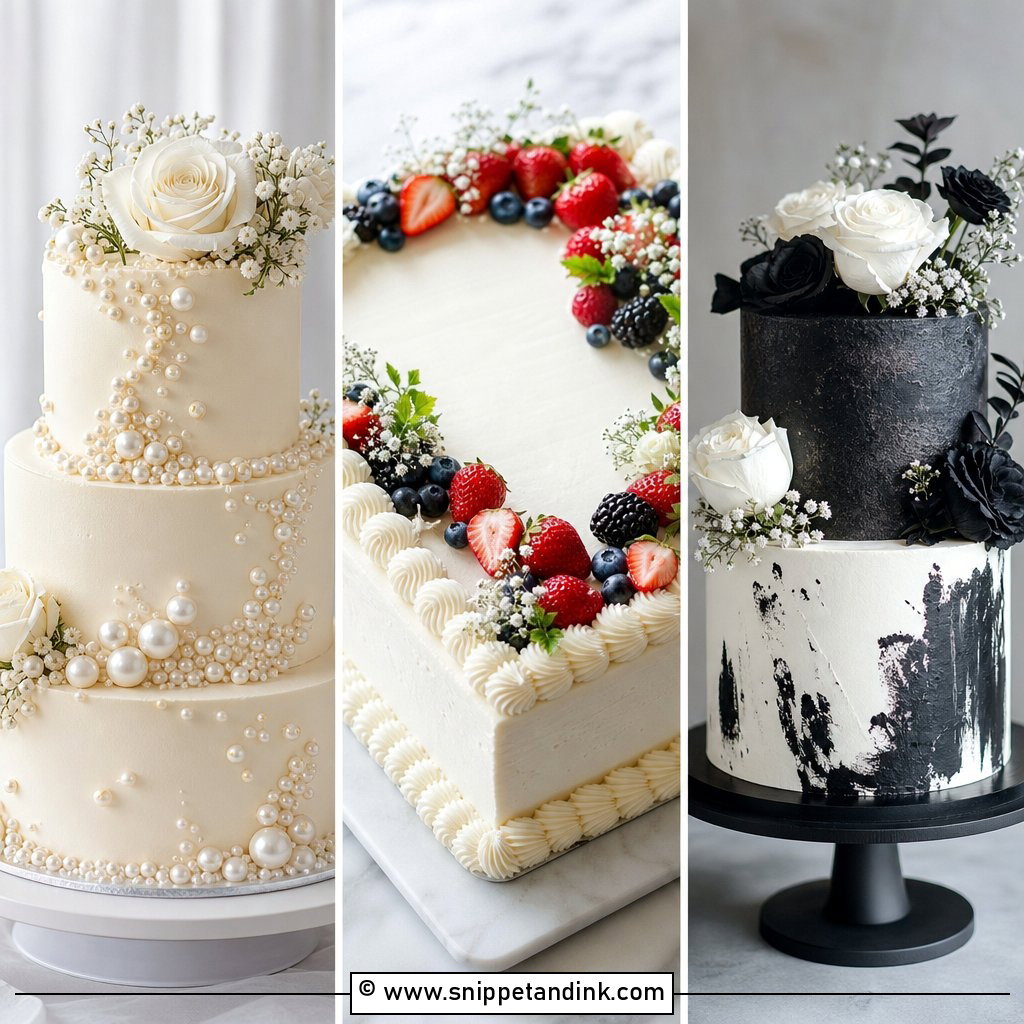
1. Buttercream Frosting Wedding Cake
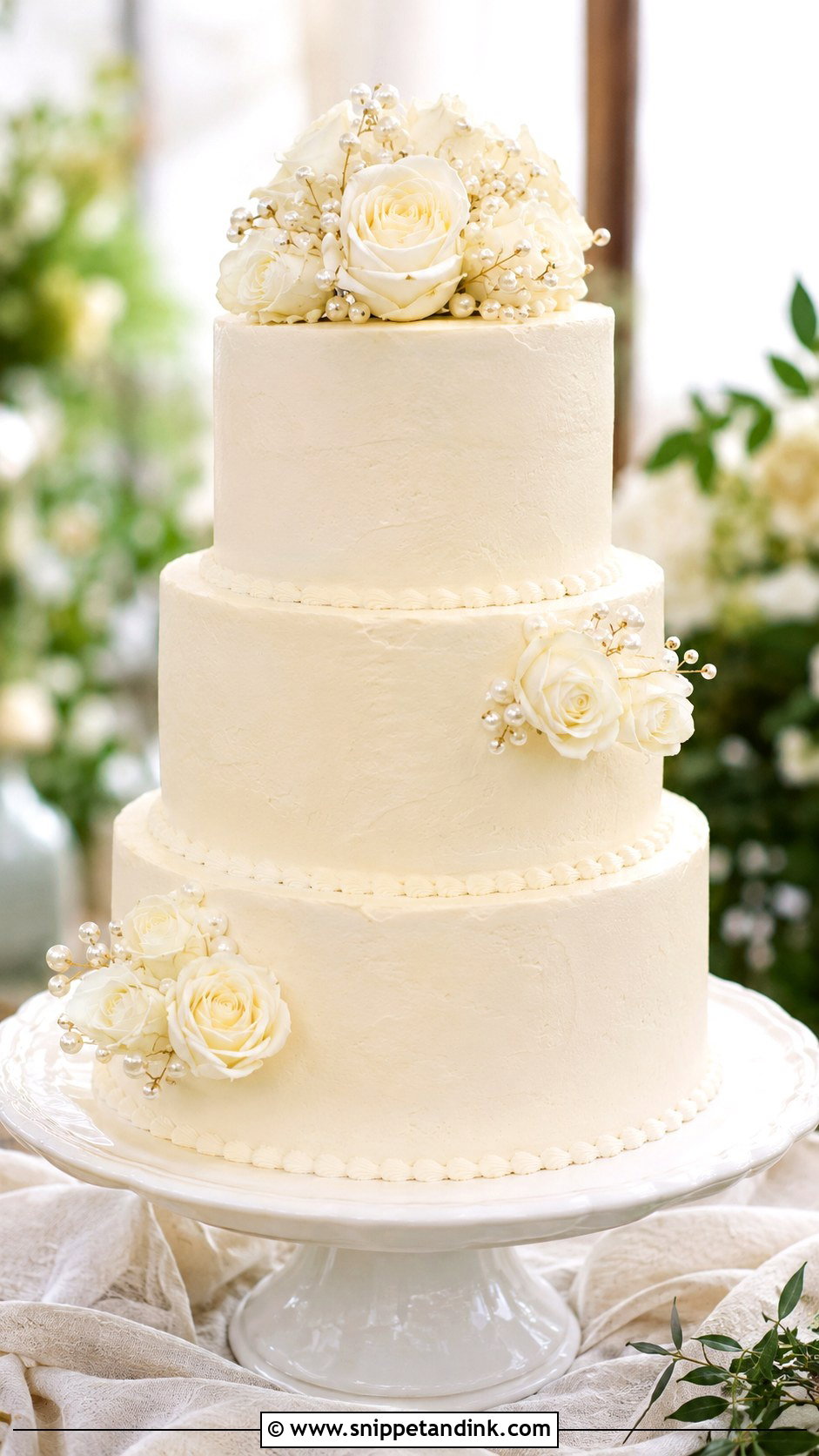
Most of my cakes start here. American buttercream, made from butter and icing sugar, crusts slightly as it sets, so it holds piped borders well and travels better than people assume. It is noticeably sweet, though, and some guests leave half a slice behind because of it. I use it on tall tiers and small single cakes alike, smoothed clean or combed into lines. Pure butter starts to slump in real heat, so for a summer garden reception I’ll either swap part of the fat for a firmer one or insist the cake stays indoors until the cutting.
2. Swiss Meringue Buttercream Wedding Cake
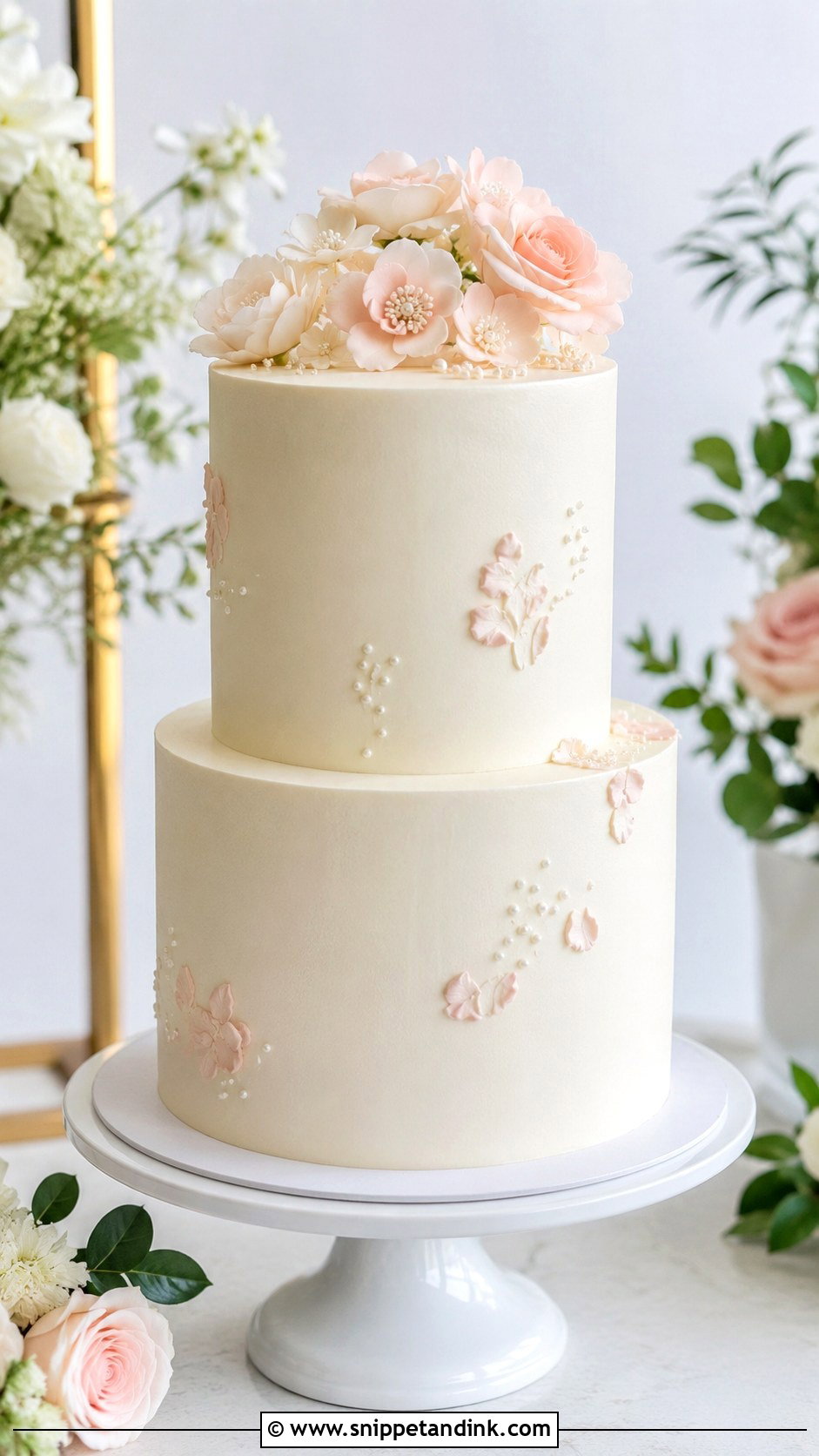
Swiss meringue buttercream is what I recommend to couples who say they hate frosting. Egg whites and sugar are warmed together over a water bath, whipped to a meringue, then butter goes in until it turns satin. It tastes far less sugary and pipes crisp pearl borders. The trade-off is temperature: it stays soft at room temperature and never crusts, so a fingertip leaves a mark. Tint it on the day of decorating, because pale blues and sages can shift slightly as the butter firms in the fridge.
3. Italian Meringue Buttercream Wedding Cake
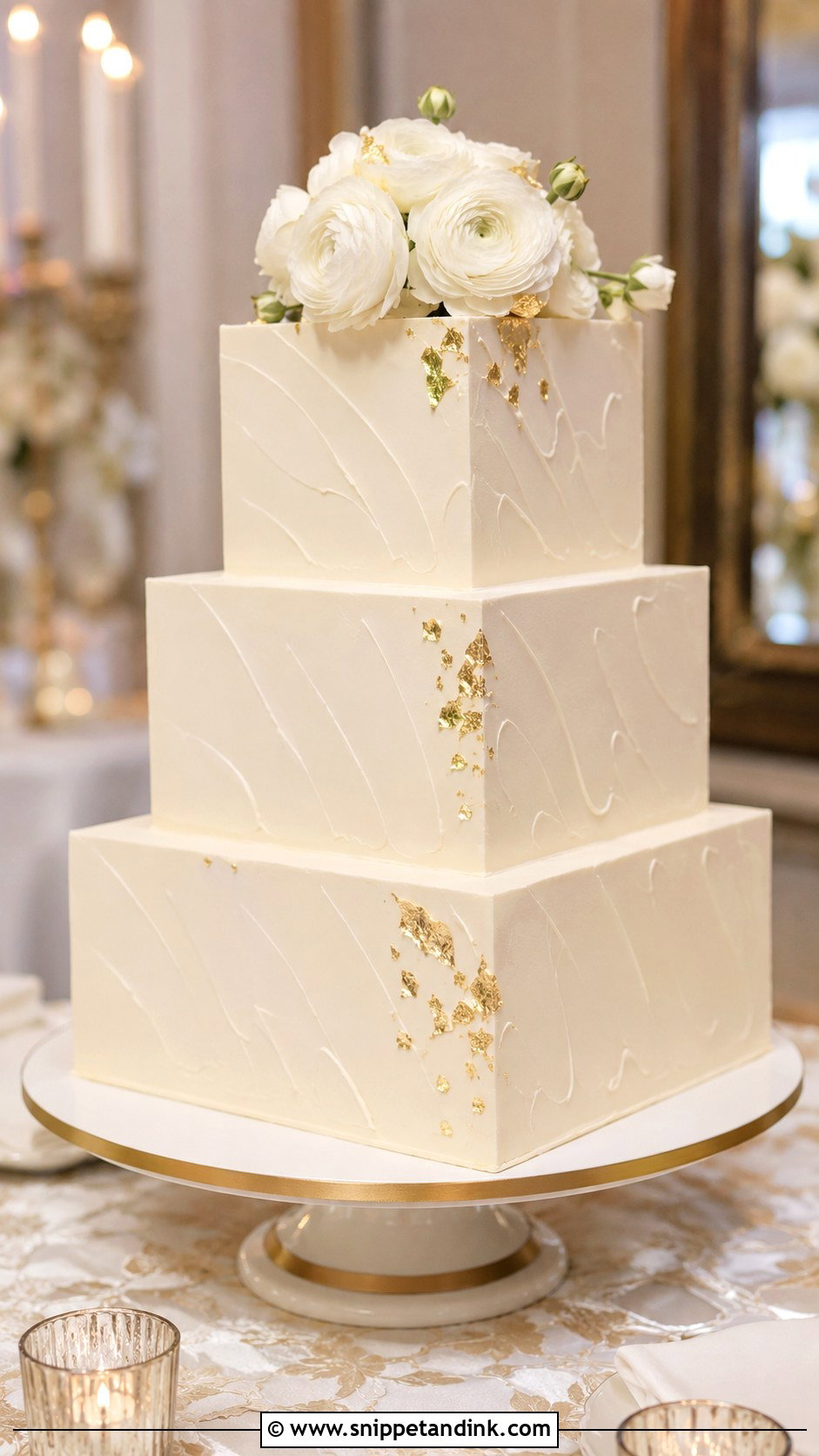
Italian meringue is the steadier cousin of Swiss. Here the sugar is boiled to a syrup and poured in a thin stream into whipping whites, which cooks them and gives a slightly firmer, glossier base once the butter is added. I reach for it on formal tiers where I want a knife-sharp top edge and ruffles that keep their shape for a long reception. It’s lightly sweet, so it sits happily next to tart fillings like lemon curd or blackcurrant jam without the cake tasting cloying.
4. French Buttercream Wedding Cake
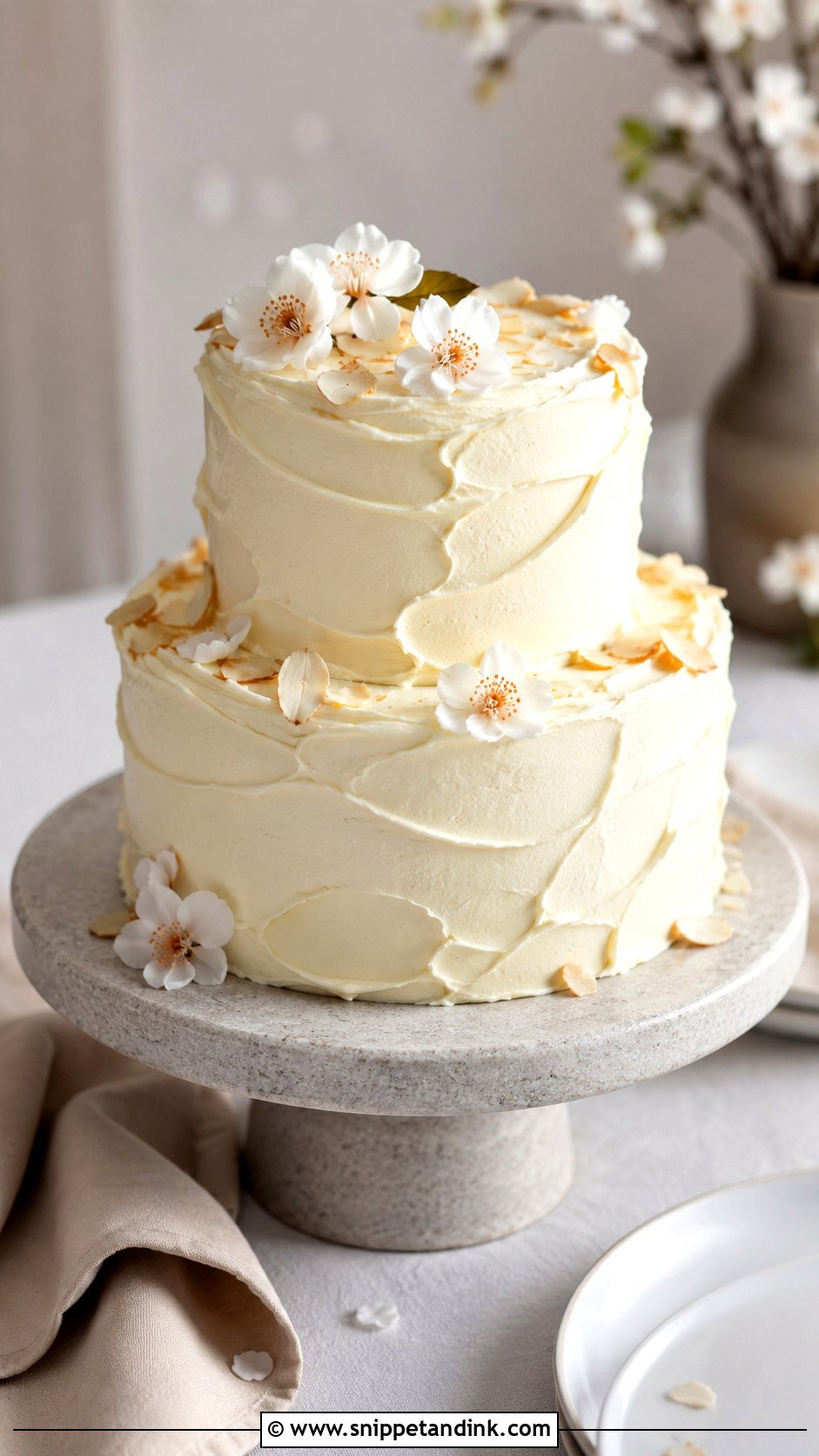
French buttercream uses yolks instead of whites, and you can taste it: it’s rich, almost like a set custard, with a pale golden color that will never read as pure white. I love the flavor, but I only offer it for small cakes served soon after they are set out. It softens faster than the meringue styles, and on a warm afternoon the edges lose definition within an hour or so. Keep the decoration simple, a few spatula waves or a low crown of flowers, and pair it with almond, hazelnut or mocha layers.
5. Cream Cheese Frosting Wedding Cake
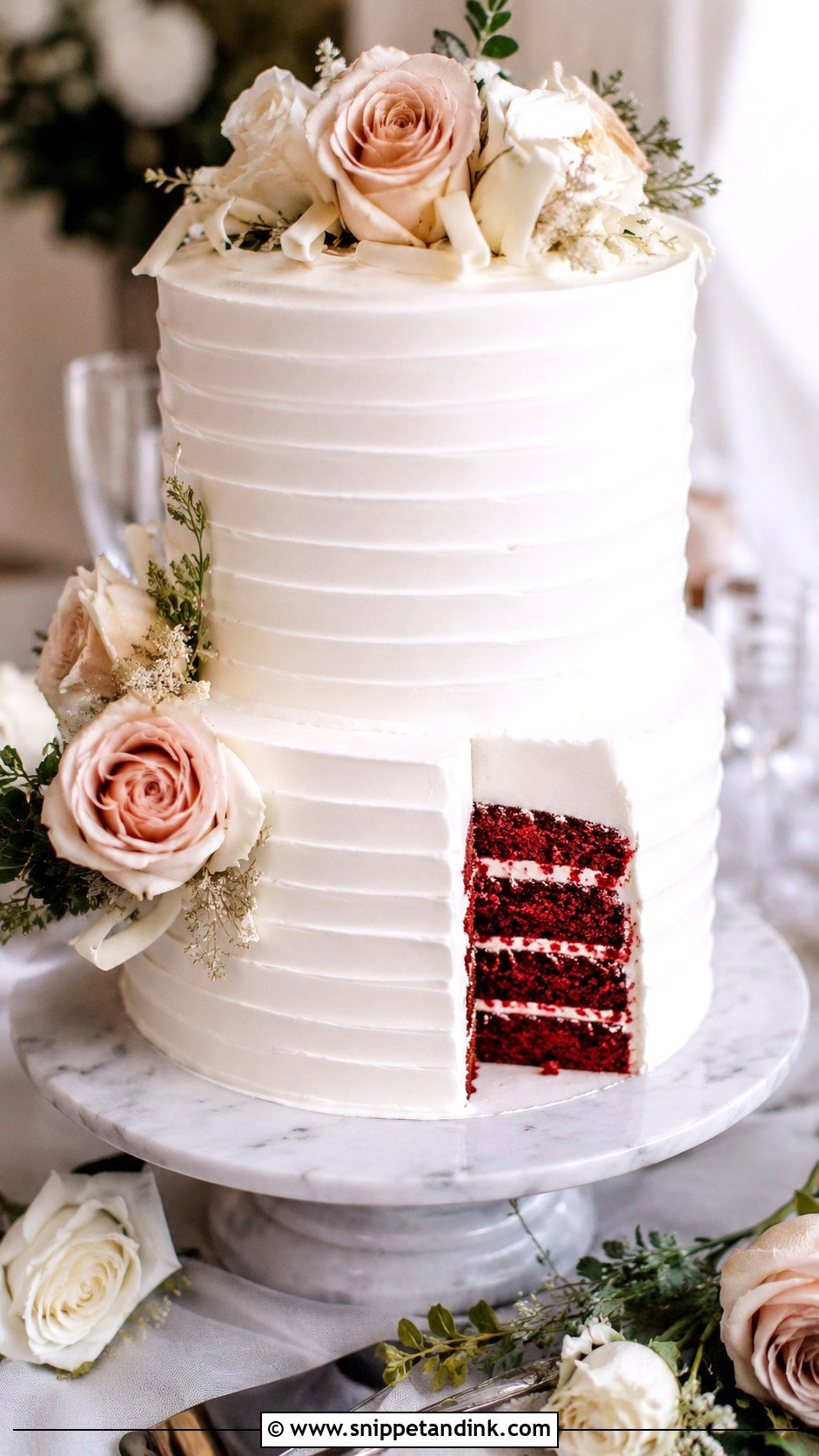
Cream cheese frosting is the one guests talk about afterwards, usually on red velvet, carrot cake, spice cake or hummingbird layers. The tang cuts the sugar. Structurally, though, it’s the weakest frosting on this list. Classic cream cheese icing is too soft to stack tall tiers on, so I firm it with extra butter or use it only as the filling and wrap the outside in a sturdier buttercream. It also needs refrigeration, which means a confirmed fridge at the venue and a short display time.
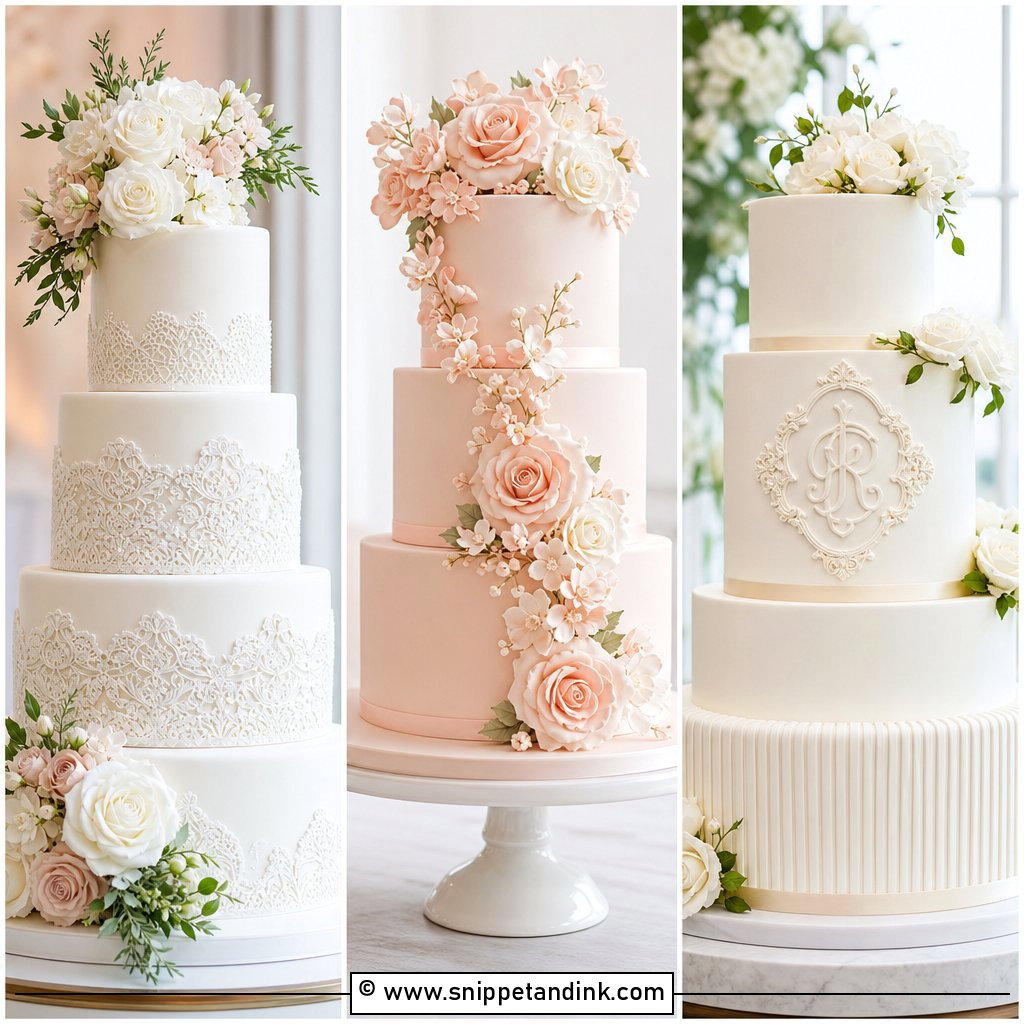
6. Fondant Wedding Cake
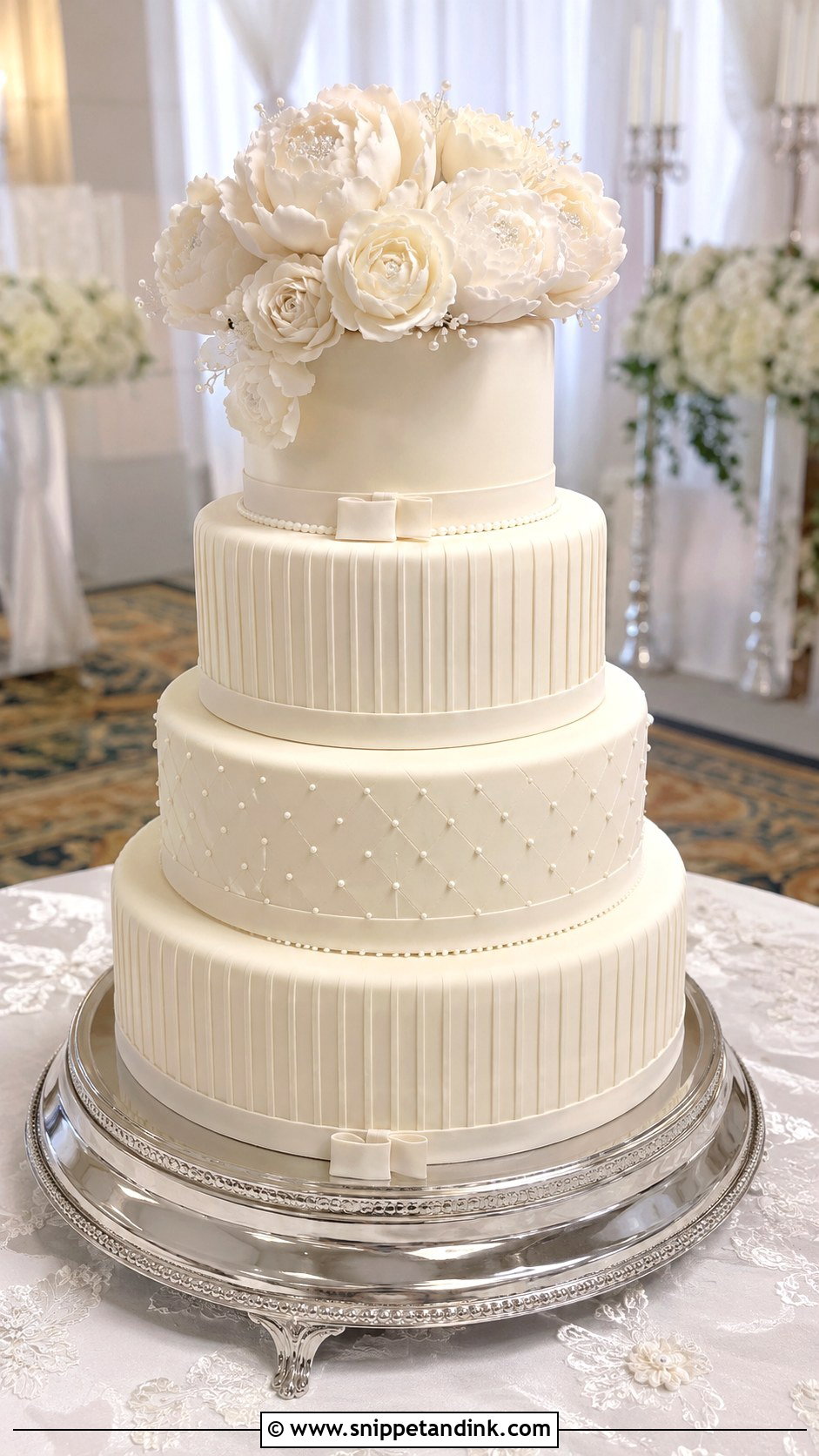
Fondant gives that porcelain surface, and it’s the only finish here that lets me do pleats, quilting, painted patterns and crisp bows. It goes on over buttercream or ganache, so there’s still proper frosting underneath. I like it for long outdoor displays because it shields the cake from dust and drying air. What I tell couples honestly: many guests peel it off. Rolled thin, around a few millimeters, it’s pleasant to eat, but a thick, heavy layer is what gave fondant its bad name.
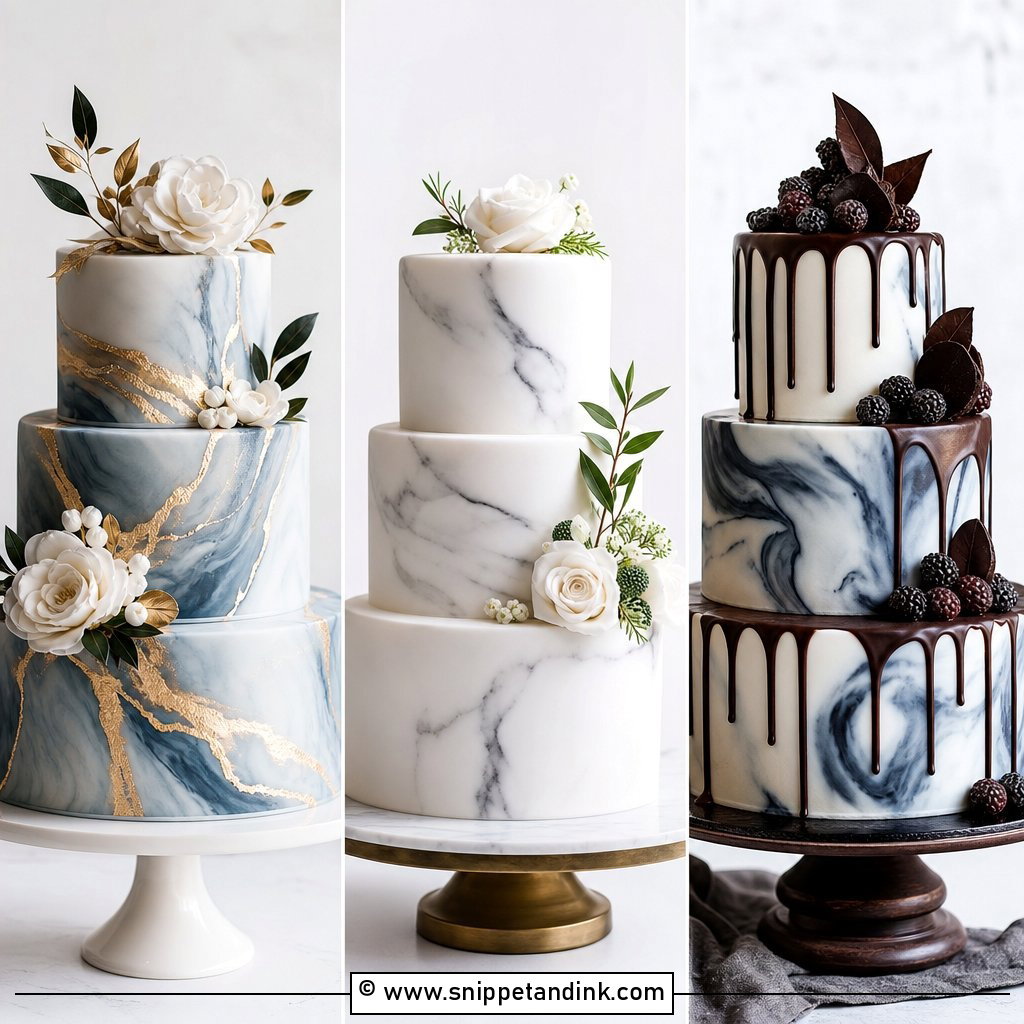
7. Chocolate Ganache Wedding Cake
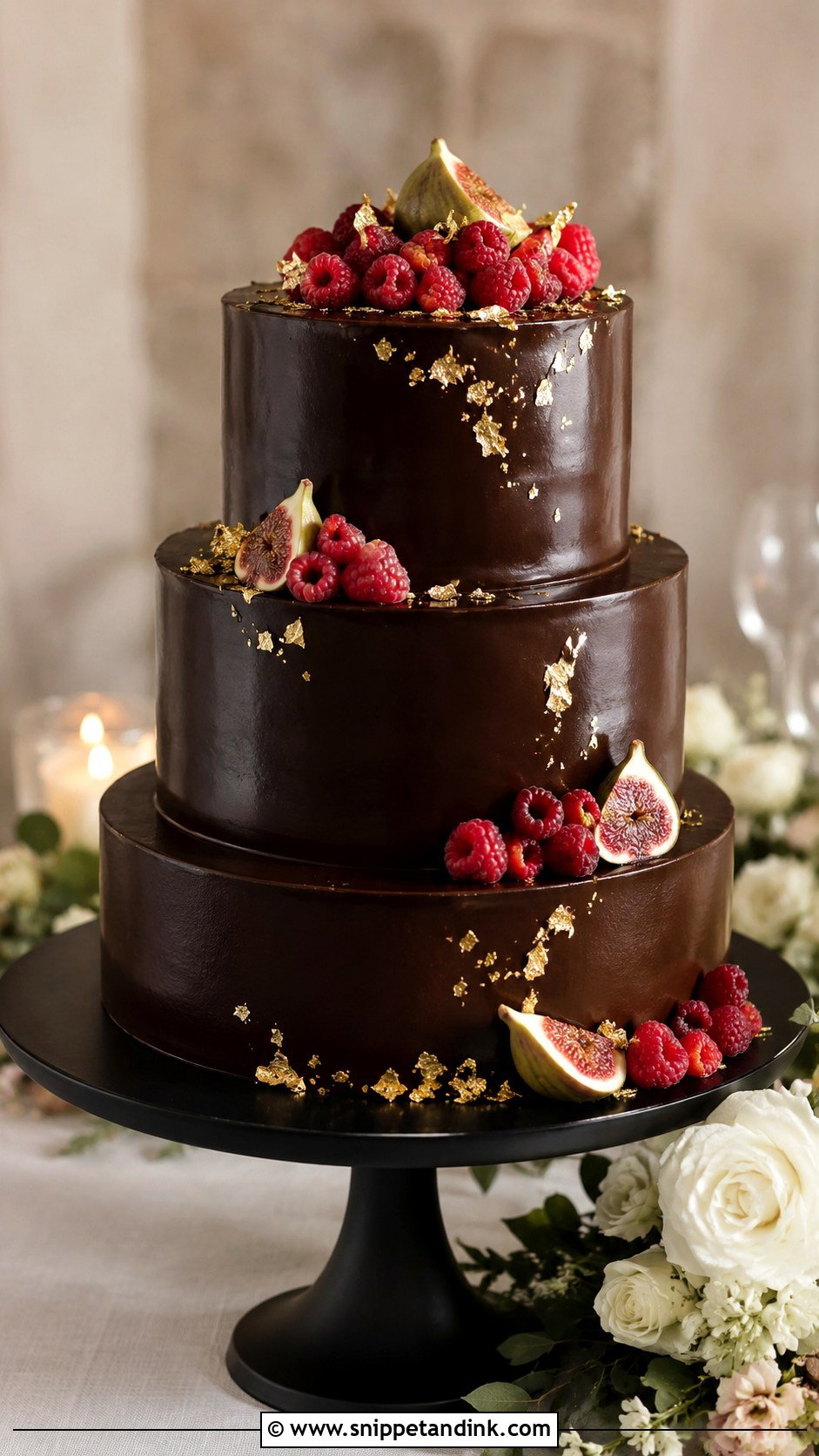
Ganache is just chocolate and cream, but the ratio changes everything. A pourable mix gives a glossy mirror coat, a firmer one sets like a shell, and whipped ganache spreads like frosting. Under fondant, a firm dark ganache is how I get those razor-straight sides, because it sets hard enough to sand smooth. On its own, dark ganache looks dramatic with gold leaf, figs or a single cluster of blooms. It handles warmth better than buttercream since there is no butter to melt, though a very hot room will still dull the shine.
8. White Chocolate Ganache Wedding Cake
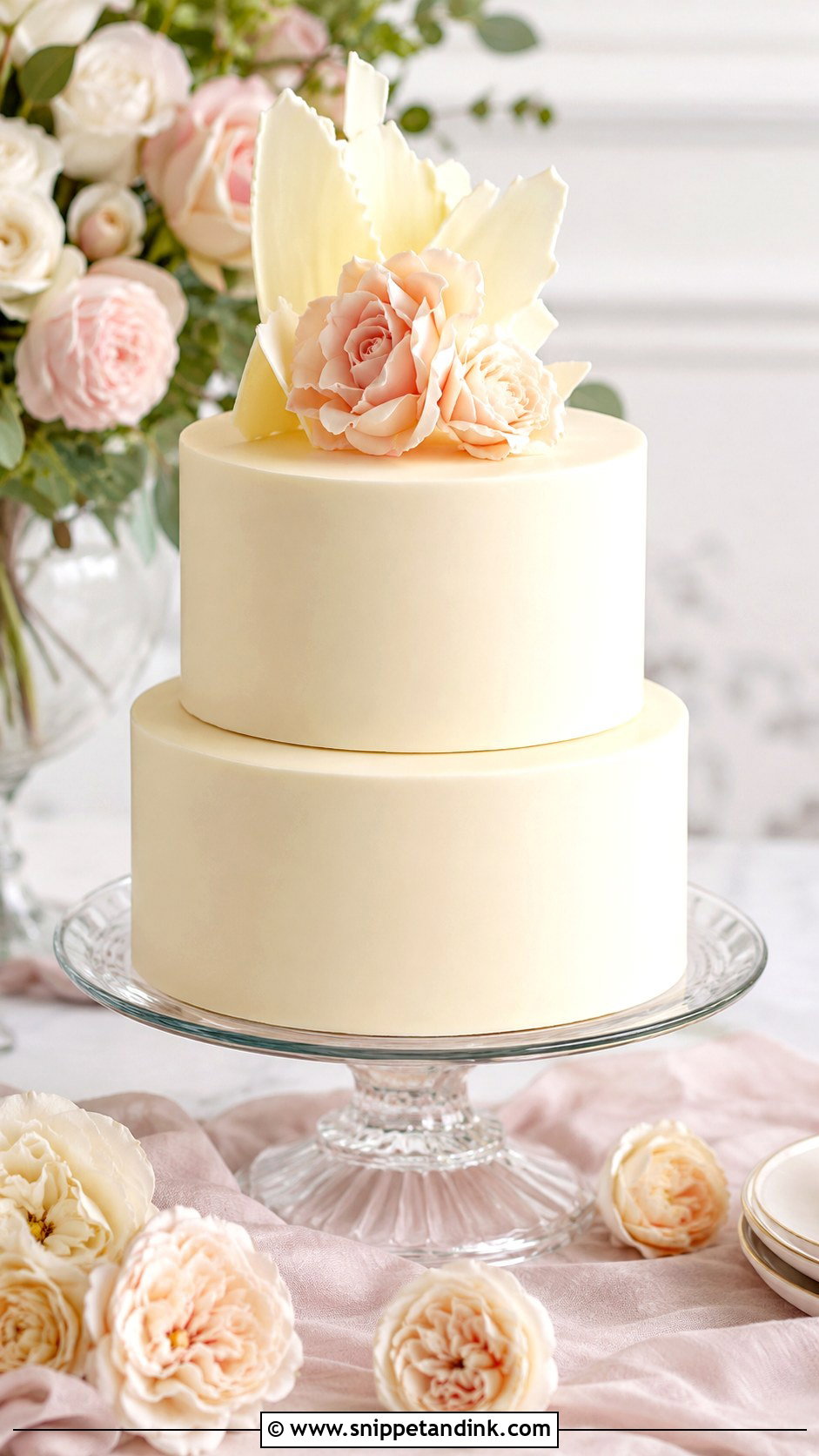
White chocolate ganache gives couples the clean pale cake they want with more flavor than a plain icing. The catch is that white chocolate is softer than dark, so I use a higher chocolate ratio to get it to set, and it takes longer to firm in the fridge. Its natural color is creamy rather than bright white, which suits ivory palettes and pearl details. It tints well to blush or champagne. Raspberry, passion fruit and coconut fillings all benefit from its richness.
9. Whipped Cream Frosting Wedding Cake
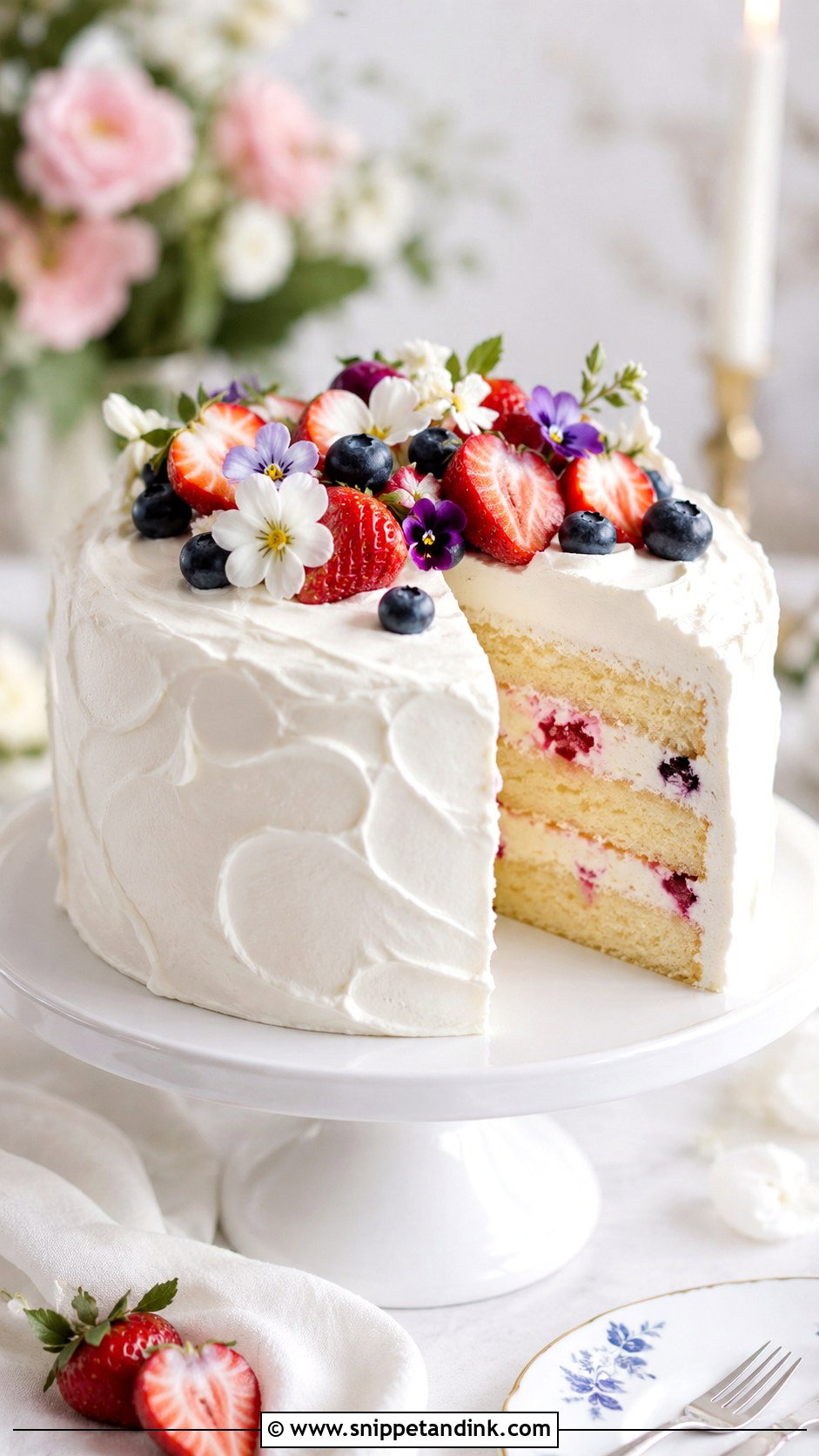
Stabilized whipped cream is the lightest frosting I make, and the most fragile. Plain whipped cream weeps within hours, so I set it with gelatin or mascarpone, and even then it needs to come straight from the fridge to a cool table. It goes well with sponge, berries and citrus curd, or a tres leches-style cake. I steer couples away from it for an outdoor summer reception with a long display. For an indoor dinner where the cake is cut soon after dessert is announced, it’s a delight.
10. Ermine Frosting Wedding Cake
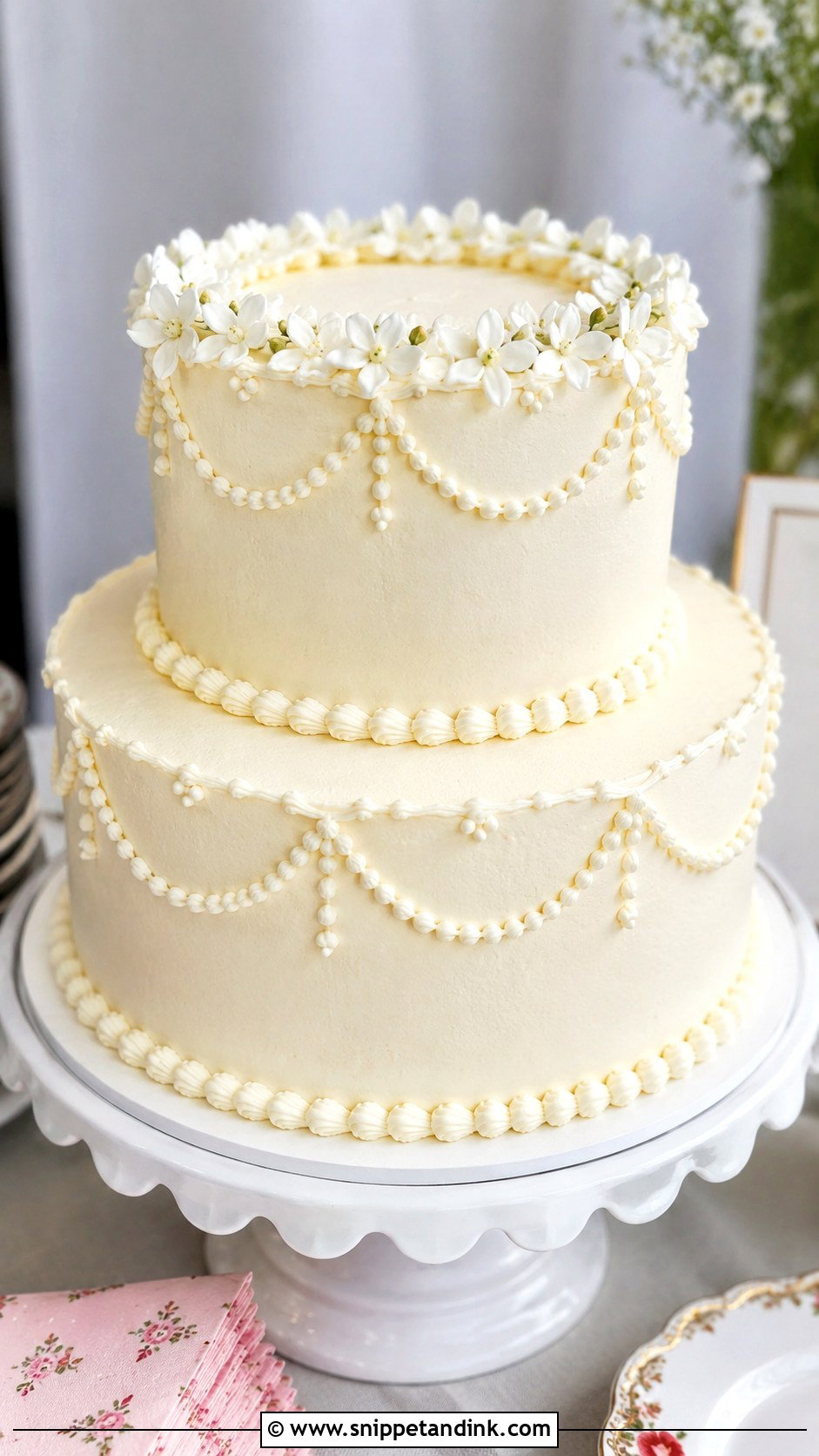
Ermine is the old-fashioned frosting most people have never heard of. You cook flour and milk into a thick pudding, cool it completely, then whip it into softened butter and sugar until it turns fluffy. It tastes like a lighter buttercream with no graininess at all. The cooled base has to be at the same temperature as the butter or the mix splits, which is the usual reason home attempts fail. It suits red velvet especially, and it pipes soft swirls and vintage borders well, though it isn’t firm enough for sharp edges.
11. Royal Icing Wedding Cake
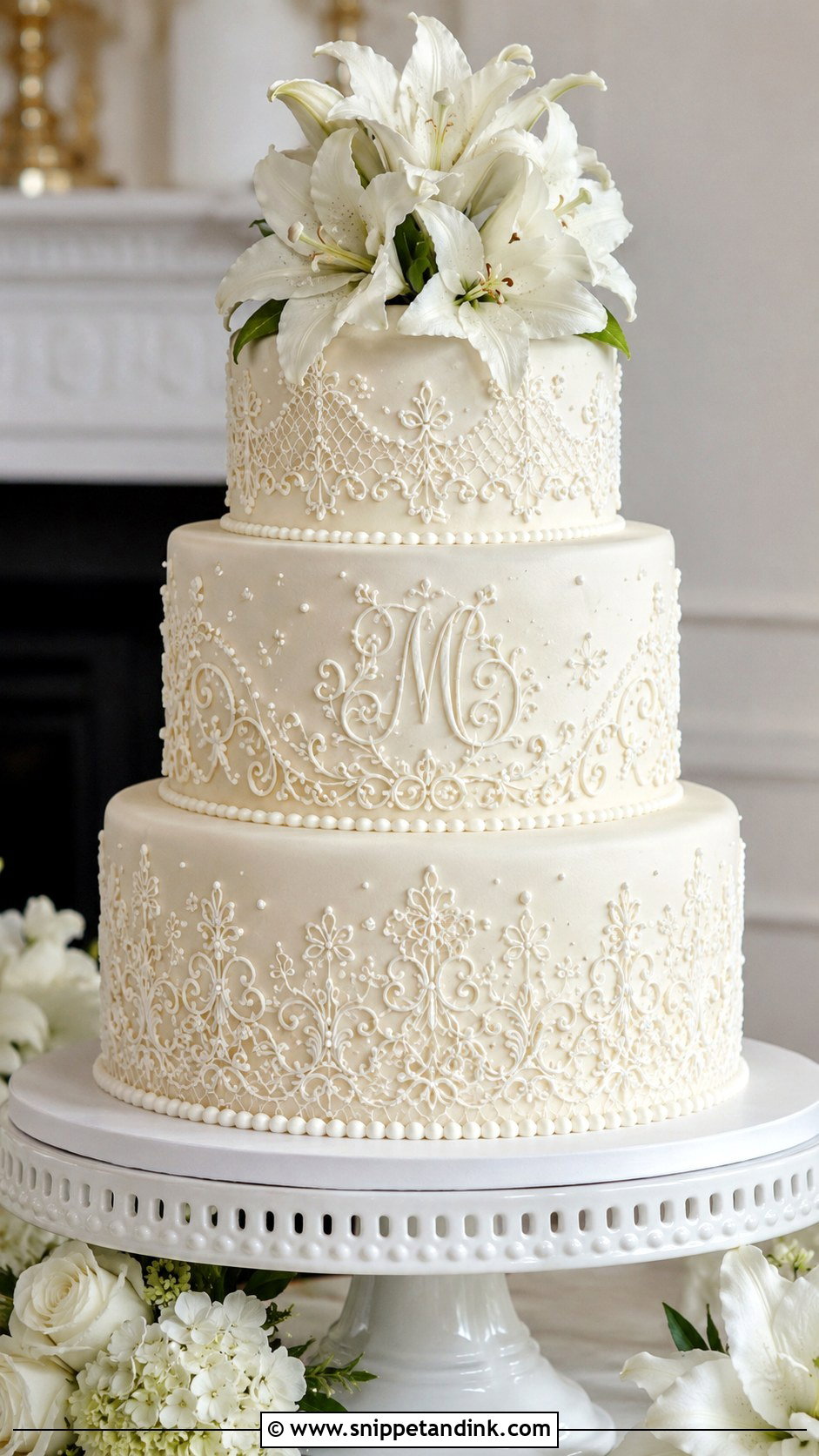
Royal icing, egg white or meringue powder beaten with icing sugar, dries rock hard, which is exactly why I use it for detail rather than a full coat. Fine lacework, scrolls, dots and monograms all come from royal icing piped onto fondant, where the smooth surface makes every line read clearly. It is unforgiving work: one wobble in a long scroll and it has to be lifted off and repiped. White on white is the traditional look; ivory piping over a pale pastel tier feels a little softer. Humid rooms are its enemy, since moisture softens the piping.
12. Marzipan Wedding Cake
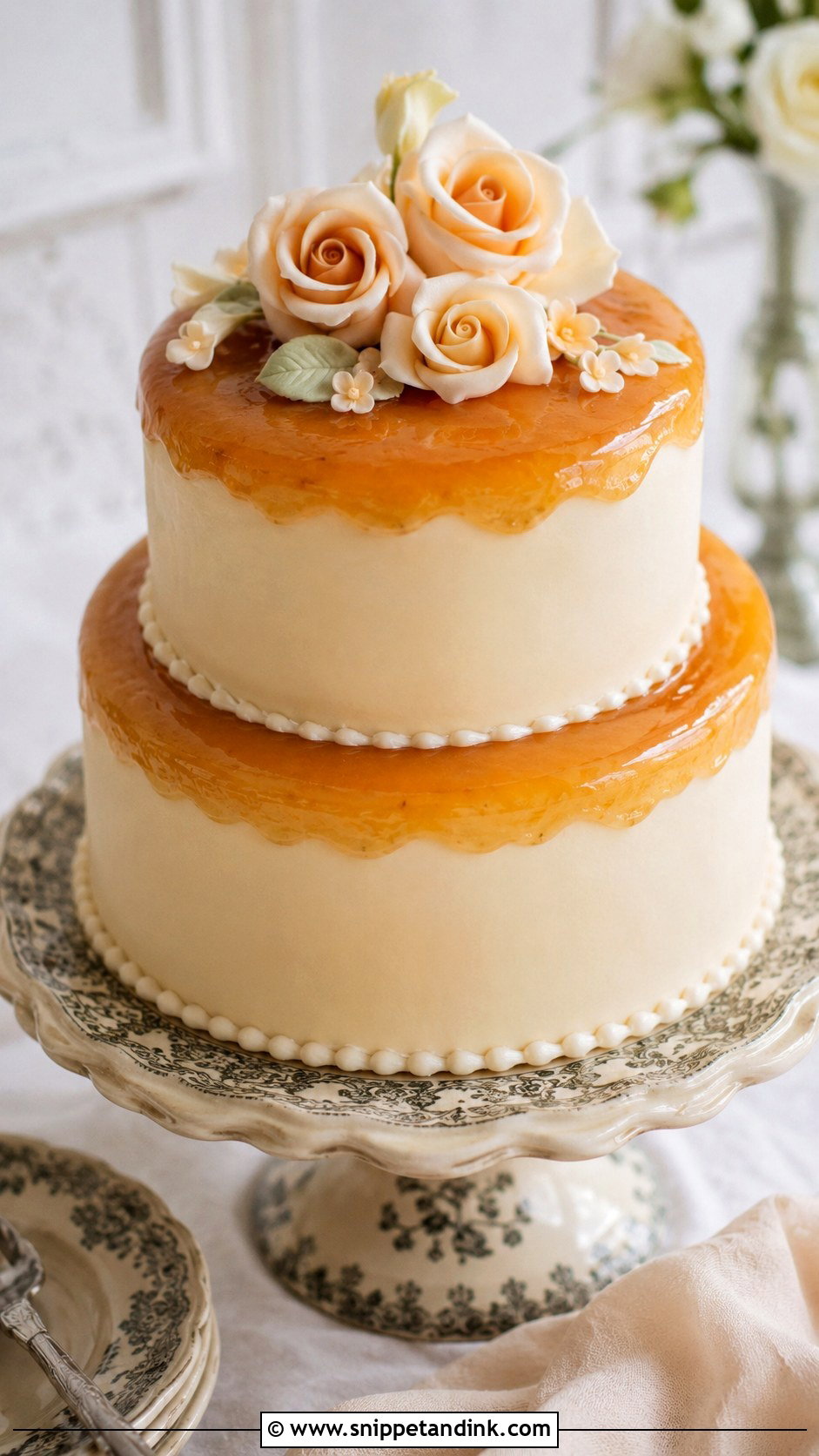
Marzipan is the traditional layer on a British fruitcake, laid under fondant or royal icing to seal the cake and give a flat surface. It has a strong almond flavor that people either love or quietly leave on the plate. It also models well, so I sometimes shape small fruits or leaves from it. If you’re considering it, the first conversation has to be about nut allergies across your guest list, and I’d label the cake clearly at the table. Apricot jam brushed under the marzipan is what helps it stick to the cake.
13. Naked Frosting Wedding Cake
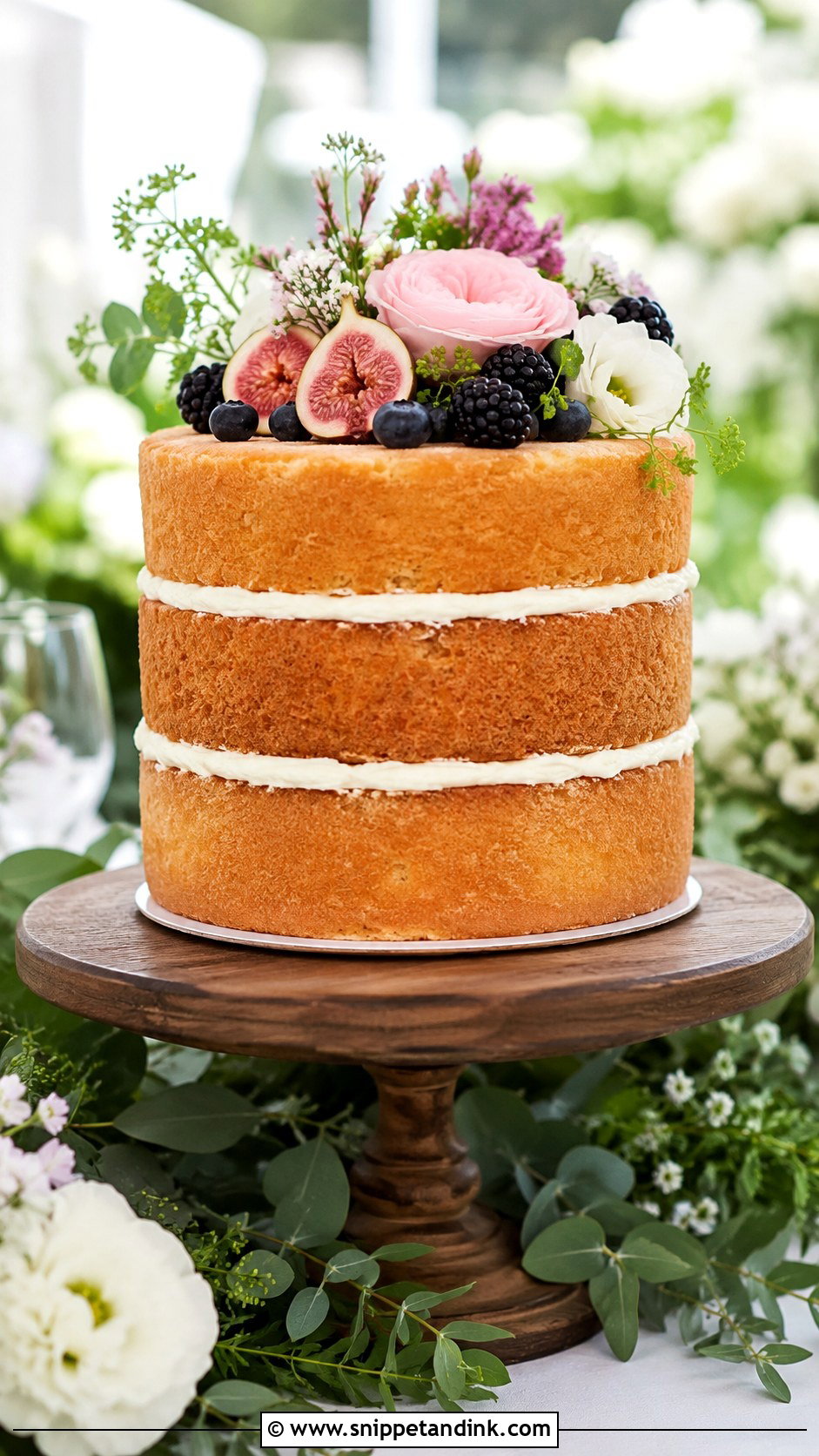
A naked cake has filling between the layers and almost nothing on the outside, so the sponge itself is on show. That makes the bake more important than the frosting: layers have to be level and even, and any dome or crumbly edge shows. Exposed sponge dries quickly in open air, so I usually brush the layers with syrup and assemble as close to the event as I can. Fresh berries, figs, herbs or a few blooms finish it. It’s a relaxed look that suits a garden or barn wedding, but it isn’t a cake for a long display in a warm room.
14. Semi Naked Frosting Wedding Cake
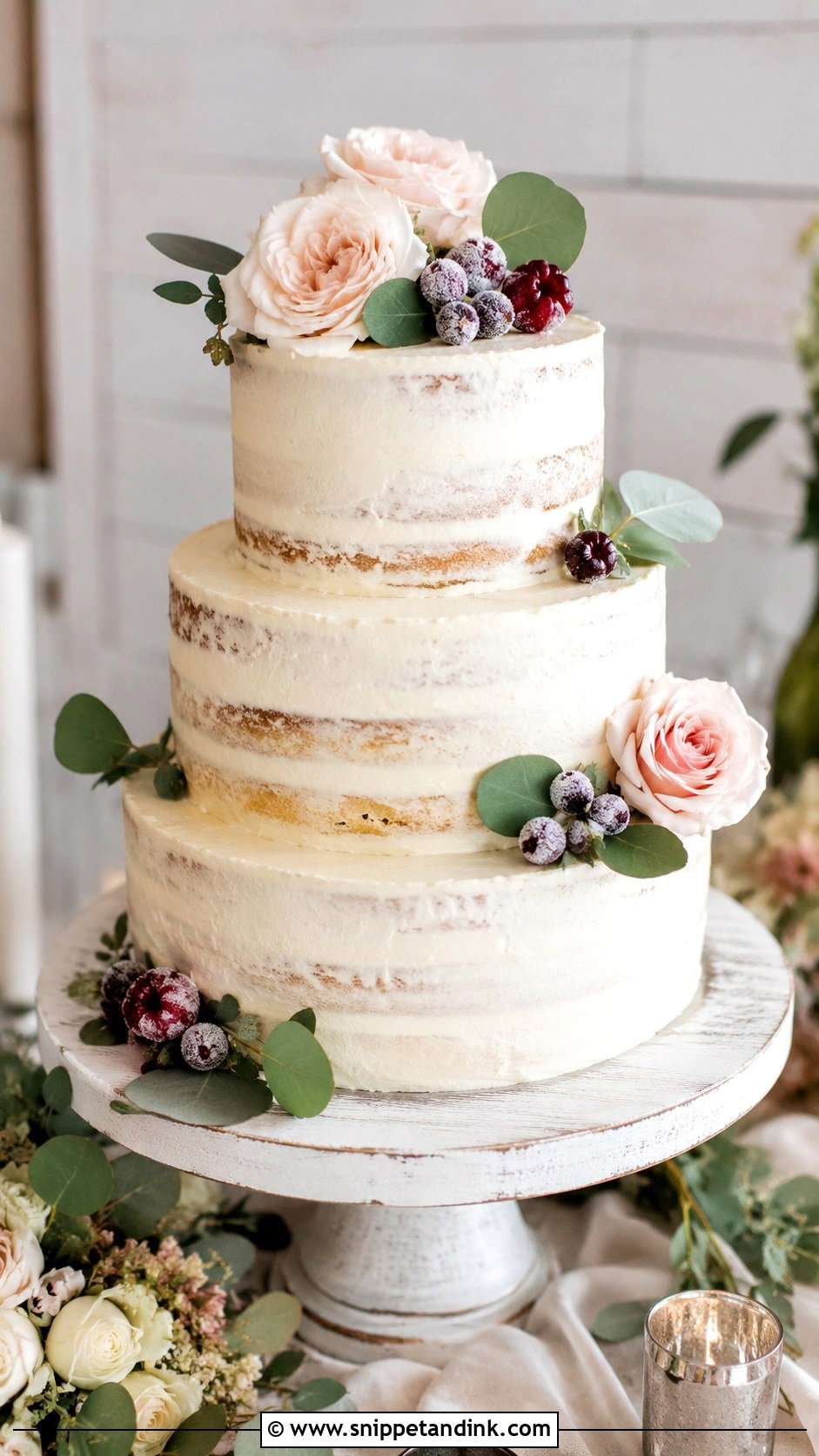
Semi naked is my compromise for couples who like the rustic look but worry about dry sponge. I scrape a thin coat of buttercream around the outside, so the cake shows through in patches while the frosting still seals the edges. That thin coat buys a few more hours of freshness than a fully naked cake. It photographs well with greenery and fruit because the color contrast stays soft. Moist sponges like vanilla bean, lemon or carrot hold up best under such a thin layer.

15. Textured Buttercream Wedding Cake
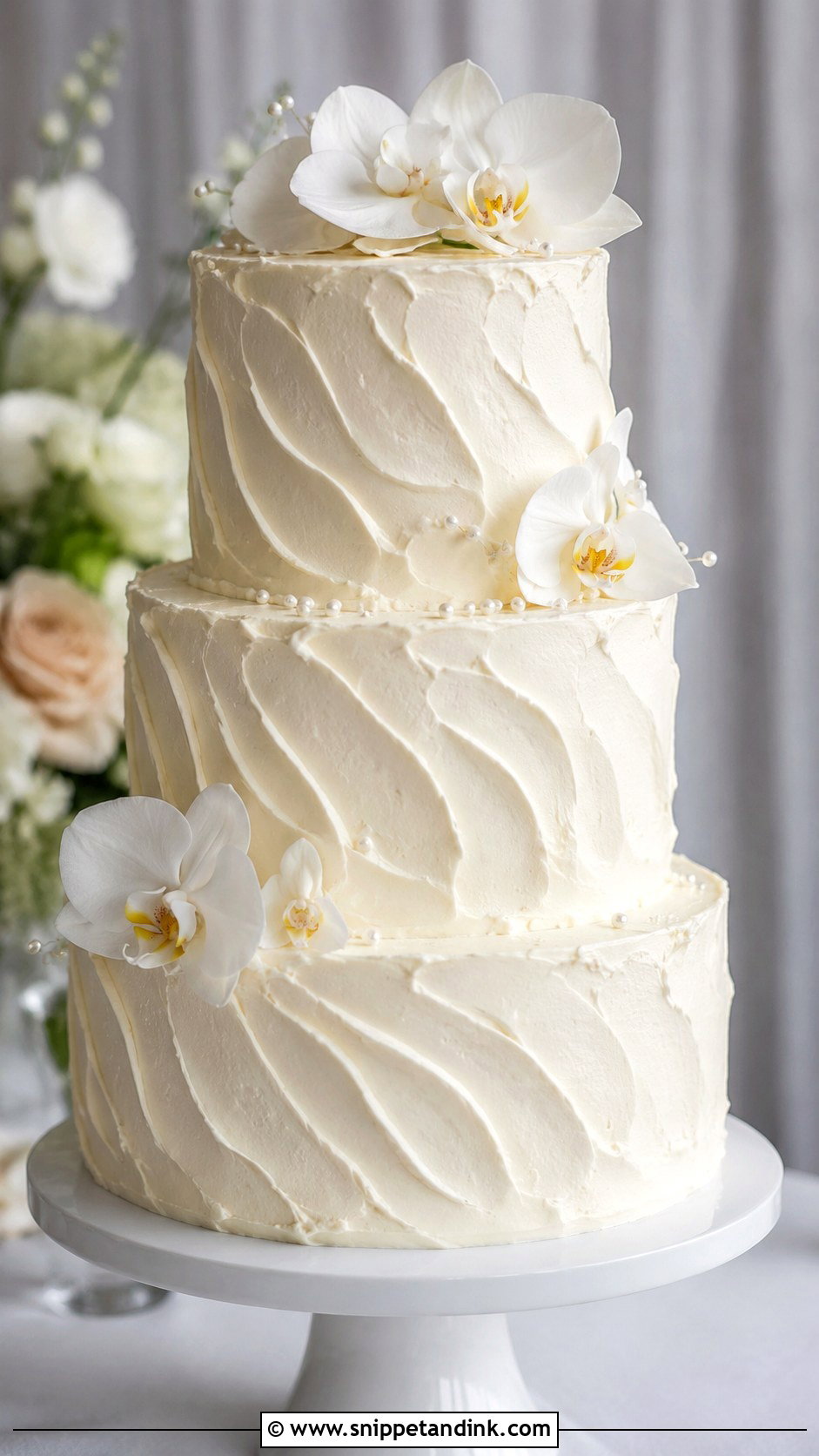
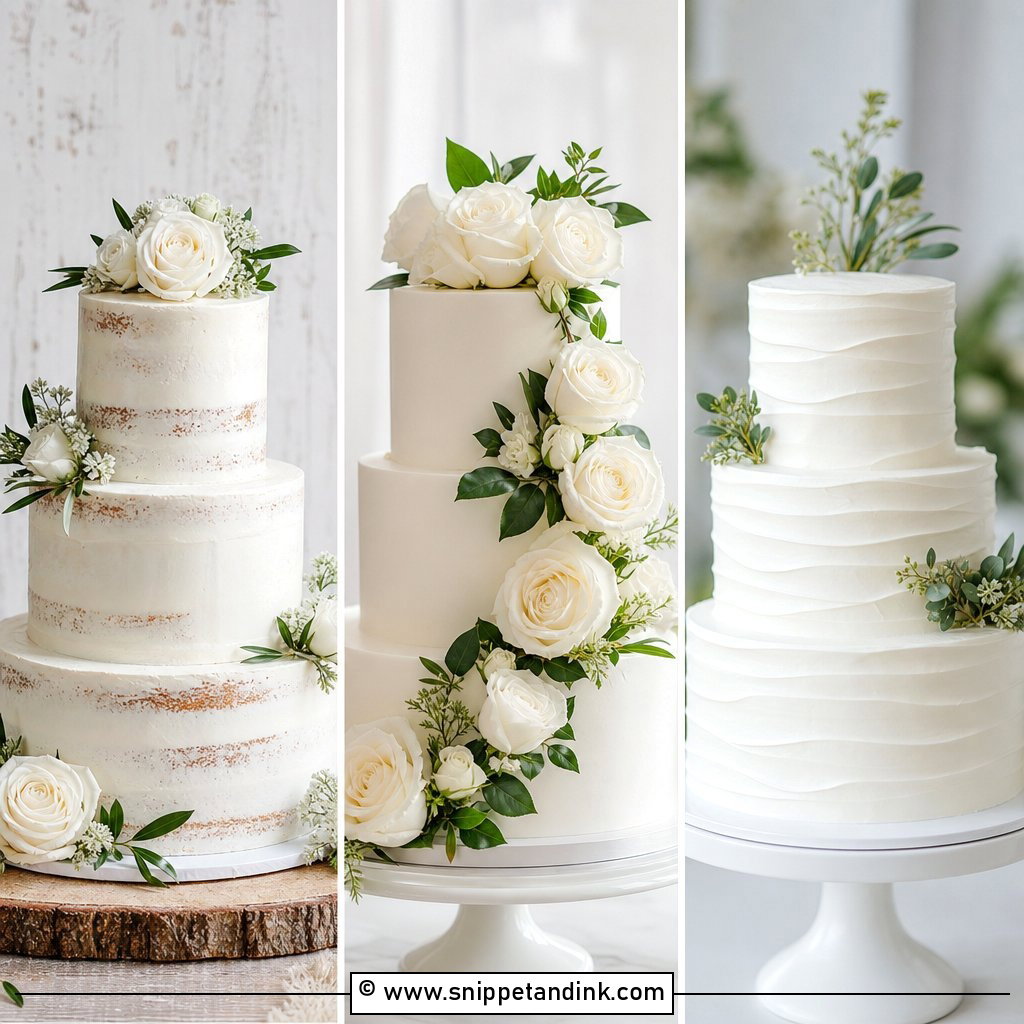
Textured buttercream is where I get to play. I shape the frosting into waves, ridges, ruffles or pleats using combs, spoons and spatulas, and the texture hides small imperfections that a smooth finish would show. That makes it a practical choice as well as a modern one. It works on tall tiers, square cakes and small sculptural designs. The thing to know is that deep ridges hold more frosting, so each slice gets more of it; I usually suggest a lighter meringue buttercream for heavily textured cakes so it doesn’t feel too sweet.
16. Lambeth Frosting Wedding Cake
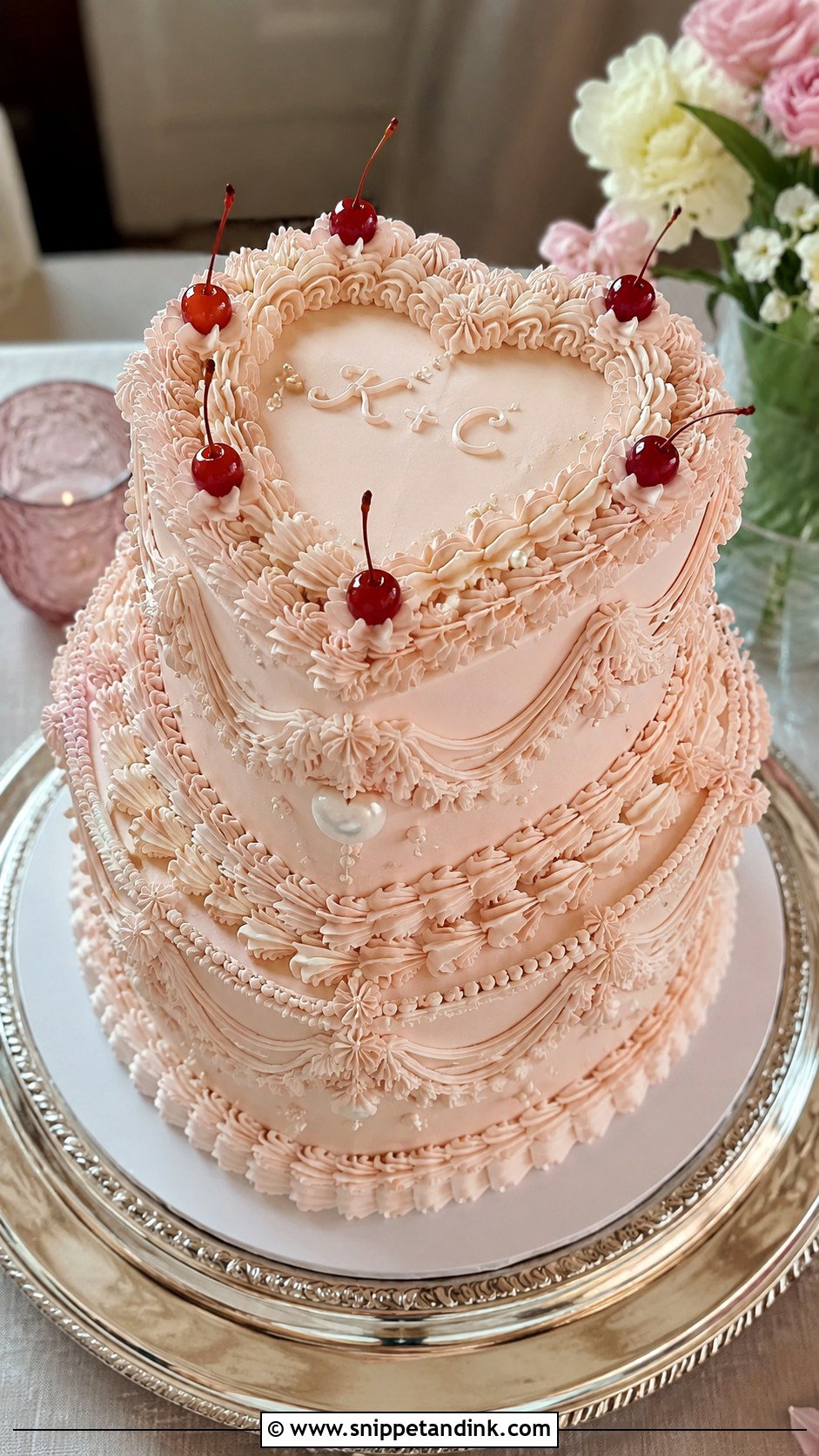
Lambeth piping is overpiping built up in layers: a shell border, then swags on top of that, then scrolls over the swags, until the tier looks carved. It’s slow work and it’s where most of the cost of these cakes comes from. I pipe it in a crusting buttercream or royal icing, because a soft meringue buttercream won’t hold the stacked layers. A Lambeth wedding cake looks charming in ivory, blush, pale blue or butter yellow, with cherries or a piped message on top. Heart-shaped single tiers are the version I’m asked for most often now.
17. Palette Knife Frosting Wedding Cake
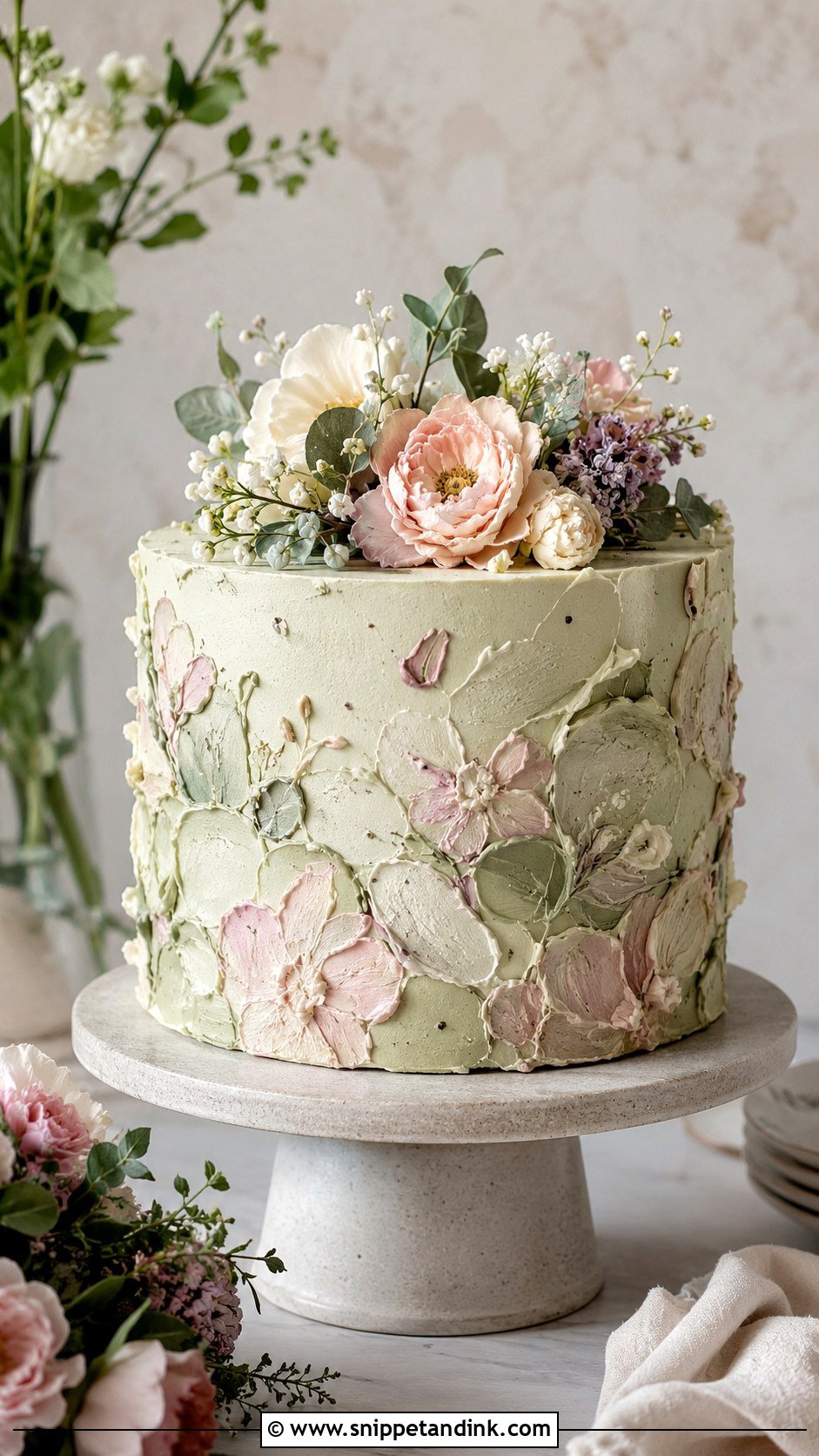
With palette knife work I spread buttercream straight onto a chilled cake in petals, leaves and loose strokes, almost the way an oil painter loads a canvas. The base coat has to be cold and firm or the knife drags it. It gives you a floral cake without any fresh flowers, which also avoids the question of whether the stems are safe against the sponge. White on white looks sculptural; ivory with a few pastel strokes feels softer. The raised edges catch side light, so place the cake where daylight falls across it rather than straight on.
18. Pressed Flower Frosting Wedding Cake
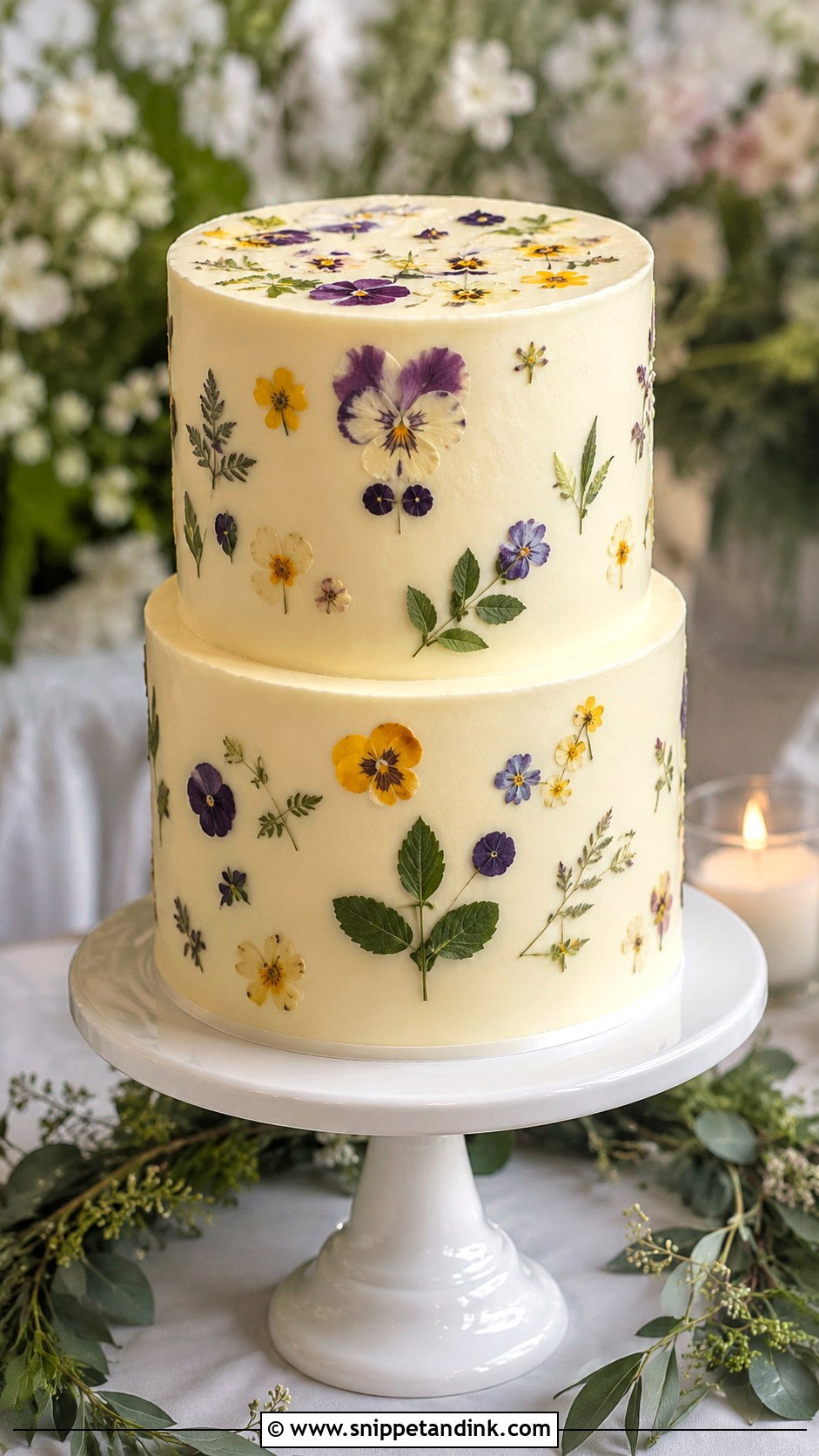
Pressed flowers are pressed flat, then laid against smooth buttercream, ganache or fondant and lightly brushed to fix them. Only use flowers that are grown as edible and free of sprays: pansies, violas, cornflowers and some herbs press well. Florist stems are not safe to put against the cake. The flowers do best on single tiers or slim stacked cakes where they become the main decoration. Buttercream should be chilled before pressing, otherwise the petals sink and smear. In damp weather they can soften a little, so I add them as close to delivery as possible.
19. Watercolor Frosting Wedding Cake
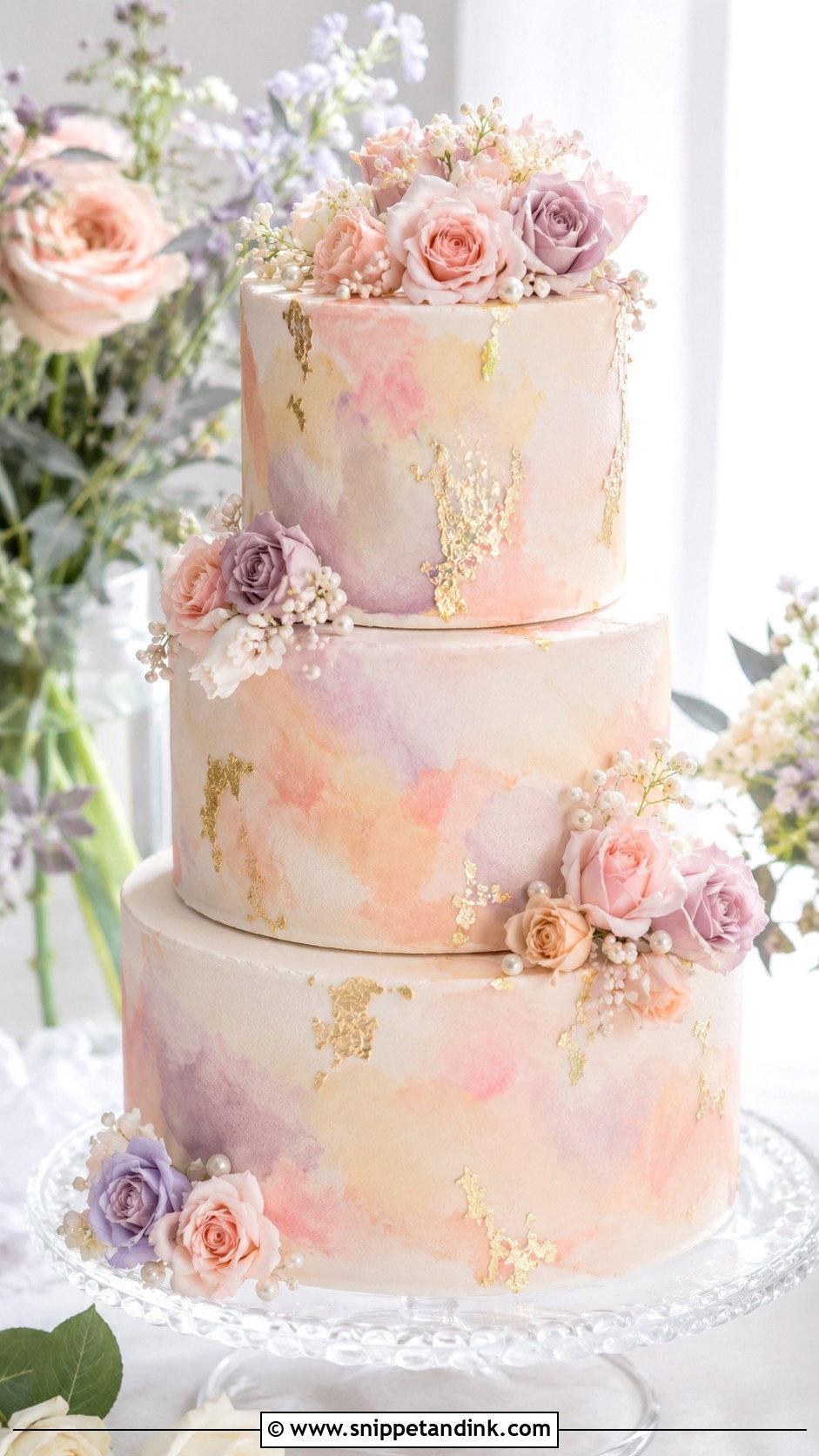
Watercolor finishes are made by working two or three tinted buttercreams together on the cake and smoothing them with a scraper until the colors bleed softly into each other. On fondant, the same effect comes from edible paint thinned with alcohol. The skill is stopping early: overwork the scraper and the shades turn muddy. Blush, peach, lavender and sage blend most gently. A touch of gold leaf or a small sugar flower finishes it without competing with the color.

20. Drip Frosting Wedding Cake
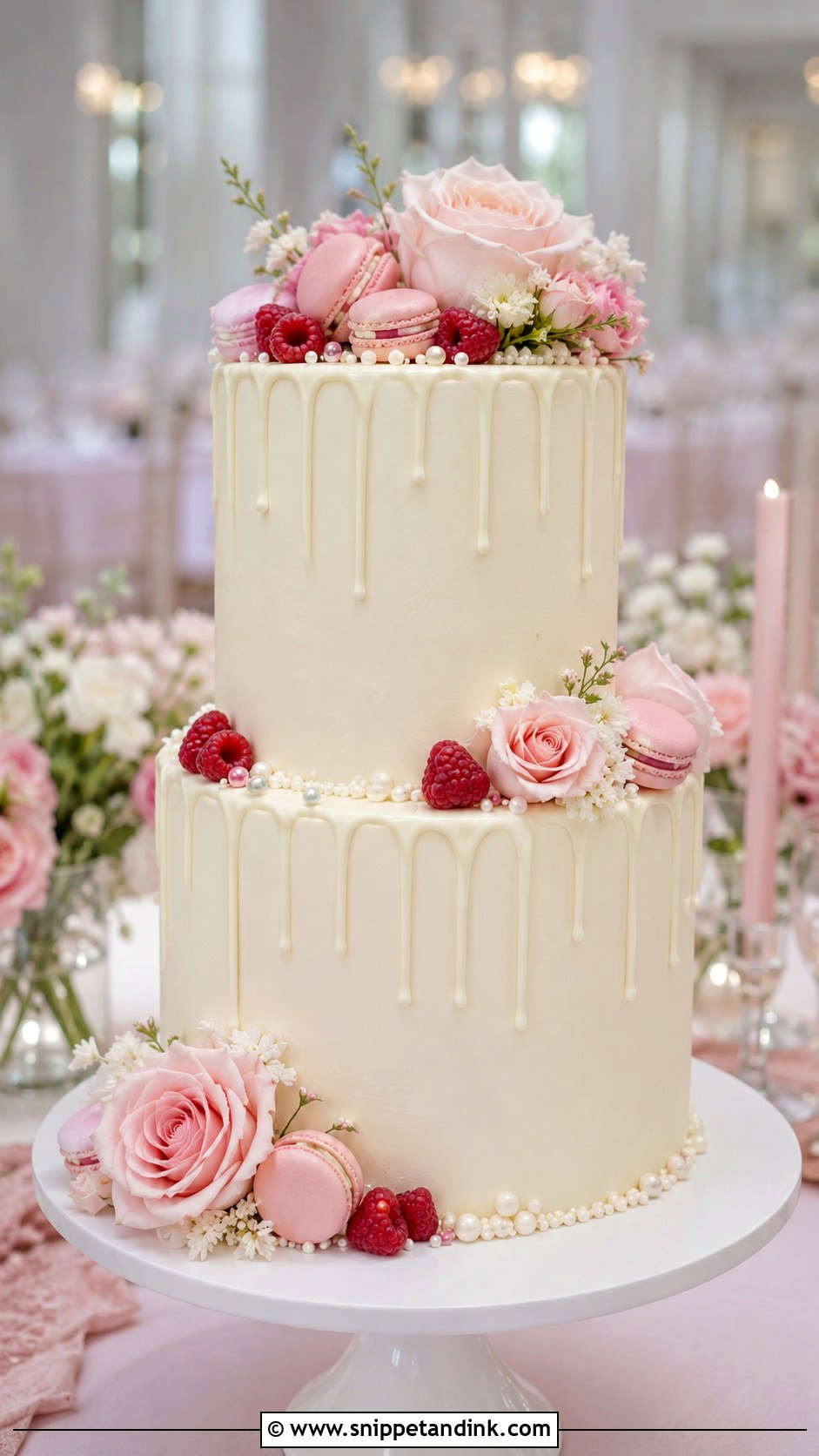
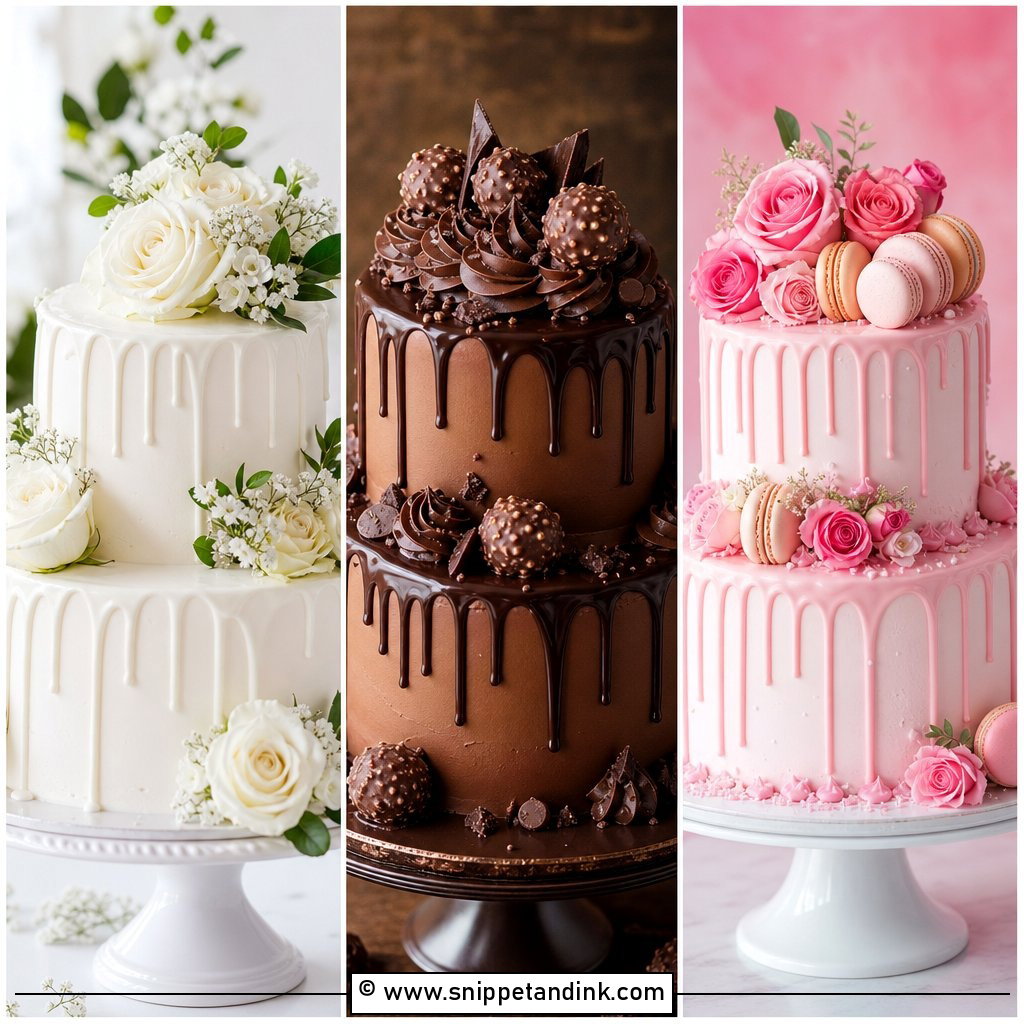
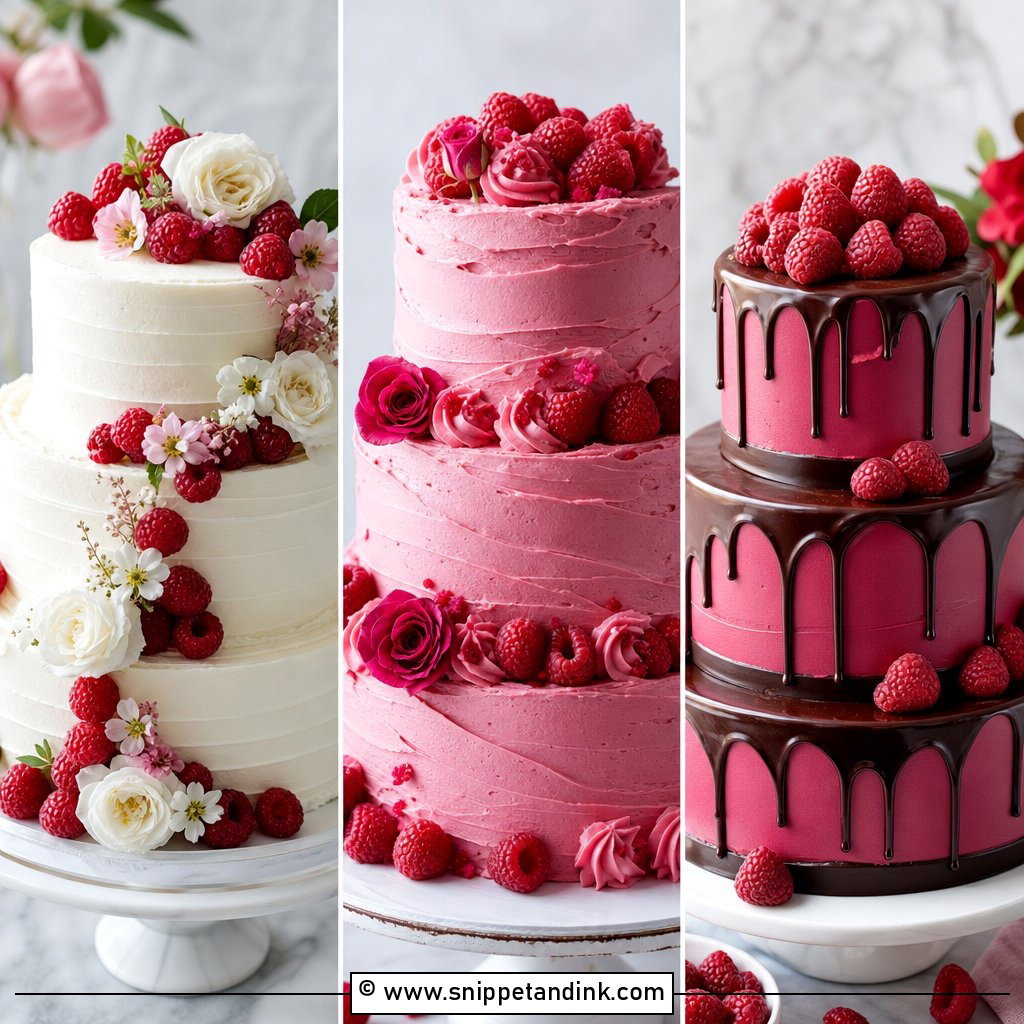
A drip finish looks simple, but it’s all about temperature. The ganache or caramel has to be just warm enough to flow, and the cake has to be fridge cold so the drip stops partway down instead of pooling at the base. I test one drip on the back of the tier first. White chocolate over ivory buttercream reads soft and classic, while dark chocolate over mocha cake feels richer. For a wedding I keep the drips even and spaced so they look intentional, then crown the top with flowers, berries or macarons.
How I Run a Frosting Tasting So You Actually Learn Something
Couples often taste cake flavors at a tasting and forget to taste the frosting on its own. I put out small spoonfuls of each buttercream next to the sponges, because a frosting that’s lovely in a thin filling can feel heavy as a thick outer coat.
Taste it at the temperature it will be served
Buttercream straight from the fridge tastes waxy and flat. Let the samples come up to room temperature for half an hour, the same way the wedding cake will, and judge them then.
Ask how the finish is built
A good baker will tell you exactly what goes under the outer coat. Ask whether there’s a crumb coat, whether the tiers are doweled, and whether a soft frosting is being used only inside with something firmer outside. Those answers tell you more about how the cake will hold up than any portfolio photo.
Count the guests who can’t eat it
Marzipan and some praline fillings contain nuts, and most buttercreams contain dairy. If you know of allergies or vegans on the guest list, a small separate cake or a set of cupcakes in a safe recipe is usually easier than reworking the whole design. Mention it early, because it changes how the kitchen is scheduled.
Matching the Frosting to Your Room, Your Season and Your Guests
No single frosting wins on every count. Buttercream is the most flexible, fondant gives the cleanest surface, ganache brings structure and the whipped and cream cheese styles are the most delicious but the least forgiving. Start with where the cake will stand and for how long, then pick the flavor and the finish from what can survive there. A cake that looks crisp at the first photo and still tastes good at the last slice is the one I’d always aim for.
You'll Like These Ideas:






Leave a Reply