
When a cake is meant to be the centerpiece of a reception, I design it for two distances at once: the far end of the room, where guests see only its outline, and the cutting moment, when a camera is a foot away. Texture, fruit, vintage piping, sculpted tiers, bows and color all do well at one of those distances and not always both. The thirty designs here are the ones couples bring to my tastings most often, with what I’d tell you about each before you book.
Staging a Cake Table That Reads From the Back of the Room
A centerpiece cake only works if the room lets it. I ask for a floor plan early, because where the table sits decides how big and how tall the cake needs to look.
- Put the table against a plain wall, a floral backdrop or a window with diffused light. A busy background swallows a white cake in photos.
- Use a round table about the width of the base tier plus a margin for flowers, so the cake doesn’t float on a large empty cloth.
- A cake stand adds a few inches of height and lifts the base tier above table clutter. Choose a stand rated for the weight; a tall tiered cake can weigh a surprising amount.
- Light it. A small pin spot or warm uplight from the venue makes texture and piping visible from across the room; overhead fluorescent light flattens them.
- Keep it away from heaters, sun through glass and the dance floor.
Tell your florist and your baker about each other. Flowers around the base should be finished before the cake arrives, so nobody is reaching across a set cake to tuck in stems.
1. Classic White Tiered Wedding Cake
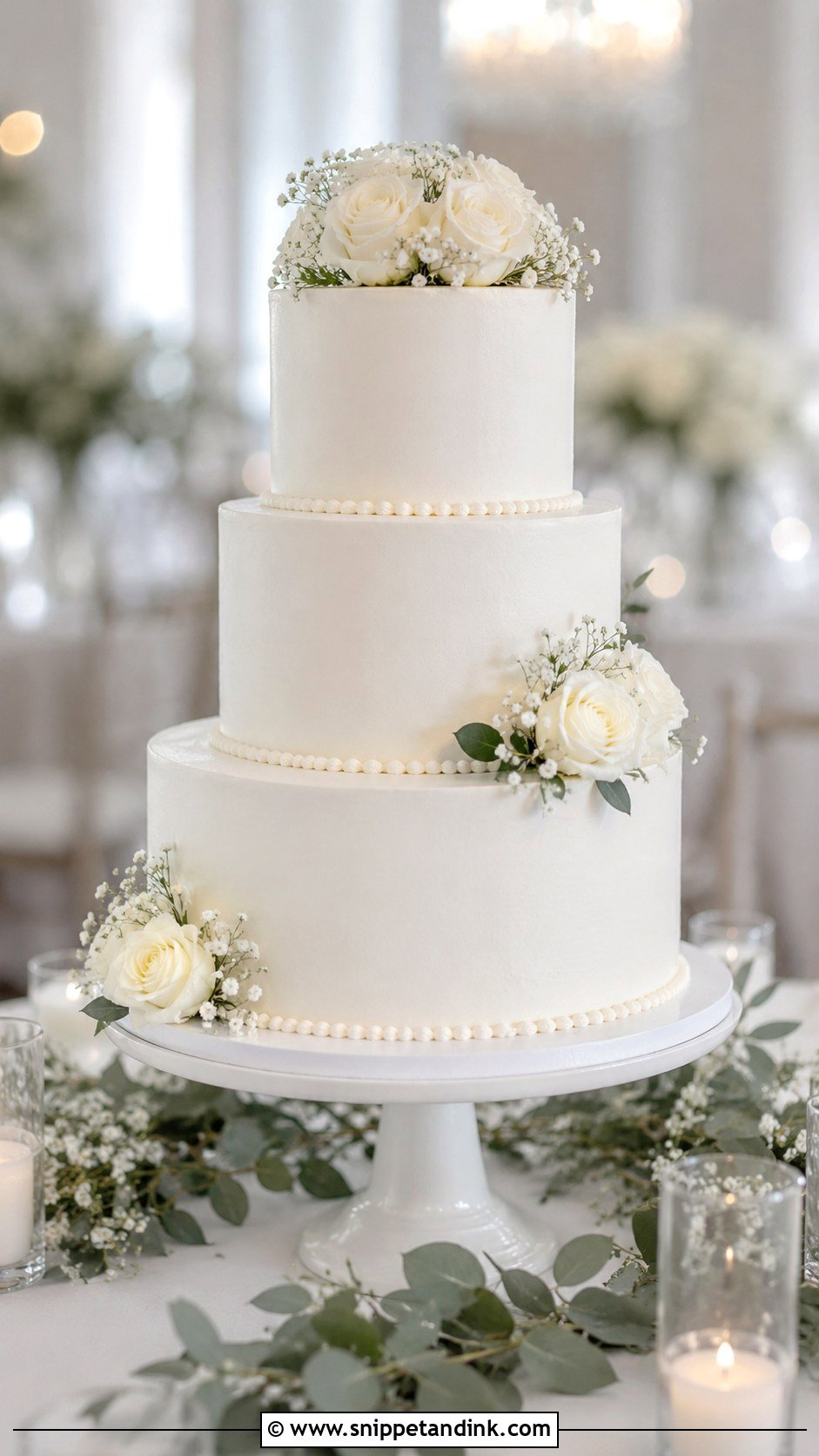
Plain white is the safest reception cake I make, and that’s its strength: it won’t date in photos and it doesn’t argue with any palette. Three or four tiers in smooth buttercream or fondant, finished with piped borders, pearls or a few white flowers, sit happily in a ballroom, chapel or country club. The detail I fuss over is tier height, because a stack of identical tiers looks heavy. Vanilla, almond, lemon or white chocolate suit most guests. Put it on a raised stand with candlelight behind it and the white glows rather than looking flat.
2. Three Tier Wedding Cake
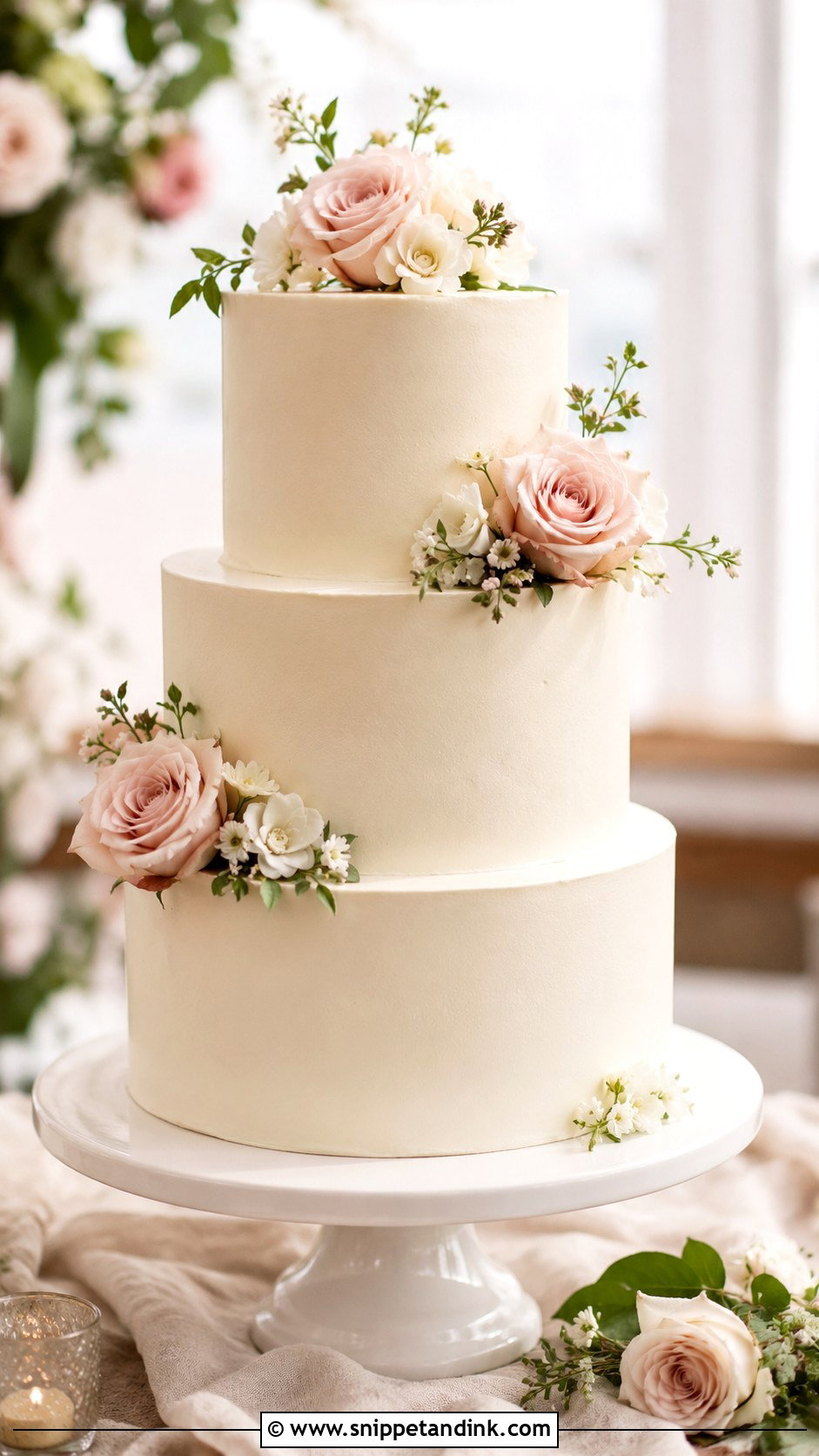
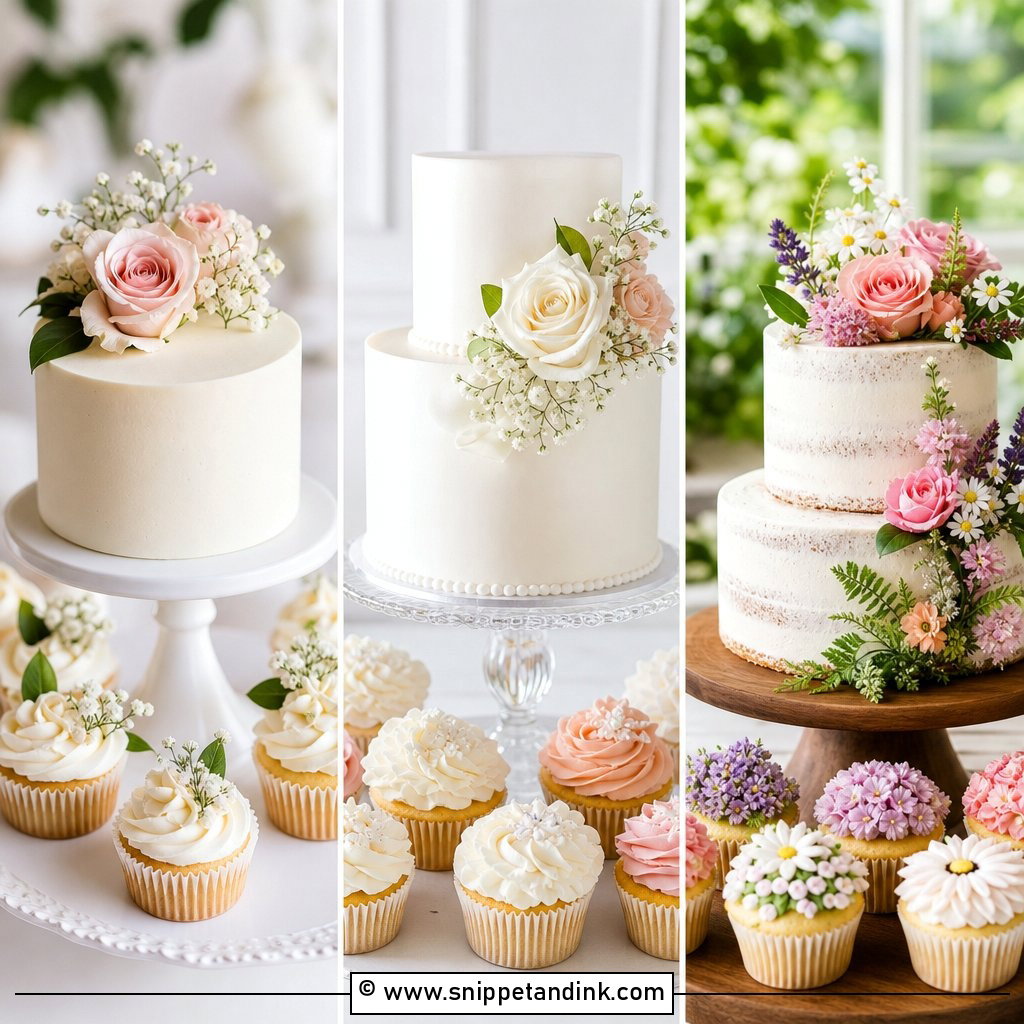
Three tiers is where most of my medium-size weddings settle. It’s tall enough to photograph well and still feeds a typical guest list without dummy tiers. I plan the sizes from the headcount first, then decide finish: smooth buttercream, pressed flowers or a light texture. If you want to keep the top tier for your first anniversary, tell your baker now so it’s left out of the serving count and boxed on the night. A sturdy internal support system matters even at this size. Mixed flavors, say vanilla, chocolate and lemon, keep guests happy.
3. Four Tier Wedding Cake
Four tiers turn a cake into a room feature, which is why I suggest it for big ballrooms, hotel receptions and tents with high ceilings. It also gives room to combine finishes: smooth ivory fondant on two tiers, fine piping on a third, a floral cascade across the front. Guests across the room can actually see it. Choose flavors that cut cleanly at this size, such as almond, vanilla bean, red velvet or chocolate ganache, because very soft sponges and loose fillings squash under the weight above them.
4. Five Tier Wedding Cake
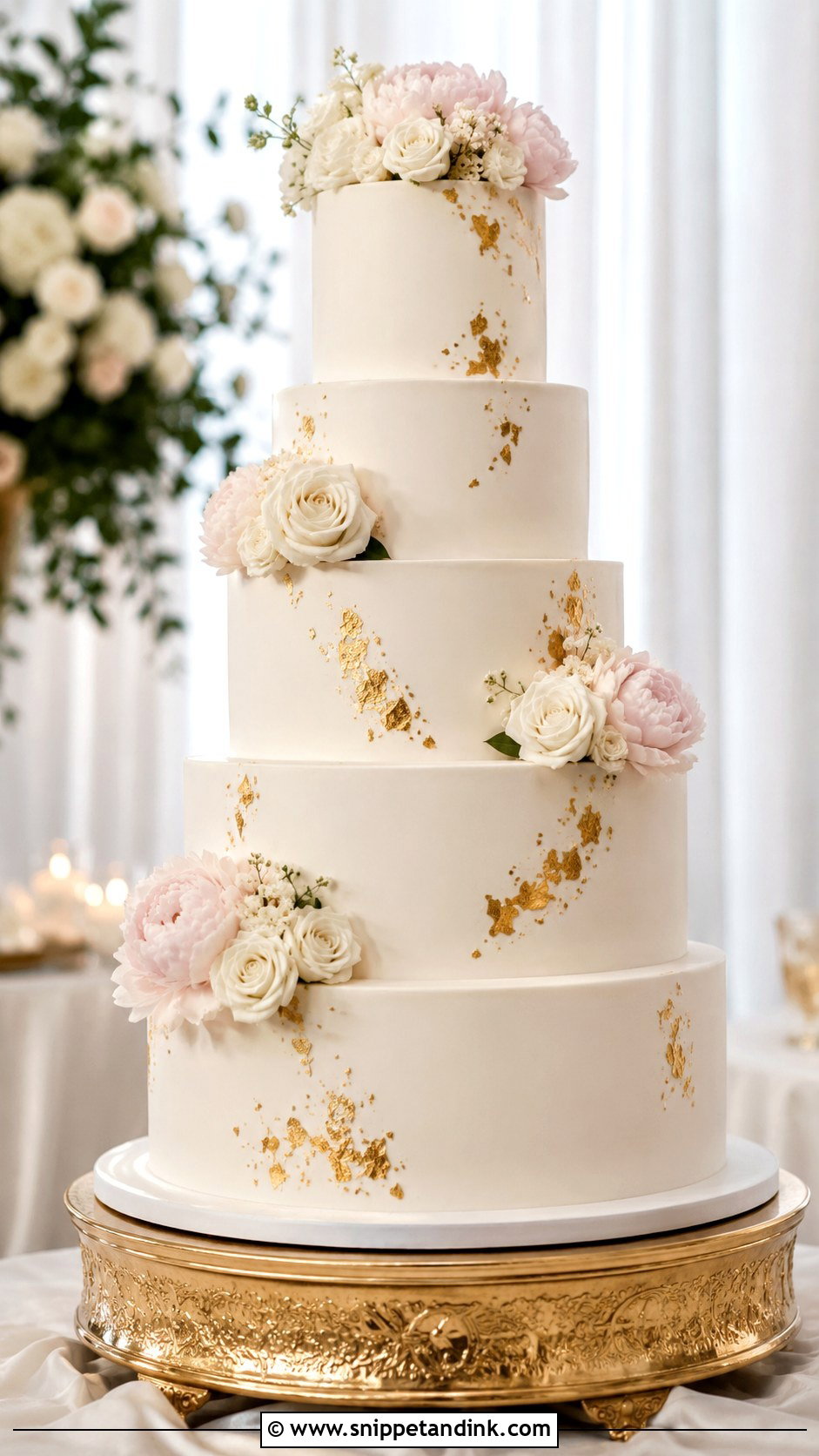
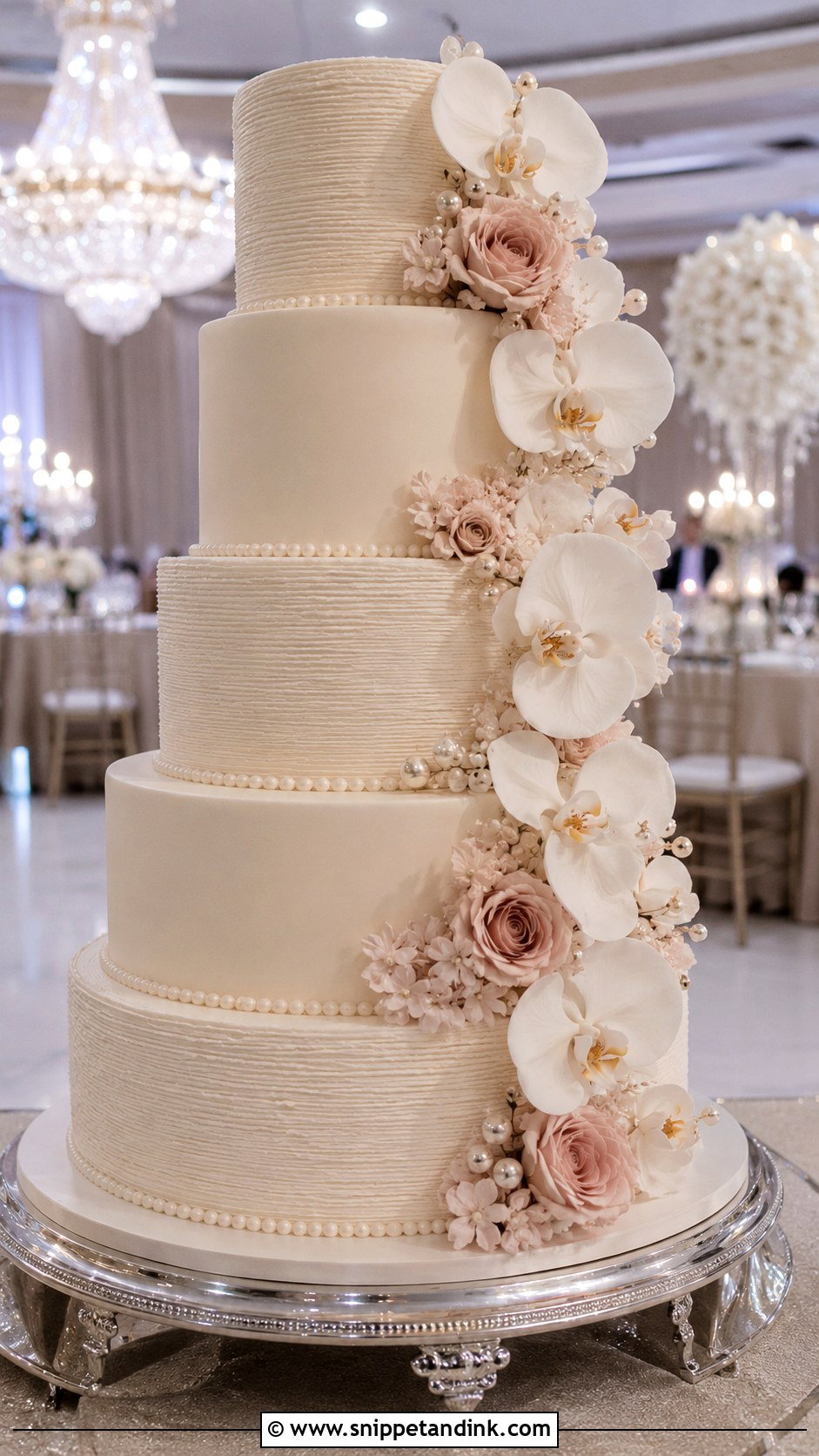
Five tiers is a statement and a logistics project. I wouldn’t put one near a dance floor or a doorway where staff carry trays, because a bump to a cake that tall is hard to recover from. Plan the design from top to bottom, alternating smooth and textured tiers and placing flowers in clusters. Strong dowels, careful delivery and a stable table are non-negotiable. Many couples I work with make one or two tiers decorated foam dummies to keep servings and budget sensible. Ivory, blush and champagne florals keep the height feeling soft.
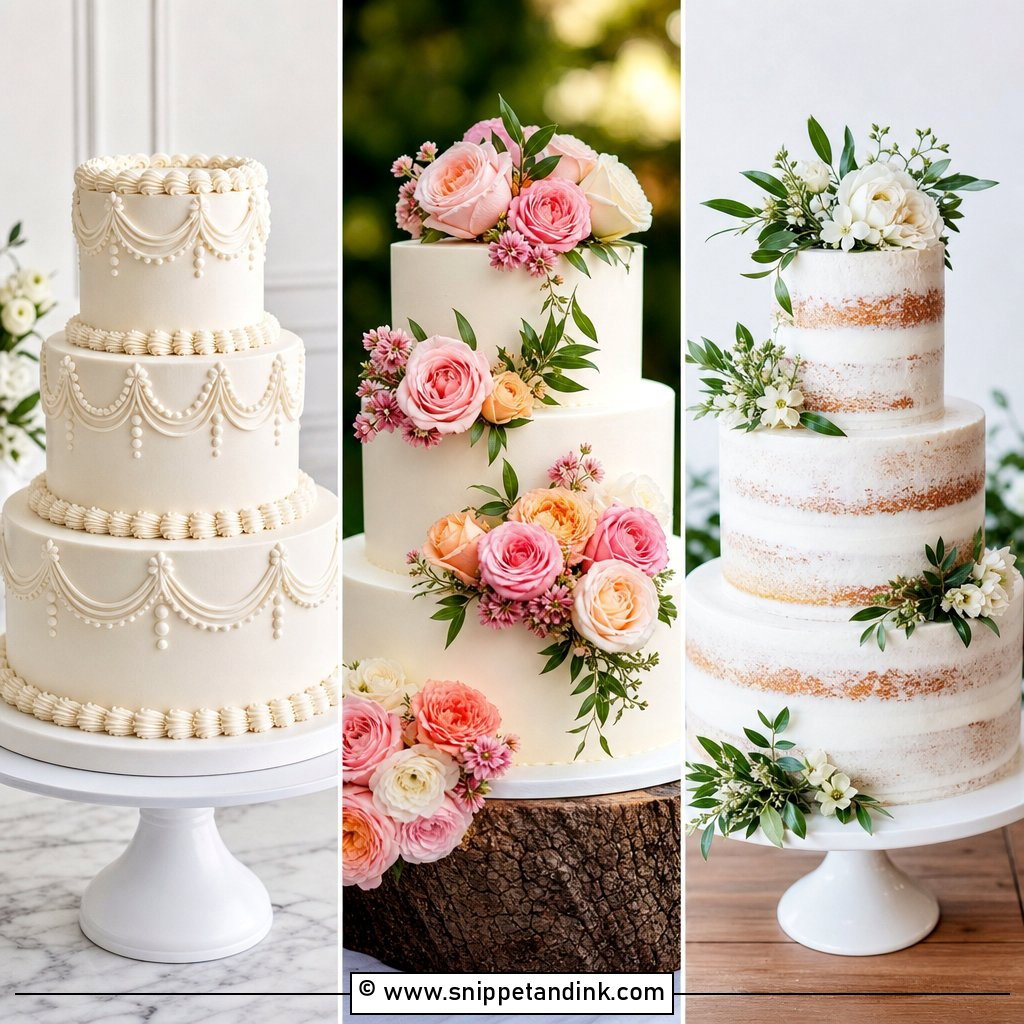
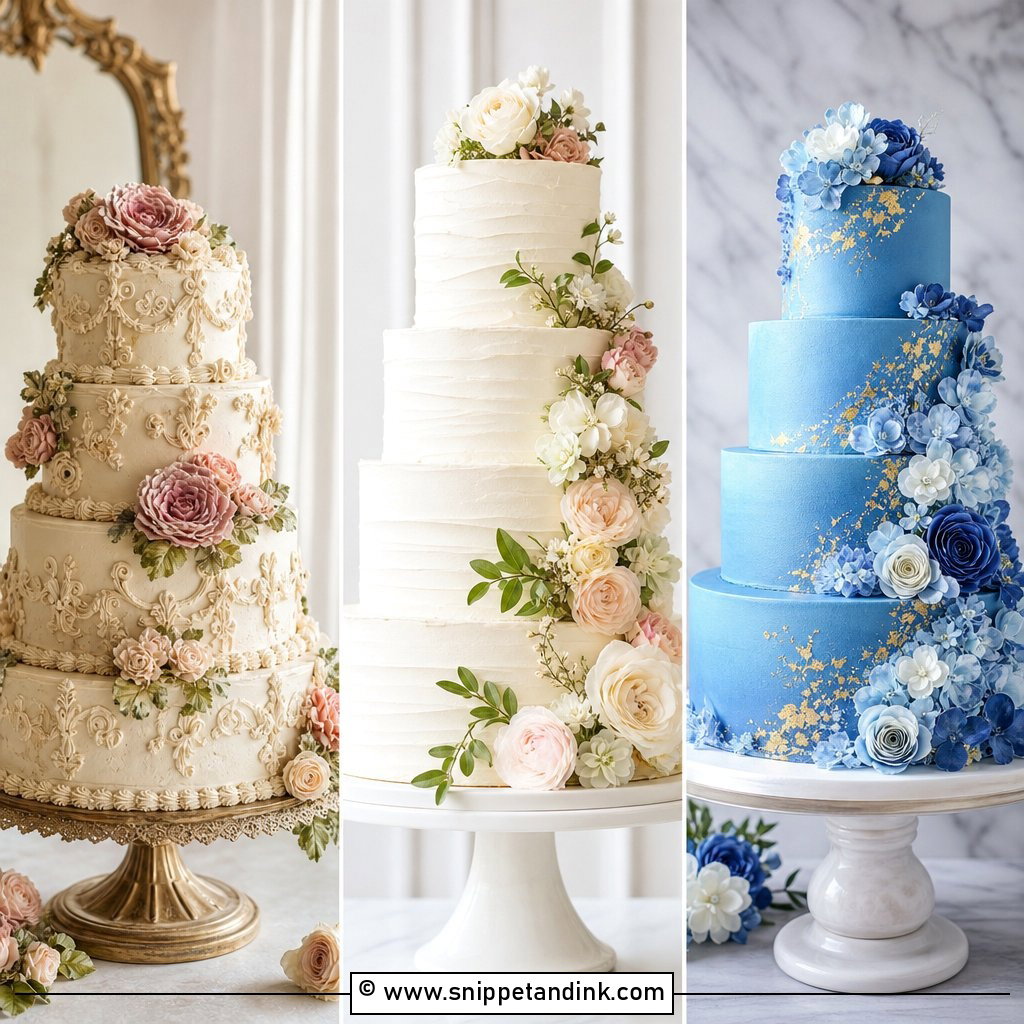
5. Vintage Tiered Wedding Cake
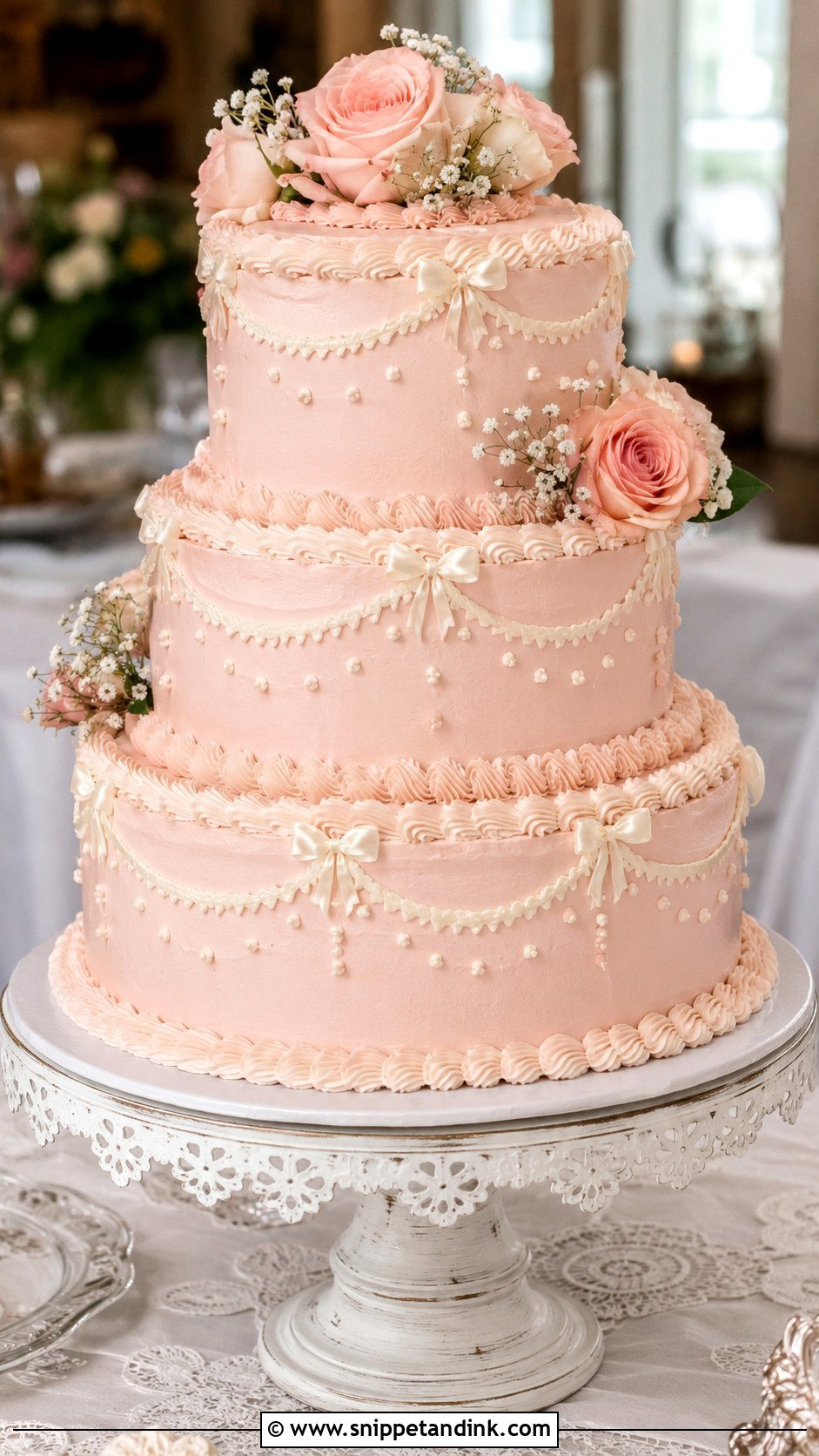
Vintage piping is about rhythm: shell borders, swags, bows and ruffles repeated evenly round every tier. When it goes wrong, it’s usually because the tiers underneath weren’t perfectly smooth and level, and the piping exaggerates every wobble. White, ivory, pale pink and soft blue buttercream suit the style. A lace cloth and soft florals on the table finish the nostalgic mood. I always pipe a small sample board at the tasting so couples can choose how dense they want the decoration. Vanilla bean, strawberry or lemon raspberry fit the look.
6. Lambeth Tiered Wedding Cake
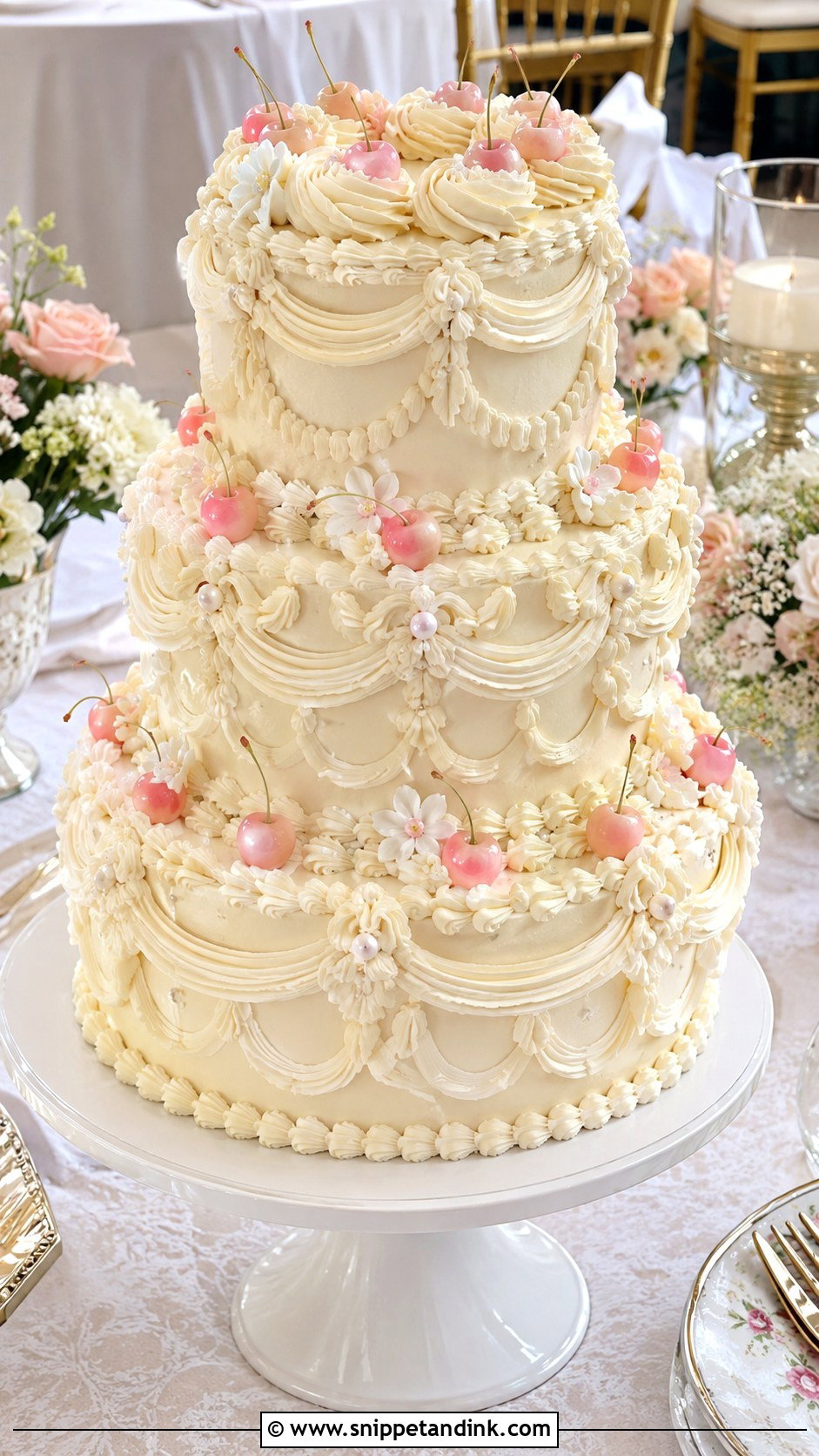
Lambeth is vintage piping turned up: layer upon layer of over-piped scallops, garlands and raised borders. Each layer has to crust before the next goes on, so it’s slow work and the labor shows in the price, which is worth raising early. It looks best on round tiers, where the curves carry the piping. All white reads classic; pastel pink, sage or pale butter yellow is more playful. Cherries, bows and pearls are traditional extras. Vanilla almond, raspberry cream, chocolate or a vanilla with a champagne-style flavor (alcohol-free) suit it.
7. Pearl Tiered Wedding Cake
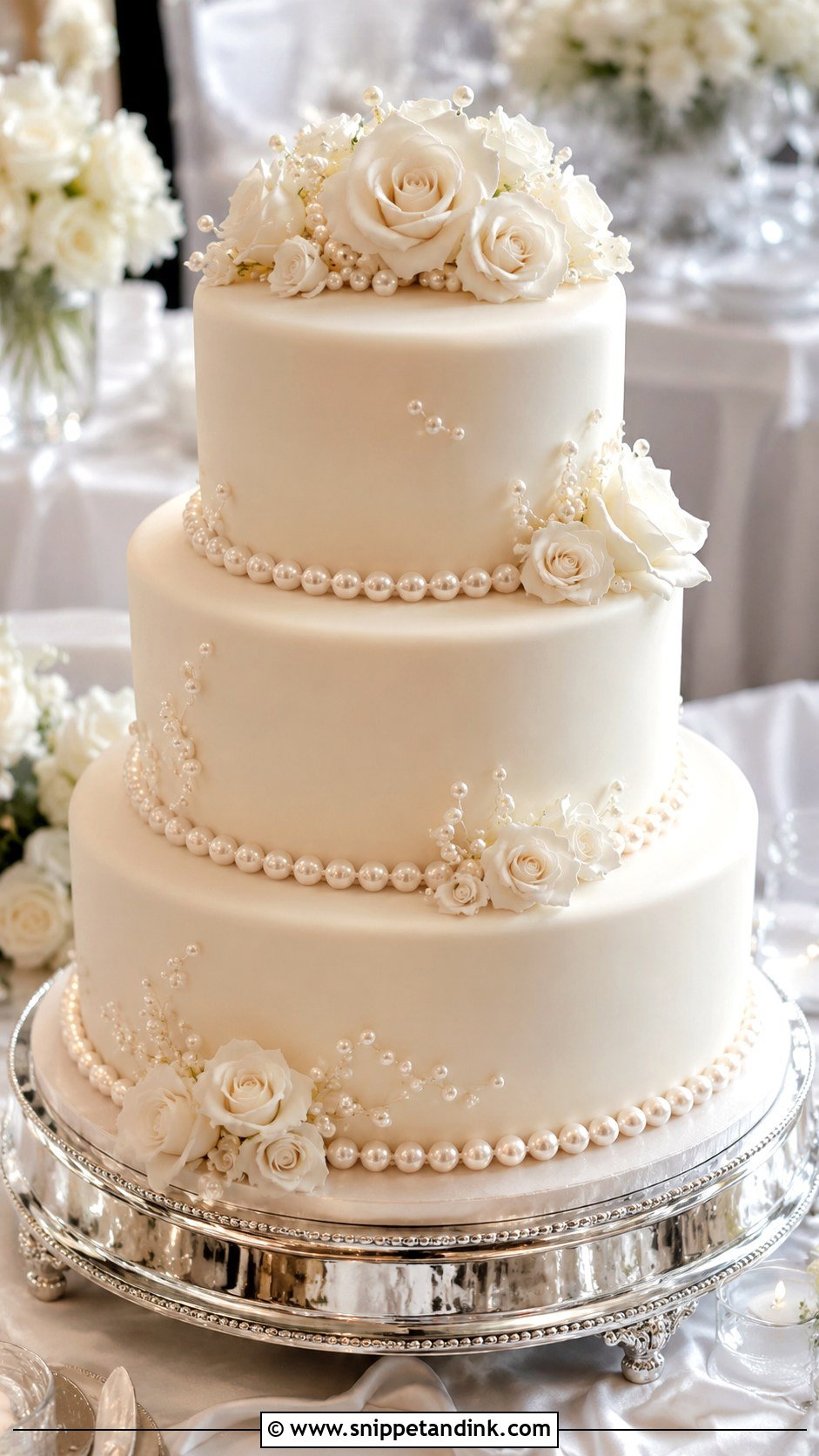
Pearls are the easiest cake detail to match to bridal fashion, especially satin gowns and pearl earrings. I place them as tiny edible beads along borders, scatter them across fondant or set them in vertical lines. Keep the frosting plain and let the pearls supply texture. Hard sugar pearls are crunchy, so I stick to softer fondant pearls on any surface that gets sliced. Ivory, white and pale blush are safest. Vanilla bean, coconut, almond or white chocolate raspberry sponge suits it, and a plain white or silver stand finishes it.
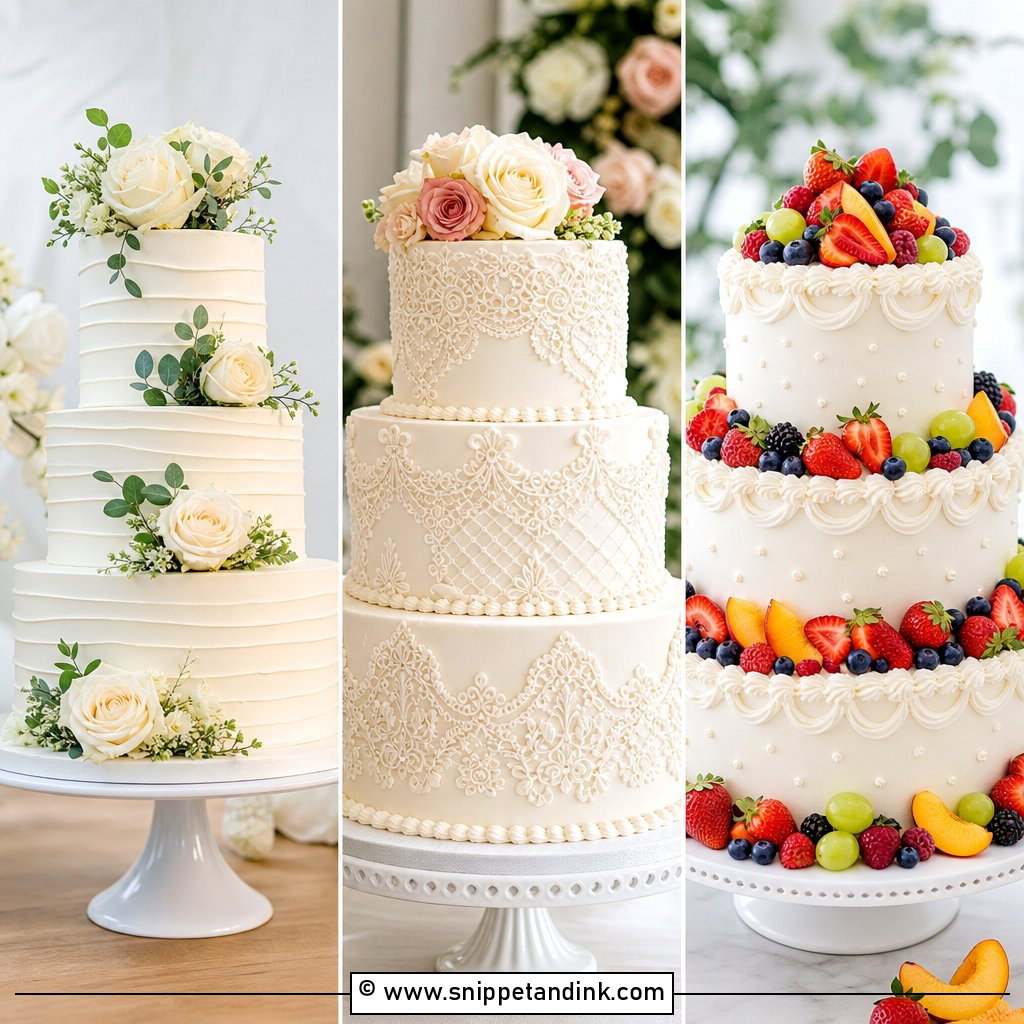
8. Floral Tiered Wedding Cake
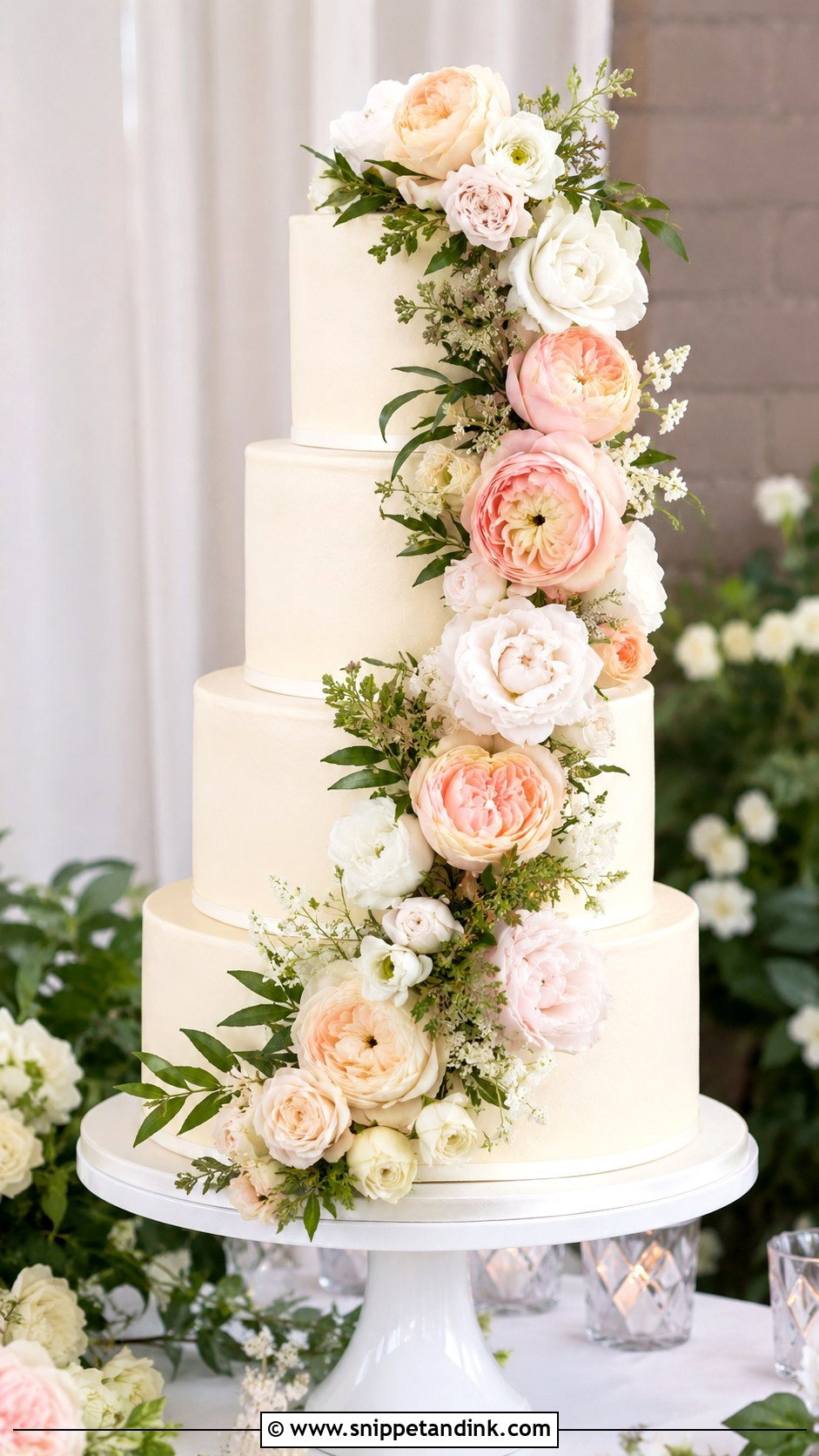
Flowers link the cake to the bouquet and centerpieces more directly than anything else. Sugar flowers give me full control and are safe on food; fresh flowers are cheaper and fresher-looking but need care, because many common blooms shouldn’t touch cake at all. Stems get wrapped and inserted into food-safe picks, never straight into sponge. A loose arrangement with greenery suits a garden; tight, sculpted clusters suit a formal room. Roses, ranunculus, peonies and orchids are favorites. Pair with vanilla, lemon, berry or almond.
9. Buttercream Tiered Wedding Cake
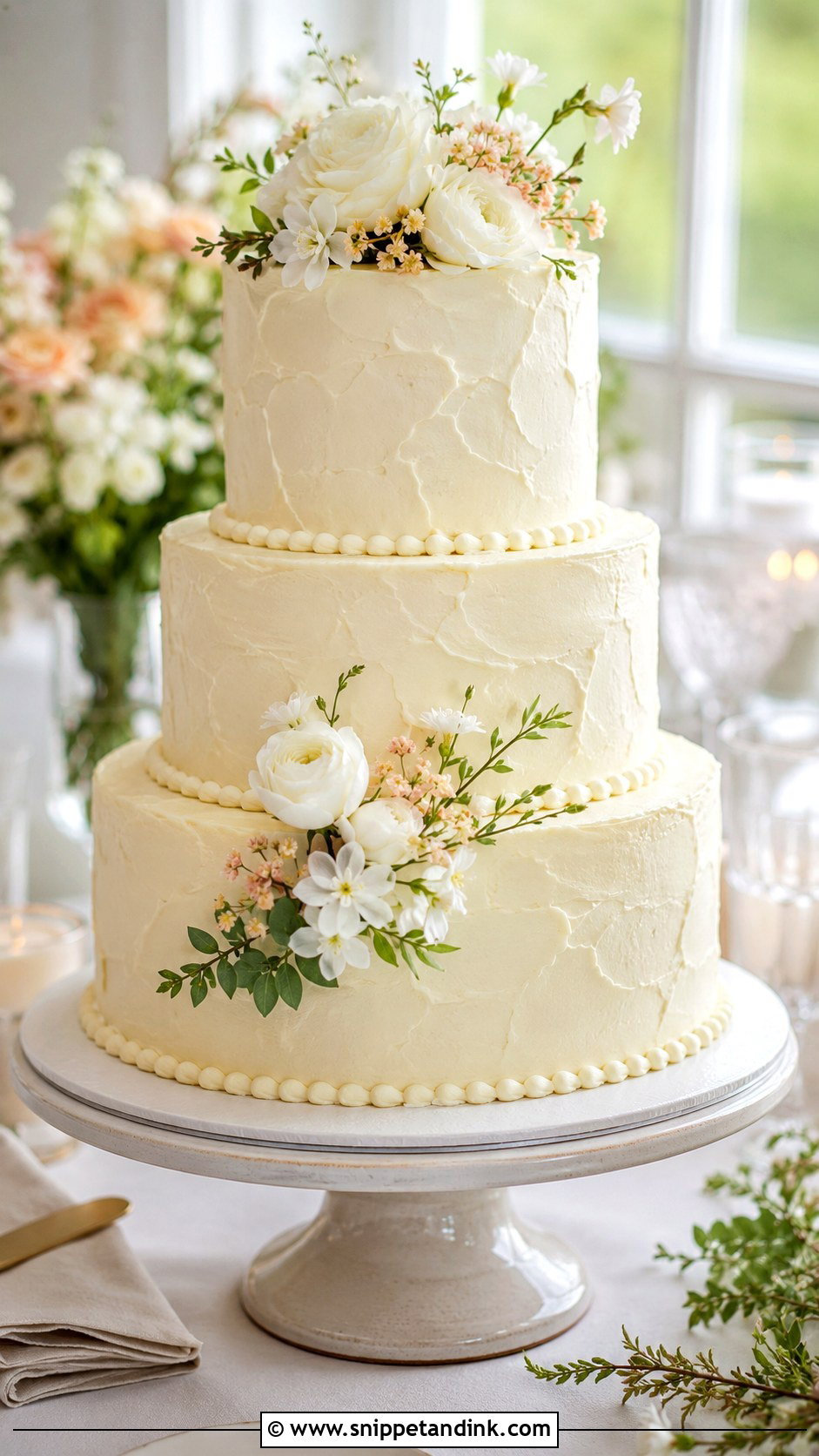
Most guests prefer the taste of buttercream, and it can be smooth, lightly textured or piped. The honest limit is temperature: it’s happiest in cool indoor rooms or deep shade. You can decorate it with flowers, fruit, pearls, ribbon or simple piping. I’d always ask which buttercream a baker uses. American buttercream is sweet and crusts; Swiss and Italian meringue are silkier and less sweet but softer in heat. Vanilla bean, lemon, chocolate, carrot and strawberry are the usual favorites.
10. Fondant Tiered Wedding Cake
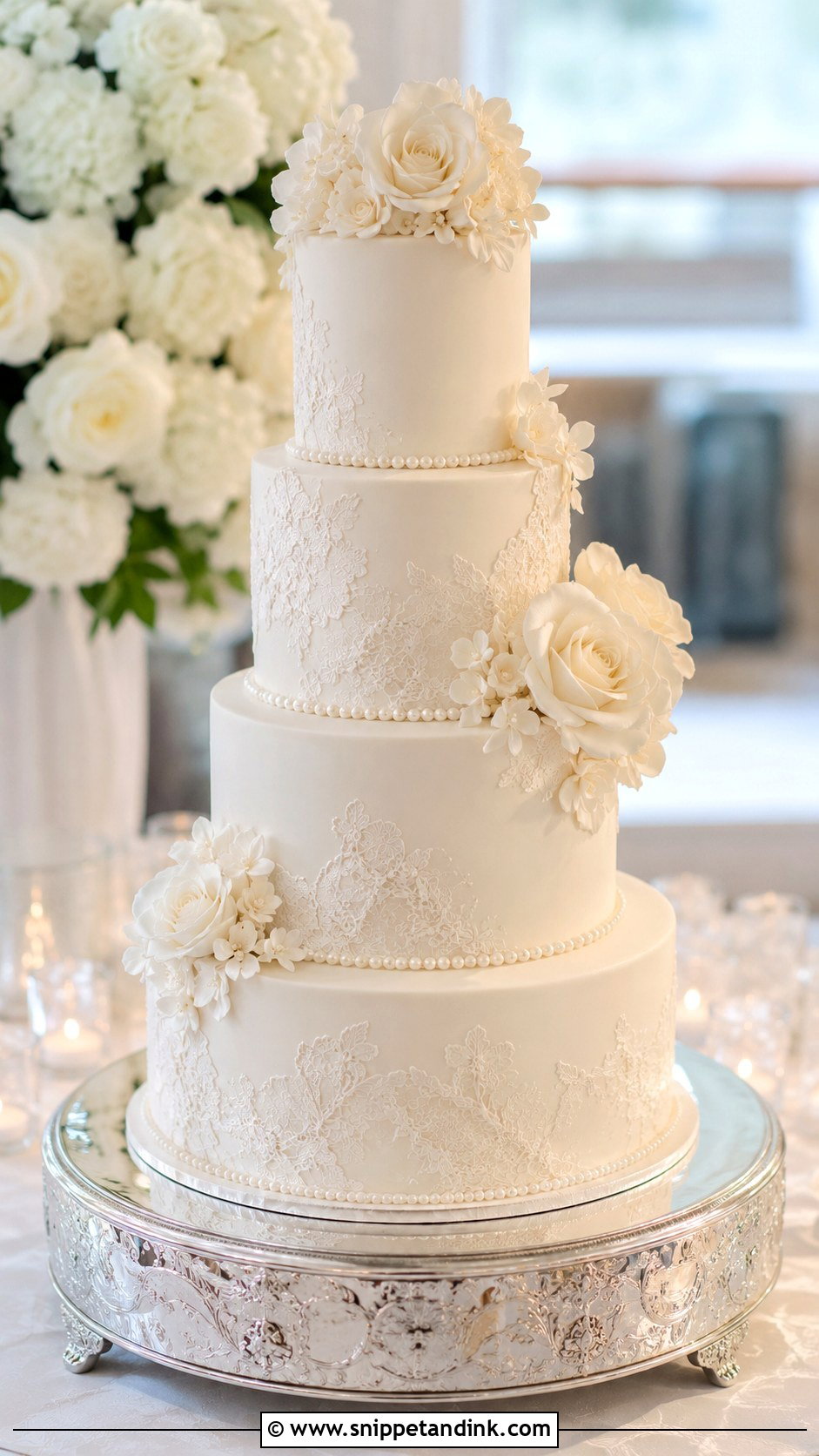
Fondant gives the flawless, crisp surface that formal photography loves, and it’s the base I need for painted designs and sugar flowers. In a warm room it protects the cake better than buttercream. If you worry about the taste, ask for a thin layer of fondant over ganache or buttercream, which gives structure without a thick sugary shell. White, ivory, blush, sage and pale blue are common colors. Vanilla almond, chocolate raspberry, lemon and coconut keep the inside interesting.
11. Minimalist Tiered Wedding Cake
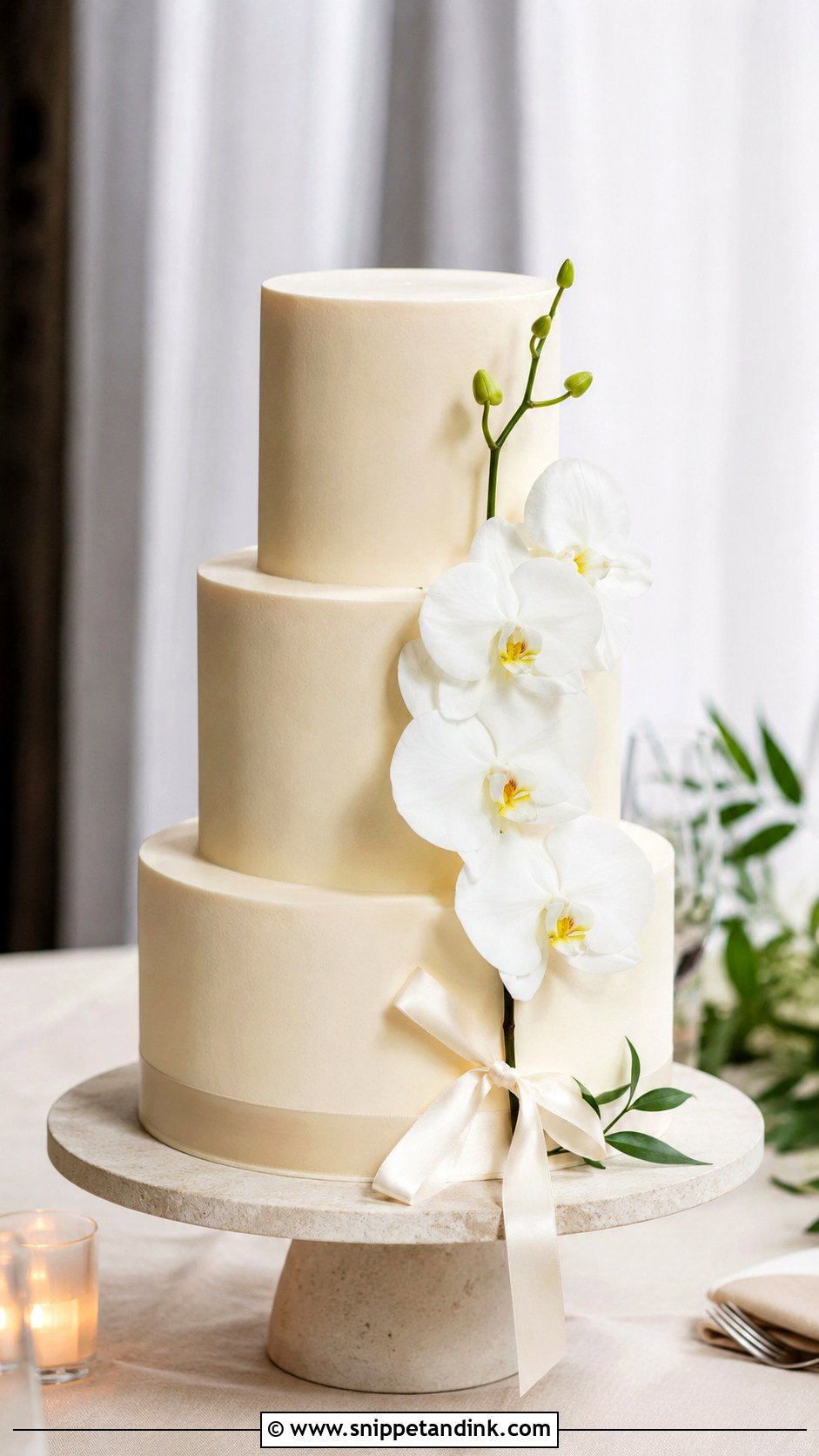
Minimal cakes leave nowhere to hide. With smooth frosting, sharp edges and almost no decoration, every dent, air bubble and uneven tier shows, so this design depends entirely on finishing skill. Ask to see photos of a baker’s plain cakes, not their busiest ones. Ivory buttercream, white fondant or a soft stone color looks refined in a gallery, rooftop or intimate venue. One stem, one bow or one clean ribbon is enough. Vanilla, lemon, almond and white chocolate suit the calm look.
12. Modern Tiered Wedding Cake
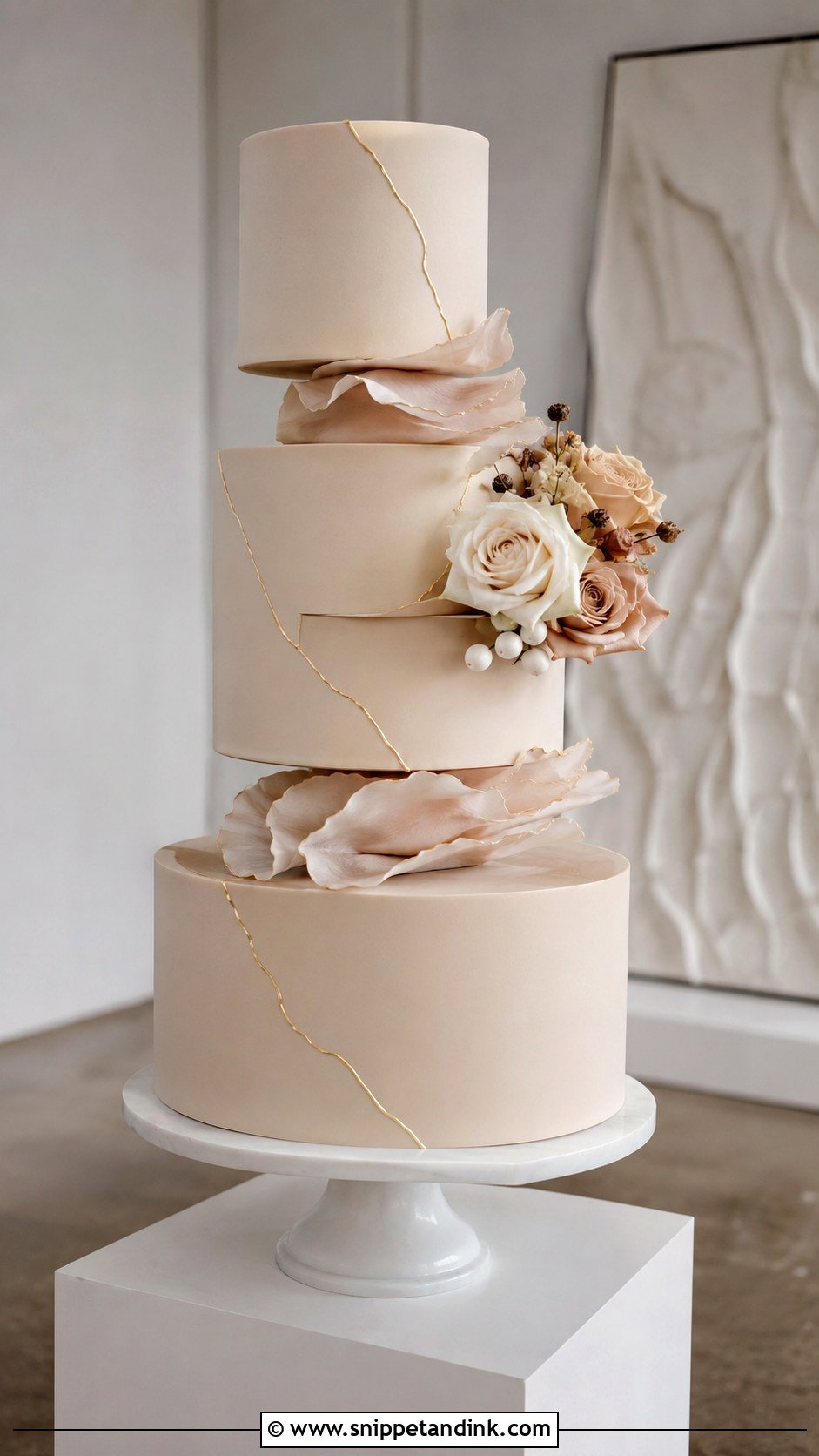
Modern cakes play with proportion: tall narrow tiers, round and square tiers mixed, or a floating separator that leaves a gap of air between layers. Separators need careful engineering, since the upper tiers rest on a hidden plate and pillar rather than on cake. Keep color controlled so shape leads, with white, ivory, taupe, soft gray or muted blush. One modern floral cluster, sugar petals or a textured fondant panel finishes it. Vanilla bean, alcohol-free chocolate espresso, lemon cream or pistachio fit.
13. Square Tiered Wedding Cake
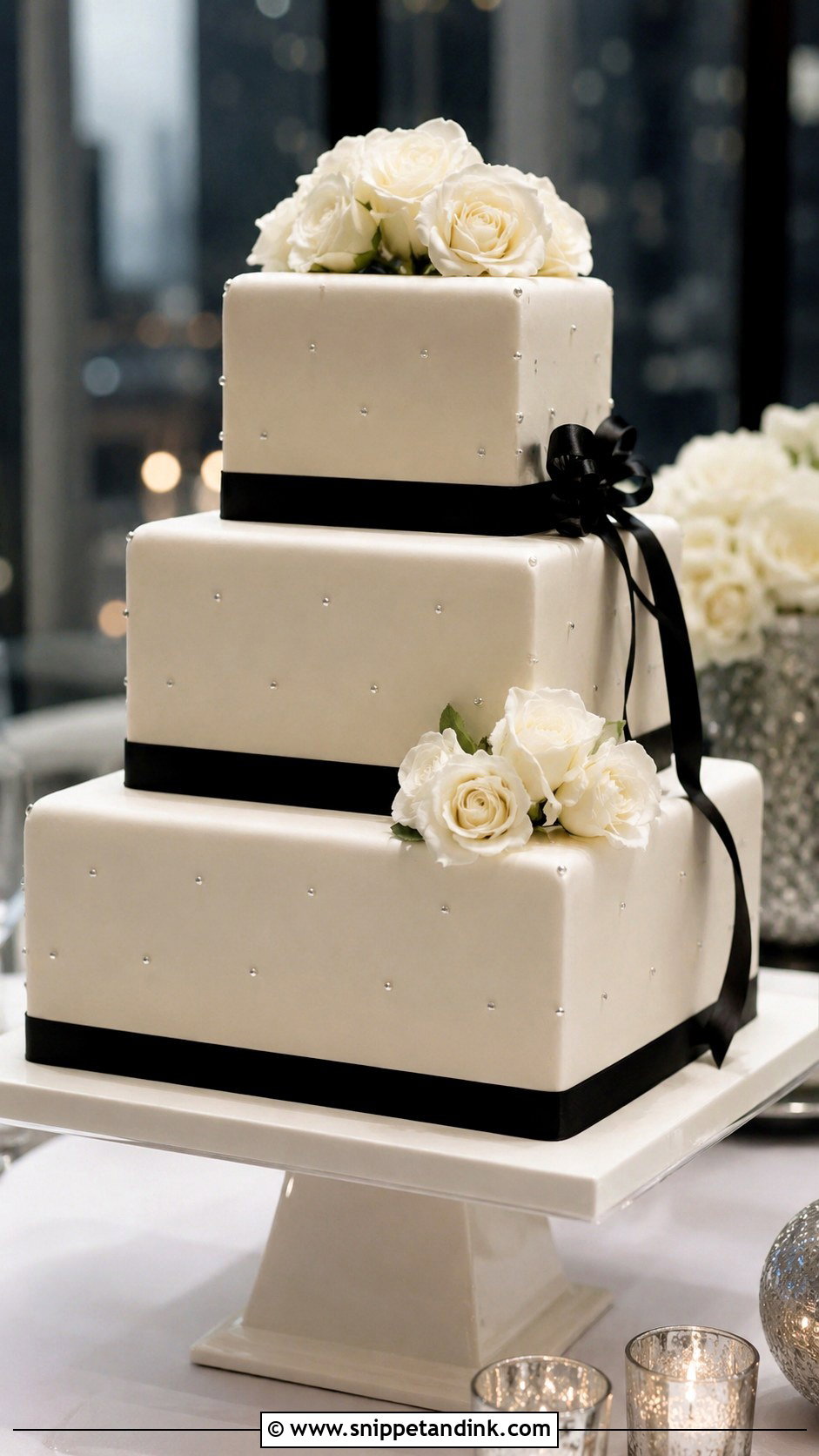
Square tiers look crisp from the back of the room because their corners catch light in a way round tiers don’t. Getting those corners sharp is the hard part; I cover squares in fondant over set ganache, since buttercream tends to round off at the points. Metallic trim, ribbon bands or geometric piping suit city venues. Decorate one face properly and keep the others quieter, or the cake looks busy. White, ivory and black-and-white palettes look sharp. Chocolate, vanilla, almond and red velvet are good flavors.
14. Round Tiered Wedding Cake
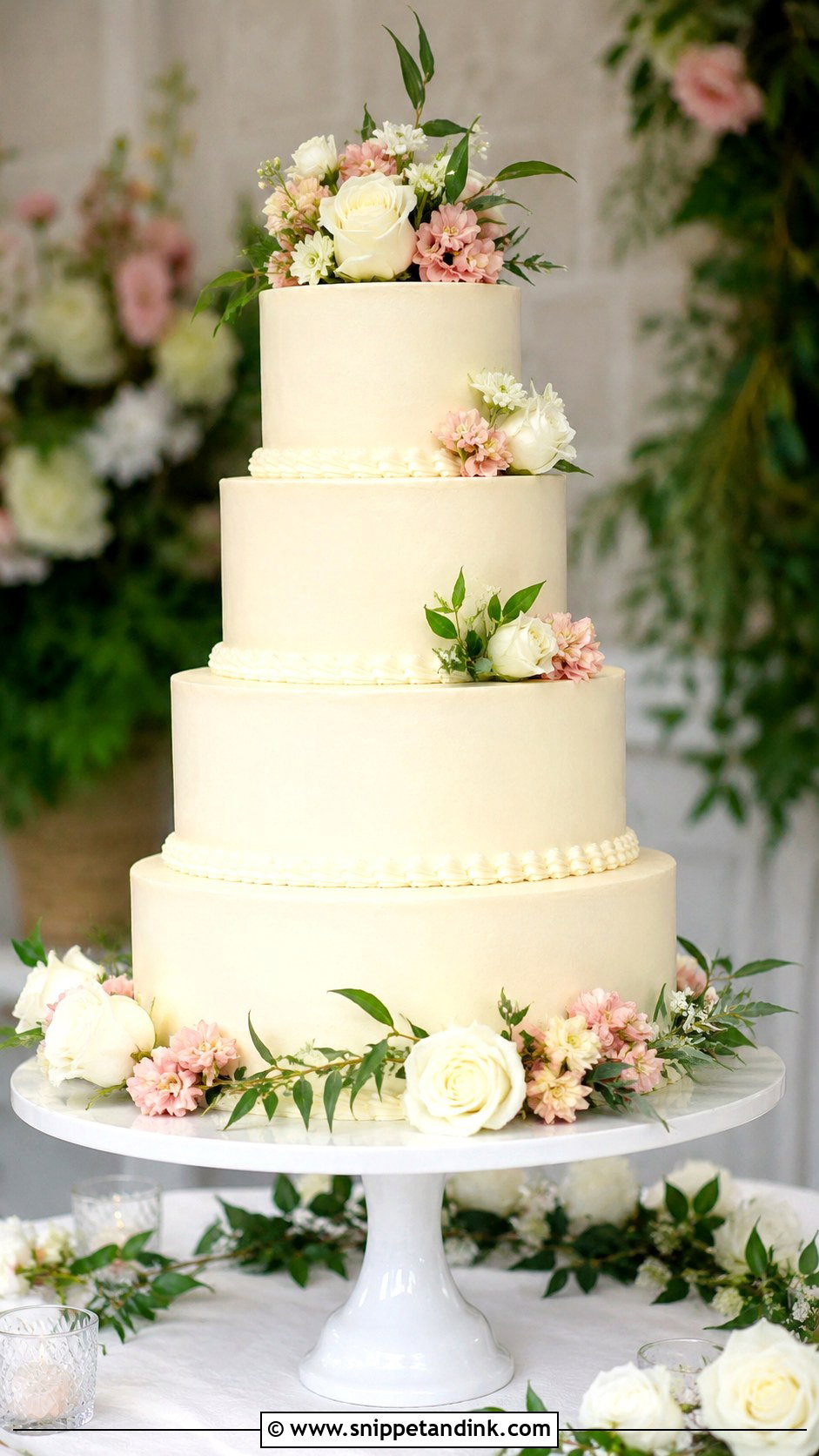
Round is the shape every baker trusts. It stacks evenly, cuts neatly and takes almost any finish without a fight, from buttercream texture to ruffles, fruit or piping. For a traditional look, I use evenly graduated tiers. For a more current shape, I’d suggest taller tiers or a deliberately wide base tier. Vanilla bean, lemon, chocolate, almond and strawberry cream all suit it.
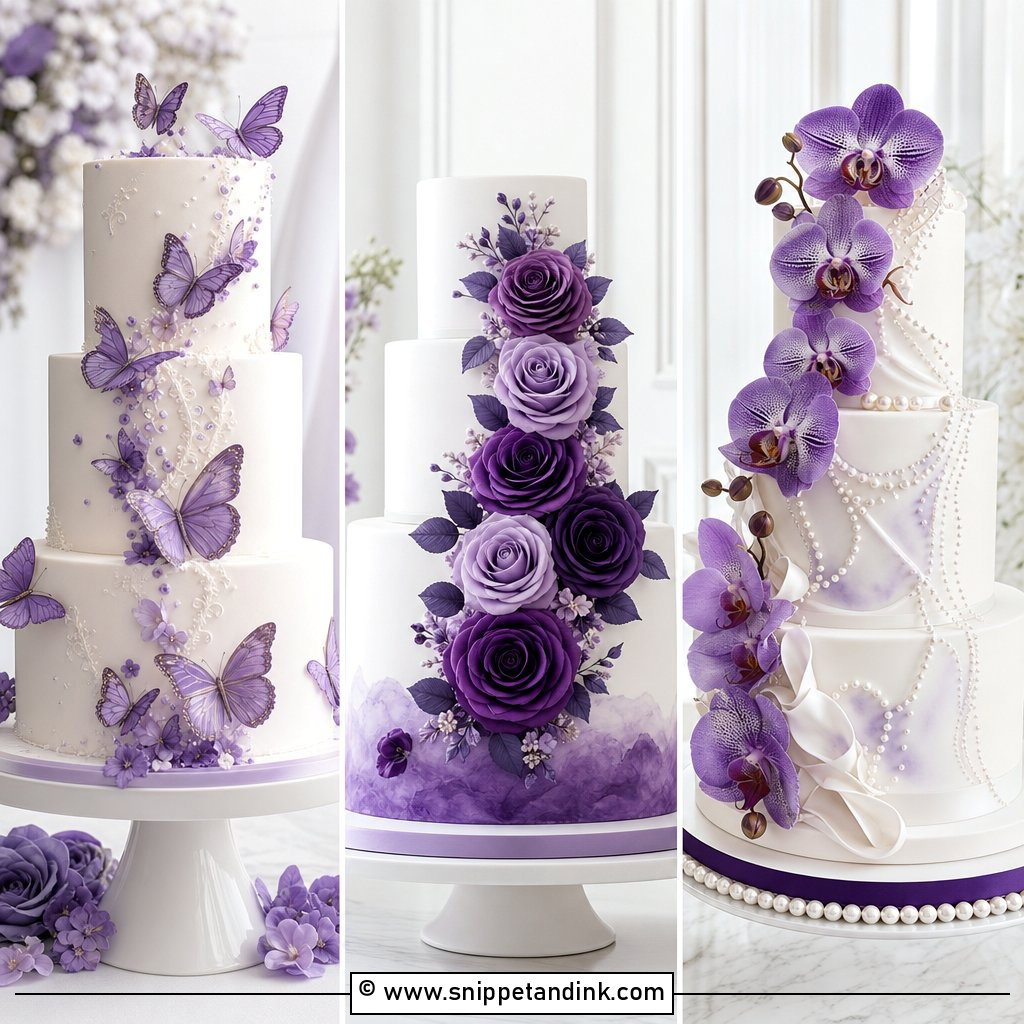
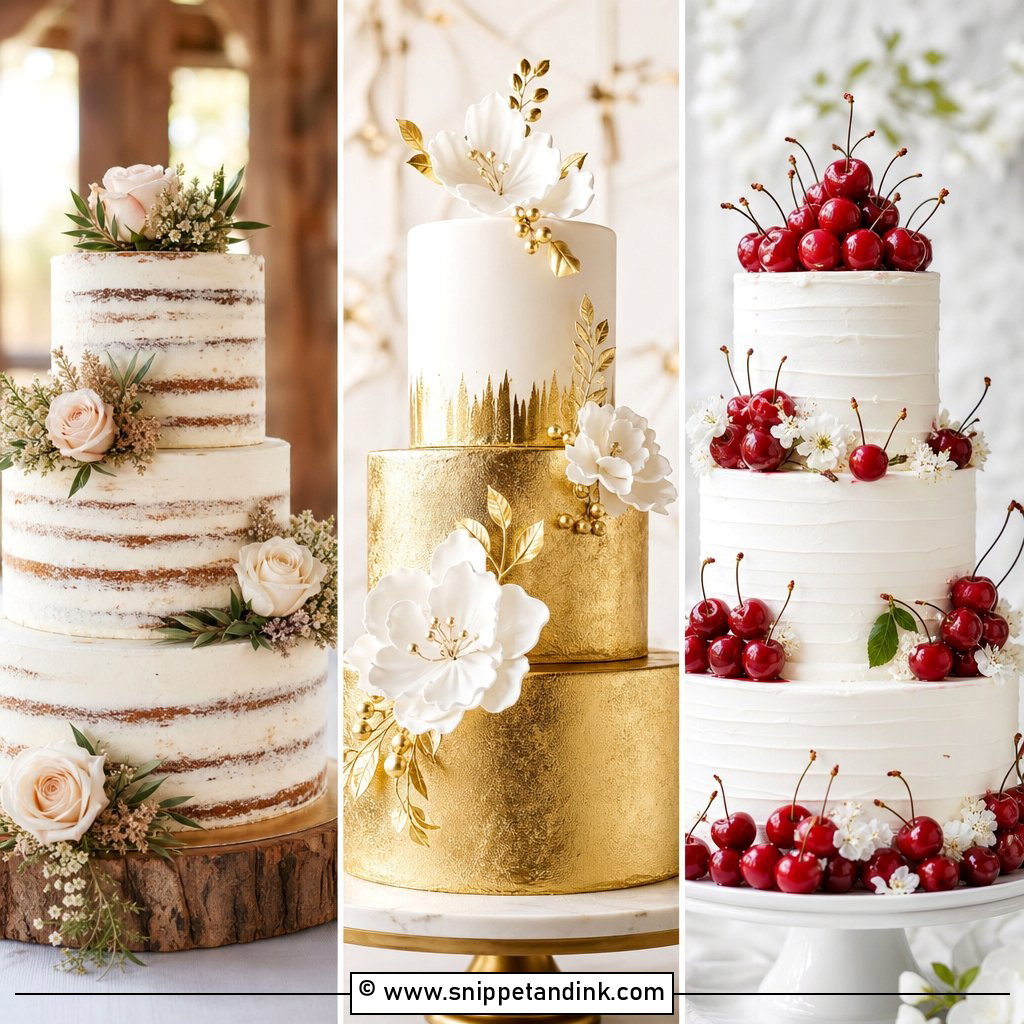
15. Rustic Tiered Wedding Cake
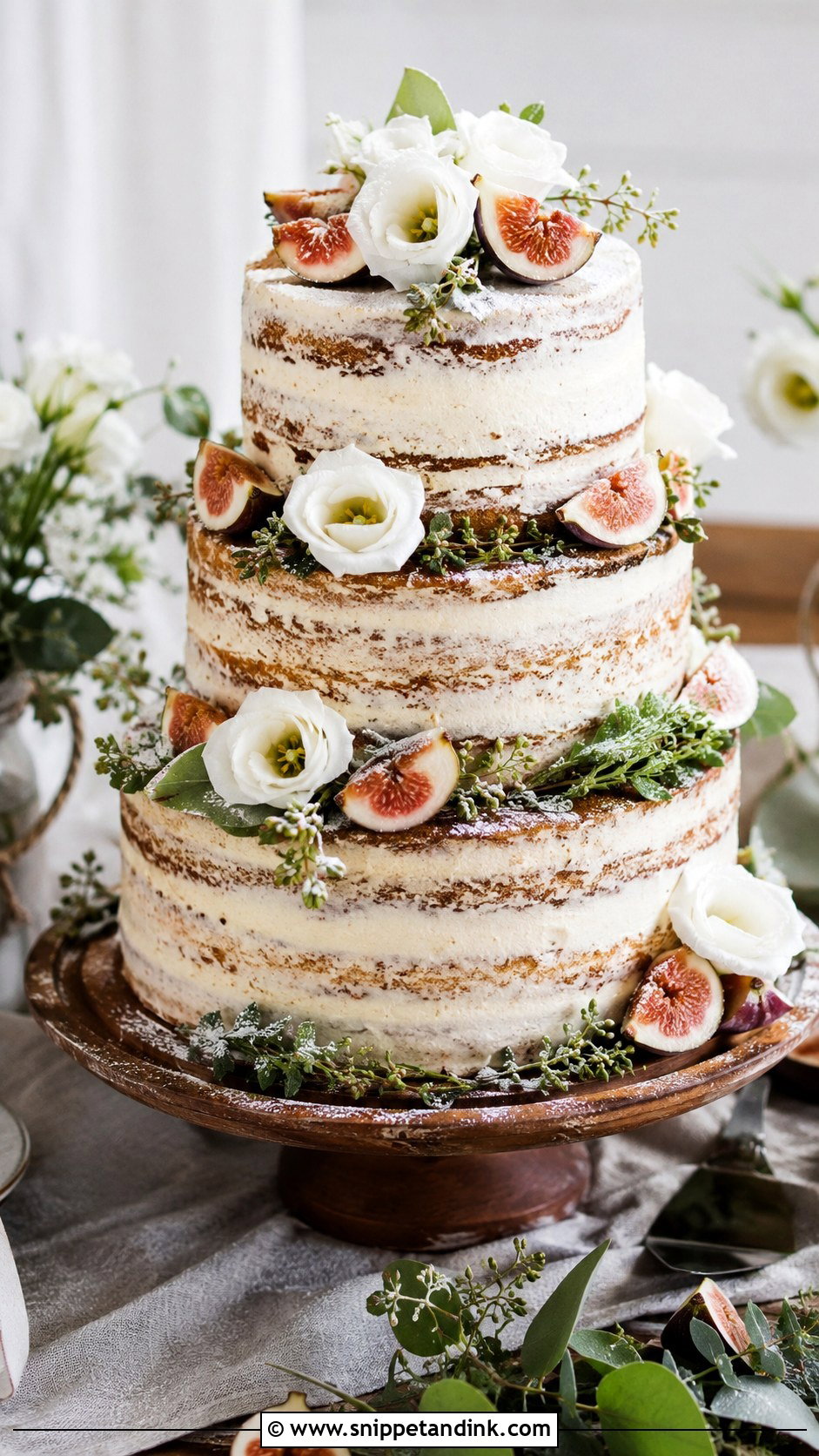
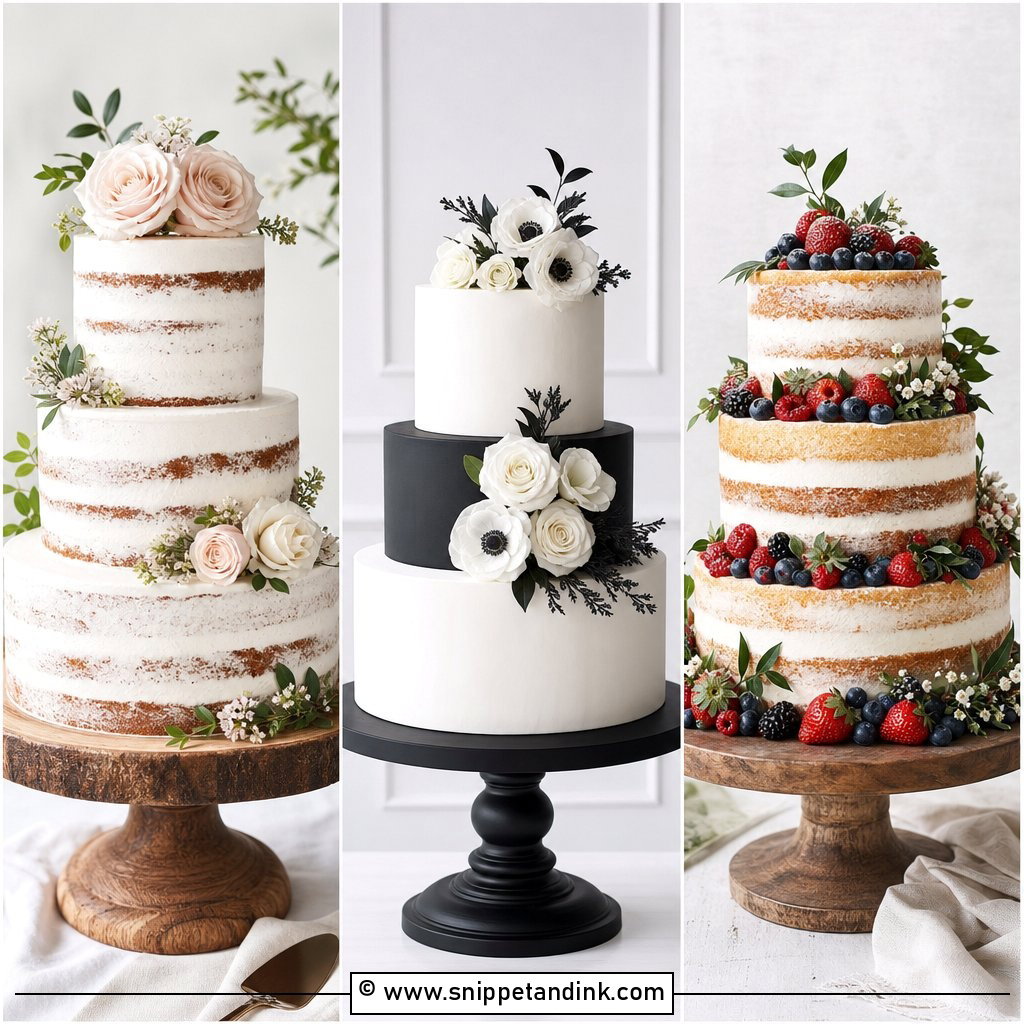
Barns, farms, gardens and vineyards (styled without alcohol themes) suit a rustic cake: textured buttercream, semi-naked sides, greenery, soft flowers and seasonal fruit. Charm matters more than perfection, but rustic venues bring real risks. Barn floors are rarely level, and outdoor tables catch sun, so I check both before I set the cake down. Carrot, spice, apple, chocolate or lemon berry sponge fits. Wrap or separate greenery stems from the cake. Linen, candles and a wood stand complete a cozy dessert table.
16. Boho Tiered Wedding Cake
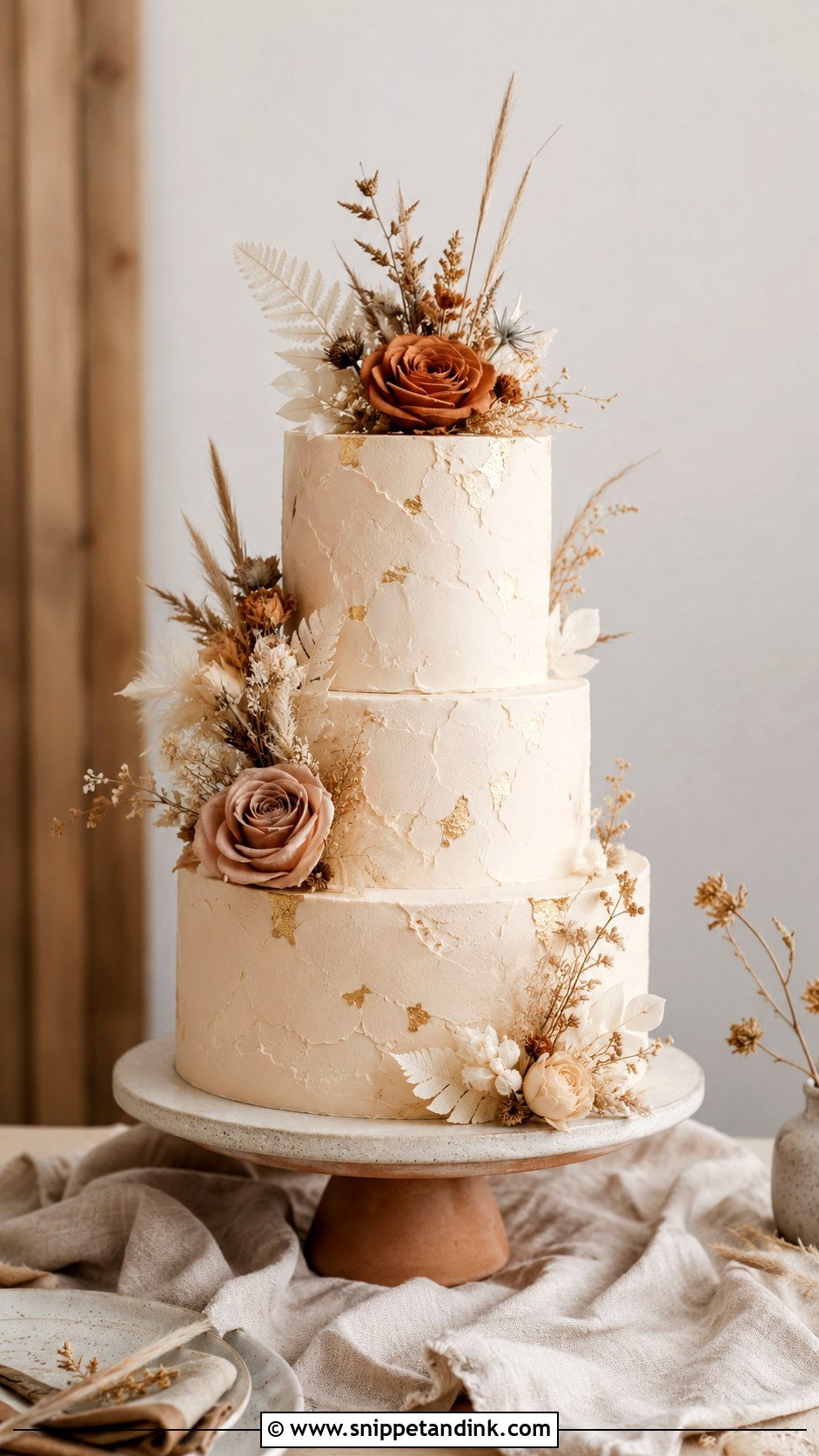
Boho cakes lean on earthy color and dry textures: ivory, beige, terracotta, blush or muted peach frosting with pampas grass, dried flowers, pressed petals or a touch of gold. Pampas and dried grasses shed, so I set them in place last and keep their stems off the cake surface. Buttercream texture gives movement; deckled fondant edges or handmade sugar flowers soften it. Honey vanilla, lemon, almond, carrot or coconut fits. A ceramic stand or linen-covered table finishes it.
17. Beach Tiered Wedding Cake
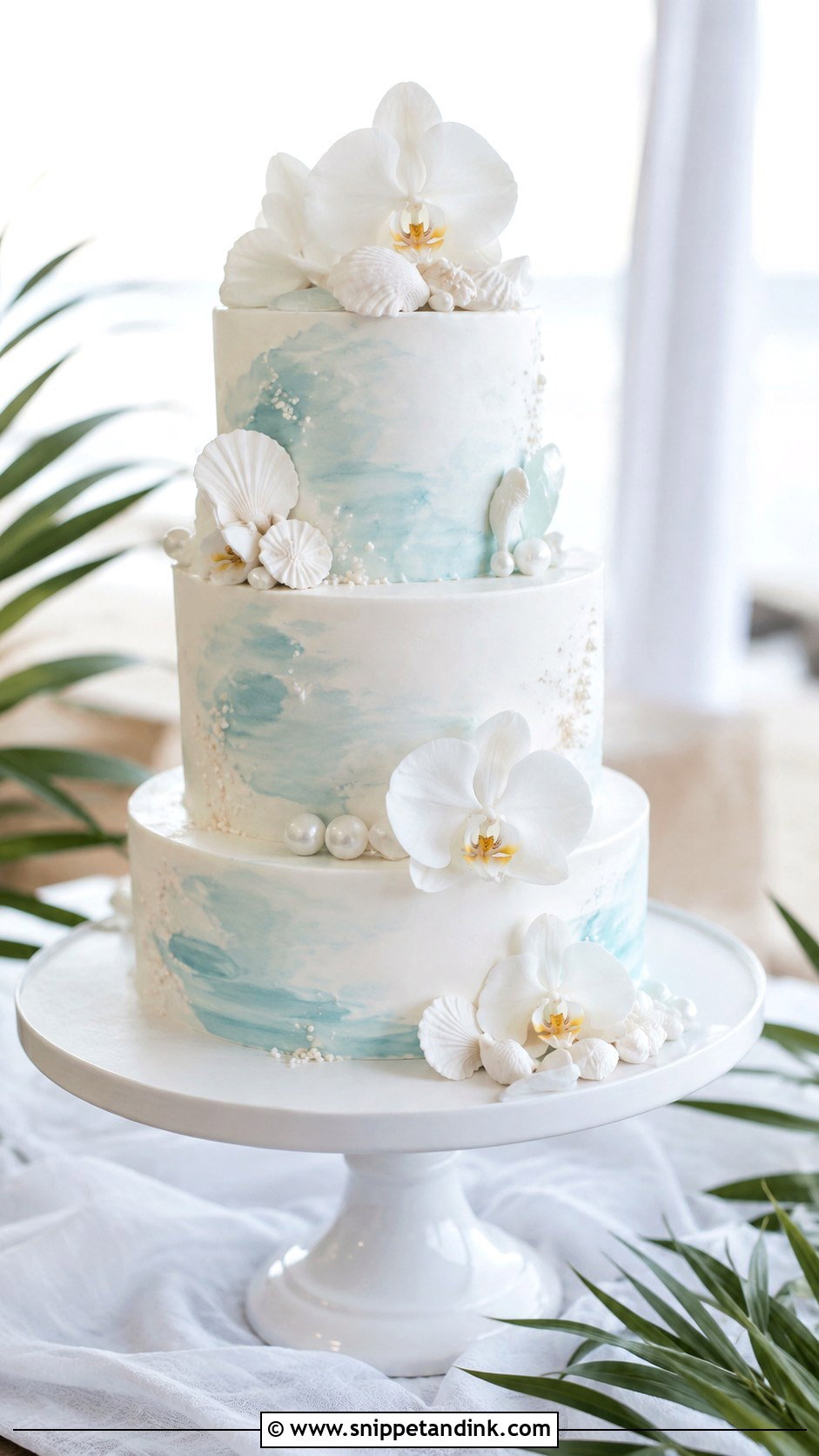
Coastal cakes should whisper the sea. Soft white buttercream, a pale blue watercolor wash, sandy texture or pearls do it without looking like a party prop. Fresh orchids, tropical leaves, edible shells or sugar coral can be added sparingly. Heat and humidity are the real enemies at the beach. I build on firm ganache, ask for full shade and keep the cake indoors or chilled until close to serving. Coconut, lime, lemon or passion fruit sponge feels bright.
18. Garden Tiered Wedding Cake
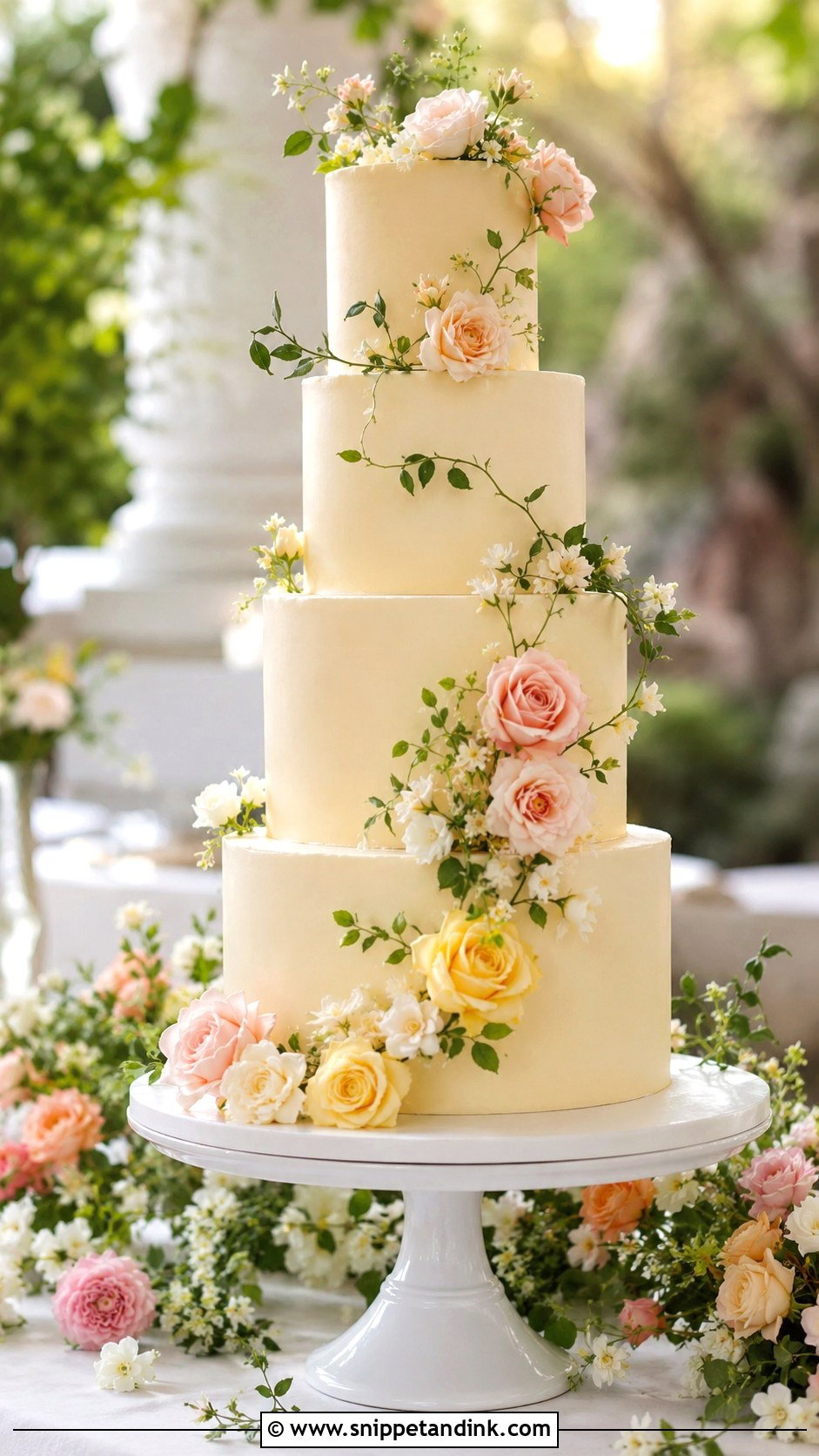
Garden cakes need movement, so instead of piling flowers only on top, I let them travel across the tiers the way they’d grow along a wall. That looks more natural in photos. Buttercream, sugar flowers, pressed petals and climbing vines in gentle pastels suit greenhouses, estates and spring or summer ceremonies. Keep frosting light so the flowers stand out. Lemon elderflower (alcohol-free), vanilla berry, almond or lavender honey sponge suits the season. A white pedestal with greenery round the base finishes the table.
19. Black And White Tiered Wedding Cake
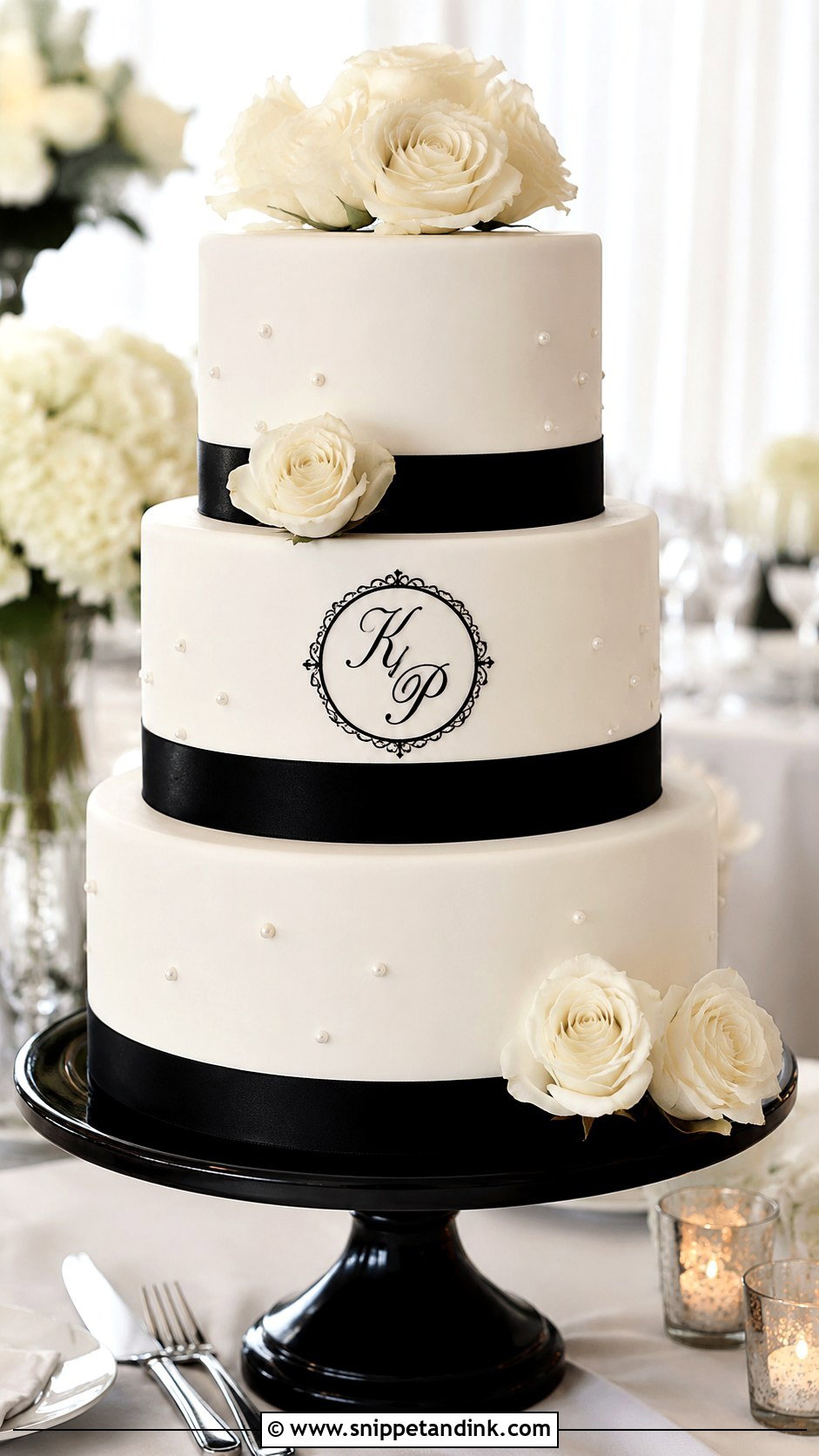
Black and white is formal and photogenic, and it is unforgiving. Contrast shows every crooked line, so precise placement matters more than with any pastel cake. I keep black to ribbon, piping, a painted monogram or one dramatic tier, and make true black from cocoa-based fondant, since heavily colored black icing tastes bitter and stains teeth. White flowers or a satin bow soften it. Vanilla, chocolate, almond or cookies and cream keep the flavors classic. A simple table keeps the focus on the contrast.

20. Gold Tiered Wedding Cake
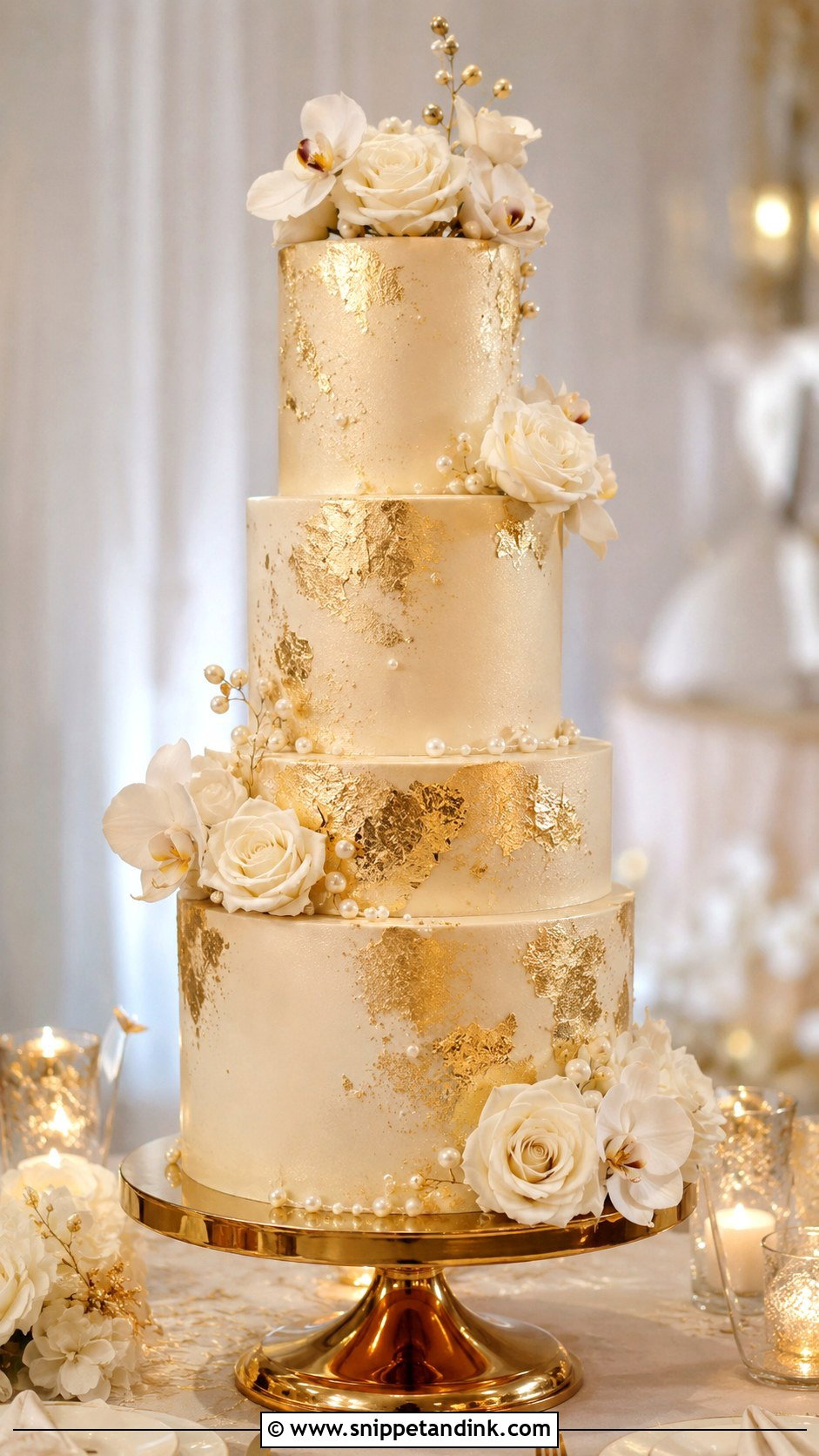
Gold glows best in small amounts against ivory, white, blush or champagne. Edible leaf, painted brushstrokes, fine trim or a stencil are the usual methods, and I only use metallics labeled as edible, not decorative craft dusts. Too much shine flattens the cake; a few gold details look intentional. Roses, orchids, sugar flowers, pearls or smooth fondant panels pair well. Vanilla bean, almond, chocolate caramel or coconut sponge suits it. Place the cake near candles or warm uplighting so the gold has light to catch.
21. Blush Tiered Wedding Cake
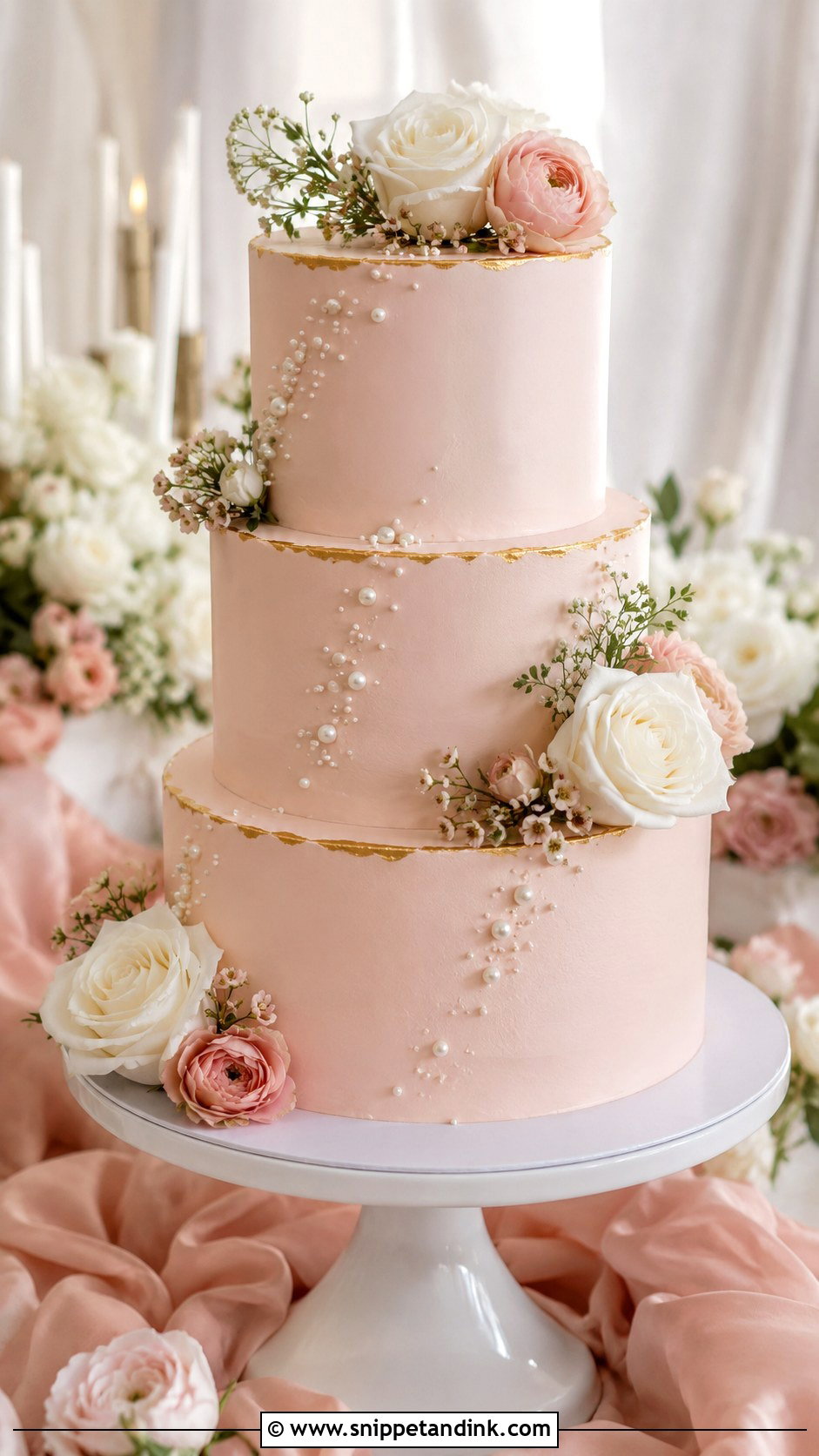
Blush works as the main frosting, a watercolor wash, piping, ribbon or flowers. It flatters ivory, champagne, sage and gold. Color is where I’m careful: pink frosting can fade a little in strong daylight and shifts warmer under candlelight, so I match it to swatches under the reception’s real lighting. Roses, peonies or ranunculus fill it out for spring and garden receptions. Strawberry, vanilla raspberry, lemon or white chocolate sponge suits it. Keep the design restrained, since blush already reads sweet.
22. Blue Tiered Wedding Cake
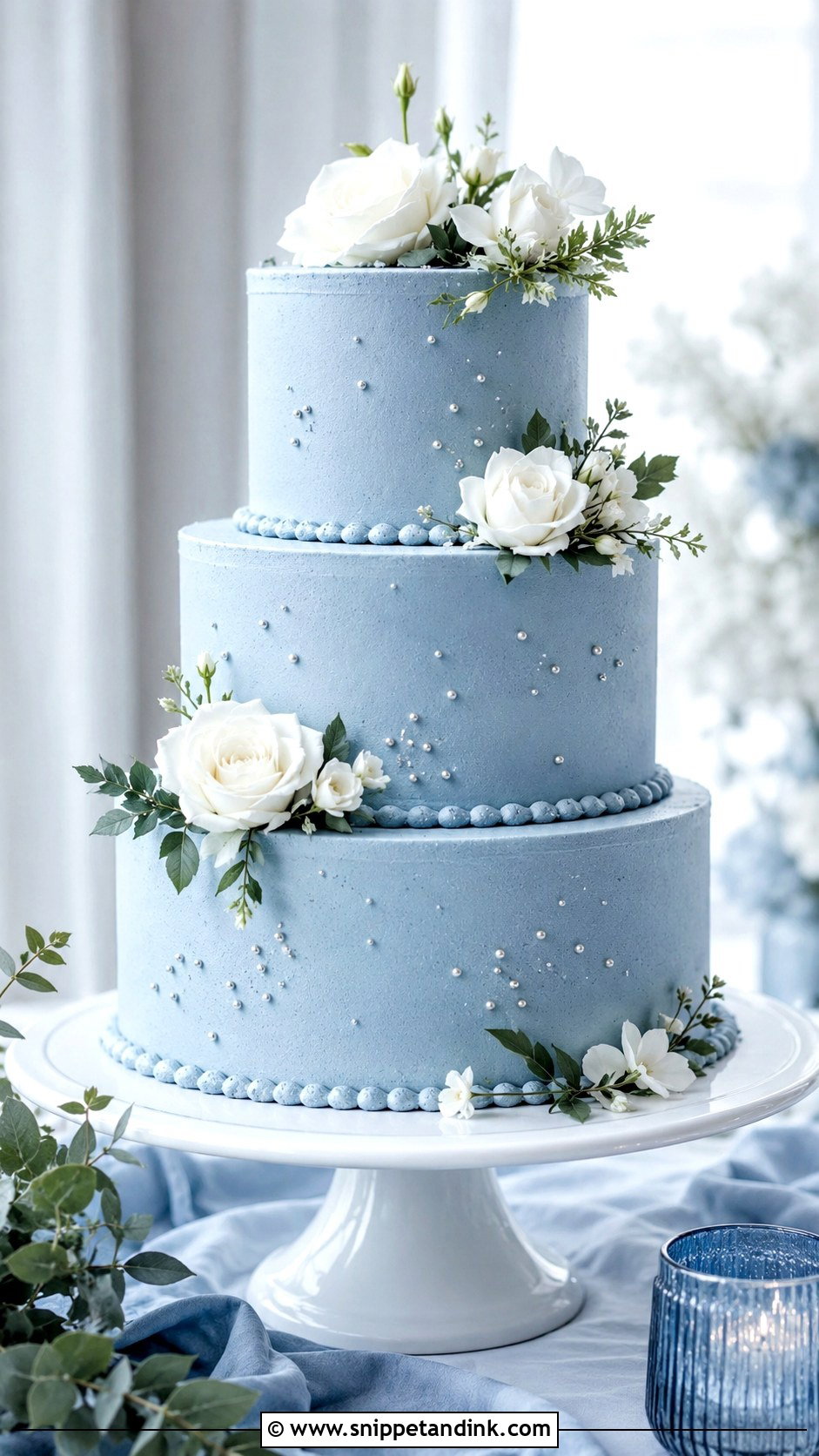
Blue changes mood with shade: pale is airy, dusty is refined, navy is formal. It looks most wedding-like next to ivory frosting, white flowers, silver or pearls, and a watercolor finish keeps it artistic. Deep blue needs strong coloring, which can stain lips and teeth, so I keep dark blue to accents or to tiers that won’t be served. Vanilla, lemon, coconut, blueberry and almond suit the color. Lighter florals keep the cake friendly.
23. Green Tiered Wedding Cake
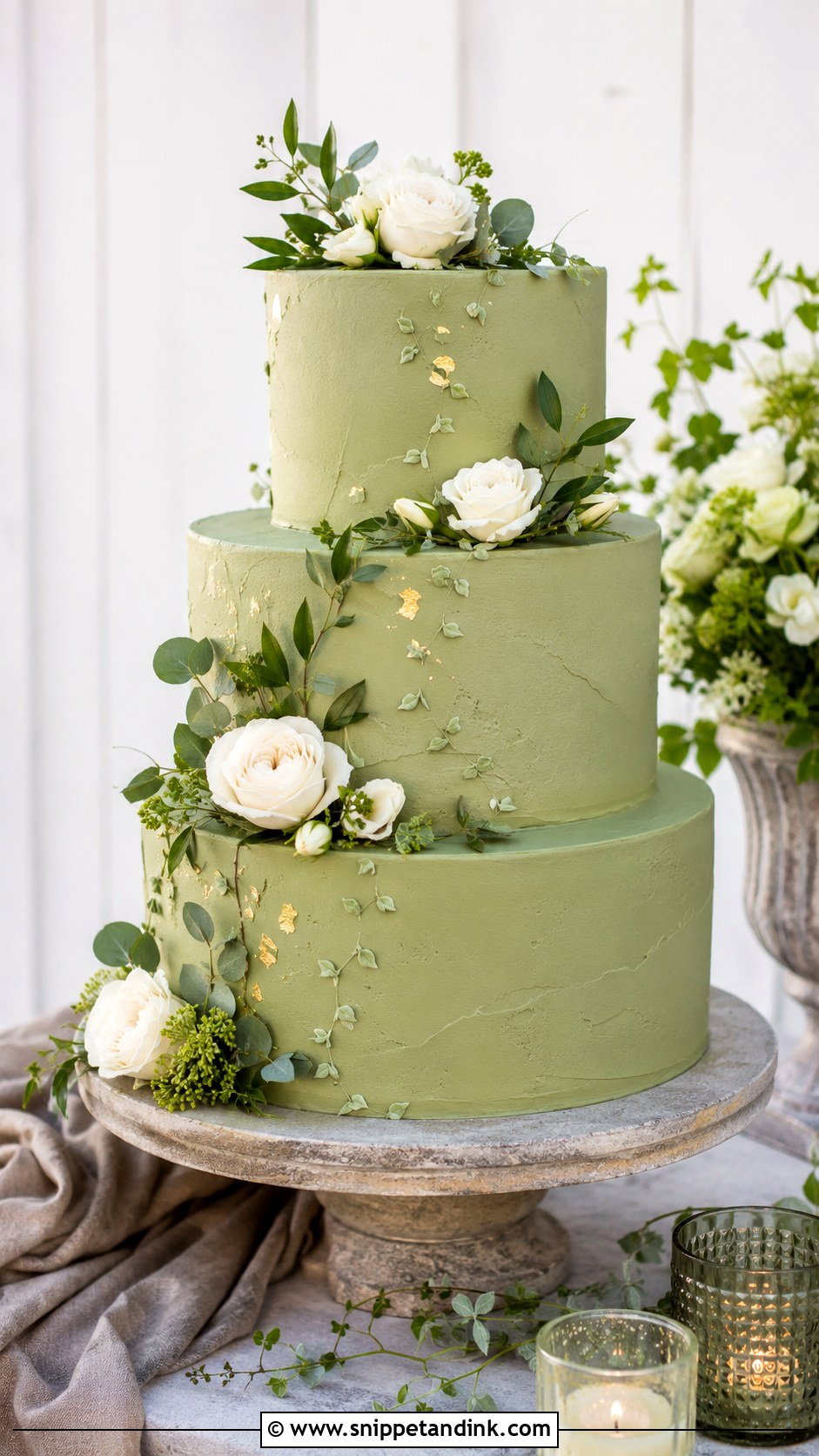
Sage is the most flexible green I work with; deeper greens turn dramatic, especially against white flowers and gold. Green fondant, green buttercream, pressed greenery and painted botanicals all work. Real leaves need care: some popular foliage shouldn’t touch food, so I either use edible herbs or keep a barrier between leaf and frosting. Matcha, pistachio, vanilla, lemon and almond suit the color. Stone, wood or white stands keep the organic mood polished.
24. Red Velvet Tiered Wedding Cake
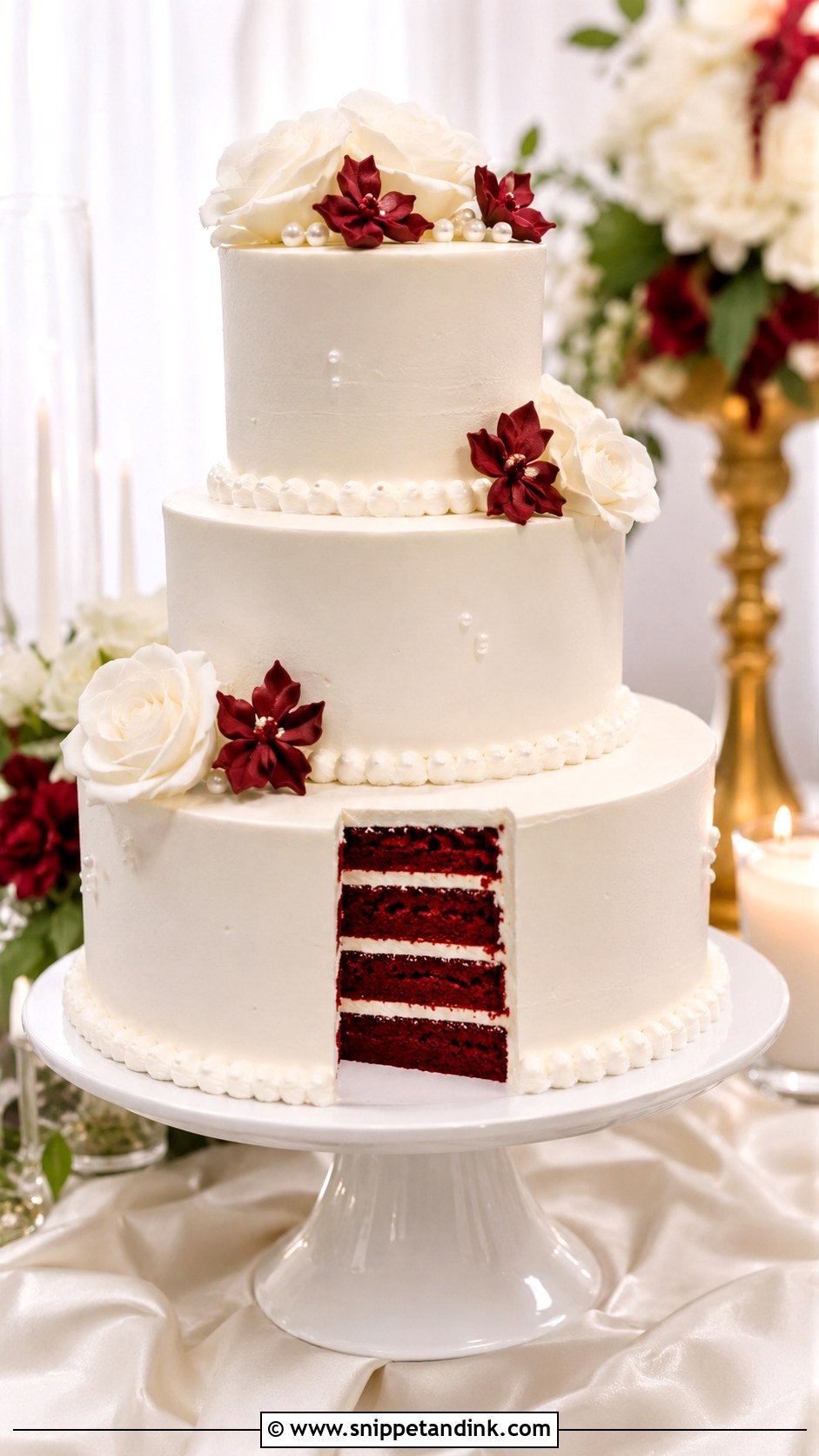
Red velvet is my favorite slicing surprise: a white outside, then deep red layers when the knife goes in. The outside can be cream cheese frosting or buttercream, but cream cheese frosting is soft and needs refrigeration, so on a long display I often use a firmer buttercream outside and keep the cream cheese as a filling. White roses, red sugar flowers or pearls suit it. Balance the richness with vanilla buttercream. Fall weddings and palettes of ivory, burgundy and blush suit it.
25. Chocolate Tiered Wedding Cake
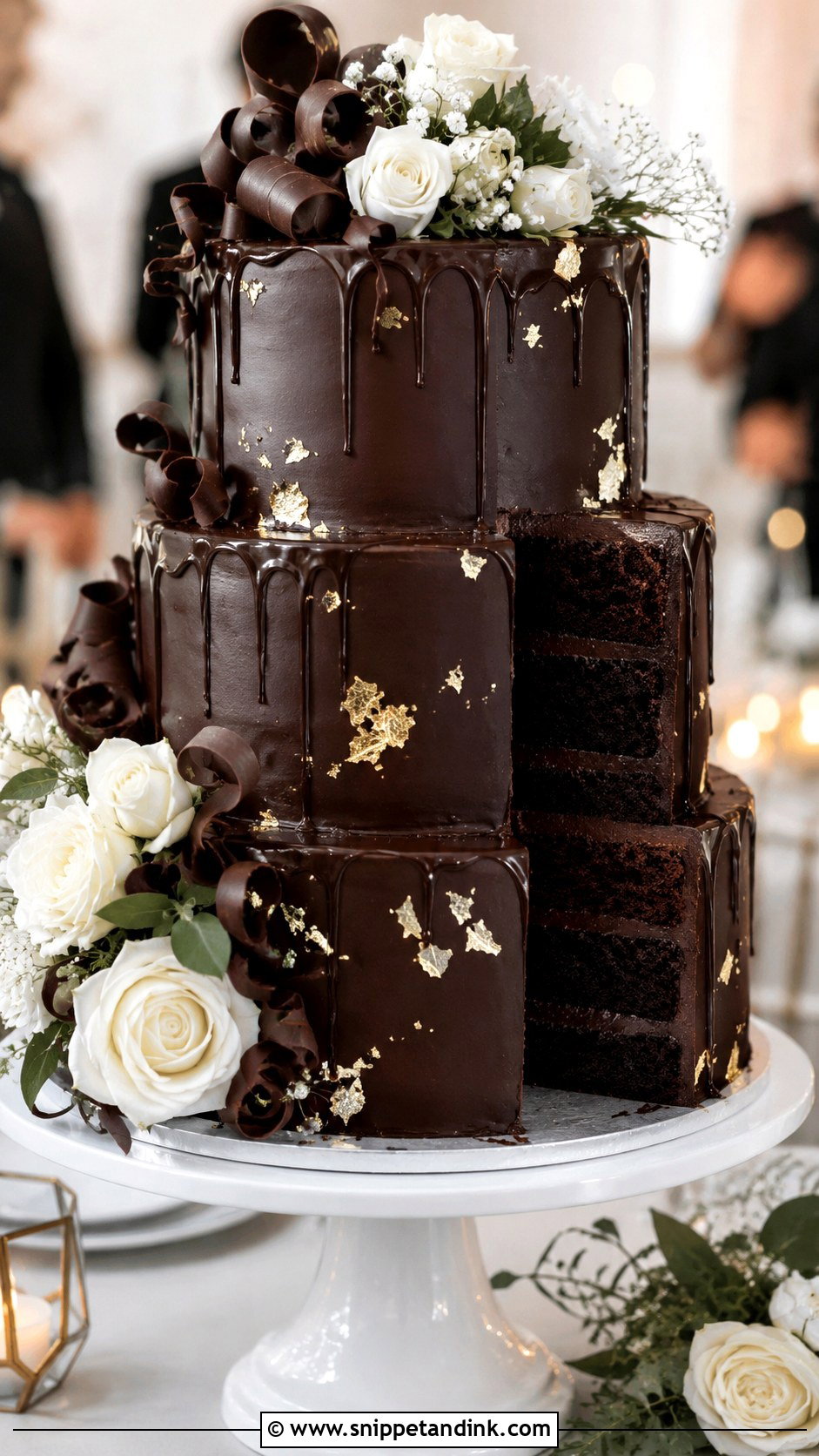
Chocolate cake looks more formal than people assume. Cover it in smooth ivory buttercream for a classic look, or finish it in dark chocolate ganache for drama. Ganache also sets firmer than buttercream, which helps in warm rooms. Chocolate pairs with raspberry, vanilla, caramel, hazelnut or an alcohol-free coffee buttercream. White flowers, chocolate curls, gold leaf or a neat drip decorate it. A dark cake on a white stand gives strong contrast in photos. Couples who care about flavor first tend to choose this one.
26. Fruit Tiered Wedding Cake
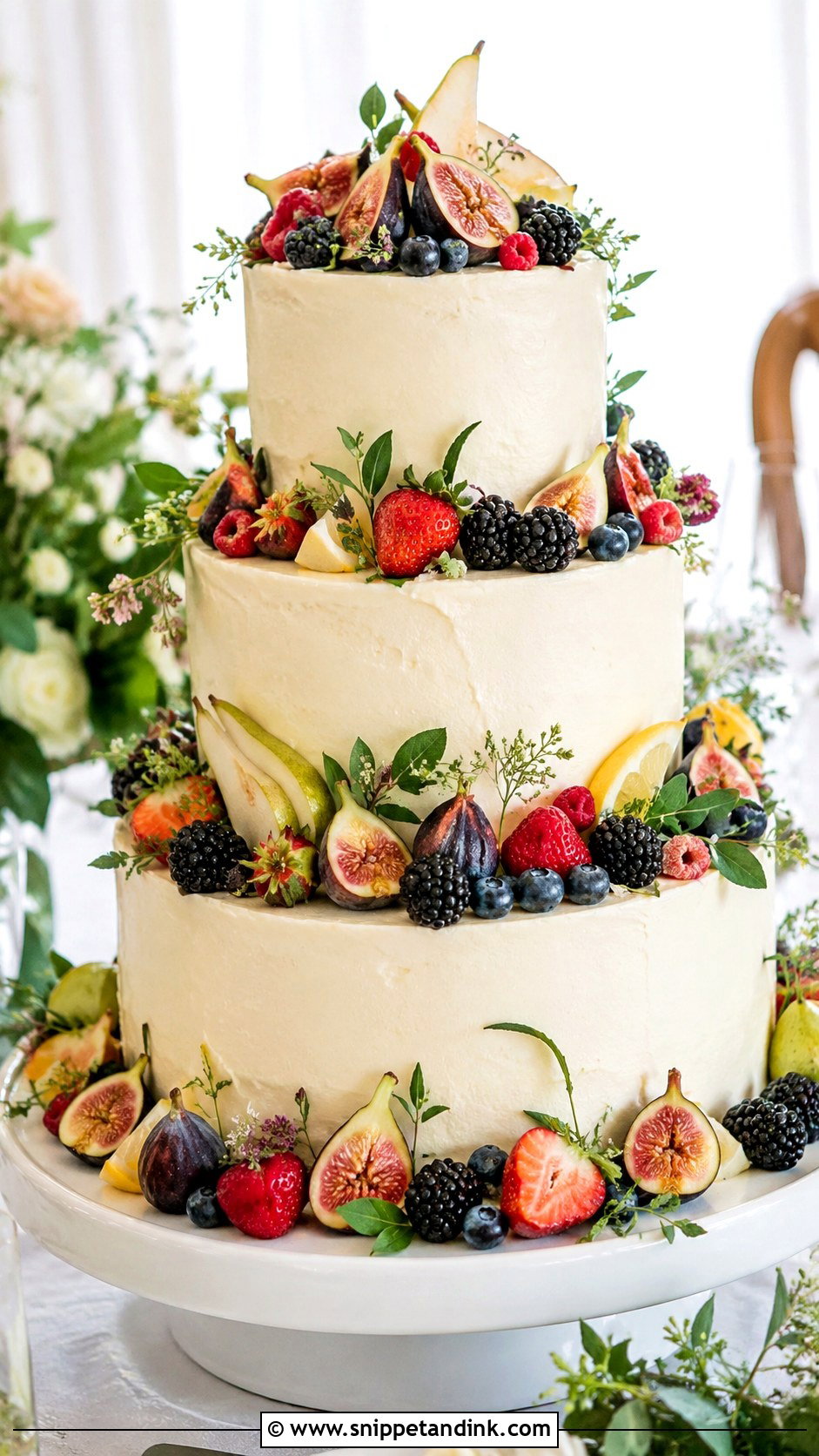
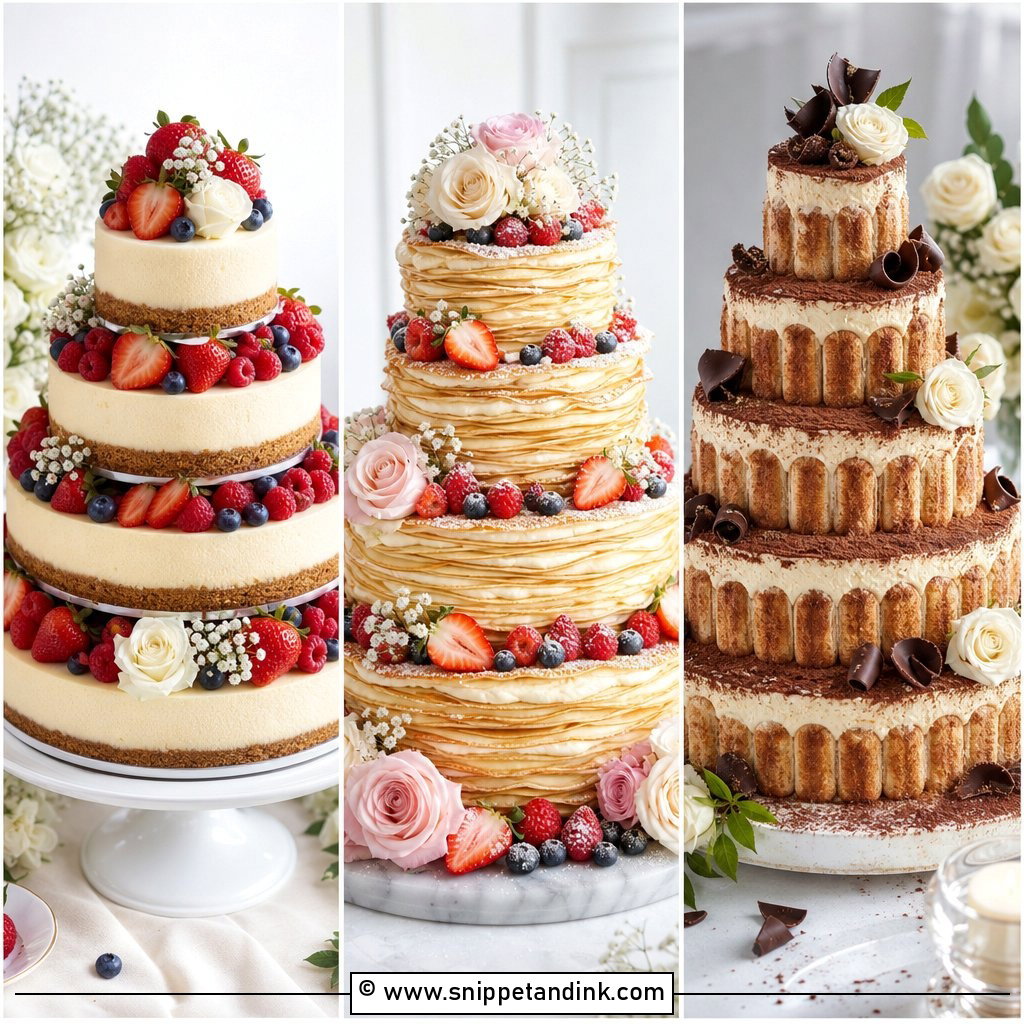
Fresh fruit makes simple tiers look generous: berries, figs, pears, citrus, grapes or cherries. Cut fruit weeps juice within hours, so I add it at the venue, as close to display time as I can, and glaze it lightly to keep it glossy. Pale frosting lets the fruit carry the color; fuller clusters across the tiers look bolder. Whipped-style frosting is lovely to eat but the least stable on a warm day. Lemon, vanilla berry, almond, coconut or orange cream sponge suits fruit.
27. Pressed Flower Tiered Wedding Cake
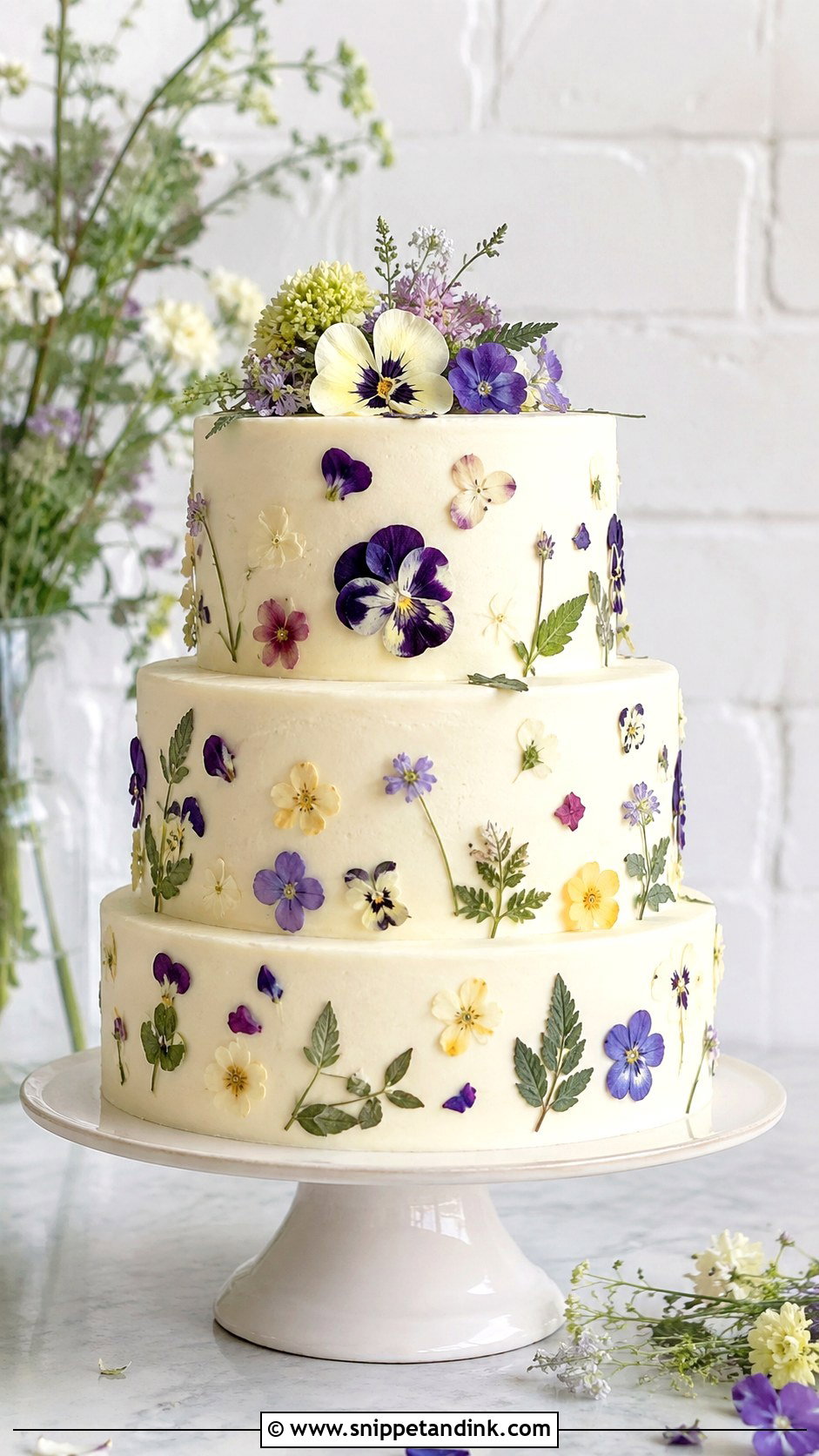
Pressed flowers need a perfectly smooth surface, so I lay them on freshly finished buttercream or fondant, in a scattered pattern, a border or a full botanical wrap. They must be edible varieties dried for food use, not decorative craft flowers, and that is worth confirming in writing. Pale frosting such as white, ivory, butter yellow or blush lets them show. They pair naturally with wildflower bouquets and garden tables in spring and summer. Lemon, honey, almond or strawberry cream fits the mood.
28. Ruffle Tiered Wedding Cake
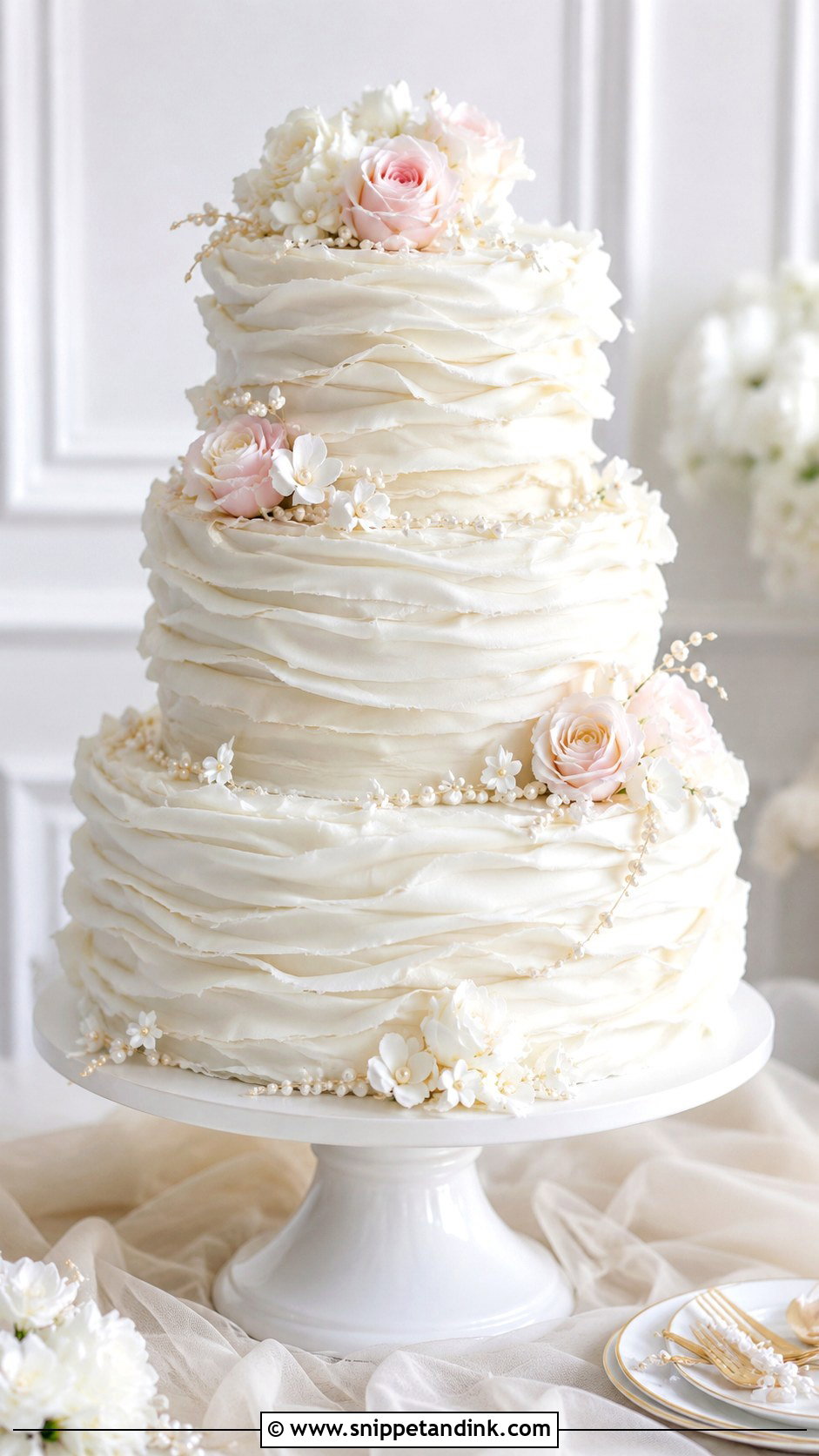
Ruffles can be made from fondant, buttercream, wafer paper or thin sugar sheets, and each behaves differently. Wafer paper is light and airy but softens in humidity; fondant ruffles hold shape better but add weight. I usually ruffle one tier and keep the rest smooth, or run a cascade from top to bottom. Blush, ivory, champagne and pale blue suit it. Vanilla bean, lemon raspberry, coconut or almond keeps it light. Skip extra decoration so the texture leads.
29. Bow Tiered Wedding Cake
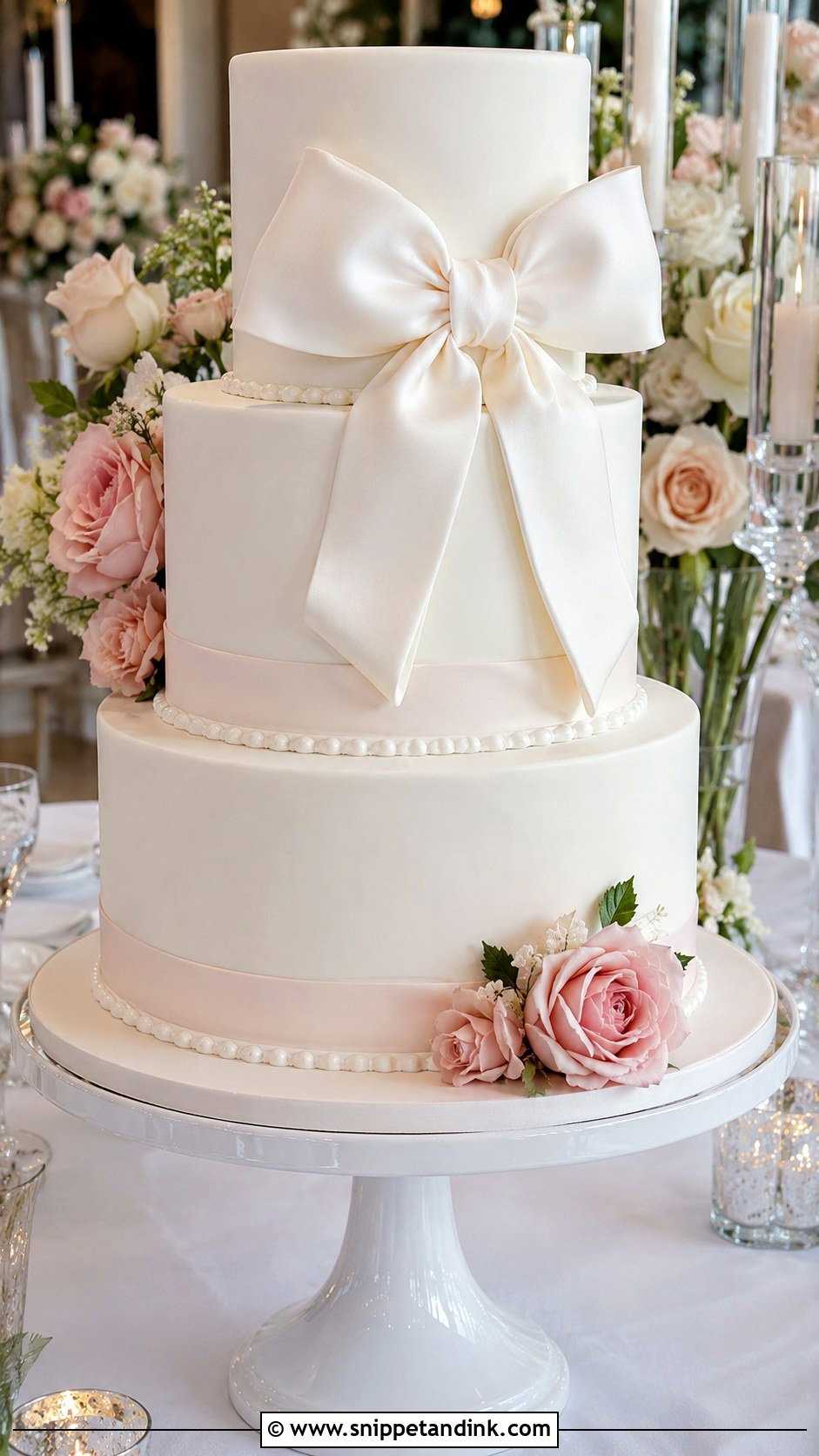
Bows are everywhere in bridal fashion right now, and they translate well to cake. I make them from fondant or sugar paste so they can be shaped and dried in advance; silk ribbon is possible but needs a barrier strip so oil from the frosting doesn’t stain it. One oversized bow makes a statement; small bows round each tier read vintage. Smooth frosting lets them stand out. It suits couples whose dress, invitations or tablescape already use ribbon. Vanilla, almond, strawberry, lemon or chocolate all work.
30. Tall Tiered Wedding Cake
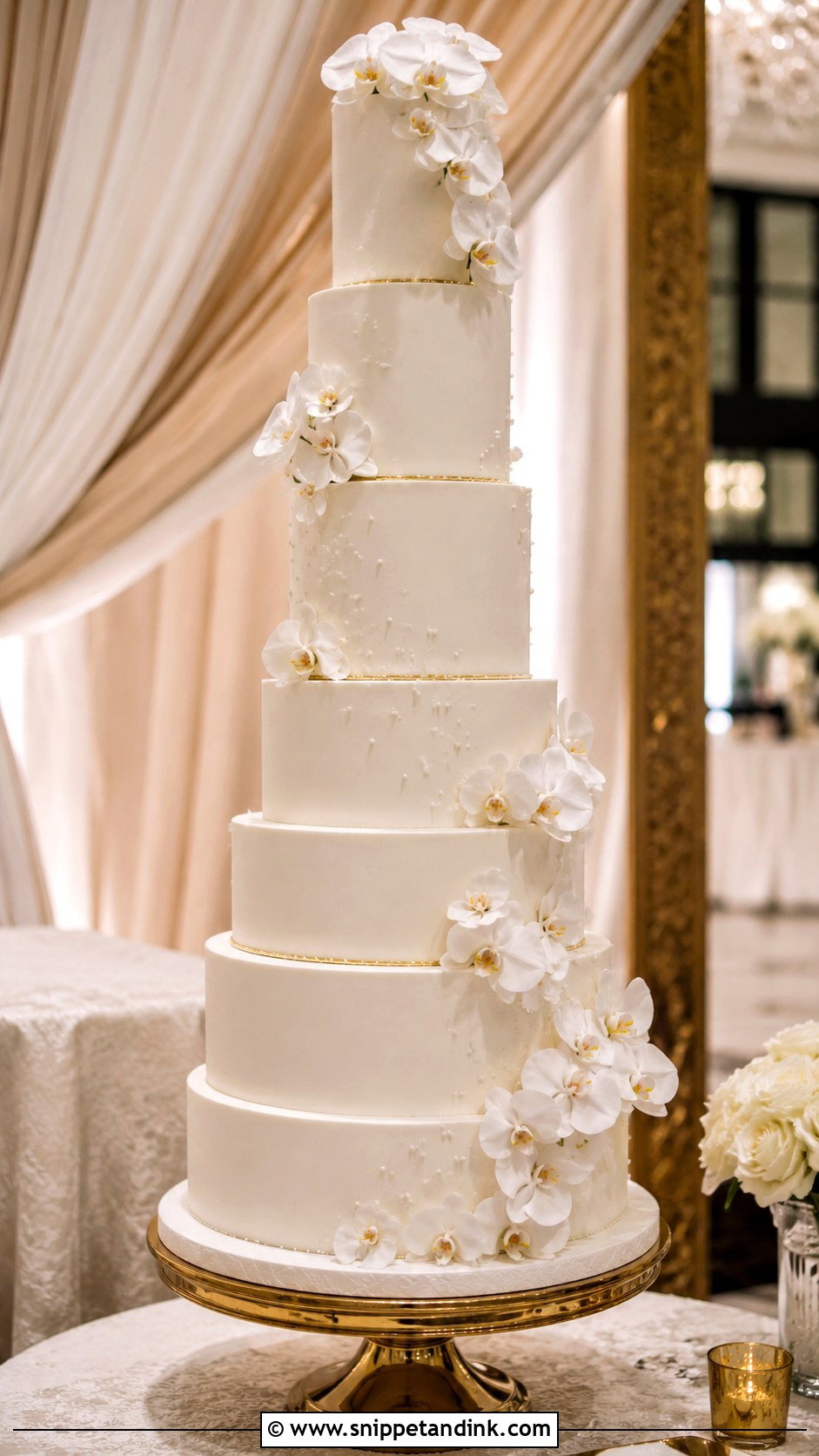
Five or more tiers, or fewer but extra-tall ones, make a true showpiece, and only a baker with real experience of large structures should take it on. Ask how they deliver and stack it. To keep it from looking heavy, I use slim tiers, open spacing or light floral placement. The design can be white, floral, pearl or vintage. Flavors can vary by tier, which gives guests choice. Place it where people can see it but away from heaters, sunny windows and the path staff use to clear tables.
The Cutting Moment Takes About Two Minutes
The cake cutting is short, so a little planning makes it look good. I suggest doing it while the light is still kind and before the cake has stood for hours in a warm room. Many couples now cut straight after the entrance or first dance.
- Agree with your photographer which side you’ll stand on, so you’re not blocking the best face of the cake.
- Cut into the bottom tier, from the back or side if possible. It’s the most stable and the cut won’t show from the front.
- Make one shallow cut, take a small slice out with the server and share a bite. That’s the shot people want.
- Step away and let staff take over. They’ll remove the top tiers and dowels in the kitchen before slicing.
Leftovers, the Top Tier and the Ride Home
Decide who takes leftover cake home and bring boxes for it; venues don’t always supply them. If you’re saving the top tier, the best way I know is to chill it uncovered until the icing is firm, then wrap it tightly in several layers of plastic wrap and foil and freeze it. Thaw it slowly in the fridge, still wrapped, so condensation forms on the wrapping rather than the cake. Fruit cake keeps far better than sponge, and fresh-fruit or cream fillings don’t freeze well, so tell your baker early if the top tier is going in the freezer.
Look at the Whole Cake Before You Look at the Details
Save photos that show the whole cake on its table, not just close-ups, and notice what you keep returning to: tier shape, frosting finish, where the flowers sit, the color, the stand. Then ask your baker what is realistic for your weather, serving numbers and timeline. A good reception cake tastes good, stands safely through the evening and looks deliberate from every side the guests will see. Get those three right and the rest is styling.
You'll Like These Ideas:










Leave a Reply