
A crown on a wedding cake does one job very well: it gives the dessert table a single point everyone’s eye goes to. It doesn’t have to feel stiff or old-fashioned, either. I’ve designed crown details as glittering toppers, as a whole tier shaped like a crown, as a slim tiara laid on the top edge and as nothing more than a band of regal piping. Which one suits you depends on the venue, the dress, the palette and how formal the reception is. The ideas below run from pearl-covered and floral to bold gold and almost bare, with notes on what each one asks of the cake underneath.
What the Crown Itself Is Made Of
Couples usually show me a photo of the finished cake. My first question is what the crown in that photo is made from, because it changes the price, the lead time, the support inside the cake and whether you can keep it afterwards.
- Gum paste or fondant crown: fully sugar, painted with edible metallics. It needs days to dry hard and it softens in humidity, so I make it well before the wedding and store it dry.
- Isomalt jewels: clear sugar that looks like glass or gemstones. Lovely under lights, but it goes sticky in damp air and can slump in heat.
- Metal or rhinestone topper: a keepsake you can display at home. It’s the heaviest option and it isn’t food, so it sits on a barrier disc, never directly on icing.
- Acrylic crown: light and inexpensive, easy to cut in any shape. It looks flatter than metal in photos unless it’s mirrored or painted.
If you want the crown to become a keepsake, tell me at the start. I’ll design the top tier to carry its weight and plan the cutting so it can be lifted off cleanly before the knife goes in.
1. Gold Crown Wedding Cake
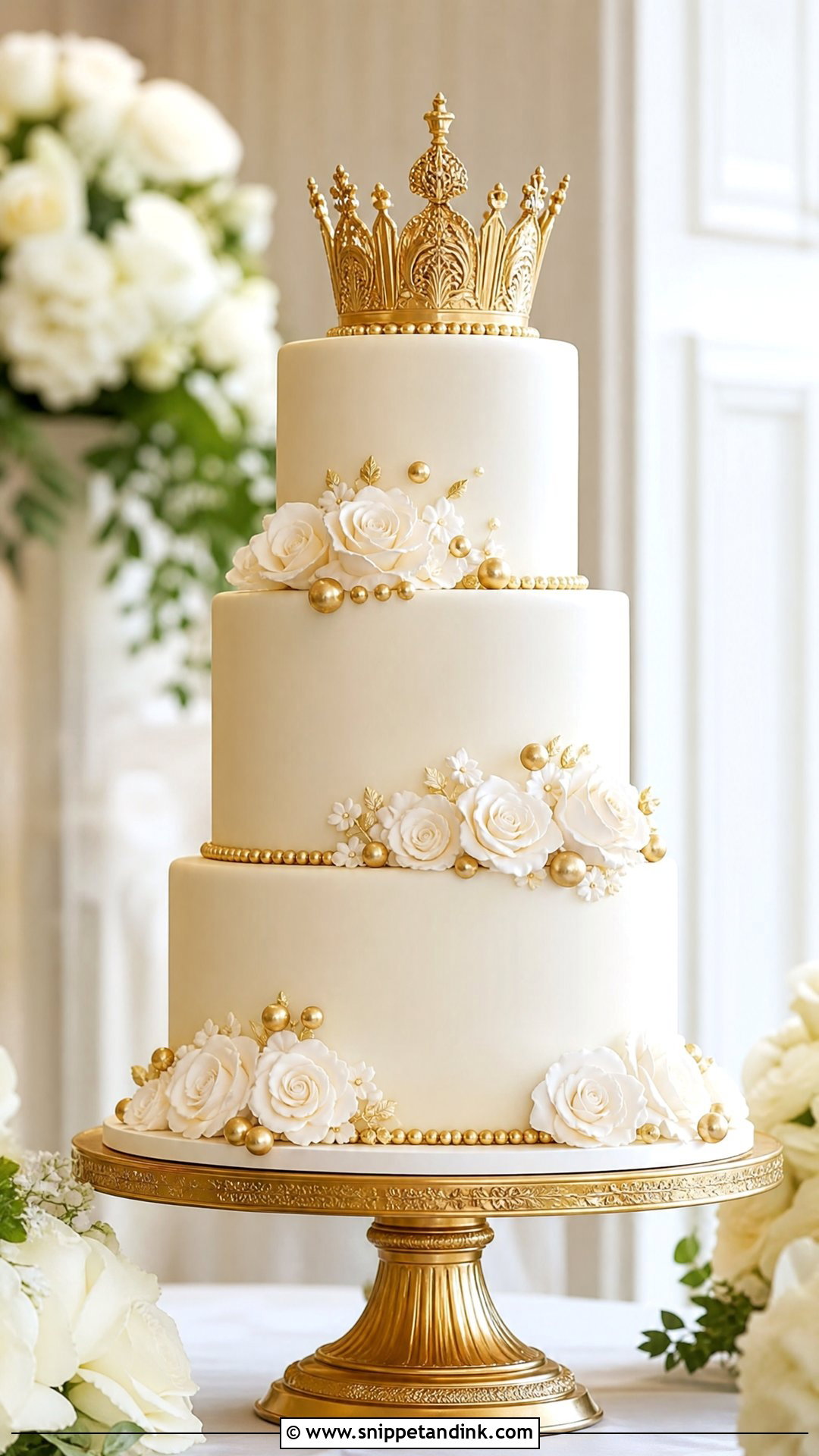
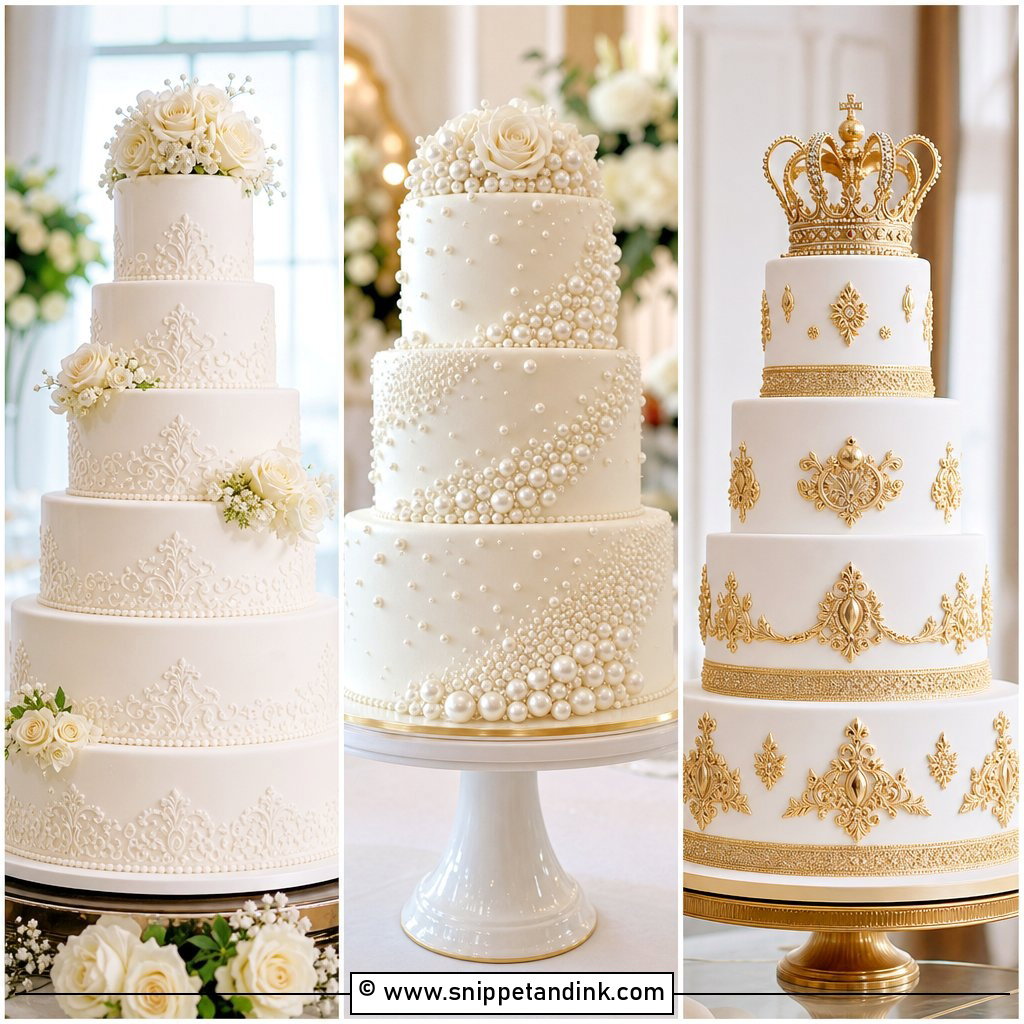
Gold is the version most couples picture first. The crown can sit on top as a topper or wrap the upper tier as a thin band, and either way I keep the cake itself ivory, white or champagne so the gold has something calm to sit against. Smooth buttercream or fondant gives the cleanest backdrop. The mistake I steer people away from is gold everywhere; one gold crown plus a few pearl dots or soft roses reads richer than gold on every tier. Repeat it in the stand or table trim instead.
2. White Crown Wedding Cake
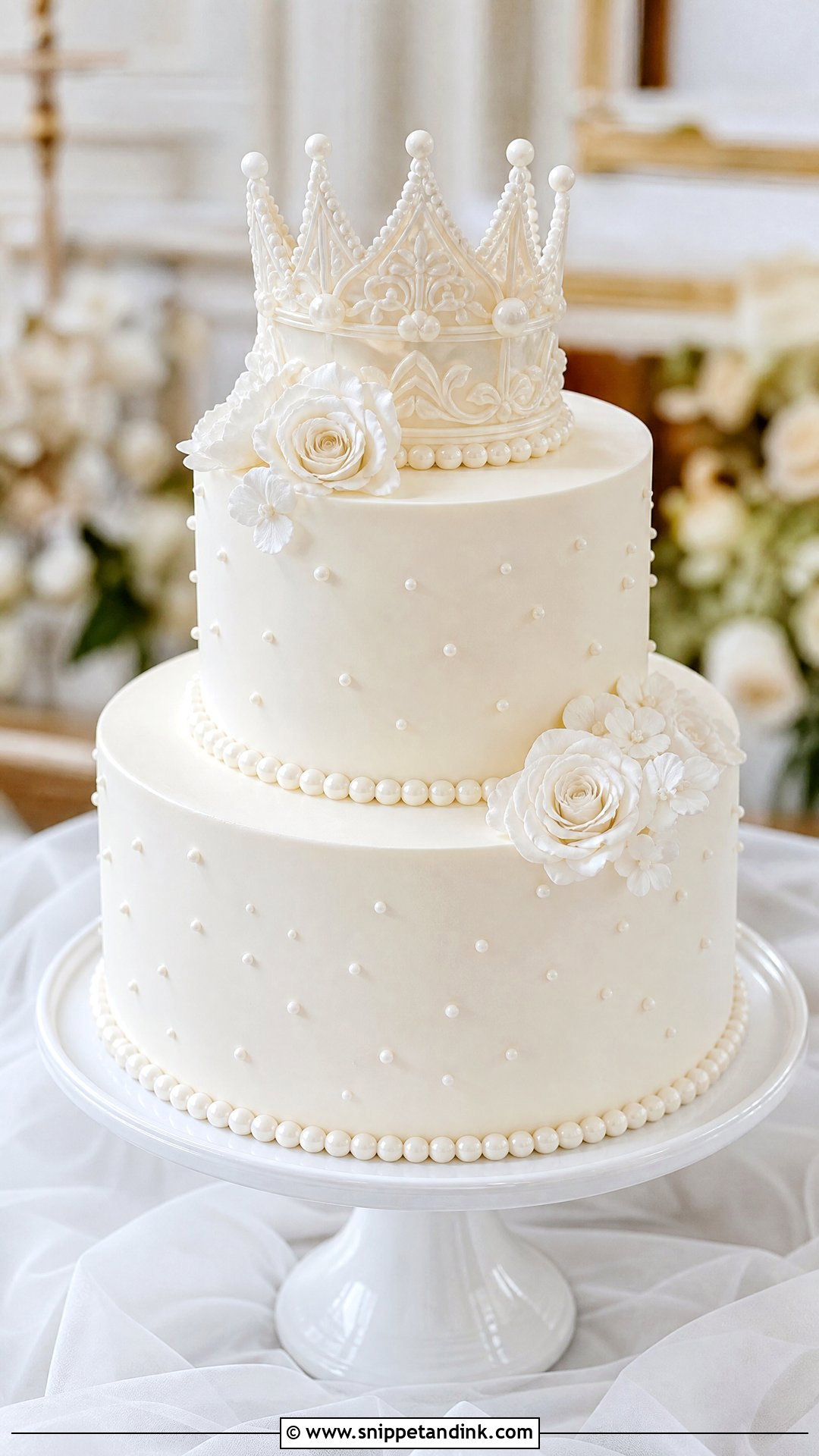
All-white crowns work through shape and texture rather than colour: a white fondant crown, lace piping, pearl edging and sugar flowers. On camera, white on white can flatten into one pale shape, so I always add a whisper of ivory, cream or pale blush somewhere, even just in the sugar flower centres. That slight tonal difference is what lets the crown read as a separate object in photos while still looking soft and bridal.
3. Pearl Crown Wedding Cake
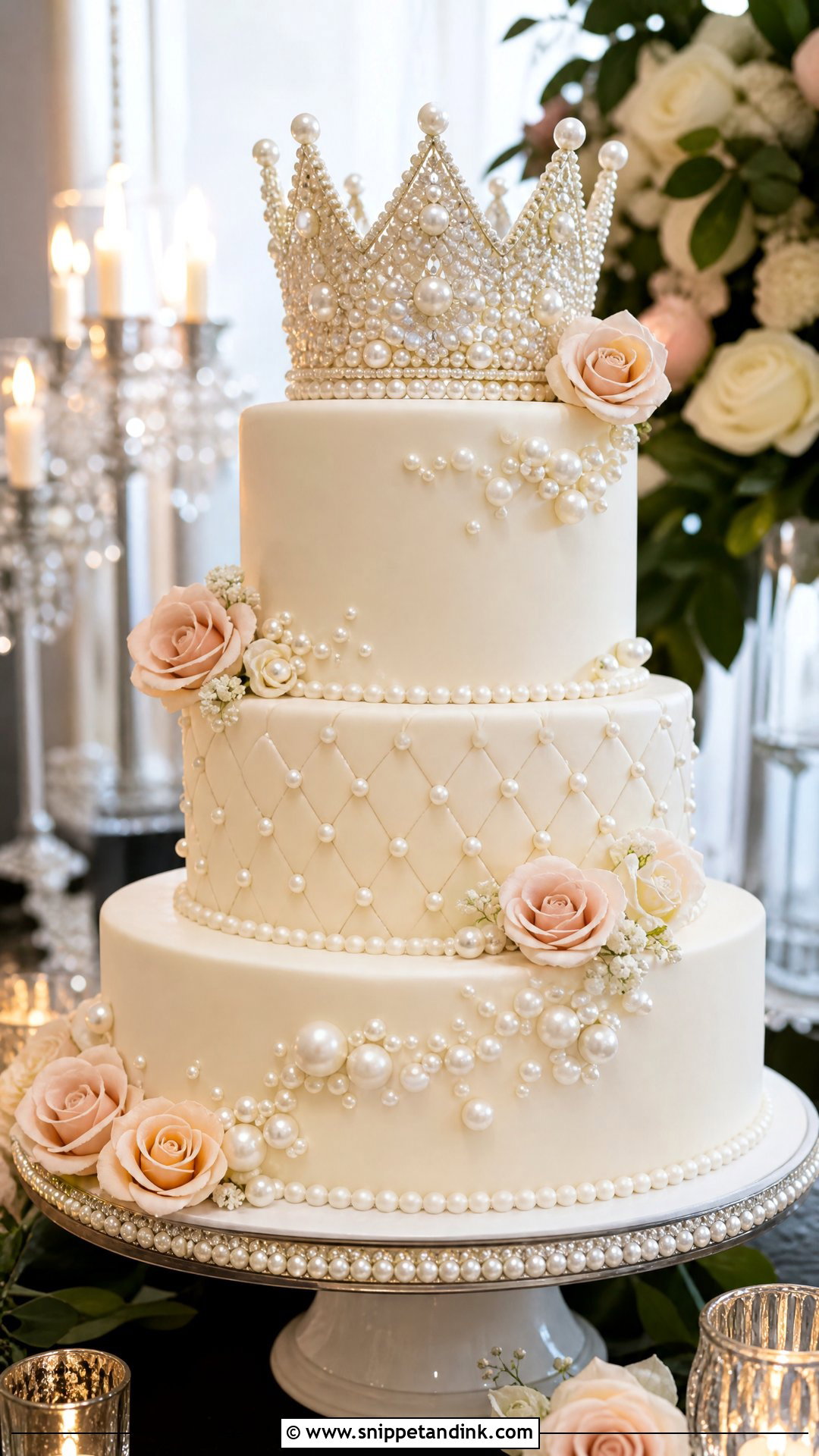
Pearls around the crown, along each tier or set into quilted fondant give a quiet kind of luxury. Mix the sizes. Rows of identical pearls look machine-made, while three or four sizes placed by hand look like jewellery. I set edible pearls into the icing while it’s still slightly soft so they don’t roll loose during delivery. This style sits well with ivory buttercream, satin ribbon and sugar roses in candlelit indoor venues.
4. Tiara Crown Wedding Cake
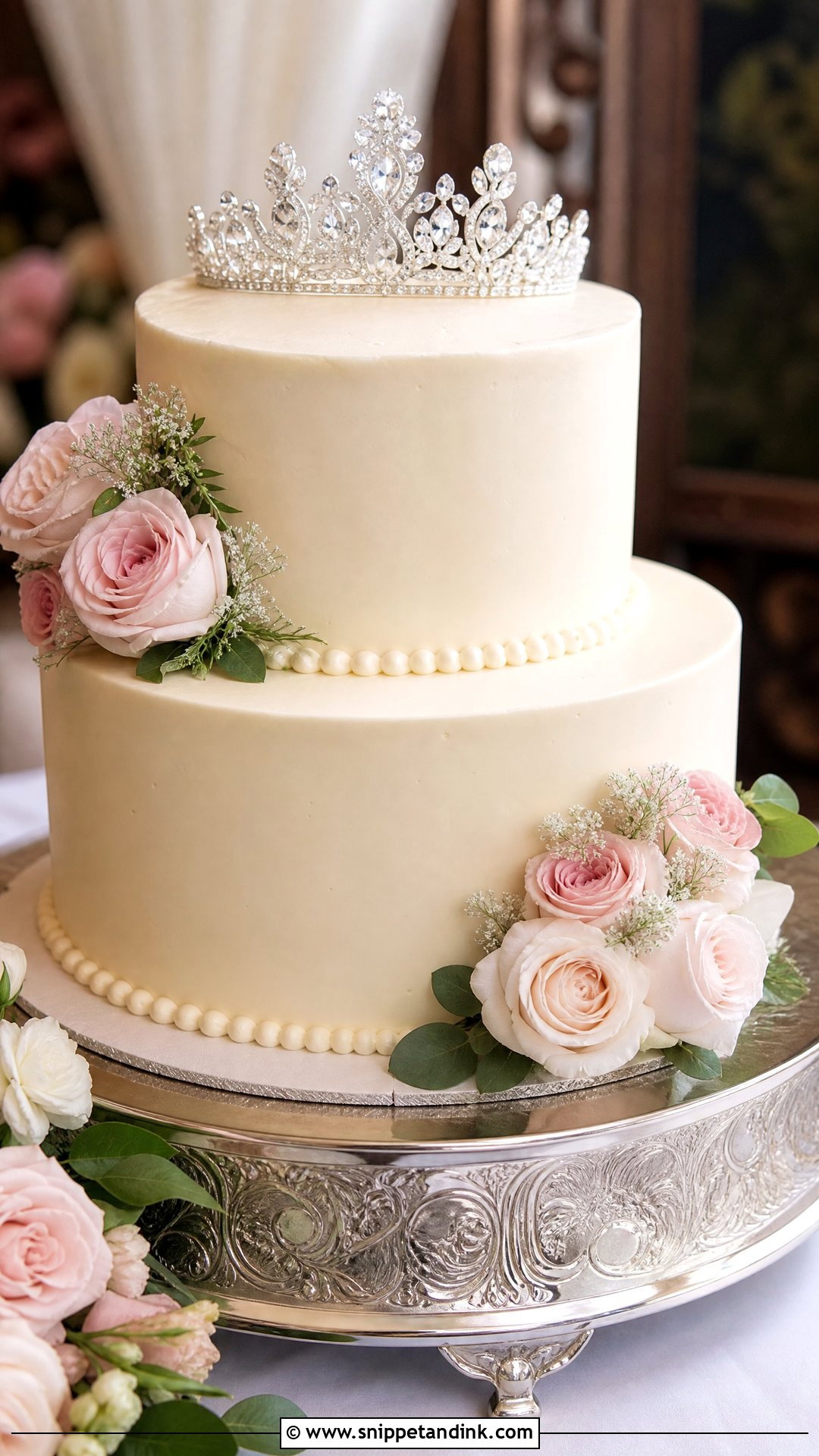
A tiara feels lighter than a full crown and slightly fairytale-inspired, which is why I usually suggest one for two- and three-tier cakes where a tall crown would look top-heavy. Crystal, pearl, silver or gold all work. Keep the icing smooth so the tiara is the detail, with maybe soft piping, a few blush roses and a thin ribbon border. A tiara topper needs a flat top tier and good support underneath; I’ll check its base width before quoting so it doesn’t overhang the edge.
5. Royal Blue Crown Wedding Cake
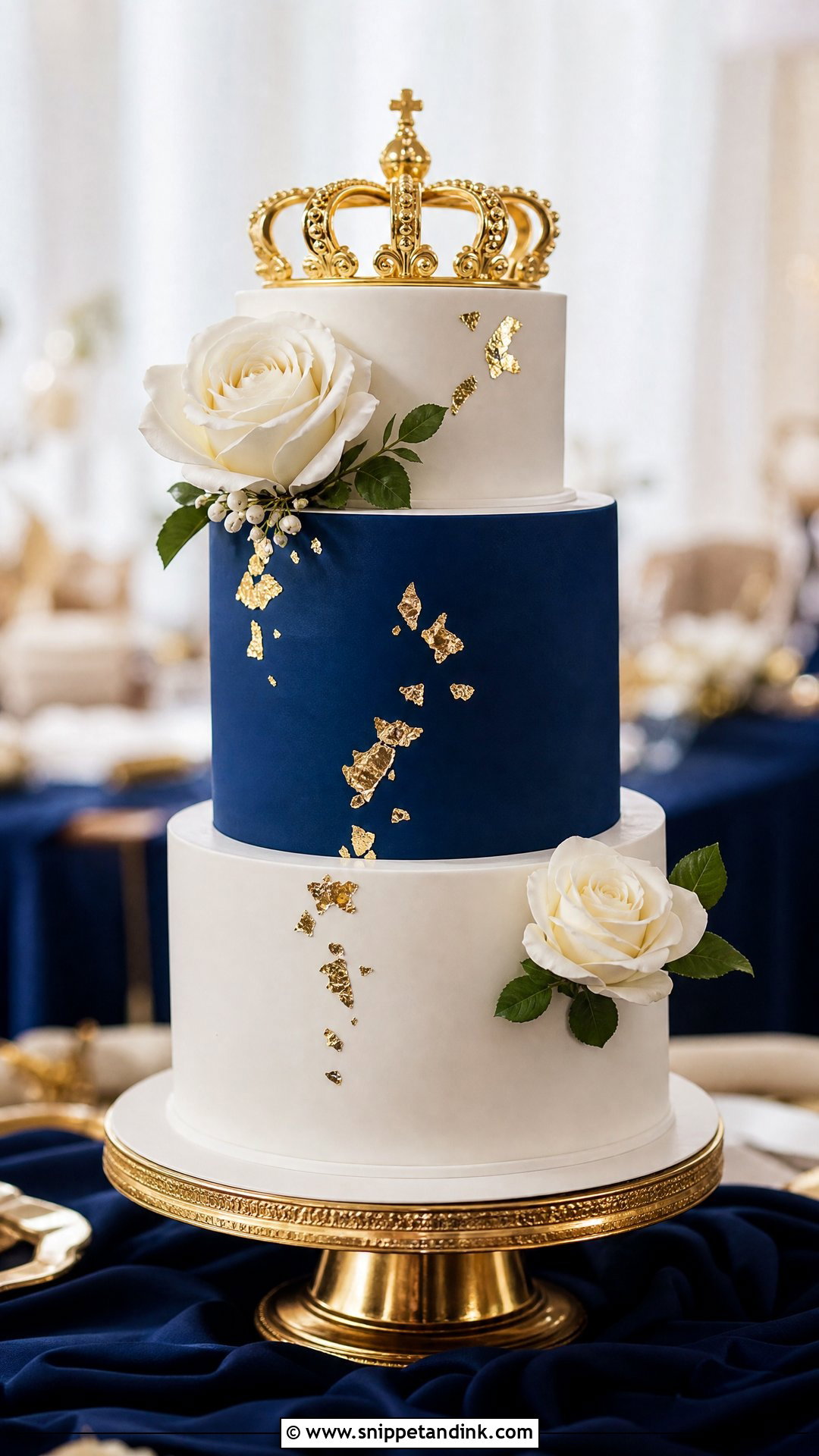
Royal blue is a strong colour, and too much of it on icing can look heavy and stain teeth. I’d rather use it on one tier, as a watercolour wash or in painted florals, with white or ivory tiers around it. Gold accents look rich against the blue. Deep blue icing also needs a lot of colouring, which can make buttercream taste slightly bitter, so for full blue tiers I usually recommend fondant. Sugar pearls, gold leaf or white roses keep it refined for evening and cultural celebrations.
6. Blush Crown Wedding Cake
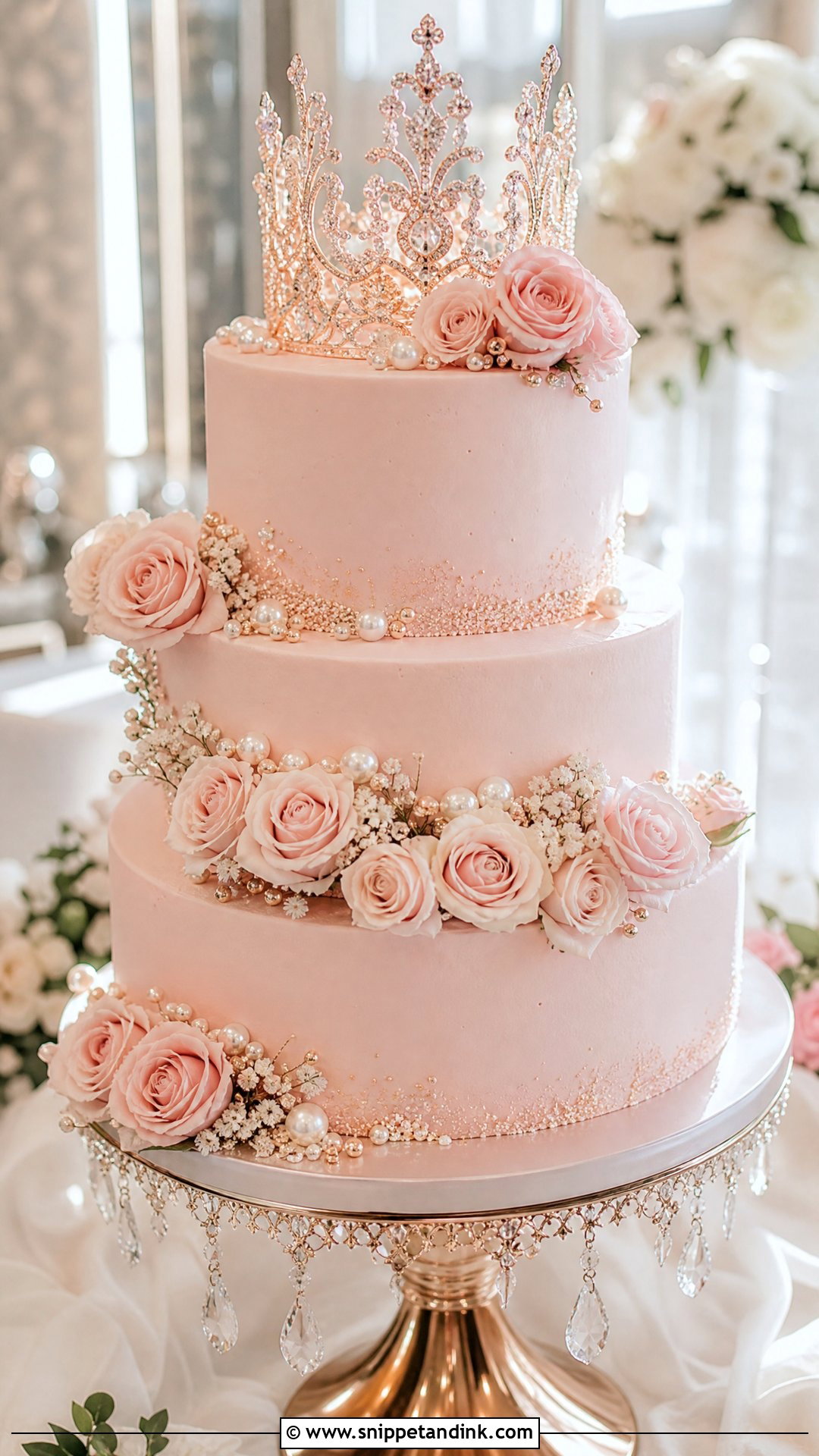
Blush tiers with a gold, rose gold, pearl or white crown suit spring weddings and garden receptions. Pale pink buttercream does fade if it sits in strong light, especially near a window, so I tint it slightly deeper than the final shade and ask the venue to keep the cake out of direct sun. Size the crown to the cake: on a modest three-tier, the crown shouldn’t be wider than the top tier. Blush flowers and ruffled texture keep it delicate.
7. Rose Gold Crown Wedding Cake
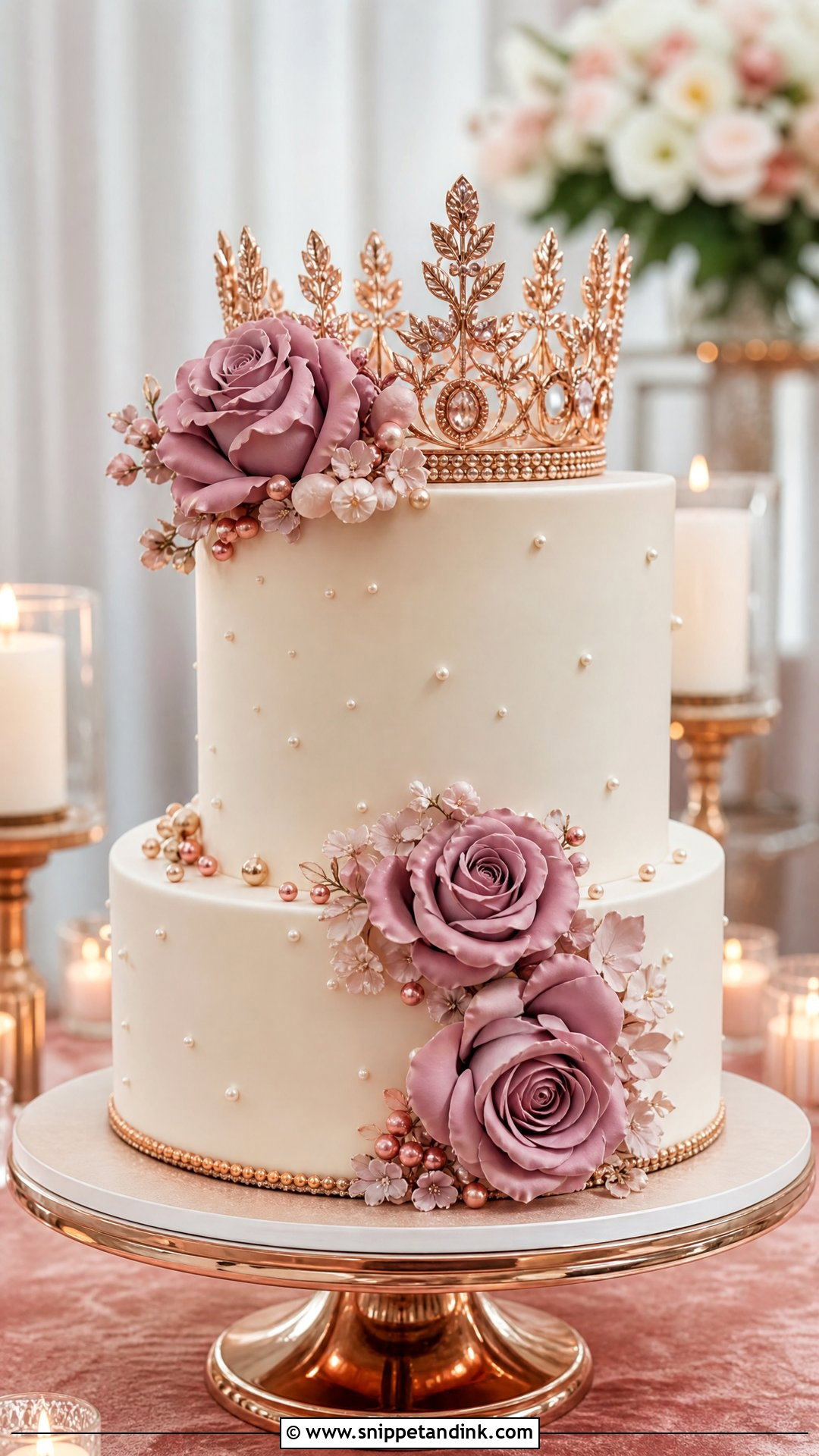
Rose gold sits warmly with ivory, blush, mauve, champagne and beige, and it looks especially good on textured buttercream where the metal catches the ridges. Choose a slim crown topper for a delicate cake or a larger crown for a tall, grand design. Edible rose gold paint can go slightly orange in warm light, so I mix my own with a touch of pink and test it under the venue’s type of lighting where I can. Sugar roses and pearl borders add depth.
8. Silver Crown Wedding Cake
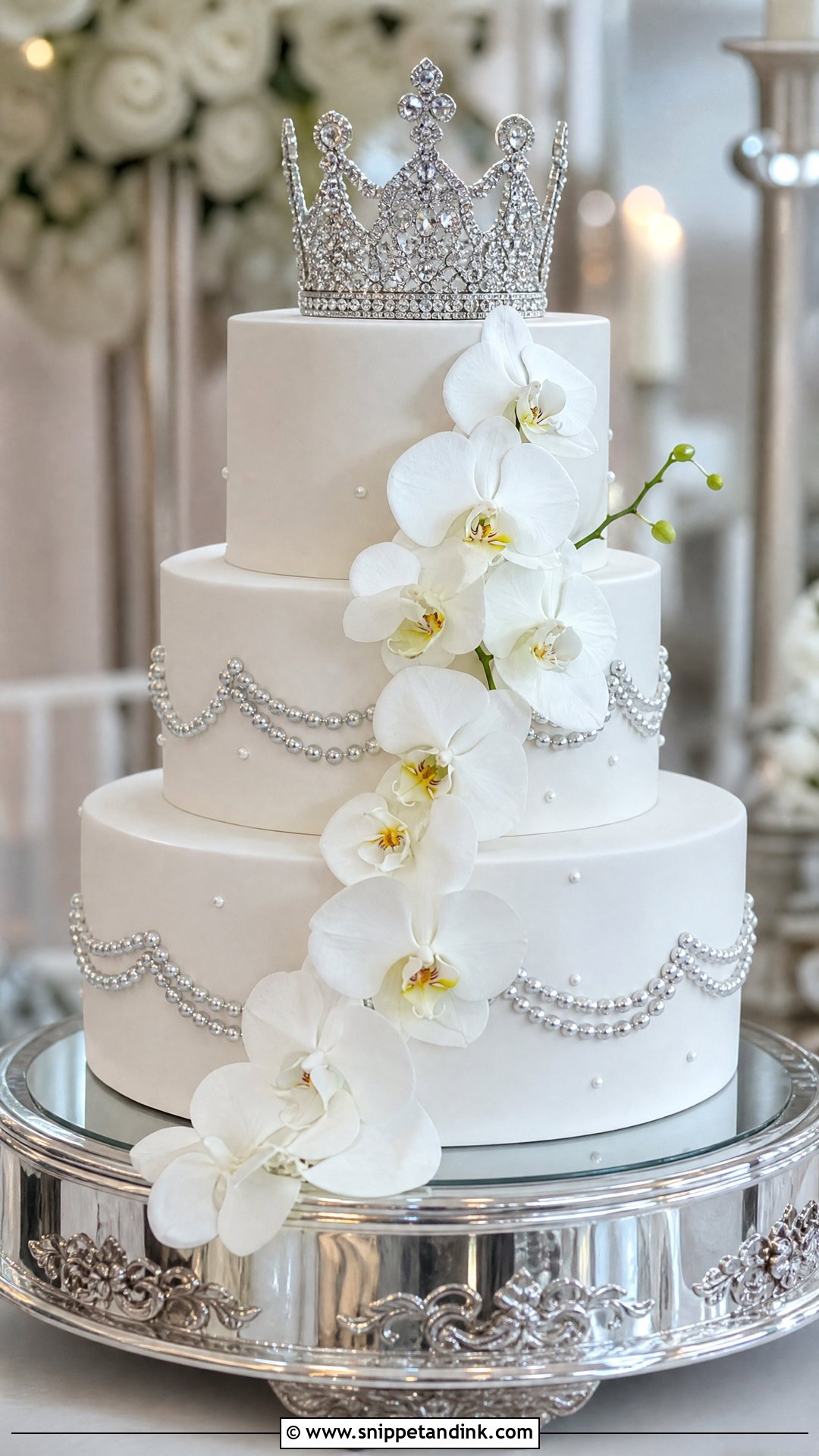
Silver is the cooler alternative to gold, crisp with white, pale grey, ice blue, lavender and pearl. A crystal tiara or silver crown makes even a plain buttercream cake feel formal, and it suits rooms with chandeliers or mirrored decor. Keep the palette tight; silver goes muddy next to too many other colours. Sharp-edged fondant and fine piping give the polished finish it needs, softened with white orchids, sugar roses or edible pearls.
9. Floral Crown Wedding Cake
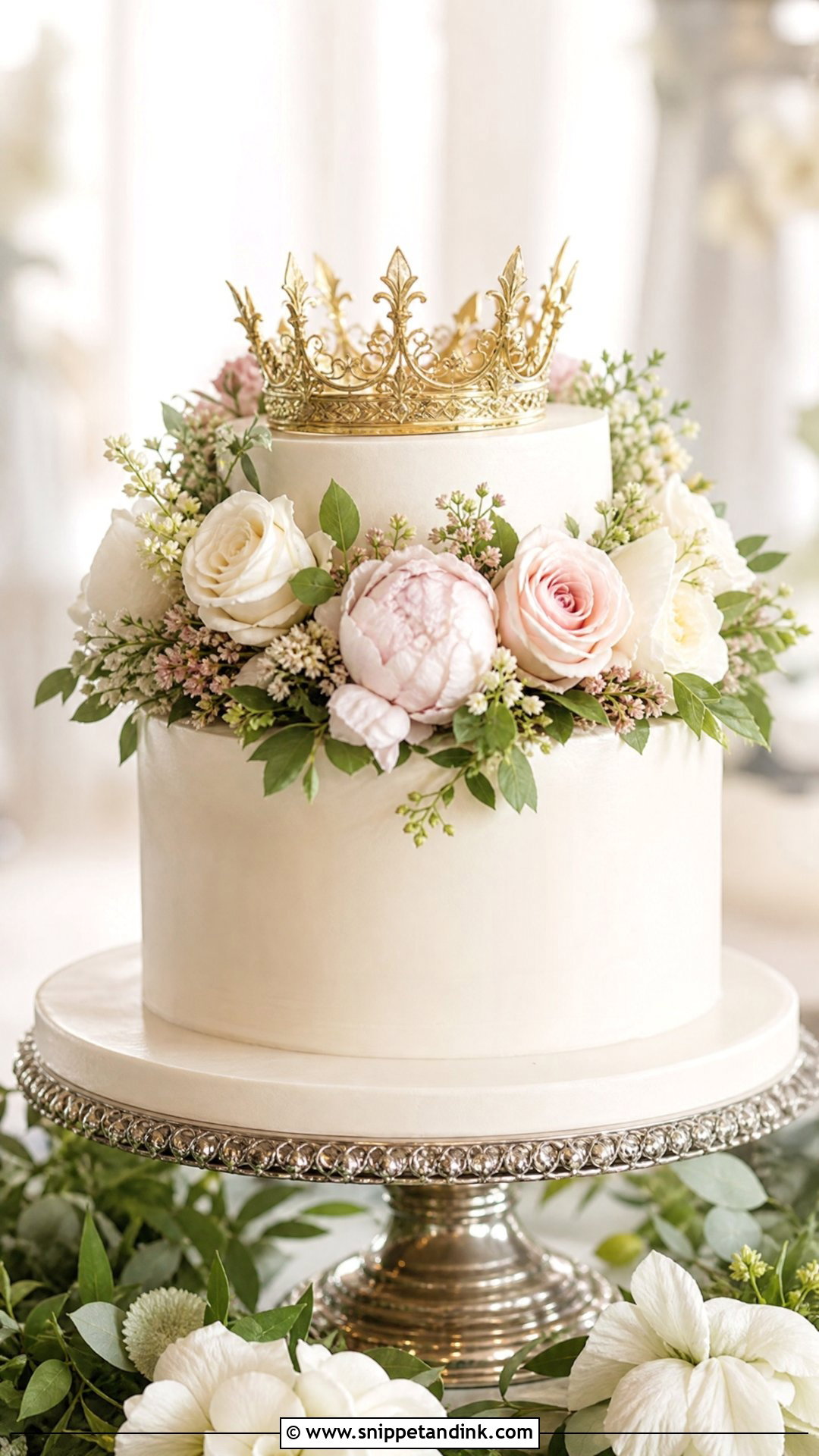
Flowers can form the crown itself, ringing the top tier, or they can circle the base of each tier with a gold or pearl crown above. Fresh roses, peonies, orchids and sugar flowers all work, depending on season. I like to talk to the florist directly so the cake flowers match the bouquet and centrepieces in variety and colour rather than being a near miss. That conversation also settles who supplies and places the flowers on the day.
10. Vintage Crown Wedding Cake
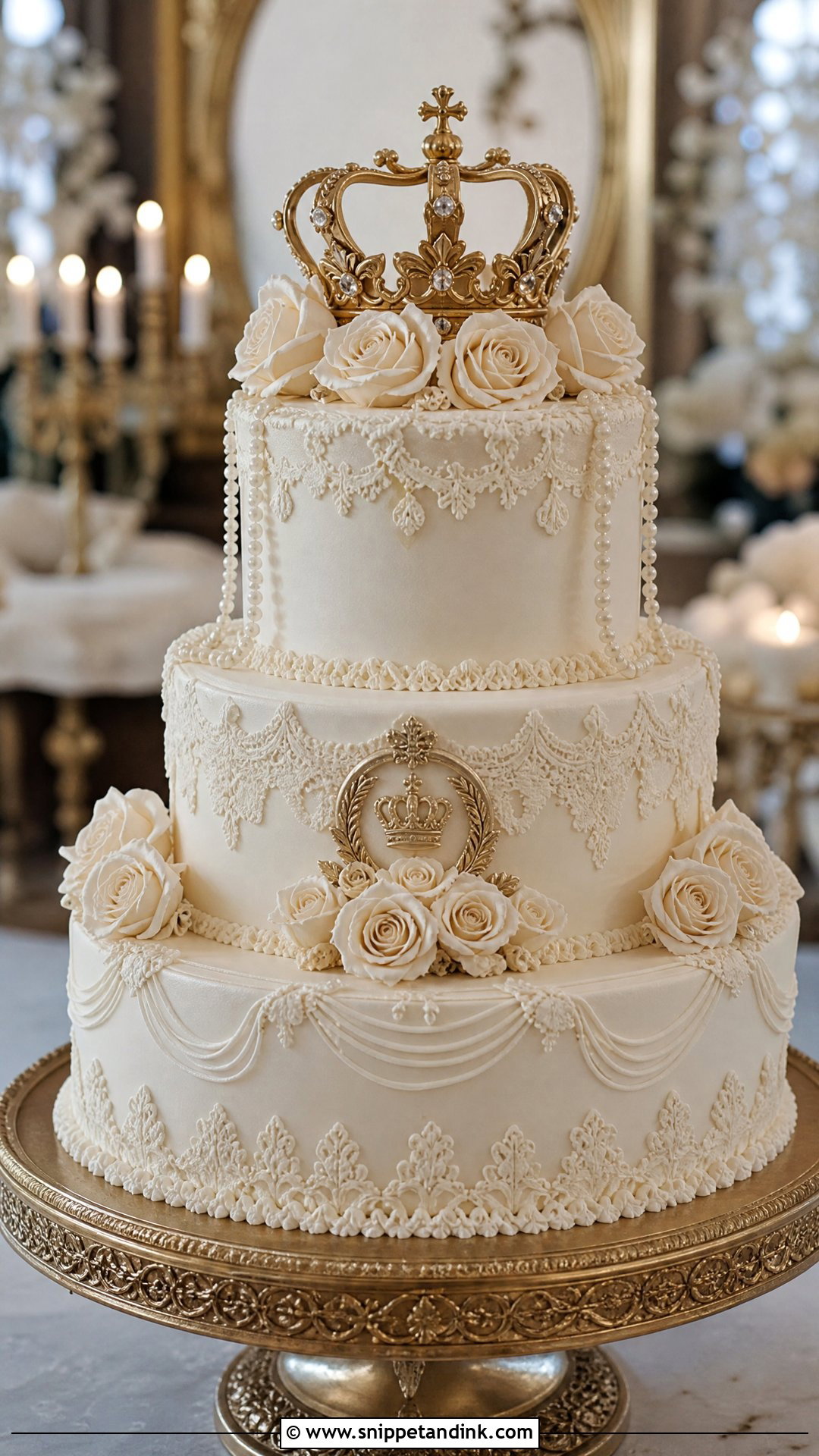
Old-world crowns call for ivory icing, ornate piping, lace texture, pearl strands and an antique gold topper. Pick two or three of those, not all of them. Lambeth-style over-piping, soft ruffles and small sugar flowers give a nostalgic look, but Lambeth work is slow, layered and fragile, so it adds real time to the order and needs careful transport. A brushed, slightly aged gold crown suits this far better than a bright shiny one, especially in historic venues and candlelight.
11. Simple Crown Wedding Cake
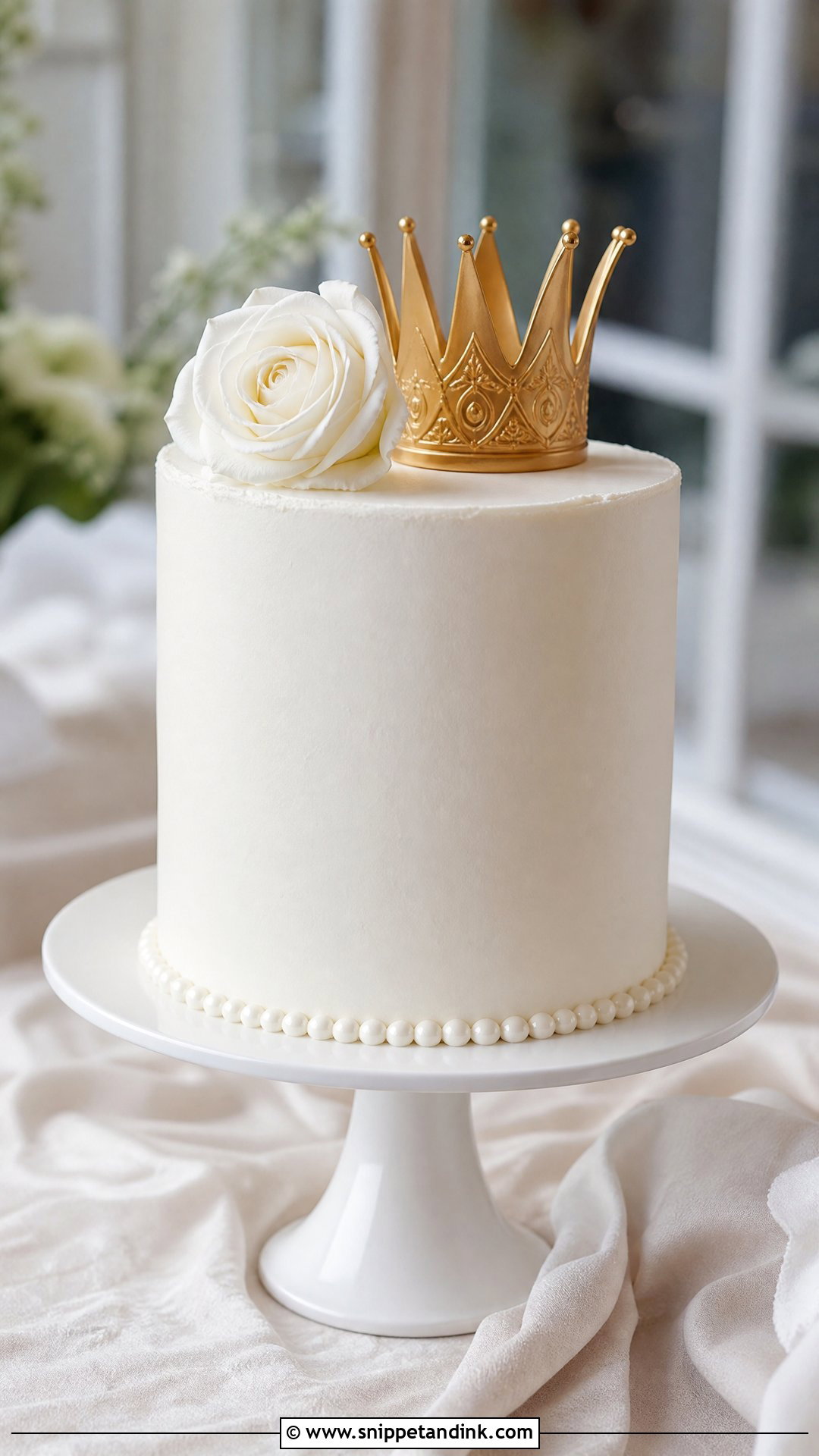
Simple means a smooth white or ivory cake with one clean crown on top, in gold, silver, pearl or acrylic, and almost nothing else: a thin piped edge or a ribbon at the base. It’s a good match for intimate weddings and courthouse celebrations. With nothing to hide behind, the finish has to be very good. Sharp edges, no air bubbles, level tiers. I’d rather spend the budget on that than on extra decoration.
12. Luxury Crown Wedding Cake
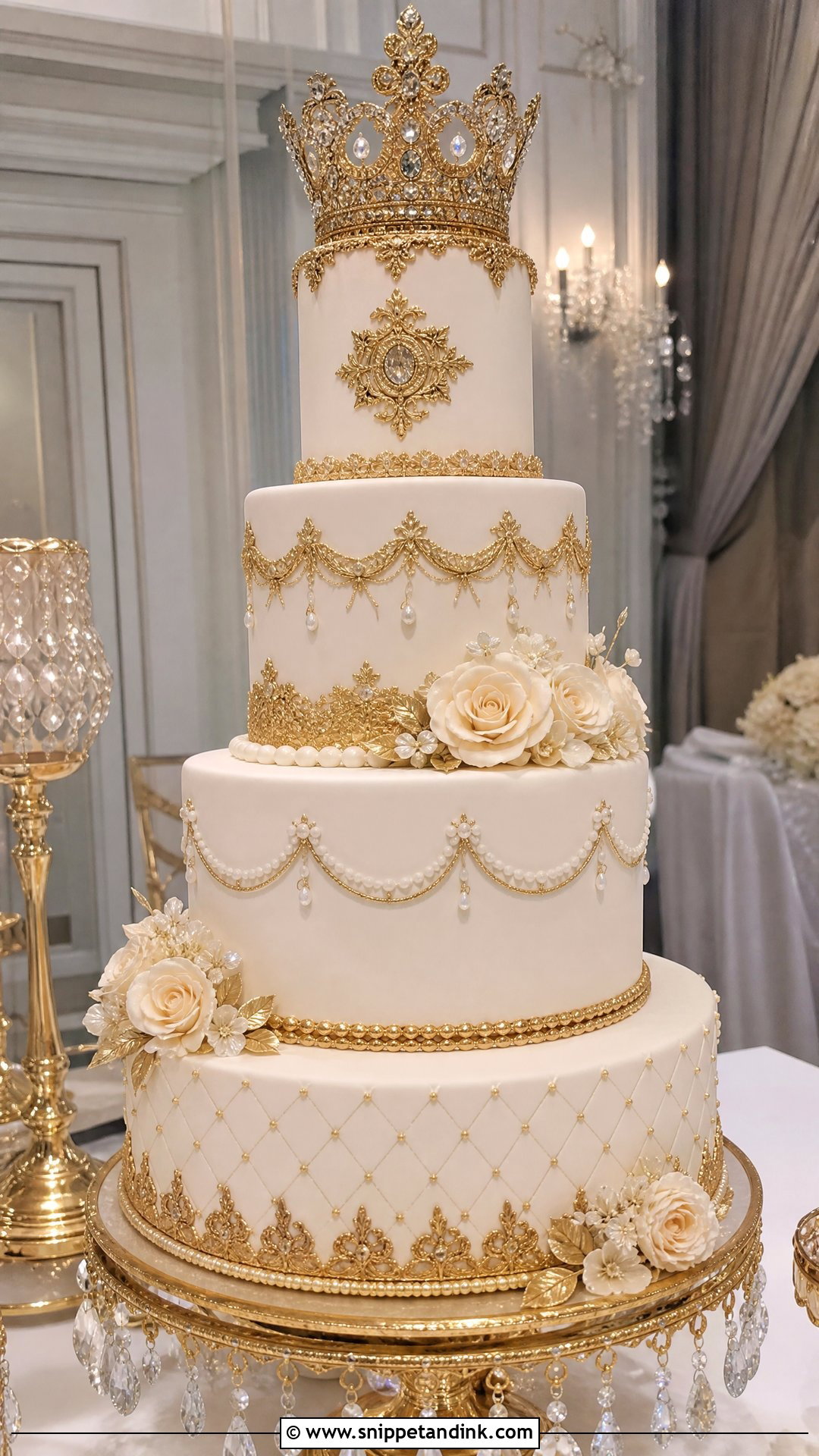
Tall tiers, metallic accents, sugar flowers, pearls and a grand crown can make a cake that holds its own in a ballroom. The palette is what keeps it expensive-looking, so I limit it to ivory, gold and champagne or similar. Fondant gives the most flawless surface; buttercream works if the finish is refined. Ask the venue about lighting over the cake table. Metallic details look flat in a dim corner and come alive under a soft spotlight.
13. Small Crown Wedding Cake
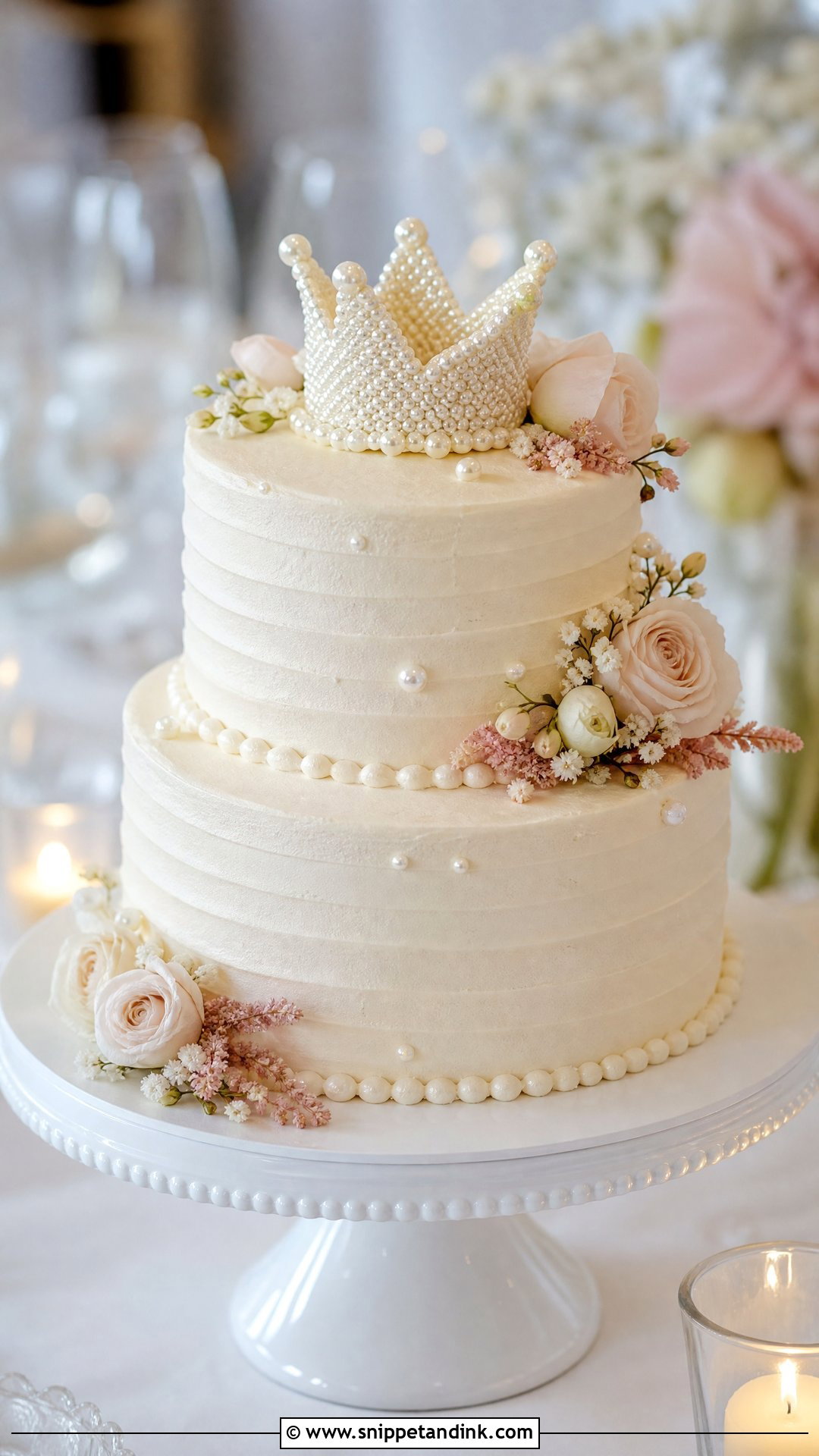
A one- or two-tier cake can feel every bit as special with the right crown. Choose a petite topper sized to the cake, then simple flowers, pearl borders or soft buttercream texture. For micro weddings and elopements, I often make a single tall tier, around six inches high instead of the usual four, and set it on a raised stand; it gives presence without leftovers. Keep the colours light so the crown remains the feature.
14. Tall Crown Wedding Cake
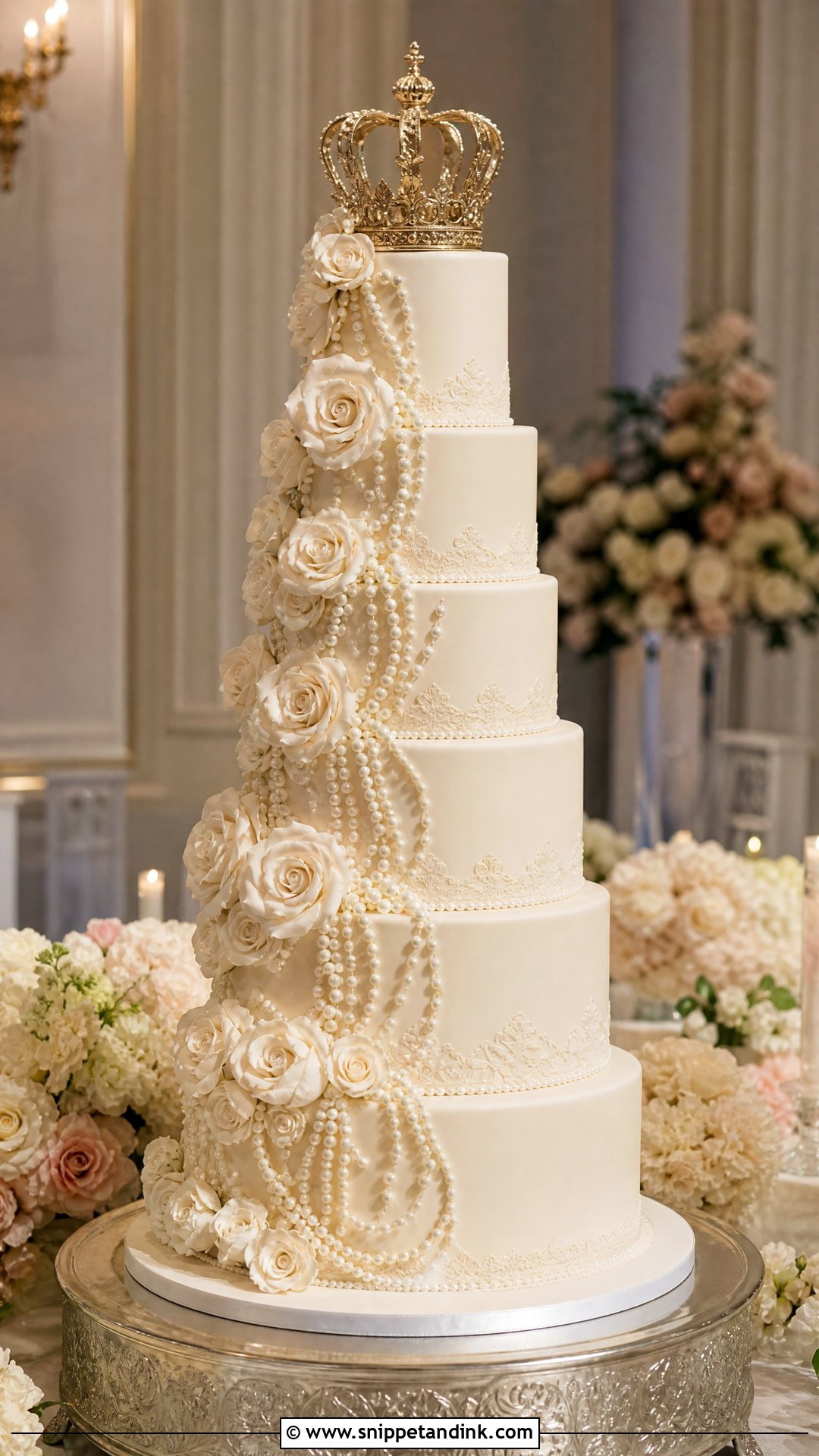
Height can come from more tiers, double-barrel tiers or a tall crown topper. The structural side is non-negotiable: every tier sits on its own board with dowels or supports beneath it, and very tall cakes get a central dowel running through the stack. Decoration that guides the eye upward, such as cascading flowers, vertical piping or pearl strands, makes the height read as elegant rather than precarious. A tall cake earns its place in large rooms where a small one would vanish.

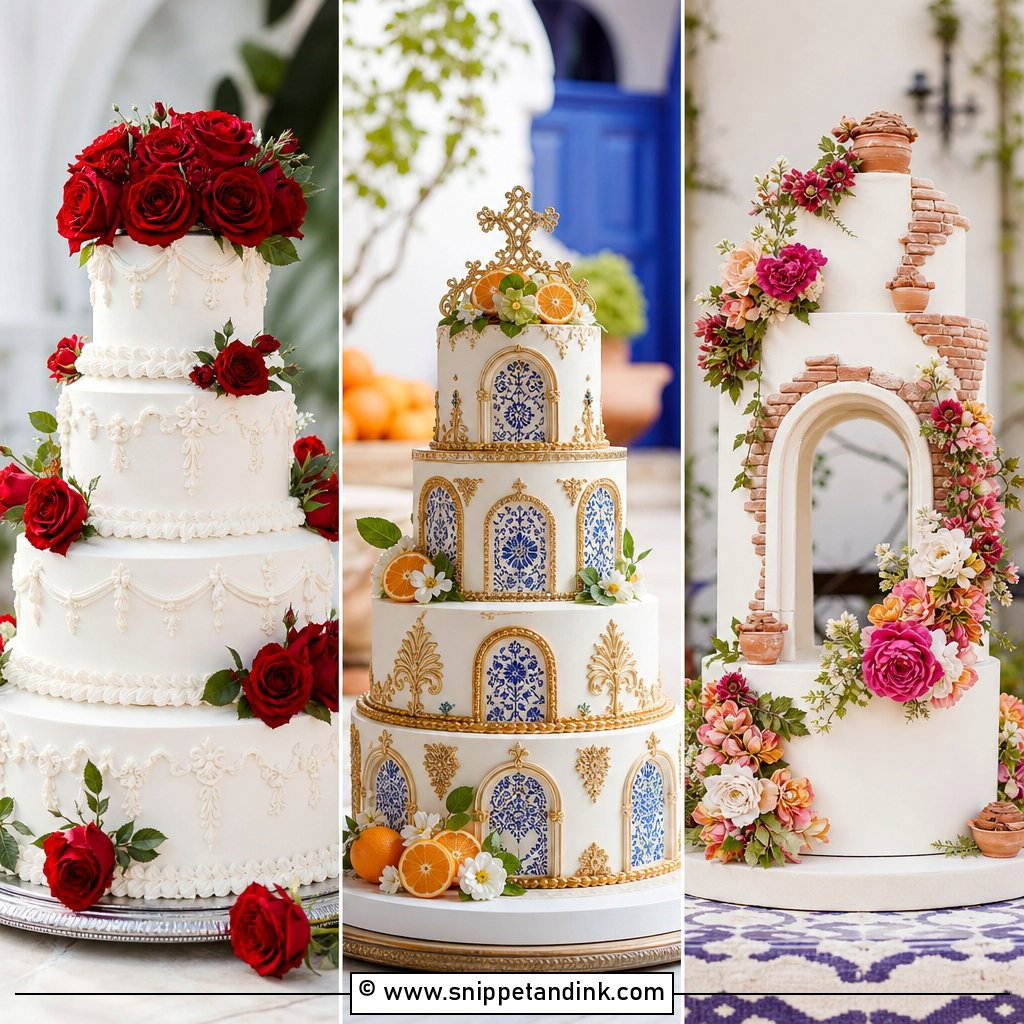
15. Two Tier Crown Wedding Cake
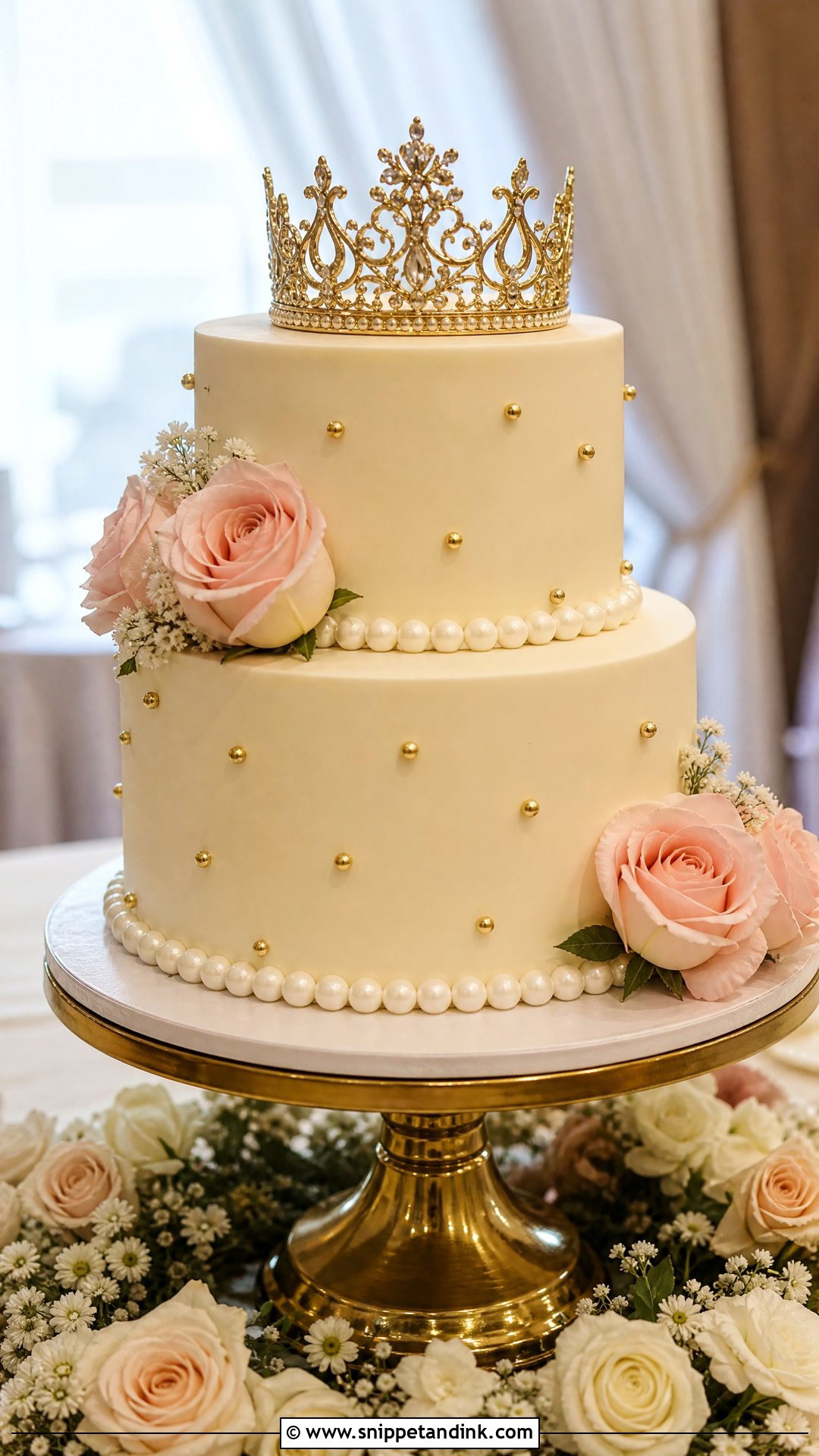
Two tiers give enough height for a formal look while staying sensible for smaller guest counts. The crown sits on top and the lower tier carries flowers, pearls or texture. I like using two finishes here, smooth ivory fondant on top and quilting below, so the cake doesn’t look like a scaled-down version of something bigger. A stand with some height and a ring of fresh flowers around the base finishes it.
16. Three Tier Crown Wedding Cake
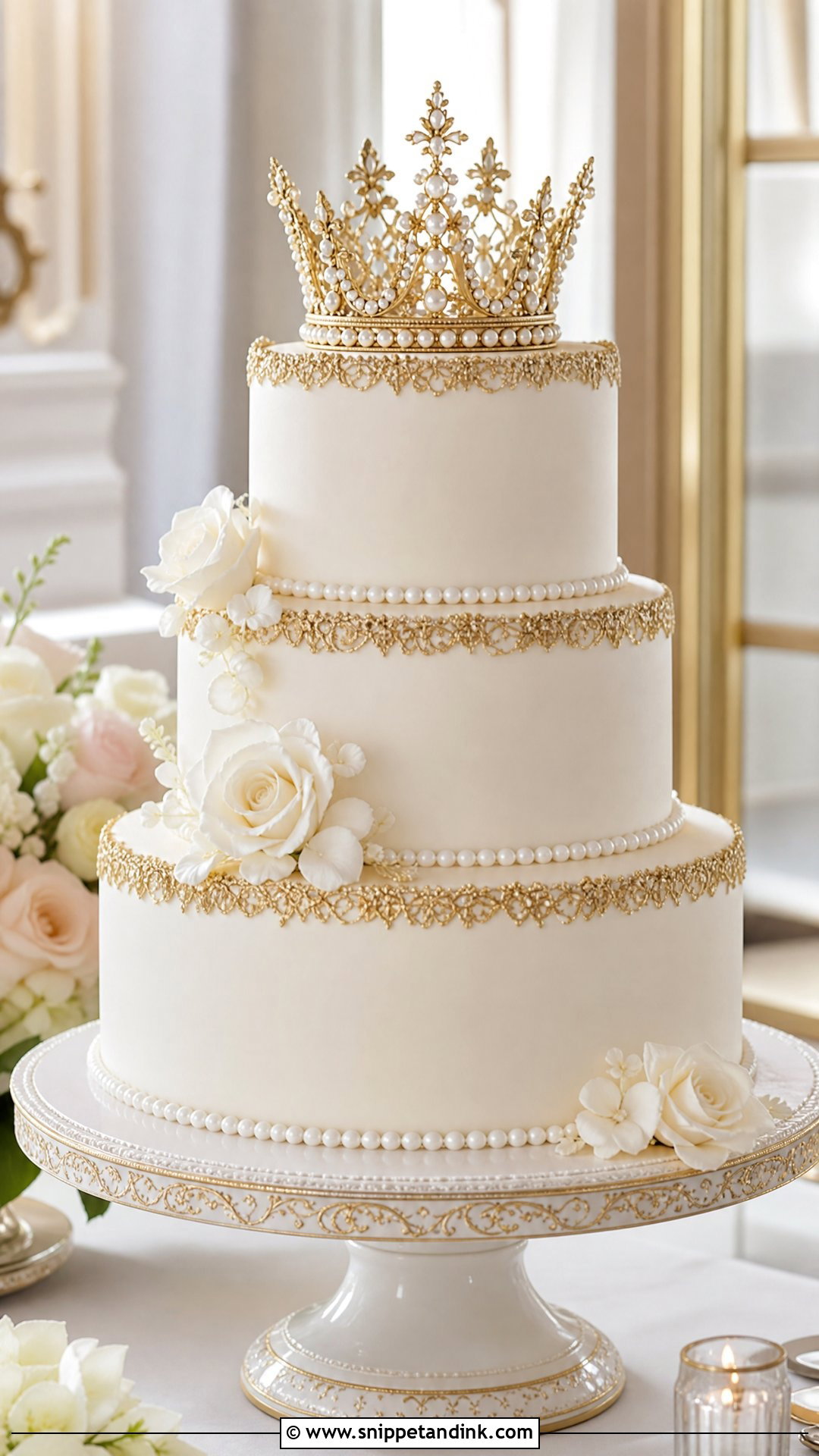
Three tiers is the size I make most often because it’s grand enough to feel like a wedding cake without dominating the table. There’s room for a crown, florals and texture. Keep all tiers white for a classic look or tint one in blush, blue, champagne or gold. Flowers between tiers need a separator or a slightly recessed gap, otherwise they get squashed when the tiers stack. It photographs well from both front and side.
17. Five Tier Crown Wedding Cake
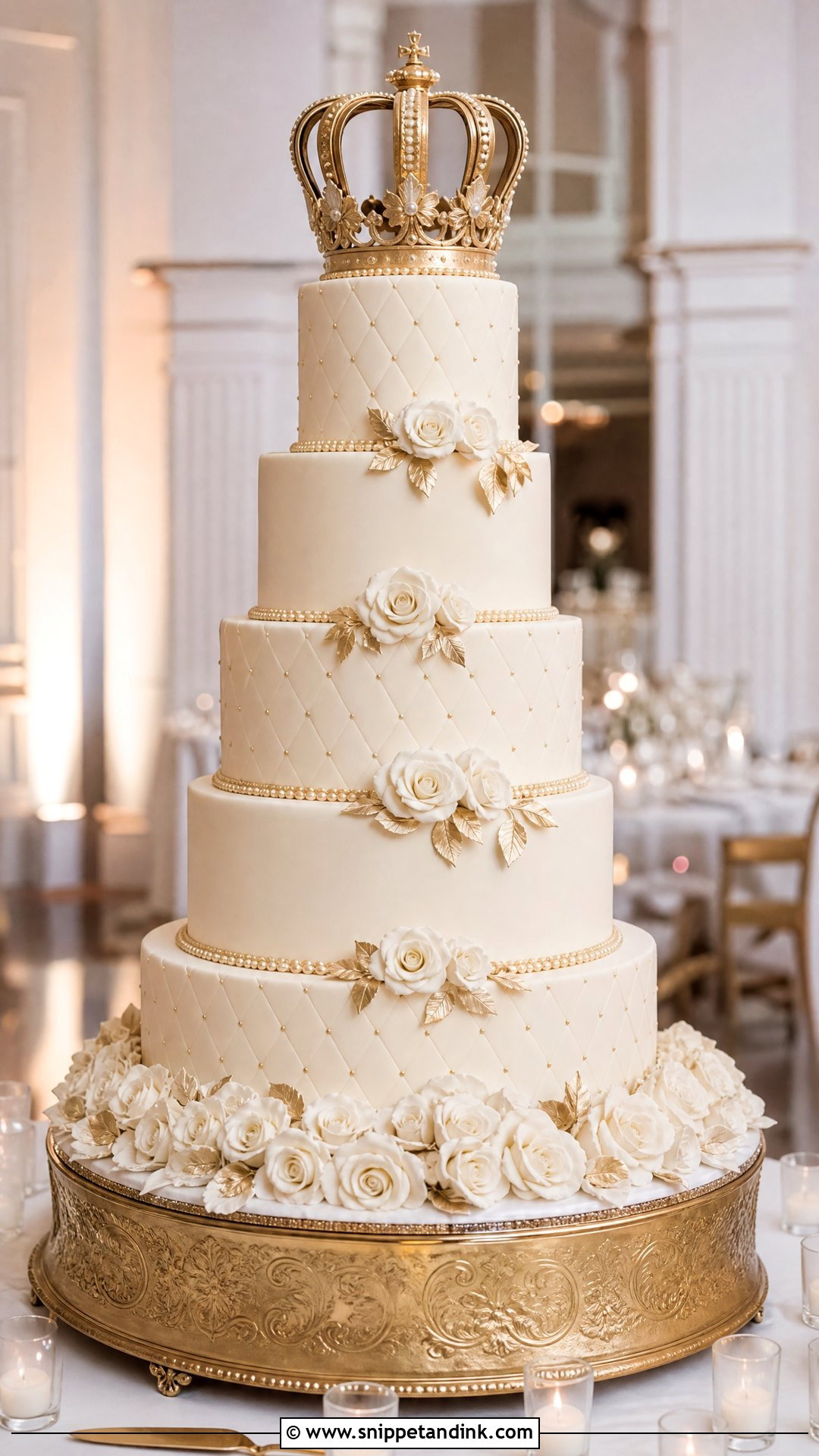
Five tiers is a ballroom or estate cake, and the size already makes the statement, so decoration needs restraint: a crown, soft florals and elegant borders rather than every inch covered. Alternate textures, smooth fondant, quilting and lace piping, to keep it interesting. Scale matters at the top. A small crown on a five-tier cake looks like an afterthought, so I size the crown to the full height of the cake, not just the top tier. Five tiers is usually assembled on site, not delivered stacked.
18. Crown Cake With Roses
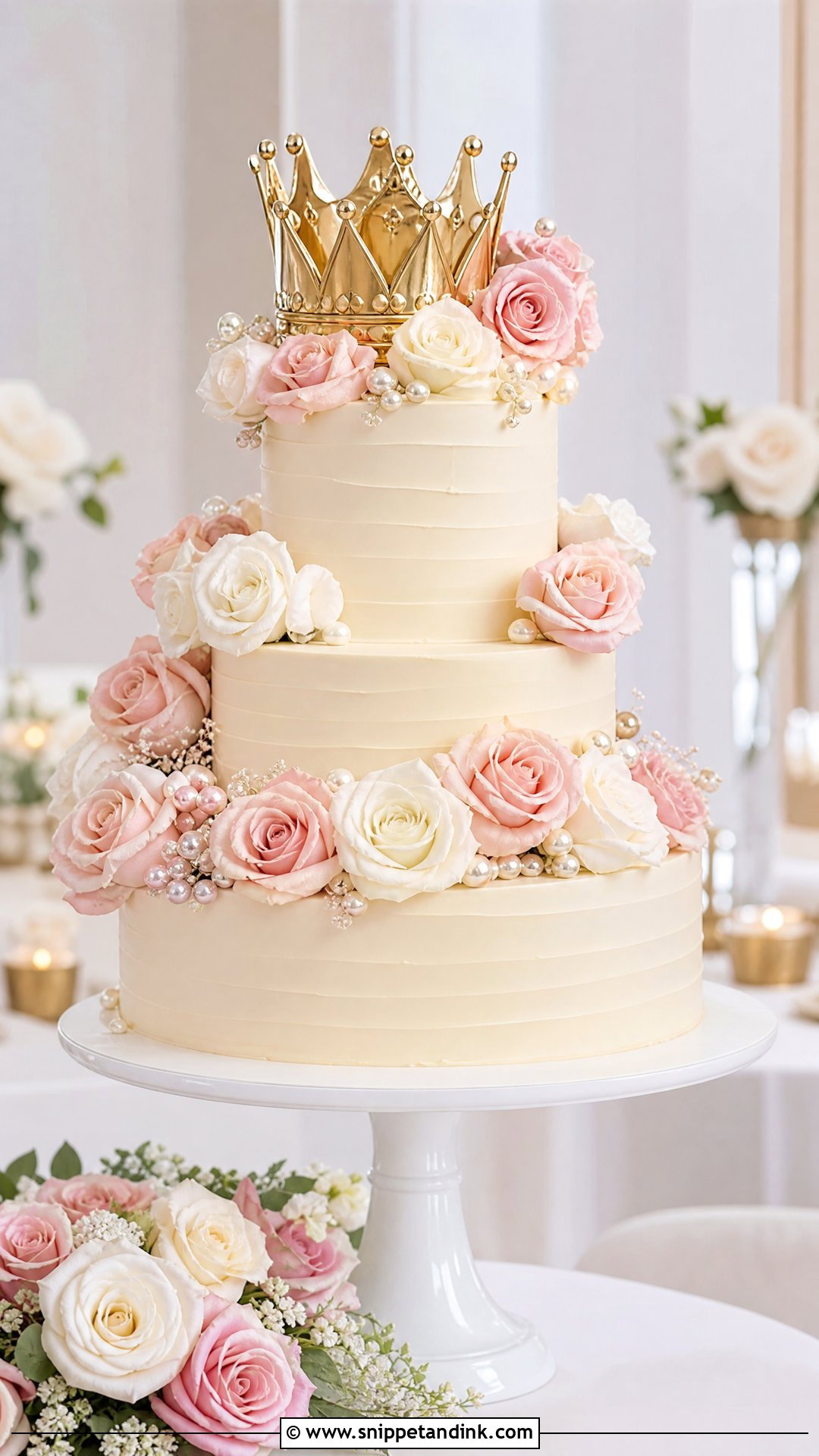
Roses soften the royal theme more than any other flower. White for classic, blush for romantic, deep red for drama. The crown can sit above them or be ringed by them. Sugar roses keep their shape all night, while fresh roses bring movement; the choice often comes down to the weather and how long the cake will be on display. Smooth icing gives both the flowers and the crown room. Matching the rose colour to the bouquet ties the cake into the day.
19. Crown Cake With Orchids
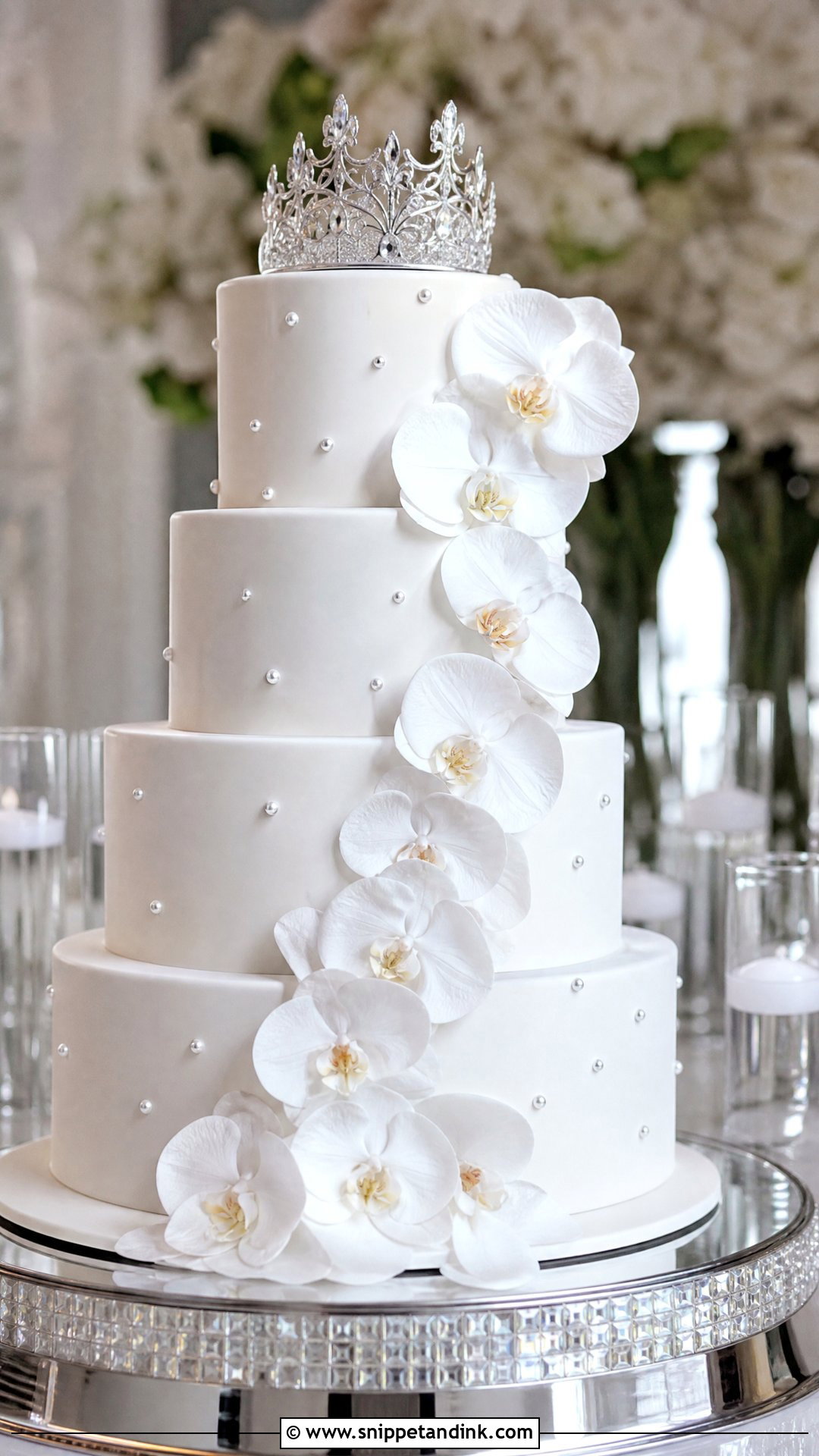
A crown cake with orchids feels sleek and a little modern, because orchid stems are already sculptural. White orchids look clean and luxurious; blush, lavender or soft peach add gentle colour. Let them cascade down one side or cluster near the crown. Fresh orchids hold up better than many flowers out of water, which is one reason I like them for warm venues, but the stems still need wrapping before they touch icing. Keep the crown slim so it doesn’t fight their shape.

20. Crown Cake With Peonies
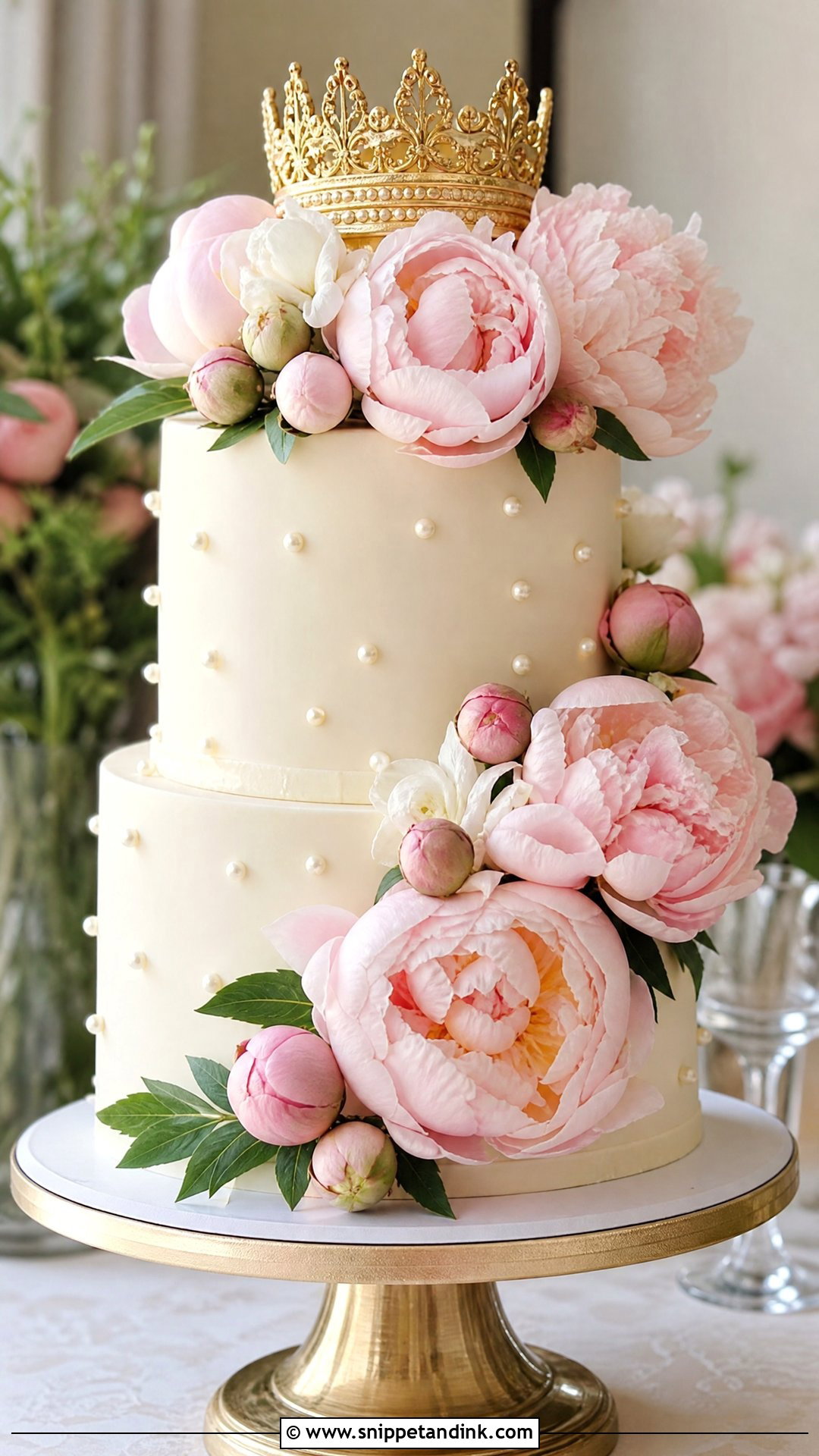
Peonies are big, so a handful makes an impact. Place them around the crown, between tiers or at the base, in blush, ivory, coral or pale pink with gold or pearl crown details. Keep the icing plain. One honest warning: fresh peonies have a short season, roughly late spring into early summer depending on where you are, so outside that window they may be imported at a premium or I’ll suggest sugar peonies instead.
21. Crown Cake With Gold Leaf
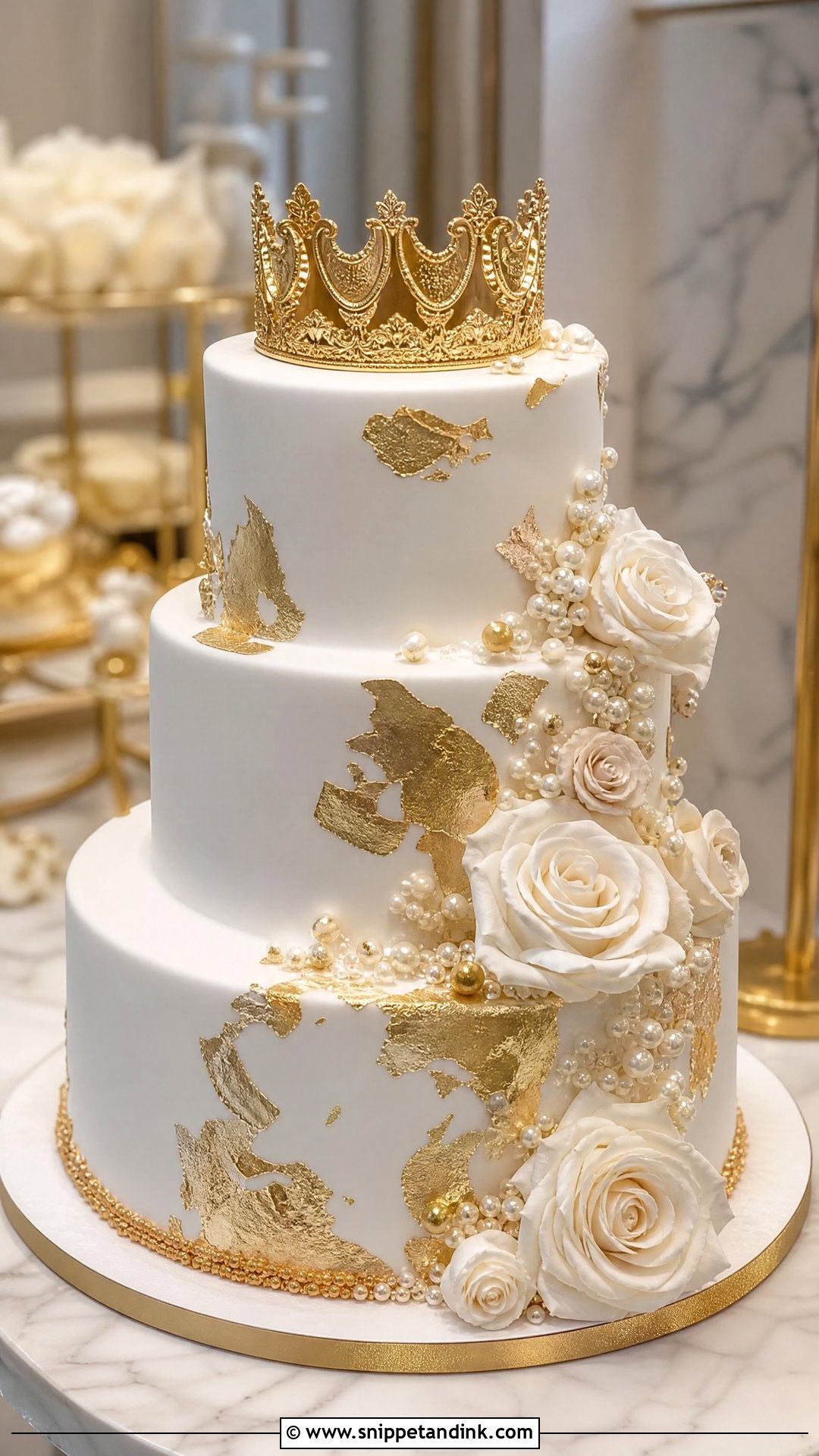
Gold leaf gives a royal look with very little else on the cake. I scatter it lightly across white buttercream, brush it onto one tier or use it to frame the crown. It needs a slightly tacky surface to stick, and it tears if you breathe on it, so I apply it with a soft brush rather than fingers. Pair it with a gold crown and keep everything else restrained: ivory icing, crisp edges, a few white flowers. Candlelight and marble tables suit it.
22. Crown Cake With Pearls
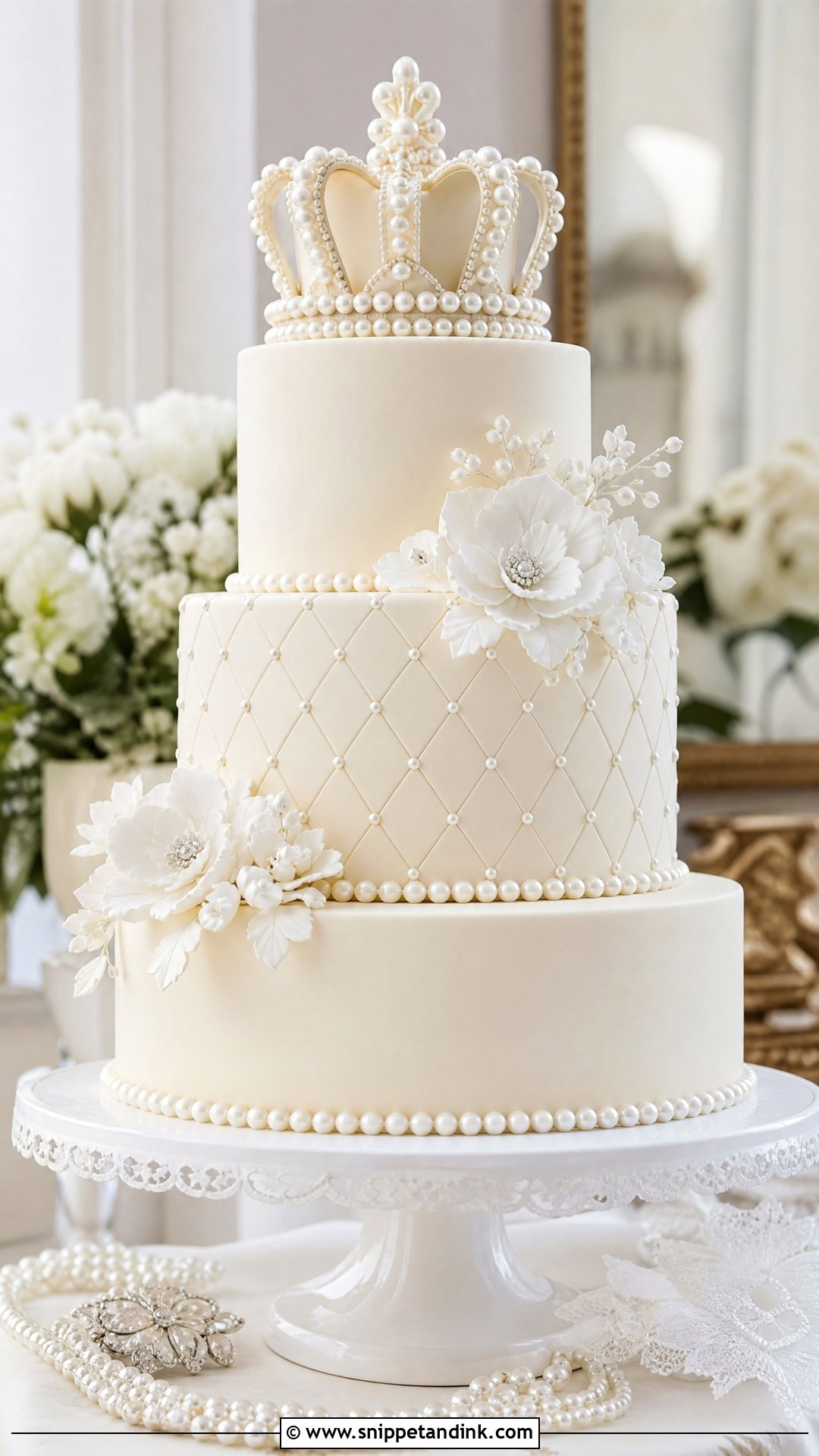
Pearls can outline each tier, cover a quilted section or decorate the crown itself. Use edible pearls in mixed sizes for depth; a single size looks flat. Ivory and white keep it soft, and gold or silver accents make it more formal. Hard sugar pearls can be tough on teeth, so I tell couples they’re best treated as decoration and moved aside when the cake is cut. Present it on a plain pedestal so the texture does the work.
23. Crown Cake With Lace
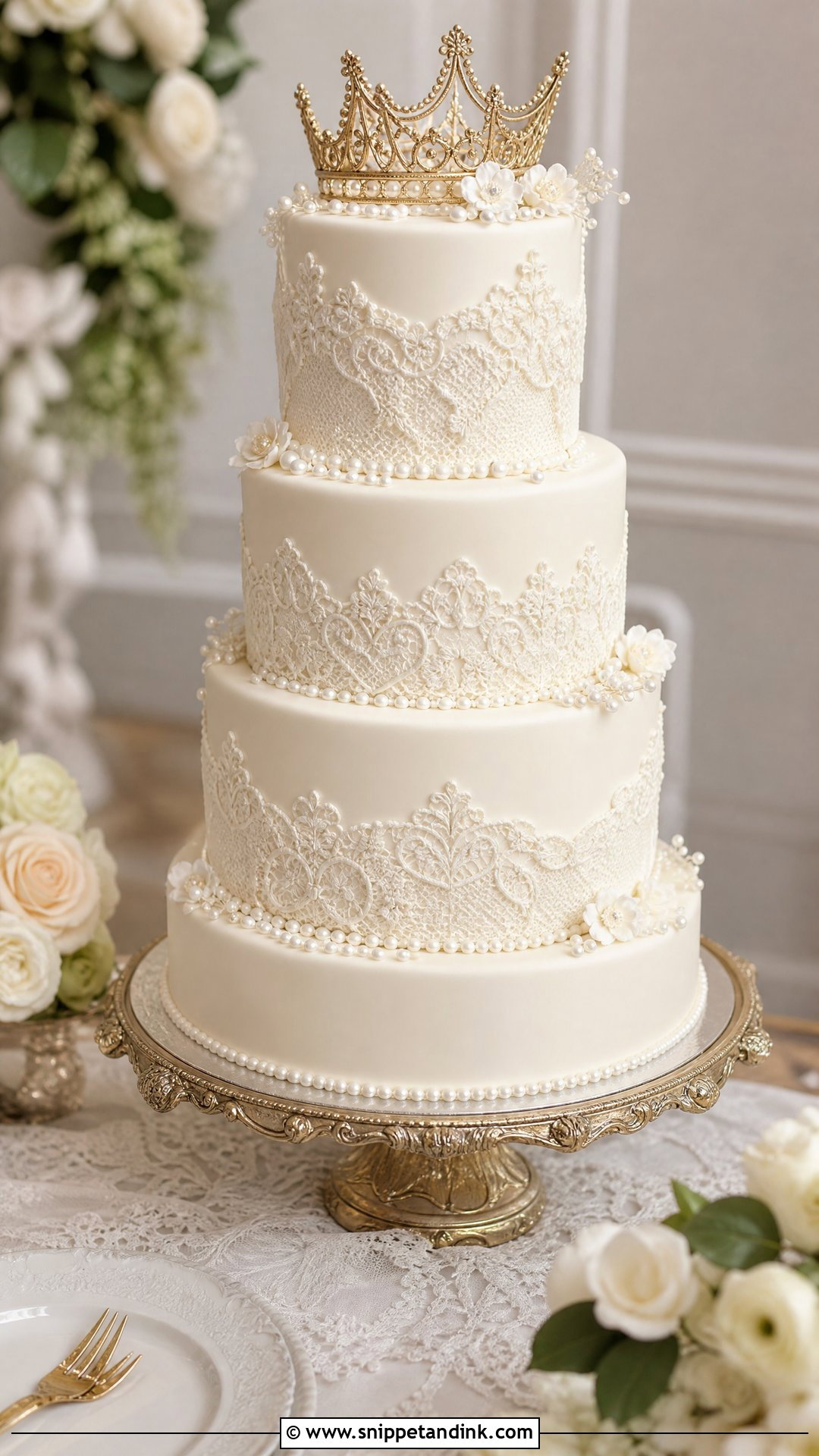
Lace can be piped in royal icing, pressed into fondant with a mould or cut from edible lace sheets. If you’d like it to echo your gown, send me a close photo of the lace; I can adapt the motif loosely rather than copying it stitch for stitch. Ivory, white and champagne suit lace best, with pearls or tiny sugar flowers alongside. Royal icing lace is brittle once dry, which is why I add it close to delivery and pack it with extra care.
24. Crown Cake With Ruffles
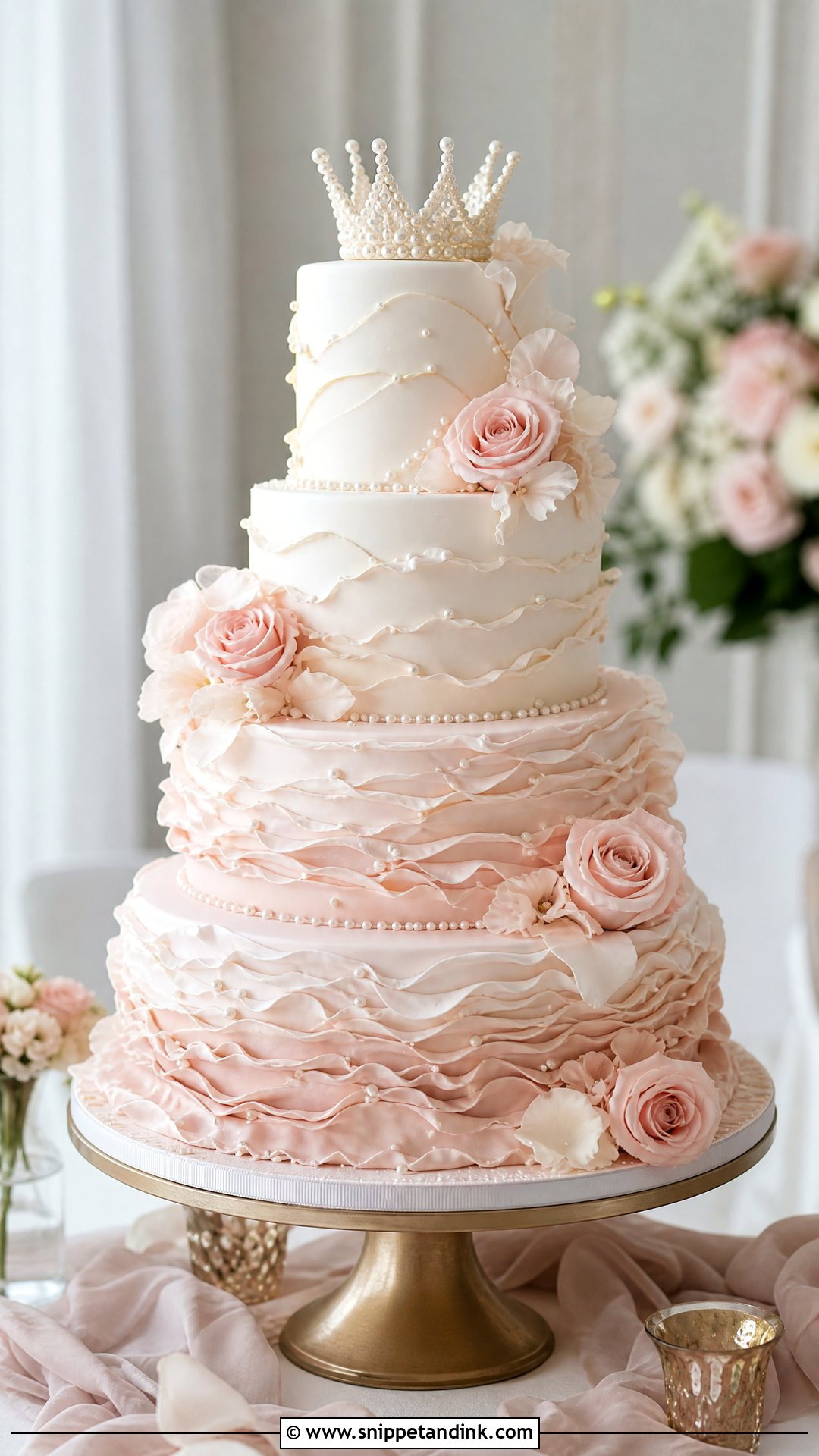
Ruffles can cover one tier, cascade down the side or form a skirt under the crown. They’re made from thin sheets of fondant or ribbons of piped buttercream, and both add real volume and weight, so the supports underneath have to be planned for it. Keep the palette gentle and the extras minimal: a small cluster of roses or pearls and a simple gold, pearl or white crown. In very humid weather, fondant ruffles can droop, so I’d suggest buttercream ruffles or a cooler display spot.
25. Crown Cake With Buttercream
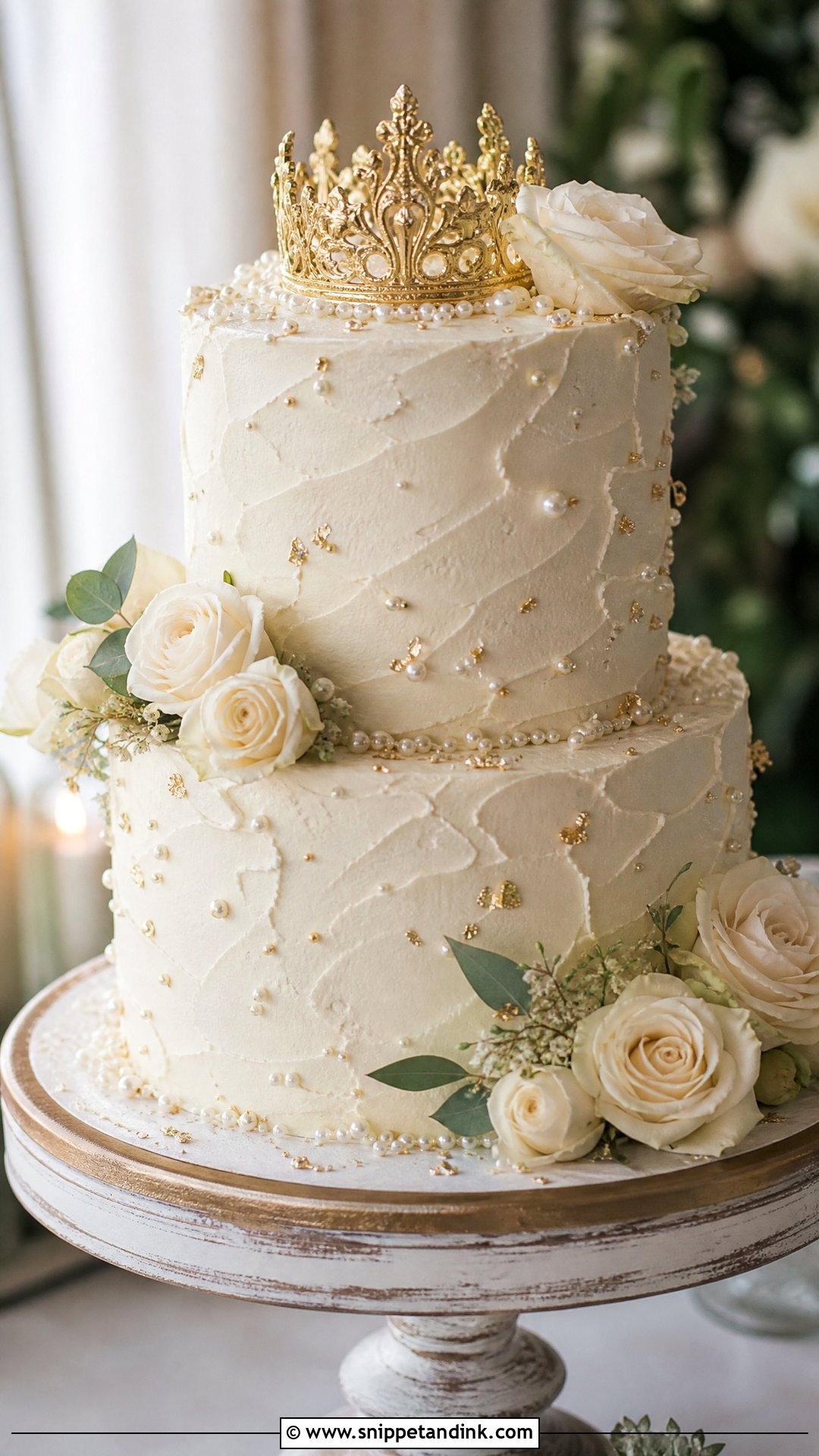
Buttercream gives a softer, handmade finish that suits rustic-elegant and garden weddings. It can be smooth, lightly textured or piped into borders, and a crown on top lifts the whole cake without making it feel formal. Ivory is the classic, though blush, champagne and pale blue also work. The trade-off is heat: buttercream softens fast in a warm marquee, and a heavy crown can start to sink into the top tier. I put a thin acrylic or card disc under the topper for exactly that reason.
26. Crown Cake With Fondant
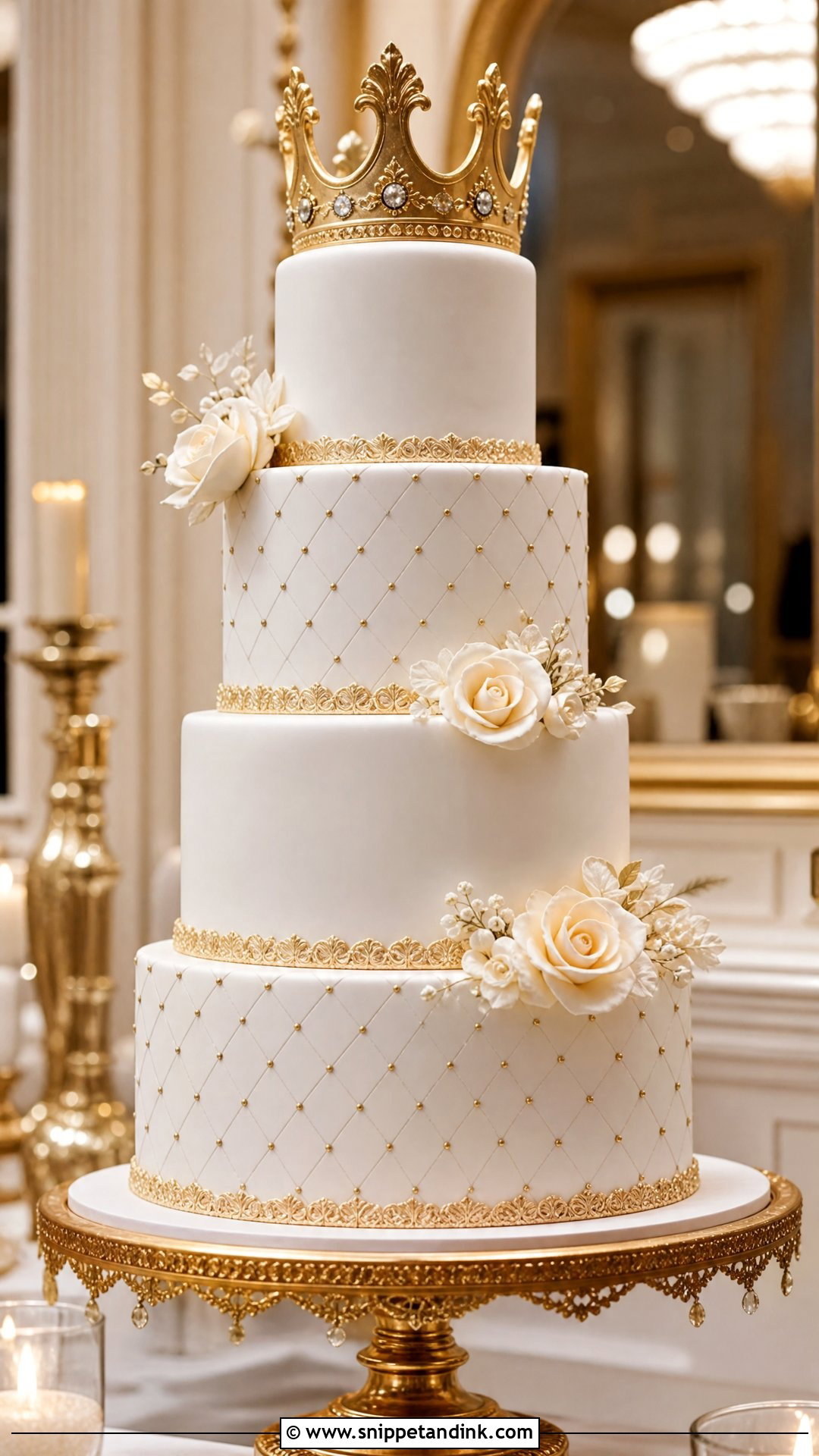
Fondant gives the cleanest, most sculpted royal look, with sharp edges, smooth sides, quilted patterns, embossed lace and painted metallics. It also supports a heavier topper better than buttercream. Ivory, white, champagne and pale blush are the wedding-friendly shades. Be aware that a fondant cake moved from a cold fridge into a warm room will sweat and look wet for a while, so I let tiers come to room temperature gradually before delivery.
27. Crown Cake With Drip
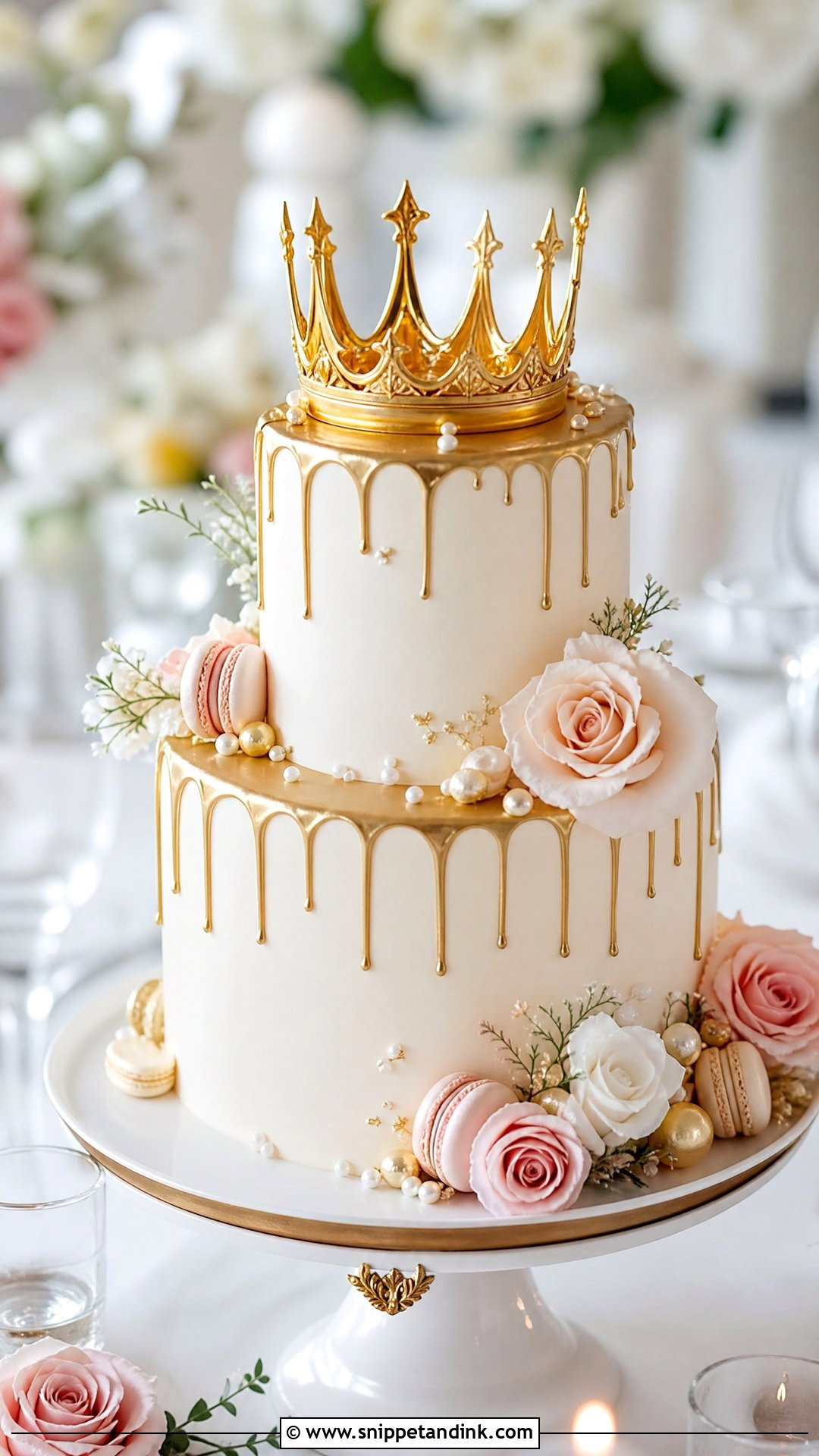
A controlled drip of white chocolate, gold-tinted ganache, caramel or pale blush glaze gives the royal cake a modern edge. I chill the cake first and test the drip temperature on the side of a glass; too warm and it runs to the board, too cool and it stops in thick stubs. A crown adds the wedding drama, with flowers, macarons or pearls finishing the top. It suits lofts and modern venues best.
28. Crown Cake With Macarons
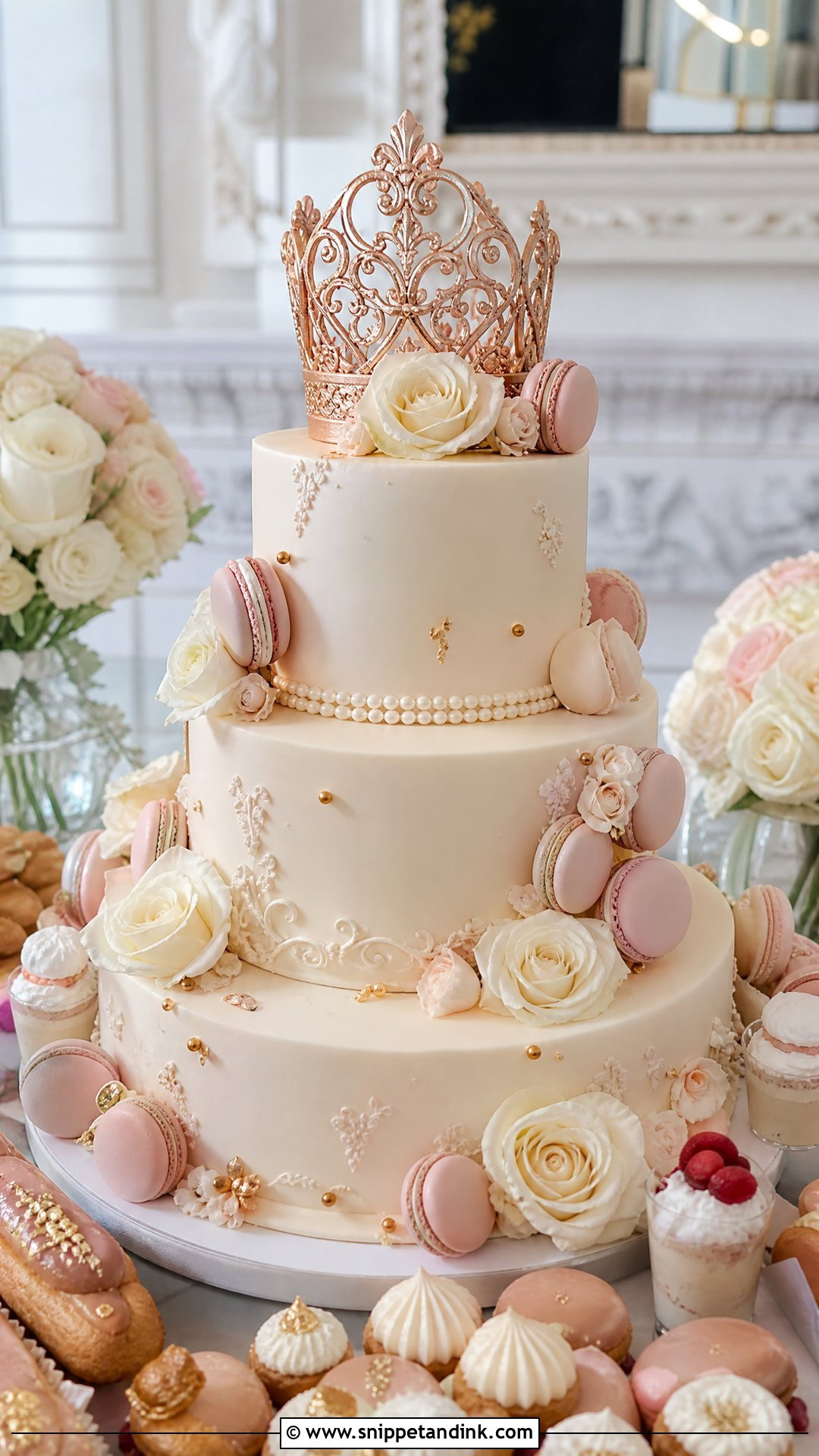
Macarons add colour, height and texture around the crown, along the base or between flowers. Soft shades, blush, ivory, lavender and champagne, keep it bridal, and a gold or pearl crown keeps it formal. Macarons soften quickly in humidity and against moist icing, so I attach them on site, on the day, rather than at the bakery. It fits naturally on dessert tables that already include pastries and small sweets.
29. Crown Cake With Initials
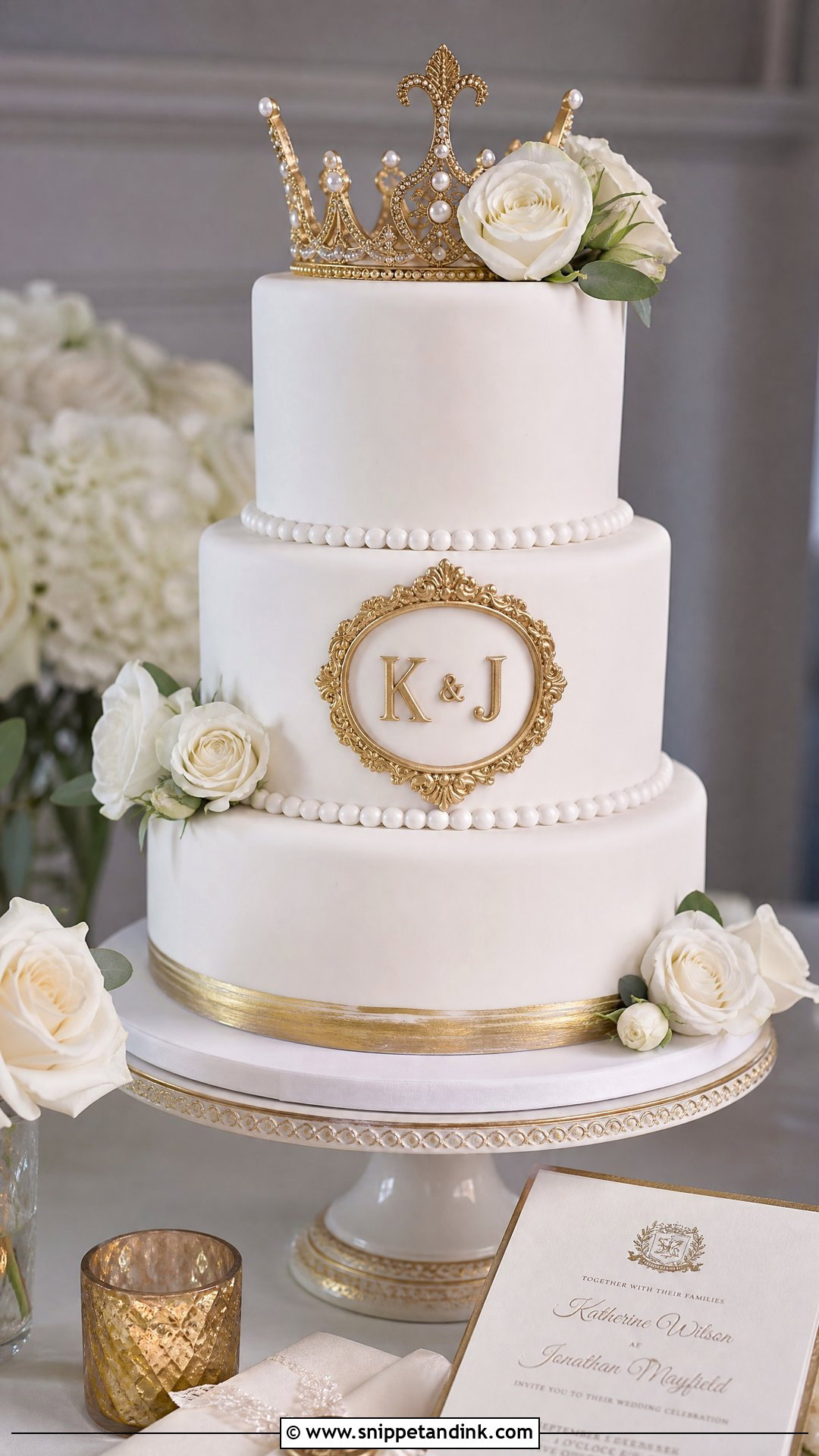
A monogram under the crown, on the front tier or framed in a gold wreath makes the cake personal. Keep the letters simple and readable from across the room, because script that looks pretty up close turns into a scribble at ten feet. Metallic initials sit naturally with a metallic crown. Pearl borders, soft roses or smooth fondant complete it. I’ll always double-check the initials in writing before I make them; it’s the one detail you can’t fix on the day.
30. Crown Cake With Quilted Pattern
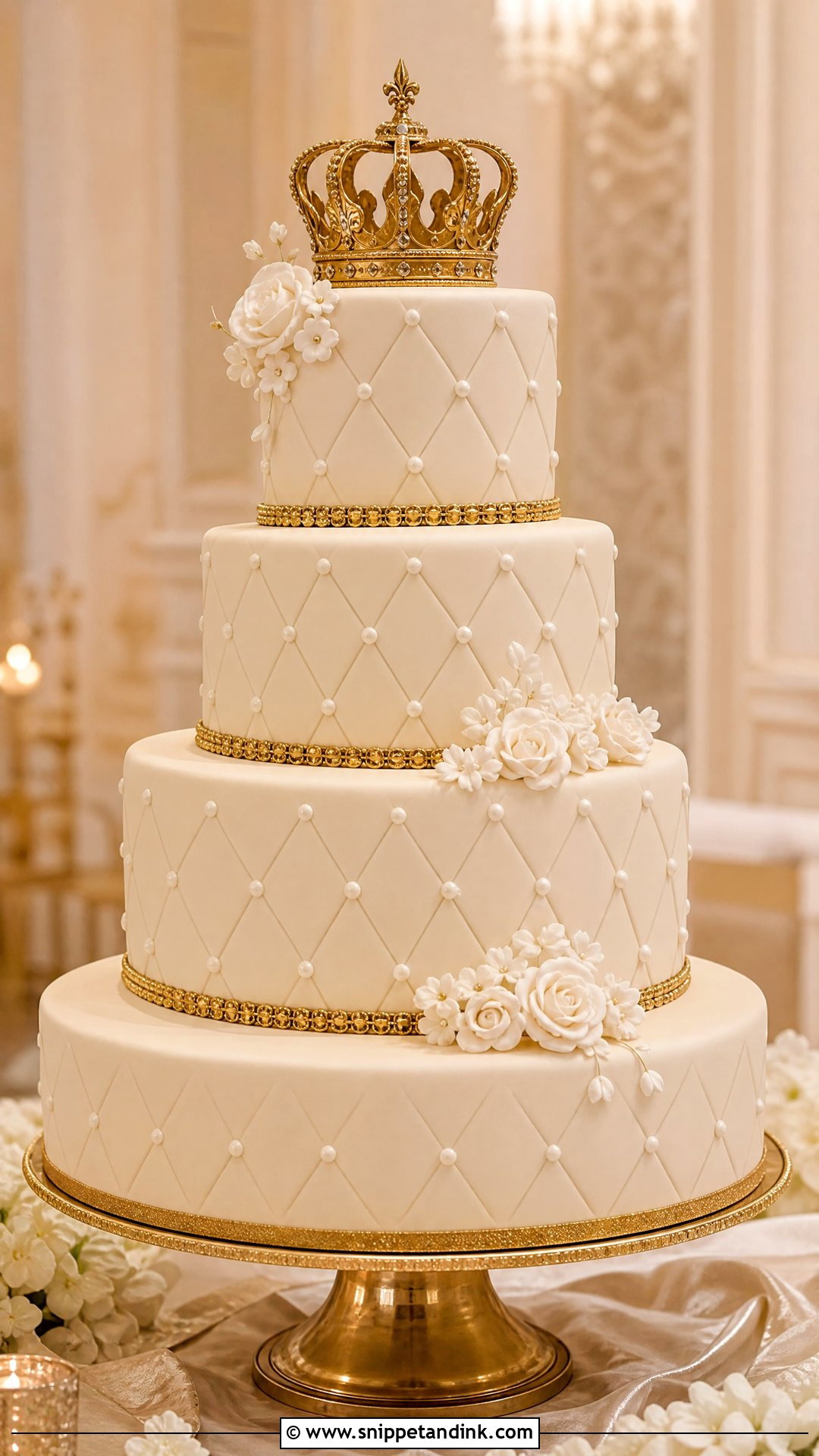
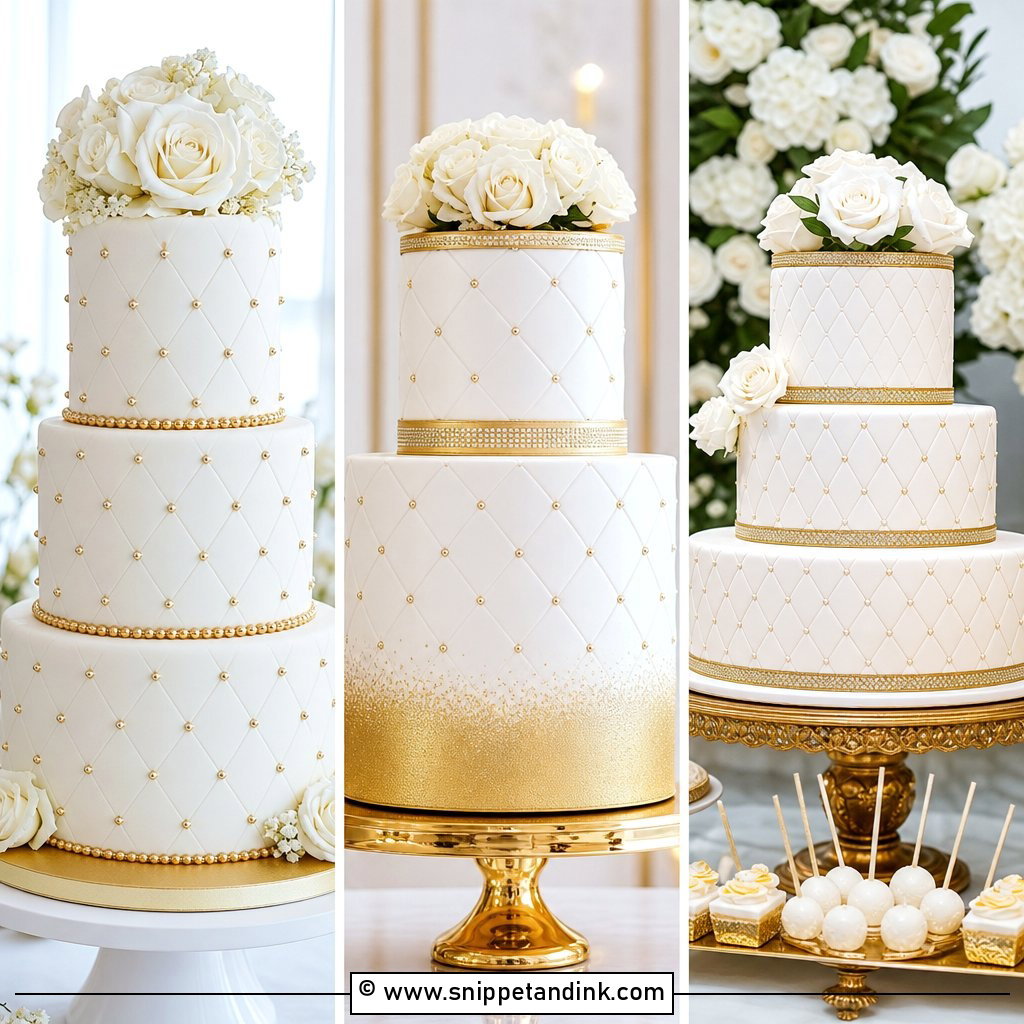
Quilting gives a tailored, fabric-like look, best on fondant, with tiny pearls at each crossing. Use it on one tier for a lighter cake or repeat it for something more formal, and keep flowers minimal so the pattern stays visible. The lines have to be perfectly even; I mark them with a ruler and a quilting tool rather than freehand, because any wobble shows down the full height of the tier. A crown in gold, silver or pearl balances it.
31. Crown Cake With Marble
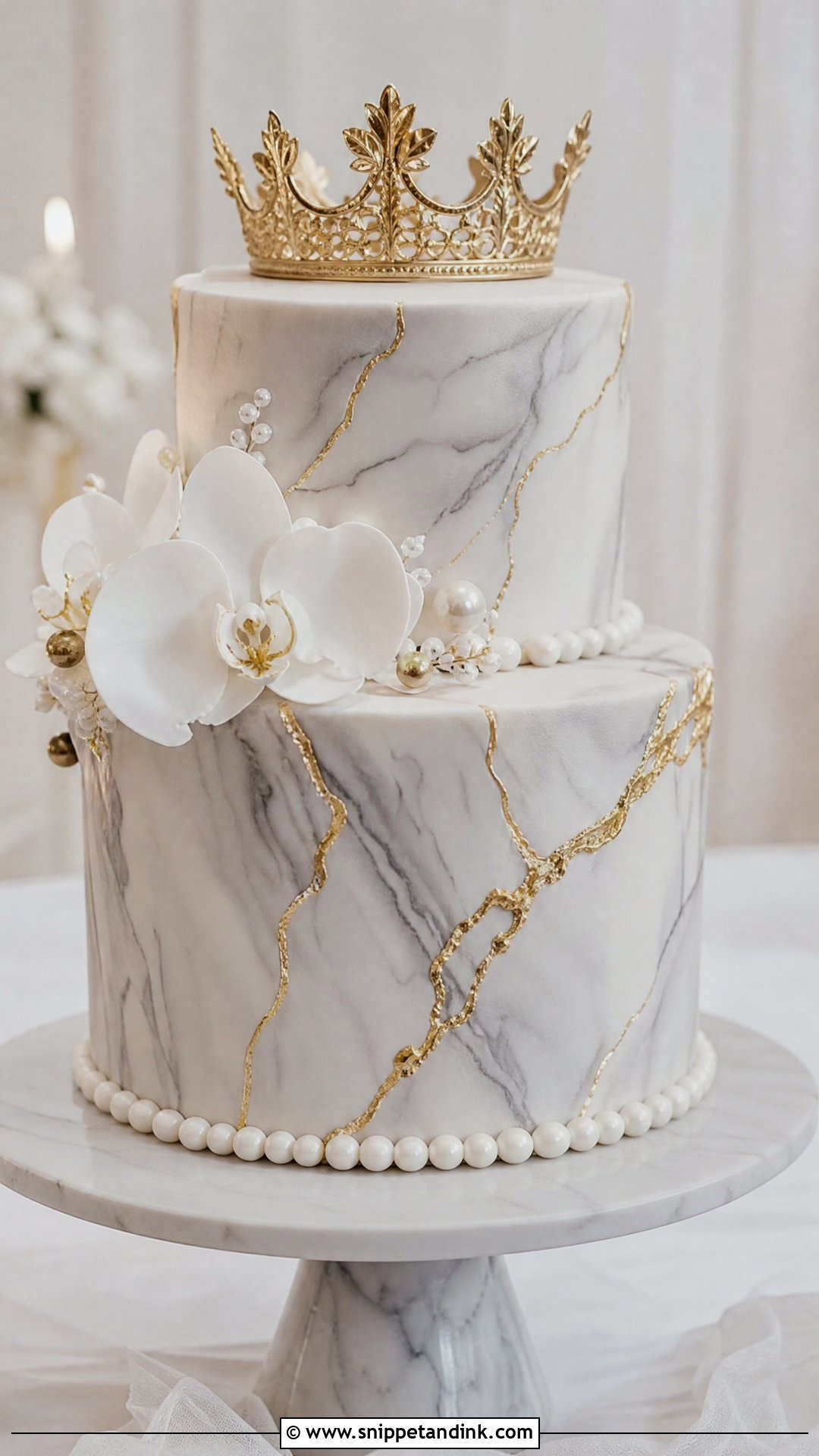
Marbled fondant or painted buttercream suits couples after a modern royal look. White and grey marble is clean, while blush, gold or champagne veining adds warmth. A crown gives the design a clear wedding focus and stops the marble looking casual. Every marbled tier comes out different, which I like, but it means you can’t expect an exact copy of a photo. Orchids, gold leaf or pearls are enough decoration.
32. Crown Cake With Cascading Flowers
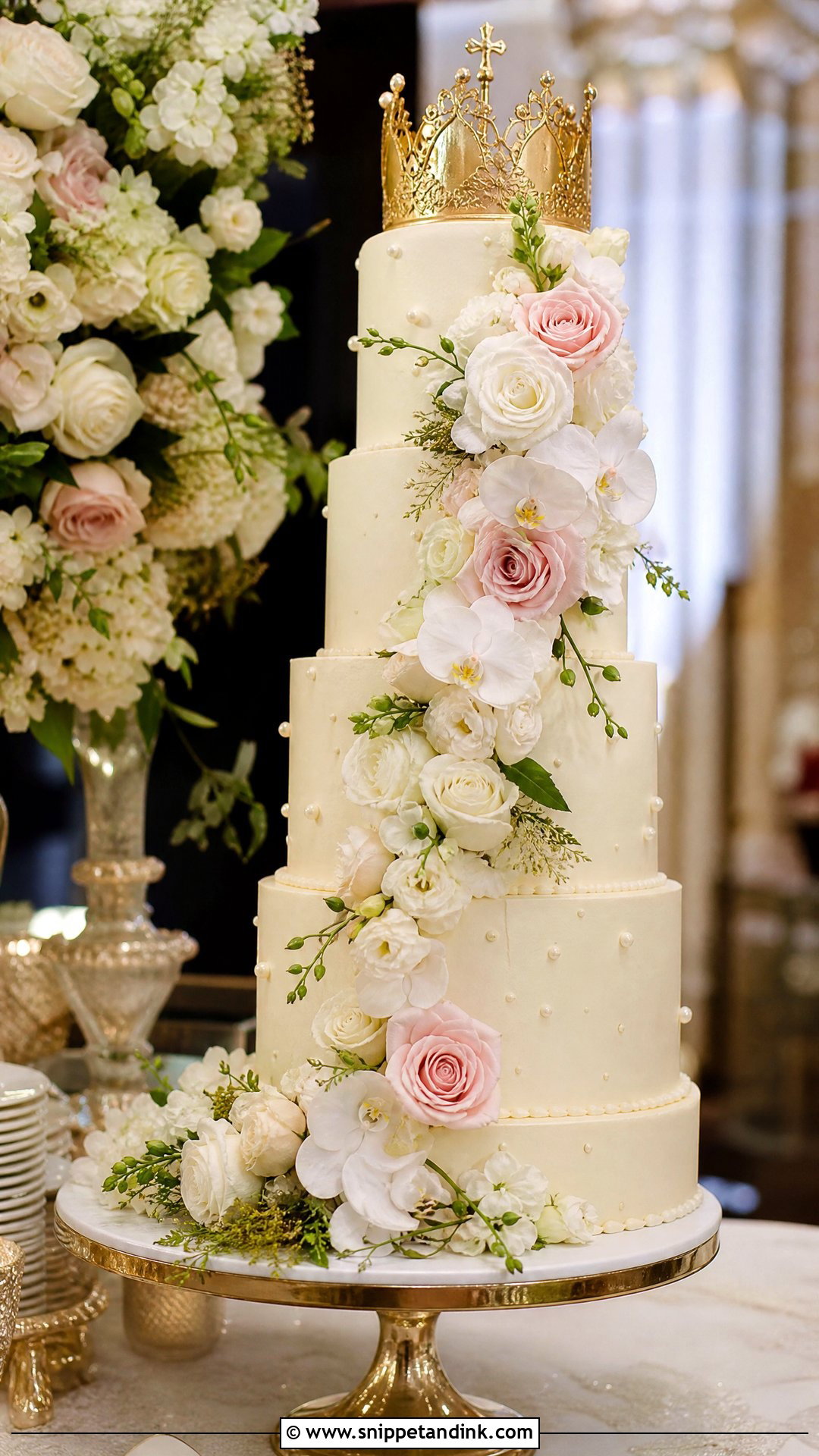
A cascade draws the eye from crown to base in a soft diagonal down one side. Roses, orchids, peonies and small fillers all work, with a crown matched to the mood: gold for warmth, pearl for softness. Keep the cake colour simple so the flowers carry it. A cascade needs planning around the cutting; I place it on the side that faces the room and leave the back clear so the cake can be cut without dismantling the flowers.
33. Crown Cake With Sugar Flowers
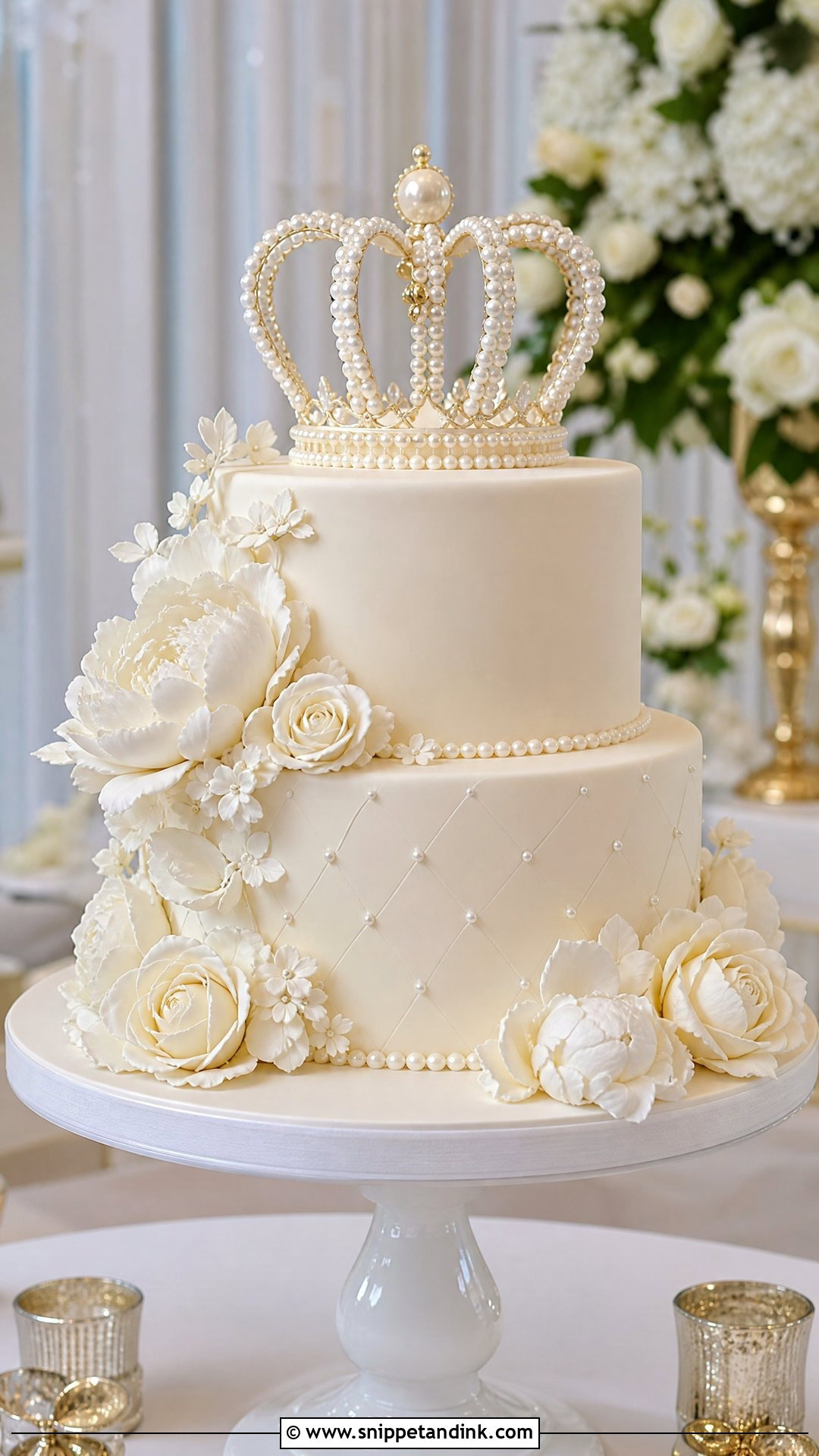
Sugar flowers last all night, can be matched to your bouquet and allow shapes that are hard to manage fresh. Place them around the crown, between tiers or in a side cluster. They’re a good answer for warm-weather receptions where fresh flowers would wilt. They’re also slow to make, petal by petal, and they’re fragile and sensitive to humidity, so they need ordering well ahead and they’re usually a keepsake rather than something to eat.
34. Crown Cake With Fresh Flowers
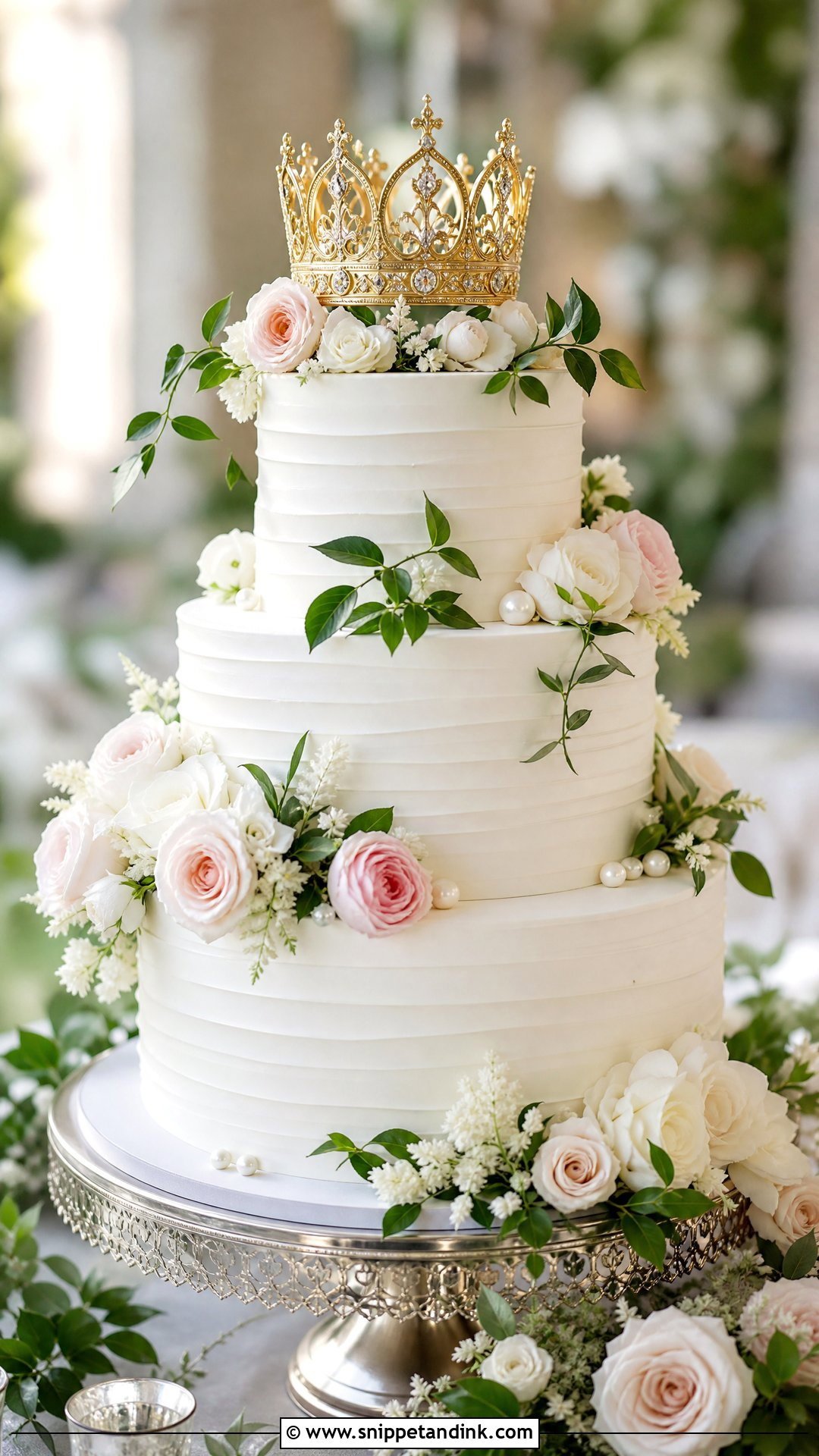
Fresh flowers bring seasonal life to a crown cake, with roses, ranunculus, orchids, peonies and greenery all working if they match the palette. Not every flower is safe near food, and stems should never go straight into the icing. I wrap stems in floral tape and set them in food-safe picks, and I check every variety with the florist for safety and for pesticide use. Keep the icing smooth or lightly textured so the blooms aren’t competing with heavy decoration.
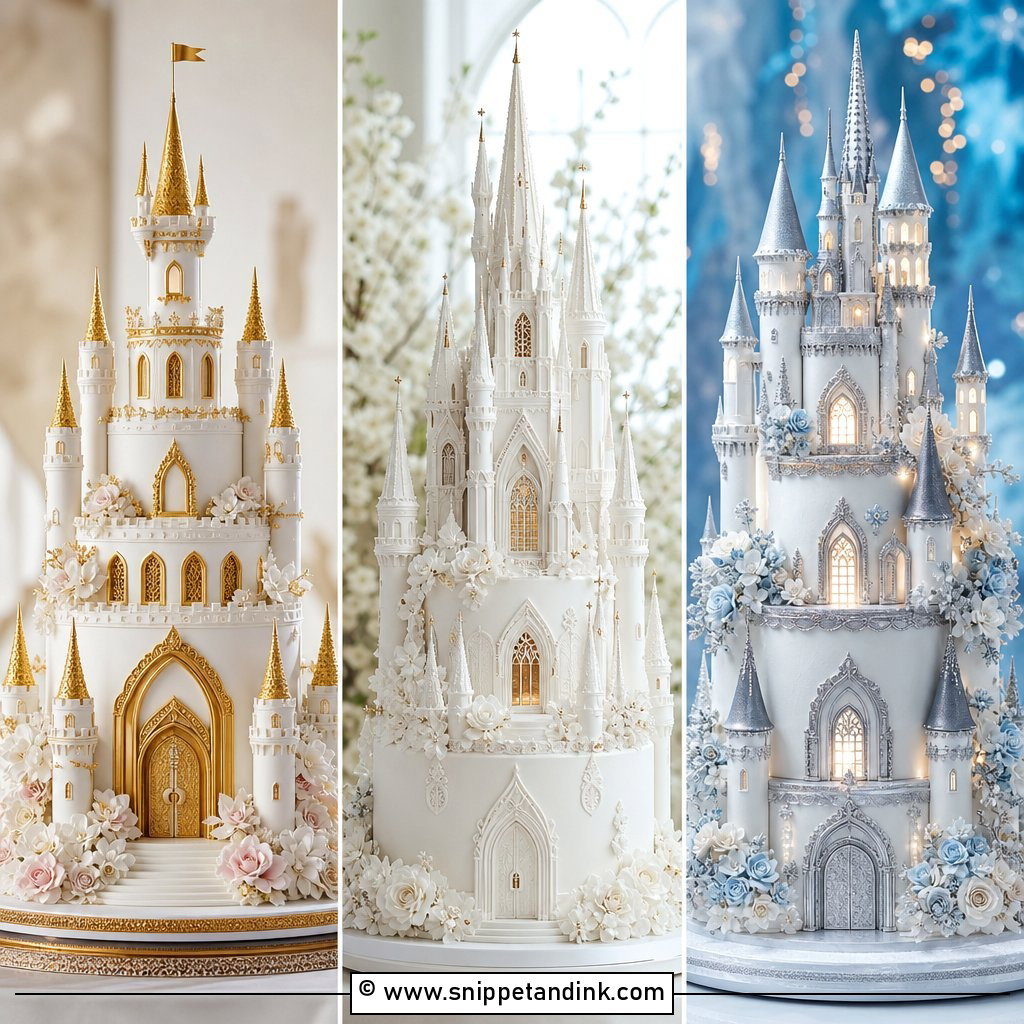
35. Crown Cake With Castle Theme
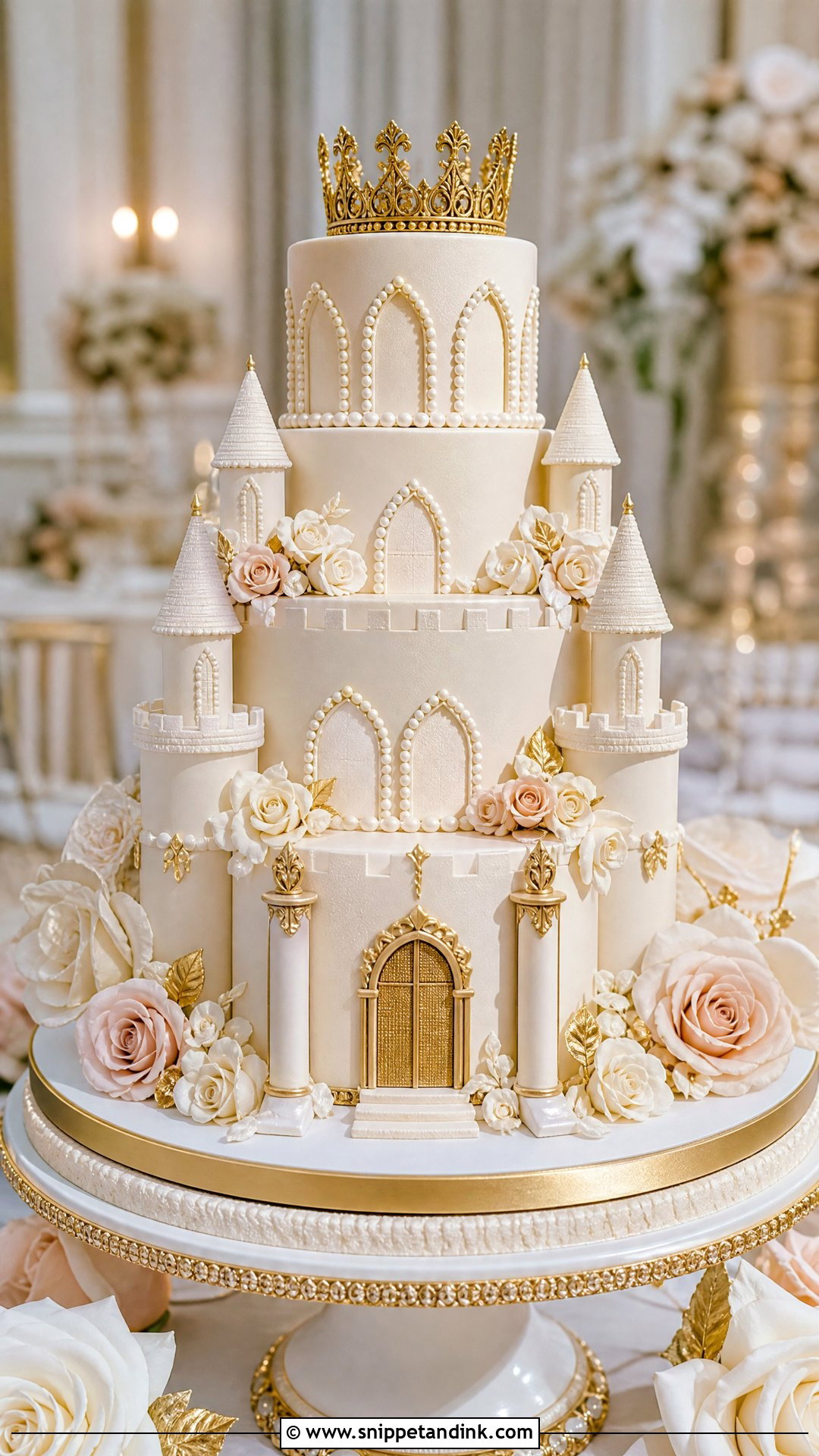
Castle themes can tip into children’s party territory quickly, so I handle them with restraint: soft stone texture, ivory tiers, pearl windows, delicate arches and a graceful crown. Small turrets or columns add height. Turrets are usually made from sugar paste or cake-covered supports, and they need inner rods so they stay straight. Keep the colours bridal, white, champagne, blush or pale grey, with sugar roses and a raised stand.
Gold That’s Safe to Eat and Gold That Isn’t
Not every shiny product sold for cakes is meant to be eaten. Edible gold leaf, usually high-carat and labelled as edible, can go anywhere on the cake. Many metallic dusts and paints, though, are sold as non-toxic or for decorative use only, which means they’re fine on a topper or a removable piece but shouldn’t be eaten in quantity. I check the label on every metallic I use and keep the decorative-only ones on parts that get removed before serving.
Ask your baker the same question, plainly. A good one won’t mind, and it matters most with gold drips and painted crowns, where the metallic covers a large area of something people will eat.
How a Heavy Crown Travels and Stays Upright
I never deliver a crown sitting on the cake. It travels in its own box, padded, and goes on once the cake is set up and level on the table. Here is how that last stage usually runs.
- The tiers arrive either stacked on a central dowel or separately, depending on height and how far we’re driving.
- I check the table is level and solid. A wobbly trestle is the most common reason a tall cake leans.
- A thin disc goes on the top tier to spread the crown’s weight and keep non-food materials off the icing.
- The crown goes on, then any fresh flowers, then a final check from the angle the photographer will shoot.
- I leave written notes for the venue: keep it out of direct sun and away from heaters, and lift the crown off before cutting.
The Crown Goes On Last, at the Venue
A crown cake can be grand, plain, romantic, modern, vintage or very personal. What makes it work is one clear royal detail and the rest of the cake built around it. A bold topper wants cleaner tiers; a slim tiara can carry more flowers, pearls, lace or texture. Gold reads warm, silver crisp, pearls bridal, and flowers soften everything. Bring photos of your venue, dress and flowers to the consultation, and we can size the crown to the cake you actually need.
You'll Like These Ideas:




Leave a Reply