
A traditional bridal outfit tells people where you come from before you say a word. Colour, cloth, embroidery, jewellery and headwear all carry family and regional history, and they differ between neighbouring villages as much as between countries. Some brides wear woven saris or lehengas; others wear embroidered folk dress, formal robes, fitted jackets or two-piece sets, often with heirloom jewellery and a ceremonial veil or headpiece. I’ve gathered twenty of them here, from red silk to beadwork and handwoven cloth. With each, I’ve noted the practical side: what it weighs, how it’s put on and what a bride should test before the day.
Wearing Your Grandmother’s Dress Without Damaging It
Many traditional outfits are inherited: a bunad, a thobe, a sari, a kimono. An heirloom can be the most meaningful choice, but old textiles behave differently from new ones. Silk weakens with age and light, metallic thread tarnishes, and hand-sewn seams may be fragile. I treat an heirloom as something to adapt gently rather than remodel.
- Have it assessed first by a specialist cleaner or textile restorer, especially if it has stains, tears or yellowing.
- Alter at existing seams where possible. Many traditional garments have generous seam allowances meant to be let out over the years.
- Avoid cutting the original fabric. If it doesn’t fit, add a hidden panel or a new lining instead.
- Try it on early. If repairs are needed, they can take weeks.
- Keep perfume, hairspray and deodorant off the fabric; dress after they’ve dried.
If the garment is too fragile to wear all day, consider wearing it only for the ceremony or for portraits, then changing.
1. Indian Red Lehenga Bridal Dress
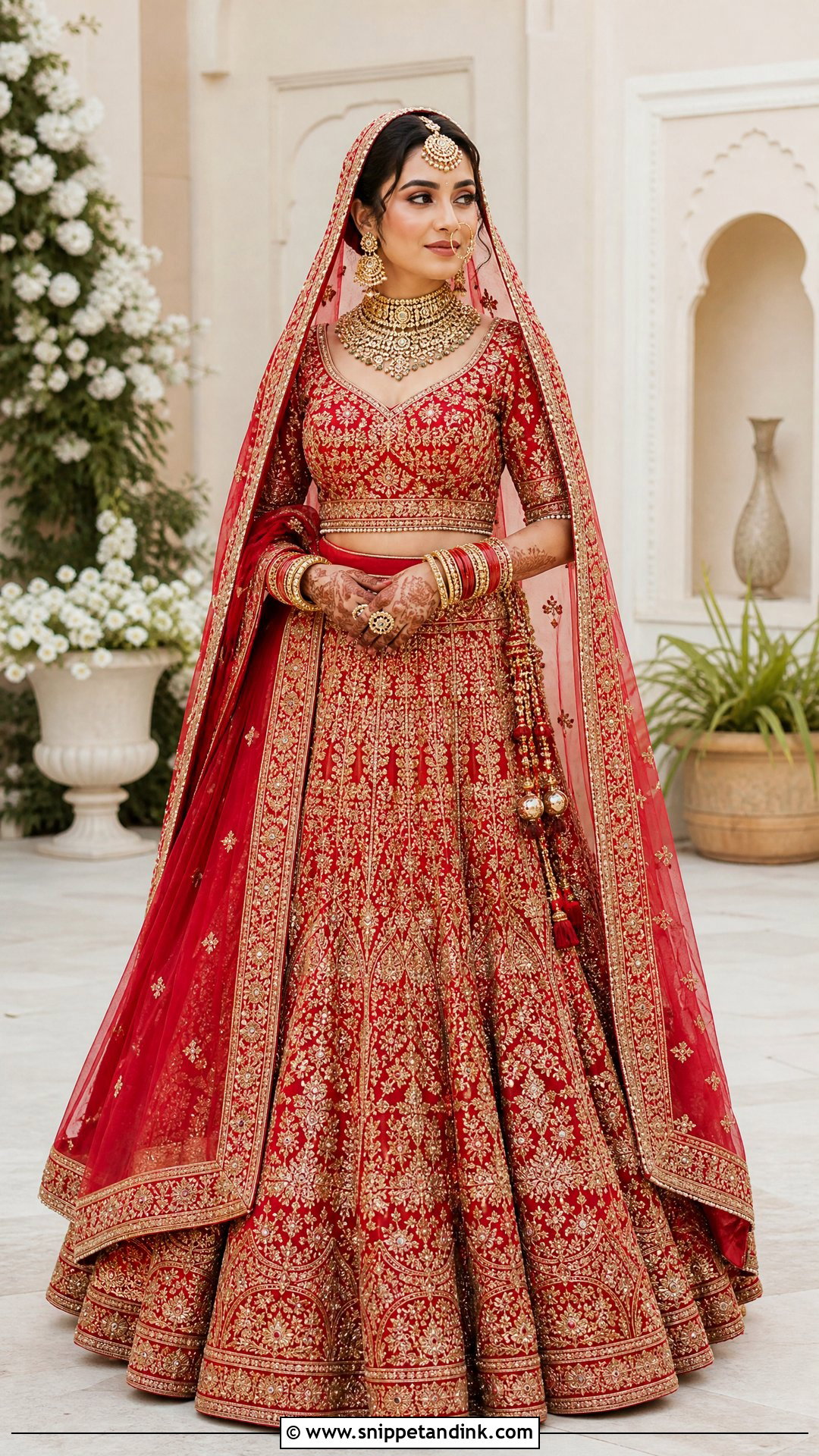
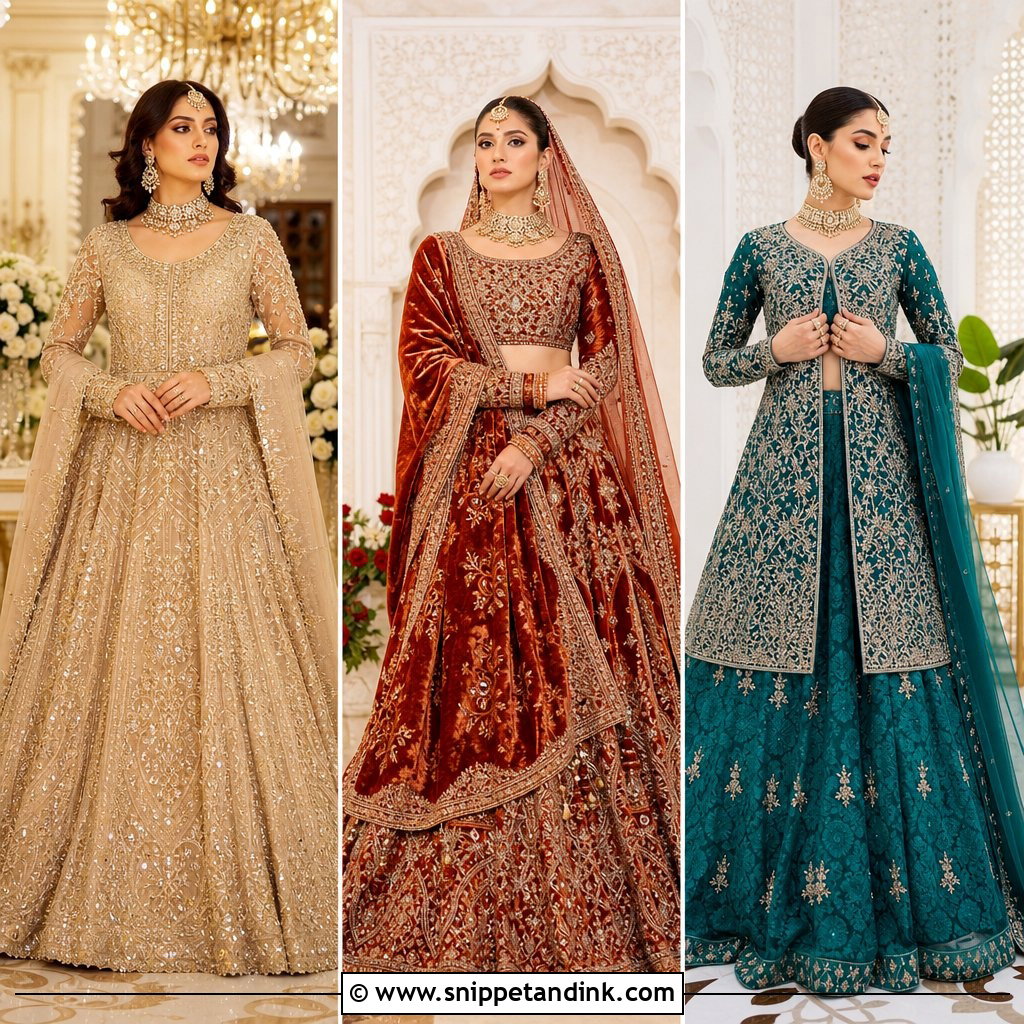
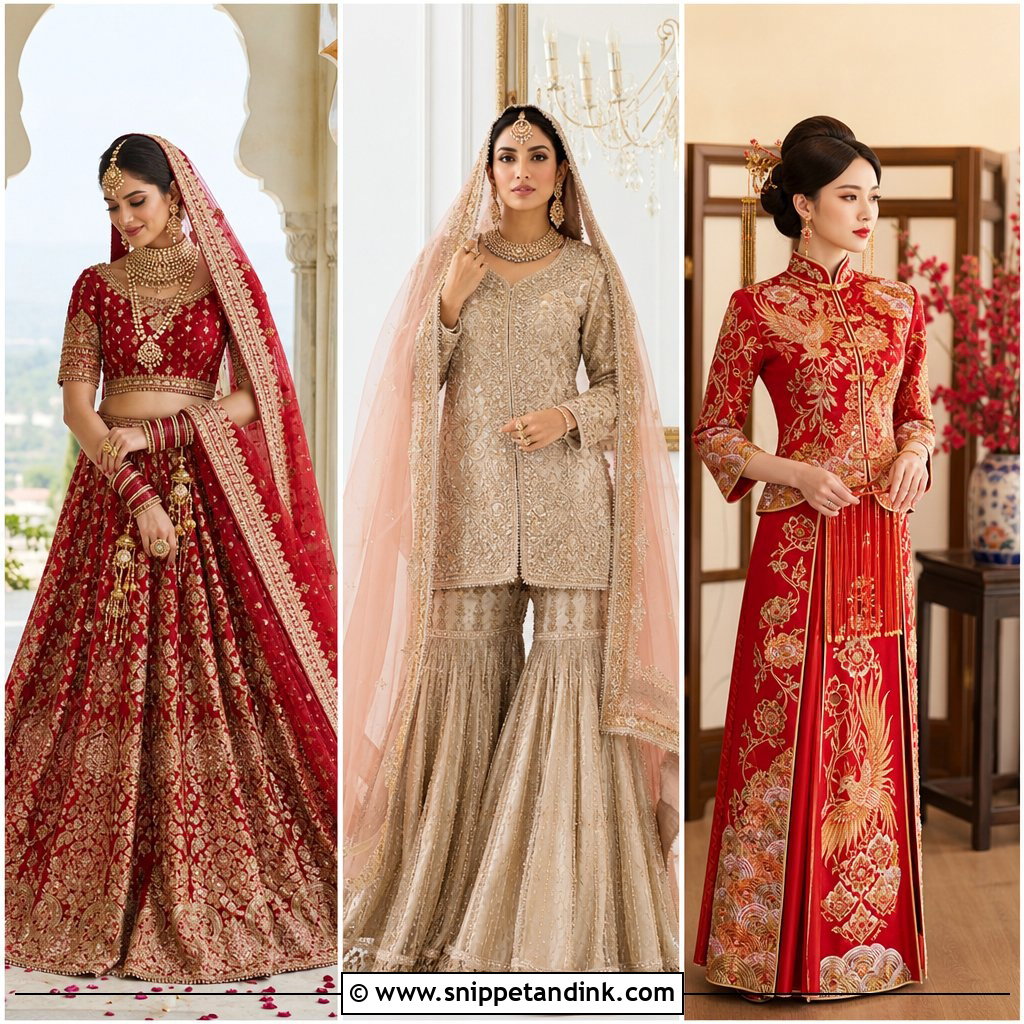
Heavy lehengas are the most common comfort complaint I hear from Indian brides. The embroidery, zari, sequins and beads add up, and the skirt’s weight hangs from the waistband for hours. Ask your designer for a wide, firm waistband with cancan or a light lining for volume, rather than extra layers of embroidered net. The classic set is an embroidered blouse, a full ankle-length skirt and a dupatta pinned over the head or shoulders, with maang tikka, necklace, earrings and bangles. Red leads, but pink, maroon, orange, ivory and regional colours are all worn. Walk, sit and climb a step in the full outfit before the wedding.
2. Chinese Qungua Bridal Dress
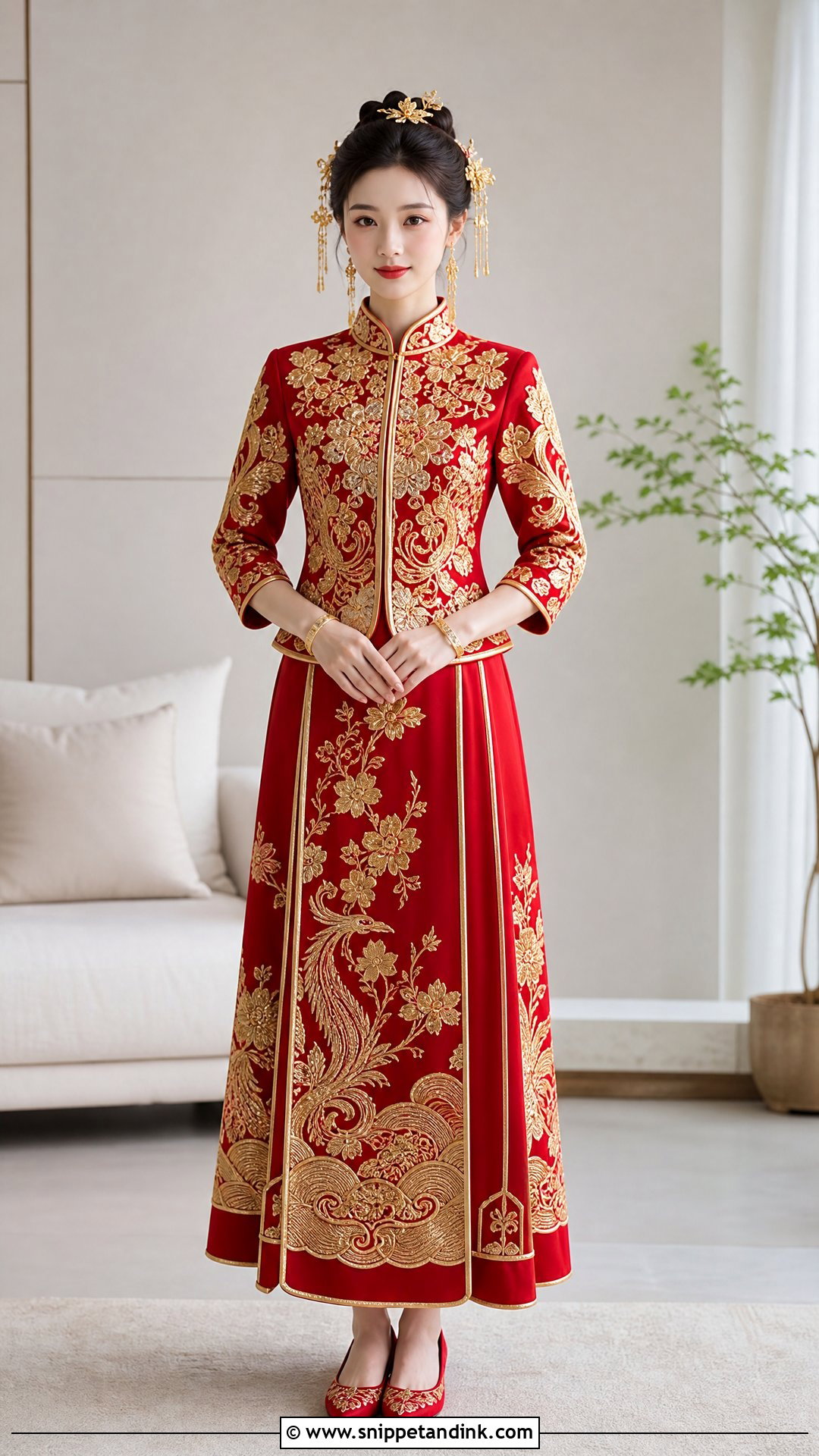
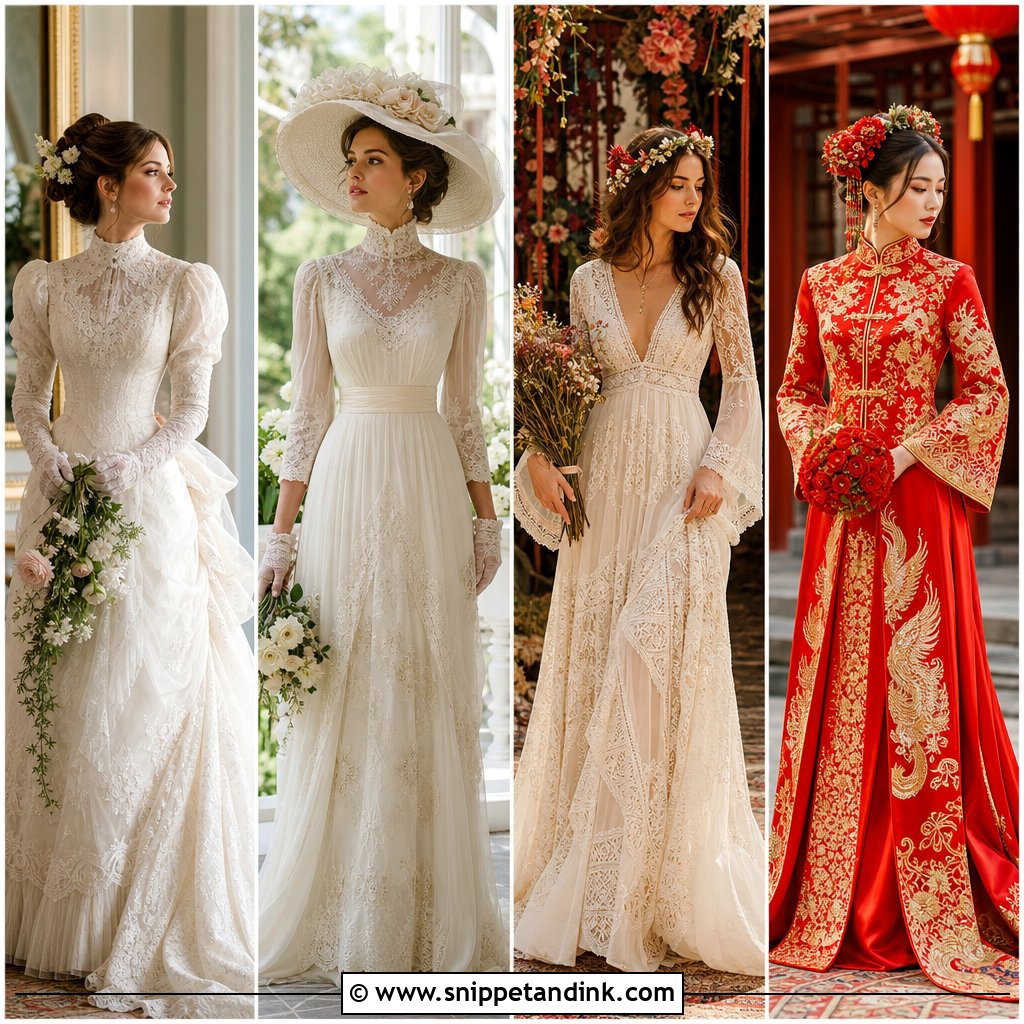
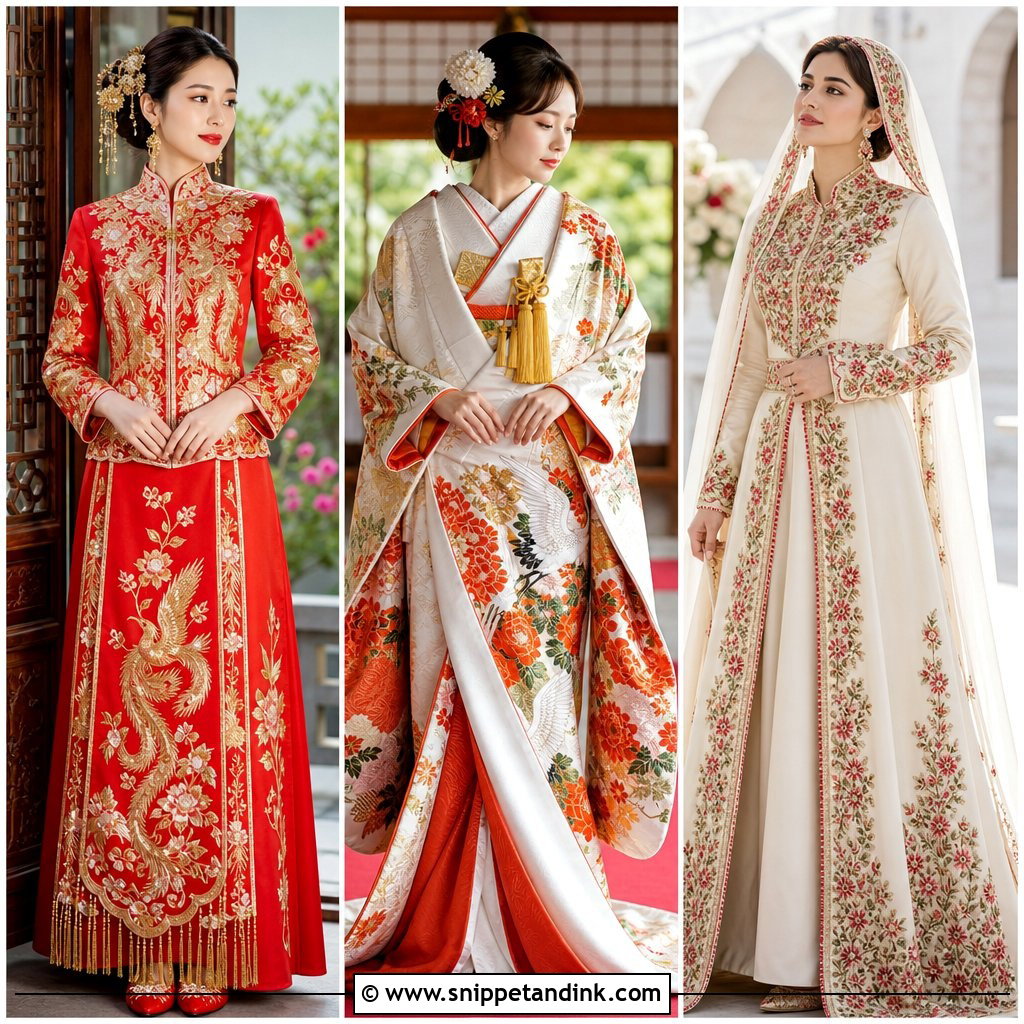
The qungua is a two-piece set: a fitted red jacket and a long skirt, embroidered in gold with dragons, phoenixes, flowers and other auspicious motifs. It’s often worn for the tea ceremony, which involves kneeling or bowing to serve elders, so the skirt needs room at the knee and the jacket must not ride up when you bend forward. Dense gold embroidery stiffens the fabric, so try those movements at a fitting. Motif placement can carry meaning, which is a good reason to choose with family. Gold jewellery, red embroidered shoes and a neat updo finish it.
3. Japanese Shiromuku Bridal Dress
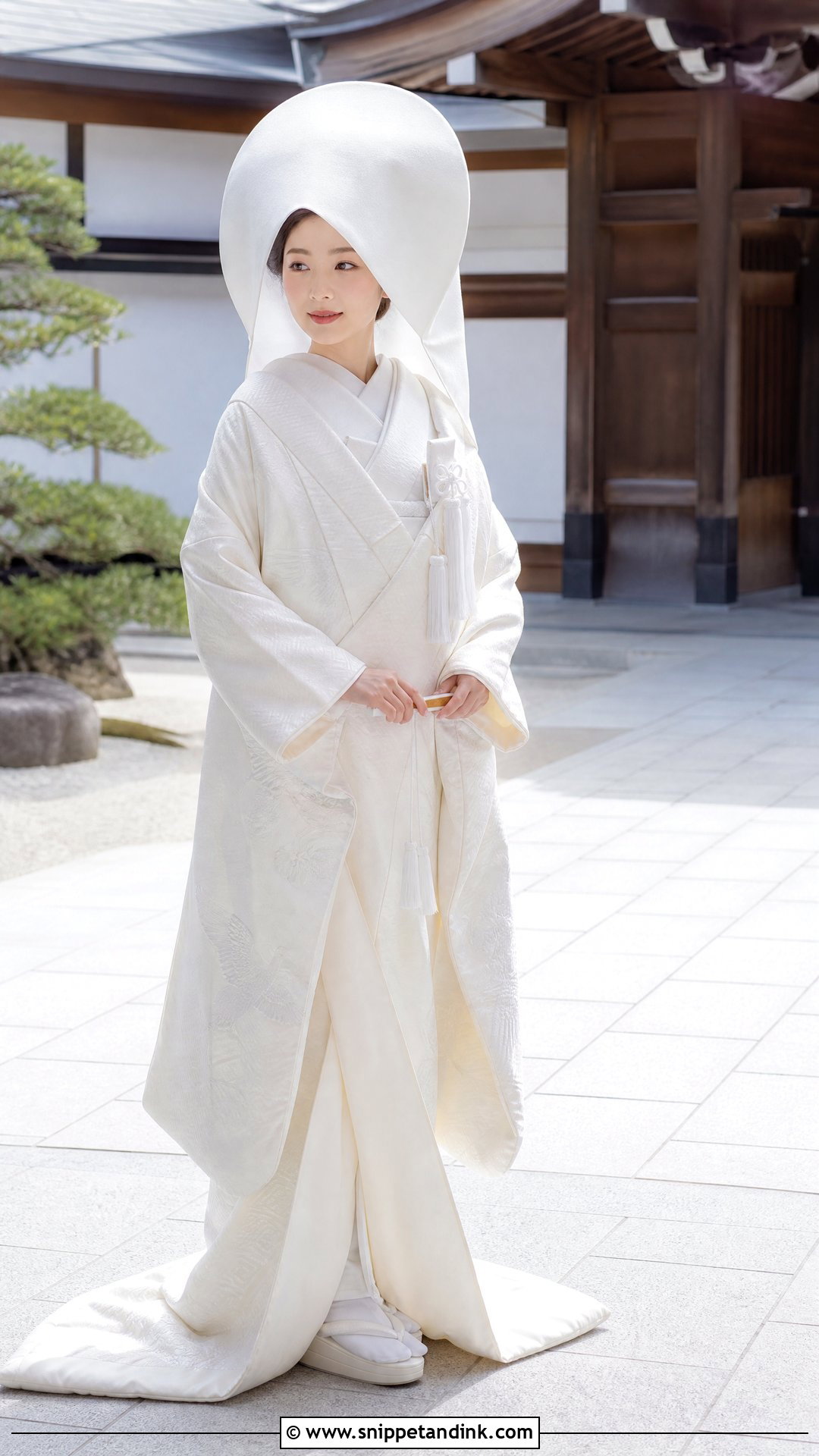
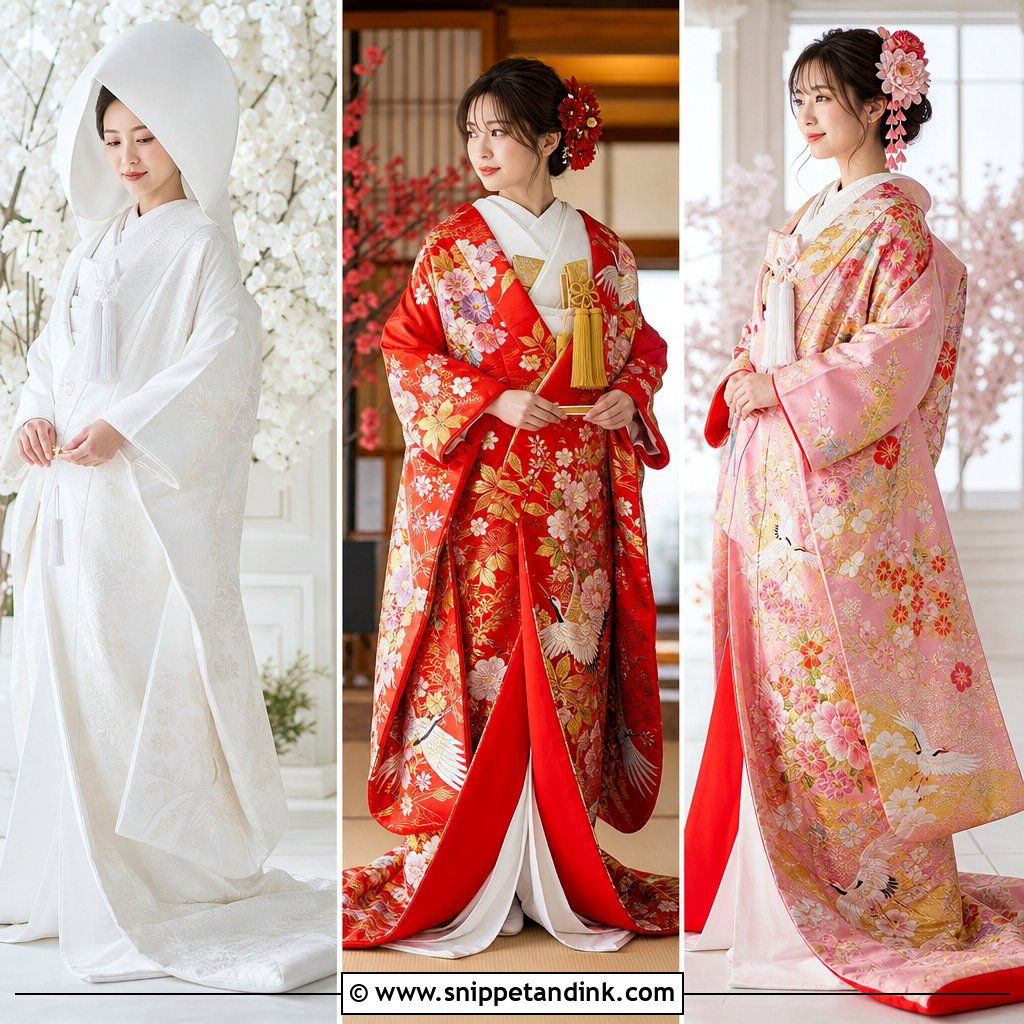
A Japanese shiromuku bridal dress is an all-white formal kimono, traditionally worn for Shinto ceremonies, made of several layers: under-kimono, outer robe, obi and white accessories. The bride may wear a wataboshi hood or a tsunokakushi headpiece. You cannot put it on yourself. A trained dresser arranges every layer and tie, and the process takes real time, so build that into the morning. The outer layers are heavy and the obi is tied firmly, which limits how far you can bend. White-on-white woven patterns give it depth that shows clearly in a temple courtyard or a plain traditional room.
4. Korean Hwarot Bridal Dress
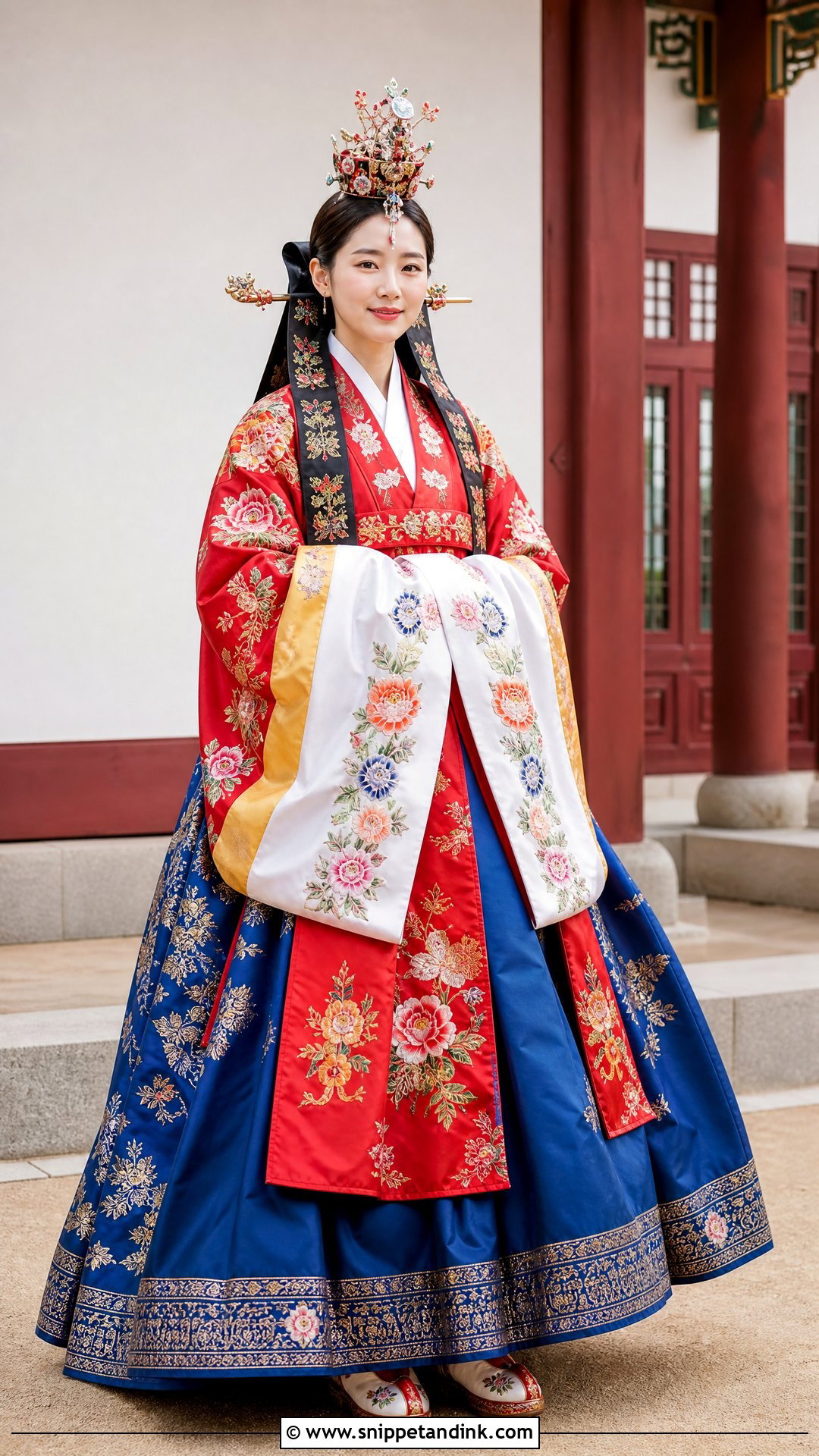
The hwarot is an embroidered ceremonial robe with long, wide sleeves, worn over hanbok layers, a full skirt and a short jacket. Flowers, birds and symbolic motifs cover it. Because the robe is substantial, I’d always have a professional dress the bride and size it with all the inner layers on; sizing it over a light top leaves it too tight on the day. The sleeves are often held together in front of the face during parts of the ceremony, which can tire the arms. Many brides wear it for the traditional ceremony or portraits, then change. A headpiece, hair ornaments and embroidered shoes complete it.
5. Pakistani Gharara Bridal Dress
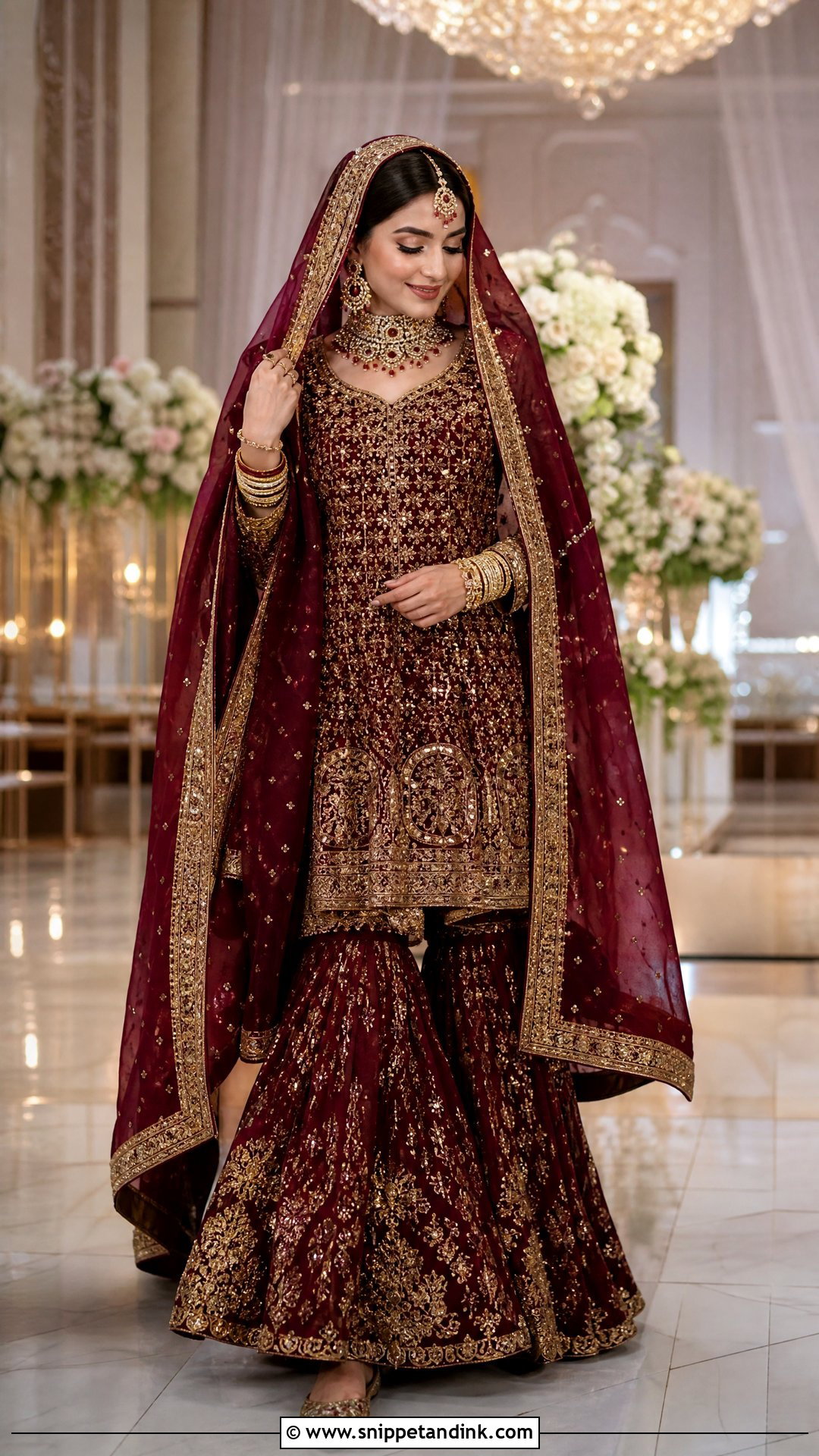
A gharara is a tunic over trousers that fit close to the knee and then flare dramatically, with a dupatta over the head and shoulders. Bridal versions are covered in zari, dabka, beads and hand embroidery in red, maroon, pink, green or gold. The join at the knee is where the weight sits, and a badly cut gharara drags when you walk. I’d ask the tailor to show you how the flare is gathered and to fit it in your actual shoes. Pin the dupatta in several hidden places, since it often covers the head as well as framing the shoulders. A jewelled headpiece, earrings, necklace, bangles and embroidered flats finish it.
6. Bangladeshi Banarasi Sari Bridal Dress
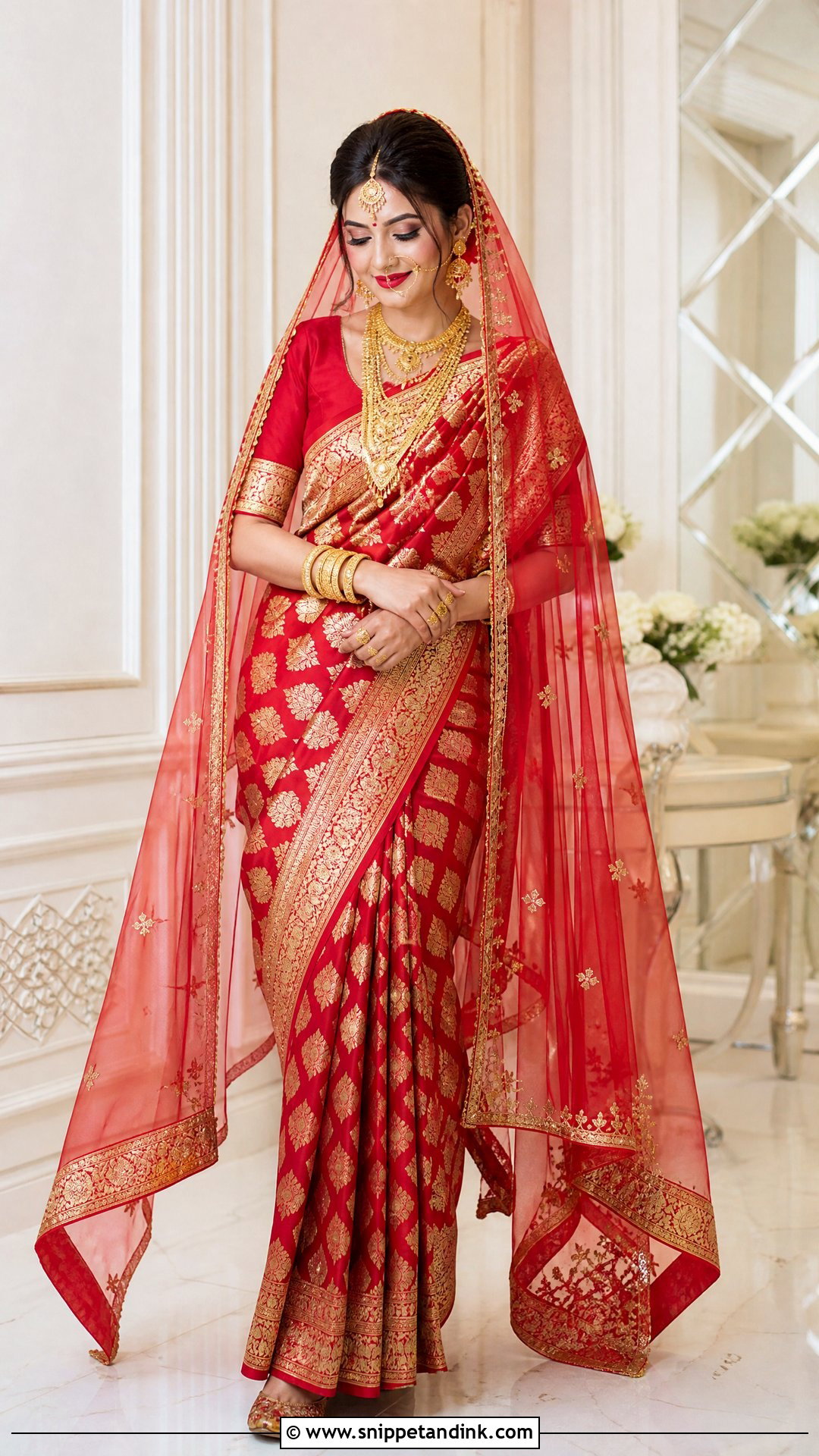
A Banarasi sari is woven with metallic threads, and that weave makes it heavier and stiffer than a plain silk. The pleats need to be sharp and pinned at the waist, or they spread open after a few hours. Wear a well-fitted petticoat and a fitted blouse, and drape it in the formal style that shows off the border. Red is popular, though maroon, pink and gold suit Bangladeshi brides too, depending on family preference. Layered gold necklaces, earrings, bangles, rings and a forehead ornament frame it, with a veil draped over the hair. Have someone experienced do the draping on the morning; a sari draped in a hurry slips.
7. Nigerian Yoruba Iro And Buba Bridal Dress
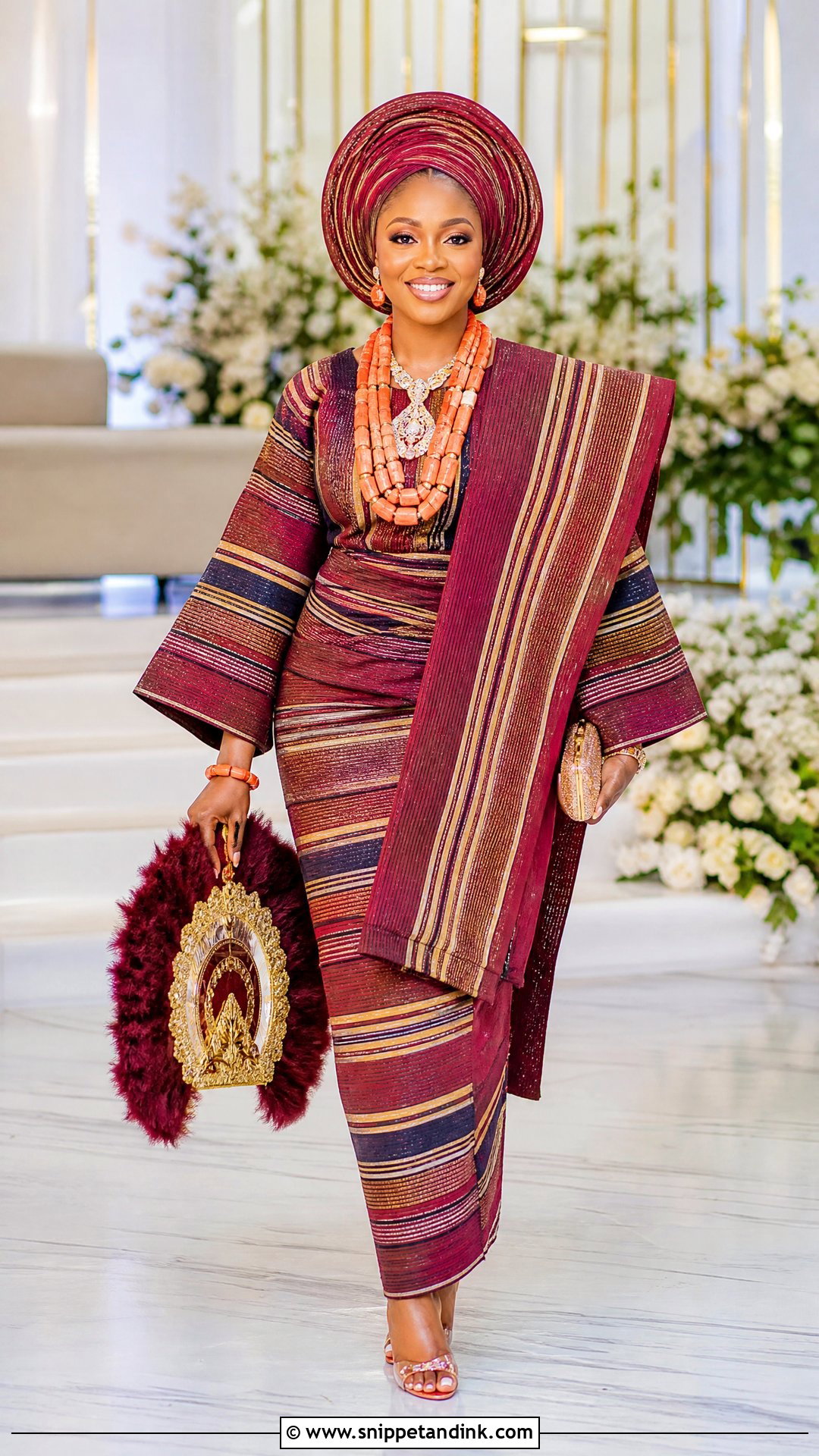
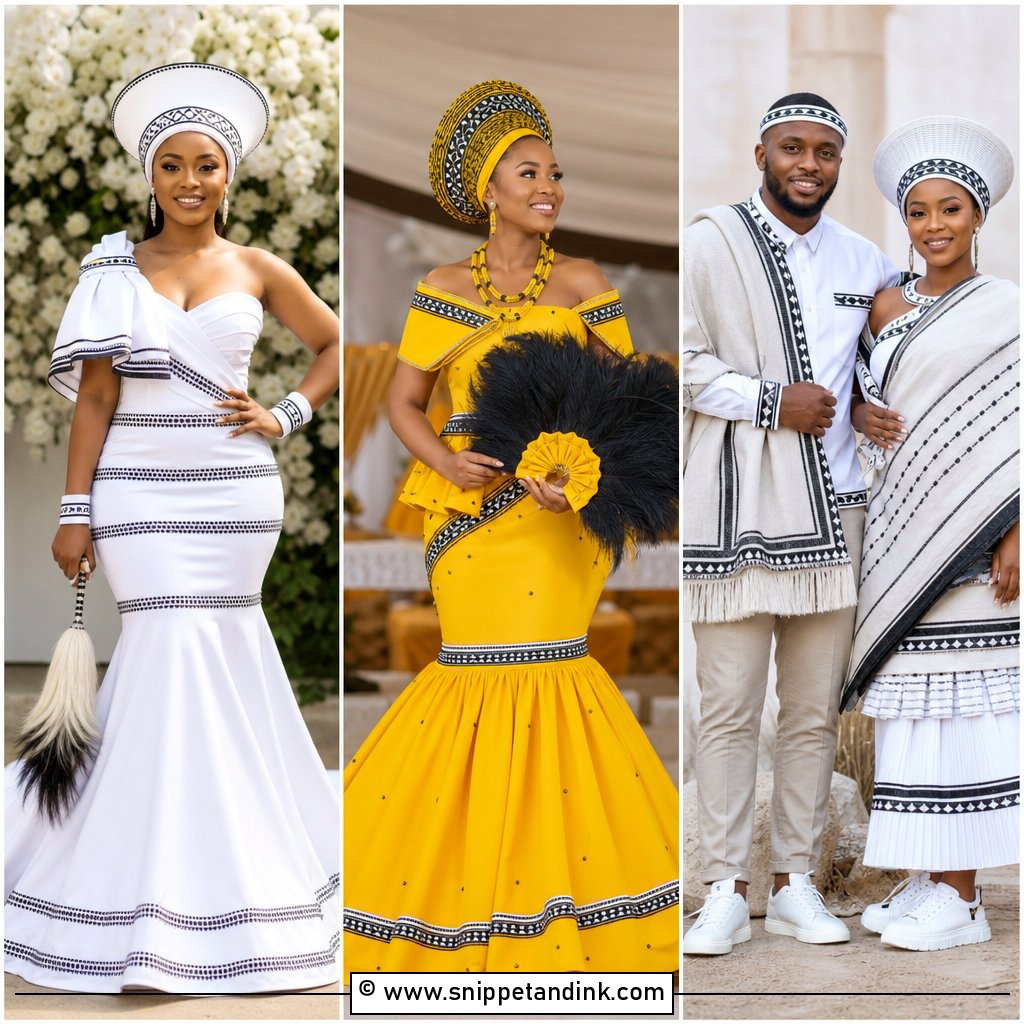
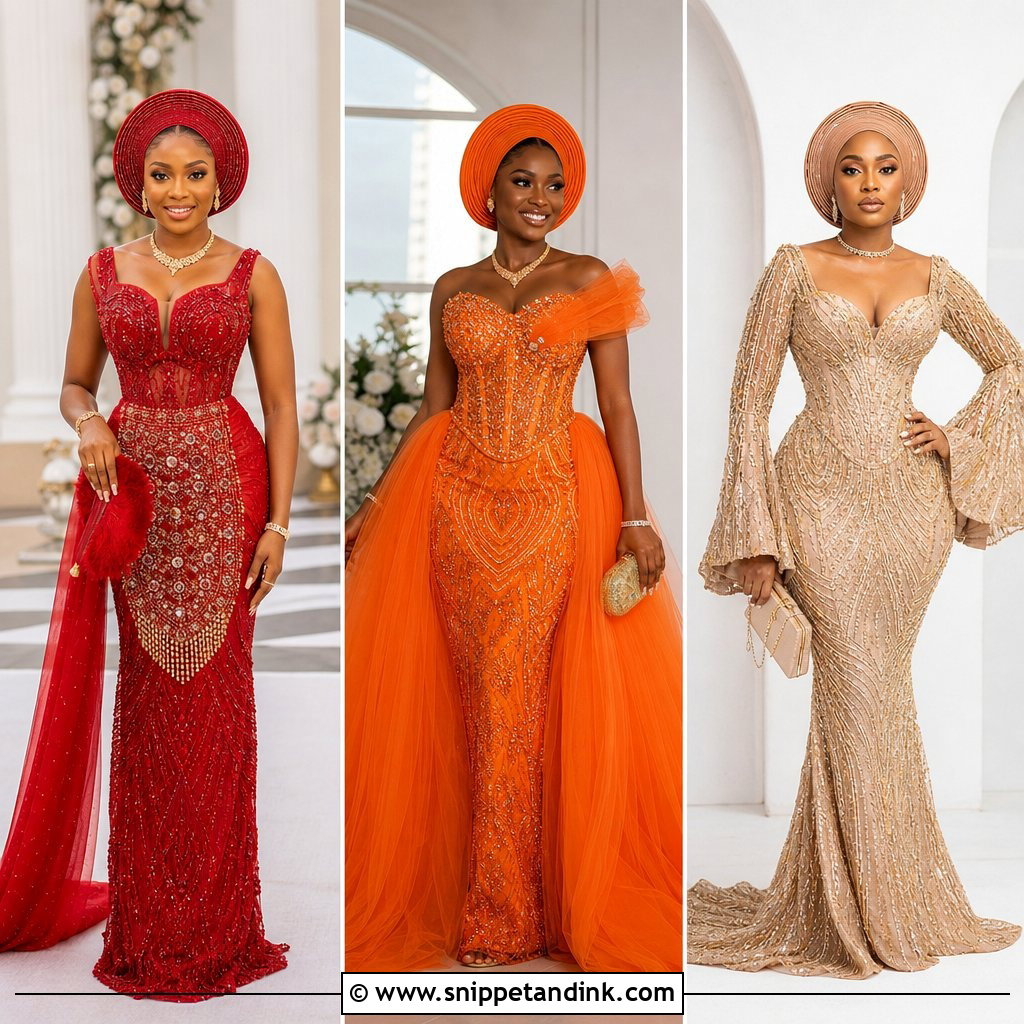
Getting the gele right is the hardest part of this look. A Yoruba iro and buba bridal outfit pairs a buba blouse with a wrapped iro, an ipele over the shoulder or waist and that sculpted head tie, usually in aso oke, lace or coordinated cloth with beads and metallic accents. A gele tied too tightly gives a headache by the afternoon. Ask your tier to leave a finger’s width at the temples. Add statement jewellery, a hand fan and comfortable heels or sandals. Family colours often extend to guests, so share swatches early.
8. Ghanaian Kente Bridal Dress
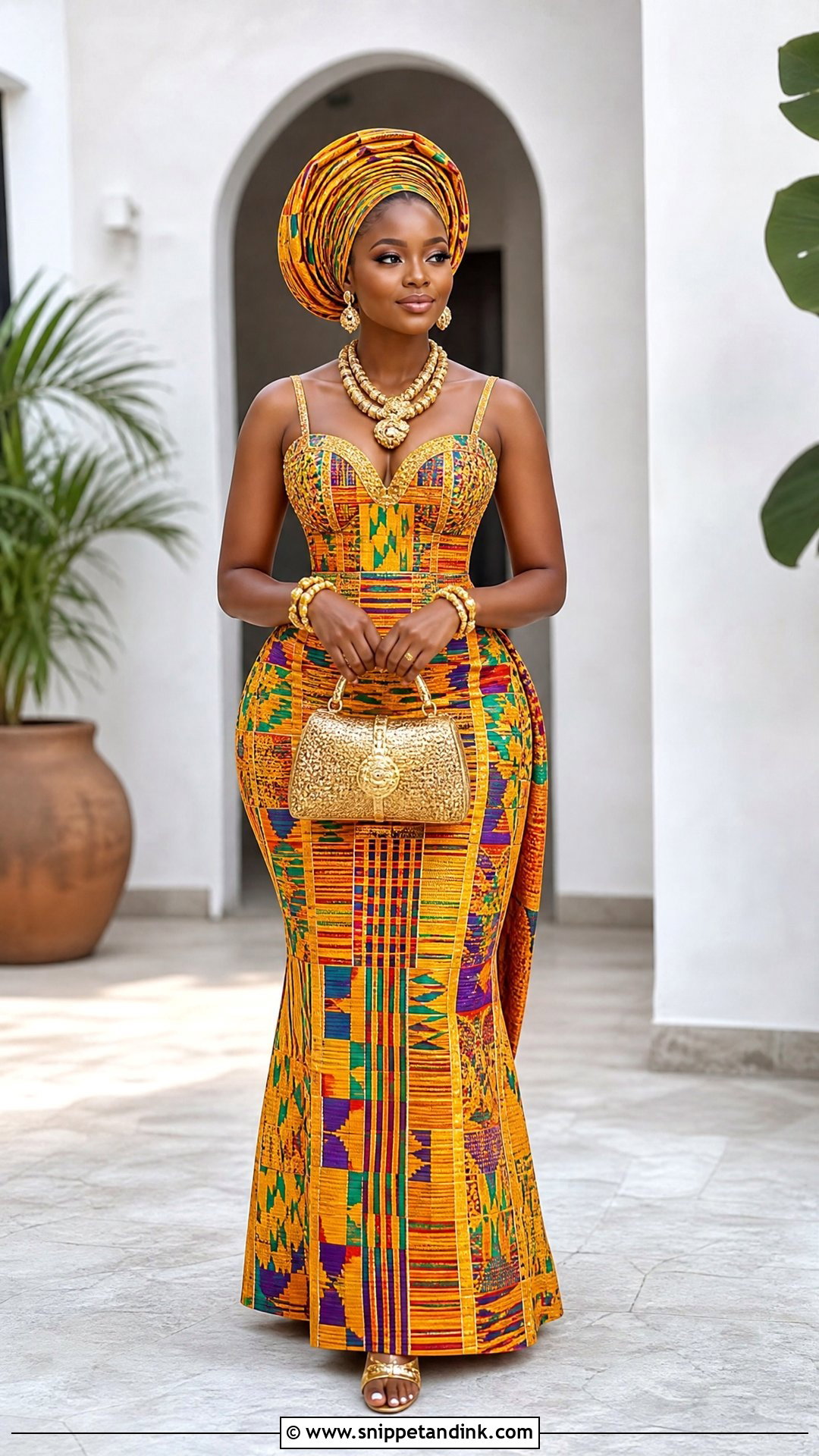
Kente’s bold geometry looks powerful in photos, but it distorts when cut carelessly. If you’re having it tailored into a gown, top, skirt or two-piece, the strips should meet cleanly at the seams. That needs a tailor who will plan the layout on the table first. Yellow, green, red, blue and black often appear together, and the specific pattern and colours can carry personal or family meaning, so choose with relatives or the weaver. Gold jewellery suits it. A headwrap, elegant heels and a small structured bag complete the look.
9. Moroccan Takchita Bridal Dress
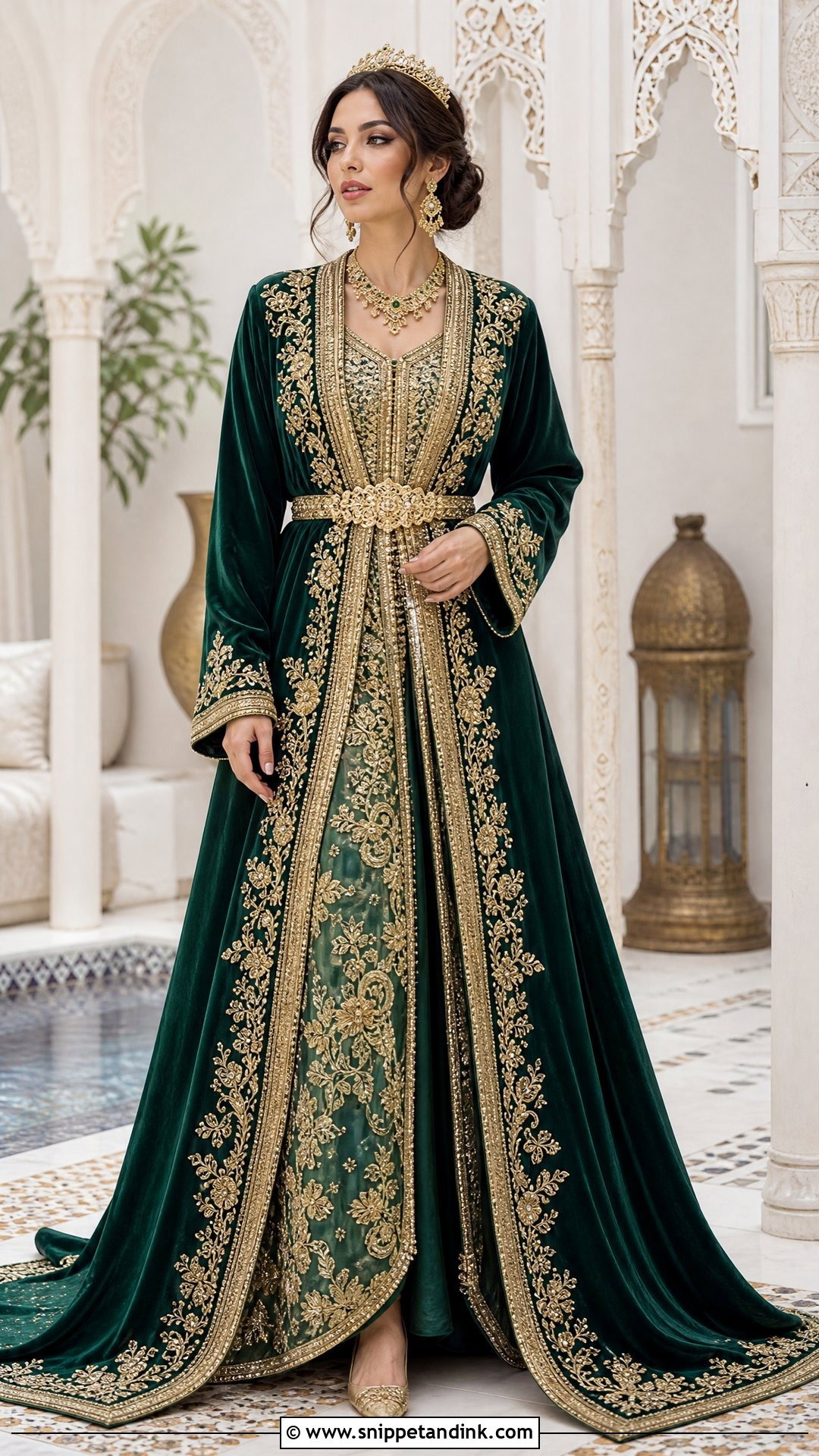
The takchita is usually one of several outfits a Moroccan bride wears through the evening, so I plan it as part of the whole wardrobe rather than on its own. It’s an inner dress under an embellished overdress, closed at the waist with a decorative belt, in satin, velvet, brocade or lighter fabric with embroidery, trim and handmade fastenings. Emerald, royal blue, burgundy, ivory and gold are all bridal choices. The sleeves must be the right length for eating and greeting, and the belt has to sit at the waist without pinching when seated. Traditional jewellery, slippers or heels and an updo that clears the neckline finish it.
10. Algerian Karakou Bridal Dress
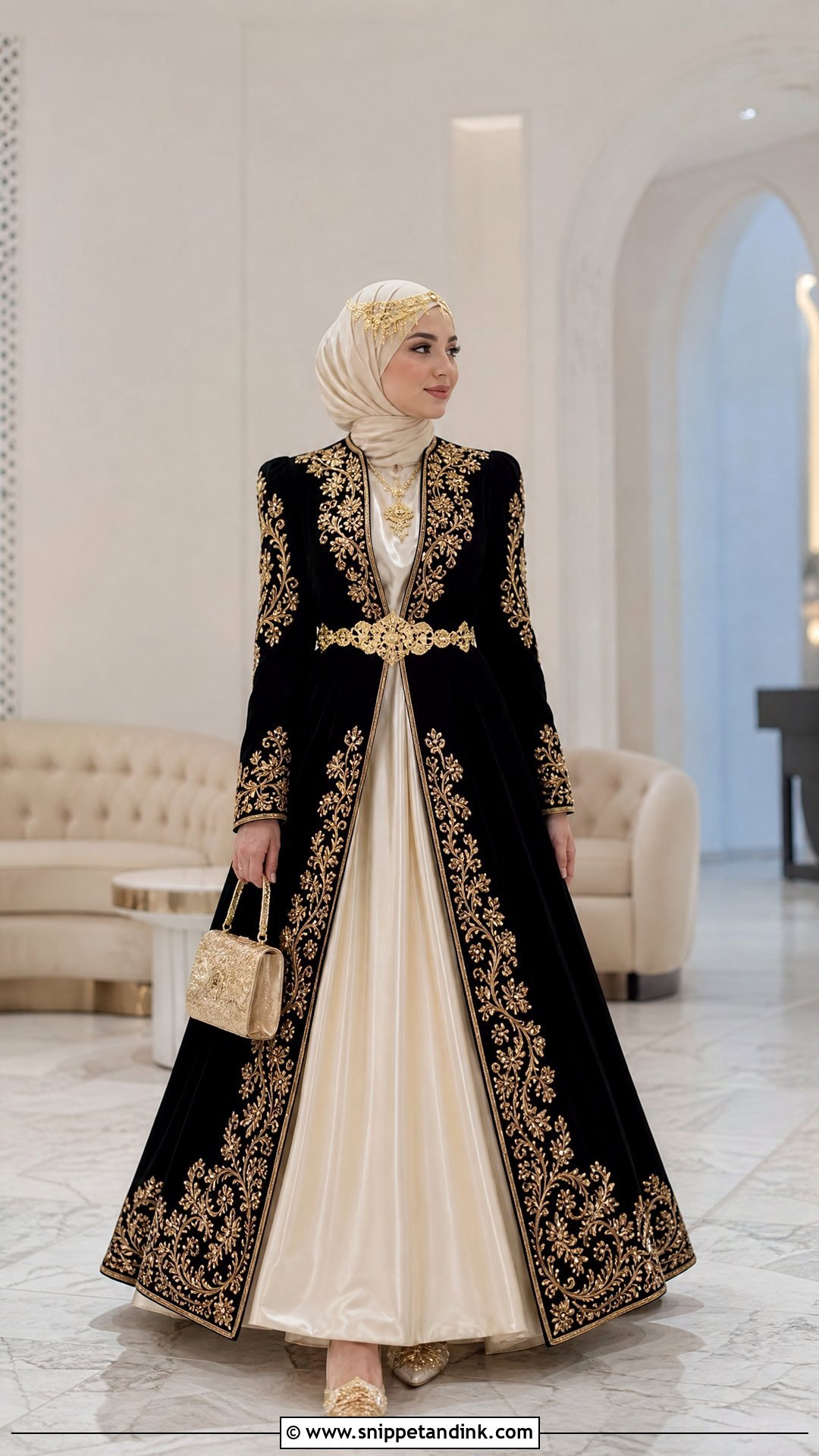
The Algerian karakou bridal dress pairs an embroidered velvet jacket with a skirt or traditional trousers. Velvet supports the heavy gold threadwork well, but it also crushes, so never fold the jacket for travel; hang it and carry it flat. Depending on the family and region, there may be a silk skirt, sarouel trousers, a head covering or an ornate scarf. The jacket must fit smoothly through the shoulders and waist, or the embroidery puckers. Keep the lower half simple when the jacket is busy. Gold jewellery, decorative shoes and a small formal bag finish it.
11. Malaysian Songket Bridal Dress
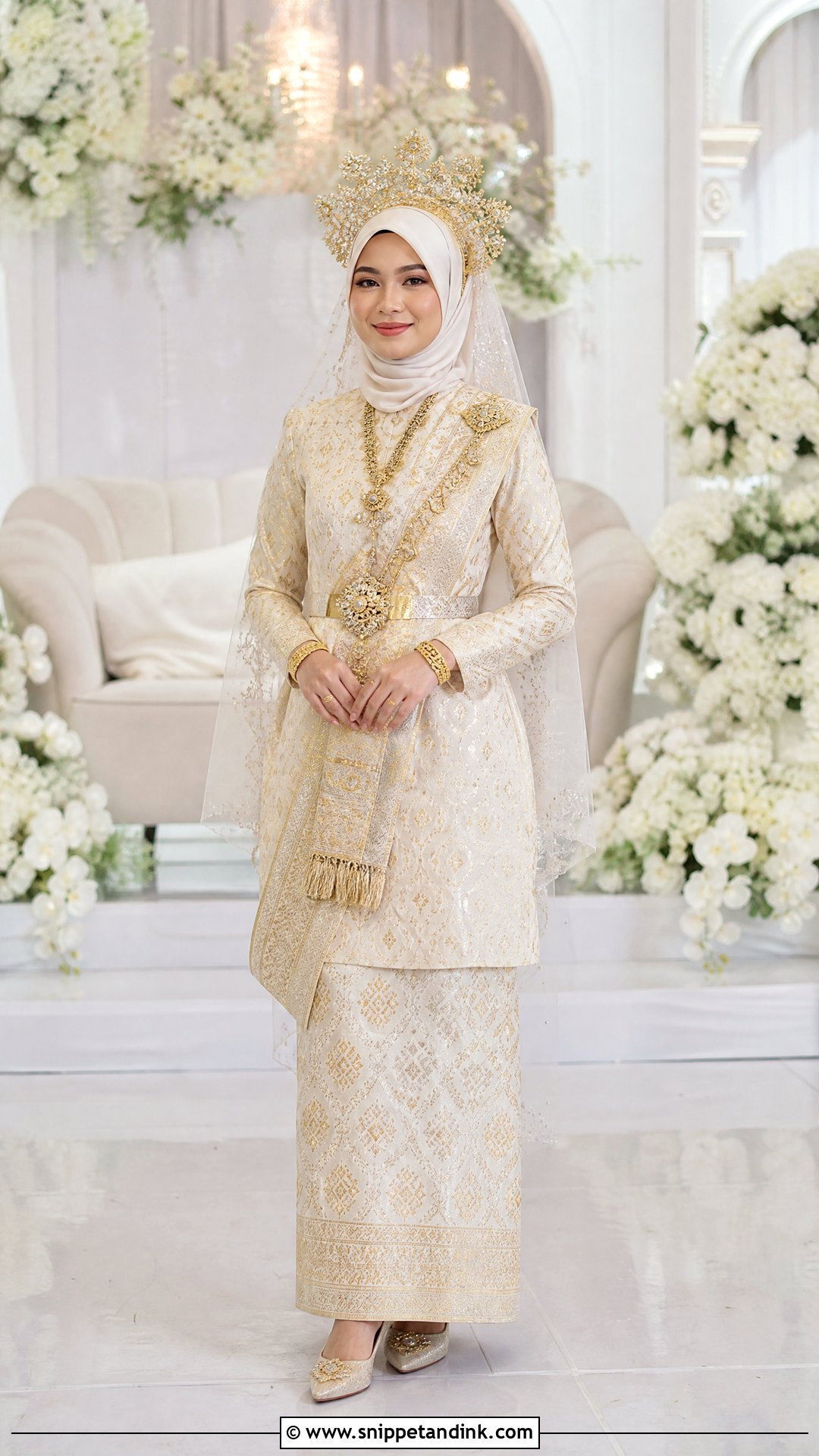
Songket is woven with gold or silver supplementary threads, which makes it shimmer and also makes it warm. A Malaysian songket bridal dress may be a long-sleeved baju kurung or a fitted kebaya-style top with a floor-length skirt, plus a sash, head covering, veil or ornamental crown. I’d ask for a breathable cotton lining and leave a little ease in the skirt so you can walk normally. Match shoes and jewellery to the metallic thread. Test every headpiece for weight and grip before the day.
12. Indonesian Kebaya Bridal Dress
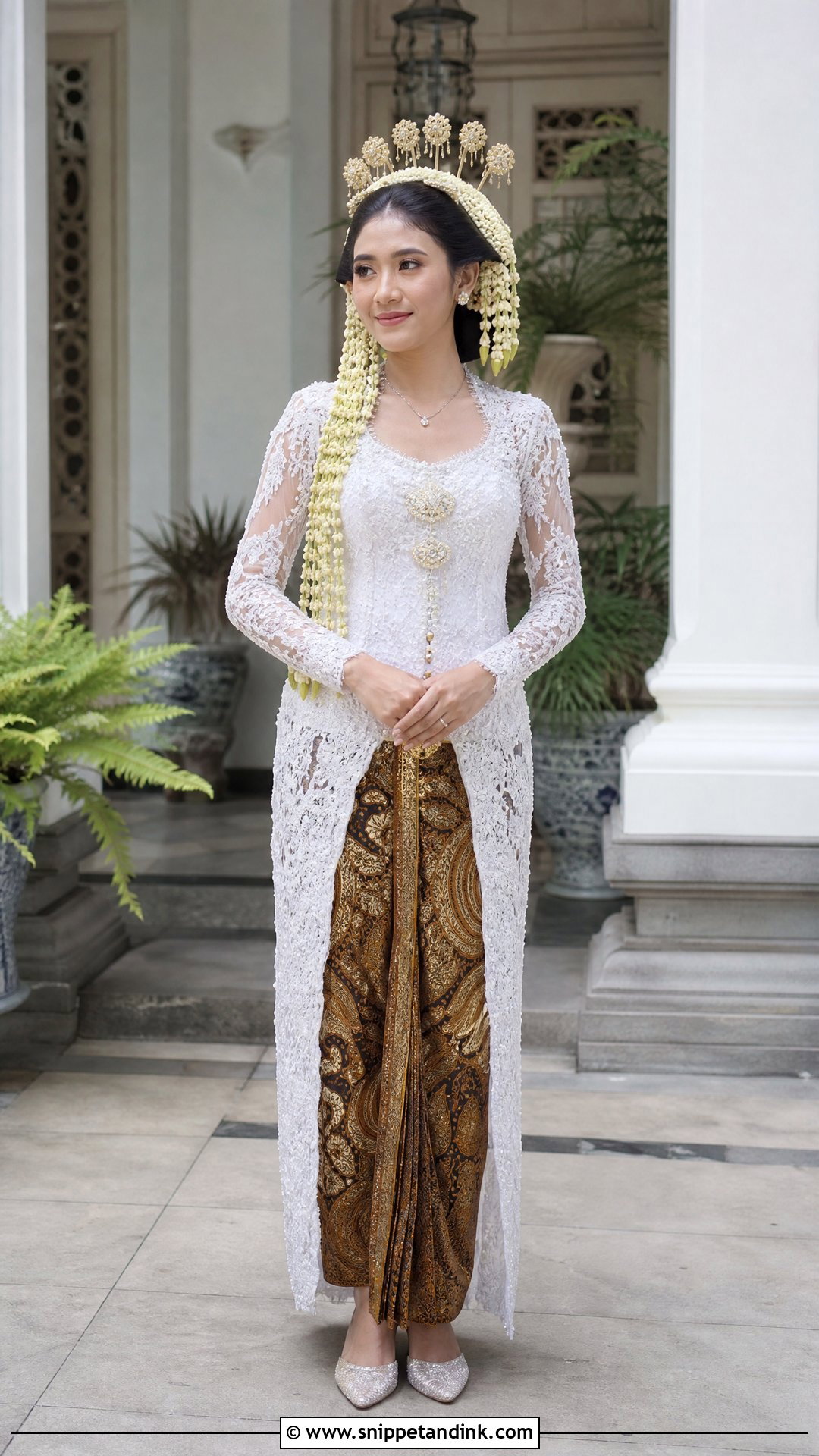
A fitted kebaya over a wrapped batik or songket skirt gives a long, narrow silhouette, and that narrow wrap is where most brides struggle. An Indonesian kebaya bridal dress may be heavily beaded, embroidered or sequinned, often sheer lace over a lining. Indonesian traditions differ greatly between regions, so the fabric, headpiece and makeup should follow the bride’s own heritage. I’d secure the wrapped skirt with hooks or a hidden fastening rather than a simple tuck, and check the kebaya lets you raise your arms. A waist detail, hair ornaments, jewellery and closed heels finish it.
13. Vietnamese Ao Dai Bridal Dress
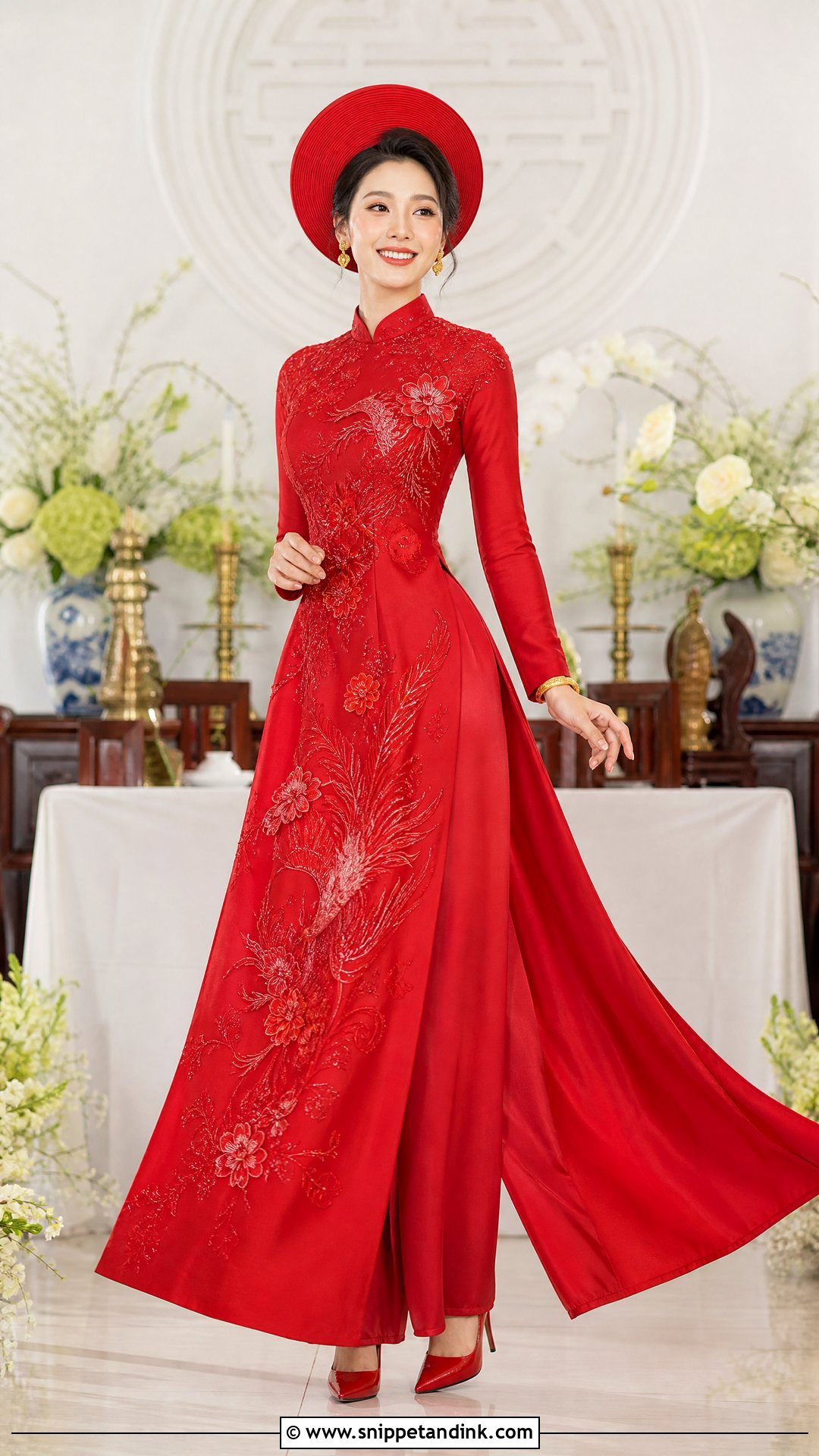
An ao dai is cut close to the body, so a fitting with the exact underwear and shoes you’ll wear matters more than with most dresses. The fitted tunic with its long front and back panels goes over loose trousers, giving coverage and a long line. Red is the leading bridal colour, though white, pink, gold and pastels appear too, often with embroidered flowers, brocade or beading. A round khăn đóng headdress, fine jewellery and heels finish the traditional look. Many brides wear one ao dai for the ceremony and a second for the reception. Keep jewellery light so the high collar stays the feature.
14. Thai Chut Thai Bridal Dress
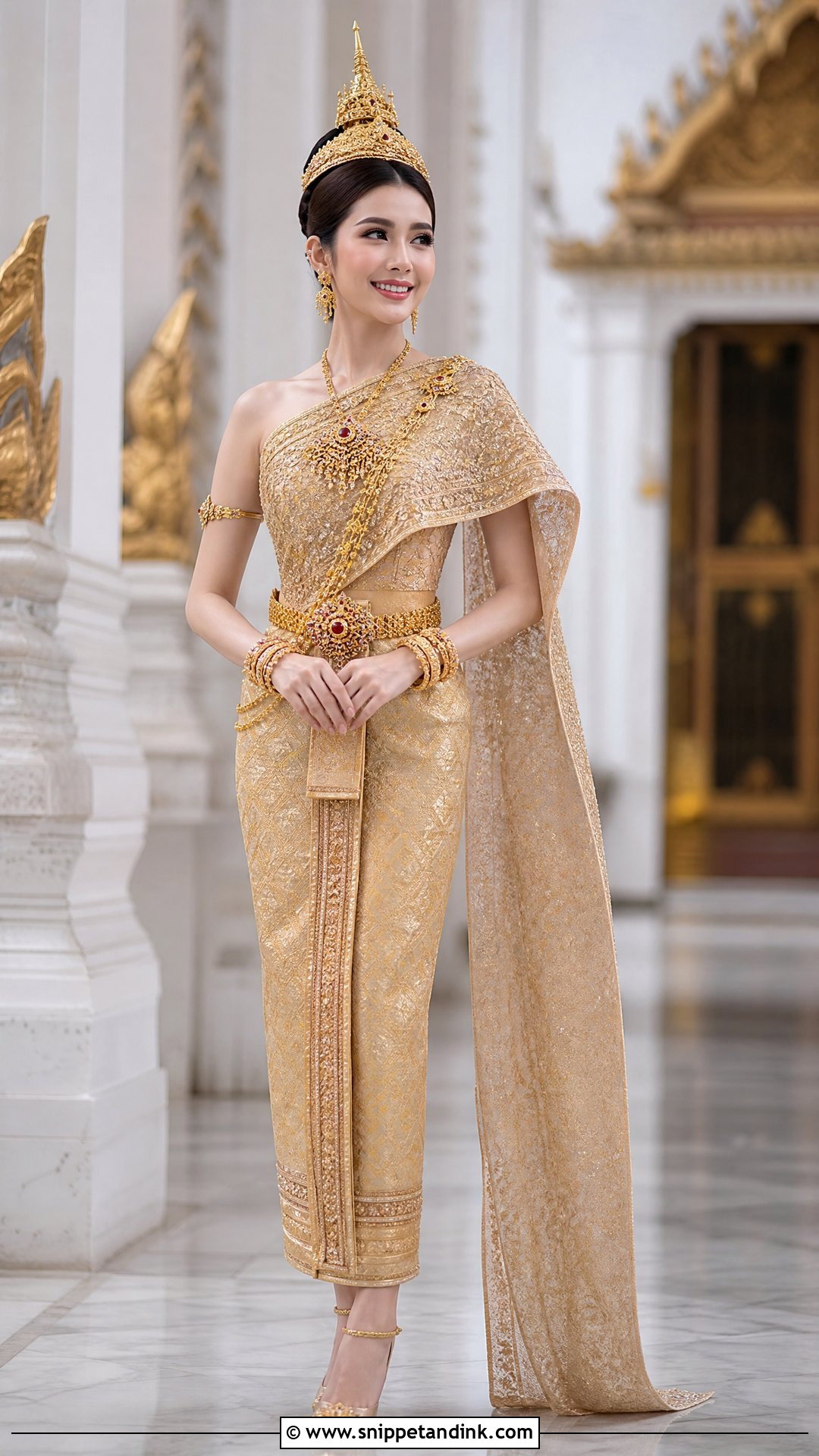
Chut Thai is a family of formal styles, from a draped one-shoulder top to a structured blouse or long-sleeved jacket worn with a formal sinh skirt. Each has its own level of formality, so pick the variation with someone who knows them. Silk, brocade, metallic thread and jewelled borders give the ceremonial finish, with a gold belt at the waist and necklaces, bracelets, earrings and a headpiece. The draped versions need pinning by an experienced dresser; I’ve seen unpinned drapes slide off the shoulder when a bride raises her hands in a wai. Coordinate shoes quietly.
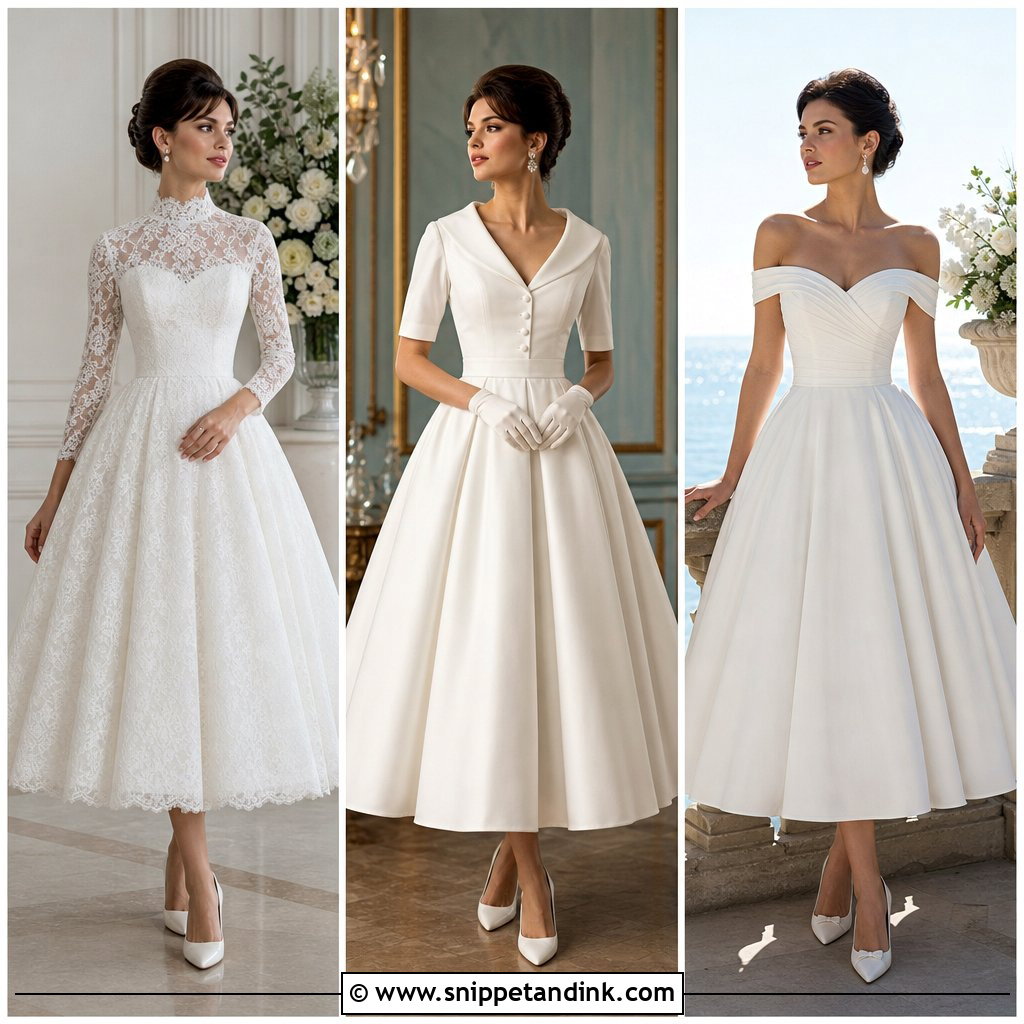
15. Mongolian Deel Bridal Dress
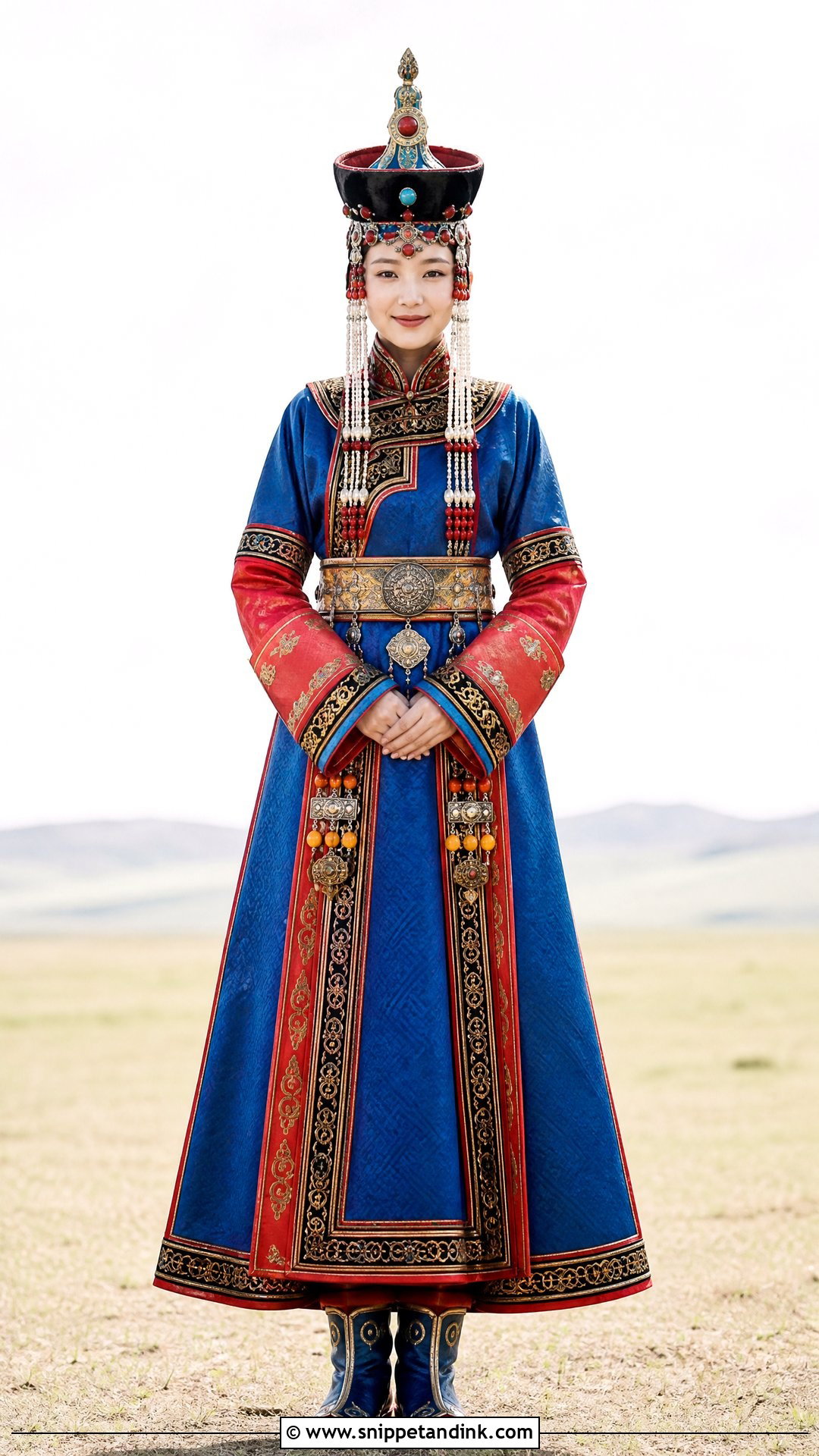
The deel wraps across the body and is held by a broad sash or belt, and that sash does much of the shaping. Bridal deels use silk, brocade, embroidered borders, contrasting cuffs and patterned panels, often worn with traditional boots, jewellery and, in some traditions, a tall and elaborate headdress. Those headdresses can be heavy and need a firm base, so practise wearing one. Choose the headwear with family or regional guidance. Leave room in the sleeves and skirt to move, and set the sash firm but not tight. Plain backdrops show its strong lines best.
16. Norwegian Bunad Bridal Dress
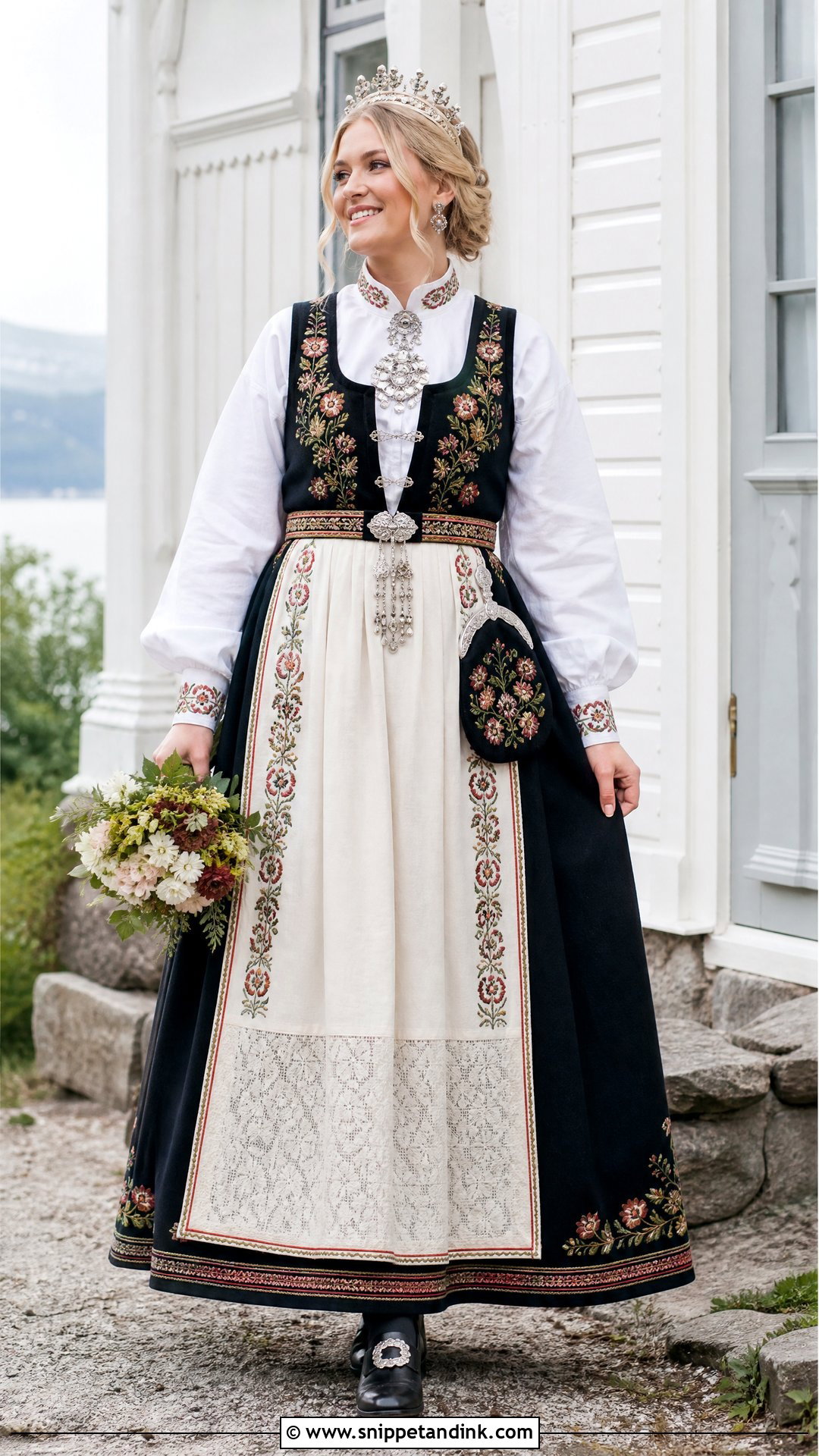
A bunad is usually made to last generations, and its colours, embroidery, silver and fastenings are tied to a specific region. That’s why accuracy matters more than looking vaguely Scandinavian. The outfit may include an embroidered bodice, a blouse, a full wool skirt, an apron and silver jewellery, with a bridal crown in some regions and a simpler headpiece or veil in others. Wool is warm, so it suits cooler weddings. A borrowed family bunad often needs its bodice adjusted, which a bunad maker can do by letting out or taking in the seam allowances already built in. Leather shoes suit it.
17. Scottish Tartan Bridal Dress
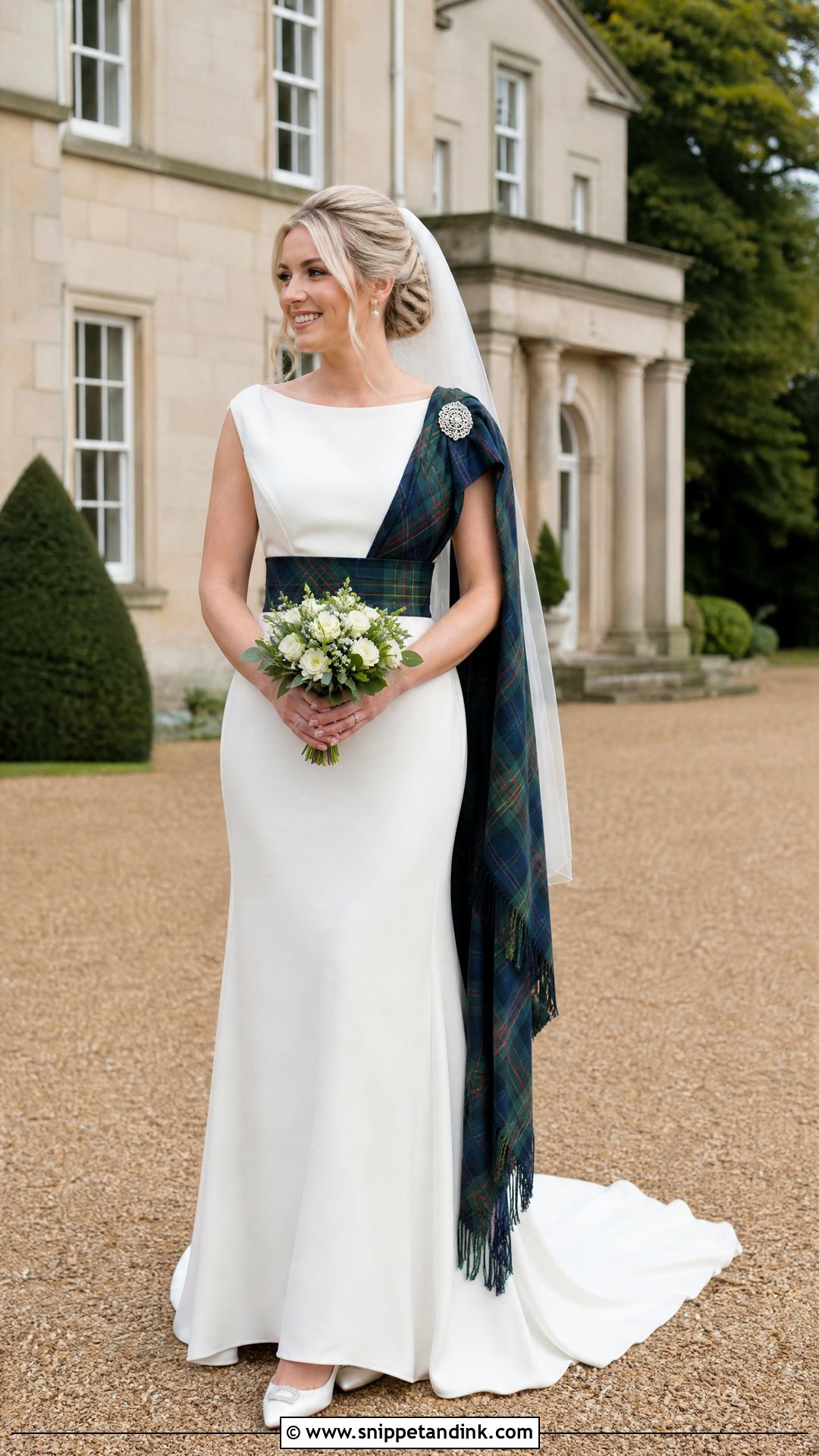
Tartan works best on a wedding dress when it’s used once or twice, not everywhere. A white or ivory gown with a clan tartan sash pinned with a silver brooch is the classic version; a tartan bodice, shawl or full skirt are stronger choices. Check that the tartan has a real connection to your family, your partner or your region. Sashes slip, so I pin the brooch through the gown’s fabric as well as the sash. Classic pumps, a small bouquet and a veil or simple hair accessory finish it. For an outdoor ceremony in Scotland, a tartan wrap is practical as well as traditional.
18. Ukrainian Vyshyvanka Bridal Dress
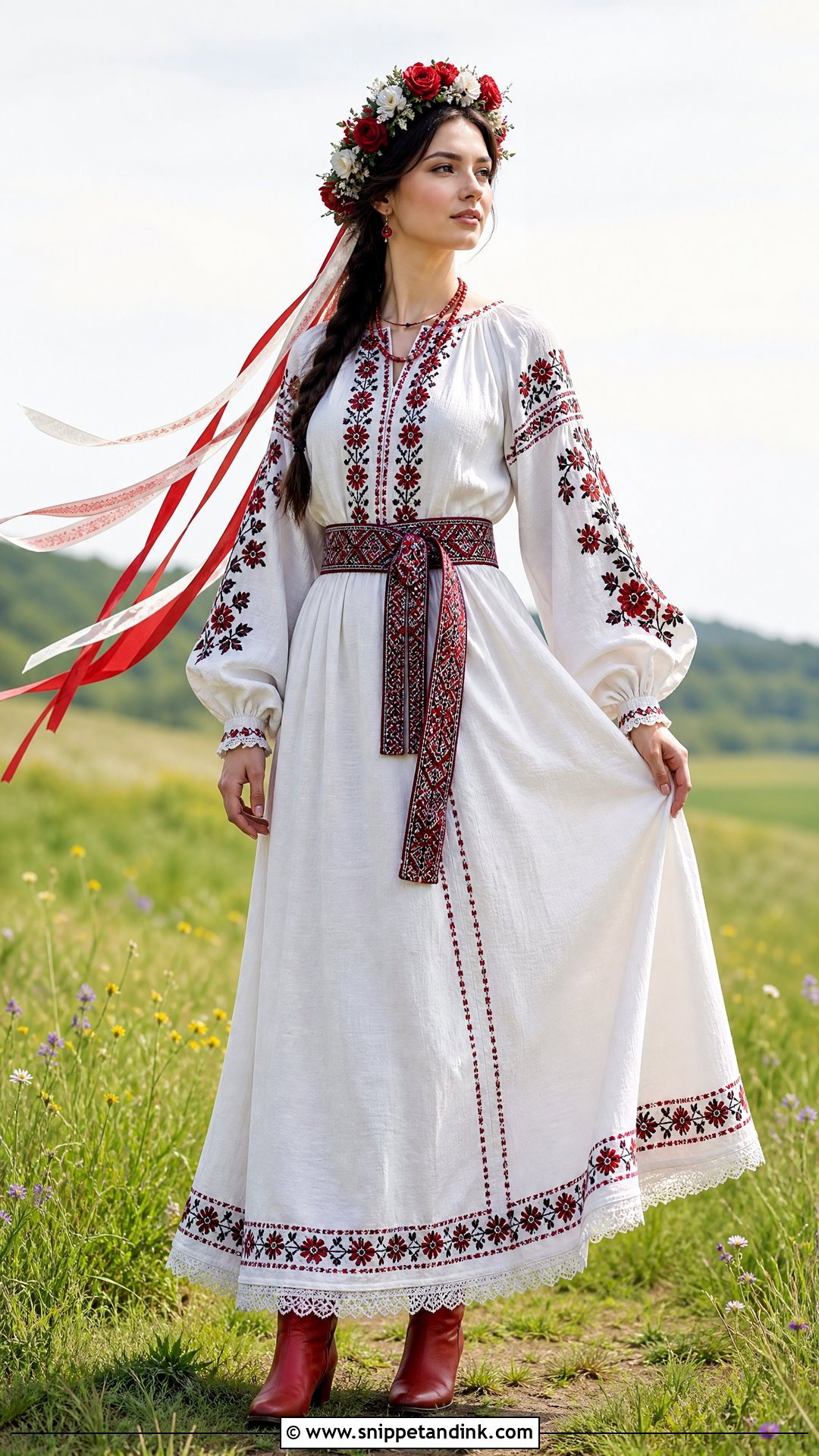
The embroidery on a vyshyvanka isn’t decoration alone. Its motifs and colours vary by region, and red and black are among the best known. A bride may wear a long white embroidered dress, or a blouse with a flowing skirt and woven belt. A floral vinok wreath with ribbons, red boots or simple shoes and coordinating jewellery complete it. Modern versions often use linen with embroidery at the sleeves, neckline and hem. Linen breathes, but it creases; steam it on the morning. Plan the vinok’s ribbons so they don’t cover the embroidered back.
19. Palestinian Embroidered Thobe Bridal Dress
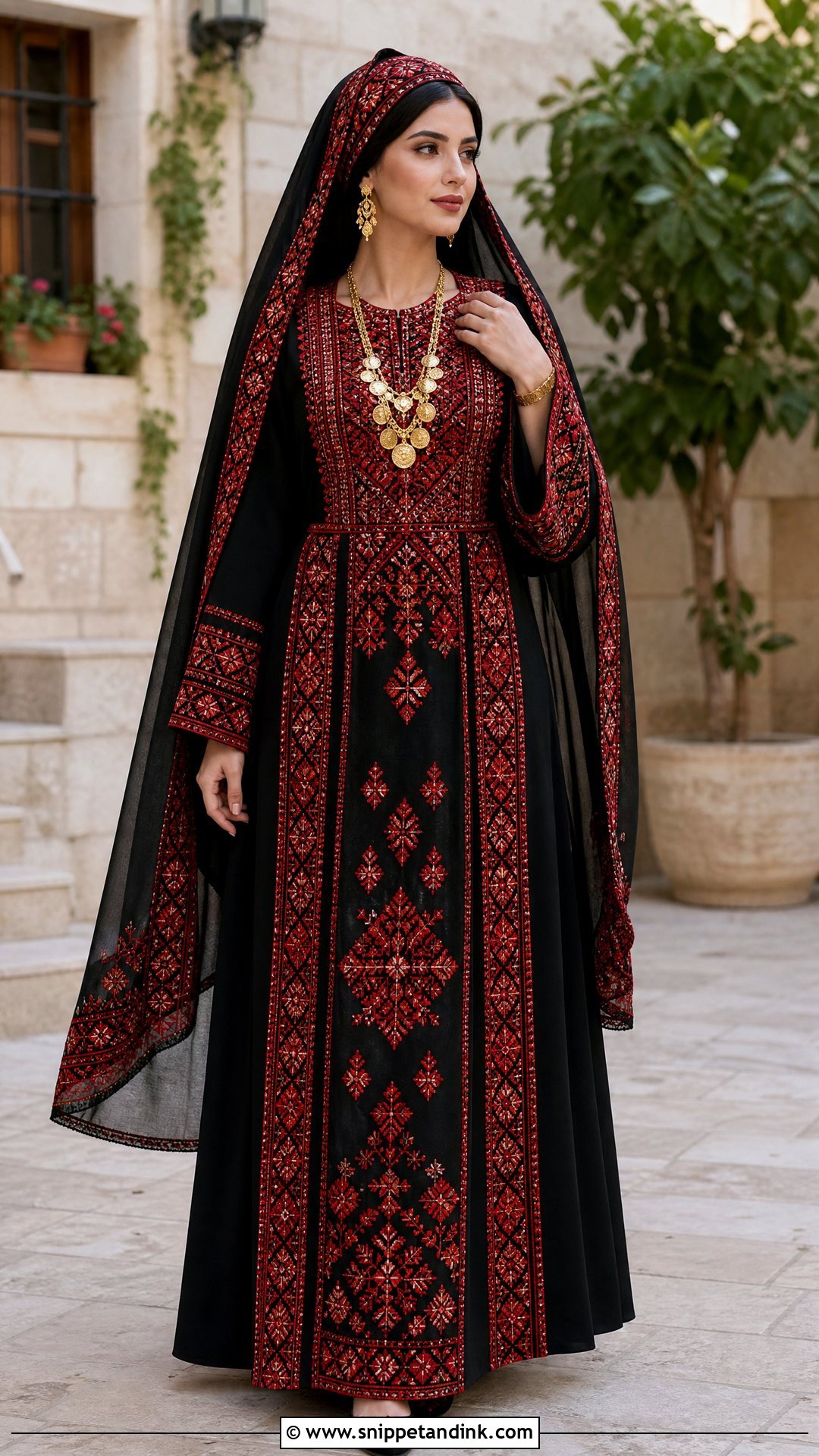
Tatreez is cross-stitch embroidery on the chest panel, sleeves, sides and skirt of a Palestinian thobe, and its colours and motifs can point to a village, region or family history. Choose or commission it with knowledgeable makers and relatives. An heirloom thobe needs gentle handling: old thread can be brittle, and I’d never put one through a machine wash. A matching embroidered veil, head covering, gold jewellery and comfortable flats complete it. The loose cut moves easily, but the hem still needs adjusting to your height and shoes. Some brides combine inherited embroidered panels with new tailoring.
20. Mexican Embroidered Bridal Dress
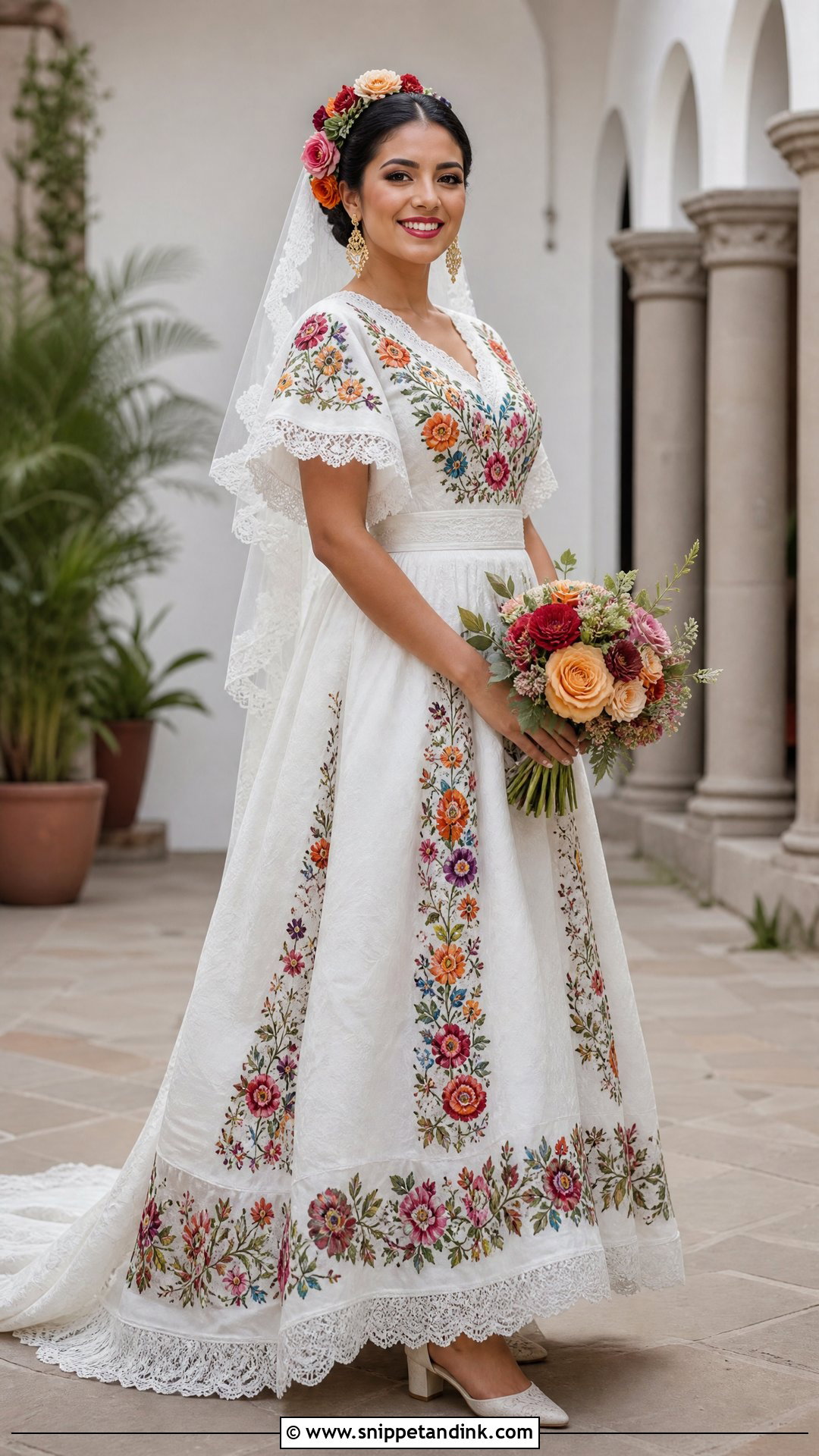
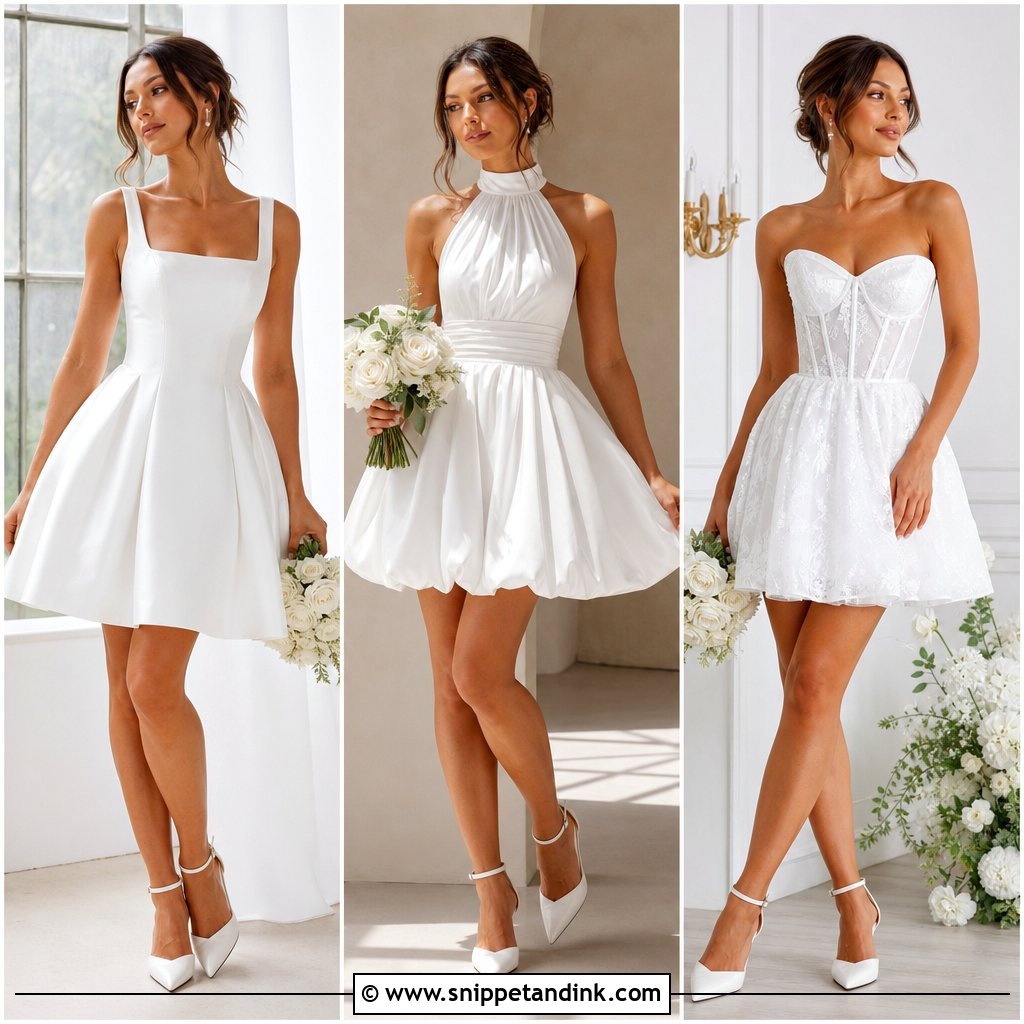
Mexican wedding dress traditions vary so widely by region that I’d treat any regional garment with care and family guidance. The more general version is a long cotton or satin dress with floral embroidery, a fitted waist, a gathered skirt and lace-trimmed sleeves. A mantilla-style veil, floral hairpiece, gold earrings and low heels balance it. Light cotton suits a warm outdoor ceremony; embroidery gives it formality. Pull one floral palette through the dress, veil, bouquet and hair flowers, and the outfit looks deliberate.
Getting Dressed Can Take Longer Than Hair and Makeup
Brides often build the morning around hair and makeup and forget that the outfit itself needs time. A layered kimono is dressed by a trained specialist; a sari needs careful pleating; a gele has to be tied, sometimes more than once; a deel, hwarot or bunad has several layers and fastenings. Rushing any of these is how drapes slip and pins come loose.
Building the dressing into your schedule
- Ask your dresser exactly how long the outfit takes to put on, then add a margin.
- Do hair and most of the makeup first, but leave lipstick and final touches until after dressing for garments that go over the head.
- Lay out every piece the night before: underlayers, pins, belts, jewellery, shoes, in the order they go on.
- Have one person who knows the outfit stay nearby all day to fix pins and drapes, especially after eating or dancing.
Outfit changes need the same planning. If you’re switching from a traditional garment to a gown, find out how long the second dressing takes and leave space for it in the timeline.
What Makes a Heritage Outfit Feel Right on the Day
Every outfit here joins cloth, colour, accessories and craft to a family and a community. The most meaningful one is rarely the most elaborate; it’s the one chosen with understanding, accurate details and real intention. You can wear a tradition in full or blend heritage pieces with modern tailoring. Either way, comfort, fit and respectful sourcing should guide the choices. Ask relatives, regional dressmakers or specialists before finalising anything symbolic, and give yourself time to practise moving in it.
You'll Like These Ideas:


Leave a Reply