
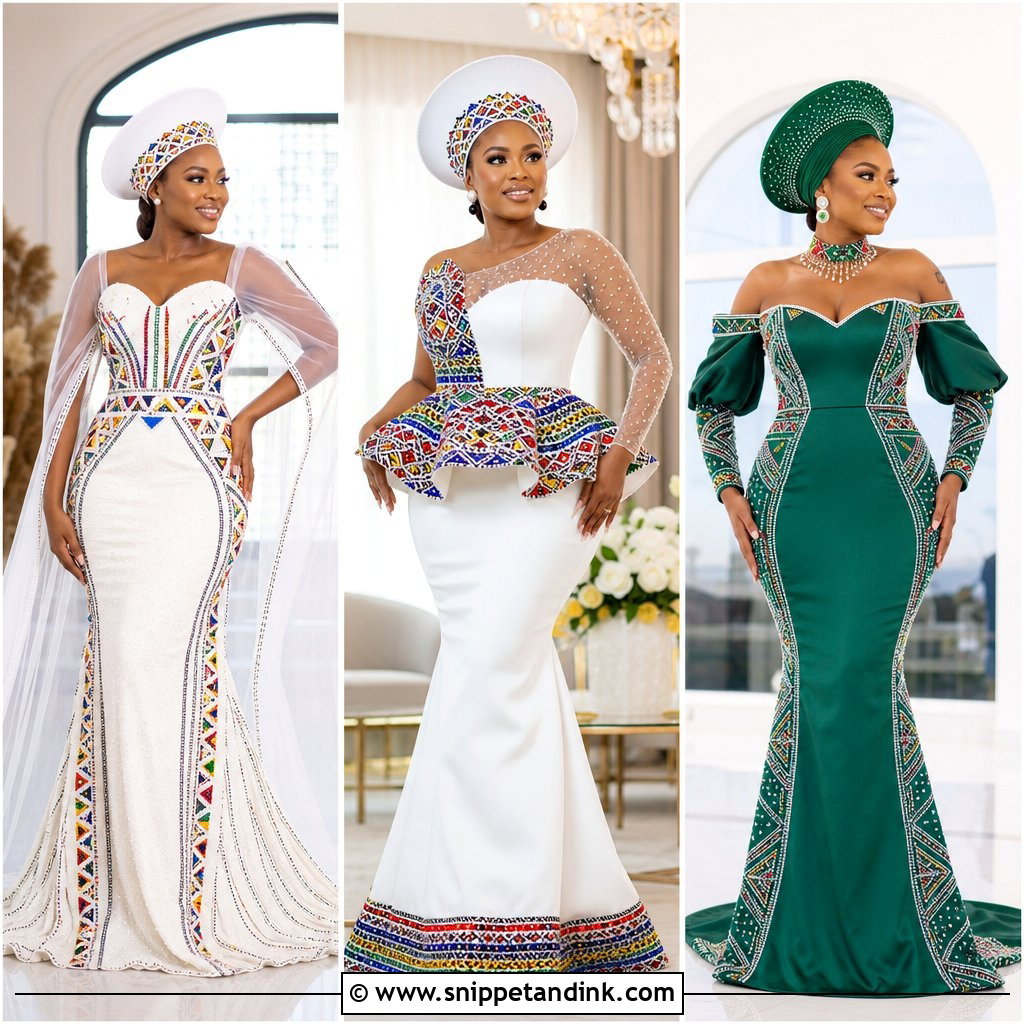
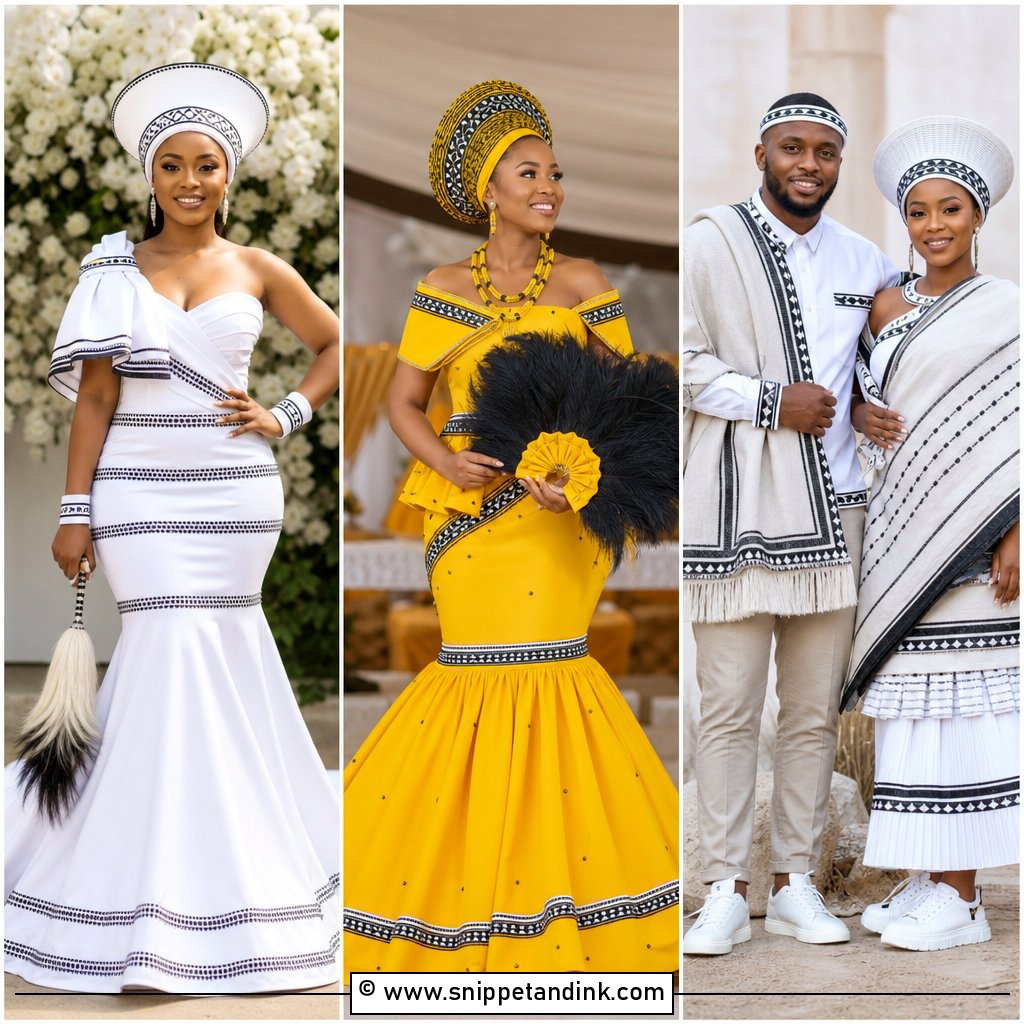
Pedi bridal dress is loud in the best way: bold stripes, strong color blocking, beadwork and a headwrap that frames the face. Brides today take those elements into pleated skirts, fitted gowns, peplums, tulle overlays and detachable trains, and the result can be deeply traditional or very modern. What I care about as a stylist is whether the pieces work together and whether the bride can greet family, sit, eat and dance in them for a whole day. Customs differ from family to family, so talk to your elders and to a seamstress who knows the dress before you settle details. The twenty looks below show how many directions this can go.

Briefing a Seamstress on Stripes, Beads and Family Expectations
Most Pedi bridal outfits are made to order, and the brief you give your seamstress decides most of the result. I’d start the conversation at least three months out, longer if there’s hand beadwork involved, because beaded aprons and collars are slow, detailed work.
- Bring the fabric itself, not a photo. Stripe widths and color order vary between bolts, and matching them across seams needs extra length, so buy more than the pattern asks for.
- Tell her where you want the stripes to run. Vertical stripes lengthen, horizontal bands at the hem add weight to the bottom of the skirt.
- Say early which parts must come off. Detachable trains, aprons and capes need fastenings planned into the base dress.
- Ask how many fittings are included. Three is a sensible minimum for a fitted gown; the last should be in your wedding shoes.
Before you sign off colors, sit with the women in your family. Some households have firm views on which colors and bead arrangements a bride wears, and it is much easier to adjust a sketch than a finished apron.
1. Colorful Striped Pedi Wedding Dress
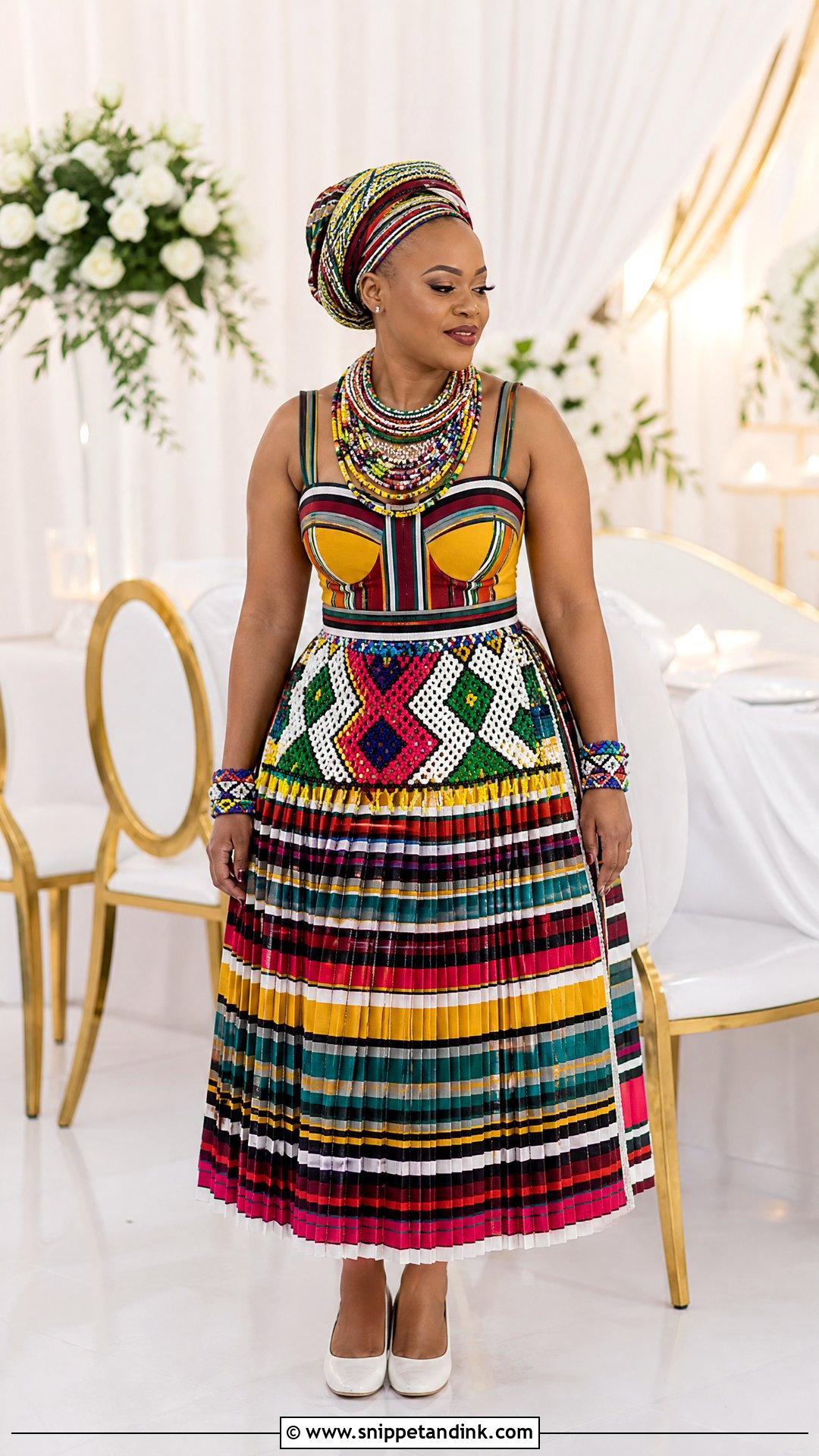
Stripes are unforgiving. On a fitted bodice they have to meet at the center front and line up at the side seams, or the eye goes straight to the mismatch. I tell brides to buy extra fabric for this reason, because matching a pattern eats yardage. Pair the striped bodice with a full pleated skirt and let a beaded apron mark the waist without covering the print. Since the fabric carries several colors already, pull one solid shade from it for the shoes and clutch. A neat headwrap, layered bead necklaces, matching bracelets and low heels finish it, and short sleeves or a light shoulder wrap add coverage if you want it.
2. Royal Blue Pedi Wedding Dress
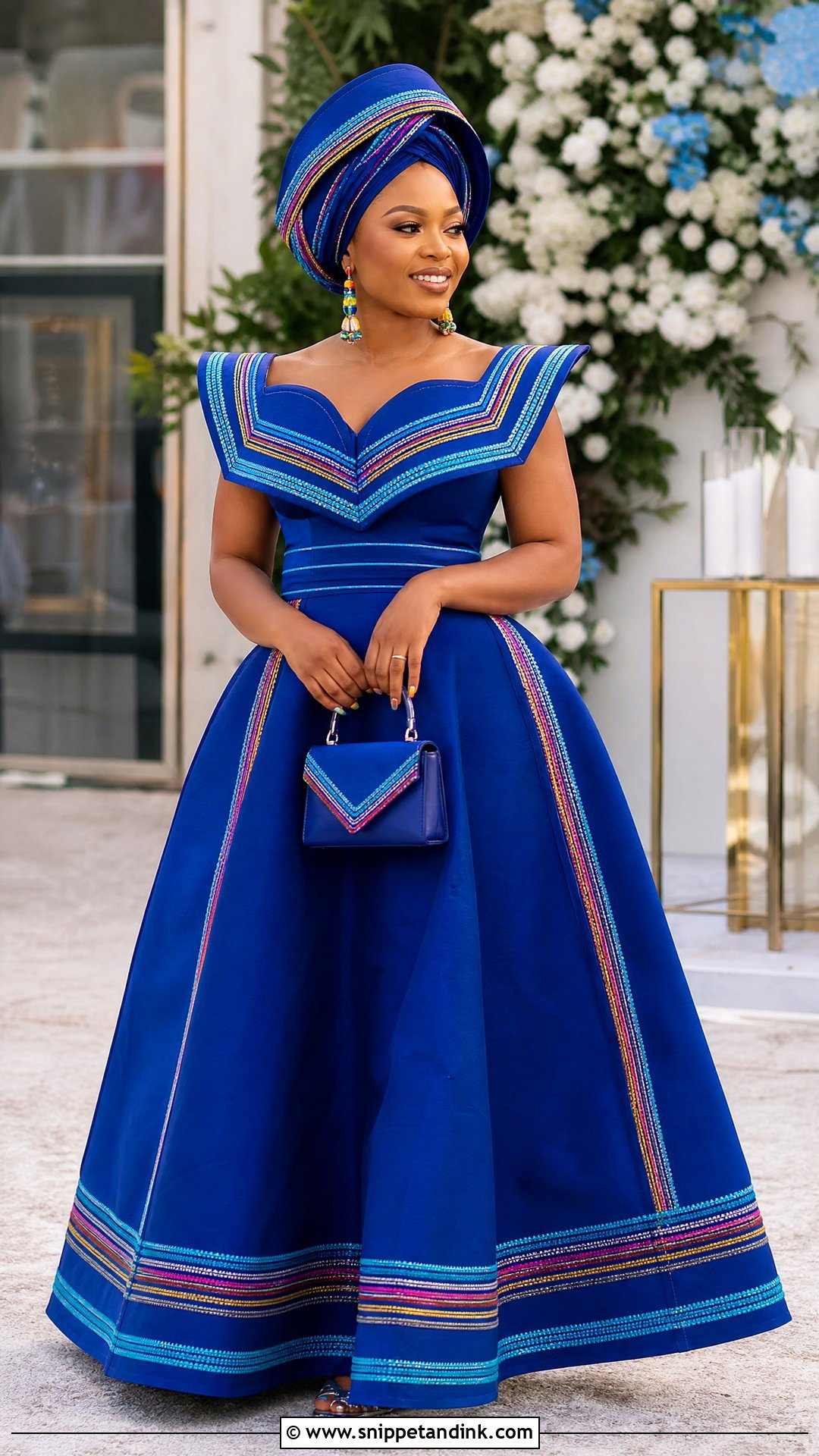
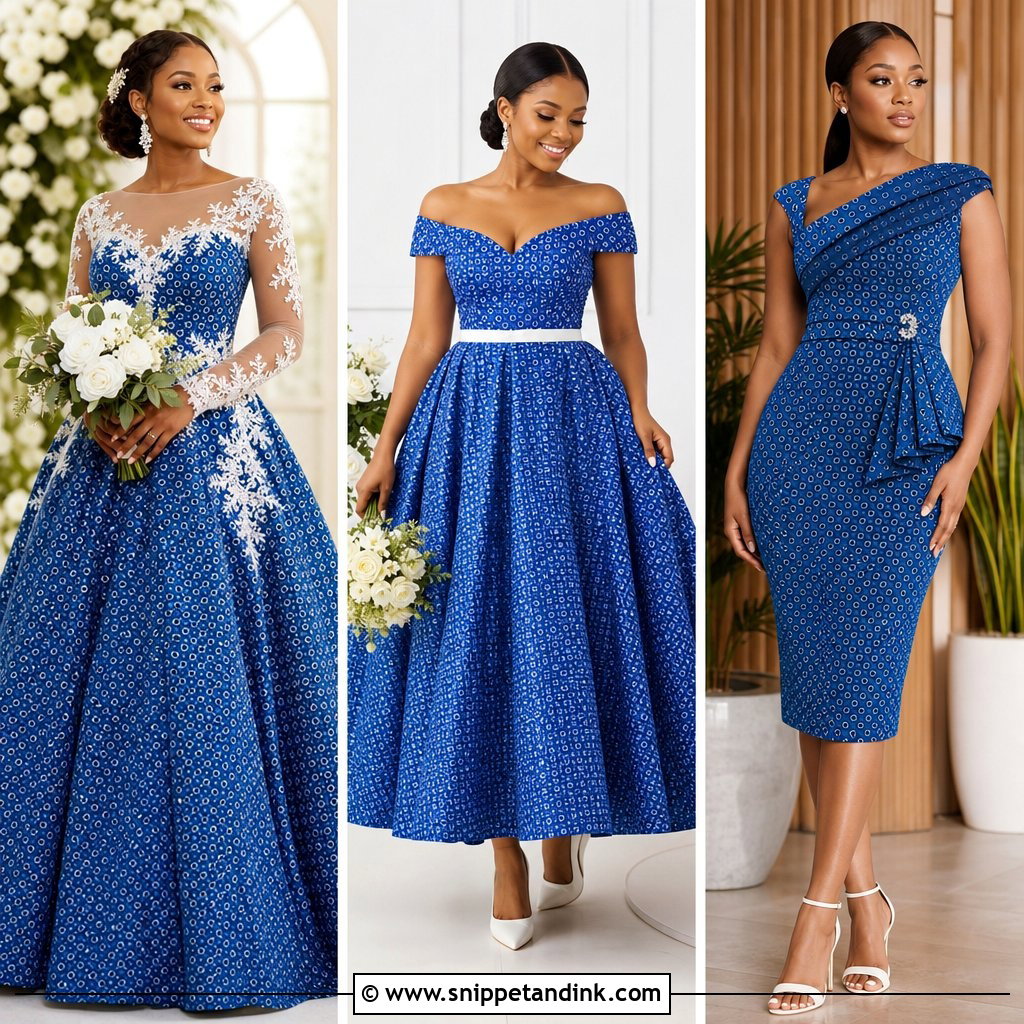
A solid royal blue gown is the answer for a bride who loves the Pedi palette but not a fully multicolored dress. The stripes go where they’ll be seen in movement: sleeves, waistband and hem, in turquoise, white, yellow or pink. A floor-length skirt with a fitted waist and soft flare keeps the color from feeling heavy. For an outdoor ceremony I’d choose a breathable weave over thick satin, since a dark, dense fabric absorbs sun. Add a matching blue headwrap, beadwork near the face, metallic low heels and small drop earrings, and ask for hidden pockets. You will use them.
3. Pink and Turquoise Pedi Wedding Dress
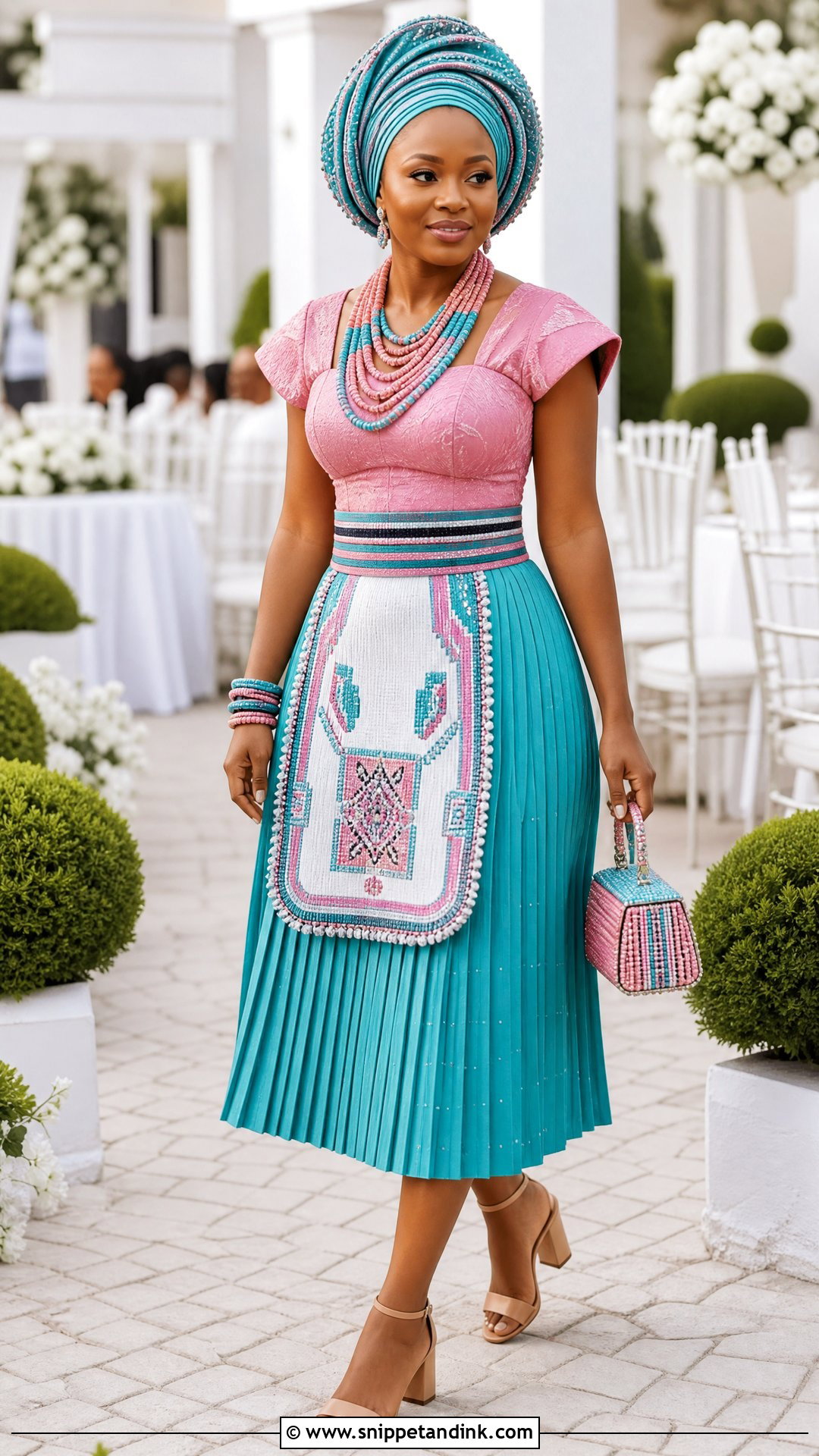
Pink and turquoise are both bright, so the danger is a dress that looks split in half. My rule is that each color has to appear at least twice, top and bottom, so the eye travels across the whole outfit: a pink fitted bodice with a sweetheart or square neckline, a turquoise pleated skirt edged in a narrow stripe, and a waist apron that carries both. If you want softness, a light tulle overlay on the skirt does it better than extra embellishment. Style with a turquoise headwrap, pink bead earrings, layered necklaces and nude or metallic block heels that stay steady on grass.
4. White and Blue Pedi Wedding Dress
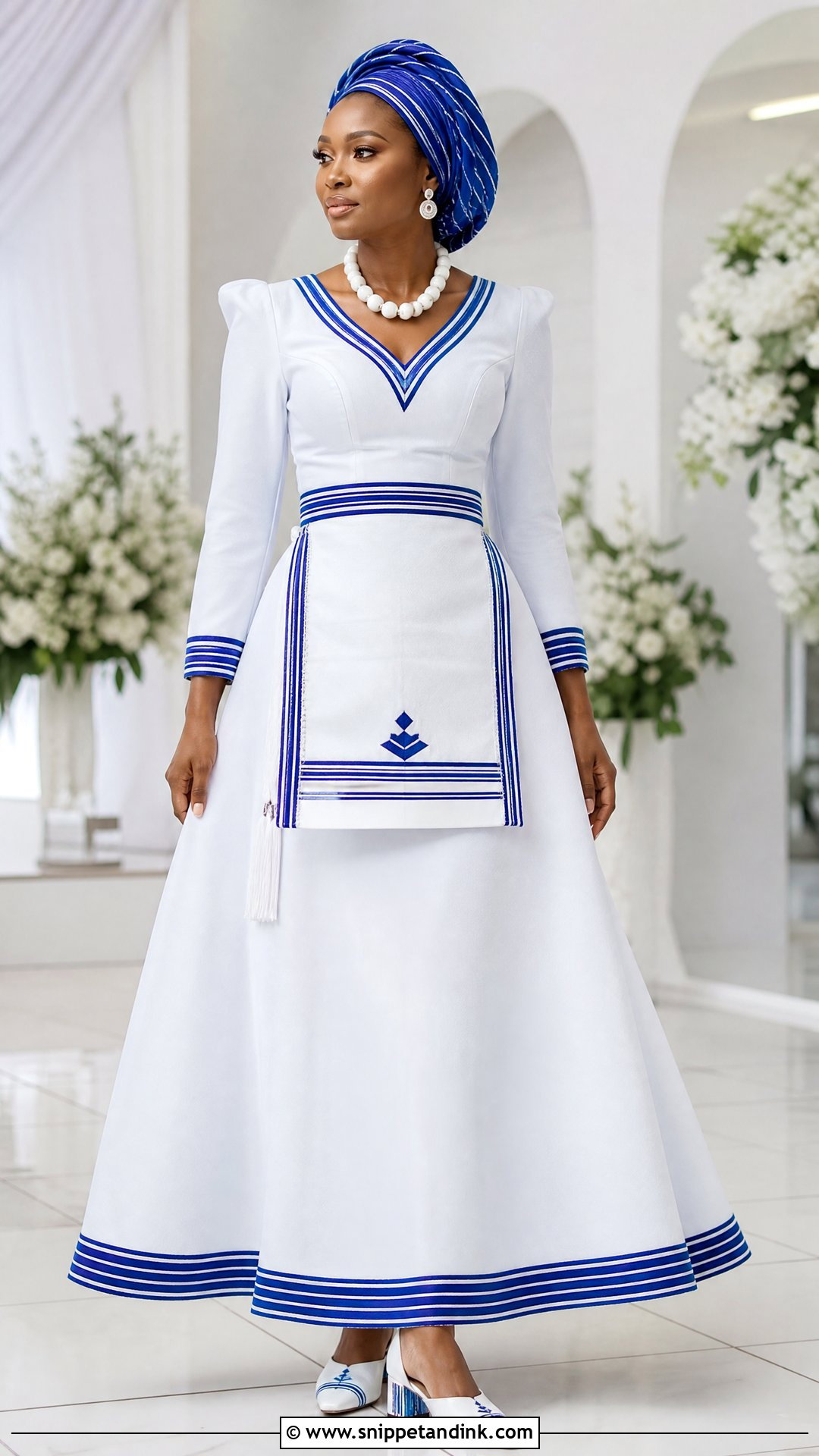
White fabric shows everything underneath it, including seam allowances, the edge of a bra and even the color of a bead apron’s backing. So when a bride wants a white A-line gown with blue Pedi stripes at the neckline, cuffs, waist and lower skirt, I insist on a full lining before we talk about anything else. A detachable blue apron gives the ceremony a traditional look and comes off for the reception. Finish with a blue headwrap, white beadwork, silver earrings and blue or silver shoes. Textured cotton, satin and lace can be mixed, but only two of them at once.
5. Yellow Pedi Wedding Dress With Pleated Skirt
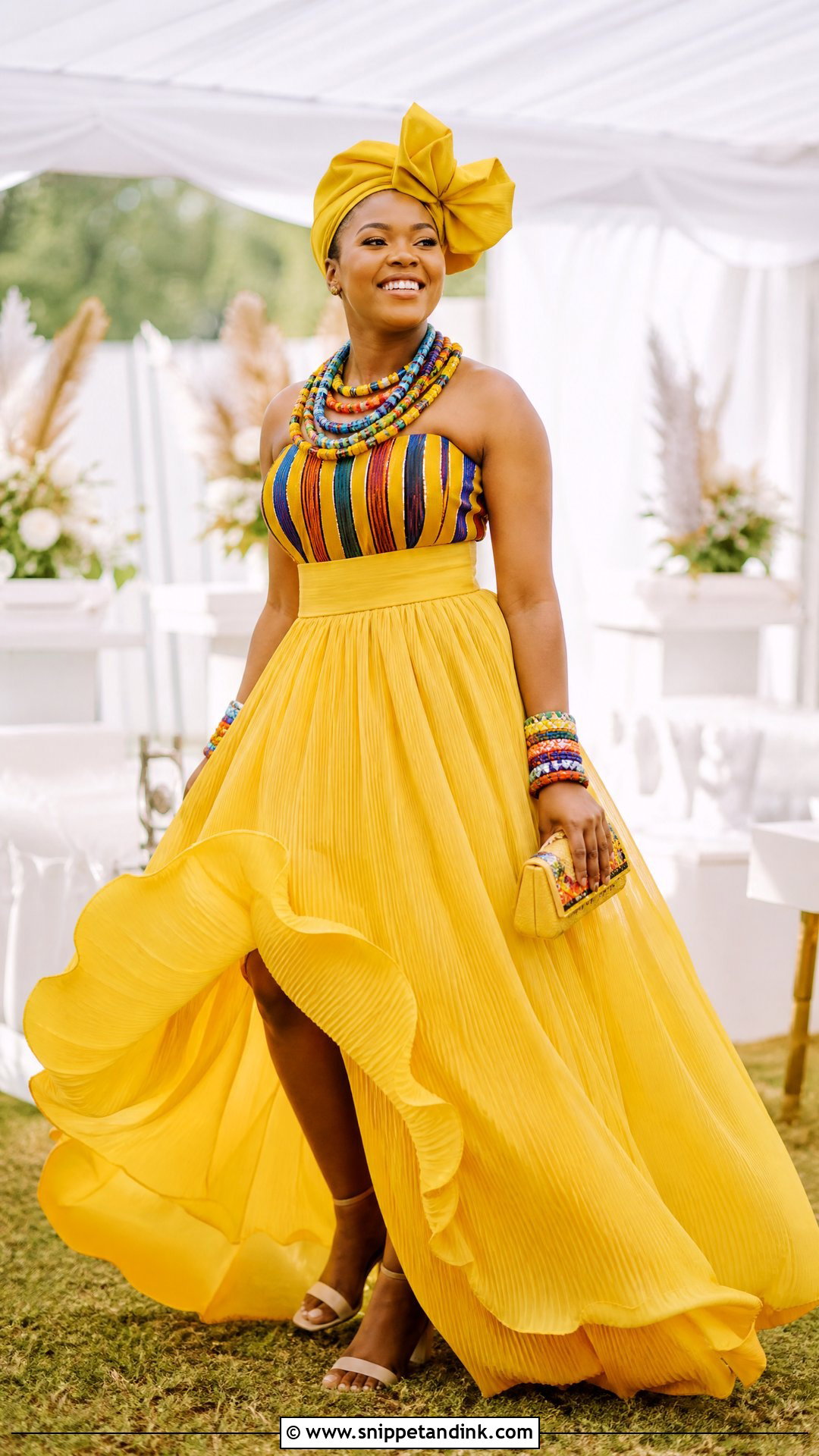
Yellow is a happy color and a demanding one. On camera it can bleach out in strong midday sun, so I’d keep the brightest yellow on the pleated skirt and let a striped bodice in yellow, blue, pink and green carry the rest. A wide waistband helps the pleats hang straight from the natural waist. If the skirt is heavy, a lightweight underskirt gives volume without the extra kilos. Add a yellow headwrap, multicolored bead necklaces, simple bracelets and neutral block-heel sandals. Walk and dance in it at the last fitting; pleats that look fine standing can bind around the thighs when you move.
6. Navy Pedi Wedding Dress With Ruffled Sleeves
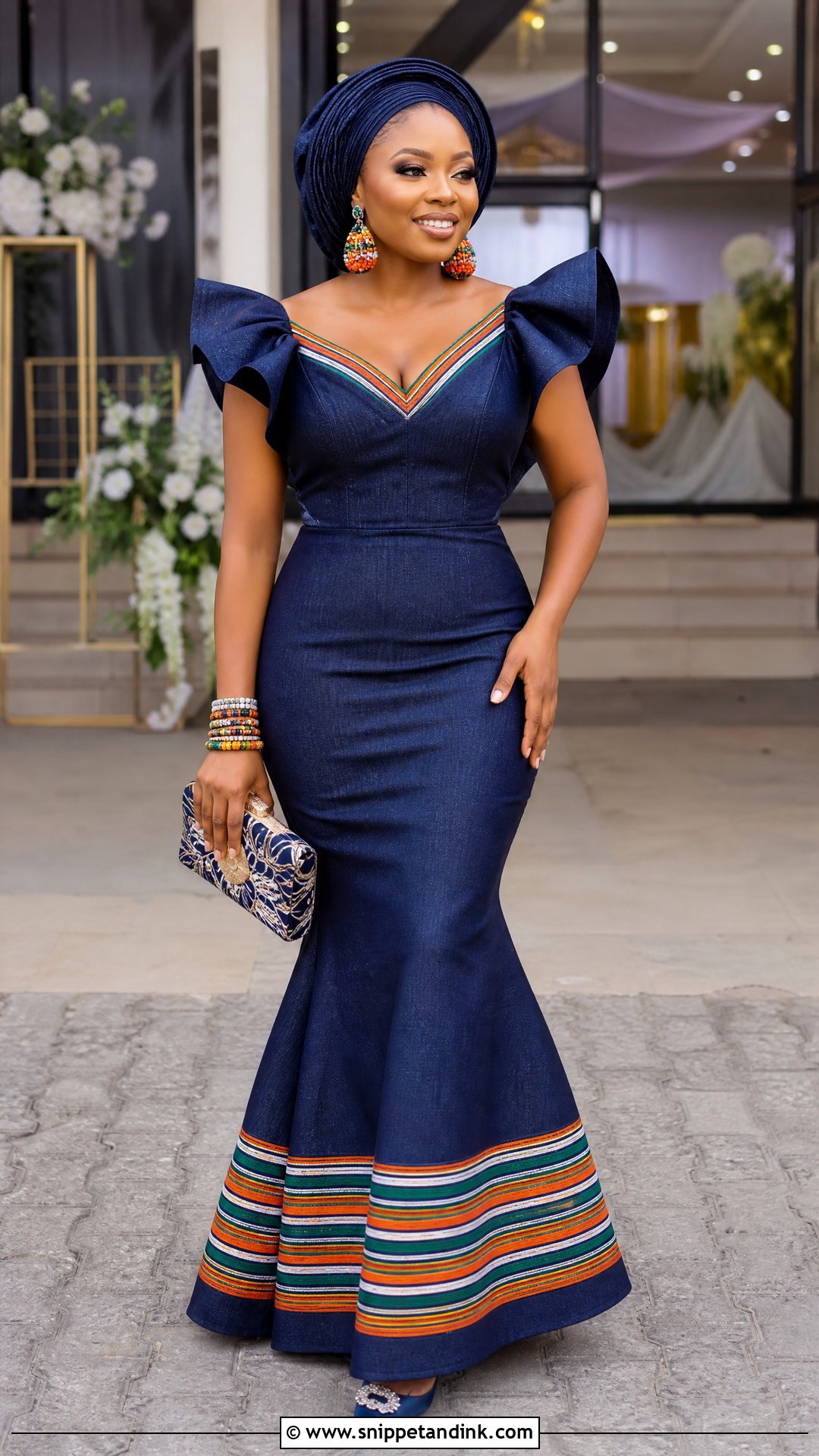
Navy can look severe, which is exactly why it needs Pedi color. I use vivid pink, yellow or turquoise trim at the neckline, waist and hem of a fitted gown with a flared or mermaid skirt. Ruffled sleeves are lovely in theory, but scale matters: a big shoulder ruffle on a petite bride swallows her, so we pin and test the size at the fitting before cutting. Finish with a navy headwrap, bright bead earrings, stacked bracelets, pointed low heels and a clutch in the dress’s stripe. It’s a strong pick for an evening reception.
7. Red Pedi Wedding Dress With Beaded Apron
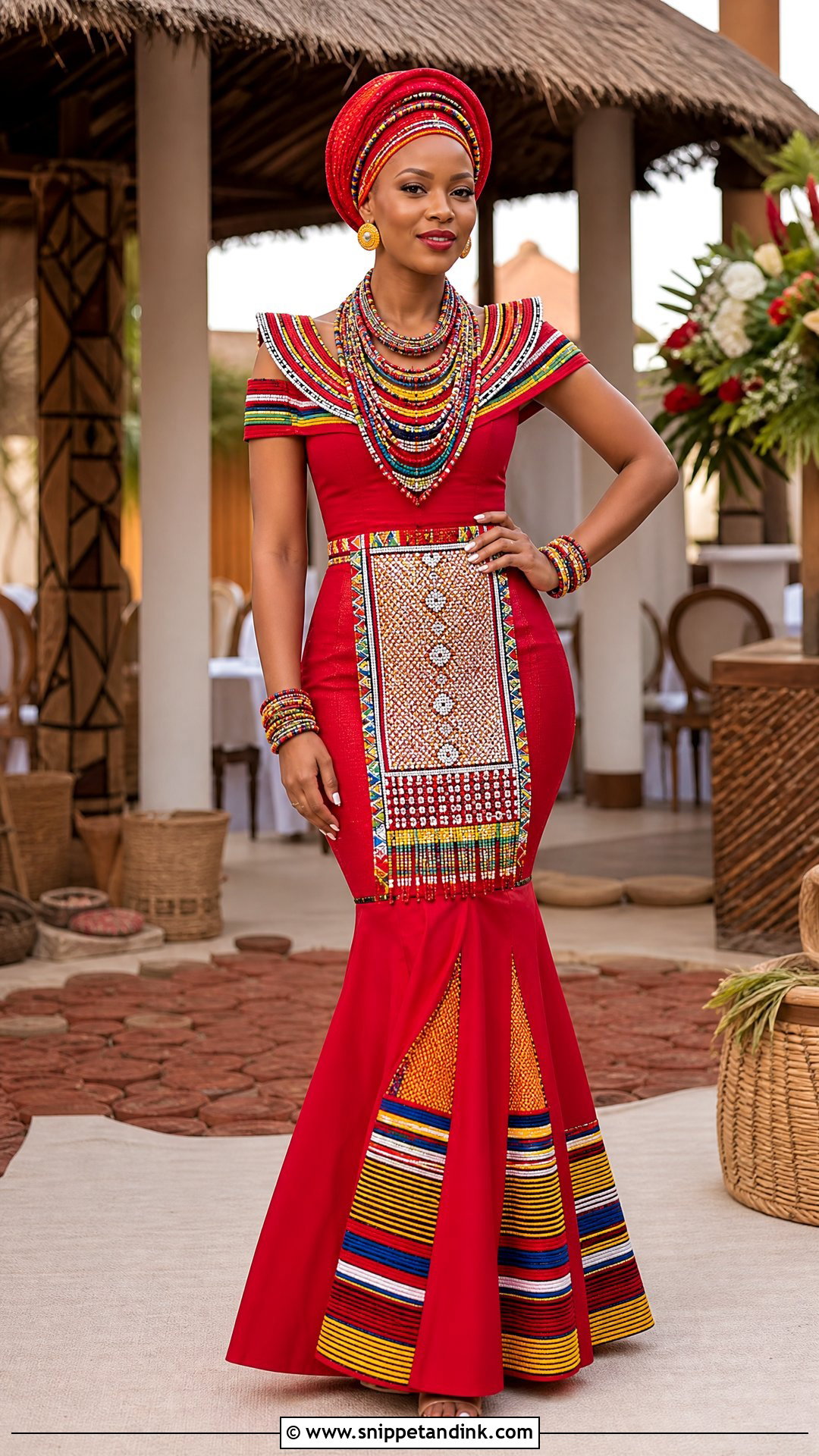
Rich red against a detailed beaded apron is about as bold as bridal gets, so the apron has to lead and everything else follows. Use a red fit-and-flare dress with striped panels at the bodice or skirt, and fix the apron firmly at the waist; beadwork is heavy and a loosely attached apron swings and twists when you sit. Before the beadworker starts, I’d ask family about colors and placement, since bead patterns can carry meaning. A red or striped headwrap, gold-toned earrings and comfortable neutral heels complete it.
8. Orange Pedi Wedding Dress With Tulle Skirt
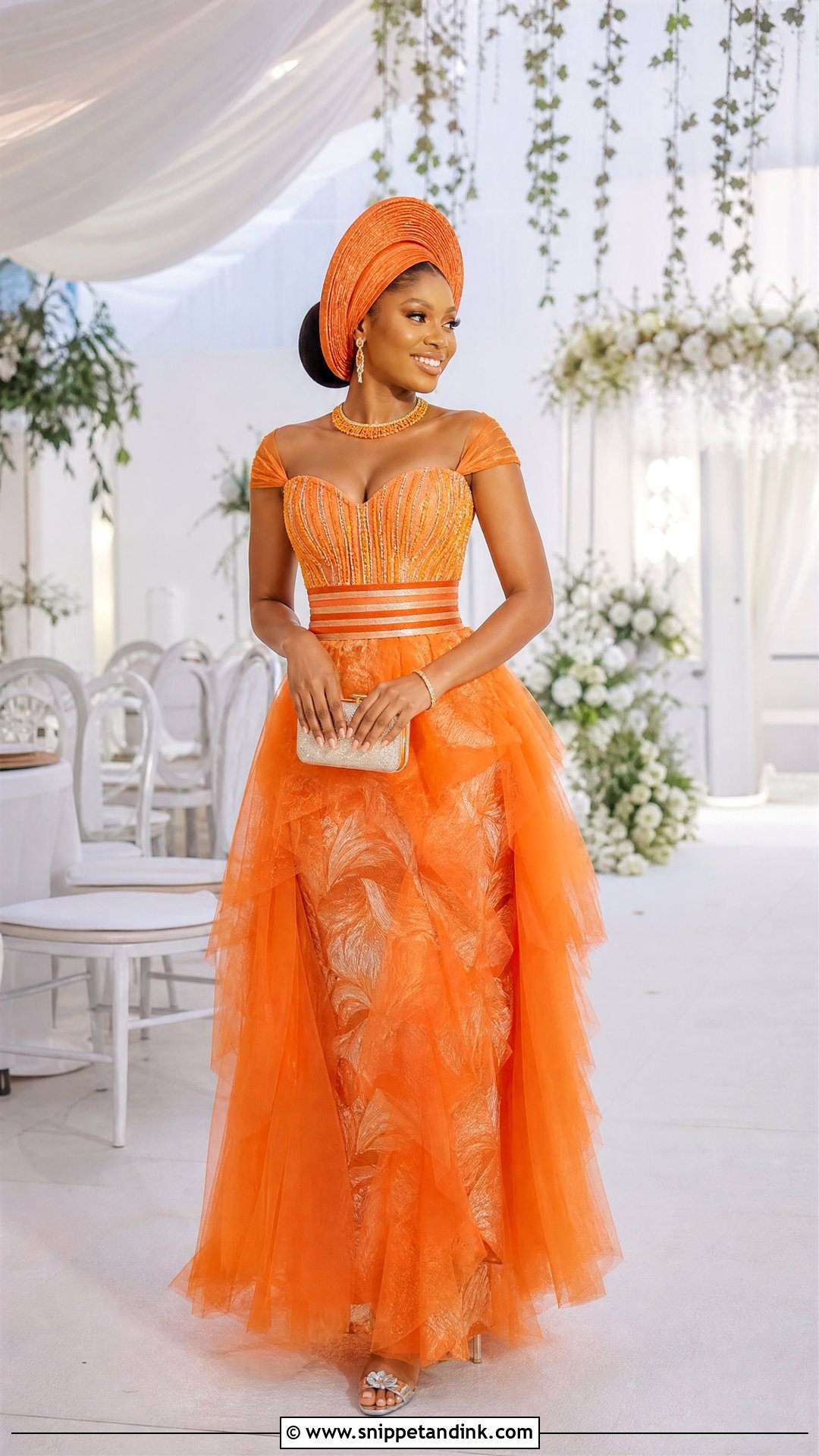
Tulle and stripes are an unexpected pair that works. A structured orange bodice with striped fabric at the neckline and waist sits over layered tulle in the same or a softer orange, and a printed panel underneath lets the pattern glow through. Tulle snags on heels and rough flooring, so I ask for the hem to be finished slightly shorter than a satin skirt would be. A detachable skirt reveals a fitted dress for the reception. Pair it with a wrapped headpiece, a beaded collar necklace, delicate earrings and low metallic heels.
9. Green Pedi Wedding Dress With Matching Headwrap
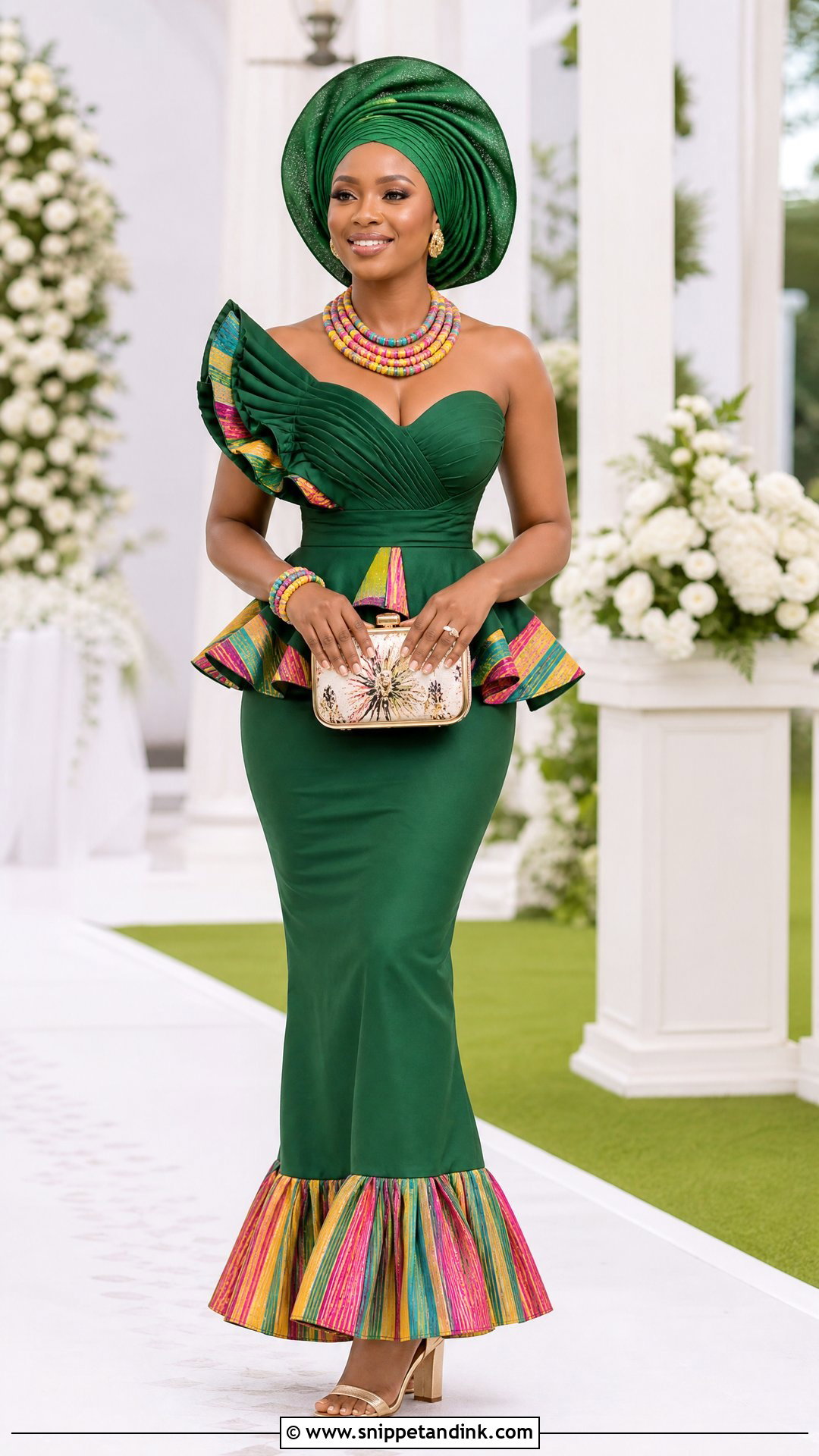
Green is less common in bridal wear, so it stands out. Choose a fitted green gown with a soft flare and bring stripes in through the sleeves, waistband or a peplum. Solid panels show every seam, and green in particular reveals puckered stitching, so this dress lives or dies on tailoring. A neatly shaped green headwrap, not an oversized one, gives height. Yellow, blue, white and pink beads brighten the base, gold sandals or low block heels suit it, and a clutch covered in the dress fabric ties it together. It sits comfortably within the joyful tradition of Pedi wedding attire.
10. Purple Pedi Wedding Dress With Cape
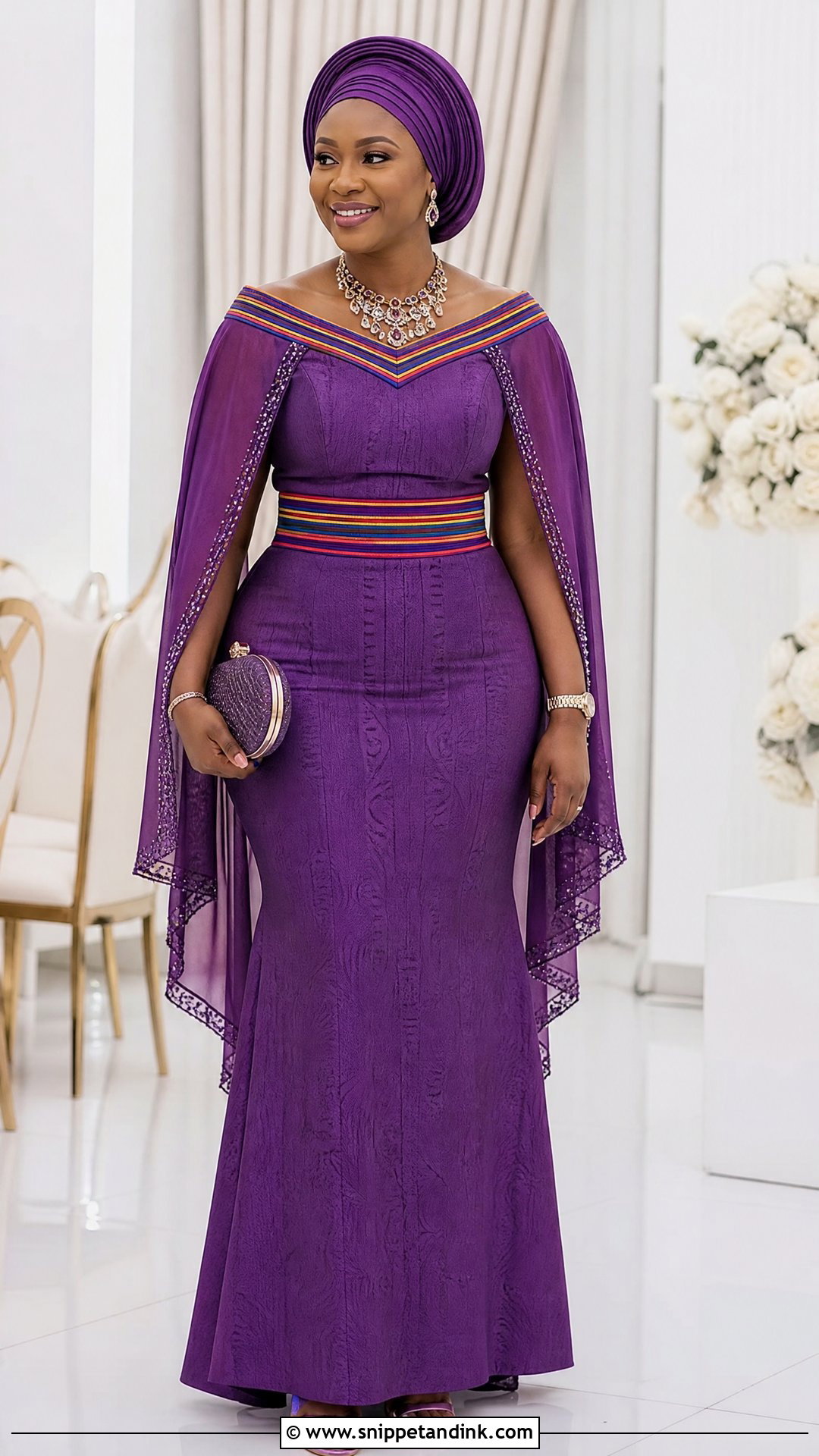
A cape gives a purple gown real ceremony presence without a bulky skirt. The base should be a fitted column or trumpet gown with Pedi stripes at the neckline, waist and skirt border. The cape needs to be light. A heavy cape pulls the gown’s neckline backward all day, which is uncomfortable and visible in photos. I’d end it just above the floor, or exactly at the hem, so you can’t step on it, and make it detachable for the reception. Beaded edging can link it to the necklace, earrings and bracelets; add a matching headwrap and silver or gold low heels.
11. Black and White Pedi Wedding Dress
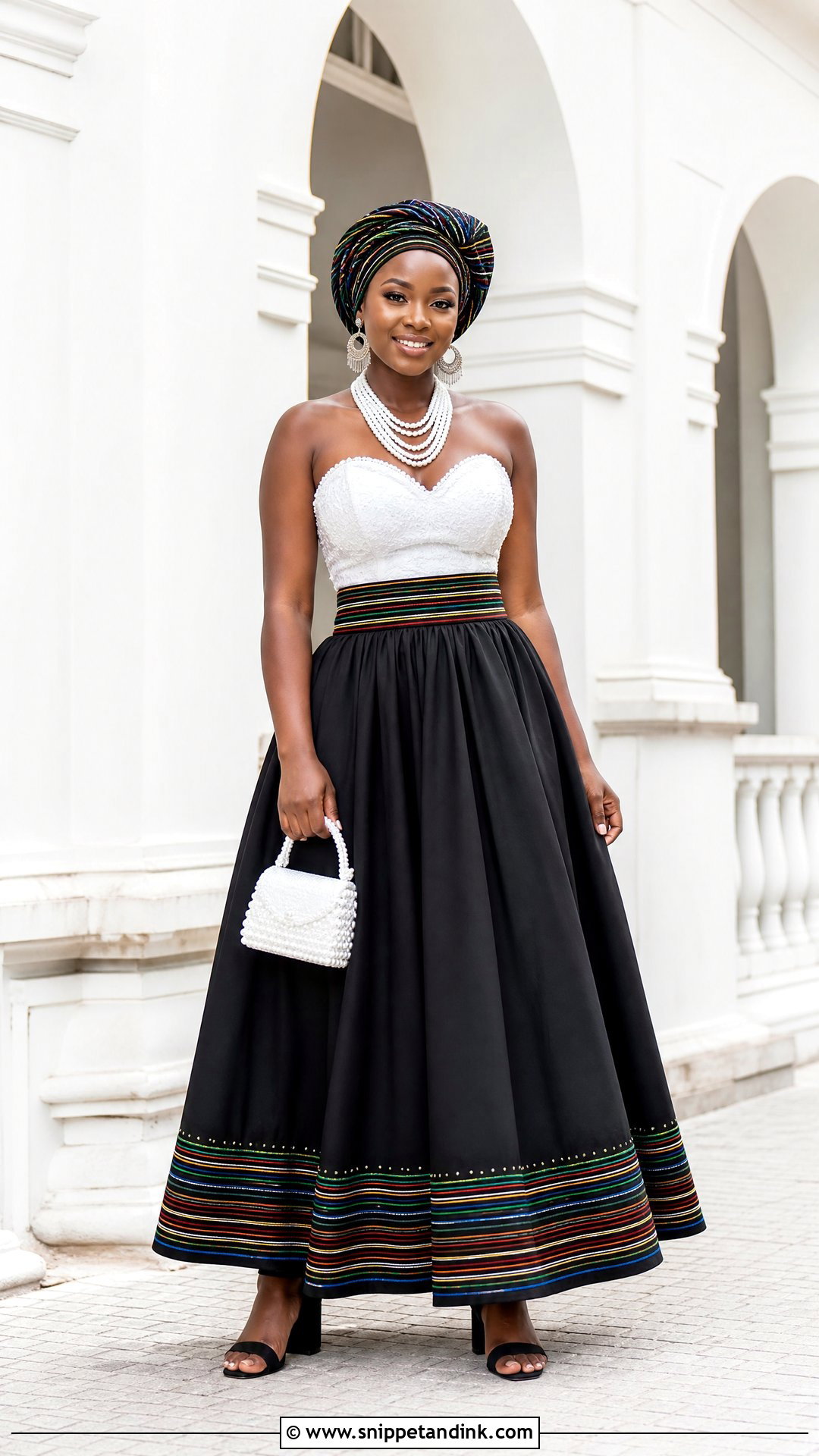
Black and white is modern and formal, but on its own it’s too stark for a Pedi celebration. Try a white fitted bodice over a black full skirt, or reverse it, then run colorful stripes around the waist, neckline, cuffs and hem. White beadwork pops against the dark sections. High contrast exposes uneven trim instantly, so I check symmetry at every fitting. Finish with a striped headwrap, black block heels, a small white bag, understated metallic earrings and a detachable beaded apron for the ceremony.
12. Shweshwe Pedi Wedding Dress
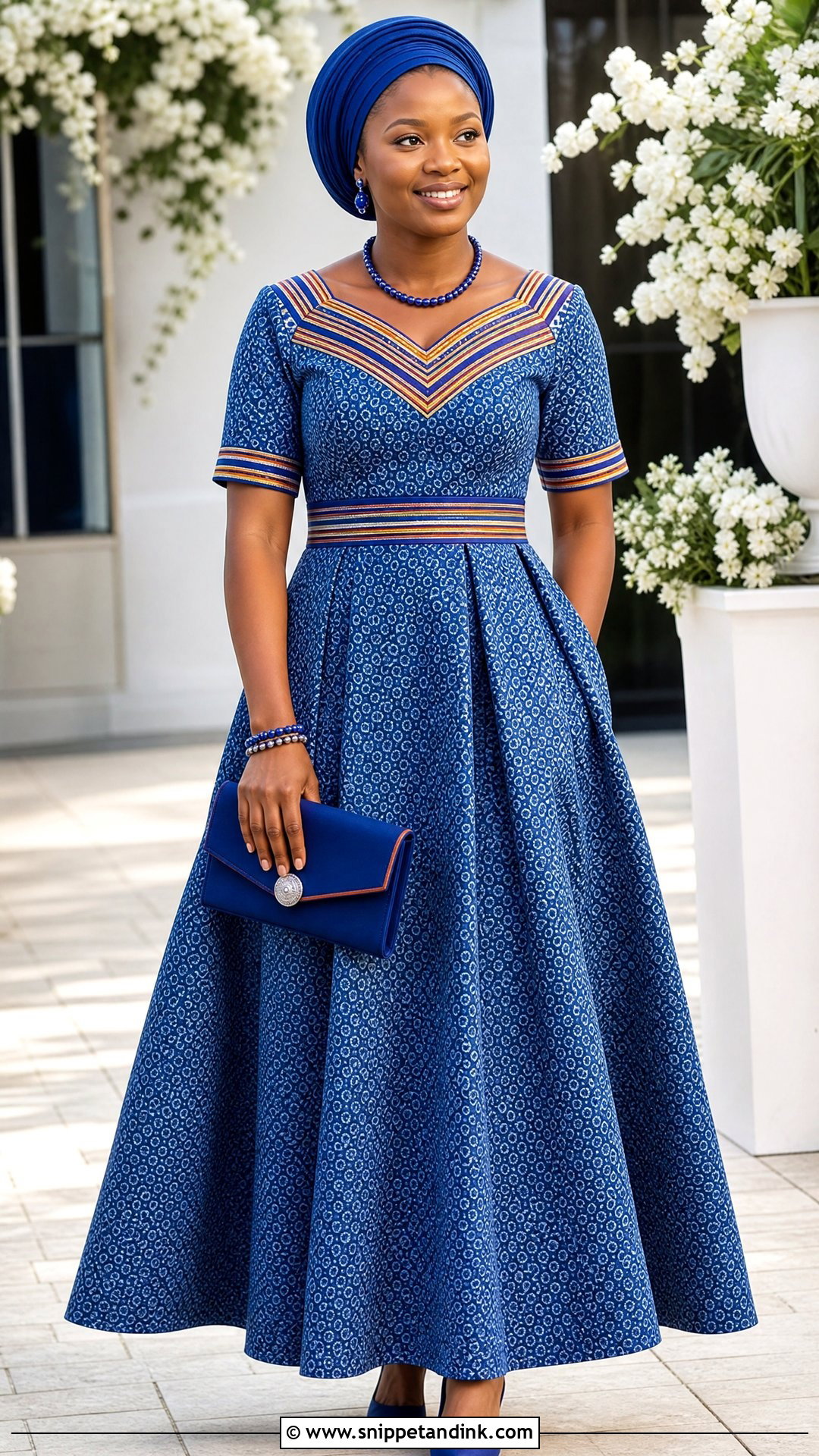
A Shweshwe Pedi wedding dress combines South Africa’s printed cotton with Pedi stripes, and the risk is two patterns fighting. Decide which one leads. Usually I let the Shweshwe cover an A-line gown in blue, brown, red or a multicolor print and keep the stripes to the waistband, neckline or sleeve edges. New Shweshwe has a stiff finish that softens after washing, so pre-wash the fabric before cutting if the seamstress agrees; otherwise it can shrink after the wedding. A solid headwrap, a simple bead necklace, low heels and bracelets in one dominant color keep it calm.
13. Pedi Mermaid Wedding Dress
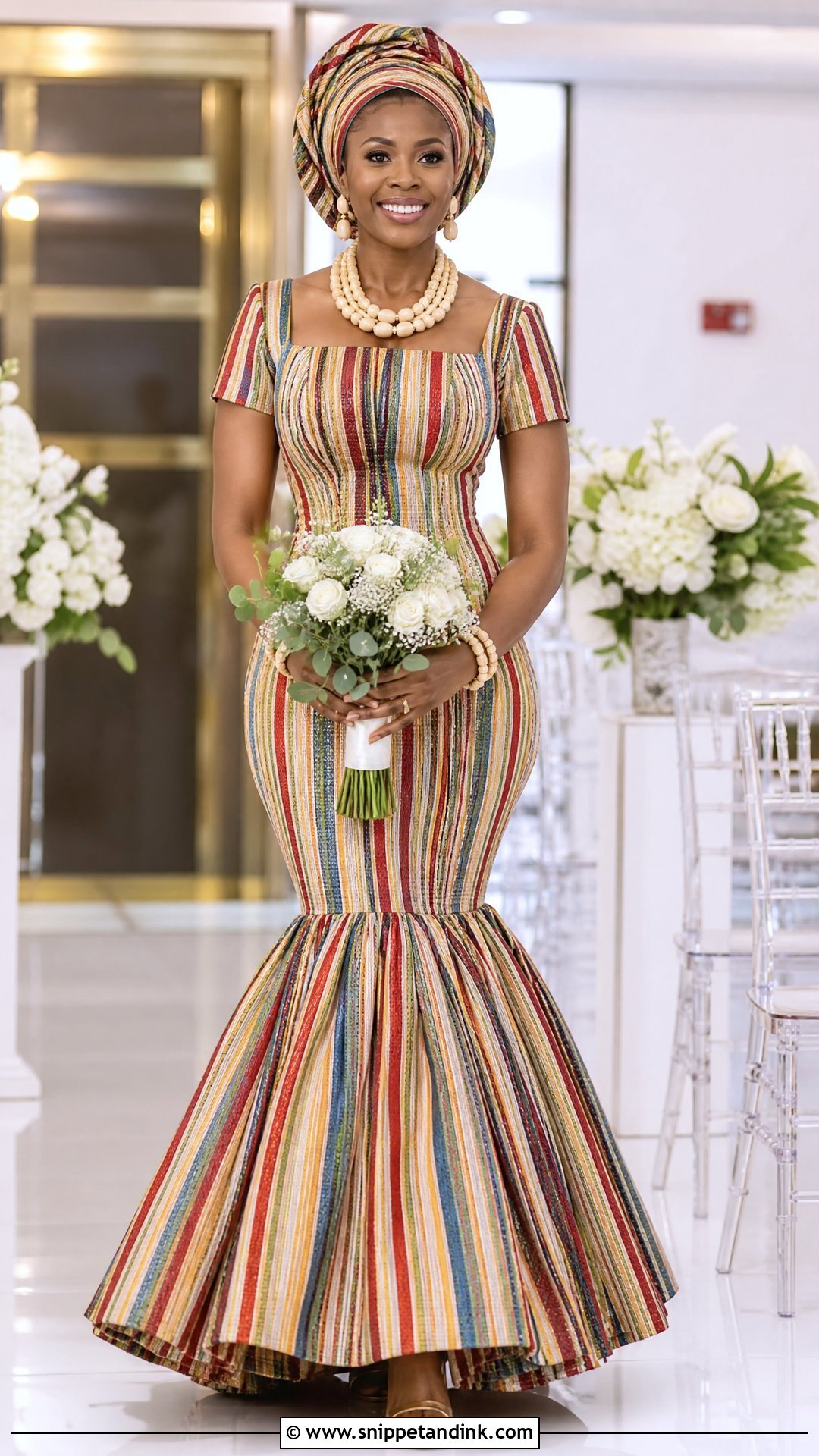
A mermaid cut hugs the hips and flares at or just above the knee, and the most common fitting problem is placing that flare too low, which forces small steps. I’d have the bride walk and climb a step at every fitting, and ask for stretch lining or a walking slit if needed. The stripes can cover the whole gown or sit in panels on a solid base. An off-the-shoulder neckline, short sleeves or a structured square neck all work. Add a matching headwrap, beaded earrings, a statement necklace and stable low heels.
14. Pedi Ball Gown Wedding Dress
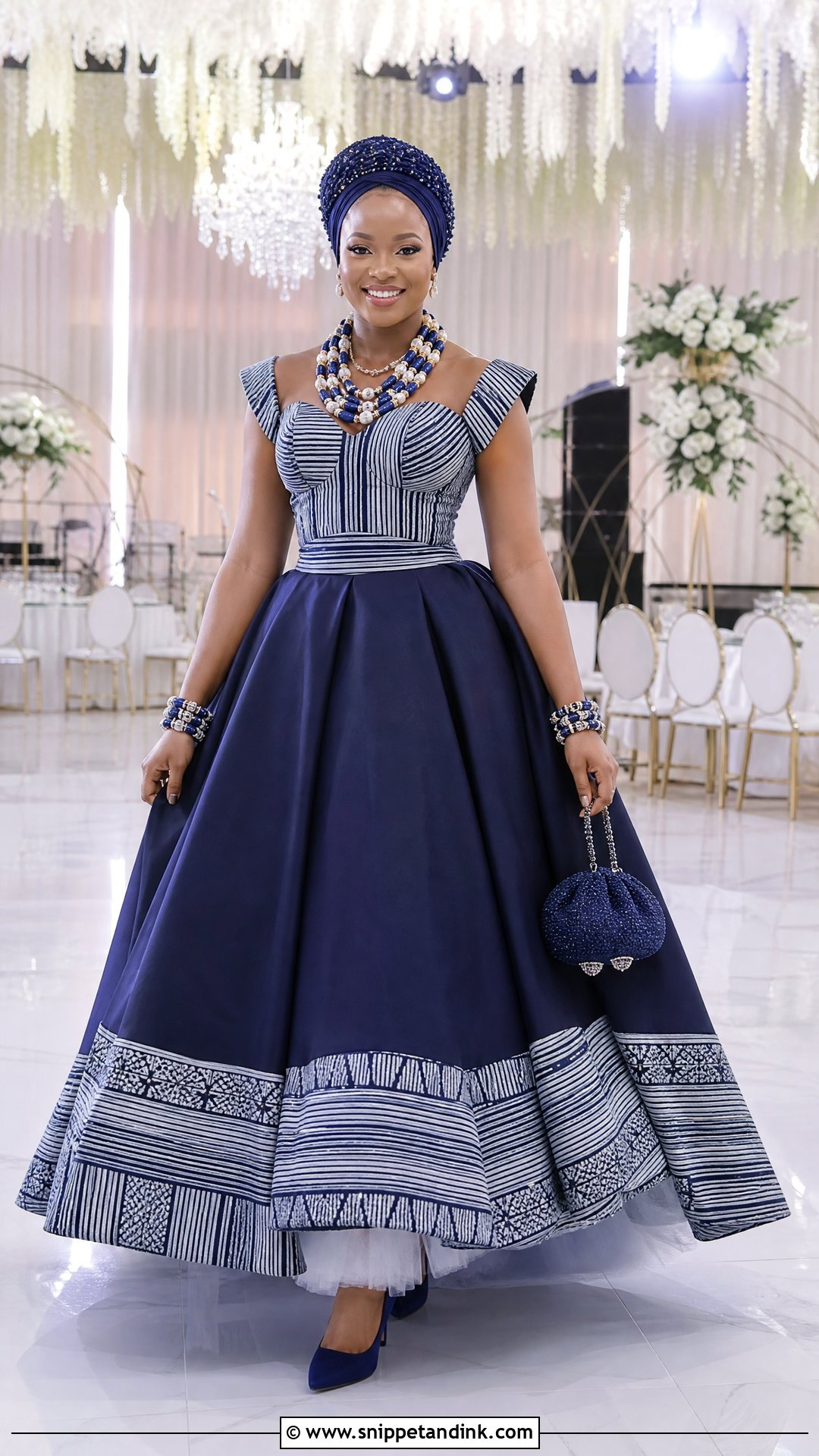
A ball gown makes the grand entrance. A structured bodice in striped fabric, hand-applied beads or embroidered trim sits over a full skirt of satin, printed cotton or layered tulle, with the bodice pattern repeated near the hem. Full skirts are hard to sit in, so I ask for a flexible hoop or soft petticoat rather than a rigid cage, and a bustle if there’s a train. Keep the decoration at the face, waist and hem rather than everywhere. A neatly tied headwrap, a bold bead necklace, matching bracelets and closed-toe heels finish it.

15. Pedi Peplum Wedding Dress
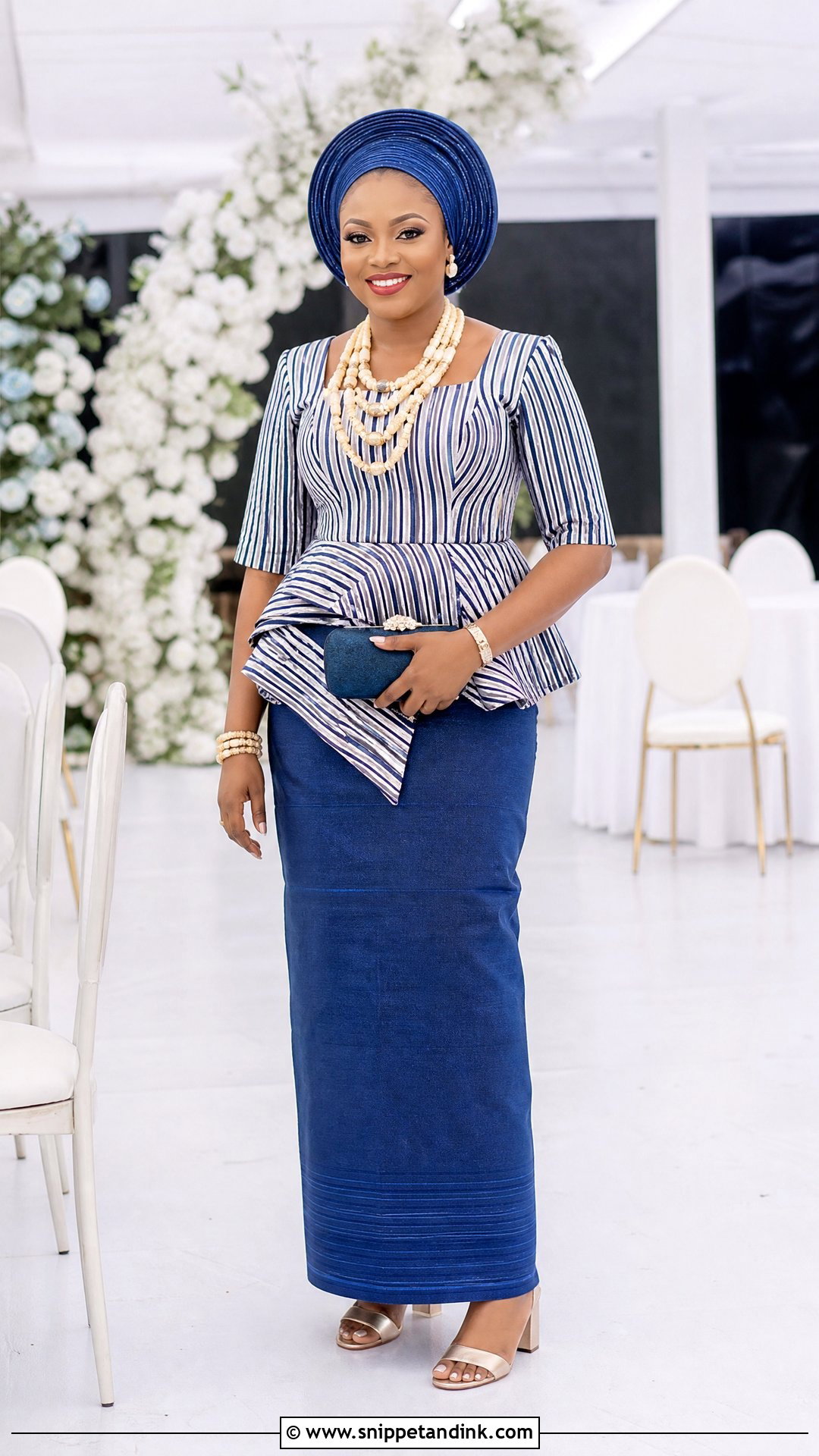
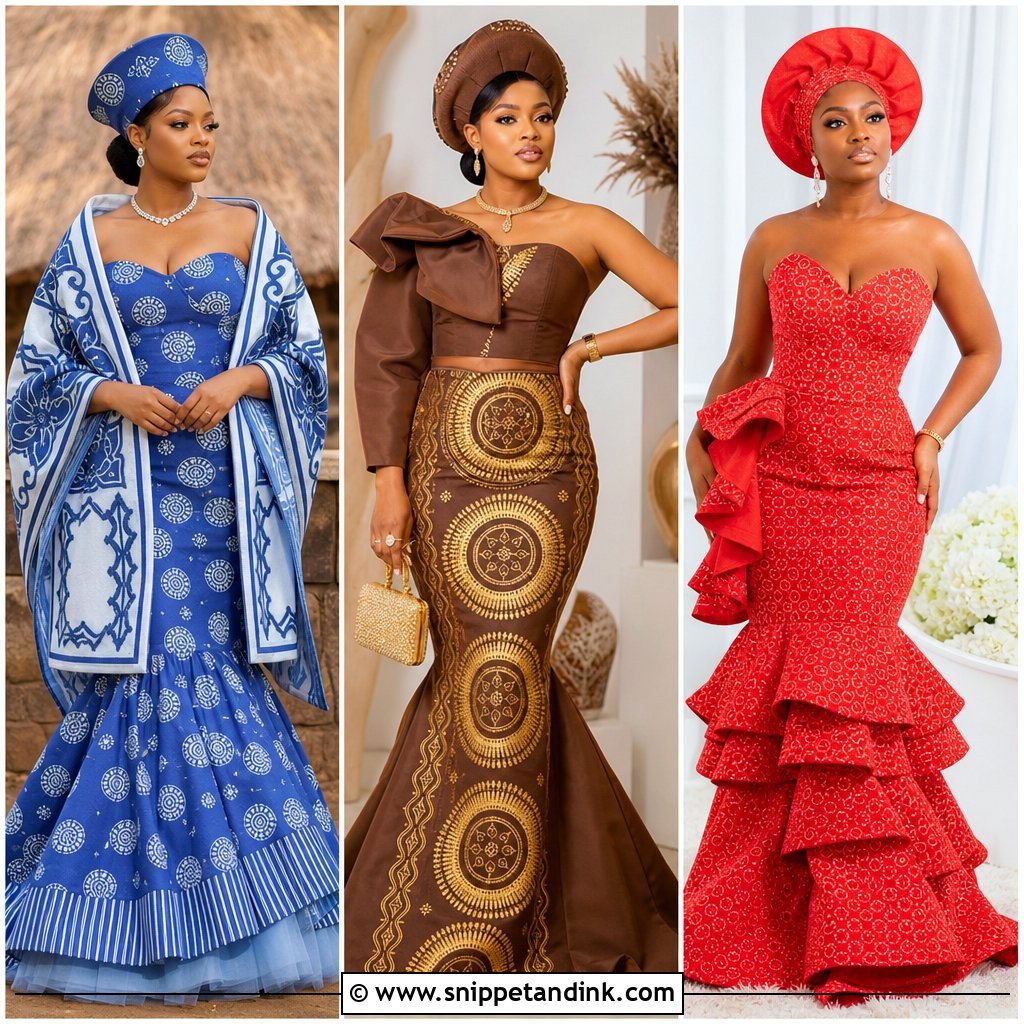
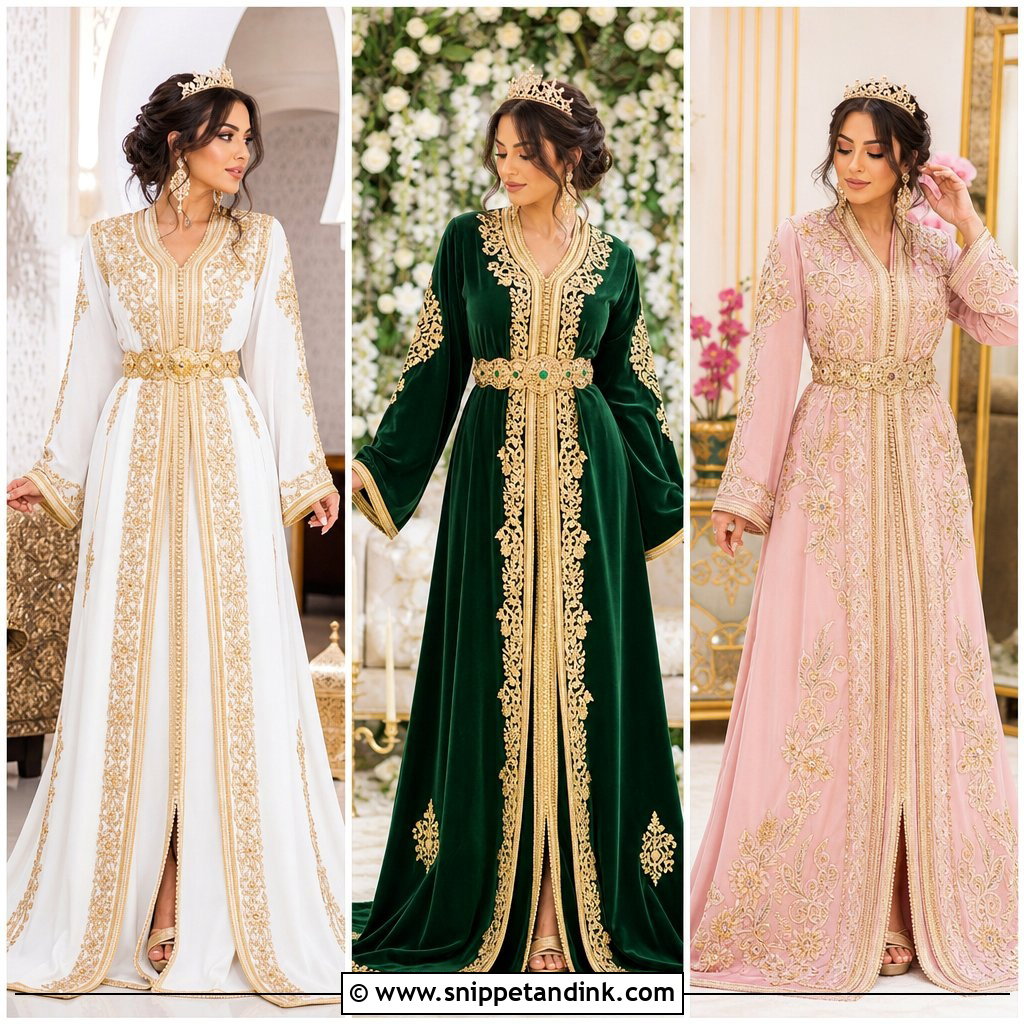
A peplum gives a defined waist without a big skirt, which is why it suits so many body shapes. Make the peplum in striped fabric and keep the bodice and floor-length skirt in a solid blue, white, pink or green. The peplum should start at the natural waist; where it ends is a fitting decision, and a few centimeters change the proportion noticeably. Elbow-length sleeves with printed cuffs add coverage. A matching headwrap, layered beads, a small clutch and comfortable block heels finish it.
16. Pedi Two-Piece Wedding Dress
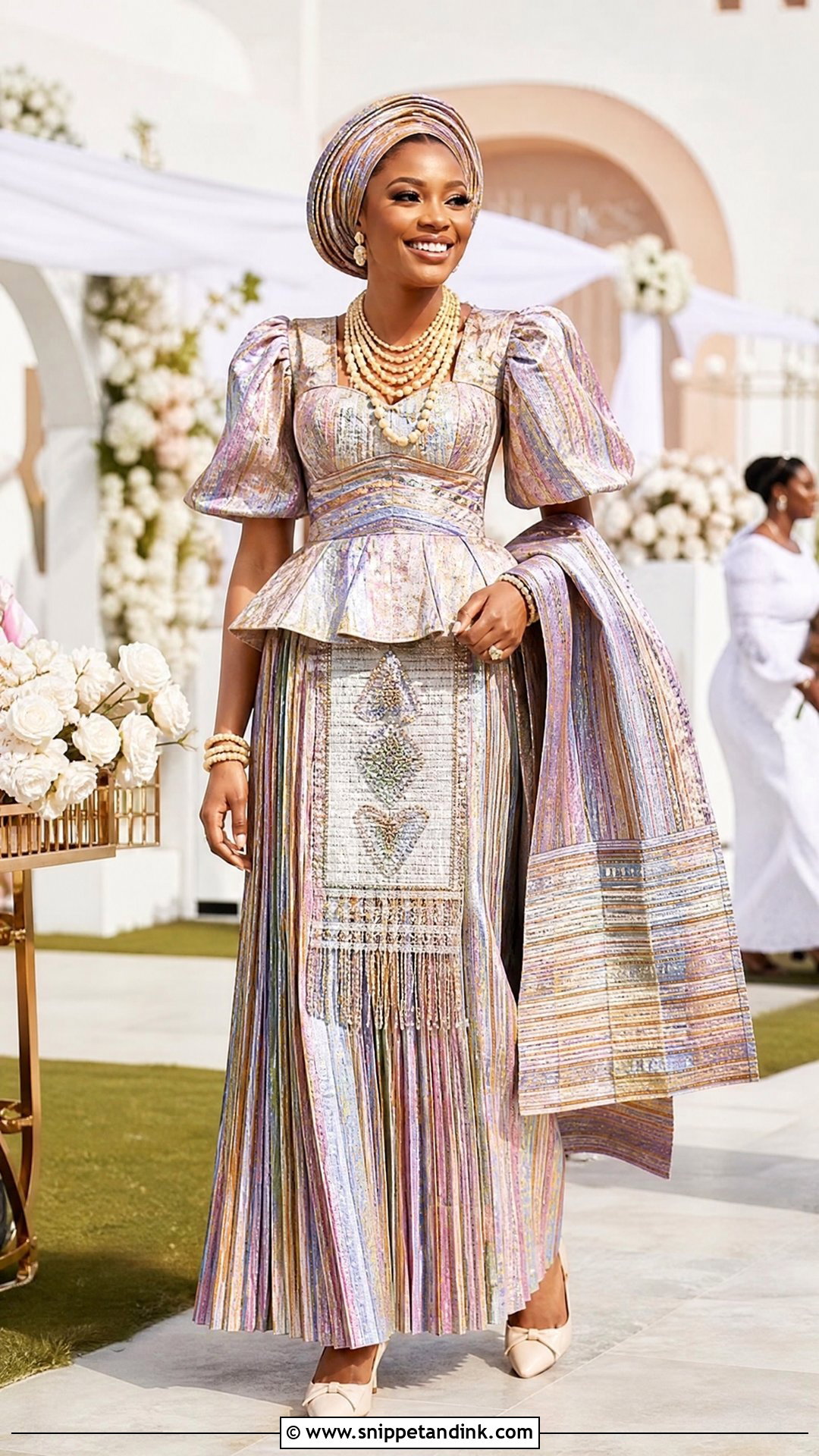
Two pieces give you flexibility now and a wearable outfit later. Pair a fitted blouse with a high-waisted pleated or flared skirt in striped fabric; the blouse can have a peplum, puff sleeves, beadwork or a modest off-the-shoulder line. The gap is the problem. When you lift your arms to dance, a short blouse rides up, so I make sure it overlaps the skirt by several centimeters. Repeat the same trim on both pieces so they read as one outfit. A matching headwrap, beaded apron, necklaces, bracelets, neutral low heels and a shawl complete it.
17. Pedi Wedding Dress With Bell Sleeves
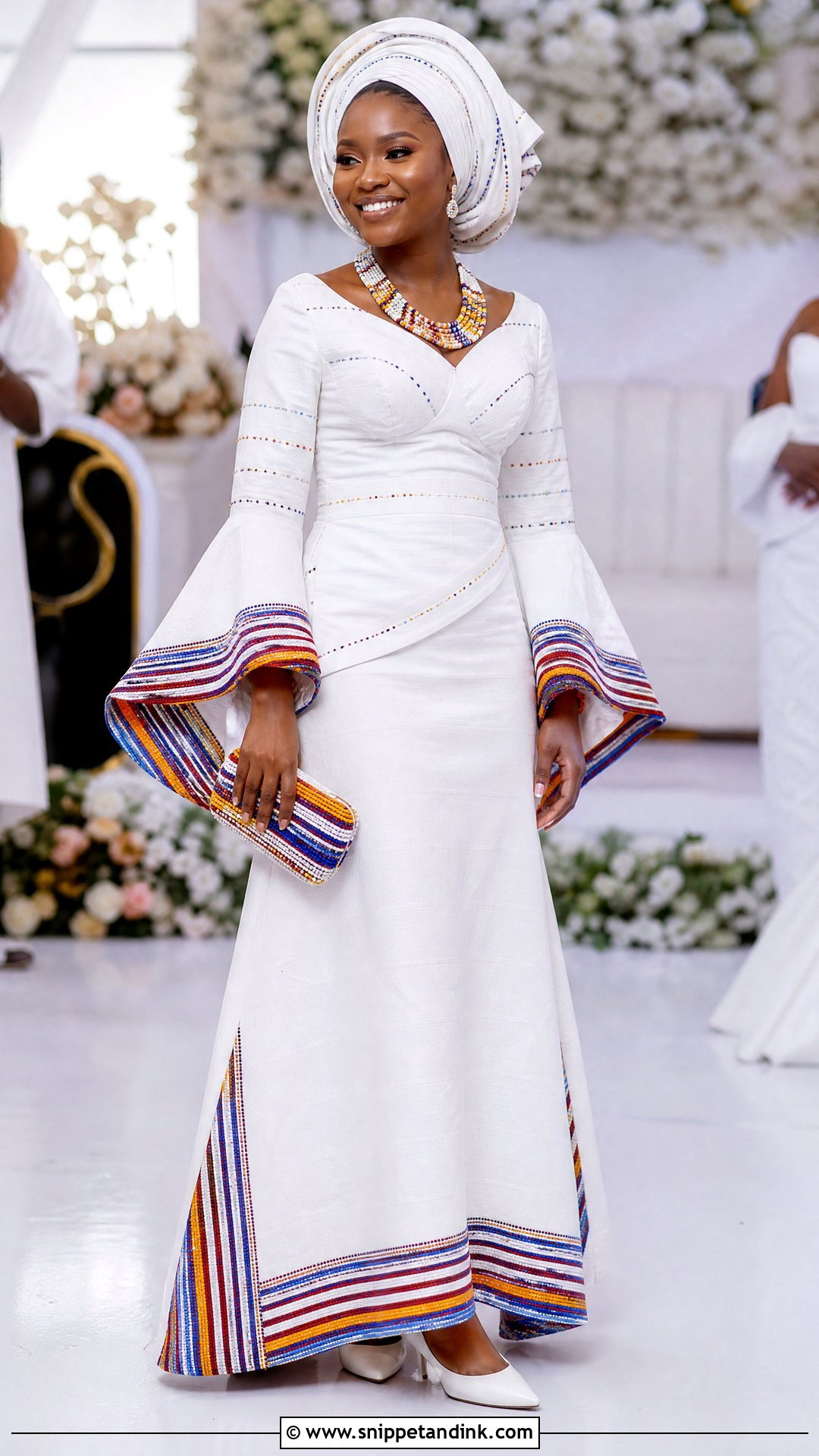
Bell sleeves add movement to a simple A-line or trumpet gown. Keep them narrow above the elbow and let them flare toward the wrist, with stripes lining the inside so color flashes as you move. I warn brides about length: a sleeve that covers the hand ends up in the food and gets in the way of handshakes and ceremonial gestures. Wrist length is enough. A structured headwrap, a medium-length bead necklace, earrings, a matching clutch and comfortable low heels keep the focus on the upper body.
18. Pedi Wedding Dress With Detachable Train
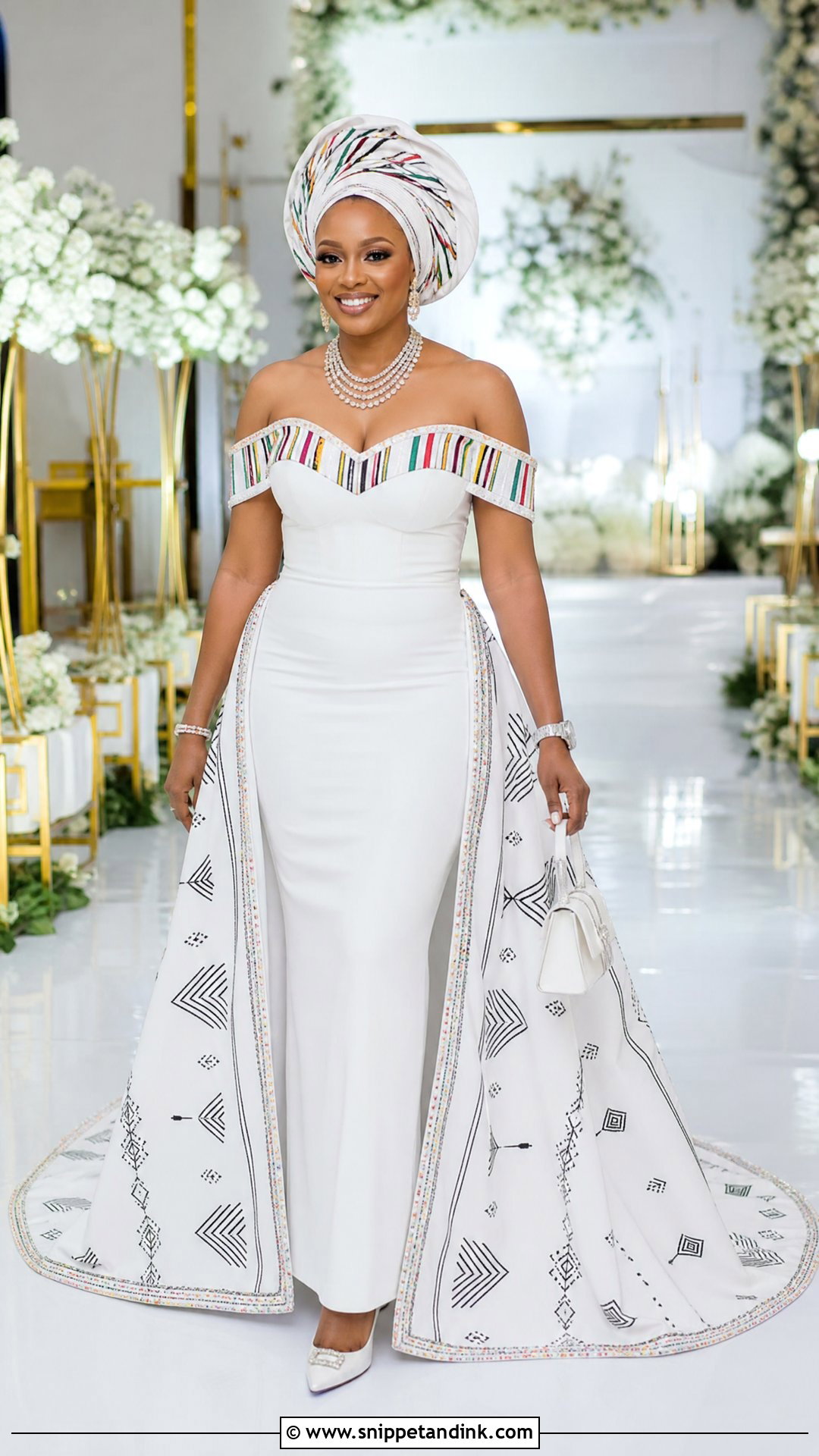
A detachable train lets you have a dramatic ceremony and a practical party. Start with a fitted midi or floor-length gown in solid fabric with Pedi accents, then add a full overskirt or train at the waist on concealed hooks or snaps. Test the fastening at fittings with the person who will remove it on the day, since a stiff closure under pressure turns into a five-minute struggle. The train can carry pleats, tulle, printed panels or beaded edging. Both versions should look finished. Add a headwrap, statement beadwork, low heels and a small bag.
19. Plus Size Pedi Wedding Dress
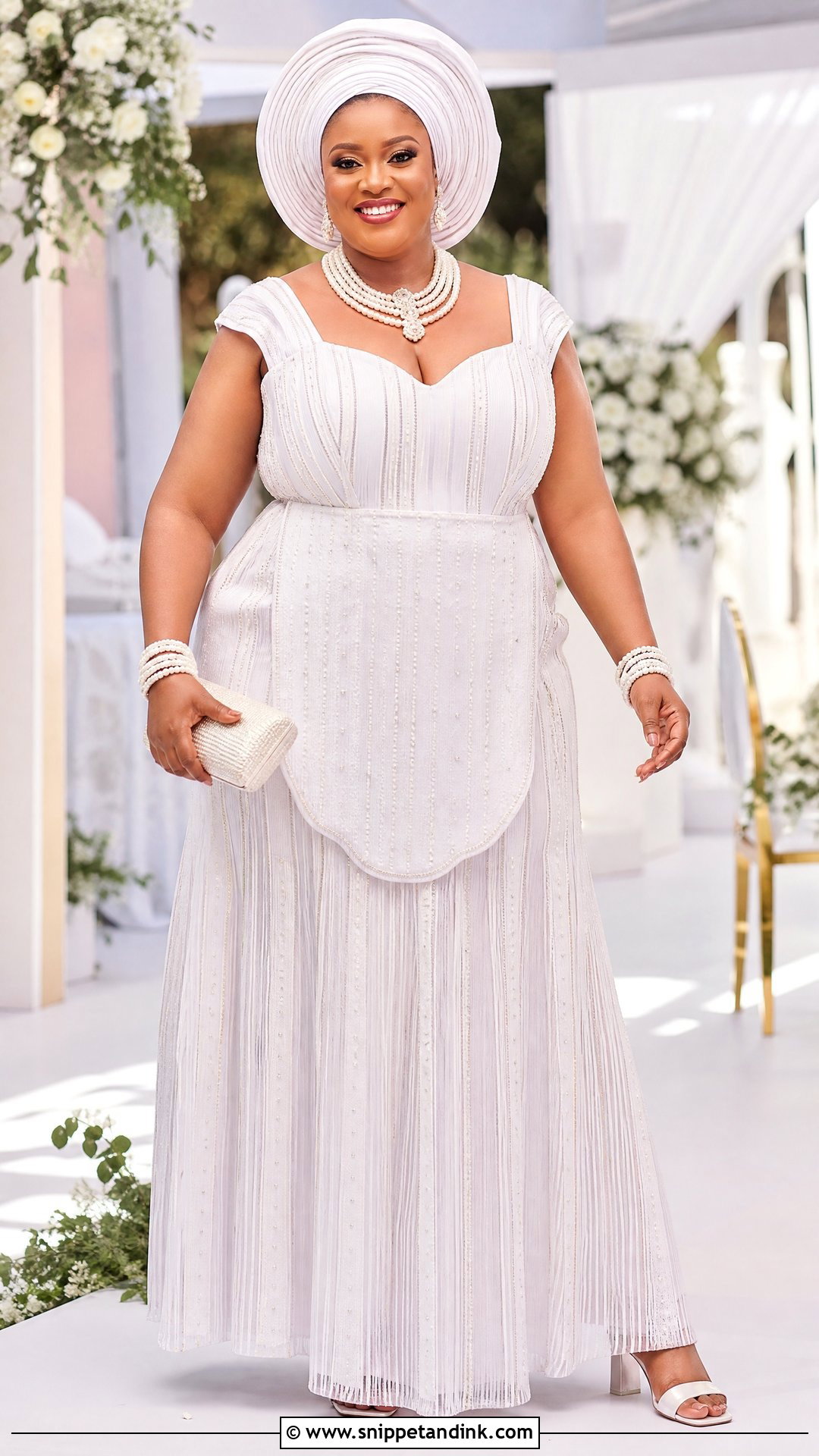
For a plus size bride, support comes first and should be built into the dress rather than borrowed from shapewear. I usually suggest an A-line with a structured bodice, defined waist and flowing skirt. Vertical stripe panels lengthen the line; a peplum or beaded apron marks the waist. Straps, sleeves or an internal corset are about comfort, not rules. Breathable lining makes a long ceremony bearable, and separate fittings for bust, waist, sleeves and hem are worth asking for. Finish with a balanced headwrap, layered beads, a light clutch and wide-fit block heels.


20. Simple Pedi Wedding Dress for Traditional Ceremony
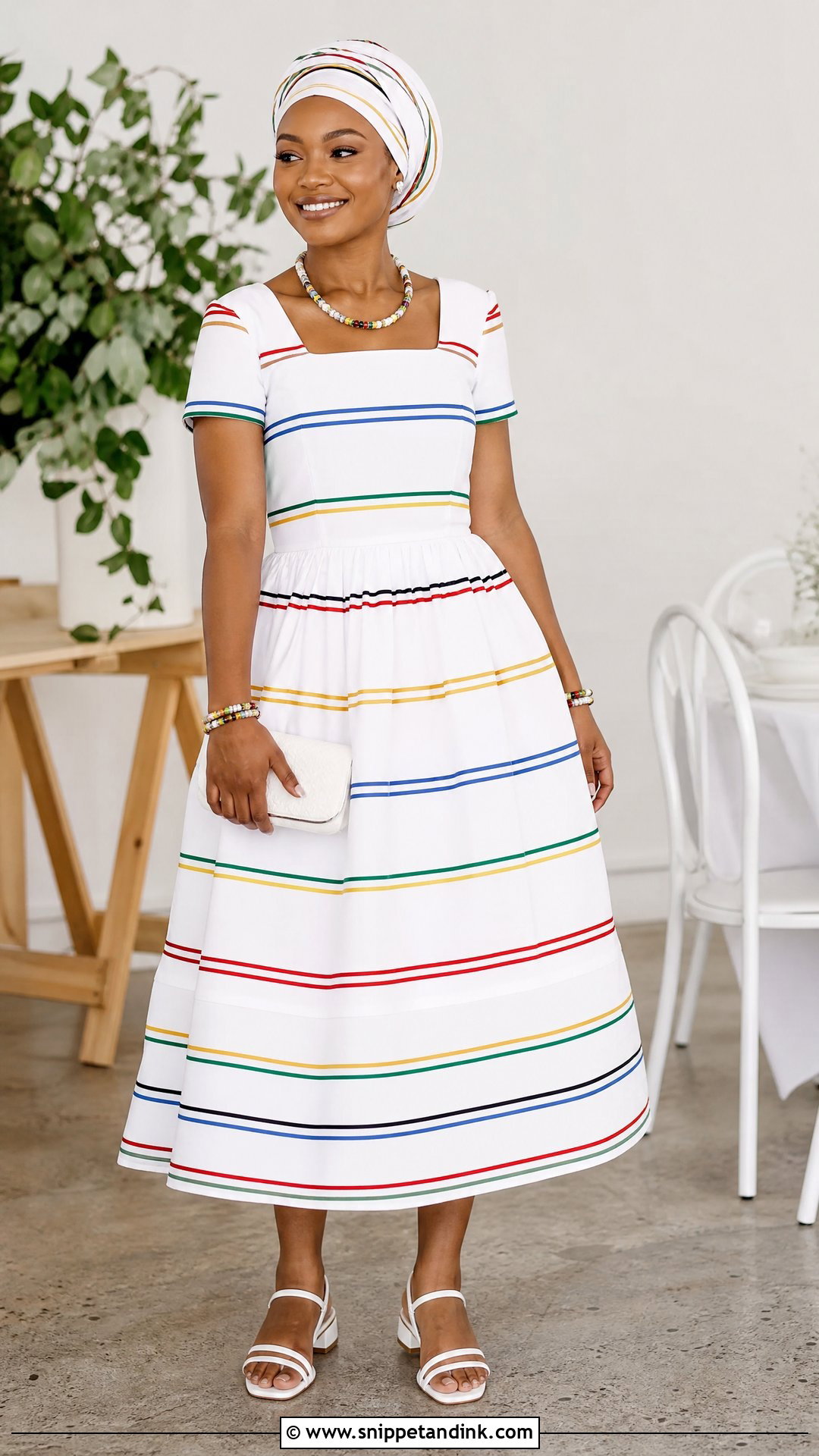
Simple doesn’t mean plain. A clean A-line in striped fabric needs very little else, provided the pattern lines up across bodice and skirt. Short sleeves, a comfortable waist and a hem that clears the ground make it easy to move. Wear a modest headwrap, one beaded necklace, matching bracelets, a small clutch and low sandals or block heels. A solid dress with striped trim is the quieter version. With fewer details, the quality of the fabric and the tailoring is all anyone sees, so spend there. I’d suggest this for an intimate ceremony.
Planning the Change Between the Traditional Ceremony and the White Wedding
Many South African couples hold a traditional ceremony and a white wedding, sometimes on the same day. That means at least one full outfit change, and it always takes longer than people expect.
I plan forty-five minutes for a complete change including the headwrap, which has to be retied from scratch, and a separate room with a mirror and good light. Assign one trusted helper who has practiced the closures. If the day is tight, a detachable skirt or train over one base dress is much quicker than a full change, and the headwrap can stay.
How Beaded Aprons and Striped Cotton Hold Up Afterward
Beadwork shouldn’t hang for long periods. Its own weight stretches the threads, so store aprons and collars flat, wrapped in clean cotton. Strongly dyed cotton can bleed, so I spot-test a hidden seam with a damp white cloth before any washing, and I’d hand-wash striped pieces cold or ask a cleaner who handles beaded garments. Keep everything out of direct sun in storage, since bright dyes fade unevenly and you’ll see it along the folds.
Comfort, Color and the Elders’ Blessing
Start with the culture, then comfort, then taste. Bright stripes, pleated skirts, beadwork, headwraps and peplums can all be part of a meaningful outfit, and tulle, mermaid cuts, capes and detachable trains let you personalize it without losing the tradition. Before you approve the design, think about the venue, how much you’ll move, family preferences and the weather. Find a seamstress who understands pattern placement and support, and give her time for fittings. A dress that’s authentic to you will let you celebrate with confidence and honor the people closest to you.
You'll Like These Ideas:






Leave a Reply