
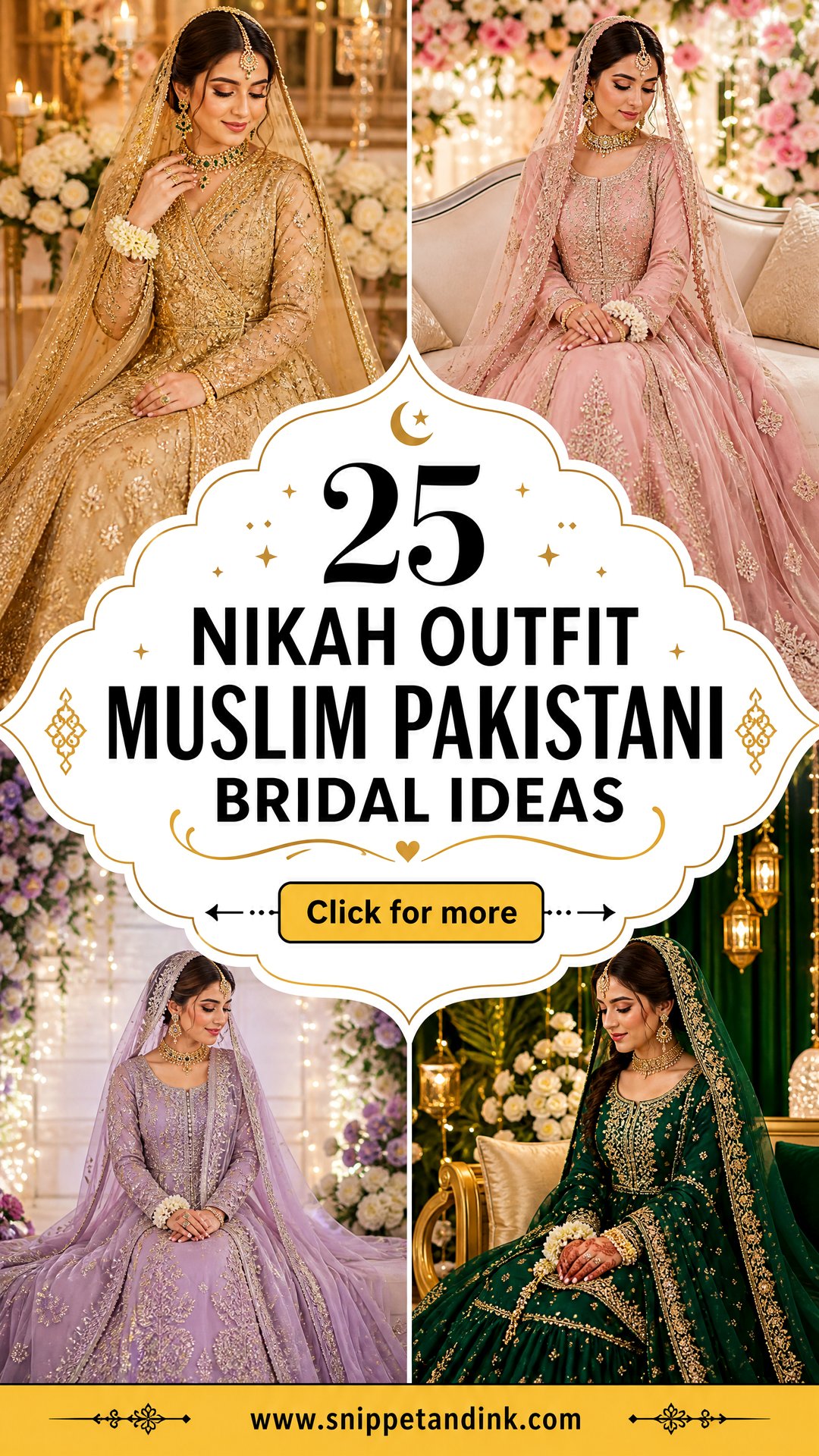
A Nikah outfit has a different job from a reception lehenga. You will sit for a long stretch, sign the nikahnama, keep your head covered while the maulvi speaks, and then stand for family photos the moment it is over. When I dress a Pakistani bride for this ceremony, I start with how the clothes behave over those hours and only then talk about colour. The looks below run from ivory ghararas and pastel lehengas to modest pishwas outfits, sarees worn with full coverage and gowns that suit a hijab. With each one I’ve noted the dupatta, jewellery and shoes I’d put with it, and where it tends to cause trouble.
Sitting, Signing and Standing: Testing a Nikah Outfit for the Ceremony Itself
At every final fitting I ask the bride to sit down on a low cushion, lean forward as if signing the nikahnama, then stand up without using her hands. It sounds fussy, but it shows me in thirty seconds where an outfit will fail. A choli that gapes when you lean, a gharara that grips at the knee, or a blouse that pulls across the back are all easy to fix at that stage and impossible to fix once you’re on the stage.
- Sleeves: raise both arms as if hugging someone. Tight armholes are the most common alteration I ask for.
- Dupatta weight: wear it pinned for at least twenty minutes. A heavy border drags the fabric back off the head, so it may need extra pins or a lighter fabric.
- Hem length: set it while wearing the actual shoes. Khussas and heels can change the length by several centimetres.
- Lining: check it against skin. Synthetic linings under heavy embroidery trap heat in a crowded room.
Also think about where the Nikah happens. A mosque may have its own guidelines on coverage and footwear, and you may remove your shoes, so a hem cut for heels will drag. A home ceremony often means sitting on the floor, which favours sharara or gharara over a stiff lehenga. Ask early and dress for the actual room.
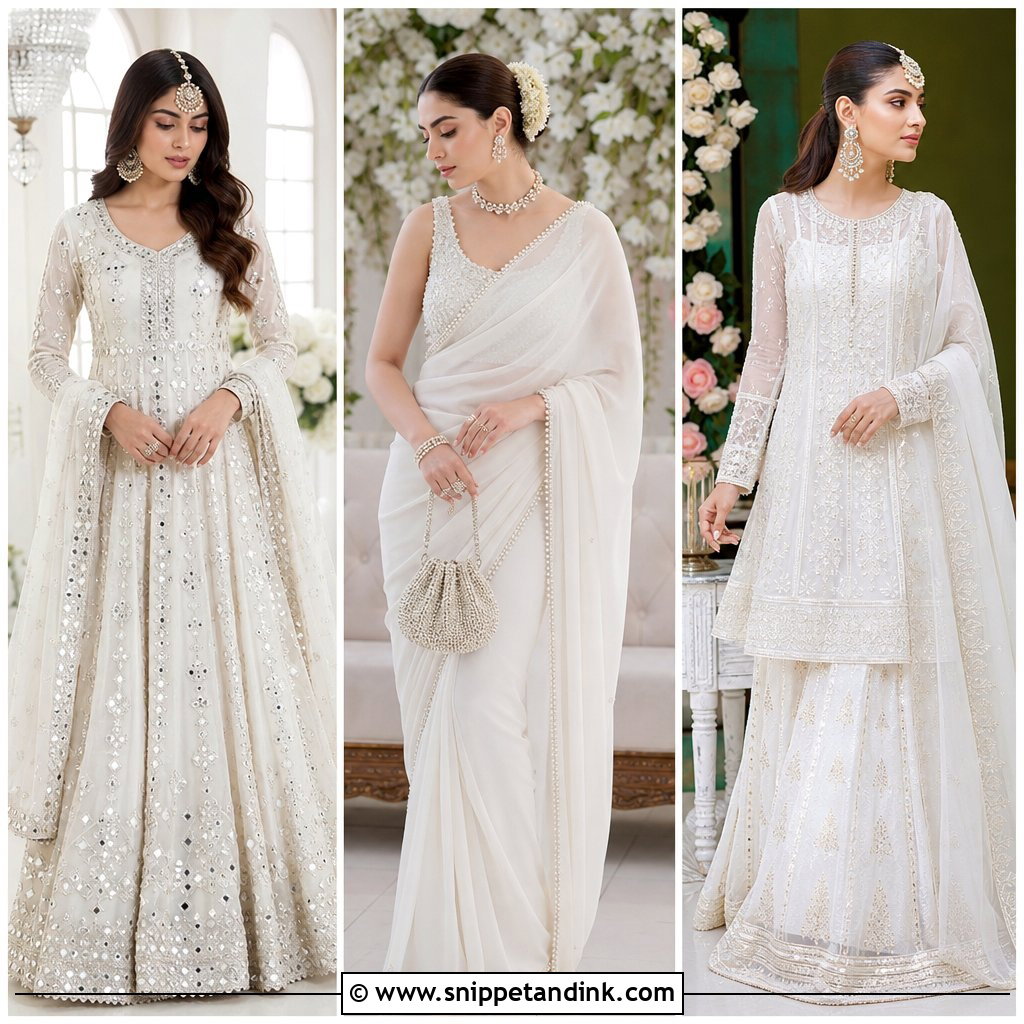
1. Ivory Nikah Gharara Outfit
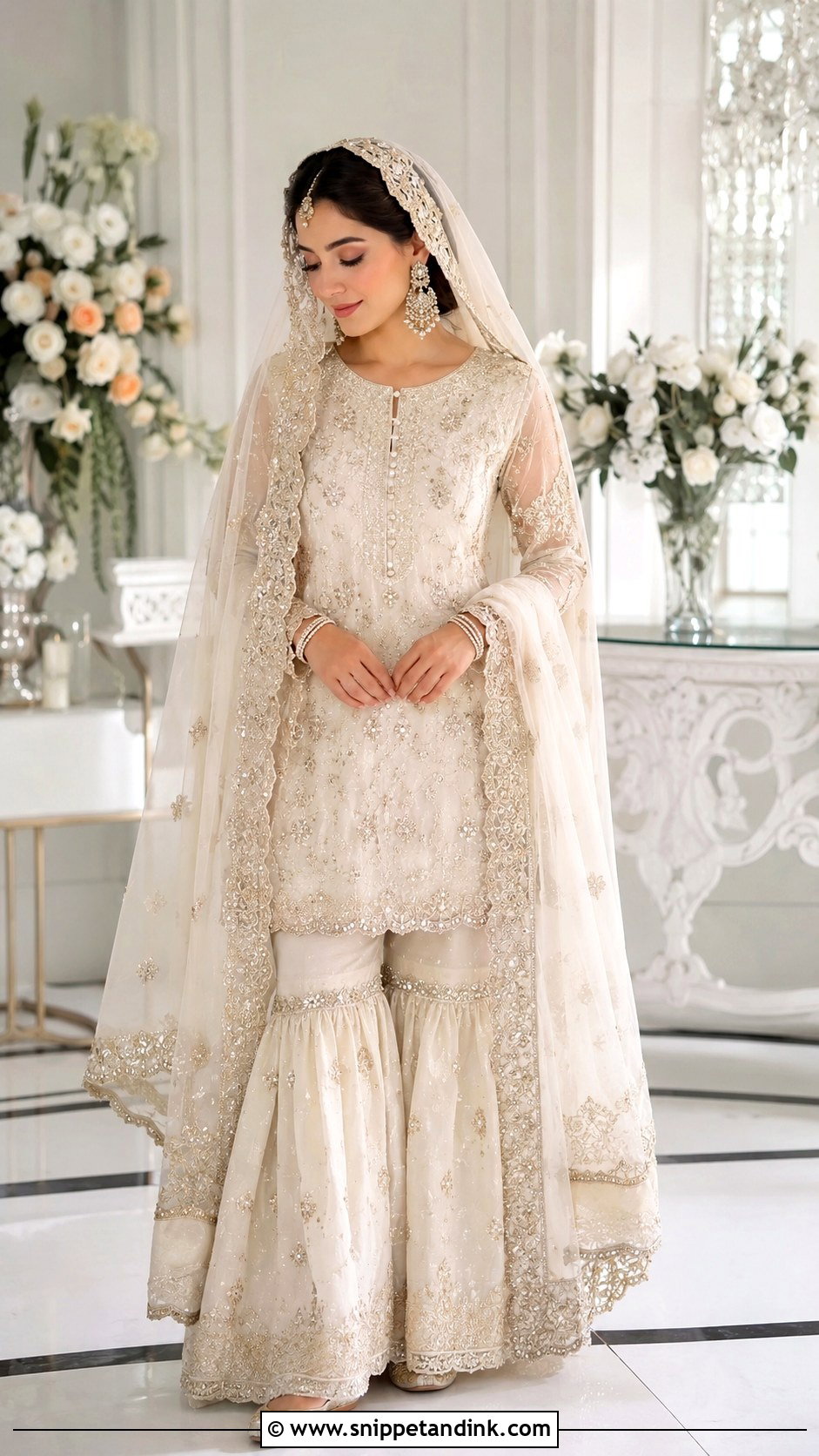
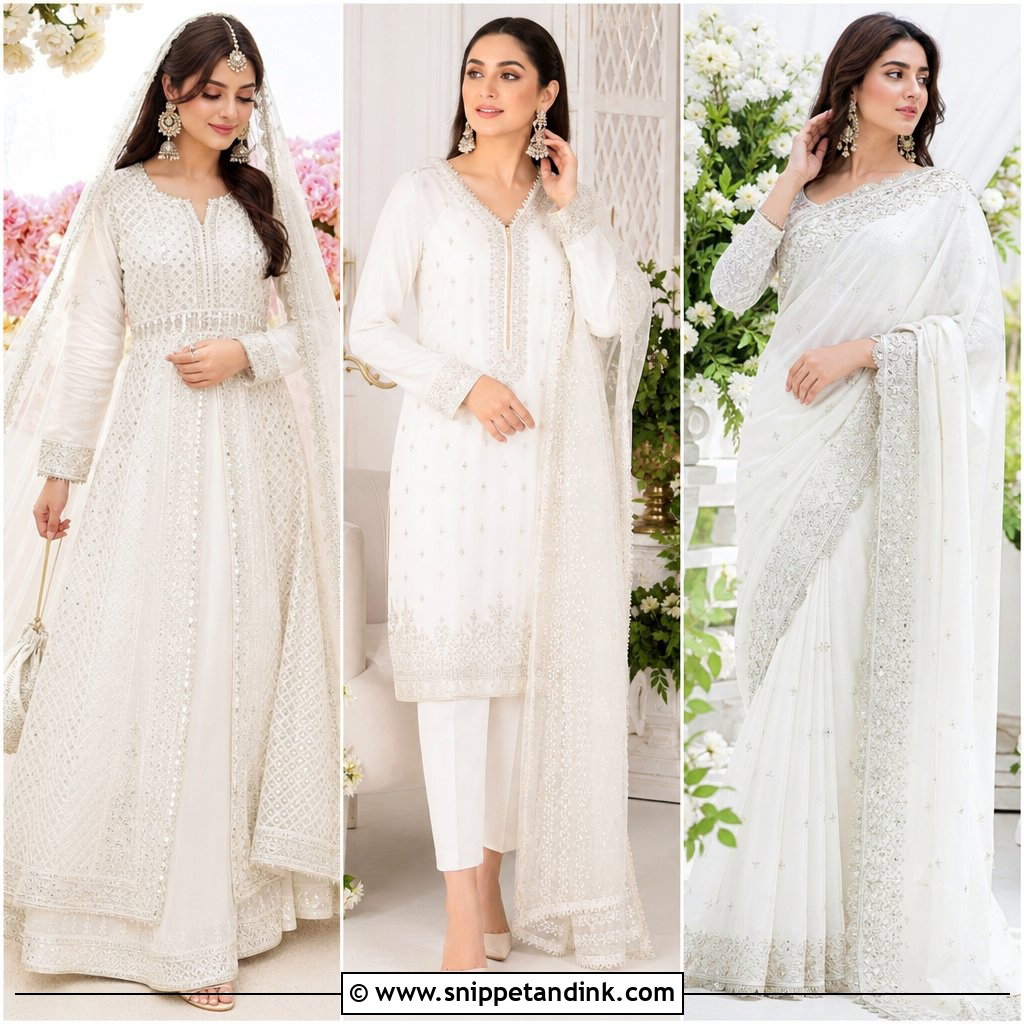
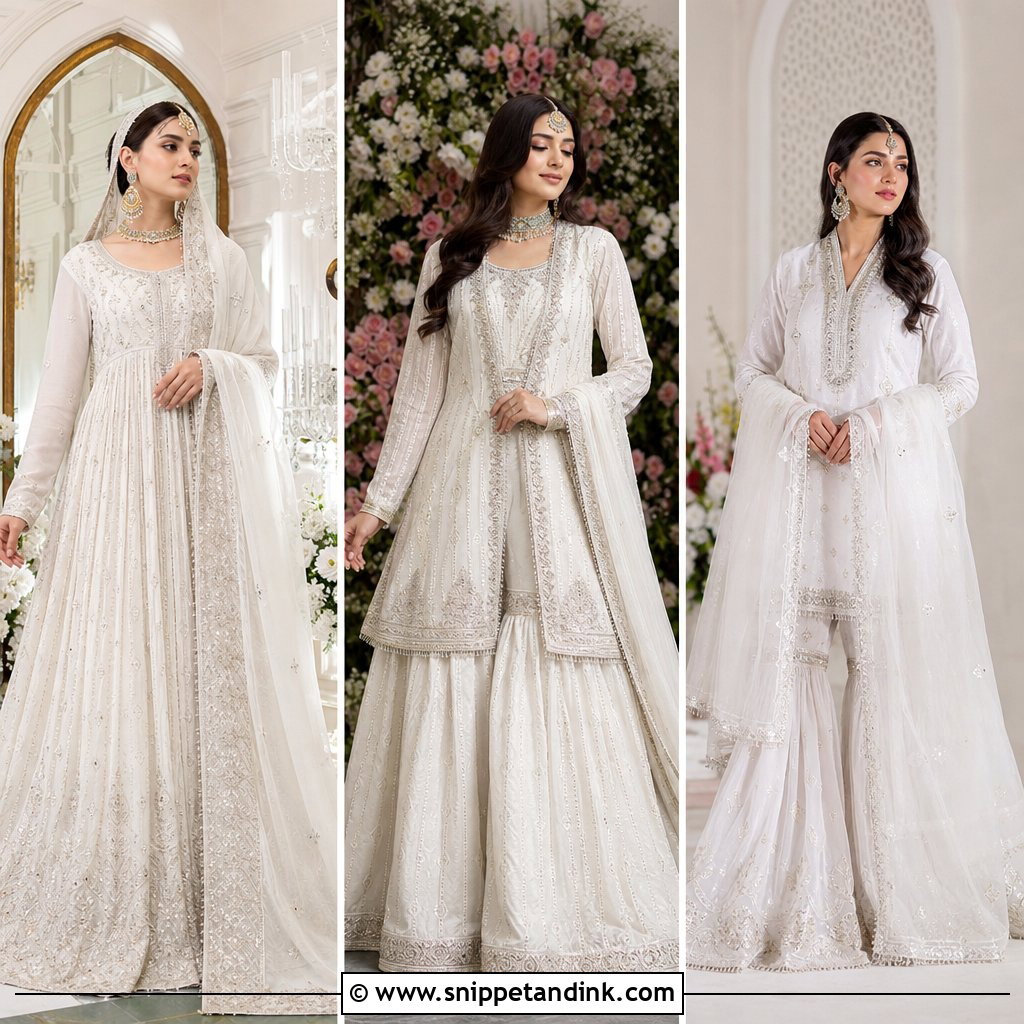
Ivory with a short kurti and a flared gharara is the look most families picture when they hear the word Nikah, and it earns that place. Pair it with an organza or net dupatta with kiran, pearl or fine zardozi edging. Mixed gold and silver work reads well under both daylight and a hall’s yellow bulbs, which pure gold on ivory does not always do. The thing I check at the fitting is the gharara’s gota band at the knee: if it sits too high it bunches when you kneel, so I have it dropped to the actual knee line. Kundan studs, a fine tikka and ivory khussas finish it.
2. White Nikah Lehenga Outfit
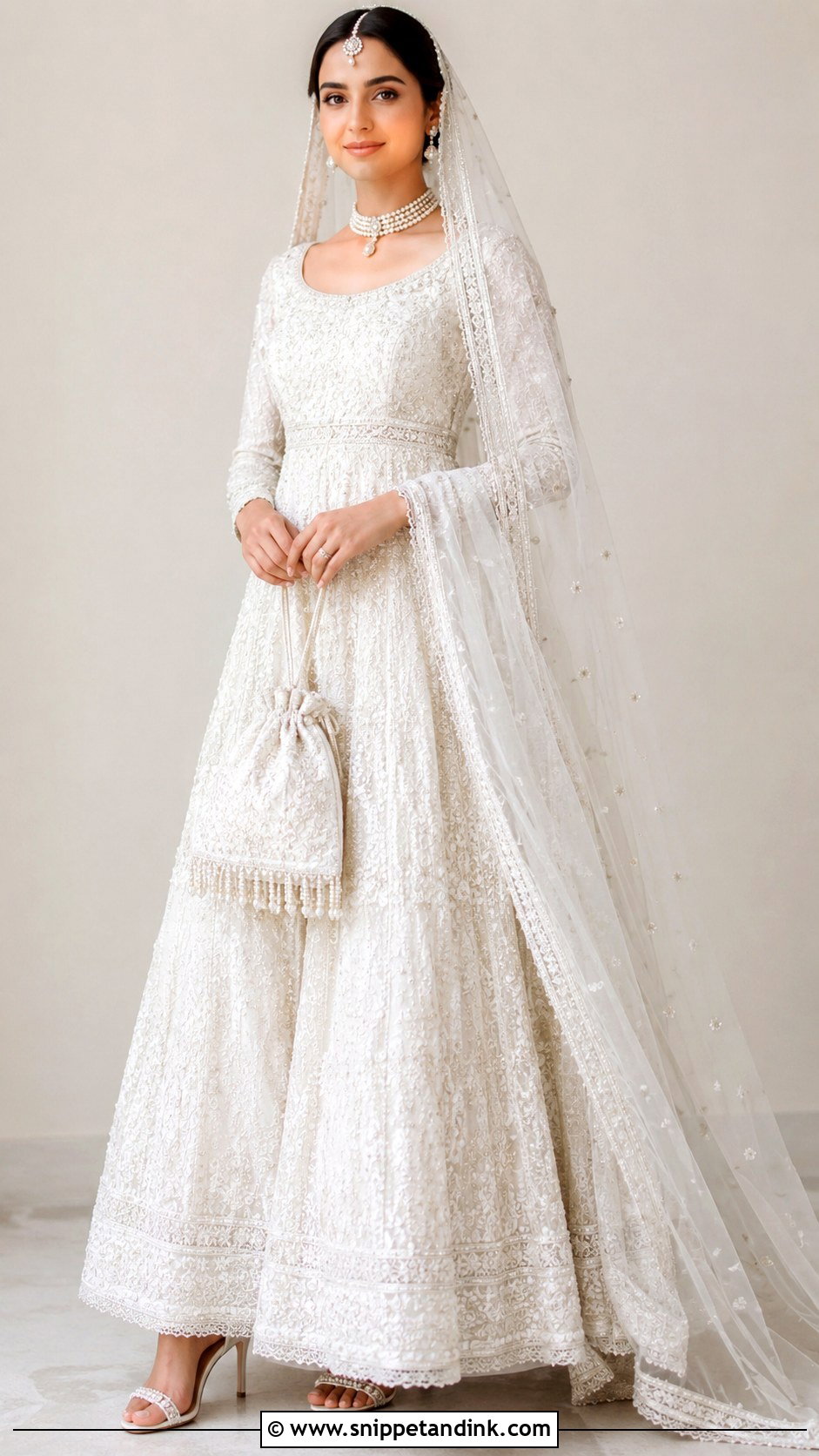
White can go flat in photos, so I always build depth into it with champagne or antique gold rather than adding more white embroidery. A long choli or peplum with full sleeves keeps the lehenga modest, and tonal sequin or pearl work gives the skirt texture the camera can pick up. Drape a sheer white dupatta with an embroidered border over the head. A pearl choker and jhumkas are enough here. One warning: optical white beside an ivory dupatta looks mismatched, so bring the dupatta to the fitting and compare them in daylight.
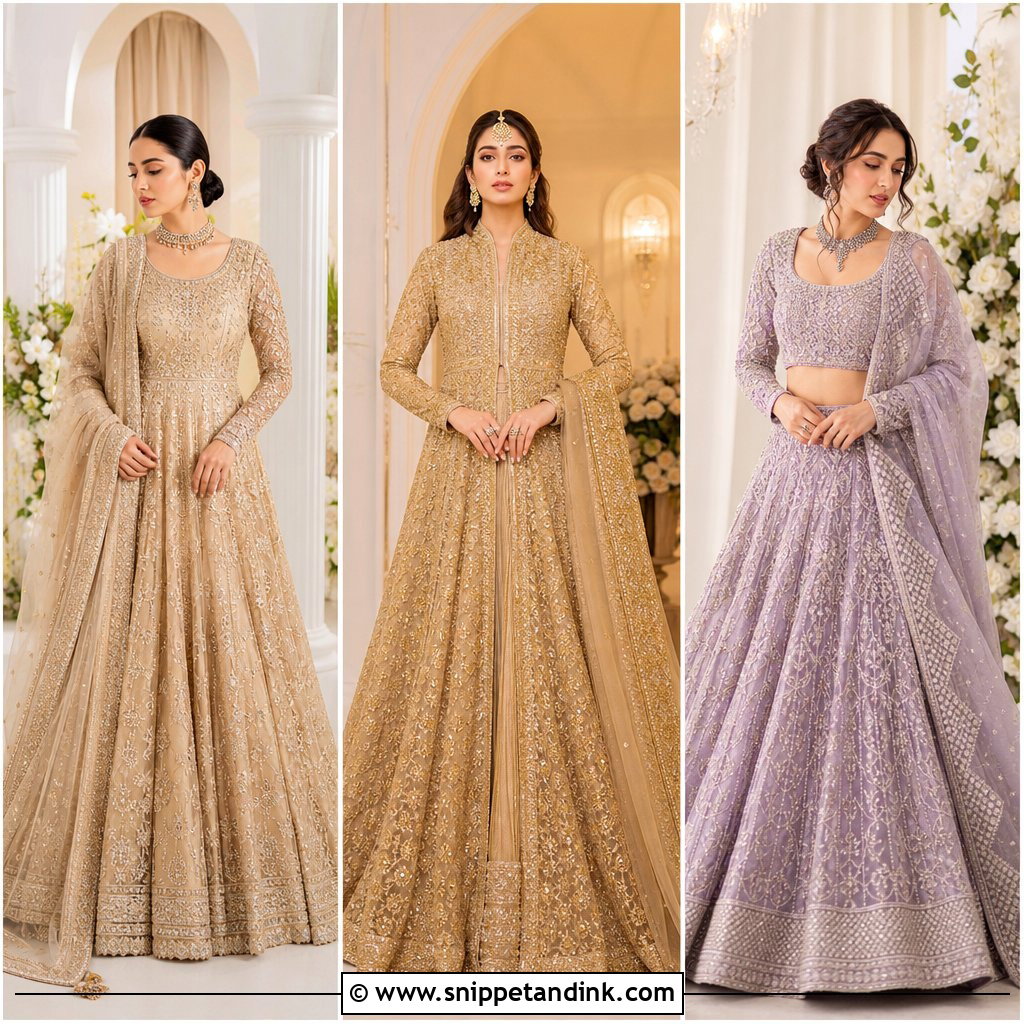
3. Champagne Nikah Pishwas Outfit
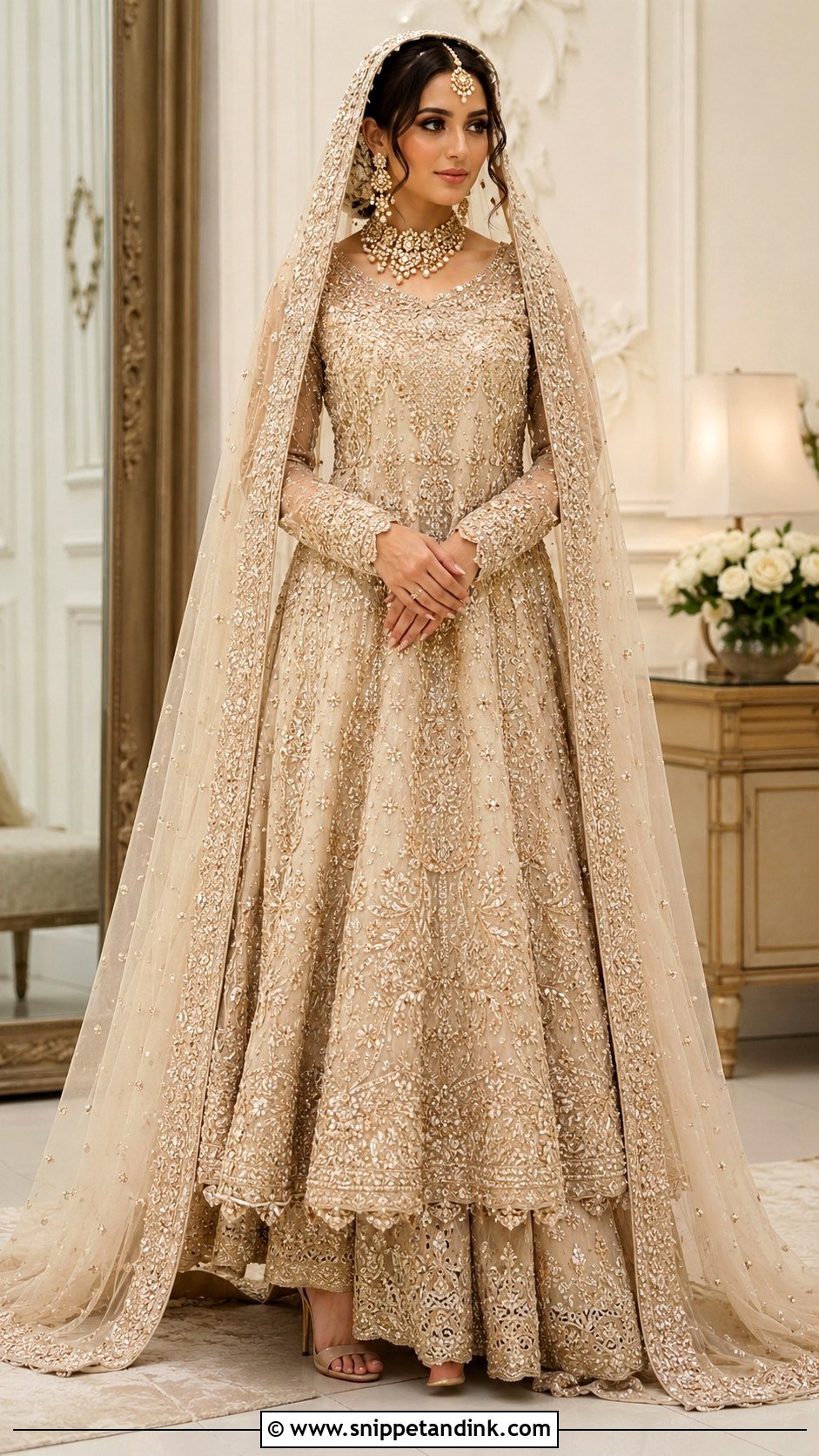
Champagne is the shade I suggest to brides who want the outfit to feel expensive without anyone noticing the colour first. Go for a floor-length pishwas with a fitted bodice and a gentle flare; threadwork, dabka and pearls in the same tone keep it rich. A churidar under it feels lighter, a lehenga under it feels more formal. Champagne shifts toward pink or toward grey depending on the dye, so hold the fabric against your skin before you commit. Polki and nude heels suit it, with soft waves or a covered hijab.
4. Pastel Pink Nikah Sharara Outfit
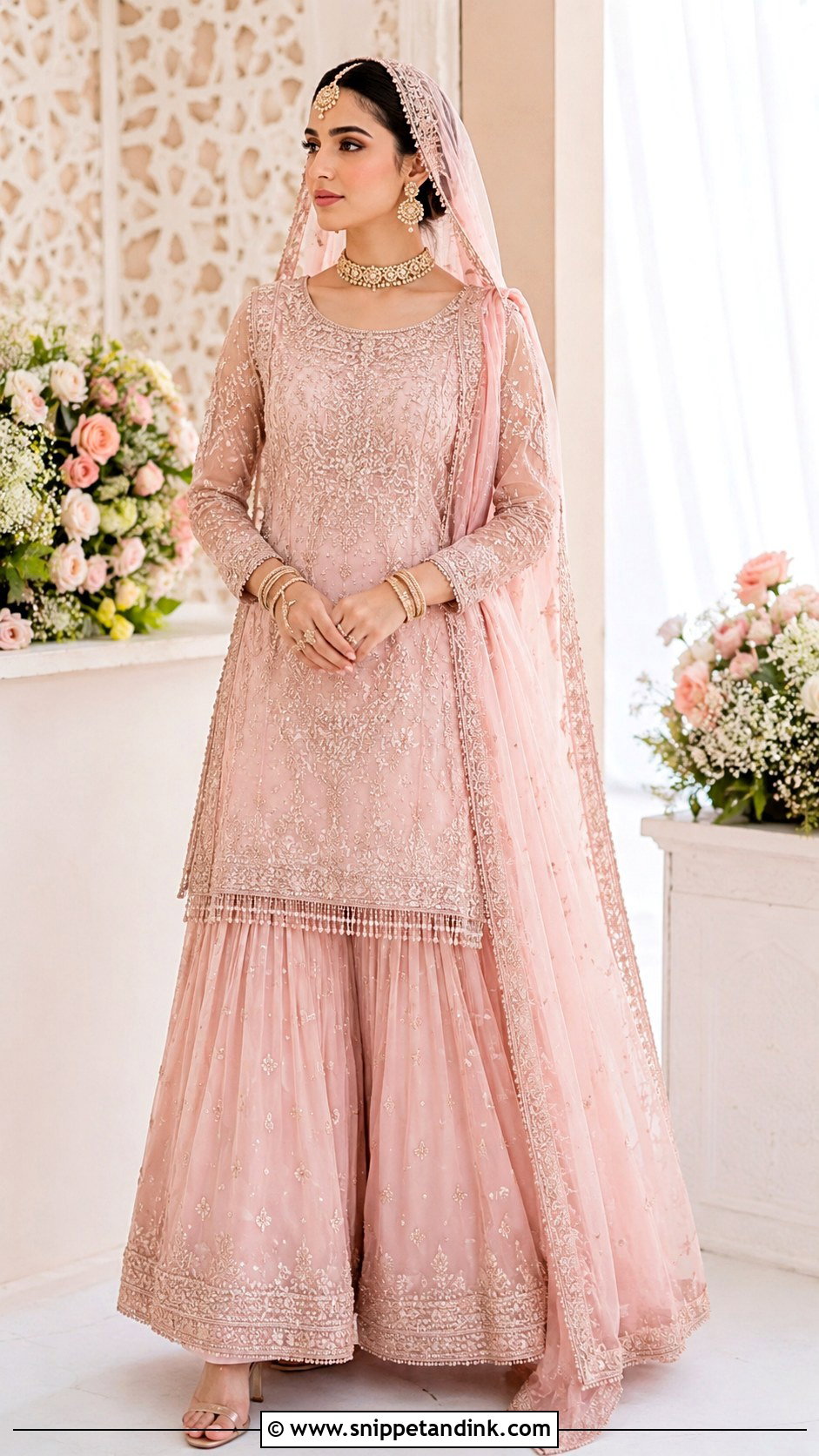
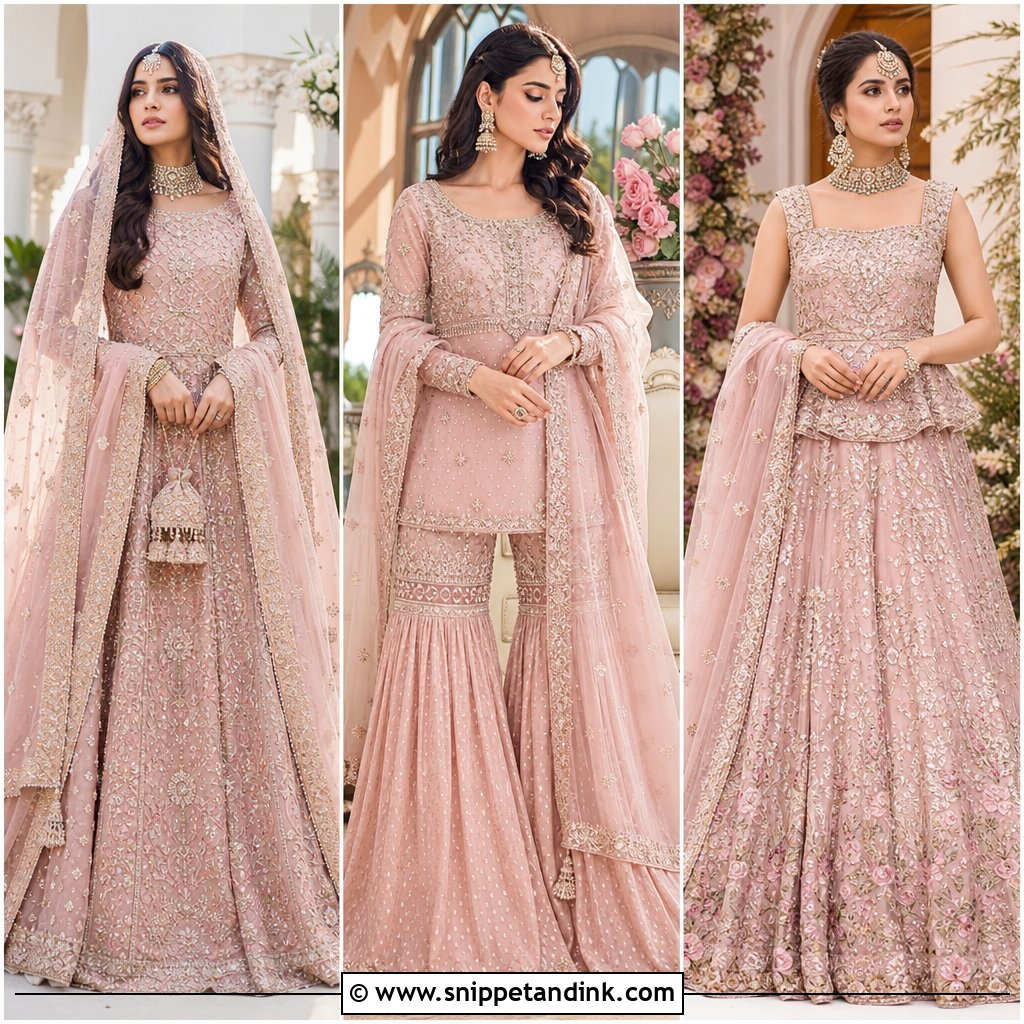
Wide sharara legs make sitting cross-legged on a stage far easier than a stiff lehenga, which is half the reason I like this one for a Nikah. A long embroidered kameez over pastel pink sharara pants, with a light dupatta over the head or one shoulder, is the base. Pearl, silver or rose gold thread suits the pink. For a morning ceremony I’d choose organza or chiffon; net scratches the inner arm after a few hours. A small matha patti and soft-toned bangles are plenty. Blush khussas keep the whole thing comfortable.
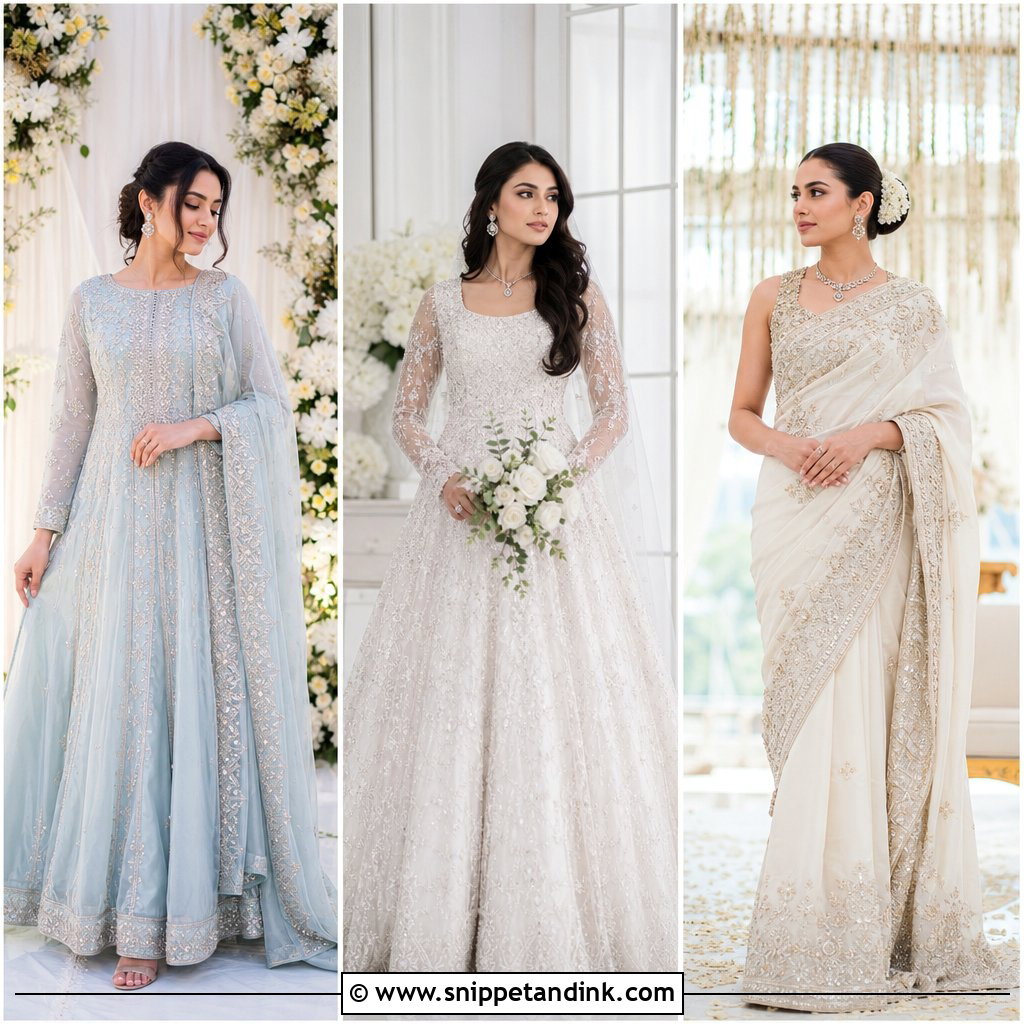
5. Powder Blue Nikah Maxi Outfit
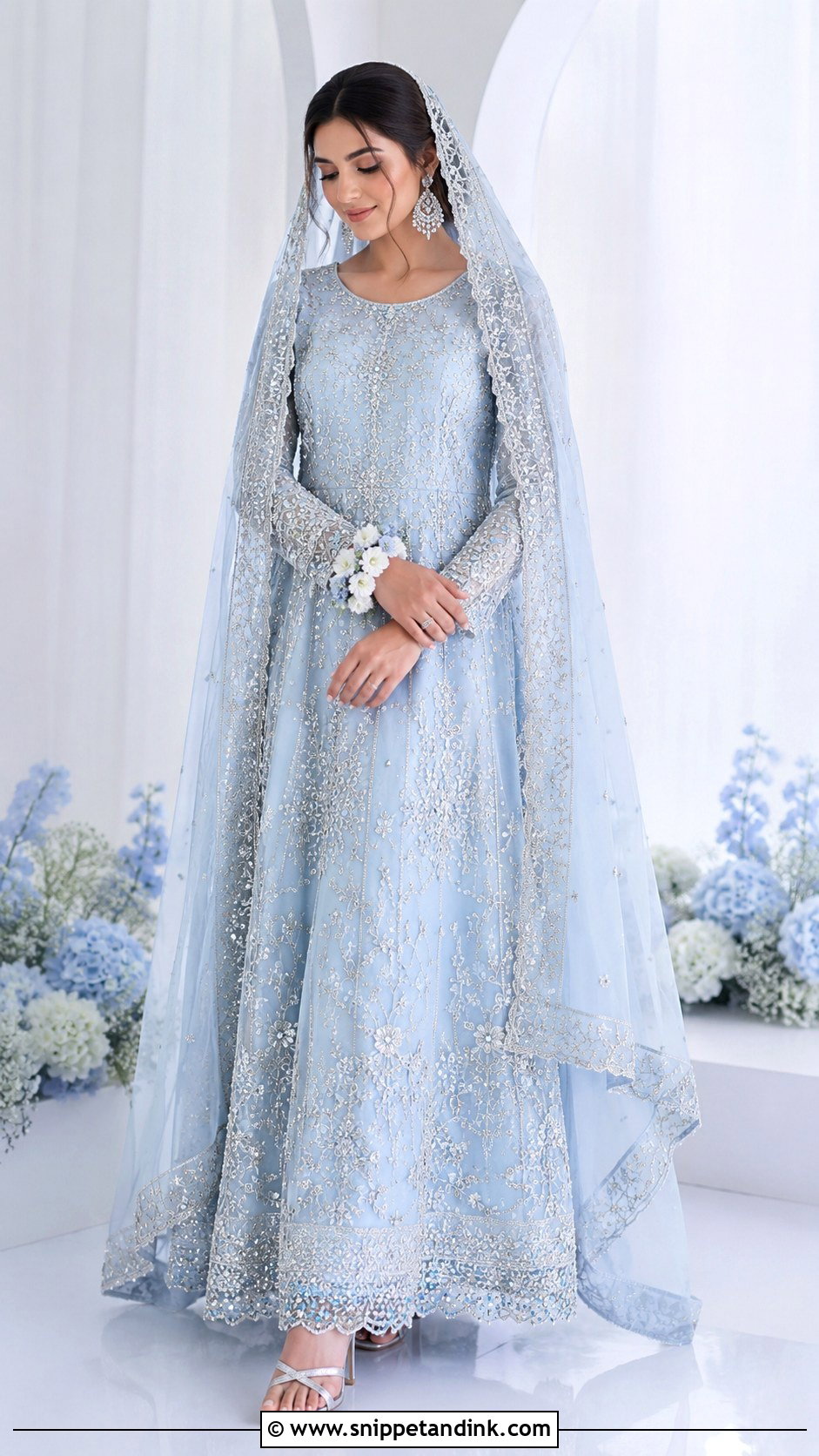
Powder blue is cool-toned, and that matters more than people expect. On warm or olive skin it can wash the face out unless the makeup carries some warmth, so I ask the makeup artist to keep blush and lip a step warmer than usual. The maxi itself should have long sleeves, a high neck and a flared skirt, worked in silver or crystal to suit the cool fabric. A scalloped dupatta goes over the head. Silver heels and a neat low bun or covered hijab keep it calm and modern.
6. Mint Green Nikah Lehenga Outfit
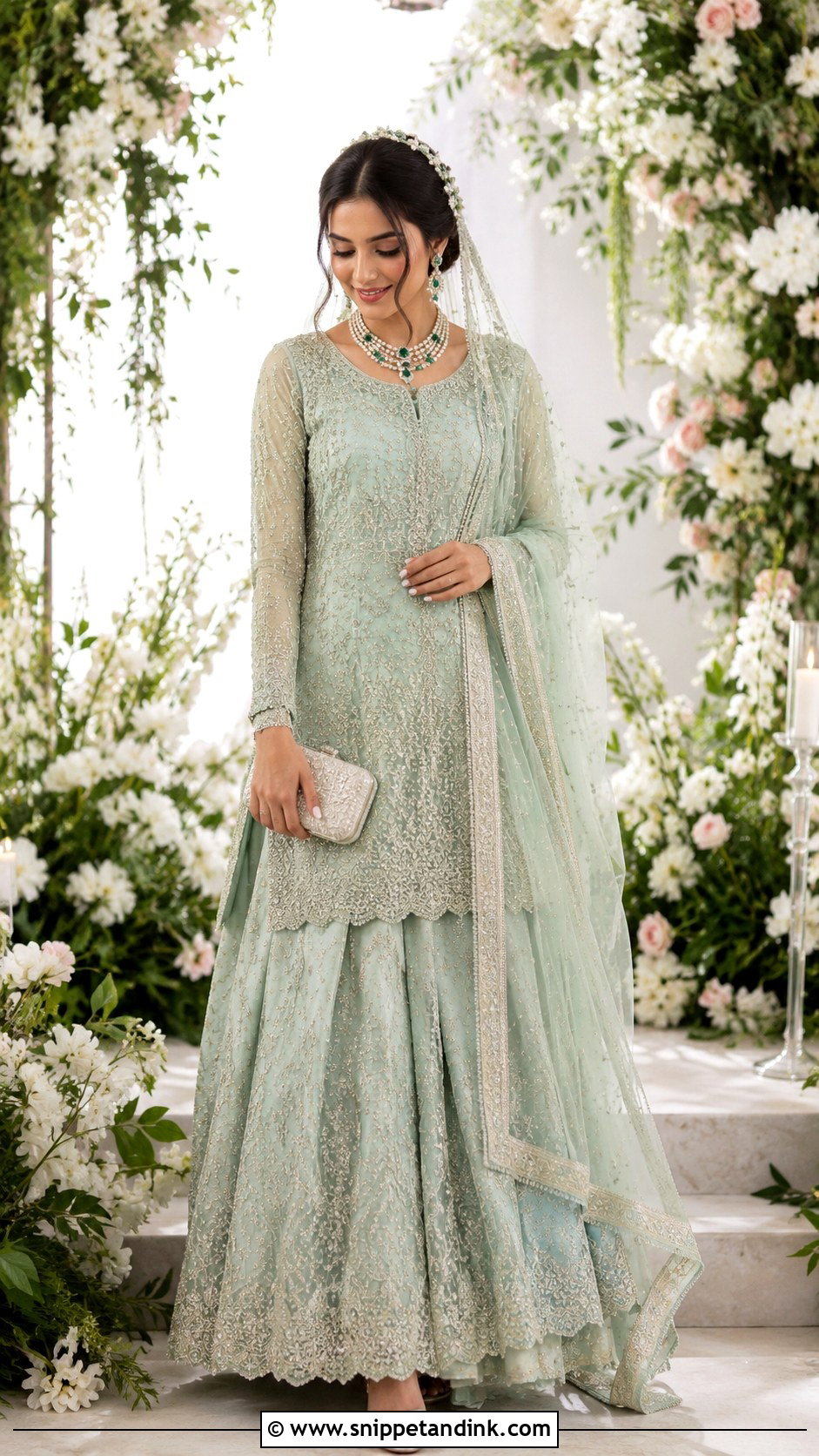
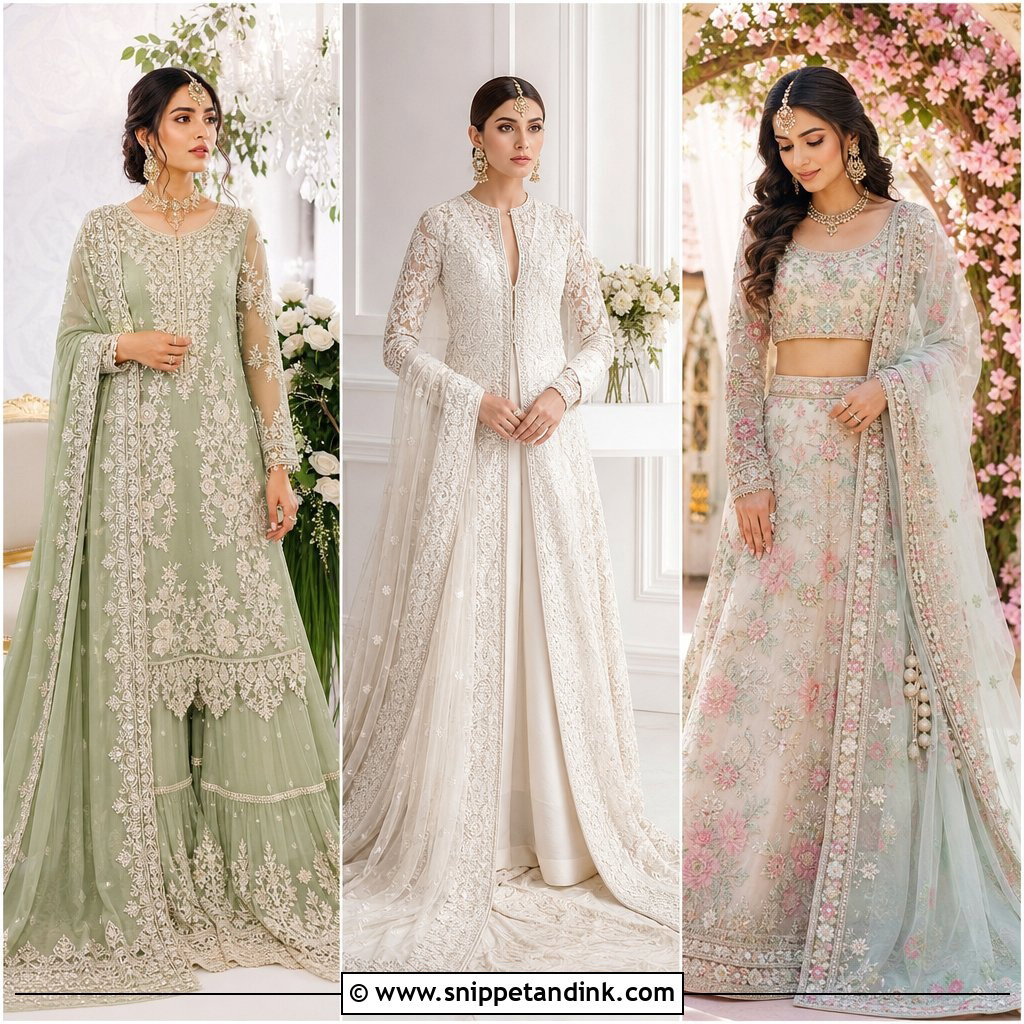
Mint suits a spring or daytime Nikah, and it holds up well outdoors where heavier colours turn harsh in direct sun. Pair the lehenga with a long blouse or a jacket-style top for coverage, embroidered in silver, pearl or pale gold. Many Pakistani brides like two dupattas here: a light net one over the head and a second, heavier one across the shoulders. If you do that, I pin the shoulder dupatta at the back of the blouse so it doesn’t slide forward while you sign. Kundan with green stones ties the colour together, and neutral heels let the mint lead.
7. Gold Nikah Angrakha Outfit
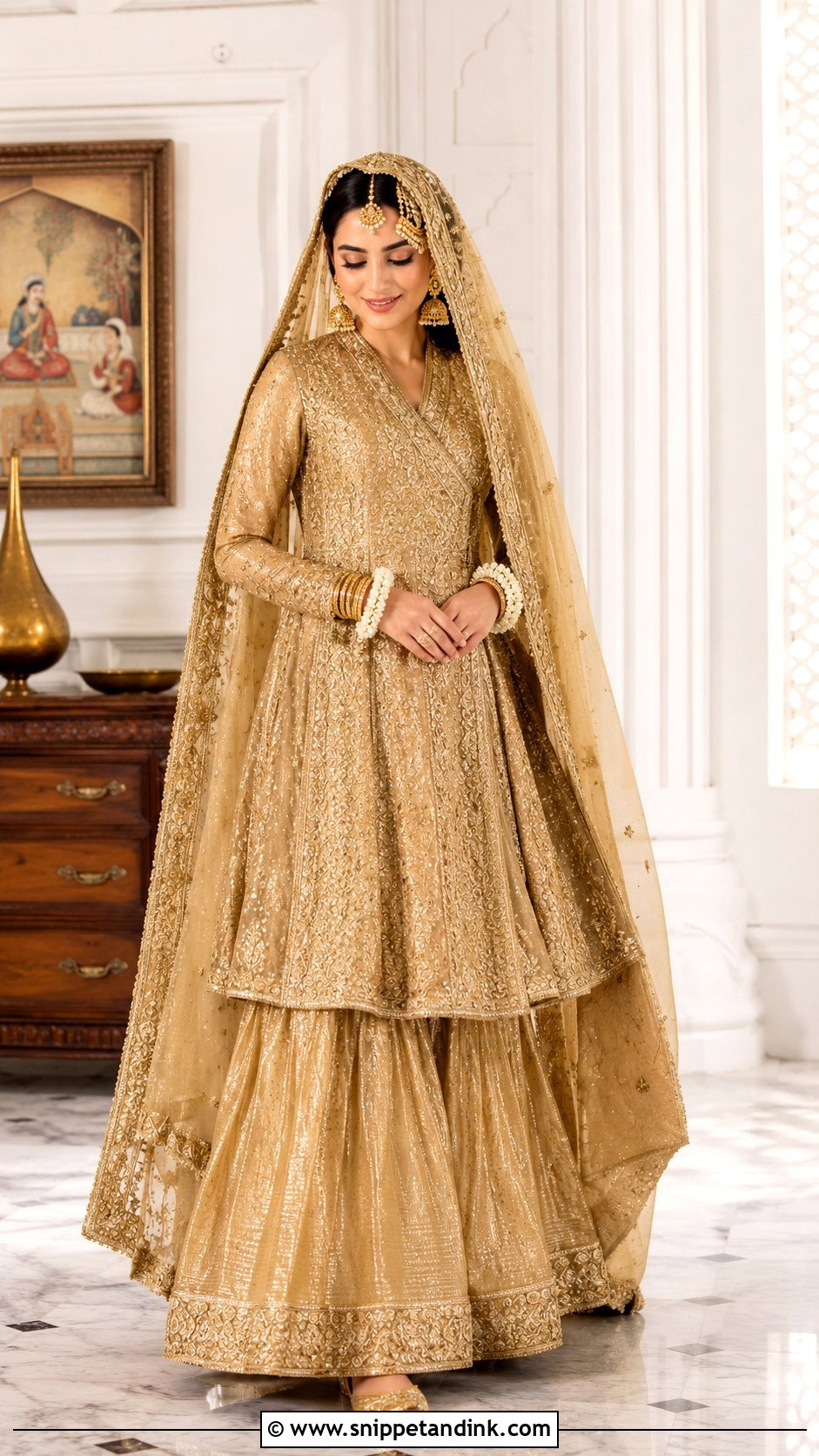
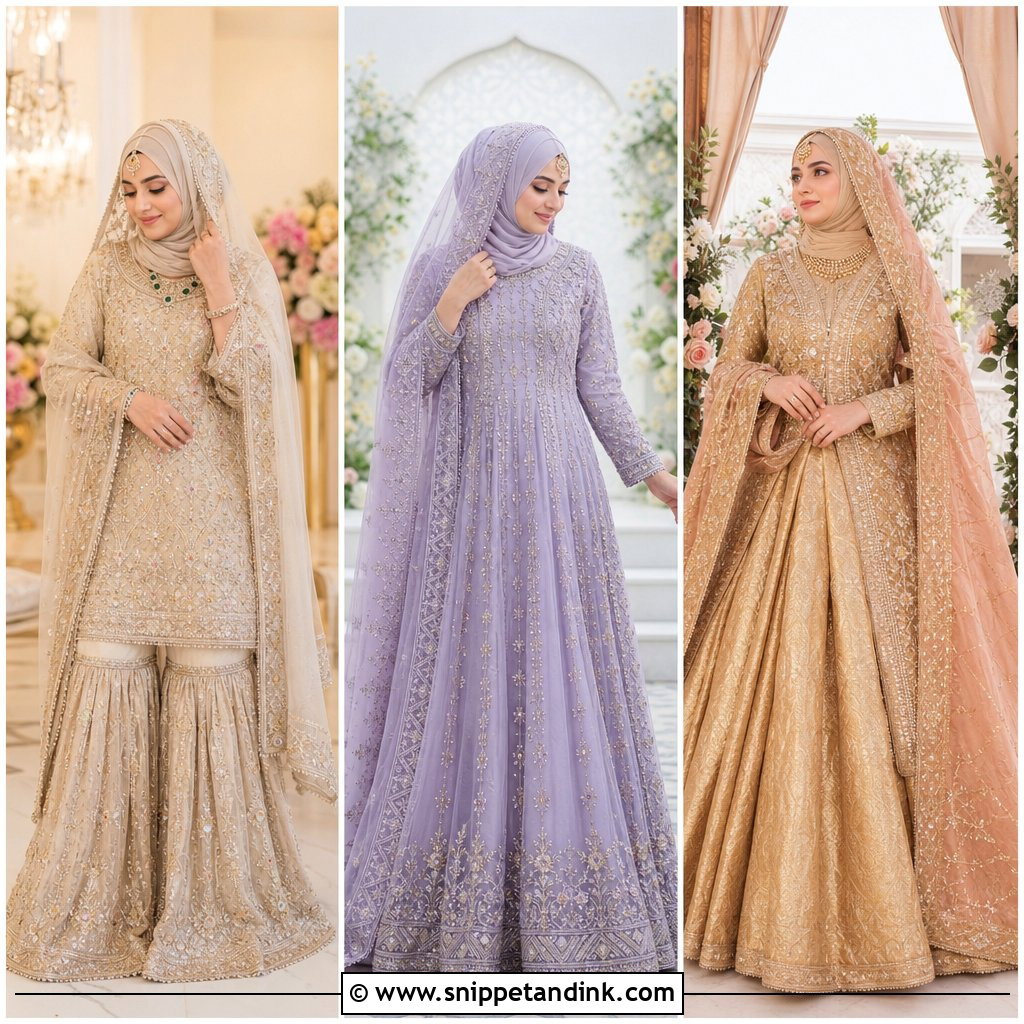
The wrap shape of an angrakha draws a clear waistline, which flatters a wide range of figures. For the ceremony I’d ask for full sleeves and a modest overlap at the front, since the wrap can open when you lean forward. Antique gold embroidery, gota and dabka give it a bridal weight without a strong colour. Wear it over a gharara, sharara or lehenga, with a net dupatta and a passa. When the angrakha is heavily worked, keep the makeup restrained with soft eyes and a neutral lip.
8. Beige Nikah Saree Outfit
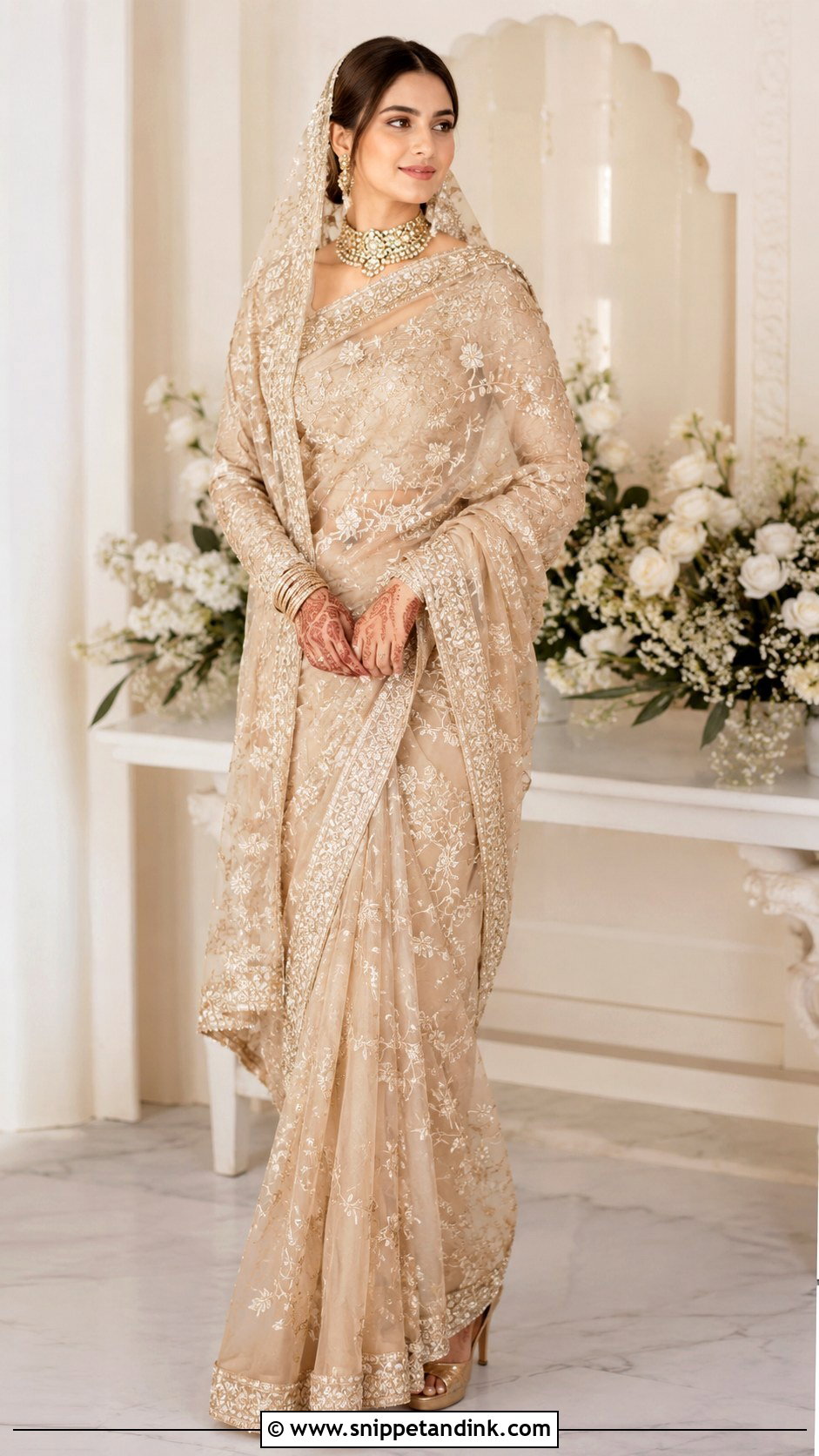
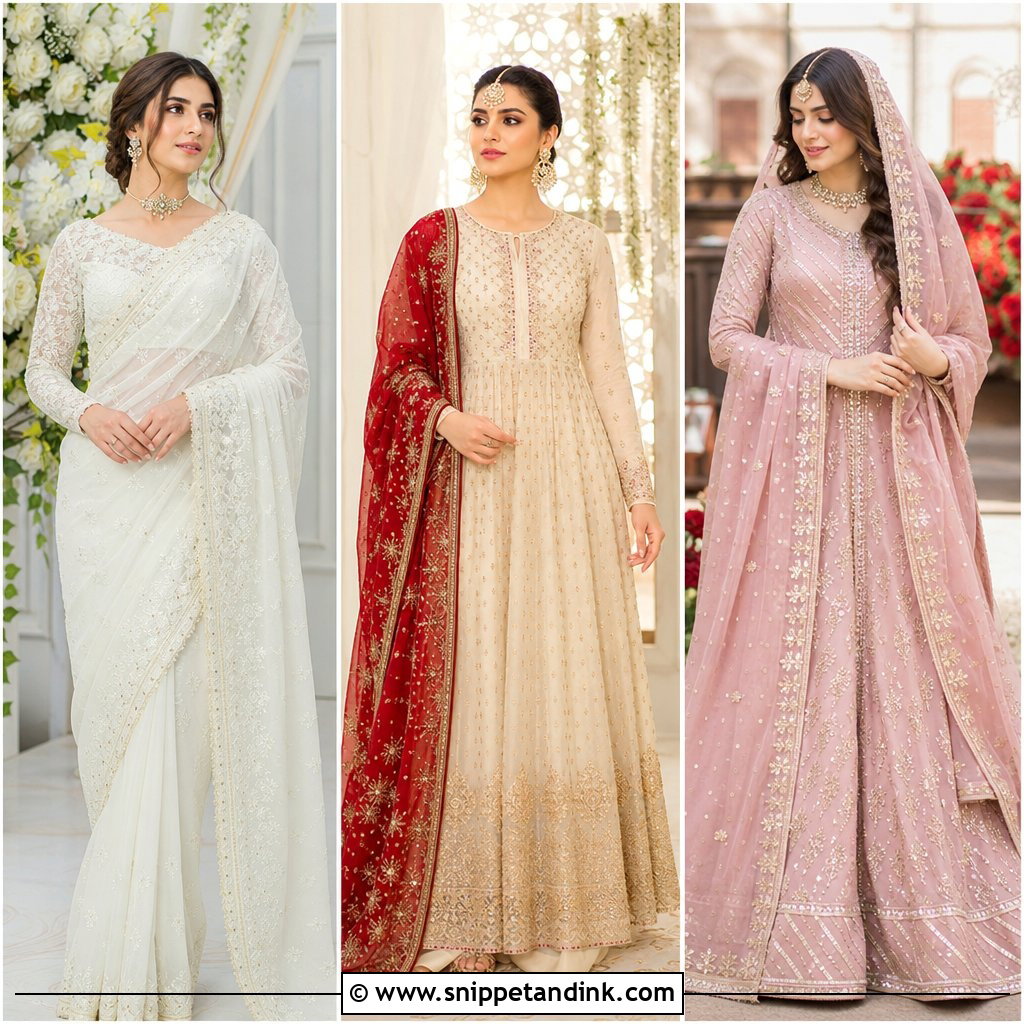
Most brides who come to me wanting a saree for the Nikah are worried about coverage, and the answer is the blouse. A longer blouse with full sleeves and a higher neck changes the whole feel. Organza, chiffon or tissue in beige with gold or pearl work drapes softly, and the pallu can go over the head or be pinned across the shoulder with a second dupatta added for the ceremony. Beige takes warm and cool metals equally well, so a kundan choker or silver pieces both work. I’d avoid it for a bride who has never worn a saree, since constant pallu adjustments get tiring over a long ceremony.
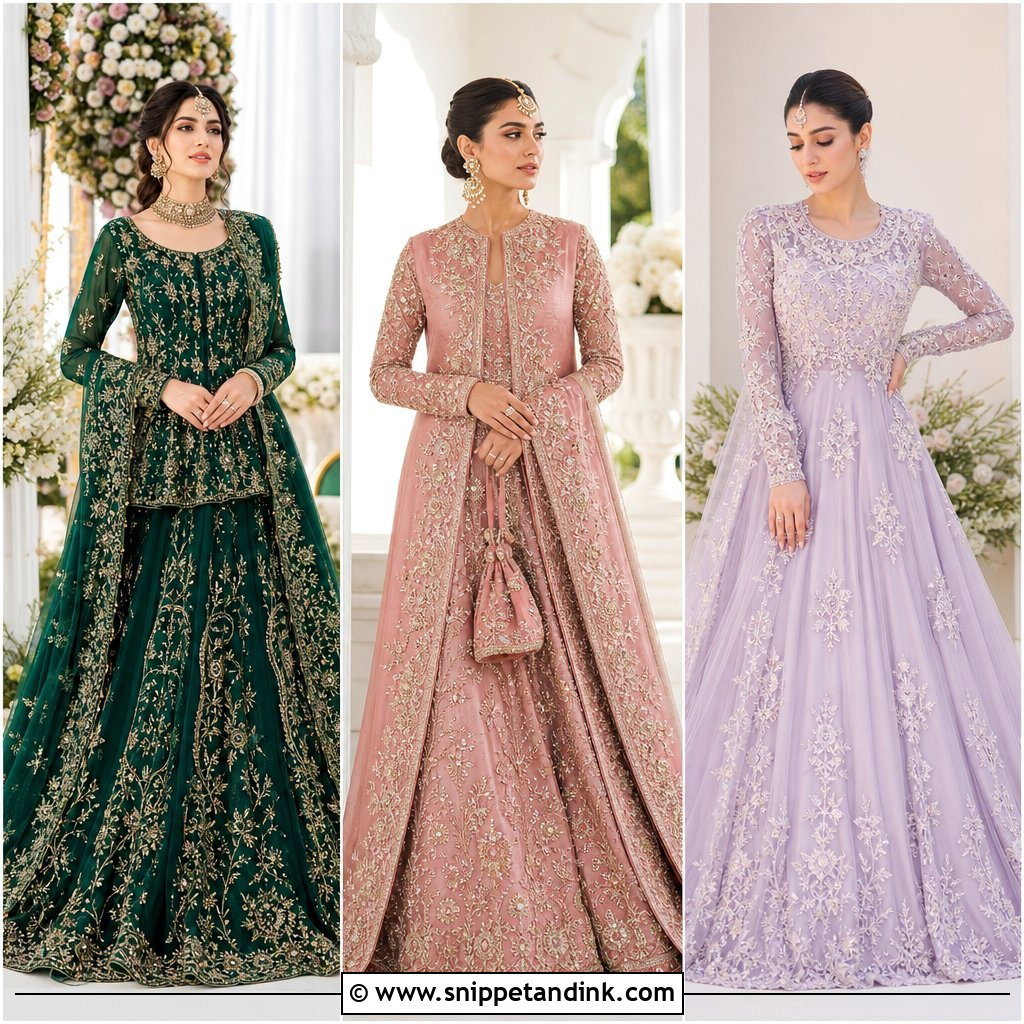
9. Blush Pink Nikah Pishwas Outfit
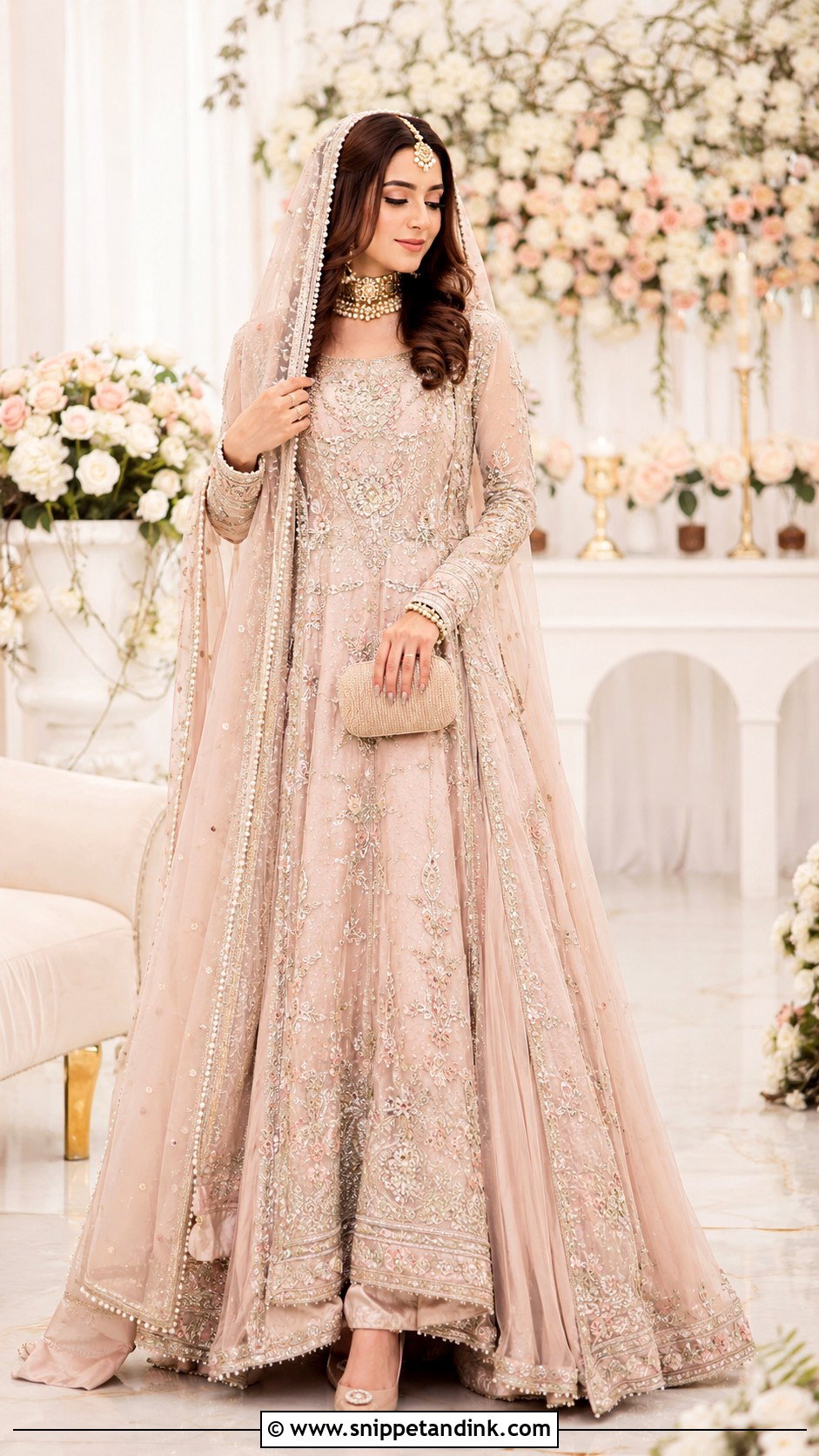
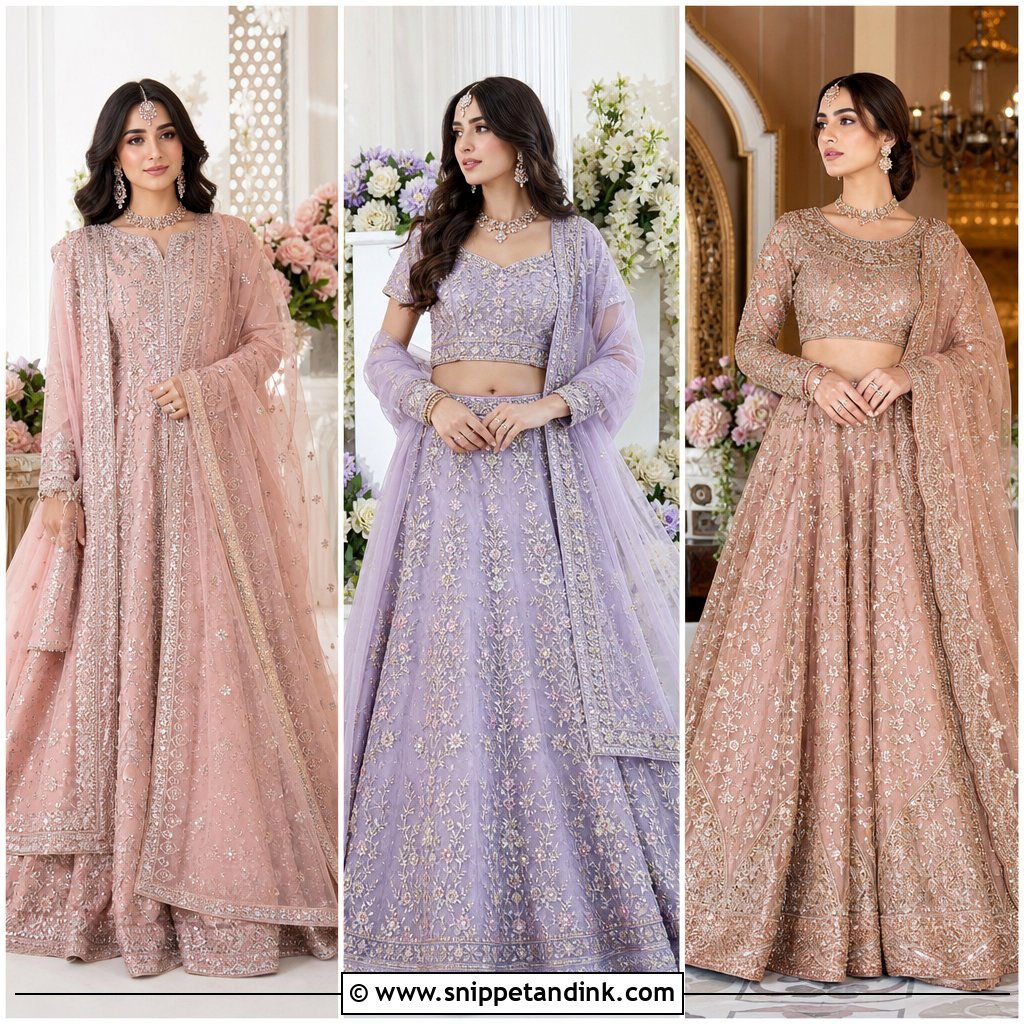
Blush pishwas has a long, flowing line that keeps you covered while still giving the skirt movement for photographs. Ask for fine embroidery across the bodice, sleeves and hem, and wear it over a matching lehenga or churidar. A dupatta with pearl edging or a heavier embroidered border adds ceremony. Pearls, polki or rose gold all sit well with blush. The trap with this colour is too much matching: blush shoes, blush makeup and blush jewellery together look washed out, so let one element, usually the jewellery, add contrast.
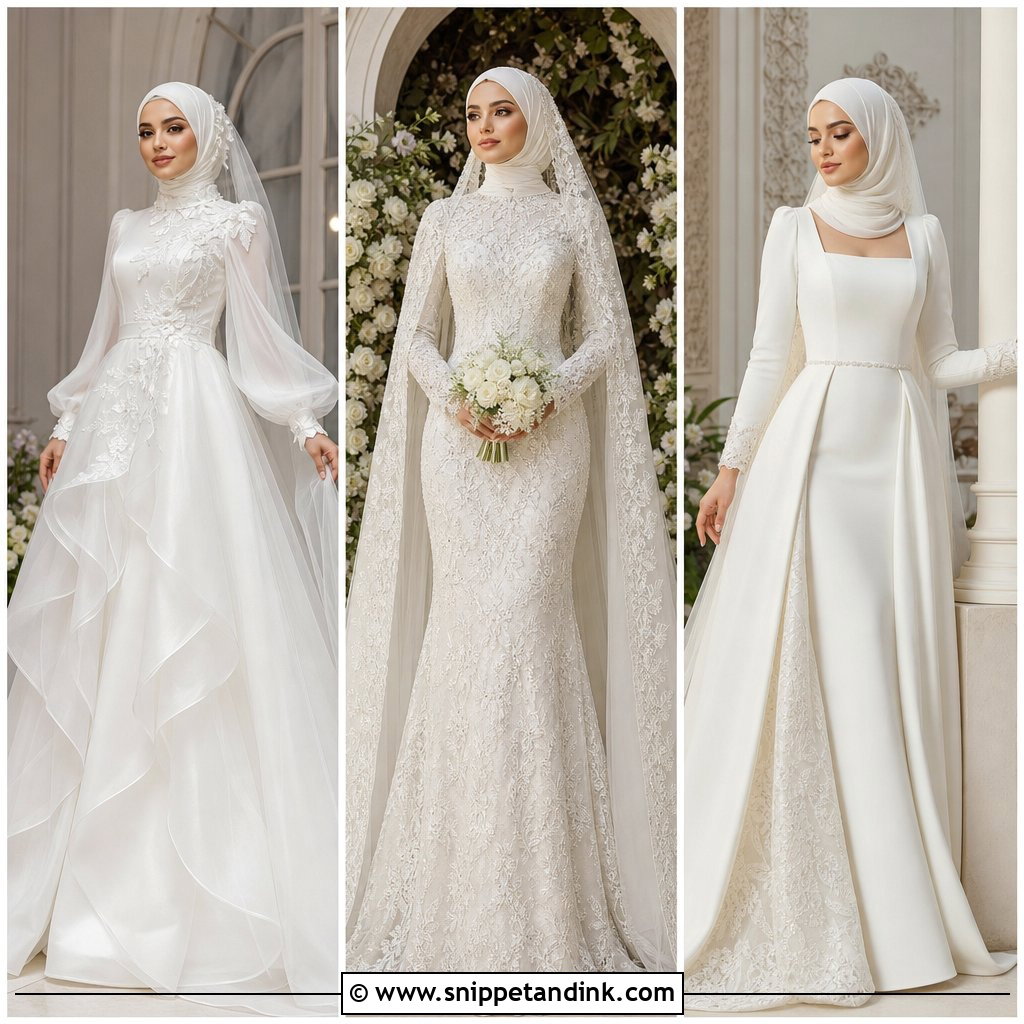
10. Silver Nikah Gown Outfit
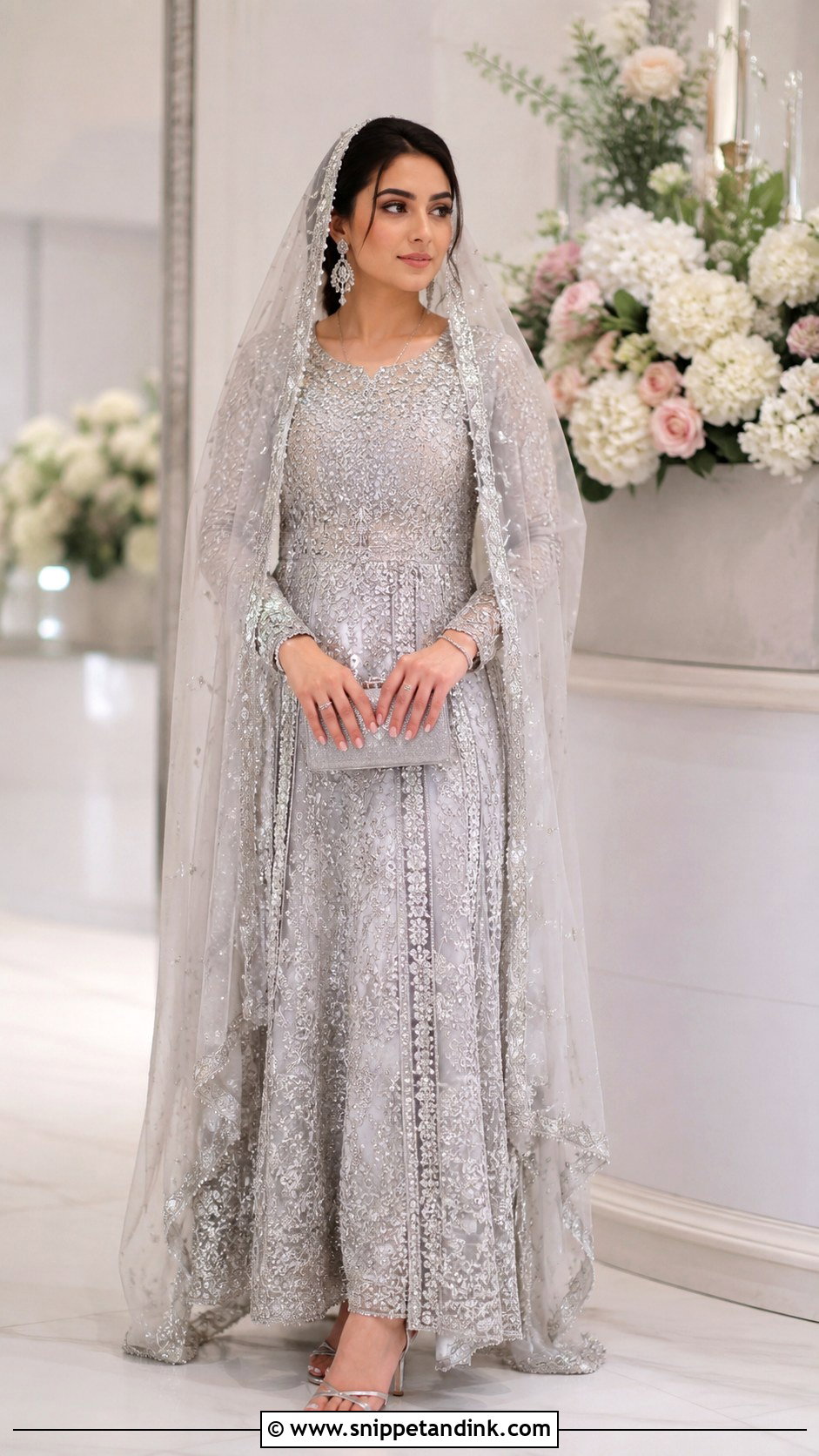
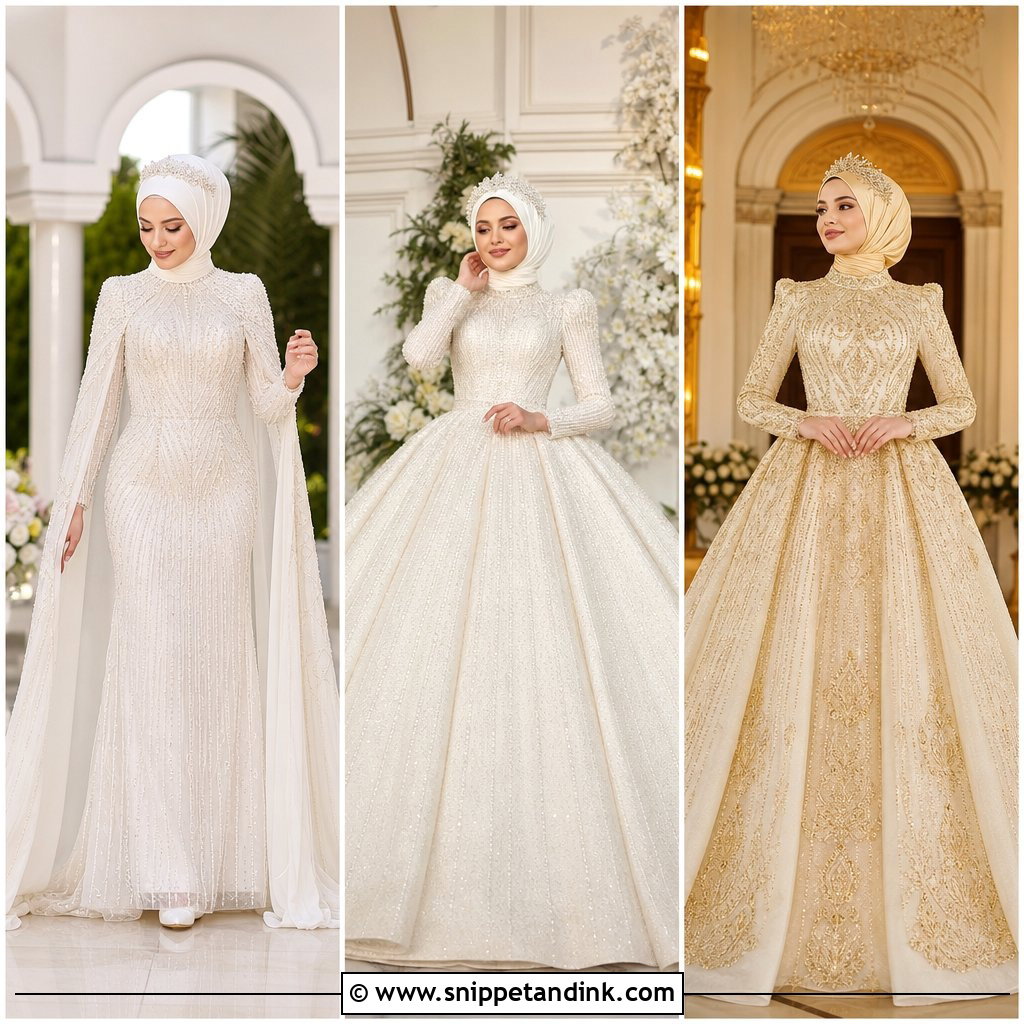
A silver gown suits a bride who prefers a contemporary shape over traditional separates. Look for full sleeves, a high neckline and an A-line or soft flare. Sequins, crystals and pearl work catch the light, but I’d keep the heaviest sparkle on the bodice so the skirt doesn’t feel like a costume. Add a matching dupatta or a cape-style veil to make it suitable for the Nikah. Hijab-wearing brides can choose silver or light grey fabric so the head covering blends into the gown instead of cutting it in two.
11. Peach Nikah Sharara Outfit
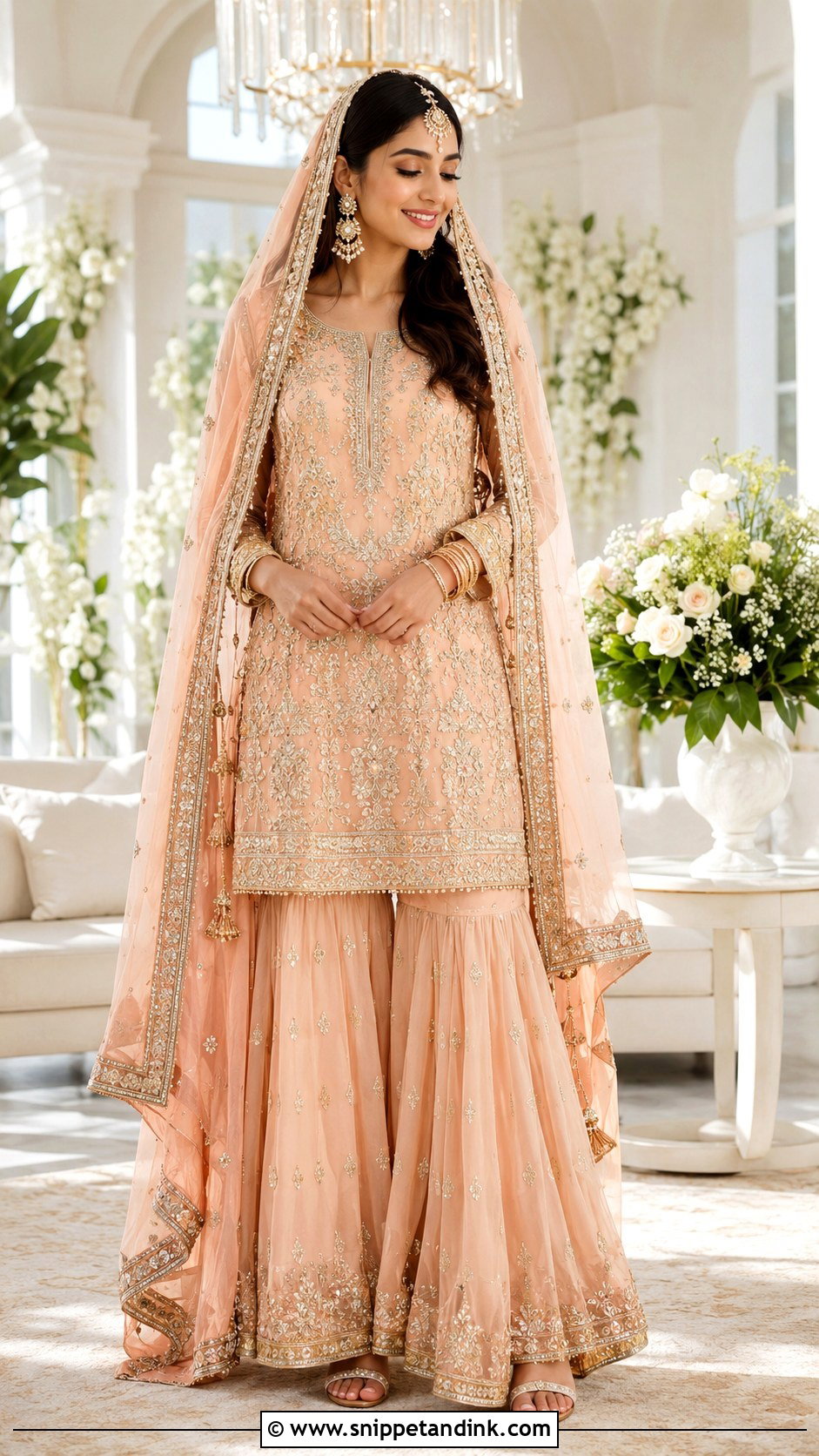
Peach is forgiving across many skin tones because it carries warmth into the face. A peach sharara with a long embroidered shirt feels festive without being loud, and gold, pearl or light copper thread suit it. Drape a sheer dupatta with a heavier border over the head. I keep the jewellery small for this one: kundan earrings, bangles, a little tikka. Peach heels or nude sandals in a matching tone stop the eye from breaking at the ankle in full-length photos.
12. Ivory Nikah Saree With Hijab Outfit
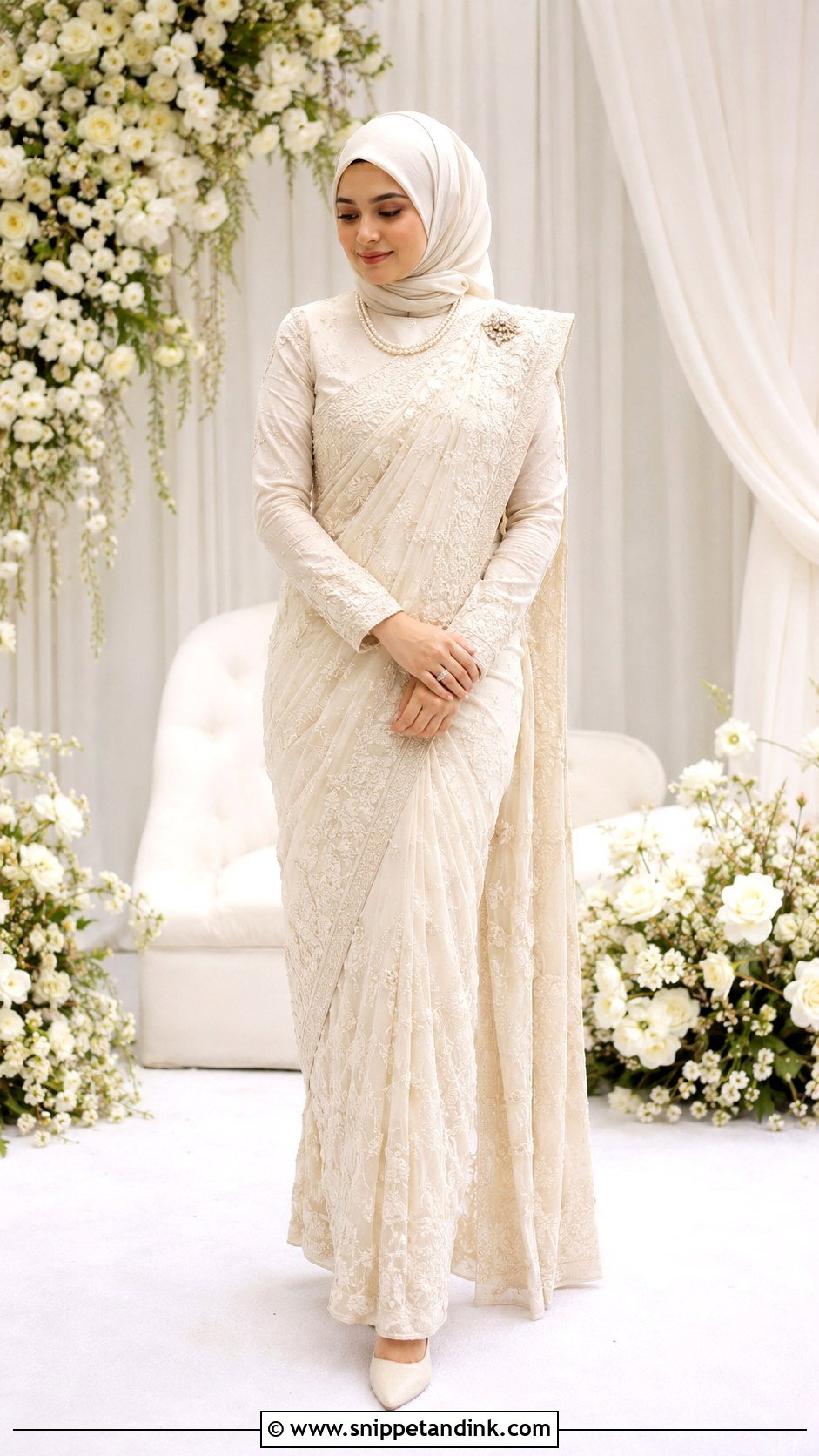
An ivory saree with hijab gives full coverage while keeping the drape of a saree. Start with a lightweight embroidered saree and a long, full-sleeve blouse or inner top. Choose a hijab in ivory, champagne or soft gold so it looks planned. I pin the pallu firmly at the shoulder before the hijab goes on, because adjusting a pallu underneath a pinned hijab later is nearly impossible. If the hijab is voluminous, skip the necklace and use a small brooch instead, otherwise the neck area gets crowded in close-ups.
13. Rose Gold Nikah Lehenga Outfit
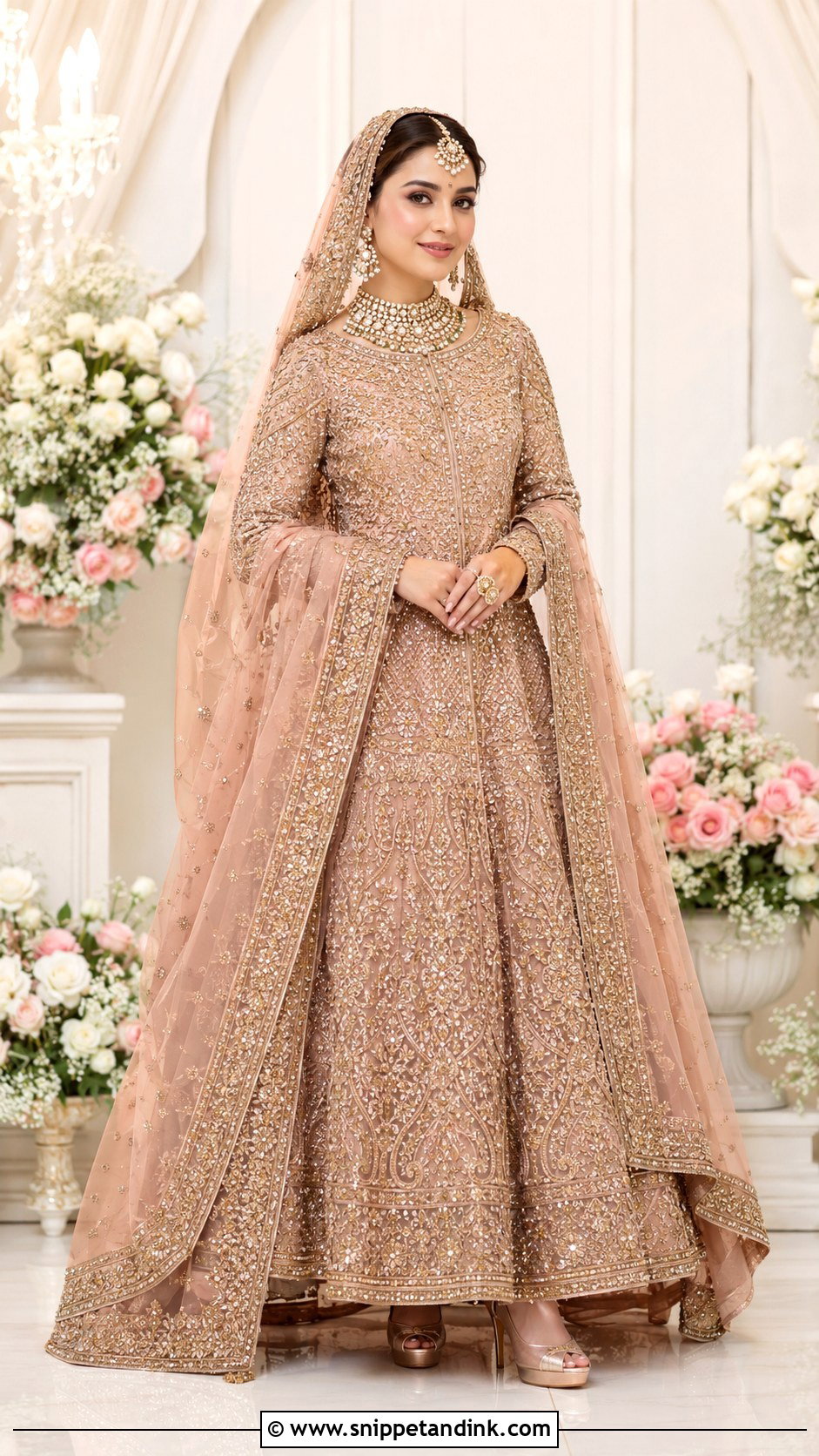
Rose gold looks modern and still reads as bridal, and under indoor lighting it glows more than plain pink does. Pair a rose gold lehenga with a long blouse or peplum top for coverage, worked in sequins, pearls, dabka and tonal thread. The dupatta can be scalloped or have a heavy border. Some rose gold fabrics turn coppery on camera, so ask the designer for a swatch and photograph it on your phone under warm light. Polki jewellery and a soft pink makeup palette suit it.
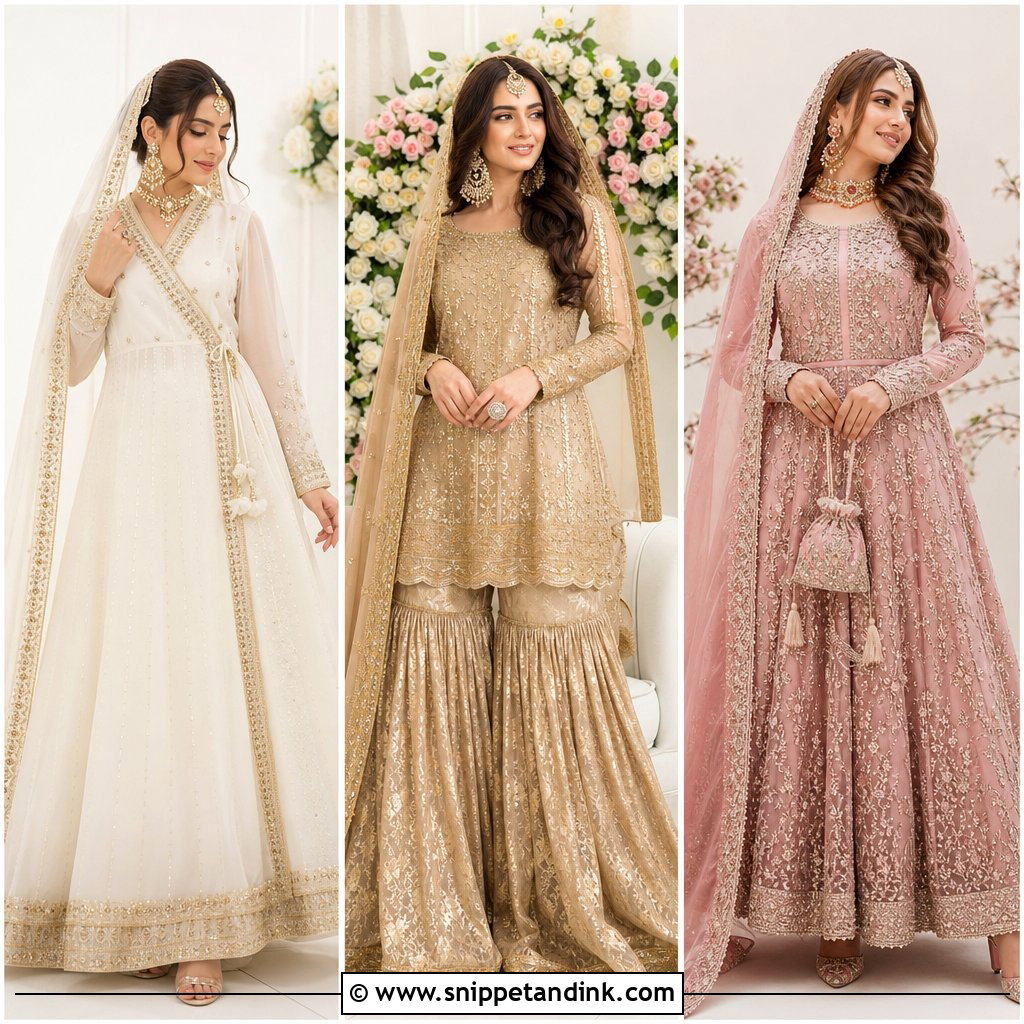
14. Cream Nikah Anarkali Outfit
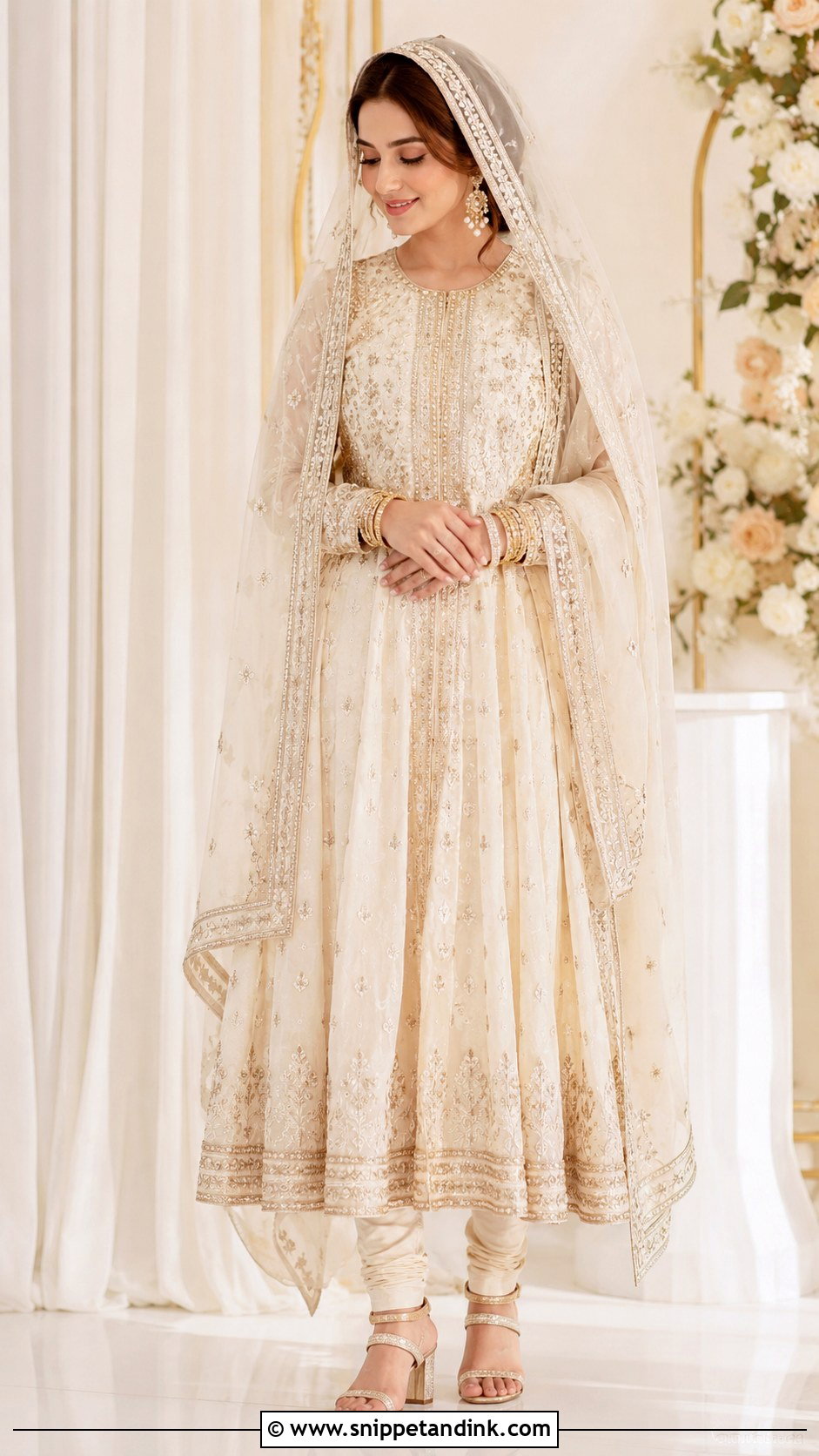
An anarkali is the easiest outfit on this list to move in. The fitted bodice and flared skirt give shape without the weight of a full lehenga, and you can climb stairs to a stage without holding your hem. Ask for full sleeves, a modest neckline and the heaviest embroidery at the hem, cuffs and dupatta border. Churidar or slim trousers keep the line clean underneath. With gold or pearl jewellery and block heels or khussas, it is the choice I give brides who dread being weighed down.
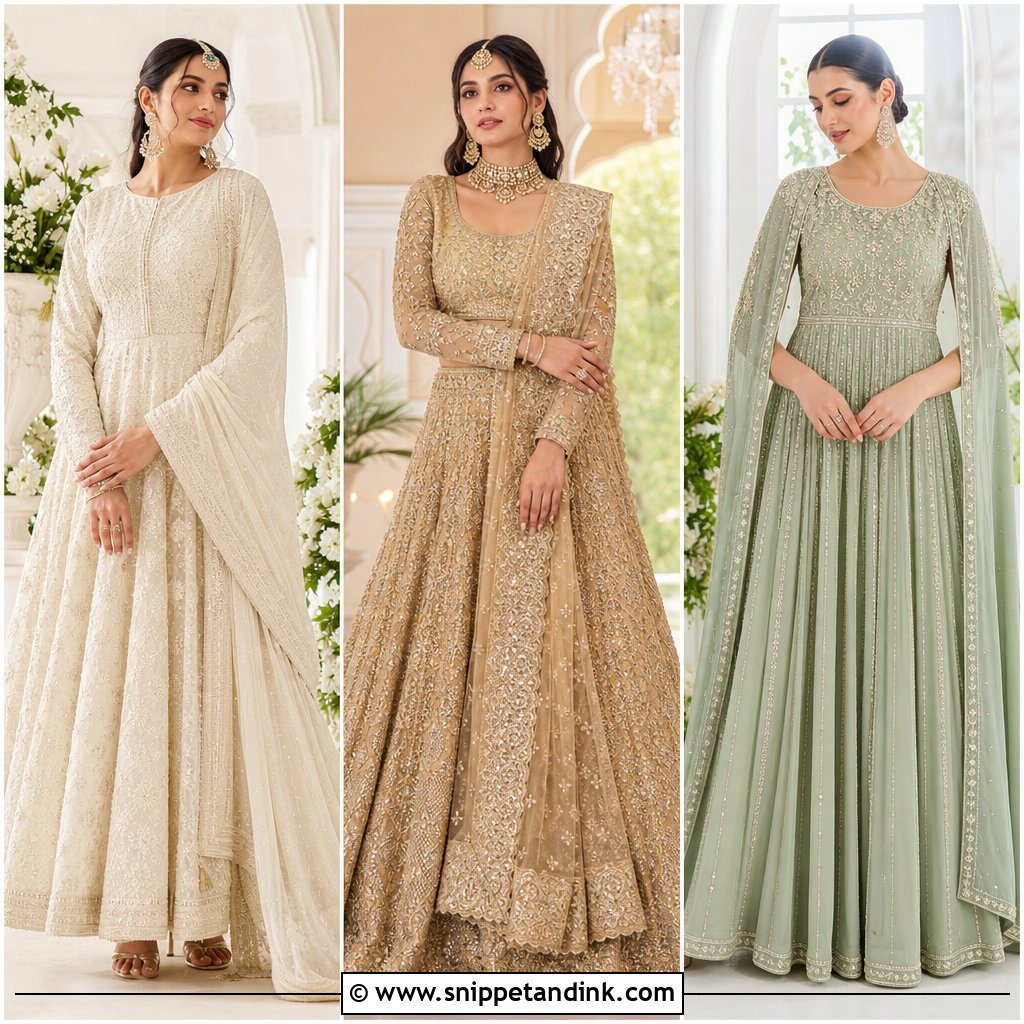
15. Lilac Nikah Maxi Outfit
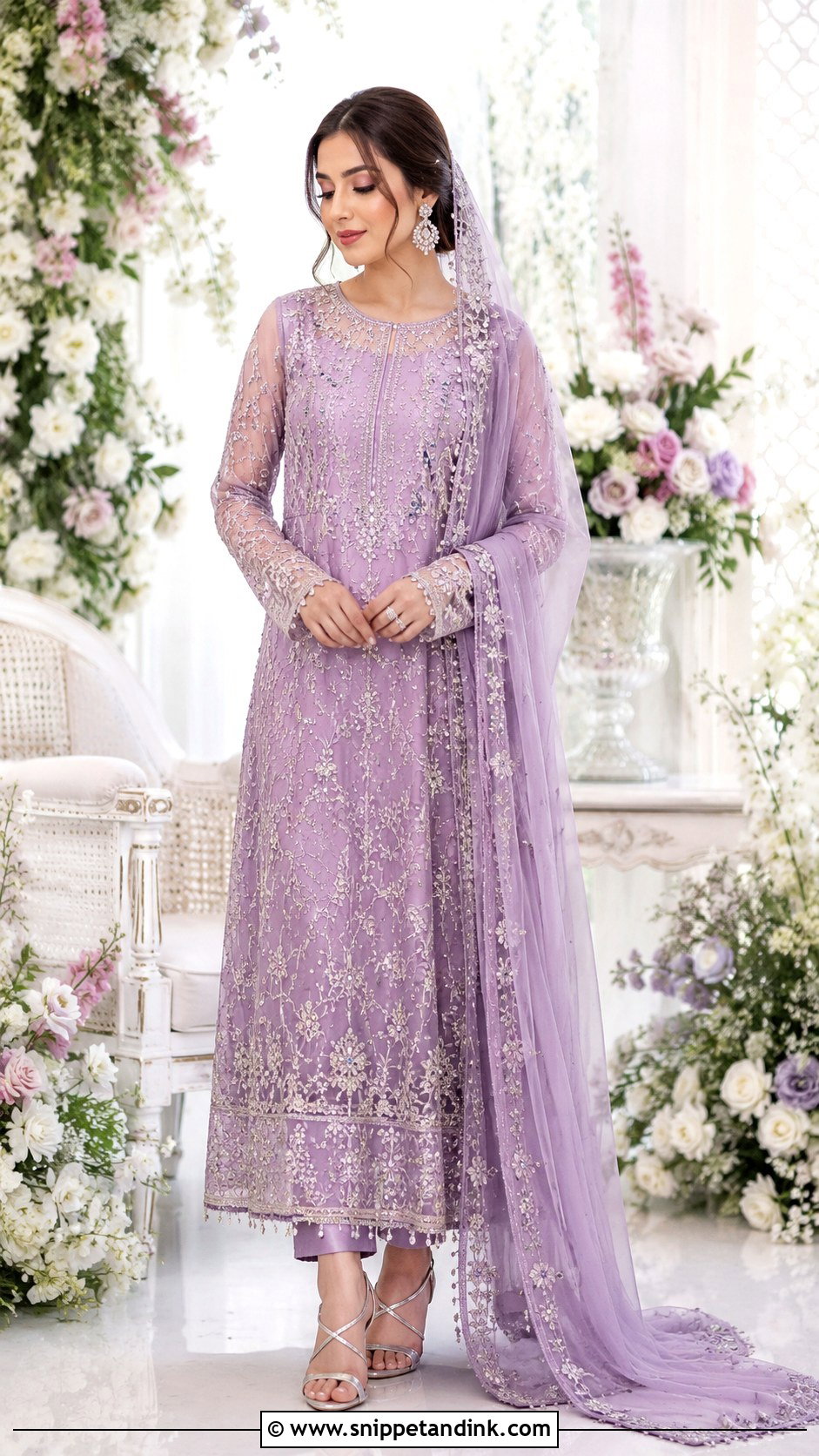
Lilac is one of the few pastels that still looks unusual in a Pakistani Nikah lineup. A modest lilac maxi with long sleeves and a flowing skirt gives comfortable coverage, and silver, pearl or tonal lilac embroidery keeps it delicate. A second, lighter veil over the main dupatta adds height for photos. Mauve or pink makeup tones sit naturally with it. Lilac fabric fades quickly in strong sun, so store it away from windows in the weeks before the wedding.
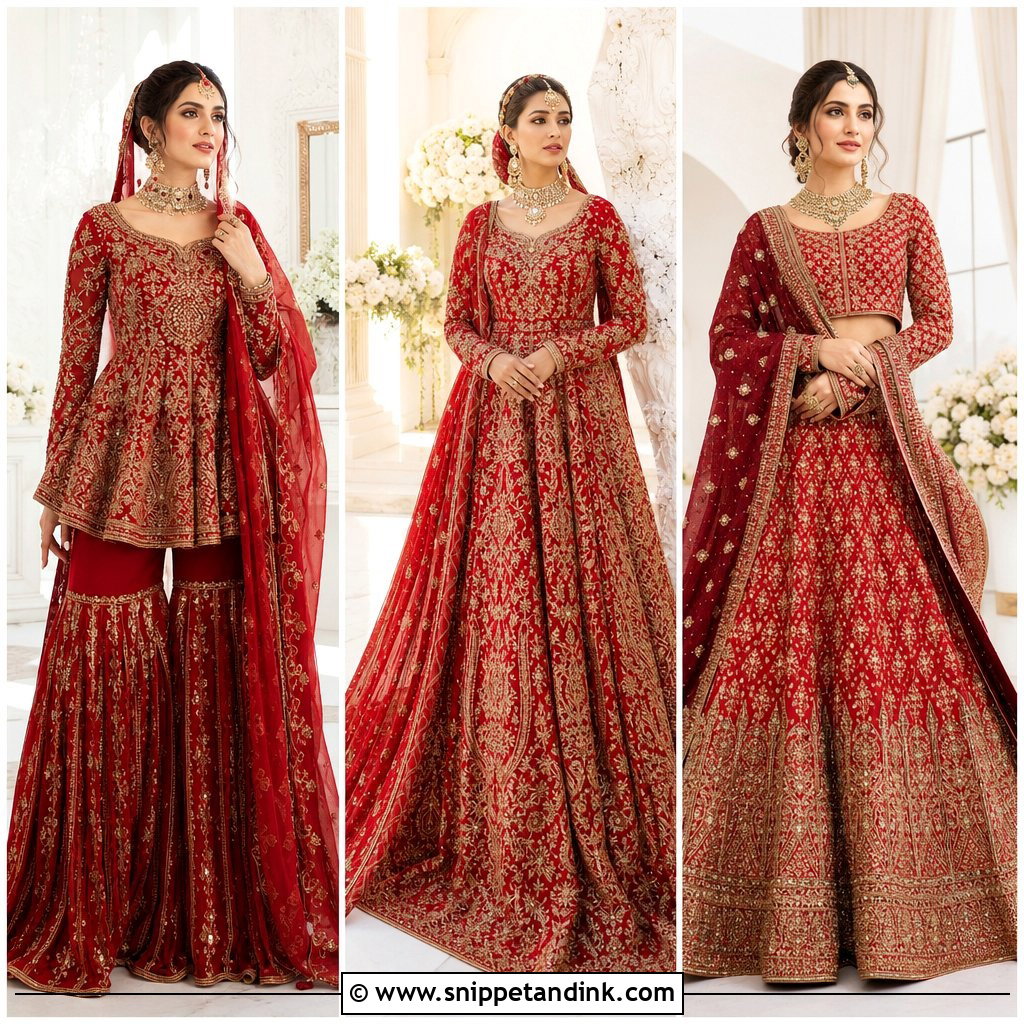
16. Traditional Red Nikah Lehenga Outfit
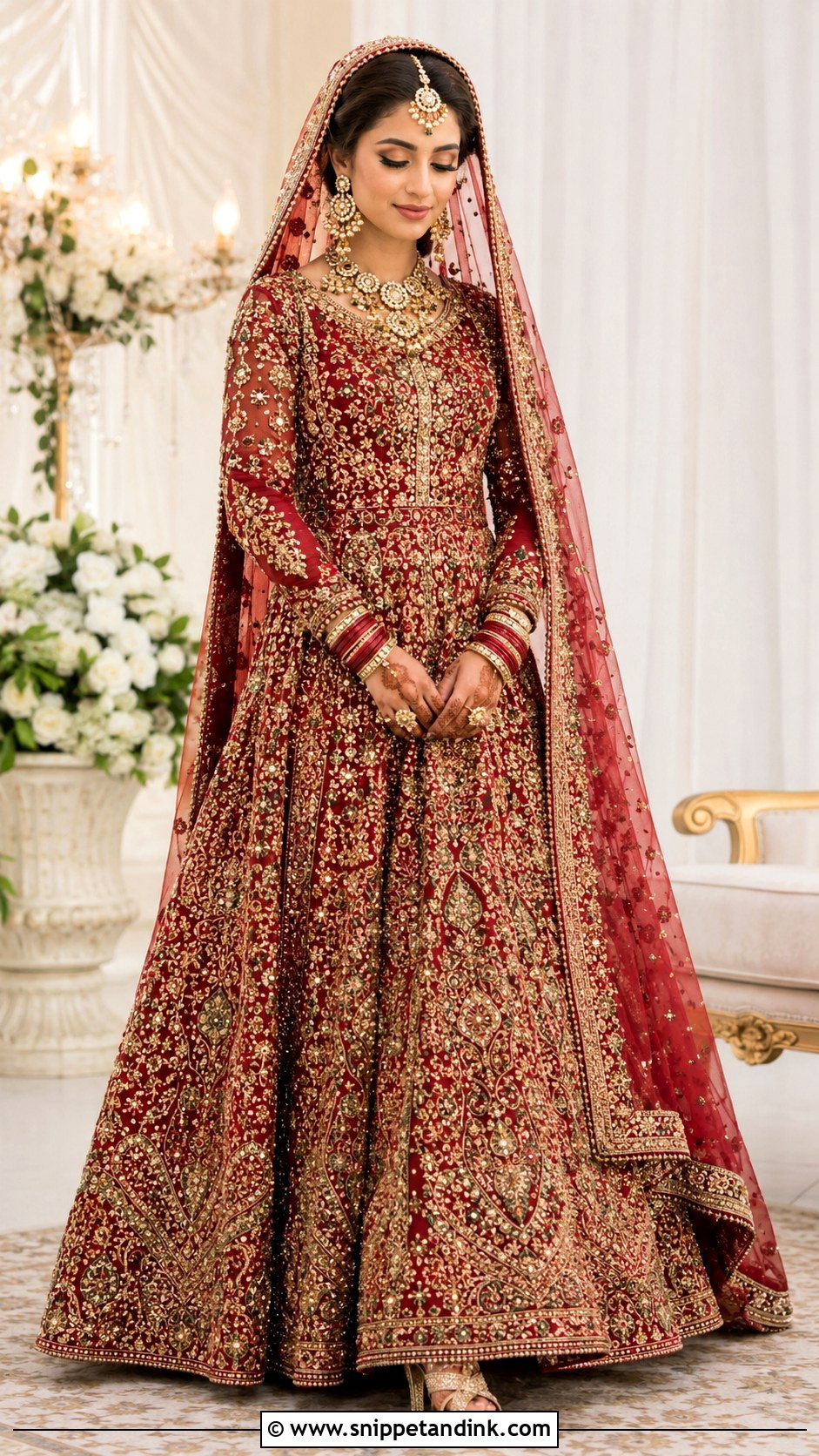
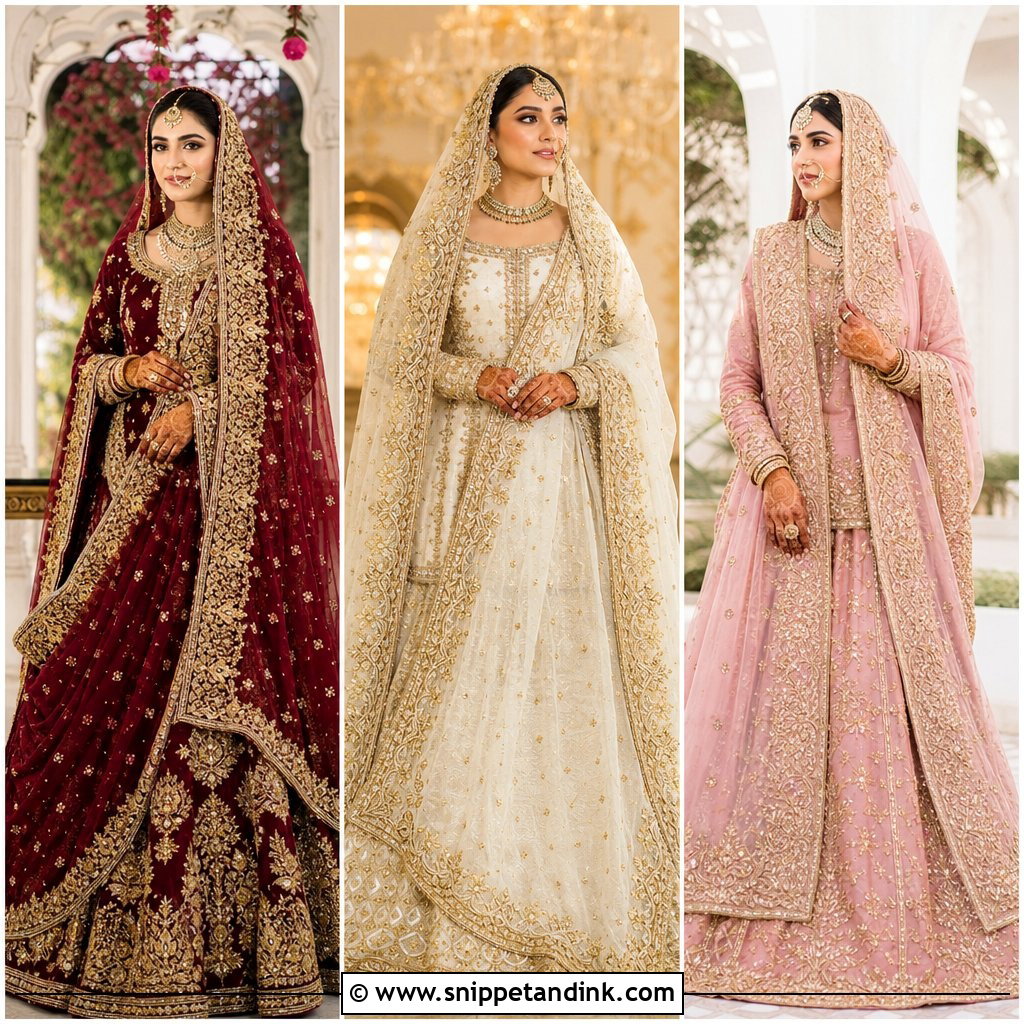
Red carries the weight of South Asian bridal tradition, and many families still expect it. To keep it right for the Nikah, choose a long choli with full sleeves and drape the dupatta over the head. Gold zari, dabka or gota give the classic finish. A bright red can feel heavy for a daytime ceremony, so I often steer brides toward deep rose or maroon-red, which also photographs with more depth. Statement kundan suits it. With a colour this strong, the makeup should be defined but not competing.
17. Maroon Nikah Gharara Outfit
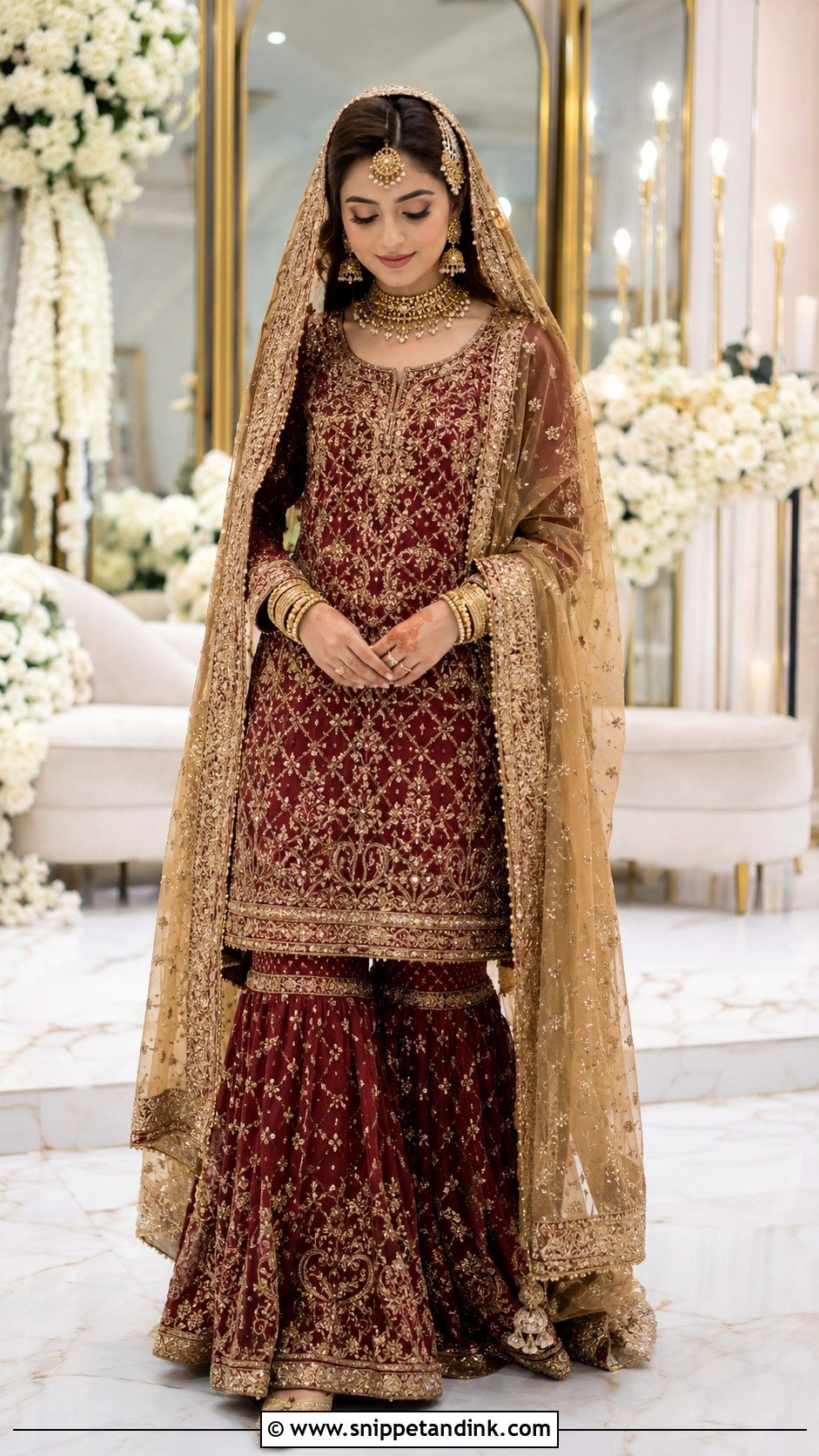
Maroon has a depth that makes it ideal for an evening or winter Nikah. A maroon gharara with a short or mid-length kurti looks traditional and polished, and zardozi or kiran finishing adds a festive edge. A maroon or antique gold dupatta goes over the head. Heavy jhumkas, a choker and a passa give the classic Pakistani bridal look. Velvet maroon is warm, so if your venue is heated I’d pick raw silk or jamawar instead, because velvet holds heat for hours and the rukhsati is still a long way off.
18. Emerald Green Nikah Sharara Outfit
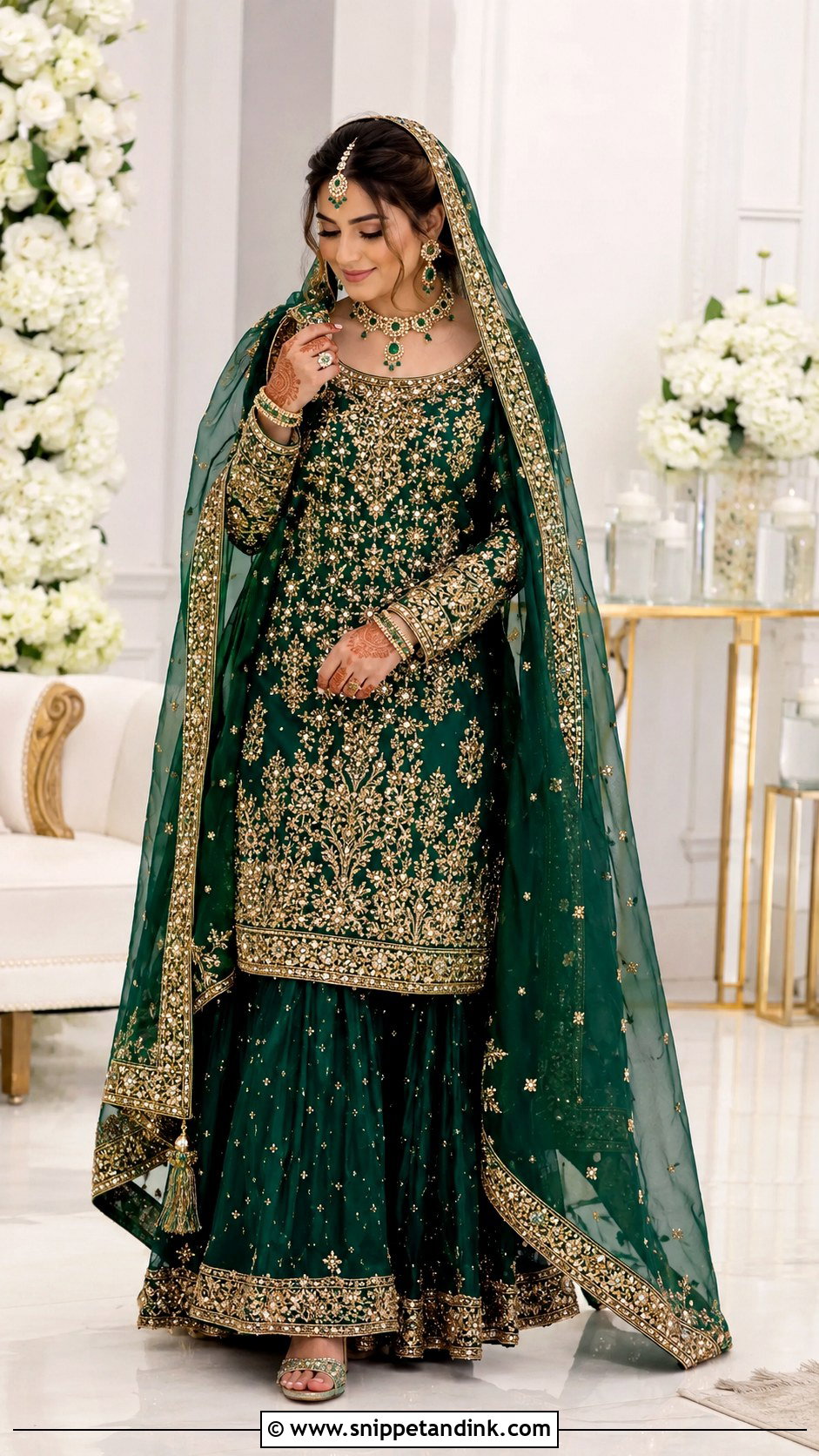
Emerald looks regal under gold embroidery and softer with pearl detail. A long embroidered shirt over a matching sharara gives modest shape and plenty of volume. Drape a dupatta with a detailed border over the head for the ceremony. Gold jewellery with green stones carries the colour, and bronze eyes with a soft lip suit the warmth. One thing I watch is lining: cheap linings in dark greens show through thin net as a muddy patch, so check the dupatta and sleeve linings in daylight.
19. Light Gold Nikah Farshi Gharara Outfit
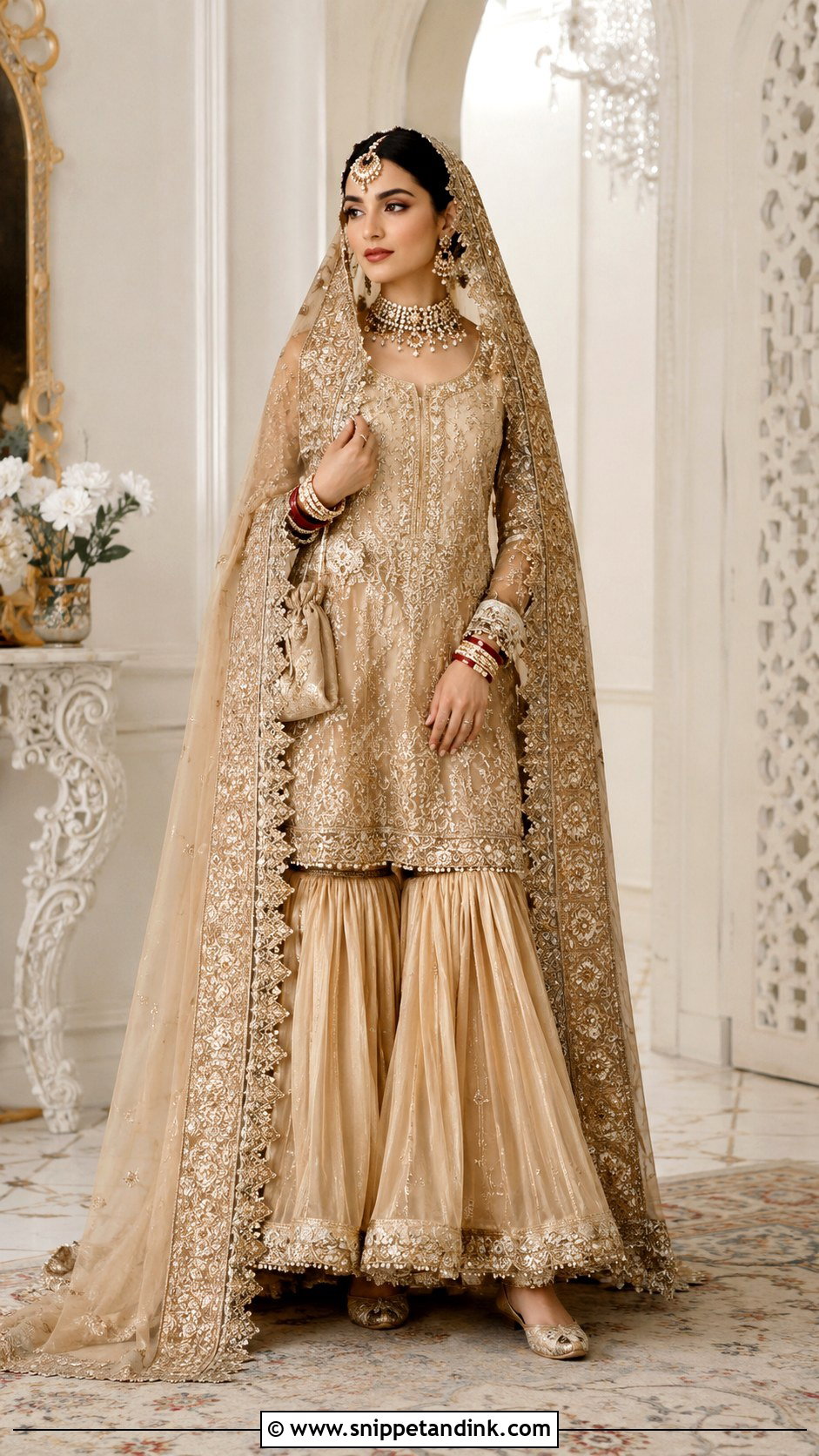
The farshi gharara sweeps the floor, which makes it dramatic and also hard to walk in. Before recommending it, I ask whether the bride will walk any distance, climb steps or sit on the floor. If the answer is yes to all three, I suggest a standard gharara instead. Light gold keeps the drama without needing a bright shade. Pair it with a short embroidered kurti, a dupatta with a heavy border and a structured fit at the top to balance all that volume. Embroidered khussas, a passa and bangles complete it. A family home Nikah or a formal indoor ceremony suits it best.
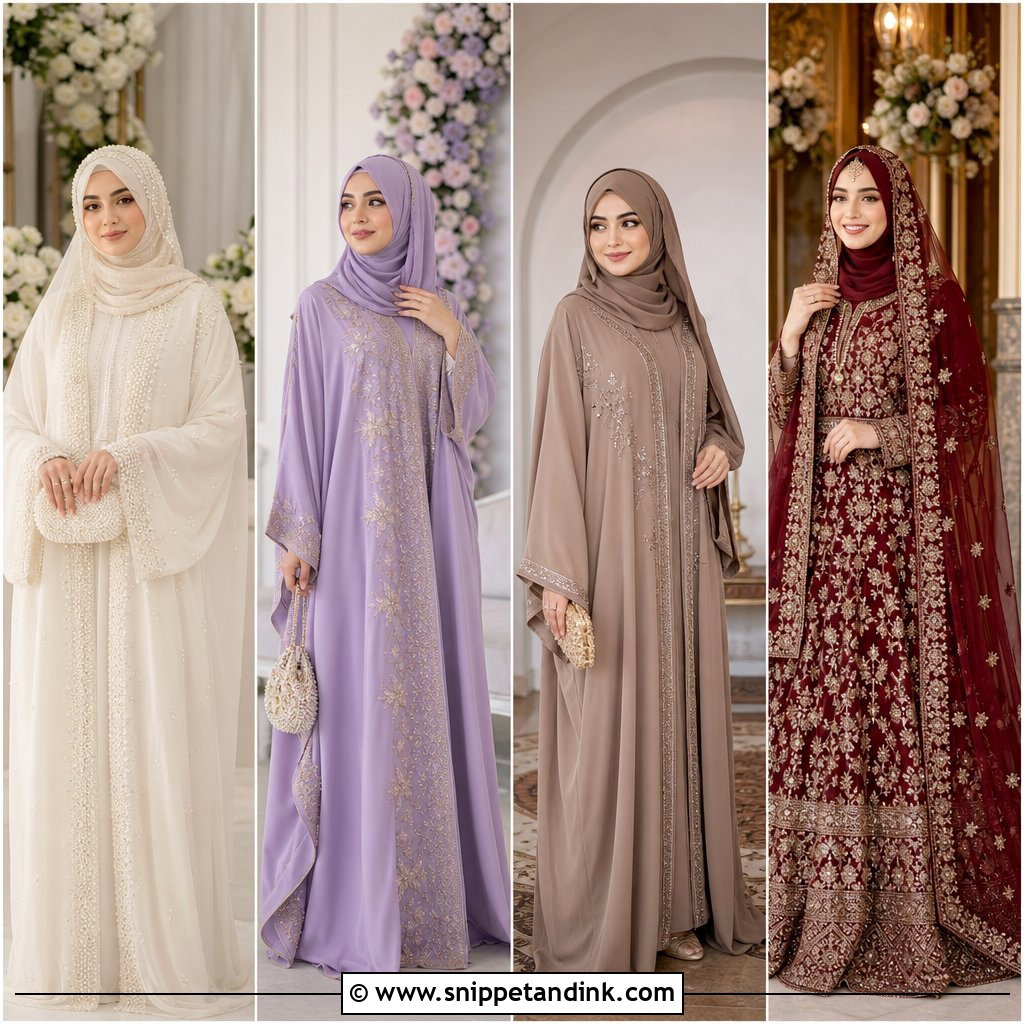
20. Soft Yellow Nikah Pishwas Outfit
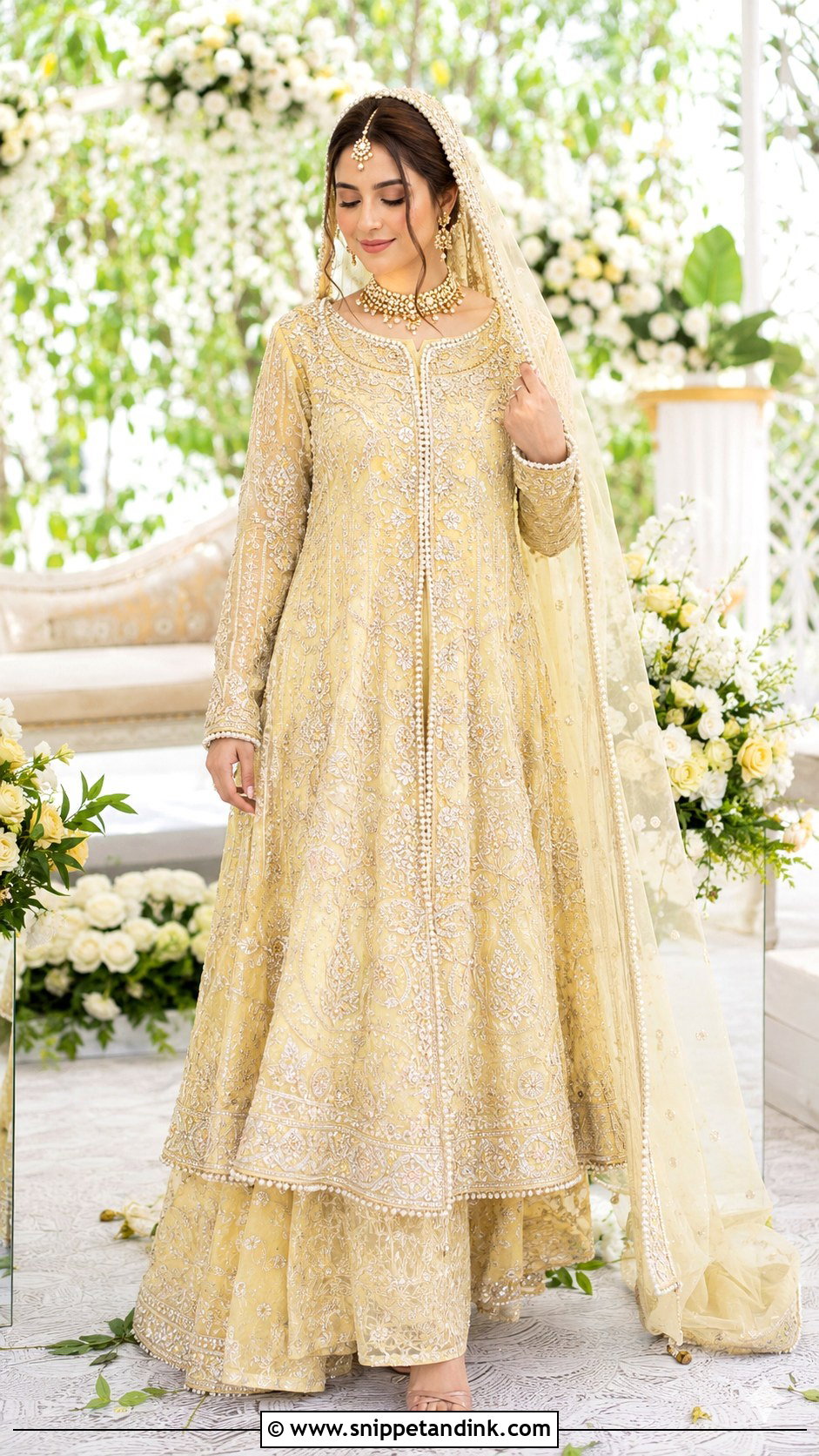
Soft yellow feels joyful and works best in daylight, especially in a garden. A pale yellow pishwas with white, gold or pearl embroidery stays bridal rather than bright. Wear it over a churidar or lehenga with a sheer dupatta over the head. Gold and pearl jewellery keeps it warm. Yellow sits close to many skin tones, so ask your makeup artist for slightly more definition at the eyes and cheeks than you would choose for blush or ivory, or the face can blend into the outfit.
21. Dusty Mauve Nikah Lehenga Outfit
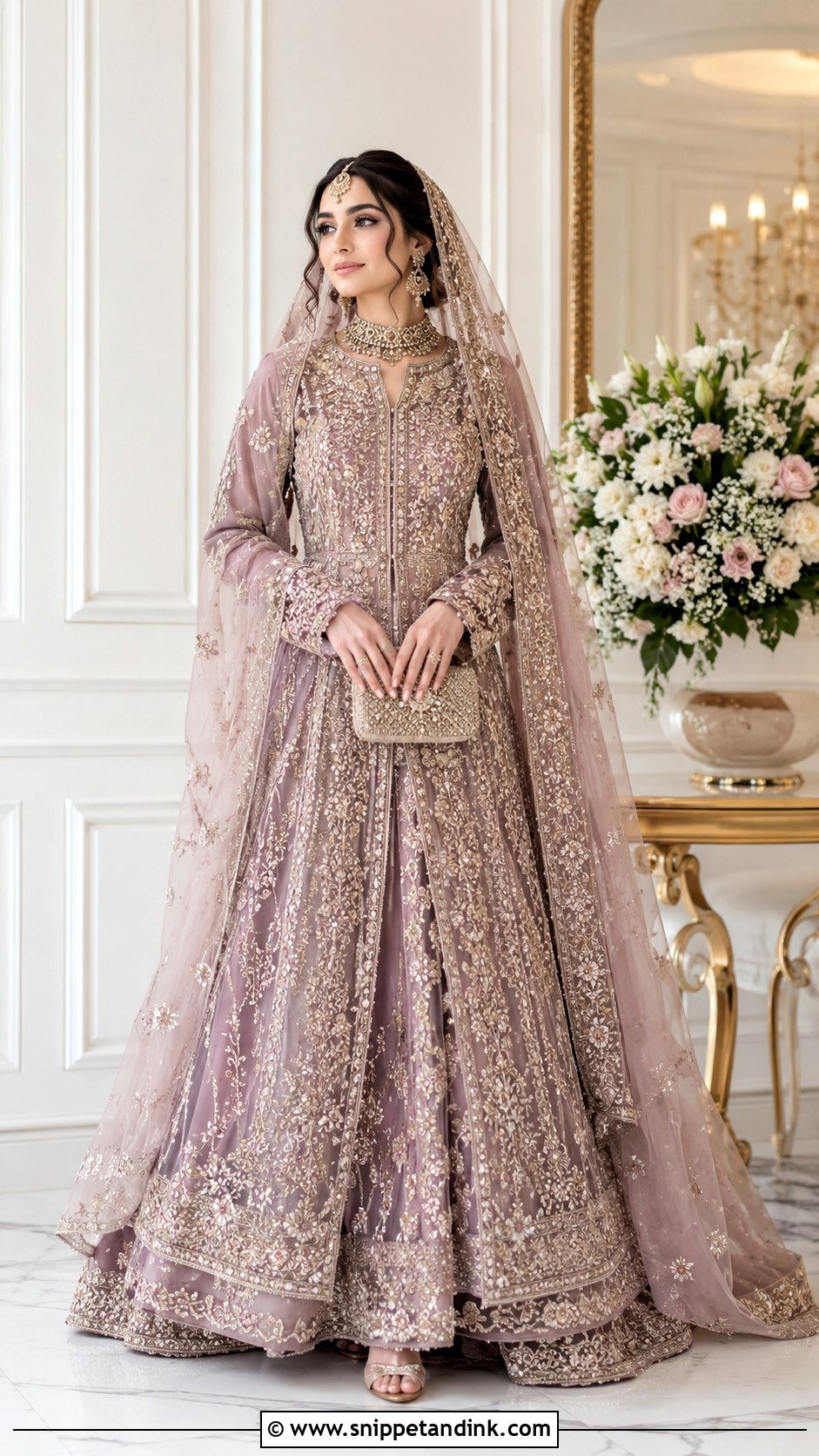
Dusty mauve suits brides who don’t want white, red or pastel pink. A mauve lehenga with a long blouse or jacket-style top gives coverage, and tonal, silver or pearl detailing keeps it bridal. A matching dupatta with a neat border softens the face. Silver or antique jewellery and mauve-toned makeup suit it. It holds its colour well on video, where brighter pastels can bloom, so I mention it to brides with a videographer booked.
22. Tea Pink Nikah Angrakha Outfit
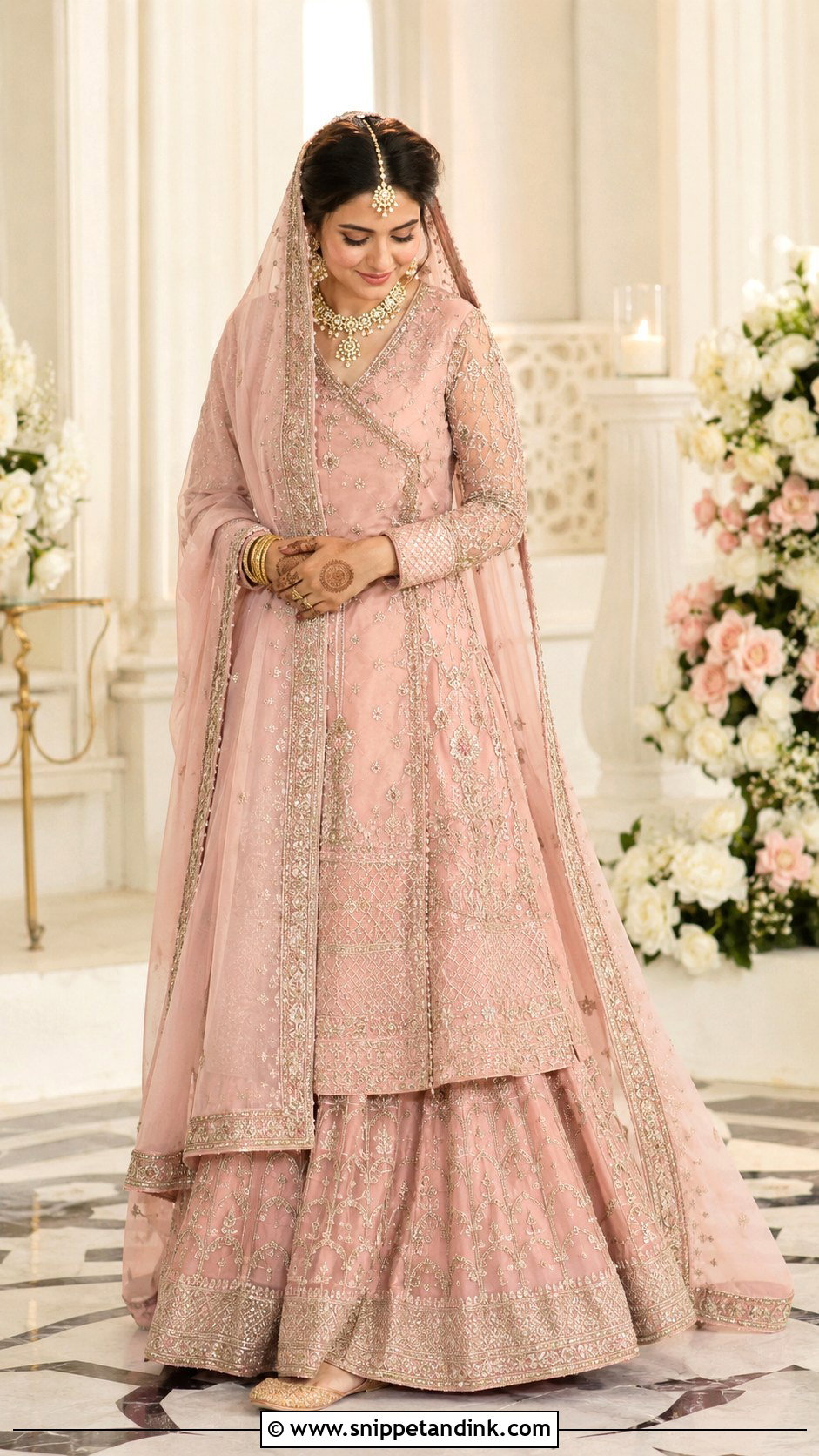
Tea pink has a faded, vintage warmth that suits old-style embroidery. As an angrakha, it pairs with a lehenga, gharara or straight pants. Gold, pearl or champagne threads keep it warm. Drape a finely bordered dupatta over the head or across both shoulders. Kundan, soft bangles and embellished flats round it out. It works with a low bun or a hijab equally; with a hijab, I choose a slightly deeper pink so the head covering doesn’t look like it came from a different outfit.
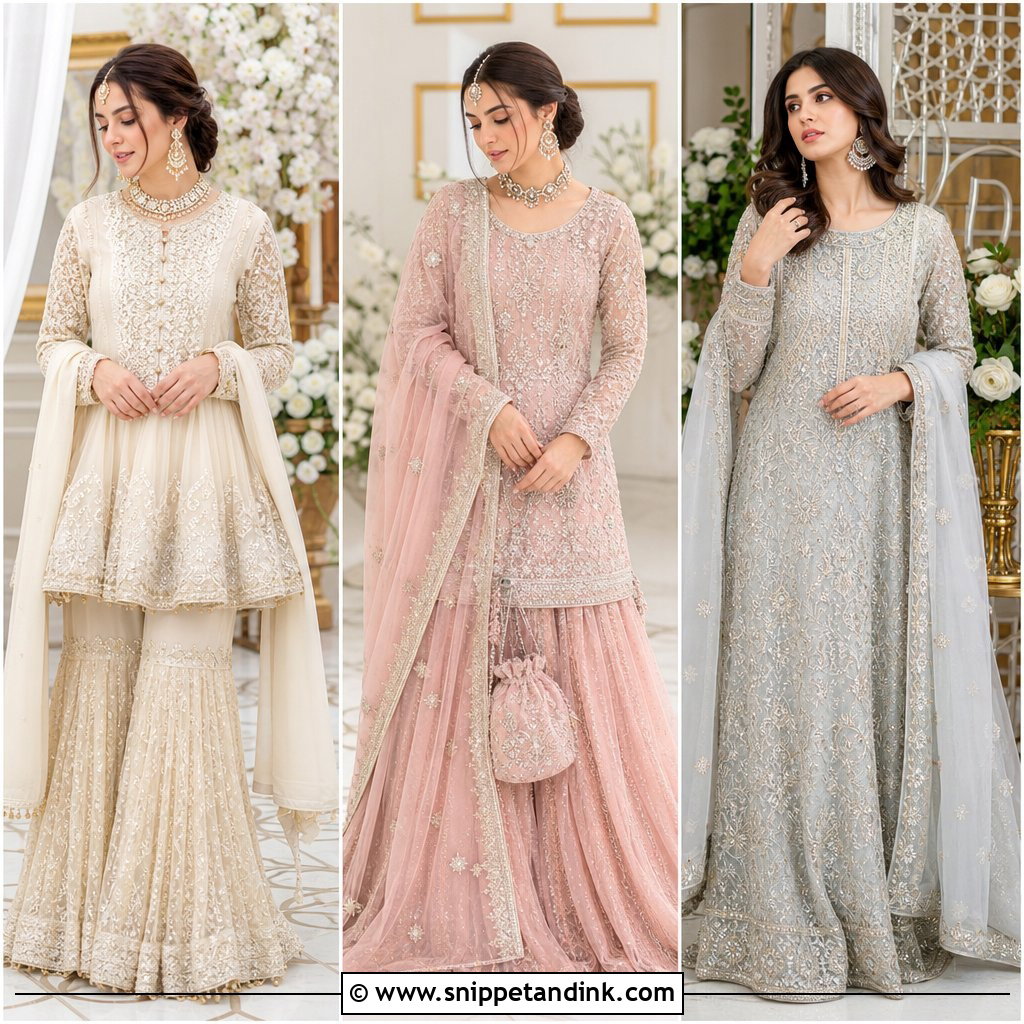
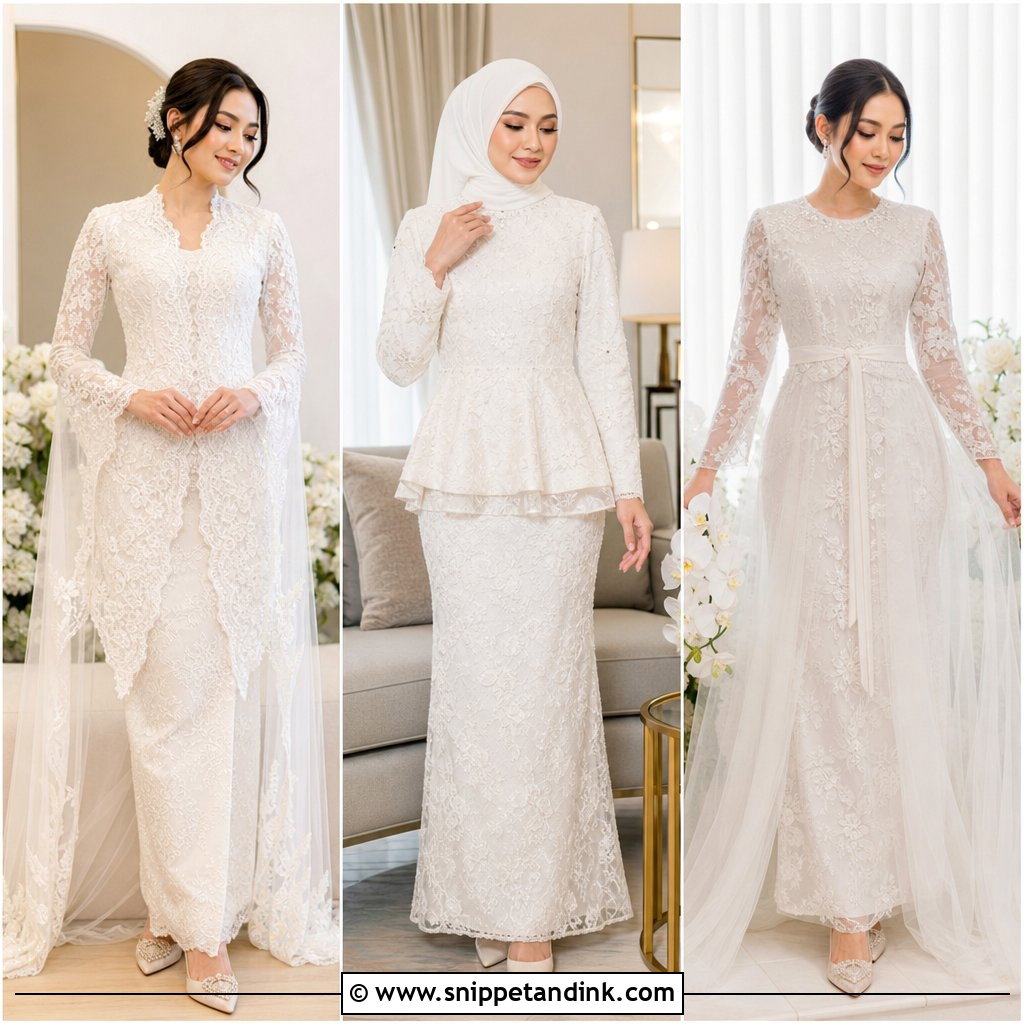
23. Ivory Nikah Long Shirt With Lehenga Outfit
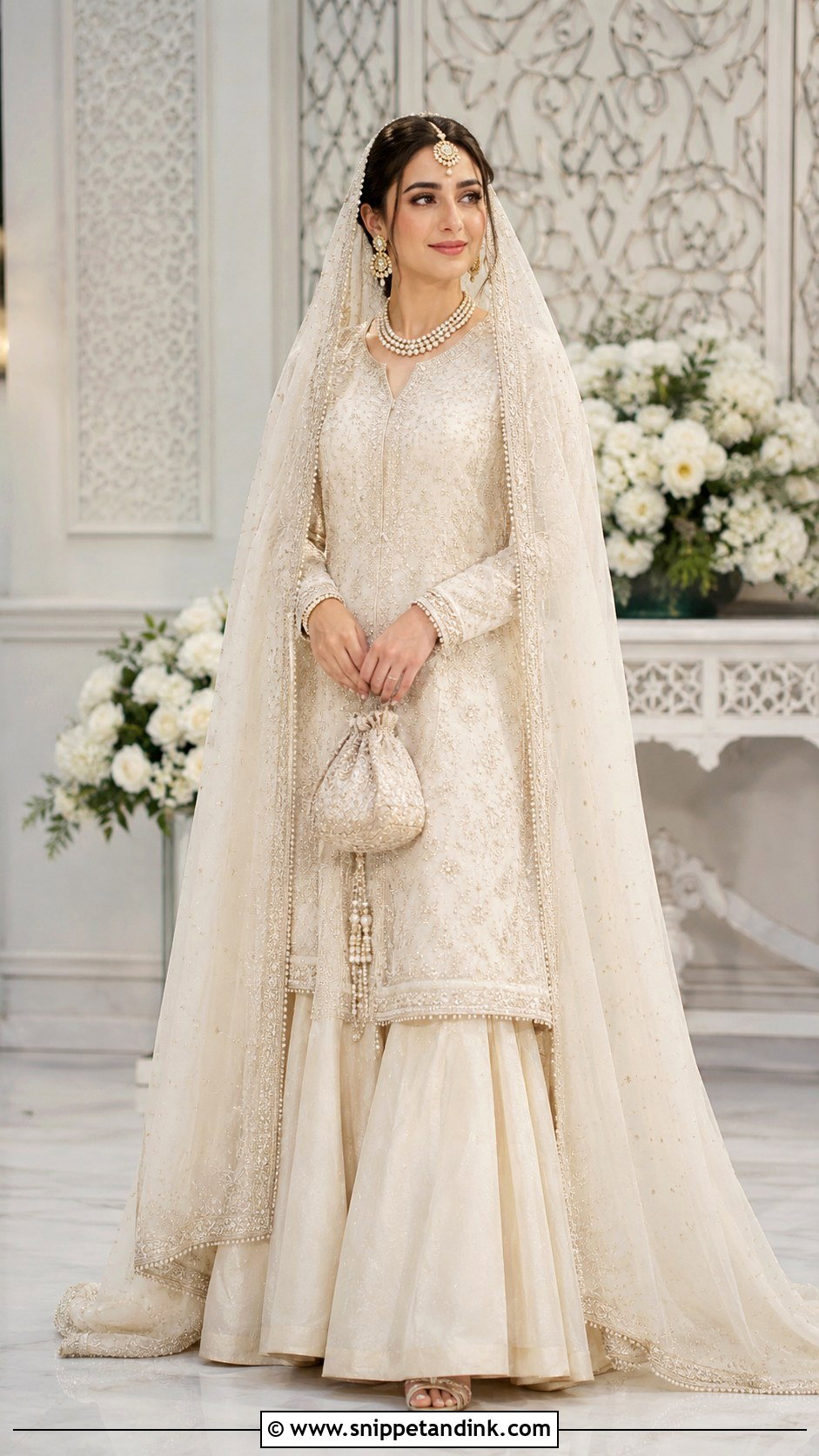
A long shirt over a lehenga is the most practical shape here. It covers the hips when you sit, it doesn’t ride up when you raise your arms to greet relatives, and it moves easily. Choose ivory with embroidery on the neckline, sleeves and hem over a matching or gently flared lehenga, and add a net or organza dupatta with a statement border. Pearls, a small tikka and khussas suit it. Because the embroidery does most of the work, it stays special even with minimal makeup.
24. Pakistani Nikah Outfit With Jacket
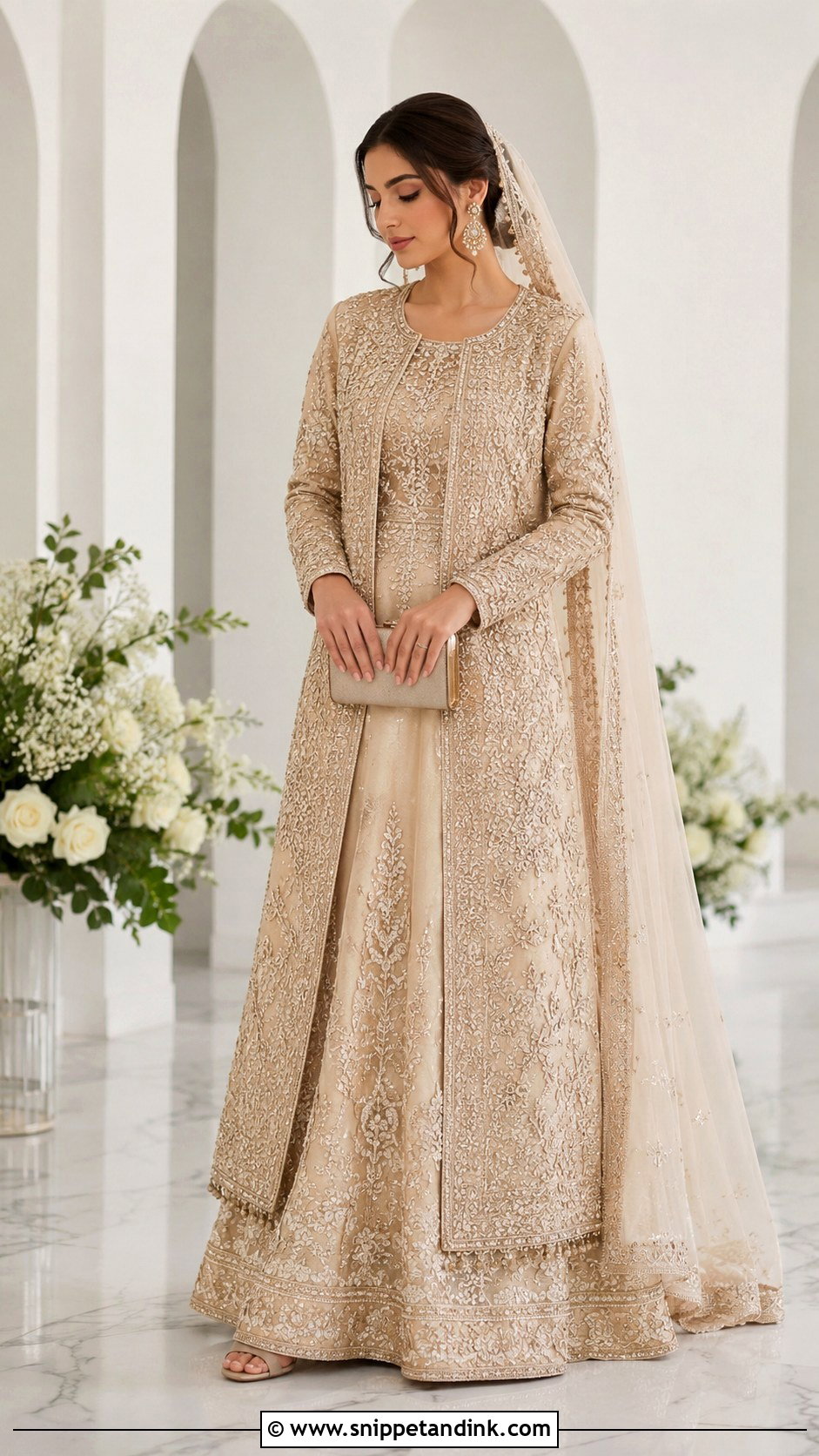
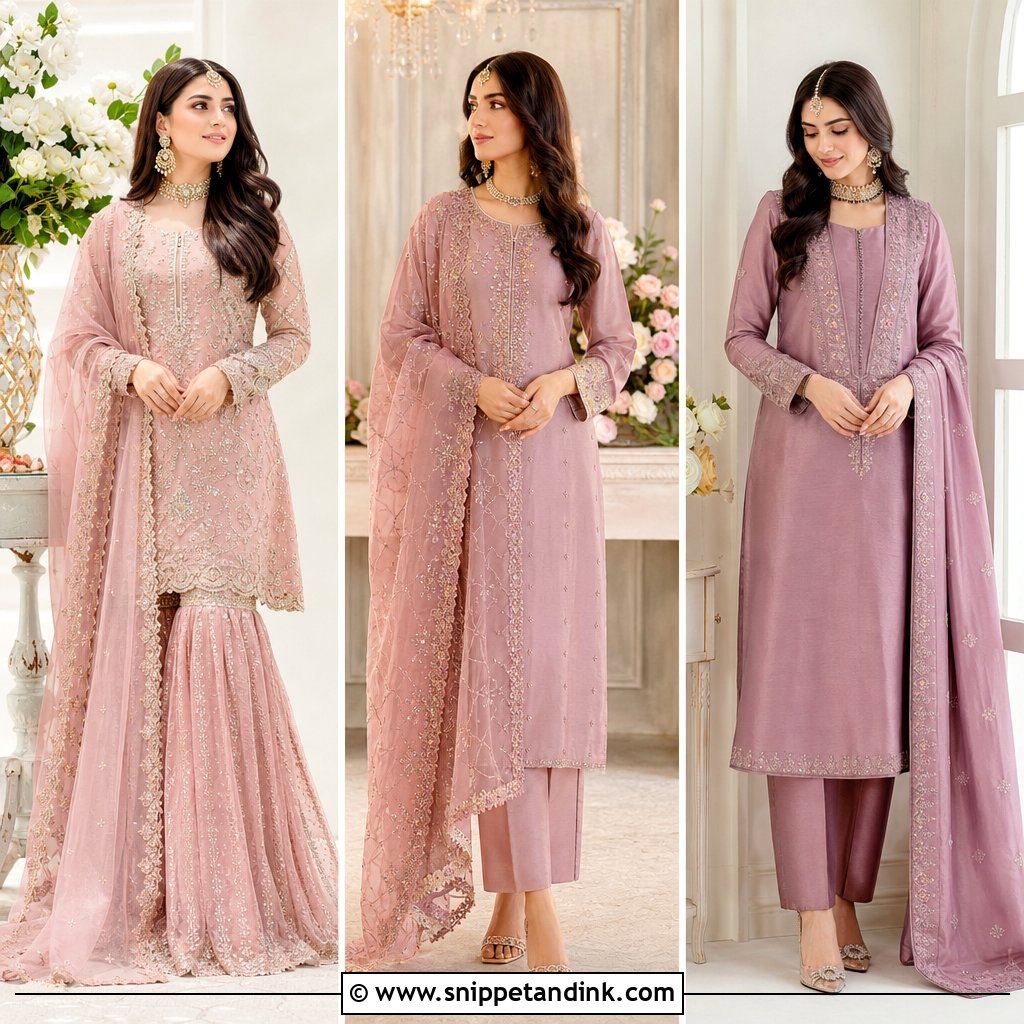
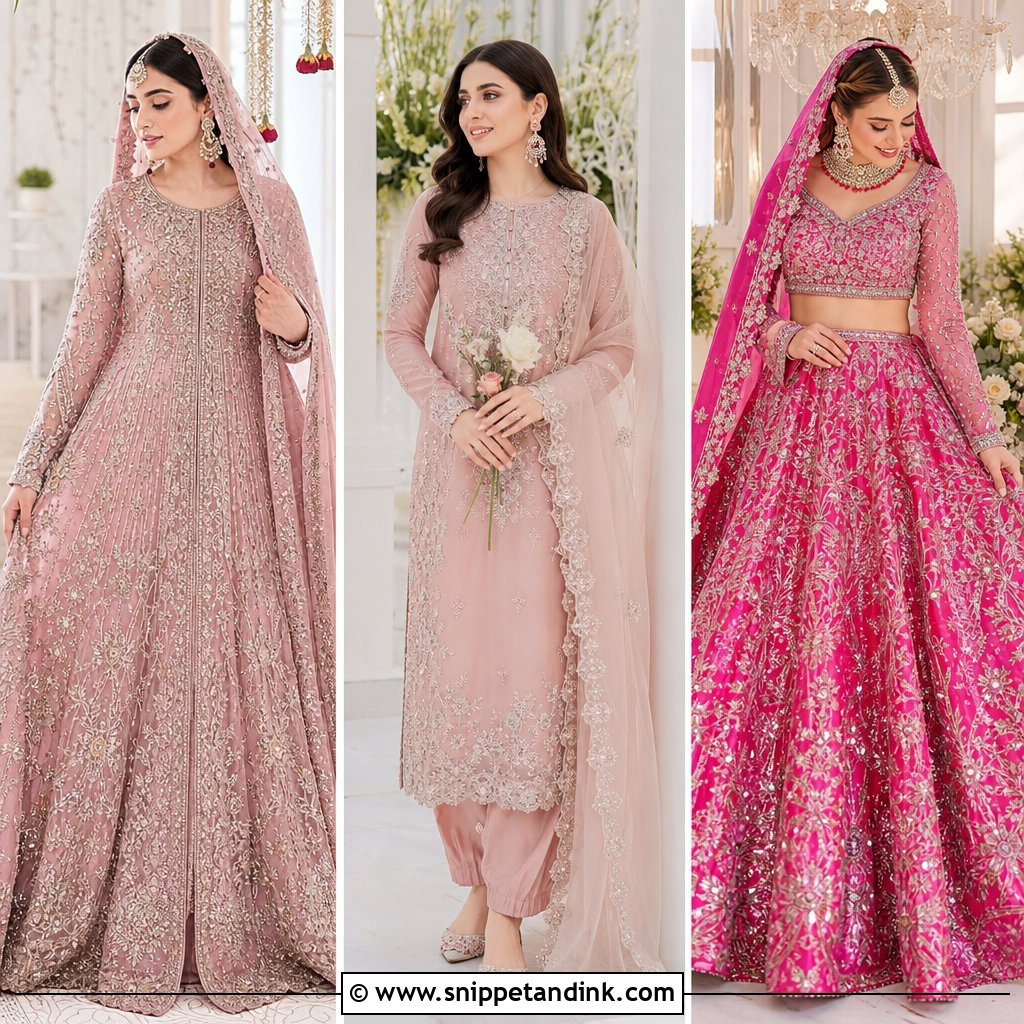
When a bride asks me for coverage without stacked layers, I reach for a jacket over a simple base. Start with a lehenga, sharara or straight trouser set and add a long embroidered jacket; open-front looks relaxed, while buttoned or lightly cinched feels more formal. Ivory, champagne, blush and mint all work. A dupatta over the head brings back the bridal feel. In full-length photos the jacket lengthens the body, which helps petite brides especially. Check the armholes when seated, since jackets cut high under the arm pinch after an hour.
25. Pakistani Nikah Outfit With Dupatta Veil
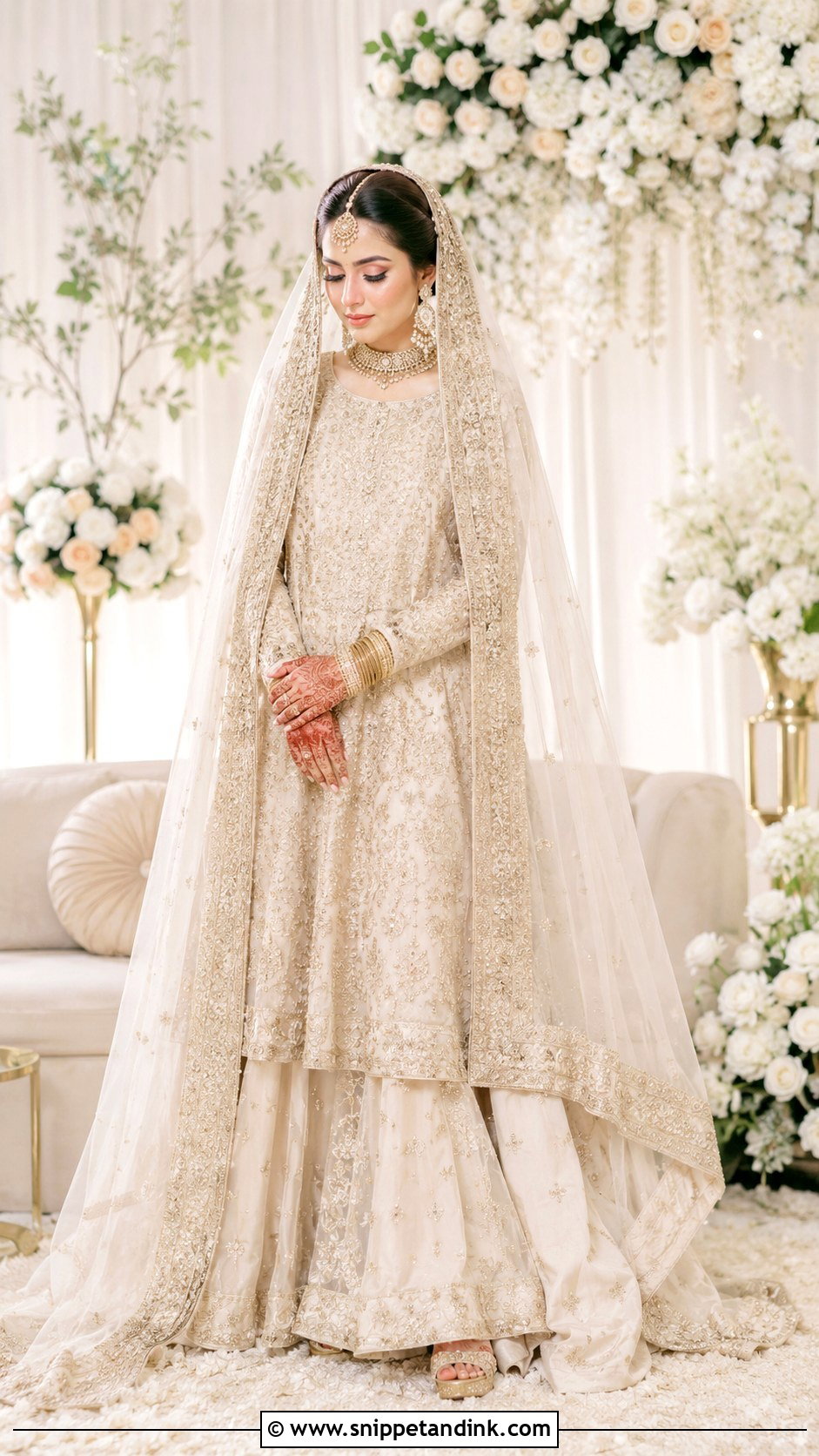
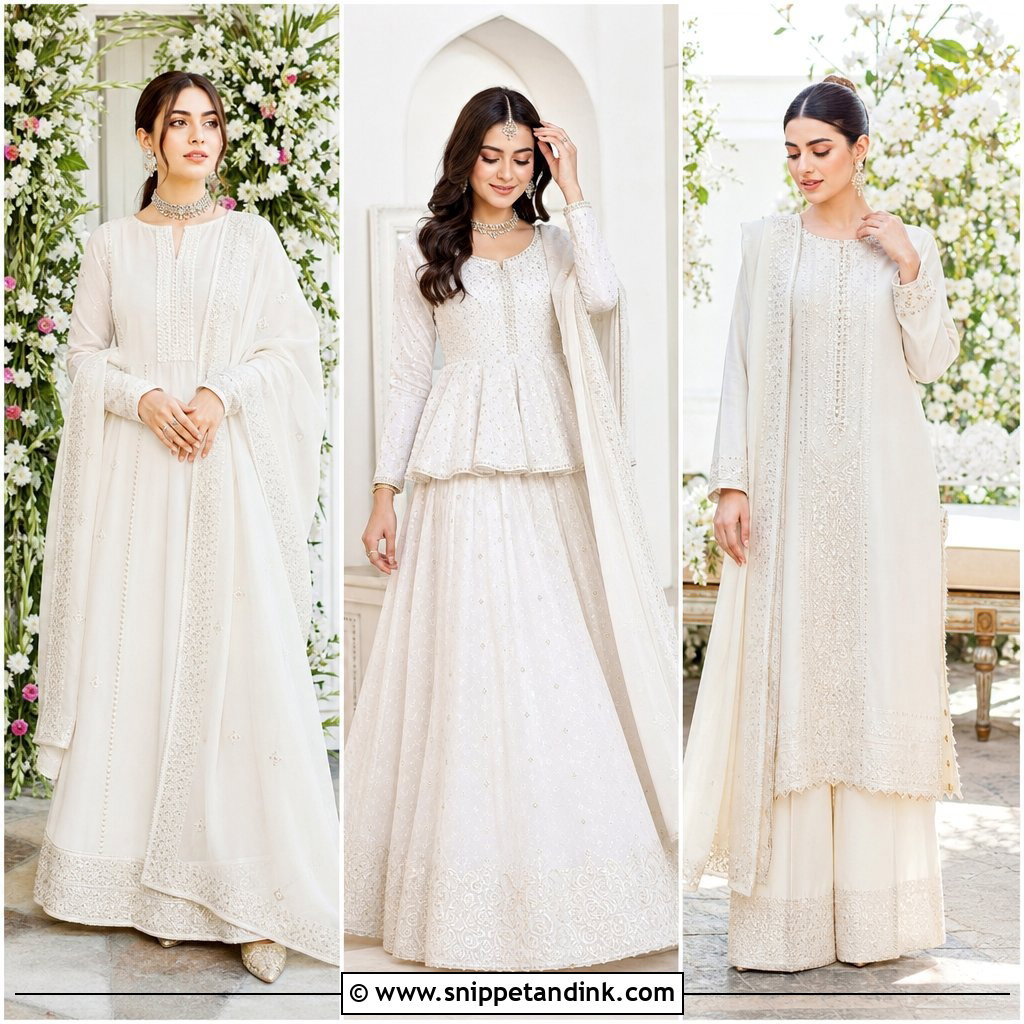
A dupatta veil can turn a simple bridal outfit into a complete Nikah look. Choose a modest lehenga, pishwas, gharara or sharara, then let the dupatta lead: a heavily bordered net, pearl-trimmed organza or embroidered tissue all suit this. Keep the outfit underneath quieter so the two aren’t fighting. Jewellery should sit inside the dupatta border, not on top of it. A long dupatta catches under heels, so wear lower shoes and have someone hold the back as you walk in.
Ordering a Pakistani Bridal Outfit When You Live Overseas
Many of the brides I dress are ordering from designers in Lahore or Karachi while living abroad. That works well, but it needs more time than people expect. Hand embroidery like zardozi and dabka is slow, and bridal pieces are usually made to order, so ask about lead time at the first conversation and plan for several months, plus shipping and any customs delays.
Measurements and alterations
Have measurements taken by a tailor rather than at home, and send the designer a photo of yourself in a fitted top so they can see your proportions. Ask the designer to leave extra seam allowance at the side seams and sleeves. Embroidered fabric can’t be let out much once cut, so a little room makes local alterations possible. Book a tailor near you who works with South Asian bridal wear before the outfit arrives.
Storing it until the day
When it arrives, hang the shirt or blouse on a padded hanger and fold the lehenga or gharara in a cotton sheet rather than plastic, which traps moisture and can tarnish metallic thread. Keep tissue between embroidered layers so beads don’t snag the fabric beside them. Steam lightly from the inside on the morning, never iron directly over embroidery.
Matching the Colour to the Hour of Your Nikah
If I had to give one rule, it would be to dress for the time and place of the ceremony first. Pastels and ivory come alive in morning light and garden settings, while maroon, emerald and red carry an evening hall. Then check the practical side: can you sit, kneel and sign without adjusting anything, and does the dupatta stay put through the whole reading? Jewellery, shoes and makeup should support the outfit rather than compete with it. Get those right, and any of these looks will feel like yours on the day.
You'll Like These Ideas:



Leave a Reply