
Silk is the fabric I trust most for Pakistani wedding wear, because it holds embroidery without sagging and takes dye deeper than any synthetic. It is also the fabric that punishes a bad fit, a careless iron or a splash of water. Lehengas, ghararas, shararas, peshwas, Anarkalis, maxis and sarees remain the core Pakistani formal silhouettes, and every one of them can be cut in silk. Below are twenty ideas, from a red baraat lehenga to a mint shirt and palazzo for a guest, covering the nikah, mehndi, baraat and walima. Red and maroon are still the classics; ivory, mint, lilac and champagne carry the lighter events.
Raw Silk, Jamawar or Tissue? Telling the Silks Apart
Shops use “silk” loosely, and the name on the tag often describes a look rather than a fiber. These are the ones you will meet most in Pakistani wedding wear:
- Raw silk: a slightly textured surface with small slubs. Holds structure, takes heavy embroidery, and creases less than smooth silks.
- Jamawar: a pattern woven into the fabric, often paisley, so it looks decorated even with little embroidery.
- Banarsi: silk brocade woven with zari, rich and fairly heavy.
- Tissue: woven with metallic thread for shimmer. Light, crisp, and quick to crease.
- Katan and charmeuse: smooth and lustrous, beautiful on sarees and gowns, and unforgiving of a poor fit.
Checking what you are paying for
Many wedding outfits labelled silk are blends or polyester. That is not always a bad thing, since blends can be lighter and cheaper, but the price should match. Real silk feels cool at first touch and warms in your hand. If the shop will give you a loose thread or a tiny swatch, burn it carefully outdoors: silk smells like burnt hair and crumbles to a soft ash, while polyester melts into a hard bead and smells of plastic. Ask whether the lining is silk or cotton too; a synthetic lining under silk traps heat on a summer evening.
1. Red Raw Silk Bridal Lehenga
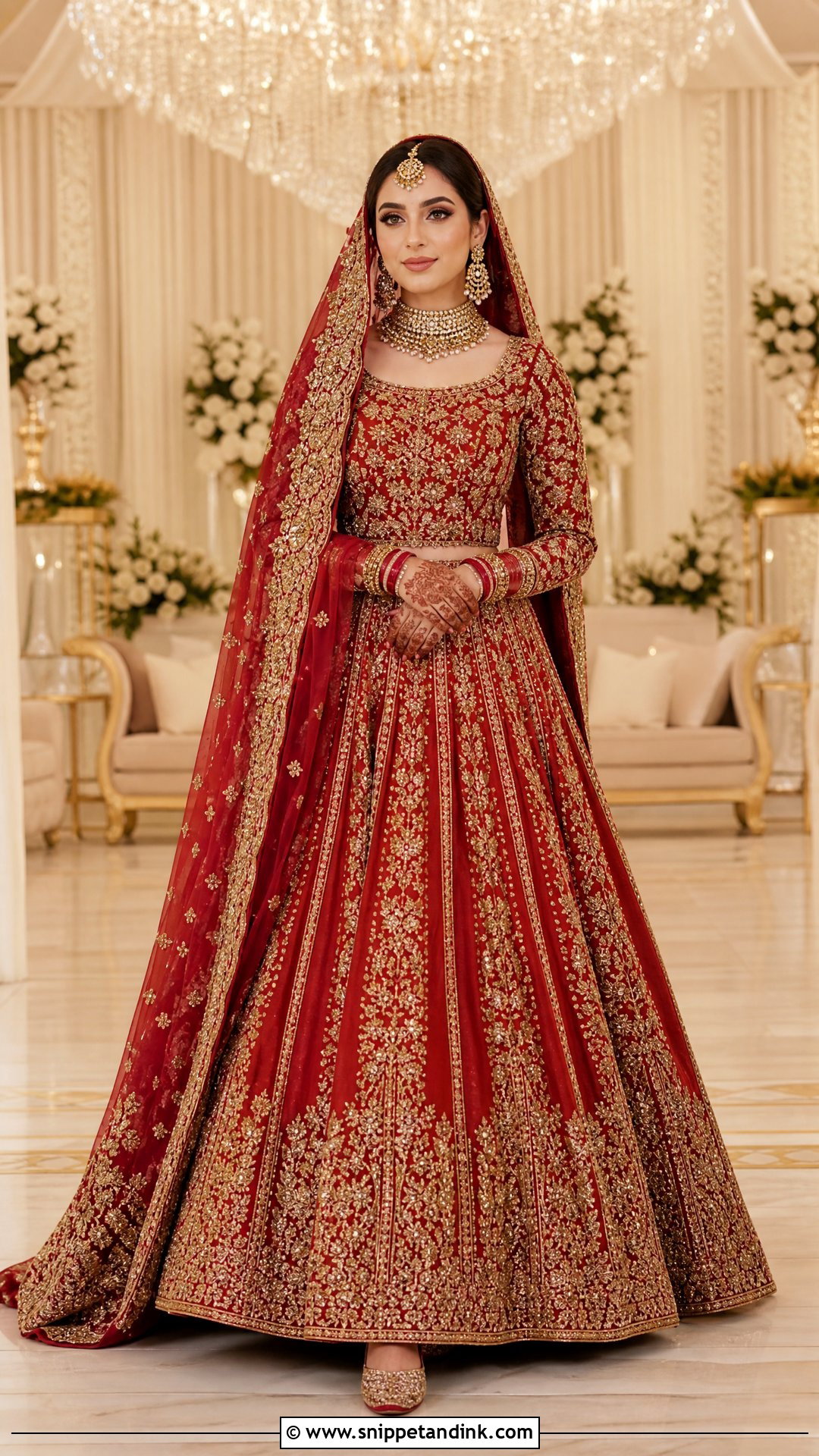
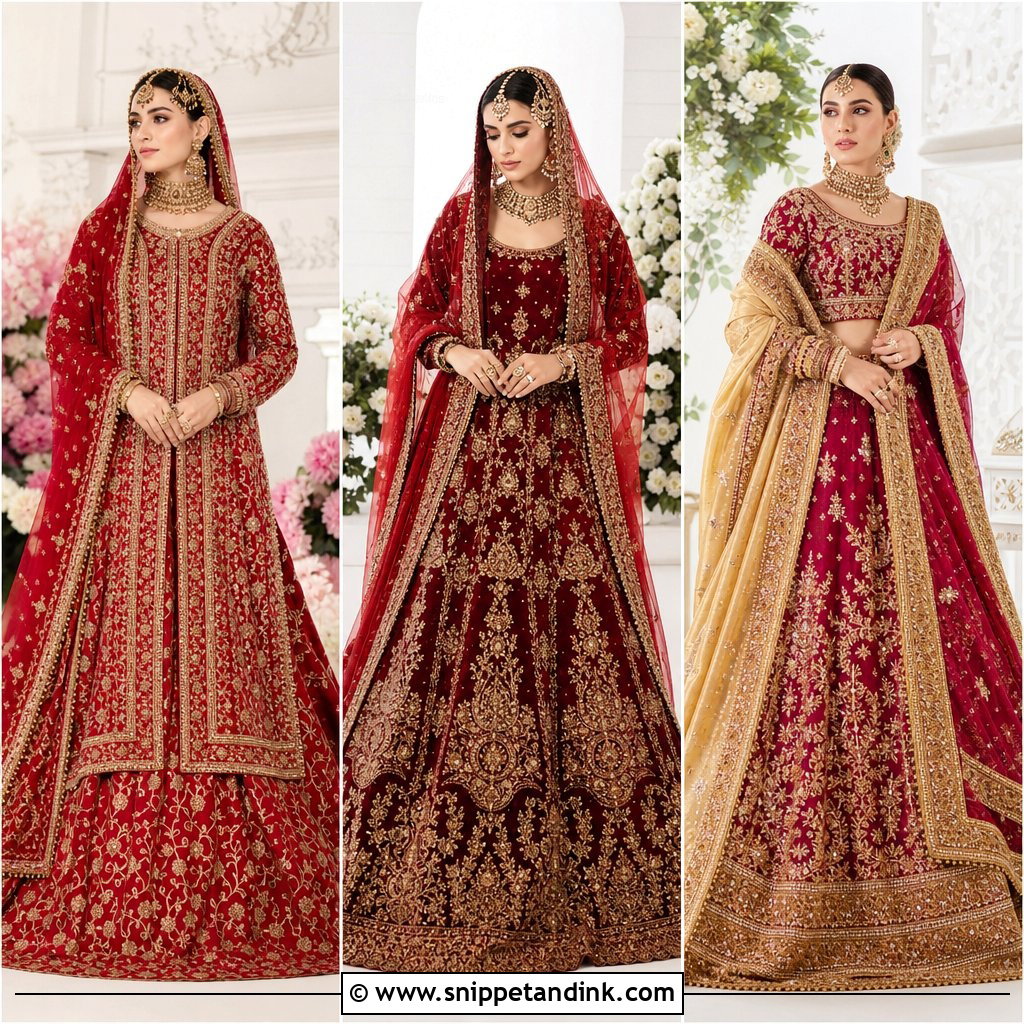
Raw silk has a slightly nubby surface and holds its shape, which is why a deep red raw silk lehenga still anchors so many baraats. I ask for a paneled skirt with zardozi or dabka concentrated at the border and only scattered above it, because dense work across raw silk pulls the panels out of line. A fitted silk blouse with secure sleeves keeps everything in place. Wear a matching red dupatta over the head and a lighter tissue one across the shoulder. Keep blouse and skirt in the same red family; two slightly different reds look like a mismatch in photos.
2. Ivory Silk Nikah Peshwas
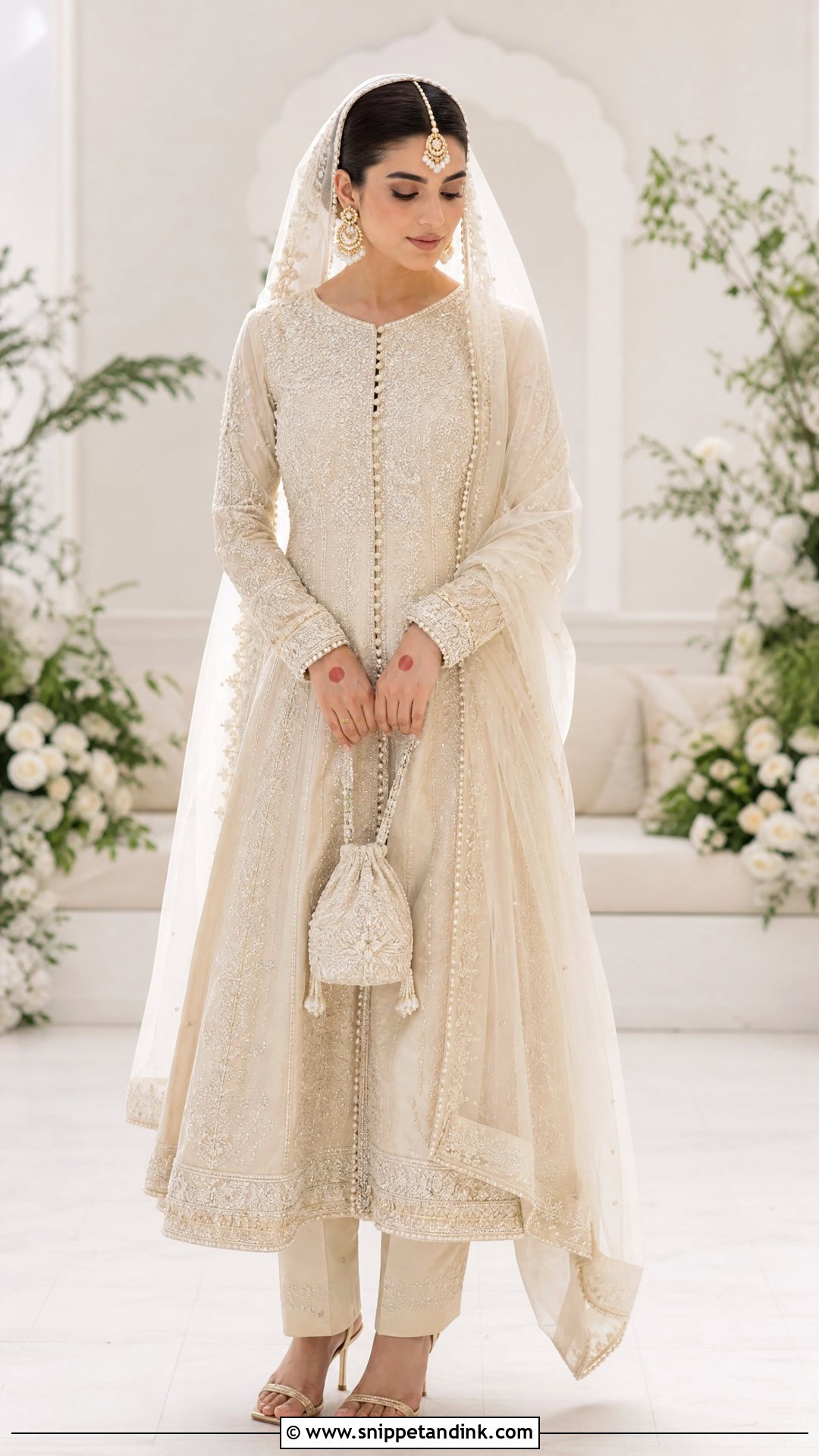
Ivory silk has a warm glow under daylight that pure white lacks, and it is the shade I suggest for most nikah brides. A floor-length peshwas with a fitted bodice, long sleeves and a full flare moves gracefully as you walk to the stage. Keep pearl, silver or pale gold embroidery at the neckline, cuffs and hem. Straight silk trousers go underneath. An ivory organza dupatta with a narrow border sits neatly over the head. If ivory still feels too pale against your skin, cream, ecru or light champagne are all close enough to read as bridal.
3. Emerald Green Silk Gharara
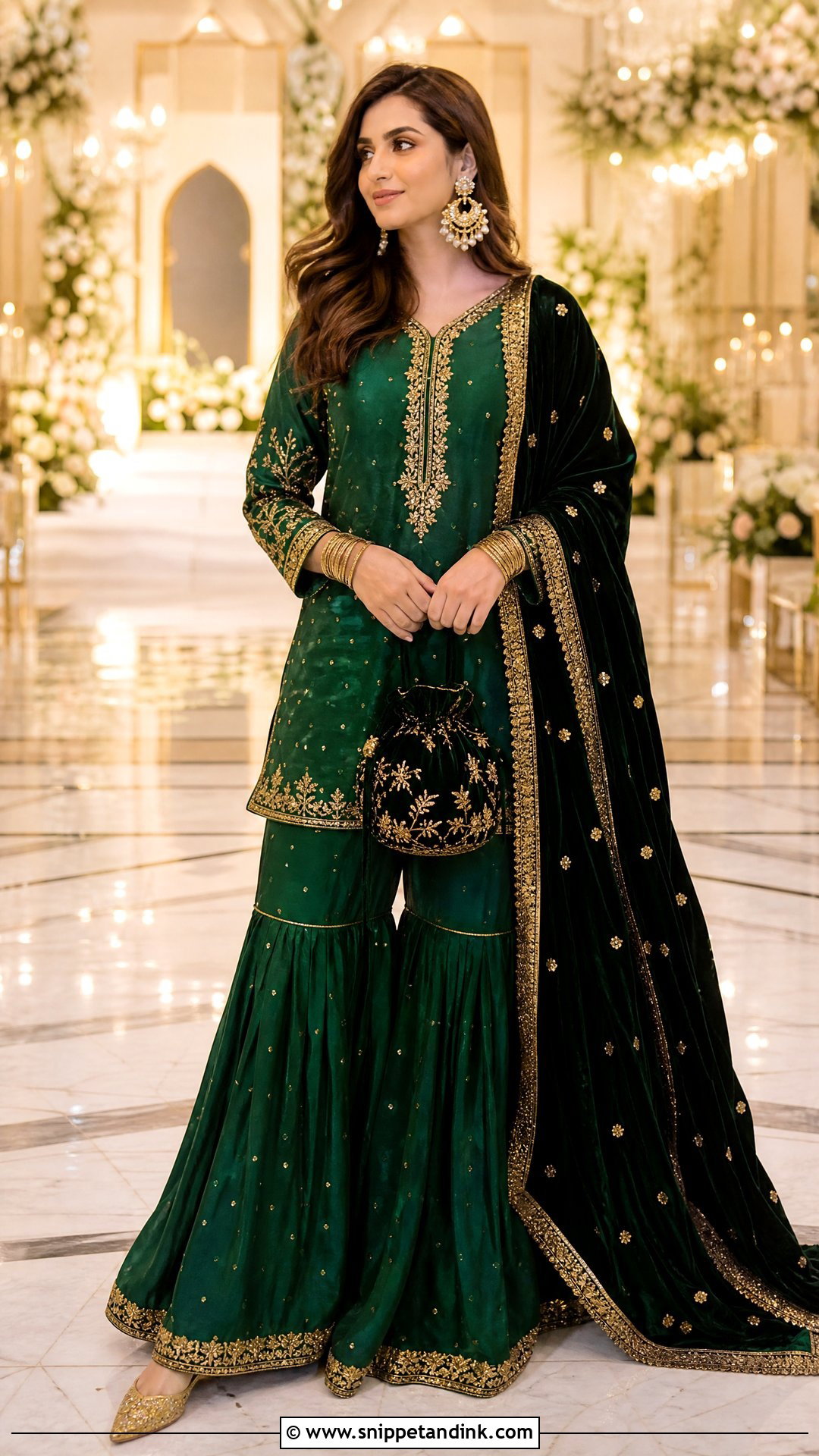
Emerald silk catches light differently on every fold, so even a plain panel looks alive. A knee-length shirt with gold botanical embroidery over an emerald gharara, with embellished bands at the knee joints, gives traditional volume and a defined top half. Pick one heavily worked piece and calm the rest: a detailed shirt, a lightly scattered gharara and a bordered dupatta in darker green or antique gold. Kundan earrings and pointed gold khussas finish it. The deep color suits evening receptions and winter weddings, where it holds its richness under warm lights.
4. Blush Pink Silk Sharara
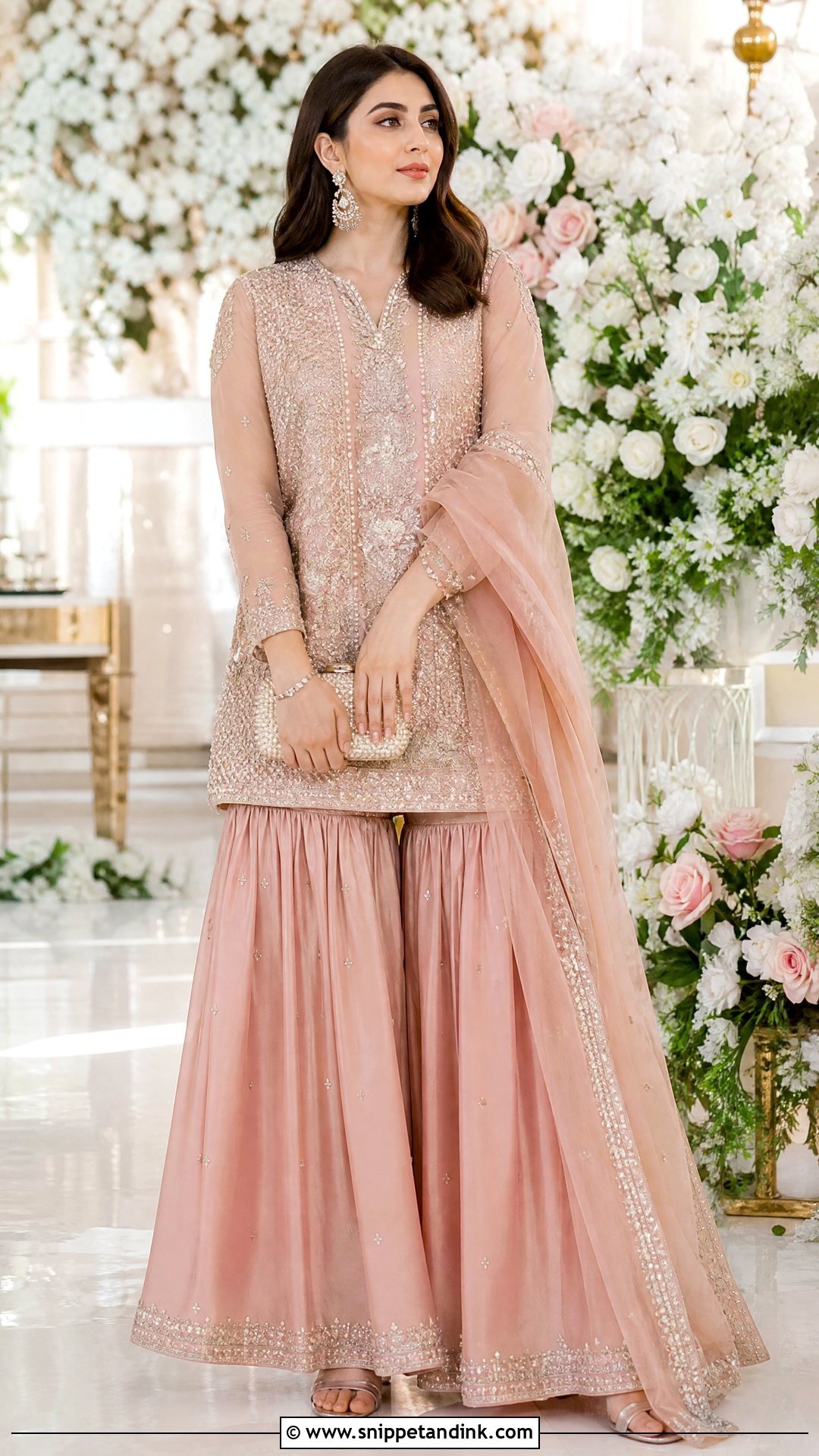
Blush silk shows every water mark and every crease, so I only recommend it to someone happy to be careful with it. In return it gives a soft, expensive look for a walima, engagement or daytime wedding. Pair wide flowing sharara pants with a hip-length shirt shaped through the shoulders and bust, decorated with silver zari, pearls and pale threadwork. Keep the shirt streamlined and let the sharara carry the volume. A sheer blush dupatta with embroidered corners drapes easily. Silver block heels are steadier than stilettos on long silk hems.
5. Maroon Silk Farshi Lehenga
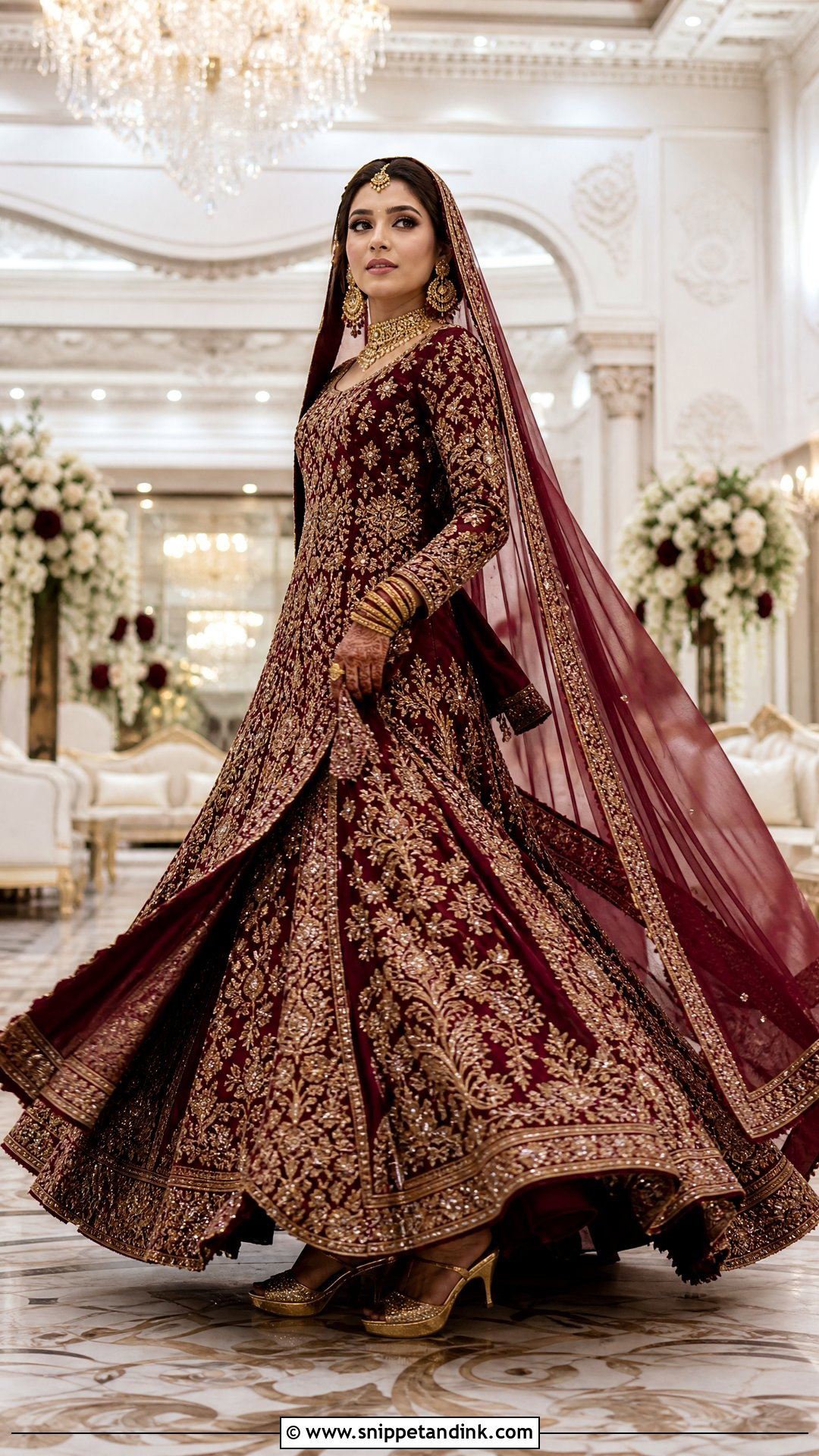
A farshi lehenga’s hem sweeps the floor, and in maroon silk it makes a dramatic entrance. The skirt can carry deep panels and antique gold borders, with motifs growing denser toward the floor so the weight sits low and the train falls cleanly. A structured maroon blouse or a longer fitted shirt suits different coverage needs. Keep the main dupatta in rust or deep red and any second veil very light. Ask the tailor for a manageable train and a hidden wrist loop, so you can lift it to walk and sit. A spacious indoor venue suits it best.
6. Gold Banarsi Silk Anarkali
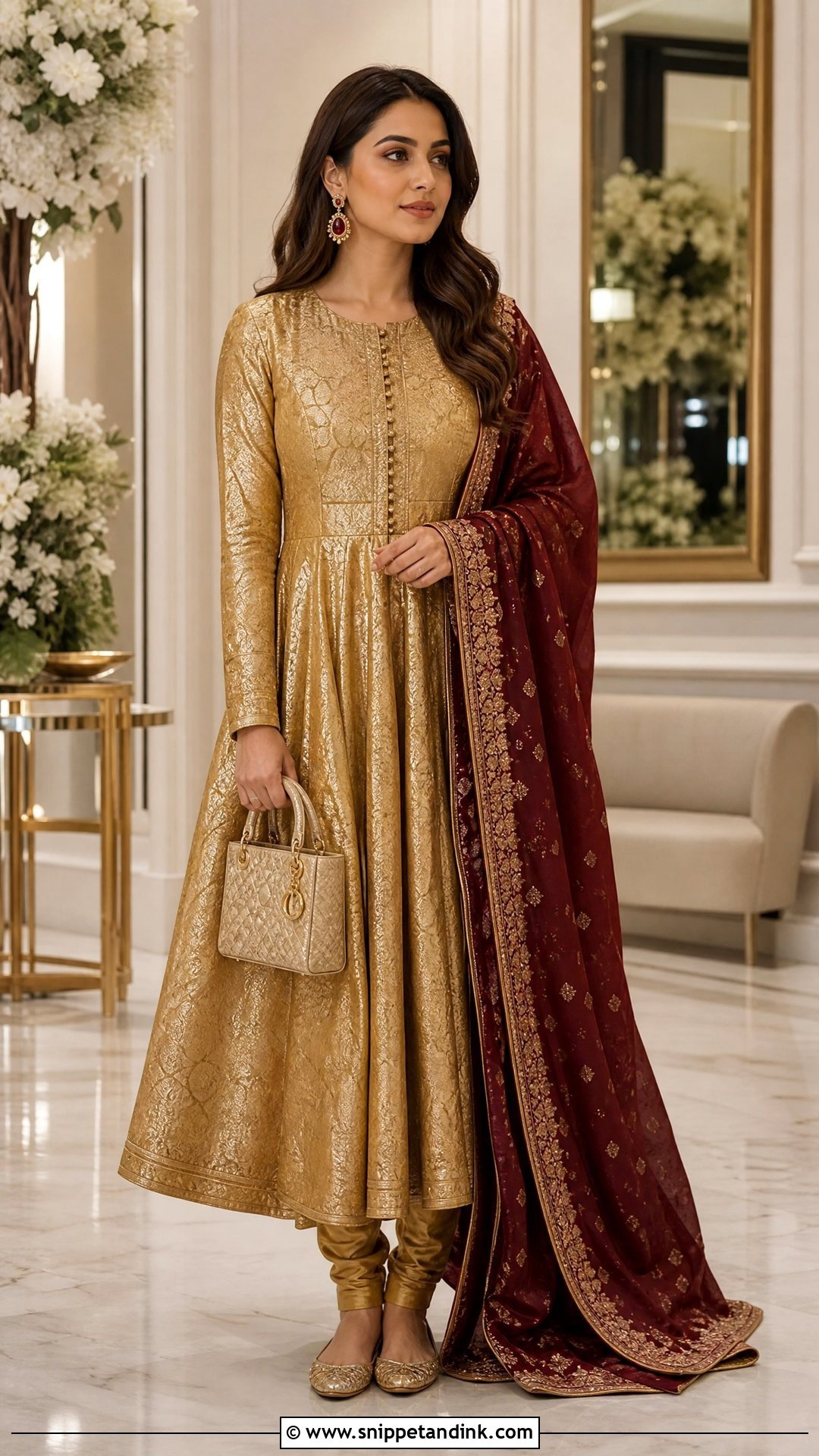
Banarsi silk has its pattern woven in with zari, so the fabric is already rich before anyone embroiders it. On a gold Banarsi Anarkali, I keep surface work to the cuffs, neckline and hem, because adding more fights the weave. Choose a defined waist, fitted sleeves and a border that shows off the skirt’s movement, with a plain silk churidar underneath. A maroon, emerald or plum dupatta breaks up the gold near the face. Woven zari can feel scratchy on the inside, so check the lining at the underarms before you buy.
7. Pink Silk Angrakha Dress
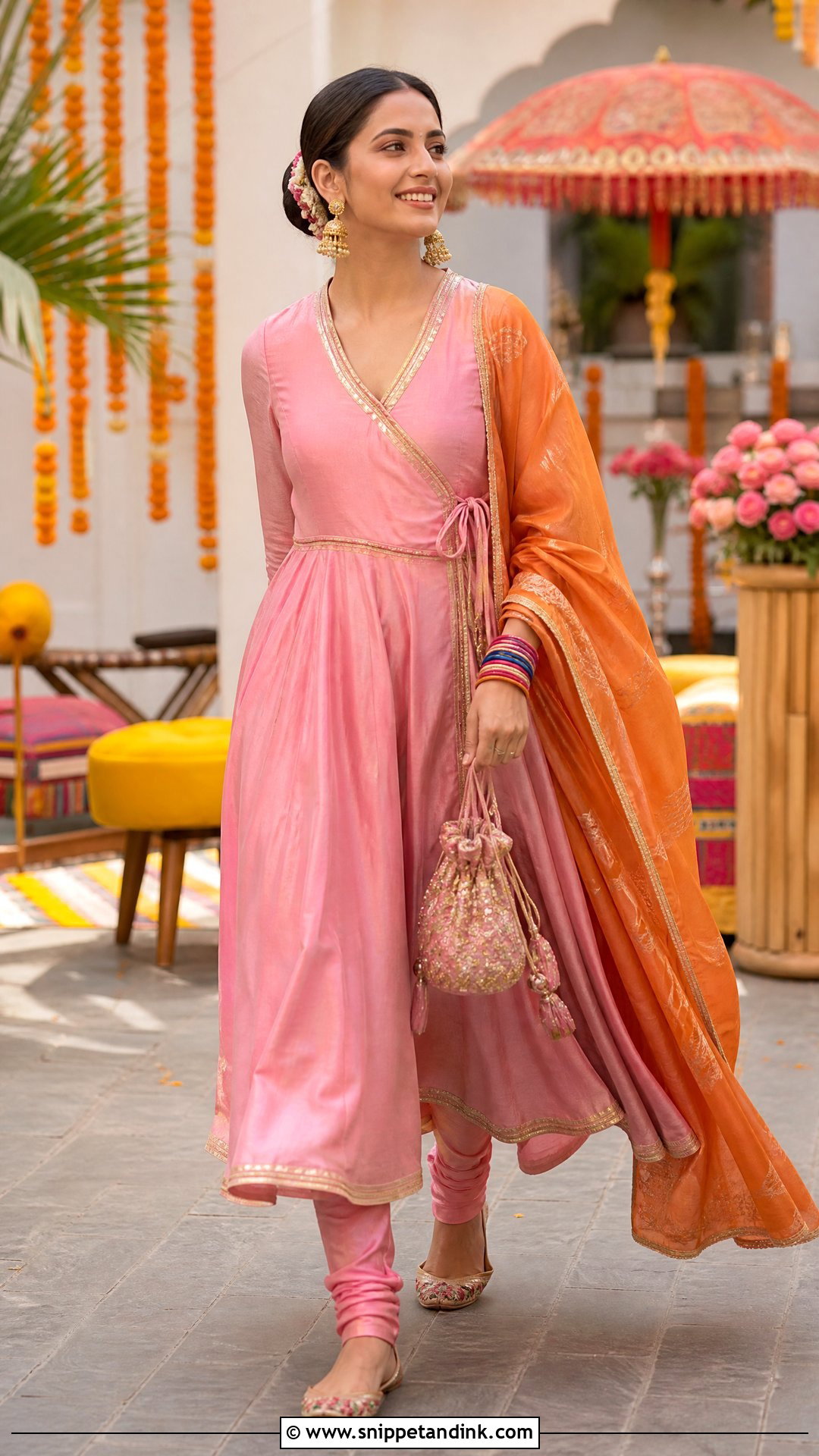
A pink silk angrakha dress pairs the crossover bodice with a full skirt, and silk makes the wrap drape softly instead of gaping. Rose suits a daytime event, raspberry an evening one. Outline the wrap with gota or pearls and add tassels at the waist, but keep the ties proportionate; oversized ties pull the wrap open. Wear it over churidar or a lightly flared silk skirt. An orange, teal or gold dupatta makes it festive enough for a mehndi. Embellished khussas suit the dancing.
8. Navy Silk Long Shirt And Lehenga
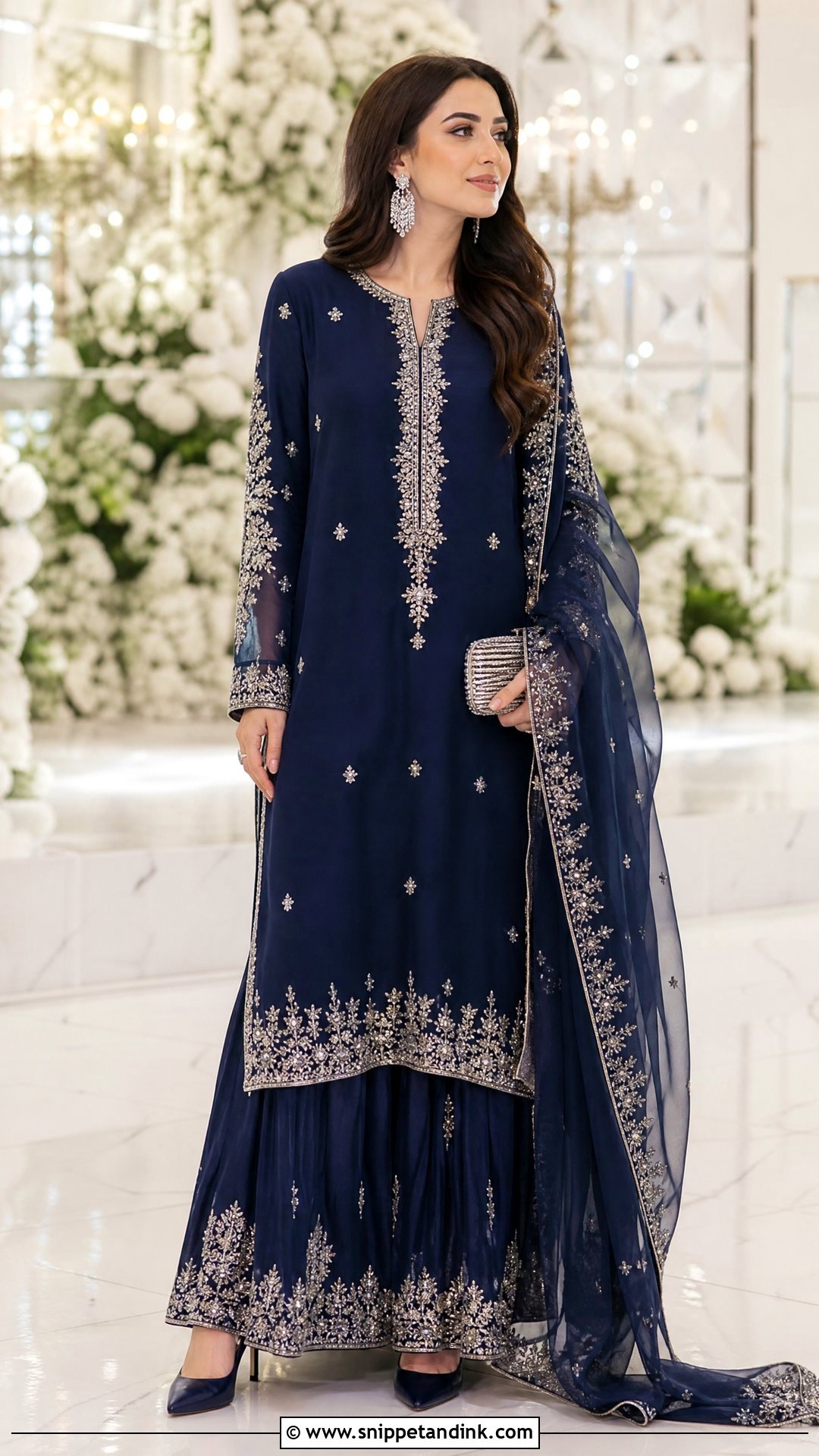
Navy is the most forgiving dark shade in silk; it hides small marks and makes silver or pewter embroidery stand out sharply. A long embroidered shirt falling below the knee, layered over a less bulky silk lehenga, looks formal without fuss. A smoky blue organza dupatta keeps the dark base from feeling heavy. Petite women benefit from side slits and vertical embroidery, which keep the line long; taller women can carry a broader hem border. It is an easy fit for an evening walima or a formal reception.
9. Mustard Silk Mehndi Gharara
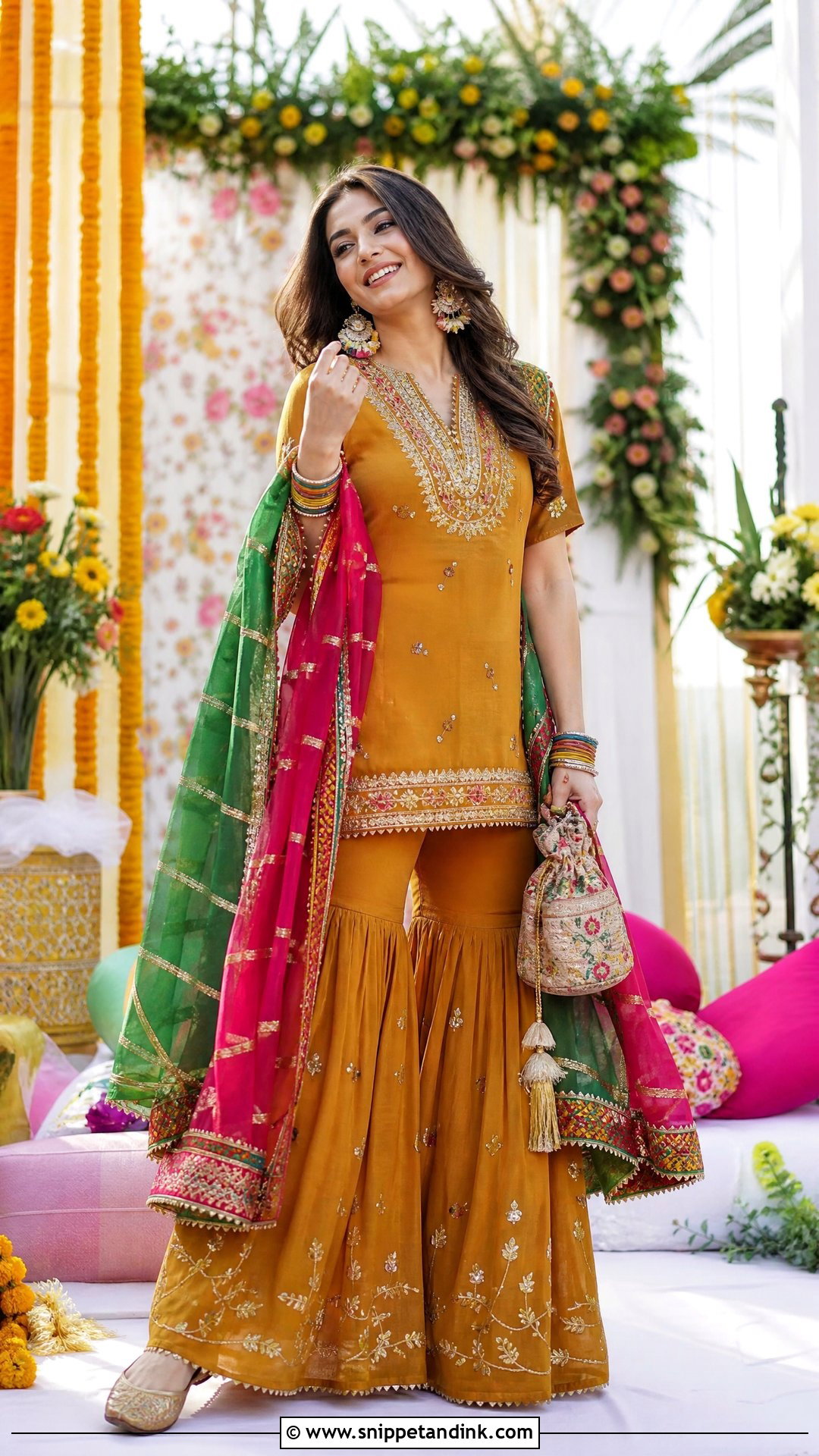
Mustard silk takes dye so evenly that it glows under mehndi lights. A short mustard shirt with a matching gharara carries gota borders, mirrors or multicolored flowers along the seams. Bring in a green, magenta or orange dupatta in a light fabric that stays pinned while you dance. If bright mustard overpowers your skin, ochre or muted marigold are softer. Hem the gharara slightly above the floor; silk is slippery underfoot and catches on heels. It is far easier to move in than a layered lehenga.
10. Lilac Silk Wedding Maxi
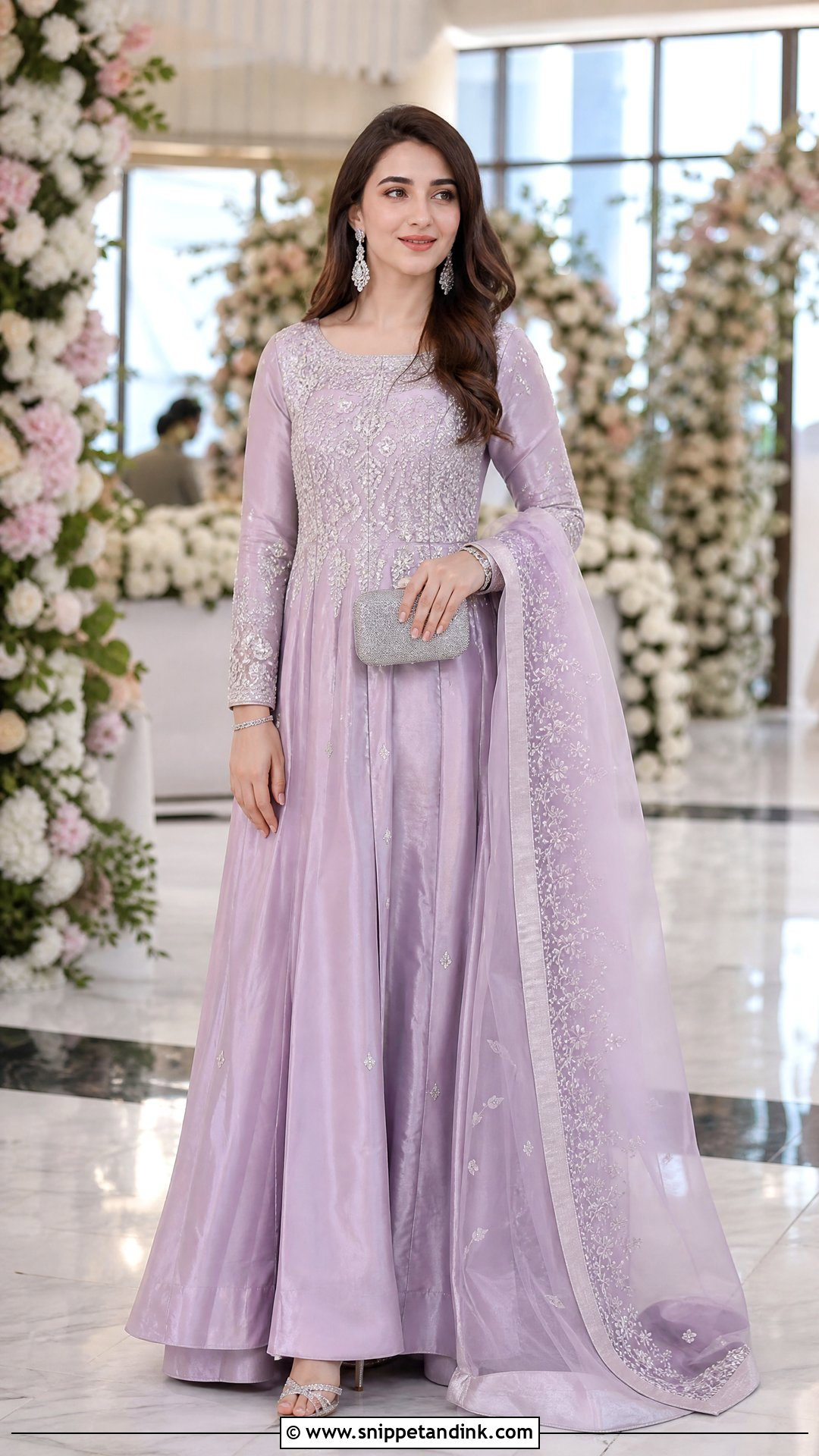
Can a pastel hold its own at a major event? In silk it can, because the sheen gives lilac depth that cotton never has. Choose a floor-length maxi with a shaped bodice, a flowing skirt and full or three-quarter sleeves, decorated with silver embroidery, crystals and tonal lavender thread. A defined waist stops it looking shapeless. A matching organza dupatta with a narrow sparkling border completes it for a walima, engagement or daytime reception. Ask for a soft inner lining; it keeps the silk from clinging to your legs as you walk.
11. Teal Silk Peplum And Lehenga
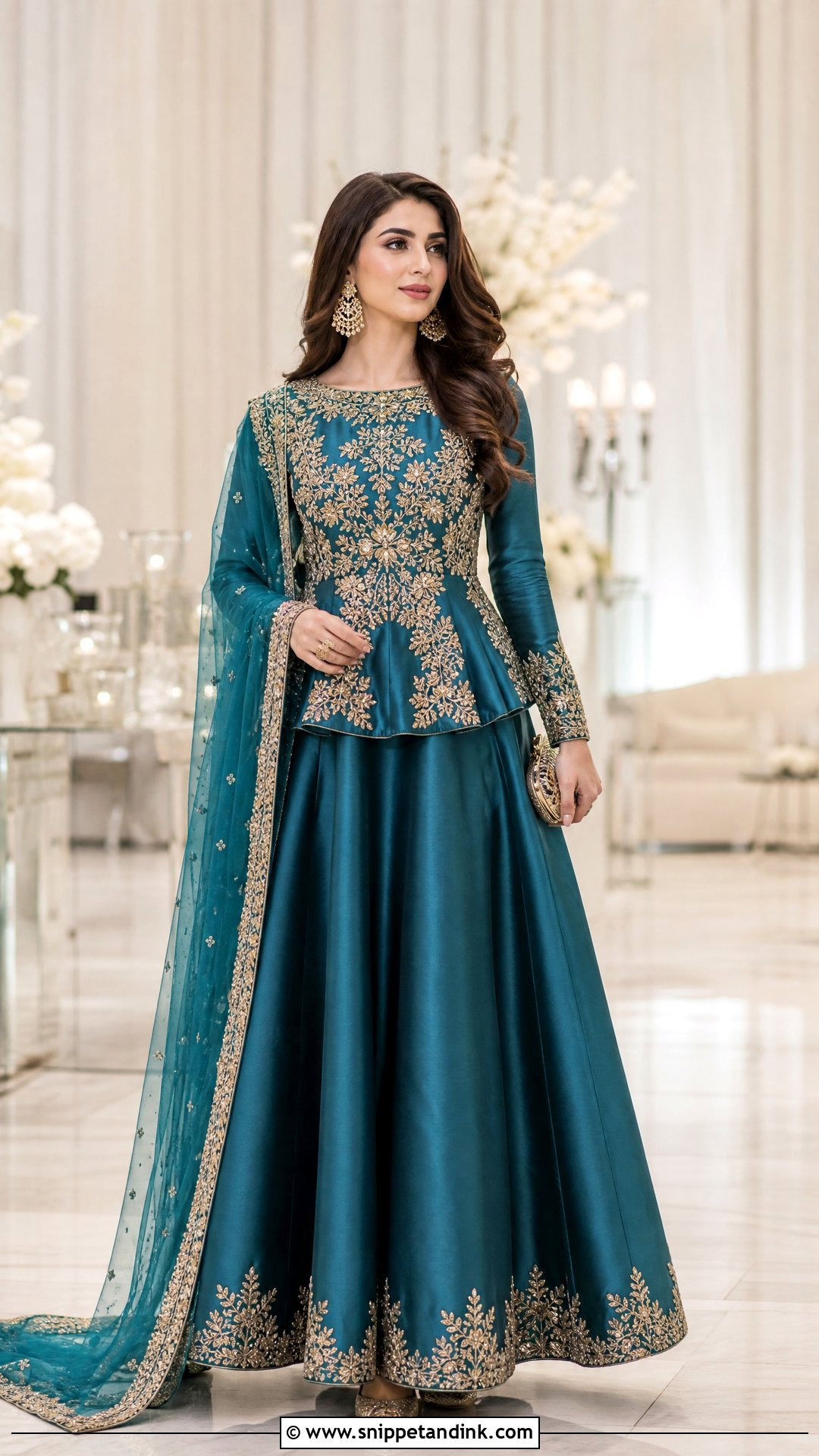
Teal is a color silk handles especially well, shifting between blue and green as you move. A fitted peplum ending at the upper hip and flaring gently over a controlled lehenga gives a modern line. The hem must not end at the widest point of the hips; a little higher or lower reads smoother. Antique gold embroidery strikes against teal, silver cools it down. A structured lining helps the silk peplum keep its flare. It suits a guest, a bridesmaid or a bride at a smaller pre-wedding function.
12. Champagne Silk Wedding Saree
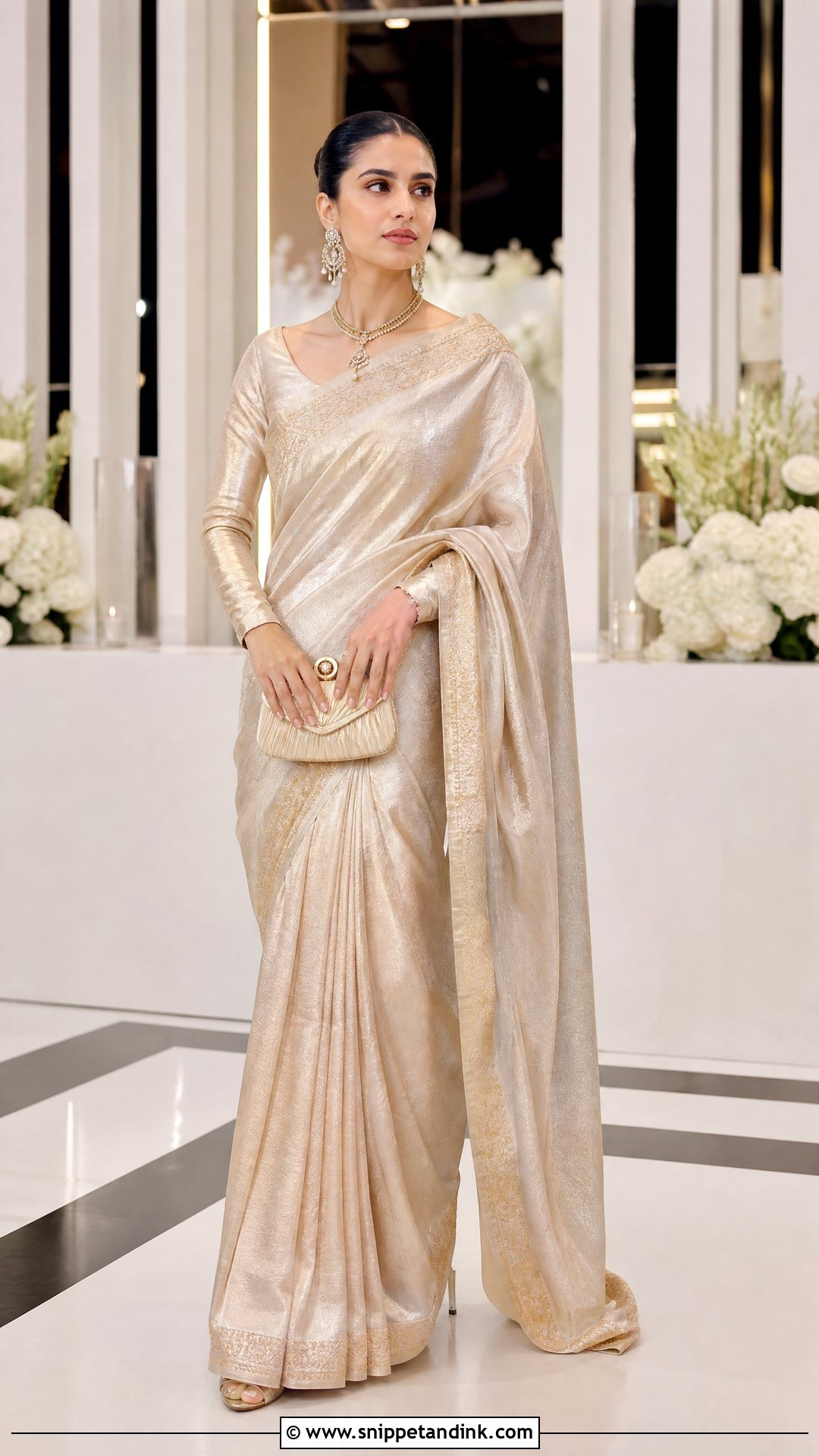
Silk sarees are heavier and springier than chiffon ones, so pleats can puff out if they are not pressed and pinned well. Pre-stitched pleats solve that for anyone who will move around a lot. A champagne silk saree with a woven border, subtle sequins or delicate gold embroidery is graceful for a walima, reception or formal family wedding. The blouse needs supportive construction, comfortable sleeves and a neckline chosen with the jewelry in mind. Pearl or polki earrings, a slim necklace and a small bun keep the drape the focus.
13. Rust Silk Farshi Shalwar Suit
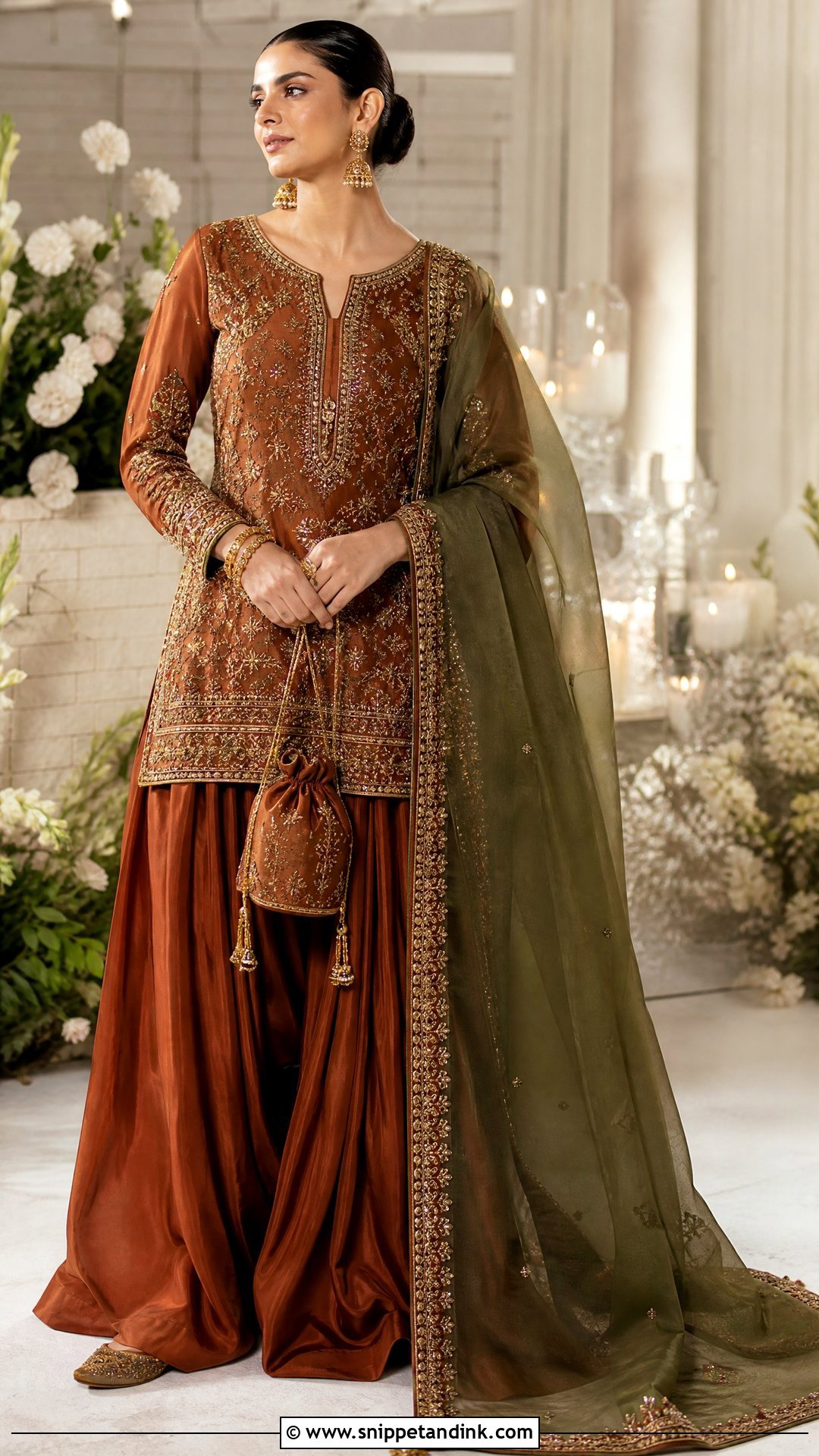
Rust silk is warm and slightly unexpected, and it suits a farshi shalwar suit for an evening or autumn wedding. The trousers sweep the floor in deep folds, so the short shirt must sit neatly above them, with antique gold or copper embroidery. A rust organza dupatta keeps it tonal; olive, plum or beige adds contrast. Measure the farshi length in the shoes you will wear, and ask for a concealed loop to lift the fabric when walking. It gives sisters and close relatives a memorable outfit without a bridal lehenga.
14. Powder Blue Silk Jacket Lehenga
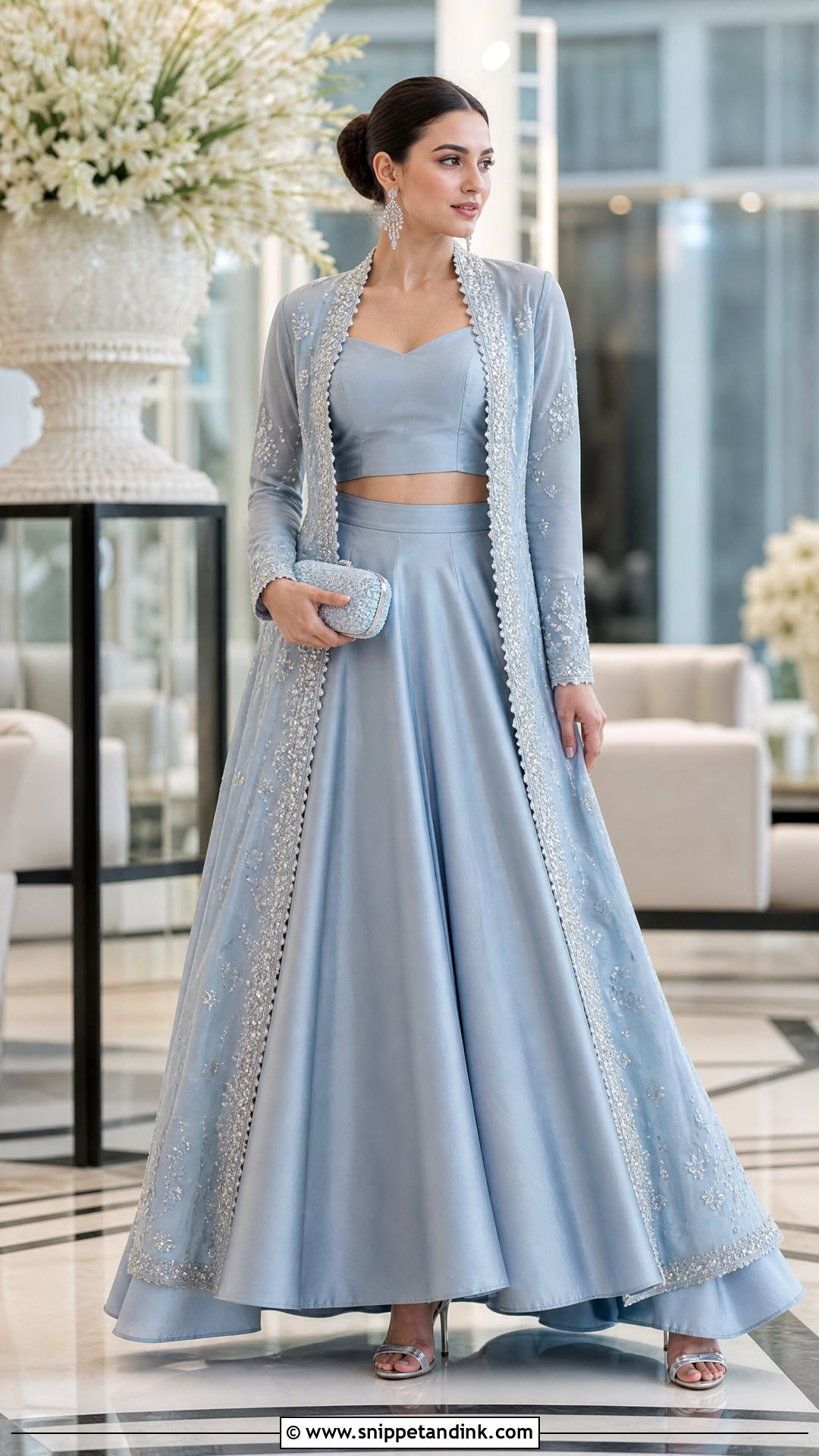
A long jacket adds coverage and structure, and in powder blue silk it looks fresh rather than heavy. Start with a simple sleeveless or short-sleeved blouse and an A-line silk skirt, then layer a long open-front jacket in silver embroidery, pearls or tonal flowers. Ending the jacket at mid-calf makes walking easier than a full-length one. With the jacket in place, add a dupatta only if the ceremony calls for one. Keep the inner pieces plain so they never compete. Defined shoulders and a clean front edge lengthen the silhouette.
15. Coral Silk Short Shirt And Sharara
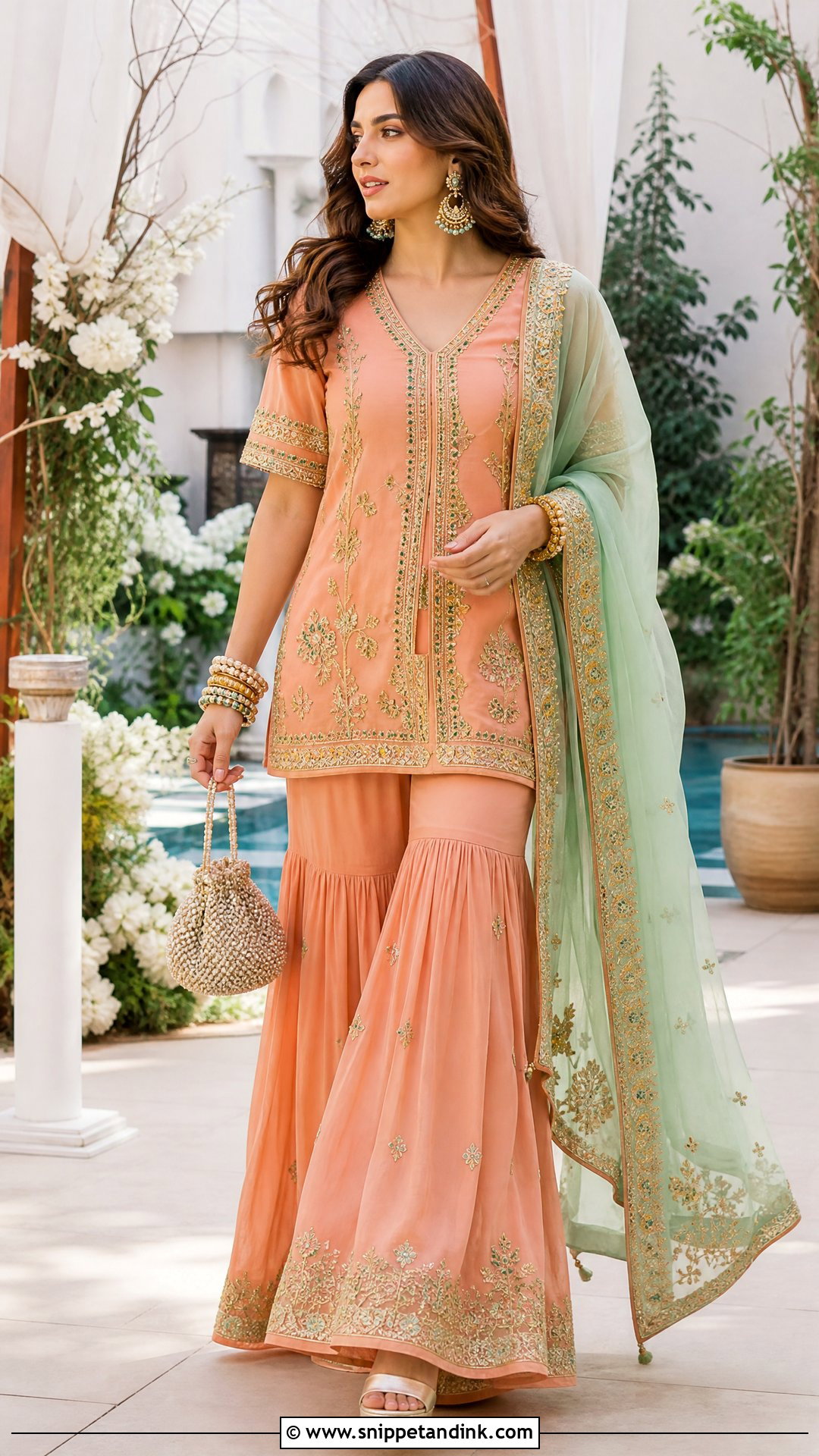
Coral silk is cheerful and suits warmer skin especially well in daylight. Cut it into a short shirt and flowing sharara, with the shirt ending at the upper thigh and embroidery at the neckline, sleeves and hem. The sharara should flare from the hip, not from a gathered waist, which adds bulk exactly where silk already has body. Gold, peach and soft green details suit coral. A mint or peach organza dupatta and block heels finish it for a daytime wedding, dholki or mehndi.
16. Plum Silk Anarkali And Churidar
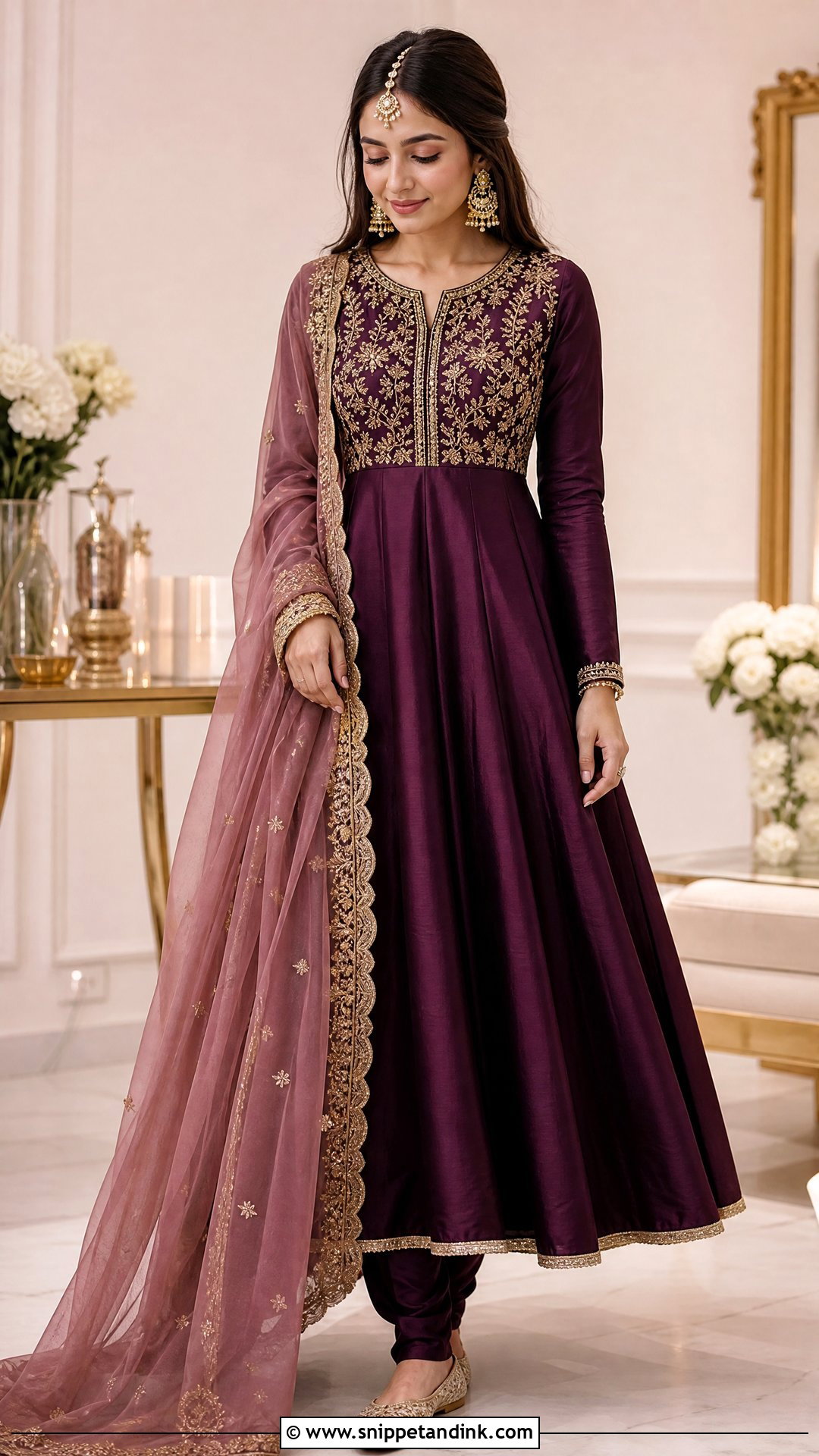
Deep plum silk looks almost black by candlelight and purple by day, which makes it good value across an evening event. A classic Anarkali with a fitted bodice and a full but controlled skirt, framed with antique gold, bronze or muted rose embroidery, suits nearly every age. A matching churidar stays mostly hidden. Skip a stiff lining; the Anarkali should swing naturally, and silk does that on its own. A dusty pink dupatta softens the dark shade for a reception, engagement or formal family wedding.
17. Mint Silk Straight Shirt And Palazzo
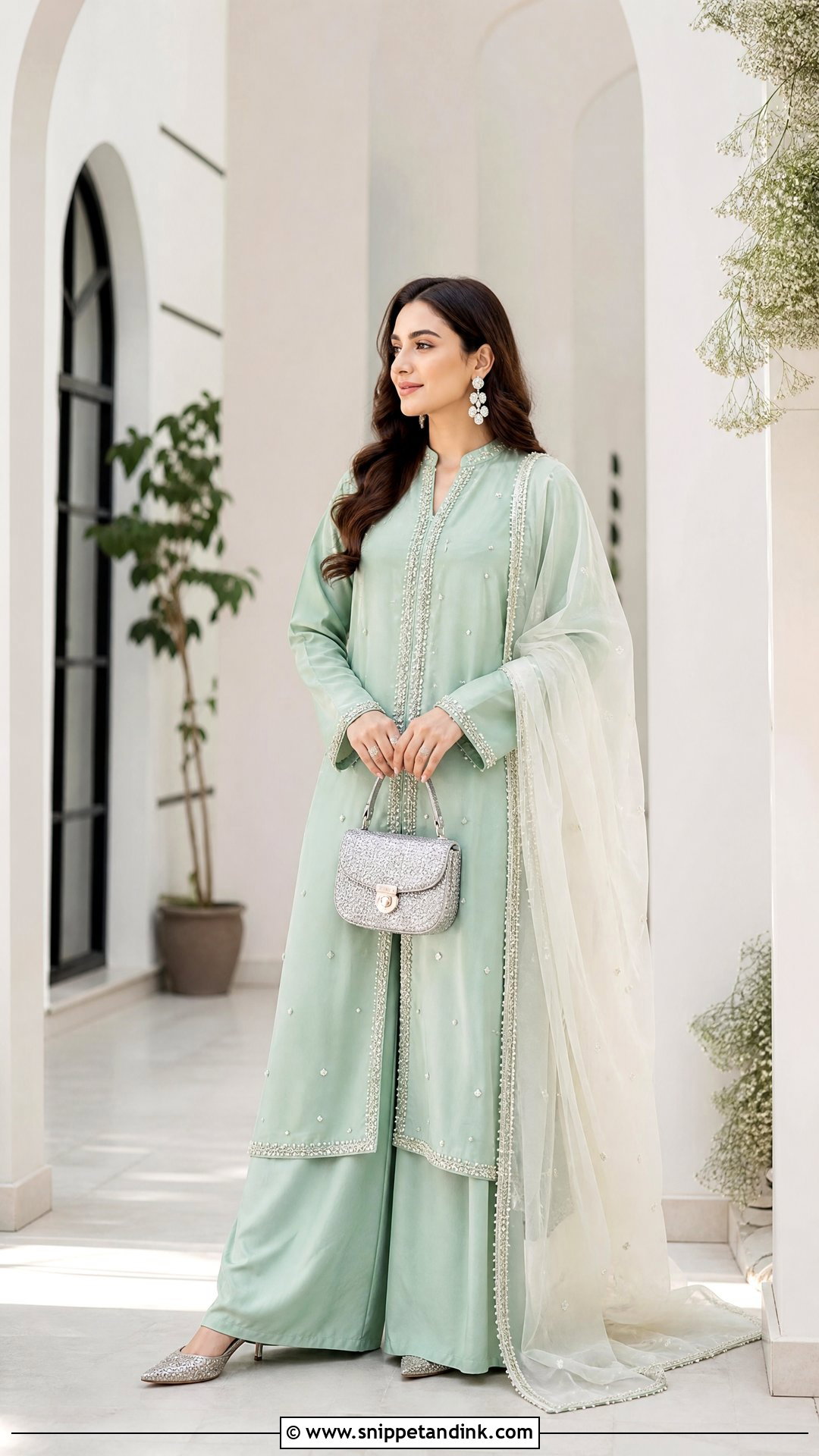
A straight shirt and palazzo is the outfit I suggest to women who want silk without any skirt at all. A mint shirt falling to the knee or lower calf, with side slits to reveal the trousers, looks crisp with pearl, silver or tonal embroidery in clean vertical lines. A matching dupatta gives a monochrome finish; ivory or pale pink adds contrast. Keep the palazzo width controlled and the waistband flat under the shirt, or the silk bunches at the hip. It suits a nikah guest, a daytime reception or a small family event.
18. White Silk Nikah Shalwar Kameez
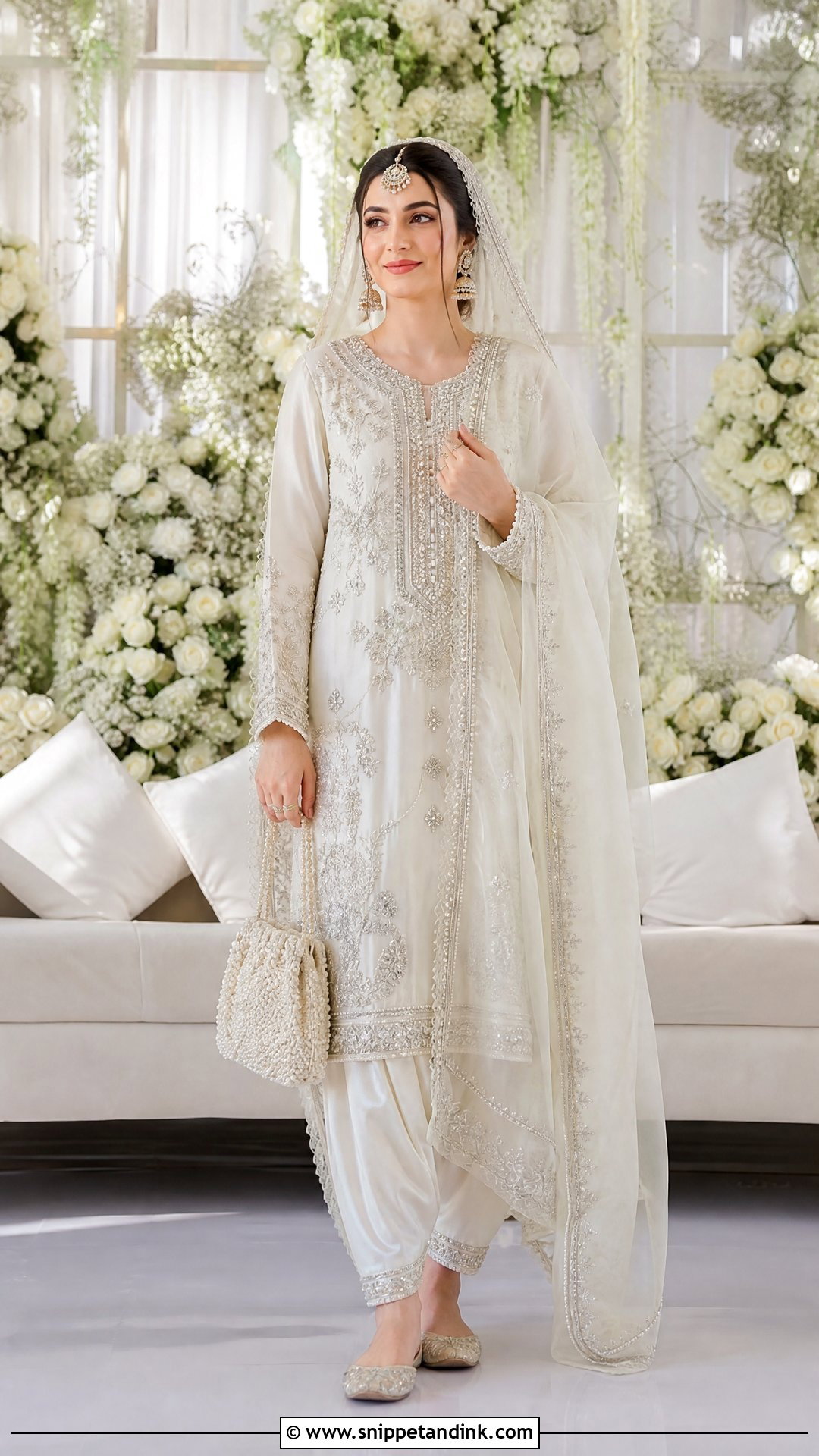
White silk becomes transparent the moment light hits it from behind, so this outfit must be fully lined, no exceptions. With that done, a long kameez in a straight or slightly flared cut over a traditional shalwar or narrow trousers is a modest, ceremonial nikah look. Keep pearls, silver thread and pale gold at the neckline and cuffs. An ivory organza dupatta with embroidered borders covers the head for the ceremony. If pure white feels stark against your skin, bring in cream or soft gold through the dupatta and accessories.
19. Fuchsia Silk Shirt And Dhaka Pajama
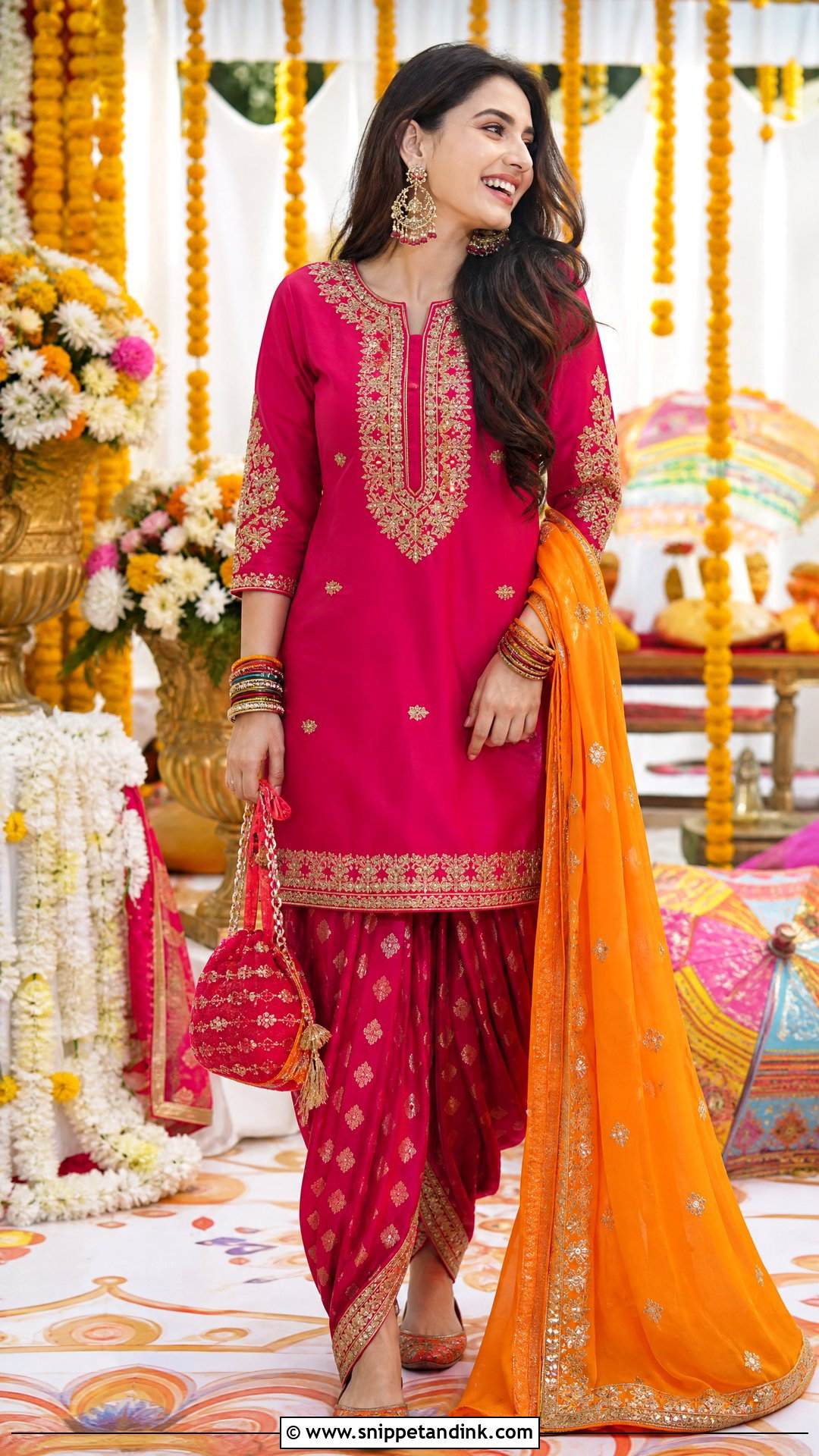
The Dhaka pajama is cut so full and folded that it reads as a skirt while working like trousers, which makes it a favorite for dancing. In fuchsia silk, a fitted short or mid-length shirt with gold embroidery and side slits shows off the folds and the broad embellished hem. An orange, purple or turquoise dupatta gives a mehndi palette. Light lining keeps all that silk from turning heavy. Flat khussas suit the sisters, cousins and friends who usually choose this look, since they will be on their feet all night.
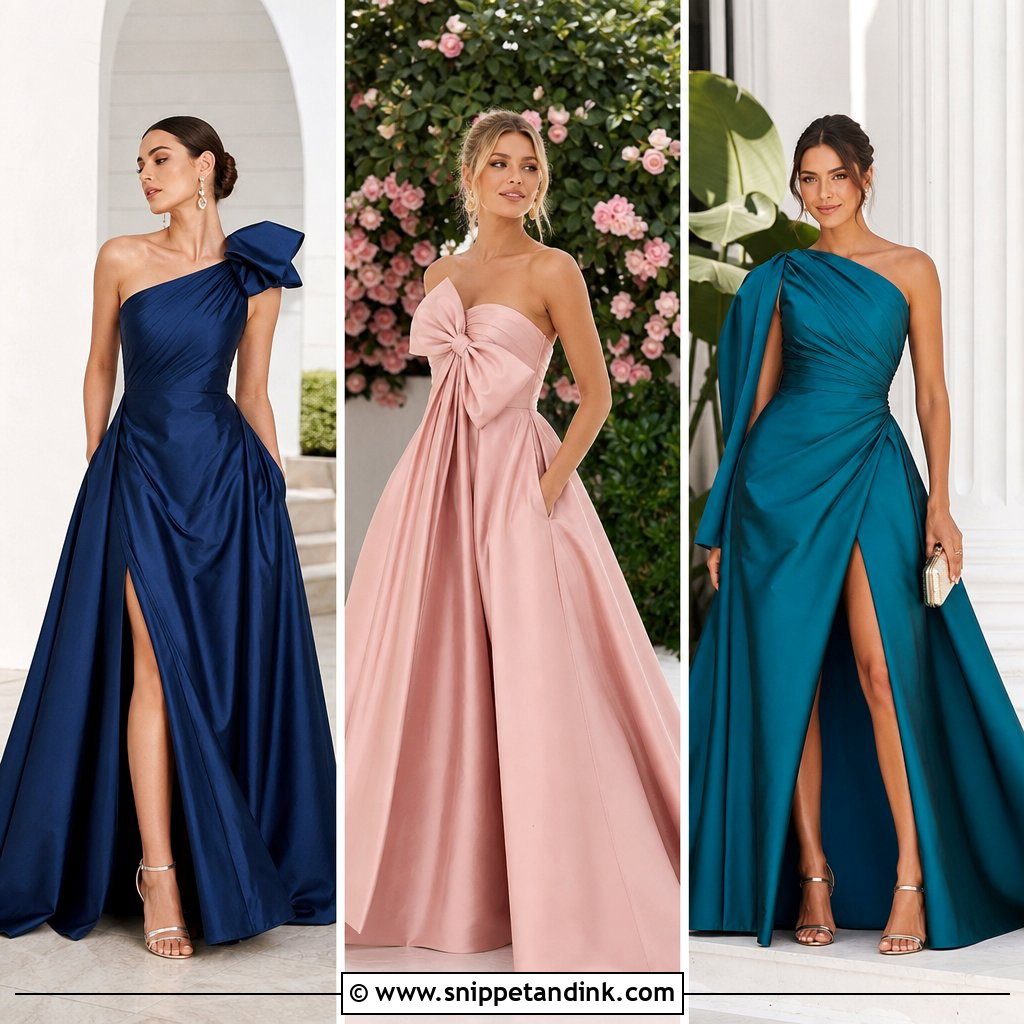
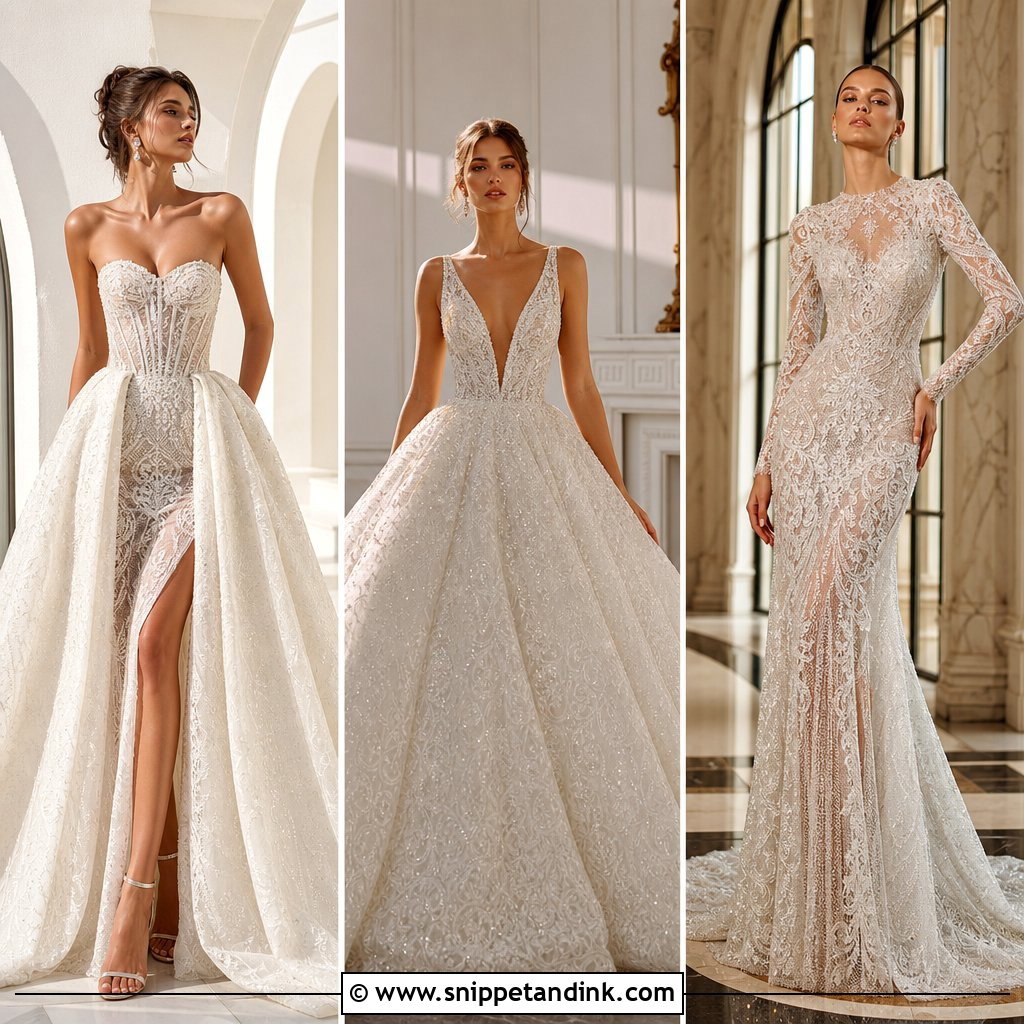
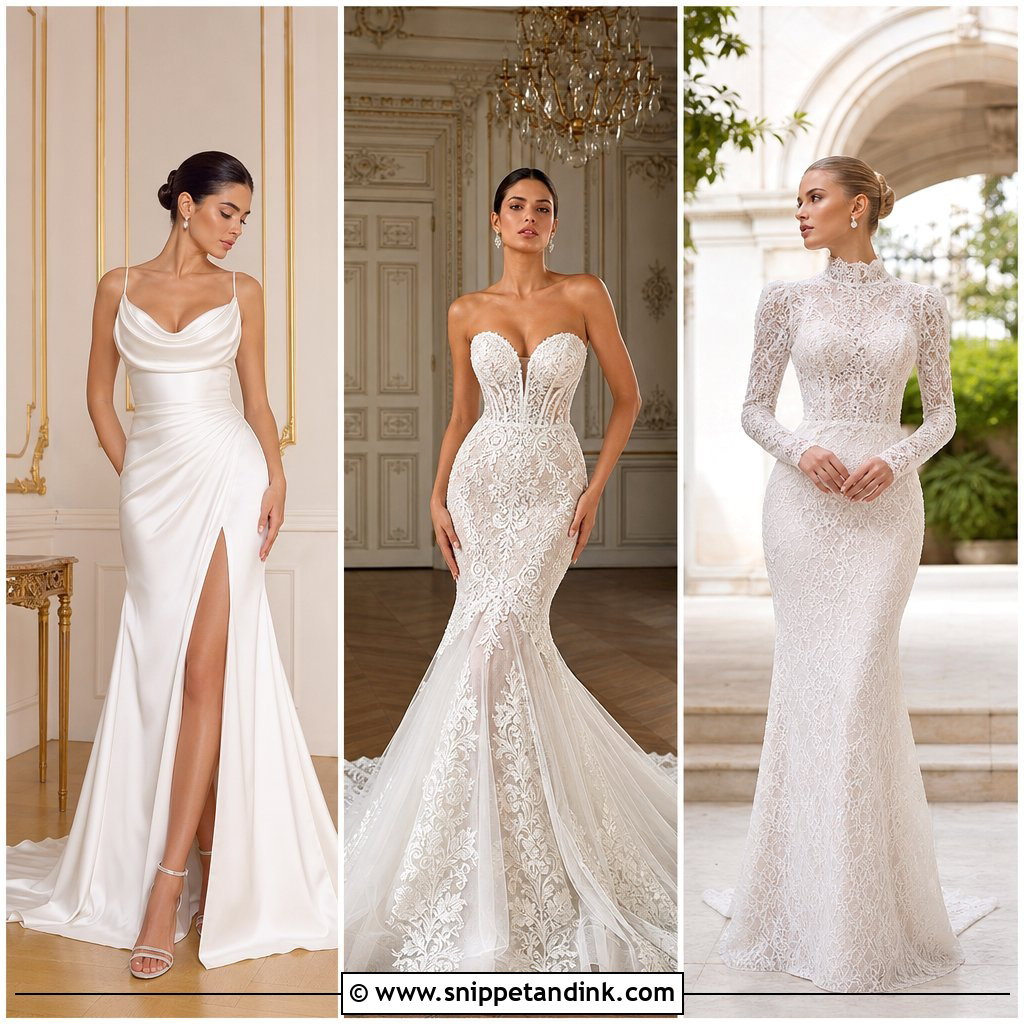
20. Rose Gold Silk Bridal Gown
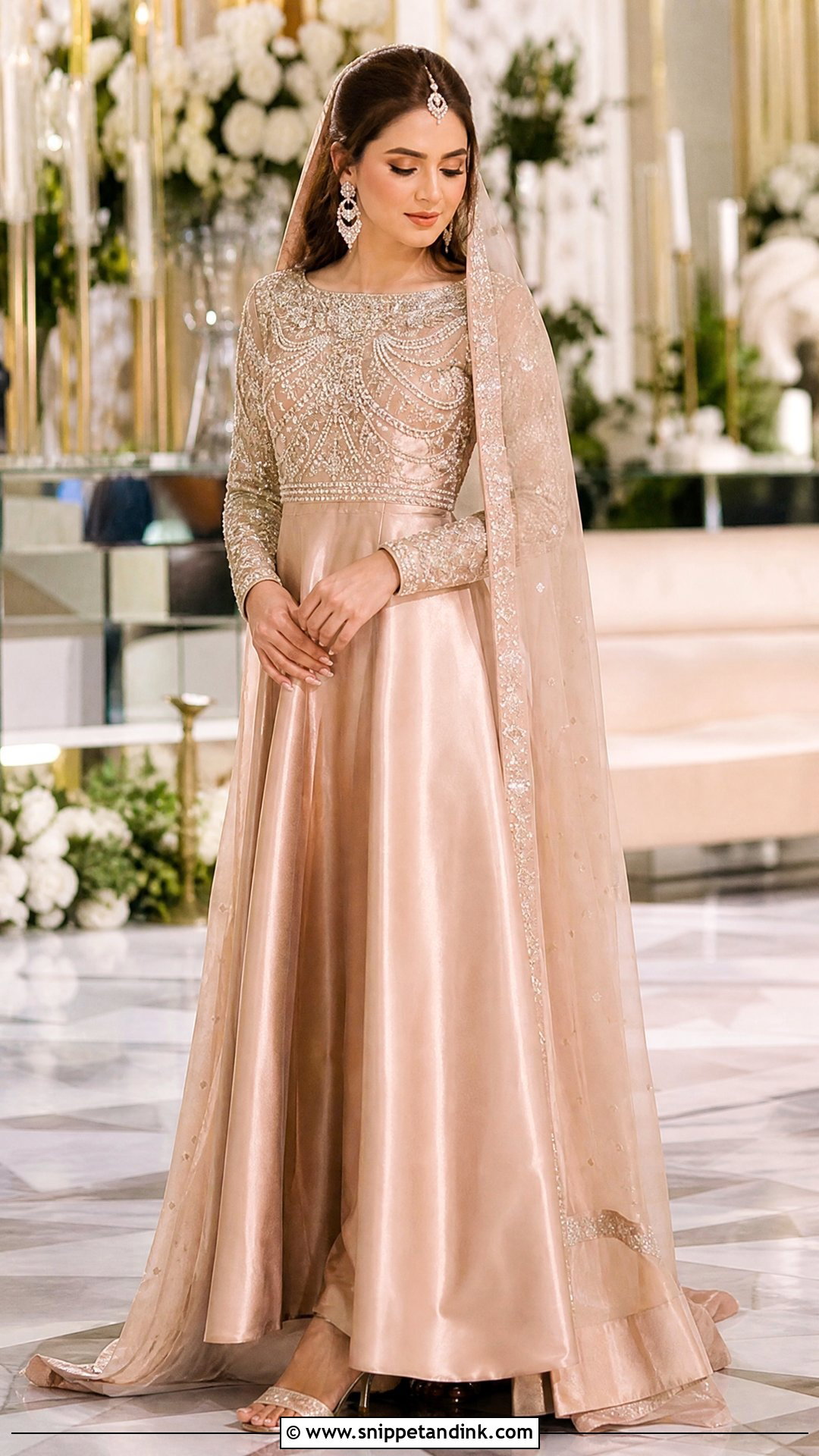
Smooth rose gold silk shows every seam and every pull, so the inner construction of this gown matters more than the embellishment. Choose a floor-length silhouette with a structured bodice, a defined waist and a skirt that falls smoothly instead of ballooning. Tonal sequins, pearls and metallic threadwork add dimension. Long sleeves and a higher neckline give coverage. Pair it with a sheer rose gold dupatta and a delicate headpiece for a walima or formal reception. A guest wearing it should add a small clutch and keep the headpiece off.
Silk Hates Water, Sweat and a Hot Iron
Most damage to wedding silk happens on the day itself, and most of it is avoidable.
During the event
Never dab a spill with water. On many silks, water leaves a ring that is harder to remove than the original mark. Blot gently with a dry tissue and leave the rest for the cleaner. Sweat is the other enemy: it discolors silk at the underarms over time, so ask your tailor to stitch in removable underarm shields, especially for raw silk and dark colors.
Pressing and storing
Steam silk from the inside rather than ironing the face. If you must iron, use a low setting with a cotton pressing cloth between the iron and the fabric, and keep the iron off embroidery and tissue entirely. After the wedding, have the outfit dry cleaned before it goes away, then fold it with acid-free tissue in the folds and store it in a cotton bag, out of light. Silk fades in sunlight and weakens along sharp folds, so refold it differently every few months.
Silk Rewards Good Tailoring More Than Extra Embroidery
Lehengas, ghararas, shararas, peshwas, suits and gowns can all work in silk, but they only look expensive when they fit. Start with the event, the venue and the season, then pick the color and silhouette that feel like you. If the silk is heavily embroidered, keep the dupatta light; if it is woven Banarsi or jamawar, let the fabric do the talking. Proper lining, secure seams, manageable hems and supportive shoes matter as much as any decoration. Add coordinated jewelry, one practical bag, and your outfit will hold up through a long wedding night.
You'll Like These Ideas:


Leave a Reply