
A Nikah outfit has a different job from the baraat look. You sit on the floor or a low sofa for the ceremony, your head stays covered while the vows are read, and elders hug you for an hour afterward, so the dress has to carry tradition and still let you move. The twenty looks below run from plain ivory to deep red, with pastels and jewel tones in between, and they lean on the shapes I see most often in Pakistani bridal work right now: modest maxis, flared pishwas dresses, organza dupattas and plenty of hand embellishment. For each one I’ve described the whole outfit, from dupatta to shoes, with notes on where it sits best: a mosque, a home Nikah, or a formal hall.
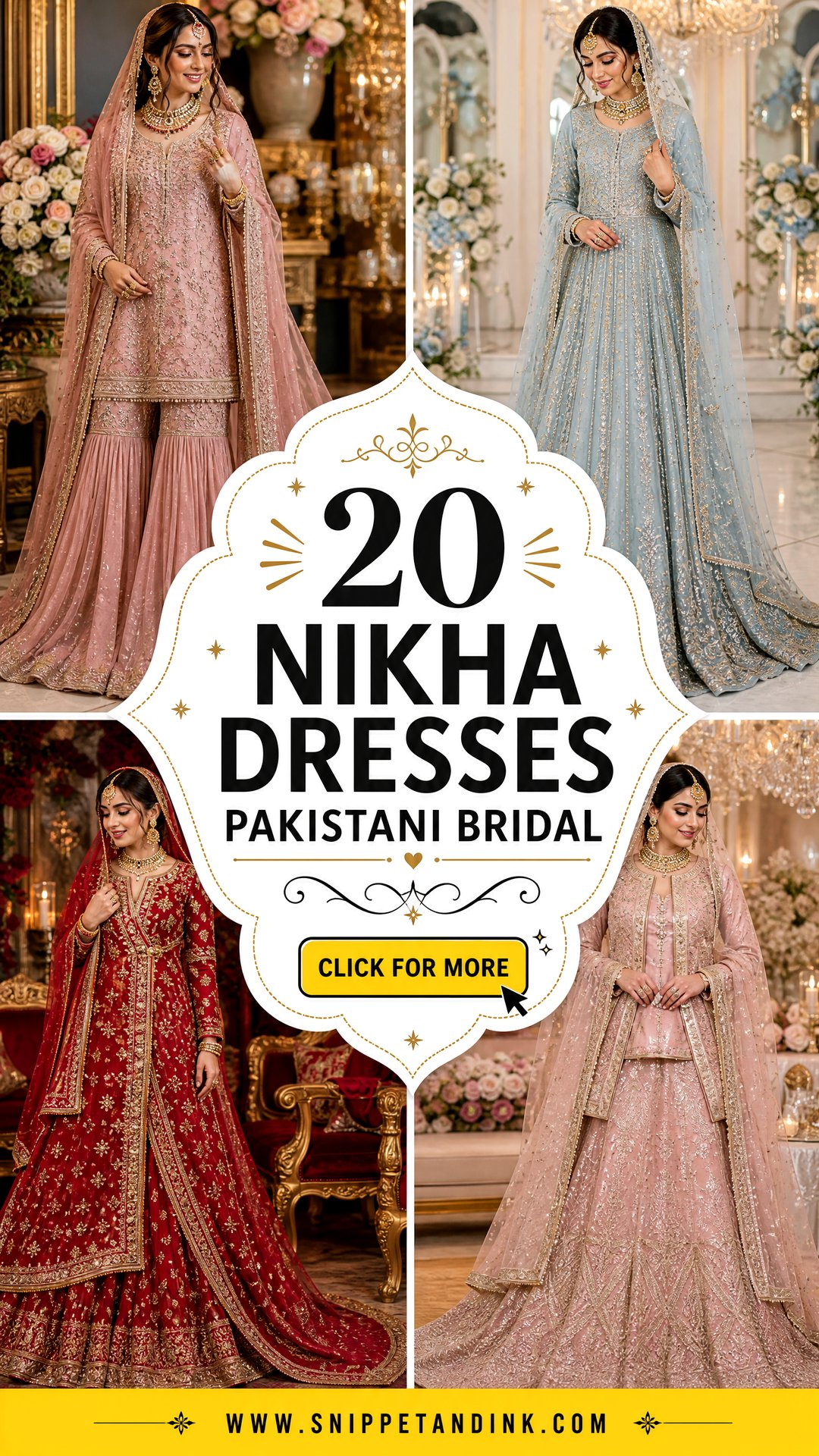
Pinning a Nikah Dupatta So It Stays on Through the Vows
Most Nikah outfits fail at the head, not the hem. The dupatta has to stay put while you bow your head, sign the nikahnama and hug relatives, and organza is slippery. Here is how I set one so it doesn’t slide.
- Build a firm low bun first. The dupatta needs something solid to anchor to, so loose open hair under a head covering almost always slips.
- Use a thin net hijab cap or a strip of grip fabric over the bun if the dupatta is organza or tissue. Net dupattas grip on their own; shiny ones don’t.
- Fold the front edge back about an inch so the embroidered border sits along the hairline, then pin at the crown with U-pins pushed into the bun, not just into the fabric.
- Add one pin behind each ear. Heavy borders drag the dupatta backward, and these two pins carry most of that weight.
- Secure the shoulder drape with a small safety pin to the blouse or bra strap underneath, hidden under the choker or the fall of the fabric.
- Put the maang tikka on last, threading its chain over the dupatta so it doesn’t pull fabric forward.
Do a five-minute test at home: sit on the floor, bend forward as if signing, turn your head side to side. If the dupatta moves, it needs another pin, not more hairspray.
1. White Pakistani Nikah Lehenga
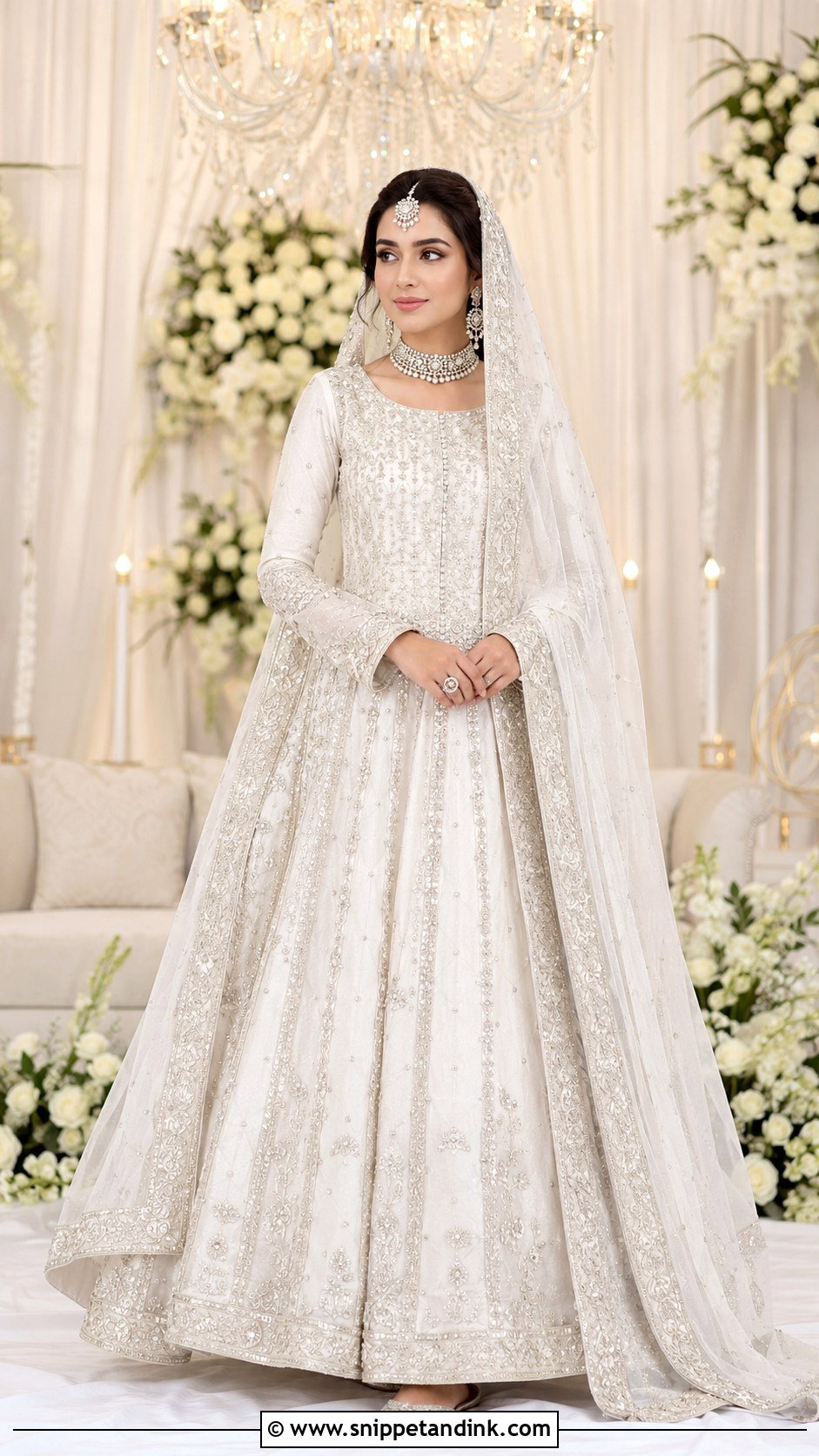
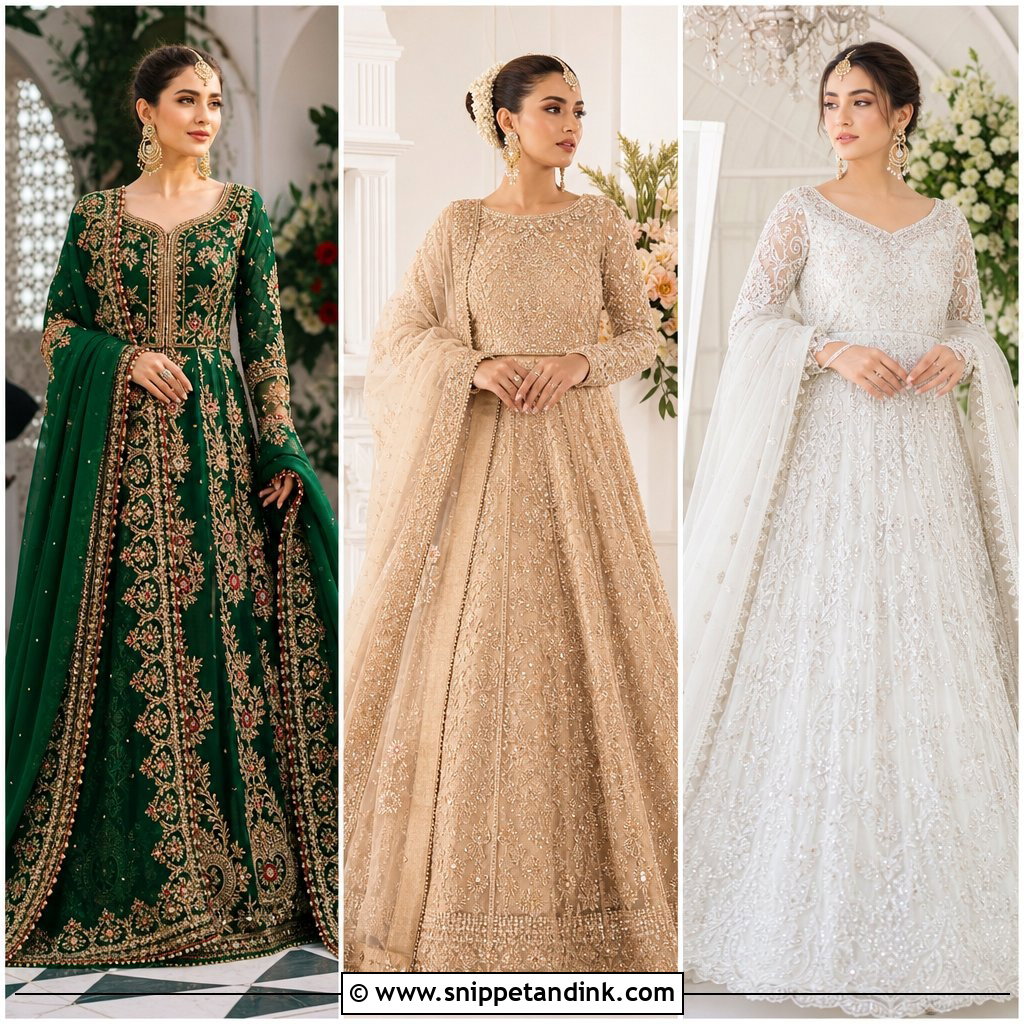
White raw silk is the safest base for a lehenga that still feels calm. Ask for paneled construction so the skirt hangs flat instead of bunching at the hips, and keep the work to silver dabka, pearls and fine thread. I usually pair it with a long-sleeve blouse cut an inch or two longer than standard, which saves you from tugging at the hem every time you lean forward to sign. A sheer organza dupatta with a scalloped border goes over the head and is pinned at one shoulder. Pearl drops, a slim maang tikka and silver khussas are plenty. The mistake I watch for on white is jewelry stacking: pure white shows every overlapping necklace, so one choker in proportion to the neckline does more than three layered pieces.
2. Ivory Pakistani Nikah Pishwas
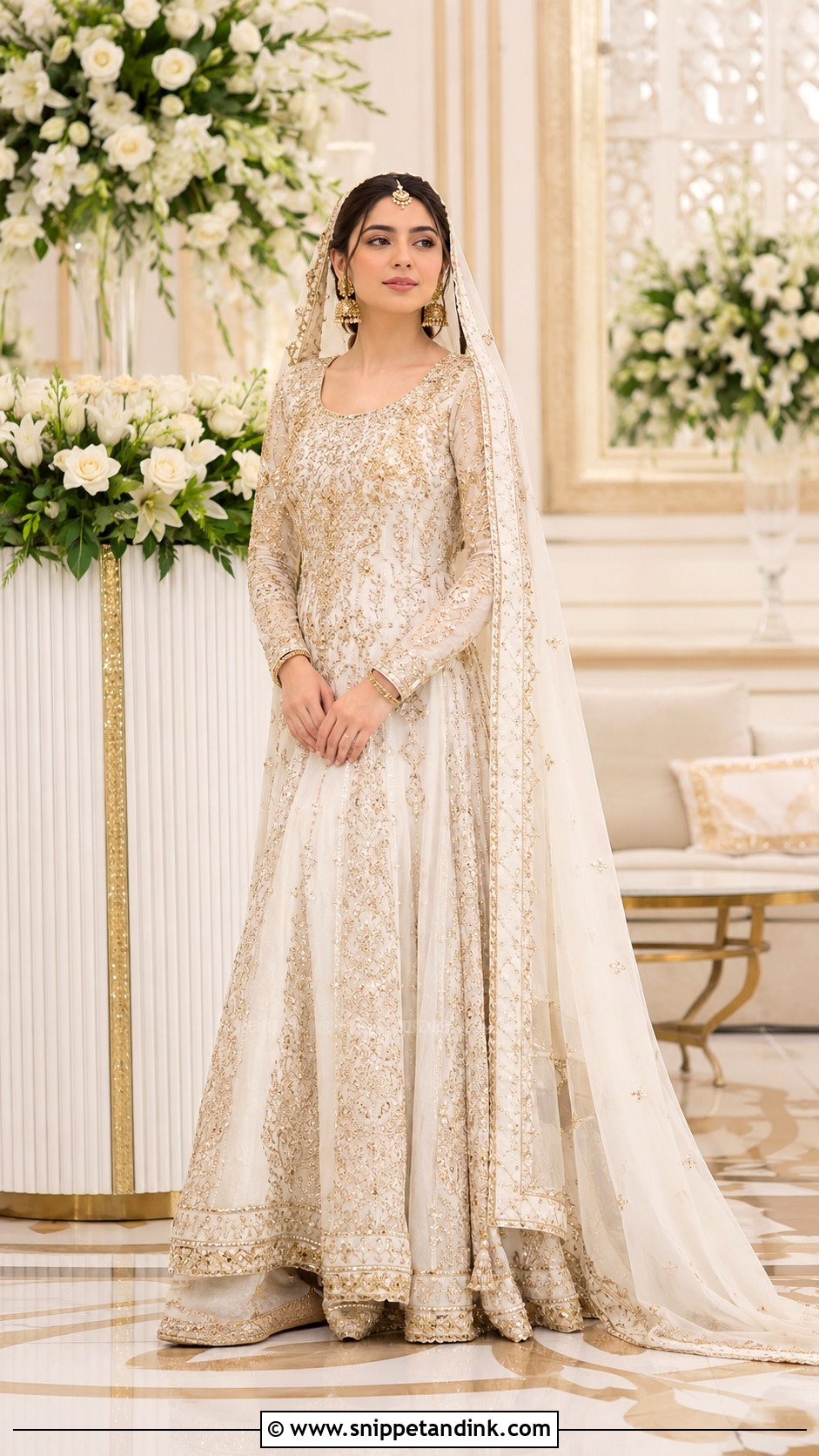
Ivory pishwas gives you movement and full coverage in one piece. A fitted bodice, full sleeves and a generous flare are the classic cut, with fine gold embroidery kept to the neckline, cuffs and hem so the ivory stays soft. Put a light net dupatta on the head and, for a more formal finish, carry a second organza one over the forearm. Antique-gold jhumkas, a small tikka and champagne khussas complete it. At fittings I check one thing above all: the underskirt. If the can-can or lining is too stiff, the skirt stands out like a bell when you sit on the floor and refuses to settle again for the family photos.
3. Blush Pink Pakistani Nikah Gharara
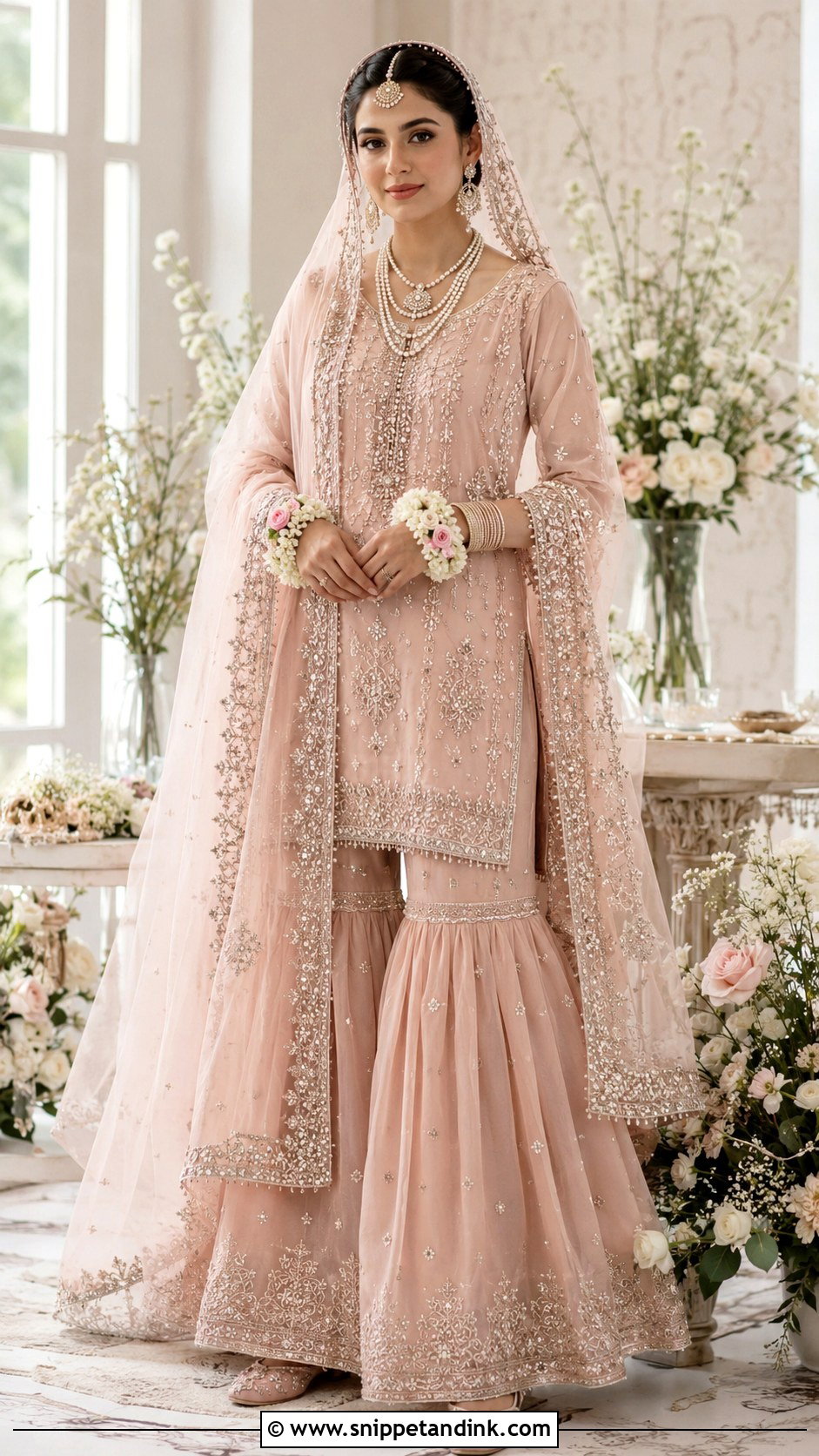
Blush works on a Pakistani bridal gharara because it softens the drama of the knee joint and the wide lower flare. Keep the kameez short and straight with full sleeves, and ask for tonal pink threadwork, pearls and a little silver rather than contrast colors, which can make the knee panels look busy. The organza dupatta goes over the head with its border framing the face. Pearls, rose-gold bangles and pink khussas are all it needs. One practical note from fittings: the gharara joint should sit at or just below the knee when you stand. Set it too high and the pleats bunch awkwardly the moment you sit. This shade reads fresh in daylight, so I’d keep it for a morning or afternoon Nikah.
4. Champagne Pakistani Nikah Maxi
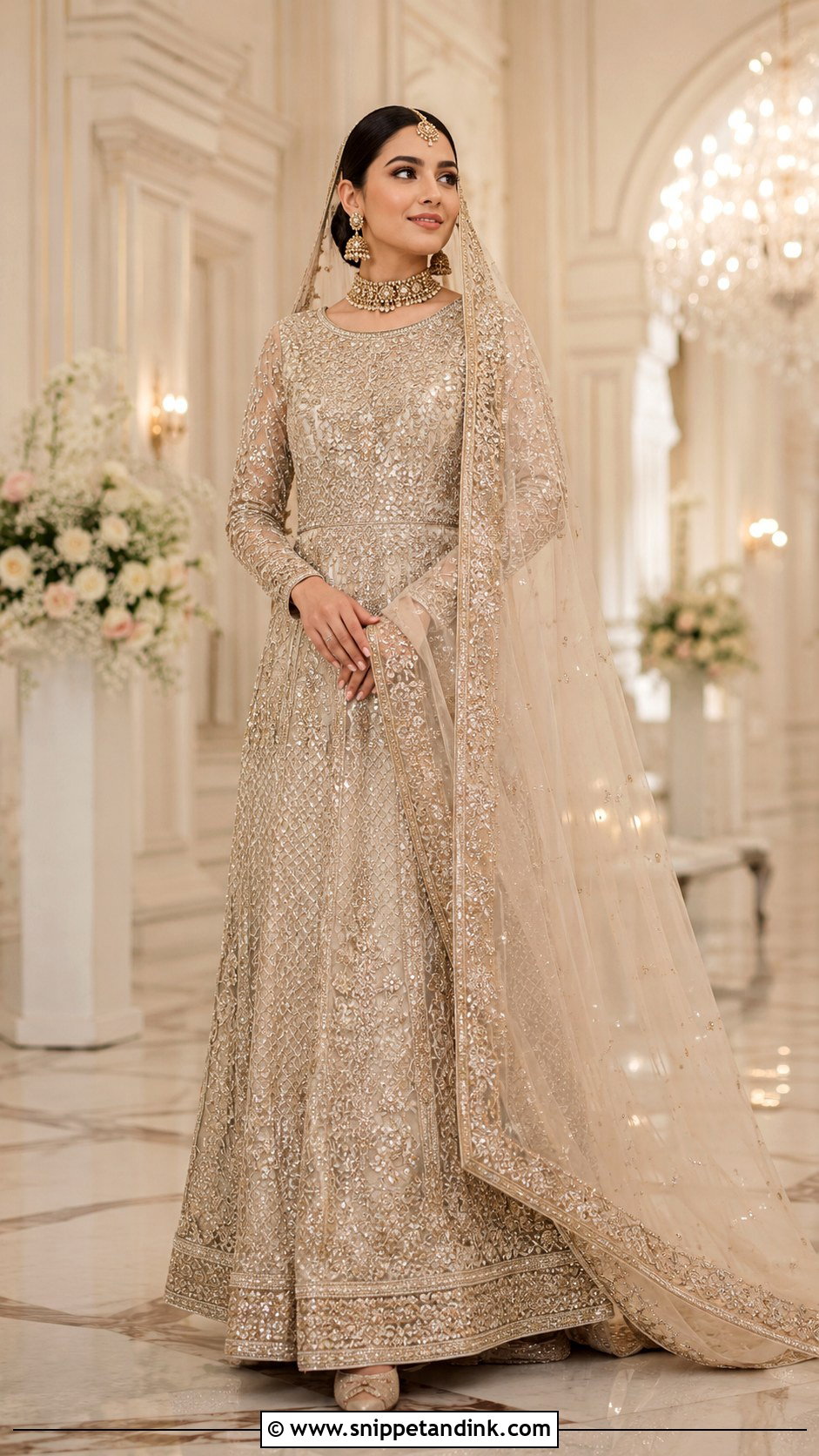
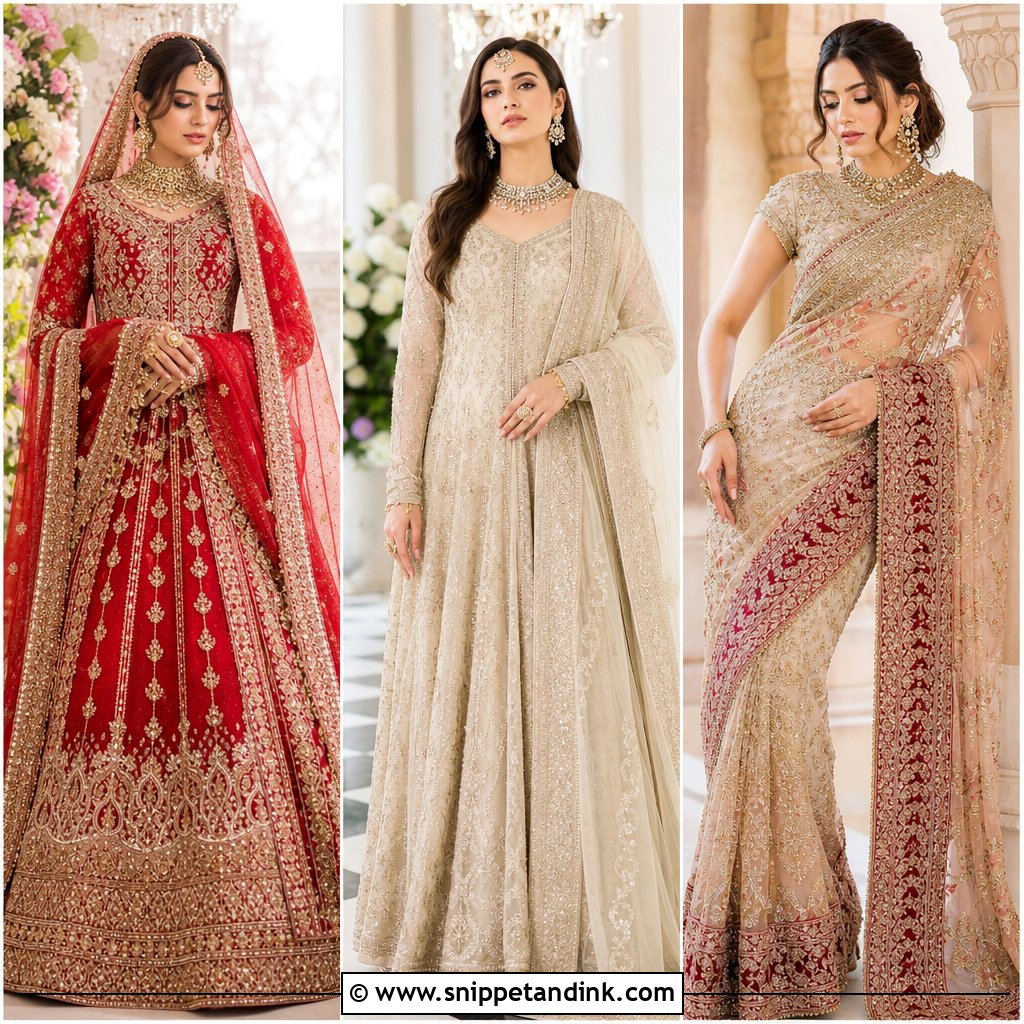
If bright white washes you out, champagne is the gentler answer, and it still reads unmistakably as bridal. Look for a long A-line or slightly flared maxi with full sleeves and a high round neck. Crystals, pearls and antique gold give it depth; just keep them spaced out, because a maxi covered edge to edge gets heavy on the shoulders. A sheer champagne dupatta with a worked border, a gold choker and a small jhoomar bring the traditional detail. Wear pointed metallic flats or low block heels. When I fit a maxi I leave a little ease through the waist and hips, since a dress that skims you standing can pull tight across the lap once you’re seated cross-legged.
5. Sage Green Pakistani Nikah Sharara
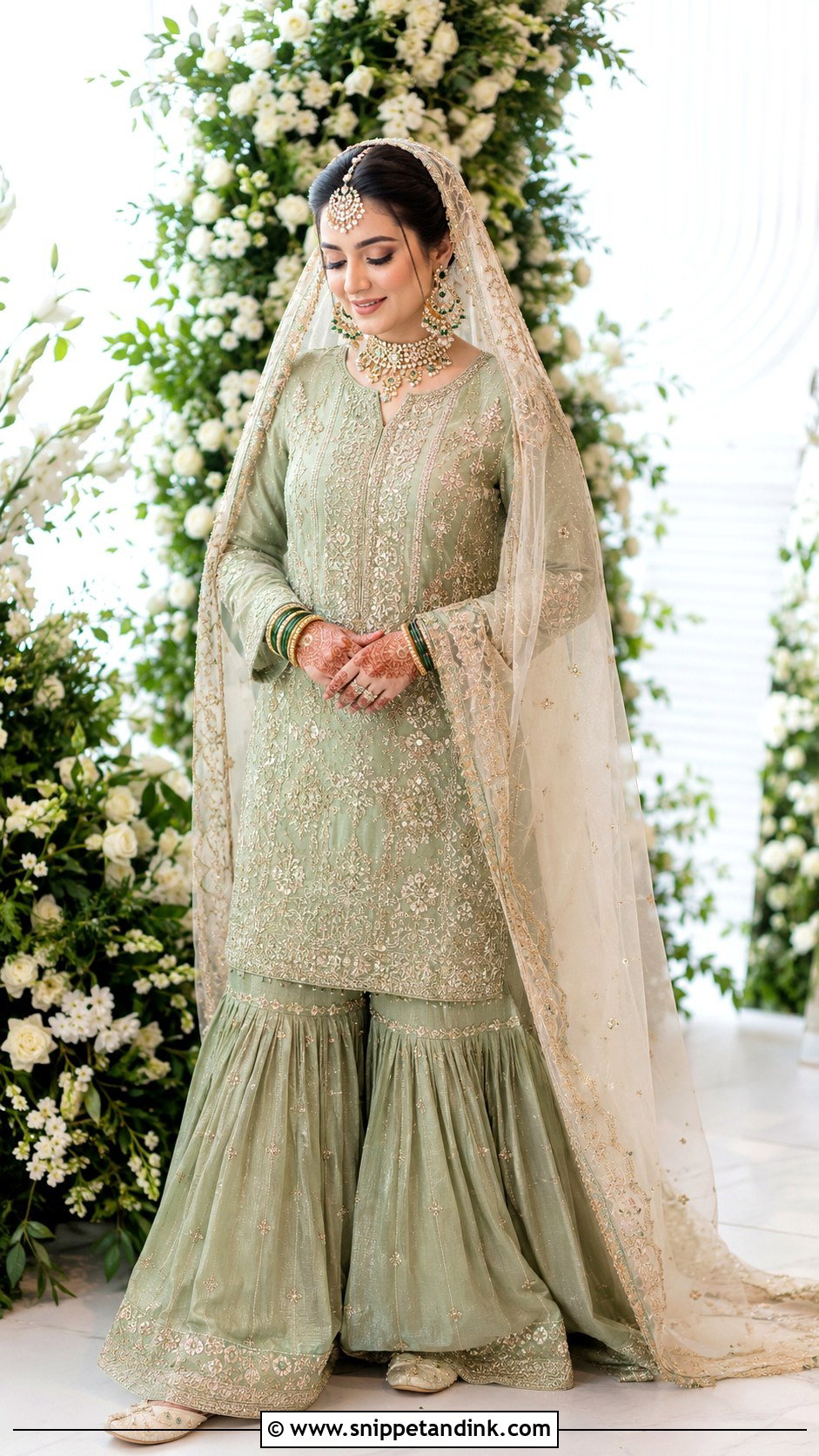
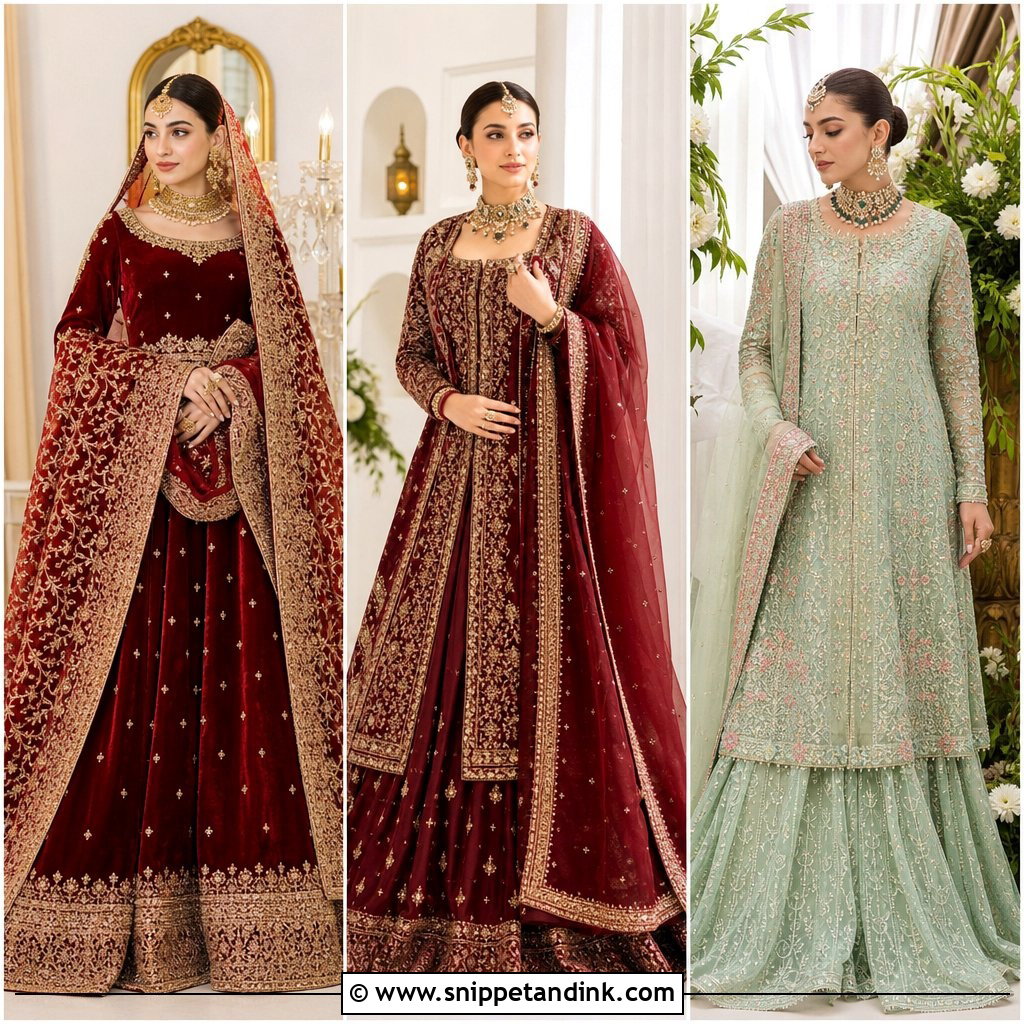
Sage green suits a bride who wants color but not saturation. Pair a knee-length embroidered kameez with a modest neck and fitted sleeves with a sharara cut for controlled volume; too much width and the outfit starts to look bulky in seated photos. Ivory threadwork with pearls and a touch of gold sits well on the muted green, and an ivory dupatta over the head brings the bridal signal back. Kundan earrings, a fine necklace, green-and-gold bangles and ivory khussas finish it. Sage can look grey on some skin tones under cool lighting, so I hold the fabric up to the face near a window before anyone commits to it.
6. Ice Blue Pakistani Nikah Anarkali
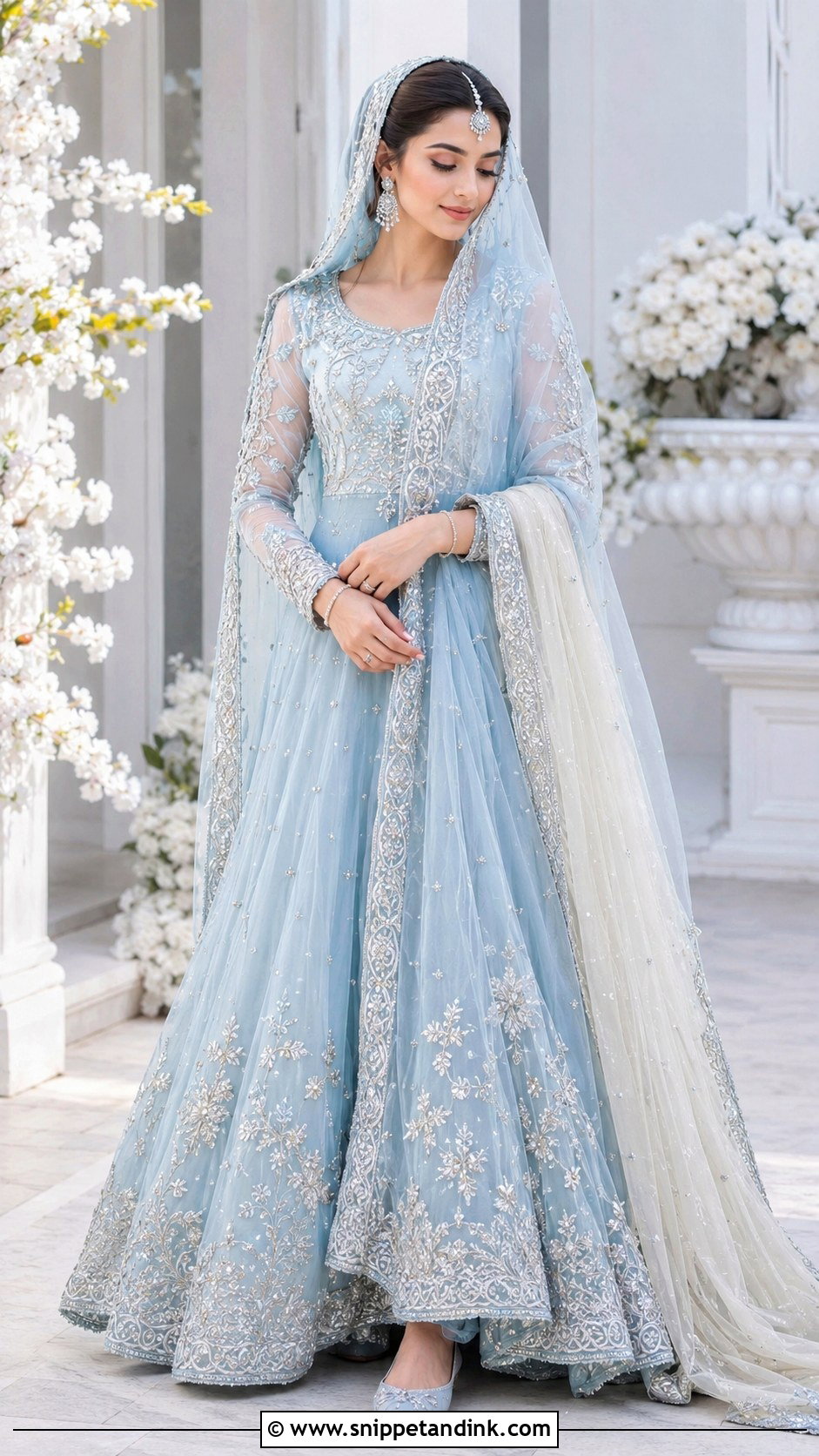
Ice blue belongs to daytime. An Anarkali in this shade, with a defined bodice, full sleeves and symmetrical silver embroidery, looks airy in natural light and can go flat under yellow evening bulbs. Vertical motifs help a petite bride look longer, and a gently flared skirt gives movement without swallowing her. Use a matching net dupatta over the head and an ivory one along the arm, then silver jhumkas, a crystal tikka, a slim bracelet and pale blue khussas. A grey or silver potli holds the essentials. Before the day, I wear-test the dupatta border for weight: a heavy crystal edge on light net pulls the whole thing backward off the head within minutes.
7. Dusty Rose Pakistani Nikah Lehenga
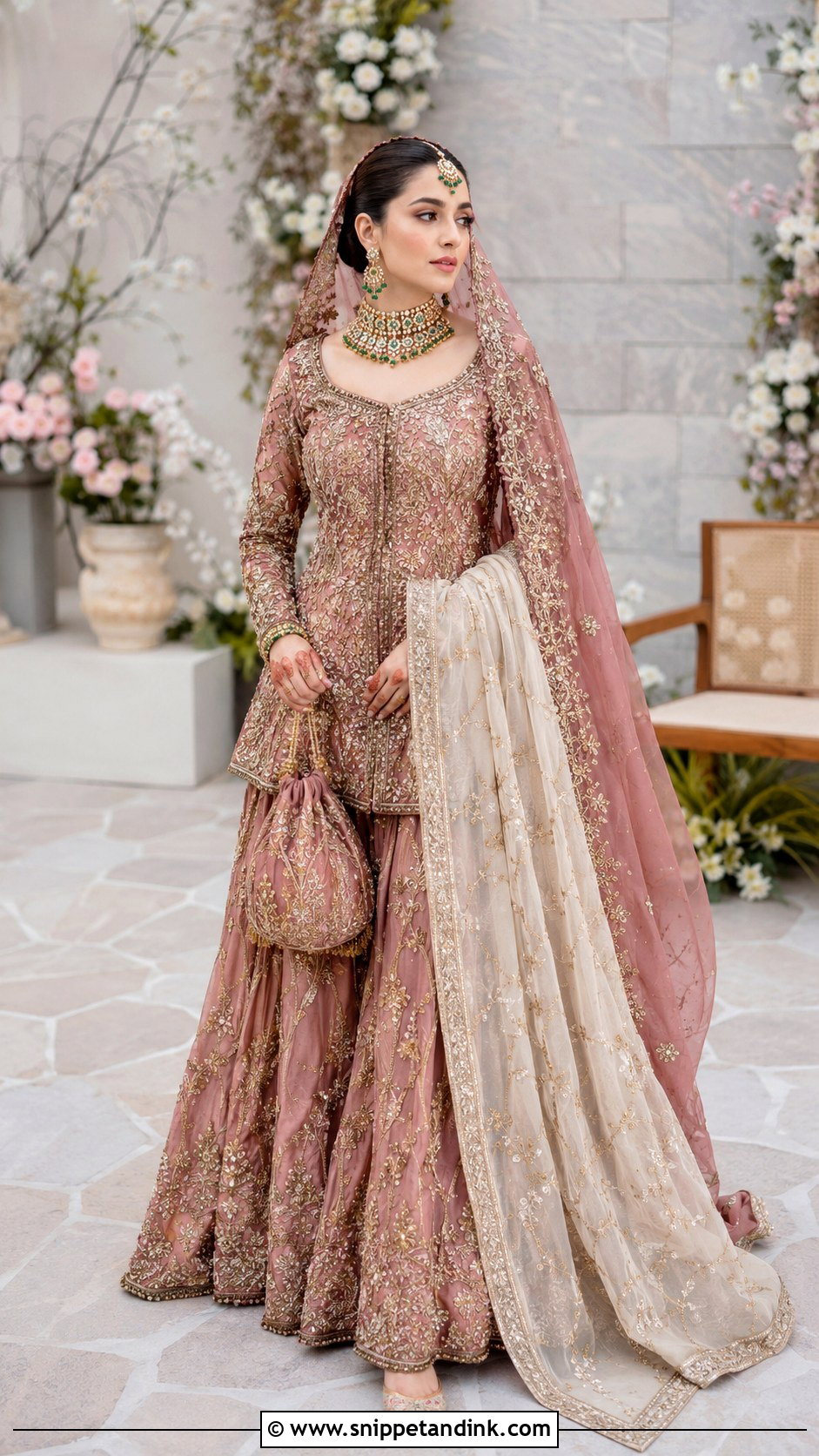
Dusty rose sits between blush and red, which makes it one of the easier shades to wear across skin tones. I’d choose a high-waisted lehenga with botanical embroidery in antique gold, muted silver and tonal pink, and a long blouse or peplum top for coverage. The matching dupatta covers the head; an ivory one over the shoulder lifts the whole outfit. Kundan with soft green stones gives a quiet contrast, and embroidered rose khussas with a structured potli finish it. Because a detailed dupatta border already frames the face, keep the hair smooth at the front. Waves or loose pieces fight with the border and end up caught in the embroidery.
8. Gold Pakistani Nikah Farshi Gharara
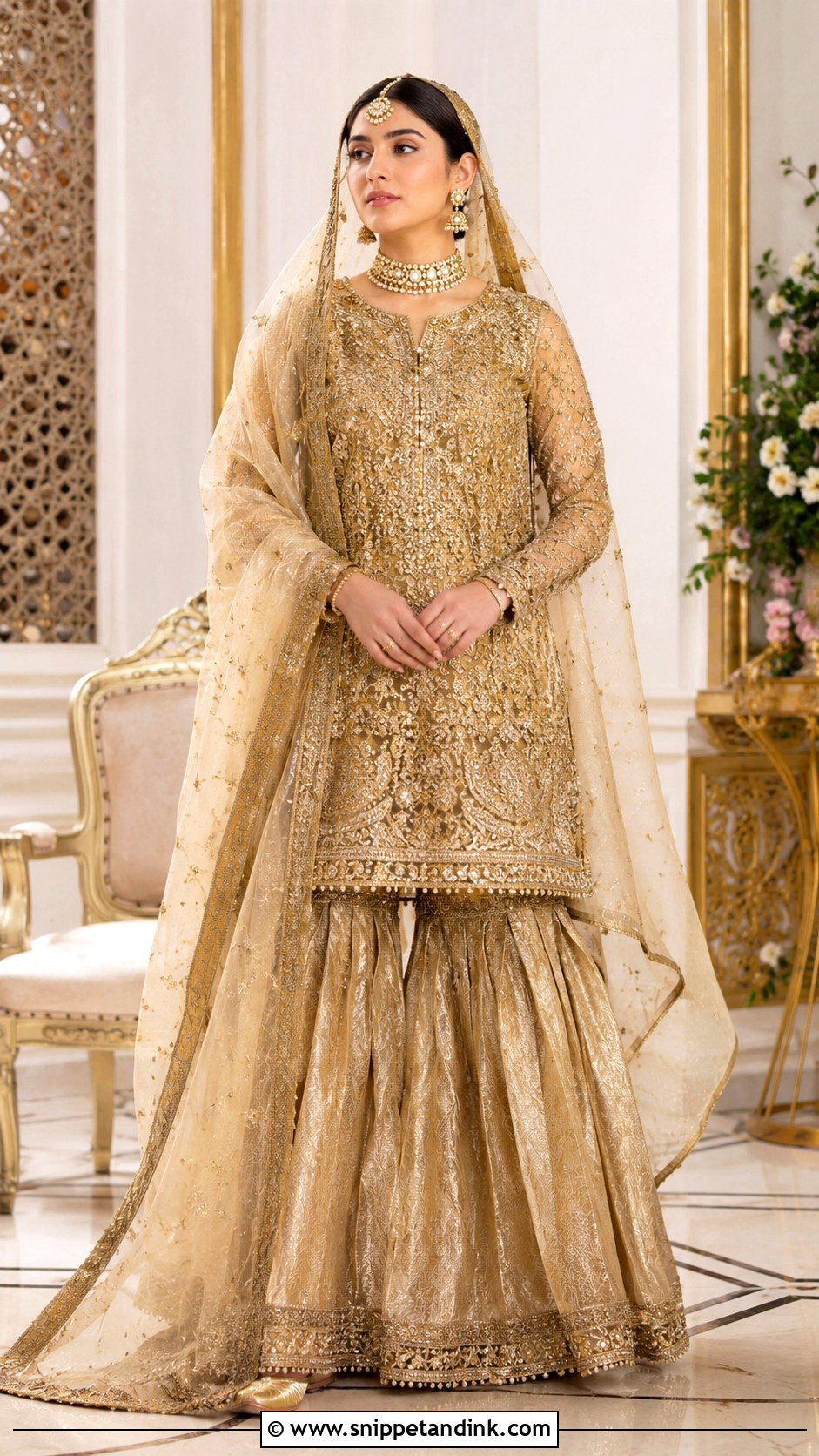
A farshi gharara is the grandest silhouette here, and the hardest to walk in. The set is a richly worked short kameez, a fitted churidar-style lining and a long gharara that pools behind you. Mixing gold tones (champagne, antique, soft bronze) stops it looking flat, and a maroon or deep green velvet band adds restrained contrast. Cover the head with sheer gold organza and add a kundan choker, jhumkas, a central tikka and antique-gold khussas. Keep makeup neat and the bun sleek, since the outfit is already doing the talking. Practice matters more with this one than any other: I have brides gather the back fabric in one hand and walk a staircase at the final fitting, because that’s where farshi hems get stepped on.
9. Peach Pakistani Nikah Peplum Lehenga
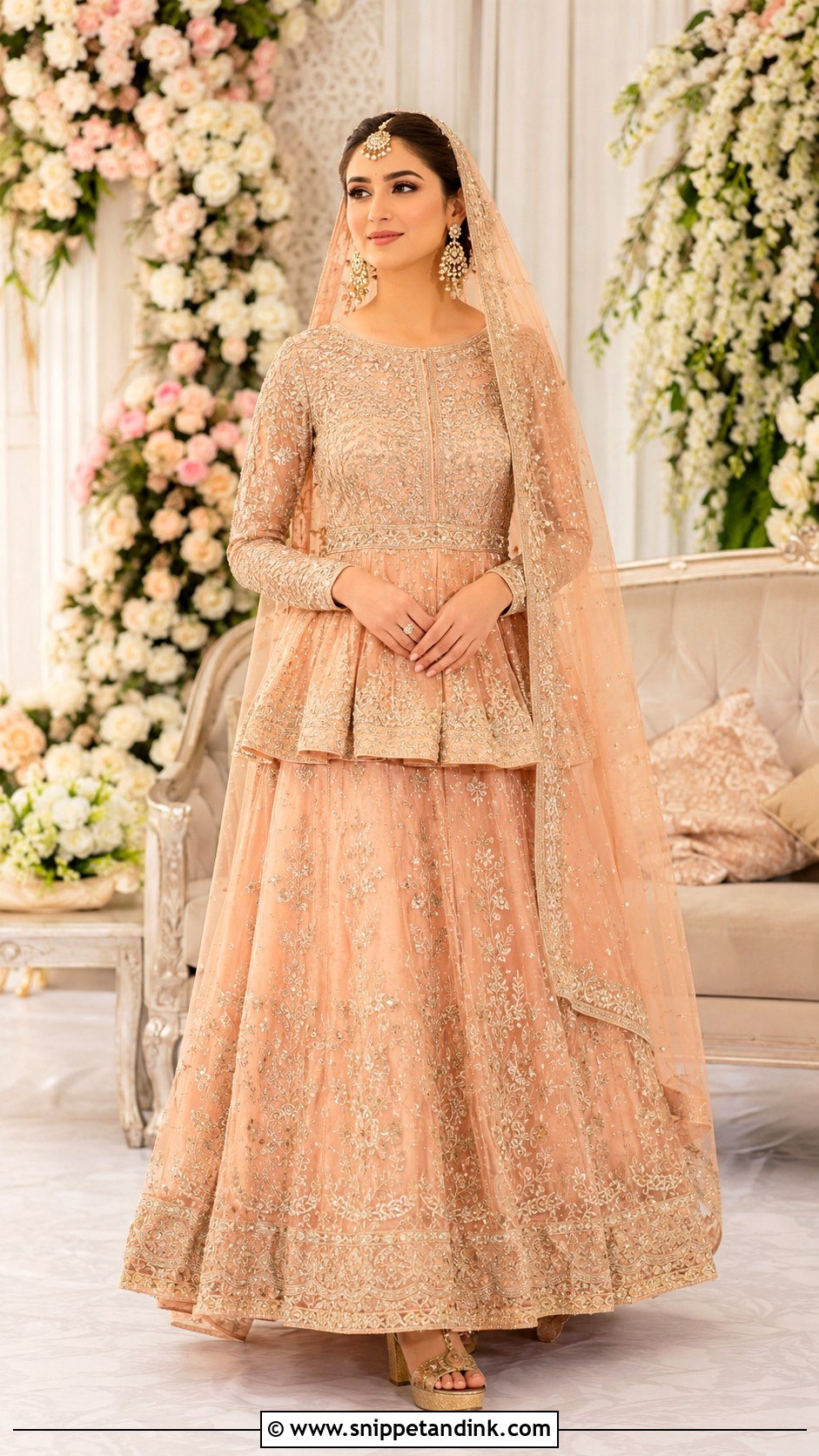
A peplum top is a good compromise for a bride who likes structure but doesn’t want a cropped blouse. The flare should end just below the natural waist, with full sleeves, a comfortable neckline and delicate gold work, over a lightly flared peach lehenga with matching border motifs. A sheer peach dupatta goes on the head, with a second light one across the forearms if you like. Pearl-and-kundan earrings, a small tikka and gold block heels finish it. I hem this lehenga just clear of the floor. Peplums draw the eye to the hips, and a skirt dragging on the ground pulls the whole silhouette downward while catching on the heels.
10. Red Pakistani Nikah Angrakha
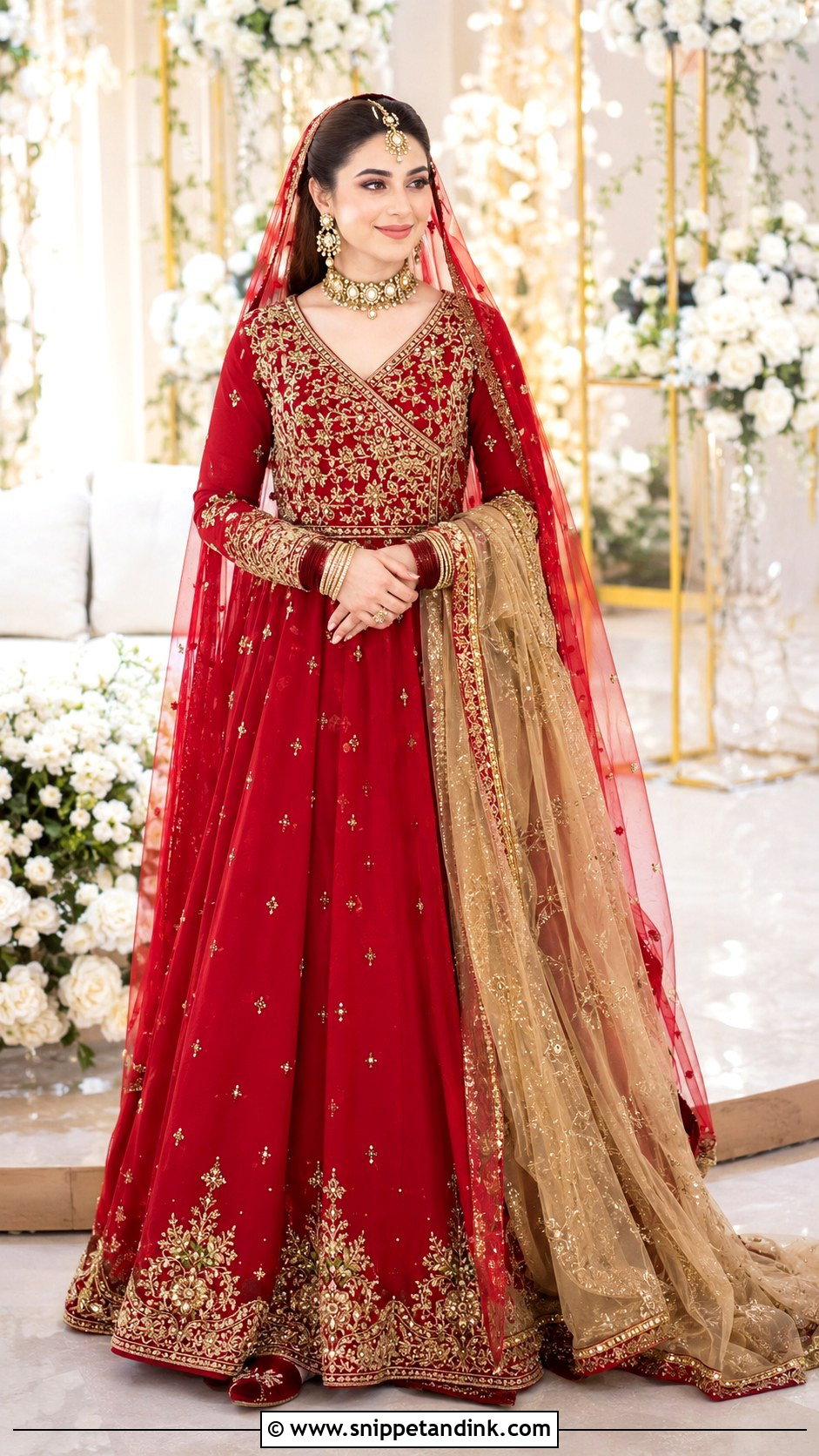
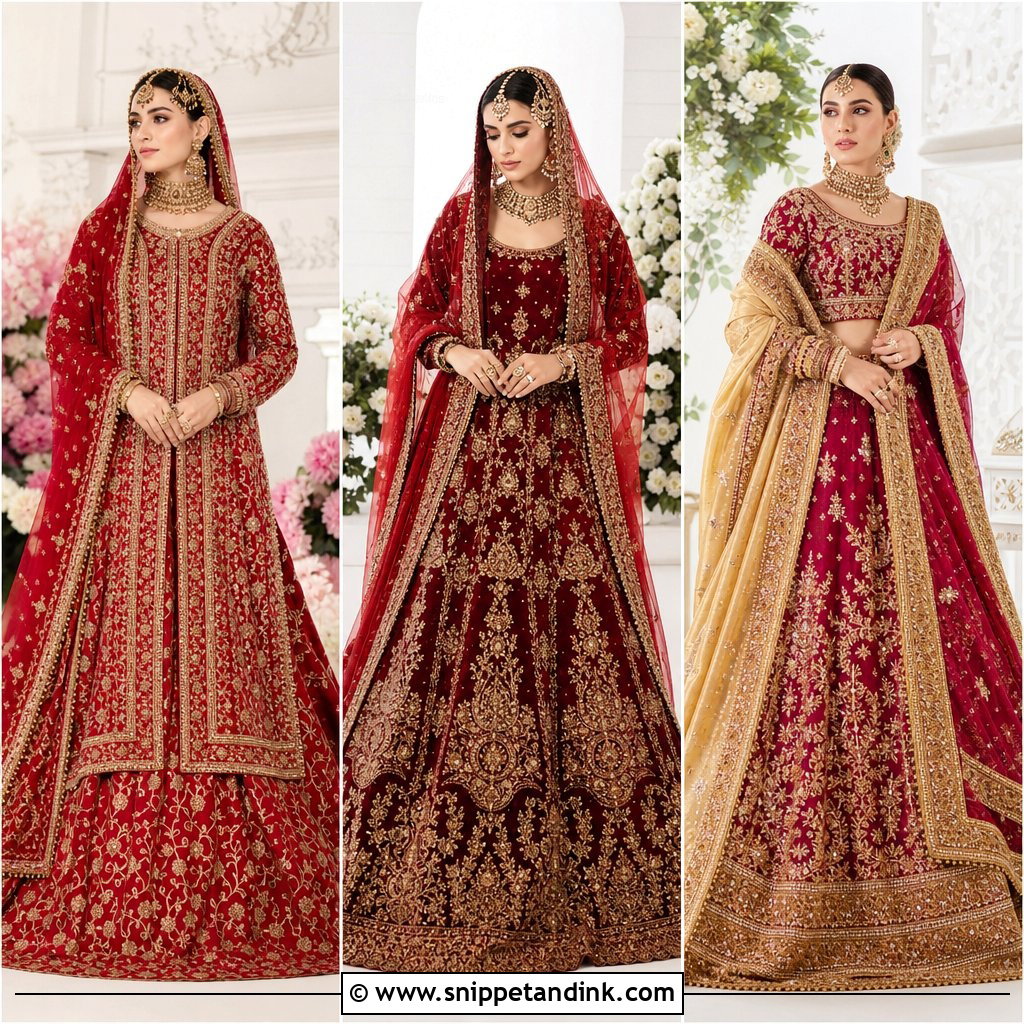
Red still means bride to most families, and an angrakha lets you wear it in a shape that feels fresh. A red angrakha works best floor length, with the overlapping bodice, side ties, full sleeves and a wide flare, and antique-gold zardozi around the neck and hem. Put a red net dupatta on the head and drape a lighter gold organza one across a shoulder. A kundan choker, jhumkas, bangles and red velvet khussas complete it. I check the tie closure carefully: angrakha overlaps can gape at the chest when you lean forward, so I add a hidden hook inside. For a daytime ceremony, a slightly muted crimson reads brighter on camera than a very dark red.
11. Maroon Pakistani Nikah Velvet Lehenga
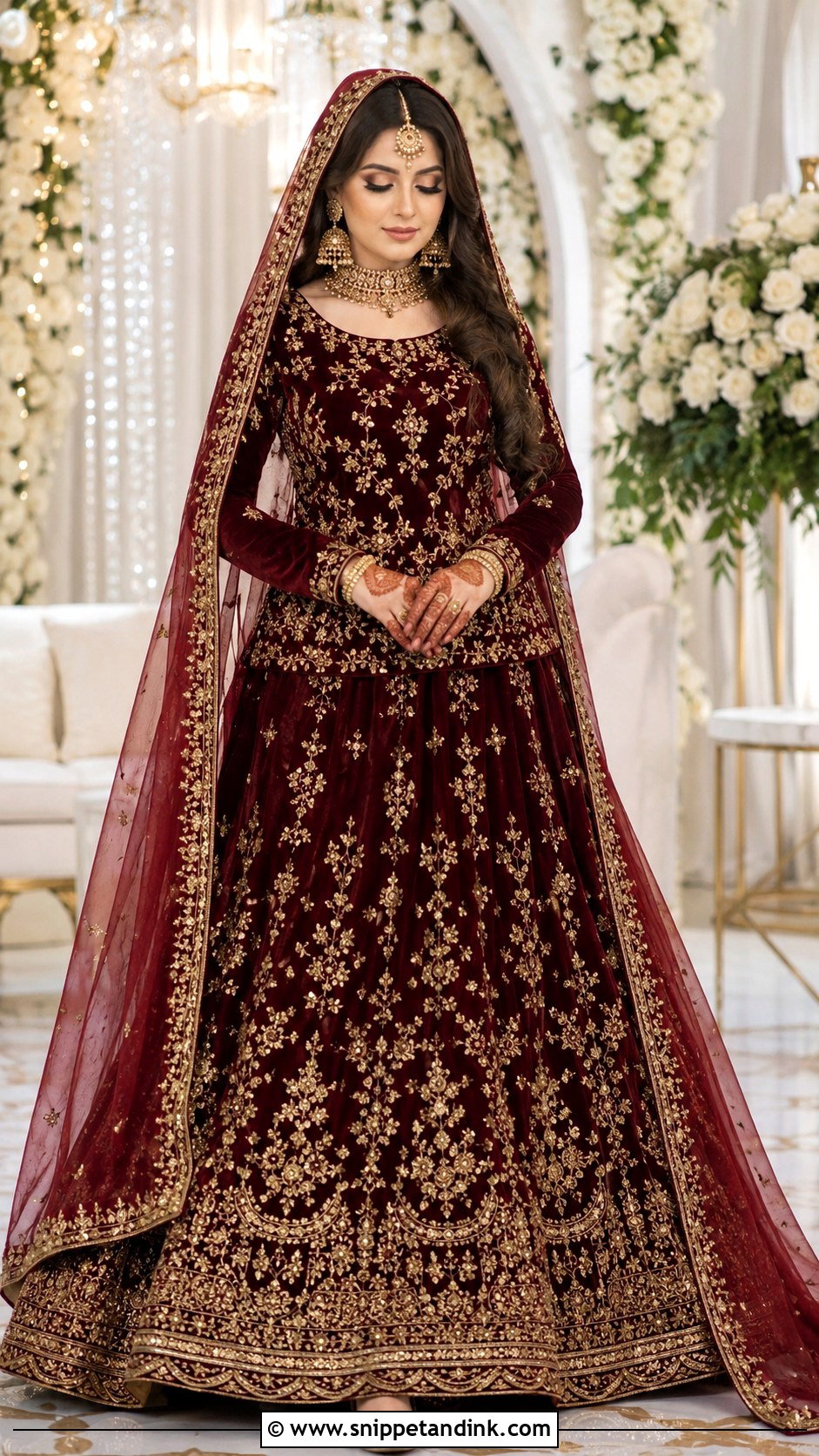
Maroon velvet is a winter and evening fabric, full stop. In a warm venue you will feel it within the first half hour. Keep the velvet to the blouse, with long sleeves and a modest neck, and let a raw silk lehenga carry the skirt so the weight stays manageable. Repeat the antique-gold embroidery from the blouse along the skirt border to tie the two together. A sheer maroon dupatta over the head is better than a heavy one, because velvet plus jewelry plus a heavy dupatta all press on the same hairpins. Gold jhumkas, a statement choker, a small tikka and velvet khussas finish it, with warm neutral makeup.
12. Powder Blue Pakistani Nikah Gown
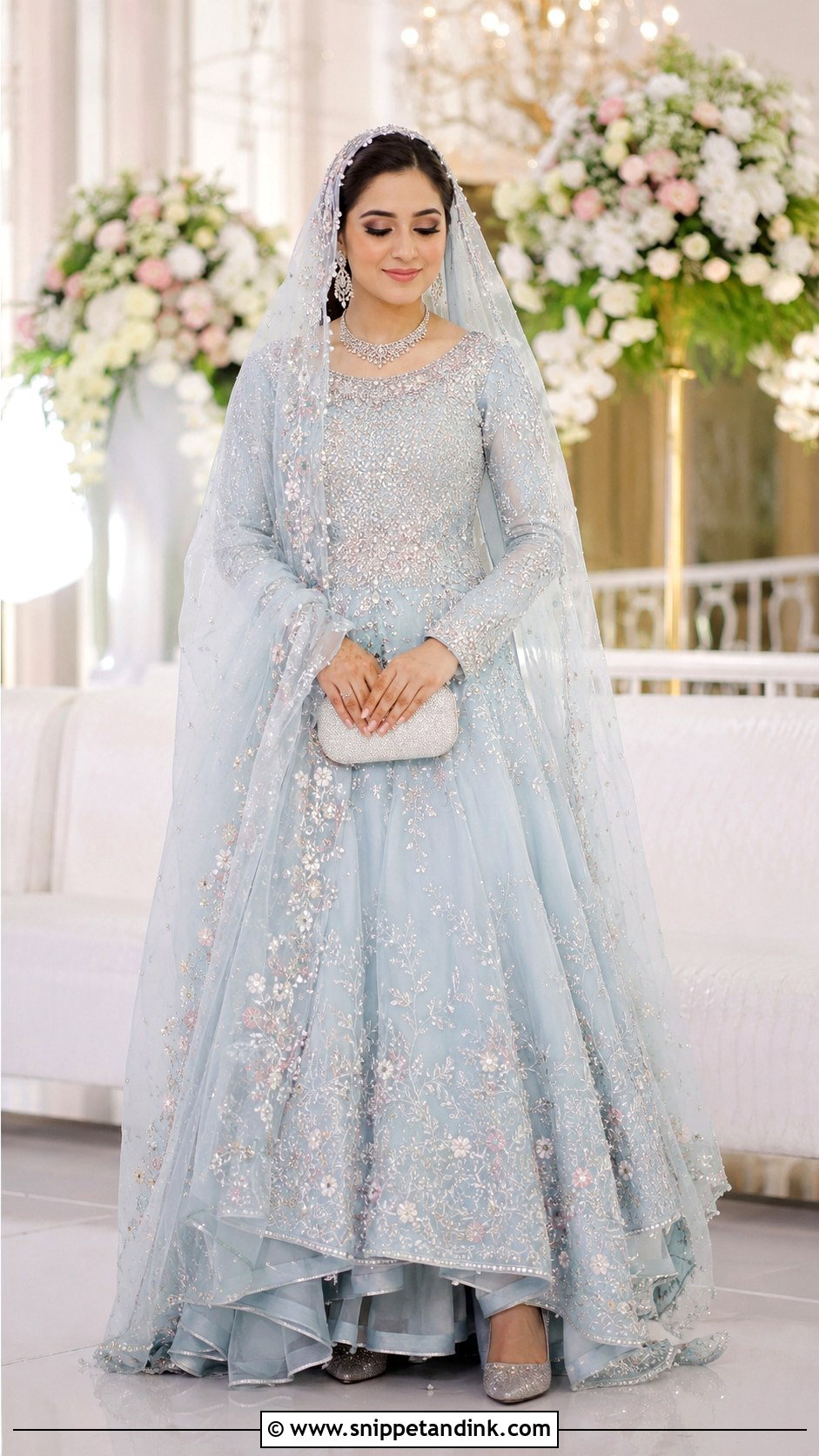
A powder blue gown borrows a Western shape while keeping Nikah coverage: fitted bodice, full sleeves, a softly layered floor-length skirt. I ask for the silver threadwork, crystals and pearls to be densest on the bodice and to thin out toward the hem, which keeps the skirt light enough to move. A coordinating organza dupatta over the head is what makes it read as Pakistani bridal rather than prom. Diamond-style earrings, a fine necklace, a silver clutch and pointed flats keep it fresh. Make sure the lining is secure and the train short enough to manage, since you’ll be turning to greet guests constantly and a long train wraps around your ankles.
13. Lilac Pakistani Nikah Pishwas
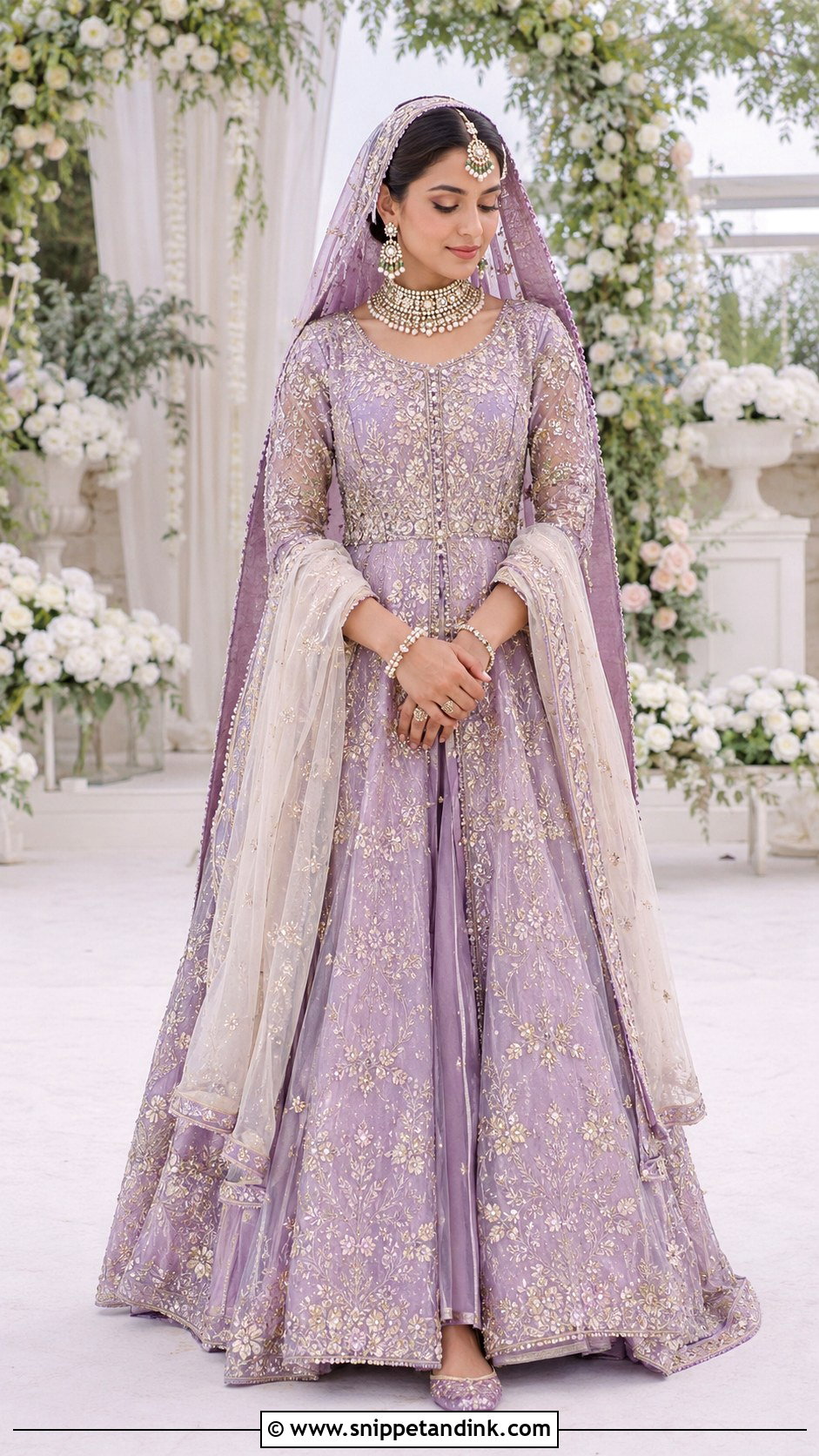
Lilac is the shade to pick if every cousin has already worn pink or white. A layered pishwas with a fitted waist, full sleeves and a wide skirt in silver-gold embroidery suits it, with fine florals across the body and heavier work at the hem so the dress falls straight. Pair a sheer lilac dupatta on the head with an ivory one over the arm, then pearl-and-kundan earrings, a slim choker, a small tikka and metallic lilac khussas. In a small room or a home Nikah, I take out a layer or two from the skirt. A controlled flare is much easier to manage between sofas and still gives you the shape in photos.
14. Emerald Green Pakistani Nikah Lehenga
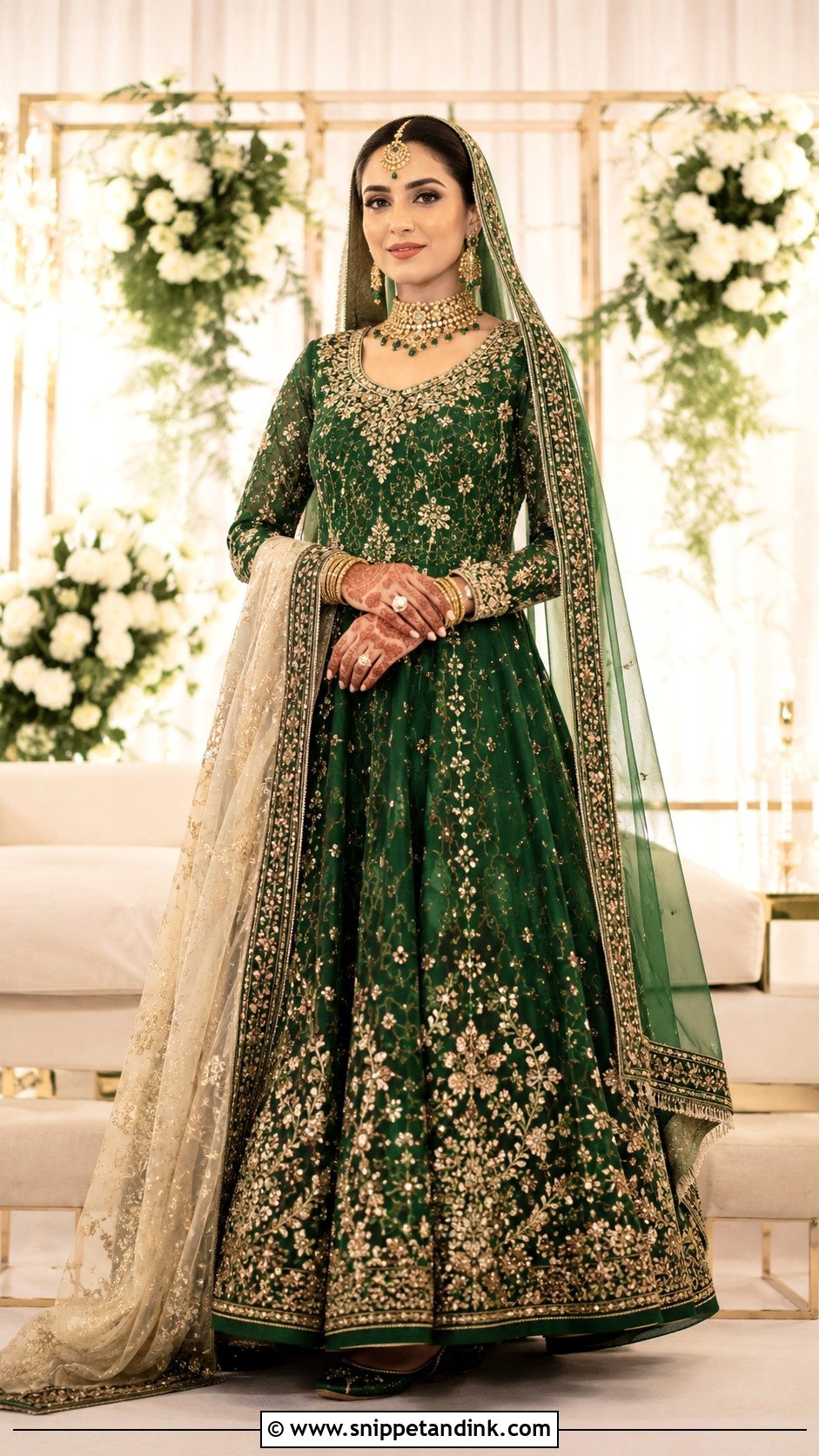
Emerald with antique gold is about as confident as Nikah dressing gets. Place the heavier embroidery near the hem and keep the upper skirt lighter, otherwise the lehenga looks bottom-heavy when you sit. Choose a square or softly rounded neckline depending on your choker, since the two need to follow the same line. A matching green dupatta over the head gives rich color; an ivory or gold one at the side stops the outfit from going too dark on camera. Kundan, gold bangles and green velvet khussas finish it. I steer brides toward this one for evening and formal venues; it can feel heavy at a midday mosque ceremony.


15. Ivory Pakistani Nikah Saree
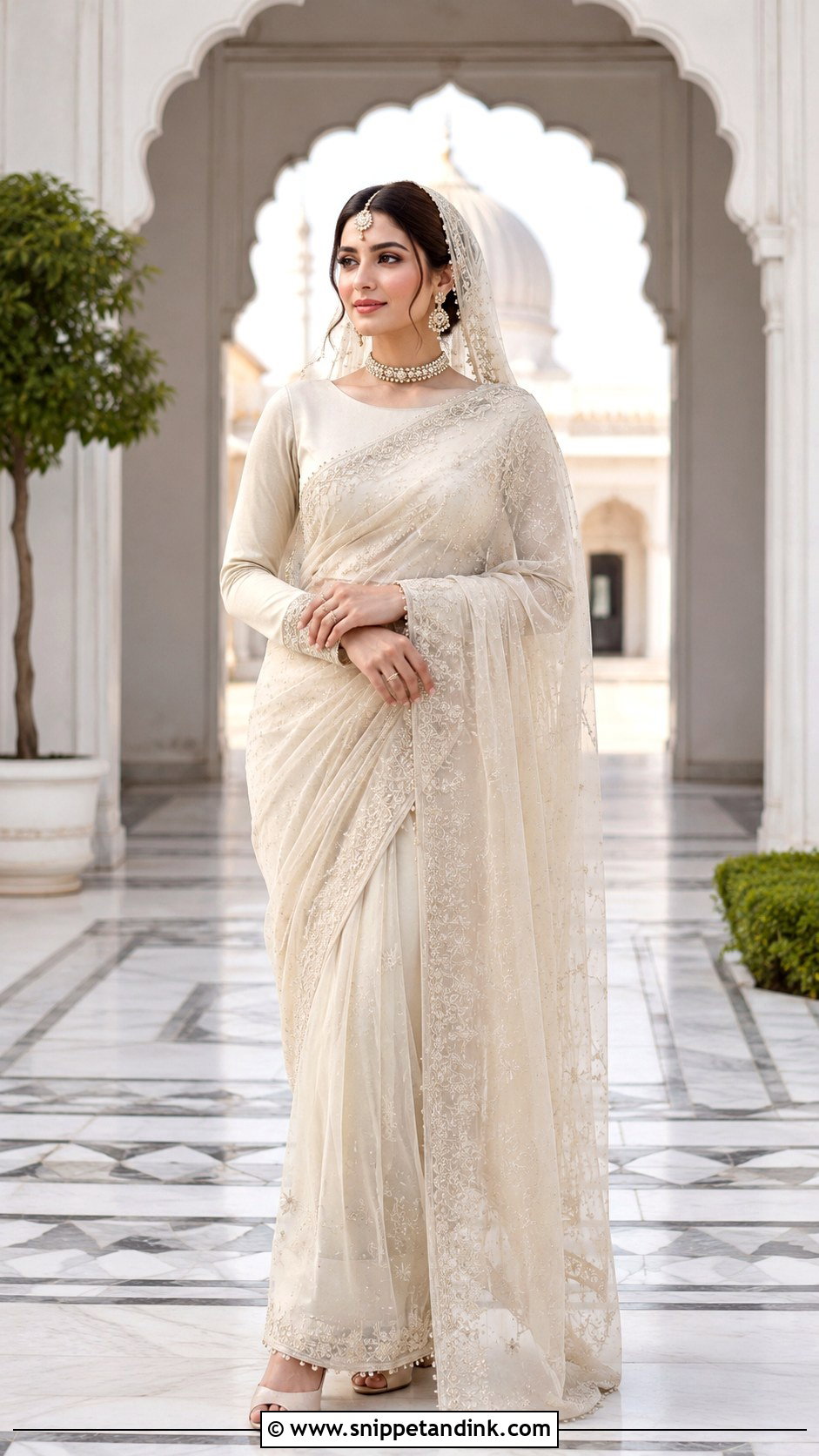
An ivory saree suits a bride who prefers clean drape to a full skirt. Chiffon, tissue or organza with a finely worked border and scattered pearls all work, with a long-sleeve blouse that has a high back and a secure neckline. The pallu goes over one shoulder and a separate light dupatta covers the head. Pearl earrings, a fine choker, a small tikka and ivory heels with straps finish it. The saree is the outfit I’d least want to see draped for the first time on the morning itself. Floor seating pulls pleats loose, so I pin them at the waistband with small safety pins hidden in the folds and rehearse sitting down at least once.
16. Beige Pakistani Nikah Shalwar Kameez
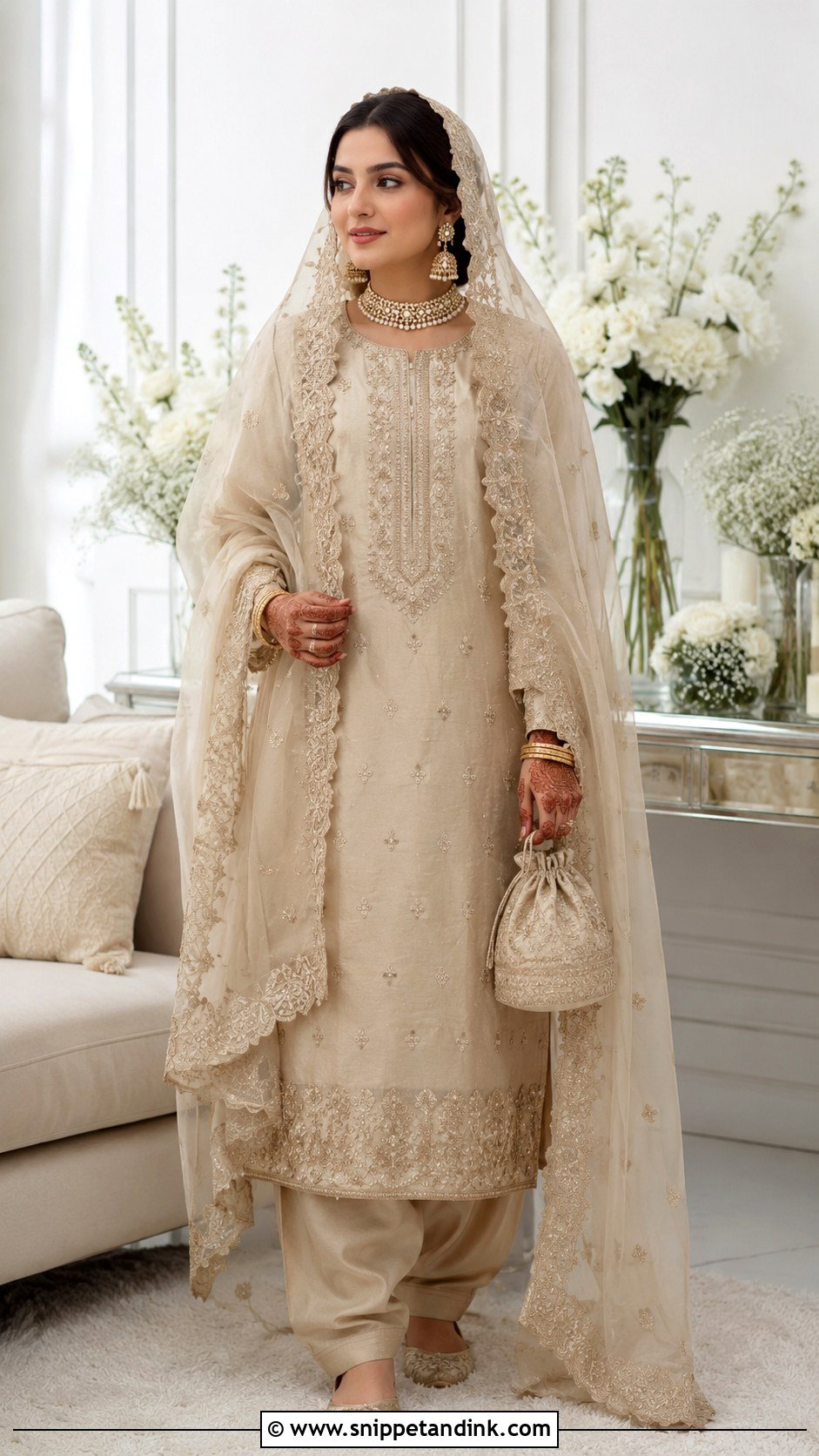
Simple cuts can still look bridal when the fabric does the work. Start with a long raw silk kameez in beige with full sleeves, side slits and ivory or antique-gold embroidery, and a shalwar in softly structured fabric so the folds fall cleanly. An embroidered organza dupatta over the head frames the face. Pearl jhumkas, a refined choker, gold bangles, beige khussas and a matching potli are enough. Beige next to the skin can look drab, so I keep the dupatta a shade lighter and add color through the lip. This is the outfit I’d suggest for a home Nikah or a small mosque ceremony.
17. Pastel Pink Pakistani Nikah Jacket Lehenga
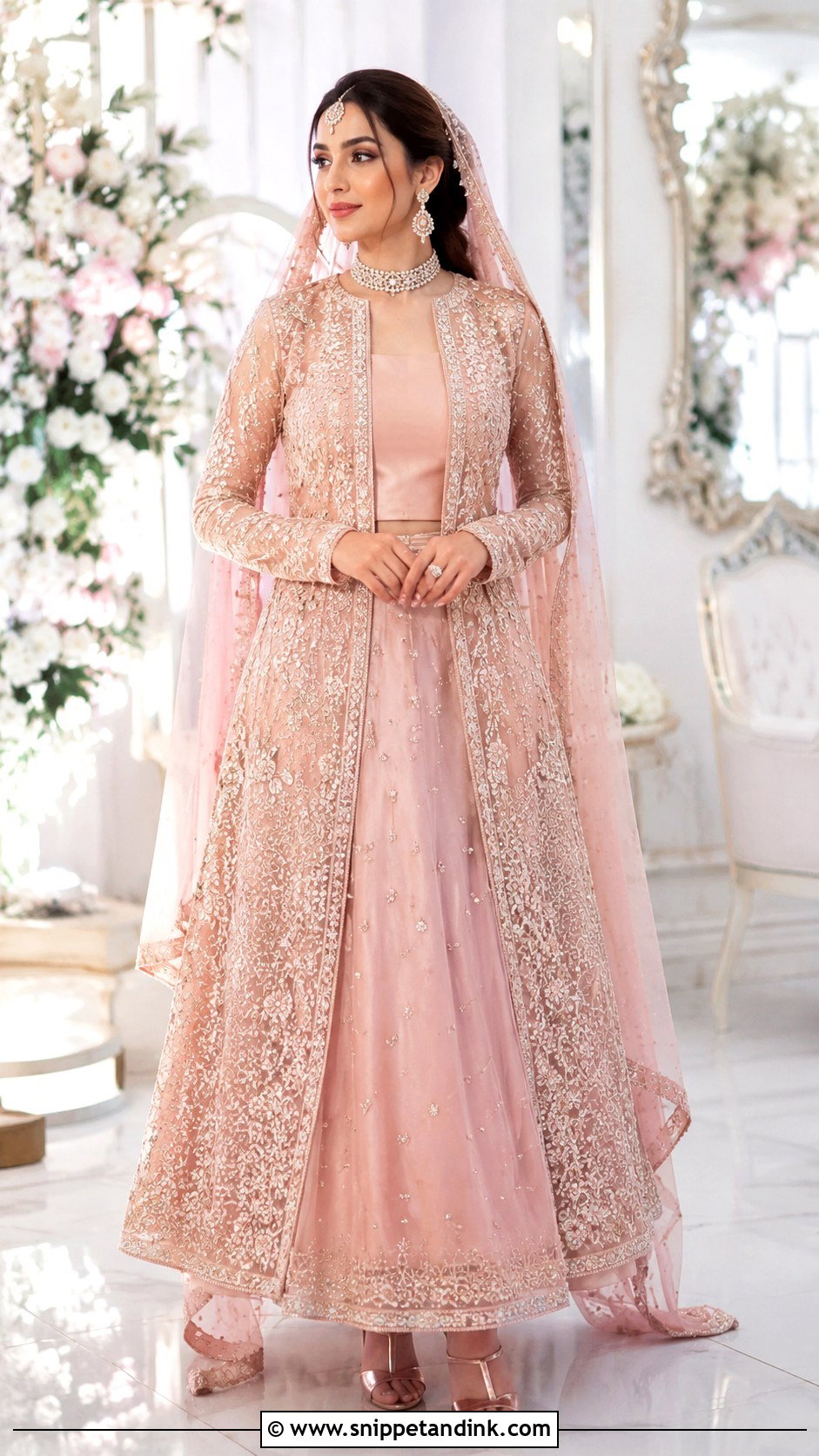
The jacket lehenga is the most practical design on this list. Underneath sits a simple sleeveless or short-sleeve blouse, and over it a long embroidered jacket with full sleeves and an open front, over a lehenga with lighter work so the jacket leads. A sheer pink dupatta covers the head without hiding the layers. Add a pearl choker, drop earrings, a slim tikka and rose-gold block heels. Proportion is where it goes wrong: on a shorter bride, a jacket ending near the knee cuts her in half, so I mark the length at mid-thigh first and adjust from there. The other bonus is that the jacket comes off later in the evening once the room heats up.
18. Silver Pakistani Nikah Tissue Pishwas
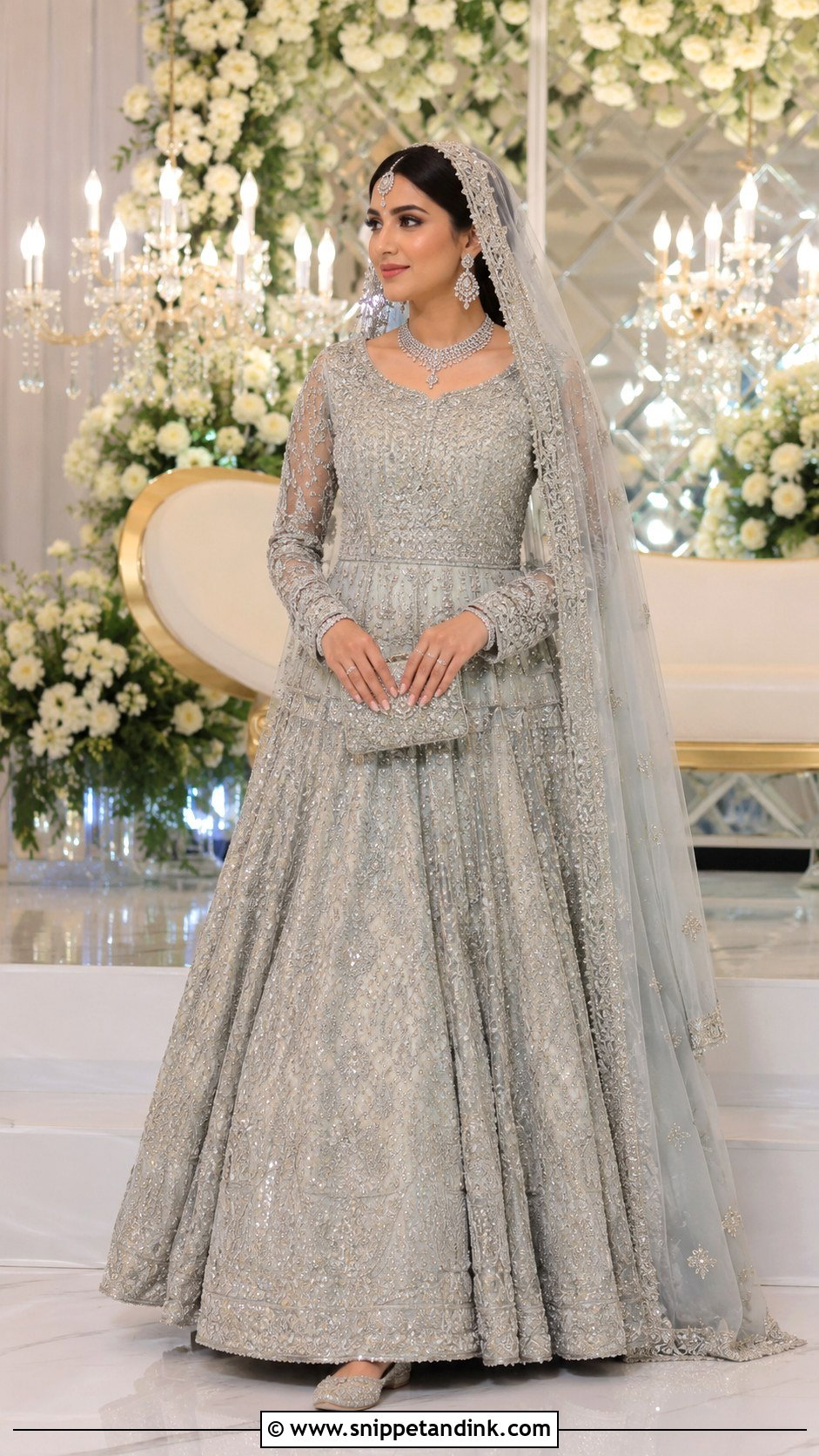
A silver tissue pishwas glows under evening lighting because tissue has metallic yarn woven through it. That same yarn is scratchy on bare skin, so insist on a soft full lining. Keep embroidery restrained, in silver thread, crystals and pearls, and let the fabric shine without covering every surface. Use a fitted bodice, full sleeves and a broad but controlled flare. A light grey organza dupatta with a narrow crystal border, diamond-style earrings, a fine choker, silver khussas and a small clutch finish it. Tissue creases sharply and the creases show, so I steam it on the hanger the day before and keep you standing until the car.
19. Tea Pink Pakistani Nikah Long Kameez
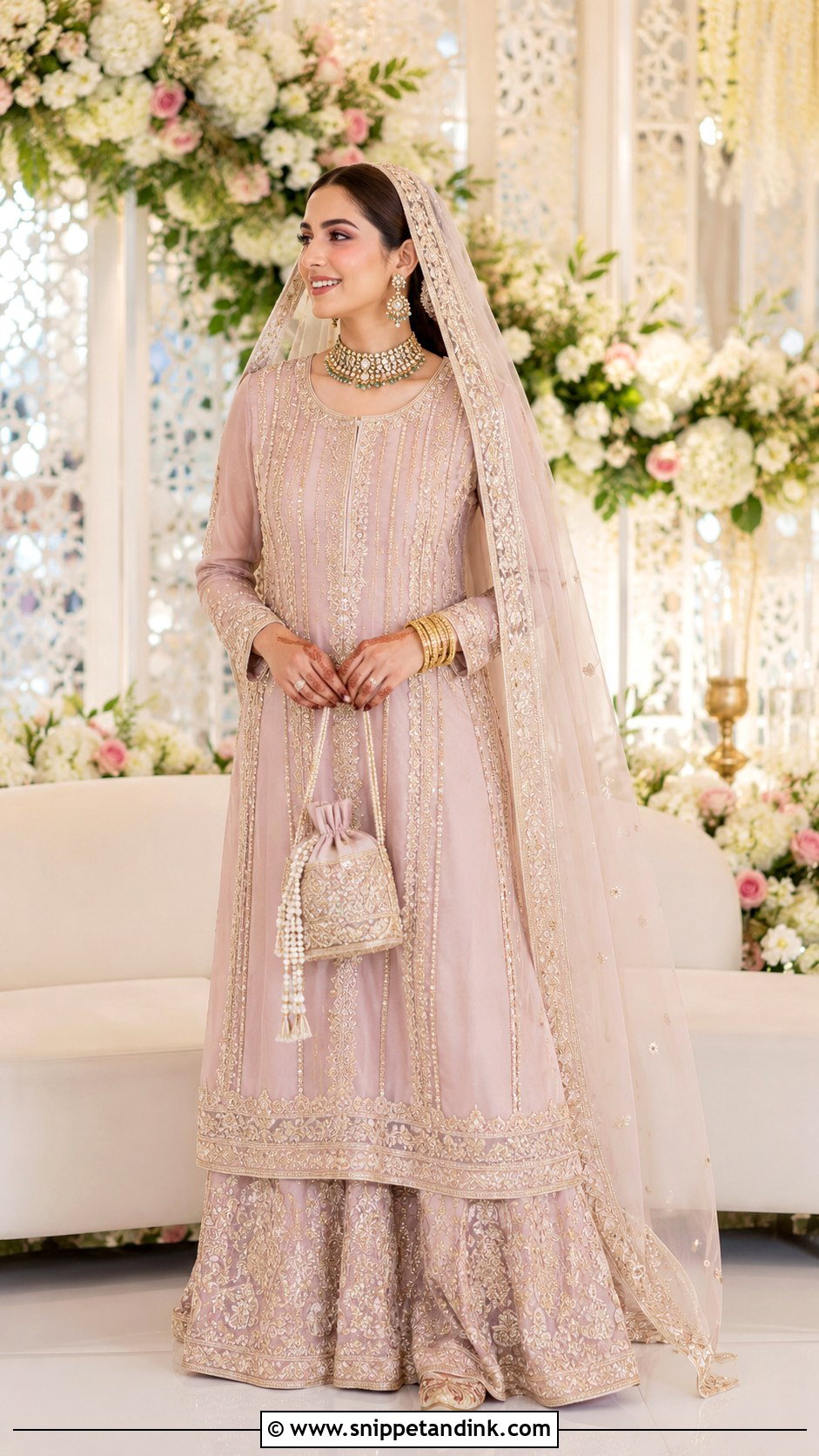
Tea pink is warm and forgiving next to most complexions. A straight or slightly flared kameez below the knee, with full sleeves and antique-gold embroidery running in vertical lines, sits over a lightly worked lehenga that moves underneath. A tea pink organza dupatta with an ivory border brightens the face. Kundan earrings, a medium choker, gold bangles, embroidered khussas and a tasselled potli complete it. Keep a few soft pieces around the face with a smooth bun. If you’re between a traditional lehenga and a modern long shirt, this sits comfortably in the middle.
20. Ivory And Red Pakistani Nikah Gharara
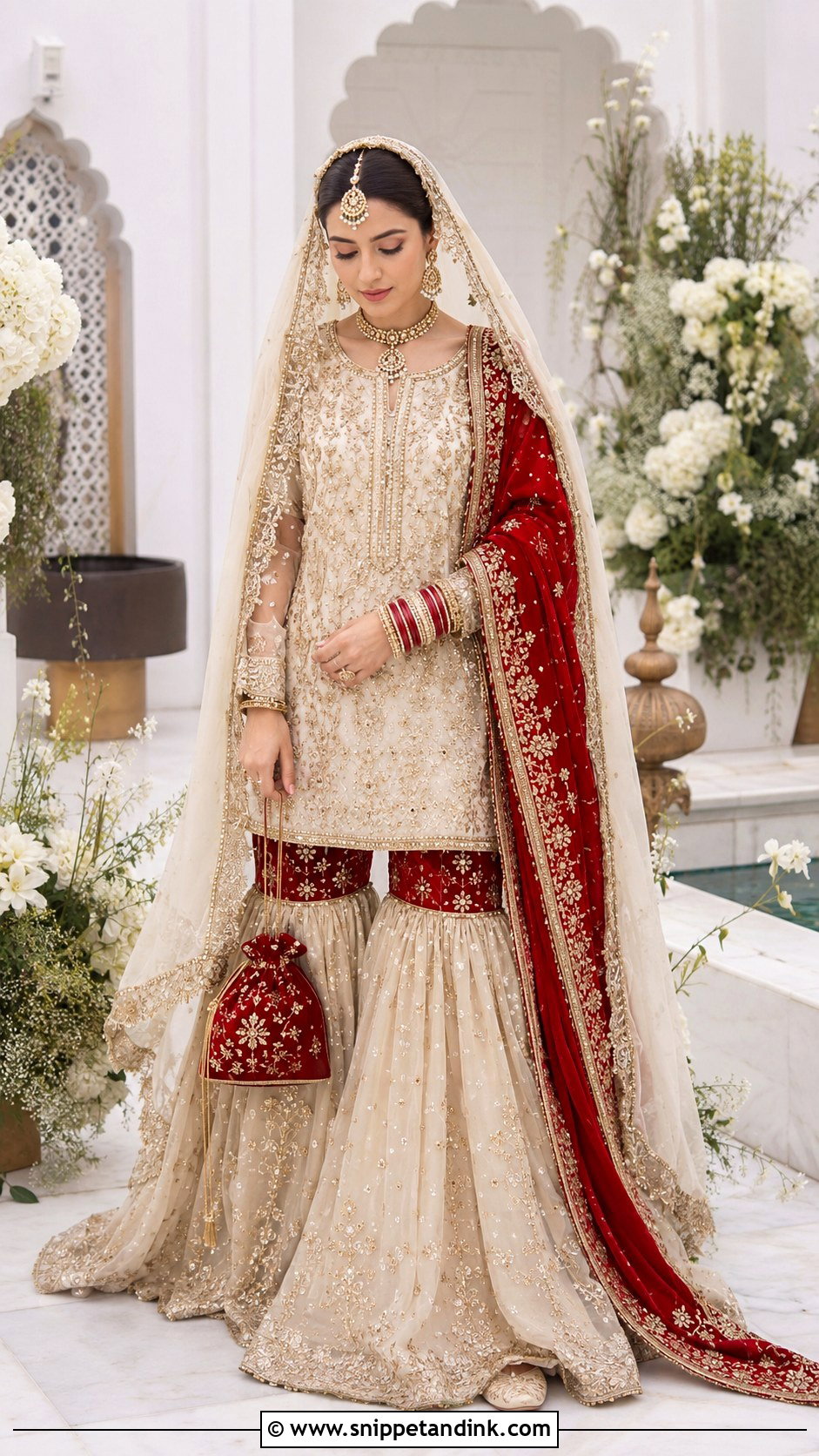
Red and ivory together let you nod to tradition without wearing red head to toe. An ivory short kameez worked in gold and red thread, over an ivory gharara with a red velvet band at the knee and a matching hem border, is the base. A sheer ivory dupatta goes on the head and a red one across a shoulder. Kundan, red-and-gold bangles, ivory khussas and a small red potli finish the set. I limit the red to three or four places so it repeats as a rhythm. Add more and the ivory starts to look like the accent rather than the base.
Hand Embroidery Needs Months, So Order Around the Needlework
Dabka, zardozi and pearl work are done by hand, and good karigars are booked solid in the wedding season. For a custom Nikah outfit from a Pakistani designer, I’d place the order four to six months out; a ready-to-wear piece with alterations can work in six to eight weeks. Overseas orders need extra time for shipping and customs, and that is exactly where brides lose their buffer.
- Send exact measurements taken by a tailor, not a tape at home, and ask for extra seam allowance on the blouse or kameez so a local tailor can adjust it.
- Ask to see a photo of the embroidery on the actual fabric before the full piece is stitched. Colors on a screen are not the colors on raw silk.
- Book the final fitting no later than two weeks before the Nikah, wearing the shoes and undergarments you’ll use on the day.
- Order the dupatta with the outfit. A dupatta bought separately rarely matches the embroidery color exactly.
Storing the Outfit So the Zari Doesn’t Tarnish
Metallic thread darkens with damp and with perfume, so never spray scent directly onto the embroidery, on the day or after. Once you’re home, hang the outfit in a dry room for a day so perspiration can evaporate before it’s packed away.
For storage, I wrap each piece in clean white muslin or old cotton cloth, never plastic, which traps moisture. Roll the dupatta rather than folding it, and if the lehenga has to be folded, lay tissue paper along the folds and refold it on different lines every few months so the embroidery doesn’t crack along one crease. Dry cleaning should go to someone who handles embellished bridal wear, and point out any stains when you drop it off.
A Nikah Outfit Should Still Feel Right at the Last Family Photo
A Nikah outfit is worn for hours, not minutes, so judge it on how it feels at the end of the day as much as how it looks in the mirror. Ivory and pastels lean soft; ghararas, lehengas and velvet lean traditional and formal. Think about your venue, the season, the time of the ceremony and how much sitting and walking you’ll do. Then match the dress to a dupatta you can manage, shoes you can stand in, jewelry in proportion and a hairstyle built to hold pins. My one non-negotiable is the final fitting in the actual undergarments and shoes, because a hem set in bare feet is always wrong by the time heels go on. After that, pick the color you love most; you’re the one who will look back at the photos.
You'll Like These Ideas:






Leave a Reply