
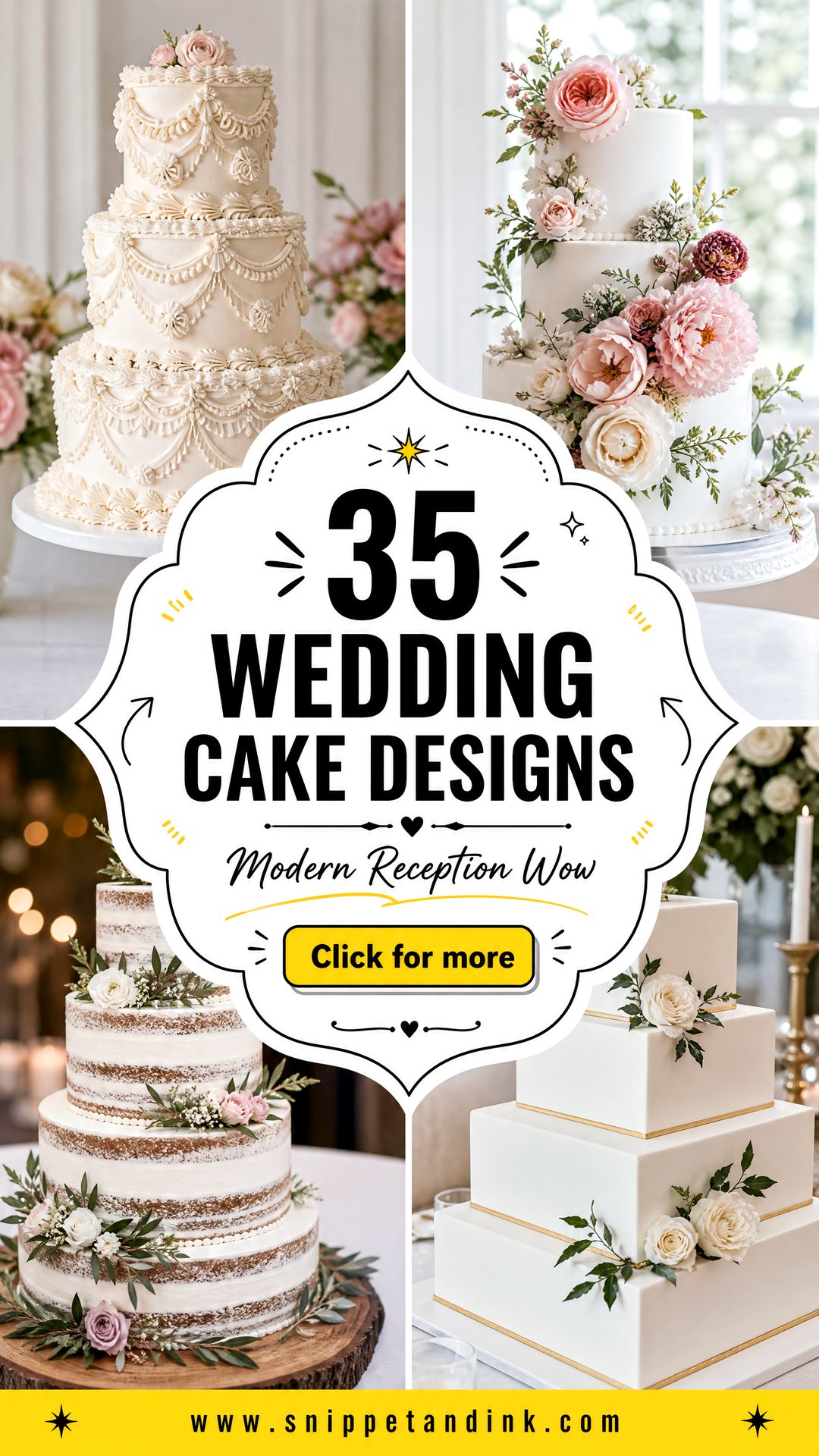
Wedding cakes have become far more personal over the last few seasons. More texture, more color, more piping, and fewer couples ordering a cake only because tradition expects one. Some want clean buttercream with a few flowers; others want heavy vintage piping, fruit piled high, or a single tall tier that holds the whole table. I design a cake to suit the room and the menu first and the couple’s mood board second, because a cake that fights its venue never looks right. Below are 35 designs, from the classics to the modern trends, with what I’d tell you about each before you book.
What a Cake Tasting Should Settle Besides Flavor
Couples tend to arrive at a tasting thinking about sponge and filling. Flavor matters, but most of the problems I see on wedding days come from questions nobody asked at that table. These are the ones I raise, and it helps to bring answers.
- Where the cake will sit: indoors or out, near a window, under a marquee, and roughly how warm the room gets. That decides buttercream versus fondant more than taste does.
- Who supplies the flowers. If your florist is dressing the cake, the baker and florist need each other’s numbers and a time to meet at the venue.
- The delivery window and who will receive it. A cake arriving at a locked venue, or before the table is set up, ends up waiting in a warm van.
- Allergies and dietary needs among your guests, so they’re handled in the kitchen instead of discovered at the dessert table.
- How it will be served: plated by the caterer, cut at a station, or boxed for guests to take home.
Bring your inspiration photos, but also bring a physical swatch of your palette. Screens shift color, and a scrap of bridesmaid fabric or a petal from your florist settles in a minute what a dozen emails can’t.
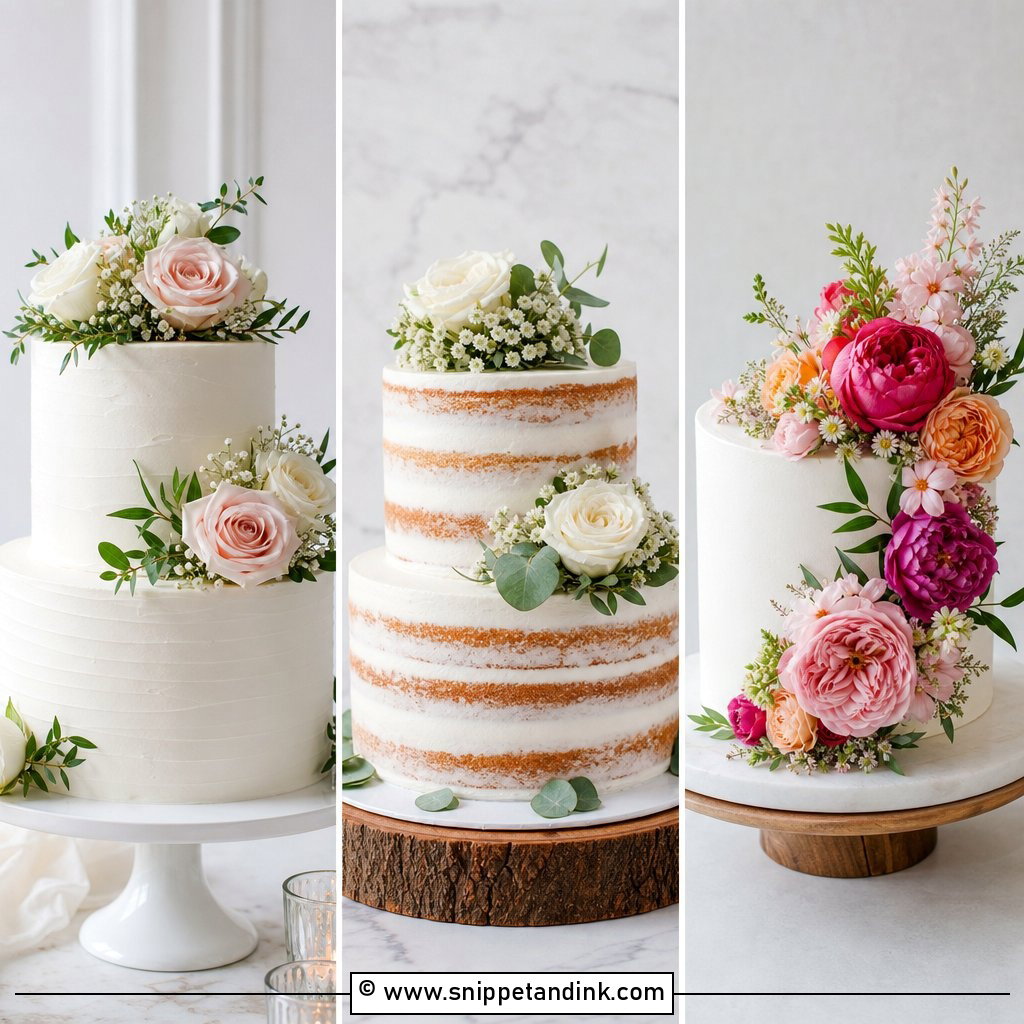
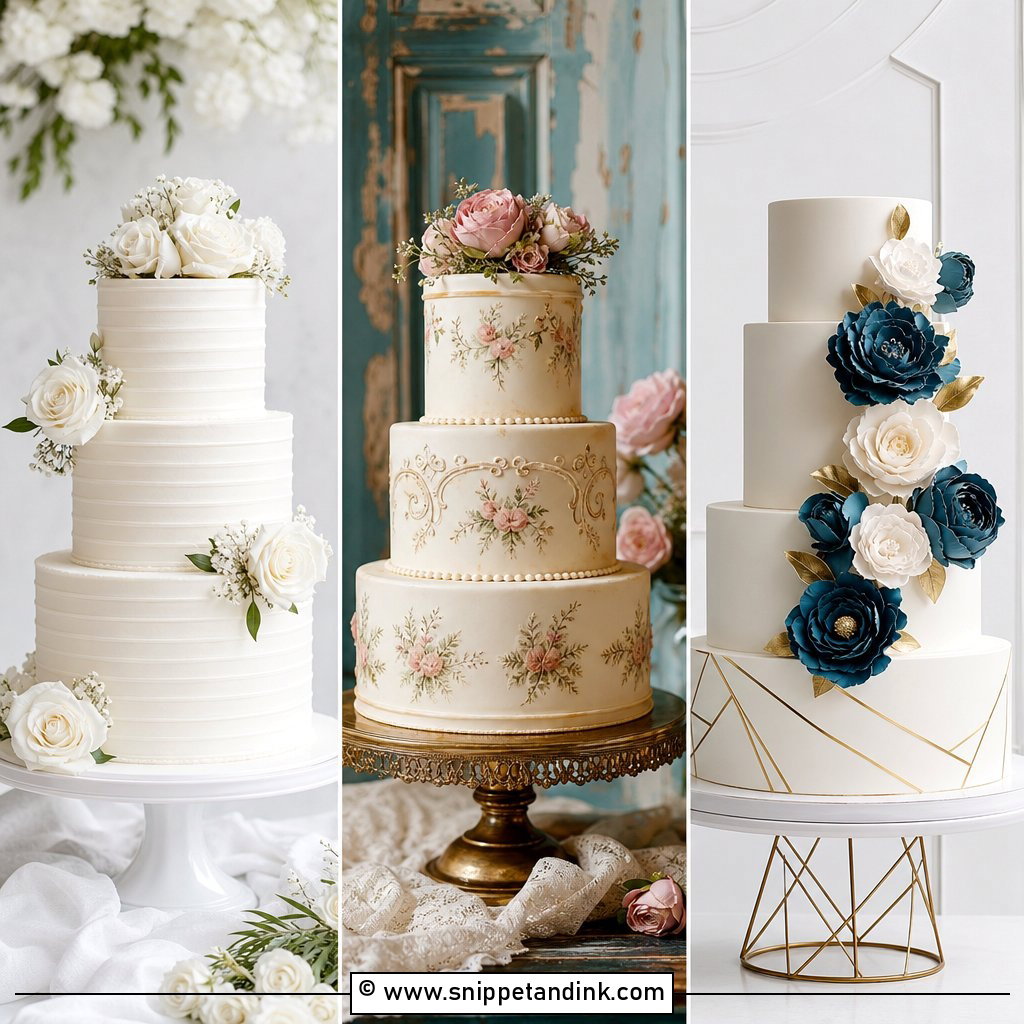
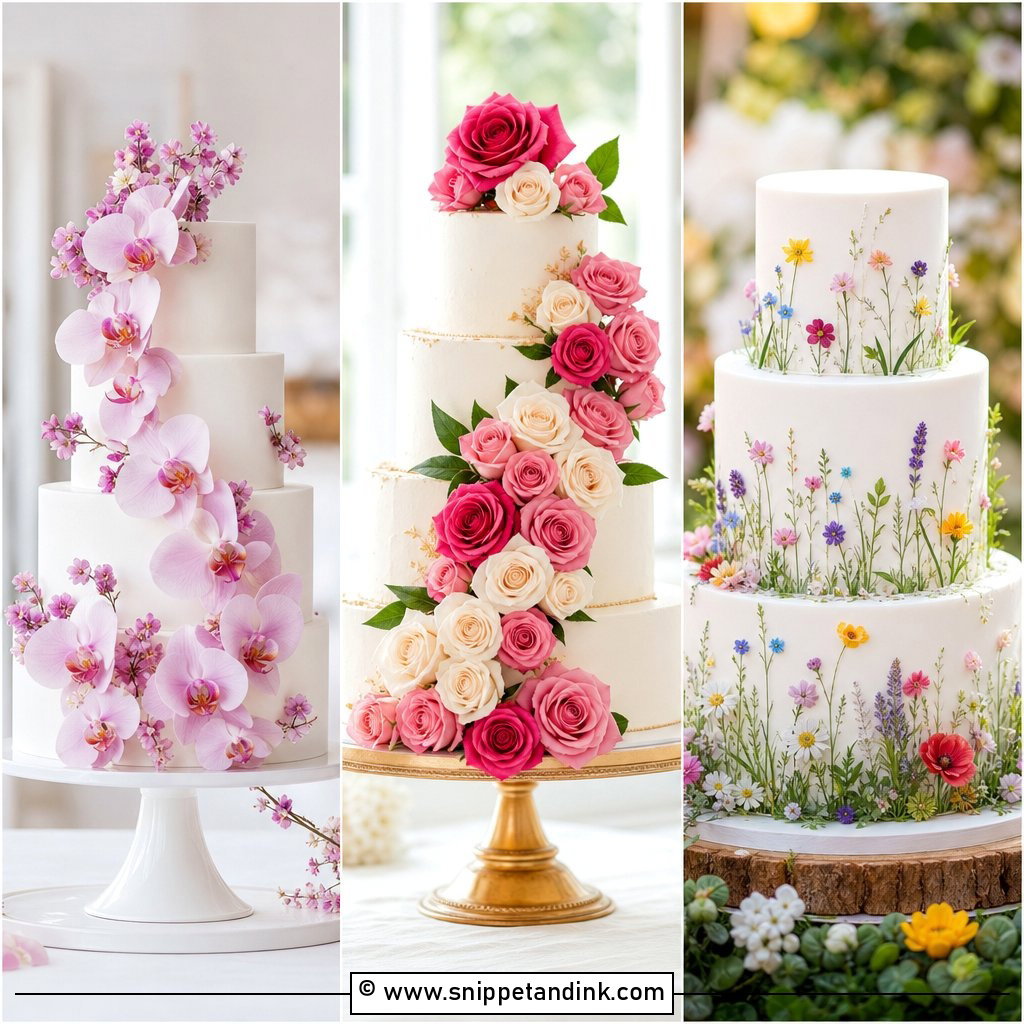
1. White Wedding Cake With Fresh Flowers
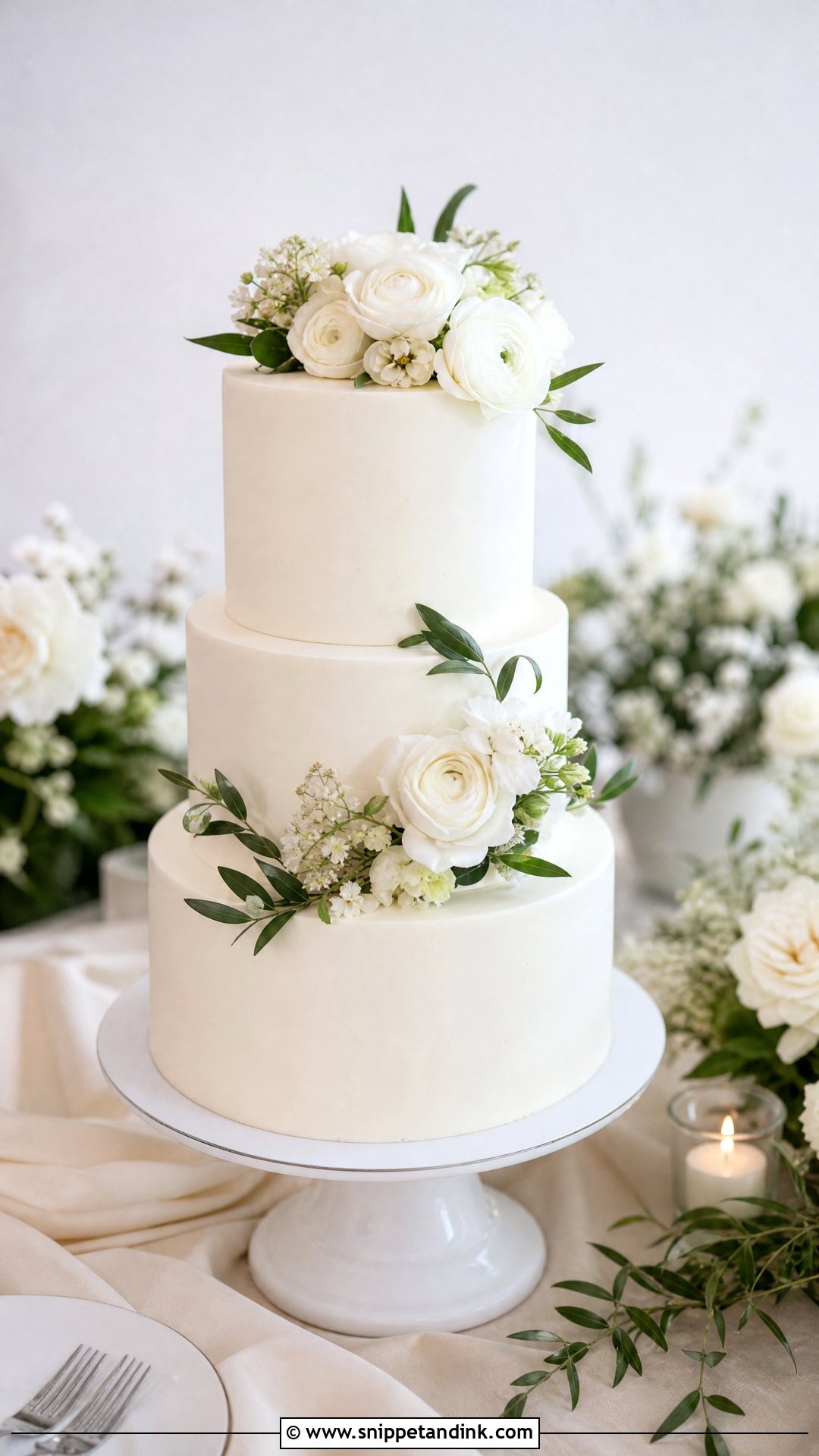
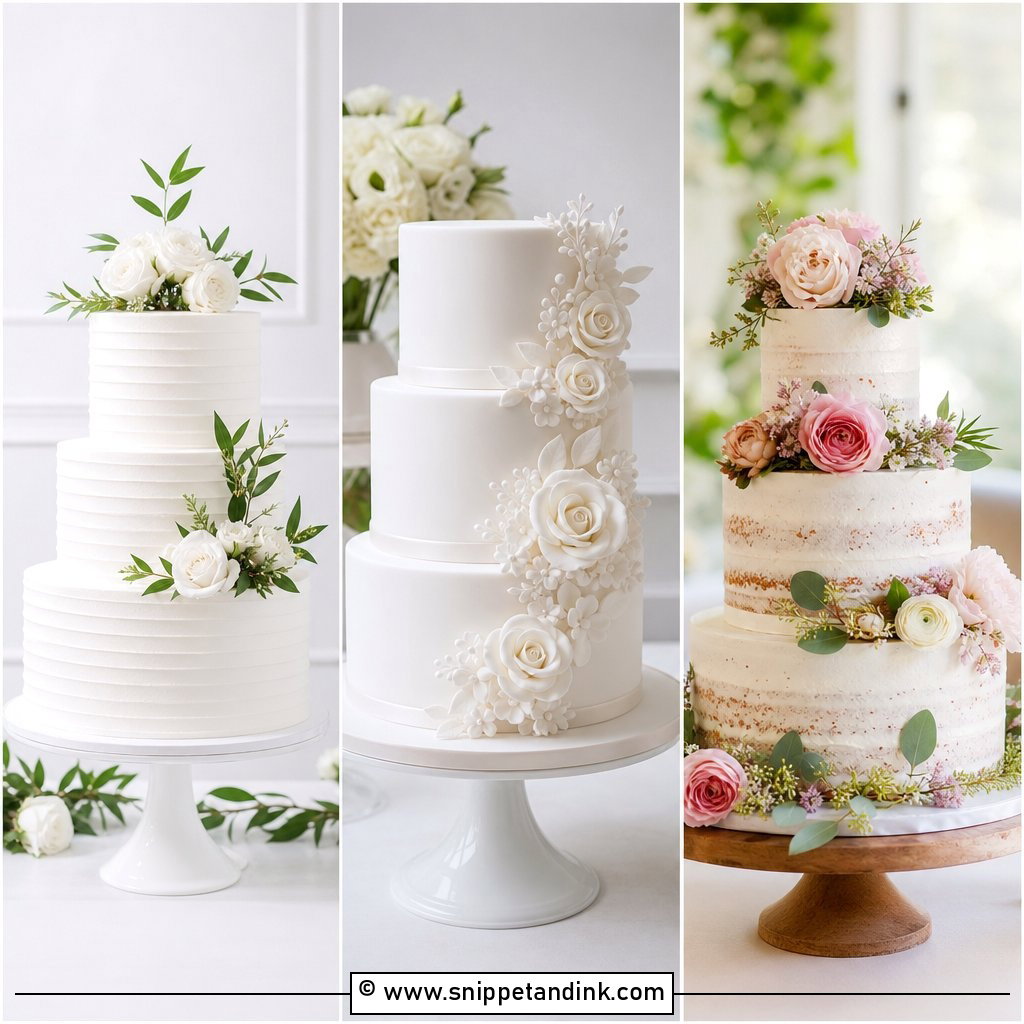
White with fresh flowers survives every trend because it hands the color work to the florist. That only works if the baker and florist talk. I ask for blooms grown without pesticides, and every stem gets taped or set in a pick before it goes near the frosting, since many common wedding flowers were never meant to touch food. Cluster them in two or three spots rather than dotting each tier. Roses, ranunculus and small greenery stems hold up out of water far better than fragile sweet peas do.
2. Three Tier Wedding Cake
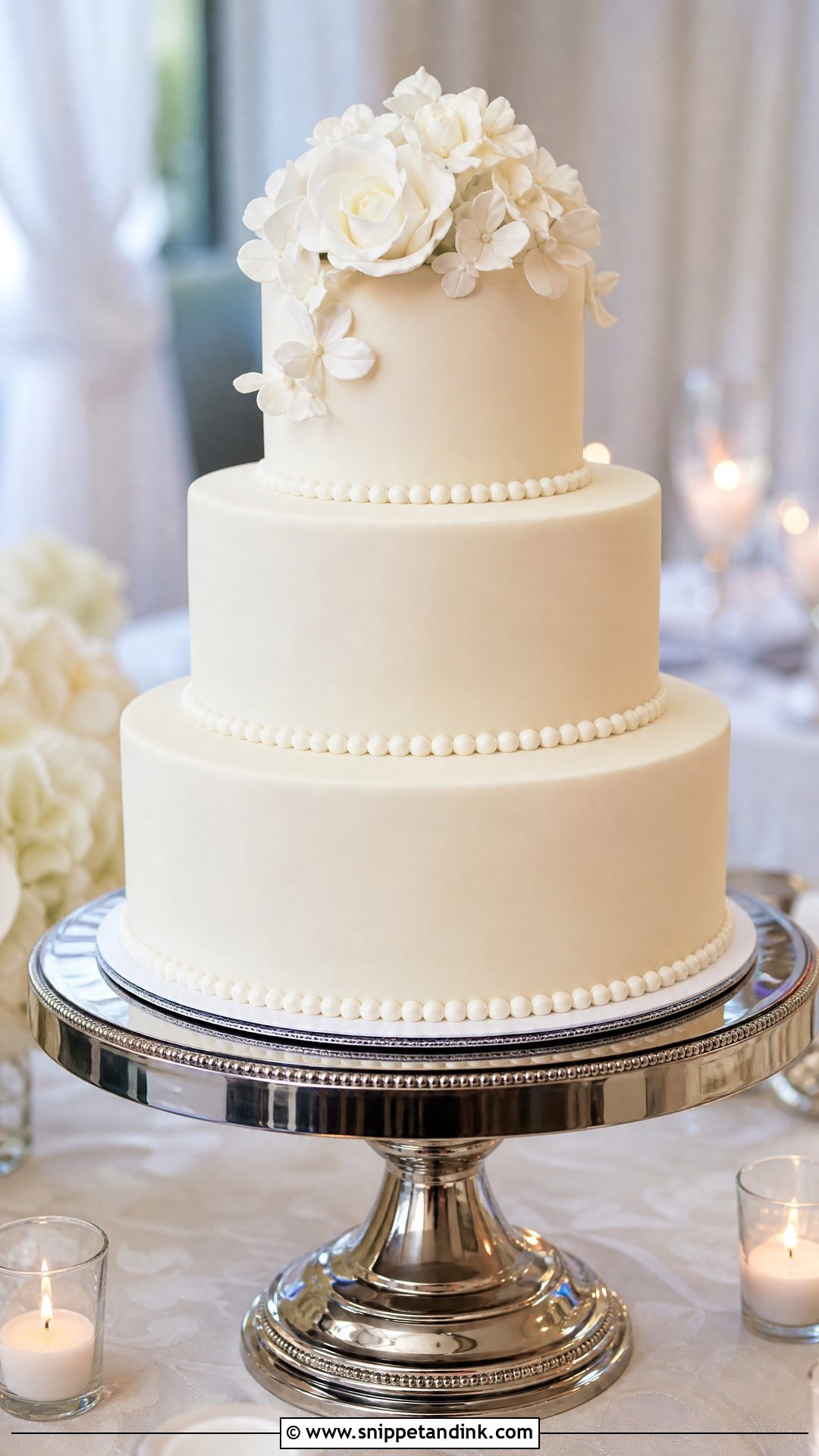
Three tiers is where most mid-sized weddings land, and for good reason: it’s tall enough to read across the room without needing a crew to move it. A common stack is 6, 8 and 10 inches, which serves somewhere around 70 to 75 slim wedding slices. Each tier can carry its own flavor, such as lemon raspberry, vanilla almond and chocolate ganache. For a more current shape, I make the tiers different heights instead of three identical drums.
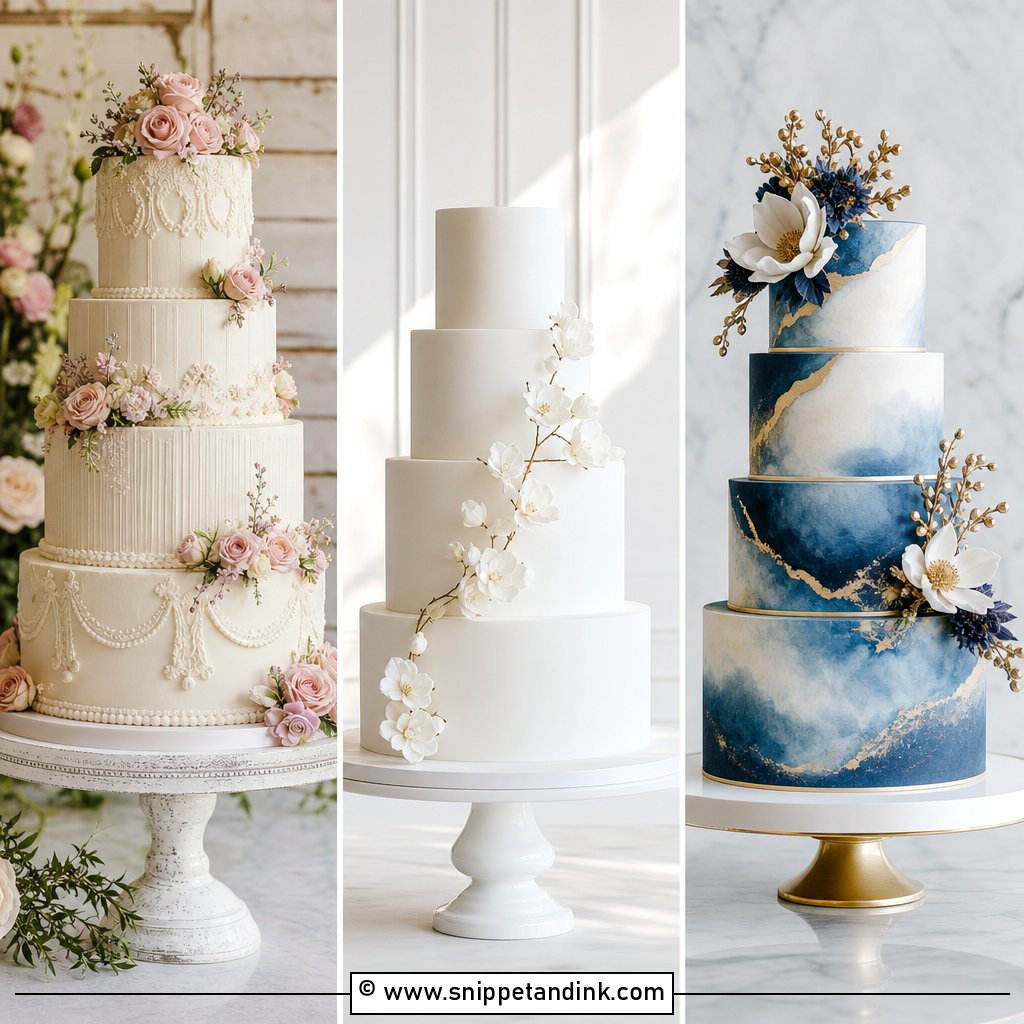
3. Vintage Wedding Cake
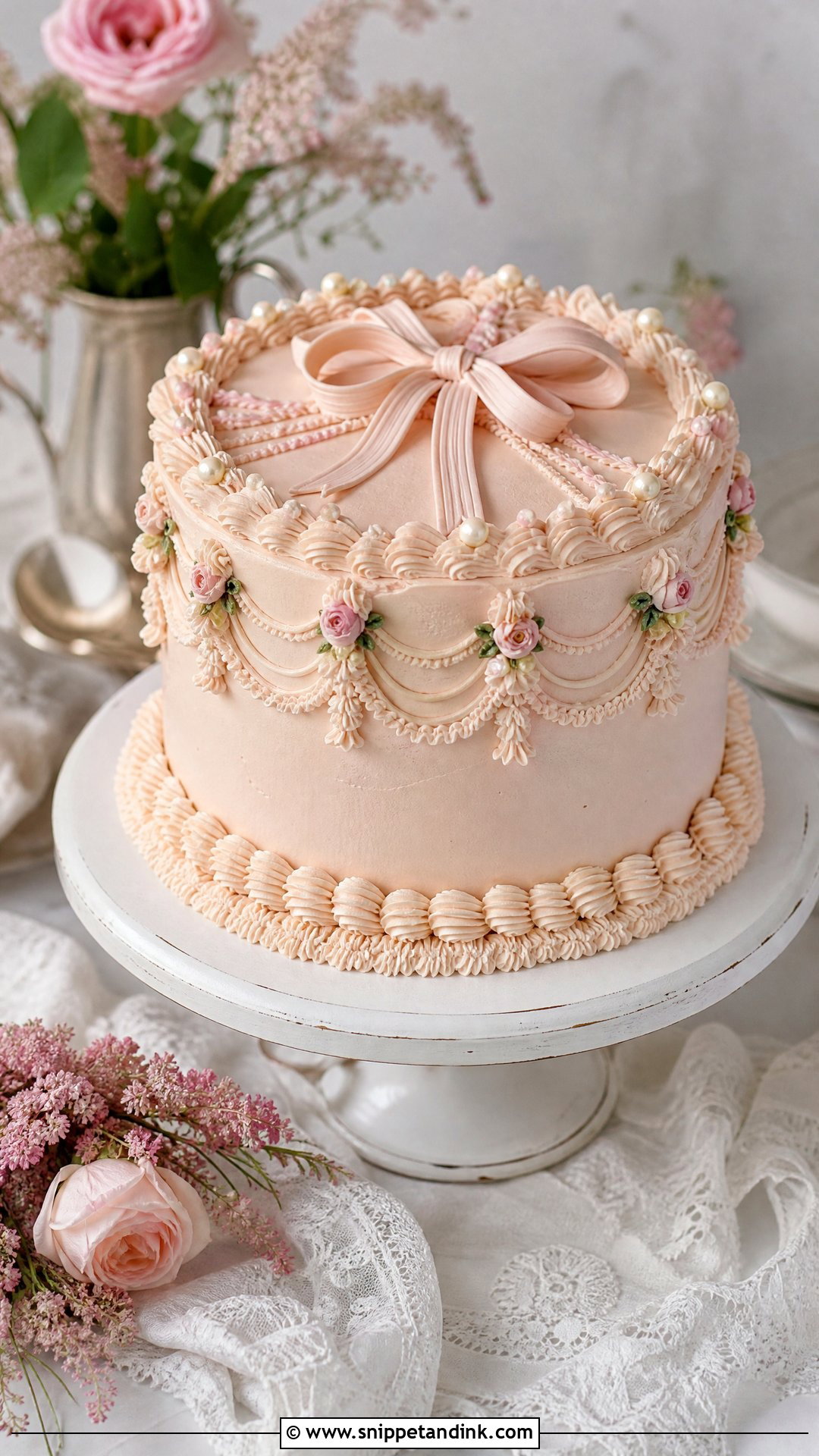
Vintage cakes live on their piping: shell borders, swags, pearl dots, little ruffles. The line between charming and messy is consistency, every shell the same size and every swag hanging at the same depth, so study a baker’s past piping closely before you book. All-white is classic; blush or butter yellow lightens the mood. A practical bonus is that piped texture forgives a warm room better than a sharp-edged modern cake, because small soft spots disappear into it.
4. Lambeth Wedding Cake
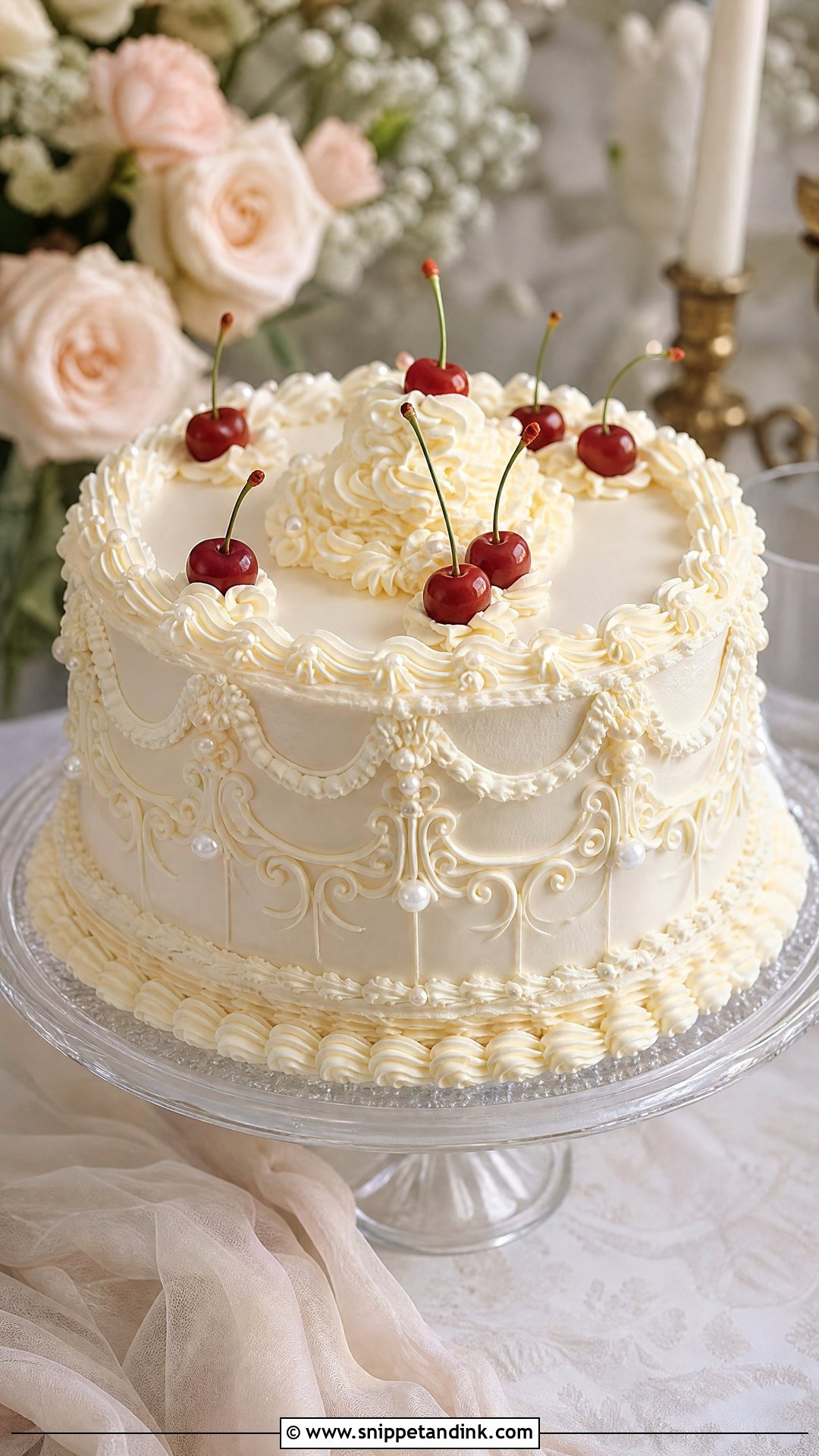
Lambeth is the over-the-top branch of vintage: layer upon layer of overpiped borders, scrolls and drops, built up until the cake looks carved. It’s slow work, hours of piping per tier, so it costs more in labor than its size suggests. In soft white or sage it reads romantic; in deep burgundy or black it turns theatrical. Since the piping is the whole show, I keep extras to a few cherries or sugar pearls. Ask to see the back of a baker’s Lambeth cakes, not just the front. That’s where rushed work shows.
5. Minimalist Wedding Cake
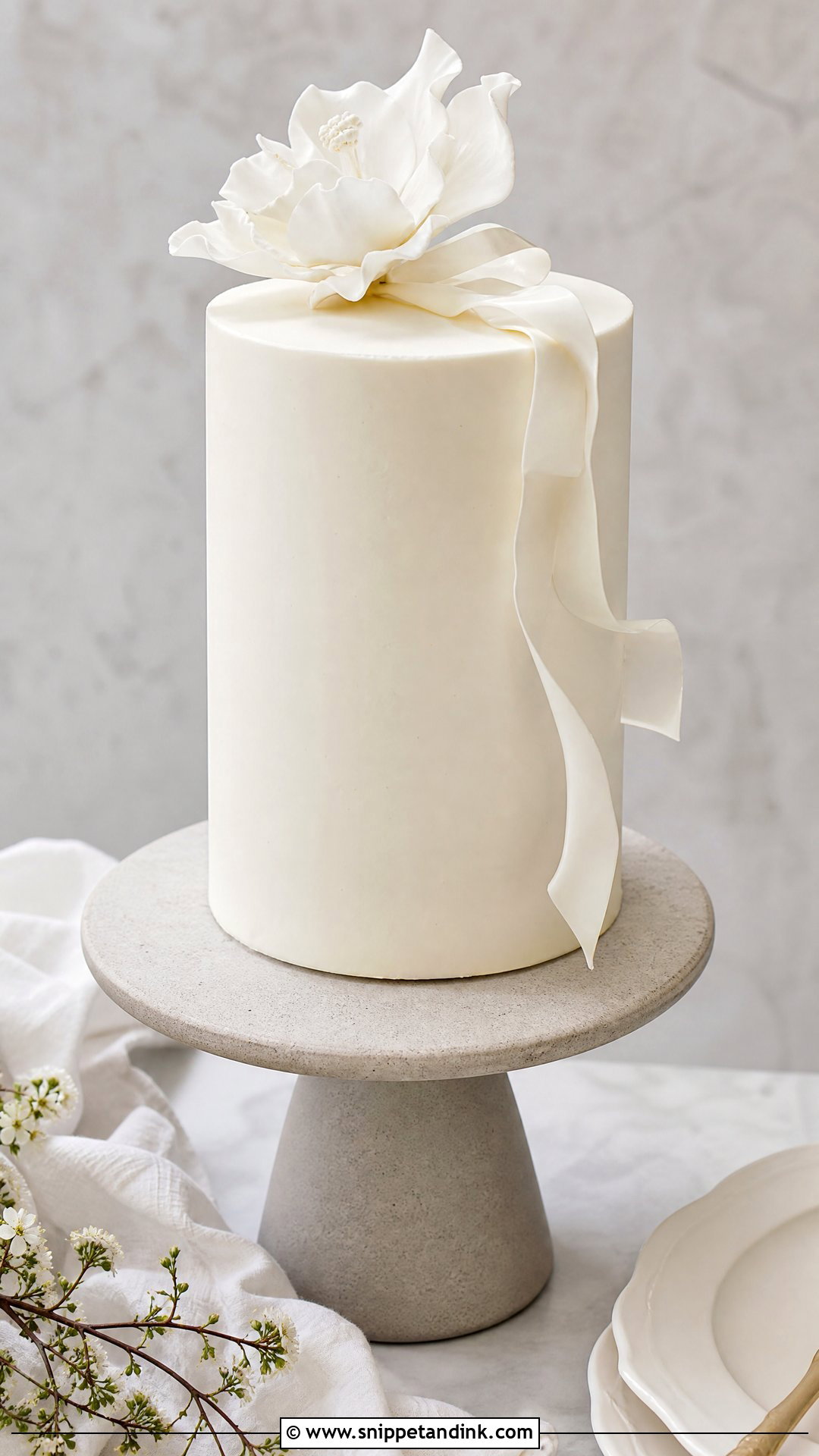
A minimalist cake has nowhere to hide. One silk ribbon or a single sugar flower on smooth white buttercream looks deliberate only if the edges are sharp and every tier sits dead level, so this is a style where I’d pay for skill rather than decoration. Gallery spaces and city venues suit it. If plain worries you, ask for tone-on-tone detail or a matte finish, which add interest without breaking the calm.
6. Textured Buttercream Wedding Cake
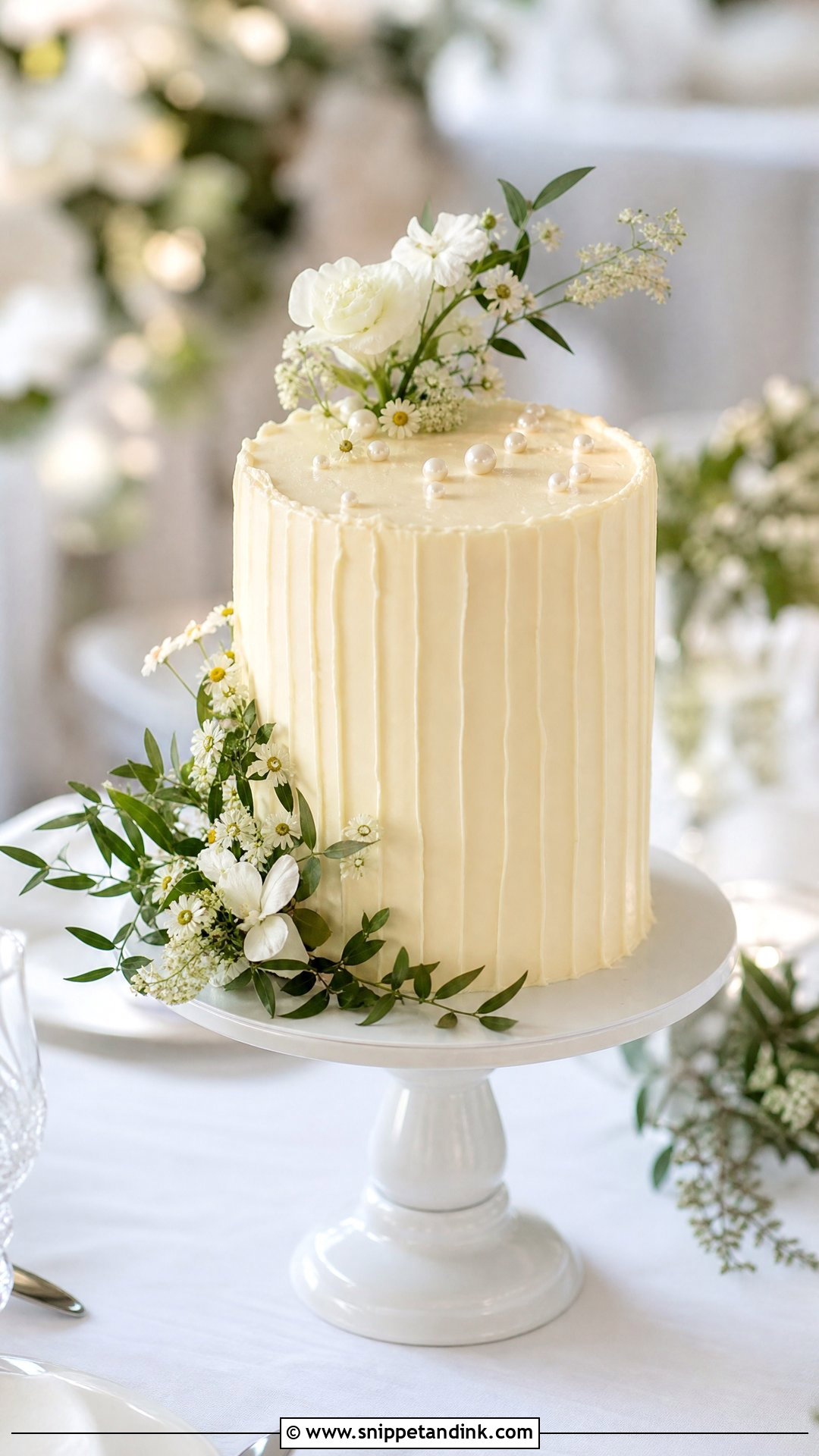
Textured buttercream is my usual answer for couples who find smooth cakes too stiff. Ridges come from a comb scraper; stucco and swoops come from a palette knife. Fine ridges look modern, while loose swirls feel relaxed. There’s a practical bonus too: texture hides the small dents that happen in transport, which a smooth finish shows immediately. It needs very little on top, a few flowers or nothing at all.
7. Pearl Wedding Cake
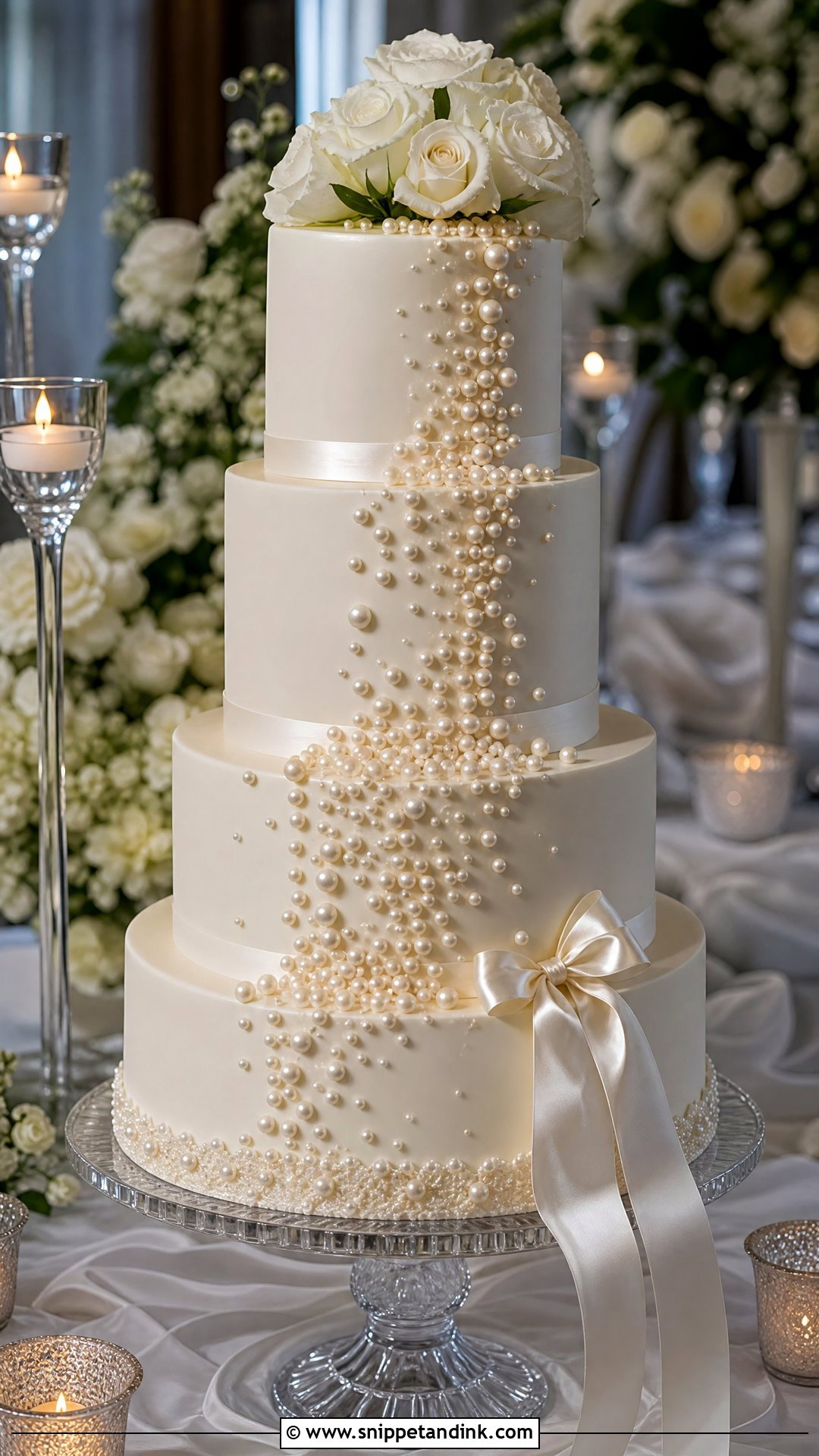
Edible pearls add texture without adding color, so the cake stays soft and pale. Neat rows look formal; a loose drape across the tiers, like a necklace, looks more current. I set each pearl by hand while the frosting is still tacky, which takes a while on three tiers, because pearls pressed on after the surface sets tend to pop off when the cake is moved. Ivory frosting, white roses and a satin ribbon are the classic partners.
8. Floral Wedding Cake
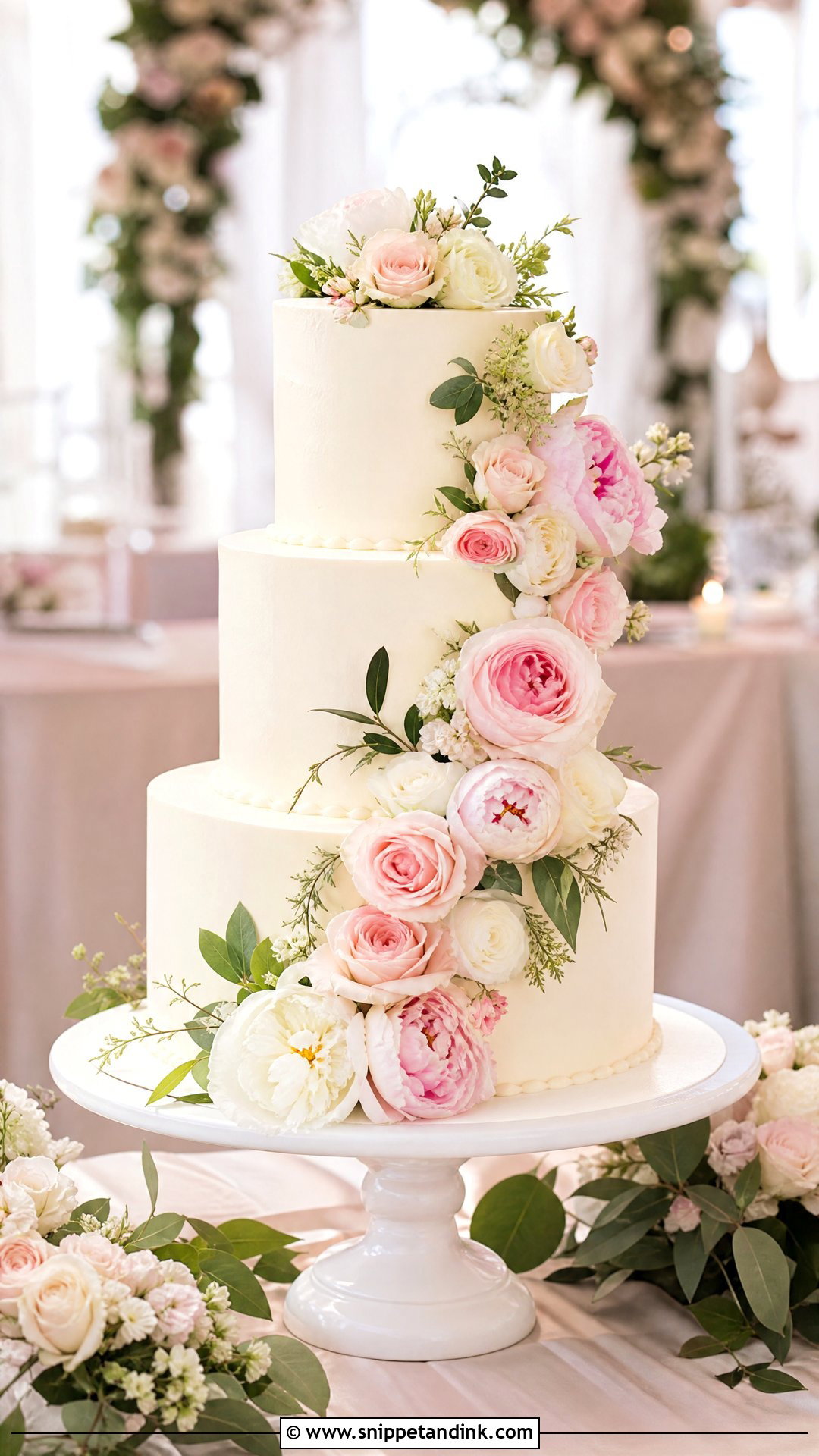
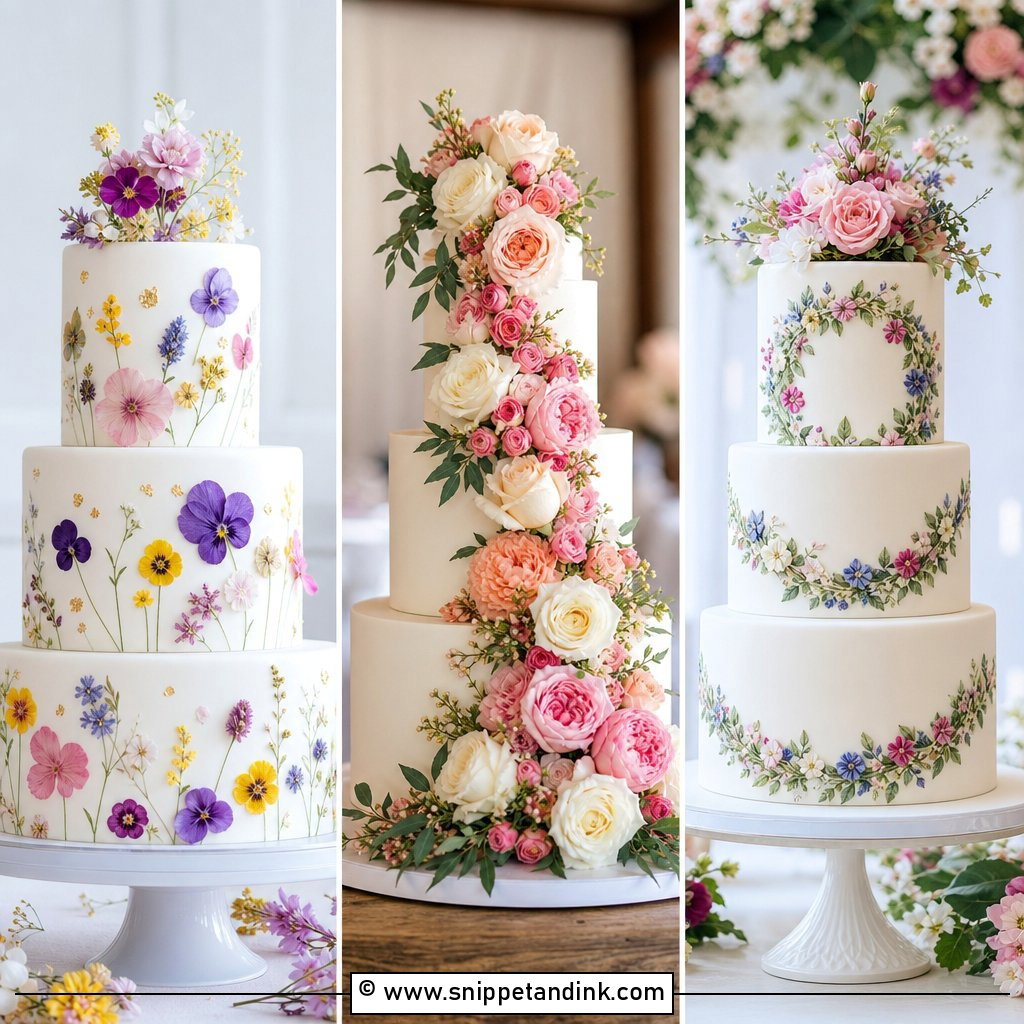
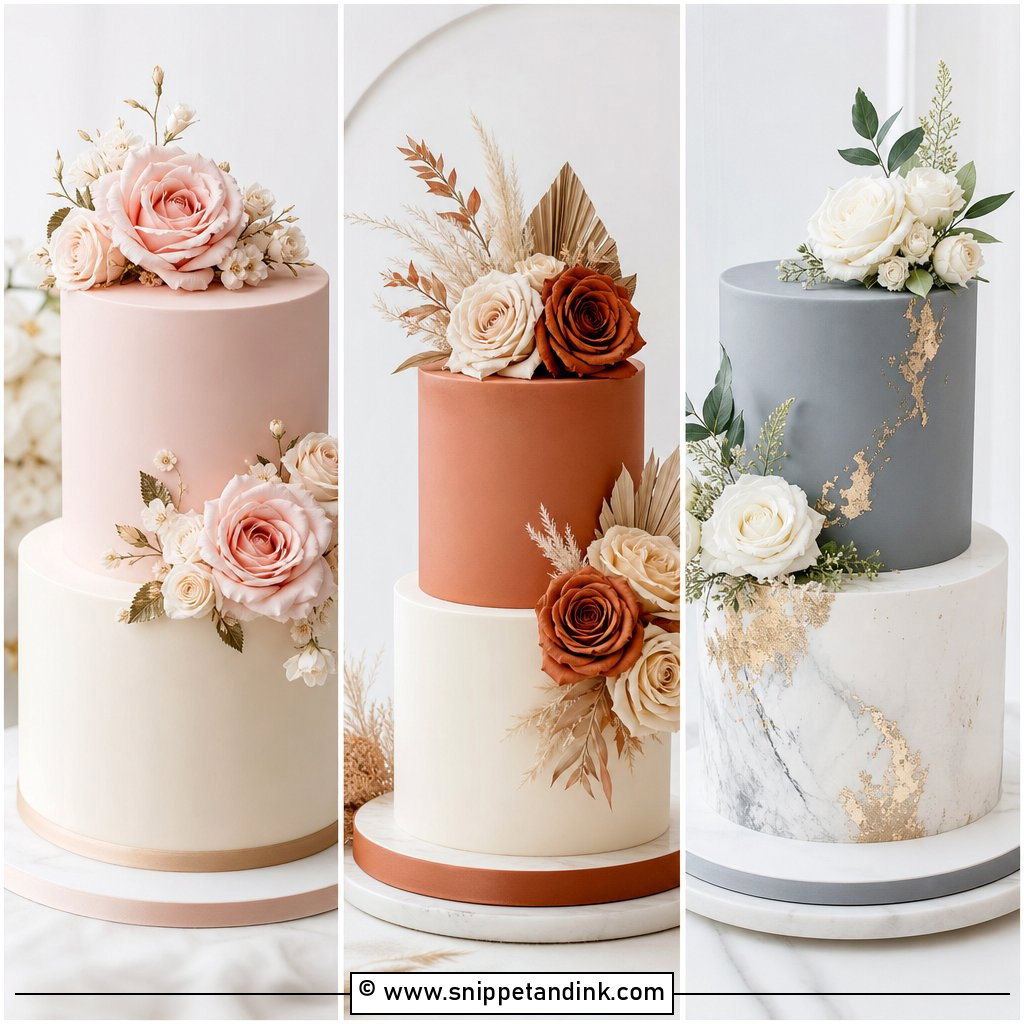
Floral cakes split into two camps. Fresh blooms look natural and tie the cake to the bouquet and arch. Handmade sugar flowers give total control over shape and color and never wilt under the lights, but each petal is rolled, shaped and dried by hand, so a full cascade is a serious line on the invoice. Cascading clusters give a lush look; one accent per tier keeps it clean. Peonies and roses carry spring, dahlias carry autumn, and orchids suit sleek modern rooms.
9. Greenery Wedding Cake
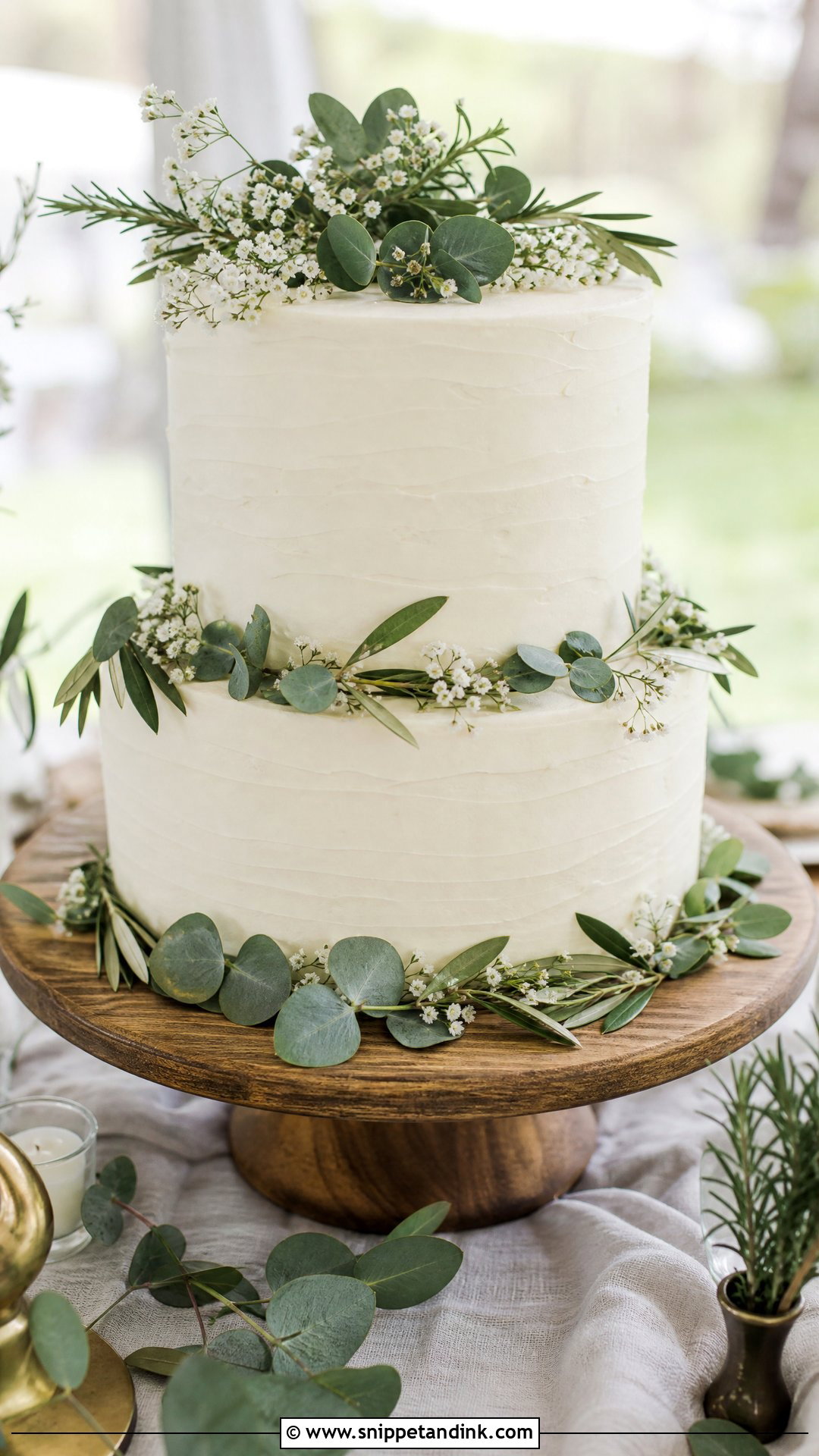
Greenery cakes suit couples who want something lighter than a full floral design. Olive leaves, rosemary and trailing vines all sit naturally on ivory buttercream. Safety is the catch: eucalyptus, one of the most requested, is toxic, and plenty of florist foliage has been treated. I put a barrier under every stem, and where leaves touch the cake directly I’d rather use culinary herbs like rosemary or bay. Gold accents or a wooden stand finish it.
10. Boho Wedding Cake
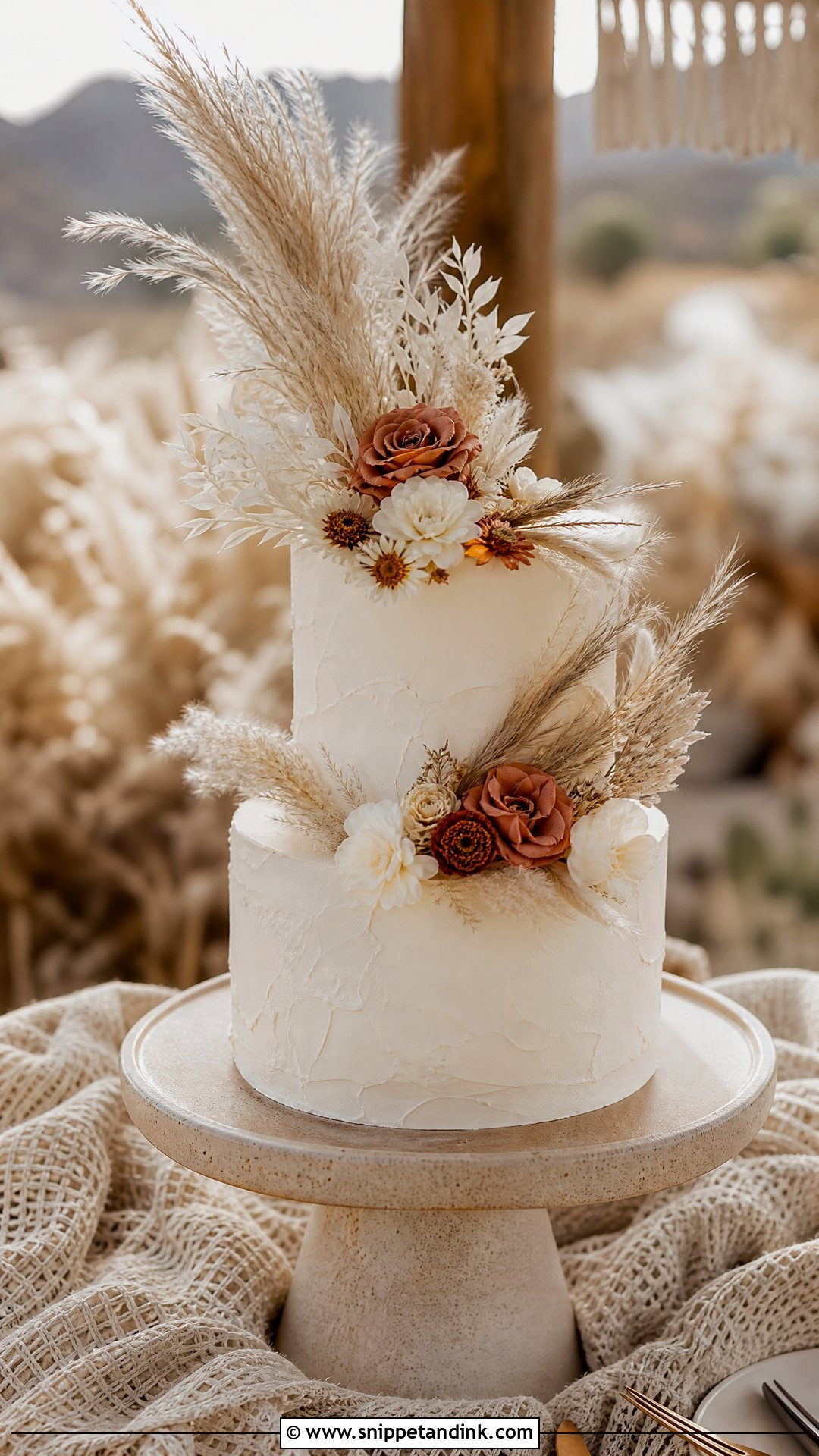
Boho cakes lean on earthy color, rough texture and dried florals such as pampas, bunny tails and preserved roses. Dried stems are handy in desert heat because they won’t wilt, but they shed, and dyed pampas can bleed color onto damp frosting, so I mount them on picks and keep them off the surface. A terracotta or beige watercolor finish suits the palette. Keep the cake itself simple and let one cluster at the base and one on top do the talking.
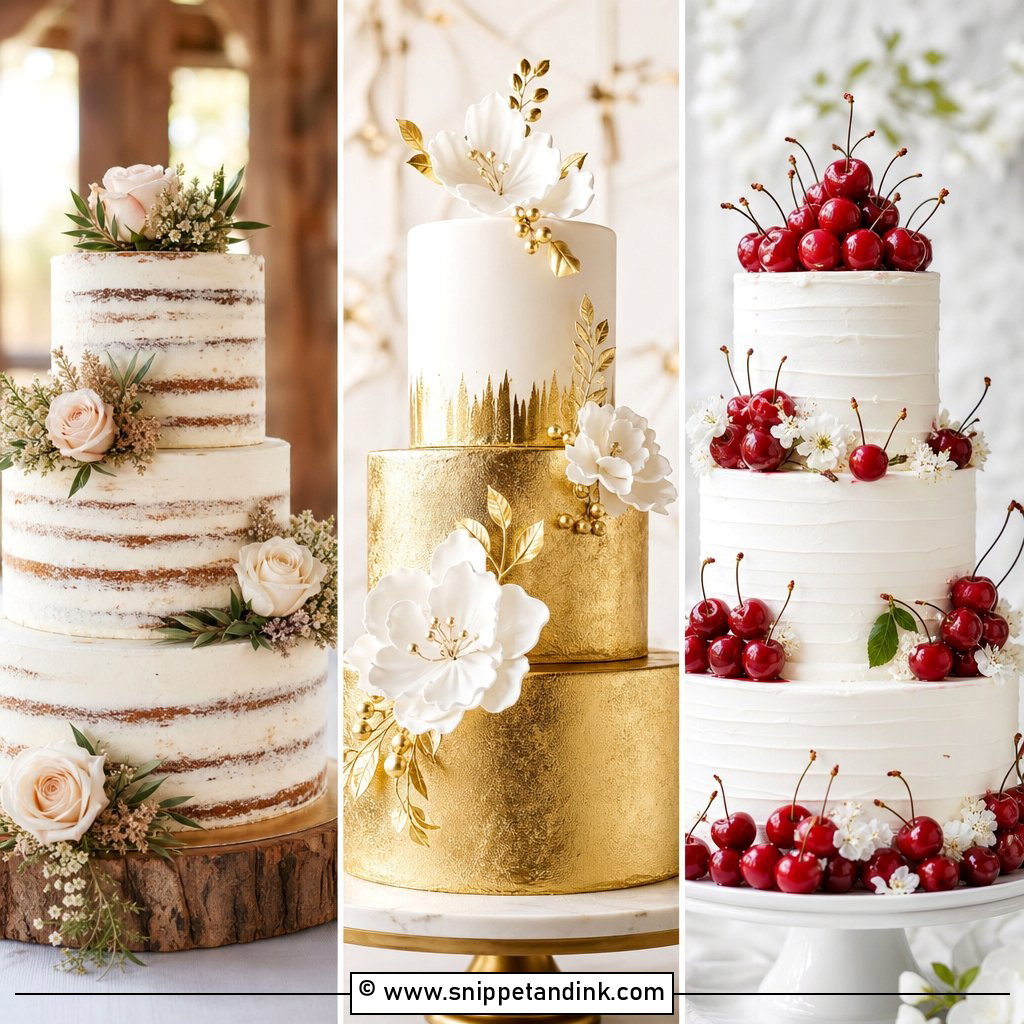
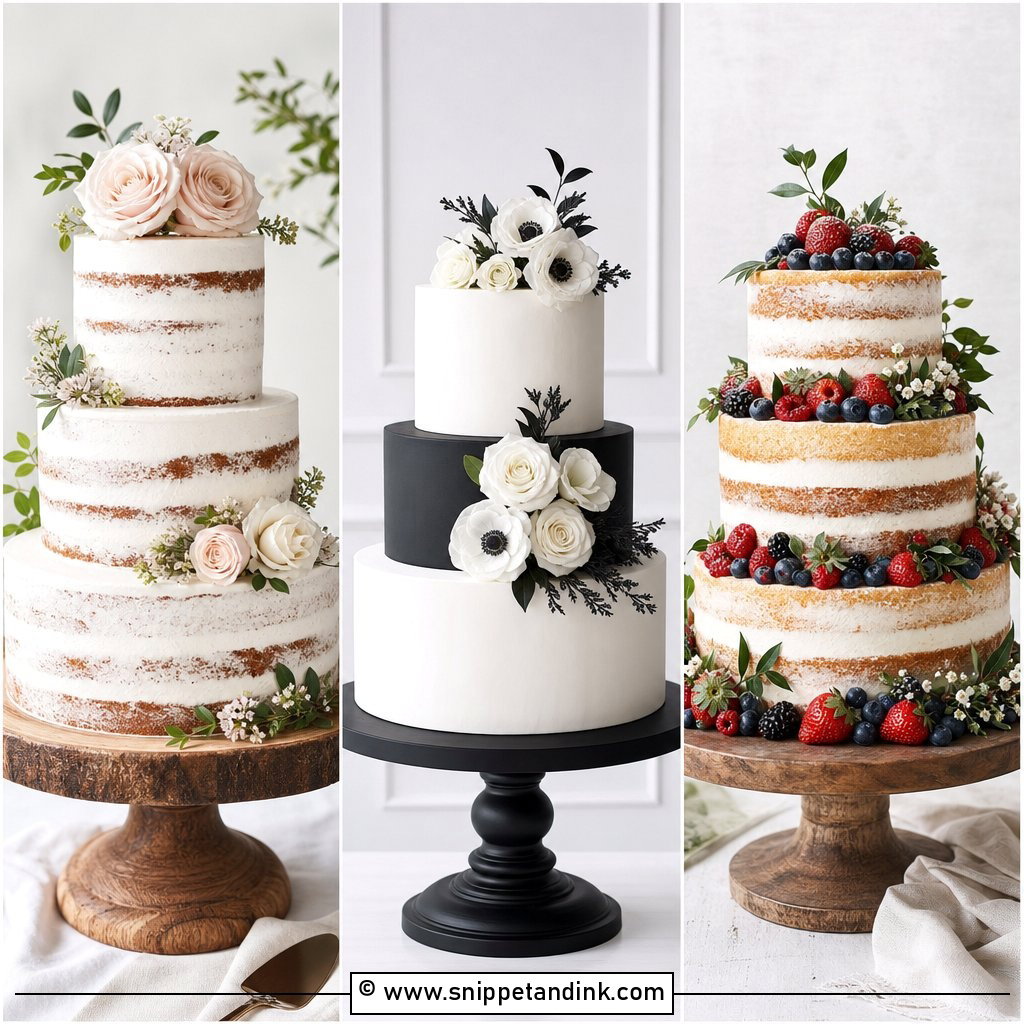
11. Rustic Wedding Cake
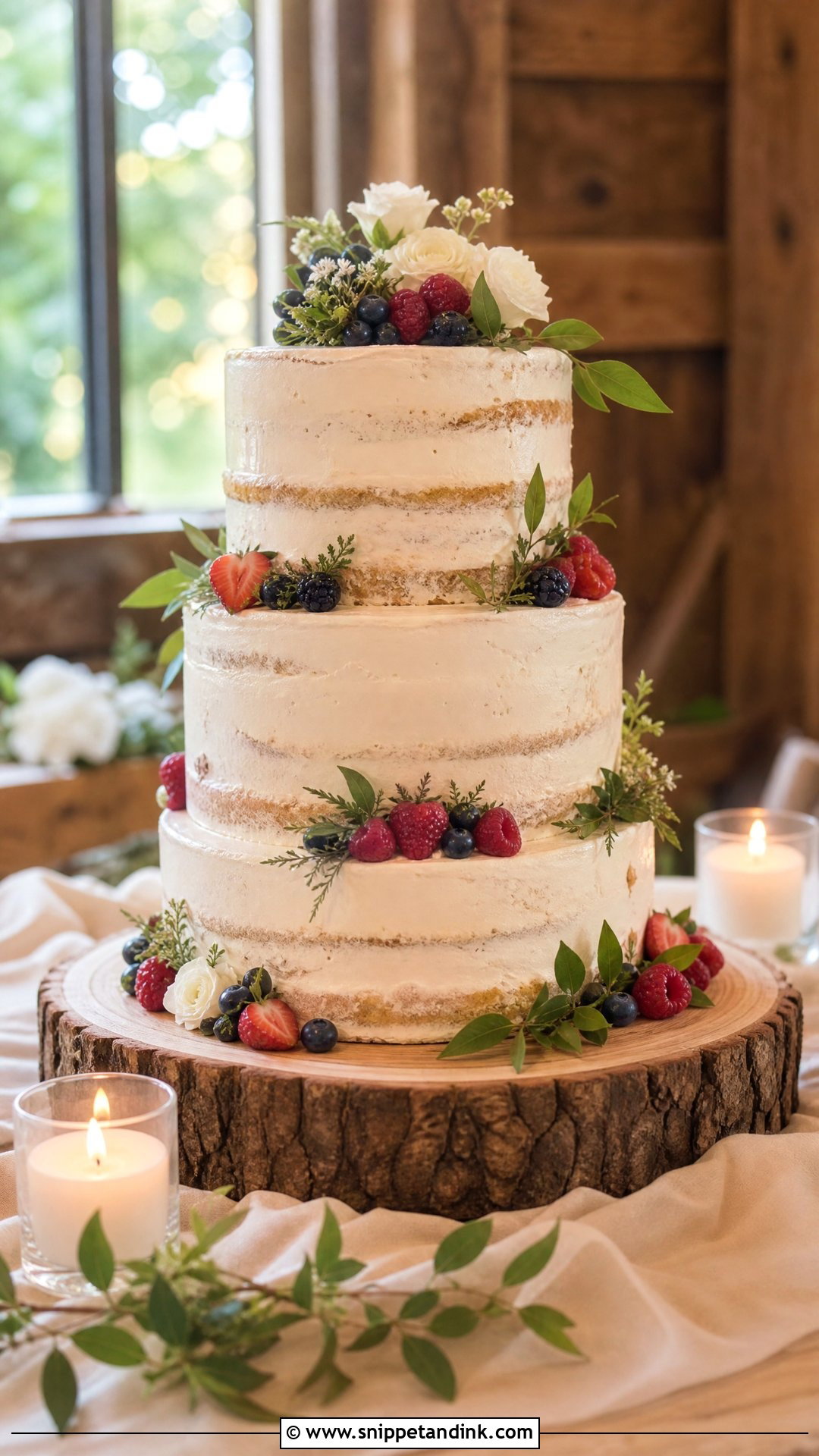
Rustic cakes fit barns, mountain lodges and backyard receptions. Textured buttercream or semi-naked frosting, berries and a few flowers make up most of them, and carrot, spice or chocolate with salted caramel suit cooler months. The line between rustic and unfinished is thin. I keep the edges soft but even and repeat the same fruit or flower on each tier, so it reads as designed rather than thrown together.
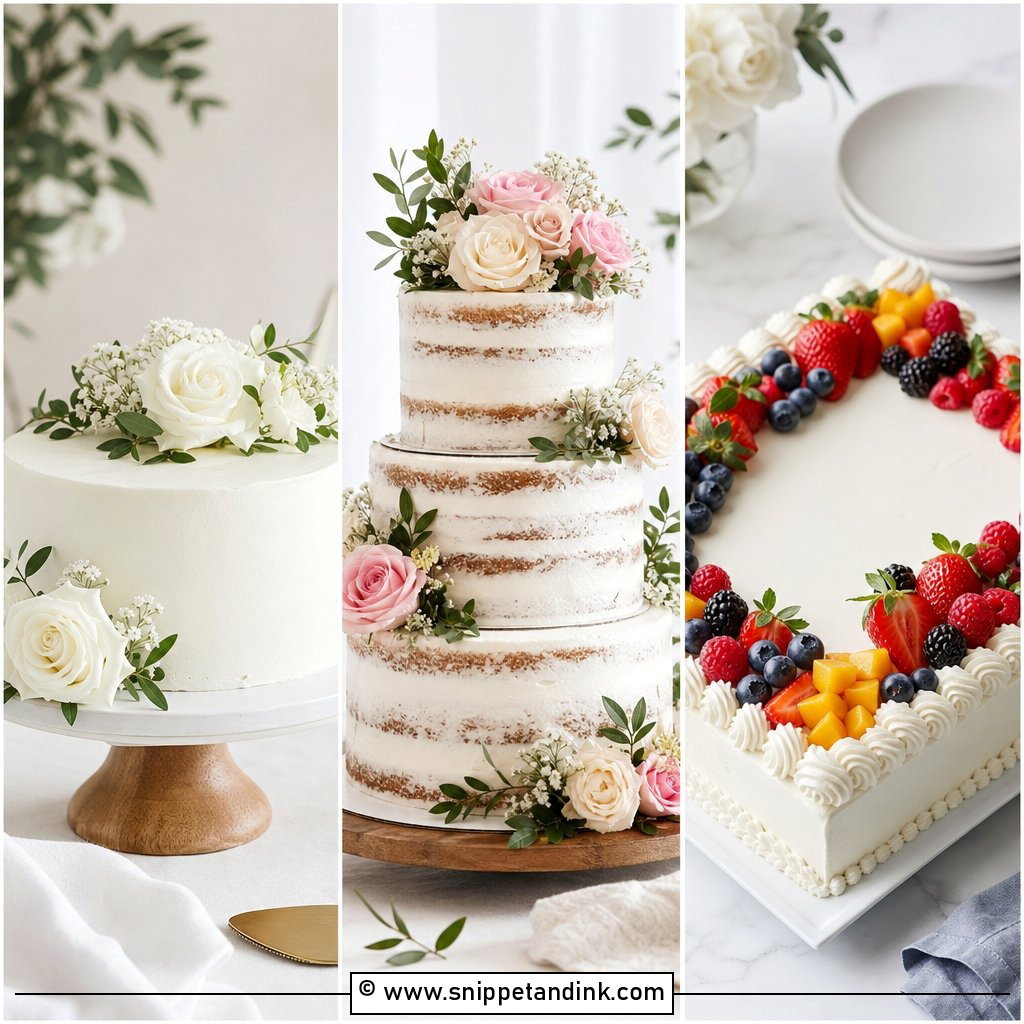
12. Semi Naked Wedding Cake
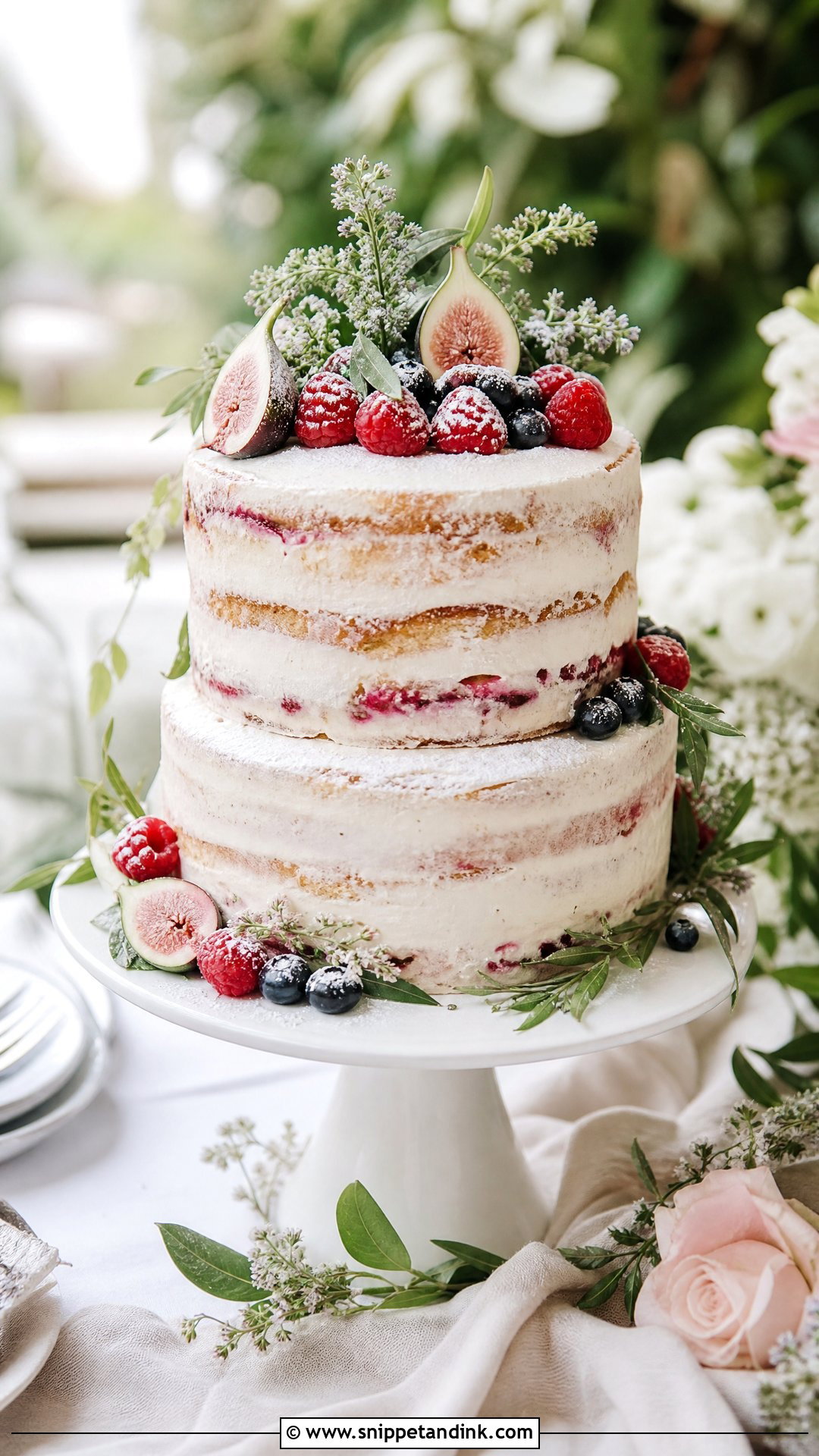
Here the frosting is a thin scraped coat, so the layers peek through and your fillings are on display. Choose them for color as well as taste: raspberry in vanilla sponge, blueberry with lemon, cream between chocolate. Exposed crumb dries out, which is why I brush every layer with syrup and why I’d keep this one indoors or for mild days.
13. Naked Wedding Cake
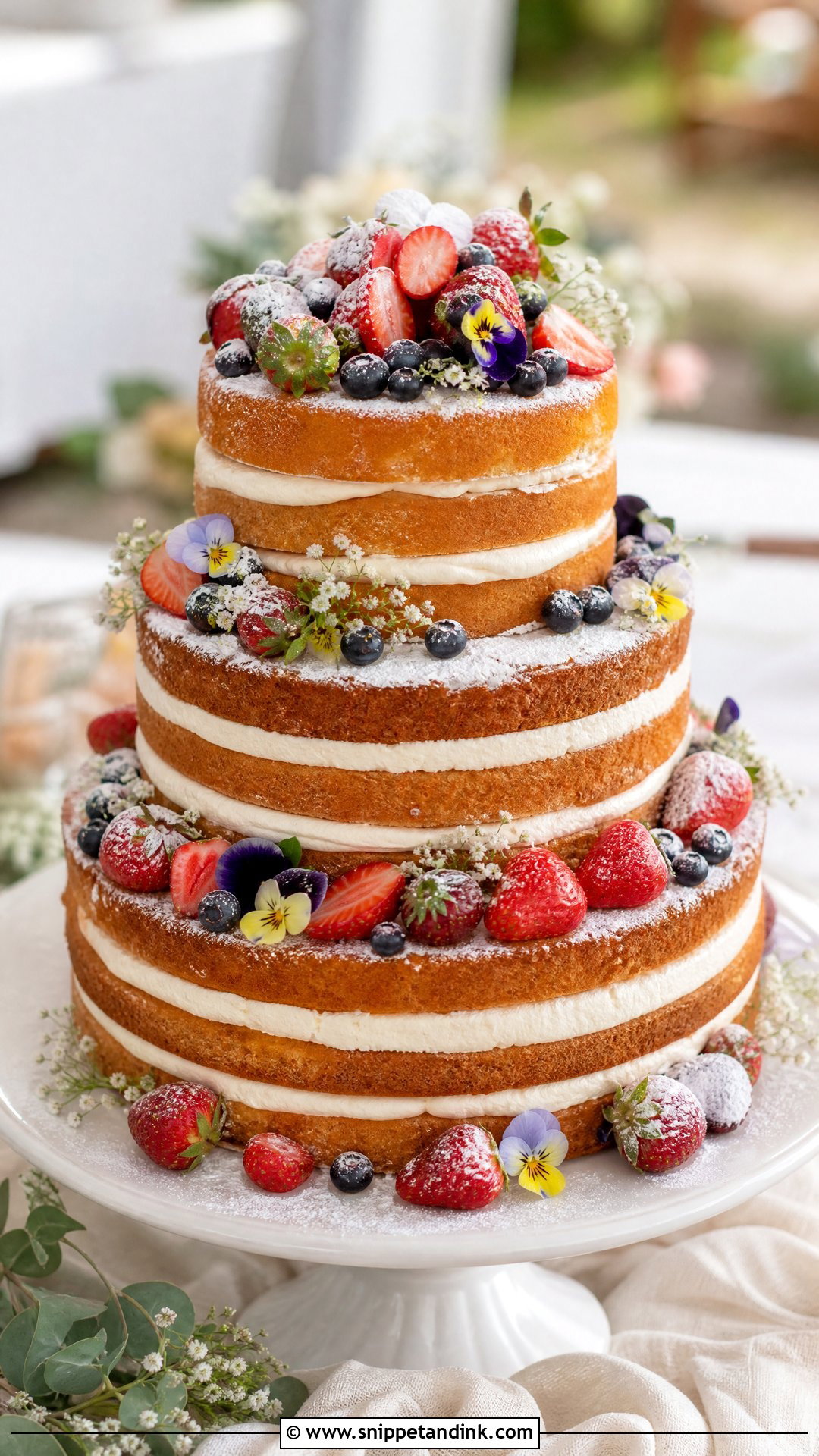
Fully naked cakes skip the outer frosting altogether, so freshness is everything. I bake these closer to the day than a coated cake and stack them as late as I can, since there’s no frosting shell holding moisture in. Vanilla bean, carrot and almond sponges all look appealing with their layers bare. Fresh fruit, edible flowers or a dusting of powdered sugar is all they need. Save the style for casual garden receptions, and plan for it to be cut soon after it goes out.
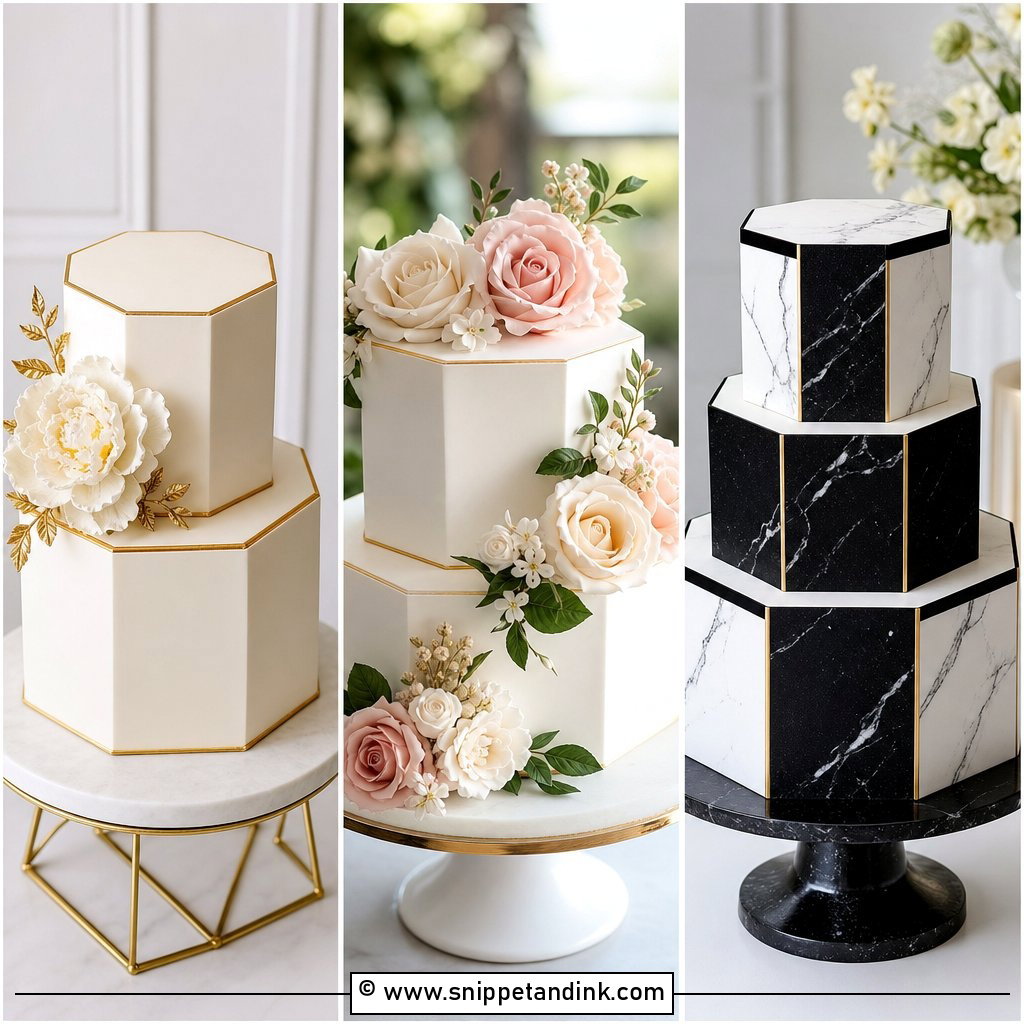
14. Square Wedding Cake
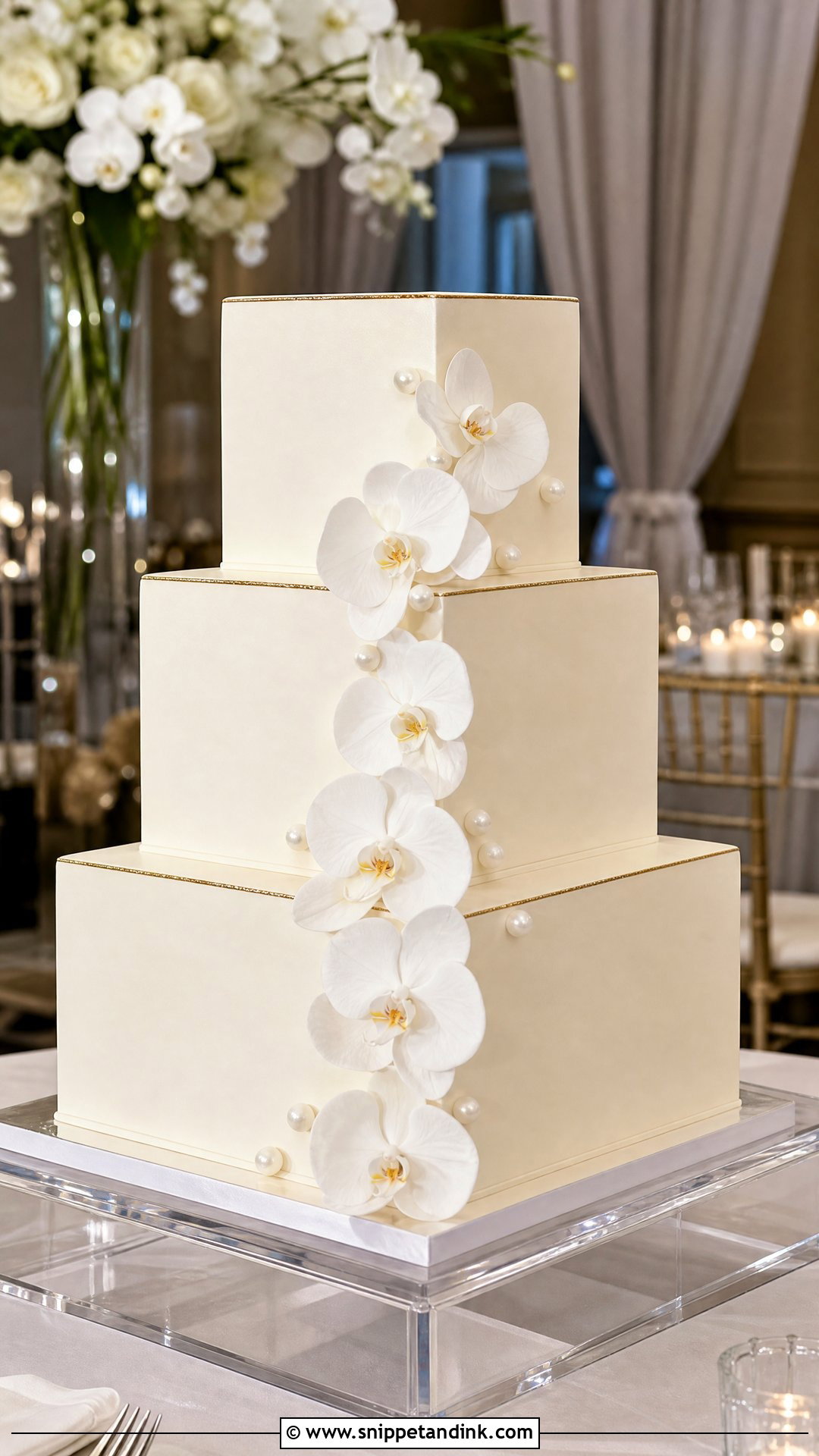
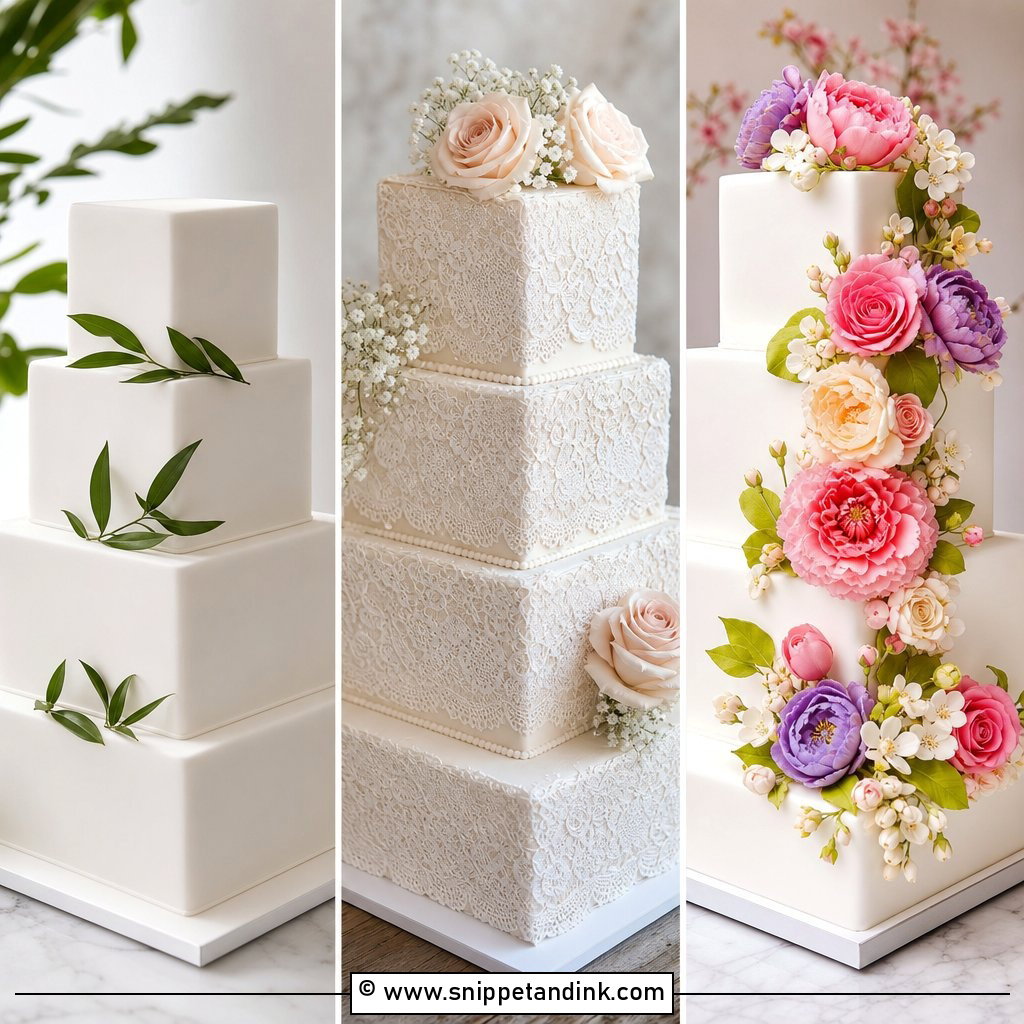
Square cakes look architectural, and they’re more work than rounds. Every corner has to be sharp, which is why I usually coat them in ganache before the final finish goes on. Square tiers also stack into offset shapes and take geometric patterns well. Hotel ballrooms and black-tie receptions suit them. Pearl dots or white flowers soften the lines; black detail and gold leaf push them toward drama.
15. Round Wedding Cake
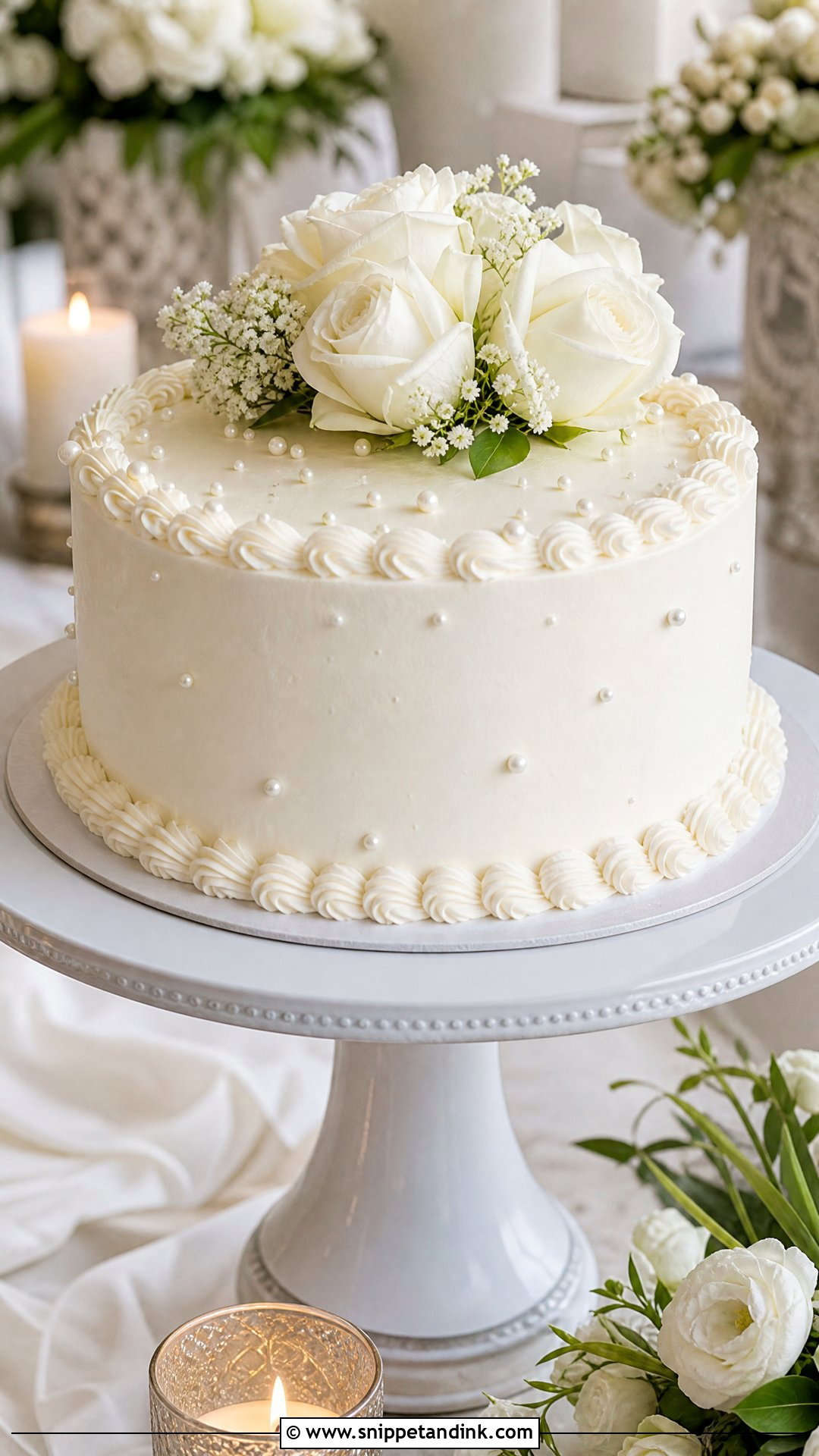
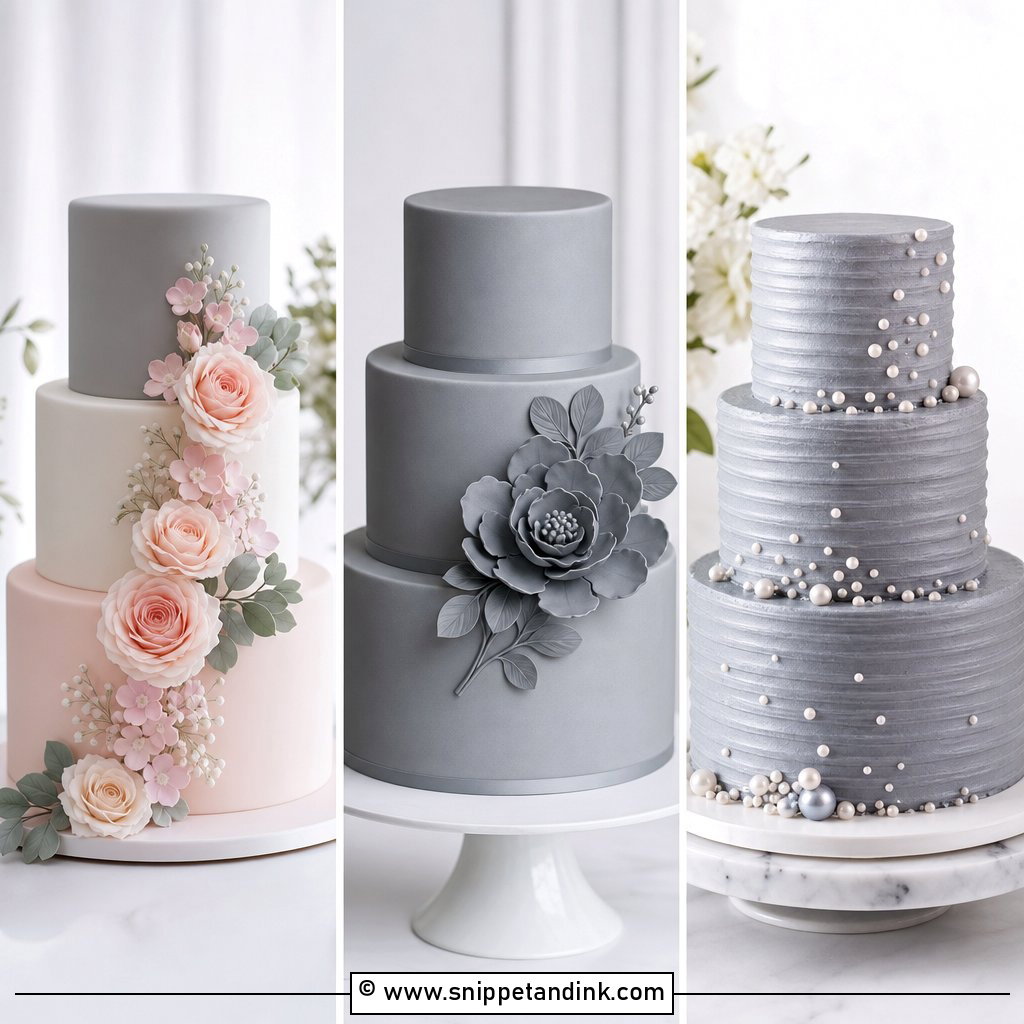
Round is the default for a reason. Curves look balanced from every side, which matters when guests and photographers are circling the cake during the cutting, and round tiers are the easiest to finish smooth and to slice evenly. It works at one tier or five. If you’re worried about your cake looking dated in photos twenty years from now, a round cake with a restrained finish is the safest bet.
16. Tall Wedding Cake
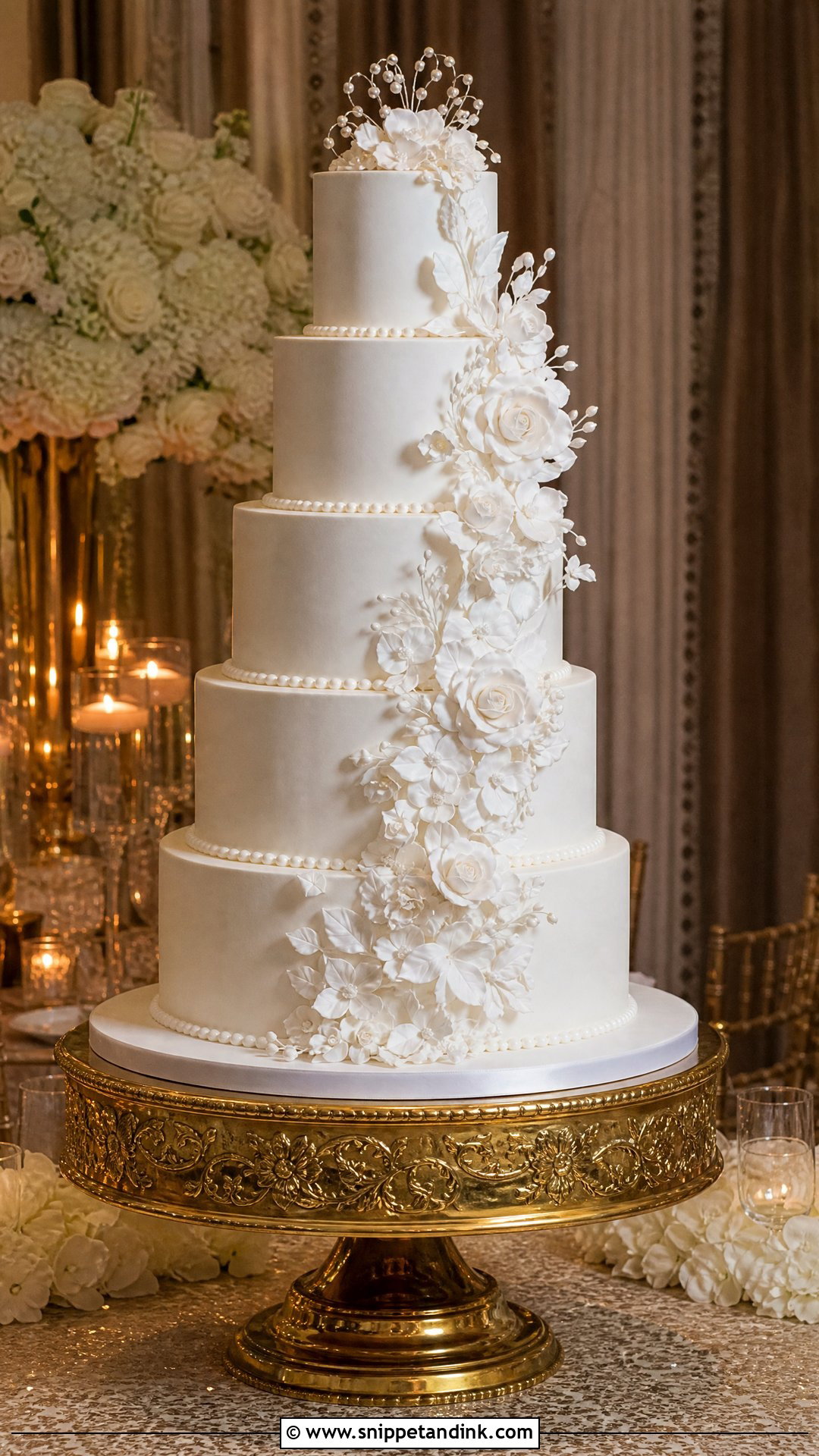
Tall cakes are built for big rooms. The height can come from five or more real tiers, a mix of real and polystyrene display tiers, or extra-tall double-barrel tiers stacked fewer times. Every version needs a central dowel and careful assembly on site; I won’t move a cake this size fully stacked. Keep decoration vertical, such as a climbing line of flowers, so the height reads clearly. Ask your baker how any dummy tiers are handled at serving time.
17. Small Wedding Cake
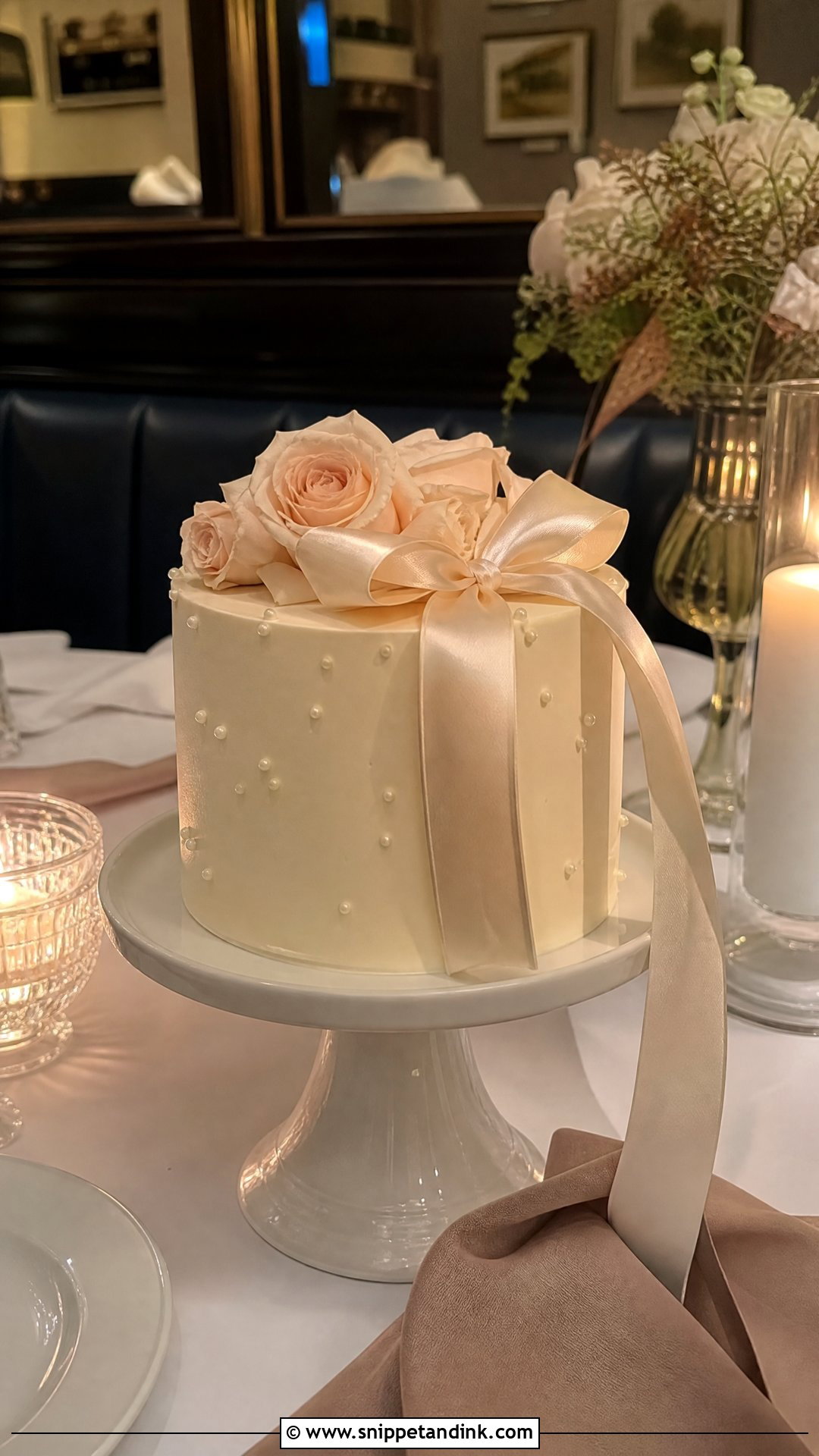
Elopements, micro weddings and receptions where a dessert table does most of the feeding all suit a small cake. One or two tiers cover the cutting and a few slices. Small cakes get lost in a big room, so lift yours on a tall pedestal and ring it with candles or flowers. This is also where I’d spend on finish: hand-painted detail or sugar flowers cost far less on a six-inch cake than across four tiers.
18. One Tier Wedding Cake
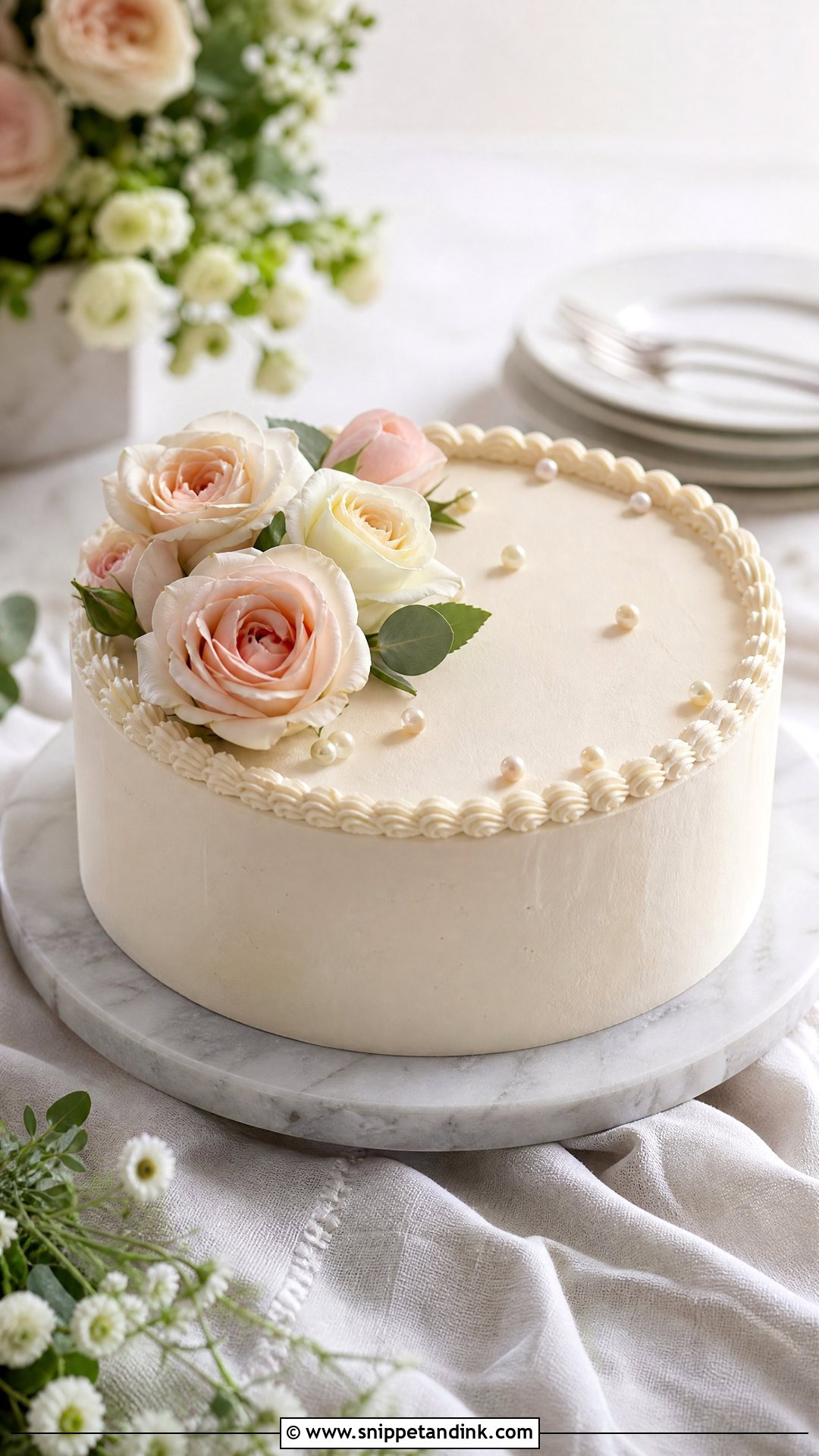
One tier can be the whole design, not a cut-down version of something bigger. A wide round, a heart or a tall single tier with heavy piping all hold their own. Courthouse and restaurant weddings suit it, and there’s far less leftover cake. Because the serving size is manageable, this is the place for a richer filling or a pricier flavor, a pistachio cream or a passion fruit curd, that would get expensive across a large cake.
19. Two Tier Wedding Cake
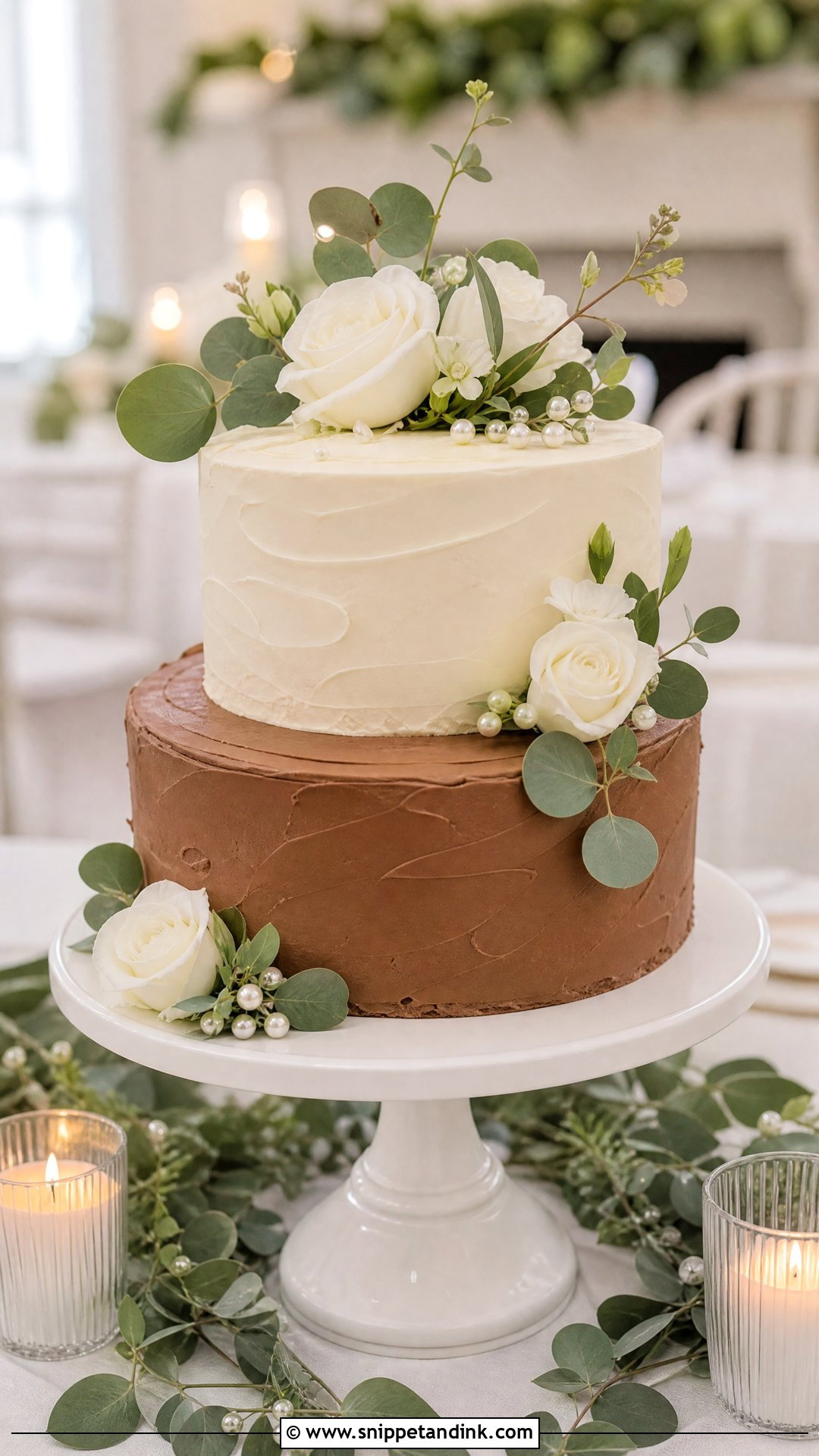
Two tiers sit between a single cake and a full tower. For a wedding of around fifty with other desserts alongside, it’s usually plenty. Making the bottom tier taller than the top gives a more modern profile than two matching drums, and one flavor per tier is common, almond on top and chocolate below. Even at this size, the lower tier needs internal supports to carry the weight above it.

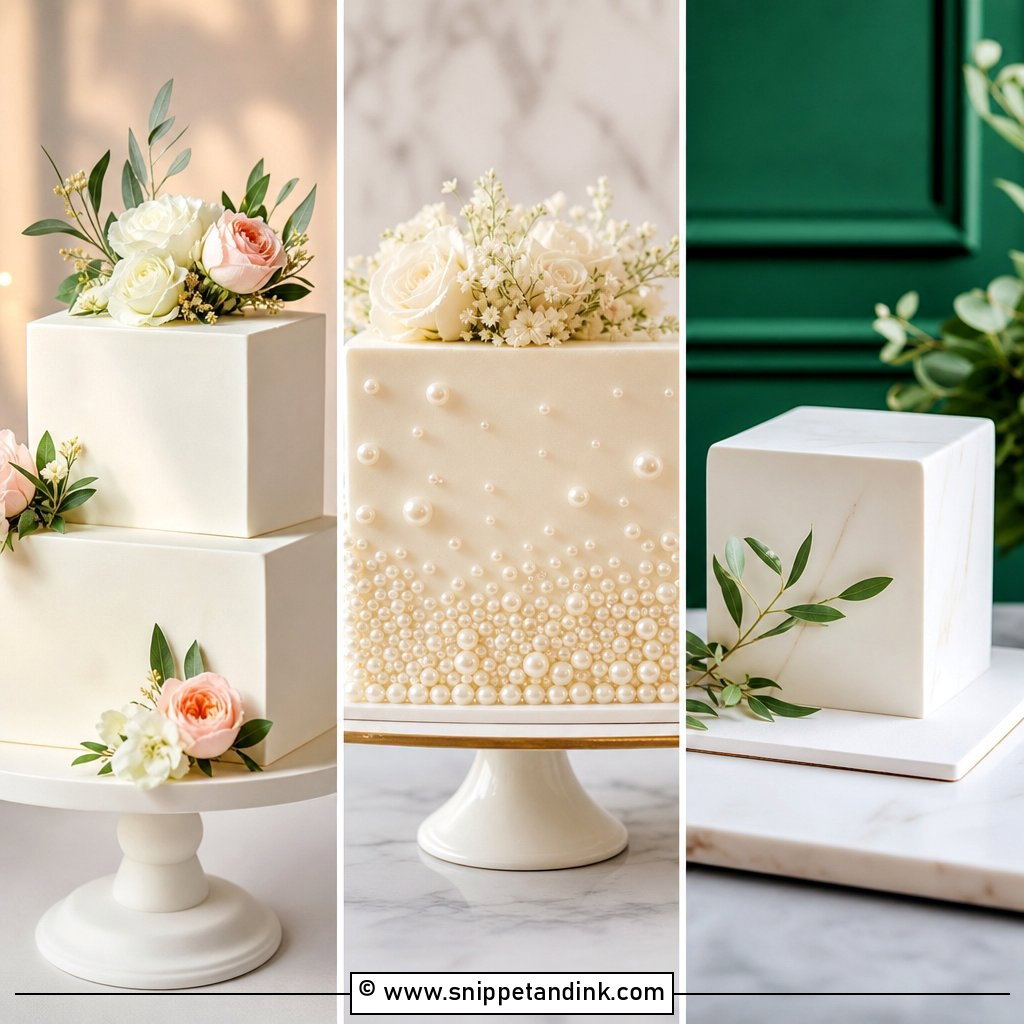


20. Sheet Wedding Cake
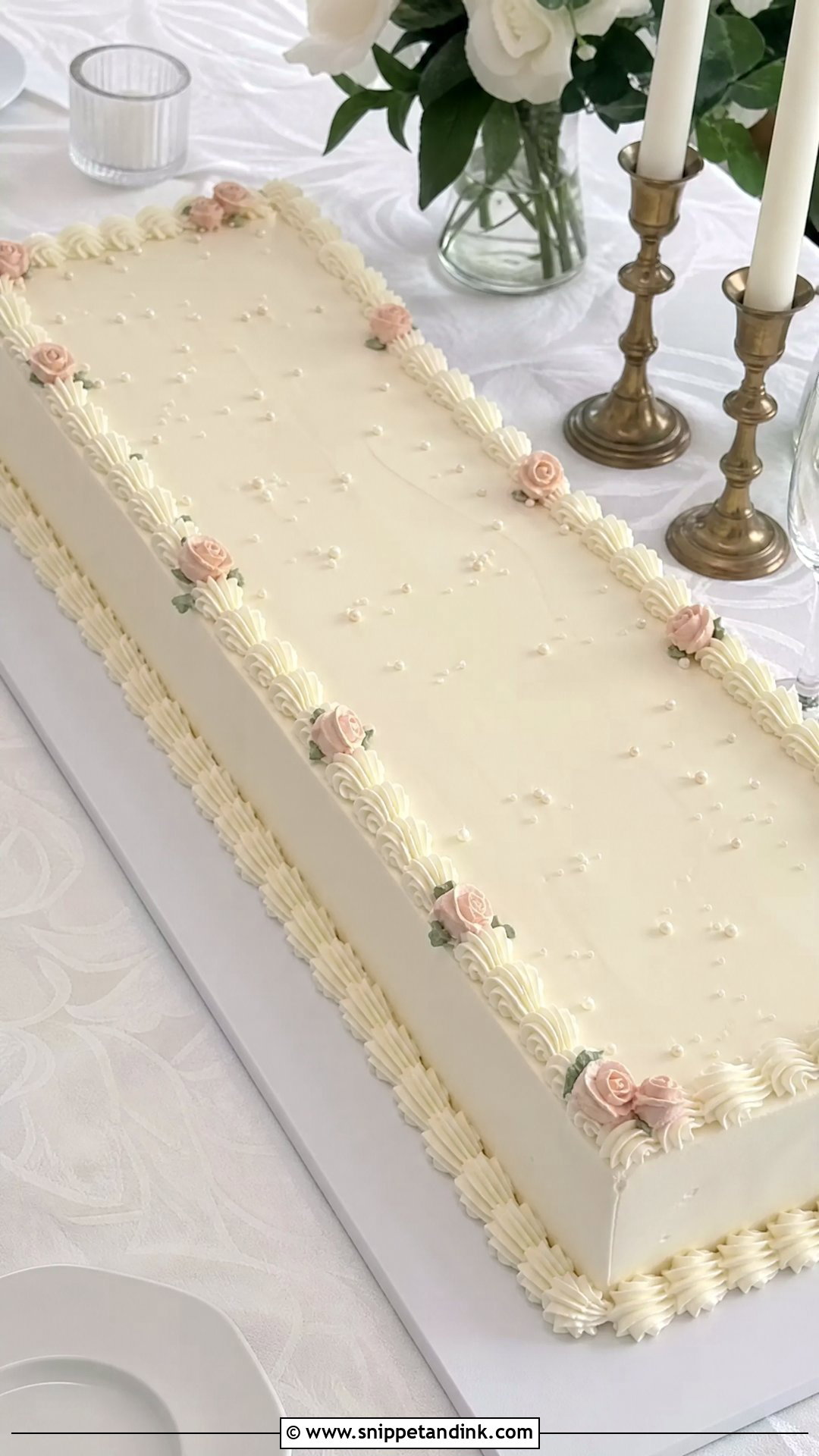
Sheet cakes are back, and this time they’re on display instead of hidden in the kitchen. A long rectangle with vintage piping or fresh fruit, set down the middle of a dessert table, looks generous and nostalgic. It’s also the fastest cake to portion, which caterers appreciate. What separates a wedding sheet cake from an office one is finish: neat borders, crisp lettering and a layout planned across the whole surface. Restaurant receptions and backyard weddings suit it.
21. Heart Wedding Cake
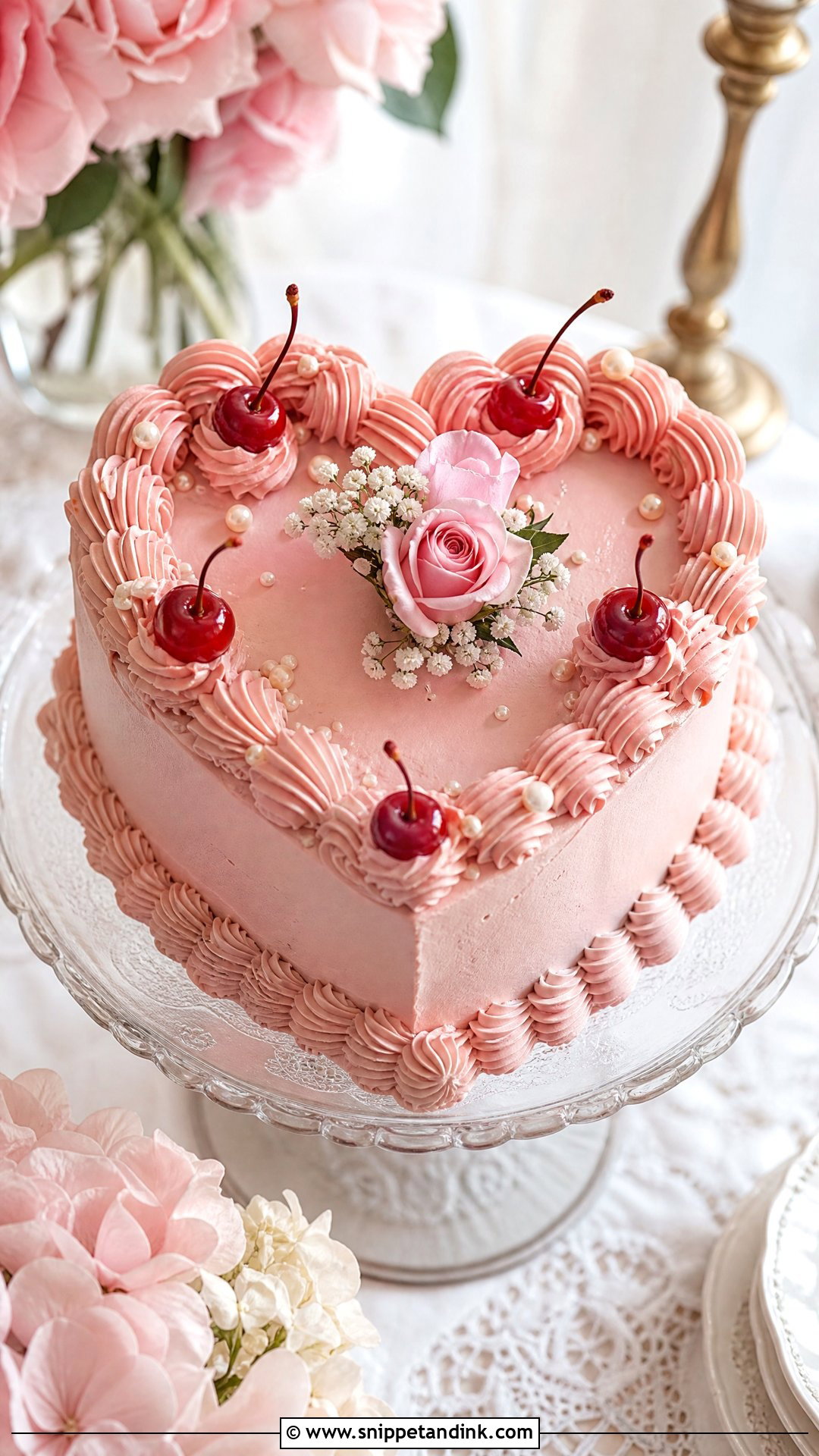
Heart cakes came back with the vintage piping trend. The shape reads best from above, so it’s a good pick if your photographer plans overhead shots of the table. Keep decoration clean so the outline stays clear; piped borders, cherries or a few roses are enough. Stacked hearts are possible but hard to balance visually, so I usually suggest a single heart, sometimes set on a round tier below. Red velvet or chocolate raspberry suits it.
22. Black And White Wedding Cake
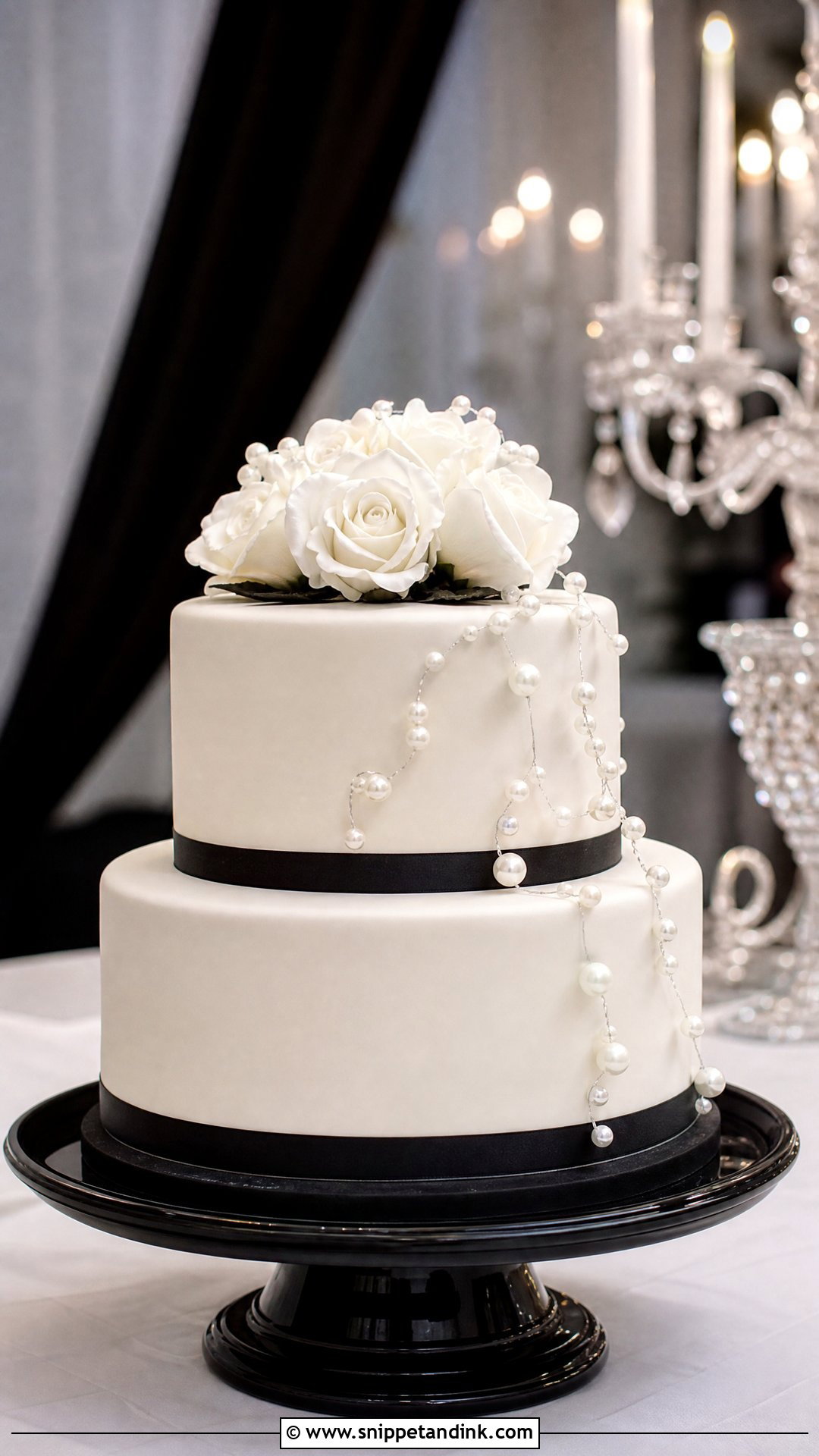
Black and white is a formal palette that needs a light hand. White tiers with black ribbon, black piping or painted bows look sharp; a black base tier looks dramatic. A true black takes a lot of coloring, and black buttercream can stain lips and teeth, so for large dark areas I prefer black fondant or a cocoa-based ganache. Black-tie receptions and evening city venues are its natural home.
23. Blue Wedding Cake
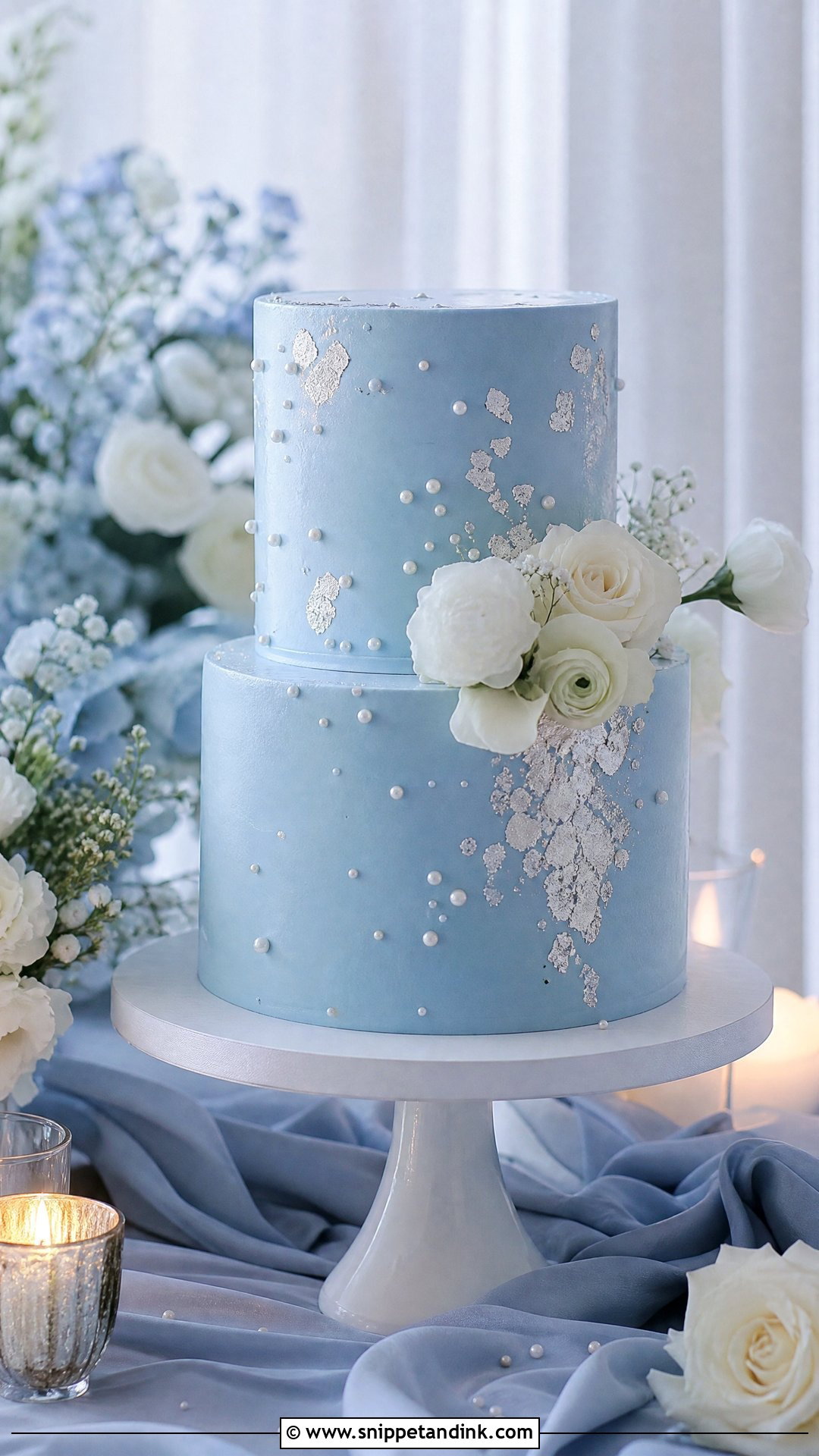
Blue changes character with the shade. Pale blue with pearls feels delicate, dusty blue sits well with greenery and silver, and navy with white or gold looks formal. Blue also shifts more than most colors under warm reception lighting, sometimes leaning grey or green, so I check a swatch under similar light before matching it to linens. A watercolor finish or a single blue tier keeps it subtle. Lemon, or vanilla with a blueberry filling, suits the cool palette.
24. Pink Wedding Cake
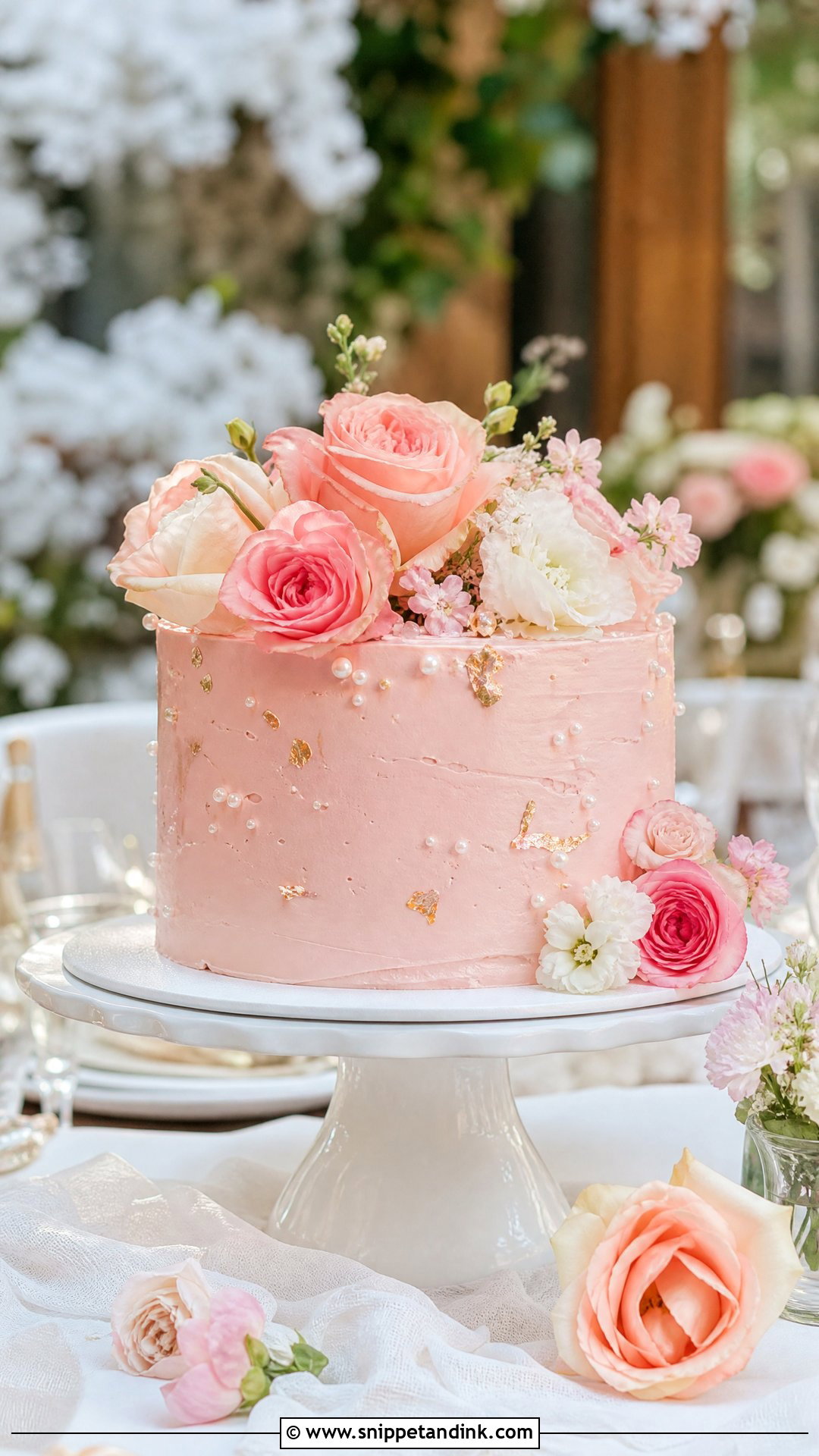
Blush reads bridal; bright pink reads playful. Pink takes well to ruffles, roses and pearls, and it suits spring gardens and vintage receptions. Pinks fade in strong sunlight, the natural colorings fastest, so an outdoor cake should sit in shade. Ivory details or a touch of gold stop it from getting too sweet. Strawberry or a champagne-style sponge fits the color.

25. Green Wedding Cake
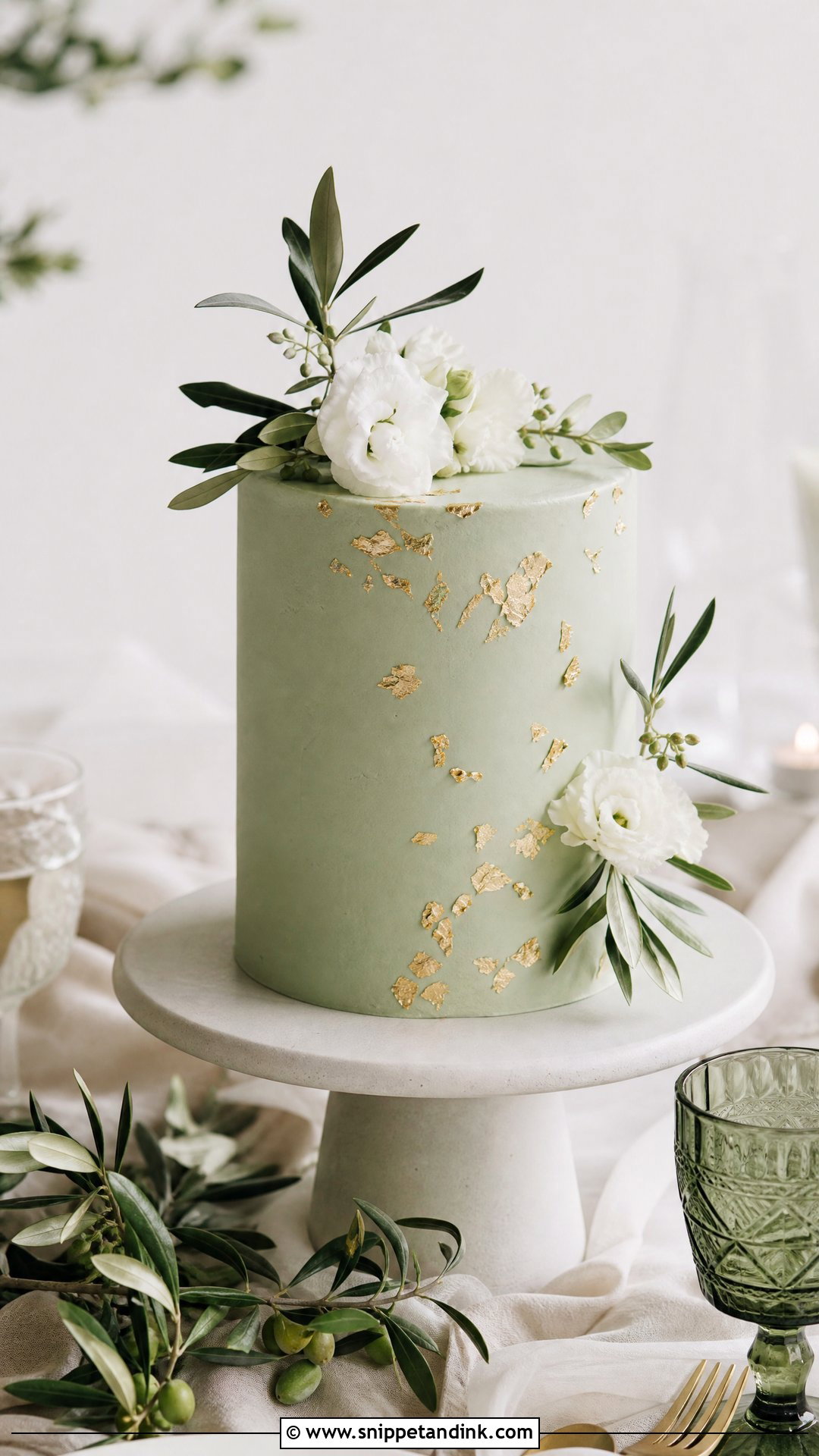
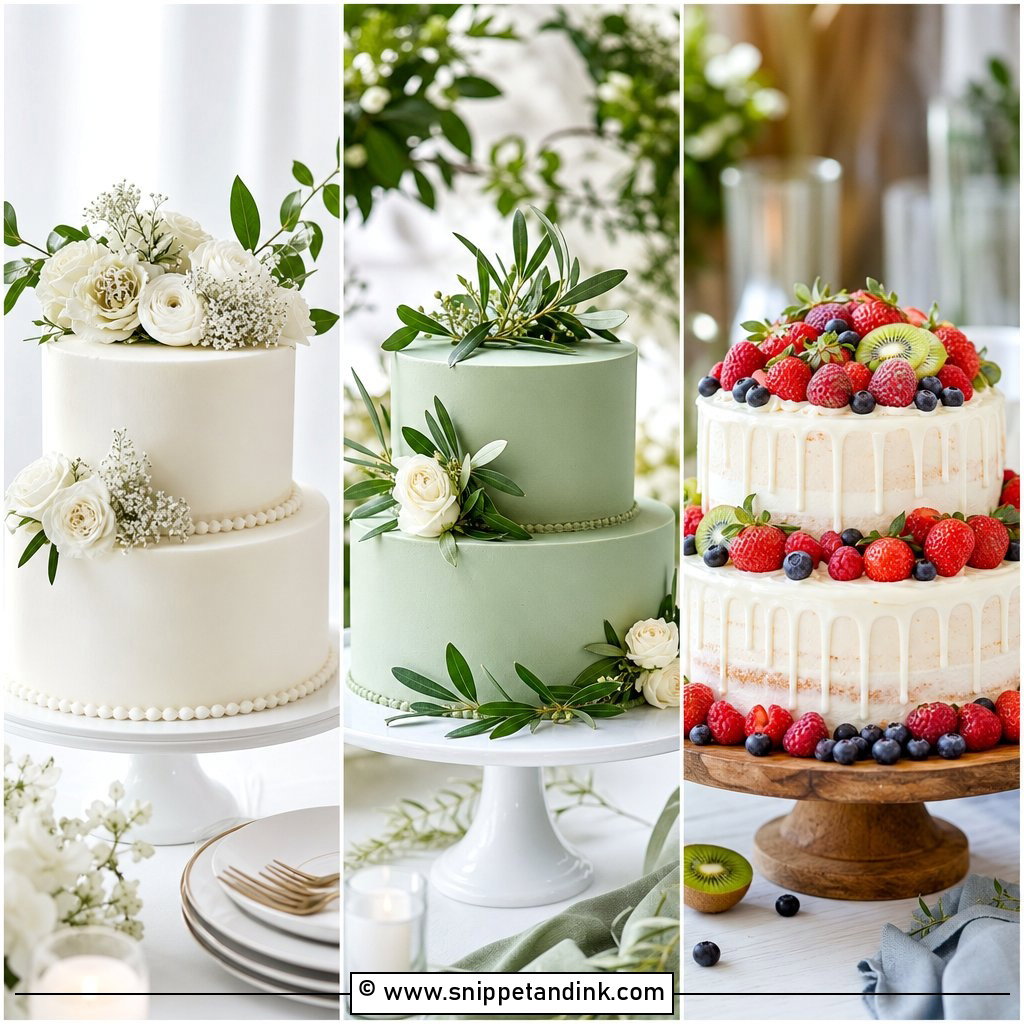
Sage is soft, olive is earthy, emerald is rich. Green cakes look fresh on botanical and outdoor tables and pair naturally with pistachio, matcha or lime. Matcha does dull toward khaki when it sits in light and air for long, so if the green comes from the flavor itself, keep the cake covered until it’s set out. One green tier under ivory tiers is the subtle version; a fully green cake with minimal decoration is the confident one.
26. Gold Wedding Cake
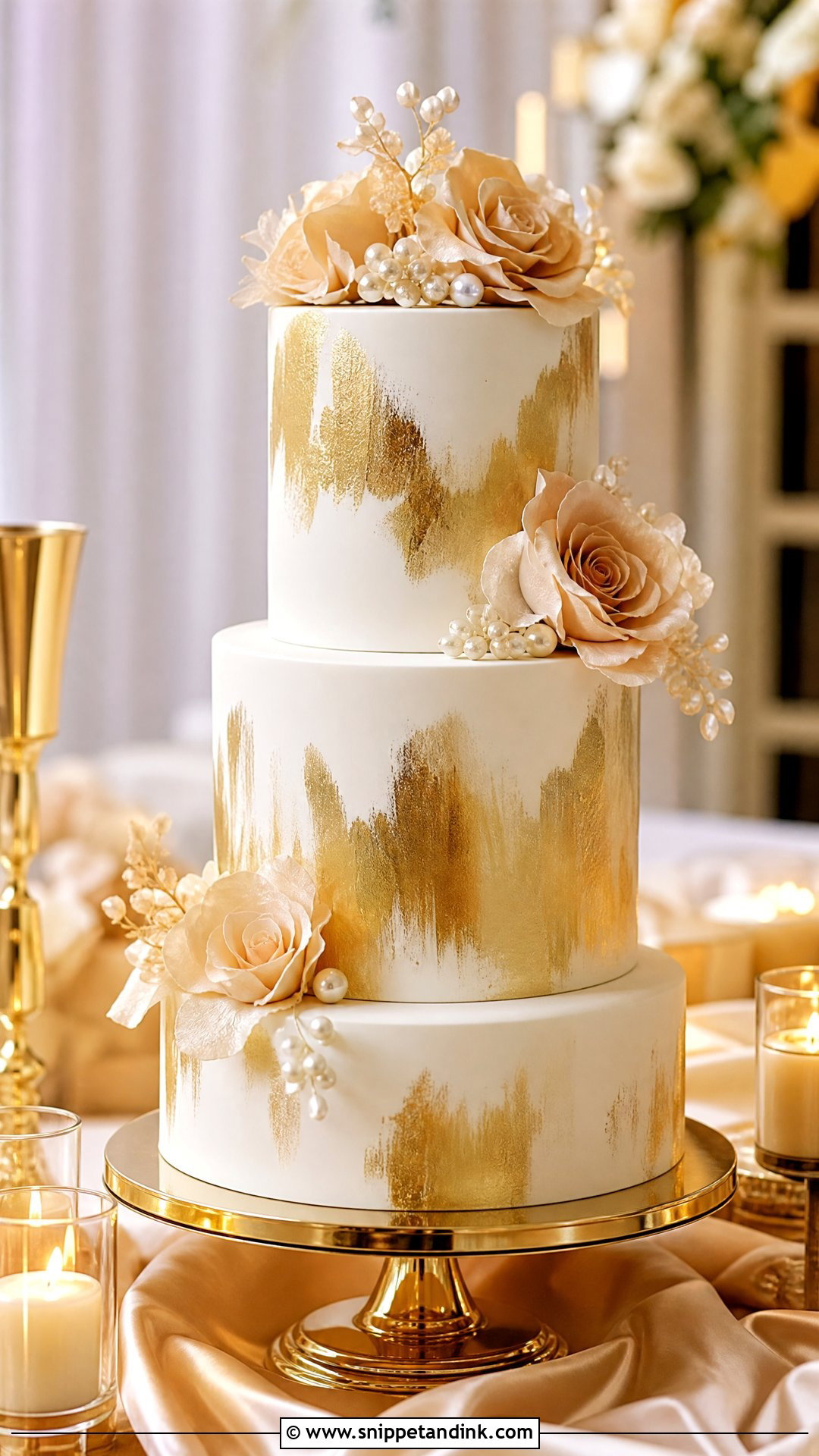
Gold is about restraint. Gold leaf, painted edges and metallic flecks look expensive in small doses and heavy when they cover everything. I paint gold with edible luster dust mixed into a little clear alcohol, which evaporates fast and doesn’t soften the frosting underneath. Pair it with ivory, blush or deep green. Warm lighting makes gold glow, while cold white light flattens it toward a yellowish beige.
27. Modern Wedding Cake
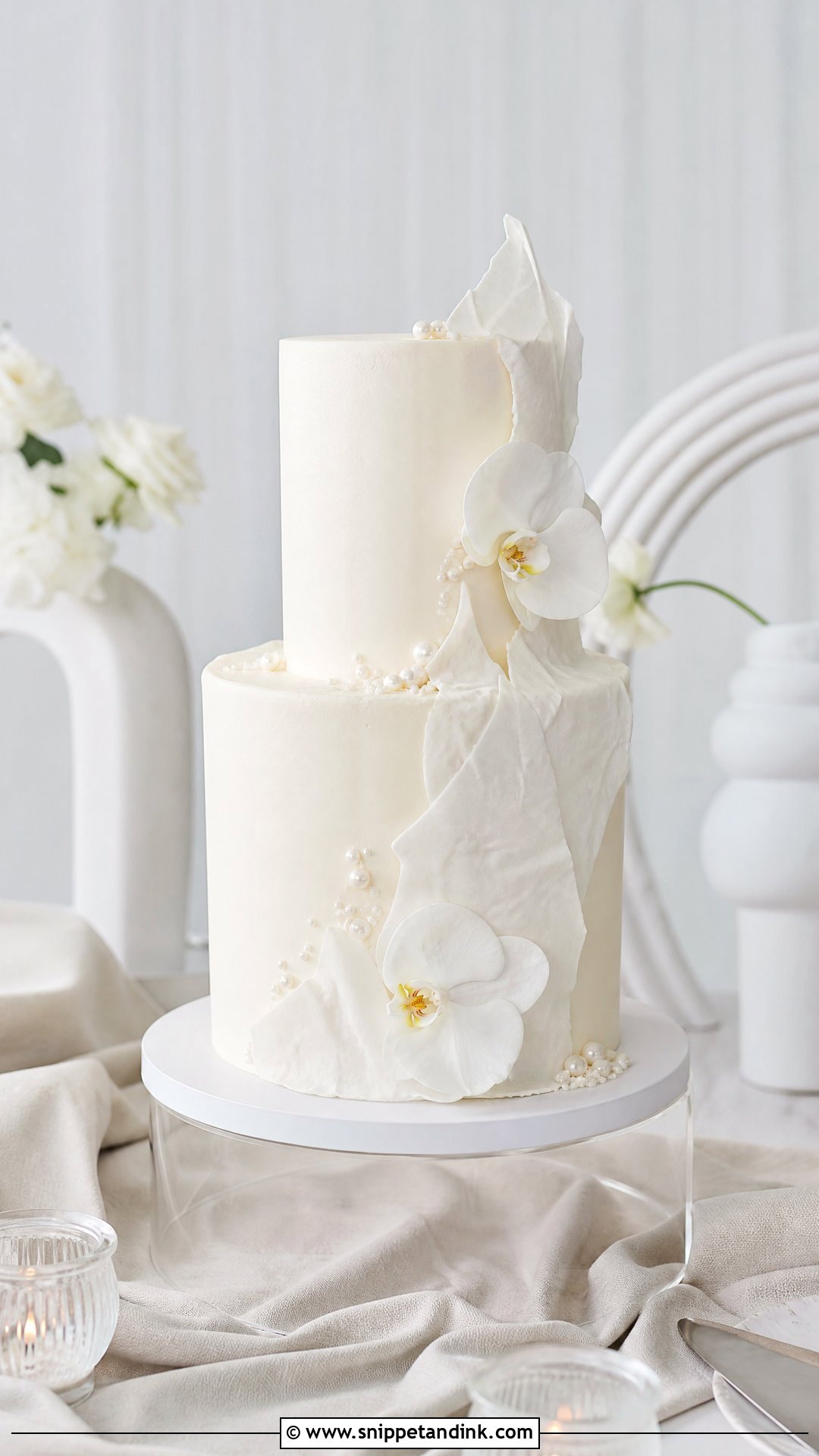
Modern cakes are mostly an exercise in editing. Smooth frosting, sharp edges, offset tiers, abstract piping, a sculptural sugar piece: pick two, not all of them. White, ivory, black and sage are the usual palettes, and acrylic stands suit the look. If your decor is contemporary, a modern cake ties the room together where a vintage one would look like a guest from another wedding.
28. Sculptural Wedding Cake
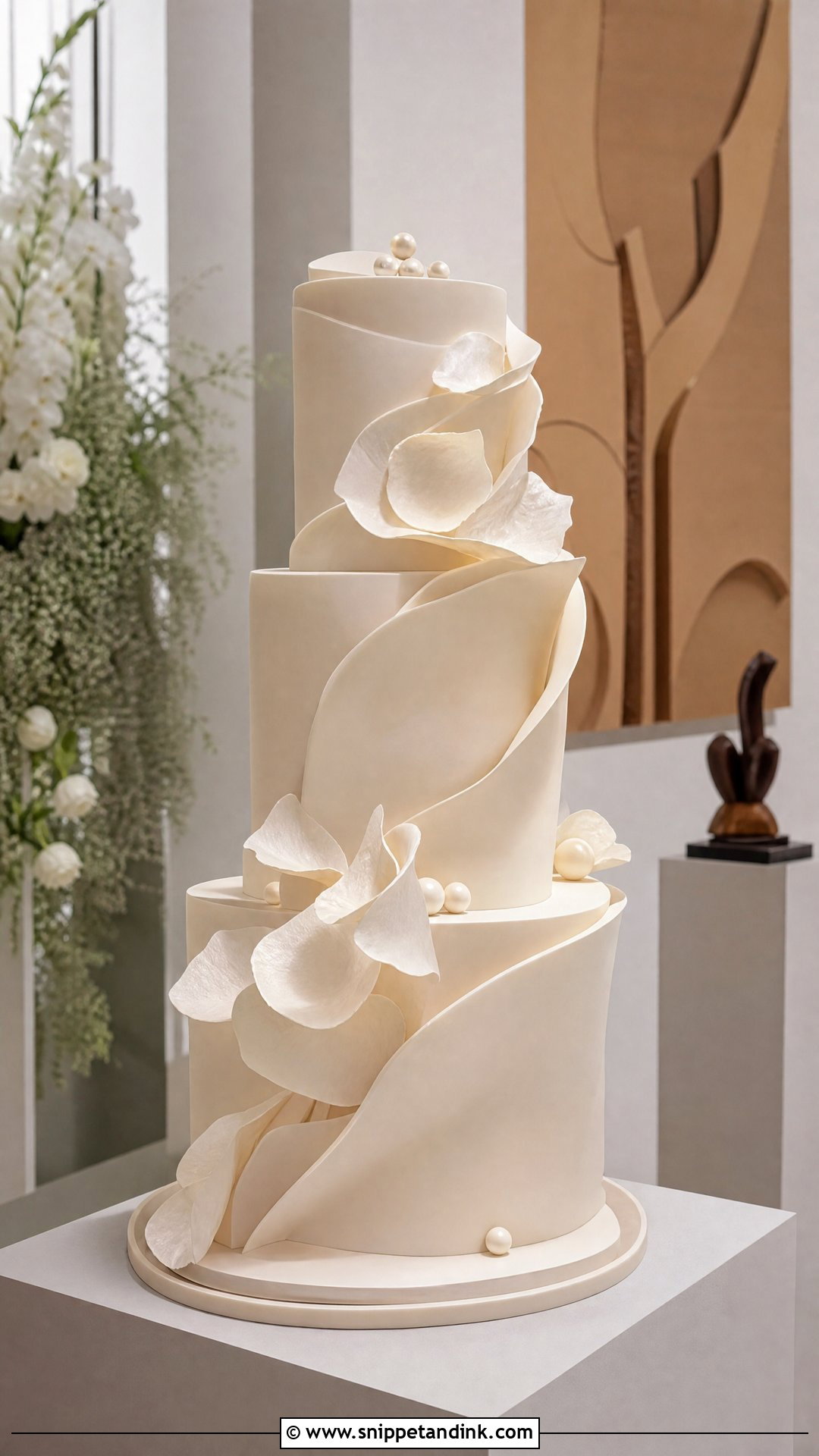
Sculptural cakes treat dessert as an object: curved tiers, folded fondant, carved waves, stacked forms. Because the shape is the feature, colors stay calm, usually ivory, stone or soft grey. These cakes depend on hidden structure such as internal boards and supports, and not every baker builds them. Bring reference photos to the consultation and ask plainly how it will be supported, transported and served before you pay a deposit.
29. Asymmetrical Wedding Cake
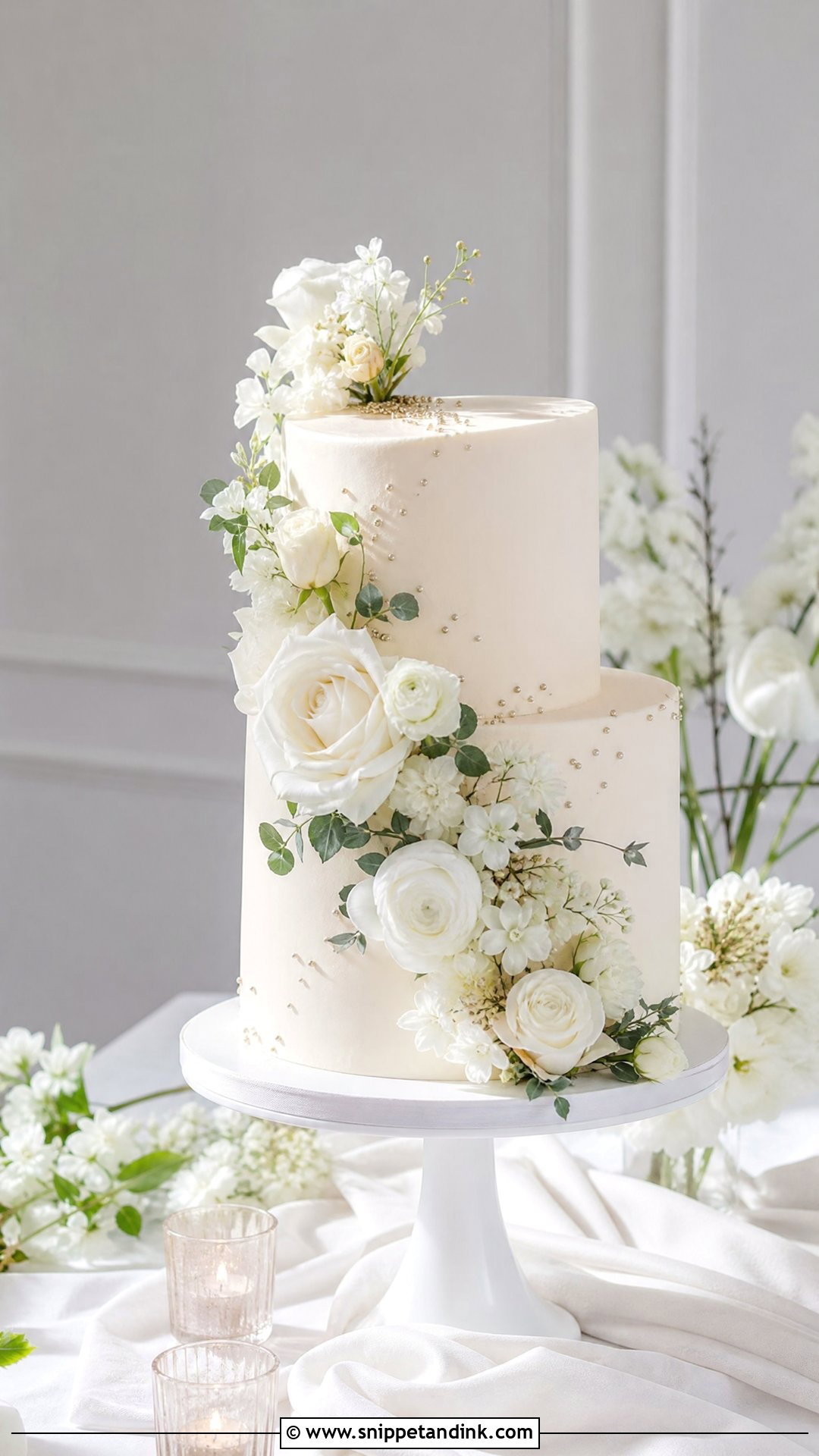
Asymmetry makes a cake feel artistic: offset tiers, flowers running on a diagonal, a silhouette deliberately off-balance. It has to look planned rather than crooked, and the trick is repetition. I carry one element, a single flower or a gold line, across every tier so the eye reads intent. Offset tiers also put weight off-center, so supports must be placed to match. Ask your baker how it will stay steady through a long reception.
30. Watercolor Wedding Cake
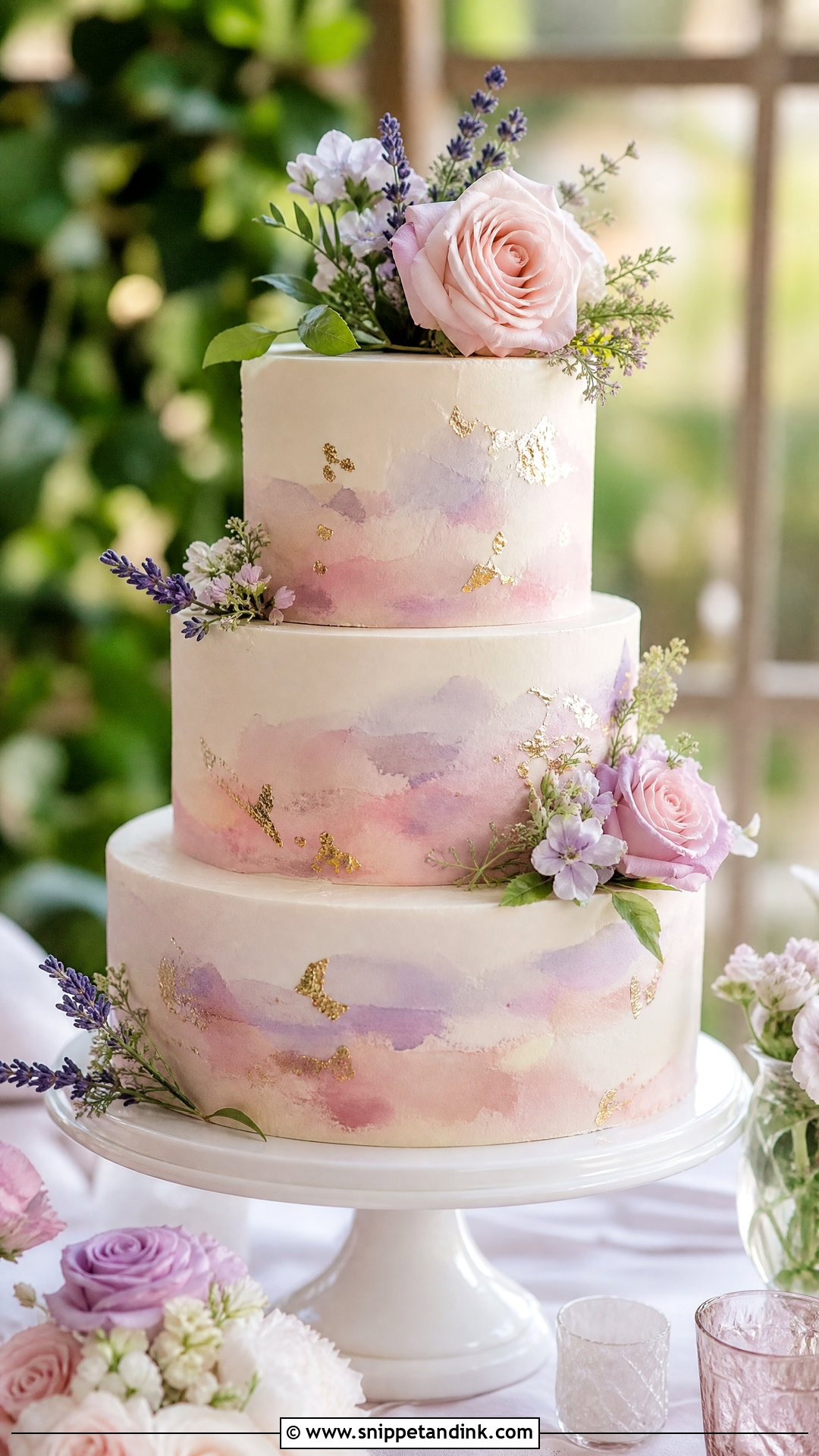
Watercolor cakes are either painted with thinned food color or blended in buttercream with a scraper, and the two look quite different: painted washes are crisp and delicate on fondant, buttercream blends are softer and more blurred. Barely-there blush is romantic; lavender or peach washes are more expressive. Streaks are the giveaway of a rushed job. It’s an easy style to match to your invitation suite, since a printed palette translates well onto cake.
31. Ombre Wedding Cake
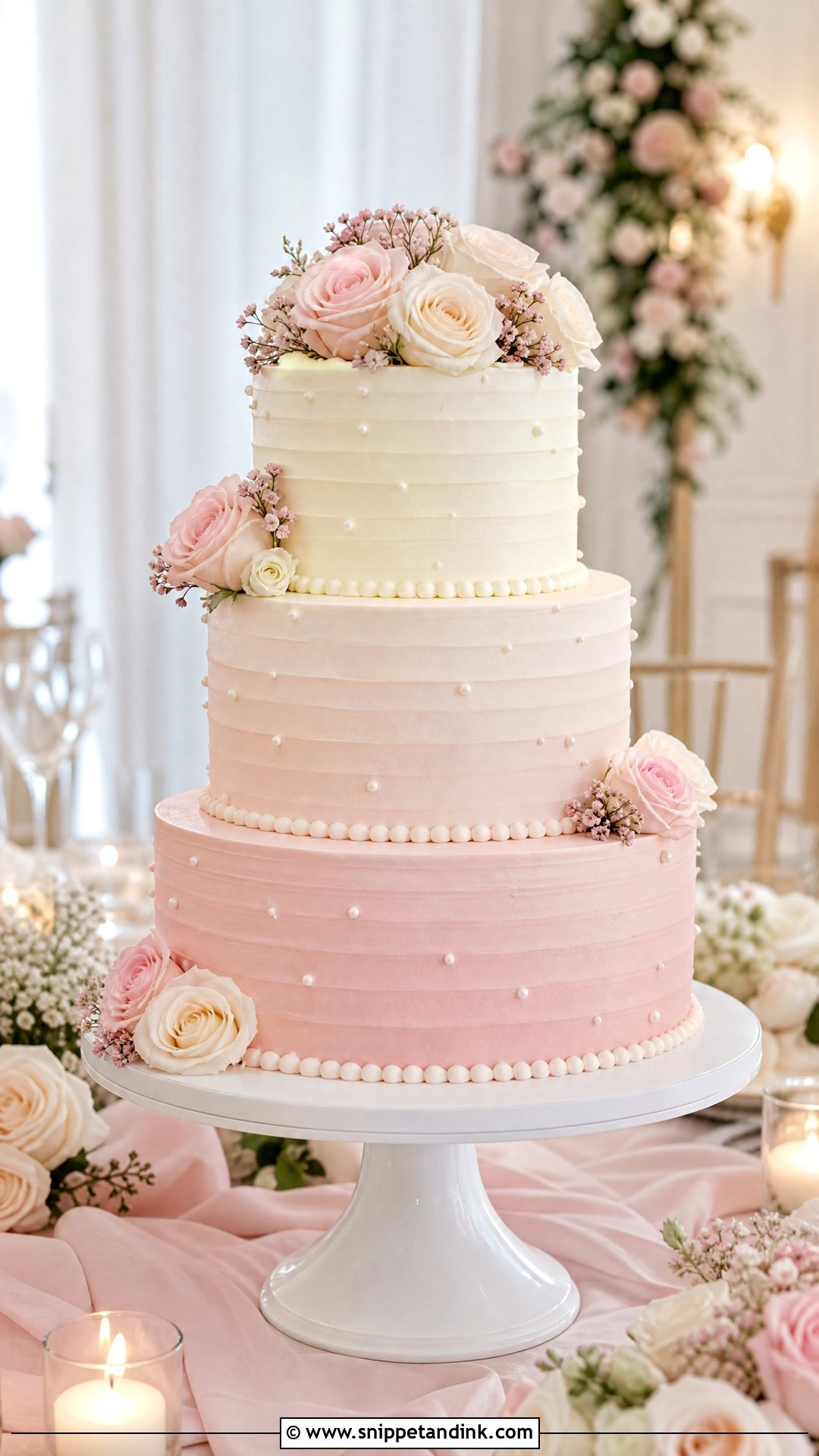
Ombre fades from one shade into another: ivory to blush, white to blue, pale peach to coral. It can run tier by tier, darkest at the base, or as a gradient within each tier. Tier by tier is cleaner and easier to get right, while a gradient within the tier looks softer but needs a practised hand on the scraper. Ruffled ombre is the most forgiving version, and matching flowers on top complete it.
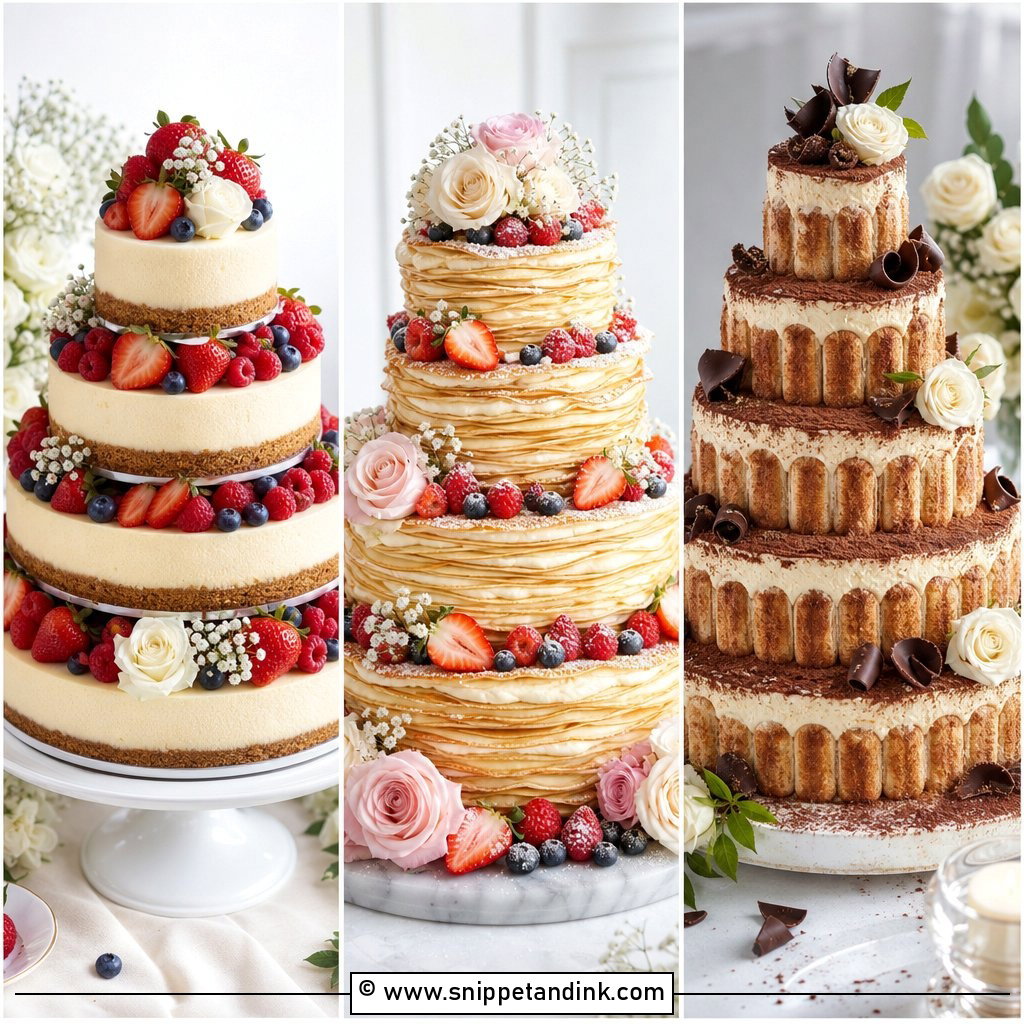
32. Fruit Wedding Cake
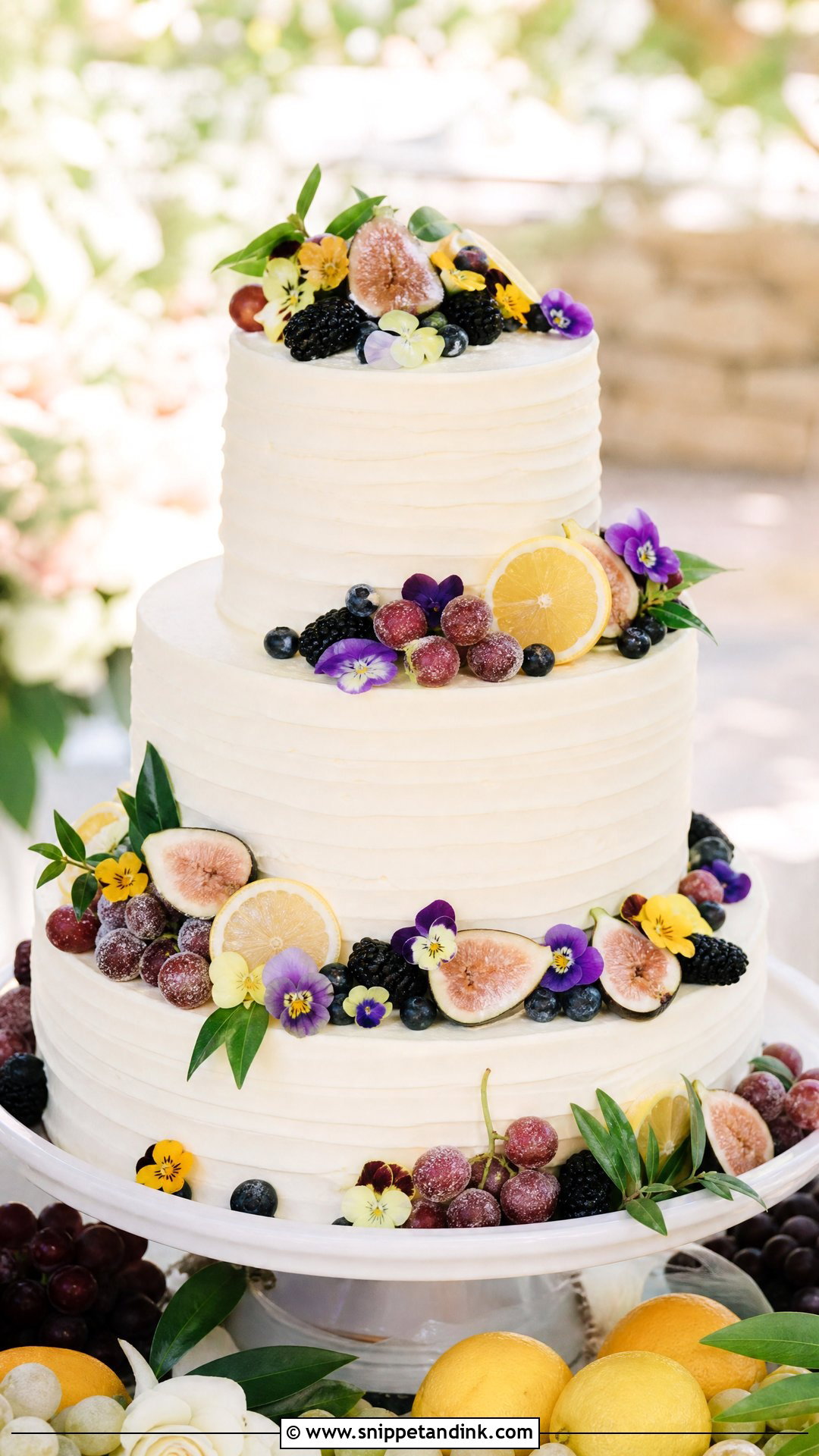
Fruit makes a cake look abundant without heavy piping: berries, figs, pears, citrus slices, cherries, sugared grapes. Cut fruit weeps juice onto frosting within a couple of hours, so I use mostly whole fruit, glaze anything sliced, and add the most delicate pieces at the venue. Buy for the season so the fruit tastes of something. Lemon with berries and almond with figs are pairings I come back to.
33. Italian Wedding Cake
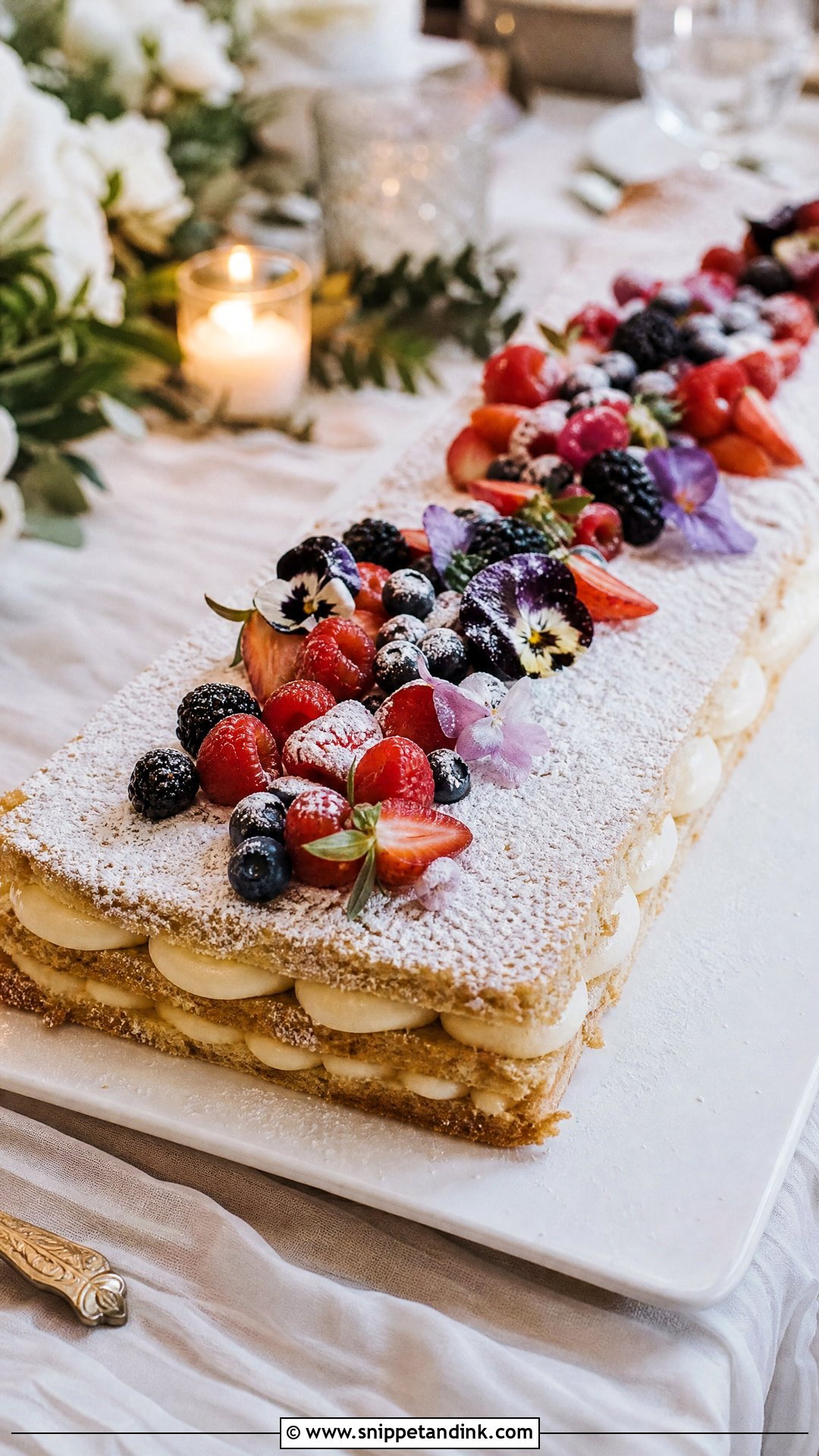
Italian-style wedding cakes are often wide and low, layered with pastry cream, berries and soft sponge, and some are built as a millefoglie with crisp puff pastry. They suit a long table and a relaxed dinner where the cake is served as dessert rather than after a formal cutting. Cream fillings mean refrigeration, so the cake should come out close to serving time. Berries, powdered sugar or piped cream are enough on top.
34. Dessert Table Wedding Cake
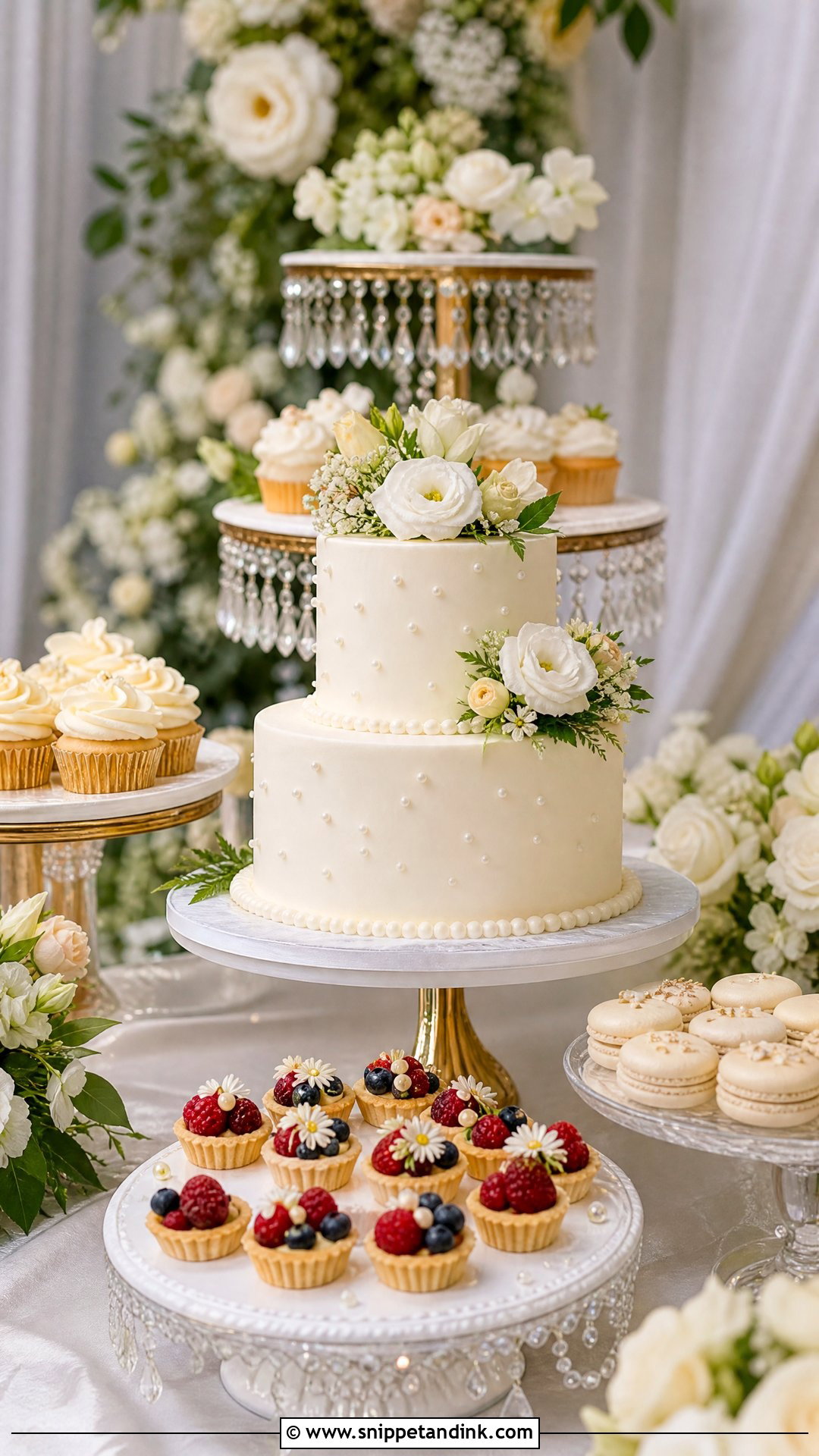
A dessert table wedding cake pairs a small cutting cake with mini cakes, cupcakes, macarons, cookies or fruit tarts. It’s useful when guests have mixed tastes or dietary needs, because gluten-free or dairy-free options can sit on the table without changing the main cake. The cake should still anchor the display, raised a little higher or set in the center. Plan on several small pieces per guest, more if the table replaces cake slices entirely.
35. Cupcake Wedding Cake
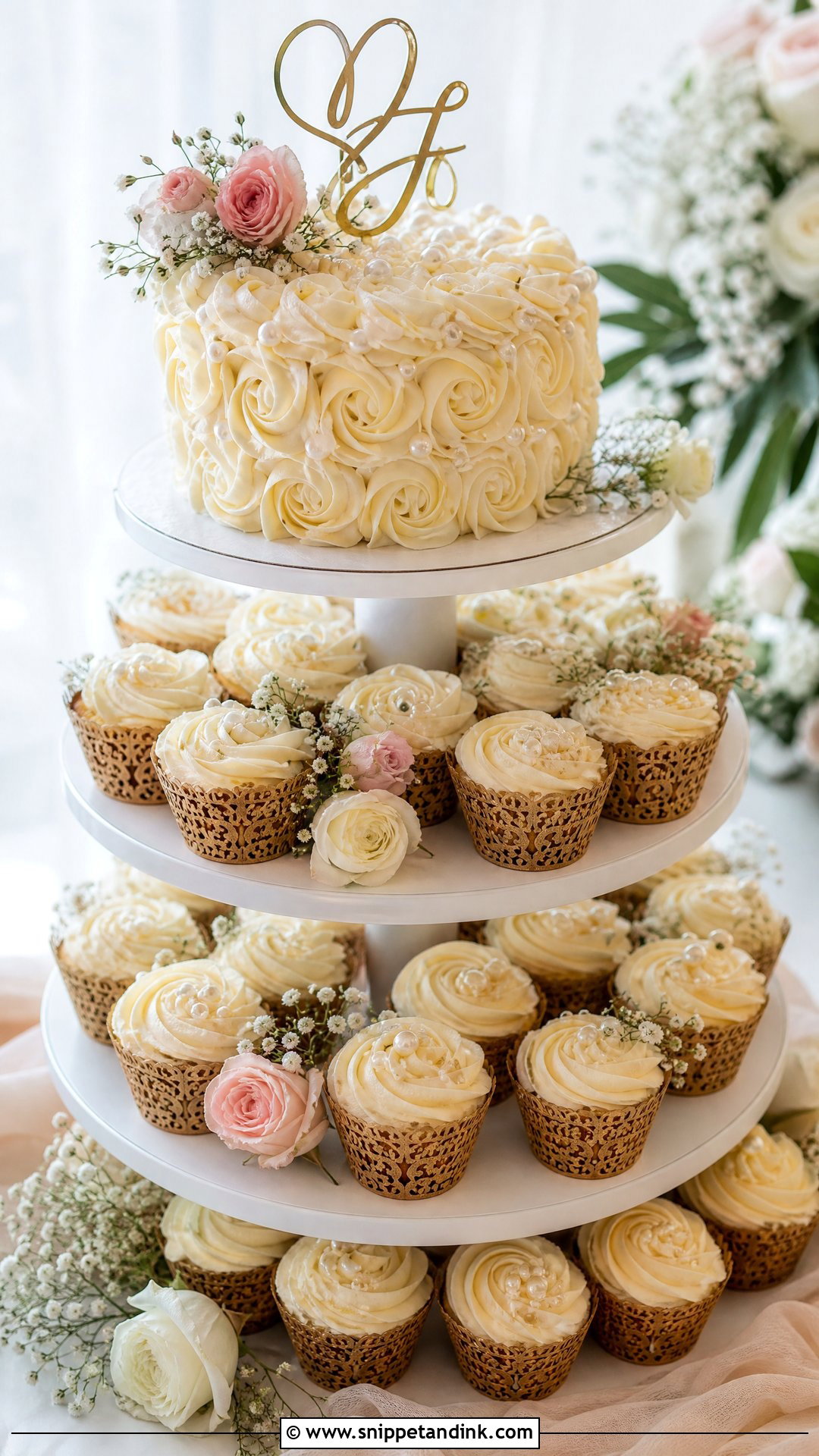
Cupcake displays put a small cutting cake on top and cupcakes on the tiers below. Serving is quick, guests pick their own flavor, and nothing needs slicing. Keep the frosting color and one detail consistent across every cupcake, or the display starts to look like a bake sale. Liners matter more than people expect: some go greasy and see-through after baking, so I use grease-proof liners or slip on a decorative wrap. Outdoor and casual receptions suit it.
Where the Money Goes on a Wedding Cake
Cake quotes surprise people because most of the cost is time, not ingredients. Smooth buttercream with fresh flowers placed by the florist is one of the least labor-heavy designs above. Lambeth piping, hand-painted watercolor, sculptural shapes and dense sugar flowers sit at the other end, because each can take many hours per tier.
Savings that actually work
- A smaller display cake plus plain kitchen cakes, frosted to match and cut out of sight
- Buttercream instead of fondant, which skips a whole stage of work
- Fresh flowers from your florist in place of a sugar cascade
- One elaborate tier with simple tiers around it
The saving that rarely is
Dummy tiers. A polystyrene tier still has to be covered and decorated by hand, so it usually saves less than couples expect, and it adds a tier nobody eats. Use one for height, not for budget.
The Cutting, and What Happens to the Rest of the Cake
Ask your venue early whether it charges a cake-cutting fee; some charge per guest when the cake comes from an outside baker. Then decide when the cutting happens. Earlier in the evening lets the caterer slice and plate while guests are still seated, whereas leaving it to the end can mean half the room has already drifted to the bar or the dance floor.
Agree in advance who takes home the top tier, any sugar flowers and the stand if it’s hired, and name one person to do it rather than leaving it to whoever is last out. Sugar flowers keep for years in a dry box. The cake and the fresh blooms don’t.
Your Venue Has a Say in This Cake Too
The right cake fits your guest count, venue, season and budget before it fits a mood board. White with fresh flowers will always work, but vintage piping, fruit, colored frosting, sheet cakes and dessert tables all belong at a modern reception now. Save the designs that suit your palette, then take them to your baker along with the details of the room, the delivery window and how the cake will be served. Chosen that way, it tastes right, lasts the evening and still looks like yours in the photos.
You'll Like These Ideas:





Leave a Reply