
I bake a lot of olive oil sponges for weddings, and the reason couples keep choosing them is simple: the crumb stays soft for days, and the oil brings a Mediterranean warmth that sits happily beside citrus, figs, honey, nuts and dark chocolate. A good one never tastes greasy. It tastes clean and faintly fruity, and the slices disappear faster than you’d expect. Below are twenty directions I’d put on a cake stand, from a sharp lemon tier to a table of glazed Bundts, with notes on what each one needs from the baker and from the room it will stand in.
What Olive Oil Does to a Crumb, and Why It Matters on a Stand
Butter cakes firm up in the fridge because butter turns solid when cold. Oil stays liquid, so an olive oil sponge eats softer straight from the cooler and holds its moisture longer after baking. For a wedding that’s a real advantage, since tiers are usually baked a day or two ahead and chilled before decorating.
The same tenderness is the challenge. A soft, damp crumb compresses under the weight of upper tiers, so each tier needs its own board and supports cut to height, and I often make the bottom tiers of a tall cake a touch firmer than I would a single cake. If your baker hasn’t stacked olive oil tiers before, ask how they plan to support them.
Taste the oil before you taste the cake
Extra virgin olive oil runs from buttery and mild to grassy and peppery. That pepper is lovely on bread and harsh in a delicate sponge. At a tasting I ask couples to try a plain piece of sponge before any filling, because that’s where the oil shows itself. As a rough match:
- Mild, fruity oils: vanilla, almond, berry, lavender and anything under mascarpone.
- Medium oils: lemon, orange, fig, honey and rosemary, where the fruit or herb meets the oil halfway.
- Robust, peppery oils: chocolate is the one flavor that genuinely benefits; elsewhere they tend to taste bitter.
1. Lemon Olive Oil Wedding Cake
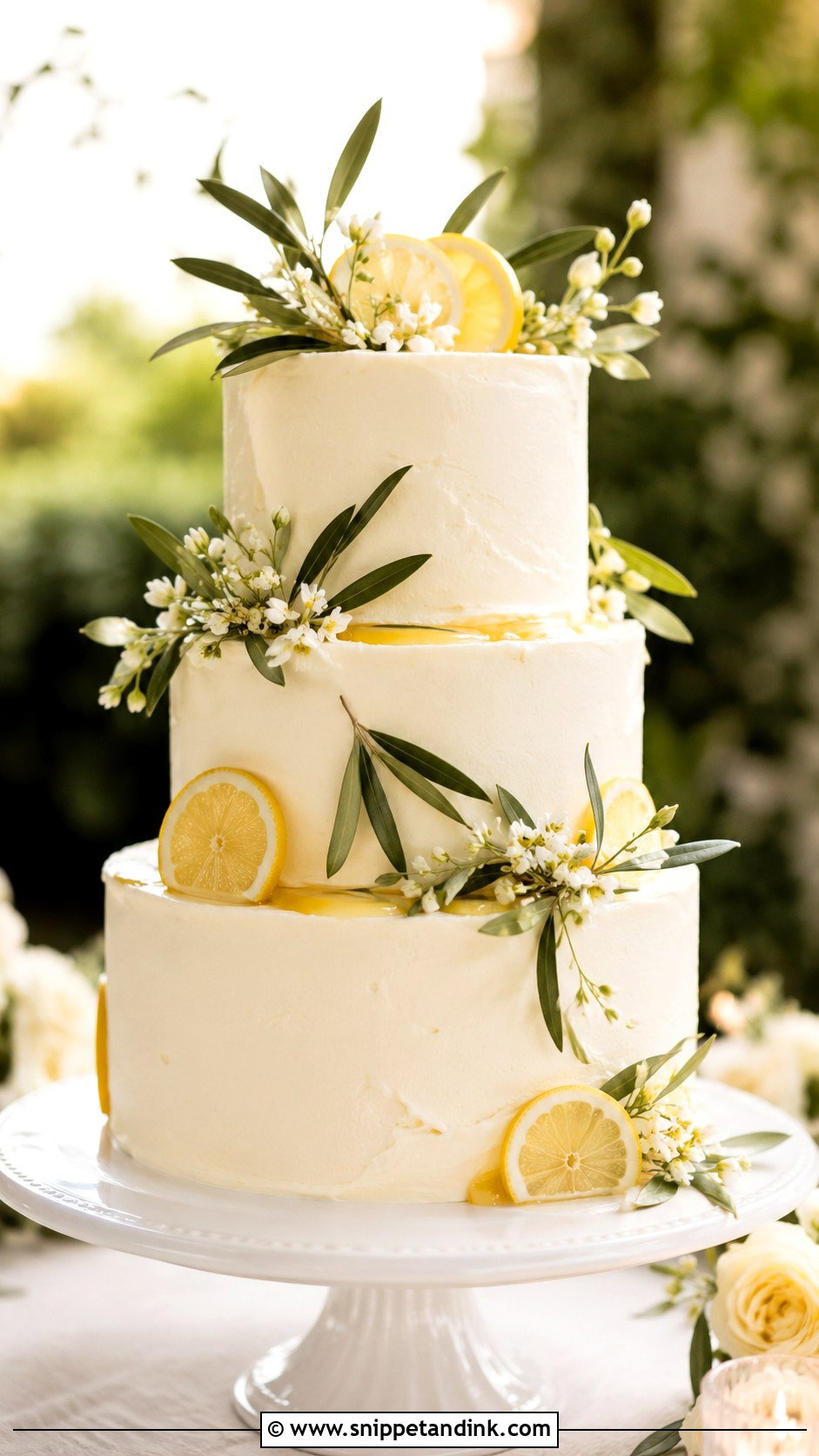
Lemon is where I start most couples, because citrus acid lifts the oil and keeps the first bite bright rather than rich. I fill two or three tiers of pale gold sponge with lemon curd and wrap them in vanilla buttercream. The oil matters more here than anywhere: a mild extra virgin reads as fruit, while a grassy, peppery bottle can leave a bitter catch at the back of the throat once it meets the curd. Fresh lemon slices look crisp on delivery but weep juice into buttercream after a few hours, so I place them at setup, never in the kitchen.
2. Orange Olive Oil Wedding Cake
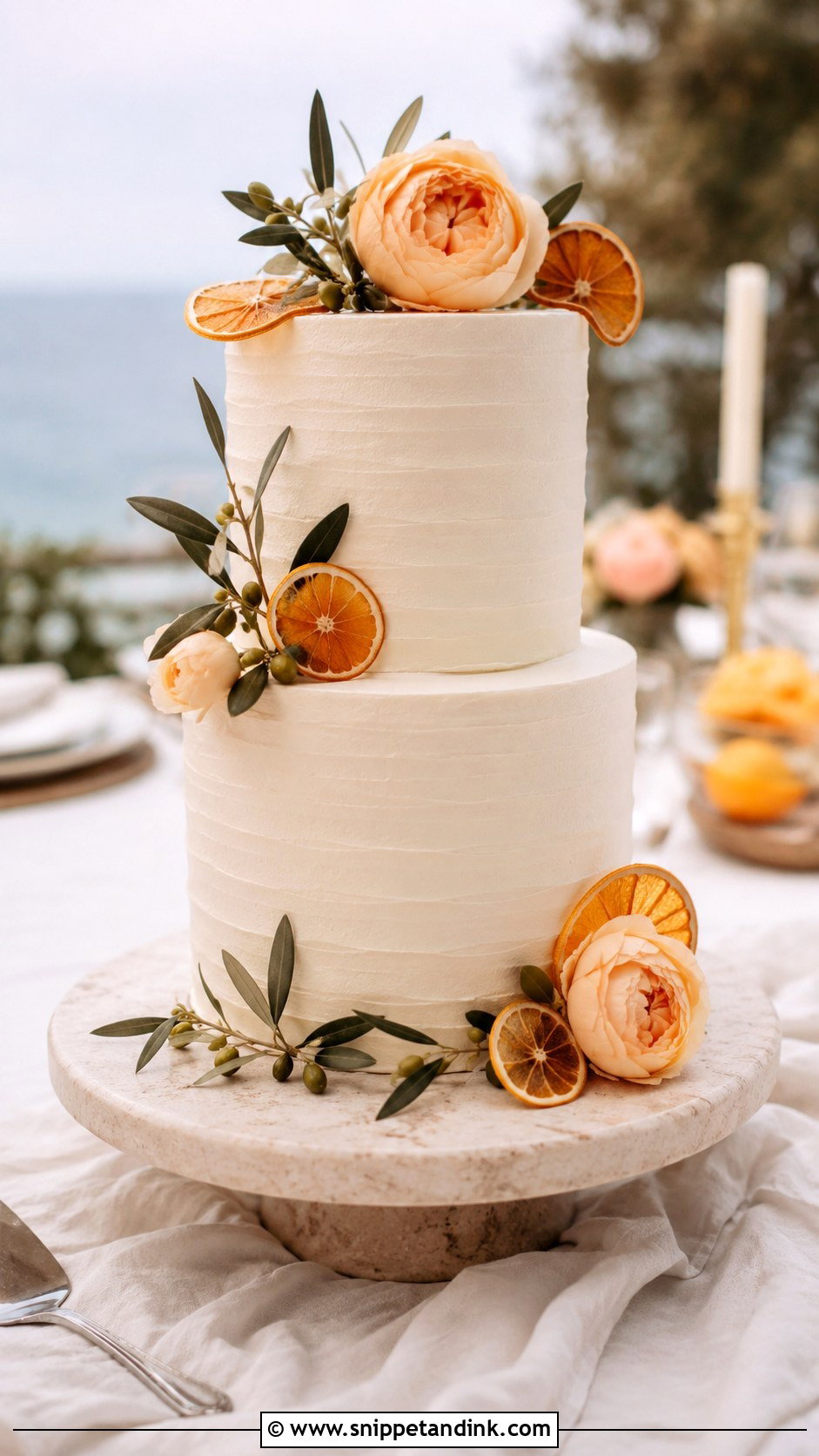
Orange is gentler than lemon and friendlier to guests who find citrus cakes too sharp. I rub the zest straight into the sugar so its oils release before the batter comes together, then layer with marmalade or mascarpone cream. On outdoor cakes I use dried orange wheels rather than fresh ones; they don’t drip and they keep their color in sun. A semi-naked finish suits this flavor, but bare sponge dries at the edges quickly, so I keep it wrapped until the last moment.
3. Almond Olive Oil Wedding Cake
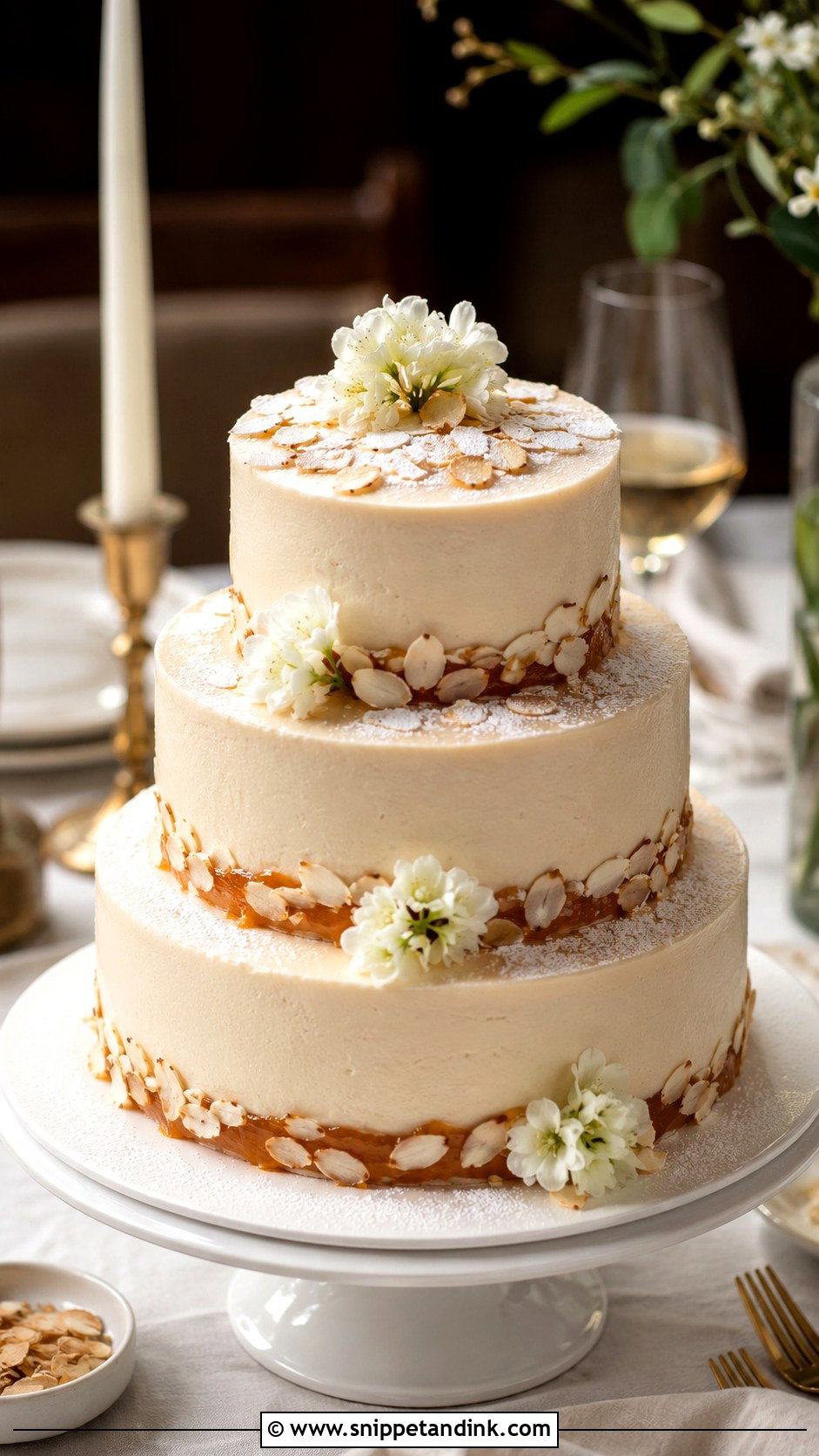
Almond is the quiet option, and I like it for long-table dinners where dessert follows a heavy meal. A little extract goes a long way; push it and the cake tips into marzipan territory that not every guest enjoys. Mascarpone or a thin apricot layer keeps it from tasting dry. I finish it in smooth ivory with toasted sliced almonds pressed around the base, which also hides the seam where cake meets board. Please flag nuts on the dessert table card, since almond isn’t obvious from the look of a slice.
4. Blood Orange Olive Oil Wedding Cake
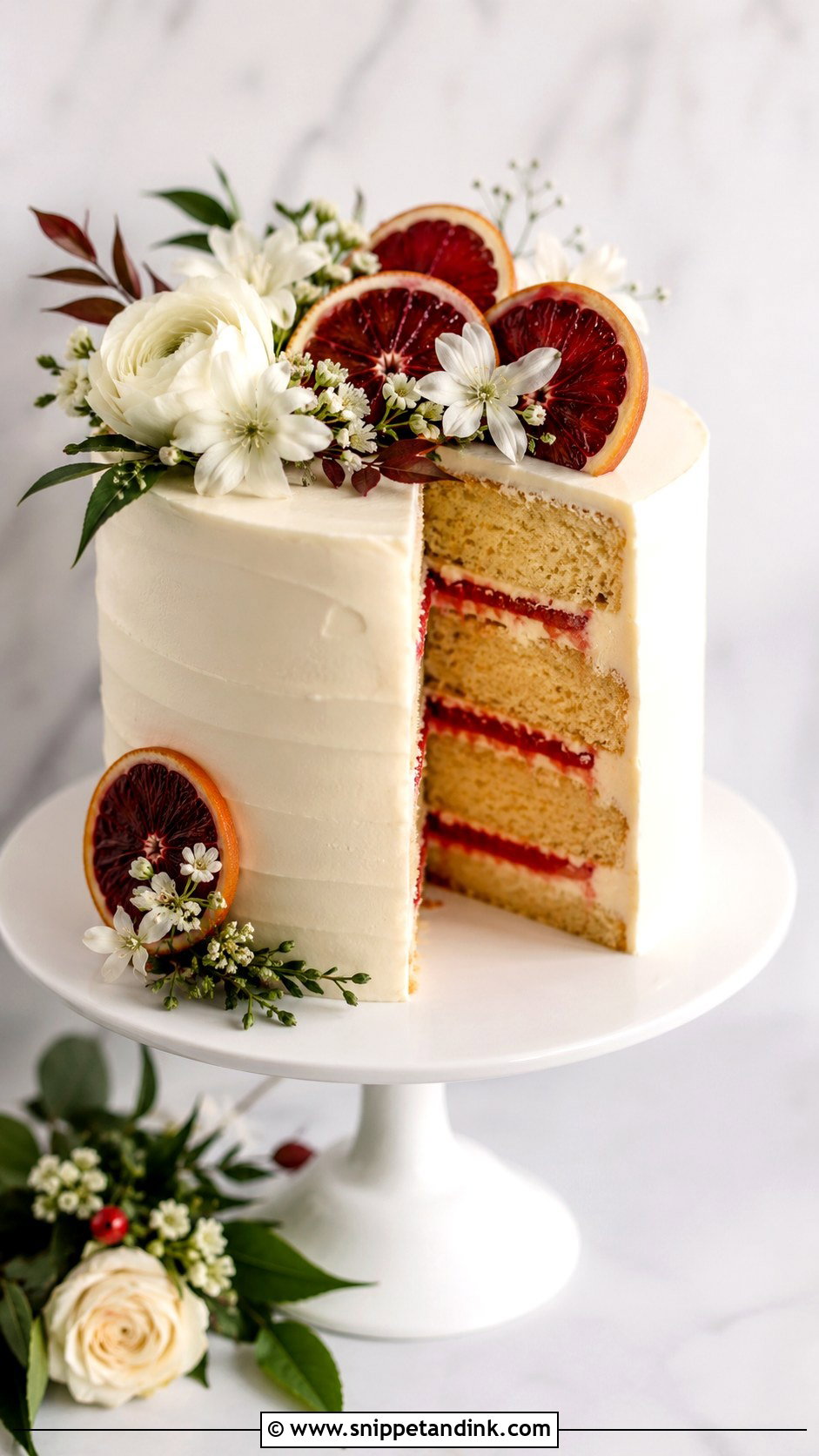
Blood orange gives you real color without a drop of food coloring. I brush blood orange syrup into every layer, fill with curd or whipped mascarpone, and set deep ruby slices against white buttercream. The fruit’s season is short, roughly winter into early spring, so for a summer date I’d plan a curd made from frozen juice and skip the fresh slices on top. That red against ivory gives a photographer genuine contrast to work with, which pale citrus never quite does.
5. Rosemary Olive Oil Wedding Cake
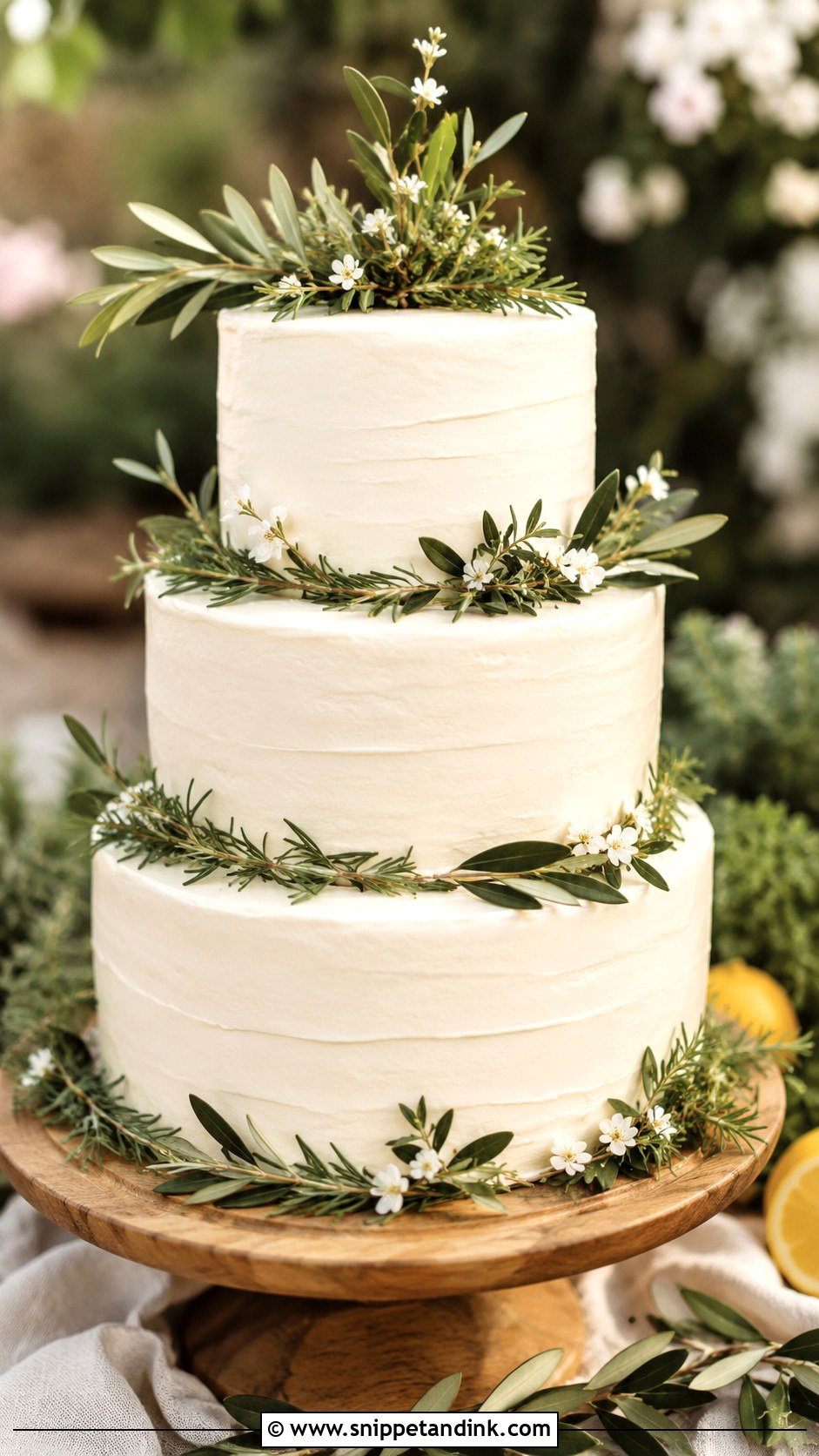
Rosemary turns harsh if the needles go straight into the batter, so I infuse it into the warm oil or the soaking syrup and strain it out. That leaves a gentle herbal note, softened further by lemon buttercream or honey mascarpone, with small sprigs and olive branches outside to tell guests what they’re about to taste. It belongs at vineyard dinners and Tuscan-inspired weddings. I’d hold back with a very traditional crowd, though. Some people read herbs as savory, and a little lemon zest in the sponge is what keeps this one tasting like dessert.
6. Honey Olive Oil Wedding Cake
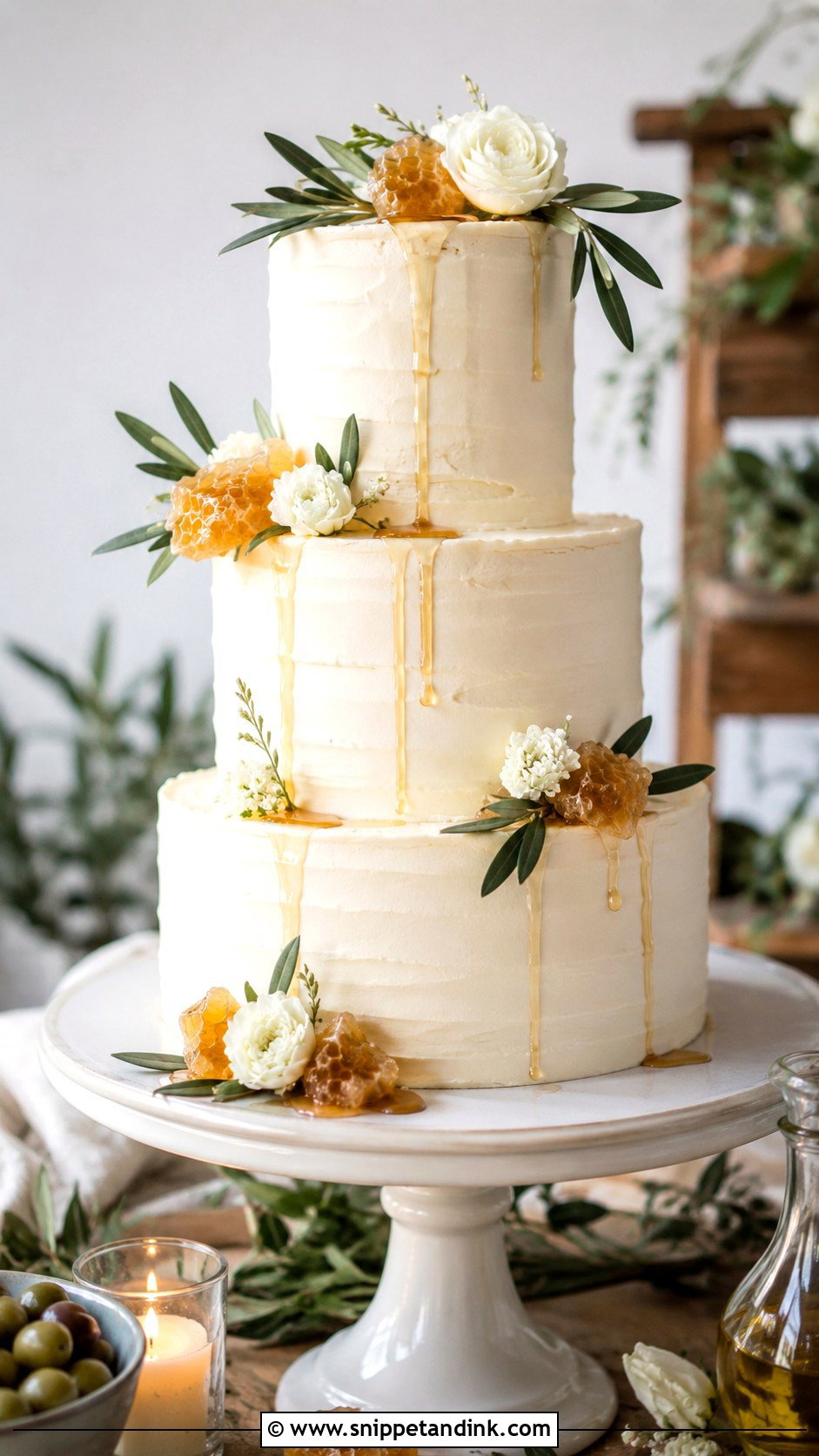
Honey and olive oil share a warm, floral edge, so they need something tart beside them: Greek yogurt in the batter, mascarpone, or lemon zest. I keep the honey in the sponge modest because it browns the crust fast and makes tall layers dome. Honeycomb is the detail couples fall for, but comb weeps in a warm room and slides down buttercream, so I add it at the venue and save any drizzle for just before serving. Late summer and early fall suit this flavor best.
7. Fig Olive Oil Wedding Cake
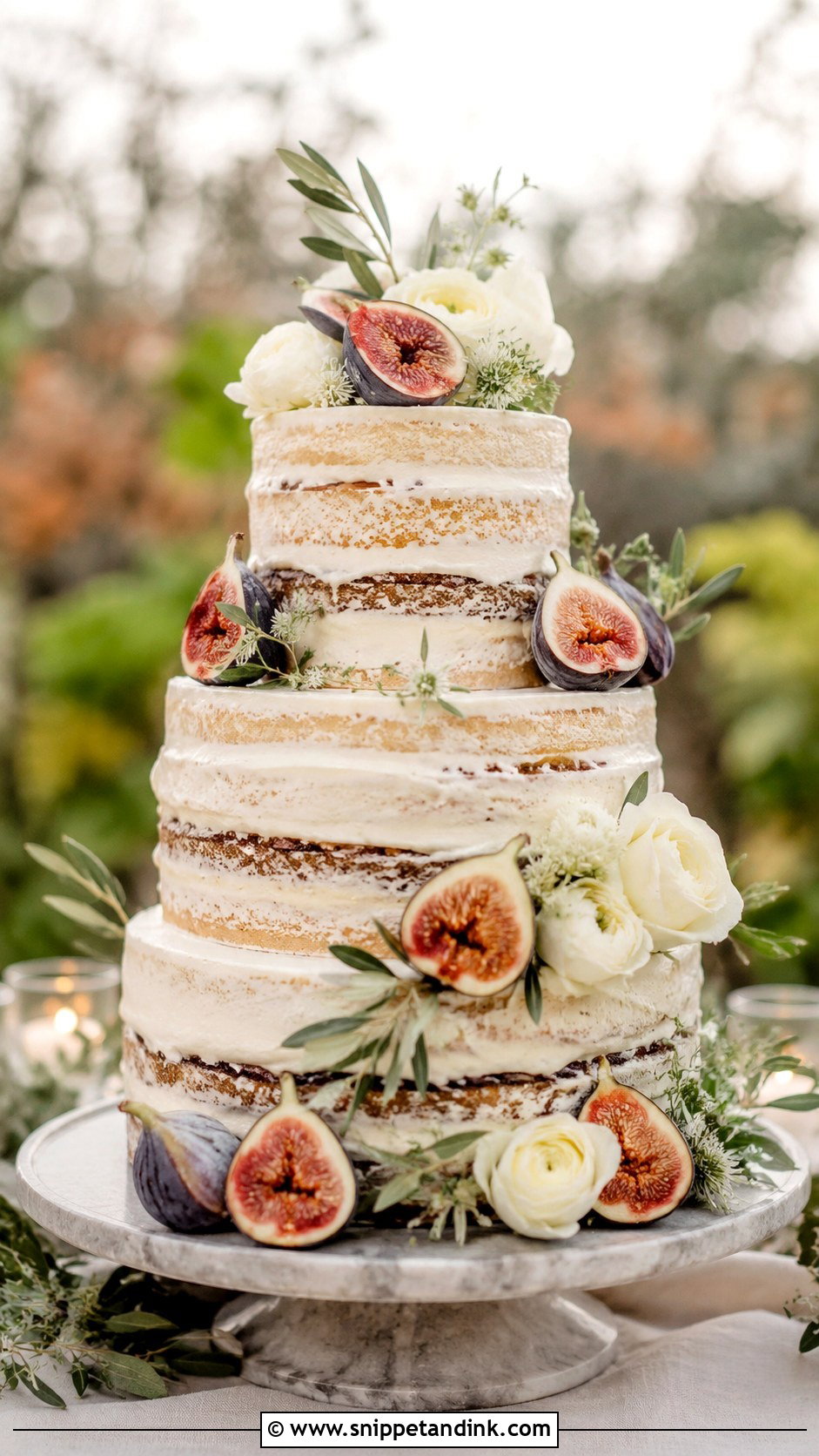
Fig jam layered with honey mascarpone gives the oil something deep to lean on, and halved figs on a semi-naked finish do most of the decorating for you. The catch is the fruit. Fresh figs are at their best from late summer into early fall, and once cut they soften and darken within hours, so I halve them on site. Outside that window I put the jam inside and dress the tiers with olive leaves and cream flowers instead. Purple against ivory needs very little help.
8. Pistachio Olive Oil Wedding Cake
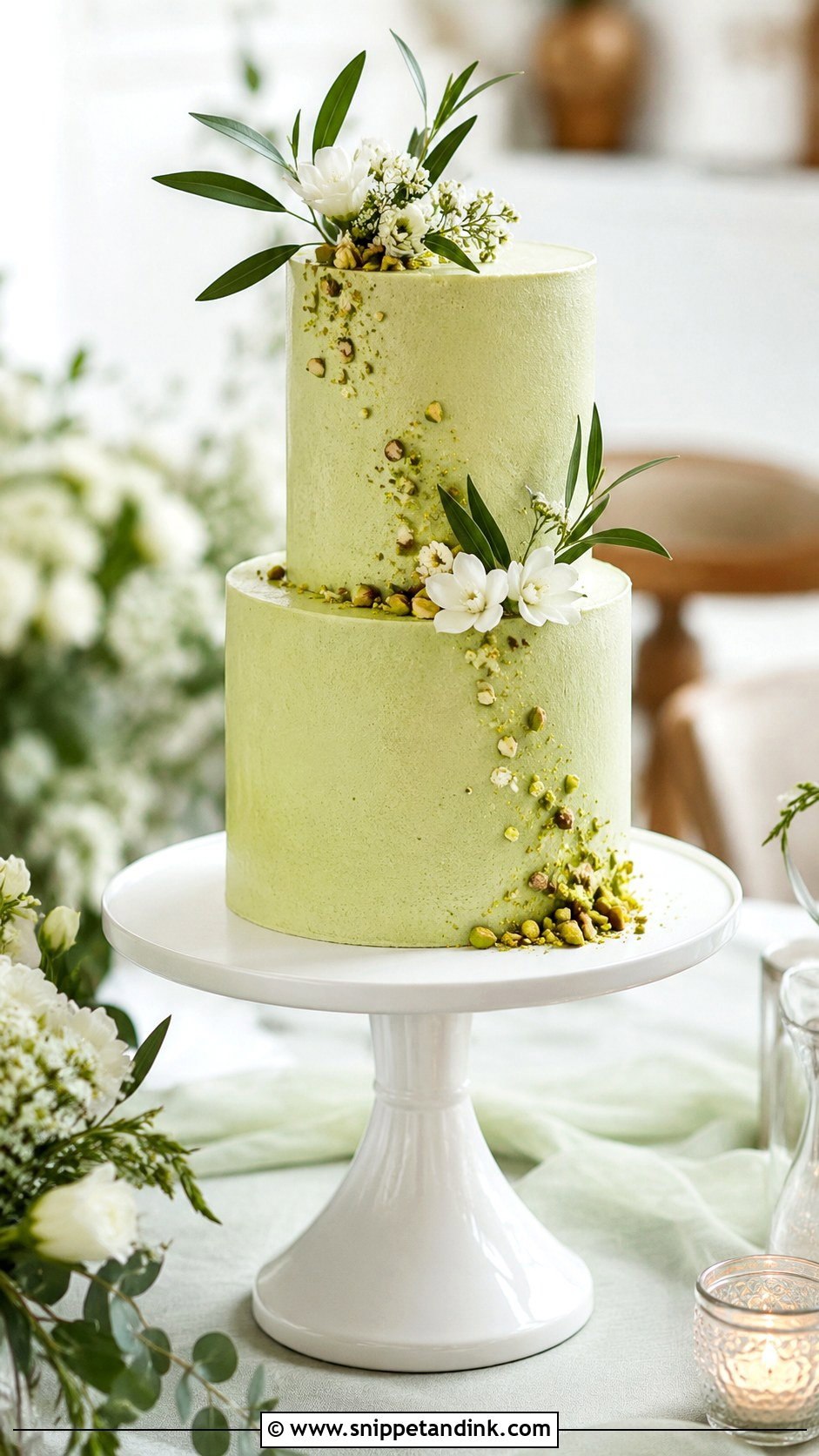
Ground pistachios give the crumb a soft green tint and a nutty flavor, and the olive oil stops them from drying the sponge out. I fill with pistachio cream, lemon curd, or mascarpone. One honest note: natural pistachio color is muted, closer to sage than mint, and the vivid green on some cakes usually comes from coloring. I’d rather show you the real shade at the tasting so nobody is surprised on the day. Crushed nuts pressed round the tiers add crunch and warn allergic guests at a glance.
9. Chocolate Olive Oil Wedding Cake
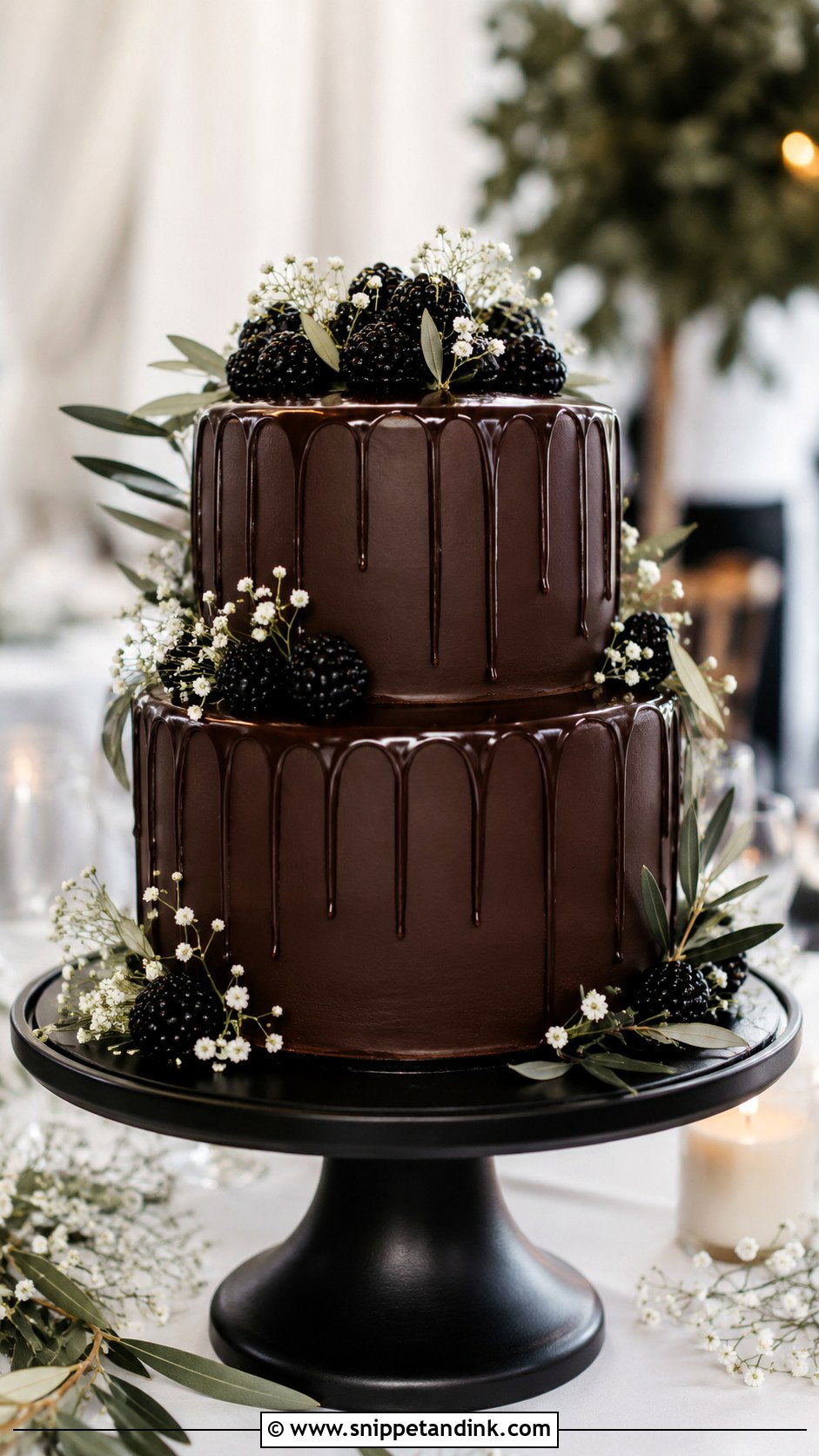
Cocoa and olive oil get along better than most people expect. The oil keeps a chocolate crumb dark and moist, and a fruity bottle can even read like a hint of cherry. This is the one cake where I’ll happily use a bolder oil. Ganache gives the sharpest edges of anything on this list and holds at room temperature, so it’s my first choice for evening receptions. Fresh berries and a few white flowers stop it looking heavy, and a glossy drip suits a modern room.
10. Vanilla Olive Oil Wedding Cake
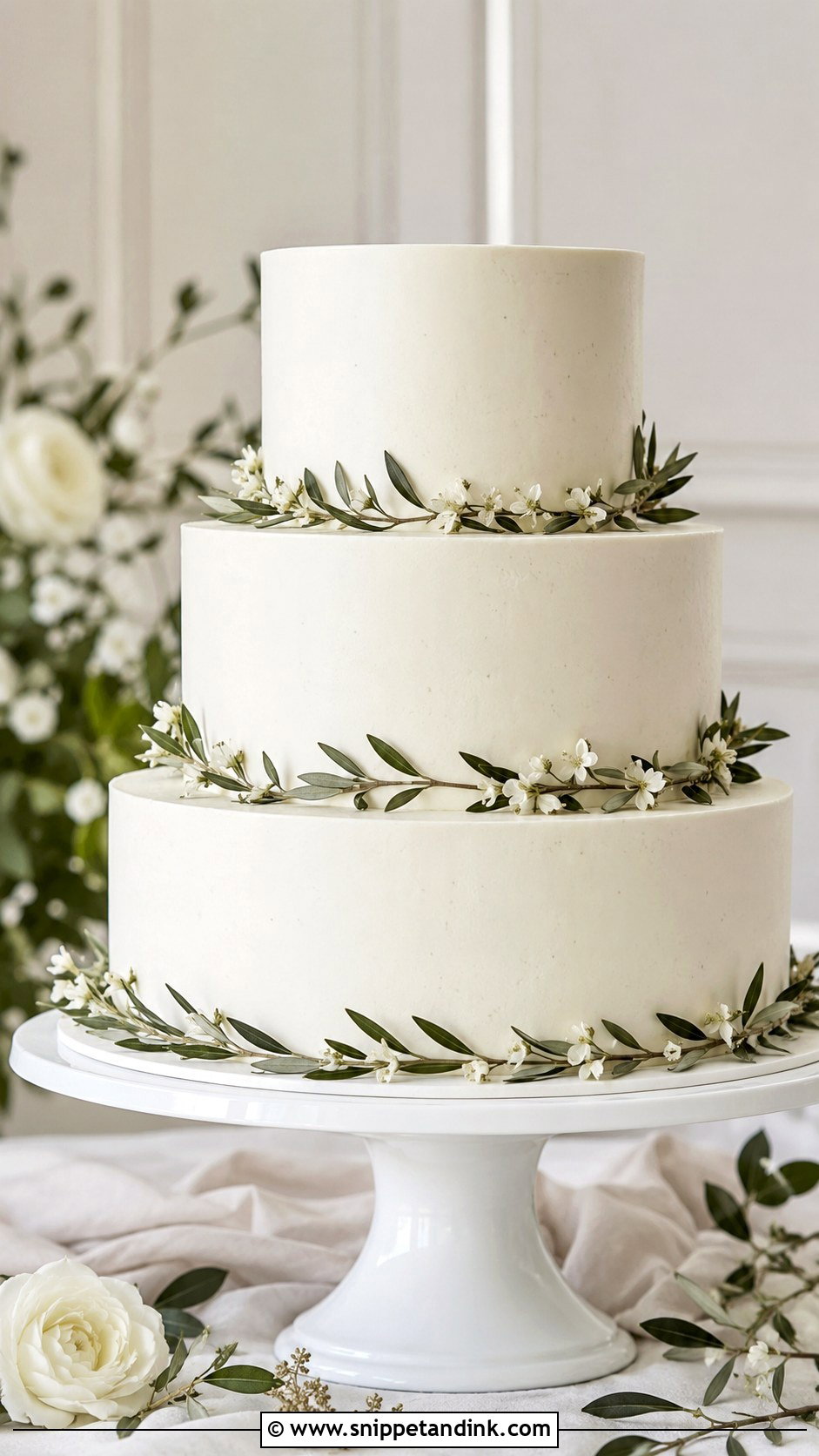
When half the guest list wants something familiar, this is the cake I suggest. The oil has to be mild, because vanilla is too delicate to cover a peppery bottle. Vanilla bean buttercream or pastry cream goes inside, perhaps with a thin citrus curd for lift, and a smooth white finish keeps it looking like a classic tiered cake. Most guests only notice that it’s unusually soft. A few olive leaves on the top tier are the single clue to what’s inside.
11. Berry Olive Oil Wedding Cake
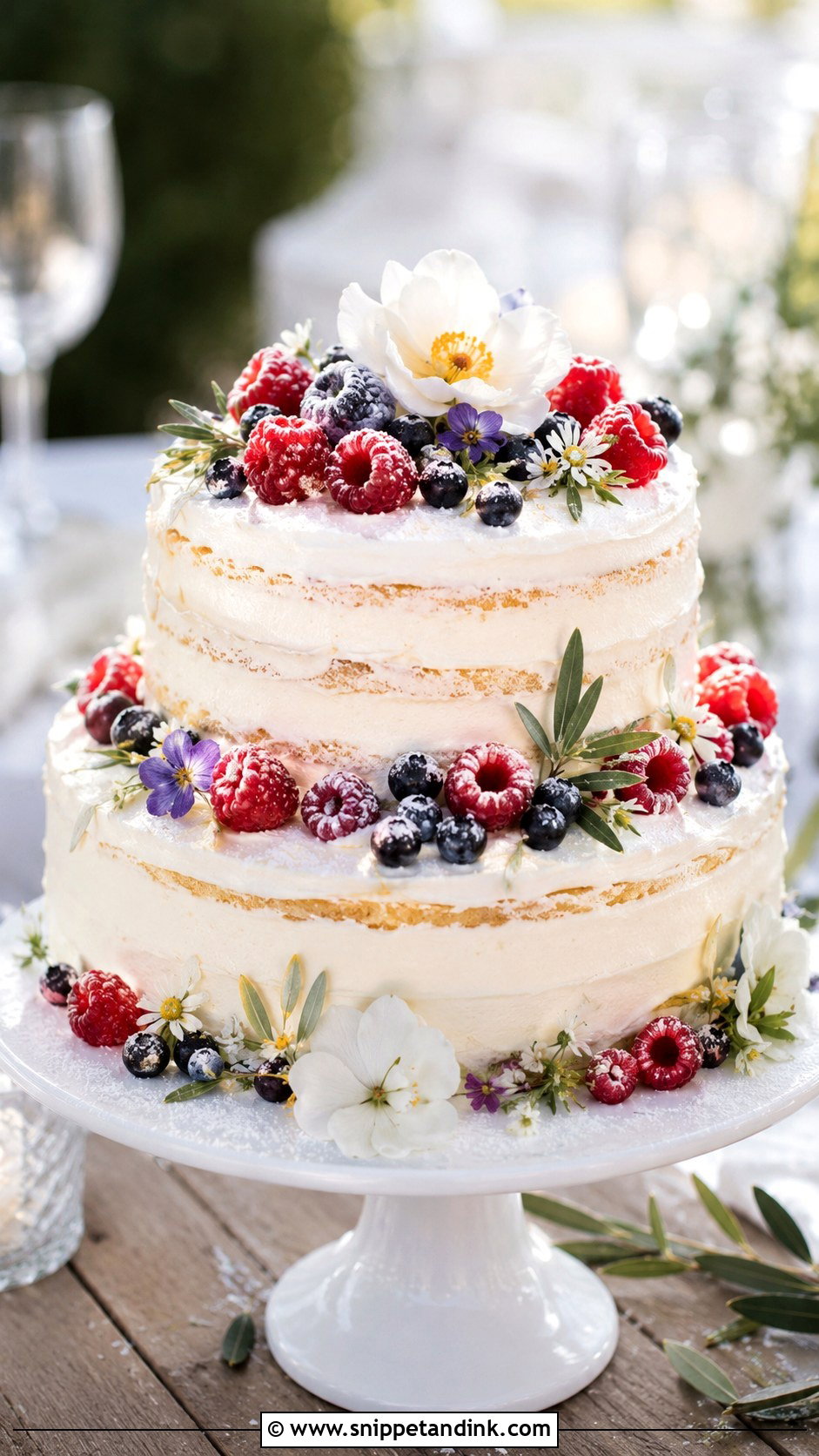
Berries bring color and acidity, so I keep the frosting light, whipped mascarpone or vanilla buttercream, and let the fruit lead. The sponge can be plain, lemon or vanilla olive oil, layered with raspberry jam or a blueberry compote. Jam is safer than fresh fruit between layers; cut strawberries release juice and can make a tier slip after a few hours. Whole berries go on outside at the venue, dried properly, because beads of water on buttercream show in every close-up.
12. Lavender Olive Oil Wedding Cake
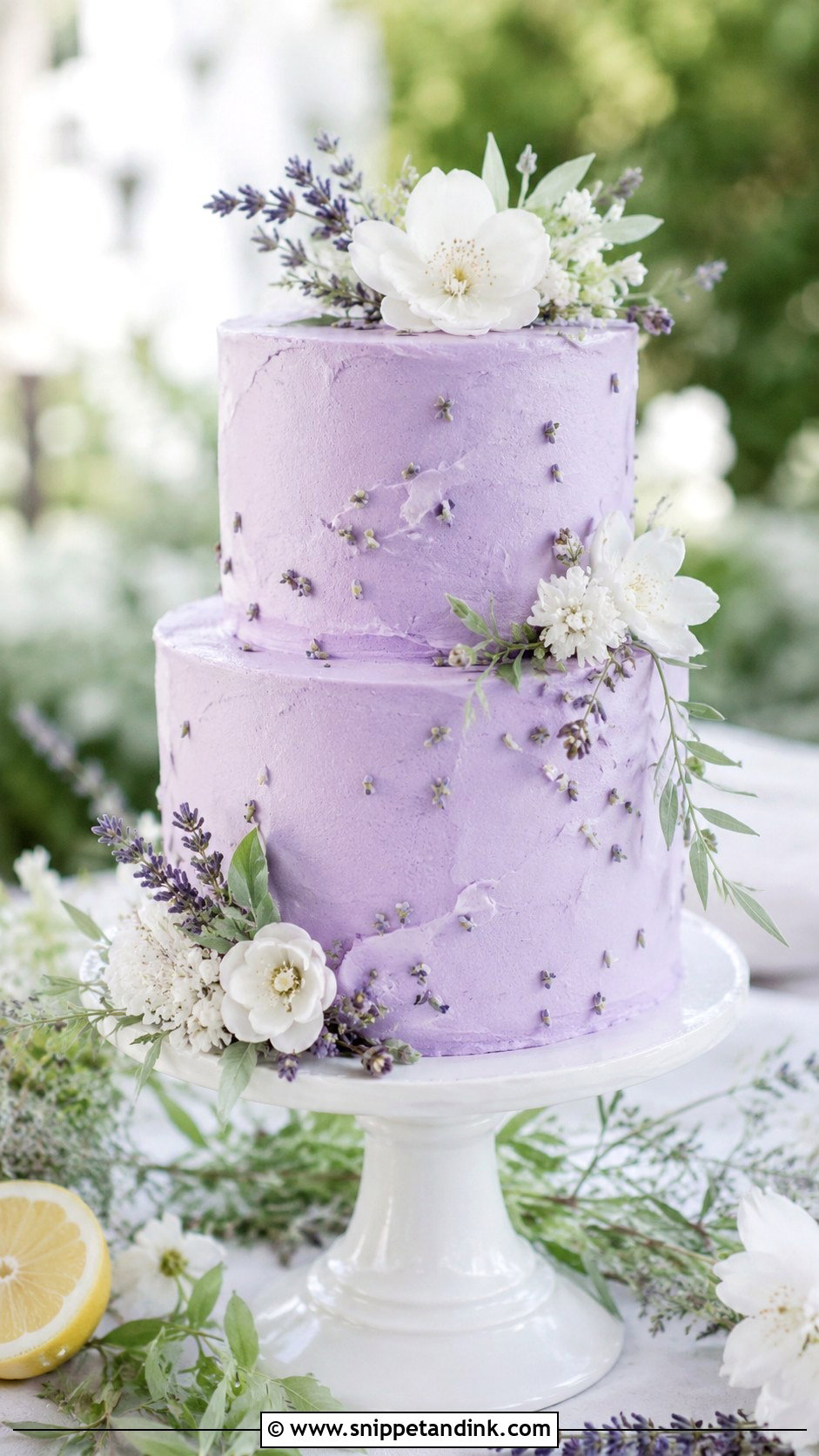
Lavender is the flavor I’m most careful with, because the line between floral and soap is thin. I infuse culinary lavender into the syrup or the buttercream, never every component, and pair it with lemon or honey under an ivory or barely lilac finish. Ask your baker whether the buds are culinary grade; craft lavender is often treated and not meant to be eaten. I only suggest this one to couples who already know they love the taste.
13. Olive Oil Wedding Cake With Mascarpone Frosting
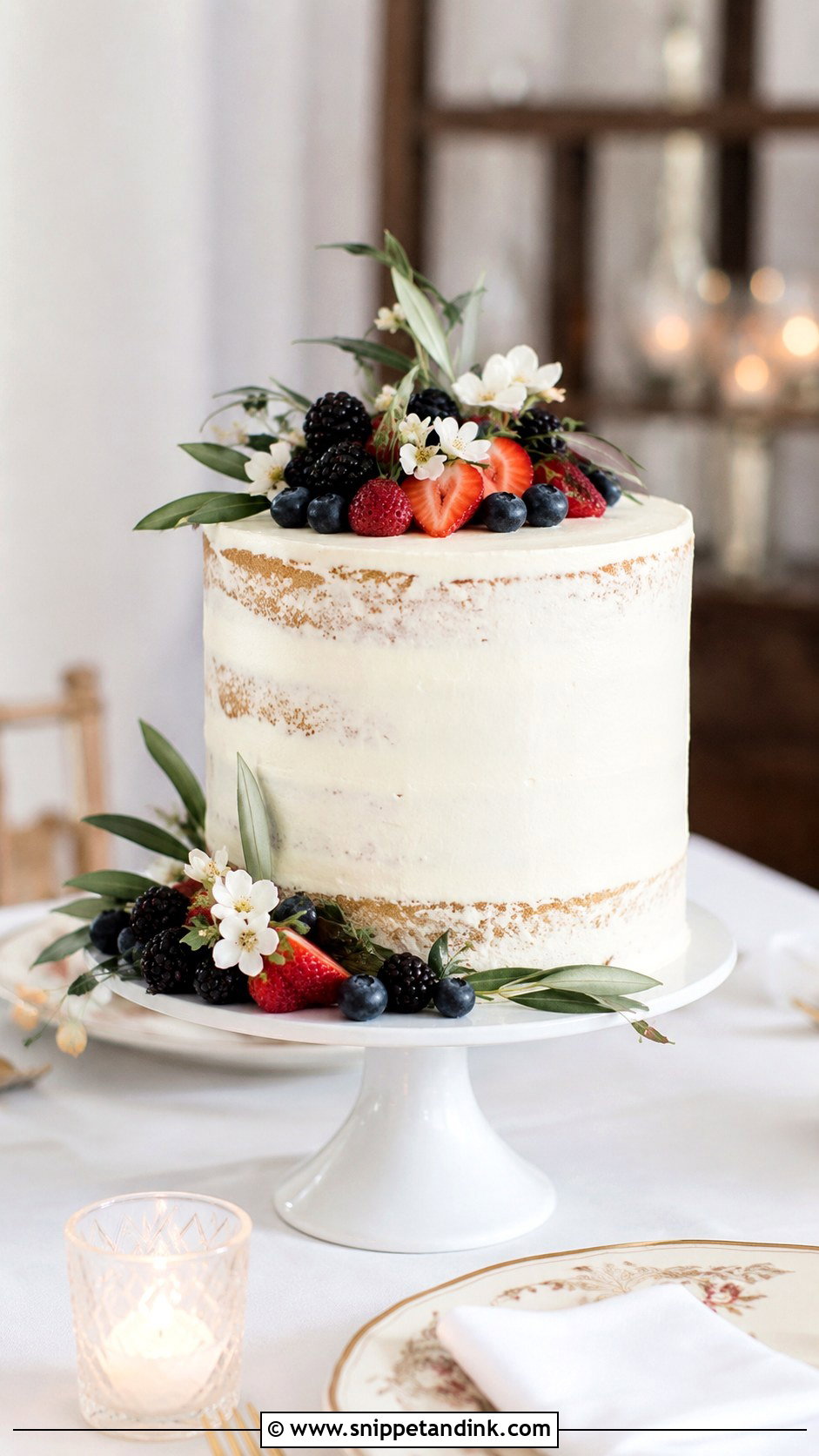
For pure flavor, mascarpone is my favorite frosting on olive oil sponge, because its slight tang cuts the richness. It is also far softer than buttercream. It needs refrigeration, slumps in heat and won’t take a sharp edge, so I reserve it for smaller tiers, chilled service, or a semi-naked finish where a soft look is the point. Lemon, orange, almond or vanilla layers all work underneath. Restaurant weddings suit it well, since the cake can wait in a walk-in until the moment it goes out.
14. Olive Oil Wedding Cake With Citrus Curd
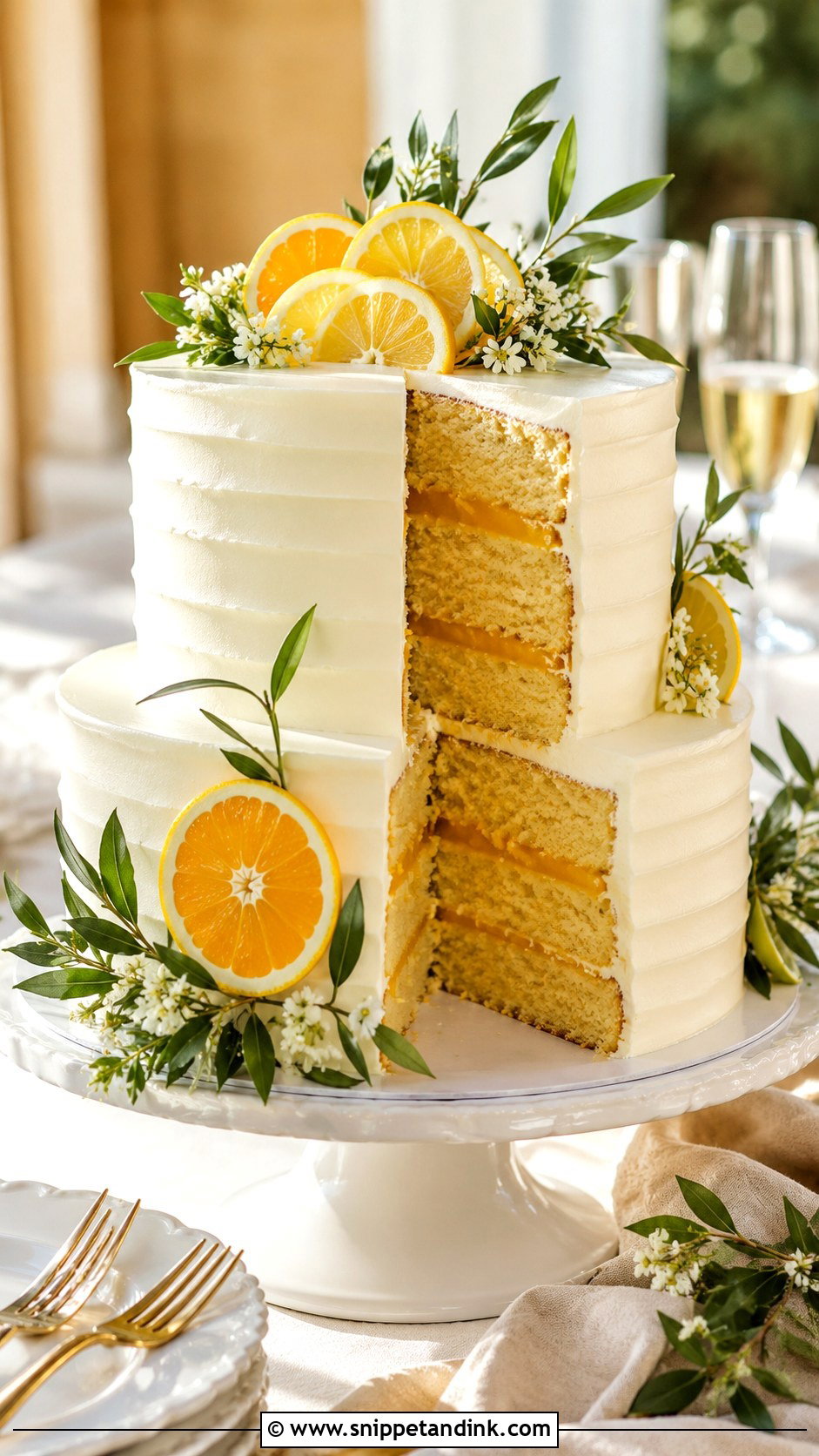
A curd center makes every slice look finished on the plate. Lemon, orange, grapefruit and blood orange all suit the tender sponge. The technique that matters is the dam: I pipe a stiff ring of buttercream around the edge of each layer before the curd goes in, or the weight of the tiers above slowly pushes it out the sides. Curd tastes best cool, which is why I lean on it after a hot summer dinner.

15. Olive Oil Wedding Cake With Fresh Flowers
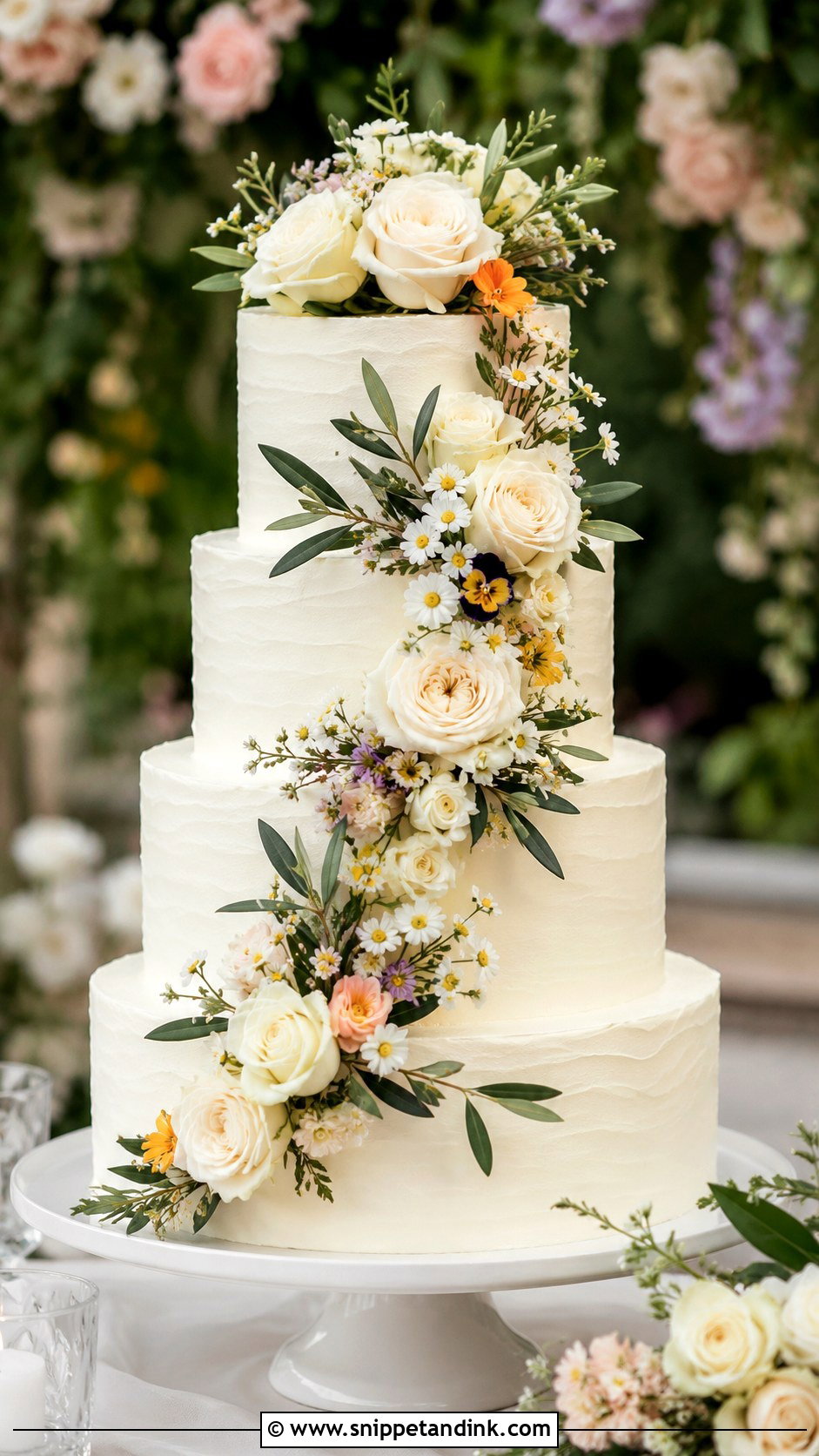
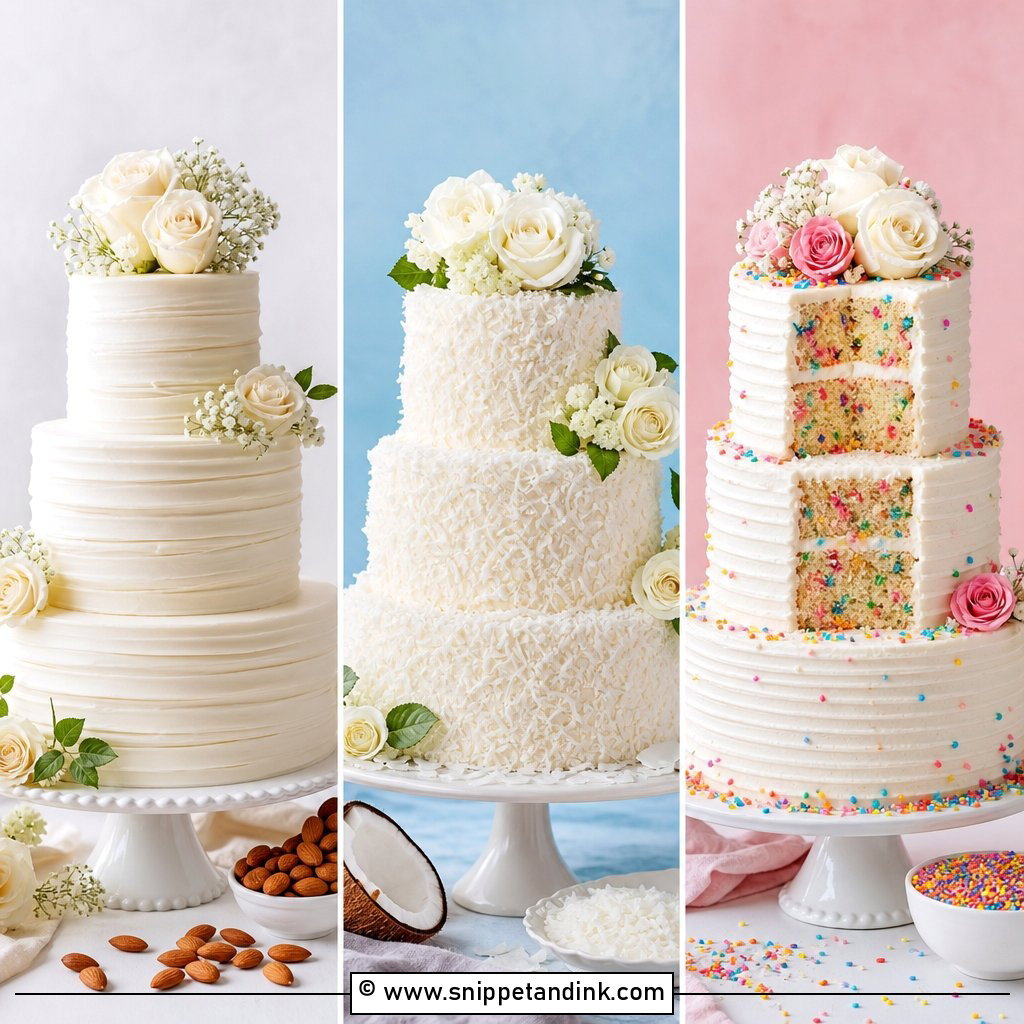
Flowers do most of the work on a plain olive oil cake, but they have to be safe. I only use blooms grown without pesticides, and every stem is wrapped or set in a pick so it never touches the frosting. Good performers include white roses, chamomile, ranunculus and small edible blossoms. Some favorite wedding flowers, hydrangea and lily of the valley among them, are toxic and should never sit on a cake. Olive branches tucked between the blooms tie the decoration back to the flavor, and it helps to ask your florist early to set the cake flowers aside.
16. Olive Oil Wedding Cake With Olive Branches
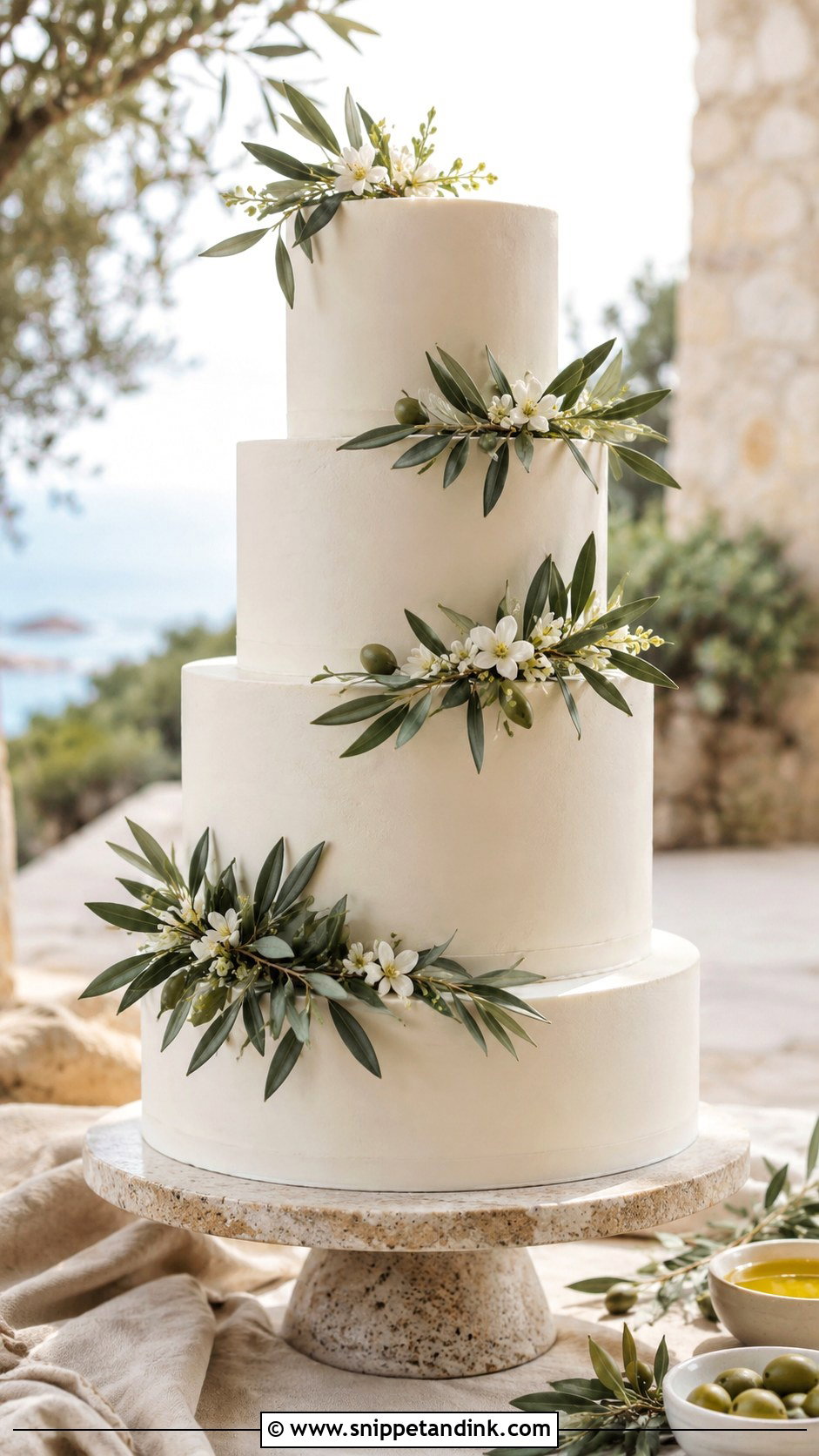
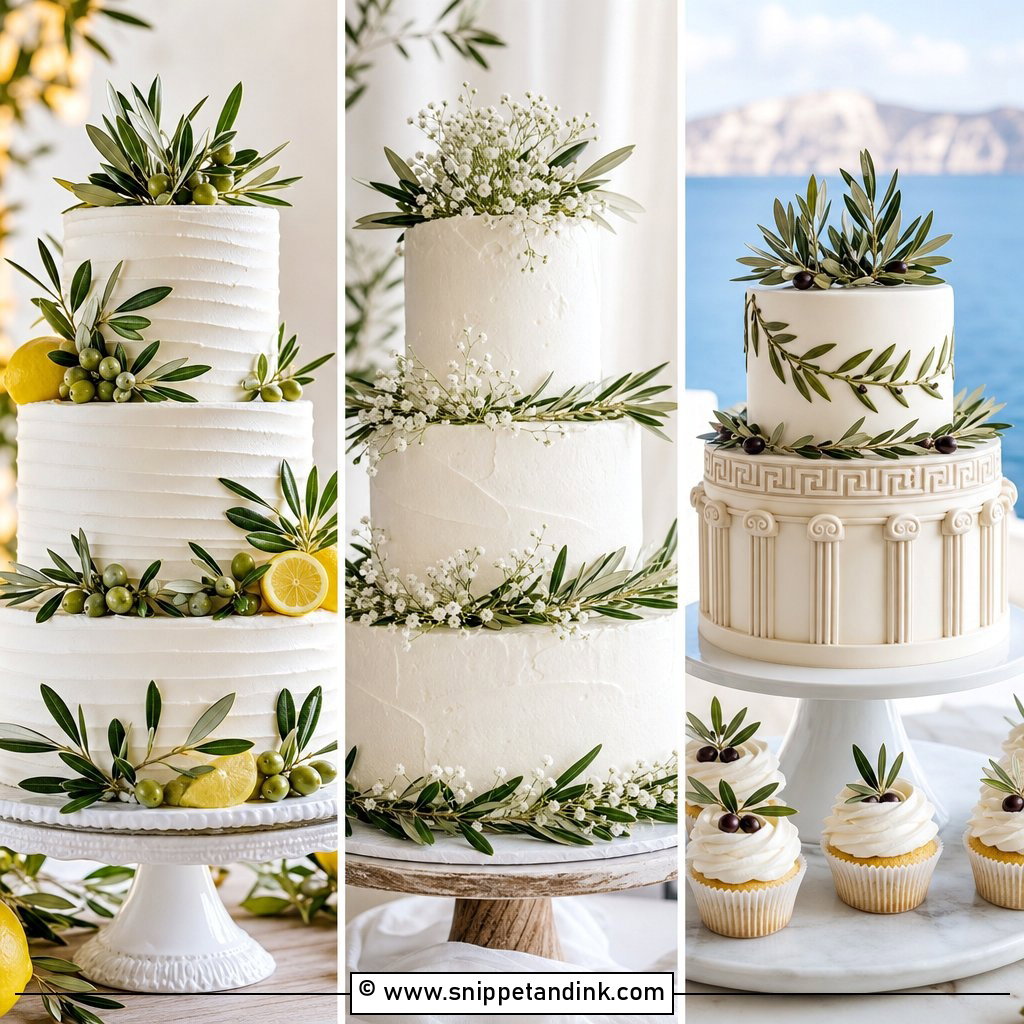
Olive branches are the most honest decoration for this cake: they say exactly what’s in it. I set them around the tiers, in a sweep down one side, or as a small crown on top, over smooth white buttercream or fondant. Real branches get washed and their cut ends wrapped, just like flowers. They wilt slowly, so they stay fresher in a warm room than most florals. A stone or wooden stand finishes the look.
17. Olive Oil Wedding Cake With Cream Cheese Frosting
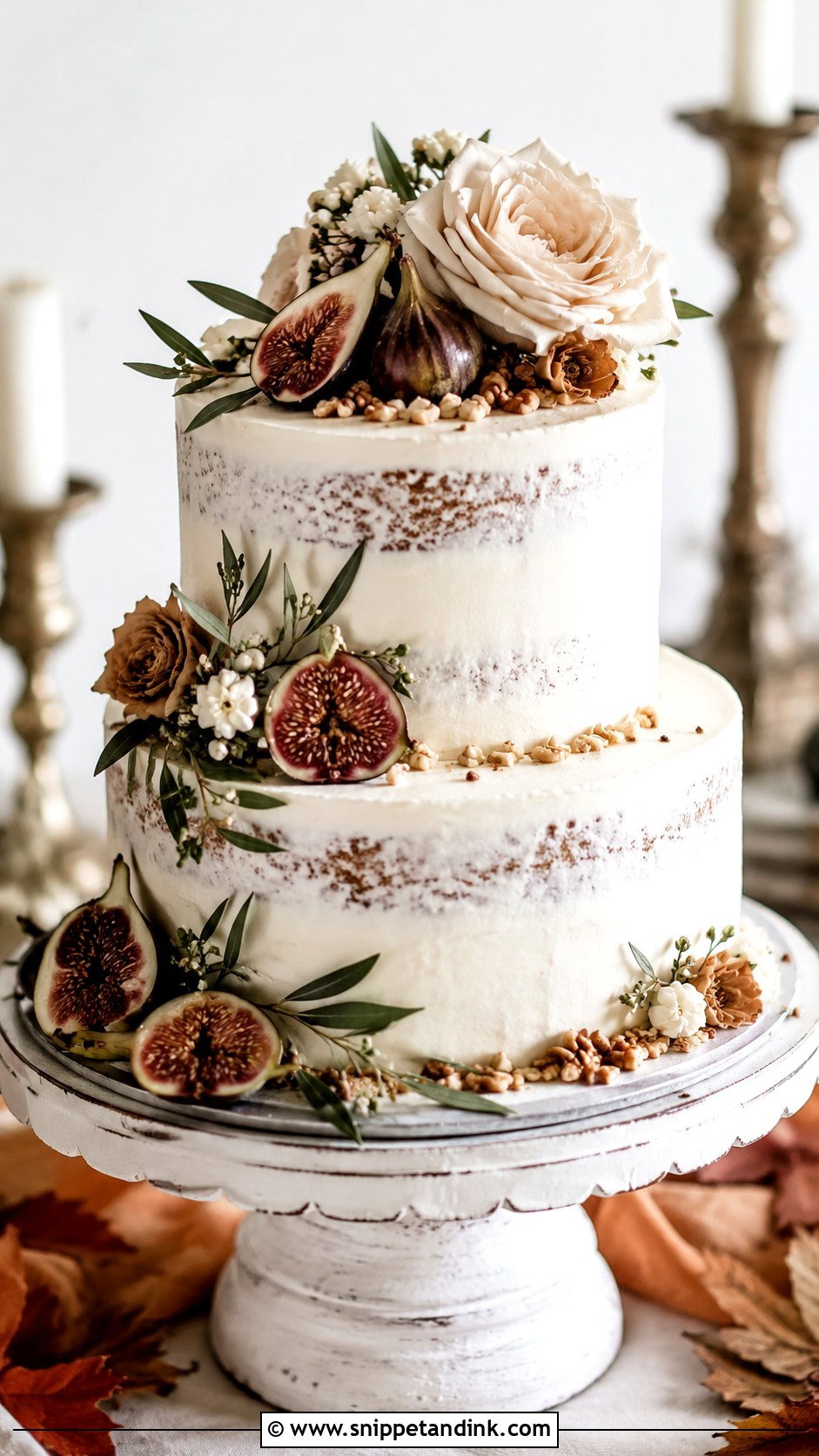
Cream cheese frosting tastes familiar to almost everyone, and its tang cuts through the oil, especially on carrot, spice or citrus layers. Structurally it’s the softest frosting here. It won’t support tall stacked tiers without help and it can’t stand in a warm room for long, so I keep it to smaller cakes, or put a firmer buttercream outside and save the cream cheese for the filling. A softly textured finish hides its softness better than a sharp one. Fall weddings and brunch receptions suit it.
18. Olive Oil Wedding Cake With Whipped Frosting
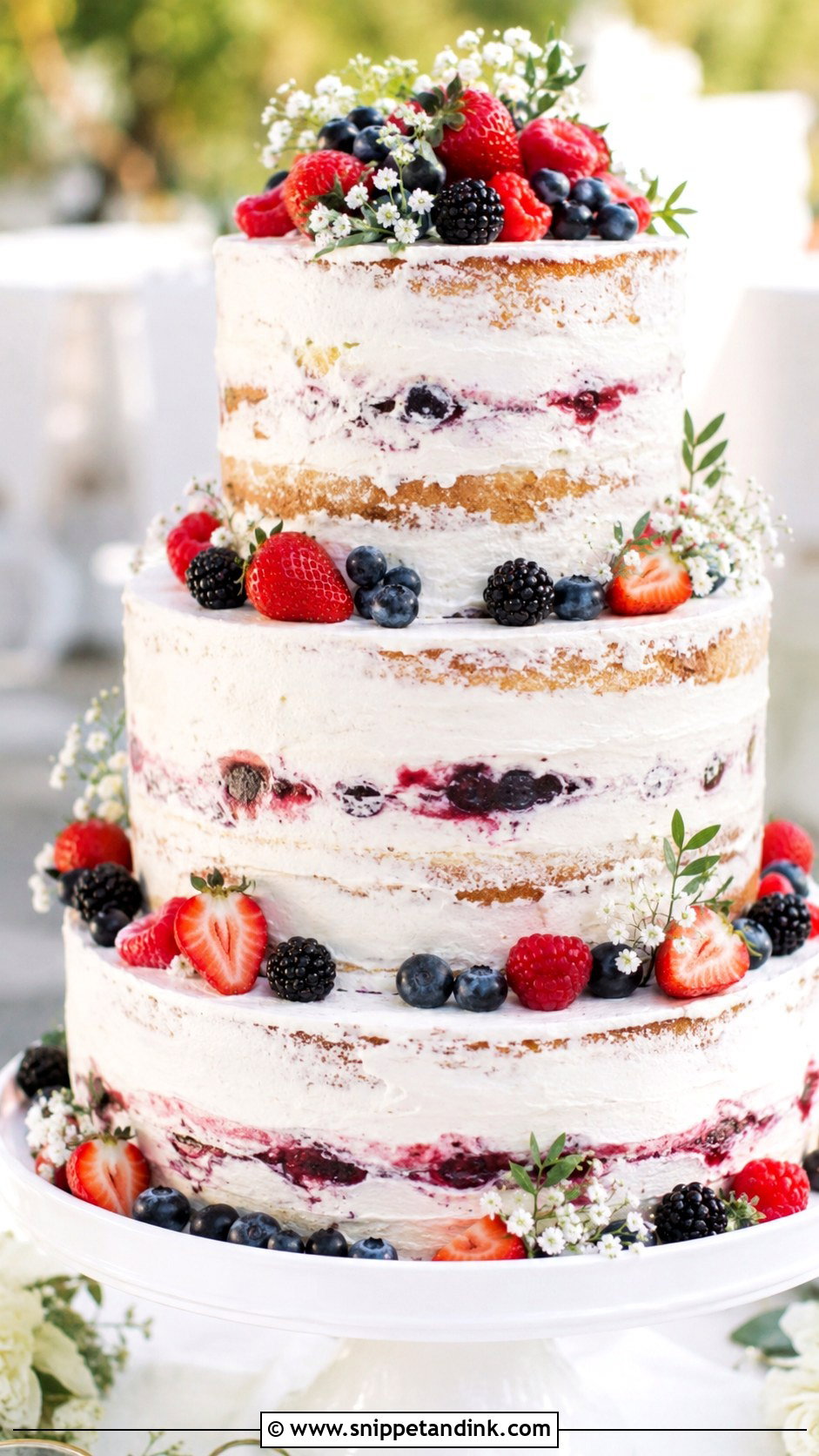
Whipped frosting is the lightest finish you can put on a wedding cake, and the most fragile. Even stabilized, it softens in heat and won’t hold fine detail or carry a heavy tier. I limit it to one or two tiers, a cool indoor room, or a dessert table where the cake leaves the fridge shortly before cutting. Lemon, berry or orange sponge underneath tastes clean and not too sweet. Powdered sugar goes on at the very last minute, since it melts into cream if added early.
19. Olive Oil Wedding Cake With Almond Flour
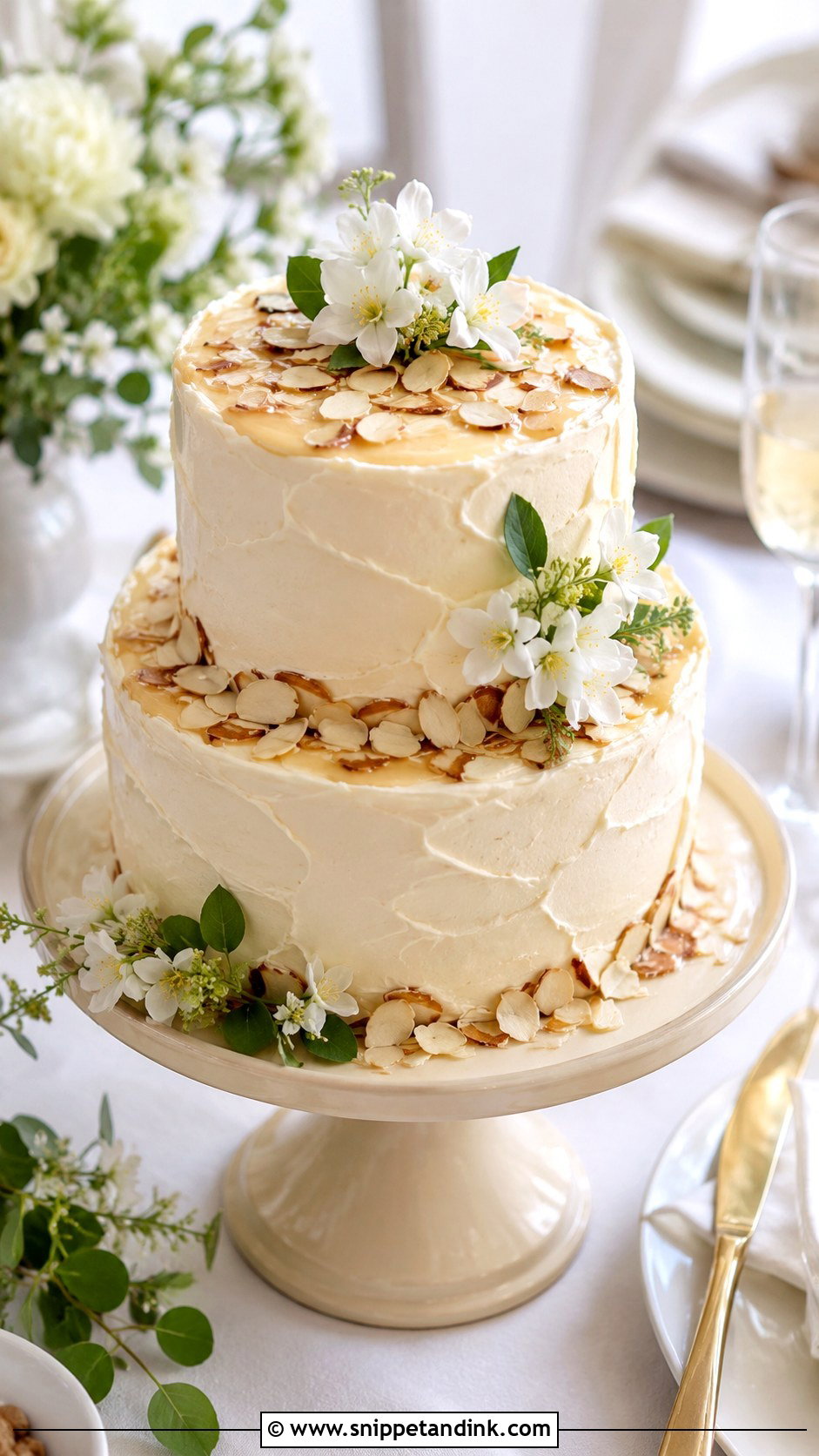
Almond flour gives a richer, damper crumb, closer to a torte than a sponge. For tiered cakes I usually blend it with regular flour, because an all-almond layer is fragile under weight; the fully almond version is happiest as a single tier or a cutting cake. It can suit couples avoiding gluten, but only if the kitchen controls cross-contact, so ask. Lemon zest, orange blossom or honey all flatter it, and because the crumb is so rich, small slices still satisfy.
20. Olive Oil Bundt Wedding Cake
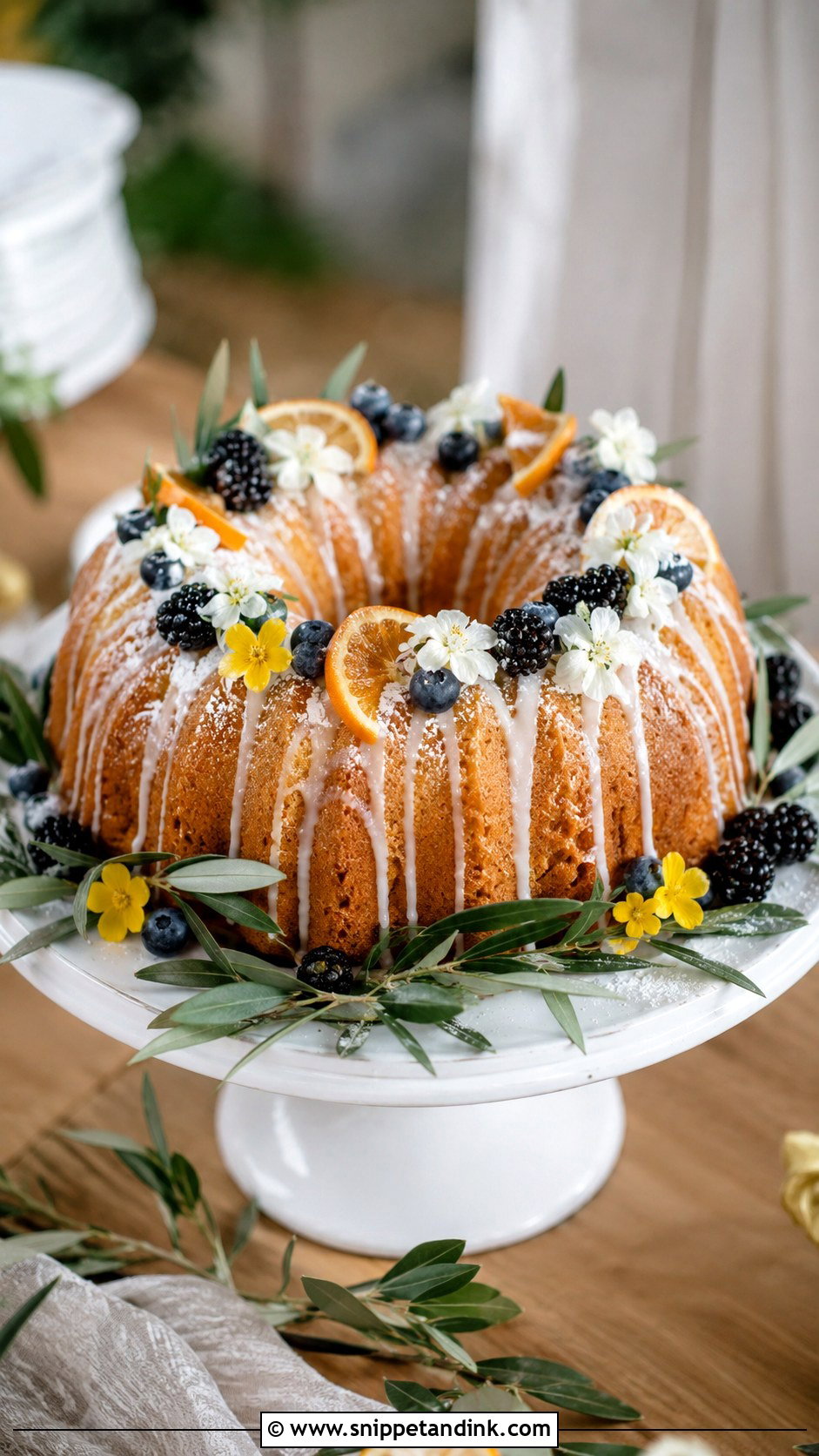
Bundts are for couples who don’t want a tall tiered cake at all. I bake several in different sizes and flavors, lemon, orange, chocolate, berry, and arrange them on stands at varied heights. The fluted shape is the decoration, so a simple glaze or a dusting of sugar is enough. The practical bonus is serving: no dowels, no structure to cut around, and guests can help themselves. They make sense at brunch or backyard receptions and for anyone who loves a homemade look.
Which Frostings Survive Hours on a Display Table
The frosting you pick decides your logistics more than the flavor does. From sturdiest to most delicate, this is how I explain it:
- Ganache: firm at room temperature and holds sharp edges, the safest choice for a summer evening.
- Swiss or Italian meringue buttercream: stable in a comfortable room, but softens in direct sun or a hot tent.
- Fondant over buttercream: shields the cake from air, though a cold cake carried into a humid room can sweat beads of condensation.
- Cream cheese and mascarpone: need refrigeration and sag in warmth, so they stay cold until shortly before cutting.
- Whipped cream: the most fragile of all; plan for the cake to leave the fridge right before it’s served.
Ask your venue whether there’s fridge space for the cake and how long it will sit on display before cutting. If the answer is outside, all afternoon, I’d move you toward ganache or buttercream on the outside and keep the mascarpone for the filling, where the outer layer protects it.
Figs, Honeycomb and Citrus Go On at the Venue
Fresh decorations on an olive oil cake behave nothing like sugar flowers. Cut citrus and figs leak juice, honeycomb weeps, and wet berries leave marks on buttercream. I pack them in a separate box and dress the cake only once it’s sitting on its table, so nothing slides in the van.
If your baker drops the cake and leaves, agree in advance on who adds the fresh pieces and when; a planner or florist can do it from a quick photo of the placement. I leave them a small bag with kitchen paper for drying fruit, a few spare picks, and a piping bag of the outer frosting for patching any fingerprints.
Start With the Bottle, Then Design the Cake
Every cake above starts with the same decision, which oil. I taste a few bottles with couples before we settle on a flavor, because a mild, buttery extra virgin and a peppery one bake into very different cakes. After that, the frosting decides how the cake travels and how long it can stand in your room, and the season decides which fruit you can actually get. Get those three right and an olive oil cake holds its own beside any traditional tier.
You'll Like These Ideas:











Leave a Reply