
A classy cake is mostly a matter of editing. When couples bring me a folder of inspiration, the designs they keep returning to are rarely the busiest ones; they’re the cakes where the finish is crisp, the proportions are right and one detail carries the whole design. Textured buttercream, pearl work, pressed flowers, old-school piping and sculpted tiers all have a place here, and each tells me something different about the venue, the dress and how formal the evening will be. I’ve written about every design below the way I’d talk it through at a tasting: what it needs to look right, where it tends to go wrong, and which flavors hold up under that particular finish.
These are the twenty-five designs I’d happily put on a luxe reception table, each with the practical notes I’d give a couple before they commit.
Reading a Baker’s Portfolio for a Polished Finish
Before we talk flowers or flavors, I’d want you to look at a baker’s plainest cakes. Decoration hides a lot; a smooth tier hides nothing. These are the things I judge finish quality by, and you can check every one of them in a portfolio or at a tasting:
- Sharp top edges. A crisp right-angled edge on buttercream takes chilling and patient scraping, and a rounded, sloping edge is the first sign of a rushed finish.
- Straight sides with no bulge. A ring bulging around the middle of a tier usually means the filling has settled under the weight above it, which gets worse over a long, warm day.
- Level, centered tiers. Photos taken straight on show a leaning stack immediately.
- Clean bases. Each tier should meet its board with a neat border or ribbon, with no gap or smear.
- Restraint. A portfolio that shows one detail done well usually belongs to someone who understands luxe better than a portfolio where every cake has everything.
If the gallery is all filtered close-ups of flowers, ask for full-cake photos taken at a venue. That’s where proportions and structure show up honestly.
1. Pearl Wedding Cake
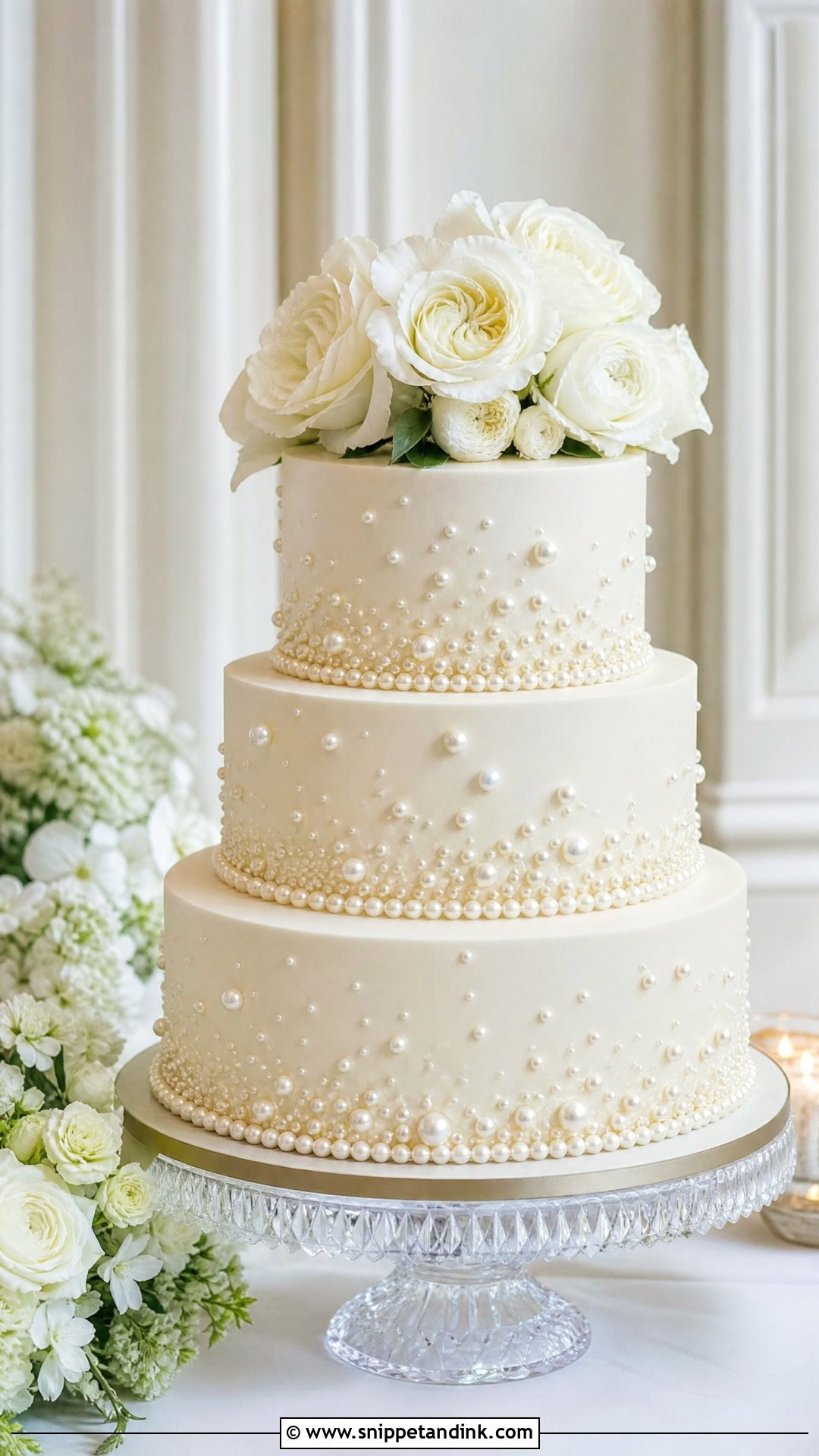
Pearls look refined only when the spacing is disciplined. I place edible pearls with tweezers into buttercream that has firmed in the fridge, because pressing them into soft icing leaves dents and smudges you can see from across the room. Ivory and champagne bases suit them best; against bright white, cream-colored sugar pearls can look slightly yellow. A three-tier cake with pearl borders, a few clusters and a satin ribbon at the base is plenty. For flavor I’d lean light, with vanilla bean, almond, lemon or white chocolate. A few fresh roses or sugar orchids can soften it if the design starts to feel stiff.
2. Vintage Lambeth Wedding Cake
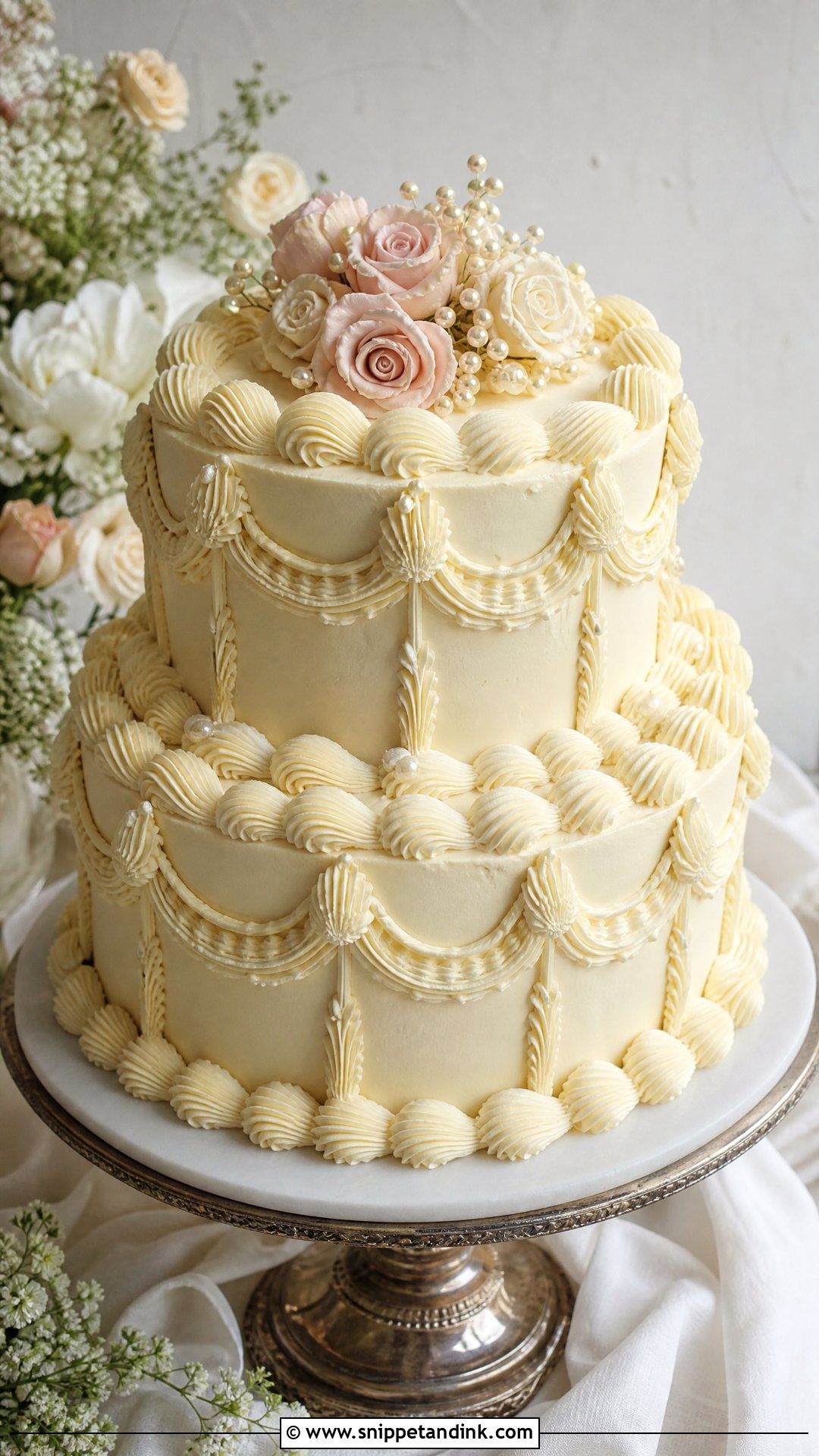
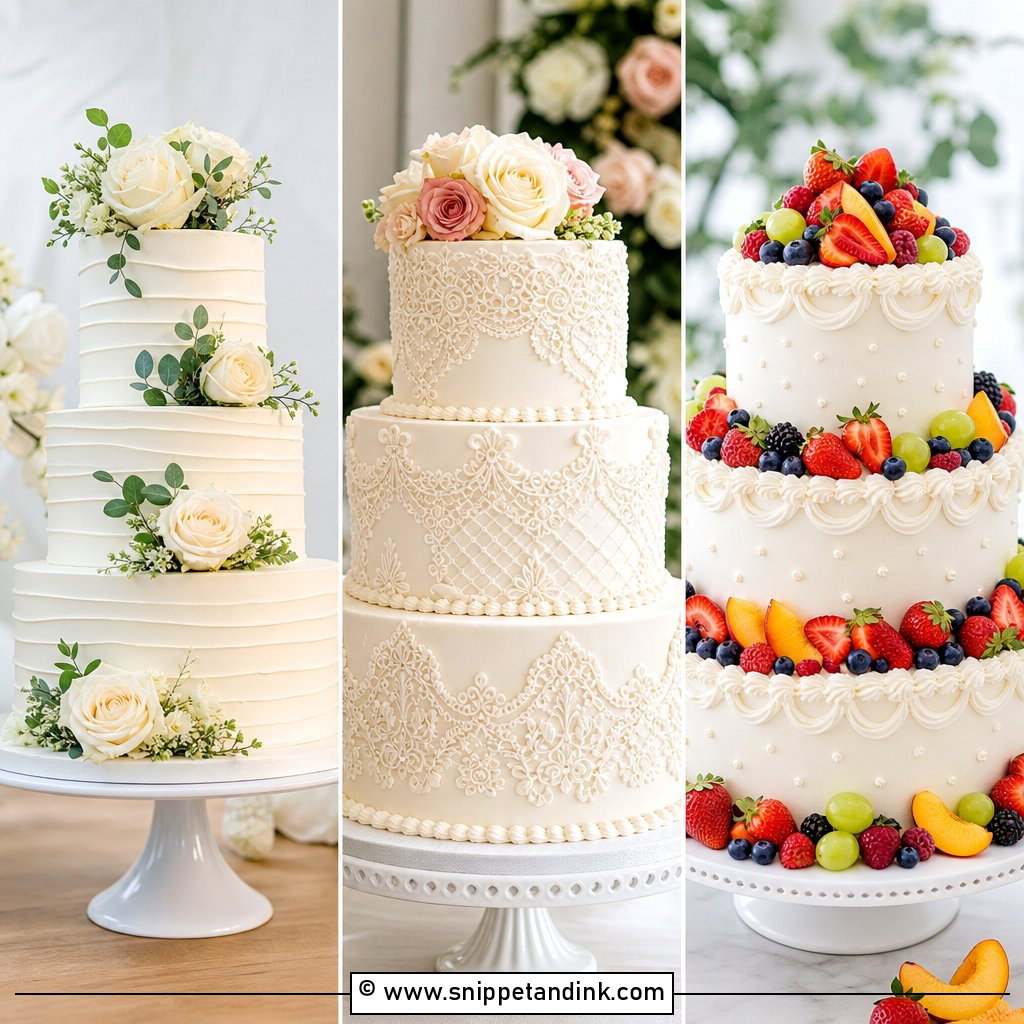
A vintage Lambeth wedding cake is all overpiping: shells, swags, scrolls and ruffles built up layer on layer until the tier looks carved. It’s slow work, and it needs a stiff buttercream or royal icing that holds a sharp ridge, so the first thing I ask is where the cake will sit. In a warm marquee, soft buttercream piping starts to slump within an hour or two. Keep the palette quiet, ivory with pale blush piping and a scatter of pearls, and the detail reads as formal instead of fussy. Almond, vanilla sponge or a raspberry-filled white cake keeps the flavor familiar for a big guest list.
3. Minimalist White Wedding Cake
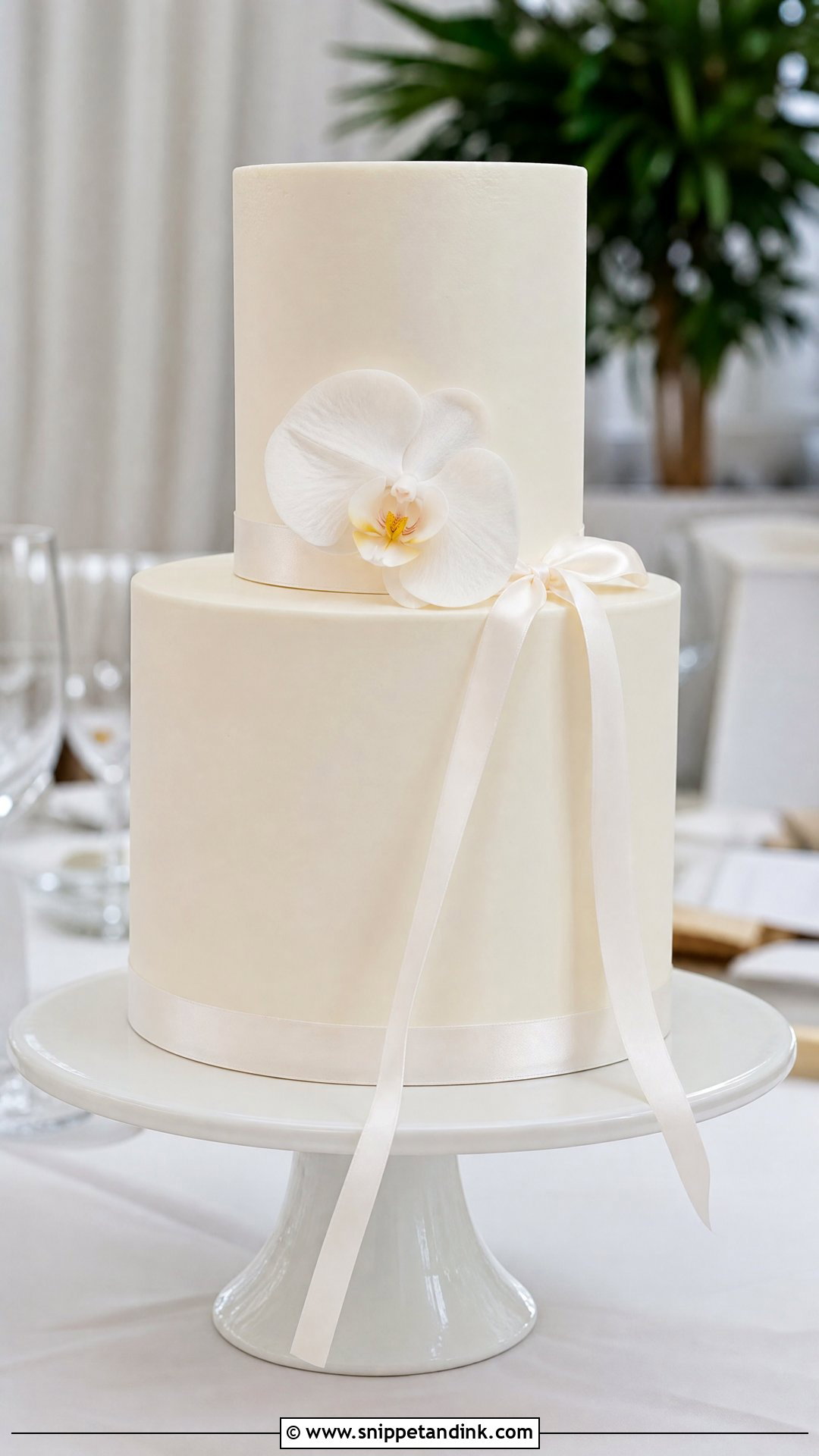
Plain white is the hardest cake to fake. Every bulge, air bubble and soft corner shows, so a minimalist design is really a test of how sharp your baker’s edges are; ask to see photos of their plain work, not just their decorated cakes. Height helps a lot. A tall two-tier or slim three-tier on a modern stand looks deliberate, while short, squat tiers look unfinished. Add one thing, a single sugar flower or a narrow ribbon, and stop there. Vanilla bean, coconut, almond and lemon all sit well with the calm look.
4. Textured Buttercream Wedding Cake
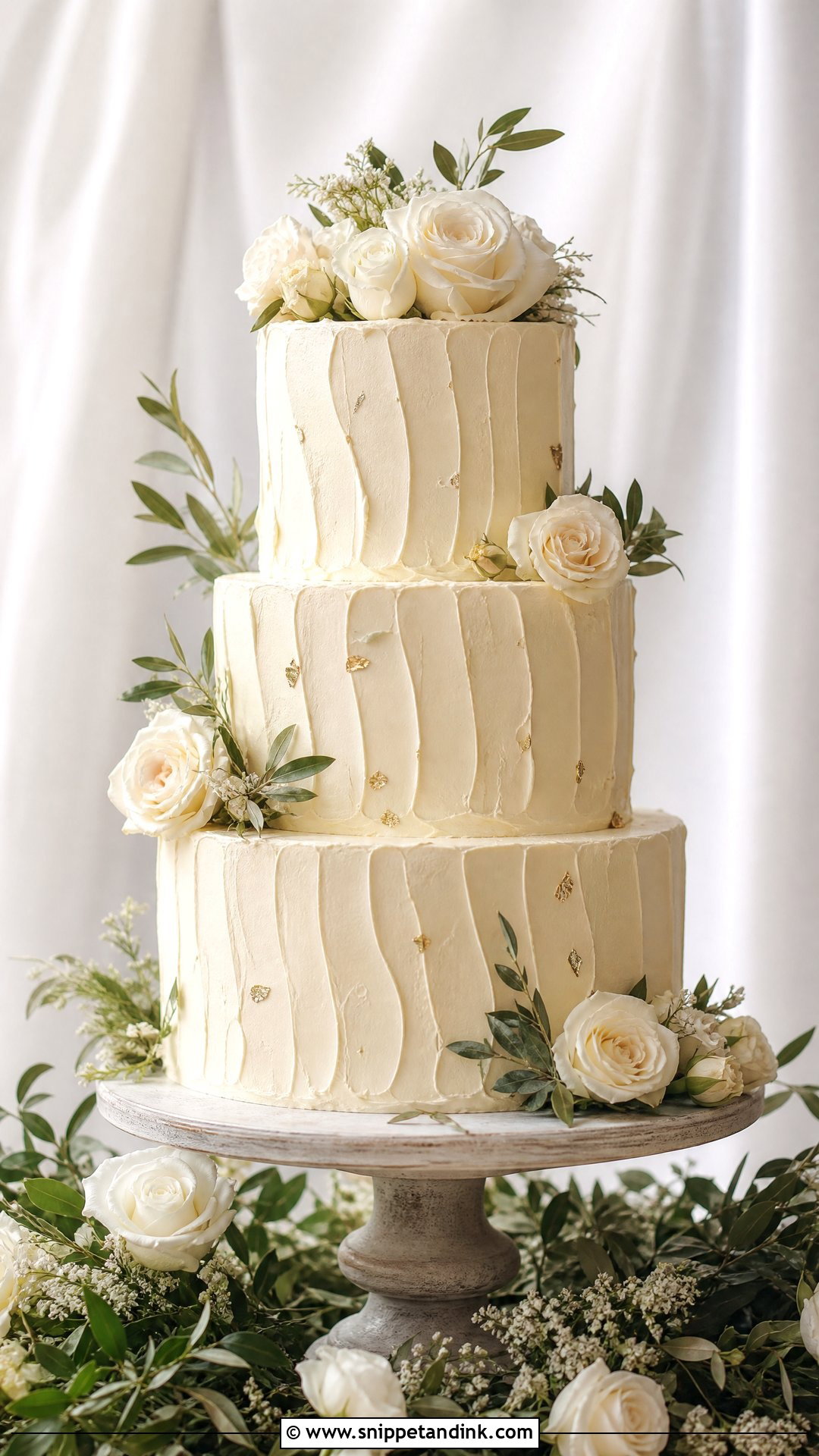
Textured buttercream is my usual suggestion for couples who love a handmade look but worry about perfection, because ridges and palette-knife strokes forgive small flaws that a smooth finish would expose. Ivory, stone and pale beige show the shadows in the texture best; strong colors flatten it. The same finish can go rustic in a barn or polished in a hotel, and that mostly comes down to how deep and regular the strokes are. I’d keep the toppings to a few fresh stems or some gold flecks. Lemon elderflower, brown butter and pistachio all pair well.
5. Gold Leaf Wedding Cake
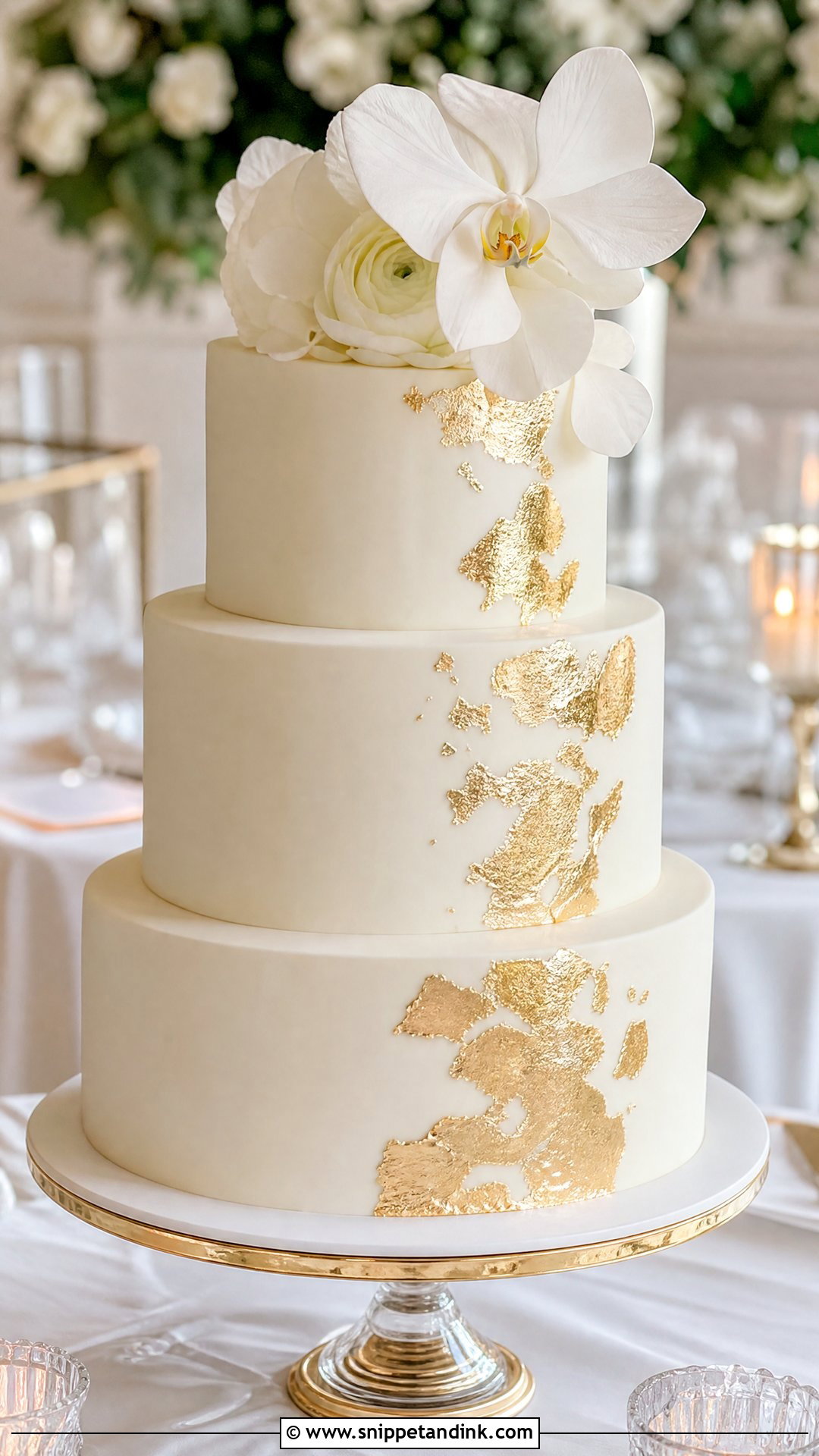
Gold leaf is easy to overdo. I apply it with a dry brush in torn fragments along one side or a tier edge, because full coverage reads as novelty rather than luxury and uses far more leaf. It sits best on smooth fondant or well-chilled buttercream; on a soft or tacky surface it wrinkles and loses its shine. White roses, orchids or ranunculus give it the right company for a black-tie room. Richer flavors suit the look here: almond cream, chocolate hazelnut or salted caramel.
6. Floral Cascade Wedding Cake
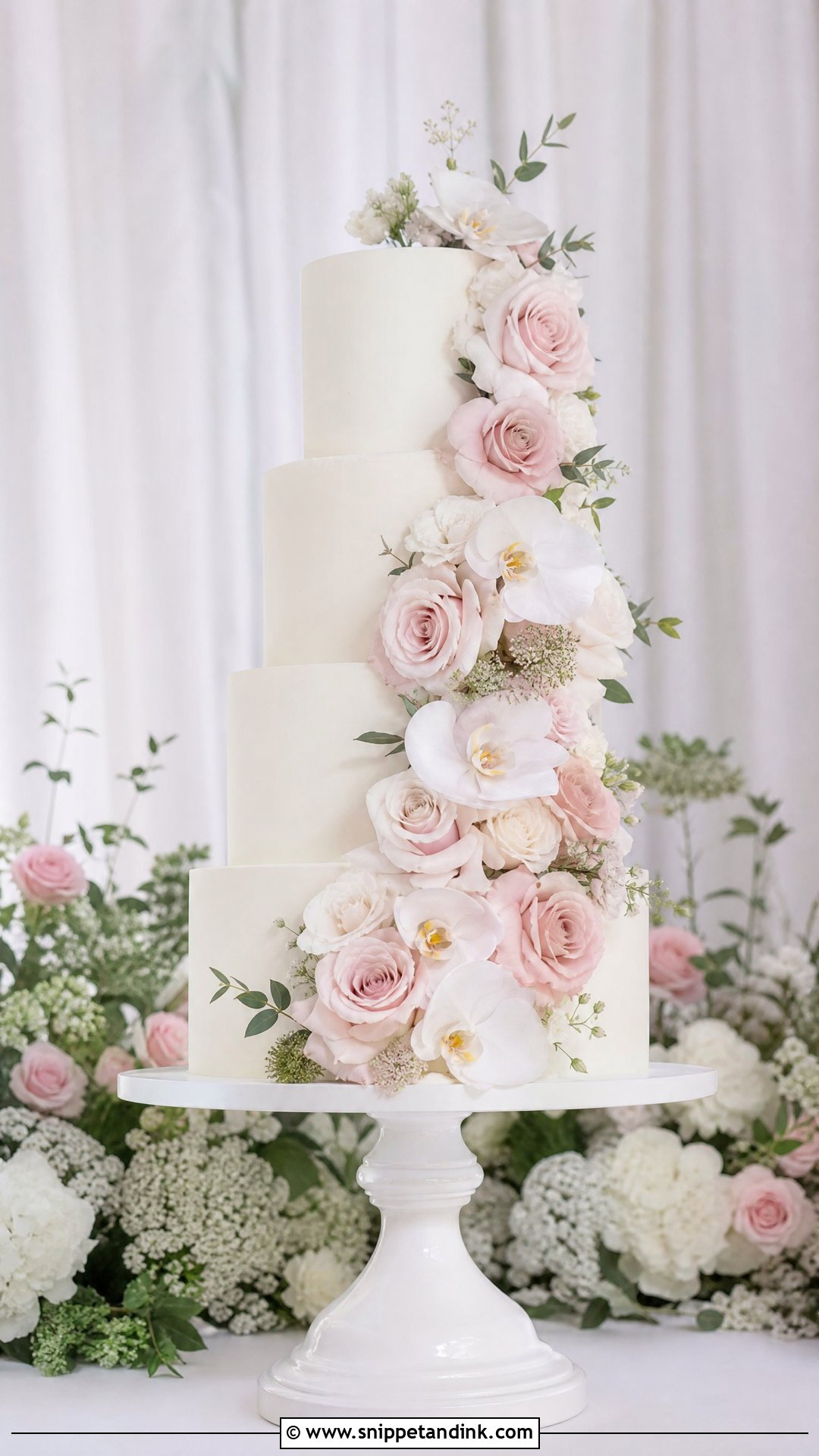
A cascade needs height to fall properly, so I only suggest it on three or four tiers. The line should start near the top and finish off-center near the base; a cascade that runs straight down the middle cuts the cake visually in half. One main flower family in soft colors, ivory roses with blush ranunculus for example, keeps it from looking like a sample table. If the flowers are fresh, your florist and baker need to agree on which stems are safe near food and how they’ll be wrapped before they go in. Vanilla raspberry, lemon cream and coconut keep the flavor fresh.
7. Pressed Flower Wedding Cake
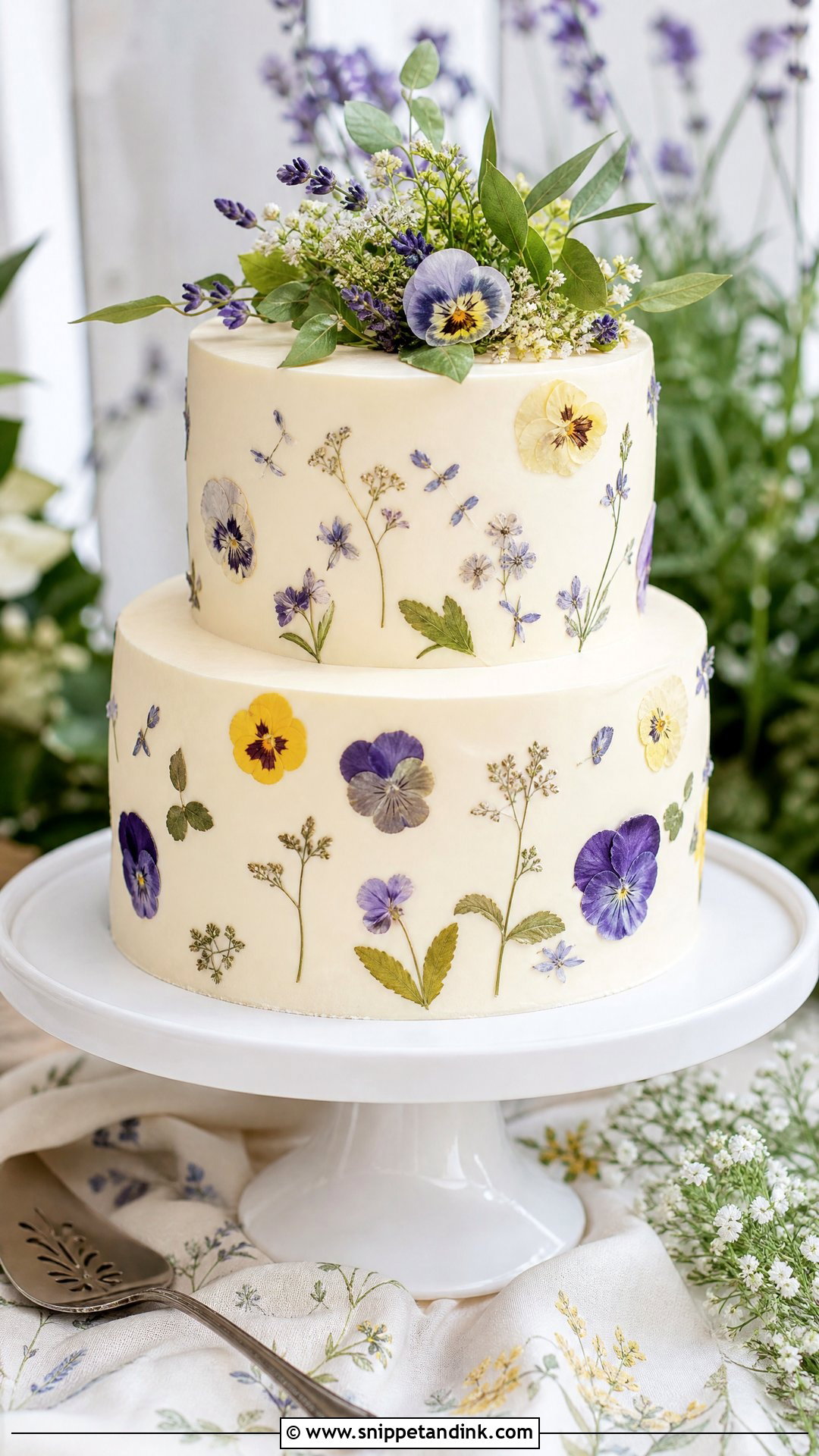
Pressed flower wedding cakes live or die on the flowers you start with. I use edible blooms like violas, pansies and cornflowers, pressed flat for several days beforehand, then laid onto smooth, slightly tacky buttercream so they stick without curling at the edges. Petals draw moisture from the icing, so I apply them as close to delivery as I can and keep the finished cake out of direct sun. Stay within a narrow palette of lavender, blush and soft yellow, or the pattern starts to look like confetti. Two tiers are enough for a spring or small outdoor wedding, with lemon, honey or lavender cake underneath.
8. Sculptural Wedding Cake
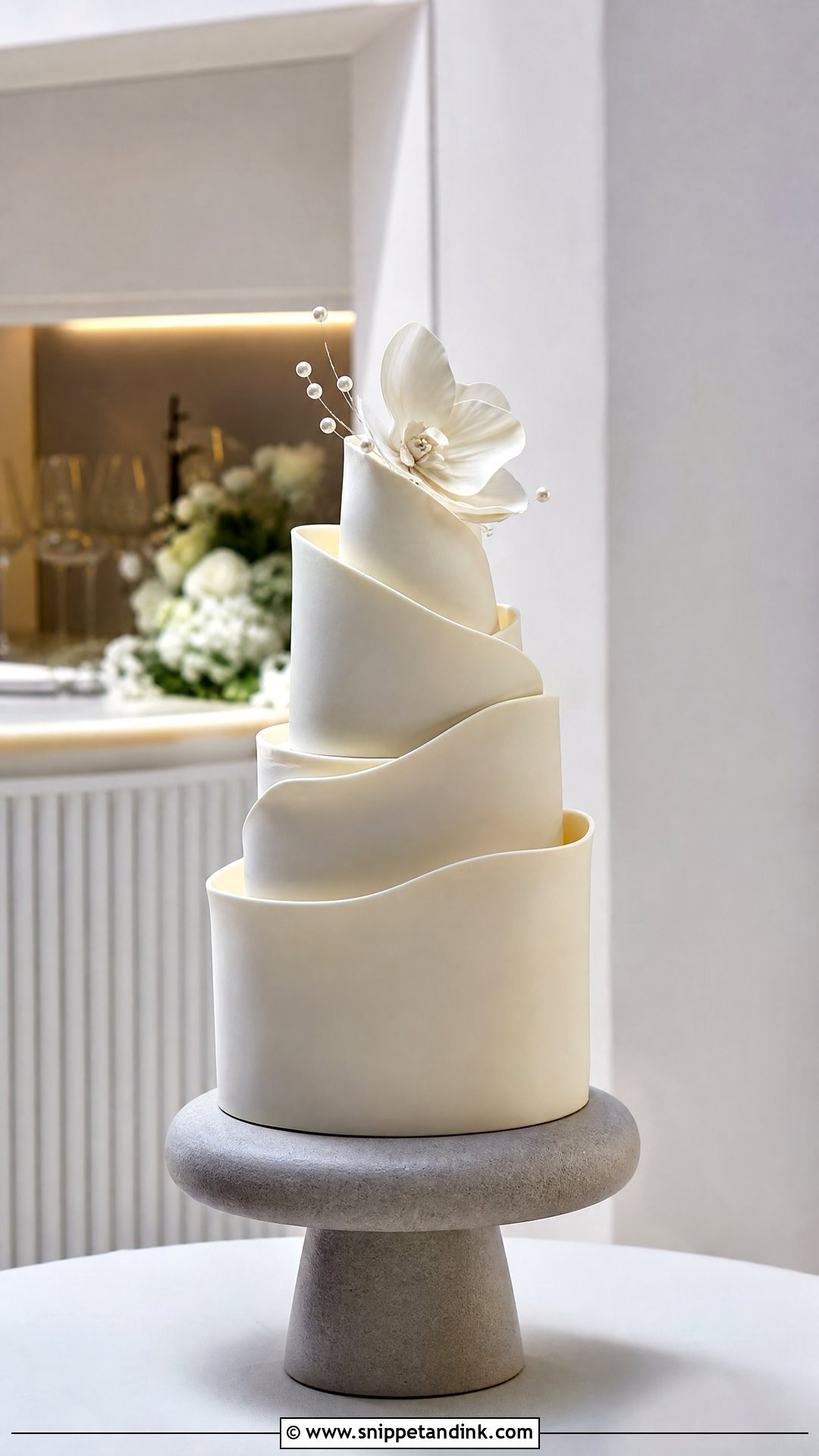
Sculptural cakes depend on structure you never see. Offset tiers, curves and pleated fondant all rely on internal dowels, boards and sometimes a central rod, and I plan that skeleton before I sketch a single decoration. That’s also why I’d only take this design to a baker who can show you structural cakes they’ve already delivered, not just drawings. Keep the color quiet, ivory or muted blush, and let the shape do the decorating. Pistachio or dark chocolate ganache gives it a confident flavor to match.
9. Monogram Wedding Cake
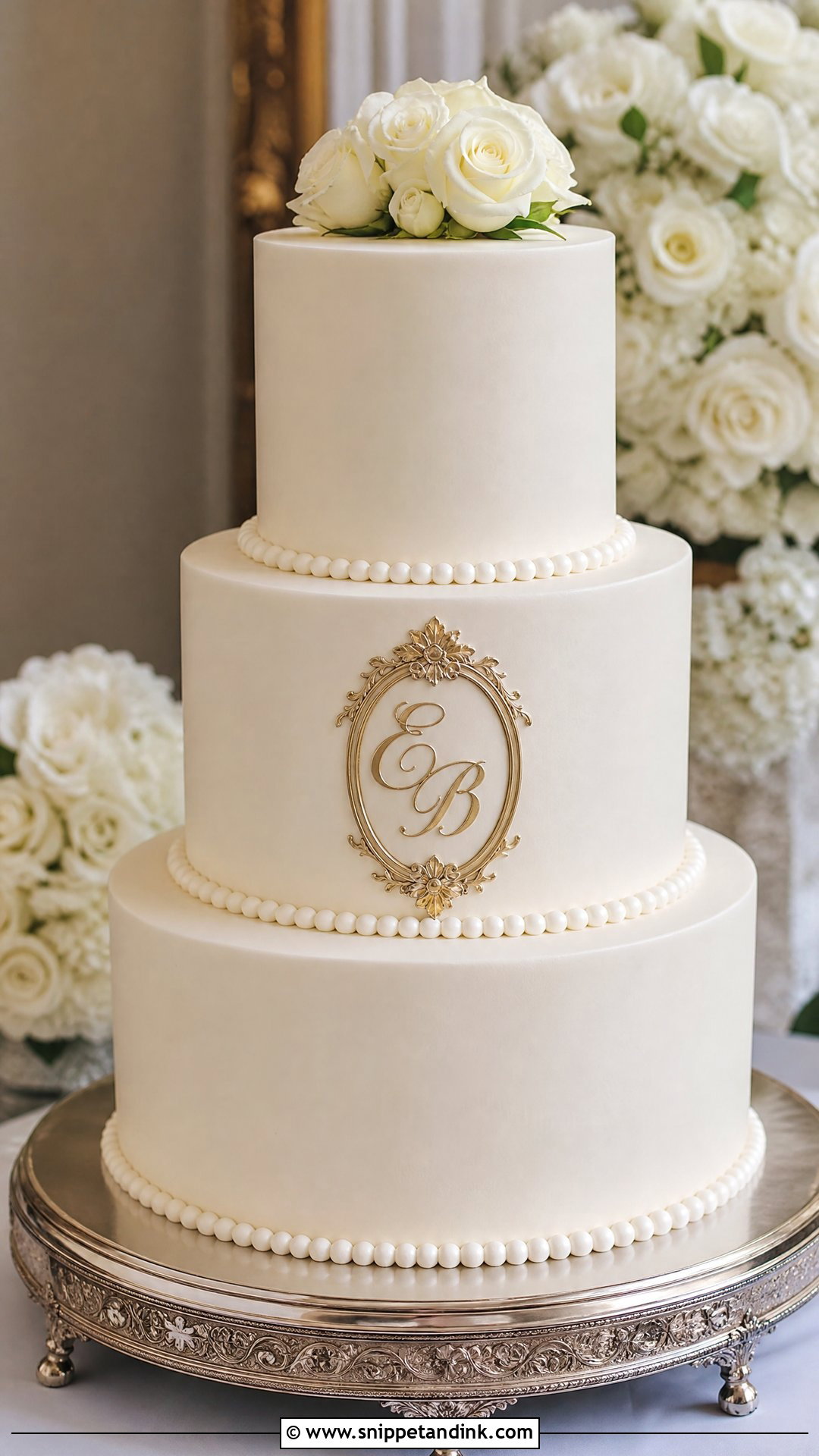
Initials are the simplest way to make a cake personal, and placement matters more than method. I put a monogram on the front of the middle or bottom tier, roughly at eye level, because high on a top tier it disappears in photos taken from a seated guest’s angle. Piping, an embossed panel or a fondant crest can all work; I’d pick whichever echoes your invitations. Keep the base clean so the letters stay the focus. Vanilla almond, white chocolate raspberry and lemon curd suit a formal reception.
10. Lace Wedding Cake
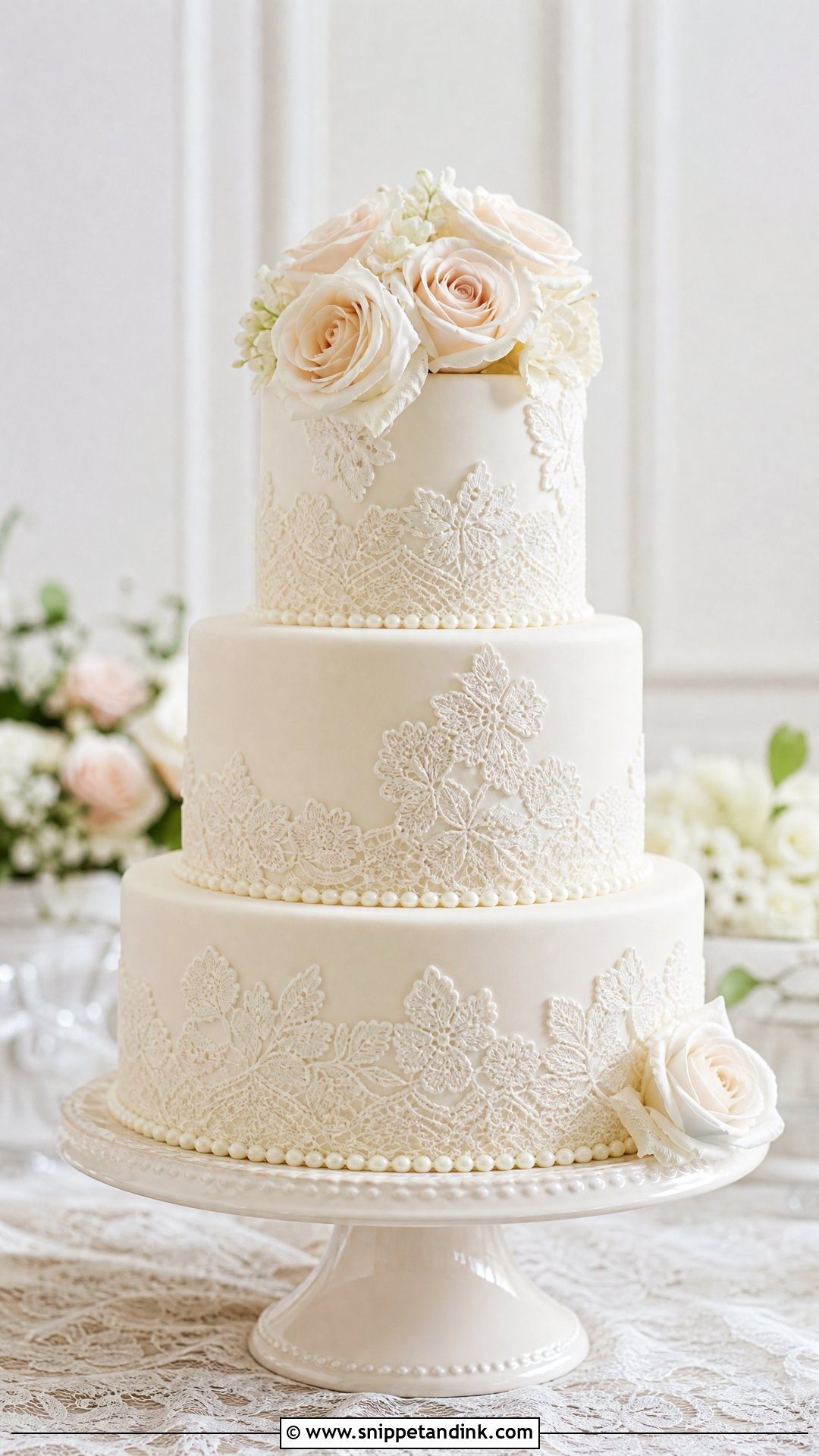
Lace on a cake works best when it actually relates to the dress, so I ask brides for a fabric swatch or a close photo of the bodice. Matching the scale of the motif matters more than copying the pattern exactly. Fine lace is usually made with a silicone mat and sugar lace mix, or piped in royal icing; buttercream stencils give a softer, less defined result. I’d steer you away from covering every tier unless the work is very fine, because heavy coverage starts to resemble a doily. Ivory over white with a few pearls is plenty, and almond or raspberry cream keeps it light.
11. Bow Wedding Cake
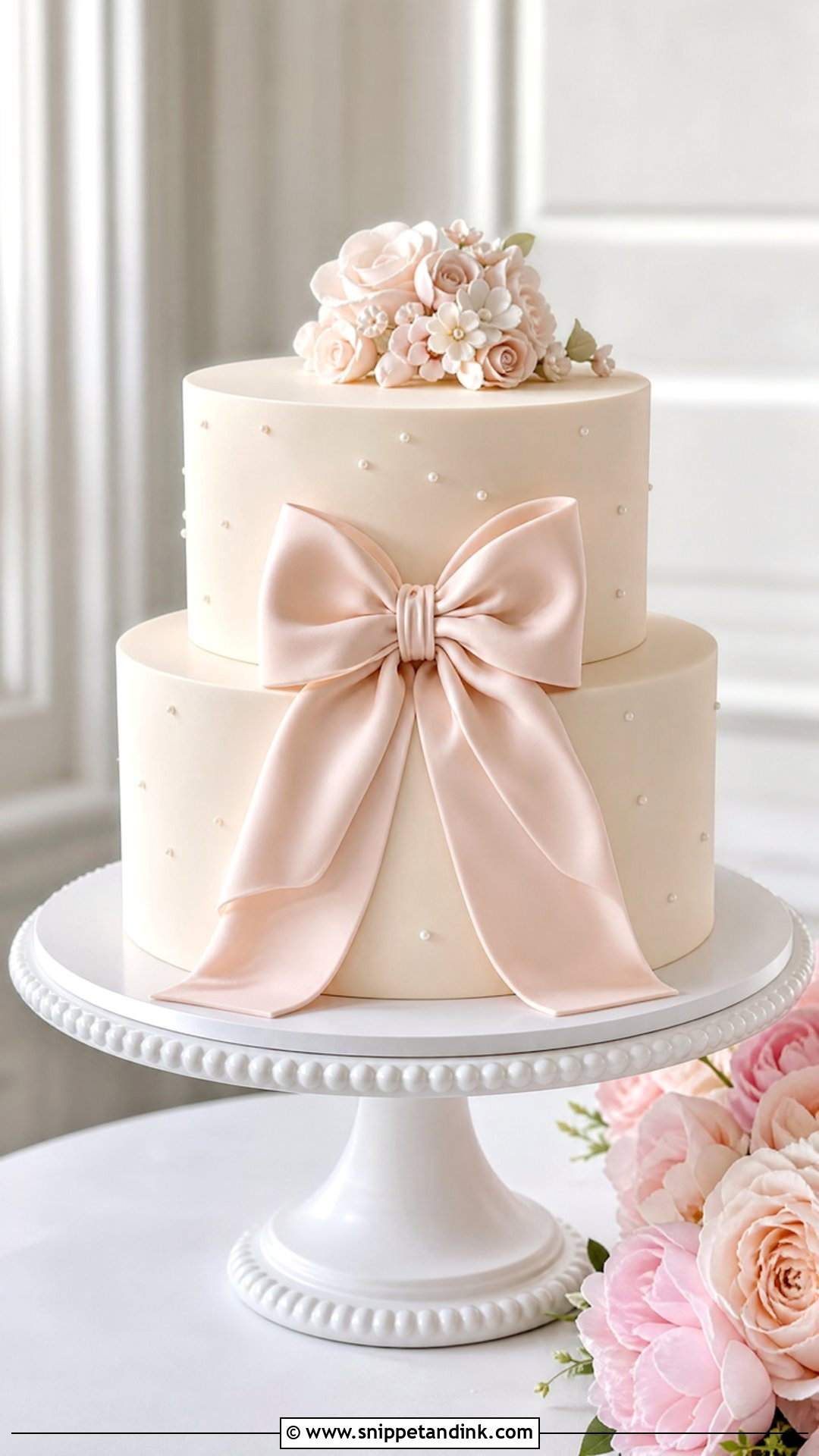
Bows tip into cute very quickly. The grown-up version is one large, structured fondant bow on the front of a smooth tier, with loops dried over rolled tissue for a day or two so they hold their shape on the drive. Satin ribbon around each tier is the softer route, and I always back real ribbon with a strip of acetate so the butter in the icing doesn’t stain it. White, ivory and pale blue all work. Coconut cream or almond raspberry make good fillings under such a tailored outside.
12. Black And White Wedding Cake
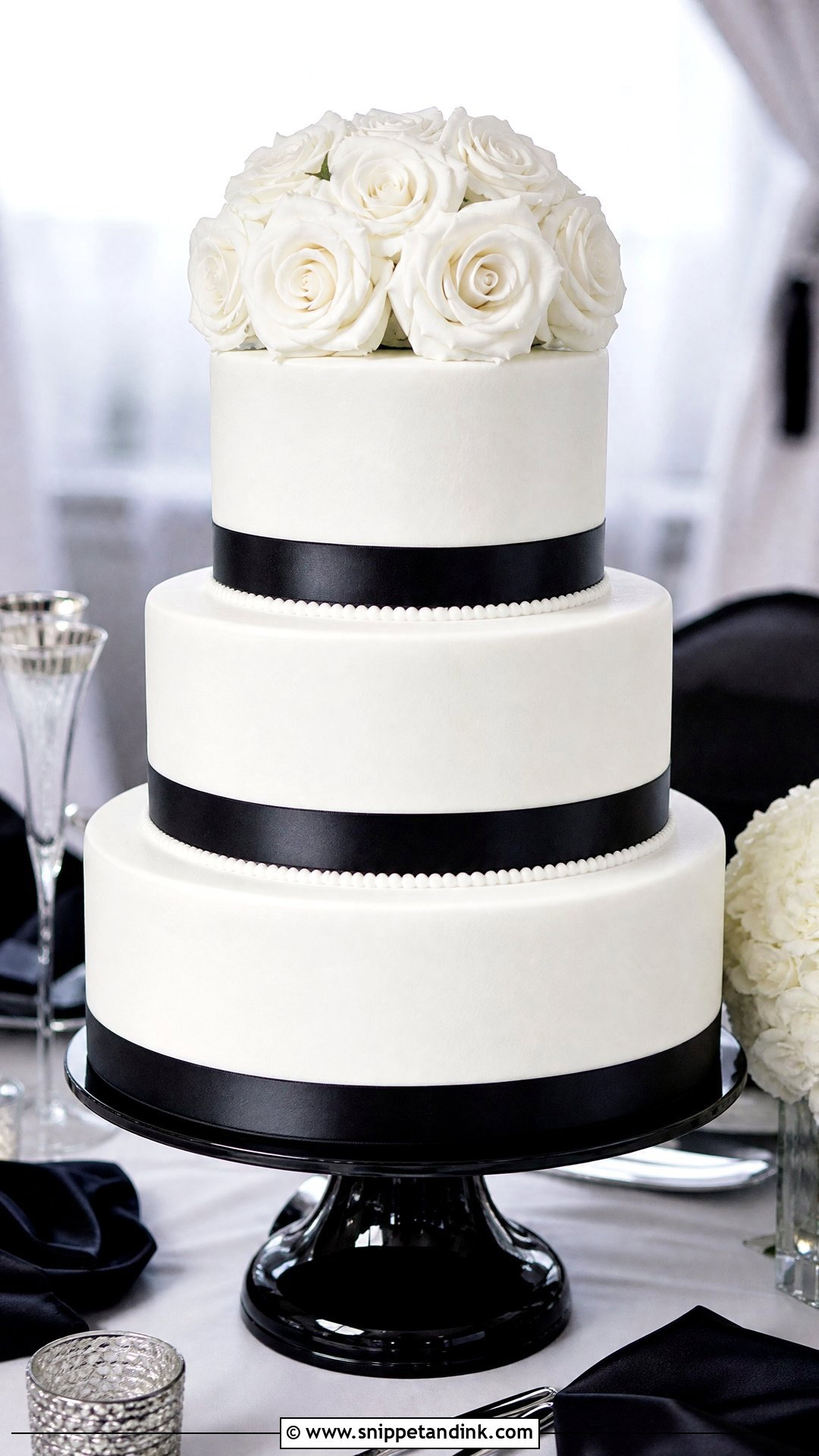
Black is a strong accent and a heavy main color. I build from a white or ivory cake and bring black in as thin piping, velvet ribbon or one dark tier at the base, which grounds the design without swallowing the room’s light. One practical warning: true black icing needs a lot of coloring and can stain teeth and lips, so I keep it to areas guests won’t eat in large amounts. Evening receptions and formal rooms suit it best. Vanilla with a dark chocolate filling, or a cookies and cream layer, ties the flavor to the palette.
13. Watercolor Wedding Cake
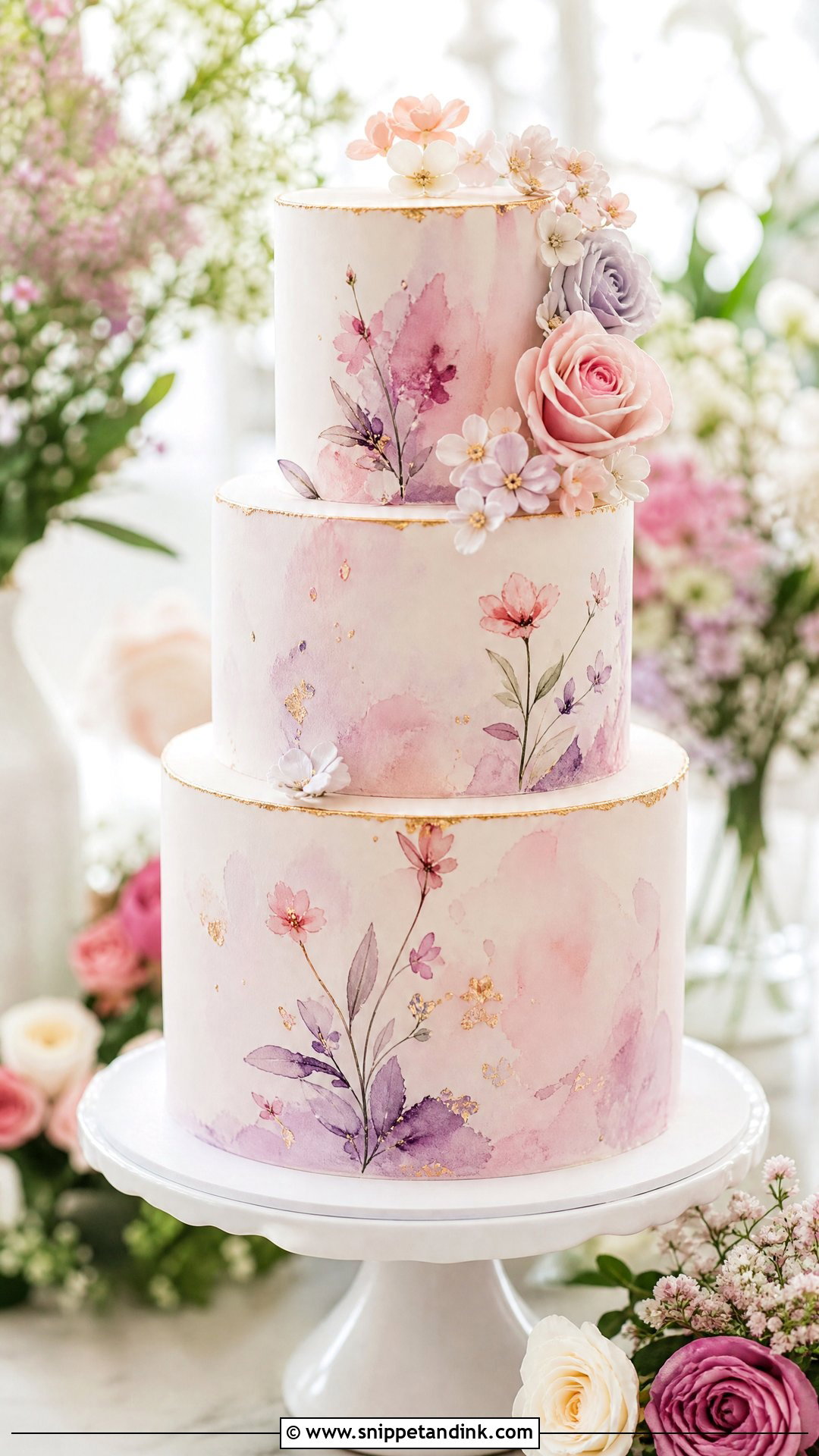
A watercolor wedding cake is painted by hand, either with thinned gel color brushed over fondant or with tinted buttercream smeared on and smoothed with a scraper. The fondant method gives clearer washes; the buttercream method looks softer and more blended. Muted tones such as peach, sage and dusty blue read as watercolor, while saturated ones just look muddy where they meet. I’d finish it with a couple of sugar flowers or a torn gold edge. Lemon blueberry and orange blossom suit the light look.
14. Marble Wedding Cake
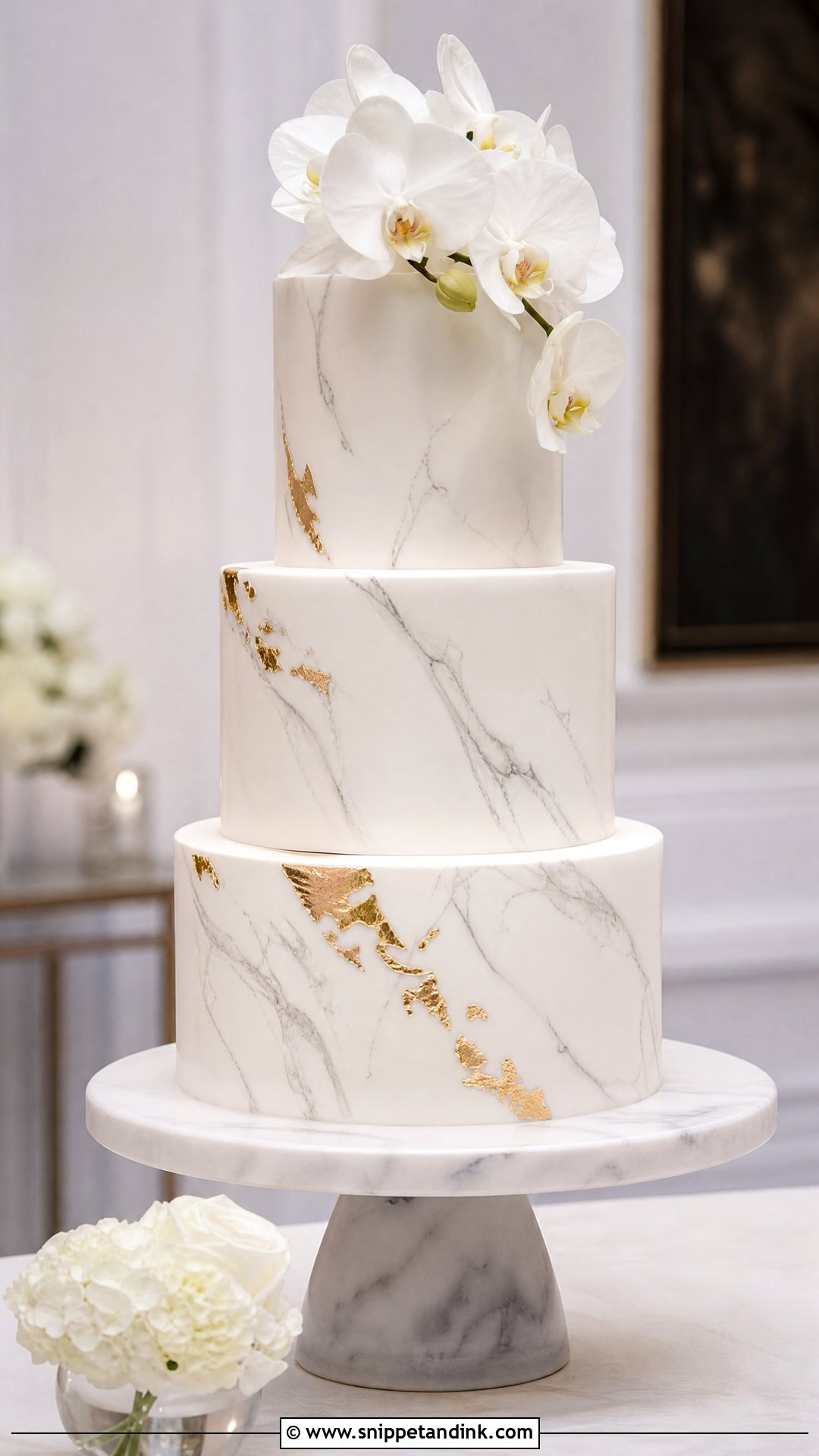
A marble wedding cake reads as stone only when the veining is thin and a little irregular; thick dark streaks look like a kitchen countertop. I marble fondant by twisting in small amounts of colored paste and rolling it out once or twice, because overworking it blurs the veins into gray. Soft gray on white or blush on ivory are the safest pairings. The look needs sharp edges, so it belongs on fondant or very well-chilled buttercream, perhaps with a little gold leaf or one sugar orchid. Vanilla bean or caramel suits it.

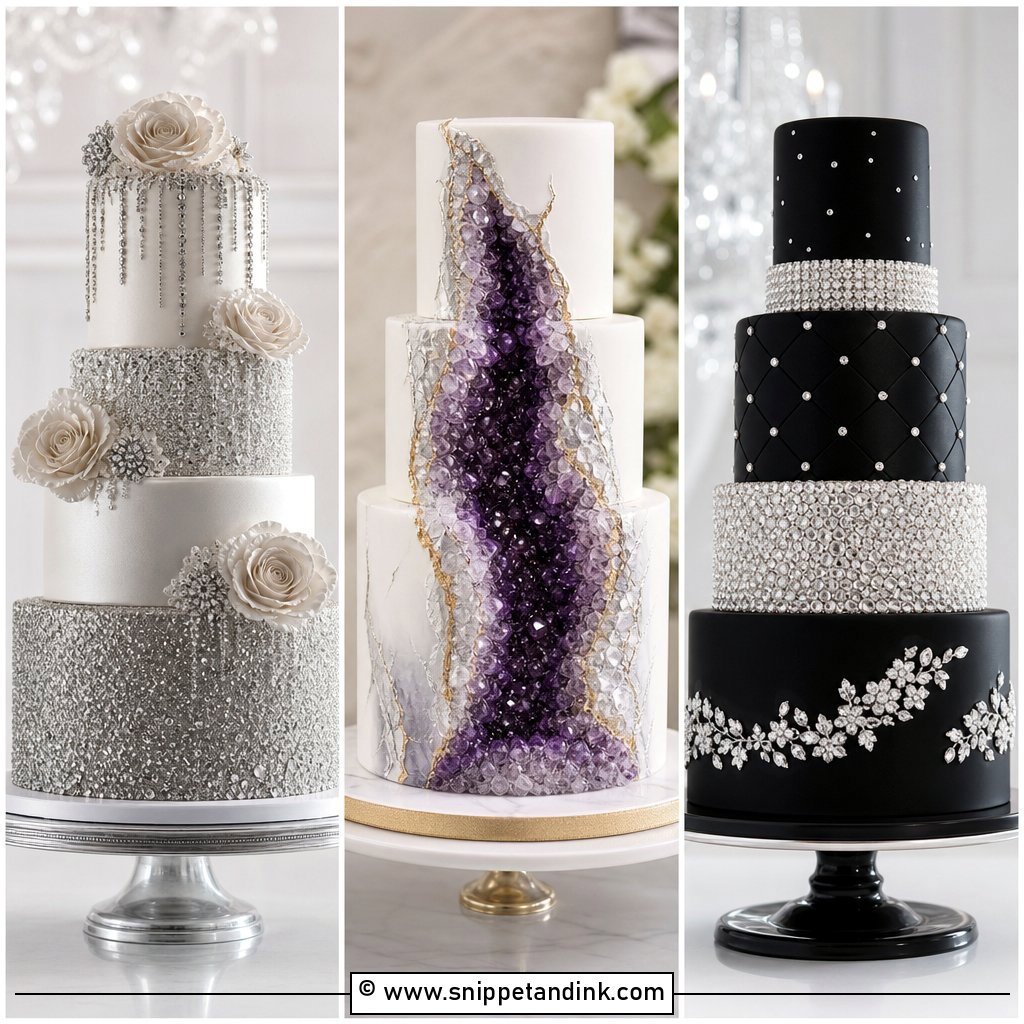
15. Ruffle Wedding Cake
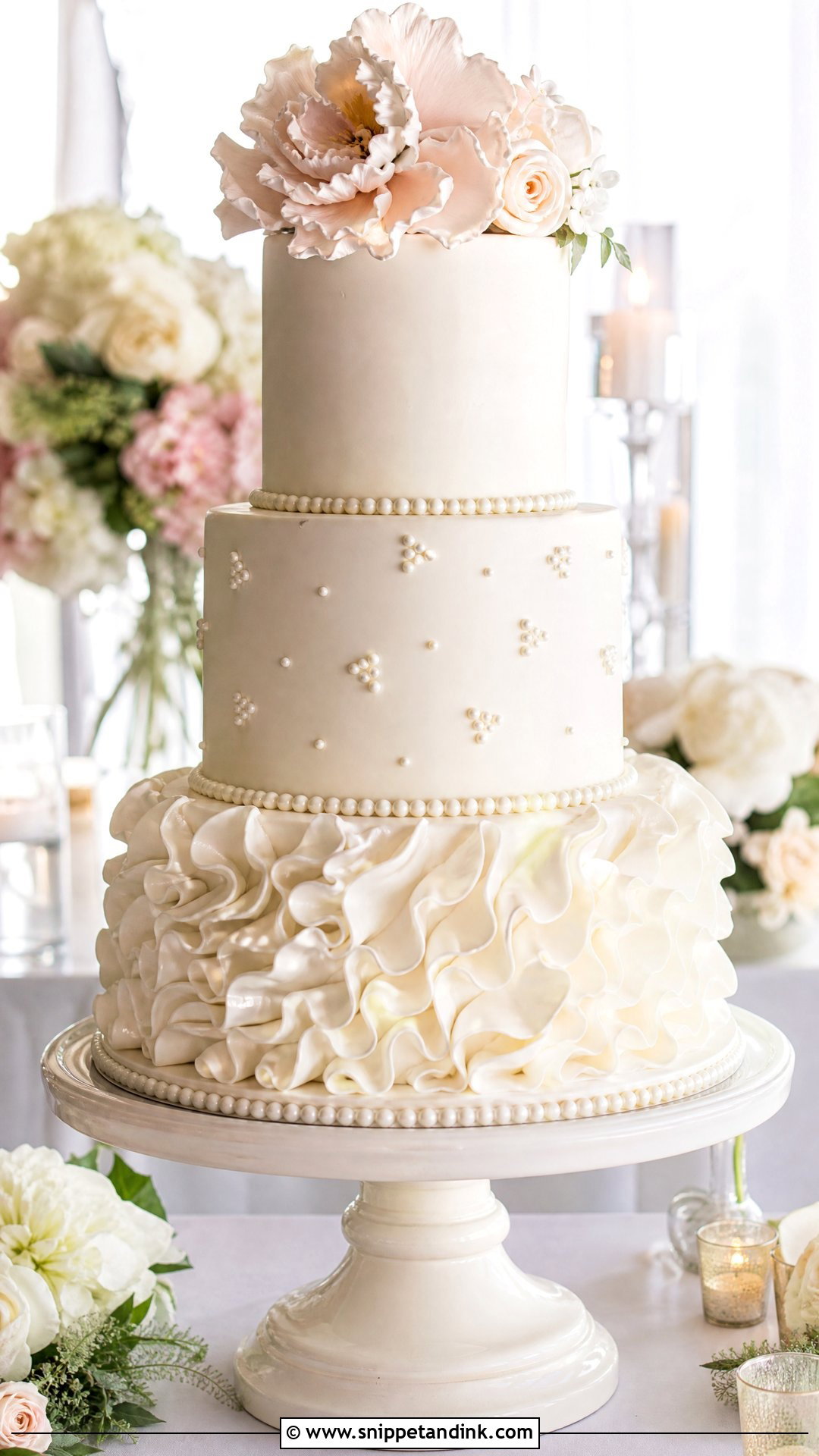
With ruffles I always say the same thing: one tier only. Ruffle a single tier and keep the others smooth, and the contrast looks intentional; ruffle all of them and the cake starts to resemble a lampshade. Wafer paper ruffles are the lightest and hold up better in humidity than people expect, while fondant ruffles look crisper but can droop if they’re rolled too thin. Keep the colors to ivory or pale champagne. Vanilla, coconut or lemon cake work well inside.
16. Tall Tiered Wedding Cake
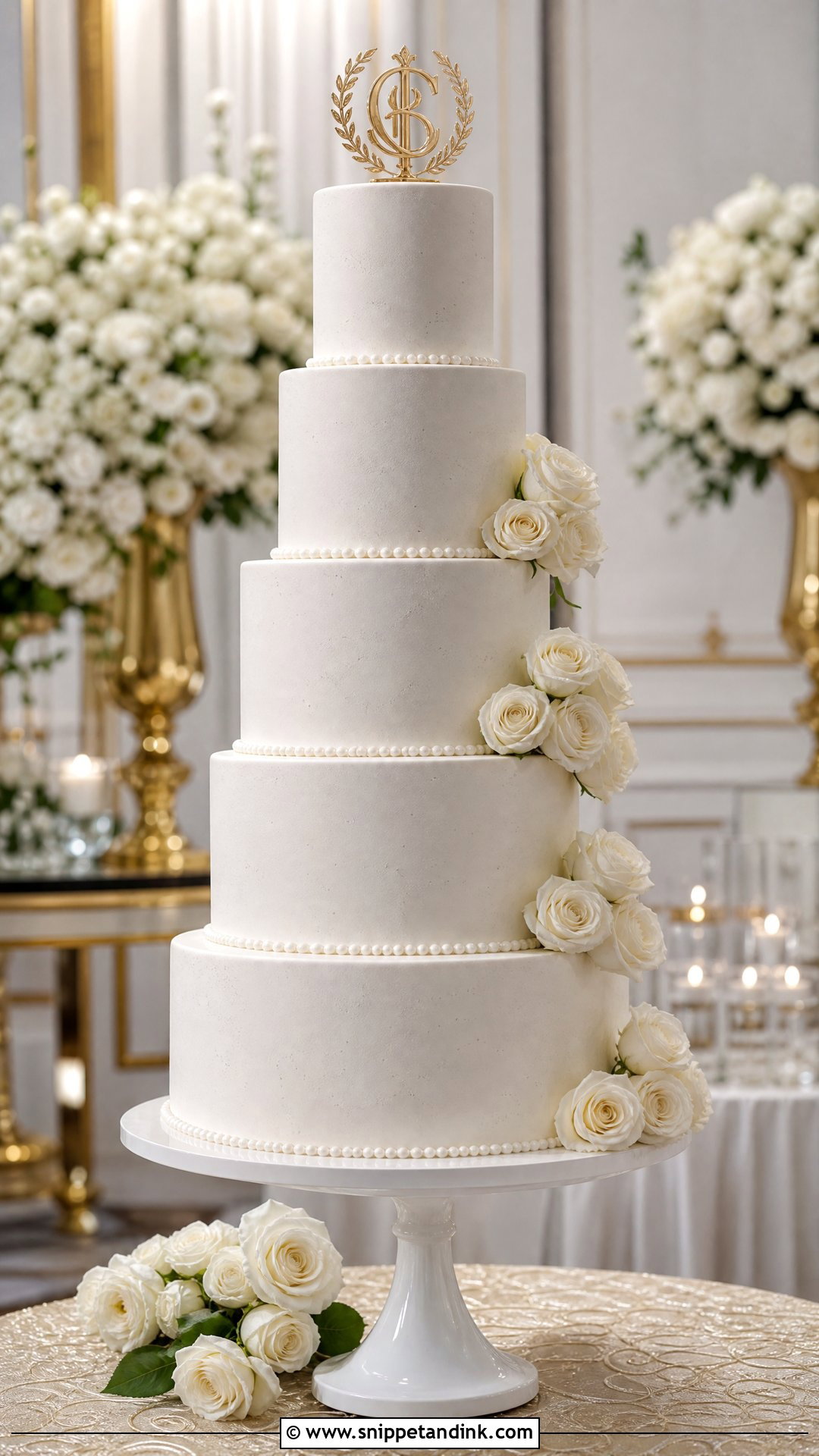
Four or five tiers need slim proportions, so I often use extended-height tiers or slip in a narrow separator to gain height without making each layer wider. A cake this tall also needs a firm, level table, a central dowel running through the tiers and, usually, final assembly at the venue. Keep the palette classic and the decoration light, since the height is already the statement. Different flavors on different tiers suit a large crowd; vanilla bean, chocolate, lemon raspberry and almond are the dependable four.
17. Small Two Tier Wedding Cake
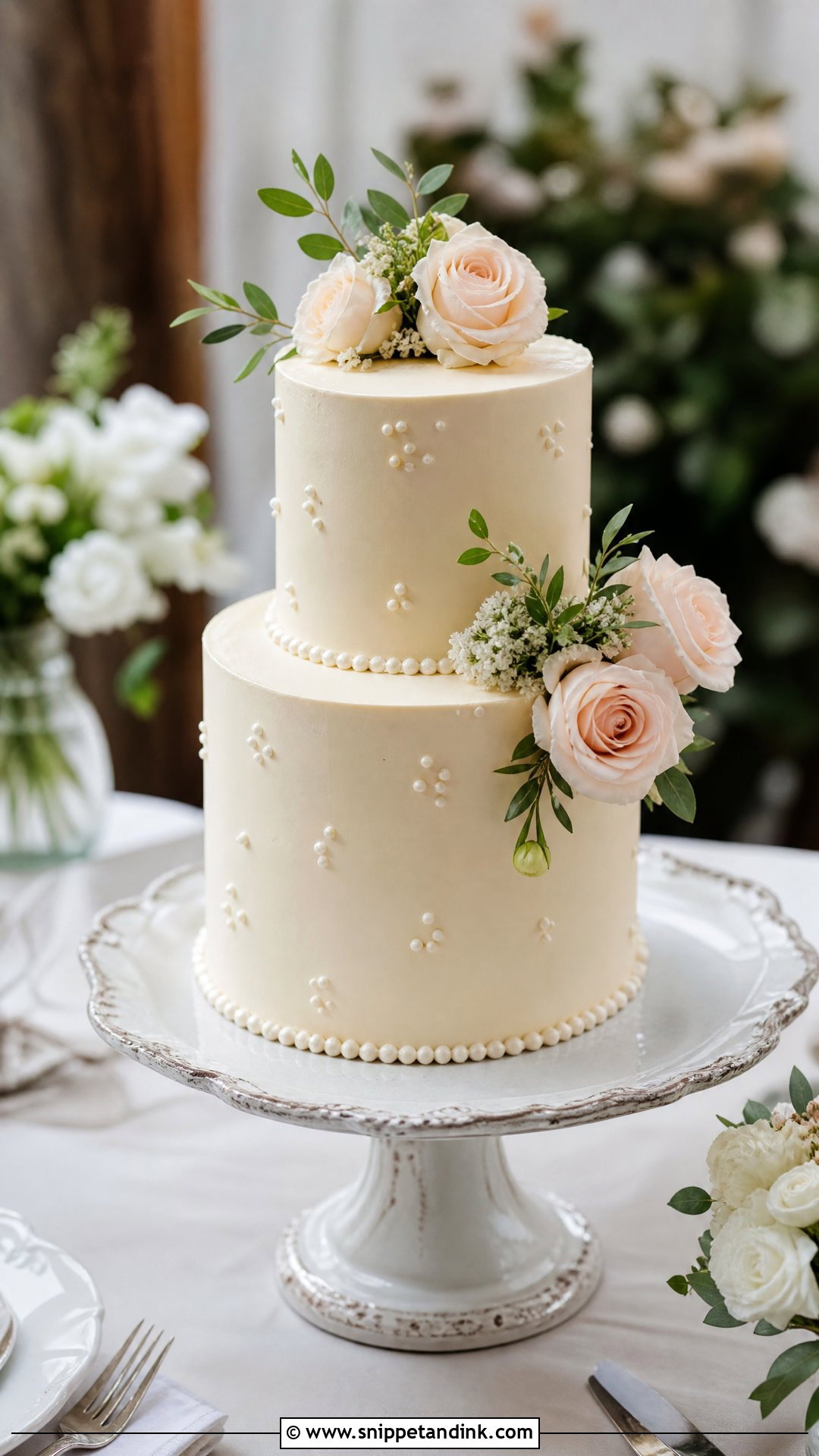
Two tiers is the right size for an elopement, a small wedding or a reception where a dessert table is doing most of the feeding. To keep it from looking modest, I make the bottom tier tall and step down to a noticeably smaller top, which gives the shape some grace. A smooth finish with a pearl border or a few pressed petals is enough decoration. This is also where couples can be bolder with flavor, since there are fewer people to please. Lemon curd or almond raspberry would be my first picks.
18. Garden Wedding Cake
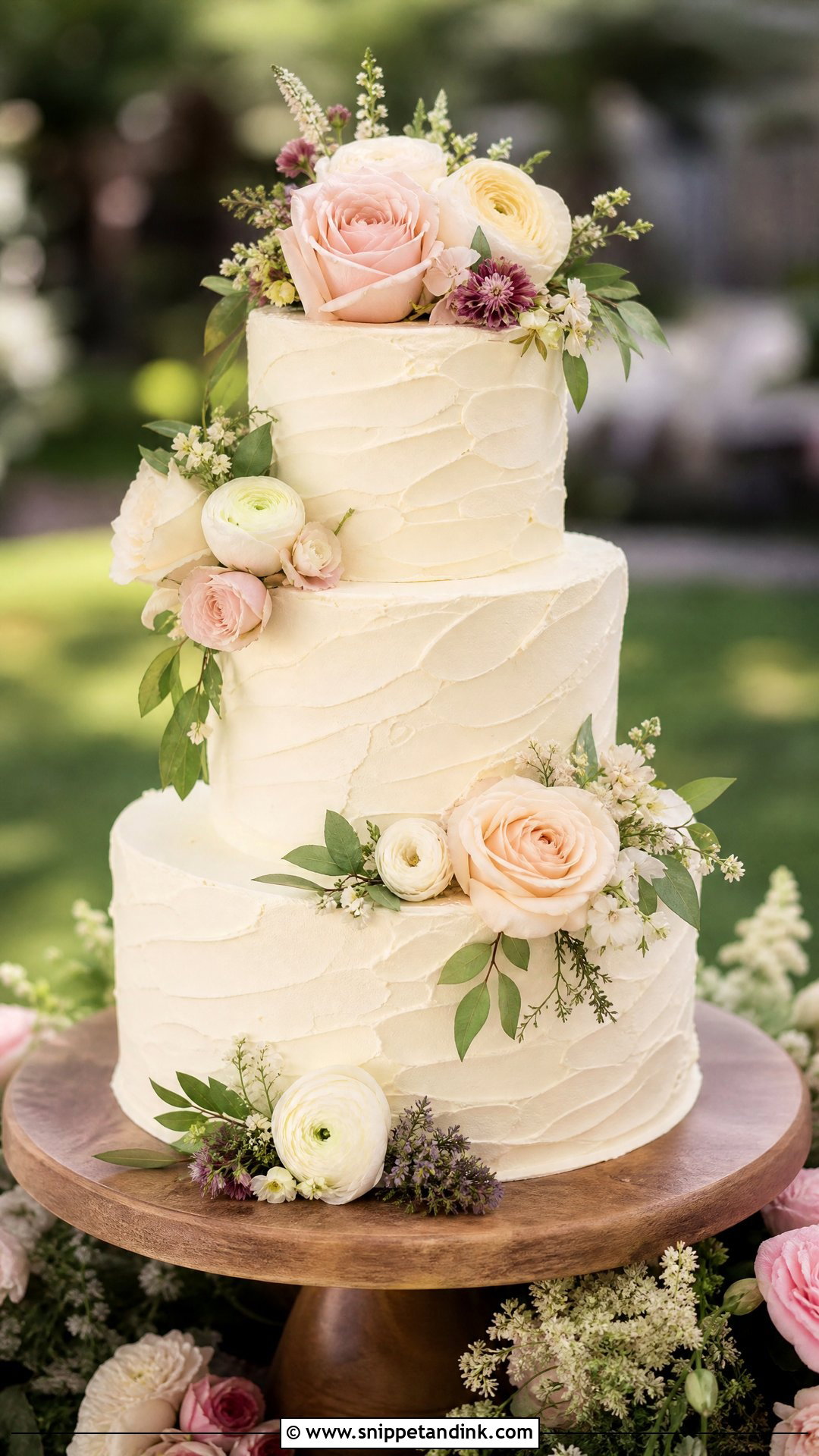
A garden cake should look as if it came from the same place as your ceremony flowers, which is why I ask the florist for the stem list early. Fresh flowers have to be food-safe and grown without pesticides, and the stems should be wrapped in floral tape or set in picks rather than pushed straight into the sponge. Sugar flowers avoid that problem entirely and won’t wilt in the sun. I group blooms loosely around the base and top instead of covering every tier. Pale sage or butter yellow buttercream suits an outdoor setting, with honey, lavender or berry fillings inside.
19. Modern Square Wedding Cake
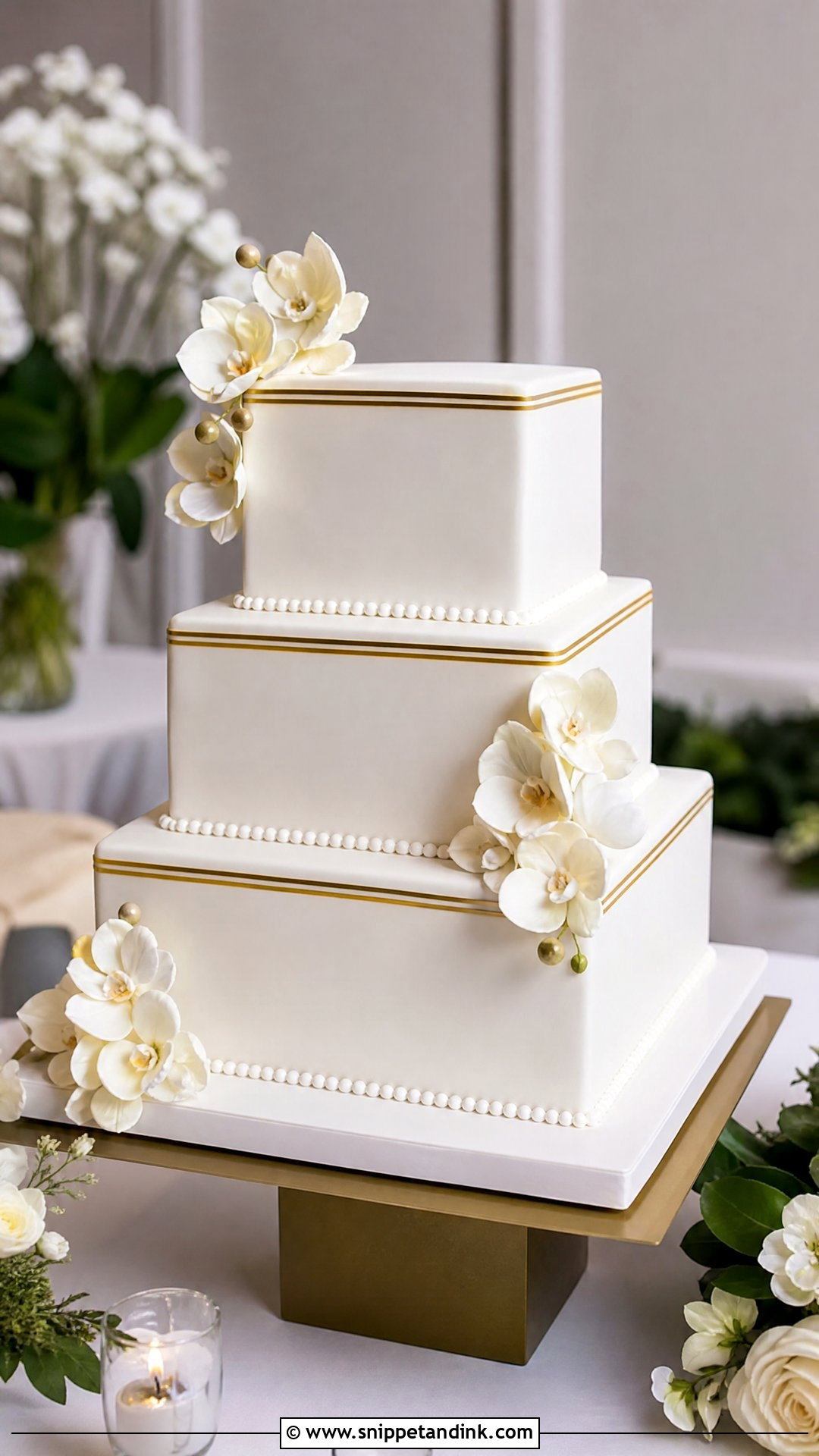
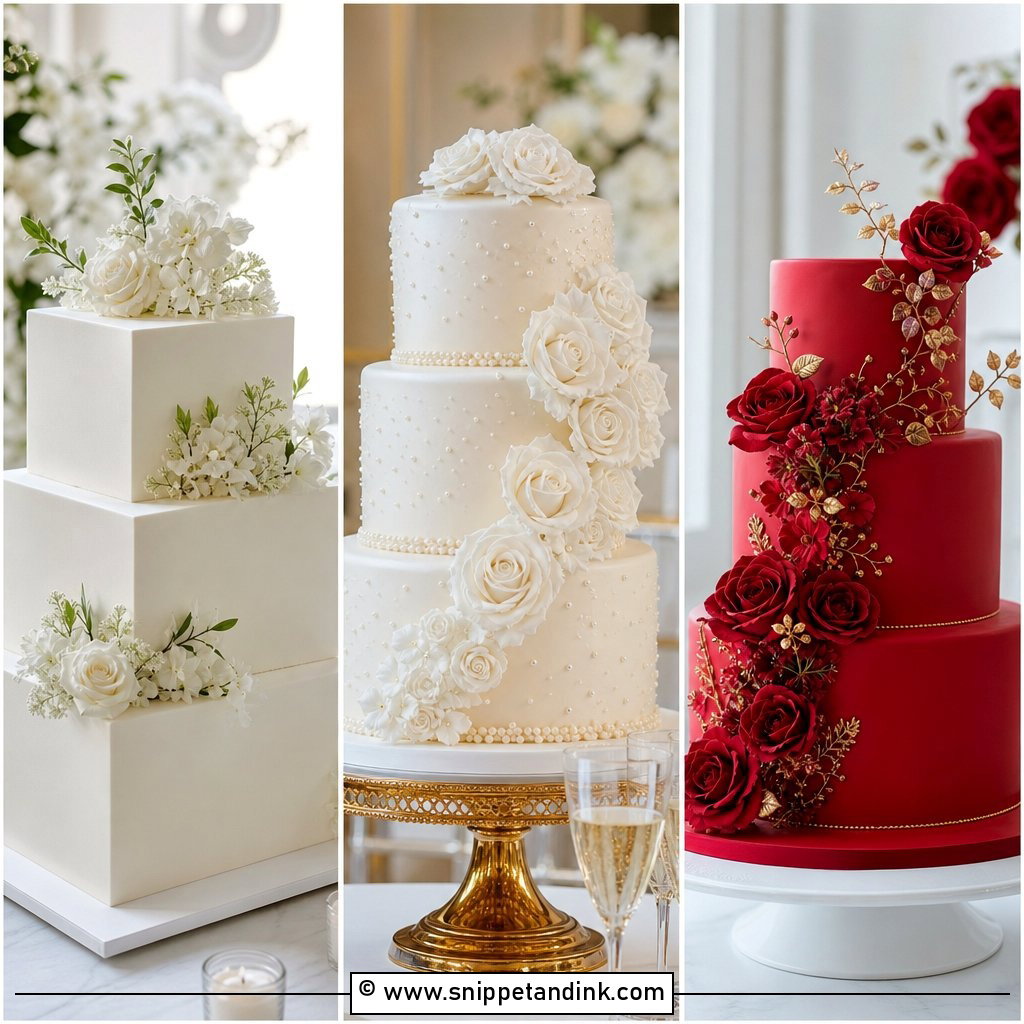
A modern square wedding cake shows every flaw at its corners, so I cover these in fondant or over a firm ganache base where I can get truly crisp edges. Square tiers also give more portions than round tiers of the same width, which helps with a bigger guest list. Thin gold lines or one corner of sugar flowers suit the architecture without crowding it. Contemporary venues and hotel ballrooms are its natural home. Almond, chocolate hazelnut and lemon cream are good flavor matches.

20. Oval Wedding Cake
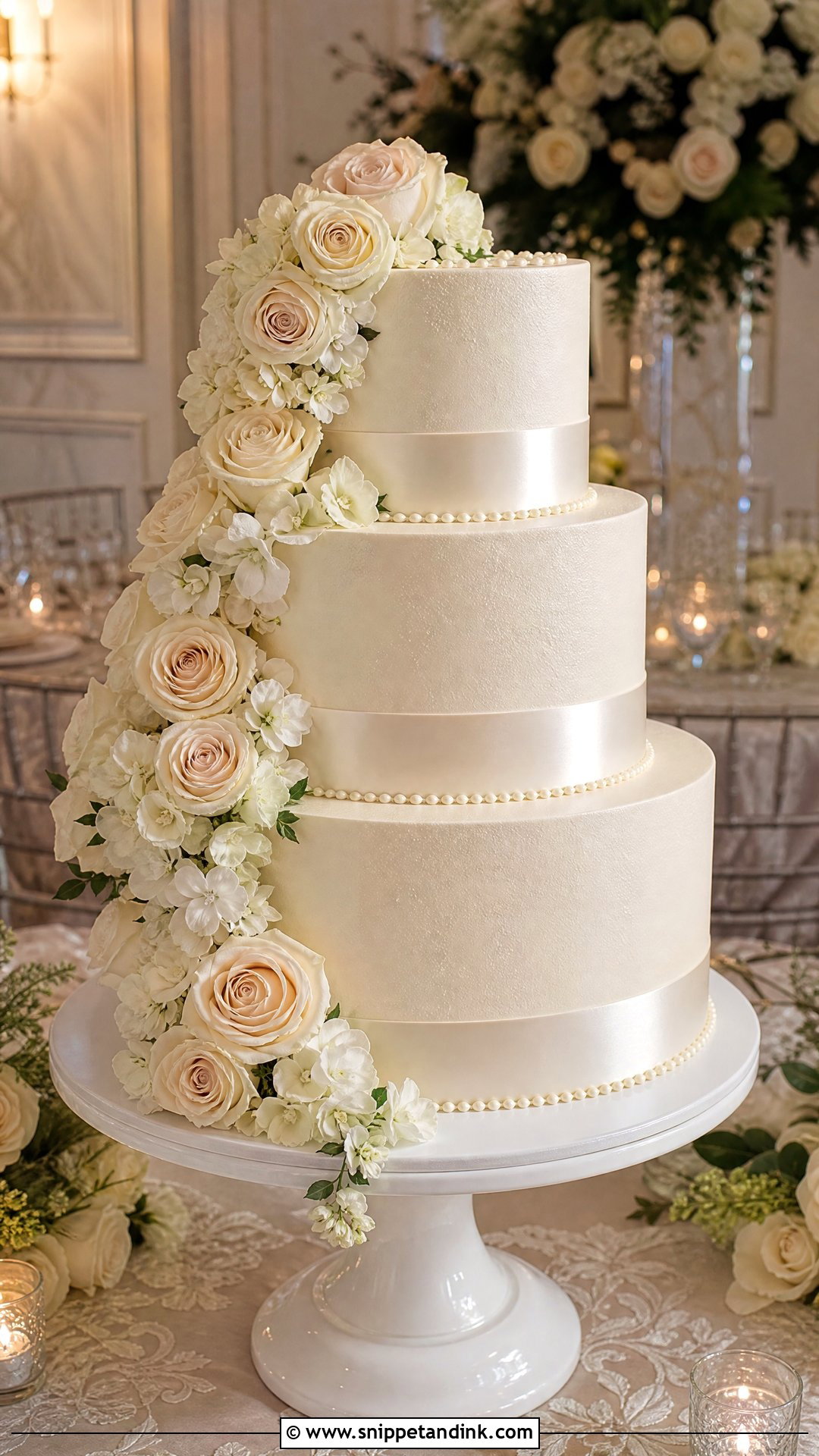
Oval tiers sit between round and square: softer than corners, less expected than a circle. They need oval pans and boards, which not every baker owns, so ask about them early. The long side gives you a natural front for a floral cascade or a monogram, and smooth fondant or a pearlized finish shows the curve best. I like them for estate weddings and bridal luncheons, filled with vanilla raspberry or white chocolate.
21. Single Tier Wedding Cake
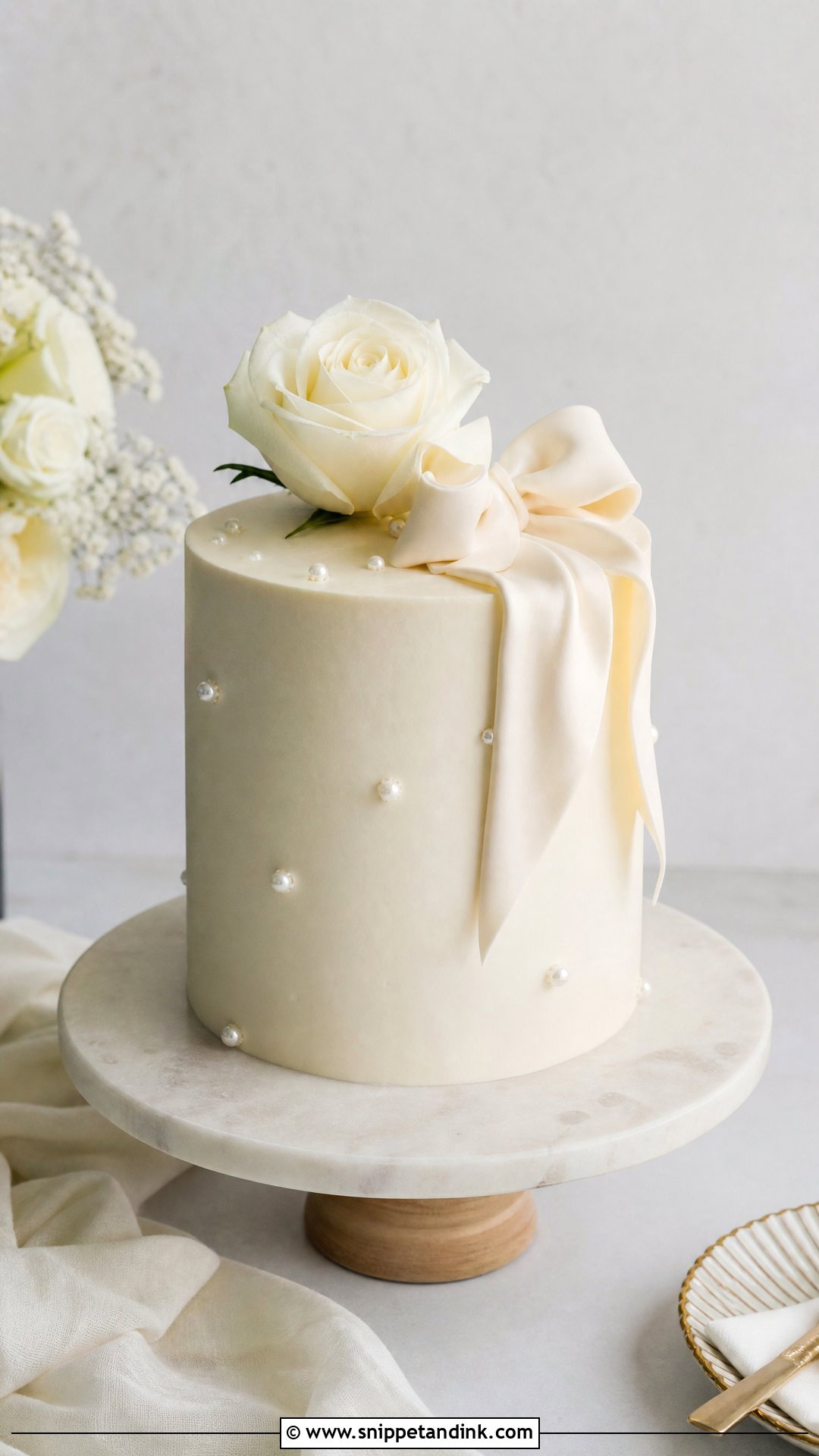
A single tier wedding cake only works when it has height. I build these as double-barrel tiers, roughly twice the usual depth with a board and dowels hidden in the middle, so the cake stands tall on its own. That extra height is what makes it read as a wedding cake rather than a birthday cake. It suits courthouse weddings and small dinners, and a raised pedestal gives it presence on the table. With only one flavor, pick a standout such as pistachio raspberry or chocolate ganache.
22. Sugar Flower Wedding Cake
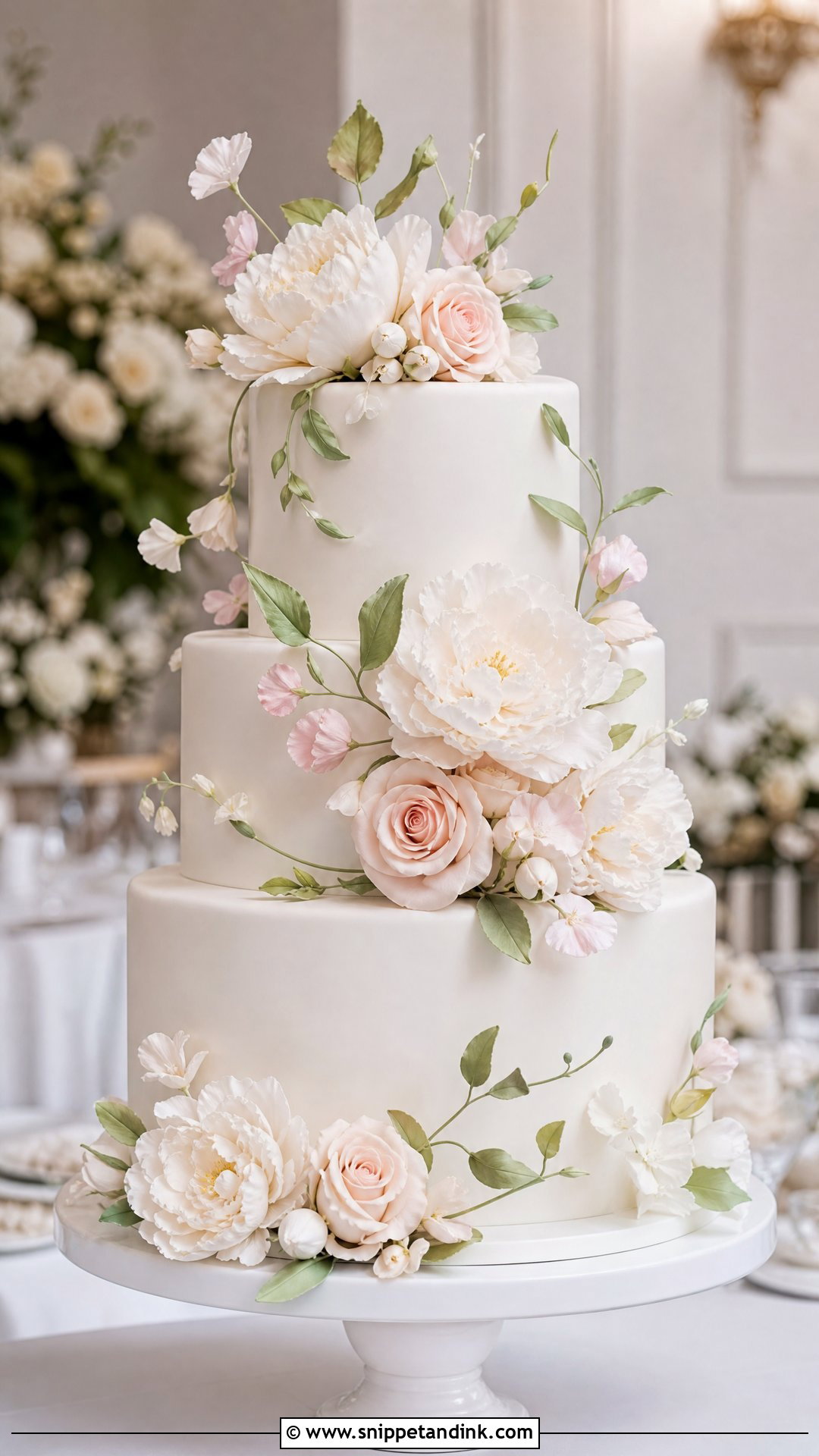
Sugar flowers are made petal by petal from gum paste and dried for days, so they need ordering well ahead and they account for a real share of the labor. The payoff is that they match your palette exactly, never wilt and can be kept afterward if stored somewhere dry. I group them in two or three clusters instead of blanketing every tier. They also solve the problem of fresh flowers that are out of season or unsafe near food. Humidity is their weak spot; damp gum paste softens and petals can droop, so they should stay boxed and dry until delivery. Vanilla bean and coconut are classic pairings.
23. Draped Fondant Wedding Cake
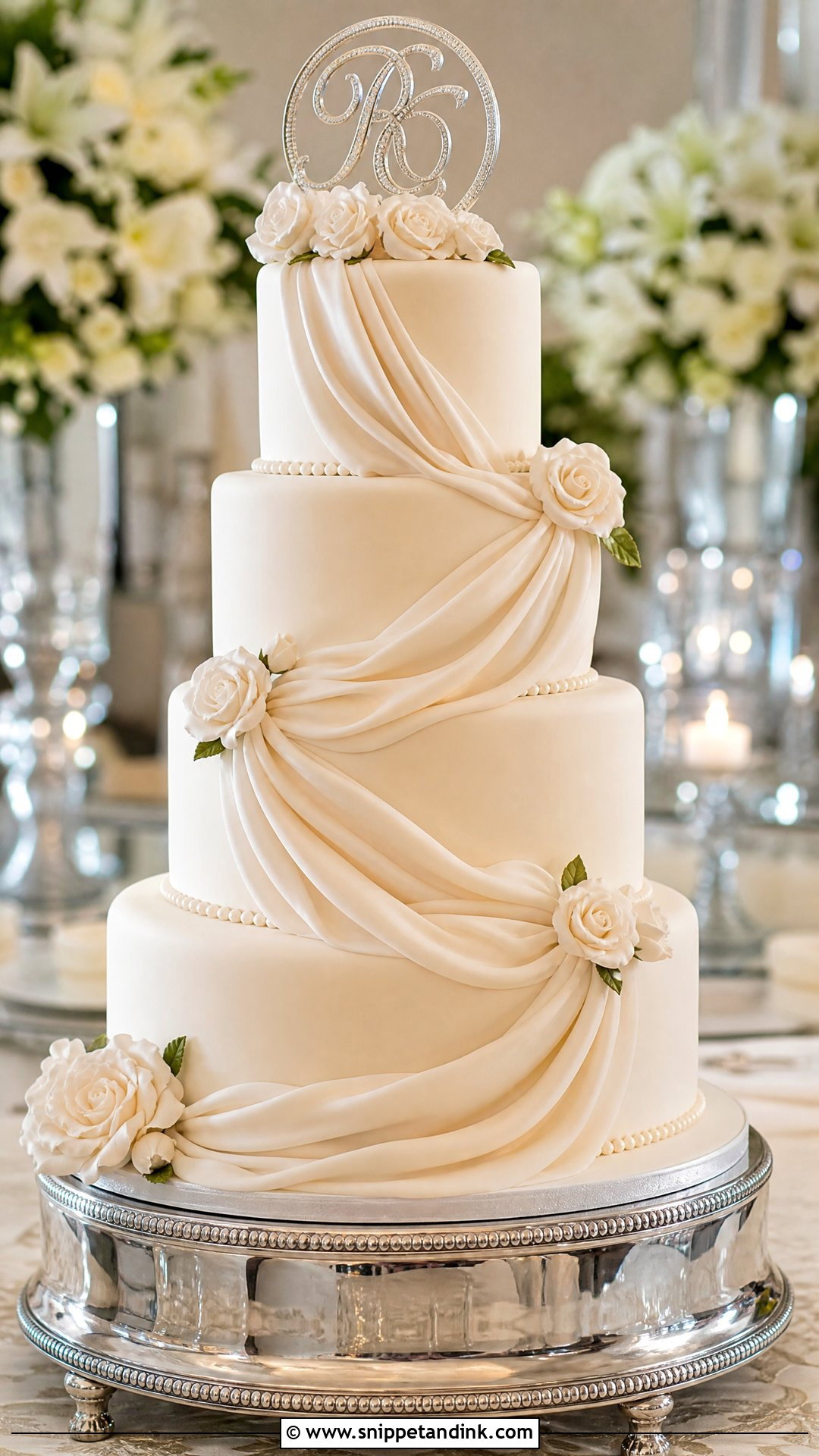
Draped fondant imitates fabric, and the best versions copy a real detail from the dress: a gathered bodice, a swag or soft pleats at the hip. The fondant is rolled thin and folded while it’s still pliable, then left to set before the cake travels. Because the outside is so formal, the inside has to be moist and full of flavor, so I lean on almond, vanilla butter cake or lemon raspberry with a generous filling. Champagne or pale blush adds warmth in a ballroom.
24. Semi Naked Wedding Cake
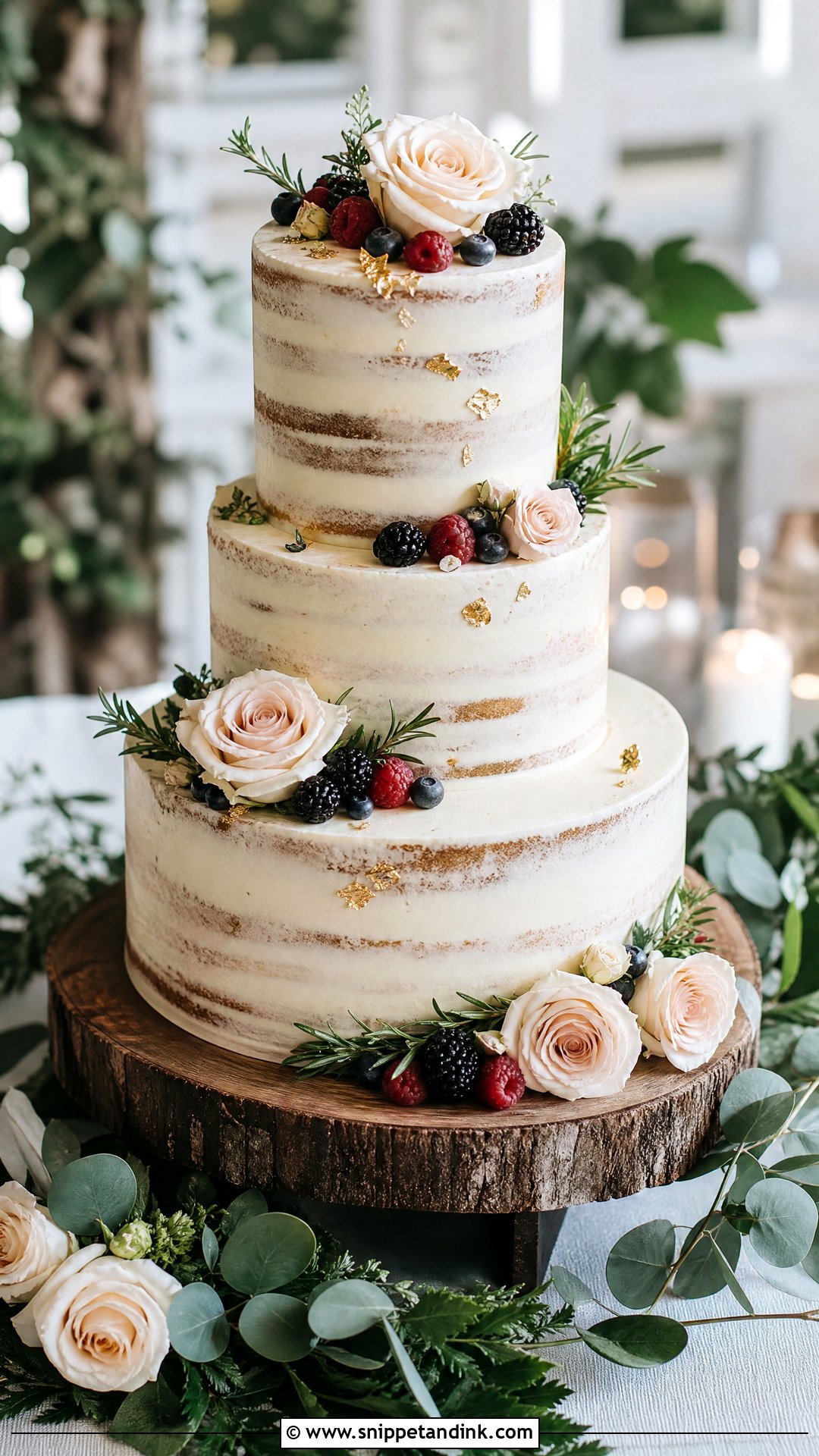
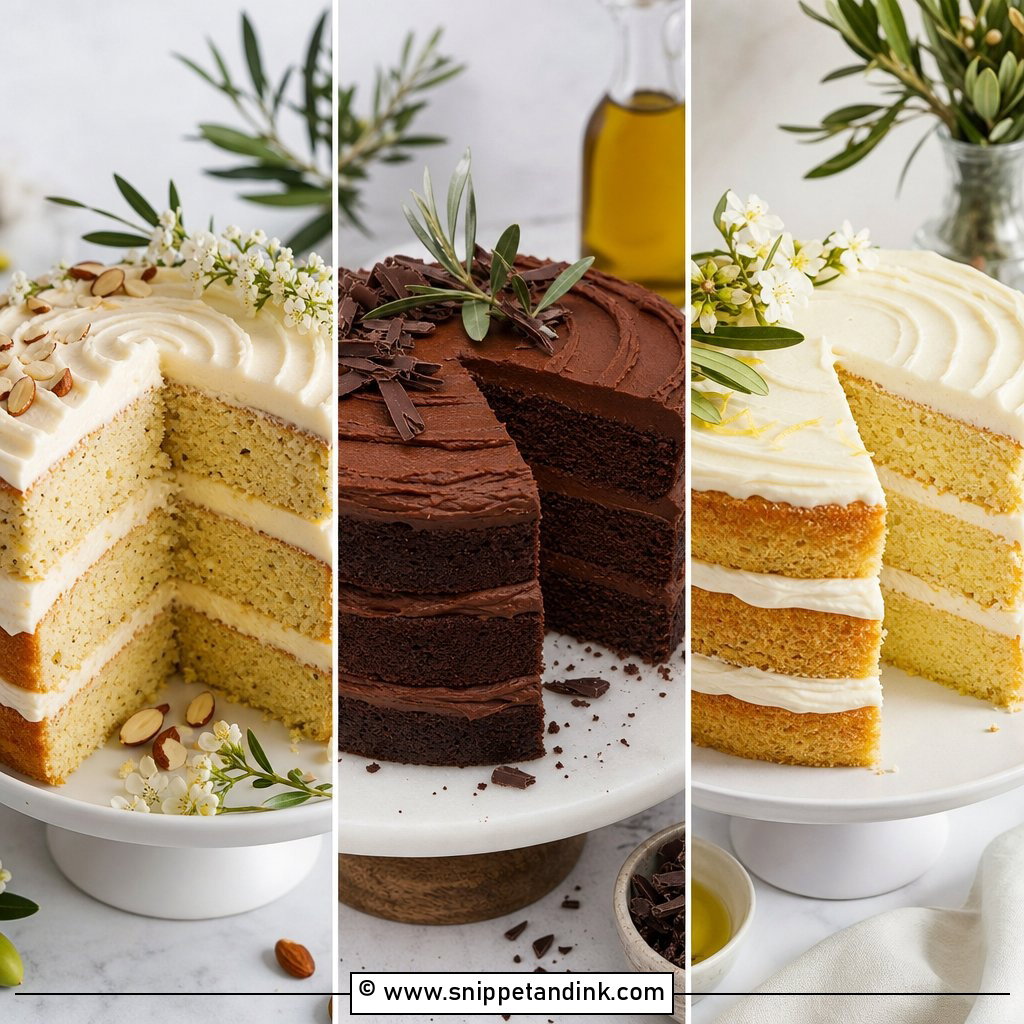
A semi naked cake looks classy only when the scrape is even and deliberate. I crumb coat, chill, then scrape back a thin layer so the sponge shows through evenly; patchy, crumbly scraping looks unfinished in photos. The exposed sponge dries faster than a fully iced cake, so I’d keep it covered until the last moment and avoid a long outdoor display in heat. Fresh berries, herbs or a few flowers suit barn and garden receptions. Spice, carrot or vanilla sponge with lemon or cream cheese filling looks warm through the thin frosting.




25. Blue Wedding Cake
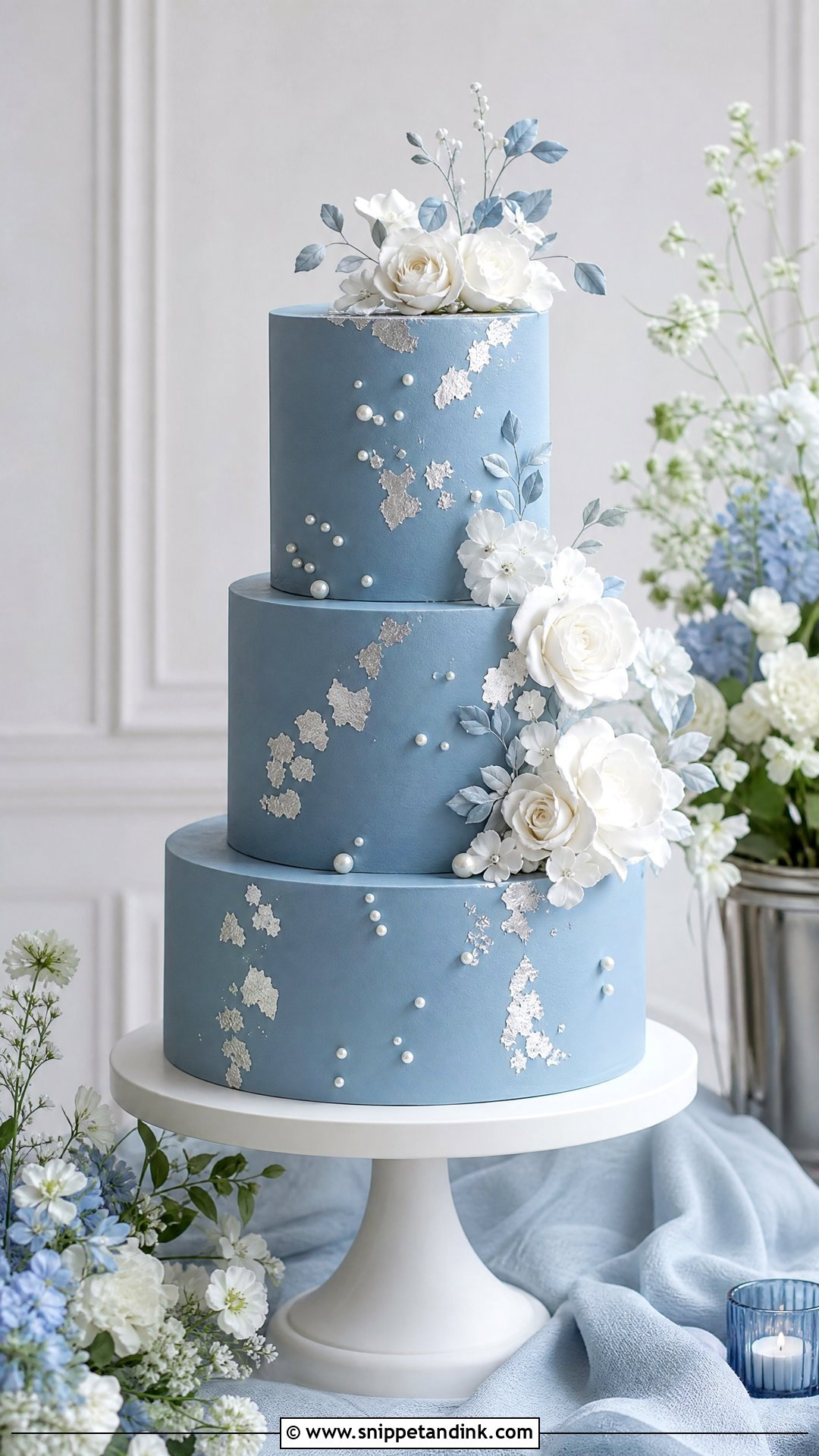
Blue is tricky in buttercream because the natural yellow of the butter pushes it toward green. I counter that with a whiter base or a tiny touch of violet, and I check the shade under warm reception lighting, which mutes it further. Dusty blue, powder blue and gray-blue are the shades that stay elegant. White florals, pearls or silver accents suit it on smooth fondant or a watercolor finish. It works for coastal weddings and for winter palettes without festive styling. Lemon blueberry or coconut keeps the flavor light.
How Buttercream, Fondant and Ganache Behave in a Warm Room
Most of these designs can be made in more than one finish, and the right one depends less on taste than on temperature.
Buttercream, American or meringue
Both pipe well and taste the way guests hope cake will taste, but they soften as the room warms. In a summer tent or near a sunny window, piping slumps, pearls slide and edges round off. I keep buttercream cakes chilled until delivery and ask the venue for a shaded spot away from the dance floor lights.
Fondant over ganache
Fondant gives the sharpest edges and copes far better with heat, especially over a firm chocolate ganache layer. The trade-off is texture; plenty of guests peel it off. It can also bead with condensation if a chilled cake goes straight into a humid room, so I let it come up to temperature gradually before it goes on display.
If you love how fondant looks but not how it eats, ask about a ganache finish with buttercream details. It’s a common compromise in the hot months.
Tier Sizes, Portions and the Kitchen Cake Trick
Wedding portions are cut smaller than party slices, usually about one inch by two inches through a four-inch-deep tier. By most bakers’ charts that means a three-tier round cake in 6, 8 and 10 inch sizes serves somewhere around 75 guests, even though it looks small beside a birthday cake.
For 200 guests without a five-tier budget, I’d suggest a smaller display cake plus a plain iced sheet cake in the same flavor, cut in the kitchen and plated alongside. Nobody can tell the difference on the plate. Two other things I always confirm in writing:
- Who cuts and plates the cake, and whether the venue charges a cake-cutting fee.
- Whether the top tier is being saved, so it gets boxed before service starts rather than rescued from a half-cut cake.
Letting the Venue and the Dress Edit Your Shortlist
A luxe cake is rarely the biggest one in the room. It’s the one whose finish, flavor and proportions agree with the rest of the day. Pearl work feels formal, Lambeth piping feels nostalgic, sculptural tiers feel modern and pressed flowers feel garden-fresh, but your venue temperature, guest count and dress will narrow the choice quickly. Save a handful of photos, note the one detail you love in each, and bring them to a tasting. A good baker will tell you honestly what will hold up on your date, and the finished cake should slice cleanly and taste as good as it looks.
You'll Like These Ideas:













Leave a Reply