
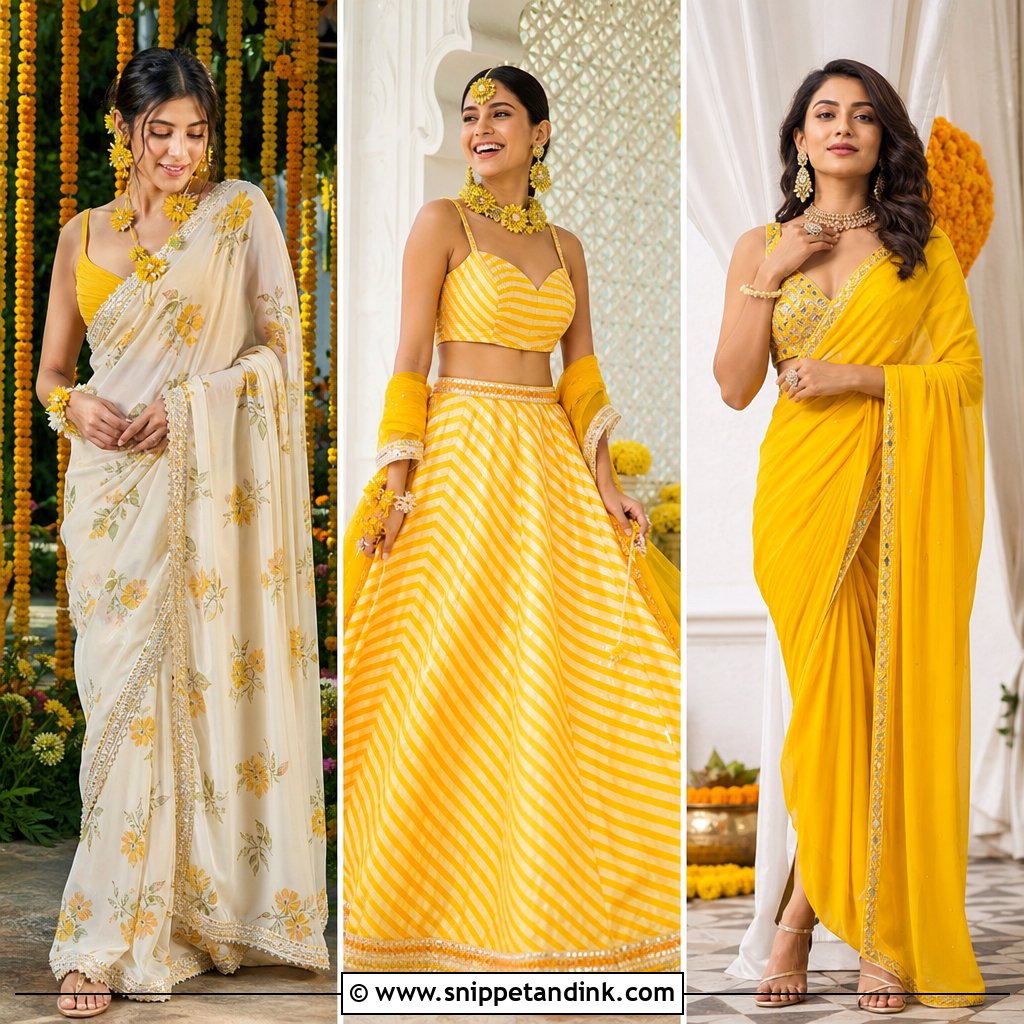
Haldi is the one wedding function where your clothes are expected to get messy. Turmeric paste, flower petals, water and a lot of dancing are all part of it, so I plan haldi outfits backwards: first how much of the paste will land on you, then the fabric that can take it, and only then the colour. Yellow is the tradition, but marigold, lime, coral and floral mixes sit just as happily in the photos. Below you’ll find sarees, light lehengas, kurta sets, fusion separates and a couple of Western options, with notes for brides, sisters, bridesmaids and guests of different ages and builds, and what I’d watch for with each one.
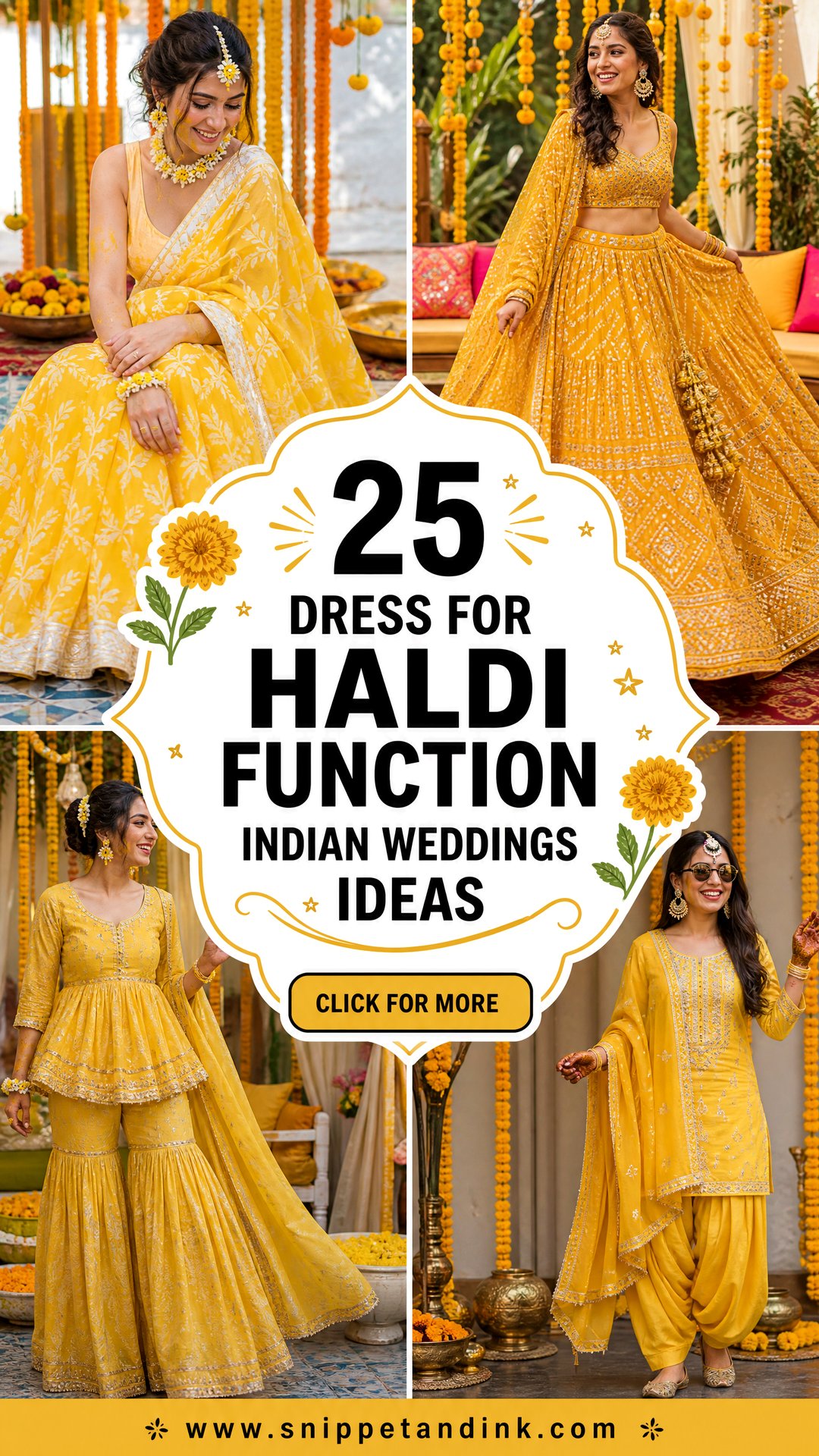
How Close You Stand to the Turmeric Bowl Decides Your Outfit
The first question I ask anyone dressing for a haldi is not about colour. It’s about where they’ll be standing. The bride, her inner circle and the guests at the back all get very different amounts of paste, and the outfit should follow that.
The bride
Expect to be covered from face to feet. Choose a washable fabric, a blouse you’re happy to write off, and floral jewellery instead of metal pieces you love. Many brides change into a fresh outfit for photos after the ritual, which is worth planning in advance.
Sisters, cousins and close friends
You’ll be applying paste and catching some back. Cotton, cotton-silk and printed georgette are the safe bets, and darker or brighter shades hide splashes better than pastels. Keep sleeves short or three-quarter so they don’t trail through the bowl.
Guests
Ask whether guests take part. If they do, dress like close family. If the turmeric stays with the couple, you can wear organza, chikankari or something paler with less worry.
1. Yellow Cotton Saree for Haldi Function
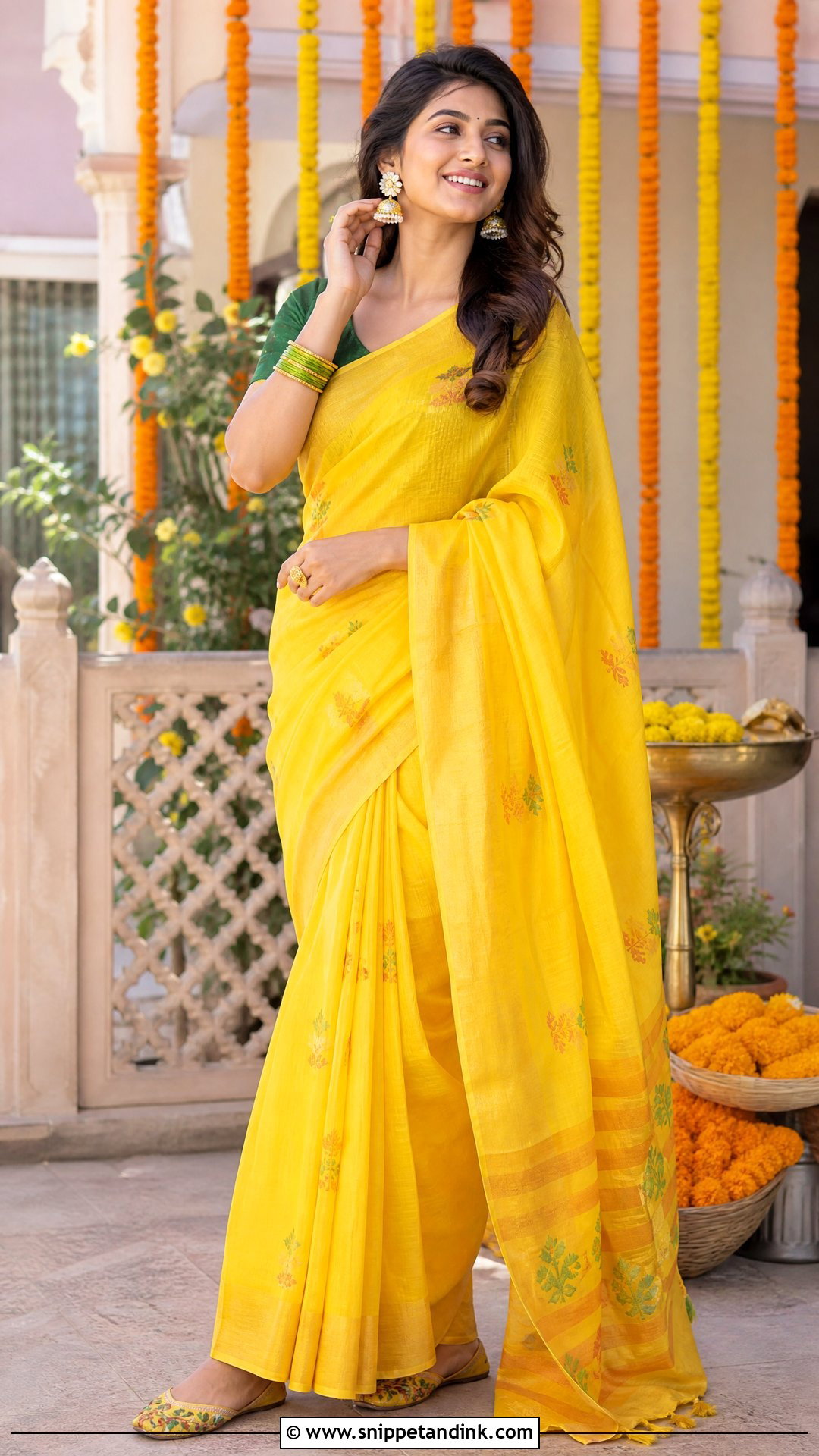
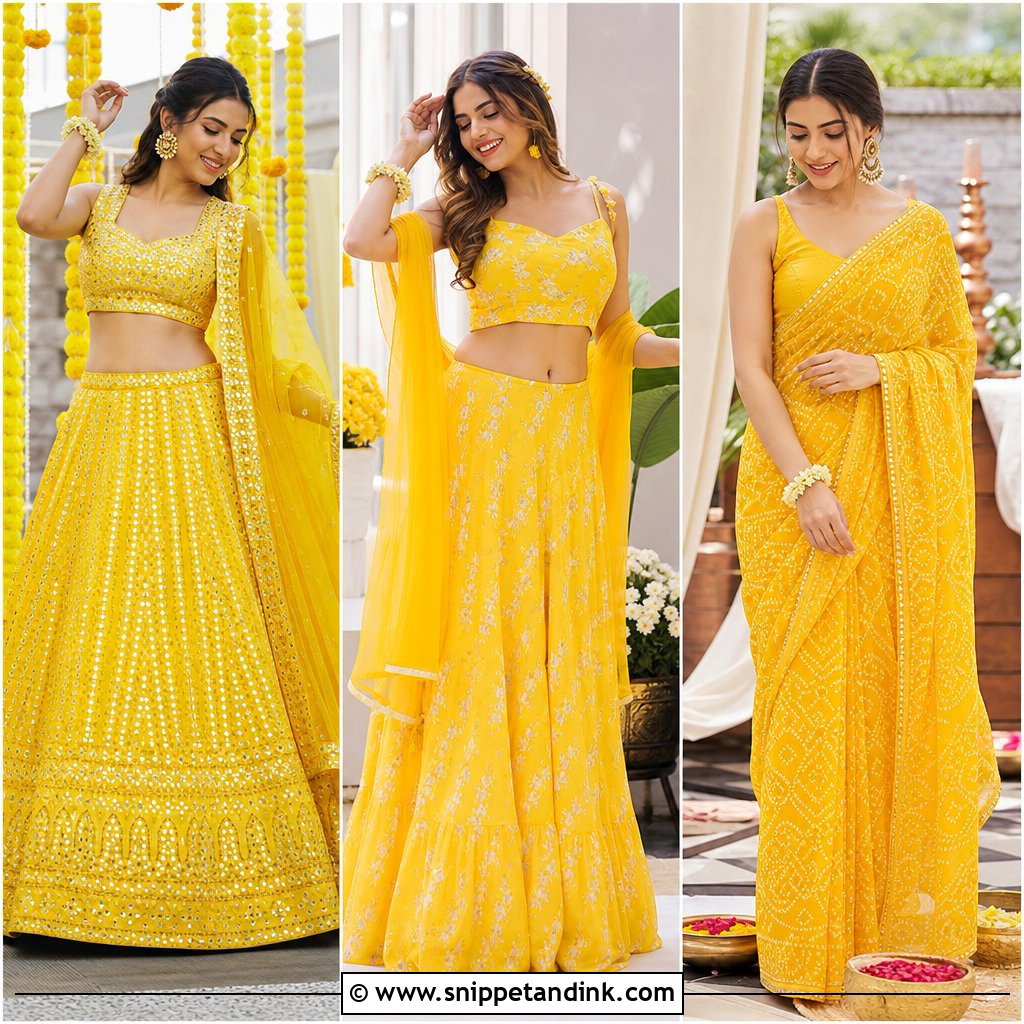
Cotton is the fabric I trust most at a haldi, and a yellow cotton saree is the simplest way to wear it. Handloom or mulmul breathes in the heat and is soft enough to sit cross-legged for the rituals. Keep the border plain and woven. A fitted blouse in yellow, white or green, with sleeveless or elbow sleeves, works for most people. Pin the pallu flat at the shoulder so it doesn’t swing into the paste bowl. Floral earrings, a stack of bangles, a small bindi and embroidered flats finish it. The honest warning: cotton drinks turmeric, so wear one you won’t mourn, never an heirloom.
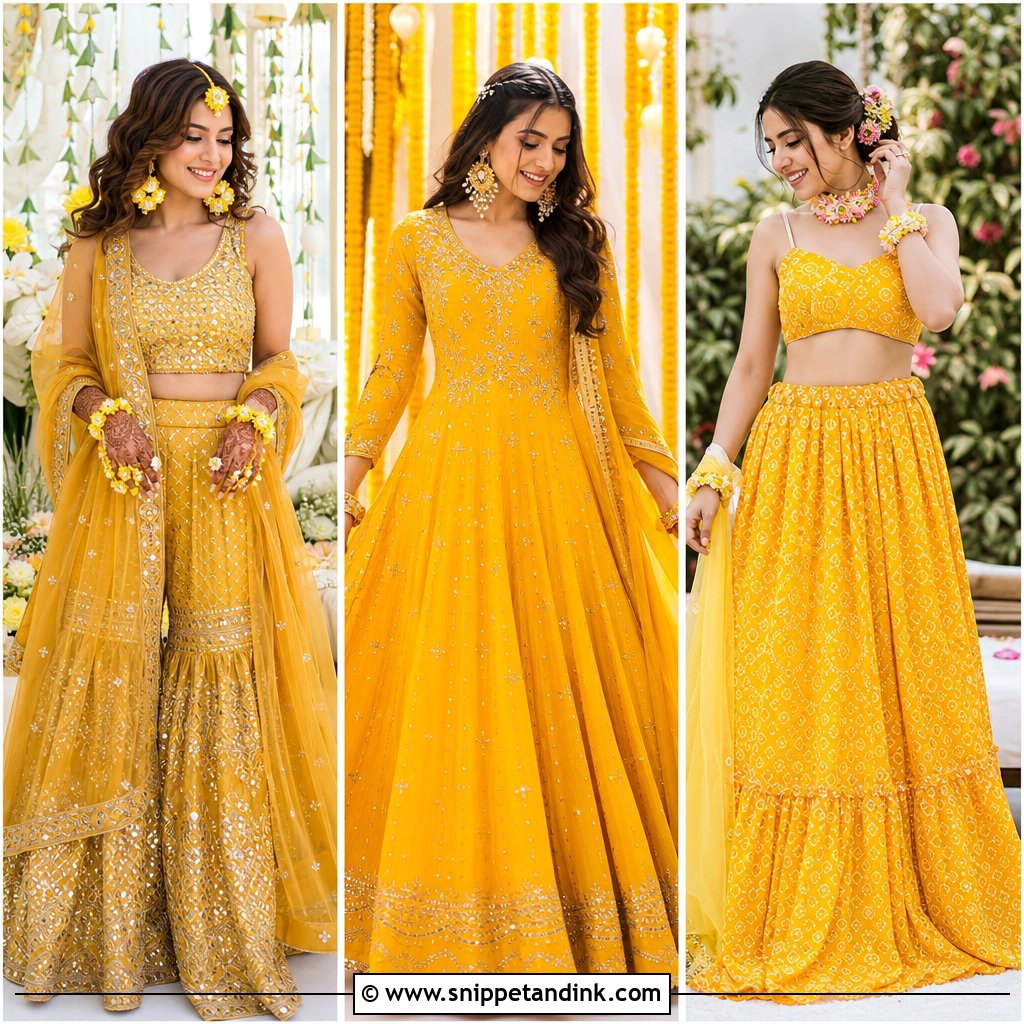
2. Floral Yellow Lehenga for Haldi Function
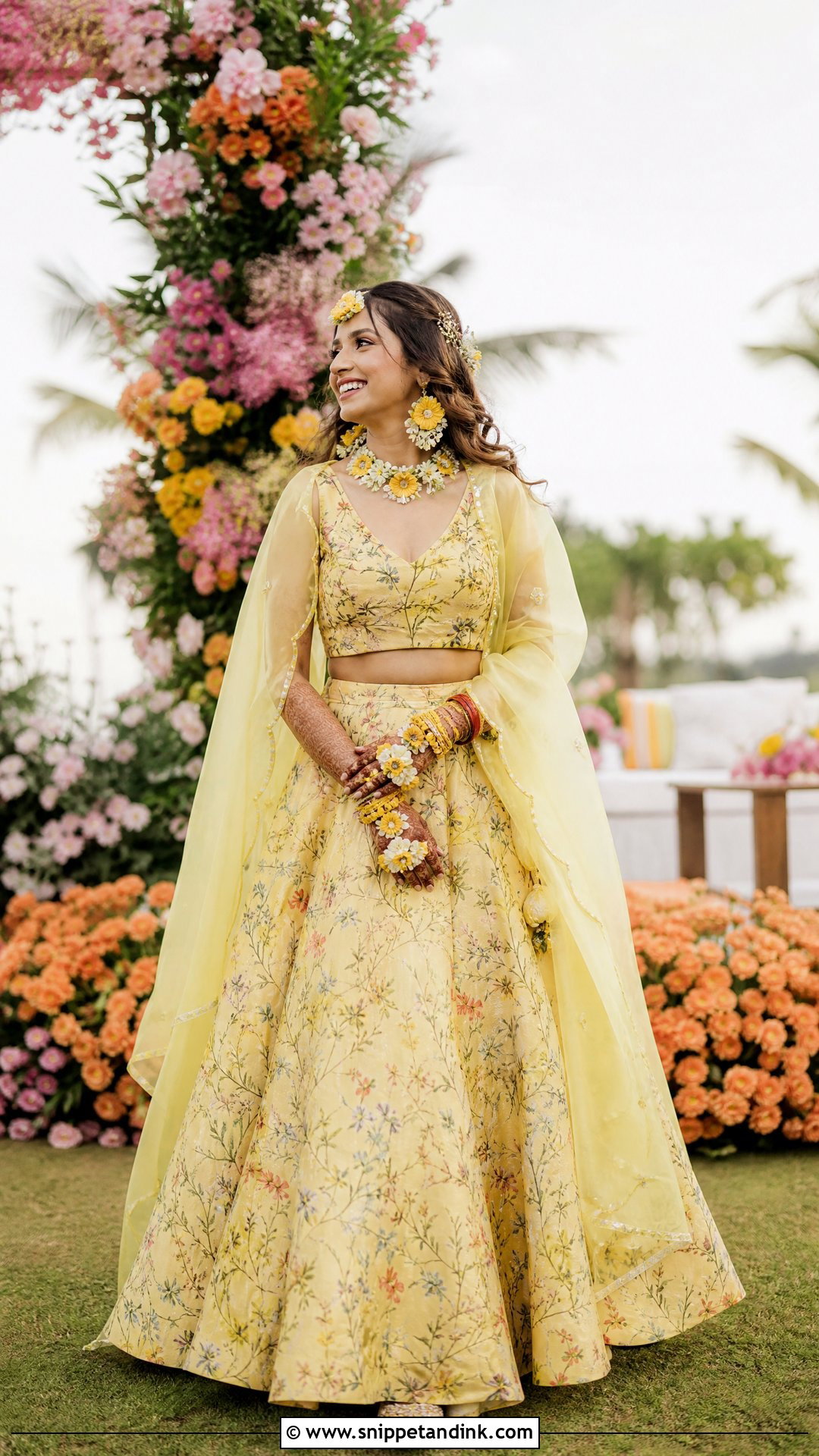
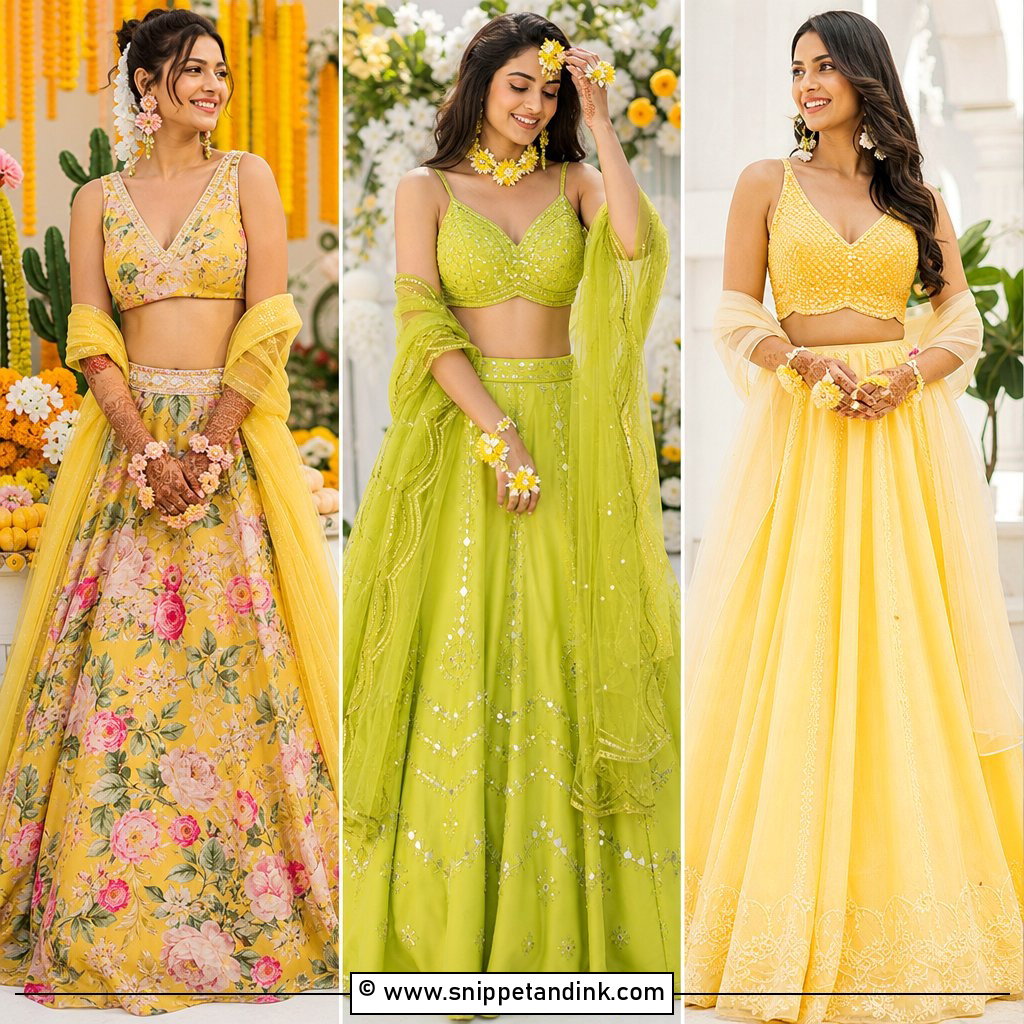
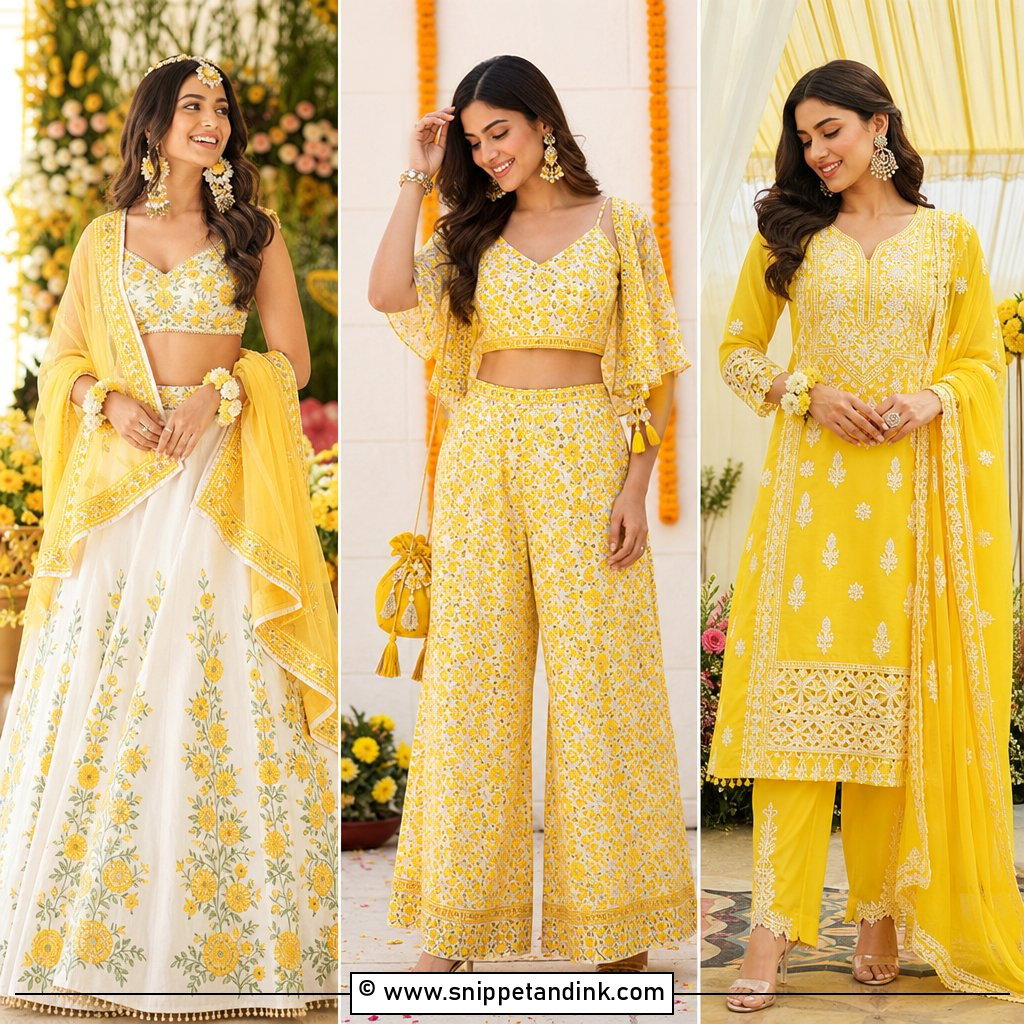
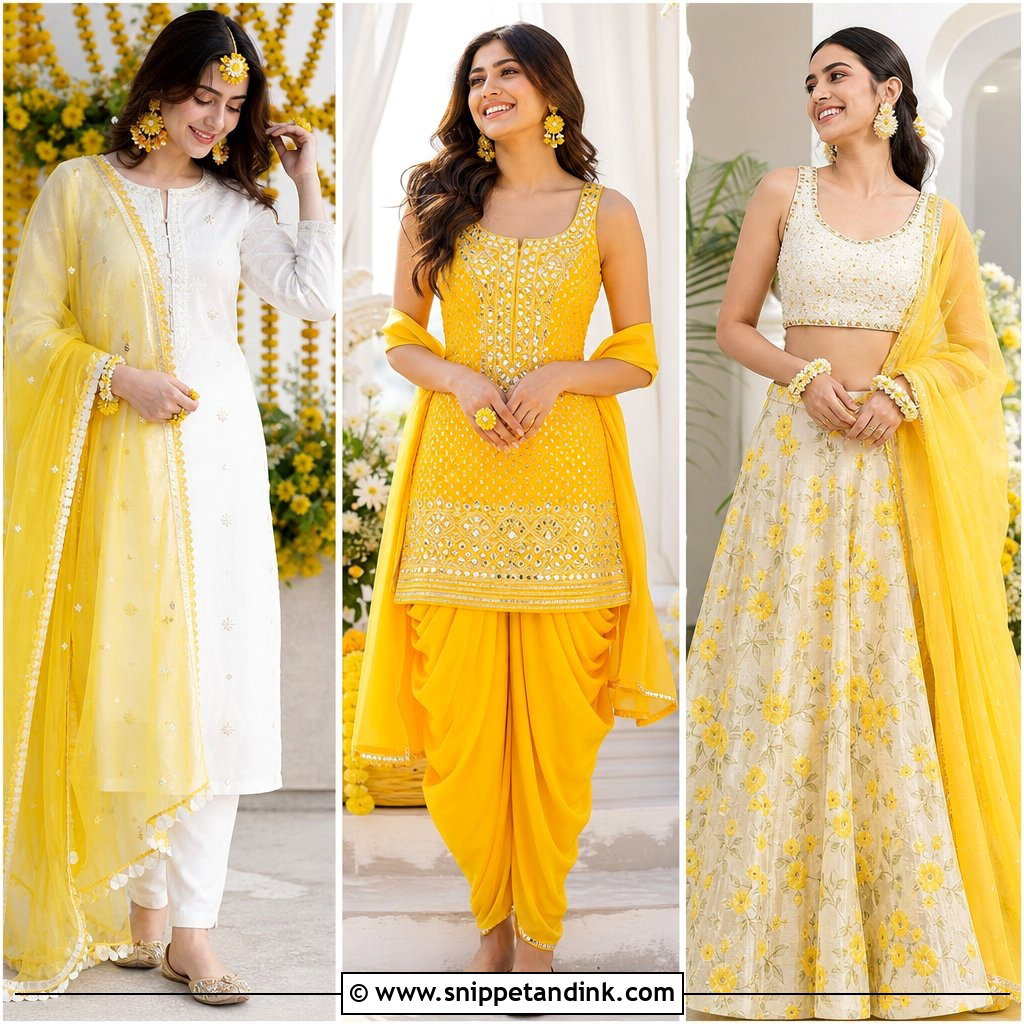
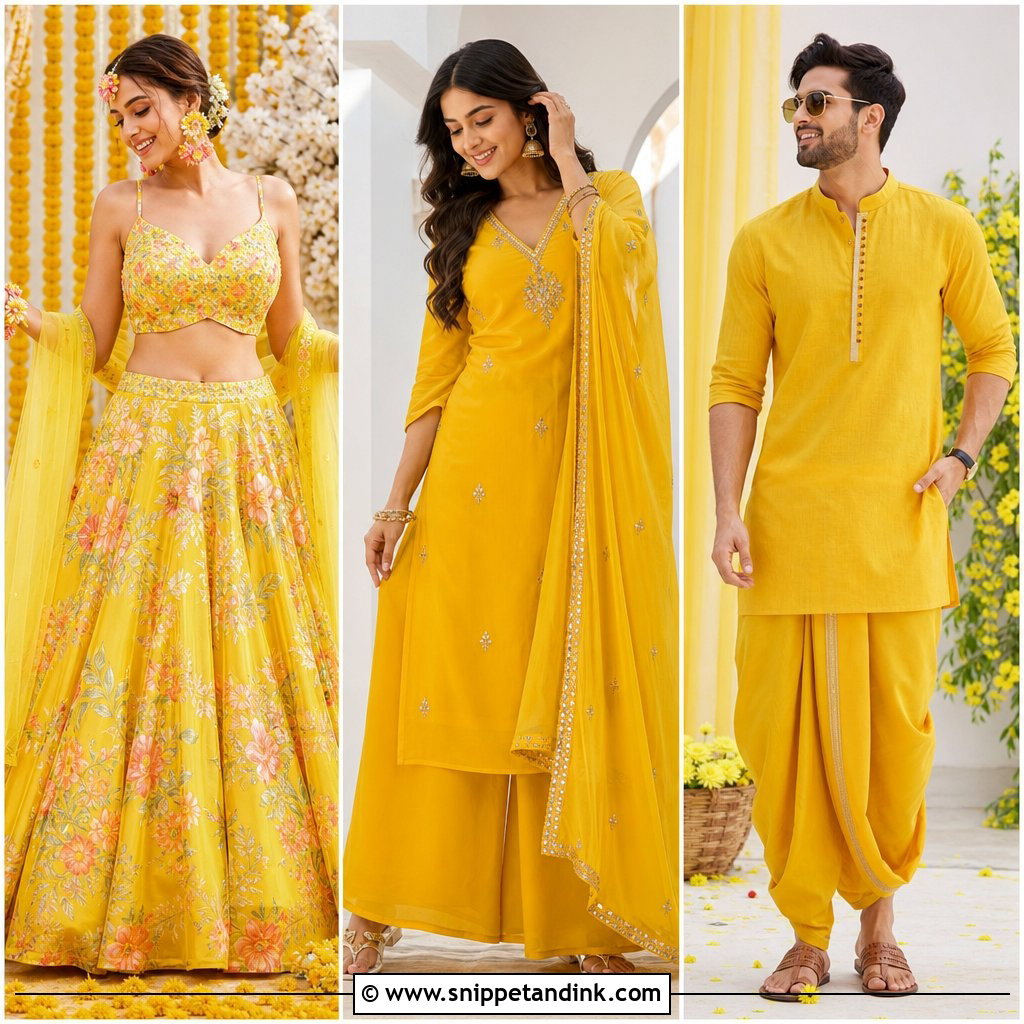
A printed lehenga is far easier to wear at a haldi than an embroidered one. Small botanical prints hide the odd splash, and the skirt stays light. I’d ask for no cancan at all, because a stiff underskirt makes sitting on a low stool or a floor cushion awkward. Pair it with a cropped blouse that has proper straps or short sleeves, and a soft organza dupatta. Floral earrings, a fine maang tikka, colourful bangles and cushioned juttis are enough for guests; the bride can go bigger with flower jewellery. Lemon, marigold and sunflower shades all sit well against pink, orange or green décor.
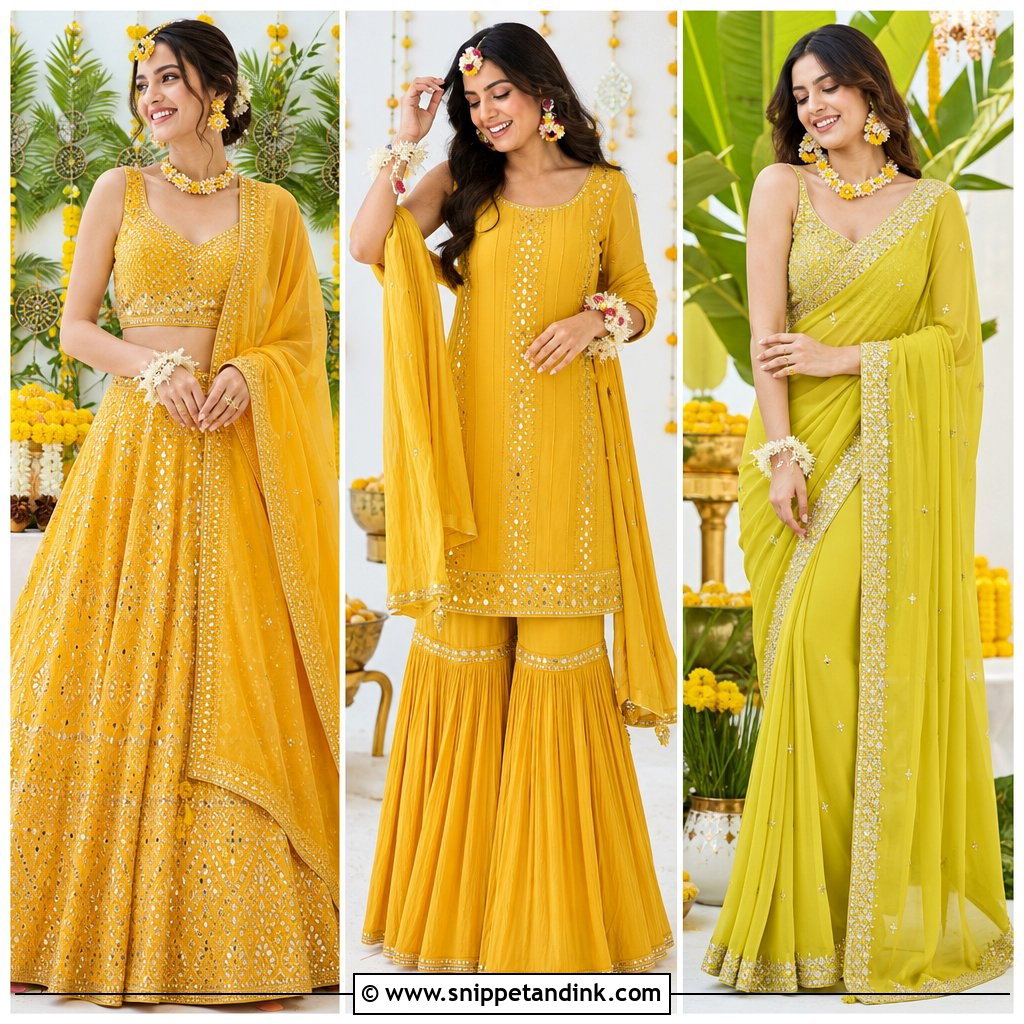
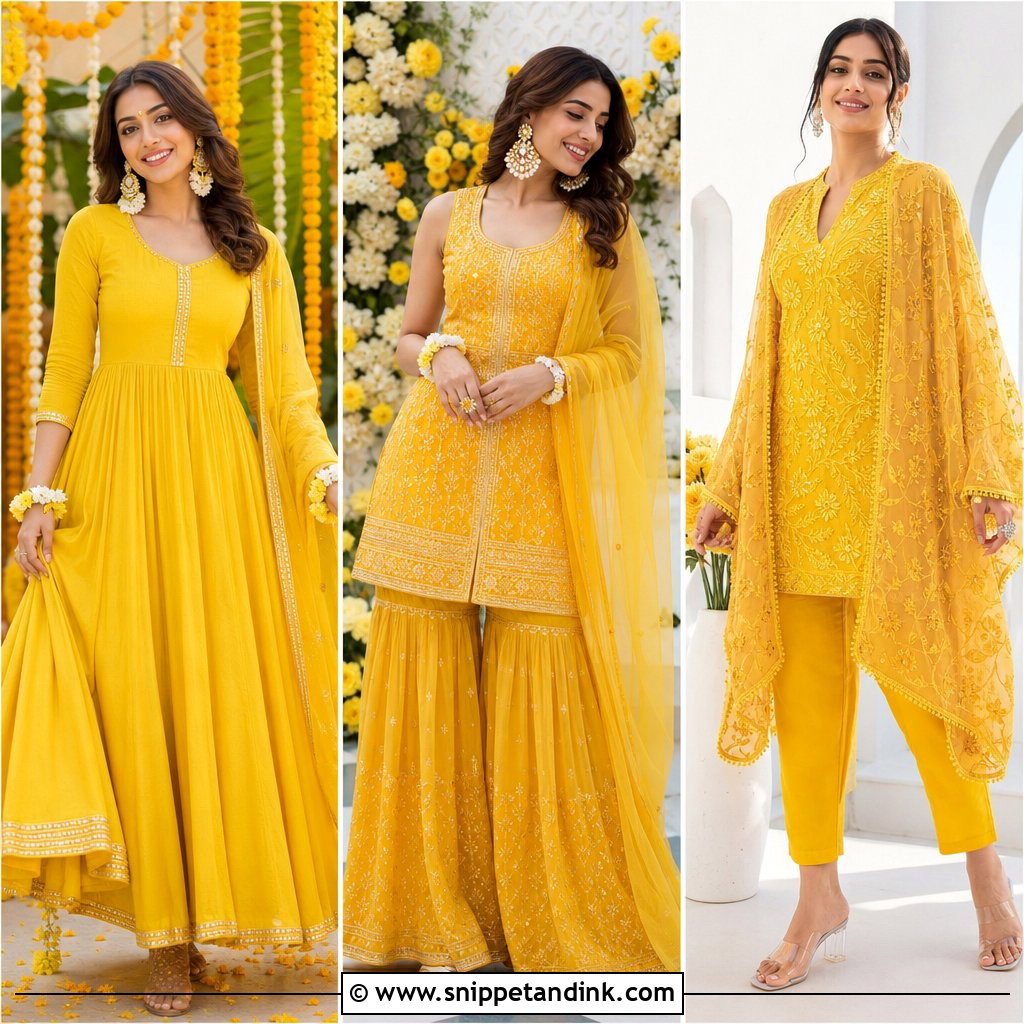
3. Yellow Sharara Set for Haldi Function
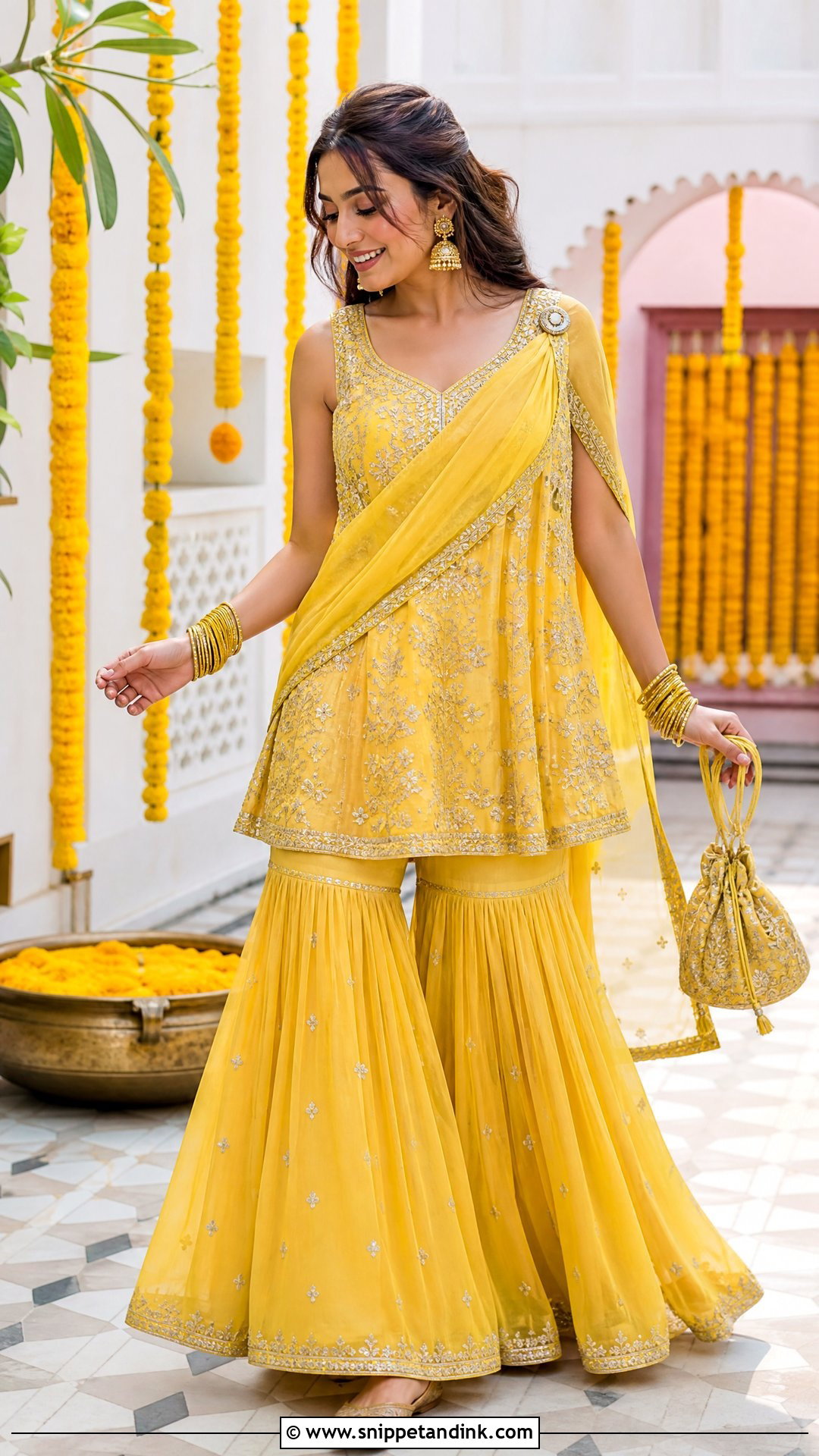
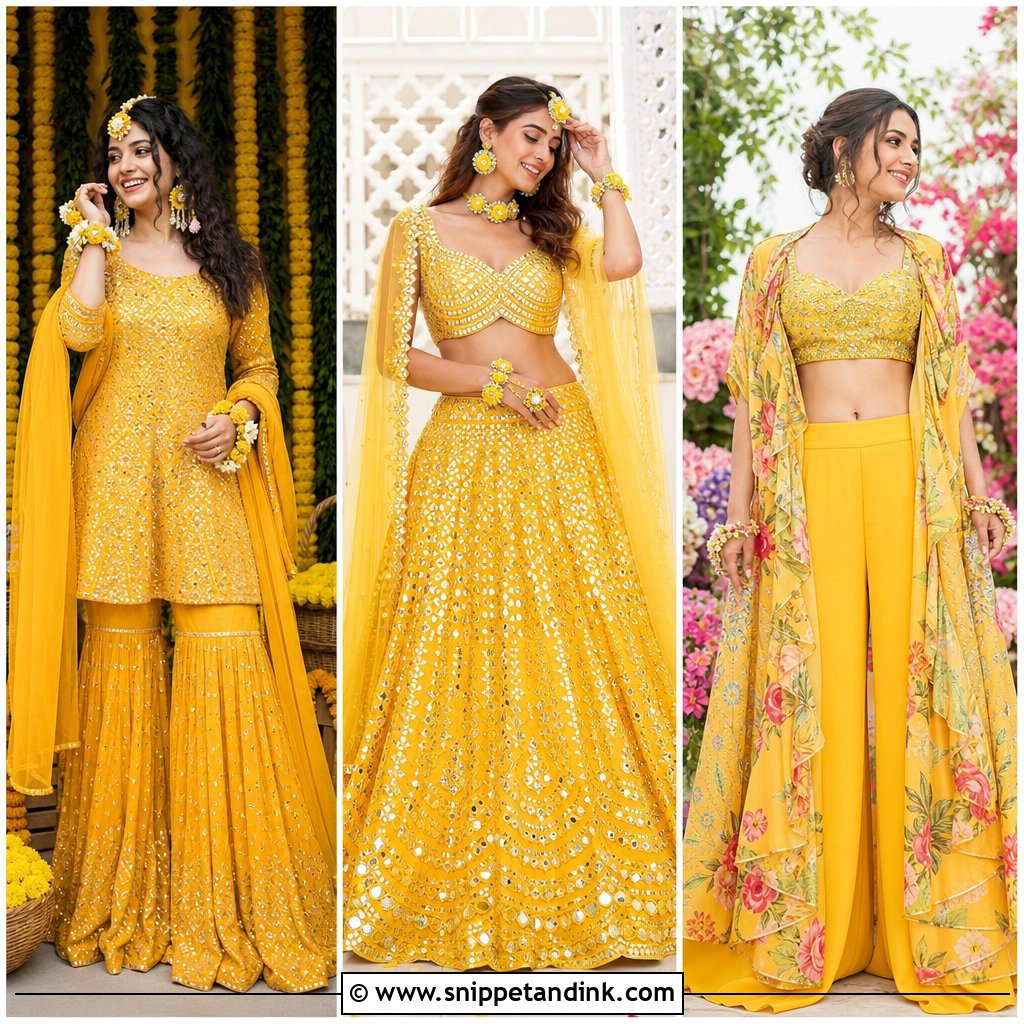
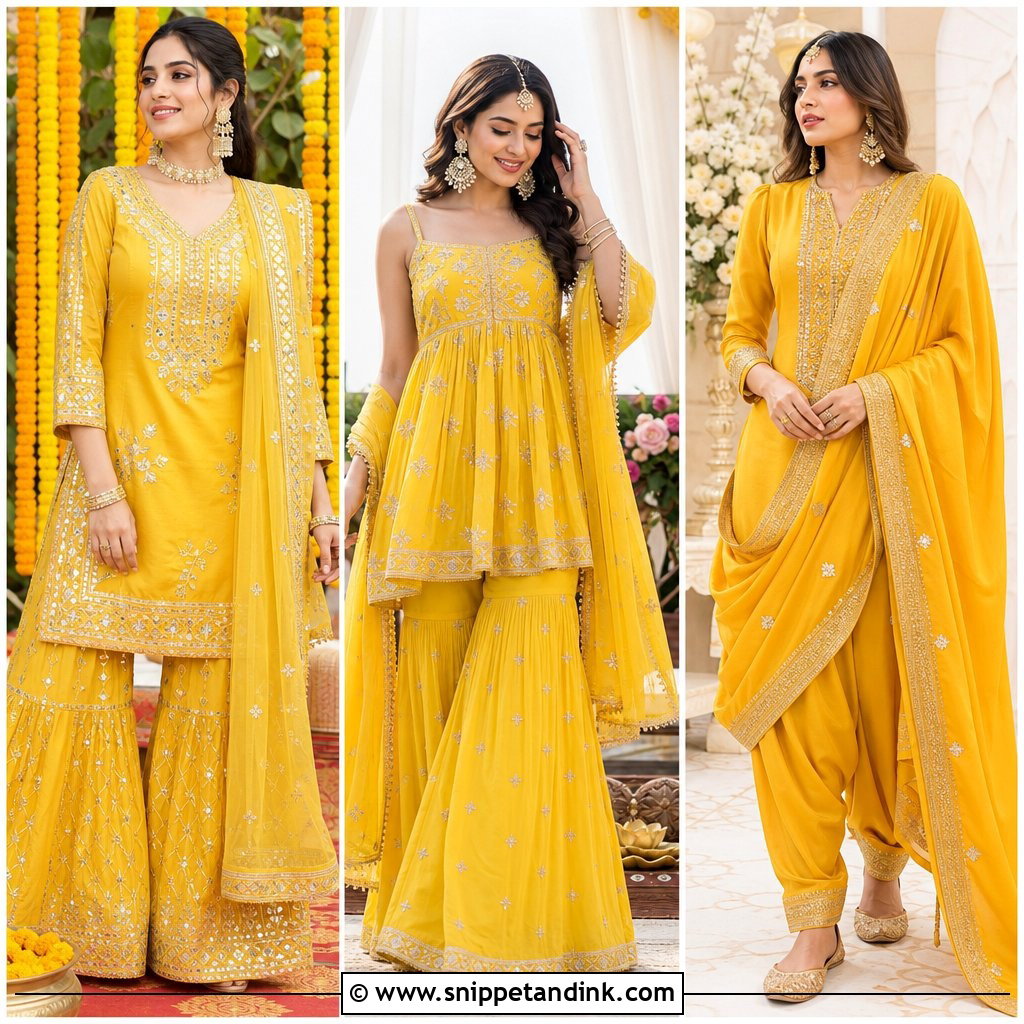
For anyone planning to dance, a sharara is my first suggestion. The wide flared pants give you all the swing of a lehenga with none of the risk of stepping on a hem. Wear a short straight kurti on top and a light dupatta, in cotton-silk, georgette or soft crepe. A little mirror work, gota or thread embroidery is plenty of sparkle for daytime. Add jhumkas, glass bangles, a potli and flat juttis. Drape the dupatta over one shoulder or around both arms so your hands stay free. Petite women look best in a shorter kurti; taller women can carry a longer, more layered version.
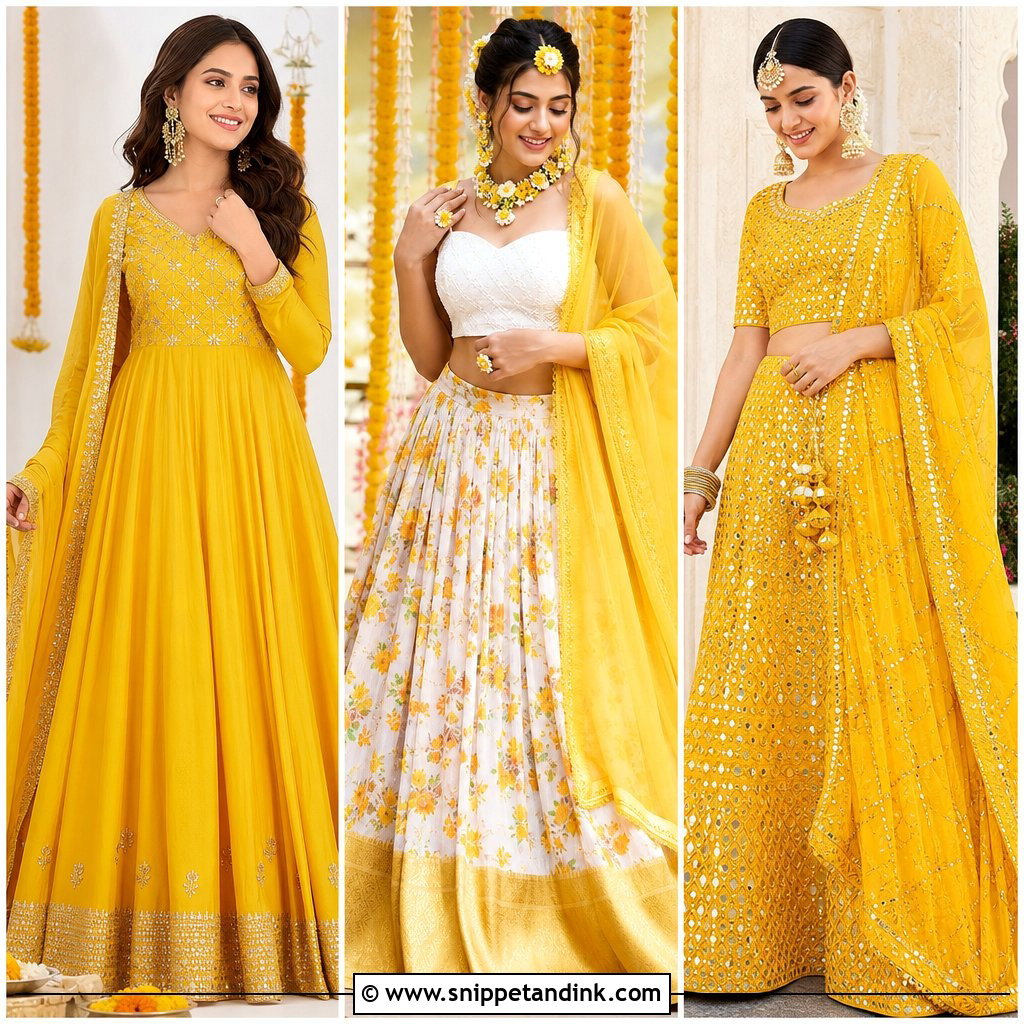
4. Yellow Anarkali Suit for Haldi Function
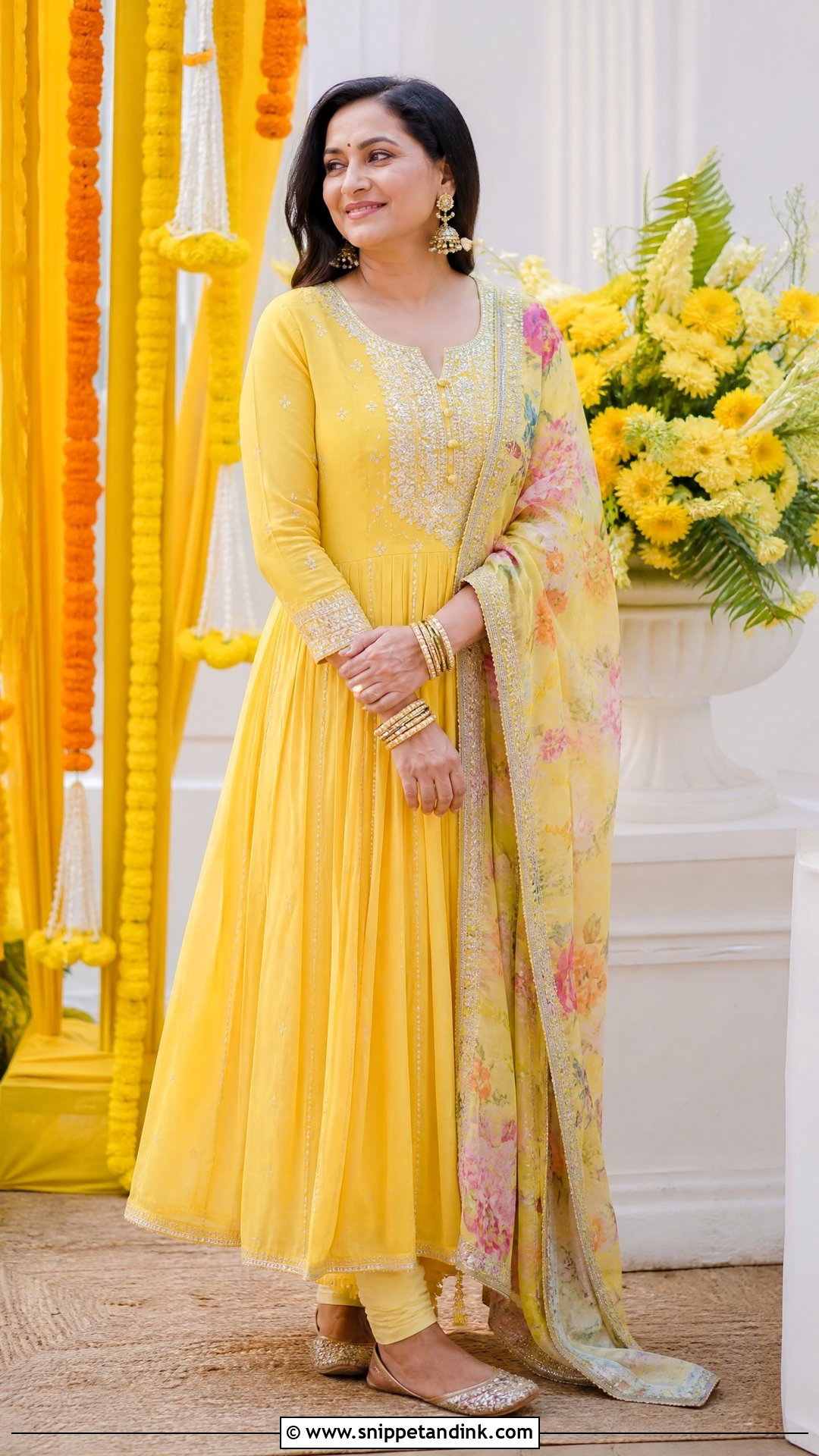
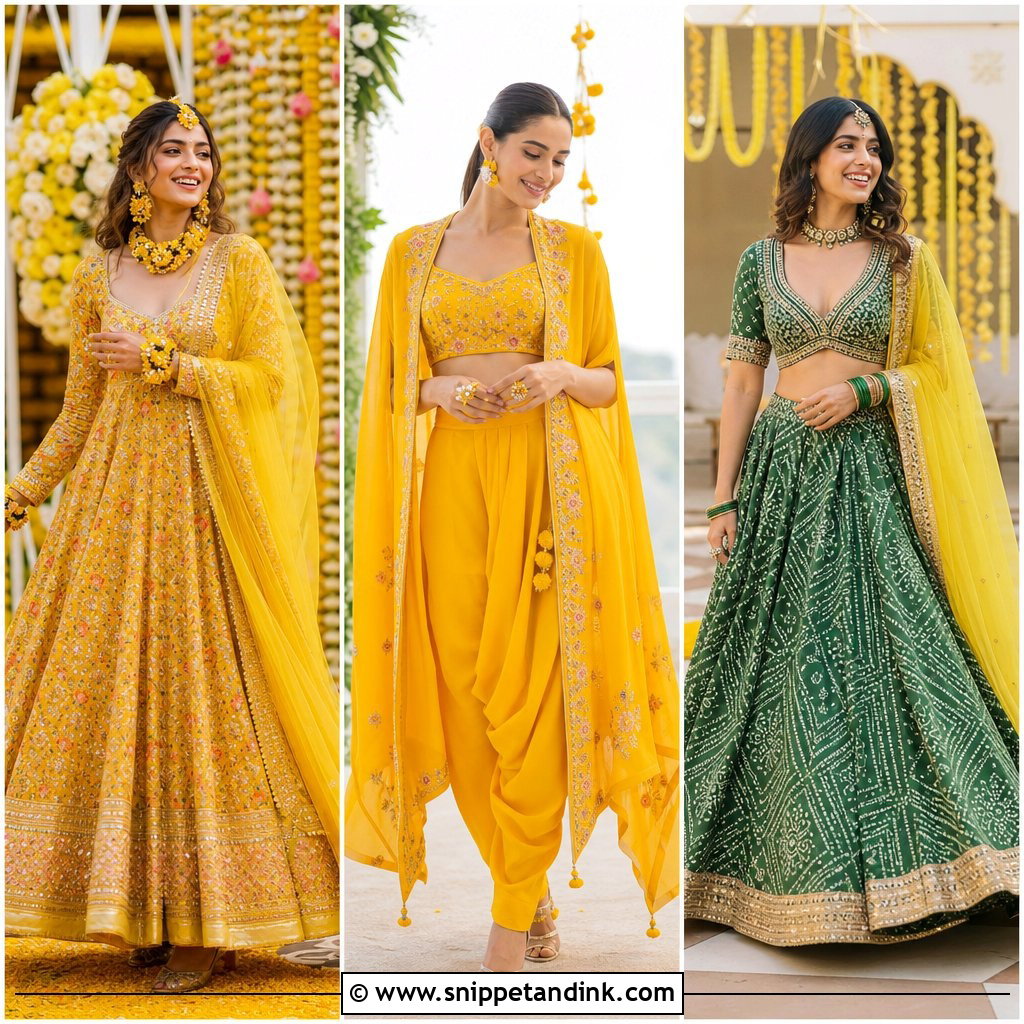
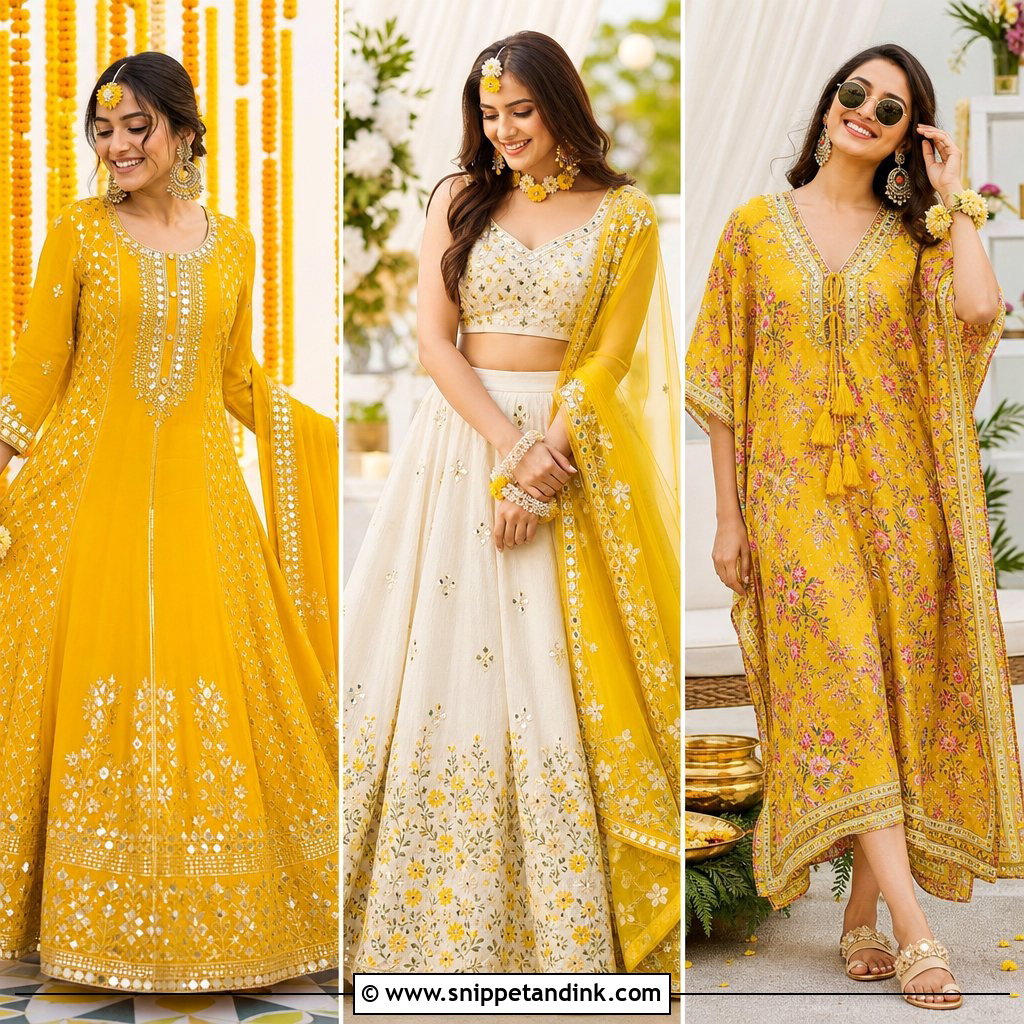
An Anarkali gives full coverage and still twirls, which is why I often suggest it to aunts, mothers and guests who prefer to stay covered. Choose calf or ankle length in cotton, chanderi or light georgette, with a gently fitted bodice so you can sit comfortably. Pair it with narrow pants and a contrasting floral, bandhani or organza dupatta. Medium jhumkas, simple bangles, a small bindi and embellished flats are plenty; a braid with tiny flowers adds the festive note. Keep the hem off the floor. A sweeping Anarkali collects turmeric, water and petals around the bottom faster than anything else in this list.
5. Yellow Palazzo Suit for Haldi Function
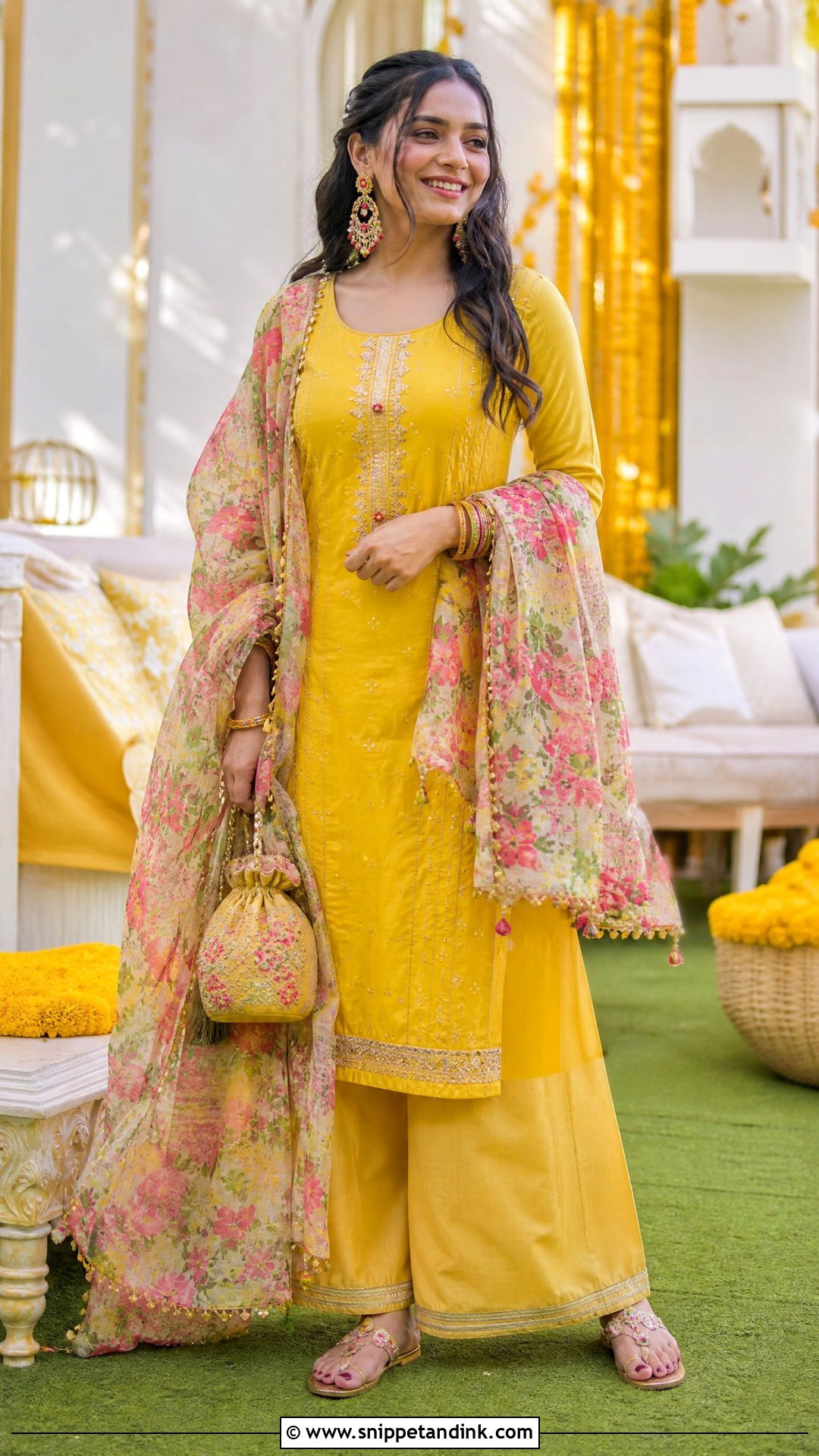
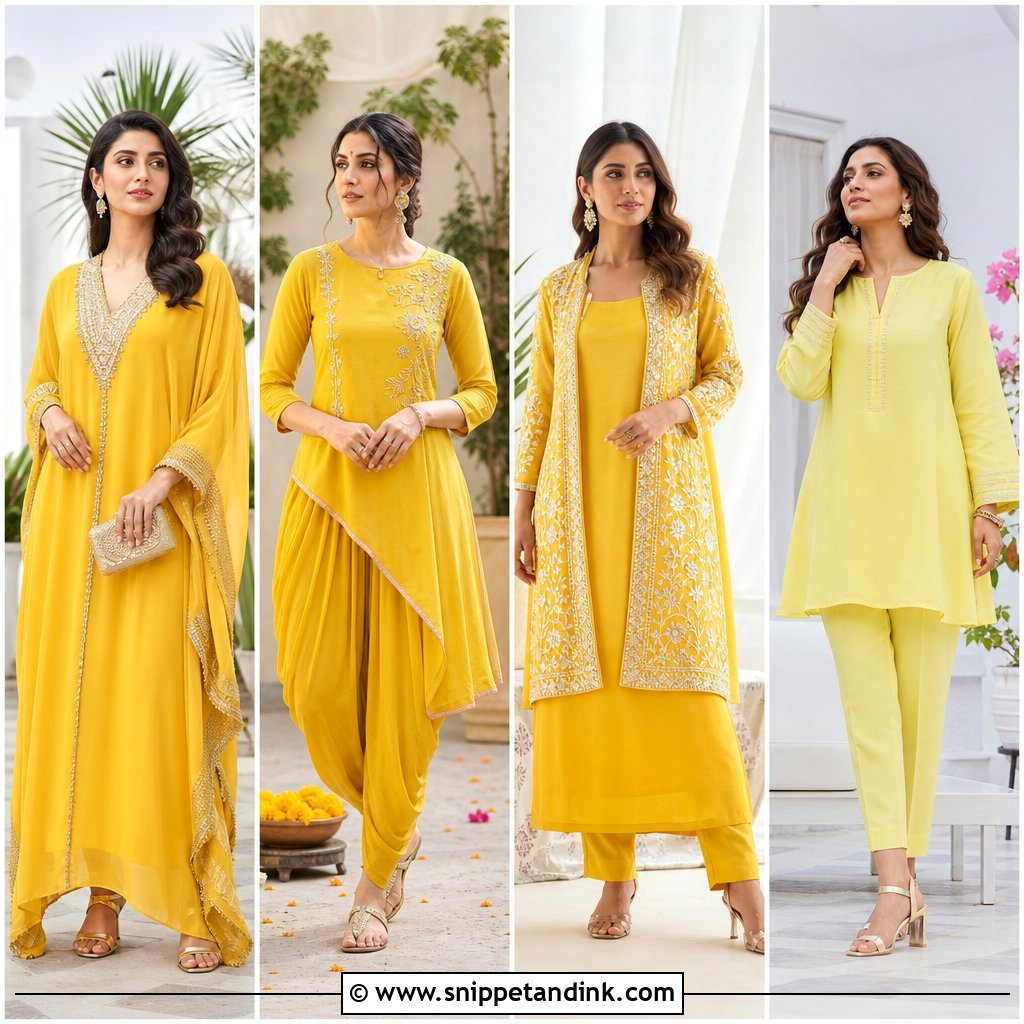
A yellow palazzo suit is the easy daytime option, and the wide legs flatter most body shapes. Combine a straight or slightly flared kurta with palazzos in soft cotton, rayon or crepe. The dupatta is where I’d bring in contrast: pink flowers, green leaves or block-printed motifs keep an all-yellow outfit from looking flat in photos. Statement earrings, coloured bangles, a small crossbody potli and open-toe flats finish it. Get the kurta length right, ending just above or below the widest part of your hips rather than at it. Guests can keep the embroidery subtle; close family can go brighter with mirror work.
6. Yellow Dhoti Pant Set for Haldi Function
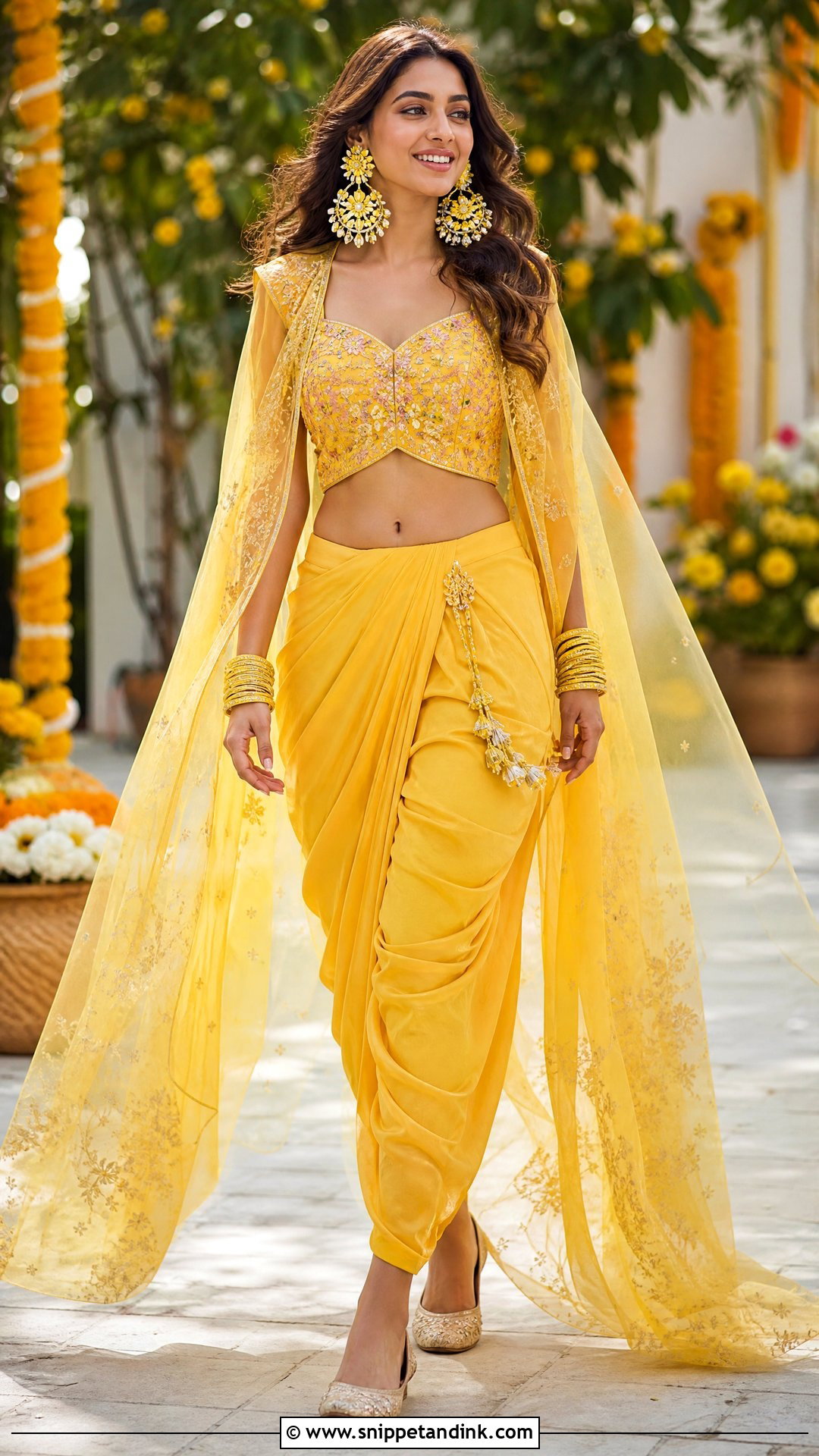
Fusion works well at haldi because the mood is playful, and a yellow dhoti pant set leans right into that. Start with draped dhoti pants and add a fitted crop top, short kurti or asymmetric tunic. Instead of a dupatta, I like a light cape stitched at the shoulders; it moves in photos and leaves both hands free for the paste. Oversized floral earrings, stacked bangles, a sleek ponytail and simple juttis complete it. Check the drawstring holds when you crouch, and keep the length above the ankle. Crepe or georgette drapes softly, while a cotton blend holds more structure outdoors.
7. Yellow Chikankari Kurta Set for Haldi Function
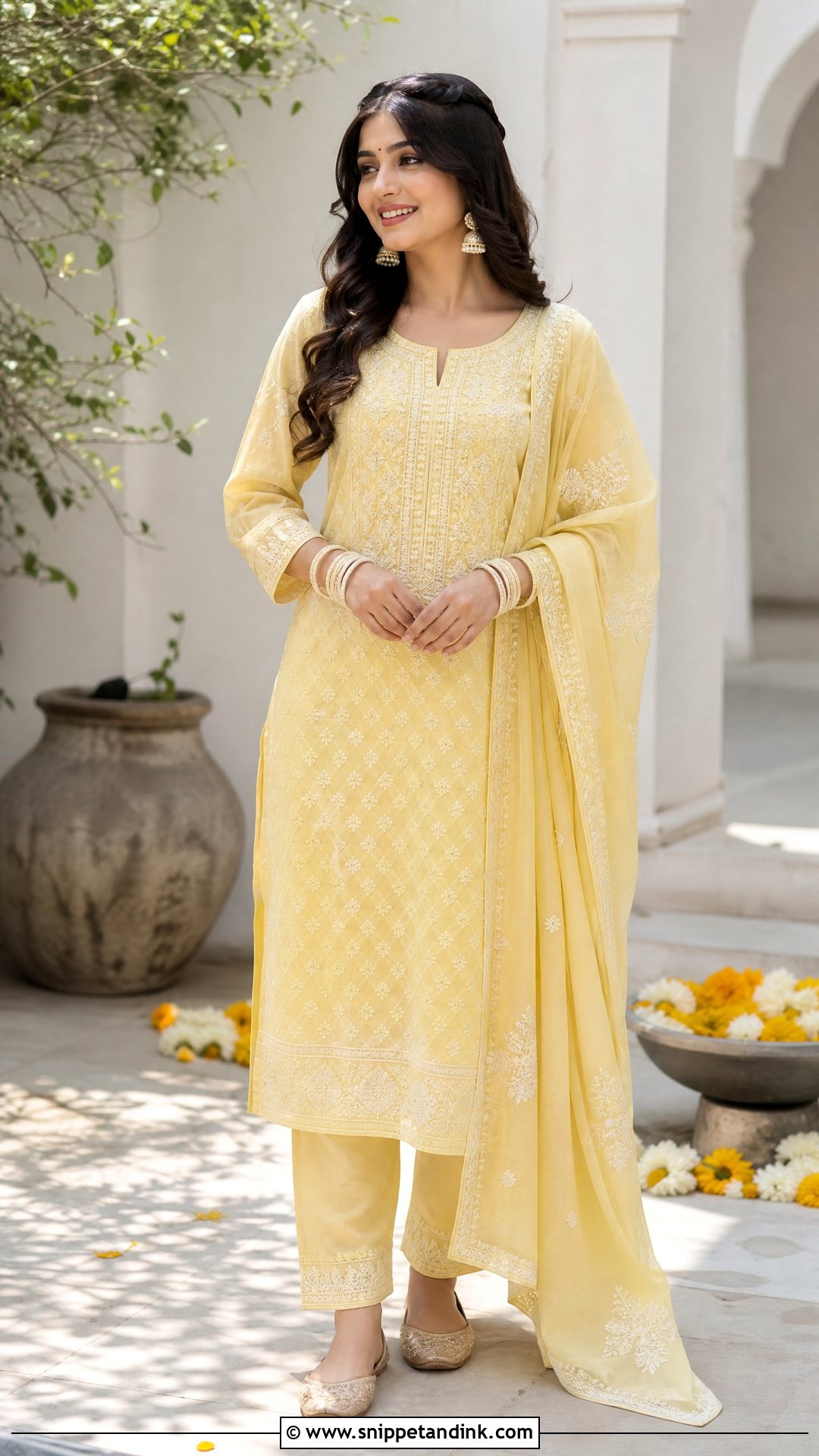
Chikankari is hand embroidery from Lucknow worked in fine white or tonal thread, and on a yellow kurta set it looks quietly special. Choose a breathable straight kurta, ankle-length pants and a light dupatta. White threadwork reads soft and daytime; tonal yellow is more understated. Pearl jhumkas, ivory bangles, a small bindi and neutral juttis suit it, with a low bun, soft braid or half-up style. I like this set for guests, mothers and sisters who want visible craft without weight. Side slits help when you sit. Skip sequins here; they look like evening wear in morning light.
8. Yellow Bandhani Lehenga for Haldi Function
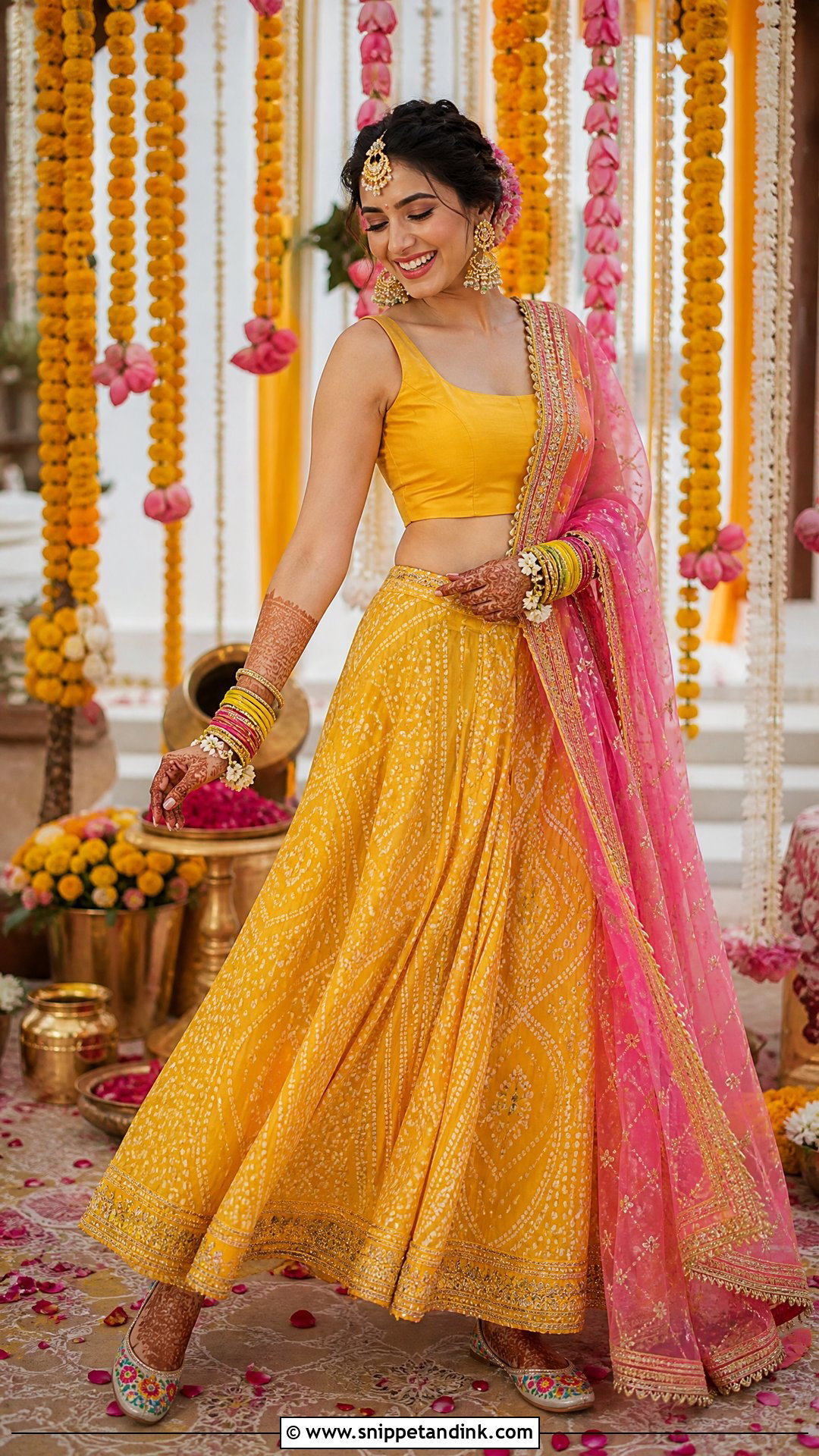
Bandhani is tie-dye made by pinching and binding tiny dots of cloth before dyeing, so the pattern is busy by nature. That’s why I always balance a yellow bandhani lehenga with a plain fitted blouse. A pink, red, green or orange dupatta adds depth and picks up the floral décor. Oxidised or gold-toned earrings, coloured bangles, a maang tikka and comfortable juttis are plenty; the dots do the rest. Brides can choose a more detailed blouse with gota borders. Pin the dupatta at both shoulder and waist, or it will slide off the first time someone grabs your hands to dance.
9. Yellow Organza Saree for Haldi Function
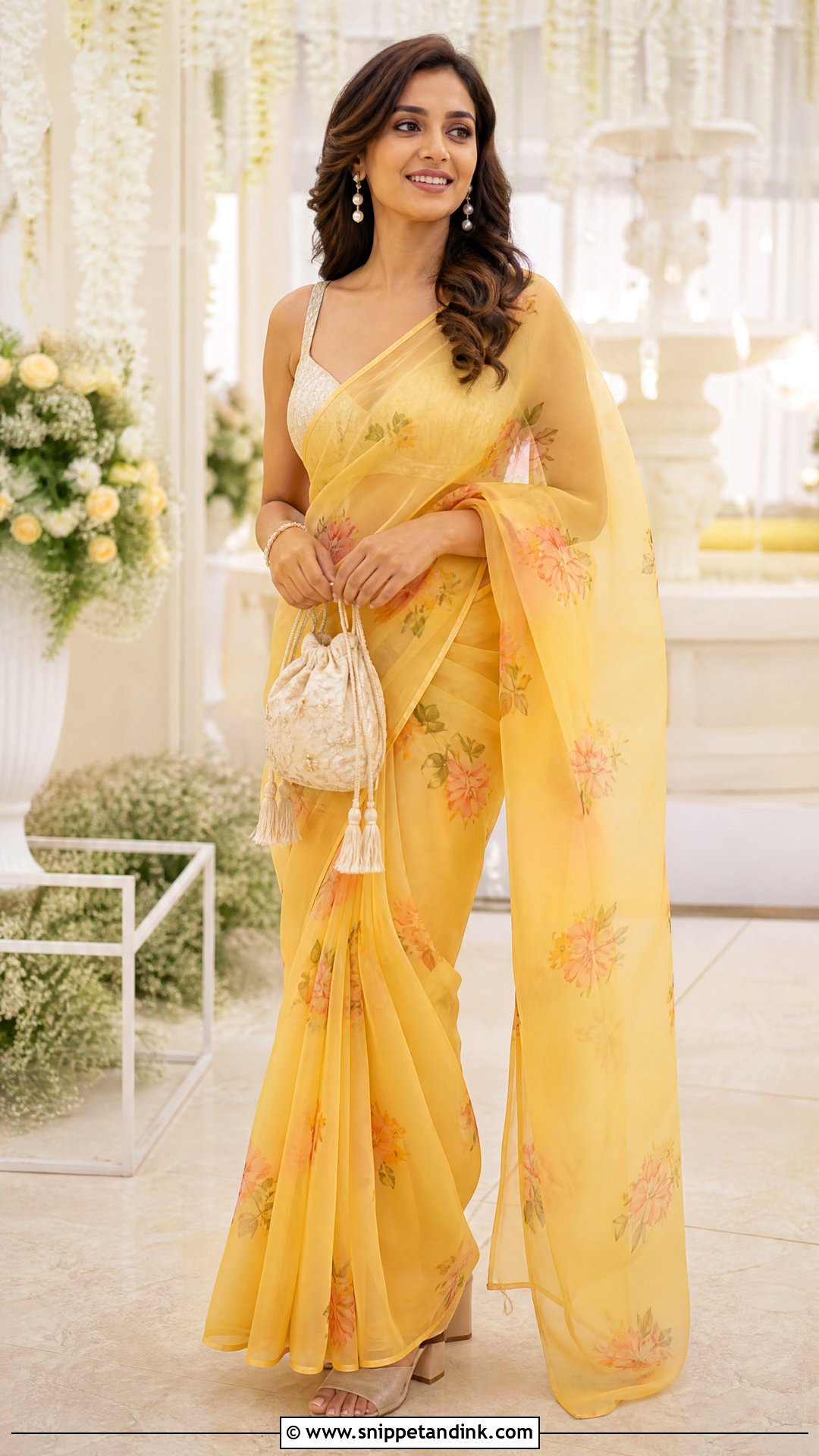
Organza has a crisp, slightly stiff hand, so a yellow organza saree looks polished at a haldi with a smarter dress code. Small floral prints, scalloped edges or light thread embroidery suit it. Pair it with a well-fitted blouse in yellow, ivory, pink or green. The fabric holds pleats well, but it also springs out of place, so I pin both pleats and pallu more firmly than I would with cotton. Pearl or floral earrings, a fine bracelet, a compact potli and flats or low block heels finish it. Organza shows wet spots and paste badly, so I’d only choose it when the turmeric is mainly for the couple.
10. Yellow Ruffle Saree for Haldi Function
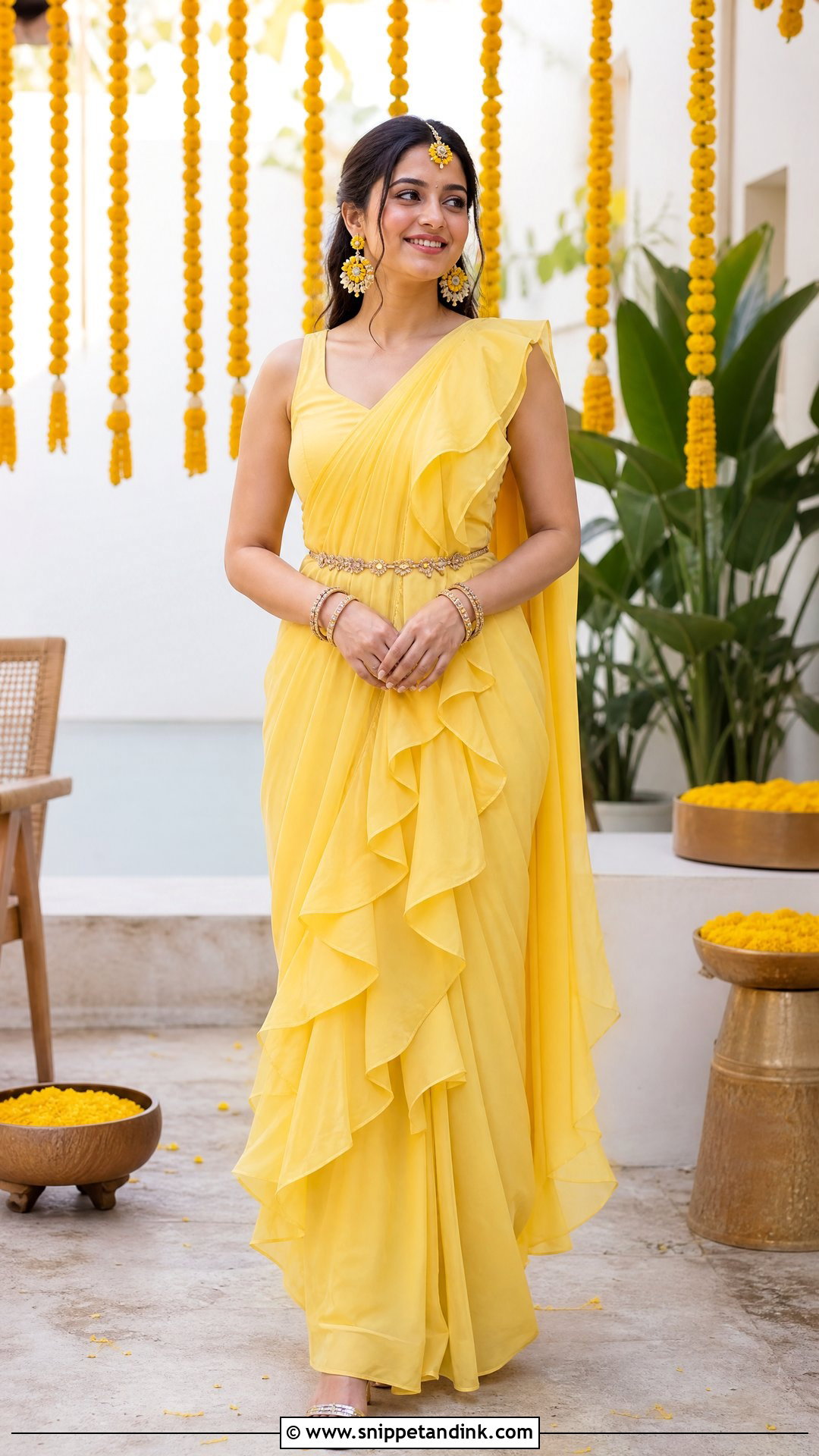
A ruffle saree gives you movement and drama, and the pre-draped version is a real help at a lively function because it stays put. Pair it with a plain sleeveless blouse, a modest crop top or a lightly embroidered fitted blouse. Let the ruffled border lead; floral studs, slim bangles, a small maang tikka and comfortable sandals are enough. Choose lightweight georgette over anything stiff or heavily layered, which droops once damp. A waist belt holds the drape and defines the shape. Keep the hem just off the ground to protect it from water, petals and turmeric.
11. Yellow Cape and Palazzo Set for Haldi Function
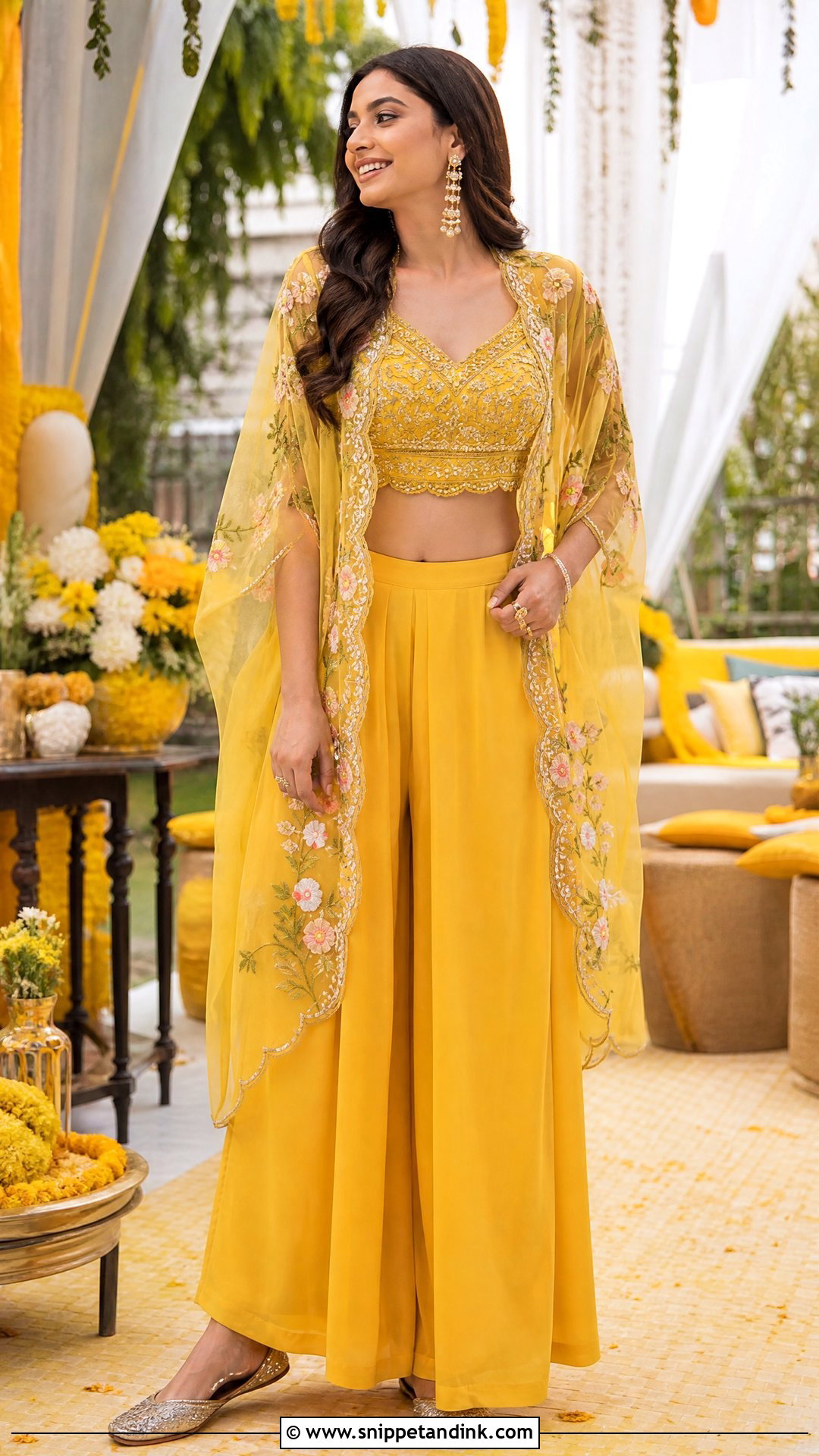
Loose dupattas are the biggest nuisance at a haldi, and a cape solves that. With a cape and palazzo set, you wear high-waisted palazzos with a fitted blouse or cropped kurti, then layer a sheer knee-length cape over the top. Floral embroidery on the cape border is enough to make it feel special. Long earrings, a fine ring, metallic flats and a sleek ponytail complete the look. Brides can go floor length for drama; guests will find knee length easier around the paste bowls. Before you buy, check the armholes of the cape let you lift both arms freely to dance or apply haldi.
12. Yellow Peplum Gharara for Haldi Function
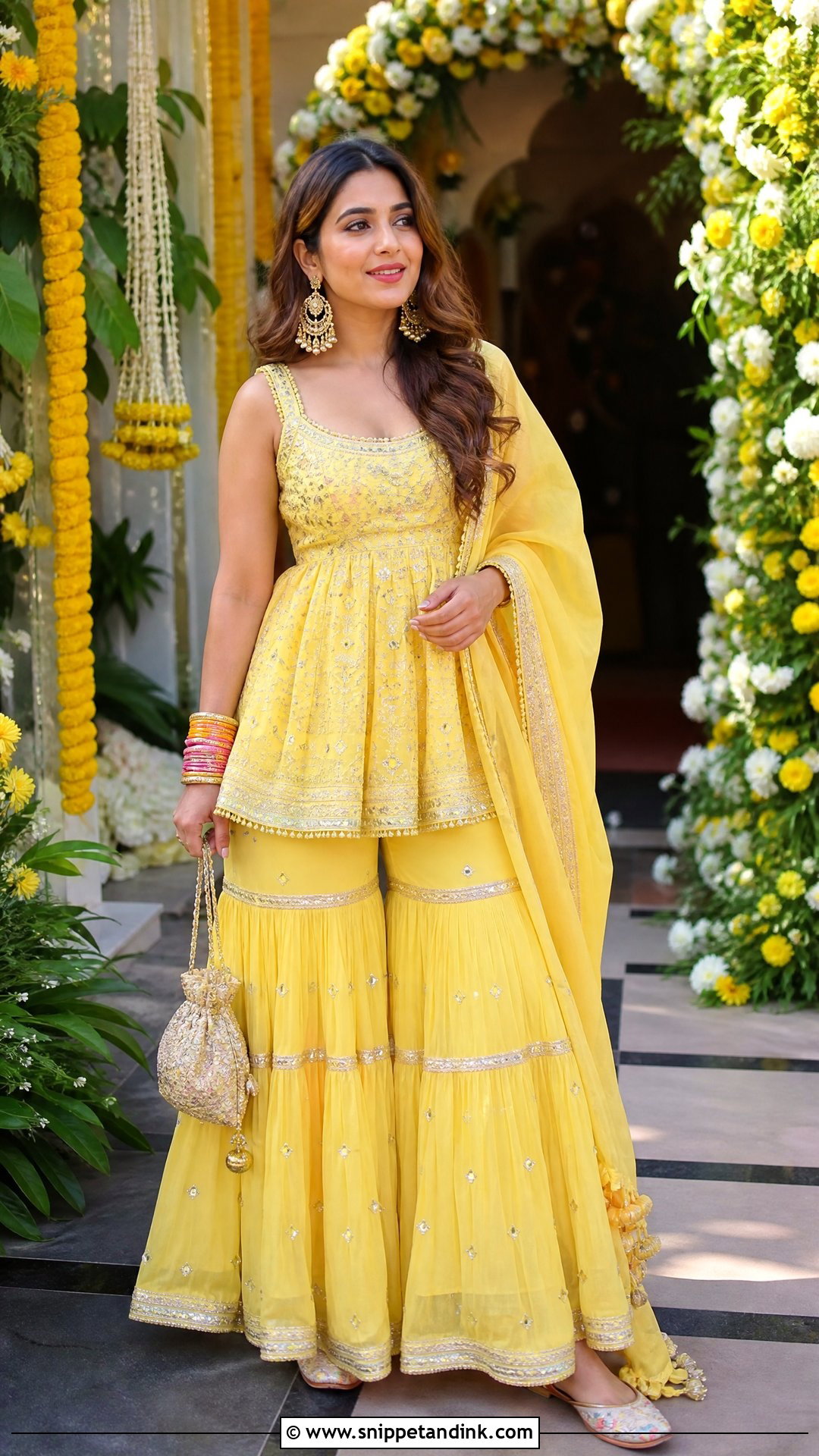
A yellow peplum gharara pairs a short flared top with gharara pants, which are fitted to the knee and then flare out with a gathered joint. Choose a peplum that fits neatly through the bodice and opens softly over the hips, and pants with controlled volume and a gota or embroidered border. Pin a light dupatta over one shoulder or skip it if the neckline is detailed. Chandbalis, bangles, embroidered juttis and a potli finish it. Fuller hips suit a longer peplum; petite women do better with a shorter top and less volume below. It’s a good choice for sisters and cousins who want something less predictable than a standard suit.
13. Yellow Floral Co-Ord Set for Haldi Function
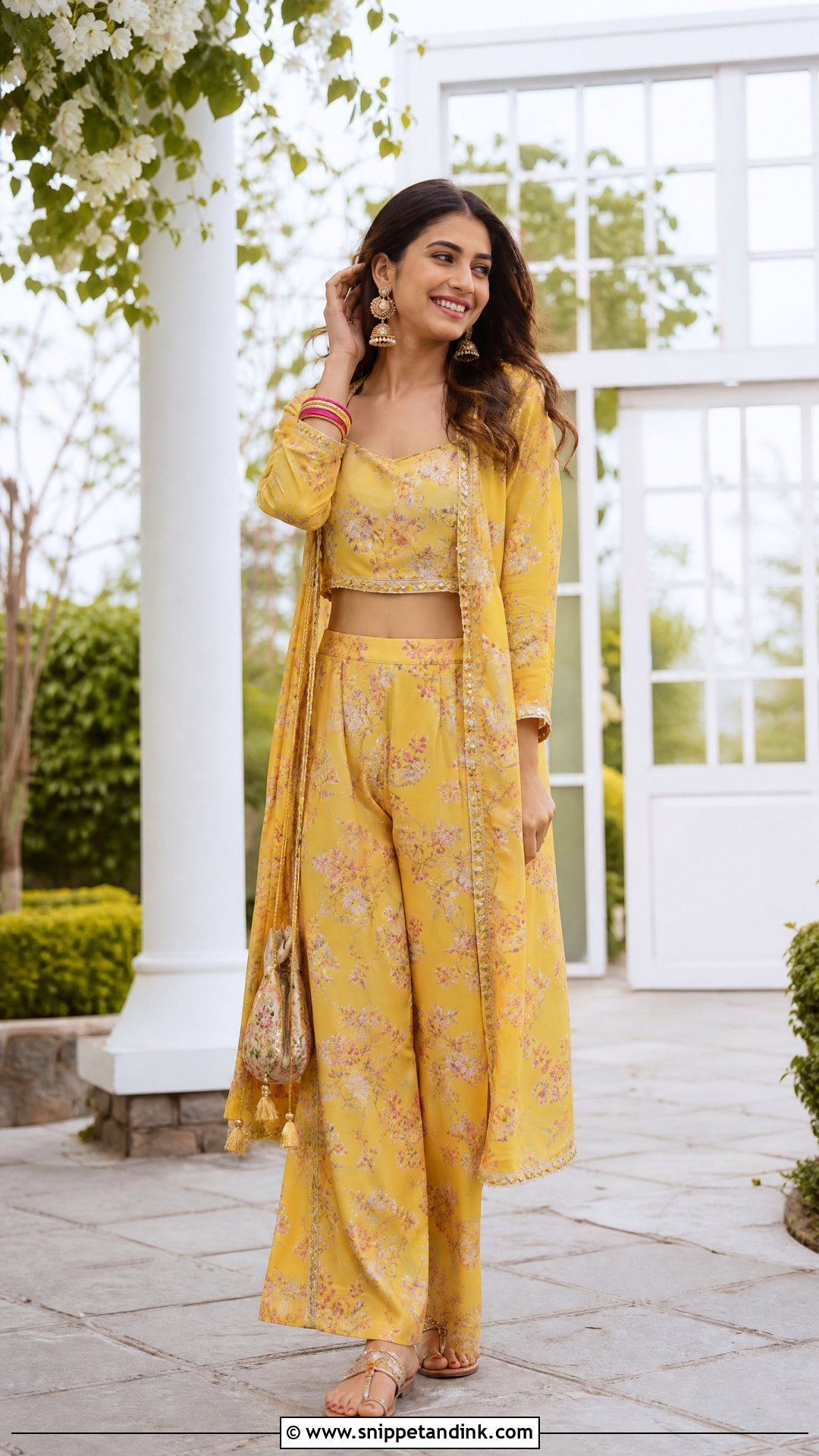
Co-ord sets suit a home, garden or poolside haldi where the mood is relaxed. A floral crop top or short tunic with matching wide-leg pants is quick to wear and easy to wash. Add a light long jacket if you want more coverage. Hoop jhumkas, bright bangles, flat sandals and a small woven bag finish it, with a ponytail or loose braid. I often put bridesmaids in these because they look festive without competing with the bride. Breathable cotton or viscose is the right fabric, and pants that skim the floor are the wrong length. Yellow mixed with pink, orange or green florals sits well against marigold décor.
14. Yellow Kaftan Dress for Haldi Function
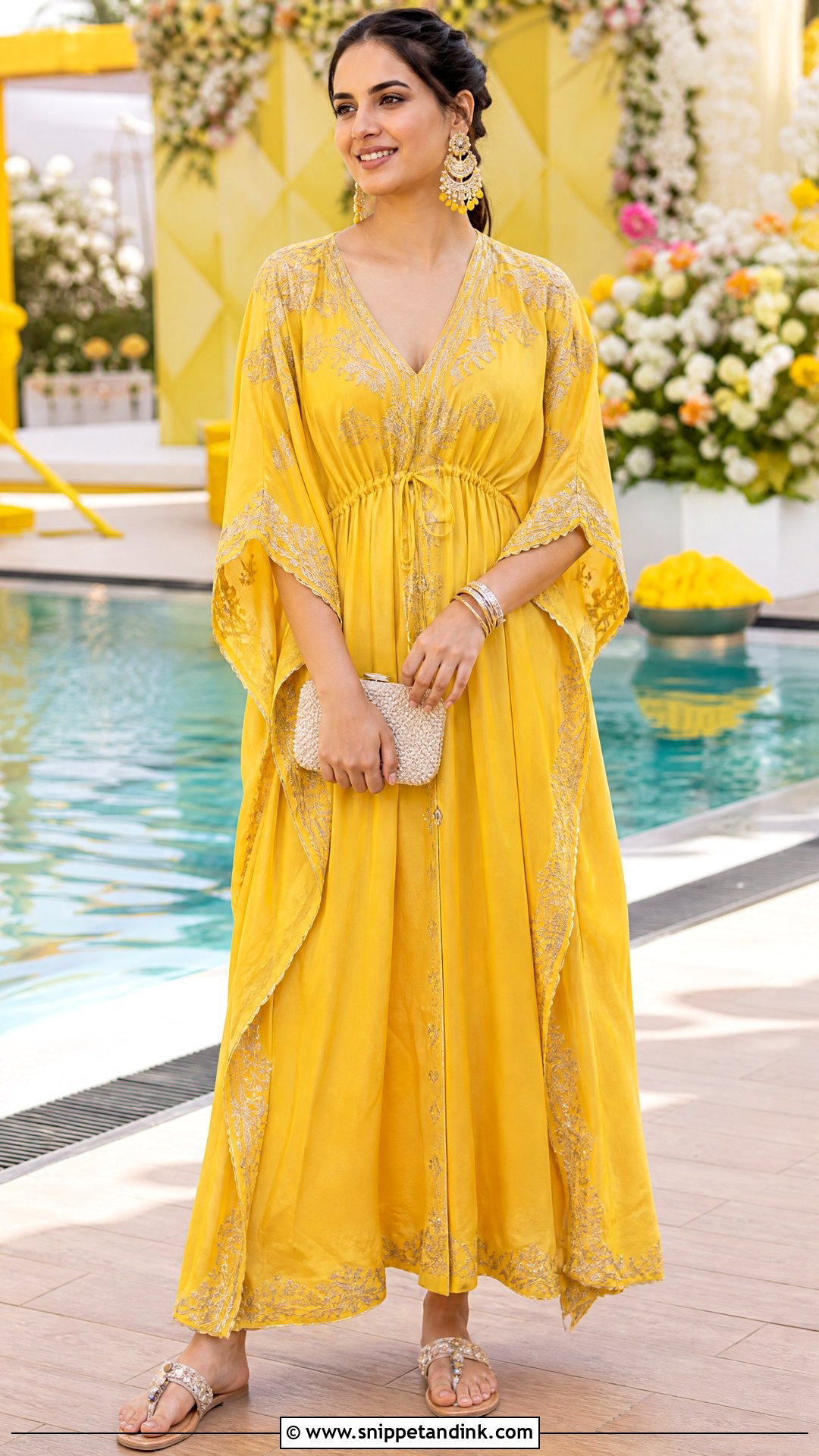
A kaftan is the most comfortable thing anyone can wear to a summer haldi, and it suits mothers, pregnant guests and anyone who doesn’t want a waistband. The risk is that it looks shapeless, so I always add a drawstring, a narrow belt or a defined waist seam. Midi or ankle length both work. Decorative borders, mirror accents or small floral motifs make it festive. Style it with statement earrings, slim bangles, embellished flat sandals and a compact clutch, plus a centre-parted low bun or soft waves. Keep the hem off the floor and avoid very delicate fabric if the turmeric is going to fly.
15. Yellow Jacket Lehenga for Haldi Function
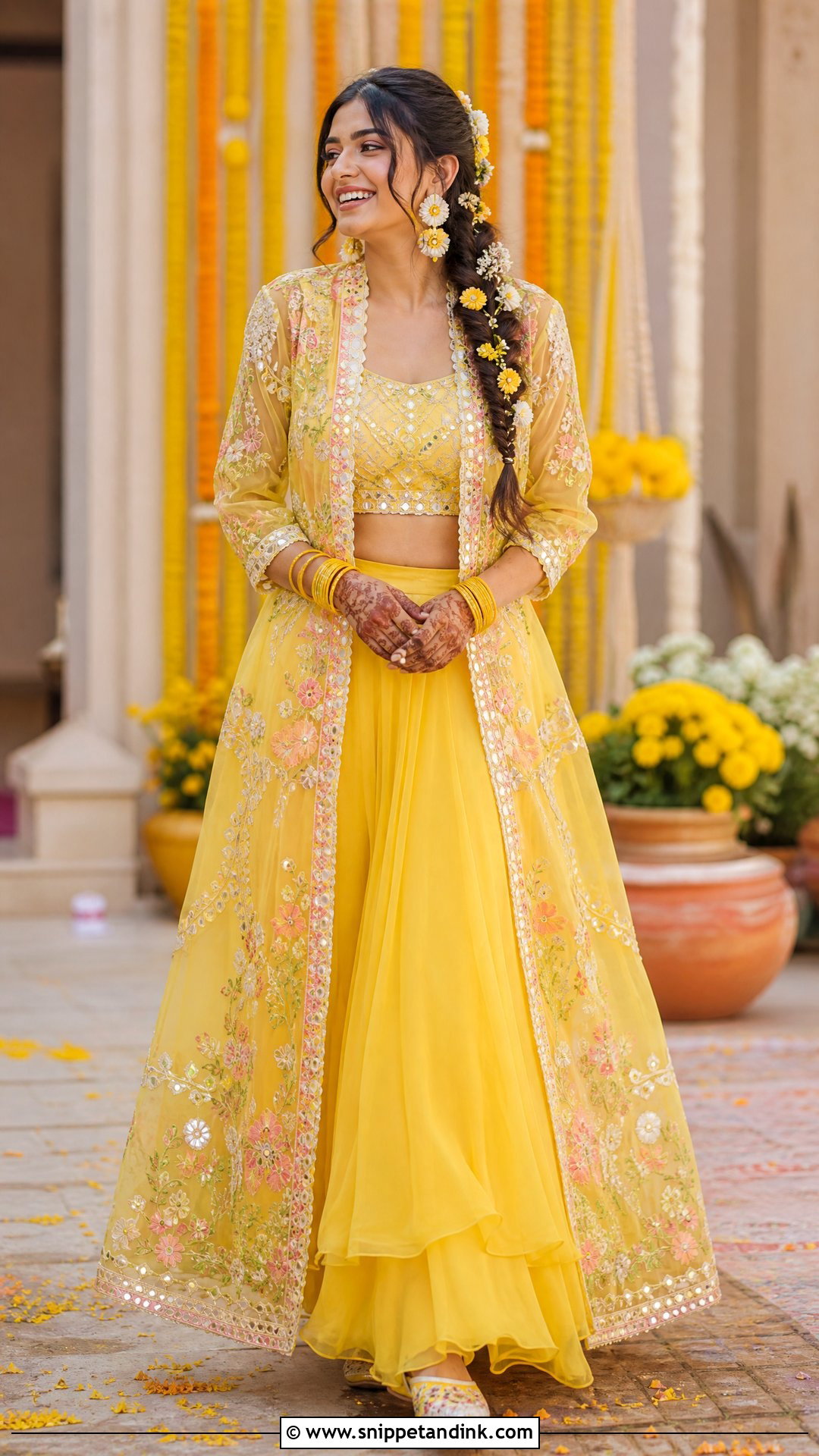
A jacket lehenga gives coverage and removes the dupatta altogether. Start with a flowing, light skirt and a fitted blouse, then add a long open-front jacket in organza, georgette or net. Floral embroidery, mirror work or a contrasting border frames it without adding weight. Drop earrings, a few bangles, juttis and a neat braid are enough. Brides can choose a more decorative jacket; sisters and bridesmaids look right in subtle prints. Skip the cancan so you can sit. The open front creates a long line that flatters petite, tall and curvy frames alike, provided the jacket length is tailored to you and not left at the factory default.
16. Yellow Half Saree for Haldi Function
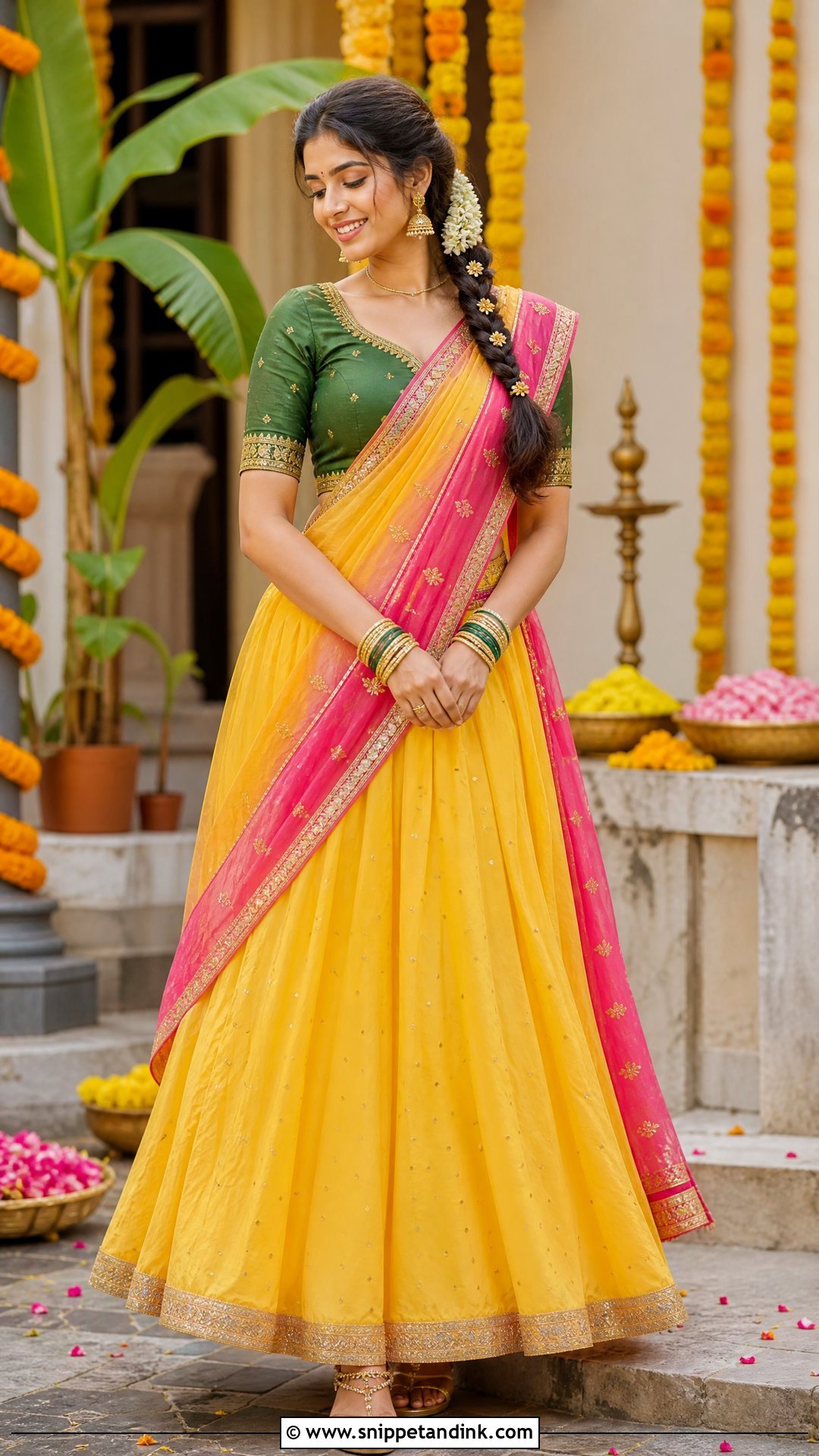
The half saree, or langa voni, is a skirt, blouse and dupatta draped like a saree, and it’s lovely at a South Indian haldi ceremony or any function that leans traditional. Pair a flowing yellow skirt with a fitted blouse and a contrasting voni. Green, pink, orange or ivory borders give it definition. Temple earrings, glass bangles, a small bindi, anklets and plain gold or neutral sandals complete it, with a long braid wound in flowers. I’d choose a light cotton-silk over heavy ceremonial silk if turmeric is going around. Pin the voni at shoulder and waist so it stays put.
17. Yellow Patiala Suit for Haldi Function
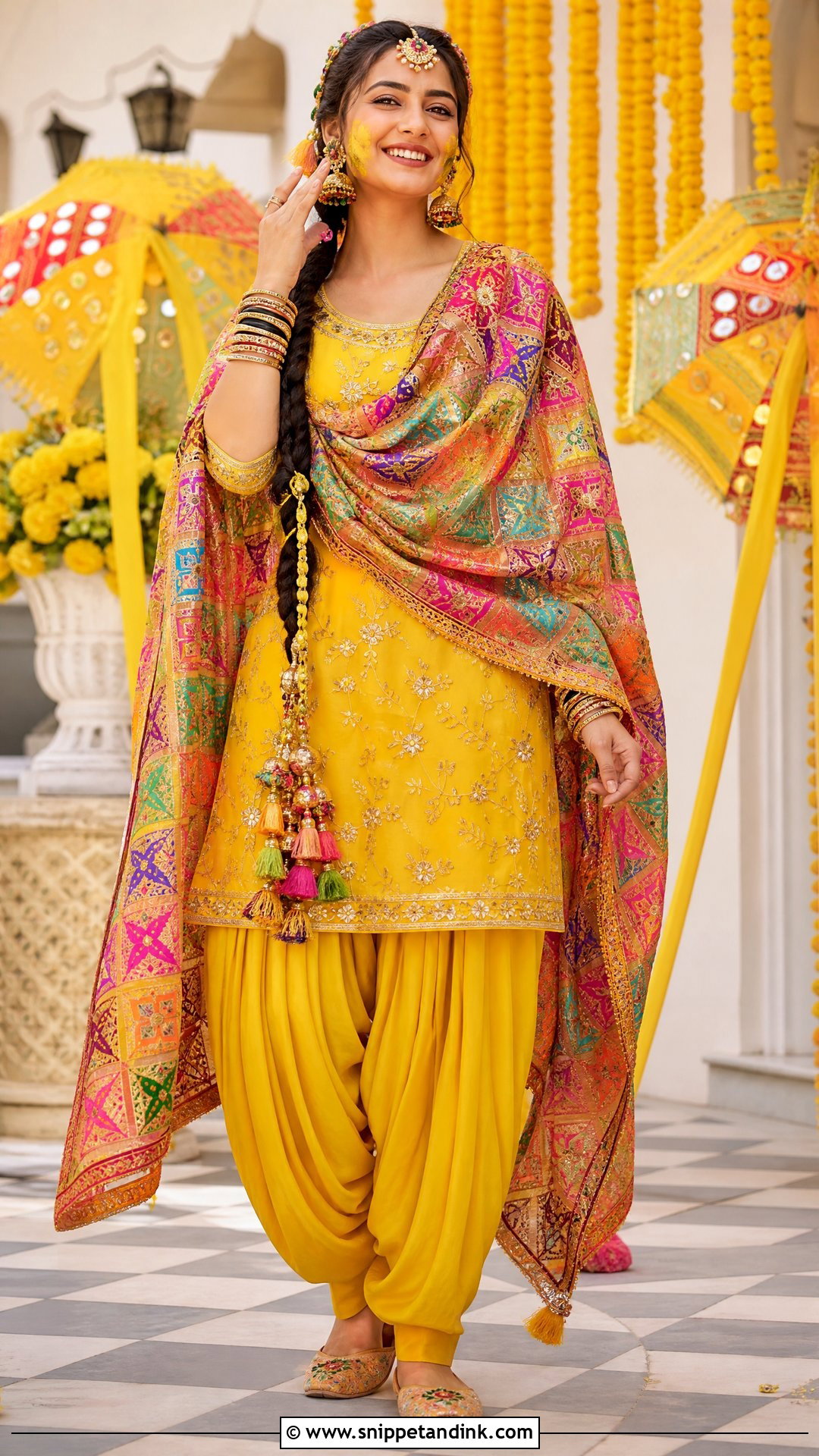
The Patiala suit brings Punjabi colour and swagger to a haldi. A short kameez over pleated Patiala salwar gives you masses of room to sit, walk and dance, and a phulkari or light printed dupatta adds the colour. Choose a kameez with threadwork, gota or small mirrors rather than dense embellishment. Jhumkas, stacked bangles, a paranda braid and embroidered Punjabi juttis finish it. Pink, orange and green accents pop against yellow. Pin the dupatta at one shoulder or loop it round the neck. Sisters, cousins and bridesmaids wear this well, and a bride can dress it up with floral jewellery and a richer dupatta.
18. White Kurta With Yellow Dupatta for Haldi Function
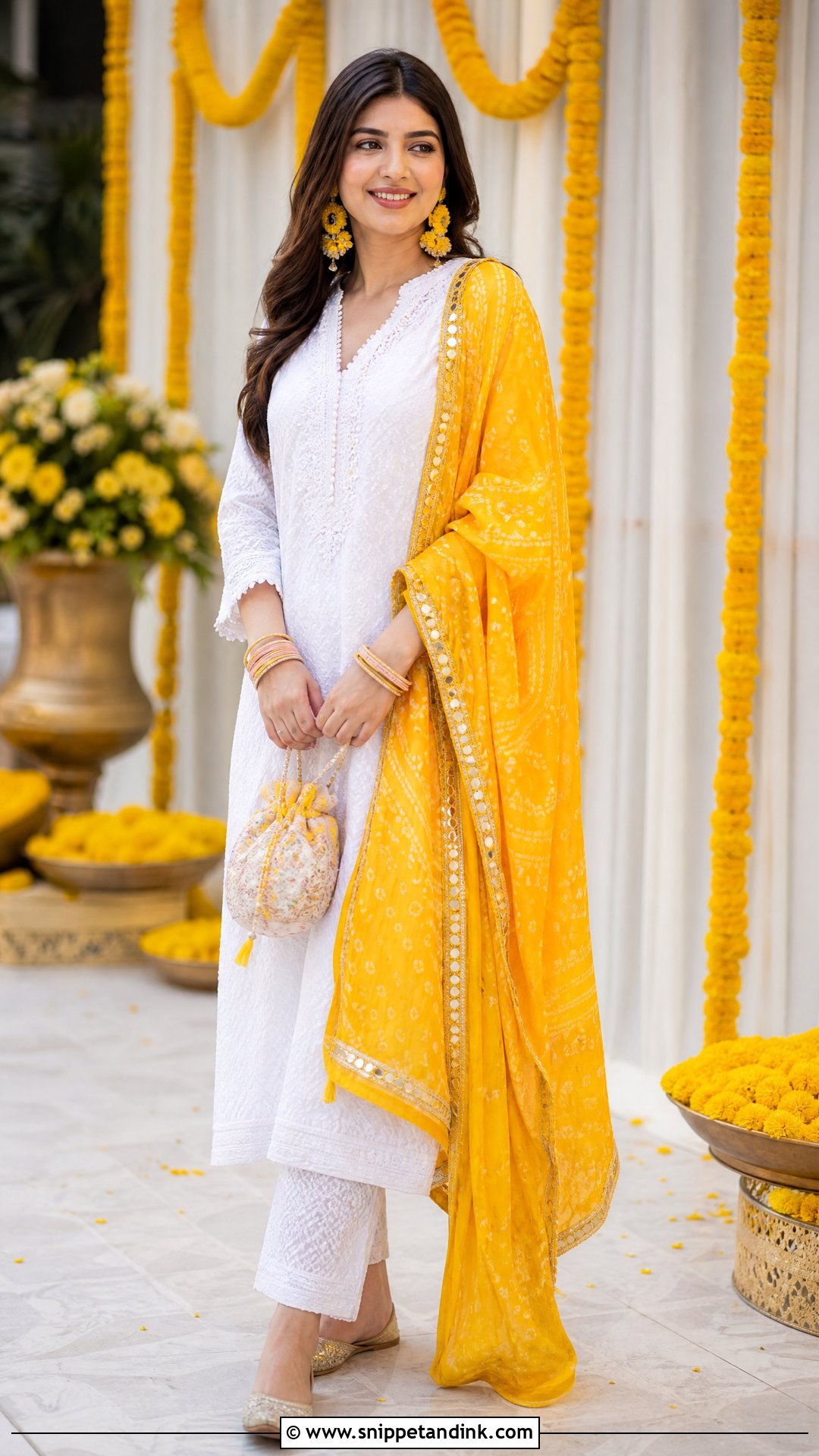
White and turmeric yellow look fresh together, but this is the outfit I’m most careful about. A white cotton or chikankari kurta with matching straight pants and a bright bandhani, leheriya or floral dupatta works for guests and bridesmaids who don’t want head-to-toe yellow. Yellow flower earrings, glass bangles, neutral juttis and a potli finish it, with a low ponytail or loose braid. The catch is obvious: white shows every streak of turmeric, and the stain sets fast. Ask the hosts whether guests will be applying haldi, and wear washable pieces you can treat that same evening, not sentimental embroidery.
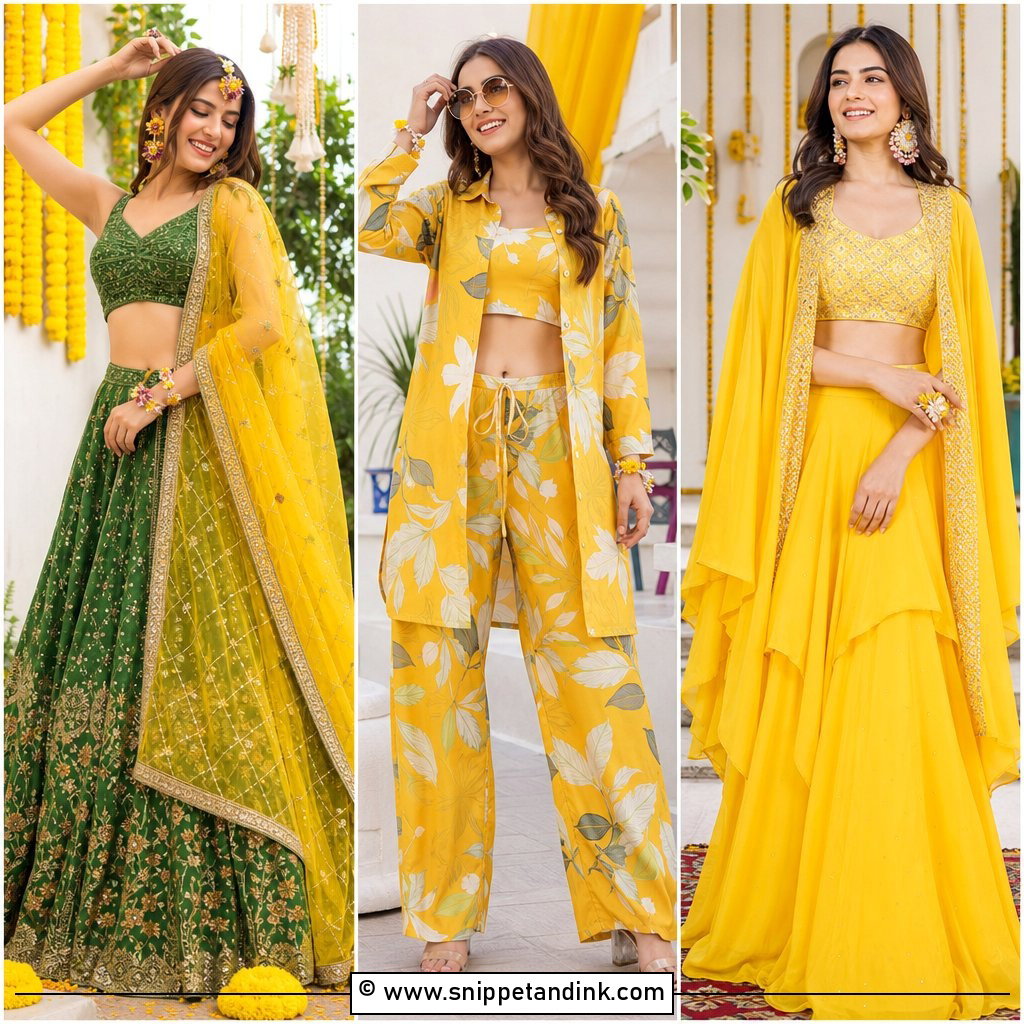
19. Orange Lehenga for Haldi Function
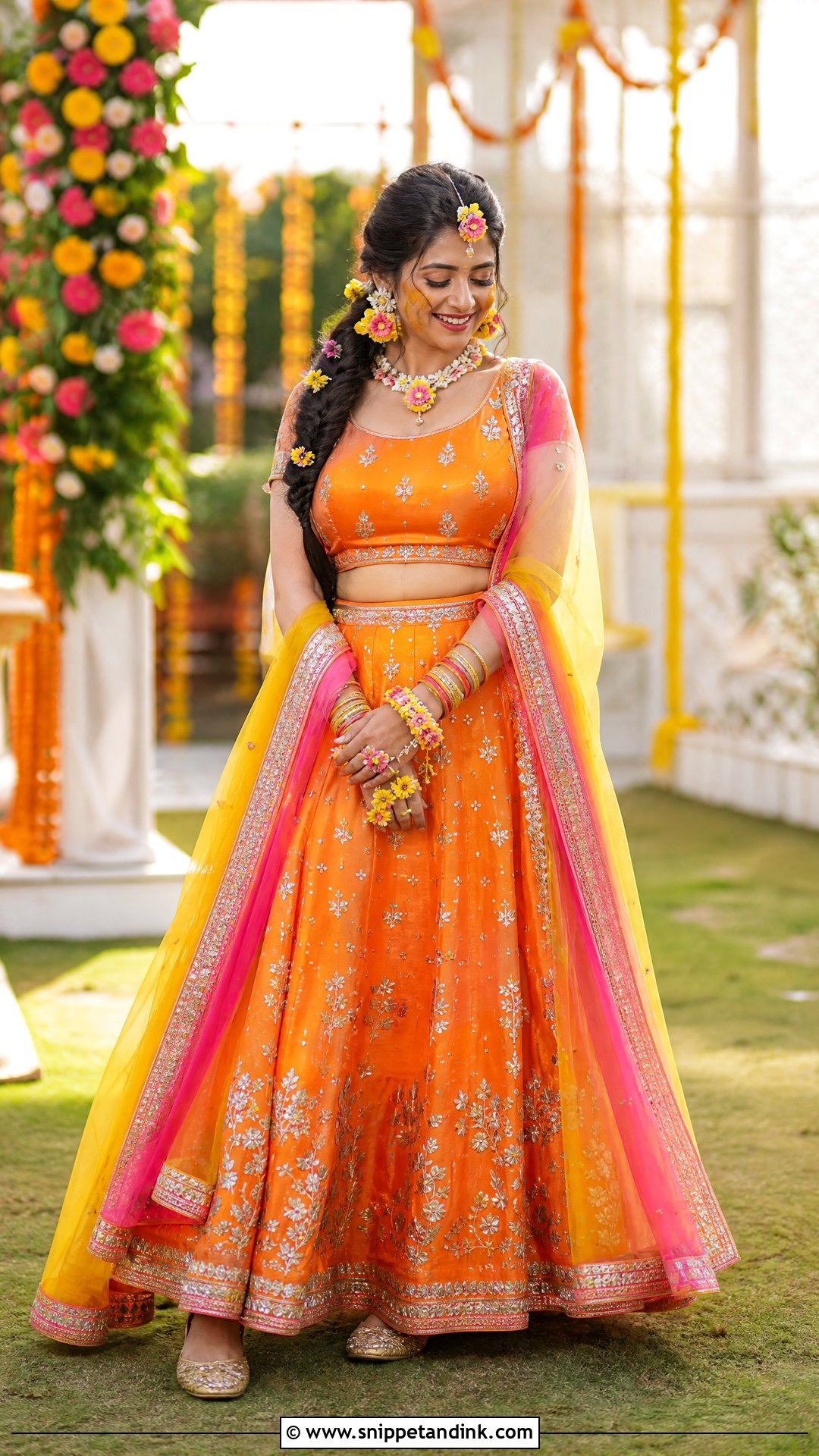
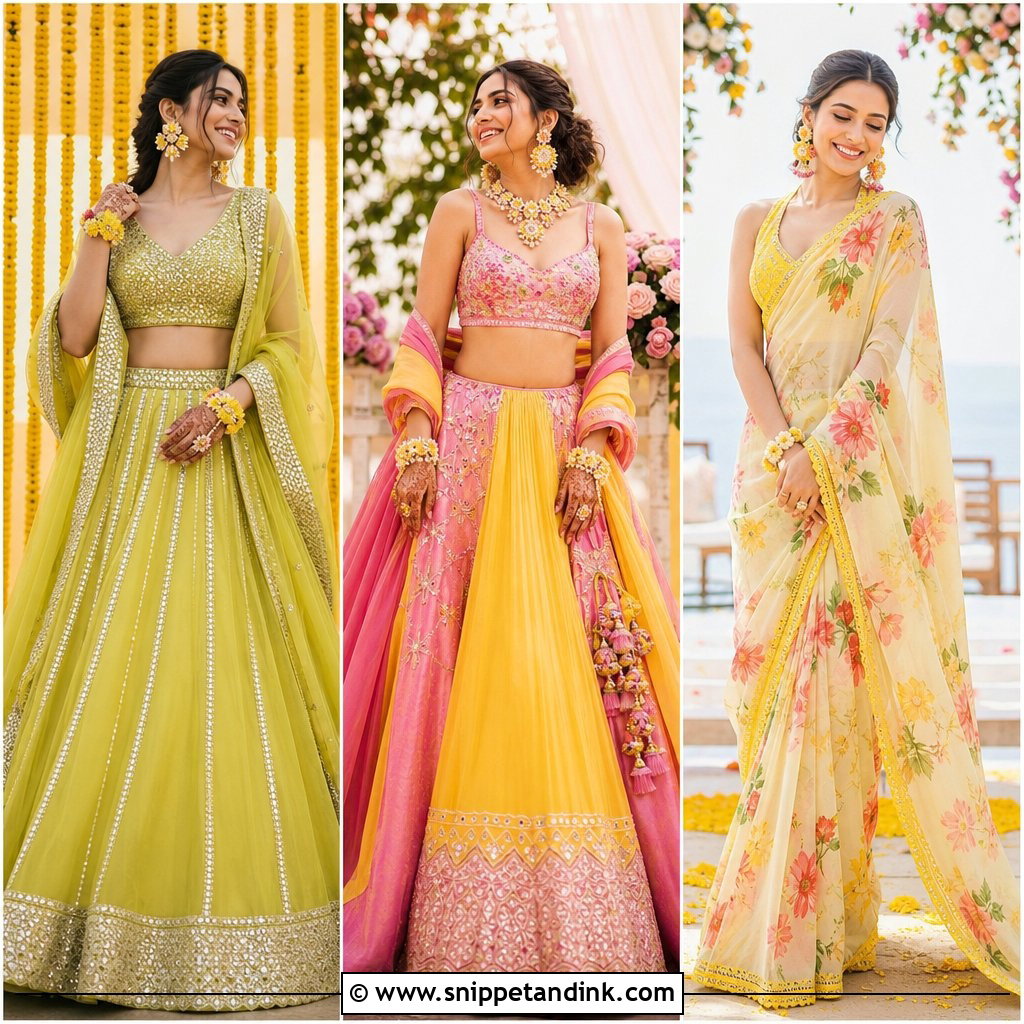
Haldi outfits don’t all have to be yellow. A marigold orange lehenga is just as joyful and actually stands out better against yellow décor. Choose a light printed or lightly embroidered skirt with a matching blouse and a yellow or pink dupatta. Floral jewellery, coloured bangles, a small maang tikka and gold-toned juttis complete it, and a braid with yellow flowers ties the colours together. Brides can pair orange with fuchsia for a bolder mix; guests might prefer softer orange with ivory. A practical bonus: orange hides turmeric splashes far better than pale fabrics, which matters if close family will be in the thick of it.
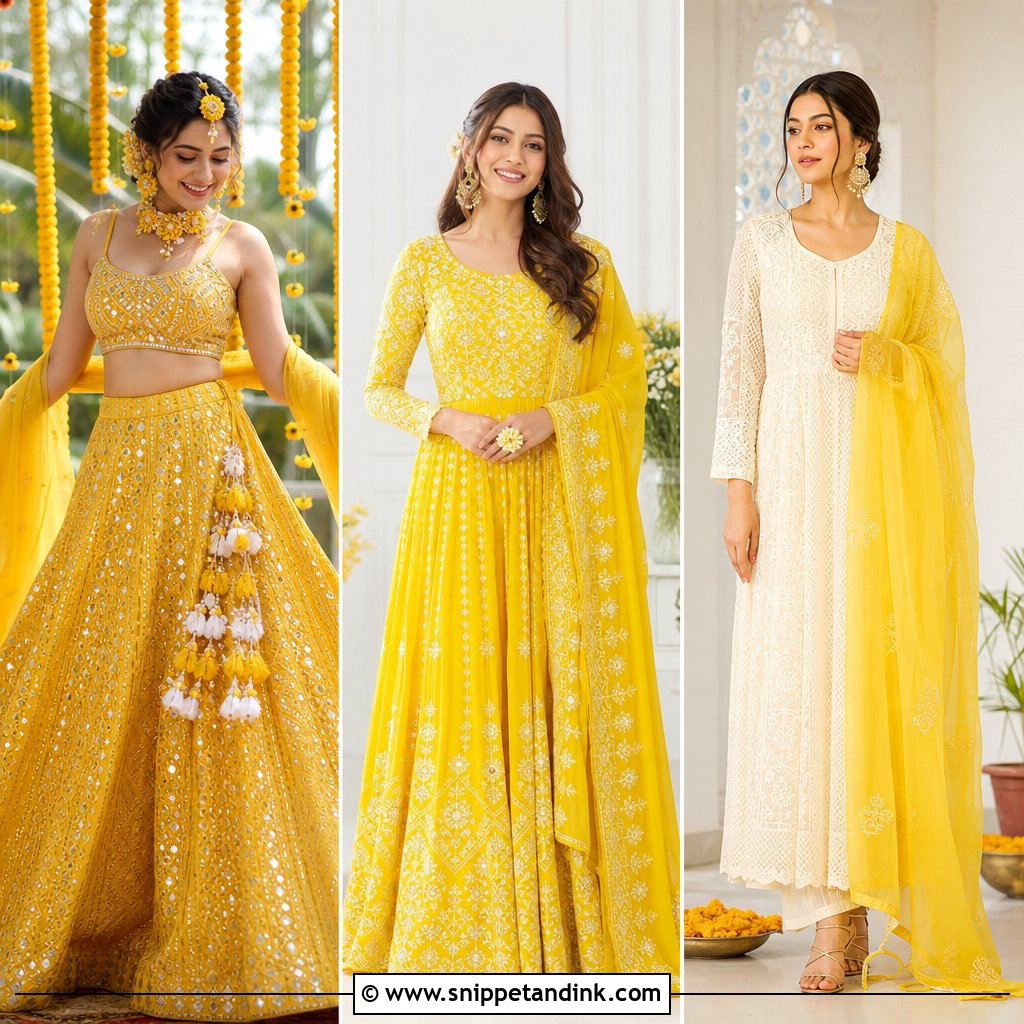

20. Lime Green Sharara for Haldi Function
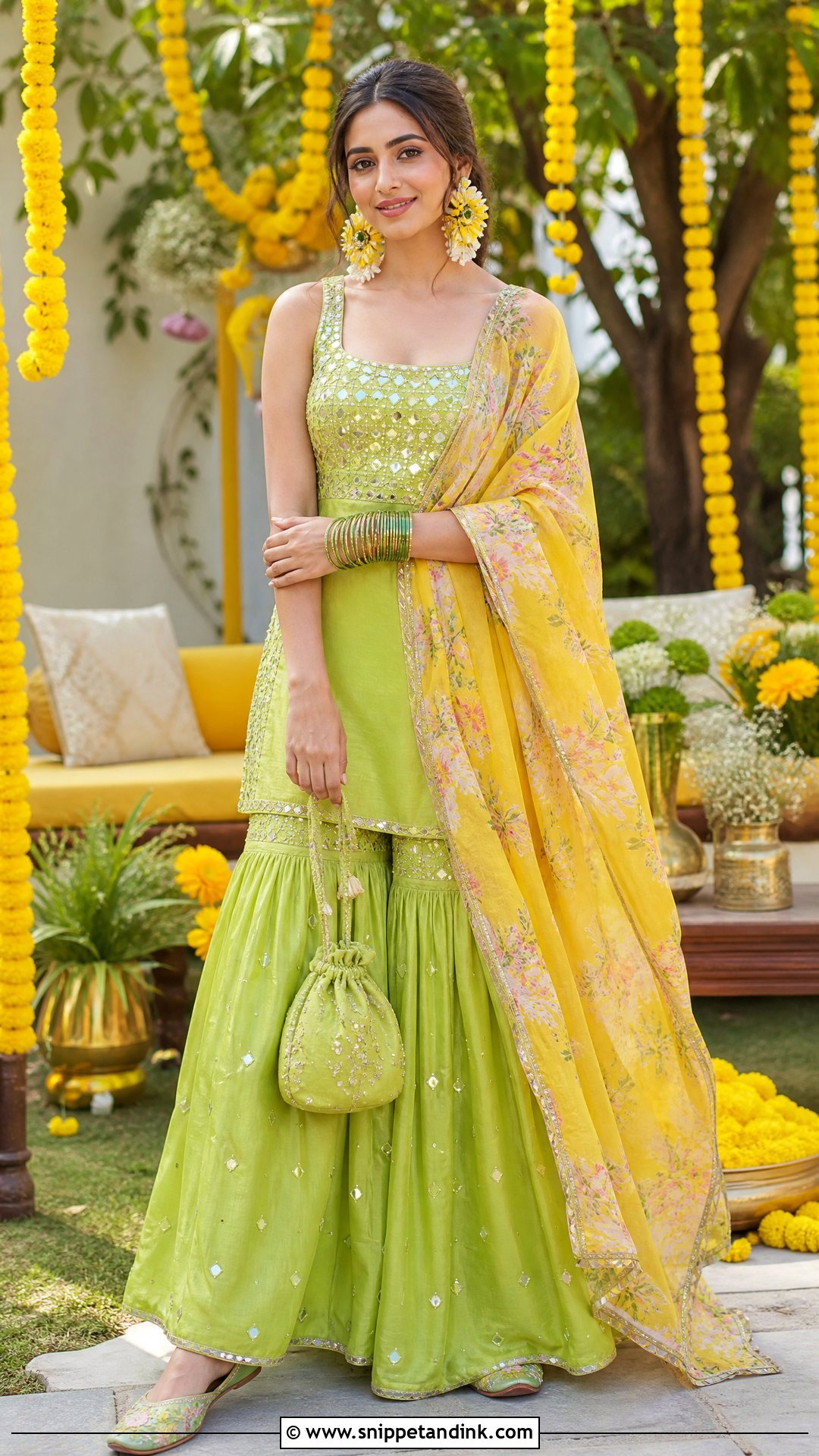
Lime green is a fresh alternative to yellow, especially at a daytime garden haldi full of marigolds and leaves. Choose a short kurti with flared sharara pants and add a yellow floral or organza dupatta. Small mirrors or white thread embroidery brighten it without competing with the colour. Yellow flower earrings, green bangles, embroidered flats and a potli finish the look. Bridesmaids can coordinate across shades of lime and yellow. Test the green against your face in daylight before buying; citrus lime, pistachio and deeper leaf green suit very different skin tones, and the wrong one makes skin look sallow.
21. Pink and Yellow Lehenga for Haldi Function
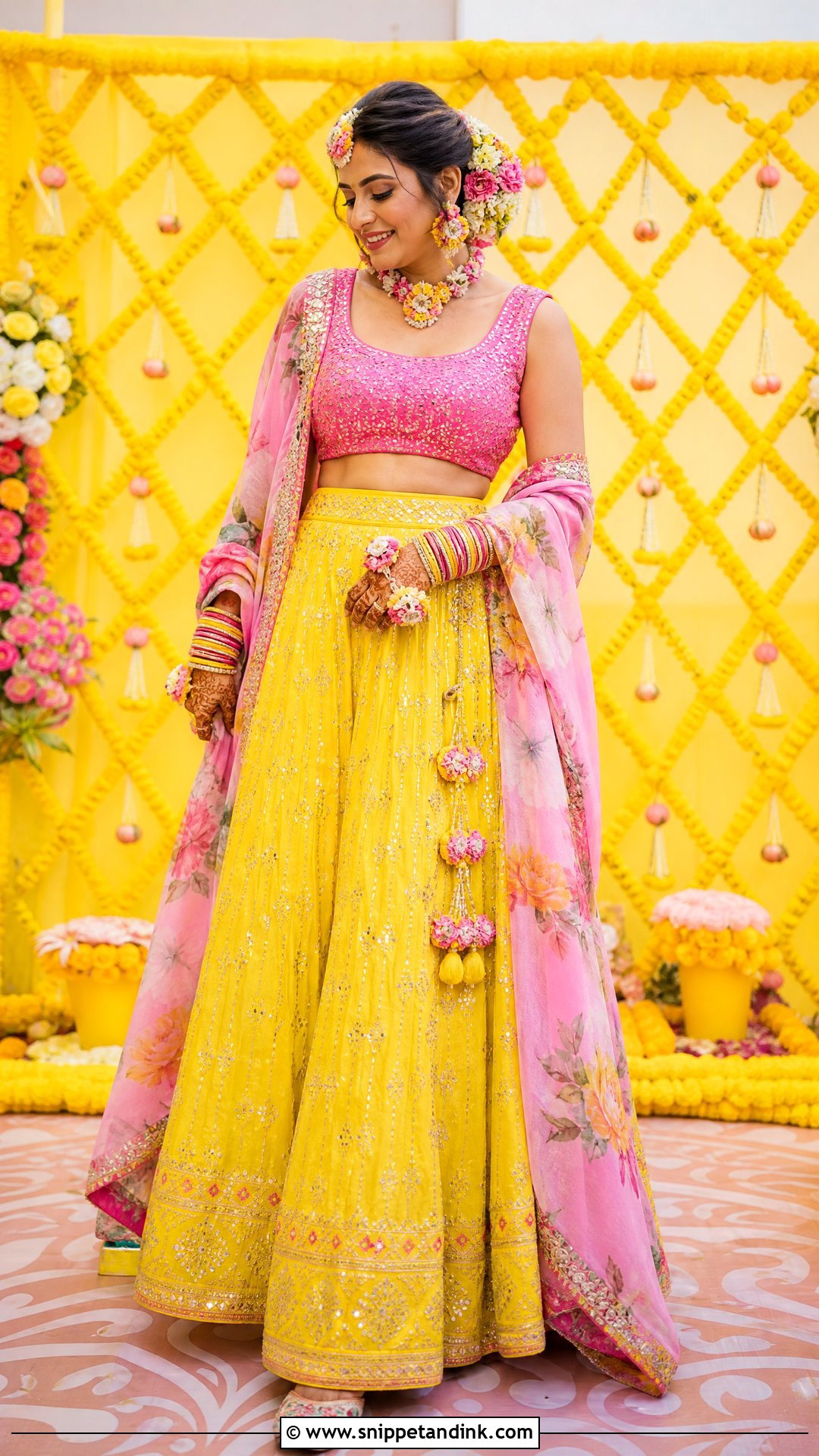
Pink and yellow is a classic haldi pairing because the two colours warm each other up on camera. Wear a yellow skirt with a pink blouse, or flip it for stronger contrast, and choose a dupatta that carries both shades through florals, bandhani dots or a narrow gota border. Flower jewellery, mixed bangles, embellished juttis and a braid or bun with fresh blooms finish it. Brides who don’t want a single solid colour love this. Sisters and bridesmaids can copy it in simpler fabric. Spread the colours evenly; if one shade dominates the top and the other only shows at the hem, the outfit looks split in two.
22. Pastel Yellow Lehenga for Haldi Function
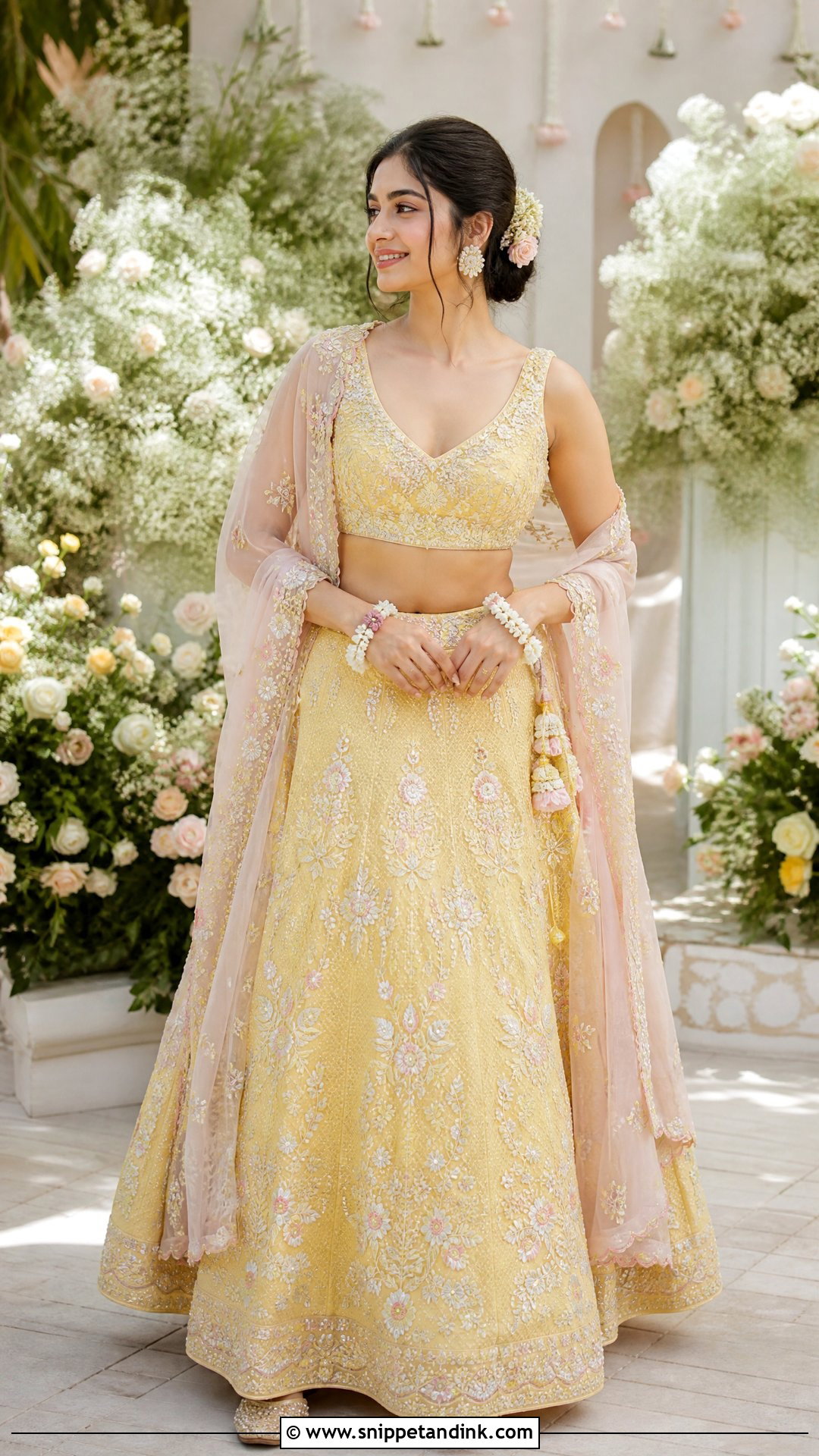
Pastel yellow is softer and more delicate than the traditional turmeric shade, and it suits an intimate indoor haldi or a morning garden ceremony. Choose a light skirt with tonal threadwork, tiny florals or scalloped edging, a matching blouse and an airy dupatta in pale yellow, blush or ivory. Pearl earrings, a floral bracelet, neutral juttis and flowers in a low bun keep it gentle. The trade-off is staining: pale yellow shows paste clearly. I’d only choose it if the ritual is controlled, or plan a quick change afterwards. Texture and clean tailoring stop the pale palette looking plain.
23. Plus Size Yellow Anarkali for Haldi Function
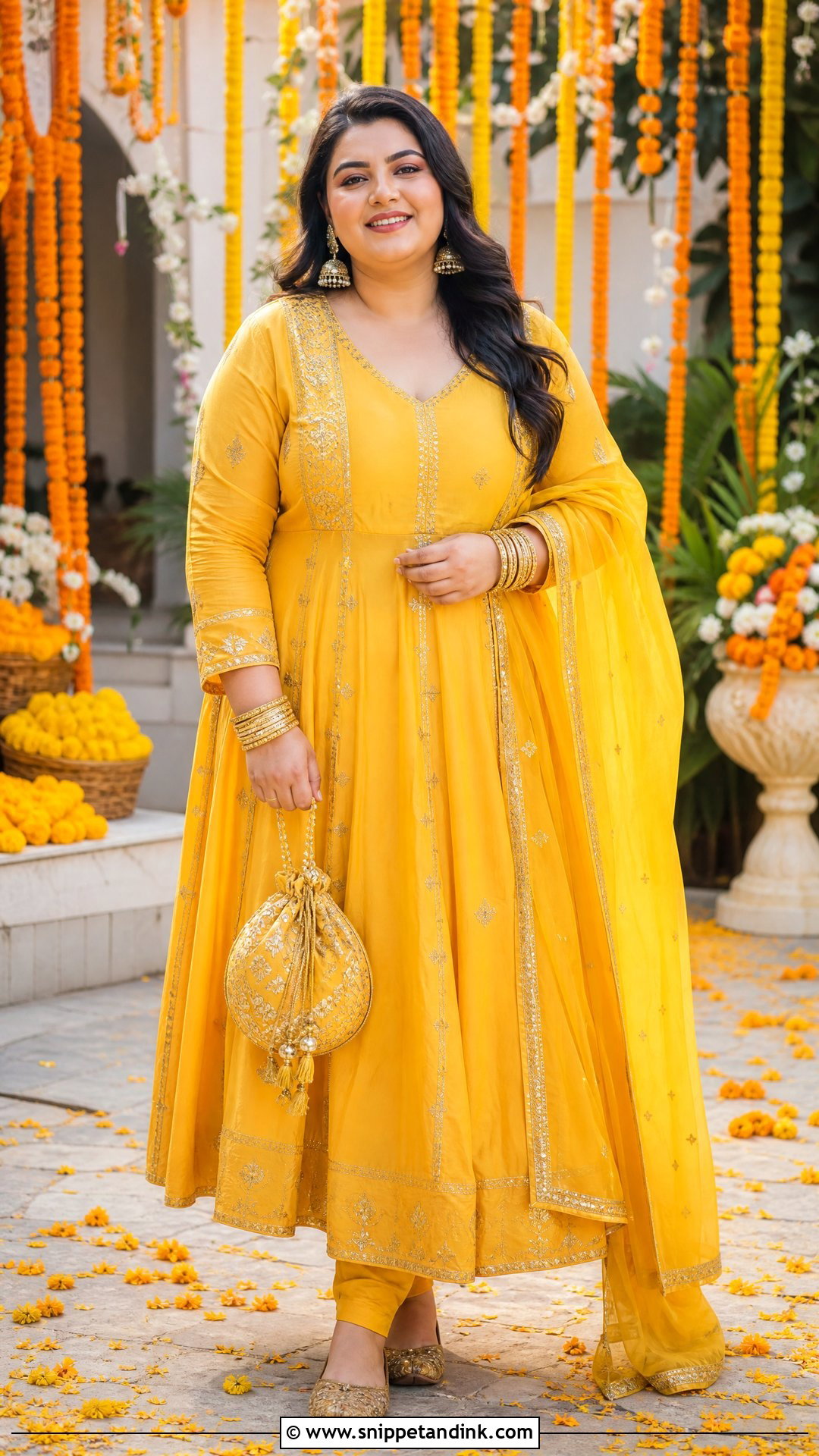
For plus-size clients, a well-cut Anarkali is often the most comfortable haldi outfit I can suggest, but the seam placement makes or breaks it. An empire or natural-waist seam should sit smoothly without pulling. Vertical panels, a V-neck and a controlled flare lengthen the line. Pair it with narrow pants and a light dupatta over one shoulder. Medium earrings, stacked bangles, cushioned juttis and a structured potli finish it. Avoid layers bunched at the waist if you’ll be sitting for long rituals. Cotton-silk, crepe and soft georgette move without bulk, and mustard, marigold and golden yellow are richer than neon. Comfortable support underneath matters as much as the outfit itself.
24. Yellow Silk Cotton Saree for Haldi Function
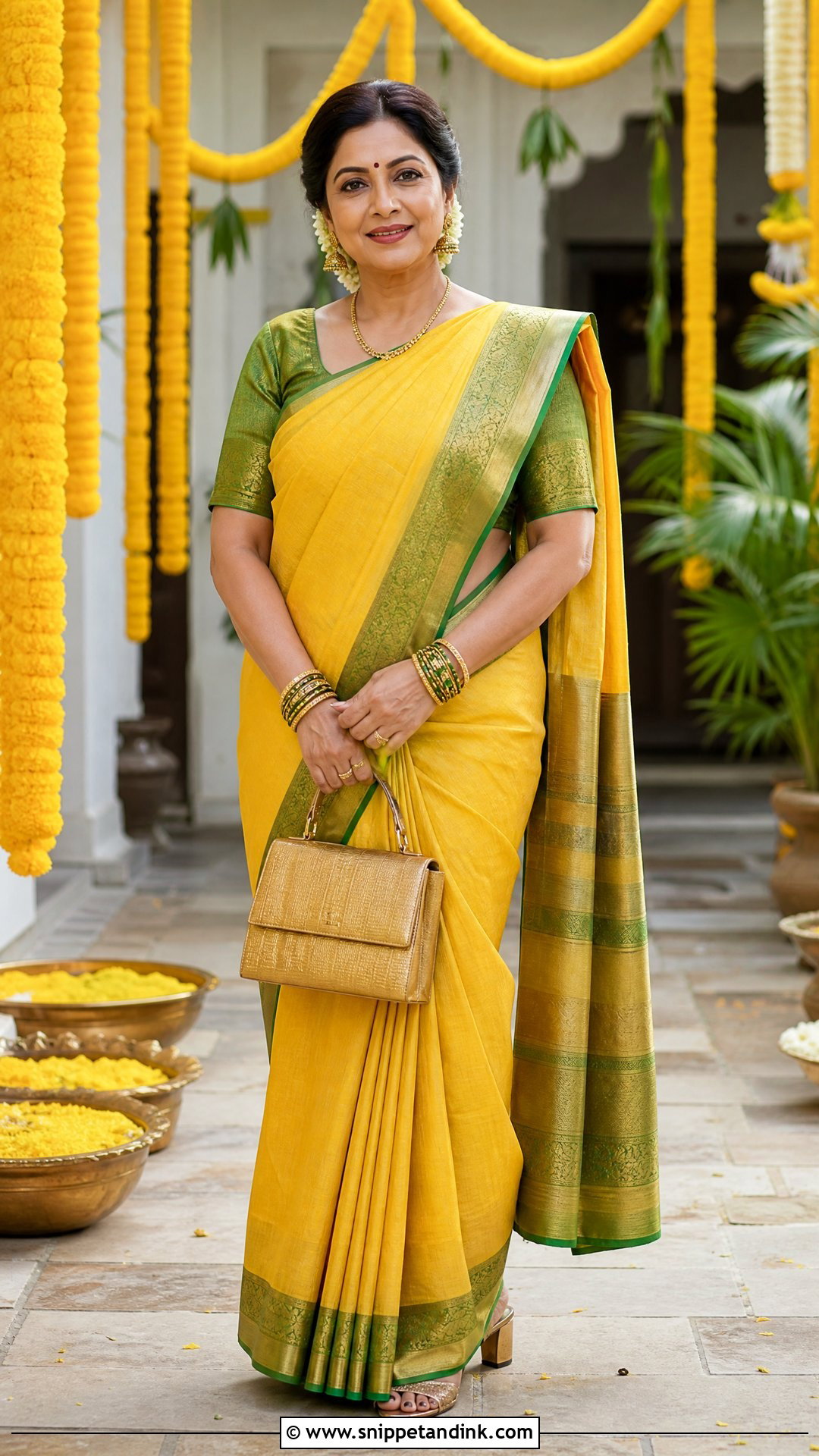
Silk cotton sits between cotton and pure silk: more structure and sheen than cotton, much lighter than heavy woven silk. That makes a yellow silk cotton saree a good choice for mothers, aunts and older guests who want to look dressed without overheating. Choose a green, pink, red or gold border with a matching elbow-sleeve blouse. Classic jhumkas, bangles, a small bindi, a structured handbag and low heels finish it, with a neat bun and a short flower garland. Pin pleats and pallu securely. If turmeric is likely, leave the heirloom silks at home and choose a washable blend.


25. Yellow Midi Dress for Haldi Function
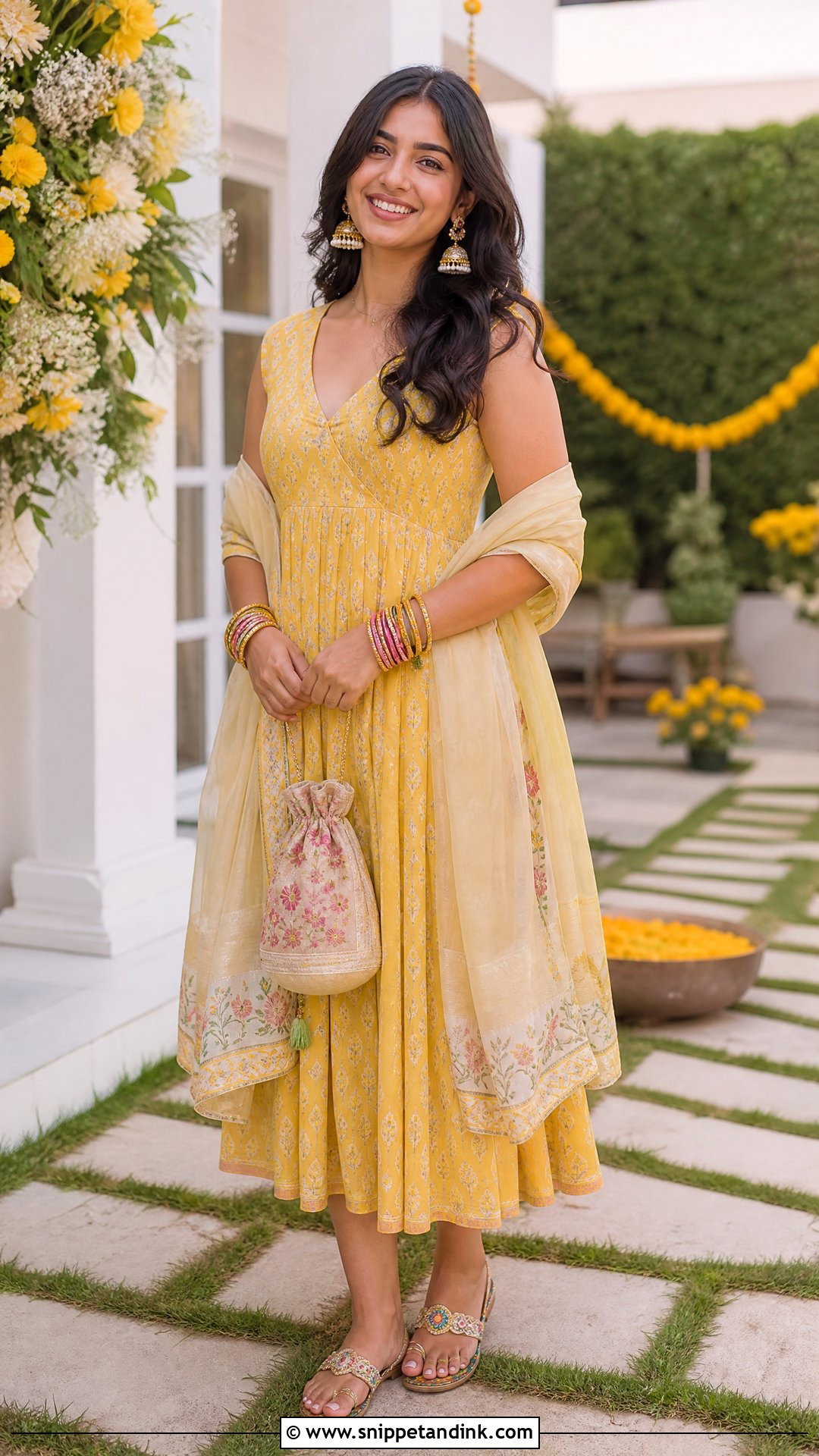
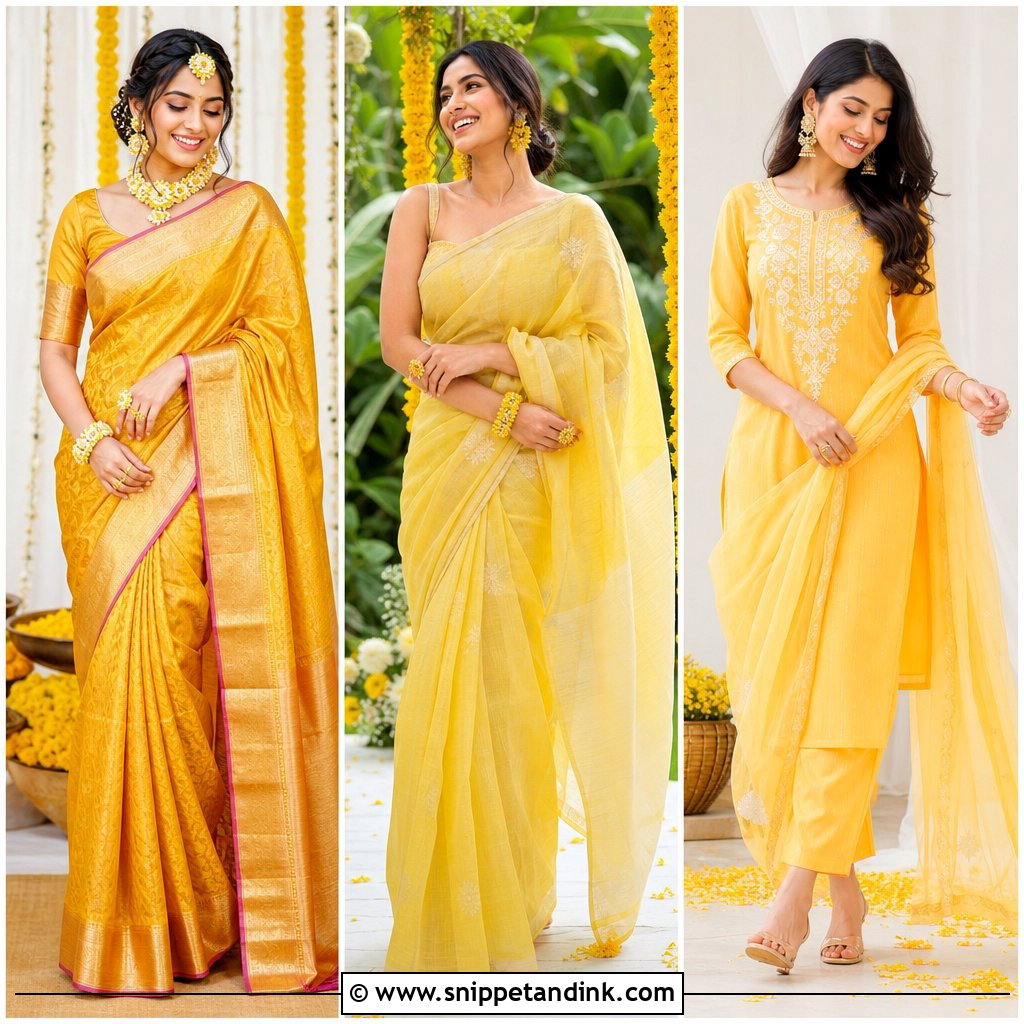
A yellow midi dress is perfectly fine for a relaxed Indian American haldi when the hosts welcome Western or fusion clothing. Choose a modest wrap, fit-and-flare or tiered cotton dress with comfortable sleeves and a hem below the knee. Add the Indian elements through jhumkas, coloured bangles, an embroidered potli and embellished flat sandals. A printed scarf worn like a dupatta adds a stronger cultural link. Floral, marigold or block-printed fabric feels more festive than a plain sundress. First-time guests often ask me about this, and my advice is simple: check the invitation, ask the hosts if unsure, and skip heels, since haldi often means grass, water and sitting on the floor.
Turmeric Stains Lift Best When You Treat Them the Same Evening
Turmeric is a strong natural dye, and the longer it sits the more it bonds with fibre. I tell everyone at a haldi to deal with their clothes the moment they change, not the next morning.
- Scrape off any dried paste with a blunt knife and shake it outside. Rubbing it in while dry only spreads the colour.
- Rinse from the back of the fabric under cold water. Hot water helps the dye set.
- Work a little plain liquid dish soap into cotton and let it sit for fifteen minutes before washing as normal.
- Dry the piece in direct sunlight. Turmeric’s colour fades in strong light, and a faint stain often disappears after a sunny afternoon.
- Don’t panic if soap or baking soda turns the mark reddish. Turmeric changes colour in alkaline conditions, and it usually shifts back as you rinse.
Silk, organza and anything with zari or gota should go straight to a dry cleaner who handles Indian wear. Don’t use chlorine bleach on these, and don’t try sunlight drying on silk, which can fade the dye of the fabric itself.
Prevention helps too. A thin layer of coconut oil along the hairline, on the hands and over the nails before the ritual makes the paste much easier to wash off your skin, and it keeps yellow out of light hair.
Dress for the Mess, Then Add the Flowers
A haldi outfit has one job: let you join every ritual, photo and dance without constantly fixing it. Light fabric, secure draping, shoes you can slip off and colours that forgive a splash all matter more than embellishment. Sarees and lehengas remain the classic route, and shararas, cape sets, kaftans, co-ords and fusion pieces give you modern alternatives. Think about the venue, the weather and your role before you buy. Brides can afford statement details; guests should lean lighter and more practical. Pick the silhouette that moves with you, and you’ll enjoy the morning far more than anyone fussing with a heavy dupatta.
You'll Like These Ideas:



Leave a Reply