
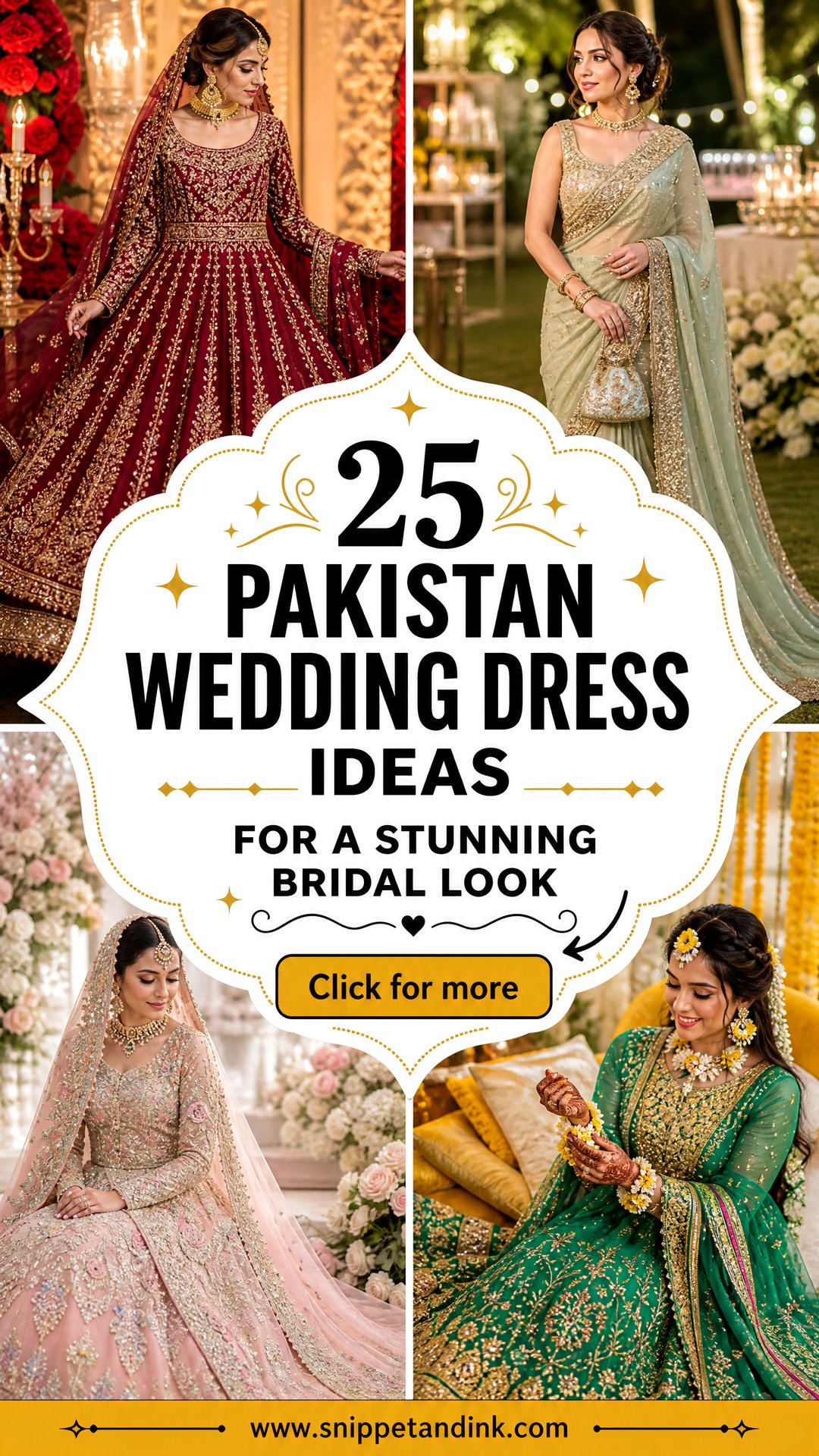
Most Pakistani weddings ask a bride for three or four different outfits, and each function has its own rules. The mehndi wants color and something you can dance in, the baraat carries the heaviest embroidery of the week, and the walima usually softens into pastels and lighter fabric. These 25 Pakistan Wedding Dress Ideas cover brides, sisters, mothers and guests, from lehengas and ghararas to pishwas, sarees and cape gowns. When I style a family for a wedding week, I start with the function and the fabric weight, then work out the dupatta and jewelry, and the notes below follow that order.
Planning One Wardrobe Across Mehndi, Nikah, Baraat and Walima
Before anyone picks a single outfit, I sketch the whole week on paper. Pakistani weddings run as a sequence, and each function has a different job, so the outfits should climb in weight toward the baraat and then ease back down.
- Mehndi and dholki: bright color, light fabric, flat shoes. You’ll sit on the floor, dance, and have oil or henna near your sleeves.
- Nikah: modest and quiet, often pastel or ivory, with a dupatta that stays on the head through the ceremony.
- Baraat: the heaviest embroidery and the most jewelry. Plan for the weight and for long stretches of sitting on stage.
- Walima: lighter fabric and softer color, often a gown or pishwas, because the bride is tired and the photos are more relaxed.
Then I look for clashes. Velvet on two consecutive nights will feel hot by the second, and three heavy dupattas in a row leave a bride’s neck aching. If the budget is tight, spend on the baraat piece and let one well-made dupatta lift a simpler outfit at the nikah. Sisters and cousins can coordinate by color family rather than identical outfits, which looks better in group photos and lets each of them choose a cut that suits her.
1. Red Pakistani Bridal Lehenga
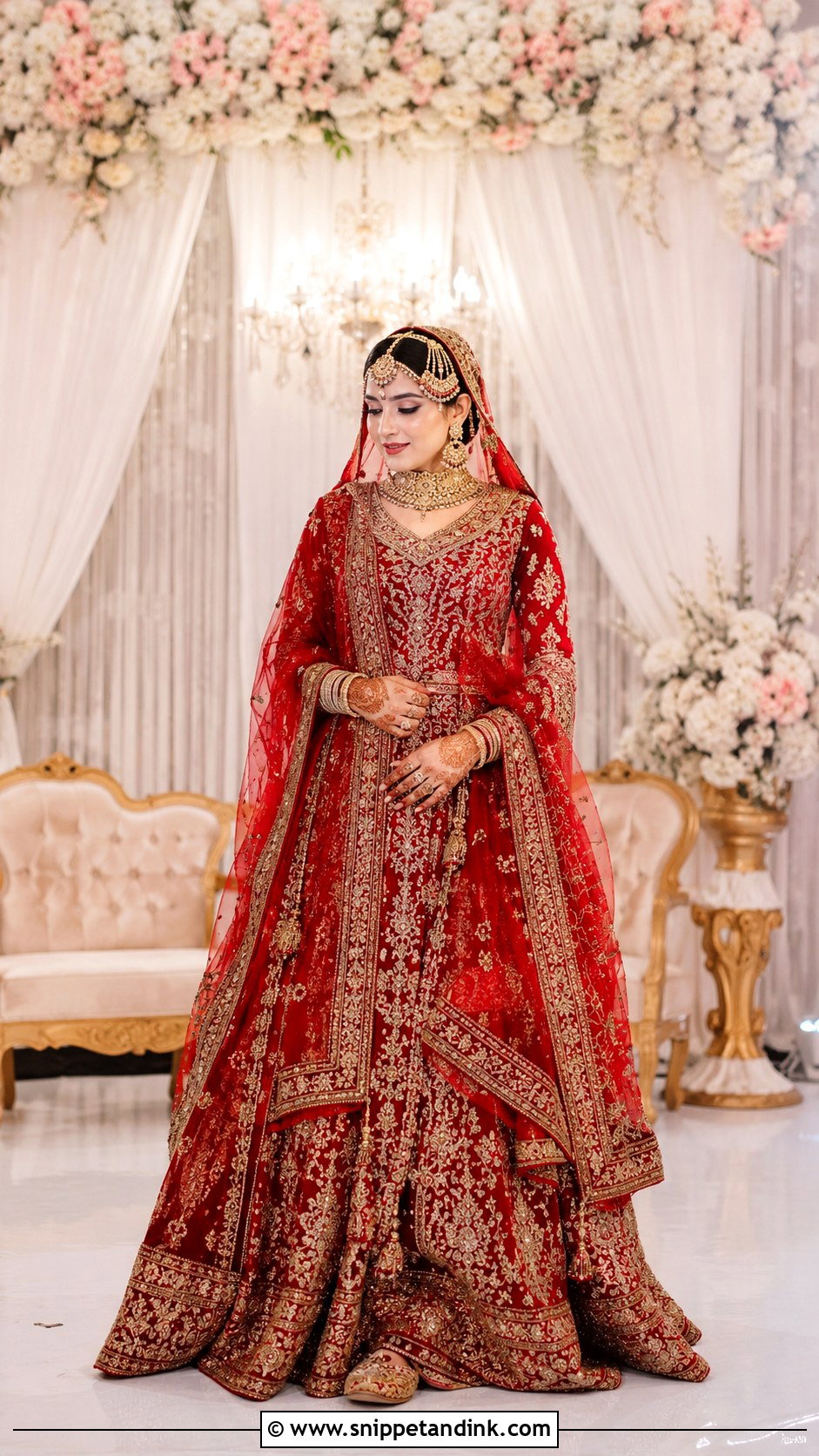
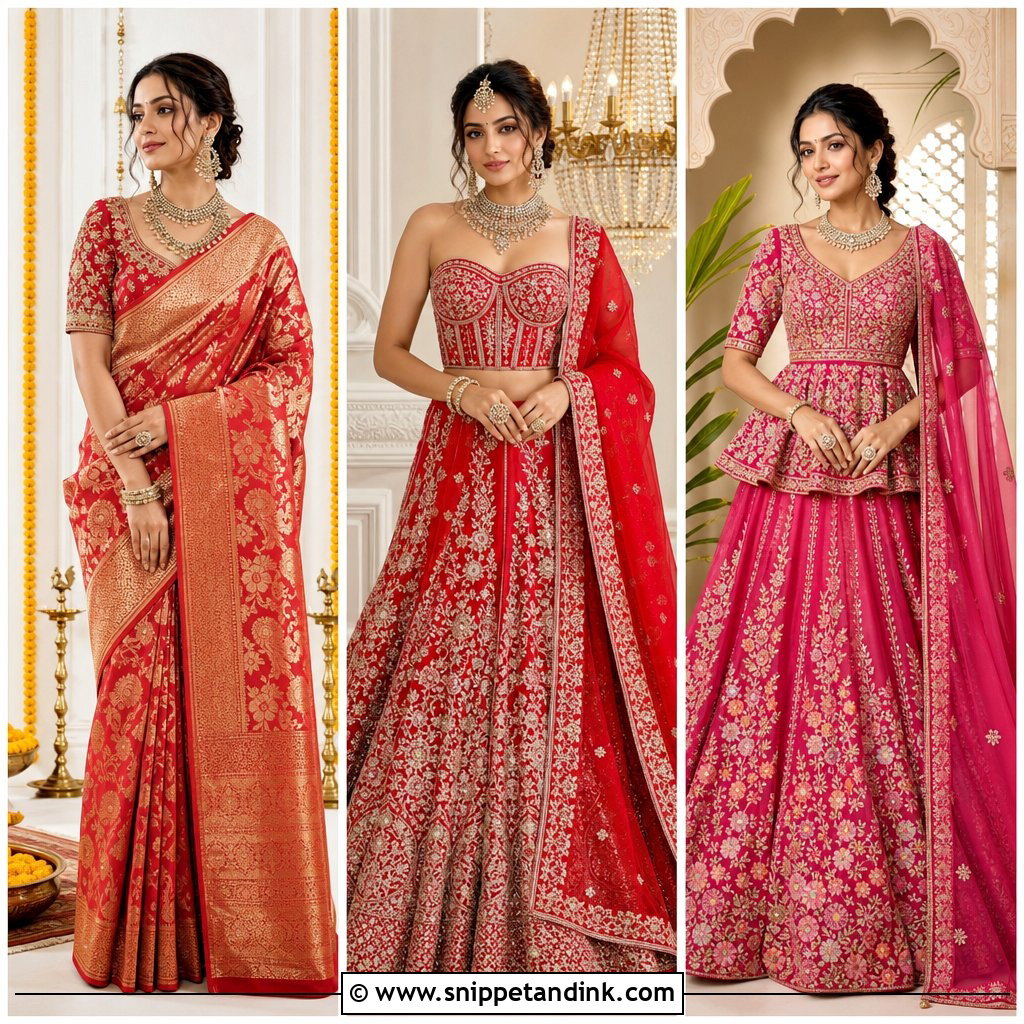
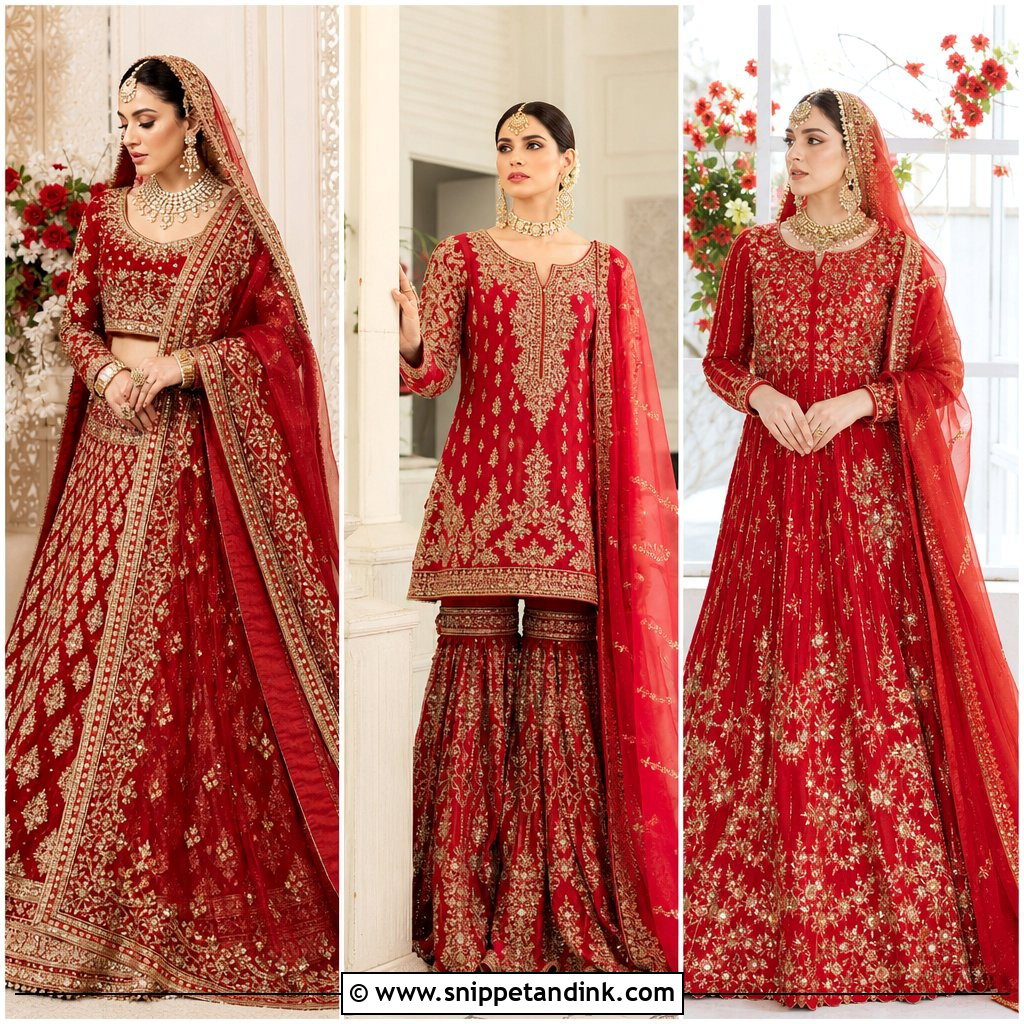
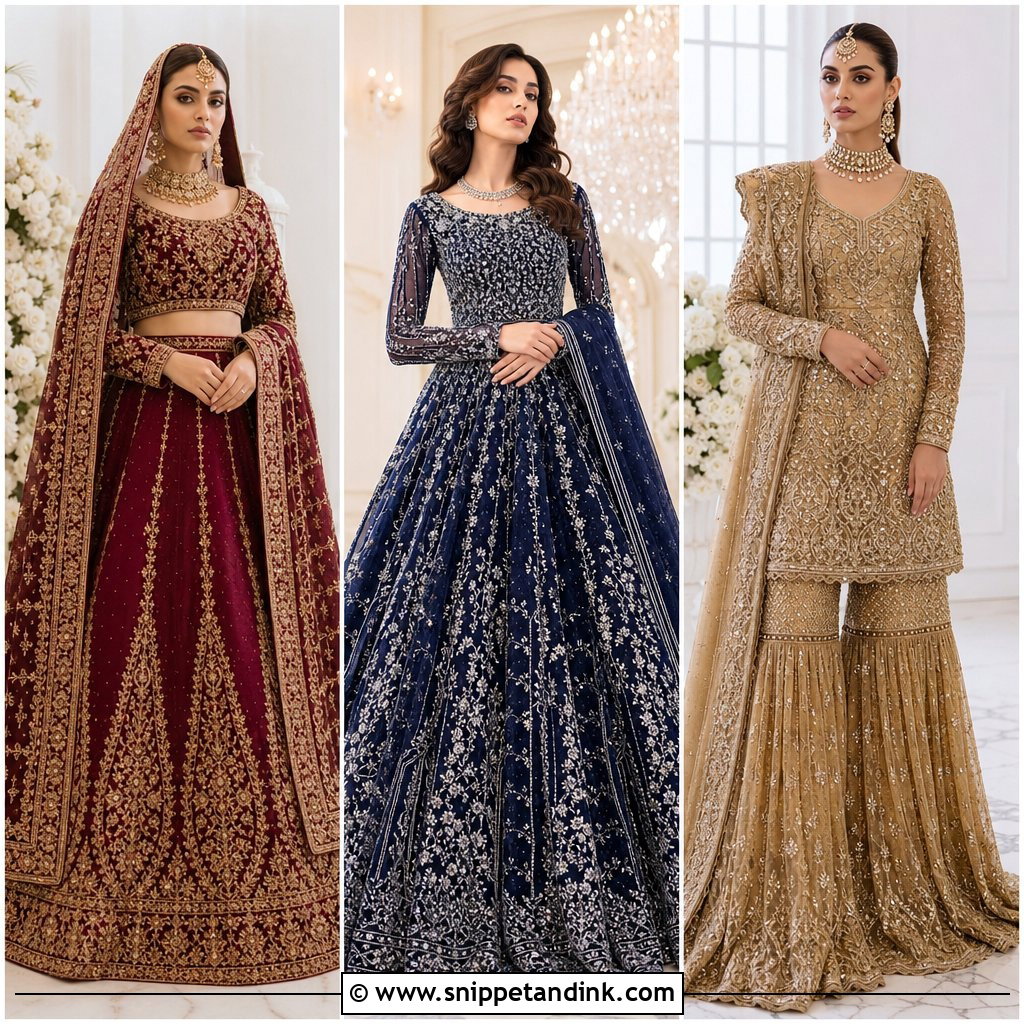
Deep red or maroon is still the baraat color most families expect, and it earns its place: zardozi, dabka and gota all read richer against red than against any pastel. The thing I check first is weight. A fully worked bridal lehenga gets hard to carry over a long evening, so I ask for the can-can to be stitched into the lining rather than worn as a separate heavy petticoat, and I sit the bride down in it at the final fitting. Pair a long embroidered shirt or structured choli with two dupattas, the heavier one pinned on the head and a lighter one across the shoulder. Gold matha patti, jhumkas, a choker and bangles finish it. Choose embellished khussas or a low block heel, because the rukhsati and the photos come at the very end of the night.
2. Pakistani Gharara Dress For Wedding
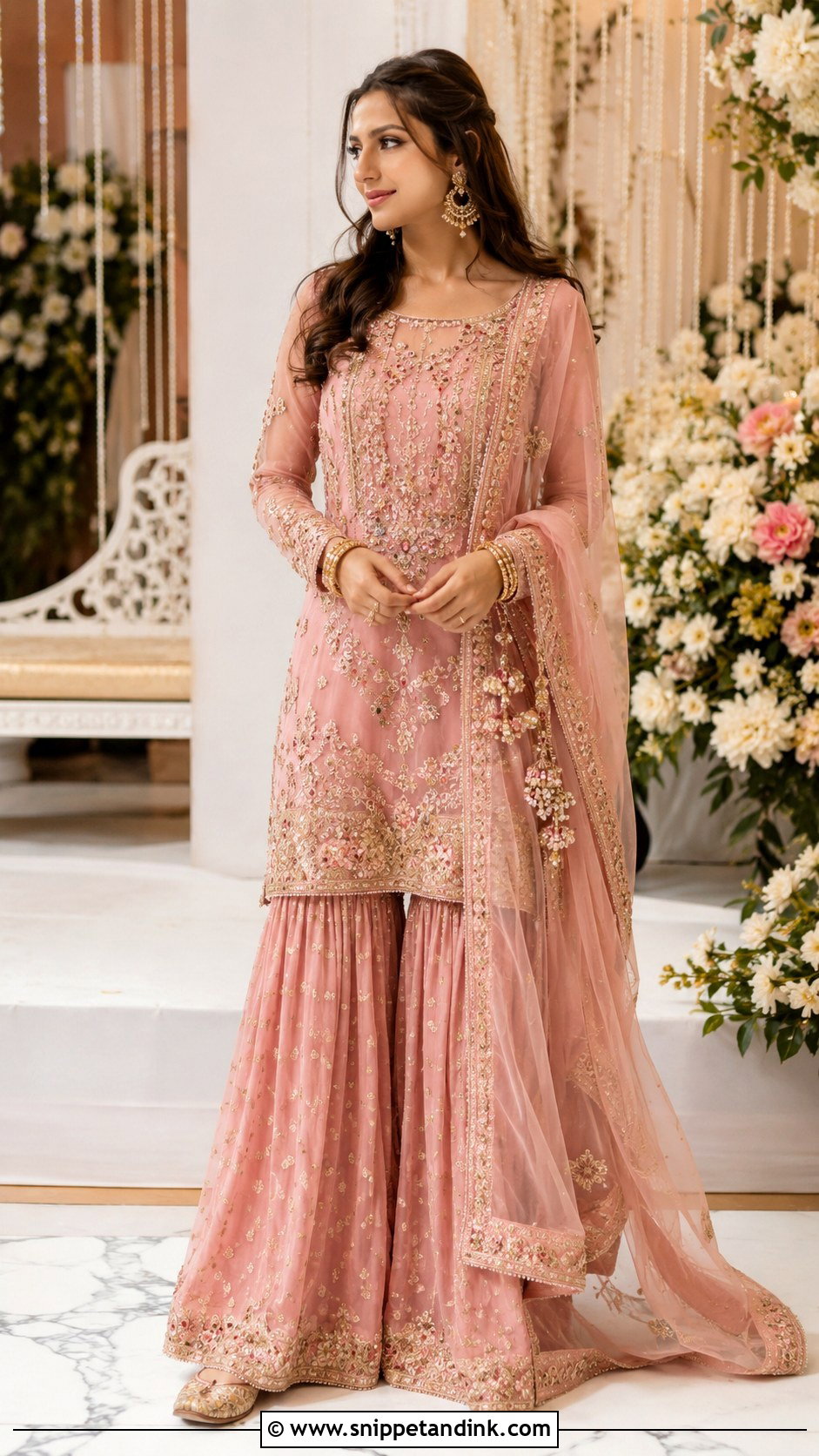
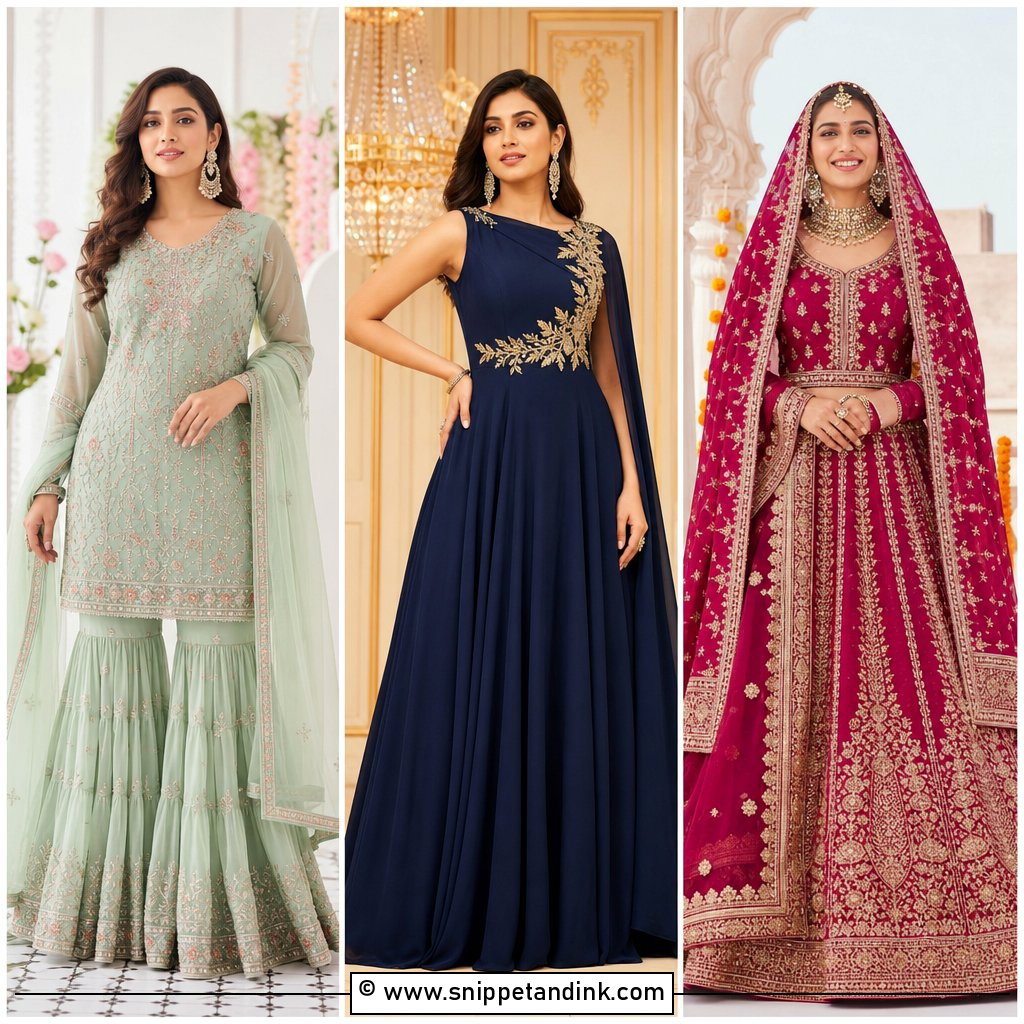
The gharara’s shape comes from the joint at the knee, where the fitted upper leg meets flared panels, usually finished with a gota band over the seam. That seam is where I look at a fitting. If it sits too high, the flare starts at mid-thigh and the whole silhouette shortens. Pair it with a long kameez worked at the neckline, sleeves and hem. Soft gold, rose pink, mint, ivory and deep green suit guests, while heavier red or maroon belongs to the bride. Add a sheer organza dupatta, statement earrings and a neat bun or soft waves, with pointed khussas or embroidered sandals underneath. Ghararas are cut long and pool at the floor, so get the hem taken up with the actual shoes on.
3. Pakistani Sharara Dress For Mehndi
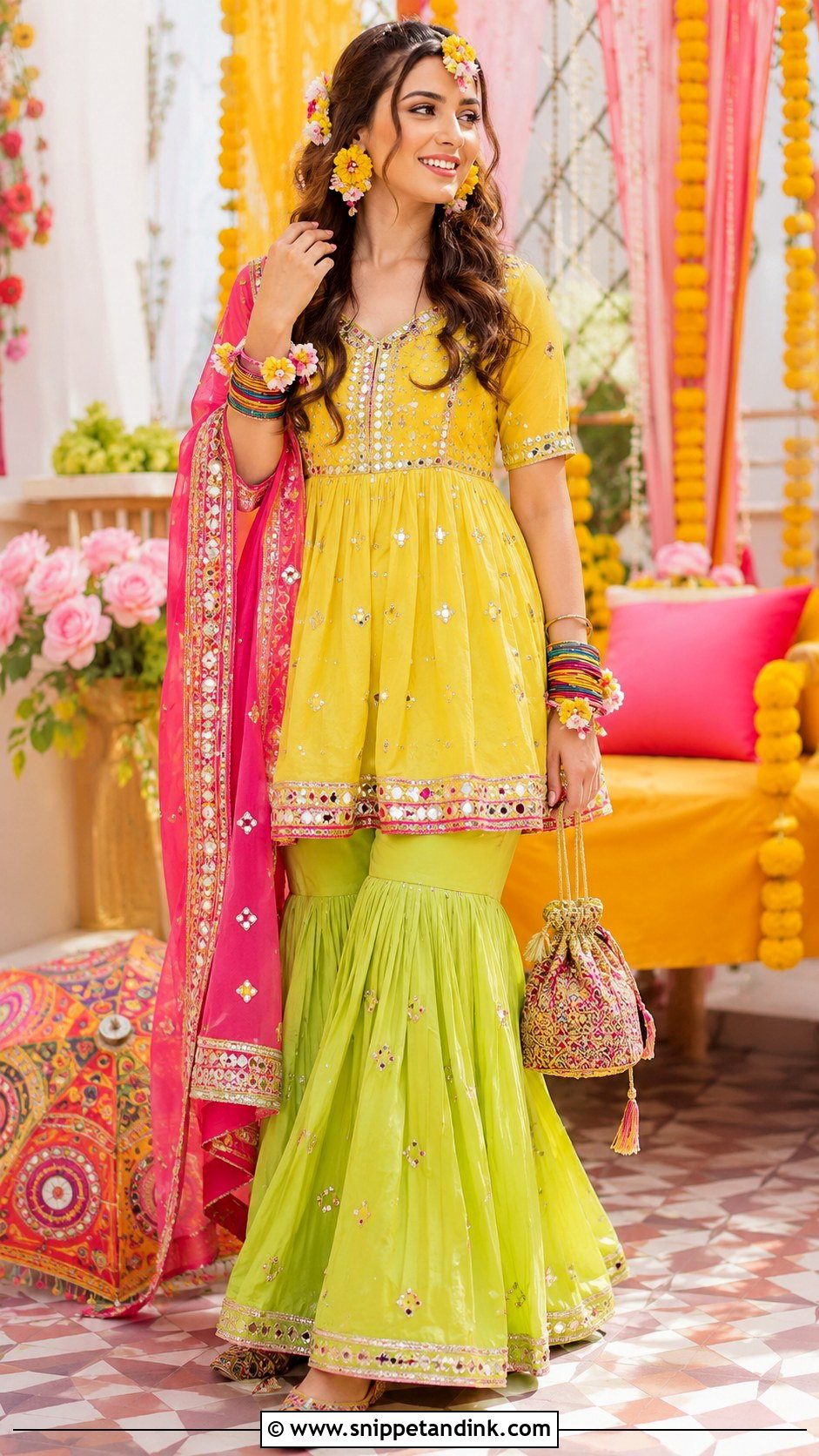
Sharara pants flare from the waist rather than the knee, which is why they’re so forgiving at a mehndi: you can sit on a floor cushion, dance through a dholki routine and stand up without anything twisting. That makes them one of the easiest outfits to wear for a mehndi. Yellow, lime green, orange, coral and hot pink all carry well under evening lights. Pick a short or mid-length kurti with mirror work, gota or colorful thread, and add a contrast dupatta, yellow against pink or green against orange. One practical note: mirror work on a fitted kurti can scratch the inner arm, so I ask for a soft lining under any heavily mirrored sleeve. Jhumkas, stacked bangles, a potli bag and flat khussas finish it.
4. Pakistani Anarkali Wedding Dress
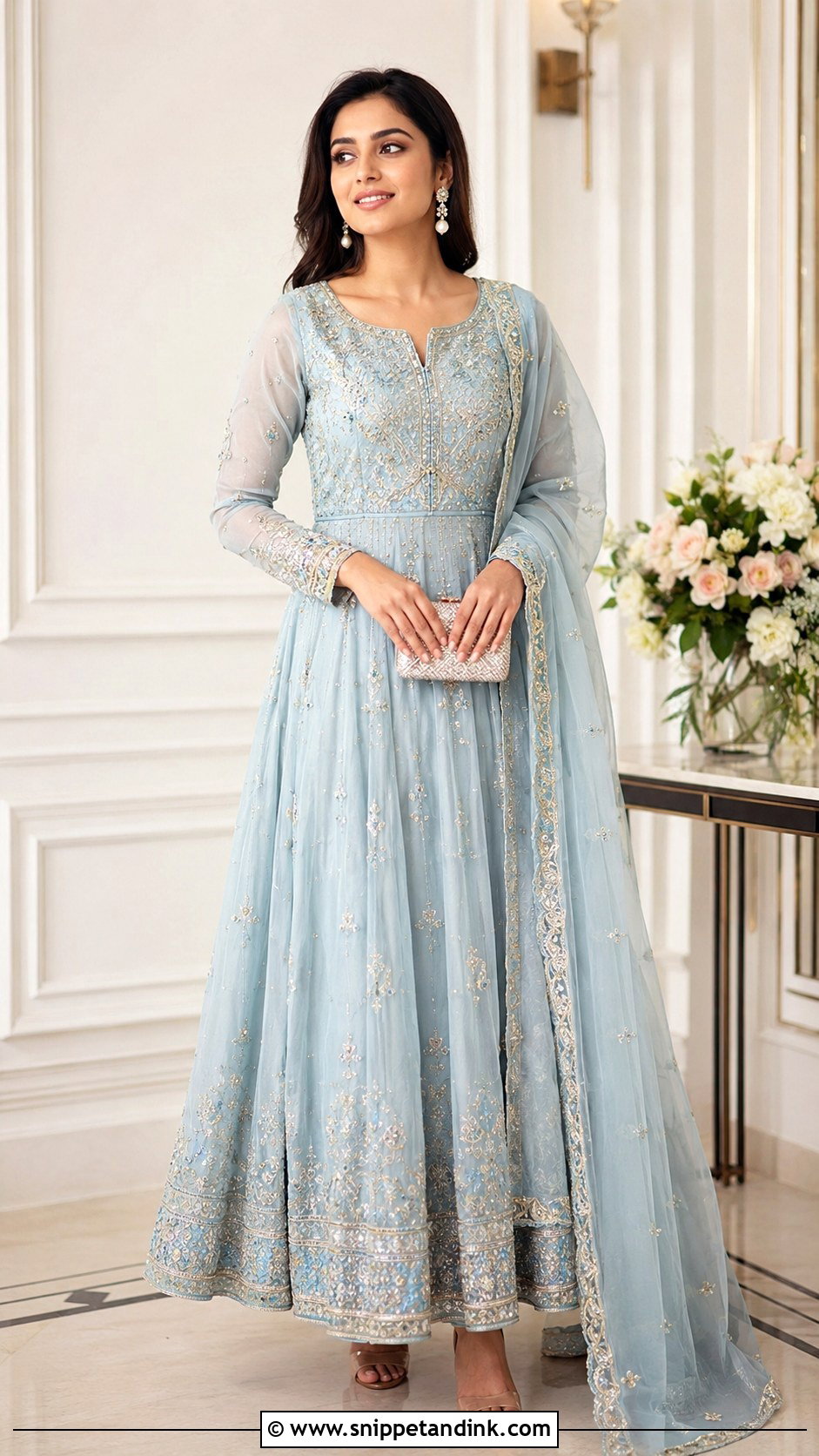
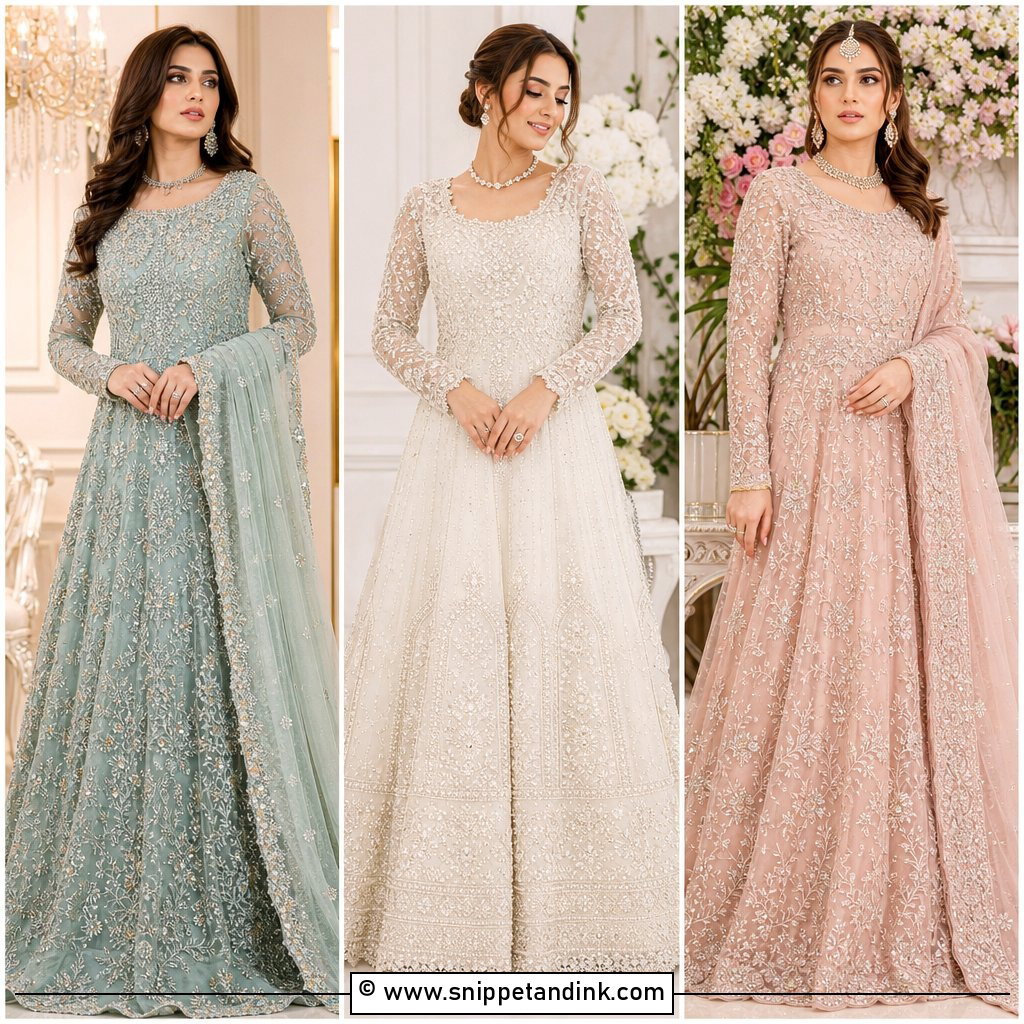
An anarkali does the work of a full outfit in one piece, which is why I suggest it to anyone who doesn’t want to manage a lehenga, a shirt and two dupattas. It suits a nikah, engagement, walima or formal dinner. Look for a floor-length cut with embroidery at the bodice, sleeves and border. The flare comes from the number of kalis, the panels in the skirt. In chiffon or georgette more panels mean more swing, while in organza they stand away from the body and add volume at the hip. Blush, powder blue, champagne, pistachio and lilac all sit well with pearl earrings, a matching dupatta and a small clutch, and the cut gives full coverage without any layering, which many mothers and aunts appreciate.
5. Pakistani Pishwas Dress For Nikah
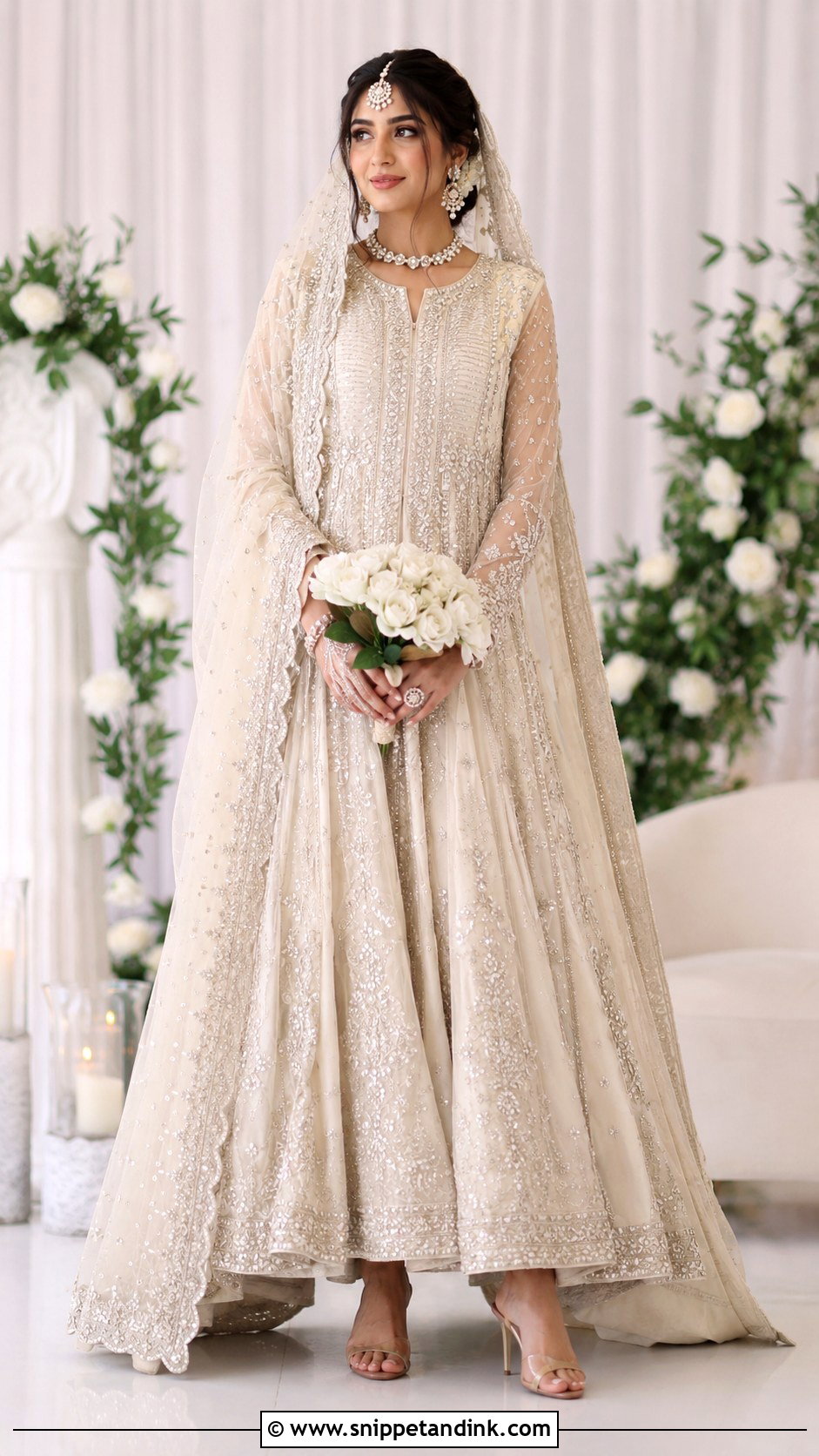
A pishwas is cut like a long frock with a fitted bodice, and for a nikah that shape stays modest and graceful without the bulk of a lehenga. Ivory, off-white, tea pink, champagne and pastel gold suit the ceremony. Keep the embellishment fine: pearls, small sequins or light gota. I’d steer you away from heavy work at the bodice here, because a nikah means sitting through the ceremony and signing, and stiff embroidery at the waist creases and digs in when you sit. A sheer dupatta with a scalloped edge can go over the head and still let the bodice show. Pearl jewelry, soft makeup, nude heels and a plain clutch are enough.
6. Pakistani Saree For Wedding Guest
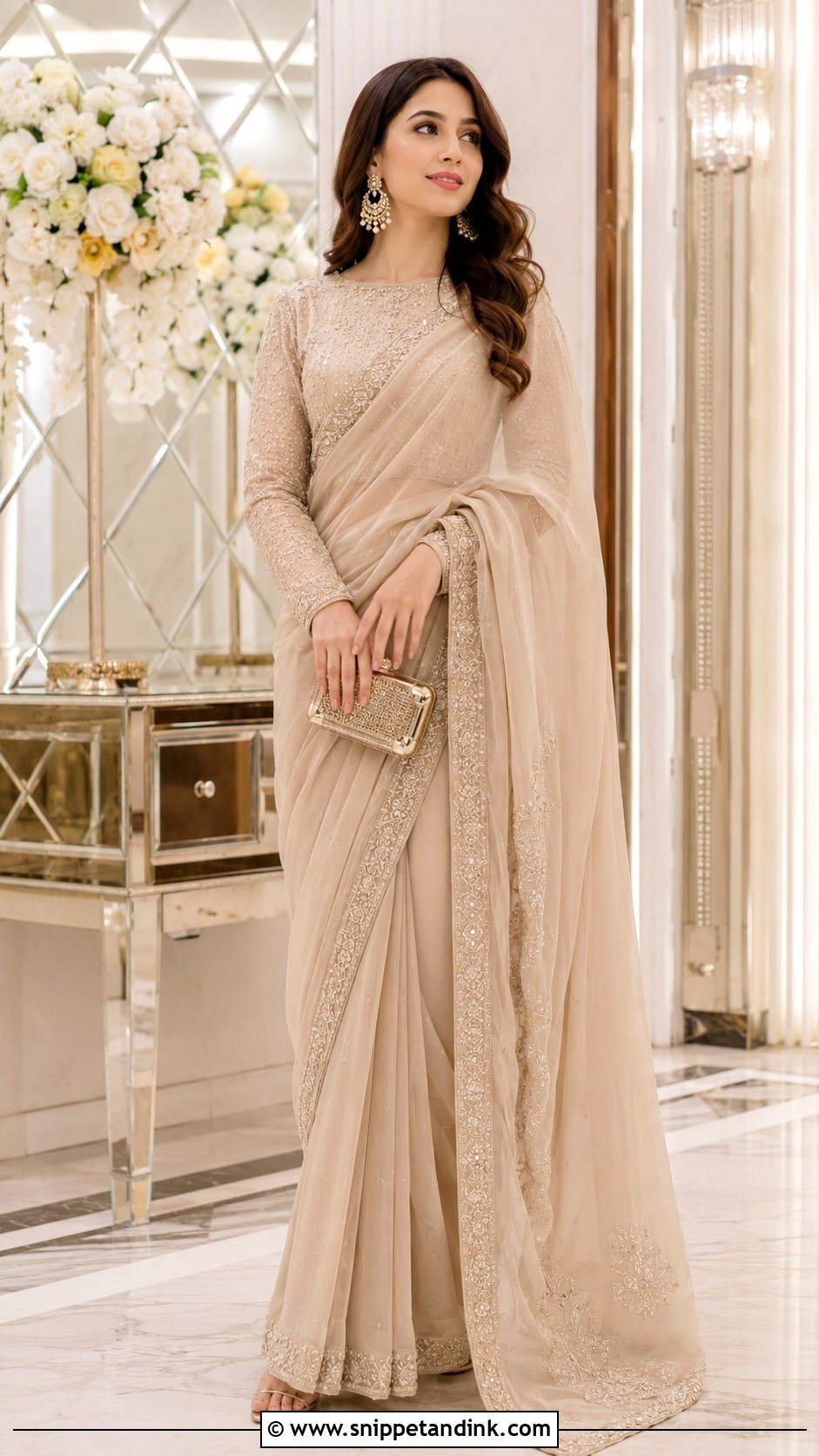
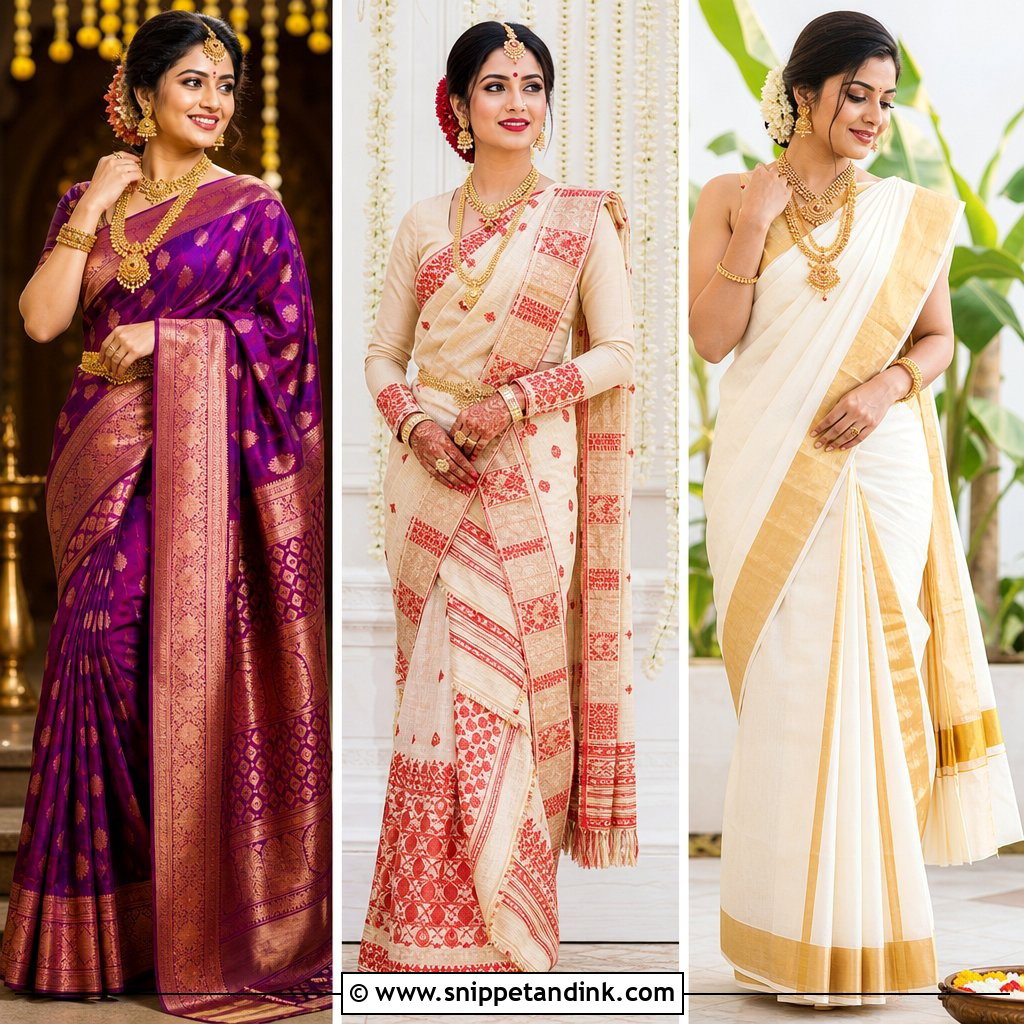
With a saree, the fabric decides almost everything. Chiffon and georgette drape close to the body and pleat neatly; organza and net hold their shape and stand away, so they look more structured but show every uneven pleat. For a daytime event I’d go with pastels and floral embroidery, and for an evening reception jewel tones with sequins, pearls or a metallic border. Many Pakistani families prefer a modest blouse, so full or elbow sleeves and a longer cut are worth considering. If you don’t drape sarees often, buy one pre-stitched or ask someone experienced to pin it, because a saree that slips in the second hour pulls attention from everything else. Heels, a clutch and statement earrings finish it.
7. Pakistani Walima Gown Dress
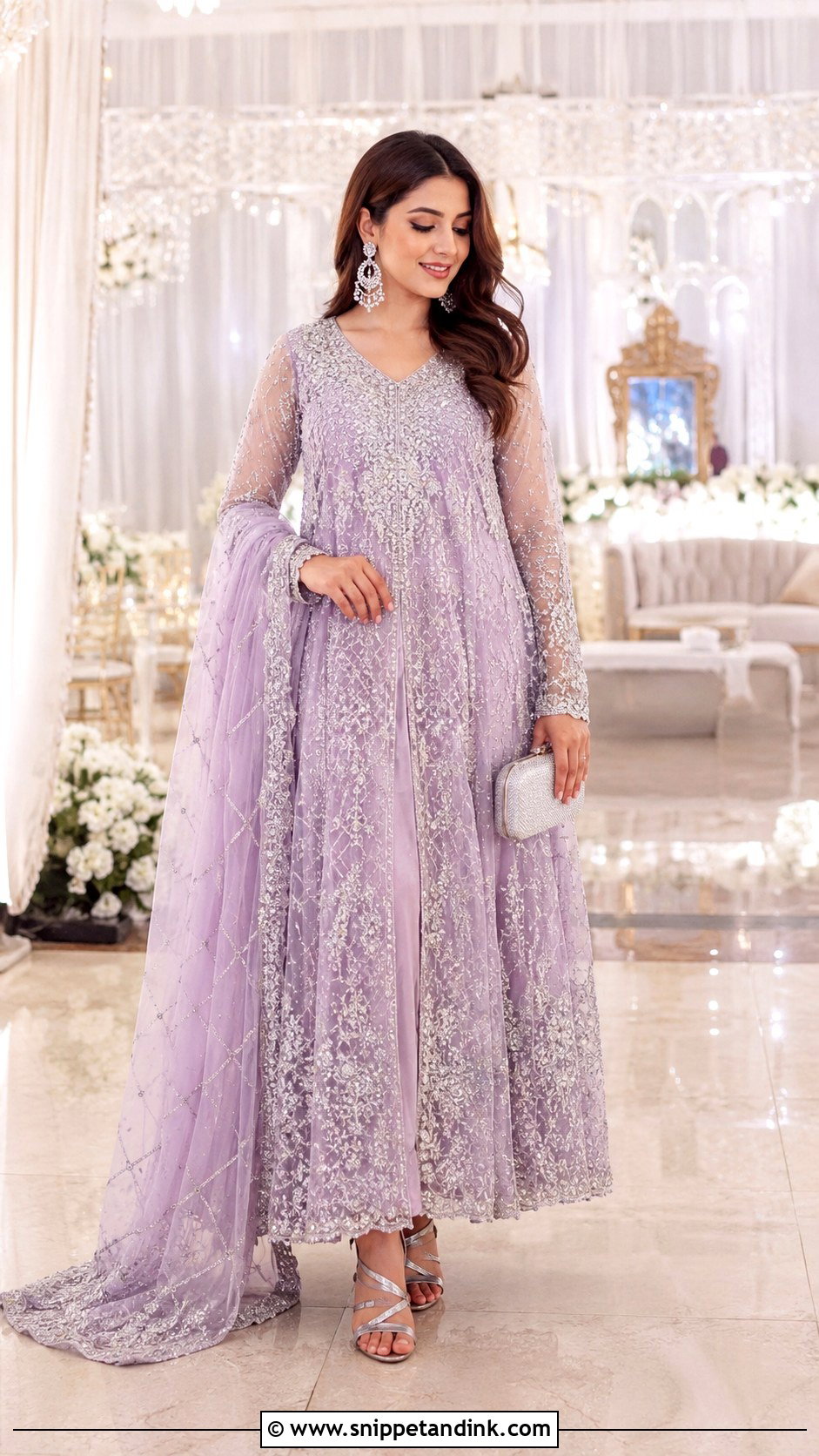
Walima dressing is the bride’s chance to step out of red and the heavy baraat work, which is why a Pakistani walima gown dress in silver, ivory, powder blue, lavender or sage turns up at so many receptions. A floor-length gown with crystals, pearls or sequins looks formal without the weight. Brides can add a longer trail; guests should keep theirs shorter and lighter. A sheer dupatta or cape-style drape modernizes it. Crystal work catches flash hard, so I tell brides to expect sparkle in the stage photos and keep their jewelry silver and quieter to balance it. Crystal heels, a structured clutch and either soft curls or a sleek bun complete the outfit.
8. Pakistani Lehenga Choli For Mehndi
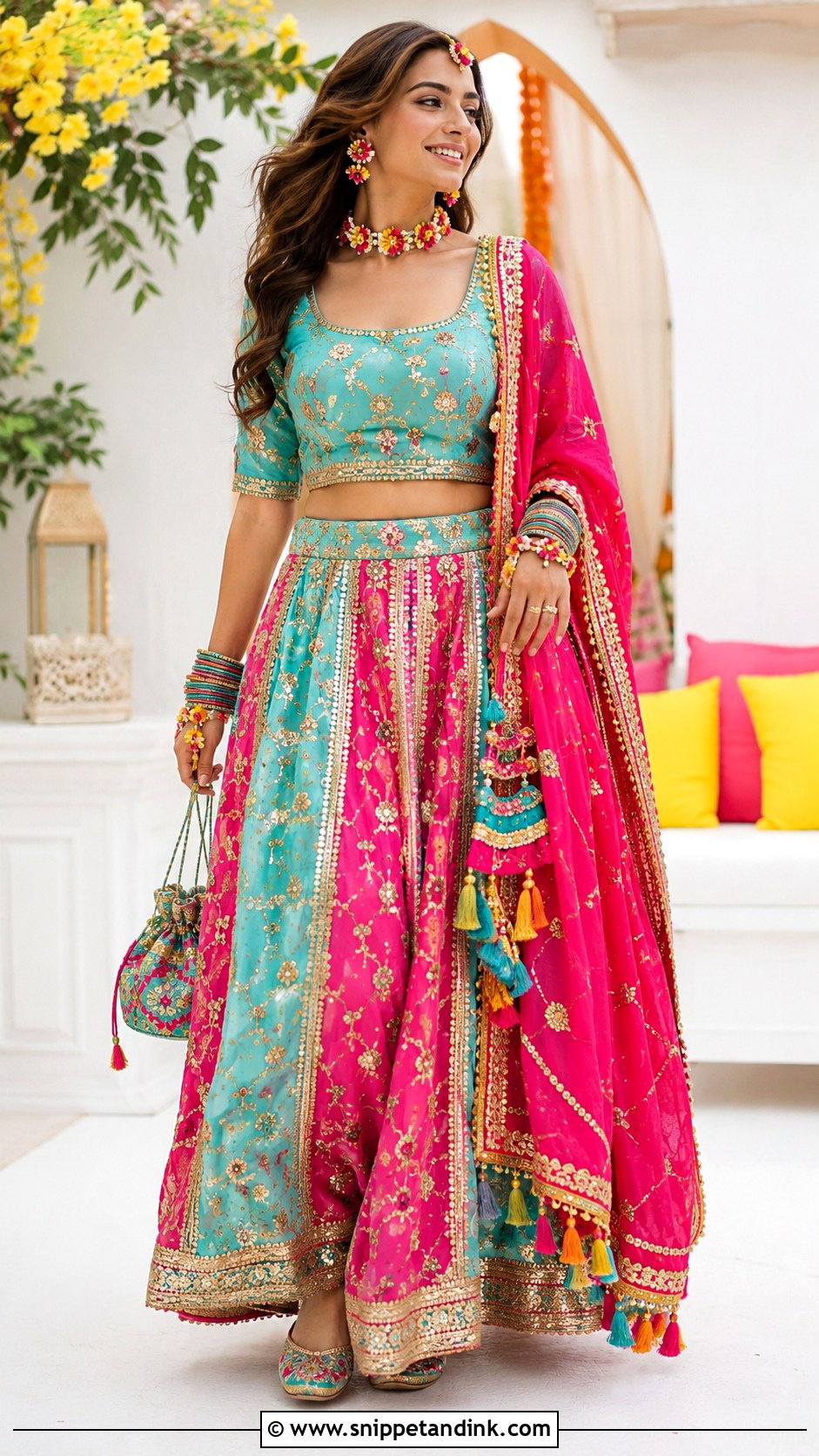
For a mehndi I want a lehenga light enough to dance in, so I look for mirror work, gota or thread embroidery rather than dense zardozi. Bright pairings hold up well under fairy lights: yellow with pink, green with orange, turquoise with fuchsia, mustard with purple. A short choli works with a high-waisted lehenga; a longer blouse covers more. Check the waistband before the event. Mehndi skirts are often finished with a drawstring, and a drawstring under a full skirt slowly loosens while you dance, so I swap it for a hook and zip where I can. Add a tasselled dupatta, floral jewelry, bangles, khussas and a braid or half-up style.
9. Pakistani Long Shirt With Lehenga
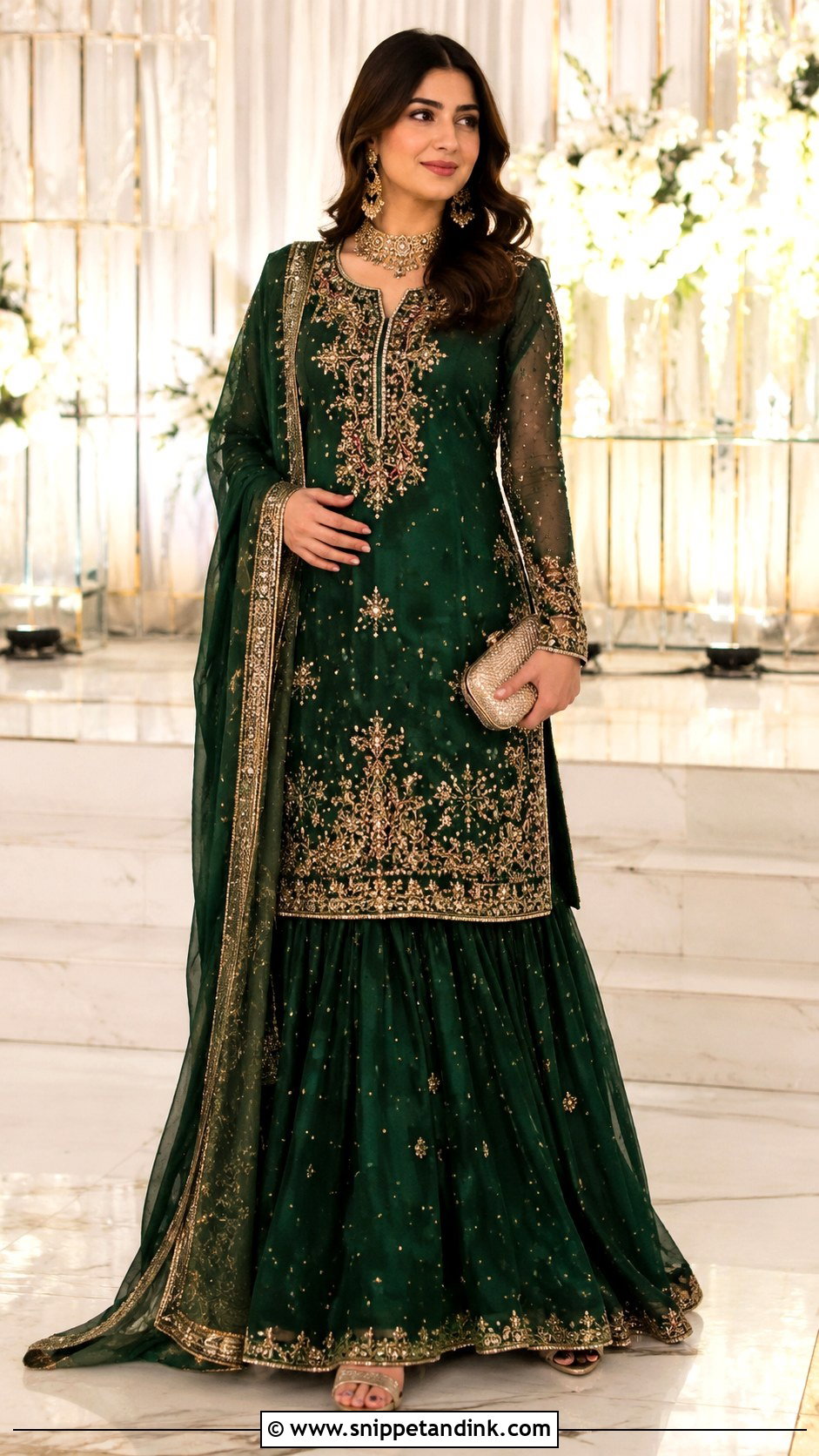
The long shirt over a lehenga is the most modest of the bridal silhouettes, and it adapts to anyone in the family by changing the embroidery level. Velvet, raw silk or jamawar with gold detailing suits a heavy baraat; chiffon, net or organza with delicate threadwork suits a lighter function. The proportion to check is where the shirt ends. Knee length or just below shows enough lehenga to look bridal. Any longer, and the flare starts so low that the outfit reads as a long dress. Drape the dupatta over both shoulders or the head, then add traditional jewelry, a small clutch and comfortable heels.
10. Pakistani Velvet Dress For Winter Wedding
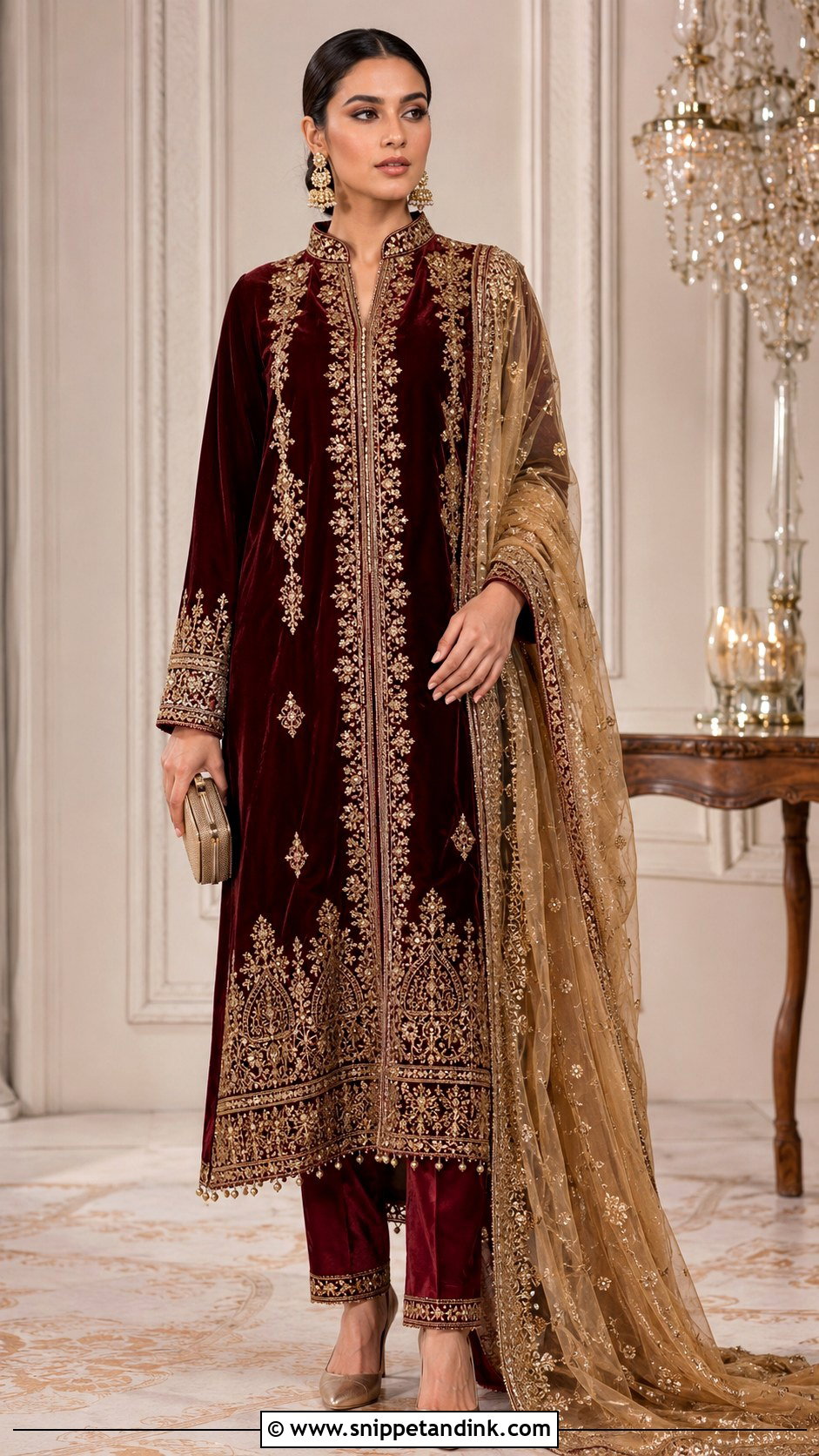
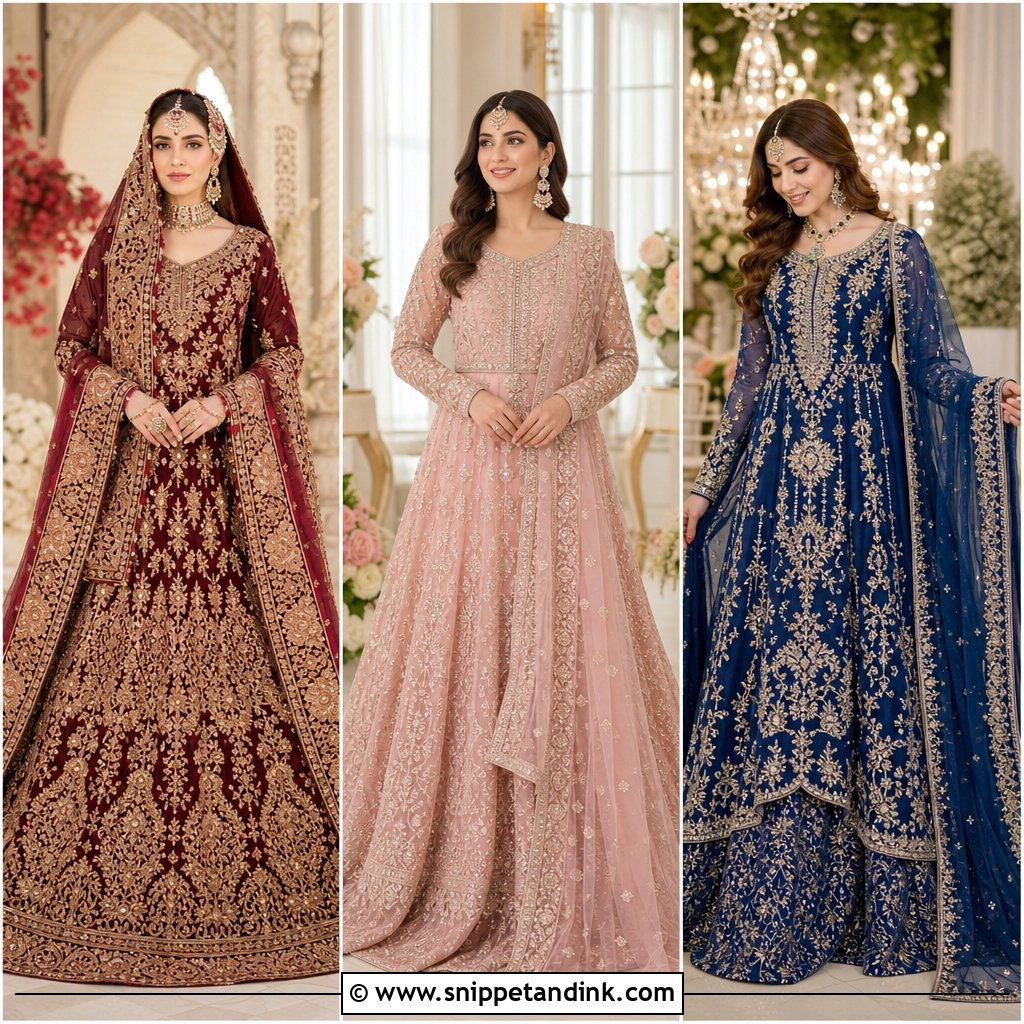
Velvet is the winter fabric because it holds warmth and absorbs light, which makes emerald, navy, burgundy, plum and maroon look deeper than they would in silk. A long velvet shirt pairs with cigarette pants, a lehenga or a gharara, and gold embroidery with antique motifs sits well on the pile. Two warnings. Velvet gets warm indoors once a hall fills up, and it marks wherever it is pressed or crushed, so it should travel hanging rather than folded in a suitcase. A tissue, organza or chiffon dupatta lightens the weight. Gold jewelry, closed-toe heels and a structured clutch finish it for evening functions.
11. Pakistani Organza Suit For Wedding
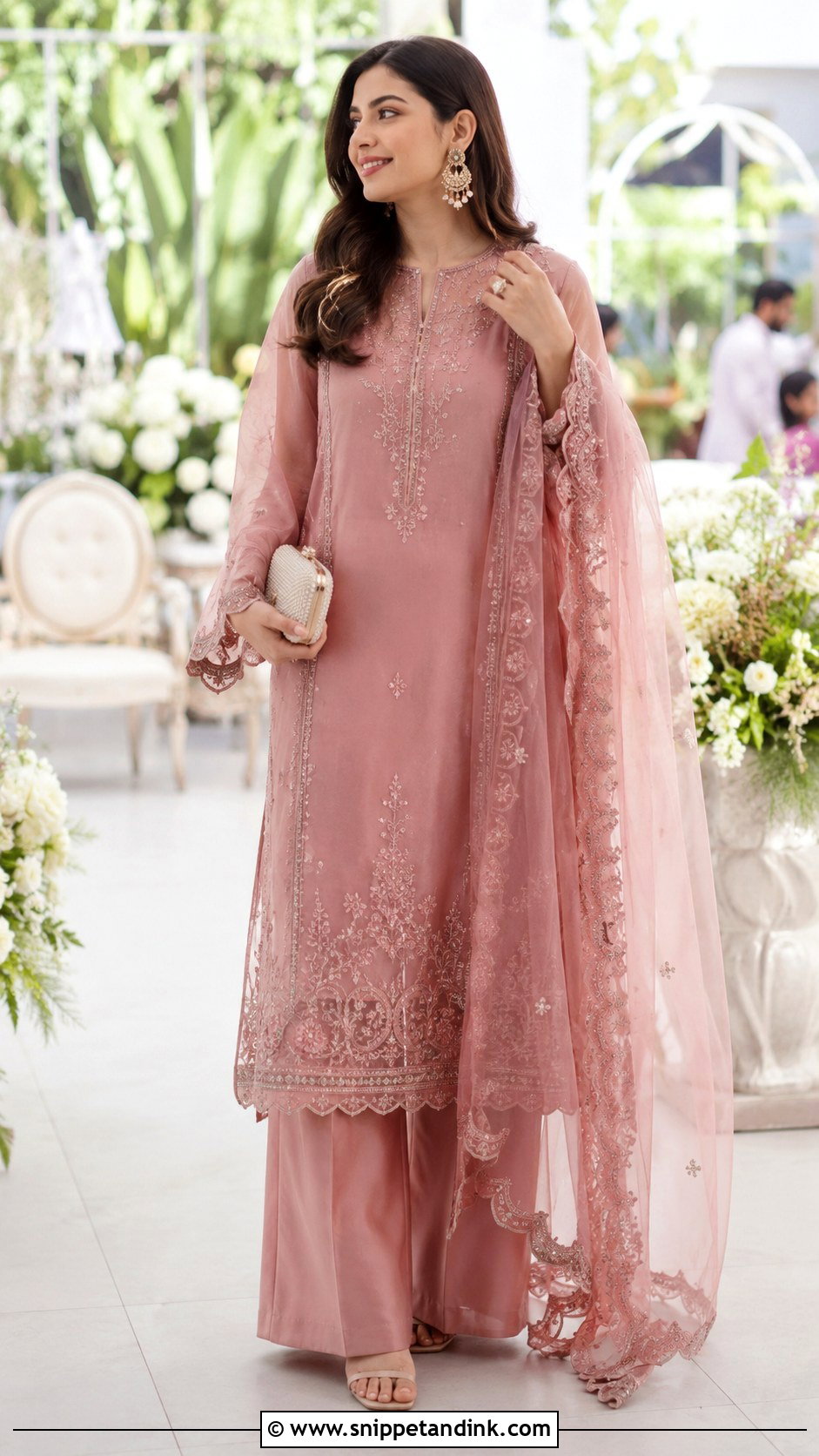
Organza is crisp, so even a little embroidery stands up off the fabric and looks dressier than it is. That’s why I suggest it to guests who want something formal without heavy work. A straight shirt with wide-leg trousers, cigarette pants or a lightly flared sharara all suit it. Peach, ice blue, lavender, ivory and dusty rose look fresh in daylight, and deeper shades with sequins or metallic thread suit evenings. Organza creases sharply, though, and can feel scratchy at the neckline and underarms, so a soft lining matters more here than in any other fabric. Add an organza dupatta with lace edging, block heels and soft makeup.
12. Pakistani Chiffon Maxi Dress
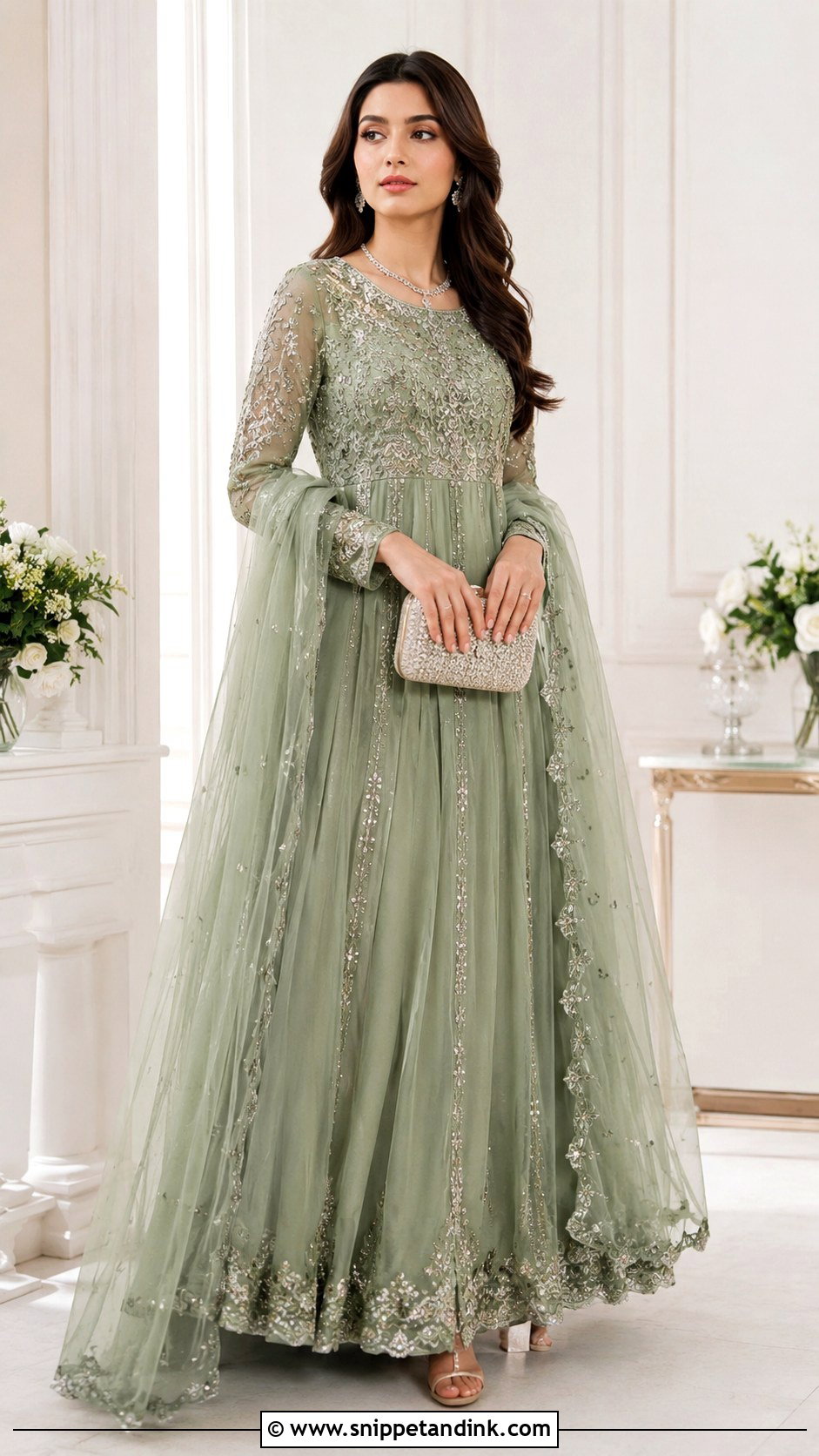
Chiffon drapes close to the body without adding bulk, which is why a maxi in it suits so many figures, from an engagement party to a walima dinner. Put the embroidery at the bodice and border and keep the dupatta sheer. Pastels read soft; deep jewel tones read dramatic. The weak point is the hem. Chiffon frays and catches on heels, so I ask for a rolled or faced hem and a slightly shorter length than I’d choose for silk. Heels, delicate jewelry, a small clutch, and soft waves or a low bun suit it best.
13. Pakistani Peplum With Lehenga
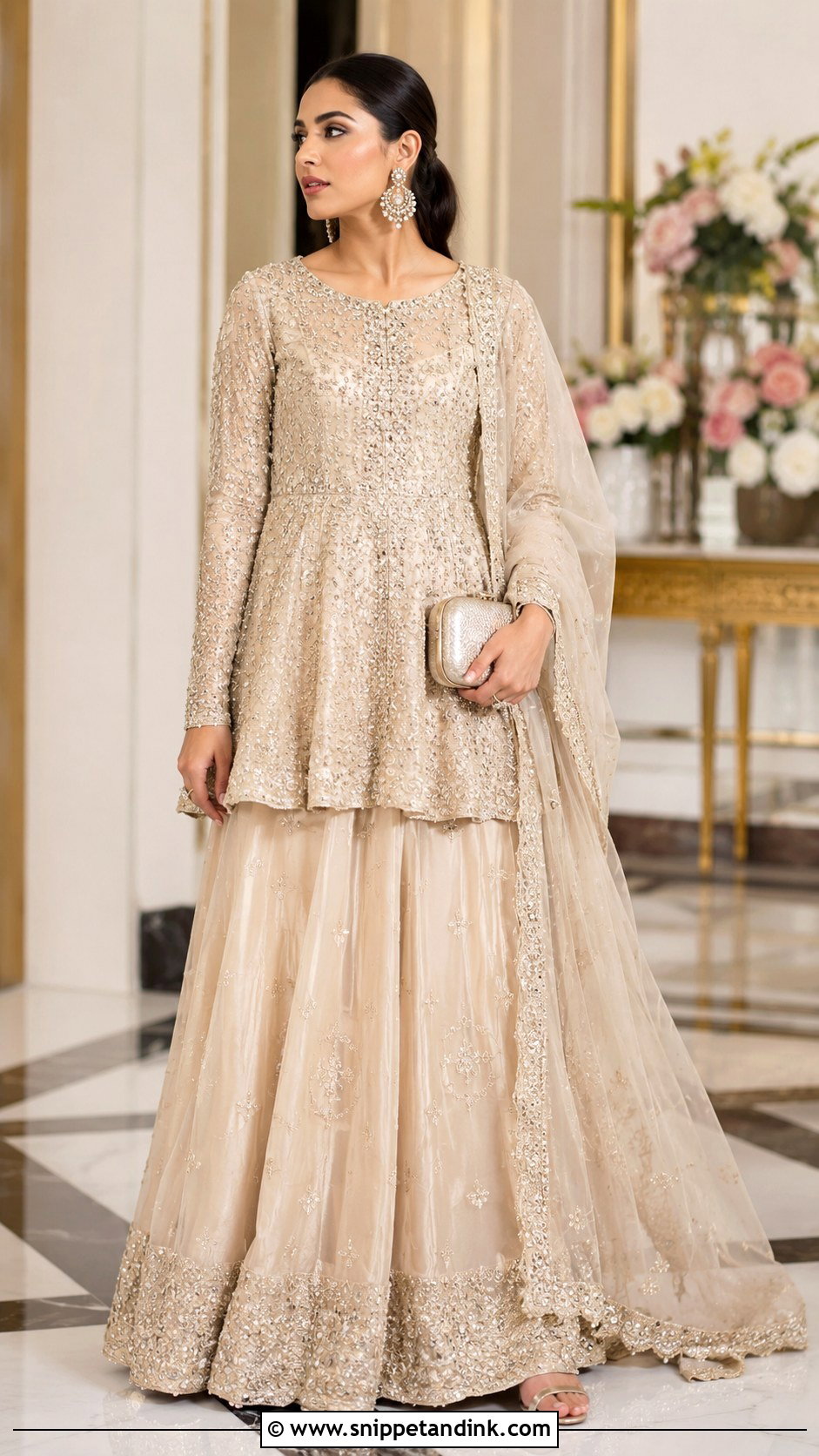
A peplum top marks the waist and then flares, so with a lehenga it gives a defined shape that a long shirt can’t. It suits mehndi, engagement and formal receptions. My rule is one busy piece: a heavily worked peplum over a simpler lehenga, or a printed lehenga under a detailed top. Brights suit festive events; champagne, gold, silver and blush suit formal ones. Peplum length matters more than people expect. If it ends right at the widest part of the hip, it adds width there, so I usually move it a little higher or lower. Drape the dupatta to one side and keep the rest to statement earrings, heels and a sleek clutch.
14. Pakistani Cape Dress For Wedding
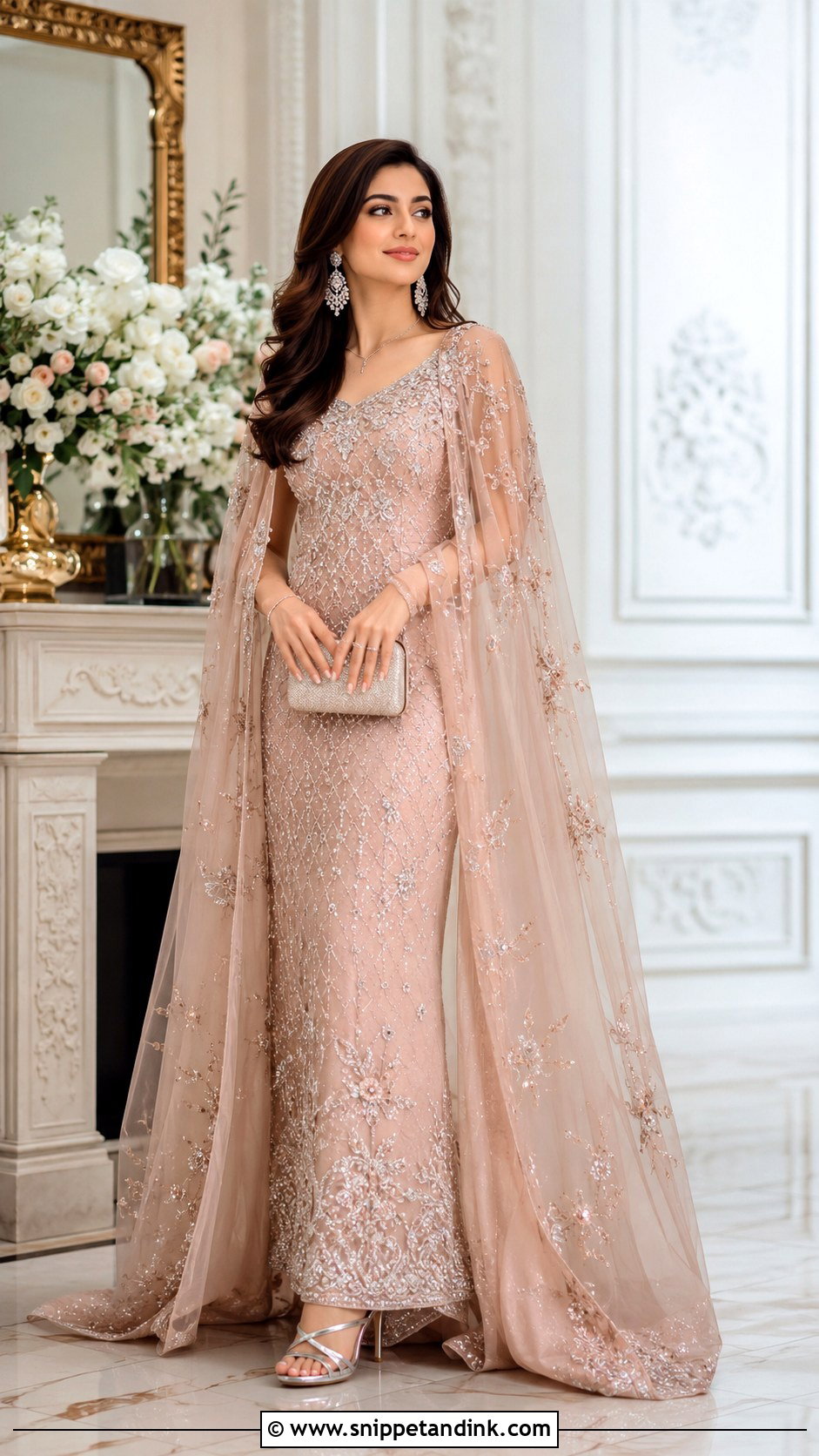
A cape can stand in for a dupatta, which is a relief for anyone tired of re-pinning one all evening. Layer it over a gown, lehenga or straight dress, and for a wedding choose a sheer cape edged with embroidery, pearls, sequins or scallops. Soft metallics, blush, ivory, navy and emerald suit receptions and engagement dinners. Because the cape already frames the shoulders, I keep the jewelry to earrings, skip the necklace, and put the hair up sleek so the neckline isn’t hidden. Do check that you can lift your arms to eat and hug people. Some capes are tacked at the wrist and restrict movement more than you’d expect.
15. Pakistani Front Open Gown
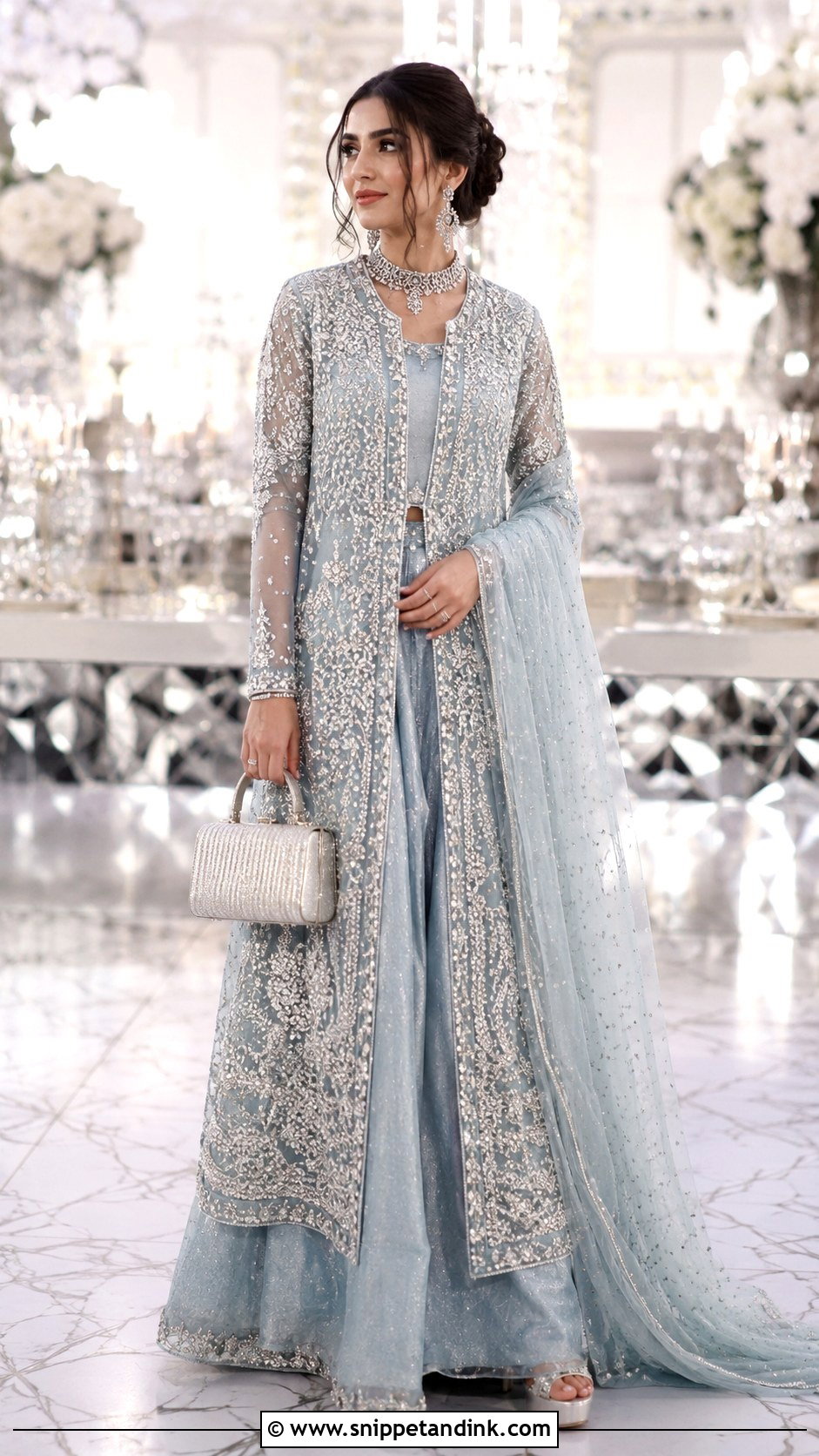
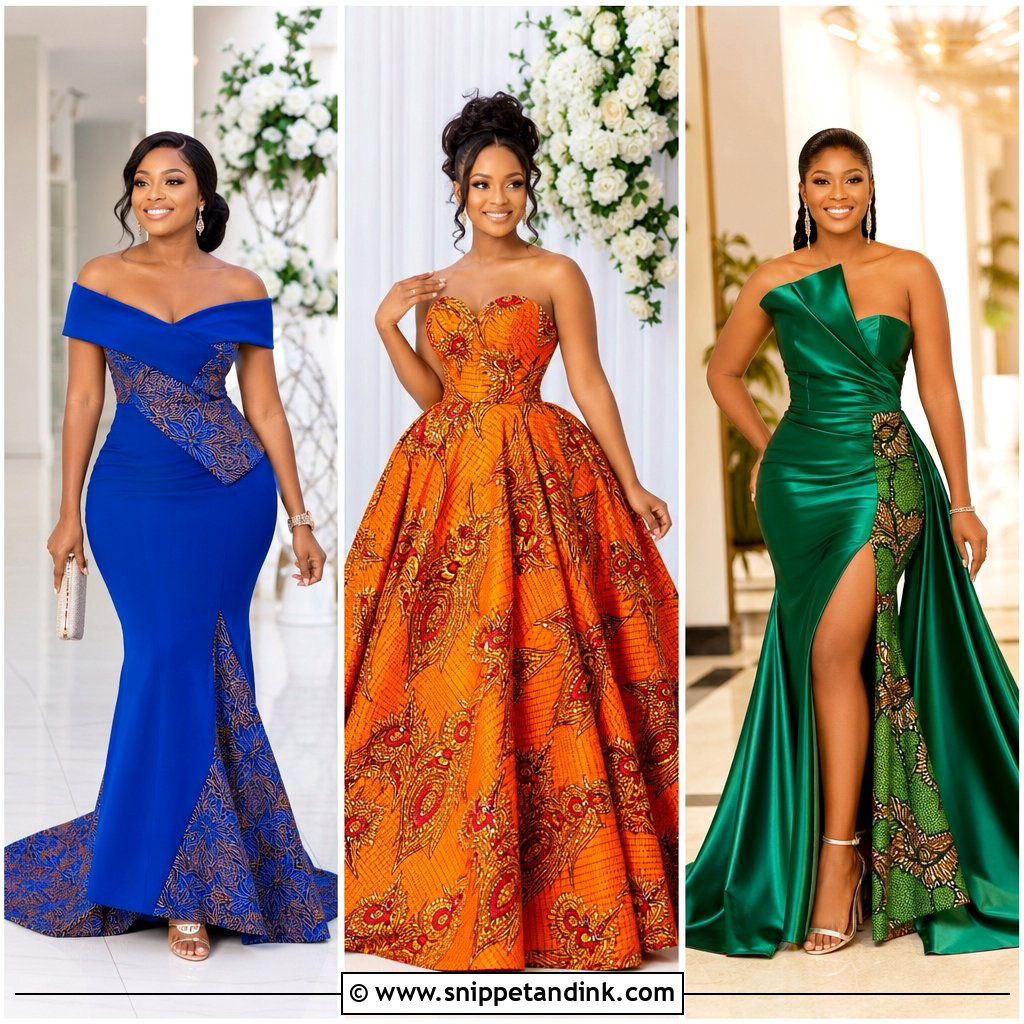
The front open gown is a long outer layer split down the center, worn over a lehenga, straight pants or a flowing skirt, and it adds height and movement every time you walk. It suits walima, engagement and evening events. Taller frames carry it most easily, though a petite wearer can make it work by keeping the inner layer the same color as the gown so the body isn’t cut in two. Embroider the front panels, cuffs and hem. Pastels feel bridal, jewel tones feel formal. Add a matching dupatta, crystal jewelry, high heels and a small structured bag.
16. Pakistani Jacket Lehenga Dress
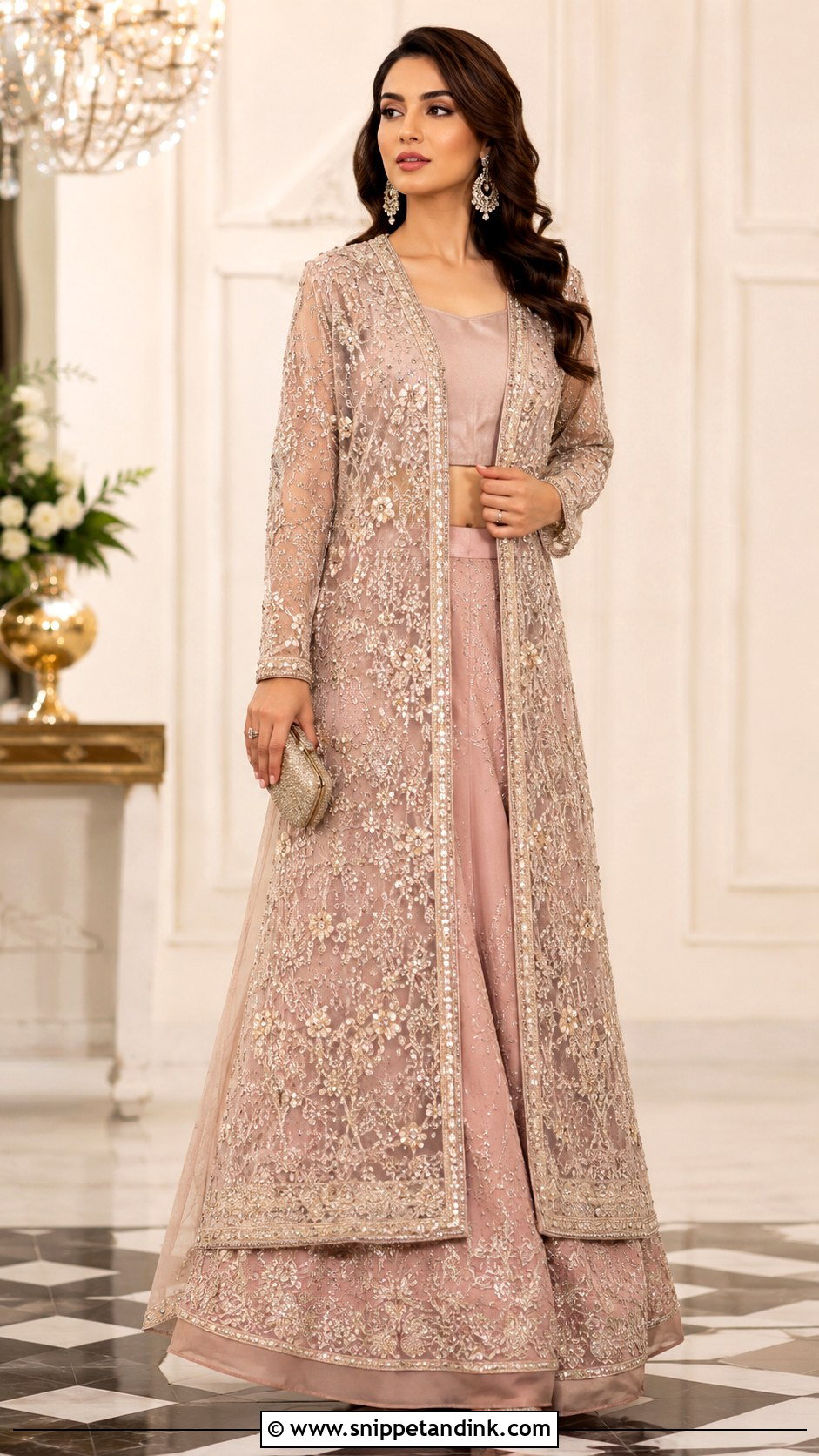
A jacket over a lehenga gives structure and coverage, and its length changes the whole mood: a long jacket reads regal, a cropped one is lighter and suits a mehndi or dholki. Silk, organza, net or velvet all work. If the jacket is heavily worked, keep the blouse underneath plain, because two embroidered layers compete and add weight. The fitting point I care about most is the armhole. Jackets are often cut close, and an embroidered sleeve that’s tight at the armhole stops you from raising your arms for dancing or the ring ceremony. Match the heels and earrings to the embroidery tone, and add a clutch.
17. Pakistani Angrakha Dress For Wedding
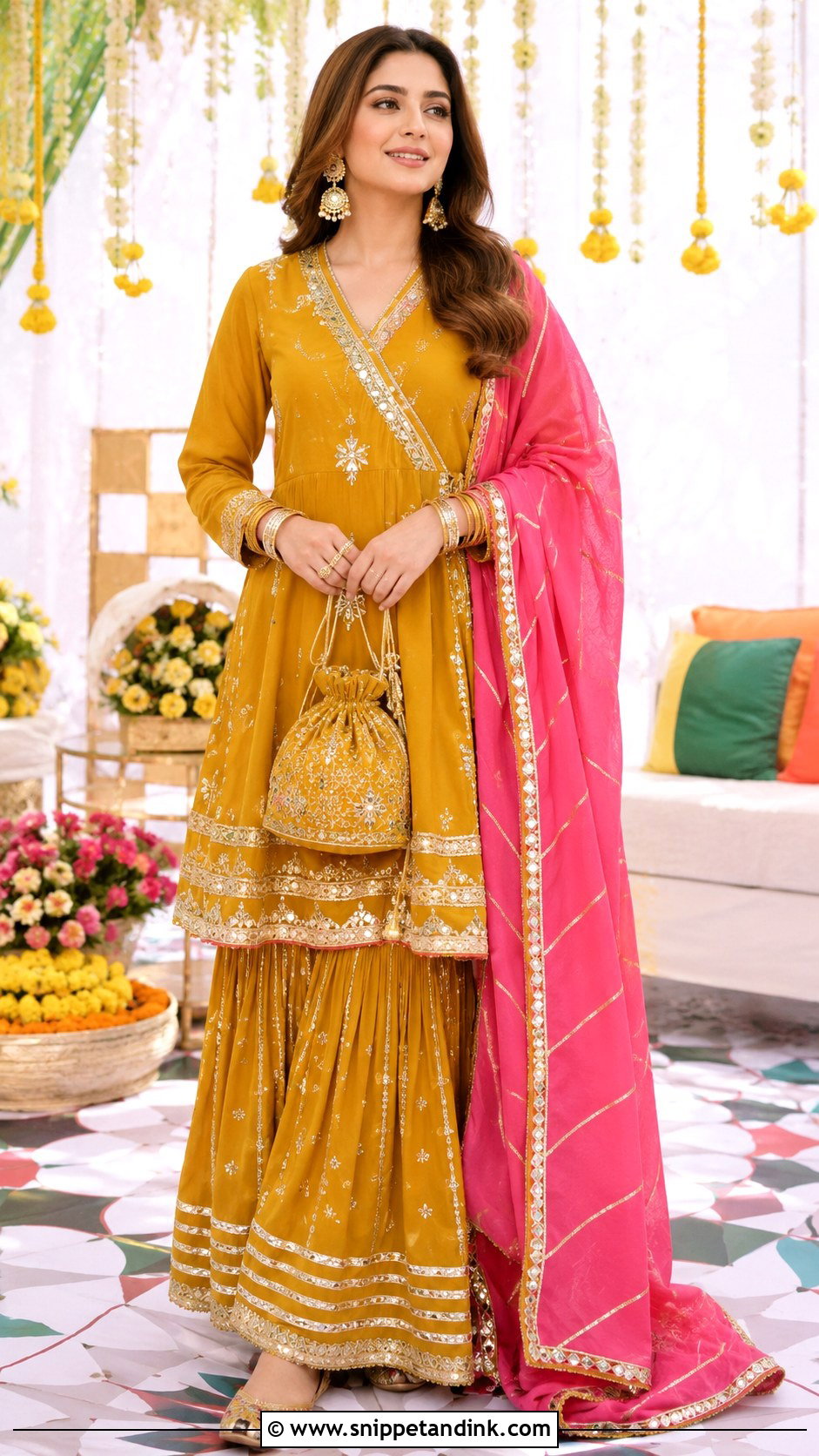
The Pakistani angrakha dress wraps across the front and ties at the side, an old cut that still feels relaxed. It suits mehndi, nikah and family gatherings. Cotton silk or chiffon with gota and mirror work keeps it light, while silk, organza or raw silk worked at the neckline and hem makes it formal. The wrap is the part to fit carefully. Without a hidden hook or snap under the overlap it gapes when you sit or bend, so I always add one. Pair it with churidar, straight pants or a sharara, then jhumkas, bangles, khussas and a contrasting dupatta.
18. Pakistani Kurta With Sharara
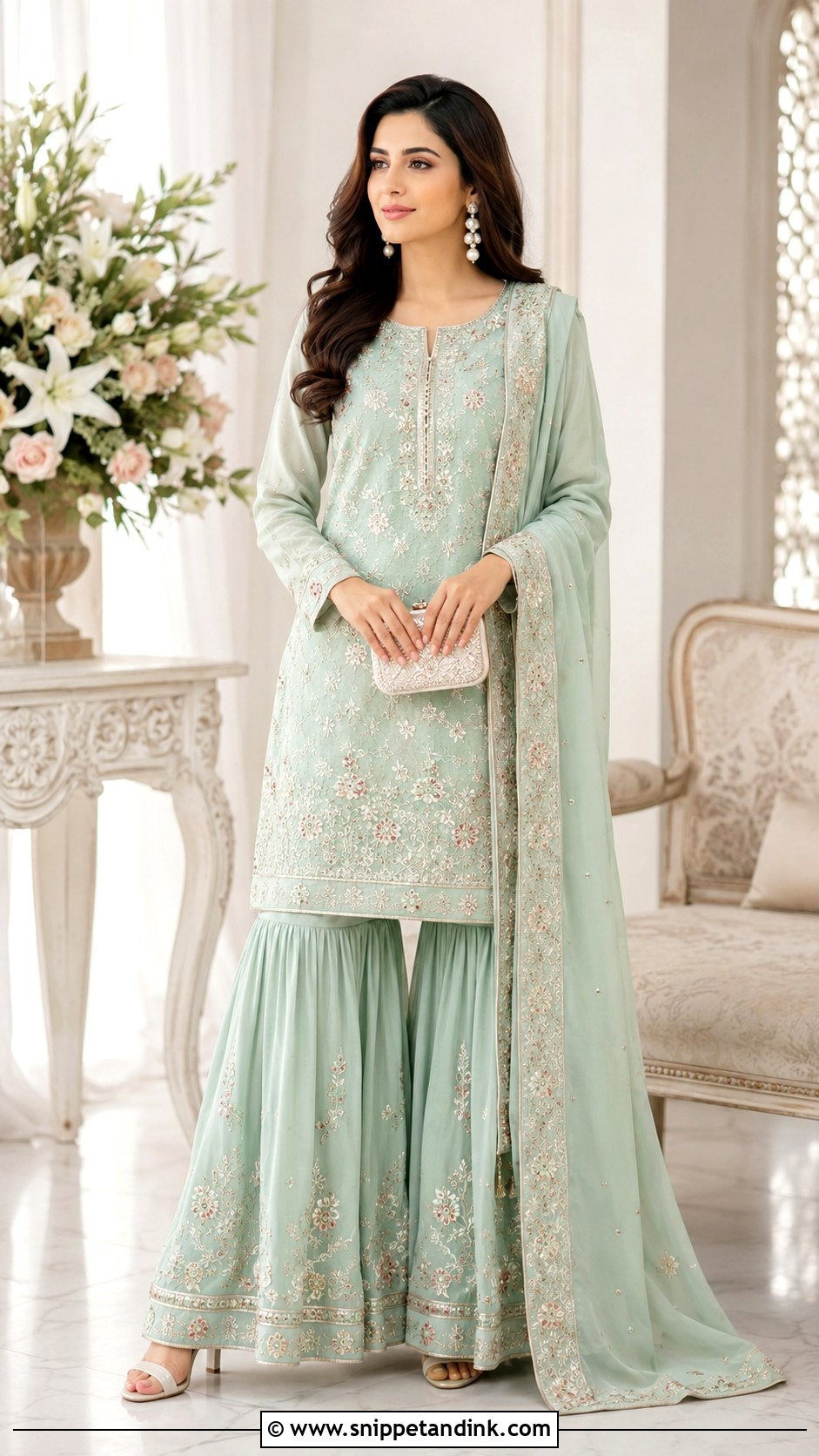
A kurta with sharara is what I suggest to sisters and cousins who’ll be on their feet running errands all day, because the kurta stays comfortable while the sharara still looks like a celebration. A short kurta looks younger; a longer one covers more. Pastels with pearlwork suit a nikah, bright shades with gota suit a mehndi, and sequins, zari or metallic thread suit evenings. Watch the back of the sharara. It’s the part that gets stepped on when you climb stage stairs, so hem it with your shoes on and leave a little clearance. Add a dupatta with a finished border, khussas or heels and a small potli bag.
19. Pakistani Dupatta Heavy Dress
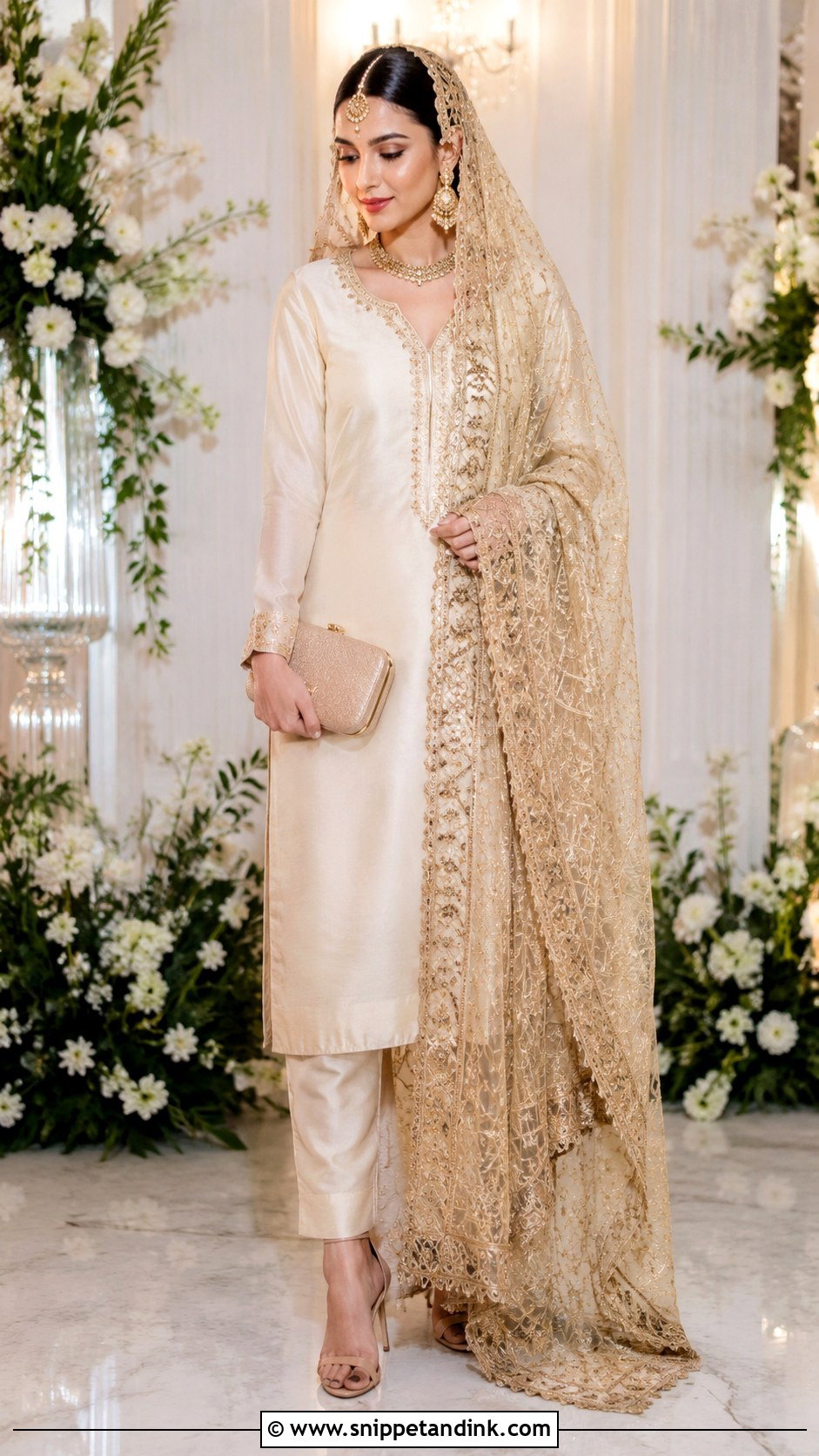
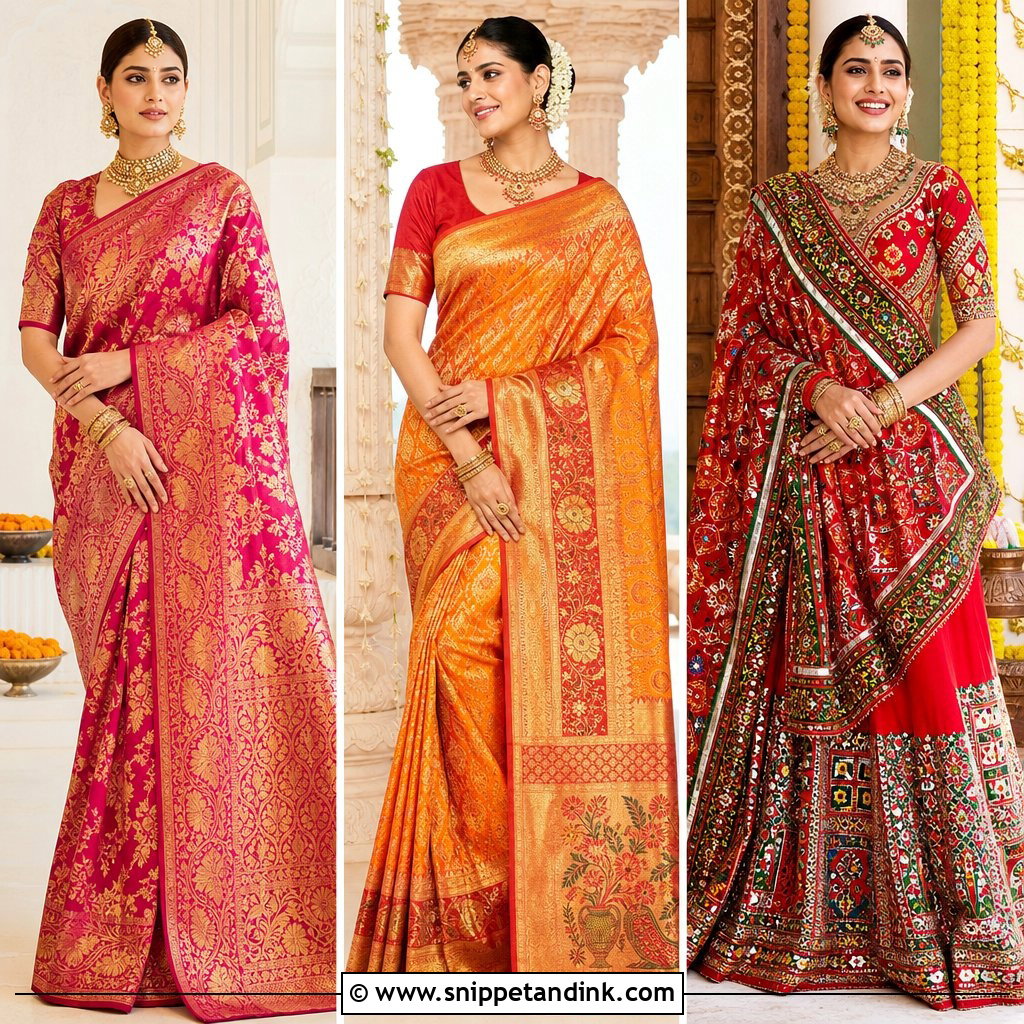
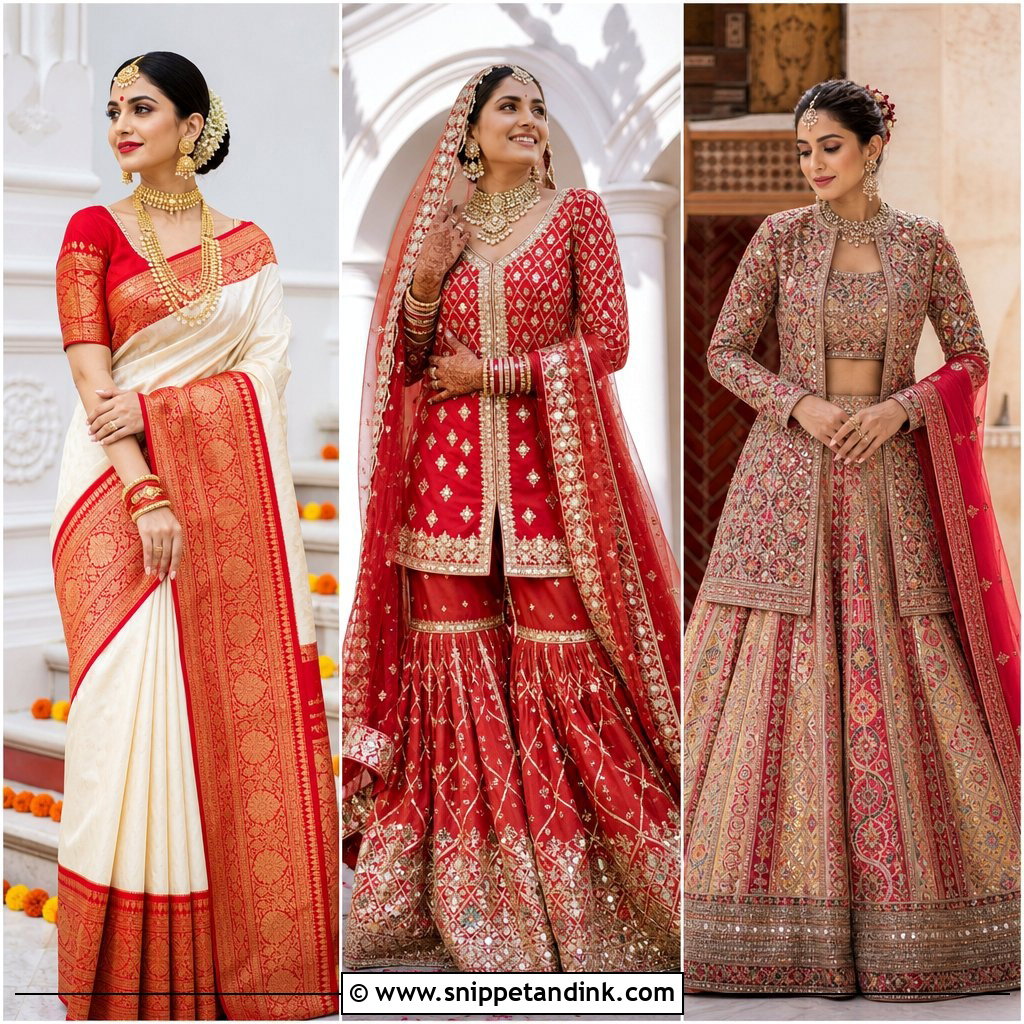
Putting all the work into the dupatta is one of my favorite tricks for guests on a budget, and for nikah brides who want a graceful head drape. Start with a simpler shirt and trousers, lehenga or gharara in silk, chiffon or organza, then add a dupatta with heavy borders, sequins, pearls or gota. A heavy dupatta is heavy on the head, though, and it slides backward unless it’s anchored. I set it with small U-pins into a bun or a pinned base, plus one safety pin at the shoulder, so it stays put through the ceremony. Delicate jewelry, neat heels and soft makeup balance it.


20. Pakistani Pastel Wedding Dress
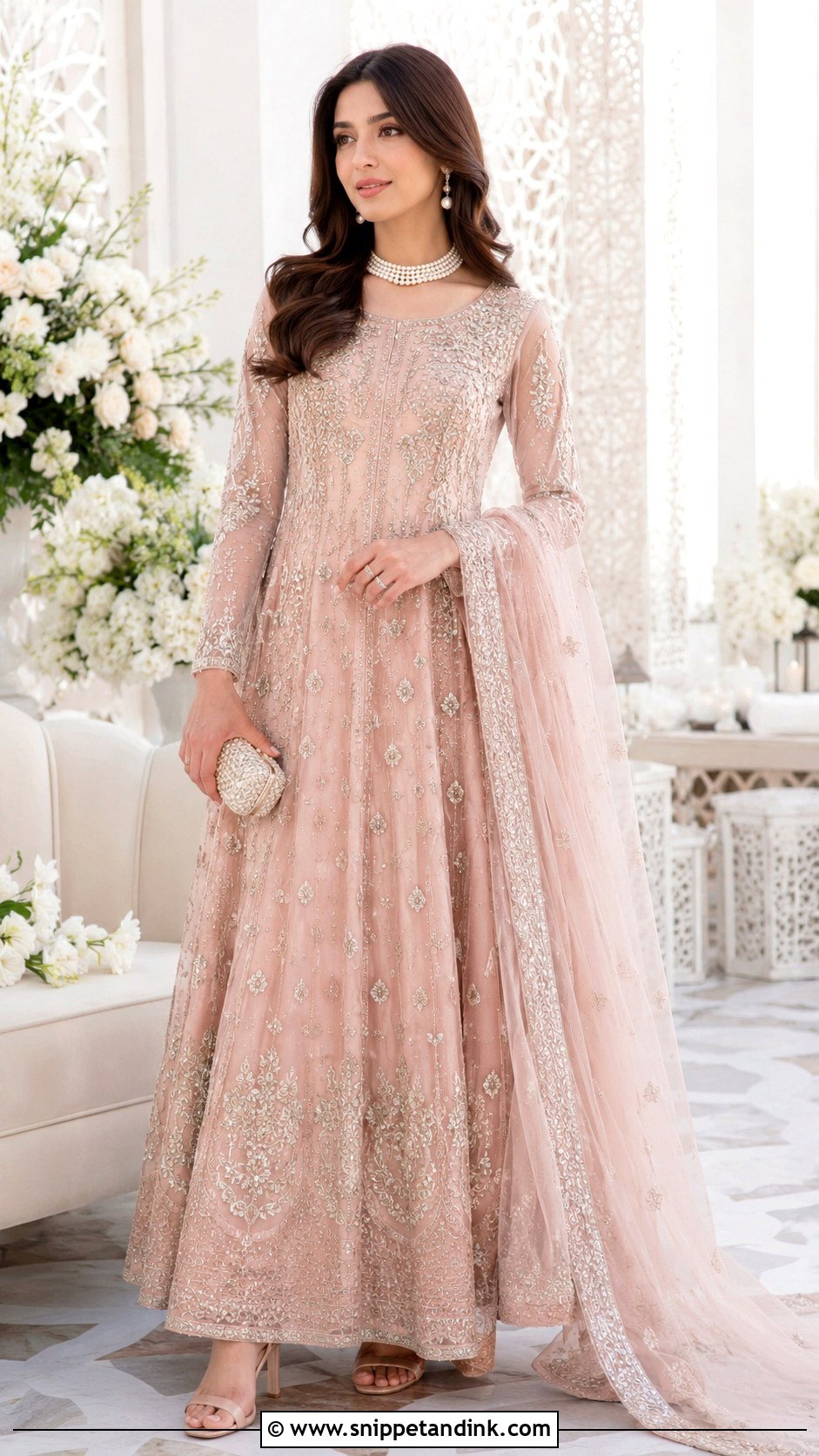
Pastels suit nikah, walima, daytime receptions and outdoor events, and blush, powder blue, lilac, mint, ivory, peach and sage all read fresh in daylight. Your role decides the cut and the amount of work. A bride needs heavier embroidery and layered dupattas to make a pastel feel grand, while a guest can stop at light threadwork, pearls or sequins. The catch is skin tone and lighting. Very pale shades can wash out warmer or deeper complexions under bright stage lights, so I hold the fabric against the face both by a window and indoors before anyone commits. Silver, pearl or champagne jewelry, nude heels and a small clutch keep it clean.
21. Pakistani Black Wedding Dress
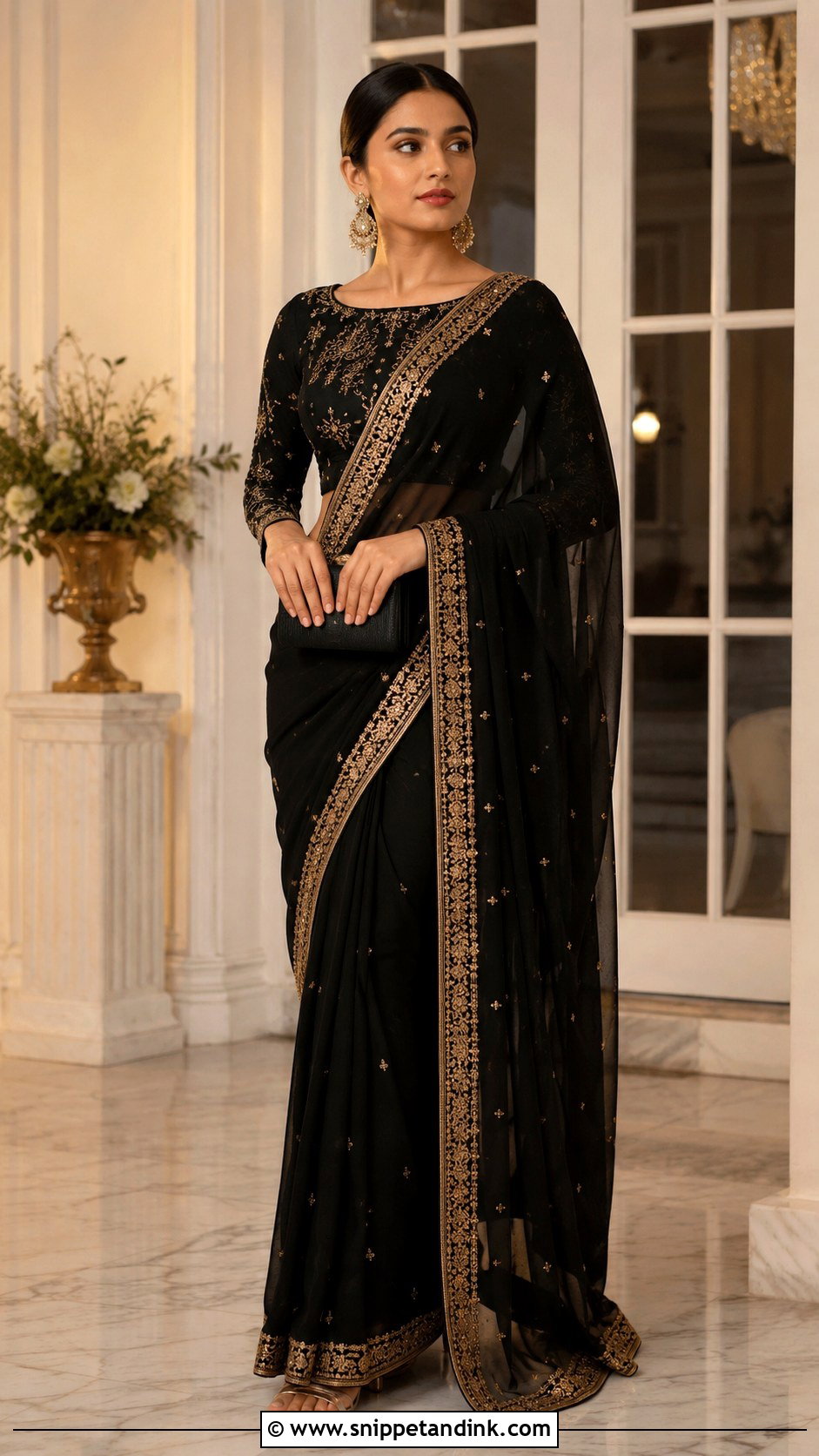
Black is still debated in some families, so ask before you wear it to a nikah, but for an evening reception, formal dinner or winter function it looks refined. Embroidery in gold, silver, copper or antique tones keeps it festive. A black velvet shirt with a gharara, a black chiffon saree or a black anarkali all work, and guests should keep the embroidery weight below anything bridal. Black also shows every bit of lint and loose thread under flash, so I keep a lint roller in my kit for exactly this. Add statement earrings, metallic heels, a clutch, a bold lip or defined eyes, and a sheer dupatta to soften it.
22. Pakistani White Nikah Dress
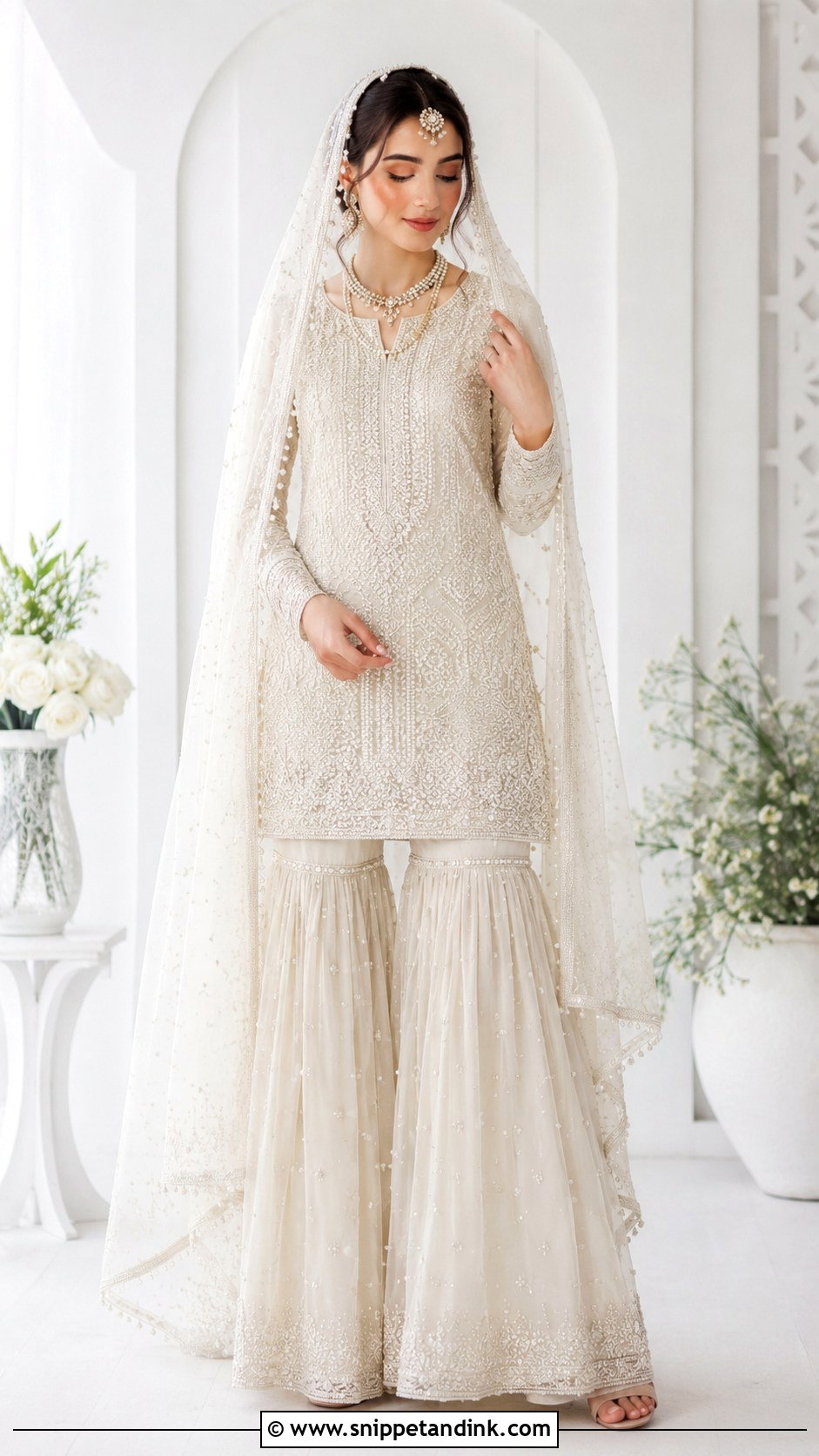
For a white nikah I almost never use true bright white. Ivory, pearl and cream warm up the skin and photograph more kindly, while optical white can turn blue-grey in shade. A pishwas, anarkali, gharara or long shirt with trousers all work, with fine embroidery, pearls, lace, gota or silver threadwork. Brides can add a matching veil-style dupatta; guests should keep the work lighter so nobody mistakes them for the bride. White is also the fabric most likely to pick up foundation at the neckline, so a thin scarf goes over the bride’s face as she steps in, and the final powder goes on afterward. Pearl jewelry, nude or silver heels, a clean bun and fresh skin finish it.
23. Pakistani Green Mehndi Dress
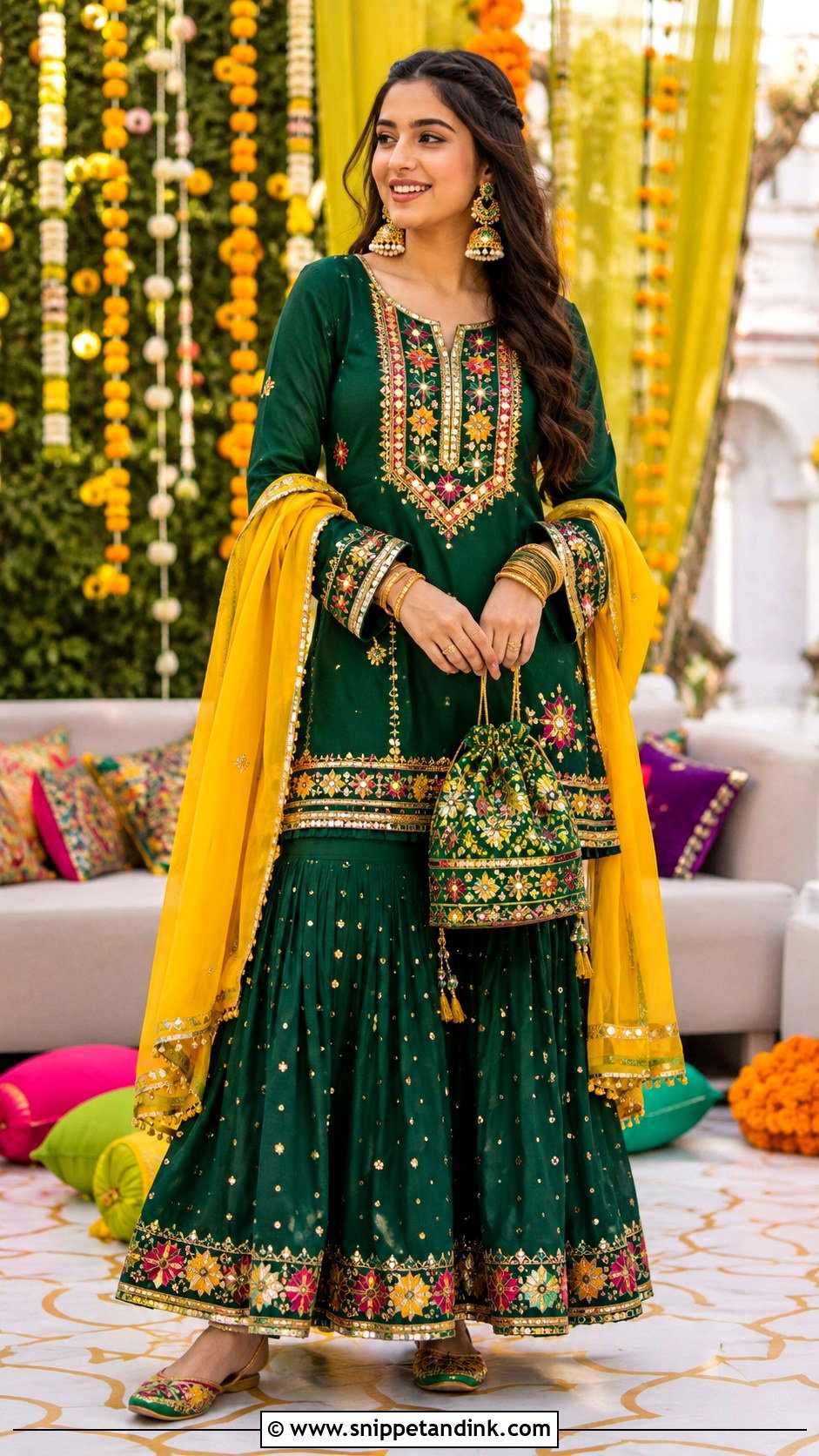
Green and yellow are the traditional mehndi colors, and green has the advantage of looking rich under warm evening lights. Emerald, parrot green, bottle green, mehndi green or lime each set a different mood, so pick by time of day: brighter for a daytime event, deeper for evening. A green sharara, gharara, lehenga or angrakha pairs well with yellow, pink, orange or gold accents, and gota and mirror work keep it playful. Henna paste stains fabric. If you’re the bride having mehndi applied, wear a sleeve that pushes up above the elbow and keep the dupatta clear of wet paste. Add floral jewelry by day or gold jhumkas at night, with khussas, bangles and a potli bag.
24. Pakistani Mother Of Bride Dress
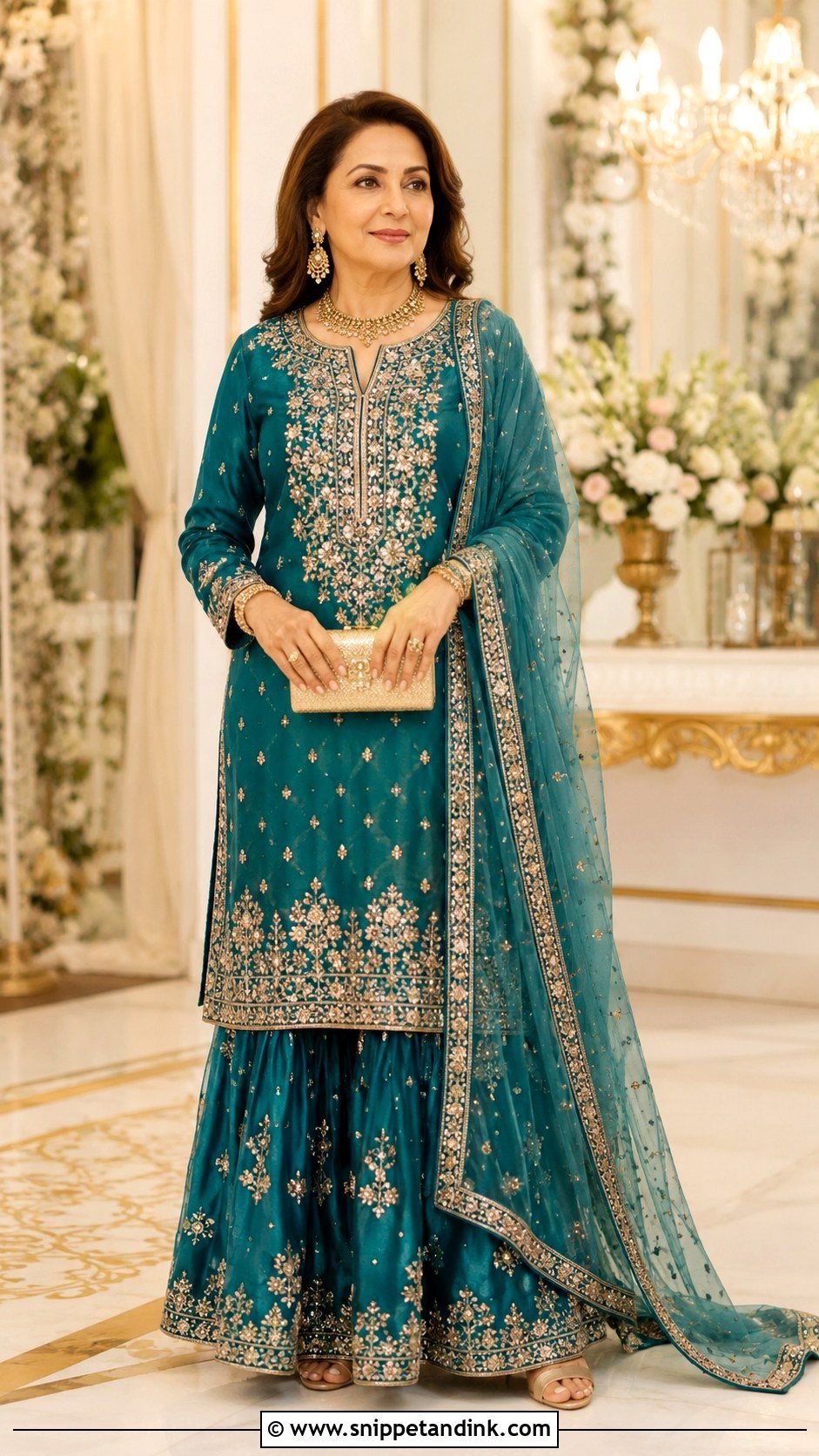
The mother of the bride is on her feet greeting guests from the first function to the last, so I dress her for comfort first and formality second. A long shirt with gharara, a saree, a velvet suit, an anarkali or a straight formal suit all work. Champagne, mauve, teal, navy, plum, gold and emerald look rich without competing with the bride, and refined embroidery wears better than very heavy work. I always look for a block heel or a cushioned footbed she can stand in, and pin the dupatta securely at one shoulder so she isn’t adjusting it every time she hugs someone. Pearls, kundan or gold sets finish it with dignity.
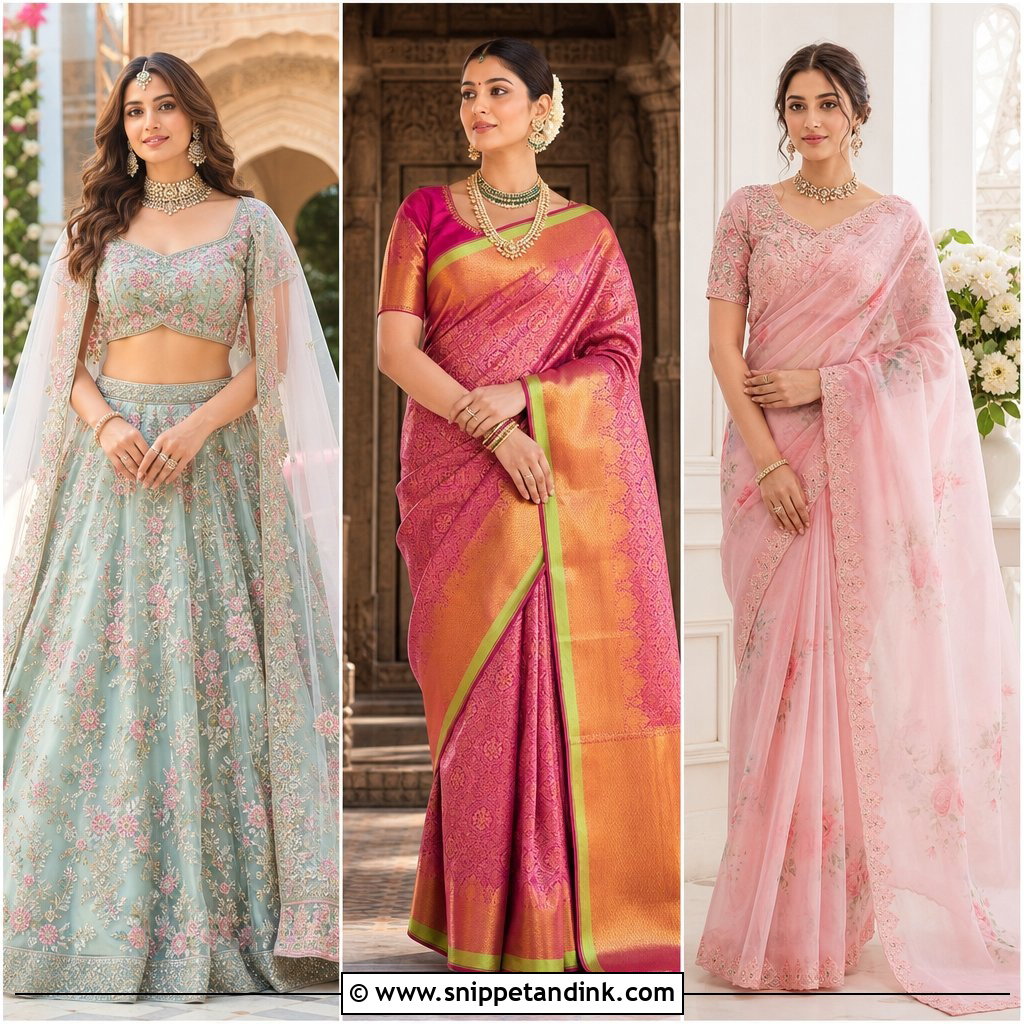
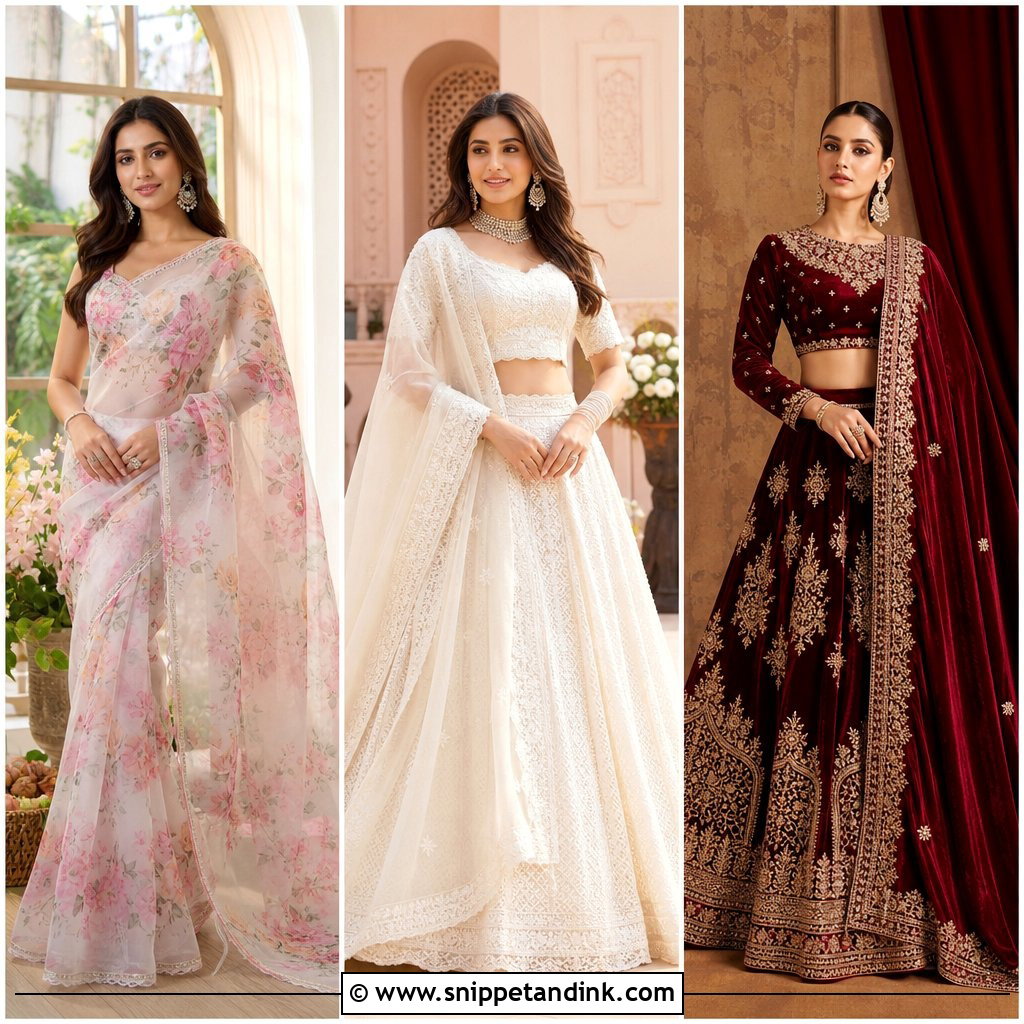


25. Pakistani Wedding Guest Dress
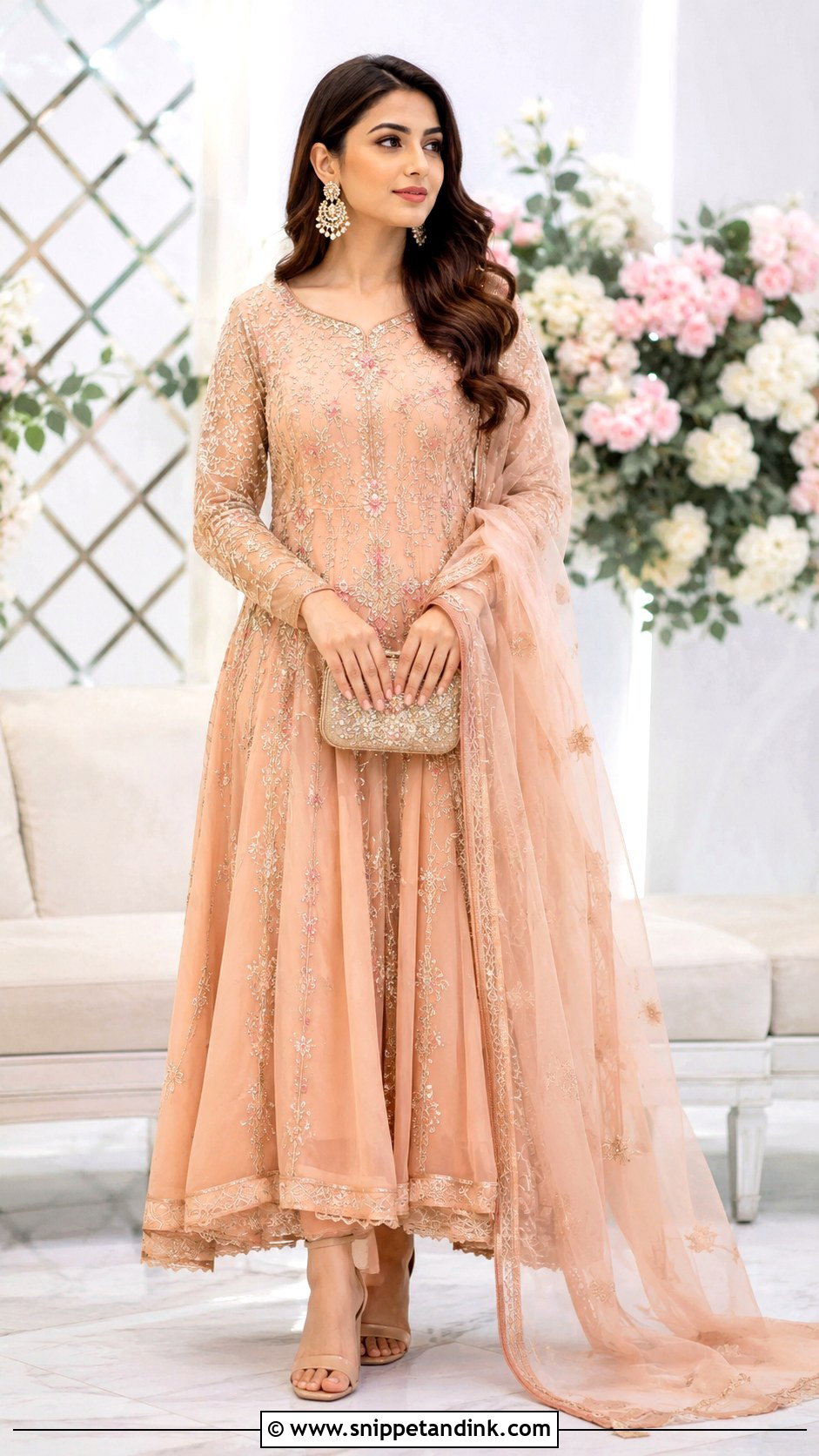
A guest outfit should look festive without competing with the bride, and the function decides the rest. Mehndi calls for bright colors, shararas, ghararas or light lehengas. Nikah suits soft pastels, anarkalis, pishwas and organza suits. Baraat allows richer fabric and deeper color, but unless you’re close family, avoid red and heavy bridal work. Walima suits sarees, gowns, pastel lehengas and formal suits. If you’re unsure, ask the family, since some set a color theme for each function’s guests. Comfortable shoes, a clutch, earrings and a neatly draped dupatta carry you from arrival to the last photo.
Lead Times, Fittings and the Weight Test for Hand-Embroidered Pieces
Pakistani bridal couture is mostly made to order, and hand embroidery like zardozi and dabka is slow work. For a fully worked baraat lehenga I tell brides to place the order roughly four to six months ahead, and earlier still if the outfit is being shipped from overseas and has to clear customs. Ready-to-wear guest pieces move faster, but alterations still need a few weeks, and wedding season fills every tailor’s calendar.
What I check at the final fitting
- Sit down for five minutes. Waistbands, bodice embroidery and stiff can-can only show their faults when you’re seated.
- Raise both arms as if hugging someone. A tight armhole is the complaint I hear most often after a wedding.
- Walk up and down stairs in the actual shoes, since stage steps are where long hems catch.
- Wear the dupatta on your head for ten minutes to feel its real weight, then decide how many pins it needs.
Heavy work needs care after the wedding too. Fold embroidered pieces with muslin or soft cotton between the layers instead of plastic, which traps moisture, and refold them along new lines every few months so the metallic thread doesn’t crack at the creases. Keep them away from damp walls, because zari tarnishes quickly in humid storage.
Matching Embroidery Weight to the Function
The best Pakistani wedding outfits suit the function first and the wearer second, and they stay comfortable for as long as the event runs. A red lehenga belongs to the baraat, while a pastel pishwas, a green mehndi sharara, a velvet winter suit or a walima gown each fit their own evening. Balance is the habit to keep. Heavy embroidery wants plain styling, and a lighter outfit can carry a statement dupatta or jewelry. Sit, walk and lift your arms in every outfit before the week starts, and you’ll know which ones will last the night.
You'll Like These Ideas:



Leave a Reply