
Keeping a Dupatta on Your Head Through the Whole Ceremony
Almost every Nikah outfit below includes a dupatta worn over the head, and the dupatta is what brides struggle with most on the day. Light organza and net slide on silky hair; heavy borders drag the whole thing backwards. A few minutes of planning at the hair trial fixes it.
- Build an anchor first: a low bun, or a small flat section of hair pinned at the crown, gives the dupatta pins something to grip.
- Pin the dupatta at the crown with two crossed bobby pins, then add one more behind each ear.
- If the border is heavy, add a pin at the back of the bun so the weight hangs from there instead of pulling at the hairline.
- Choose matte bobby pins in your hair color; shiny pins show through sheer net in photos.
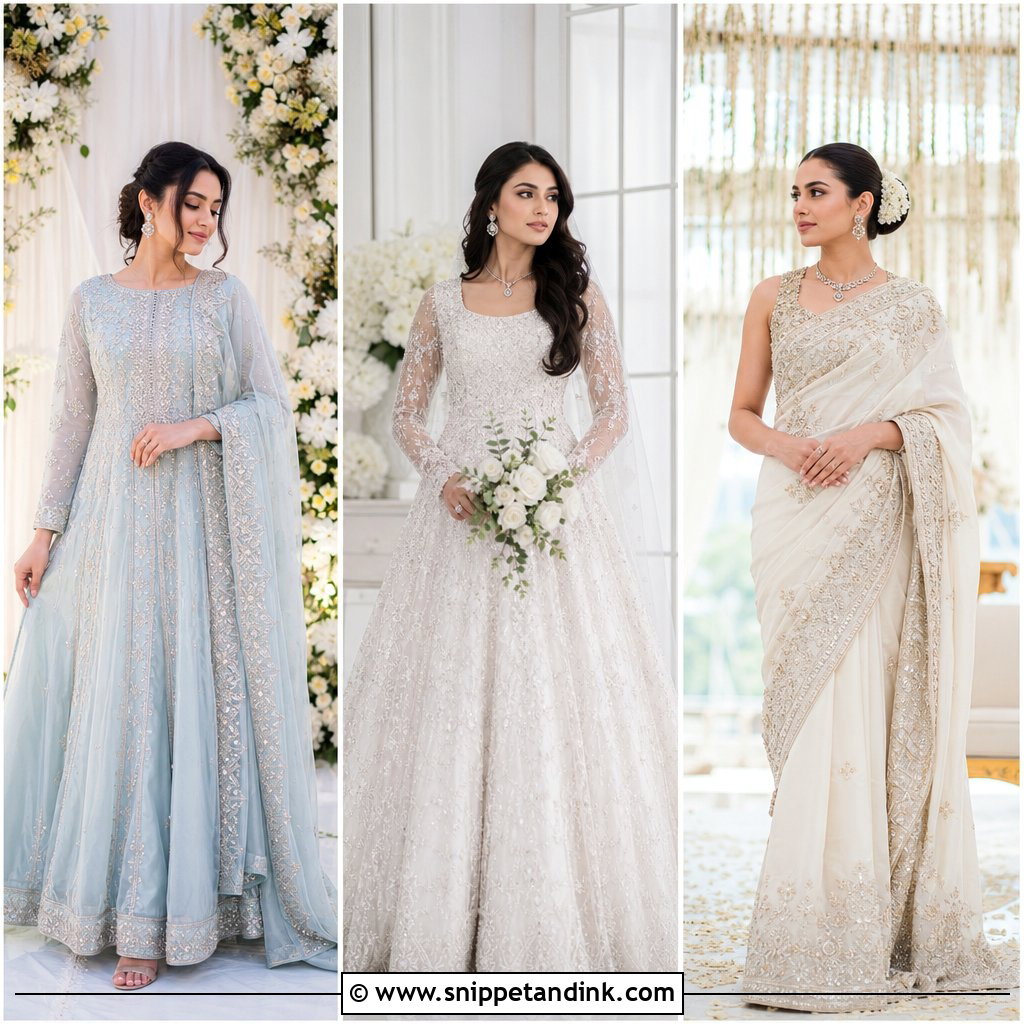
- Do one test with the actual dupatta, not a substitute, because weight and slipperiness vary so much between fabrics.
If the Nikah is at a mosque
Shoes come off at the door, so wear khussa or flats you can slip out of without help, and expect to sit on a carpet. That favors ghararas, shararas and shalwar kameez over a long farshi train or a stiff lehenga. Sleeves to the wrist and a neckline that stays modest when you lean forward are usually expected. Check with the mosque about photography and where the bride will sit, since some keep her in a separate area during the ceremony.
1. Ivory Gharara Nikah Dress
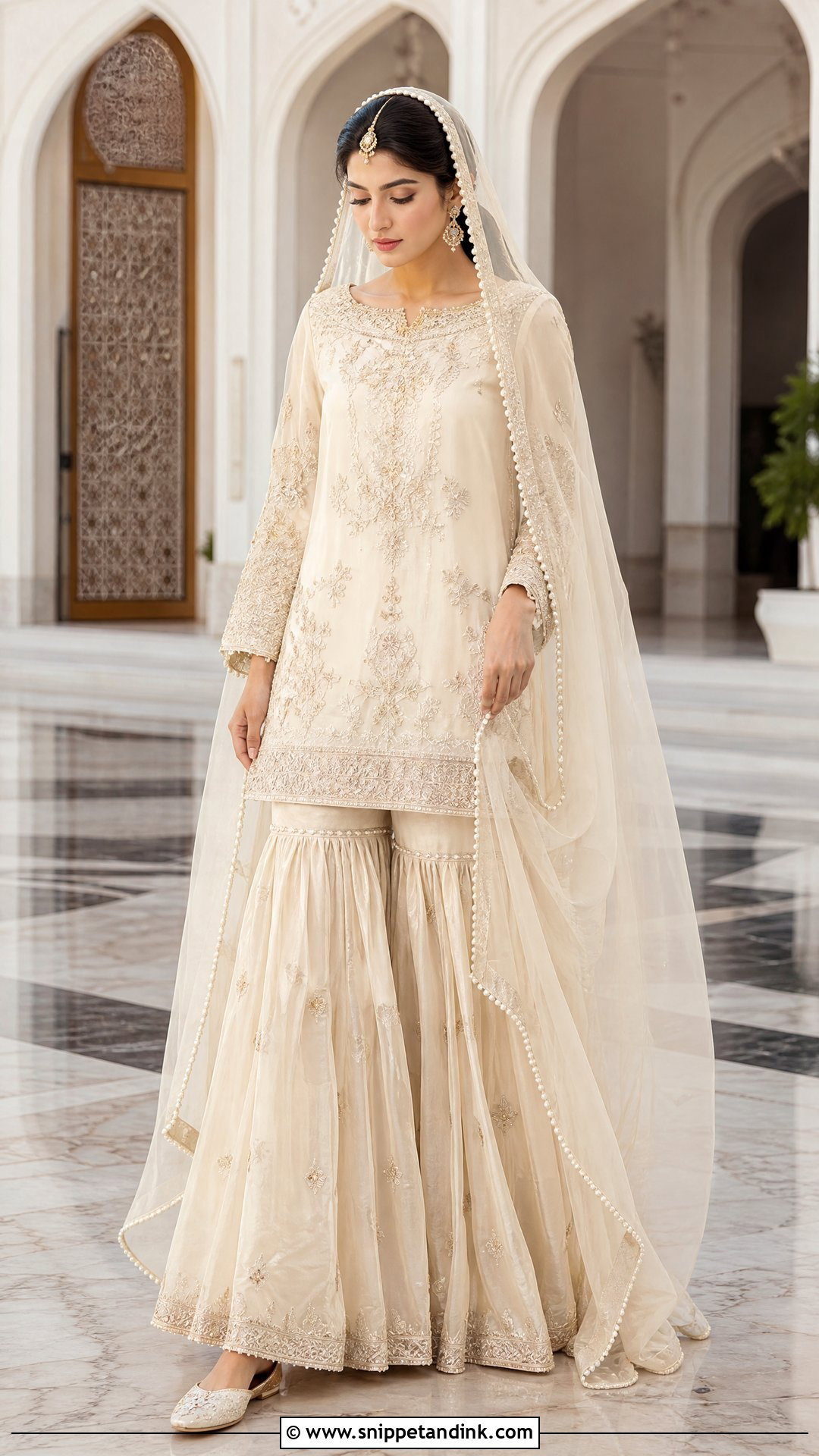
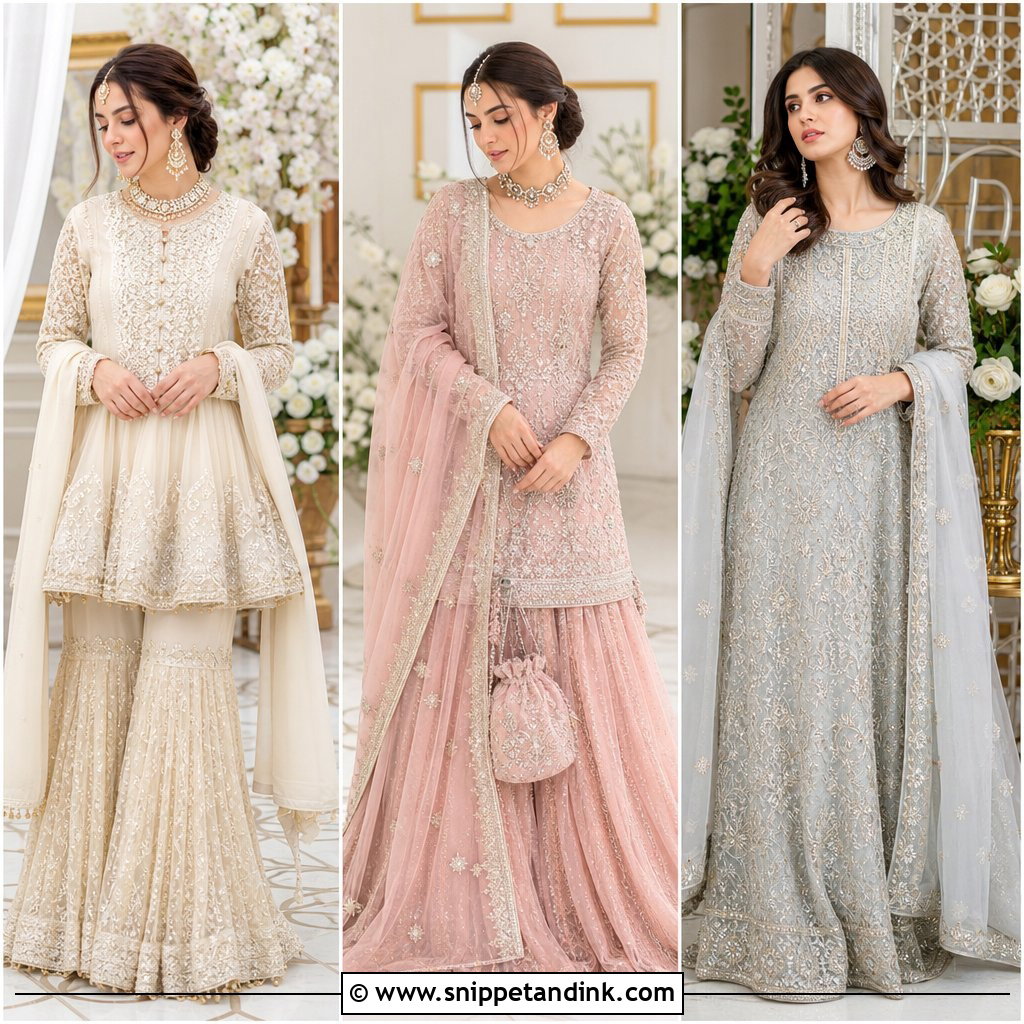
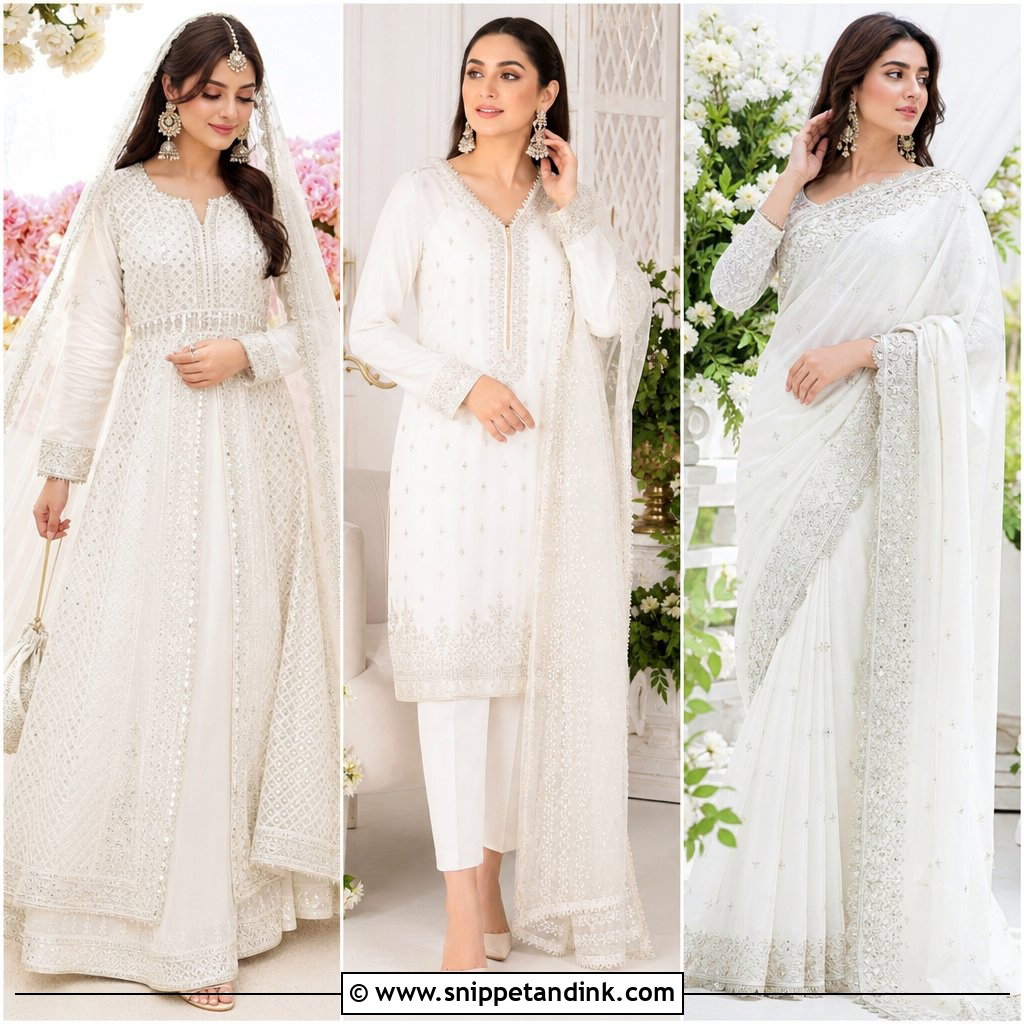
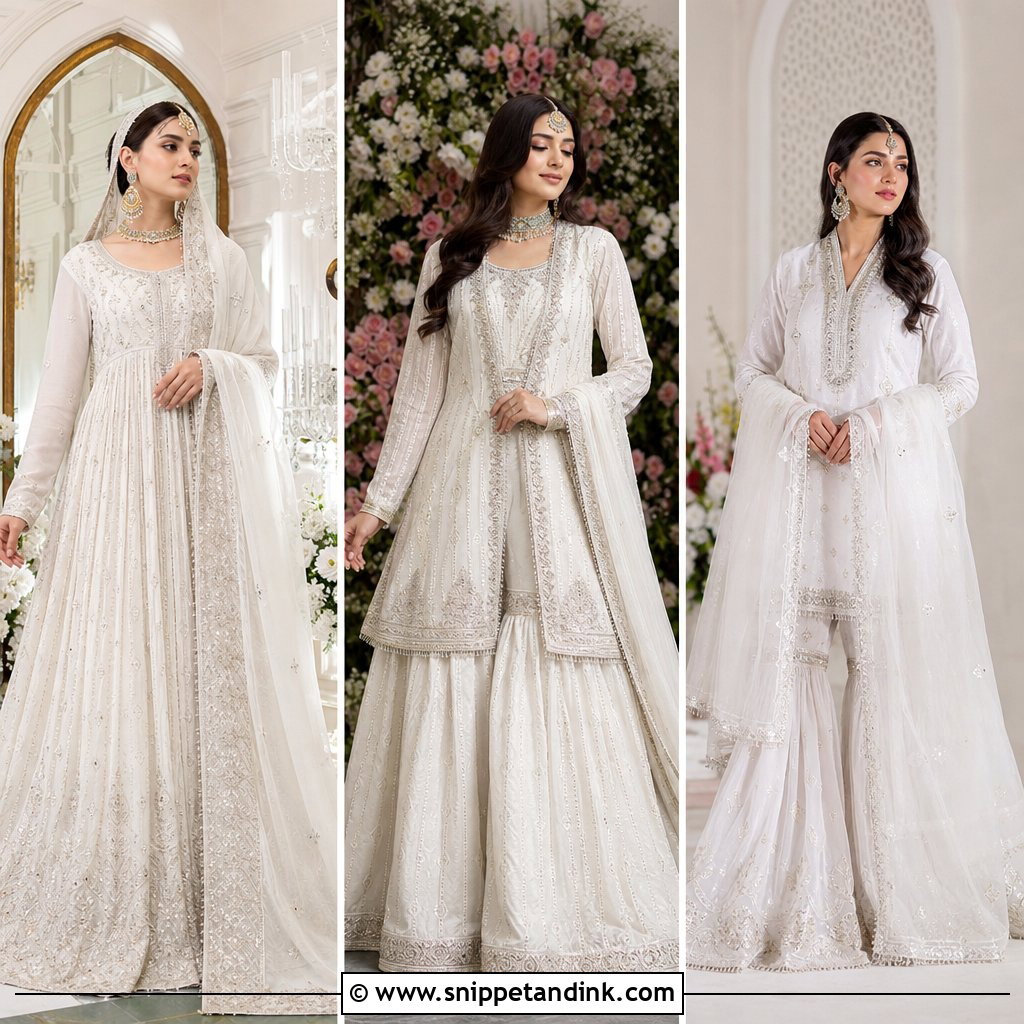
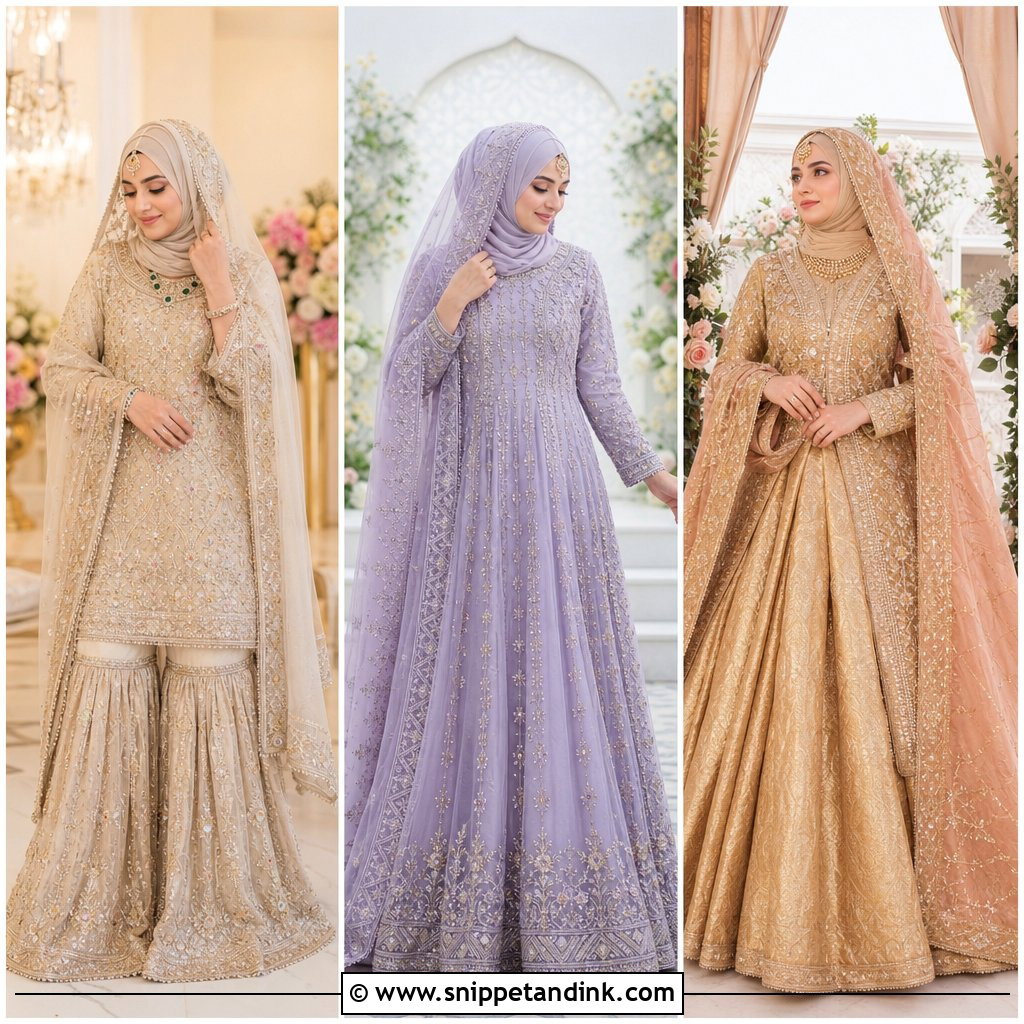
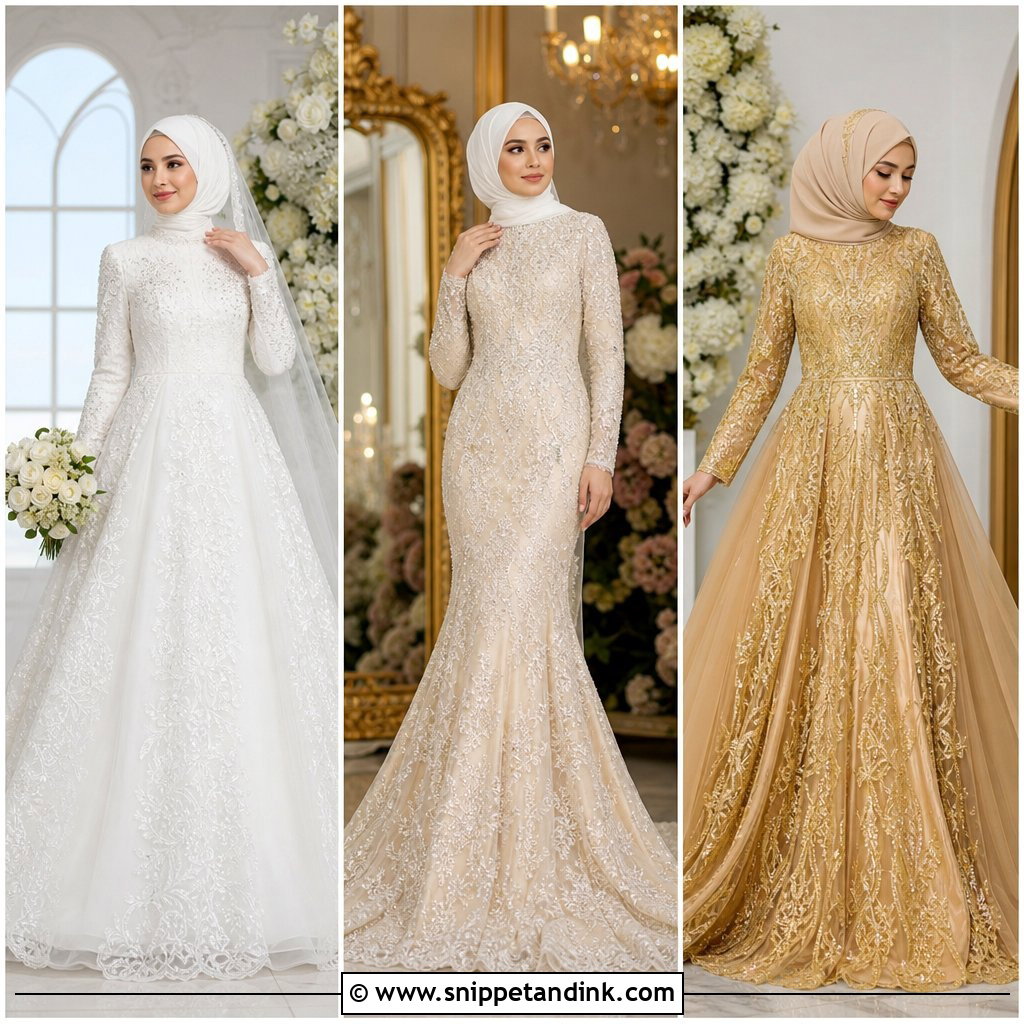
Ivory is the color I see most often at a Nikah, and a gharara keeps it traditional without the weight of a full bridal lehenga. A short raw silk shirt with pearl, dabka and silver thread at the neckline and cuffs sits over a gharara fitted to the knee, then flared from a clearly defined knee joint. That joint is the fitting point I check twice, because if it sits too low the bride trips on the flare when she rises after the signing. An organza dupatta with a scalloped border goes over the head for the ceremony. Pearl drops, a small tikka and ivory khussa keep it quiet, which suits a mosque or a small family Nikah at home.
2. White Sharara Nikah Dress
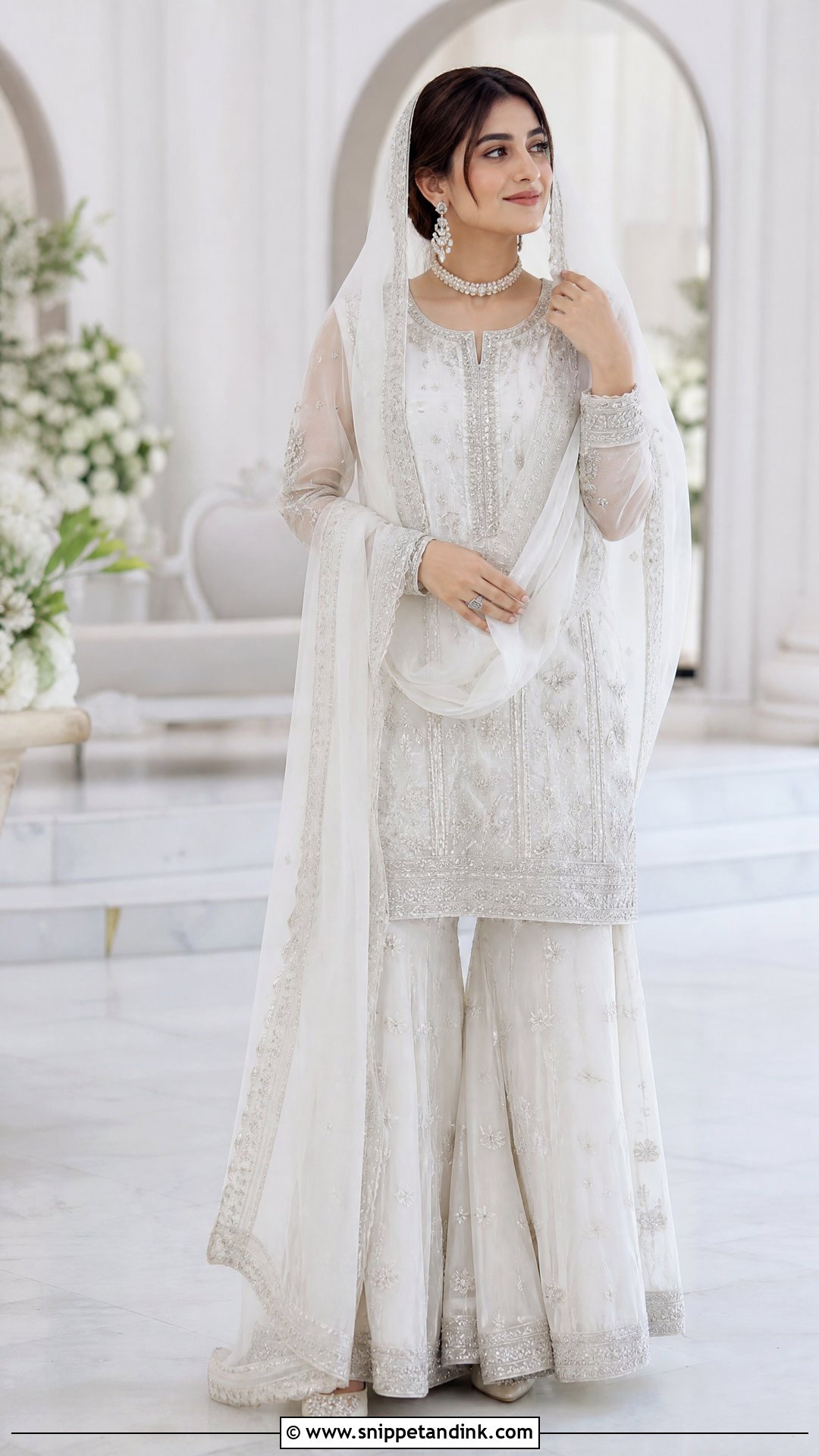
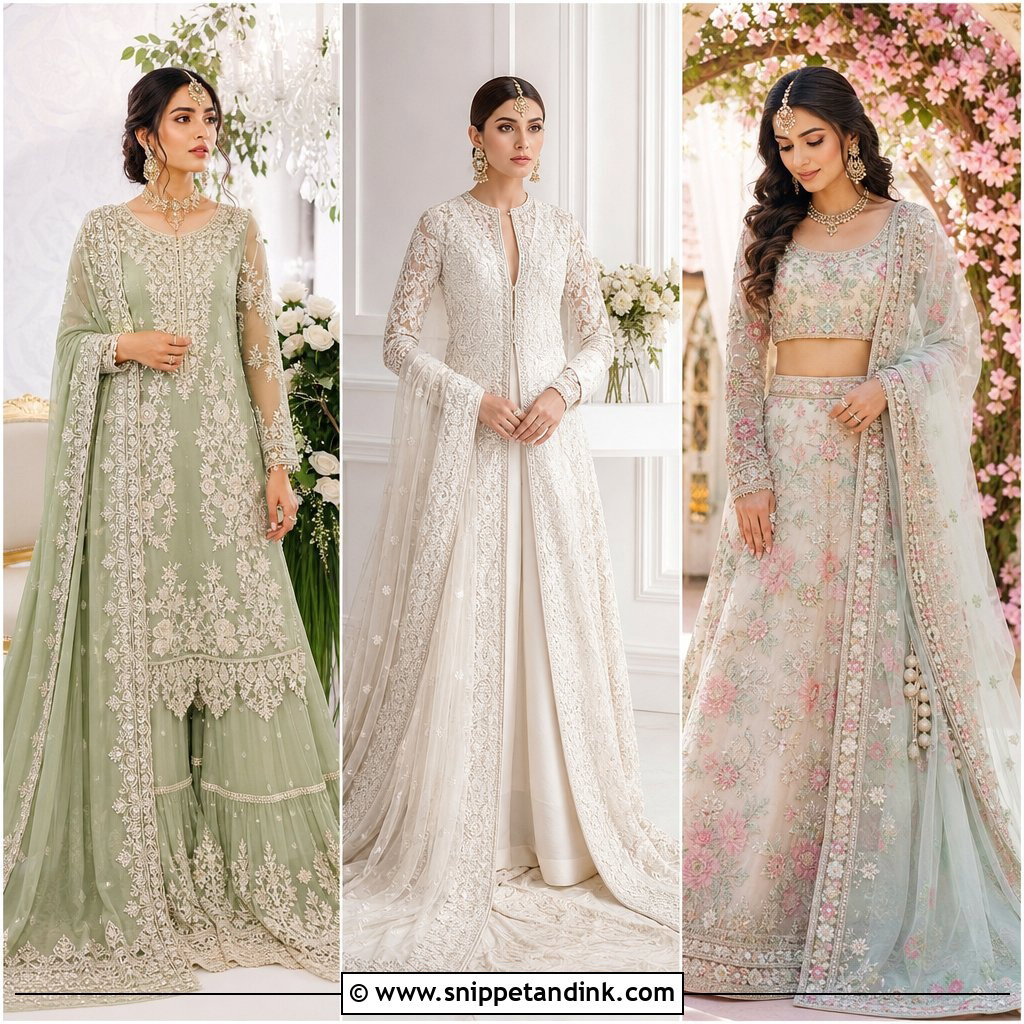
White is less forgiving than ivory: it shows every shadow and can look stark beside warm skin. I add a narrow silver border or a little champagne thread so the camera has an edge to find. The cut is a knee-length kameez with tonal threadwork and only a few crystals, over wide sharara pants that let you sit cross-legged and walk without gathering the fabric. A chiffon or organza dupatta with embroidered corners goes over the head, with one end falling across the arm. Silver jhumkas and a delicate choker finish a clean, modest look.
3. Ivory Pishwas Nikah Dress
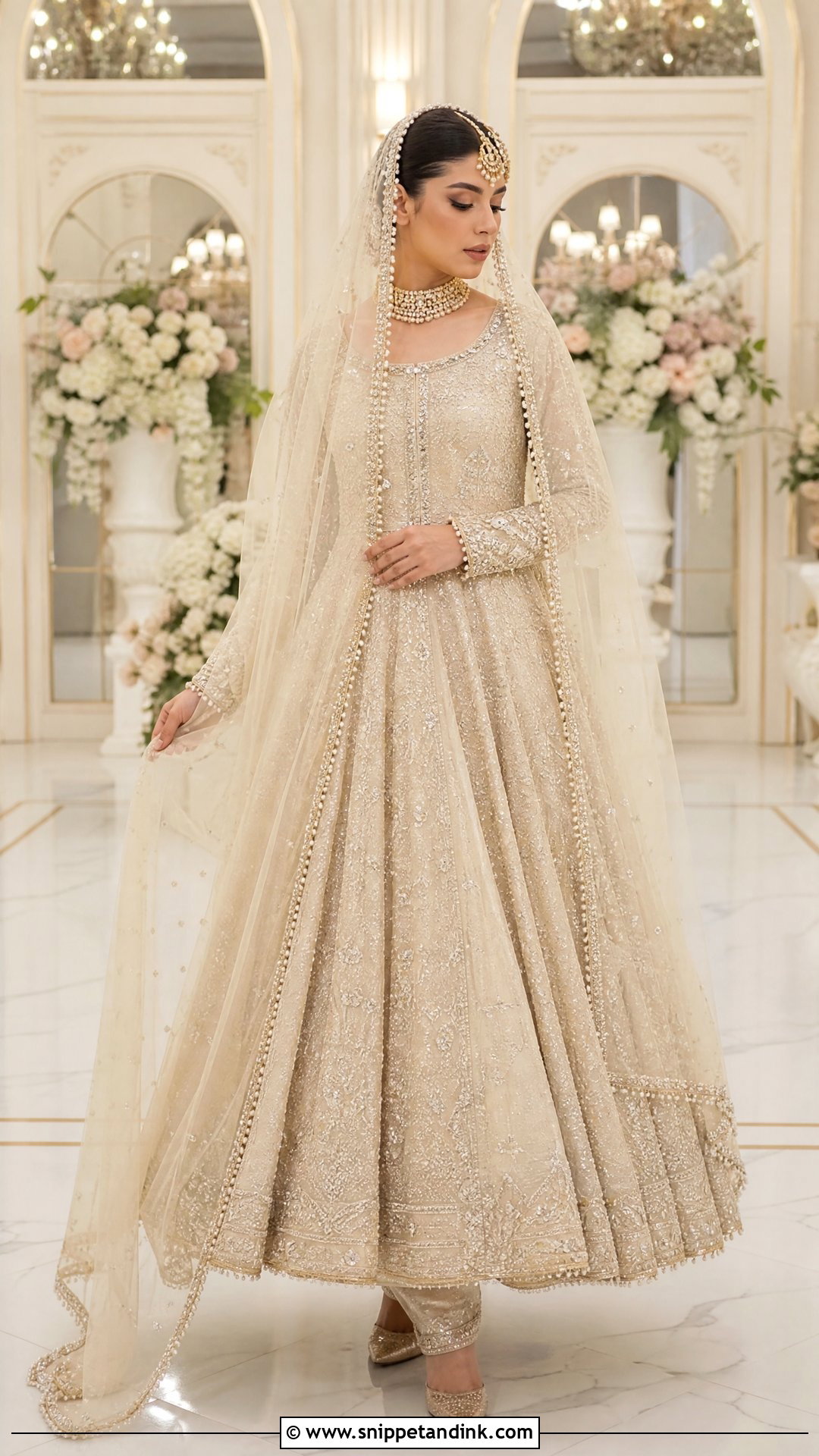
A pishwas needs floor space. Its full flare looks regal moving through a hotel ballroom and cramped in a small living room, so I suggest it only when the venue has room. Choose a fitted bodice with a modest neckline and full sleeves, with tonal embroidery thick at the top and thinning toward the hem; that grading keeps the skirt light enough to swing. Straight trousers underneath add coverage. A long net dupatta edged in pearls makes a soft veil. Low metallic heels are wiser than high ones under a skirt this long.
4. Blush Pink Lehenga Nikah Dress
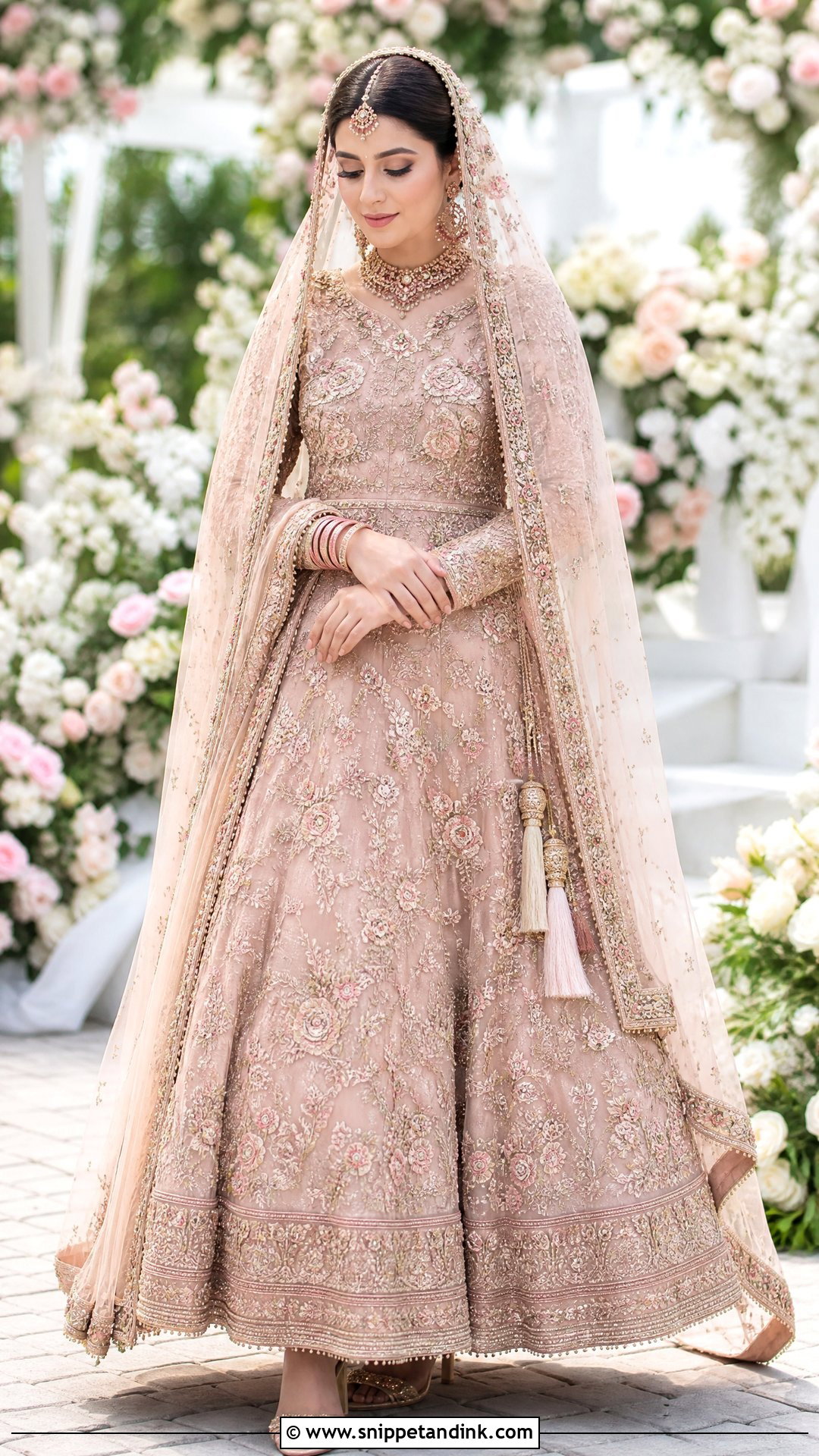
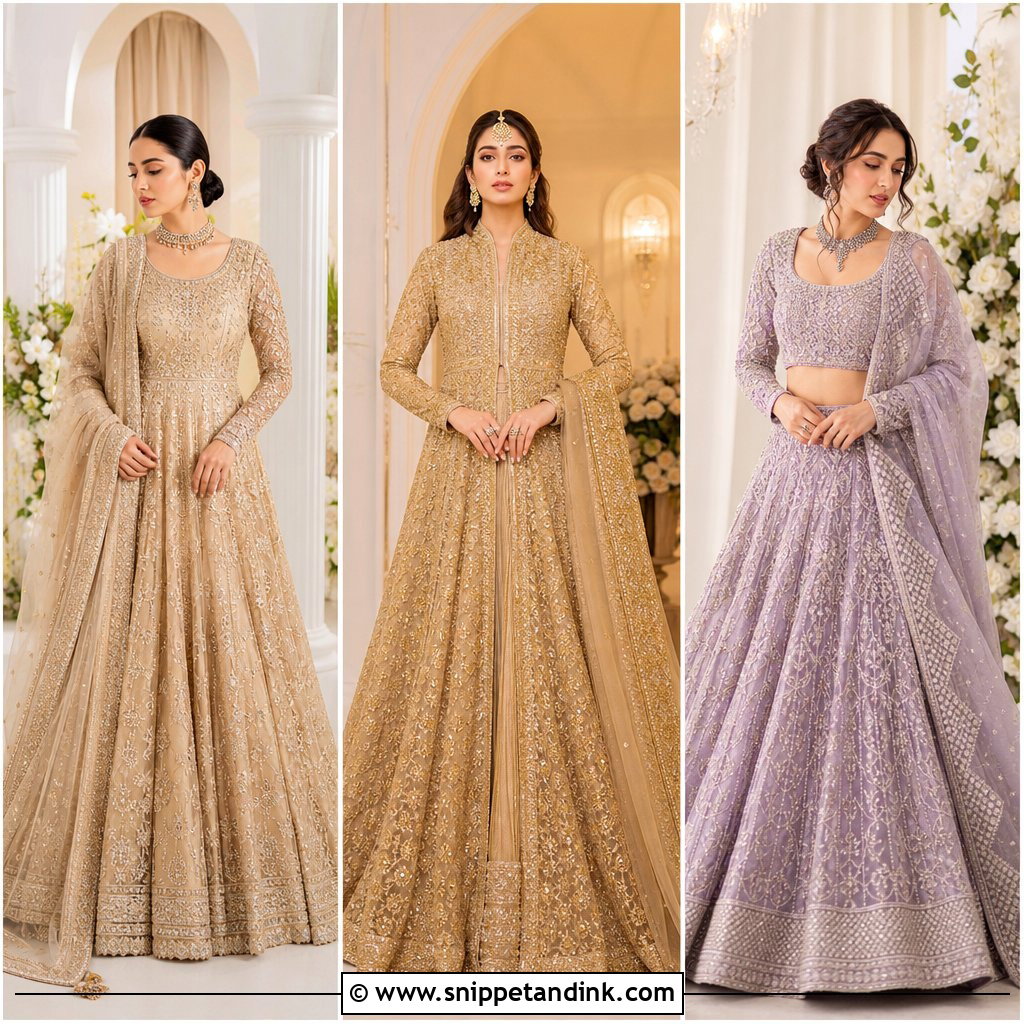
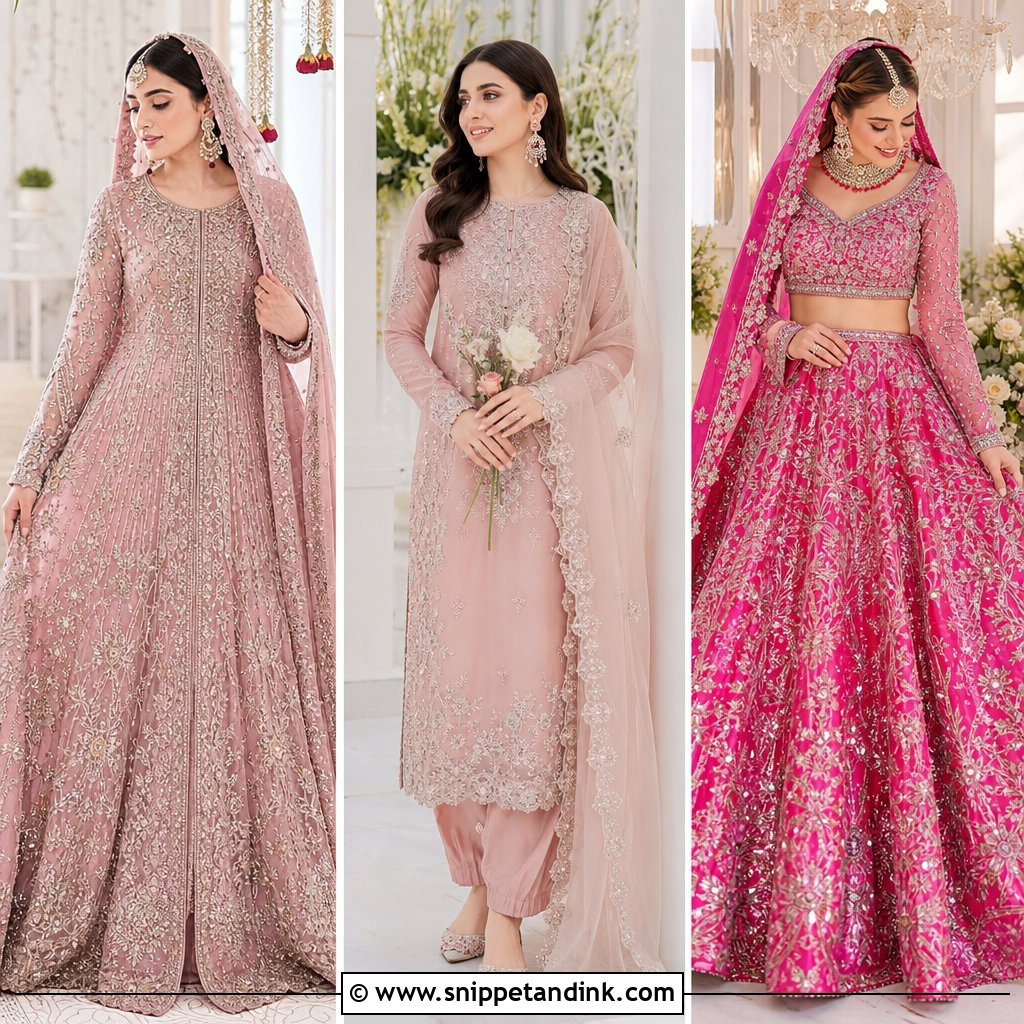
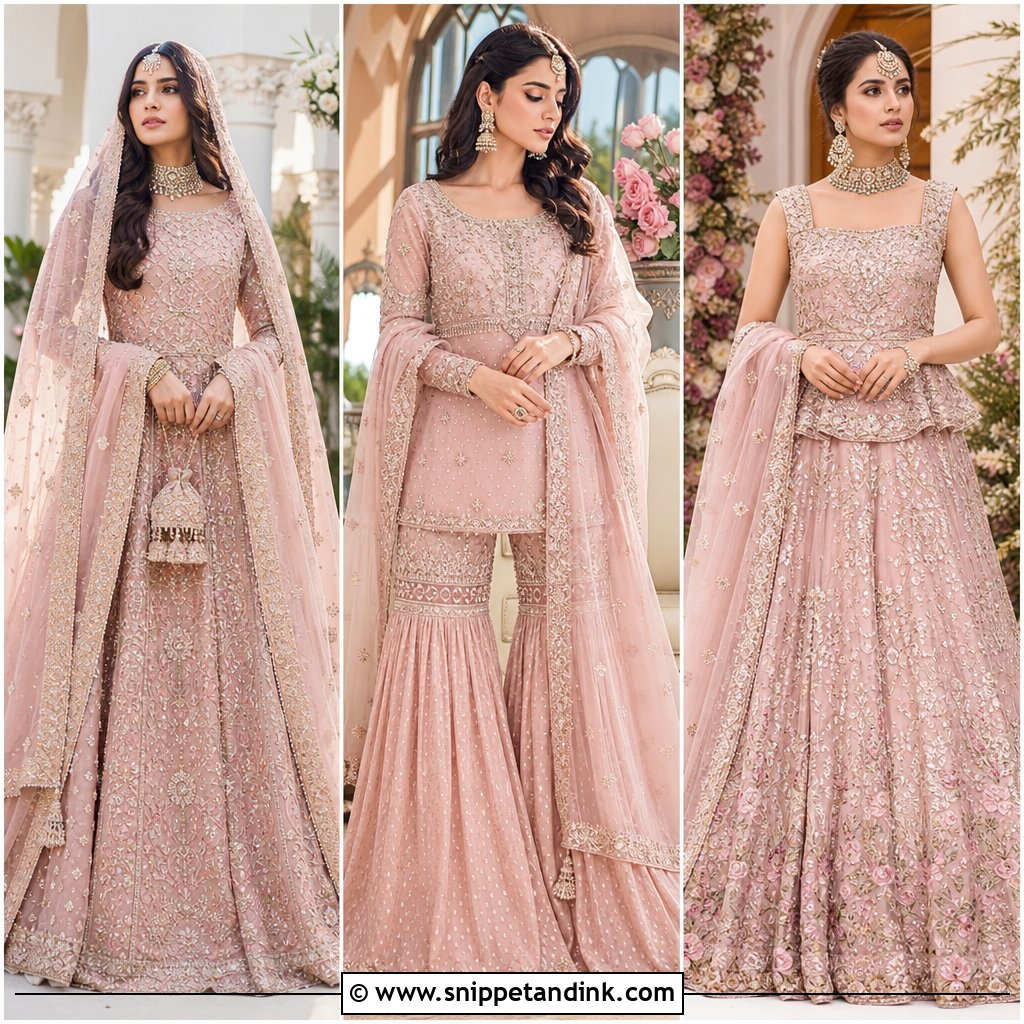
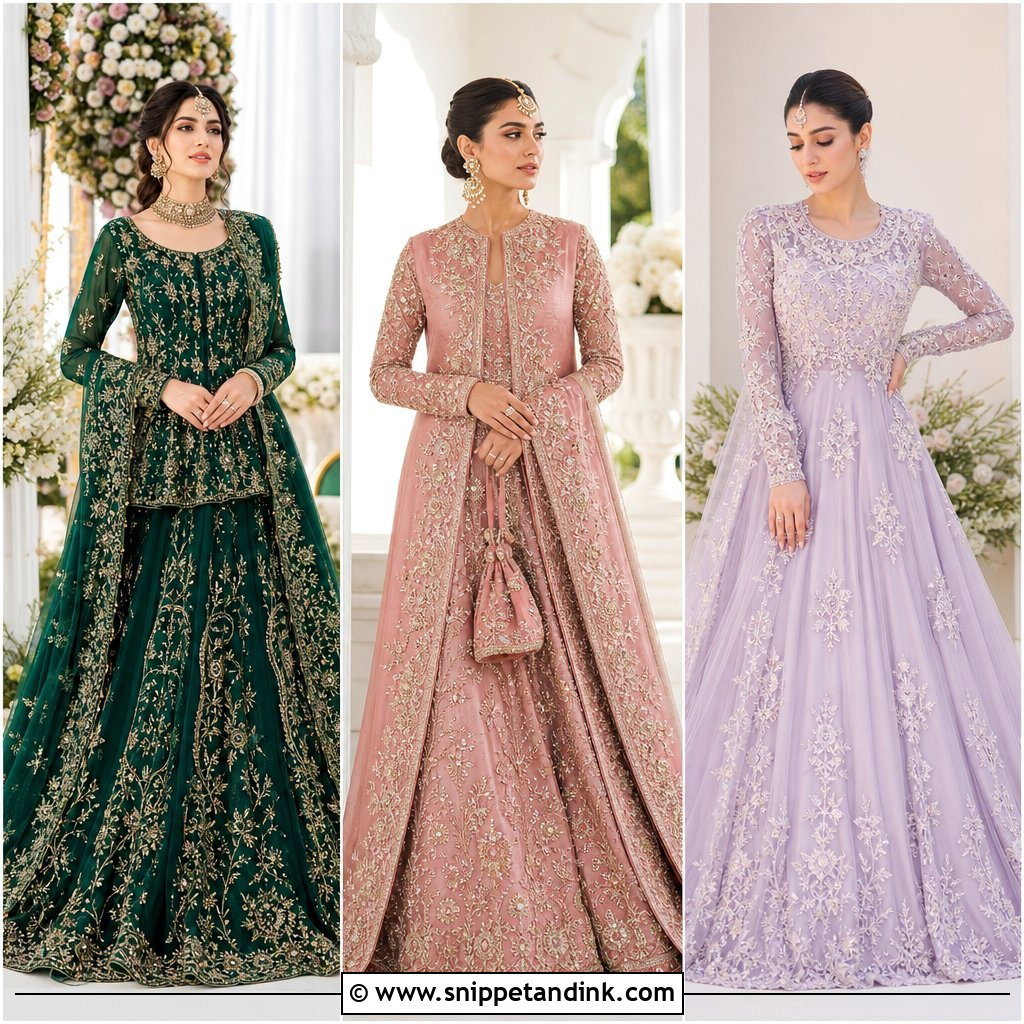
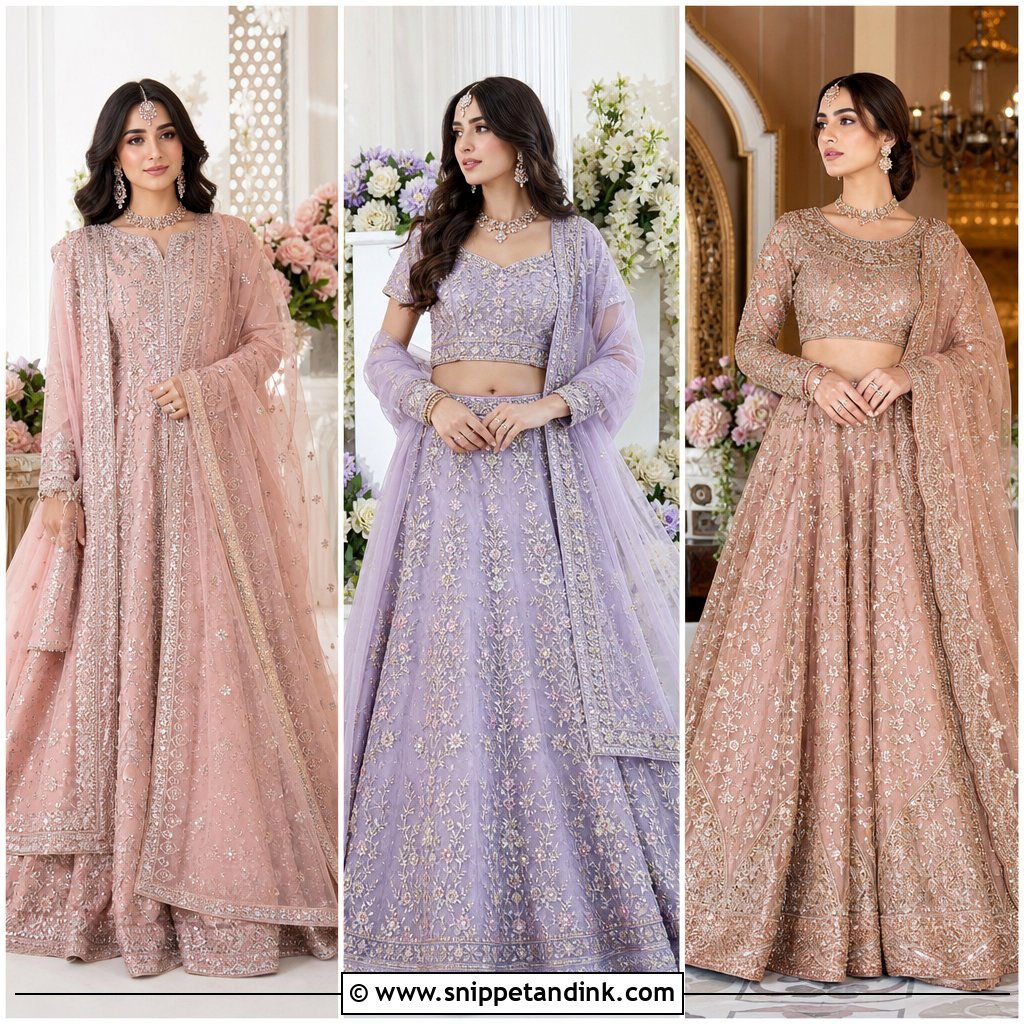
Blush pink gives warmth that white sometimes lacks, and in daylight it flatters almost every skin tone. Pair a structured waist-length blouse with a full lehenga in fine floral embroidery, pearls and muted gold thread. If you want more coverage, lengthen the blouse a few inches rather than raising the neckline to the throat, which can look stiff. Drape a sheer blush dupatta over the head and across one shoulder. Rose-gold jewelry and nude heels keep the palette tight. It sits naturally in a garden Nikah or a marquee with pastel flowers.
5. Champagne Farshi Gharara Nikah Dress
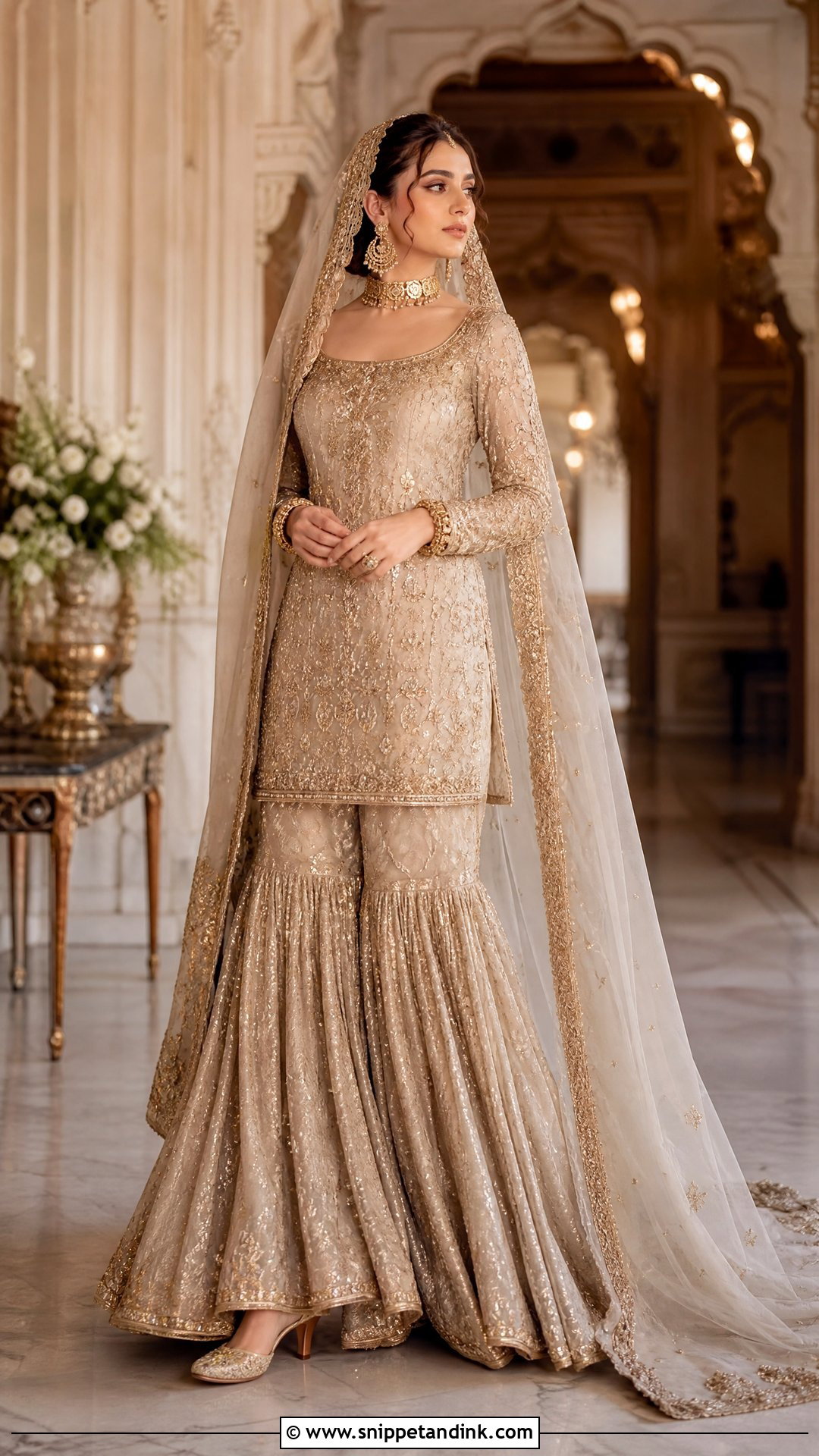
The farshi gharara is the old Pakistani bridal silhouette: the flare runs all the way to the floor and trails behind. In tissue silk, jamawar or raw silk with antique gold at the knee panels and hem, it carries real grandeur. It also carries real weight, so I hold back on jewelry, just a traditional choker, earrings and one ring. Keep the organza dupatta light, because the gharara will already pull at the waist. The trailing hem catches on grass, gravel and rugs, which is why I only put a bride in farshi for an indoor Nikah on a smooth floor, with someone ready to lift the train.
6. Powder Blue Angarkha Nikah Dress
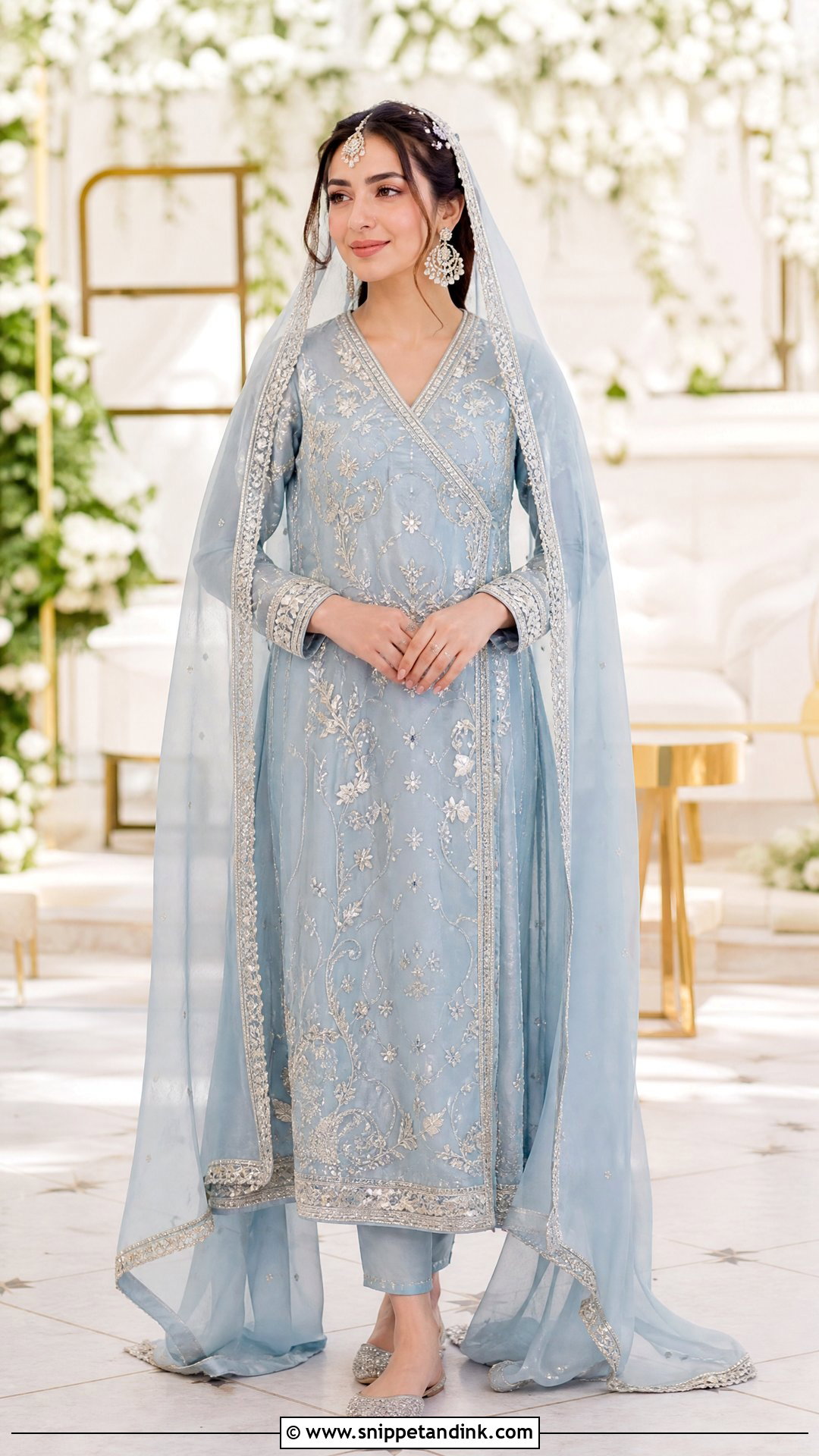
Powder blue is cool and fresh for a daytime ceremony, and it suits brides who look washed out in ivory. An angarkha with a wrapped bodice and defined waist gives shape while staying modest; the wrap should be anchored with a hidden hook so it never opens when you lean to sign. Silver threadwork or tiny pearl flowers suit the color better than gold. Full sleeves and a calf or floor-length cut, straight silk trousers and a powder blue organza dupatta with a slim silver border complete it, with silver pointed flats underfoot. It suits a spring ceremony or a Nikah luncheon.
7. Mint Green Anarkali Nikah Dress
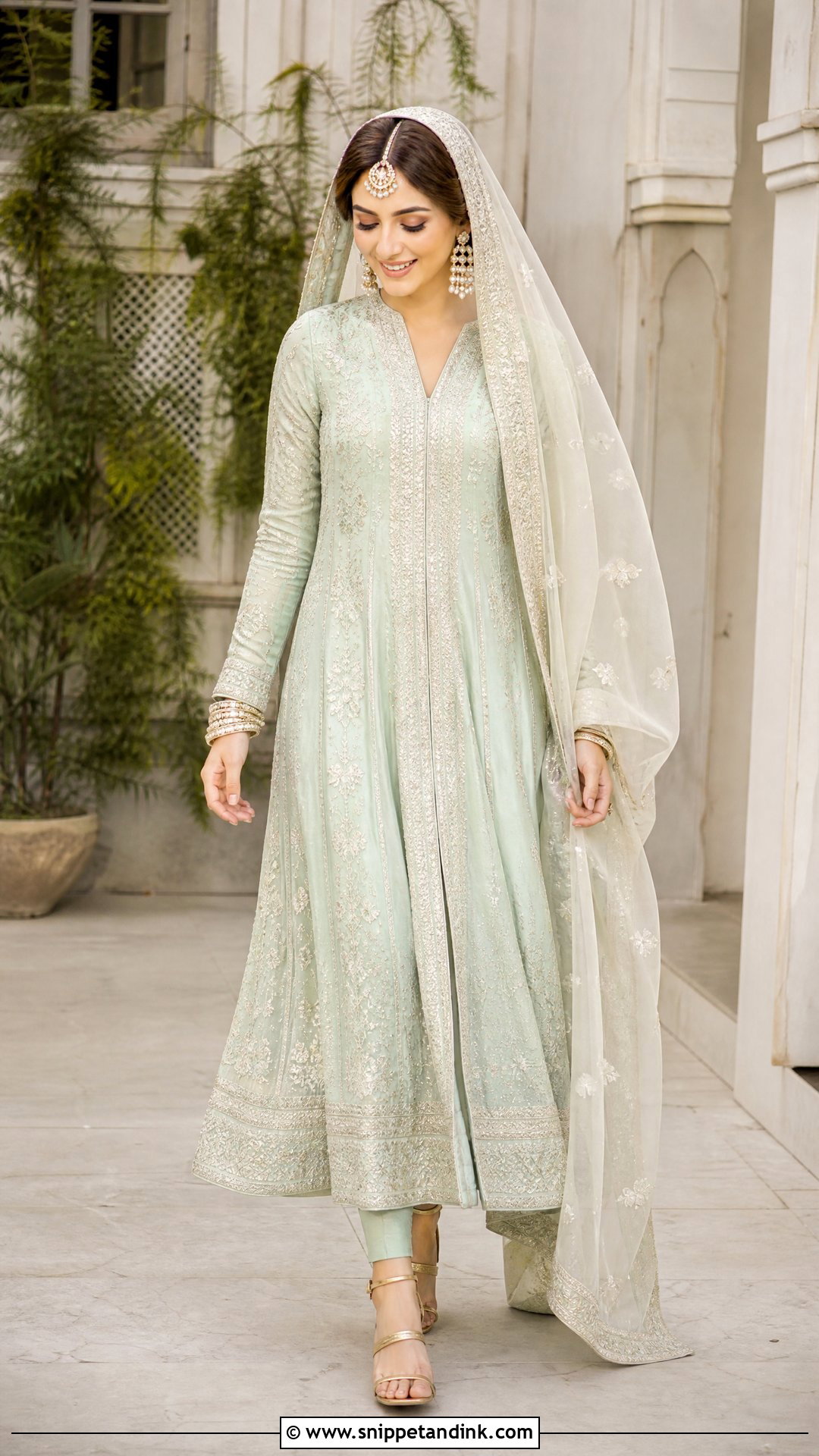
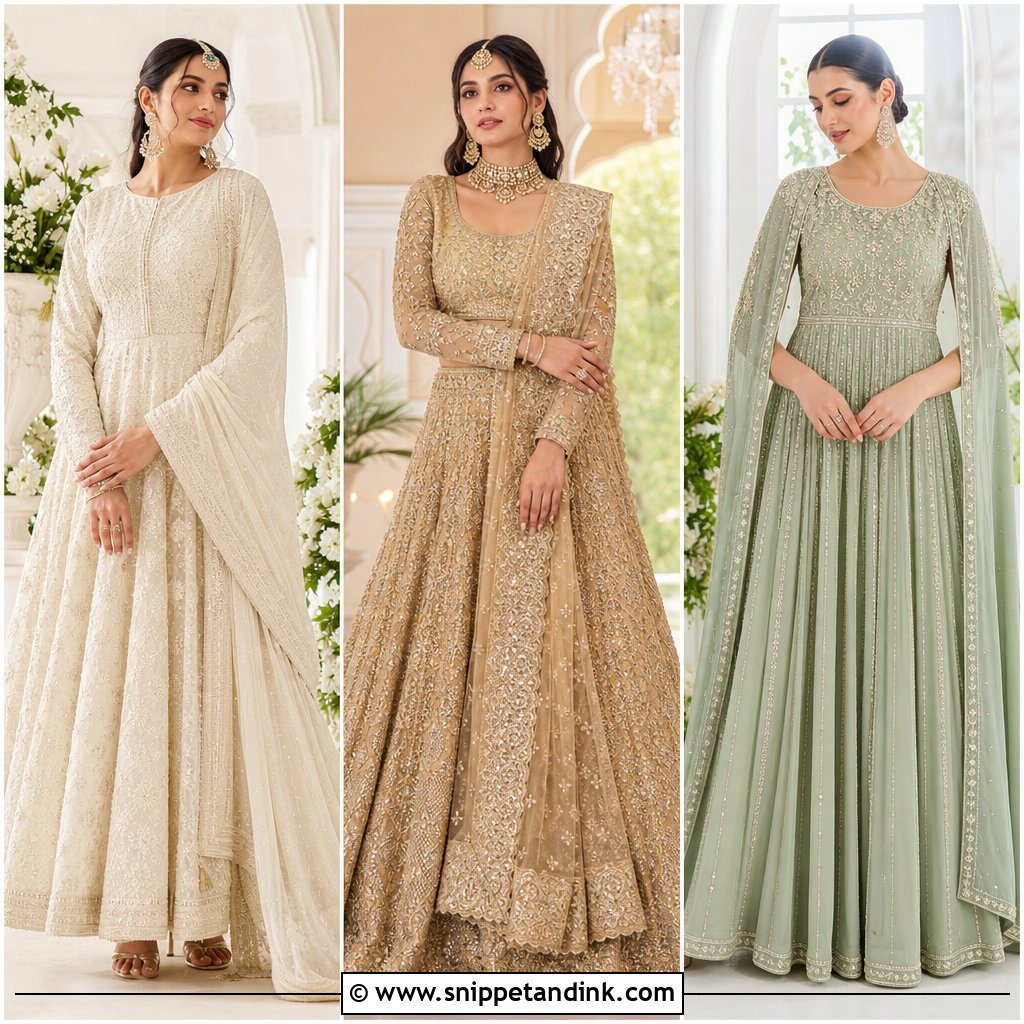
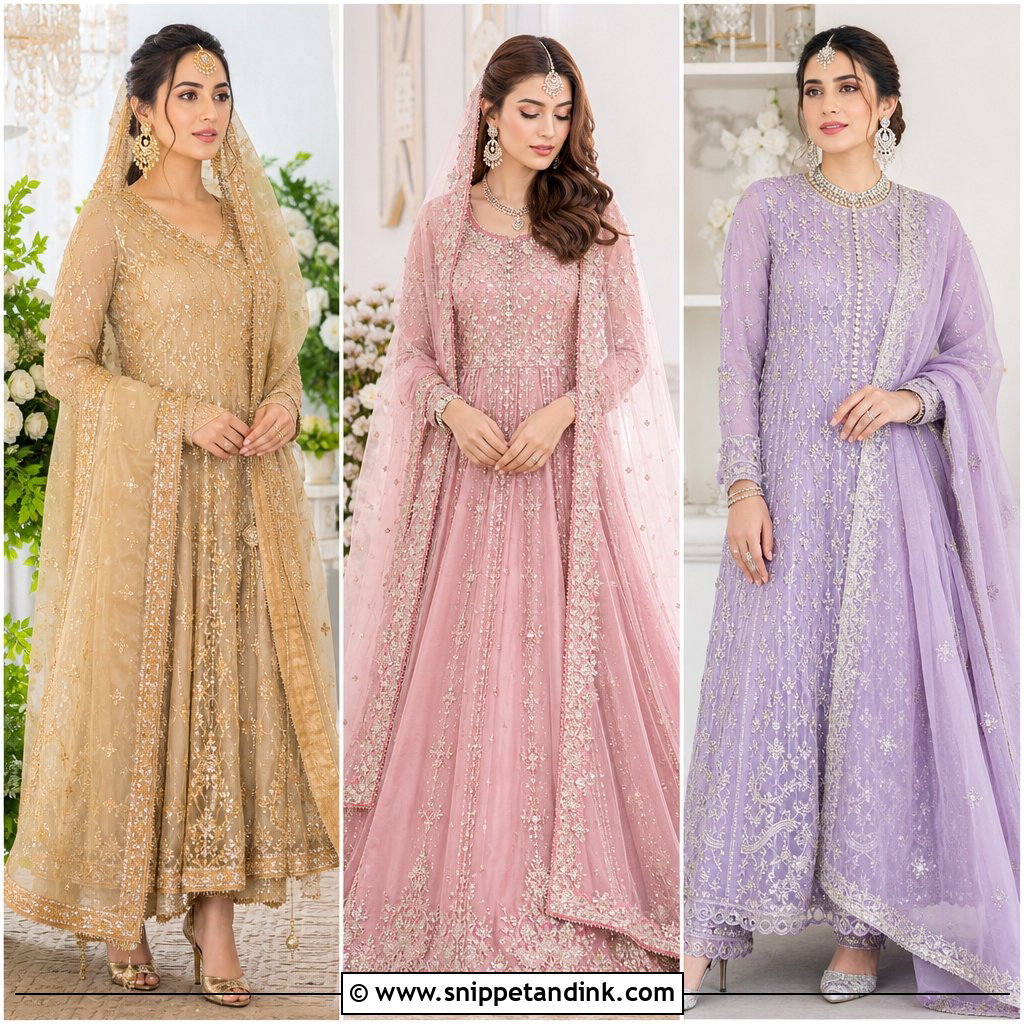
Mint is a warm-weather color, and an Anarkali is one of the coolest cuts to wear in heat because nothing presses at the waist. Choose a fitted top opening into soft panels, with ivory threadwork and pearls at the neckline, cuffs and hem. Narrow trousers in the same mint keep the line long. An ivory organza dupatta with mint embroidery gives contrast, and organza grips pins better than chiffon, so it stays put over the head. Pearl earrings, a simple tikka and a soft bun keep attention on the dress in a courtyard or a sunny home ceremony.
8. Lilac Peplum Sharara Nikah Dress
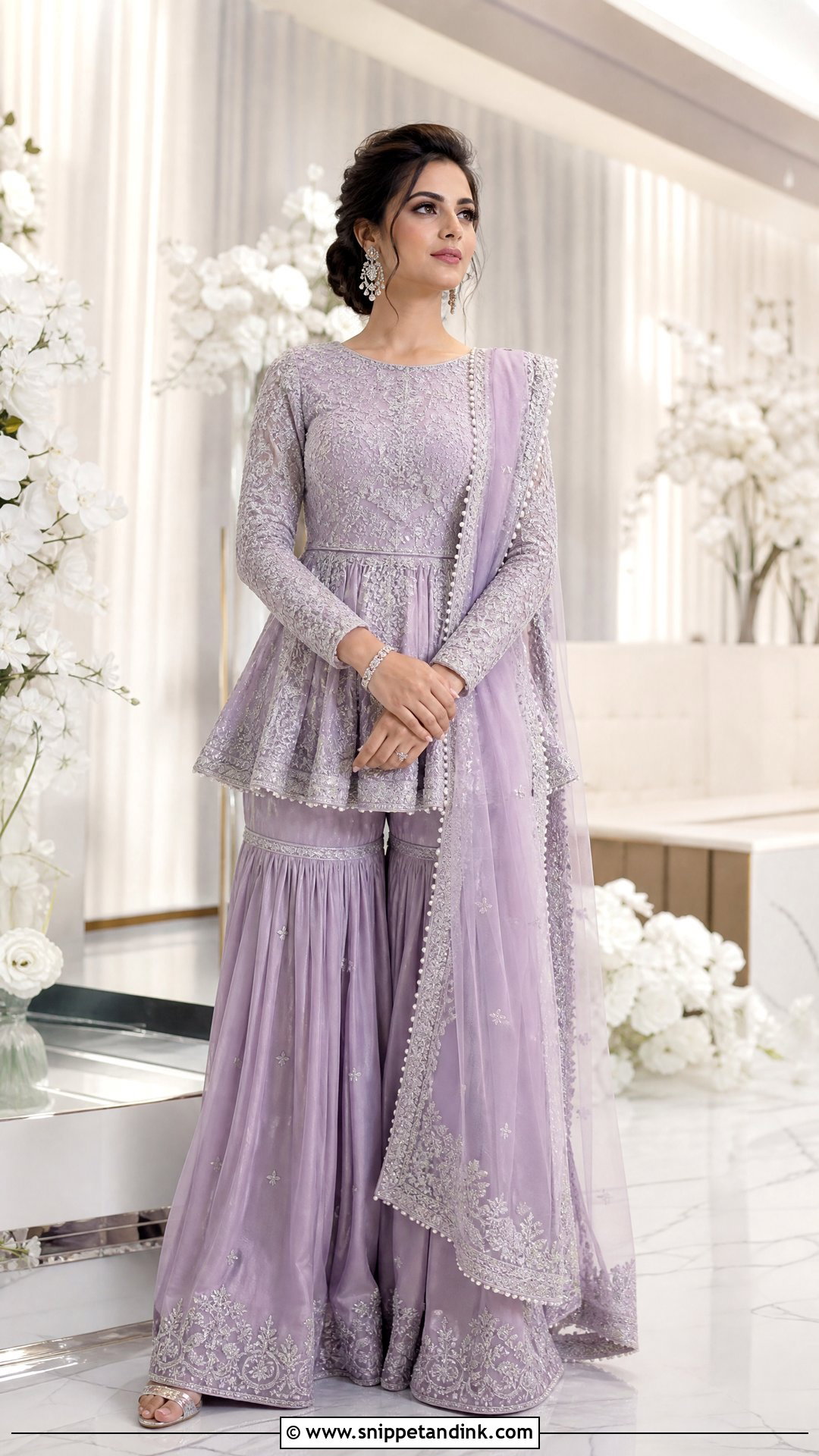
Brides who want something modern but still modest often land on a lilac peplum and sharara. The peplum falls below the waist and defines the upper body, while the wide sharara balances it below. Full sleeves, a modest neckline and evenly placed silver embroidery keep it bridal. A sheer lilac dupatta with pearl edging softens the structured top and covers the hair for the ceremony. Go light on jewelry; the peplum shape is already the focus. Lilac can drift grey under warm indoor bulbs, so look at the fabric under the venue’s kind of light first.
9. Pearl White Shalwar Kameez Nikah Dress
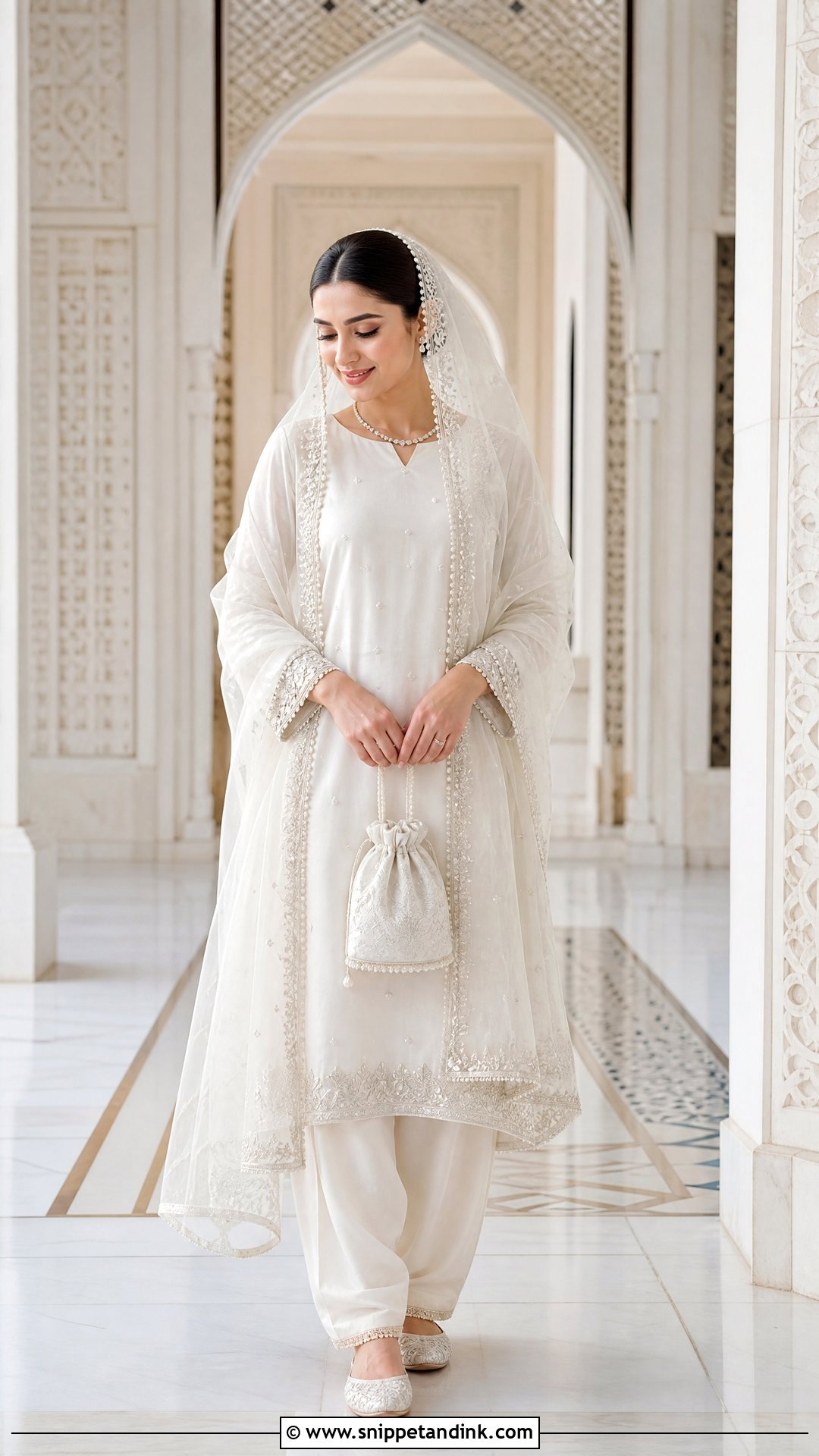
A well-cut shalwar kameez can be the most dignified outfit in the room. I would choose pearl white raw silk, a straight kameez with side slits and full sleeves, and keep the hand embroidery at the neckline and borders. A traditional shalwar, rather than narrow trousers, gives it an unmistakably Pakistani finish and is easy to sit in on a mosque carpet. The long organza dupatta with small pearls carries the bridal detail; wear it over the head with both ends falling in front. Embroidered khussa, which slip off easily at a mosque door, and a small potli finish it.
10. Gold Tissue Lehenga Nikah Dress
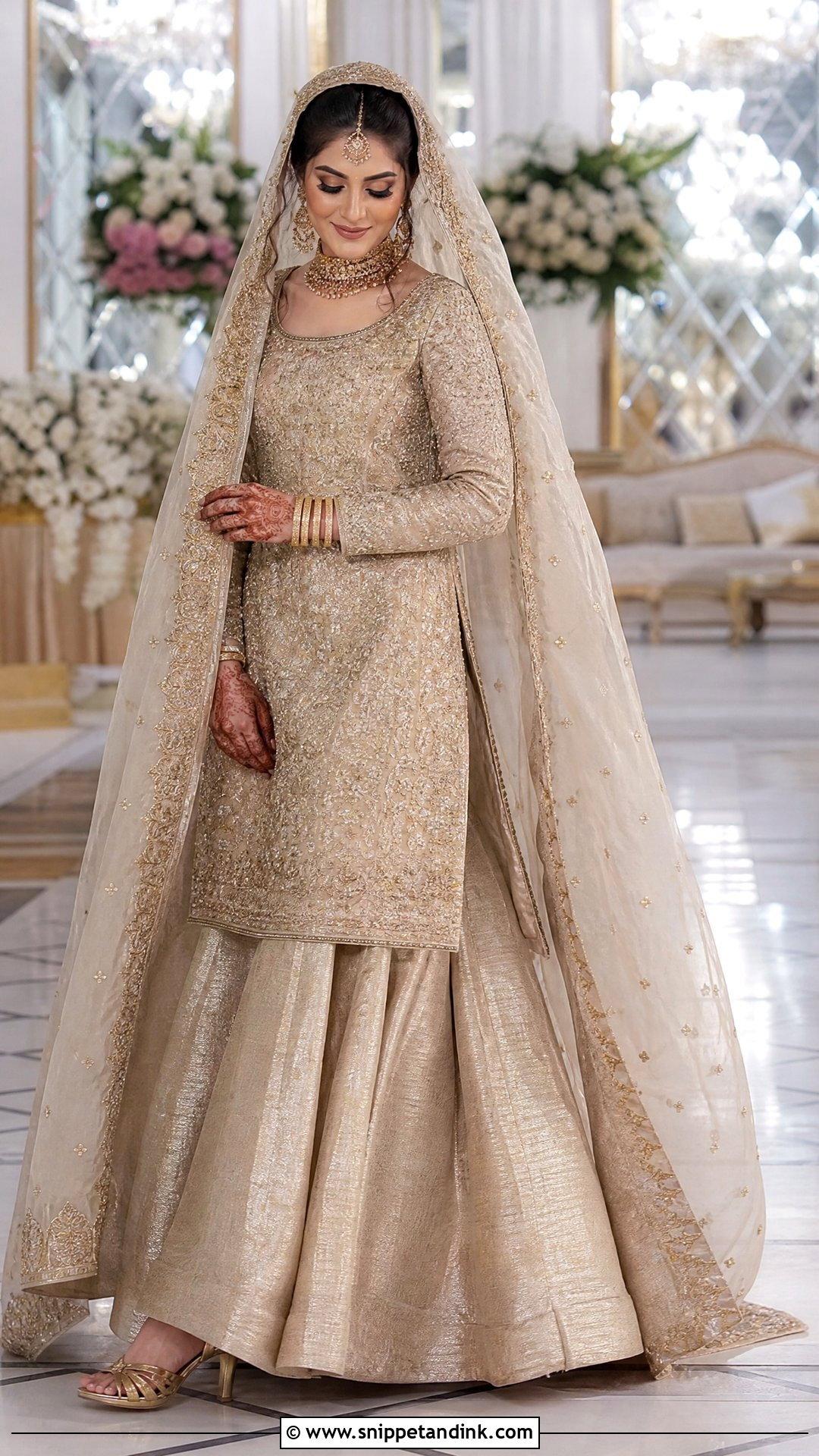
Gold tissue has a woven metallic thread, so it shimmers without any embroidery at all. A muted gold tissue lehenga with a fitted raw silk blouse in antique gold and pearls is rich without a bright color. Keep the neckline modest and choose elbow or full sleeves. Tissue creases sharply where you sit, so I keep the skirt volume moderate and steam it on site. An ivory net dupatta with a gold border separates the layers. Gold block heels and warm neutral makeup suit an evening Nikah under strong indoor light.
11. Silver Gray Maxi Nikah Dress
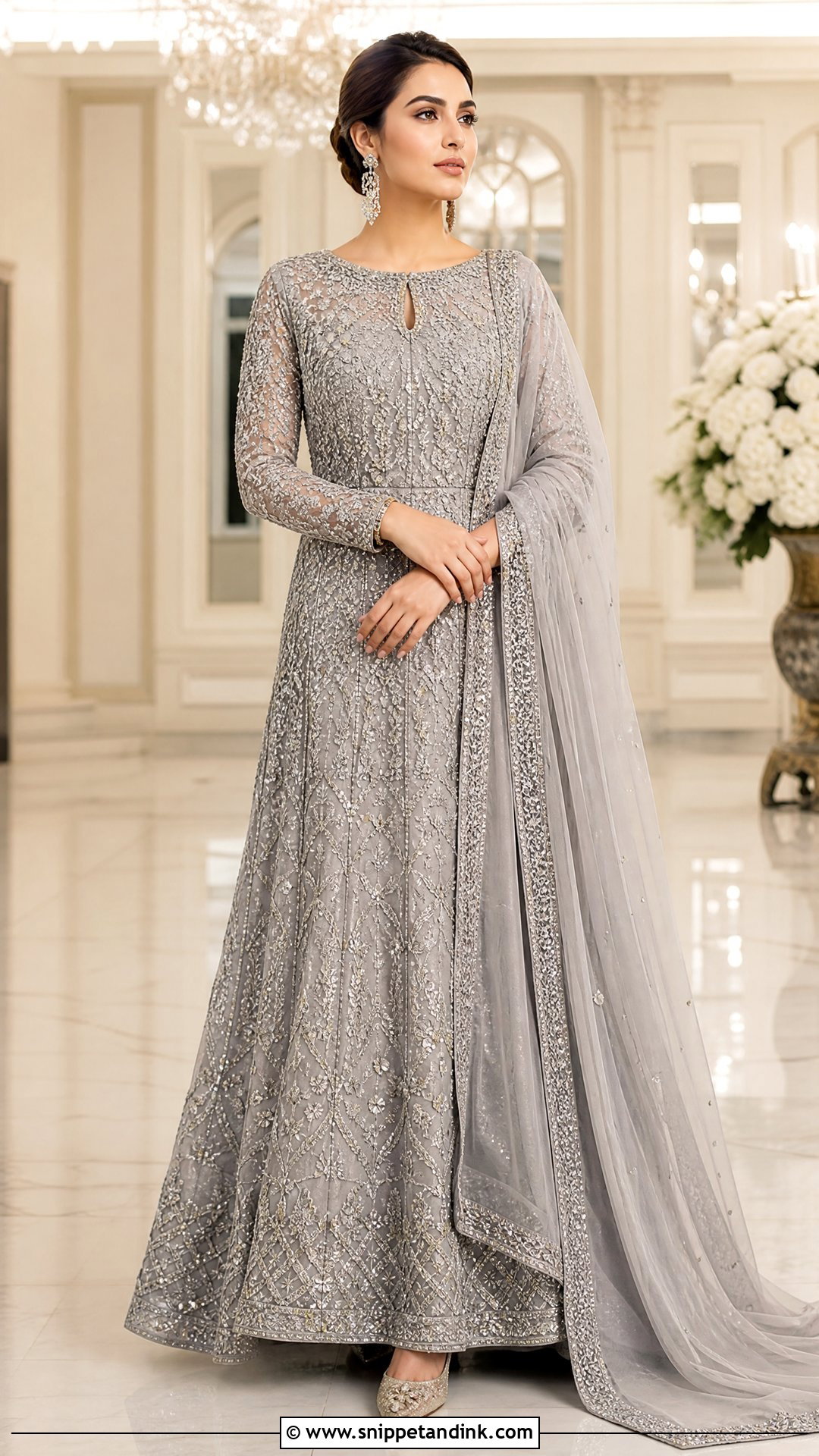
Silver gray is unusual for a bride, and it rewards a minimalist. Choose a floor-length maxi with a structured bodice, a high or softly rounded neck, full sleeves and a fluid skirt. Vertical embroidery lengthens the silhouette, and scattered pearls and crystals add quiet shine. The trap with gray is dim light: a flat gray fabric reads dull in photos, so pick one with texture or a slight sheen. Pin a light gray net dupatta over a low bun for the ceremony and drape it on the shoulders afterwards. It belongs in a bright ballroom.
12. Peach Kalidar Nikah Dress
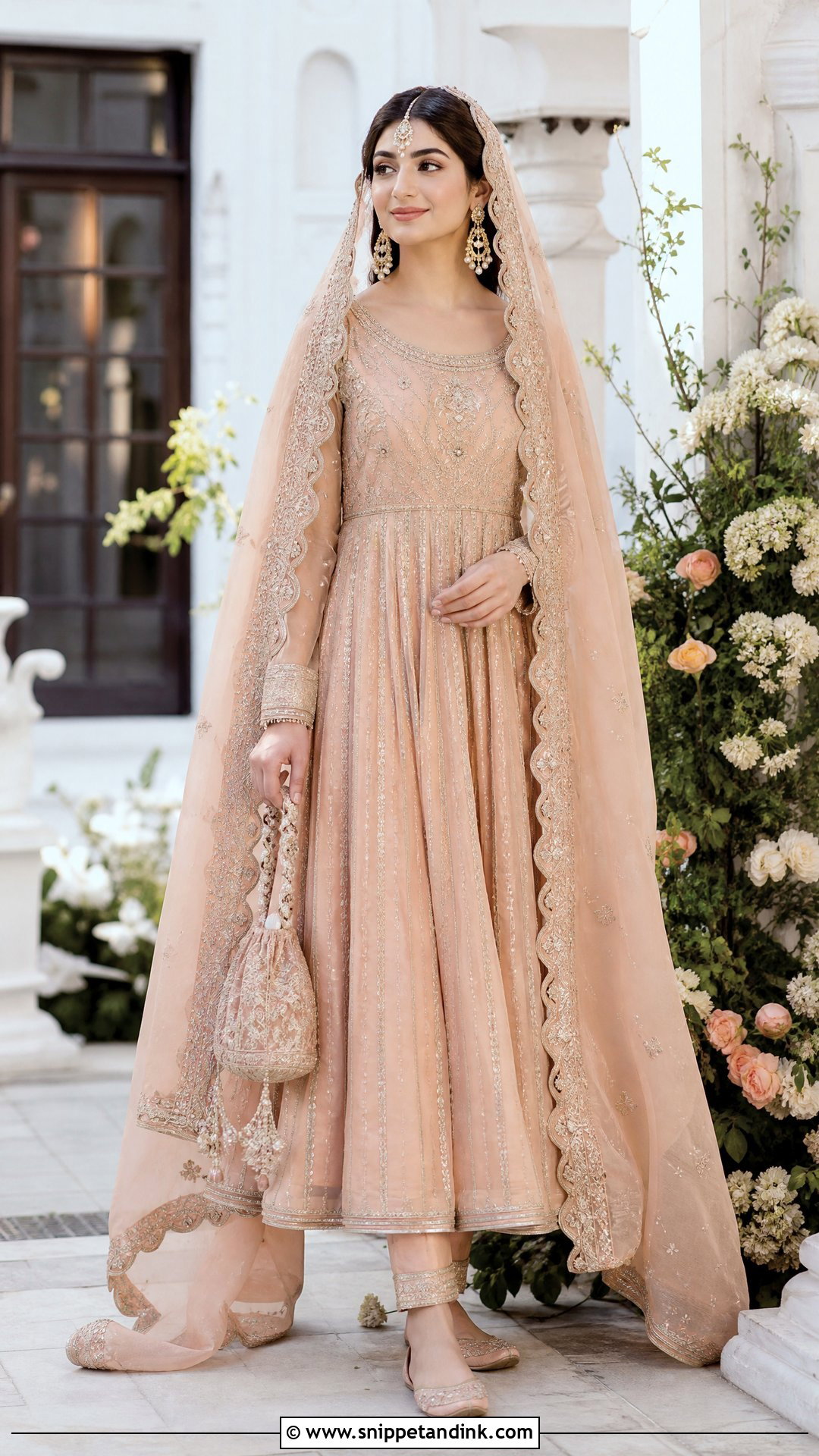
Kalidar means paneled. Many vertical panels flare from the waist to the hem, so the dress swirls like a lehenga without a separate skirt. In soft peach with ivory embroidery, fine gold thread and pearl clusters on the bodice, it is soft and warm. Long fitted sleeves balance the volume. Each panel seam adds a little stiffness, so I ask for a soft lining to keep the flare fluid. Narrow silk trousers, an ivory-peach organza dupatta with a scalloped border and peach khussa finish it, for an intimate ceremony or a larger reception alike.
13. Sage Green Shirt And Lehenga Nikah Dress
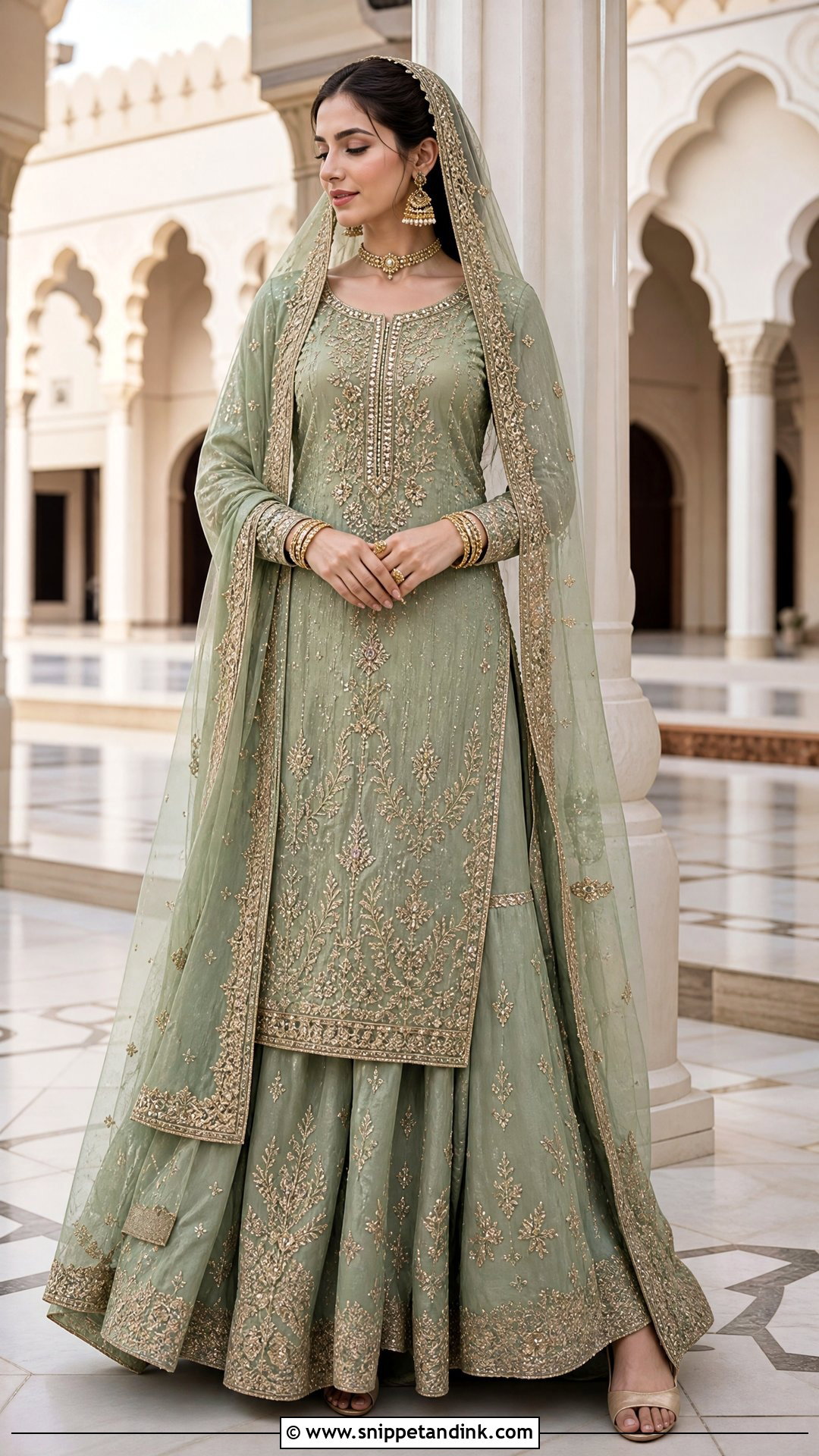
Sage green is calm, and pairing it with a long embroidered shirt and matching lehenga gives more coverage than a short blouse while keeping the lehenga’s swing. A knee or calf-length shirt needs side slits deep enough that the skirt shows as you walk; shallow slits make the shirt ride up. Tonal flowers, muted gold and pearls define the edges, and the lehenga should keep only a lightly embellished border. A sheer sage dupatta with gold edging goes over the head. It suits a mosque or a family-centered Nikah.
14. Ivory Saree Nikah Dress
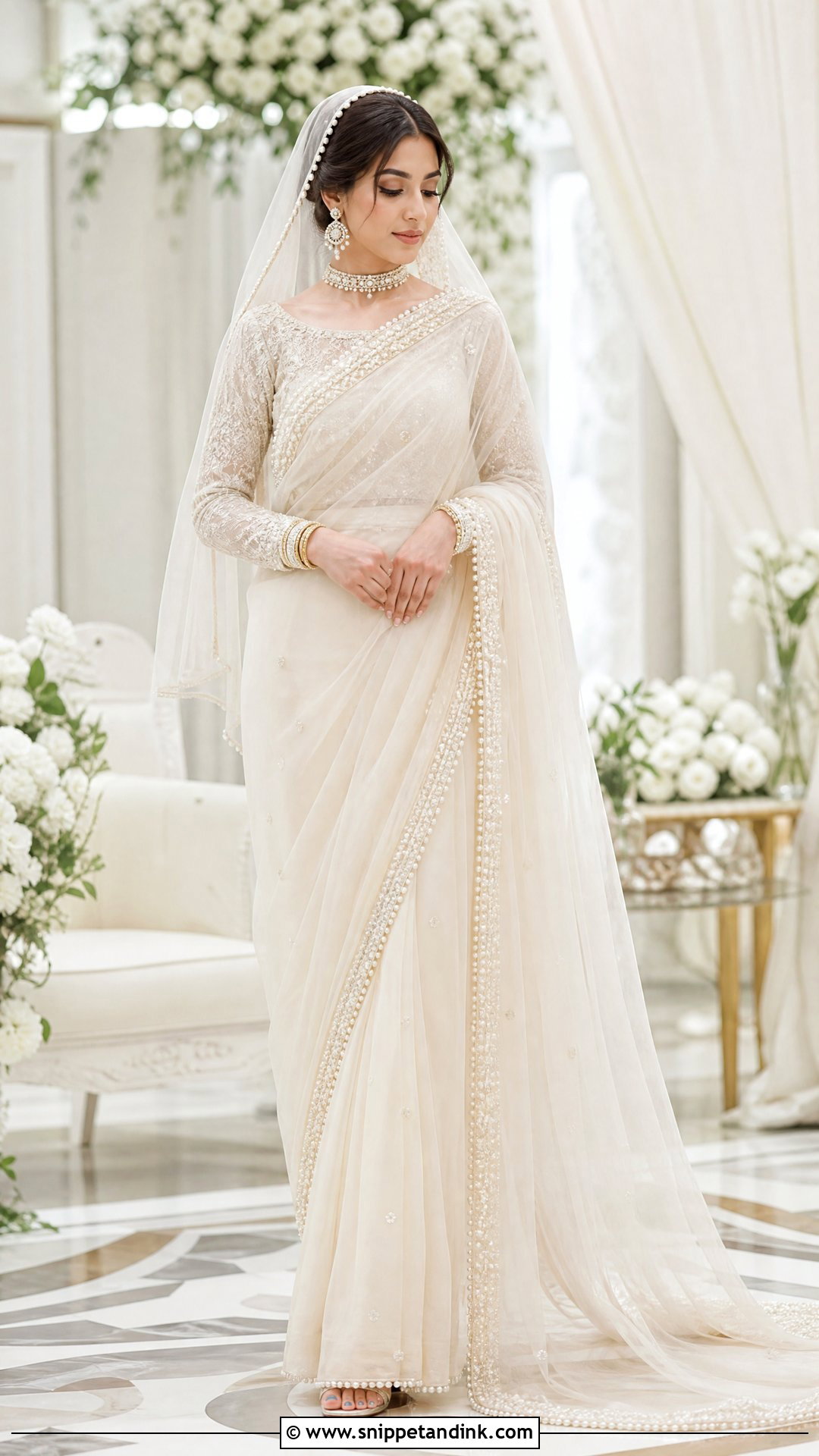
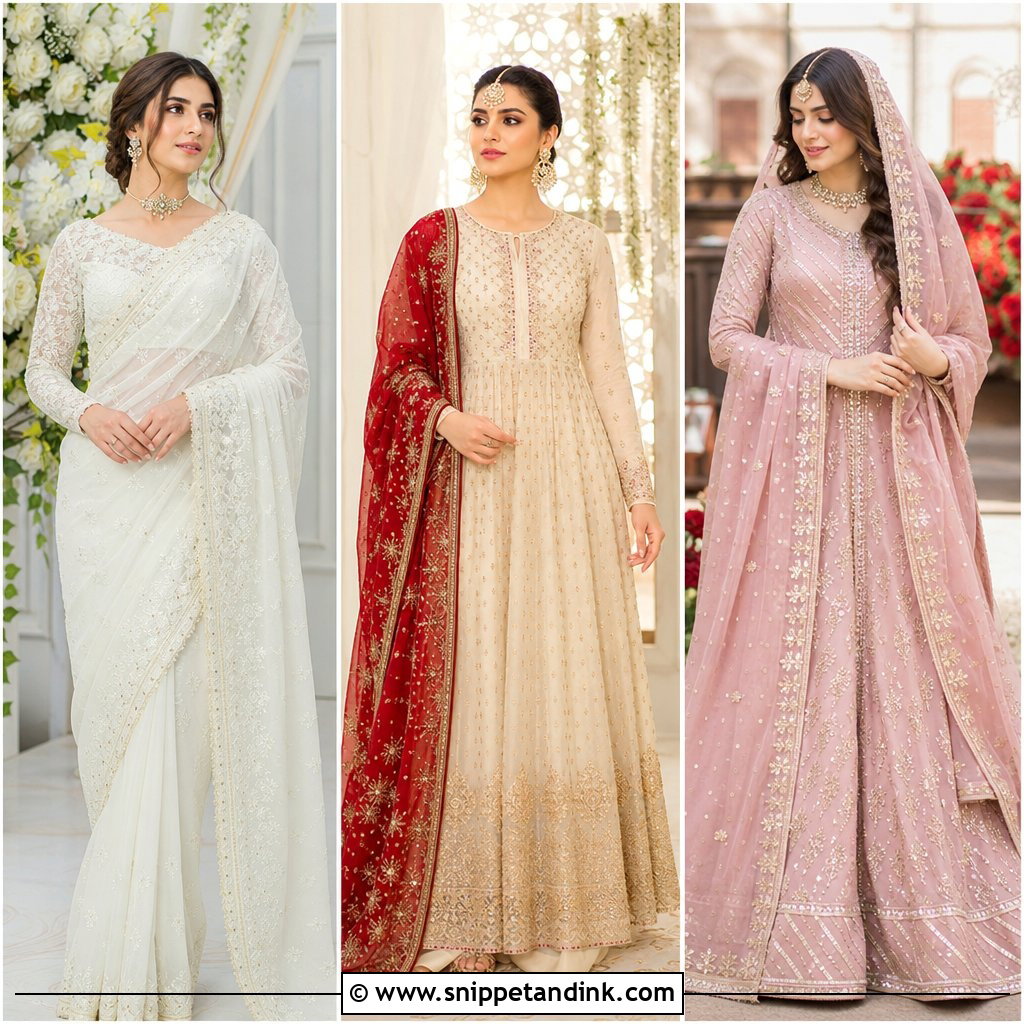
A saree is the slimmest silhouette here, and it can be as modest as anything else with the right blouse. Choose organza, chiffon or tissue with a detailed border, and a full-sleeve blouse with a higher neckline and enough length to meet the saree at the waist. The pleats and pallu must be pinned firmly before you leave home; a pallu slipping while you greet guests is the most common saree problem I fix. Rather than redrape it over your head, pin a separate light veil. Pearl jewelry and a smooth bun keep the line clean.
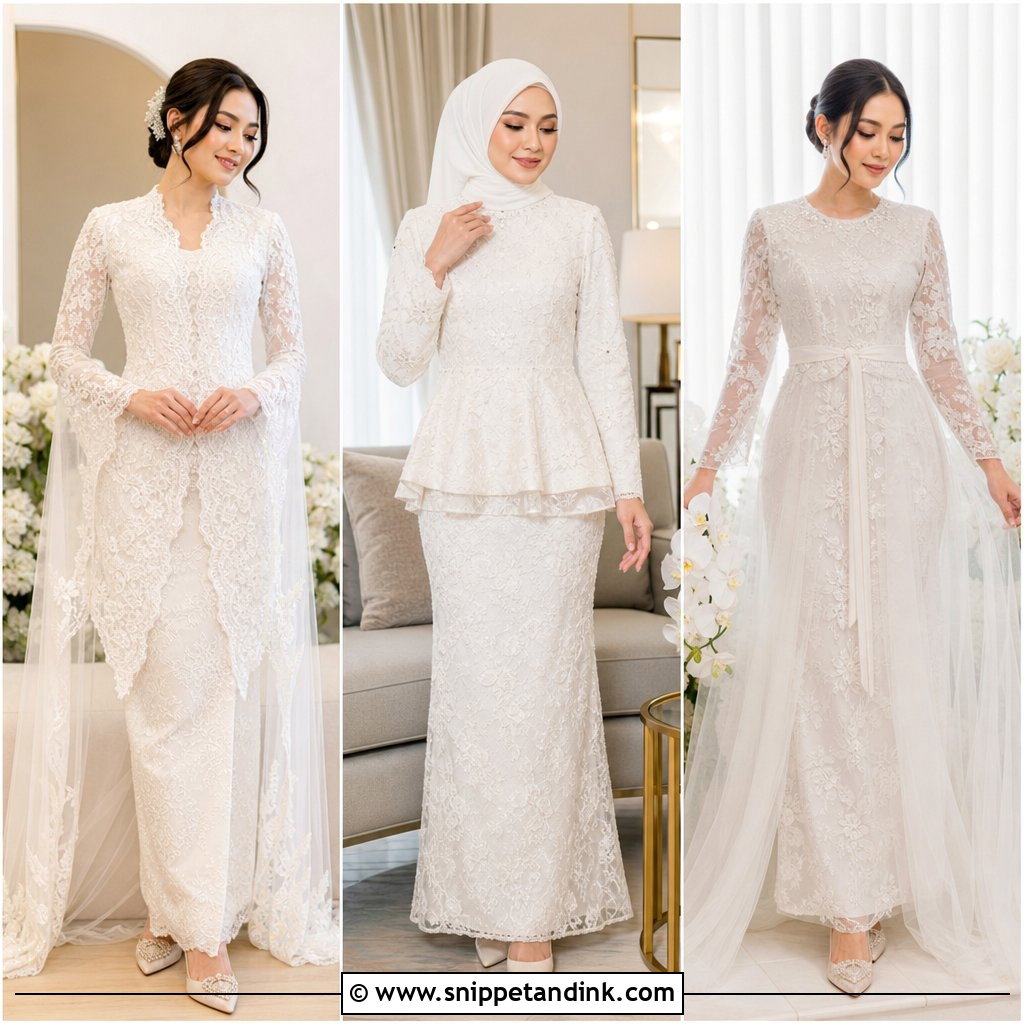
15. White Front-Open Gown Nikah Dress
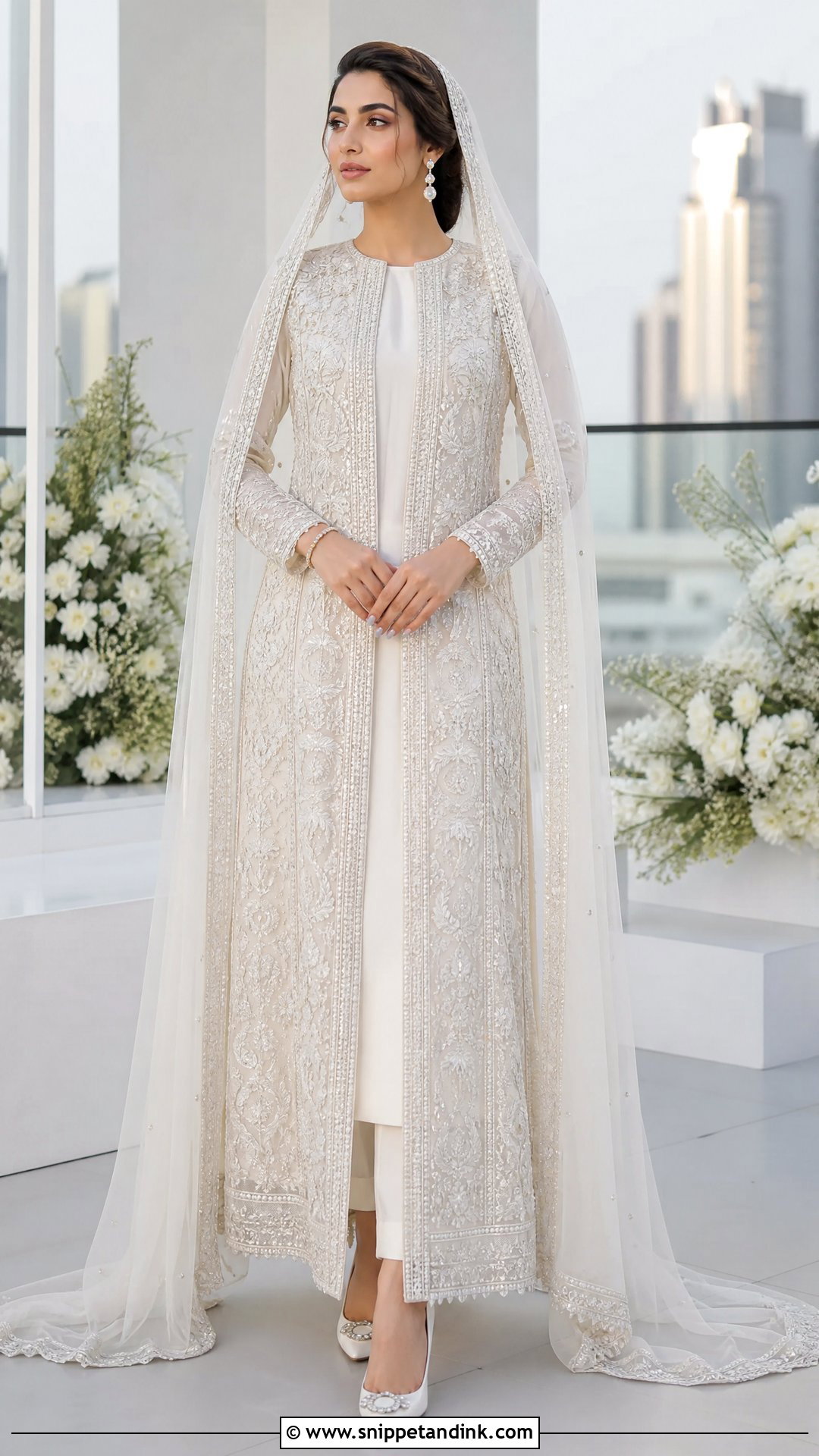
A front-open gown is a layered outfit: a structured gown with full sleeves and embroidered front panels opens below the waist over a matching inner top and straight trousers. The inner layer is what keeps it modest, so I match its fabric closely to the gown, or the gap looks like a mistake. Pearl embroidery, silver thread and crystal buttons add detail without tipping into costume. A long white net dupatta over the head trails gently behind. White pointed heels suit the architectural shape at a city venue or modern hall.
16. Pastel Pink Gharara Nikah Dress
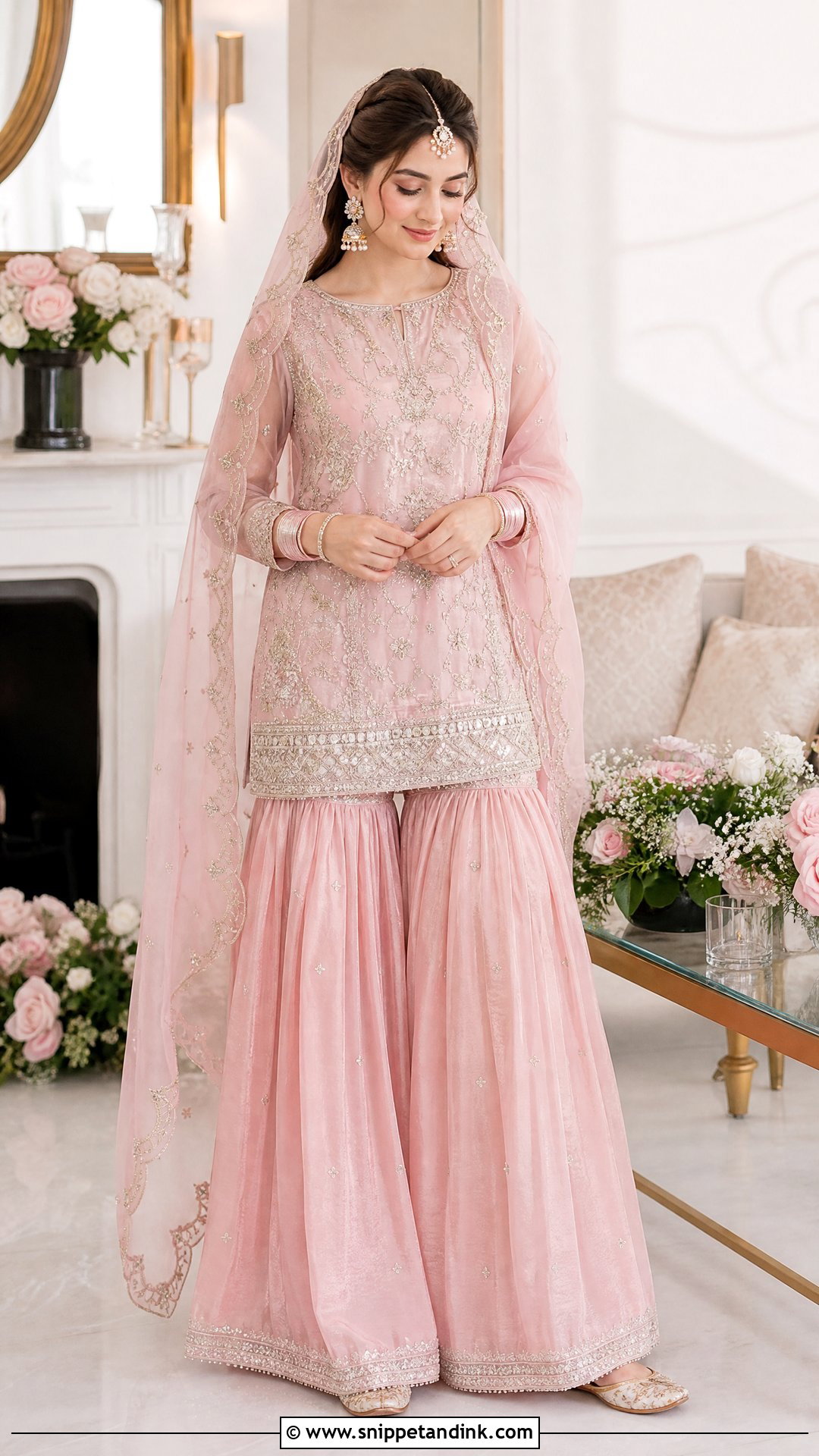
Pastel pink can look sugary unless something cools it down. On a gharara, I use ivory threadwork and antique silver rather than gold, which keeps the pink grown-up. A short embroidered kurti over a flared gharara in silk, jamawar or light brocade gives the traditional shape. The matching organza dupatta covers the head during the Nikah and moves to the shoulders for photographs afterwards. Embroidered ivory flats are kinder than heels for a long day. It suits a home ceremony and a formal venue equally.
17. Cream Velvet Lehenga Nikah Dress
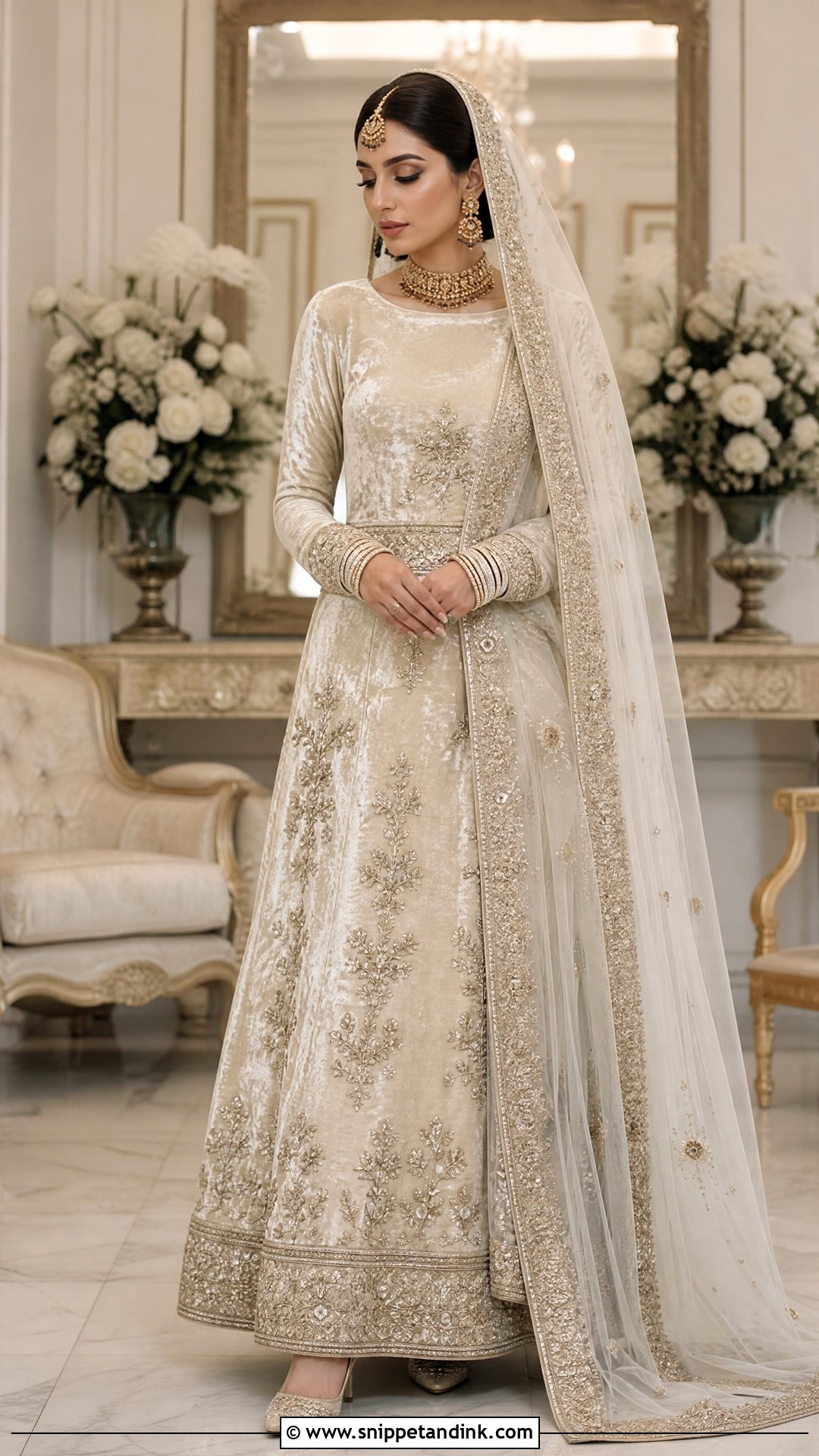
Velvet is the winter fabric, and cream velvet is a softer take than the usual jewel tones. I keep the skirt streamlined, with antique gold embroidery only around the border, because heavy work across a velvet skirt doubles its weight. A long-sleeve velvet blouse or slightly longer kurti adds coverage and warmth. Velvet crushes where you sit and the marks show on cream, so I ask brides to sit on a smooth cushion and stand to be photographed. An ivory organza dupatta lightens the face. Closed embroidered heels suit an indoor winter Nikah.
18. Ivory Organza Shirt Nikah Dress
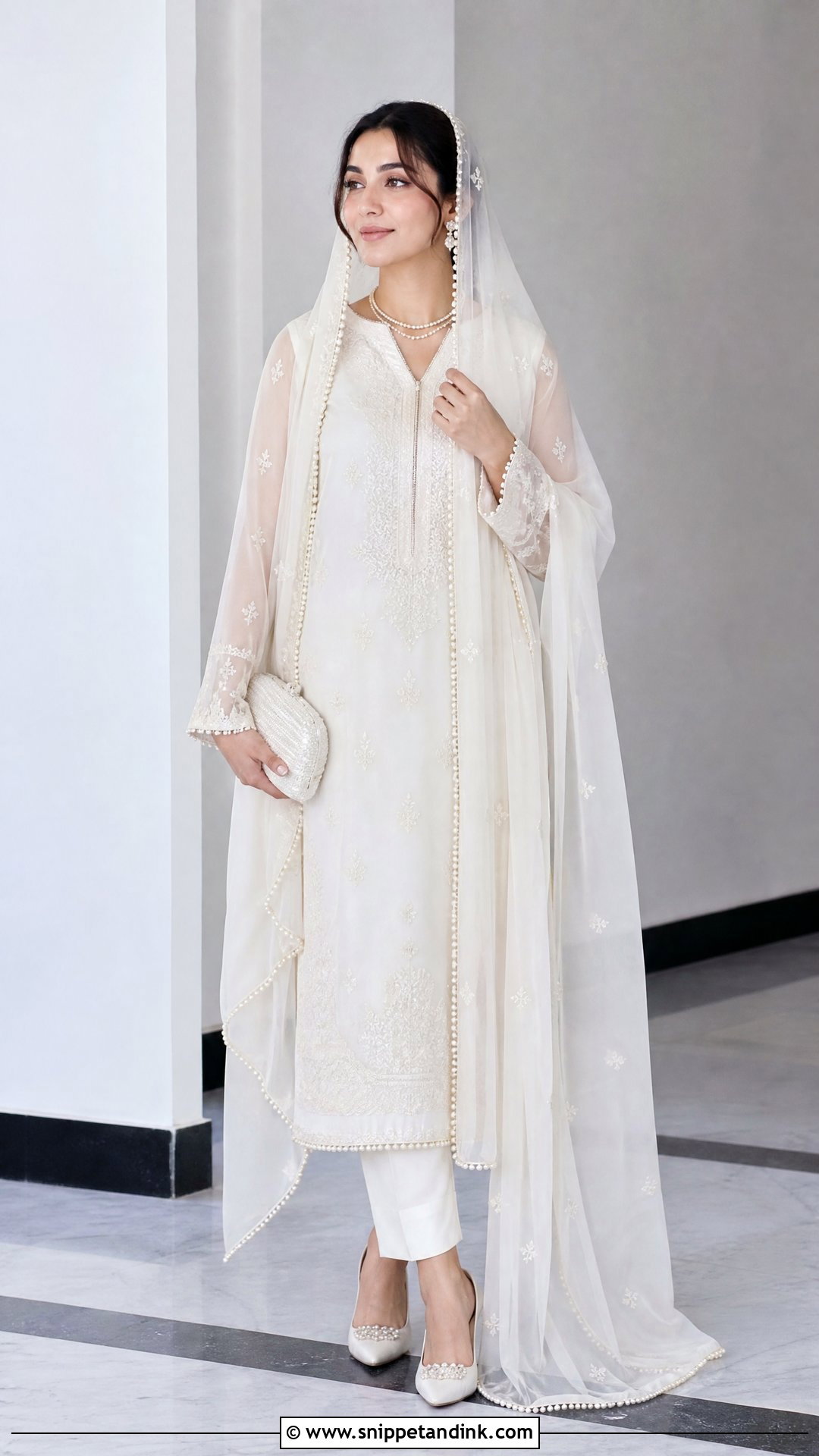
Some brides want the precision of tailoring over volume, and an ivory organza shirt with cigarette pants delivers that. The long, straight shirt must be fully lined through the body, with only the embroidered sleeves left sheer, and the side slits finished neatly. Raw silk cigarette pants give structure and a texture contrast against the organza. Pin the matching dupatta loosely over the head and discreetly near the shoulders. Pearl earrings and a small clutch are all it needs, for a courthouse Nikah, a mosque ceremony or a small gathering at home.
19. Deep Red Lehenga Nikah Dress
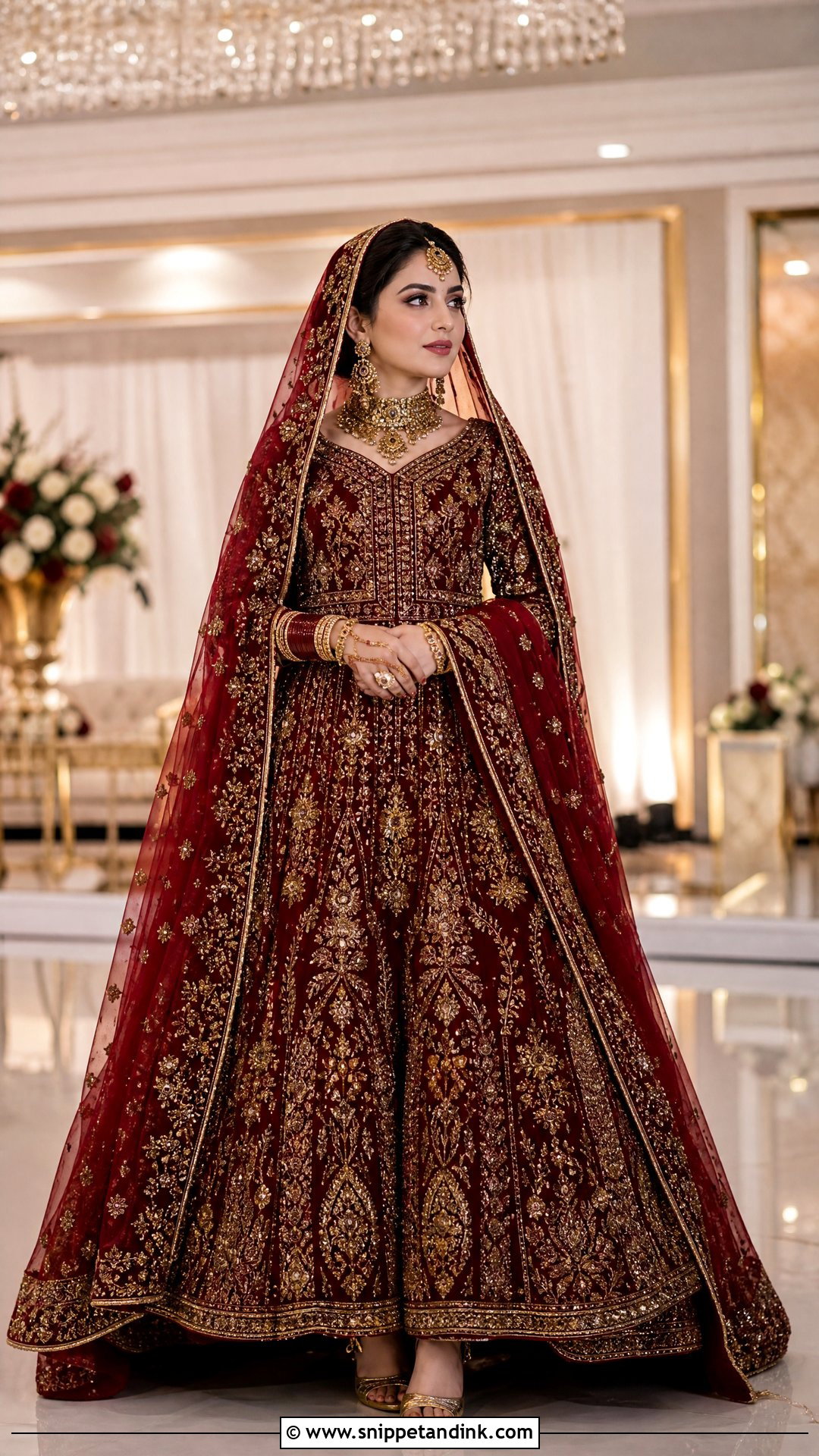
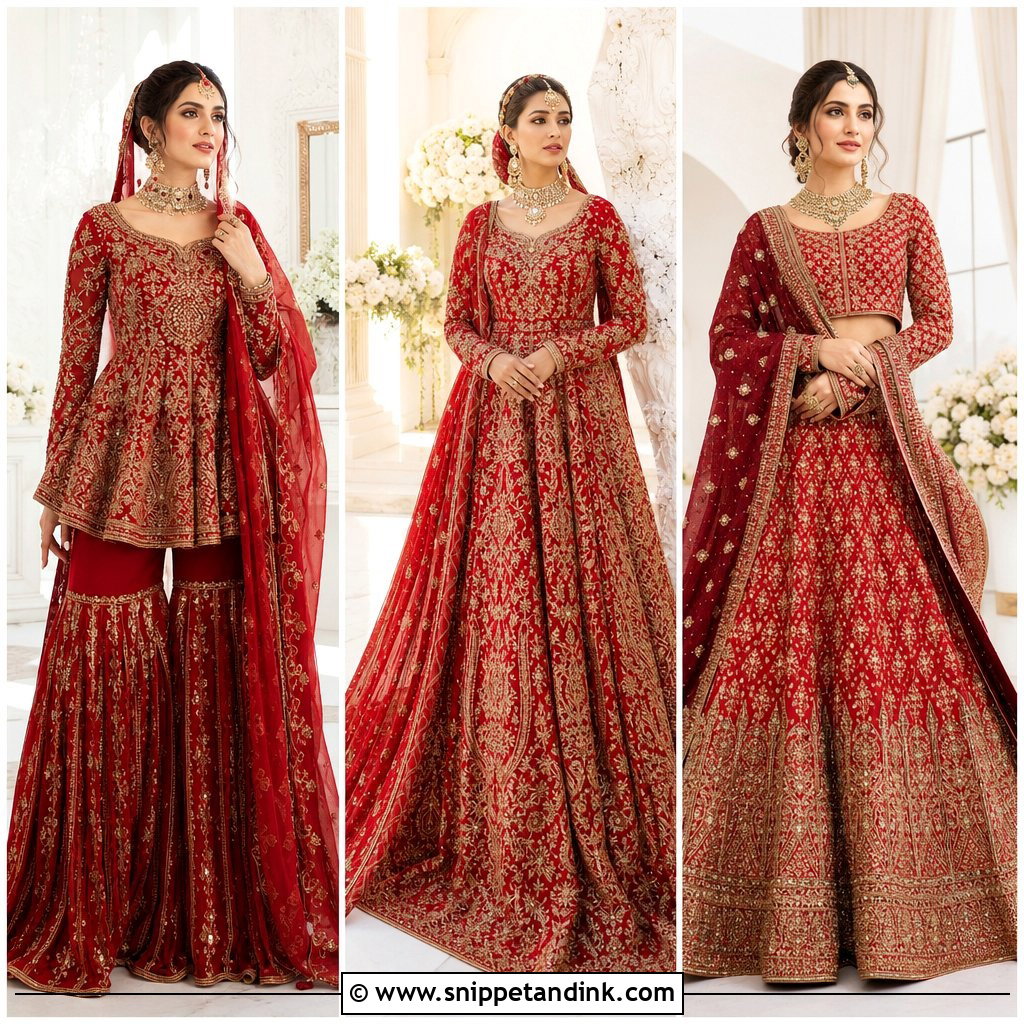
Not every Nikah bride wants pale colors, and a deep red lehenga keeps the traditional wedding shade. I steer brides toward crimson or burgundy rather than bright red, which can look harsh in daylight. A modest blouse with antique gold zardozi, dabka and threadwork pairs with a full lehenga. Cover the head with a matching red dupatta, or bring in an ivory veil to soften the palette. Defined eyes and a rose-red lip hold up against the color. It is a natural fit for an evening Nikah or a combined Nikah and rukhsati.
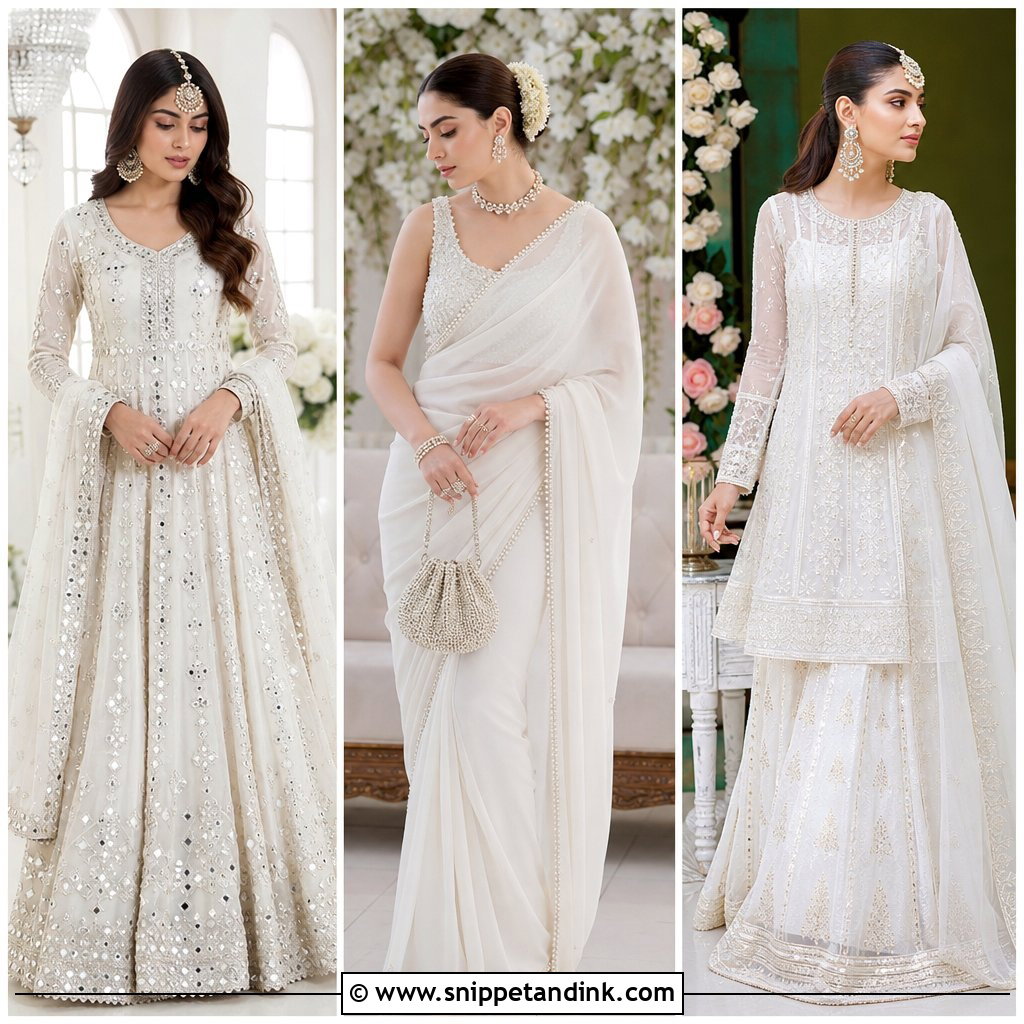
20. Emerald Green Pishwas Nikah Dress
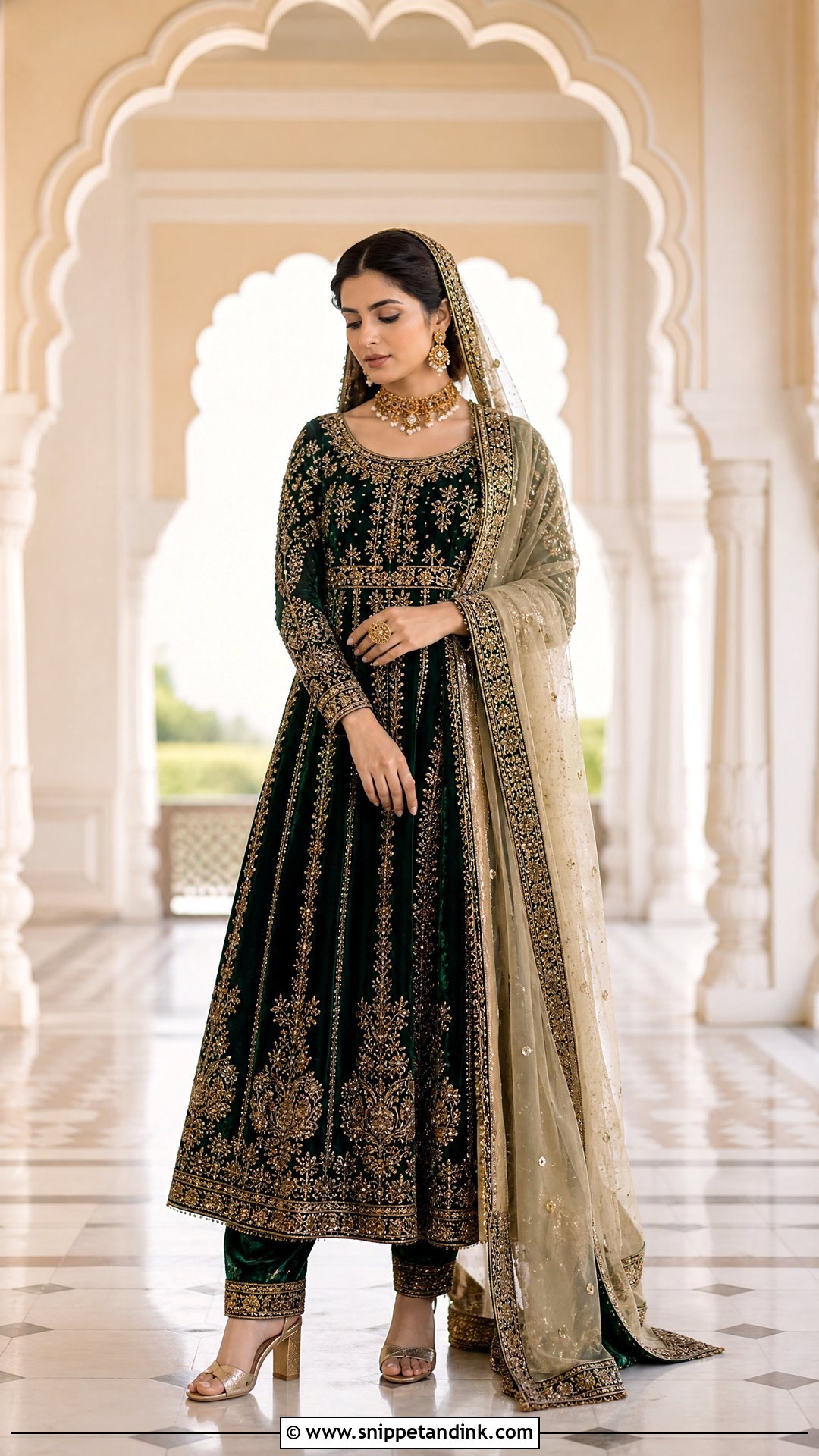
Emerald is my pick for a bride who wants a jewel tone without red. A floor-length pishwas with a fitted bodice, full sleeves and a wide paneled skirt gives the deep color movement. Keep antique gold embroidery at the neckline, waist, cuffs and hem, and leave enough plain fabric for the silhouette to show. Dark green absorbs light, so the embroidery has to be bright enough to read across a room. Straight trousers, a light gold organza dupatta over the head and metallic block heels complete it for an evening or winter ceremony.
White, Ivory and Champagne Behave Differently
So many Nikah outfits are pale that it is worth knowing how each shade behaves. Pure white can look blue-white beside warm skin and turns sheer under strong flash, so it needs full lining. Ivory has a warm undertone and suits most skin tones in photos. Champagne and gold tissue lean warmer still and hide small marks better. Compare swatches side by side in daylight, because two ivories from different shops can look like different colors once they sit next to each other.
Storing a pale outfit afterwards
Have it cleaned soon after the wedding, even if it looks spotless. Perfume, sweat and spilled sugar are often invisible at first and oxidize into yellow or brown marks months later. Then store it folded in acid-free tissue or wrapped in clean cotton, inside a cloth bag or box, away from damp and direct light. Plastic garment covers trap moisture and can yellow pale fabrics, and hanging heavy embroidery for years stretches the shoulders. Refold along new lines once or twice a year to stop permanent creases.
Dress for the Signing, Not Only the Photos
A Nikah is a religious ceremony first, and the outfit has to let you sit through it, cover your head comfortably and sign the nikahnama without fuss. Ghararas, pishwas, lehengas, tailored suits and layered gowns all work. Ivory and white feel serene; blush, mint, lilac, red and emerald give you room to be yourself. Before deciding, think about the season, the venue’s floor and seating, the embroidery weight and how easily you can sit and rise. Treat the dupatta, shoes, jewelry and makeup as one decision with the dress. Good tailoring and secure pinning matter more than anything else here.
You'll Like These Ideas:


Leave a Reply