
Some of my favorite cakes to make are the ones that feed twelve people. With a small order, I can spend the time on the flavor, the texture of the finish and one or two details that actually belong to the couple, instead of on structure and stacking. A petite cake suits a courthouse ceremony, an elopement dinner, a backyard reception, or a wedding where a dessert table does most of the feeding. It still looks right in photos if the height, the stand and the decoration are scaled to it. The twenty ideas below are sorted roughly from structure to finish to flavor, with notes on what each one asks of your baker.
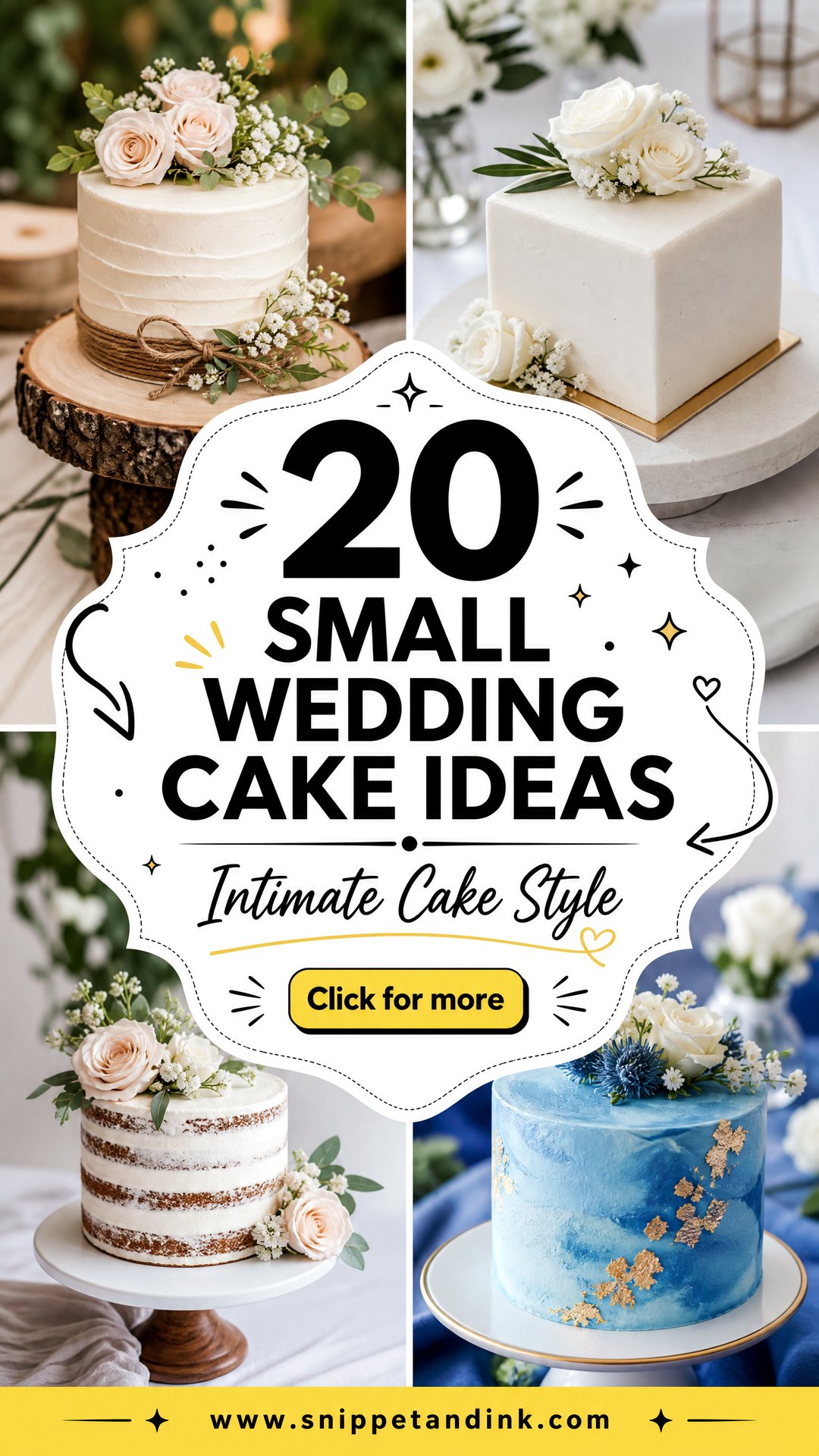
A Six-Inch Cake on a Six-Foot Table Looks Lost
The cake is rarely the problem when a small cake disappears in photos. The display is. I ask every couple where the cake will sit before I finalize the size, because these choices change how big it looks far more than an extra inch of sponge.
- A pedestal stand. Raising a cake six to eight inches puts it at eye level for the cutting photo and makes a single tier read as a centerpiece.
- A small table. A round bistro table or a side table with a cloth frames a petite cake; a long buffet table swallows it.
- A plain background. A wall, a curtain or greenery behind the table is better than a busy room or a doorway.
- Light from the side. A window or a few candles beside the cake show texture; overhead light flattens it.
If you’re stuck with a long table, group the cake with a few bud vases or a stack of plates for the dessert course so it has a cluster to belong to.
1. Small Two Tier Wedding Cake
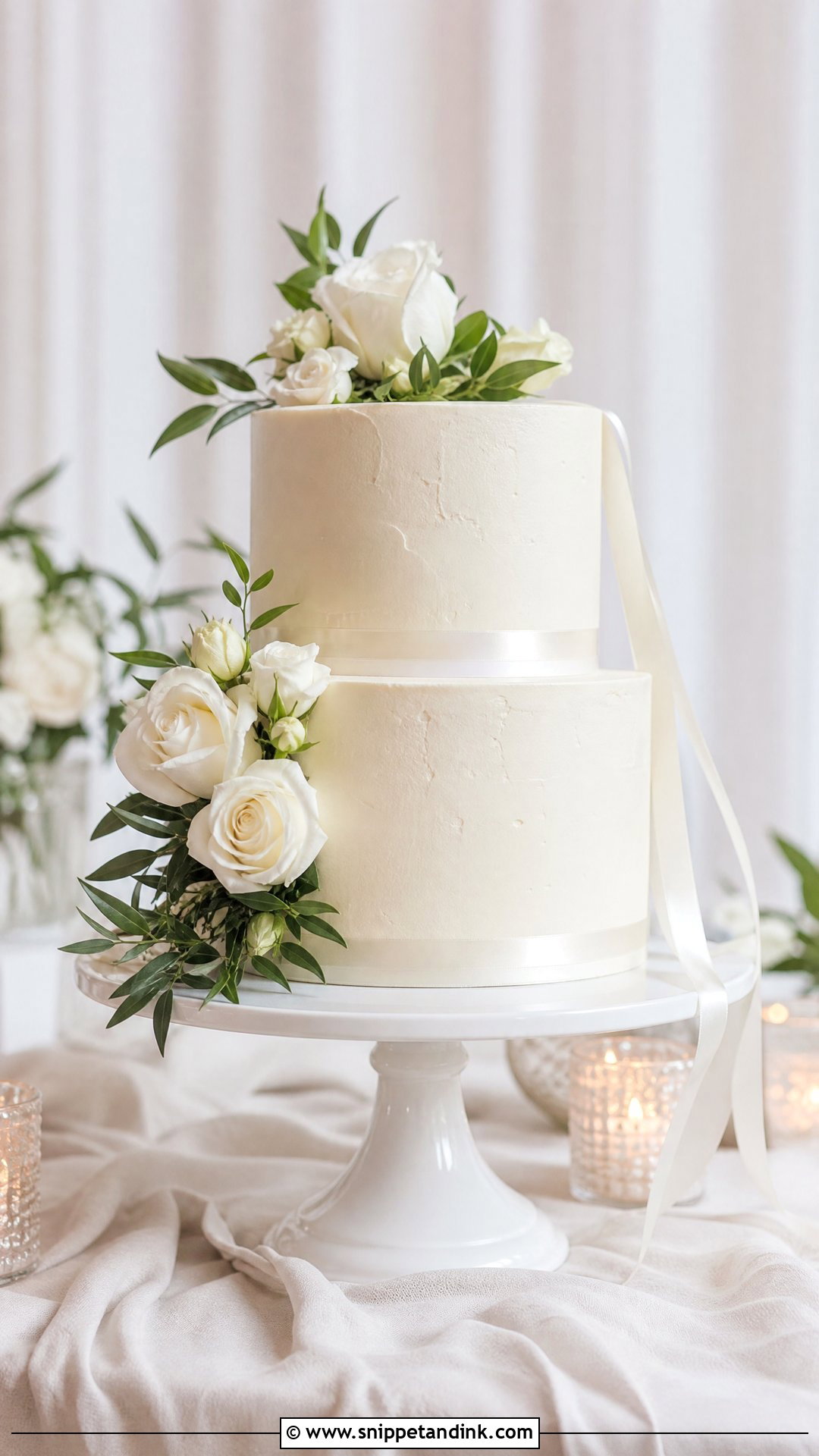
Two tiers give you a proper cake-cutting moment without paying for servings you won’t use. A 6-inch on an 8-inch is the pairing I quote most for intimate receptions, especially alongside plated desserts. If you want more presence, ask for taller tiers rather than wider ones; a five-inch-tall tier stacks into a slimmer, more modern shape. Smooth ivory buttercream, a ribbon at the base and a few flowers are plenty. It fits on a small stand and a small table.
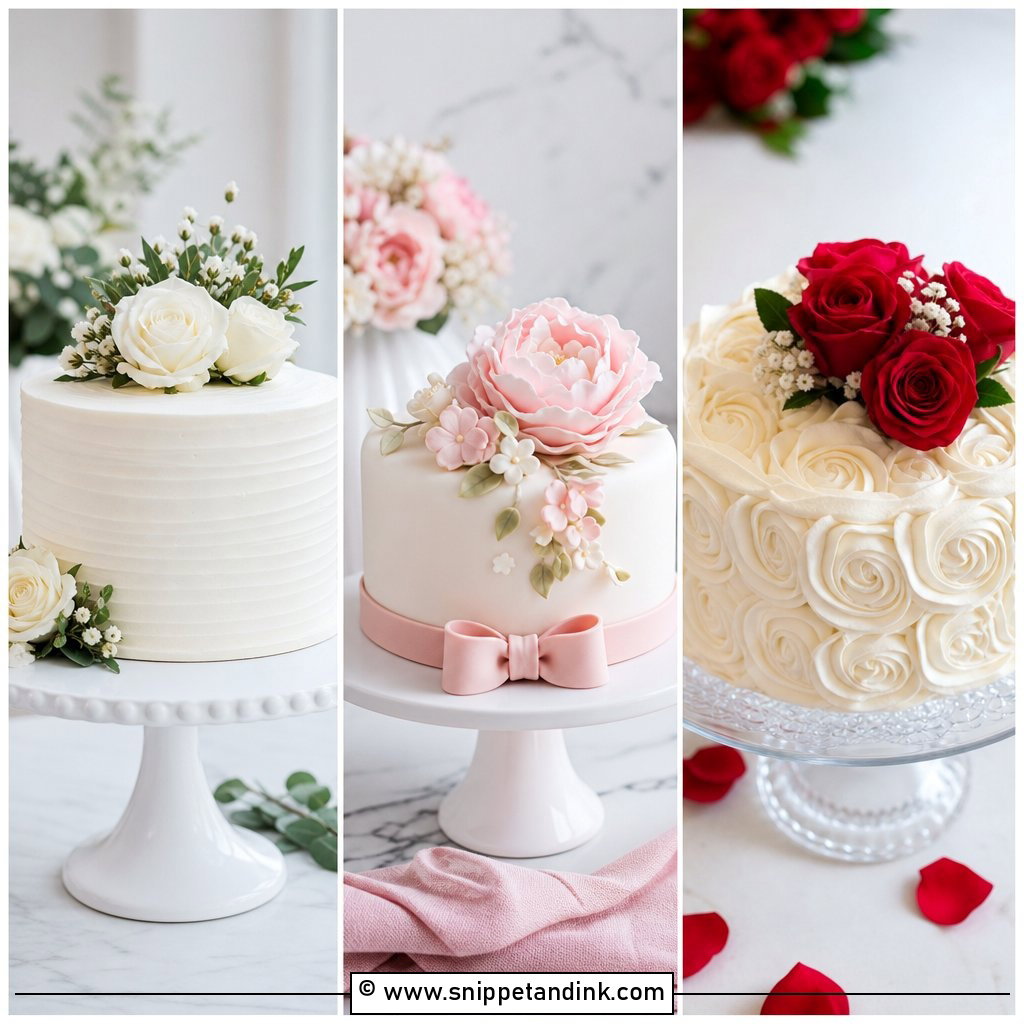
2. Small Single Tier Wedding Cake
One tier is the easiest cake to get wrong, because there’s nothing to hide behind. It needs one clear idea: a band of piping, a single floral cluster, a strong color. Without that it reads as a party cake. I usually make single tiers taller than a standard layer cake, often six inches, so it holds its own on a pedestal. It suits elopements, city hall weddings and restaurant dinners. Candles and a linen runner around it do more than extra decoration on top.
3. Small Buttercream Wedding Cake
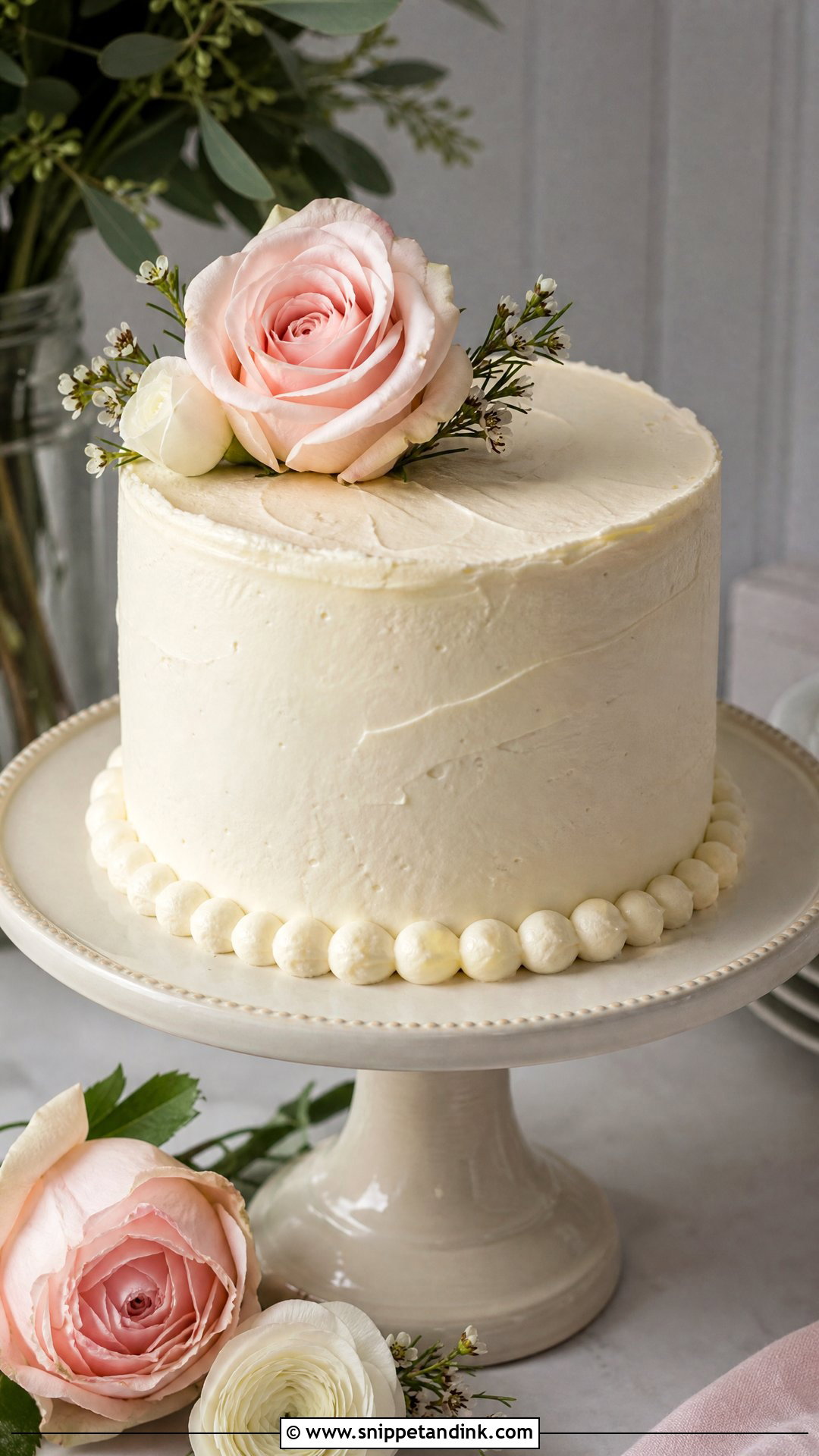
On a small cake, the buttercream finish is the design, since guests see it from close up. Spatula marks in pale ivory feel relaxed; a dead-smooth finish feels modern; it can also be piped into vintage borders. Smooth finishes take the most time, because I chill and scrape in several passes. Vanilla bean, almond, lemon, strawberry, chocolate and coconut all suit buttercream. If your venue is warm, ask which buttercream your baker uses; meringue-based versions taste lighter but soften sooner.
4. Small Wedding Cake With Fresh Flowers
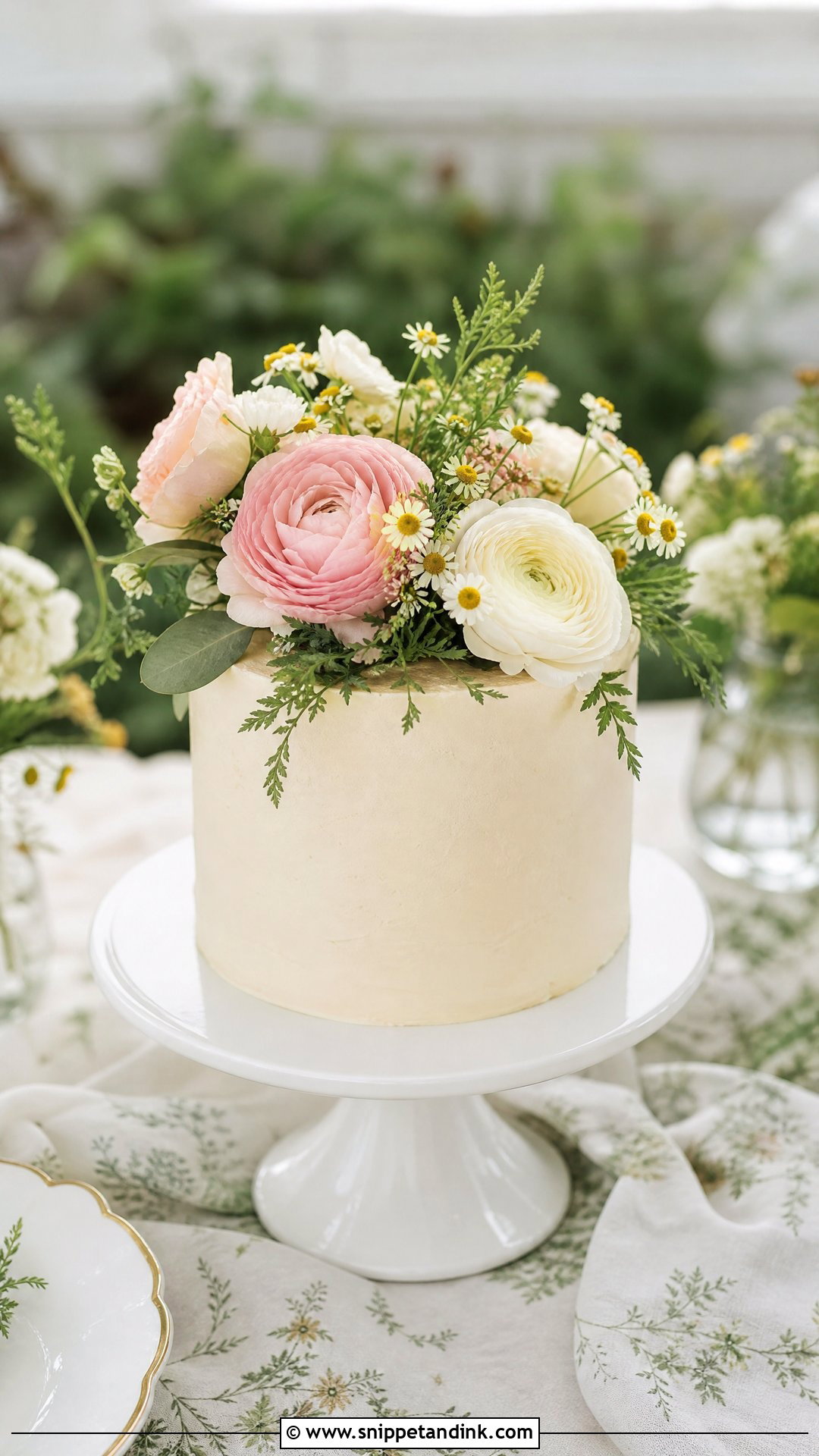
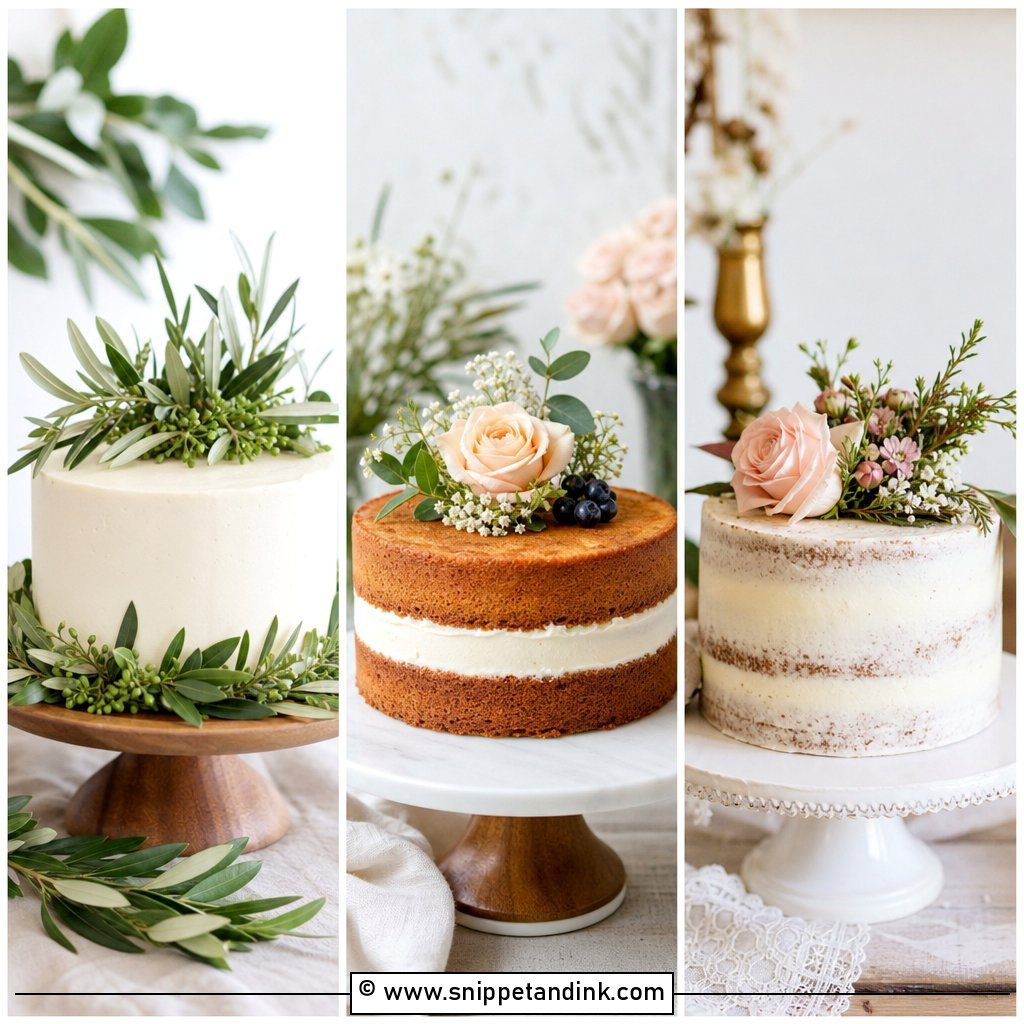
Fresh flowers do most of the decorating with very little effort, and on a small cake, less is more. One cluster on top and a couple of blooms at the base looks better than a full wrap. Roses, ranunculus, lisianthus, chamomile and small orchids all suit petite sizes. Every non-edible stem should be wrapped and placed in a pick or straw so it never touches the sponge. Match them to your bouquet. Go easy on greenery, which swamps a small shape quickly.
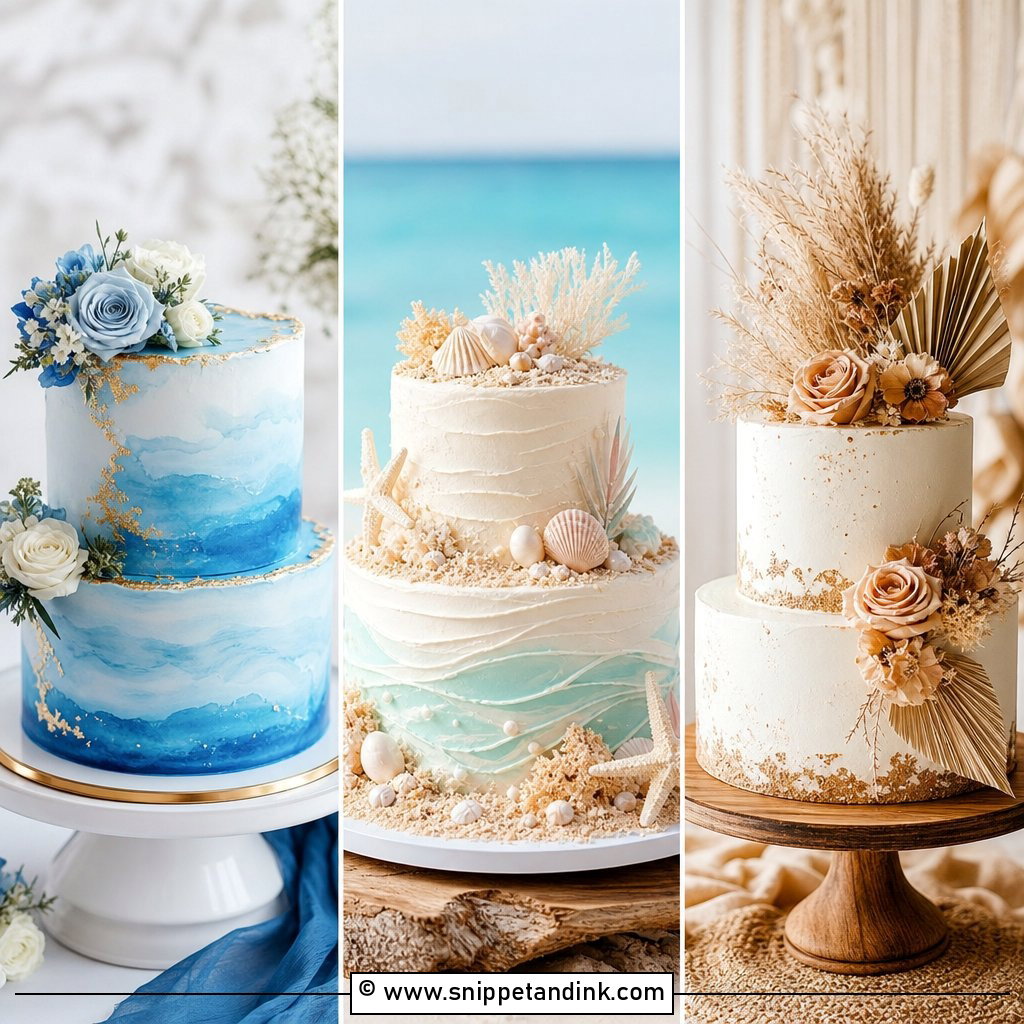
5. Small Wedding Cake With Gold Leaf
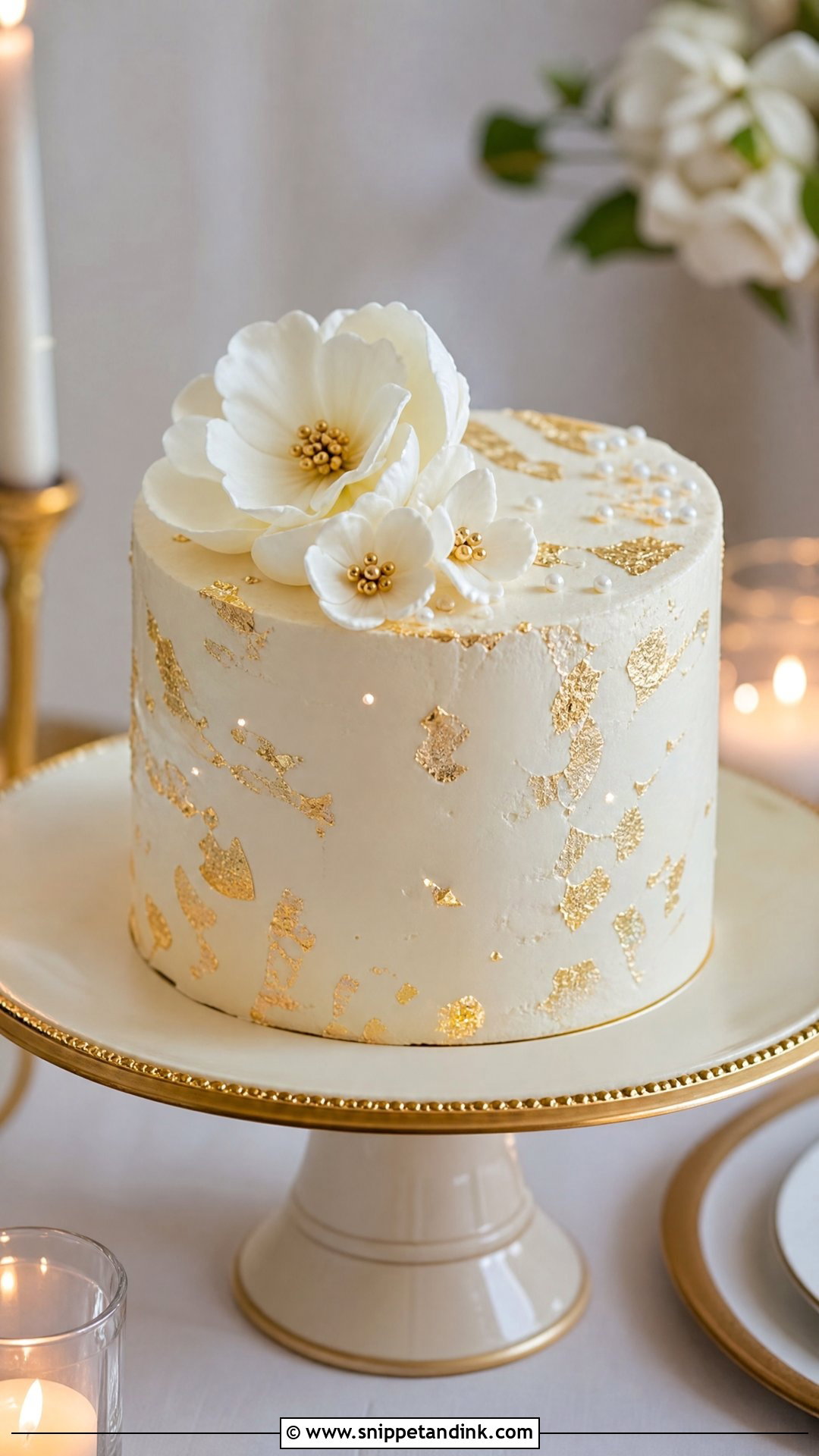
Gold leaf on a petite cake works best in small doses: a few torn pieces up one side, near the base or tucked around flowers. White buttercream keeps it classic; blush, champagne, sage or pale blue gives a softer palette. It glows under candlelight, which makes it a good choice for an evening dinner. Leaf goes on in my kitchen, never at the venue, because it sticks to warm fingers and drifts in the slightest draft. A plain topper keeps it the main feature.
6. Small Rustic Wedding Cake
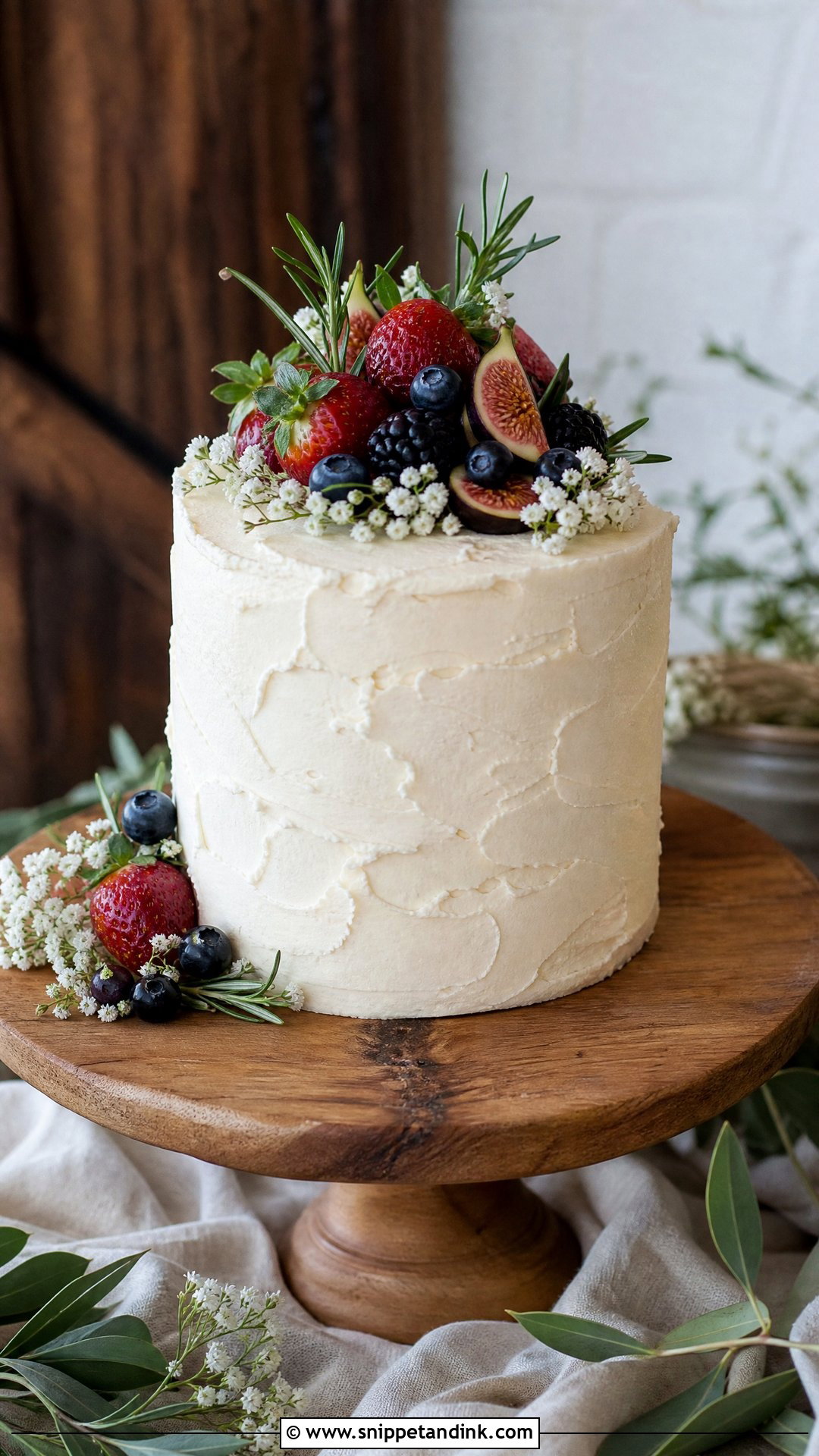
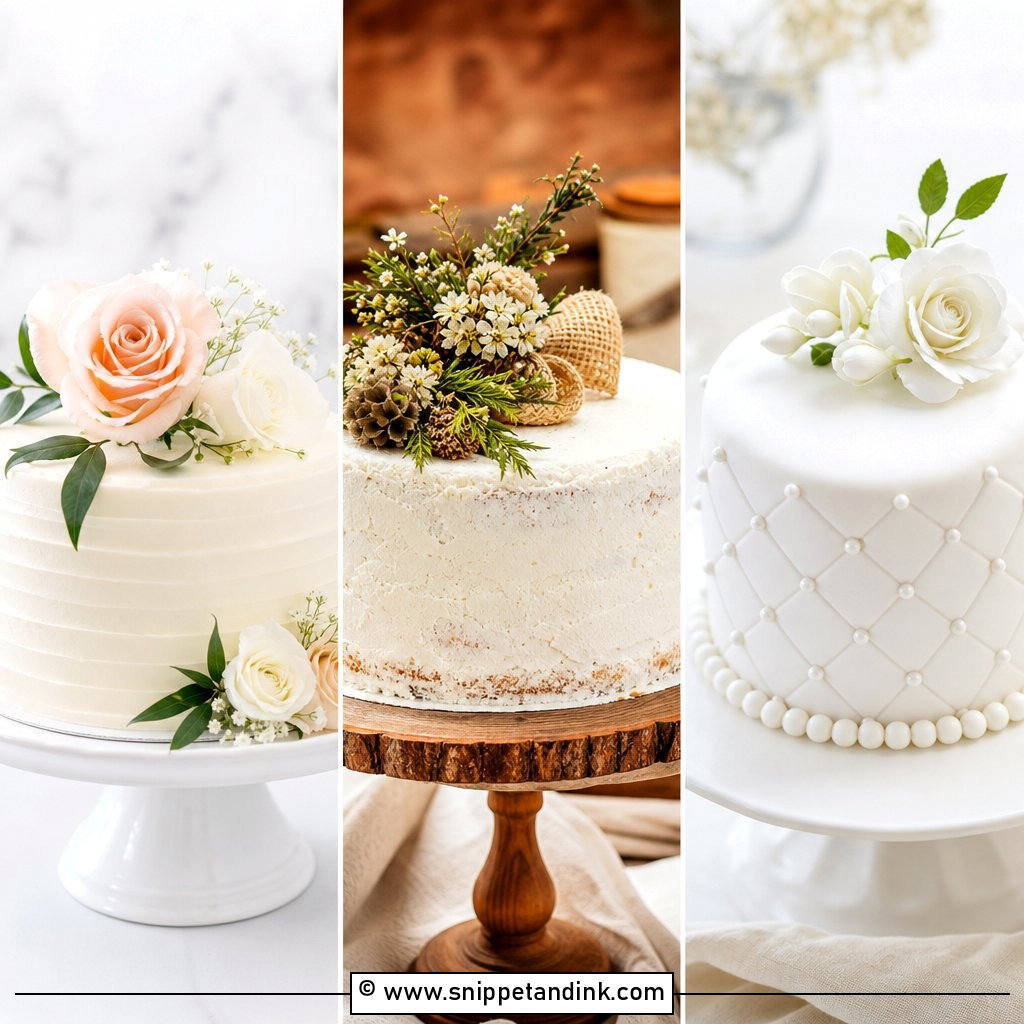
Rustic cakes forgive a lot, which is why I like them for barns, farms and back gardens. Textured buttercream, soft ridges or semi-naked sides replace a flawless finish. Berries, figs, herbs and small white flowers keep it natural. A wooden stand suits it if there’s a board between cake and wood; a white pedestal makes it a touch more formal. Vanilla honey, carrot, spice, lemon blueberry and chocolate all fit.
7. Small Modern Wedding Cake
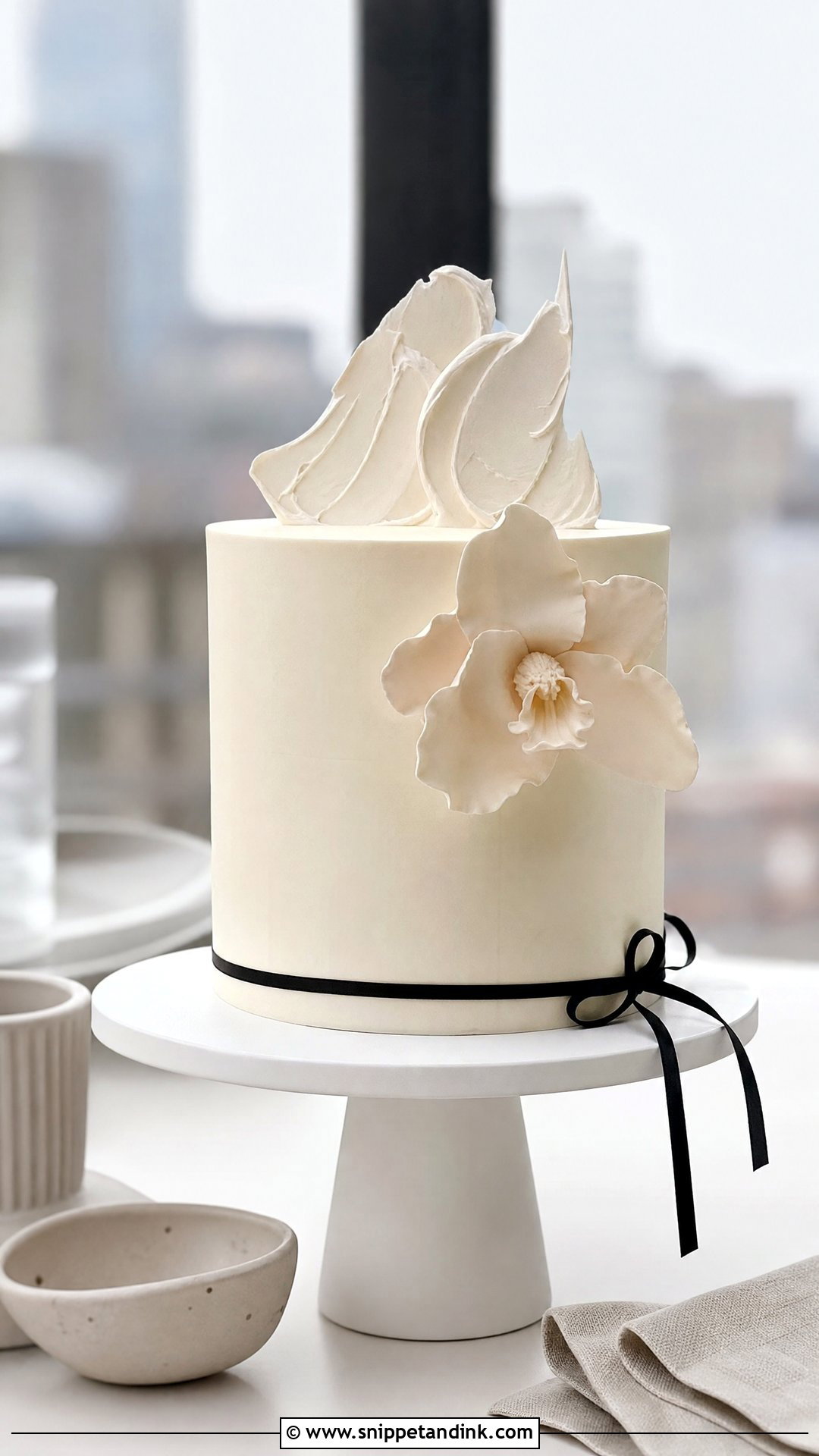
Modern small cakes depend on proportion and one bold element: a tall tier, square edges, subtle texture or an offset floral placement. A single sugar flower, a thin black ribbon, a pearl border or an abstract buttercream swipe is enough. Ivory, stone, beige and soft gray feel current. The thing that undermines this style is a slightly uneven edge or a wobbly ribbon, so it’s worth seeing a baker’s portfolio of sharp-finish work first. Gallery, rooftop and minimalist venues suit it.
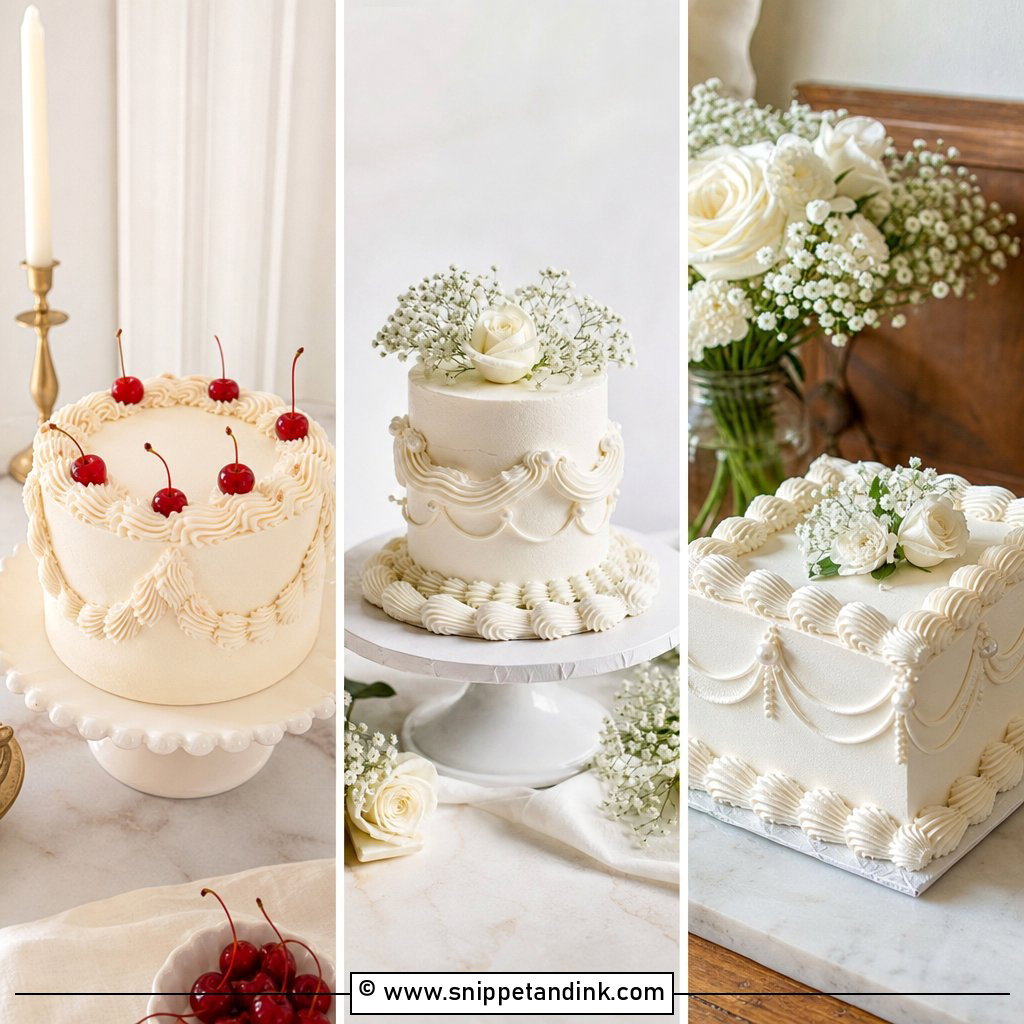
8. Small Vintage Wedding Cake
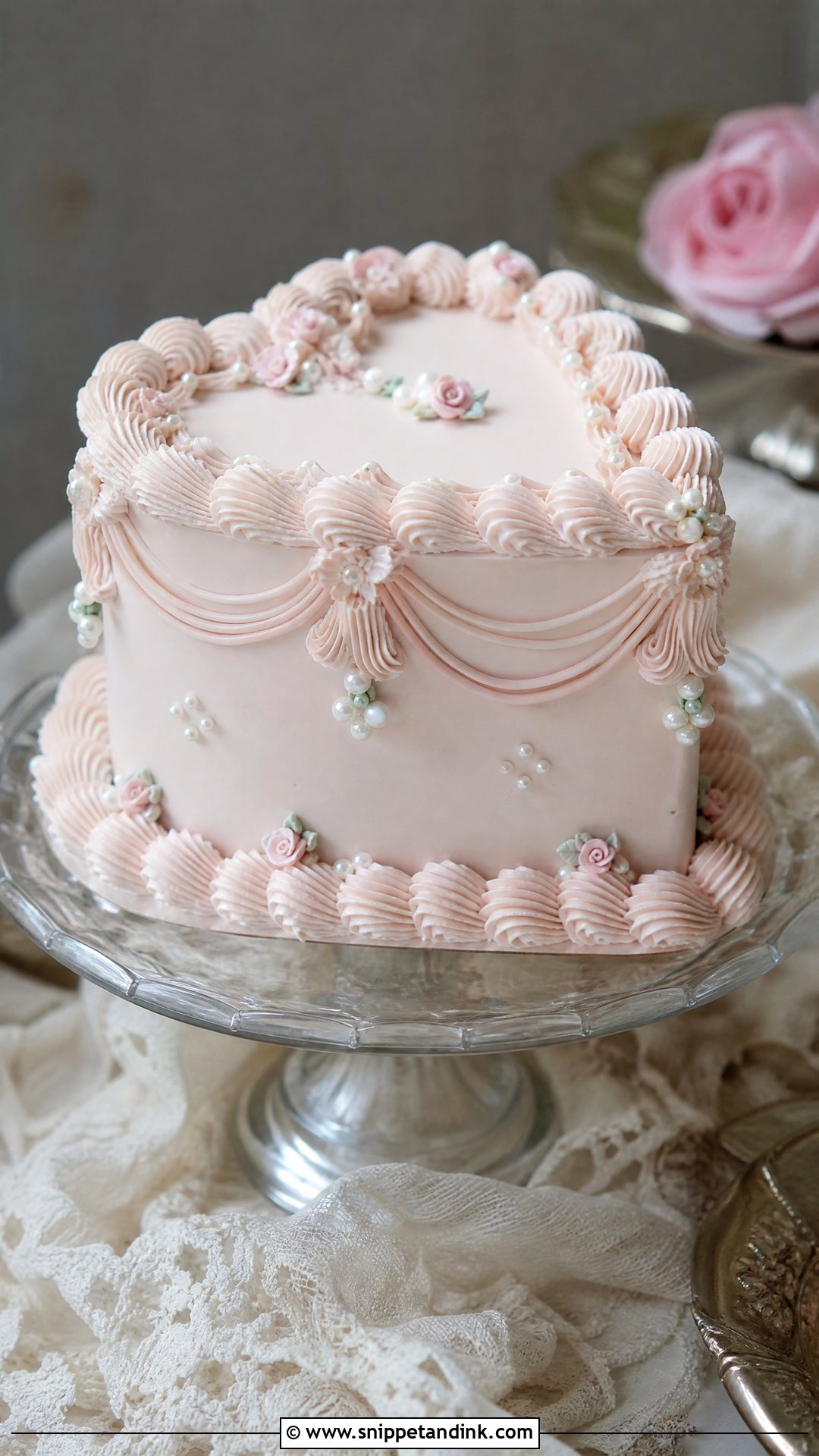
Vintage piping is where a small cake can show off. Lambeth-style overpiping, shell borders, pearl dots and swags wrap a single tier like lace. White, ivory, blush, butter yellow and pale blue all suit the mood. Proper Lambeth work is built up in layers, each one setting before the next, so it takes far longer than its size suggests and costs accordingly. Sugar flowers, cherries or a small heart topper finish it. Neat, balanced piping matters more than the amount of it.
9. Small Minimalist Wedding Cake
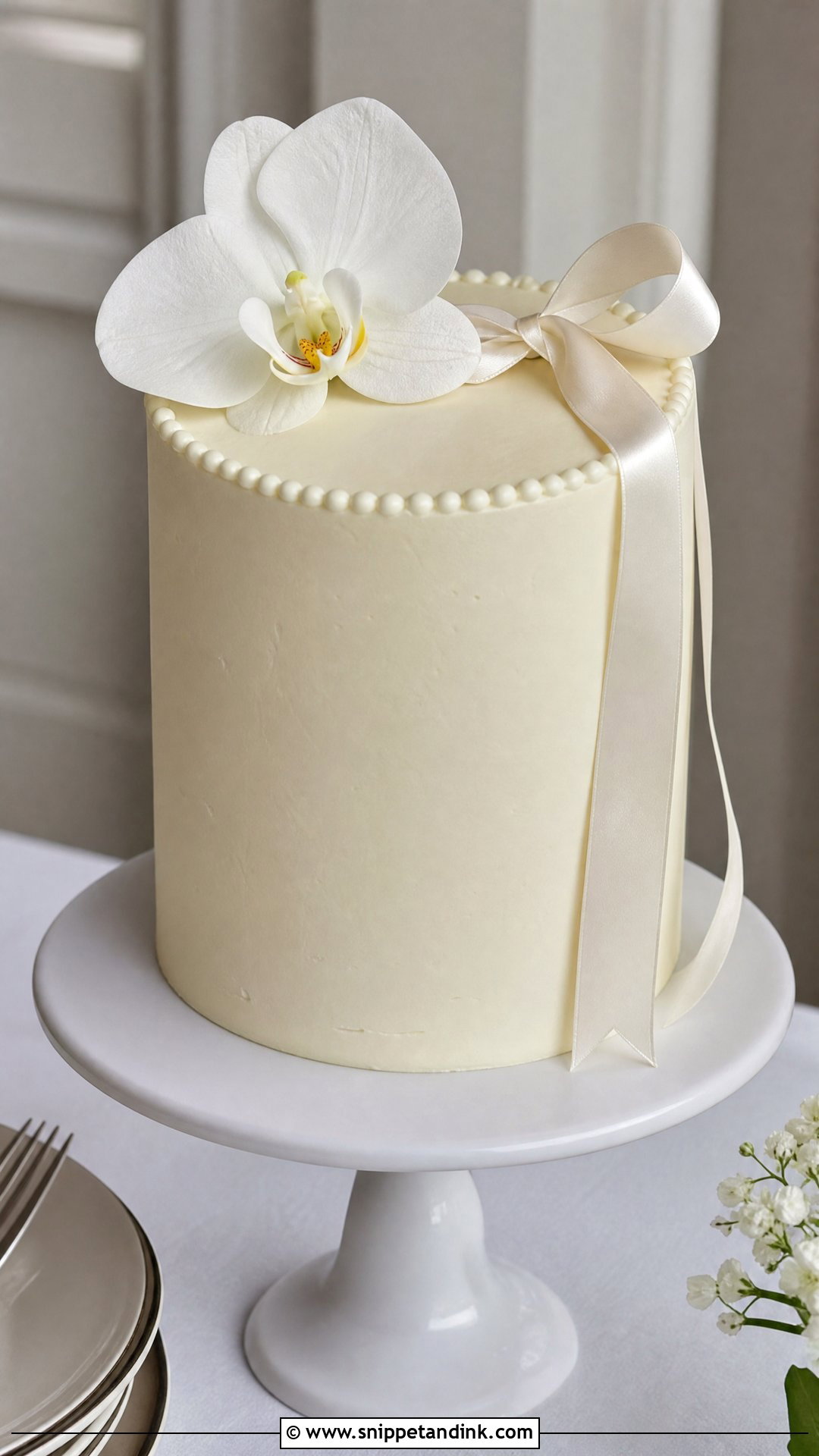
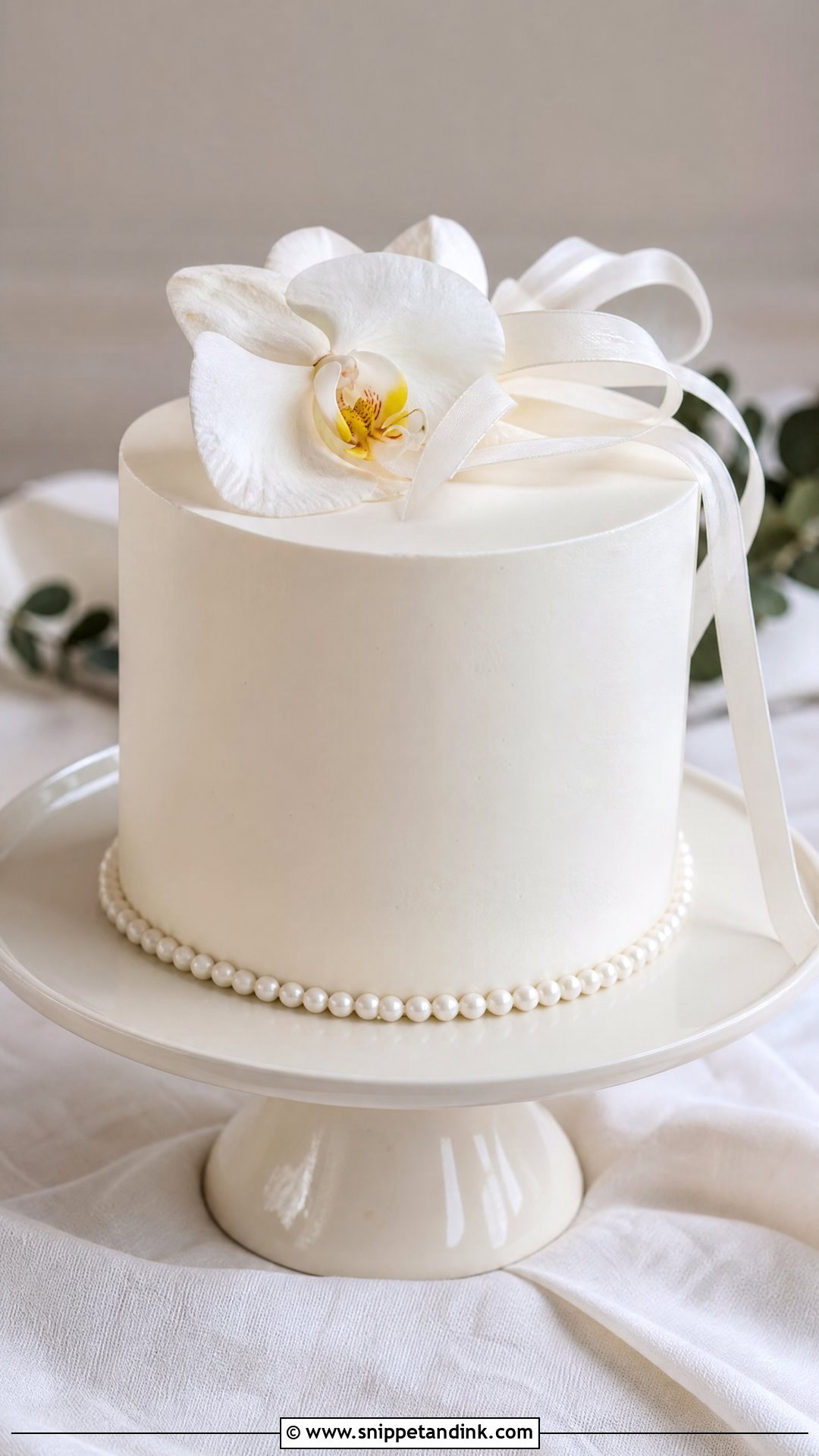
Minimal doesn’t mean empty. A smooth finish and a simple shape need one carefully chosen detail: a single orchid, a satin ribbon, a clean pearl edge or one pressed flower. A tall round gives presence; a low, wide cake feels like a dinner party. White and ivory are classic, while soft beige and pale sage are quieter alternatives. Of all the styles here, minimal is the one where the quality of the bake and the finish show most, so I’d put budget there rather than into extras.
10. Small Floral Wedding Cake
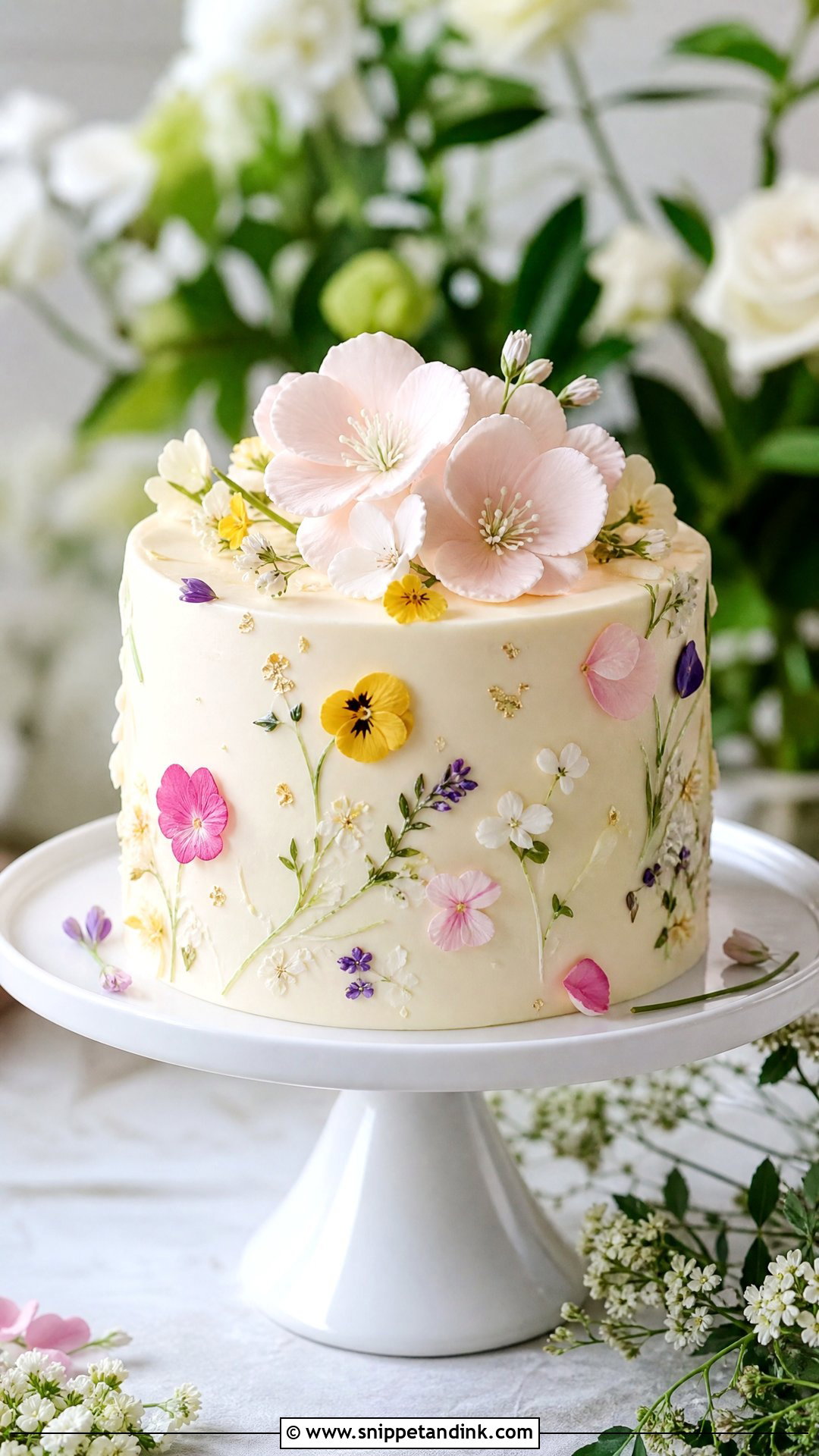
Here flowers become the theme rather than an accent. Buttercream flowers, sugar flowers, pressed edible petals or carefully placed fresh blooms all work. Pick one floral direction, such as garden roses, tiny wildflowers or pastels, because three types of flower on a small cake look busy. Sugar flowers are made days ahead and keep indefinitely as a souvenir, which some couples love. A vanilla or almond sponge with ivory frosting lets the color carry it. Spring and garden receptions are the natural fit.
11. Small Square Wedding Cake
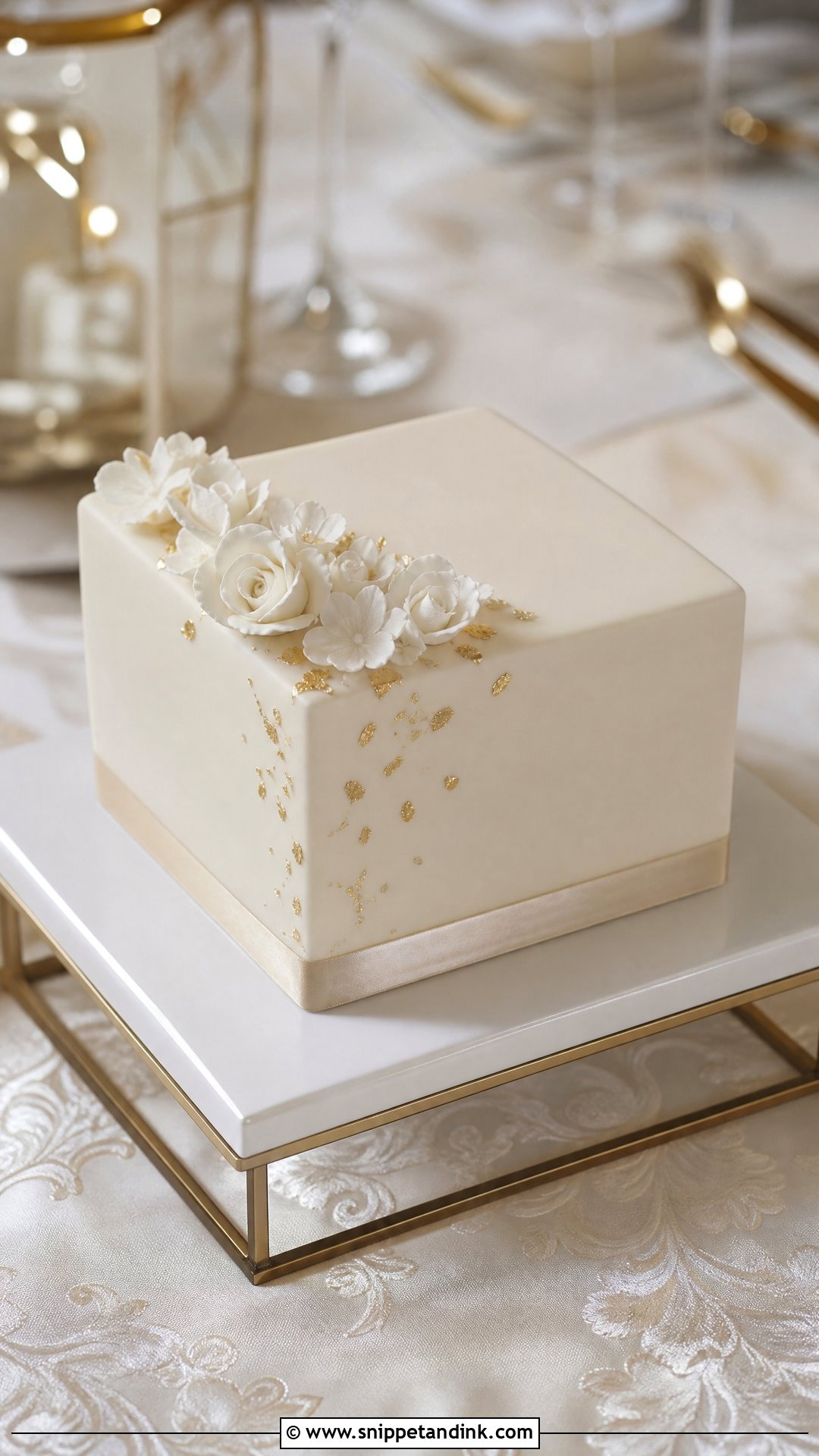
Square shapes surprise people, since most wedding cakes are round. Sharp corners look tailored and suit formal or city weddings; one square tier on a plain white stand is striking, two read as architectural. Fondant gives the crispest corners. Buttercream can work, but only from a baker who’s confident with straight edges, so ask to see square work specifically. A thin ribbon, gold leaf, sugar flowers or a single spray across one corner is enough decoration.
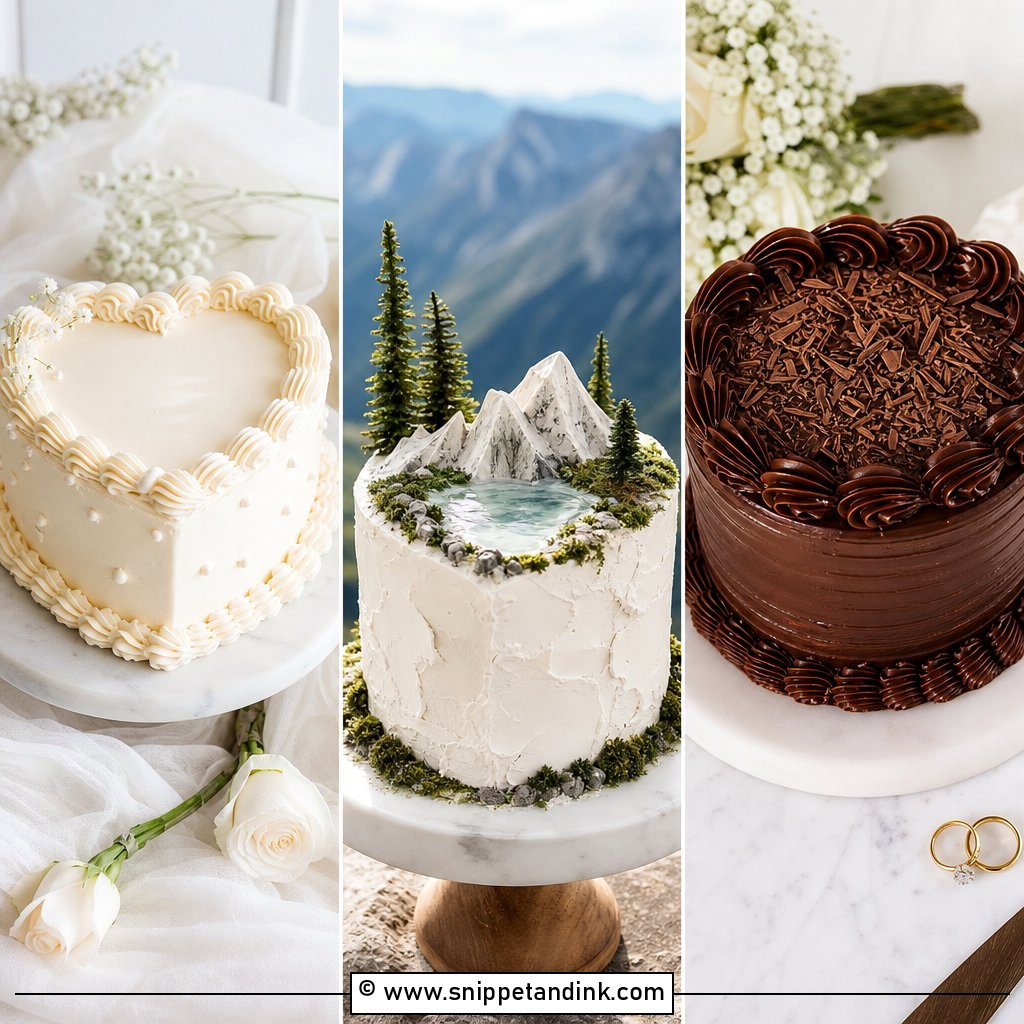
12. Small Heart Wedding Cake
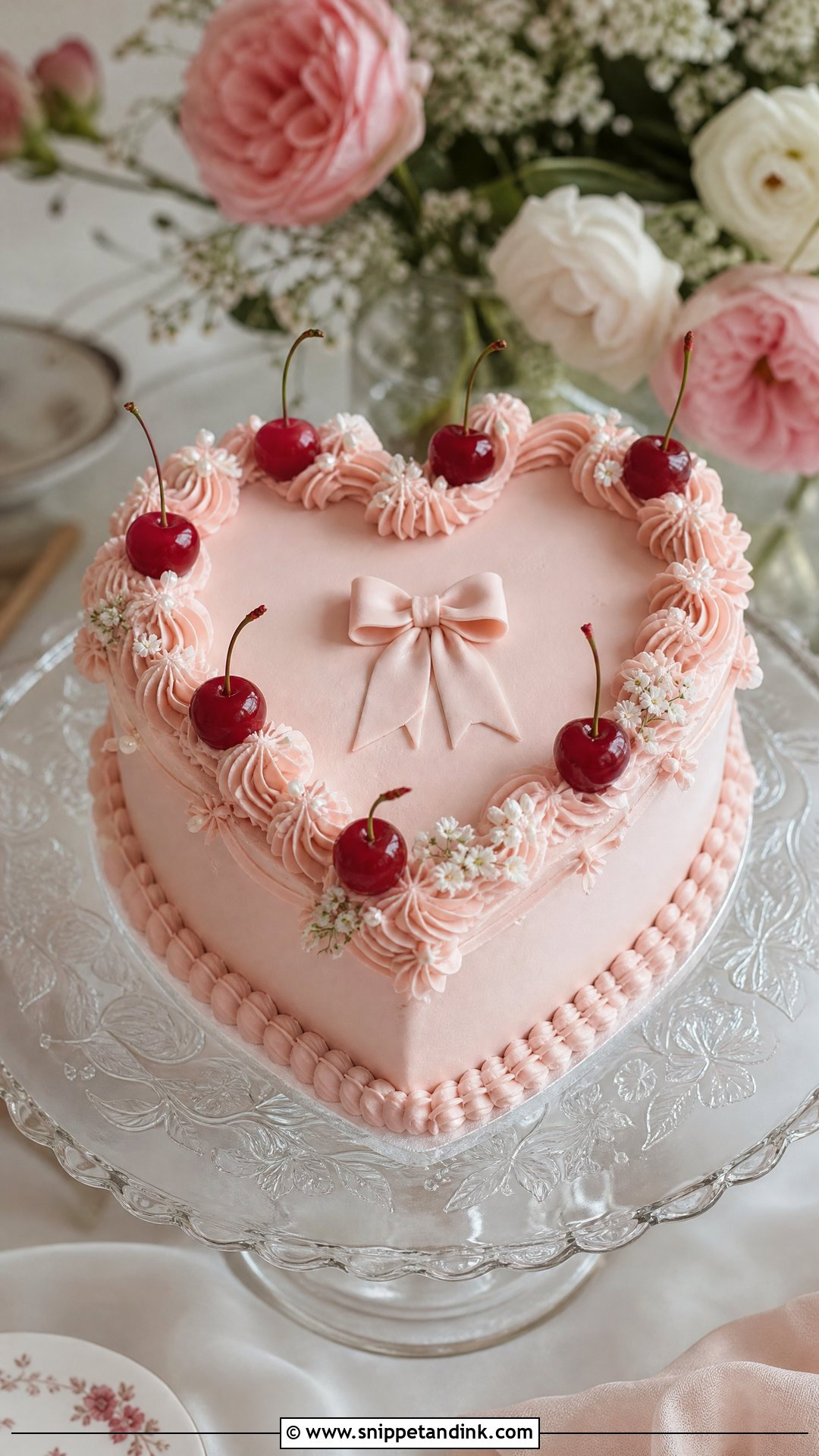
A small heart wedding cake is playful and sweet, and it works best as a single tier, where the outline does the decorating. Ivory buttercream with pearl piping keeps it elegant; ruffled borders in soft pink push it vintage. Hearts are trickier to frost than rounds, because the dip at the top and the point at the bottom both need careful scraping. Keep the top light so the shape stays readable. Flowers, cherries, a line of script or a small bow all suit it.
13. Small Naked Wedding Cake
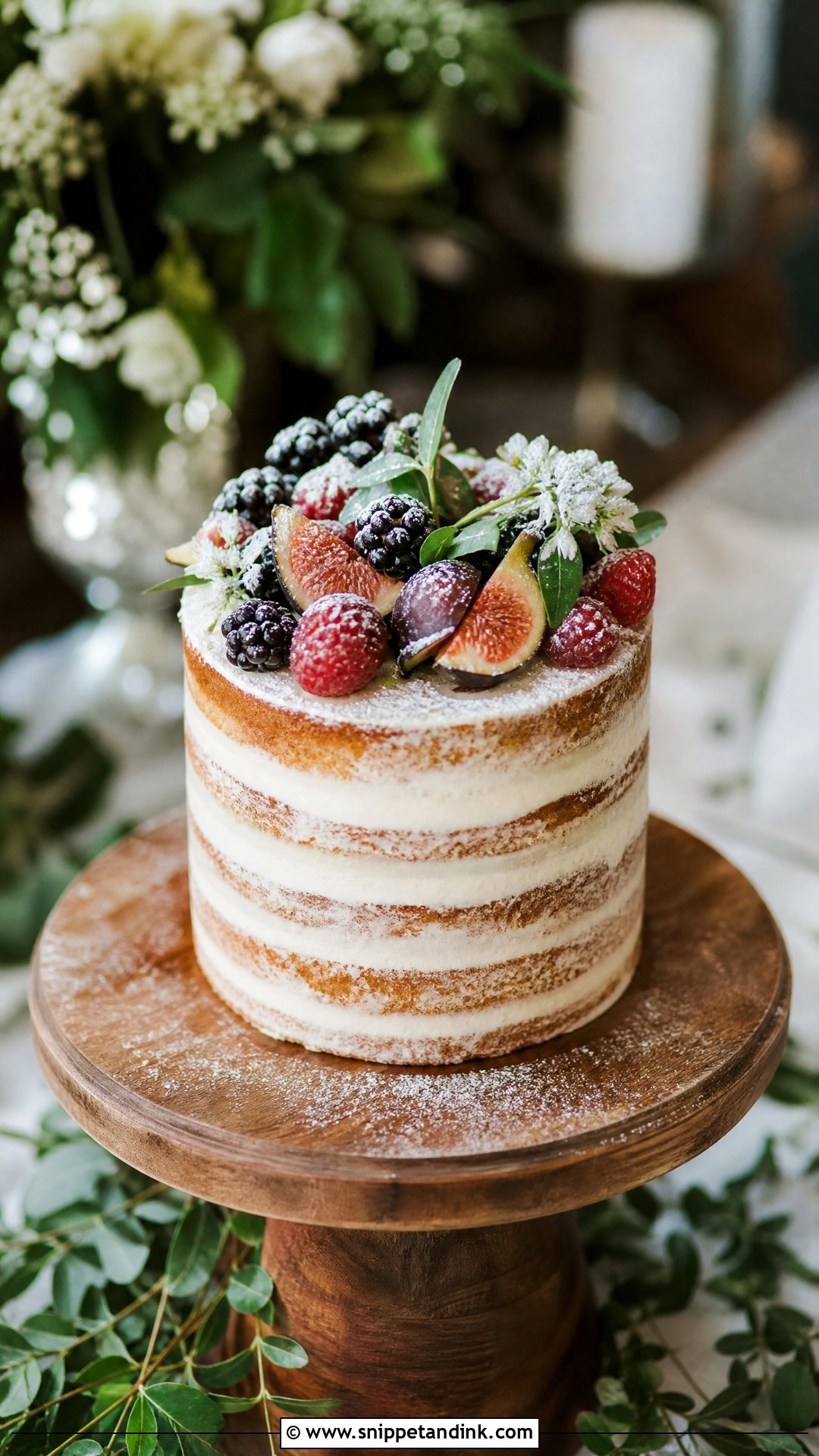
Naked cakes show their layers under almost no frosting, which looks homemade in the best way and suits relaxed outdoor receptions. The layers have to be level and moist, because they’re on display. They also dry out faster than any other finish, so I assemble them as close to the event as I can and dress them on site. Vanilla, almond, lemon, spice and berry fillings all work, topped with berries, figs, herbs or small flowers. Powdered sugar goes on last, at the venue. Ask your baker how long it can sit out.
14. Small Semi Naked Wedding Cake
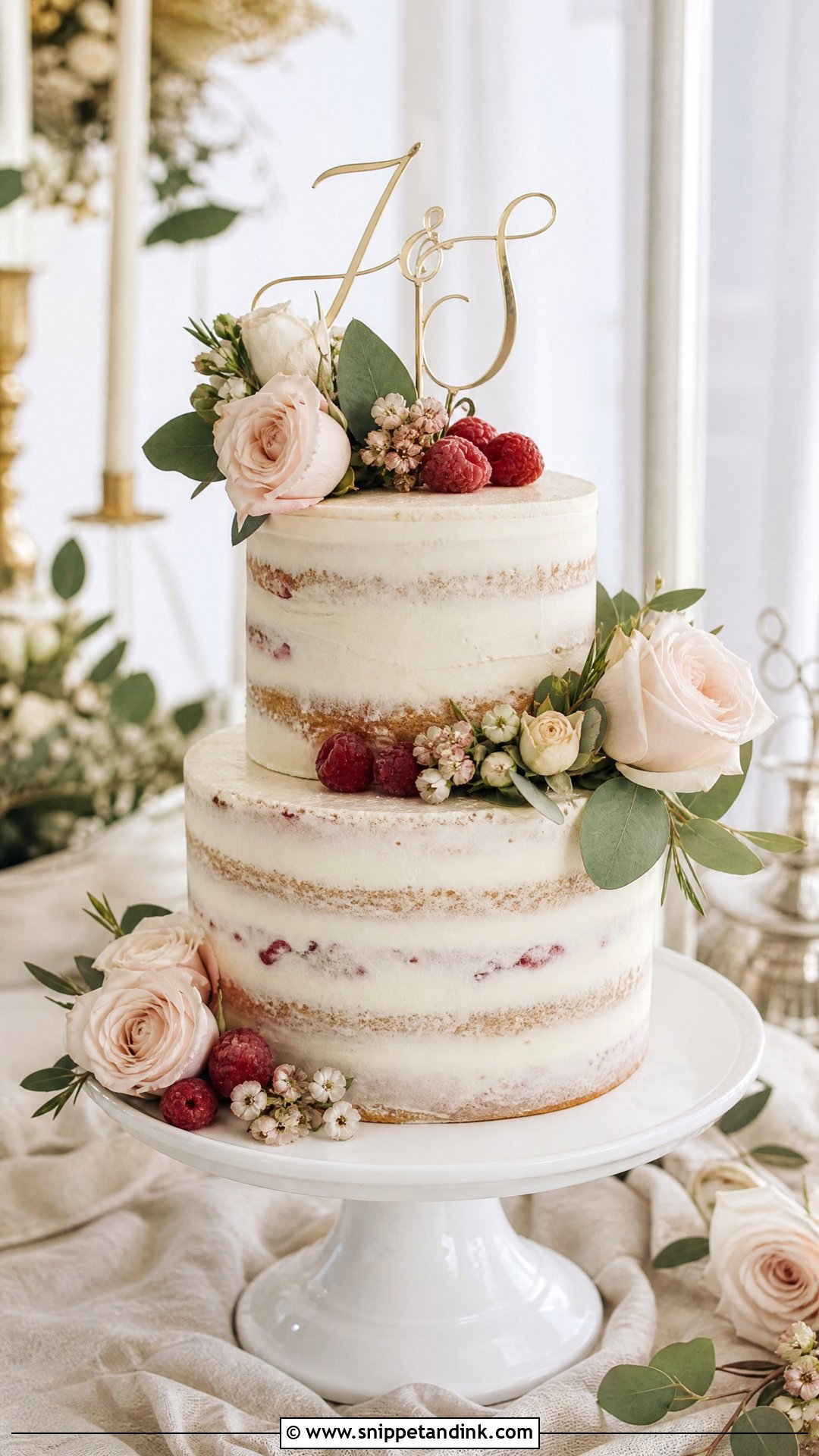
Semi-naked is the version I recommend when a couple loves the naked look but the cake will be out for a few hours. A thin scraped coat of buttercream lets the layers show while keeping the surface sealed and neat. Flowers, greenery, berries or a simple gold topper suit it. A two tier version feels special without turning formal; a single tall tier feels intimate. Vanilla raspberry, lemon elderflower, carrot and chocolate espresso all suit the finish.


15. Small Wedding Cake With Berries
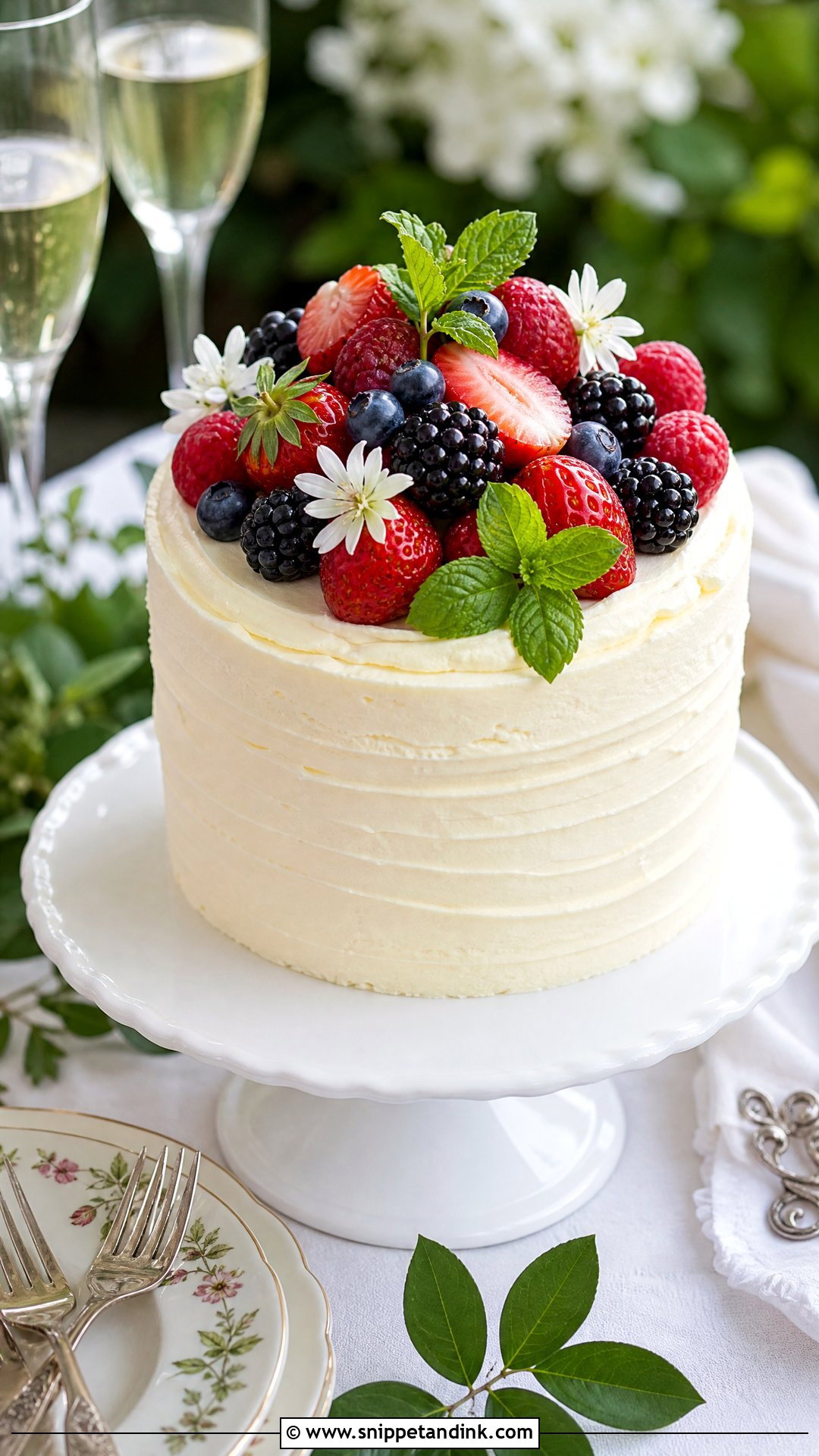
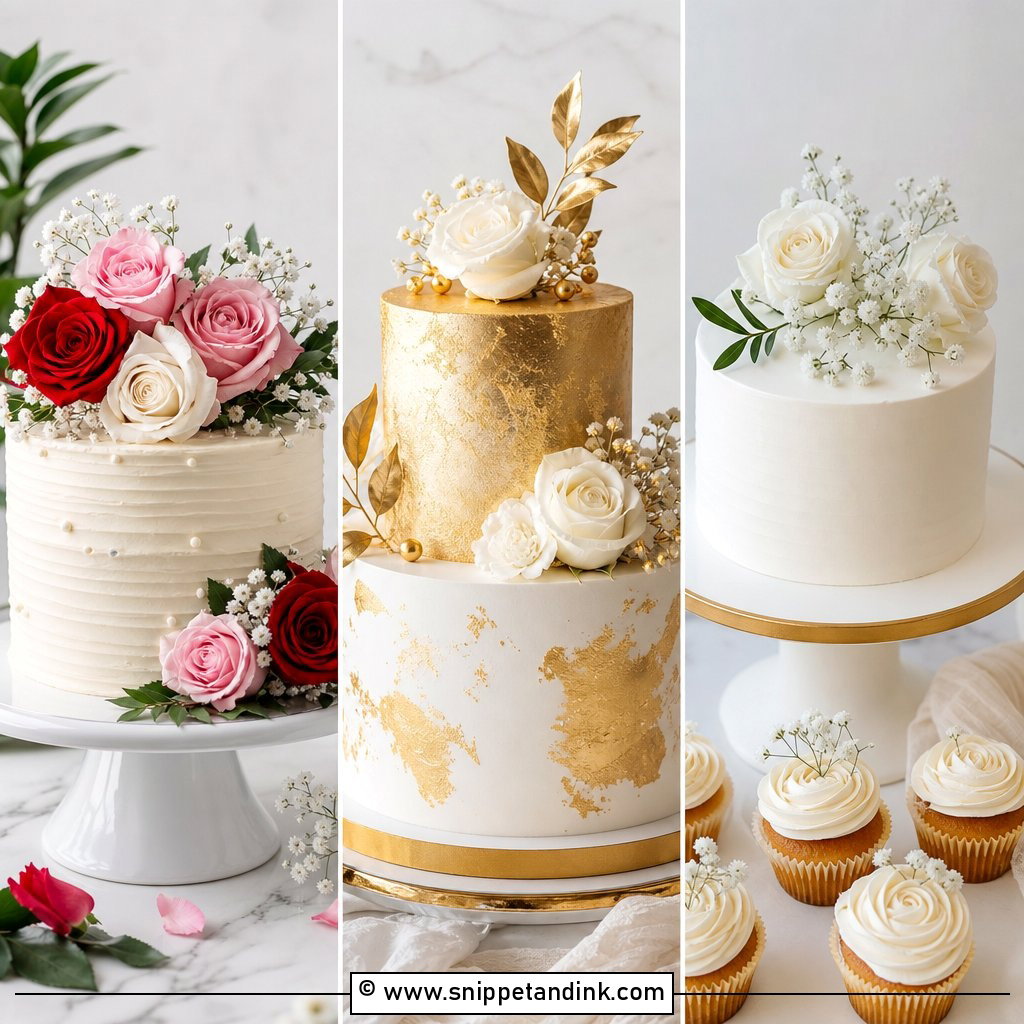
Berries decorate a cake with almost no frosting work, and they suit brunch, spring and summer weddings. Strawberries, raspberries, blueberries and blackberries all work. You can set berries around the base, pile them on top or tuck them into flowers. Cut strawberries weep juice into frosting within an hour or two, so I use whole berries and add them close to serving. Whipped vanilla buttercream or cream cheese frosting keeps the fruit in focus, though cream cheese needs refrigeration. Lemon, vanilla bean, almond, coconut and chocolate all pair well. Berries of similar size look neater.
16. Small Wedding Cake With Pearls
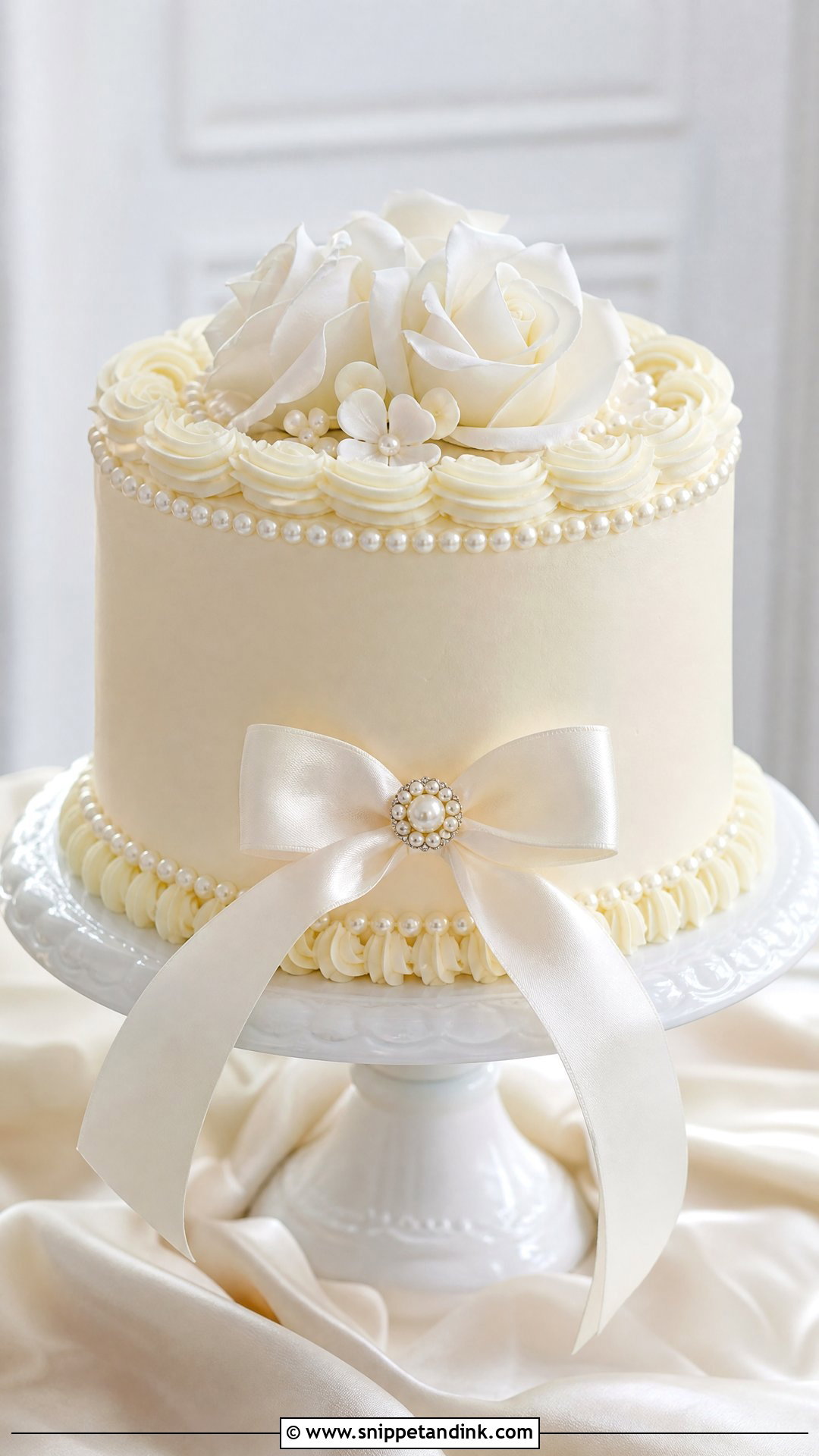
Edible pearls can run as a border, scatter lightly across the sides or line up vertically for a modern look. On a petite cake, keep them small and airy. White or ivory buttercream is the simplest base; blush, champagne or pale blue look softer. Most sugar pearls are crunchy, which surprises guests, so I keep larger ones on decorative areas rather than on every slice. Satin bows, sugar flowers or a monogram topper suit them.
17. Small Blue Wedding Cake
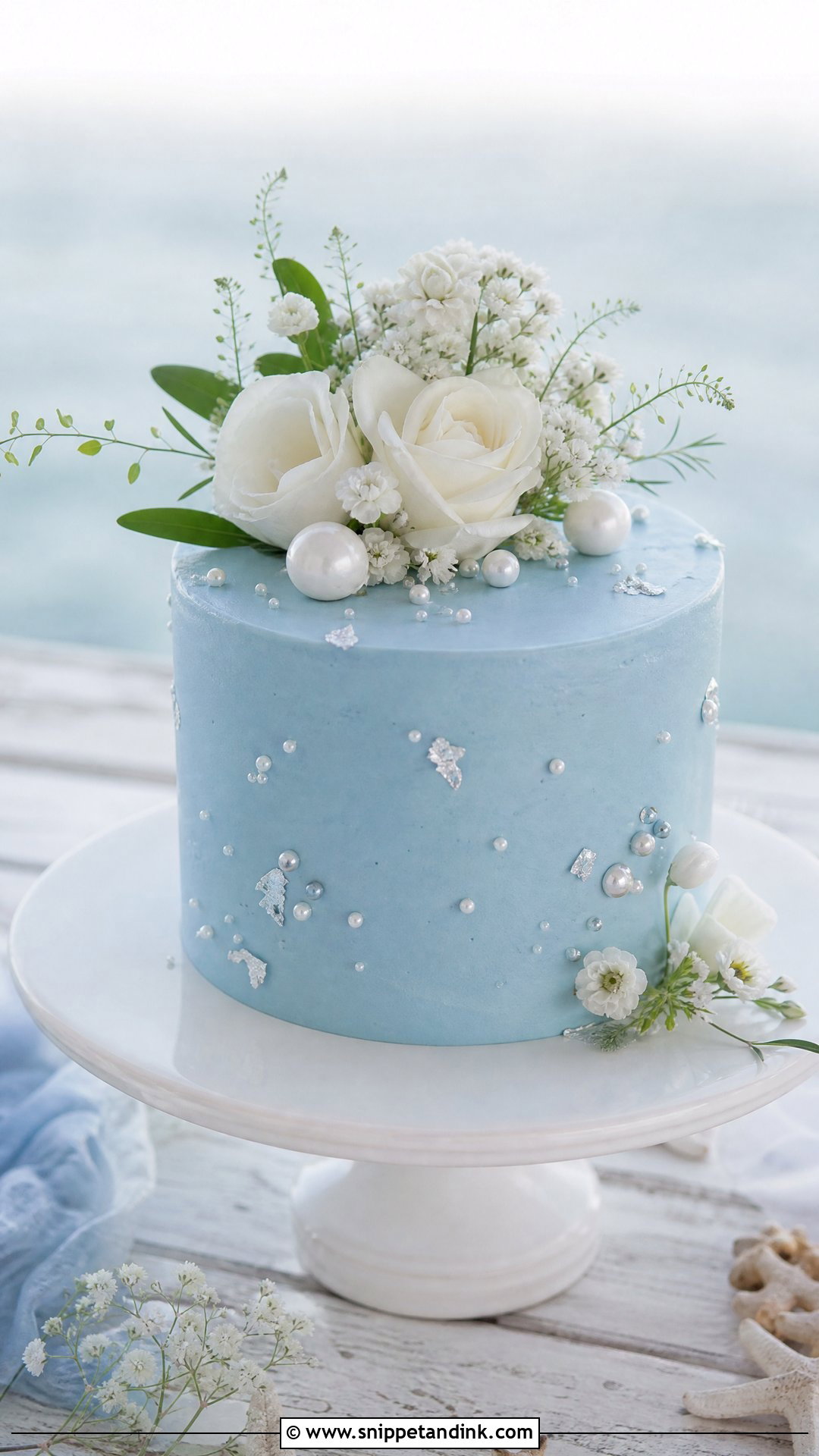
Pale blue, dusty blue and blue-gray all look bridal and pair with white flowers, pearls, silver or soft greenery. A single tier in smooth blue buttercream with one floral detail feels modern; a white bottom tier under a blue top feels more formal. I always test a blue against your reception lighting, since warm bulbs can shift it toward green or grey. Vanilla, almond, lemon and coconut fit the light palette. Coastal and garden receptions, or a something-blue nod, suit it best.
18. Small Pink Wedding Cake
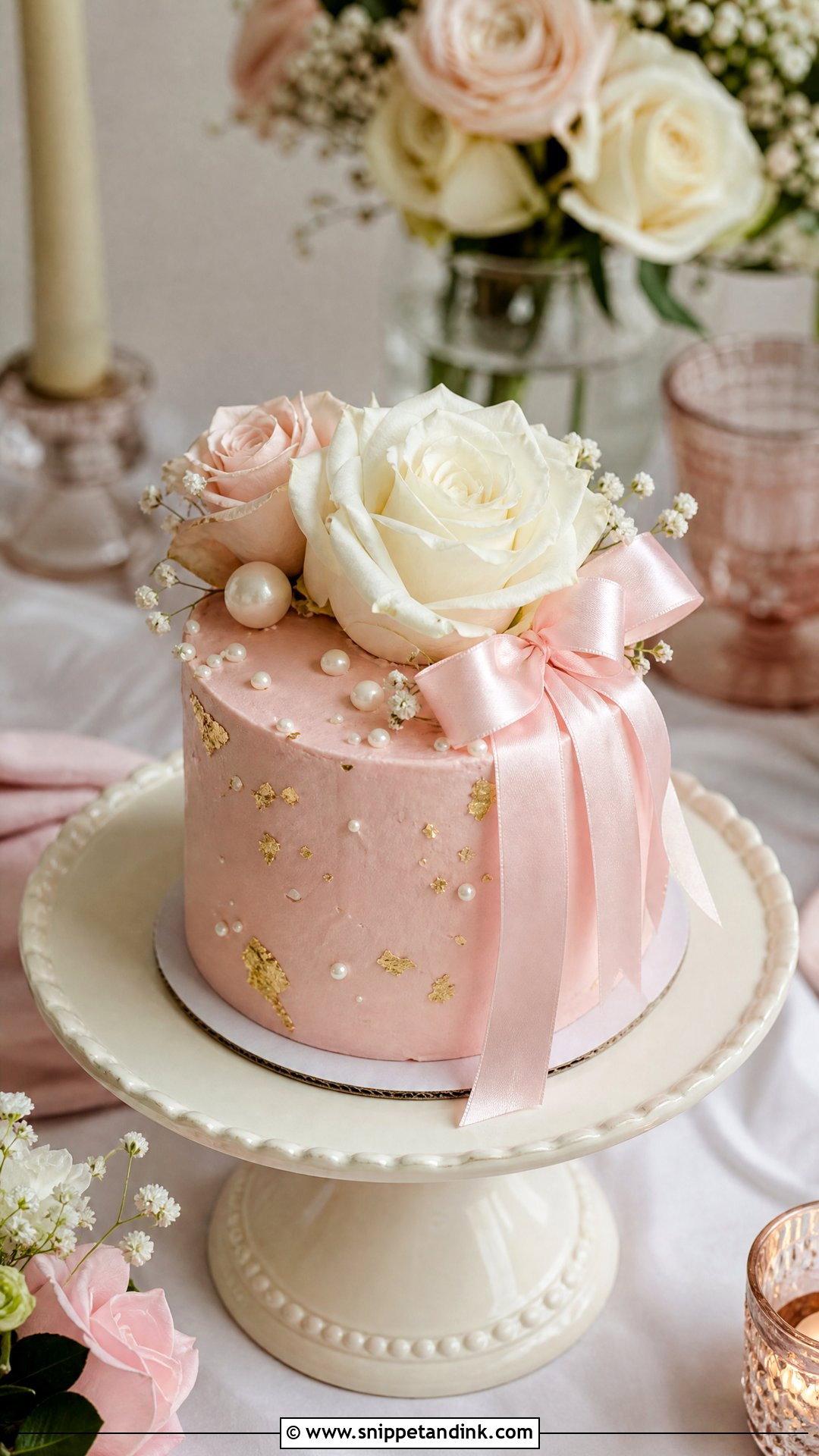
Pink is romantic without needing a dramatic design. Blush, dusty rose and pale peach-pink are the easiest to style. Smooth buttercream keeps it modern; piped borders make it vintage. White flowers, edible pearls, gold leaf or satin ribbon add detail. Strawberry, raspberry, vanilla rose, almond or champagne cake can echo the color. Keep the shade muted, because bright pink tips into children’s-party territory faster than any other color.
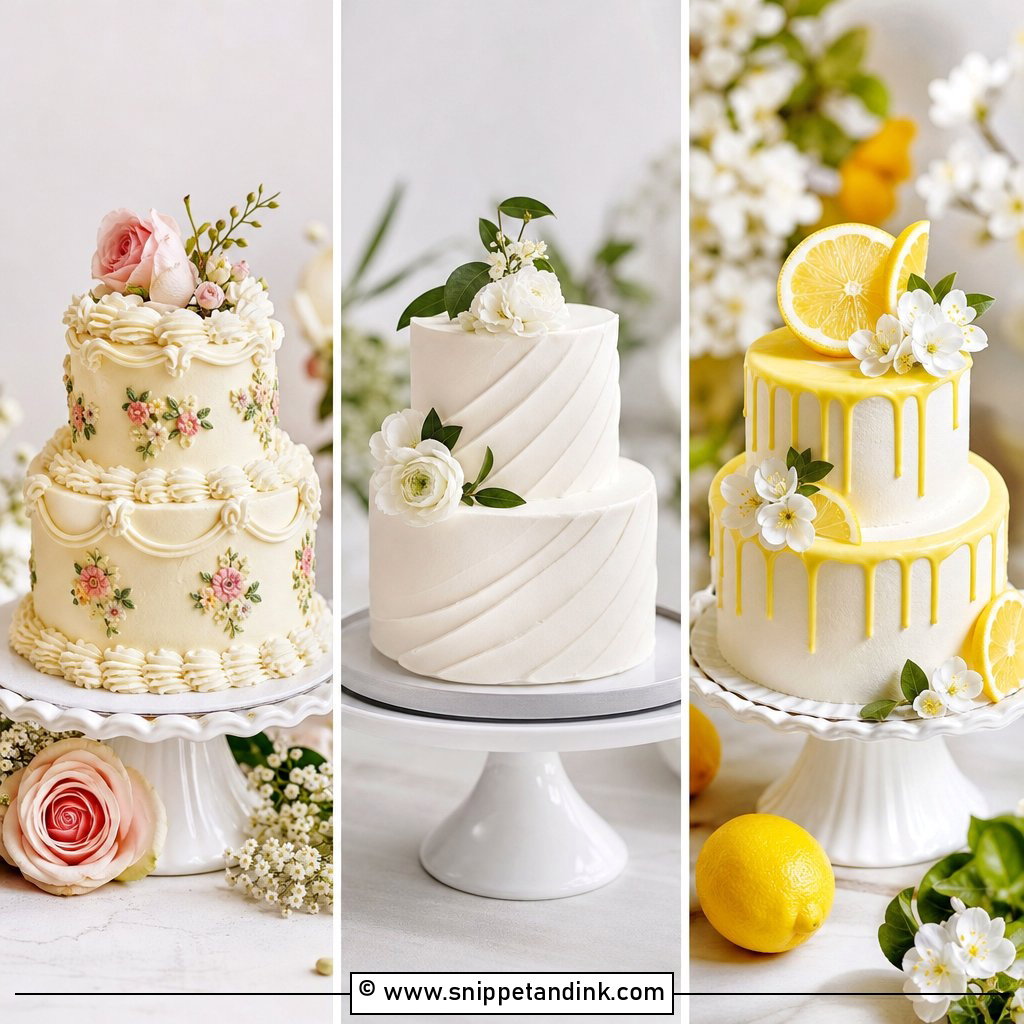
19. Small Lemon Wedding Cake
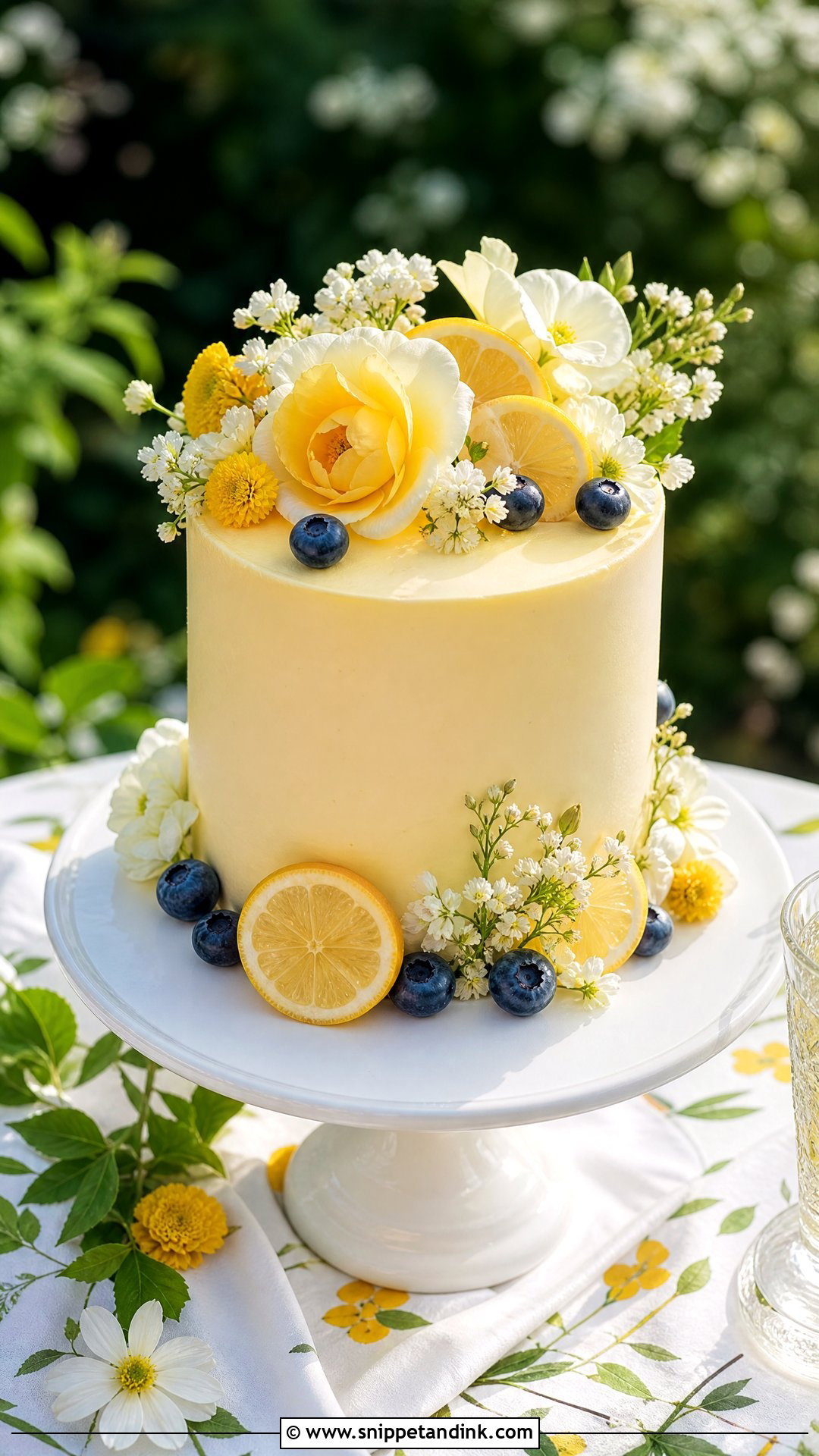
Lemon tastes light after dinner, which is why I suggest it for warm-weather weddings. Lemon curd, vanilla buttercream, whipped frosting and elderflower all pair with it. Curd is soft, so it needs a buttercream border inside each layer to stop it seeping out. Keep the outside pale yellow rather than bright. Thin lemon slices, white flowers or a few blueberries make it feel seasonal; one tall tier suits an elopement, two tiers a small reception.
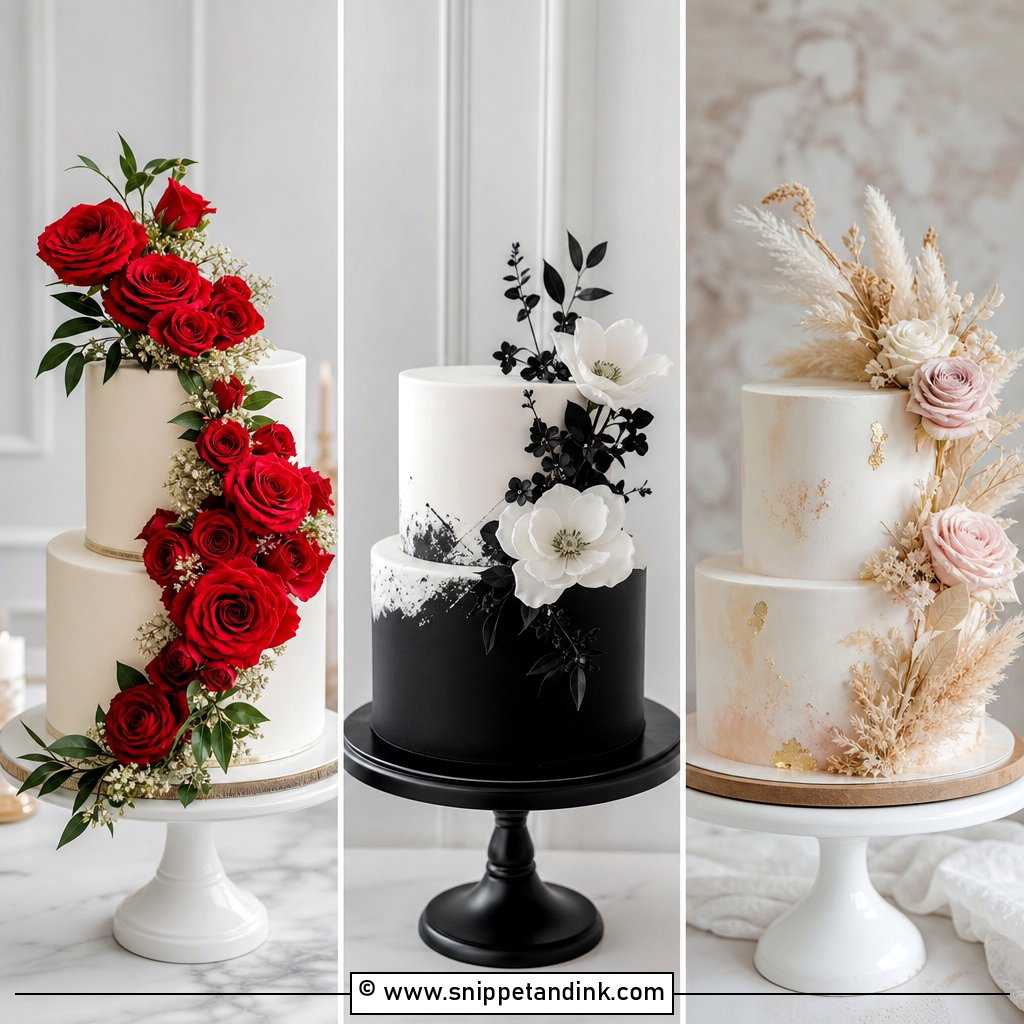

20. Small Chocolate Wedding Cake
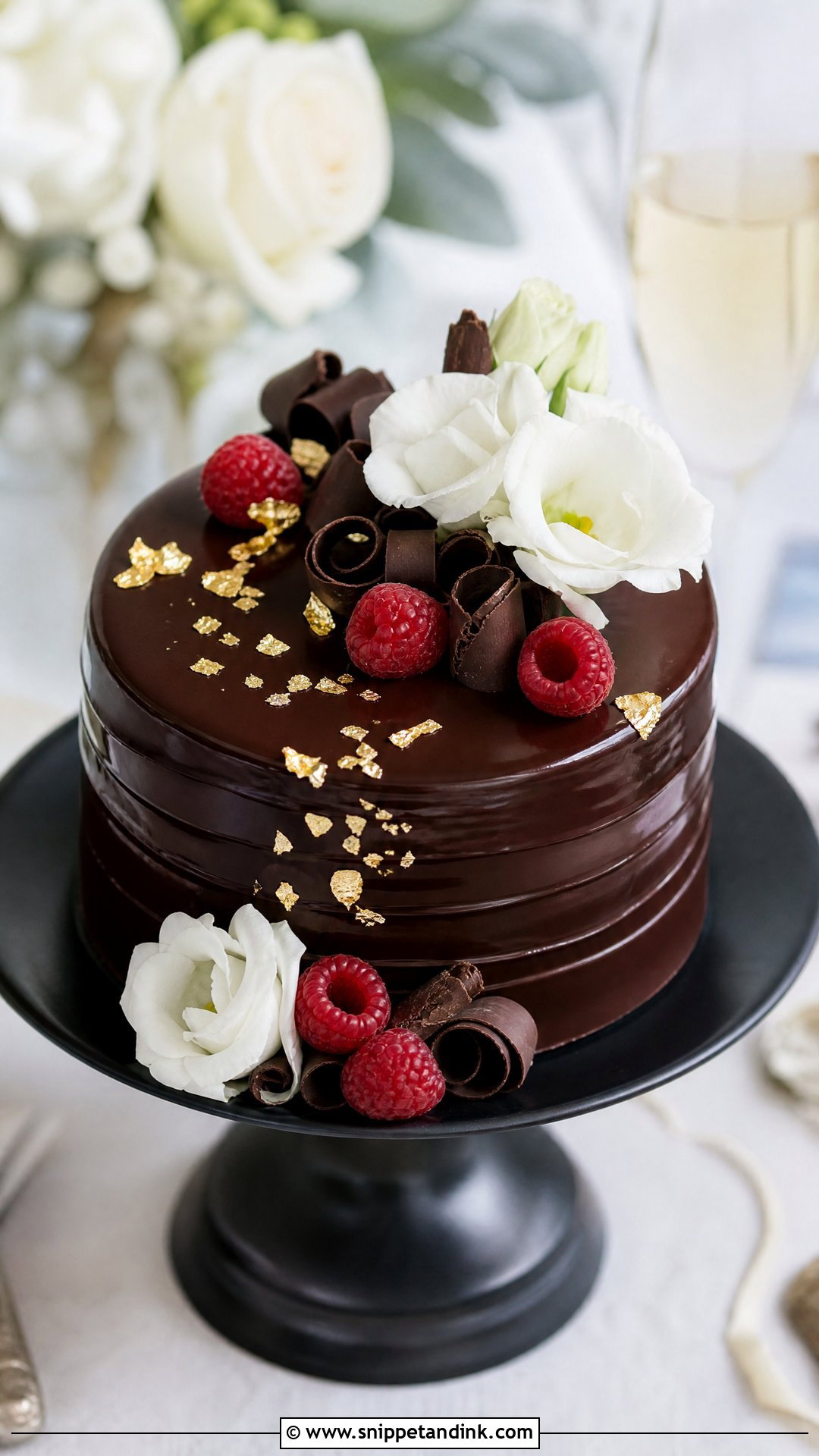
A small chocolate wedding cake is rich and a little unexpected when the rest of the palette is light. Ganache looks sleek and formal and sets firmer in heat than most buttercreams; chocolate buttercream feels softer. Flowers, gold leaf, berries, chocolate curls or a white contrast tier finish it. Raspberry, salted caramel, espresso, vanilla cream and hazelnut fillings all work. It also makes a good cutting cake beside other desserts. Keep decoration refined or it looks like a birthday.
Who Cuts It, and What Happens to the Rest?
At a small wedding there’s often no catering team to take the cake away and portion it, so decide in advance who will. Many restaurants charge a cake-cutting fee for bringing in an outside cake; ask when you book.
Cutting a round cake for a dinner table
Cut a circle about two inches in from the edge, slice that outer ring into fingers about an inch wide, then repeat with the next ring in. It gives even pieces and stops the middle collapsing. A long, sharp knife dipped in hot water and wiped between cuts keeps the layers clean.
Saving a tier for later
Buttercream and ganache cakes freeze well. Chill the piece until the frosting is firm, wrap it closely in several layers of plastic wrap and foil, and thaw it overnight in the fridge still wrapped. I’d eat it within a few months for the best flavor, not on the first anniversary. Cakes with fresh fruit, whipped cream or custard fillings don’t freeze well, so plan to finish those within a day or two.
A Cake Sized to the Room You’re Actually In
A small cake is a deliberate choice, not a backup plan. It lets you put your money into flavor, finish and one meaningful detail, as long as the decoration is scaled to the size and the stand gives it height. When you contact a baker, lead with the guest count, the other desserts you’re serving and where the cake will be displayed. From those three answers I can tell you whether one tier or two makes sense, and how big it needs to look across the room.
You'll Like These Ideas:




Leave a Reply