
Modest doesn’t mean limited. A Nikah can be dressed in a gharara, an embroidered lehenga, a flowing pishwas, a sari or a Western gown with sleeves, and each one can be made to suit the ceremony. Ivory and white are the usual starting point; blush, sage, champagne, powder blue and red all have a place too. Gota, zardozi and pearls make even a plain cut feel ceremonial. When I style a Nikah bride, I build the outfit around her skin tone and the room’s lighting first, because a color that looks soft in a boutique can wash out under a hall’s yellow bulbs. Here are twenty complete outfits, traditional, modern, minimal and hijab-friendly, with the details I’d watch for.
Matching Ivory, Pastels and Red to Your Undertone
Most Nikah outfits are pale or pastel, and those are the shades most affected by skin undertone. I check undertone by holding plain white and plain cream fabric under the bride’s chin in daylight. If the cream makes the skin look brighter and the white makes it look tired, she’s warm; the opposite means cool. Gold and silver jewelry held against the wrist tell the same story, and I trust that test more than any online quiz.
- Warm undertones: ivory, champagne, peach, warm gold, sage with gold work, and red with an orange base.
- Cool undertones: soft white, silver gray, powder blue, lilac, and red with a blue base.
- Neutral undertones: most pastels work; choose by venue light instead.
Lighting changes everything again. Many wedding halls use warm yellow lights that make ivory look cream and turn lilac pinkish. Daytime ceremonies near windows are kinder to cool colors. Ask the venue for a photo of an event in the same room and time of day, and bring your fabric swatch to the makeup trial so the artist can match the base to it.
1. Ivory Gharara Nikah Dress
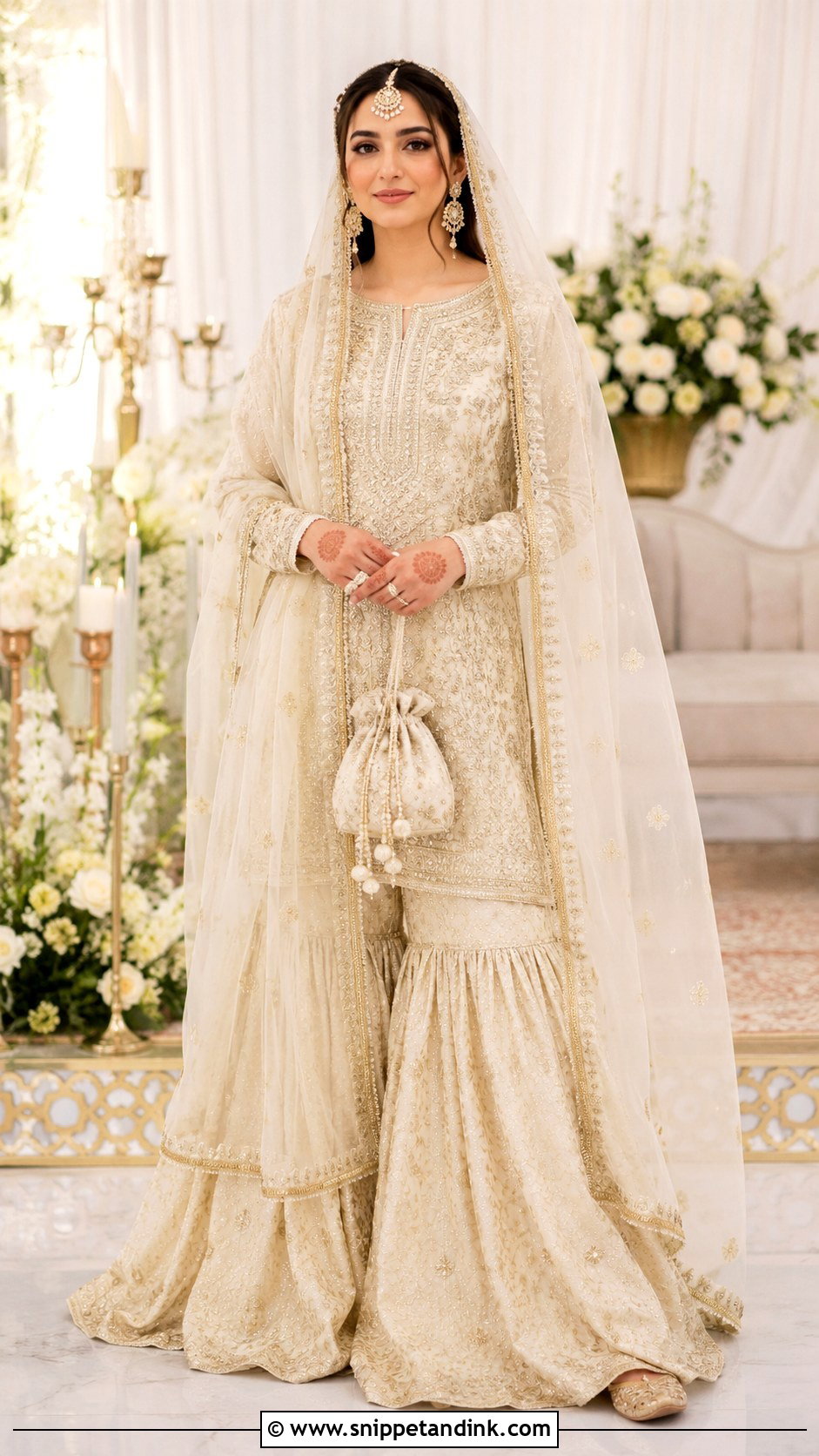
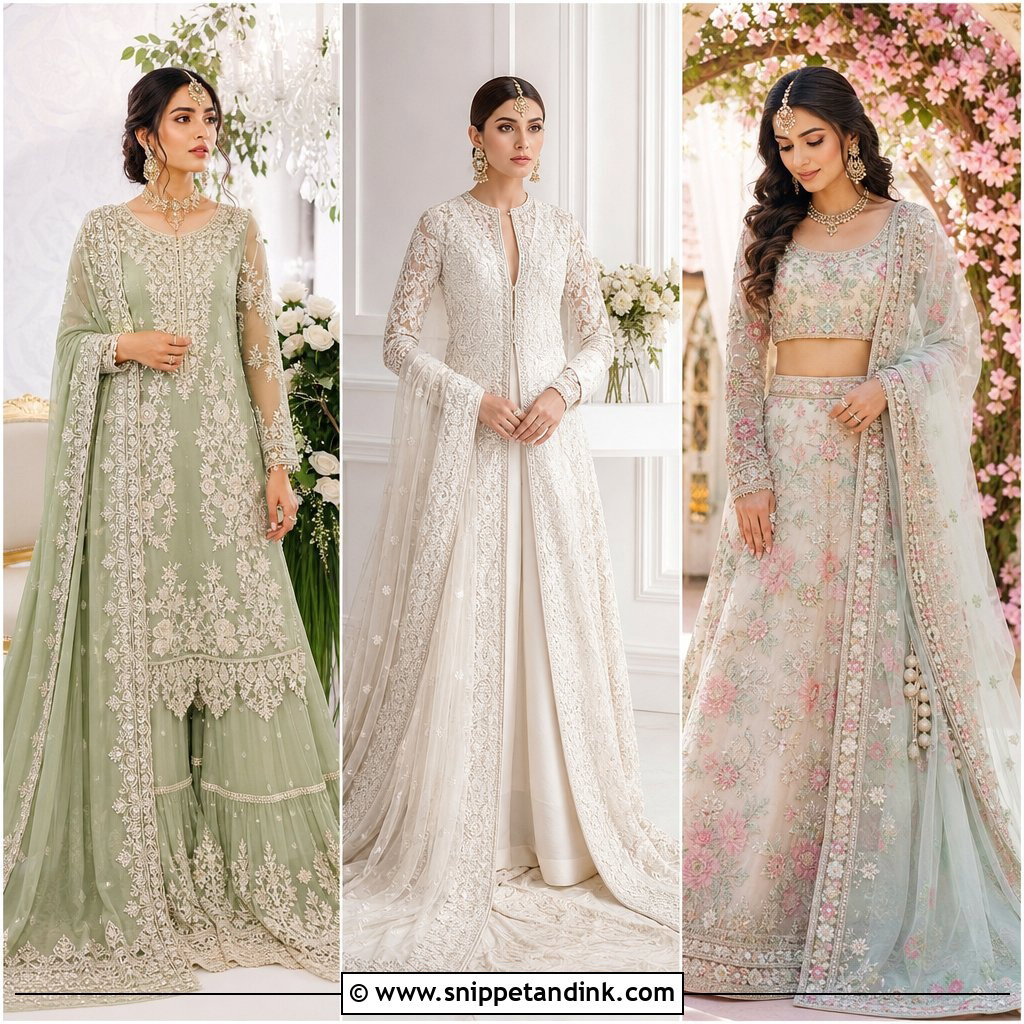
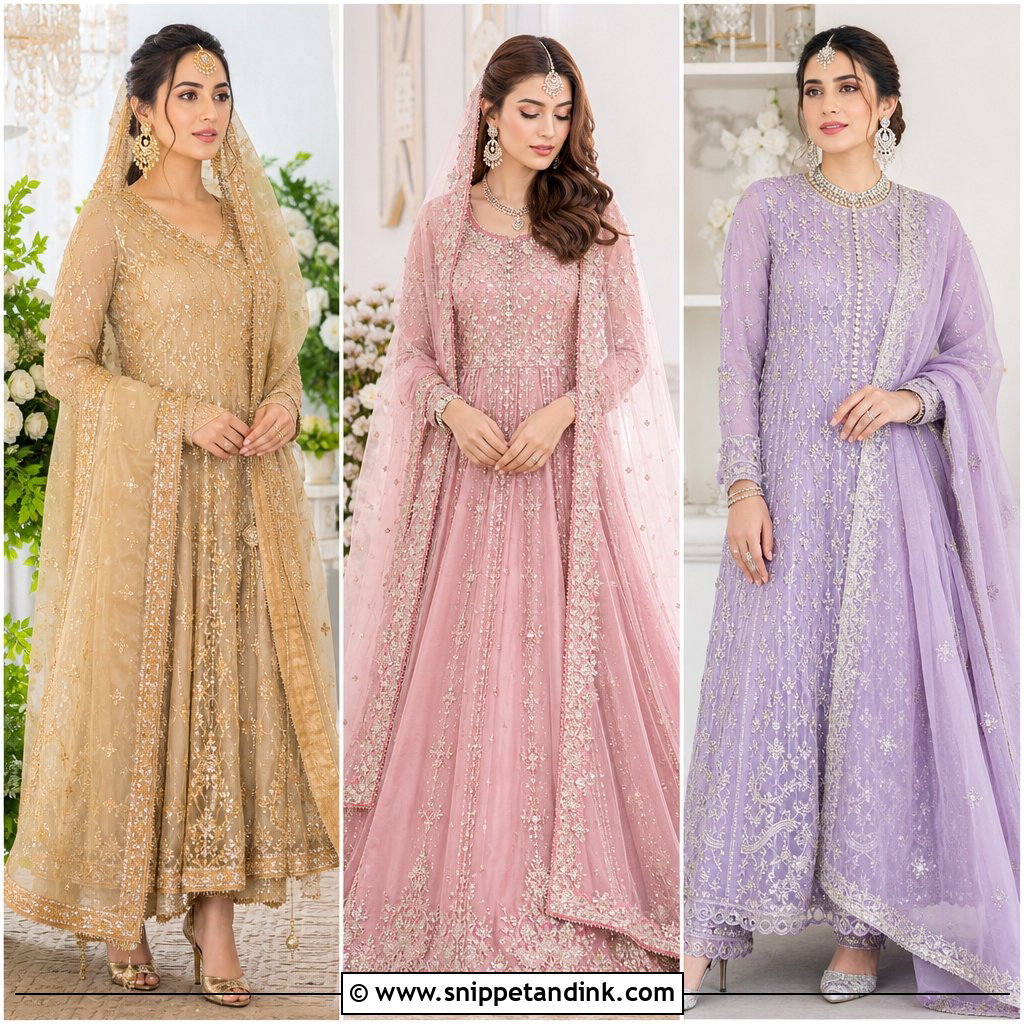
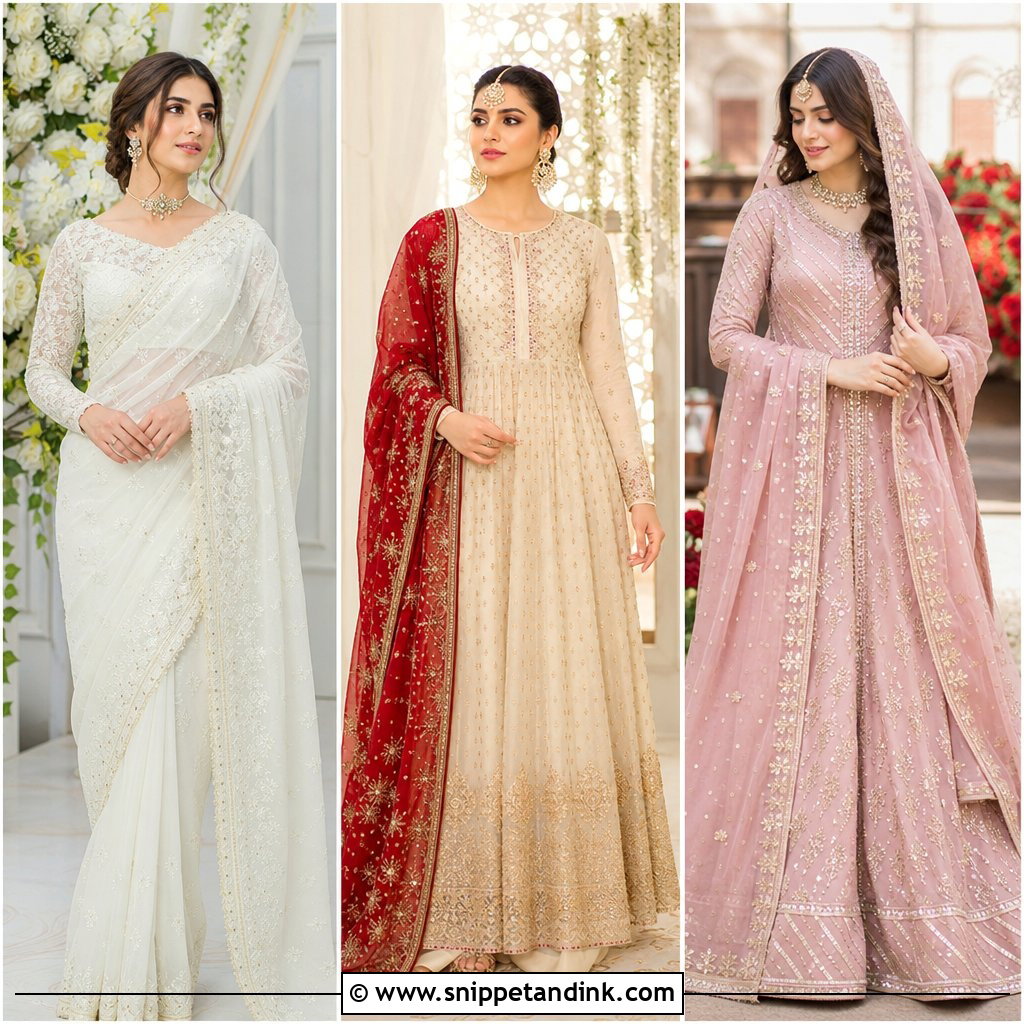
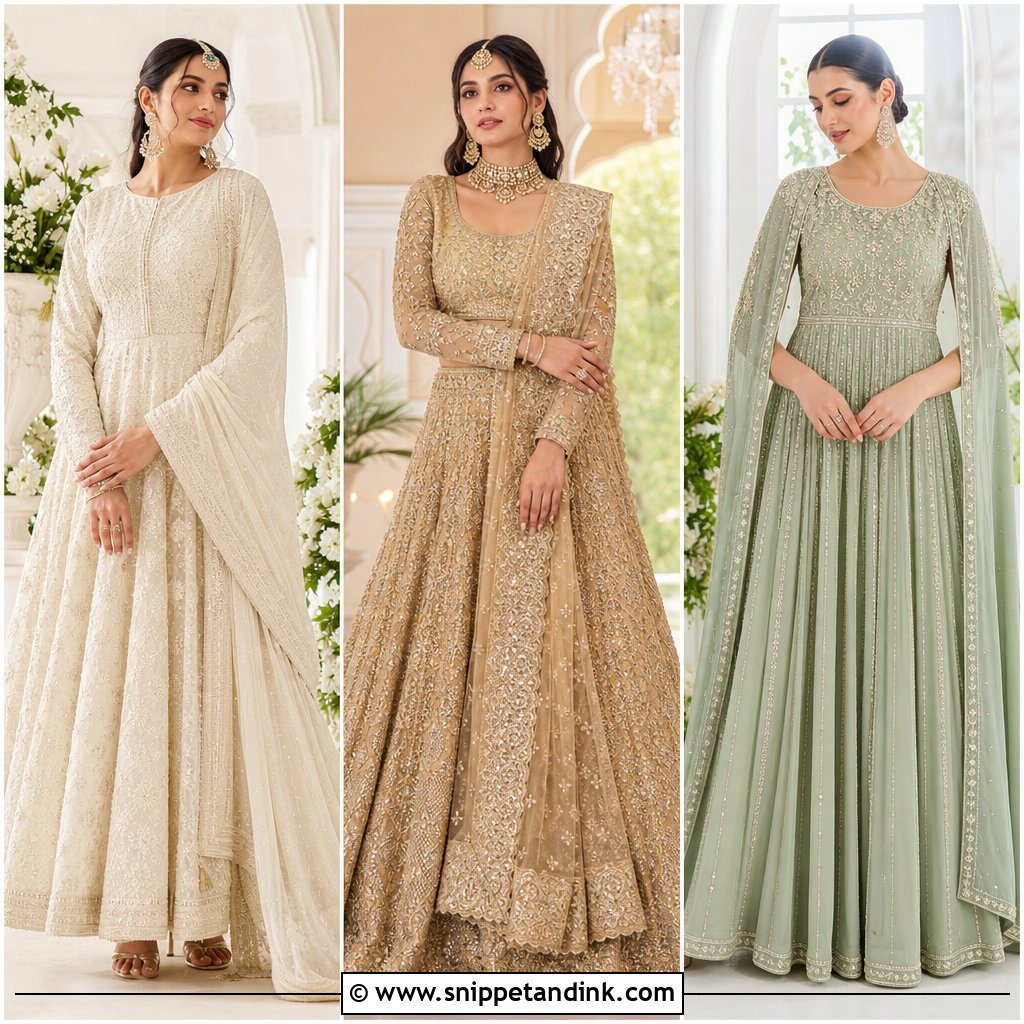
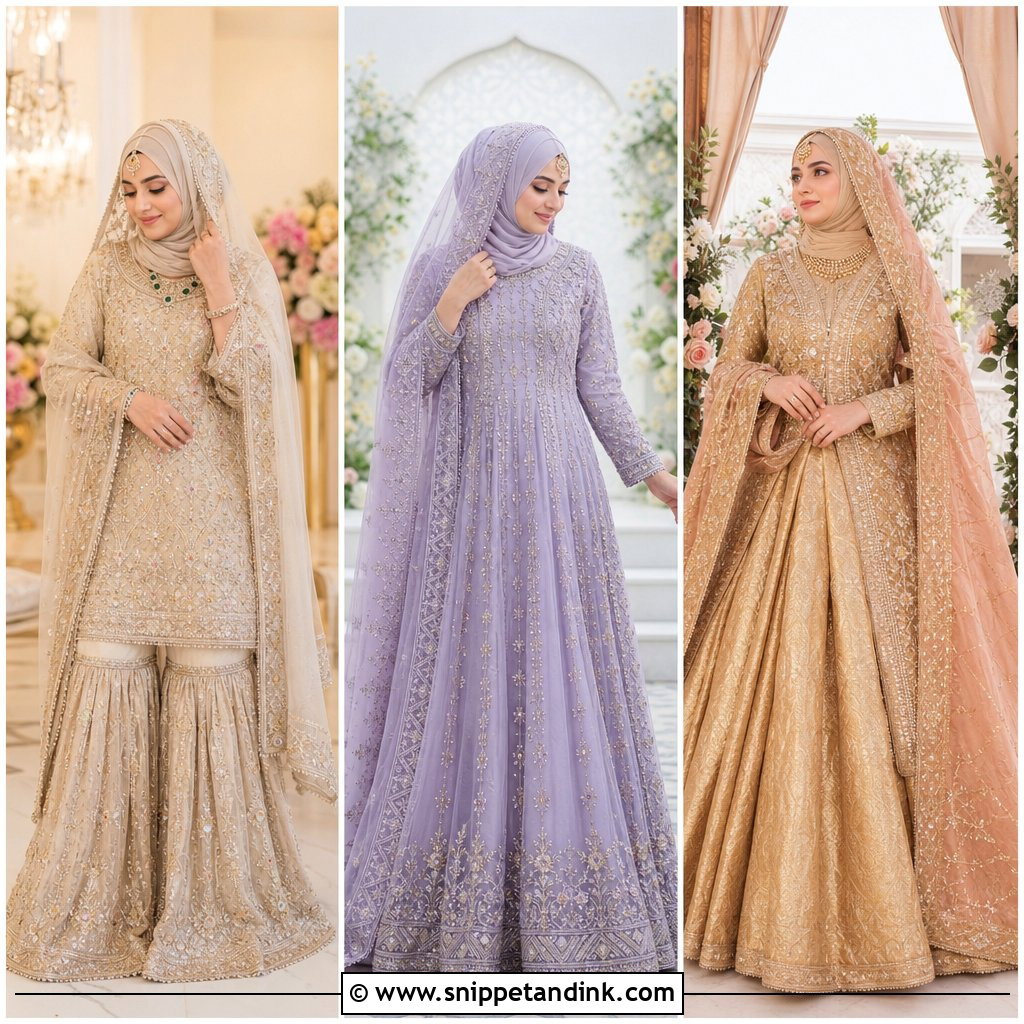
Gold embroidery on ivory is about as classic as Nikah wear gets. A long straight shirt keeps the gharara’s lines clean, and gold work at the neckline, cuffs and hem frames the face and hands, which is where people look during the ceremony. Ivory also flatters a wider range of skin tones than stark white. Drape the scalloped organza dupatta over the head and one shoulder. Pearl earrings, a small tikka and embroidered khussa keep it traditional. Soft brown eyes and a muted pink lip suit a daytime mosque ceremony.
2. White Sharara Nikah Dress
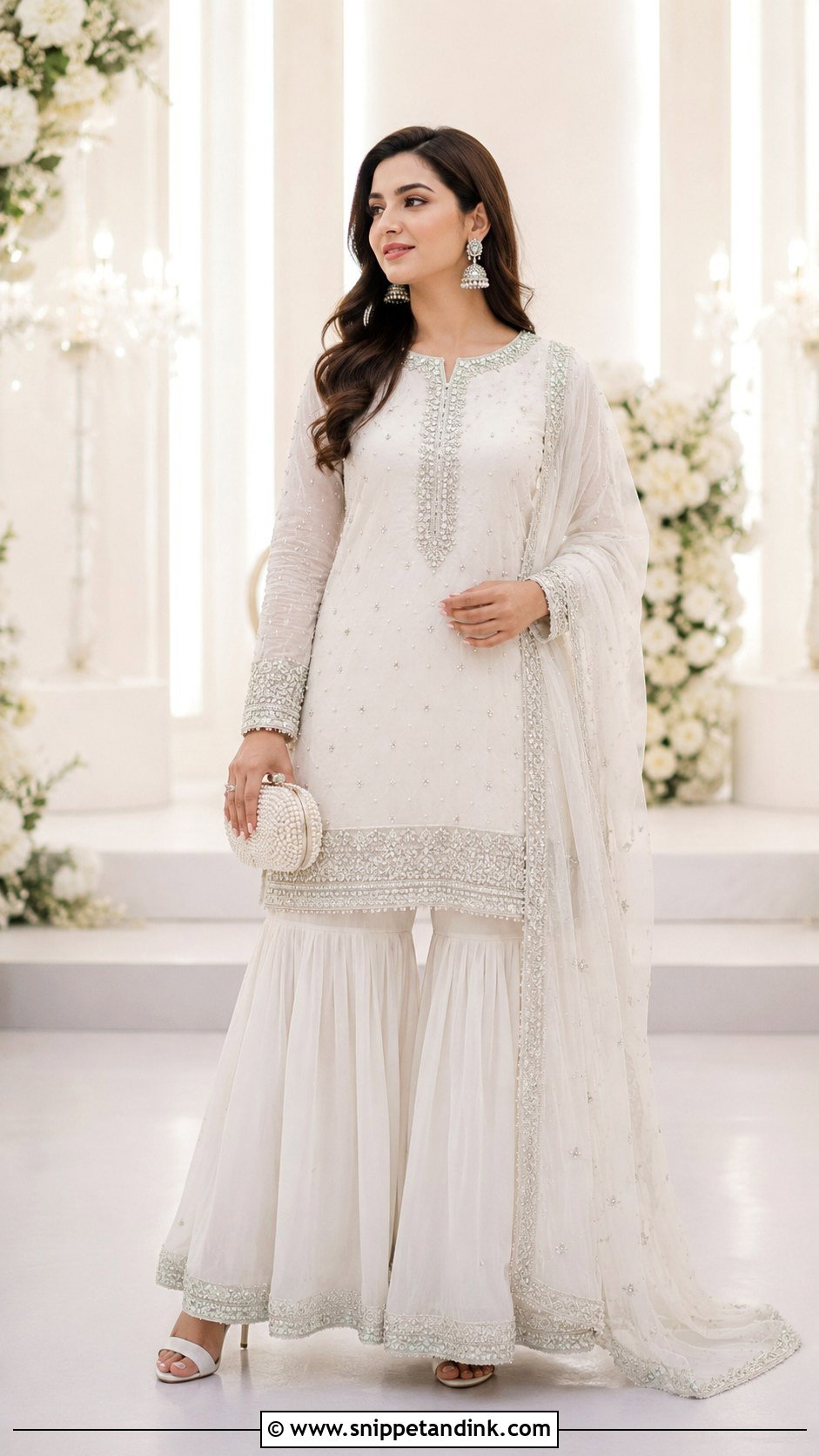
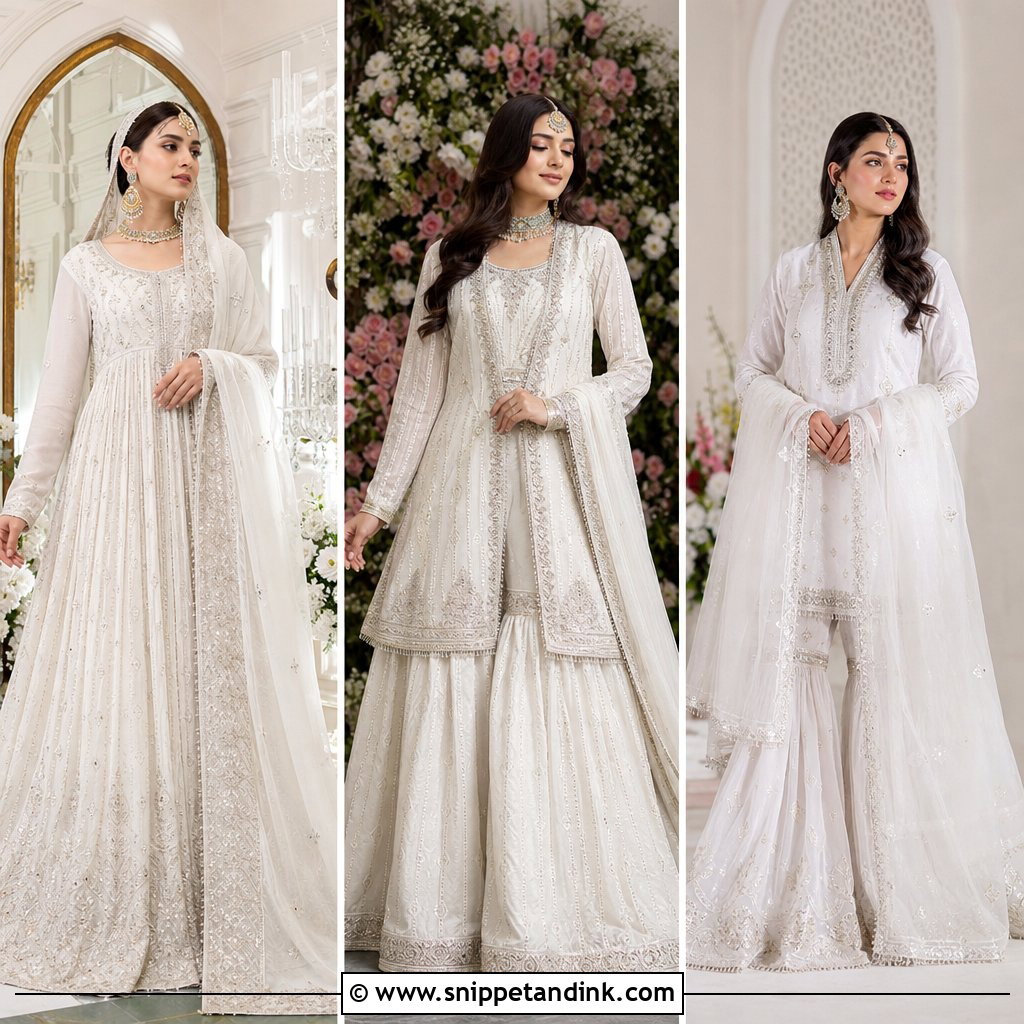
Bright white with silver looks crisp, but I’d hold it up to your face in daylight before committing. Optic white can make warmer or deeper skin look grey in photos; a soft white or off-white with silver avoids that. A knee-length kameez with full sleeves and fine pearl work keeps it modest. The sharara needs enough width to sit comfortably, so check it on a low sofa, not just standing. A narrow-bordered net dupatta keeps the head light. Small white flowers in a low bun finish it.
3. Champagne Lehenga Nikah Dress
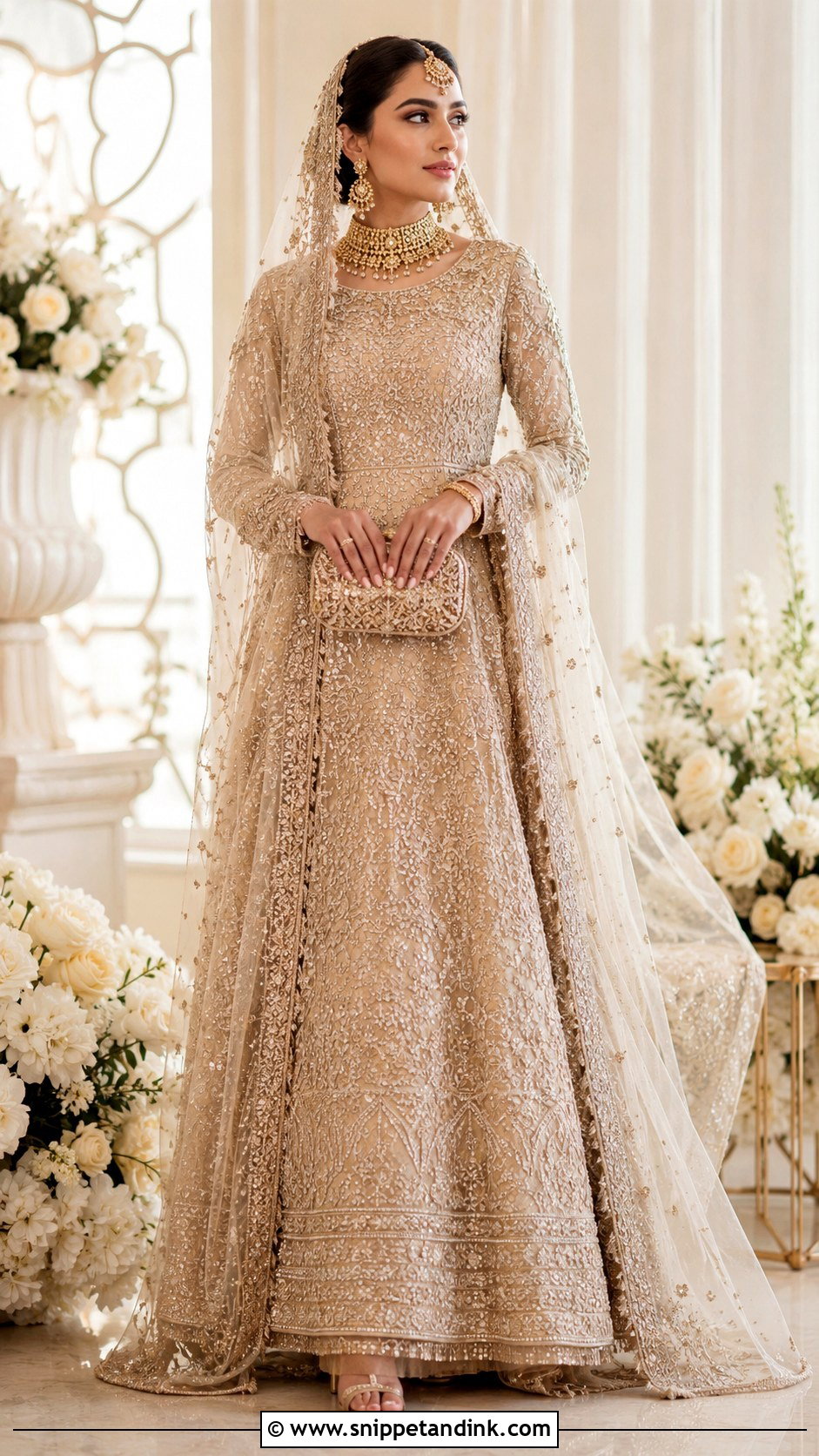
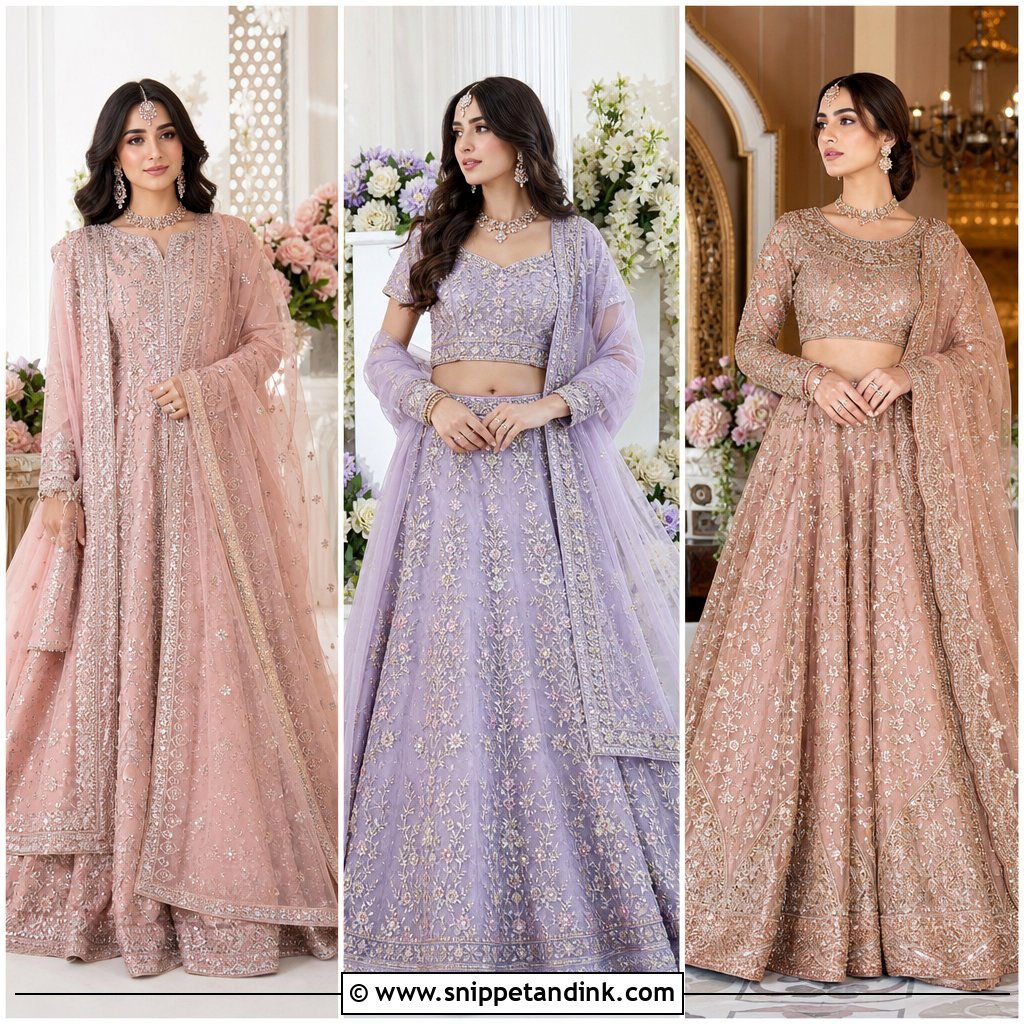
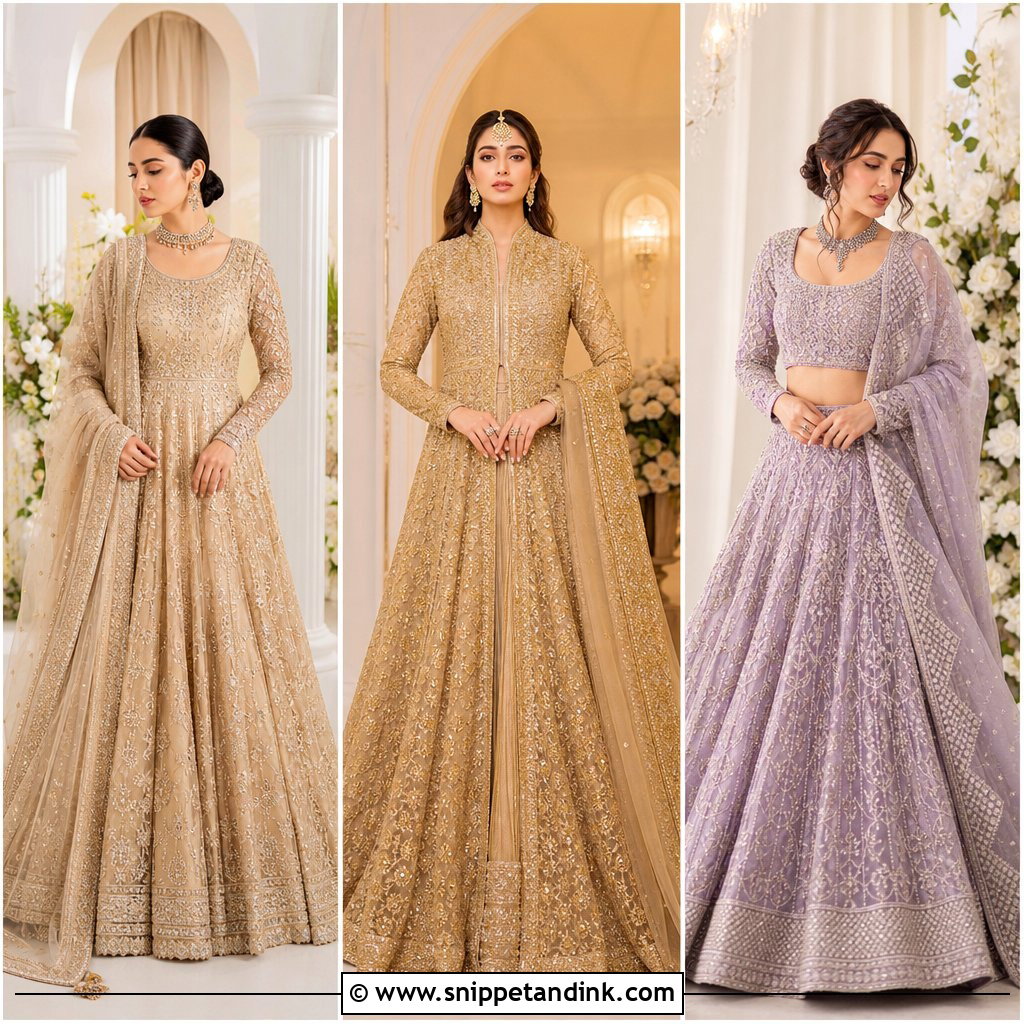
Champagne sits between white and gold, and it’s the shade I suggest to brides who find ivory too plain but gold too much. Scattered sequins and fine zari read beautifully on camera without glare. Wear a longer blouse that covers the waist, with full or three-quarter sleeves. If you layer two dupattas, put the heavier one on the head and the lighter one across the shoulders; reversed, the top one keeps slipping. Antique gold jewelry and a rose-nude lip keep everything warm.
4. Blush Pink Pishwas Nikah Dress
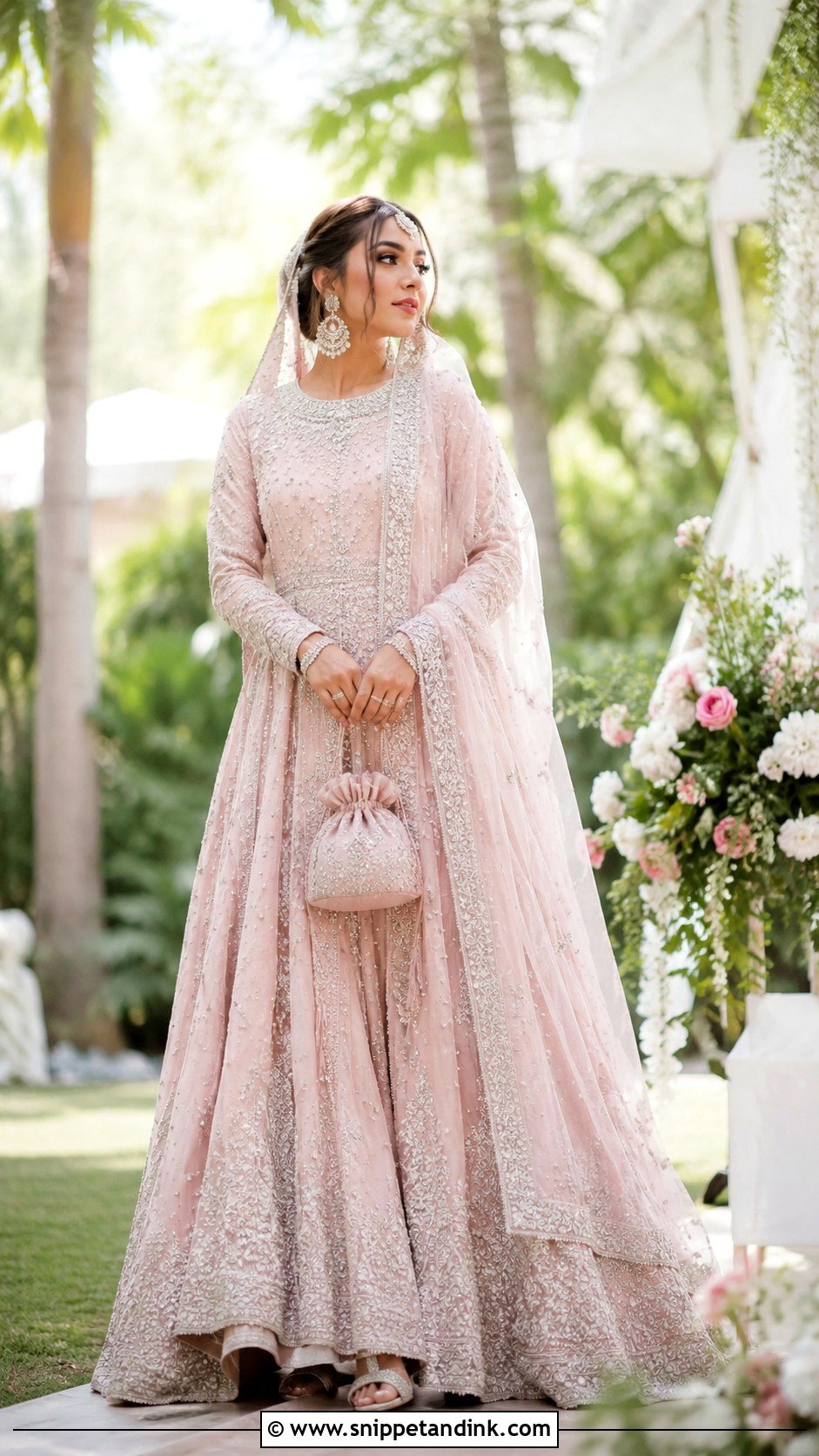
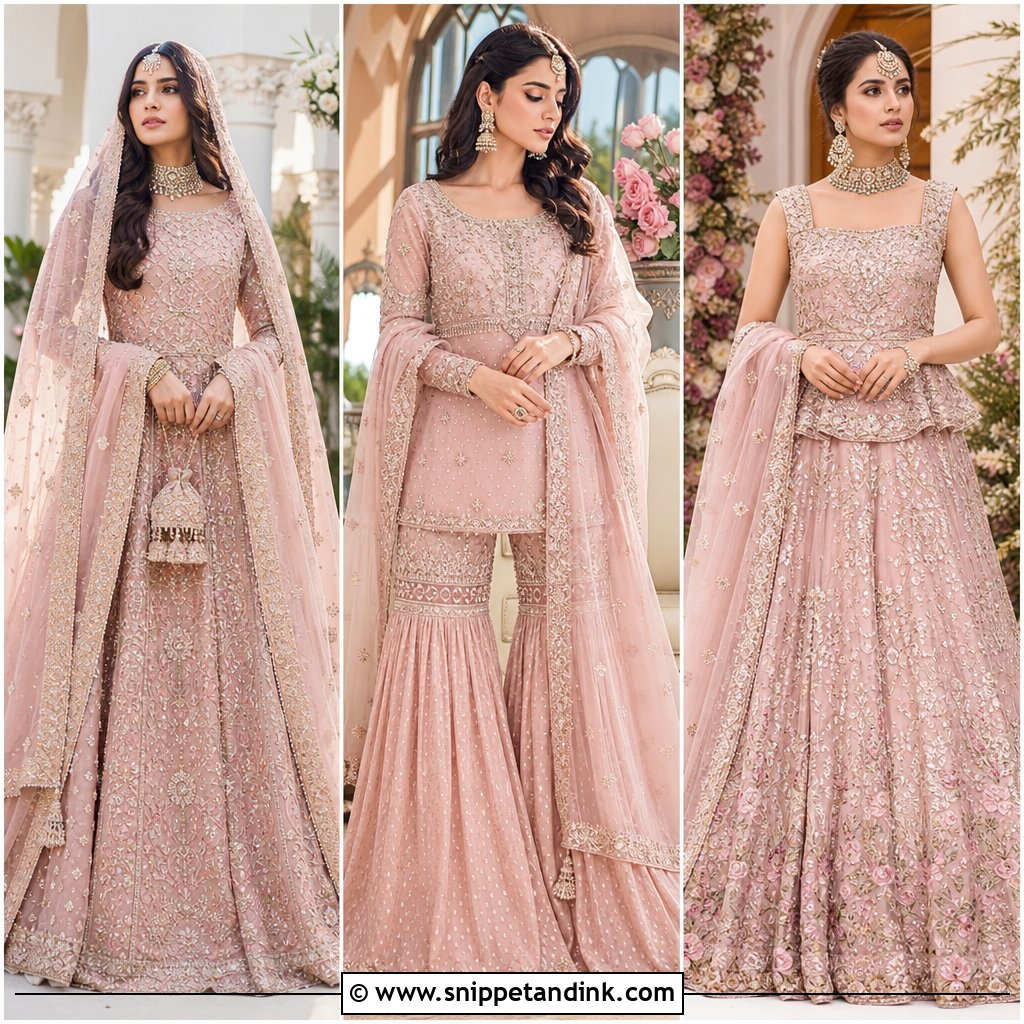
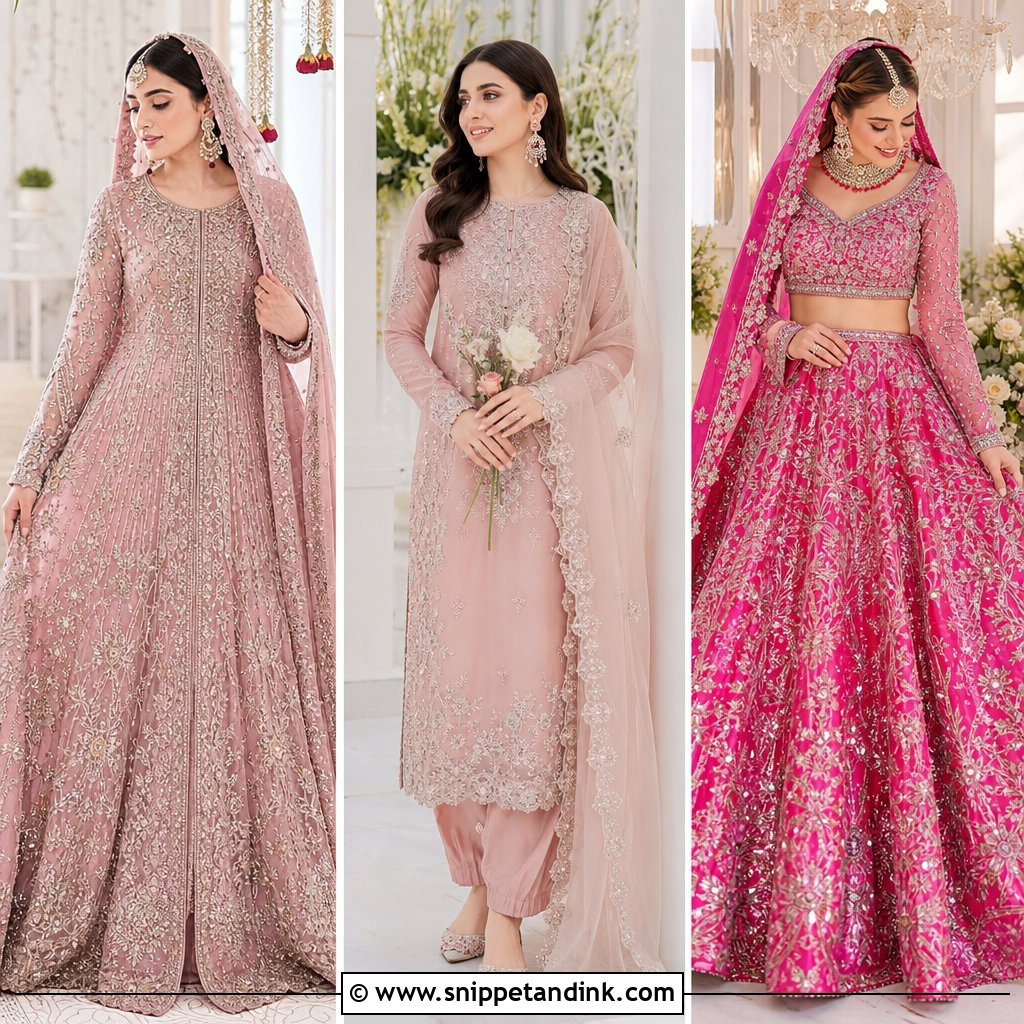
Blush pink pishwas can tip from bridal into sweet very easily. The fix is restraint: keep embroidery to fine silver threadwork and small floral motifs, and let the paneled skirt do the work. A covered neckline and full sleeves keep it ceremonial. I’d fit the bodice snugly, since a pishwas hangs from the shoulders and chest, and a loose top makes the whole dress sag. A net dupatta falling evenly down the back, pearl chandbalis and a braided low bun suit a daytime garden or home ceremony.
5. Sage Green Angarkha Nikah Dress
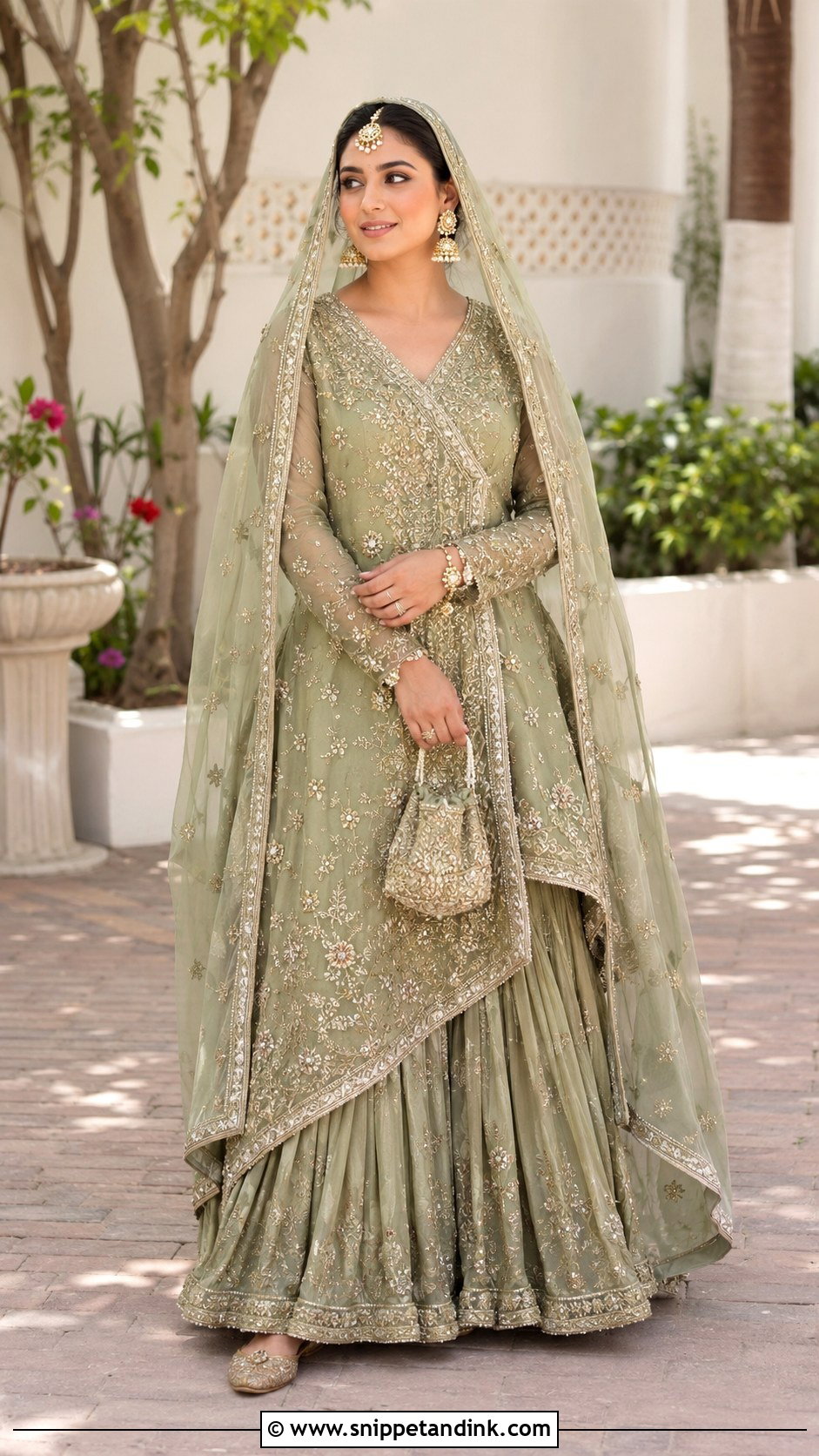
Sage green feels calm and a little unexpected for a bride. A sage green angarkha with a modest crossover and gold embroidery along the opening has real traditional character. Check the overlap while you bend and sit; a well-cut angarkha stays closed, a poorly cut one gapes. Straight silk pants are simpler to manage than a flared lehenga underneath. Warm peachy makeup balances the cool green, which otherwise can make skin look sallow. It shines outdoors in daylight.
6. Powder Blue Anarkali Nikah Dress
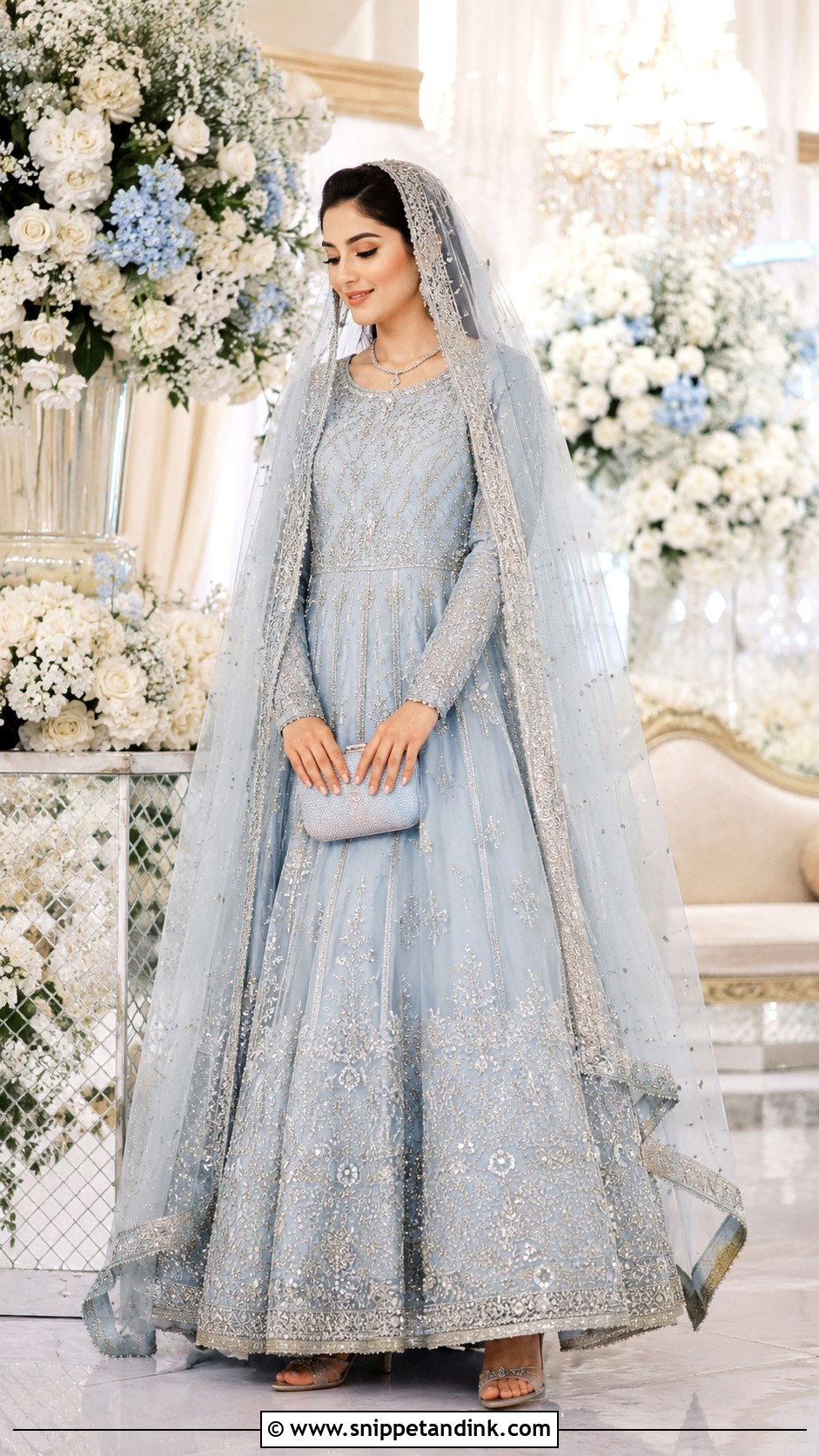
Powder blue is soft but cool-toned, so I always test it next to the bride’s face before ordering. On warm undertones it can look chalky; adding silver dabka and pearl clusters brightens it. A long Anarkali with a fitted top and a wide but manageable skirt keeps you comfortable. Drape the dupatta over your head with one side falling across the front for coverage. Cool-toned eyes and a pink-nude lip keep the palette consistent. A petite necklace is enough with this neckline.
7. Pearl White Bridal Gown Nikah Dress
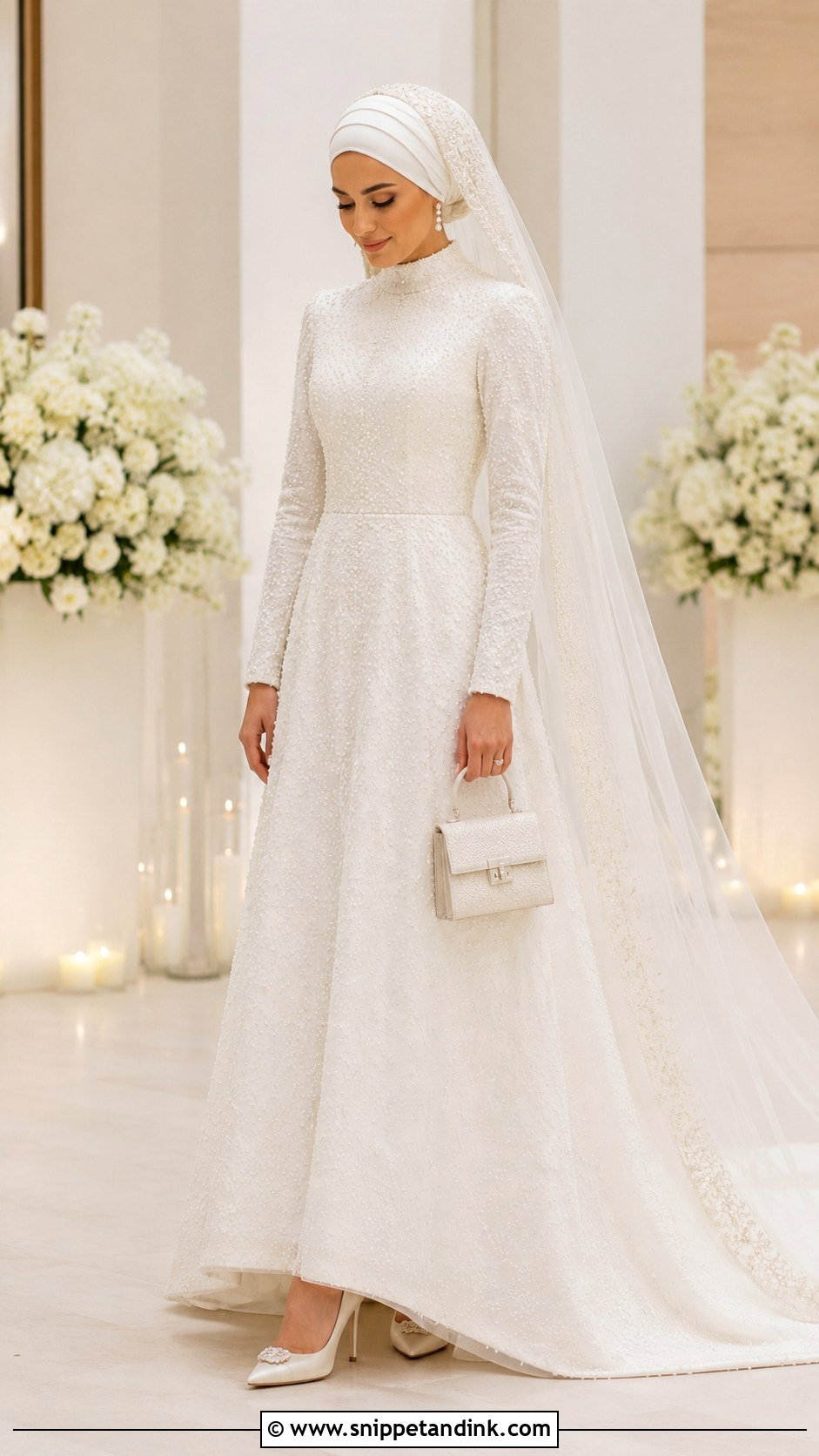
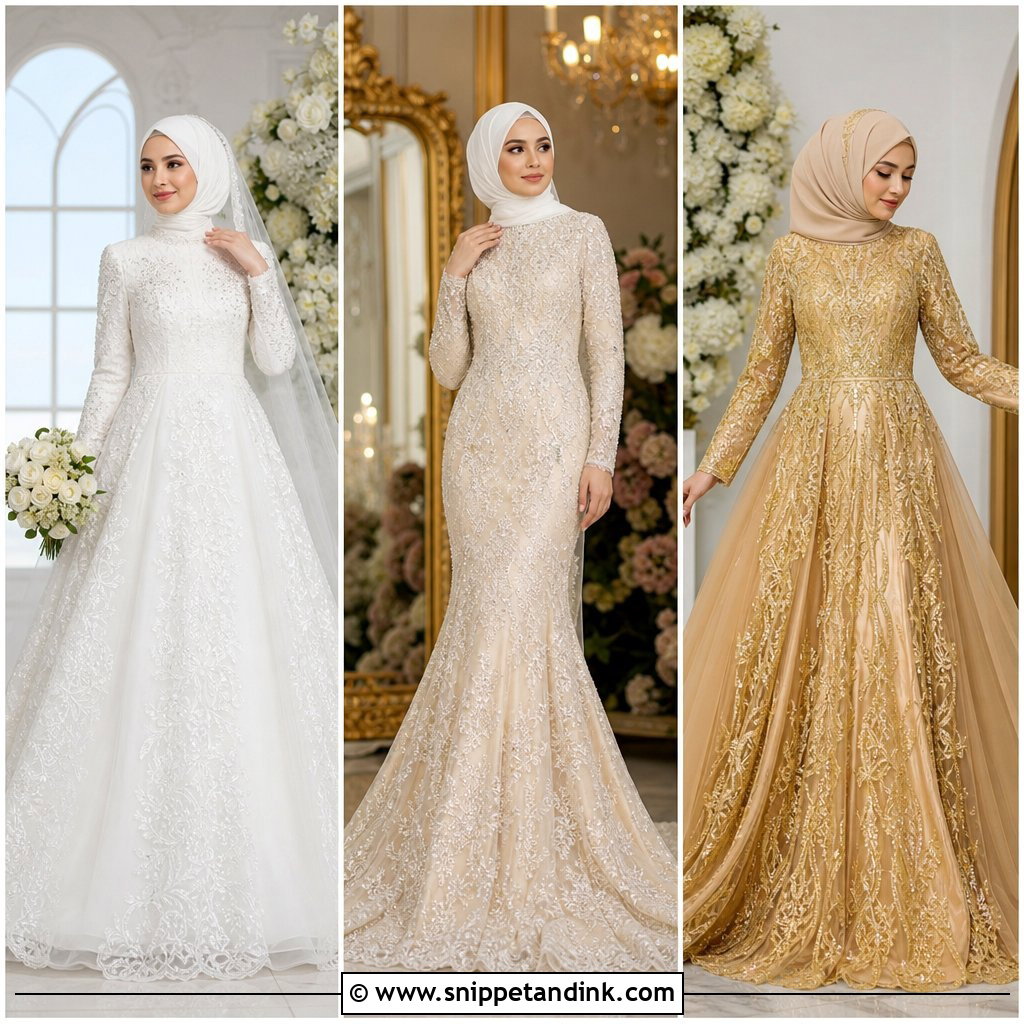
A pearl-white gown works for a bride who wants Western structure with a Nikah’s coverage. The fit point I care about is the shoulders. With long sleeves and a high or bateau neckline, a gown that pulls at the shoulder seam restricts how far you can raise your arms to hug or sign. Ask for a sleeve gusset or a slightly roomier armhole. Subtle pearl work at the shoulders and waist, and a long lightweight veil with only an embroidered edge, keep it modest and light. A sleek low bun holds the veil comb.
8. Ivory Sari Nikah Dress
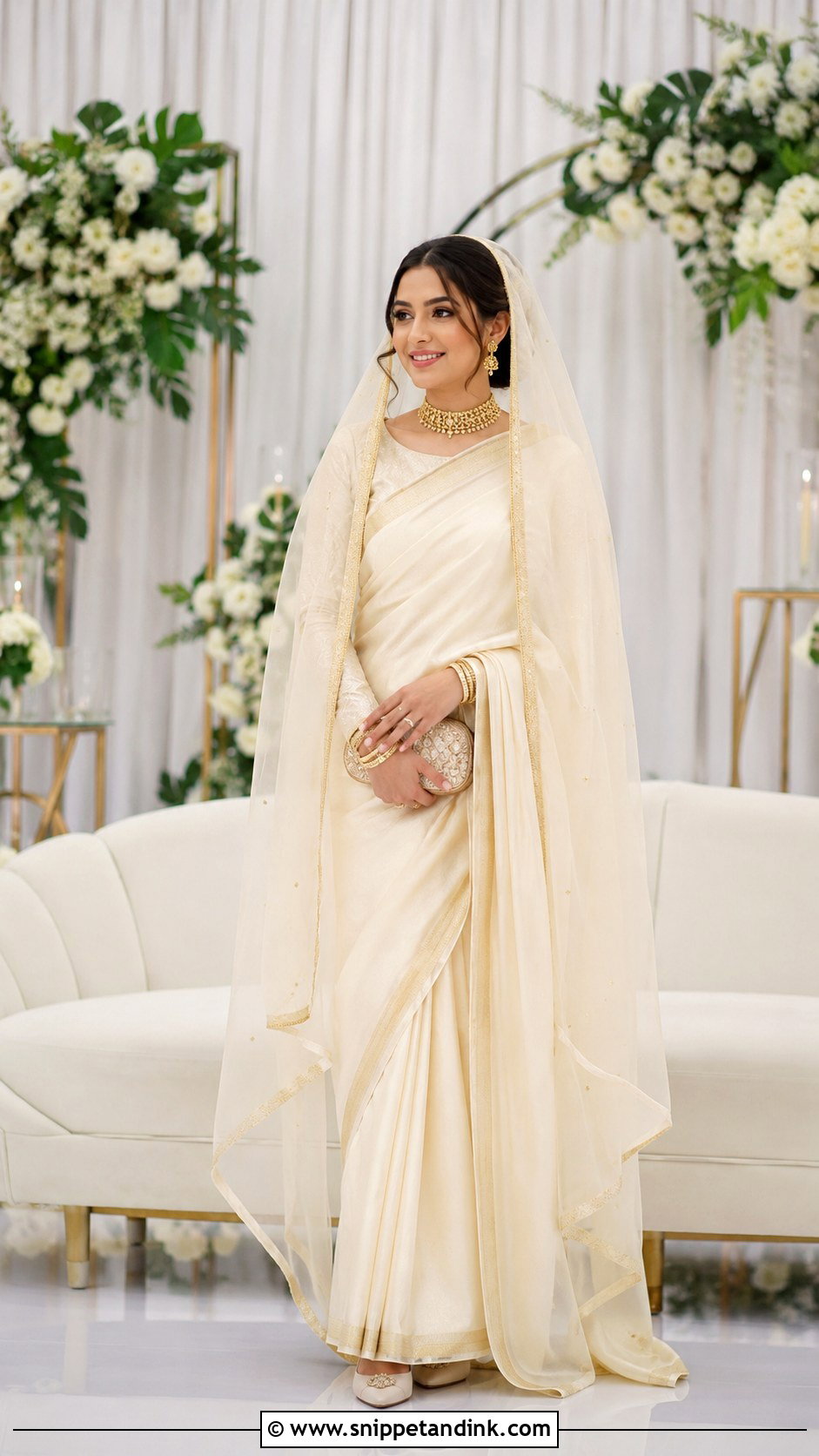
An ivory sari gives a fluid, refined line, and secure draping is everything. A longer blouse with a higher neckline covers the waist without relying on the pallu. I’d have the pleats and shoulder pinned by someone who drapes saris regularly, then walk, sit and stand a few times before the ceremony starts. Silk holds a pleat; chiffon needs more pins. A separate sheer dupatta over the head gives a traditional finish. Gold earrings, bangles and closed-toe heels complete it.
9. Red Velvet Lehenga Nikah Dress
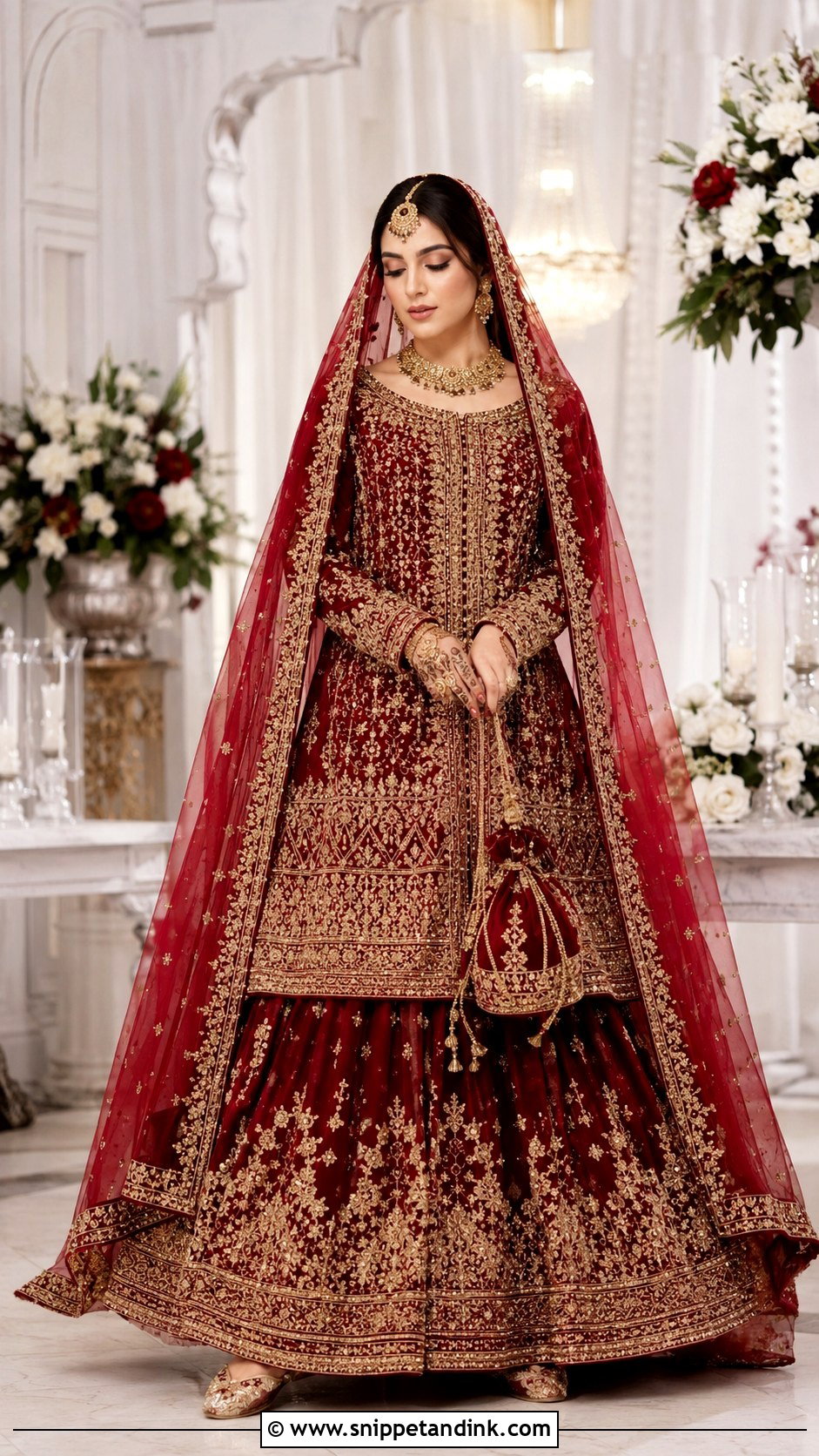
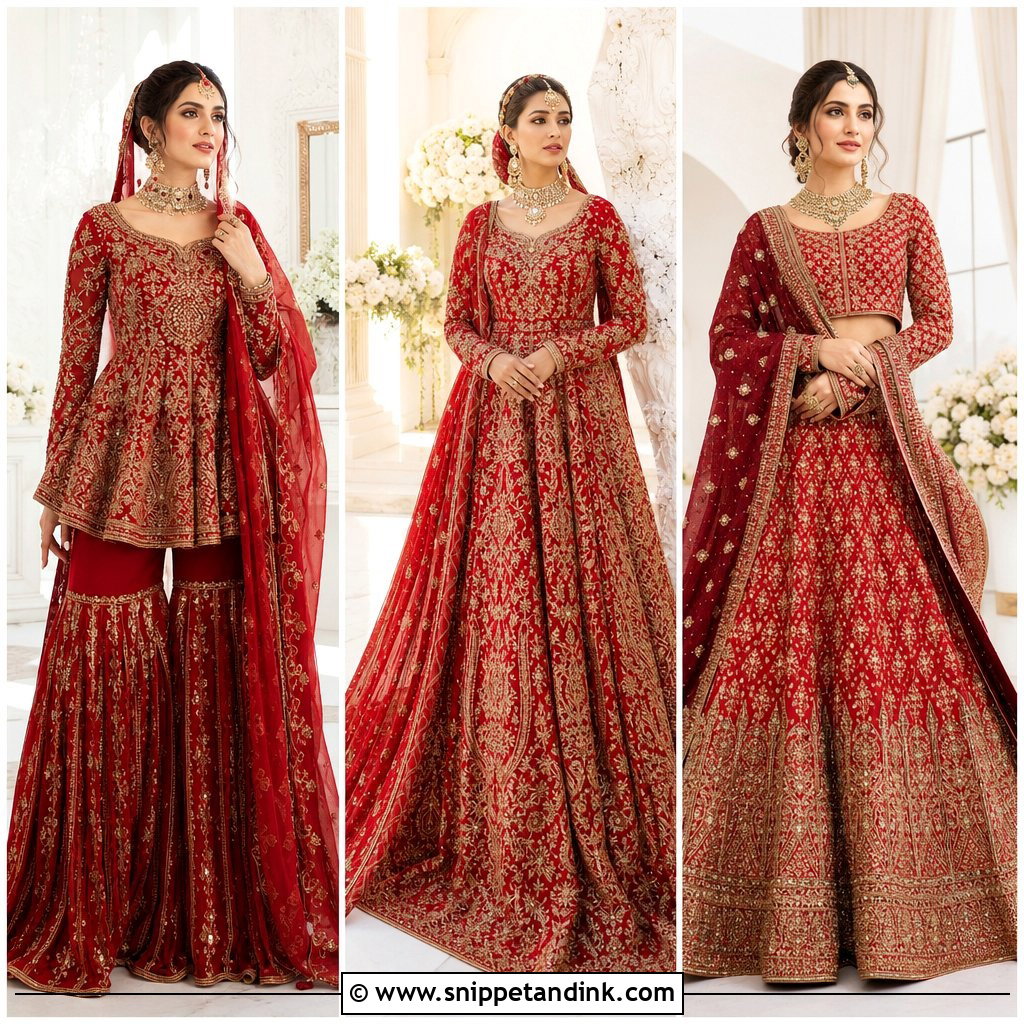
Red velvet is formal, warm and heavy. I keep gold embroidery to the lehenga hem; dense work on every panel makes velvet stiff and hard to sit in. A lighter red net dupatta balances the weight and is far kinder on your head than a velvet one would be. Velvet also traps heat, so this belongs to a cool-weather ceremony or a well-cooled hall. Antique gold jewelry, jhumkas and a muted berry lip keep it regal.
10. Deep Green Farshi Gharara Nikah Dress
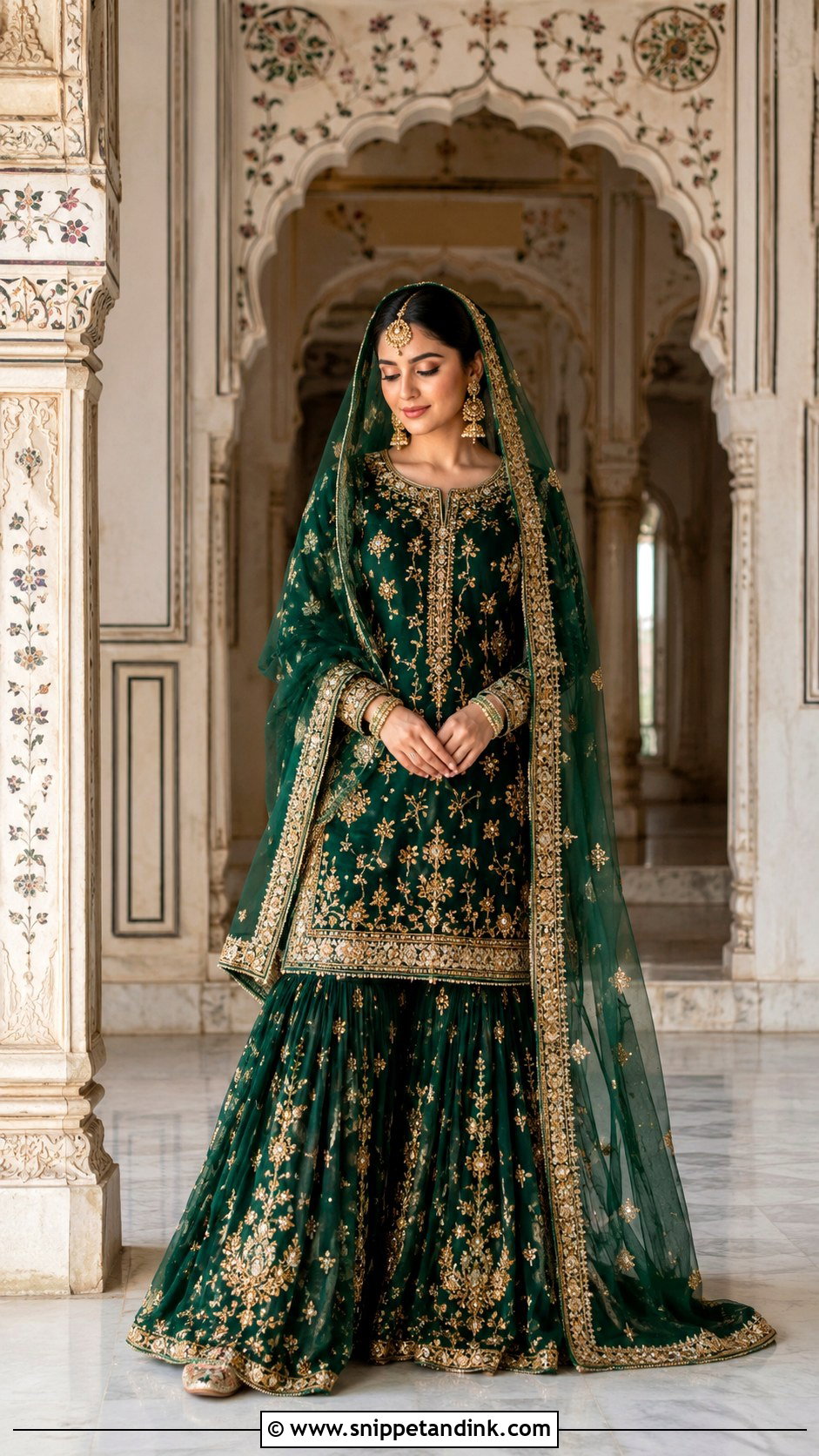
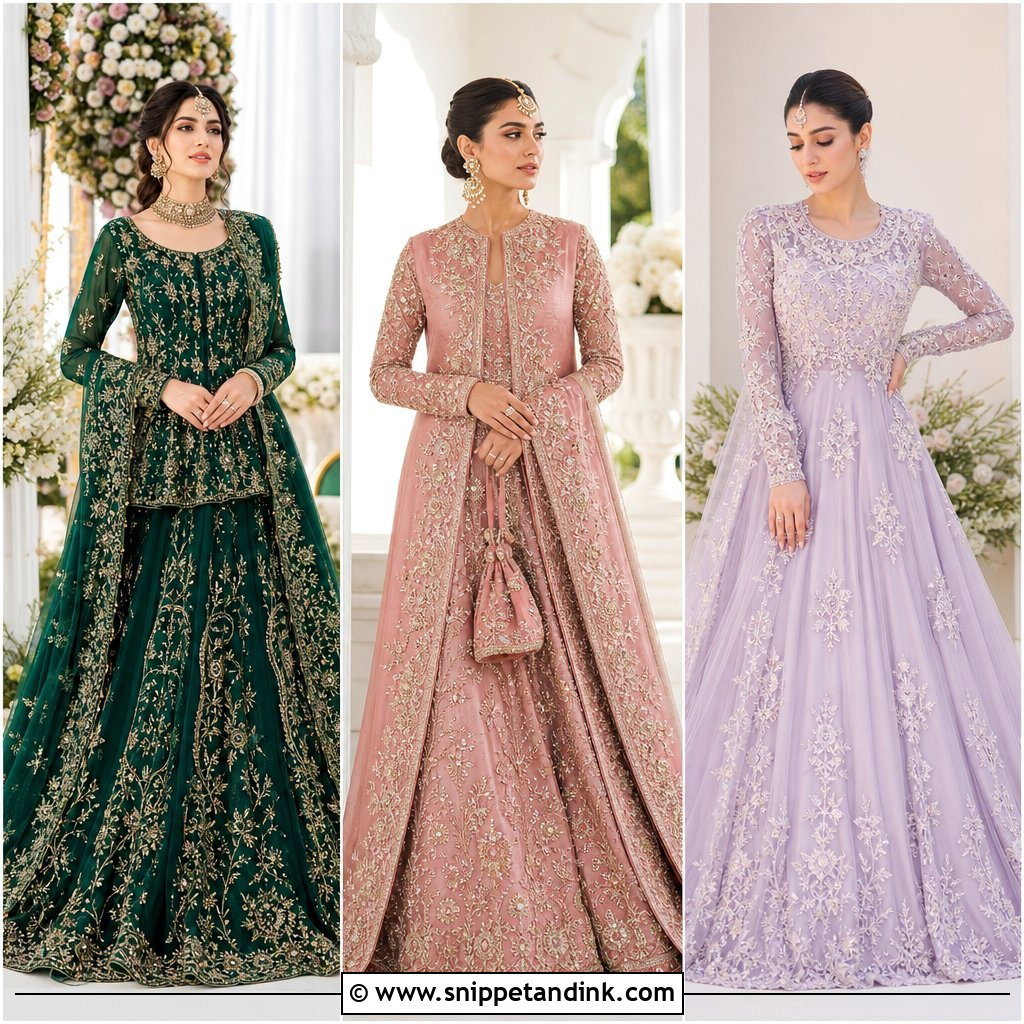
The farshi gharara’s floor-sweeping fabric is the dramatic part, and it needs handling. The extra length drags behind you, so someone should help you lift it at steps and when you sit. Pair it with a fitted long shirt so the volume stays at the floor. Gold zardozi at the neckline, sleeves and border is traditional. I’d always practice walking and turning in it at home, ideally in the shoes you’ll wear, because the hem behaves very differently on carpet than on marble. Soft bronze eyes and a neutral lip let the green lead.
11. Gold Tissue Pishwas Nikah Dress
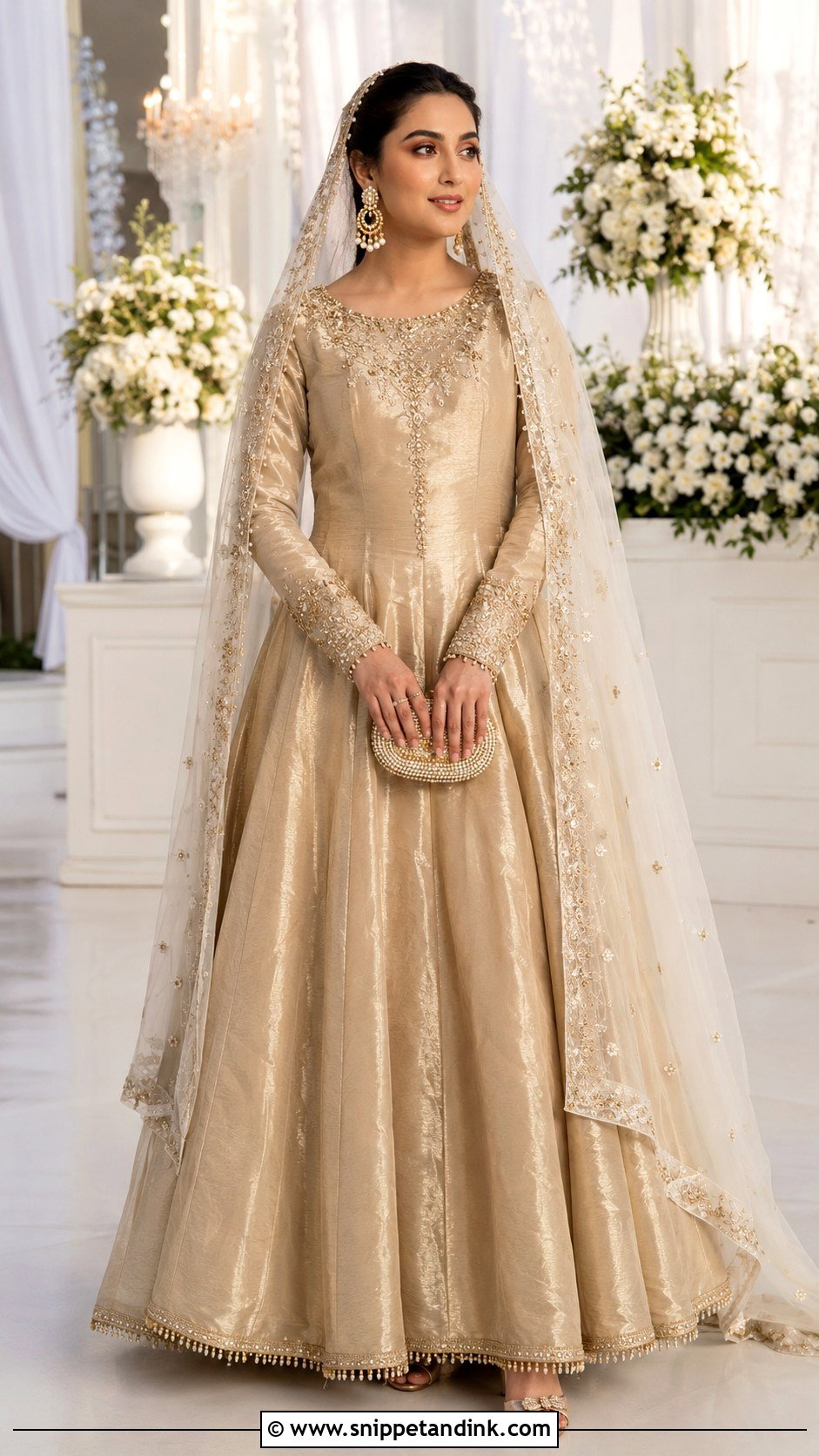
Tissue gives a gold tissue pishwas its glow, but unlined tissue scratches at the underarms and neck. A soft cotton or silk lining isn’t optional here. Paneled cuts flare more evenly than a gathered skirt, so the metallic surface catches light in clean lines. An ivory organza dupatta with a narrow gold border breaks up all that shine. In a bright indoor room it glows warmly; under direct sun it can reflect harshly into the face.
12. Peach Peplum Sharara Nikah Dress
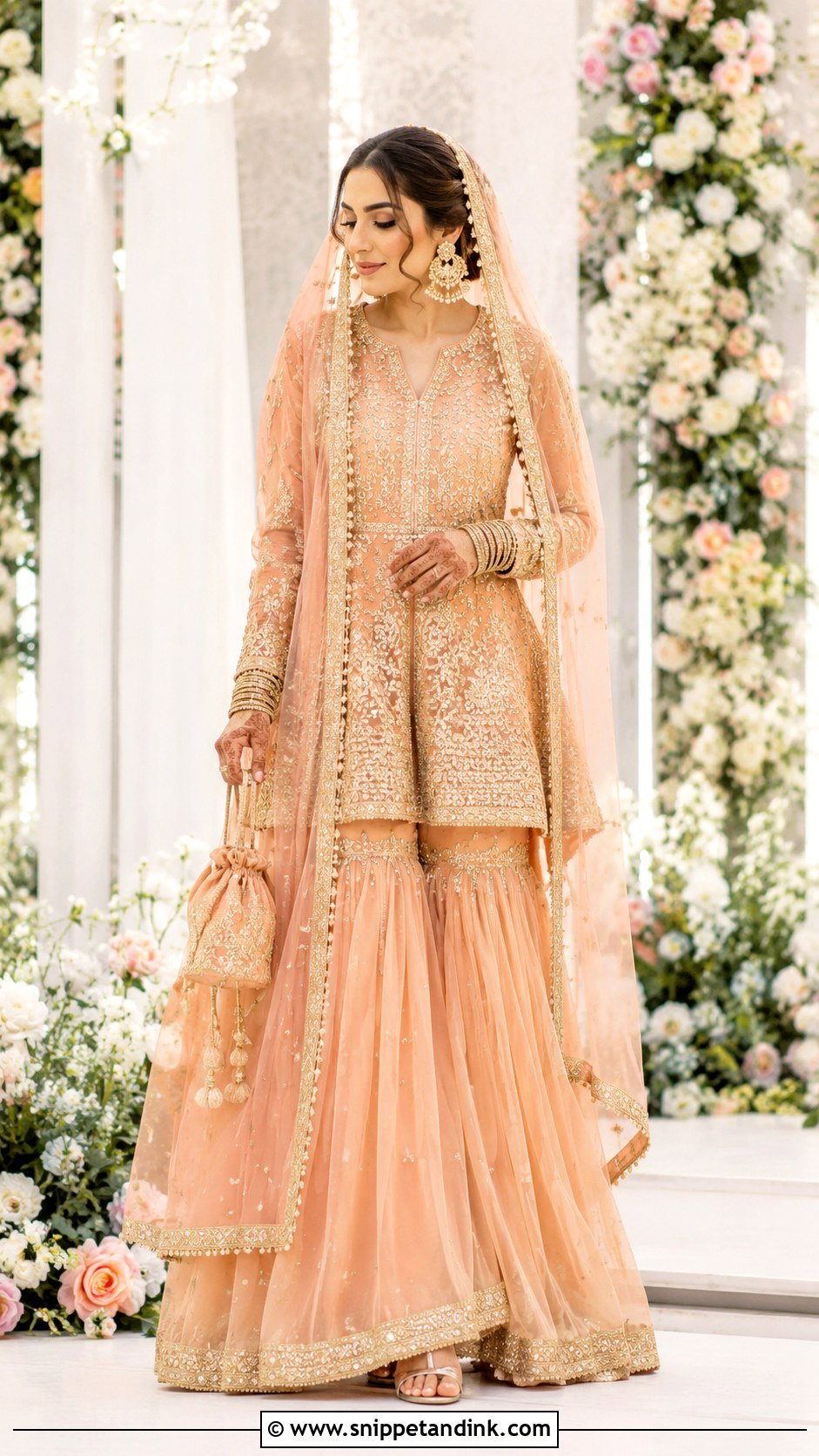
Peach and a longer peplum feel youthful but still bridal. The peplum should define your waist without being so tight that the flare sits stiffly. I’d keep the embroidery on the bodice and cuffs and let the sharara flow in plain silk or chiffon. Pin the net dupatta at both shoulders so it doesn’t slip during greetings. Peach-toned makeup and gold chandbalis hold the palette together. It suits daytime pastel decor.
13. Lilac Long Shirt Lehenga Nikah Dress
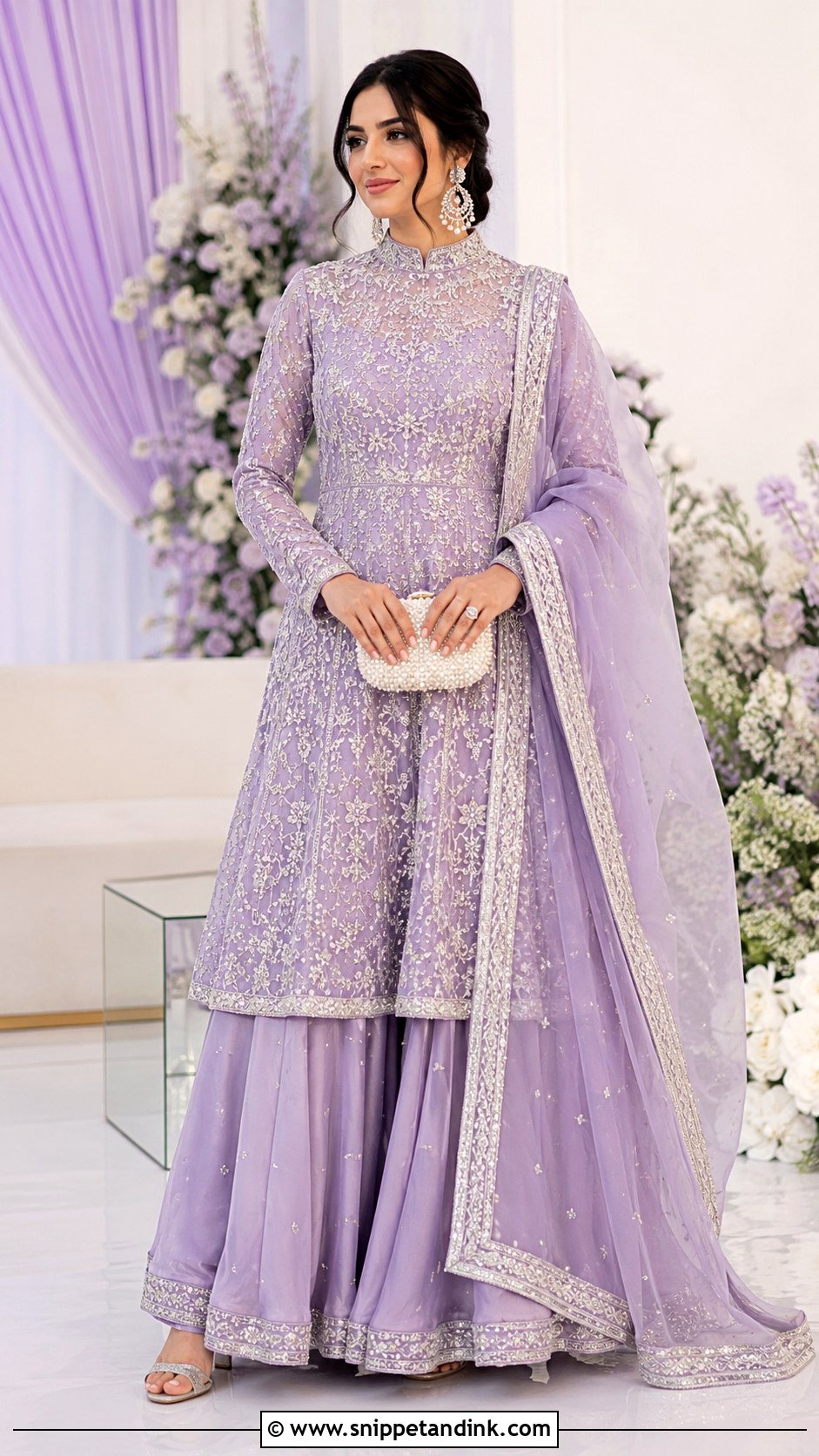
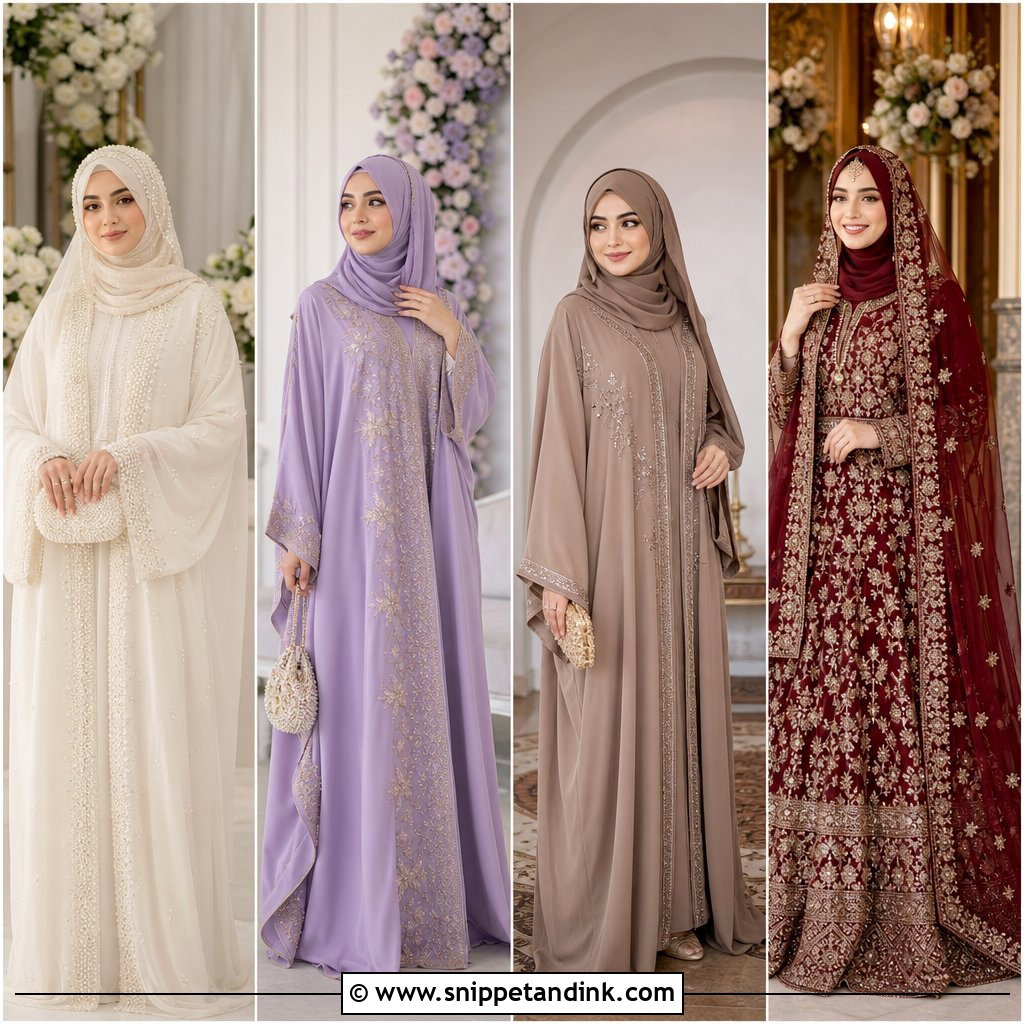
A long shirt over a lightly flared lehenga is a very modest line, and lilac lets silver and pearl details show clearly. Vertical embroidery on the shirt lengthens the body, which is useful for shorter brides. Keep the lehenga’s decoration to the hem so it peeks out without competing. I check lilac under both daylight and warm indoor light, since it can shift toward grey or pink depending on the bulbs. A silver scalloped dupatta and soft mauve eyeshadow finish it.
14. Silver Gray Maxi Nikah Dress
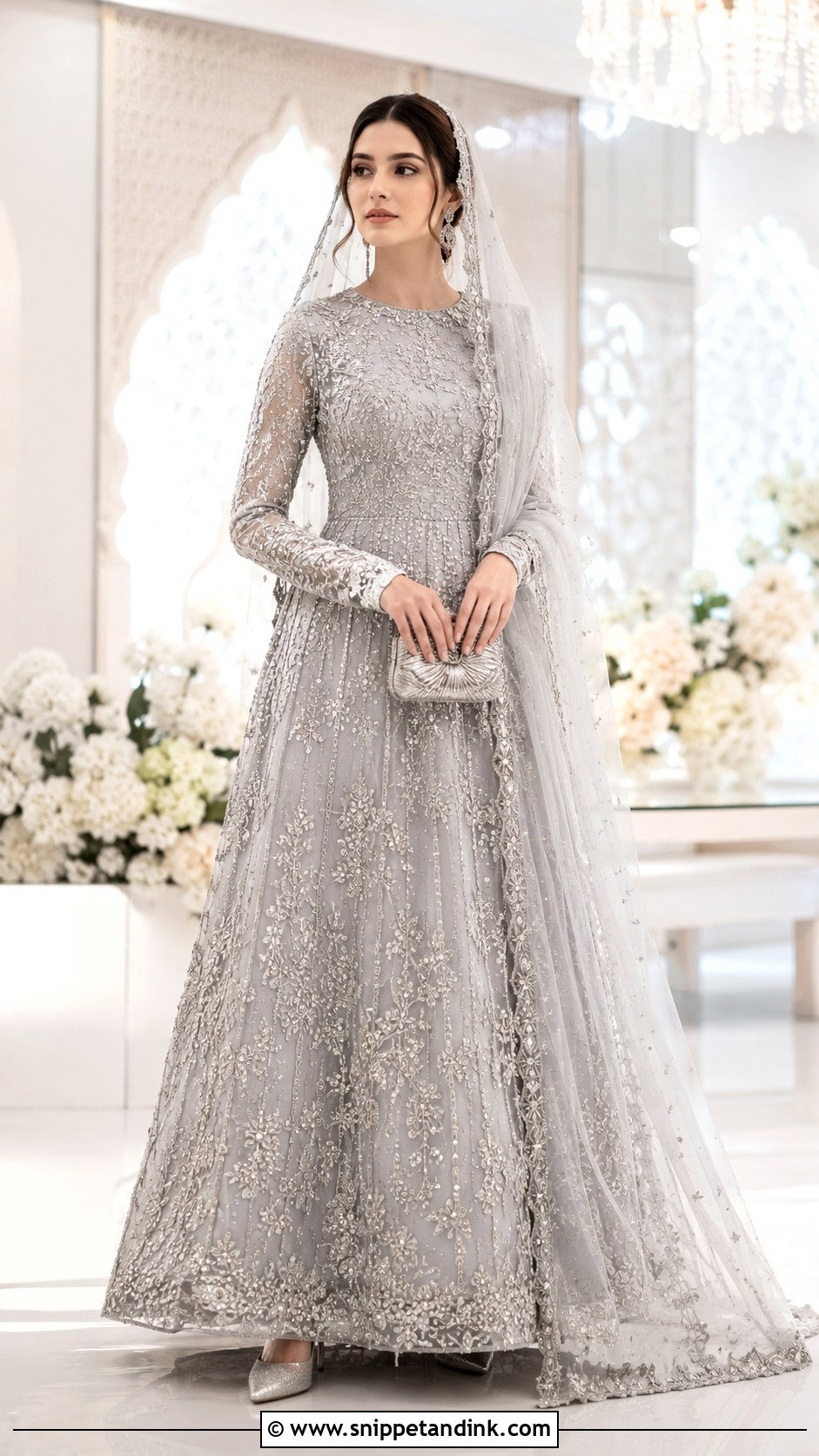
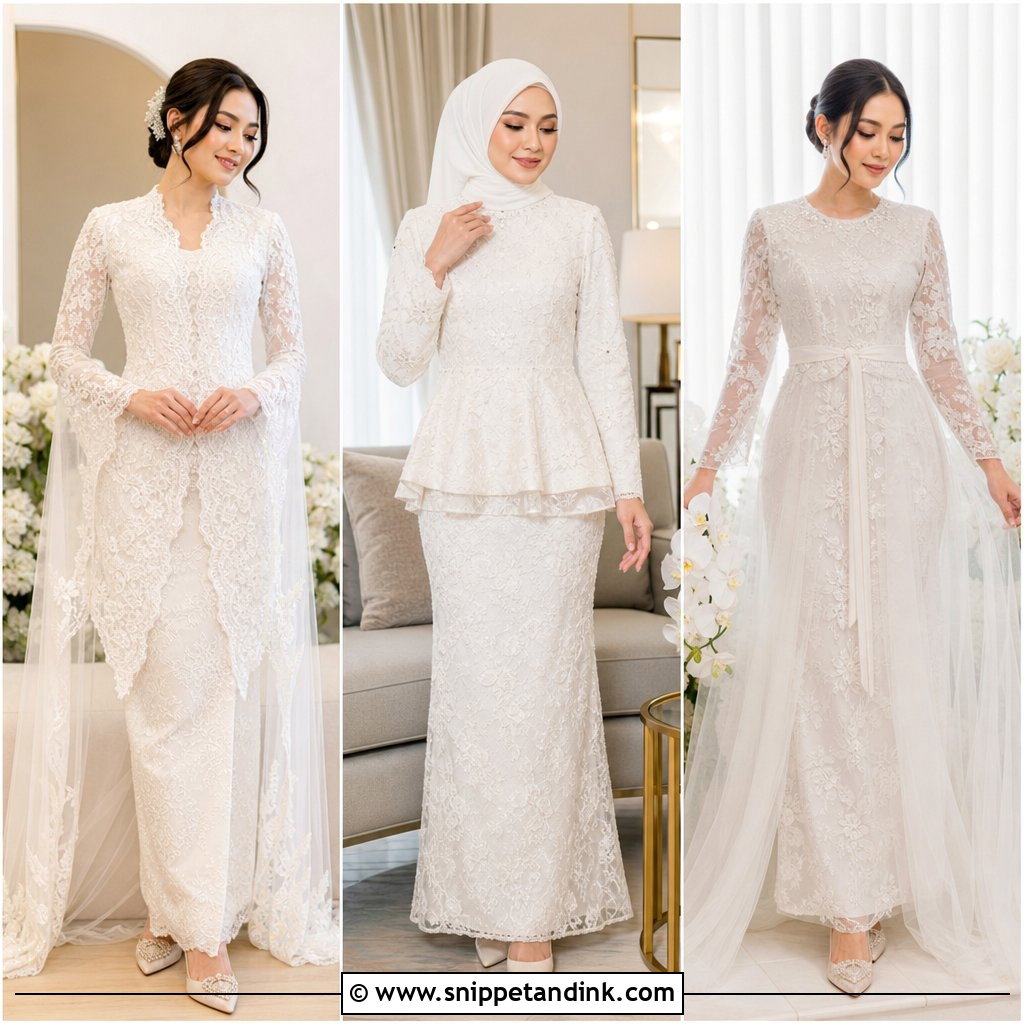
Silver gray looks contemporary, and it’s one of the few colors that suits an evening venue as well as a daytime one. The risk is looking flat. I add a pink lip and a bit of warmth on the cheeks to stop gray from draining the face. A full-length A-line maxi with long sleeves, silver threadwork and pearl beading at the cuffs and neck gives gentle texture. A light gray veil with a clean edge keeps it modern. A sleek bun completes the minimal mood.
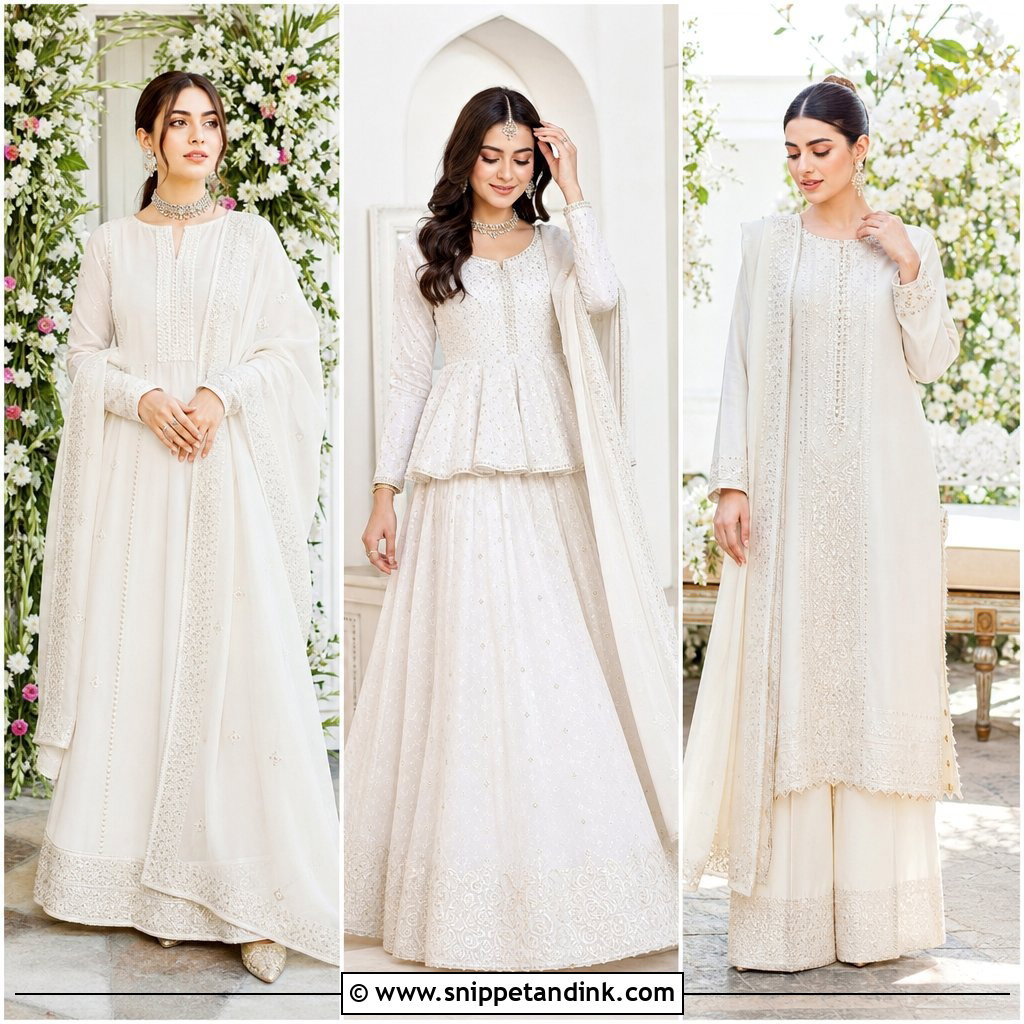
15. White Chikankari Nikah Dress
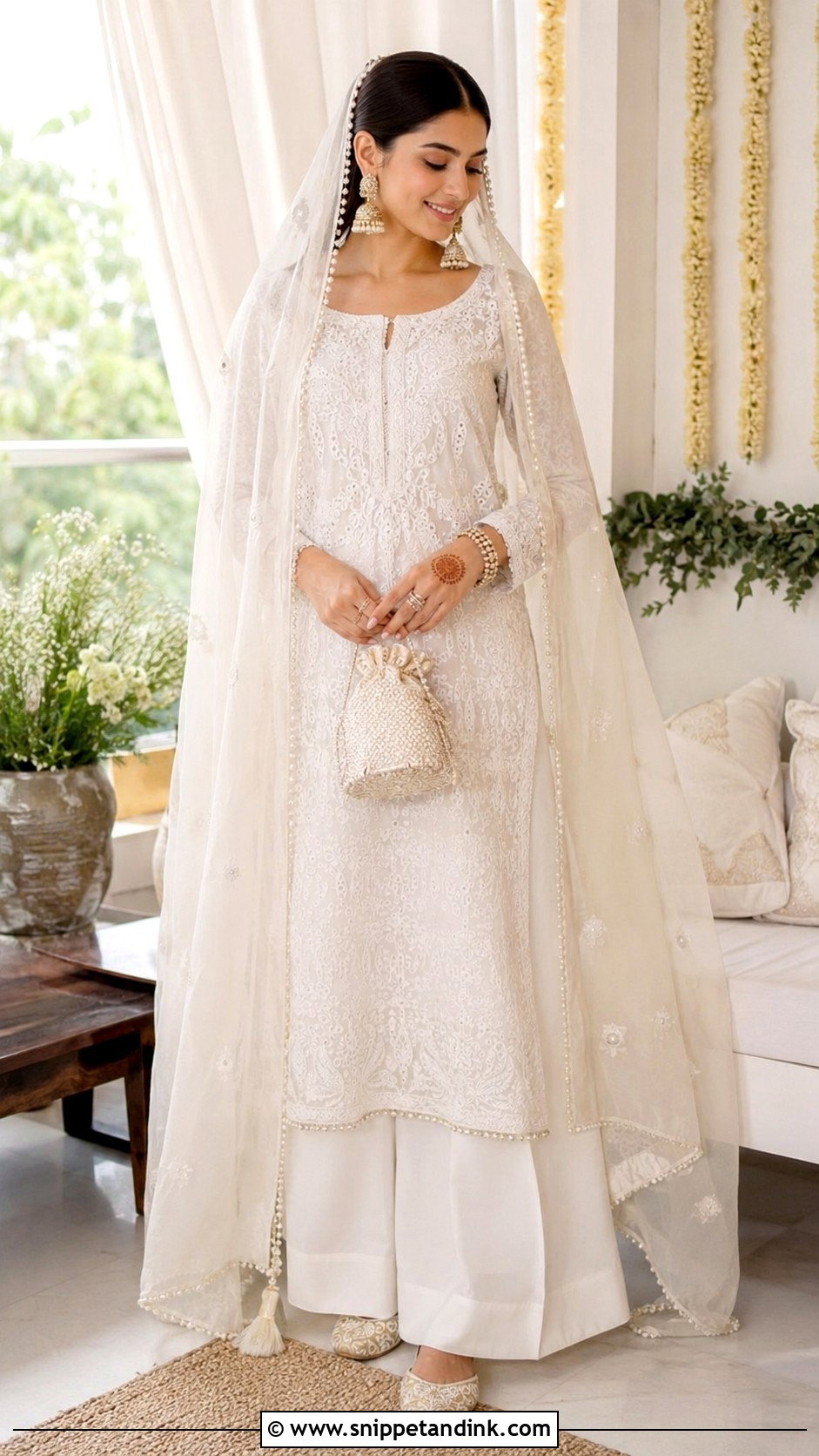
White chikankari is all texture, no shine, which suits summer and small ceremonies. Choose a lined kurta with full sleeves and embroidery across the front and cuffs; unlined chikankari can look patchy. A white gharara or wide palazzo pants keeps the outfit light and cool. A pearl-edged organza dupatta adds formality. It’s one of the few bridal looks comfortable enough for a long, hot afternoon, at home or at a small mosque gathering.
16. Heirloom Dupatta Nikah Dress
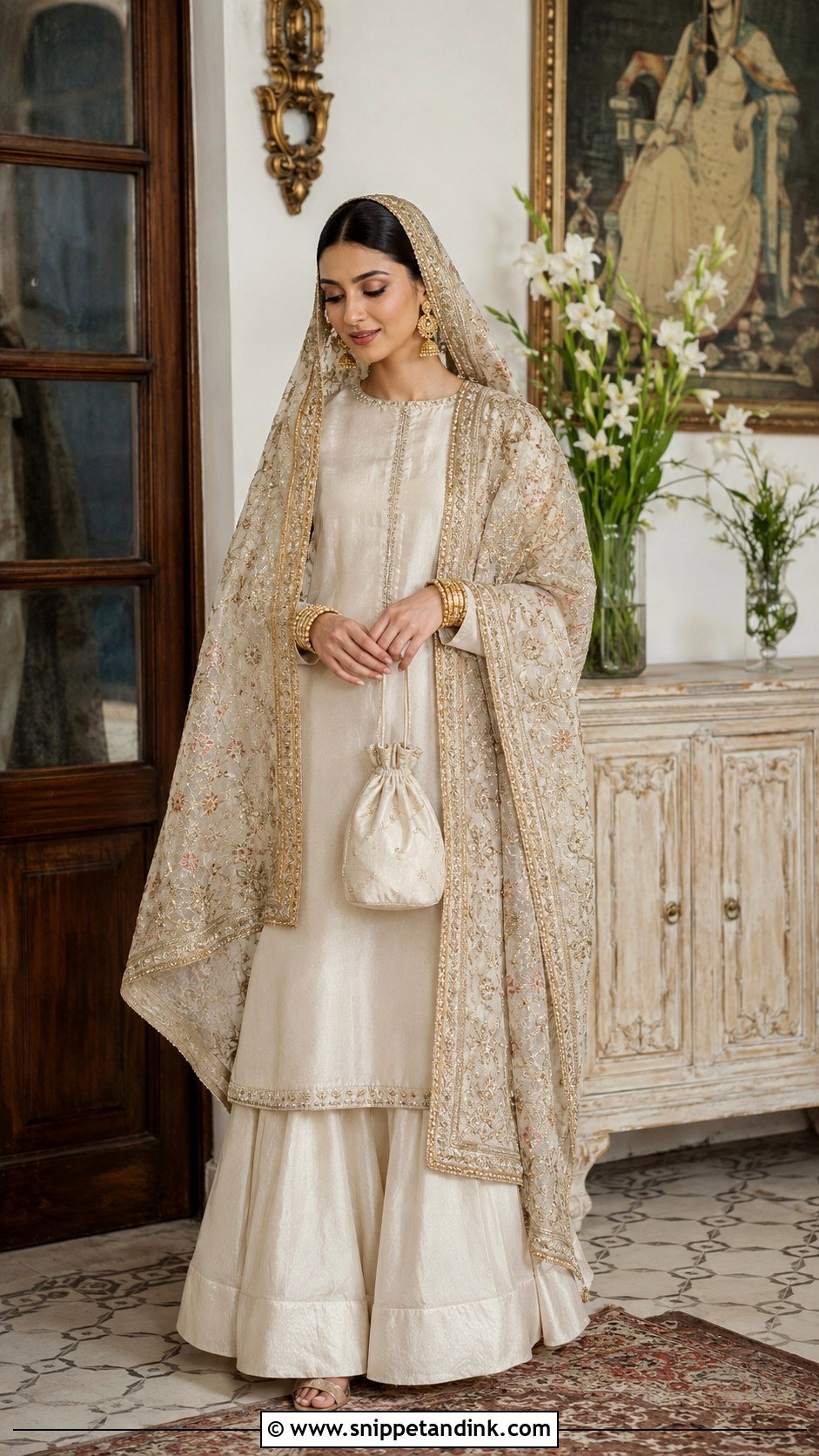
An heirloom dupatta carries more meaning than any new piece, so I build the outfit around it rather than the other way round. Keep the base simple, an ivory silk kameez with straight pants or a light lehenga, so the dupatta stands out. Old fabric is fragile: have weak spots repaired by a textile specialist, and use small pins through the sturdier border rather than the delicate centre. Match your jewelry to its embroidery. Wear a smooth low bun underneath so the pins have something firm to hold.
17. Cape Sleeve Bridal Gown Nikah Dress
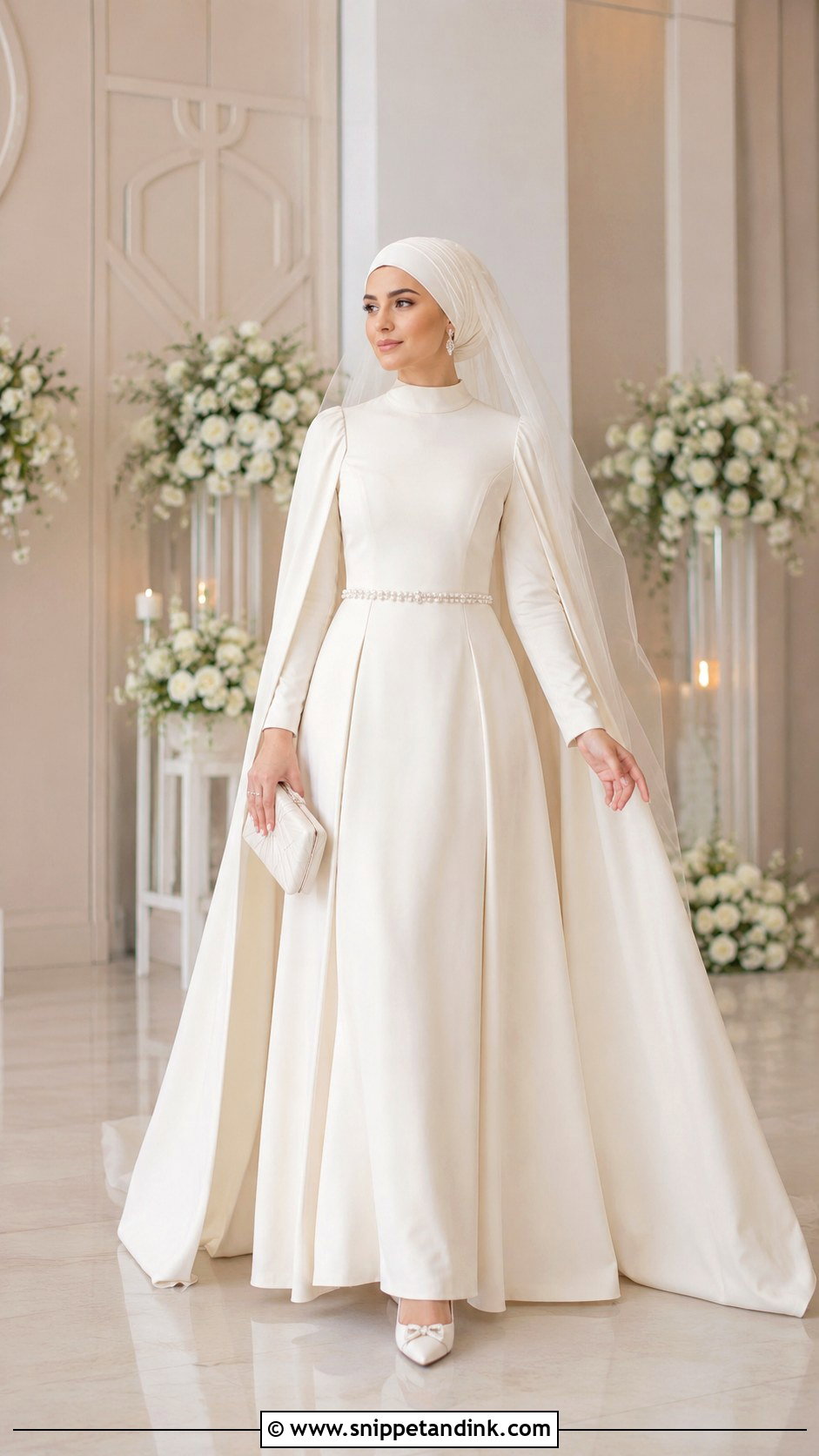
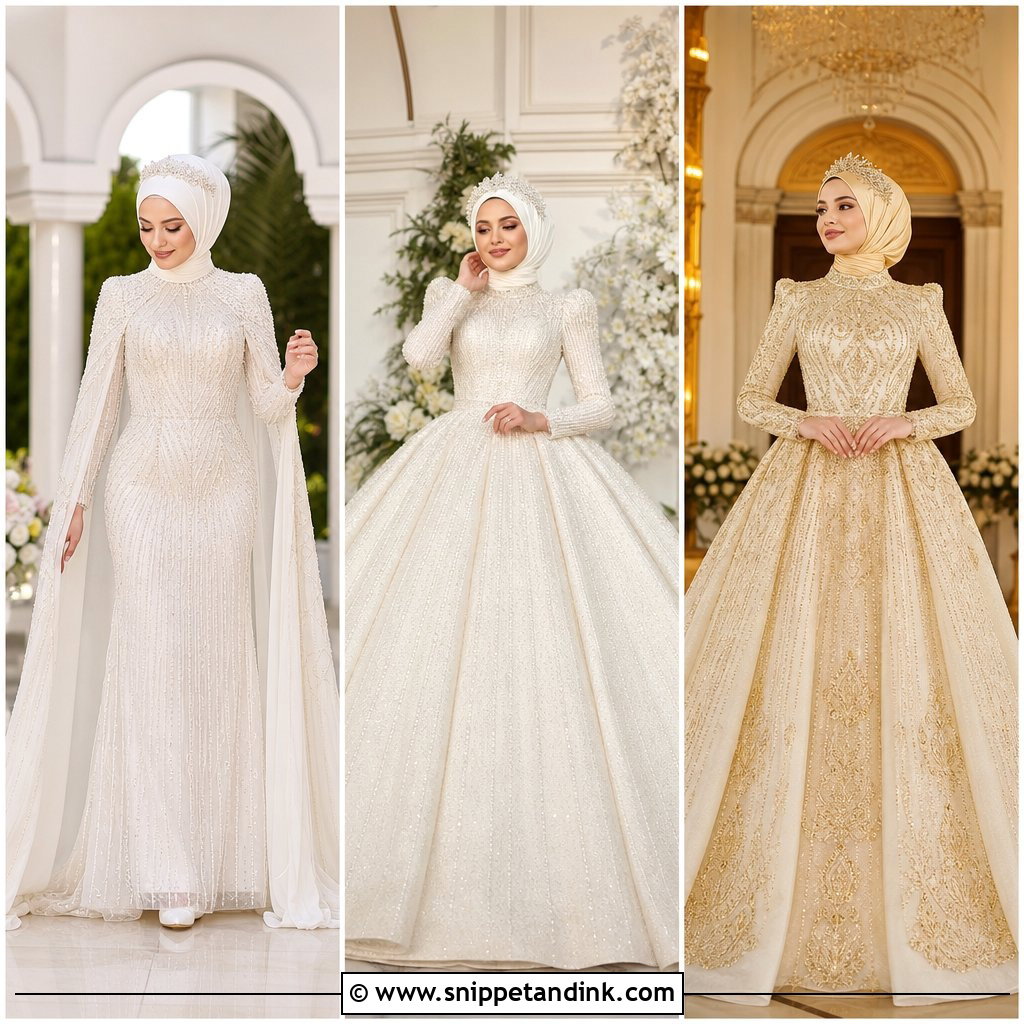
Cape sleeves cover the arms without fitted sleeves’ constriction, which is useful in warm weather. Keep the cape short enough to stay off your hands; a cape that reaches the wrist catches on everything during signing and hugs. An ivory or champagne A-line gown with a simple fitted bodice lets the cape be the feature. Pearl detailing at the neckline or waist defines the shape. Skip the big necklace and keep the veil plain.
18. Hijab-Friendly Ivory Gown Nikah Dress
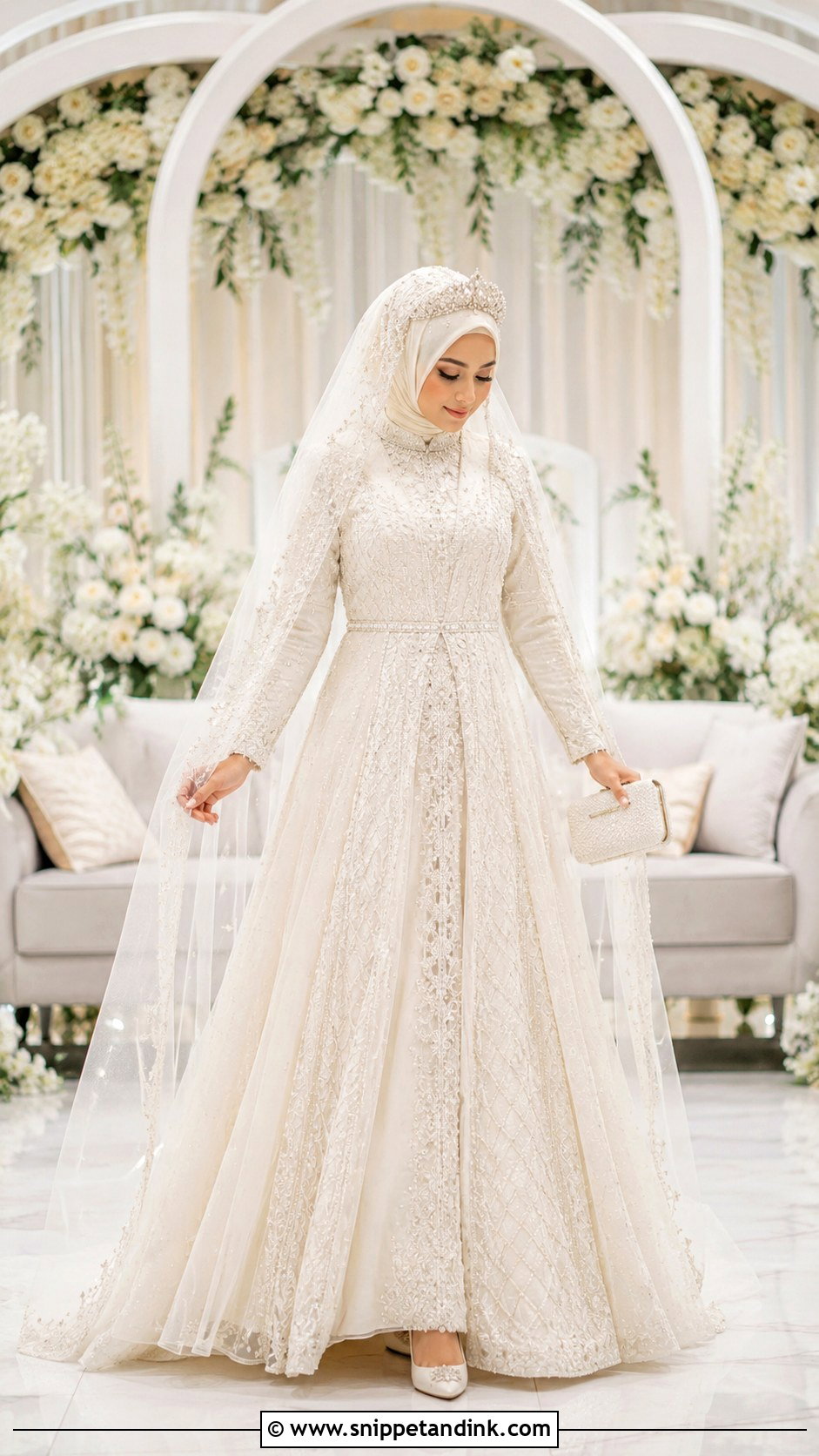
Full coverage in a gown starts with opacity. I’d check the fabric under strong light, since a high neckline and long sleeves don’t help if the material is sheer. Long lined sleeves and a softly defined waist look polished with a hijab. Choose a chiffon or silk hijab in exactly the same ivory as the gown; mismatched whites stand out next to the face in photos. A light embellished veil layered over it, a jeweled headpiece and low block heels finish it neatly.
19. Minimal Silk Shalwar Kameez Nikah Dress
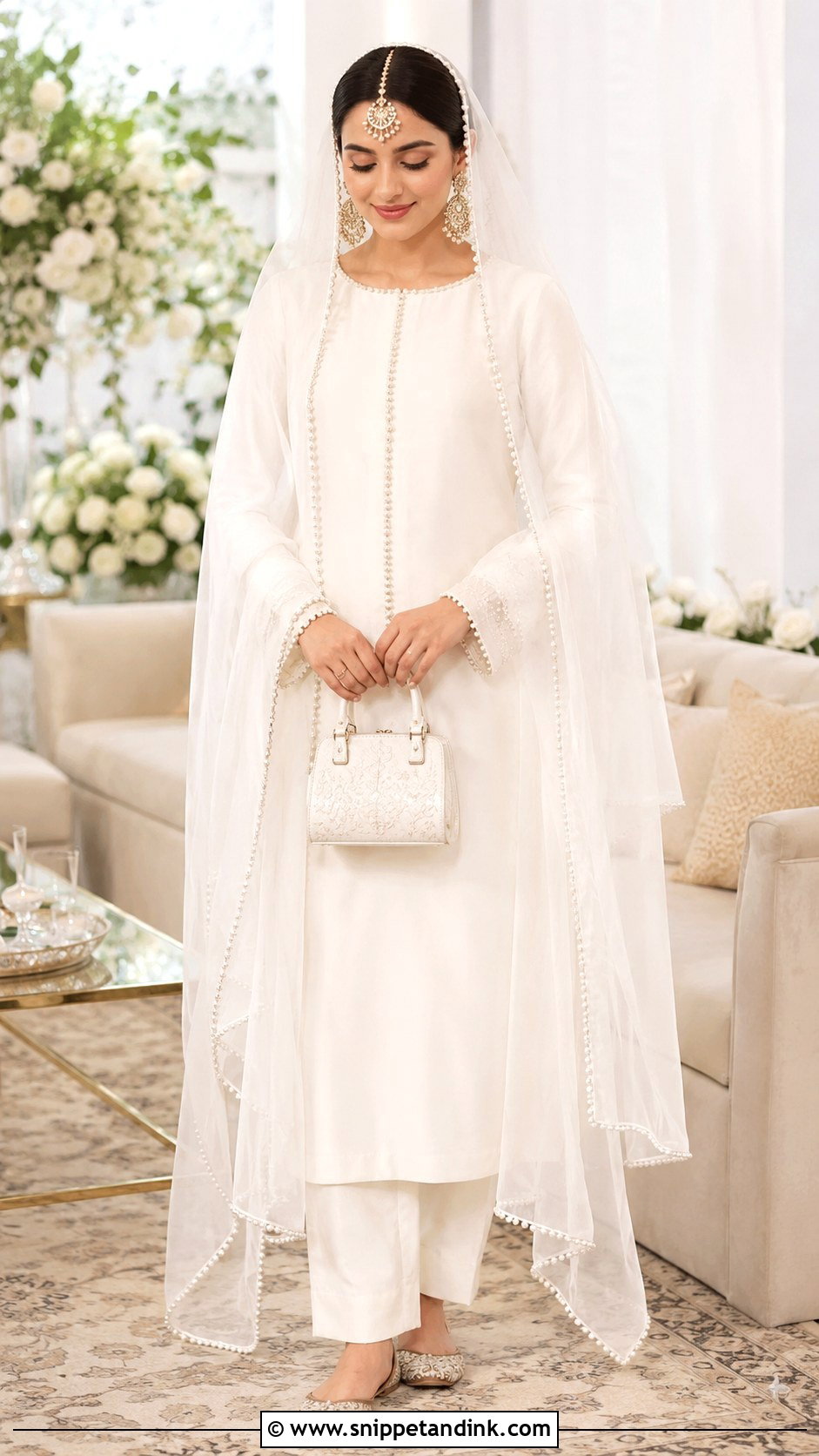
Some brides want almost no embroidery, and a minimal silk shalwar kameez can be just as ceremonial when the fabric and fit are right. Pearl white or cream silk with subtle handwork at the cuffs is enough. With no decoration to distract, the tailoring shows, so I’d insist on at least two fittings. Statement earrings and a delicate tikka lift the simple base. A neat bun and glowing skin complete an outfit that sits easily at a home Nikah or a civil ceremony.
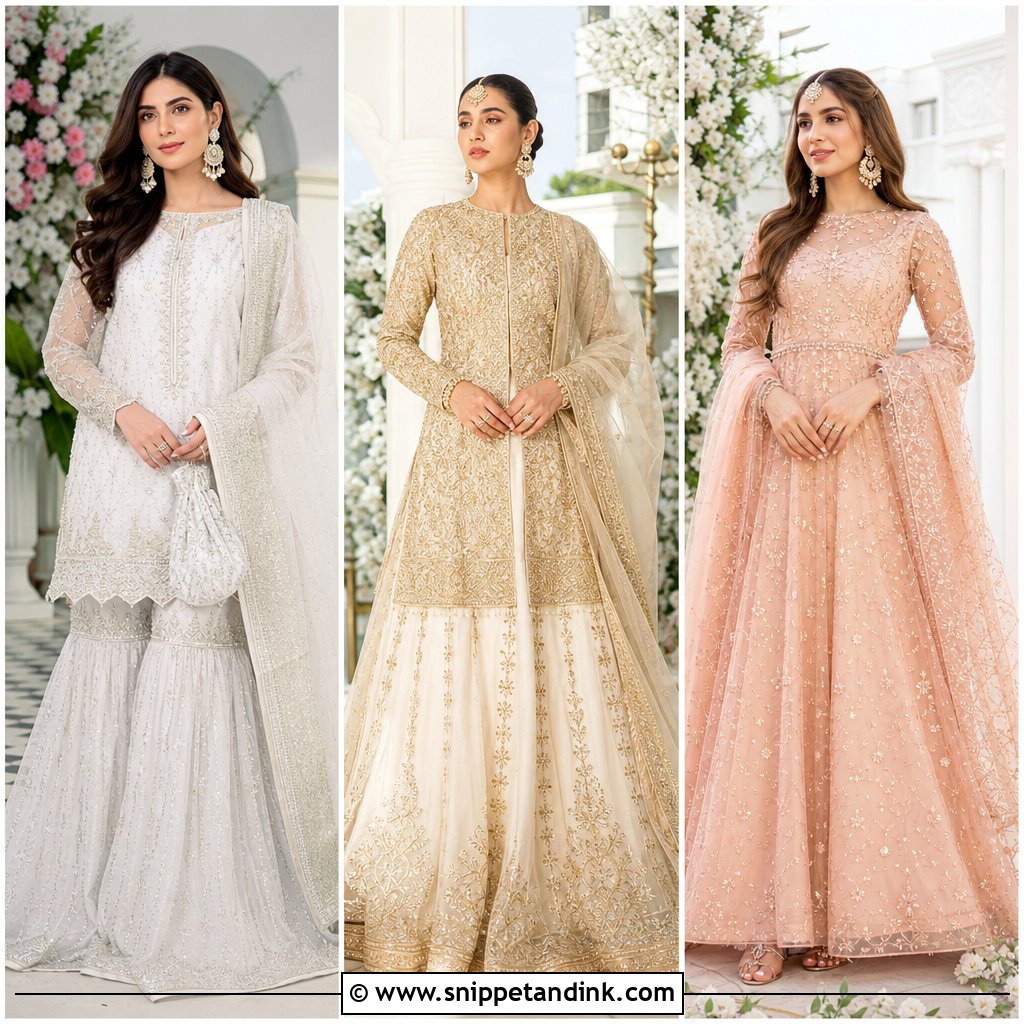
20. Floral Pastel Lehenga Nikah Dress
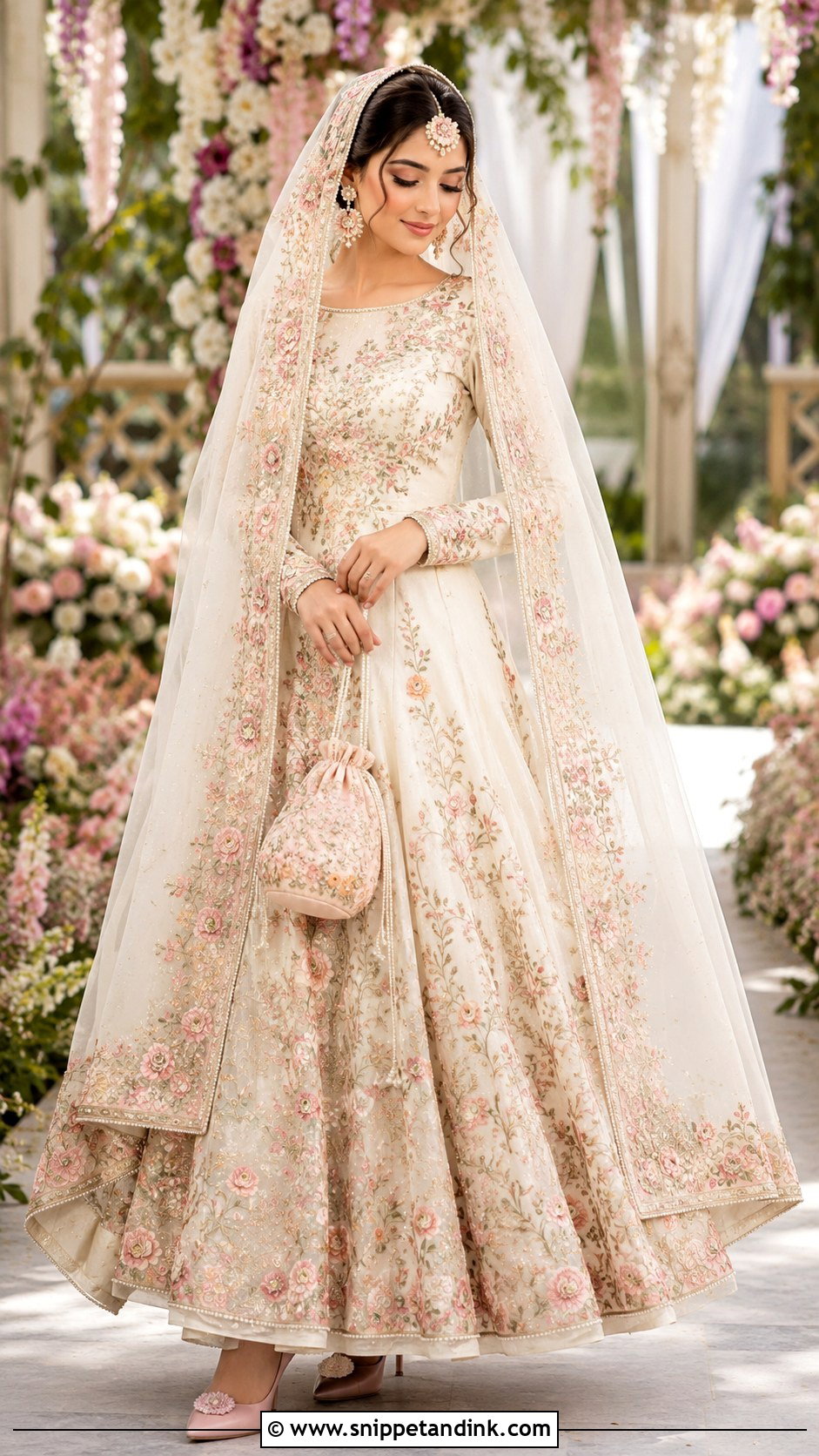
A floral pastel lehenga is cheerful for spring or summer. Pick a base of ivory, blush or pale peach with embroidered flowers in soft greens, pinks and gold. Too many thread colors start to look busy, so I’d keep it to three or four. A longer blouse with full sleeves covers the waist. A sheer floral-bordered dupatta lets the skirt’s work show. Keep the jewelry delicate, since it competes with the embroidery otherwise.
A Small Repair Kit for the Bride’s Room
Embroidered outfits fail in small, predictable ways: a hook pops, a bead thread snaps, a dupatta pin tears a hole in net. I pack a kit and hand it to one trusted person, usually a sister or cousin, who stays near you all day.
- Safety pins in several sizes, plus straight pins with pearl heads that blend into embroidery.
- A needle already threaded in the outfit’s color, and a spare in white.
- Double-sided fabric tape for a gaping neckline or a slipping dupatta edge.
- White chalk or blotting paper for small stains on ivory; never rub with water, which spreads makeup.
- A spare pair of flat sandals for the walk between venues.
If foundation marks a dupatta, dab, don’t scrub, and turn that section to the back. Loose beads can be snipped with nail scissors and nobody will see the gap. A dropped hem can be pinned from the inside in two minutes. Small fixes like these are why I’d always have someone other than you holding the kit.
A Final Trial in Daylight and Lamplight
The right Nikah outfit lets you move, sit and celebrate without thinking about it. Gharara, sharara, lehenga, pishwas, sari, shalwar kameez, gown: each can be modest and bridal when it’s cut and styled with care. Before you settle, wear the whole outfit with its dupatta, jewelry, shoes and underlayers, then walk and sit in it. Hold the fabric against your face in daylight and indoor light. That one test catches most problems while there’s still time to fix them.
You'll Like These Ideas:



Leave a Reply