
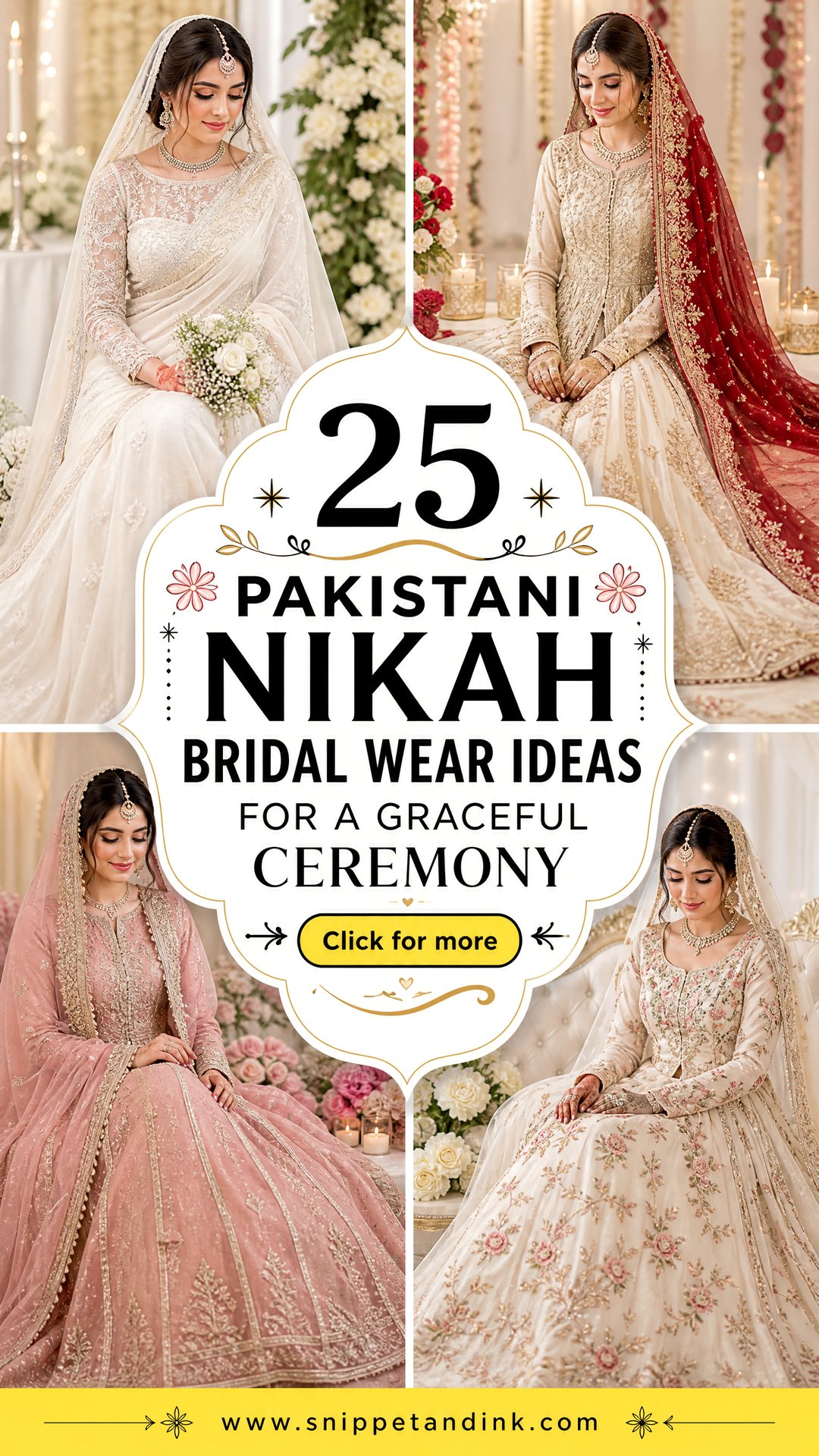
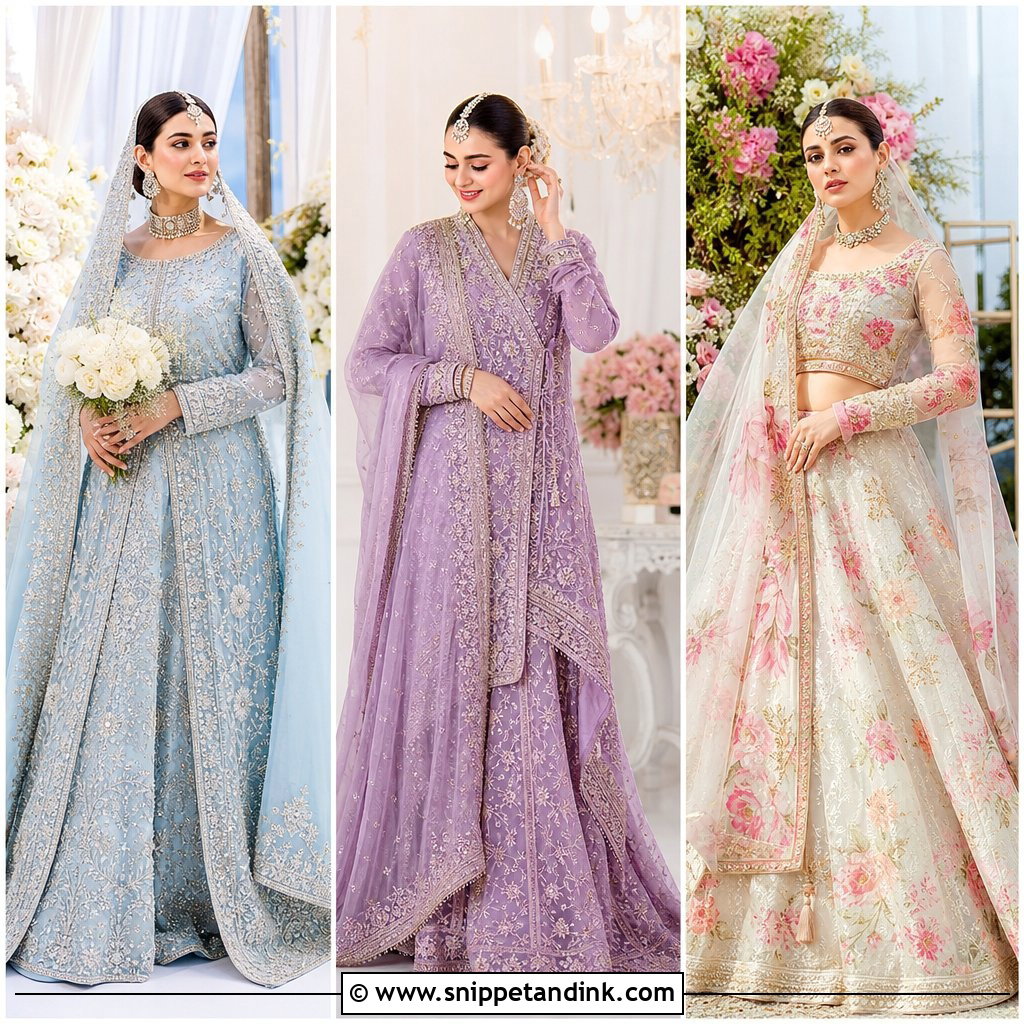
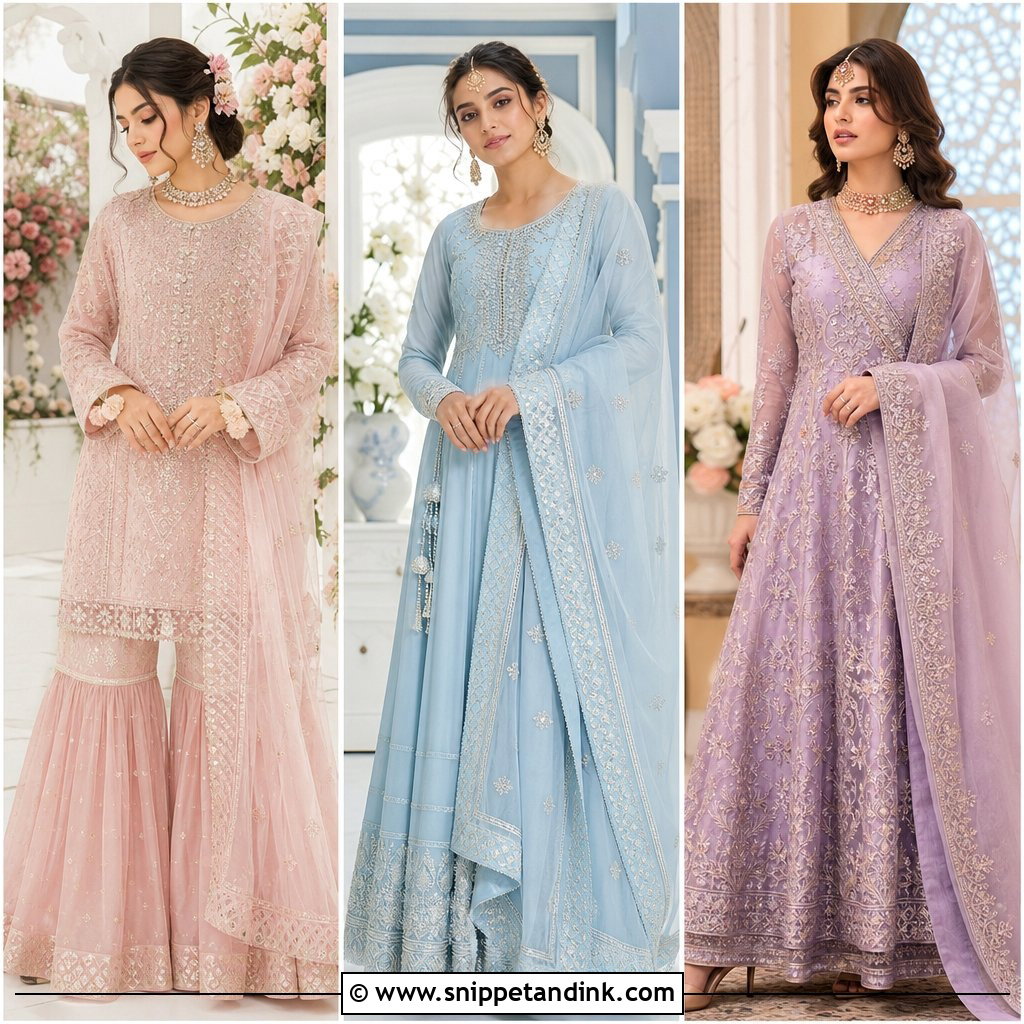
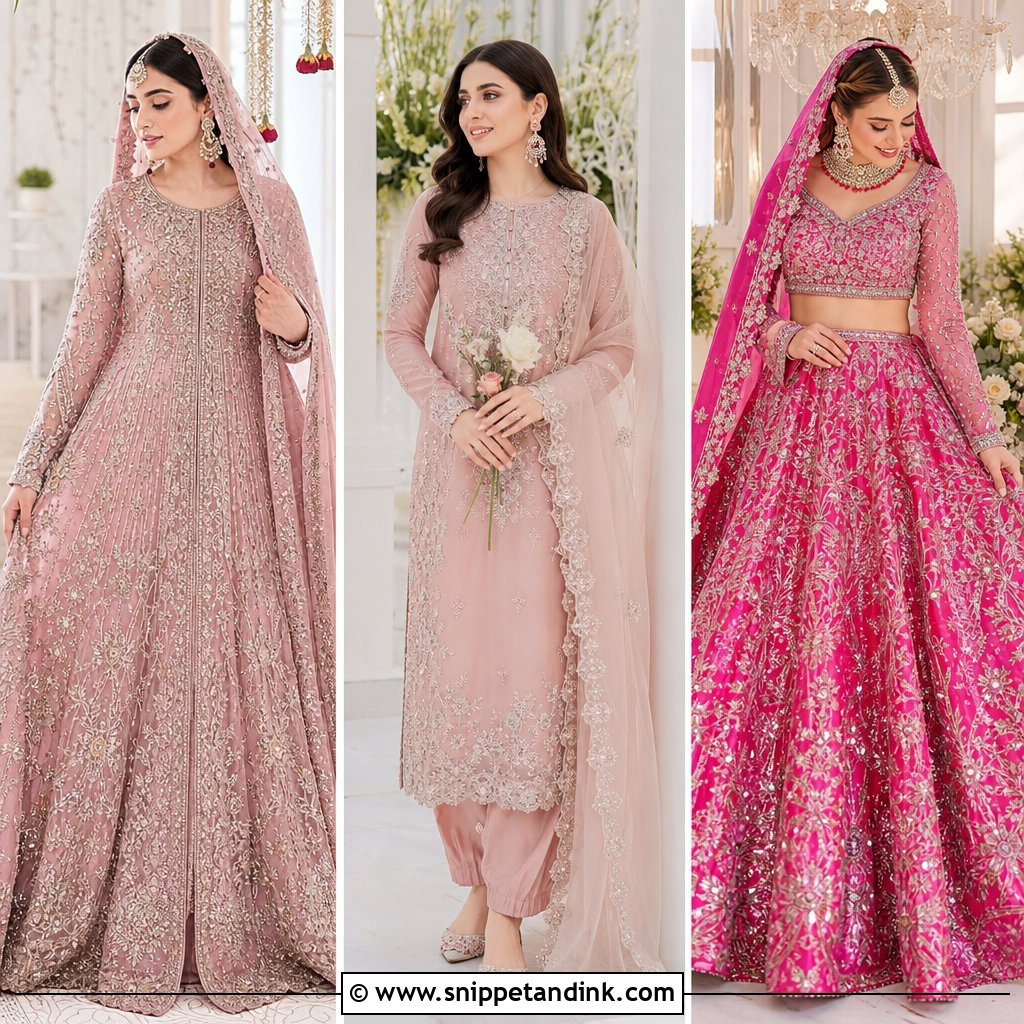
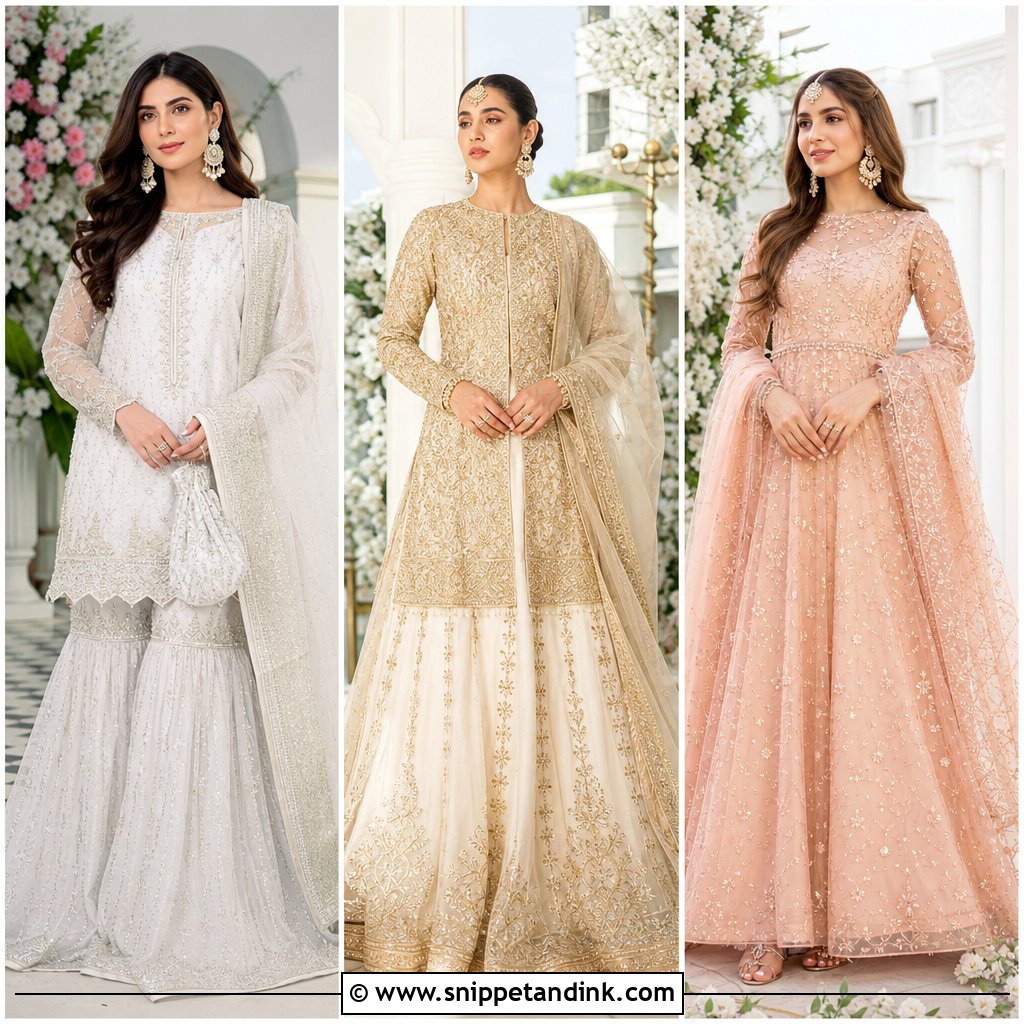
A Nikah outfit has a different job from a baraat one. It has to sit through the ceremony, cover the head without fuss, look right in close portraits with the family and still feel like you. Most of the brides I dress for their Nikah want it quieter than the baraat: ivories, blush, pastels and gold work, with ghararas, shararas and a dupatta that frames the face rather than buries it. Lighter embroidery, heirloom jewellery and silhouettes you can kneel, sit and stand in are where things are heading. Below are complete outfit directions, from classic to modern, with the practical detail I’d check before you commit to each.
How the Ceremony Itself Shapes a Nikah Outfit
The Nikah is the religious contract, and it’s usually shorter and more seated than any other event of the wedding. The bride is asked for her consent, the nikah nama is signed, and there are prayers and blessings before photos begin. Each of those moments affects the outfit in a practical way.
- Head covering: the dupatta stays on through the ceremony, so it has to be pinned to stay put for an hour or more, not just for a portrait.
- Seating: many Nikahs happen on a sofa or a low stage, and some in mosques or homes with floor seating. Test sitting and standing in whatever you choose.
- Signing: you’ll hold a pen and sign several times. I keep the signing wrist lighter on bangles so they don’t catch on the paper or clatter.
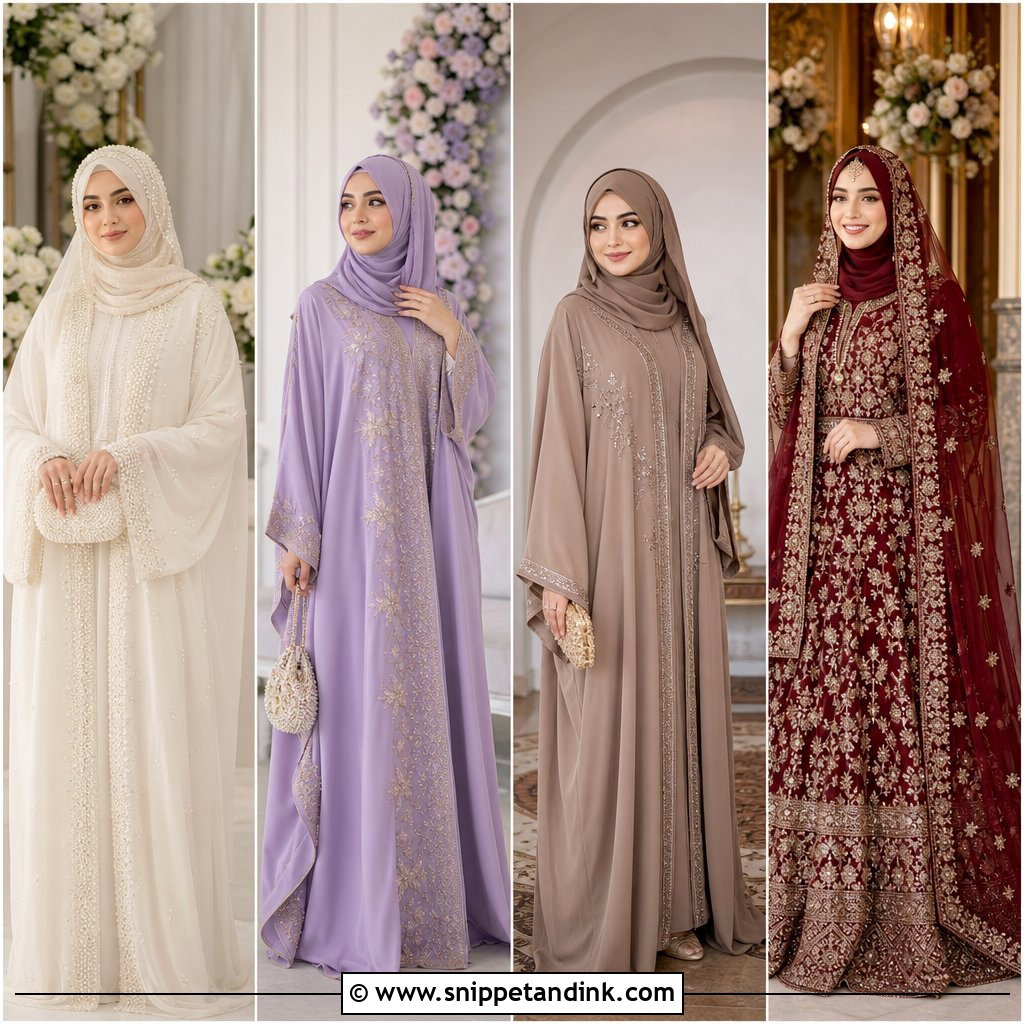
- Mosque venues: shoes come off at the door, which makes embellished khussas you can slip on and off more practical than strappy heels, and full sleeves are usually expected.
1. White Nikah Gharara With Gold Dupatta
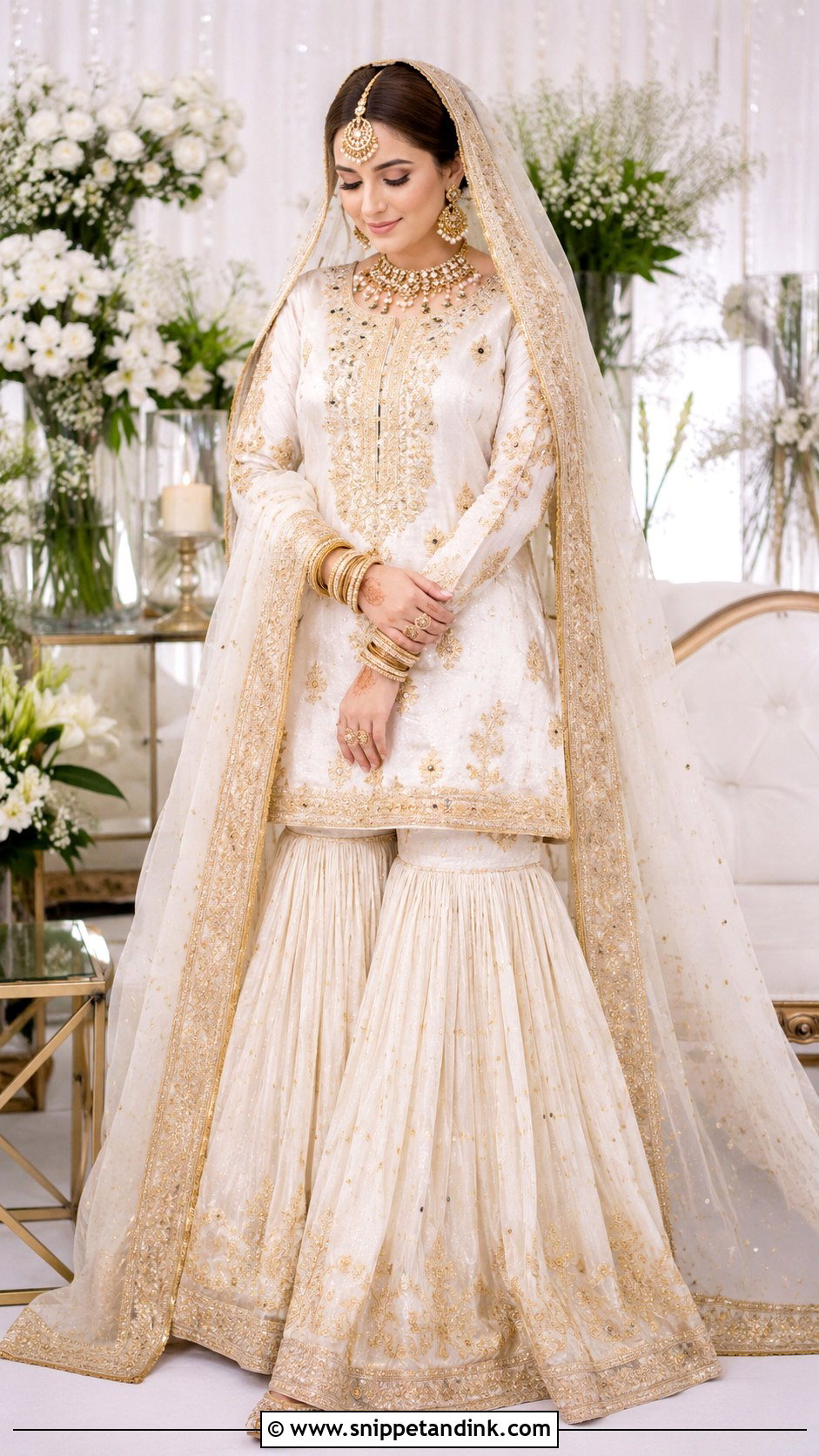
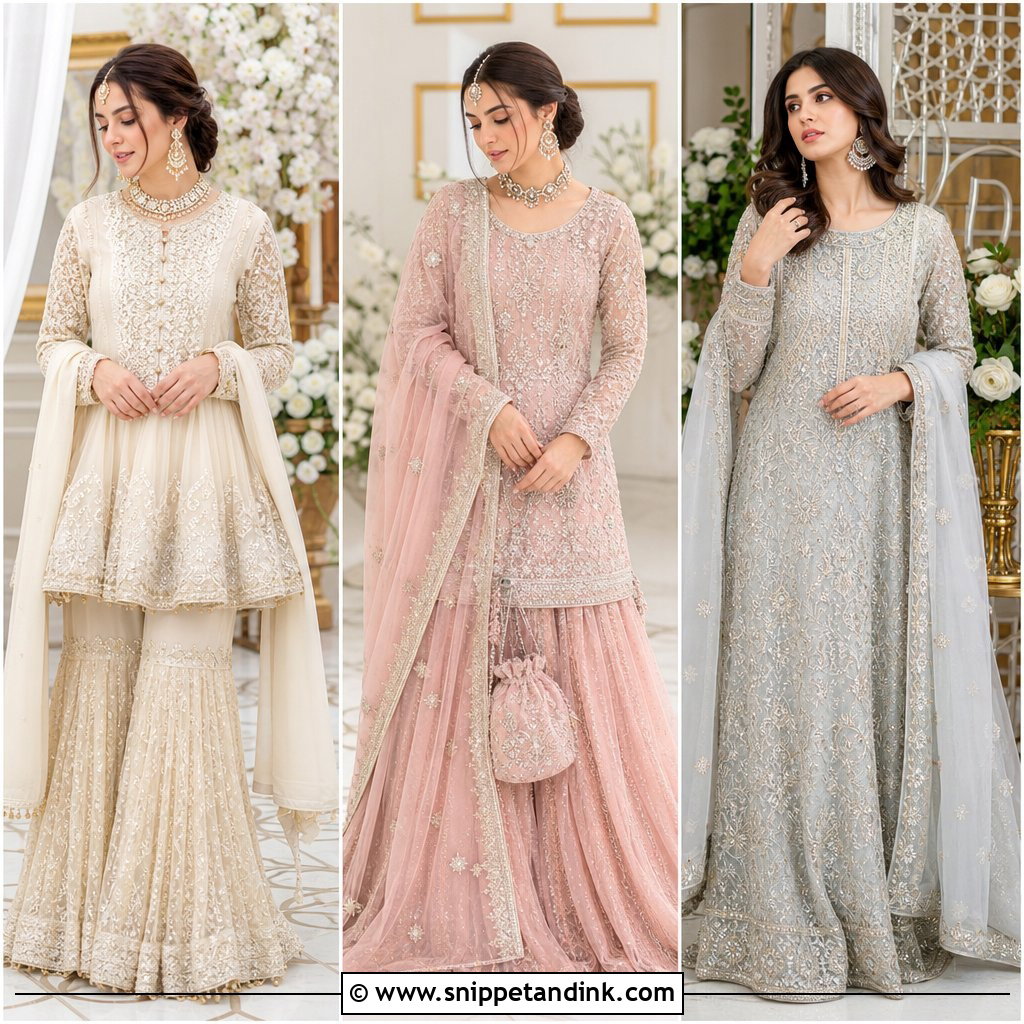
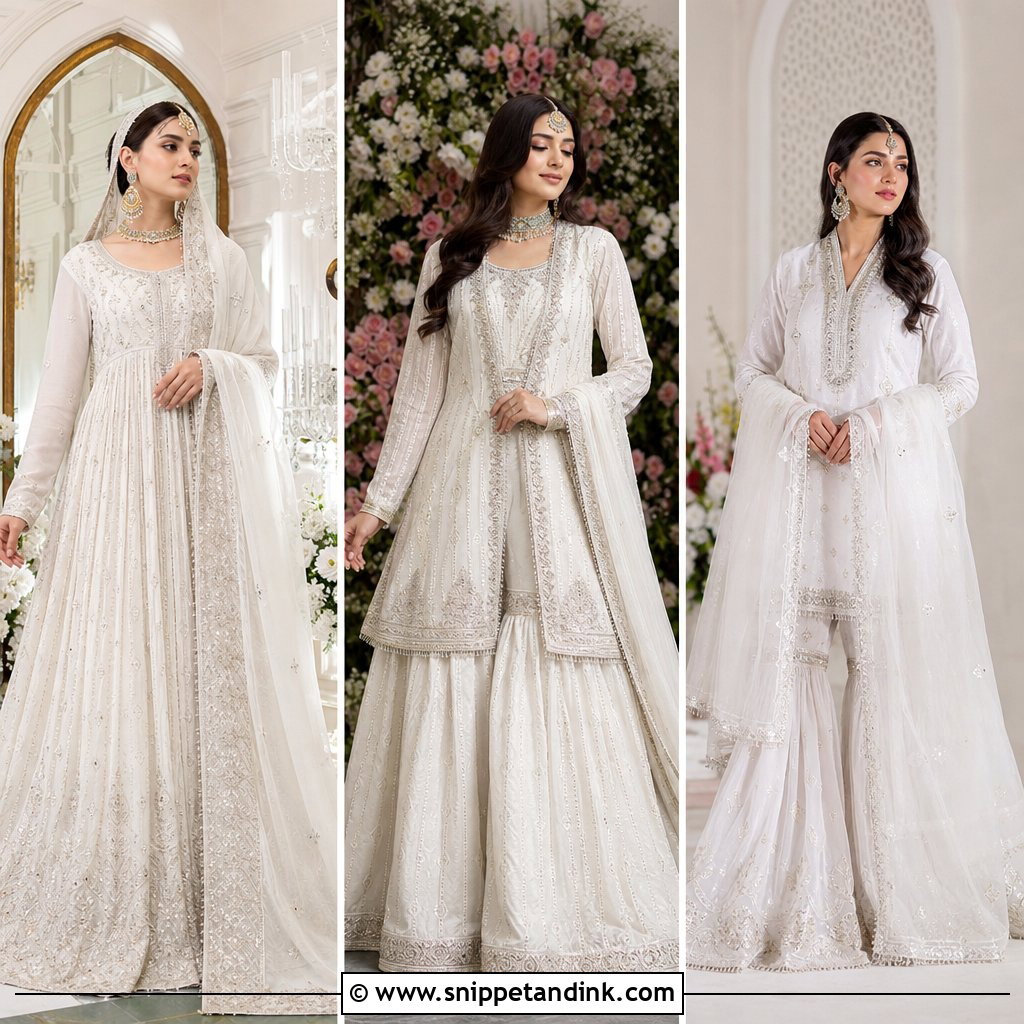
White and gold is the Nikah pairing older relatives tend to love, and it’s easy to see why. A white Nikah gharara keeps the base pure, and gold zardozi, gota, dabka or sequins on a short kameez supply the richness. The gharara’s flare carries the movement. Pure optical white can look blue-ish next to warm gold, so I usually suggest an off-white base unless the bride specifically wants that crisp contrast. A sheer gold dupatta with border work goes over the head for the ceremony. Kundan earrings, a passa, soft makeup and embellished khussas or low heels finish it.
2. Ivory Nikah Lehenga With Long Shirt
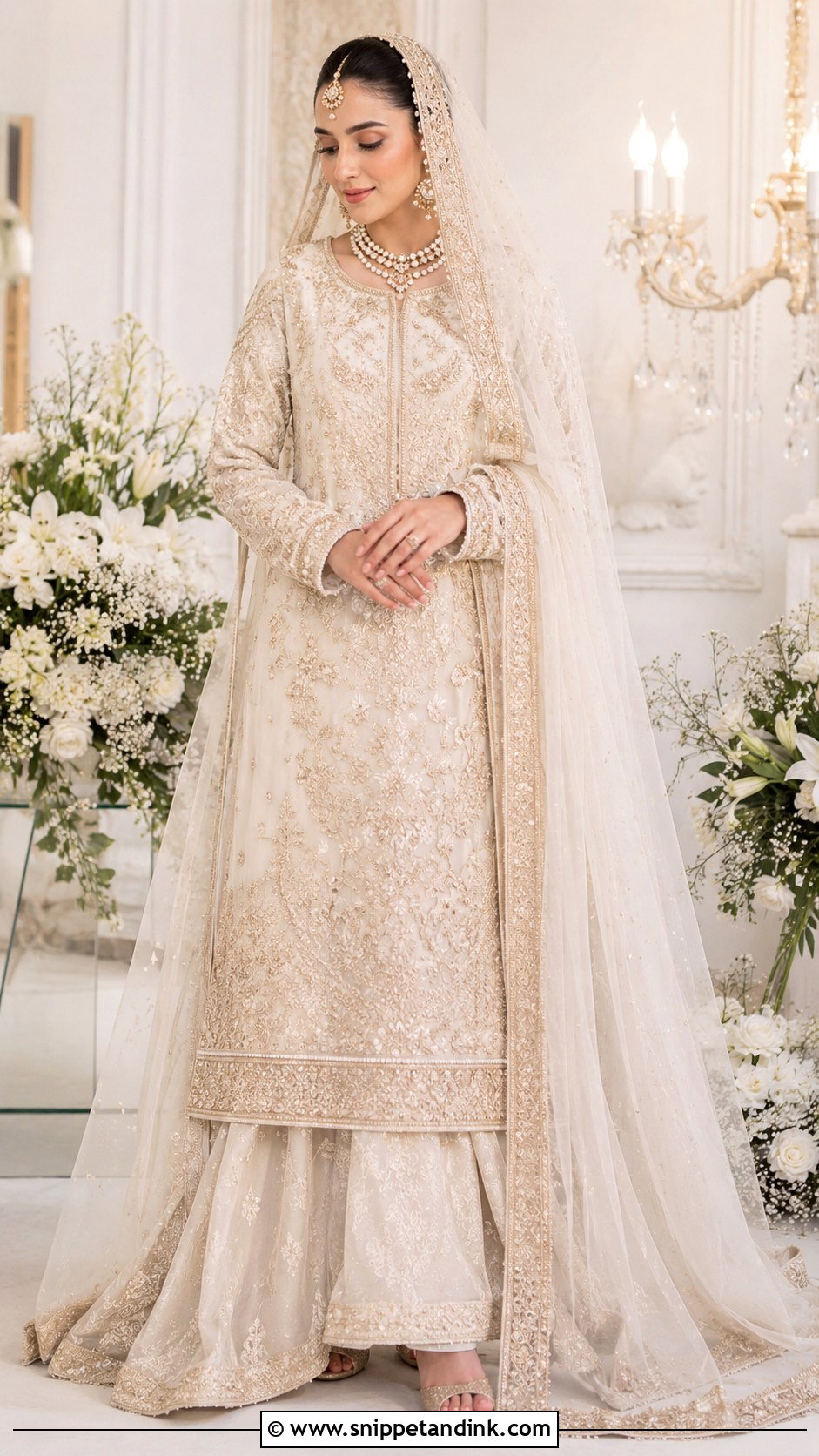
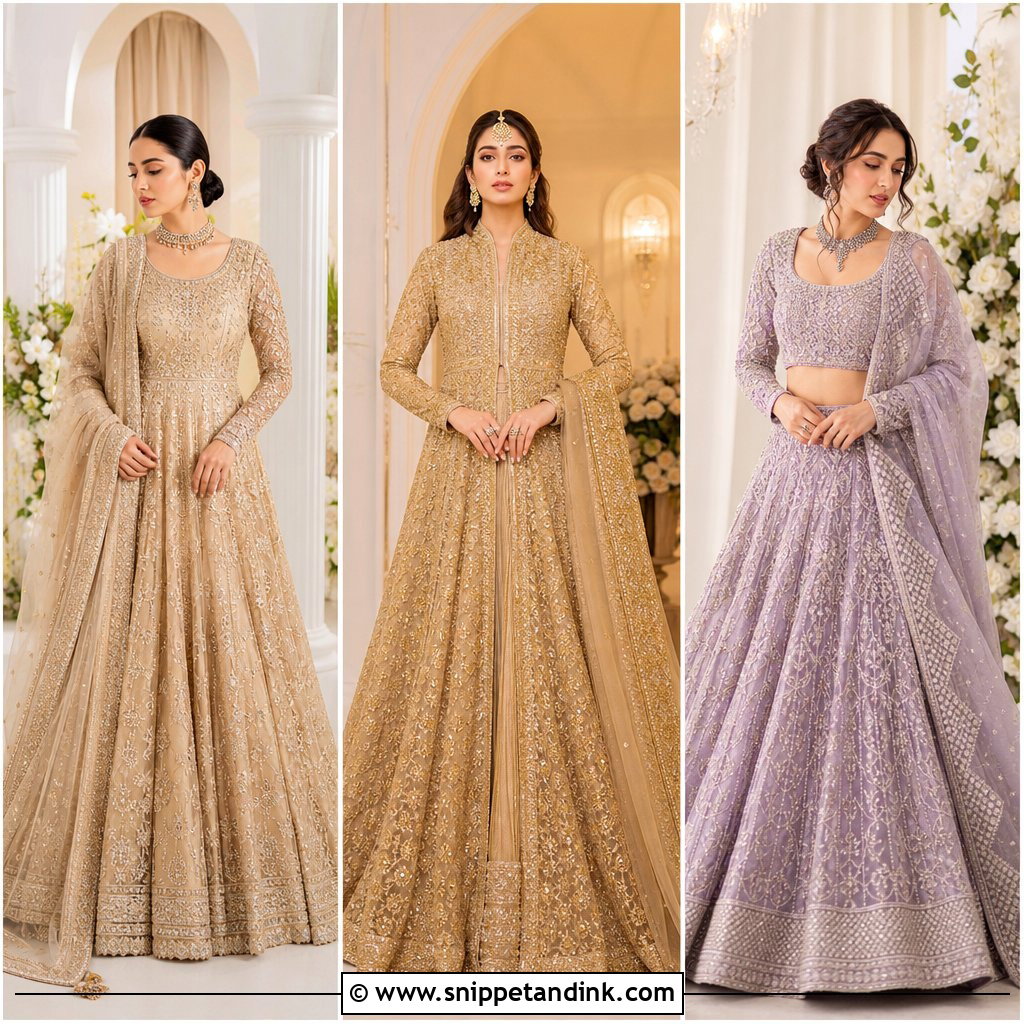
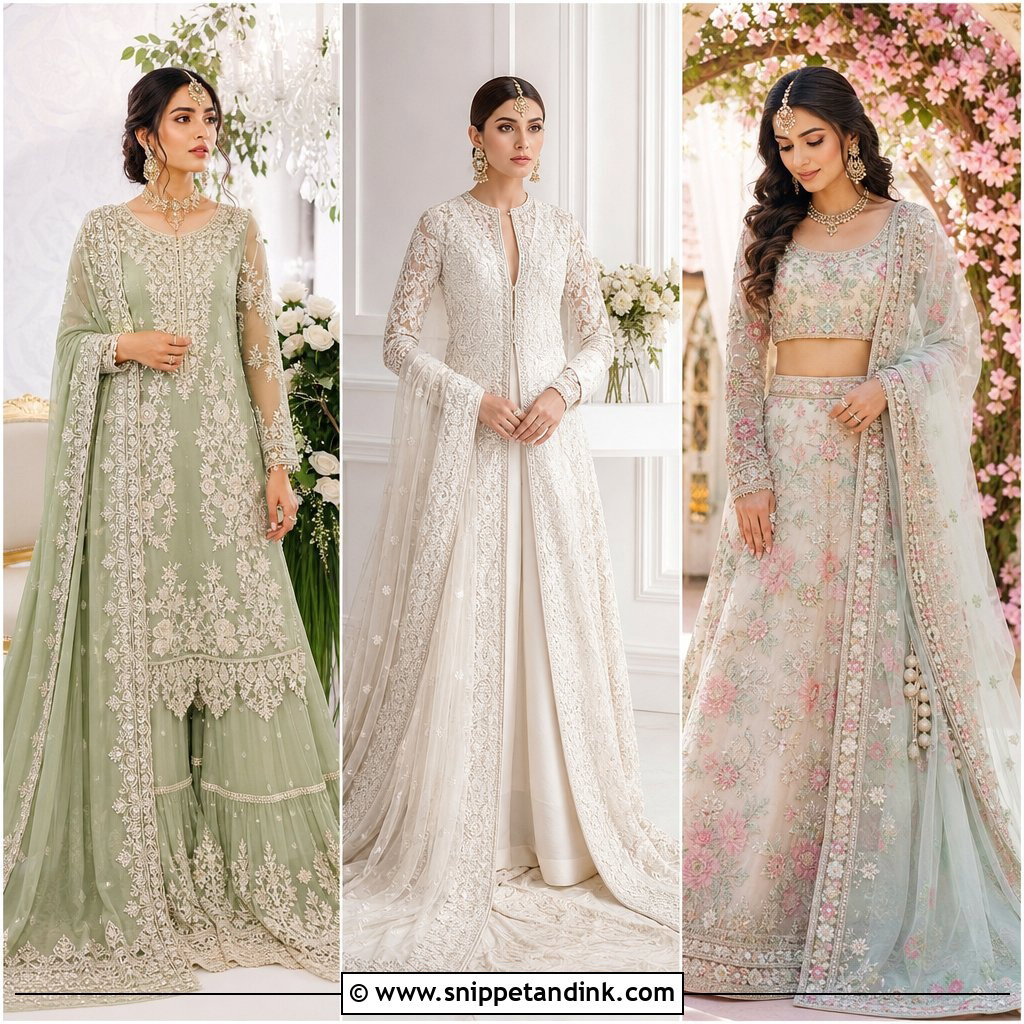
Many brides prefer a long shirt to a cropped blouse for the Nikah, and an ivory lehenga under one gives that coverage without losing the bridal shape. Raw silk, organza or net with hand embroidery in champagne, antique gold or pearl suits ivory. The flowing lehenga balances the structured shirt. With a long shirt over a lehenga, I check the outfit seated on a low sofa, since the shirt hem can bunch awkwardly across the lap in photos if it’s too stiff. A matching dupatta over the head and one shoulder, pearl jewellery, a small teeka and soft curls or a sleek bun complete it, bridal without full baraat weight.
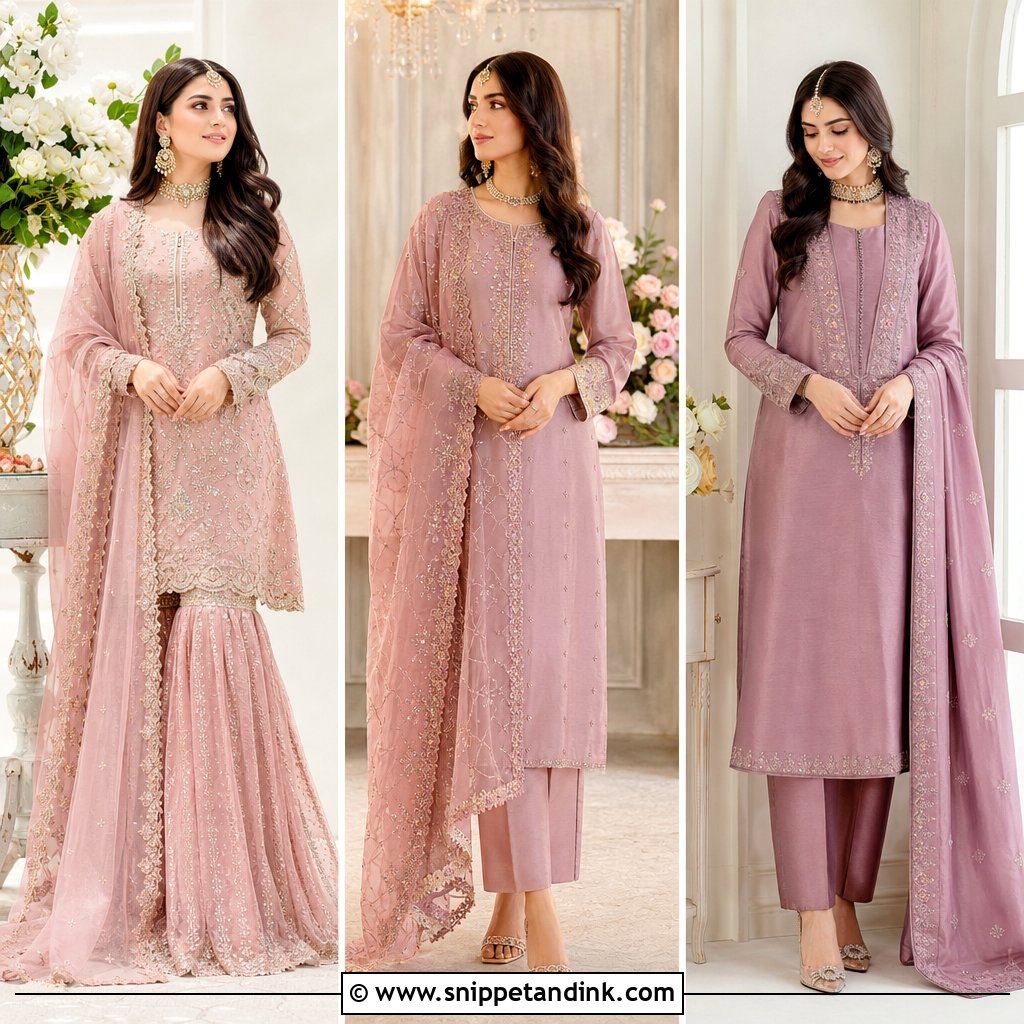
3. Pastel Pink Nikah Sharara With Organza Dupatta
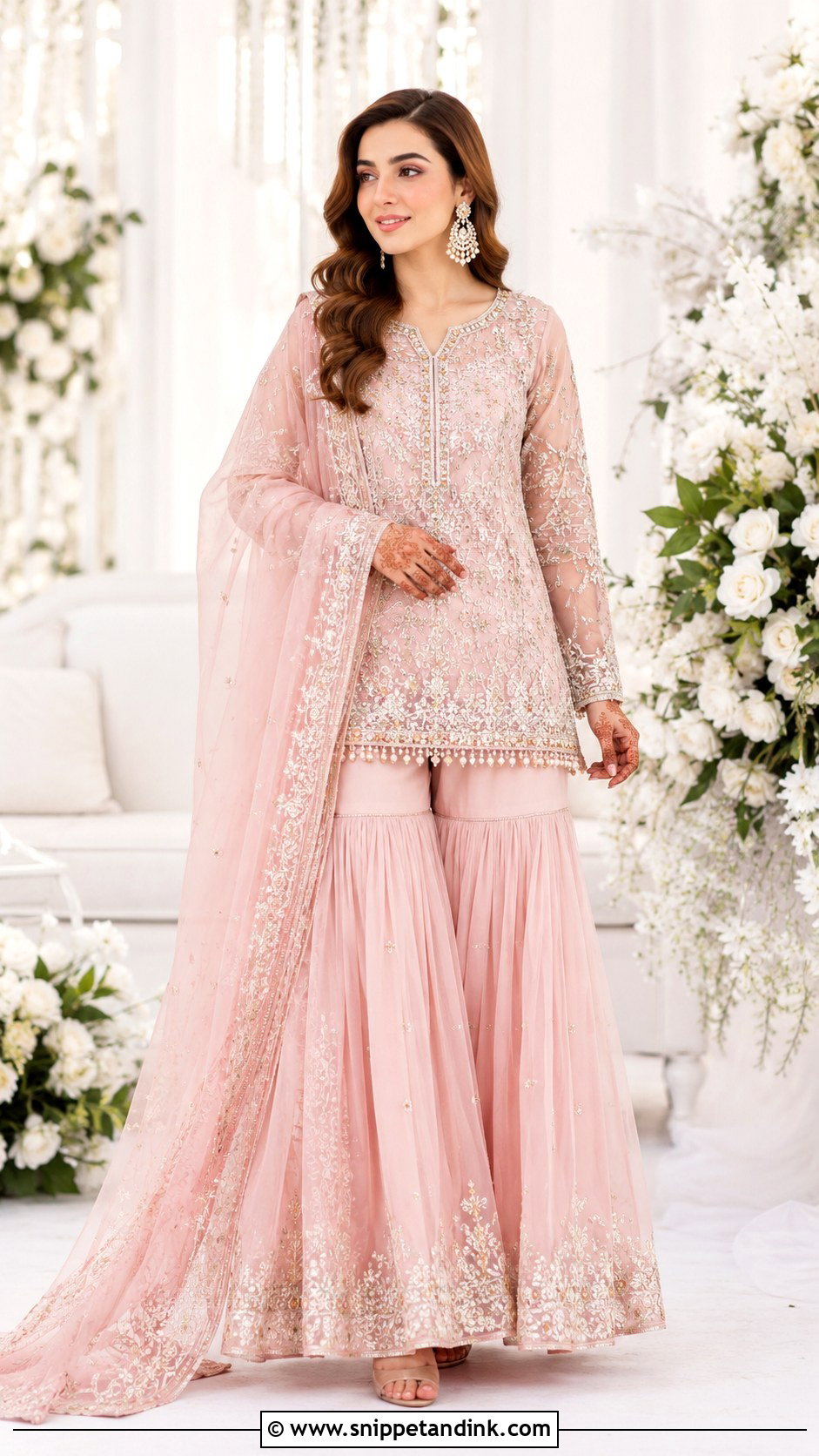
Pastel pink is youthful and reads well in daylight against white, gold or floral decor. A pastel pink Nikah sharara works with a short or mid-length shirt in silver, pearl or pale gold embroidery, and the sharara adds volume without stiffness. The organza dupatta should have scattered embellishment and a detailed border. Organza is light enough to sit on the hair without dragging it, which is why I reach for it so often for a Nikah where the dupatta stays on the head for a long stretch. Pearl chandbalis, nude heels and rosy makeup keep it soft.
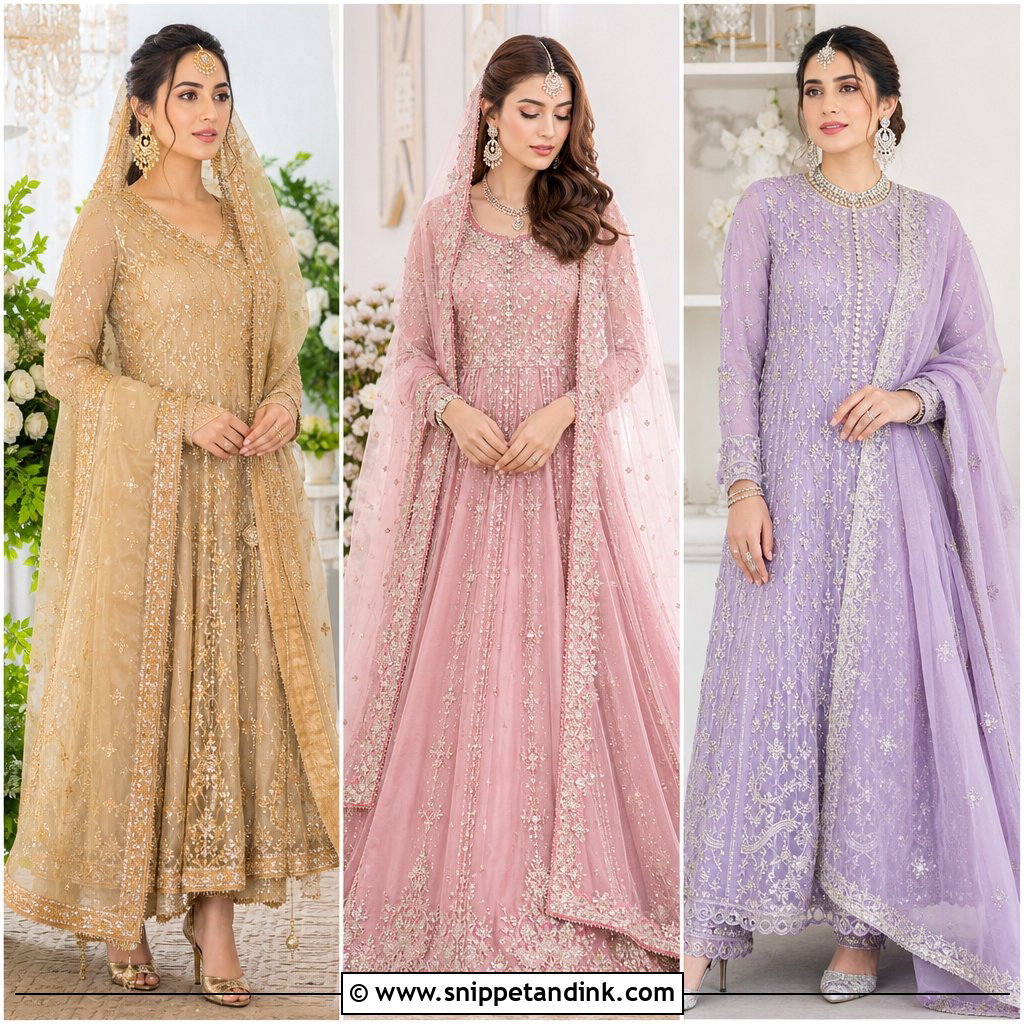
4. Champagne Nikah Maxi With Bridal Veil
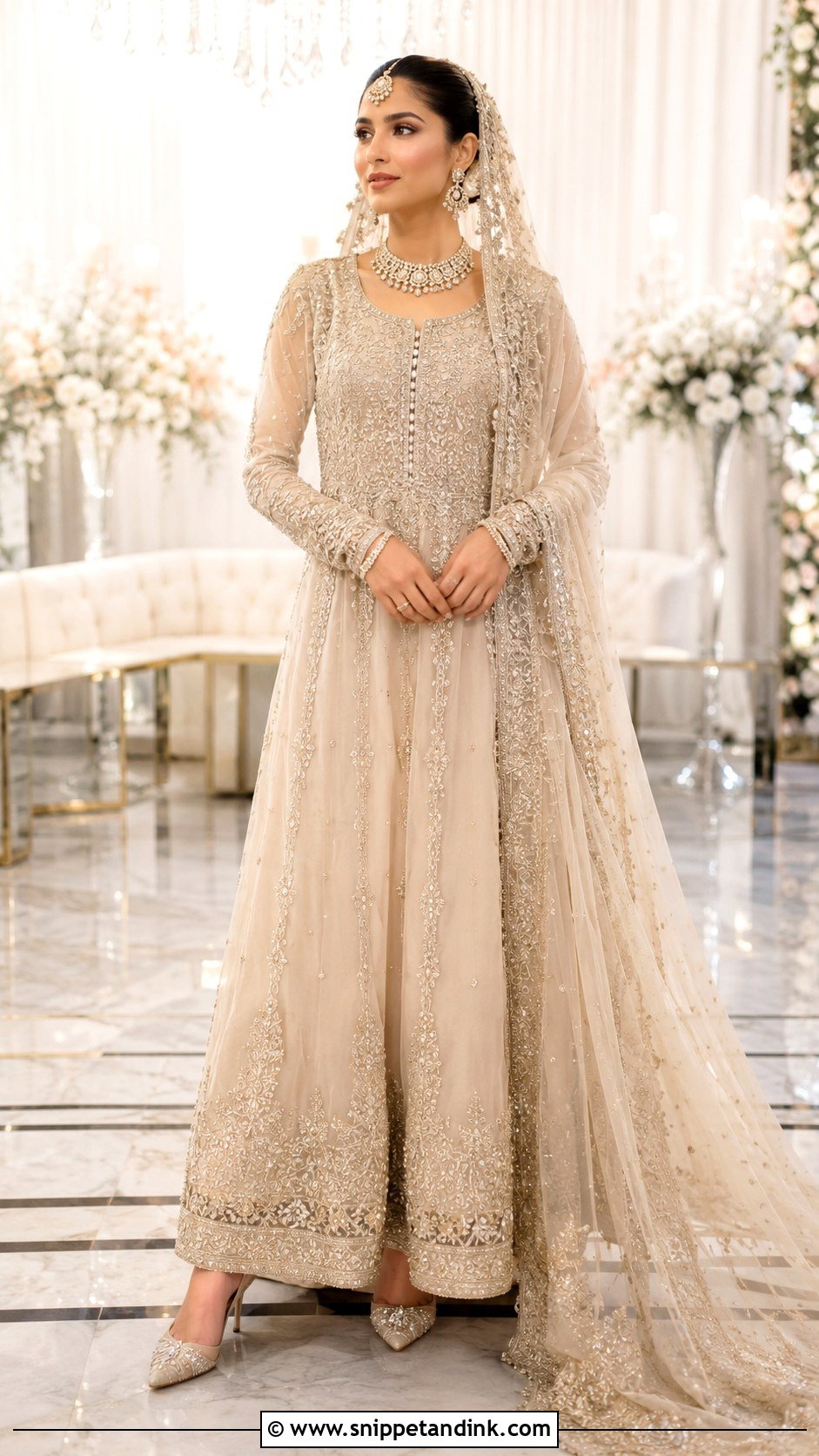
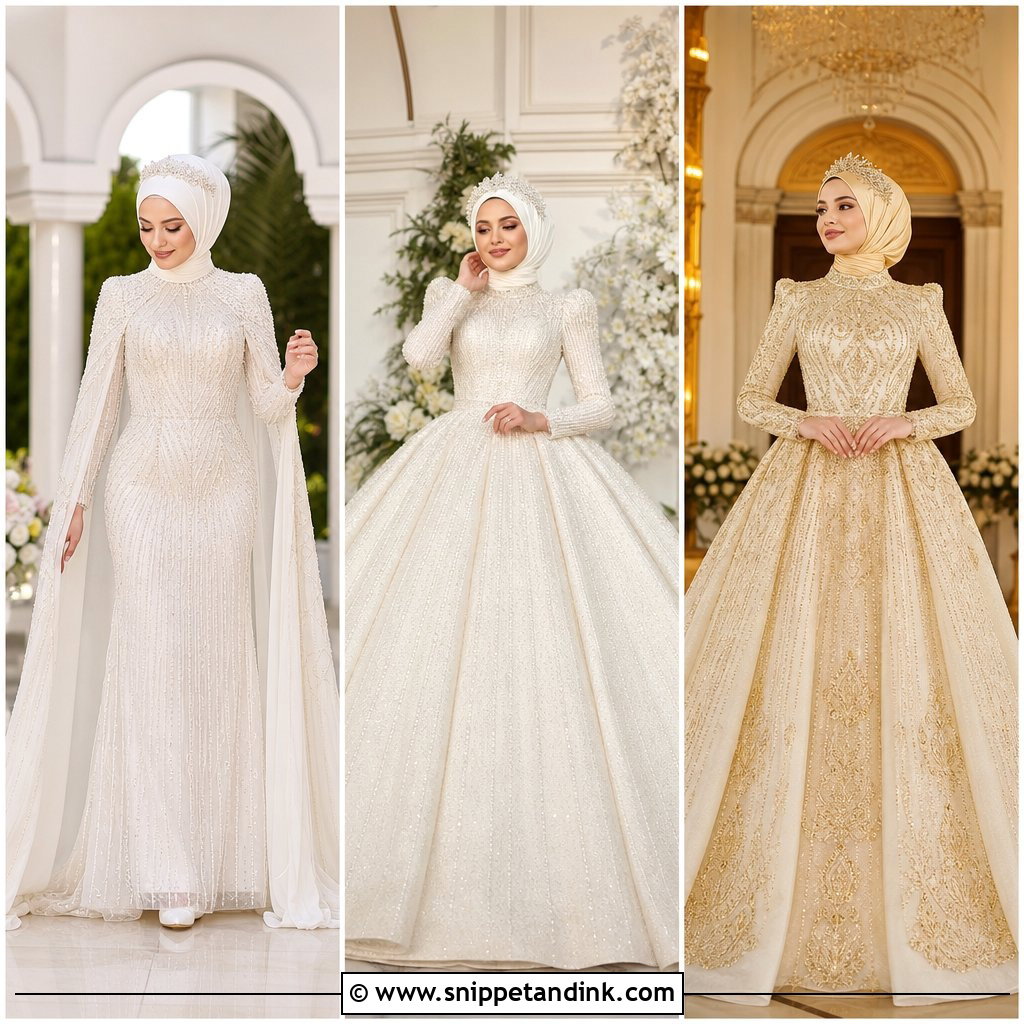
A champagne maxi is the modern option here, and it suits hotel events, indoor halls and small Nikahs at home. Choose a gown-style maxi with light handwork on the bodice, sleeves and hemline, in champagne, beige or soft gold. The maxi has no separate dupatta built in, so plan the head covering early: a long matching veil or dupatta for the signing and portraits, pinned before you leave. Polki jewellery, a sleek bun and pointed embellished heels finish it. Champagne close to the skin tone can look nude in photos, so hold the fabric to your face in daylight before ordering.
5. Mint Green Nikah Angrakha With Gharara
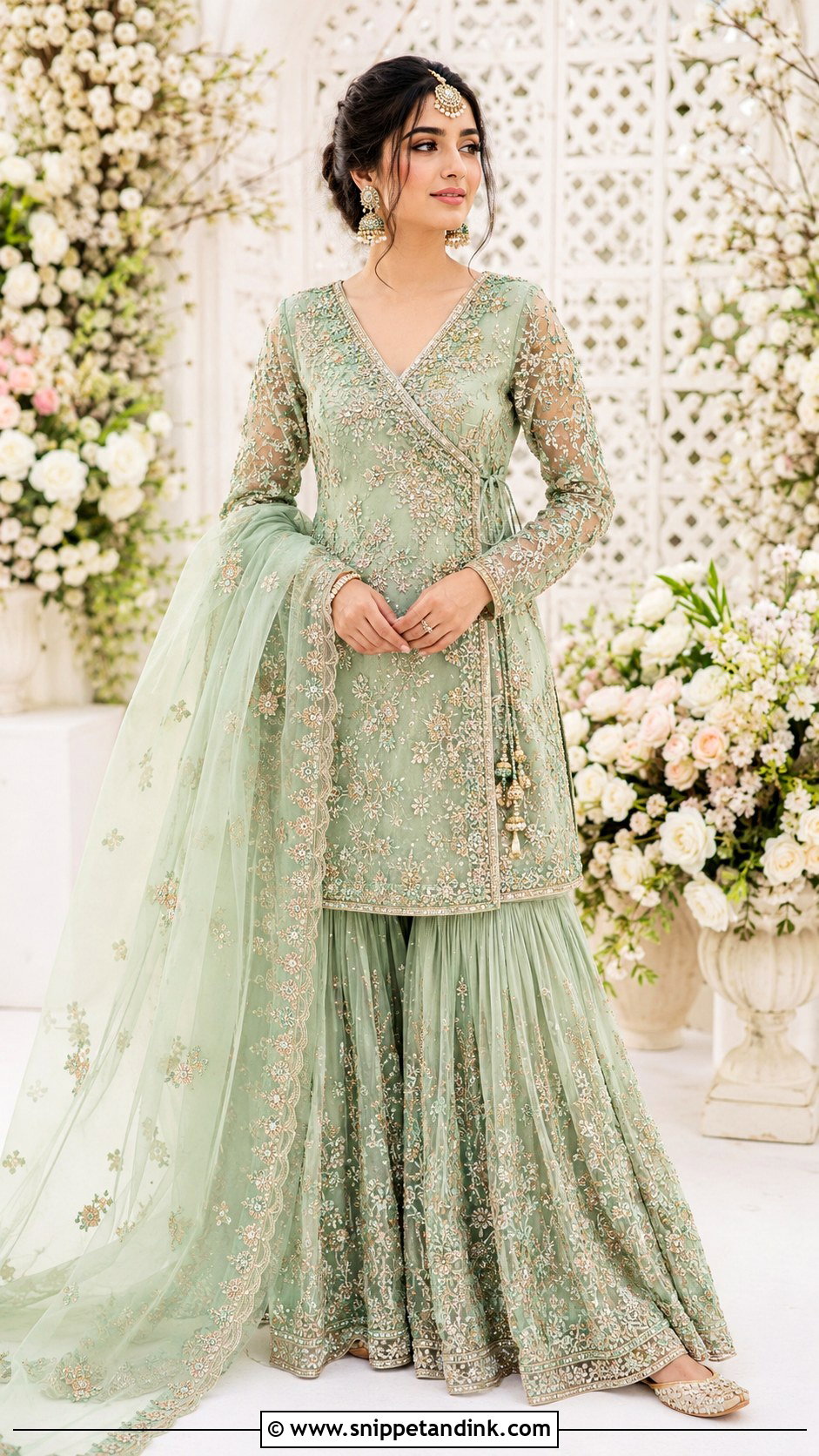
Mint with an angrakha gives a slightly vintage feel. The overlapping front adds movement and detail, and the gharara keeps the outfit firmly traditional. Silver, ivory or soft gold embroidery suits mint. Angrakha ties are decorative and loosen with movement, so I have the tailor add a hidden hook under the overlap. A net or organza dupatta with lace edges softens it over the head, with jhumkas, a delicate teeka and embroidered khussas. It’s a natural spring or daytime choice and brings colour without disturbing the calm of the ceremony.
6. Powder Blue Nikah Lehenga With Silver Work
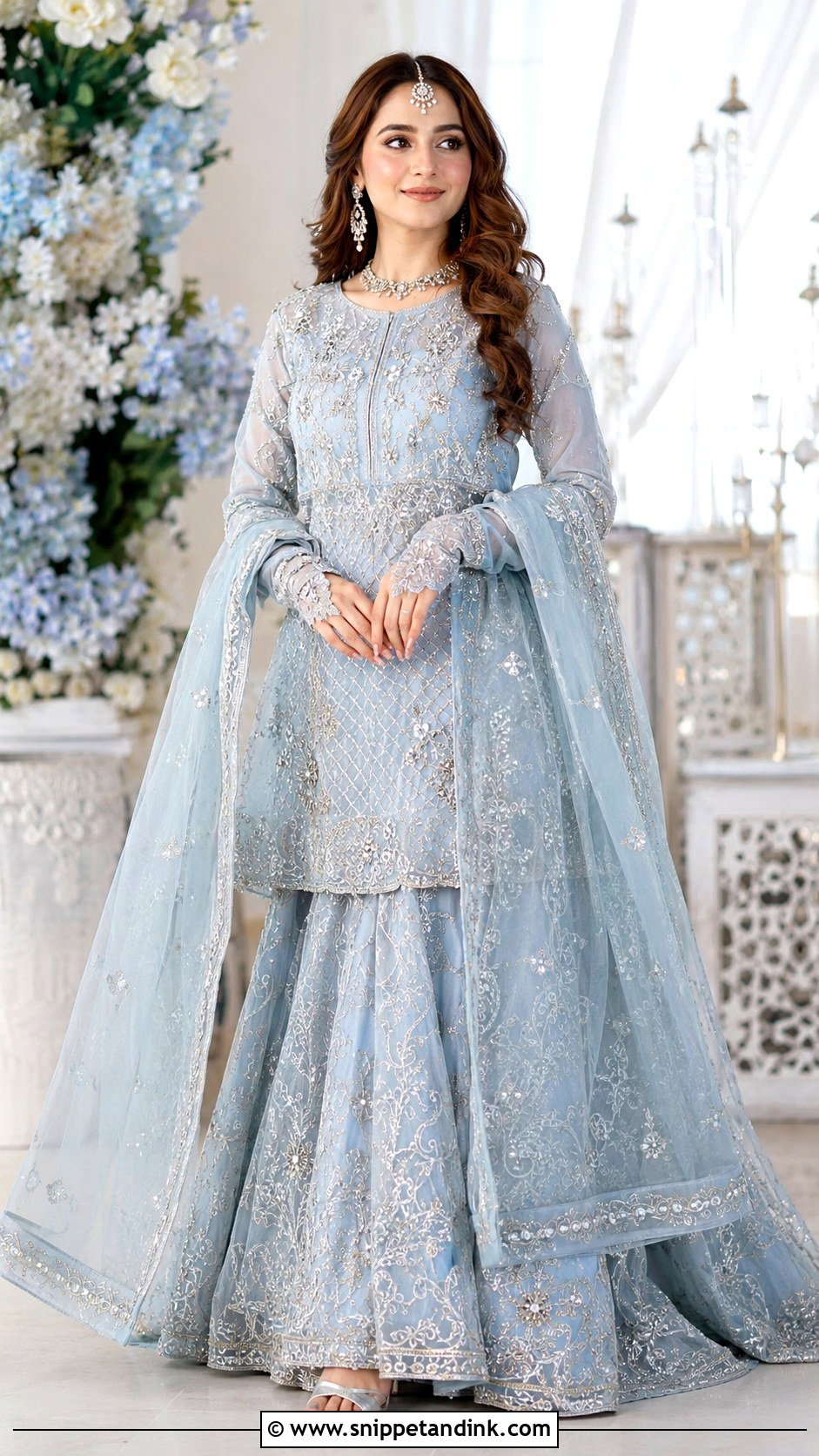
Powder blue is for the bride who wants to step away from white and pink but stay soft. A powder blue Nikah lehenga carries fine silver threadwork, crystals, pearls or sequins well, paired with a matching long or peplum shirt. Cool blues need warmth somewhere near the face or they can make skin look sallow under daylight, so I lean on dewy makeup and a little warmth in the blush. A sheer dupatta with a silver border, diamond-style jewellery and silver sandals complete it.
7. Beige Nikah Peshwas With Churidar Pajama
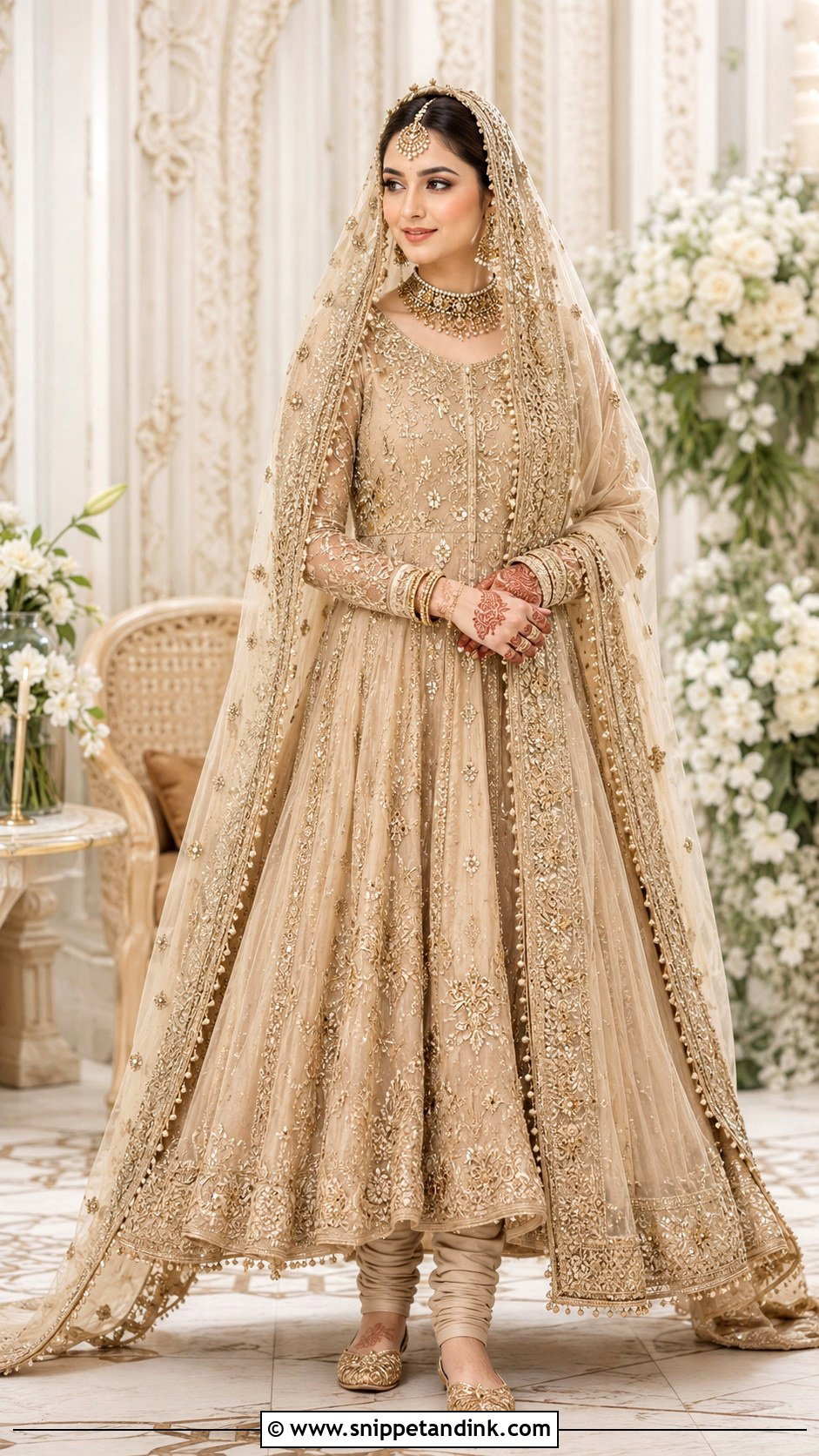
Peshwas with churidar is old-world dressing, and in beige it has a quiet, heritage feel. The flare starts at the waist and the churidar keeps the lower half neat. Beige, sand or tea-pink fabric with gold or pearl embroidery gives warmth without bright colour. Churidar has to be cut long enough to gather in soft folds at the ankle; if it’s cut too short it pulls up when you sit cross-legged, and you’ll be sitting a lot at a Nikah. A heavy-bordered dupatta over the head or across both shoulders, a jhoomar, a choker and bangles complete it.
8. Gold Nikah Lehenga With Ivory Dupatta
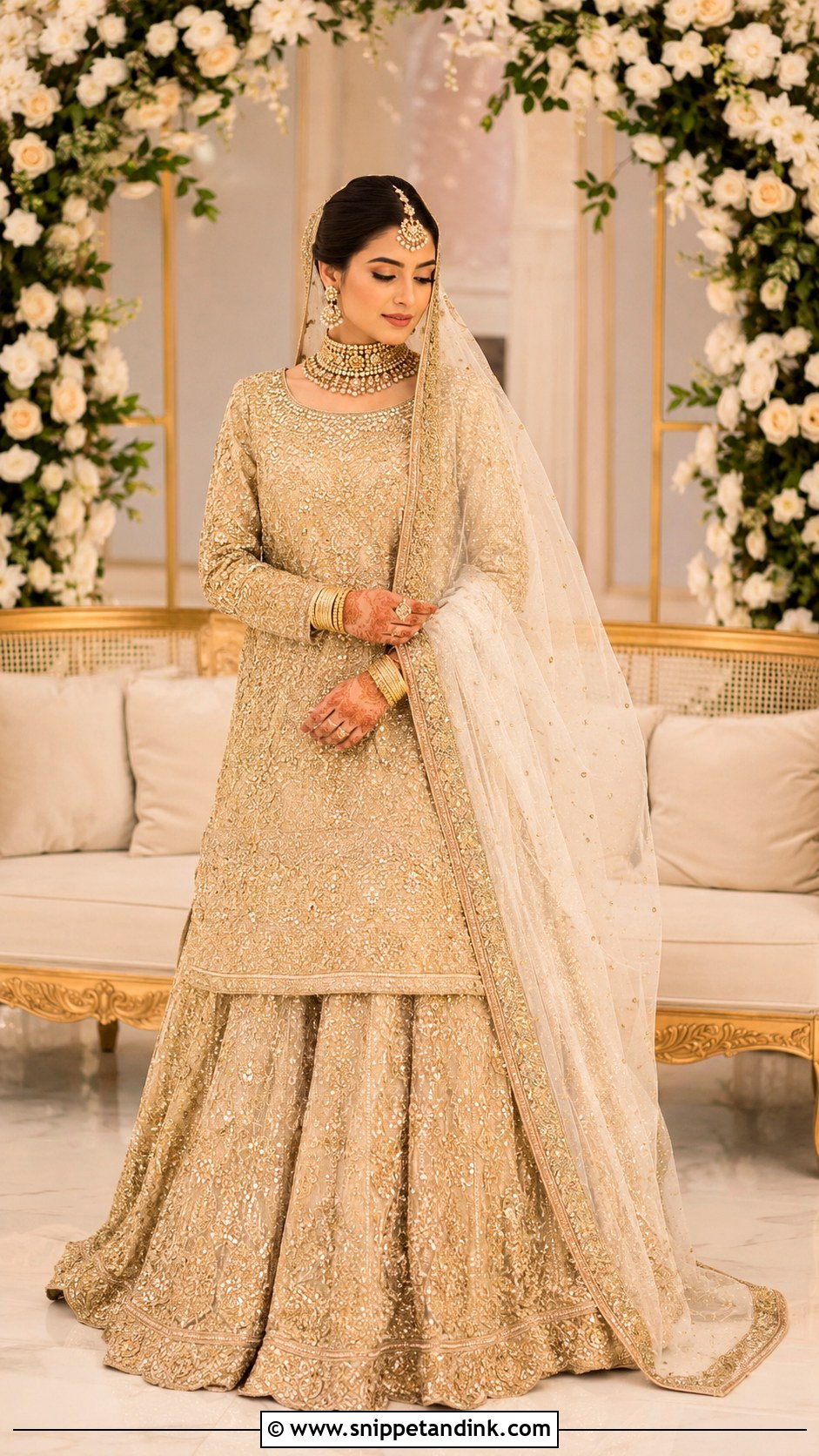
Gold with ivory is warm and traditional but balanced. The gold lehenga is the festive foundation, and the ivory dupatta softens the overall effect. I’d always choose antique gold embroidery over very shiny finishes for a Nikah, since high-shine gold flares in flash photography and hides the detail. A long shirt or modest full-sleeved blouse keeps it comfortable. Kundan jewellery, gold bangles and soft neutral makeup suit it, and draping the ivory dupatta over the head gives clean contrast against the gold in portraits.
9. Peach Nikah Gown With Pearl Jewelry
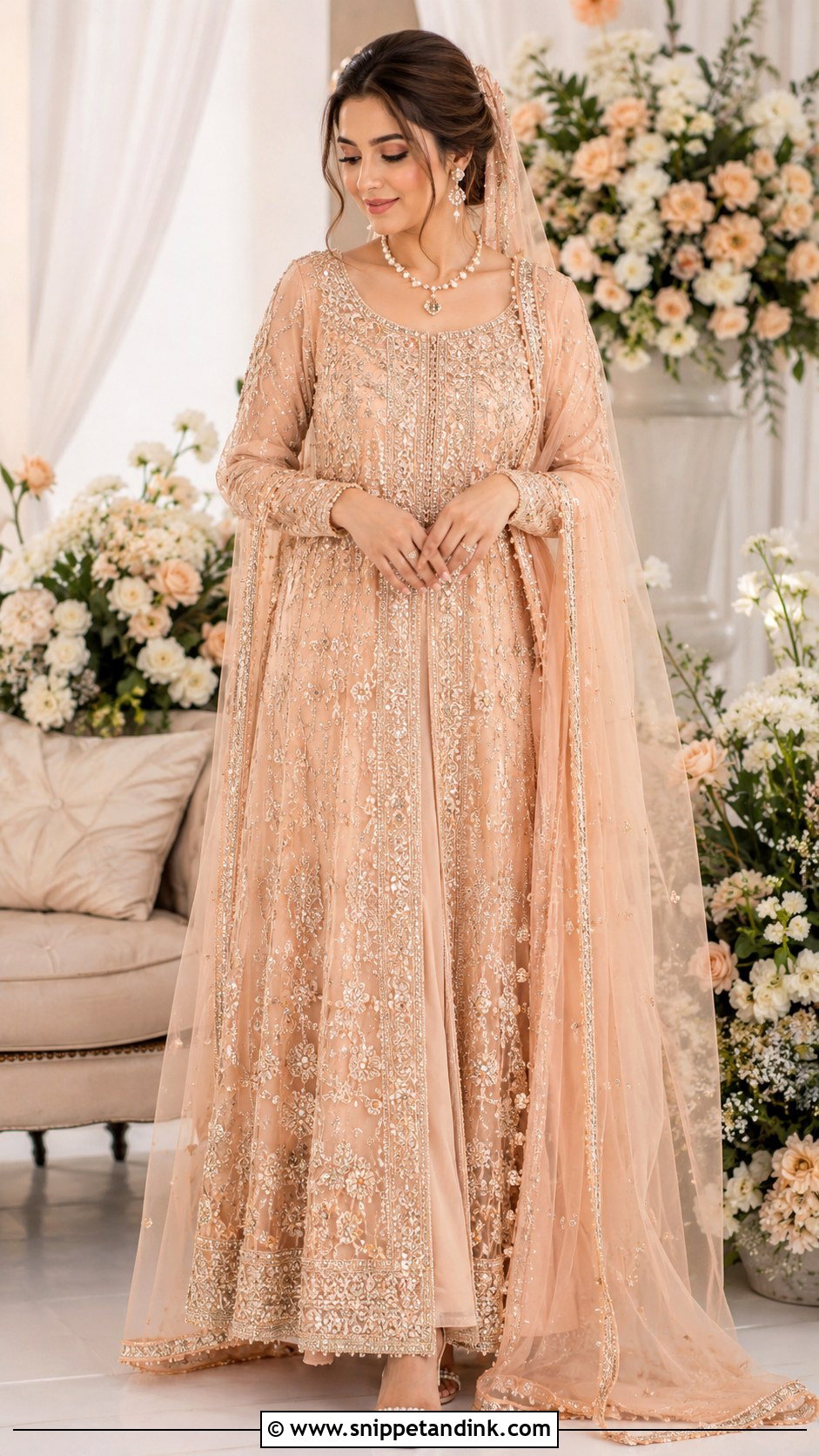
Peach gowns are for the bride who wants a slightly contemporary shape. A long gown with delicate embroidery on the bodice, sleeves and hem, plus a matching or ivory dupatta for ceremony coverage, is enough. Peach suits pearls, soft gold and nude-toned accessories. A gown has a fitted bodice, so try sitting on the floor in it at the fitting if your Nikah will be held in a mosque or a home with floor seating; some gowns simply don’t allow it. Peach blush, defined eyes and a glossy lip, with low heels or embellished sandals, finish it.
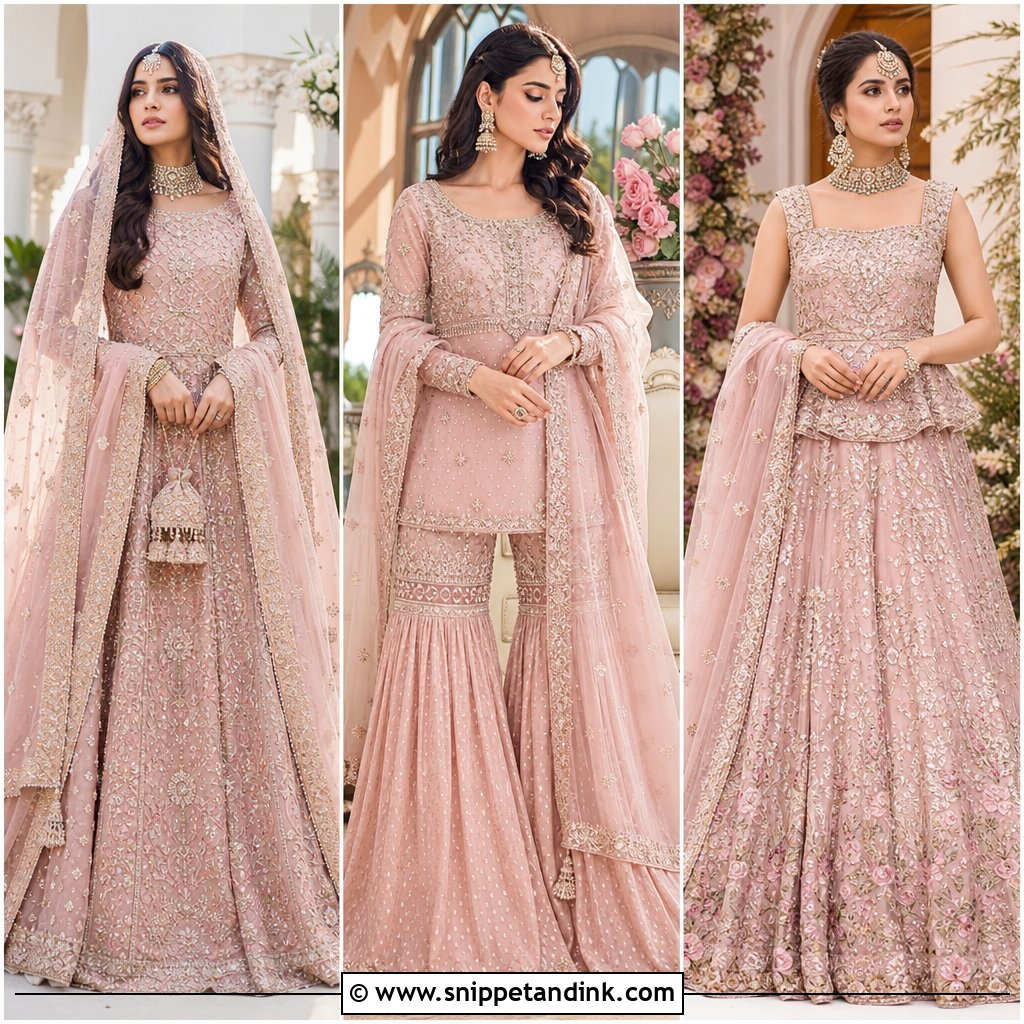
10. Blush Pink Nikah Farshi Gharara
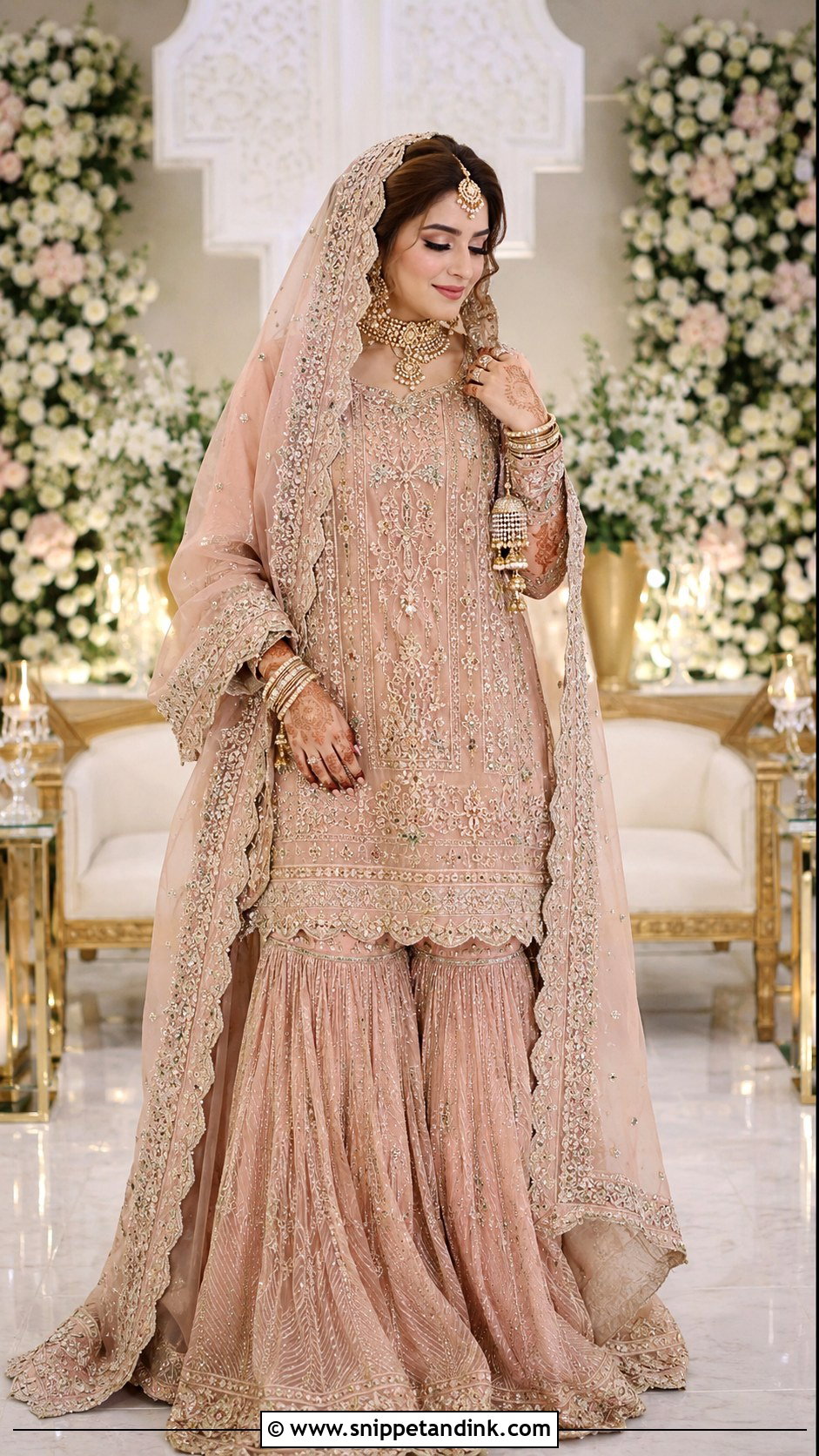
Farshi ghararas are at their best in seated ceremony photos, where the long hem fans out around the bride. In blush pink with antique gold or pearl work, it looks soft and expensive. The silhouette already has volume, so keep the shirt neat with balanced proportions. Getting to and from the stage is the challenge. Someone needs to lift the hem on steps, and I always tell brides to choose that person ahead of time rather than leaving it to whoever is nearby. A matching dupatta with scalloped edges or heavy borders frames the face, and a passa, choker and bangles finish it.
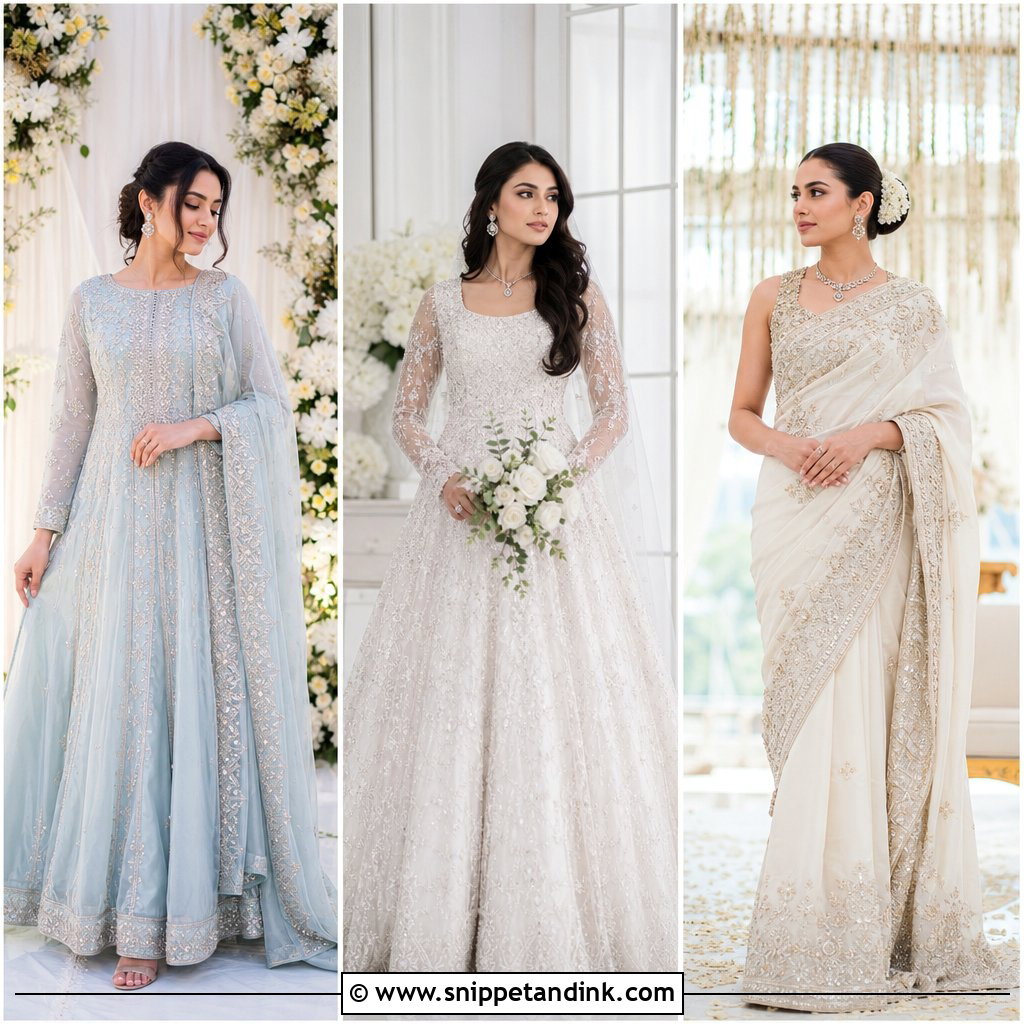
11. White Nikah Saree With Embroidered Blouse
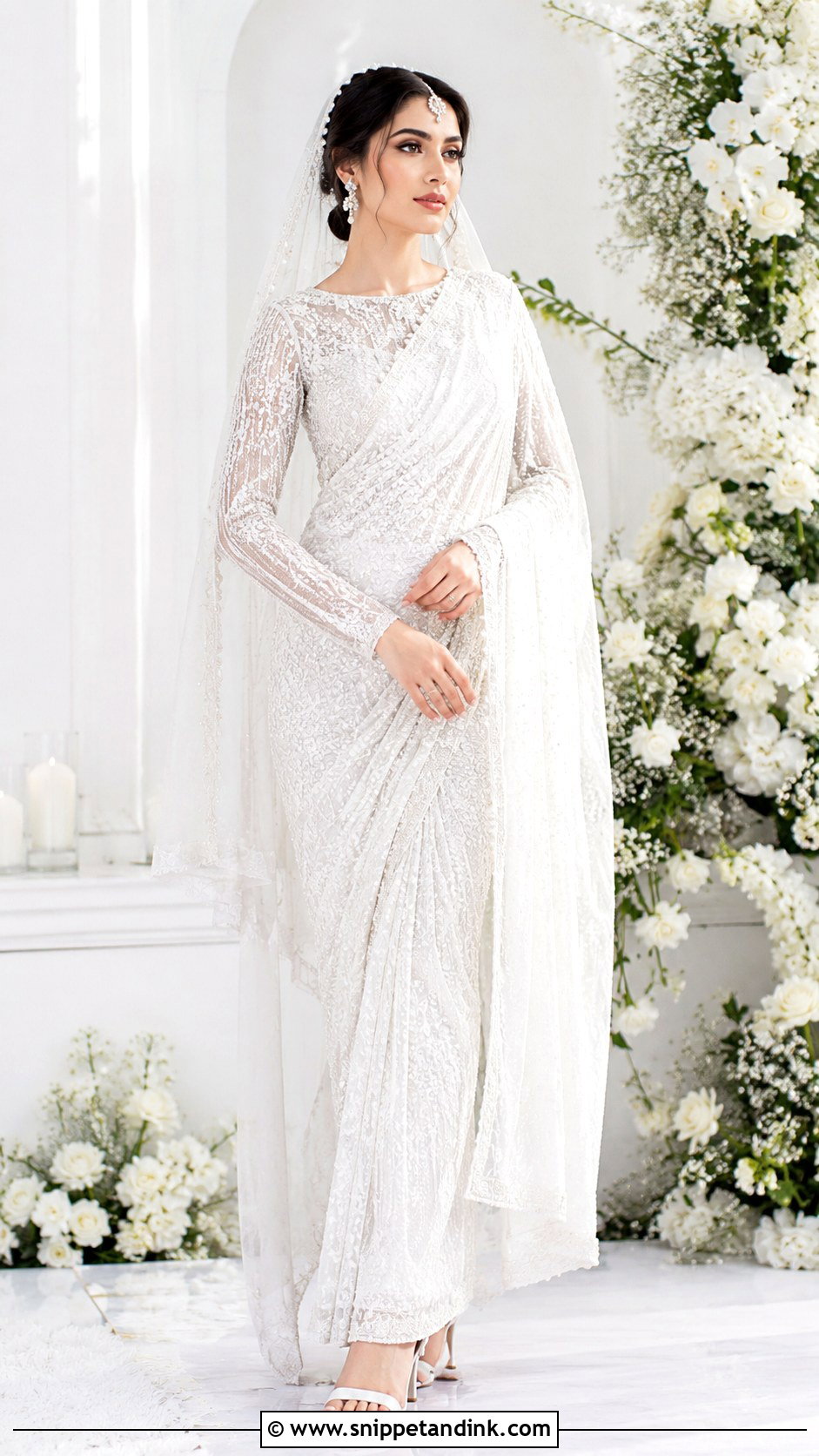
White sarees are unexpected at a Pakistani Nikah but they can be ceremonial and modest with a full-sleeve blouse, a longer pallu and delicate embroidery. White chiffon, organza or tissue with pearl, silver or gold work suits it. A saree pallu over the head slips more than a dupatta does, so I’d pin it at the crown and shoulder, or add a separate veil for the Nikah moment. Pearl earrings, a small teeka and sleek heels, with soft luminous makeup, let the fabric lead.
12. Lavender Nikah Sharara With Kundan Set
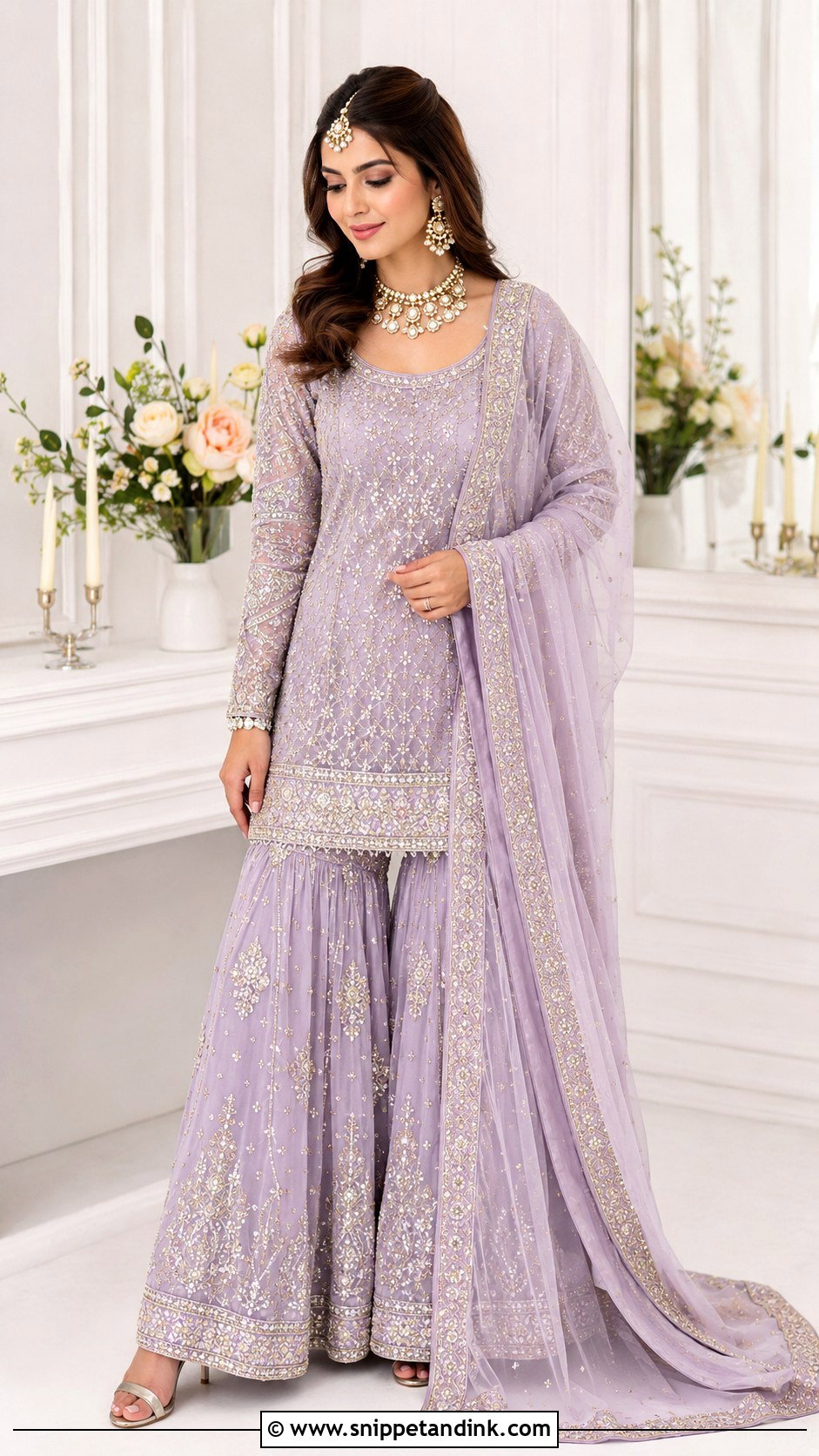
Lavender with a kundan set is an interesting mix: a cool pastel and warm traditional jewellery. It works because kundan’s gold setting gives the cool colour some warmth. Lavender also pairs with silver, pearl and pale gold embroidery for daytime or pastel-themed Nikahs. A short shirt with detailed cuffs and neckline over a wide sharara gives volume. Lavender fabric can shift towards grey or pink depending on lighting, so view the swatch under the light you’ll actually be in. A sheer bordered dupatta, metallic heels and soft mauve makeup finish it.
13. Cream Nikah Anarkali With Red Dupatta
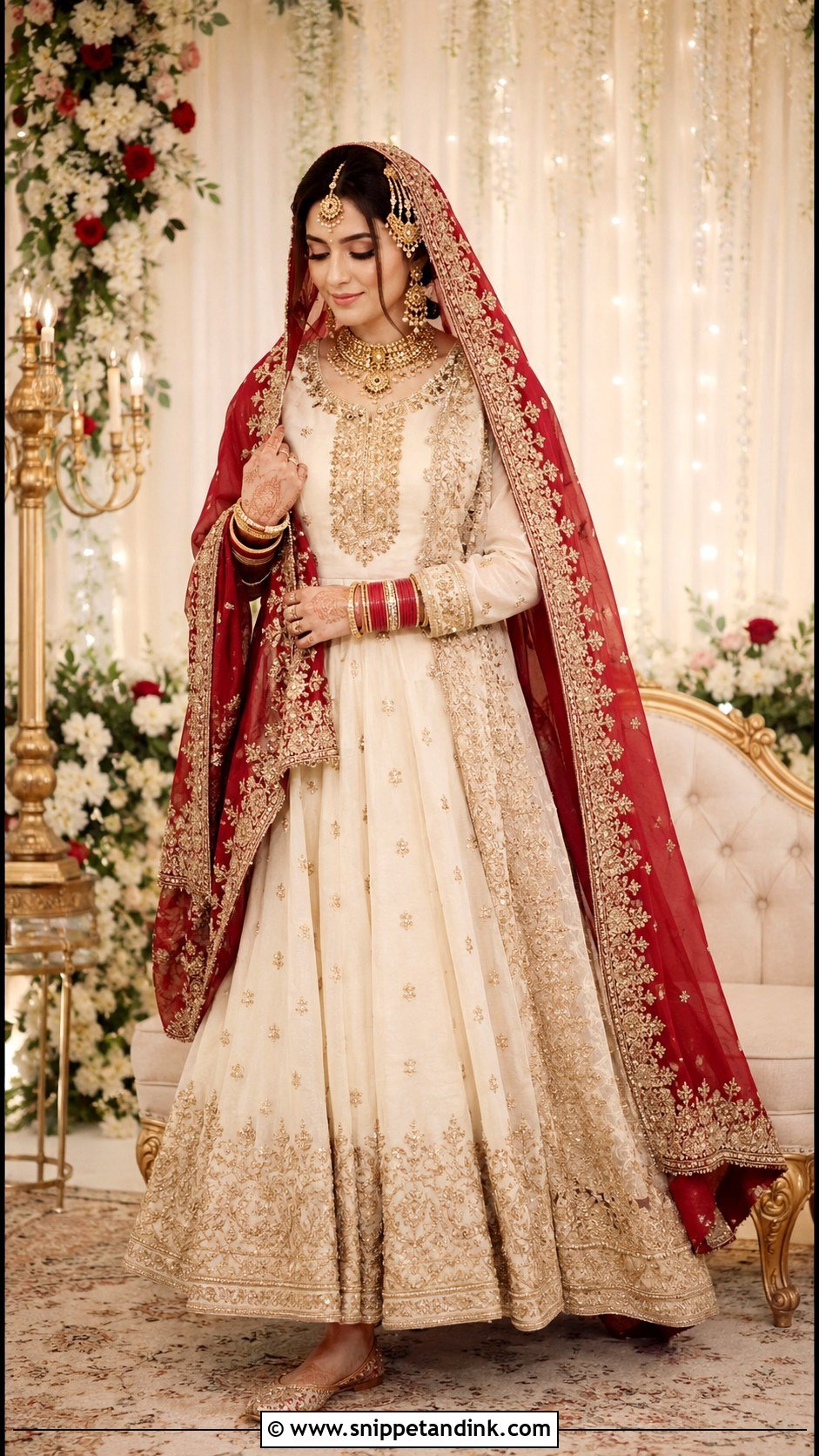
Cream and red together let a bride nod to the classic bridal red without wearing it head to toe. The cream anarkali stays calm, with gold embroidery, fitted sleeves and a graceful flare, while the red dupatta brings the tradition with gota, sequins or embroidered borders. Red dupattas in cheaper dyes can transfer onto cream fabric if they get damp, which matters on a hot day, so test a corner on a white cloth first. Gold jewellery, red bangles and embellished khussas complete it, and the contrast stands out in close family portraits.
14. Silver Nikah Maxi With Matching Dupatta
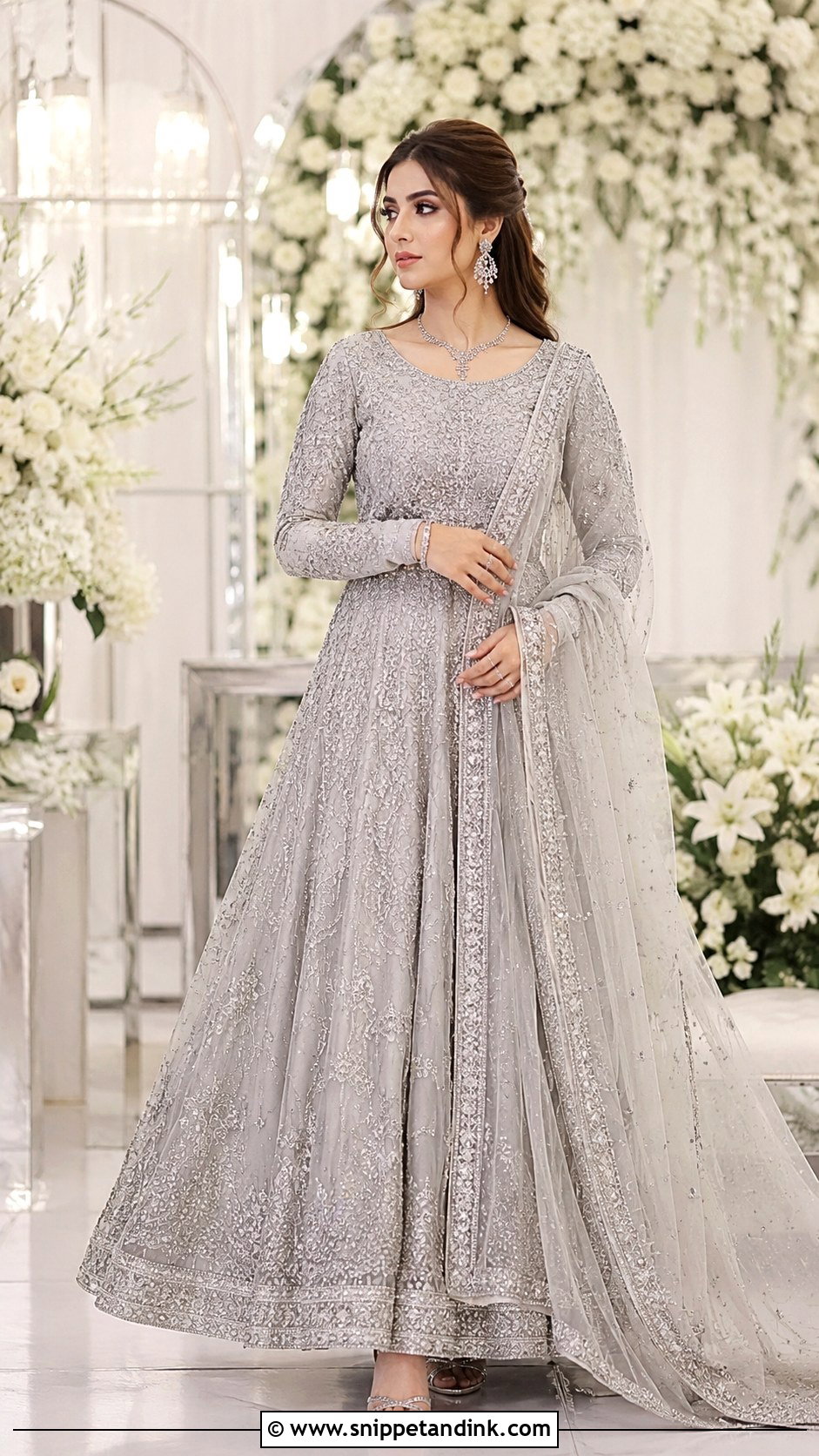
Silver maxis give a clean, luminous look, best at an evening Nikah with white florals, mirrors or minimal gold decor. A fitted bodice, flowing skirt and detailed sleeves balance the shape, and a matching dupatta with a thin embellished border keeps it cohesive. Silver fabrics vary enormously; a soft metallic reads expensive while a stiff, foil-like one creases and catches the flash. I always handle the fabric before agreeing to it. Crystal earrings, a delicate necklace, silver or ivory heels and cool-toned shimmer on the eyes finish it.
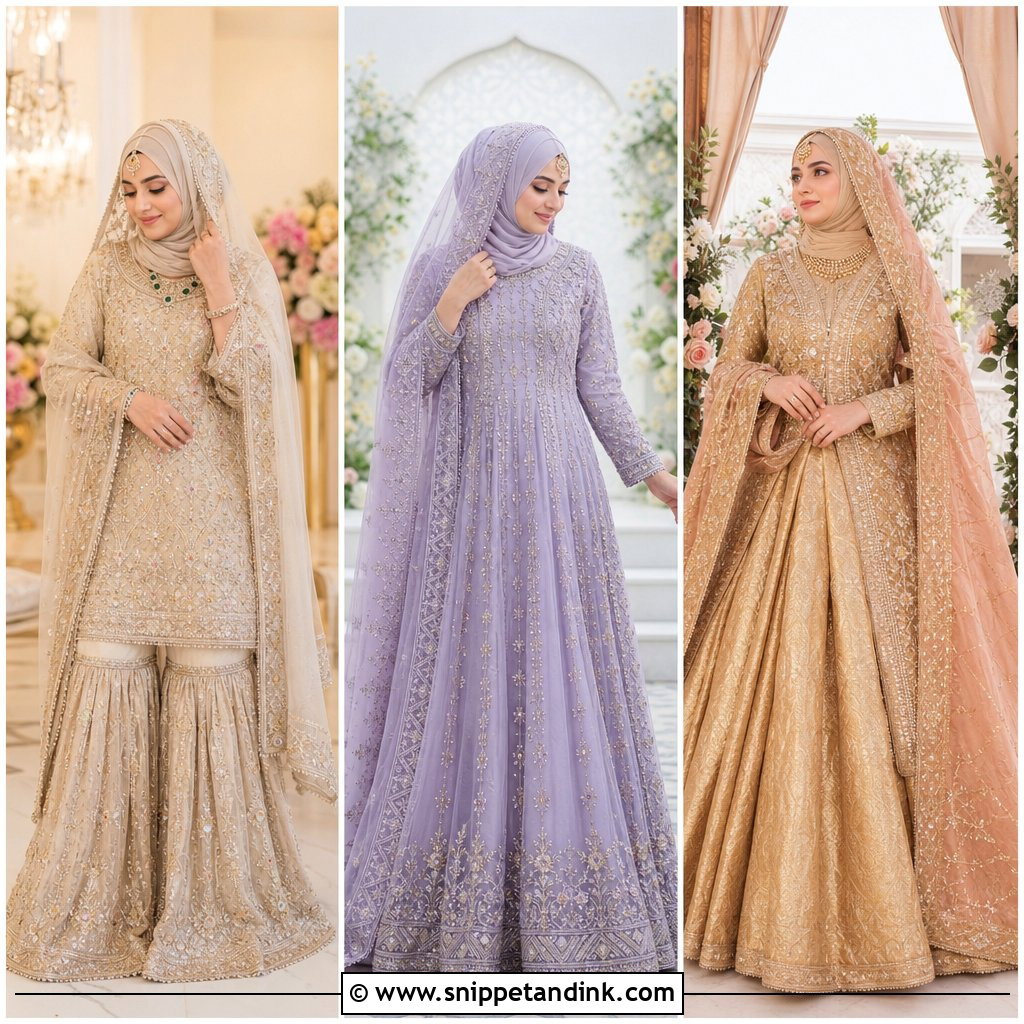

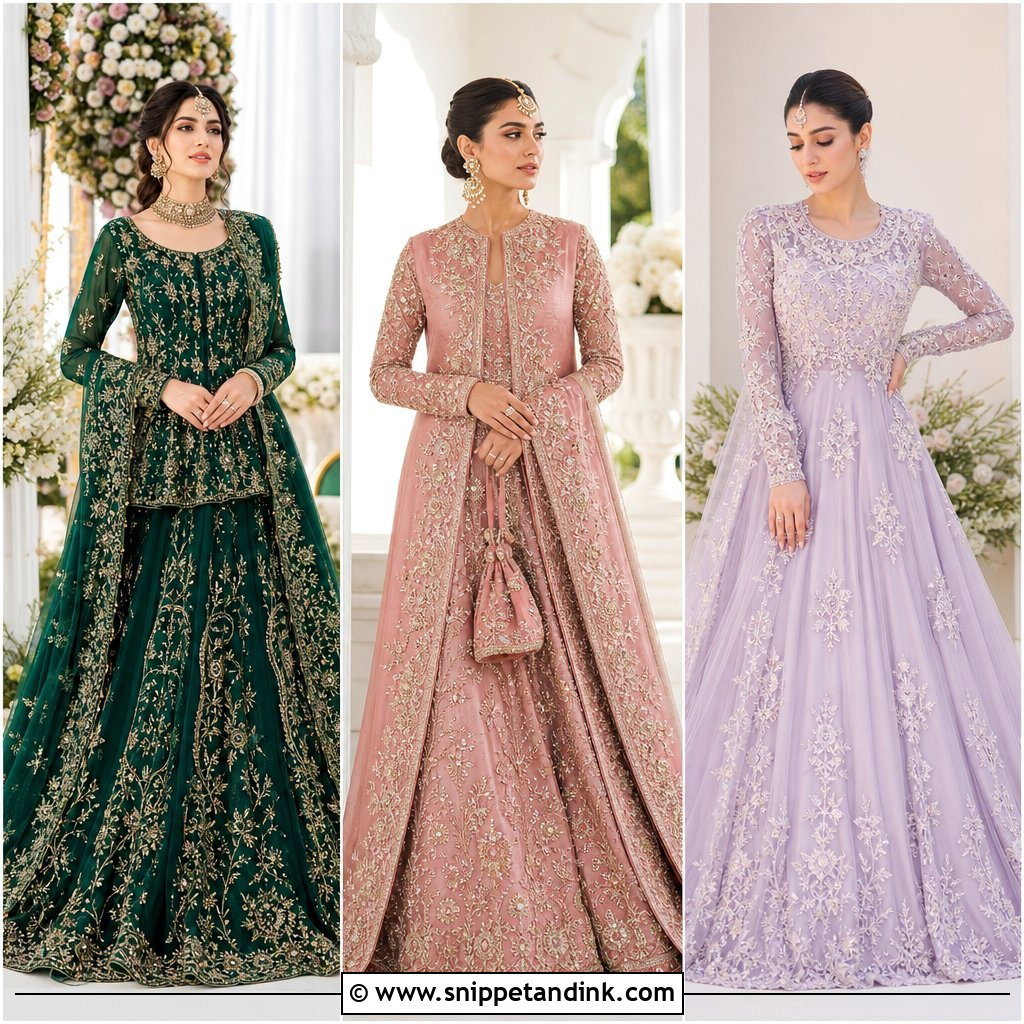
15. Rose Gold Nikah Lehenga With Net Dupatta
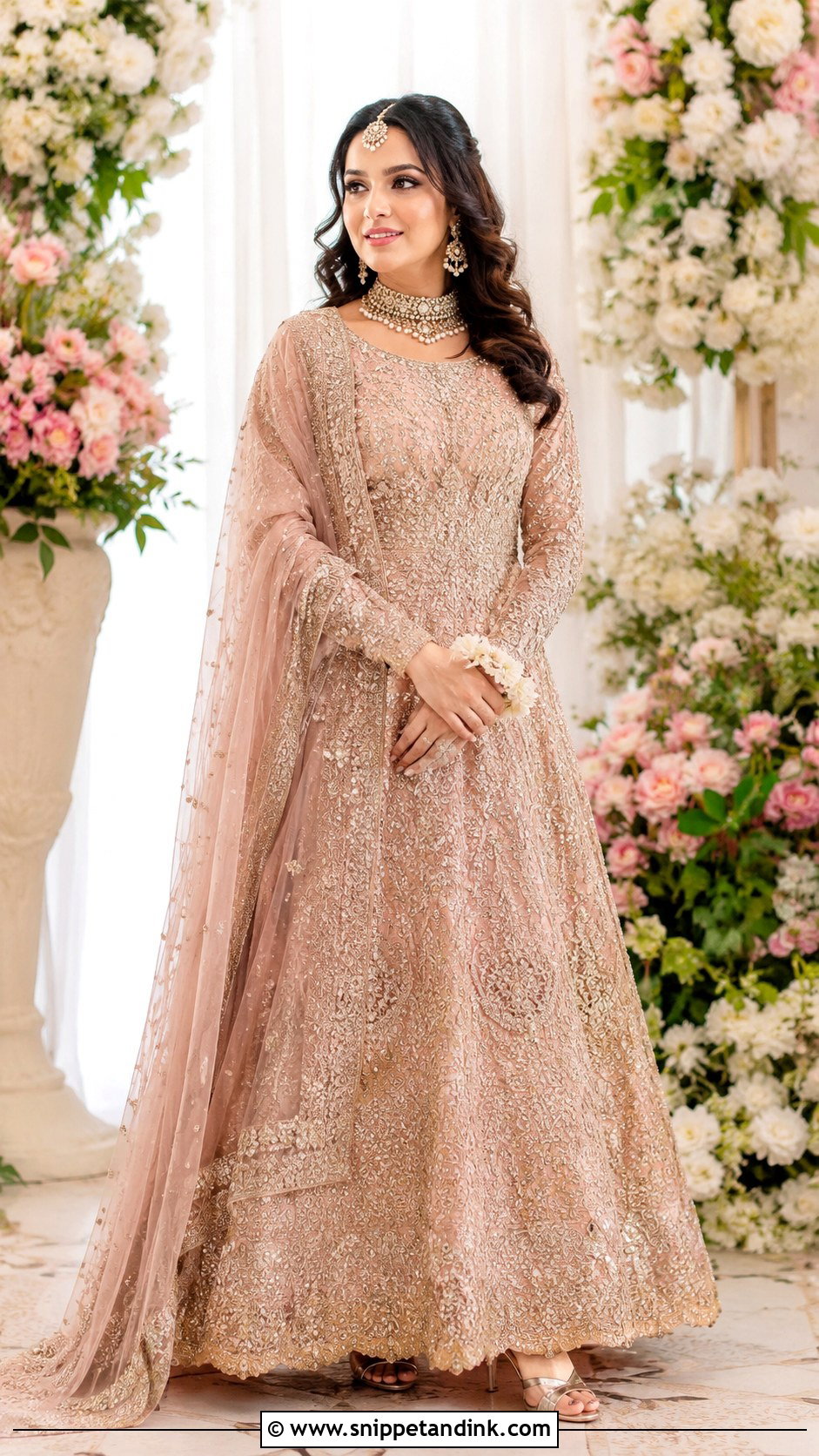
Rose gold sits between blush, gold and champagne, which is why it suits so many skin tones. A lehenga with delicate embroidery, worn with a long shirt or modest blouse depending on comfort, keeps it bridal. A soft net dupatta with scattered sequins creates a light veil effect for the ceremony. Rose gold embroidery thread can look coppery in warm light and pinkish in daylight, so if the Nikah is daytime and the dinner is in the evening, check it under both. Polki jewellery, soft waves and metallic heels complete it, and it carries well from the ceremony into a family dinner.
16. Maroon Nikah Lehenga With Gold Shirt
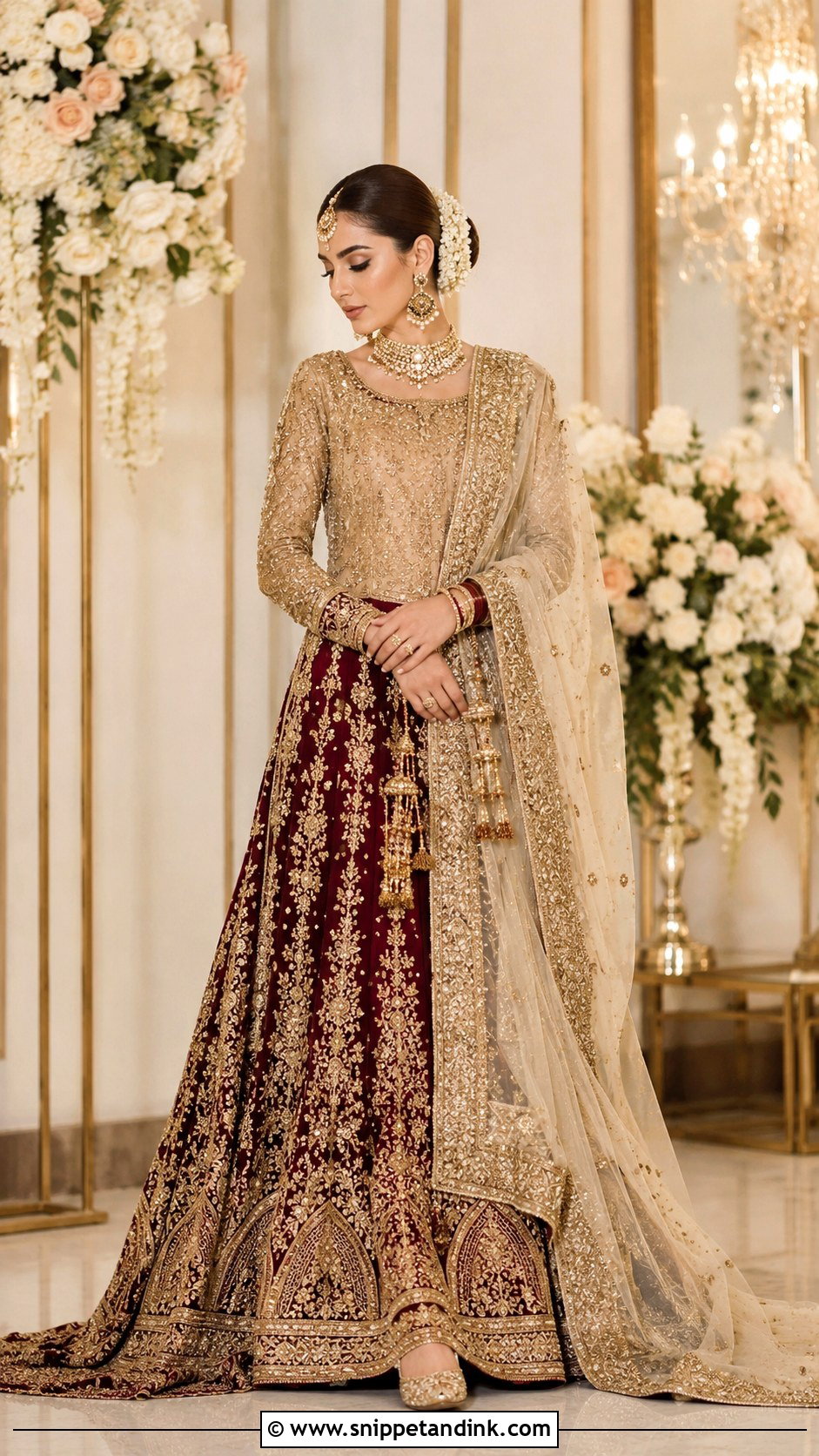
Maroon is a deeper traditional colour that some brides want even at the Nikah. A maroon Nikah lehenga with a gold shirt and antique gold embroidery has real presence. To keep it suitable for a Nikah rather than the baraat, I swap the heavy red dupatta for a lighter one in beige, gold or blush, which changes the whole mood. Kundan jewellery, stacked bangles and a neat bun suit it. Evening Nikahs are where this colour belongs.
17. Ivory Nikah Peplum With Sharara
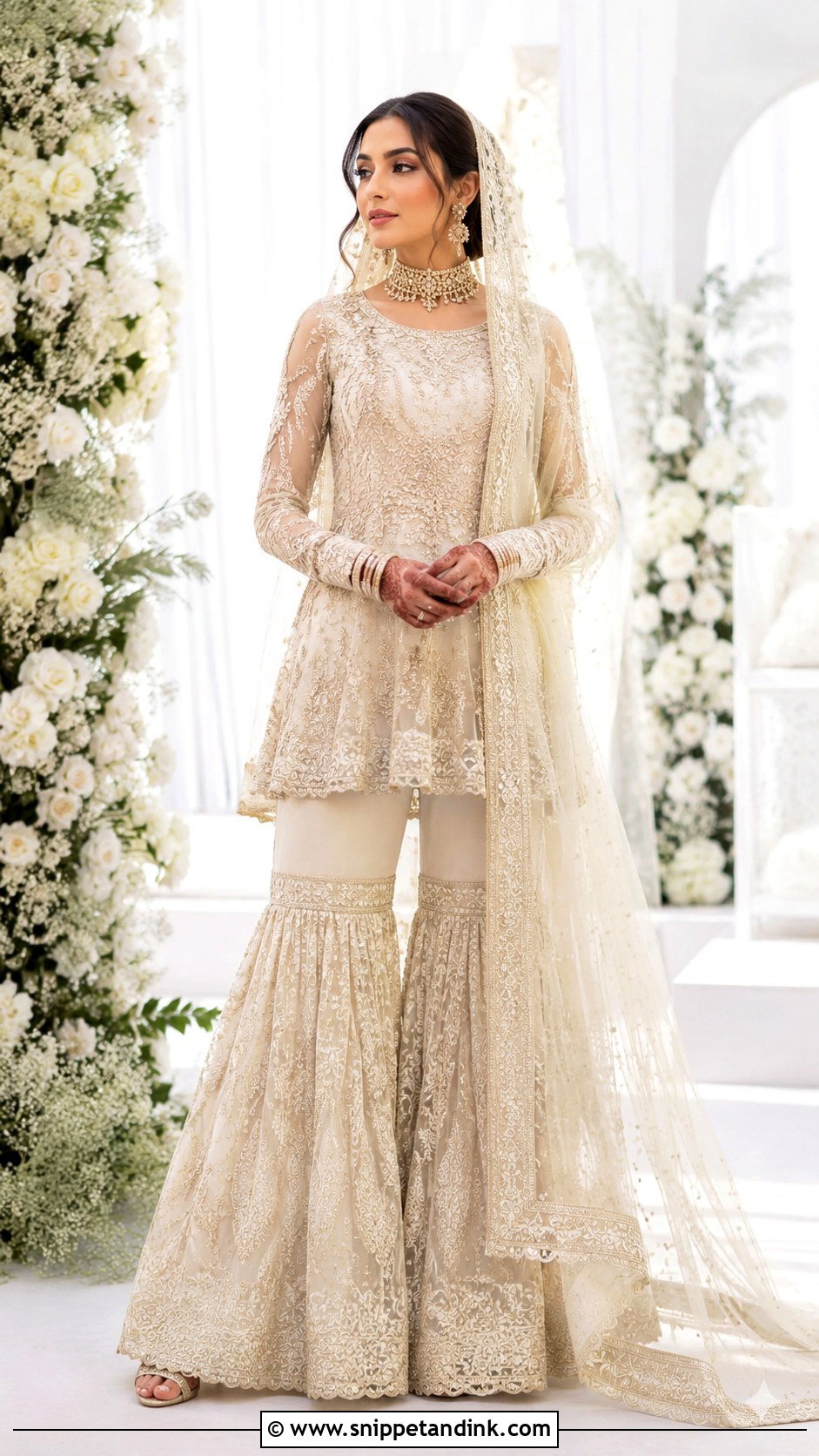
An ivory peplum over a sharara gives shape at the waist and volume below, and it moves comfortably. Gold, pearl or silver handwork on ivory gives a clean finish, and a matching dupatta with a heavier border goes over the head. The peplum should skim, not grip; when the bride sits, a tight peplum flips up at the hem. Heels need to give height but stay comfortable under the sharara, since the hem is set to that heel. A choker set, earrings and soft bangles complete it.
18. Dusty Pink Nikah Pishwas With Gota Work
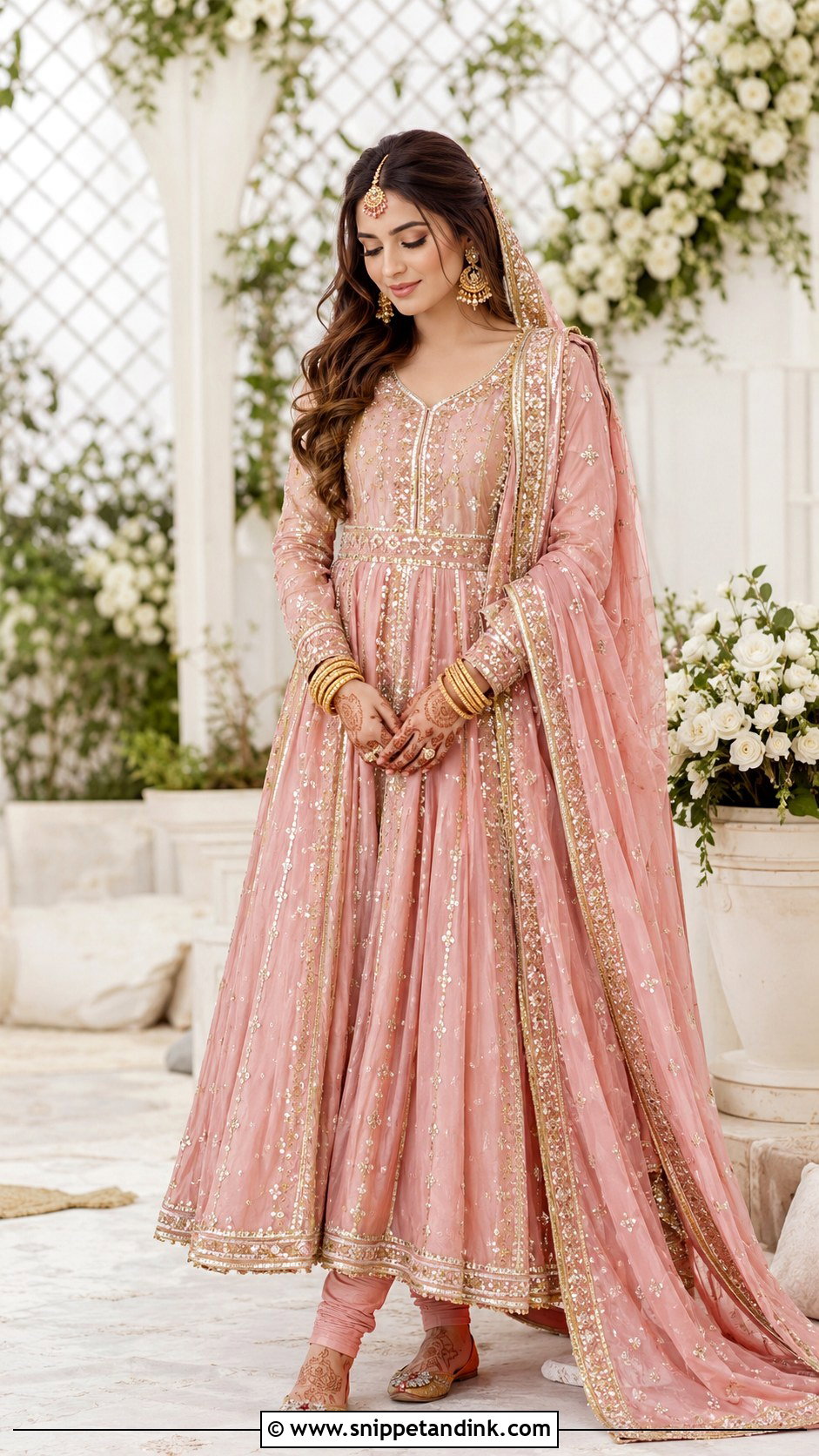
Dusty pink is muted enough to feel mature, and with gota on a pishwas it gets a soft festive glow. Gota is a woven metallic ribbon, lighter than heavy zardozi, so you get shine without weight. The pishwas is flowing, so wear churidar or straight pants depending on its length and flare. Gota borders on the dupatta finish it. Gota can tarnish over time if it’s real metal, so store this outfit wrapped in cotton, away from humidity. Gold jhumkas, a teeka and simple bangles keep it traditional for a garden or intimate Nikah.
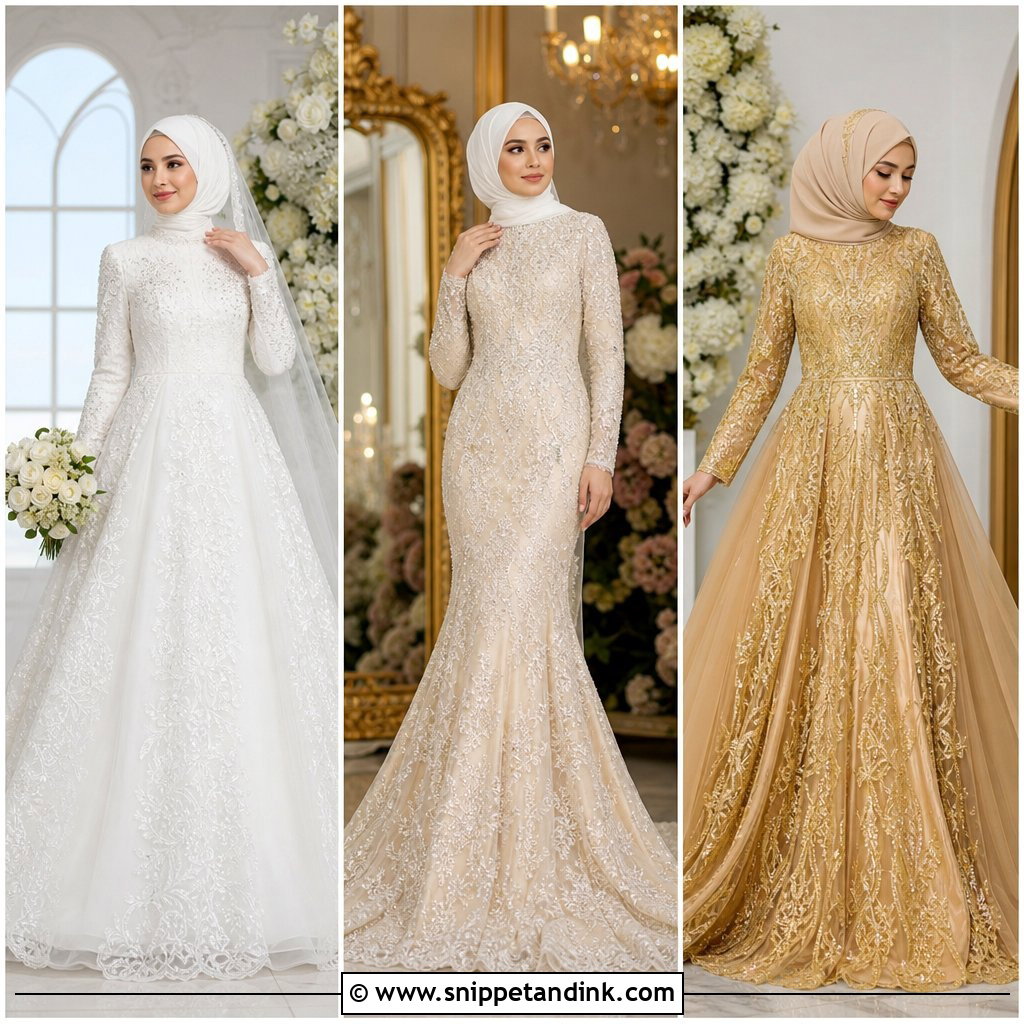
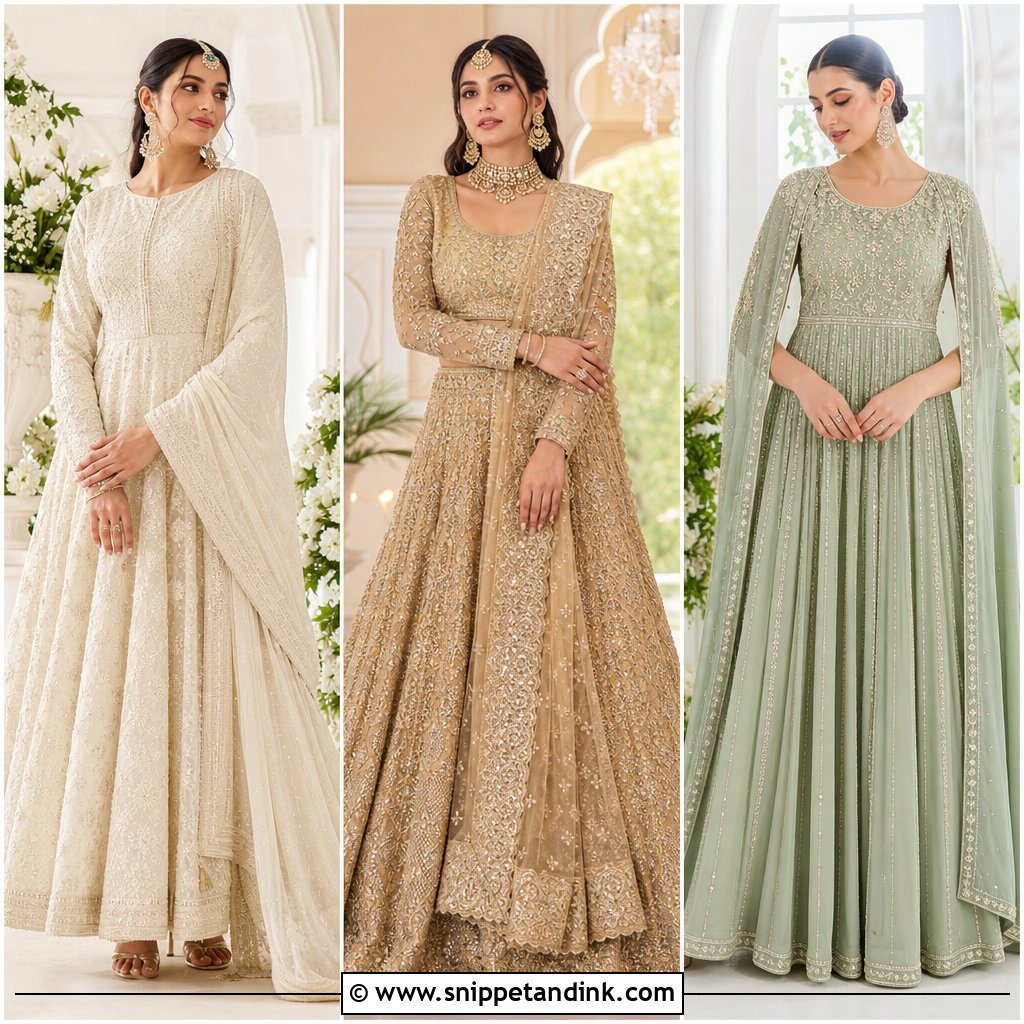
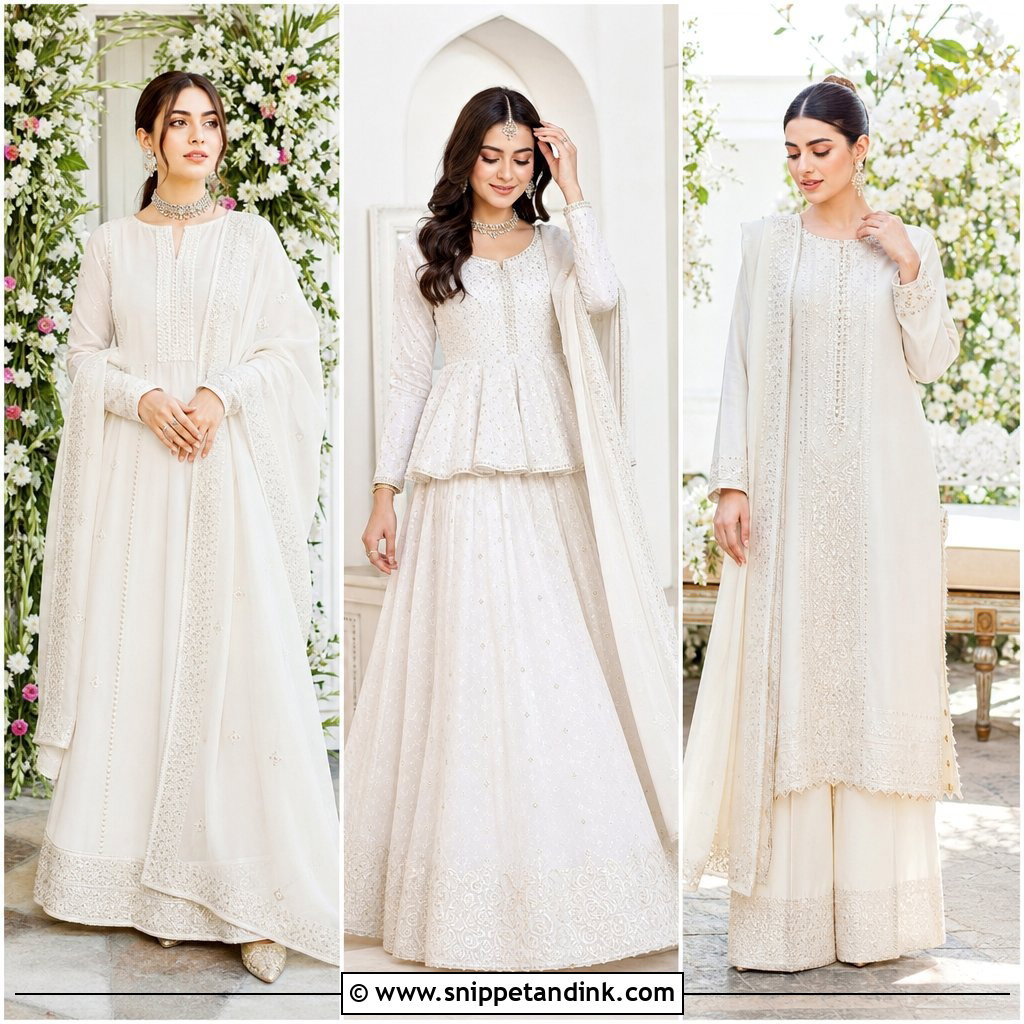
19. White Nikah Suit With Heavy Dupatta
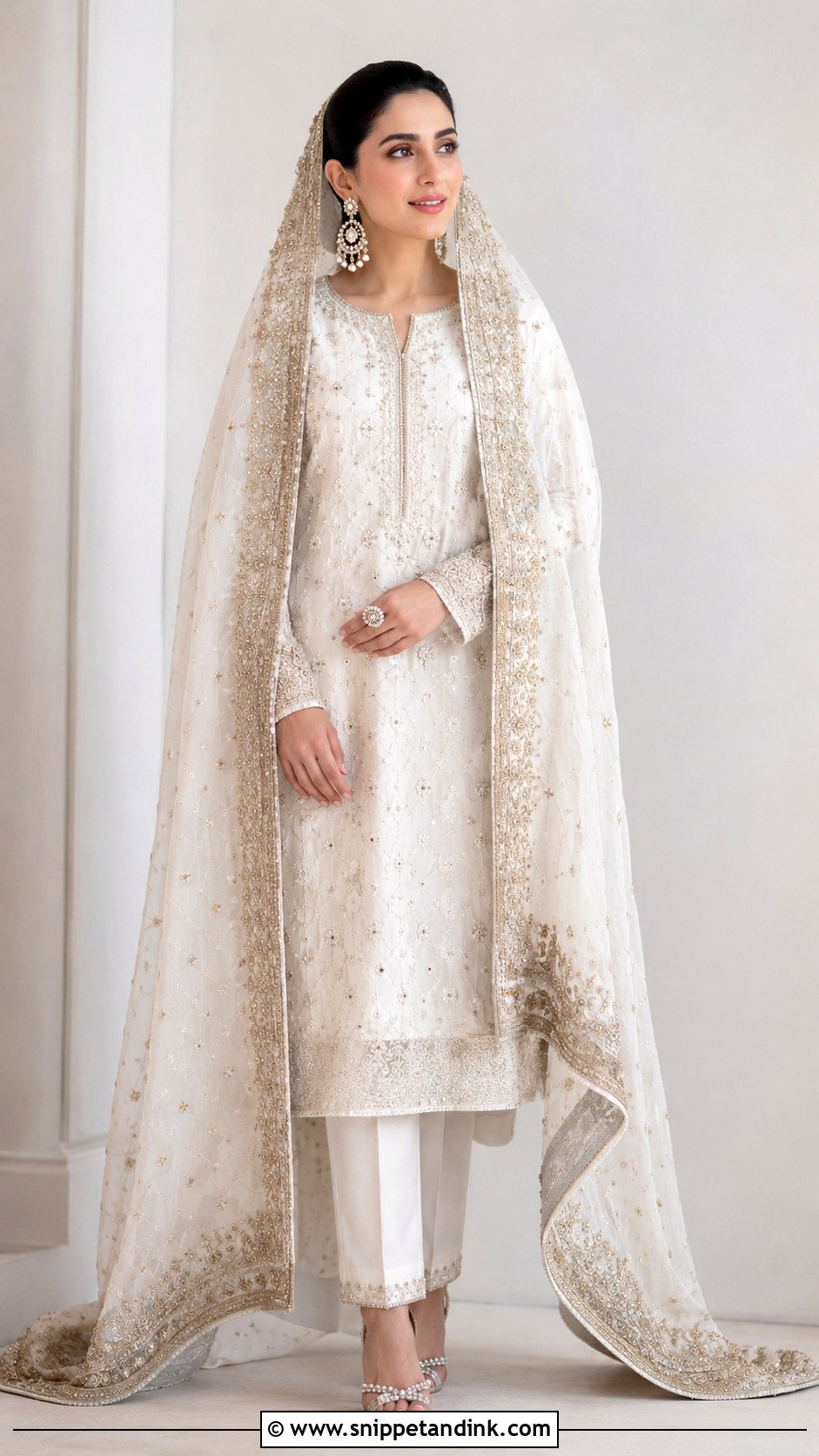
Not every Nikah bride wants layers. A white Nikah suit with a heavy dupatta is modest and wearable, with refined embroidery at the neckline, sleeves and hem of a straight or slightly flared shirt, over straight pants, cigarette pants or a narrow gharara. The dupatta becomes the bridal piece, with gold, pearl or zardozi borders. A heavy border pulls the dupatta backwards off the head, so I pin it at two points on the hair, not one. Kundan earrings, a ring and embellished heels complete it.
20. Tea Pink Nikah Gharara With Short Kameez
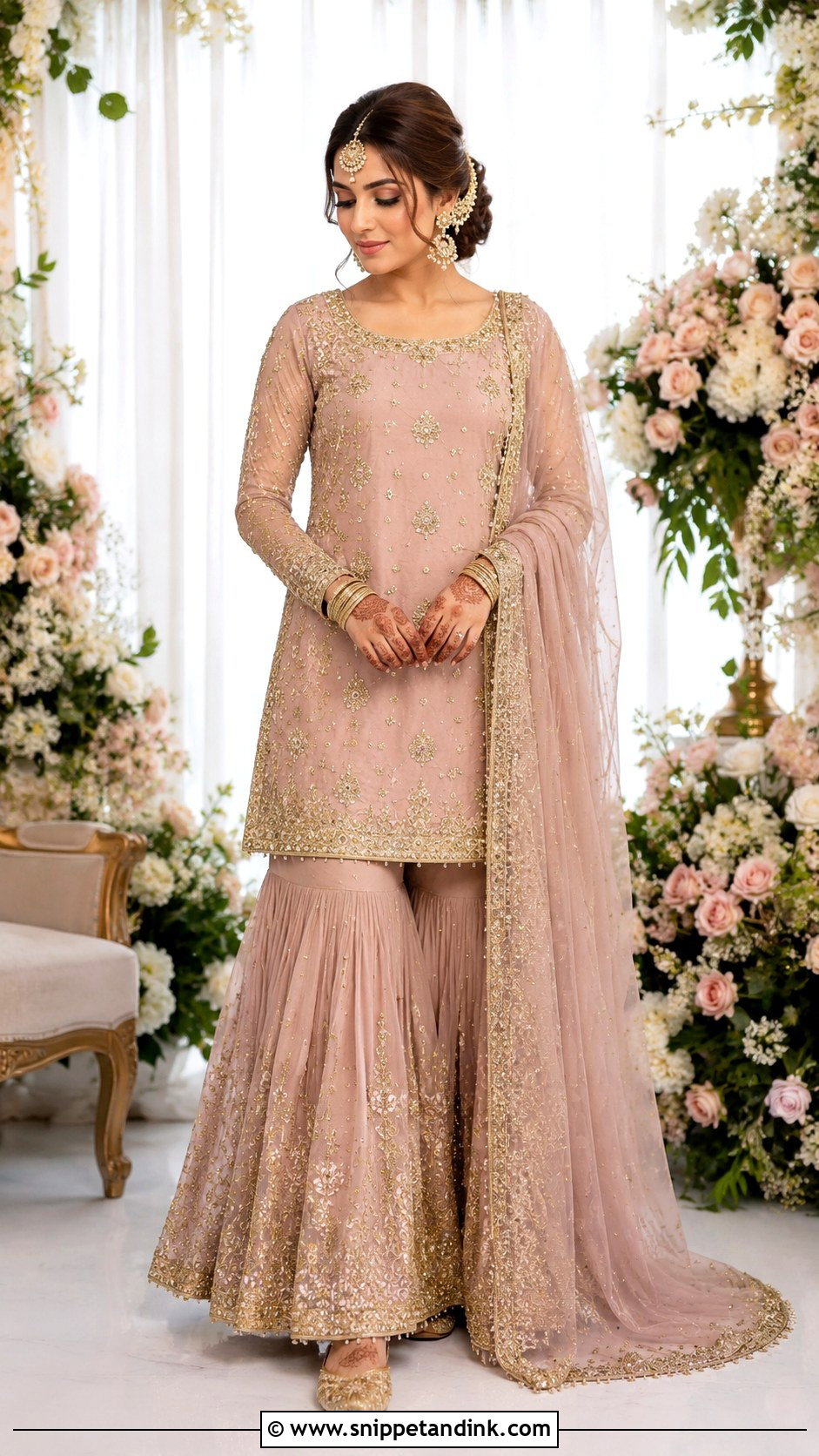
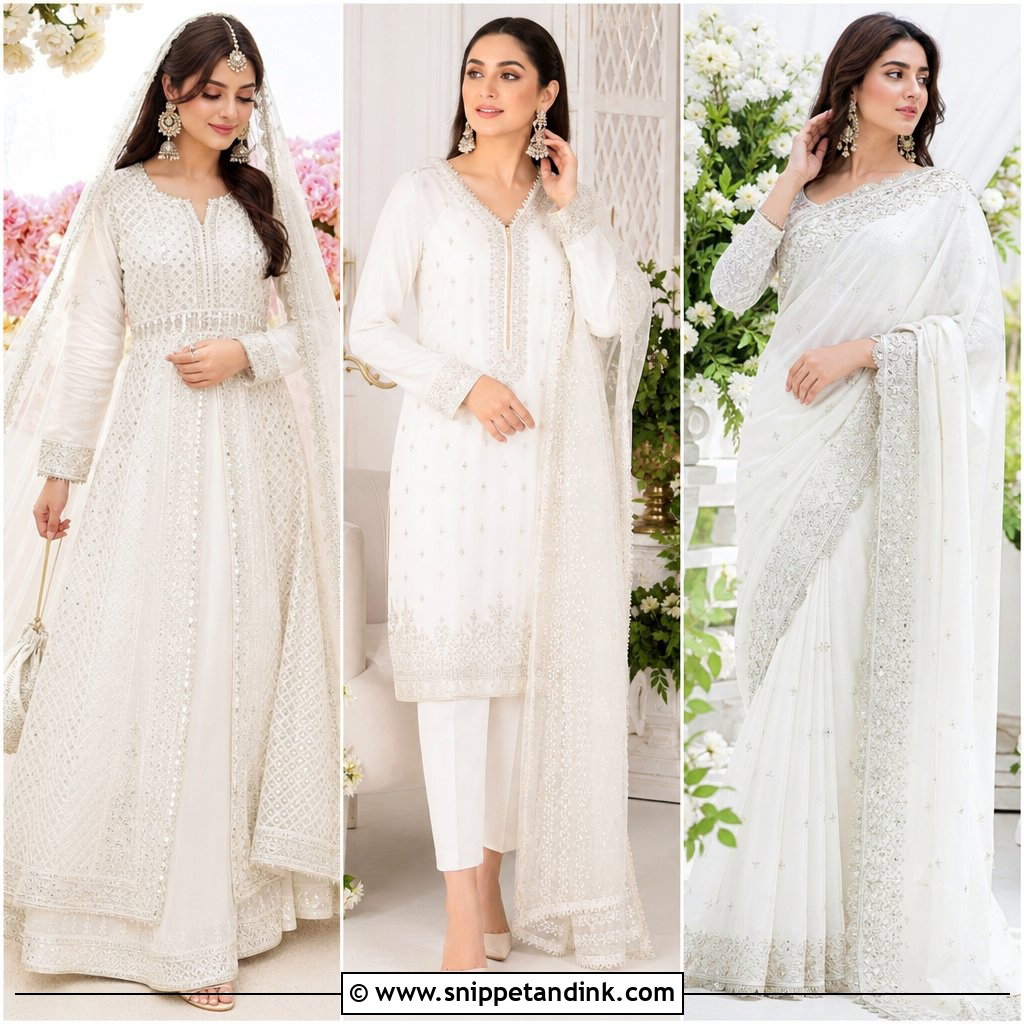
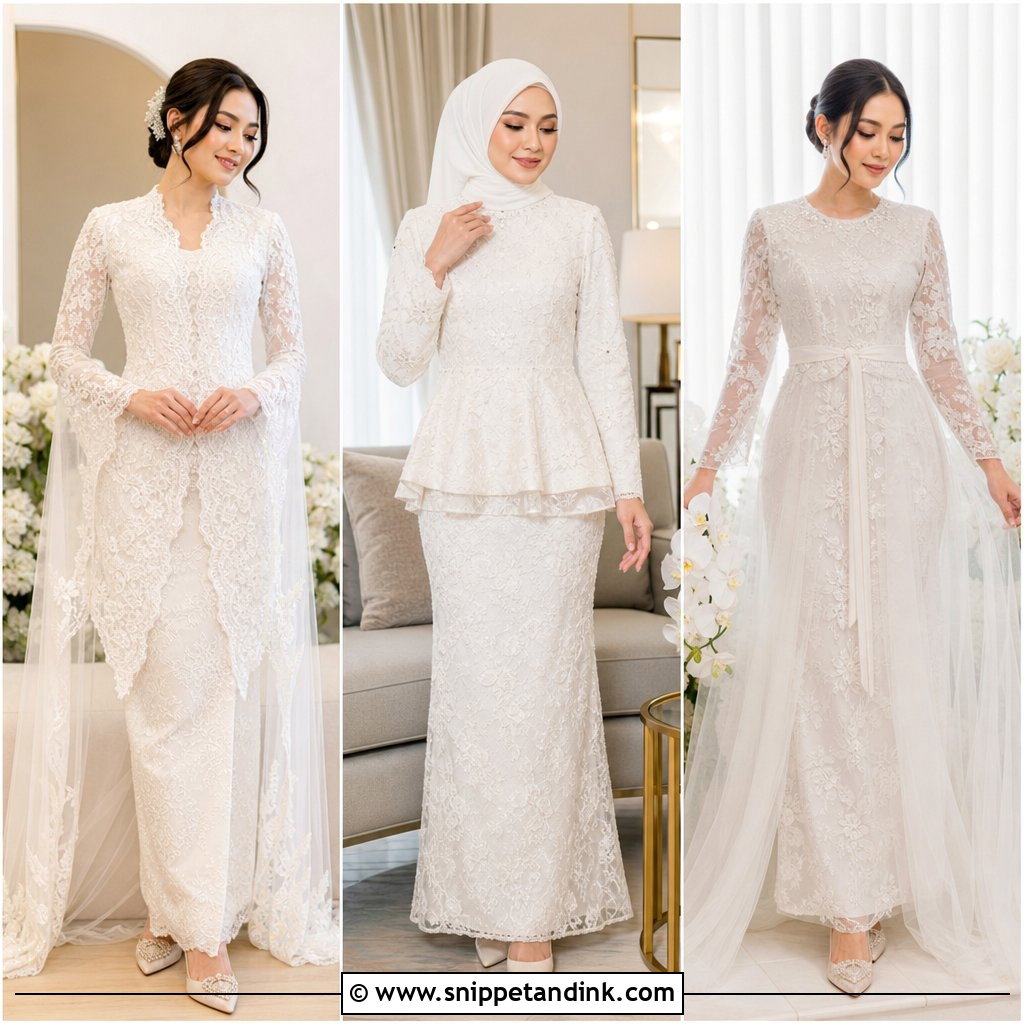
Tea pink has a muted, slightly brown undertone that suits gold and pearl embroidery and looks gentle in photos. The short kameez gives the classic gharara silhouette, and the flared bottom moves well. I prefer a dupatta with embroidered edges and a light centre for this outfit, because the weight sits at the border and the middle drapes softly over the head instead of standing up stiffly. Gold khussas, a passa and bangles complete it, festive yet gentle enough for the ceremony and comfortable at home or in a hall.
21. Sage Green Nikah Lehenga With Pearl Work
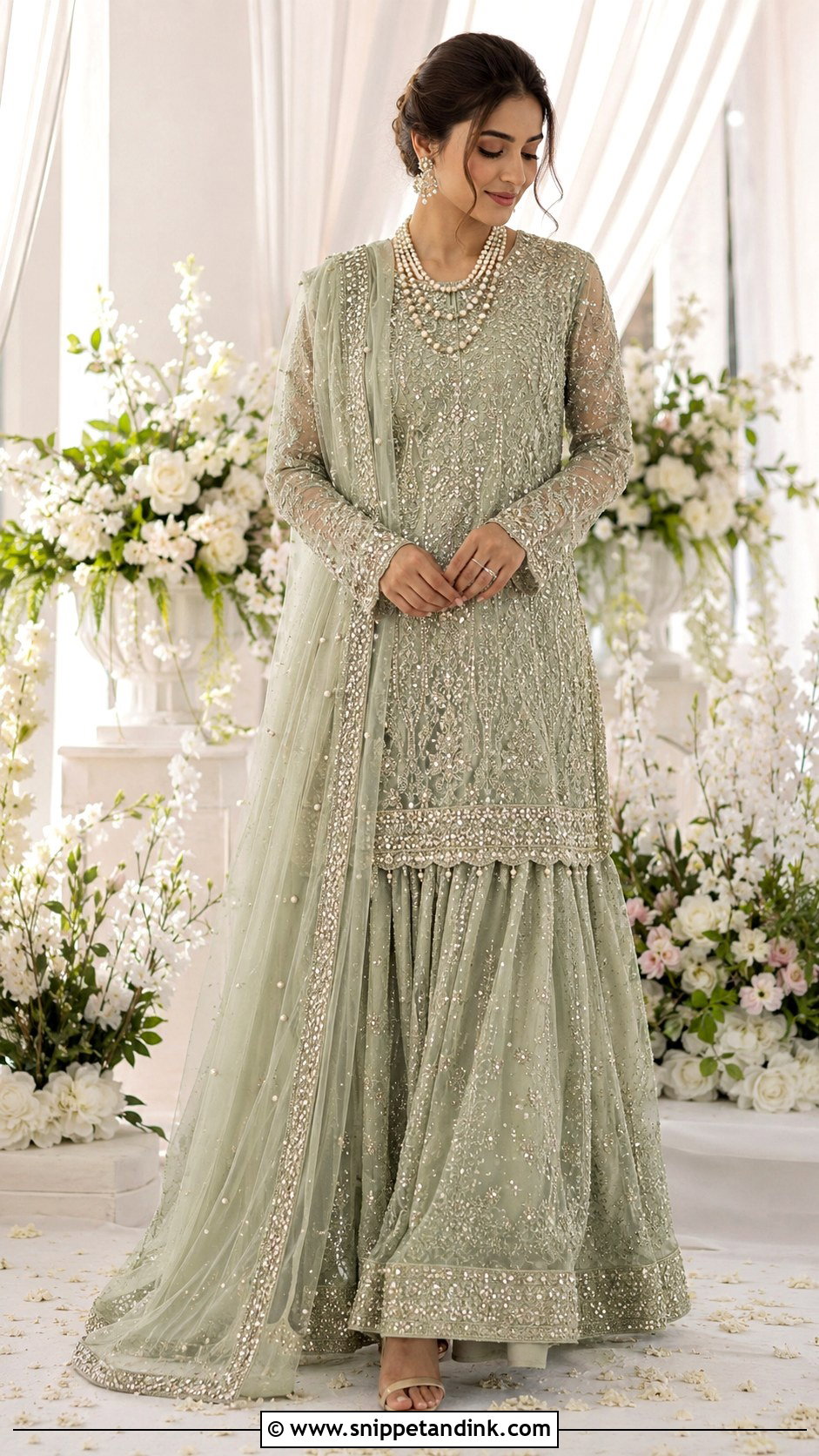
Sage green is softer and more grown-up than mint. A sage green Nikah lehenga with pearl work, plus ivory, silver or champagne embroidery, stays bridal and understated. Pair it with a long shirt or modest blouse, and a sheer dupatta with pearl borders. Pearls are heavier than they look in quantity, so a heavily pearled dupatta needs a strong pinning point at the crown. Pearl jewellery, soft eye makeup and nude heels finish a quietly respectful look.
22. Ivory Nikah Jacket Lehenga
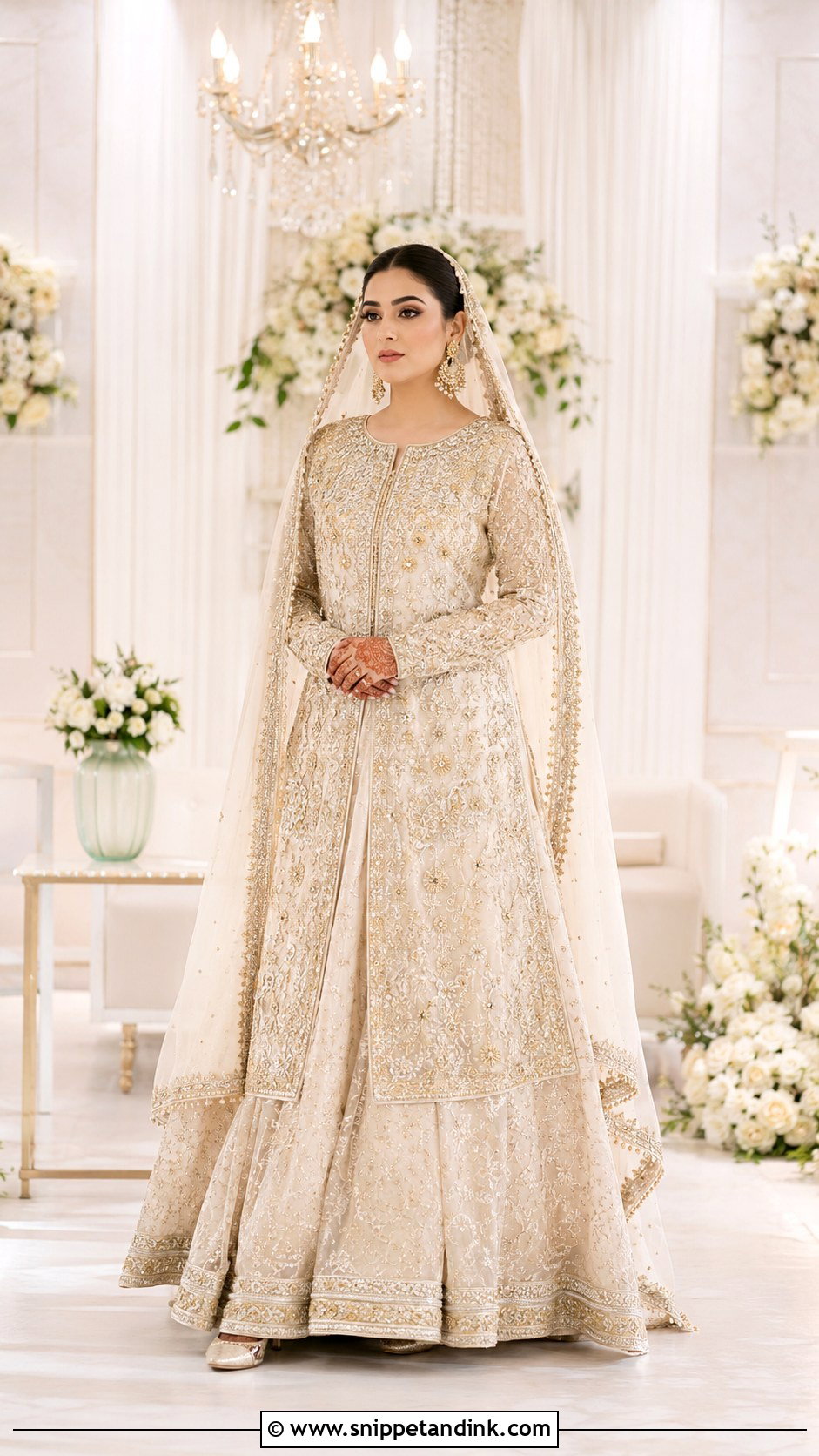
Jacket lehengas give extra coverage and structure, and a long embroidered jacket over a simple lehenga and blouse, or over a full inner dress, feels more distinctive than a standard set. Ivory with gold, pearl or champagne work keeps it refined. The jacket hangs entirely from the shoulders, so its fit there must be precise; I add a light lining so it doesn’t slide back when the bride raises her hands. A lightweight dupatta over the head shouldn’t hide the jacket’s details. Statement earrings, soft heels and a sleek hairstyle complete it.
23. Mauve Nikah Maxi With Embroidered Dupatta
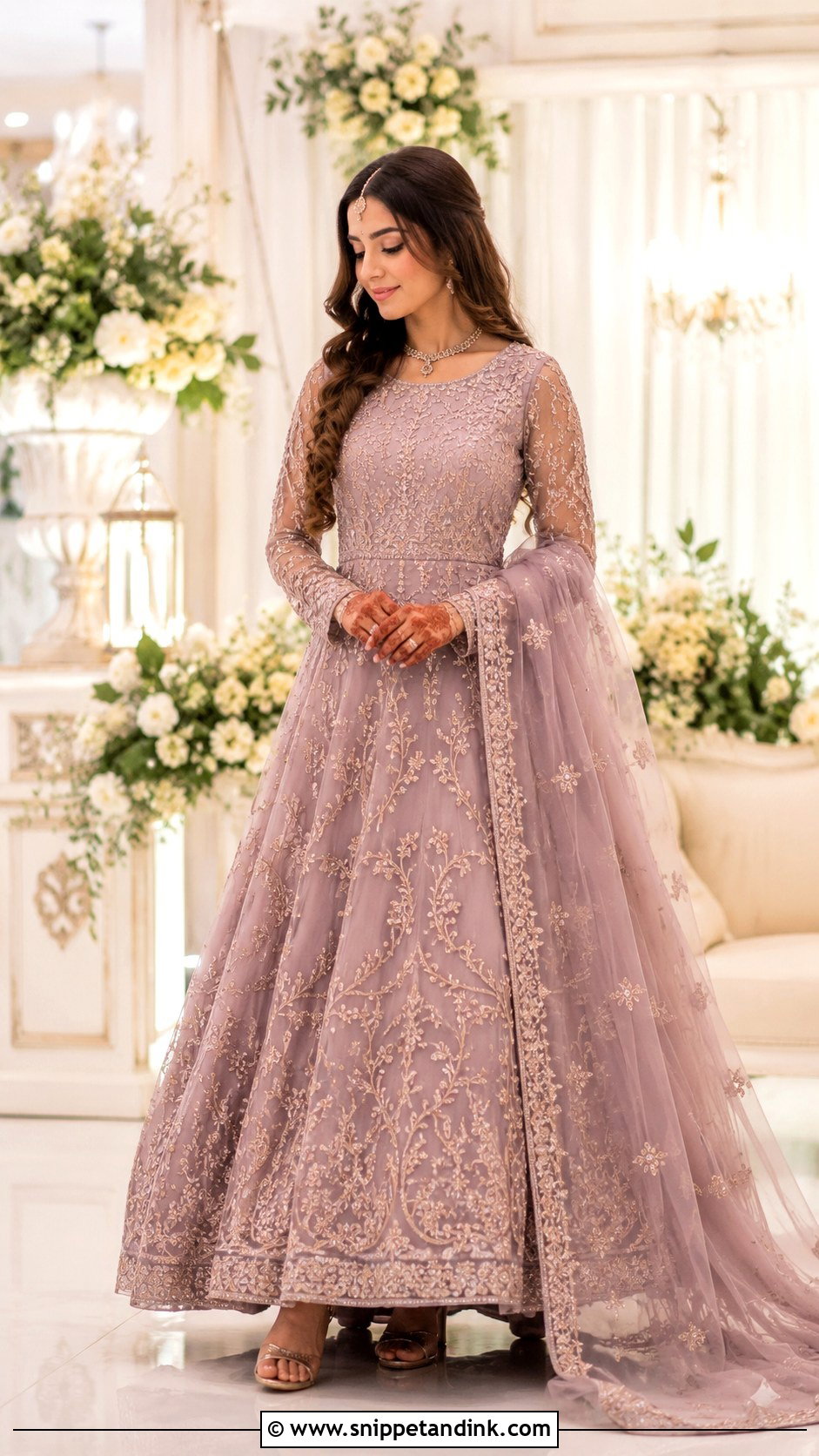
Mauve is romantic without being sugary, and it stands apart from the usual white and pink. Silver, rose gold or antique gold embroidery each changes its mood. Choose a full-length maxi with long sleeves, a defined waist and a flowing skirt, and let the embroidered dupatta provide the bridal finish over the head. Mauve sits close to many lip shades, so I’d avoid a matching mauve lip, which makes the face look flat against the fabric. Delicate jewellery, soft curls and metallic heels finish it.
24. Red Nikah Gharara With Ivory Shirt
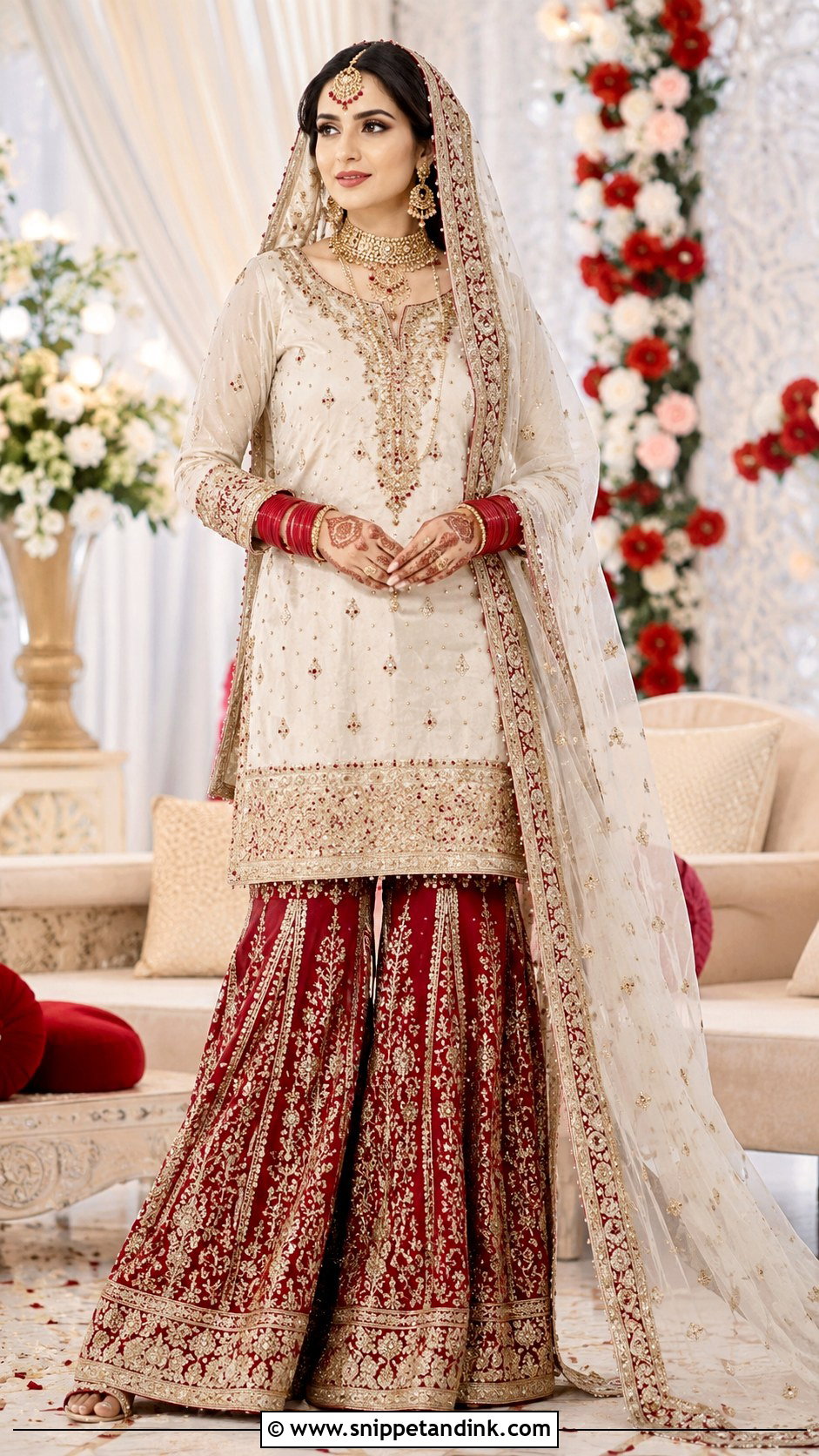
Red symbolism, Nikah calm: an ivory shirt over a red gharara is how many brides balance the two. The ivory lightens the outfit, and a red gharara with gold detailing plus a matching-embroidered ivory shirt holds it together. Choose a red or ivory dupatta depending on how bridal you want it to look. The bigger decision is which way the photos lean, since a red dupatta will dominate every portrait. Gold jewellery, red bangles and embellished sandals complete it.
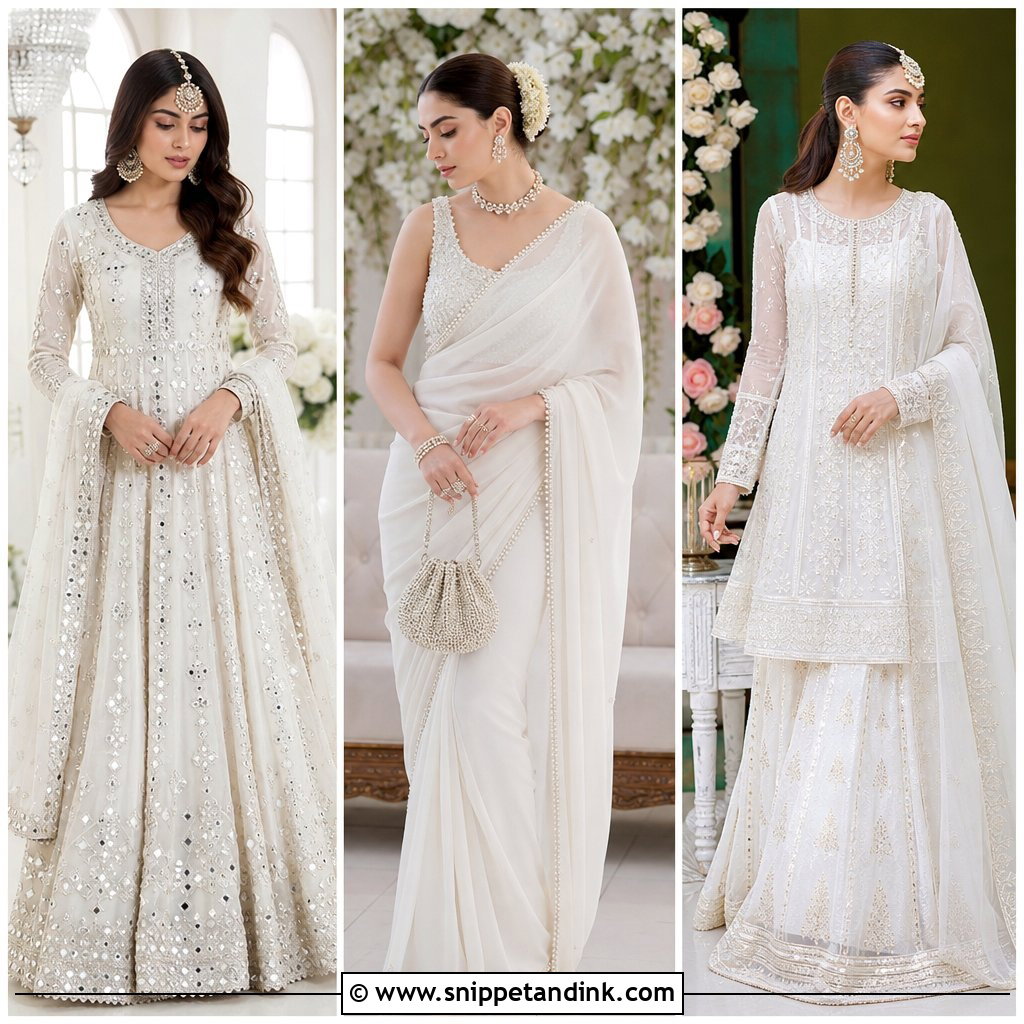
25. Off White Nikah Lehenga With Floral Embroidery
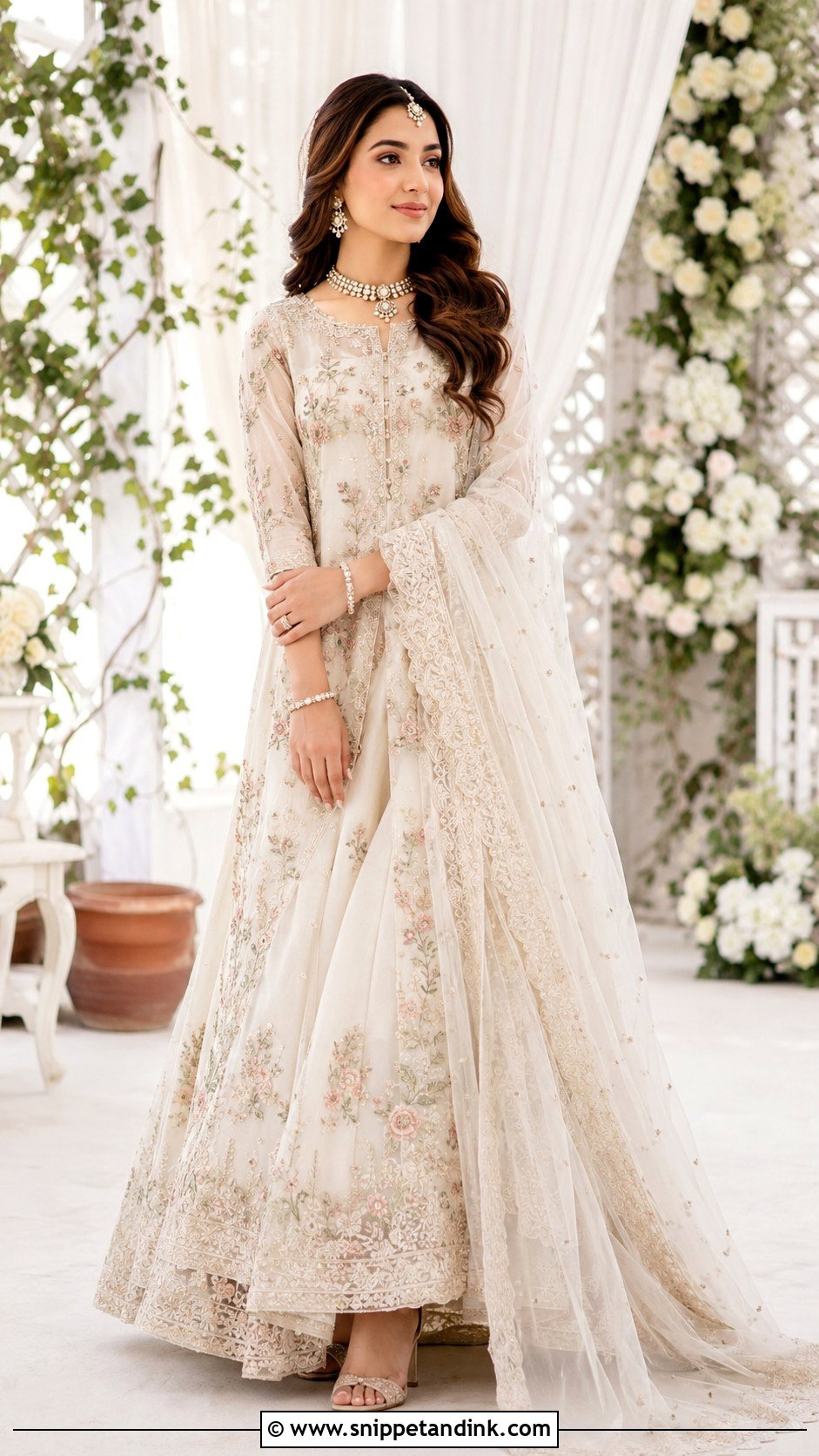
Off-white with floral embroidery is fresh and gentle. Pastel threadwork, light gold details or pearl accents give it personality, and a long shirt or modest blouse sits over a flowing lehenga with a sheer dupatta. Floral work looks especially pretty at daytime ceremonies, garden venues or pastel decor. Threadwork florals are lighter than metal embroidery, which makes this one of the more comfortable outfits for a long day. Pearl jewellery, natural makeup and light embellished heels complete it.
A Head Dupatta That Stays Put Through the Whole Ceremony
More Nikah photos are spoiled by a slipping dupatta than by anything else. The fix starts with the hair: I build a firm base, usually a low or mid bun, so there’s something solid for the pins to grip. Silky, freshly washed hair is the hardest to anchor, so a little texture spray or washing the day before helps.
- Set the jhoomar or teeka first, then lay the dupatta over the head with the border framing the face evenly on both sides.
- Pin at the crown through the dupatta into the bun, then at each side just behind the ear, always through the embroidered border rather than the bare net or chiffon.
- Use pins that match the dupatta colour and tuck their ends under, so nothing shows in close-ups.
- Drape the tail over one shoulder and secure it to the shirt at the shoulder seam with a small safety pin hidden on the inside.
Bring a small pouch with spare pins, a few safety pins and a hand mirror to the ceremony, and give it to a sister or friend who knows how the dupatta was set. Then, when it shifts after the hugs and congratulations, it takes a minute to fix instead of a trip back to the dressing room.
Sit, Sign and Hug in It First
A Nikah outfit is a balance between tradition, comfort, modesty and your own taste. Some brides feel most themselves in a white gharara or ivory lehenga; others want pastel shararas, soft maxis or deeper traditional colour. Let the venue, season and jewellery steer you, and give the dupatta as much attention as the shirt, because in Nikah photos it’s the piece framing your face. Keep the embroidery thoughtful and the accessories supportive. The outfit you can sit, sign and hug in without adjusting is almost always the one you’ll be happiest with.
You'll Like These Ideas:


Leave a Reply