
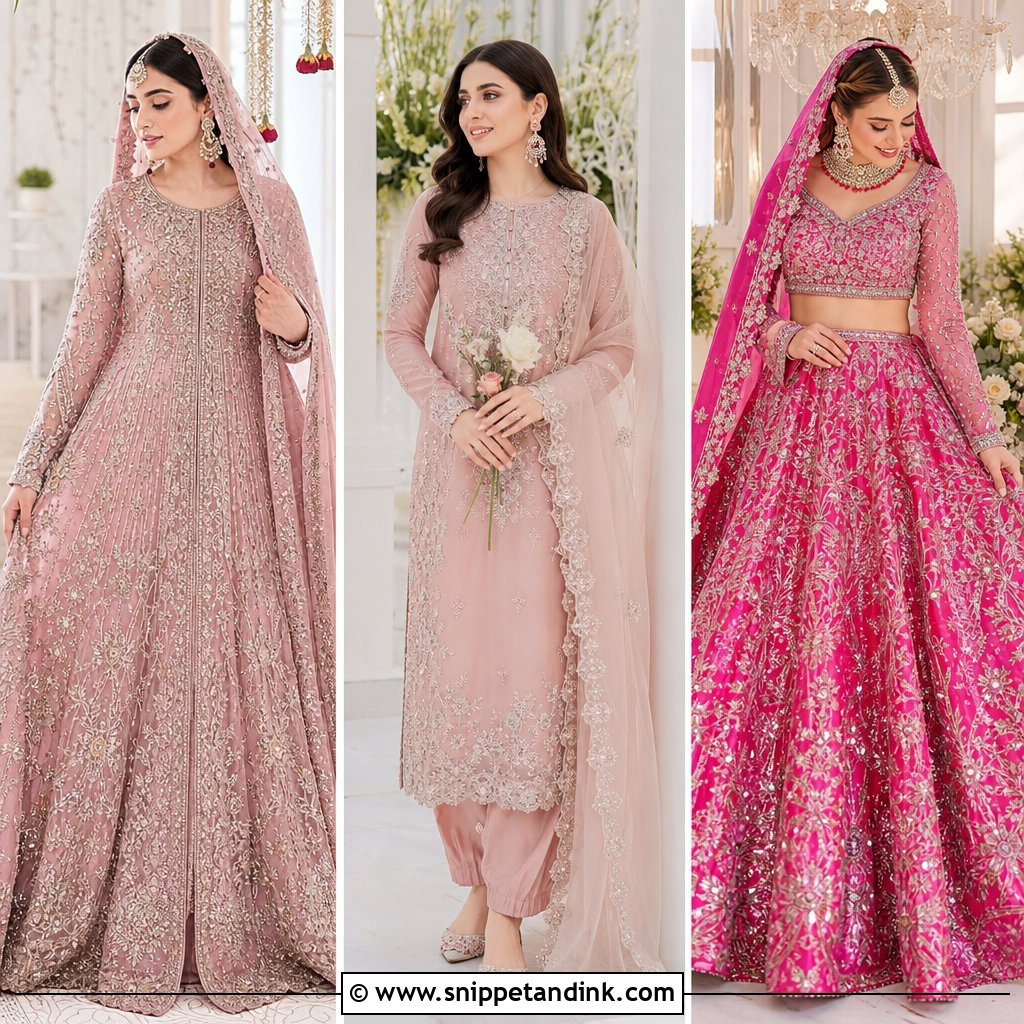
A Nikah is usually the smallest and most emotional event of a Pakistani wedding, and it rewards outfits that let you be present rather than ones you have to manage. White, ivory, champagne, blush, mint and soft gold remain the favourite colours, and ghararas, shararas, pishwas, lehengas and long maxis each offer a different way to dress modestly. What’s right for you depends on your role in the family, as the bride, her mother, a sister or a guest, as well as the venue and how formal the family is. I dress people across all those roles, so the Pakistani Nikah Outfit Ideas below include notes on who each one suits and the fitting detail I’d check first.
Bride, Mother, Sister or Guest: Matching the Work to Your Role
Many of these outfits work for anyone at a Nikah. What changes is how much embroidery, shine and volume you bring, and that is where I see families get it wrong most often, usually by accident when someone buys a heavily worked piece without checking what the bride is wearing.
- Bride: the most work, the fullest silhouette and the dupatta over the head. She sets the colour story, so everyone else follows her.
- Mother of the bride or groom: rich fabric and dignified coverage, with embroidery concentrated at the neckline and hem. Long shirts, anarkalis and kaftans suit this role well.
- Sisters and close cousins: the same family of colours at a lighter level of work, often coordinated with each other but never matching the bride exactly.
- Guests: lighter fabric, modest embroidery and a shade clearly different from the bride’s. If you don’t know her colour, a soft jewel tone is safer than ivory or white.
If you’re dressing a group, line the outfits up together before the day. Seen side by side, it becomes obvious if one person’s sharara is shinier than the bride’s or two sisters have chosen near-identical shades.
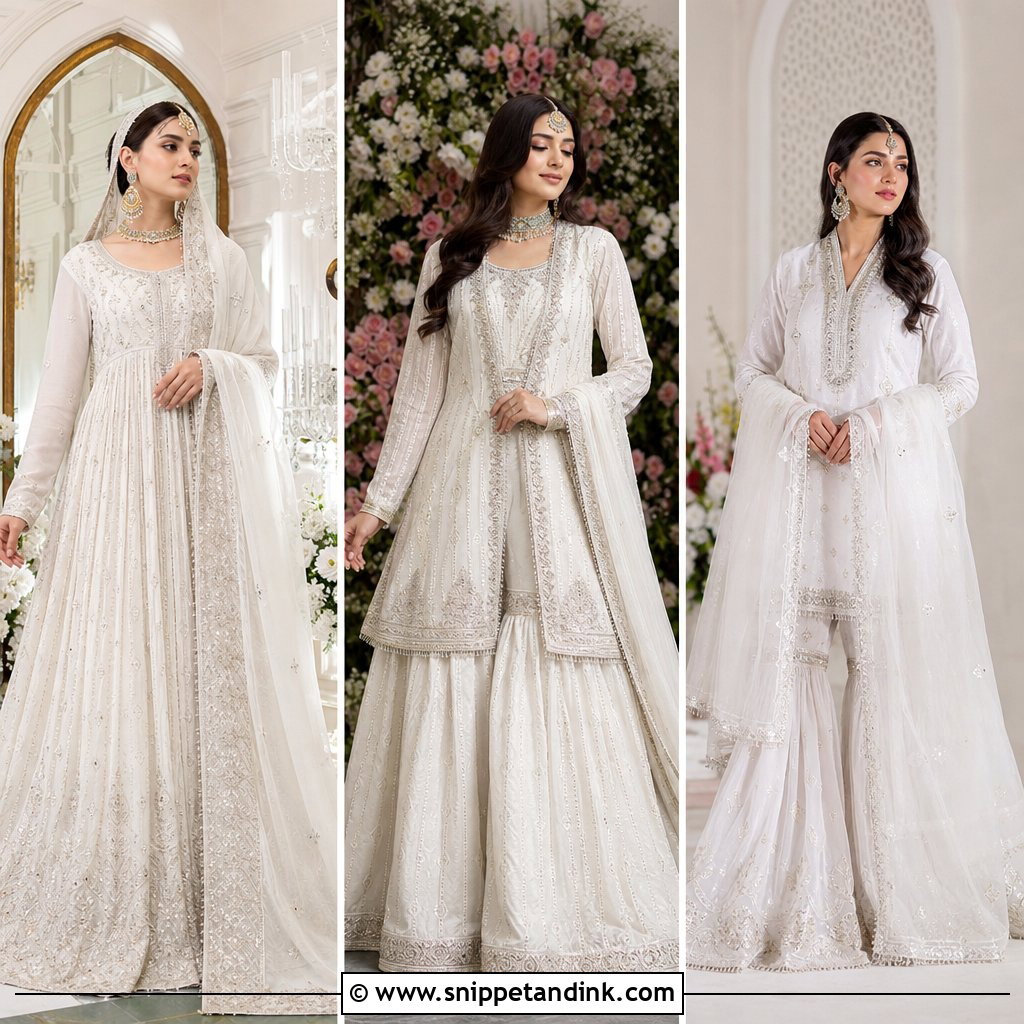
1. White Nikah Gharara Outfit
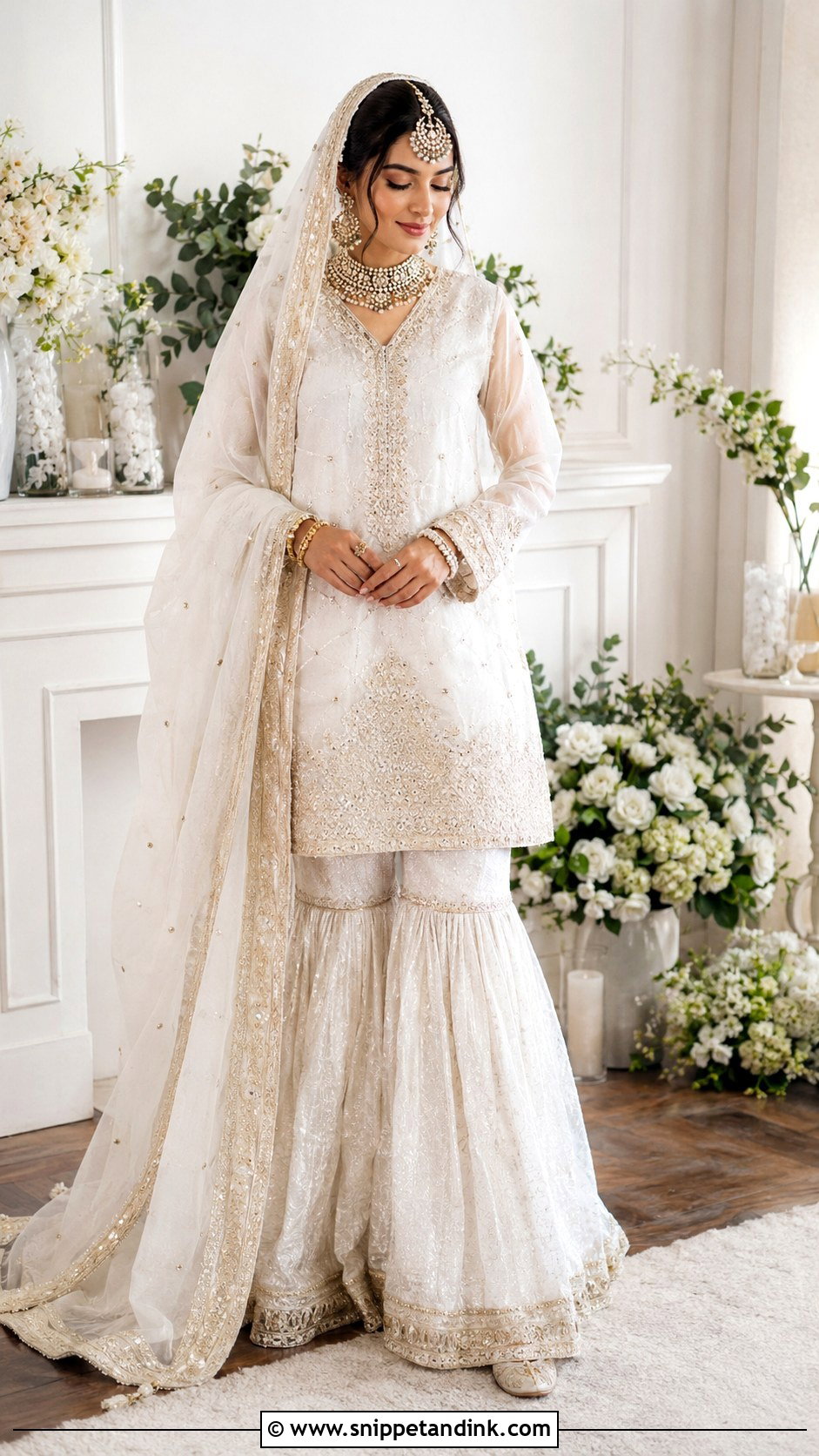
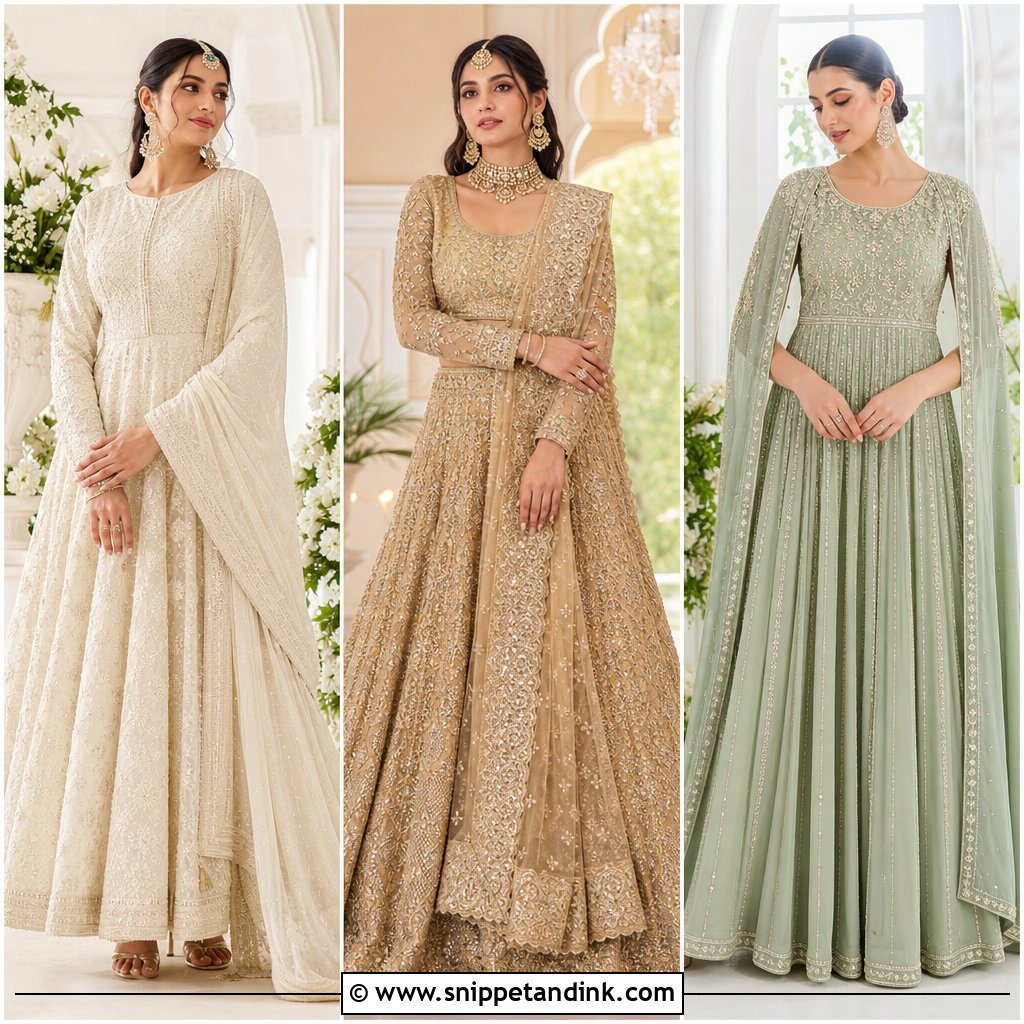
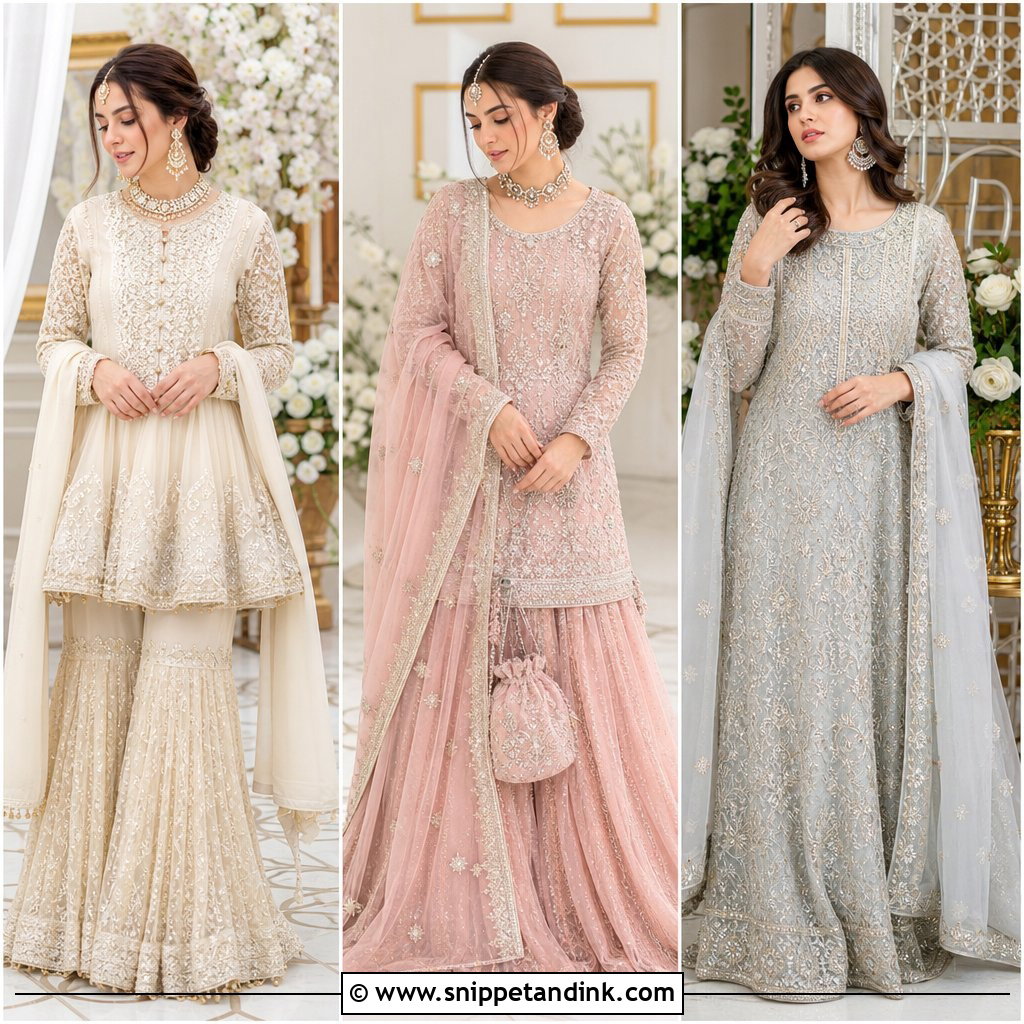
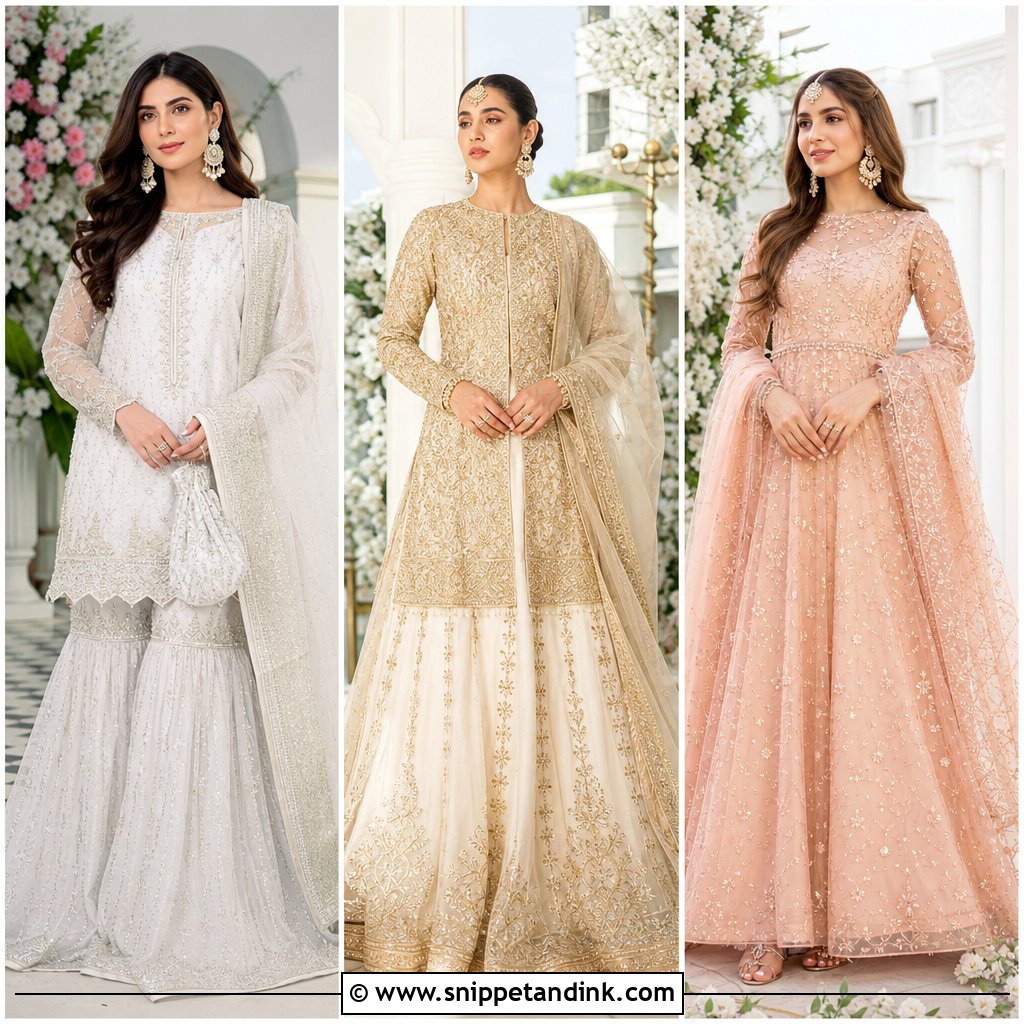
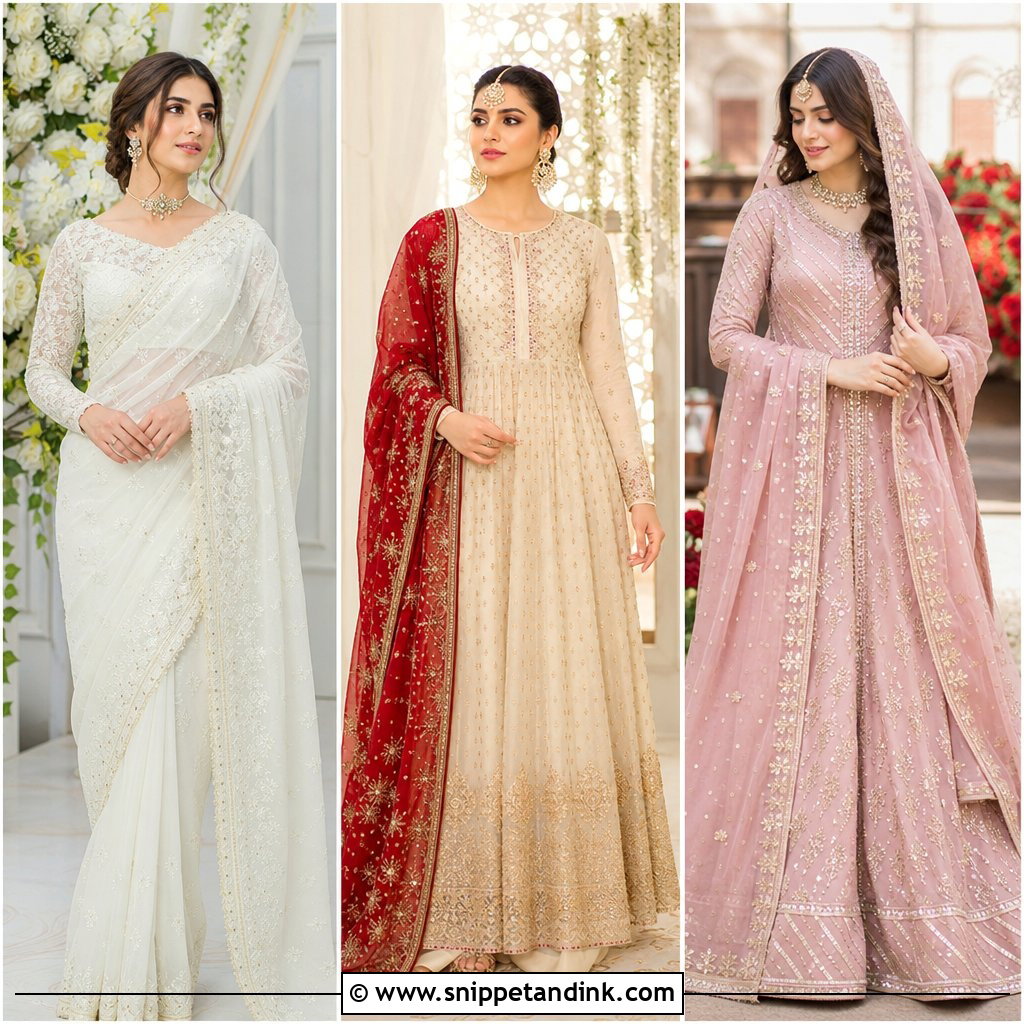
Easy to get right, hard to get wrong. A white Nikah gharara outfit is ceremonial without any bold colour: a short or mid-length kameez with delicate zardozi, resham, pearls or sequins over a structured gharara with a defined knee joint. The joint should sit right on the knee in your real shoes, or the flare drags. A sheer organza or net dupatta with scalloped borders, kundan earrings, a tikka, bangles and ivory khussas complete it. Khussas also slip off easily at the door of a mosque, which is one reason I favour them for a mosque Nikah.
2. Ivory Nikah Sharara Outfit
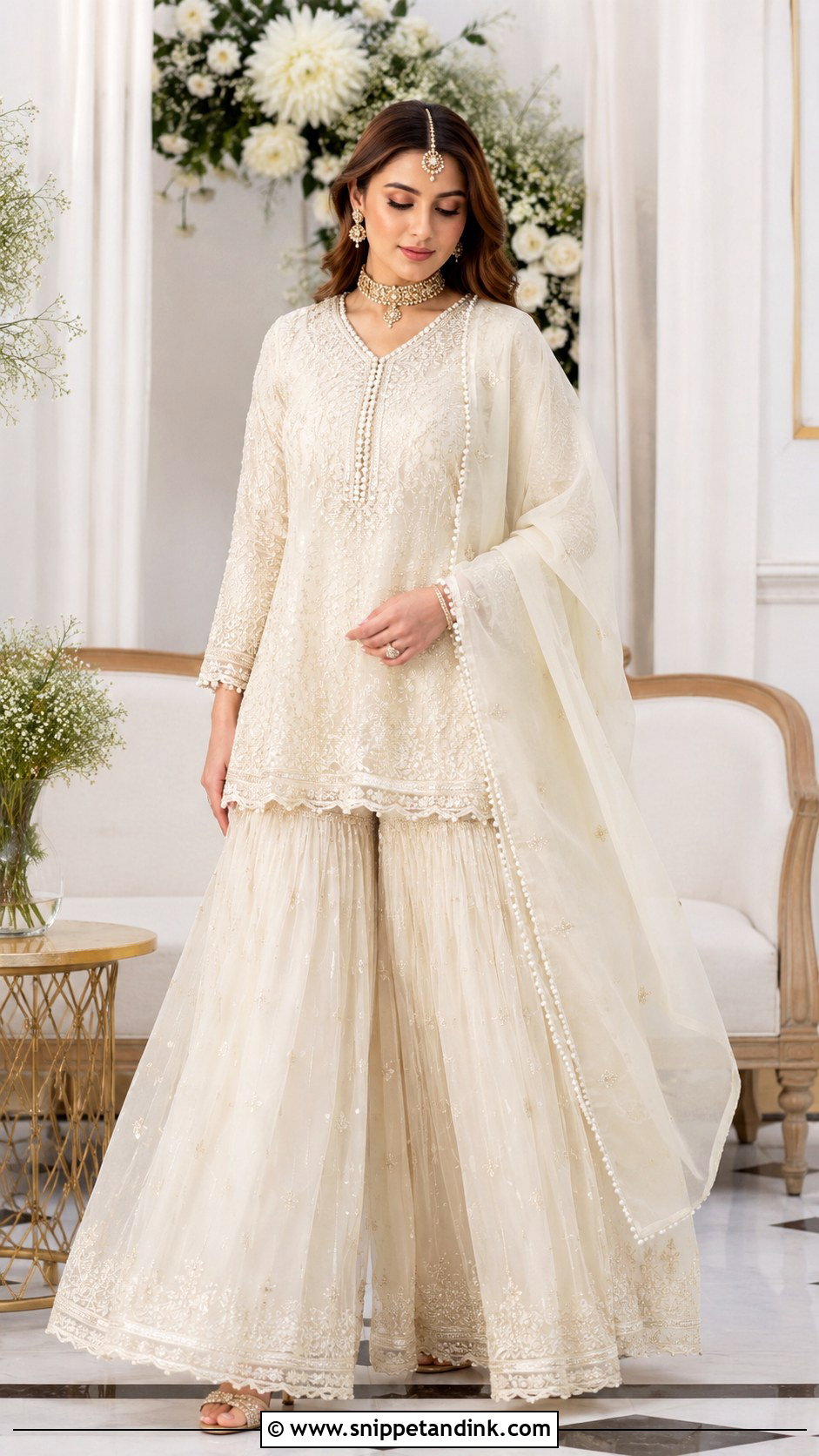
Ivory shararas are lighter than a heavy gharara and still unmistakably bridal. The flowing sharara moves well, and ivory sits kindly against almost every skin tone in photos. Pick a short embroidered shirt over a silk, organza or chiffon sharara. Of those three, chiffon is the most comfortable for a long day but needs a good lining, while organza holds the flare without help. A matching dupatta with gota, pearls or light threadwork, champagne or antique gold jewellery, soft curls, glowing makeup and a small potli bag complete it.
3. Champagne Nikah Lehenga Outfit
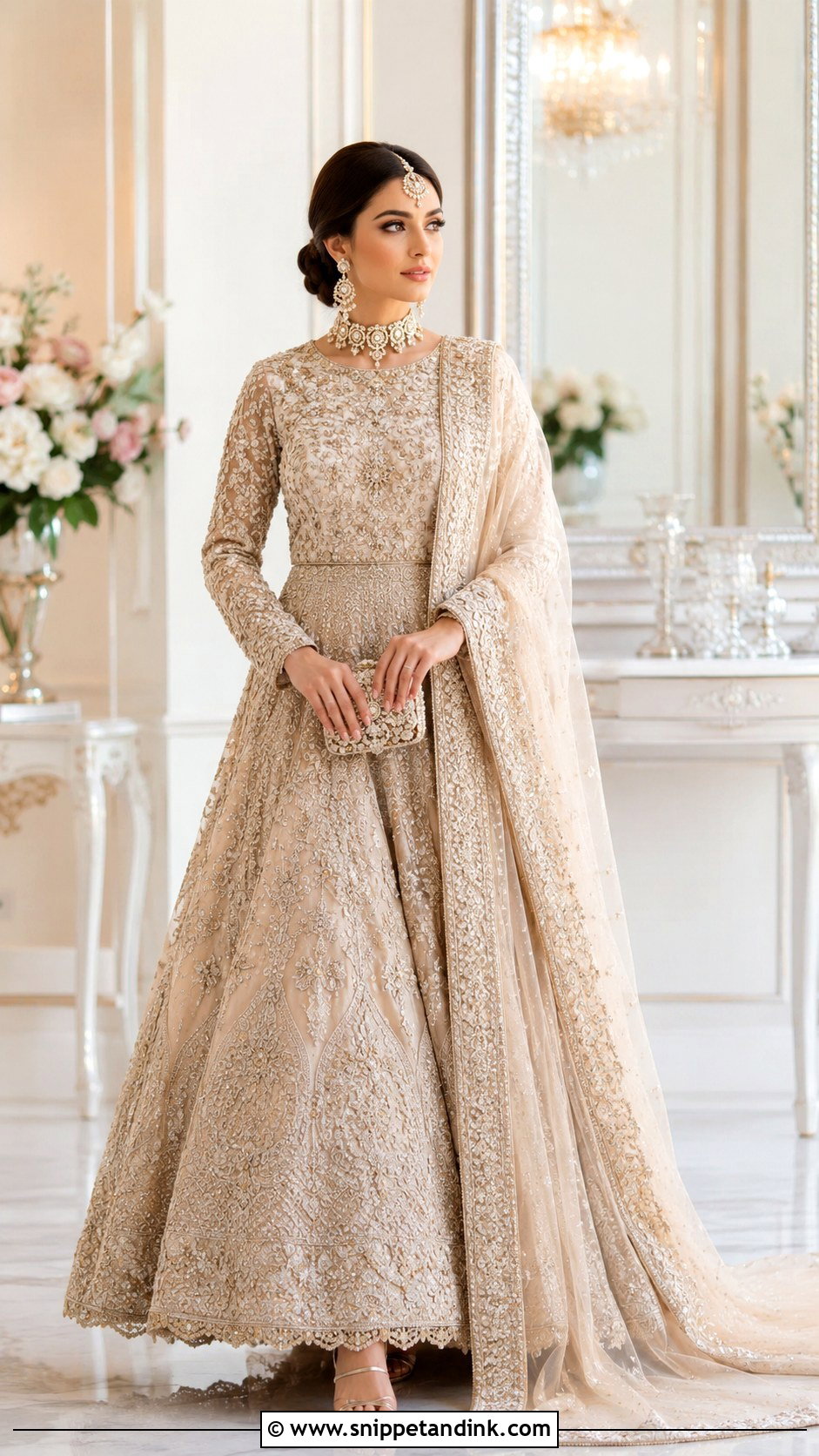
Champagne sits between gold, beige and ivory, which is why it looks refined rather than bright. A lehenga with tonal embroidery, a fitted blouse or modest choli and a sheer dupatta over the head or shoulder is the base. For more coverage, I’d add a long embroidered jacket or peplum top rather than a heavier blouse, since a jacket can come off for dinner. Kundan, polki or pearl jewellery keeps it warm. Nude heels or metallic sandals finish it. Tonal embroidery shows its texture well under bright indoor lights, which helps in formal portraits.
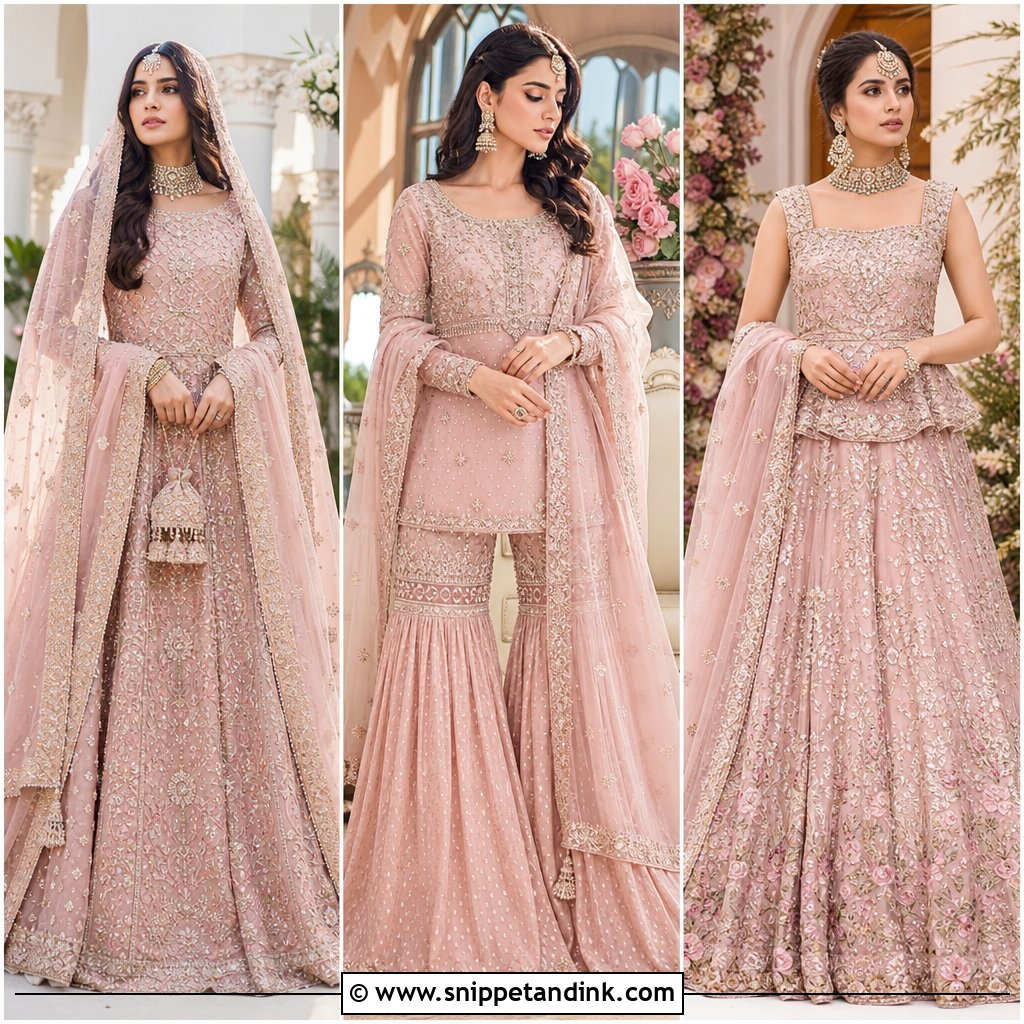
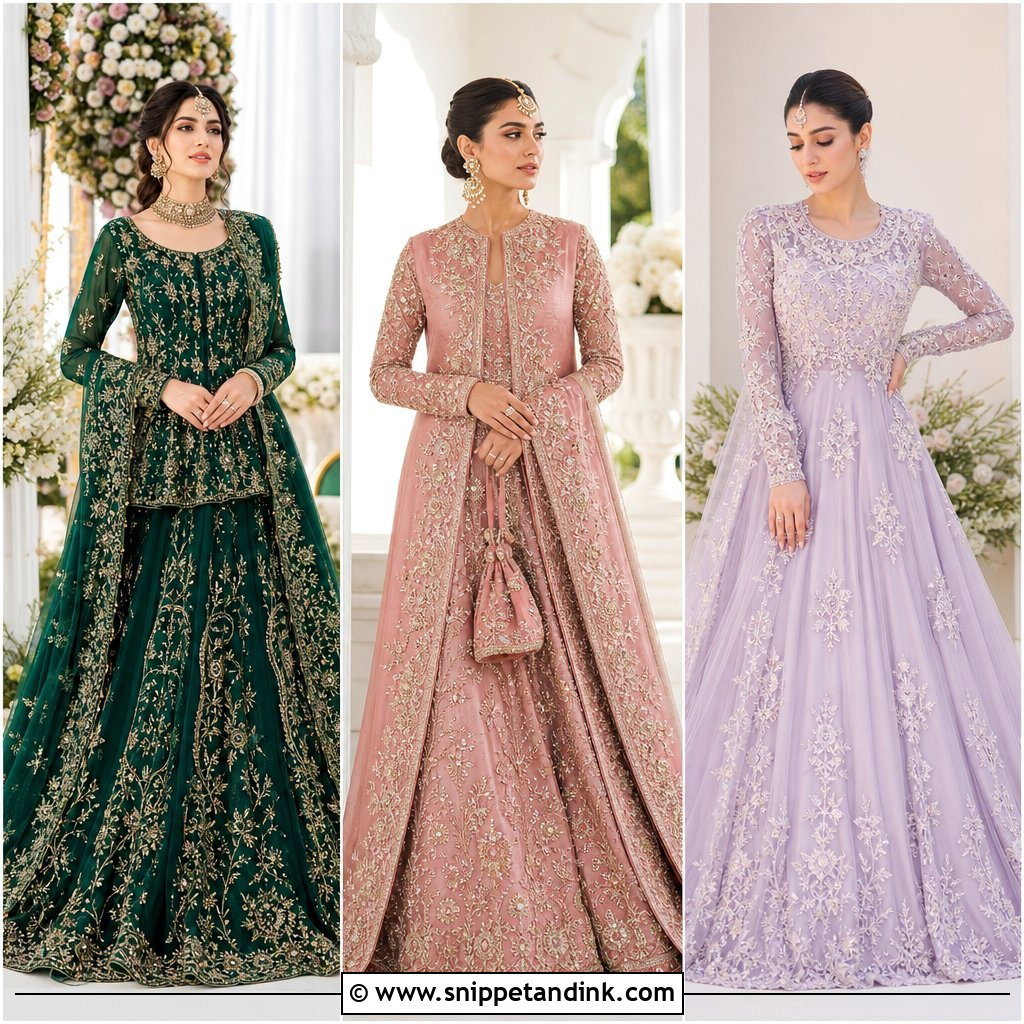
4. Blush Pink Nikah Pishwas Outfit
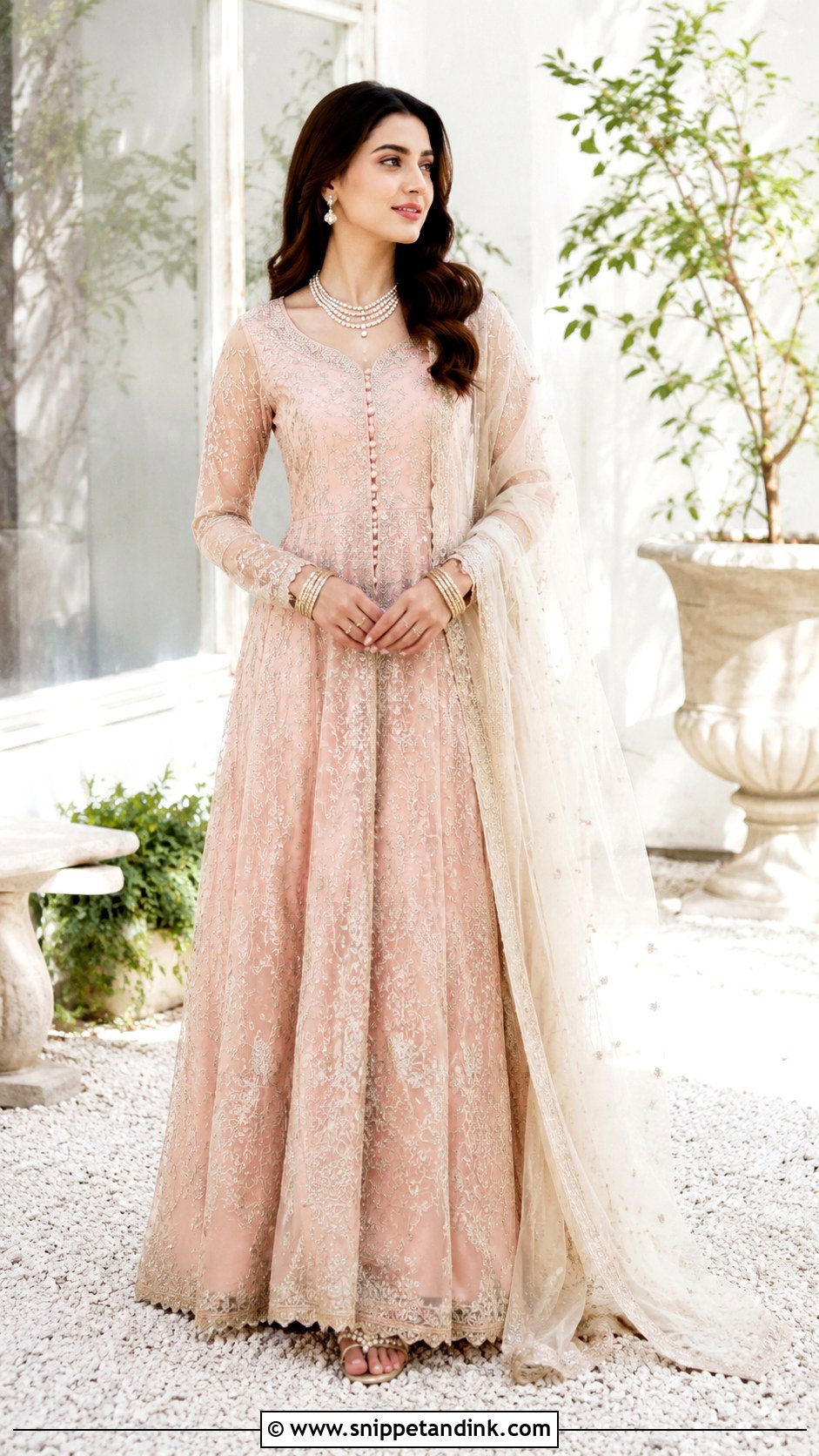
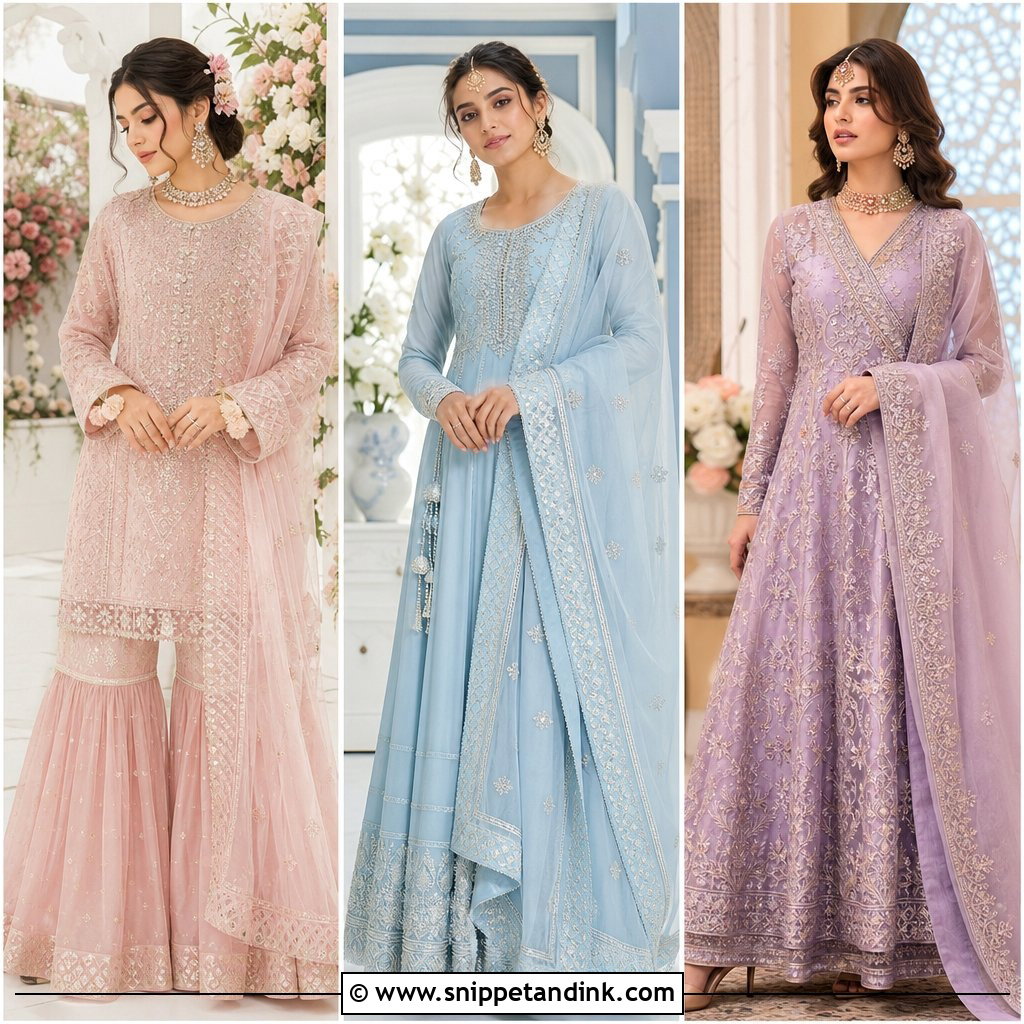
A blush pishwas flows from the waist, so it’s comfortable for sitting, walking and family photos at a daytime ceremony. The detail should go on the bodice, sleeves and hem. The one thing I check with a pishwas is how much it weighs at the hem: a heavily bordered flare pulls the whole dress down and the waist seam drops by the evening. A matching or ivory dupatta keeps it fresh, with pearl jewellery, soft gold bangles and embellished sandals. A lighter version works for sisters and close family.
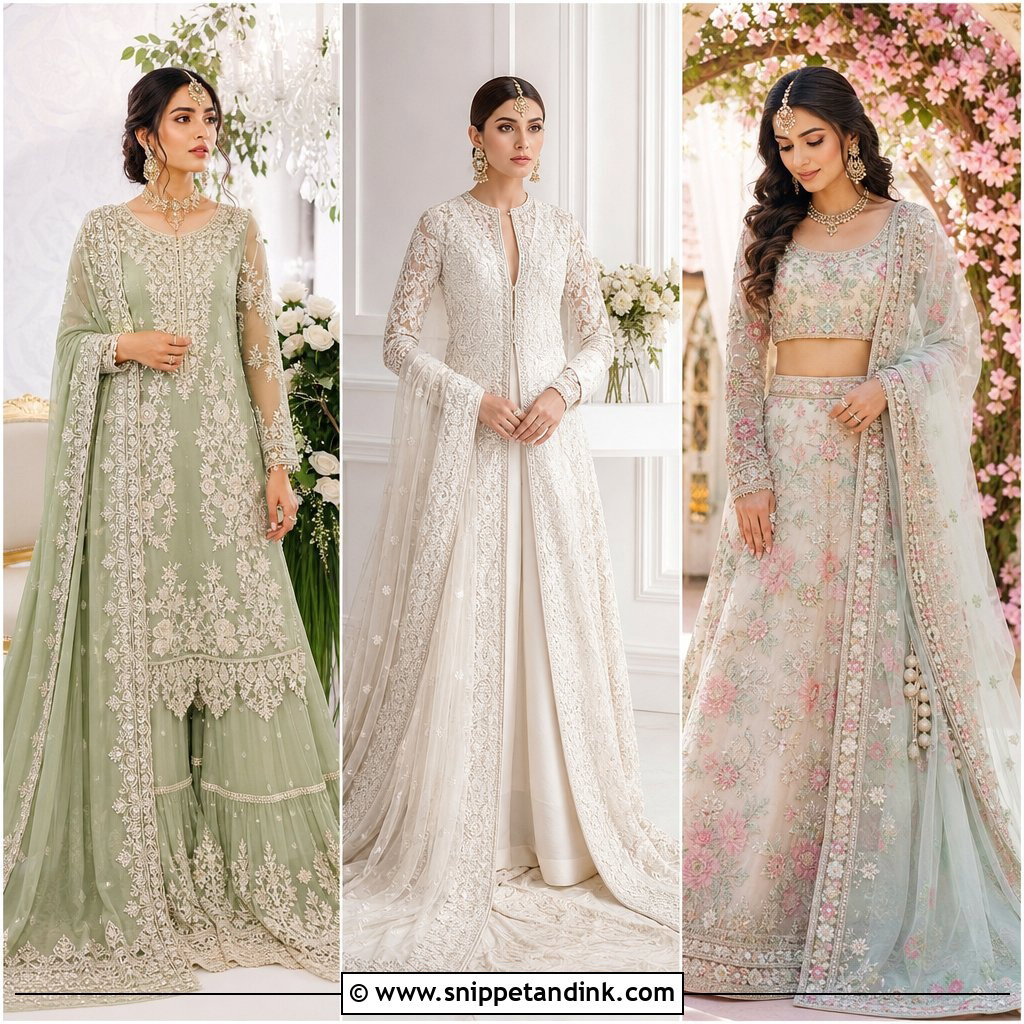
5. Mint Green Nikah Maxi Outfit
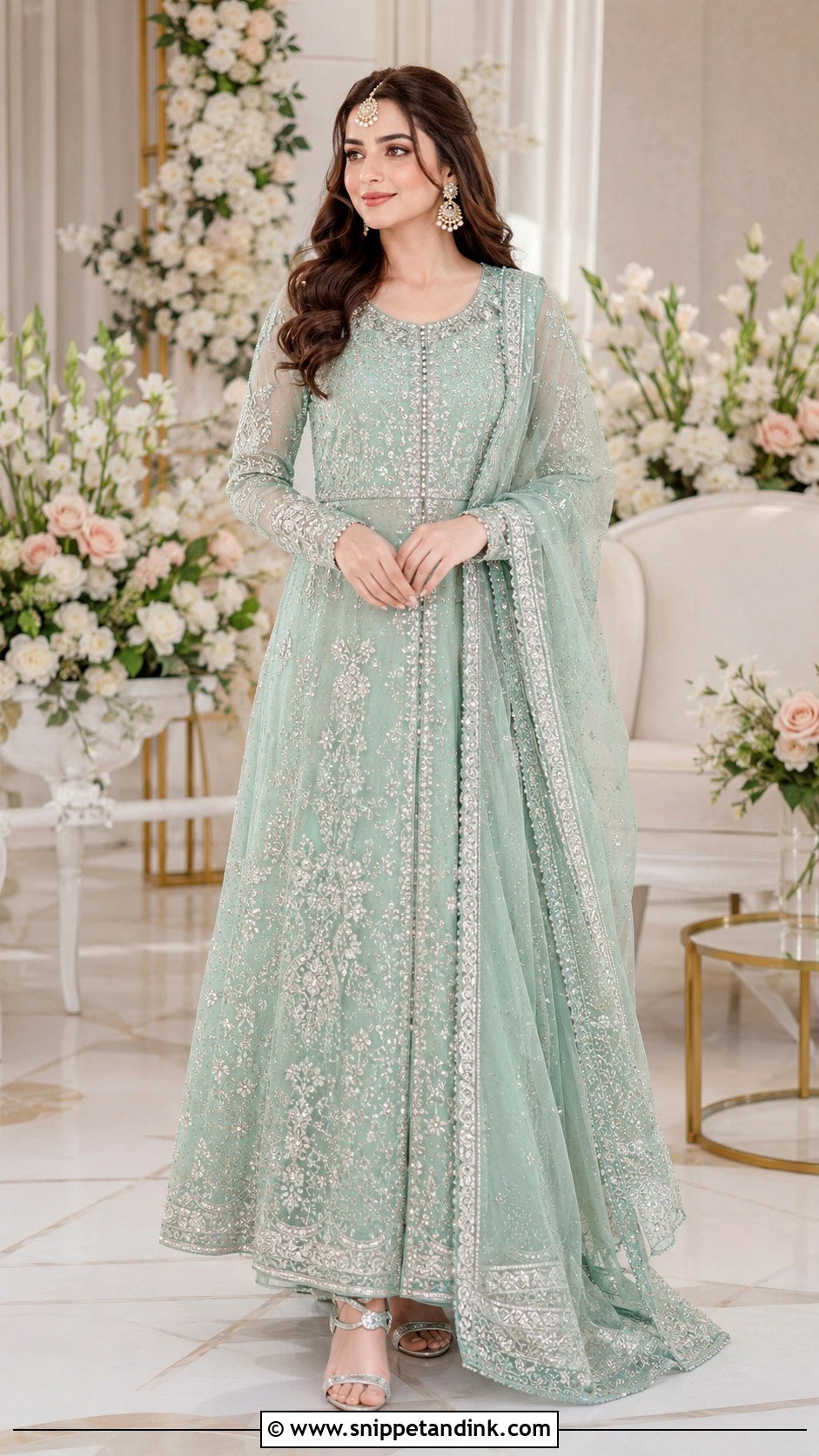
Mint maxis give a polished bridal effect without layers. A fitted bodice, a flowing skirt, sheer sleeves and delicate silver or pearl embroidery keep it modern and modest, and a mint or ivory dupatta goes over the head. Sheer sleeves on a maxi are often unlined, so if you’re marrying in a mosque or in front of conservative elders, ask for a sleeve lining or a slightly heavier net. Silver heels, pearl earrings, a small tikka and rosy, natural makeup suit spring and summer ceremonies.
6. Powder Blue Nikah Anarkali Outfit
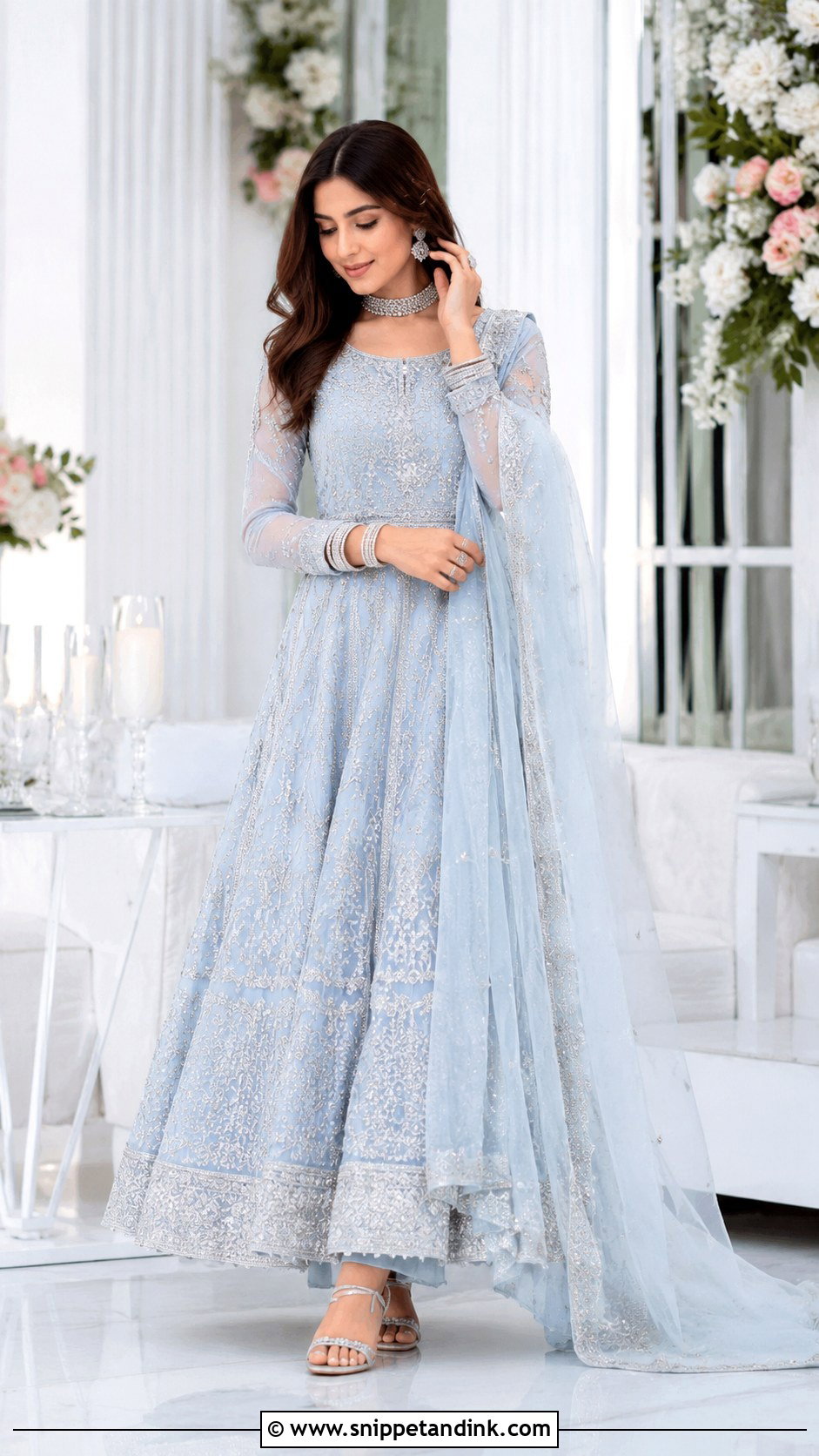
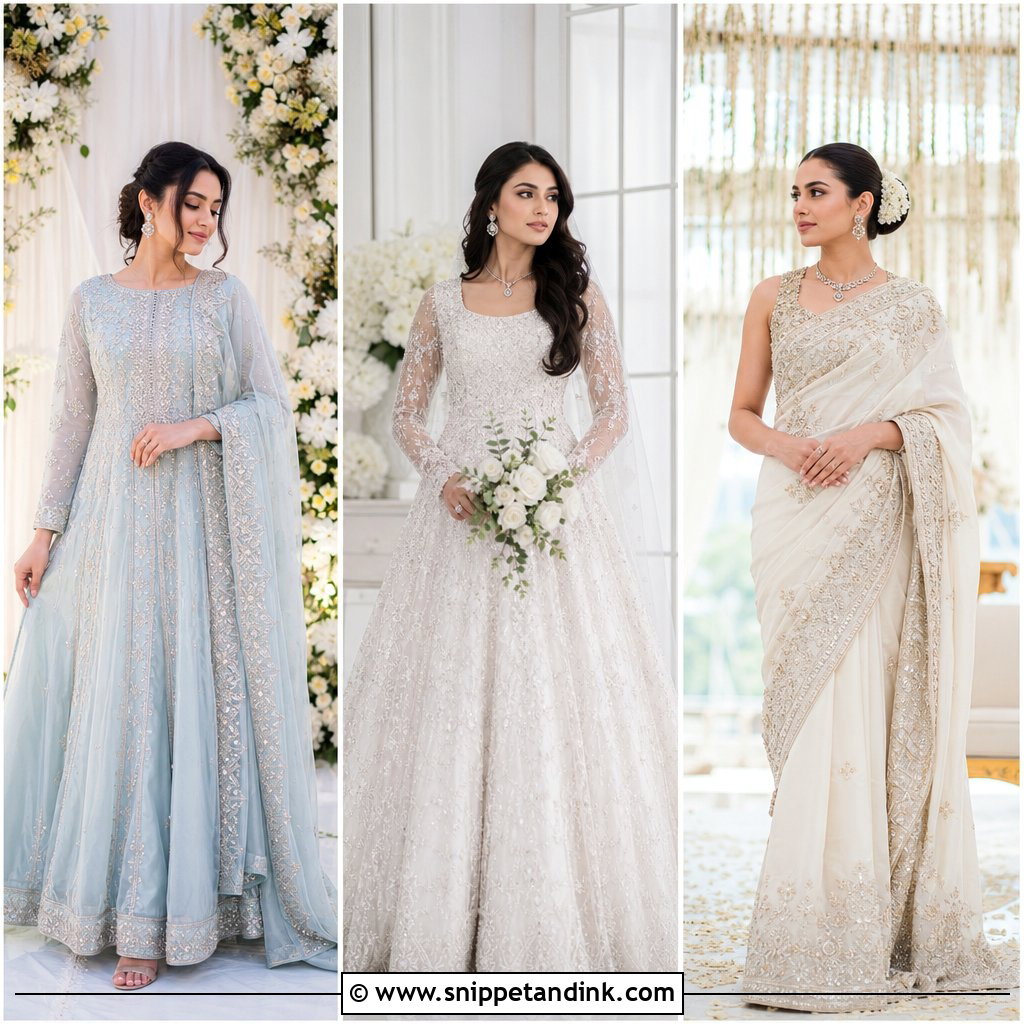
Powder blue anarkalis are cool-toned and calm. The long flared shape gives drama while the colour keeps it gentle. Silver embroidery, pearl accents or a little mirror work suit it, along with a chiffon or organza dupatta with a light border. Anarkalis can be heavy at the hem if they use many panels, so lift one at the fitting; if it’s a strain to hold, you’ll feel it in your shoulders by the end. Silver jewellery, crystal bangles and delicate heels finish it. Adjust the embroidery level to make it work for a bride, bridesmaid or relative, and wear it in daylight where the blue looks its best.
7. Pastel Lavender Nikah Lehenga Outfit
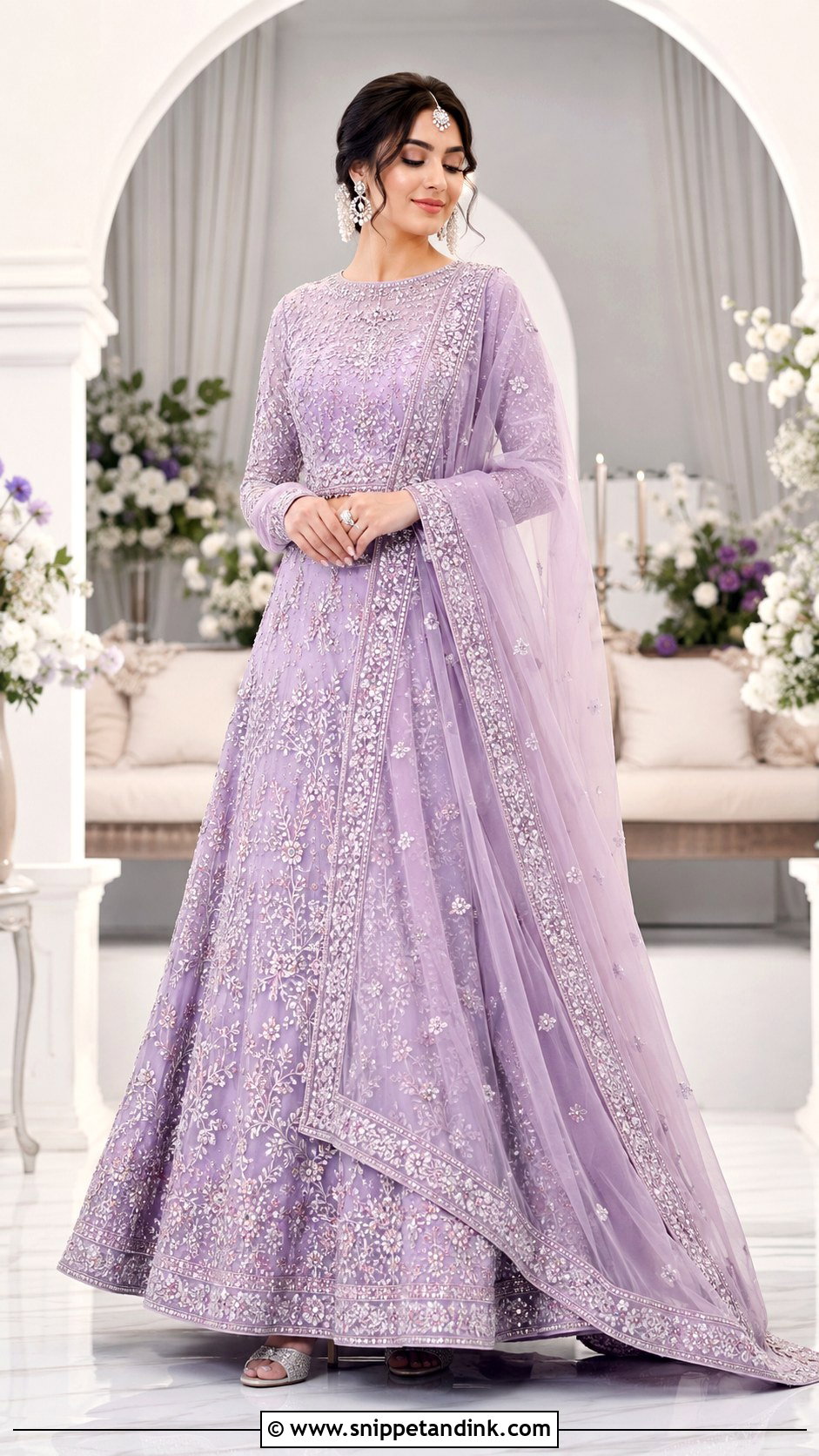
Lavender suits a bride who wants something different that’s still soft. A lightweight lehenga with a modest blouse, long sleeves or a sheer jacket, plus silver, pearl or crystal embellishment, keeps it modern. A matching dupatta with a fine border makes the colour look deliberate rather than accidental. Lavender can turn grey under some indoor lighting, so check the fabric under the venue’s light if you can. Pearl earrings, a small tikka and silver sandals keep it delicate for indoor ceremonies, garden setups and bright evening events.
8. Beige Nikah Angrakha Outfit
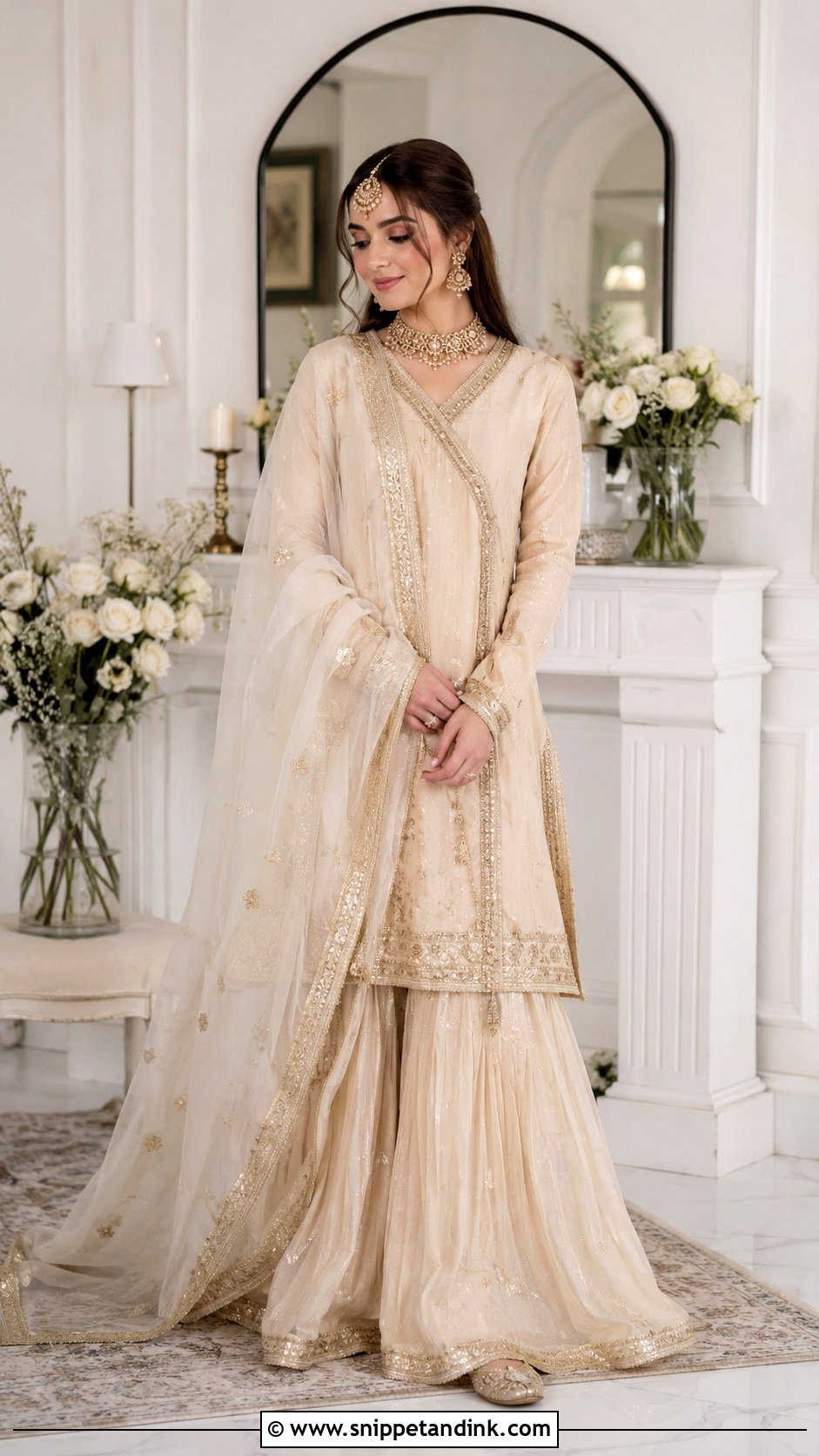
Beige angrakhas have an old-world charm. The overlapping front gives the shape, and gota, dabka, resham or pearl work on the neckline, sleeves and hem gives it occasion. Pair it with a sharara, straight pants or a flowing lehenga, depending on formality. The decorative ties at the overlap loosen as you move, so I ask the tailor to add a concealed hook under the wrap. A beige or ivory bordered dupatta, antique gold jewellery and khussas or low heels suit traditional families and home Nikahs.
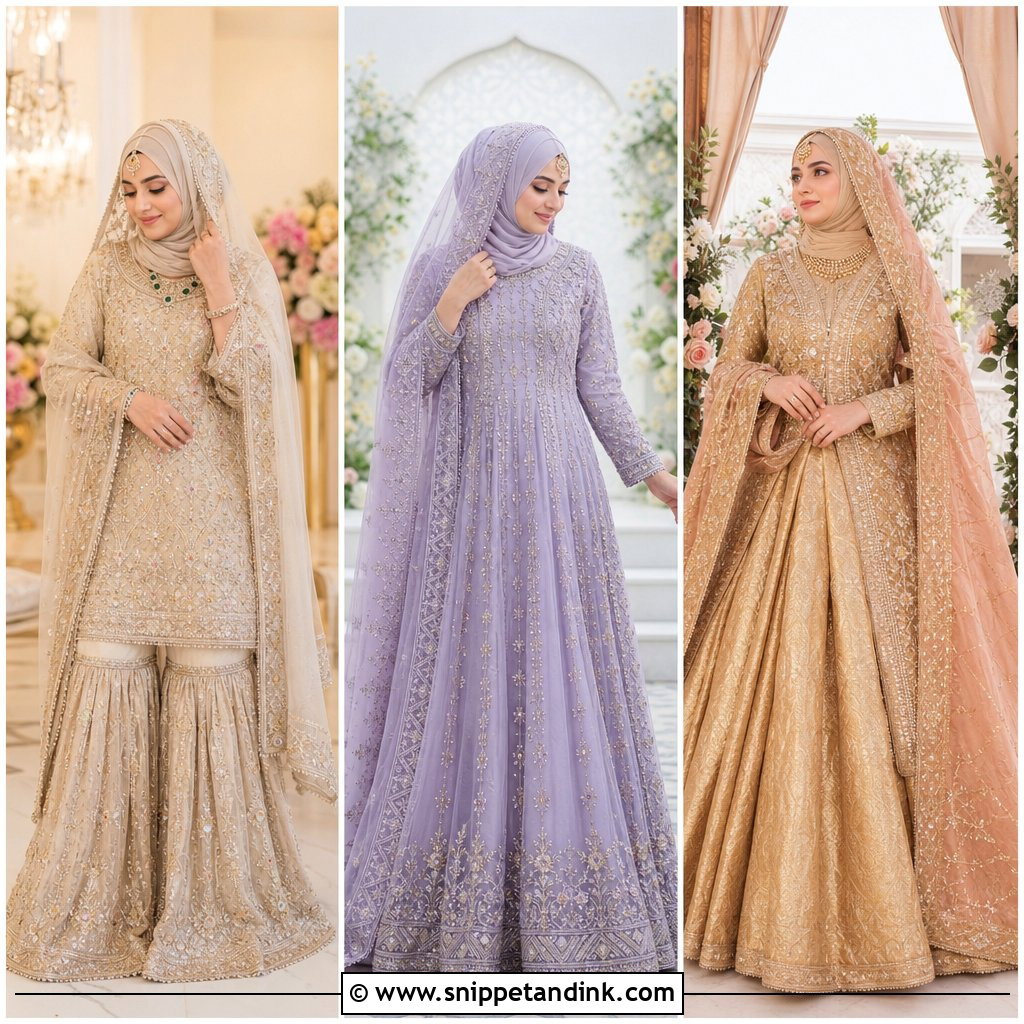
9. Gold Nikah Farshi Gharara Outfit
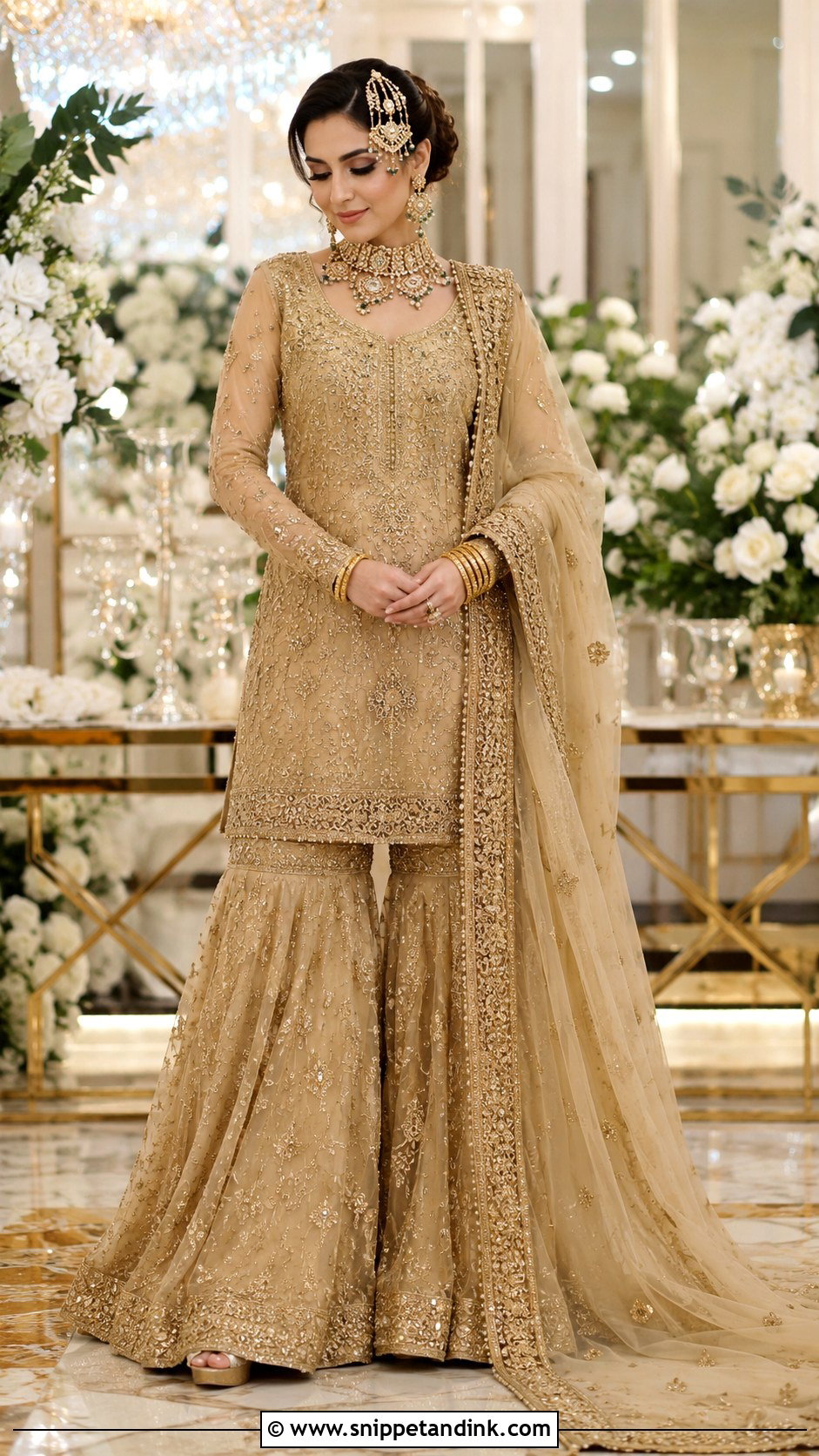
For a bride who loves Pakistani grandeur, a gold Nikah farshi gharara outfit is it. The floor-sweeping flare looks regal and carries real heritage. A short kameez with intricate embroidery balances a wide gharara border, and a tissue, organza or net dupatta with heavy edging adds formality. Keep the makeup soft and let the fabric lead. Farshi hems collect dust and petals from the floor, so I’d avoid it for a Nikah held outdoors on grass. Kundan jewellery, a passa and matching bangles suit a formal Nikah with a larger guest list.
10. Off White Nikah Saree Outfit
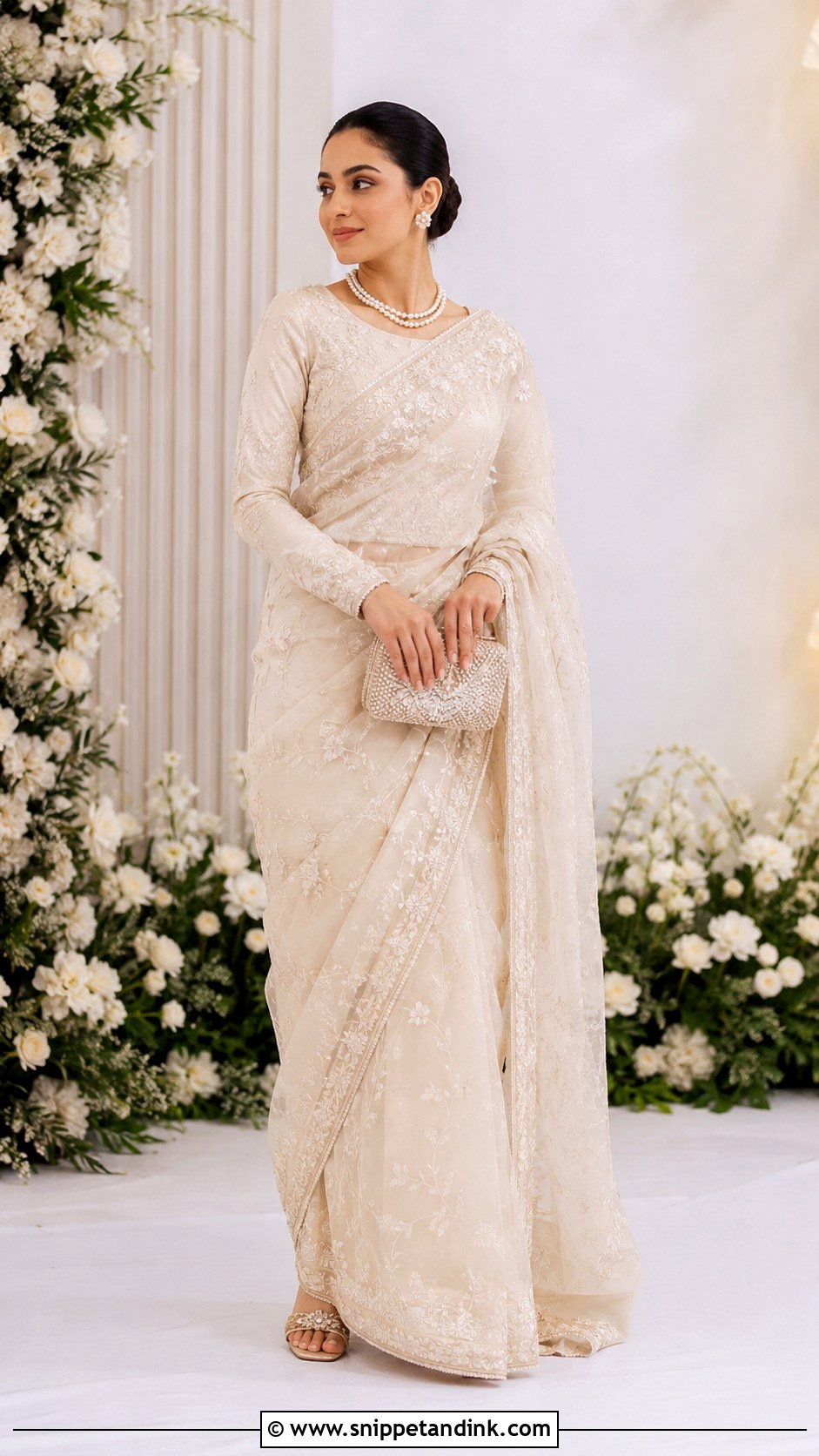
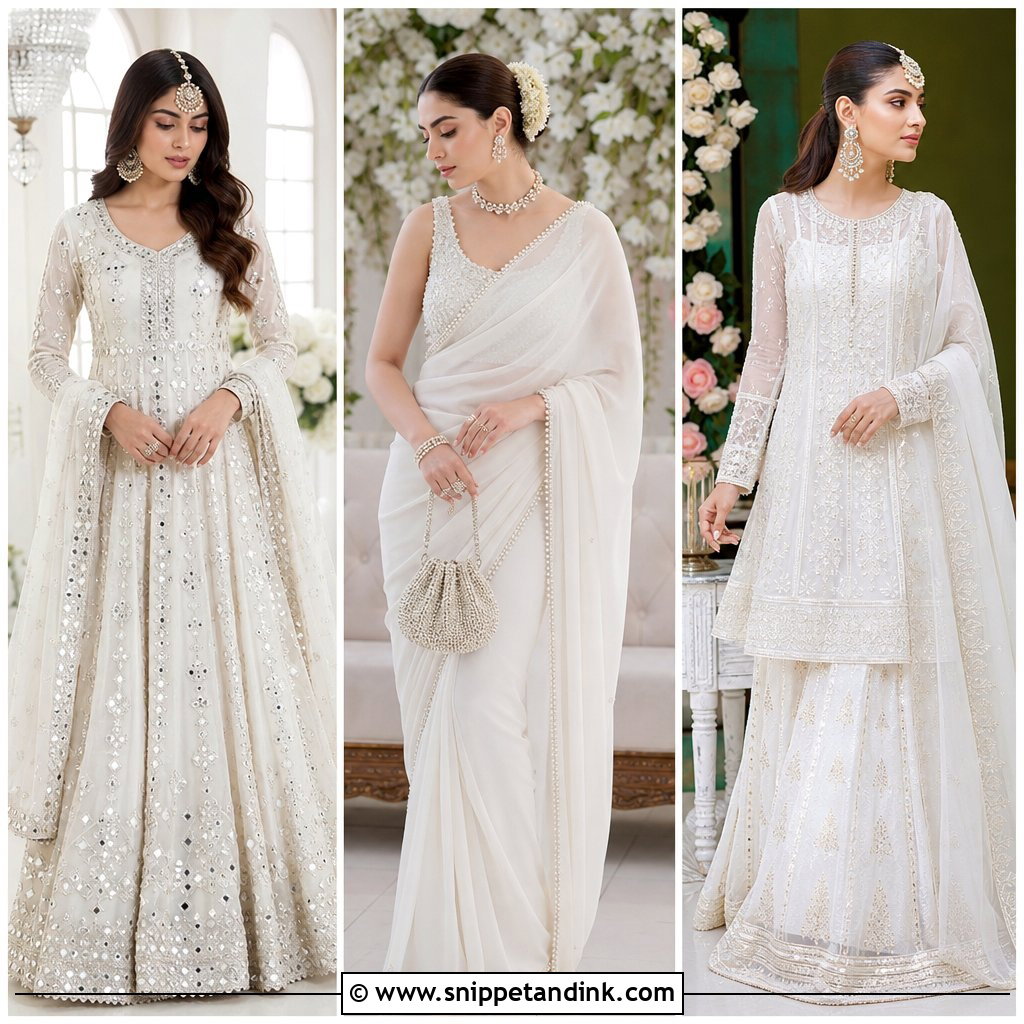
Off-white sarees are graceful and a step away from shararas and ghararas. Chiffon, organza, silk or net with fine embroidery along the border work best; chiffon and georgette drape most easily, while organza holds a crisp pleat but can stand away from the body. Pair it with a modest blouse, full sleeves or a longer cut. Pearl jewellery, a sleek bun, soft makeup, embellished sandals and a small clutch keep it refined. It suits brides who love draping and guests who want something formal but quiet.
11. White Nikah Peplum Sharara Outfit
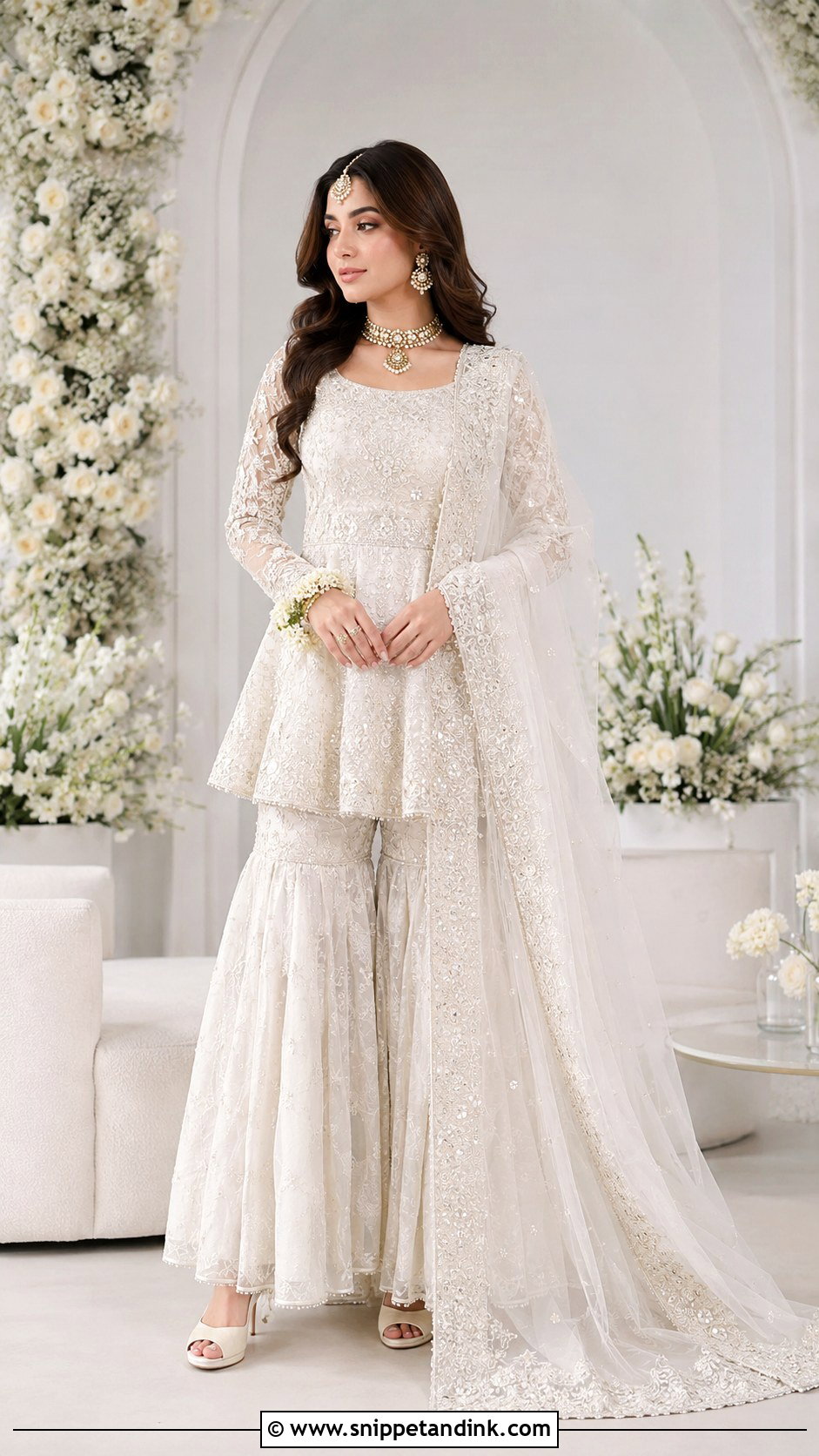
A peplum over a sharara defines the waist and gives a fresh shape while staying traditional. Keep the embroidery light on the bodice and sleeves, and balance it with a dupatta that has a detailed border. In all white, the cut becomes the focus. The peplum should end at the high hip and skim; if it’s tight, it flips up when you sit. Pearl or kundan jewellery, soft waves and ivory heels finish it. The proportions read clearly in full-length portraits, and it gives movement without the weight of a lehenga.
12. Pearl White Nikah Maxi Outfit
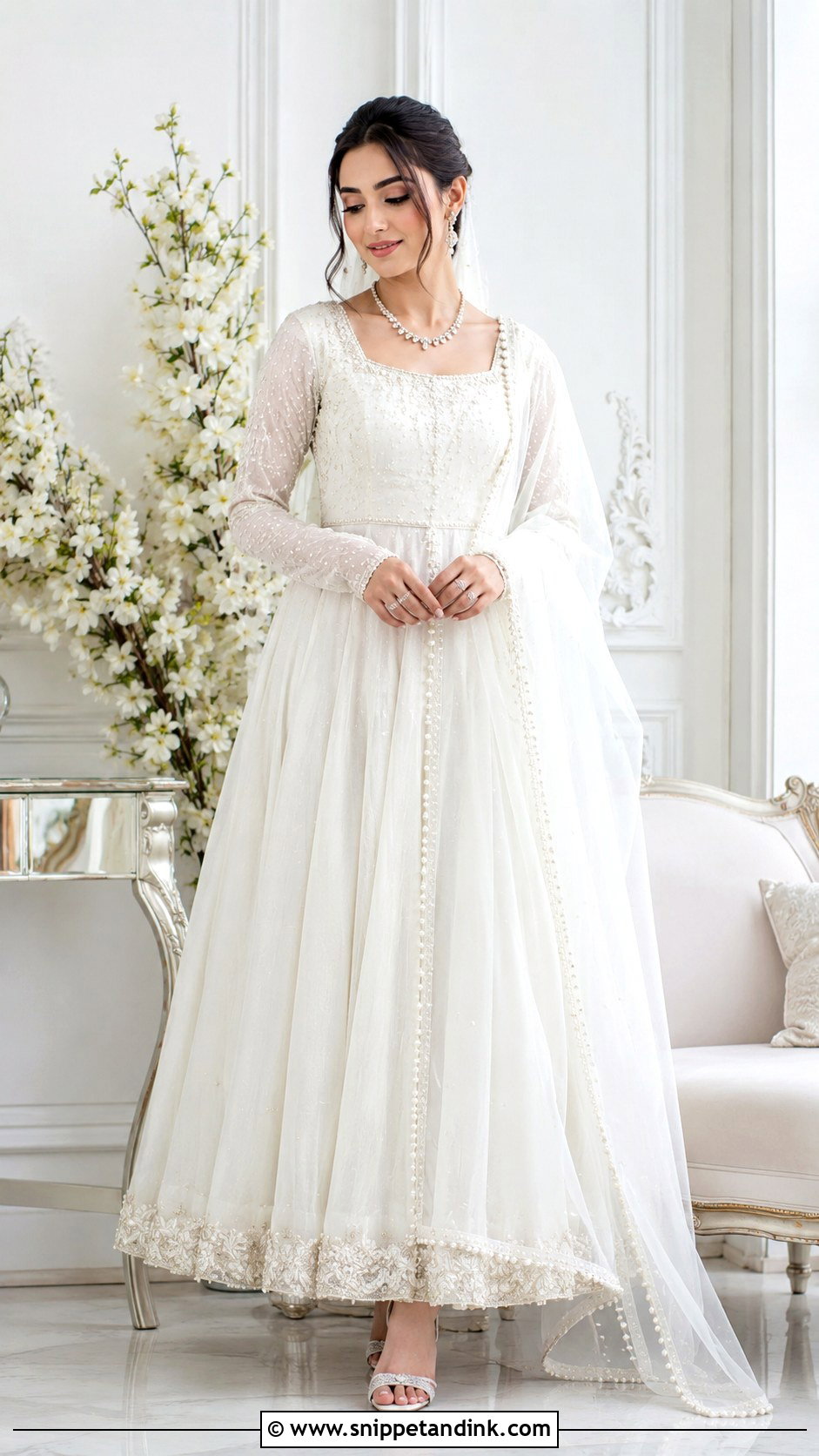
Pearl white maxis are refined and simple, with full coverage and a clean line. A fitted bodice, a soft flare and embroidery around the neckline, sleeves and hem are enough. A sheer dupatta with pearl edging completes it. Real pearl or heavy bead edging adds noticeable weight to a dupatta, so I pin it more firmly than a plain one. Pearl earrings, a delicate necklace and white or silver heels suit it. Fewer layers make it comfortable through a long ceremony, and modesty takes priority over bridal weight here.
13. Floral Nikah Lehenga Outfit
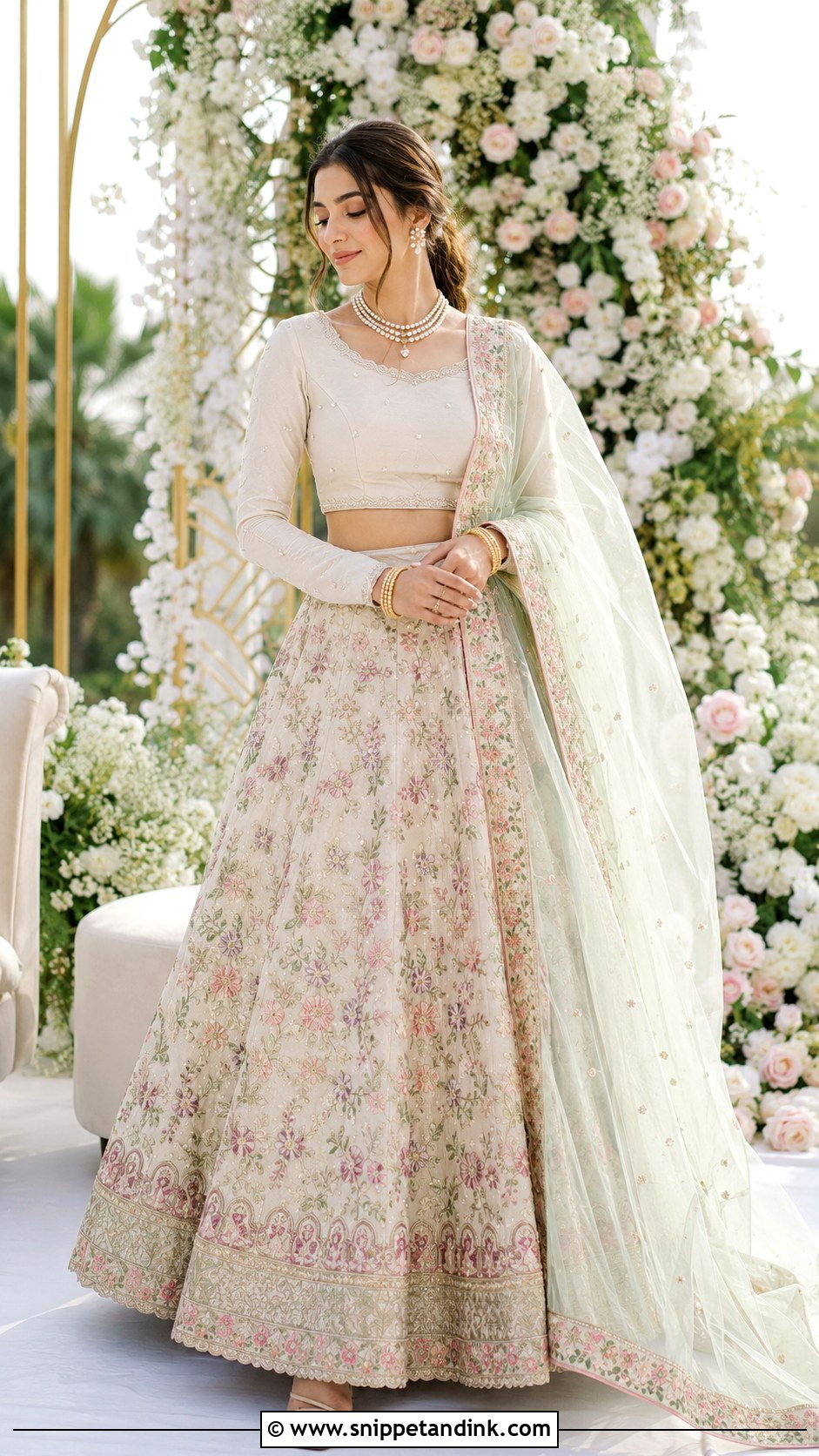
Florals are for a softer, garden feel. A floral Nikah lehenga outfit swaps metallic embroidery for pastel threadwork, printed organza or delicate appliqué on a white, blush, mint or powder blue base. Pair it with a simple blouse and a light dupatta so the florals lead. The risk with prints is that cheaper ones look casual, so judge the fabric in person; good printed organza has a sheen and crisp edges. Pearl jewellery, soft gold bangles and neutral heels suit daytime, outdoor or spring ceremonies.
14. Cream Nikah Long Shirt Outfit
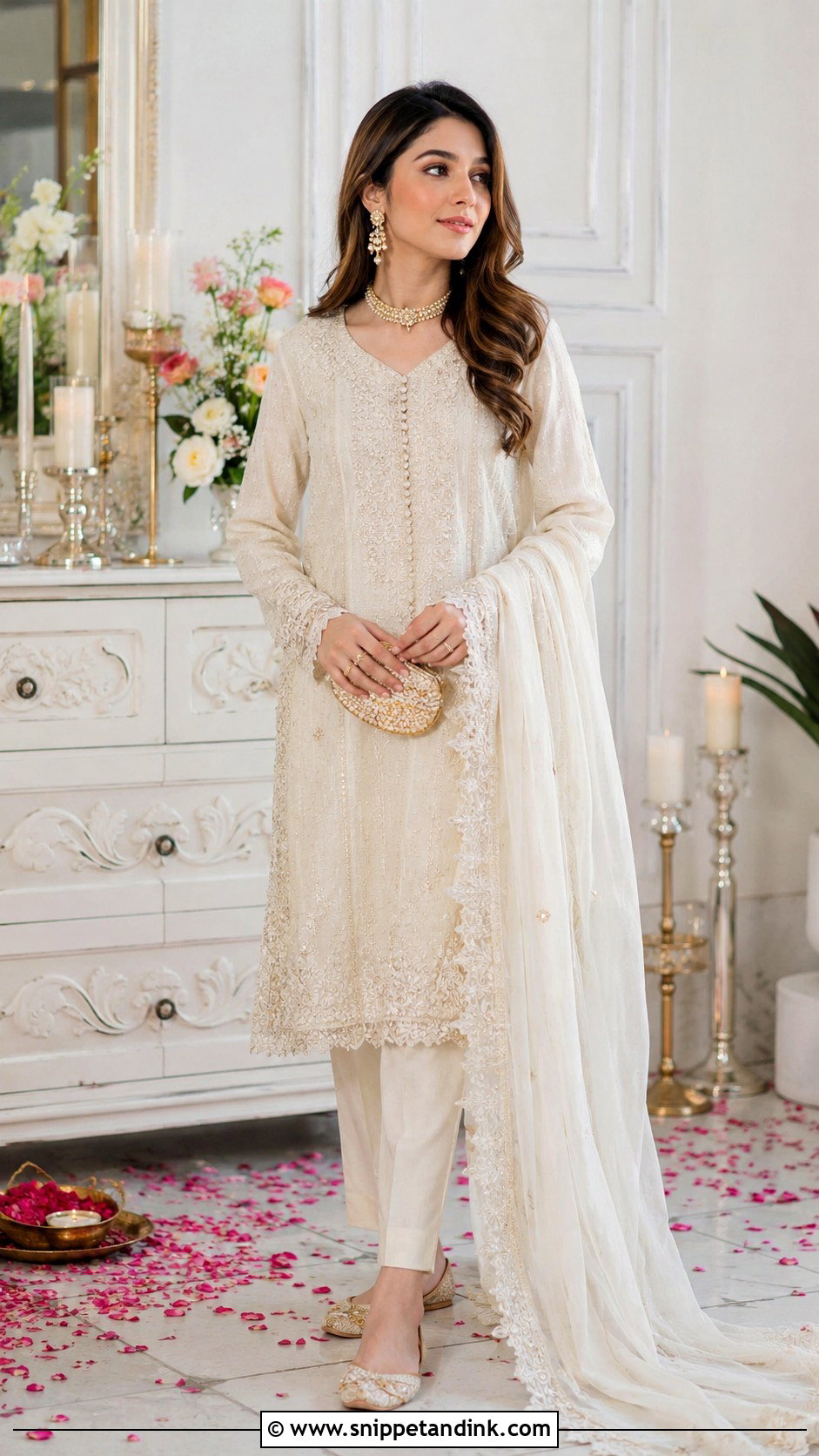
Long shirts are the outfit I suggest most to mothers and older relatives, because the coverage and tailoring feel dignified without bulk. A cream Nikah long shirt outfit pairs with straight pants, cigarette trousers or a light gharara. Put the embroidery on the neckline, sleeves, slits and hem. Set the slits while seated, because a slit that looks modest standing can open more than expected on a sofa. A cream organza or net dupatta, gold or pearl jewellery and embellished khussas or kitten heels make it right for a home or banquet Nikah.
15. Ivory Nikah Jacket Lehenga Outfit
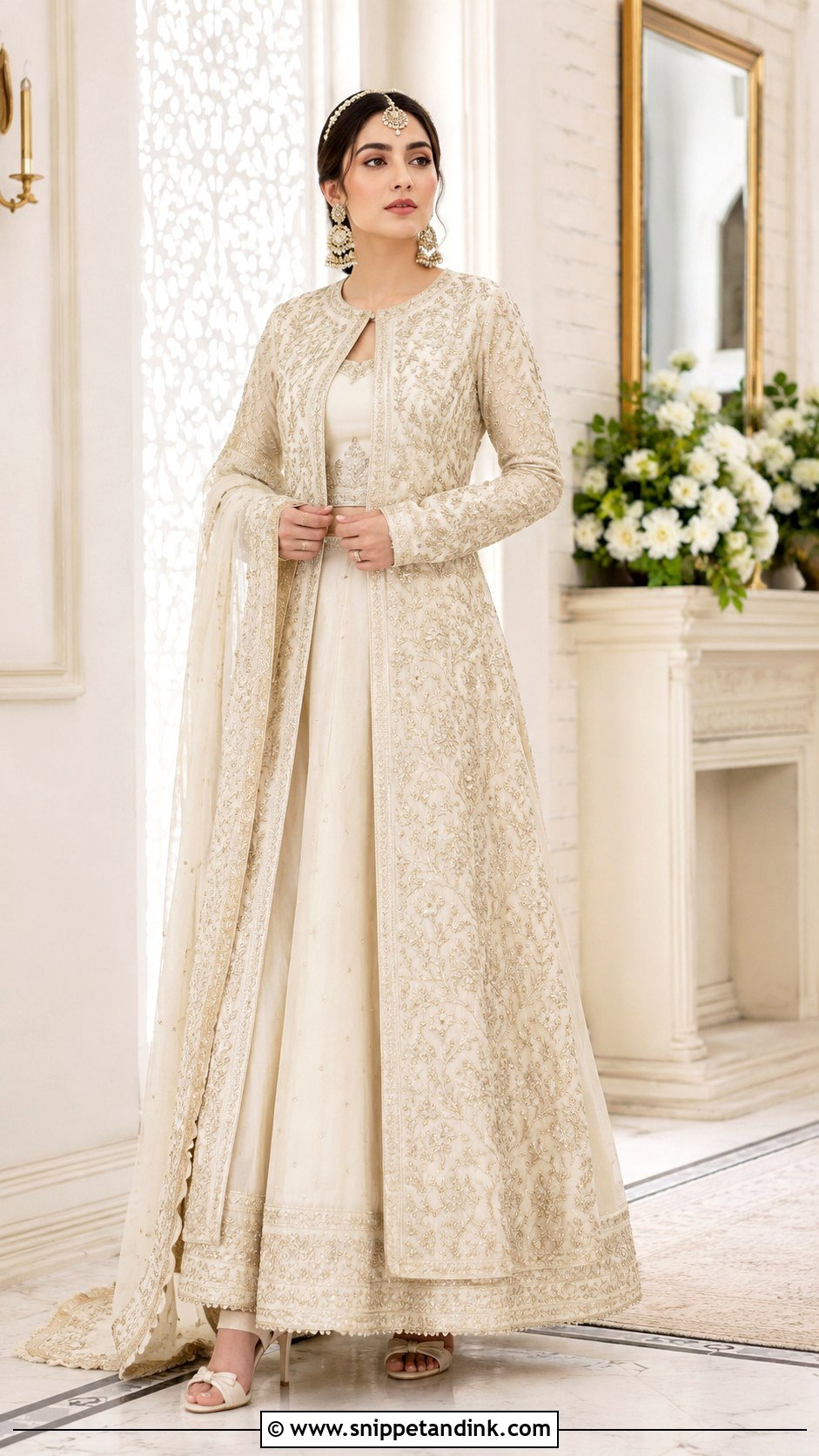
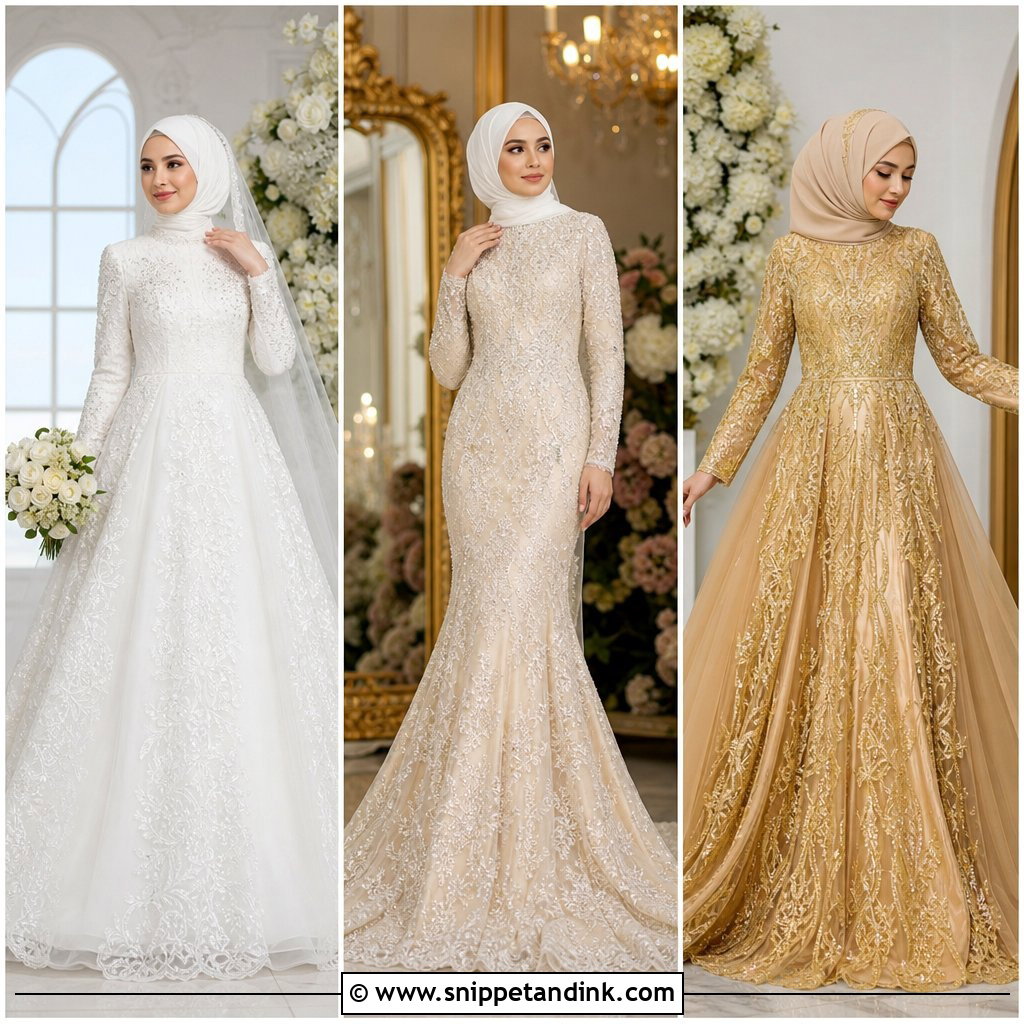
Jacket lehengas give modesty and structure at once. The lehenga brings bridal volume and the long jacket adds coverage, with front-open embroidery, pearl buttons or scalloped edges. Underneath, a simple blouse or camisole stays hidden and comfortable. Long jackets hang from the shoulders, so a precise shoulder fit stops them sliding back every time you lift your hands. A light dupatta goes over the head or on one shoulder. Statement earrings and a tikka are enough jewellery. The jacket length balances many body types.
16. Soft Gold Nikah Anarkali Outfit
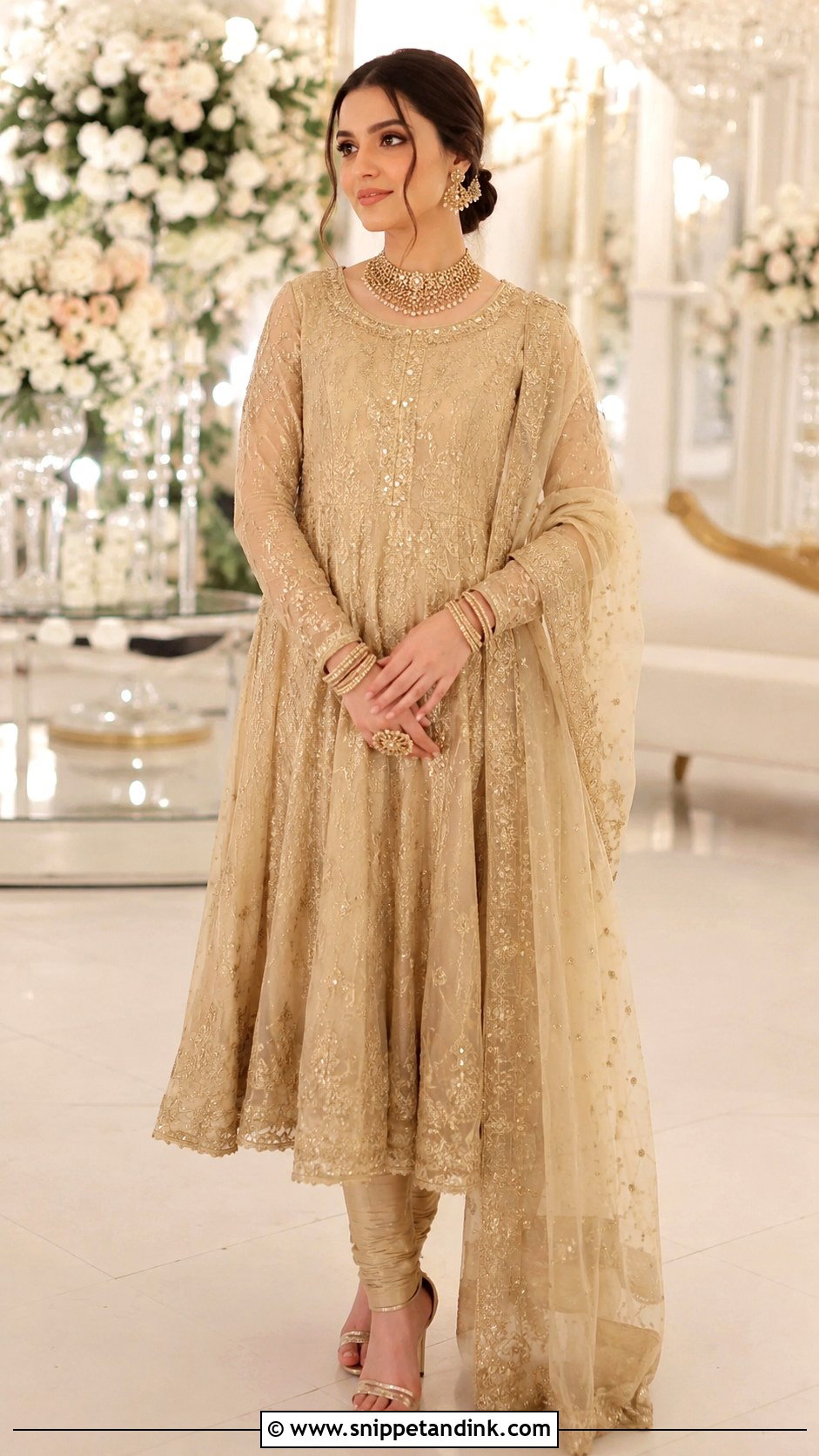
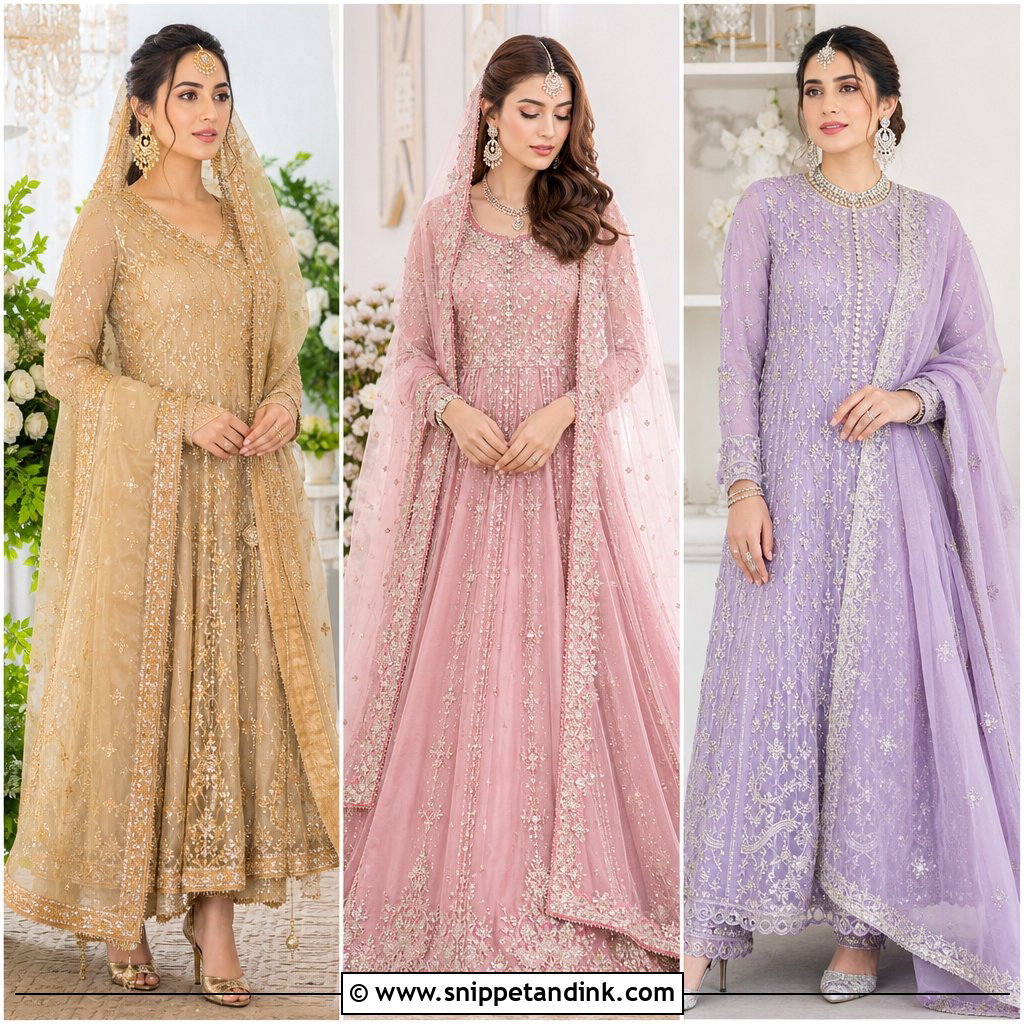
Soft gold anarkalis have a festive glow without boldness. The anarkali flows away from the body, which is comfortable and forgiving. A soft gold base with tonal embroidery, subtle sequins or fine zari, churidar or slim trousers and a sheer dupatta complete it. Gold zari can feel scratchy at the underarms, so I ask for a soft lining there. Antique gold jewellery suits it, or pearls if you’d like it softer. Metallic heels or embellished flats work in evening Nikahs, family halls and formal home events.
17. White And Gold Nikah Sharara Outfit
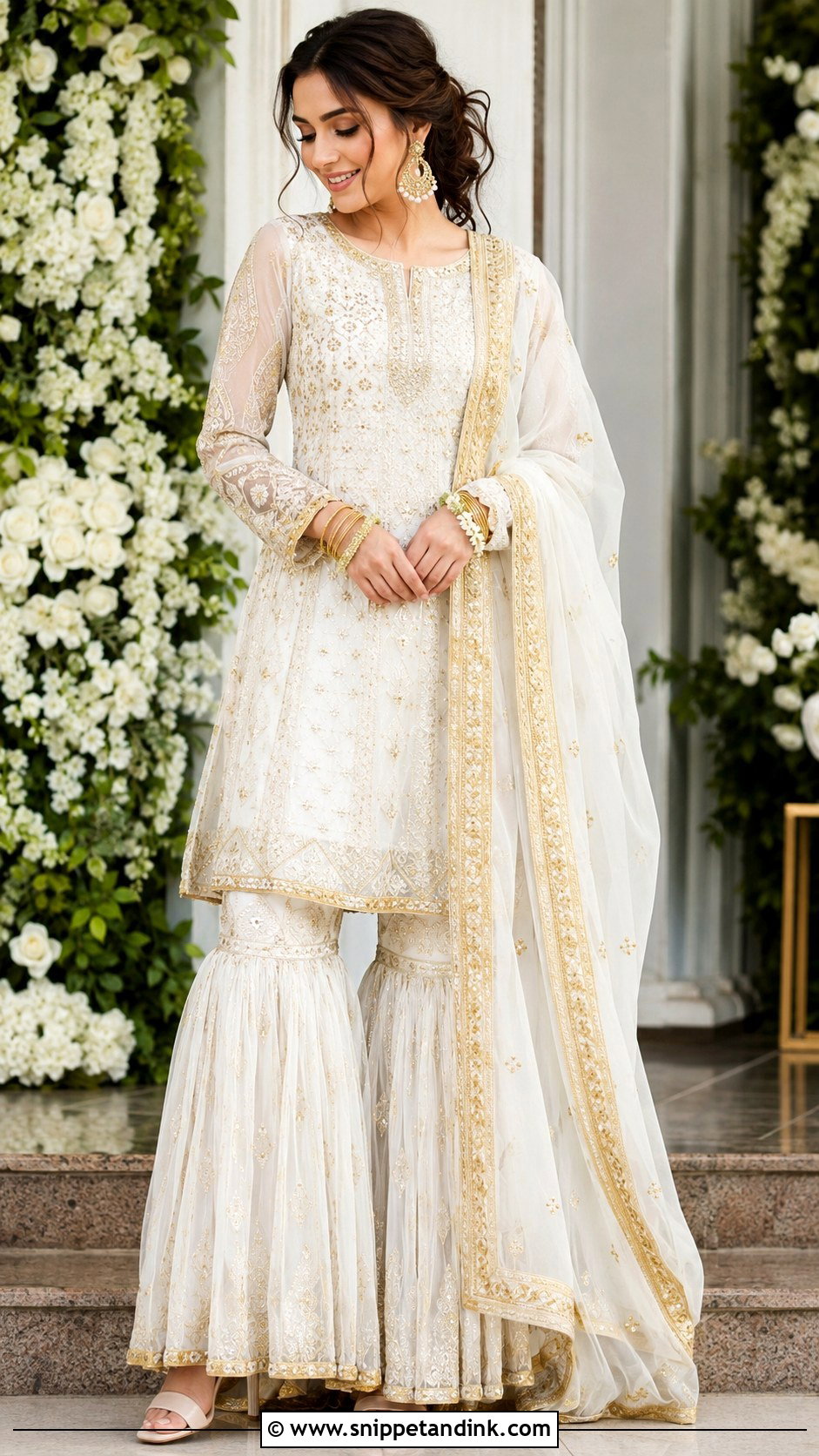
White and gold shararas are the most traditional-looking outfit here, and they suit the bride or close family depending on embroidery level. A short kameez with a flared sharara and a gold-bordered dupatta is the base. For more weight, add a second dupatta in tissue or net. Two dupattas mean two pinning points, and the decision about which one goes on the head should be made with the hairstylist before the hair is done. Kundan jewellery, gold bangles and ivory heels complete it.
18. Rose Gold Nikah Lehenga Outfit
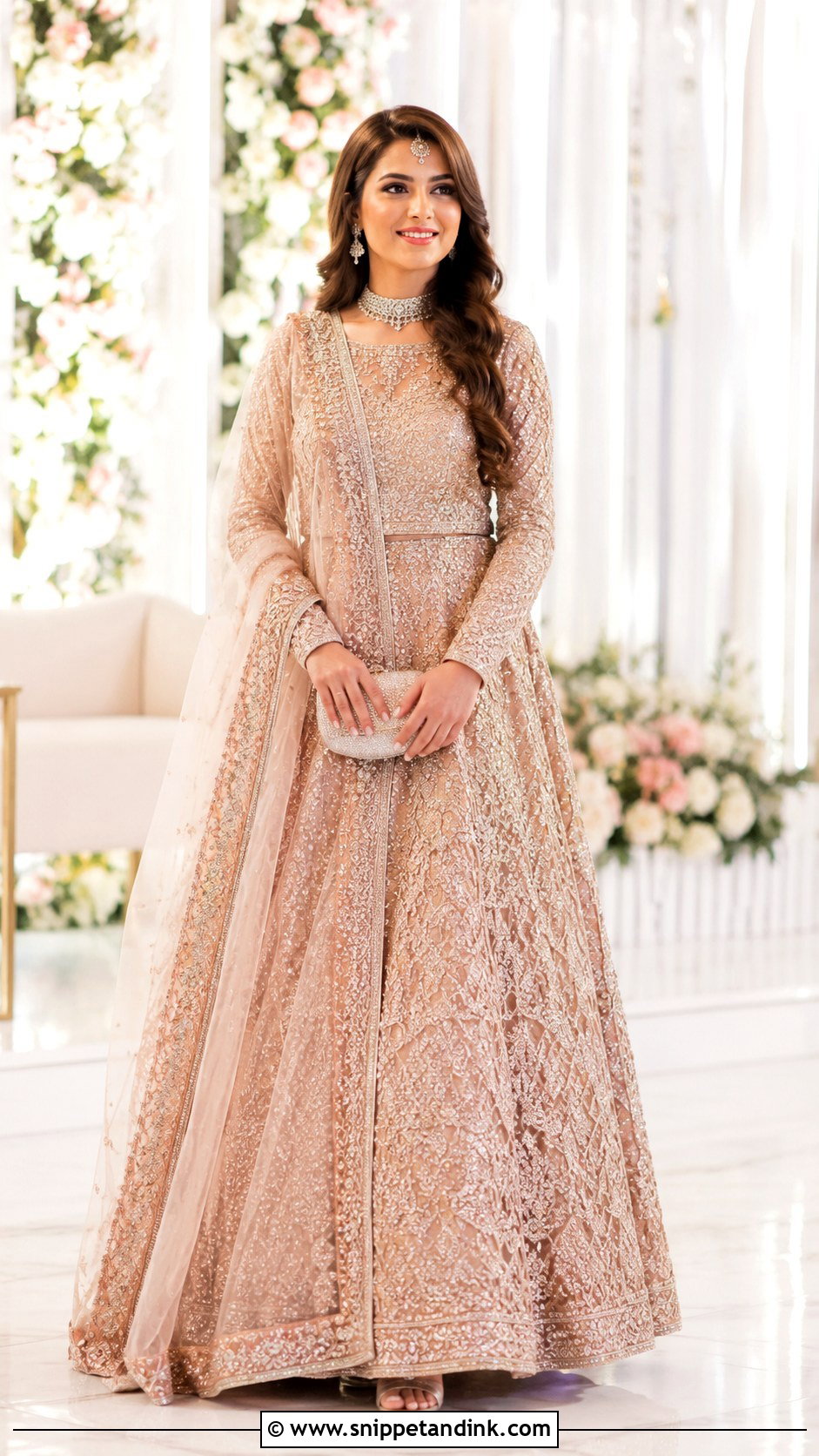
Rose gold mixes warmth, shine and softness, and it looks more modern than yellow gold. Delicate sequins, pearls or metallic threadwork on the lehenga, a modest blouse and a matching net or organza dupatta keep it light. Keep the jewellery in champagne, rose gold or pearl so the tones match, since yellow gold beside rose gold can look accidental. Soft waves, rosy makeup and nude heels finish it. It catches light gently at evening ceremonies.
19. Sage Green Nikah Gharara Outfit
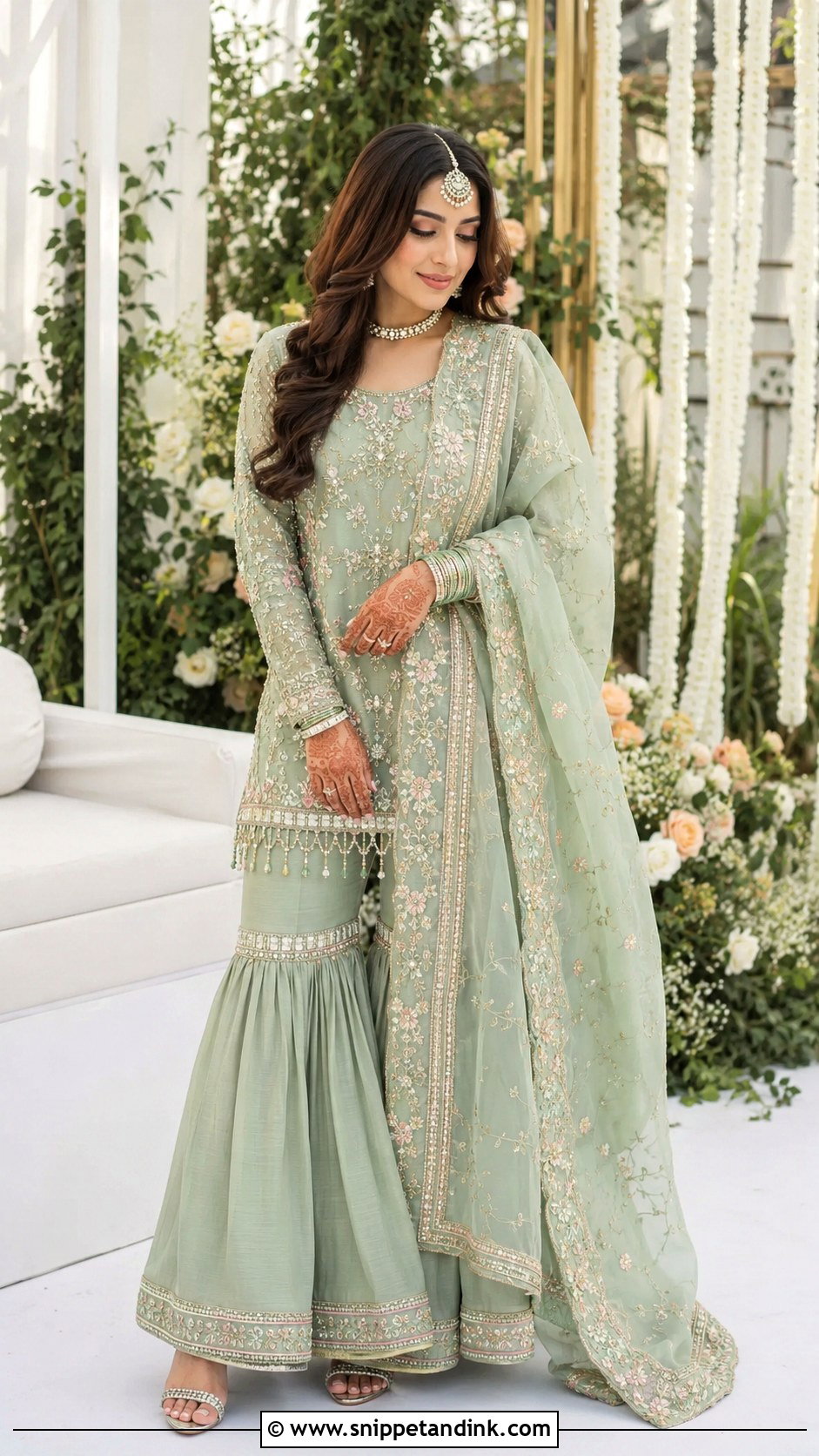
Sage green is a calmer way to bring colour into a Nikah than mint. A short embroidered shirt with a structured gharara and matching dupatta, with silver, pearl or light gold embroidery, is the base. Sage looks graceful in natural light, but under warm yellow bulbs it can read grey or khaki, so I’d keep it for spring, summer or garden ceremonies held in daylight. Pearl jewellery, soft bangles and metallic sandals suit it, and a head dupatta with a delicate passa or tikka makes it bridal.
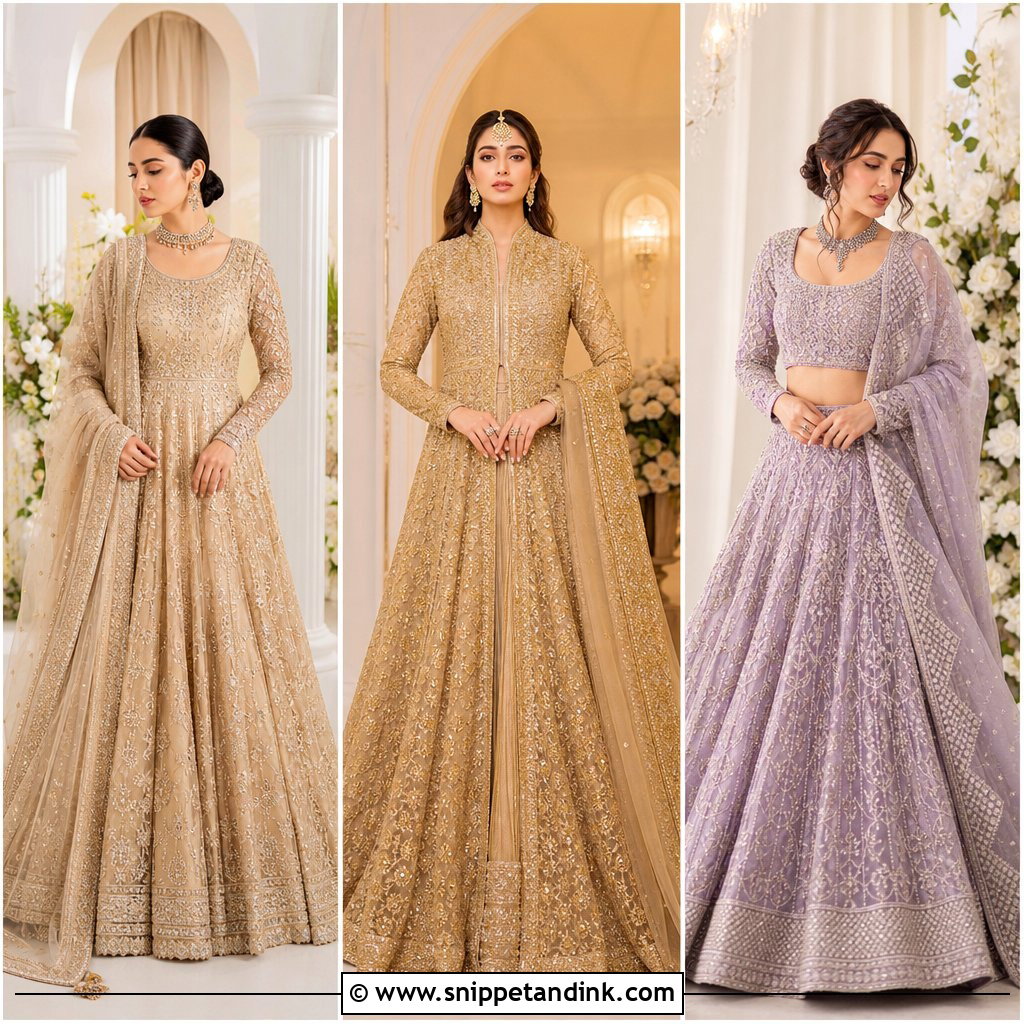
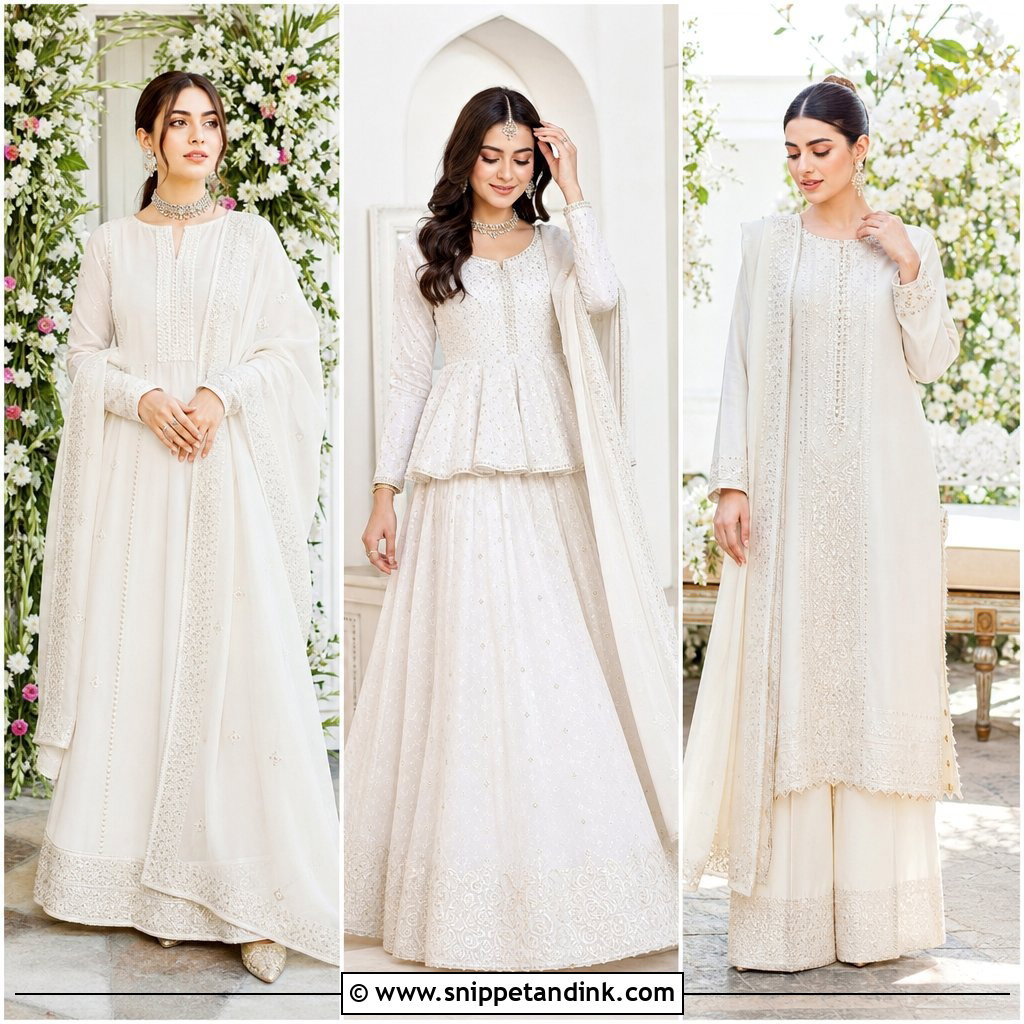
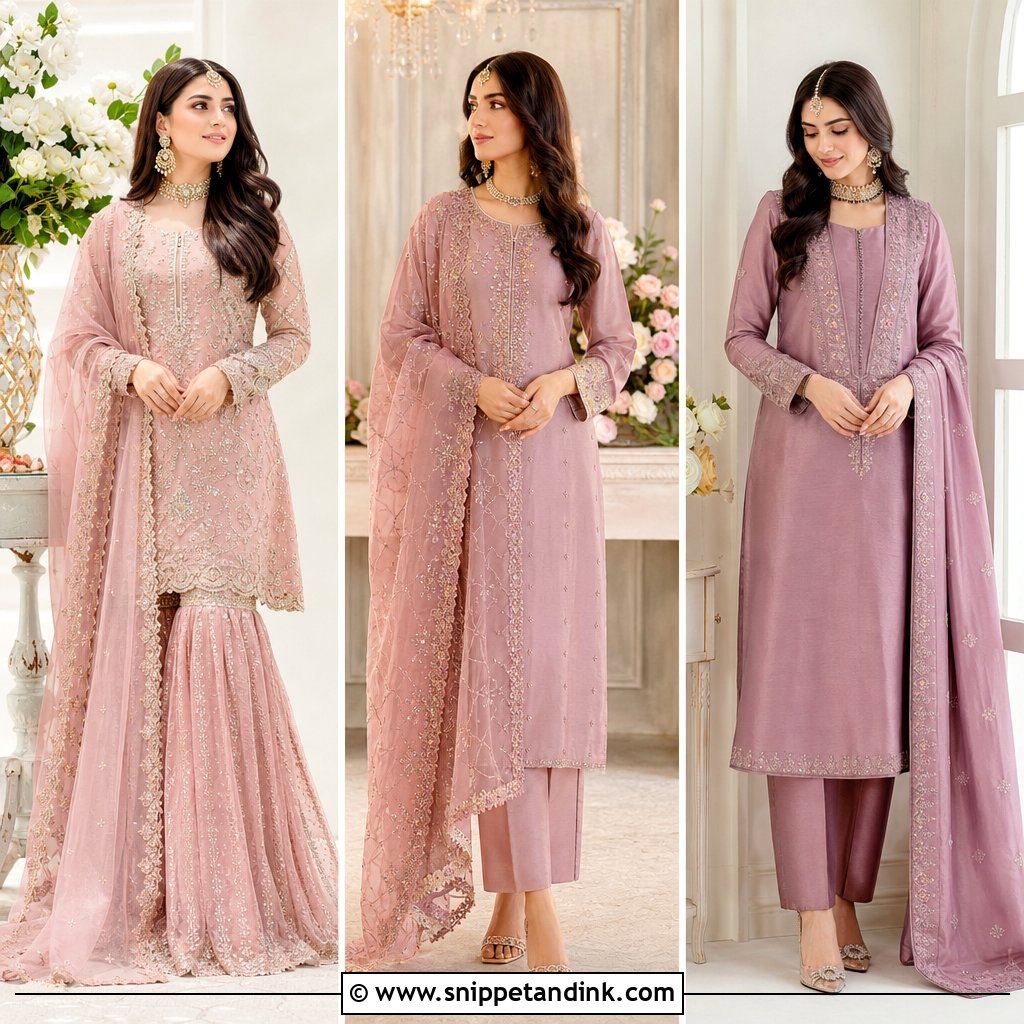
20. White Nikah Dupatta Lehenga Outfit
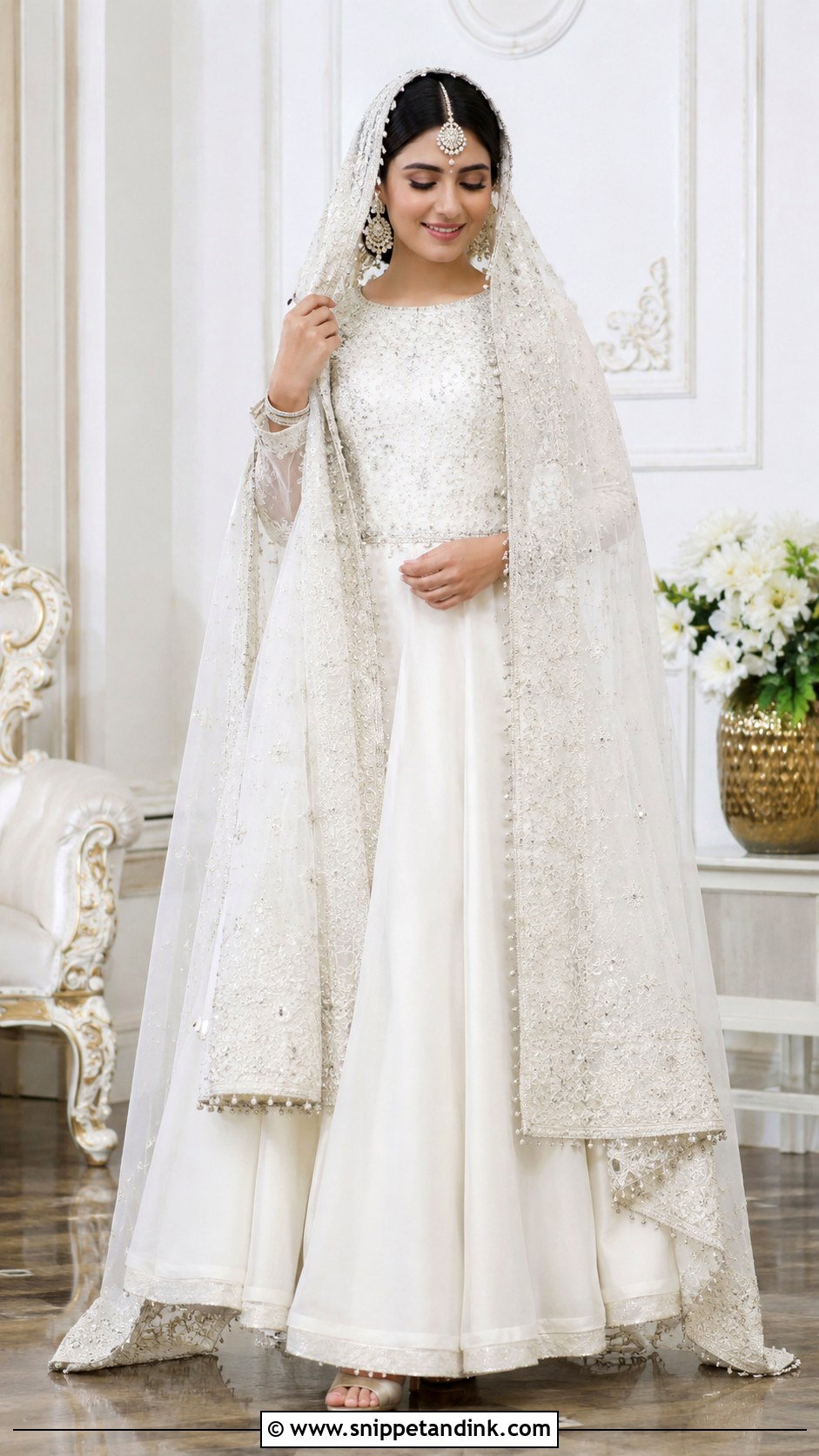
Some brides want the dupatta to be the whole story. A simple white or ivory lehenga and blouse lets a dupatta with embroidery, scalloped edges, pearls or gota become the focus. Drape it over the head for the ceremony, then across both shoulders for portraits. A statement dupatta is often heavier than people expect, and its weight sits in the border, so I’d test-pin it on your hair at the trial rather than on the day. Kundan earrings, a tikka, soft bangles and nude or ivory heels keep it clean and bridal.
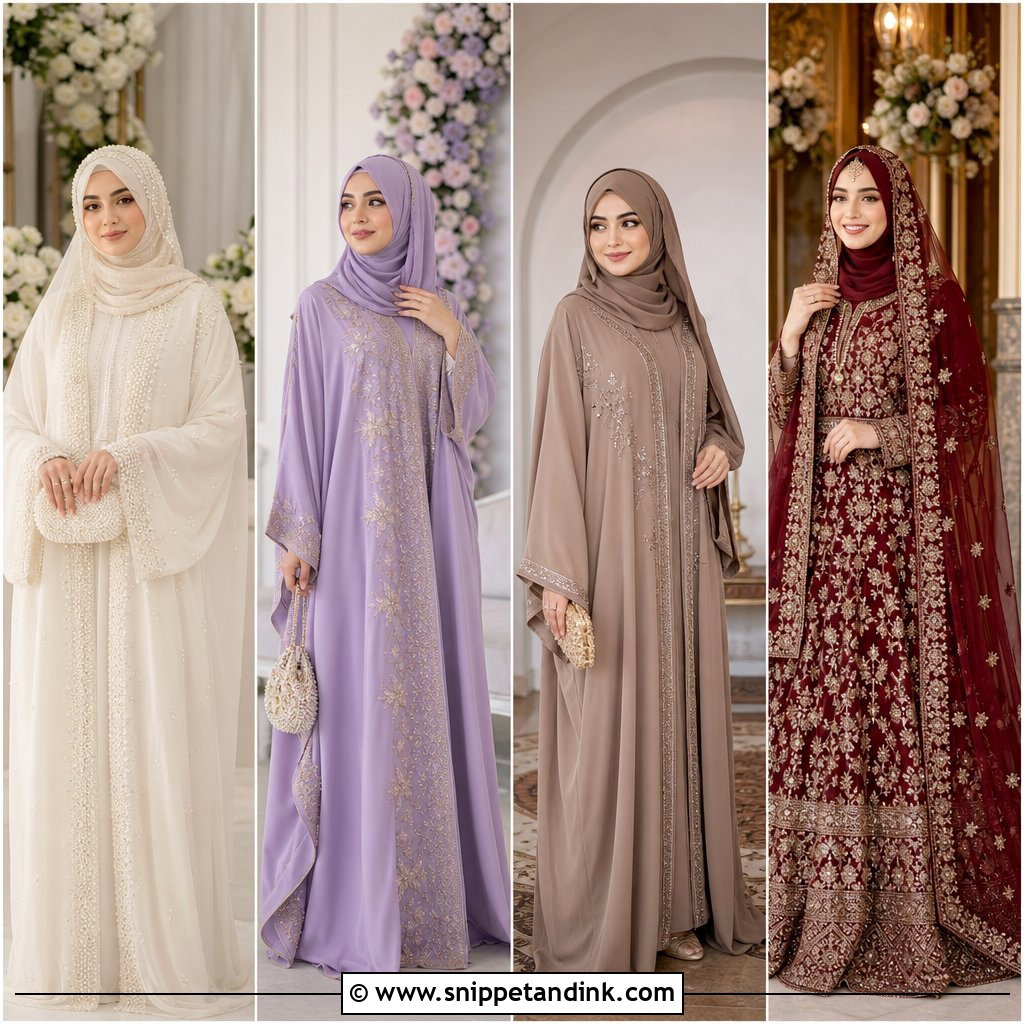
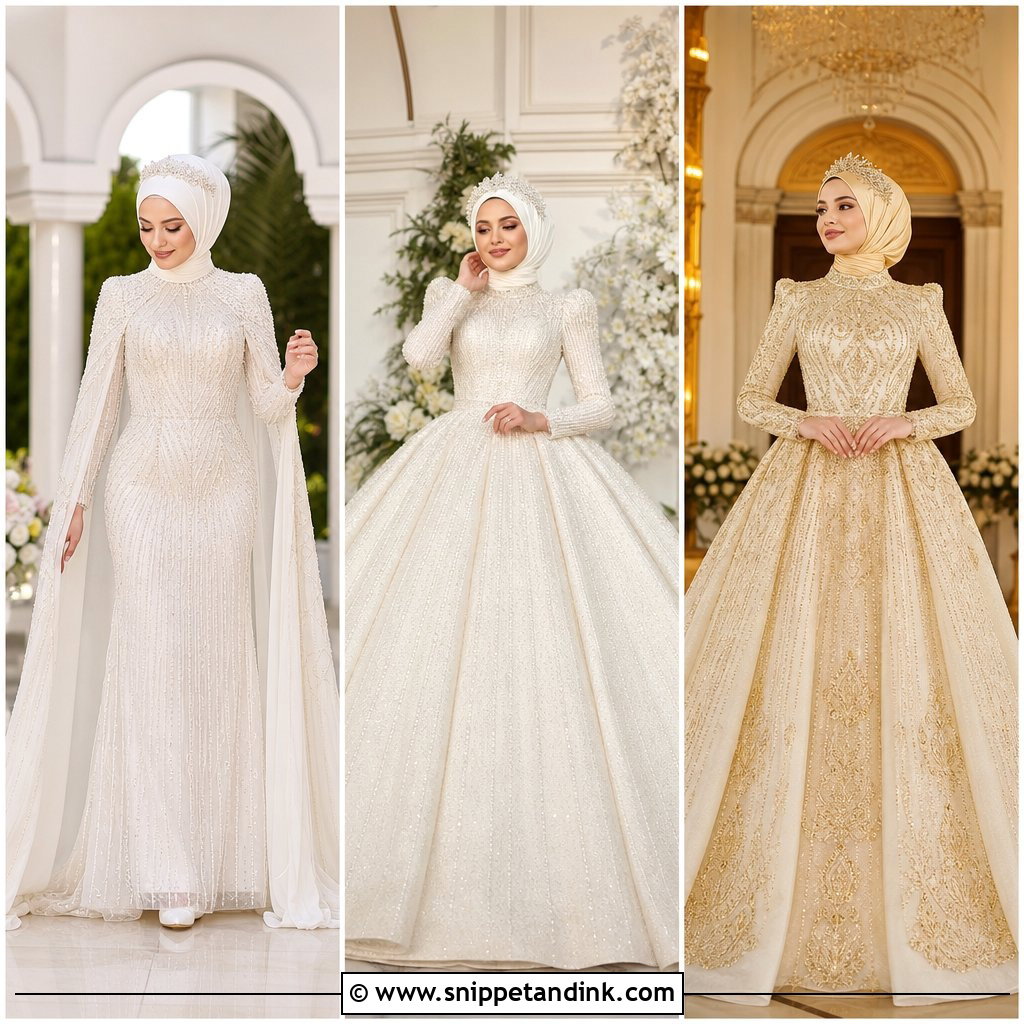
21. Modest Nikah Abaya Dress Outfit
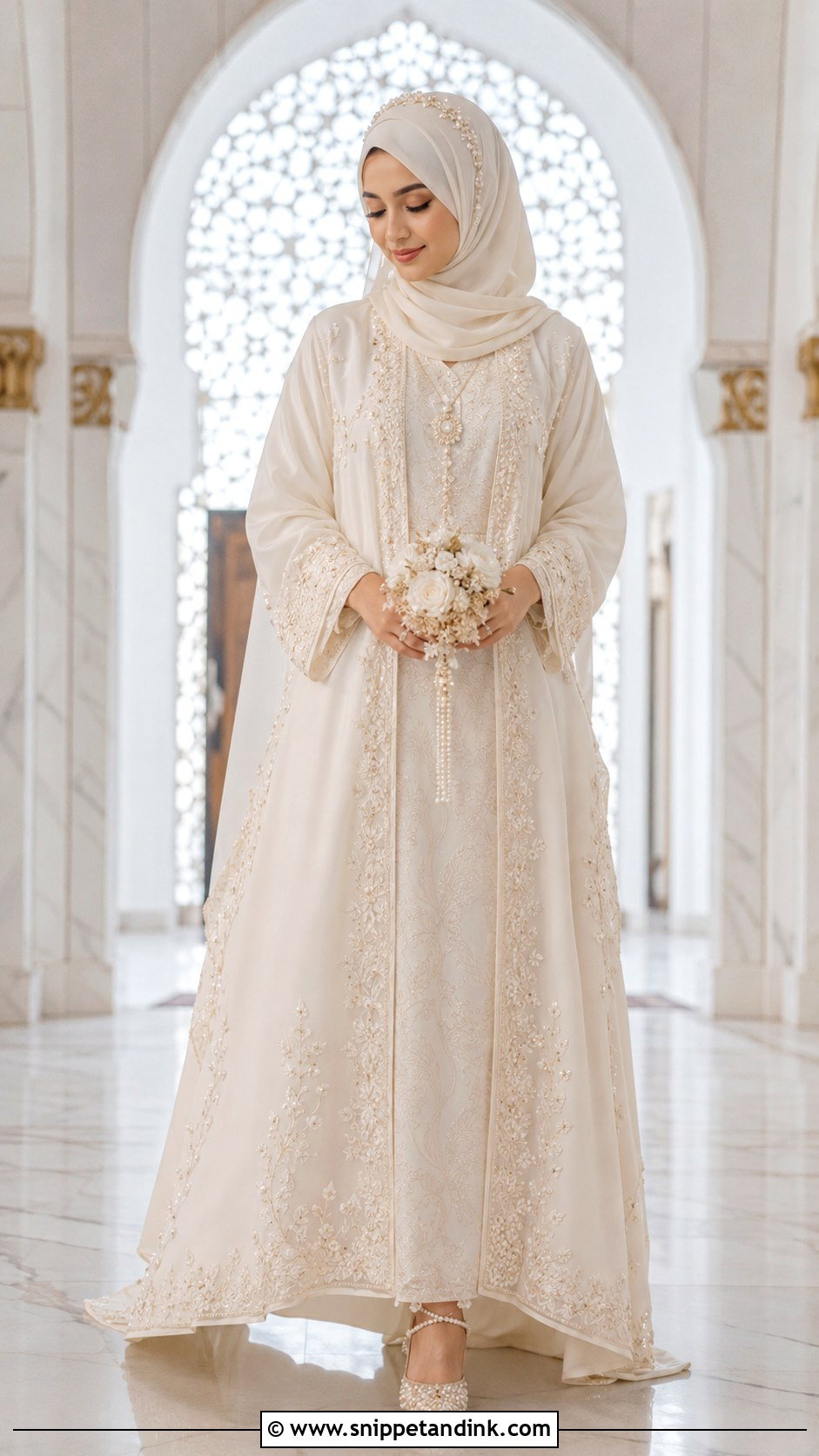
For full coverage with a formal finish, an abaya-style dress is a practical and deeply appropriate choice. White, ivory, champagne or blush, with embroidery on the sleeves, neckline and front panels, plus a matching hijab or dupatta, is the base. Choose fabric with movement: chiffon, crepe, silk or organza overlays. Stiff fabrics make an abaya look boxy. Pearl pins, delicate jewellery and embellished heels or flats finish it for a mosque ceremony or a family Nikah where the bride wants a clean, spiritual look.
22. White Nikah Hijab Outfit
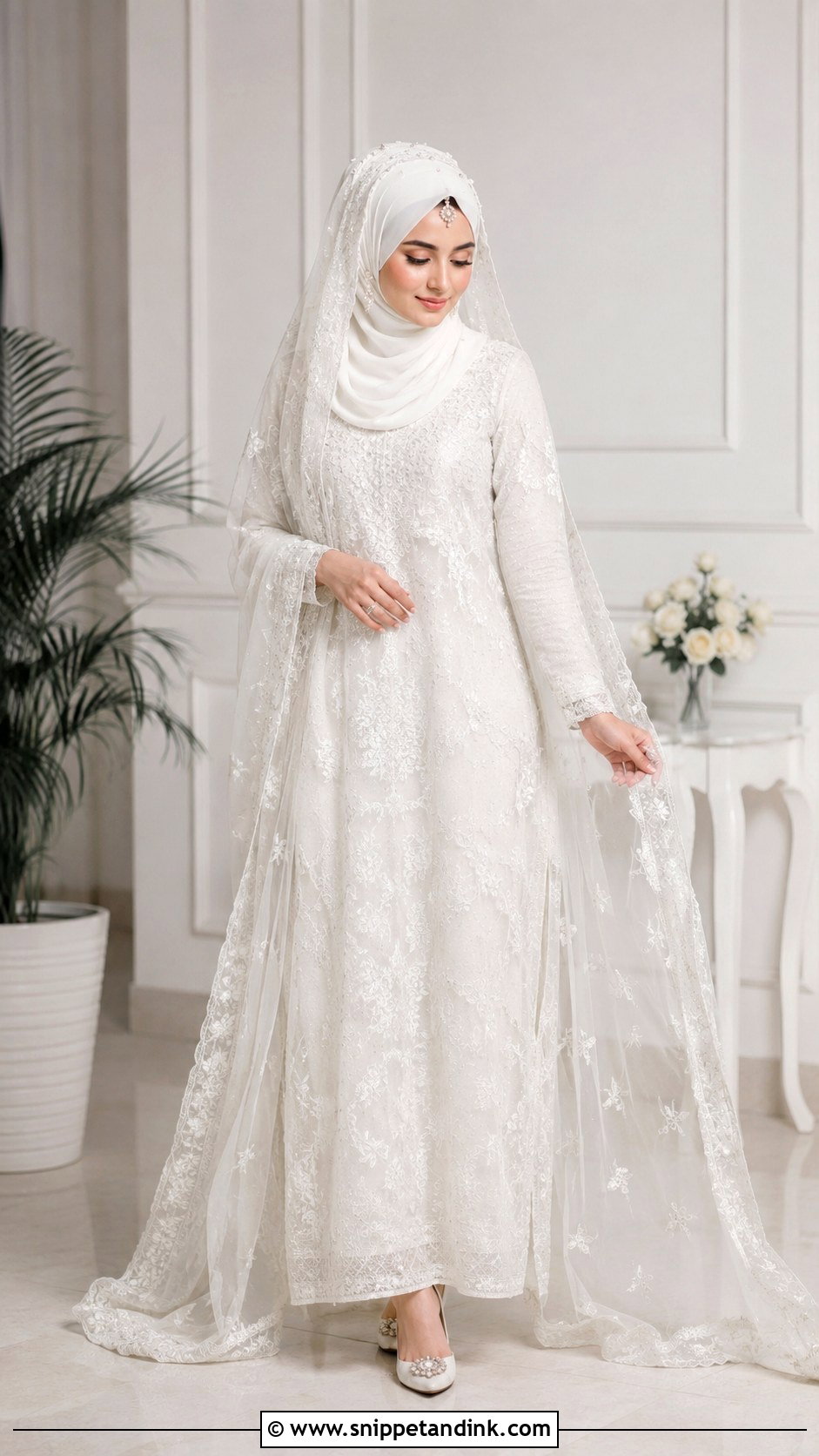
A white Nikah hijab outfit only works when the hijab, dupatta and outfit are planned together rather than added one at a time. Start with a white maxi, gharara or long shirt set and a matching hijab in chiffon, silk or georgette. A sheer dupatta over the hijab gives a traditional bridal effect. Keep the embroidery on the sleeves, hem and dupatta border. Pearl pins, a tikka placed over the hijab and soft earrings complete it, with white heels or embellished flats. I cover how to layer the hijab and dupatta securely further down.
23. Pastel Nikah Three Piece Suit Outfit
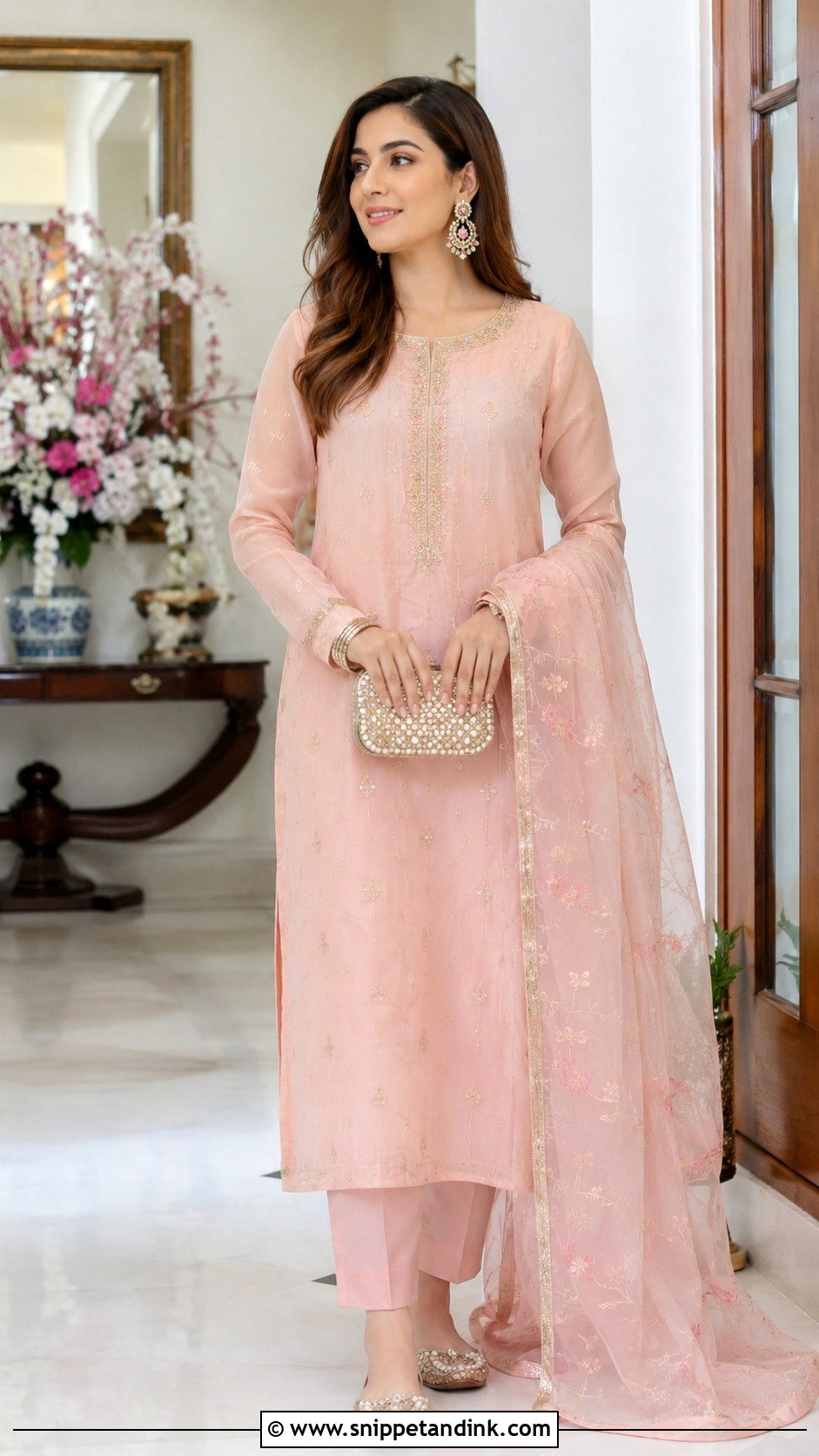
Three-piece suits are the most comfortable option on this list. Blush, mint, lilac, powder blue or beige, as a straight shirt, trousers and a lightly embroidered dupatta, suit guests, sisters and brides who prefer simplicity. Organza sleeves, pearl buttons, lace borders or a heavily finished dupatta raise the formality. For a guest, I’d pick a shade clearly different from the bride’s if you know it, since pastels are the most likely colours to overlap at a Nikah. Delicate earrings, bangles and embellished khussas finish it for small home ceremonies.
24. Ivory Nikah Kaftan Outfit
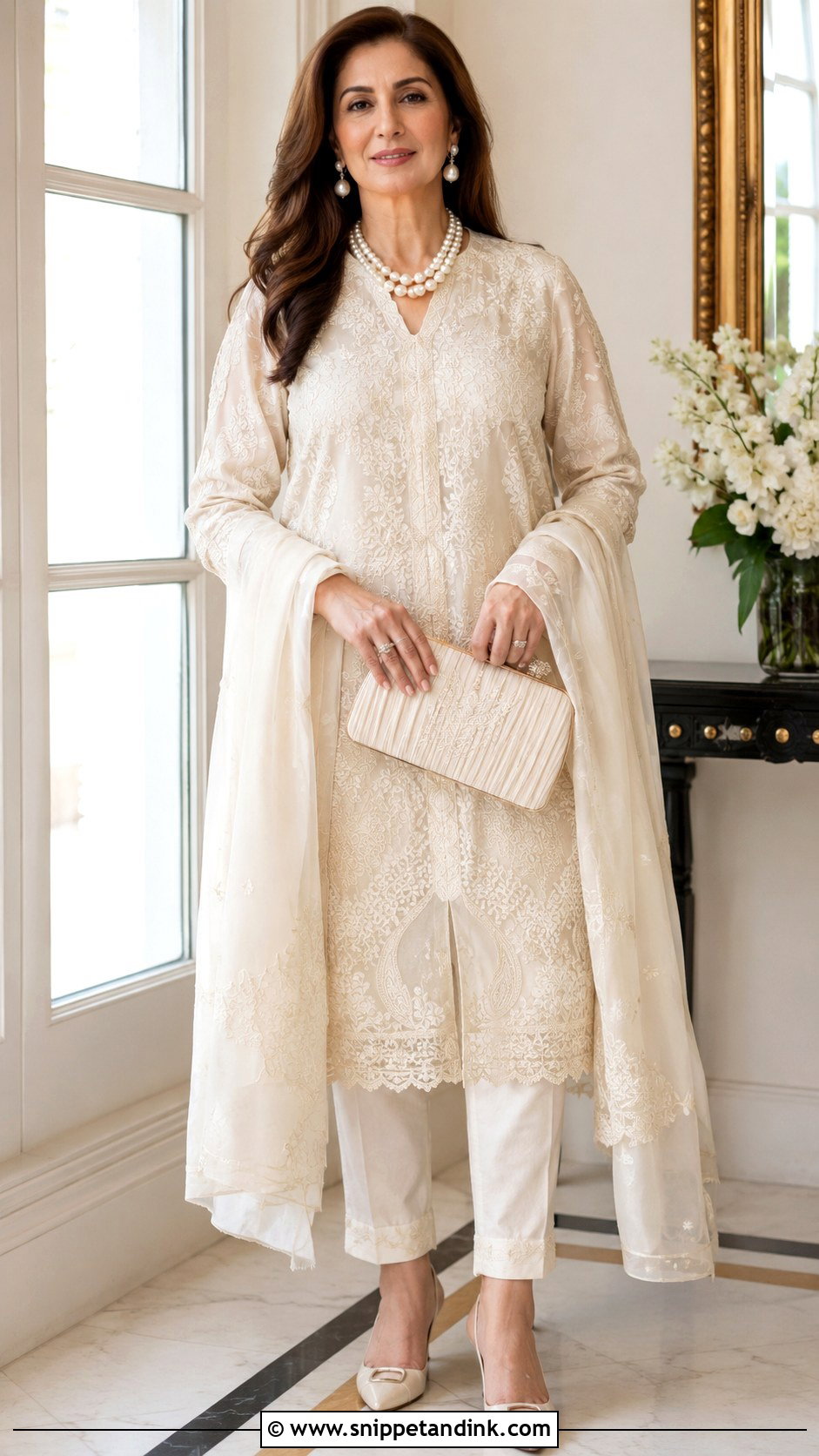
Kaftans give coverage without anything tight, which makes them good in warm weather. The relaxed shape is easy to wear, while embroidery, pearls or sequins make it formal. A defined neckline, sleeve detail and side slits keep it from looking like loungewear, and slim trousers underneath give it structure. Soft heels, a structured clutch and a matching dupatta or light scarf finish it. It suits mothers, elegant guests and mature brides who value comfort.
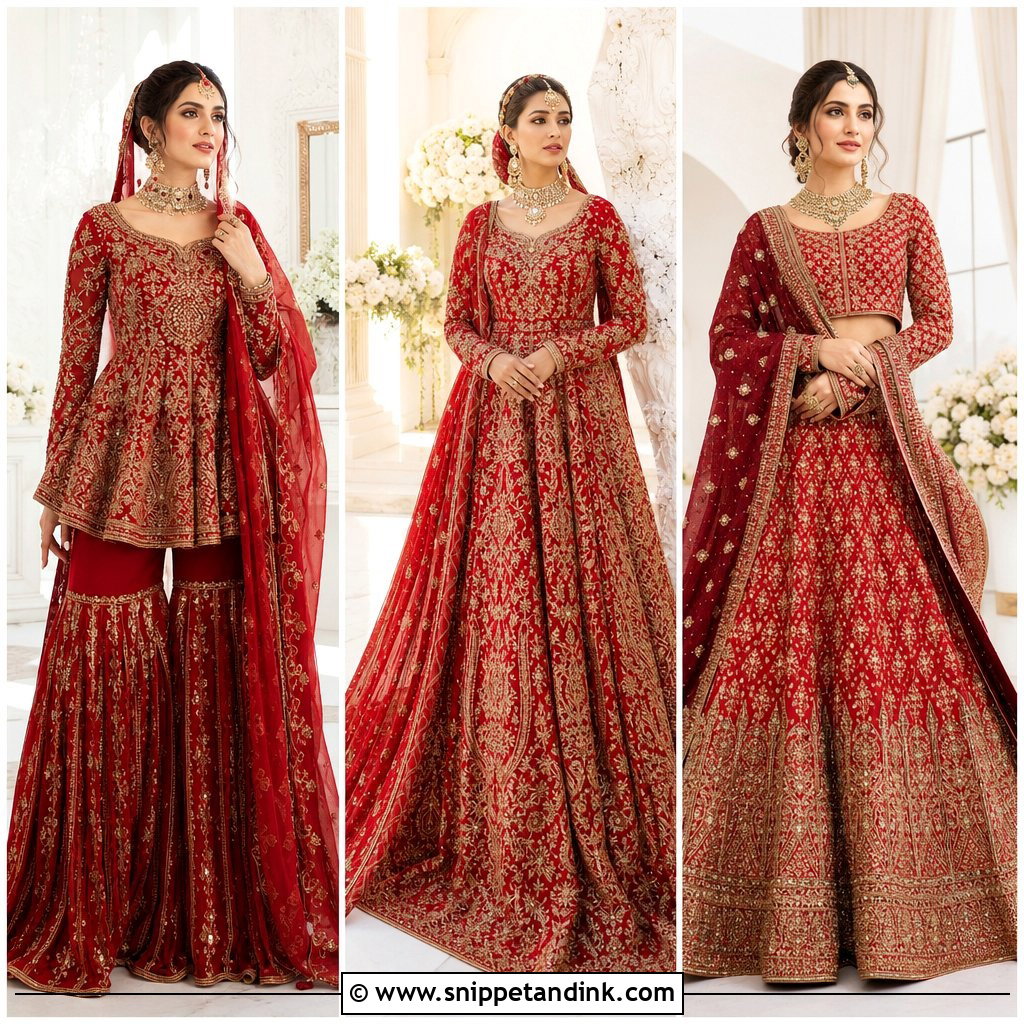
25. Traditional Red Nikah Lehenga Outfit
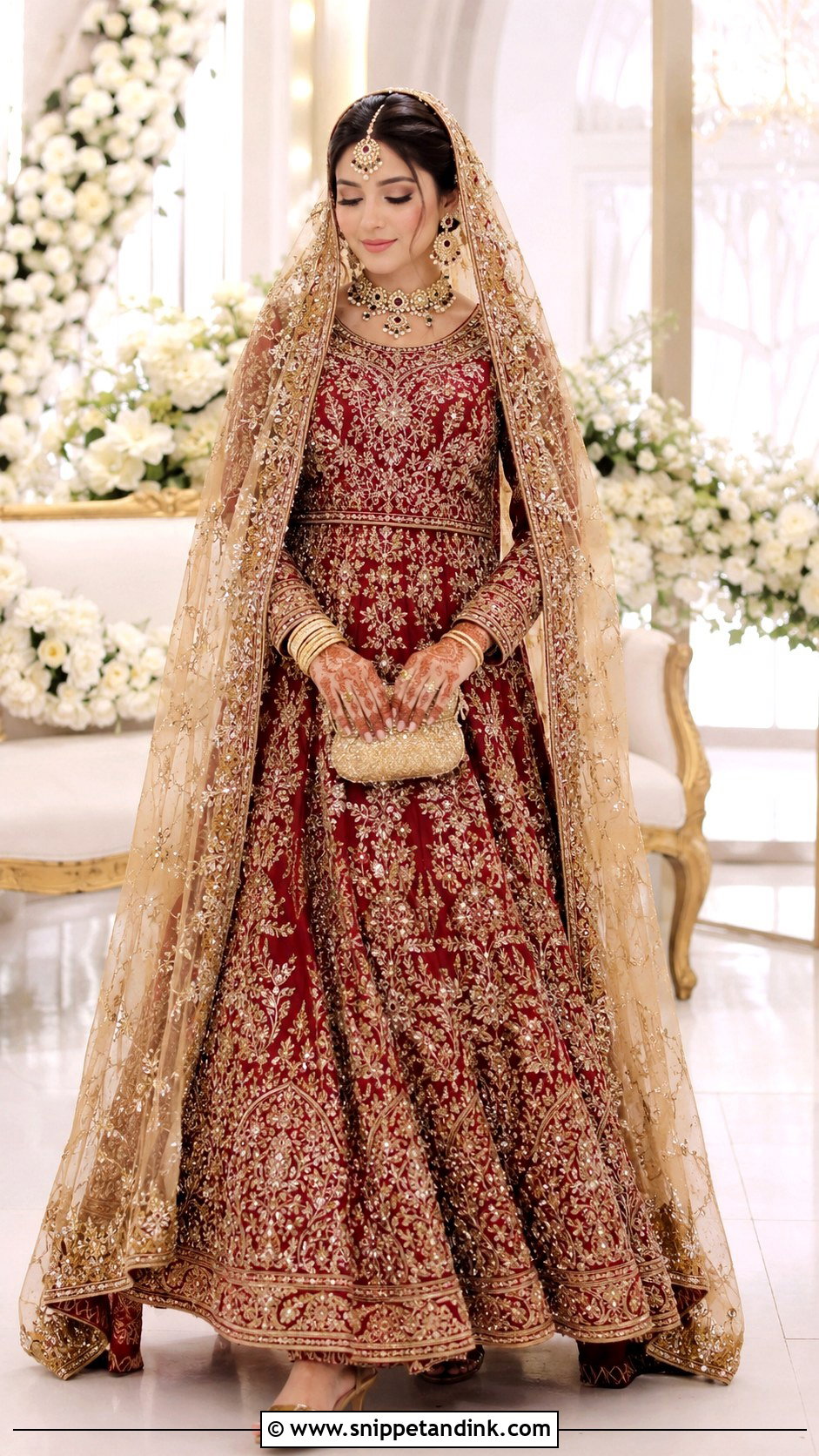
Red is still powerful at a Nikah for families who love classic bridal dressing. Many brides choose white or pastels now, but a softer red, deep maroon or muted ruby can look refined. Gold embroidery, a modest blouse and a dupatta over the head is the base, with kundan jewellery, bangles and gold heels. If the baraat outfit is also red, I’d steer the Nikah one towards a different shade so the two days don’t blur together in the album. Balanced makeup keeps the red from overwhelming the face.
Layering a Hijab Under a Bridal Dupatta
For brides who wear hijab, the head covering is the frame for every Nikah photo, and it has to hold through hugs and the signing. I treat it as three layers, each pinned separately so one moving doesn’t drag the others.
- An underscarf or bonnet in a matching colour gives grip and stops a silky hijab from sliding back.
- The hijab goes on next, pinned at the chin and the back of the head. Chiffon and georgette pin firmly and drape softly, while satin and silk look rich but slip more.
- The tikka sits over the hijab at the hairline, anchored with a small pin through its chain rather than hooked into hair.
- The bridal dupatta is laid on top and pinned to the hijab at the crown and both sides, through the border.
Magnetic hijab pins are handy for the dupatta layer, since they hold without leaving holes in delicate net, but keep standard pins for the base layers where the grip matters. Do one full practice run with all three layers and your jewellery a week before, and time it so you know how long to allow on the morning.
Does It Let You Stay Present at the Ceremony?
A good Nikah outfit lets you forget about it once the ceremony starts. Some brides feel most themselves in white ghararas and ivory shararas, others in pastel maxis, soft gold anarkalis or a traditional red. Guests and close family can wear any of these looks in lighter fabric with simpler embroidery. Sort out fit, fabric, dupatta pinning and how much jewellery you can comfortably wear before worrying about the heaviest option. The ceremony is emotional and short, and the outfit should carry you through it quietly.
You'll Like These Ideas:



Leave a Reply