
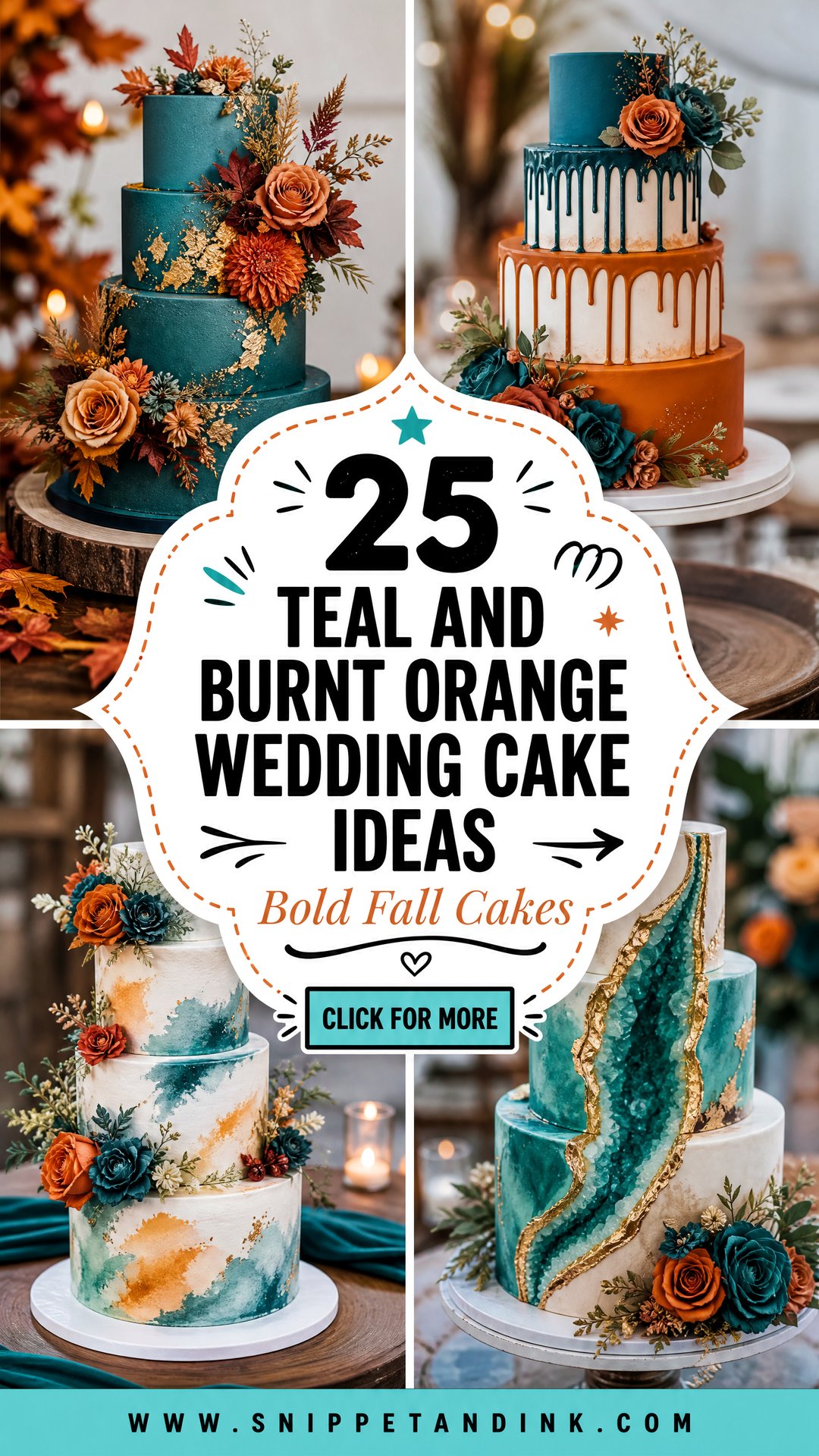
Teal against burnt orange is a palette I enjoy putting on cakes because the two colors sit opposite each other on the color wheel, so each makes the other look richer. Teal gives depth and a jewel-tone cool; burnt orange brings the warmth of an autumn evening. That’s why it suits fall, boho, desert and retro weddings so well. On a cake it can read soft, painterly or dramatic depending on how much of each color you use, and it works on simple one-tier cakes as easily as tall tiered ones. These 25 designs show the range, with a note on each about getting the colors right.
Why Teal Is Harder to Get Right Than Orange
Of the two colors, teal gives bakers more trouble. Buttercream is naturally ivory because of the butter, and that yellow tint pushes blue-green toward plain green. A teal mixed in a white bowl can look quite different spread on a cake. Fondant starts whiter, so it takes teal more truly.
Dark colors also keep developing after mixing. I mix teal and burnt orange a shade lighter than the target and leave them to rest, often overnight, because they deepen as they sit. A teal that looks right straight away usually looks too dark by the next morning.
What helps your baker match
- Send a fabric swatch or paint chip, not a screen photo. Screens shift color.
- Mention the venue light. Warm candlelight makes teal look grayer and orange look redder.
- Ask to see a test piece in daylight and under warm light if the color is critical.
- Accept a small difference between buttercream and fondant tiers if you’re mixing finishes.
Dark frosting at the table
Deep teal frosting needs a lot of gel coloring. It can stain lips and teeth, mark white tablecloths and, in large amounts, taste slightly bitter. For that reason I often put the strongest color on fondant or as a thin outer layer, with a lighter frosting between the sponge layers.
1. Teal And Burnt Orange Boho Wedding Cake
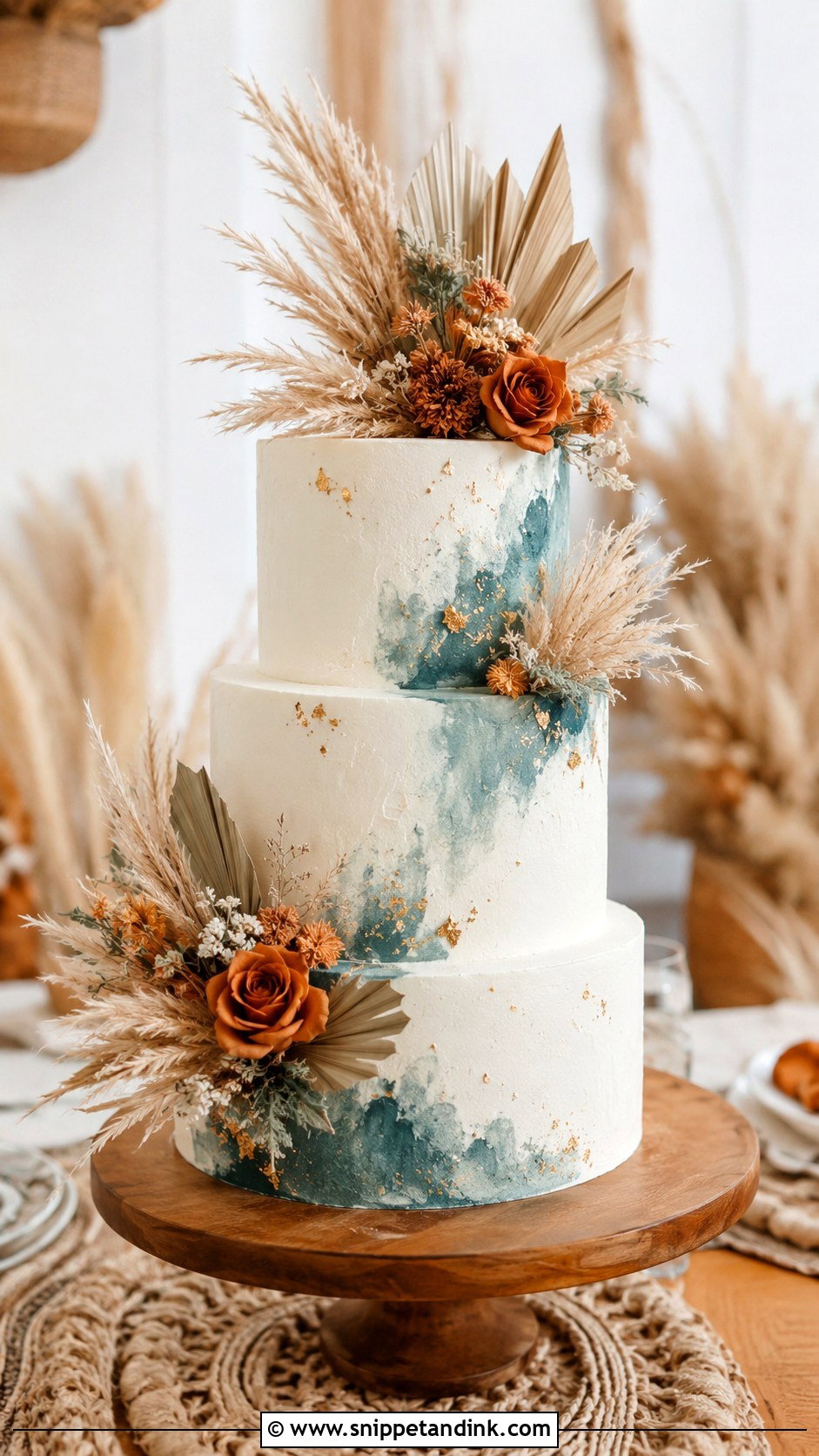
Pampas, woven textures and warm florals in the room point toward a boho cake. I’d start from a smooth ivory or pale teal base so the orange detail looks chosen rather than heavy, then add dried flowers, soft grasses, terracotta blooms and a touch of gold. Vanilla, almond, honey or spiced sponge suits the earthy mood. Two or three tiers is enough. Dried stems sit on a barrier or in a topper, never straight into the frosting, since most are sprayed or dyed.
2. Teal And Burnt Orange Ombre Wedding Cake
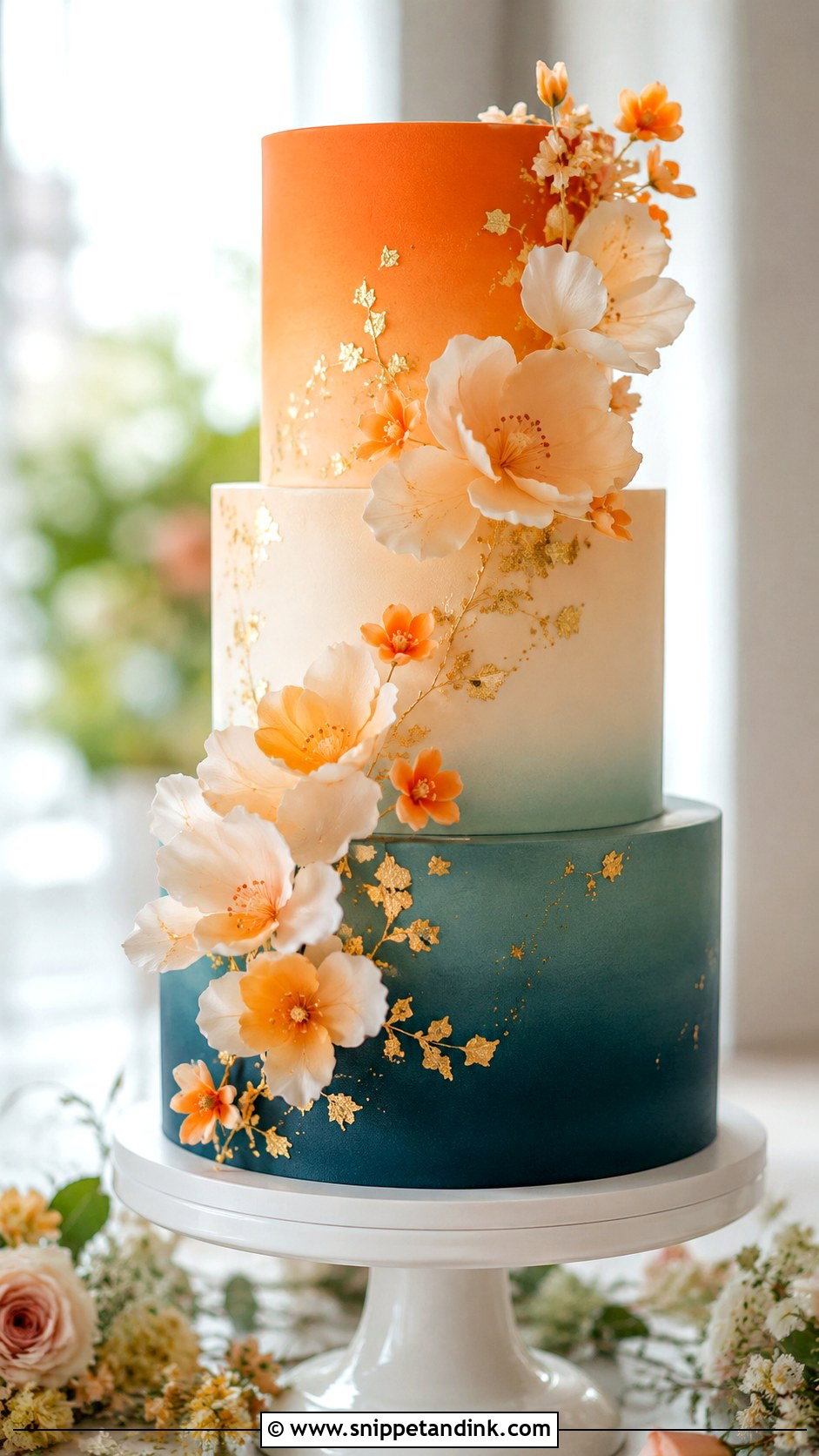
Of all the gradient options, a teal-to-burnt orange ombre wedding cake is the softest way to wear these colors: deep teal at the base, ivory in the middle, warm orange on top, or flipped for a sunset feel. The ivory middle is not optional. Teal and orange blended directly turn muddy brown where they meet, so I always run them through a neutral. Smooth buttercream or fondant helps the gradient look even. Ask for muted tones for elegance, brighter ones for a playful wedding.
3. Teal And Burnt Orange Floral Wedding Cake
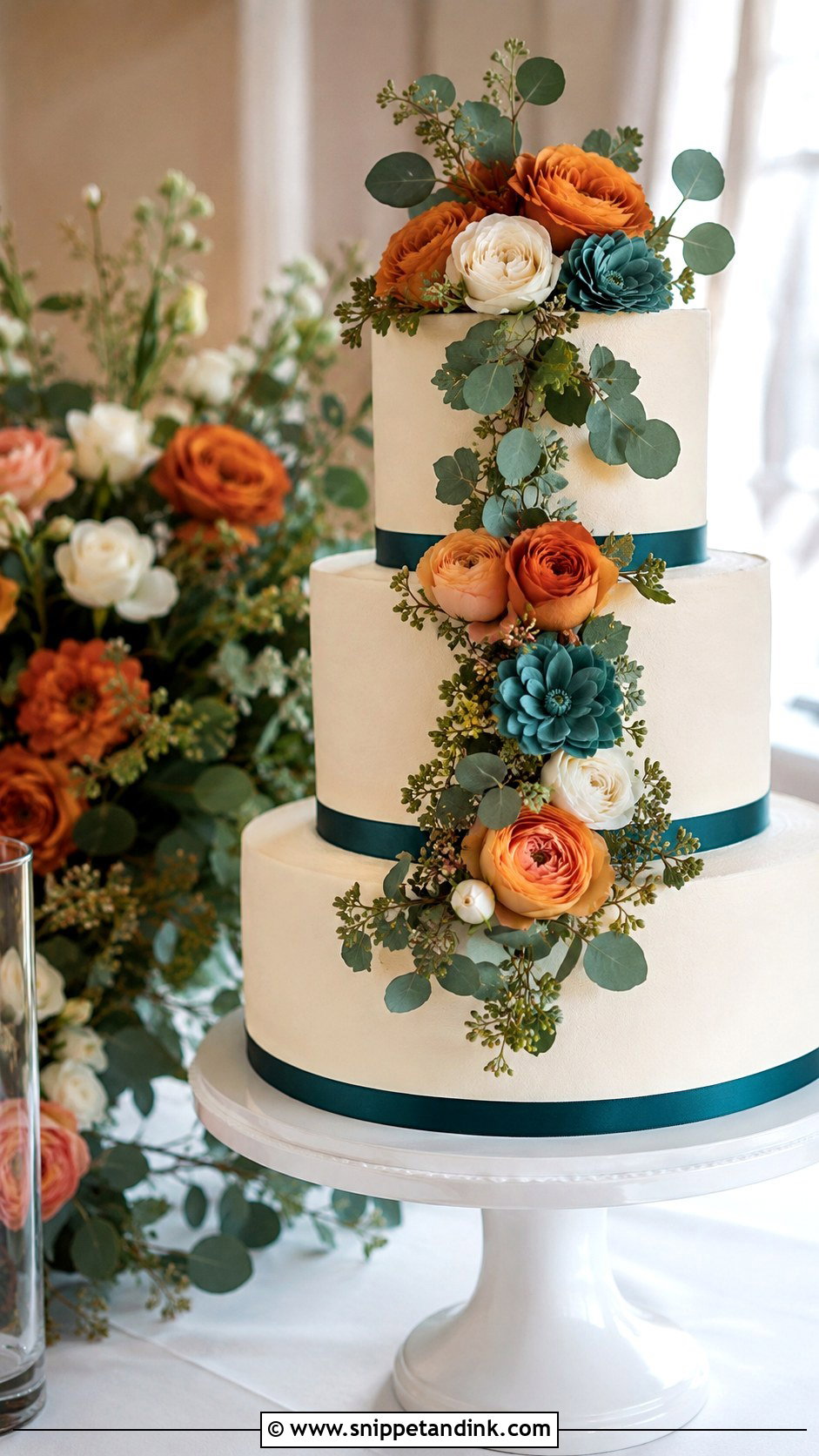
Fresh flowers tie the cake to your bouquet. An ivory base lets teal accents and orange blooms stand out, with roses, ranunculus, dahlias, marigold-toned flowers and eucalyptus making a lush arrangement. Teal flowers are rare in nature, so teal usually comes in through ribbon, painted detail or small sugar blossoms. Cascade down one side for drama or cluster between tiers for a cleaner look. Every fresh stem should be wrapped and in a pick before it goes near the cake.
4. Teal And Burnt Orange Rustic Wedding Cake
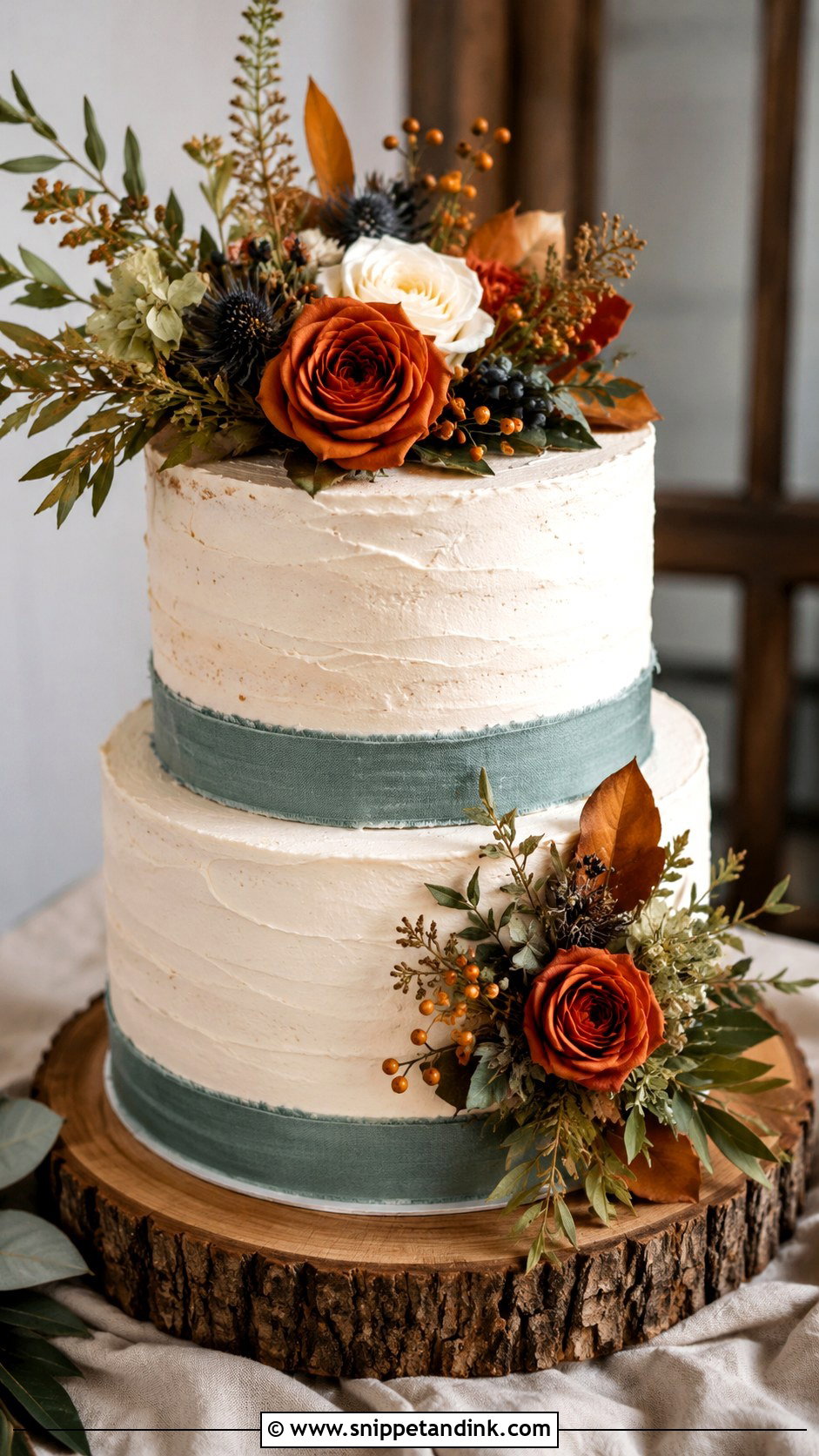
Wood tables, linen runners, greenery and candlelight all point toward a rustic version. I’d use gently textured buttercream rather than a polished finish, then add orange florals, teal ribbon, dried leaves and a little green. Semi-naked works too, for a more relaxed table. Spice, carrot, vanilla bean and brown sugar buttercream fit the setting. Aim for handmade, not sloppy: clean top edges and tidy tier joins keep it looking like a wedding cake.
5. Teal And Burnt Orange Fall Wedding Cake
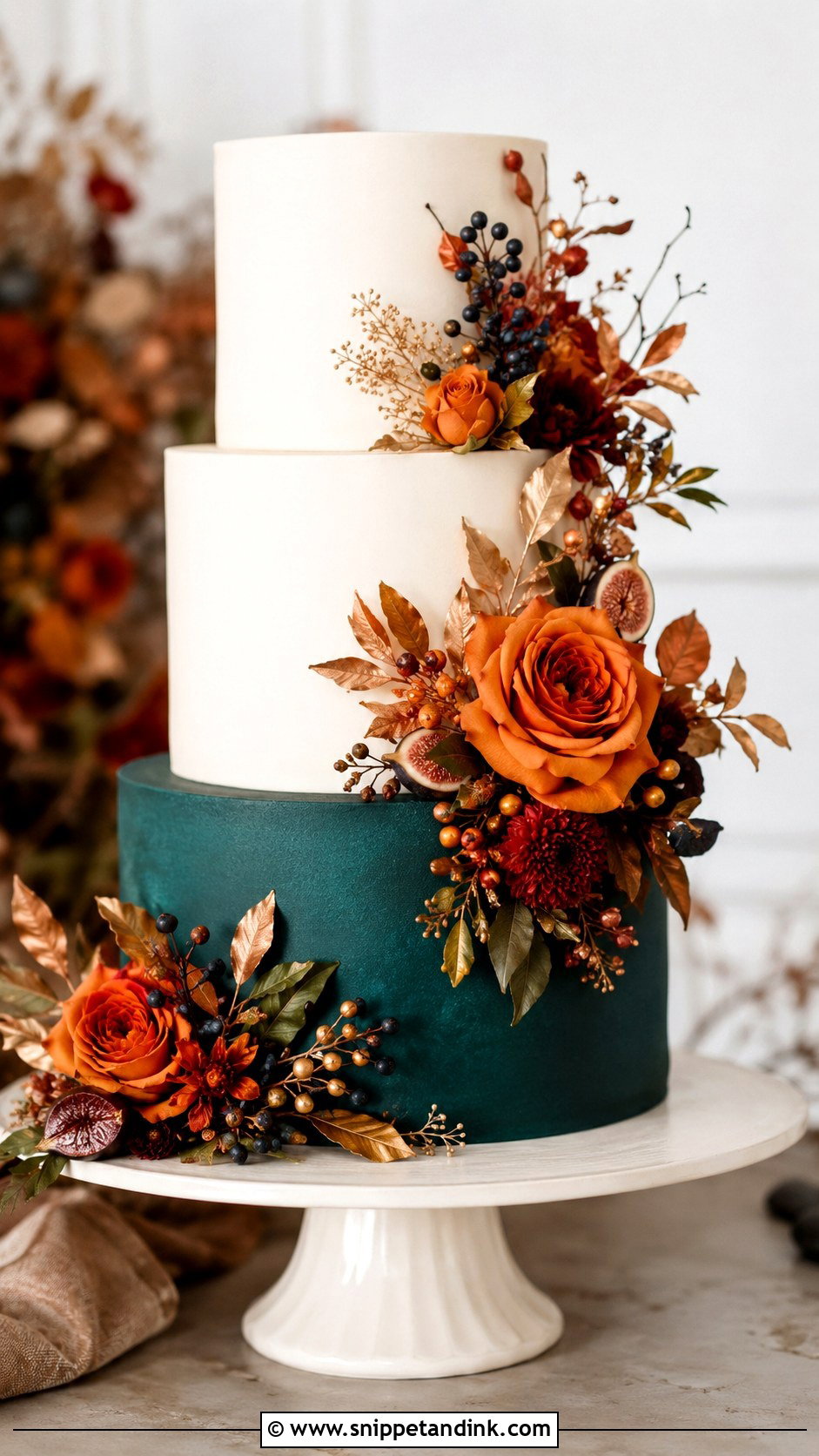
Autumn is when this palette makes the most sense. One deep teal tier with ivory tiers above and burnt orange flowers gives a strong seasonal look, and copper leaves, figs, berries or sugar foliage add texture. Spiced vanilla, pumpkin, chai, maple and chocolate let the flavor match the season. Pick one main accent, flowers or painted leaves, not both, and you’ll get a true fall wedding centerpiece rather than a busy one. Put the dark tier at the bottom; a dark top tier makes the whole cake look top-heavy.
6. Teal And Burnt Orange Terracotta Wedding Cake
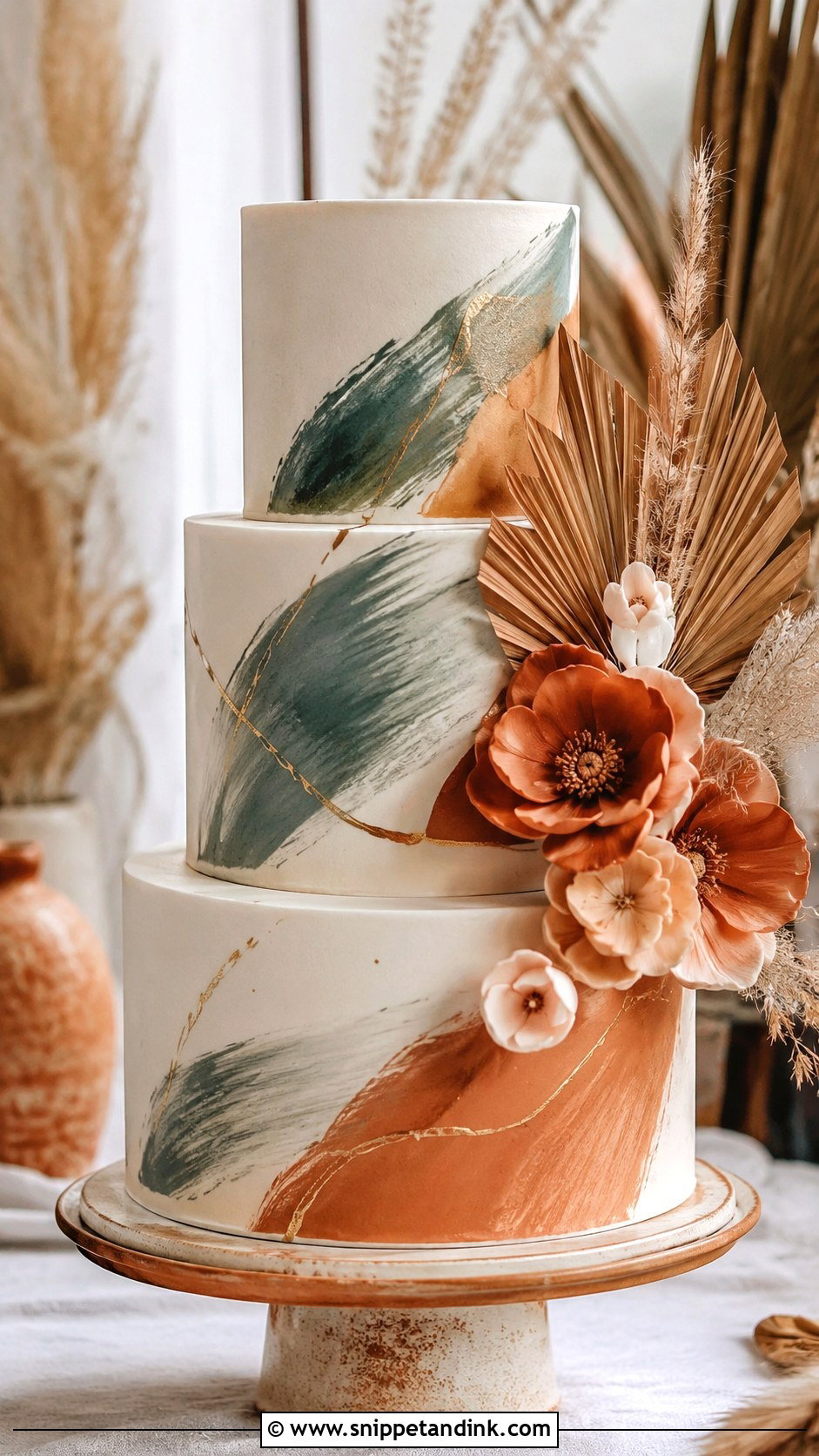
Terracotta is a softer, chalkier cousin of burnt orange, and it makes the palette feel modern. Pair it with dark teal, dusty teal or blue-green brushstrokes on a smooth ivory base. Dried palms, clay-colored sugar flowers and thin gold lines suit it, especially for desert and boho receptions. I mix terracotta with a little brown and a little pink rather than pure orange, which is how you get that fired-clay look. Keep the tiers simple so the handmade texture carries.
7. Teal And Burnt Orange Drip Wedding Cake
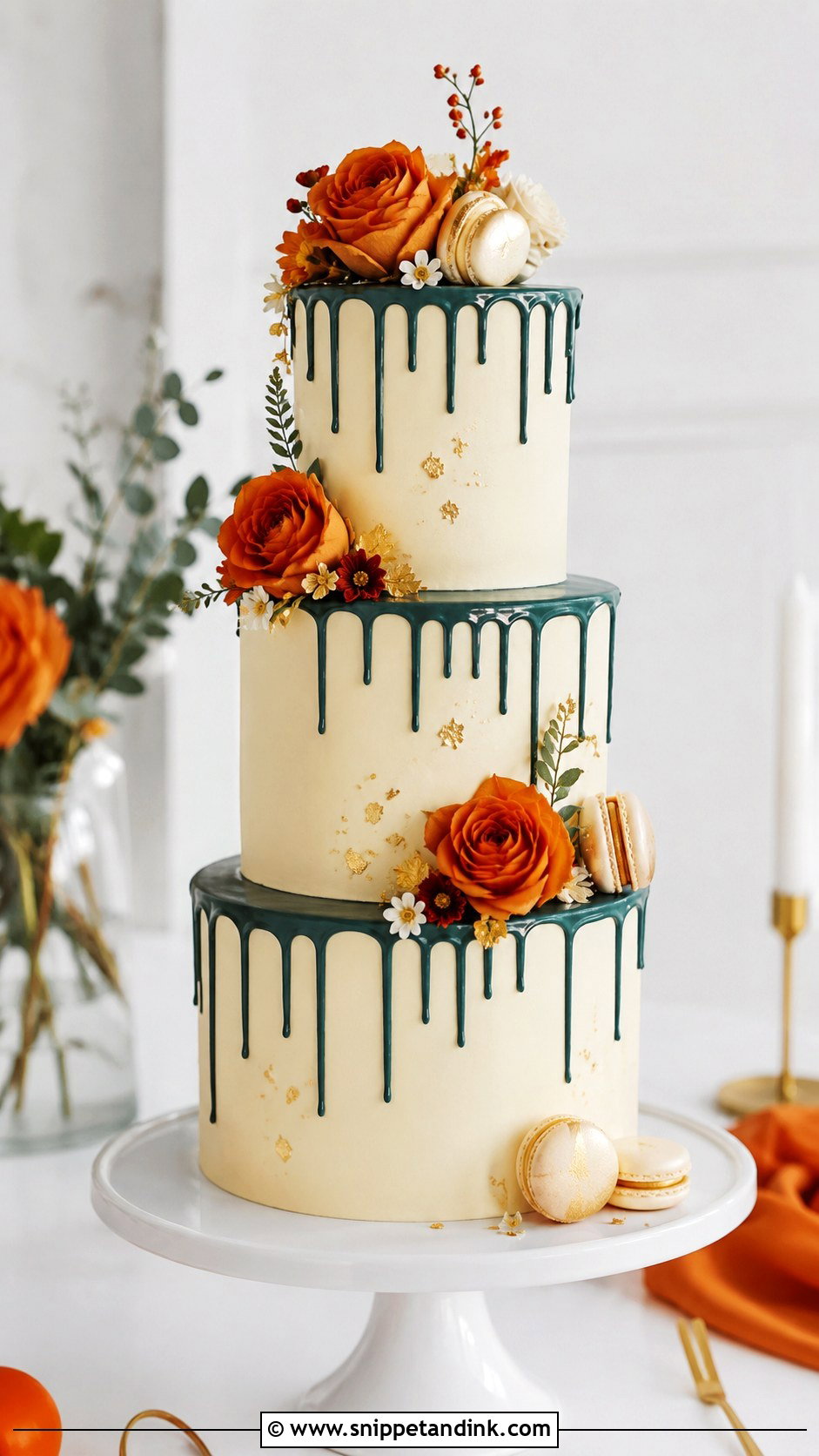
Drips are the fun option. Teal ganache over ivory, orange over a teal tier or gold paired with both all work. I test drip length on a cold tier first, since a warm cake or warm ganache runs all the way to the board. Keep drips short and even so they look deliberate. Top with fresh flowers, macarons or sugar blooms in matching shades. Buttercream, ganache and fondant tiers all take a drip.
8. Teal And Burnt Orange Watercolor Wedding Cake
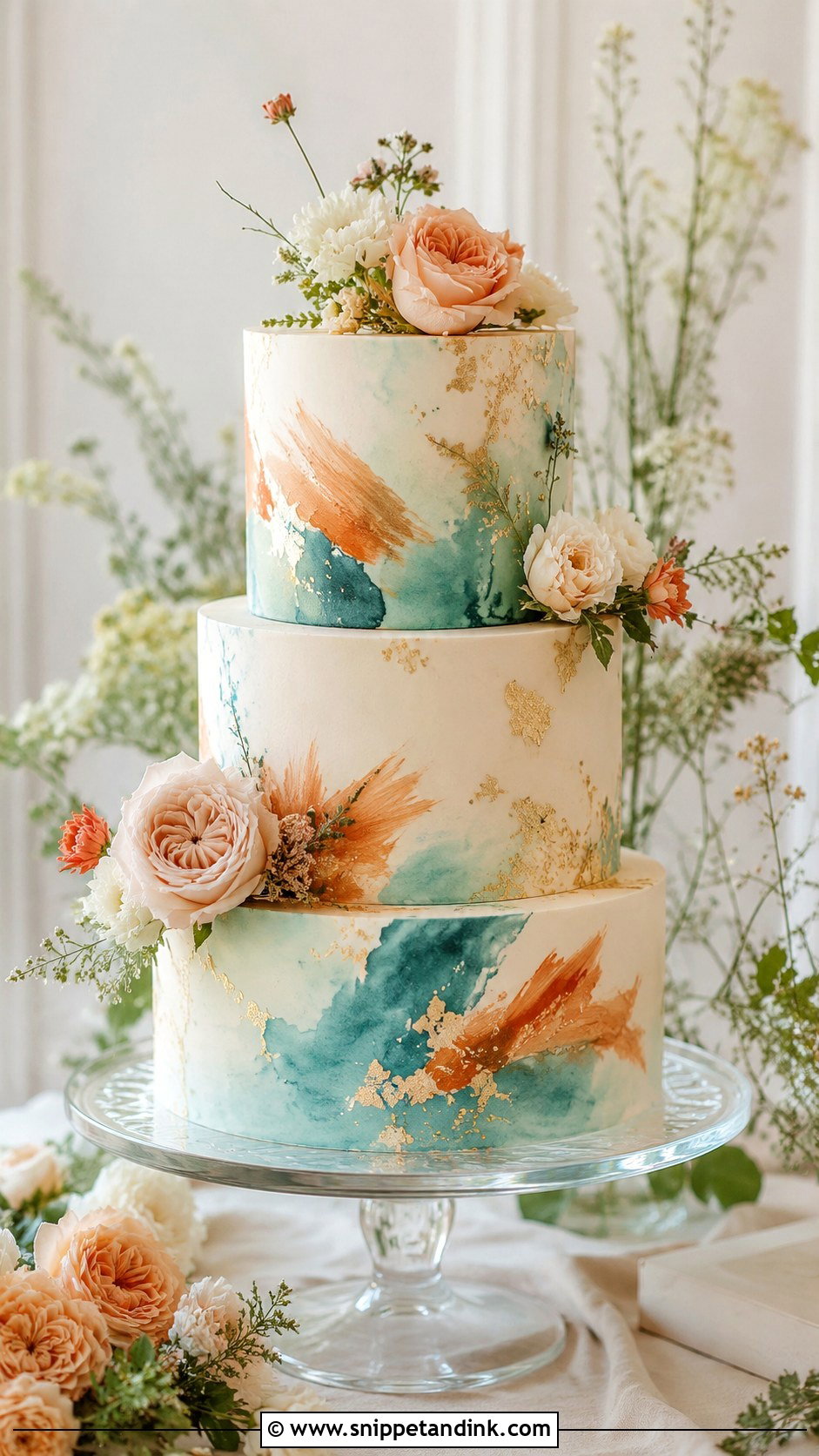
Watercolor washes soften both colors so they read airy rather than intense. On an ivory fondant or buttercream base I brush diluted teal and orange in layers, then add tiny gold accents. The overlap is the tricky part, because the two colors turn brown where they mix wet, so I let one layer dry before touching the next. A few fresh blooms link it to your flowers. Venues with soft daylight suit it best.
9. Teal And Burnt Orange Modern Wedding Cake
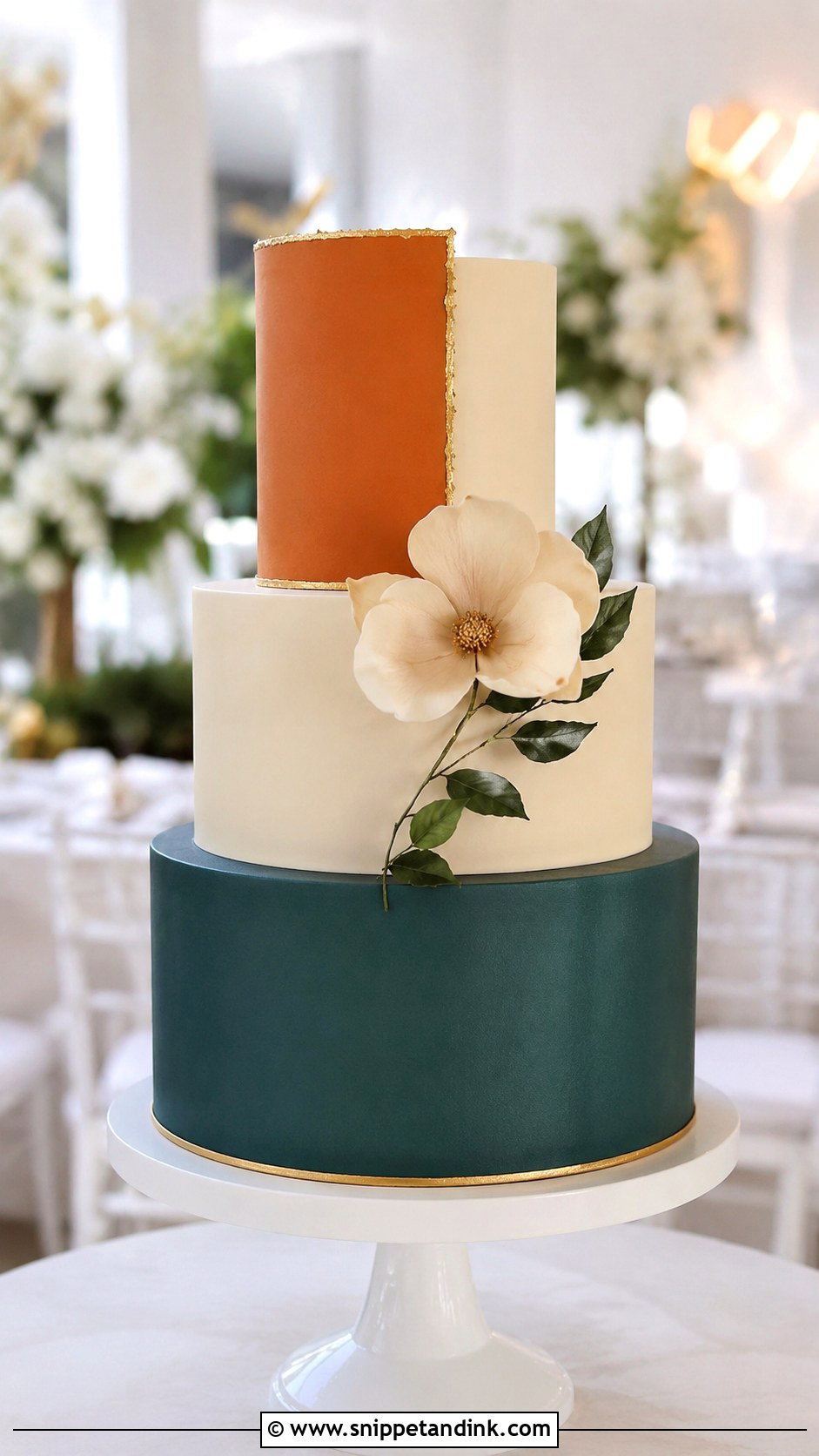
Clean lines, strong contrast and very little decoration define the modern version. A deep teal bottom tier, an ivory middle and a burnt orange top, all sharp-edged, is striking on its own. One sculptural sugar flower, a thin gold line or a single painted panel is all I’d add. It suits lofts, galleries and modern hotels. Keep the table quiet with white linen, a clear stand and a little greenery.
10. Teal And Burnt Orange Geode Wedding Cake
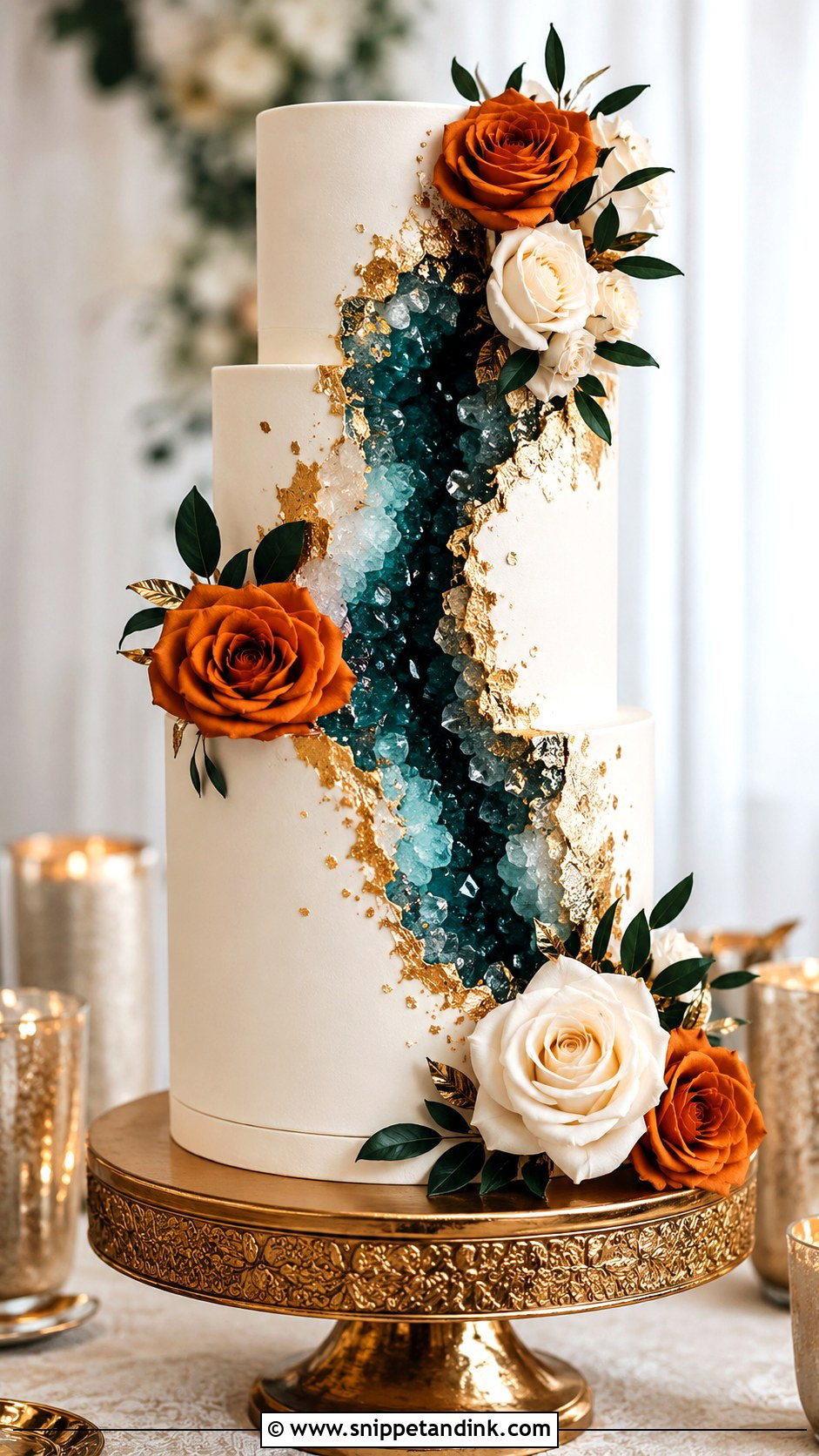
Geode cakes are carved open on one side and filled with sugar or isomalt crystals, here in teal and amber tones with a gold-painted edge. Keep the rest of the cake smooth and neutral so the crystals stay the focus, and add orange flowers near the opening. The crystals are hard candy, not something guests want to bite into, so I keep the cut tier away from the geode. Evening and glam receptions suit it.
11. Teal And Burnt Orange Marble Wedding Cake
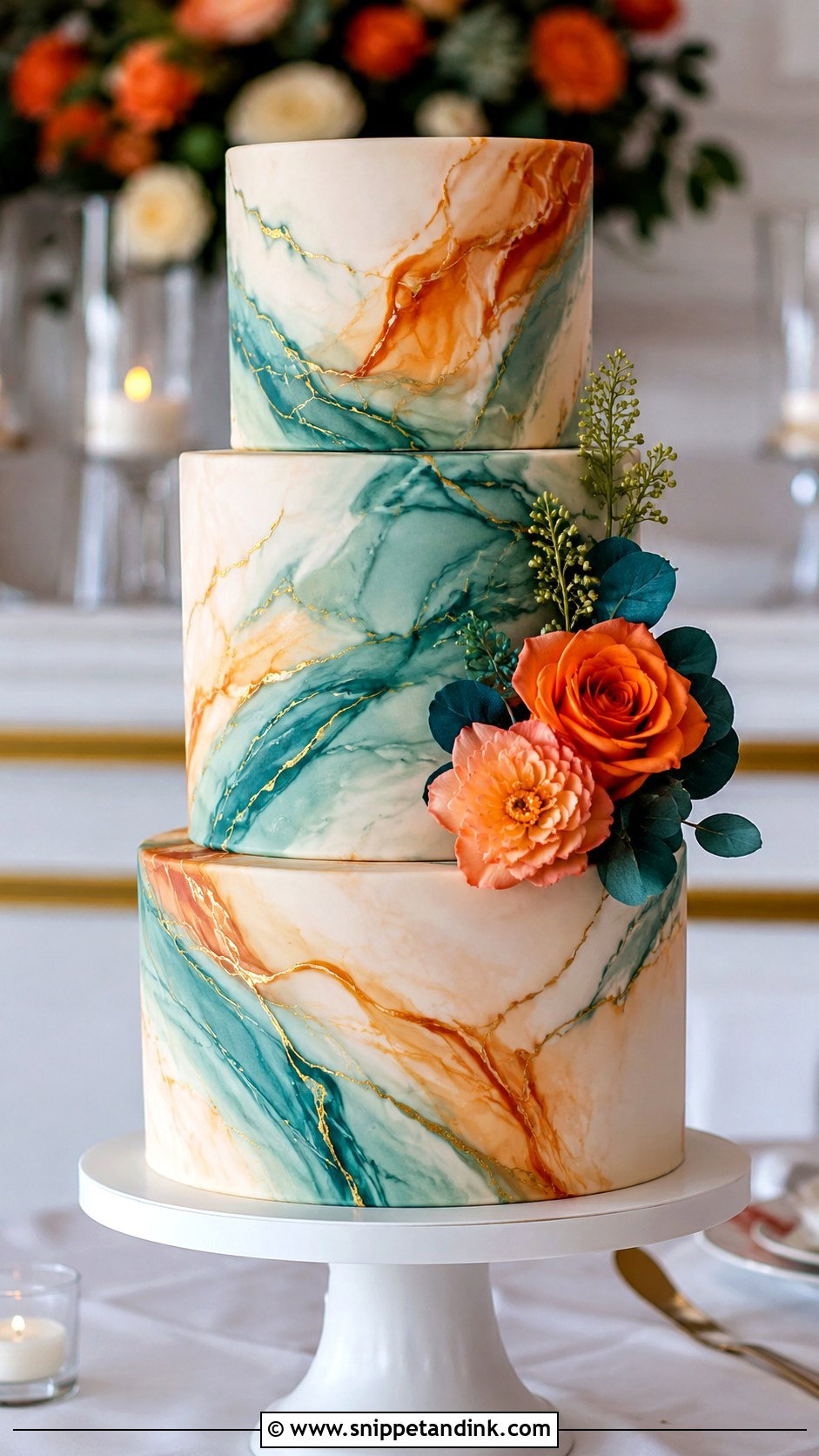
Marbling gives the palette a refined, artistic finish. On soft ivory fondant, I fold in thin teal veins, a few burnt orange swirls and subtle gold lines, kneading only a few turns so the colors stay separate instead of blending into one dull shade. Balance is what keeps it elegant. Two to four tiers with sharp edges suit it, and every side has movement, so there’s no bad angle for photos. A small flower cluster or nothing at all.
12. Teal And Burnt Orange Gold Wedding Cake
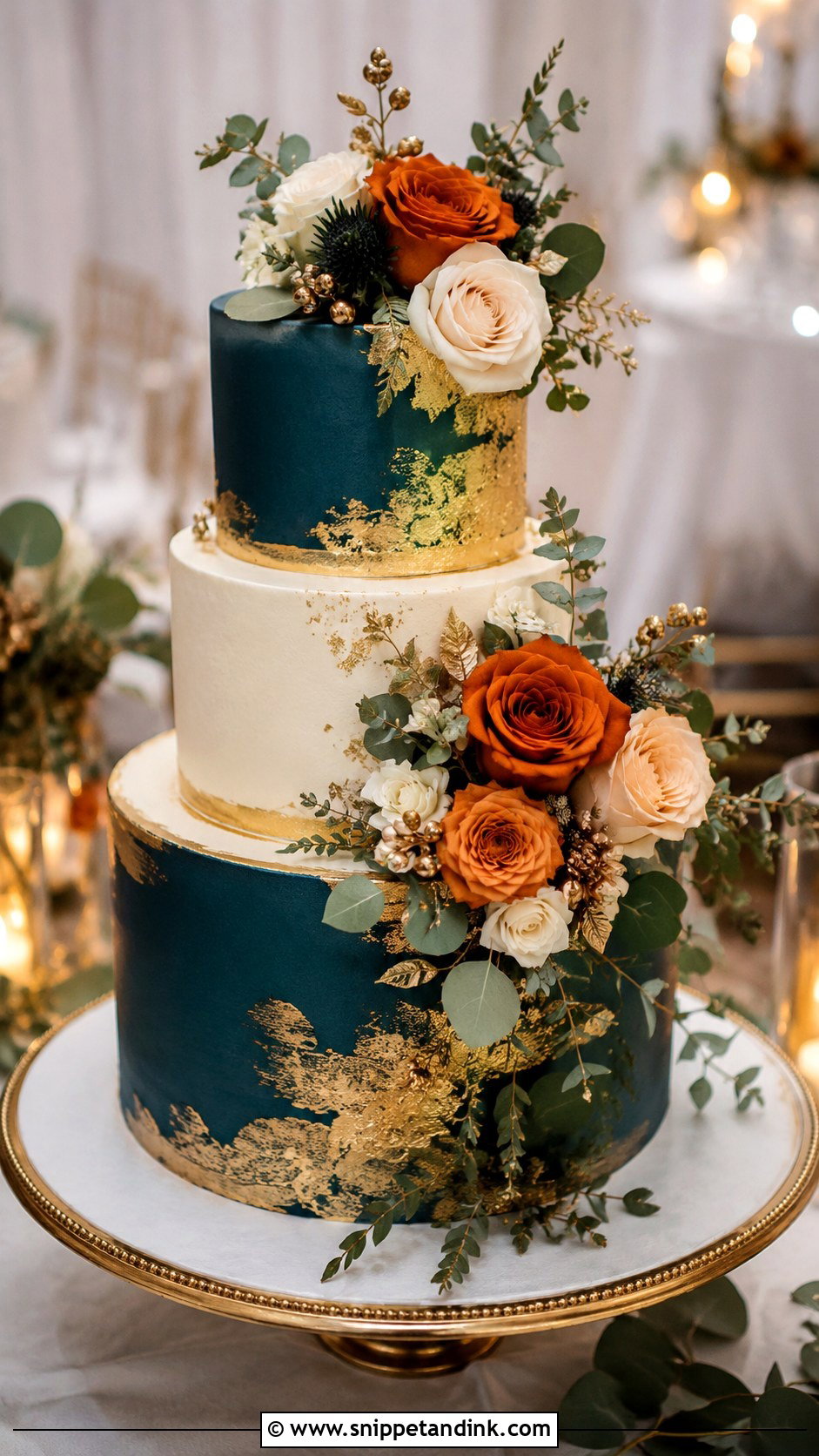
Gold makes the teal look richer and keeps the orange from feeling rustic. Use gold leaf, thin painted lines or one brushed metallic tier, not full coverage, which quickly reads flashy. Orange flowers, ivory roses and dark greenery finish it. Vanilla, almond, chocolate or spice depending on the season. It suits formal and evening receptions. Gold paint goes onto chilled, firm surfaces best, so expect a fondant or ganache finish if gold is a big part of the design.
13. Teal And Burnt Orange Desert Wedding Cake
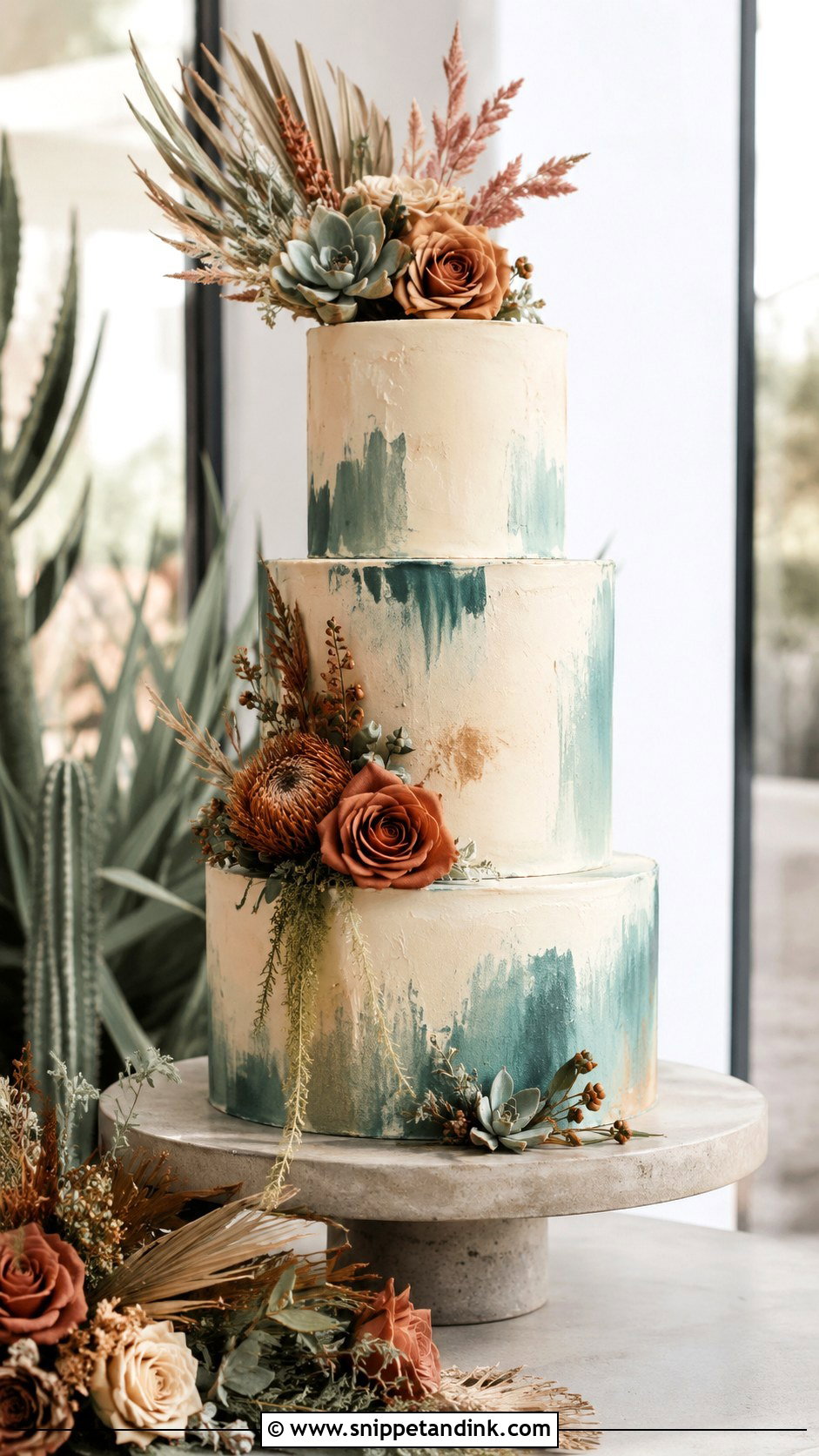
Sandy ivory buttercream, muted teal details and orange accents that echo sunset colors give a desert cake its warmth. Dried palms, small succulents, preserved grasses and terracotta sugar flowers decorate it. Real succulents shouldn’t sit directly on frosting; sugar versions or a barrier are safer. Keep the shape simple and lightly textured. Honey, almond, citrus and spice flavors fit, and outdoor desert heat means asking your baker how long the cake can sit out.
14. Teal And Burnt Orange Vintage Wedding Cake
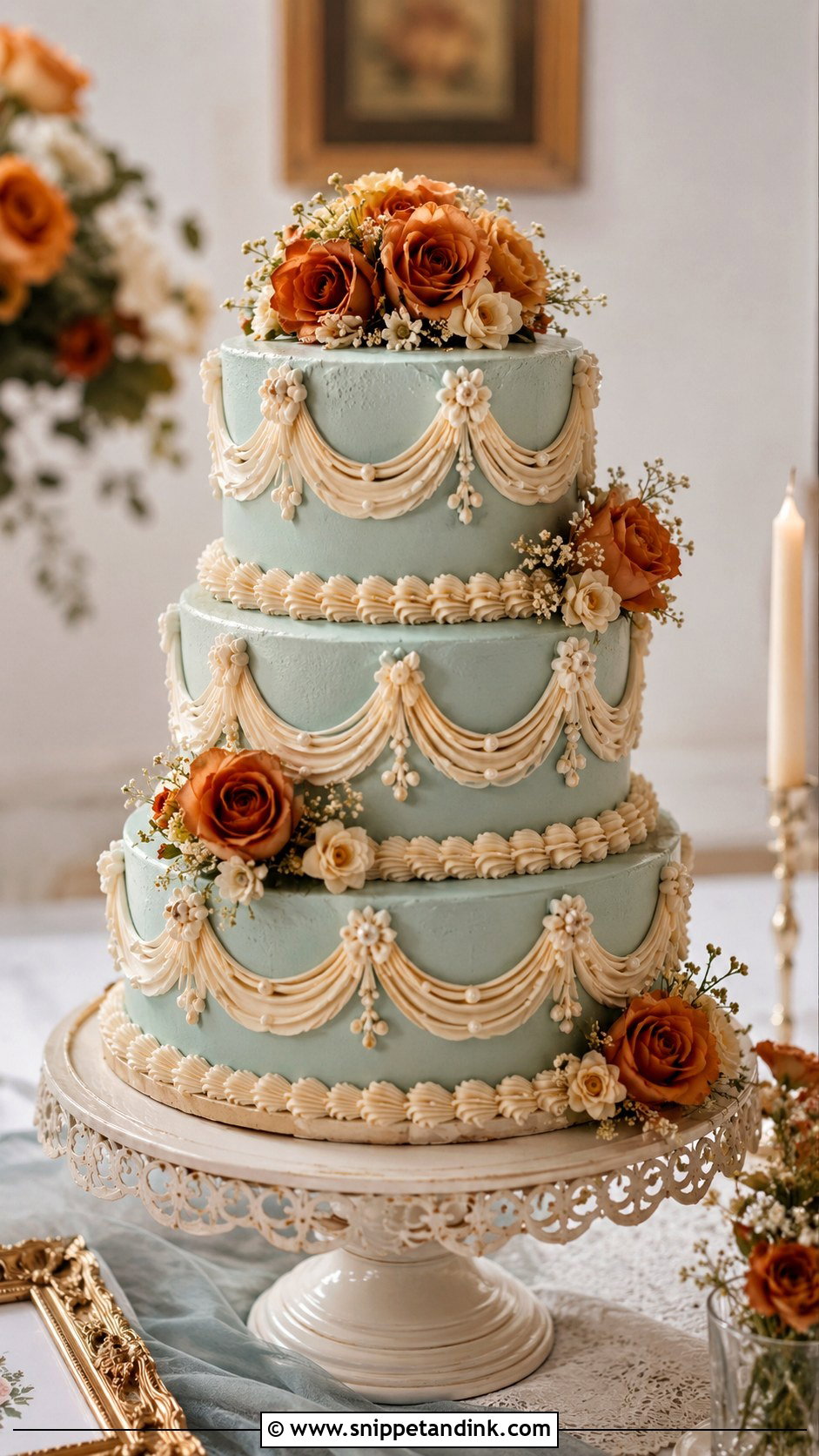
Piped swags, shells, pearls and delicate borders on an ivory or pale teal base give a vintage feel, with orange roses or small clusters for warmth. It can be a single statement tier or a stacked cake with retro piping. Keep the teal muted, because bright teal piping looks more birthday than wedding. Intimate receptions and historic venues suit it.



15. Teal And Burnt Orange Minimalist Wedding Cake
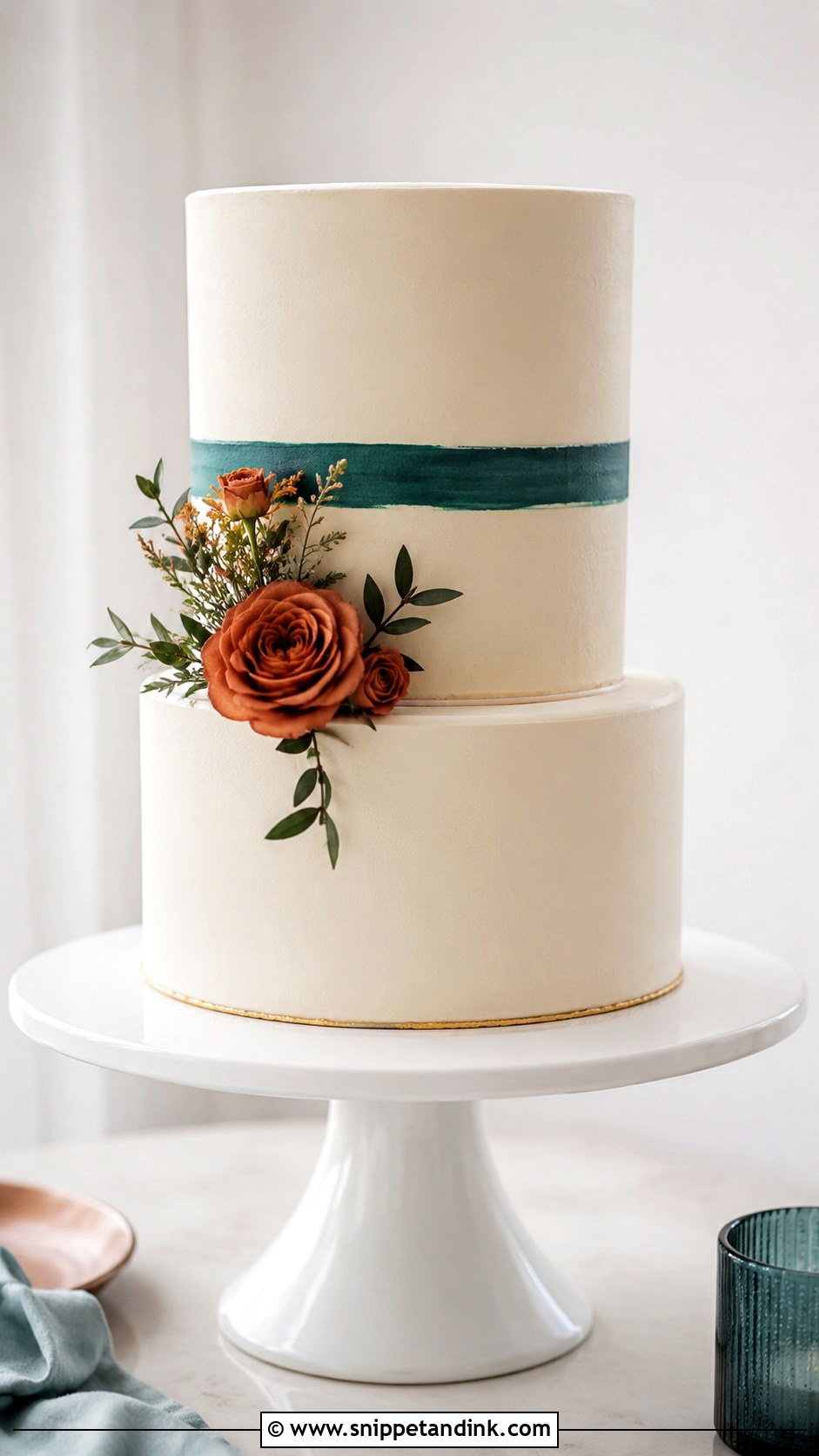
A bold palette can still feel calm. Smooth ivory with one teal accent, a ribbon, a stripe or a single colored tier, plus a small orange floral cluster, is all it needs. Leave lots of clean space. This is a good route if you love your colors but don’t want them shouting. Because there’s so little on it, the finish has to be perfect, so look at the baker’s plain work.
16. Teal And Burnt Orange Naked Wedding Cake
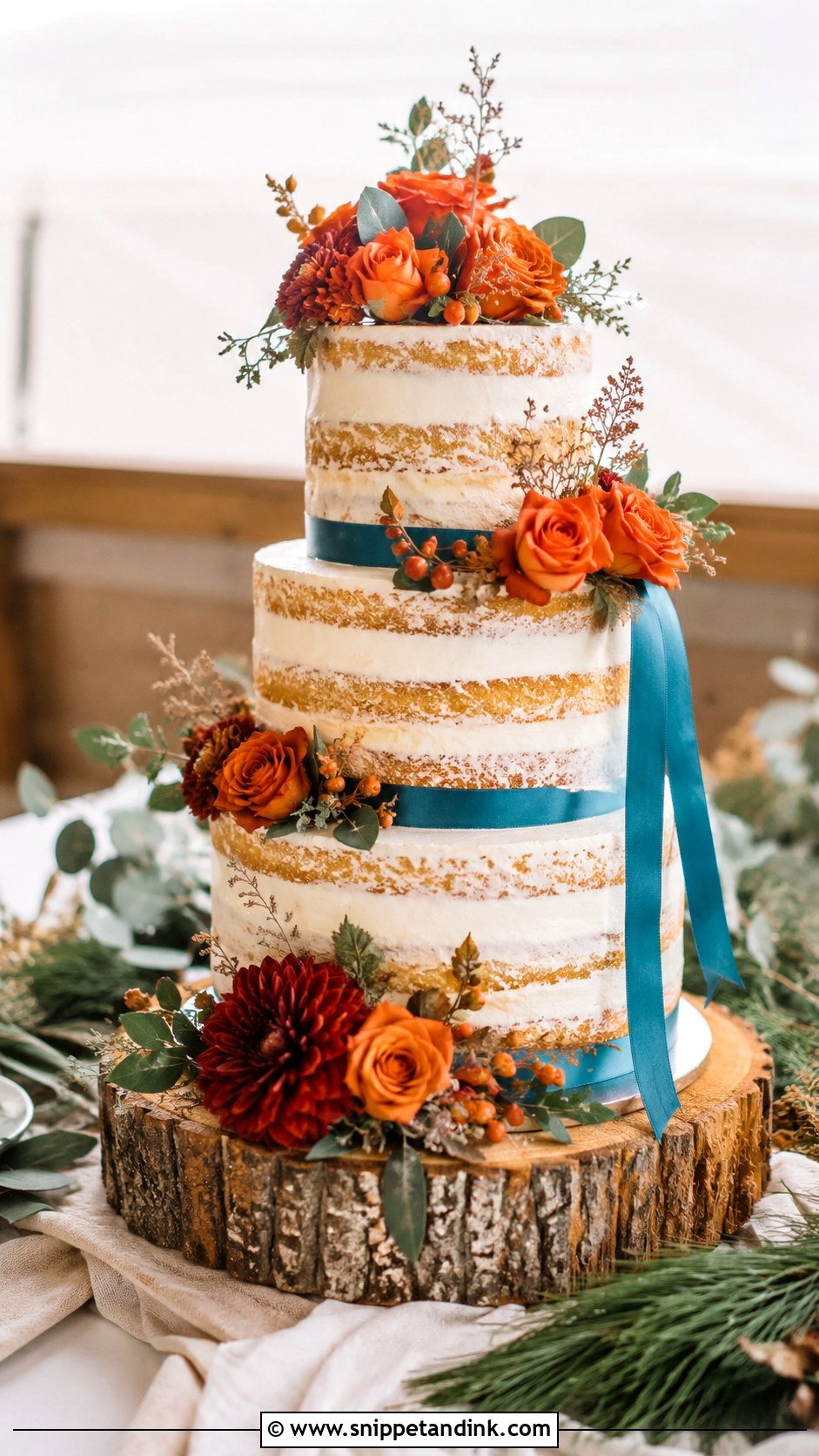
Exposed sponge brings warmth, and the decorations add the color: orange flowers, teal ribbon, greenery and seasonal fruit. Vanilla, almond, spice or carrot cake with light buttercream between the layers works best. Naked cakes dry out quickly once assembled, so I’d keep it covered until shortly before guests arrive. A wood slice, ceramic stand or plain white pedestal suits it. Keep the edges neat so it still looks finished.
17. Teal And Burnt Orange Buttercream Wedding Cake
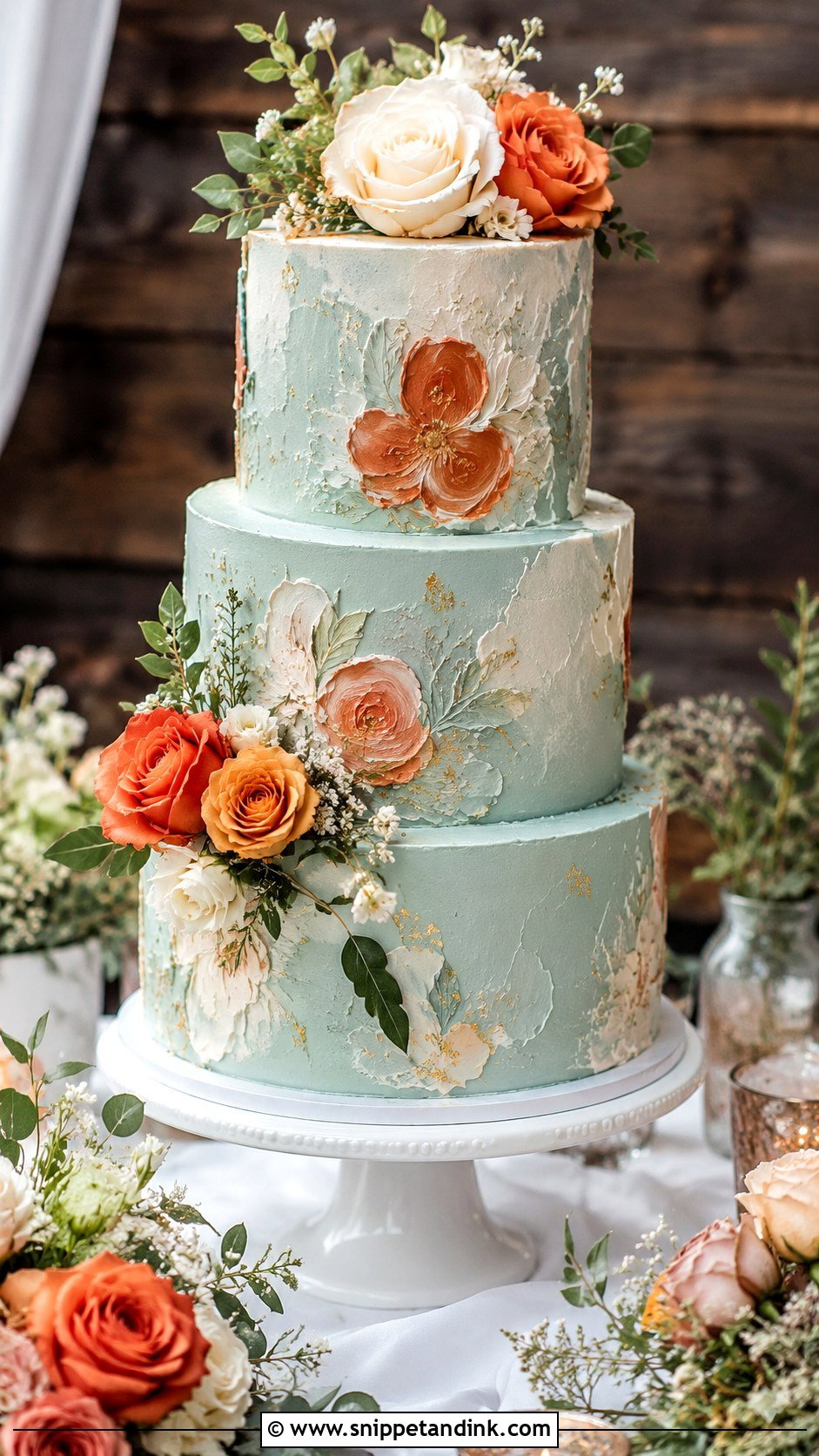
Buttercream can be smooth, textured, piped or painted, which makes it the most flexible base here. A soft teal tier with ivory tiers and orange flowers looks approachable; palette-knife strokes of both colors look painterly. It suits garden, barn and relaxed formal weddings. Expect the teal to drift slightly green in buttercream, because the butter is yellow. A good baker adjusts for that. Vanilla bean, lemon, almond and chocolate all pair well.
18. Teal And Burnt Orange Fondant Wedding Cake
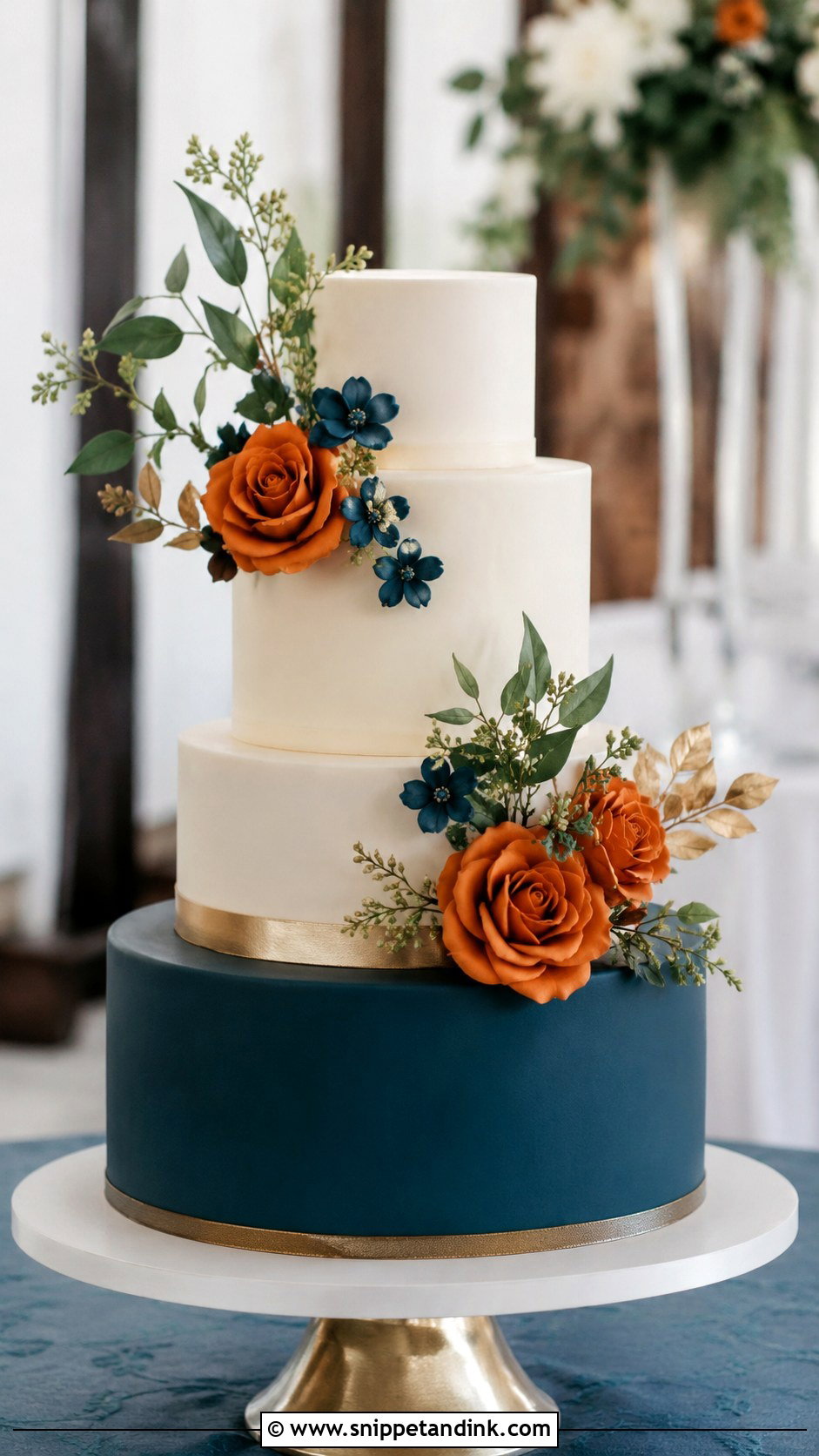
Fondant gives the cleanest surface for sharp edges, painted artwork, marbling, geometric panels and precise color blocking. It also holds deep teal more evenly than buttercream. A dark teal tier beside ivory tiers with orange sugar flowers is dramatic; gold trim adds polish. On larger cakes it keeps every tier consistent. It suits formal venues and modern receptions.
19. Teal And Burnt Orange Sugar Flower Wedding Cake
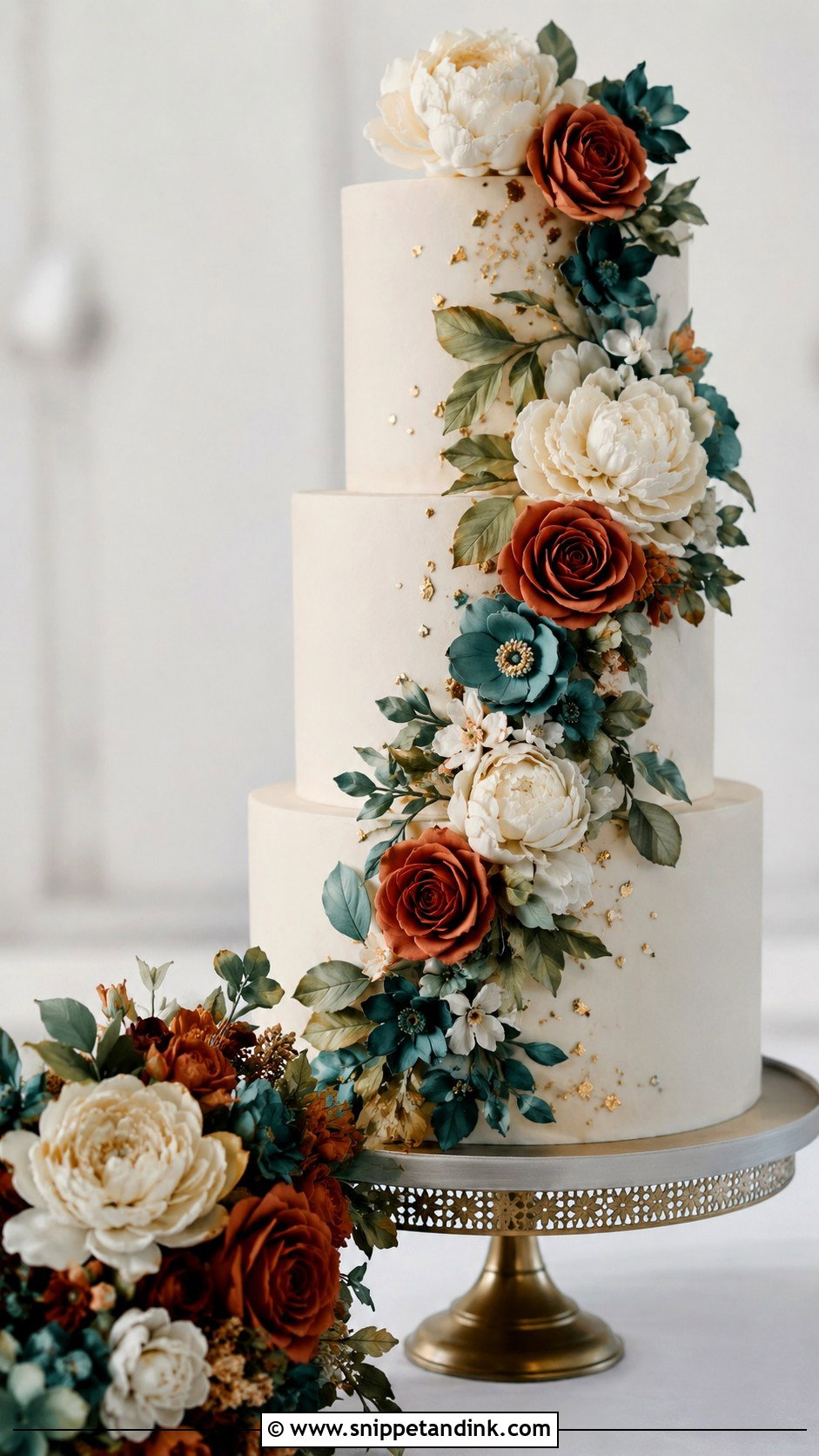
Sugar flowers solve the teal problem, since you can have teal blossoms that don’t exist in a garden. Burnt orange roses, ivory peonies, small teal blossoms and soft greenery make a full arrangement on a smooth white or pale teal base. They’re made by hand petal by petal, so they take time and cost more than fresh flowers, but they don’t wilt and can be kept afterward. They’re also the answer when your fresh flowers are out of season.




20. Teal And Burnt Orange Two Tier Wedding Cake
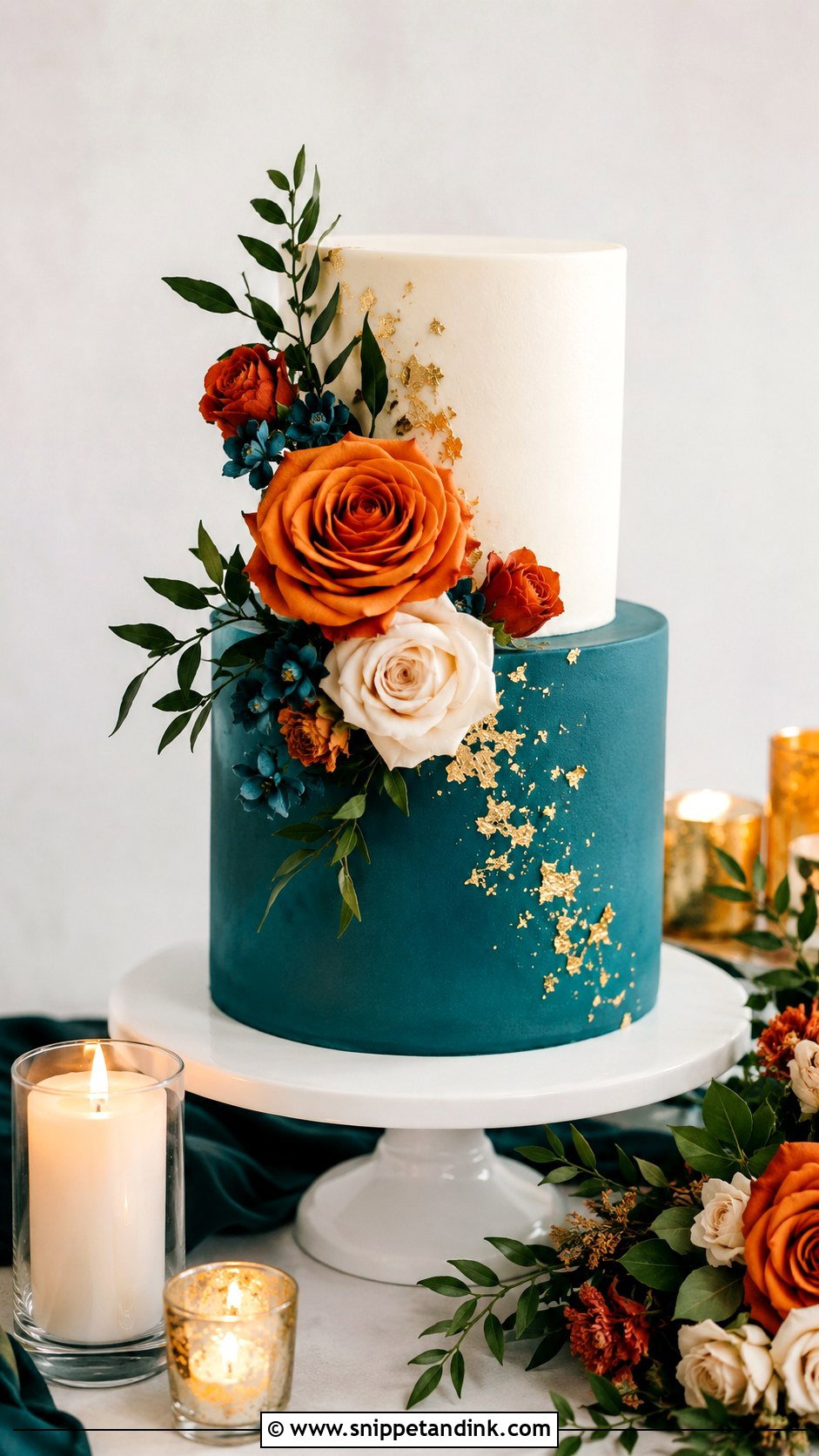
Two tiers keeps things in proportion for small weddings and elopements. A teal bottom tier, an ivory top and orange flowers running diagonally across both is the layout I’d suggest. Textured buttercream, gold leaf or a small painted panel can replace the flowers. Keep proportions clean and decoration focused. On a styled table with candles, greenery and a few matching desserts, it holds its own.
21. Teal And Burnt Orange Three Tier Wedding Cake
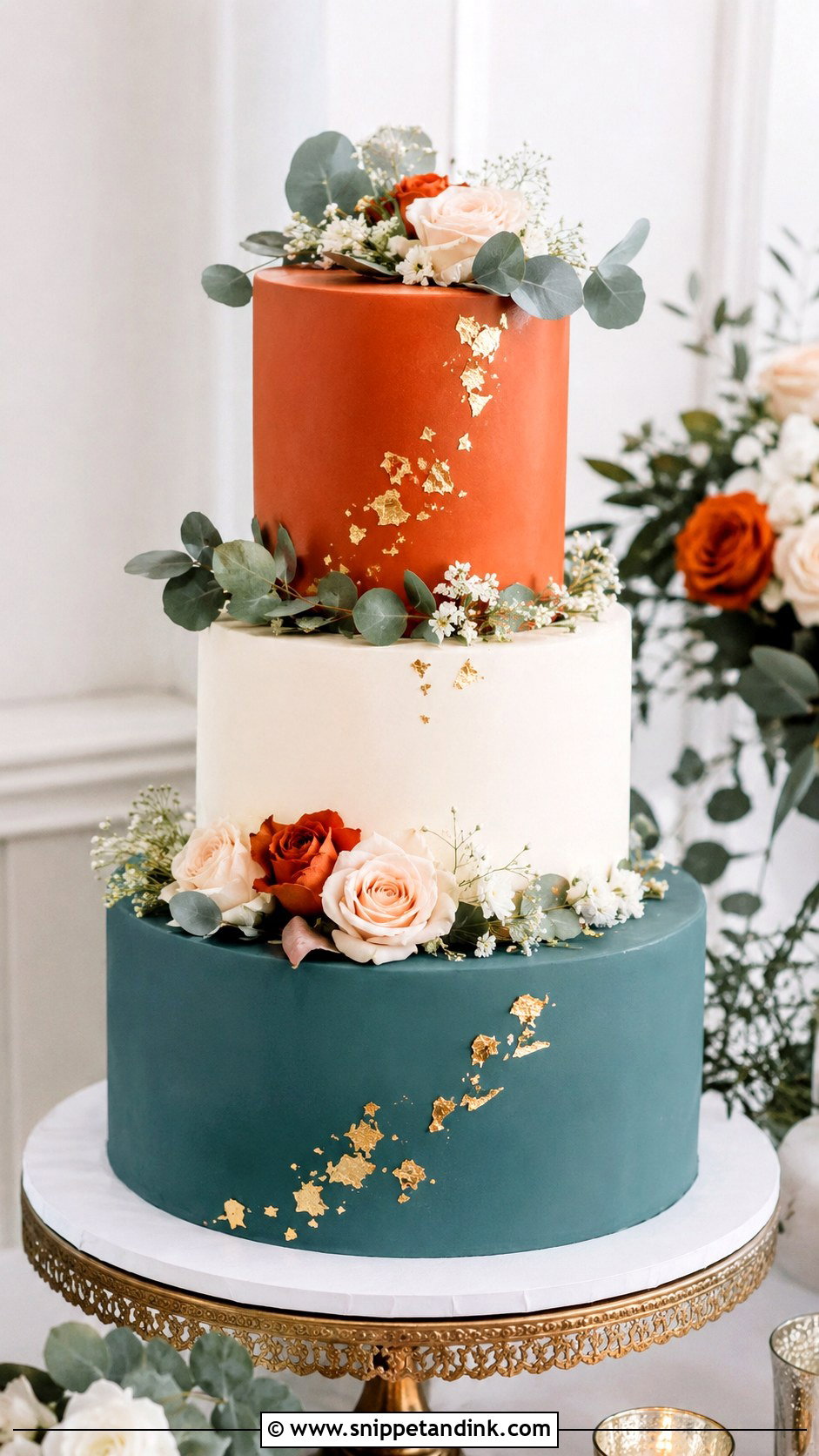
Three tiers gives each color its own space: one teal, one ivory, one with orange or terracotta accents. I’d stack dark at the bottom and warm on top so the weight looks right. Florals between tiers, a soft ombre or gold detail make it more formal. It serves many medium weddings comfortably. With colors this strong, keep the topper simple.
22. Teal And Burnt Orange Round Wedding Cake
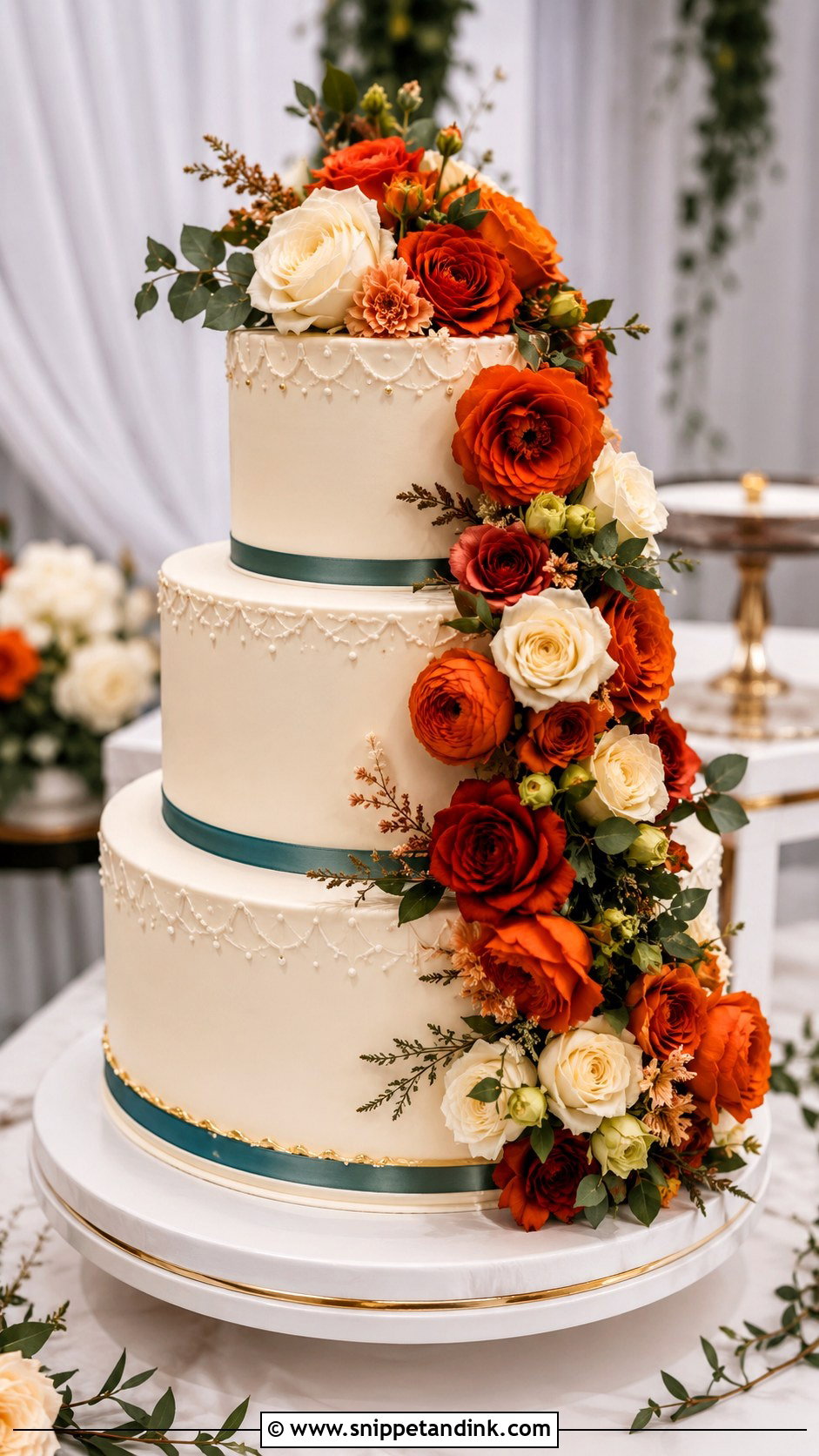
Round tiers make bold colors easier to live with, since the shape is so familiar. Smooth buttercream, gentle texture or cascading flowers all suit them. Teal as the main accent and orange in the florals gives a warm balance. Ribbon, painted strokes and delicate piping work too. If you want color without a cake that will look dated in ten years, round is the safe base.
23. Teal And Burnt Orange Square Wedding Cake
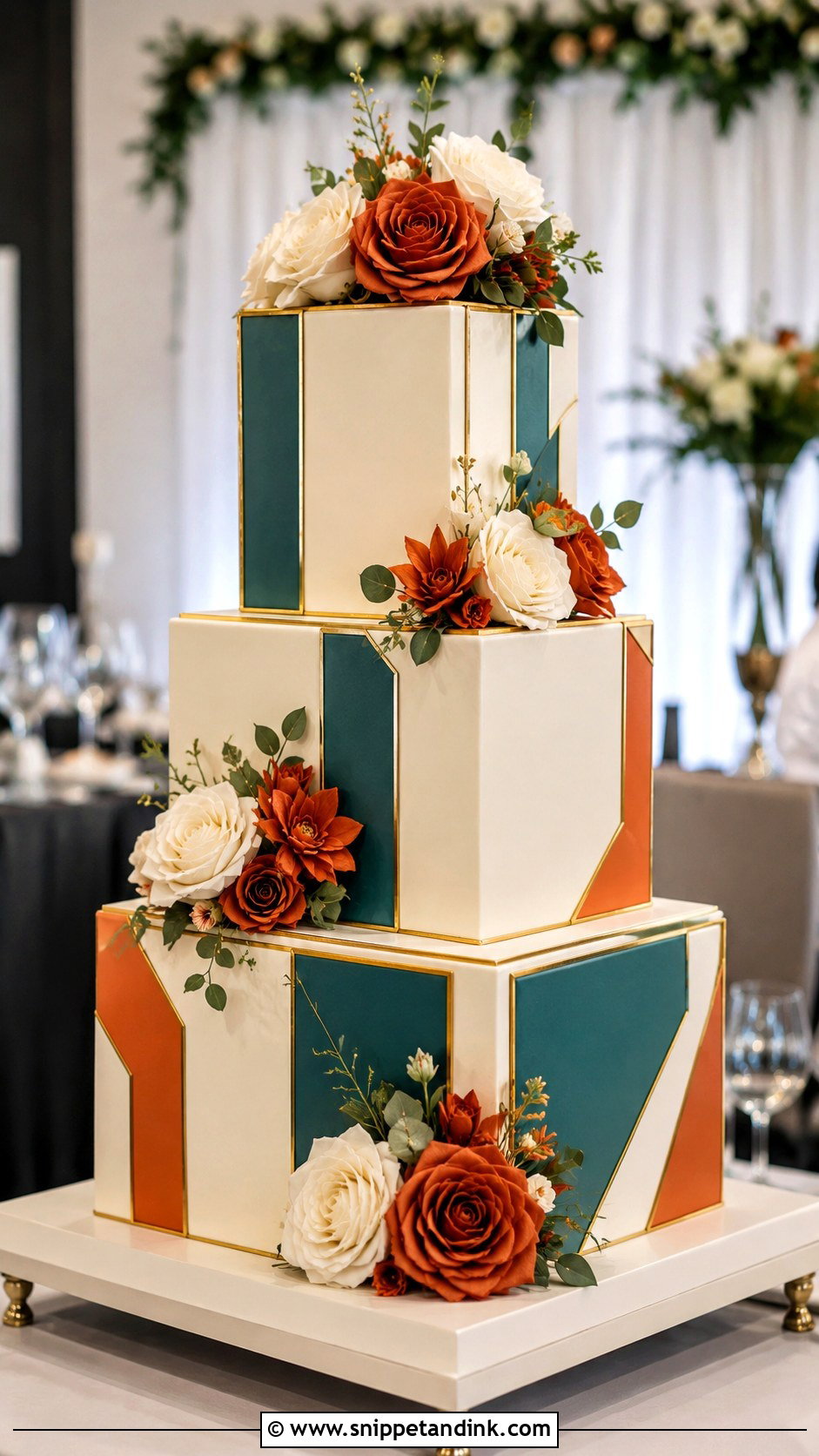
Corners make color blocking, marbling and geometric patterns look sharper. Ivory fondant with teal panels and orange flowers is refined, and offset square tiers look contemporary. Keep decoration tidy, because the shape already brings strong lines. Gold edges or a little greenery soften it. Square corners are where frosting thins and wears first, so they suit fondant better than soft buttercream.
24. Teal And Burnt Orange Cupcake Wedding Cake
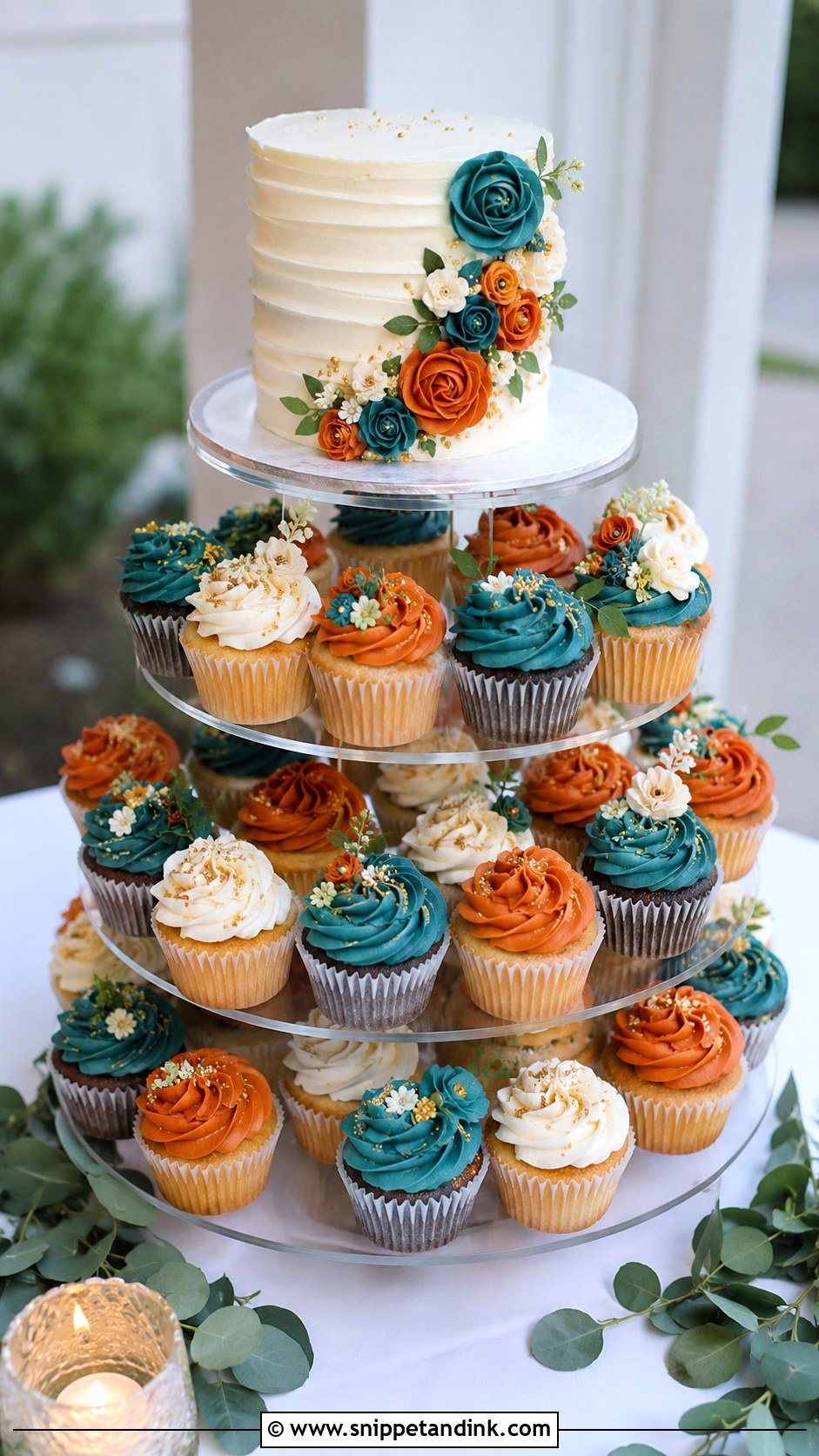
Cupcakes make serving easy and turn the palette into a display. A small cutting cake on top with cupcakes in teal, orange, ivory and gold around it is the classic setup. The frosting can include rosettes, smooth swirls or small floral toppers. Relaxed and outdoor receptions suit it, and you can offer vanilla, chocolate, spice and lemon. Dark teal frosting on every cupcake means a lot of coloring per bite, so I’d keep teal to the wrappers and toppers on most of them.
25. Teal And Burnt Orange Wedding Cake With Macarons
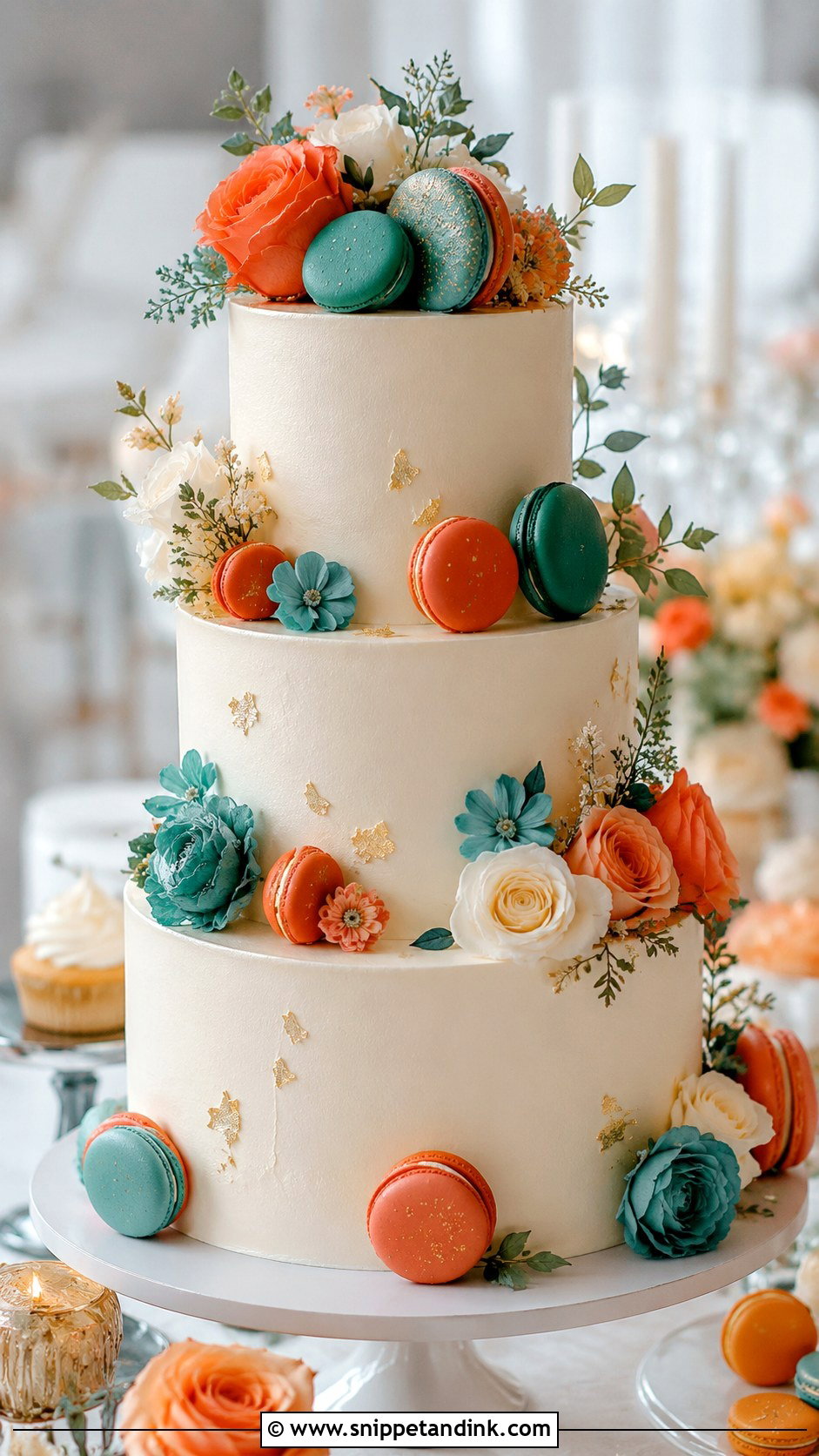
Macarons add texture and a bit of fun. Pipe them in matching teal and orange, then set them around the tiers, tuck them into the flowers or pile them on top of a buttercream or fondant cake. Add fresh flowers and small gold accents. Muted shades keep it looking like a wedding cake. Macarons soften once they sit against moist frosting, so they go on at the venue, not the night before. Vanilla, almond, chocolate and citrus flavors all pair well.
Proportion Is What Makes the Palette Look Expensive
Equal amounts of teal and orange tend to fight. The cakes that look most considered usually follow a rough split: a lot of neutral, a fair amount of one color and a small amount of the other.
- Neutral as the base. Ivory, cream or sand covers most of the cake and gives the eye somewhere to rest.
- One color in a block. A teal tier, a teal band or teal brushwork, sitting low on the cake.
- The other as an accent. Burnt orange in flowers, a few painted leaves or a small cluster near the top, where light hits it.
Swapping the roles works too. Burnt orange in the lead with teal accents feels more autumnal and earthy, which suits barns and desert venues. A metallic, usually gold or copper, can join as a fourth note, but only in thin lines.
One last practical point: think about the cake table, not just the cake. A teal linen under a teal tier makes the cake disappear in photos. A neutral cloth or wood table lets the colors on the cake do the talking.
Decide Which Color Leads Before You Meet Your Baker
The palette can go boho, modern, floral or vintage, and the cake designs above prove it. What matters most is deciding which color leads and which one supports. Teal in the lead makes a cake feel rich and dramatic; burnt orange in the lead makes it warm and seasonal. Ivory, gold, greenery, terracotta and dried flowers tie the two together. Take that decision, plus a fabric swatch, to your tasting, and your baker can build anything from a small two-tier cake to a full statement display around it.
You'll Like These Ideas:








Leave a Reply