
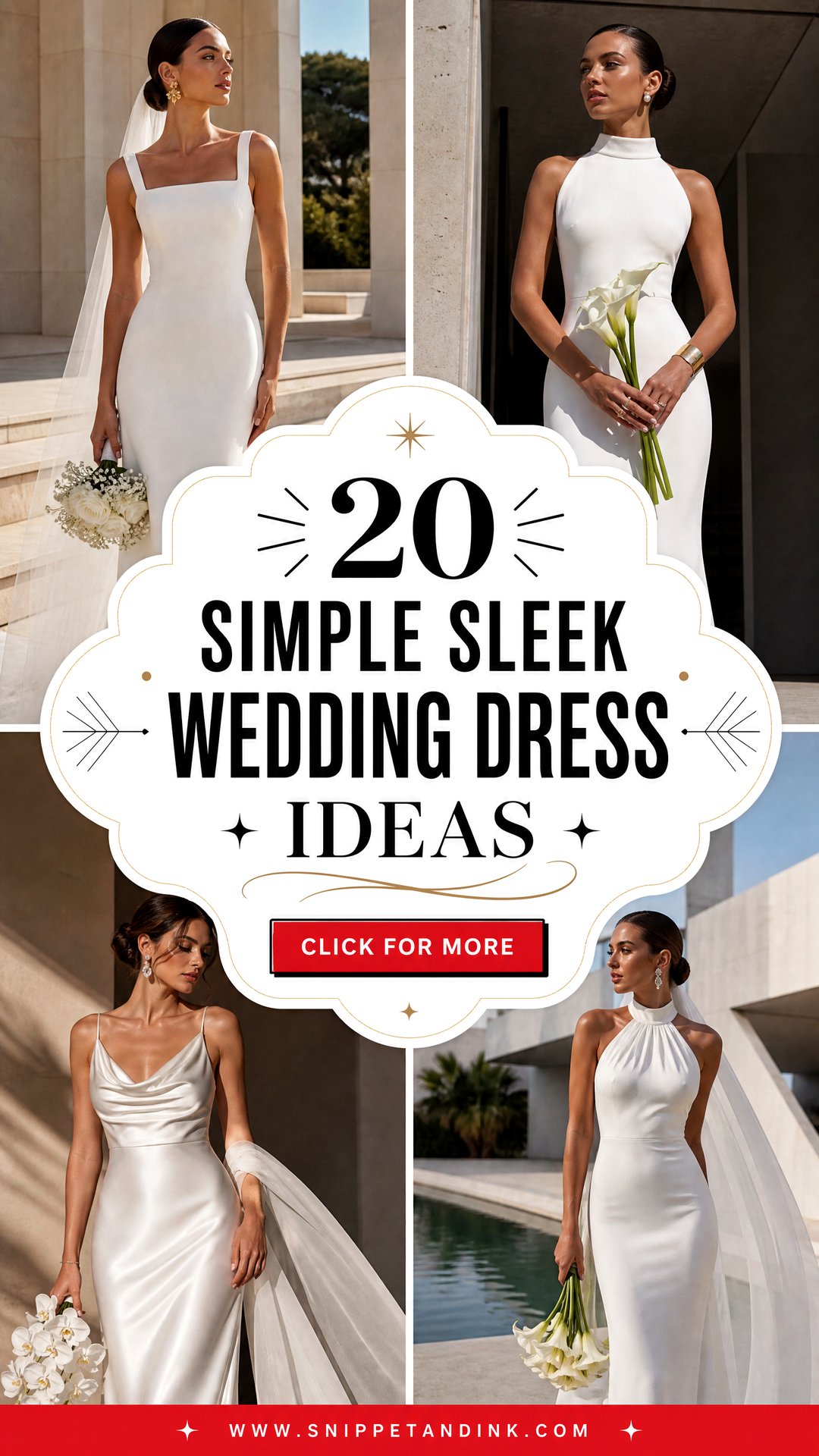
A plain gown is the hardest kind of dress to get right, and I say that as someone who loves them. With no beading or lace to pull the eye, every seam, every pull line and every bit of fabric quality is on show. What you get in return is a dress that looks like you rather than like a trend. Right now the clean side of bridal is mostly slip gowns, sculpted columns, minis and soft draped satin. Below are twenty of those shapes, each styled from shoes to veil, with notes on what I check at fittings and who each one really suits.
Reading a Plain Fabric Before the Silhouette Wins You Over
When a dress has no lace to distract, the fabric becomes the dress. I ask brides to handle a swatch or the sample before they look in the mirror, because the mirror is persuasive and the fabric is what you live with for the day.
- Crush test: squeeze a corner of the skirt in your fist for ten seconds and let go. Satin that holds deep creases will look the same after the car ride and every time you sit.
- Light test: hold the fabric up to a window. If you can see your fingers through a single layer of crepe, the gown will need a lining or it will show seams and underwear in daylight photos.
- Cling test: walk across the fitting room. Lightweight polyester satin often builds static and wraps the legs; heavier silk or a well-weighted crepe falls away.
- Shine test: look at the fabric under a phone flash. High-gloss satin reflects flash hard, which can wash out a pale gown in evening photos.
None of these rules out a fabric. They tell you what you’re signing up for. A slip dress in a creasing satin is fine if you know you’ll stand for most of the ceremony and have someone steam it before portraits.
1. Satin Slip Wedding Dress
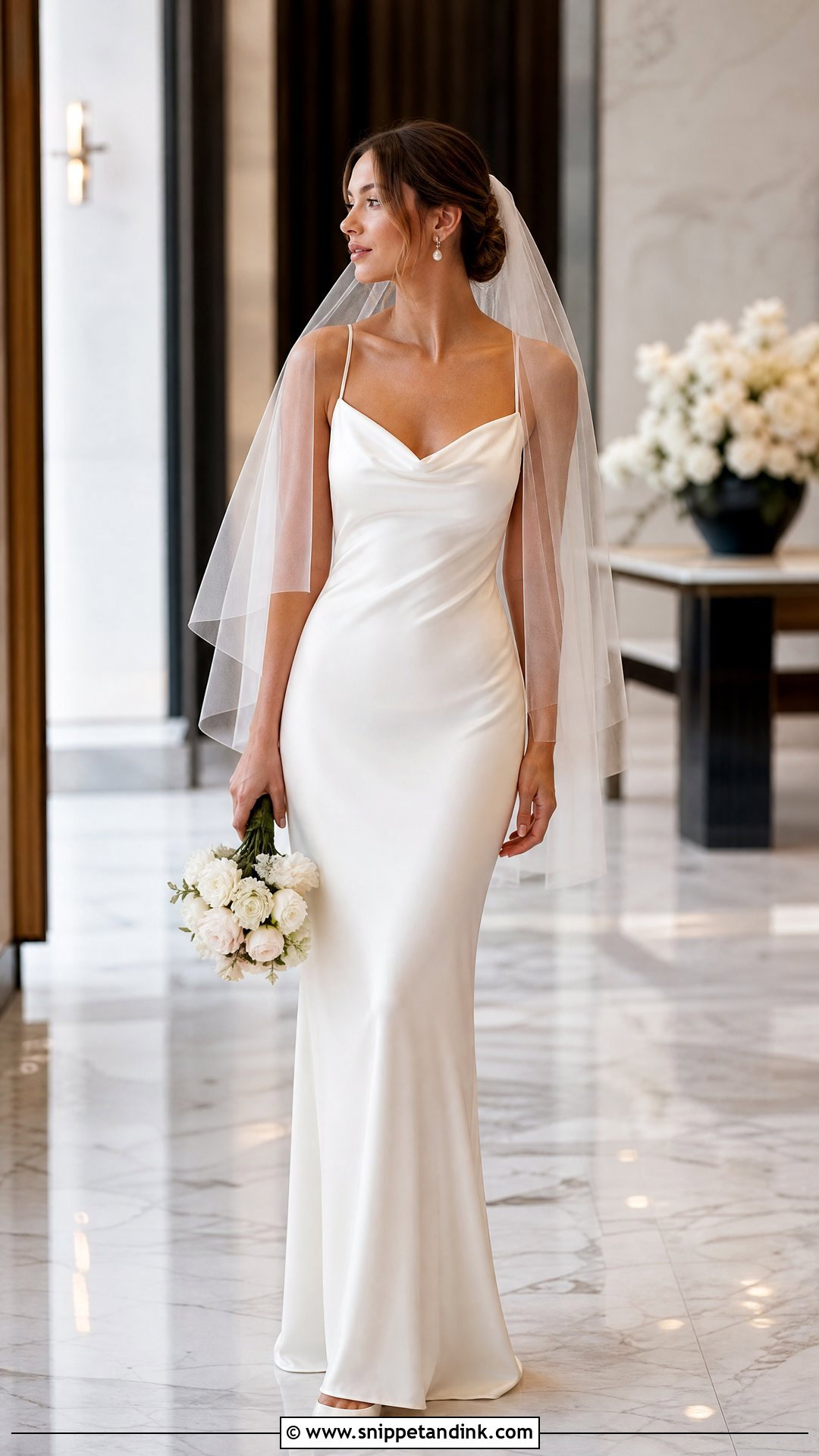
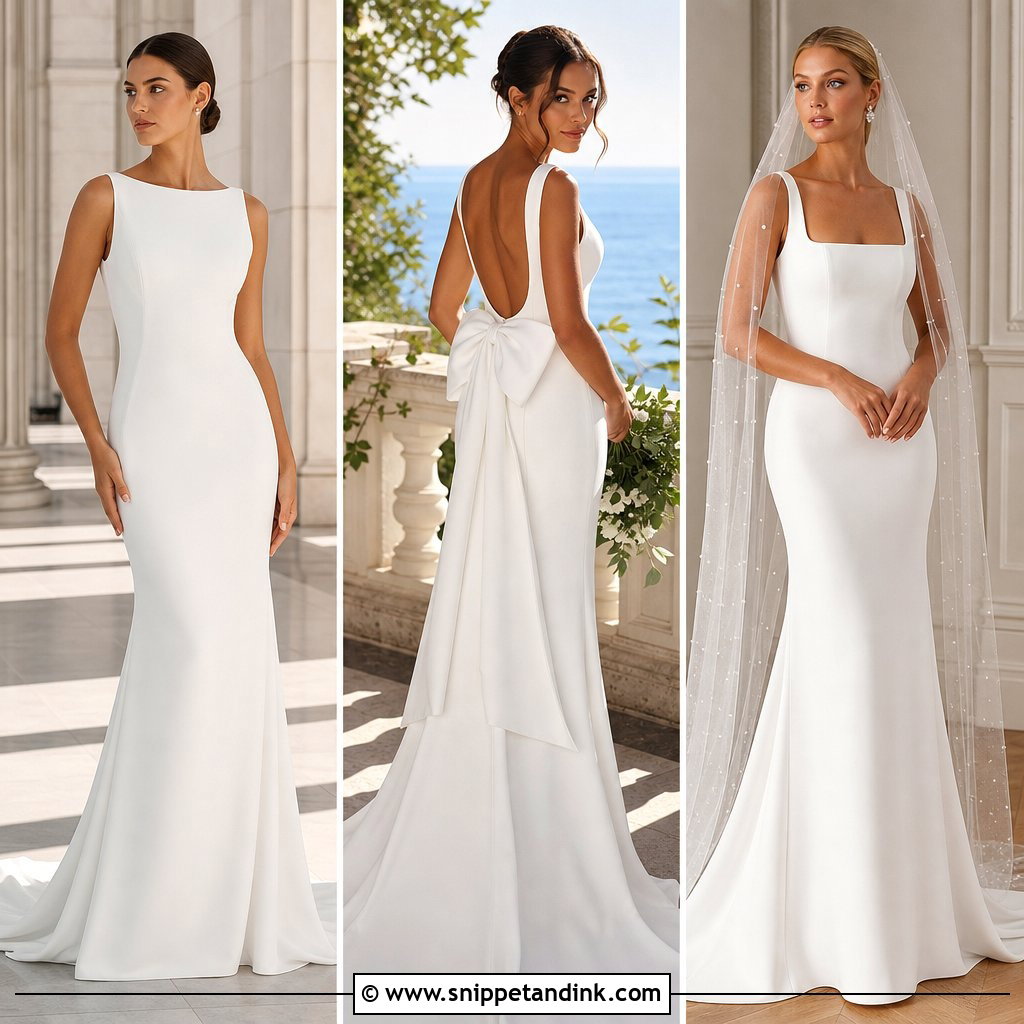
Bias cut is what makes a slip dress move, and it’s also why it shows everything underneath. I ask brides to sit down in the sample before anything else, because satin cut on the bias pulls across the hips when you’re seated and the hem creeps up at the front. Slender straps, a softly draped neckline and a floor-skimming hem keep it light. Pointed ivory pumps or barely-there sandals, a fingertip veil, pearl drops and a low center-part bun are all it needs. Keep the bouquet compact so it doesn’t flatten the drape at your waist. It belongs at a hotel or loft ceremony where nobody will be sitting on damp grass.
2. Square Neck Column Wedding Dress
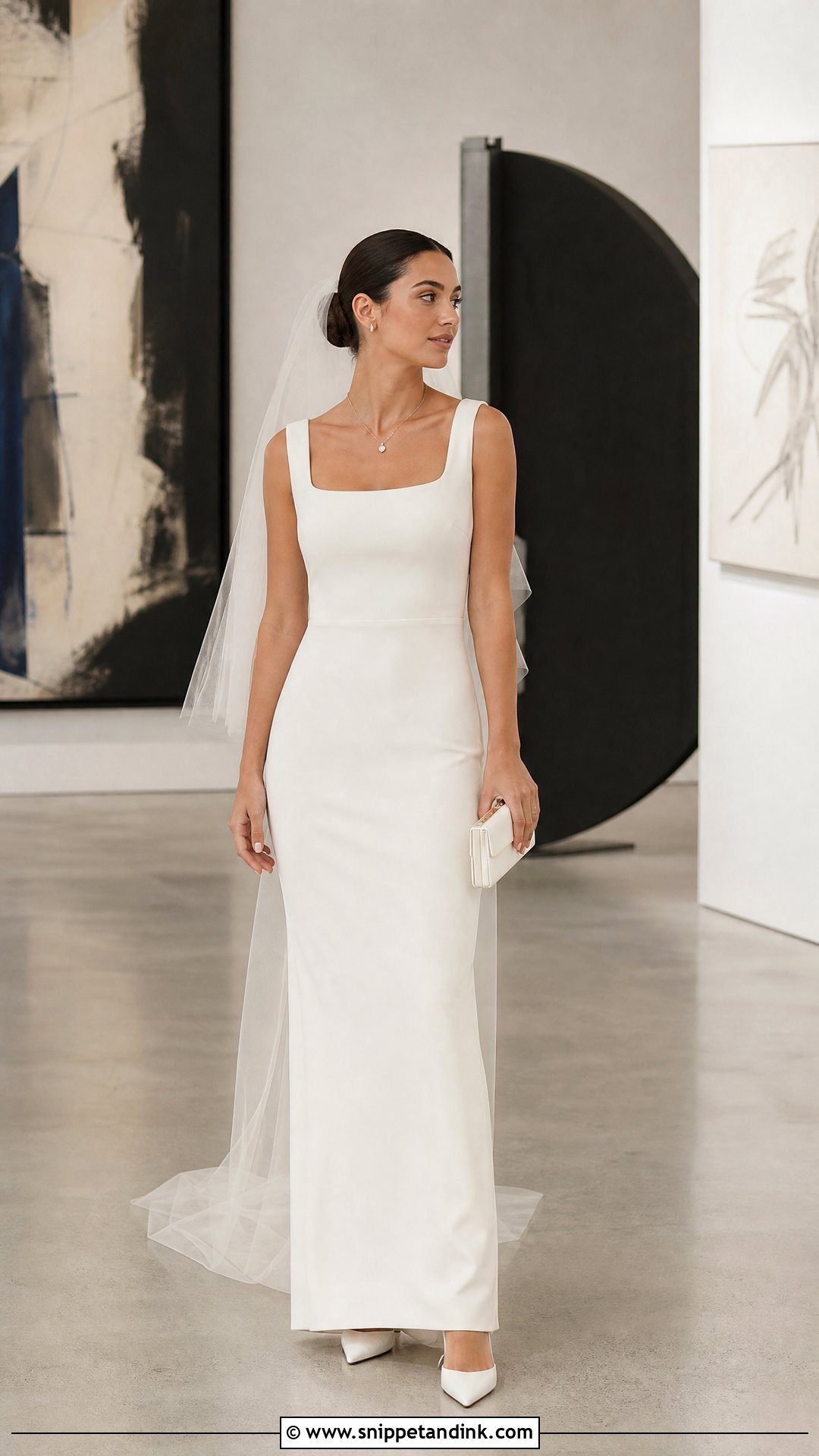
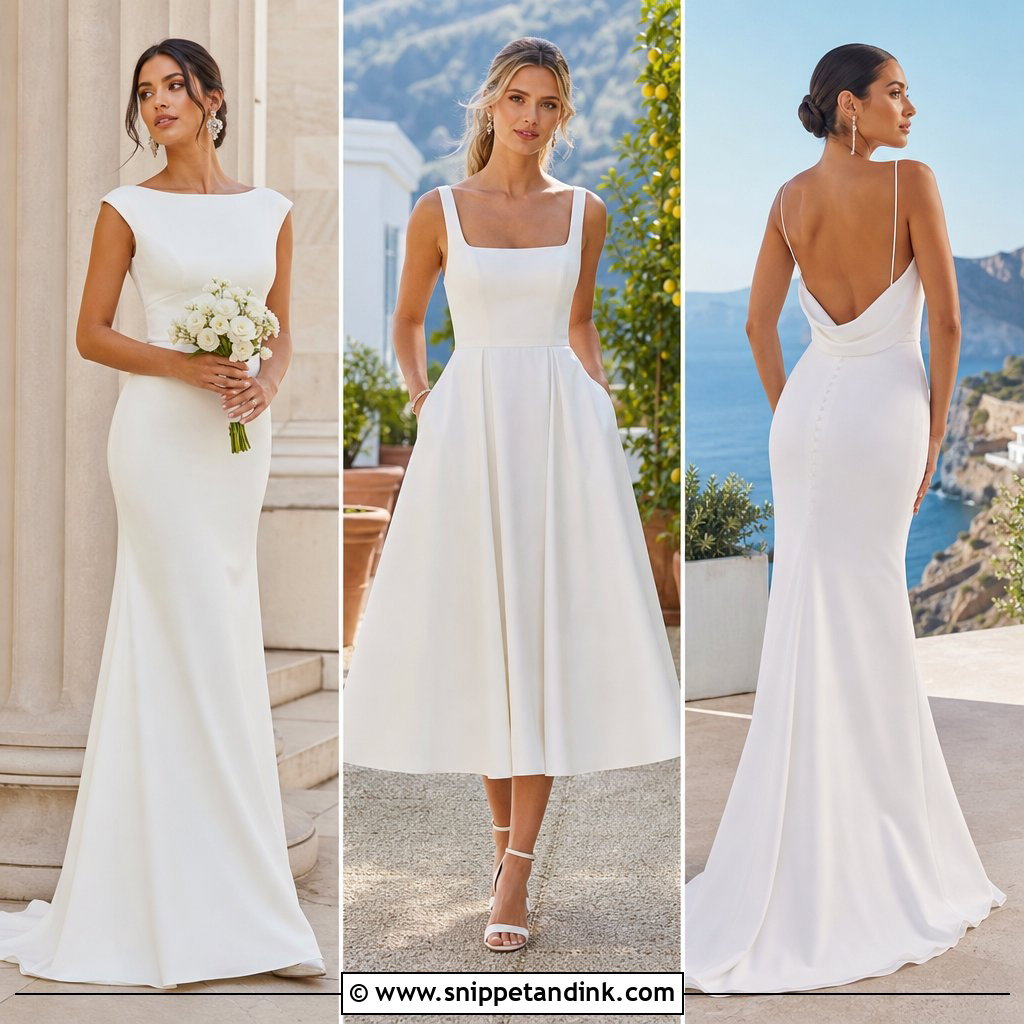
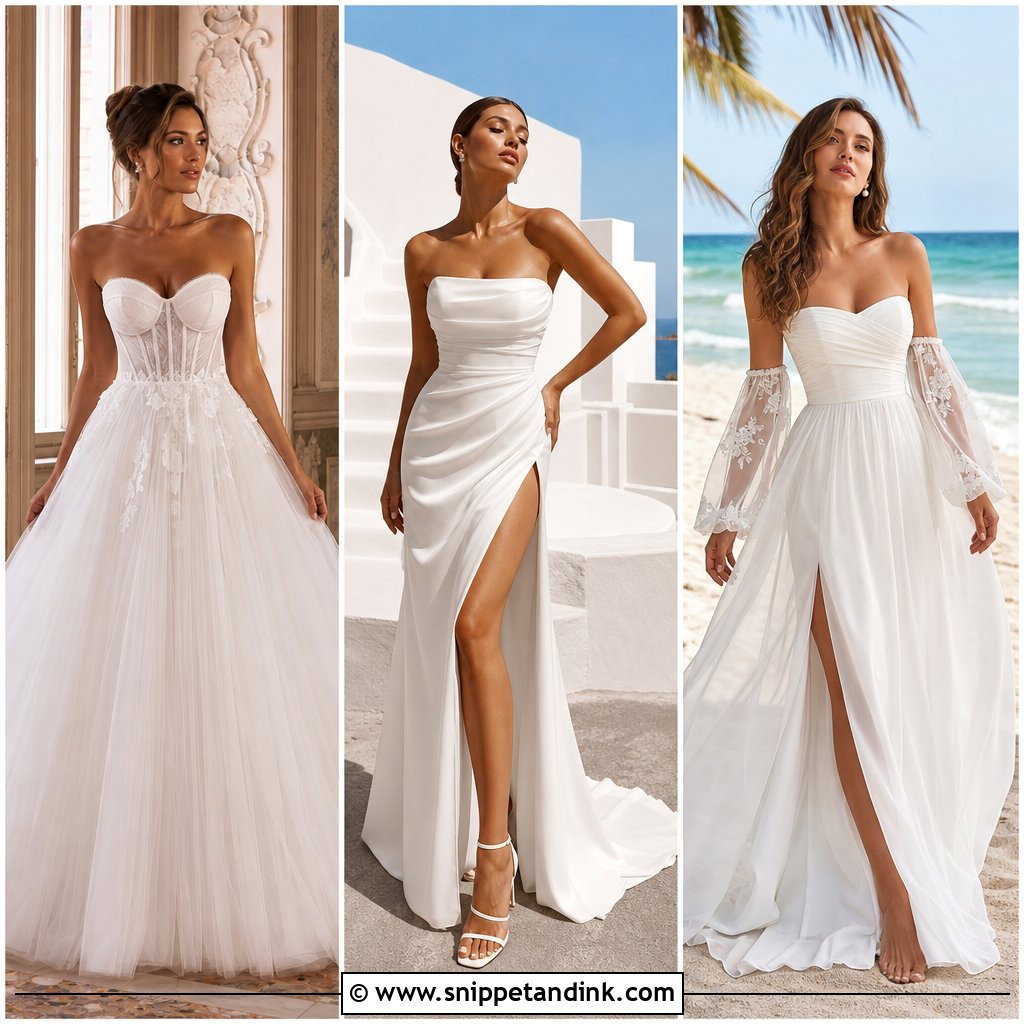
Square necklines only look crisp when the fabric has some body. In a thin satin the corners collapse inward after an hour; in a substantial crepe or matte satin they stay put. The wide straps carry the weight, so this is one of the few clean gowns where I don’t push for extra bodice boning. A delicate pendant can sit inside the neckline’s frame, with small studs and pointed slingbacks to keep the geometry going. Wear a sleek chignon, and add a single-layer chapel veil only if the room is big enough to need it. Galleries, ballrooms and courthouses all suit it.
3. Strapless Crepe Wedding Dress
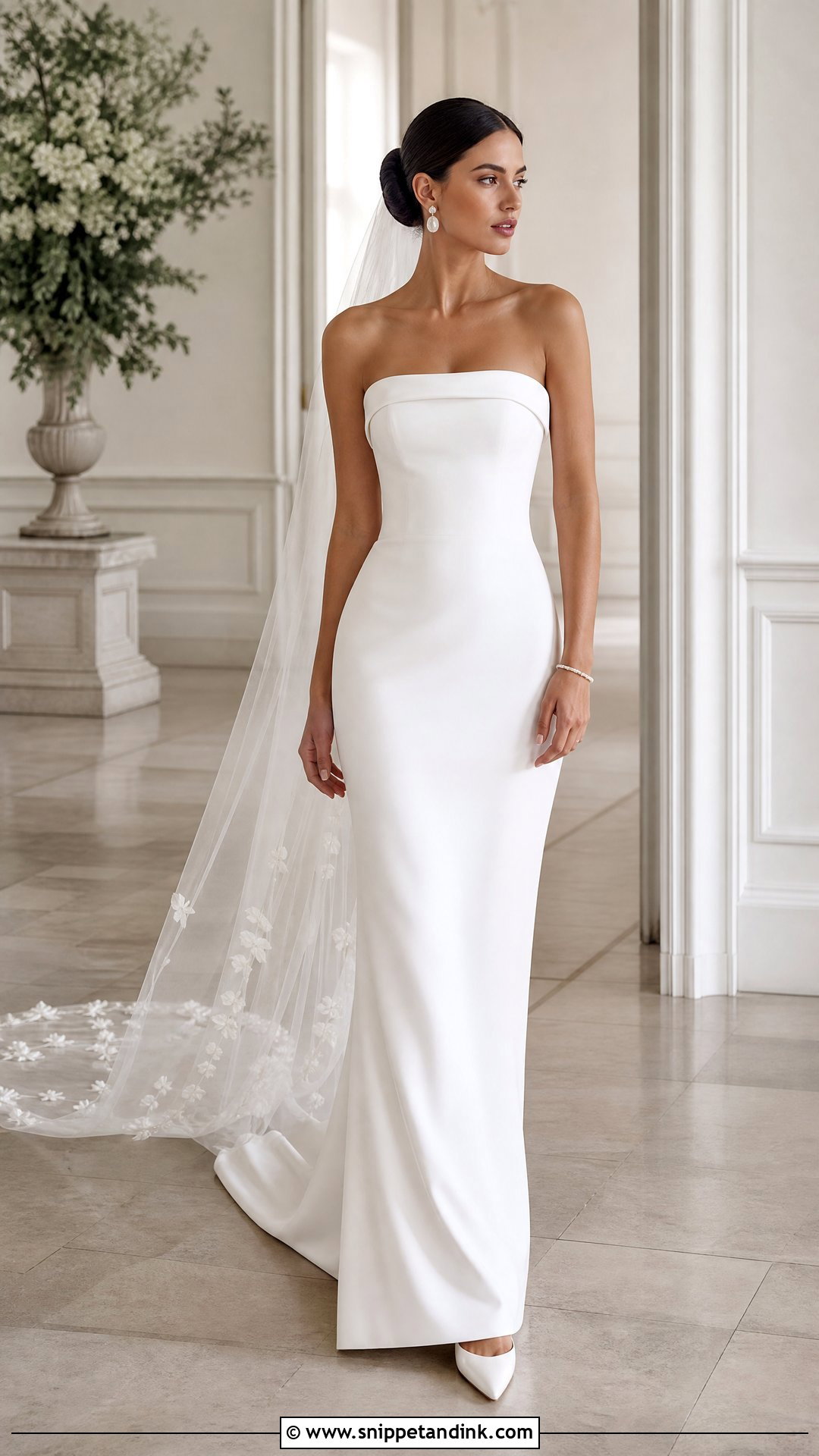
Strapless crepe has a reputation for slipping, and it earns it when the bodice is built on the outer fabric alone. I want to see an internal corset or proper boning, with a grip strip at the top edge, before a bride falls in love. Do the arm test at every fitting: raise both arms as if hugging someone taller, and if the neckline gaps or drops, it needs taking in. Once that’s solved, a straight or gently curved neckline reads classic. Satin pumps, sculptural earrings, a narrow tennis bracelet and polished waves or a low twisted bun finish it, with a long sheer veil for movement indoors.
4. Long Sleeve Sheath Wedding Dress
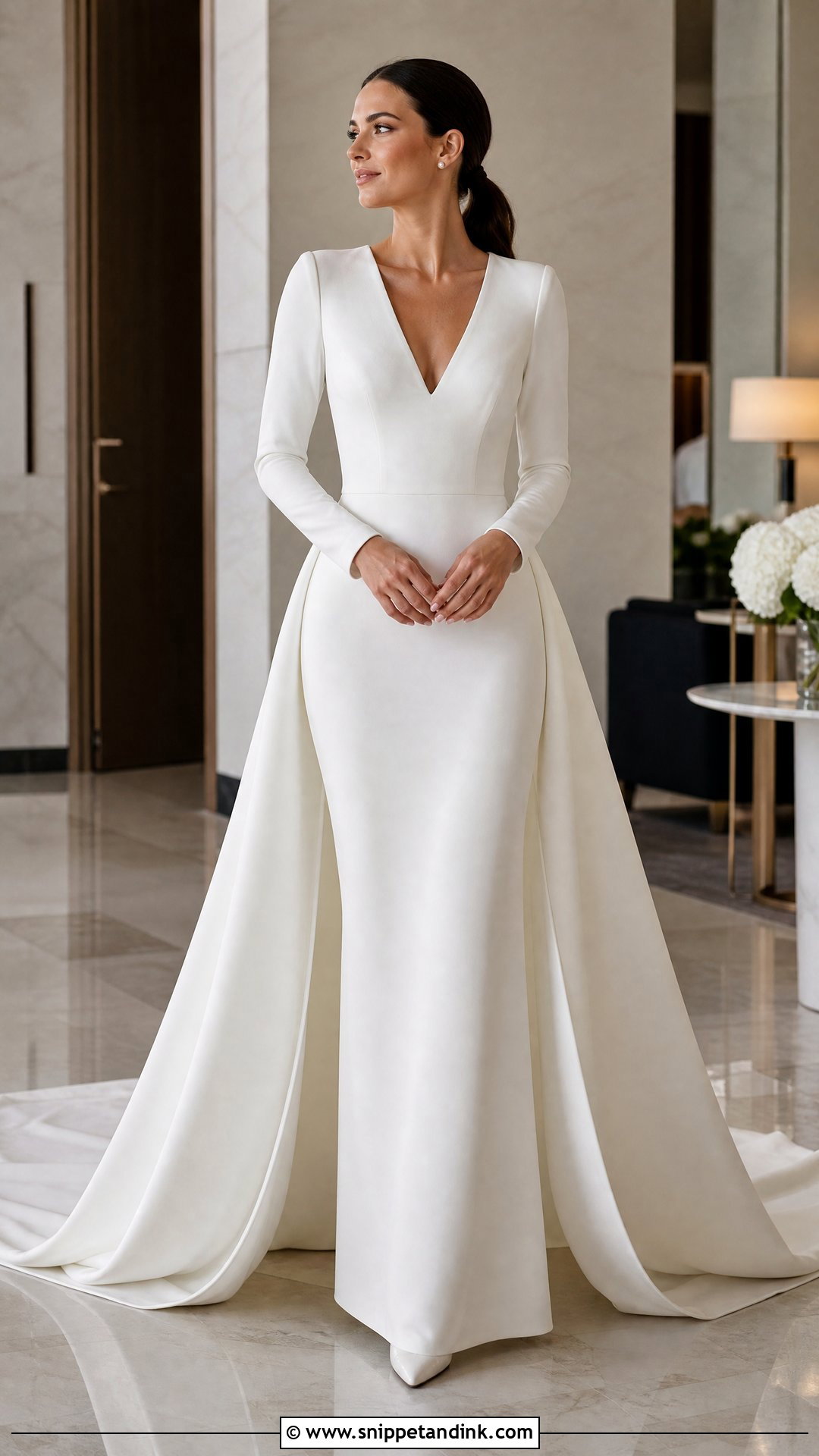
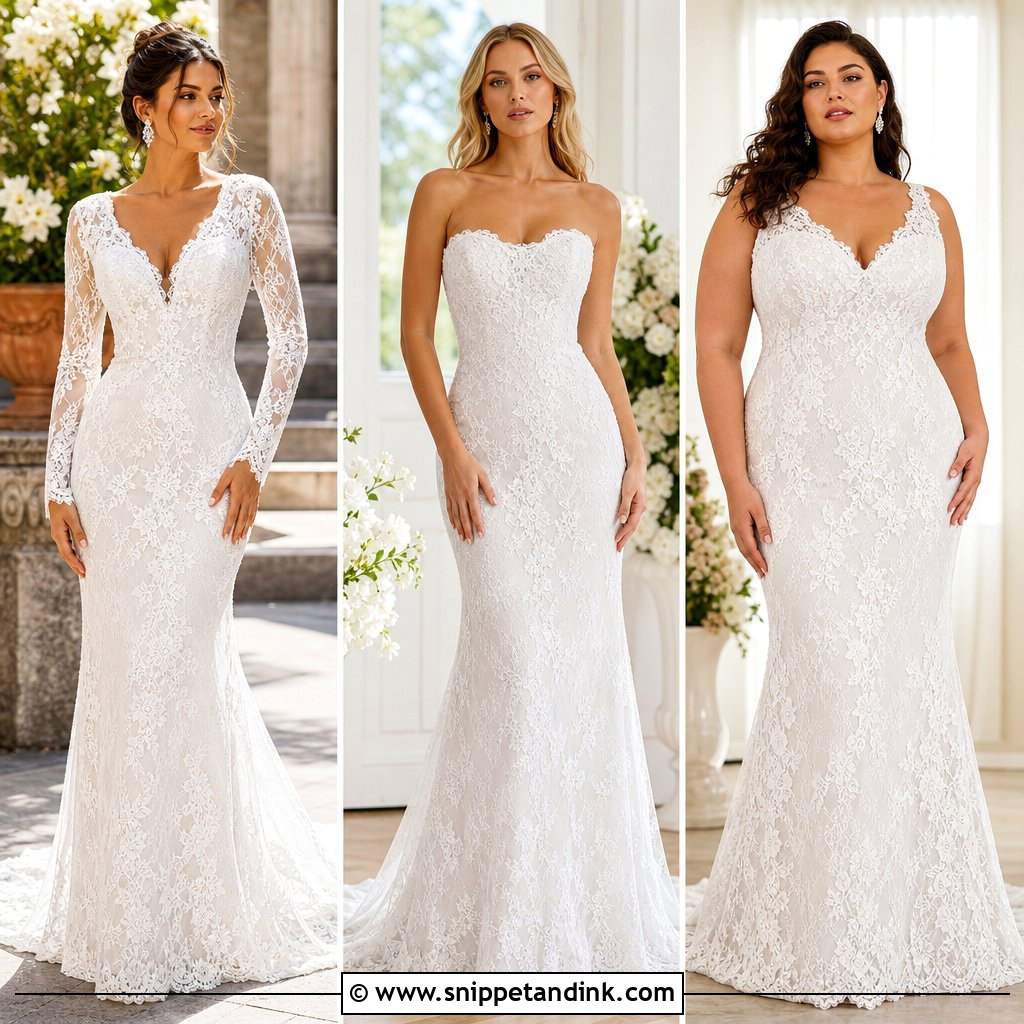
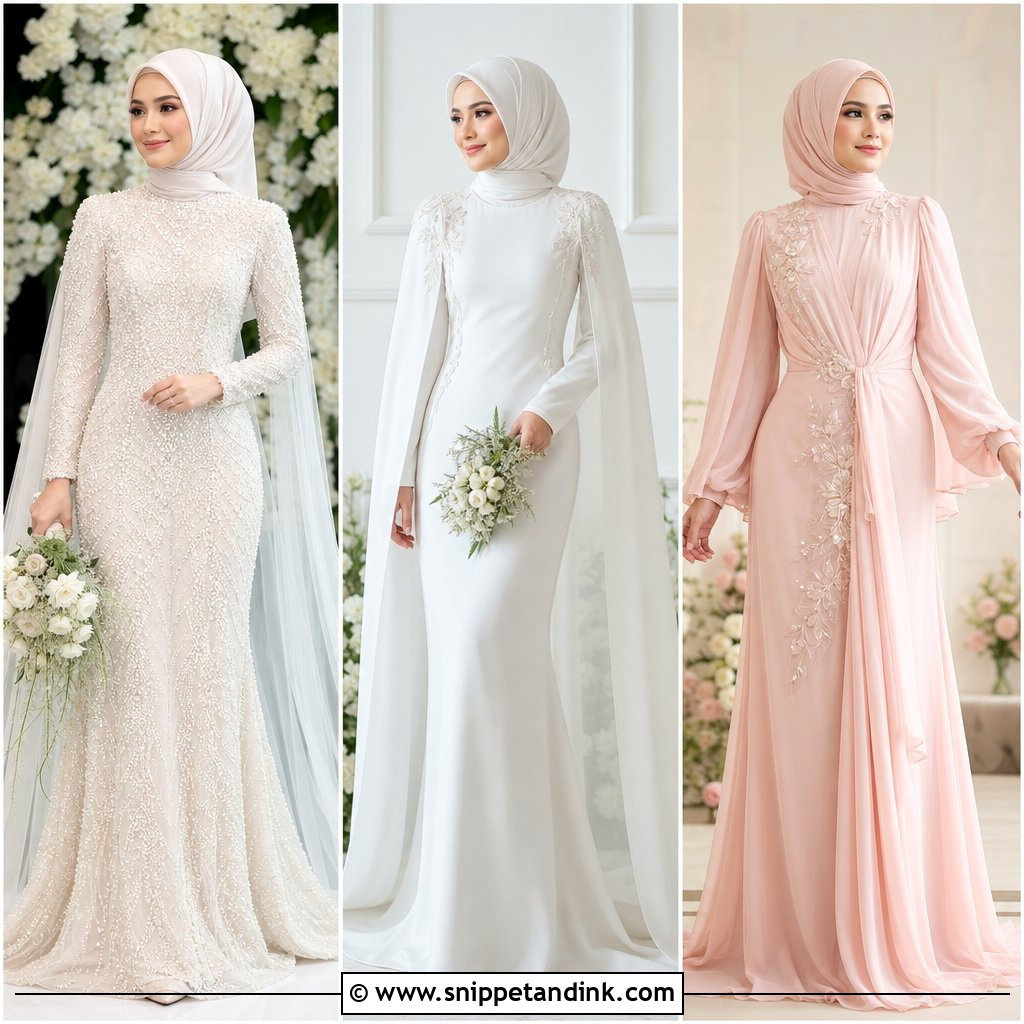
A long sleeve sheath wedding dress in opaque stretch crepe is my usual answer for a winter bride who wants coverage without looking buttoned up. The sleeves are where fit goes wrong: too tight at the bicep and you can’t lift a glass, so I always ask for a fitting with arms bent. A shallow V or soft scoop keeps the covered shape from feeling severe. Closed-toe ivory heels, pearl studs and a smooth bun or low ponytail are plenty. A detachable chapel train gives the ceremony some length and comes off before dinner. Museums, historic homes and hotels from fall to early spring suit it best.
5. High Neck Minimalist Wedding Dress
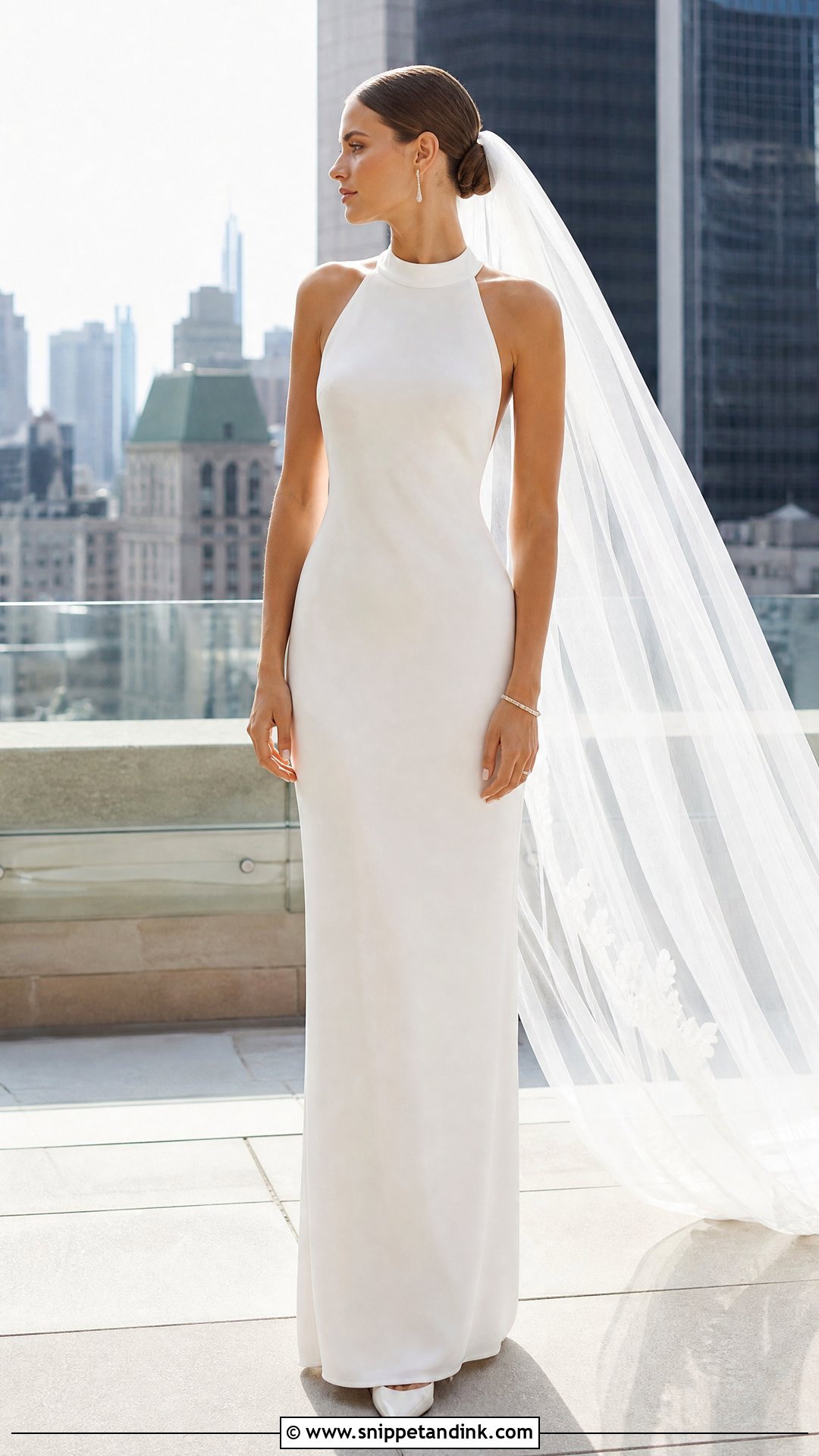
Here the neckline does all the work, so I strip everything else back. A sleeveless column with a high neck and an open or keyhole back looks architectural in matte crepe and softer in silk satin. No necklace, only slim drop earrings, a fine bracelet and pointed pumps. The hair has to go up into a smooth bun so the back can be seen. Pin a sheer cathedral veil beneath the bun rather than on top, which keeps the line from neck to hem unbroken. One caution: high necks feel warm on a summer rooftop, so check the venue’s shade before committing.
6. Cowl Neck Silk Wedding Dress
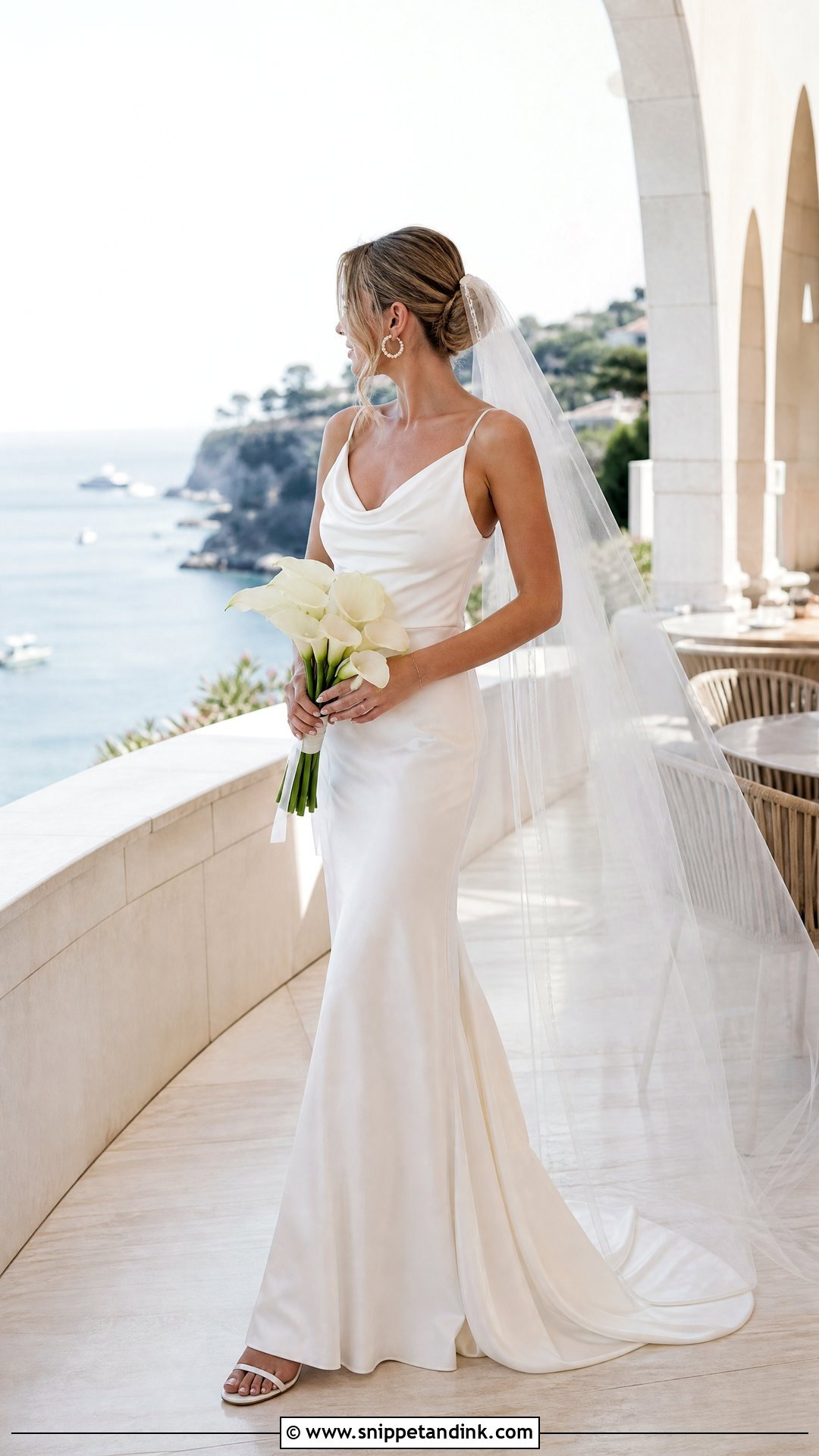
Cowl necklines are cut on the bias, and the folds behave differently on every body, so never judge one on a hanger. In silk, a cowl can open lower than you expect when you lean forward to sign the register; a discreet stitch or a weighted bead inside the drape fixes that. Wide-enough straps, and either a matching back cowl or a restrained low scoop, keep it secure. A cowl neck silk wedding dress suits strappy heels, small pearl hoops and a loosely gathered bun or glossy waves. Plain silk tulle at chapel length and a handful of calla lilies or white tulips are all the extras it wants on a coastal terrace.
7. Off Shoulder Satin Wedding Dress
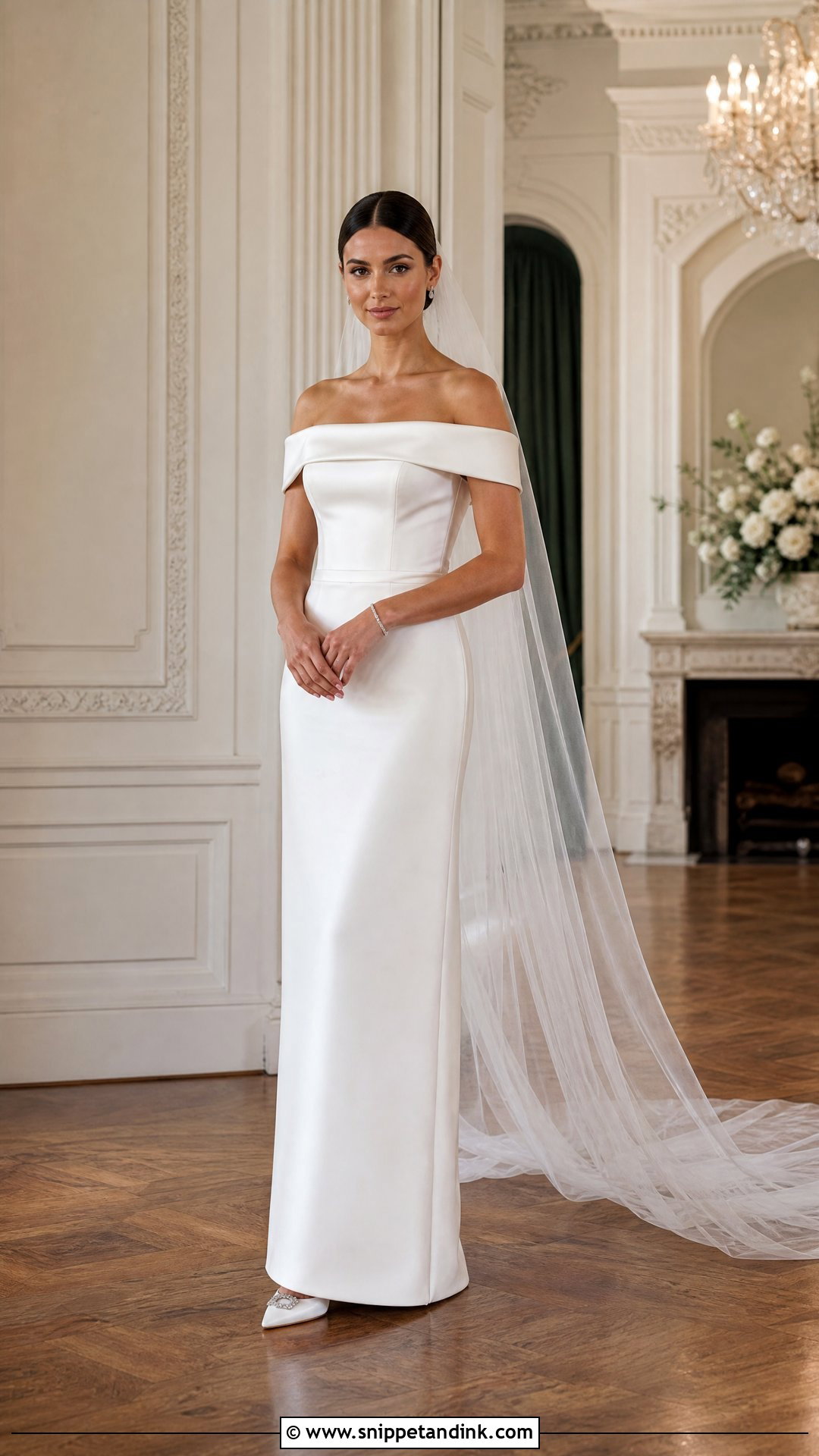
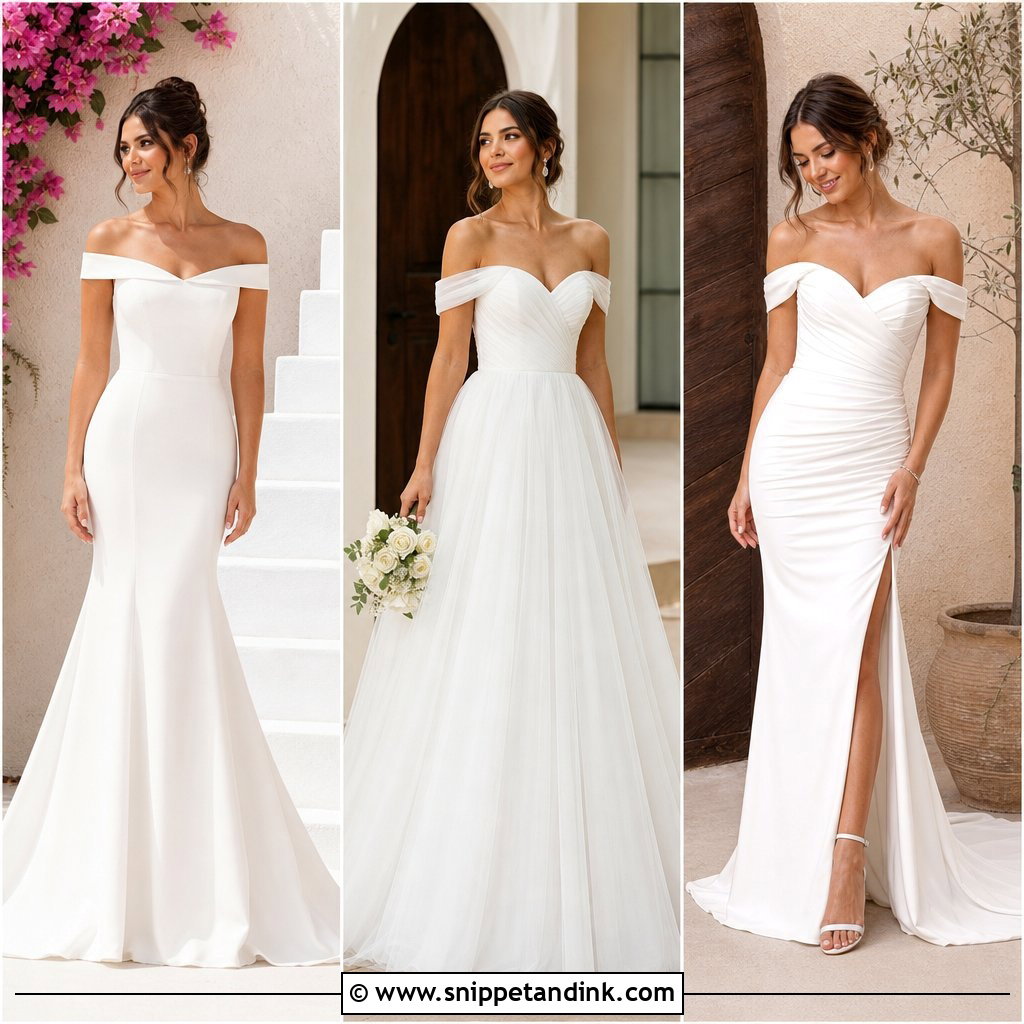
My first question with off-shoulder satin is always whether you can hug your grandmother in it. The folded band sits above the arms and is held by the bodice, so if it’s cut too snugly, raising your arms drags the whole neckline down. Ask your seamstress to test that movement specifically. A straight skirt reads sleek; a slight A-line gives more room to walk. Leave the collarbone bare with no necklace, wear pearl or crystal studs and pointed satin heels, and sweep the hair into a center-parted low bun. A long plain veil adds motion for the ceremony in a ballroom or hotel.
8. One Shoulder Column Wedding Dress
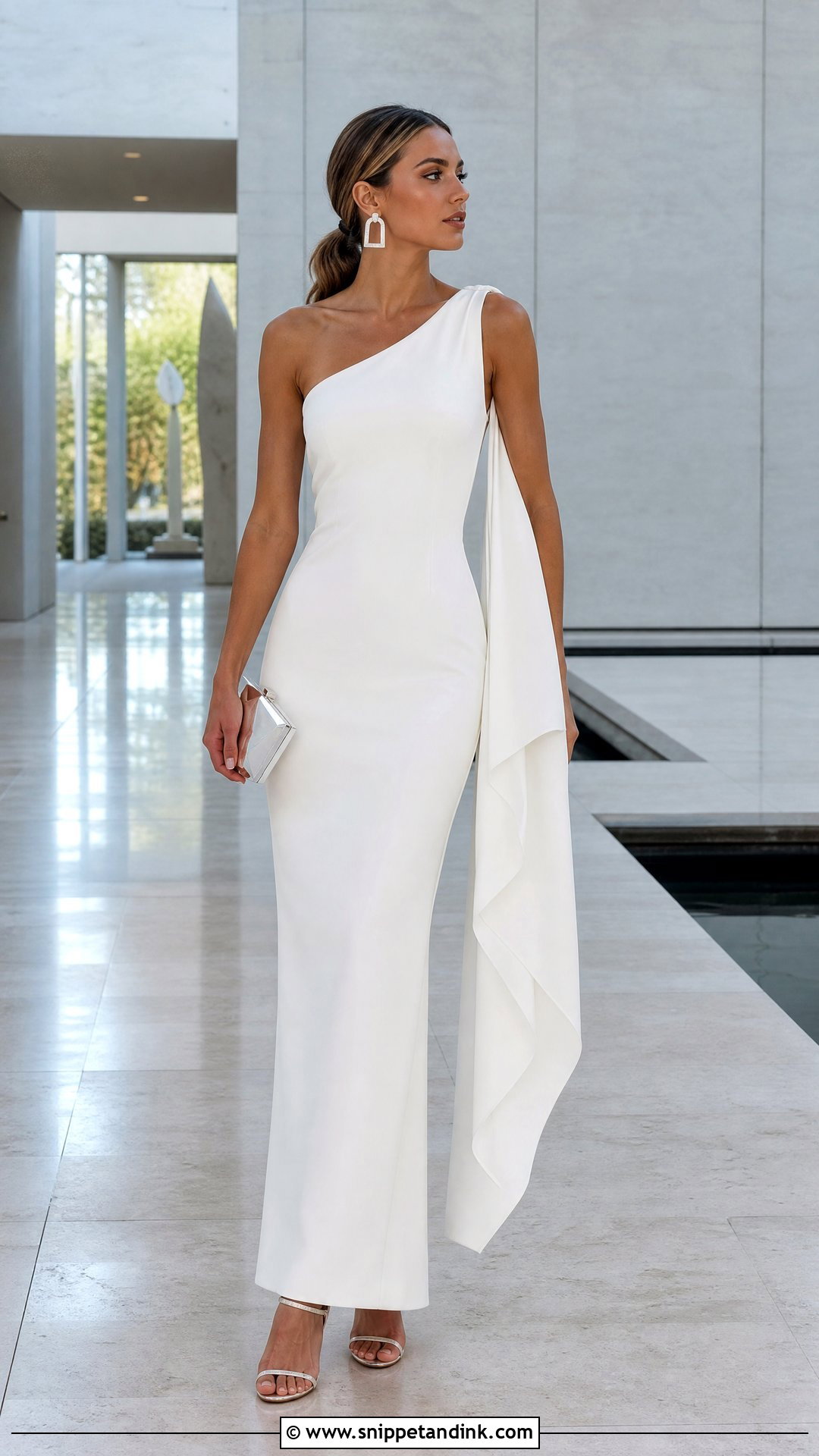
Asymmetry is easy to get wrong because one shoulder carries the whole bodice. On a one shoulder column wedding dress I look for a clean diagonal with very little gathering, and a hidden elastic or silicone edge on the open side so it doesn’t drift. The skirt should fall straight from the hip, with a back slit if you need a longer stride. One statement earring on the bare side balances it. Slim ankle-strap heels, a white metallic clutch and a low ponytail pulled toward the open shoulder complete it, and a veil is optional; a detachable shoulder drape gives the same ceremony moment in a museum or resort.
9. Halter Neck Wedding Dress
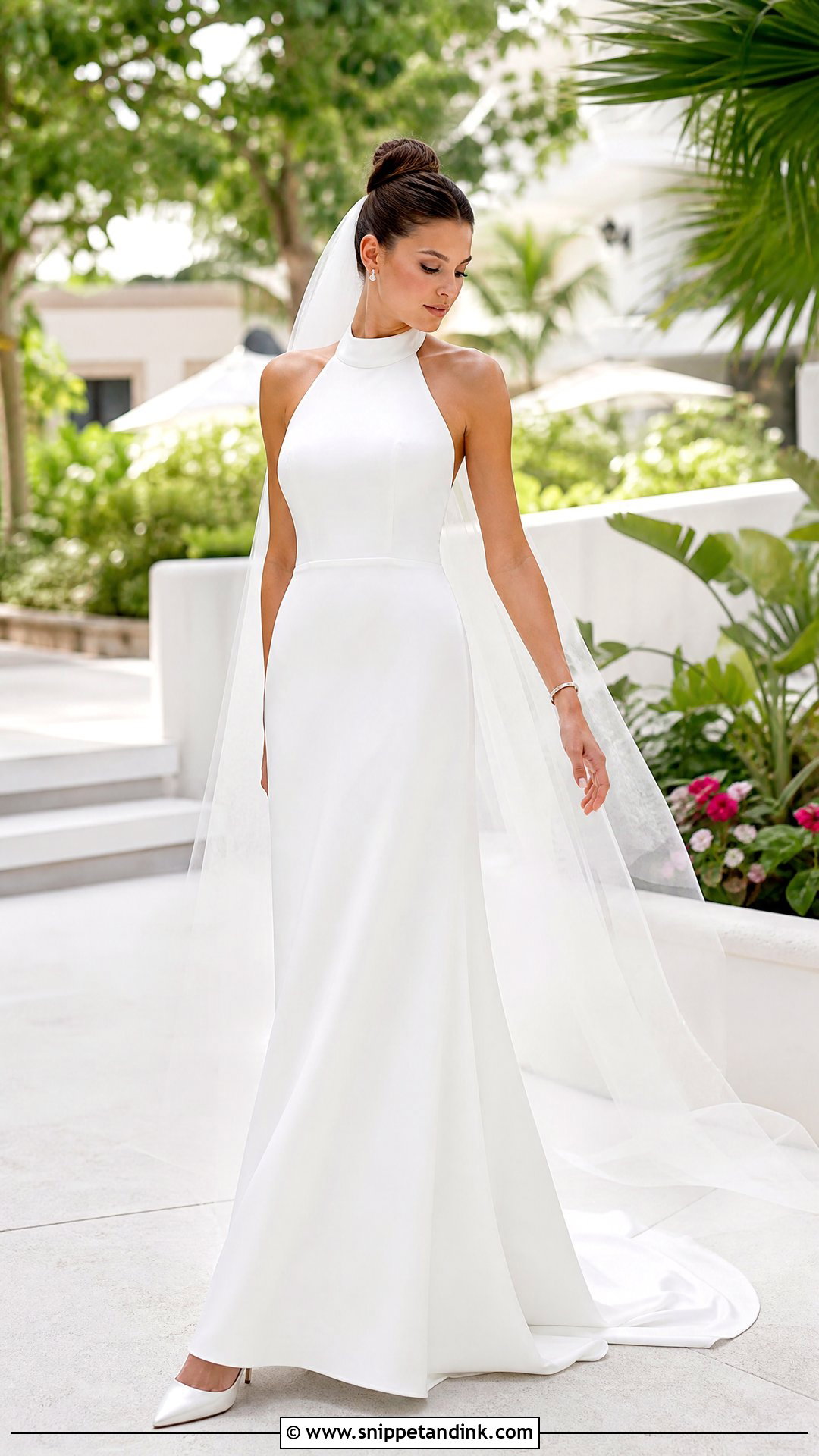
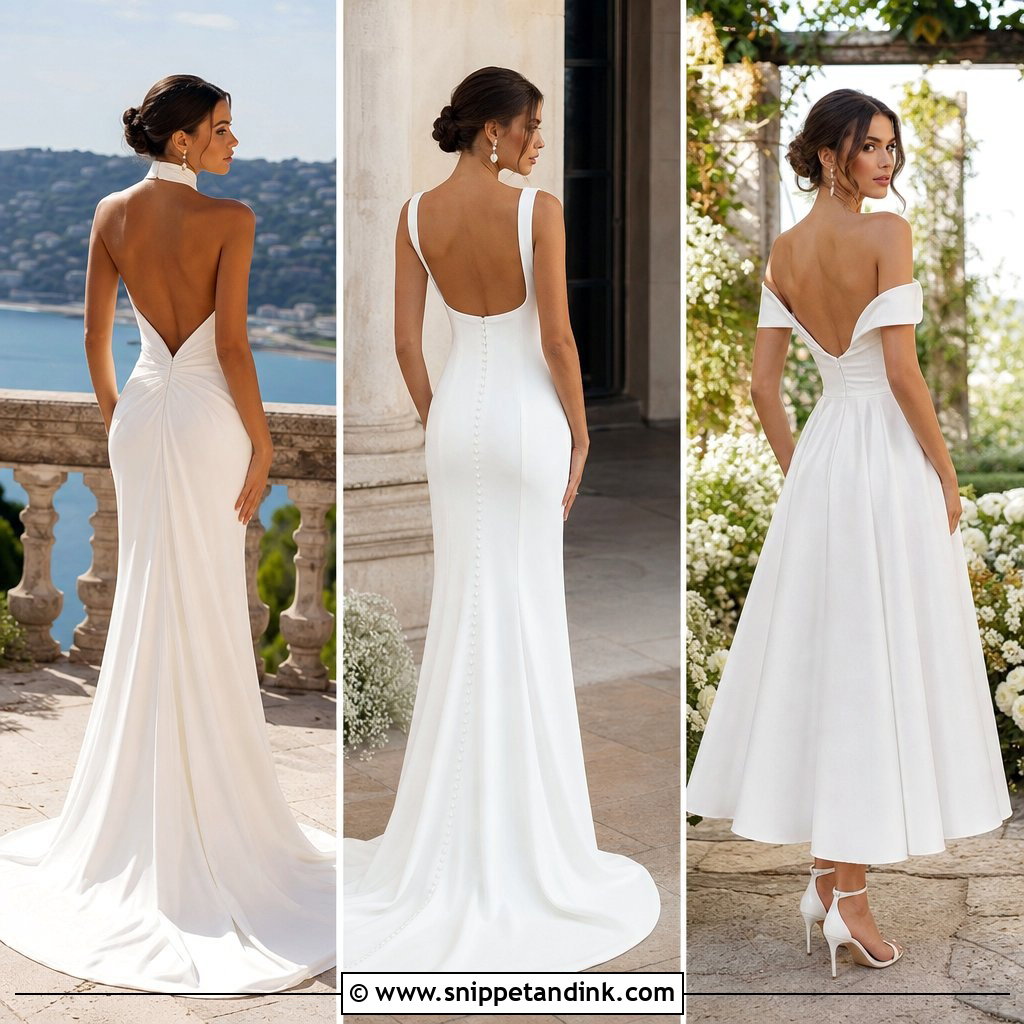
Halters show the shoulders and upper back, which means the hair has to go up. I’d skip this neckline if you plan to wear your hair down, because loose lengths hide the very thing the dress is built around. A smooth column or gentle A-line with a high front and open back works in either silk crepe or satin. Watch the neck strap at fittings: if it presses on the back of your neck after twenty minutes, it will ache by the speeches. Small earrings, a slim cuff and understated pointed heels are enough, with a plain veil anchored beneath a high bun so it falls clear of the open back at a summer resort or rooftop.
10. Scoop Neck A Line Wedding Dress
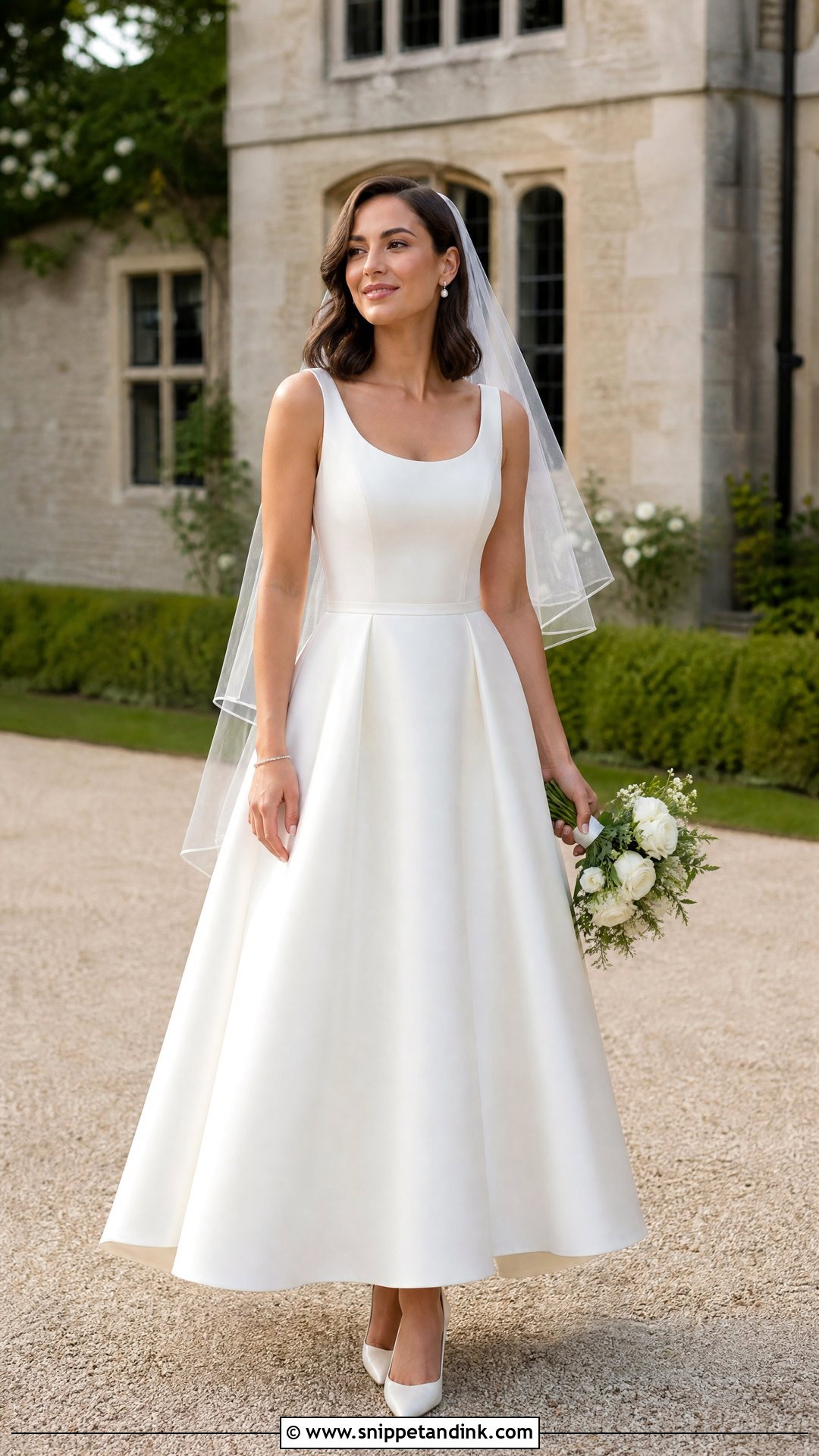
Could a gown feel relaxed and formal at once? A scoop neck A-line manages it, which is why I suggest it to brides who are torn between the two moods. Clean satin, mikado or crepe all work; mikado holds the skirt out without a petticoat. The fitted bodice and easy skirt leave room to walk, sit and dance. Pumps, pearl earrings and a narrow bracelet are enough, and the soft neckline sits well with a classic bun, waves or a shoulder-length blowout. Fingertip veil for something light, chapel for more ceremony. Garden venues, clubs and old houses all suit it.
11. Boat Neck Wedding Dress
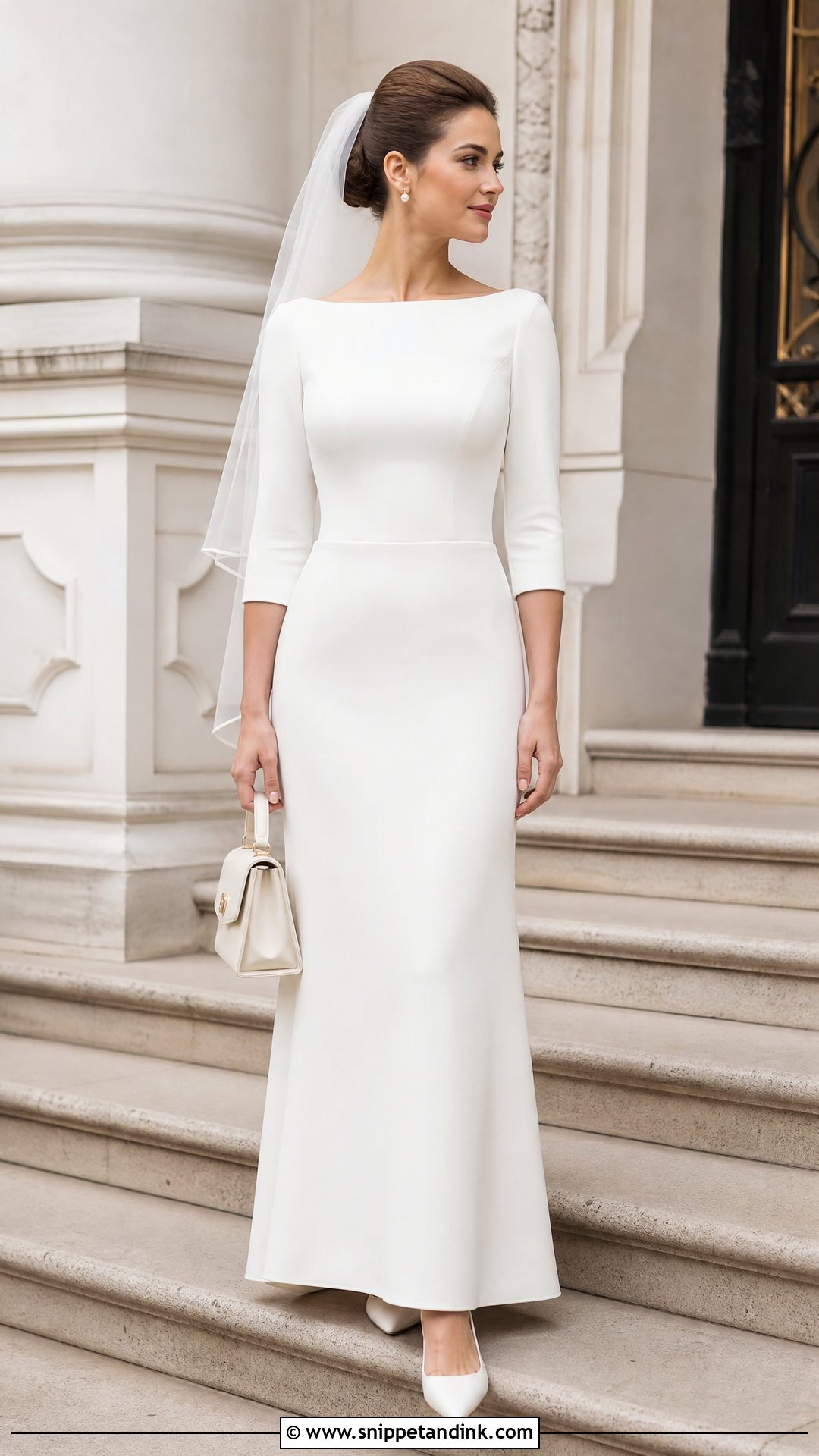
A boat neck runs almost straight from shoulder to shoulder, so it flatters narrow shoulders and can make broad ones look wider. I check that in a mirror from across the room before anything else. It pairs well with a fitted crepe sheath, a narrow A-line or a softly structured satin column; three-quarter sleeves feel classic, sleeveless feels lighter. Keep the neckline clear with a low chignon or French twist, pearl studs and closed-toe slingbacks. Attach any veil beneath the hairstyle, not over it. A small structured bag for afterward suits a courthouse ceremony or a formal lunch.
12. Backless Satin Wedding Dress
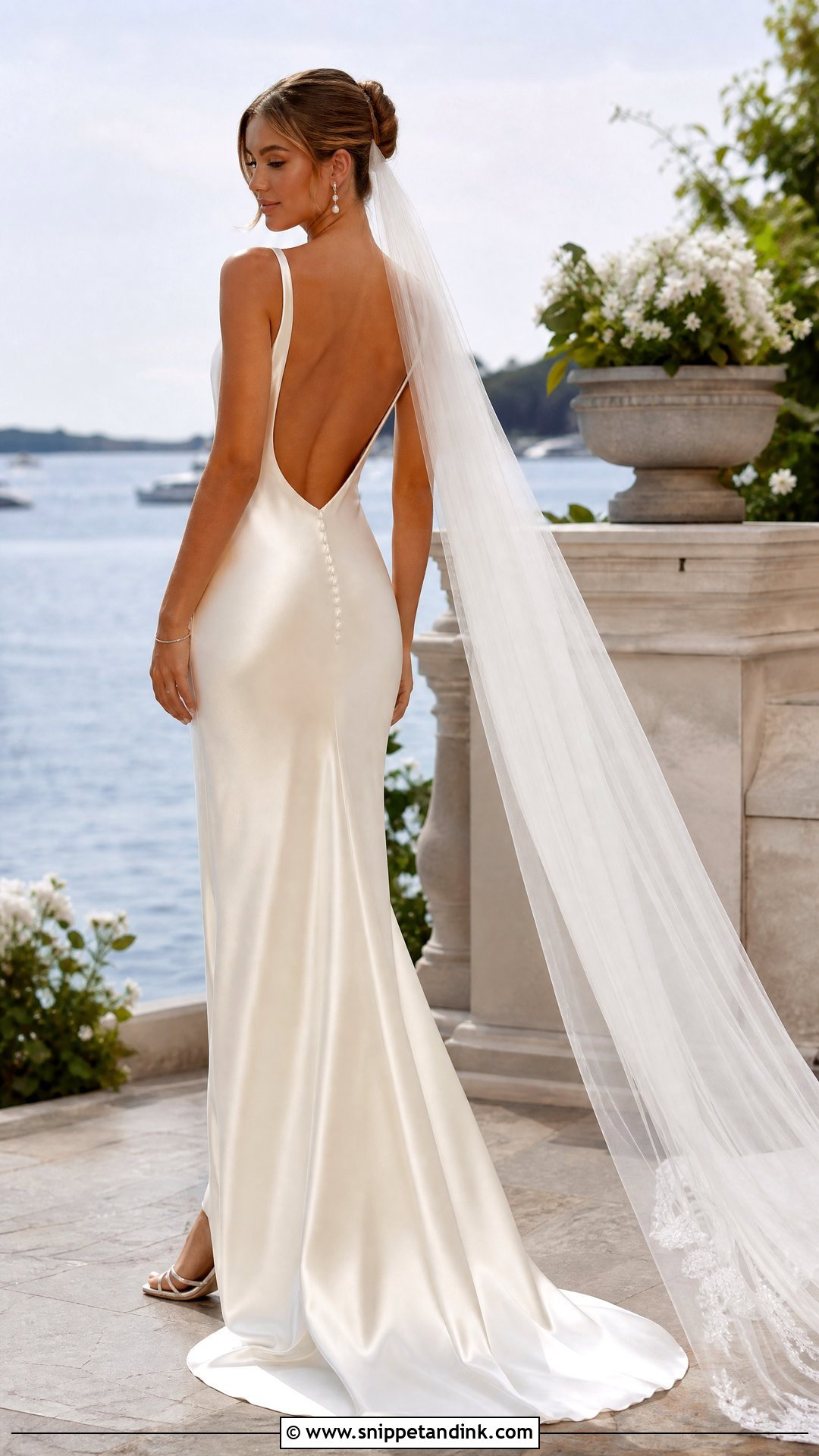
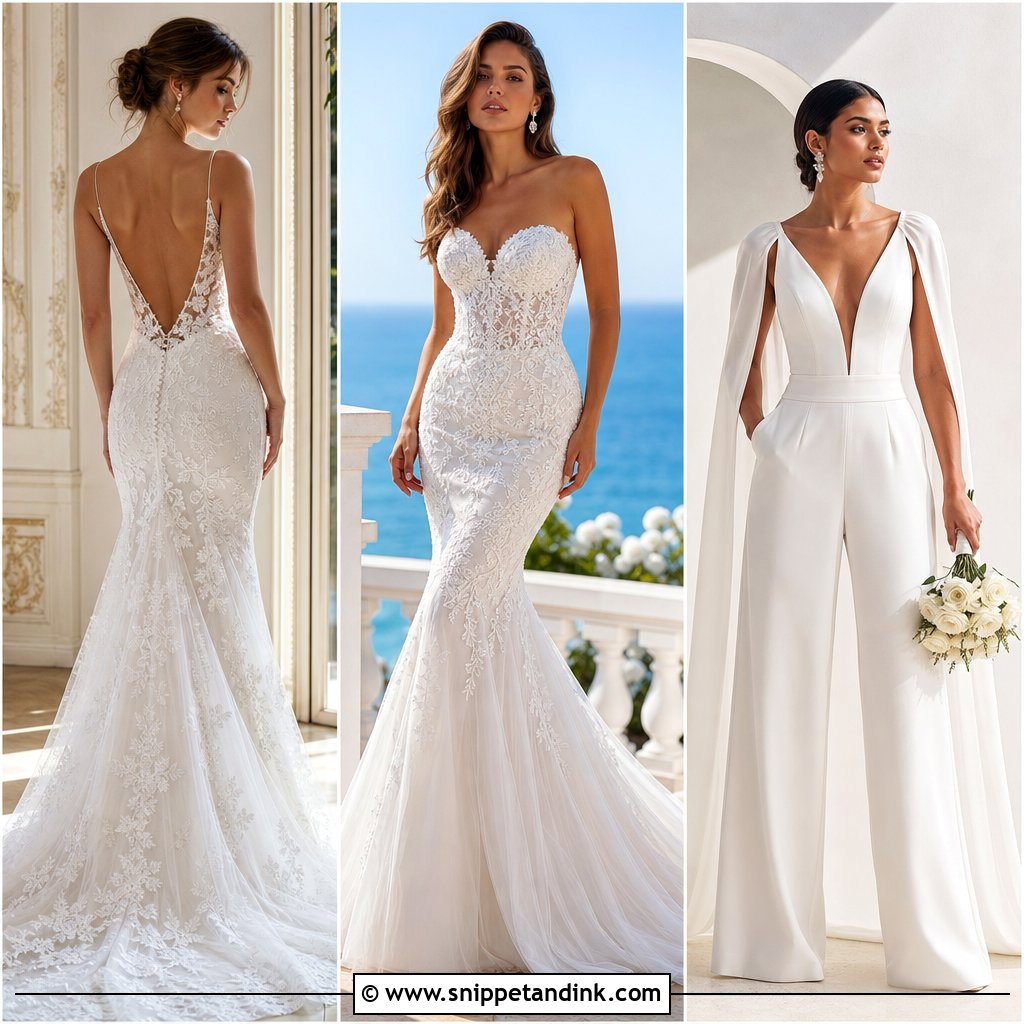
Turn around, and a plain front gives way to the real feature. On a backless satin wedding dress the low scoop, V or drape is where I spend most of the fitting time, because support has to come from somewhere other than a bra. Bring your chosen adhesive or built-in cup solution to the second fitting, not the week of the wedding. Secure straps matter more than they look. Slim satin sandals, delicate earrings and a bun or side ponytail keep the back on view. A long sheer veil is dramatic for the ceremony and lifts off for dinner by the water.
13. Corset Bodice Wedding Dress
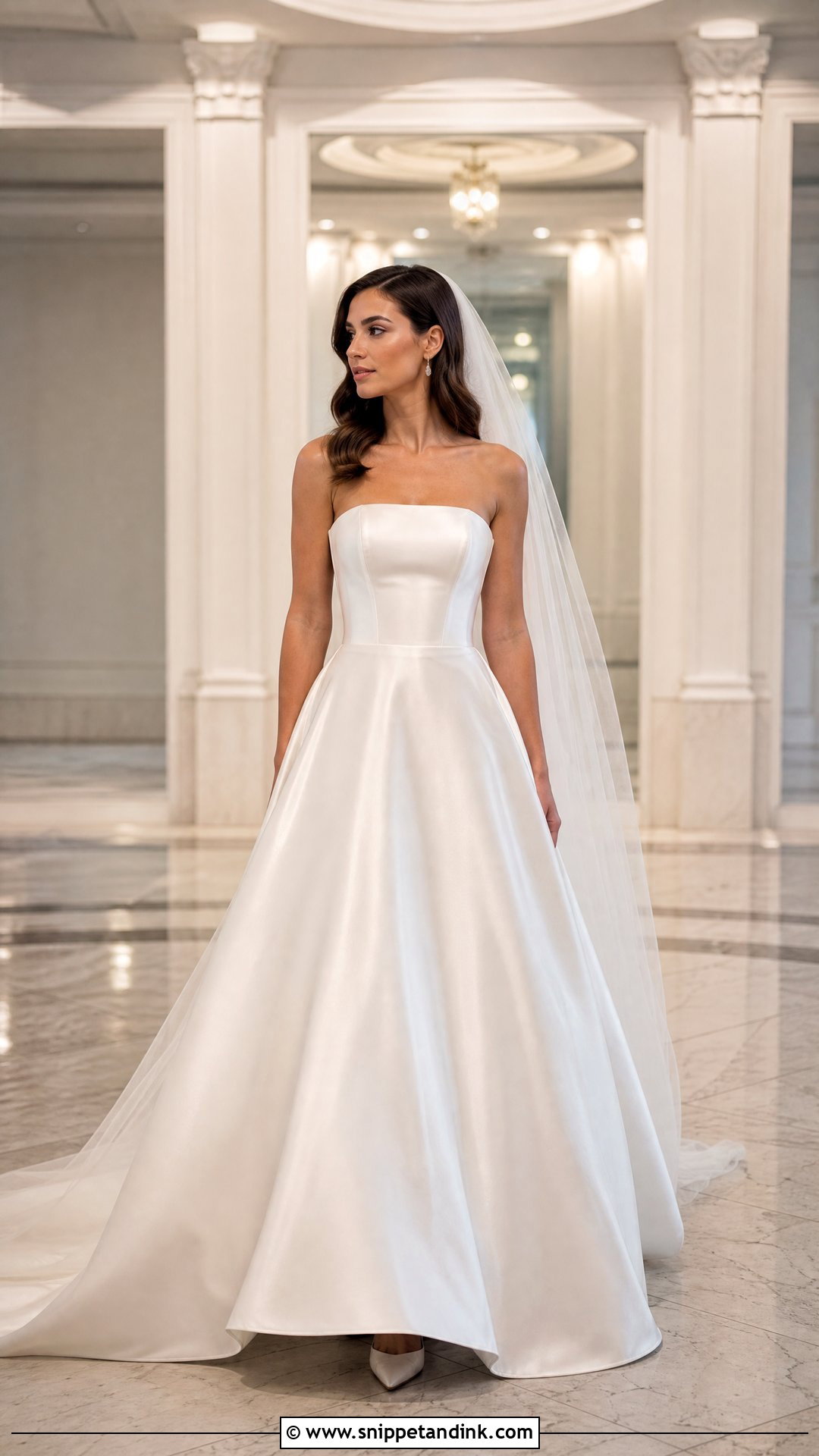
A corset bodice stays minimal only when the boning is sewn flat and doesn’t print through the satin. Run your hand down the side seams at the first fitting; ridges you can feel will show in photos taken from the side. Pair a strapless or square-neck bodice with an unembellished column or gentle A-line skirt. The waist already gives definition, so jewelry stays small: drop earrings, pointed ivory heels and a plain chapel veil. Waves soften it, a bun sharpens it. Lace it so you can eat dinner, and sit through a whole fitting to be sure you can breathe.
14. Basque Waist Satin Wedding Dress
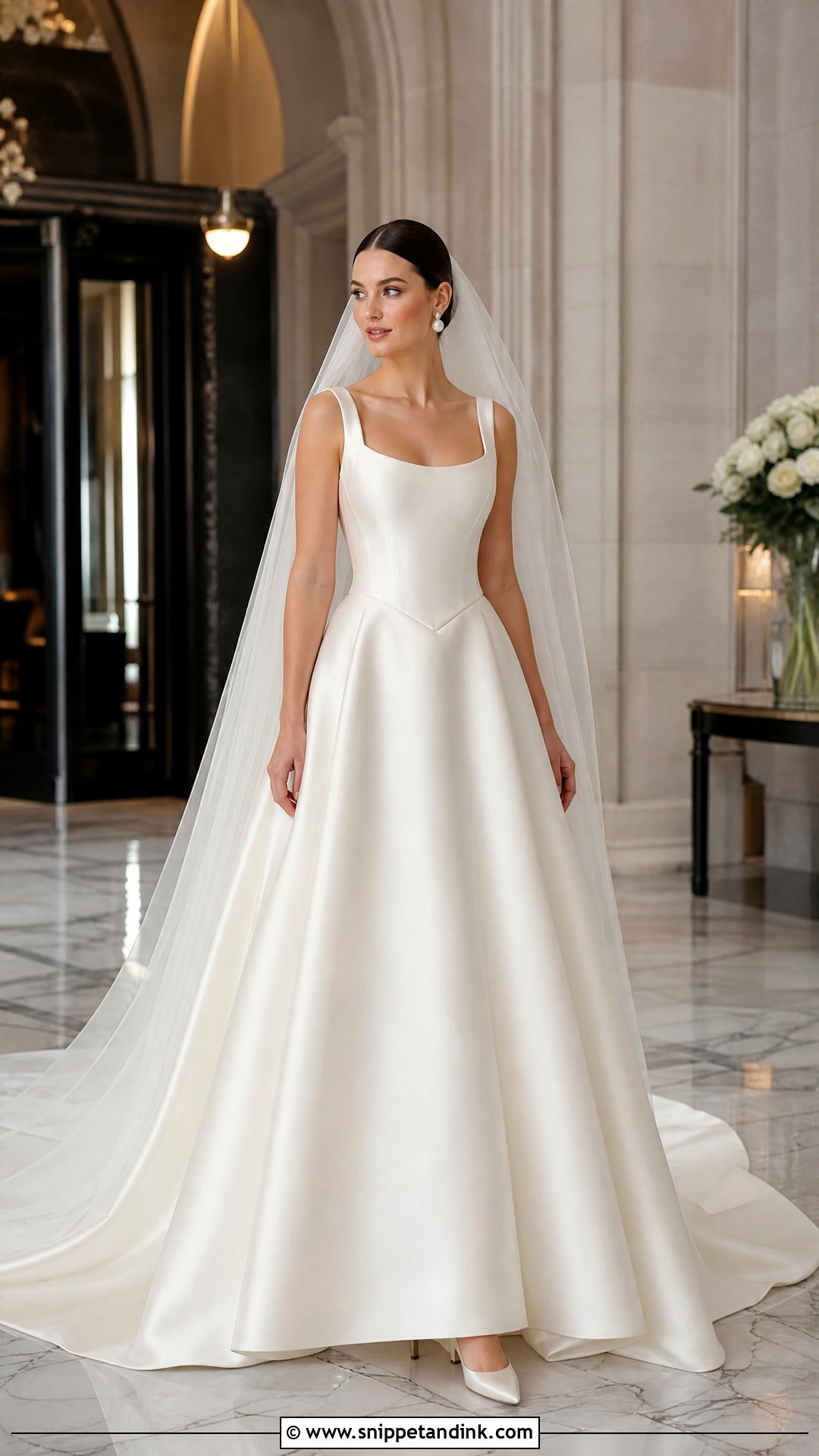
The pointed waist on a basque waist satin wedding dress lengthens the torso, but only if the point lands at the right spot. Too low and it buckles when you sit; too high and it cuts you in half. I mark it on the body at the first fitting rather than trusting the sample size. A strapless or wide-strap bodice over a smooth, softly full skirt keeps it plain, and satin or mikado holds the shape without beading. Pointed pumps, pearl earrings, a center-parted bun and a plain cathedral veil suit a grand hall.
15. Drop Waist Wedding Dress
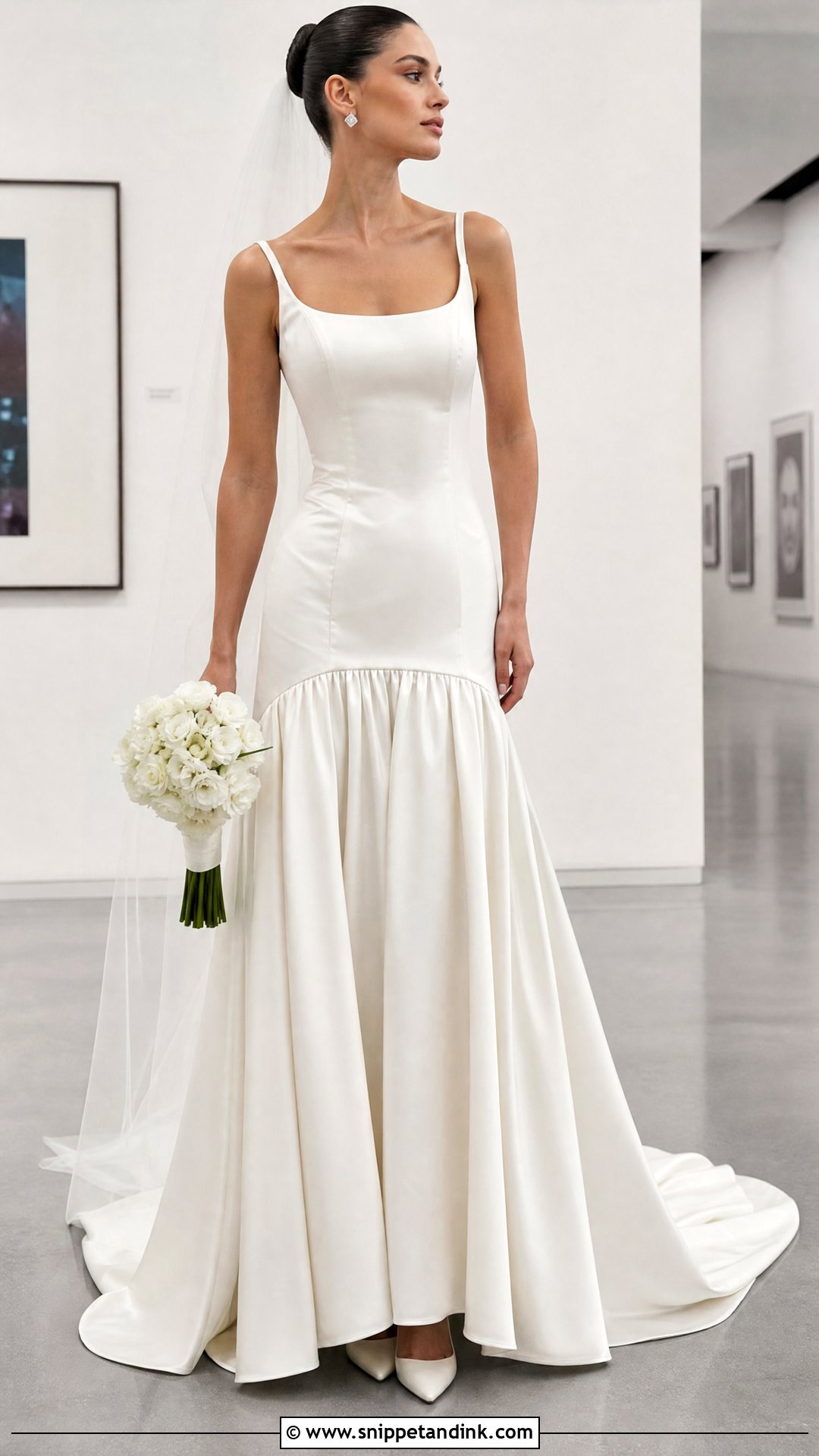
Drop waists are one of the most proportion-sensitive shapes in bridal. The bodice runs past the natural waist toward the hips before the skirt opens, which looks long and modern on a longer torso and can shorten the legs on a petite frame. Try it in heels the same height as your wedding shoes. Satin reads polished, crepe more fluid. Low-profile pointed heels, geometric studs and a sleek bun keep the line clean, and a long plain veil echoes it. Hold a compact bouquet so you don’t hide the seam that defines the dress.
16. Cape Sleeve Wedding Dress
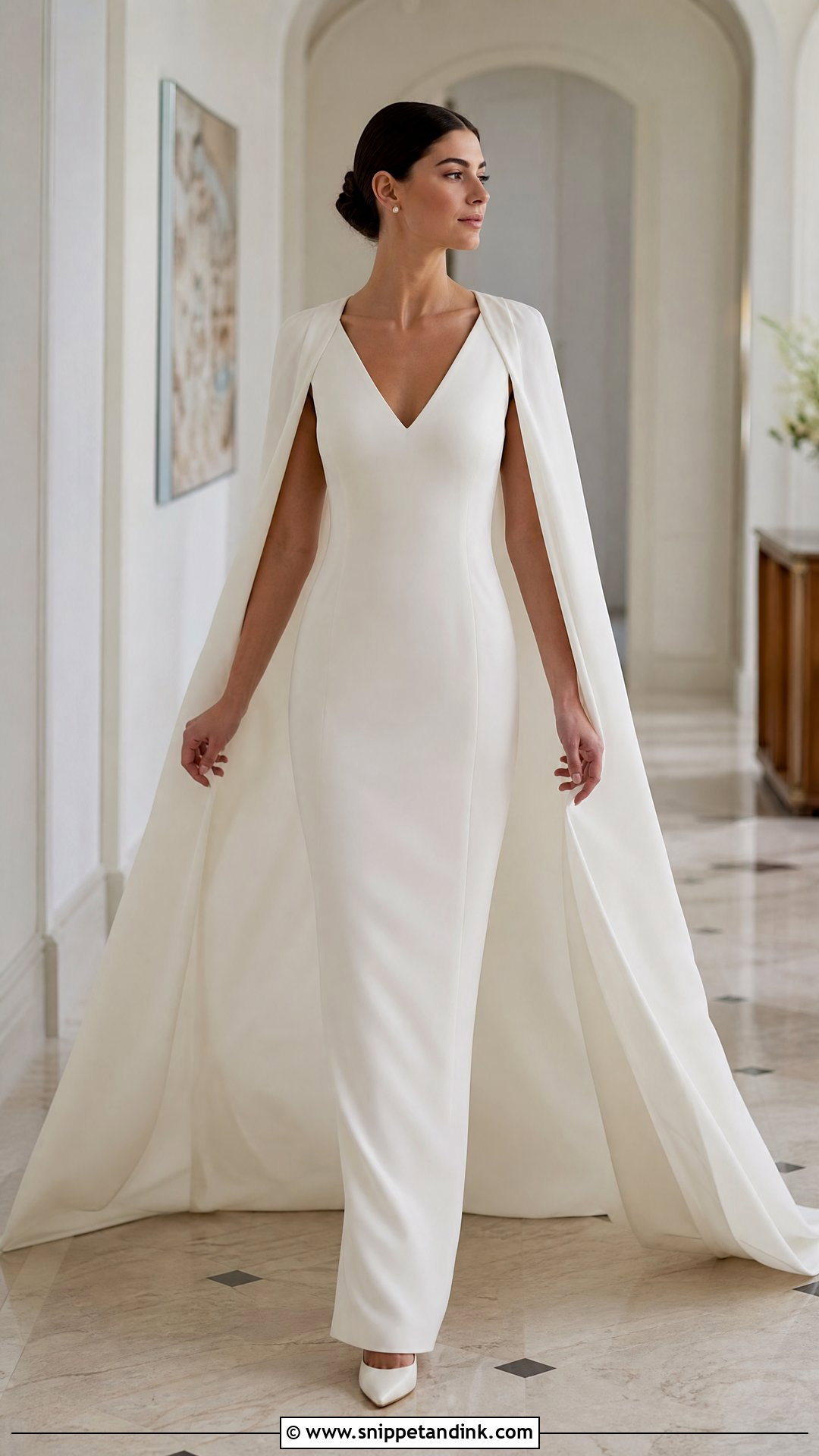
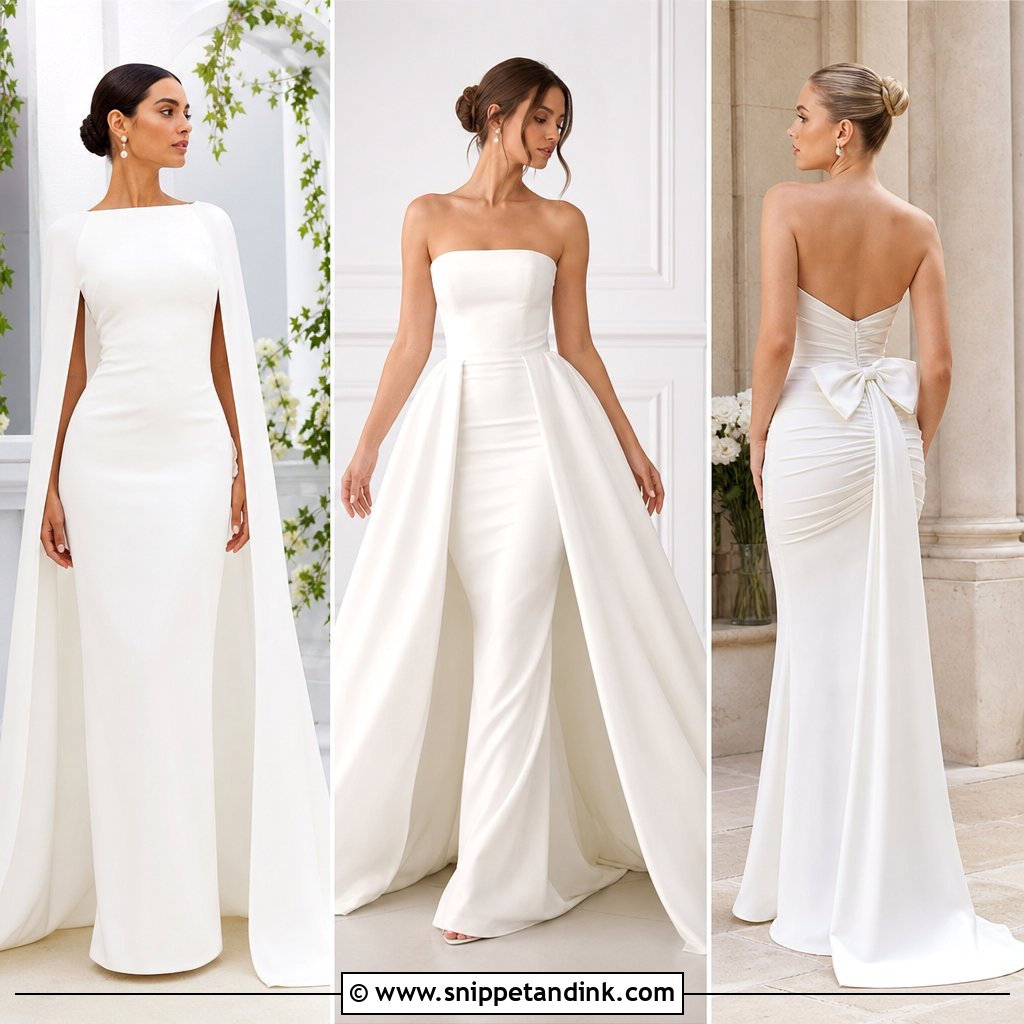
Cape sleeves give a narrow crepe column or sheath real ceremony presence. The panels fall from the shoulder and move behind the arms as you walk, which gives coverage and drama with no embellished veil. The fabric weight is critical: heavy crepe capes pull the neckline backward, so I look for a lighter georgette or chiffon cape on a substantial dress. Pearl studs, pointed pumps and a smooth low bun are enough. Skip chunky bracelets, which snag the cape edge. If it detaches, take it off after portraits and you have a second, cleaner look for an autumn reception.
17. Minimalist Mermaid Wedding Dress
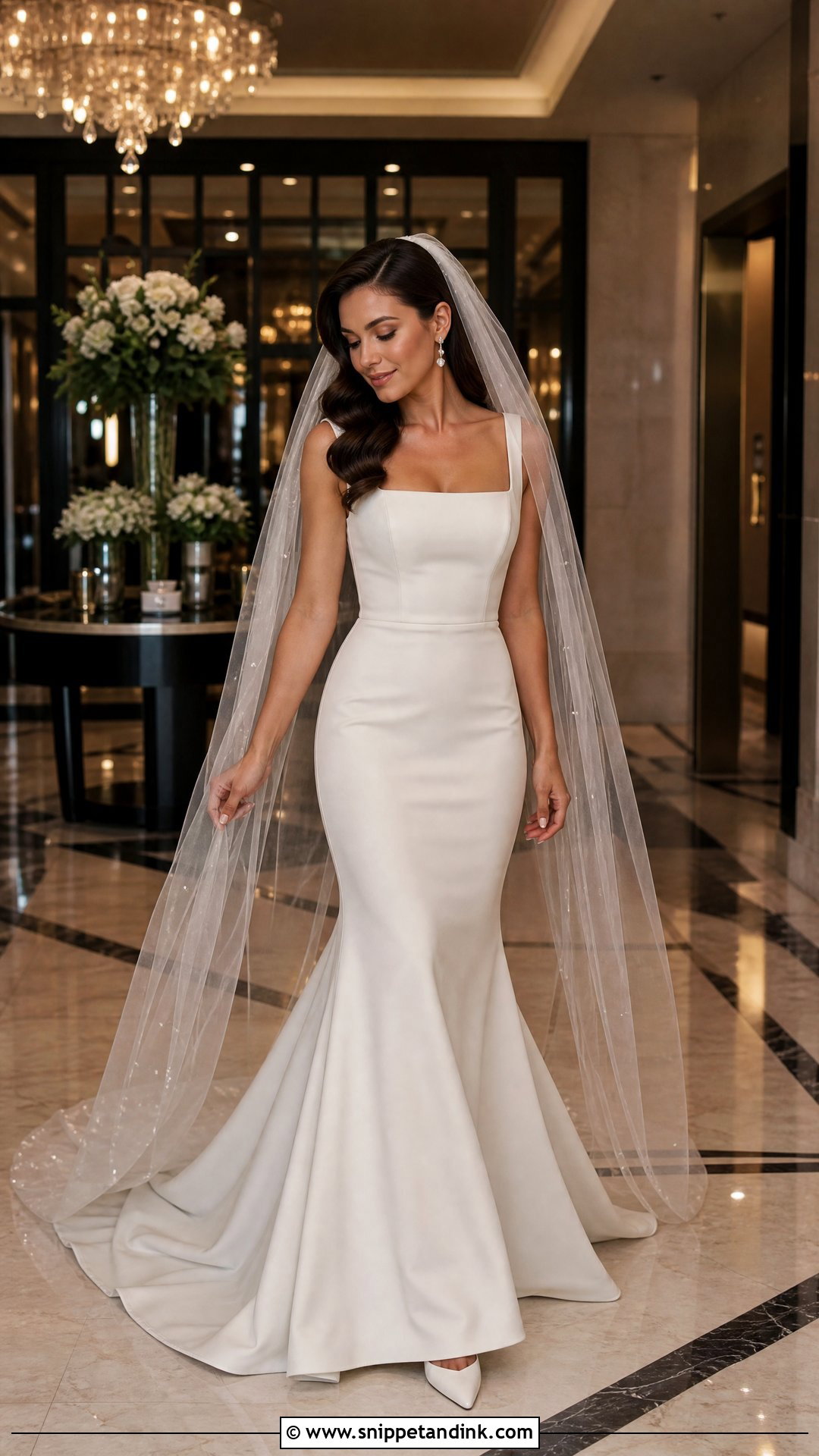
A minimalist mermaid relies entirely on tailoring, and the flare point is the decision that matters most. Placed at or just below the knee it lets you walk; placed mid-calf it looks dramatic but shortens your stride to small steps. Practice walking, turning and sitting at every alteration appointment. Smooth crepe, a fitted bodice and a square, strapless or soft V neckline keep it clean. Pointed pumps, slim drops and a low bun or side-parted waves suit it, and a sheer chapel veil shows the shape through. An oversized bouquet swallows the line, so keep flowers modest in an evening ballroom.
18. Simple Satin Ball Gown Wedding Dress
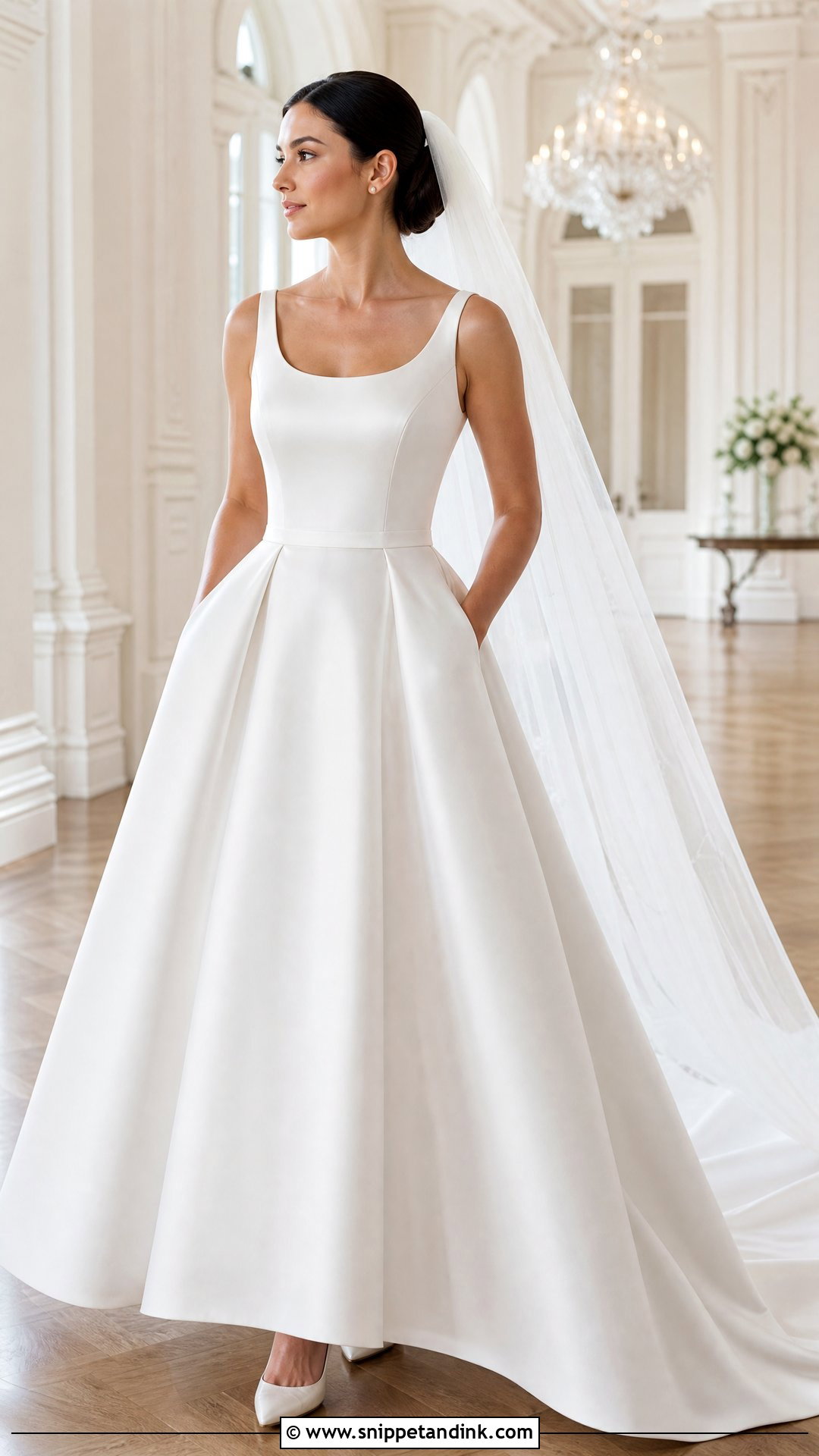
A full skirt doesn’t need ornament. A simple satin ball gown gets its impact from volume, a defined waist and fabric with a good hand. Choose a strapless, square or scoop bodice with no lace or crystals, and ask for pockets; they’re hidden in the seams and brides use them all day. A plain long veil matches the scale of the skirt. Classic pumps, pearl studs, a polished bun and a structured, medium bouquet complete it. Plan the bustle with your seamstress early, because a heavy satin train needs several strong anchor points or it drops halfway through the first dance.
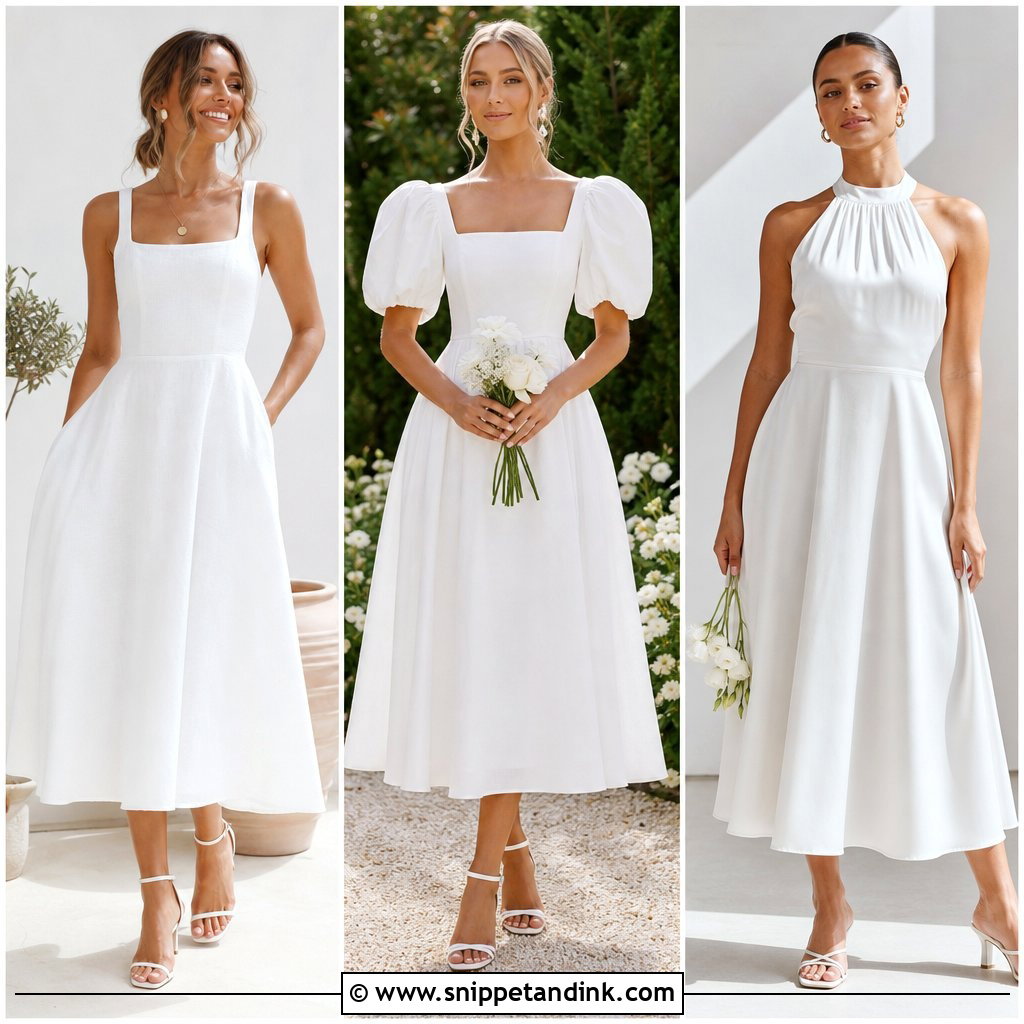
19. Sleek Midi Wedding Dress
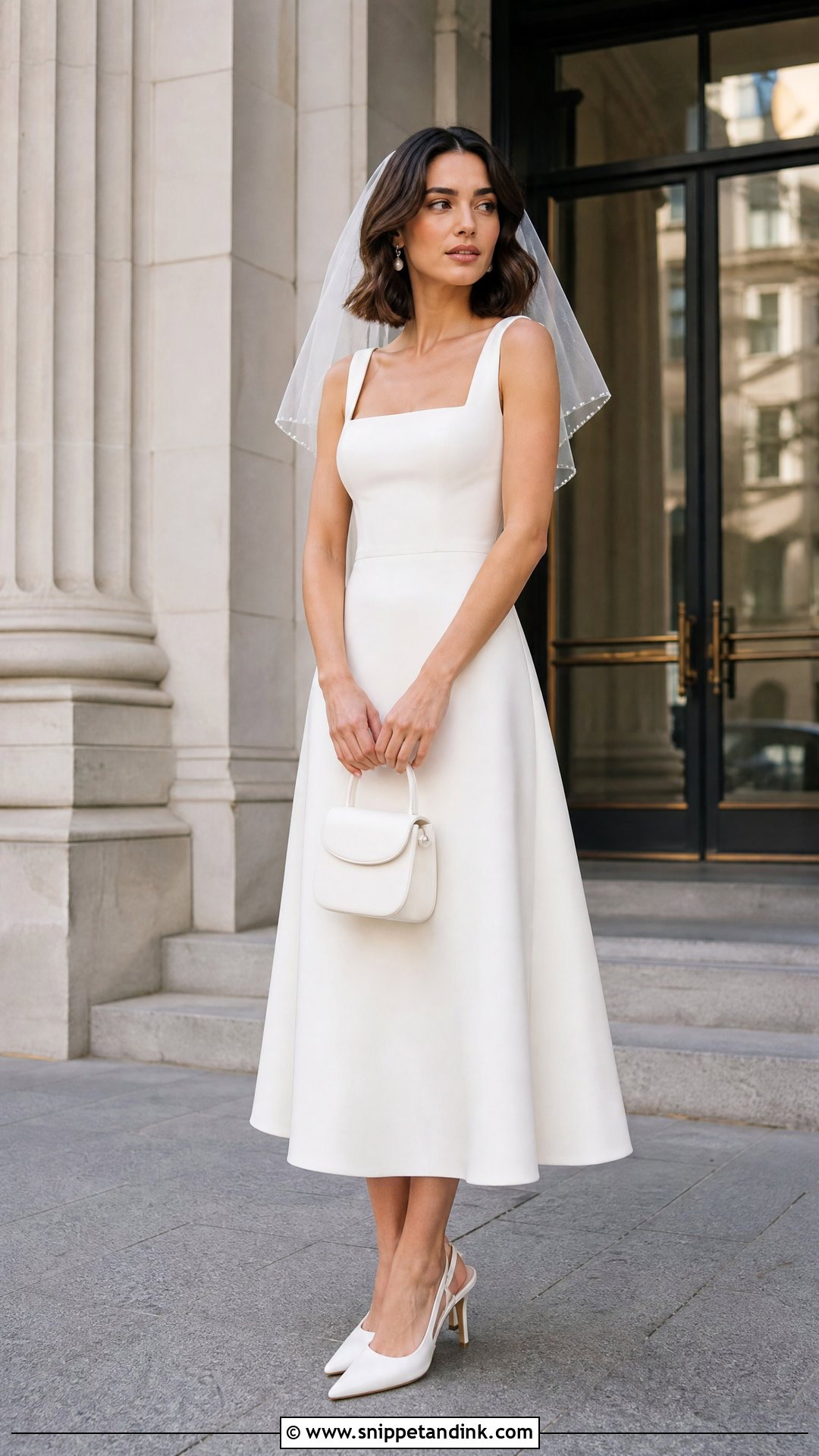
For a courthouse ceremony or a restaurant lunch, a midi is honest about the setting without looking casual. Pick a fitted crepe sheath, structured A-line or draped satin that ends between the knee and ankle. Hem length is the whole design here, so take your exact shoes to every fitting; a two-inch difference in heel height shifts where the hem hits the calf. A square, bateau or off-shoulder neckline makes the shorter length feel bridal. Slingbacks, pearl earrings, a top-handle bag and a short or birdcage veil are all you need, with a smooth bun or waved bob.
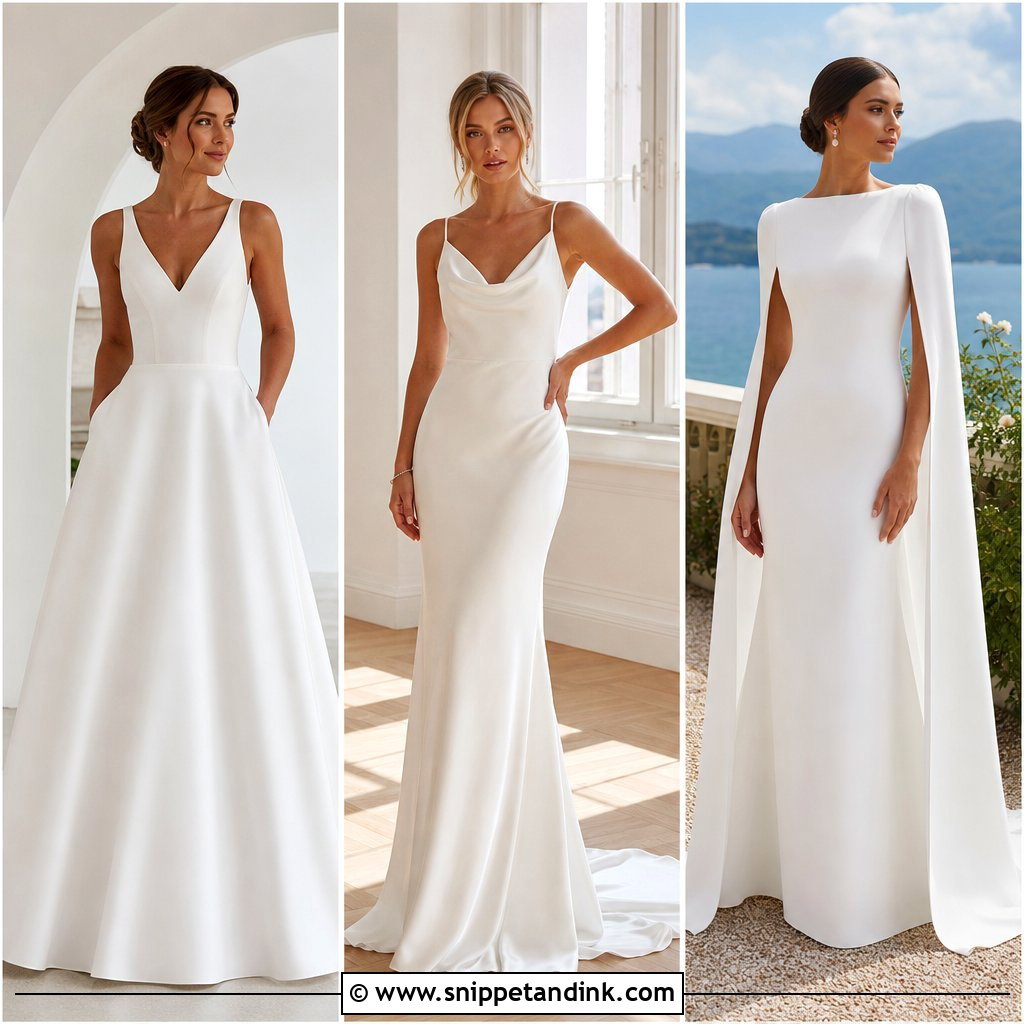
20. Sleek Mini Wedding Dress
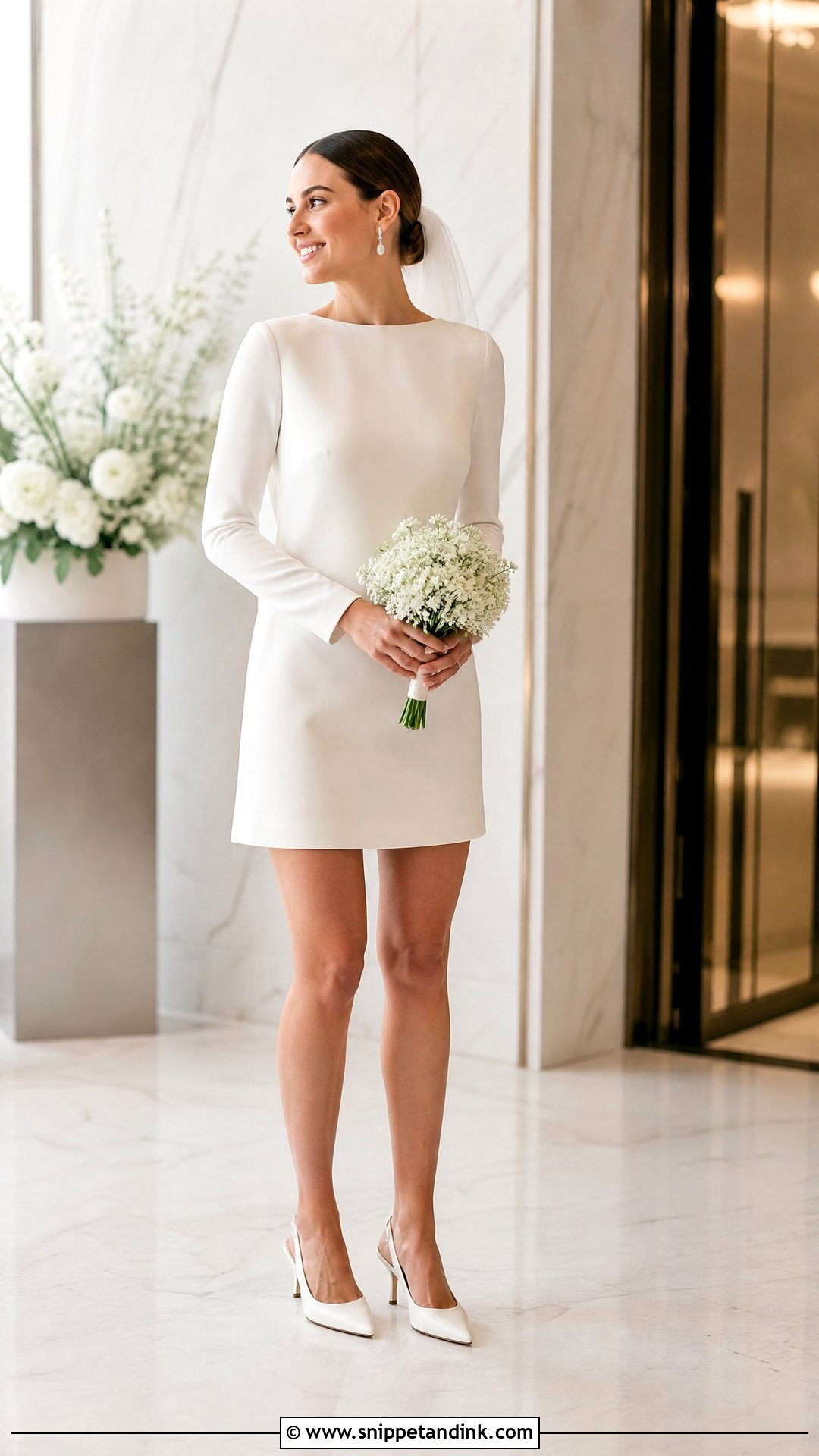
Minis work for small ceremonies, destination weddings and reception changes, but they need a fully lined skirt and a hem that stays put when you sit. I always test the sit in a mini before anything is altered. A tailored shift, fitted sheath or structured A-line with a clean neckline keeps it grown up; long sleeves balance the short hem, while strapless feels crisp. Pointed pumps, slingbacks or ankle-strap heels, pearl drops and a short plain veil mark it as bridal. Sheer white tights help in cooler months. A smooth ponytail or curled bob suits it, and without obvious bridal detail you’ll wear it again.
The Timeline a Clean Gown Needs, From Order to Steamer
Simple dresses look quick to make, but they take the same production time as any bridal order and usually more fitting attention. Made-to-order gowns commonly take several months to arrive, so I’d start shopping around nine to twelve months out if you can, though lead times vary by designer and season.
Fittings
Plan for two or three alteration appointments starting roughly two to three months before the wedding. Bring your actual shoes and the exact undergarments to the first one. On a sleek dress, changing your bra or shapewear after the hem and bodice are fitted can undo the work, because the line of the dress moves with it.
Undergarments
Smooth, skin-tone pieces with no visible edges beat white ones under ivory; white shows through more than you’d expect. If the back is low or open, ask your seamstress about sewing cups into the bodice. It’s usually more secure than adhesive in warm weather.
The morning of
- Hang the gown out of its bag the night before so travel creases relax.
- Have a handheld steamer at the getting-ready location, and steam from inside the skirt on silk so water spots don’t mark the face.
- In the car, sit on a sheet or lift the back of the skirt so you’re not sitting on it. Satin creases where you sit and it shows when you stand at the altar.
- Put the dress on last, after hair and makeup, and step into it rather than pulling it over your head.
Let the Cut Do the Talking, Then Test It Sitting Down
With a plain gown, fabric and fit carry what embellishment usually does. Satin gives shine, crepe gives structure, silk gives movement, and each one shows a poor alteration in a different way. Whatever shape you land on, start alterations early and test the full outfit before the day: walk, sit, raise your arms and look at the dress both by a window and under indoor light. Clean bridal lines have stayed in favor for good reason, and a simple dress dates far more slowly than a heavily decorated one. Let shoes, jewelry, hair and veil support the gown, and pick the shape you can move in for twelve hours.
You'll Like These Ideas:






Leave a Reply