
A plain dress is not an easy dress. Take away the lace and beading and what remains is fabric, cut and fit, and all three are on show from the first step down the aisle. That is the part of styling I find most satisfying, because small decisions suddenly carry weight. The gowns below are built on satin, silk, mikado and crepe, in slip, A-line, sheath and sculptural shapes, and each one is styled with shoes, jewellery, veil and flowers. I’ve added the fit and fabric checks I make along the way, since those are what separate a simple gown that looks expensive from one that just looks unfinished. City hall, destination beach or black-tie ballroom, there is a shape here for it.
Reading Fabric in a Gown With No Decoration
On a plain gown, the fabric is the design. Before I look at a neckline I look at what the dress is made of, because two gowns with identical sketches can look worlds apart in different cloth. These are the main fabrics in the looks below and how they behave once you are actually wearing them.
Crepe
Matte, slightly grainy and very forgiving. Good crepe has weight and springs back after creasing, and it hides sweat and seat creases better than anything shiny. Thin crepe, though, shows every line of underwear and every seam allowance, so hold it up to the light.
Satin
Satin reflects light, which flatters in photos but also shows ripples, puckered seams and creases from sitting. Heavier duchess satin hides the body more than a thin charmeuse. I do a quick crush test in the shop: squeeze a corner of the hem in your hand for ten seconds, then let go and see how much of the crease stays.
Mikado
A stiff, slightly textured silk or silk blend that holds sculpted shapes such as a full skirt or a structured bow. It doesn’t drape, so it suits A-lines and ball gowns rather than slips. It is also warm, worth remembering for a July garden.
Silk and chiffon
Soft and fluid, made for bias cuts, cowls and empire waists. Silk shows water marks and makeup, and chiffon snags on bracelets and bouquet wire, so these need the most care on the day.
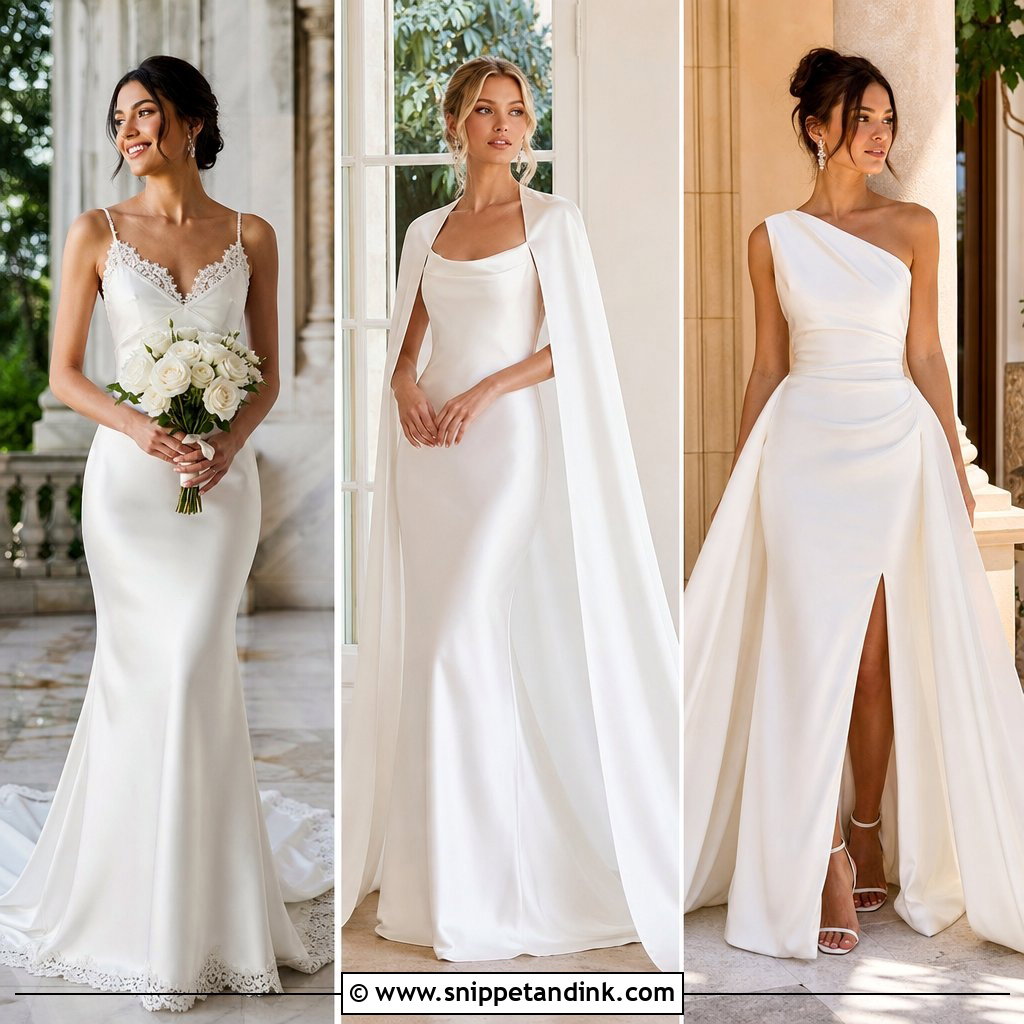
1. Simple Satin Slip Wedding Dress
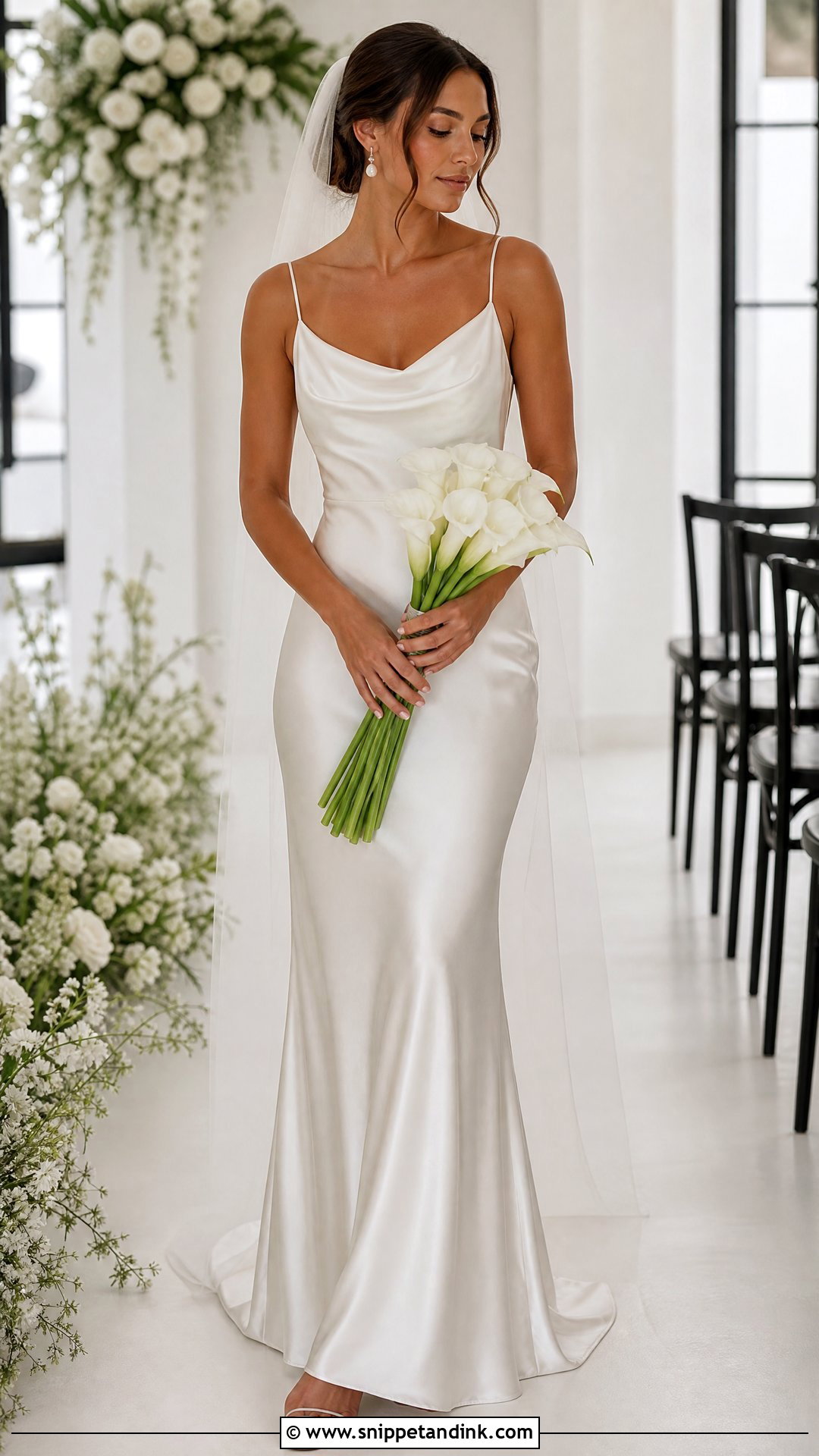
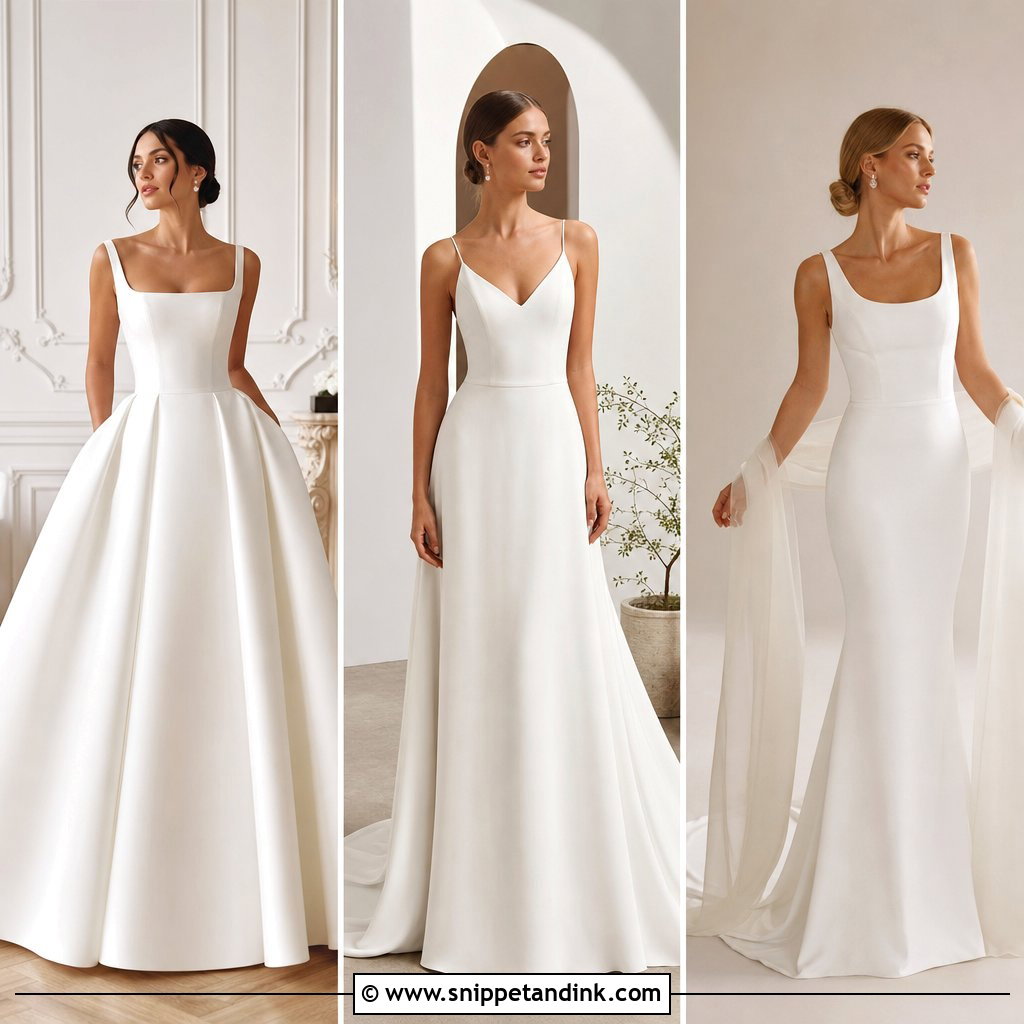
The slip dress is the gown I see bought most often and altered least well. It’s cut on the bias, so it drapes along the body, but the bias also stretches and shows every ridge underneath. Choose a heavier satin, the kind that drops off your hand rather than floating, and a soft cowl with narrow straps. Pointed ivory pumps or fine strappy sandals, pearl drops, a sleek low bun and a few white calla lilies. A plain fingertip veil adds tradition without hiding the line. Hemming a bias gown takes skill, because the hem drops unevenly after hanging; a good seamstress lets it hang for a day before marking it.
2. Minimalist A-Line Wedding Dress
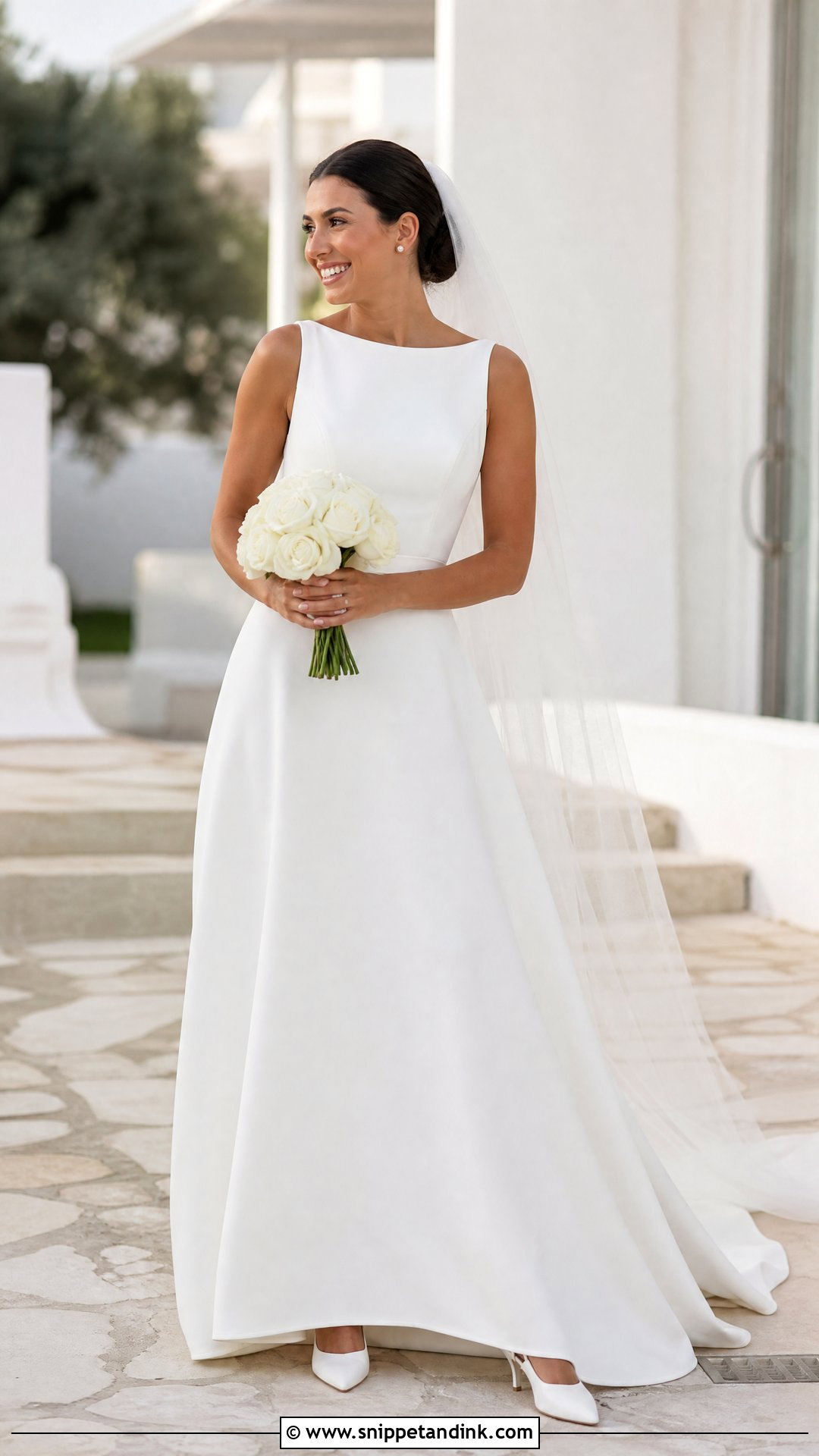
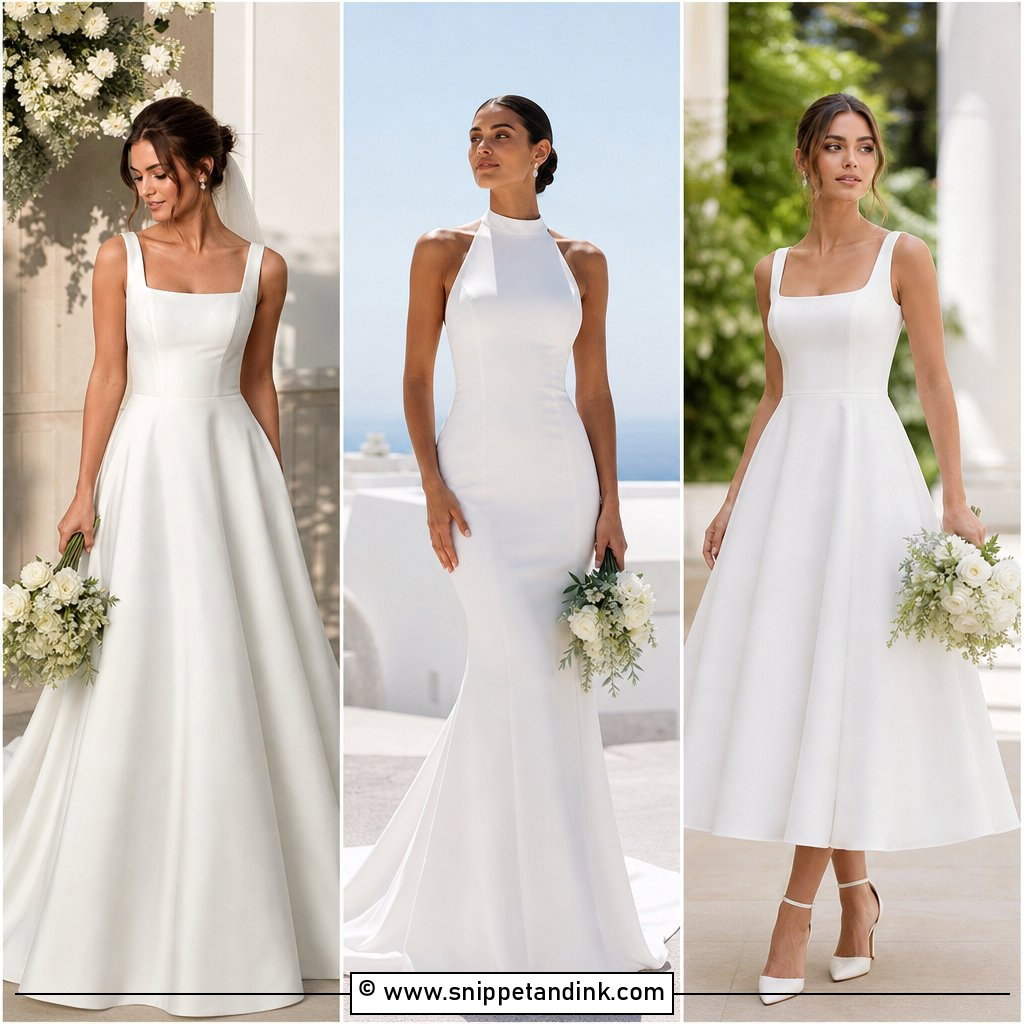
An A-line is the safe bet that doesn’t look safe when the fabric is right. A fitted bodice, natural waist and a skirt that widens gradually to the floor. Matte crepe softens it and mikado gives it shape. Closed-toe slingbacks, small pearl studs and a structured mini bag for later. A simple tulle veil follows the skirt line without adding fuss. I steer most brides who aren’t sure of their shape here first, because the waist does the balancing and the skirt lets you walk freely. Soft waves and a compact bouquet of white roses with greenery.
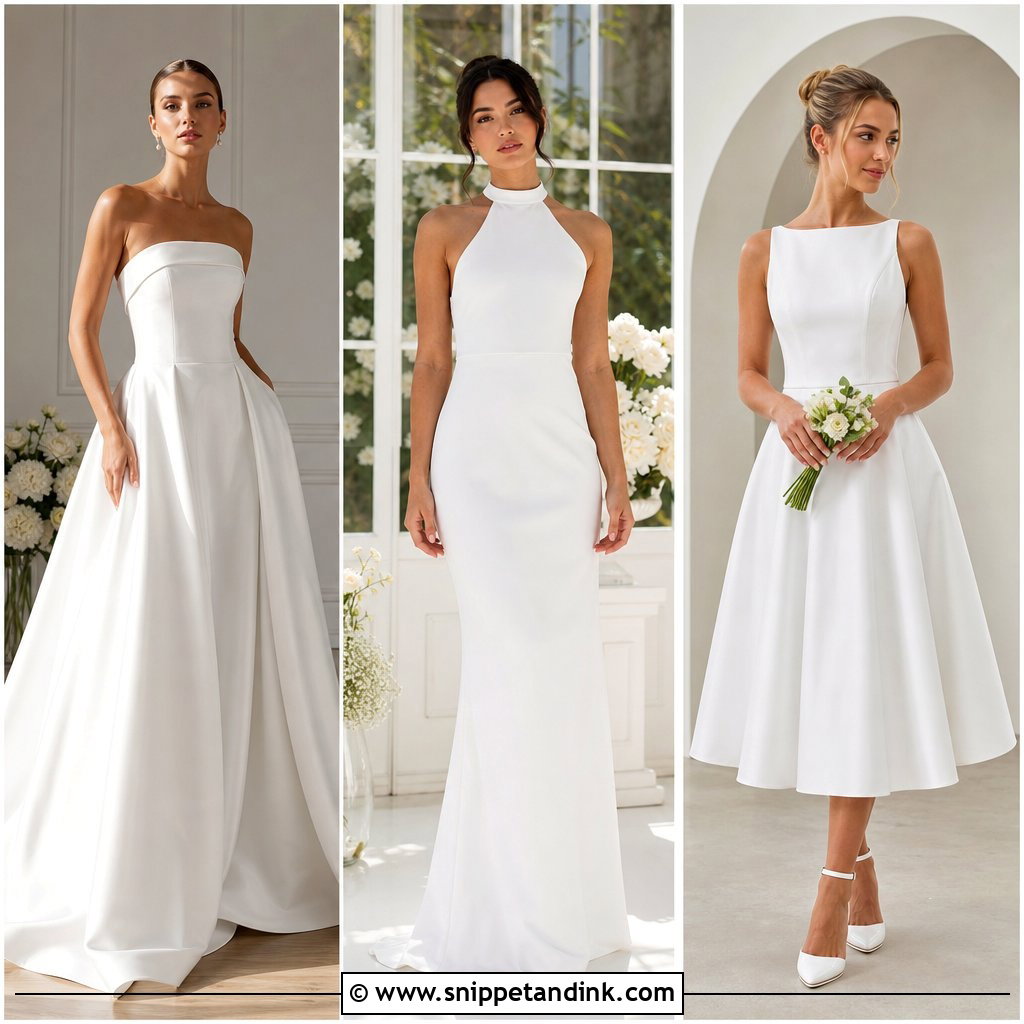
3. Strapless Column Wedding Dress
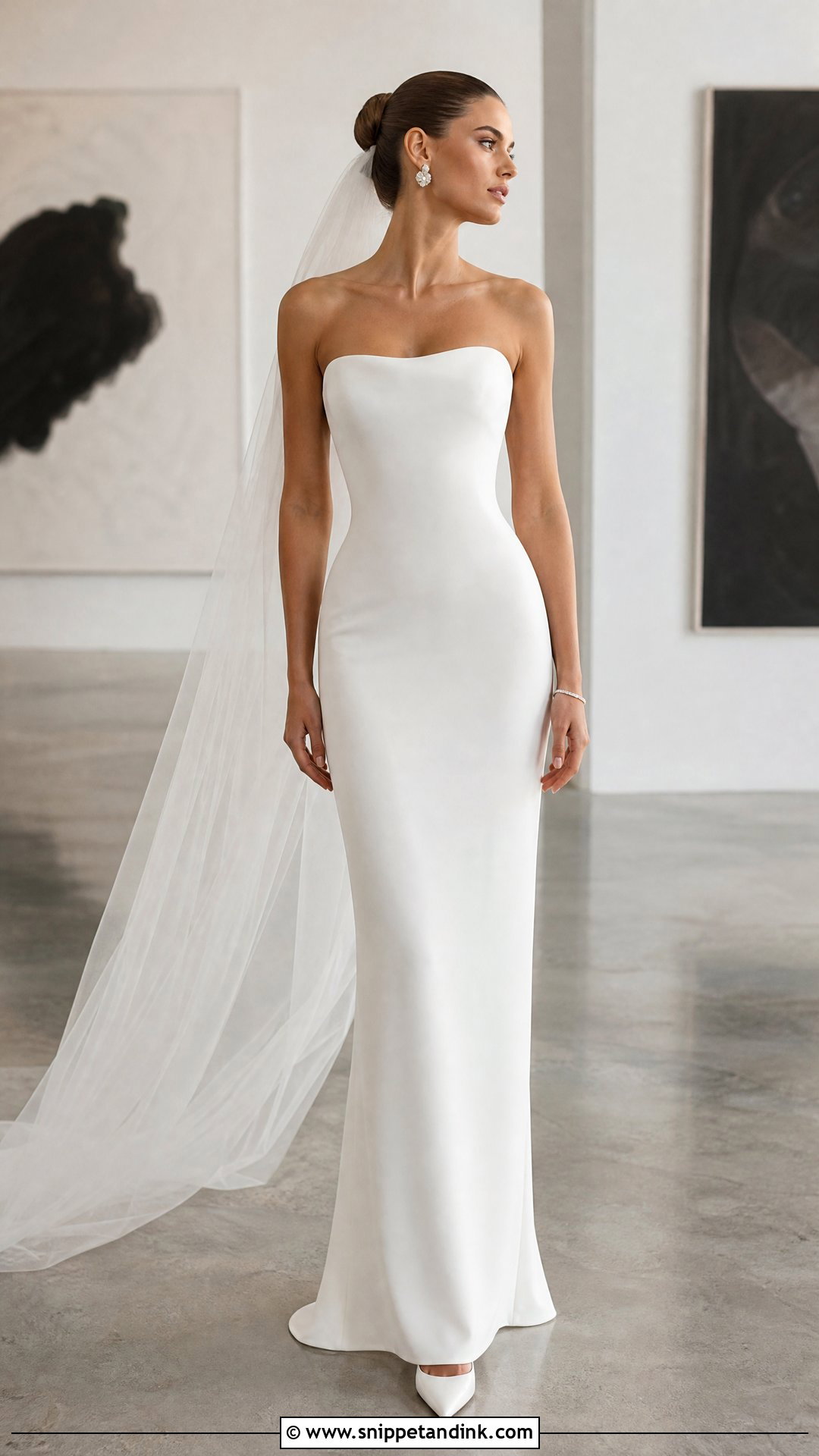
Column gowns are honest. A strapless column makes construction the whole design, so internal boning has to hold the bodice up without you hitching it between photos. Pick heavyweight crepe or satin so the skirt skims rather than clings. Pointed pumps and a slim tennis bracelet, a smooth bun, and medium earrings instead of a necklace. A long, plain veil brings ceremony drama. I spend fitting time on the side seams with this one; any ripple shows in a straight column. Galleries, hotels and rooftops suit it.
4. Square Neck Crepe Wedding Dress
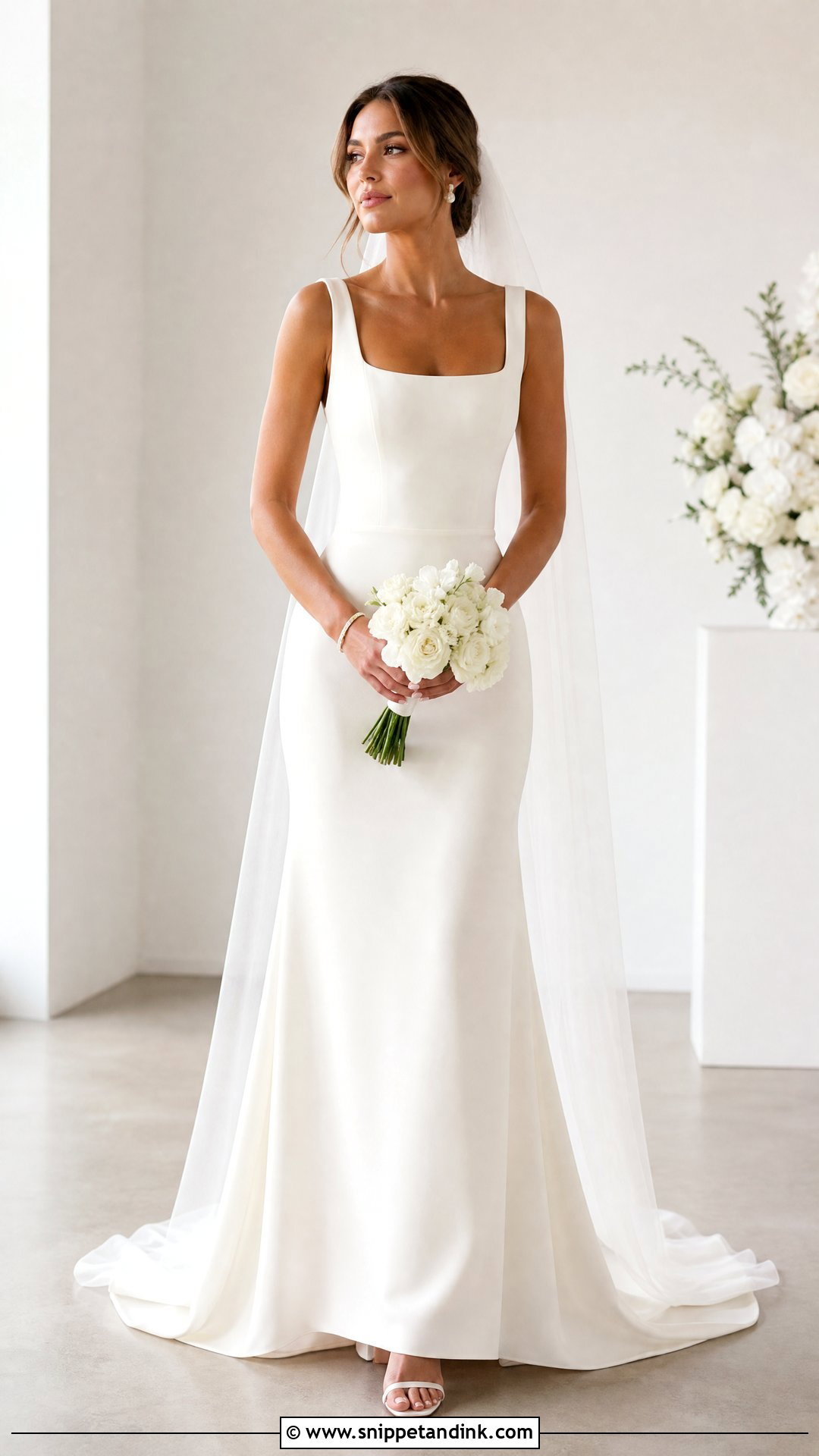
A square neckline in crepe has a crisp, modern shape. It frames the collarbones and works with wide straps, short sleeves or none. Pair it with a fitted waist and a straight or slightly flared skirt. Block-heel sandals keep you steady, and a fine chain bracelet is enough jewellery. A centre-parted low chignon and a plain chapel veil soften the geometry without competing. If you’ll wear a bra, choose wider straps and a square back so the straps hide; I try this with the bride’s actual underwear at the first fitting, not the last. It suits every season.
5. Long Sleeve Sheath Wedding Dress
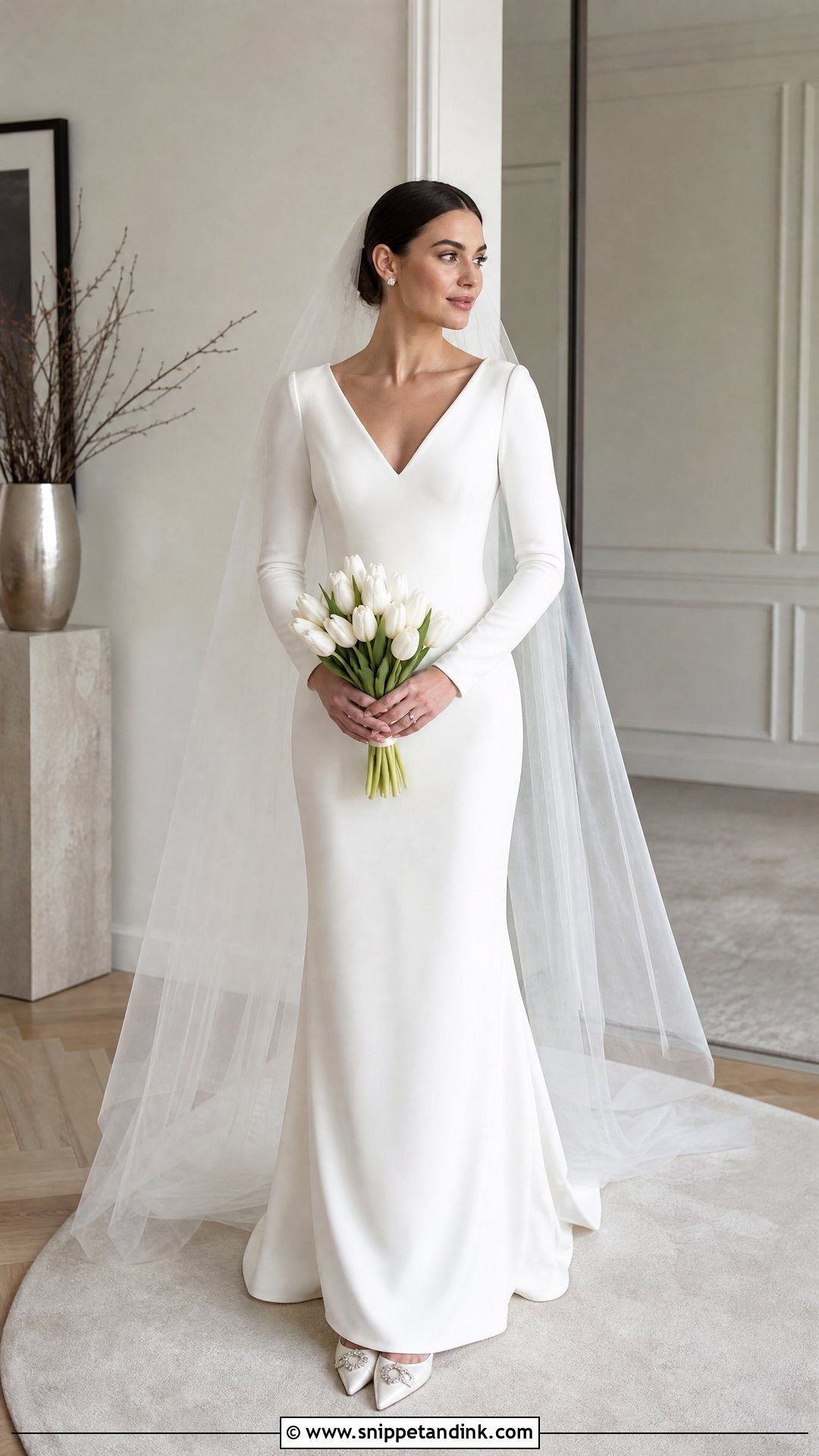
Sleeves, a close skirt and no decoration: the long sleeve sheath wedding dress belongs at cool-weather and formal indoor weddings. Stretch crepe is the fabric I’d pick, with clean shoulder seams and fitted sleeves, and a shallow V or round neck. Pointed satin heels and small diamond or crystal studs. A low ponytail and a slim bouquet of white tulips. Covered buttons down the back give texture without breaking the minimal idea, and a plain cathedral veil adds length. A sheath with sleeves needs tailoring at the shoulders, elbows, hips and hem, and the elbow is the one people forget: bend your arm and check the sleeve doesn’t ride up.
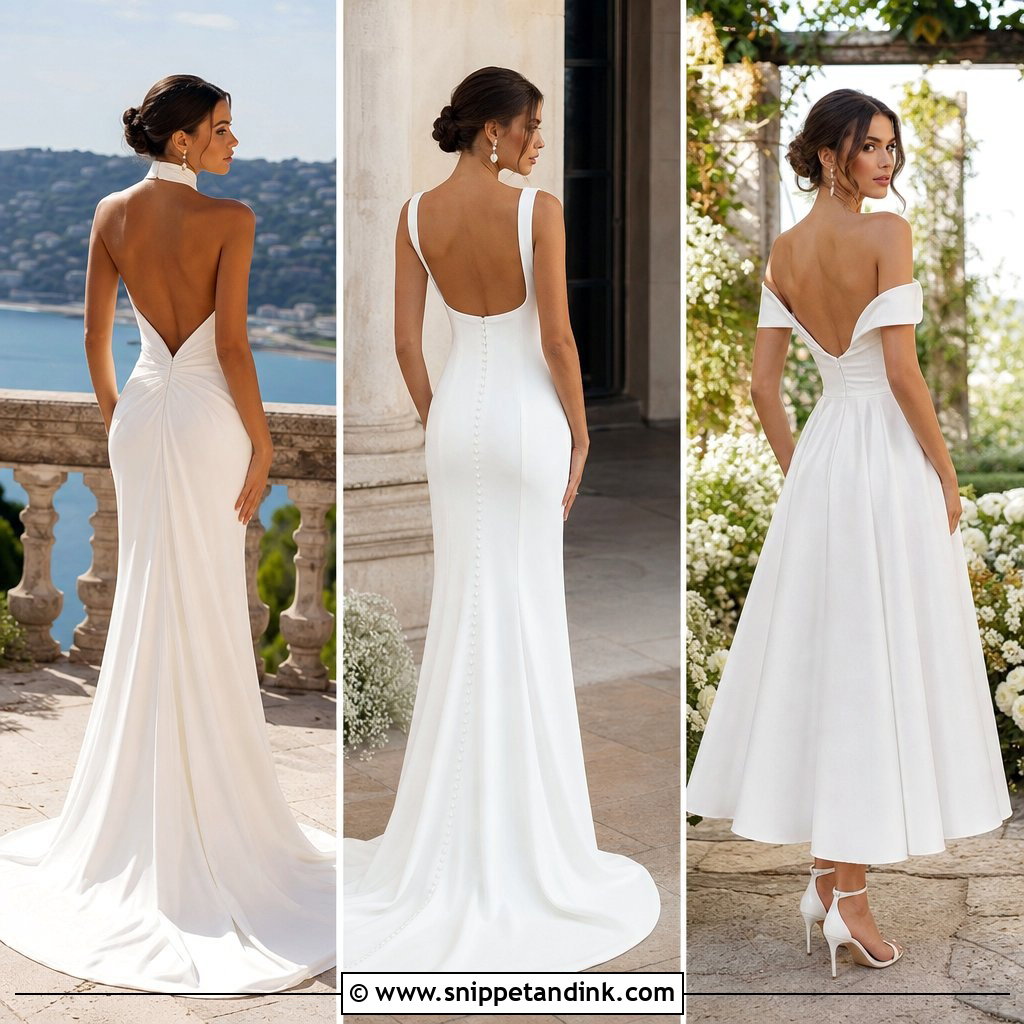
6. Halter Neck Wedding Dress
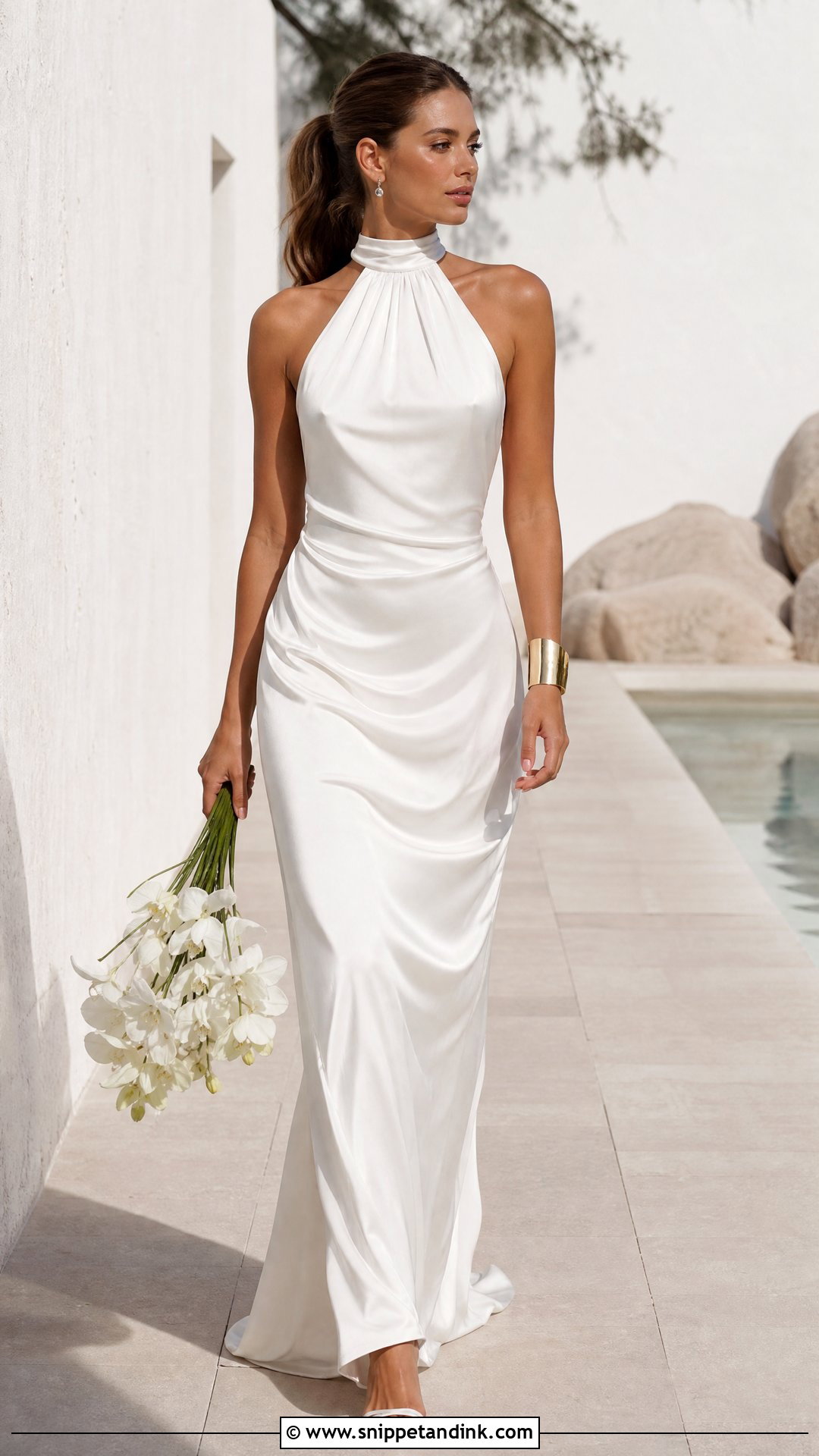
A halter draws the eye up and frames the shoulders. Look for a high, softly gathered neck or a clean banded collar over a fitted bodice. Silk skirts flow; crepe holds a sharper line. Sleek sandals and a sculptural cuff, and no necklace. Hair in a bun or polished ponytail shows the shape from behind, and long-stem flowers continue the vertical line. The armhole is where halters go wrong. Too deep and it shows the side of the bust when you move; too high and it cuts in. I check it with the bride’s arms raised and at her sides. Warm-weather ceremonies and modern indoor spaces.
7. Off Shoulder Minimalist Wedding Dress
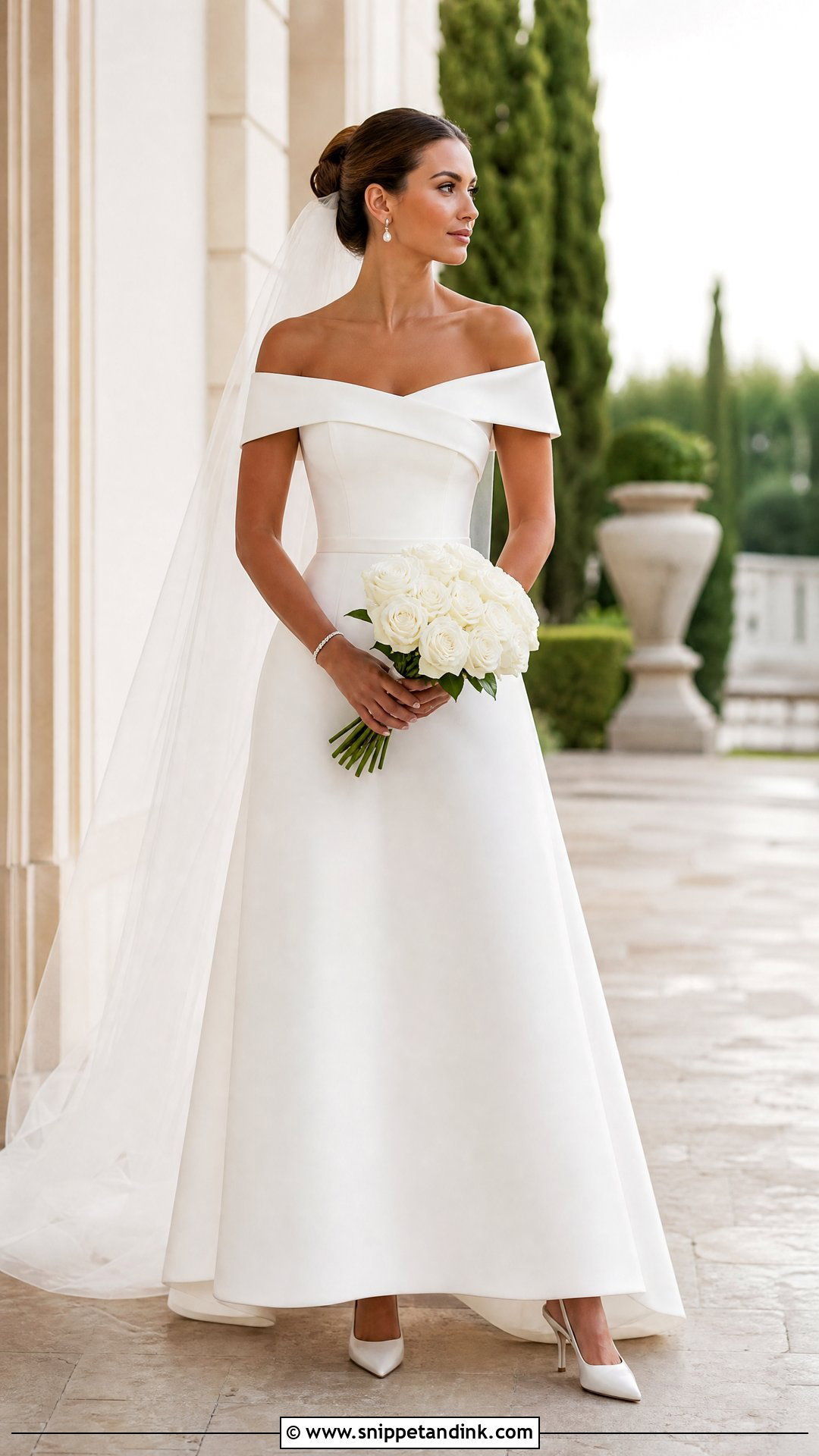
Bare shoulders bring romance without lace or beads. A clean folded neckline sitting firmly across the upper arms joins a fitted crepe or mikado bodice. A straight skirt reads modern; an A-line gives more movement. Pointed slingbacks, pearl earrings and a simple bracelet. Hair up or swept back so the neckline shows, and a short or sheer cathedral veil that doesn’t add weight. Off-shoulder bands restrict how high you can lift your arms, so at fittings I ask brides to mime holding a bouquet, hugging and waving. If any of those pulls, the band needs more ease.
8. High Neck Silk Wedding Dress
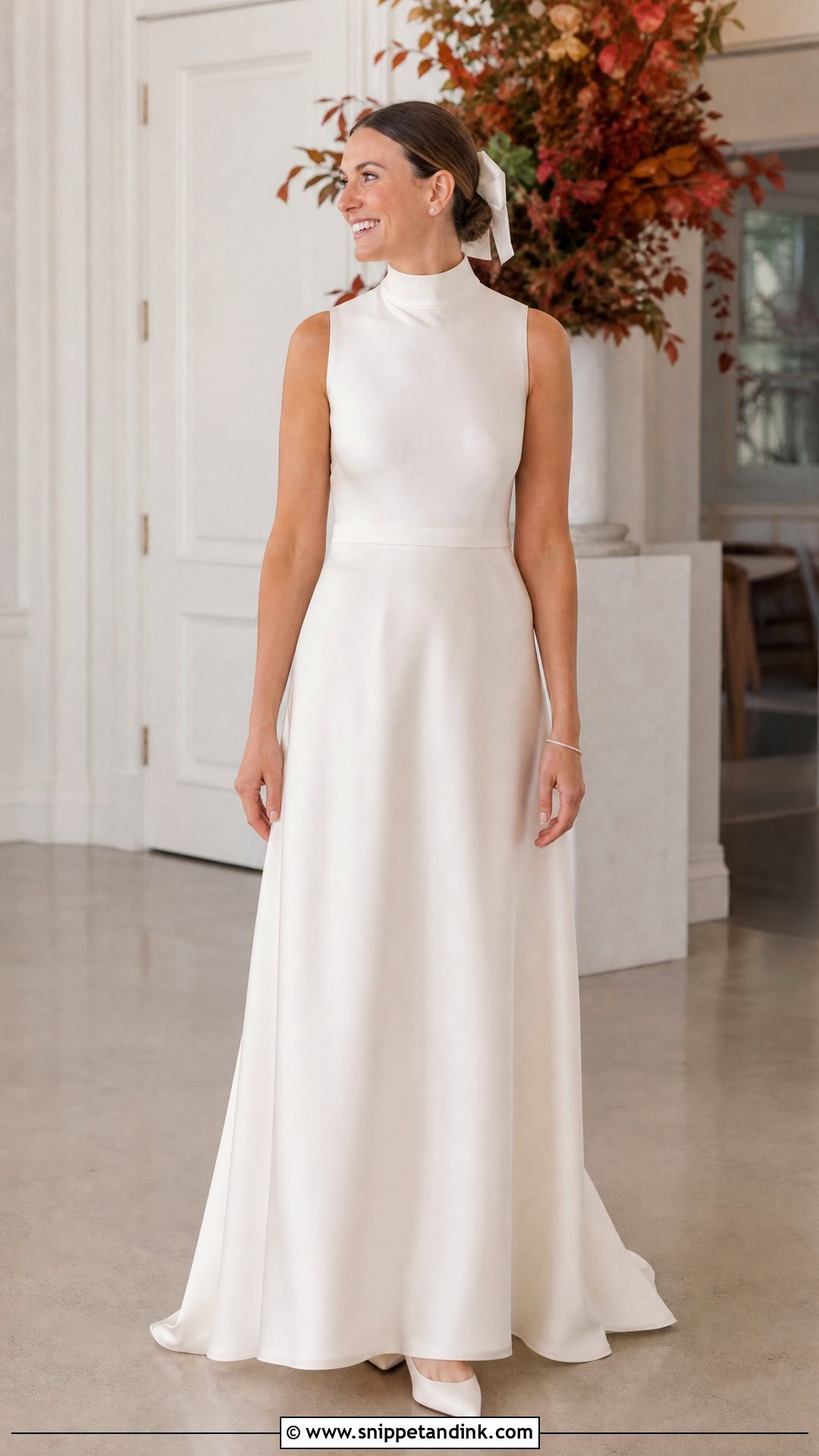
High neck silk is the modest gown with the most quiet confidence. The neckline is the feature, so keep the rest smooth: a sleeveless bias-cut gown with a soft skirt, or a structured one with a defined waist. Low pointed heels, tiny studs and a thin bangle. A sleek bun lengthens the neck and natural makeup keeps it fresh. A silk bow or clean-edged veil tucked below the bun can replace a traditional veil. Silk marks easily with water and with makeup at the collar, so I put a scarf over the bride’s head when she steps into it and dress her before the final powder. Autumn weddings and formal city venues; a breathable silk lining keeps it cool.
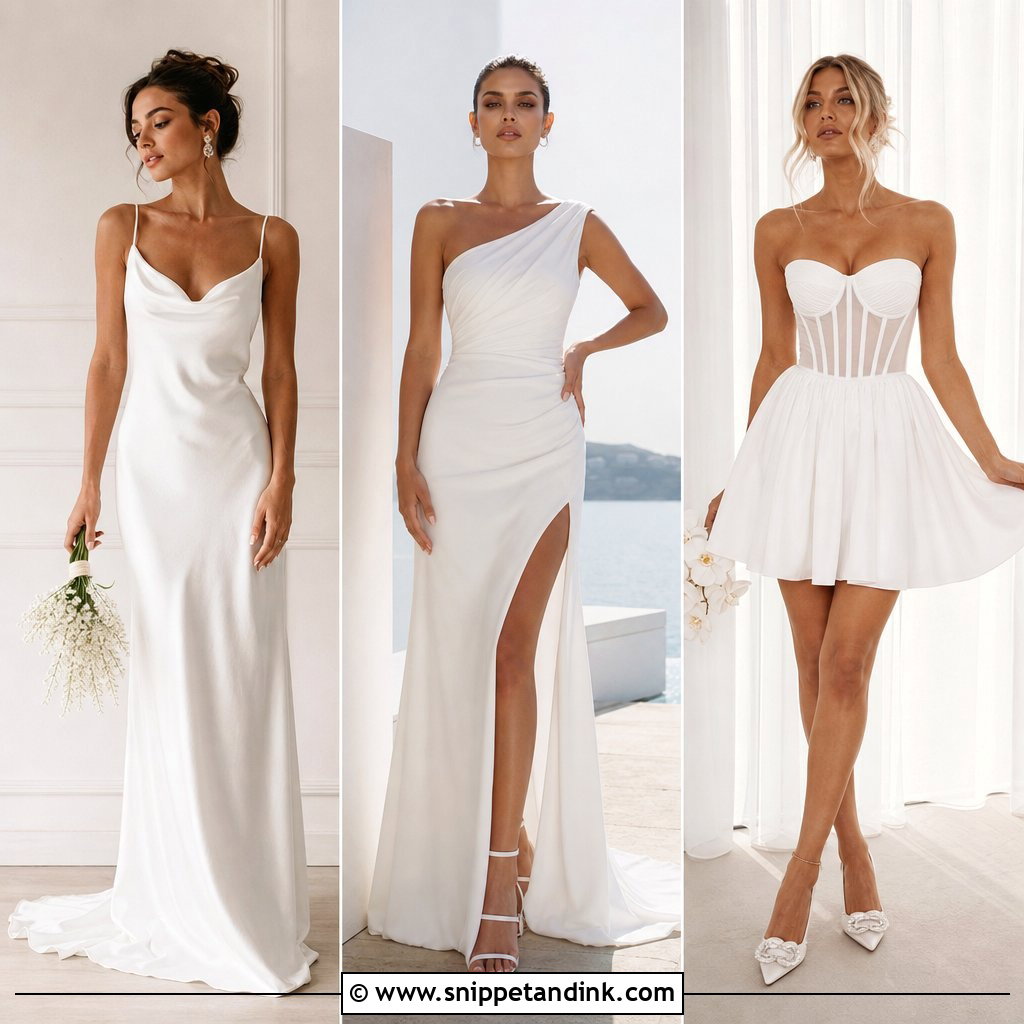
9. Cowl Neck Wedding Dress
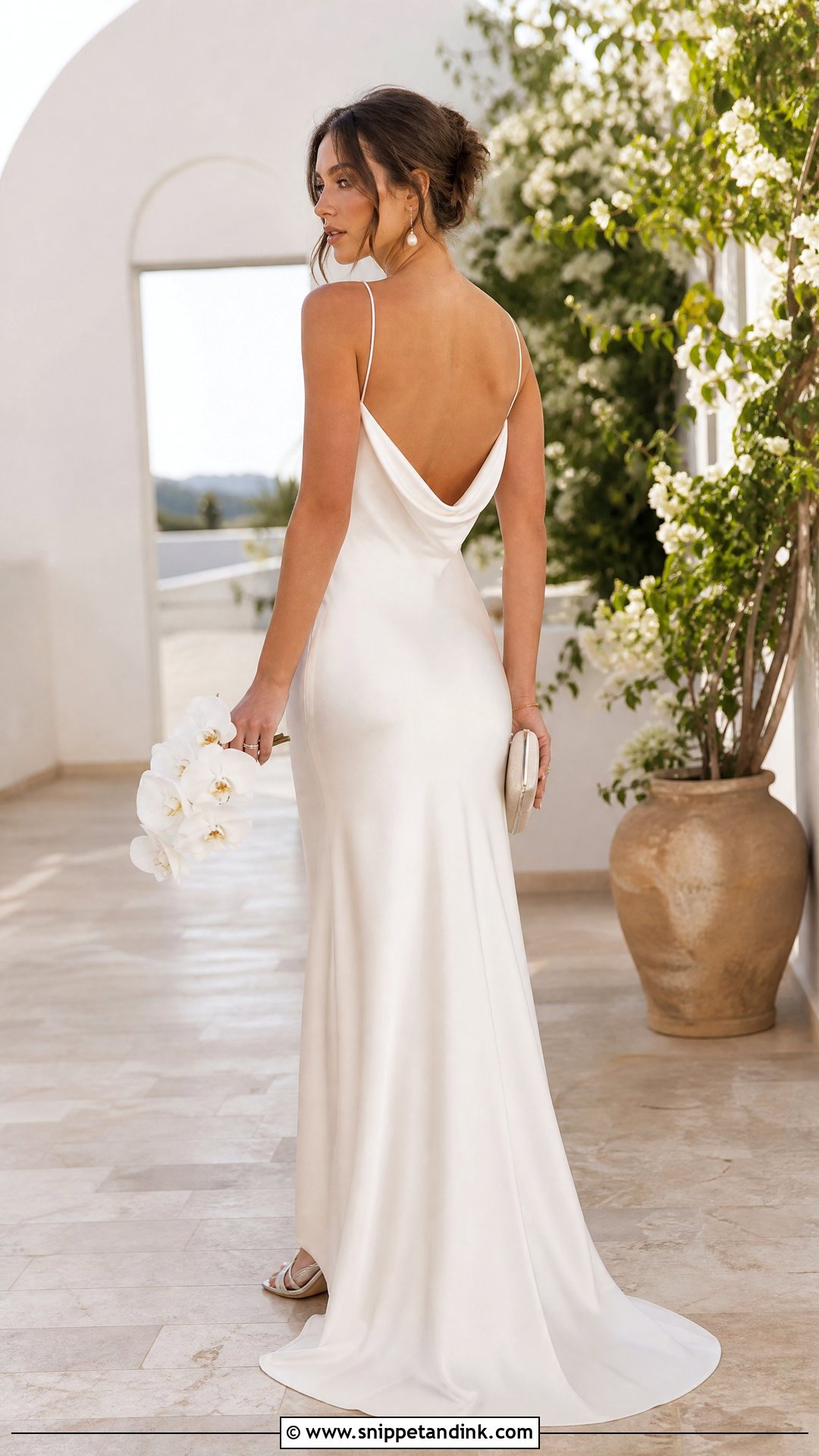
Folds of fabric at the neck are all the decoration a cowl gown needs. A soft drape pairs naturally with a bias-cut satin or silk skirt. Keep the straps clean and fine, and add a low cowl back for interest from behind. Slim metallic sandals, pearl drops and a smooth clutch. A loose low bun and a small orchid bouquet. No necklace. A cowl only drapes properly if the fabric is soft and the weight sits in the right place; if it collapses flat or gapes when you bend, it was cut from fabric too light or too stiff. Destination weddings and intimate evening parties.
10. Backless Minimalist Wedding Dress
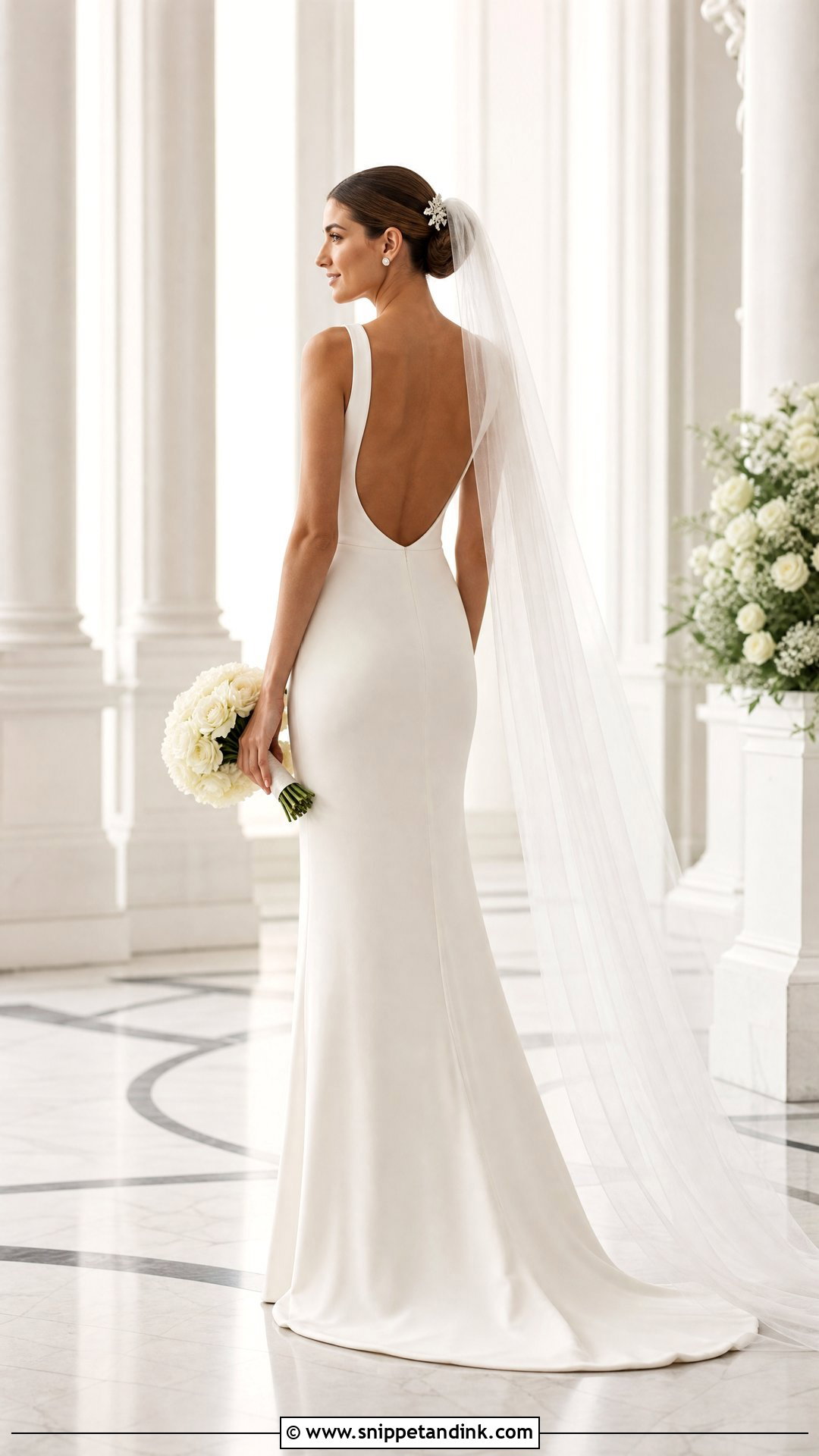
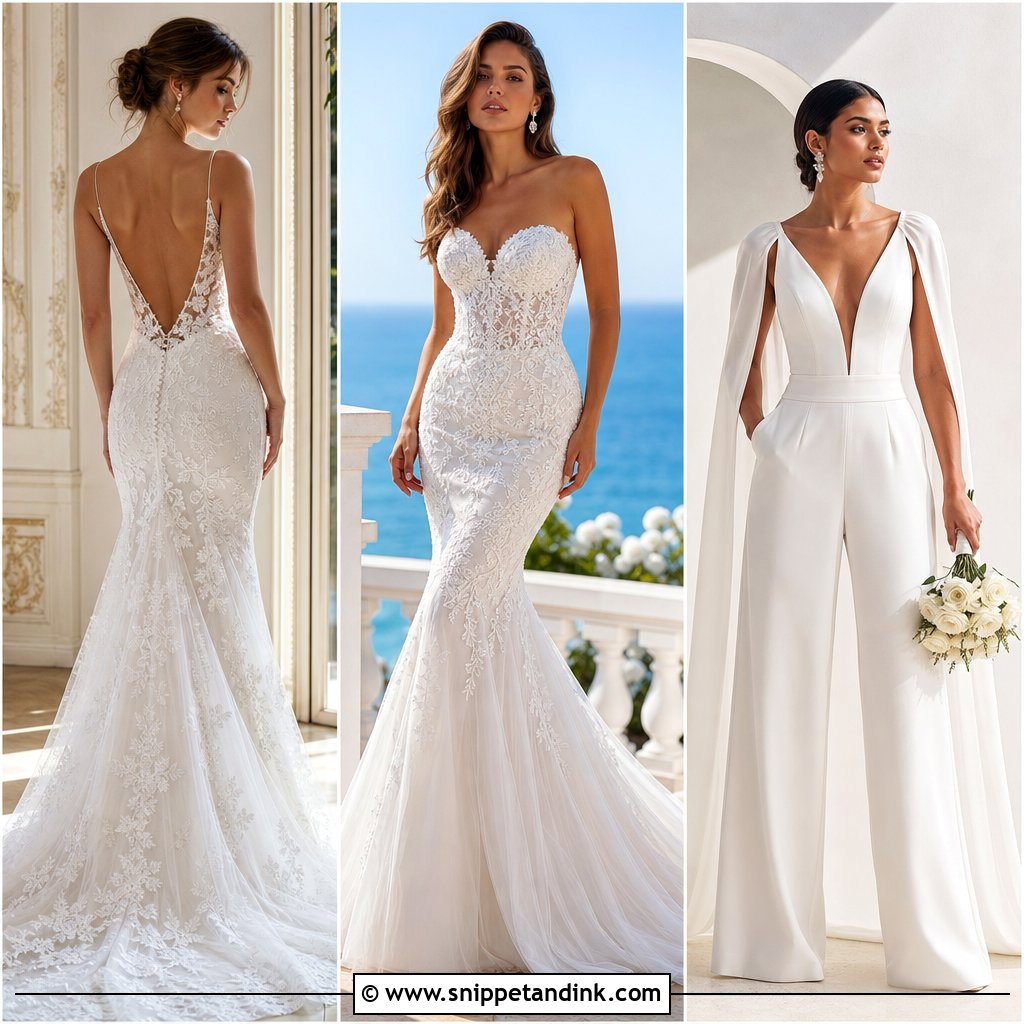
A backless minimalist wedding dress saves its drama for the walk away. From the front, a simple bateau, square or high neck; from behind, open skin. A crepe sheath looks polished and satin moves more softly. Secure low heels, small studs and a single hairpin in a neat updo. A veil attached below the bun shows more of the back and comes off after the ceremony. Support is the question I ask first. Open backs need either a built-in shaped cup, carefully placed straps or fine mesh, and I’d rather add support at the fitting than have a bride holding her arms in all evening.
11. One Shoulder Wedding Dress
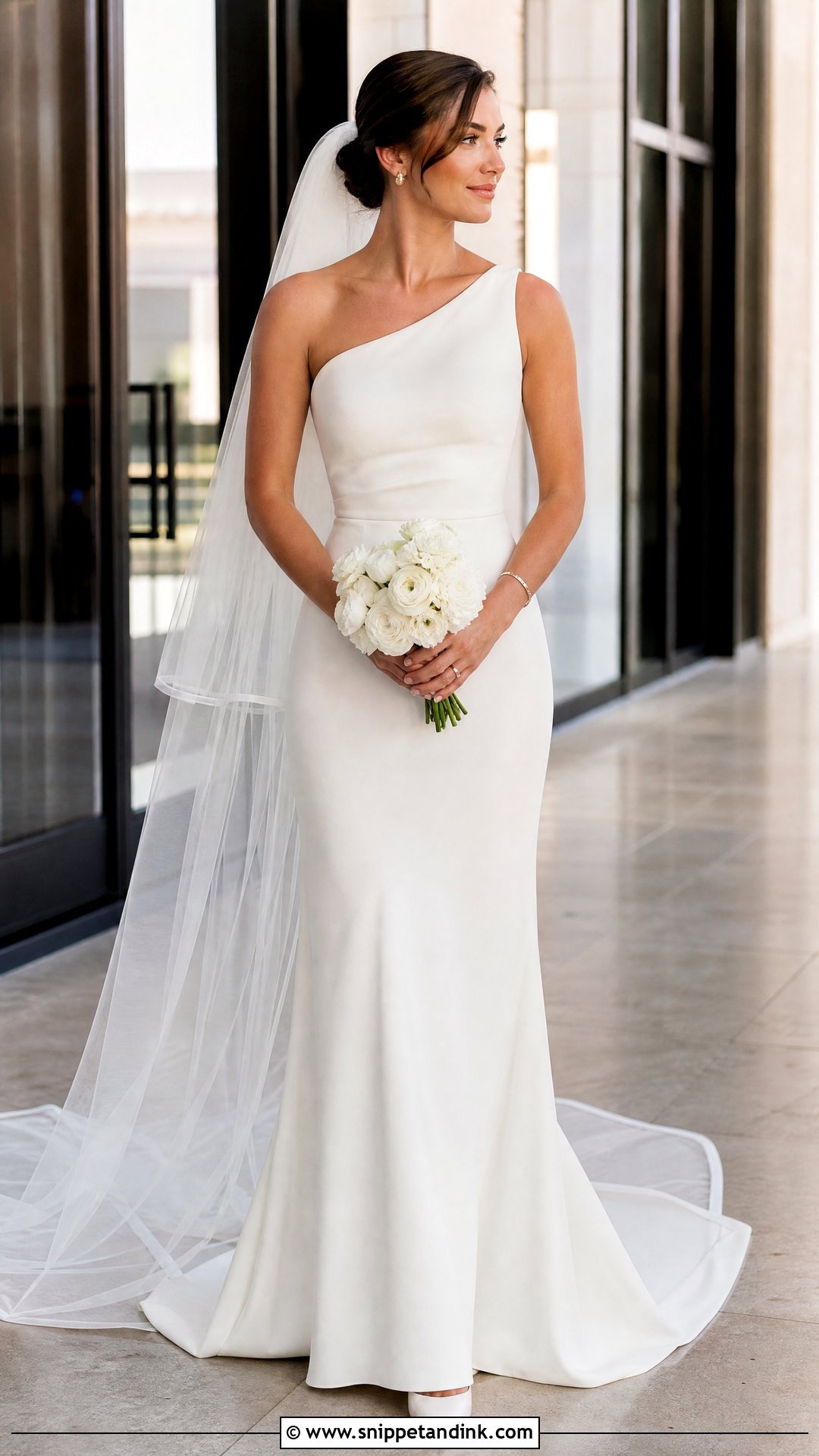
Asymmetry does the work in a one shoulder gown. Smooth crepe, satin or structured mikado, with a straight or gently flared skirt. The diagonal line is already movement, so skip the necklace and keep earrings small. Pointed pumps, a narrow bracelet on the bare arm and a compact bouquet held a little below the waist. A side-parted bun balances the neckline. If you’d like a veil, keep it plain and set at the back of the head. The single shoulder carries the bodice, so it must hold without digging in; I check it after twenty minutes of wear, not two. City venues and formal celebrations.
12. Simple Ball Gown Wedding Dress
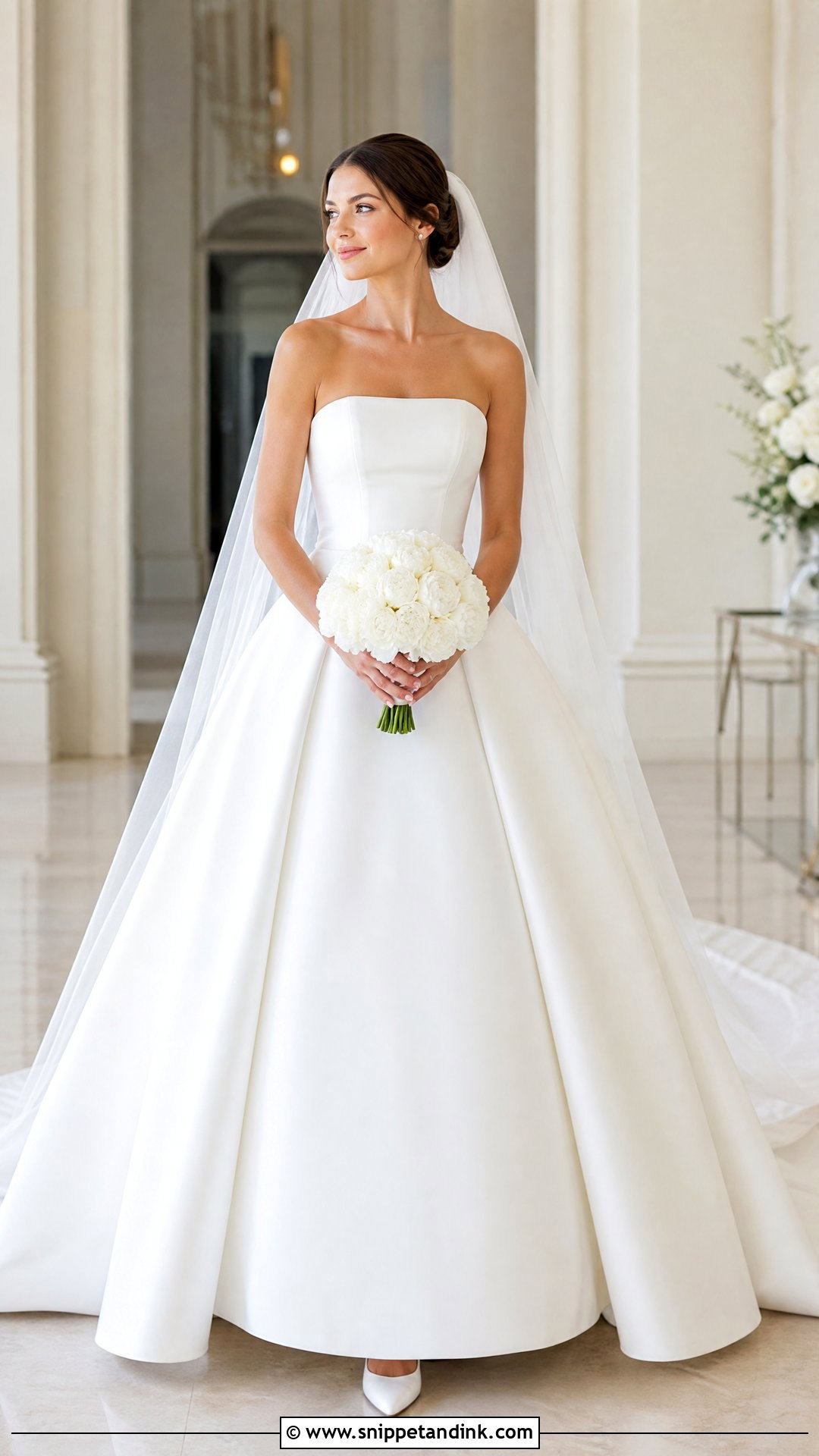
Volume and minimalism can live together if the fabric is doing the work. Choose structured satin or a mikado design with a fitted bodice and a smooth full skirt. Strapless, scoop or square necklines keep the top clean. Simple pumps, pearl studs, a sleek bun and a long plain veil that matches the scale. A round bouquet of one flower variety. Ball gowns get heavy fast, so ask about lighter internal layers, such as horsehair at the hem or a soft crinoline instead of stacked petticoats. I check how a bride sits and climbs a step in it before we commit. Larger venues and formal ceremonies.
13. Tea Length Wedding Dress
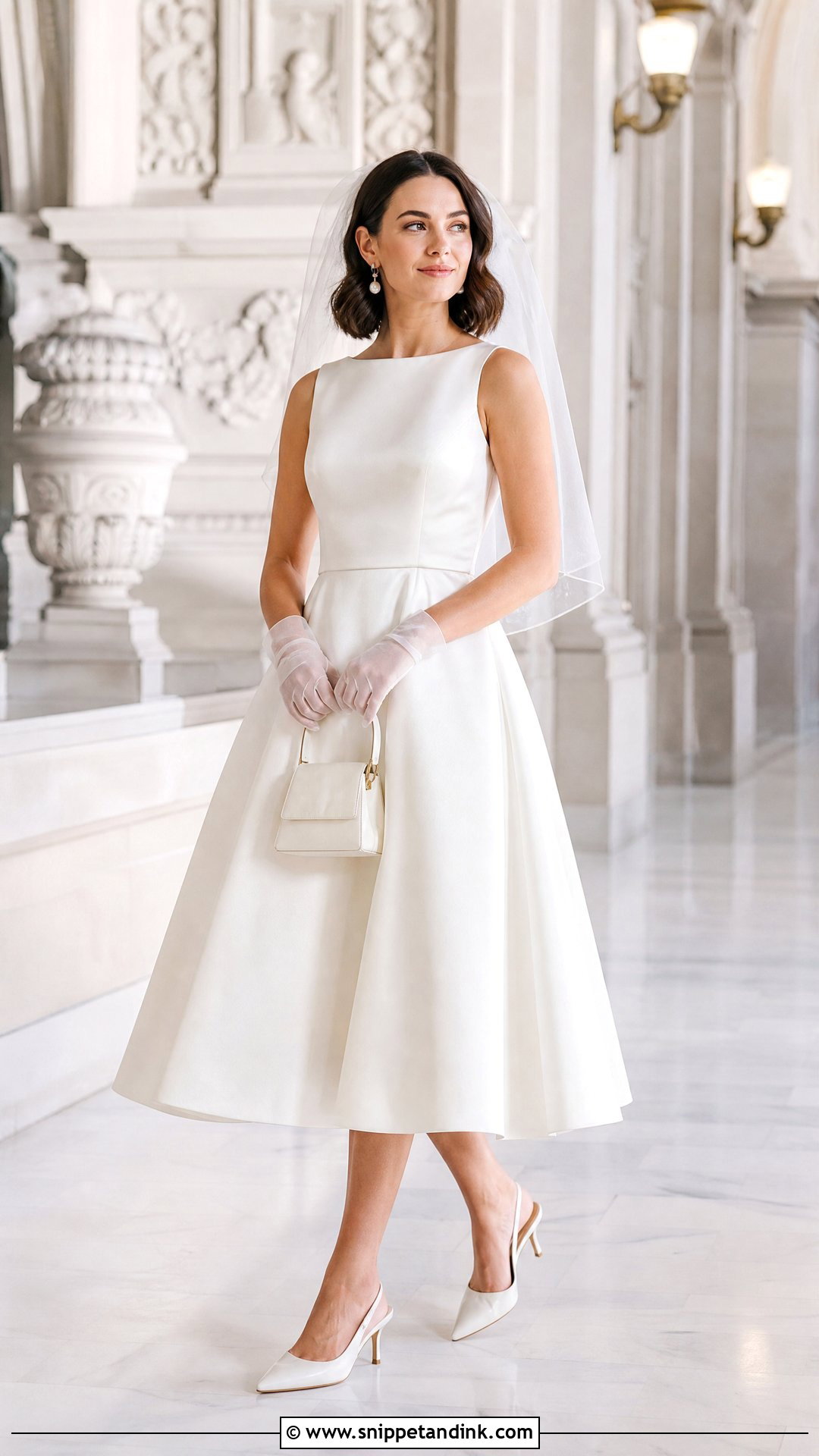
Tea length is playful and polished at once. A fitted bodice and a clean skirt landing between knee and ankle. Mikado gives a sculpted shape, satin swings more. The hem shows your shoes, so they deserve thought: pointed slingbacks, refined pumps or slim ankle straps. Small pearl earrings, short gloves if you like, and a compact handbag. A birdcage veil leans vintage, a plain shoulder-length veil leans modern. I mark the hem only with the wedding shoes on, because an inch of heel moves where it lands on the calf. City hall weddings, daytime parties and small venues.
14. Minimalist Mini Wedding Dress
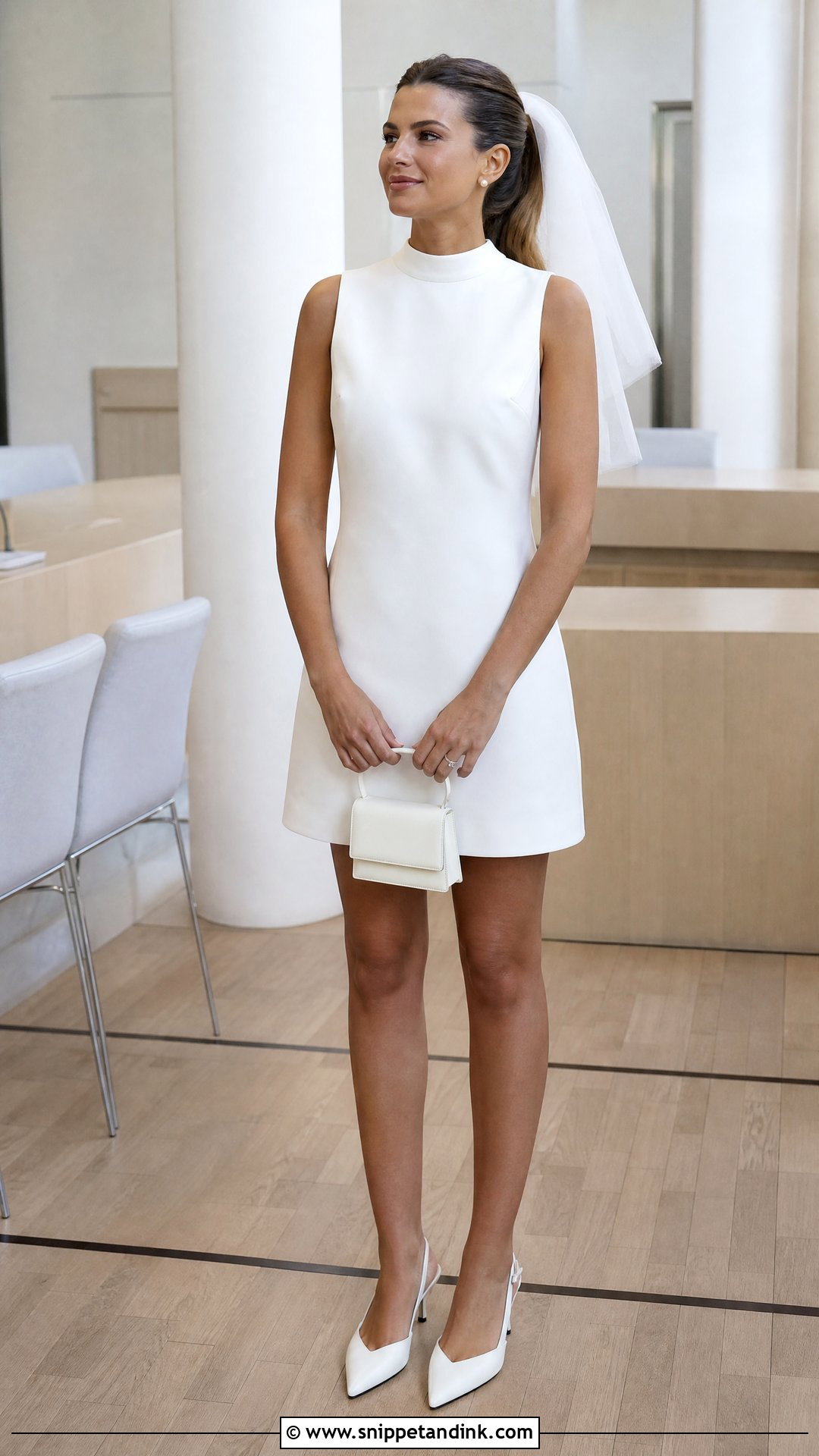
A minimalist mini suits a civil ceremony, a second look or a relaxed party. A structured shift, fitted sheath or soft flare in crepe or satin. A higher neck balances the short hem, and square or strapless reads bolder. Pointed slingbacks, sheer tights when it’s cold and a small top-handle bag. Pearl studs and a short veil keep it bridal. A sleek ponytail or curled bob. With your legs on show, the hem decides everything; sit, cross your legs and stand at the fitting, and consider a smooth lining or built-in shorts if the skirt rides up.

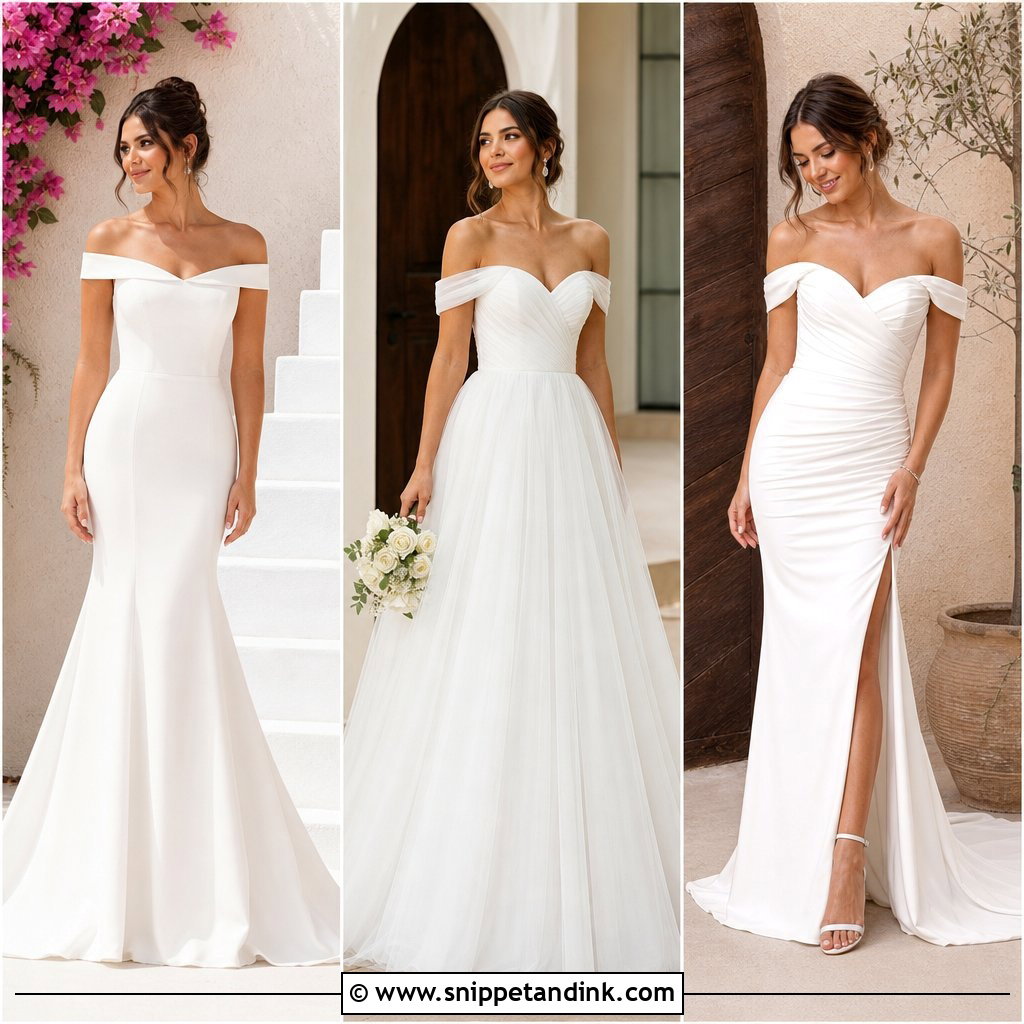
15. Empire Waist Wedding Dress
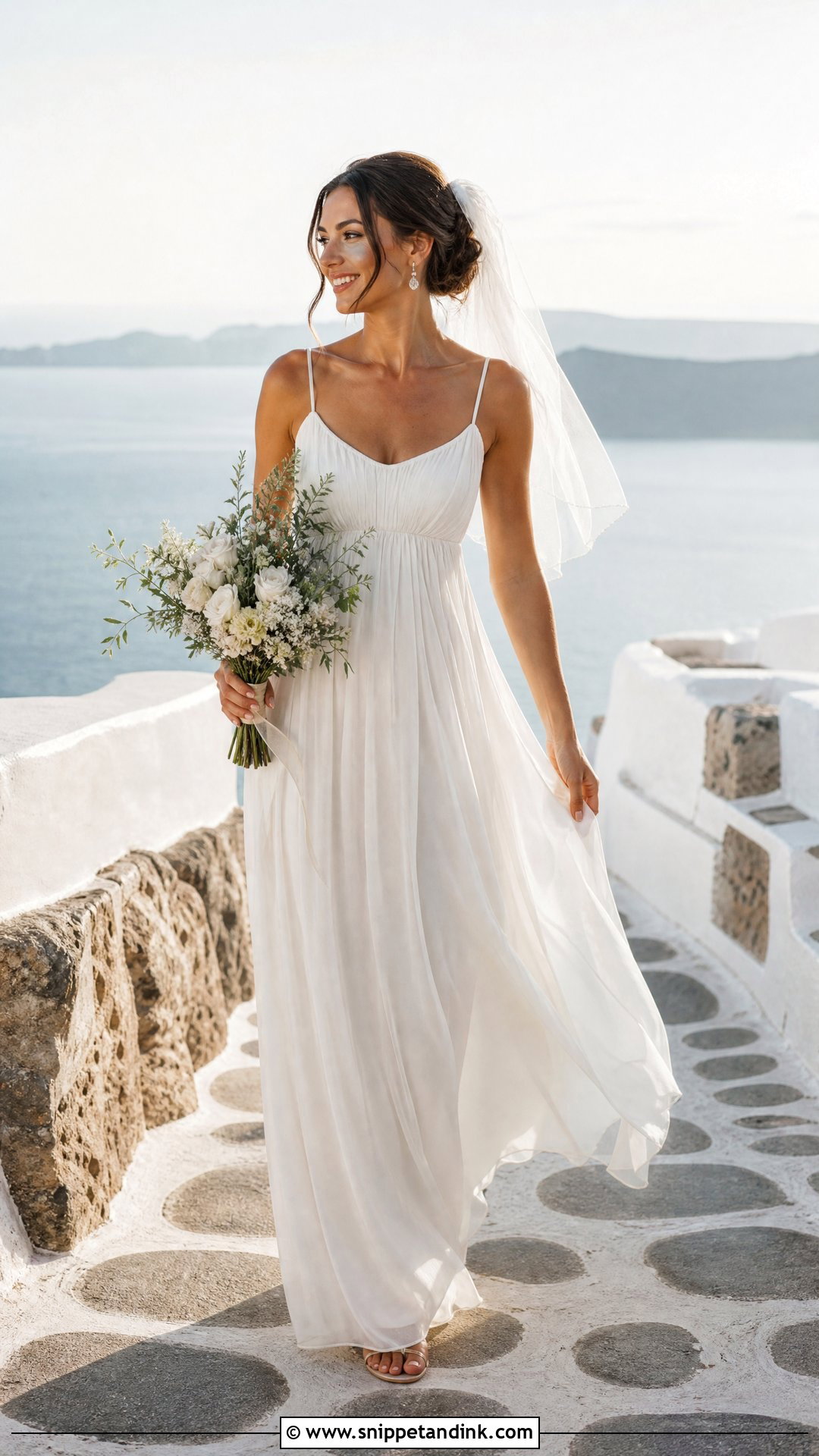
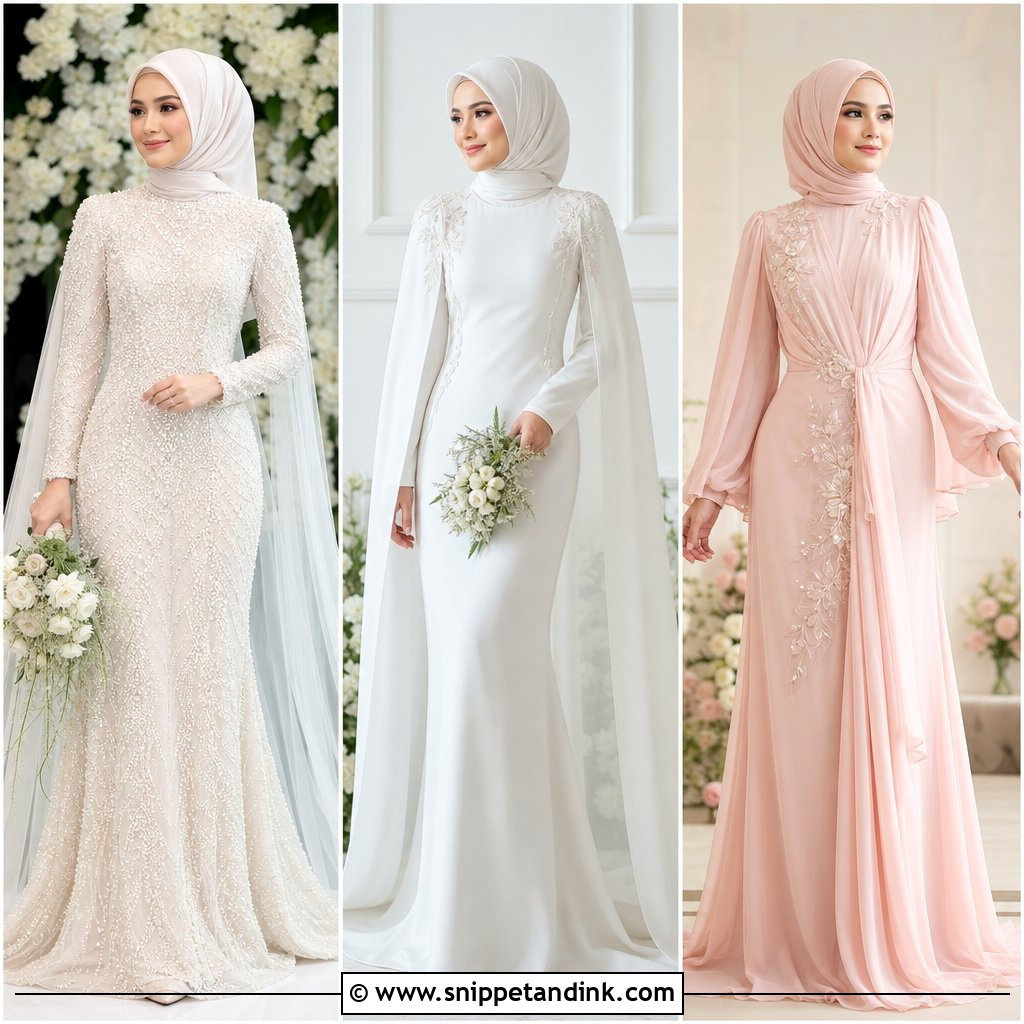
An empire waist sets the seam just under the bust and lets the skirt fall from there. That keeps the waist and hips free, which is why I suggest it for long outdoor days and for brides who are pregnant. Silk chiffon, satin or soft crepe with no lace or trim. Fine straps and a square or gently curved neckline. Low sandals, fine drops and a loose updo. A light veil and a small bouquet of airy white flowers. The seam must lie flat against the ribs without pressing; if it rolls or rides up when you breathe in, the band needs adjusting. Outdoor and destination ceremonies.
16. Fit And Flare Crepe Wedding Dress
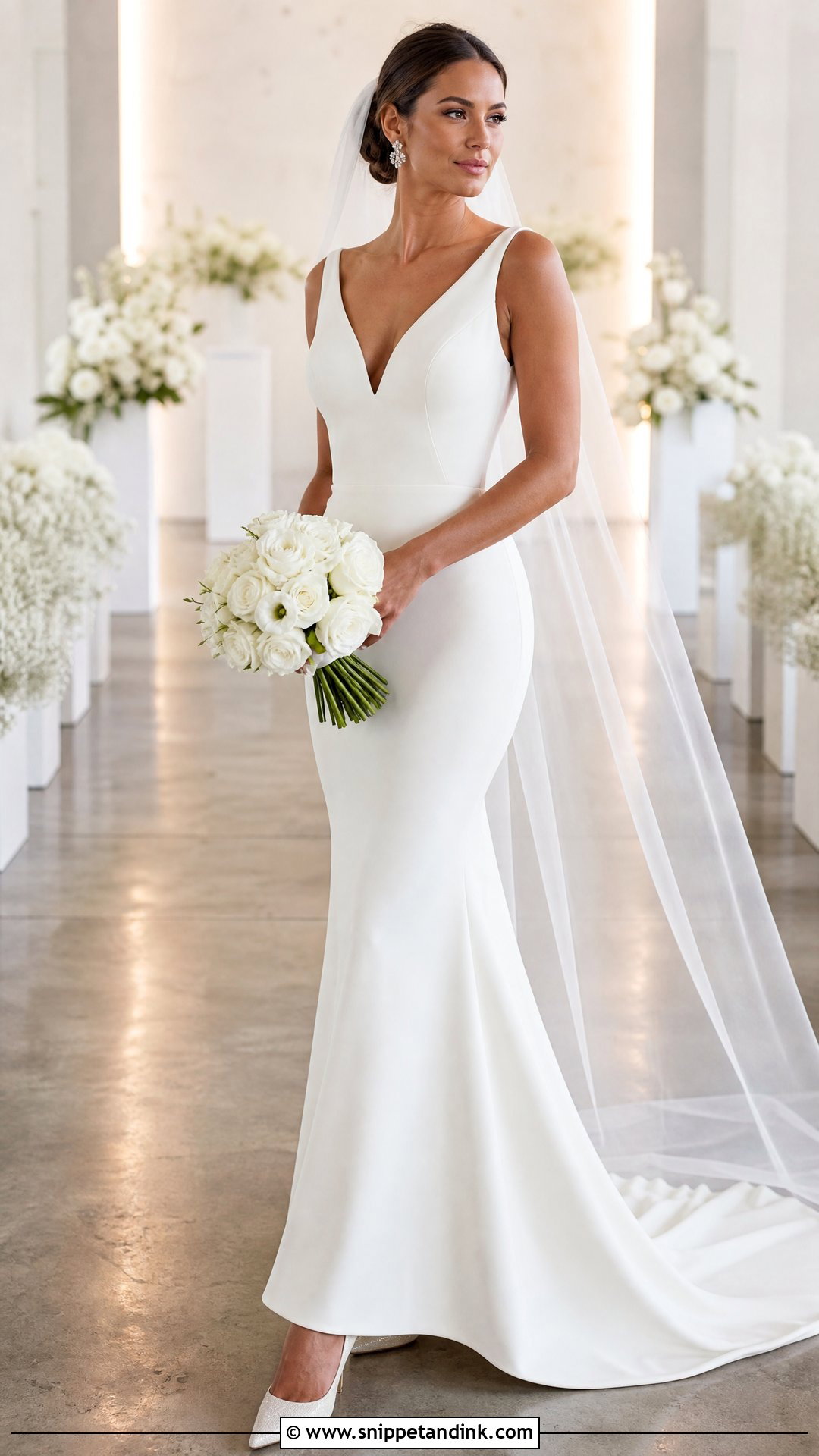
Fit and flare in crepe gives definition through the bodice and hips, then opens near the knee. The cut is glamorous; the plain fabric keeps it minimal. V-neck, square neck or strapless depending on coverage. Comfortable pointed heels, statement earrings and a clean-edged veil. A low bun and a structured white bouquet. Stretch crepe makes walking and sitting easier, though the lining still needs to be smooth. Where the flare starts is the decision I take most care with. Too low and you shuffle; a little higher and you can take a real stride and climb stairs.
17. Boat Neck Wedding Dress
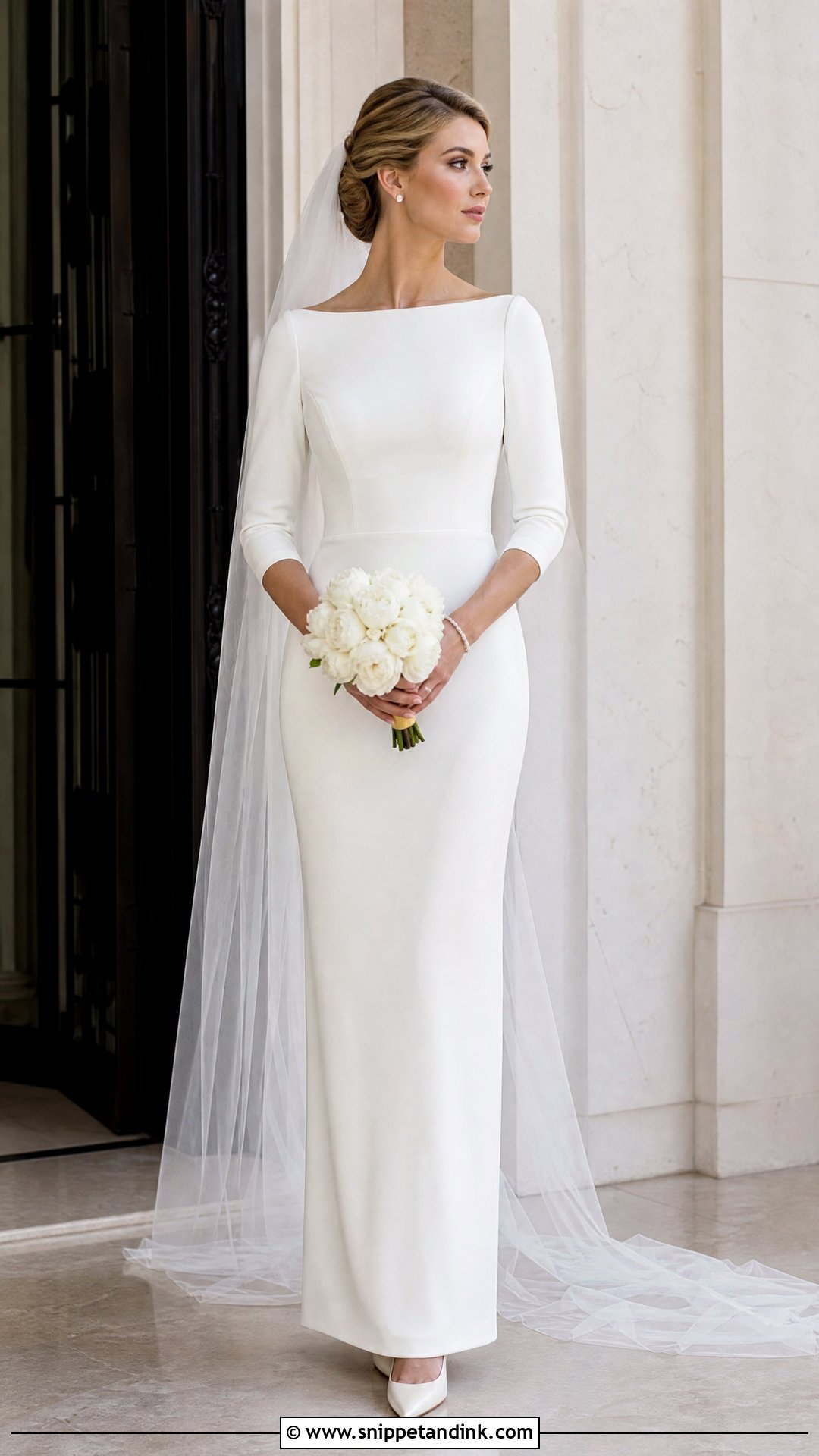
A boat neck runs straight across from shoulder to shoulder, close to the collarbone. It suits a sleeveless sheath or a gown with fitted three-quarter sleeves. Matte crepe or silk with few seams. Pearl or crystal studs, pointed pumps and a slim bracelet. A low French twist or neat chignon keeps the neckline clear, and a veil set beneath the hair adds length. Wide necklines like to slide toward one shoulder, so I ask the bride to turn, sit and lift both arms at the last fitting; if the neck shifts, small lingerie loops inside the shoulders hold it. Formal celebrations and city ceremonies.
18. Cape Sleeve Wedding Dress
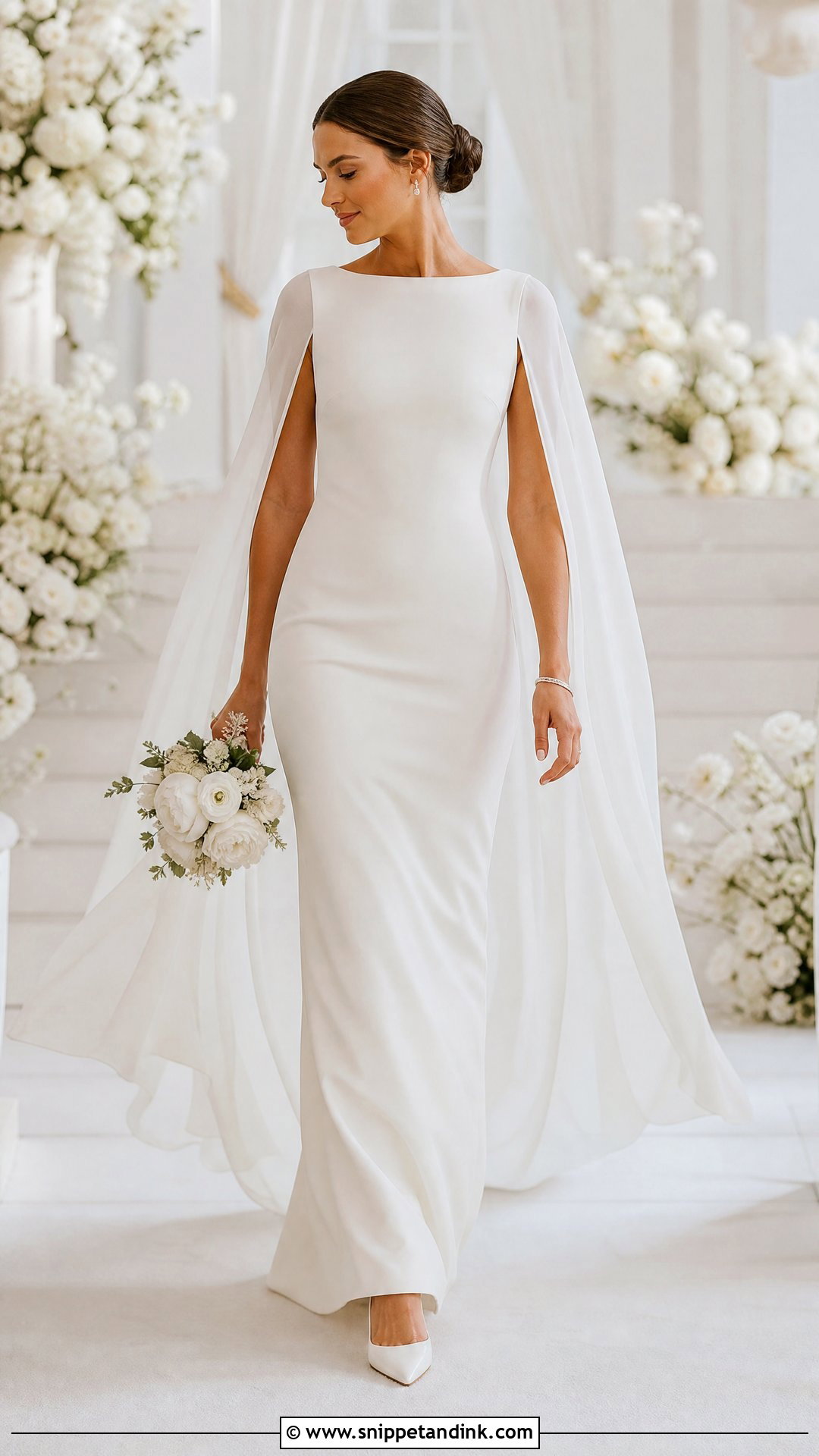
Cape sleeves replace embellishment with movement. A simple column or A-line with panels falling from the shoulders. Chiffon floats; crepe looks architectural. Pointed pumps, small earrings and a narrow metallic bracelet. A smooth bun keeps the cape visible from behind. You can skip the veil, since the cape already gives you ceremony drama, or choose a short plain veil that stops above it. It covers the upper arms without a fitted sleeve, which many brides like. Check the cape length against your bouquet and chair; a long cape catches under you when you sit at dinner.
19. Minimalist Wedding Dress With Bow
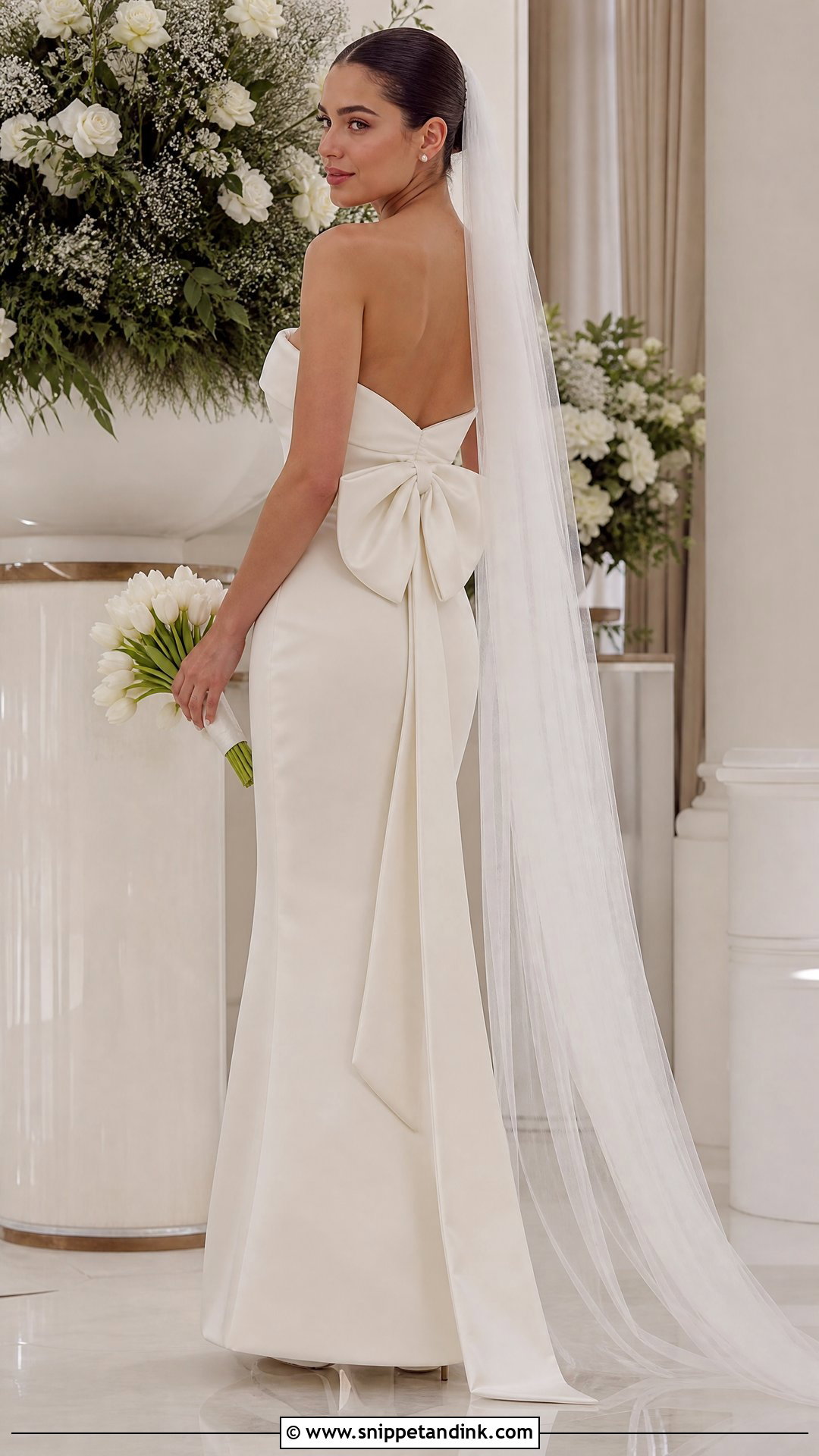
One carefully placed bow gives a plain gown a signature. Look for satin or mikado with a structured bow at the back waist, shoulder or neckline, on a strapless column, square-neck A-line or fitted sheath. Pointed ivory heels, tiny pearl earrings and a sleek clutch. A neat bun or ponytail keeps the bow visible. For a back bow, use a sheer veil that comes off after the ceremony. White tulips keep it crisp. One bow is the whole point, so no bows on the shoes or veil. Large bows can be stiffened inside with interfacing so they don’t flop by the evening, which is worth asking about.

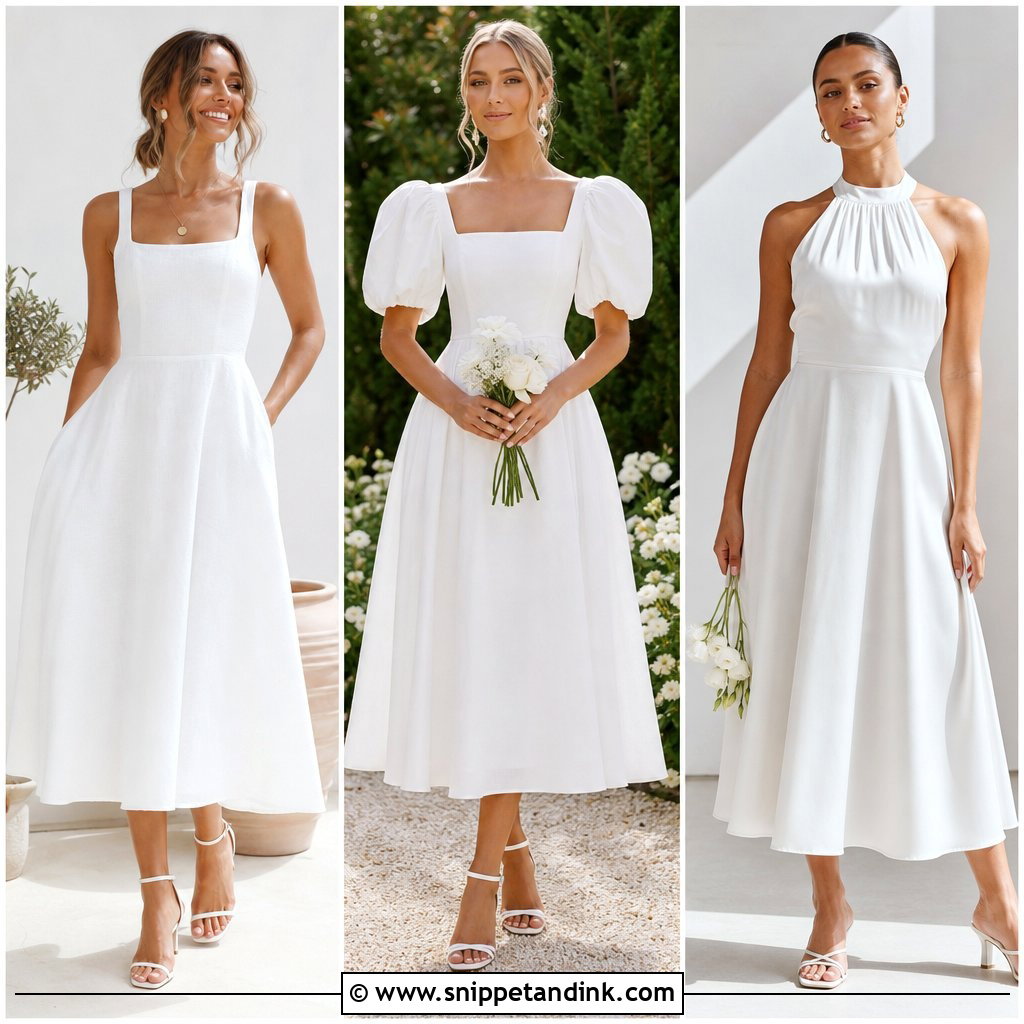
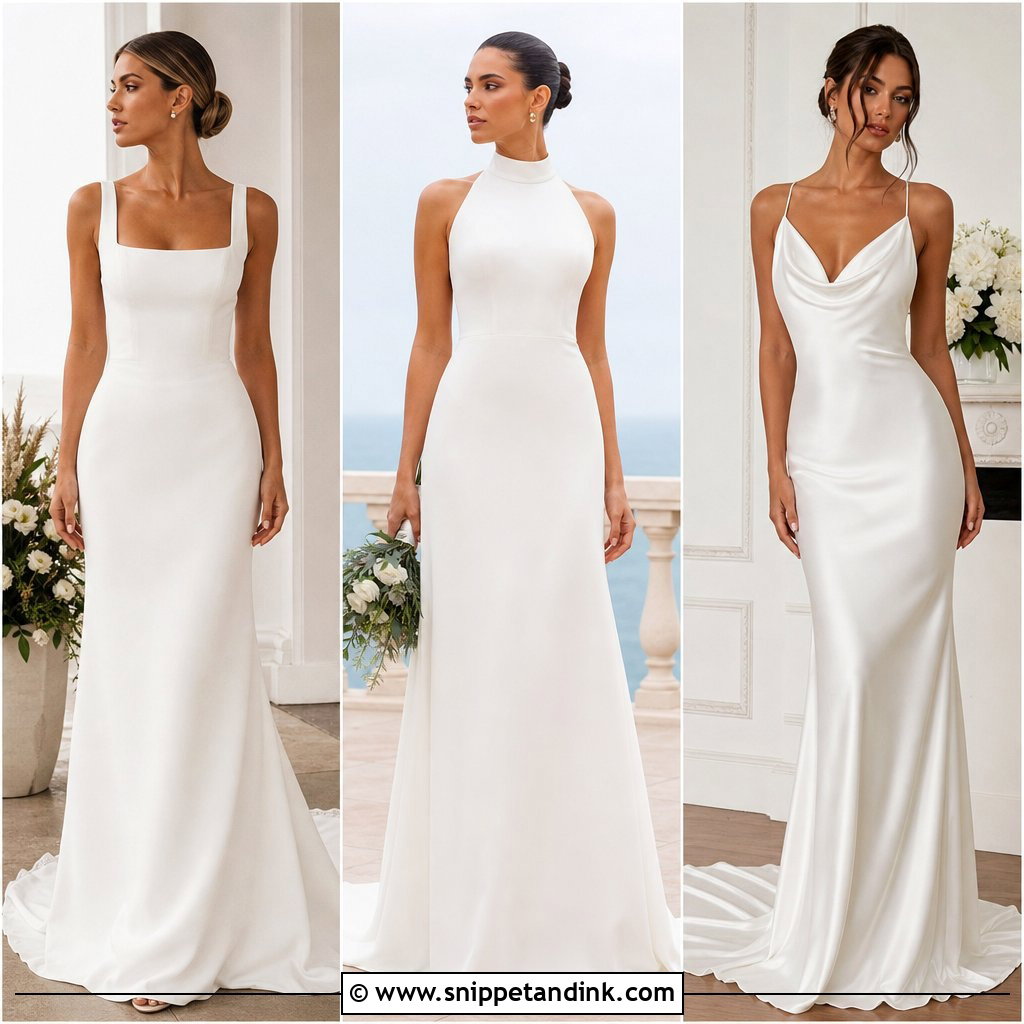
20. Two Piece Minimalist Wedding Dress
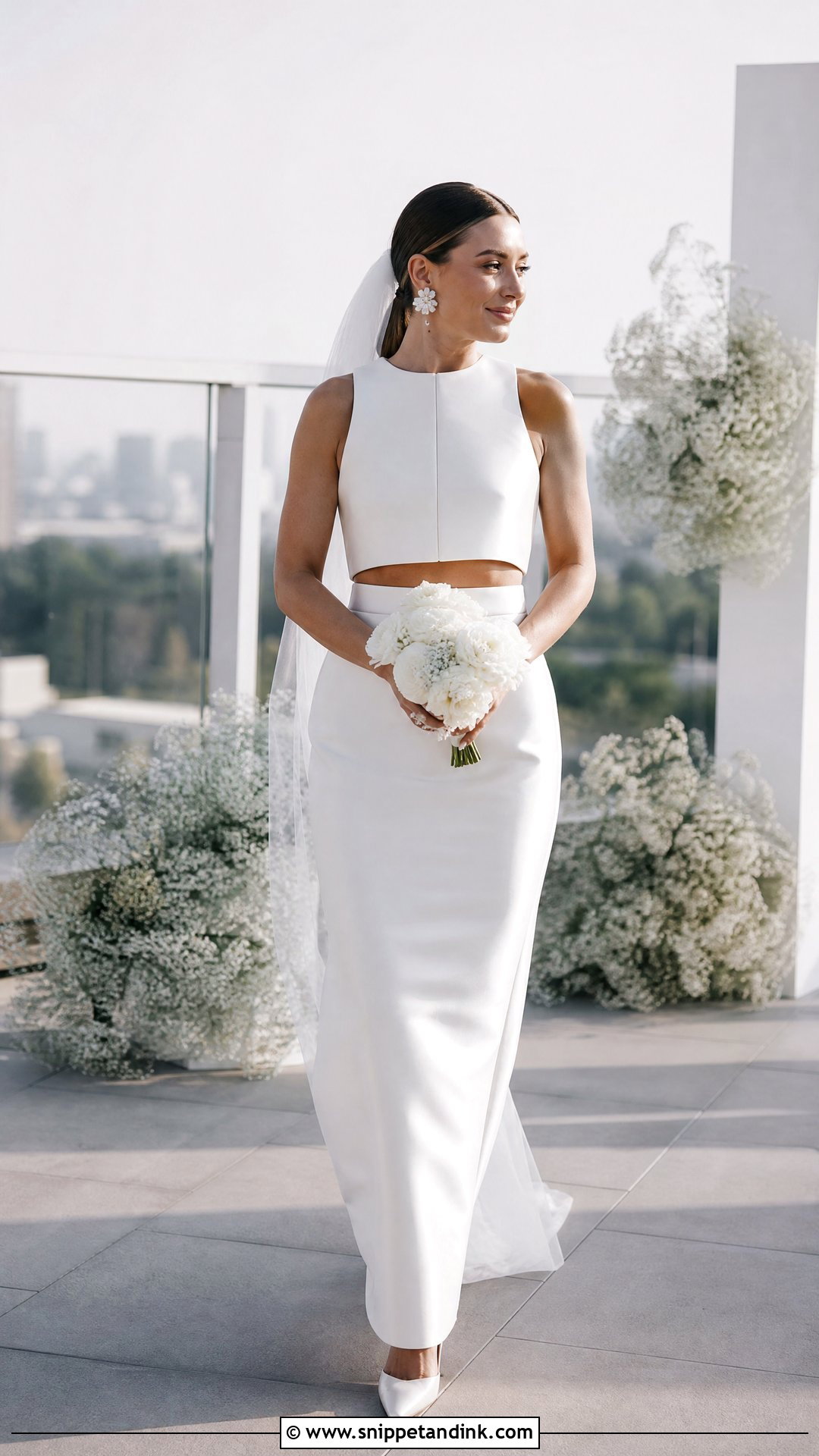
Separates are the most flexible bridal outfit I style. A structured crop top, fitted shell or clean long-sleeve bodice with a matching high-waisted skirt. Show a narrow strip of midriff or none, depending on comfort and venue. A satin column skirt is fluid and an A-line crepe skirt is softer. Pointed pumps, sculptural earrings and a small bouquet, with a smooth low ponytail. A plain veil makes it feel ceremonial. Buy both pieces at the same time, from the same fabric run if possible, because whites and ivories vary between batches and the difference shows in daylight. Tailor the waist so the top and skirt meet cleanly when you sit.
The Underwear Question Under Clean Crepe and Silk
Nothing shows through a minimal dress like the wrong underwear. Lace edges, bra bands and seams print through satin and thin crepe, especially under flash. I ask every bride to bring her wedding underwear to the first fitting, not the last, because the alterations are done around it.
- Match the underwear to your skin, not to the dress. White shows through ivory satin far more than a nude tone does.
- Choose laser-cut or bonded edges rather than lace or elastic, and check the back view in a photo with flash, not only in the mirror.
- For backless, halter and one shoulder cuts, ask whether cups can be sewn into the bodice. It is usually more secure than any adhesive bra.
- Shapewear needs to stop well short of a low back and must not roll at the waist when you sit. Try it seated for half an hour.
- Skip anything too tight. A firm waistband under a slip dress creates a ridge that the bias cut will happily show.
Once the fit is set around the real underwear, don’t swap it in the last week. Even a different bra changes where a bodice sits and how the neckline lies.
Less Detail Means Every Seam Gets Read
A minimalist gown is not about removing every detail; it is about keeping only the ones that earn their place. Good tailoring, honest proportions, comfortable construction and quality fabric are what make a simple dress look considered. Try several necklines and silhouettes even if they look alike on the hanger, since small shifts in seam placement, skirt shape or fabric weight change the fit entirely. Then let the accessories support the dress. A plain veil, refined shoes, simple jewellery and a well-shaped bouquet are usually enough. Wear the one that feels like you on a long day.
You'll Like These Ideas:







Leave a Reply