
A modest bridal look doesn’t need heavy beading or a complicated cut to feel special. What it does need is coverage that stays put and fabric you can move, pray and sit in for a full day. Long sleeves, covered backs, high necklines, proper lining and bodices that sit well under a hijab are the backbone of modest bridalwear, and A-line, sheath, abaya and ball-gown shapes each give a different amount of structure. When I work with a modest bride, we start with four questions: where is the ceremony, what’s the weather, how opaque does the fabric need to be, and where are her own lines on coverage. The twenty looks below are built from those answers, each styled from hijab to shoes.
Building the Hijab and Veil as One Piece
The most common problem I fix on the morning is a veil dragging a hijab backwards. A veil has weight, and if it’s pinned only into a slippery chiffon scarf, it slowly pulls the front of the hijab off the forehead. The answer is to anchor everything into a layer underneath.
- Start with a snug underscarf or bonnet in a grippy cotton or jersey. If you want height at the back, add a volumizer or a small bun under it.
- Wrap the hijab over it and secure it with straight pins or magnetic pins. On satin, magnets avoid holes; on chiffon, fine pins hold better.
- Attach the veil comb into the underscarf or bun at the crown, not just into the hijab. Add two hidden pins either side for a long or cathedral veil.
- Turn your head, bend to sign a document and hug someone. If the hijab shifts, add one more anchoring pin at the side.
Do a full practice run with the real veil at least once. Many brides only test the hijab, then find on the day that the veil’s weight changes everything.
1. Simple Satin A-Line Muslimah Wedding Dress
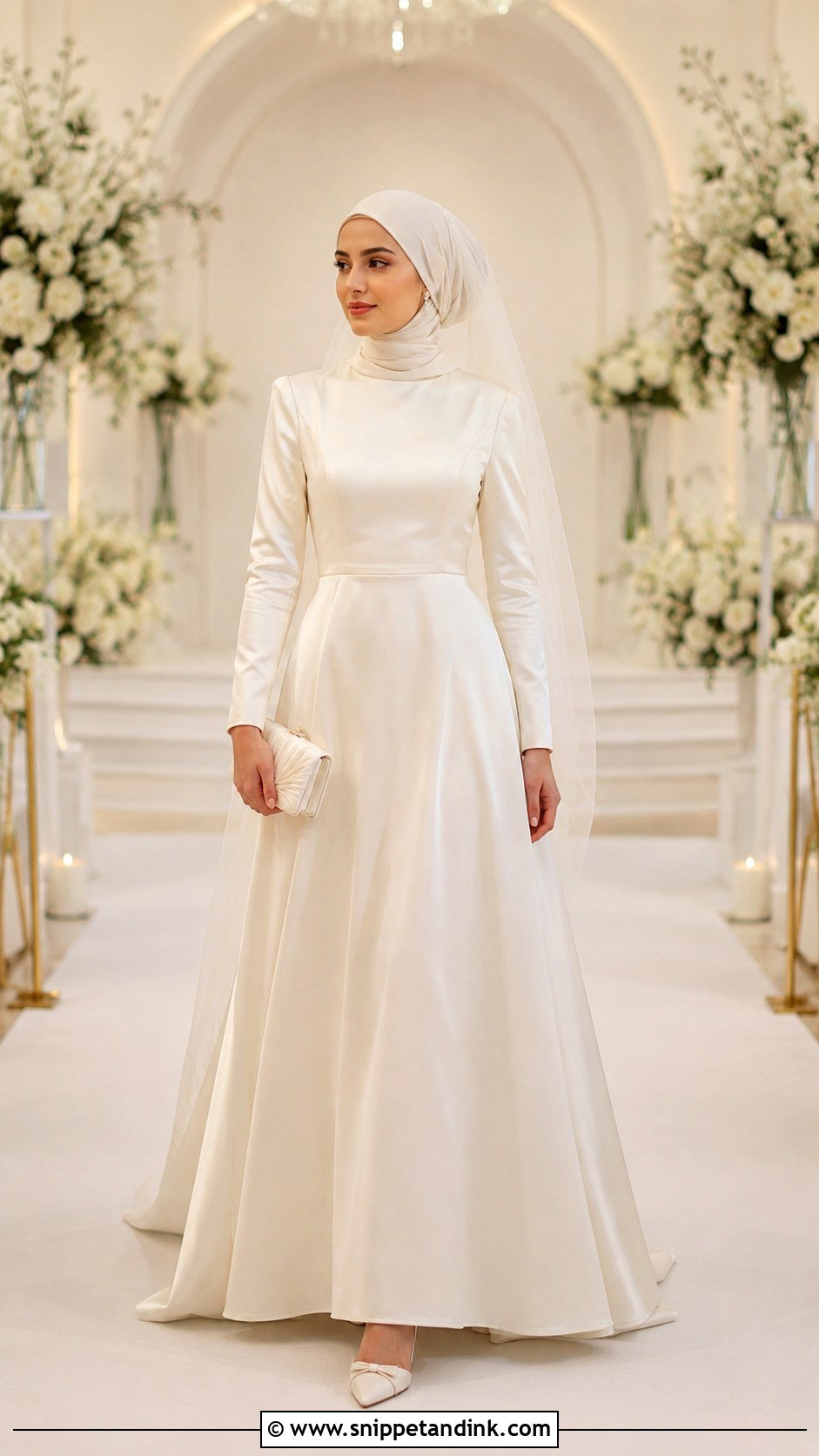
Satin A-lines are where most of my modest brides start, because the skirt hides nothing awkward and the fabric is naturally opaque. Pick ivory or soft white with a high round neck, a closed back and fitted full sleeves, and a gently defined waist above a skirt that falls loose over the hips. A short or medium train is plenty if you’ll be sitting through a long ceremony. I’d match a smooth chiffon hijab to the exact shade, pinned with hidden pins, then add pointed ivory flats or low block heels, pearl studs and a small satin clutch. A fingertip veil attached behind the hijab finishes it without weight.
2. Long Sleeve Lace Muslimah Wedding Dress
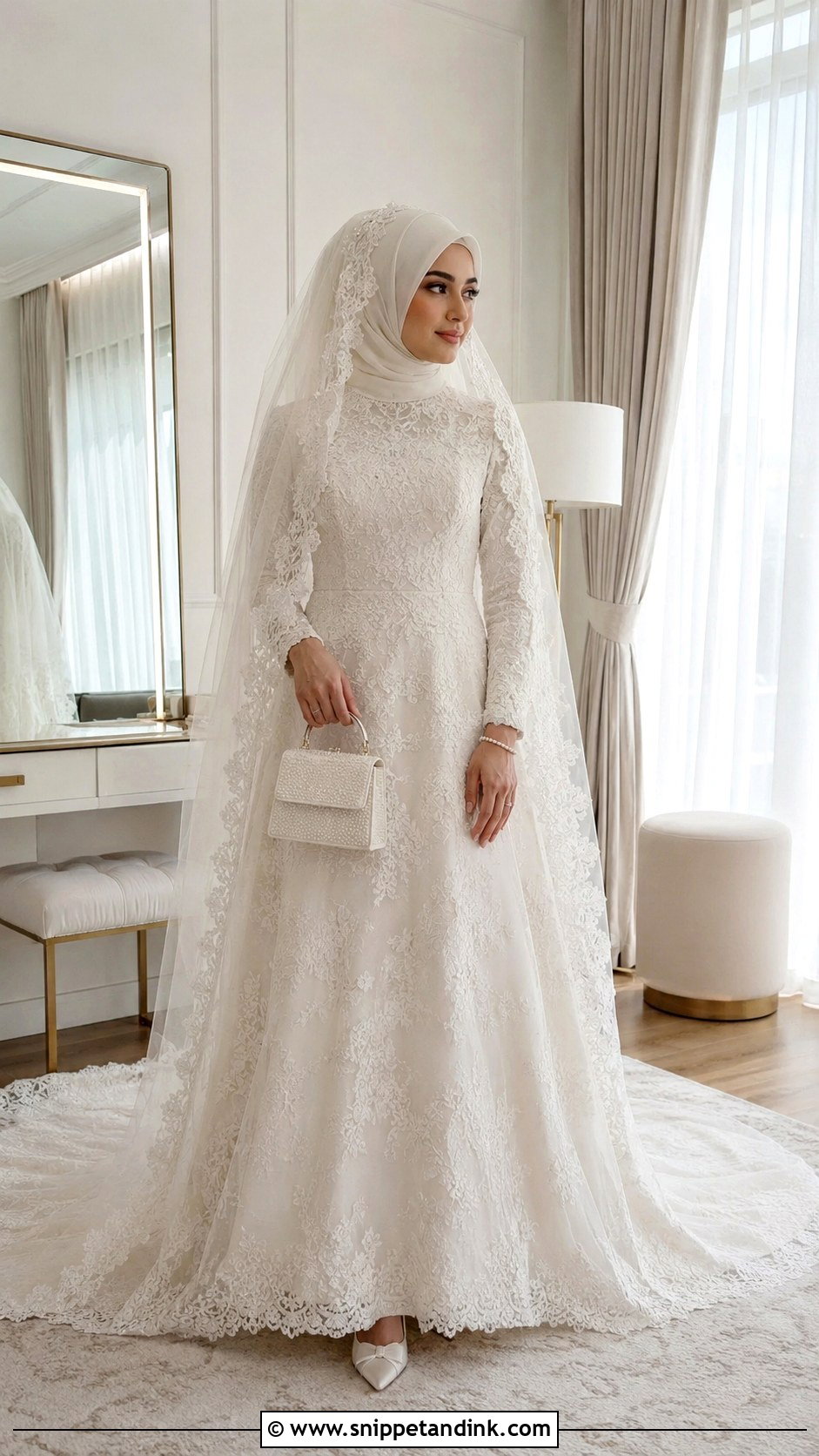
Lace works for modest brides as long as every lace panel has something solid behind it. I look for an A-line with a fully lined bodice, opaque sleeves and appliqués placed at the shoulders, cuffs and skirt. Unlined illusion panels are the usual problem: they look covered in the shop and show skin in flash photos. Keep the hijab plain ivory so the lace isn’t fighting a second pattern, and choose a tulle veil with only a narrow lace edge. Closed-toe kitten heels, a pearl bracelet and a structured mini bag complete it. It feels bridal at the mosque, in a hall or at a small family gathering.
3. Minimalist Crepe Muslimah Wedding Dress
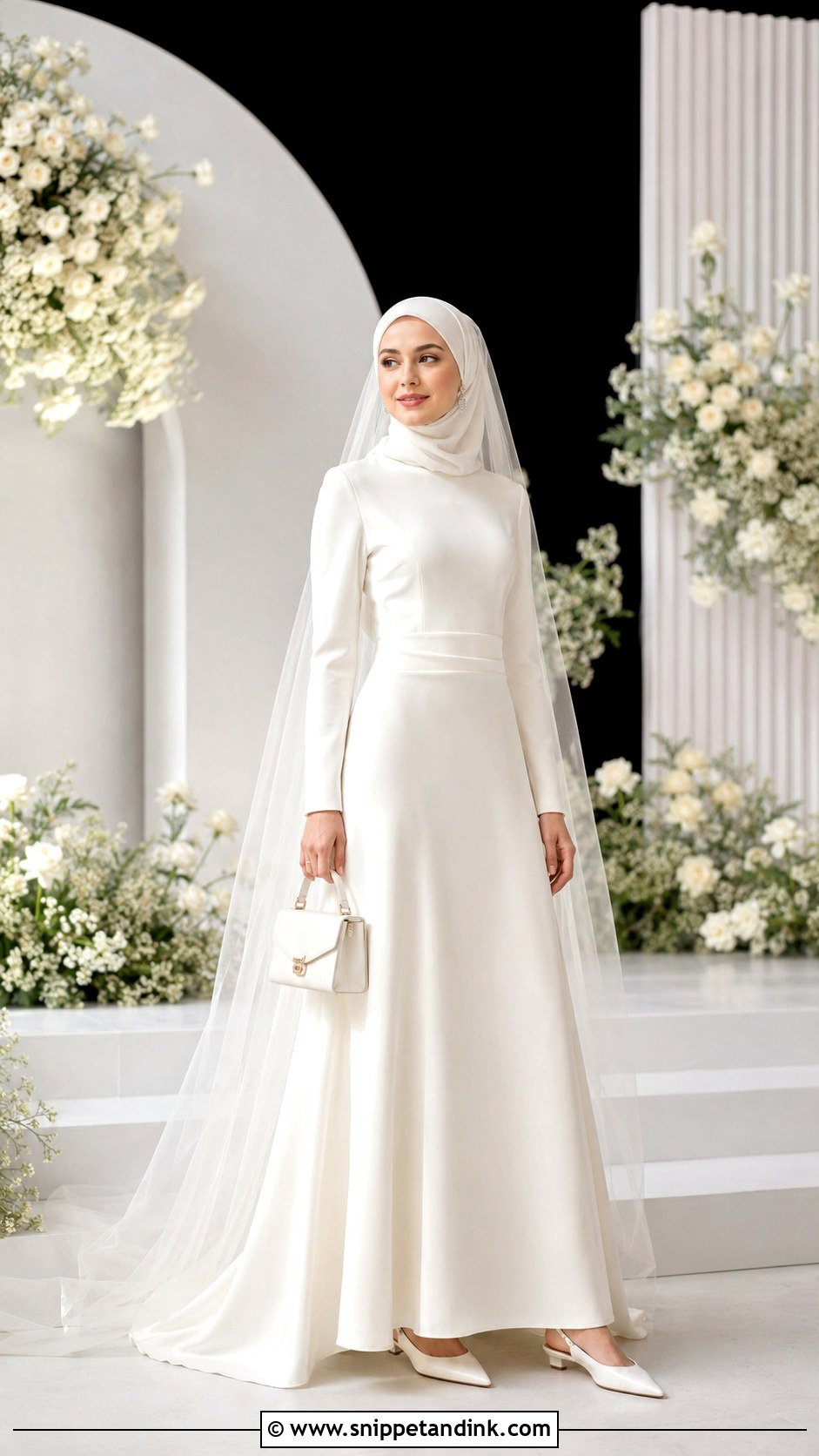
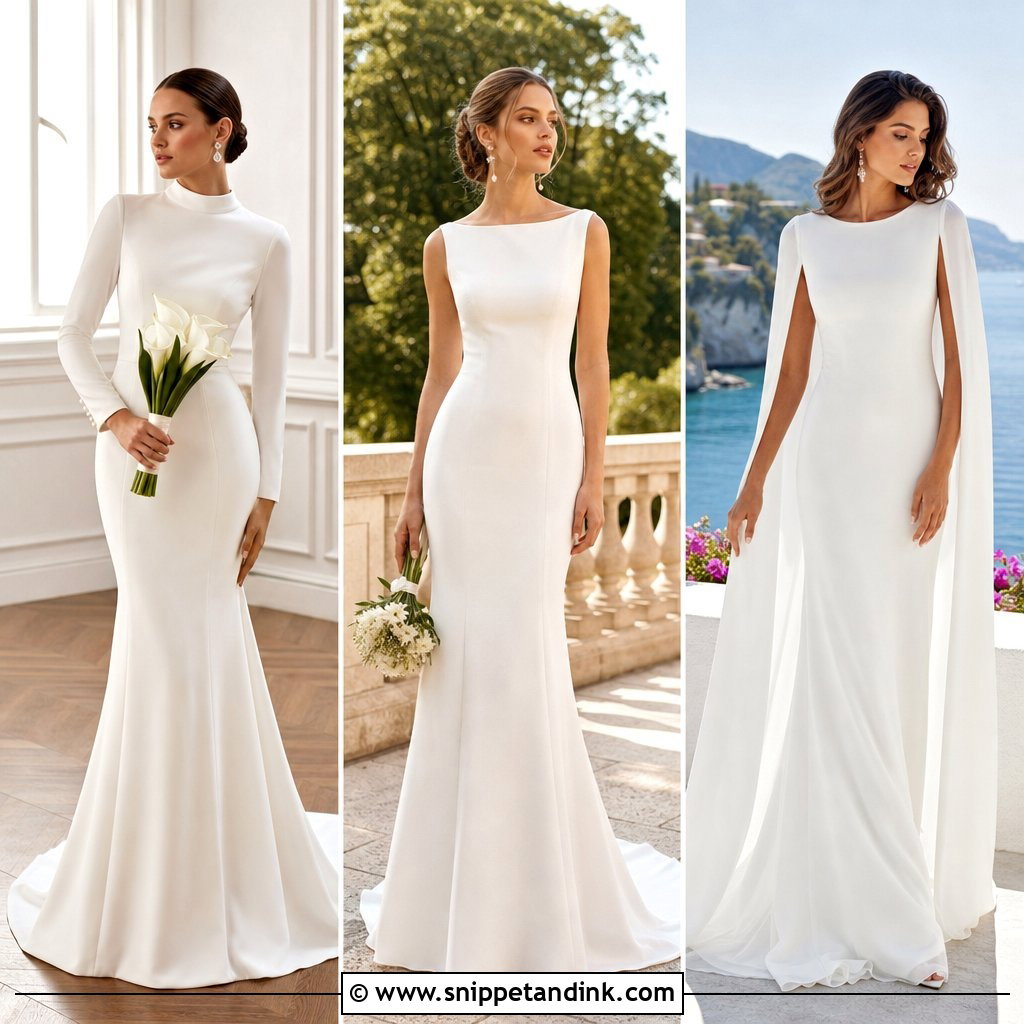
Crepe is the fabric I’d choose for a bride who wants the least decoration possible. A softly structured bodice, a high boat neckline, long straight sleeves and a gently flared skirt make one clean line from shoulder to floor. Ask for heavyweight crepe; thin crepe clings at the hip and shows the lining seams. A matte chiffon hijab in matching ivory, a long plain veil, and pointed pumps or slingback flats are all it needs, plus small crystal earrings, a little bouquet and a white top-handle bag. With so little detail, the fit is everything, so budget for good tailoring.
4. White Bridal Abaya Muslimah Wedding Dress
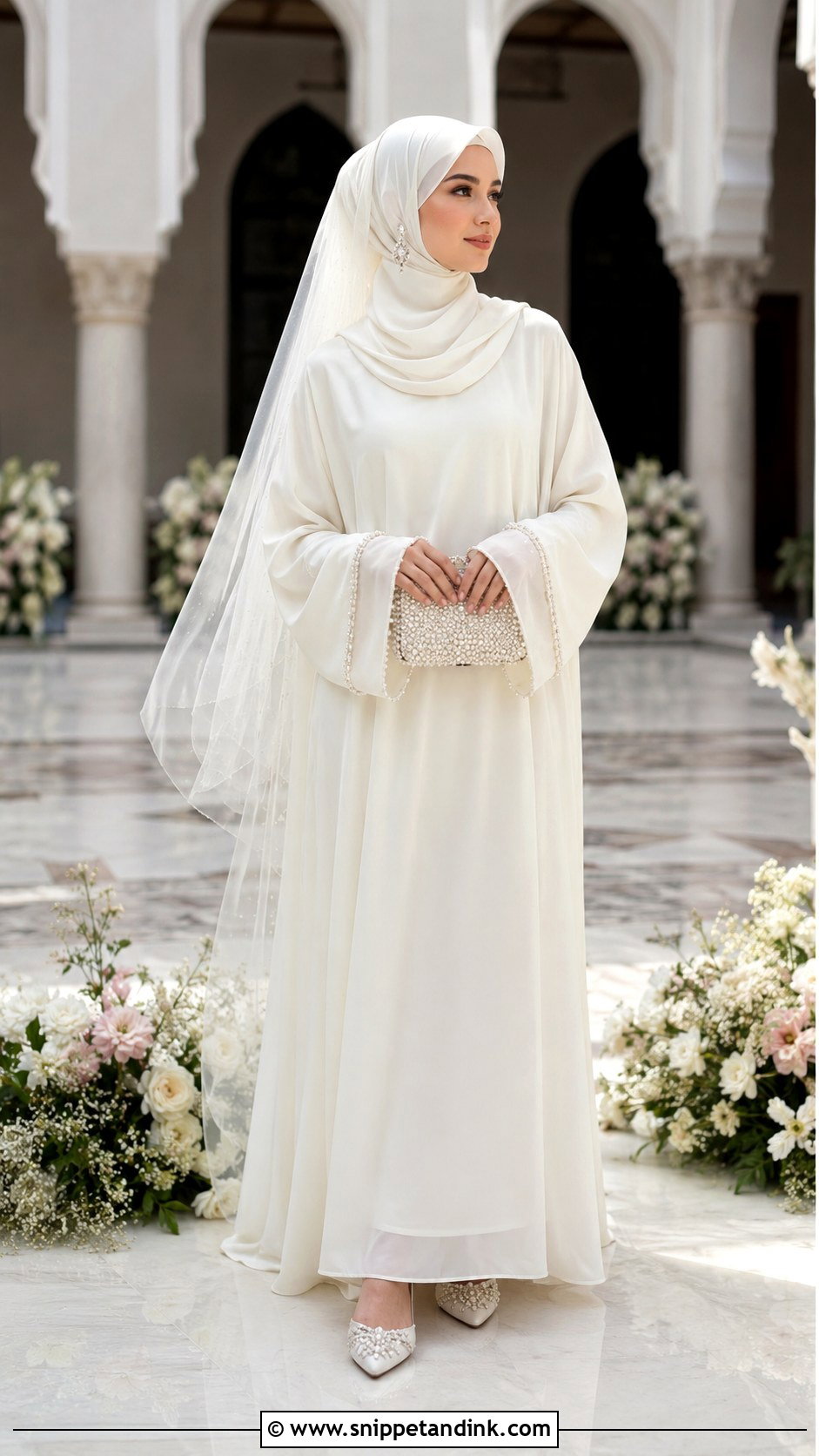
For a nikah, courthouse ceremony or relaxed reception, a white abaya is often more practical than a gown. Choose a closed style in a loose A-line with wide sleeves and a little pearl or bead work at the cuffs. Bright ceremony lights go straight through thin abaya fabric, so I always add an opaque inner slip. A draped chiffon hijab and a light shoulder veil that falls behind the arms suit it, with white pointed flats or low embellished mules. One jewelry detail is enough: crystal drops or a fine brooch, plus a pearl clutch. You can greet guests, pray and eat in it without a second thought.
5. High Neck Chiffon Muslimah Wedding Dress
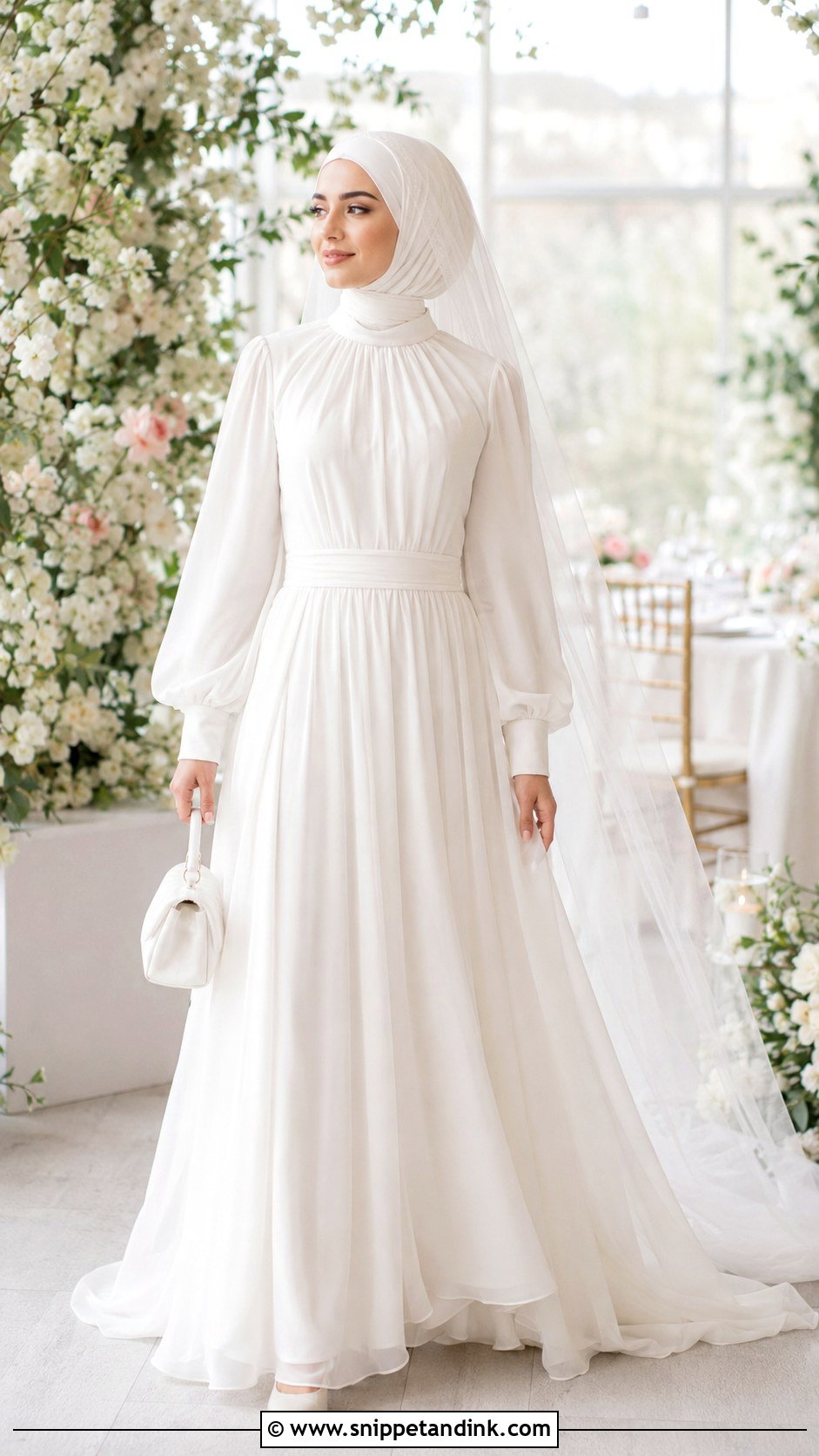
Chiffon moves beautifully and stays cool, which makes it my pick for spring and warm indoor halls. Look for full lining, a high gathered neck, long bishop sleeves with fitted cuffs and a layered skirt. On a petite frame, a defined waistband stops all that fabric from swallowing you. Wrap an opaque chiffon hijab close to the face and add a floor-length veil behind it, with ivory block heels for stability under the floaty skirt. Pearl pins, a slim bracelet and a compact satin bag keep things light. Chiffon layers shift as you walk, so check the outfit in daylight and indoor light before the day.
6. Pearl Embellished Muslimah Wedding Dress
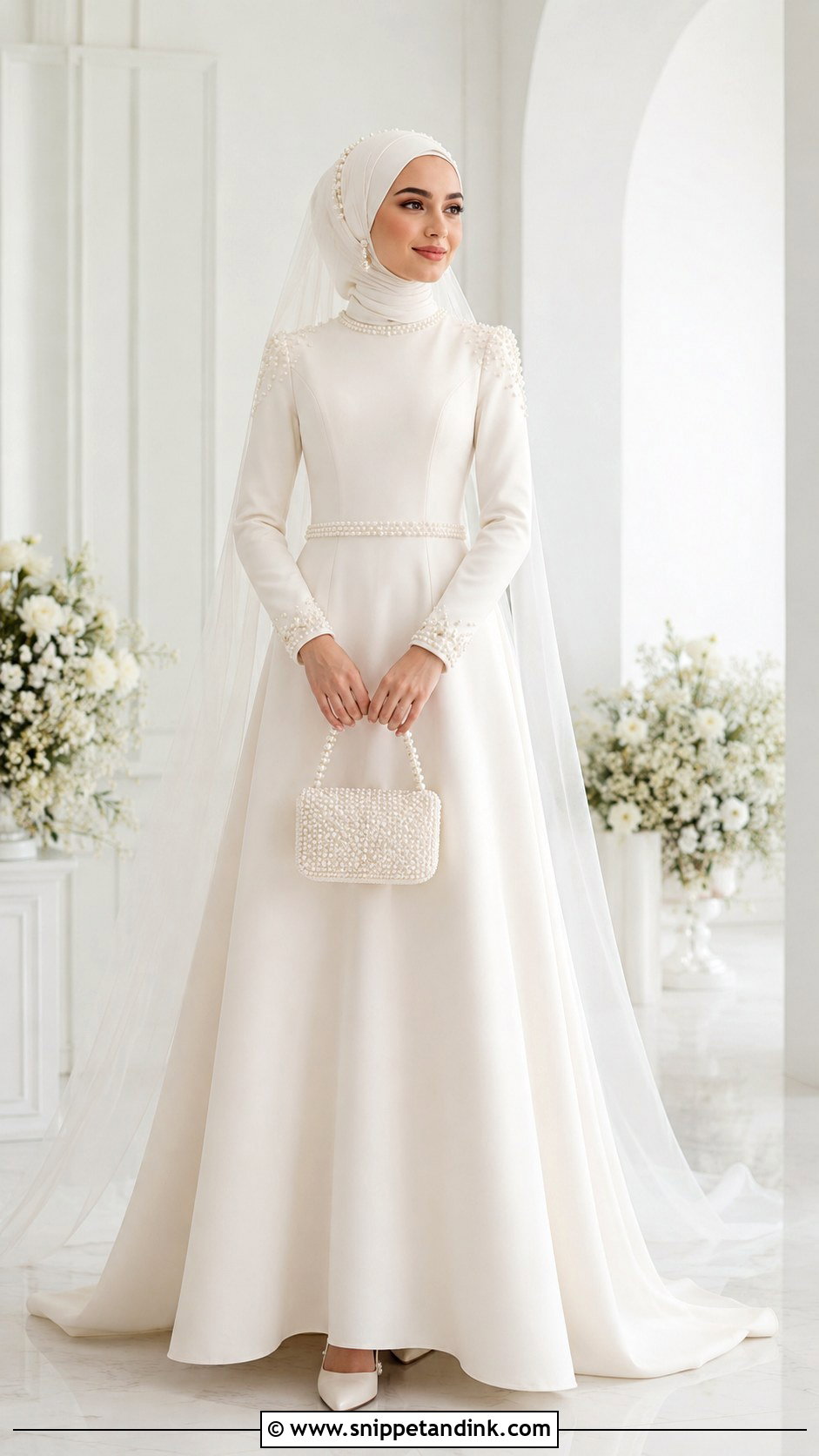
Small pearls add polish to a plain gown without tipping into ornate. My approach is to start from a matte satin or crepe A-line with a high neck, fitted long sleeves and a closed back, then cluster pearls only at the cuffs, shoulders and waist so the skirt stays plain and the eye goes up to the face. A smooth ivory hijab with a few matching pearl pins on one side ties it together. Add a plain tulle veil, pearl earrings, closed-toe low heels and a small beaded bag. Run your hand over the shoulder pearls before the day: anything sharp will pull threads in a chiffon hijab or catch the veil.
7. Cape Sleeve Muslimah Wedding Dress
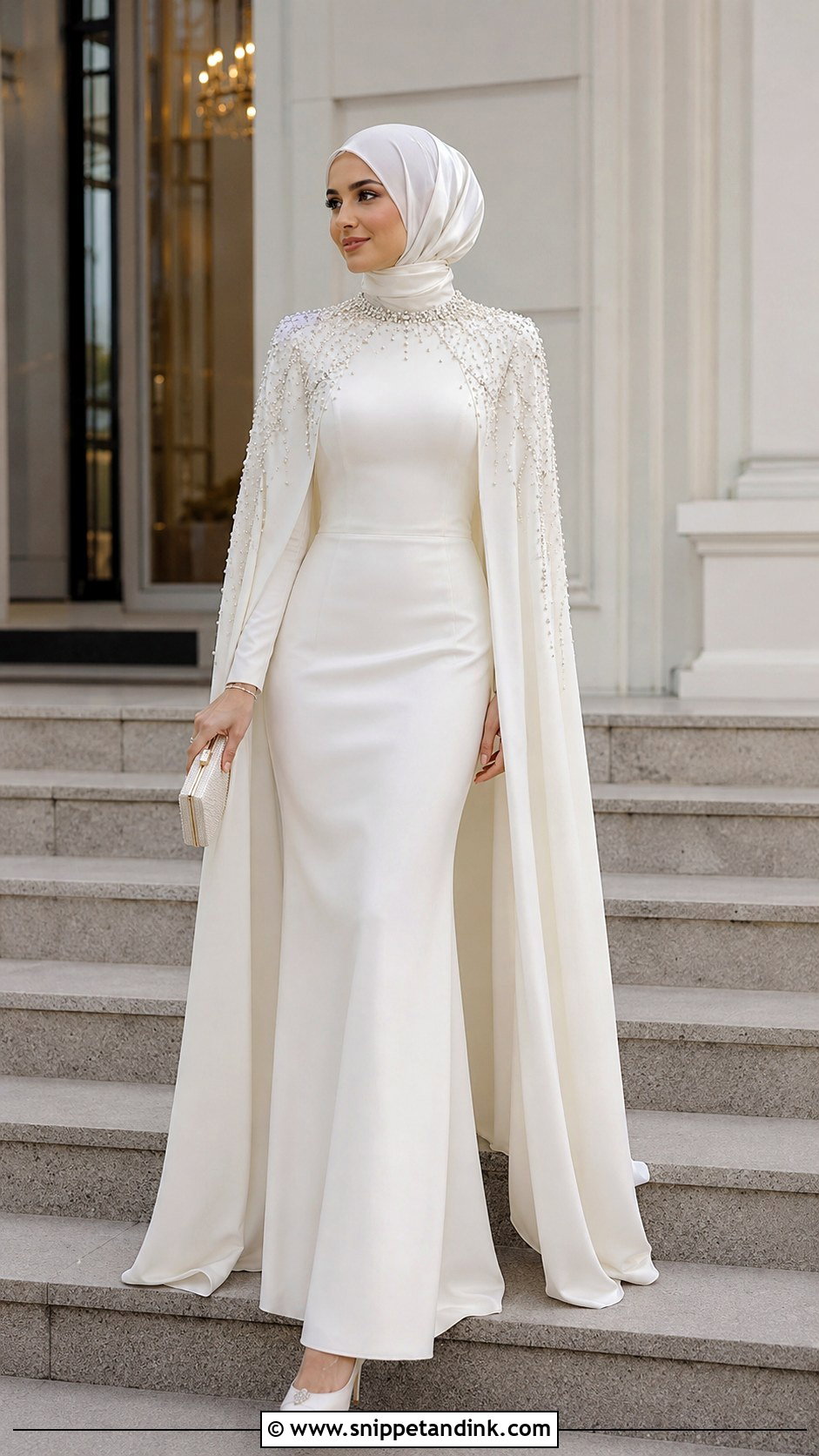
A floor-length cape gives drama without decorating the skirt. The dress underneath must have full sleeves of its own, because a cape swings open when you walk and you don’t want bare arms showing in those moments. Choose a straight or softly flared gown with an opaque high-neck bodice. A fitted satin hijab in the gown’s exact shade makes one continuous color from head to hem. I’d keep the veil short or skip it, since the cape already brings movement. Pointed ivory pumps, crystal studs and a box clutch suit the shape. Have the cape and hem tailored together so fabric doesn’t pool around your feet.
8. Pleated Skirt Muslimah Wedding Dress
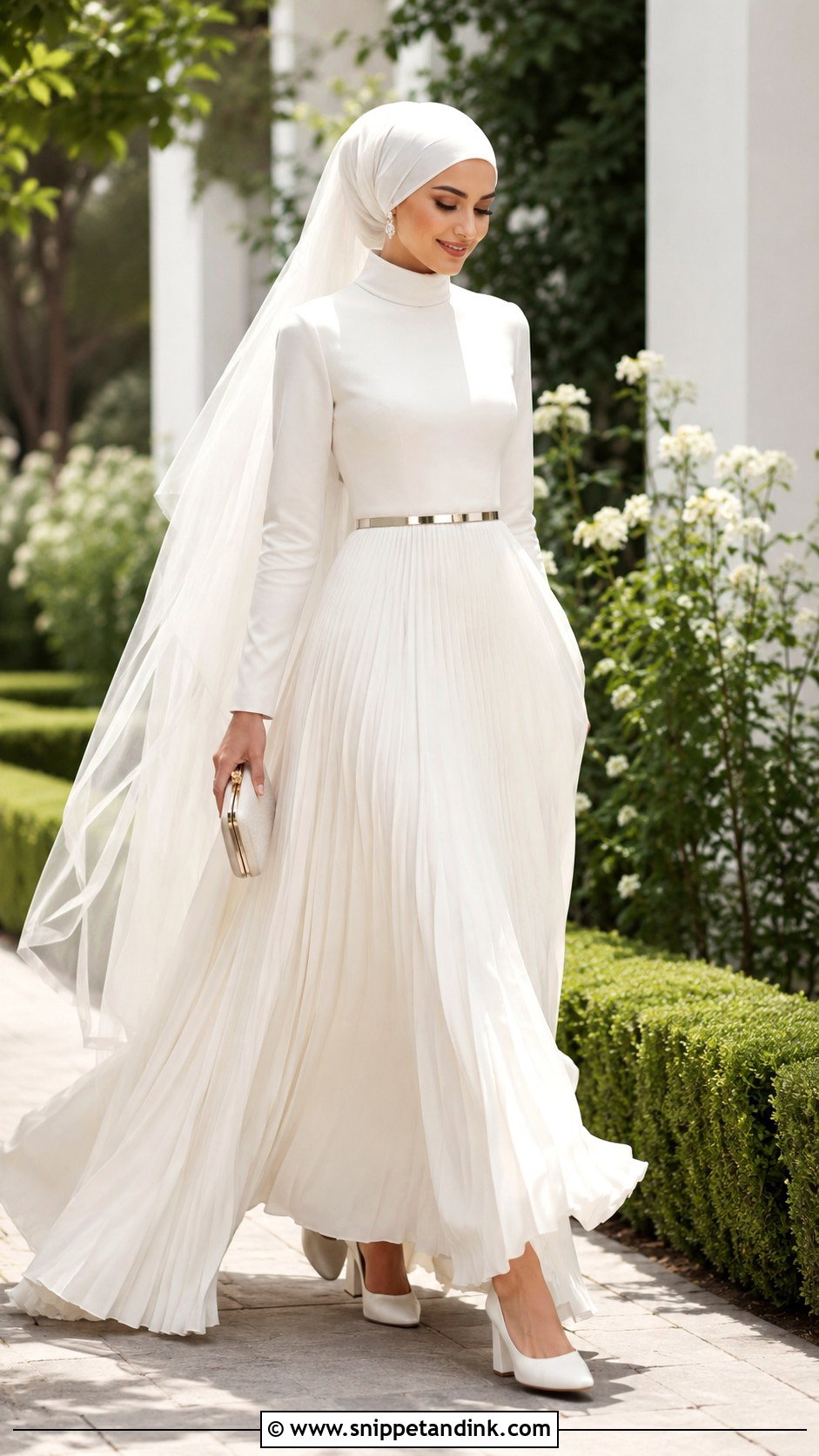
Pleats give texture and swing in place of lace or beading. A plain high-neck bodice, fitted sleeves and a full pleated skirt from the natural waist is the formula. Chiffon pleats float; satin pleats hold a firmer shape and suit a formal hall better. Wrap a matching matte hijab neatly and add a light veil that ends below the waist. Block heels stay mostly hidden and keep you steady. A slim metallic belt, pearl earrings and a small ivory clutch are plenty. I’d avoid anything else at the waist, as pleats already pull the eye there. One practical note: sharp pleats crush in a suitcase, so plan to steam on the morning.
9. Empire Waist Muslimah Wedding Dress
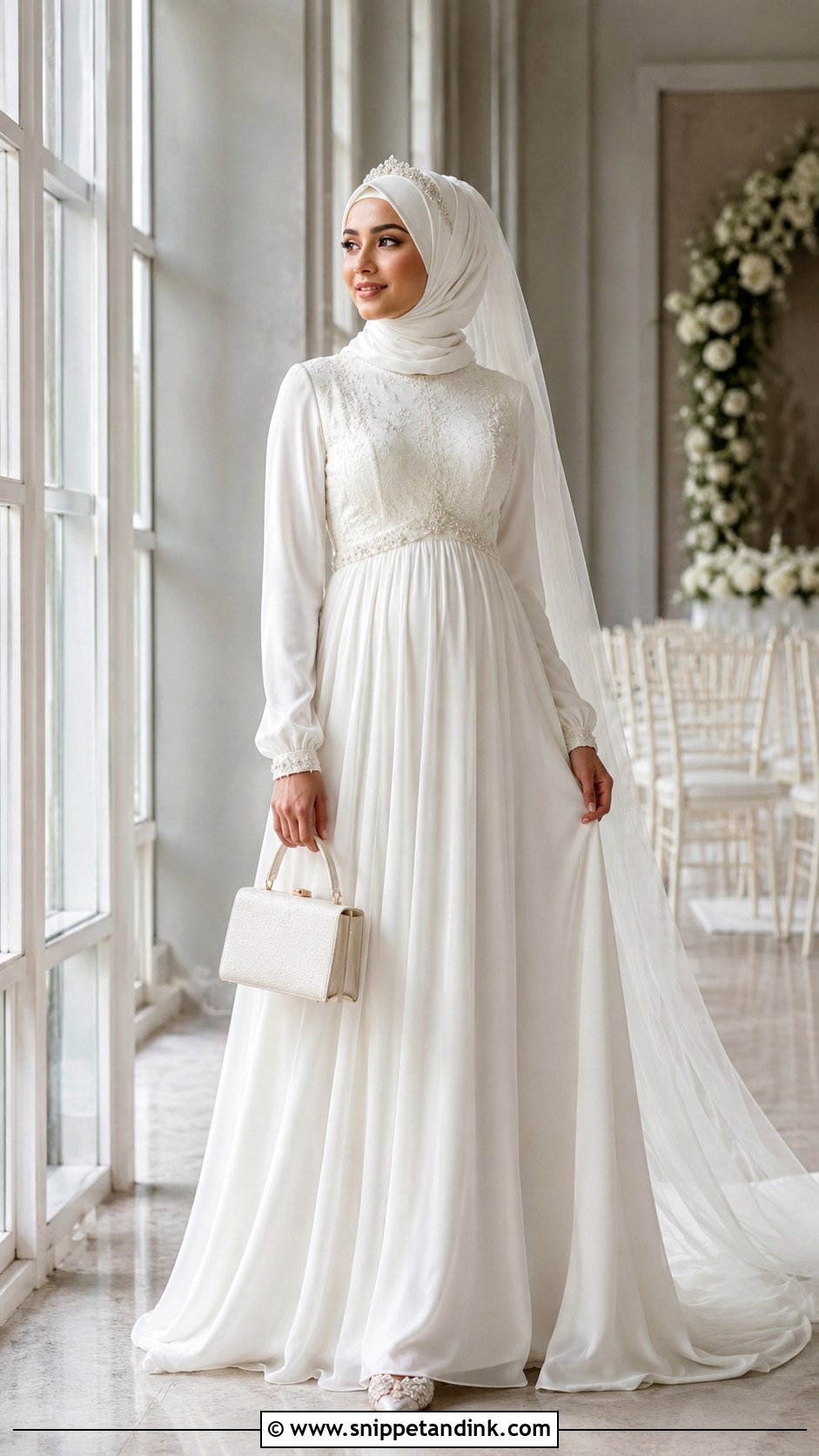
Comfort is the reason to wear an empire waist. The seam sits just under the bust and the skirt falls freely, so nothing presses on your stomach through a long meal. Look for a high neck, opaque sleeves and a skirt that drops gently rather than billowing. Fully lined matte chiffon, crepe or light satin all work. A matching hijab with a narrow crystal headband worn over it and a plain veil at the back look graceful together. Low ivory heels or embellished flats, a fine bracelet and a small structured bag complete it. Because it’s forgiving through the middle, it’s a good option for a bride who’s expecting, but the shoulders and sleeve length still need fitting.
10. Modest Ball Gown Muslimah Wedding Dress
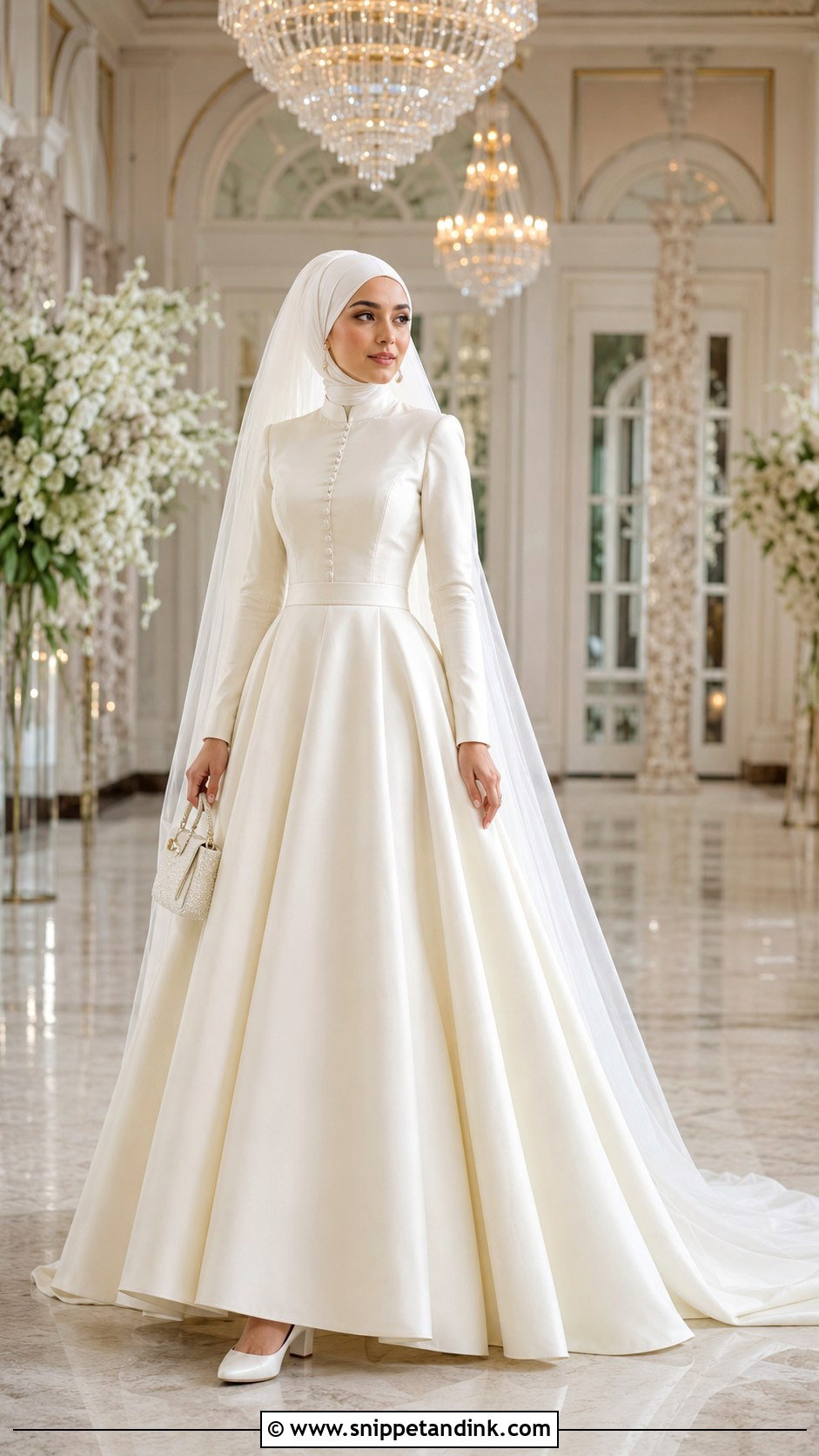
A ball gown can still read as simple if the volume is controlled. Choose opaque satin with a high neck, long sleeves, a fitted waist and a full skirt without ruffles; a few covered buttons or a narrow belt is enough detail. A sleek ivory hijab and a plain cathedral veil anchored behind the crown balance the skirt. Keep the rest quiet with pearl studs, a small top-handle bag and block-heel pumps. When I fit a ball gown, I always check the petticoat weight. Several heavy layers make sitting difficult and pull on the waist all day, and a lighter hoop or fewer layers usually solves it.
11. Floral Appliqué Muslimah Wedding Dress
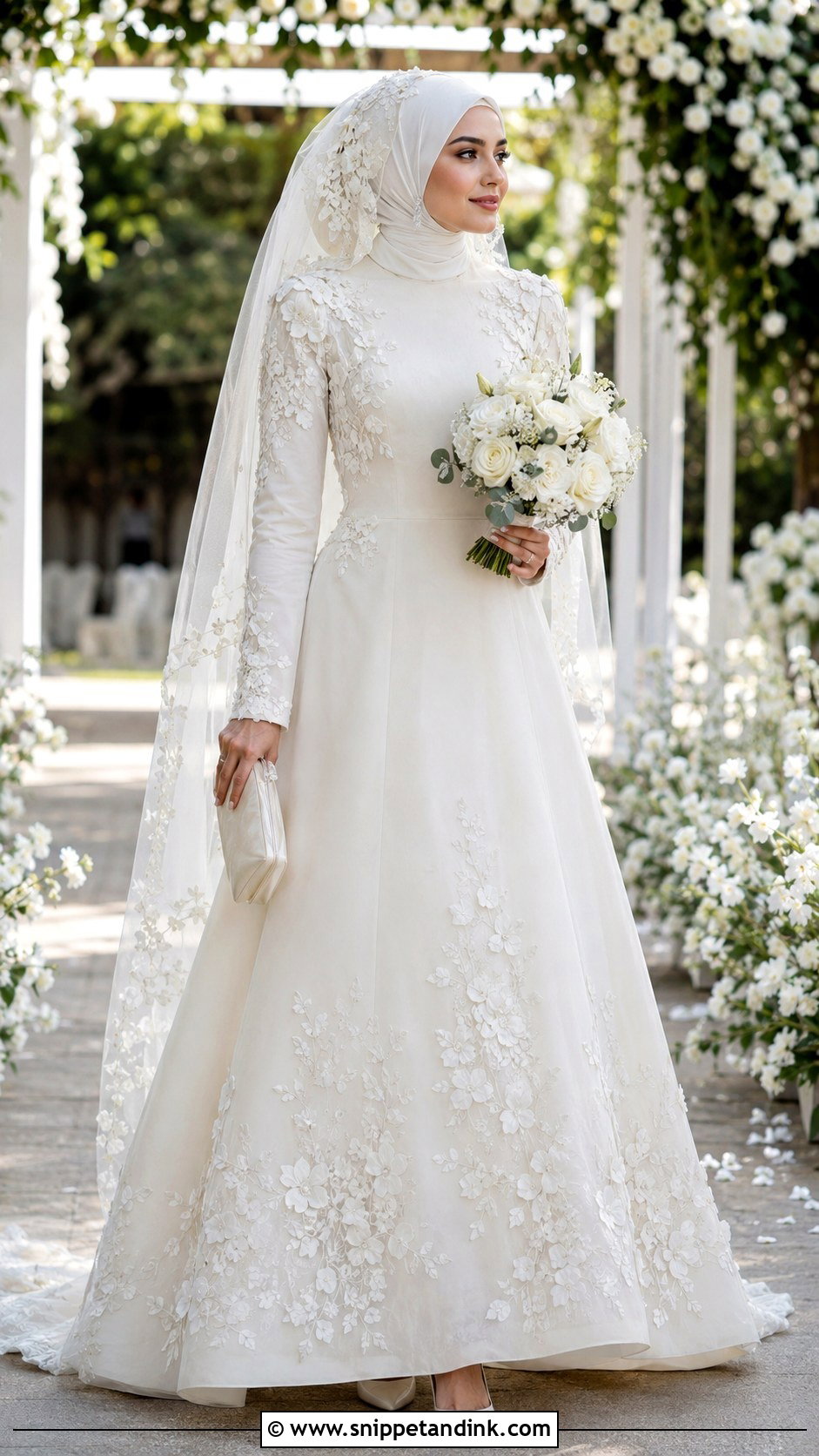
Appliqué flowers should leave plenty of plain fabric around them; that space is what keeps the gown simple. Start from an ivory A-line with a high neck, full sleeves and a lined bodice, and place tonal flowers at the shoulders, upper sleeves and lower skirt. A smooth chiffon hijab works far better than a printed one here. A narrow appliqué edge on the veil connects it to the dress. Closed-toe ivory heels, crystal earrings and a plain satin clutch finish the look, and white flowers in the bouquet can echo the motif. It suits a garden party and still feels right in a mosque or indoor hall.
12. Button Front Muslimah Wedding Dress
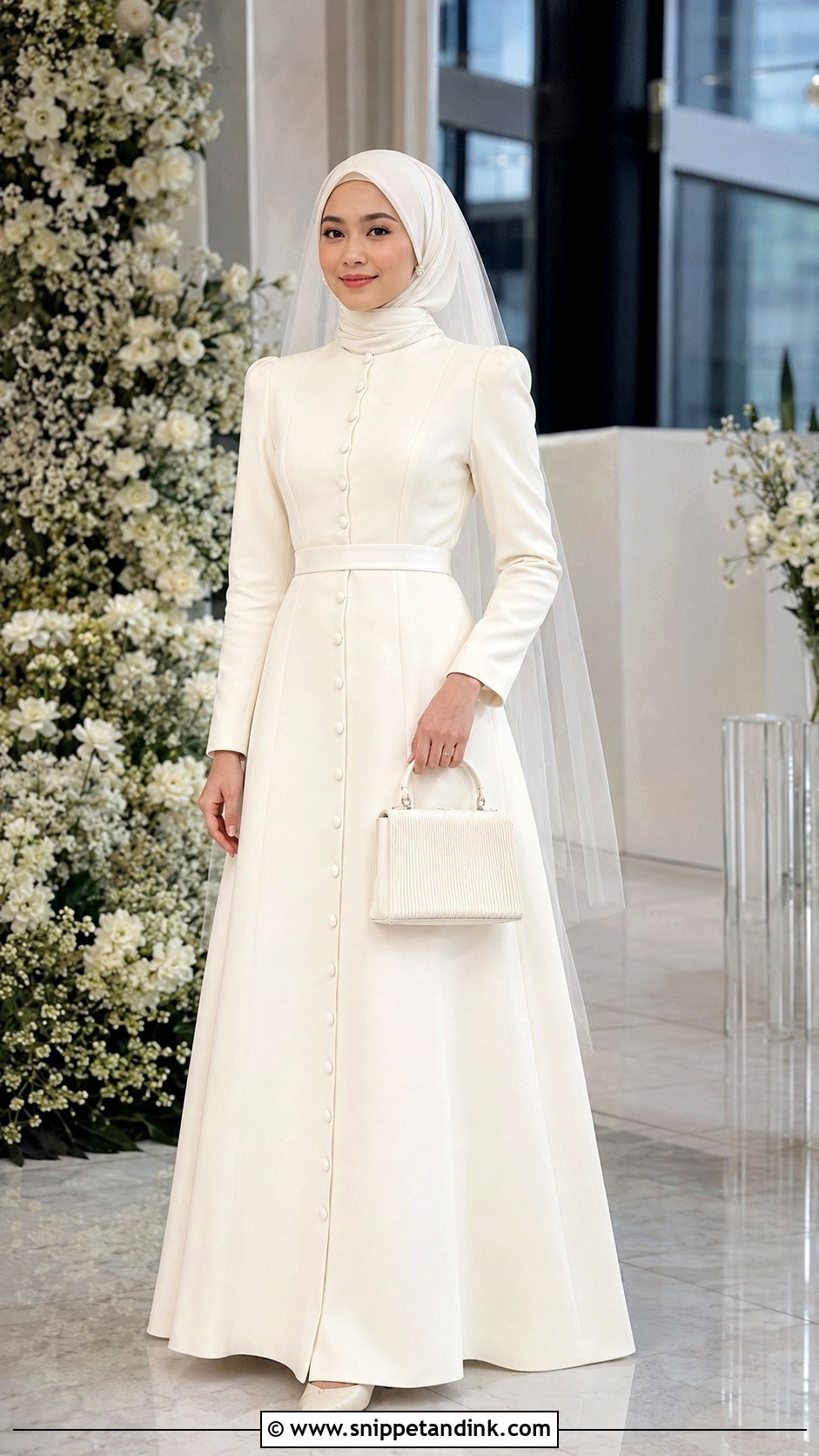
Covered buttons give a modest dress quiet detail without lace or sequins. Choose crepe or satin in an A-line with a high neck, structured shoulders, fitted sleeves and buttons down the front bodice or back. If the front buttons actually open, I insist on an opaque inner panel behind them, because buttons gap when you sit and reach. A matching chiffon hijab with the veil set behind it keeps the buttons visible. Pointed closed-toe flats, pearl studs, a structured ivory bag and a narrow satin belt complete it. Closely spaced buttons lie flatter than widely spaced ones, so count them before you buy.
13. Bell Sleeve Muslimah Wedding Dress
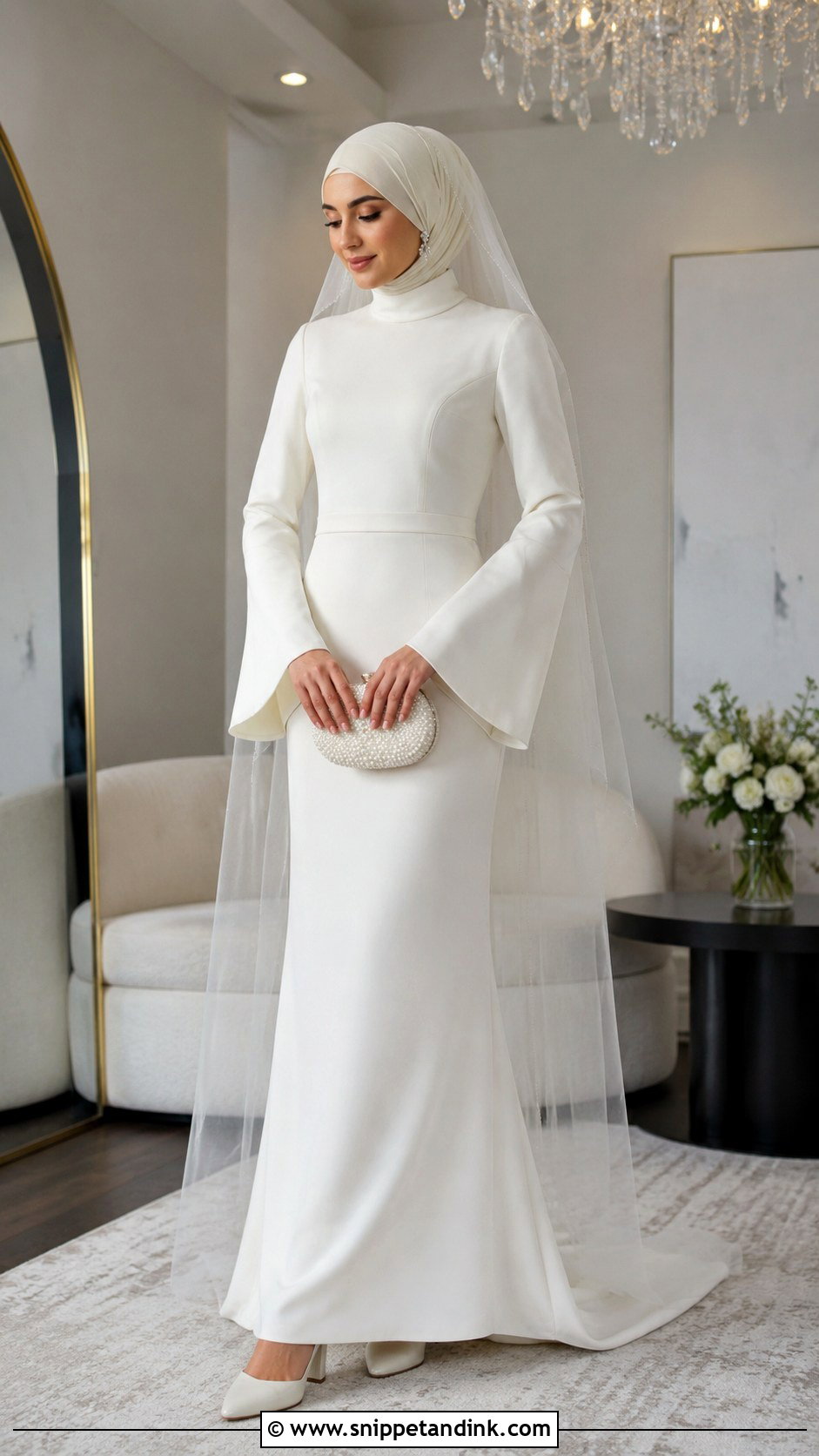
Bell sleeves should hug the upper arm and widen only below the elbow. Pair them with a fully lined crepe gown, a high neck, a soft waist and a straight or A-line skirt. Watch the cuff length: very wide, long bells drag through food and get in the way of the bouquet, so hold your arms out at the fitting and look. A neat ivory hijab, plain fingertip veil, block heels and a small pearl clutch suit it. Bracelets disappear under the cuffs, so I’d choose crystal earrings or a hijab brooch instead. It’s a flowing Muslimah wedding look that stays streamlined through the body.
14. Modest Mermaid Muslimah Wedding Dress
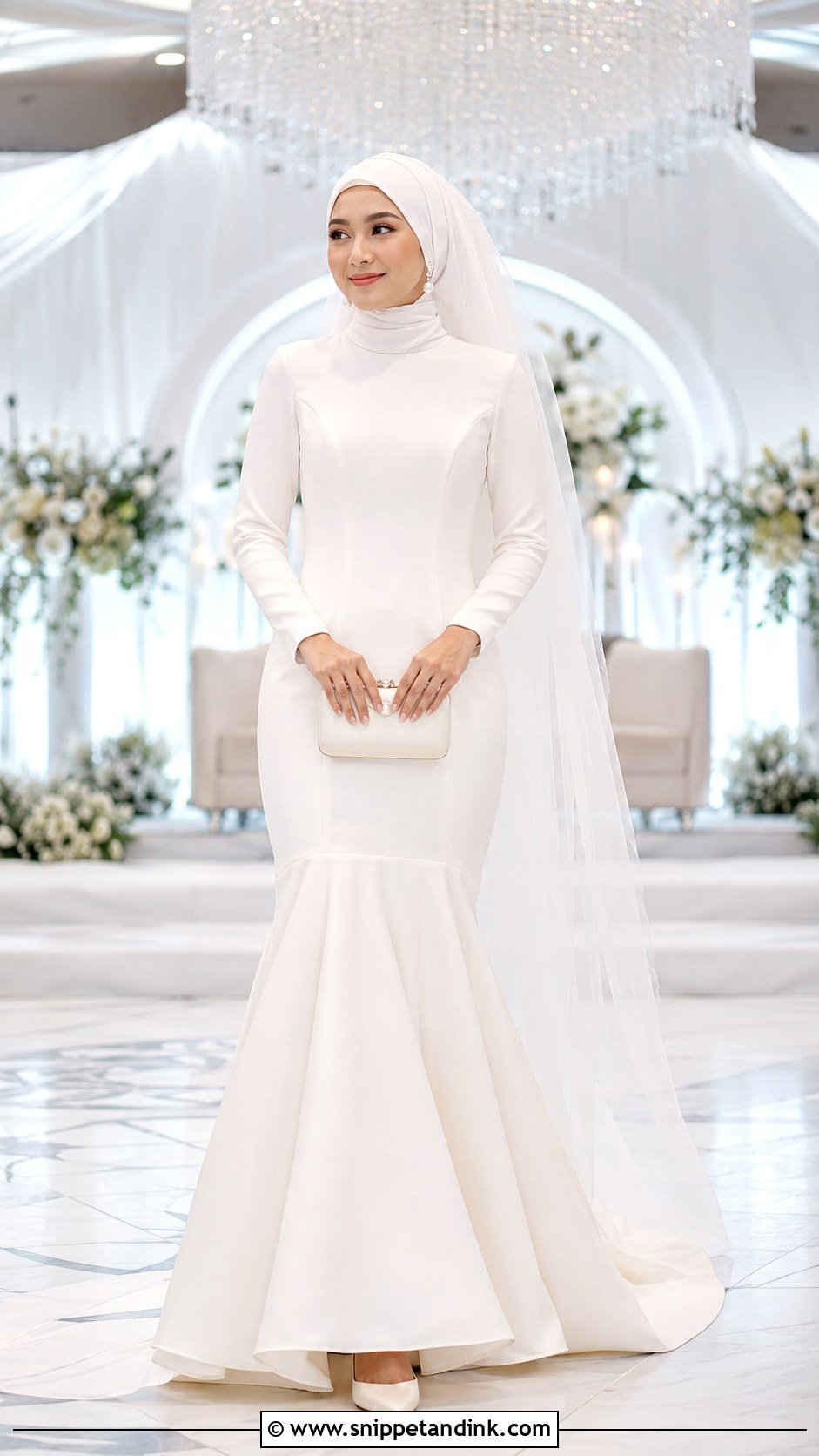
Modest mermaids can work, but I fit them a touch looser through the hips than a standard mermaid. Choose opaque crepe or satin with a high neck, closed back and long sleeves, with the flare starting at the knee. The relaxed hip lets you walk normally, and on a long day that matters more than a sharp outline. A simple chiffon hijab and a long plain veil that follows the gown’s shape suit it. Pointed closed-toe heels lengthen the line; pearl earrings and a small satin clutch finish it. Practice sitting in it at every fitting, and ask for a discreet bustle for the train. It suits evening receptions in modern venues.
15. Embroidered Waist Muslimah Wedding Dress
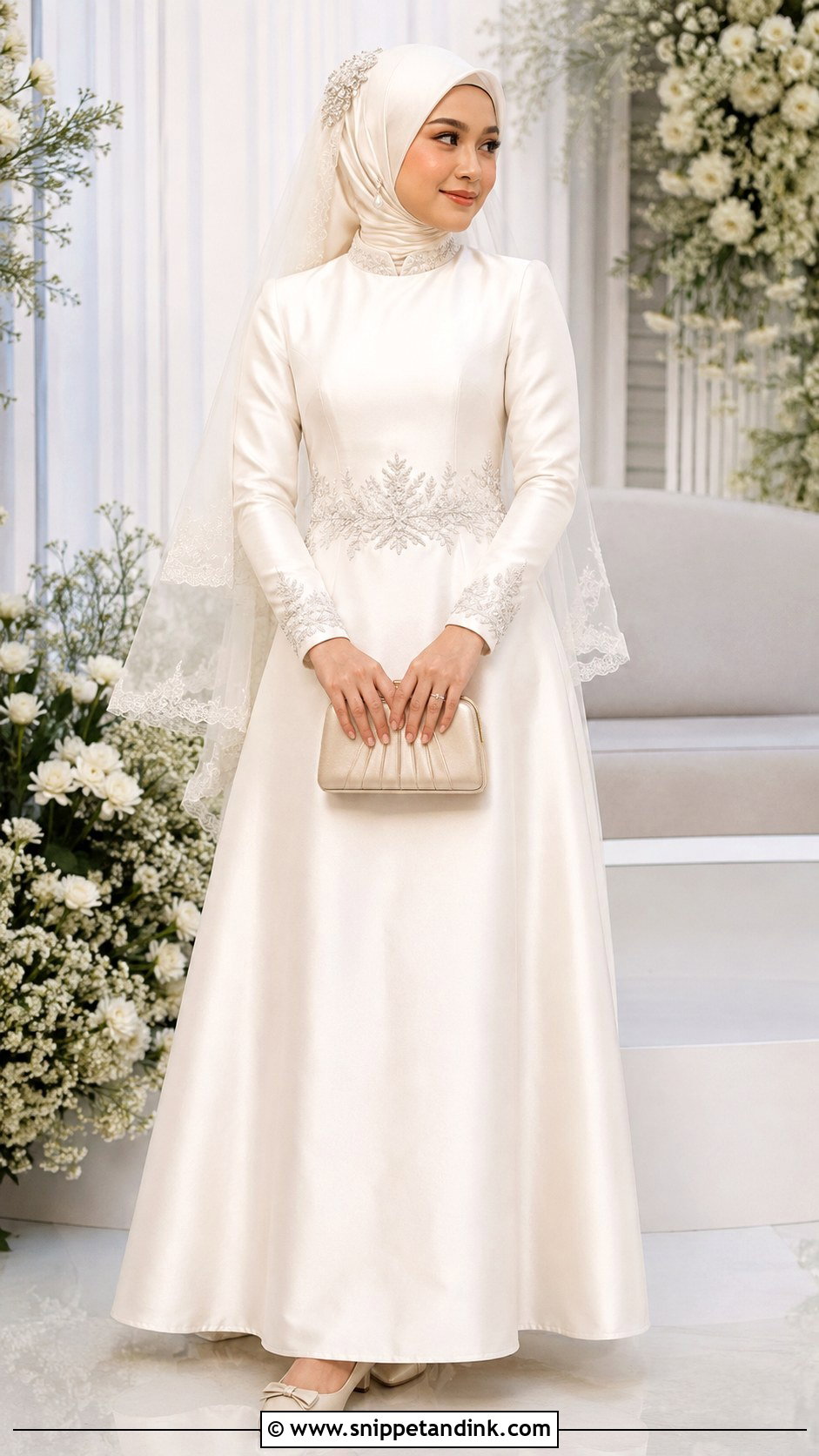
Embroidery at the waist gives the gown one focal point and leaves the rest calm. Choose ivory satin in an A-line with a high neck, long sleeves and a soft skirt, and keep the embroidery tonal: white, silver or champagne. Repeat it with a small embroidered pin on the hijab, which should match the main gown color. A plain shoulder-length veil keeps the waist visible from behind. Closed-toe kitten heels, understated earrings and an ivory or champagne clutch suit it. Hold your bouquet low or choose a small one, otherwise you’ll cover the very detail you chose the dress for.
16. Two Piece Muslimah Wedding Dress
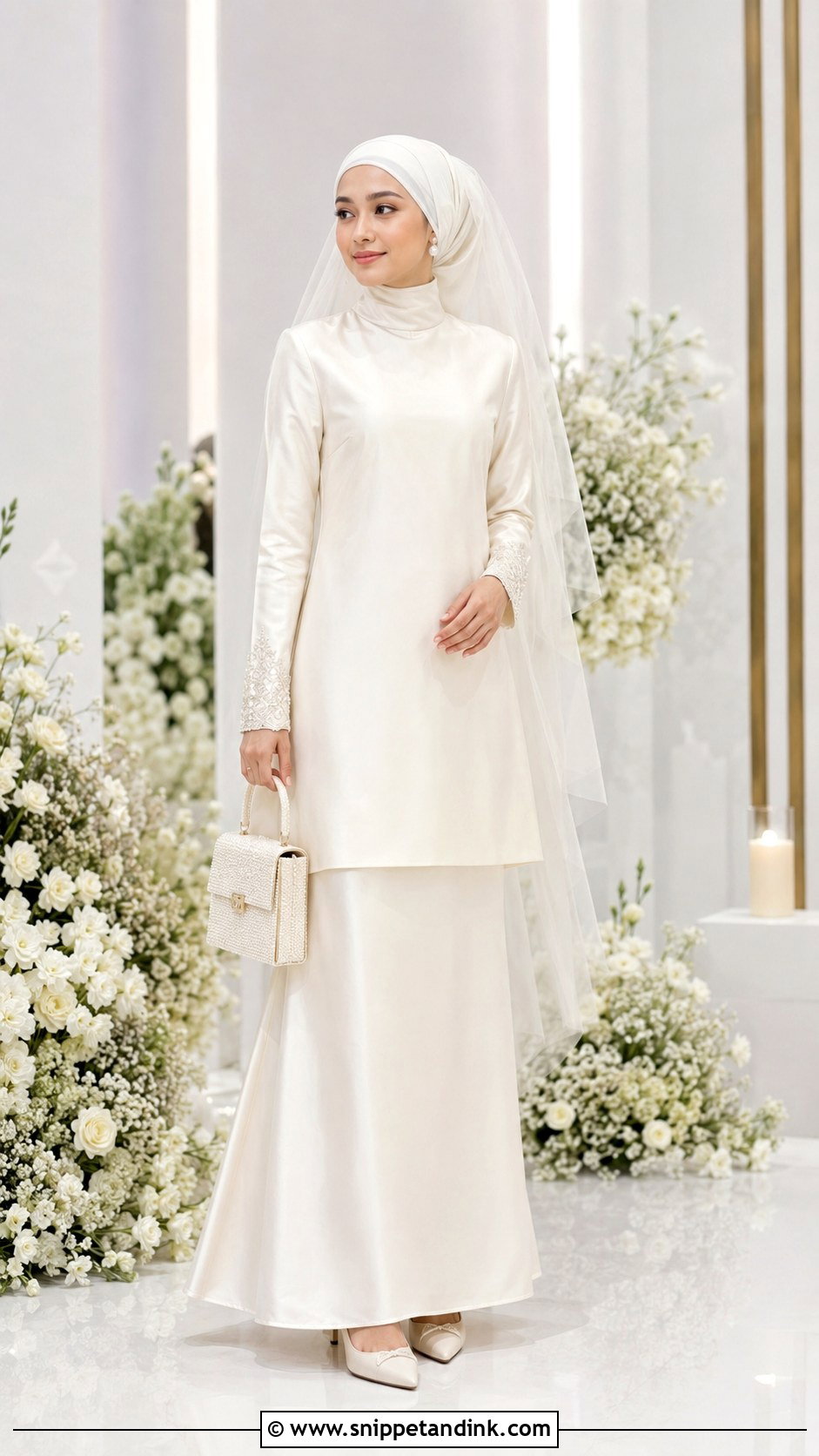
A two-piece is the most practical modest outfit I style. A long tunic with a high neck and long sleeves goes over a floor-length A-line skirt in the same opaque crepe or satin. The tunic should end below the hips and lie flat over the skirt’s waistband; a bulky join shows in every seated photo. Keep both pieces the same ivory, buying them together if you can, since dye lots vary. Embroidery at the cuffs or hem links them. Add a matching chiffon hijab with a light veil behind it, closed-toe pumps, pearl earrings and a box bag. Each piece can be altered separately, and you can swap the top for the reception.
17. Blazer Gown Muslimah Wedding Dress
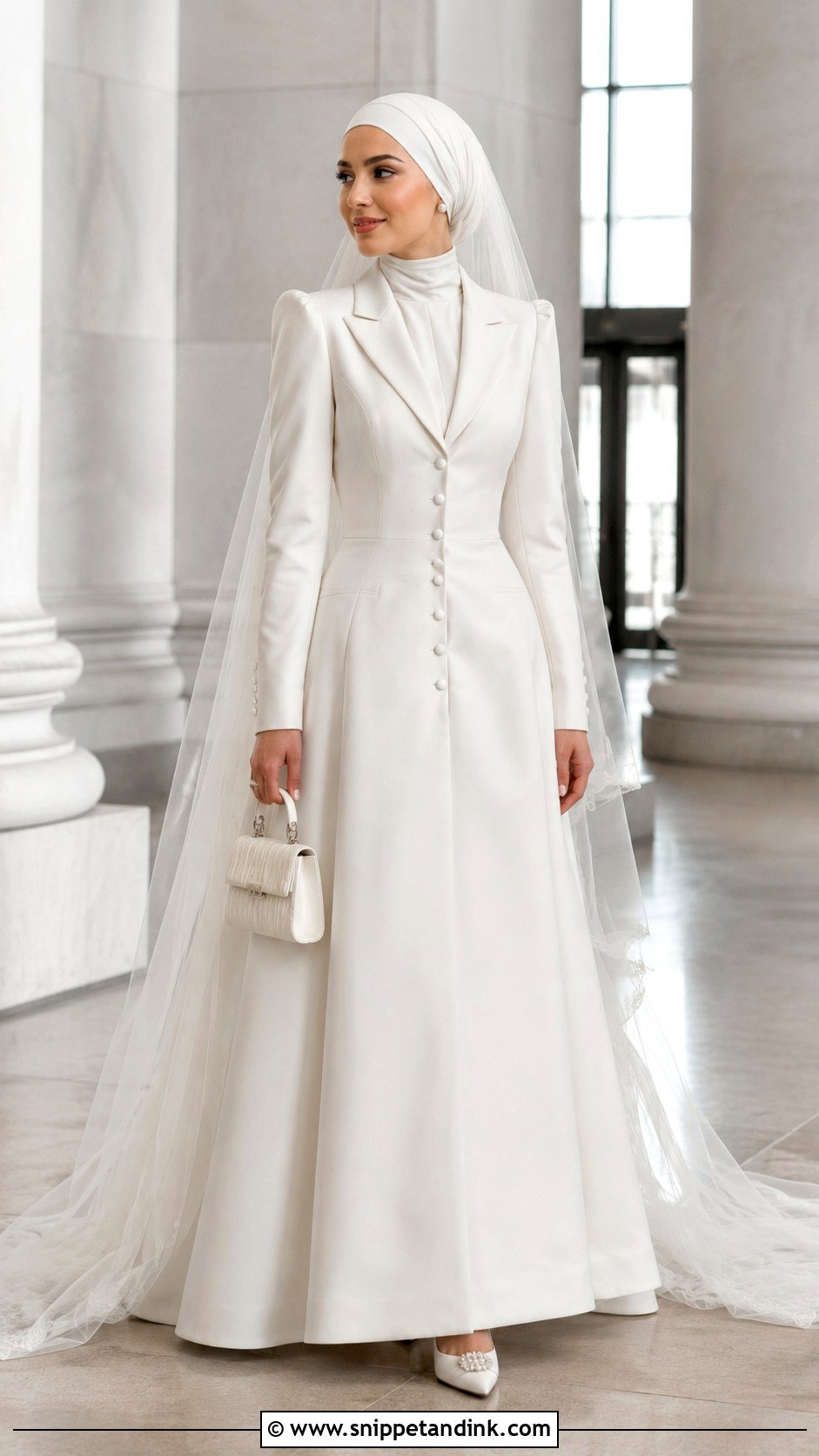
A bridal blazer gown gives a sharp, tailored look for a civil ceremony, modern nikah or small reception. Look for a long ivory blazer dress with covered buttons, full sleeves and a floor-length A-line skirt from a tailored waist, worn over an opaque camisole or bodysuit with a high neck. The jacket moves when you sit, and the layer underneath keeps you covered. A neatly wrapped satin hijab and a short shoulder veil sit well with it. Pointed pumps, pearl studs and a structured mini bag keep the mood crisp. I’d avoid wide lapels near a hijab; they crowd the face. Shoulder and sleeve alterations are where this look succeeds or fails.
18. Champagne Muslimah Wedding Dress
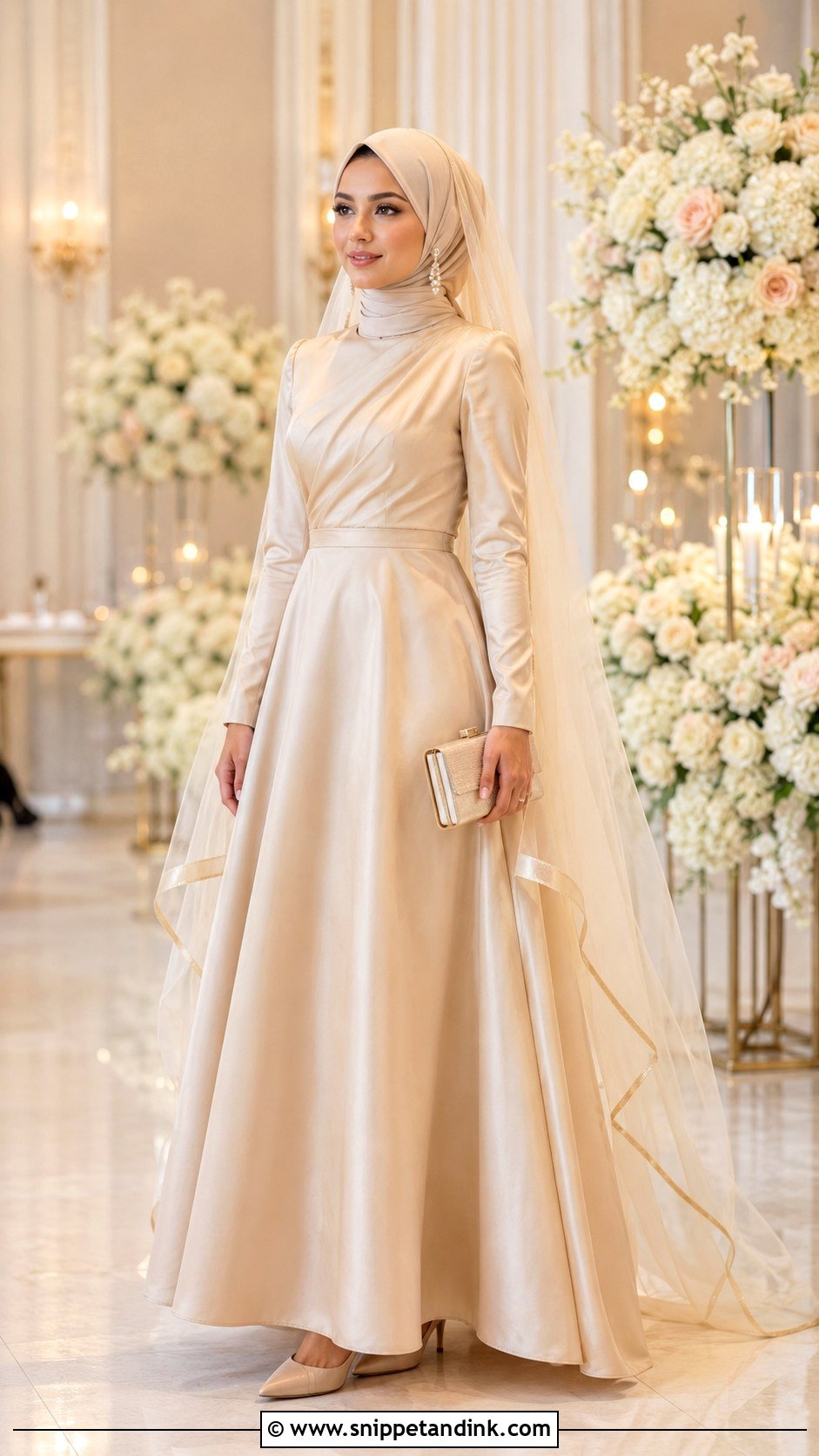
Champagne is softer than bright white and flatters warmer skin tones. Choose a long-sleeve satin gown with a high neck, closed back, a gently fitted waist and an A-line skirt. You can match the hijab in champagne or go a shade lighter in ivory for slight contrast. A plain tulle veil with a narrow champagne edge links the colors. Nude or champagne closed-toe heels keep the line unbroken, and pearl earrings with a metallic box clutch add some shine. Look at the gown under the venue’s lighting if you can; warm bulbs can push champagne toward gold, while daylight cools it.
19. Pastel Muslimah Wedding Dress
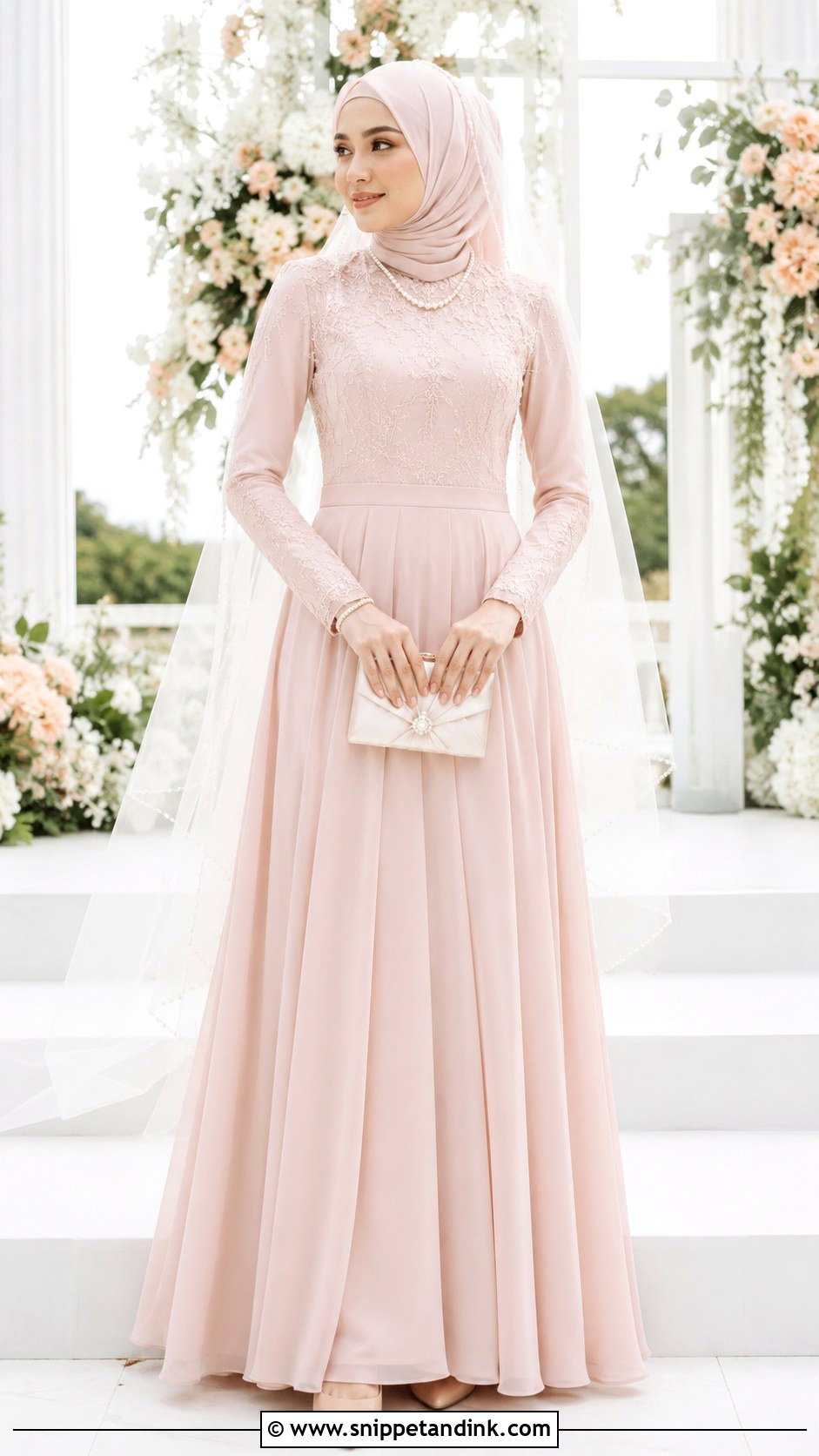
Pastels give color without loudness, and they make a good second outfit for a family celebration after the nikah. Blush, powder blue, sage and muted lavender all work in an opaque crepe A-line with a high neck, long sleeves, closed back and soft waist. Match the hijab closely or go a shade lighter from the same family. An ivory veil keeps it clearly bridal. Closed-toe neutral heels, pearl jewelry and a small satin clutch stop the colors competing. Keep any embroidery tonal, at the cuffs or waist only. I’d test the shade against your skin in daylight; some pale blues and lavenders can wash out deeper complexions under flash.





20. Simple Kaftan Muslimah Wedding Dress
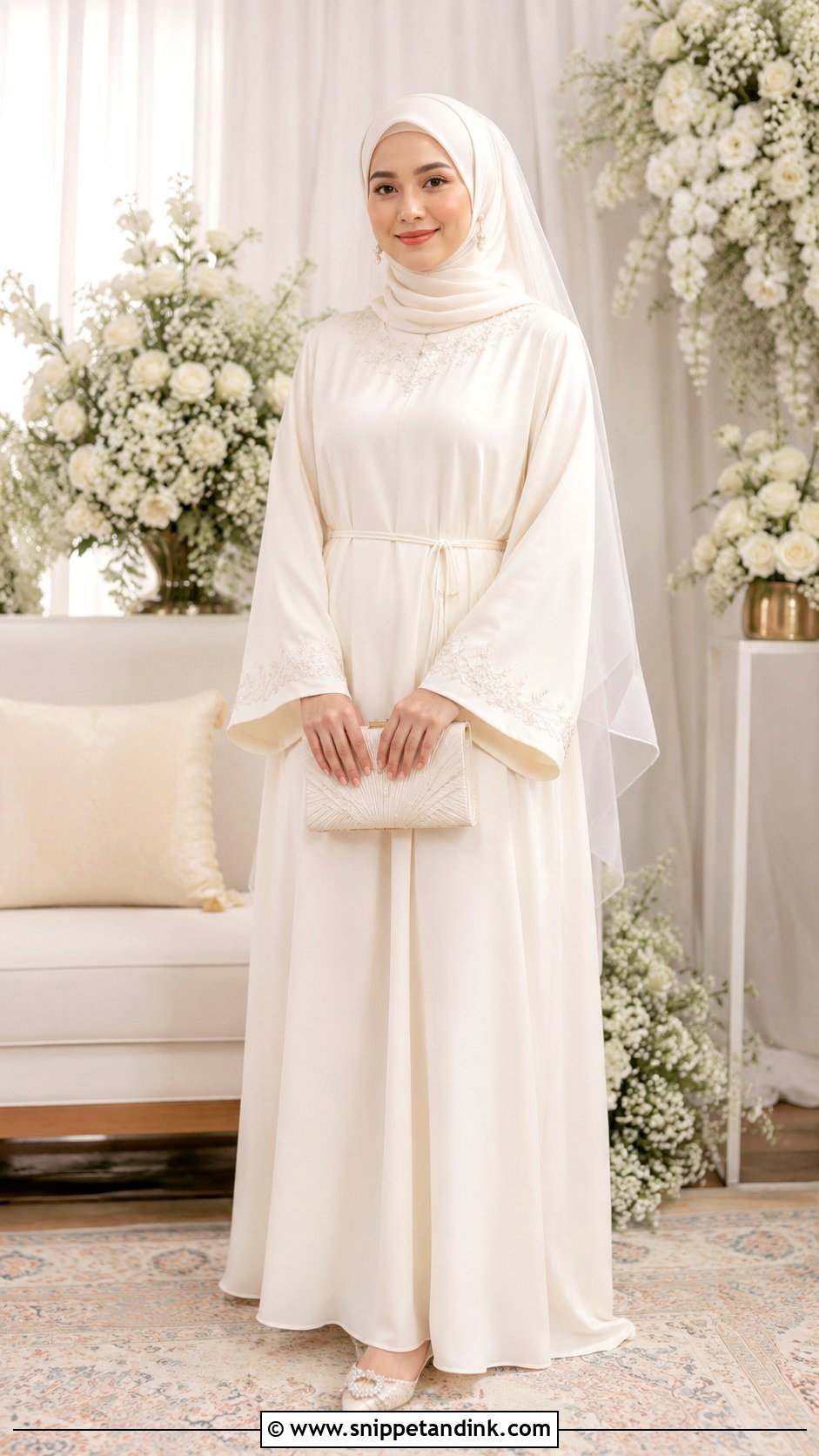
A bridal kaftan is the most comfortable piece on this list. Look for opaque ivory or white with a high neck, wide full sleeves and a loose floor-length cut, with tonal embroidery at the collar, front seam and cuffs. A smooth chiffon hijab with a light veil behind it lets the neckline show. Embellished pointed flats or low heels sit comfortably under the wide hem. Pearl earrings, a slim ring and a structured ivory clutch are all you need. If it comes with a belt, tie it loosely. It’s my first suggestion for a home nikah or an intimate gathering where you’ll sit on the floor.
Most Gowns Arrive Strapless, and a Seamstress Can Change That
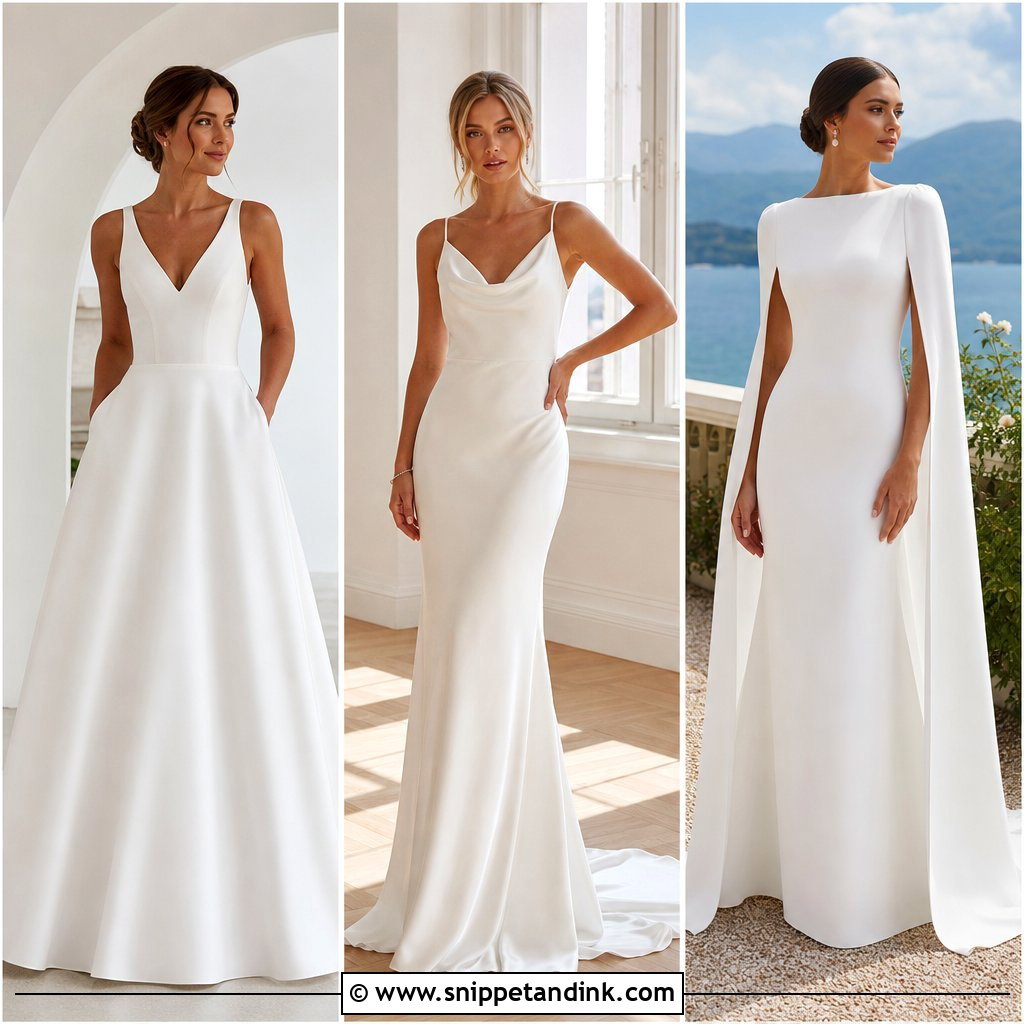
Many of the gowns in bridal shops are cut strapless or sleeveless, which can make modest shopping feel limited. In practice, a skilled seamstress can add sleeves, raise a neckline, line an illusion panel or close an open back. Ask the shop whether matching fabric or lace can be ordered from the designer, so the additions look original rather than patched on.
Adding sleeves is real work, so allow extra time and expect it to cost more than a hem. If you love a gown that needs several changes, sometimes a dress made to measure works out simpler than altering one that was never designed for coverage.
A Five-Minute Opacity Test at Home
Fabric that seems solid in a fitting room can look sheer in a photograph. Ivory and pastels are the worst offenders. Before the wedding, I ask brides to do this once in the full outfit:
- Stand in front of a bright window and have someone photograph you from the front and side.
- Take a second photo indoors with the phone’s flash on.
- Check the sleeves, the bodice and the skirt against the light. If you see the outline of your arms or legs, add a lining or a slip.
Coverage, Comfort and a Dress That Feels Like Yours
From clean satin gowns and lace A-lines to abayas, kaftans, pastels and two-piece sets, a modest bridal outfit can take many shapes. Whatever you wear should match your own coverage preferences, your venue and the way you want to spend the day. Focus on opaque fabric, a secure neckline, sleeves you can move in and a skirt that lets you walk and sit. Plan the hijab, veil, shoes and accessories as one outfit rather than buying each separately. Book alterations early and wear the finished look for a full hour at home before the day.
You'll Like These Ideas:





Leave a Reply