
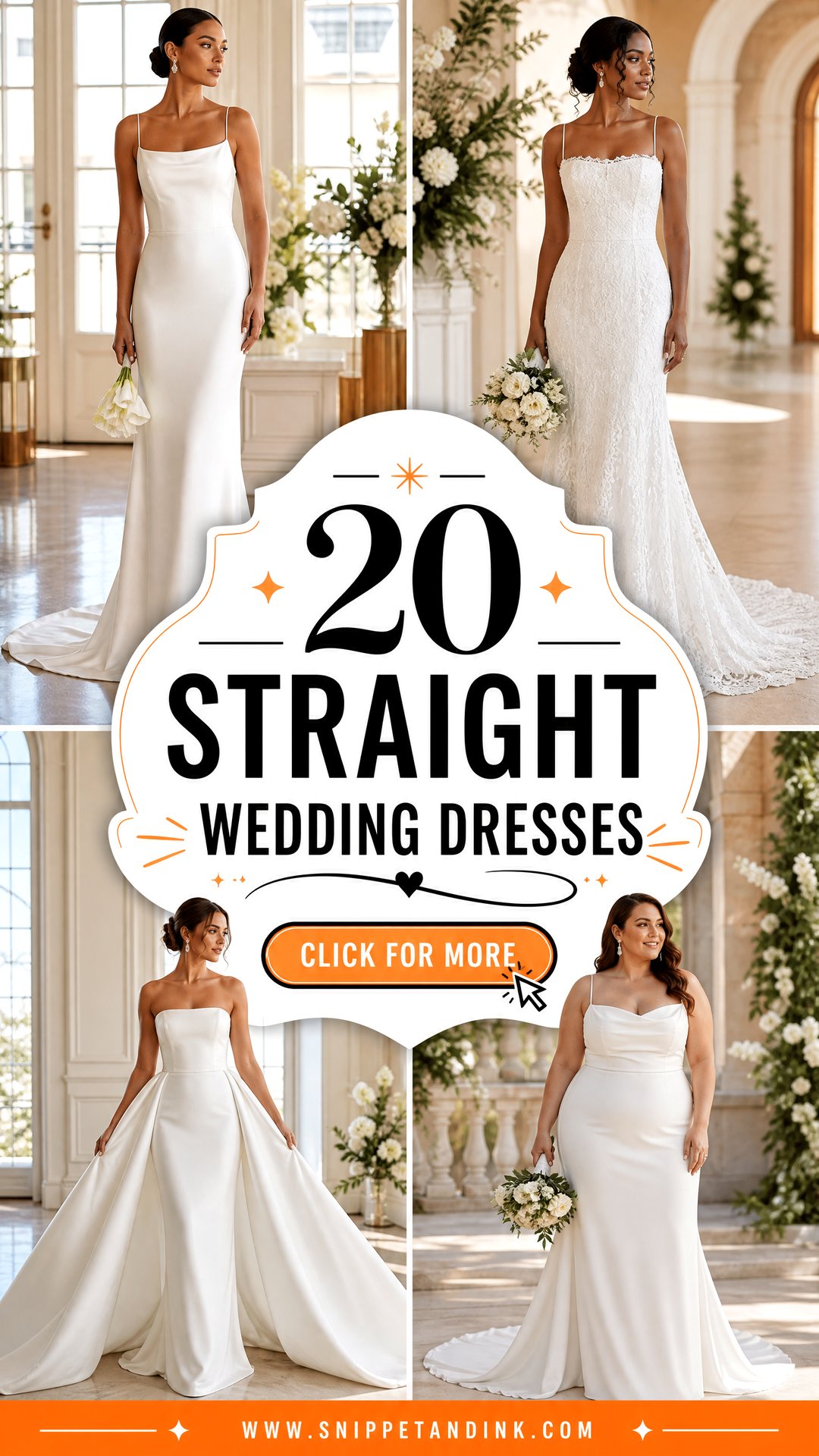
A straight wedding dress falls close to the body from shoulder to hem, closer than an A-line and far looser than a mermaid. You’ll also hear them called sheath or column gowns. In a fitting room they tend to split brides into two camps: those who feel instantly at ease without a big skirt, and those who feel exposed. The difference is almost always fabric and fit, not body type. Satin, silk, crepe, chiffon and lace each change the mood completely, which is why this one shape can go from a ballroom to a beach. Below are twenty versions, each with the veil, shoes and jewelry I’d pair with it.
What You Wear Under a Column Gown Changes How It Hangs
A full skirt hides what’s underneath. A straight one hangs directly from your hips, so your foundations become part of the dress. I ask brides to bring their wedding-day underwear to the very first fitting, not the last, because the tailor pins to whatever body is in front of them.
Satin and silk
These show edges. Laser-cut, no-seam underwear in a shade close to your skin is safer than white, which glows through ivory fabric in sunlight. A half slip in the same tone helps bias-cut silk glide instead of clinging.
Crepe and heavier fabrics
These hide more lines, so light shaping shorts are fine if you like them. Just choose a pair that doesn’t roll at the waist when you sit, since that roll will show as a ridge across the front.
Backless, strapless and plunging styles
Here the gown usually needs its own support sewn in. Cups and a waist stay built into the bodice beat adhesive bras for a long day. Adhesive options lose grip with heat and sweat by the evening.
1. Minimalist Satin Straight Wedding Dress
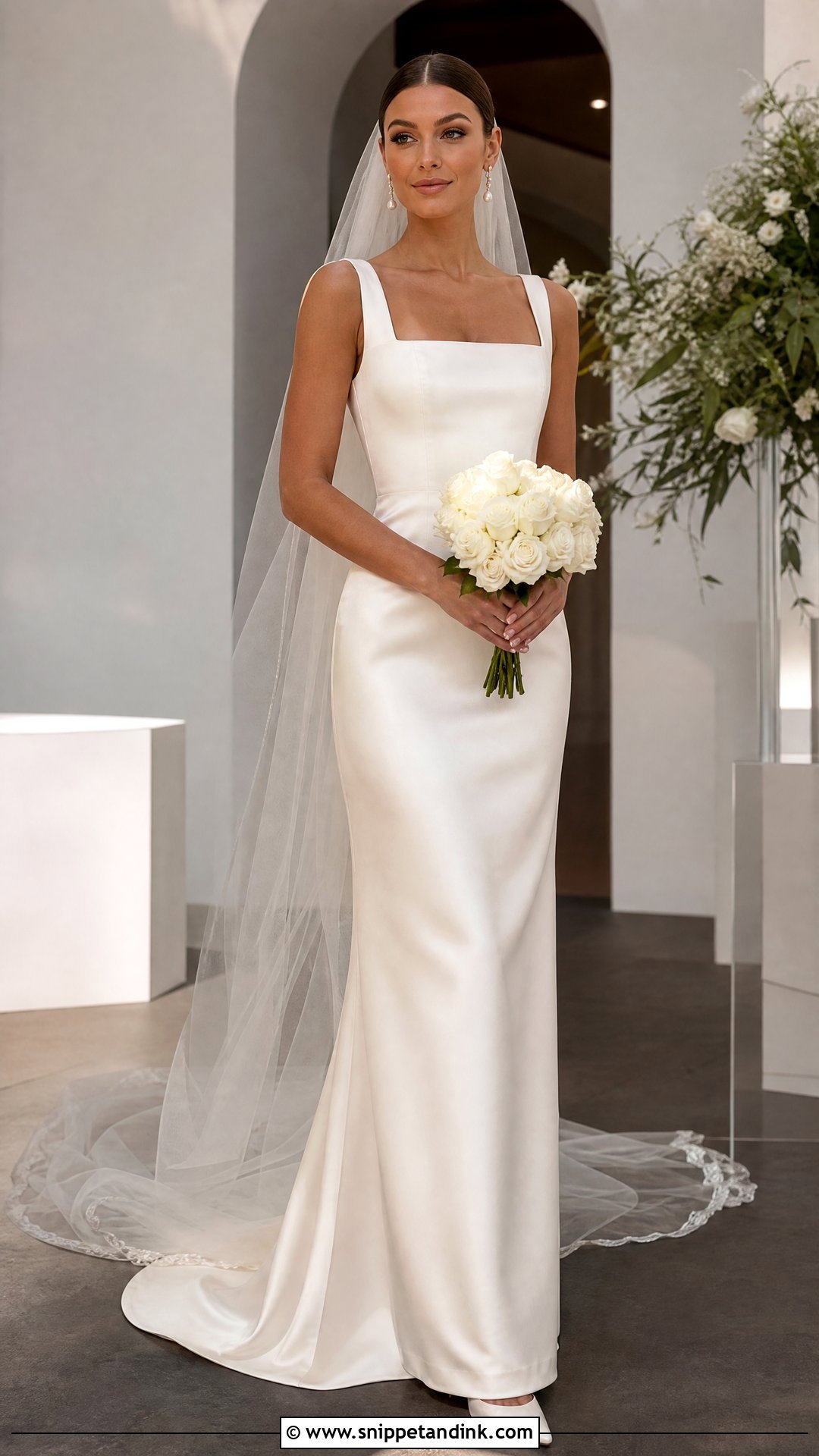
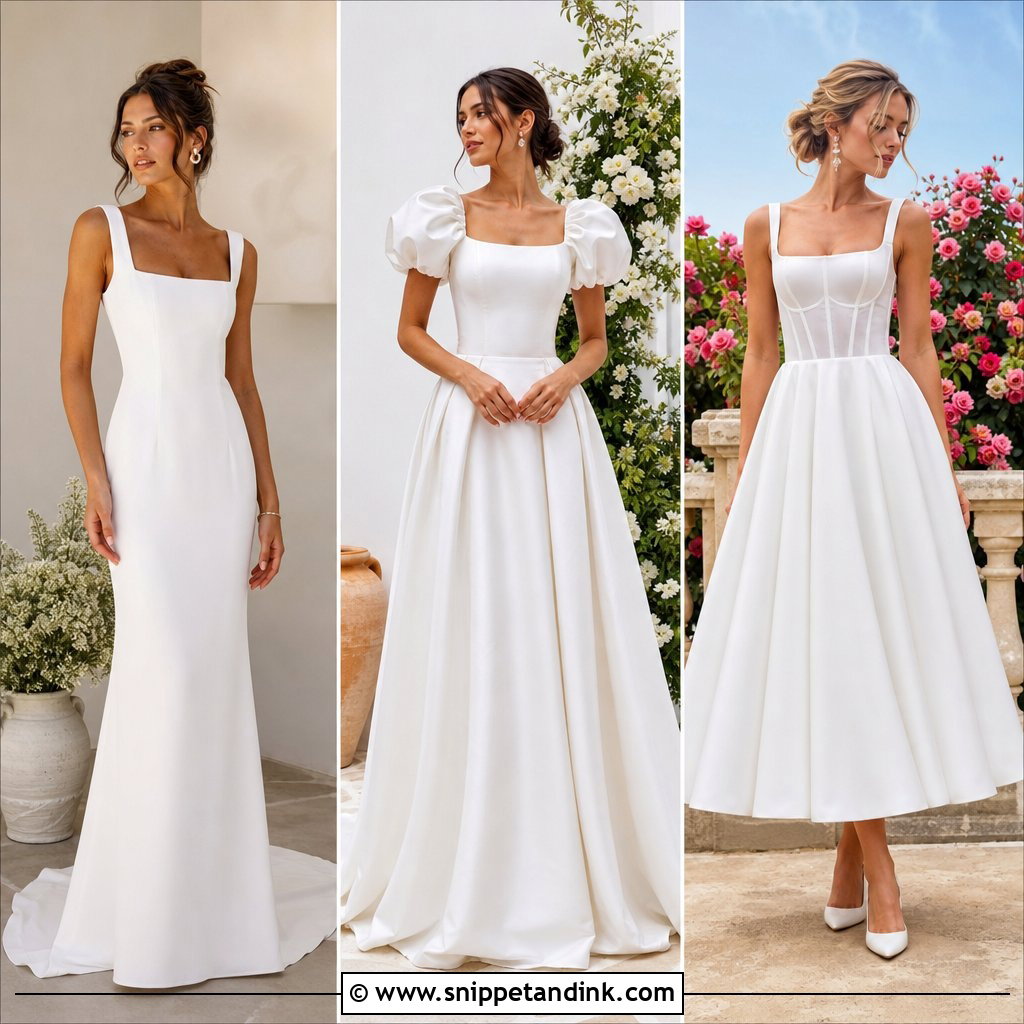
Satin is the fabric that shows a bad fit fastest. Every pull at the waist or hip catches the light and draws a line, so with a minimal satin column I spend most of the fitting on the seams, not the hem. A softly structured bodice, a narrow skirt and a short train give a long, unbroken line. A scoop or square neck keeps it modern. Pearl drops, a sleek low bun and a single-layer cathedral veil add movement behind you, and pointed ivory pumps carry the line down. A small white bouquet stops it feeling severe.
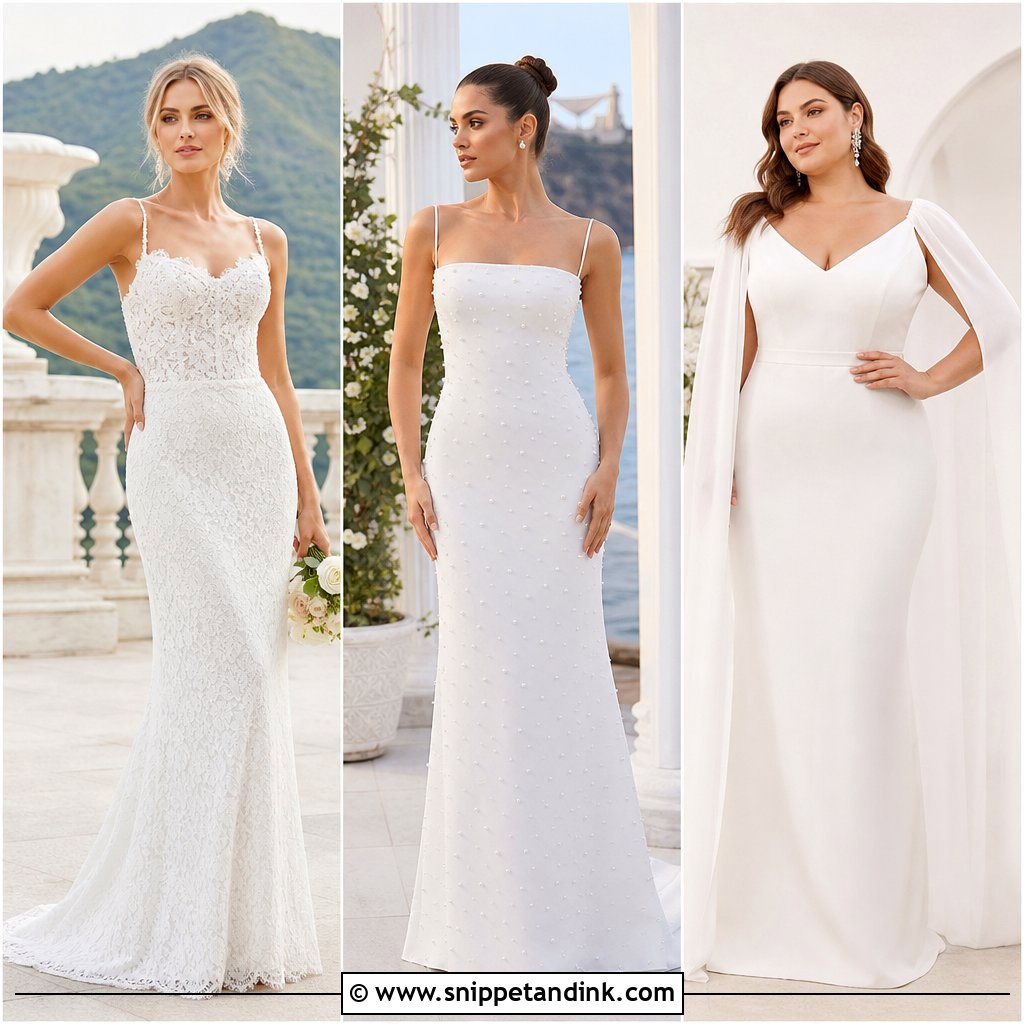
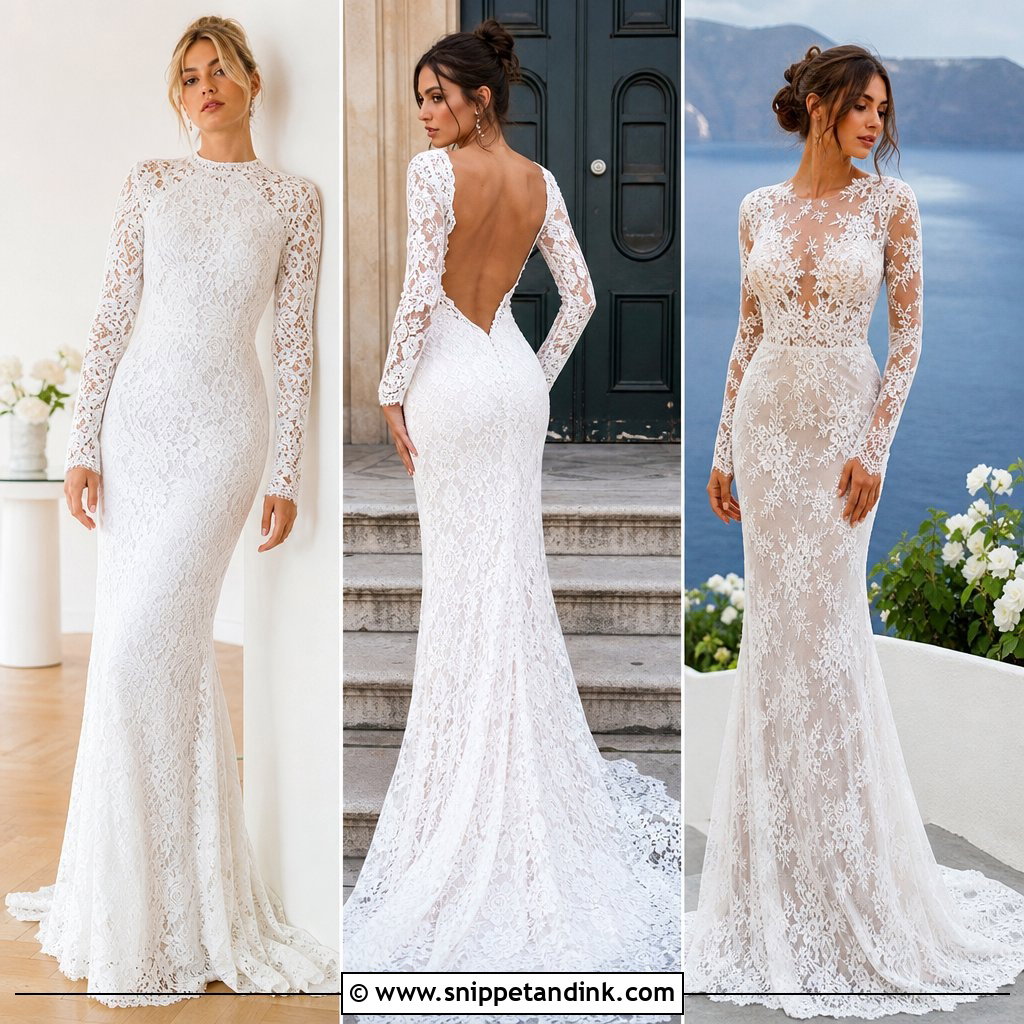
2. Lace Straight Wedding Dress
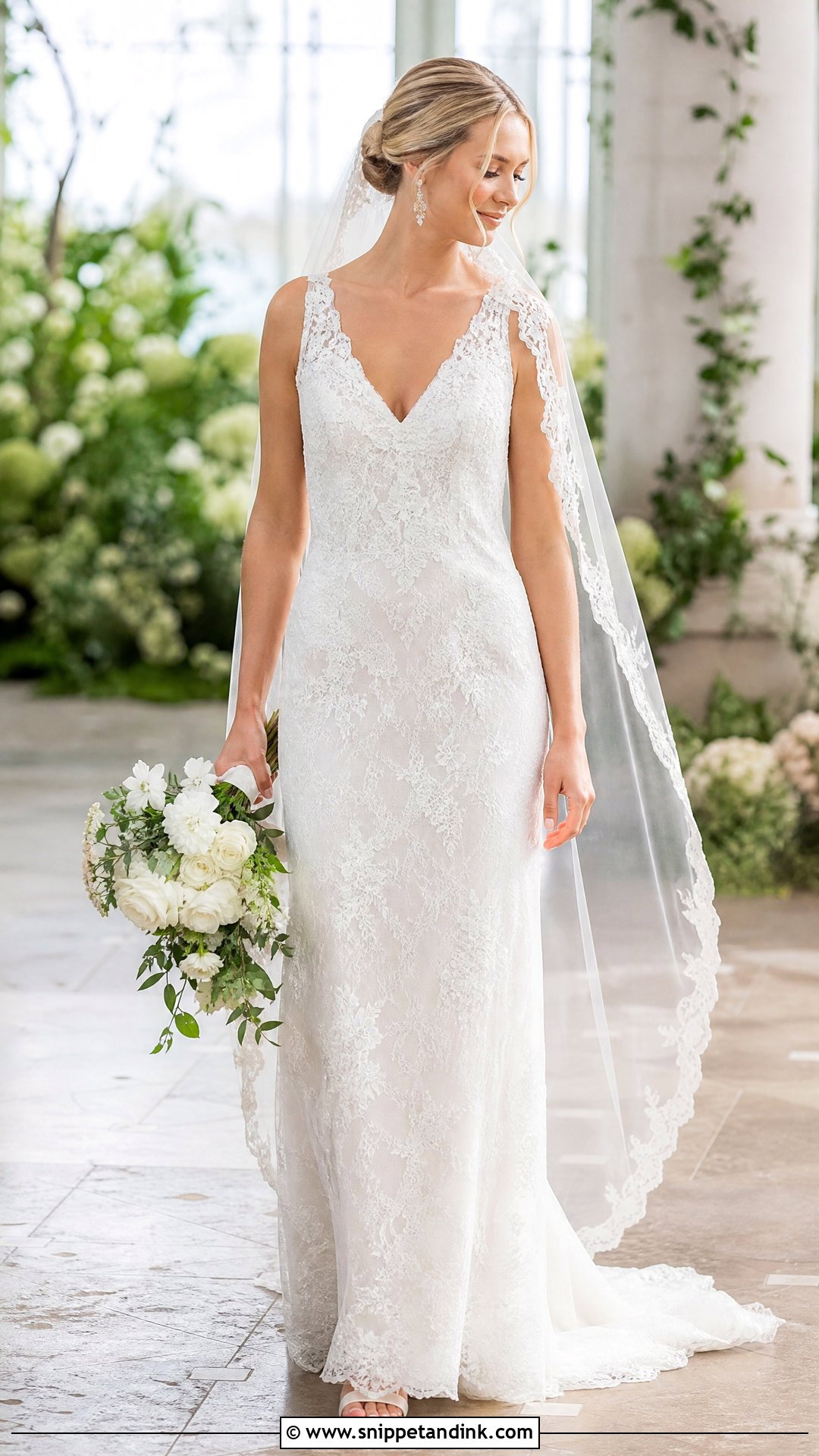
Lace on a narrow skirt gives you the traditional bridal texture without the volume. The lining underneath does the shaping, so a floral or botanical lace laid over a firm lining gives definition without squeezing. A soft V-neck, covered buttons and a sweep train finish it. If the veil is edged in lace, ask for it to match the gown’s motif scale, because a mismatched lace edge looks like it came from a different dress. Small crystal earrings, ivory slingbacks and a loose natural bouquet keep attention on the lacework.
3. Long Sleeve Straight Wedding Dress
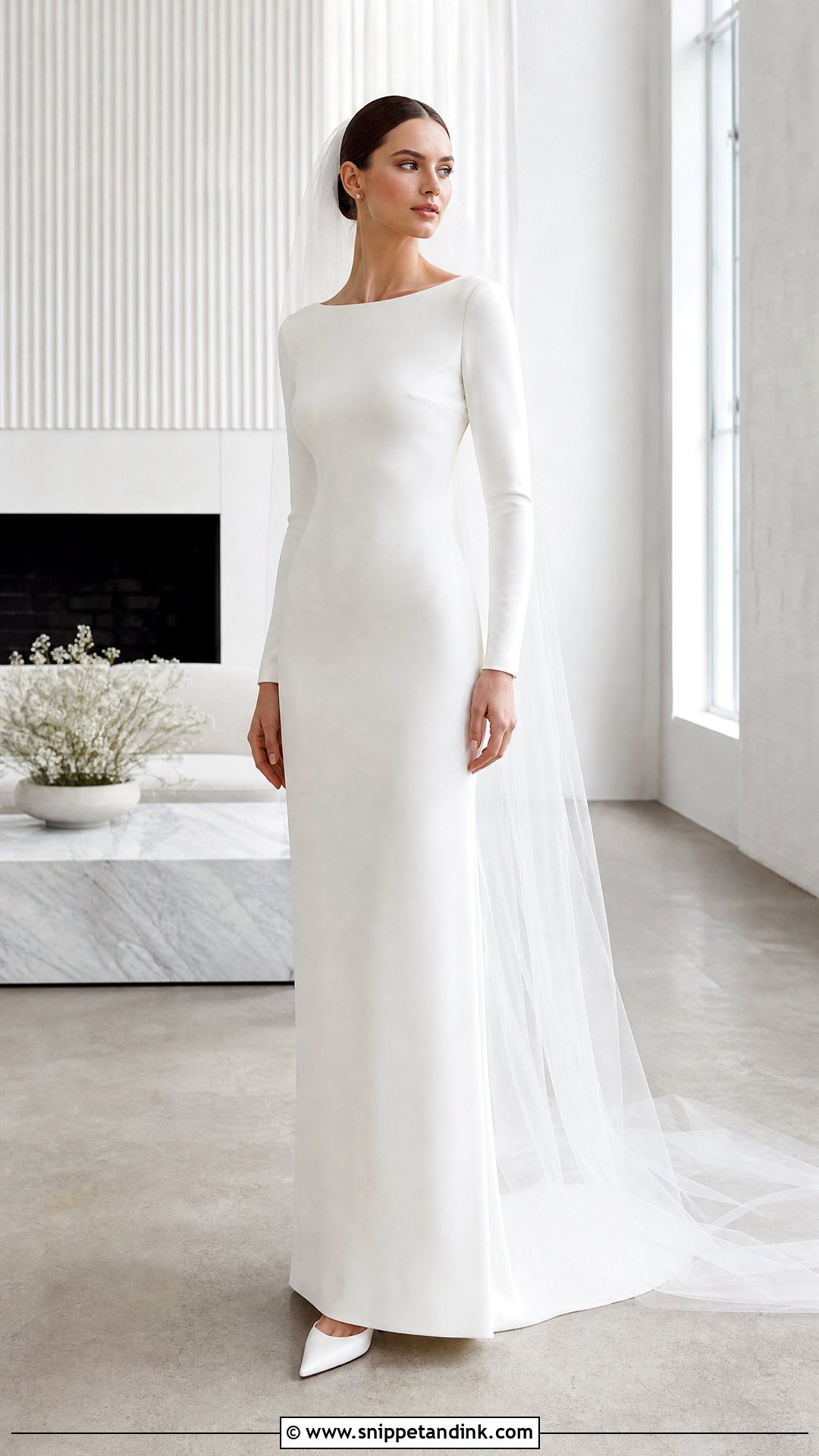
Crepe with long sleeves is the most comfortable column gown I fit. It has a little stretch, it’s matte so it doesn’t shine in flash, and it hangs cleanly. A bateau neckline, fitted sleeves and a center-back slit keep it narrow and walkable. The thing to check is arm movement: raise your arms and reach forward as if for a hug. If the back pulls, the tailor can let out the upper back or adjust the sleeve cap without touching the silhouette. A low chignon, studs, a chapel veil under the hair and a matching coat or cape for cold weather complete it.
4. Square Neck Straight Wedding Dress
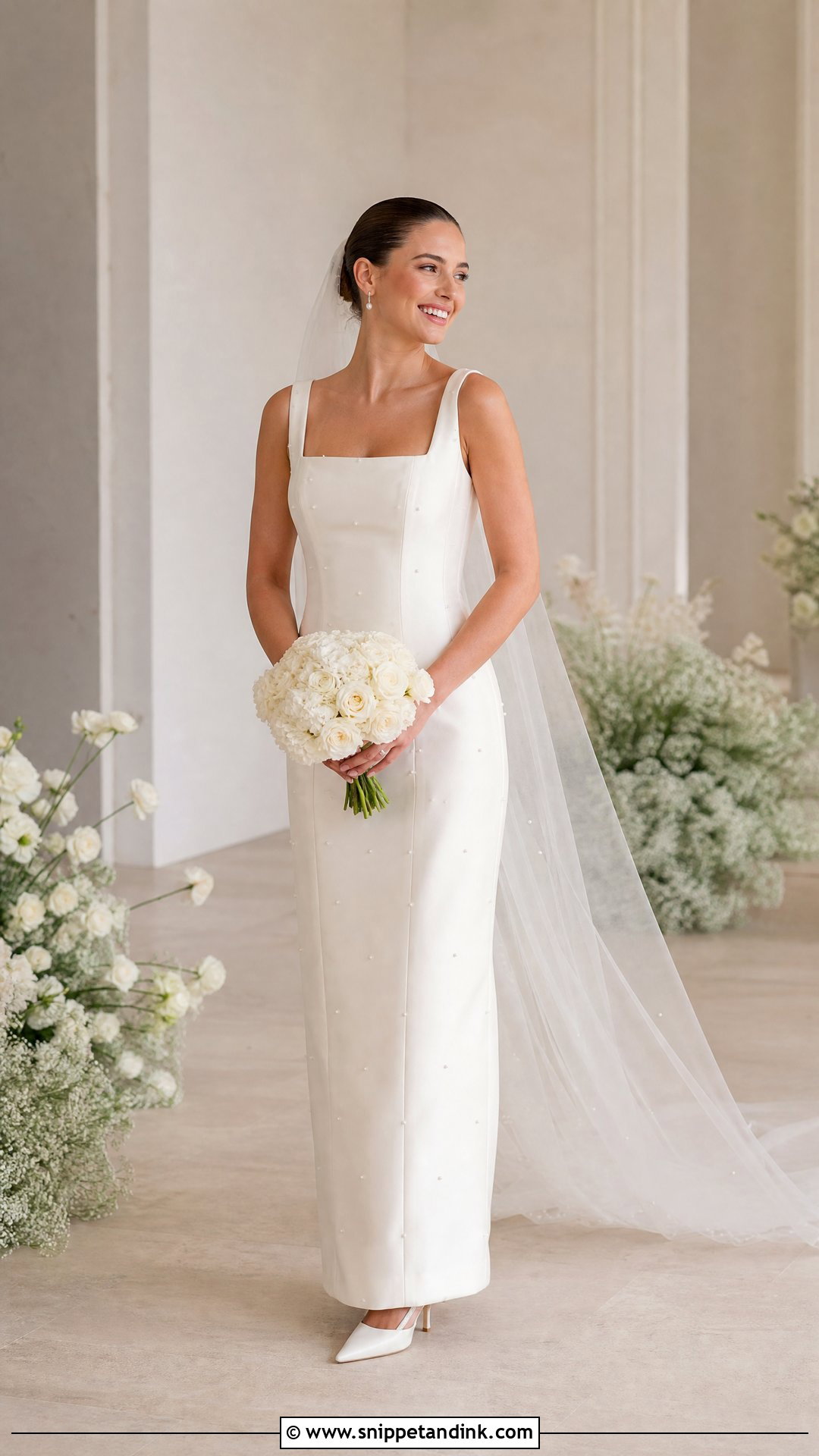
A square neck gives the gown a crisp frame at the collarbone, but it only stays square if the straps are wide enough and the bodice is seamed to hold it. Thin straps let the corners droop into a soft curve by mid-afternoon. Mikado, satin or heavy crepe keep the lines sharp and resist creasing. A fine tennis necklace or pearl studs suit the geometry; anything chunky crowds it. If you want more waist, ask for princess seams instead of a belt, which cuts across the long line. A neat bun, a plain veil and pointed slingbacks finish the look.
5. Strapless Straight Wedding Dress
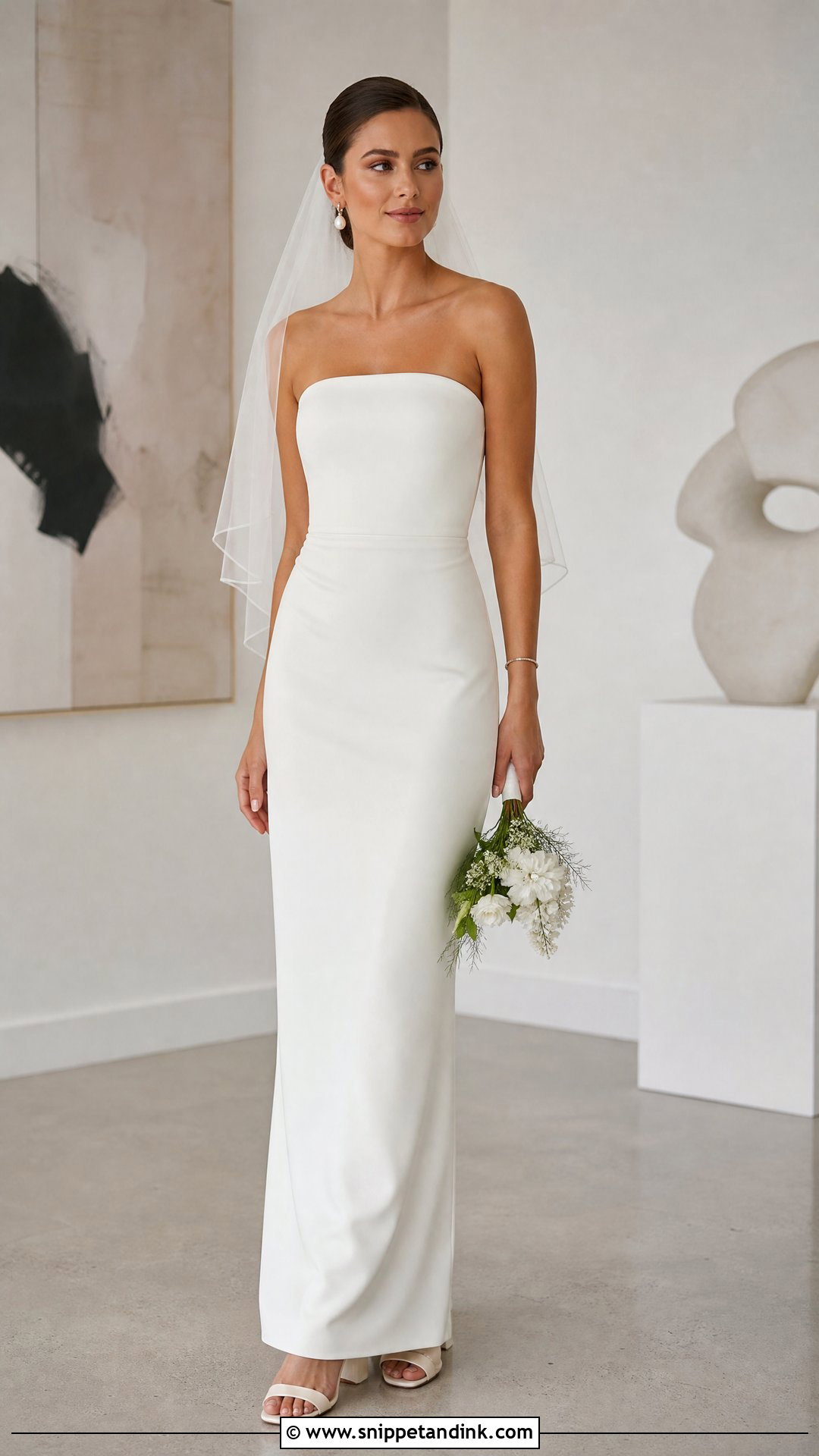
Strapless column gowns depend completely on what’s inside them. I look for boning down the side and back seams, built-in cups and a waist stay that grips, so the bodice is held by the structure and not by squeezing the bust. Going down a size to stop it slipping is the wrong fix. At alterations, sit, walk and raise both arms; if the top edge moves, it needs taking in at the side seams. A straight-across neckline is minimal, a curved one is gentler. Block heels, a sheer shoulder veil and a detachable satin wrap give you options through the day.
6. Off Shoulder Straight Wedding Dress
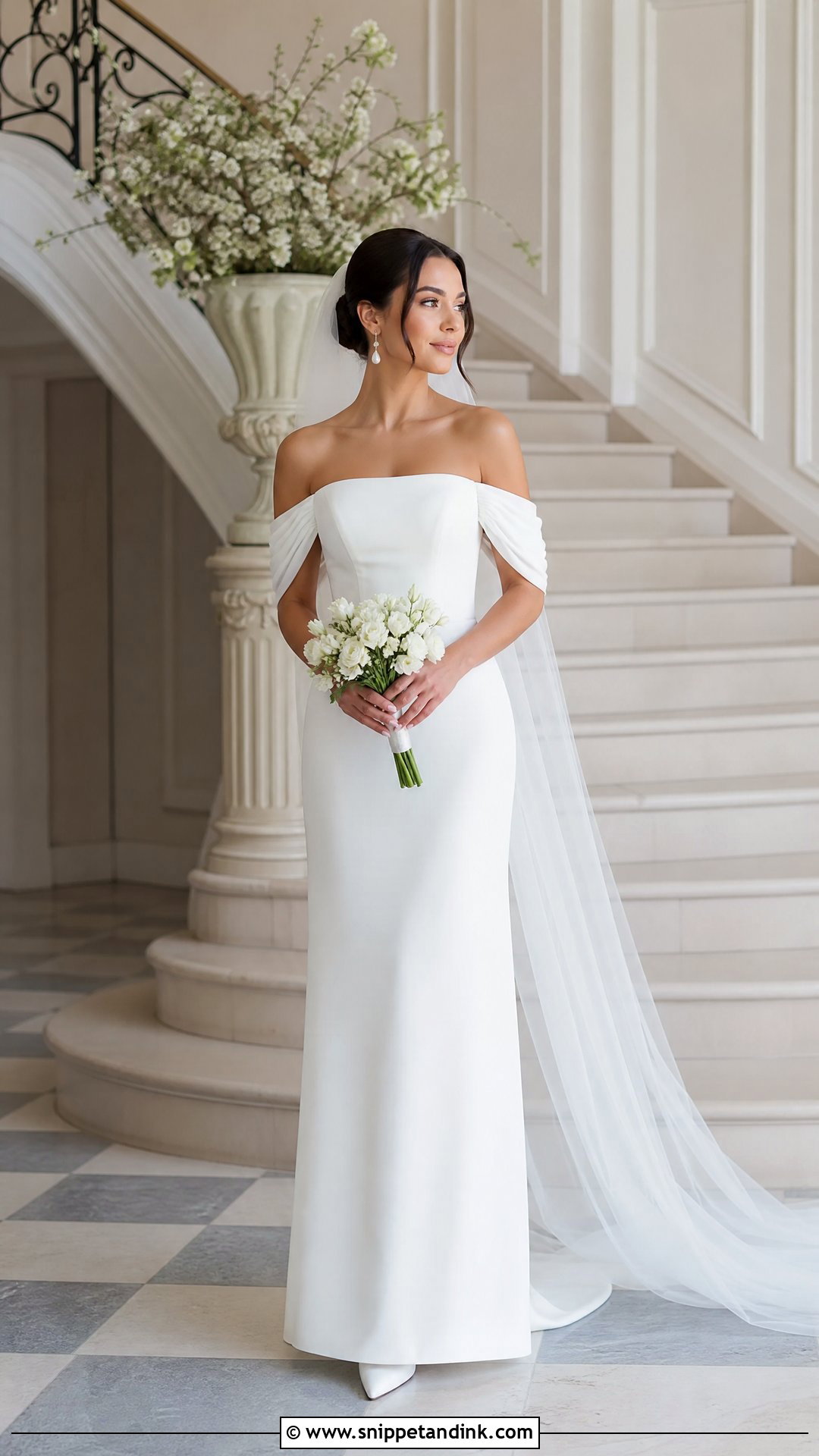
Off-shoulder sleeves look easy in photos and fight you all day if they’re not anchored. Stretch crepe or satin with internal corsetry holds the neckline without pinning your arms down. A simple folded cuff looks cleaner than an embellished one. Before you buy, hug the consultant and reach across a table: if the sleeves ride up or you can’t lift your arms, it needs adjusting. A low textured bun, drop earrings and a chapel veil starting below the hair suit it. Removable off-shoulder straps give you a second look later in the evening.
7. High Neck Straight Wedding Dress
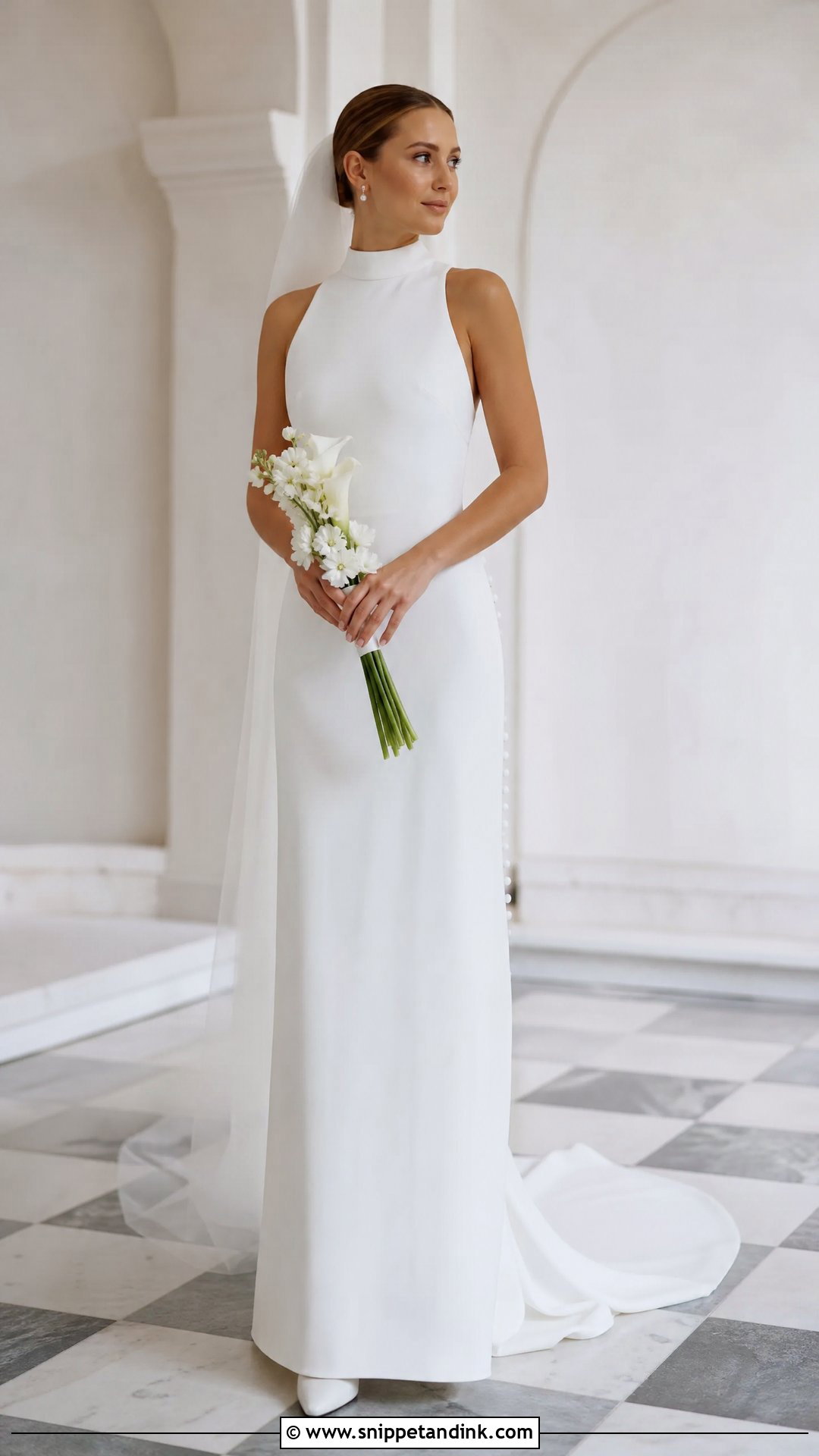
High necks are architectural in crepe and softer in lace. A mock neckline on a clean column covers the front completely, so I usually balance it with an open back, a sheer panel or a line of small buttons. Turn your head both ways in the mirror; a collar that rubs your jaw or folds over will annoy you for hours. Lightweight interfacing gives the collar shape without stiffness. Skip necklaces, wear small earrings, put your hair up and set the veil beneath it.
8. Halter Straight Wedding Dress
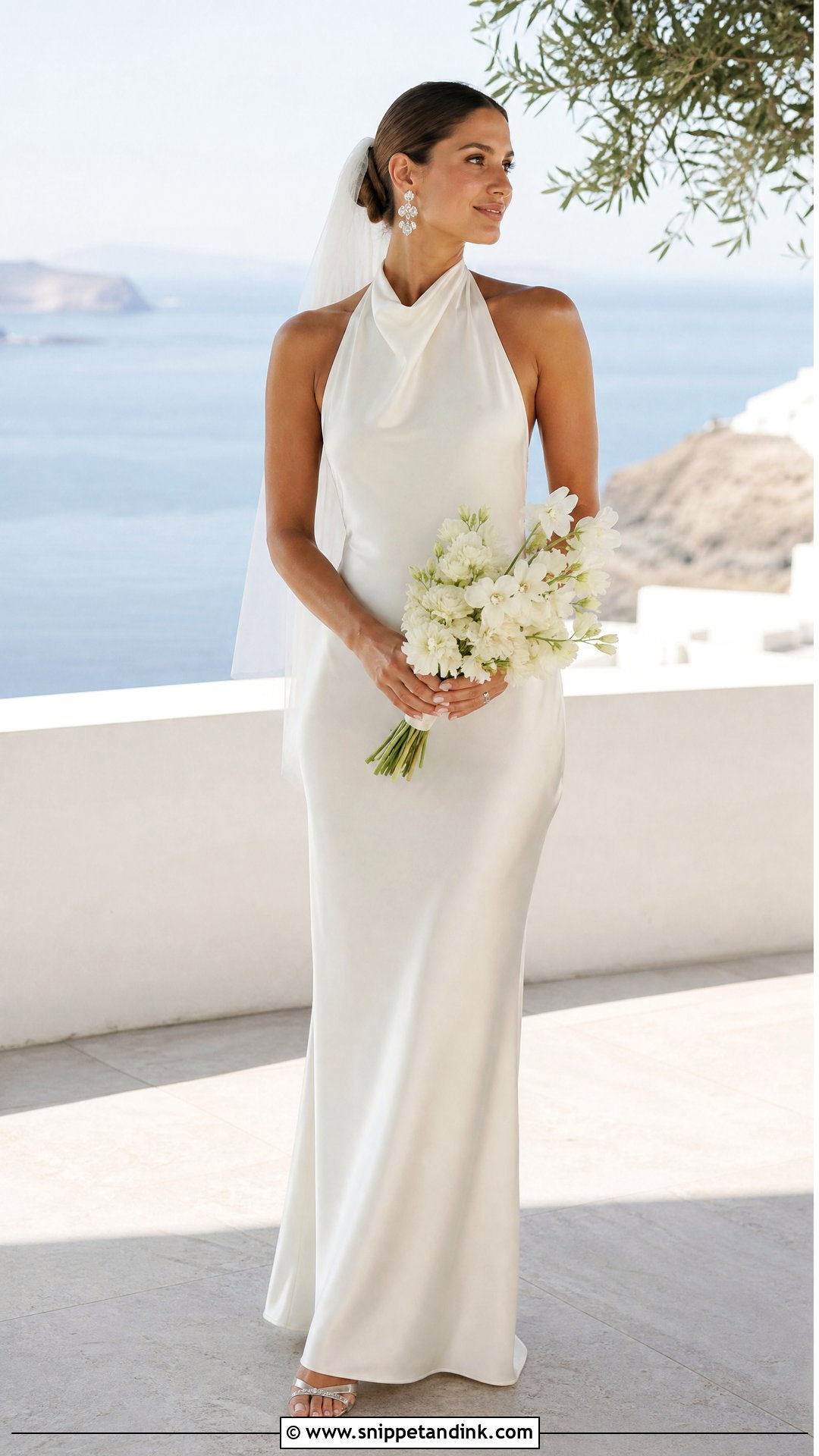
A halter directs the eye to the shoulders and carries a strong vertical line down the bodice. Silk crepe, satin or fluid jersey all suit a straight halter skirt. The weight should be held by the bodice construction; if the strap is doing the work, you’ll feel it on the back of your neck within an hour. A high halter gives more coverage, a draped one is more relaxed. Hair up, sculptural earrings, ivory or metallic sandals and a light veil or sheer scarf complete it, especially for warm venues.
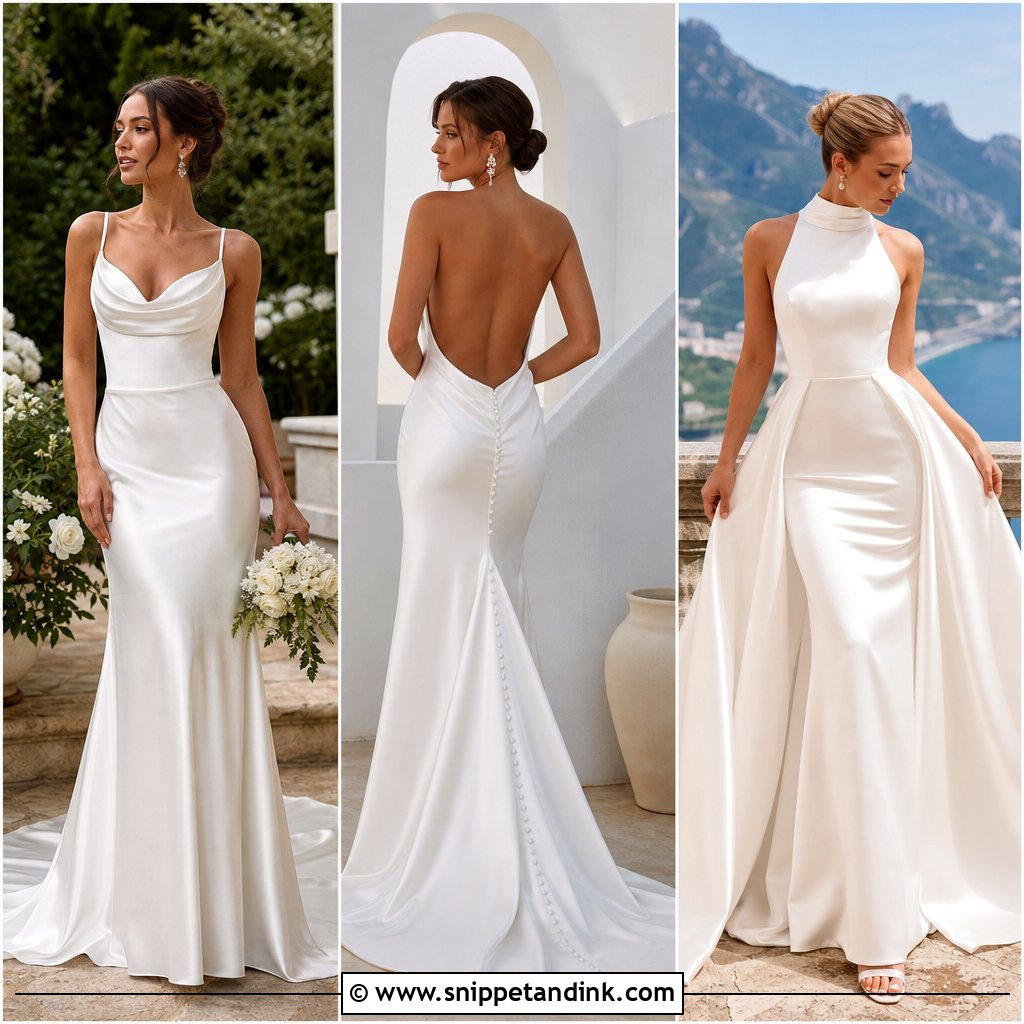
9. Silk Slip Straight Wedding Dress
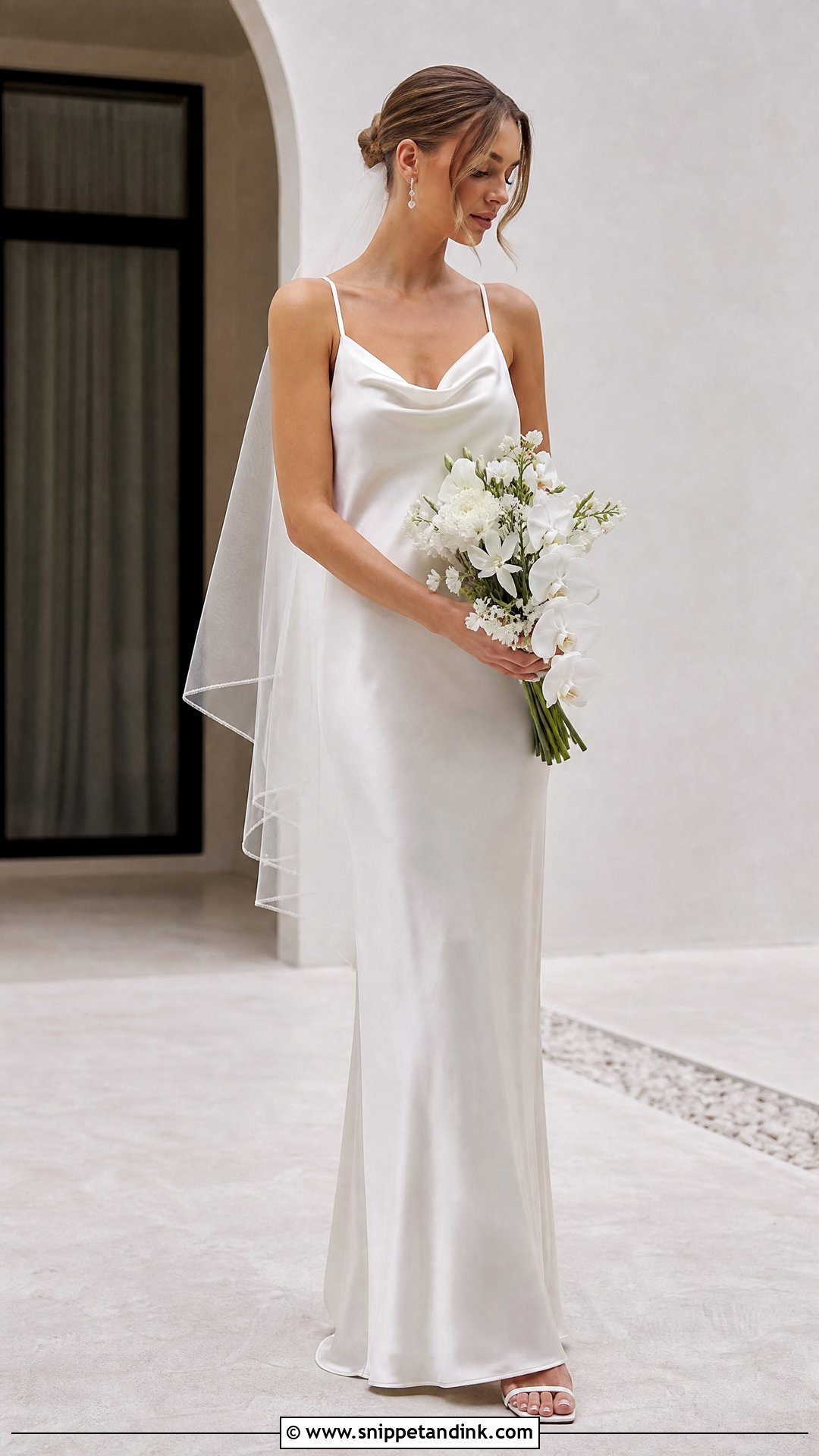
Bias-cut silk is the lightest column of all, and the least forgiving. Cut on the diagonal, it stretches over curves and moves like liquid, which also means it shows every line underneath. I have brides test two or three foundation options by a window in daylight, because shop lighting hides what the sun shows. A tailor can add a light lining for coverage. A cowl, V or soft square neck, near-invisible sandals, a raw-edge veil and loose waves suit its mood. Keep accessories to a small clutch and a simple bouquet.
10. Beaded Straight Wedding Dress
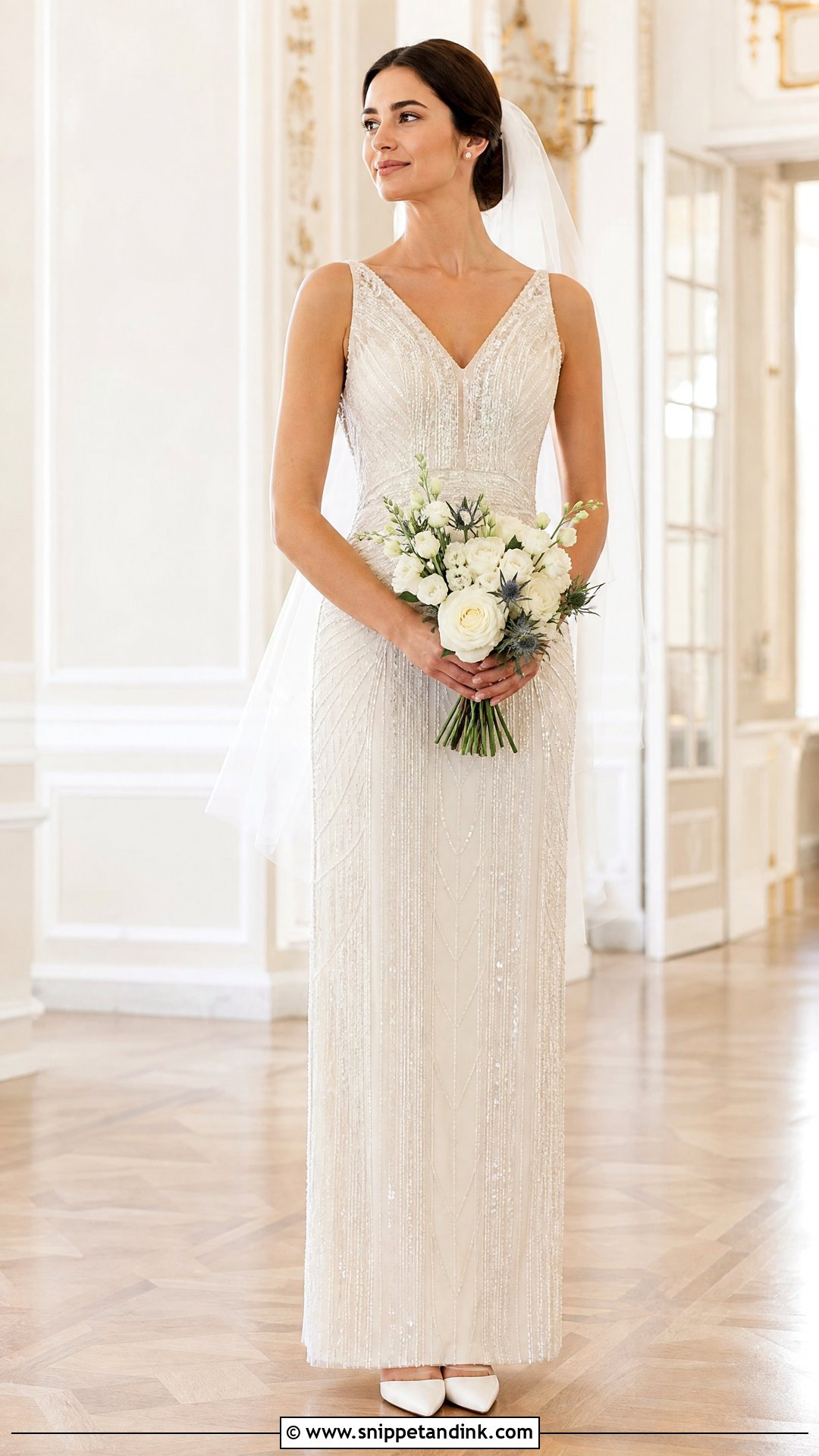
Beading gives a narrow gown depth, and vertical beading lengthens it further. Art Deco patterns lean vintage; scattered crystals feel softer. Beaded fabric is heavy, so turn the gown inside out and look at the shoulder support and the lining. Beads stitched through a thin lining scratch skin by the reception. Plain satin pumps, crystal studs and an unembellished tulle veil are enough. A side-parted bun keeps beadwork at the shoulders and back visible, and a small structured bouquet doesn’t compete.
11. Pearl Straight Wedding Dress
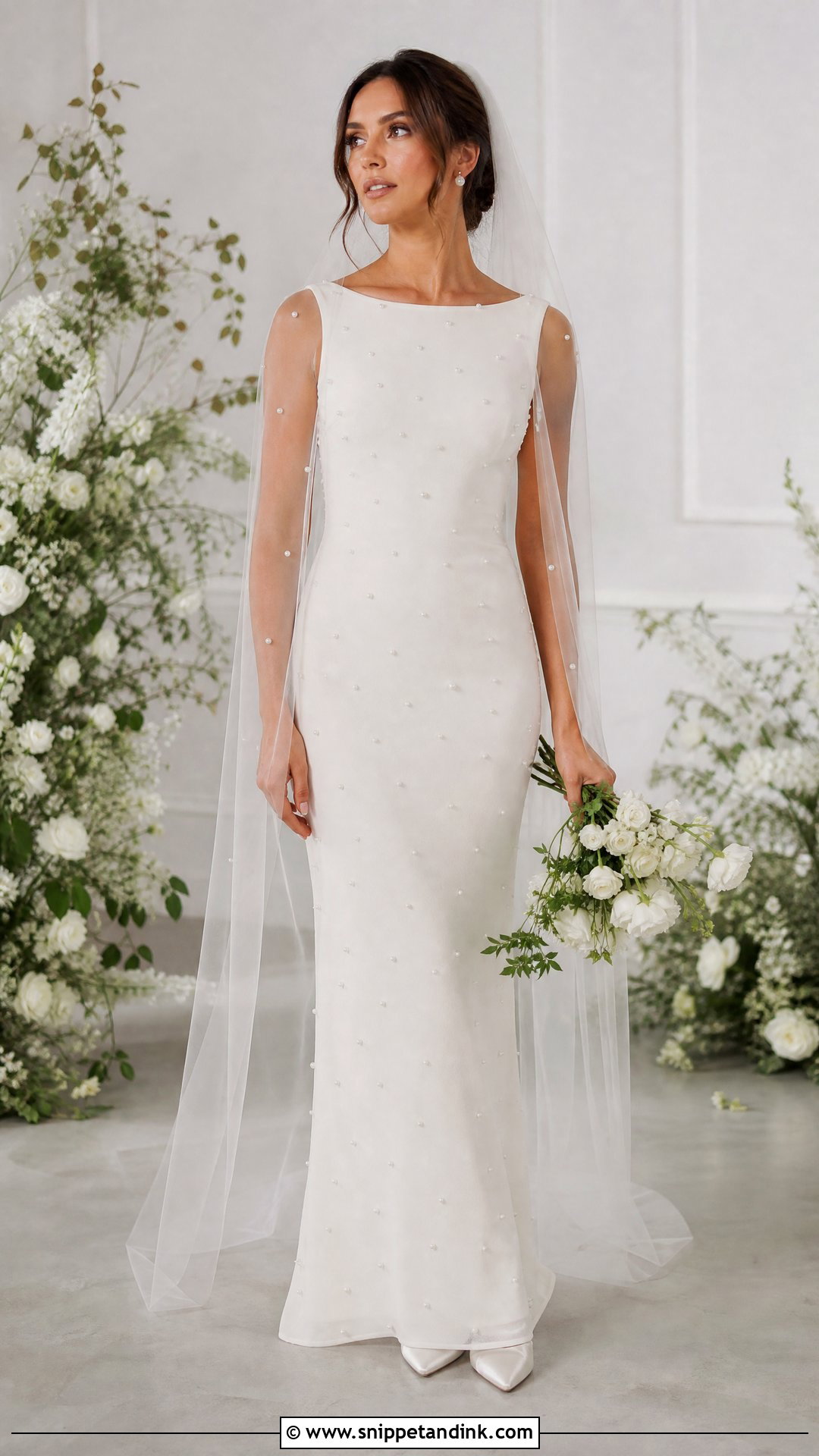
Pearls add weight as well as texture, and on delicate fabric that weight pulls the hem uneven or drags the shoulders forward. Check how the gown hangs on you, not on the hanger. Choose one pearl idea, scattered across the bodice, in vertical rows down the skirt or on a sheer overlay, and keep everything else plain. Pearl studs, satin pumps and a single-layer veil coordinate without matching too hard. If there are sheer sections, check the lining color under indoor and outdoor light so it blends with your skin.
12. Floral Applique Straight Wedding Dress
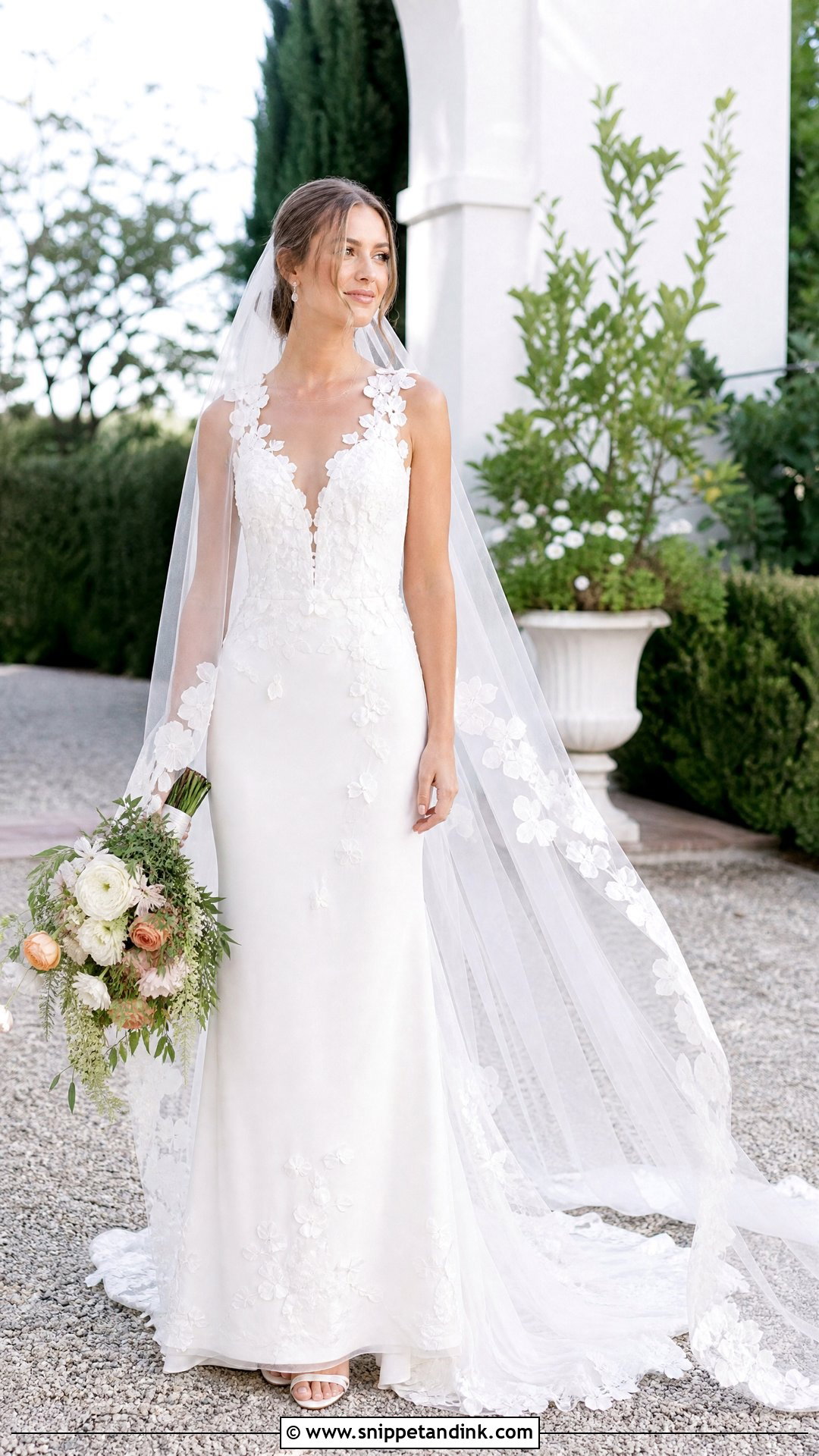
Appliqué flowers give a column gown texture without adding skirt width. I’d concentrate them at the neckline, waist or train so they form a focal point. A sheer tulle overlay softens the line while the lining keeps it clean. Scale matters: small flowers read as texture, large blooms as a fashion statement. Raised petals catch on veil tulle, bracelets and bouquet ribbon, so try the whole outfit together before the day. Simple ivory heels, small earrings and a veil with just a few matching flowers at the edge keep it from going over the top.
13. Open Back Straight Wedding Dress
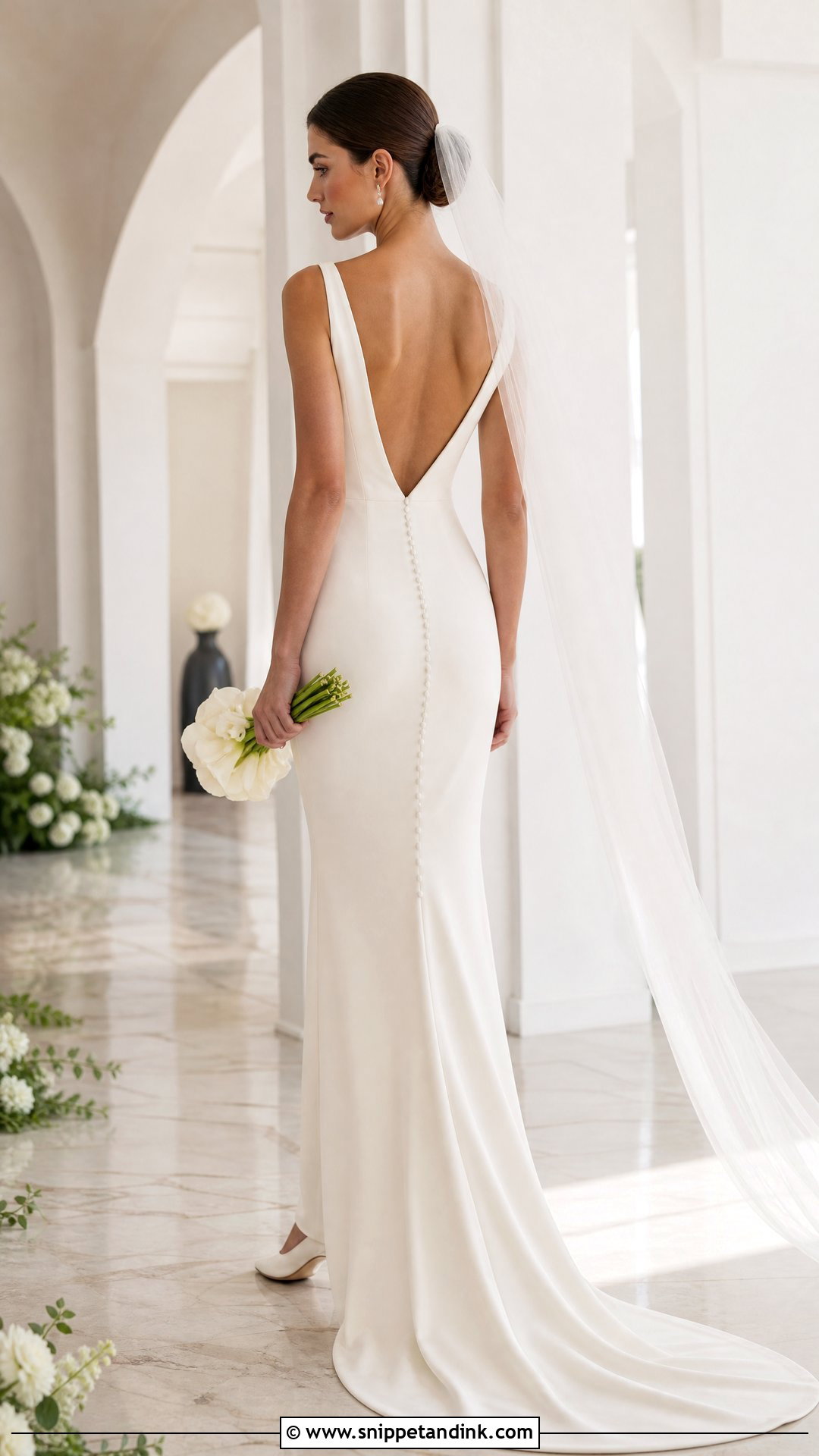
An open back makes a plain front memorable, and it’s where I spend extra time on support. A deep V-back, a rounded opening or a sheer illusion panel each need a different solution: built-in cups, firm side panels or discreet fashion tape. Covered buttons along the edge lead the eye down to the train. Wear your hair up or swept to one side so the back shows during the ceremony, which is when most guests see you. Skip necklaces with clasps sitting in the opening. Walk, sit, dance and hug before you approve the fit; the back shouldn’t gape at any point.
14. Cape Straight Wedding Dress
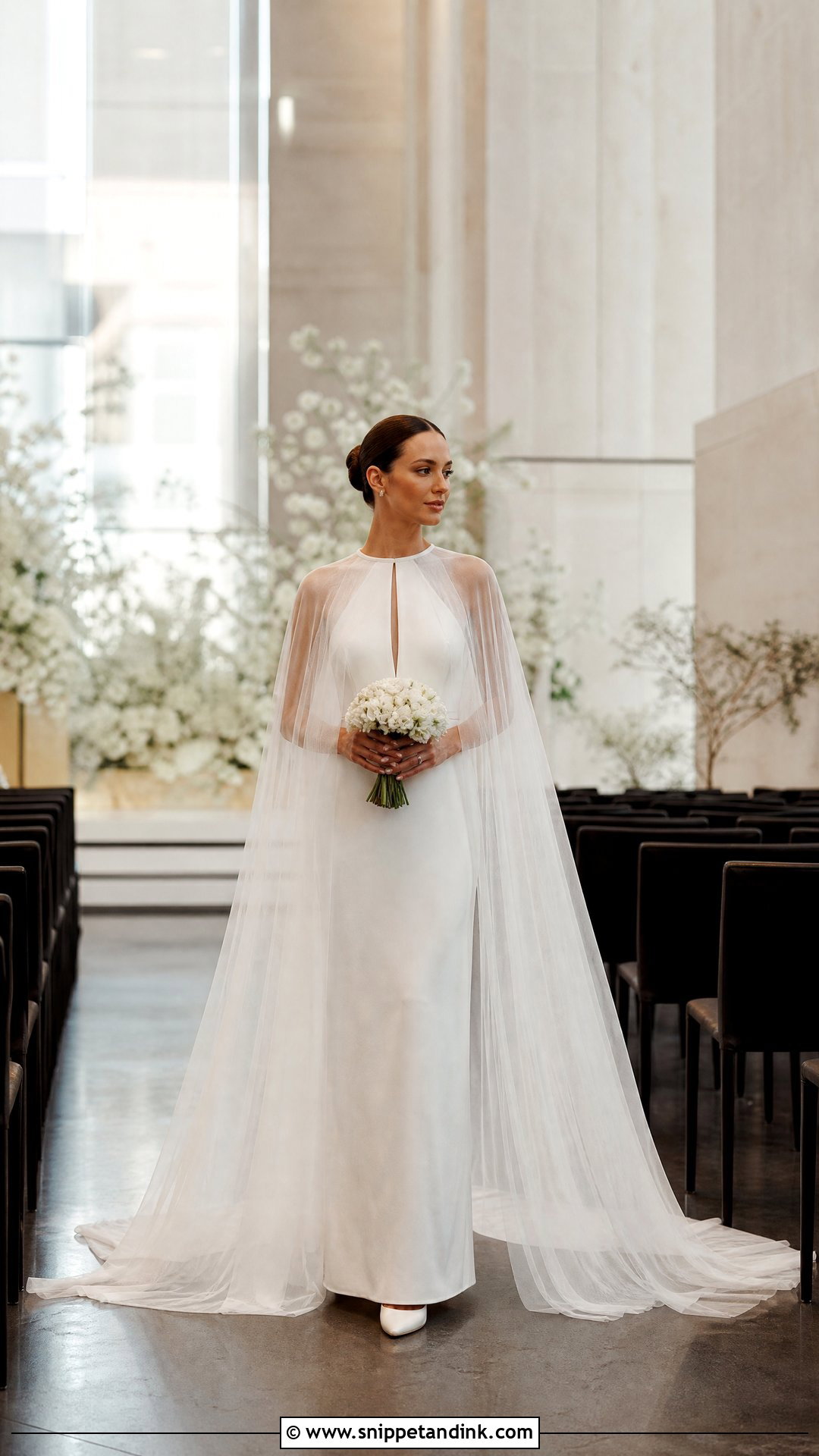
A cape gives a straight gown ceremony without a veil. Sheer tulle feels airy; structured crepe feels formal. It should fasten neatly at the shoulders or neckline and fall past the hem without hiding the dress beneath. Watch the length outdoors, because a cape that touches the ground catches under your heels on grass and steps. Make sure it unhooks easily so you can take it off for dancing. A smooth bun, small earrings, closed-toe pumps and a compact bouquet are enough.
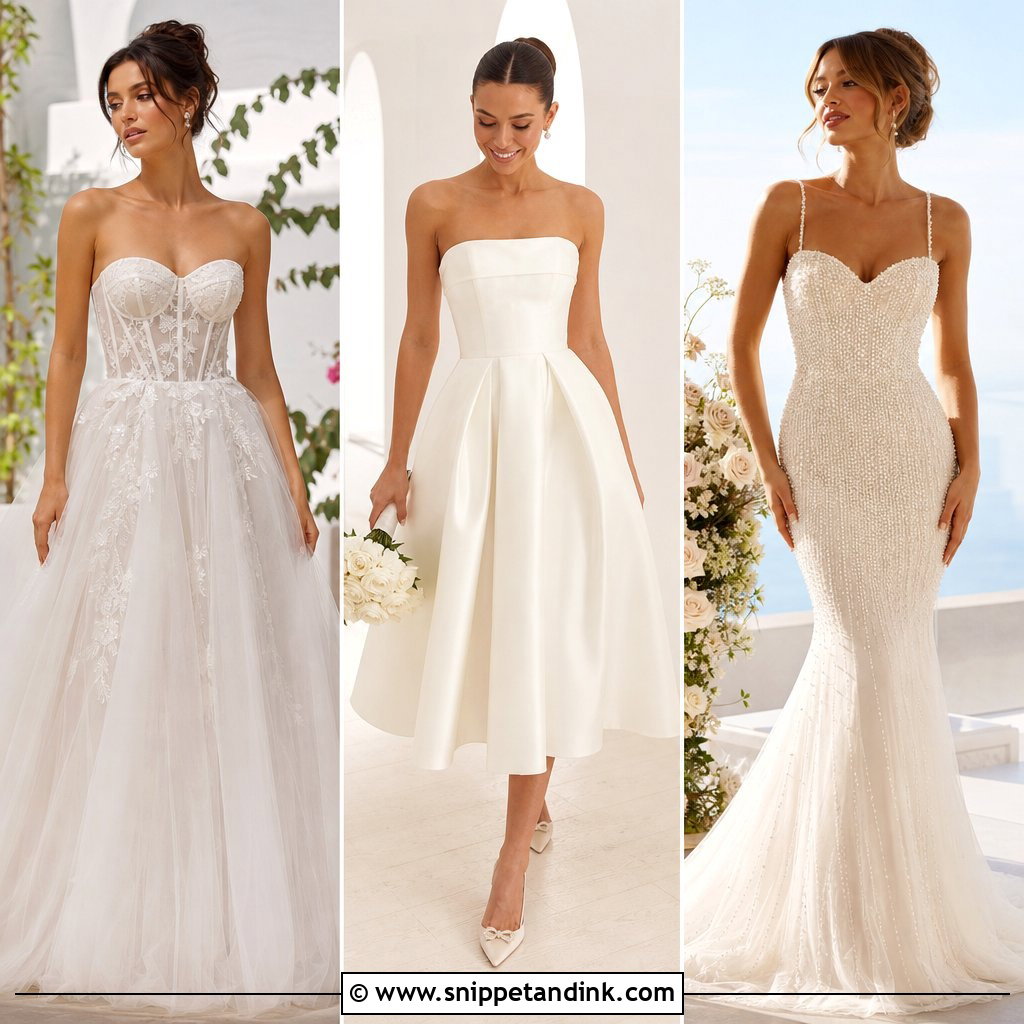
15. Detachable Overskirt Straight Wedding Dress
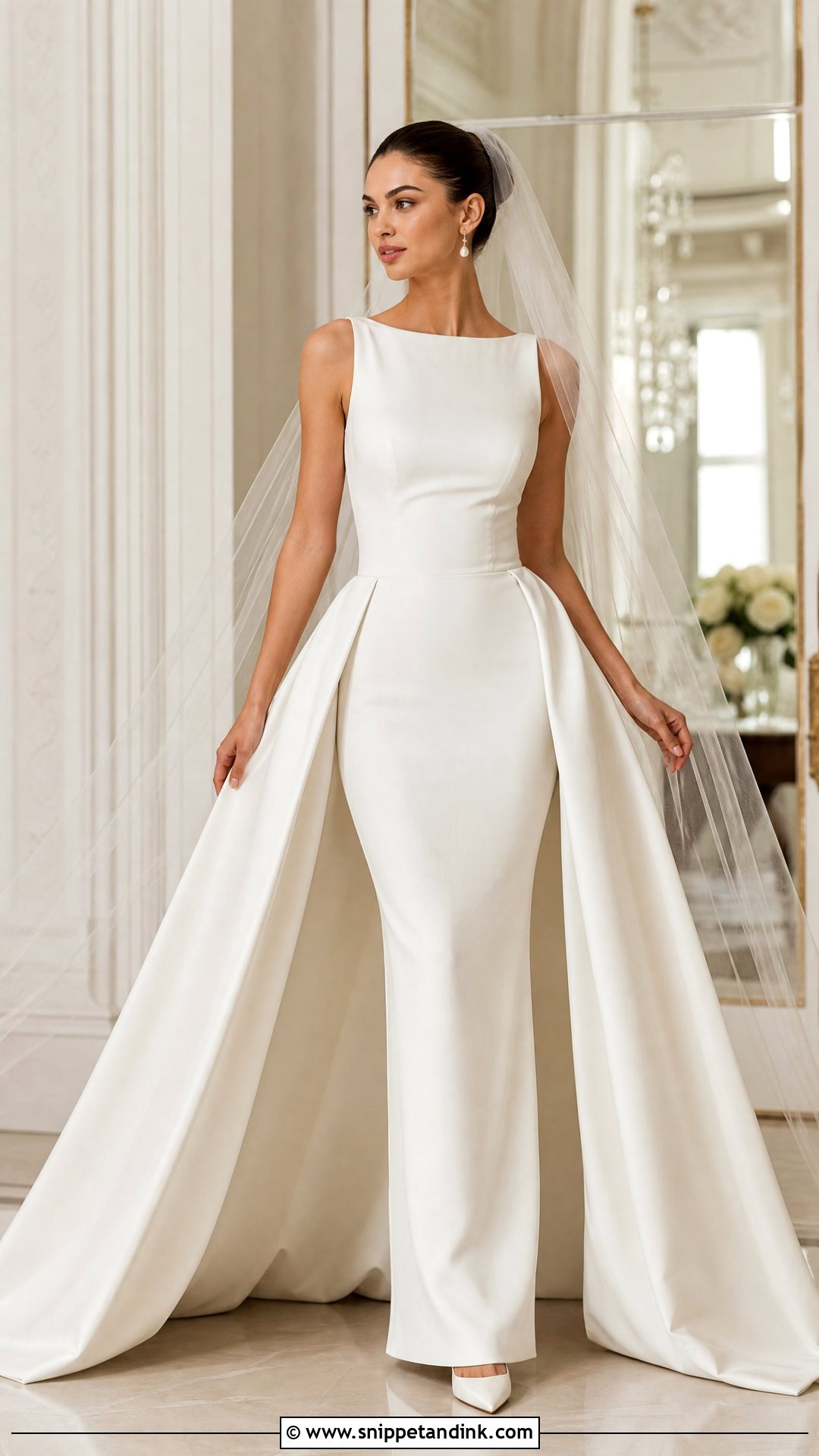
A detachable overskirt gives you two dresses: presence for the aisle, then a sleek column for the party. The waistband is the detail to check. It should be flat and lightweight, otherwise it adds bulk at your middle and leaves a ridge when it comes off. Tulle feels romantic; satin is more structured. Wear a long veil and pearls for the ceremony, then switch to statement earrings or a short veil after. Practise the hooks or snaps with the person who will help you, because rushing an unfamiliar closure is how fabric tears.
16. Boho Chiffon Straight Wedding Dress
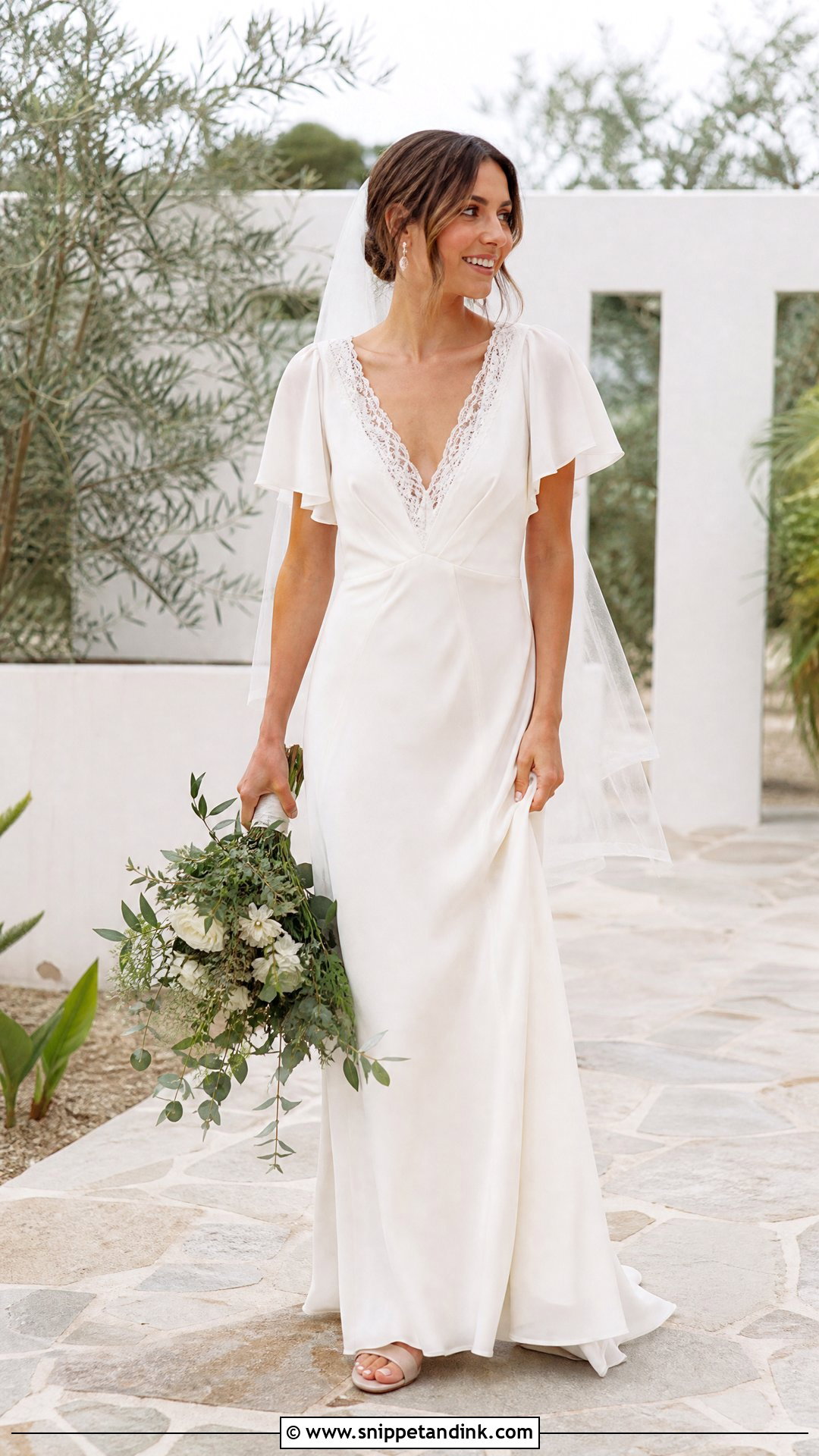
Chiffon over a fitted lining gives a boho column movement without width. The outer layer should float a little off the body and catch the breeze. Flutter sleeves and a lace-trimmed V-neck suit it. I’d keep to one lace and one texture; tassels, fringe and competing laces make it look like a costume. For a garden or field, have the hem set so it clears uneven ground but still covers most of the shoe when standing. Block-heel sandals, textured waves, a loose bouquet and a fingertip veil or floral piece finish it.
17. Vintage Column Wedding Dress
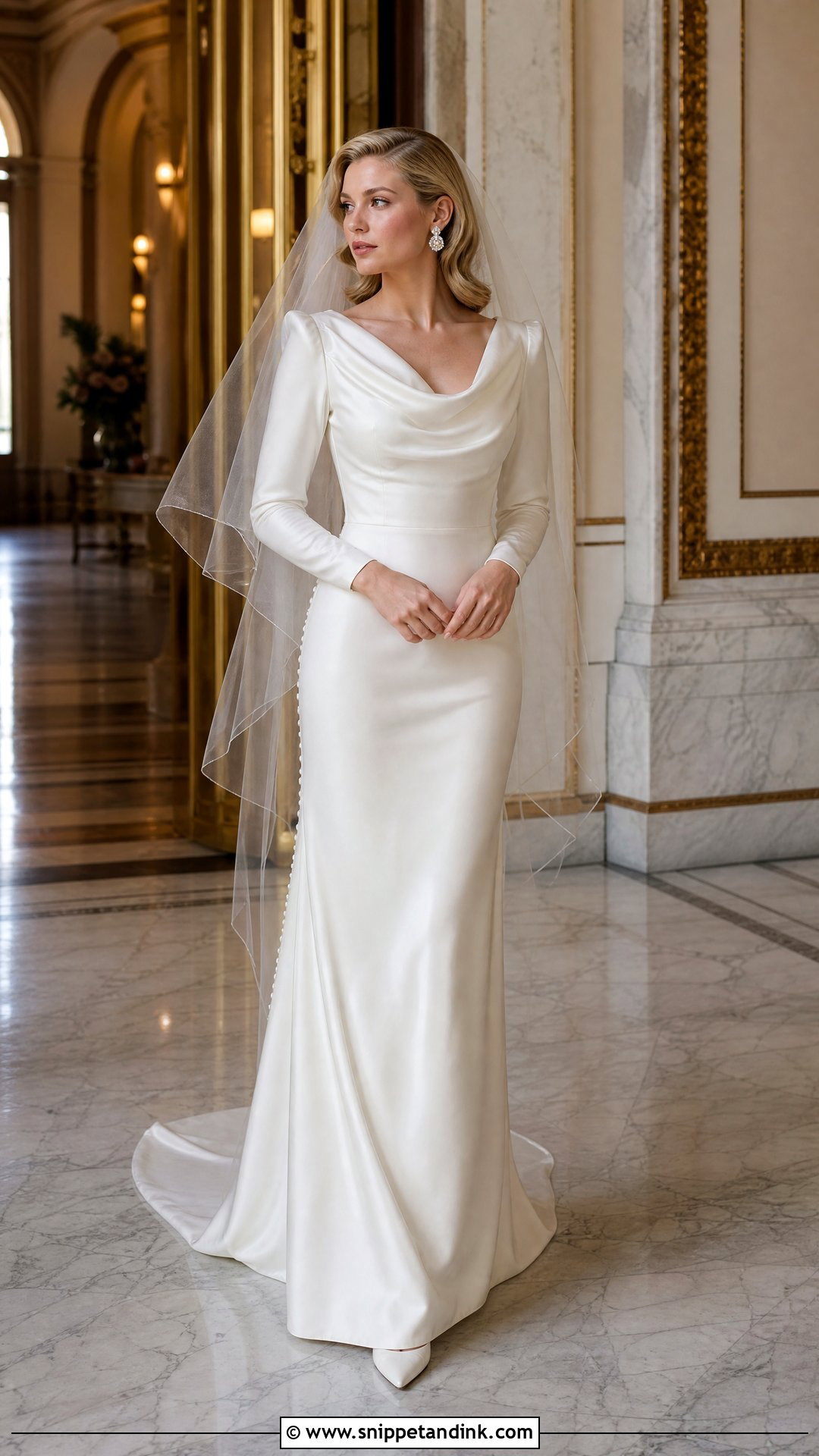
Pick one era and stick to it, and a vintage column never looks like fancy dress. That might be draped satin, geometric beaded tulle, or crepe with covered buttons and soft shoulder pads. Keep the skirt straight and fluid with a short train. A birdcage or fingertip veil, vintage-style earrings and closed pumps suit it, with smooth waves or a low roll. If the gown is genuinely old, check the seams, fastenings, lining and any yellowing before buying, and have a specialist cleaner assess it before any alterations start.
18. Plus Size Straight Wedding Dress
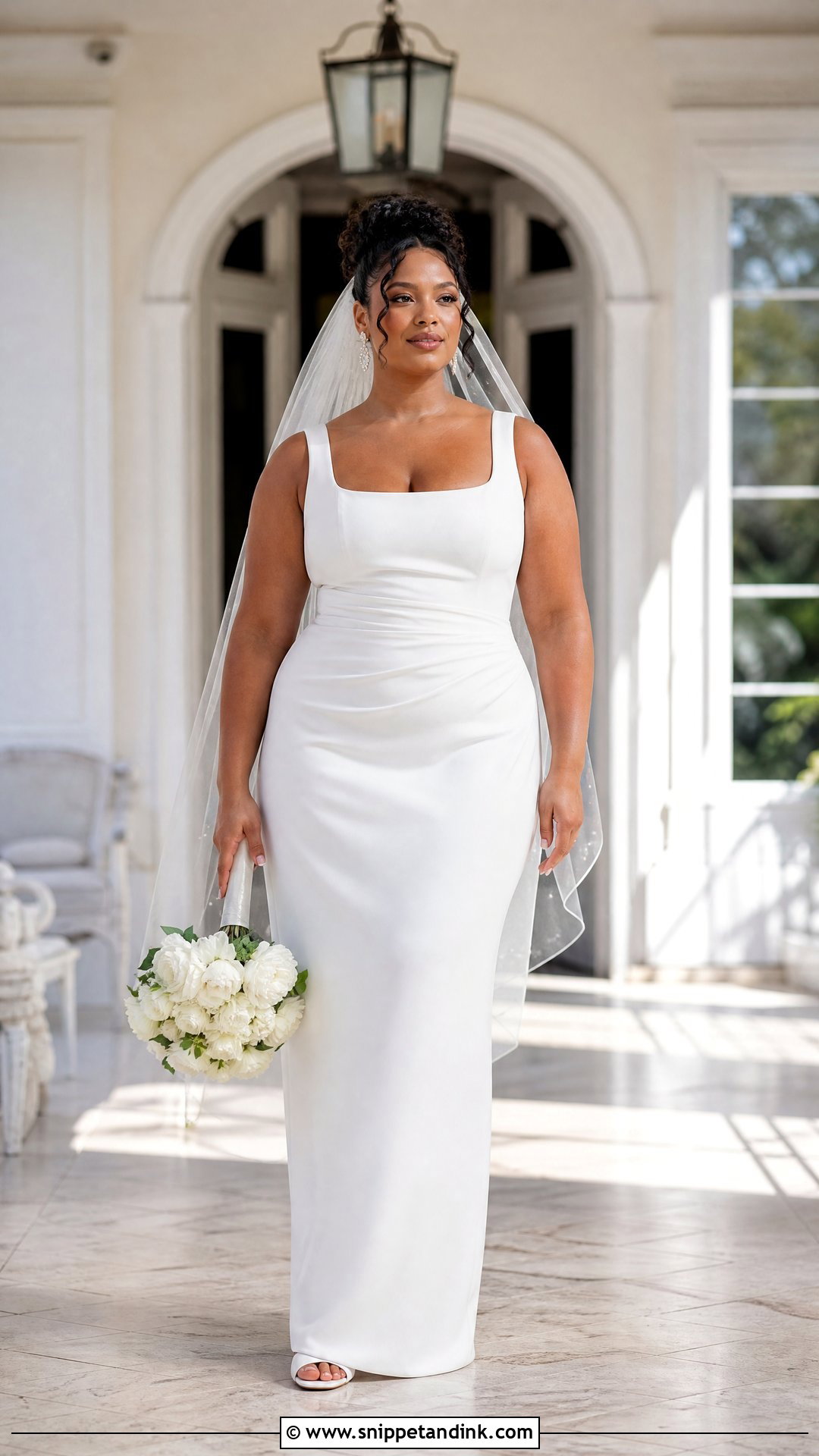
On curvy brides, a column gown works when the structure does the shaping rather than tightness. I look for supportive seams, substantial crepe, a stretch lining and a bodice built for the bra or support you actually wear. A V or square neck frames the upper body; a gentle front drape softens without hiding. Ignore the size label and judge how it hangs from the shoulders, waist and hip. Good alterations remove pulling and bunching while keeping movement. Choose a seamstress experienced in curve tailoring, especially for adjusting the hem and train in proportion.
19. Petite Straight Wedding Dress
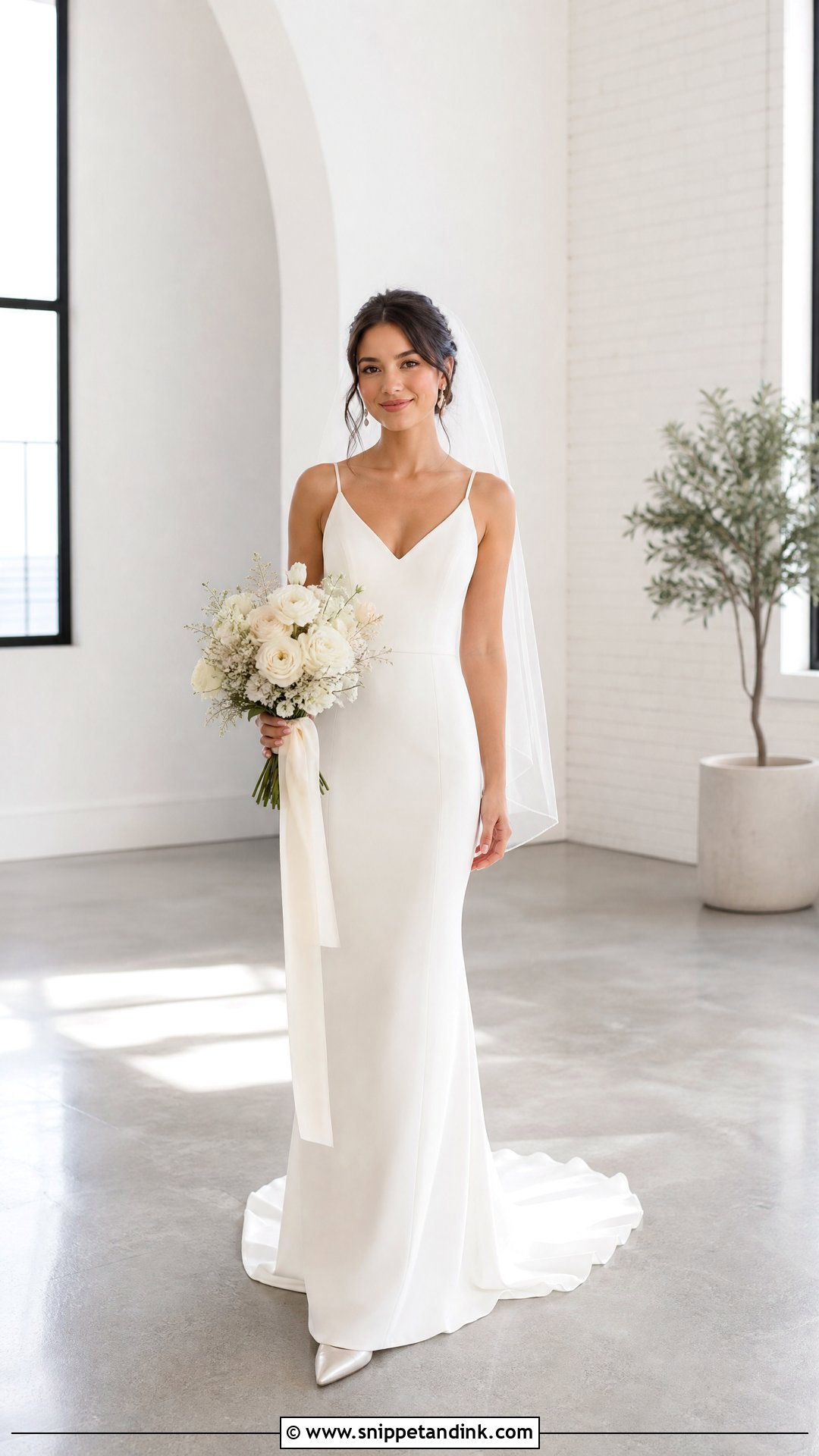
Petite brides often get the most from a straight gown, because one continuous line reads as height. Keep details small: narrow straps, a modest train, a V-neck or clean front panel. Gathers at the waist shorten the torso, so avoid them. Budget for more than a hem; straps, neckline, waist and train may all need moving up. Starting from a petite-cut pattern saves a lot of that work and keeps the designer’s proportions intact. Pointed shoes in ivory or a near match, fine jewelry and a light veil keep everything in scale.
20. Courthouse Straight Wedding Dress
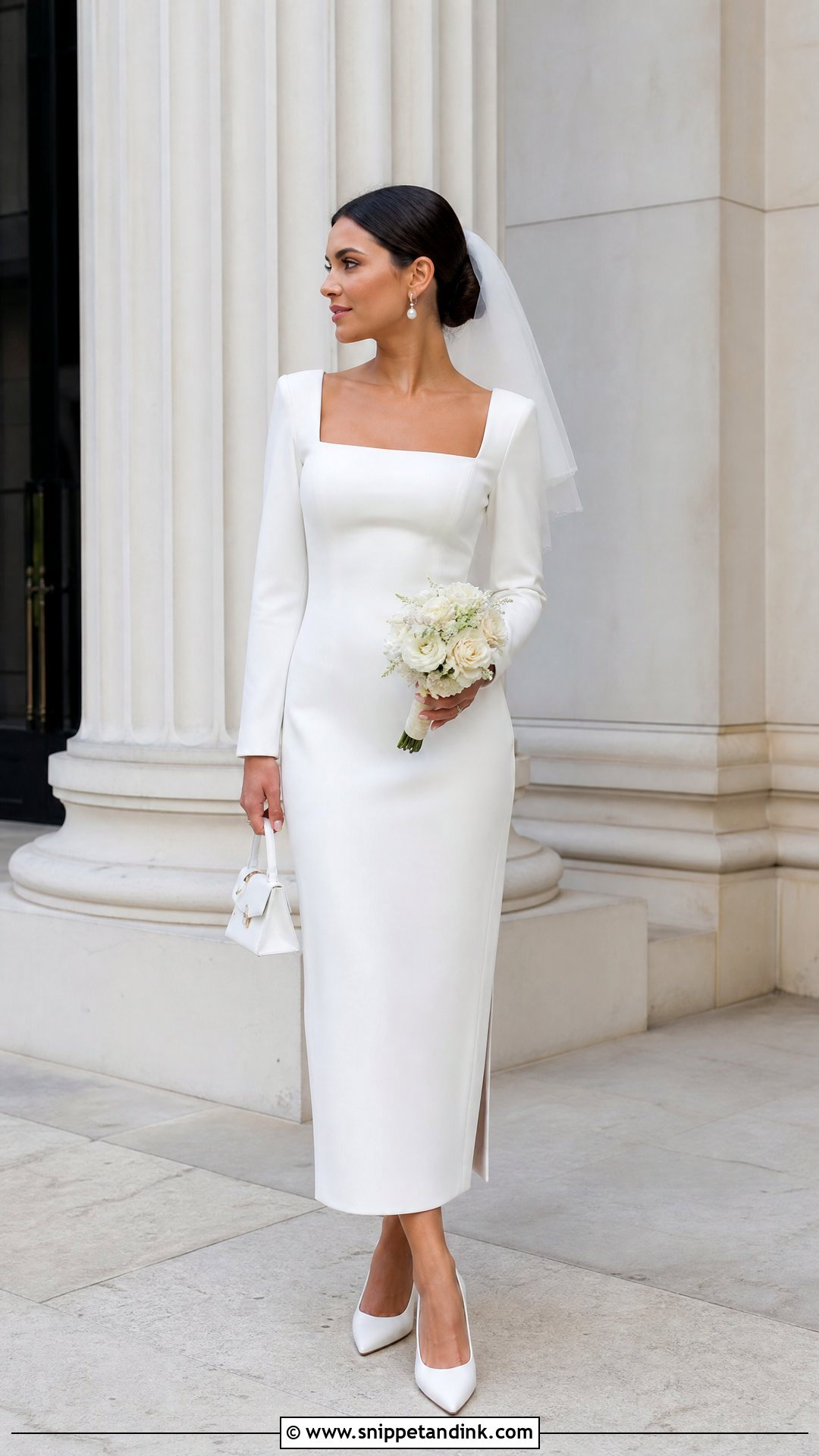
Courthouse days involve corridors, waiting rooms and probably a walk to lunch, so the dress should be easy and short enough not to drag. A midi-length straight wedding dress in satin, crepe or jacquard does that. A square neck, tailored sleeves or a clean strapless bodice keeps it bridal. Pointed pumps, a mini bag, pearls and a short veil or bow finish it, with a compact bouquet. Check the back slit while sitting on a bench. A tailored white coat covers cold weather, and changing the accessories means you’ll wear the dress again.
Match the Fabric to the Venue You’ve Booked
Because a straight gown has no volume to distract the eye, fabric problems show plainly. Weather and setting decide which ones you’ll run into.
- Hot, humid venues: silk and thin satin show sweat marks at the back and underarms. Crepe and chiffon hide them better and breathe.
- Windy beaches and clifftops: chiffon and silk slips wrap around your legs and lift. Ask for a weighted hem or a heavier lining.
- Long car rides or sitting for a meal: satin and silk crease across the lap. Crepe, mikado and lace recover much faster.
- Winter or air-conditioned churches: velvet-backed crepe, long sleeves or a matching coat keep you warm without bulking the silhouette.
- Grass, gravel and old stone floors: shorten trains to a sweep and avoid fine tulle at the hem, which snags and picks up dirt.
If your gown is already bought and doesn’t fit the setting, adjust around it: a steamer in the bridal suite, a wrap for the photos outside, or a second shorter dress for the reception. Those small plans save more stress than switching dresses late.
One Narrow Line, Many Moods
A straight gown should feel elegant and comfortable at the same time. Start with fabric, because structured crepe, glossy satin, fluid silk and textured lace each give a very different dress in the same shape. Then compare necklines, sleeves, trains and support. Alterations matter more in this silhouette than any other, since small changes alter how it hangs and moves. Try the full outfit, shoes, veil, jewelry and underwear included, before the day. From minimalist satin to floral lace, the column shape gives you plenty of room to look like yourself.
You'll Like These Ideas:







Leave a Reply