
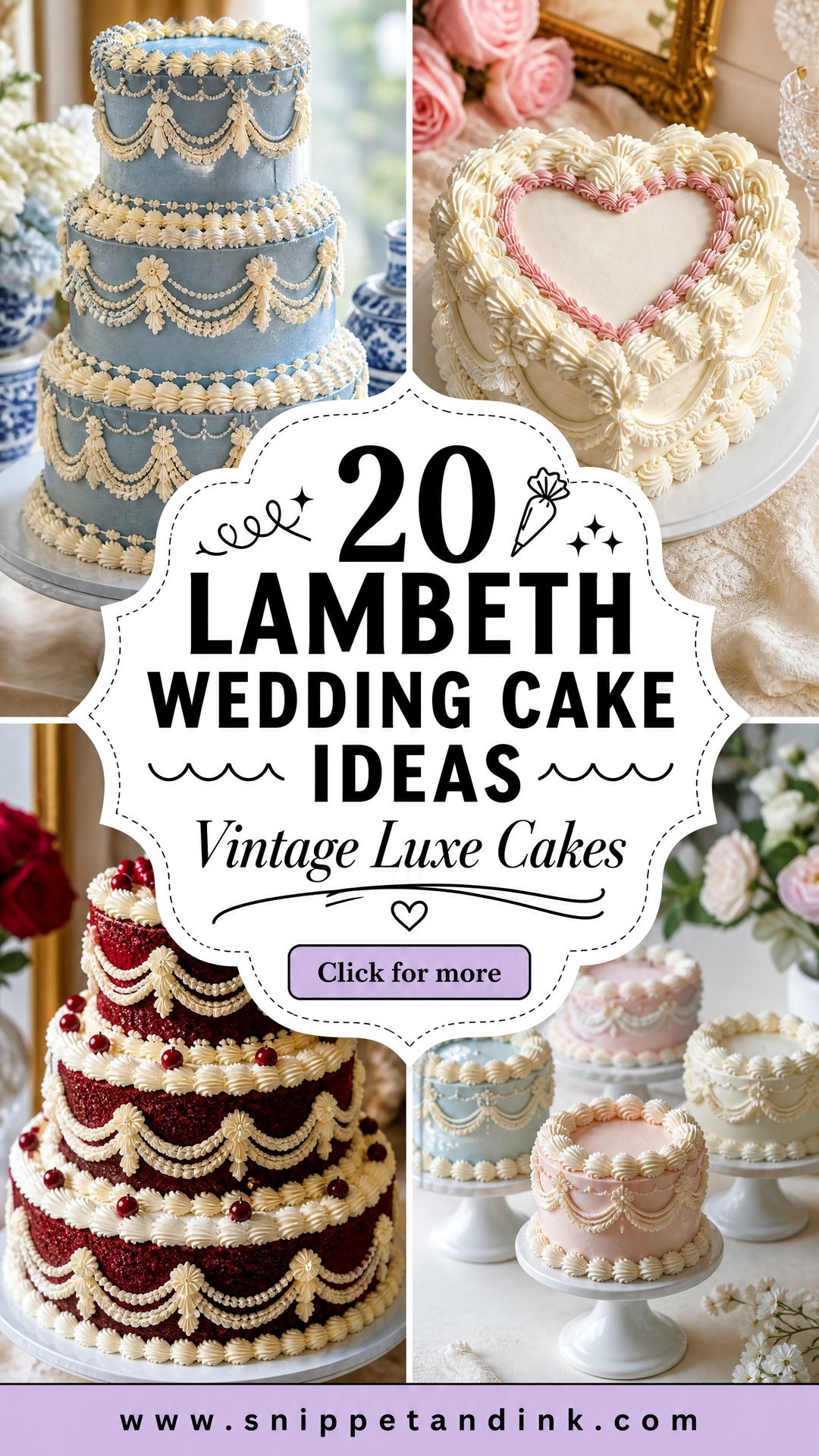
Lambeth cakes are back on dessert tables, especially for couples who like vintage style with a bit of drama. The method is old-school overpiping: raised buttercream built up in layers of shells, swags, bows and drop lines, sometimes finished with cherries or pearls. I love piping them, and I’ll be honest that they take far more bench time than a smooth cake, which is the first thing to know before you fall for one. The good news is how far the style stretches, from a pale all-white tier to a black-and-white showpiece. Below are twenty versions I’d happily put on a cake table.
How Overpiping Is Built, Layer by Layer
The defining idea of a Lambeth cake is piping on top of piping. A shell border goes down first, a rope or scroll is piped over it once it has firmed a little, then a finer line goes on top of that. The decoration ends up standing proud of the tier and casting its own shadow, which is what separates true overpiping from a cake with a pretty border. It’s slow work. A fully piped three-tier cake can take a decorator most of a day, and that labour, not the sponge, is what you’re paying for.
The icing underneath decides how it behaves
- American buttercream crusts on the outside and holds its shape well when handled, but it’s very sweet and softens fast in heat.
- Swiss or Italian meringue buttercream is silky and less sweet and pipes smooth shells, but it stays soft and needs a cool room.
- Royal icing dries hard and keeps fine detail for days, though it can crack if the cake shifts and many guests leave it on the plate.
- A ganache-coated cake with buttercream piping is the firmest combination I use for warm months.
Ask your baker which one they plan to use and why. A good answer will mention your venue, your date and how long the cake will be on display, not just taste.
1. White Lambeth Wedding Cake
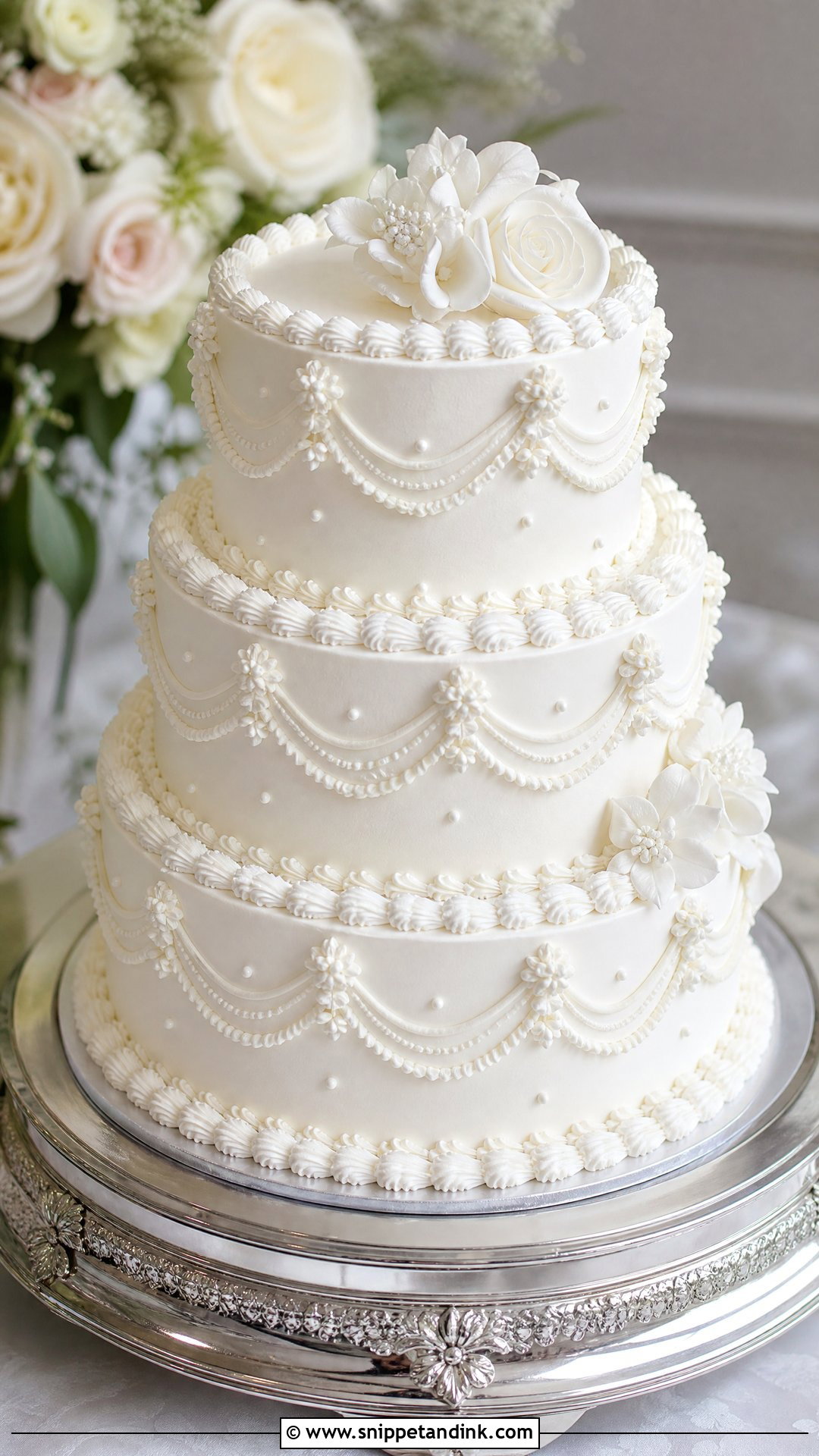
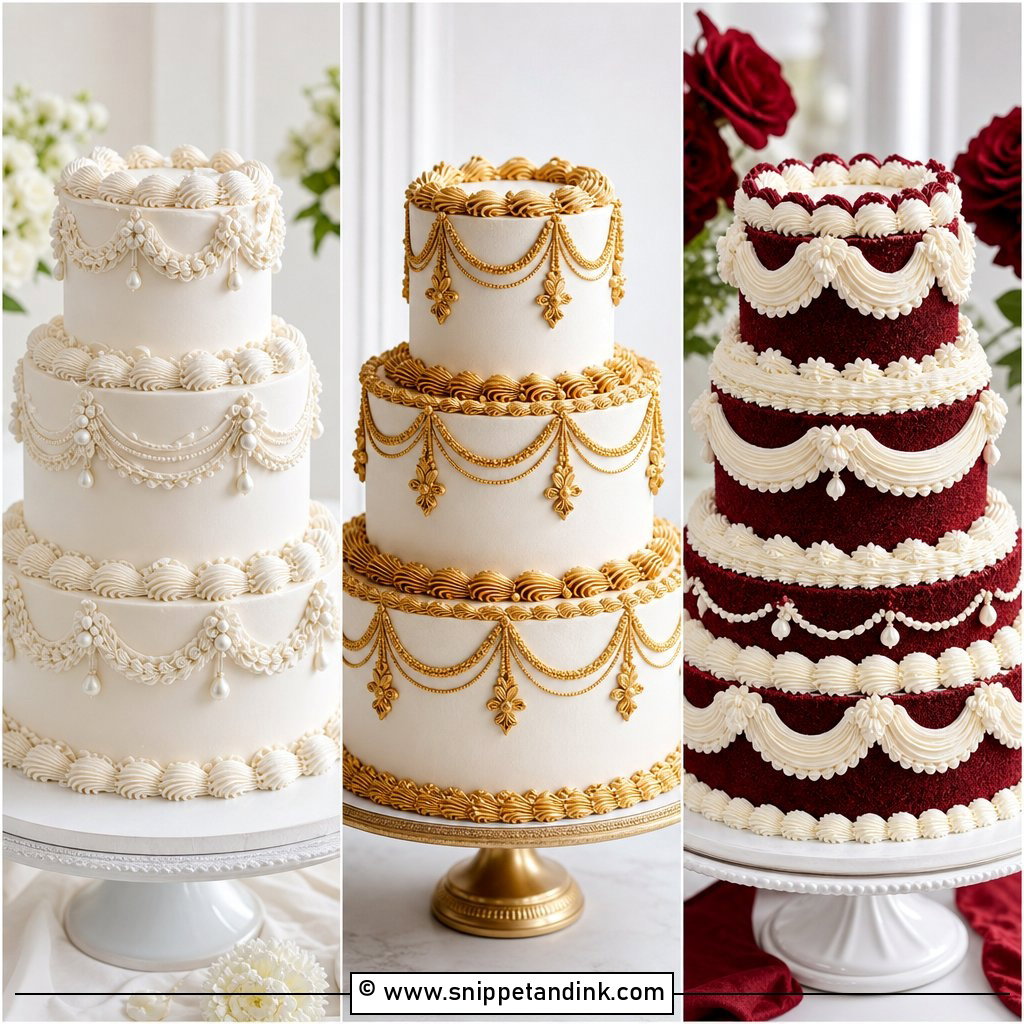
All-white is where the piping has nowhere to hide, which is exactly why I like it. With no colour to carry the design, depth comes from shadow, so I vary nozzle sizes: a heavy shell at the base, a finer rope above it, then drop lines that hang free of the tier. Pipe every border with the same tip and the cake reads flat in photos. Pearls, a satin ribbon or a few white sugar flowers can soften it, but I’d add only one of them.
2. Ivory Lambeth Wedding Cake
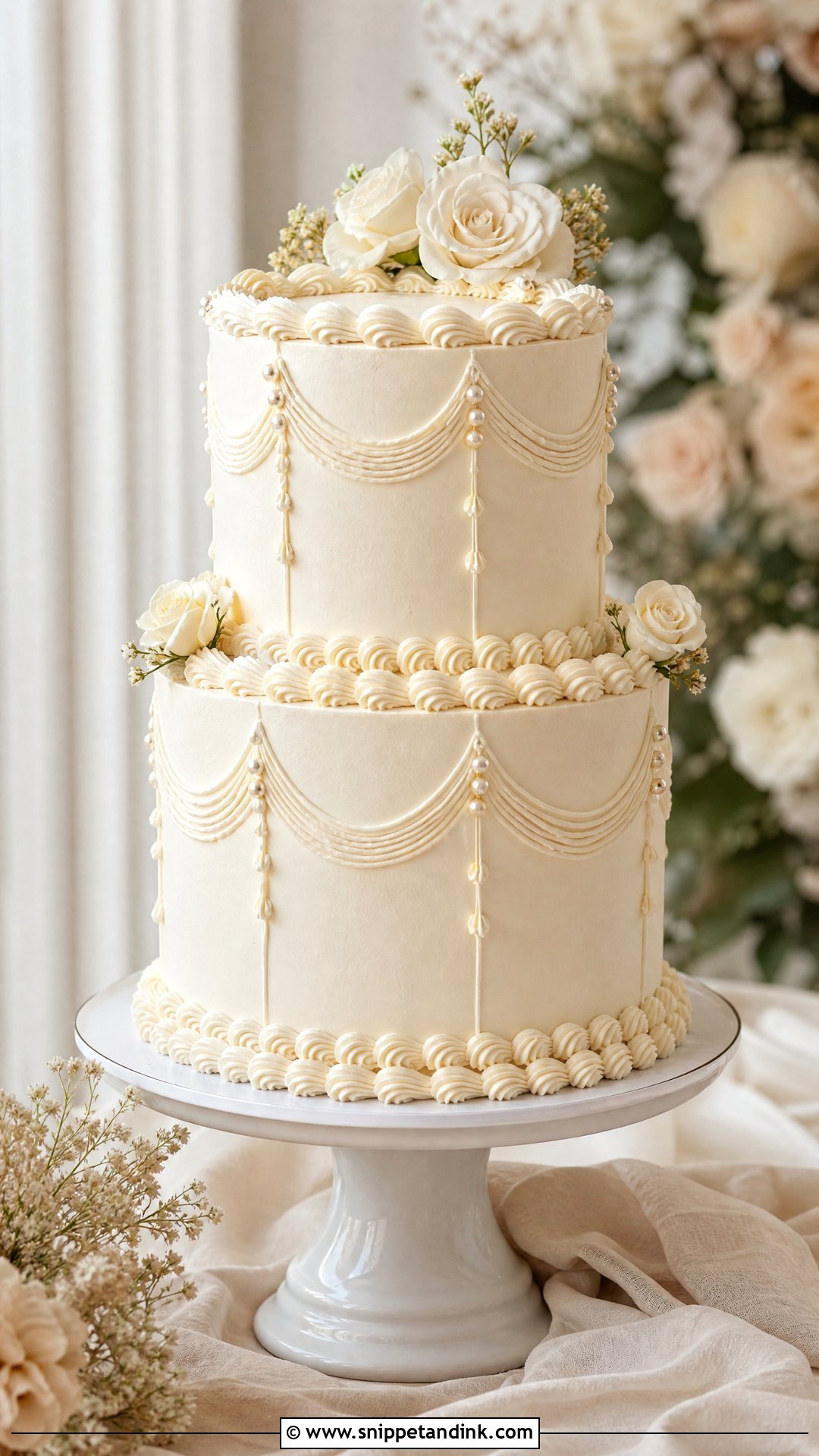
Ivory sits warmer than bright white and is kinder under reception lighting, which can make pure white look slightly blue. It suits a palette of champagne, blush, antique gold or creamy florals. I tint ivory deliberately rather than relying on the natural yellow of butter, because that shade drifts as the icing sits out. A touch deeper ivory on the overpiped layers gives a gentle shadow line. Oval tiers and scalloped borders suit it, with vanilla bean, almond, lemon or coconut sponge underneath.
3. Pink Lambeth Wedding Cake
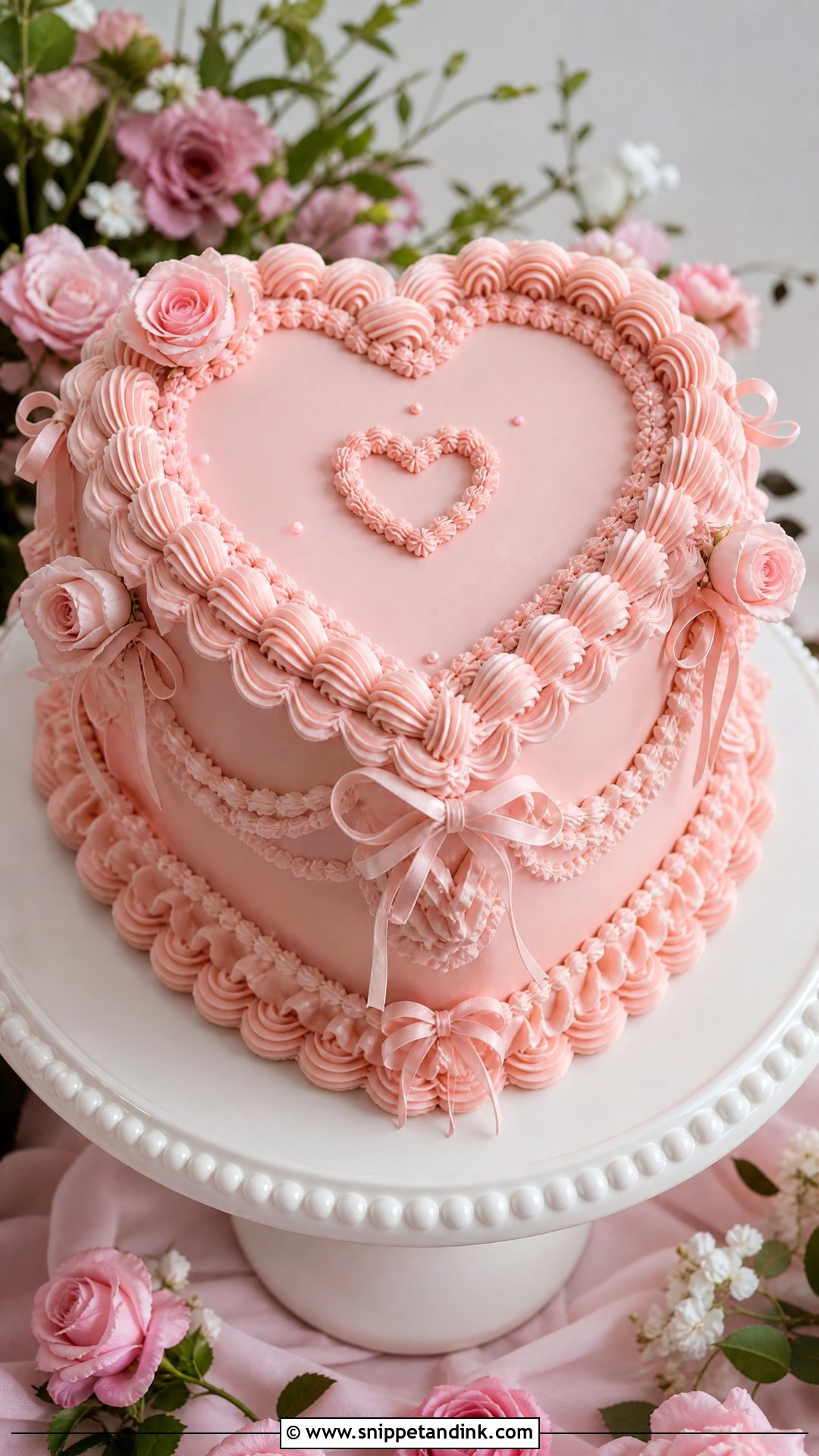
Blush is the forgiving pink. It sits comfortably next to roses, peonies and neutral linens and rarely fights with bridesmaid colours, while rose pink piping over a pale pink base is more playful. My worry with pink is saturation: a deep pink buttercream needs a lot of gel colour, which can taste bitter and bleed into neighbouring white piping on a warm day. I keep the base pale and save stronger colour for small details. It pairs nicely with heart-shaped tiers, piped bows and fresh flowers in matching tones.
4. Blue Lambeth Wedding Cake
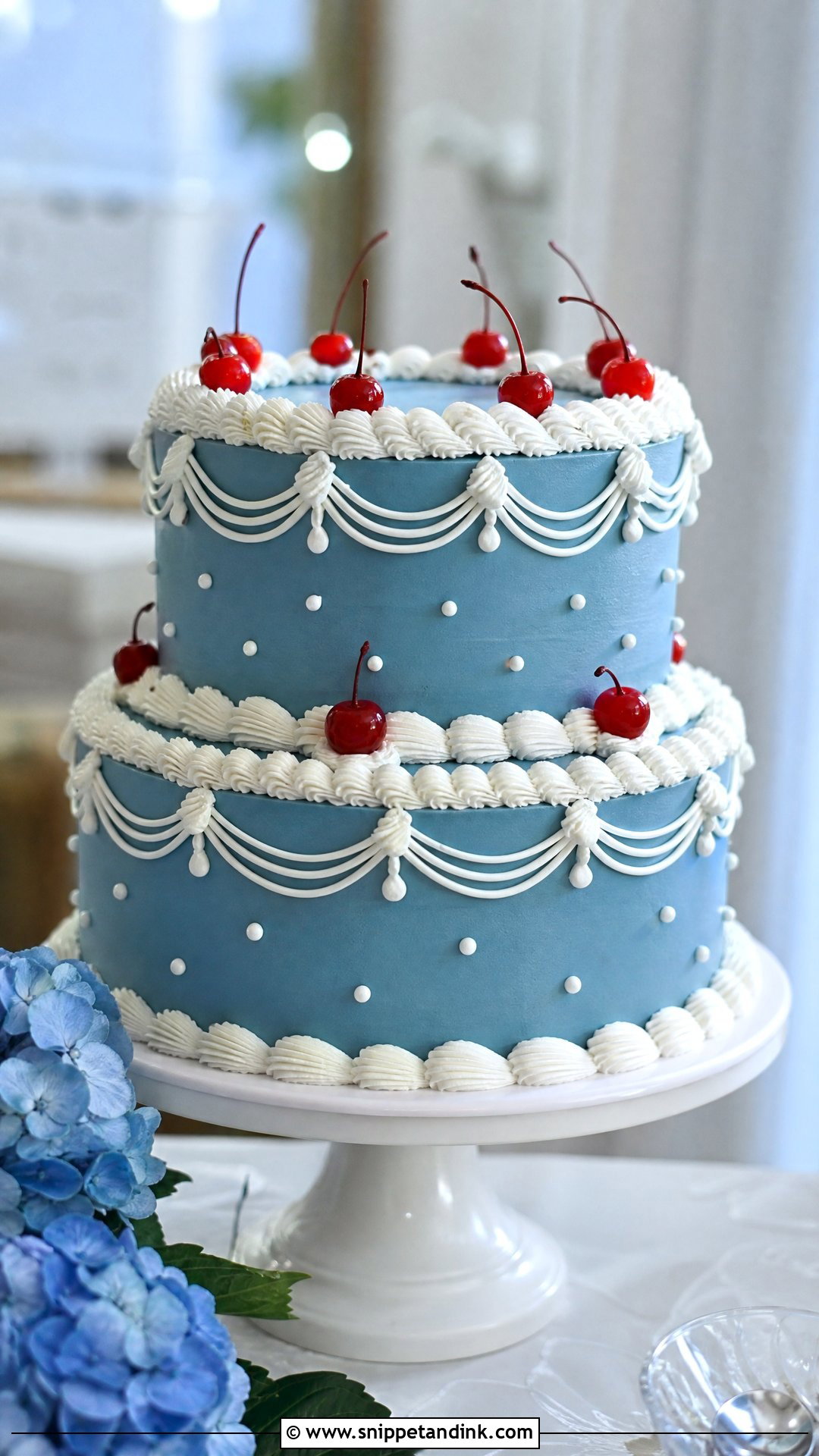
Blue answers the something-blue question without a single extra accessory. Powder blue is the easy shade, styled with white florals or silver, and dusty blue with white overpiping gives stronger contrast. A practical note from mixing it: blue buttercream drifts toward green when the butter base is yellow, so I whiten the icing first or work in a paler meringue buttercream. Hydrangeas and blue table details tie it into coastal or estate venues, and a few cherries push it retro.
5. Black And White Lambeth Wedding Cake
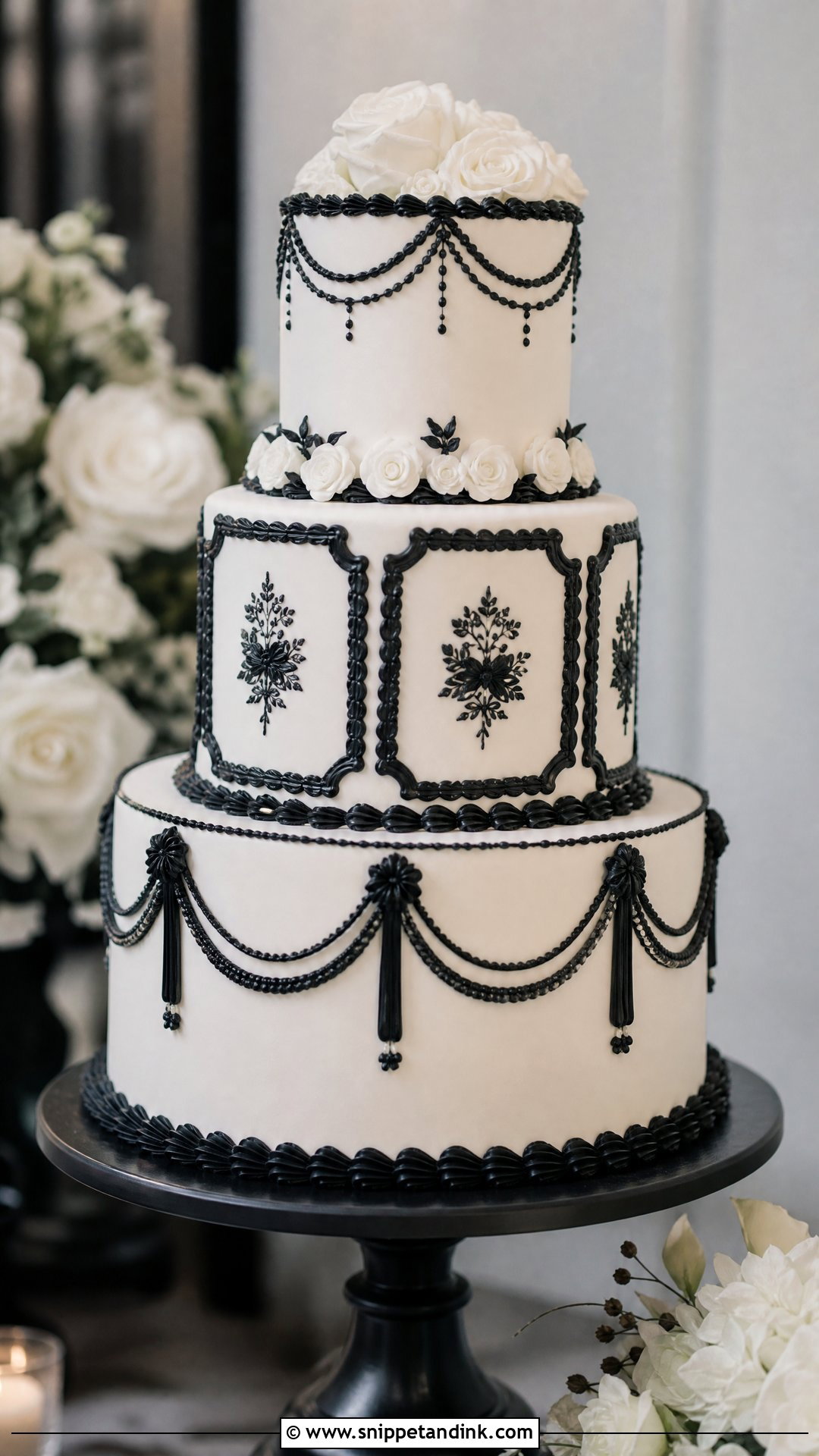
This is the version for couples who want the cake to be the focal point of the room. A white base with black piping is the most graphic; black tiers with white piping feel moody. Before anyone commits to black buttercream, I explain that it takes a heavy dose of colour, it can stain teeth, and it deepens for a day after mixing. That’s why I usually limit black to the piping or build the dark tiers on chocolate. Clean borders and balanced swags keep it bridal, and a few sugar pearls or white roses soften the contrast.
6. Heart Lambeth Wedding Cake
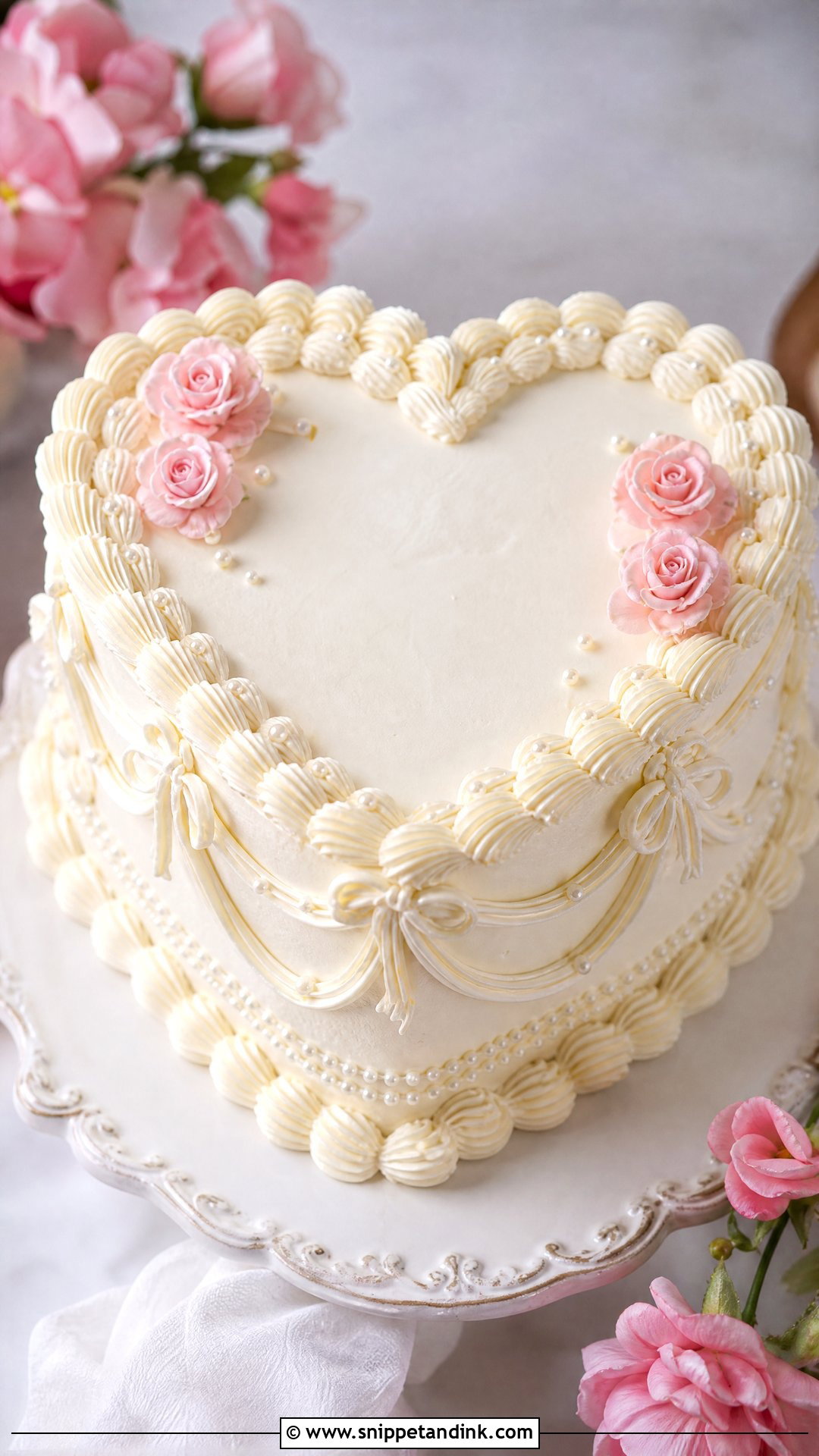
The heart shape is kind to Lambeth piping because a curving border flows naturally around it. Where it gets fiddly is the point at the bottom and the dip at the top, so I pipe those two spots first and let the rest of the border meet them. It suits sweetheart tables and elopements, or works as a cutting cake beside a larger dessert spread. Ivory with white piping keeps it quiet. Pink frosting, cherries or a short piped message turn it playful.
7. Two Tier Lambeth Wedding Cake
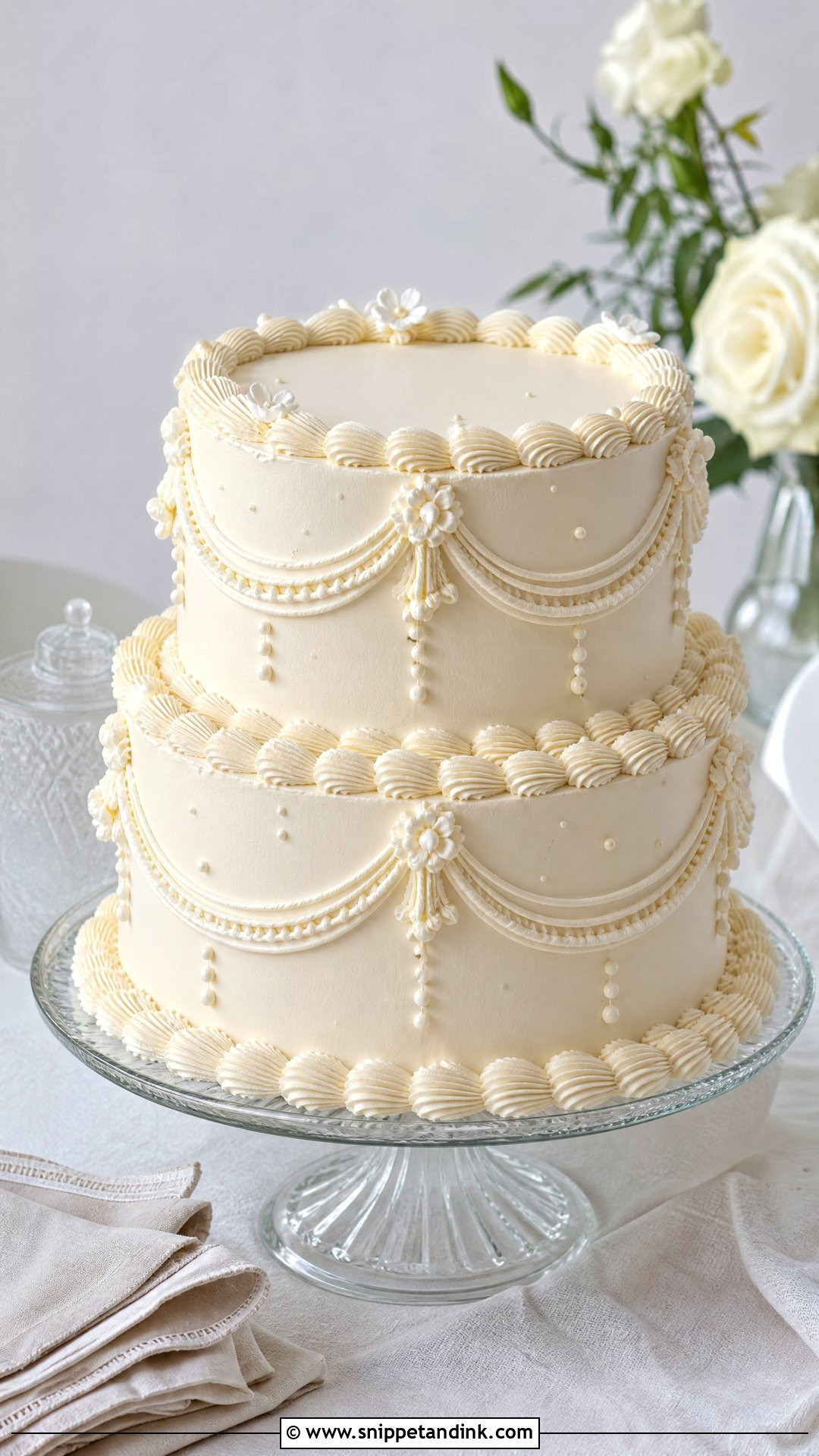
Two tiers give enough height for proper piping while staying manageable for smaller guest counts. I treat the tiers differently: tighter shells and pearl dots up top, heavier swags, garlands and scrollwork on the bottom where there’s surface to carry them. Colour blocking works well here, such as blush below and ivory above. What I watch most is spacing. Lambeth piping looks refined when a little bare icing shows between patterns, and crowded the moment every gap gets filled.
8. Three Tier Lambeth Wedding Cake
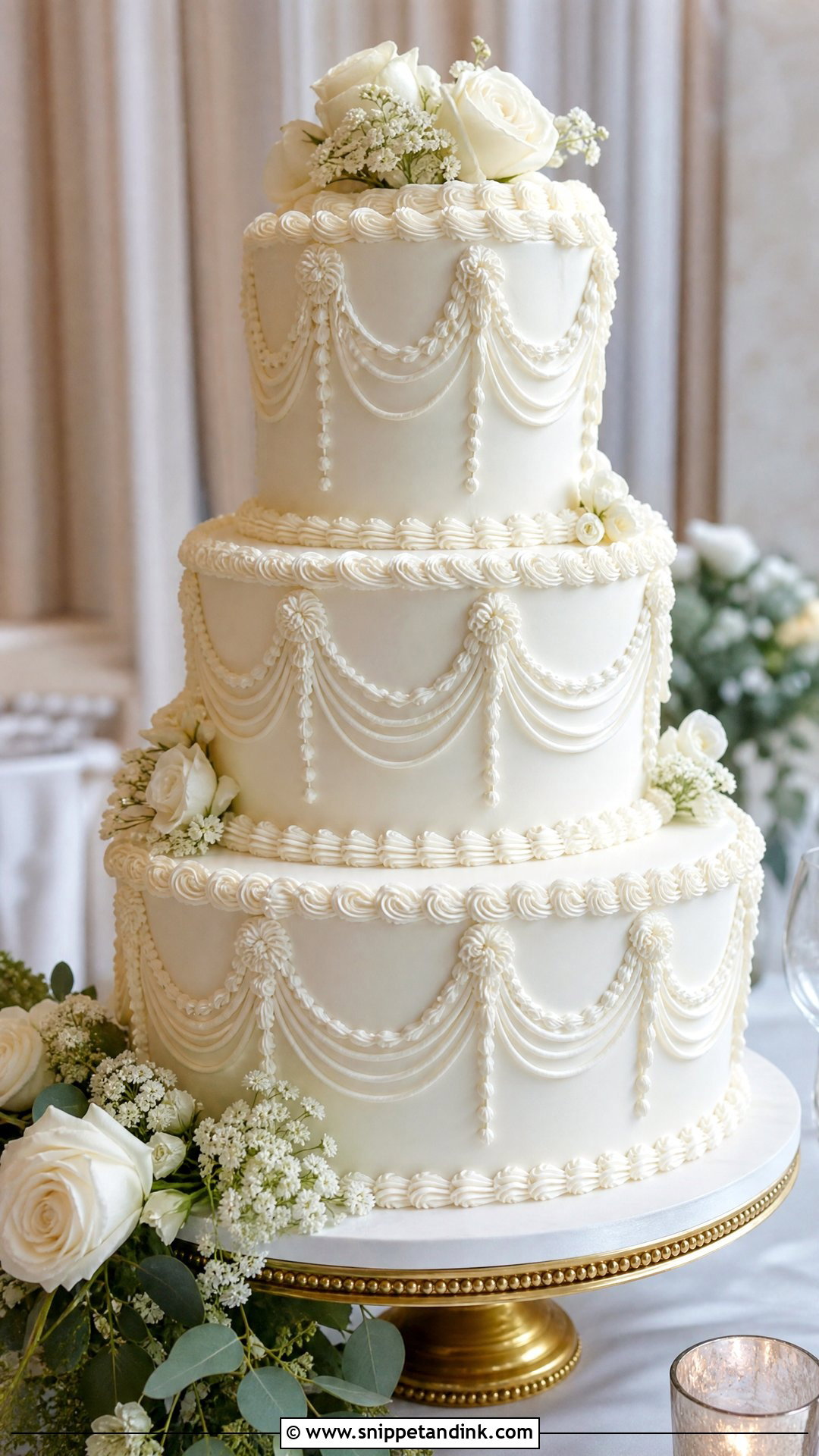
Three tiers is the grand silhouette most people picture for a vintage cake, and it suits medium to large weddings. It also means proper internal supports, because overpiped buttercream adds real weight to every tier and the bottom one carries all of it. I give each tier a slightly different layout that shares the same vocabulary of shells and drop lines, so the cake looks custom rather than stamped. All-white keeps it traditional, while pastel tiers with contrasting piping feel more current.
9. Buttercream Lambeth Wedding Cake
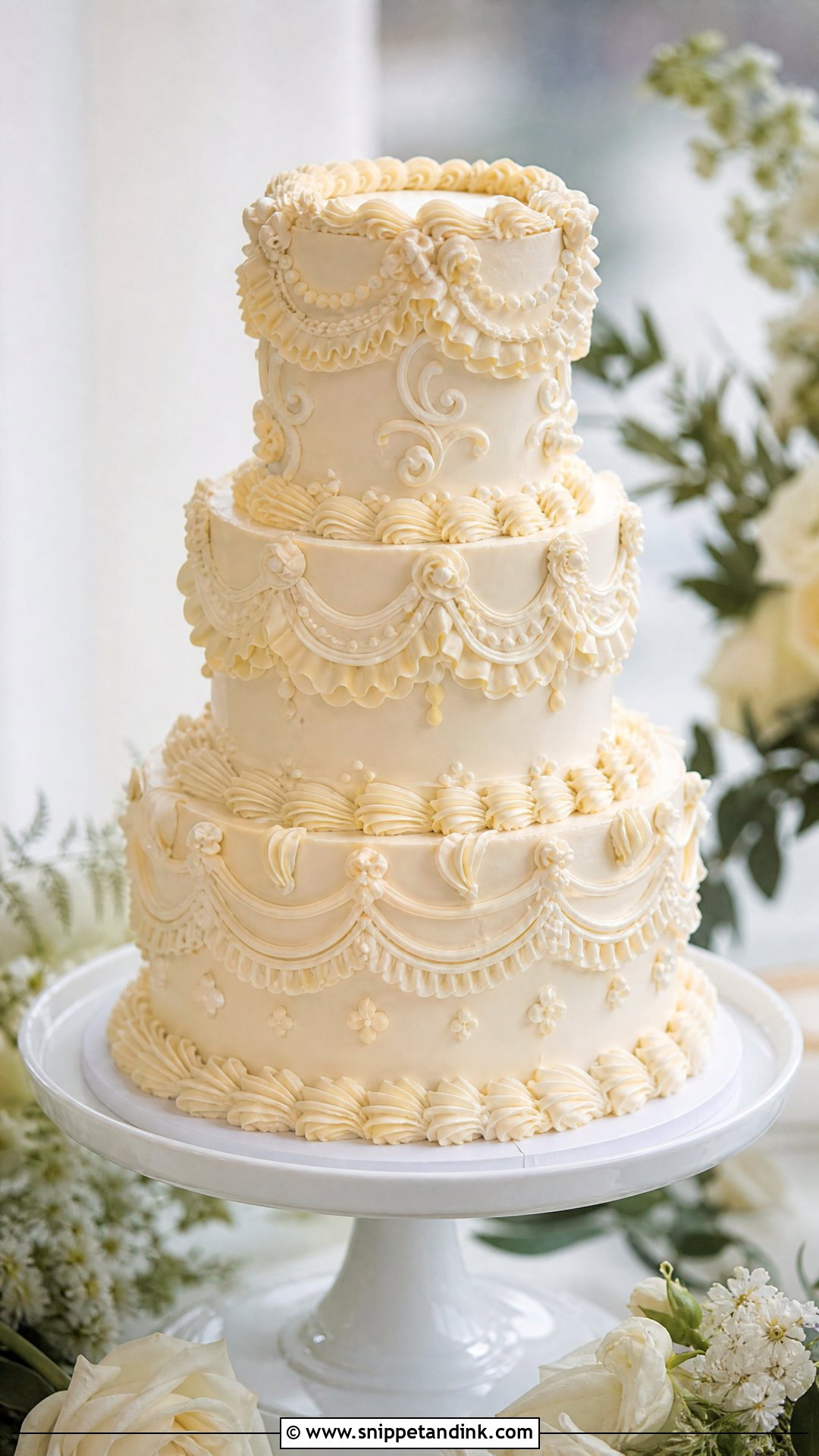
Buttercream is what gives Lambeth piping its soft, dimensional texture, and it’s my default for shells, ruffles and rosettes. It sits happily over many wedding flavors, from vanilla and almond to lemon, strawberry and chocolate. The conversation to have early is heat. Butter softens as a room warms and fine drop lines are the first detail to sag, so for a summer date I ask exactly where the cake table sits and how long the cake will be on display.
10. Fondant Lambeth Wedding Cake
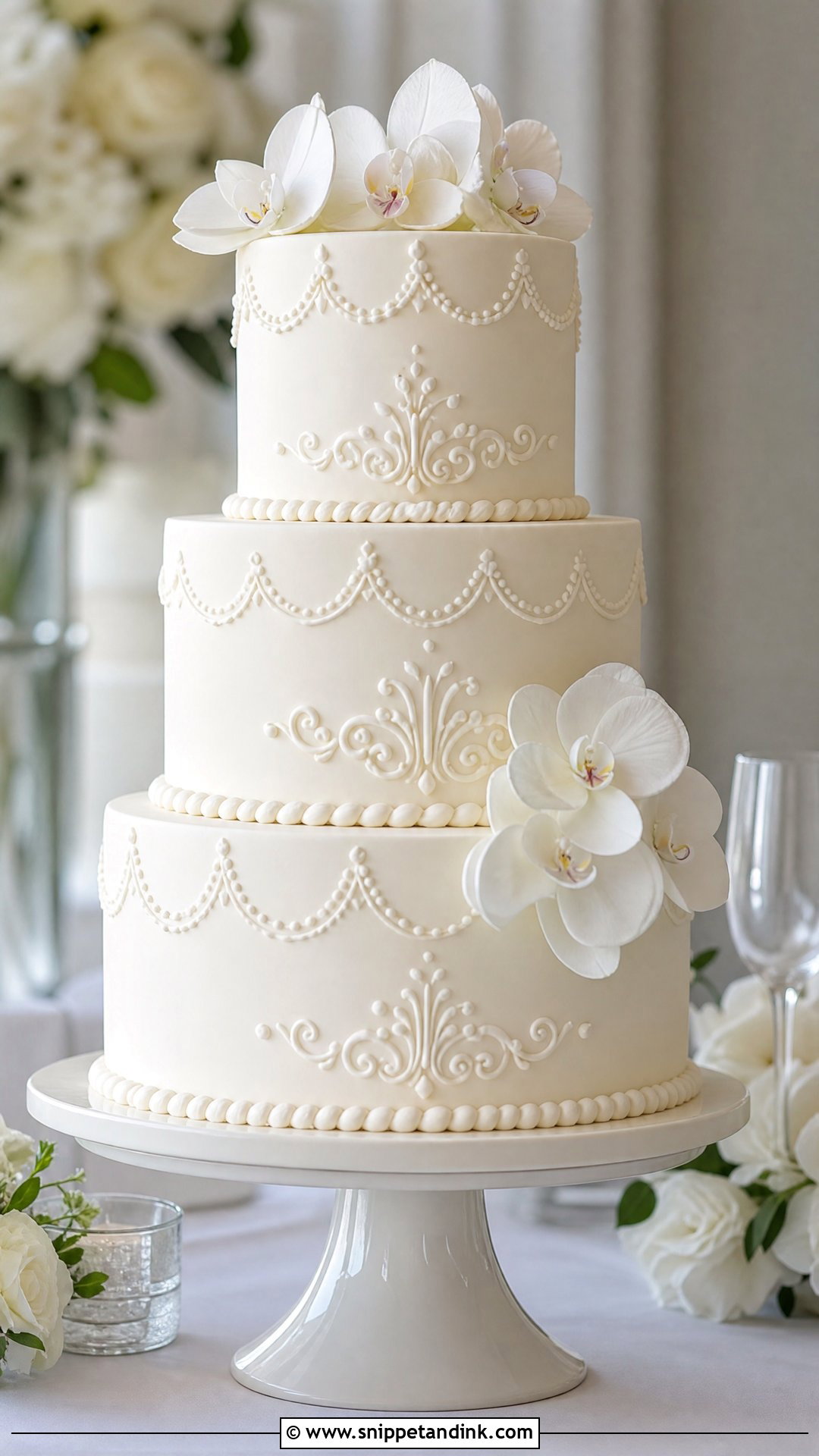
Fondant gives an almost glass-smooth base, which makes raised piping look extra precise on tall, formal tiers. The piping itself goes on in royal icing or a firm buttercream. Royal icing sets hard and keeps sharp detail, though it’s brittle if the cake gets knocked. Fondant also has a habit worth knowing: it sweats when it comes out of a fridge into a warm room, so a fondant cake usually waits at cool room temperature instead. Ivory, blue, pink or soft grey fondant holds colour evenly, and I roll it thin because plenty of guests peel it off.
11. Floral Lambeth Wedding Cake
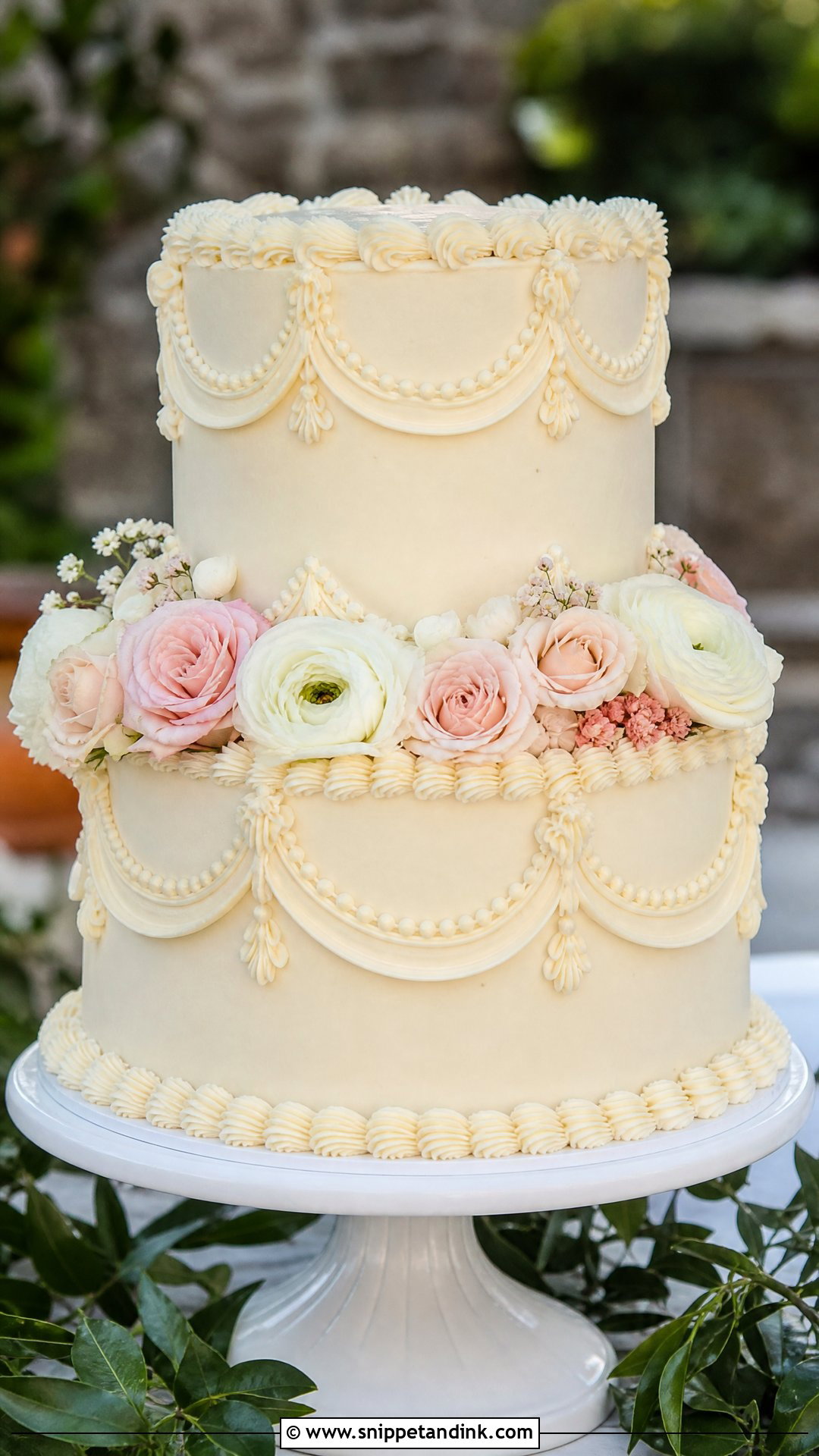
Flowers and overpiping compete for the same space, so placement matters more than quantity. Fresh blooms, sugar flowers and piped buttercream flowers all work; roses are the classic, and peonies, ranunculus and sweet peas fit the vintage mood. Fresh stems never go straight into the sponge. I wrap them or use posy picks, and I check with the florist that the flowers are unsprayed. A few blooms at the base, between tiers or on top are usually enough to frame the piping instead of covering it.
12. Cherry Lambeth Wedding Cake
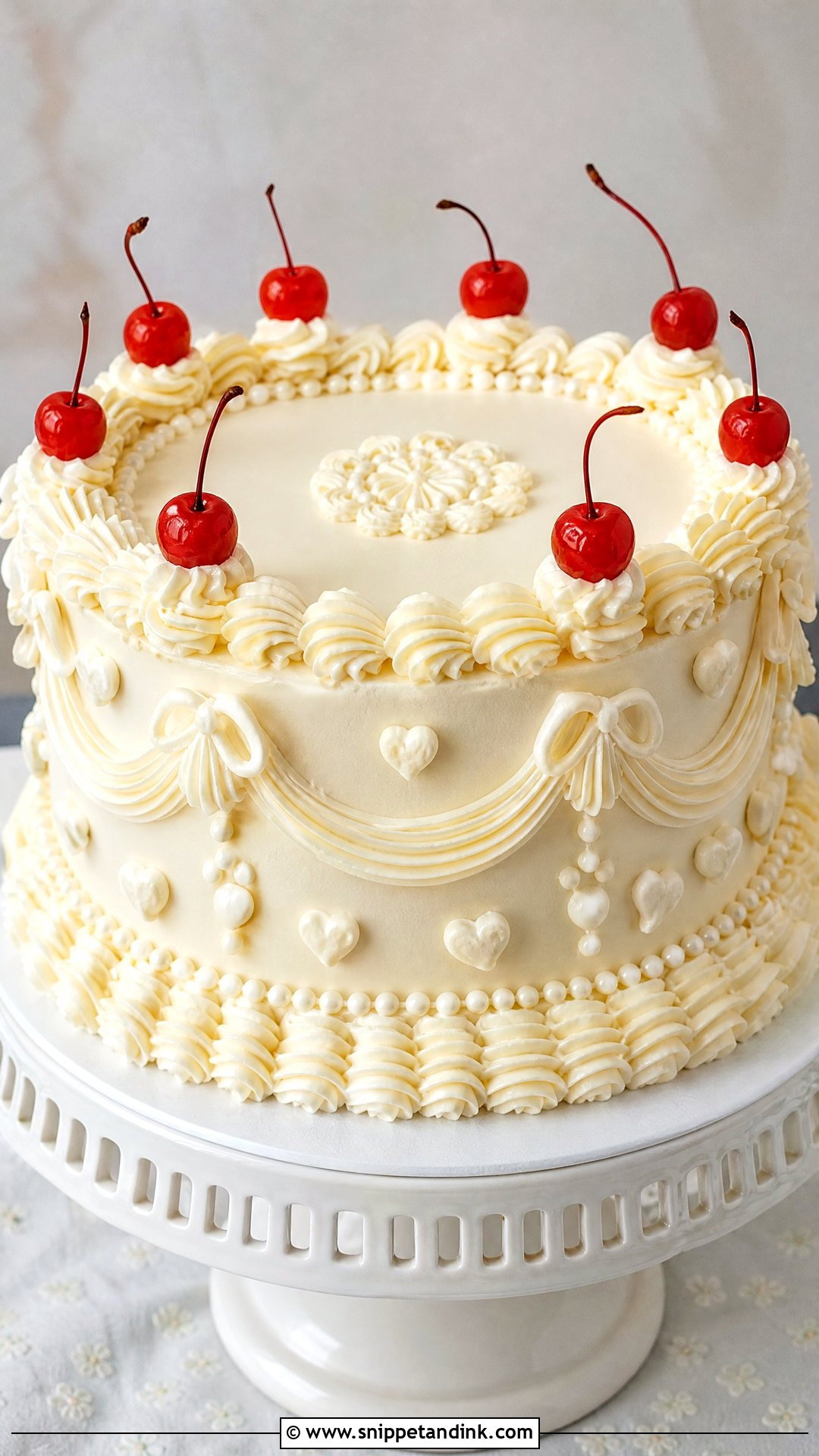
Cherries bring a red pop against white, ivory, pink or blue icing, and they’re the detail most people link with the retro Lambeth revival. On a cherry Lambeth wedding cake they can sit along the top border, between swags or around each tier. Jarred cherries weep syrup into buttercream within hours, so I dry them thoroughly and add them late, or use sugar cherries on a cake that will be on show for a long time. Thick shell borders and piped bows suit them, and the look fits a courthouse wedding or a diner-themed party.
13. Pearl Lambeth Wedding Cake
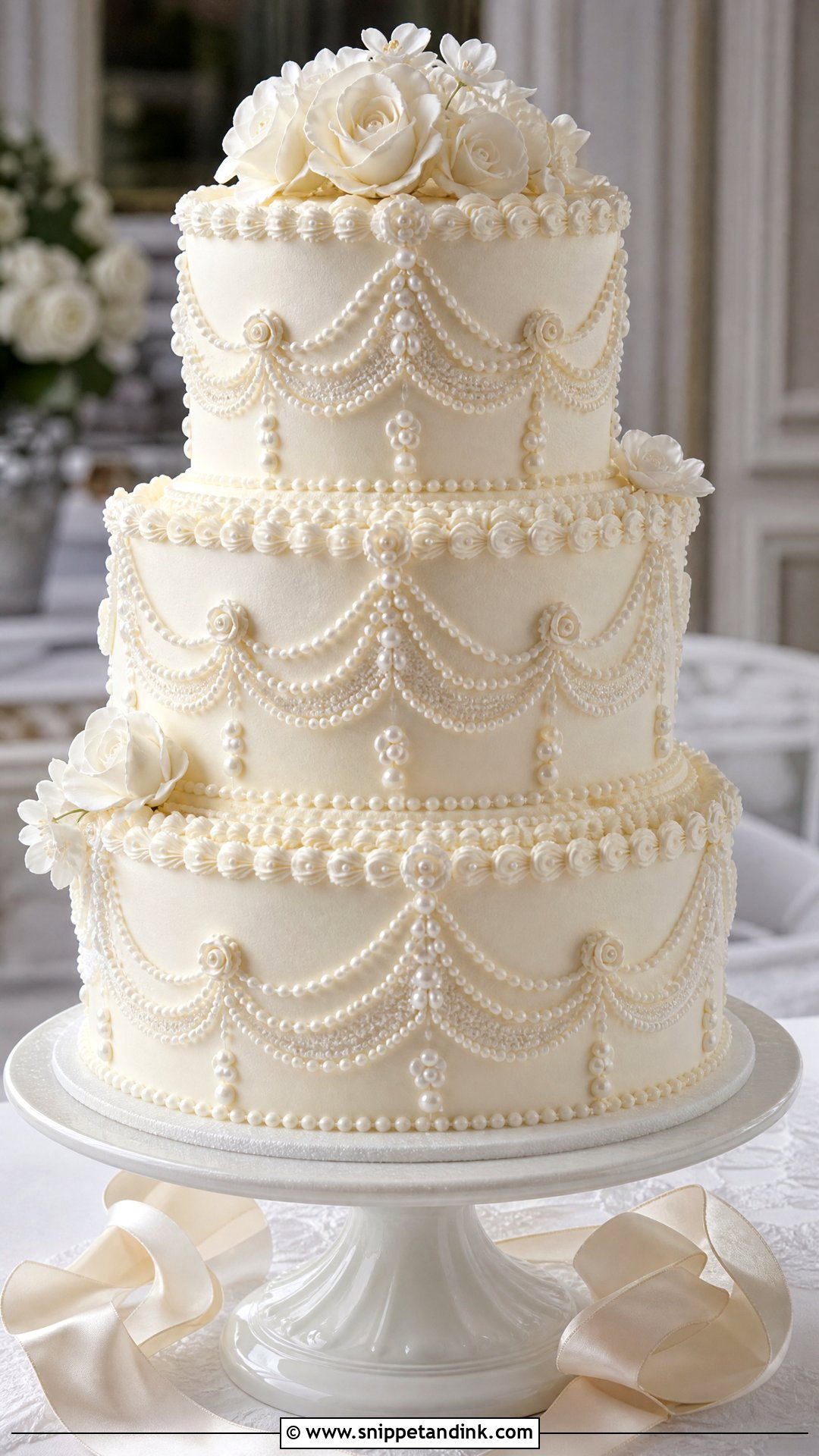
Edible pearls follow the curves of overpiping and pick out its dots without adding colour, so the base should stay neutral: white, ivory, champagne or pale blush. I place pearls with tweezers while the buttercream is still slightly tacky, because once it crusts they won’t grip and they roll off in transit. A light scatter keeps things soft, and neat lines along scalloped borders read more formal. Some hard sugar pearls are tough on teeth, so I tell couples which kind I’m using.
14. Gold Lambeth Wedding Cake
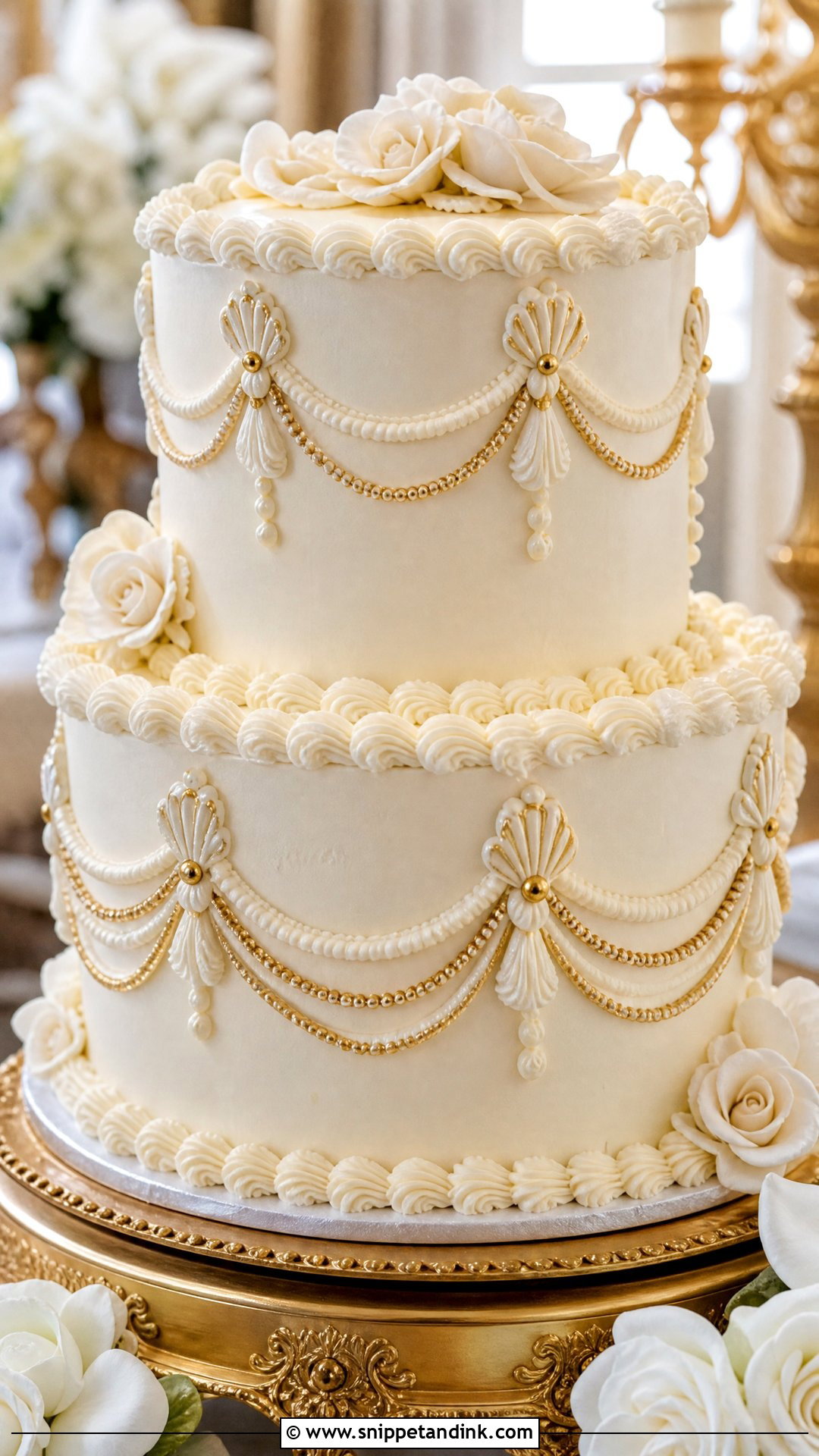
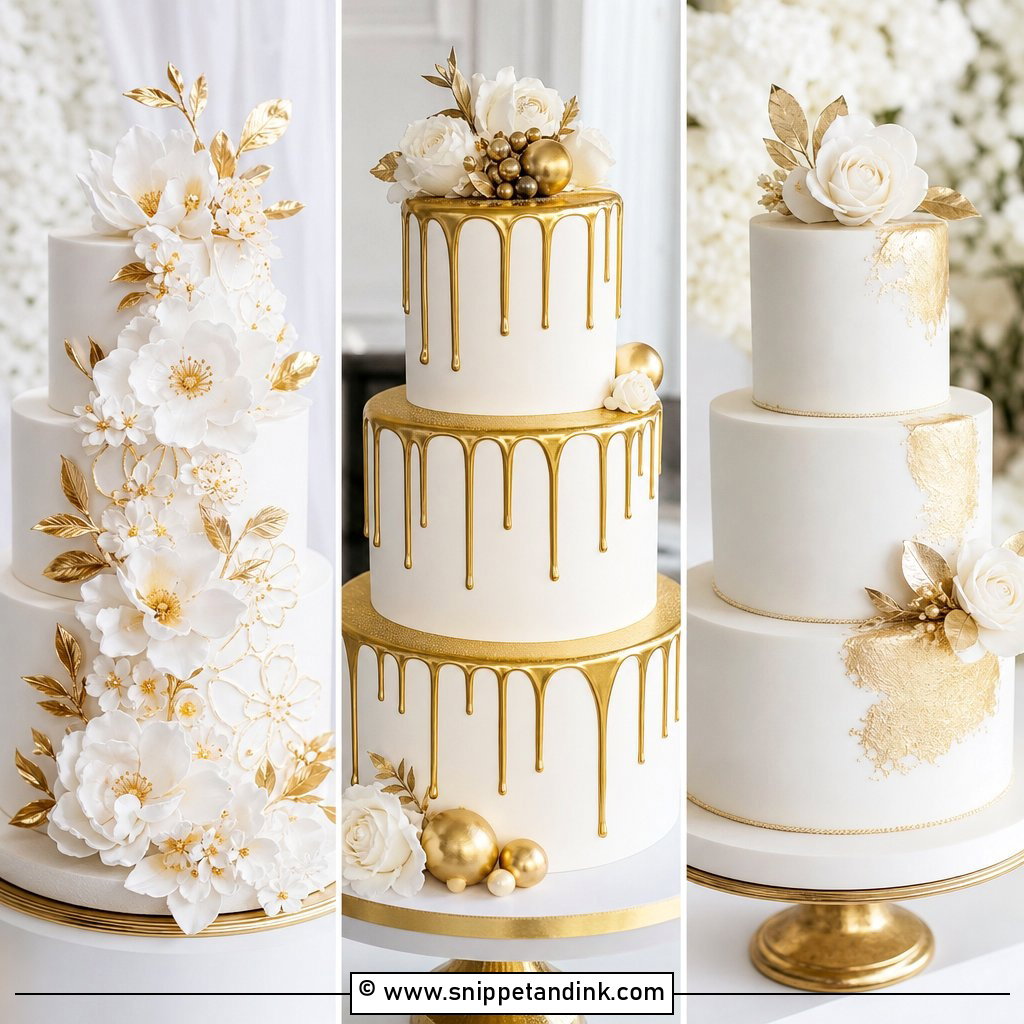
Gold works best in small doses, since Lambeth piping already carries plenty of texture. I paint it onto selected piping, brush it along edges or use tiny edible beads. One thing to check with any baker: some metallic dusts are labelled for decoration only rather than as edible, and those shouldn’t go on cake that people eat. Ivory buttercream with soft gold reads warm; white with brighter gold looks more formal and suits a ballroom or a candlelit historic venue.

15. Red Velvet Lambeth Wedding Cake
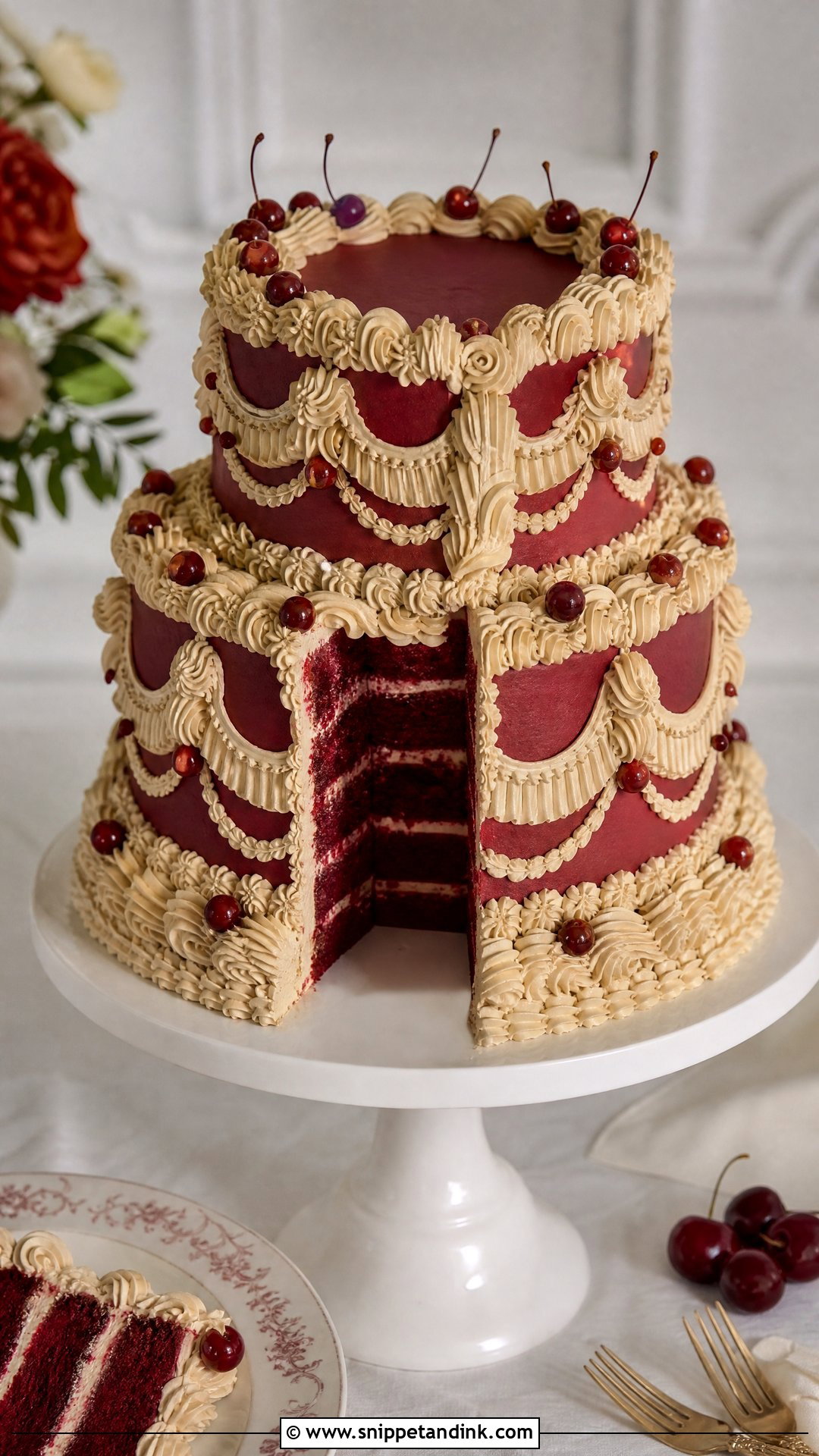
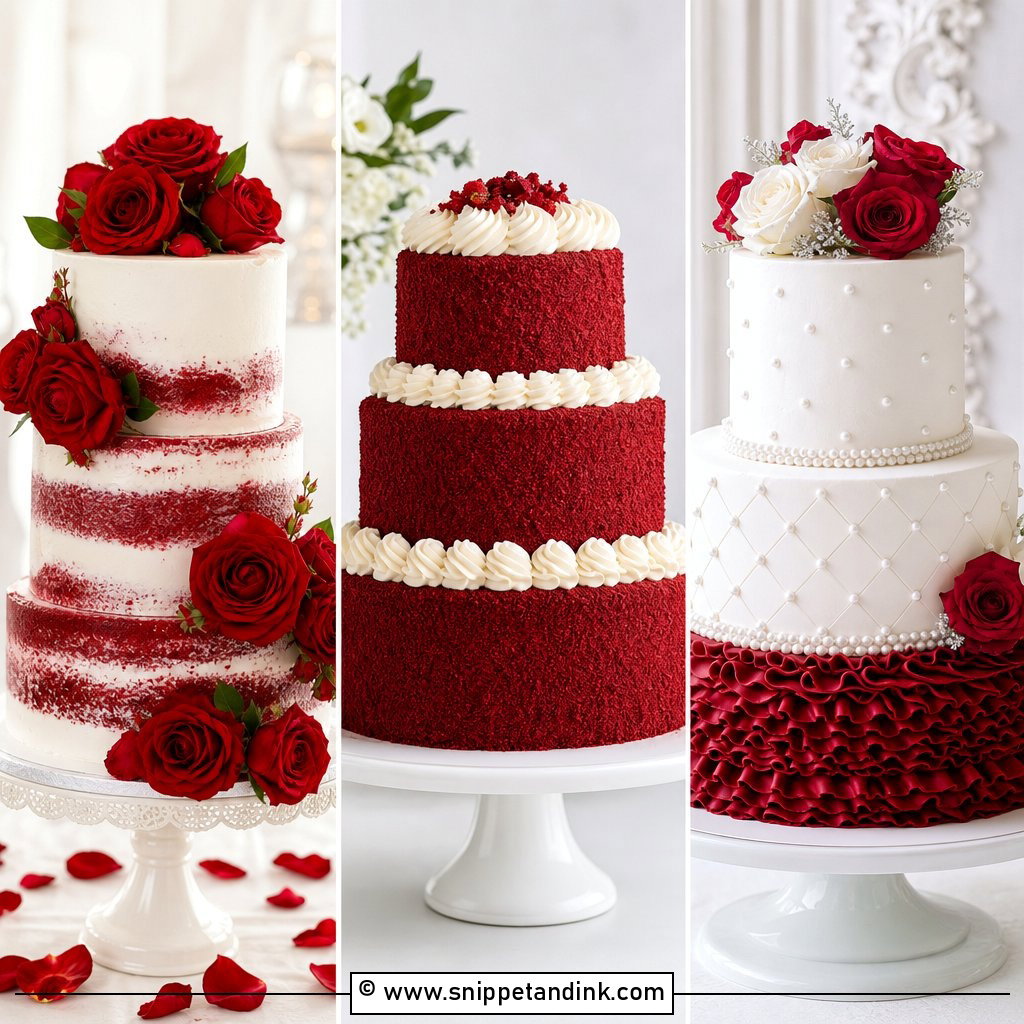
Red velvet earns its place when you want the first slice to be part of the show. The outside stays classic, with ivory or white piping over a pale frosting. There’s a technical catch, though: cream cheese frosting is too soft to hold fine overpiping. I usually fill and crumb-coat with cream cheese, then pipe the Lambeth work in a sturdier buttercream. Small red accents, such as cherries, piped hearts or red sugar pearls, hint at what’s inside.
16. Chocolate Lambeth Wedding Cake
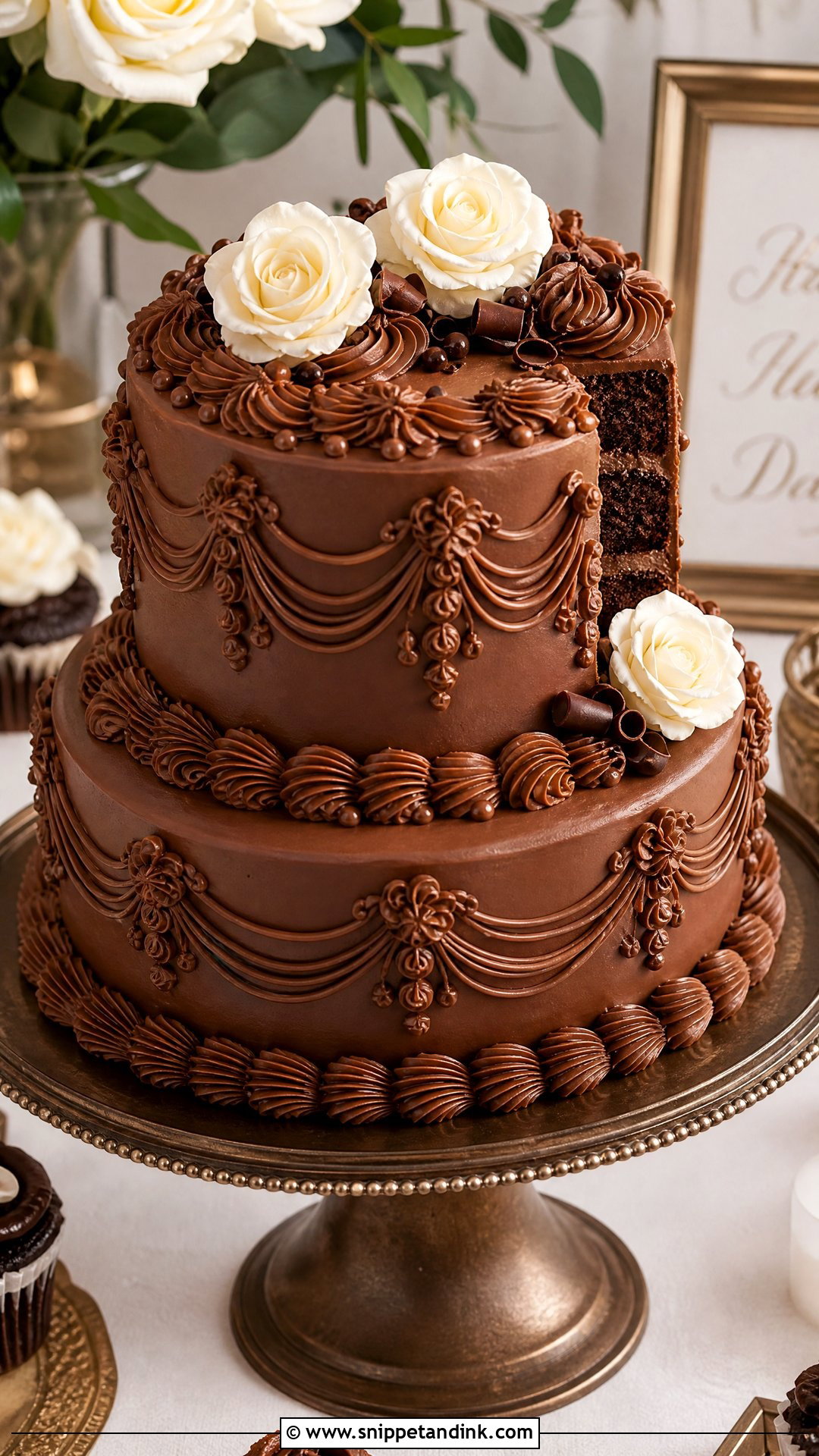
A chocolate Lambeth wedding cake stops hiding the flavour under plain white icing. Cocoa buttercream, ganache or a dark brown base with lighter piping all suit it, and mocha, ivory or caramel piping gives contrast. Ganache sets firmer than buttercream and copes better in a warm room, which makes it a reliable base under detailed work. Finish with chocolate pearls, curls or a few sugar flowers. Espresso, raspberry or salted caramel fillings sit well inside, and it’s my pick for an autumn evening reception.
17. Lemon Lambeth Wedding Cake
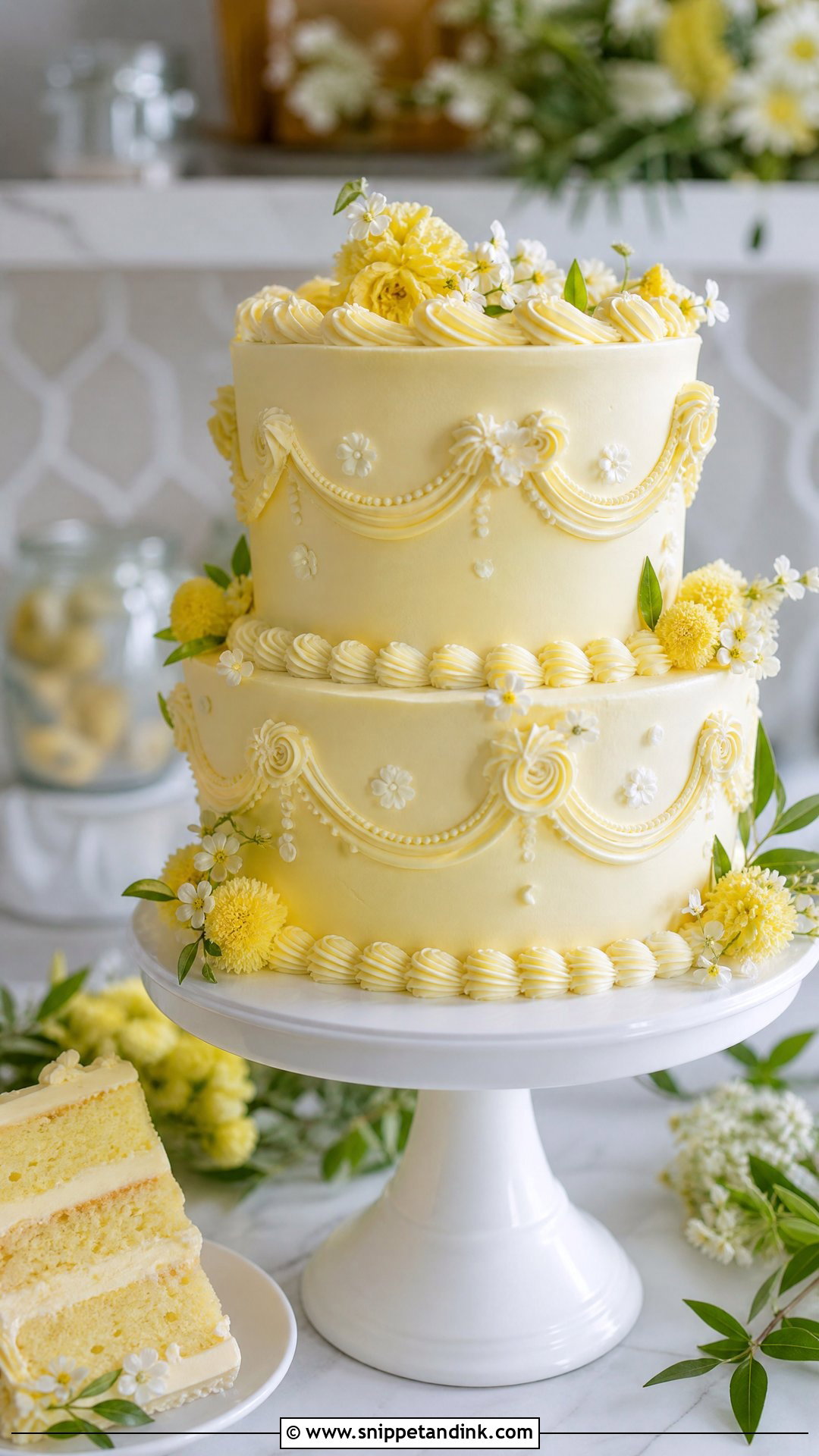
A lemon Lambeth wedding cake suits spring and summer, with a pale yellow, ivory or white outside and light piping. Lemon curd is a favourite filling, but it’s wet. I pipe a stiff buttercream dam around each layer so it can’t seep outward and push bulges under the piping. Fine shells, small rosettes and soft swags keep the look delicate. I’d skip fresh lemon slices, which look casual and weep, in favour of small sugar blossoms or pearl dots.
18. Sage Green Lambeth Wedding Cake
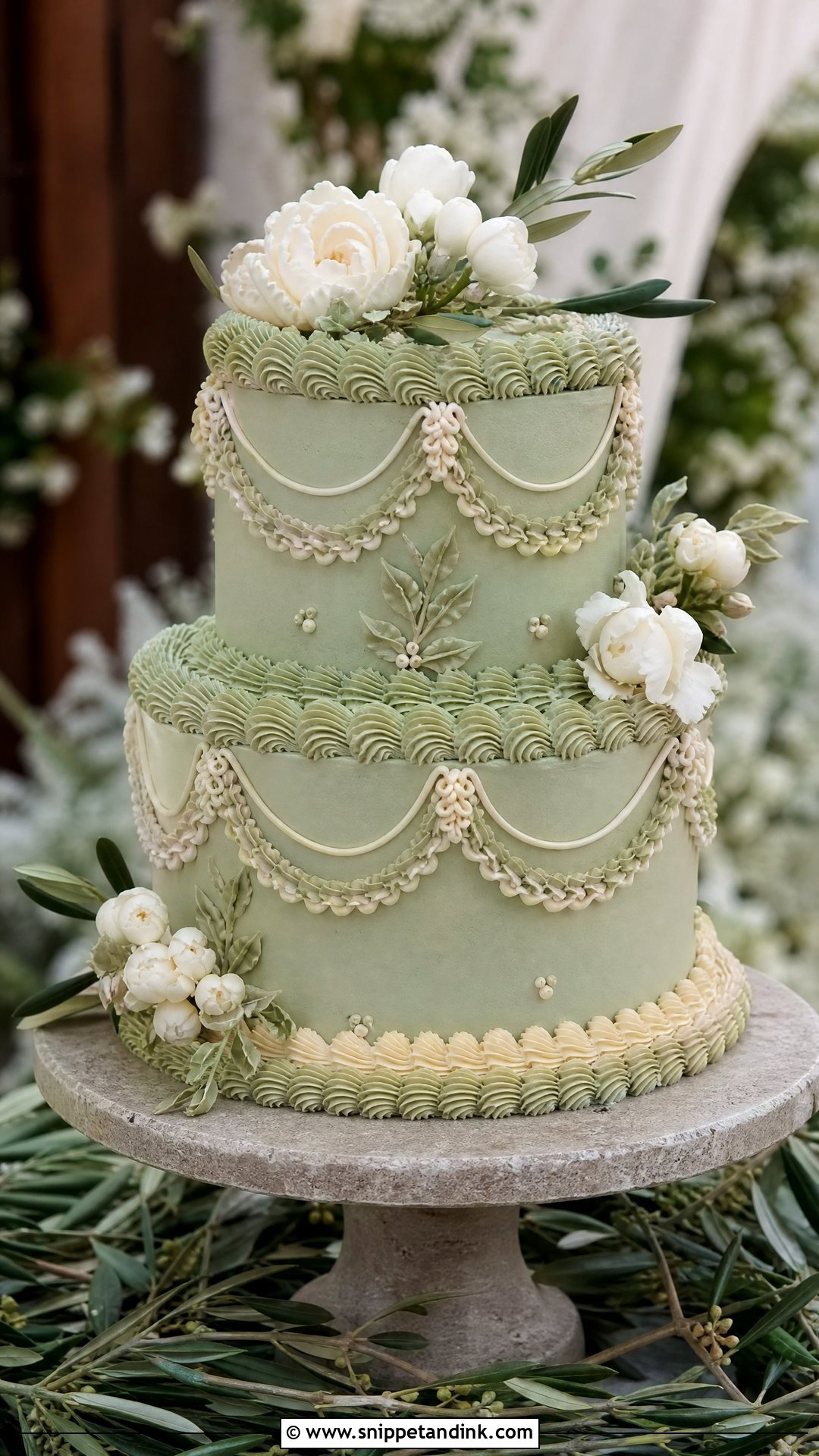
Sage gives vintage piping a calmer, more botanical feel and suits garden receptions and earthy palettes. White or ivory piping looks crisp against it, and tonal green piping is subtler. Getting the shade right takes care, because green gel on its own turns minty, so I knock it back with a touch of grey or brown. Herbs, olive sprigs or tiny sugar leaves work as decoration, as long as anything fresh is food-safe. Pistachio, almond or lemon sponge pairs well underneath.
19. Square Lambeth Wedding Cake
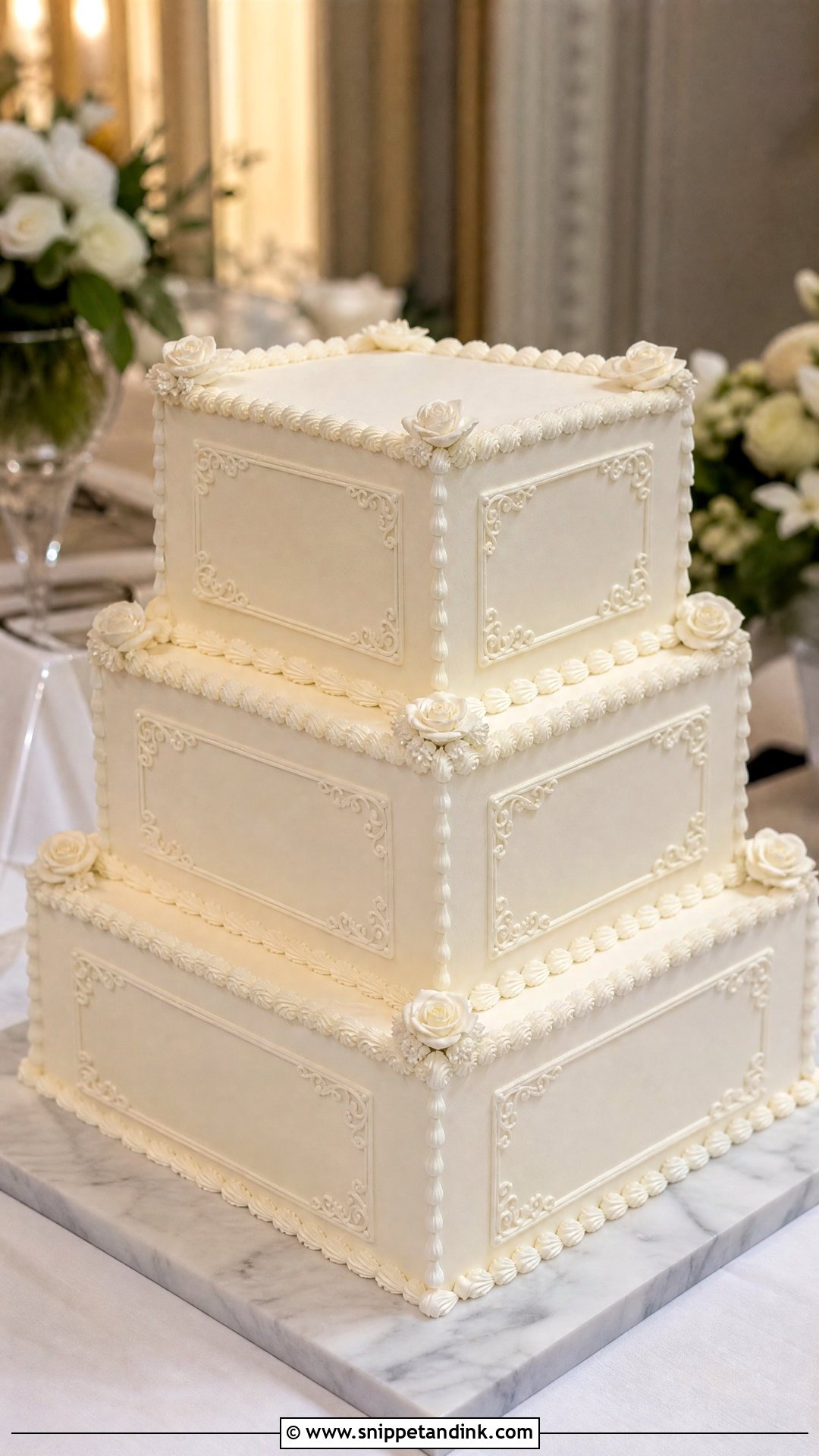
Straight sides change the rhythm of the piping. Instead of continuous swags, I work in framed panels with corner scrolls, shell borders and drop lines, and every side has to match, which means measuring before a single shell goes on. A square tier also cuts more servings than a round of the same width. The shape suits couples who like vintage detail but prefer a cleaner, architectural outline, and it looks especially sharp in black and white.
20. Mini Lambeth Wedding Cake
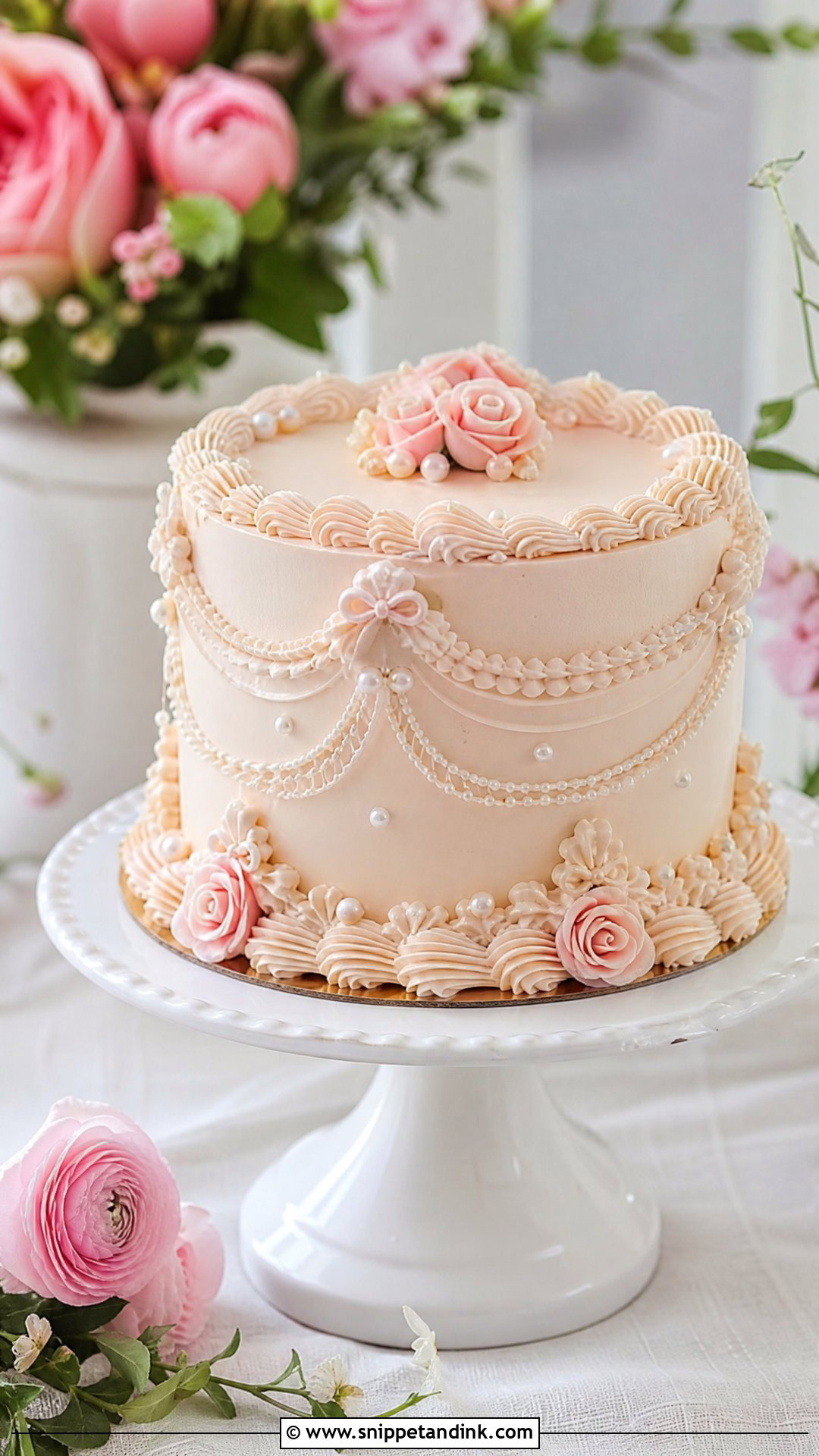
Even one tier can carry layered shell borders, piped swags, pearl dots and a finished top edge, so a mini cake still looks like a wedding cake. It works for elopements and micro weddings, or as a small cutting cake beside cupcakes, sheet cake or plated desserts. Six-inch rounds, hearts and two-layer cakes all suit the style. On a small surface, too many colours crowd quickly, so I keep it to one palette.
From Delivery Van to First Slice Without Sagging Shells
Most Lambeth disasters I hear about happen after the cake leaves the kitchen. Overpiping is heavier and more fragile than a smooth finish, so delivery and display deserve as much planning as the design.
- Let the baker deliver and set up. A chilled, boxed cake on a flat van floor travels far better than one on a lap or a car seat.
- Keep the cake table out of direct sun and away from candles, heat lamps and the dance floor speakers, which vibrate more than you’d think.
- In summer, schedule the cutting earlier rather than leaving the cake out for the whole evening.
- Ask the venue whether there’s cool storage for leftovers and spare tiers, and who handles cutting and boxing.
What to bring to the design consultation
Bring two or three photos of piping you like and point to the specific detail, such as fat shells, fine drop lines or cherries on the top edge. Bring a fabric or flower swatch for colour, since screen colours rarely match buttercream. Have a realistic guest count, because it decides tier sizes. Custom piped cakes book up, so I’d start that conversation several months before the date, earlier for peak season Saturdays.
Matching the Piping to Your Room and Your Mood
Every cake on this list keeps the Lambeth charm, from soft and traditional to cherry-topped and loud. Start with the mood you want and the room the cake will sit in, then let your baker match the piping density, tier shape and icing to both. Save the photos you keep returning to and notice which colours repeat in your flowers and linens. And ask to see real piped work in person, because overpiping is a hand skill and every decorator’s shells look a little different.
You'll Like These Ideas:








Leave a Reply