
Most Venda brides I dress want two things at once: an outfit their grandmother recognizes and one that still feels like their own. Traditional Vhavenda women’s attire centers on the striped nwenda cloth, layered wraps, ceremonial garments and beadwork, and all of it can be carried into a mermaid gown, a ball gown, a peplum set or a simple wrap. Some garments signal marital status or a role in the ceremony, so I always tell brides to check with a relative who knows the customs before adapting one. After that, body shape, comfort and setting decide the rest.
Here are twenty complete looks, each styled from headwrap to shoes, with notes on fit and fabric from the fitting room.
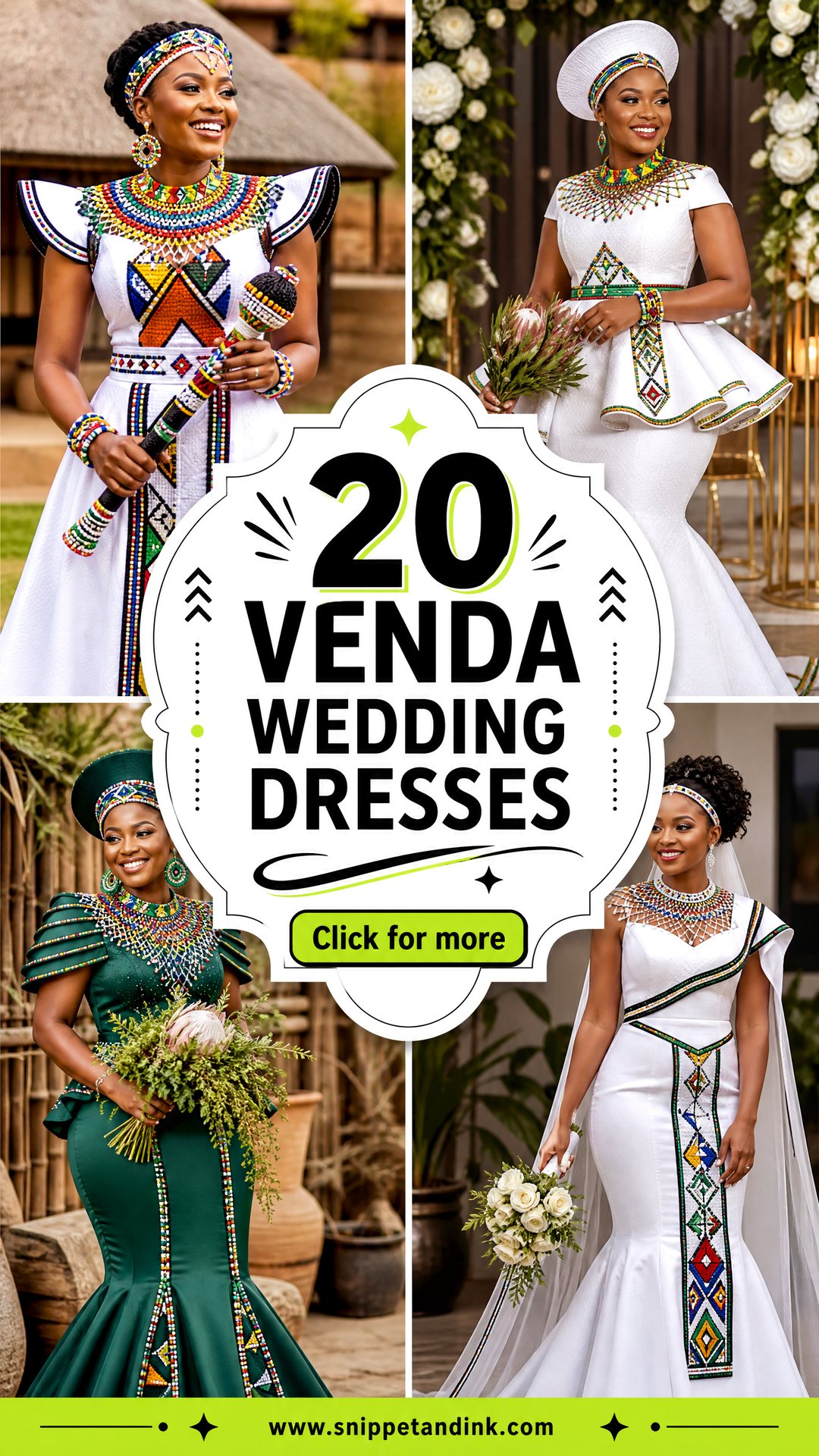
How Many Fittings Does a Venda Gown Need?
Most Venda wedding dresses are made to order, often by a local dressmaker, and that changes the planning. A ready-made gown only needs altering. A made-to-measure one needs designing, sourcing cloth, cutting and fitting, and striped fabric slows every stage because the pattern has to be matched at the seams.
I advise starting conversations with a dressmaker several months ahead, longer if the wedding falls in a busy season or the maker is in demand. Ask early how far ahead they book, as it varies a lot.
- First meeting: bring photos, your cloth if you already have it, and any family garments you want to echo. Agree on silhouette and where the stripes go.
- Toile or first fitting: a rough version in cheaper fabric to check the shape, especially for mermaid, strapless and fitted styles.
- Second fitting in the real cloth: check stripe matching, neckline security and sleeve movement.
- Final fitting with your shoes, headwrap and any wrap or cape you plan to wear, roughly two weeks before the day.
Bring the person who will help you dress to the final fitting. They need to see how hooks, wraps and detachable pieces go on.
1. Traditional Nwenda Venda Wedding Dress
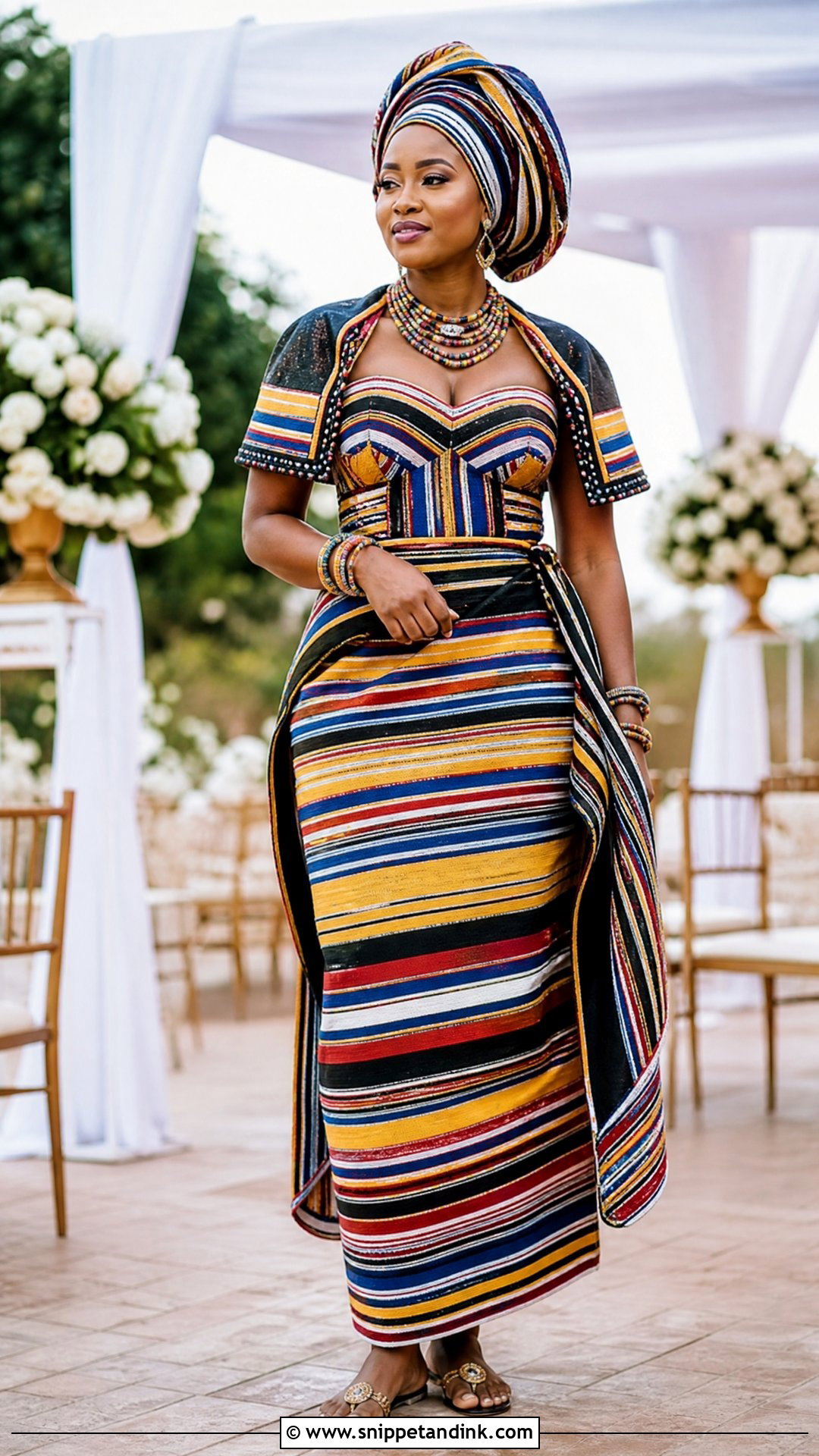
Wrapping nwenda into a long skirt and pairing it with a shoulder covering or a structured blouse keeps heritage at the center of the day. I like a fitted bodice under the drape, because loose wrapped cloth shifts when you raise your arms and the stripes stop lining up. Tie the cloth so the widest bands of color sit at the front, where guests and the camera see them most. A matching headwrap, layered bead necklaces, bracelets and small earrings are traditional and enough. Flat sandals or low block heels let you stand and dance. Because these garments can say something about identity and status, ask your family elders how they expect it to be arranged.
2. Musisi Venda Wedding Dress
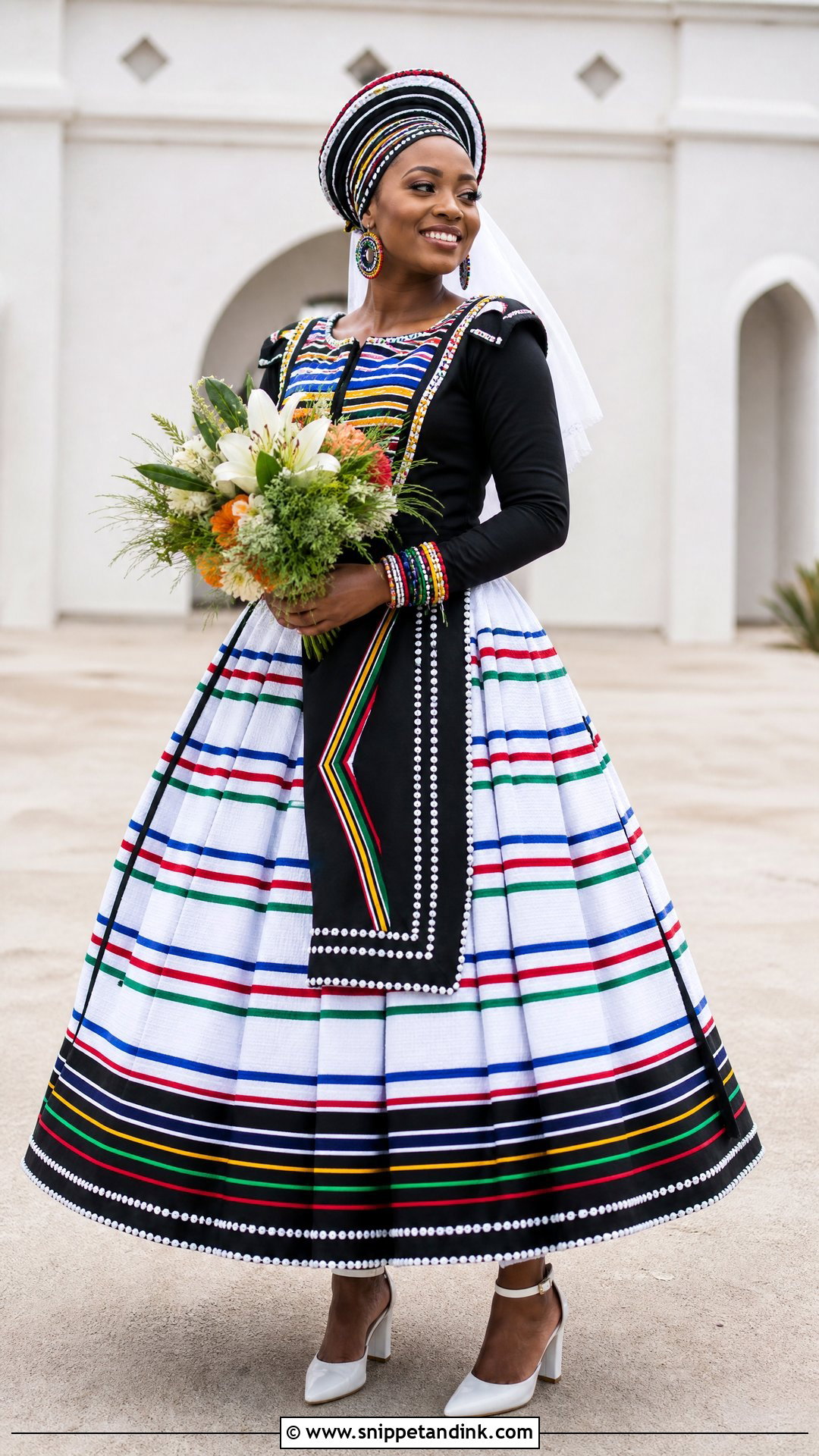
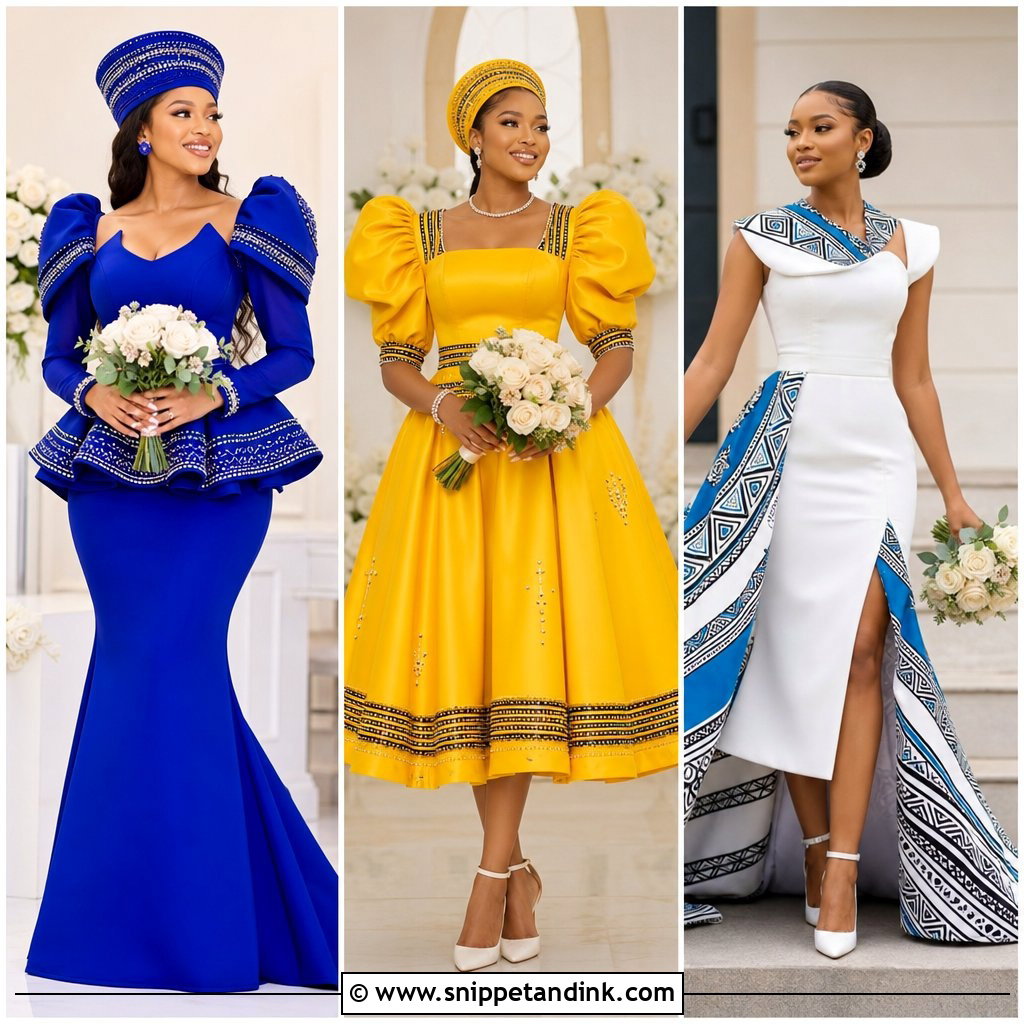
The *musisi* Venda wedding dress gets its shape from a full, structured skirt that swings when you move. Pair it with a fitted blouse carrying Venda fabric at the neckline, sleeves, waist or a peplum. Keep the cloth throughout for a traditional look, or set patterned panels against a solid bodice to calm it down. The skirt is heavy at the waistband, so I ask for a wide, firm band and a hook rather than a single button. A neat headwrap, beaded jewelry and closed block heels finish it. Since garments such as the musisi or mukhasi can carry meaning, confirm the design and how it should be worn with relatives who know.
3. Venda Mermaid Wedding Dress
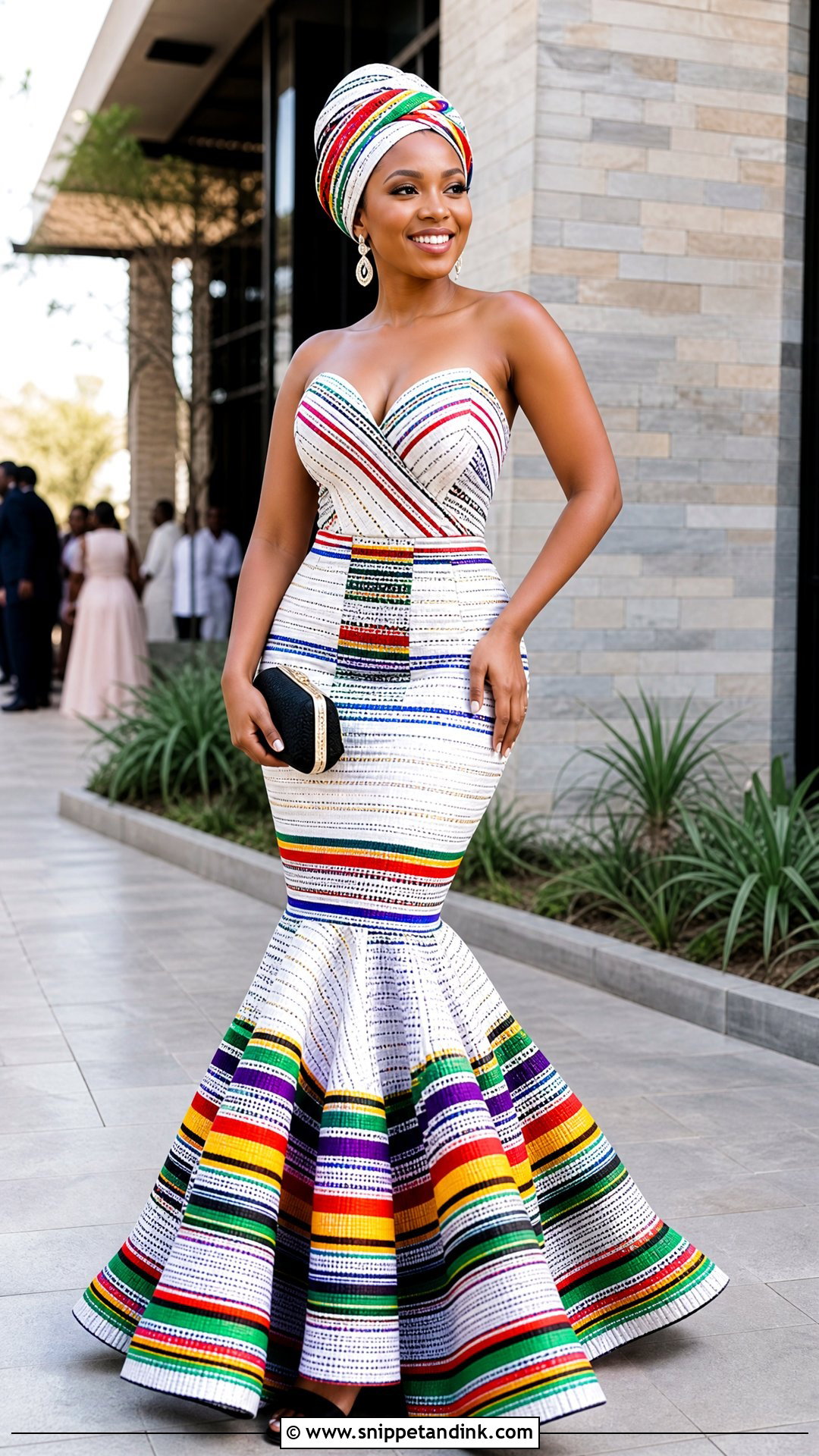
On a mermaid gown the striped cloth either covers the whole dress or sits in matched panels against black, red, yellow or white. The fit runs close through bodice, waist and hips and widens below the knee. My standing request is that the dressmaker leaves a little more room at the knee than looks necessary, because a mermaid that only lets you shuffle is miserable on a long celebration day. A sweetheart, square or off-shoulder neckline finishes it, with a headwrap, drop earrings, a small clutch and stable block heels. A detachable overskirt adds drama for the ceremony and comes off for the reception.
4. Venda Ball Gown Wedding Dress
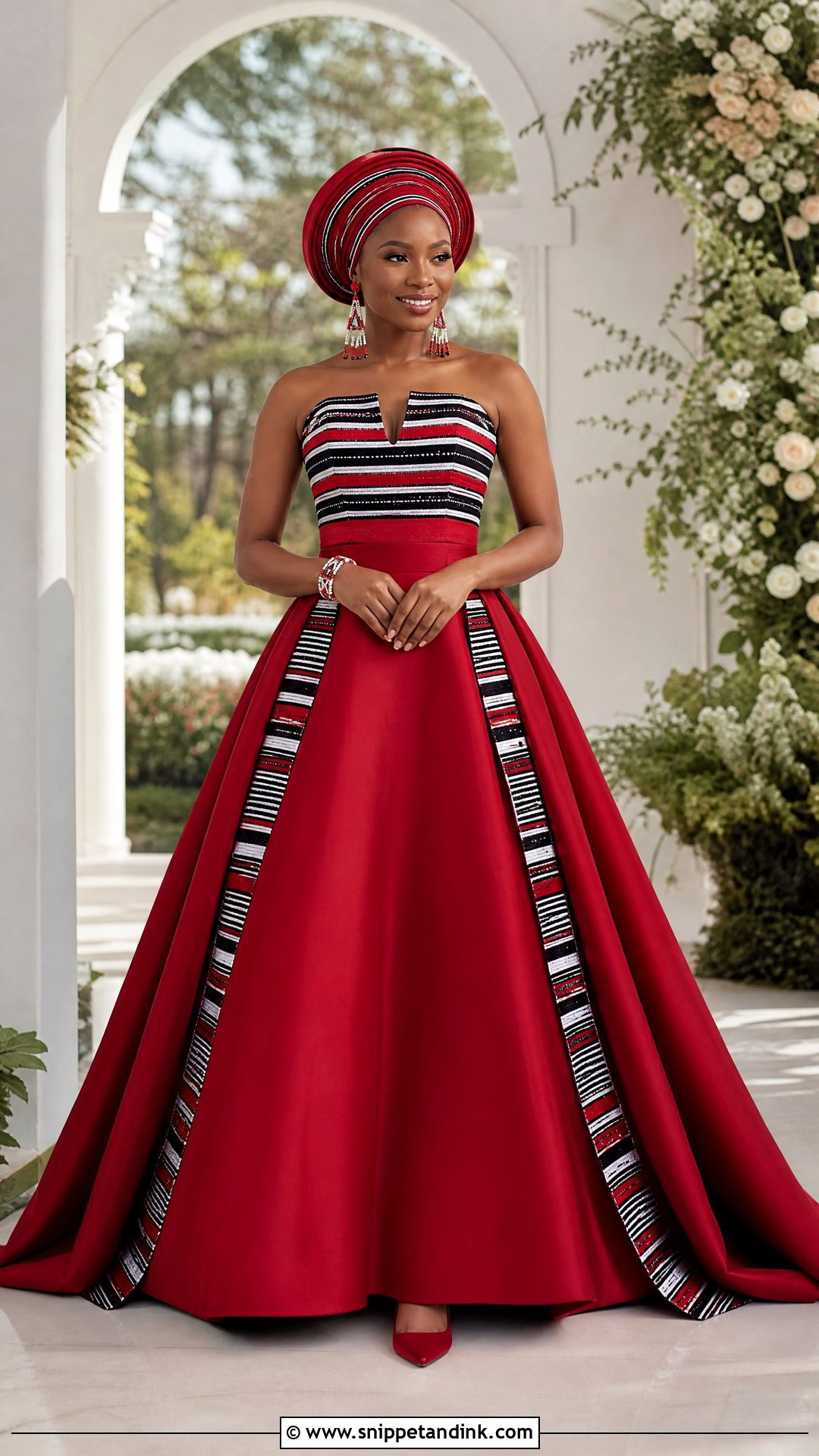
Volume makes the entrance. A ball gown with a supportive bodice and a full skirt in Venda fabric, satin or both gives a strong bridal presence. One option is the cloth on the bodice and waistband with a solid skirt; another is a solid gown with wide striped panels running from waist to hem. Hidden pockets are the detail I add to almost every ball gown, since you will want somewhere to keep tissues and lip color. A light skirt lining makes the volume easier to carry. Wear a headwrap or a simple veil trimmed with the cloth, beaded earrings, a bracelet and closed heels.
5. Venda Peplum Wedding Dress
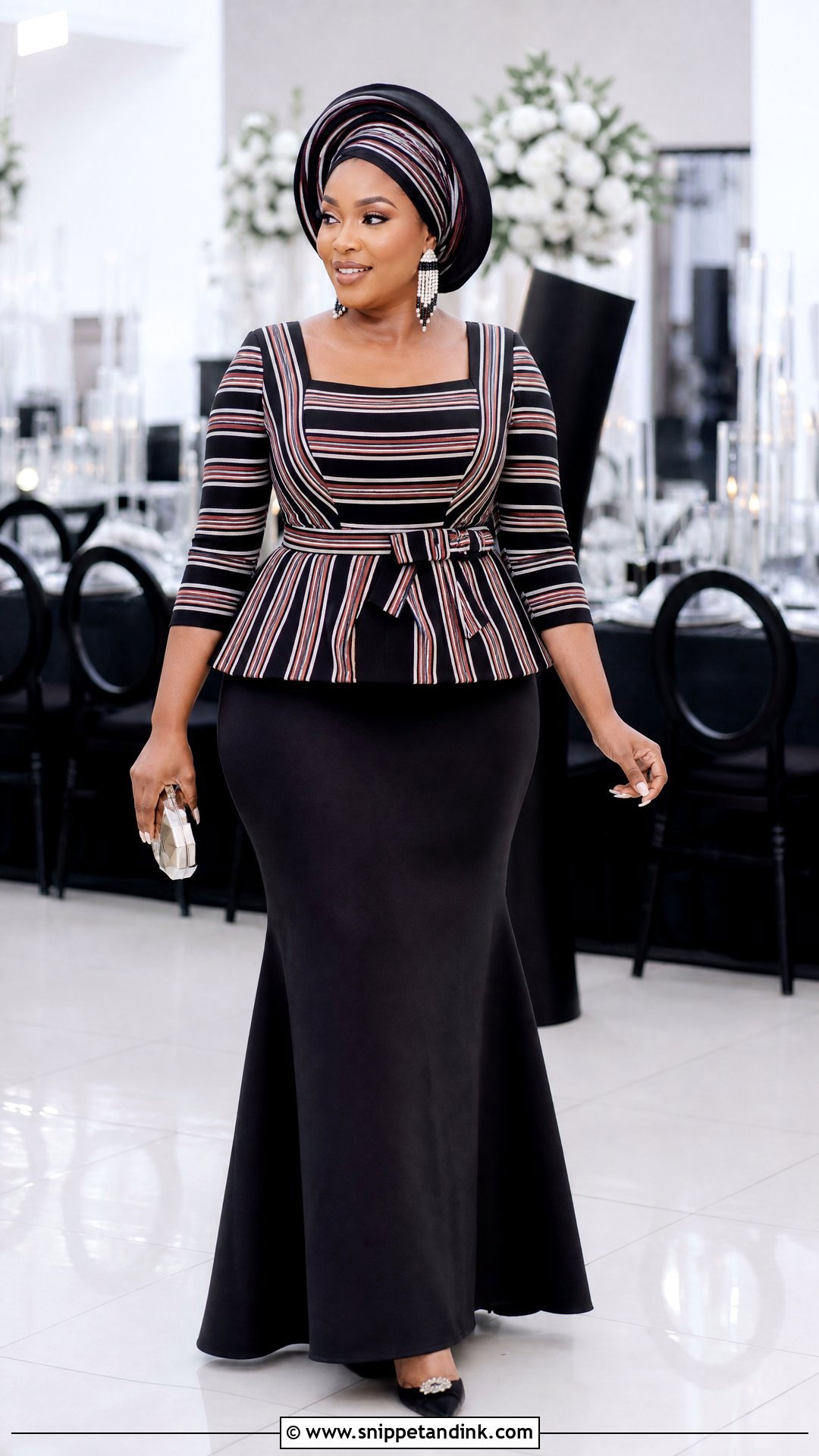
Peplums define the waist and add structure, which is helpful on striped cloth because the flare breaks up long horizontal bands. Attach it to a fitted blouse over a straight, trumpet or soft flared skirt. All cloth is bold; a patterned peplum over a solid skirt is softer. For arm coverage choose fitted long, three-quarter or sheer sleeves edged in the cloth. The stripe placement at the waist is what I check most, because a peplum seam that cuts a stripe in half looks like a mistake. A wrapped headpiece, beaded earrings, a metallic clutch and low pointed pumps complete it.
6. Off-Shoulder Venda Wedding Dress
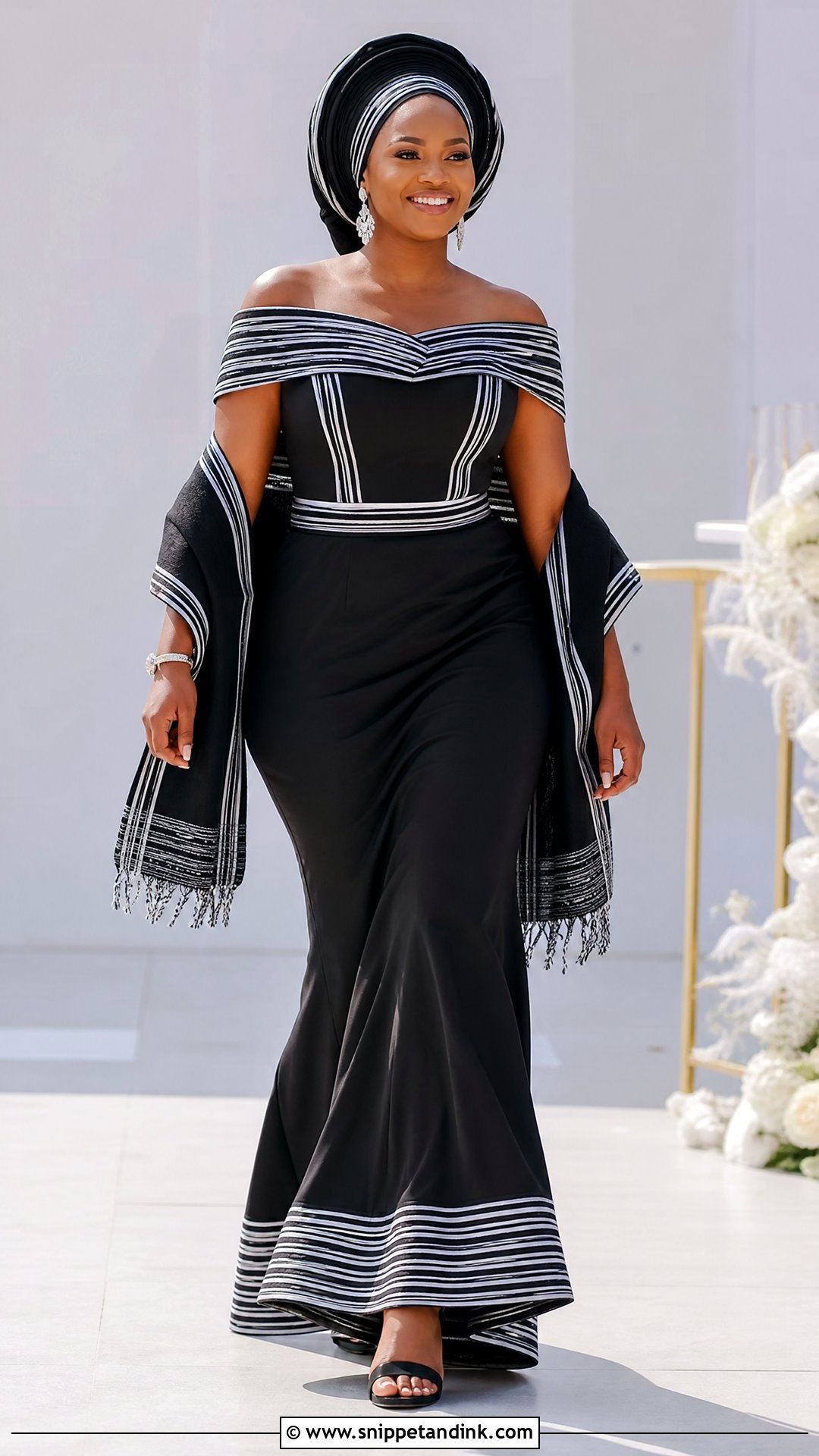
The off-shoulder neckline can be folded, lightly ruffled or finished with a clean band of striped fabric. An inner corset is non-negotiable here, since greetings, photos and dancing all involve lifting your arms. Pair it with a trumpet skirt for a sleek line or a full skirt for movement. If parts of the ceremony call for covered shoulders, a matching wrap solves it and comes off later. A headwrap, medium earrings, a delicate bracelet and block-heel sandals finish the outfit, with a simple necklace or none at all.
7. Long-Sleeve Venda Wedding Dress
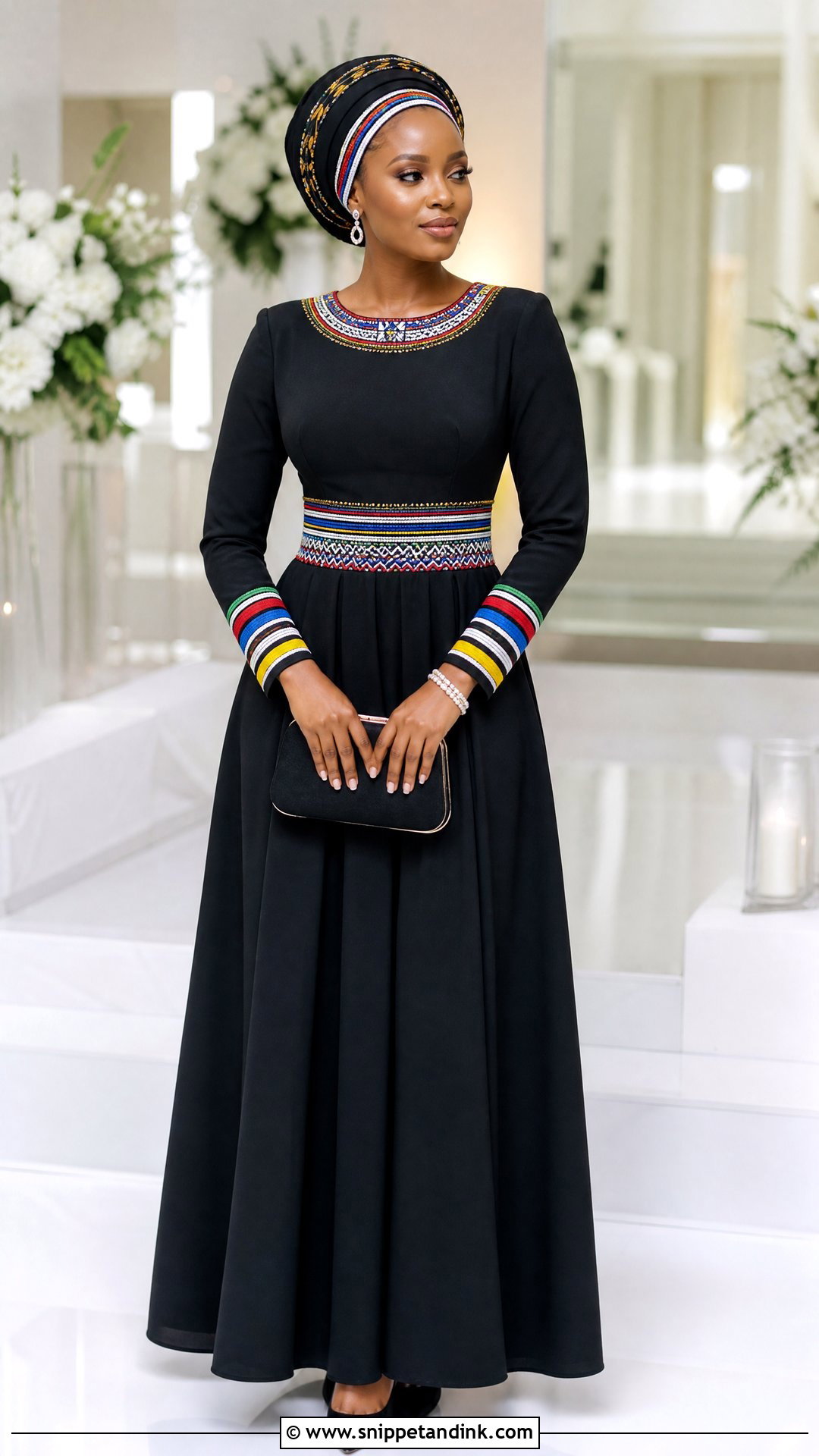
Long sleeves suit a cool-season or formal ceremony. Tailored sleeves look sharp with cloth along the cuffs, neckline, waist and skirt panels; sheer sleeves with patterned cuffs feel lighter. An A-line skirt moves easily, a trumpet skirt gives more shape. The thing I test at fittings is the arm lift. A sleeve cut too tight at the armhole stops you hugging anyone, so ask for a stretch lining or a shaped elbow. A structured headwrap, small drop earrings, bracelets and closed pumps are enough, and a clutch in black, red, yellow or green pulls one color from the stripes.
8. Venda A-Line Wedding Dress
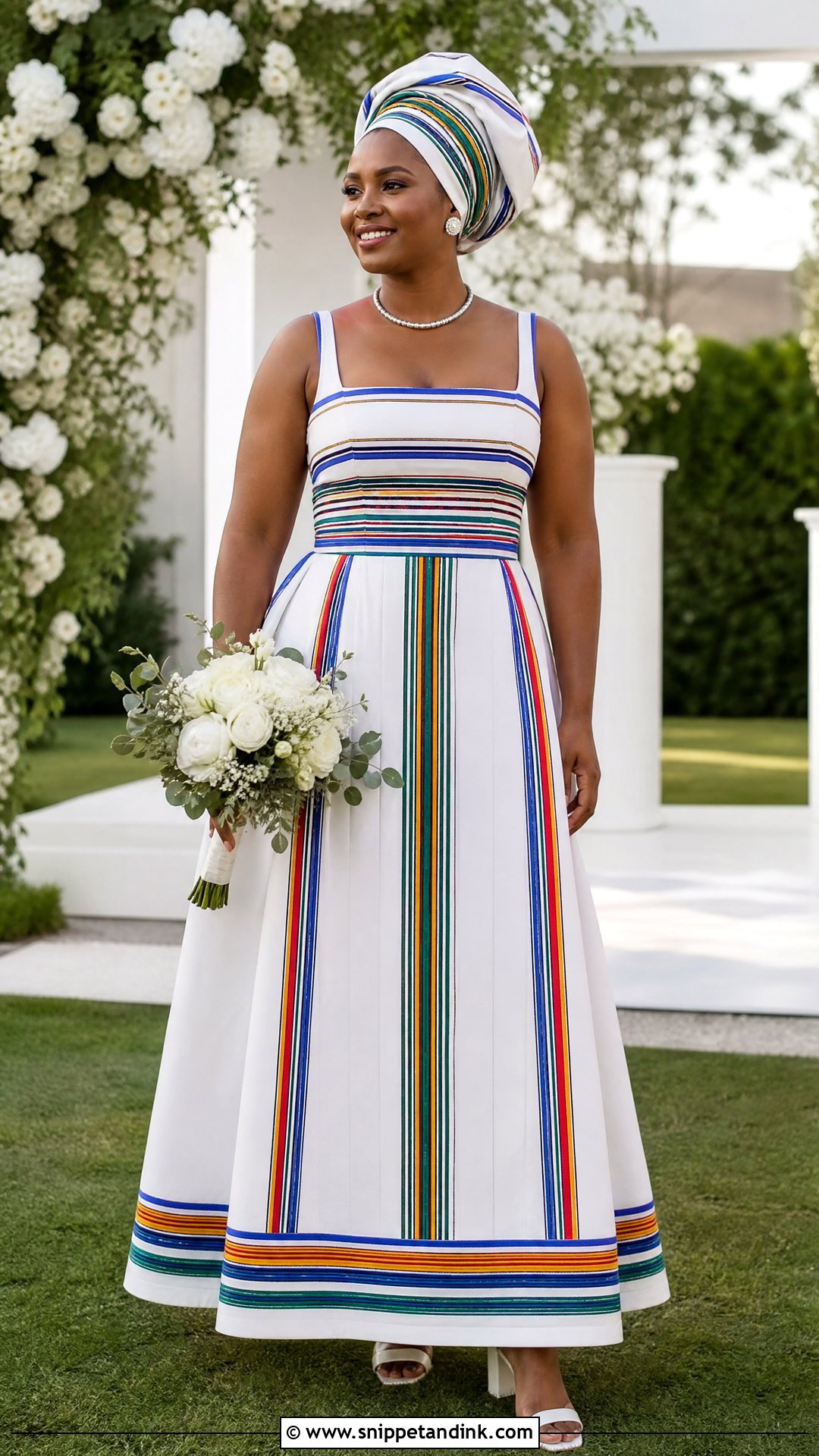
If you are unsure which shape suits you, start with the A-line. It defines the upper body and widens gradually from the waist or hip, so it adapts to most figures and settings. Striped cloth can cover the whole gown, frame a solid center panel or run along the neckline and hem. A square or V-neck keeps it clean. For an outdoor celebration, I cut it to ankle length so the hem does not collect grass and dust by the afternoon. A lightly structured underskirt gives movement without ball-gown width. Add a headwrap, beaded studs, a short necklace and comfortable block heels.
9. Strapless Venda Wedding Dress
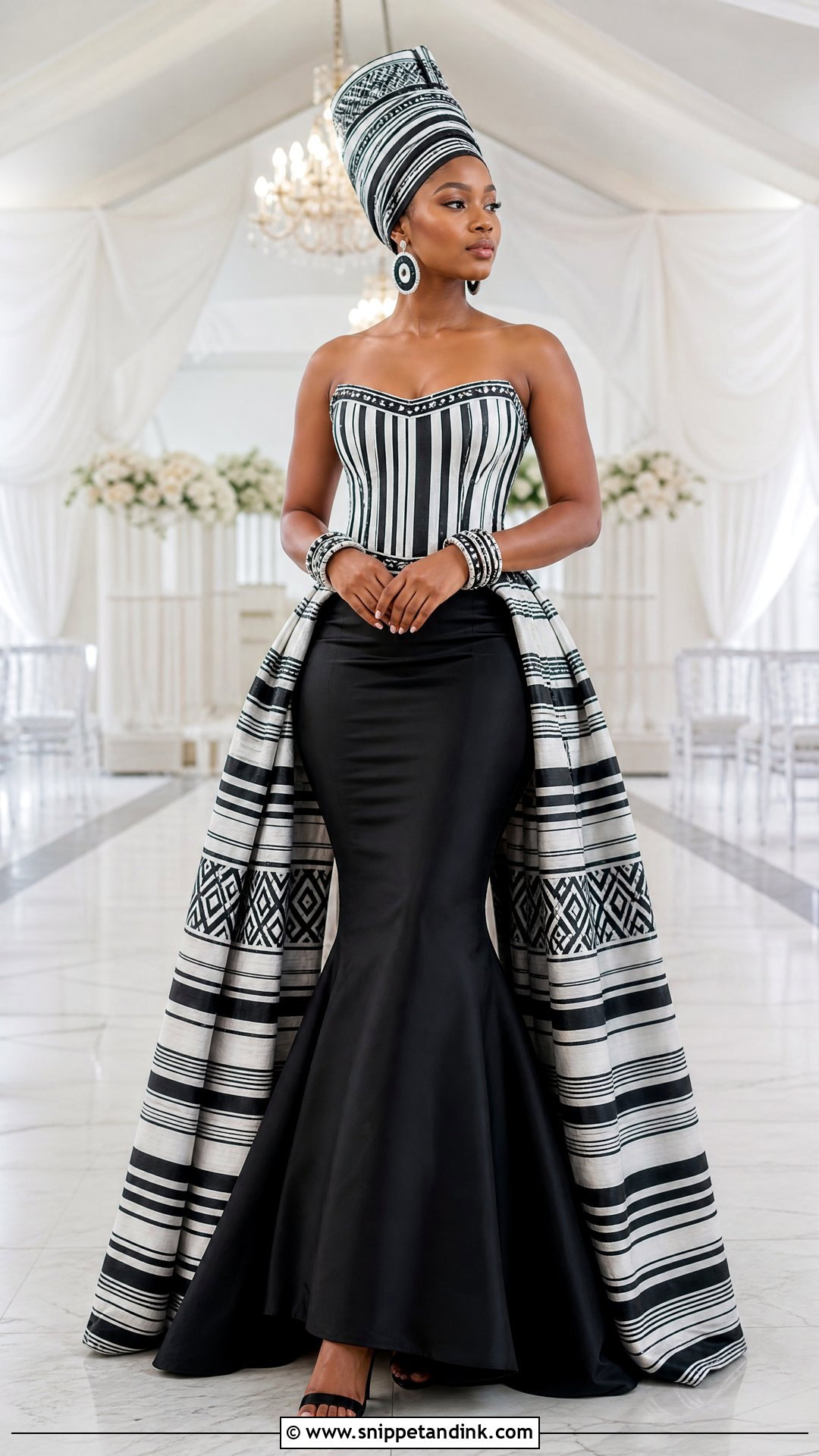
Strapless works only when the bodice does the holding. Supportive boning, secure inner fastenings and careful tailoring at the bust are the minimum, and I always do a final fitting where the bride dances for a few minutes to prove it stays up. Pair it with a mermaid, an A-line or a detachable overskirt. The cloth can make up the whole gown or form a wide waistband and vertical skirt panels. Keep a matching wrap nearby for moments that call for coverage. A tall headwrap, sculptural earrings and beaded bracelets complete it; skip a busy necklace if the bodice is already patterned.
10. White Venda Wedding Dress
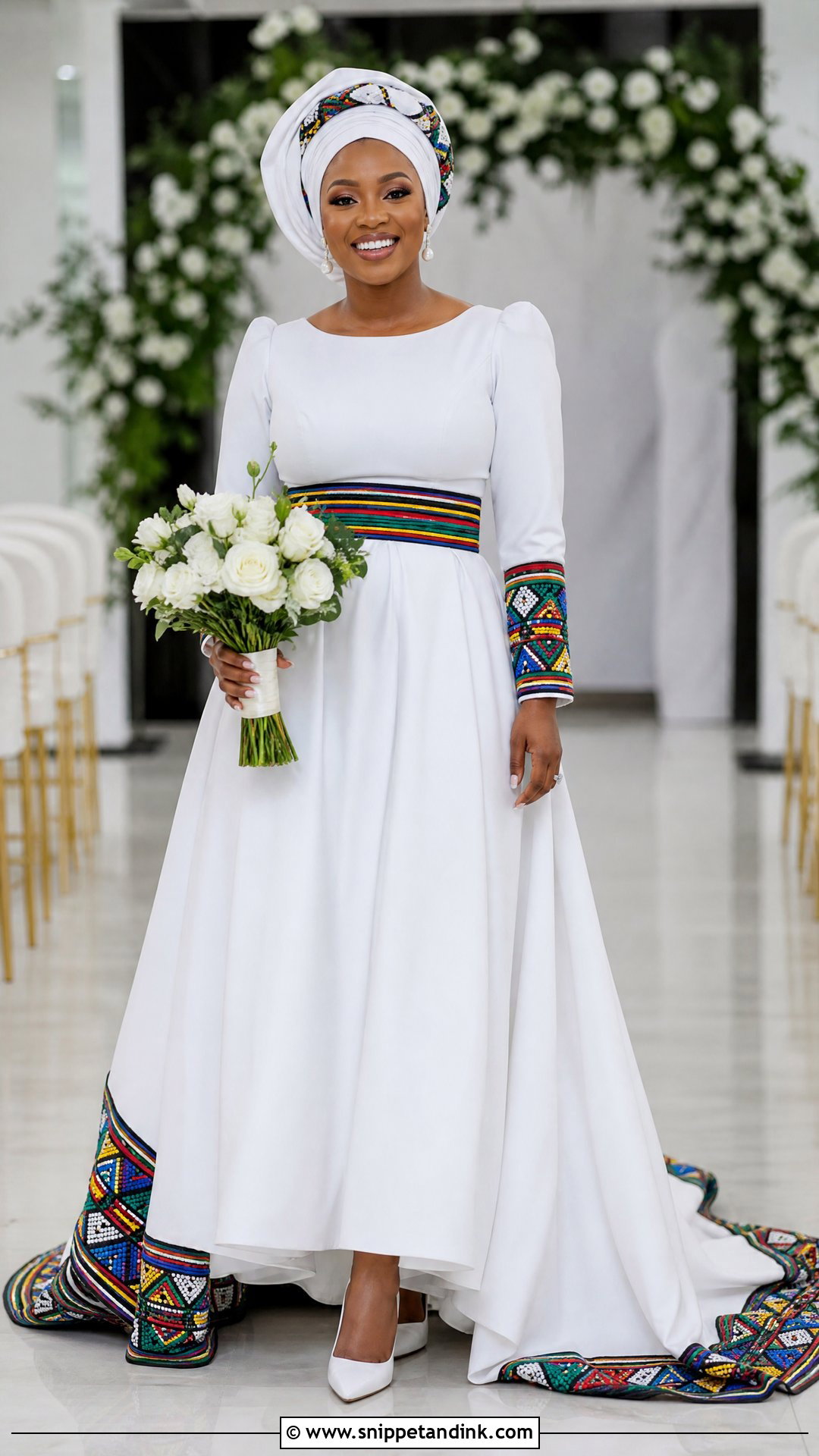
A white gown with Venda details gives you the classic bridal silhouette and still announces your heritage. Start with a white A-line, trumpet or ball gown and add striped cloth at the waist, neckline, sleeves or train. Colored fabric-covered buttons down the back are a quiet touch I love. A detachable nwenda-inspired shoulder wrap gives you a more traditional layer for chosen parts of the day. My rule: one strong patterned area plus one supporting detail. Scattering small accents everywhere makes the white look patchy in photos. Finish with a white or patterned headwrap, pearl or beaded earrings, white pumps and a clean bouquet.
11. Red Venda Wedding Dress
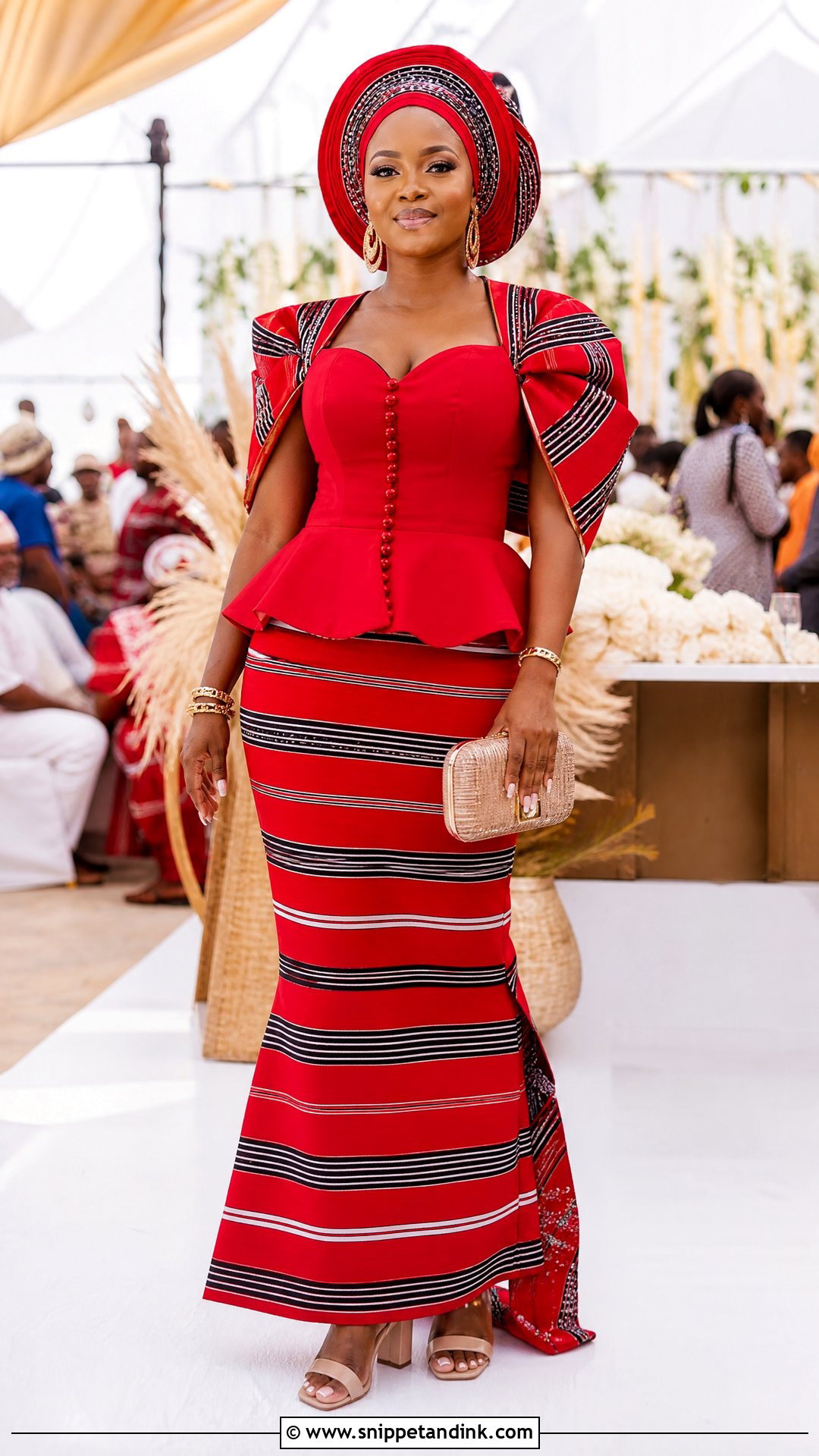
Red is a strong backdrop for the yellow, blue, green, black and white of Venda cloth. Try a fitted bodice, defined waist and flared floor-length skirt trimmed with stripes, or a red peplum blouse over a striped skirt with a shoulder wrap. Reds vary a lot, from orange-leaning to blue-leaning, so lay the solid fabric right on the striped cloth in daylight and choose the one that matches an actual red stripe. That single step prevents the clash I see most often. A red headwrap with a narrow patterned border, gold-tone earrings and bracelets, a small clutch and neutral or metallic block heels finish it.
12. Black Venda Wedding Dress
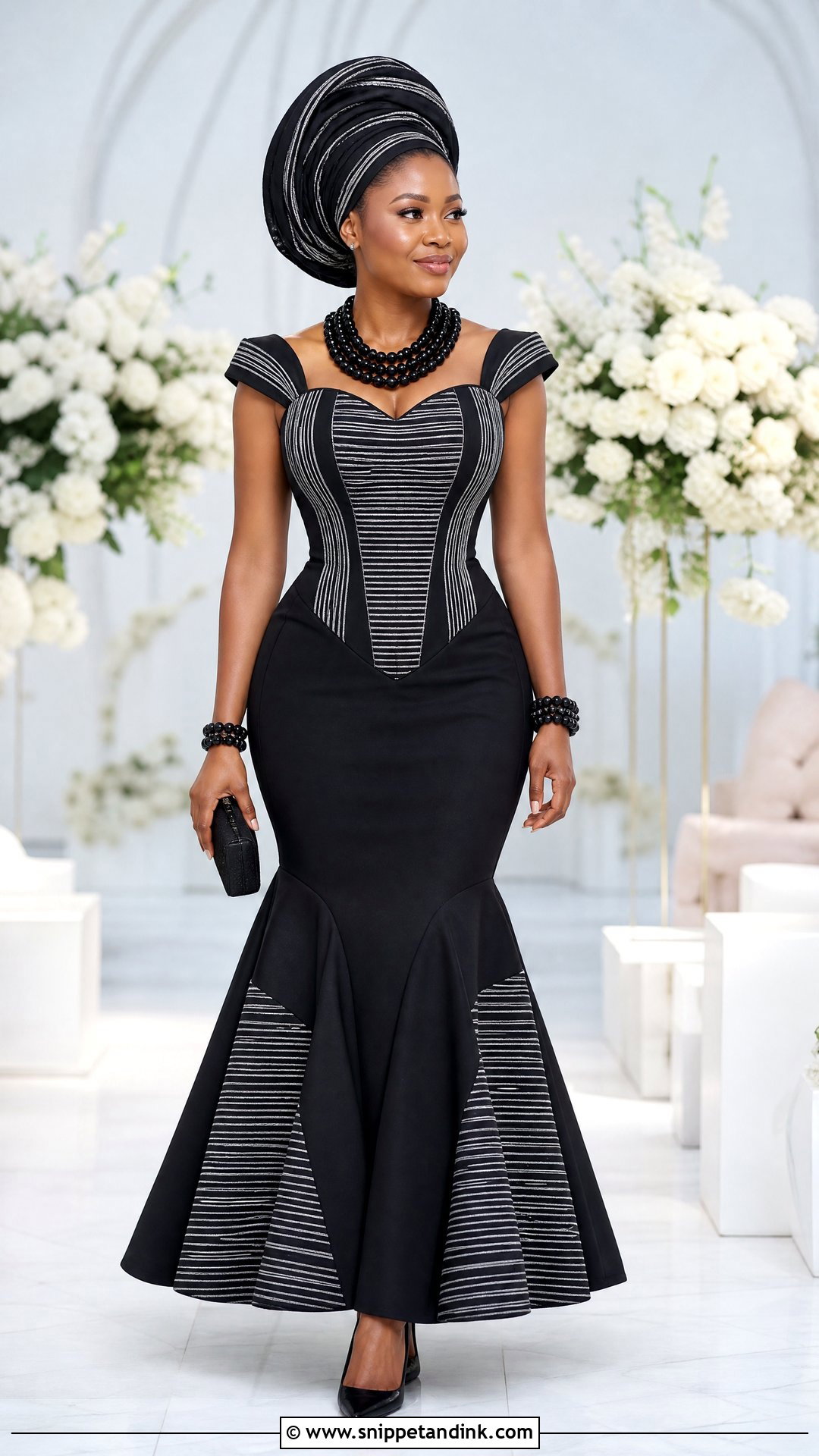
Black makes the colors in the cloth look brighter, which is why it is one of my favorite bases. A fitted black mermaid with Venda panels through the bodice and lower flare is dramatic; a black blouse with a patterned peplum and full striped skirt is gentler. Fabric quality shows more in black than any other color, so choose a matte crepe, satin or structured suiting rather than a thin polyester that looks cheap under flash. Put bright pattern near the face and waist so the outfit does not feel heavy. A structured headwrap, a bold beaded necklace, bracelets and black pointed pumps complete it.
13. Blue Venda Wedding Dress
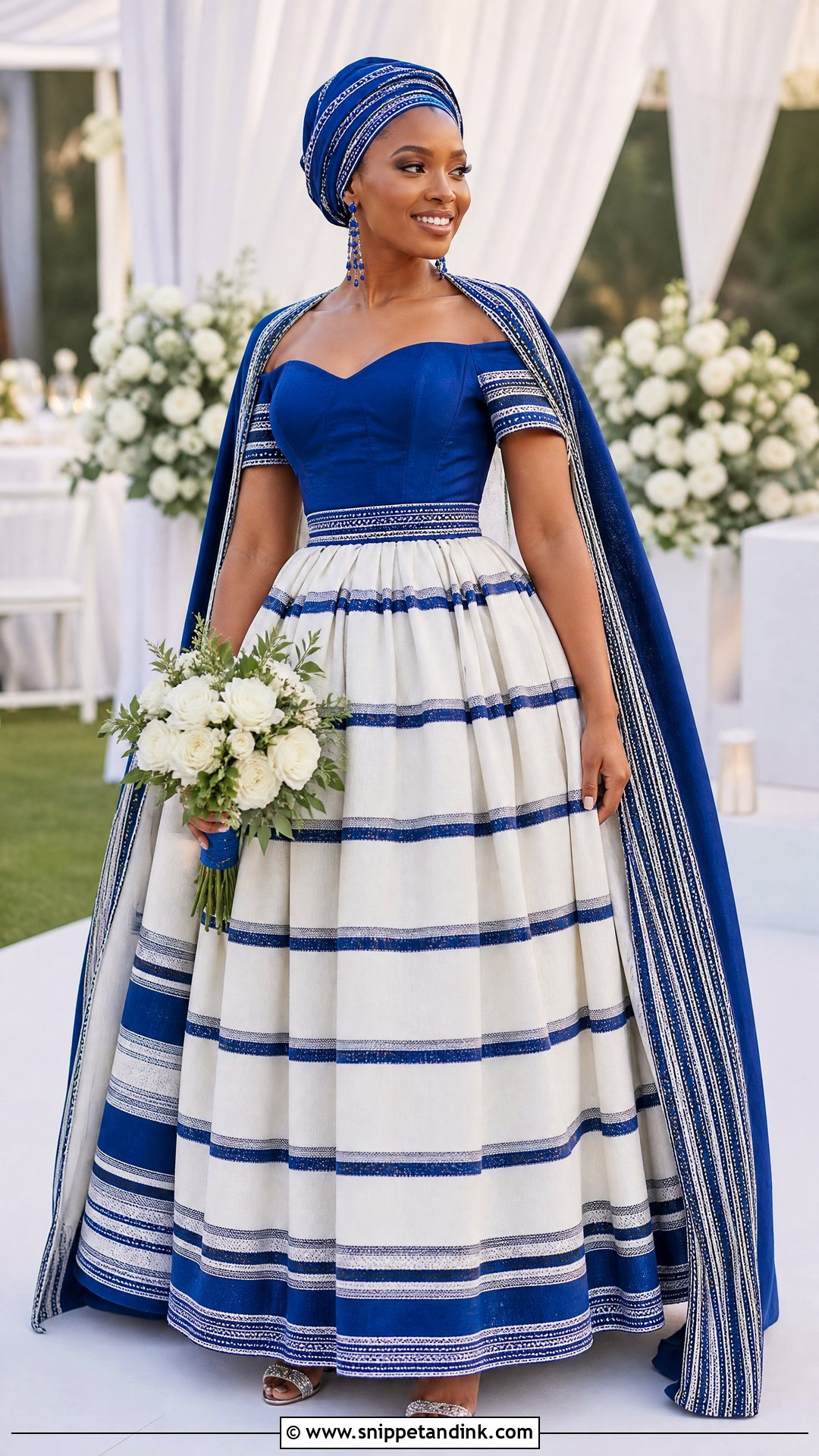
Royal blue looks regal; navy looks quieter and more formal. Either works as a base for striped accents. A fitted blue bodice over a full Venda skirt gives clear contrast, while patterned sleeves and a waistband tie the halves together. If there is a train, put the cloth along its border, because guests watch your back for much of the ceremony. A detachable patterned cape adds an entrance moment. A blue headwrap edged in the stripe, beaded earrings, a simple bracelet and silver or navy block heels finish it, with a small structured bag.
14. Yellow Venda Wedding Dress
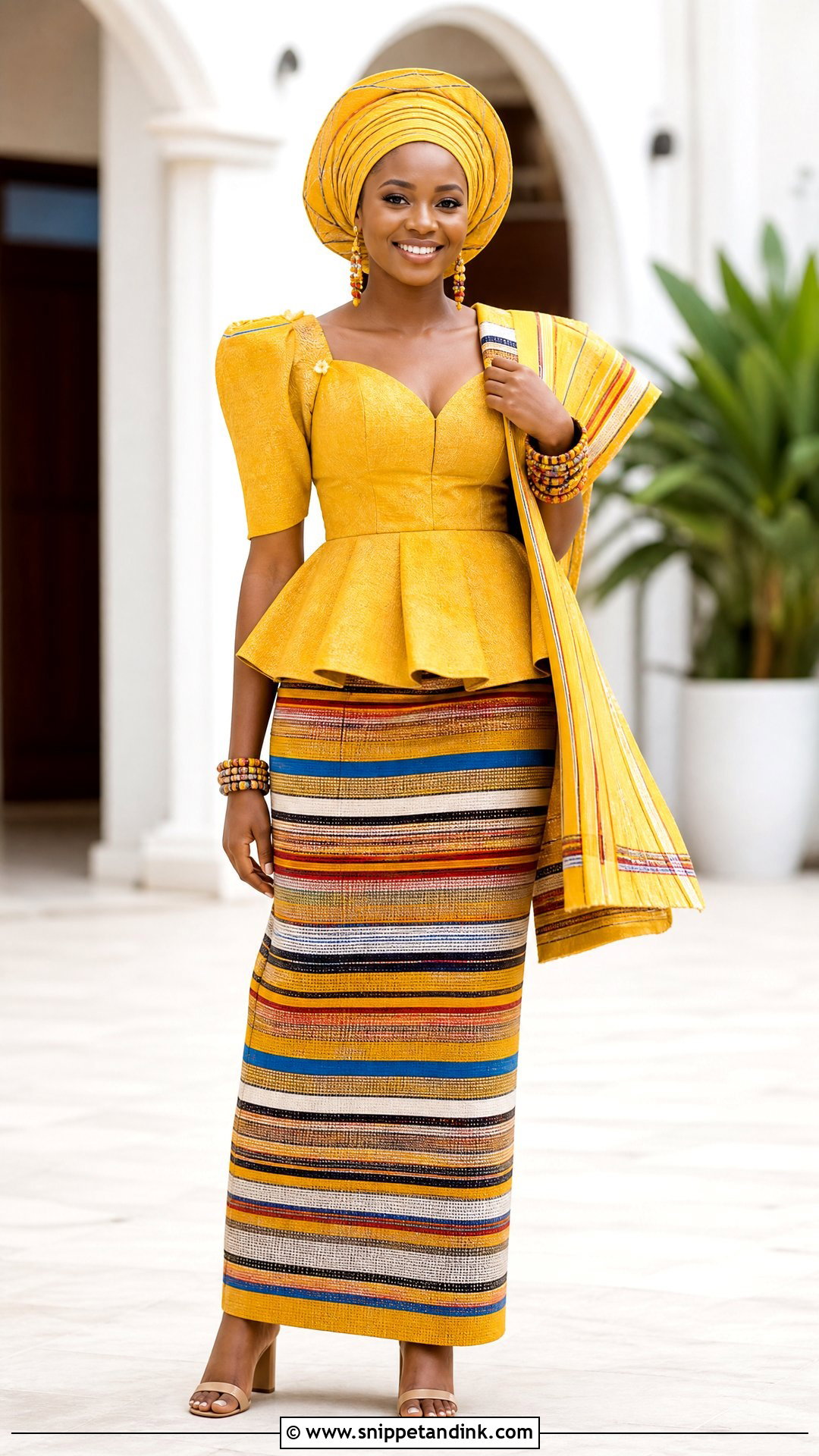
Yellow glows at an outdoor daytime wedding. A mustard, sunflower, or golden-yellow gown can be trimmed with stripes at the neckline, waist, sleeves and hem, or you can pair a yellow peplum blouse with a full patterned skirt and shoulder wrap. Yellow is the hardest color to match to skin. Hold each shade under your chin in daylight; pale lemon washes out many complexions, while a slightly deeper gold photographs more evenly in bright sun. Choose one metallic finish for jewelry. A neat headwrap, beaded drop earrings, stacked bracelets and neutral block-heel sandals complete it.
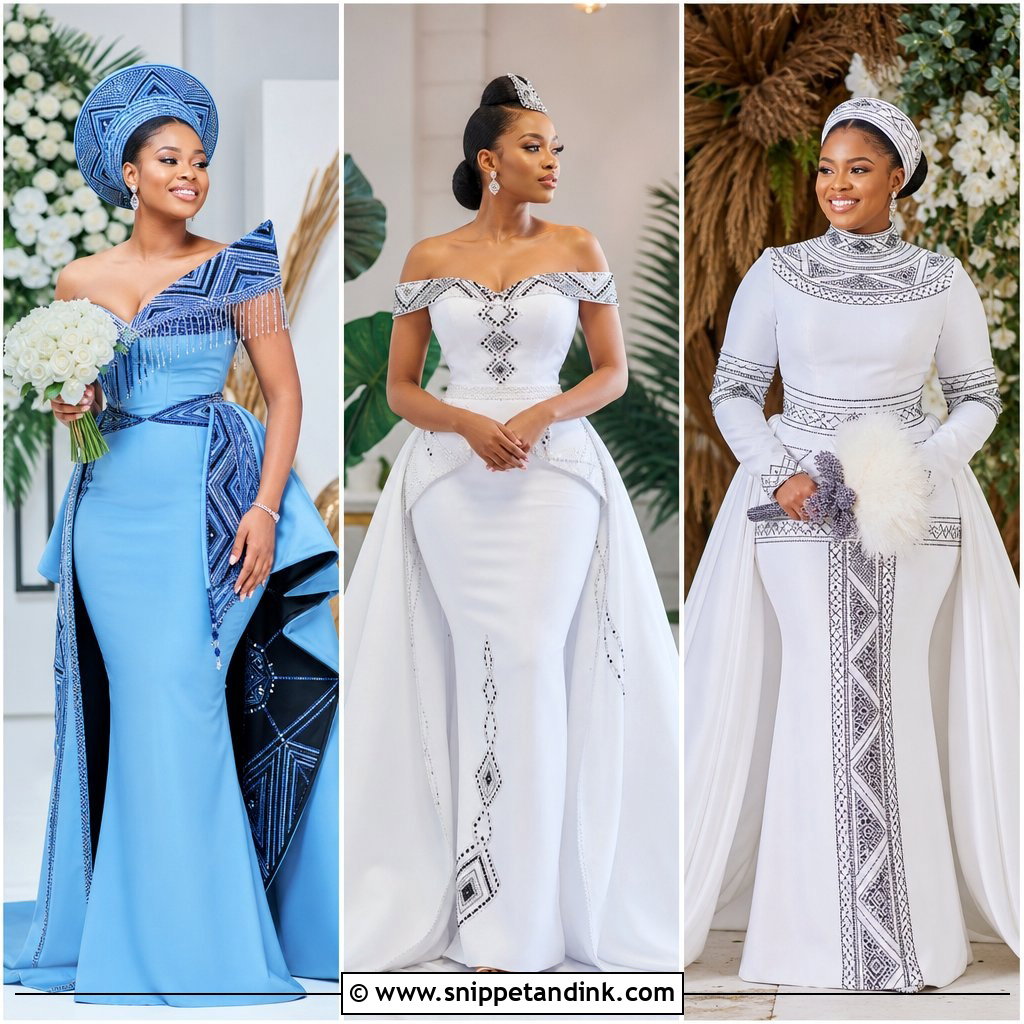
15. Green Venda Wedding Dress
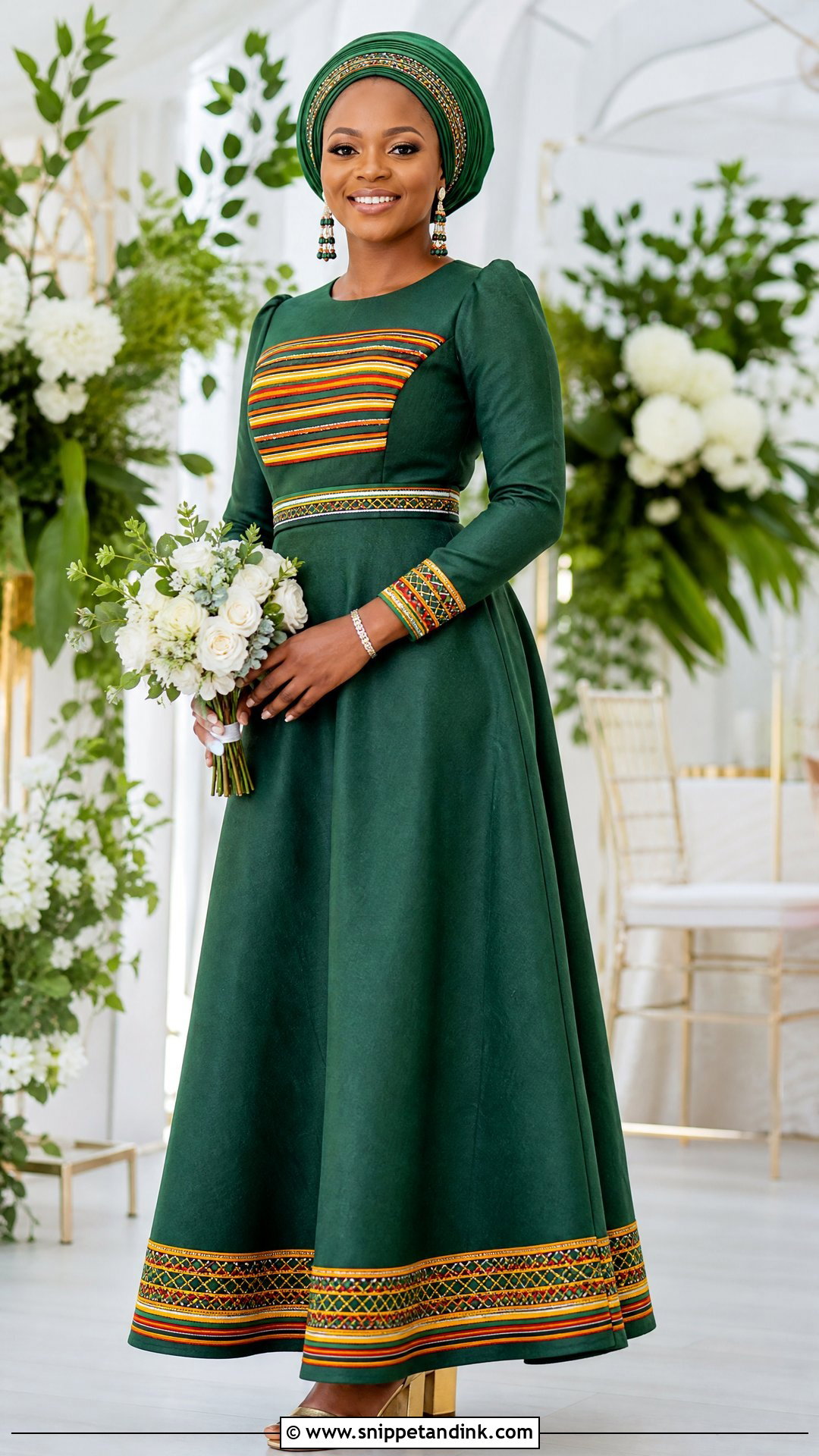
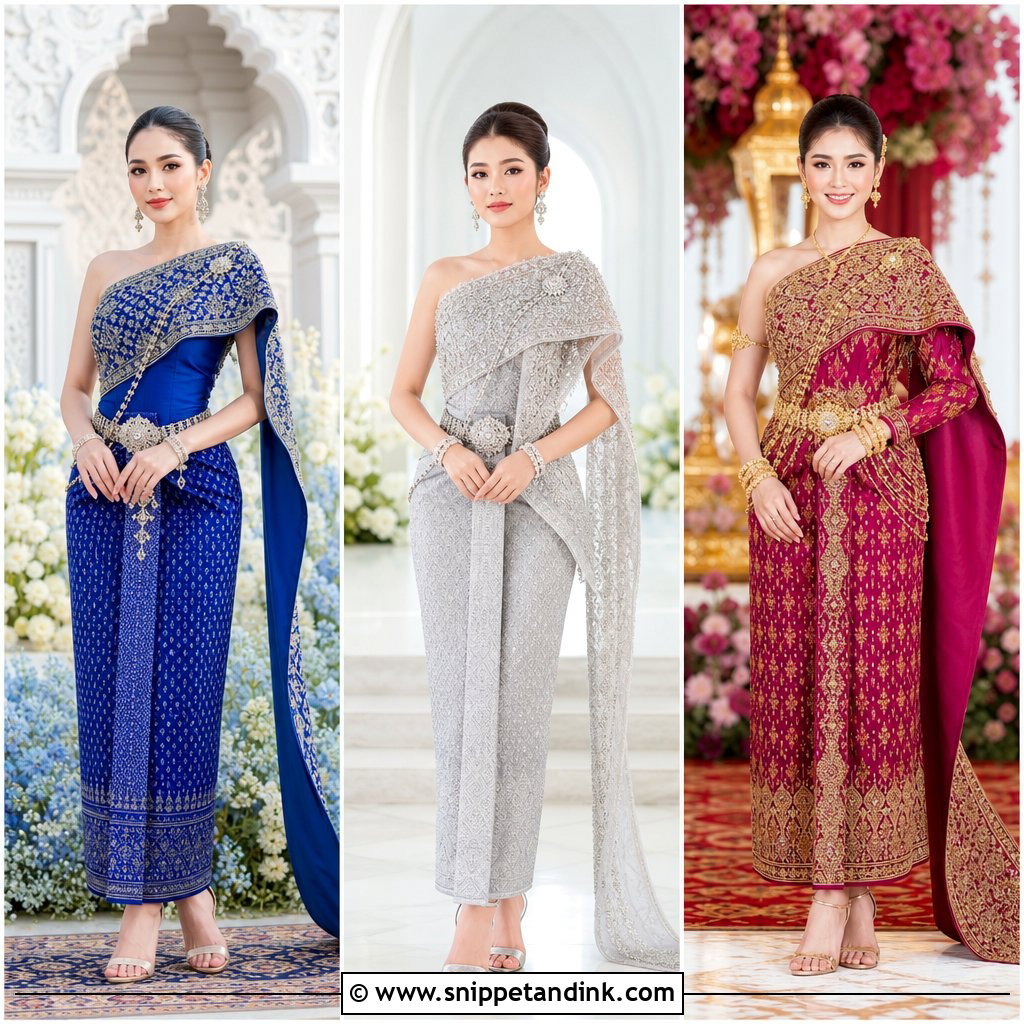
Emerald reads formal and forest green reads understated, and both settle the bright cloth down. A floor-length A-line with Venda fabric across the bodice, cuffs, waistband and skirt border is my usual starting point; a trumpet with a patterned flare is the more fitted alternative. Pick one green and repeat it through the dress, headwrap and accessories, because two greens side by side almost always look like a mismatch rather than a choice. For an outdoor ceremony keep the train short. Beaded earrings, a slim bracelet and black or gold block heels finish it.
16. Venda Two-Piece Wedding Dress
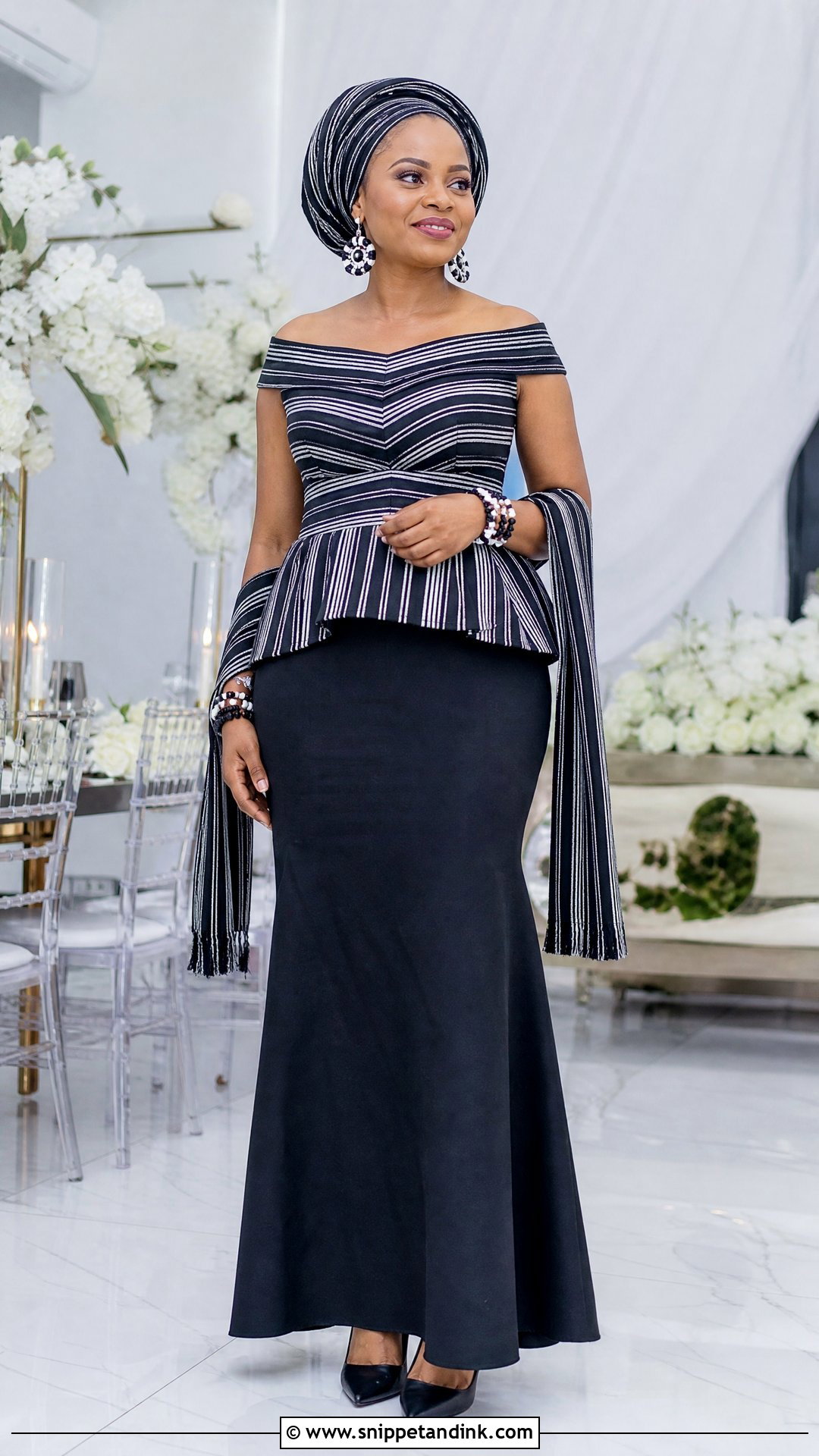
Separates give flexibility. A fitted blouse and a floor-length skirt, with waistlines that meet securely, can be tailored independently and restyled after the wedding. The top might have a peplum, puff sleeves, an off-shoulder line or a high round neck. Pattern on top with solid below, or reverse it. A matching headwrap and shoulder covering make the two pieces read as one outfit. For the bridal version I raise the finish: better lining, cleaner seams and special accessories, so it does not look like everyday ceremonial wear. Beaded earrings, bracelets and stable closed heels complete it.
17. Venda Cape Wedding Dress
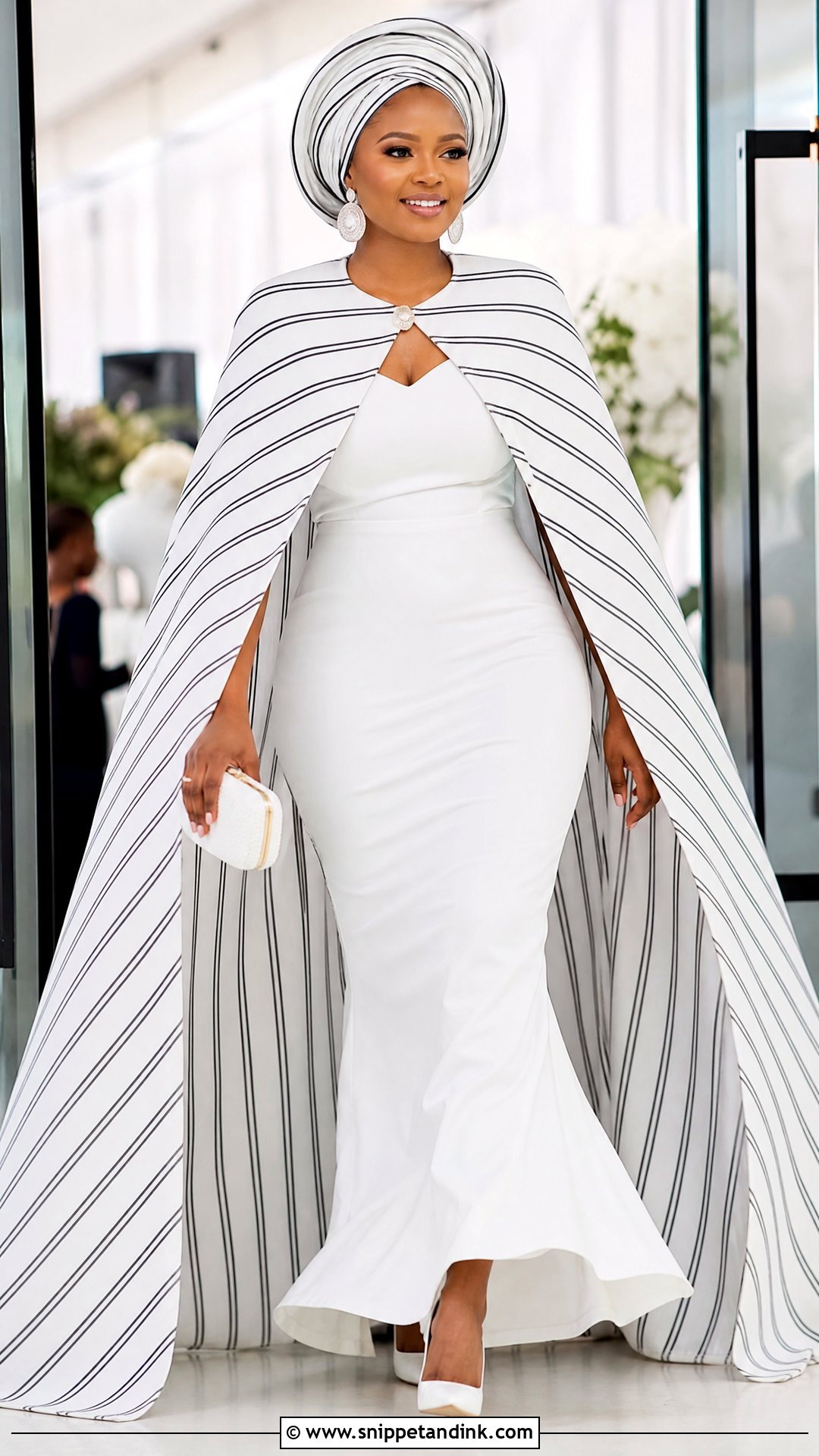
A cape brings movement without the weight of a big skirt. Start with a clean fitted gown in black, white, red, blue or green and add a floor-length cape in striped cloth, fastened at the shoulders, neckline or upper back. A capelet suits a bride who wants arm coverage without a train. During fittings I test it outside in a breeze and sitting down, since a long cape can pull at the shoulders or bunch under you and hide the dress. A sculpted headwrap, statement earrings, a compact clutch and streamlined pumps finish it; leave the necklace off.
18. Venda High-Low Wedding Dress
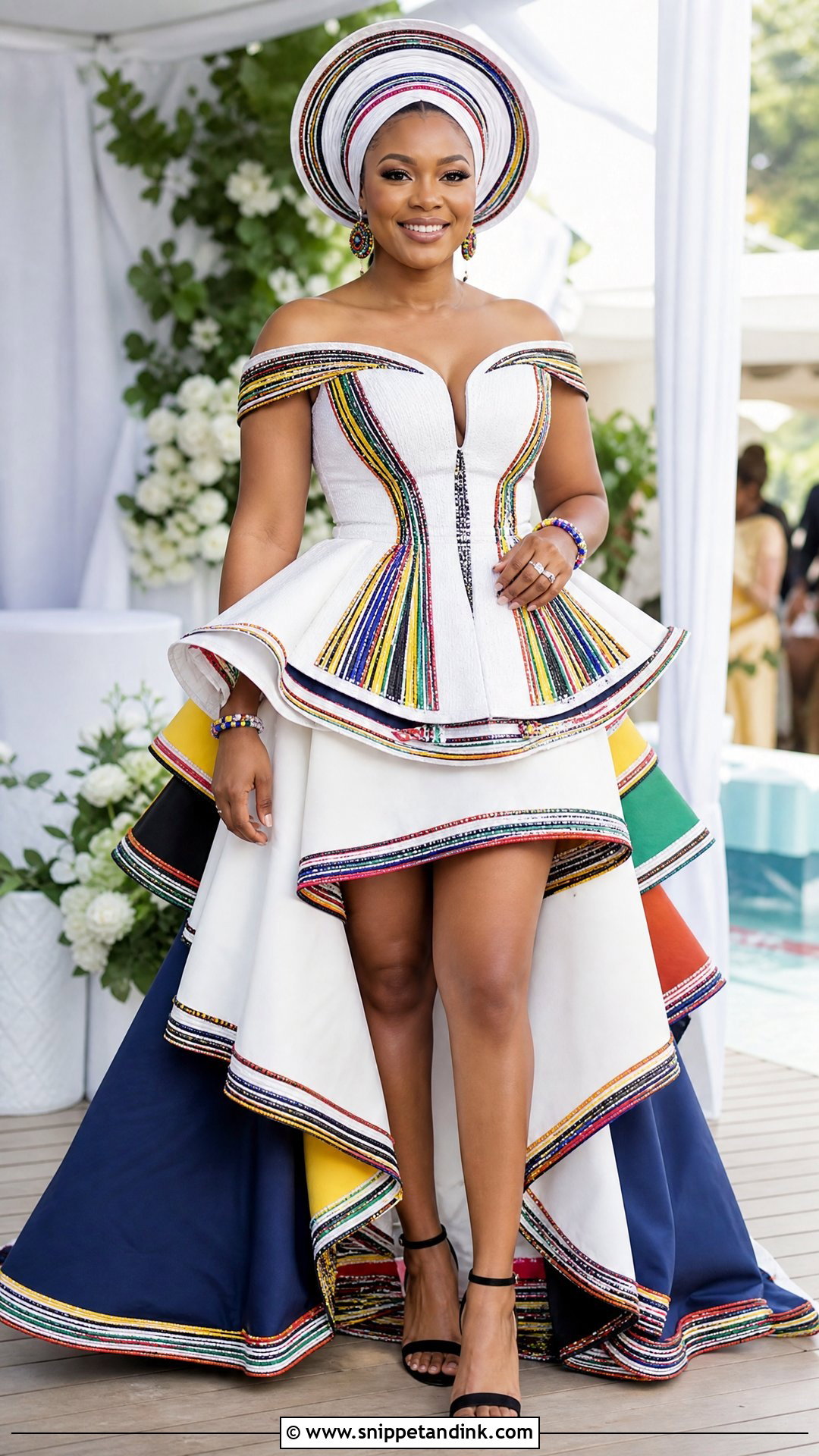
The high-low shape is lively and makes the shoes part of the outfit. The short front lets you move and dance; the long back keeps it bridal. Use the cloth throughout, or a solid fitted bodice with a layered striped skirt. A structured peplum balances the uneven hem. I keep the front at or below the knee for formality and ask for a smooth lining, because an unsupported high-low skirt twists to one side as you walk. Choose shoes in one of the fabric colors, since they stay visible all day. A headwrap, beaded earrings and bracelets complete it.
19. Plus-Size Venda Wedding Dress
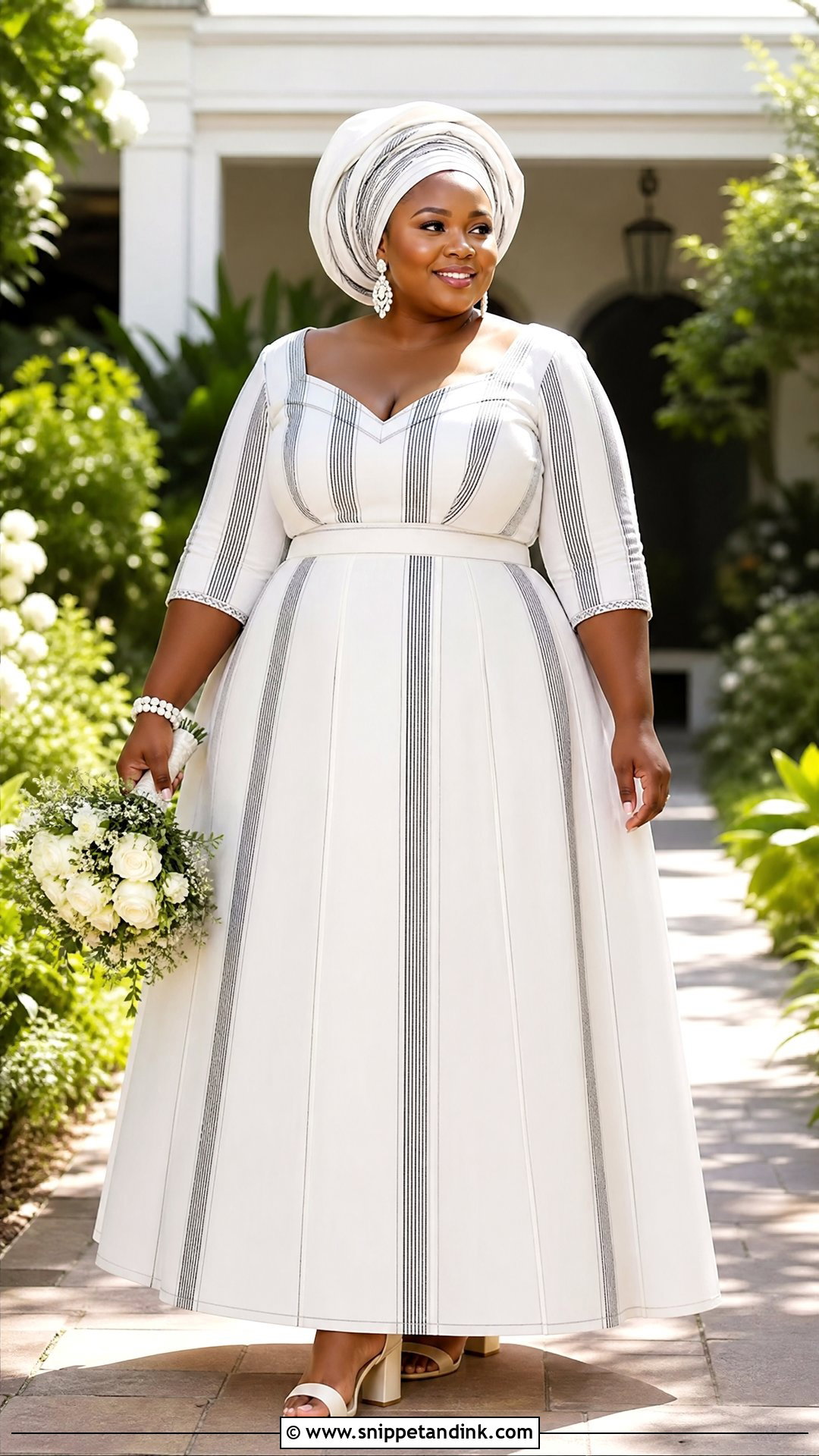
For plus-size brides, tailoring matters more than any trend. An A-line with a defined waist moves gracefully; a fitted trumpet shows off curves; a peplum blouse and long skirt makes a balanced two-piece. Run patterned panels vertically for a longer line, or put them across the shoulders and hem to draw the eye there. Do not rely on standard sizing alone. Plan for several fittings to sort out bust support, sleeve comfort, waist placement and length. A headwrap, medium-scale earrings, a bracelet and cushioned block heels finish it, and the dress should flatter you, not hide you.
20. Modern Venda Wedding Dress
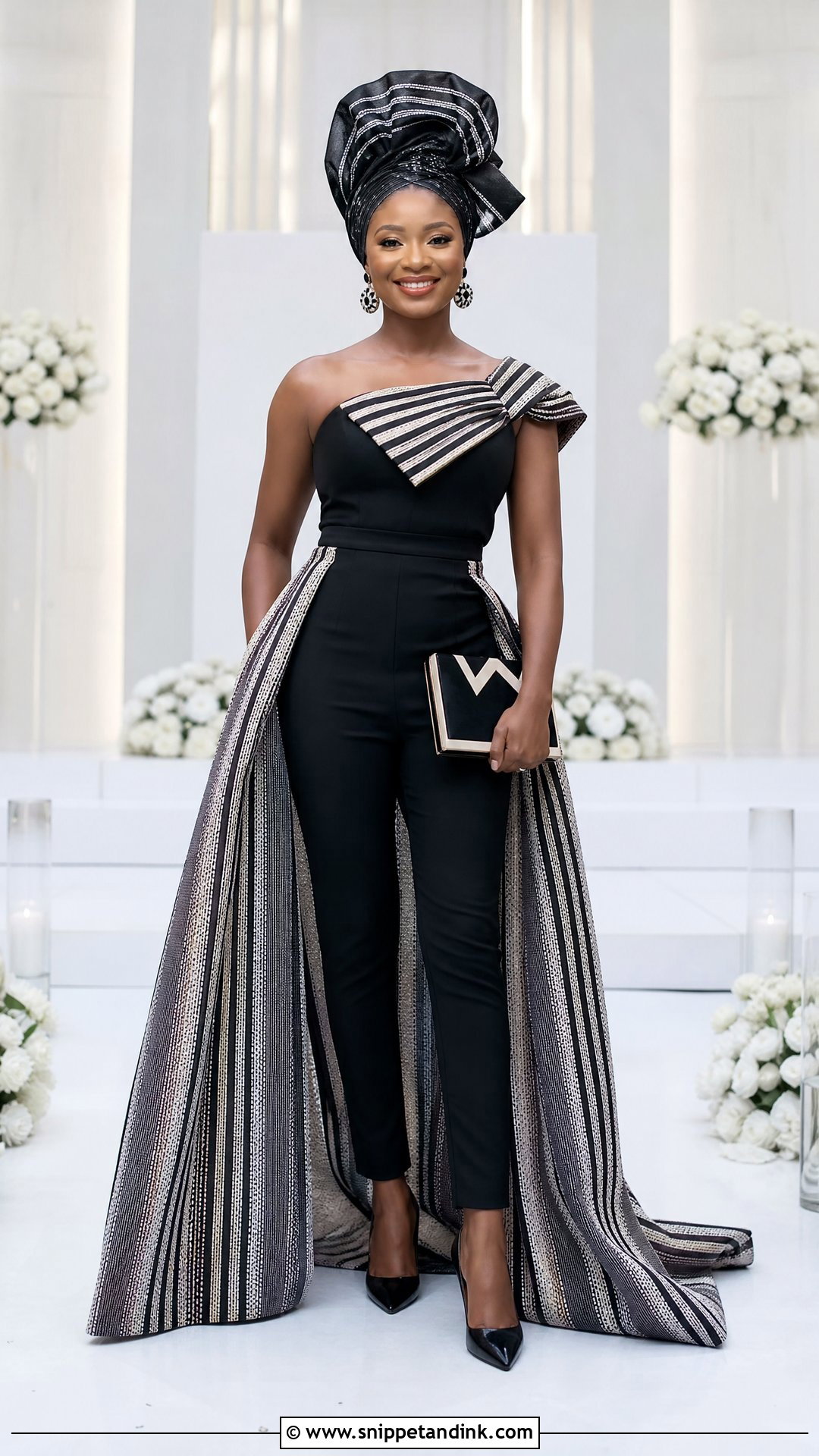
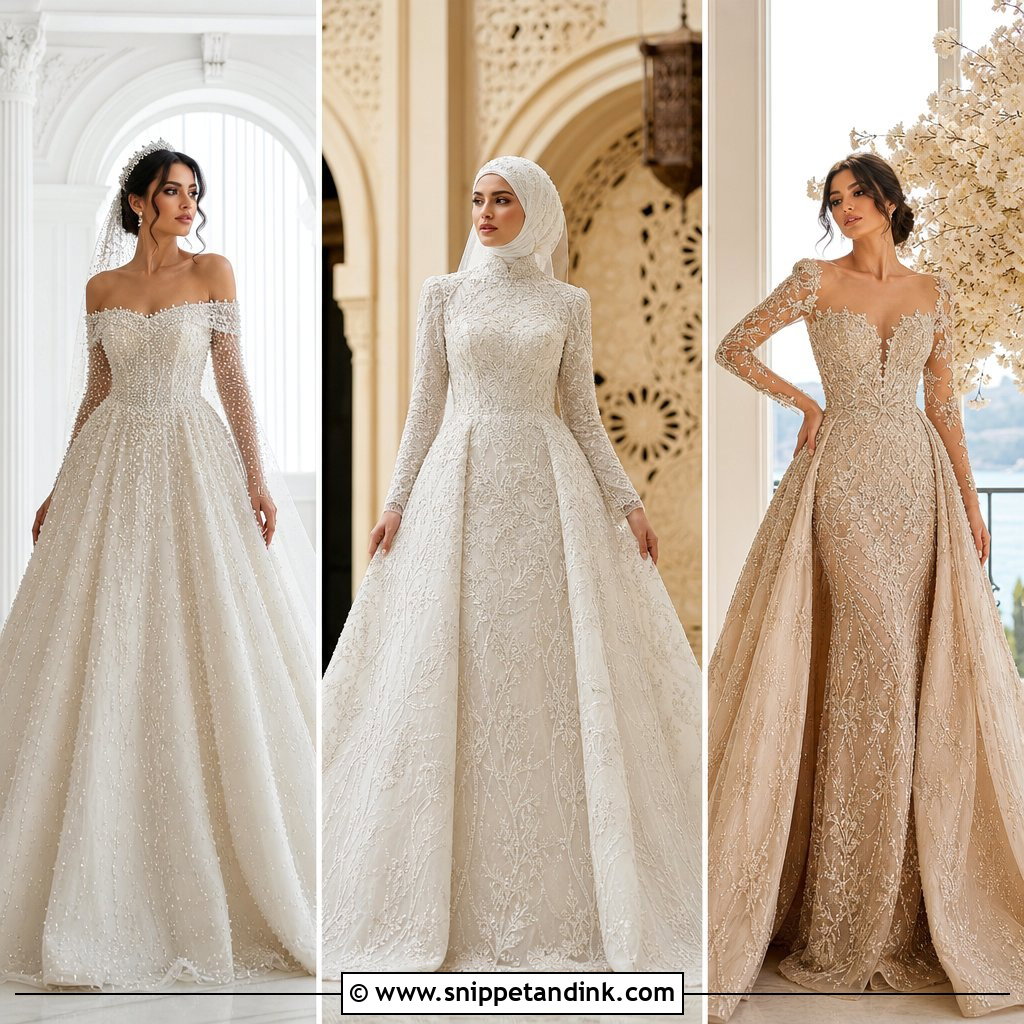
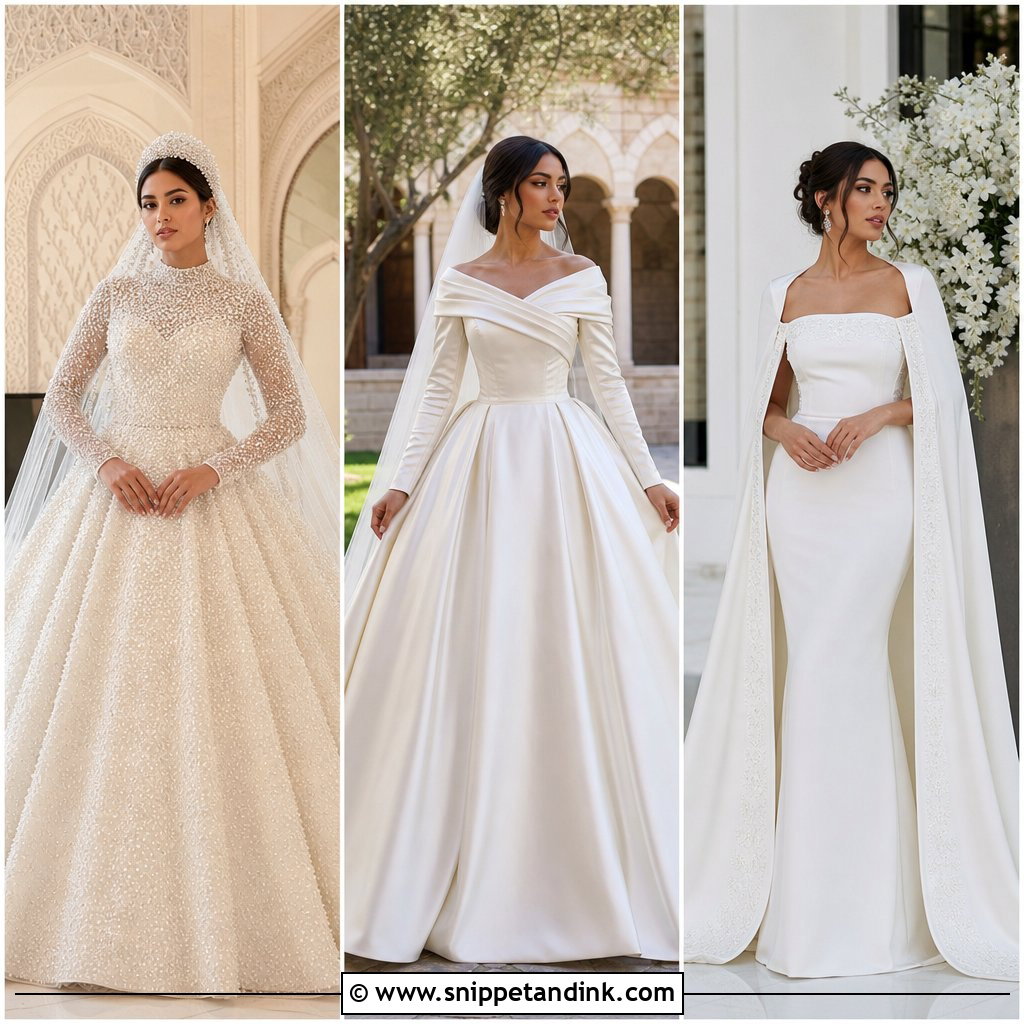
Modern doesn’t have to mean diluted. An asymmetric gown with one patterned shoulder, a minimal column with a striped train or a fitted jumpsuit under a detachable Venda overskirt can all keep the cloth recognizable. Keep the color palette tight. A sleek headwrap, sculptural earrings, a small clutch and pointed heels finish it. What I steer brides away from is cutting ceremonial garments up as decoration; the meaning matters to the people watching. Work with a Vhavenda designer, a dressmaker who knows the cloth or a respected family member, and you get a look that is yours and treats the heritage with care.
Caring for the Cloth Once the Party Ends
Many brides want to wear parts of their outfit again at family ceremonies, so it pays to look after it properly. Printed cotton cloth holds its colors well when it is treated gently, but strong sun and hot water fade it faster than people expect.
- Spot-clean food and makeup marks soon with cool water. Rubbing hard spreads the stain and can lift the print.
- Wash cloth-only pieces by hand in cold water, inside out, and dry them in the shade rather than full sun.
- Send gowns with beading, lining or structure to a dry cleaner and point out the beads.
- Iron on the reverse side to keep the colors from developing a shine.
- Store folded in a cotton bag or wrapped in a clean sheet, away from damp, and refold along new lines every few months so permanent creases do not form.
Keep beaded jewelry separate from the fabric so the beads cannot snag the weave. If you used a separate headwrap and shoulder covering, store them with the dress so the set stays together for the next family occasion.
Heritage, Fit and the Day Itself
Every outfit here balances meaning, personal taste, tailoring and comfort for a long day. You might wear a traditional *nwenda* ensemble, a full musisi skirt, a fitted mermaid, a ball gown or a modern two-piece. Bold or restrained, the cloth looks best when its placement is planned. Finish with an appropriate headwrap, jewelry, comfortable shoes and any ceremonial layers your family asks for. Check with elders or knowledgeable designers before adapting garments tied to status. Plan carefully, find a skilled maker, and the dress will honor both your family and you.
You'll Like These Ideas:





Leave a Reply