
Burmese bridal dress rewards careful tailoring more than almost any wedding outfit I style. A traditional Myanmar wedding look is built on two pieces: the fitted, hip-length htaingmathein jacket and the wrapped silk htamein, finished with jewelry, a polished updo and often flowers or a hairpiece. Plenty of brides now bring in modern colors, cleaner lines and lighter embroidery, and that works as long as the jacket still fits the way it’s meant to. Below are 25 outfits I’d build around those two pieces, from deep gold to a quiet fusion look, with notes on fit, fabric and how each one wears through a long ceremony.
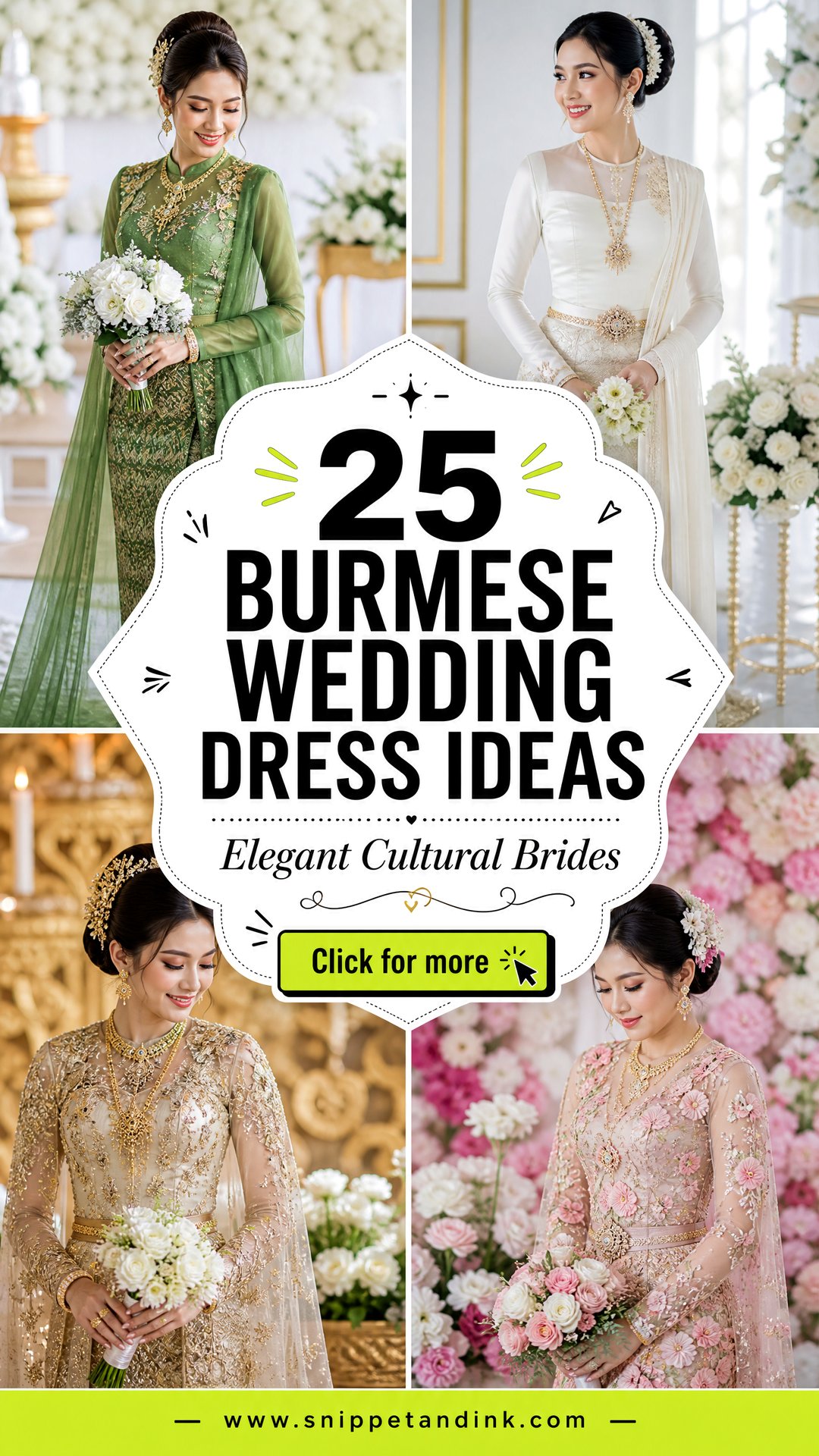
Fitting the Jacket and Wrapping the Htamein Before Picking a Color
Brides usually arrive at a fitting talking about color, and I gently move the conversation to fit first. A htaingmathein is meant to be close-fitting, worn over a fitted bodice, and it should stay smooth when you sit. That last part is the real test. I have every bride sit, lean forward and raise her arms at the final fitting, because a jacket that looks perfect standing can wrinkle across the waist the moment she sits down.
What I check at the final fitting
- The front edges meet cleanly at the bust without gaping when you breathe in.
- The flare at the hip, if your jacket has one, sits level all the way round and doesn’t flip up when you sit.
- Sleeves end at the wrist bone, so bangles show and cuffs stay clear of food at the reception.
- The htamein wrap overlaps enough that the opening stays closed when you take a long step.
- A train, if you have one, can be lifted and turned by one helper without pulling at the waist.
Have whoever will wrap you on the day come to this fitting and practice. A htamein tied in a rush can loosen and slip within an hour, and fixing it mid-ceremony means leaving the room.
1. Gold Burmese Wedding Dress
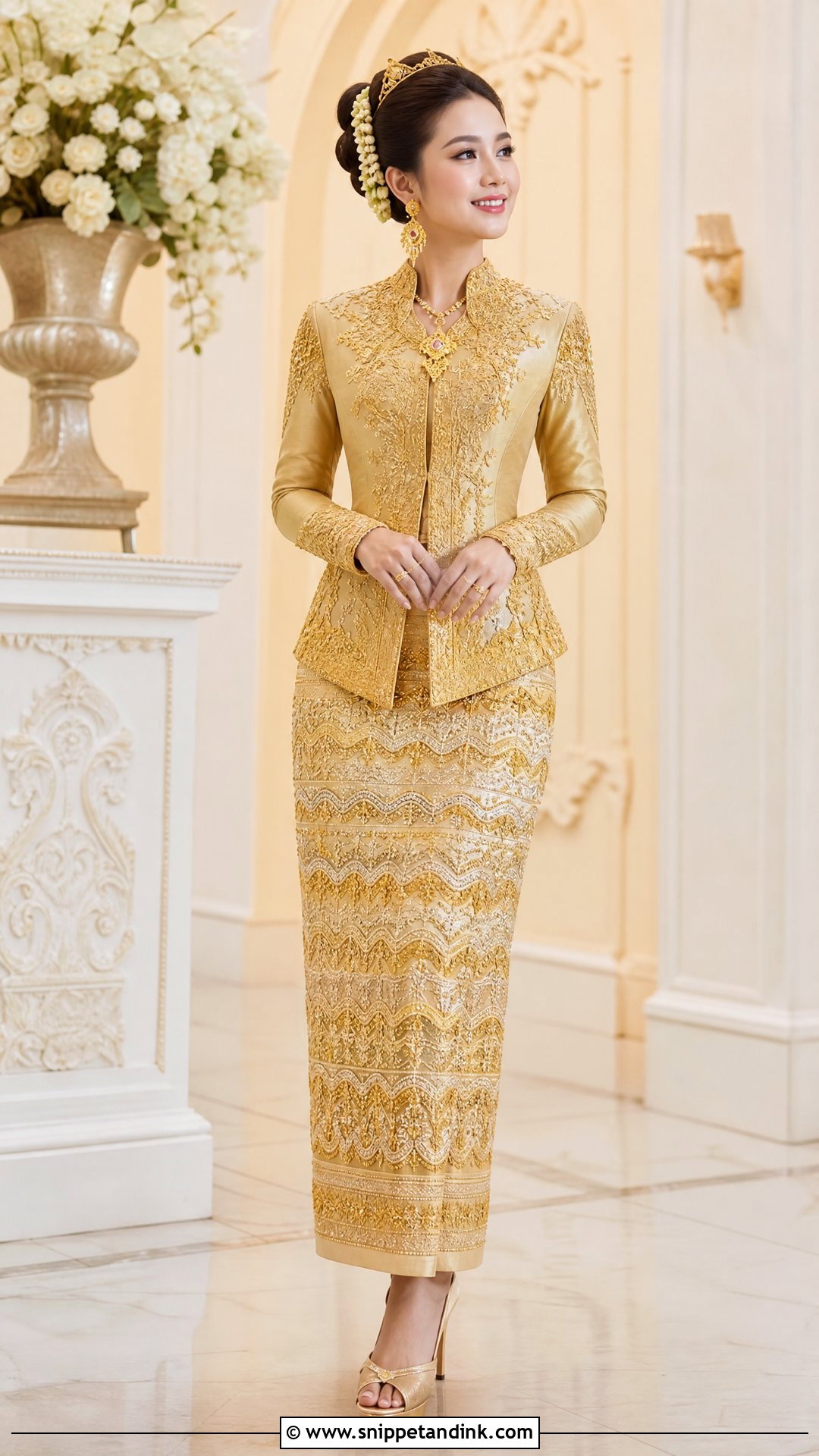
Gold is the color most families picture first, and it earns its place because silk and gold thread read as ceremonial without any extra help. I start with a fitted gold htaingmathein with fine embroidery and a matching htamein that has enough body to hold a clean wrap. Bright metallic gold can flatten in flash photos, so I often steer brides toward a champagne gold for the jacket and keep the brighter tone for the jewelry. A neat updo leaves room for statement earrings and a traditional hairpiece; defined eyes and a warm lip balance all that shine.
2. White Burmese Wedding Dress
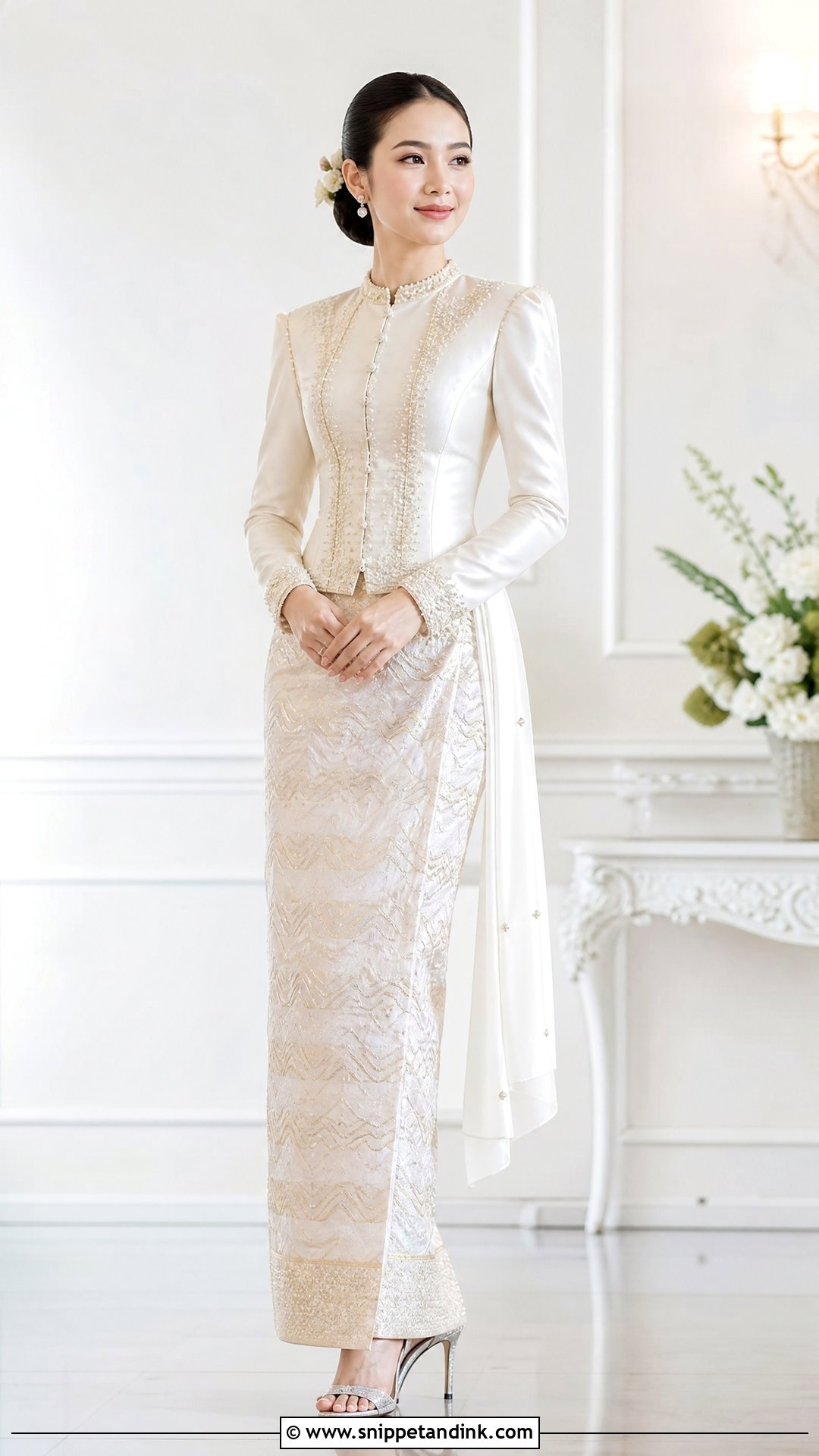
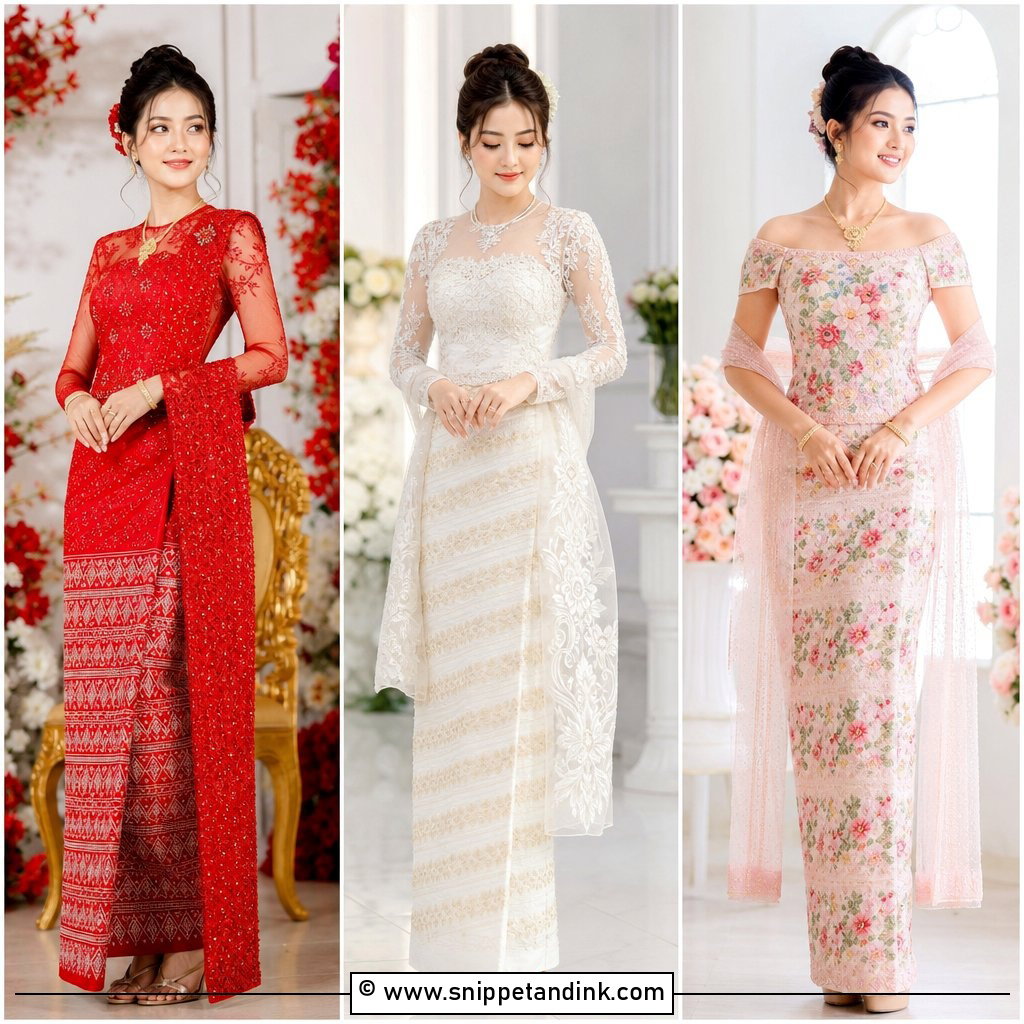
White or ivory feels fresh and modern while keeping the traditional structure intact. I look for a jacket with pearl detailing and subtle floral embroidery, fitted tightly at the waist, over a white silk htamein with a soft sheen rather than a glassy one. Pure white silk shows every crease from sitting, so this is the color where a good press between ceremony and photos matters most. Silver heels, pearl earrings and a sleek bun keep it polished, and a fresh flower in the hair stops it from feeling stark. Morning ceremonies and civil portraits suit it well.
3. Red Burmese Wedding Dress
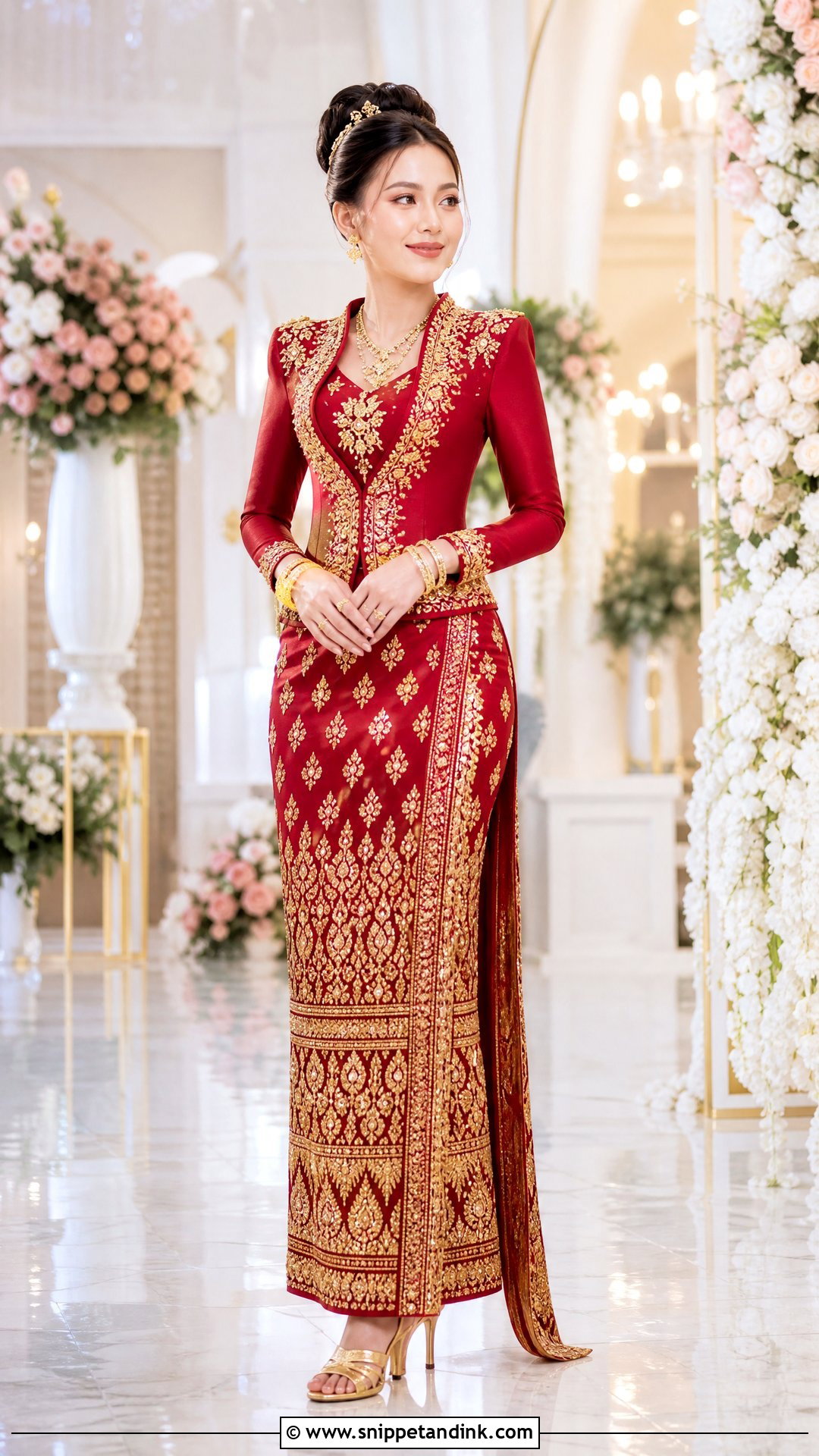
Red is the joyful option, and deep red, ruby and maroon all stay festive without shouting when the rest of the outfit is disciplined. A red htaingmathein with gold embroidery over a matching silk or brocade htamein is a strong pairing on its own. My rule with red is one focal point: if the jacket is heavily worked, the bangles and necklace stay simple, and if the jewelry is grand, the embroidery steps back. Gold heels and a neat updo finish it for a confident entrance.
4. Pink Burmese Wedding Dress
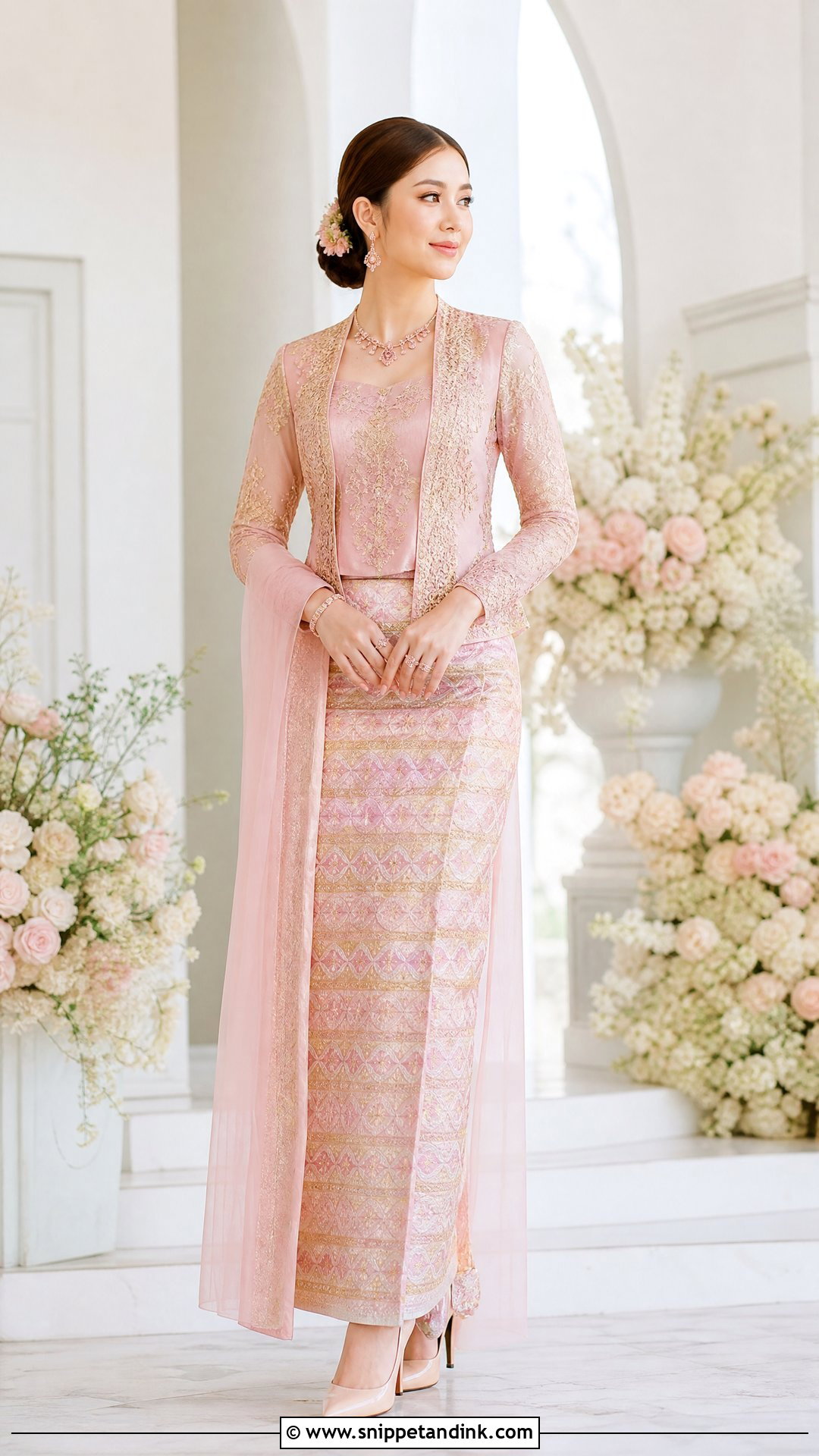
Pink keeps the formality of the outfit while softening its mood. Blush, rose and dusty pink each flatter different skin tones, so I always drape the fabric near the bride’s face in daylight before committing to a shade. A fitted pink jacket with light gold or pearl embroidery pairs well with a matching htamein, and rose-gold jewelry warms the whole look. Nude or champagne heels lengthen the line. A low bun with fresh flowers suits engagement ceremonies and daytime receptions, where natural light does the pink a lot of favors.
5. Blue Burmese Wedding Dress
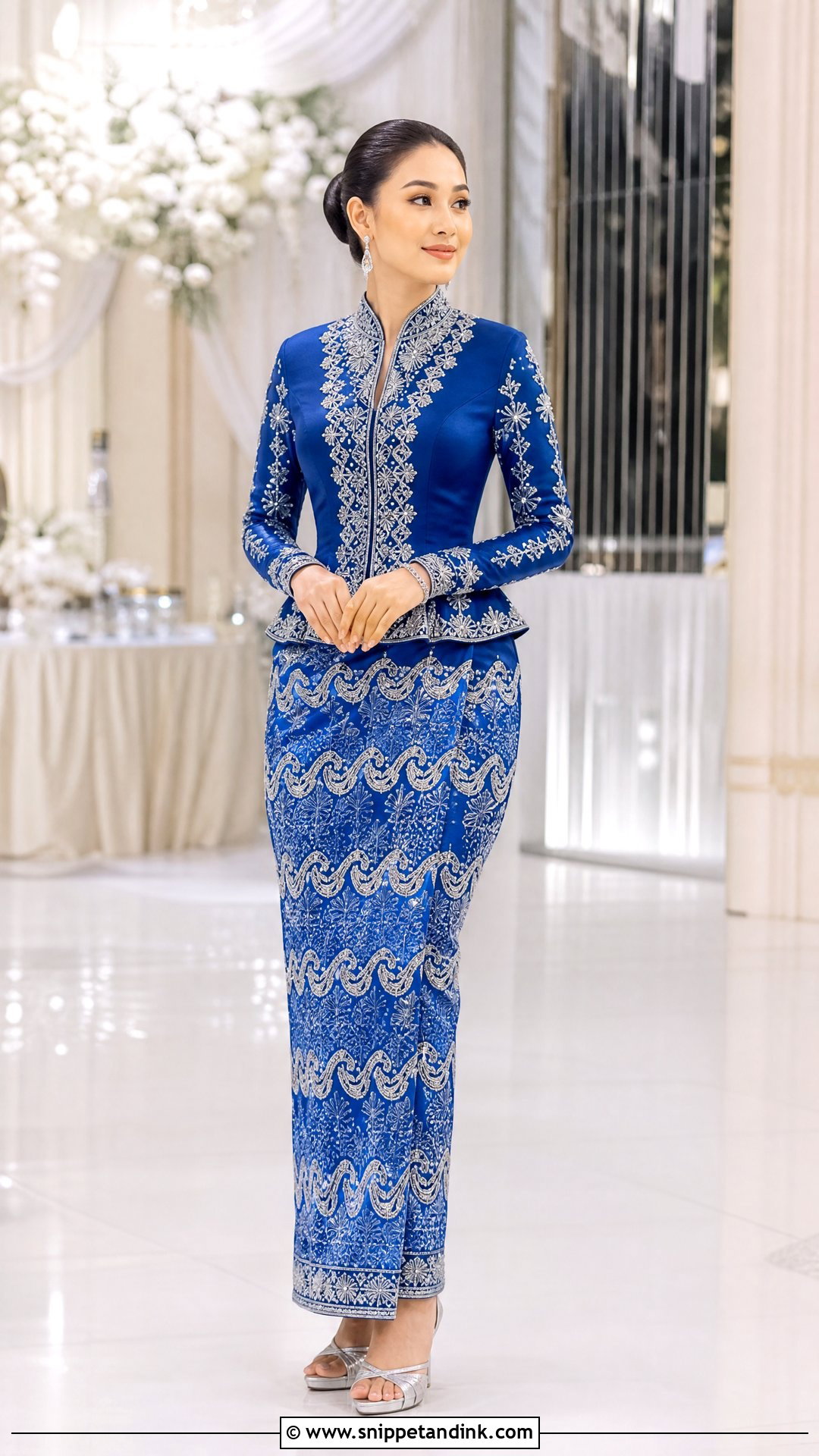
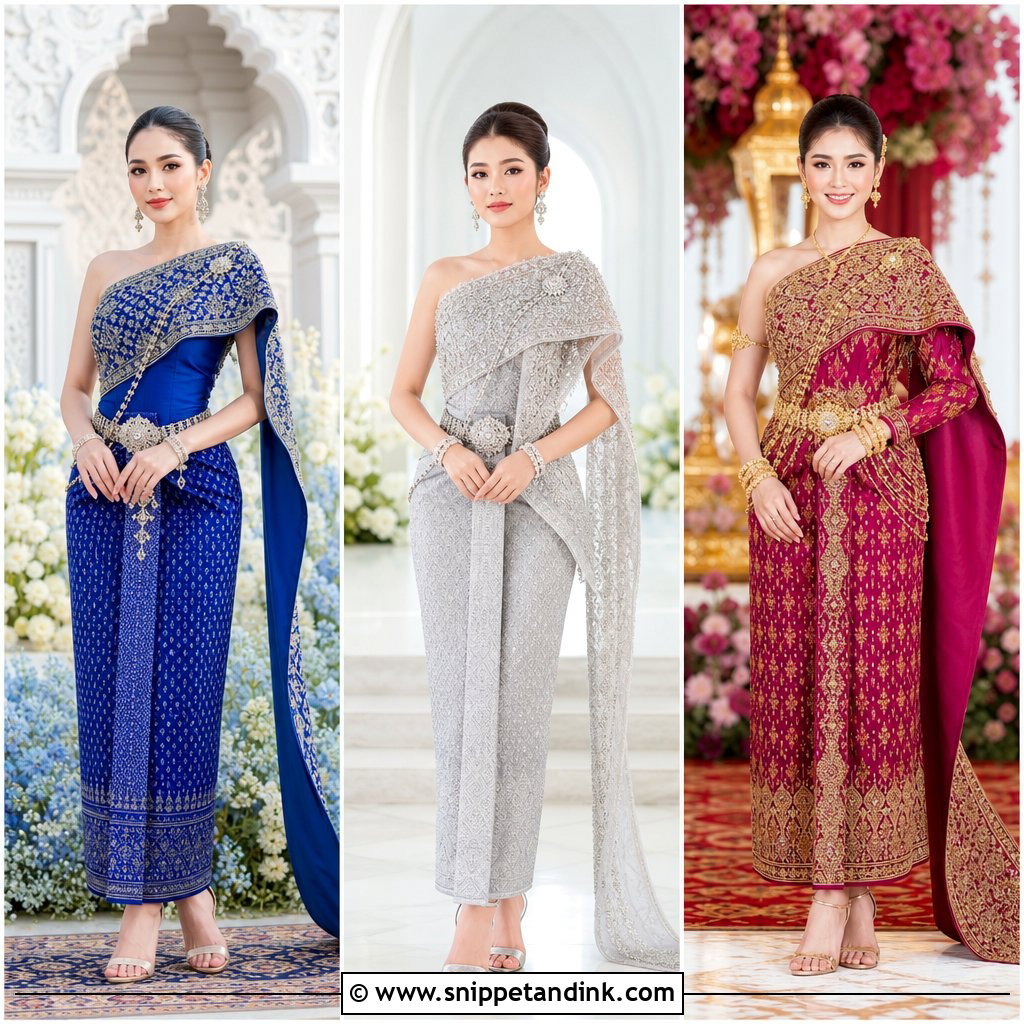
Blue is the color I suggest to brides who want calm rather than drama. Sapphire with silver embroidery feels regal; powder blue feels airy. The one thing to watch is undertone: icy blues can drain warm complexions, while sapphire tends to flatter almost everyone. Pair the jacket with a matching htamein, silver heels, crystal earrings and a smooth updo, and keep the makeup fresh with a soft pink lip. Evening receptions and indoor ceremonies show it at its best.
6. Green Burmese Wedding Dress
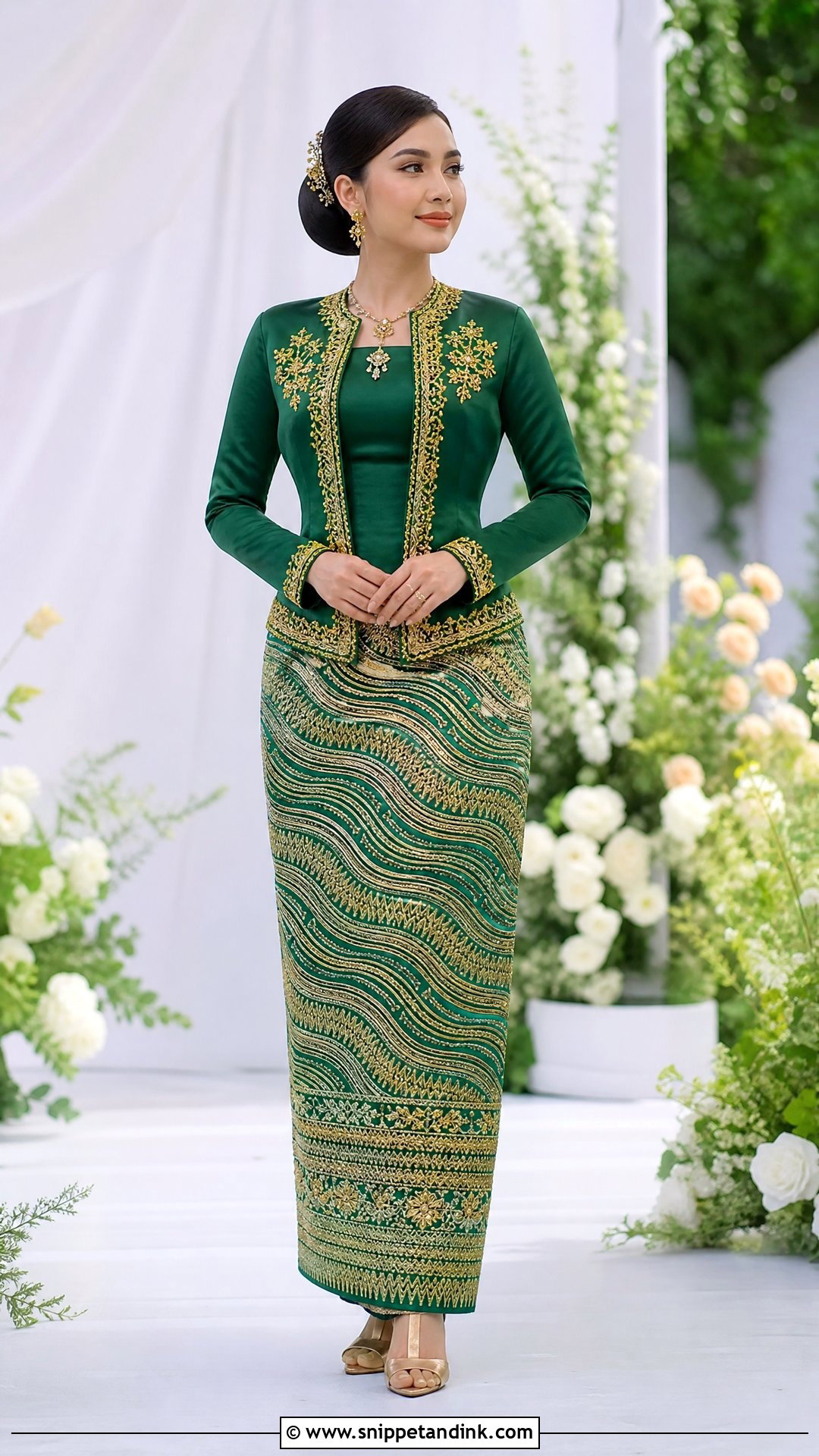
Green gives you two very different brides. Emerald looks royal; sage looks modern and soft. For a formal outfit I’d choose an emerald htaingmathein jacket with gold threadwork over a matching silk htamein, finished with gold heels, traditional earrings and a polished bun. Sage reads better with pearl details and nude shoes. Deep green silk can look almost black under dim ballroom lighting, so if your reception room is dark, test the fabric there or go a shade brighter.
7. Purple Burmese Wedding Dress
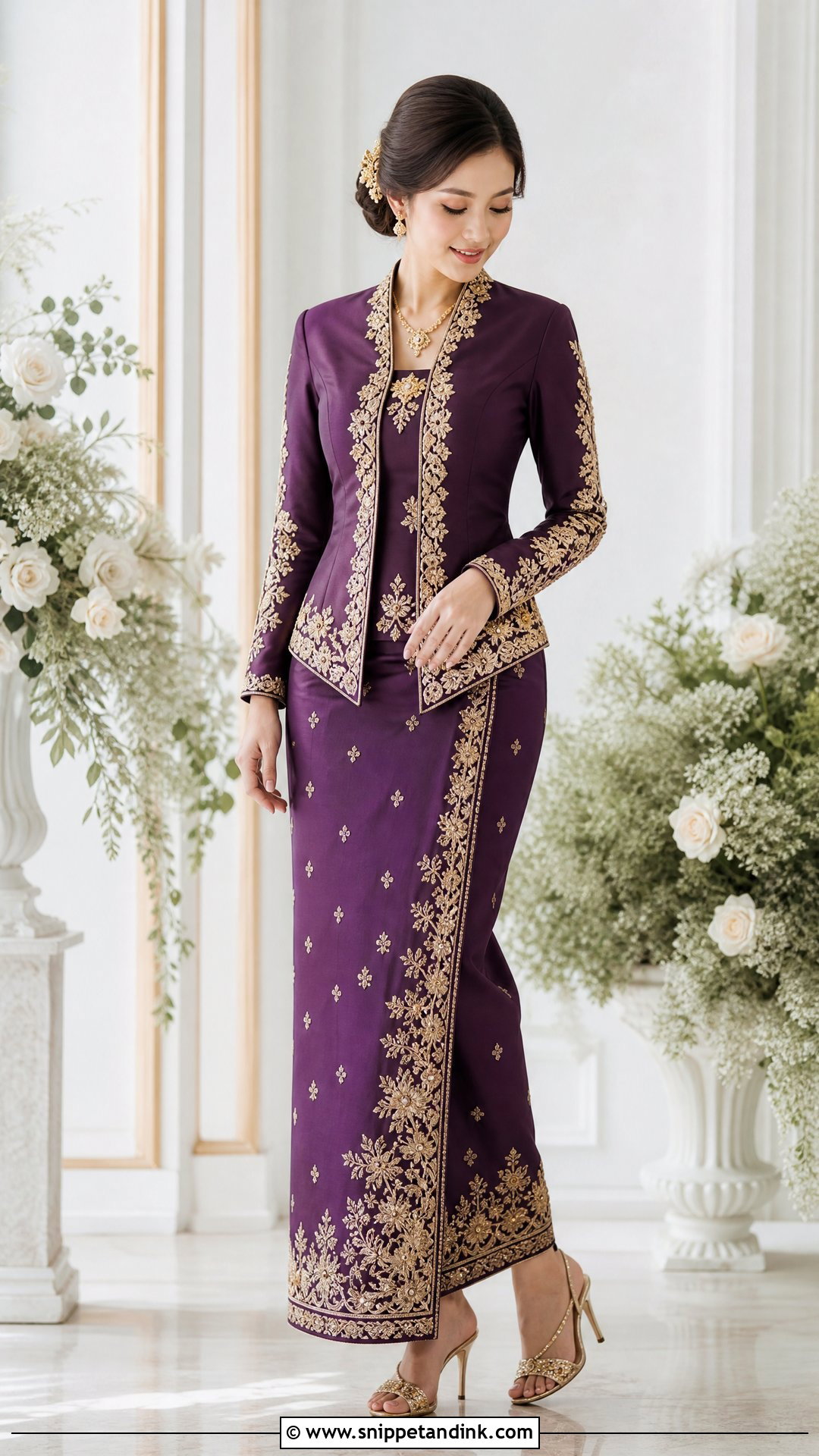
Purple lands somewhere between romantic and grand depending on the shade. Lavender is gentle and works with silver for daytime; deep plum with gold embroidery and a matching htamein makes a strong bridal statement. Silk carries purple especially well because the weave catches light and shifts tone as you move. I keep the necklace traditional and the updo soft with plum, since a sharp style plus a dark color can look severe in close-up portraits.
8. Ivory Burmese Wedding Dress
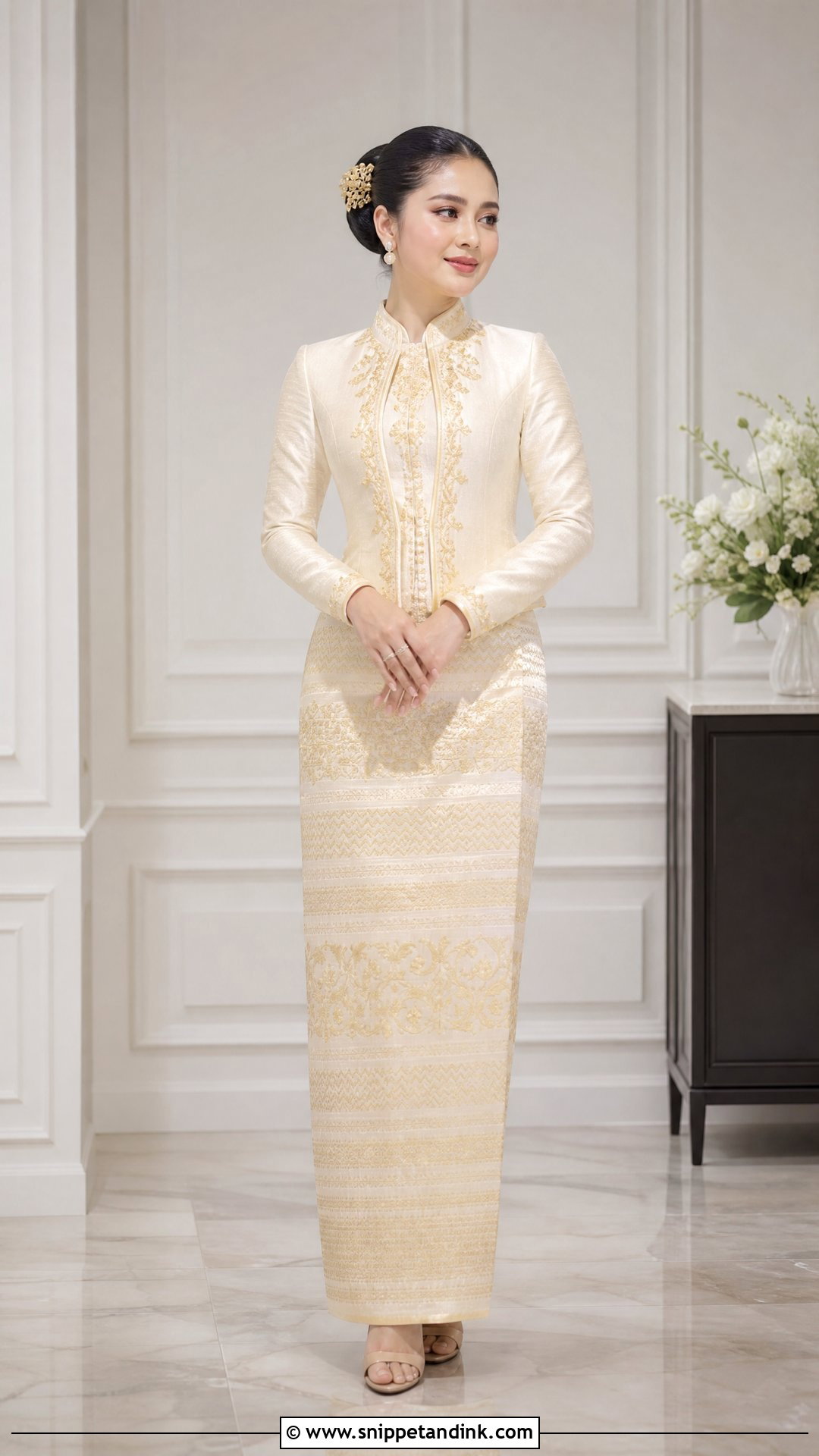
Ivory sits halfway between white and gold, and it’s the shade I recommend most often to brides who find pure white harsh against their skin. An ivory htaingmathein with delicate gold embroidery, pearl accents or tone-on-tone patterning over a matching htamein reads soft and traditional. Champagne heels, pearl earrings and a smooth bun complete it, and a subtle gold hairpiece adds formality for a large ceremony. The tone-on-tone work is what shows up close, so ask your tailor to keep it visible in the jacket’s front panels.
9. Champagne Burmese Wedding Dress
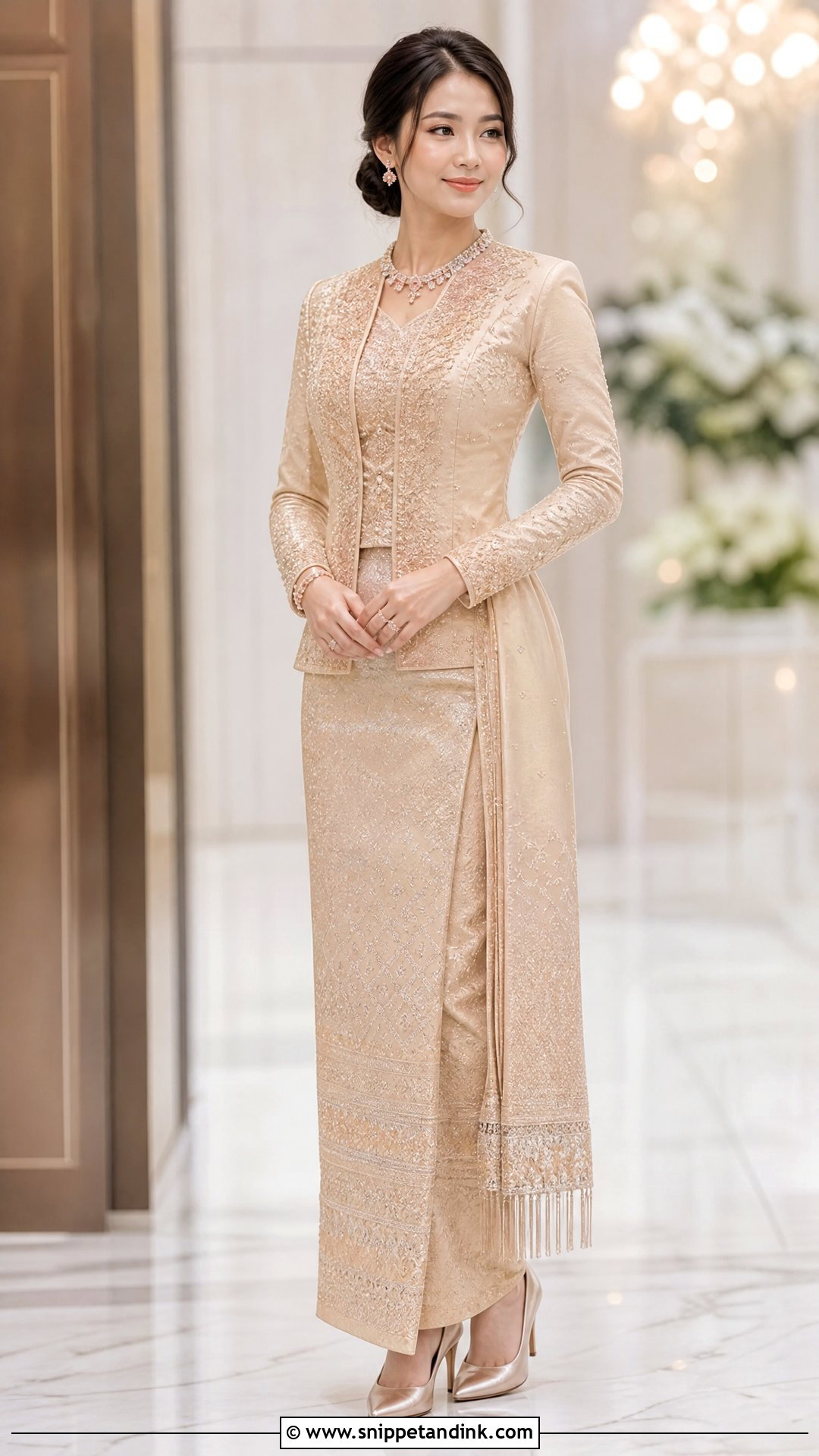
Champagne gives a soft glow instead of a bright color, and it flatters under almost any lighting, which matters when a day moves from daylight rituals to a hotel ballroom. A champagne jacket with fine beading pairs with a matching silk htamein and satin heels. I keep the jewelry tonal, gold or rose gold, so nothing breaks the warmth. A low chignon leaves the neckline and the jacket’s front edge visible, which is where most of the beadwork sits.
10. Silver Burmese Wedding Dress
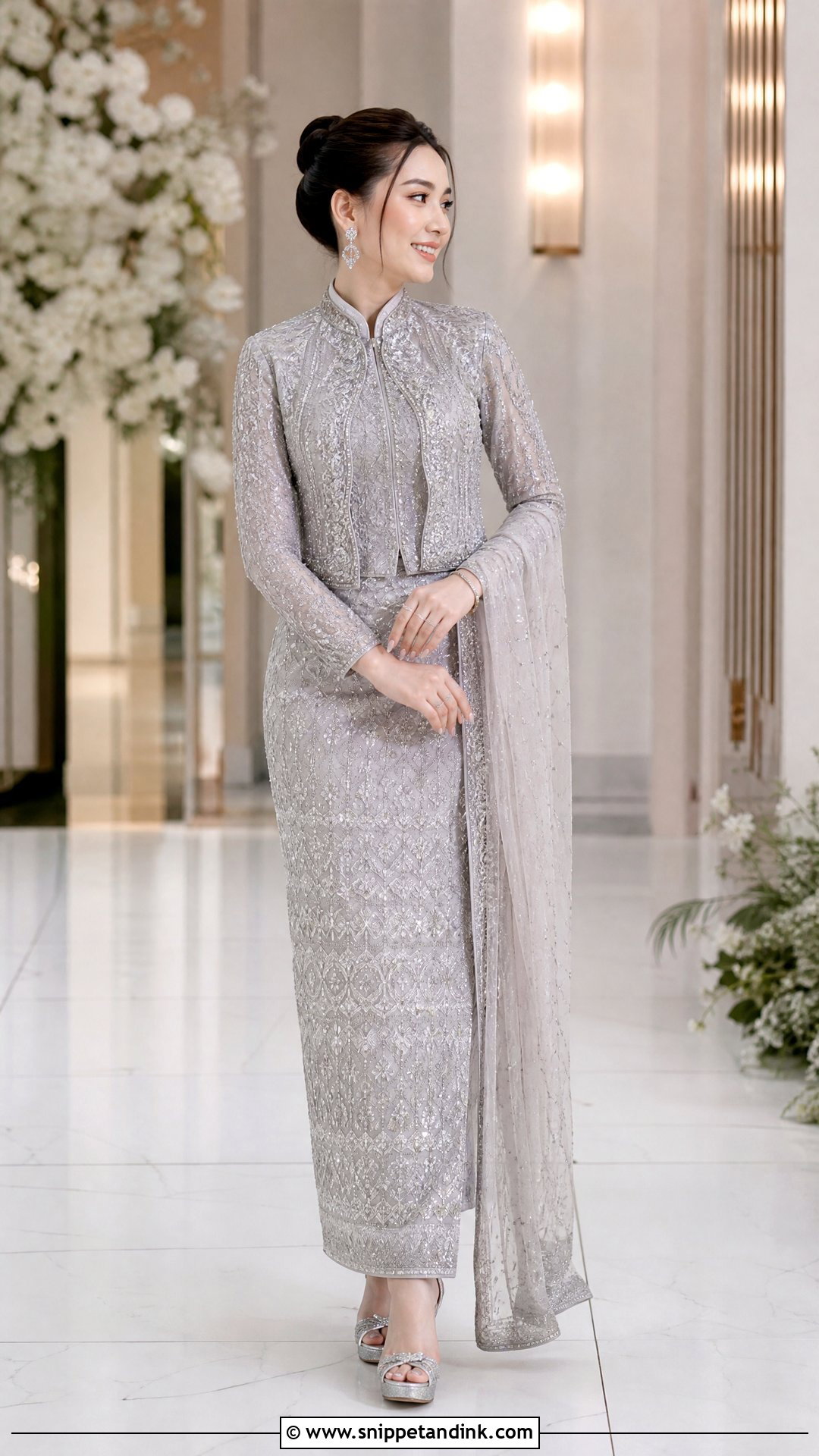
Silver catches evening light better than any other shade on this list, so it suits night ceremonies and reception changes. A silver htaingmathein with crystal details over a matching silk or brocade htamein looks clean and contemporary. Silver can turn cold on camera, and I counter that with warm blush and a natural lip rather than icy pink makeup. Silver heels, diamond-style earrings and a sleek updo keep everything coordinated.
11. Royal Burmese Wedding Dress
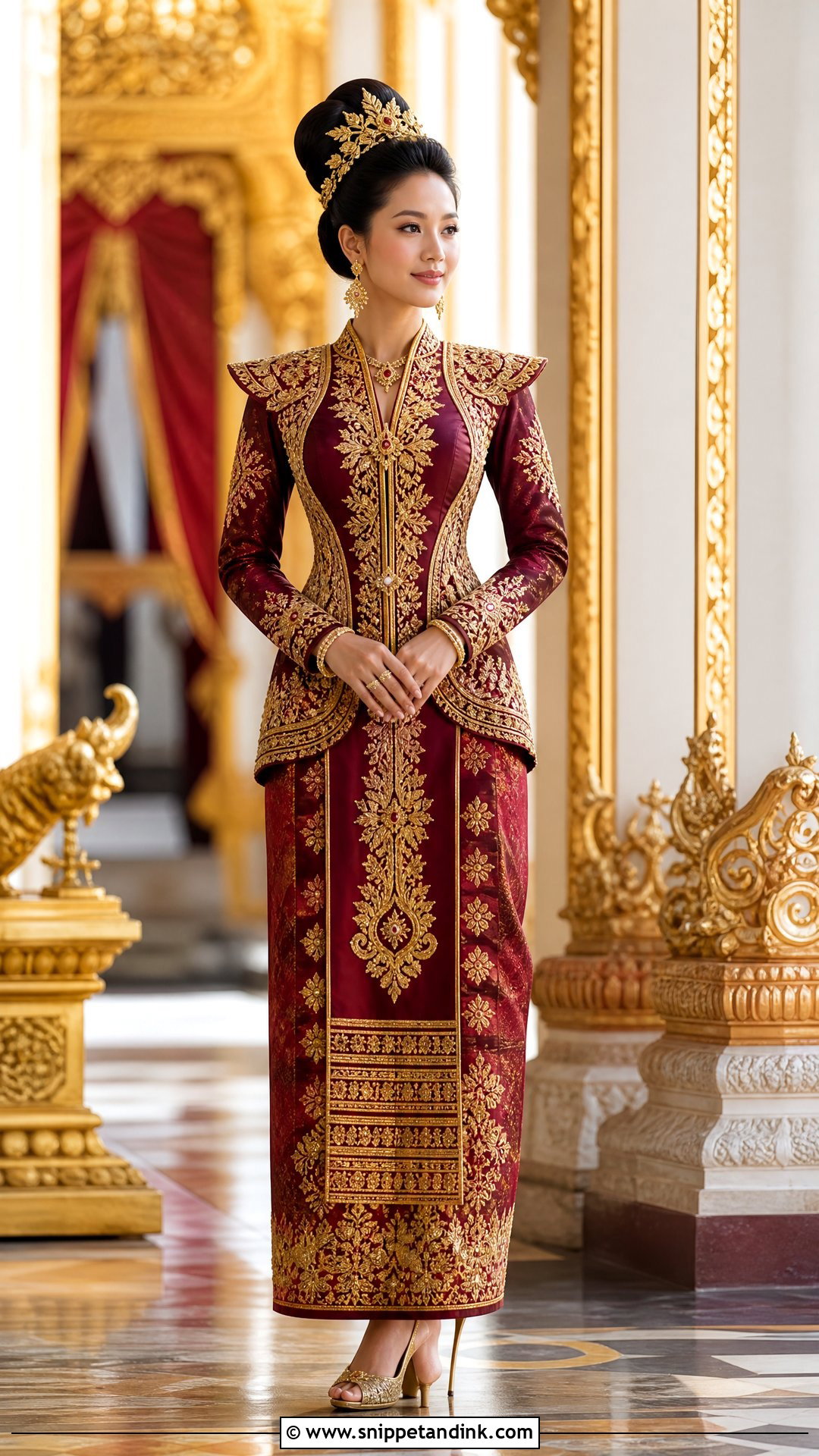
The royal look is about structure. Think ornate gold embroidery on a close-fitting jacket, a silk htamein with a graceful fall, and jewelry that looks formal without piling up. Ruby, emerald, sapphire and gold carry this best. Where these outfits go wrong is in the add-ons: a decorative hairpiece, a heavy necklace, stacked bangles and a beaded clutch together tip it toward costume. I edit until each piece has a reason to be there. Gold heels and a traditional updo with one strong hairpiece are enough.
12. Modern Burmese Wedding Dress
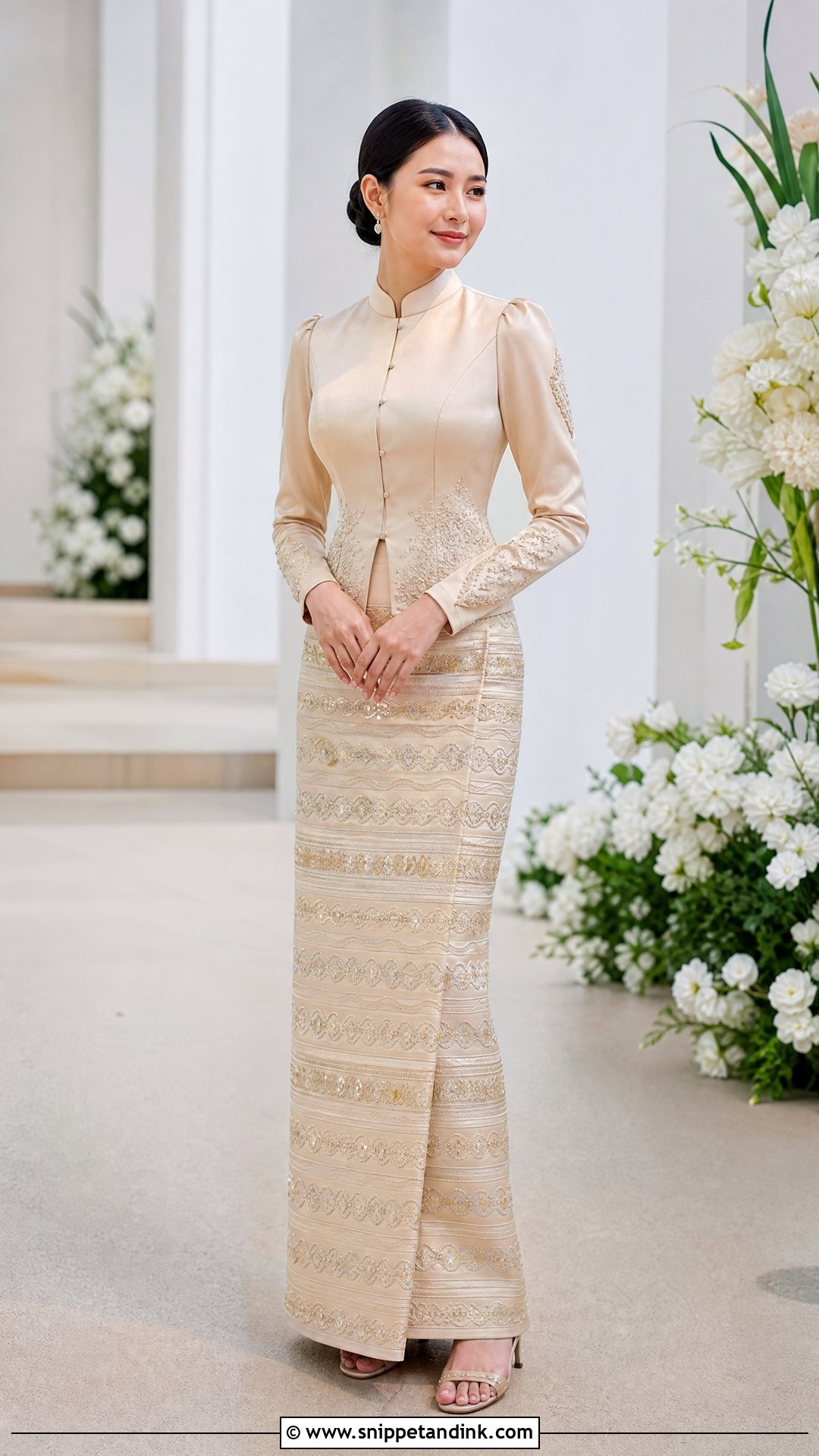
A modern version keeps the traditional shape and strips back the details. That means a sharply tailored htaingmathein with minimal embroidery in smooth silk, over a matching htamein in a muted shade such as ivory, sage or pale blue. With so little decoration, fit becomes everything; any pulling across the back shows immediately on plain silk. Simple heels, delicate earrings and a sleek low bun suit city weddings and smaller ceremonies.
13. Traditional Burmese Wedding Dress
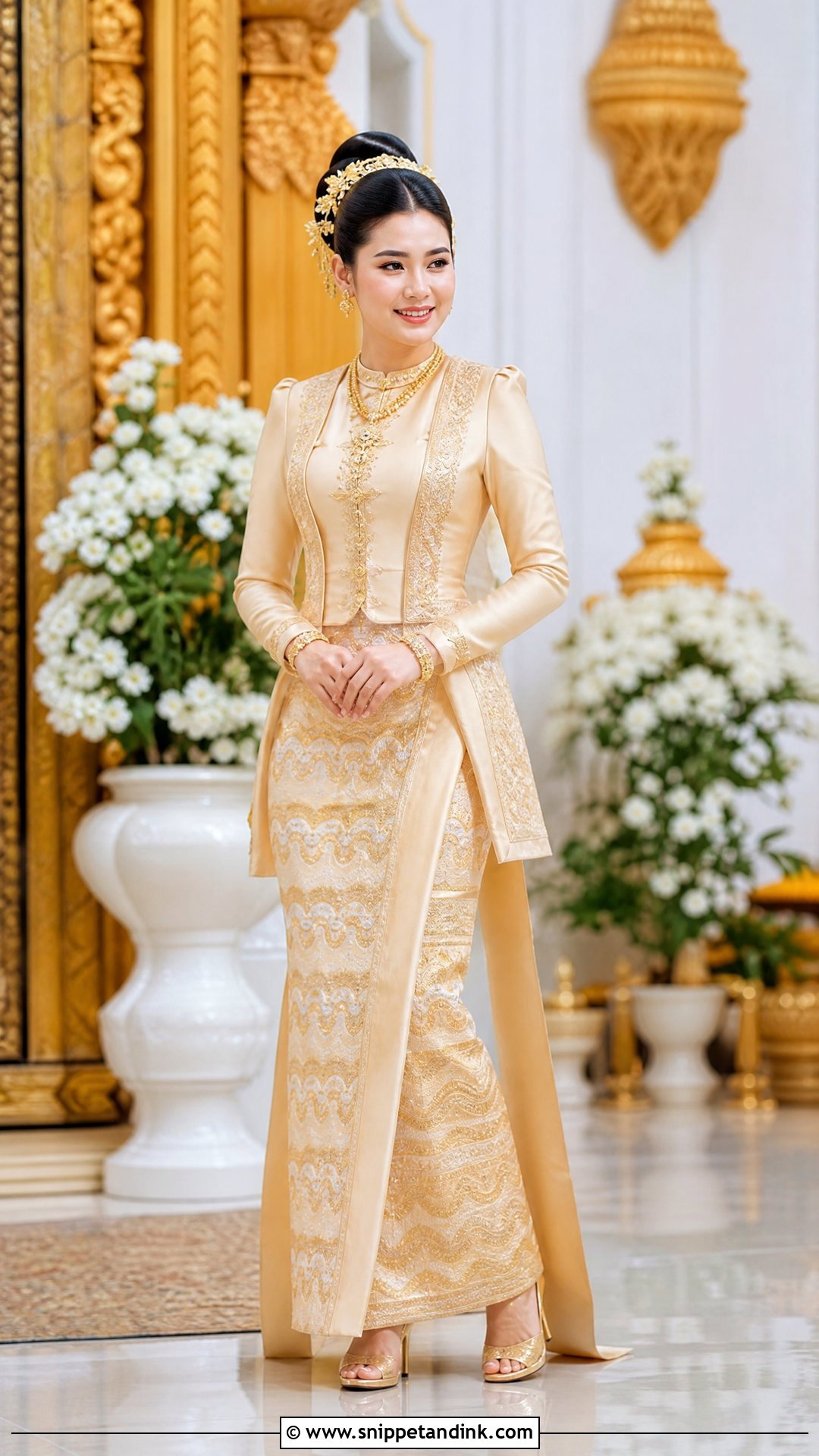
The fully traditional outfit pairs a fitted htaingmathein with a long silk htamein, fine jewelry and a polished hairstyle, and the whole look should feel modest and ceremonial. Silk, brocade and embroidered textiles give it the right weight. Color usually follows family preference, and I’d always ask the older relatives before settling on one, since some families have strong feelings about it. Heeled sandals or velvet slippers, a structured bun and refined accessories let the craftsmanship carry the outfit.
14. Burmese Htaingmathein Wedding Dress
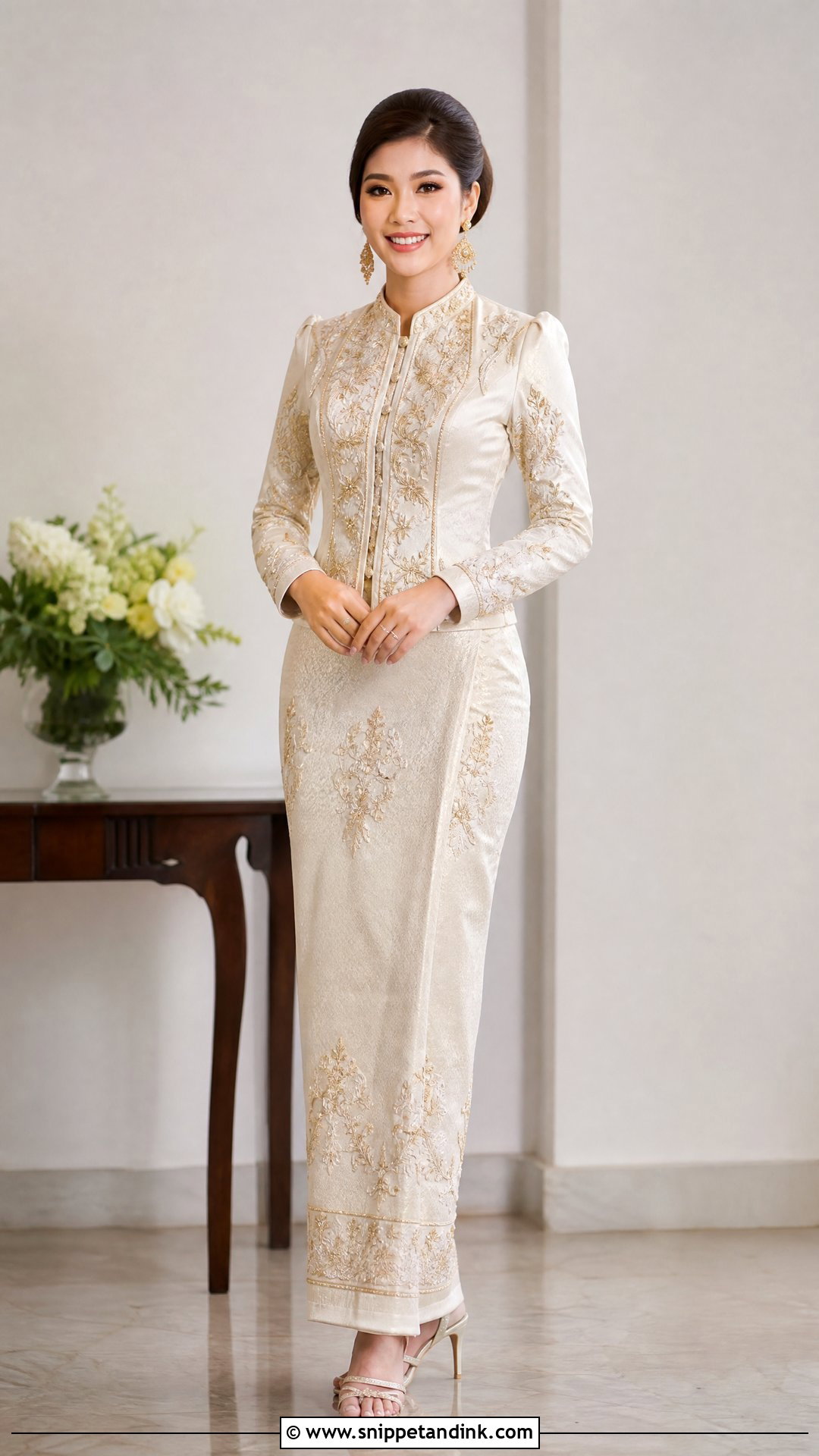
Some brides want the jacket to be the star. The htaingmathein is close-fitting and hip-length, with a decorative front and a graceful neckline, and its name is usually explained as the jacket that does not crumple when you sit, which tells you how precisely it should fit. Gold embroidery, pearl details or tone-on-tone patterns make it special without swamping you. A matching silk htamein keeps the outfit balanced, and an updo keeps the collar and shoulders on show.
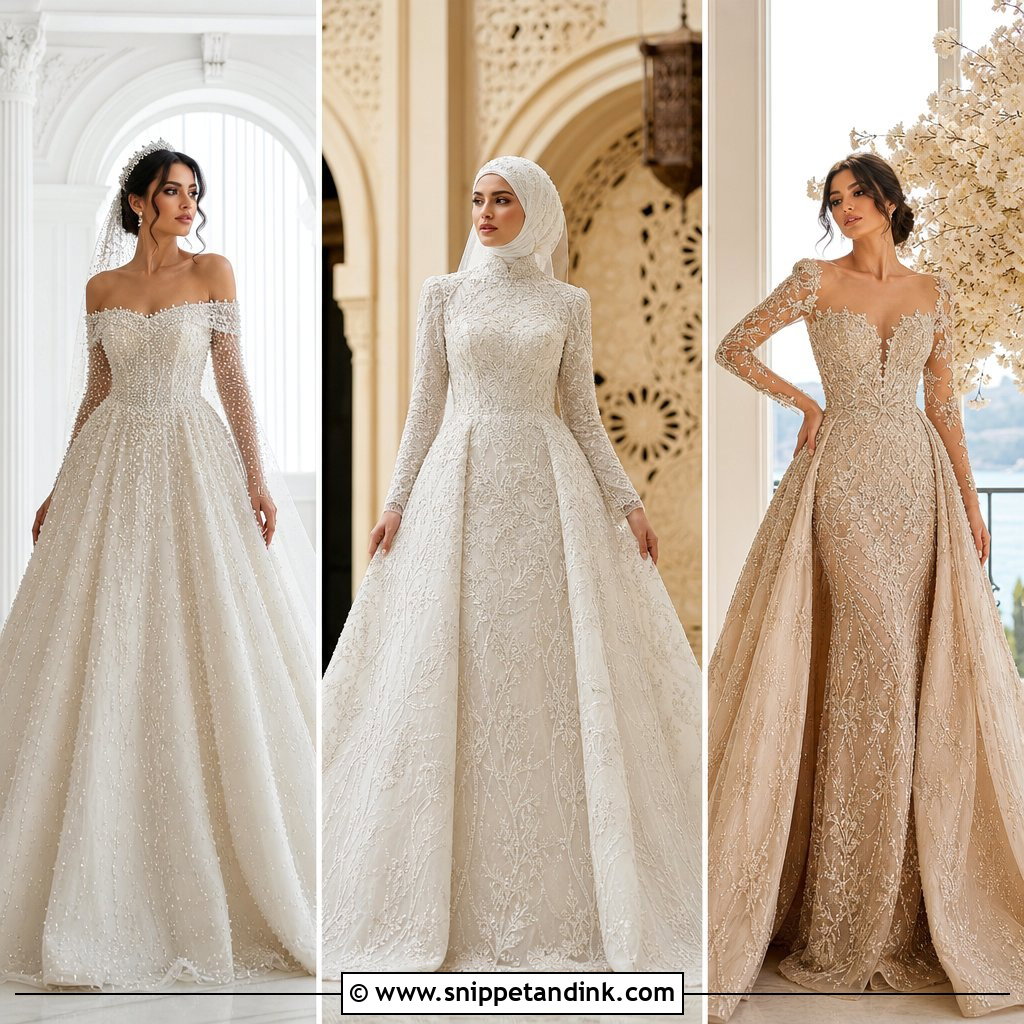

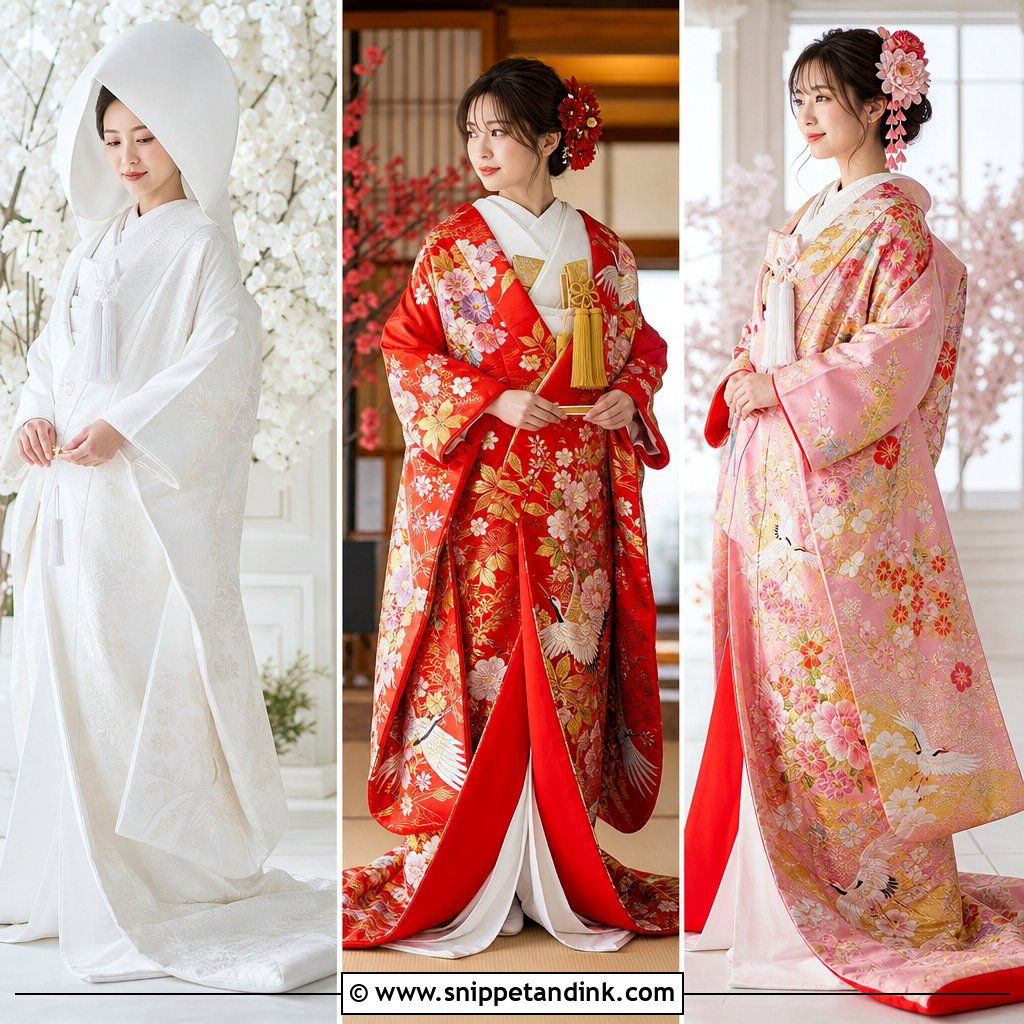
15. Burmese Htamein Wedding Dress
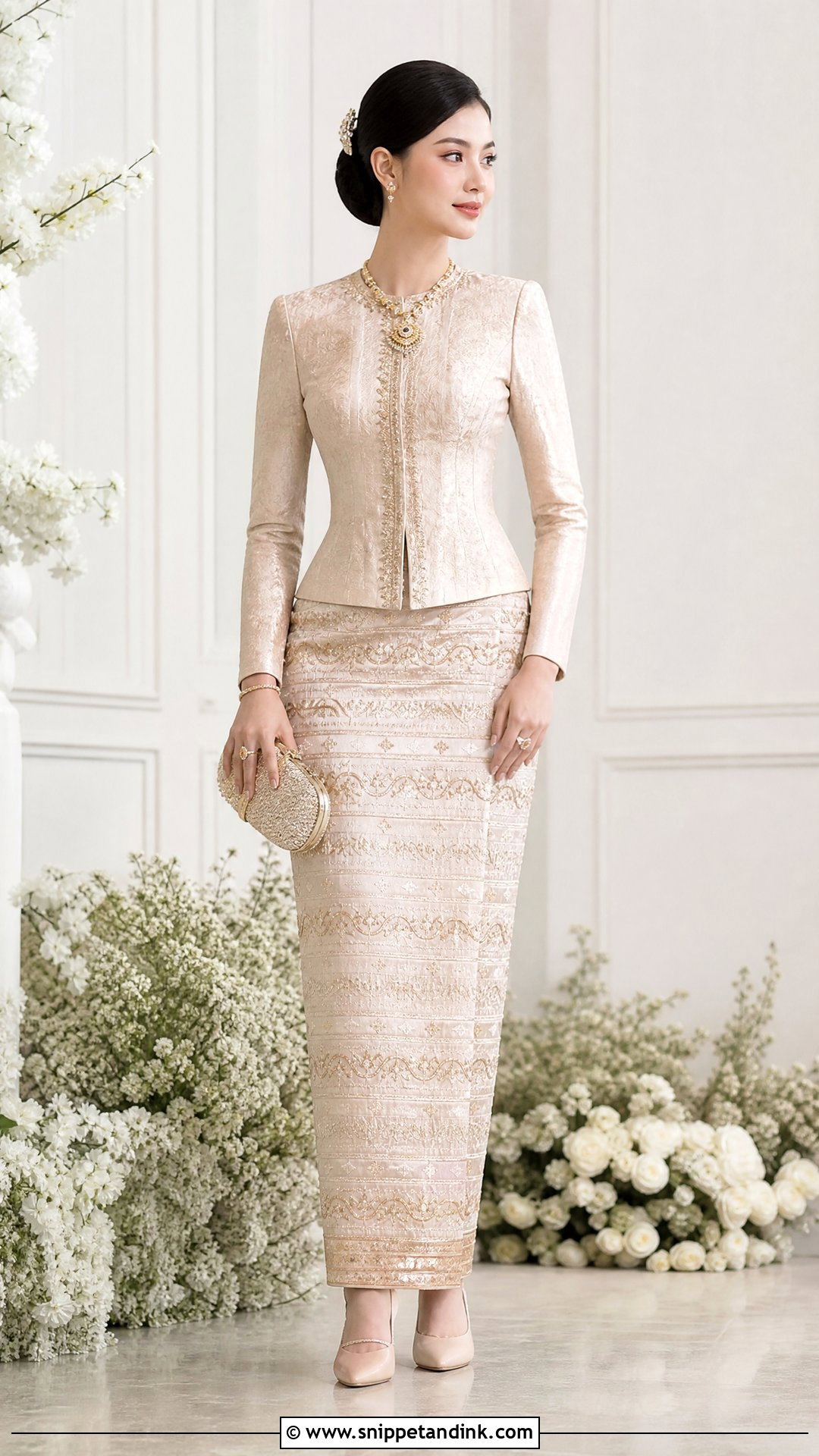
The htamein carries the movement of the outfit. A good bridal one has rich fabric, a heavy enough fall to swing as you walk, and enough structure to hold its wrap for hours. A gold htamein with an ivory jacket looks classic; blush on pink feels soft. I always have brides practice walking and turning in the wrapped skirt before the day, especially if it has a train, because handling it gracefully takes a little rehearsal. Slim heels, a delicate clutch and jewelry that echoes the weave finish it.
16. Burmese Silk Wedding Dress
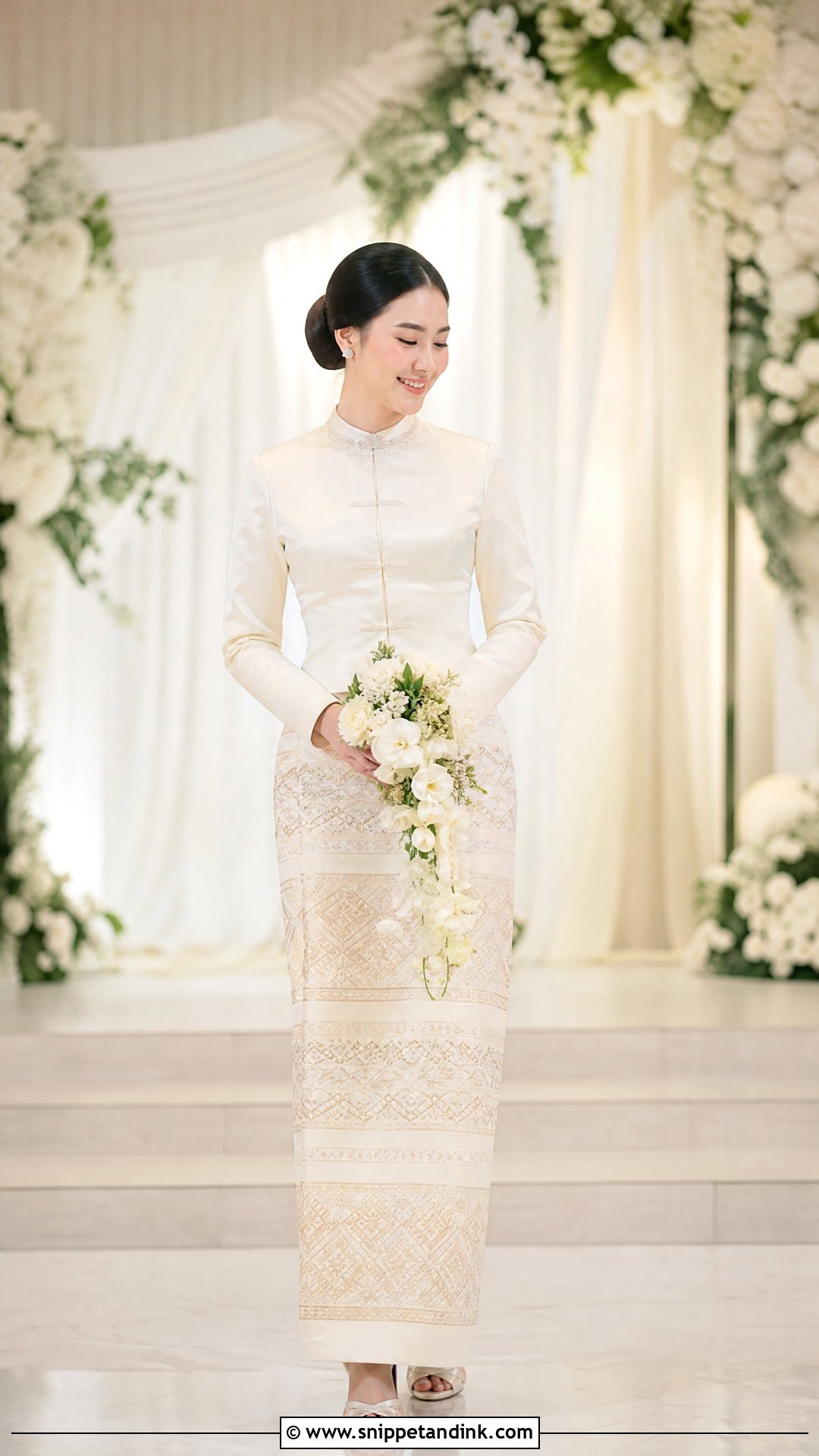
Good silk does most of the styling work for you. It holds color richly and has depth in photos that synthetic satin never quite manages. Pick the shade for your ceremony, keep the accessories quiet, and let the fabric be the focus: heeled sandals, a smooth bun and classic earrings are plenty. In a hot climate silk breathes better than polyester linings, though I’d still check what the jacket is lined with, since a synthetic lining undoes the benefit.
17. Embroidered Burmese Wedding Dress
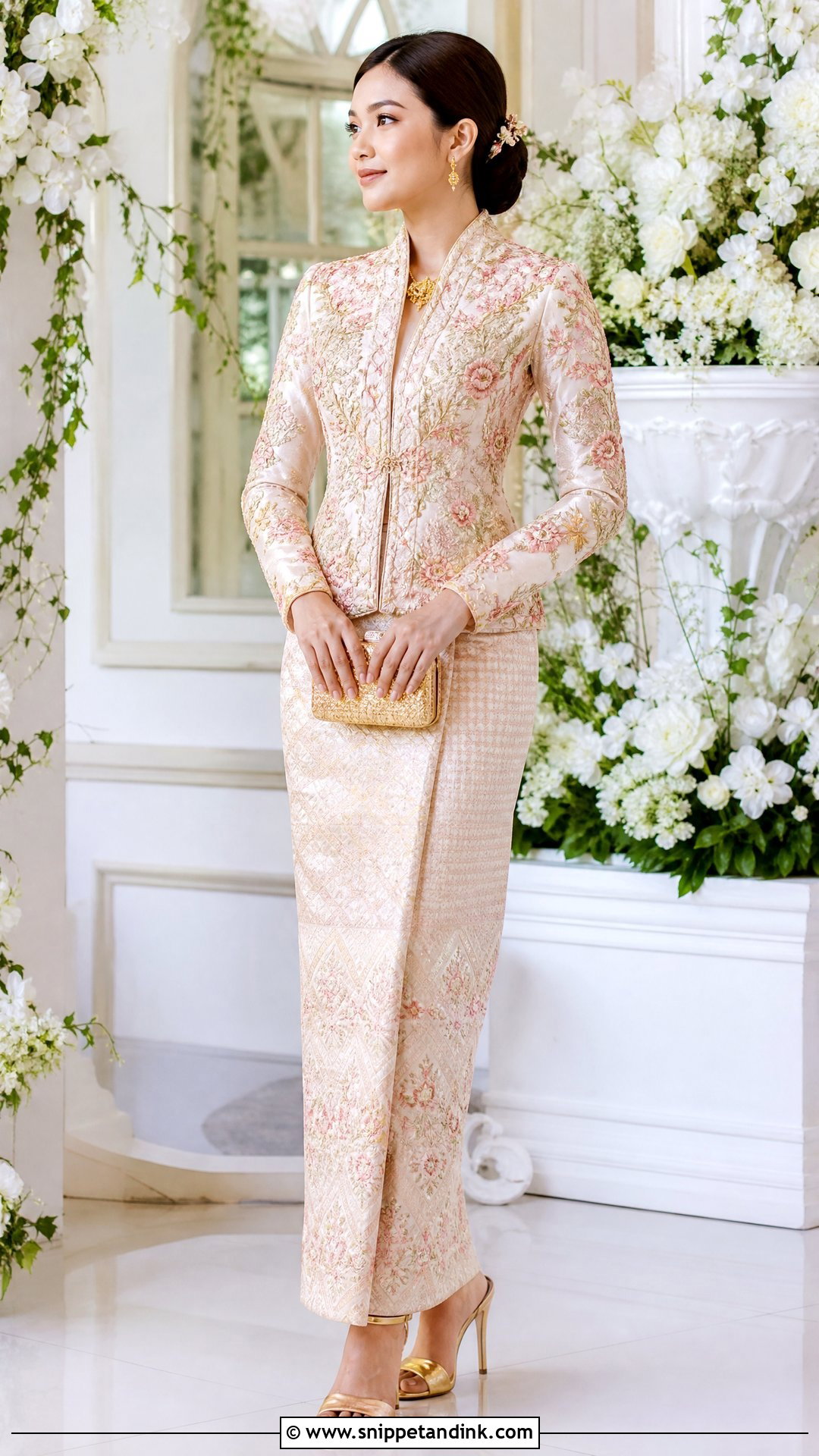
Embroidery looks most refined when it follows the lines of the jacket instead of covering every inch. Floral, vine and traditional motifs along the front edge, the hem flare and the cuffs frame the body well. Pair the jacket with a plain or lightly patterned htamein so the eye has somewhere to rest. If the embroidery is heavy, I keep the jewelry simple. This is an outfit people appreciate up close, so it rewards a ceremony where guests come near to offer blessings.
18. Beaded Burmese Wedding Dress
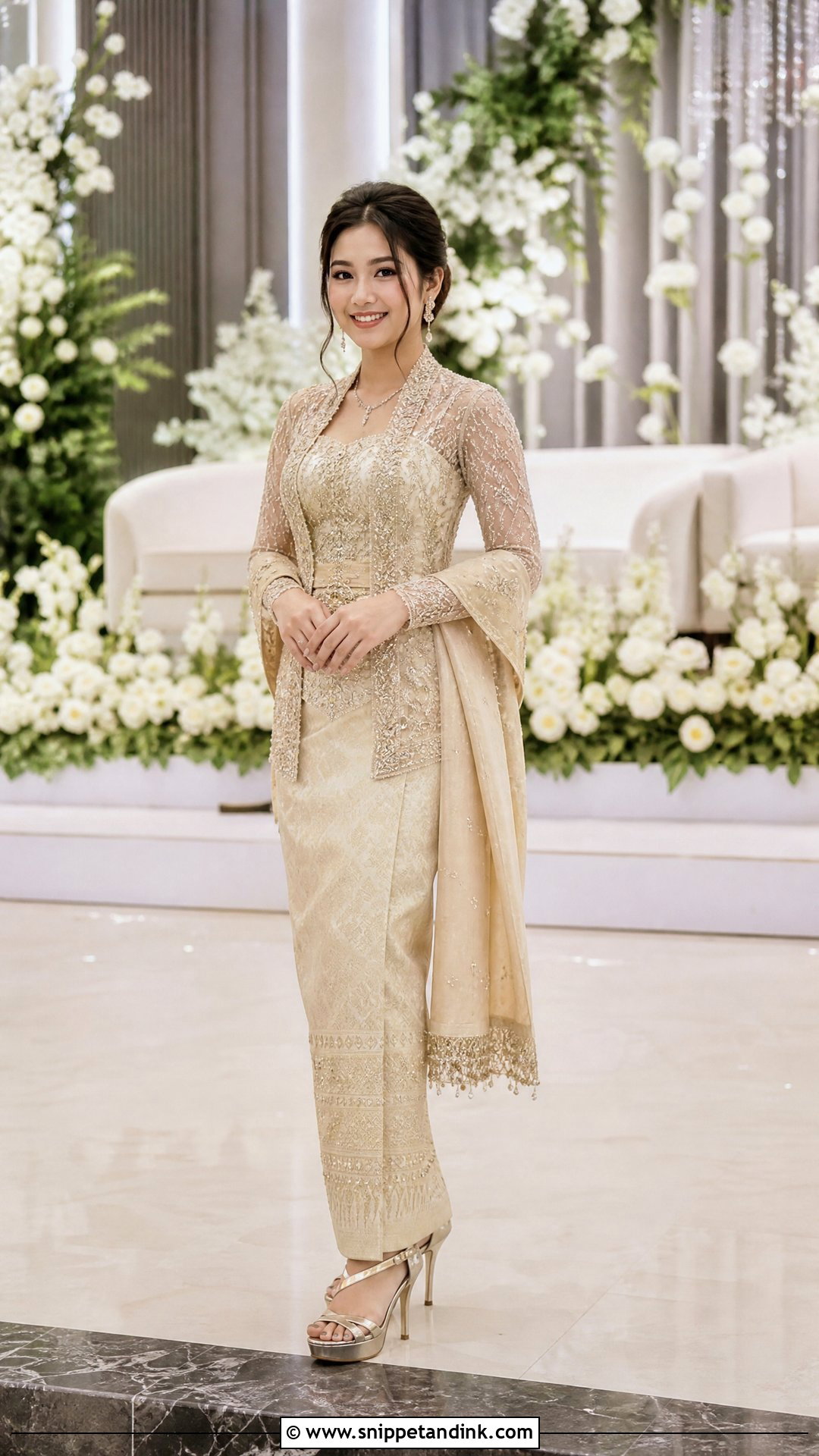
Beadwork brings soft sparkle that works best under evening light. I prefer beading concentrated at the neckline, sleeves and front opening, where it frames the face, rather than spread across the back, where you’ll be leaning against chairs. Pair the jacket with a smooth silk htamein. Silver, champagne, ivory and pale pink show beading well. Before the day, I run a hand over the inside seams, since rough bead backing can scratch through a thin lining over a long ceremony.
19. Floral Burmese Wedding Dress
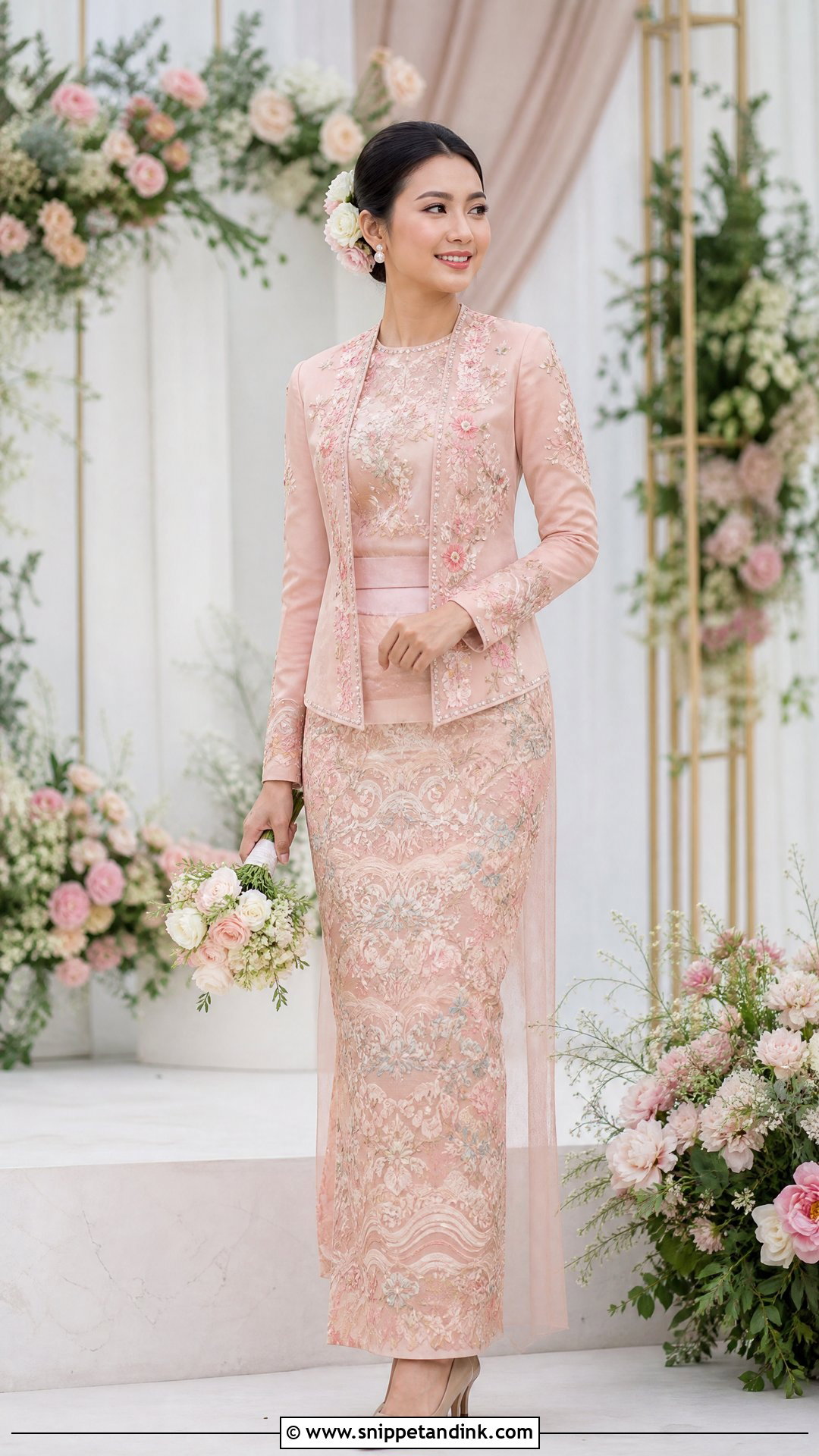
Florals can appear as embroidery, woven patterns in the silk or fine appliqué on both the jacket and the htamein. Blush, ivory, lavender and pale blue keep them gentle; red or emerald florals have more impact. Choose refined motifs over anything that looks like a casual print, since that’s the line between bridal and daywear. Neutral heels, pearl earrings and a fresh flower in the hair suit daytime ceremonies and engagement celebrations.
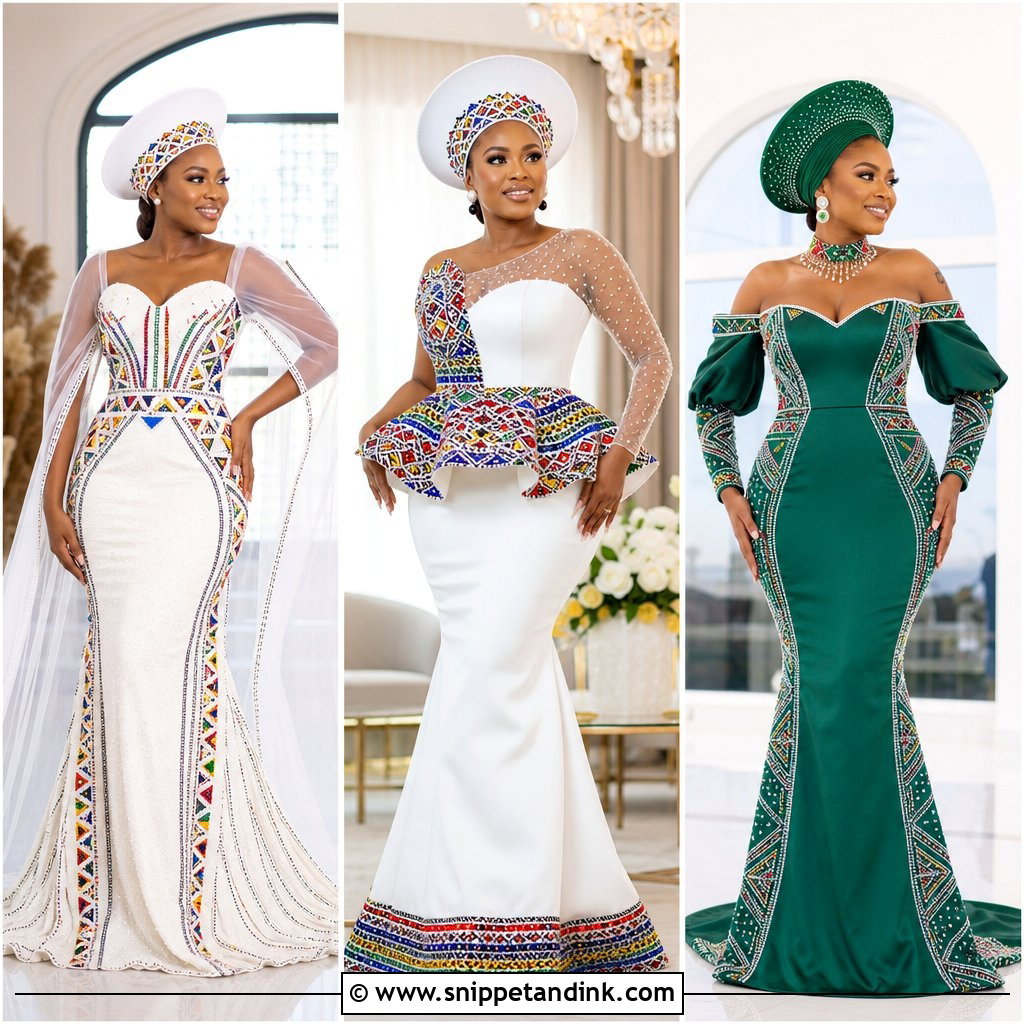


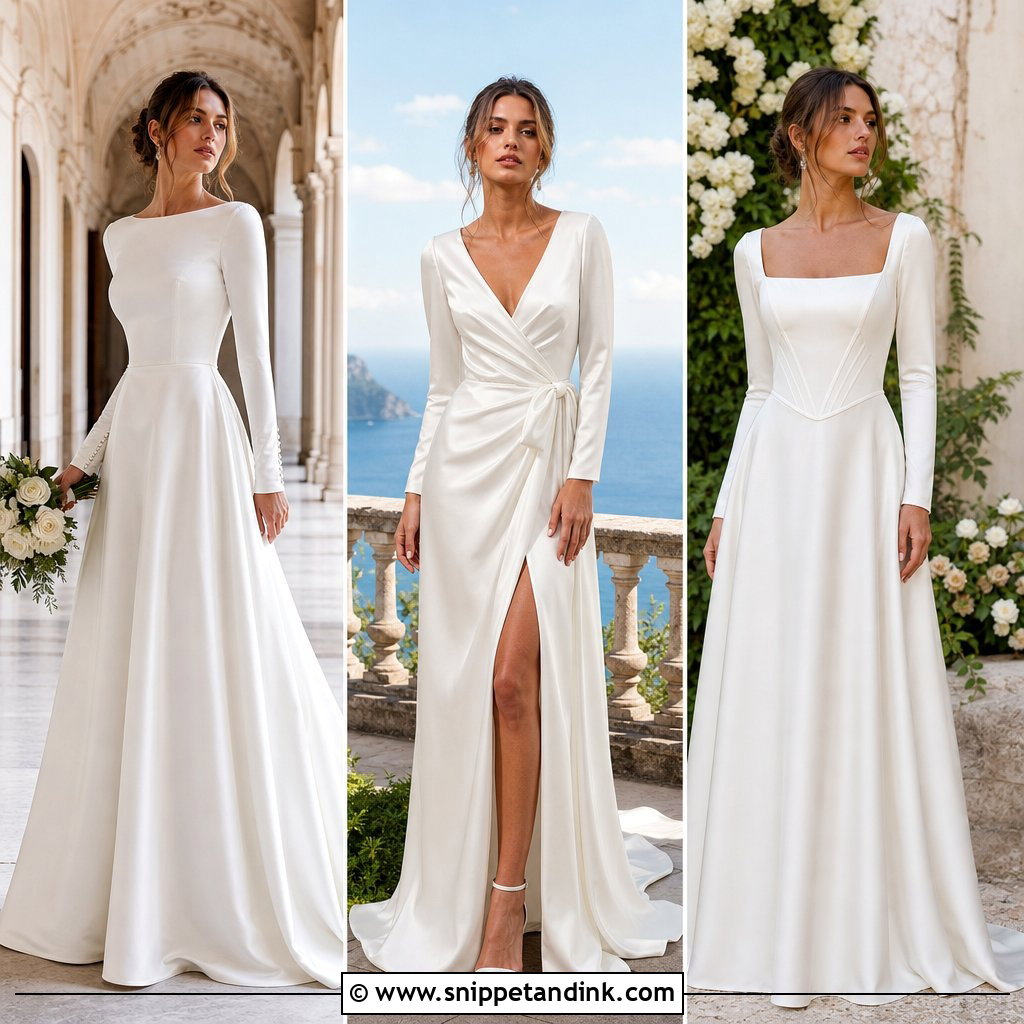
20. Minimal Burmese Wedding Dress
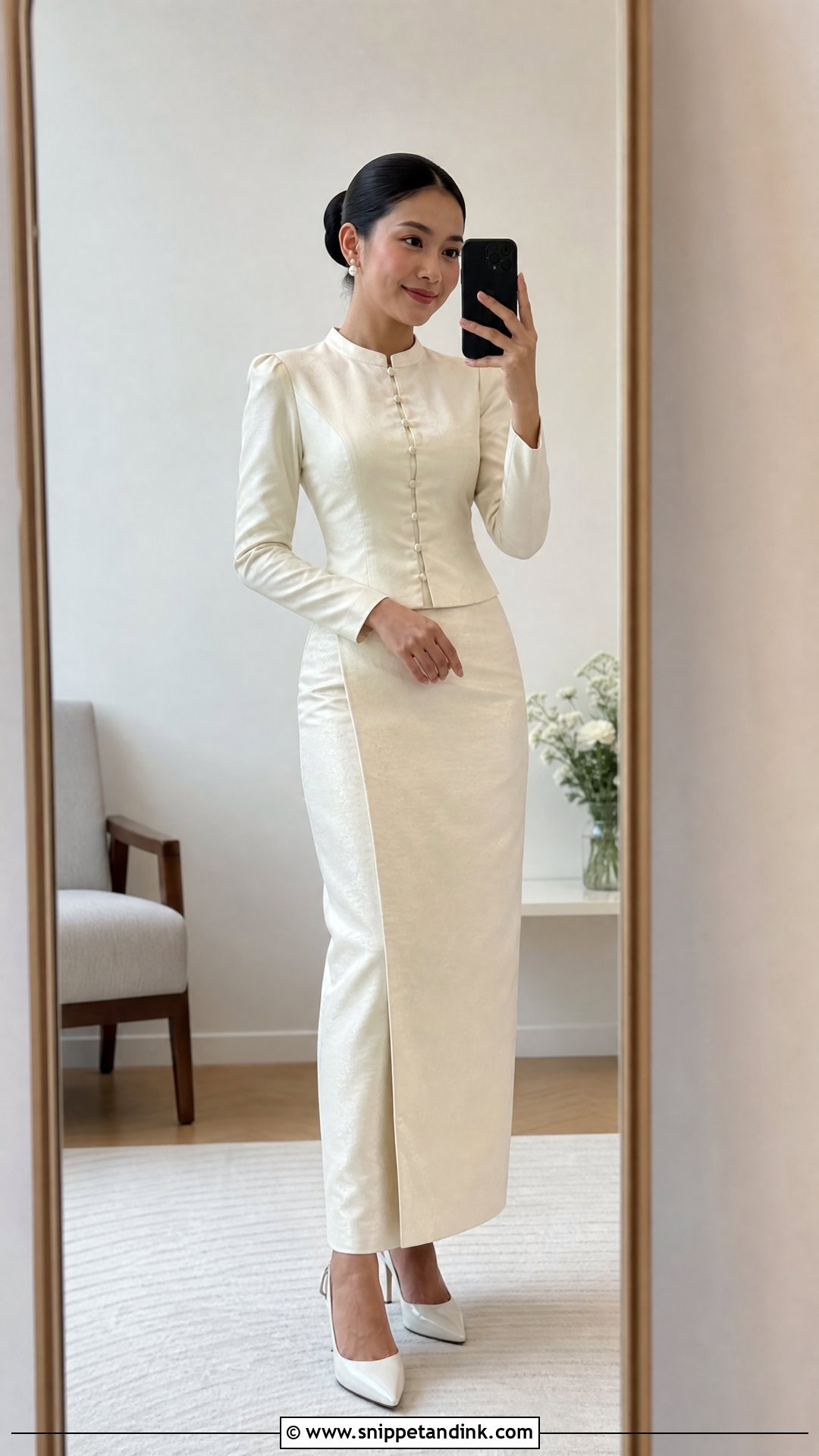
Minimal works when the cut is excellent. A simple htaingmathein with a smooth fit and almost no decoration, over a plain silk htamein in ivory, champagne, sage or soft gold, shows that this dress doesn’t need ornament to feel bridal. I’d spend the budget on tailoring and fabric rather than embellishment here. Pearl studs, slim heels, a small structured clutch and a sleek bun or low ponytail suit intimate and civil ceremonies.
21. Plus Size Burmese Wedding Dress
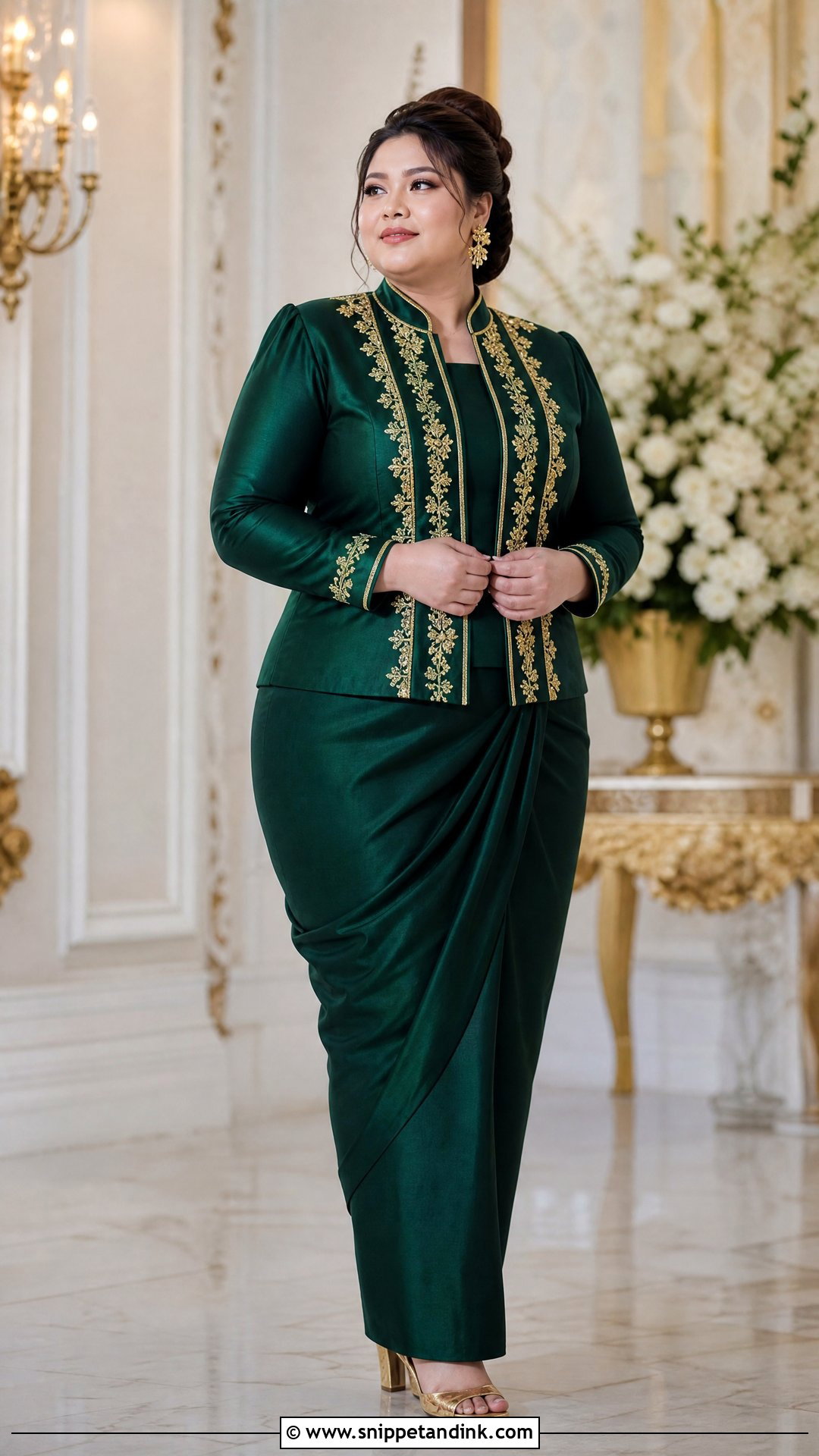
For a plus size bride, the fitting priority is the shoulders and bust. The jacket has to sit smoothly there without pulling, and because a htaingmathein is cut close, I’d rather the tailor add room across the back than let the front strain. The htamein should drape cleanly from the waist. Rich silk, structured brocade and medium-weight fabrics hold their shape well, and vertical embroidery leads the eye up and down. Stable heels and earrings sized to your neckline finish it. The aim isn’t hiding anything; it’s a fit you never have to think about.
22. Petite Burmese Wedding Dress
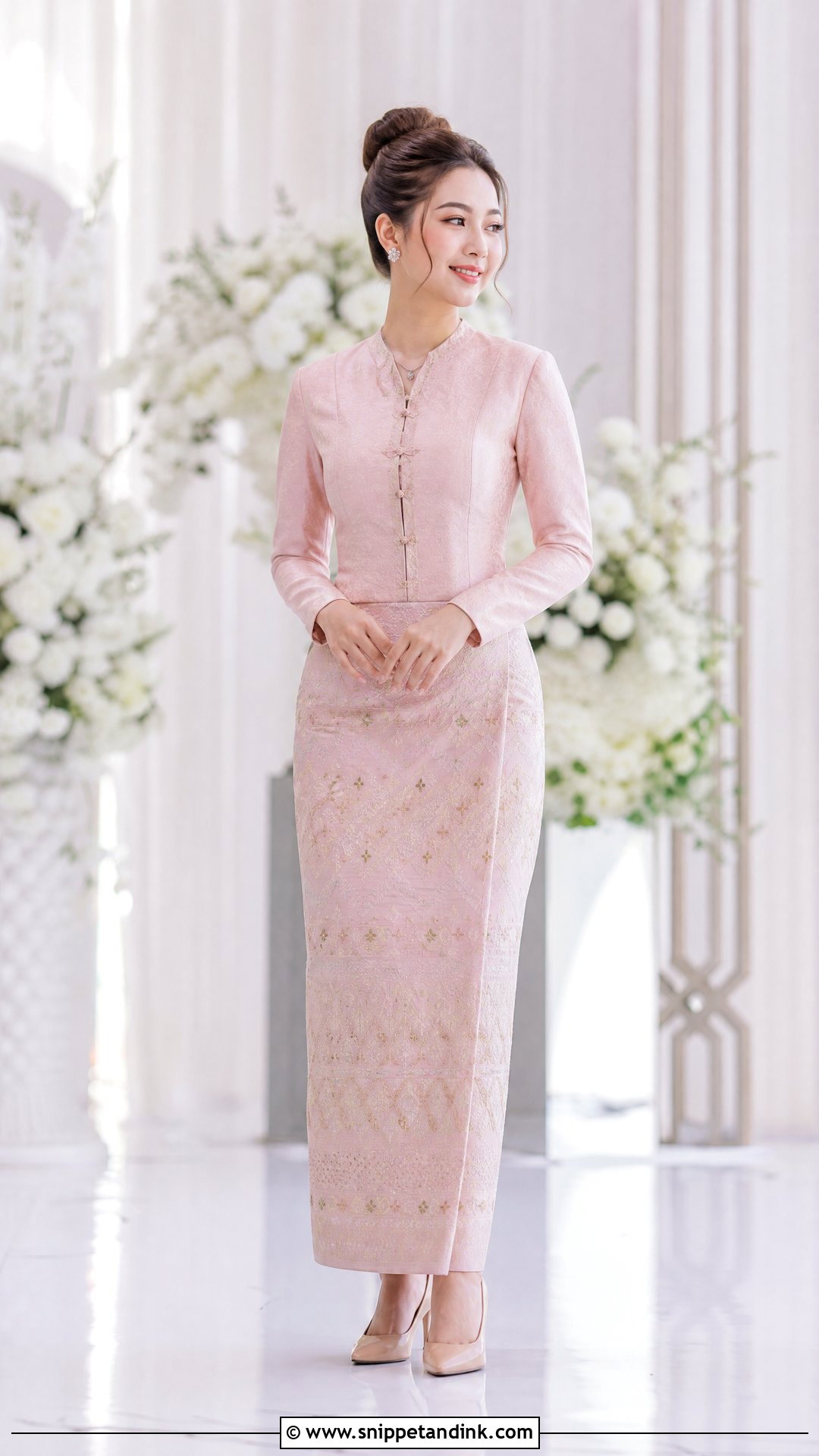
On a petite bride, jacket length is the first thing I adjust. A htaingmathein that sits too low on the hip cuts the body in half, so I’d have it end at the top of the hip bone. Pair it with a streamlined htamein in the same color family; one-color outfits and vertical embroidery build a longer line. Very heavy brocade can swamp a small frame, so a medium-weight silk is usually kinder. Slim heels and a high bun add a little height without changing the outfit’s shape.
23. Burmese Wedding Reception Dress
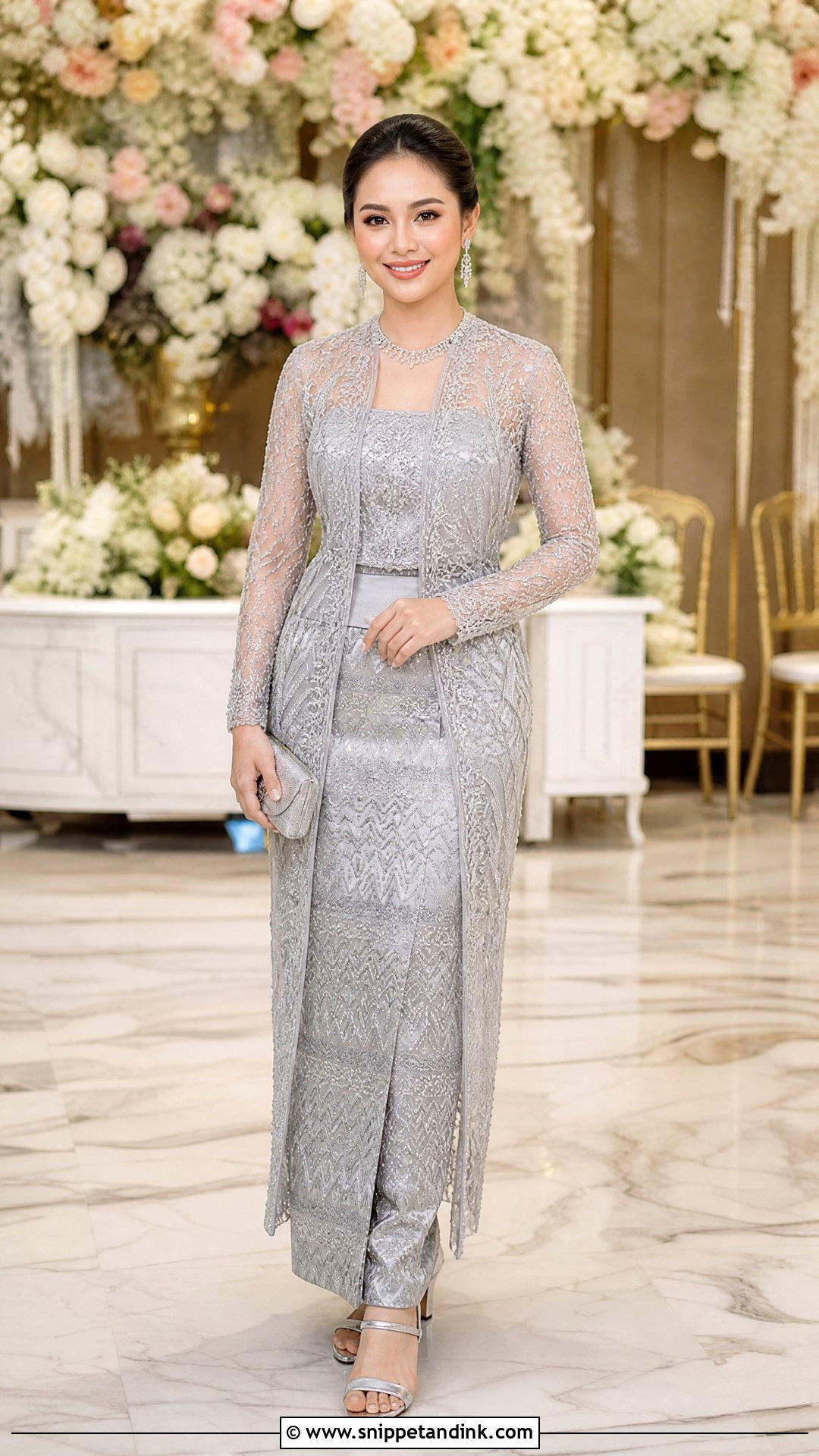
The reception outfit can be more glamorous and easier to move in than the ceremony one. A beaded or embroidered htaingmathein jacket with a silk htamein keeps the traditional shape while looking festive under evening lights. Champagne, silver, navy and emerald all work well. You’ll be greeting tables and walking more than you did at the ceremony, so I check that the htamein wrap allows a full stride. Comfortable heels, a small clutch and jewelry that catches light finish it.
24. Burmese Engagement Dress
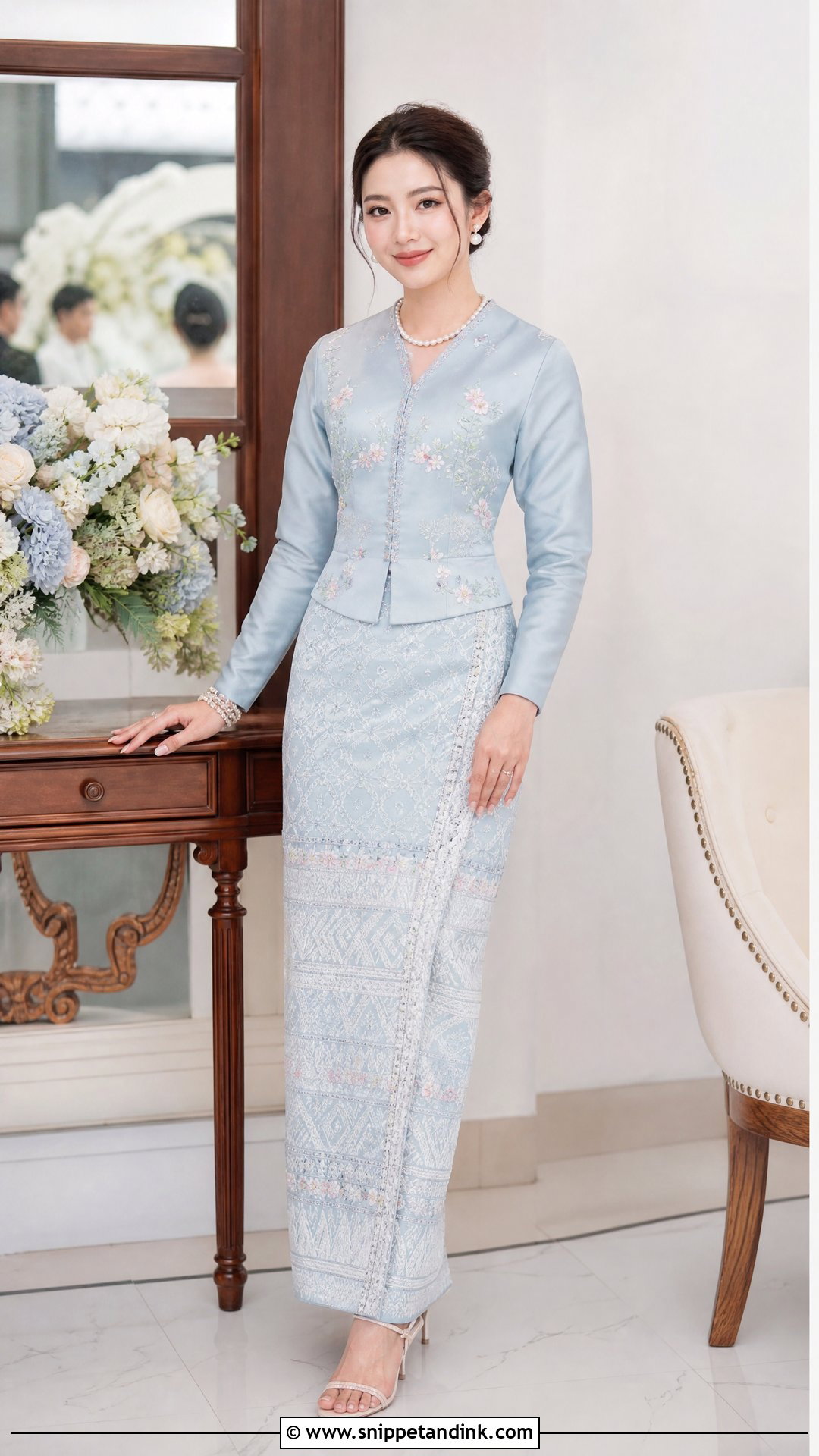
A Burmese engagement dress can be lighter and softer than the wedding outfit. Blush, lavender and powder blue suit a daytime event. A simple htaingmathein with floral embroidery, a matching htamein and delicate heels are all it takes, with pearl jewelry, fresh makeup and a neat bun or soft waves. I’d keep the embroidery here deliberately lighter than on the wedding jacket, so the bigger day still feels like a step up in the photos.




25. Burmese Wedding Guest Dress
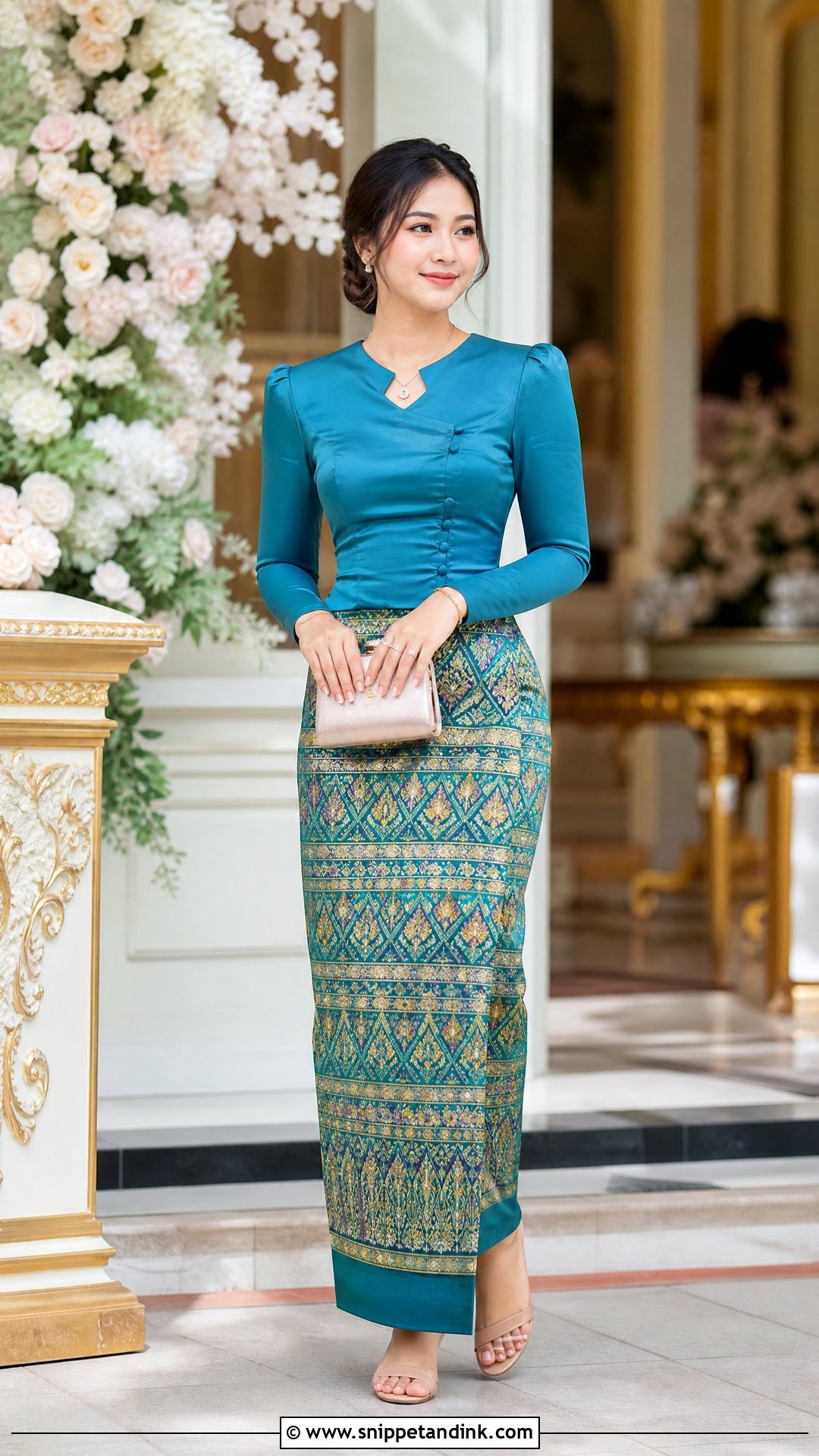
Guests should look festive and respectful without competing with the bride. A silk htamein with a tailored blouse or a modest htaingmathein-inspired top is a safe and graceful option. Jewel tones, pastels and soft metallics all work, but I’d avoid white, ivory or heavy gold if the bride is likely to wear them. Comfortable heels, simple jewelry, a neat hairstyle and a small clutch are enough to honor the occasion.
Kneeling, Paying Respects and Changing Outfits on the Day
A Burmese wedding asks more of an outfit than standing for photos. Couples often kneel or sit on the floor to pay respects to parents and elders, and a tight htamein makes that awkward if nobody has planned for it. I teach brides to sit with their legs folded to one side and to smooth the skirt under them first, which keeps the wrap closed and the silk from creasing at the knees.
If you change outfits between ceremony and reception, give yourself more time than you think. Unpinning a hairpiece, unwrapping one htamein and properly wrapping another rarely takes less than half an hour. I keep a short checklist in the changing room: safety pins in the jacket color, a small steamer, blotting papers, a spare hair pin set and a soft towel to lay the first outfit on.
Looking After Silk and Gold Thread Once It’s Over
Bridal silk often becomes an heirloom, so the first week after the wedding matters. Air the pieces out before storing them, since trapped sweat yellows silk over time. I’d fold the htamein loosely with acid-free tissue in each fold rather than hanging it, and lay the jacket flat so the shoulders and any stiffened hem flare keep their shape. Metallic embroidery and beading need a cleaner who works with heritage or embellished textiles; a standard dry-clean cycle can tarnish gold thread and loosen beads.
A Htaingmathein That Sits Smooth Through Every Ritual
Every outfit here, from gold and red to ivory, blush and champagne, comes down to the same balance between the two pieces. A heavily embroidered jacket wants simpler jewelry; a plain silk outfit can carry a bolder hairpiece or earrings. Whatever color your family settles on, put your energy into the fit of the htaingmathein and the wrap of the htamein, because those are what people notice when you kneel, sit, walk and turn through a full day of ceremony.
You'll Like These Ideas:




Leave a Reply