
Flowers are the decoration I’m asked about more than any other, and they are also where the most practical questions hide. A floral cake can be sculptural and modern, loose and rustic, or covered in vintage piping, and right now couples keep bringing me photos of textured buttercream, pressed petals, oversized sugar blooms and garden-style sprays. Which one suits you depends on the venue, the season and how long the cake will stand on display. Fresh blooms need food-safe stems and a plan for heat, so ask about that before you fall for a photo. The 25 floral cake styles below each come with what I’d check before making it.
Getting Your Baker and Florist on the Same Page
Most floral cake problems come from nobody owning the handover. The florist assumes the baker will place the flowers; the baker assumes the florist will. I sort this out at the tasting, and you can too, with three questions.
- Who supplies the flowers for the cake, and are they grown without pesticides? Ordinary florist stock usually isn’t, so for anything touching icing I ask for organic or culinary-grade stems.
- Who places them, and when? I prefer to dress the cake myself at the venue, with the florist’s stems set aside in a cool spot until I arrive.
- What is on the stem list? I check it for toxic flowers such as hydrangea, sweet pea, lily of the valley and baby’s breath, and swap those for sugar versions.
Sharing the florist’s recipe card with your baker also saves money. If the bouquet already has garden roses and eucalyptus, a few extra stems ordered alongside cost far less than a separate set of sugar flowers.
1. Fresh Flower Wedding Cake
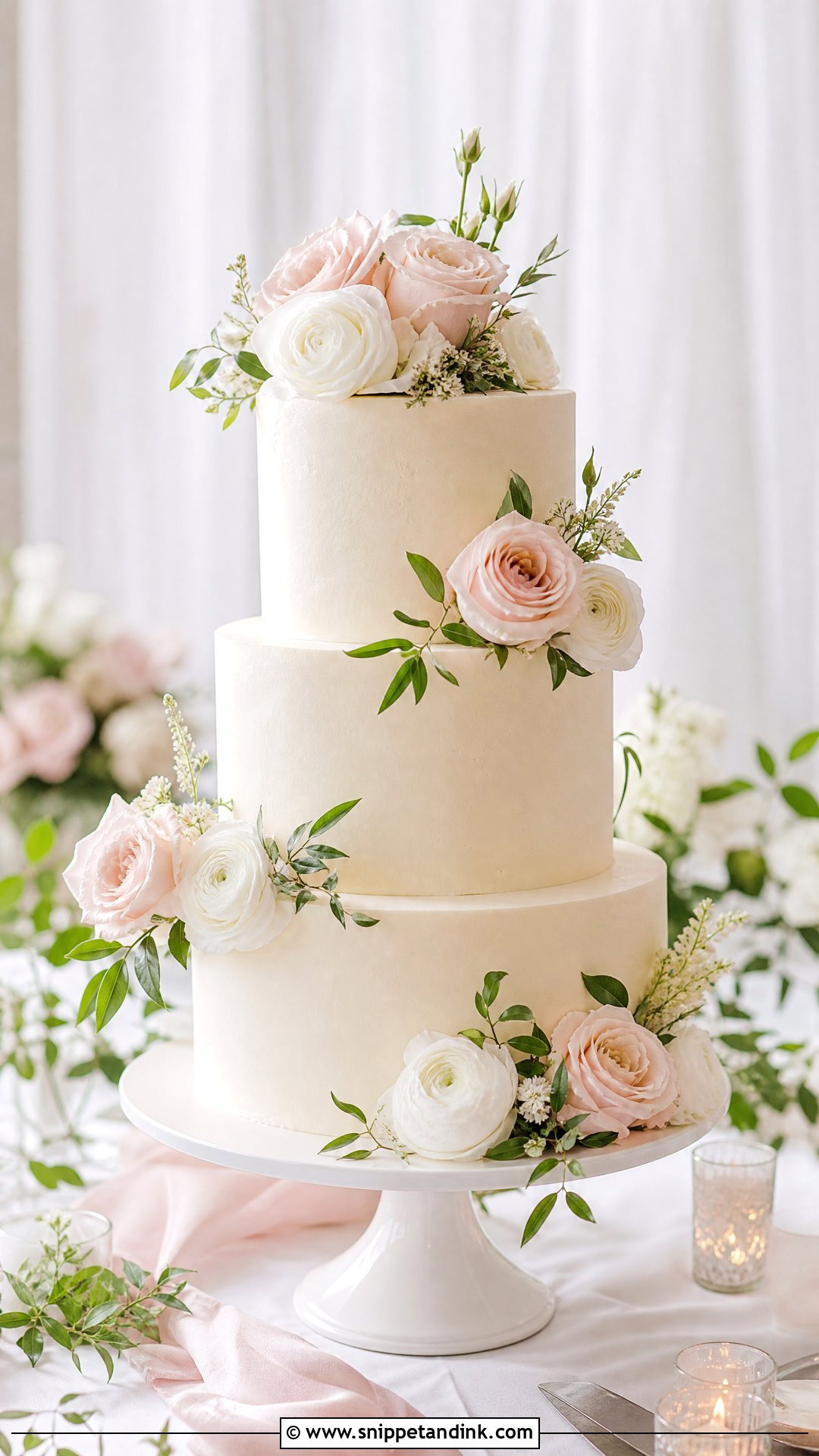
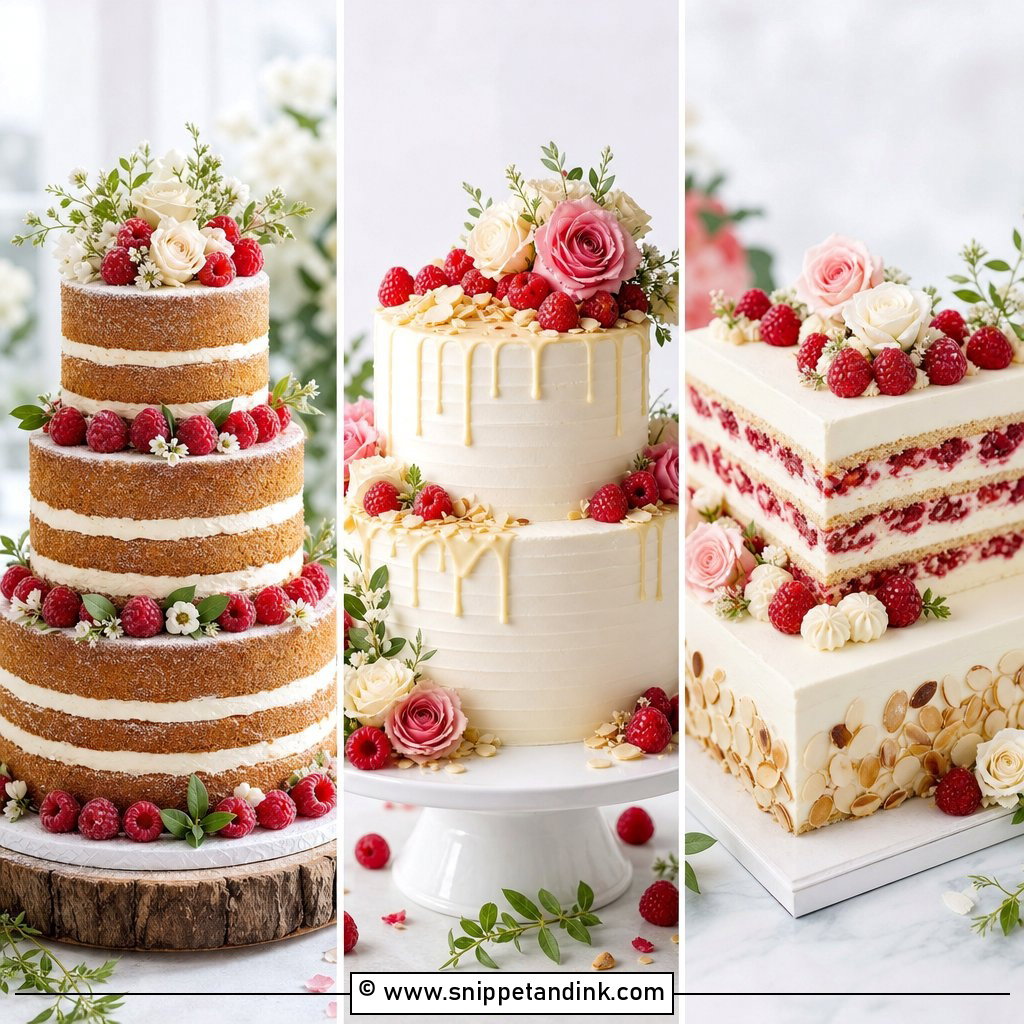
Fresh flowers make a simple cake look generous. I keep the base smooth white buttercream and let roses, ranunculus, lisianthus, orchids or peonies bring the color, either in loose clusters for a garden party or tidy placements for a formal room. The flowers that look best at 2pm are not always the ones still standing at 9pm; ranunculus and lisianthus hold up well, while delicate garden roses can drop petals. Every stem is wrapped and placed in a pick, never pushed straight into the icing, and that only happens when the florist and I have agreed in advance who brings what.
2. Sugar Flower Wedding Cake
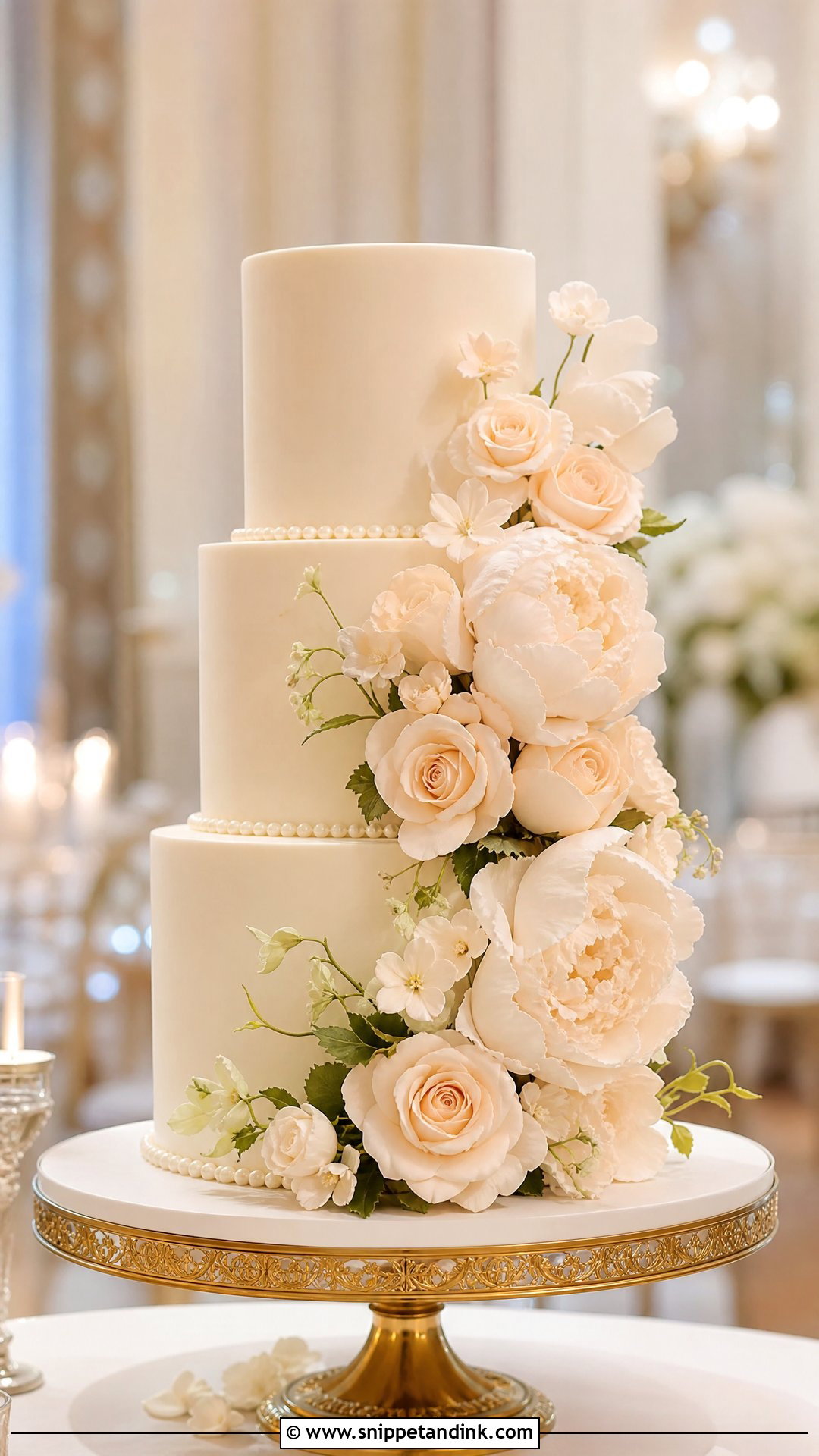
Sugar flowers give you control nothing else does. I can match the exact blush of your bouquet, make a dahlia in a month when dahlias aren’t available, and wire a peony to turn the way the cake’s front needs. They won’t wilt, so they’re my default for warm-weather weddings. The trade-off is time: each petal is rolled, cut, veined and dried, so a full spray takes many hours over several days. Sugar roses, peonies, sweet peas and orchids sit well on fondant or buttercream, and kept dry, a few can go home with you after the reception.
3. Pressed Flower Wedding Cake
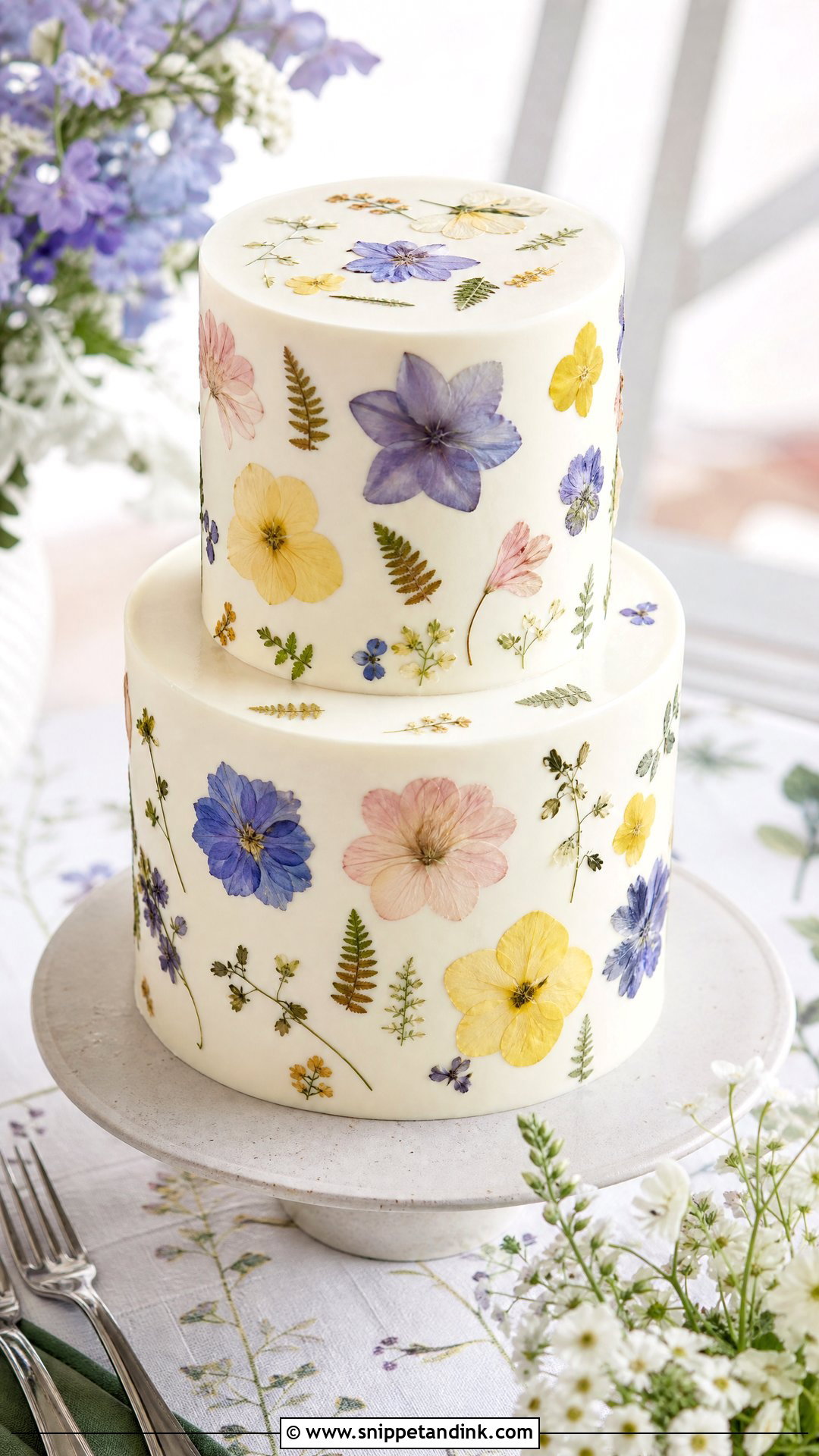
Pressed petals look delicate, and they behave delicately too. Tiny edible flowers are flattened and dried, then laid against buttercream or fondant in a botanical pattern. I apply them as close to the wedding as I can, because a pressed petal on buttercream slowly takes up moisture and can darken or bleed its color into the icing overnight. Pale yellow, lavender, blush, blue and soft green show best on ivory, and plain tiers keep the pattern readable.
4. Floral Buttercream Wedding Cake
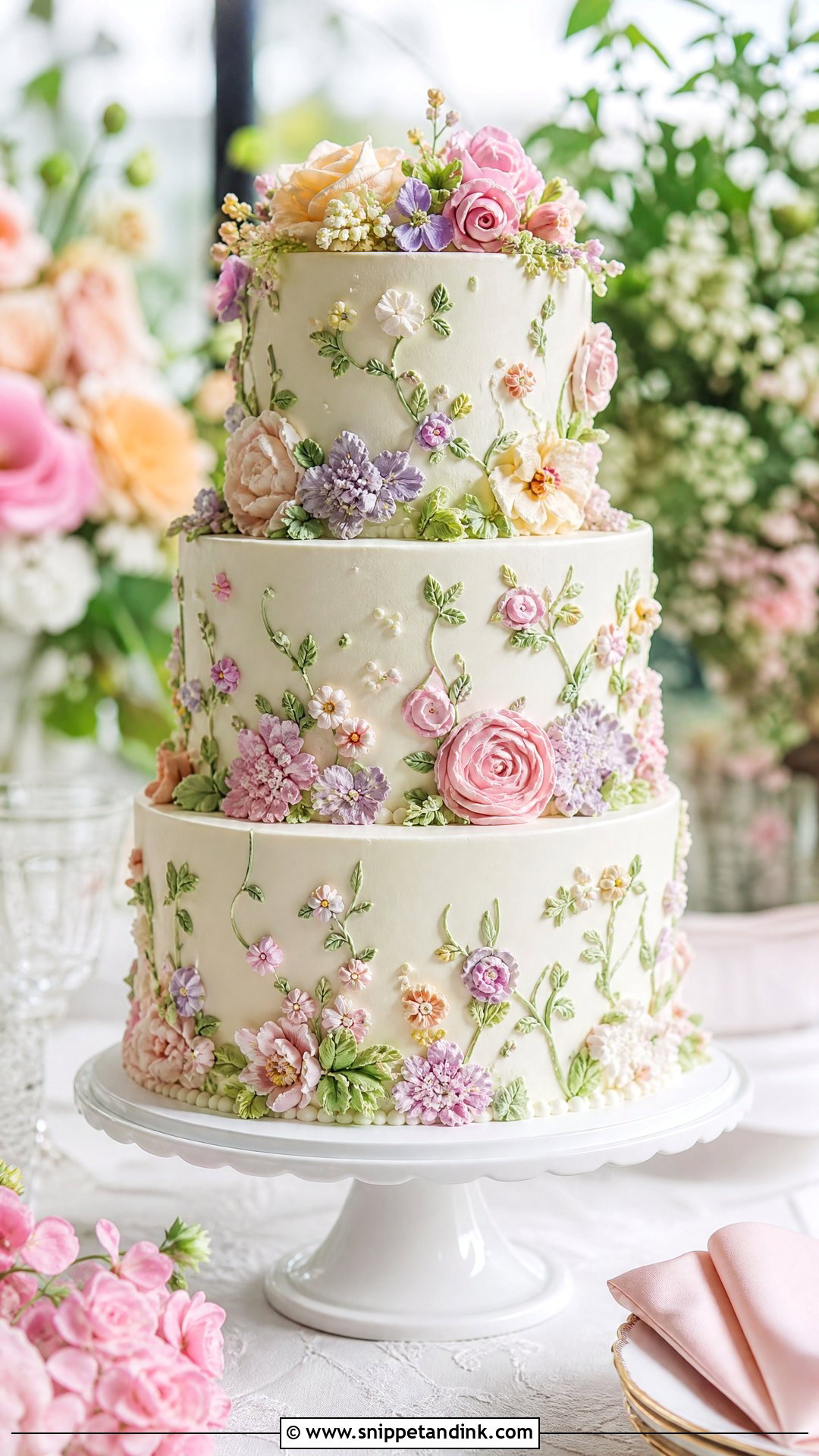
Piped buttercream flowers are the version guests actually eat with enthusiasm. Roses, blossoms, vines and leaves are piped straight onto the tiers, and the texture gives the cake a handmade warmth that suits vintage and backyard weddings. White-on-white piping reads elegant; pastels feel more playful. The thing I warn about is heat. Piped petals are the first part of a cake to soften, so in summer I pipe with a firmer buttercream and keep the base smooth so the flowers frame each tier cleanly.
5. Rose Wedding Cake
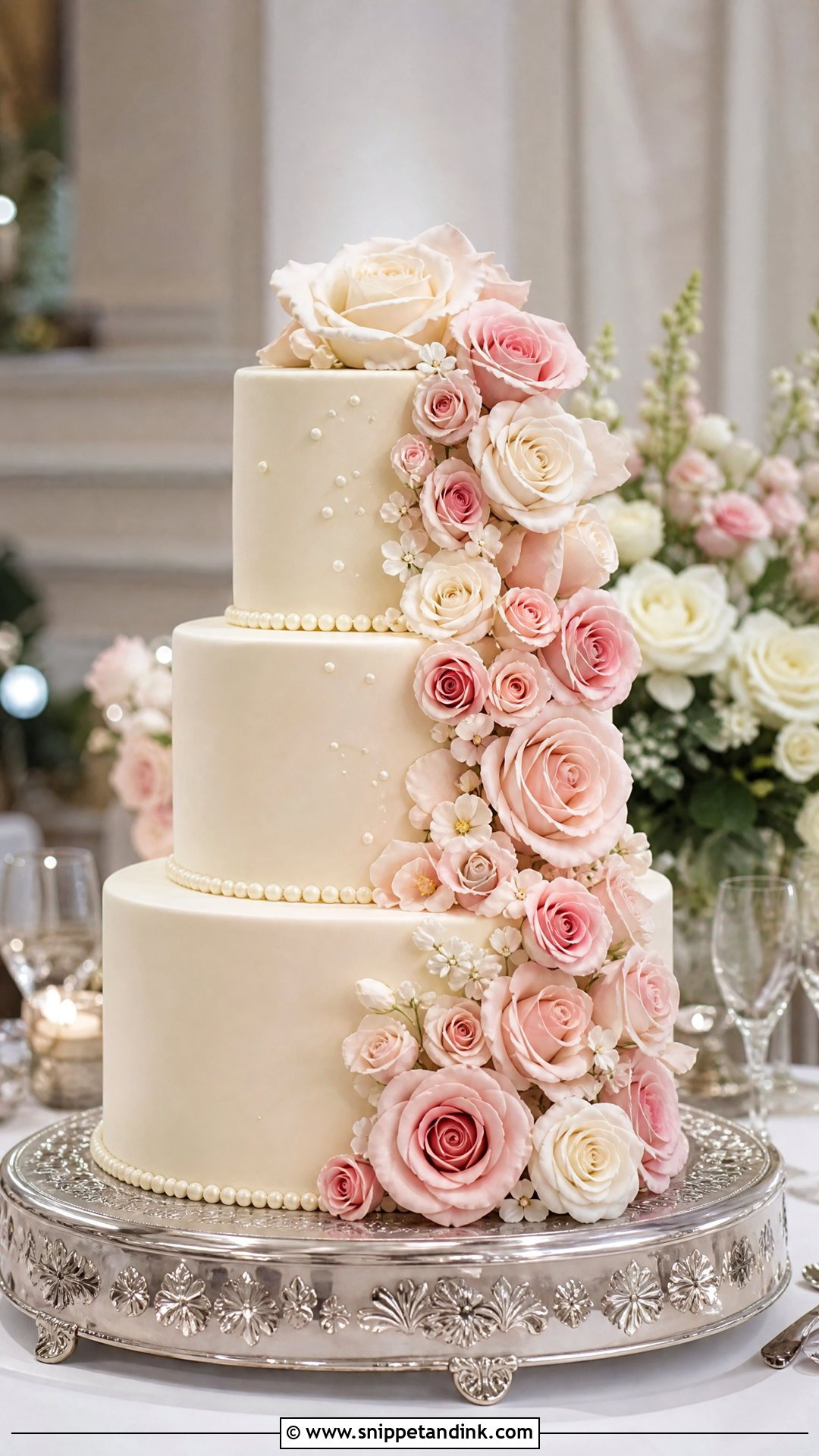
Roses suit almost any style, which is why they are so easy to recommend. A cascade of blush and ivory down one side reads romantic; a few coral or deep red heads feel bolder. For sharp petal detail I use sugar roses. Fresh roses can be used with care, but they should be grown without pesticides, since florist roses are usually sprayed. If roses are already in your bouquet and centerpieces, they tie the cake to the room with no extra effort.
6. Peony Wedding Cake
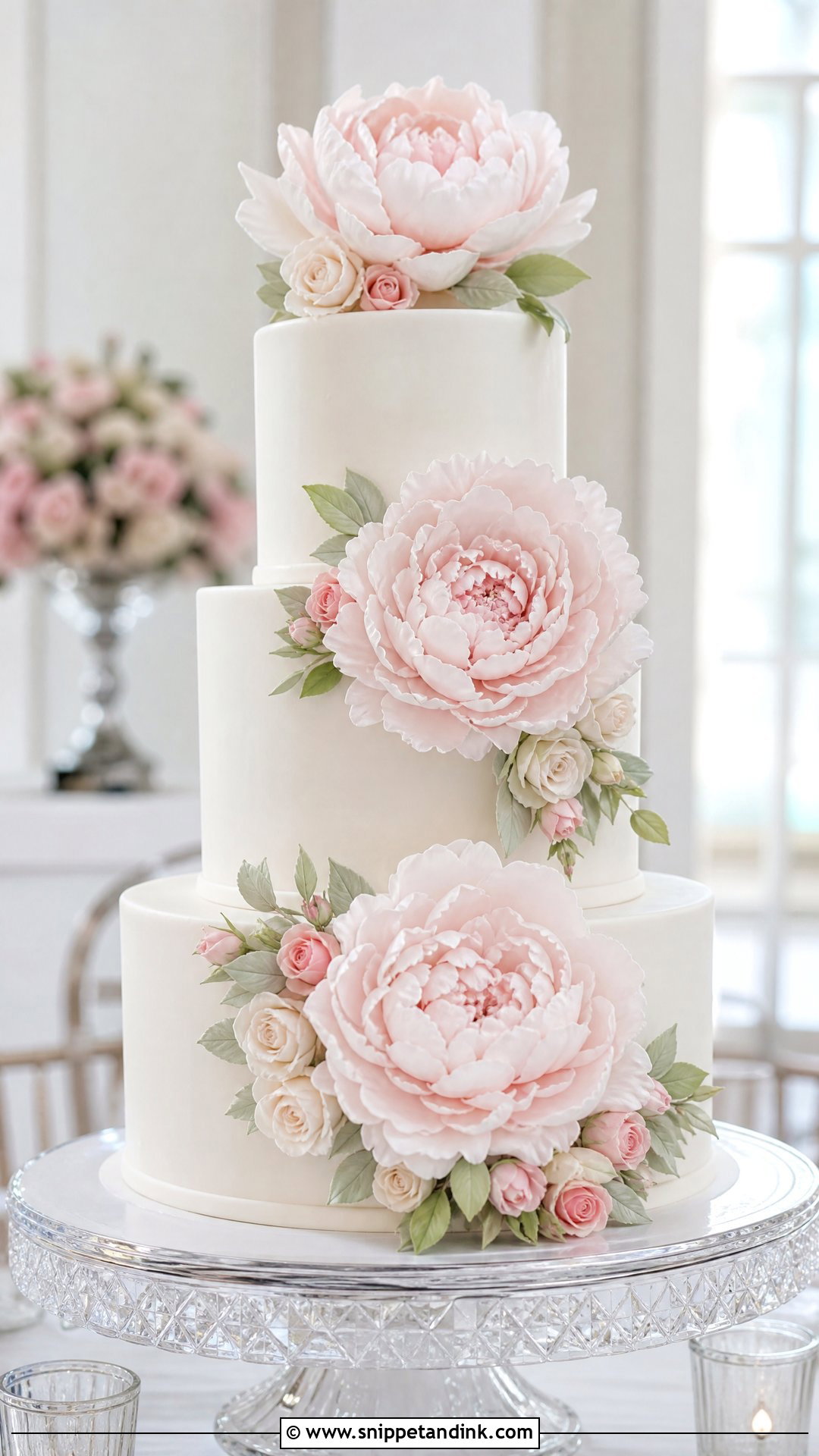
A few peonies make a cake look full and expensive because each bloom is so large and round. That is also why I keep the frosting plain underneath. Peony season is short, roughly late spring into early summer, so outside that window sugar peonies are the reliable route, and they can be tinted to the exact shade you want. One large bloom per tier gives a clean modern look; a full cascade is more dramatic. Spring ballrooms and pastel palettes suit them best.
7. Wildflower Wedding Cake
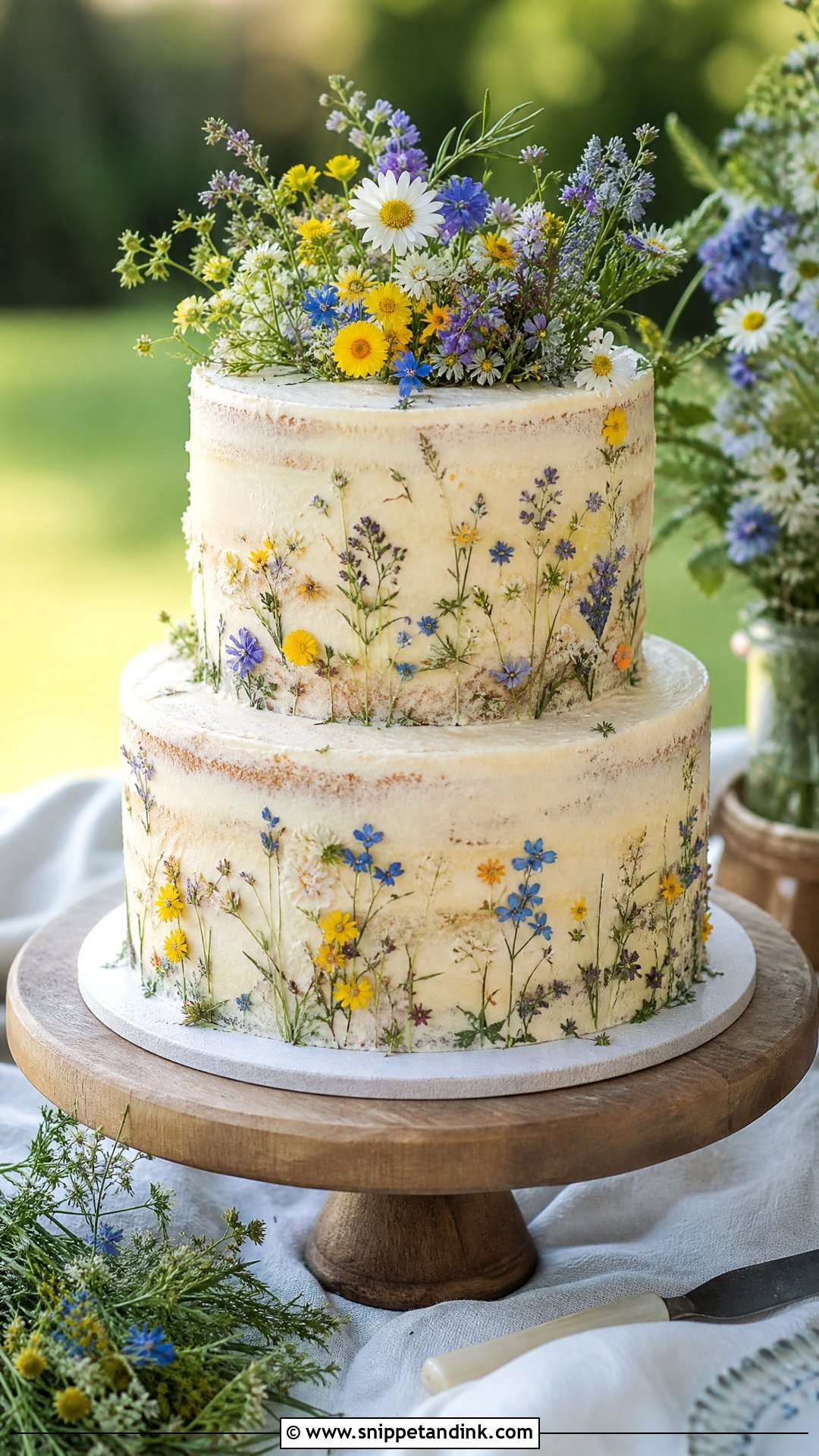
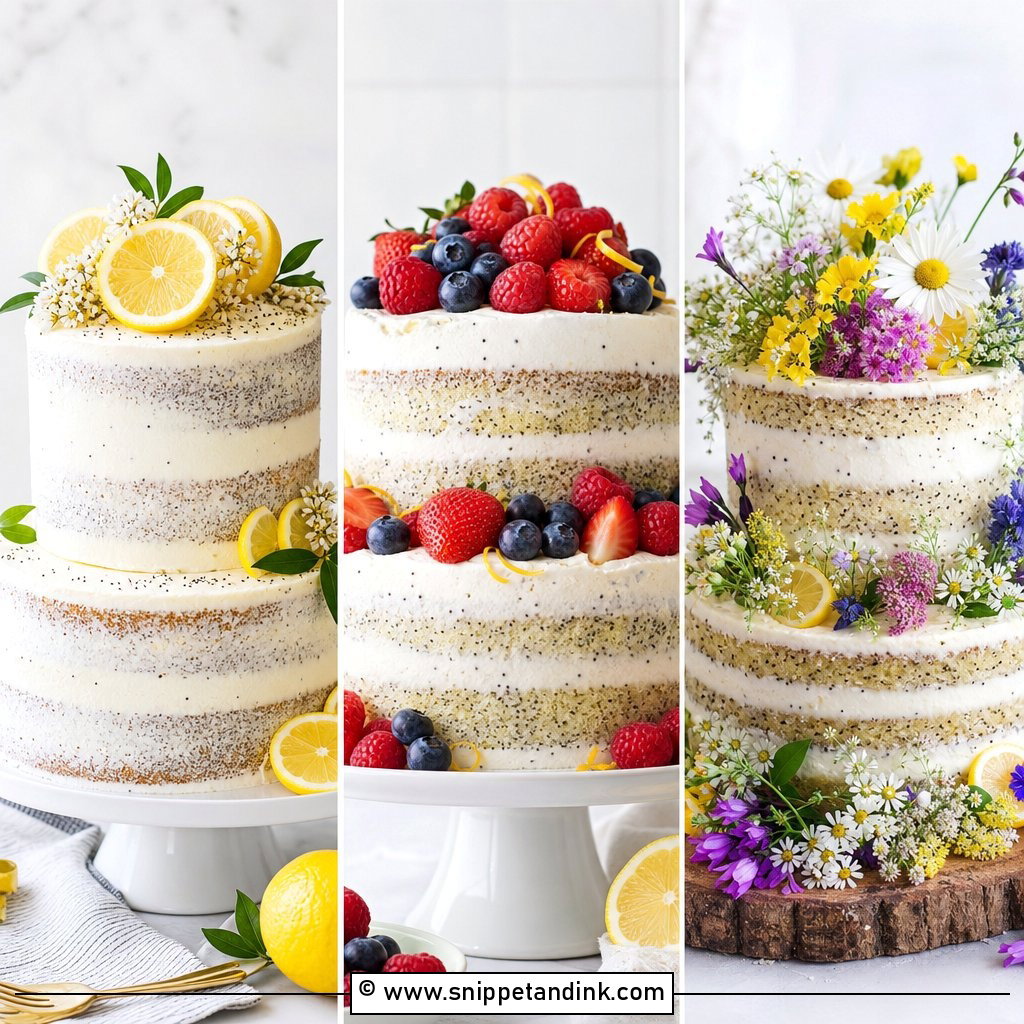
A wildflower wedding cake should look slightly unplanned, which takes more planning than it sounds. Daisies, chamomile, violets, cornflowers and lavender in small sizes, with airy greenery, set on a semi-naked or lightly textured finish. A semi-naked cake shows sponge at the edges, so it dries out faster than a fully coated one; I keep it wrapped until the last moment. A wooden stand and simple linens suit a meadow, barn or backyard setting.
8. Orchid Wedding Cake
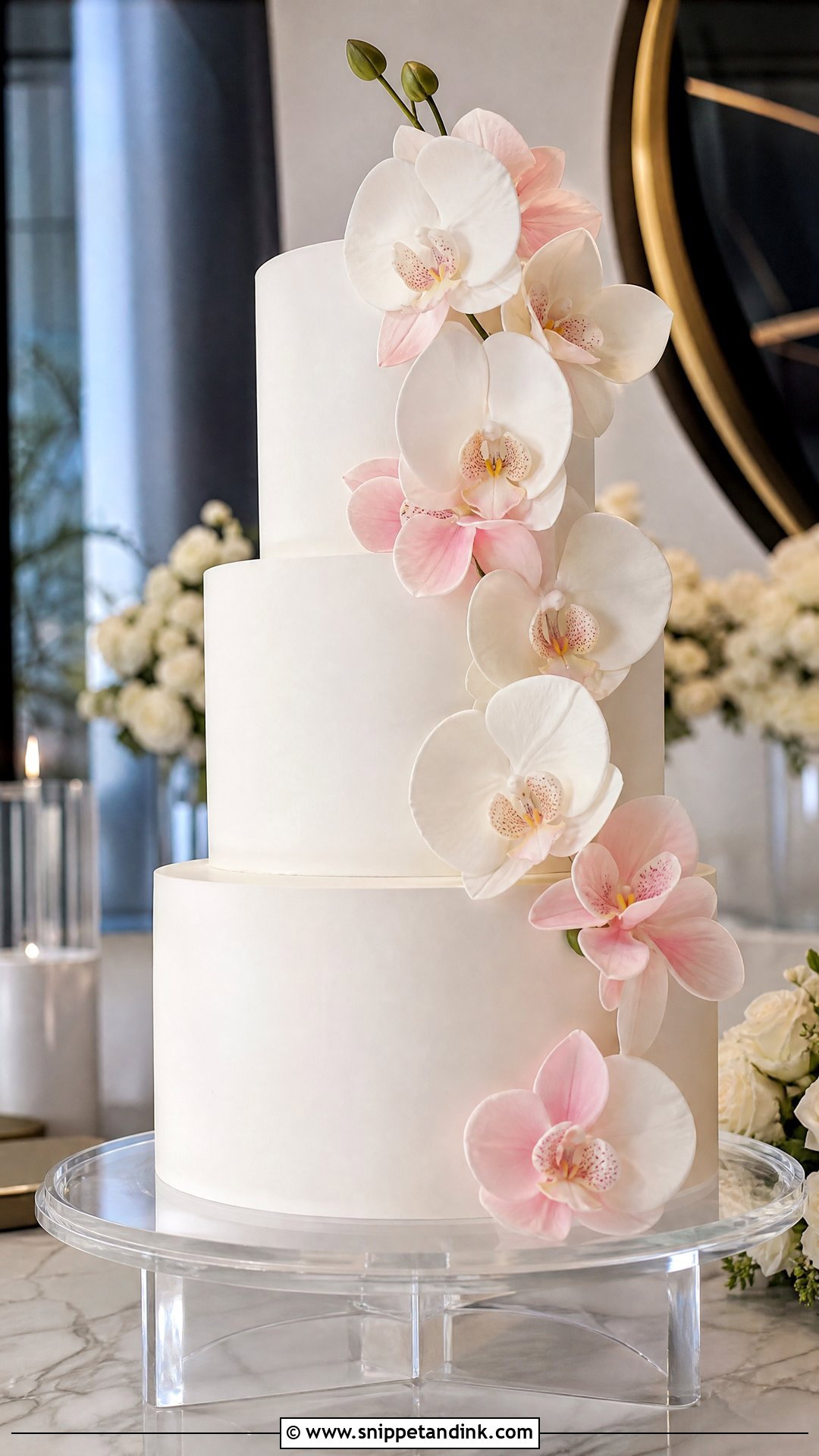
Orchids give a cake a clean, sculptural line. White orchids look crisp and luxurious, and purple, pink or yellow ones bring a tropical note. I pair them with tall smooth fondant tiers and very little else, often a single vertical spray down one side. Their shape is the decoration, so crowding them wastes it. Fresh orchids are fairly sturdy in warm rooms, which makes them a good fit for beach weddings and hotel receptions.
9. Cherry Blossom Wedding Cake
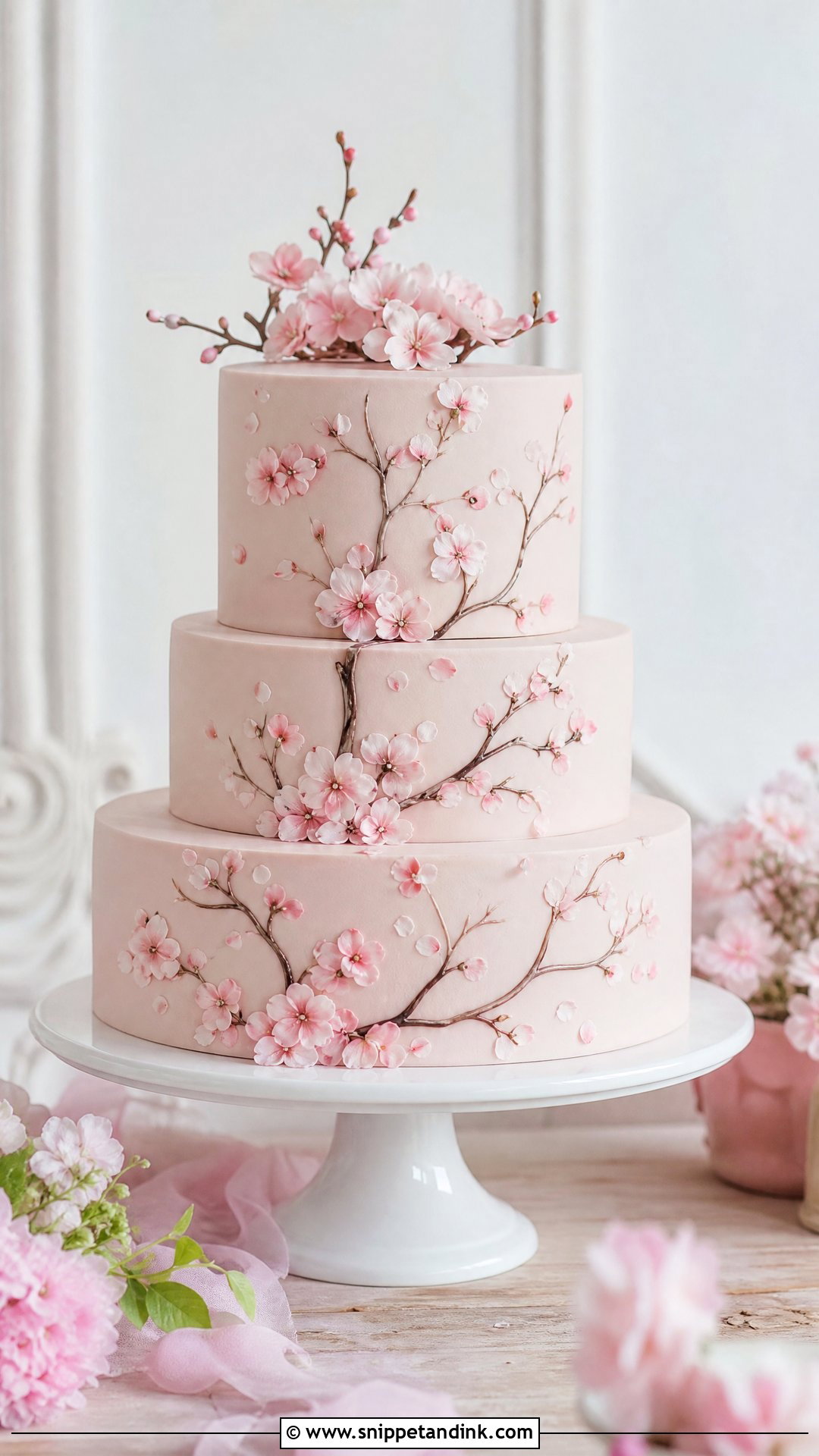
A cherry blossom wedding cake lives or dies on restraint. I paint or pipe thin brown branches first, then add blossoms in piped buttercream, sugar or tiny edible petals along them, leaving plenty of bare white or pale pink tier between. When too many blossoms go on, it stops looking like a branch and starts looking like a pattern. Almond, vanilla, strawberry and lemon sponges match the springtime feel.
10. Daisy Wedding Cake
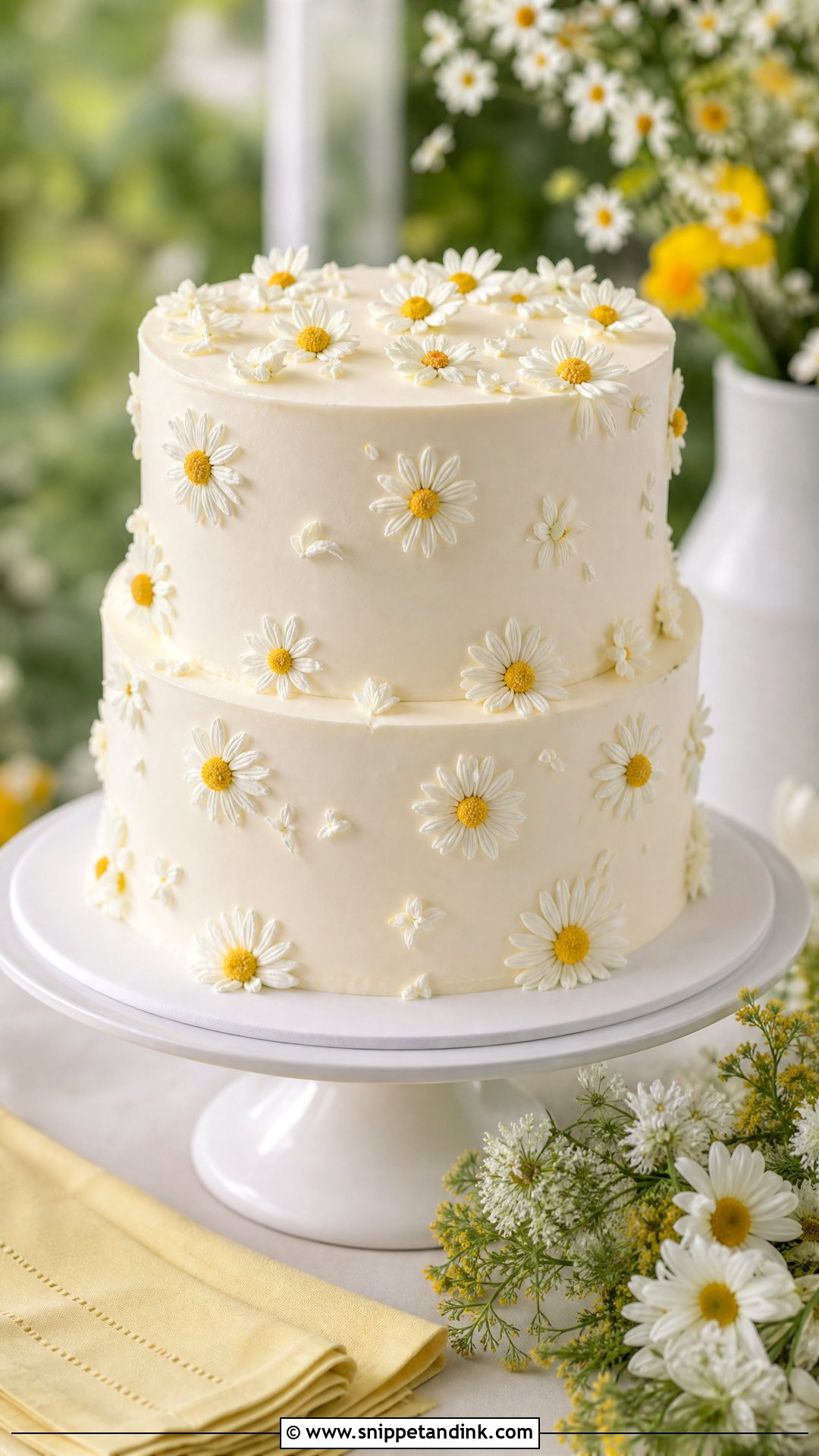
A daisy wedding cake is cheerful and informal, and I’d keep it that way rather than trying to make it grand. Tiny edible daisies pressed into buttercream, piped daisies or sugar ones around each tier all work, and white petals with yellow centers stay crisp on ivory frosting. A lemon sponge inside is a nice wink. Gingham linens and a picnic-style dessert table finish a summer garden reception.
11. Lavender Wedding Cake
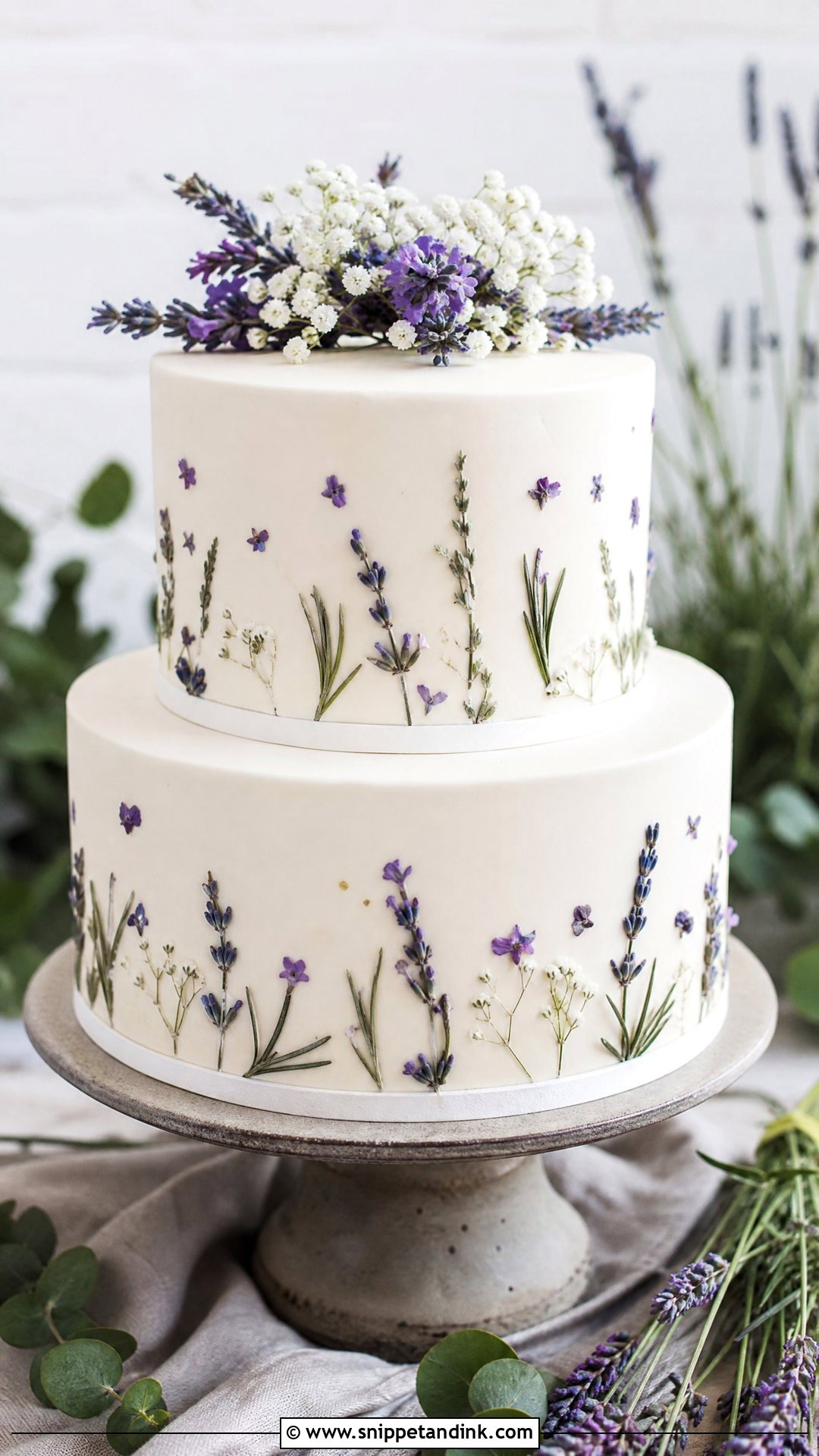
Lavender is one of the few flowers I’m comfortable placing fresh, as long as it’s culinary lavender. It pairs with lemon, honey, vanilla or Earl Grey, and the scent carries. Too much and the cake tastes perfumed, so a few sprigs around each tier is plenty. Pressed lavender, sugar lavender and pale purple buttercream accents are the alternatives if you want the color without the flavor. For a modern take, I tint the frosting pale purple and add a few clean clusters.
12. Sunflower Wedding Cake
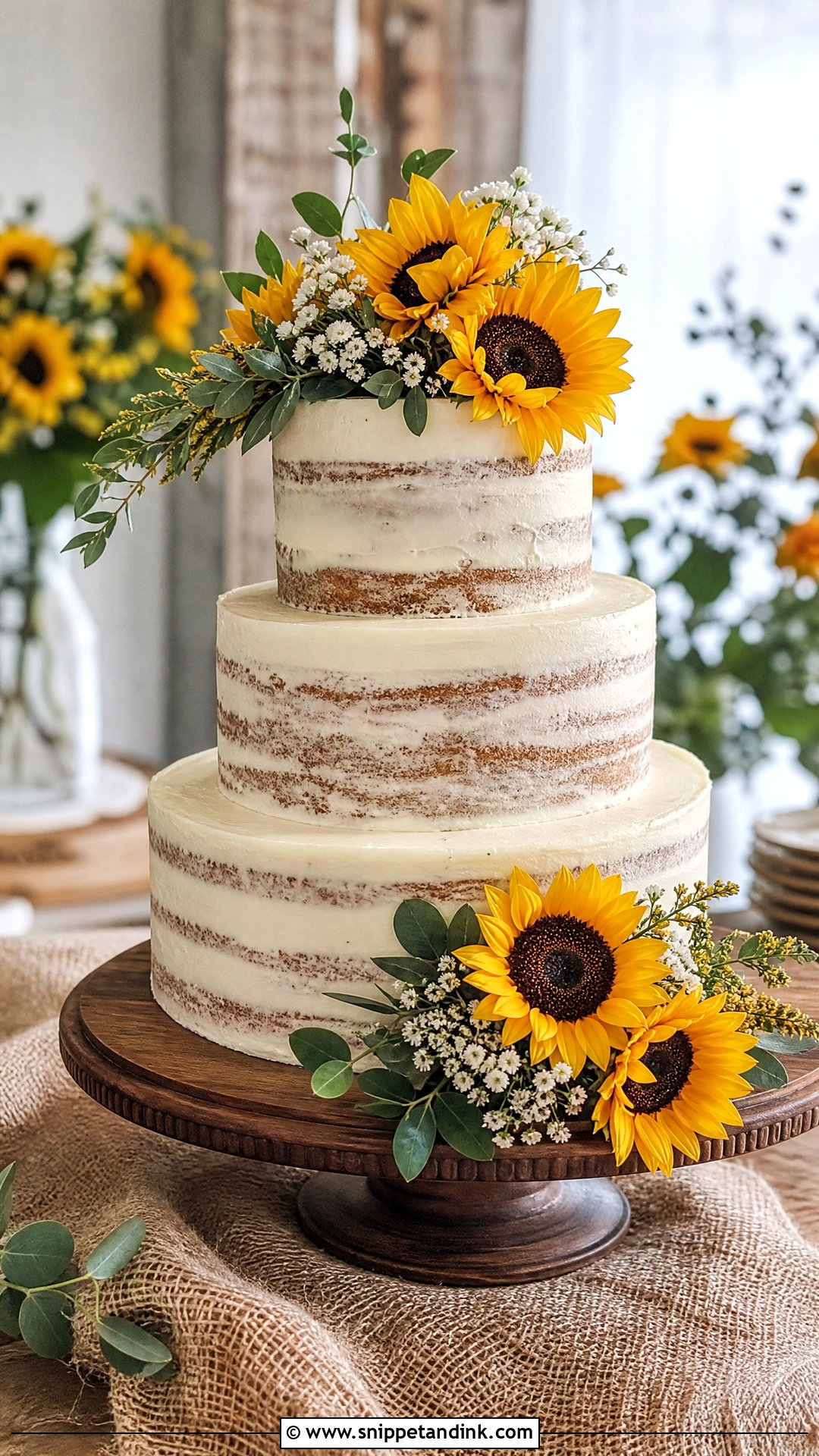
Sunflowers are bold, so the rest of the cake should step back. White, cream or lightly textured buttercream with a few large heads, softened by small white flowers, greenery or wheat-style accents, is my usual approach for late-summer and fall barn weddings. Sugar sunflowers give a neater finish; fresh ones can work when the stems are wrapped and placed in picks. A semi-naked cake with sunflower clusters looks relaxed and welcoming.
13. Hydrangea Wedding Cake
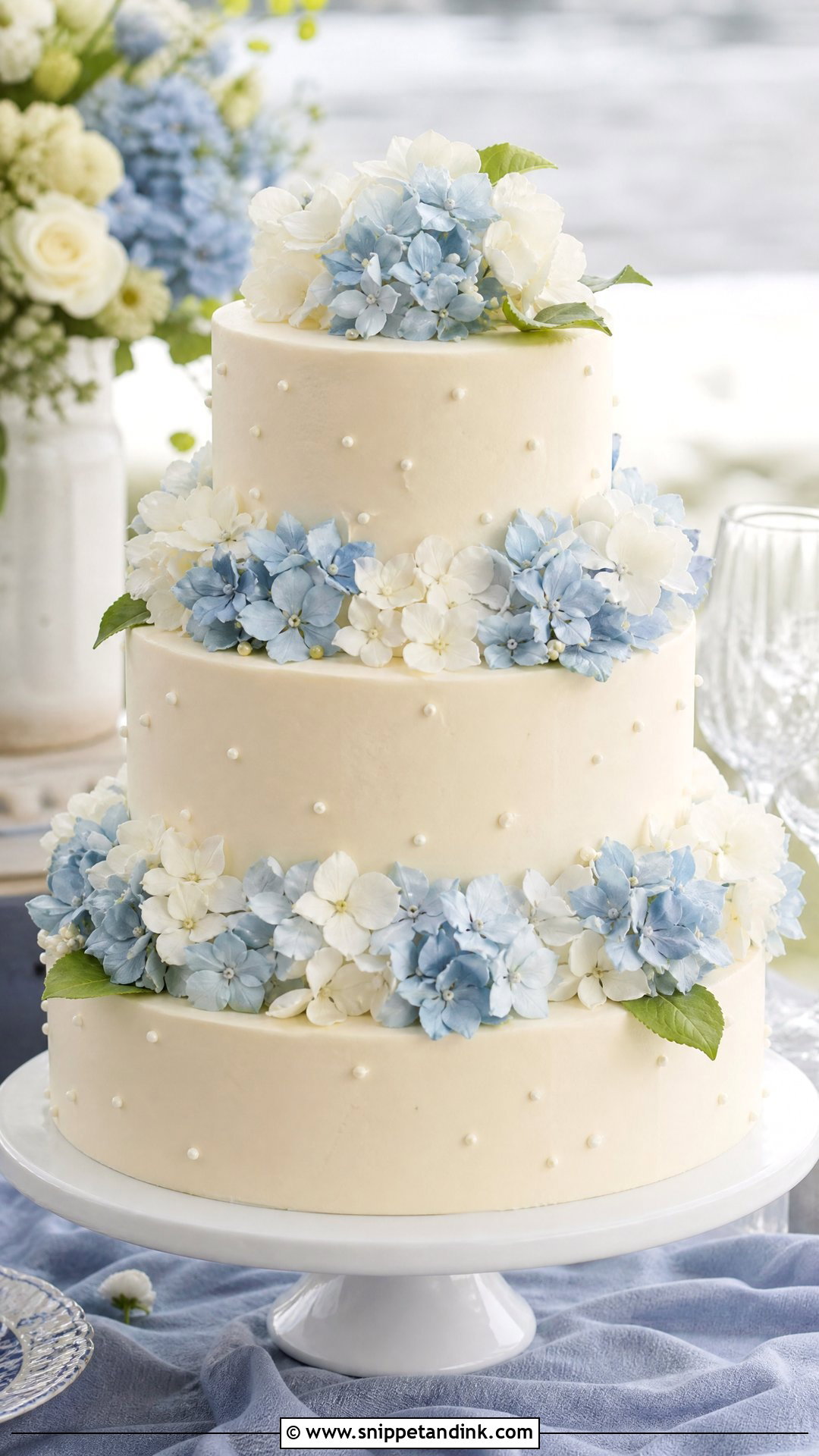
Hydrangea fills a lot of space with very little, which is why couples love it. I make hydrangea in sugar or piped buttercream, never fresh, because fresh hydrangea is not food-safe. Sugar also lets me match white, blue, lavender, blush or green to your exact palette. I group the clusters tightly; scattered pieces of hydrangea look like a mistake. Smooth buttercream and pearl accents suit coastal and garden weddings alike.
14. Tulip Wedding Cake
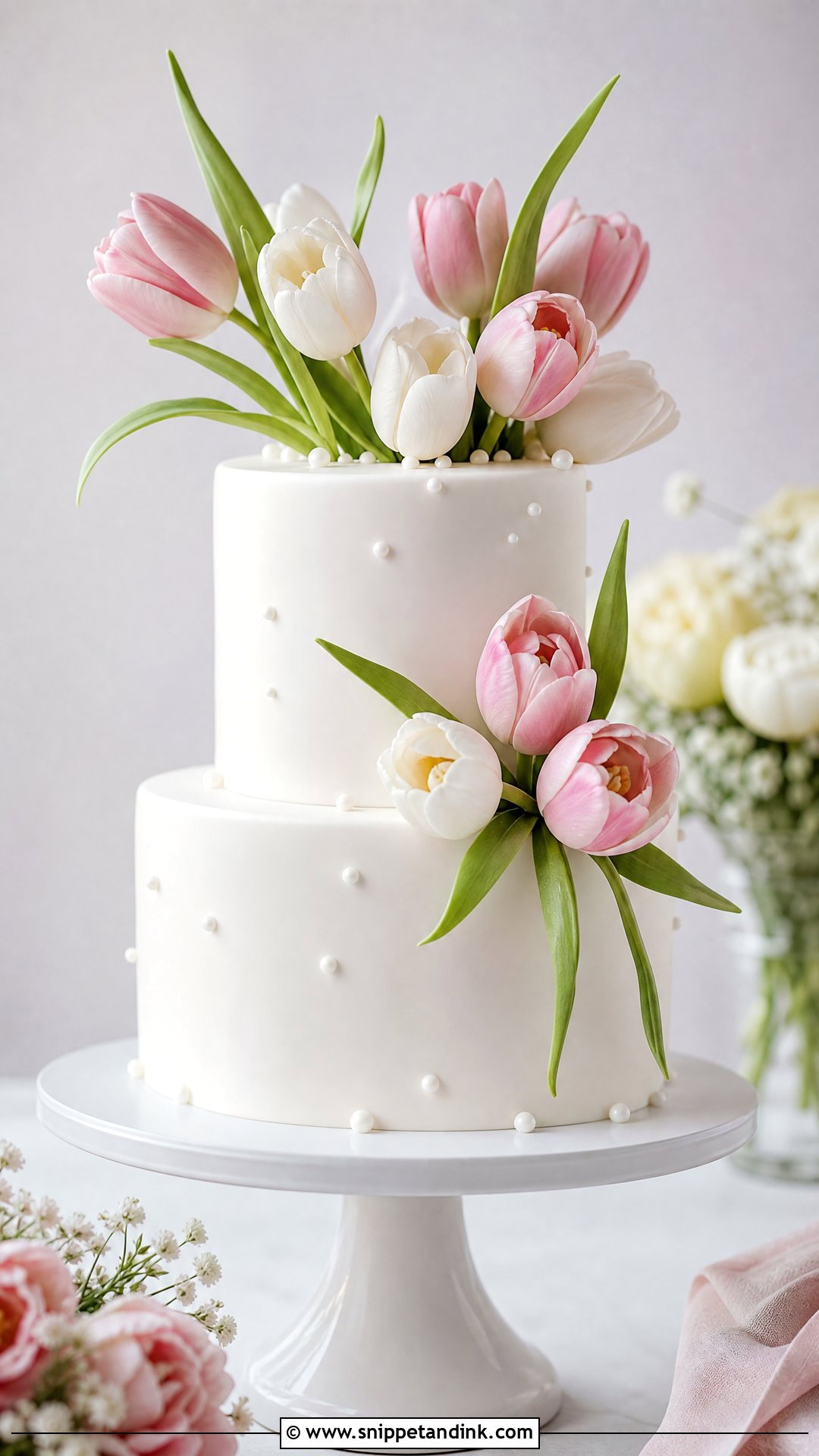
A tulip wedding cake is one of the easiest ways to go modern with flowers. Tulips have a simple cup shape, so a small topper or a ring around the base is enough. White reads minimalist; coral, pink, yellow or purple add spring color. Fresh tulips keep growing and bending after they’re cut, which can pull an arrangement out of shape over a few hours, so I usually make them in sugar and curve them deliberately along the tiers.

15. Garden Flower Wedding Cake
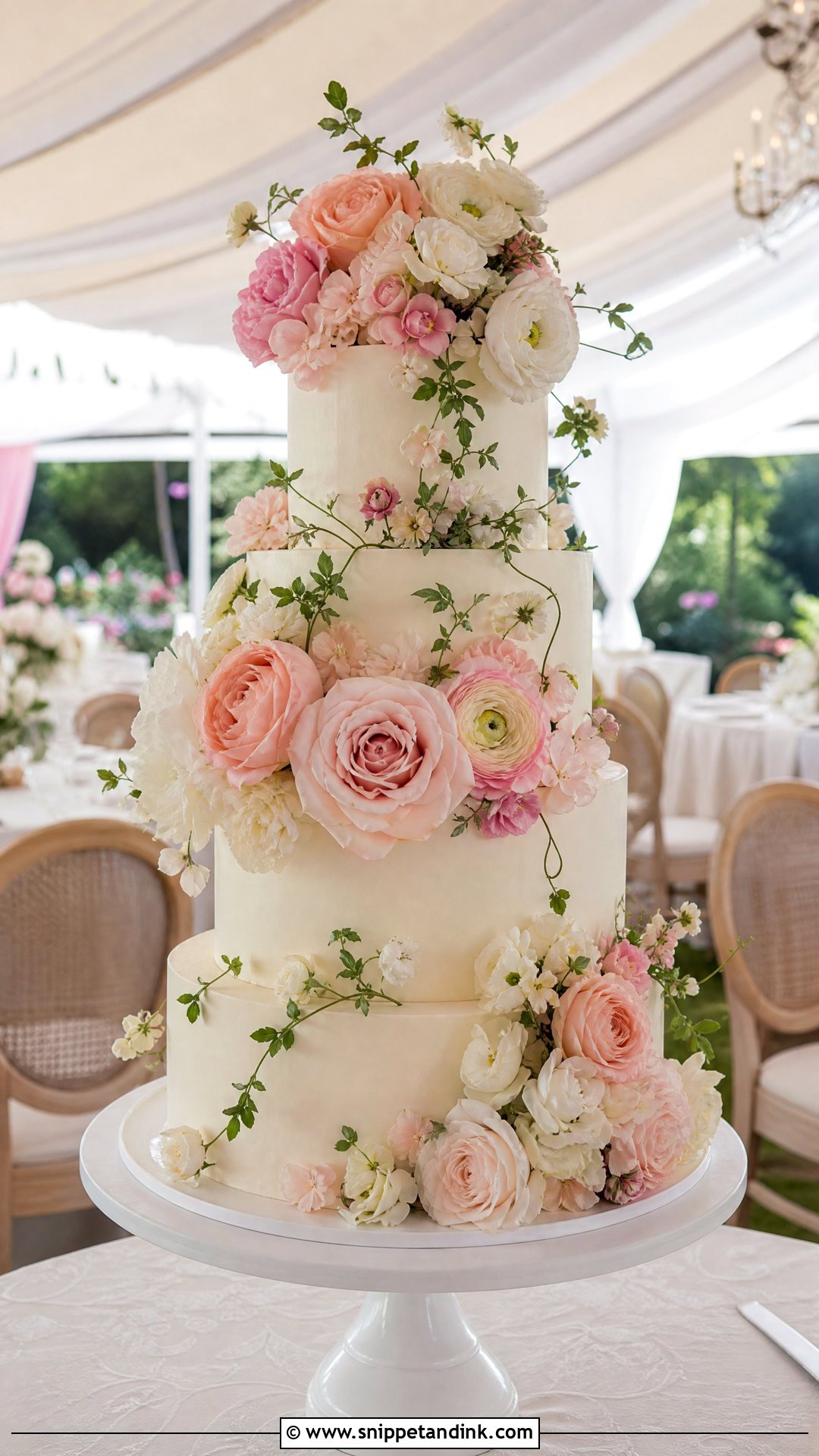
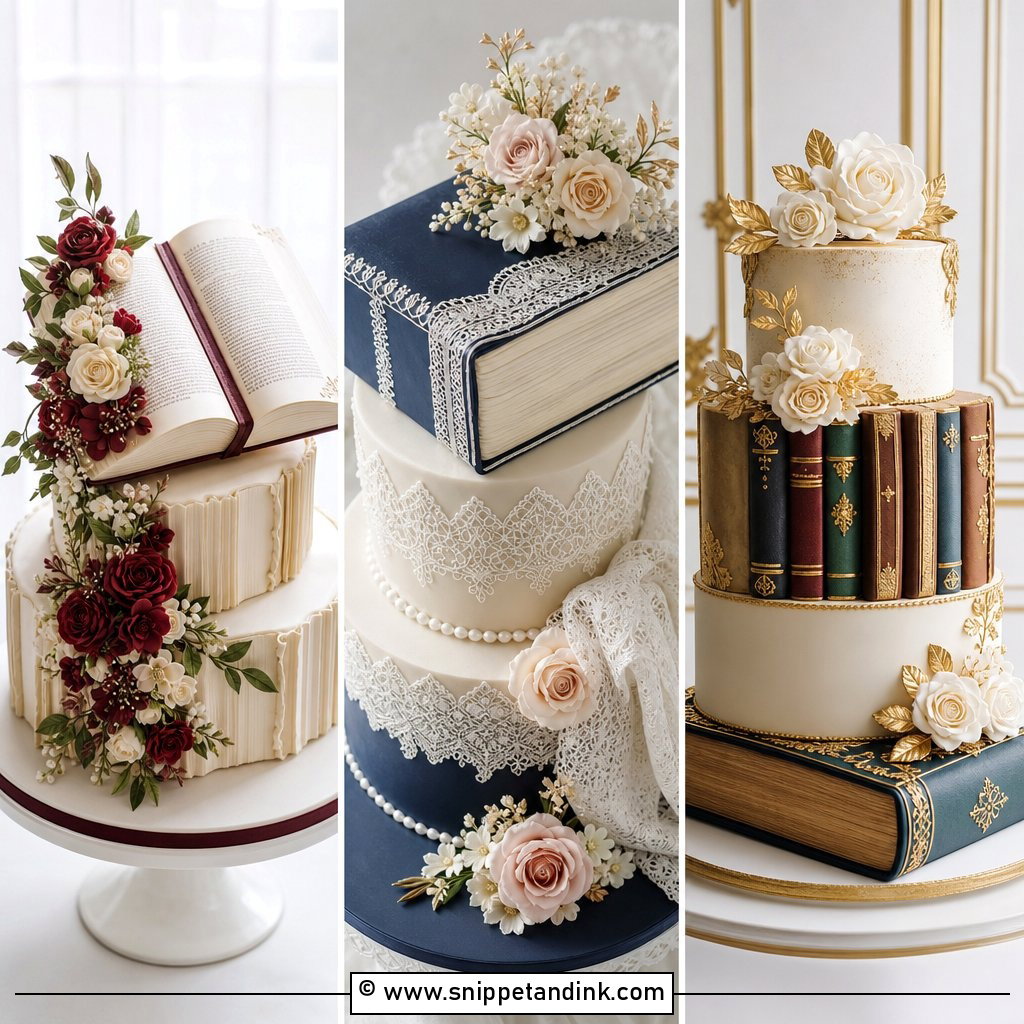
A garden mix of roses, peonies, ranunculus, sweet peas and small blossoms is meant to look like it came from a cutting garden, not a pattern book. I build it on a neutral buttercream base so the flowers carry the color, then use soft greenery to link the tiers. Sweet peas are toxic, so those stay sugar. It suits tented receptions and venues with lush grounds, and it looks most natural when it matches the bouquet and table arrangements.
16. Minimalist Flower Wedding Cake
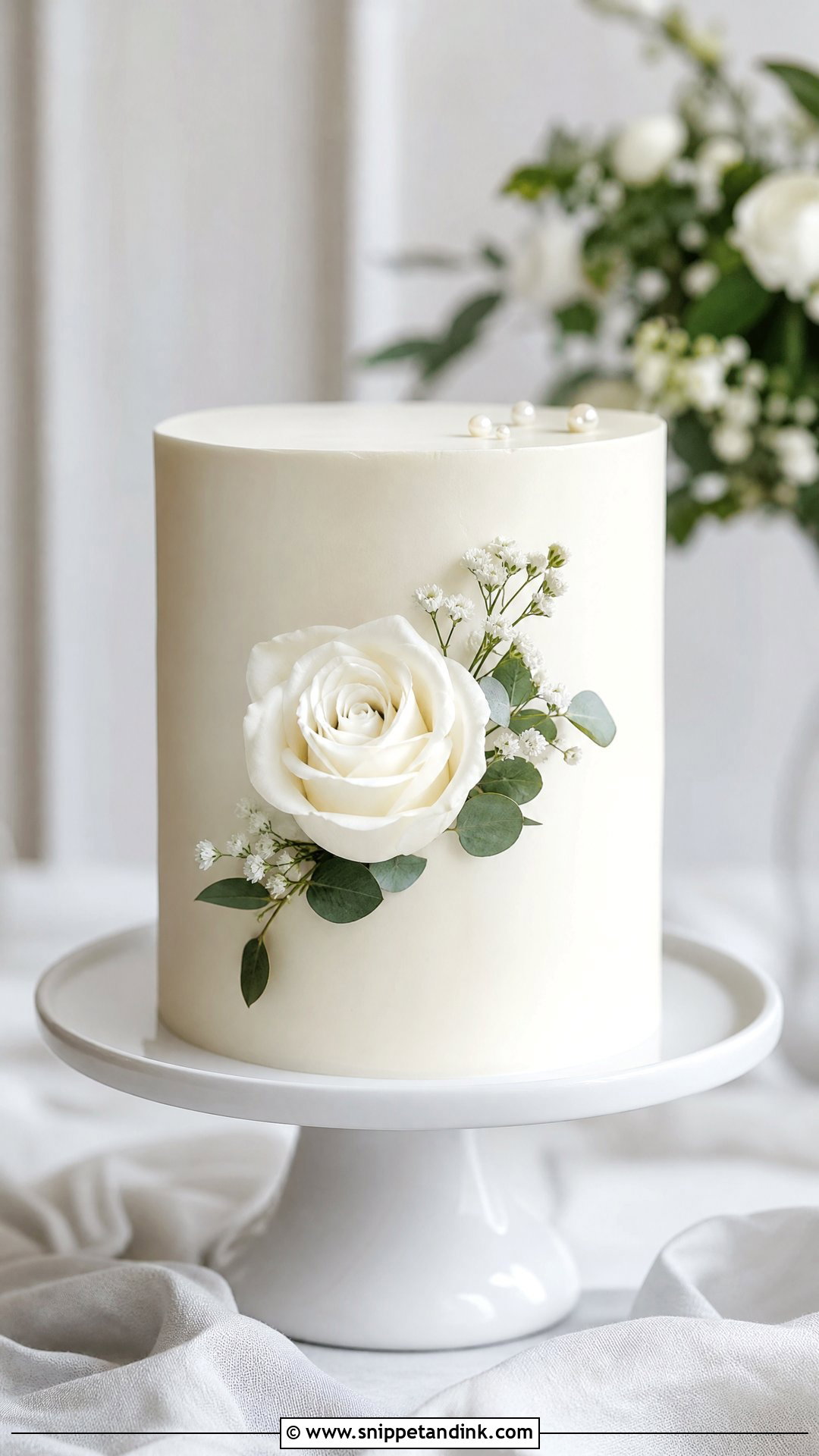
Minimal floral cakes are harder than they look. With smooth white buttercream or fondant and one small detail, a single rose, a tiny orchid cluster, a pressed flower band, any flaw in the finish is on show. Every edge needs to be sharp. I suggest one flower type and one accent color, and a plain stand. Courthouse receptions, small dinners and modern venues suit it.
17. Vintage Flower Wedding Cake
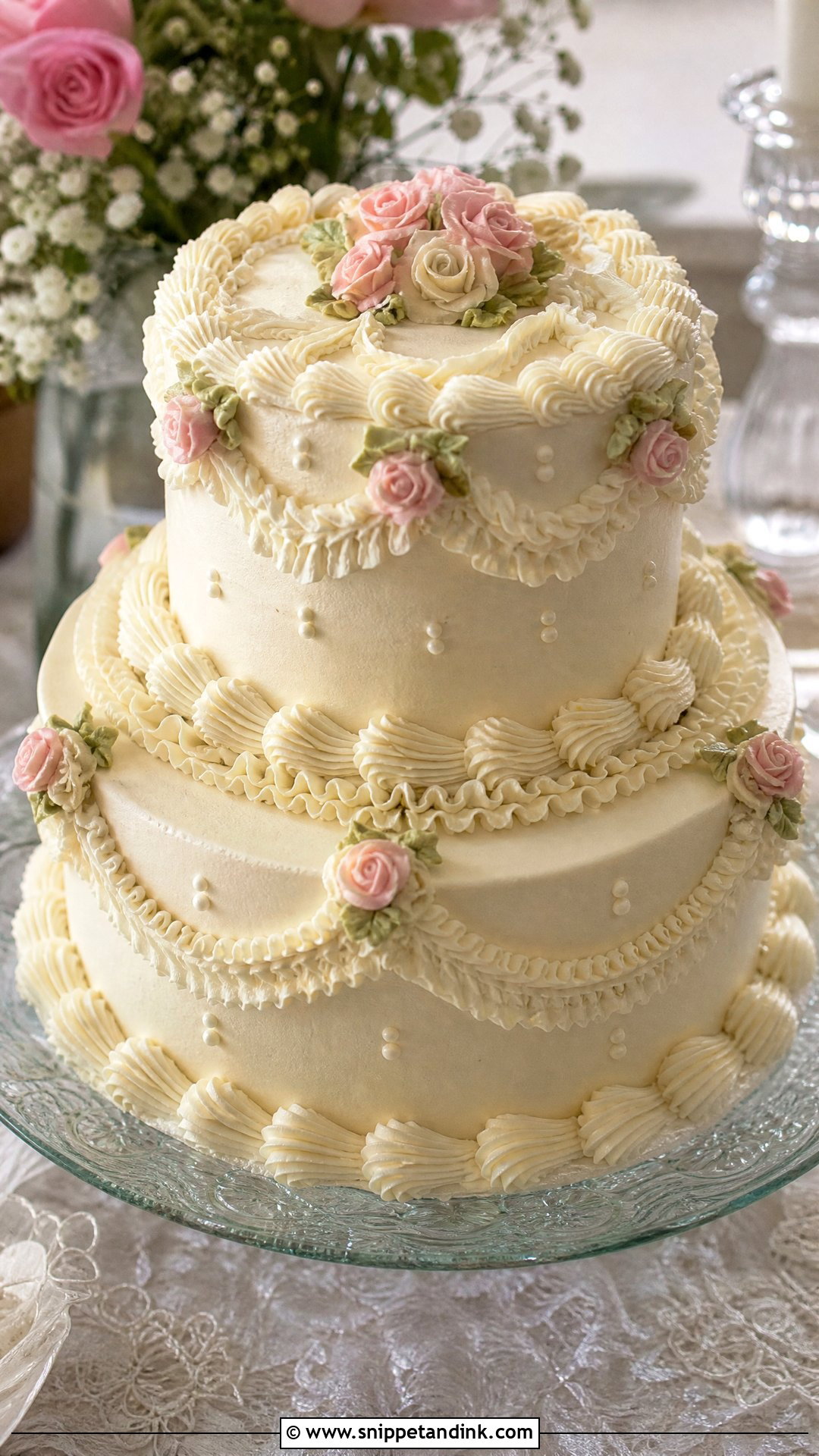
Vintage floral cakes are about piping: shell borders, ruffles, buttercream roses, small blossoms and pearl dots framing the tiers. Ivory, blush, pale blue and soft yellow are the classic colors. Overcrowding is the danger, since every technique is decorative on its own. I choose two or three and repeat them, so the cake looks nostalgic but polished. It can be round, heart-shaped or tiered, depending on numbers.
18. Watercolor Flower Wedding Cake
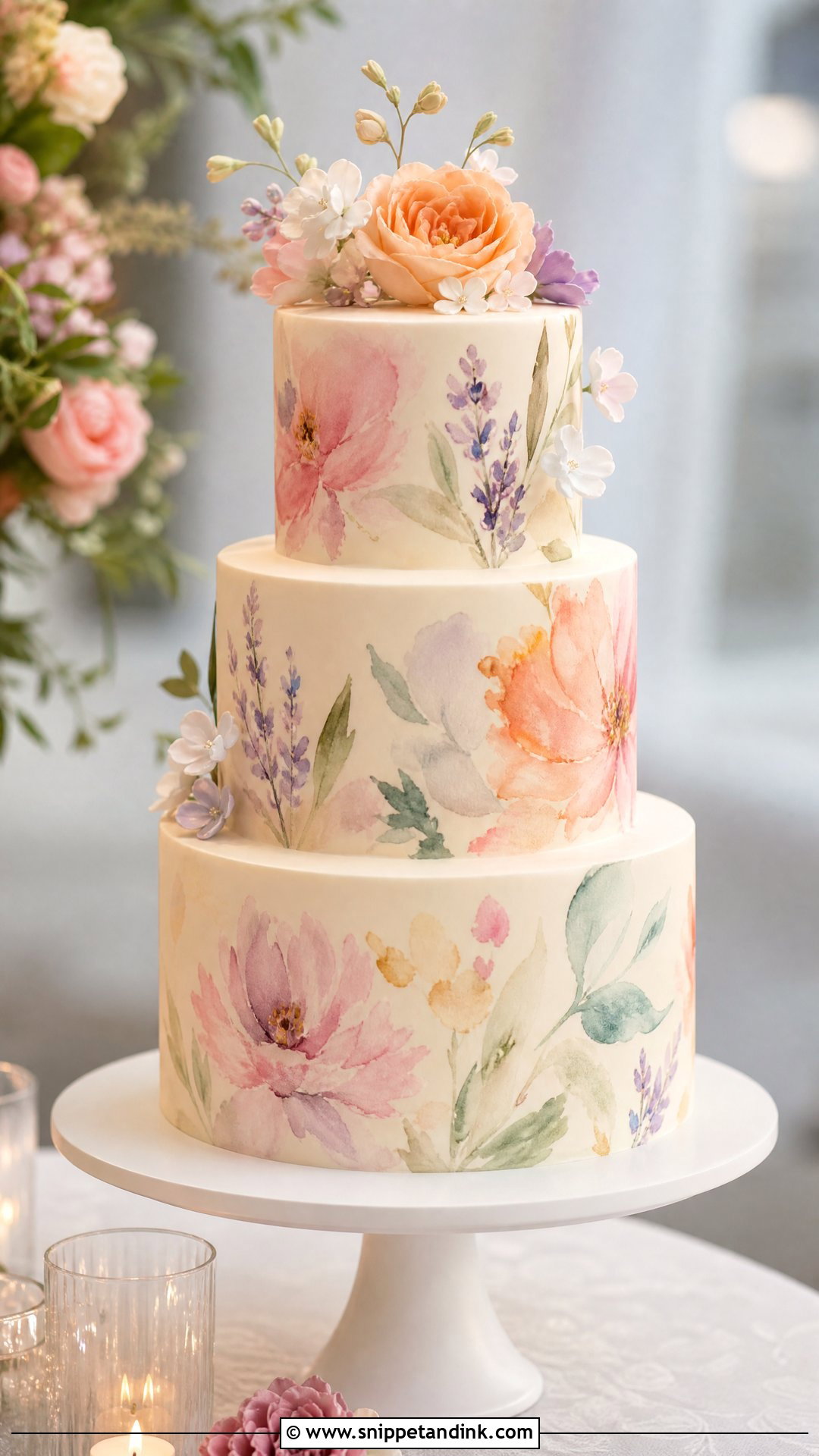
Watercolor cakes are hand-painted. I thin gel color with a little clear alcohol and brush loose floral shapes onto fondant or very smooth, well-chilled buttercream. The surface needs to be firm; soft buttercream drags under the brush. Blush, lavender, peach, sage and dusty blue blend softly, and a few sugar flowers on top give the flat painting some depth. Limit the palette to three or four shades and it stays light.
19. Cascading Flower Wedding Cake
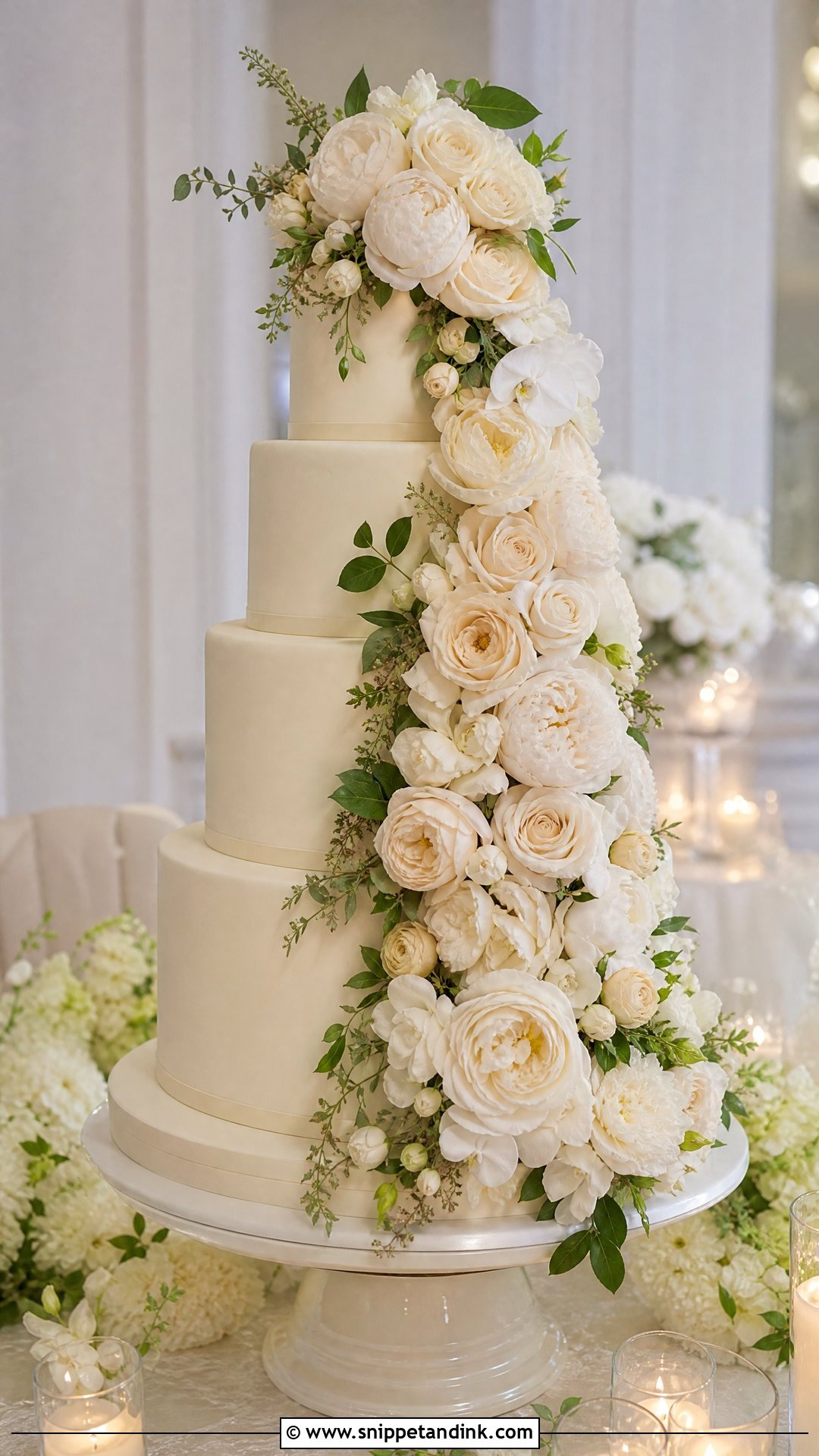
Cascades are the most dramatic option and the most structural. Flowers run from the top tier down the side, so the cake needs strong internal supports and a stand placed where guests can walk around it. Roses, orchids, peonies, ranunculus or mixed garden flowers all work, airy or full. A clean frosting base keeps the flowers readable. At a large wedding this cake becomes a centerpiece, so give its table some floor space.



20. Edible Flower Wedding Cake
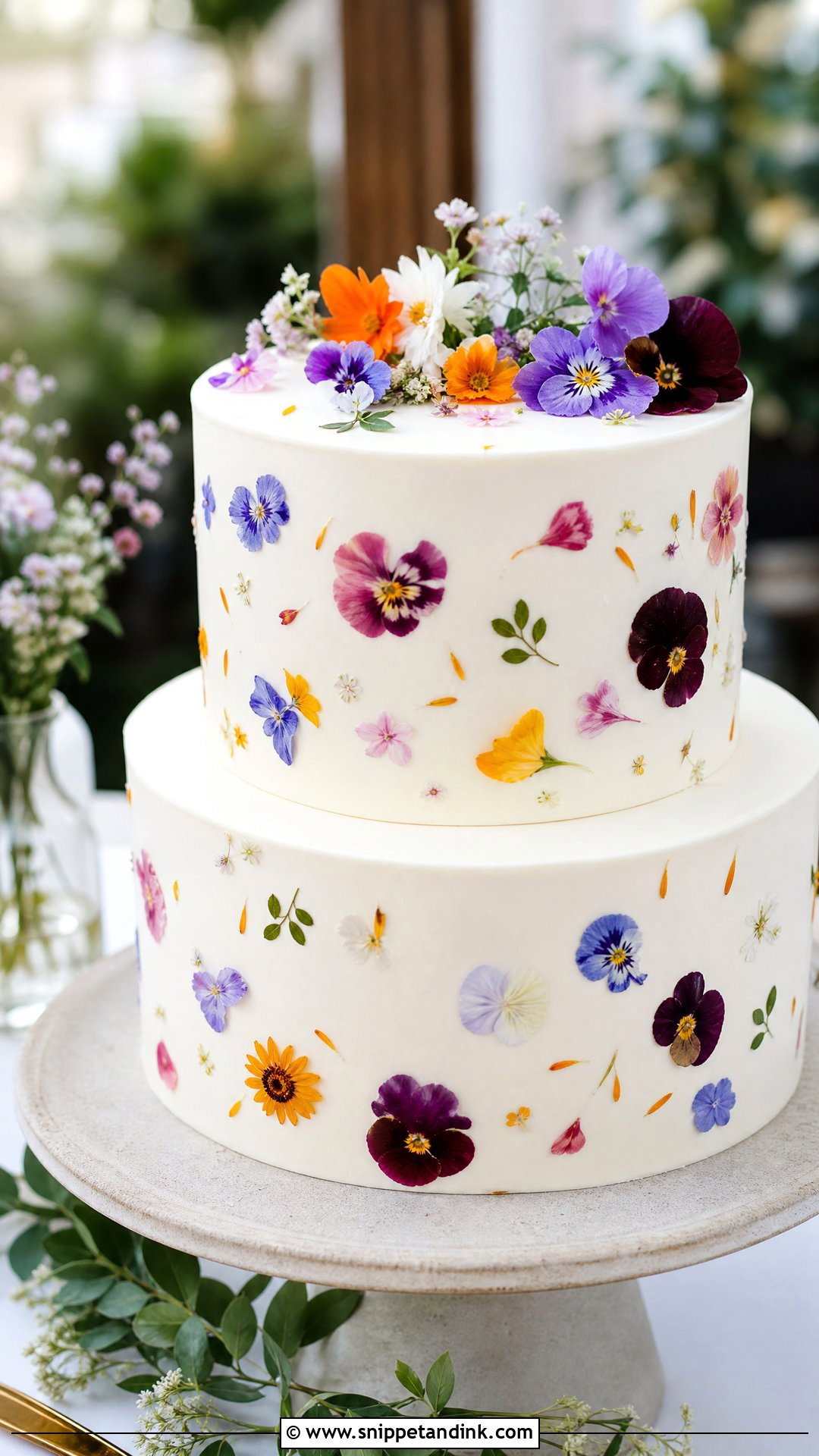
Edible flowers are the most honest version of a floral cake: everything on it can be eaten. Pansies, violas, calendula and nasturtiums add color, either pressed flat for a botanical finish or placed fresh for a lively, garden look. I only use blooms grown for culinary use, because flowers sold for arrangements are usually treated. A simple buttercream base keeps the petals visible, and fresh ones go on as late as possible so they don’t wilt.
21. Floral Wreath Wedding Cake
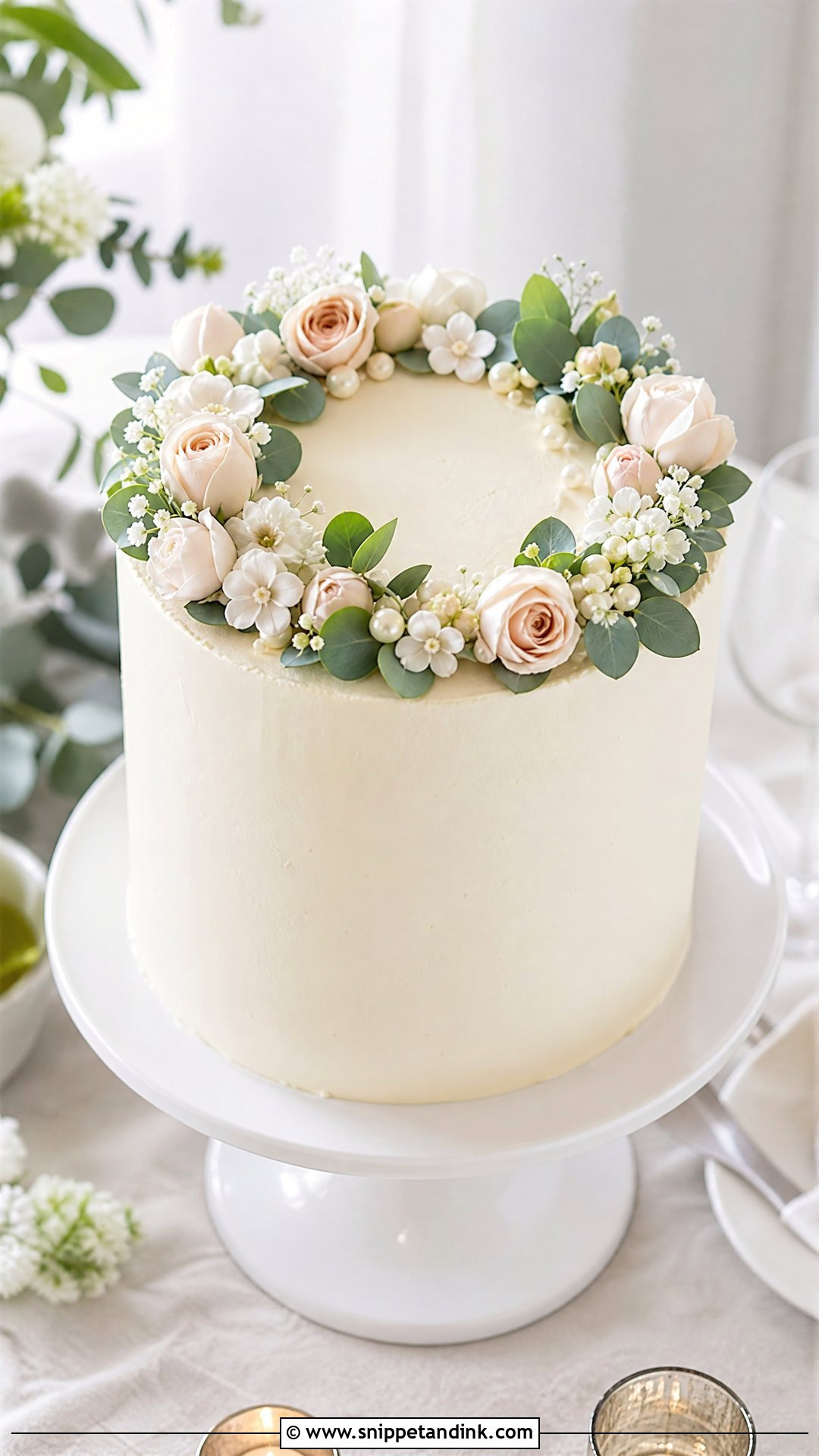
A floral wreath wedding cake places a ring of flowers around the base, the top or a middle tier. It gives you color without the scale of a cascade, which suits single-tier cakes and small weddings. I make wreaths in tiny sugar flowers, piped buttercream or pressed petals; fresh food-safe blooms work too. Symmetrical reads classic, while an off-center crescent looks modern. Match the colors to the bouquet or the bridesmaids.
22. Floral Lace Wedding Cake
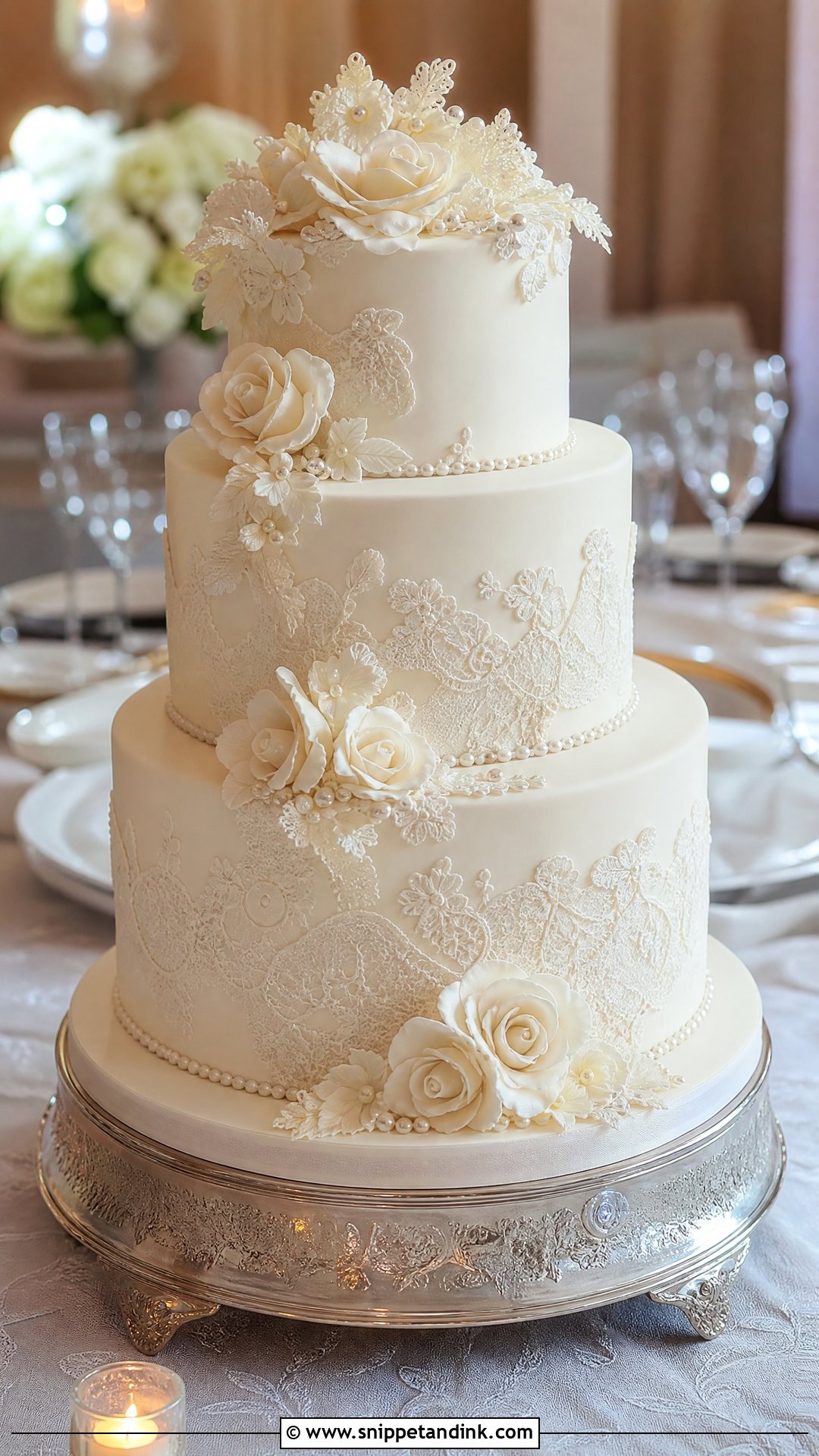
Lace and flowers together suit a traditional gown and a historic venue. I pipe lace patterns or press fondant lace appliqué around each tier like fabric, then add small sugar flowers at the edges. The flowers must stay small, or they hide the lace, which is the whole point. Ivory on ivory is classic; blush, champagne or a soft gold accent warms it. A gown with lace detail can be echoed if you bring a photo of the fabric.
23. Floral Drip Wedding Cake
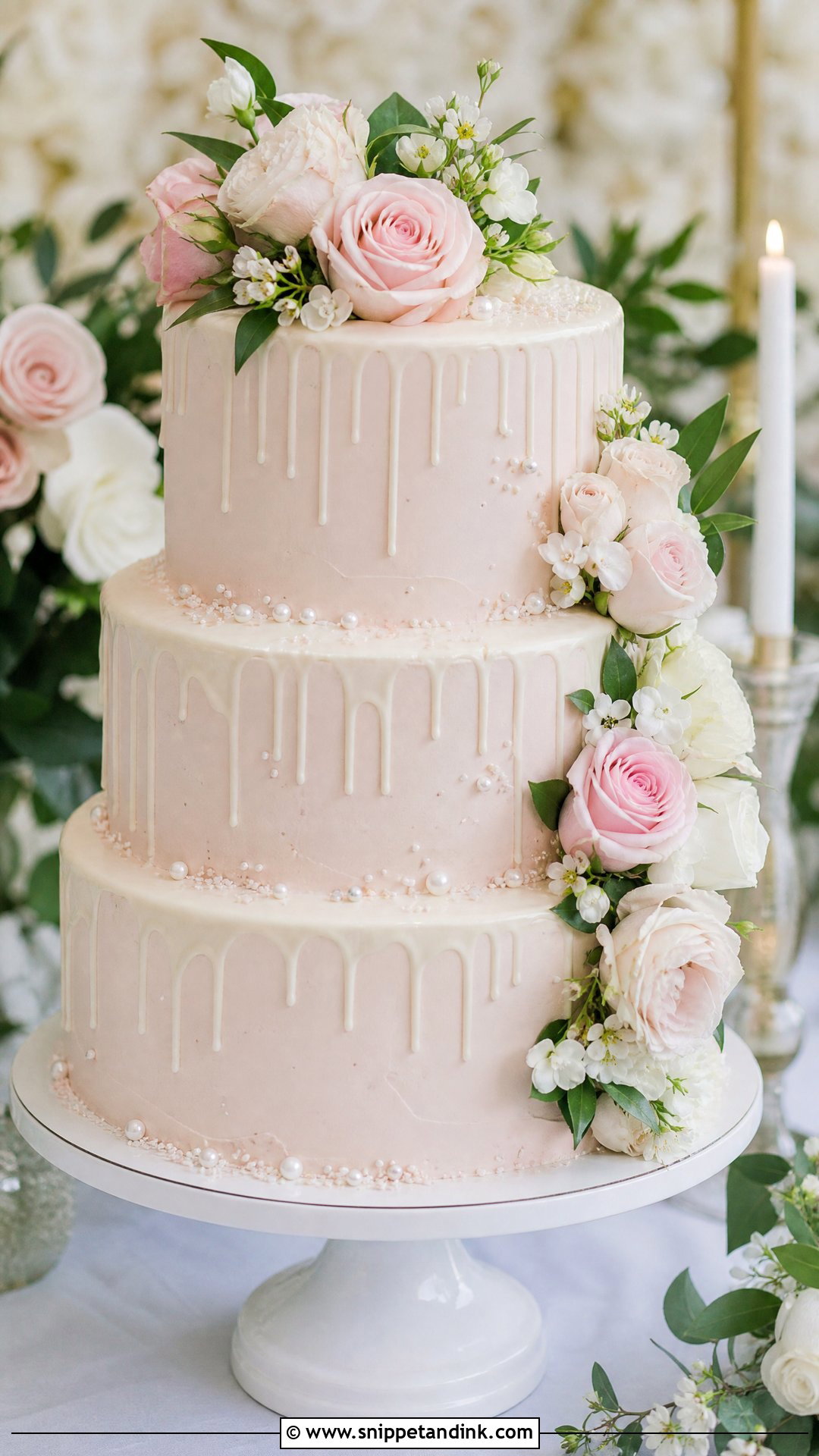
A drip finish with flowers is relaxed and modern. I pour white chocolate, caramel or tinted ganache over a well-chilled cake so the drips set neatly instead of running to the board. On a warm cake, they slide. Flowers, fresh food-safe, sugar or piped, soften the look around the top. Two or three tiers show the movement best. Keep the drips controlled and evenly spaced so the flowers remain the focus.
24. Black And White Flower Wedding Cake
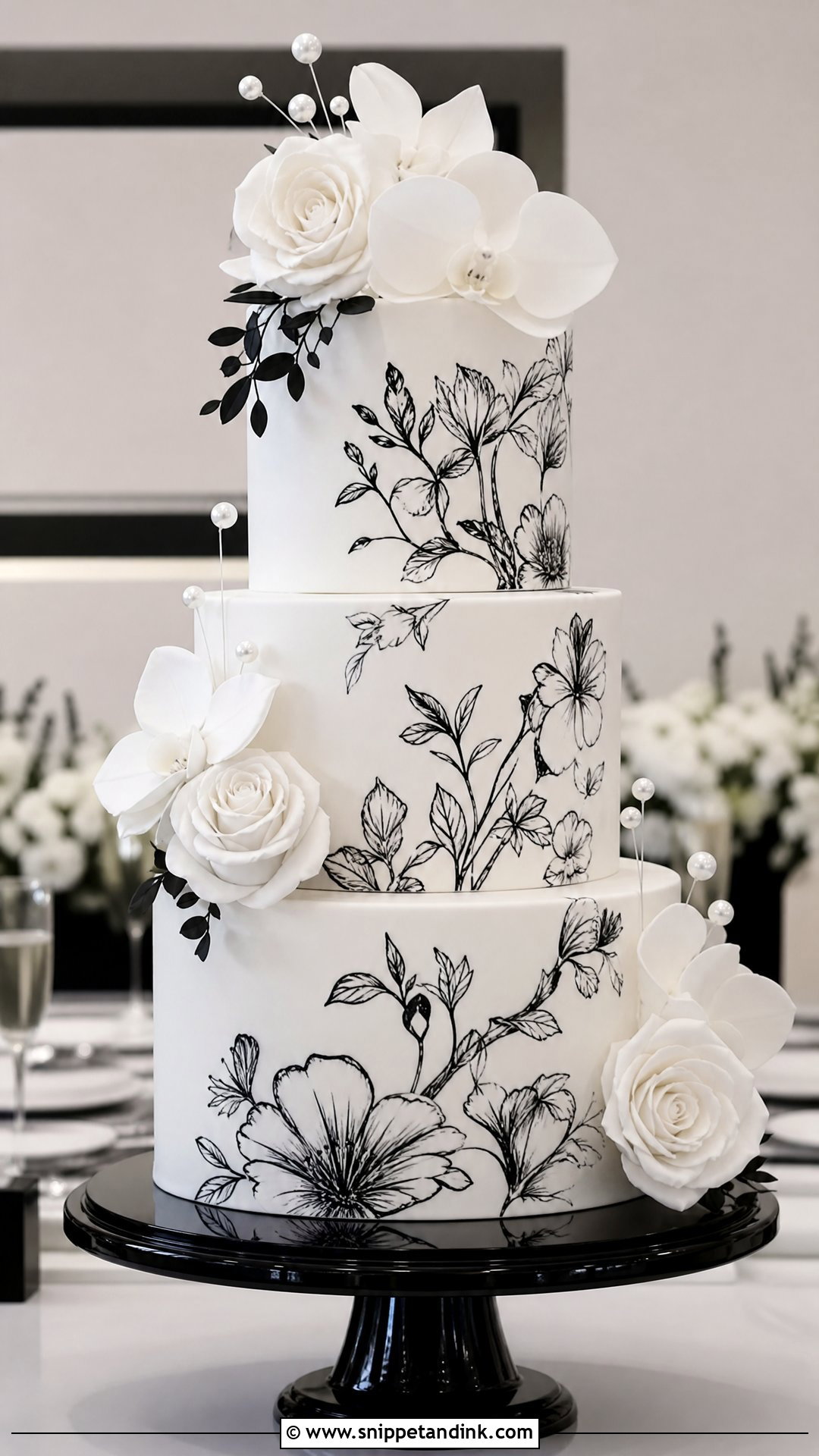
Black and white floral cakes are dramatic and need a careful hand. I use white frosting with black floral line work, black fondant with white sugar flowers, or a mix. Black icing is heavy on color and can stain teeth, so I start from a cocoa-darkened base and keep black areas to the outside layer. White roses, orchids, pearls and fine piping keep it from feeling harsh. A black ribbon on each tier ties it together, and a plain backdrop makes the contrast sharp in photos.


25. Pastel Flower Wedding Cake
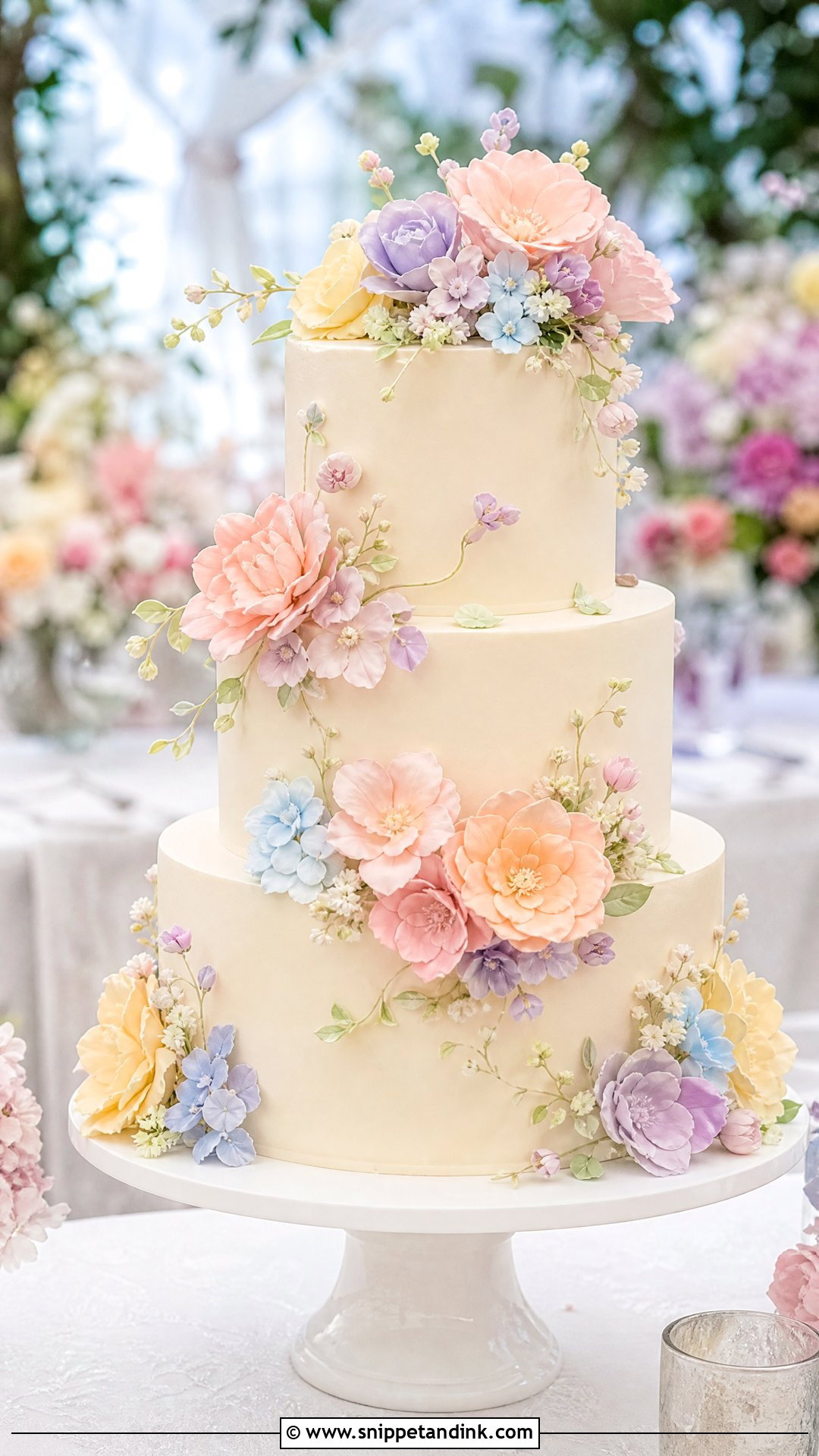
Pastels match so many palettes that the challenge is stopping. Blush, peach, lavender, pale yellow, mint and baby blue can all appear, but I prefer to pick three, in different flower sizes, and place them gently around the tiers. Buttercream, fondant, sugar, pressed petals and hand painting all suit pastels. White or ivory frosting keeps the colors clear. Spring garden weddings and brunch receptions suit it well.
How Far Ahead Each Floral Technique Has to Start
Couples are often surprised by how differently these styles are scheduled. Here is roughly how I plan them, though every baker’s calendar differs.
- Sugar flowers: made over several days and left to dry, so a large spray needs booking well in advance. I like the design settled a couple of months out.
- Pressed petals: flowers need one to three weeks to press and dry fully, so the varieties are chosen early, then applied in the last day.
- Piped buttercream and watercolor painting: done in the final day or two before the wedding, on a fully chilled cake.
- Fresh flowers: placed at the venue, ideally within an hour or two of guests arriving.
What Happens to the Flowers When the Cake Is Cut
Before slicing, whoever cuts the cake should lift off every fresh stem and every wired sugar flower. Wires and picks must never end up on a guest’s plate. I leave a short note for the catering team showing which tiers have inserts, and ask them to set the sugar flowers aside in a box if you’d like to keep them. Kept dry and out of direct light, sugar blooms last for years on a shelf.
Which Flowers Belong on Your Cake, Then?
Floral cakes range from one painted branch to a full cascade, and the right one fits your season, venue, dress, floral budget and how long the cake will be on display. Fresh blooms need an early conversation between your baker and florist. Sugar and buttercream florals last all evening. Pressed edible flowers give a natural look; cascades and oversized blooms give impact. Save the photos you keep returning to, and bring them to your tasting along with a picture of your bouquet.
You'll Like These Ideas:







Leave a Reply