
Three tiers is the size I find gives flowers the most room to do something interesting: enough height for a cascade, enough tiers to repeat a cluster, and still easy to stack on site. Fresh blooms, sugar flowers, pressed petals, piped buttercream florals and trailing greenery each behave differently on frosting, and each asks something different of your baker and your florist. Below are twenty ways I’d approach a floral three tier design, with notes on where each one holds up and where it struggles. Separate tiers also let you serve more than one flavor, which guests notice more than you’d expect.
Sizing Three Tiers Against Your Guest List
Before we talk flowers, I settle sizes, because the bloom count follows the cake’s dimensions. Wedding portions are cut narrower than party slices, roughly 1 by 2 inches through a 4 inch tall tier, and that’s the figure bakers quote. As a rough guide, though every baker’s chart differs a little:
- 6, 8 and 10 inch tiers: around 75 wedding portions
- 6, 9 and 12 inch tiers: around 100
- 8, 10 and 12 inch tiers: around 115 to 120
Ask whether the quote assumes standard height, since extended double-height tiers change the count. If you have more guests than the cake feeds, a plain iced kitchen cake in the same flavor, cut out of sight, costs far less than a fourth tier. I also size for the people who’ll still be there at dessert. At a late reception, some guests will have left and some always skip cake.
1. Three Tier White Floral Wedding Cake
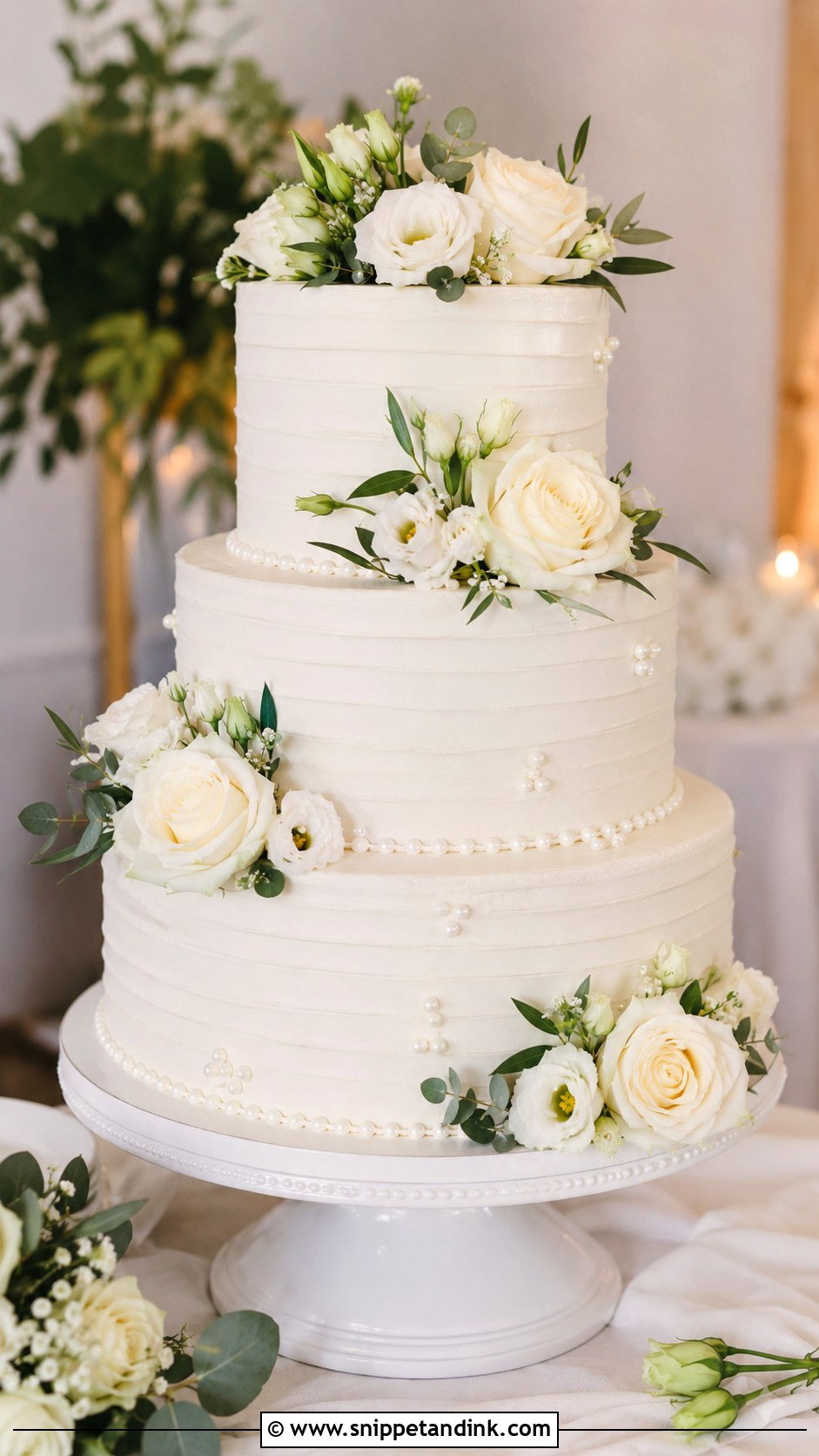
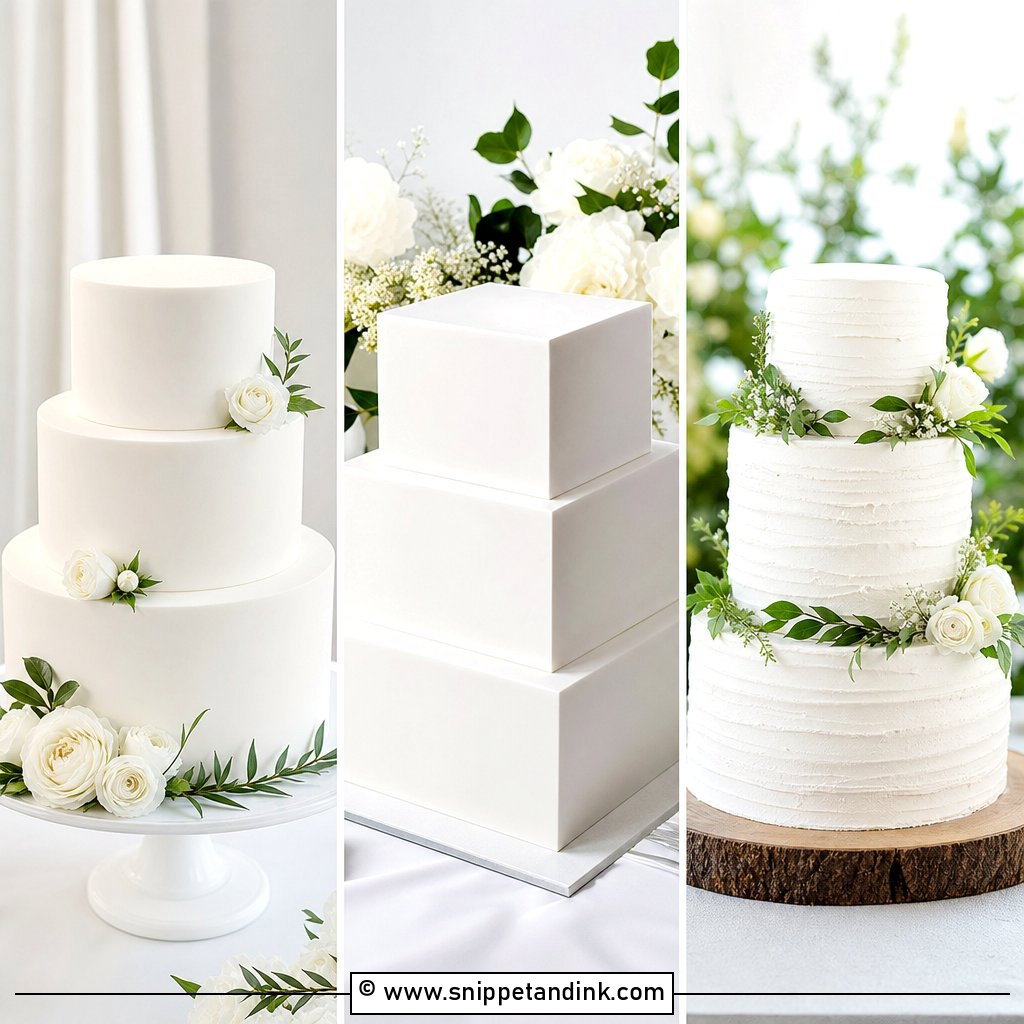
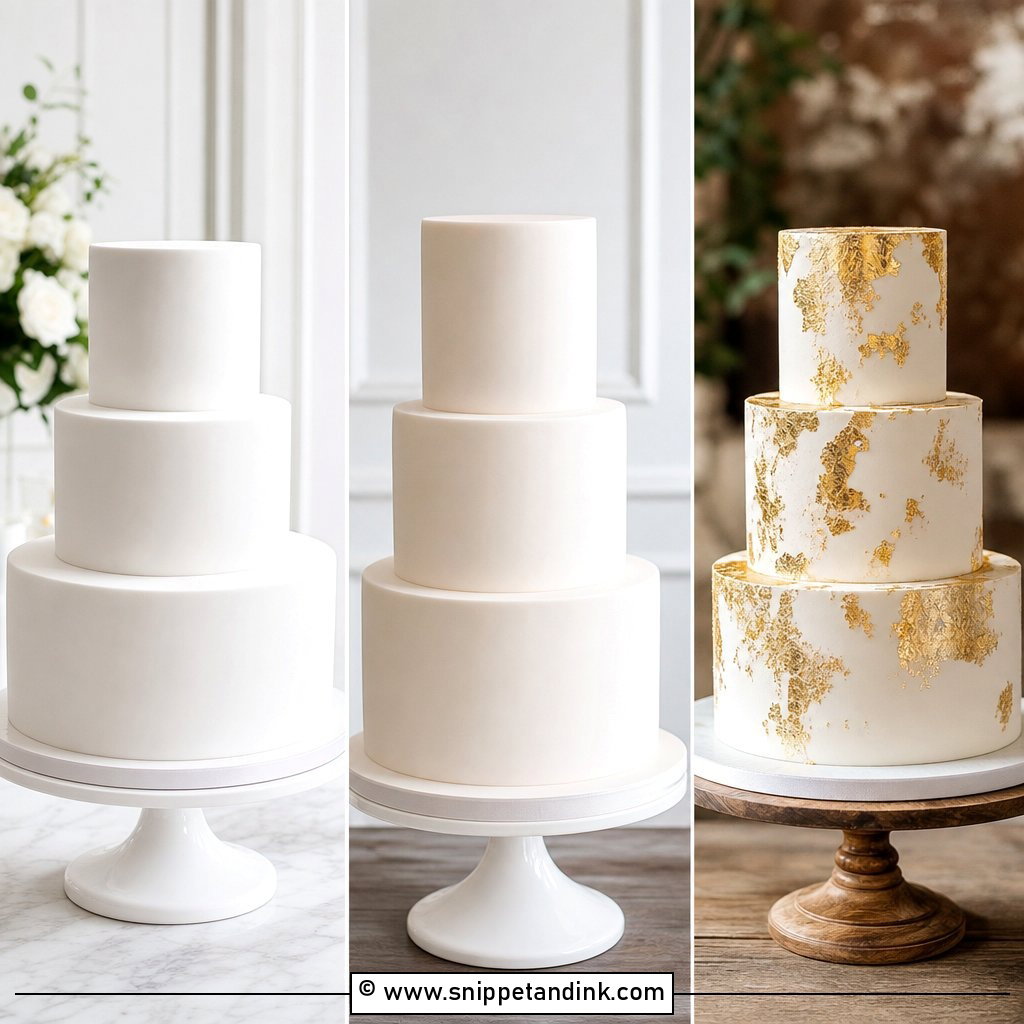
White on white is the design I’d hand to a nervous couple, because very little can go wrong with it. With no competing color, the flowers carry the whole composition, so I spend my time on spacing: roses, lisianthus and ranunculus sit best in small groups with a gap of plain frosting between them. Formal rooms suit smooth buttercream or fondant, and a garden tent suits a softer textured finish. One honest catch is that pure white can look slightly blue under cool LED uplighting, so I usually tint toward ivory unless the dress is bright white. Vanilla bean, almond, lemon and white chocolate keep the inside as light as the outside.
2. Three Tier Floral Buttercream Wedding Cake
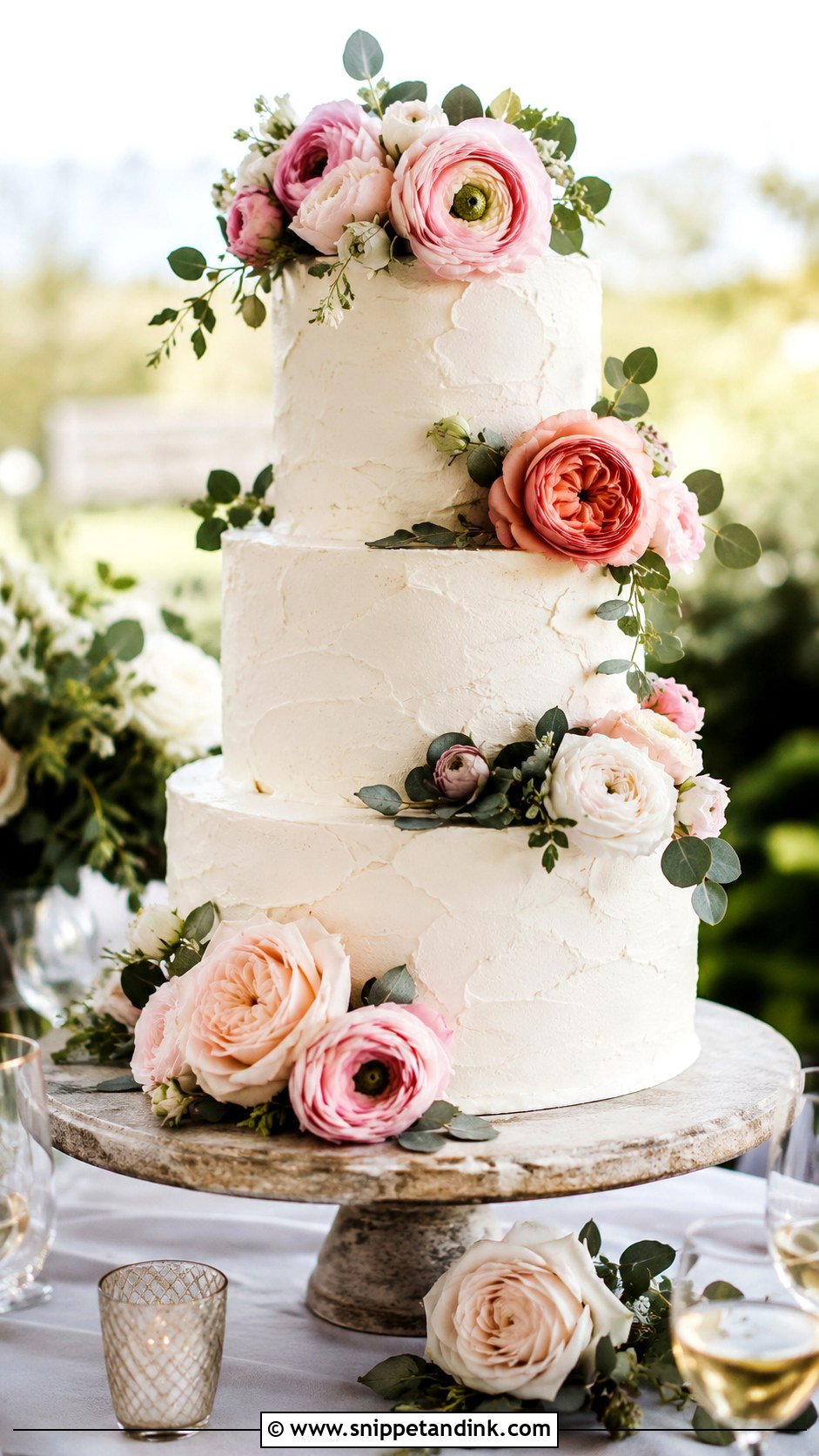
Buttercream is where I’m happiest, but it’s also the finish that reacts most to the room. A crusting American buttercream holds up in moderate warmth, while Swiss meringue tastes silkier and softens sooner once the hall heats up. Subtle horizontal combing or loose spatula swoops hide the small marks that stems leave when they’re pushed in. I place blooms in three small clusters, top, middle and base, so the eye travels down the cake. Vanilla raspberry, lemon elderflower and honey lavender all suit a spring garden reception.
3. Three Tier Floral Fondant Wedding Cake
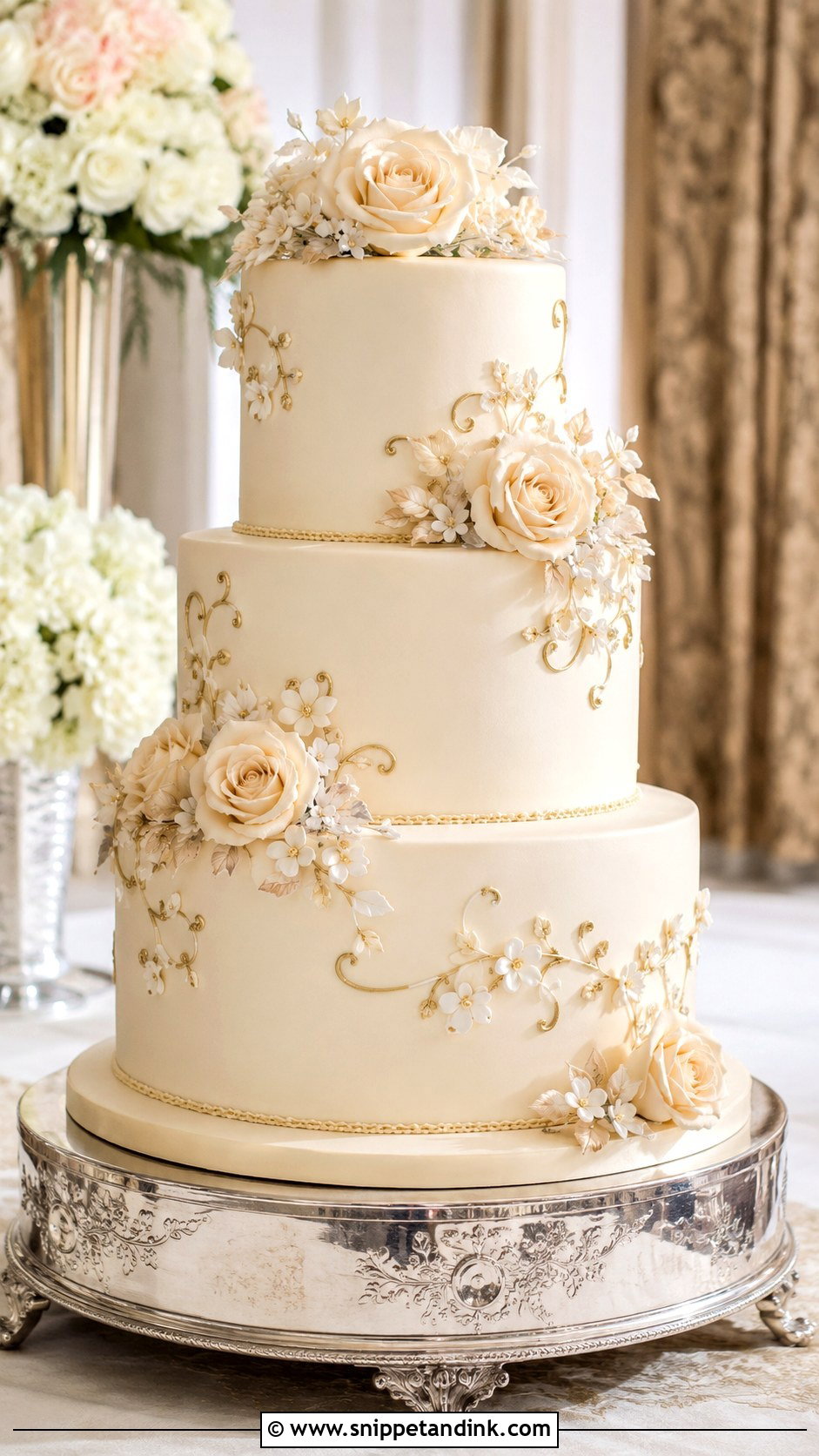
Fondant gives the sharpest edges of any finish and buys you time on display, which matters at a black tie dinner where the cake sits out through cocktails, dinner and speeches. It’s also my preferred surface for heavy sugar flowers, since a firm shell over ganache won’t dent the way soft buttercream does. Where I’d hesitate: fondant dislikes humidity, and it can sweat if the cake goes from a cold fridge into a warm hall. I balance the arrangement with the larger blooms on one side and fillers drifting around the tiers. Underneath, champagne vanilla, red velvet or almond raspberry keep it from being all looks.
4. Three Tier Floral Wedding Cake With Roses
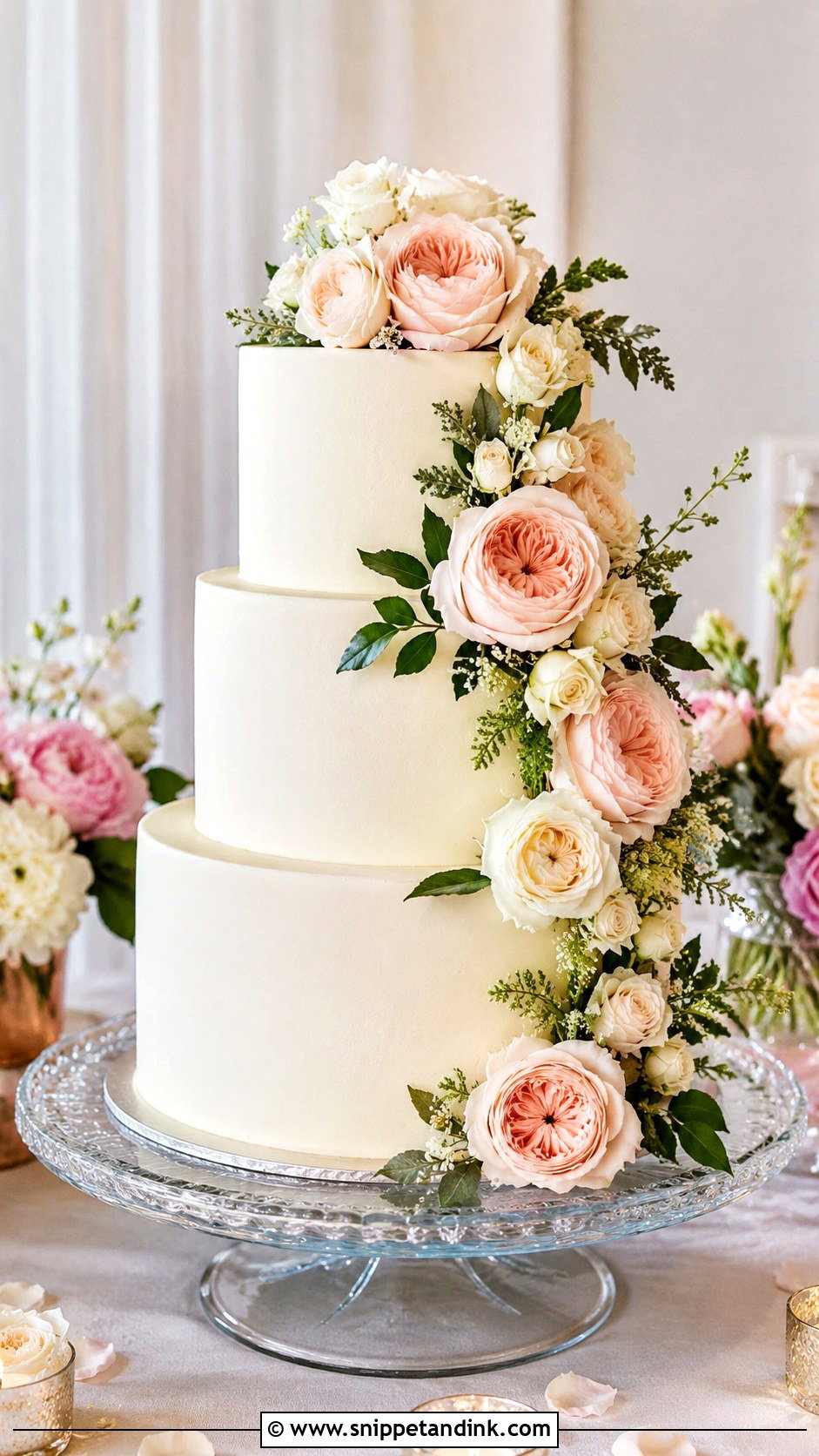
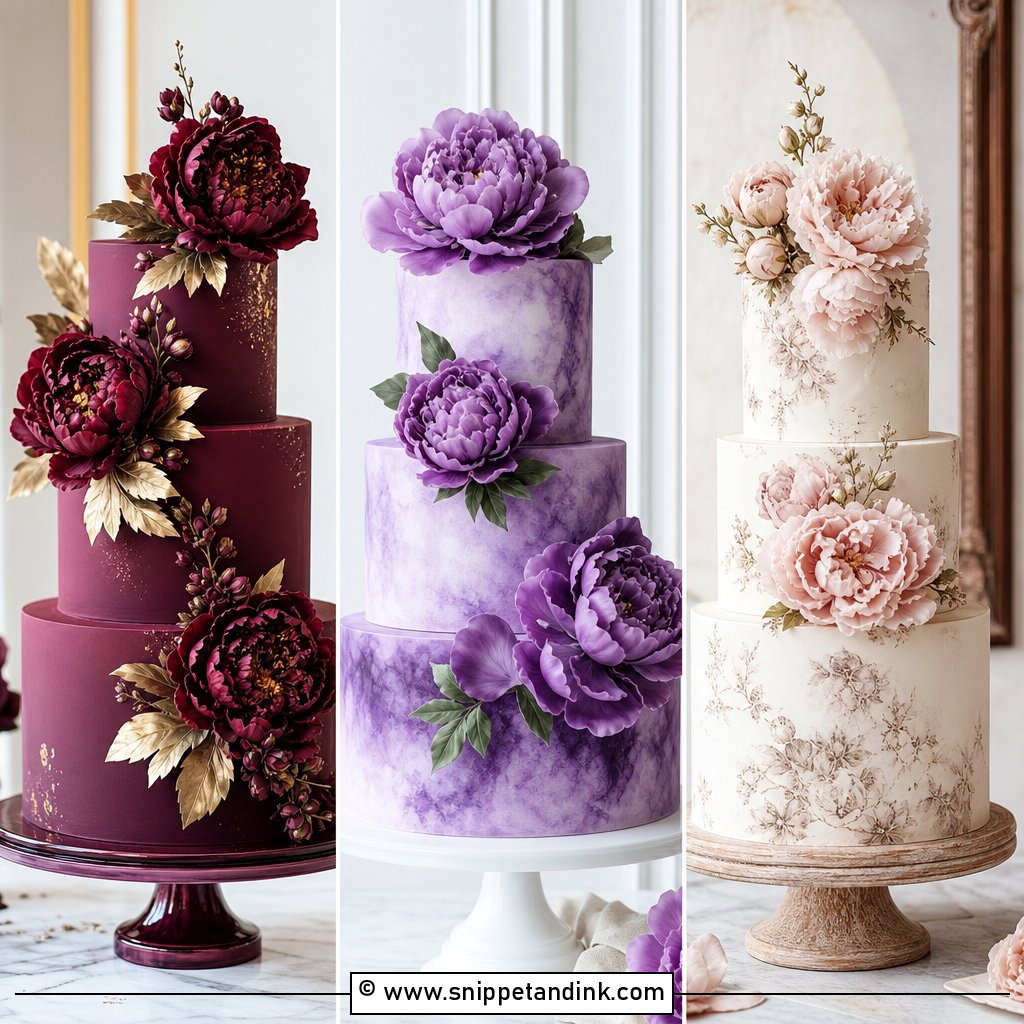
Roses do most of the work for you, so I keep everything else quiet. Garden roses are full and ruffled; spray roses are small enough to tuck along the seam between tiers. Ivory frosting with blush, peach or dusty pink roses is the safe pairing, while burgundy roses with dark foliage on smooth buttercream reads far richer. Placement matters more than quantity, and a top cluster, a short side cascade and a few heads at the base is usually enough. I always ask the florist for unsprayed roses for the cake, because most commercial stems are treated. Vanilla, almond, strawberry or champagne sponge suits it.
5. Three Tier Floral Wedding Cake With Peonies
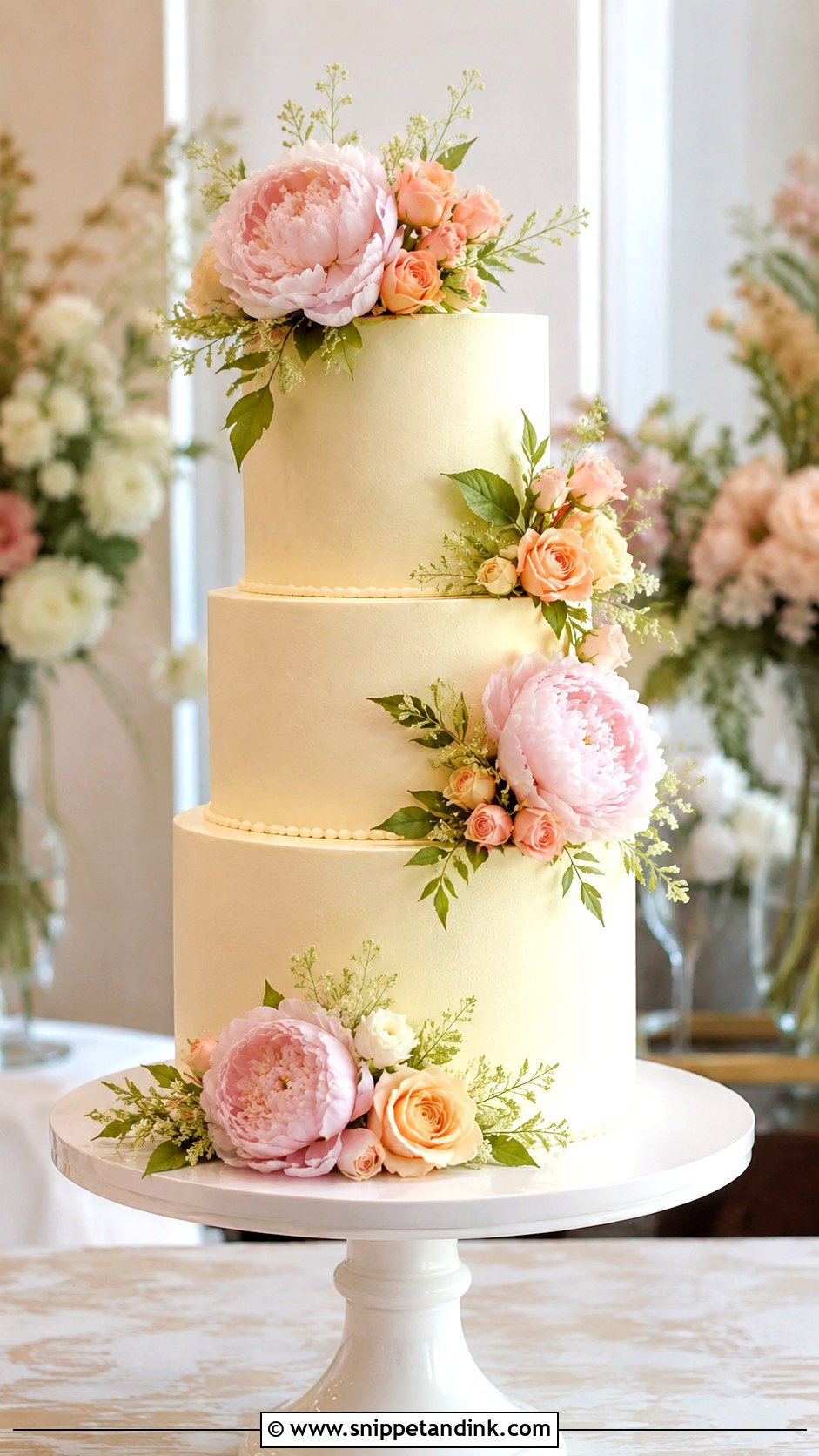
One open peony can nearly cover the top of a small tier, so three or four heads furnish an entire cake. Their weakness is timing. Peonies open fast in a warm room, and a bud that looked neat at noon may be blown wide by the cutting, so I ask the florist to hold them slightly closed and I add them last. Pale pink, ivory, coral and soft peach all sit well on smooth ivory buttercream. Lemon cream, vanilla bean, strawberry champagne or almond fit the late spring weeks when peonies are actually in season.
6. Three Tier Floral Wedding Cake With Greenery
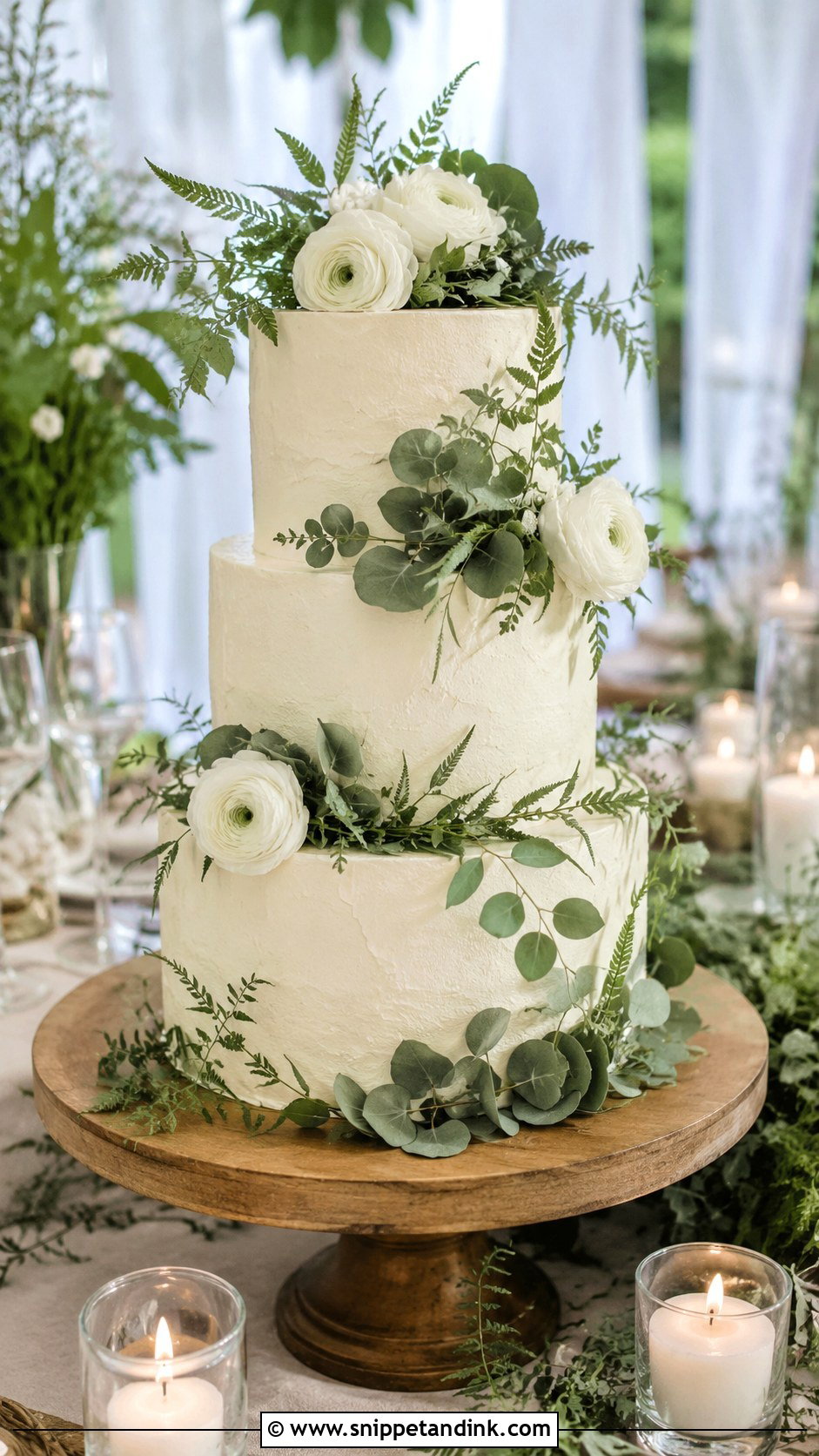
Foliage is underrated on cakes. When the wedding flowers are mostly white, eucalyptus, olive, ruscus and fern give the cake its shape and stop it looking bare. Eucalyptus is one I always set on a barrier, since it isn’t something guests should eat and its oils can mark buttercream. Semi-smooth buttercream keeps the mood relaxed; smooth fondant makes it formal. A couple of white roses or ranunculus soften all that green. Lemon elderflower, pistachio, vanilla bean and coconut match the fresh feel.
7. Three Tier Floral Wedding Cake With Cascading Flowers
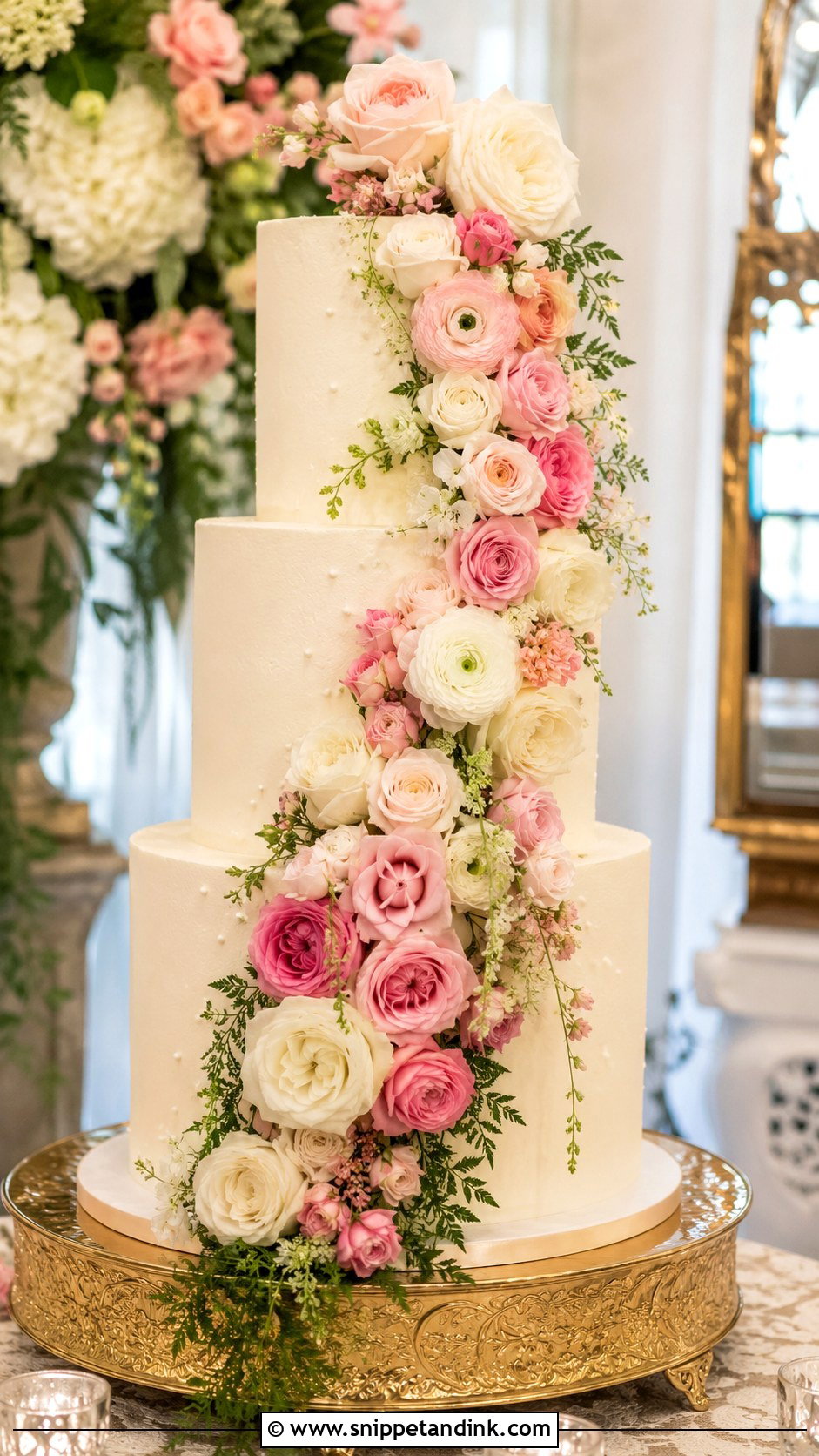
A cascade is the design guests see from the doorway, which is why I save it for receptions with a proper cake table or a floral backdrop behind it. To look natural it needs four sizes of material: large focal blooms, mid-sized flowers, small fillers and something trailing. It also needs structure. I build the heavier parts on picks or a hidden wired spray rather than pushing dozens of stems into the tiers, which weakens the cake and leaves holes when the flowers come off. Keep the frosting plain, whether ivory buttercream, smooth fondant or a light texture. Vanilla raspberry, chocolate ganache, lemon or brown butter caramel sit well inside.
8. Three Tier Floral Wedding Cake With Sugar Flowers
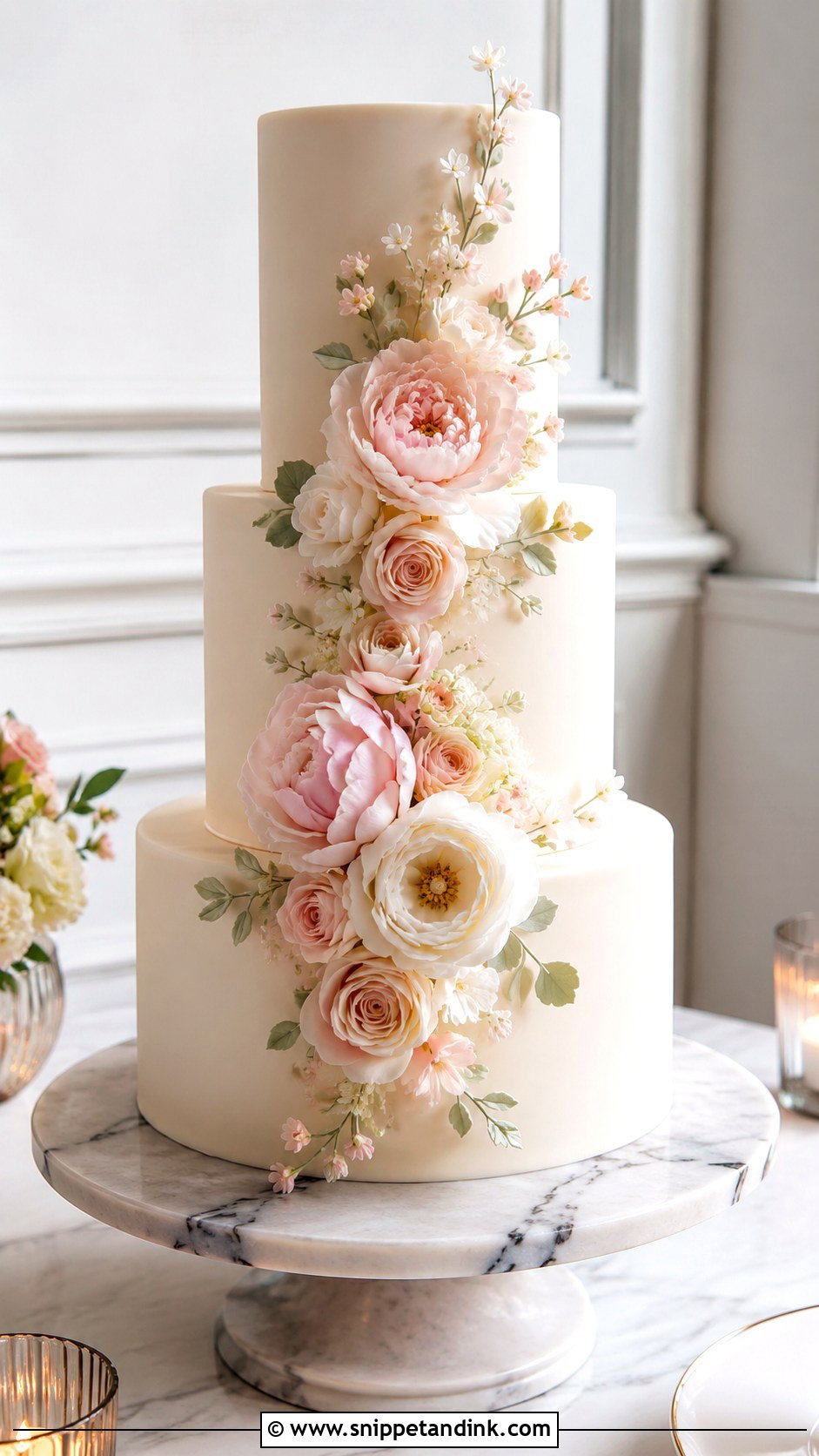
Sugar flowers are my answer when the reception is outdoors in July. They won’t wilt, they can be colored to match a sash or bridesmaid dress exactly, and good ones pass for real in photos. The trade-off is time: a large sugar peony is built petal by petal and dried over several days, so these need ordering well ahead and they’re priced for the hours involved. Humidity softens them, so they go on at the venue, not hours earlier in a damp van. Wired ones aren’t for eating, but they make a keepsake that lasts long after the wedding. Almond apricot, vanilla bean, pistachio raspberry or lemon curd suit the refined finish.
9. Three Tier Floral Wedding Cake With Fresh Flowers
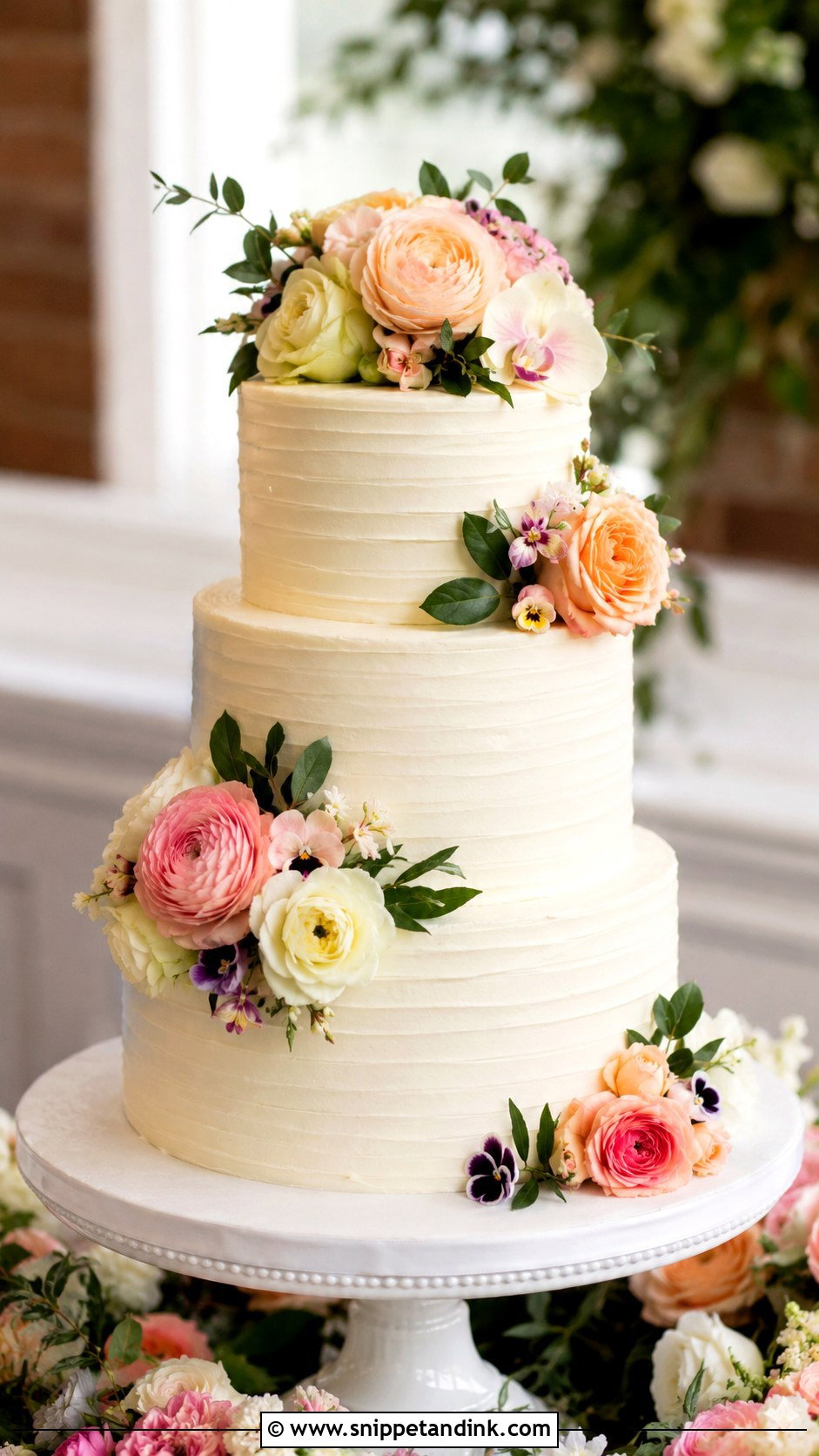
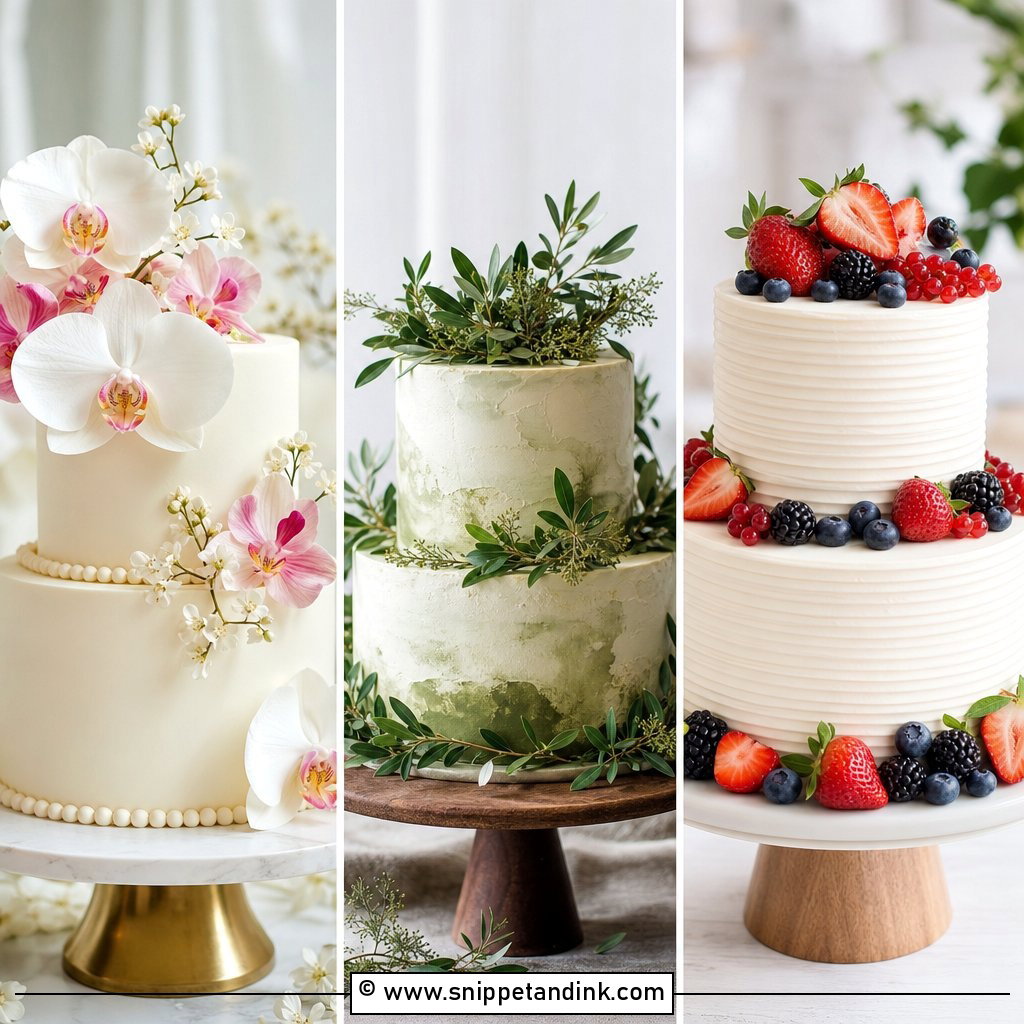
Fresh flowers smell wonderful and usually cost less than sugar work, but they need the most coordination between baker and florist. Nothing goes into my cakes raw: stems are wrapped in floral tape or set into food-safe picks, and only non-toxic, pesticide-free blooms touch frosting. Roses, orchids, pansies and some edible flowers work depending on the season, and ranunculus can join them on a barrier, since it belongs to the buttercup family and is mildly toxic. A few blooms read minimal; fuller clusters read garden. Buttercream is the kindest base for them. Vanilla strawberry, lemon blueberry, coconut cream or honey lavender complete it.
10. Three Tier Floral Wedding Cake With Pressed Flowers
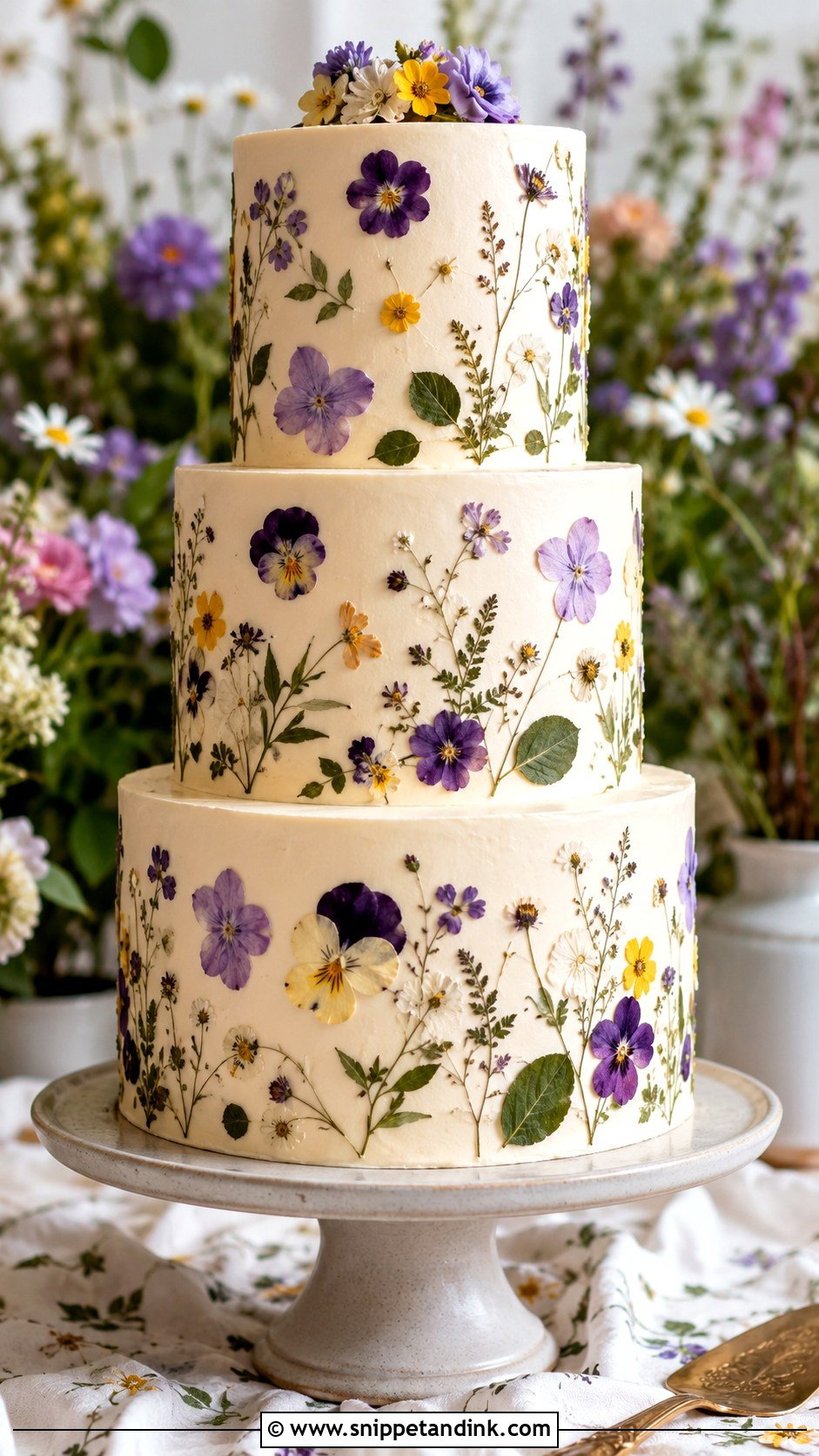
Pressed flowers lie flat against the frosting, which gives a botanical-print look that feels modern and old-fashioned at once. I press them on after the buttercream has firmed in the fridge, because a soft surface lets them slide. Keep the base pale. White, ivory or a light pastel shows the petal colors, while a deep frosting swallows them, and pressed petals do fade if the cake sits in strong sun for hours. Violas, pansies and cornflowers press well; since every petal touches the cake directly, food-safe flowers are the only option here. Lemon elderflower, vanilla honey, lavender or orange blossom suit a cottage garden reception.
11. Three Tier Floral Wedding Cake With Wildflowers
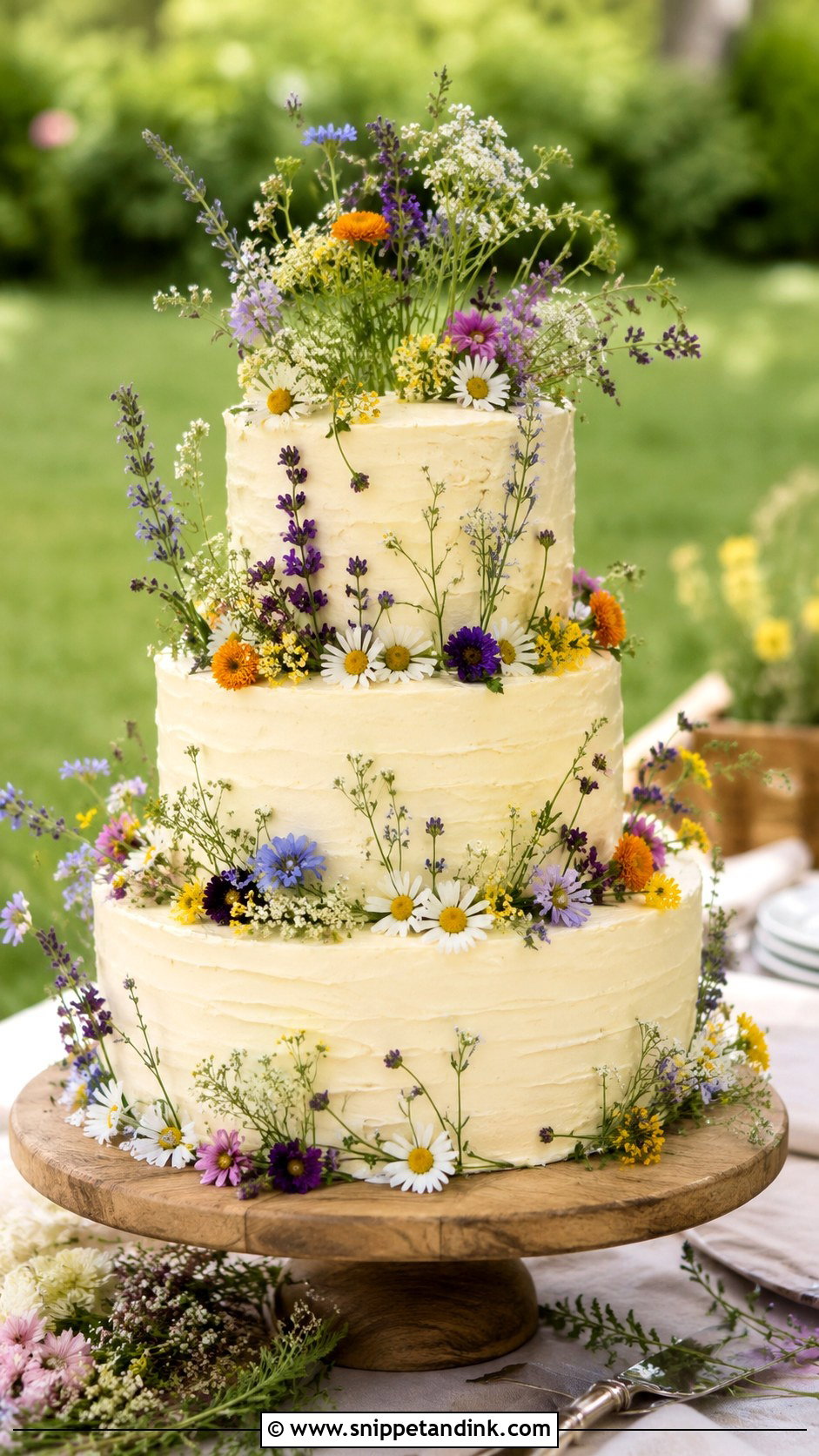
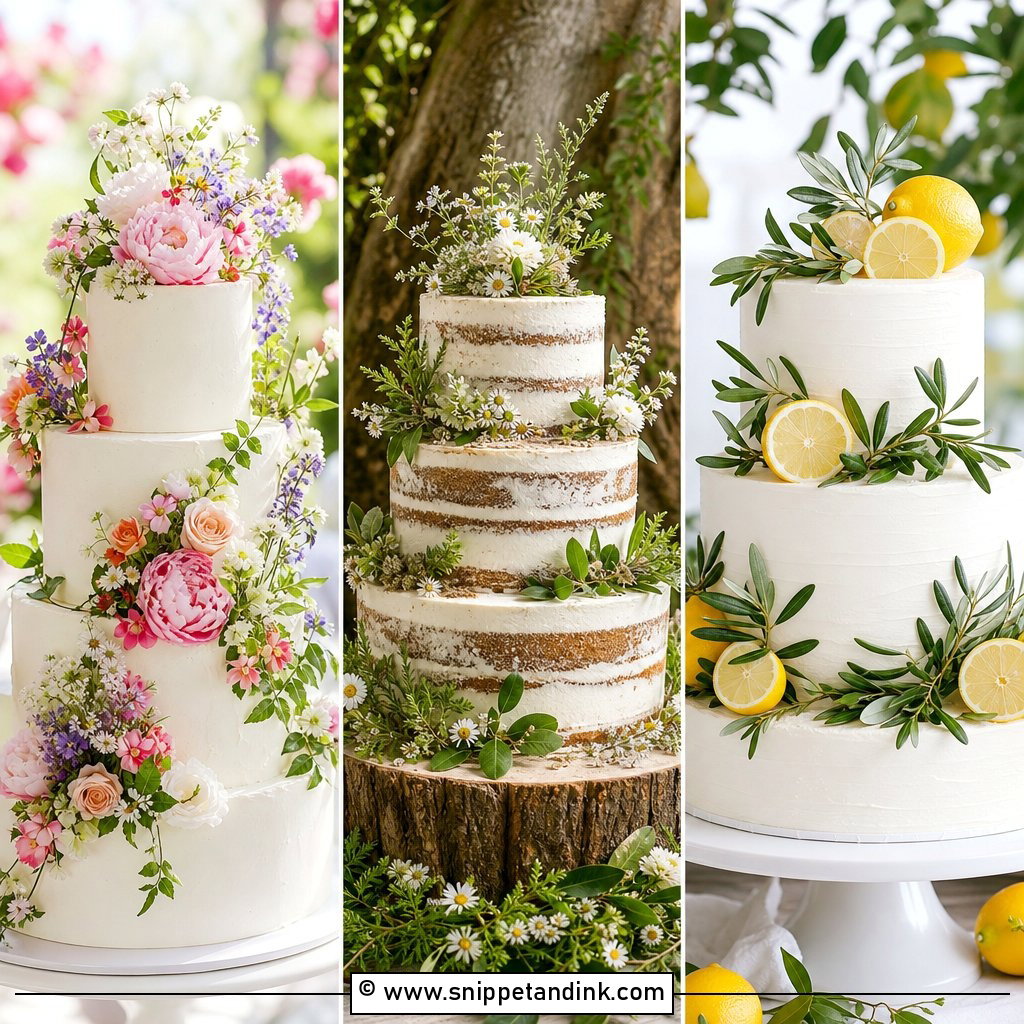
Meadow styling depends on variety, so I avoid matching anything. Daisies, small blossoms, lavender stems, chamomile and light greenery at mixed heights look gathered rather than arranged, and a slightly textured ivory buttercream fits the mood. The practical problem is that many true wildflowers wilt quickly once they’re off water. For a summer barn or backyard wedding I often mix in a few wafer-paper or sugar daisies that won’t droop by the speeches. Lemon, vanilla berry, honey or orange almond keep the flavor as simple as the look.
12. Three Tier Floral Wedding Cake With Orchids
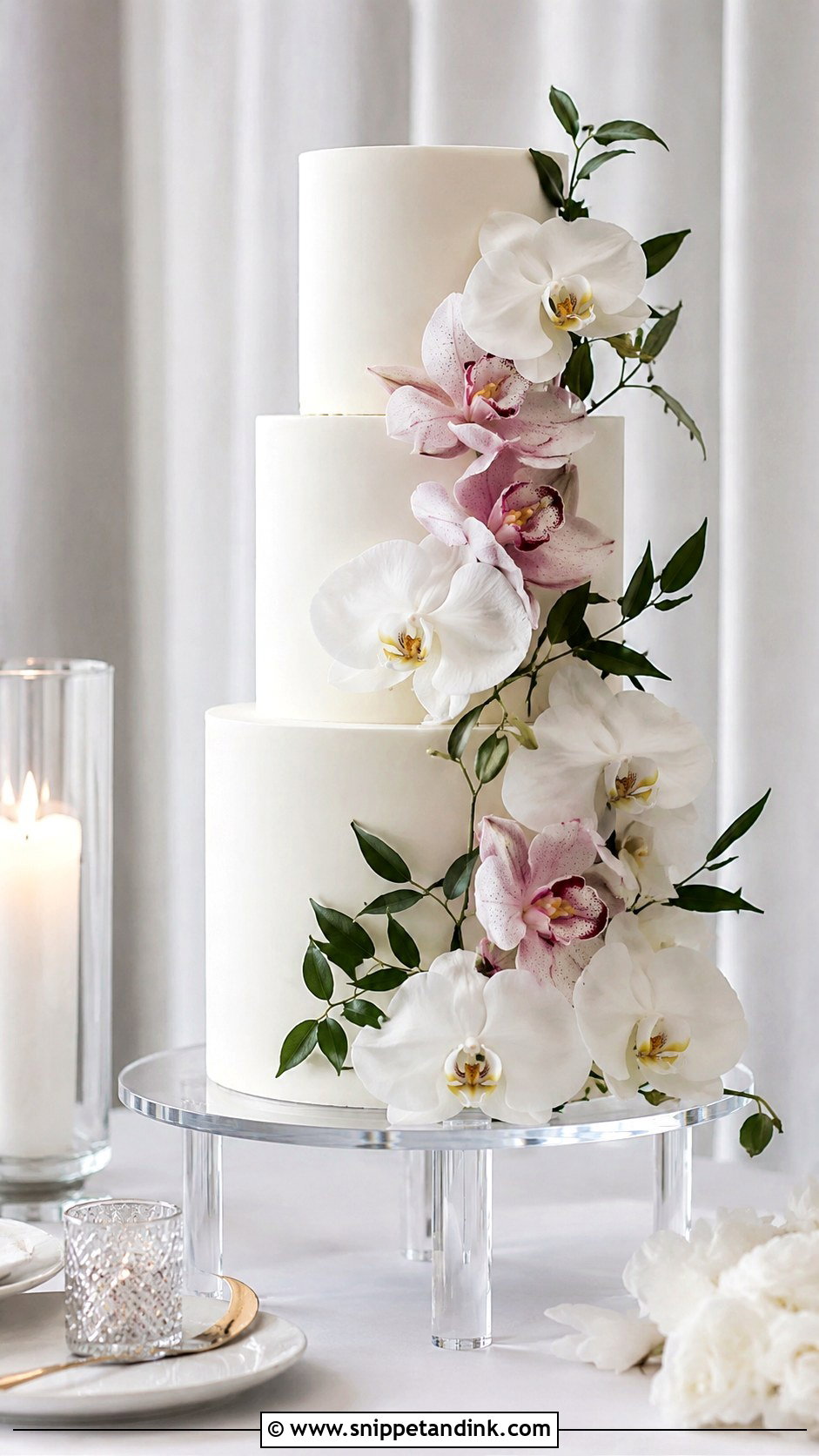
Orchids are what I suggest when a couple wants clean and slightly modern. White orchids look minimal, while pink, purple, or peach orchids push it toward tropical. Their arching sprays make an easy side cascade, and they last well out of water compared with most flowers, which helps on a long display. I keep the frosting sleek so the flower’s outline reads clearly against it. A clear acrylic stand or a marble table suits the look. Coconut, vanilla passion fruit, white chocolate or citrus round it out.
13. Three Tier Floral Wedding Cake With Pastel Flowers
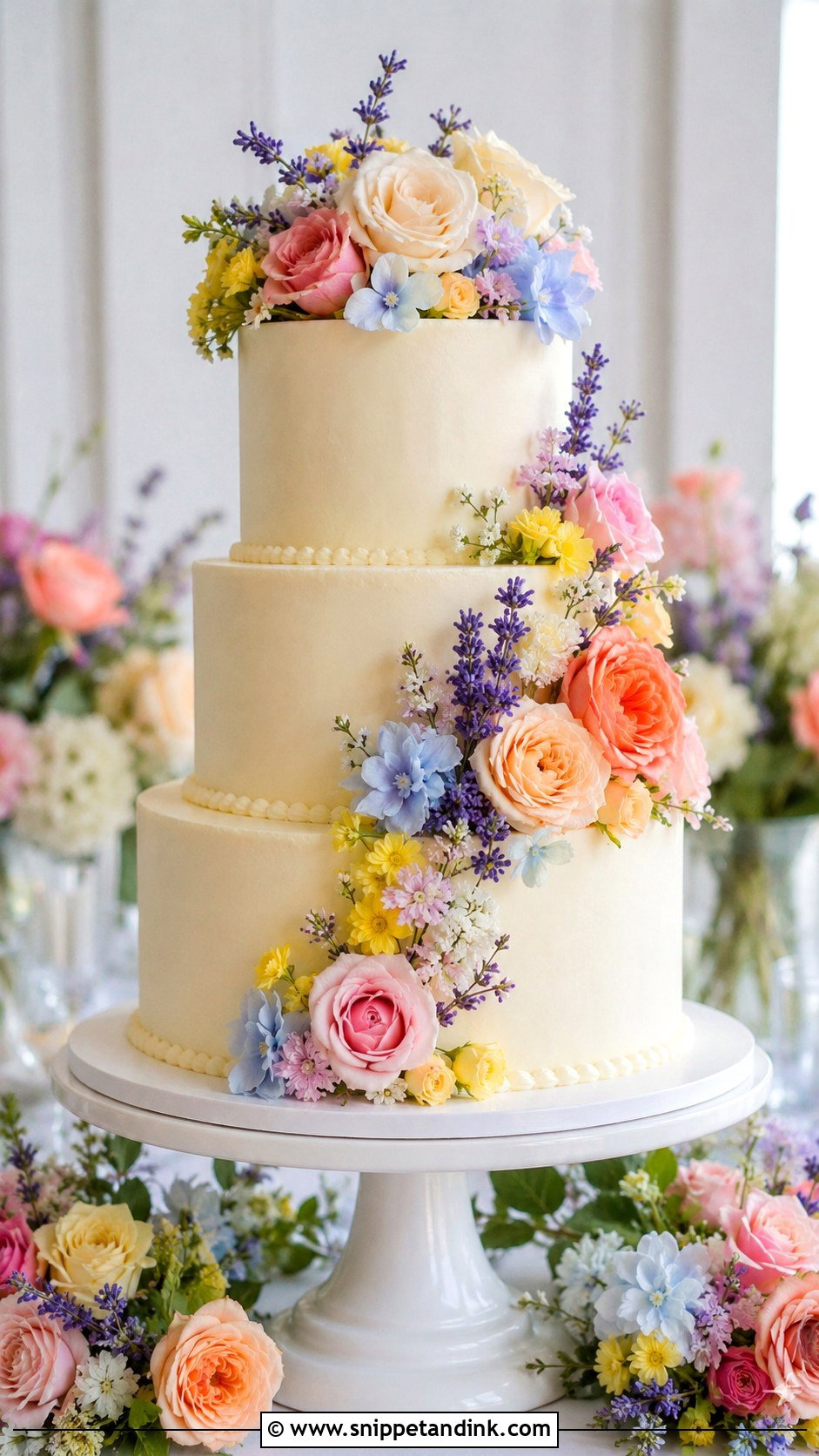
The risk with pastels is that under warm reception light, five soft colors can blur into one beige. I limit it to two or three, say blush with pale lavender, or butter yellow with peach, and keep baby blue as an accent. Small clusters on each tier work, or one diagonal line of flowers from top to bottom, which looks deliberate. Smooth buttercream or light combing keeps the finish out of the way. Strawberry vanilla, lemon cream, almond or raspberry white chocolate suit a daytime spring reception.
14. Three Tier Floral Wedding Cake With Burgundy Flowers
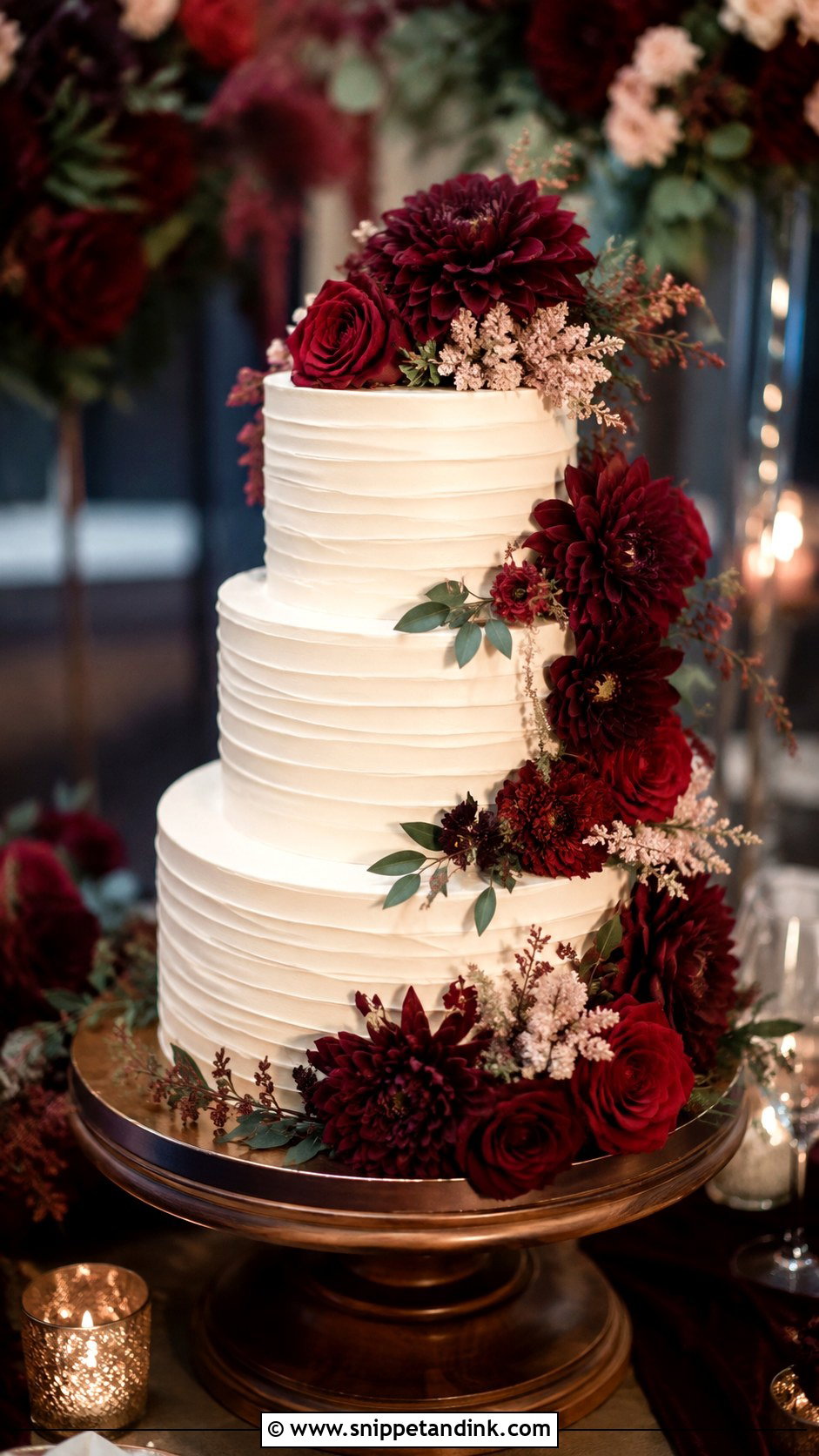
Deep reds behave differently on a cake than in a bouquet. Dark dahlia, rose or ranunculus petals can mark pale frosting if they’re placed damp, so I dry them and set them on a barrier. For autumn and evening receptions they’re worth the care: against ivory frosting with dark foliage and a touch of blush, the cake gains depth that holds up in low light. A white base makes the burgundy pop; champagne or beige warms the whole thing. Chocolate raspberry, red velvet, spice cake or salted caramel suit the season.
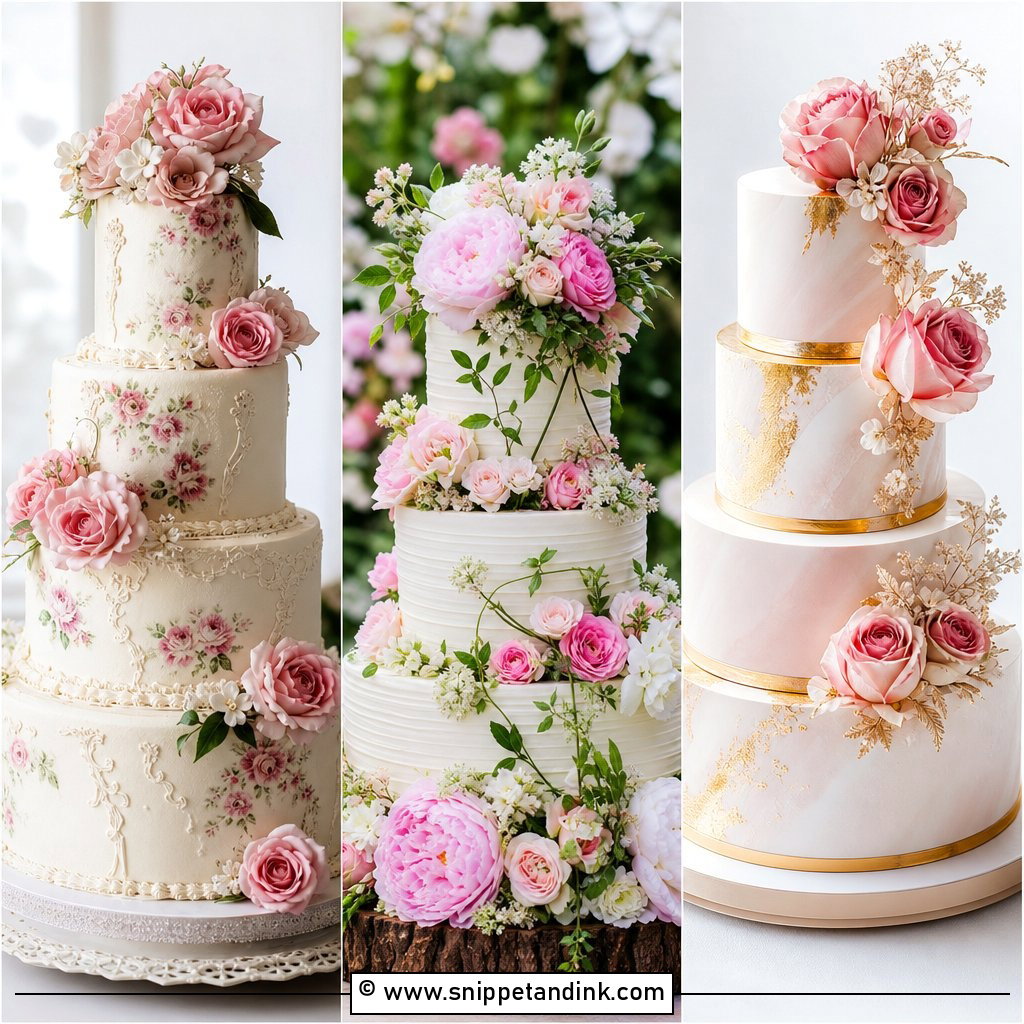

15. Three Tier Floral Wedding Cake With Gold
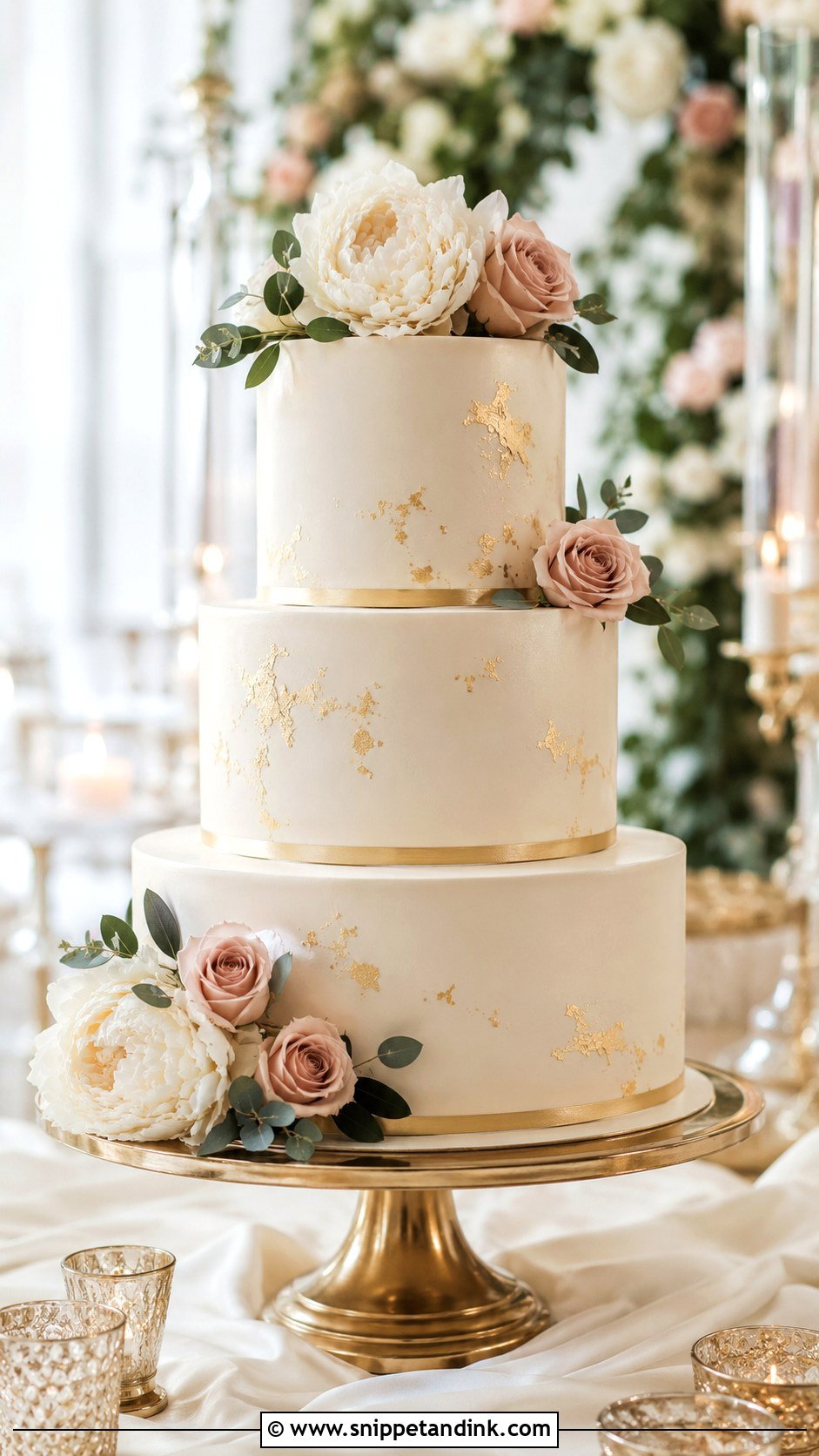
Gold should support the flowers, never the reverse. A little gold leaf on one tier, a painted edge, a stencil or a gold drip each adds enough shine. I apply leaf to a firm, chilled surface, because warm buttercream grabs it unevenly, and I only use edible-grade leaf and lustre; some glitters sold for cakes are decorative and not meant to be eaten. Keep the blooms ivory, blush, peach or white with gentle greenery. Champagne vanilla, almond cream, chocolate hazelnut or caramel pear suit a hotel ballroom.
16. Three Tier Floral Wedding Cake With Ruffles
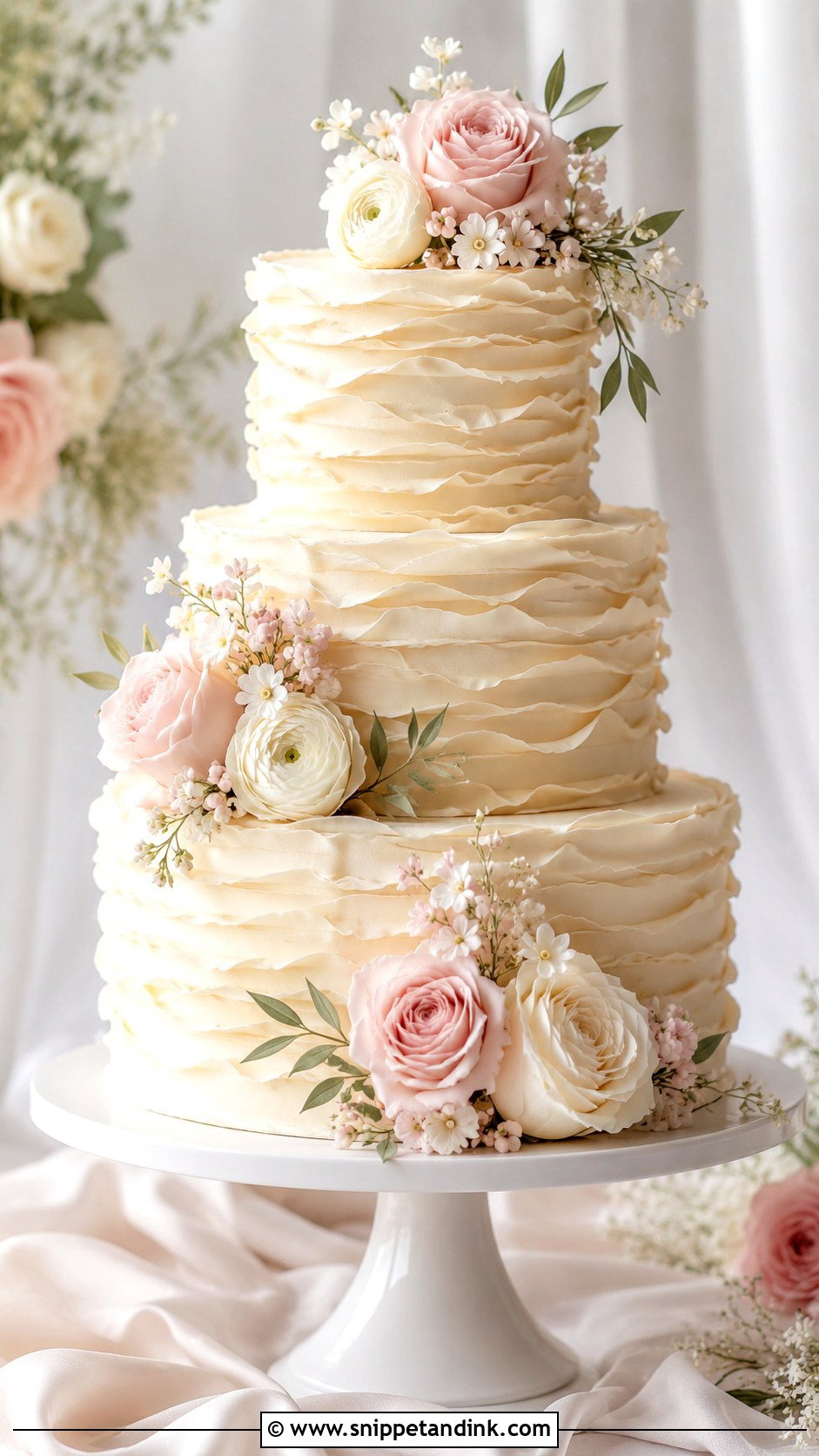
Ruffles make a cake look full with fewer flowers, which helps when the floral budget is tight. They’re also among the slowest finishes to pipe or roll, and buttercream ruffles droop in heat sooner than smooth sides. My usual compromise is ruffles on the bottom tier only, smooth upper tiers, and two small clusters of flowers near the top and base. Pale blush, ivory and cream blooms sit softly against the folds. Vanilla bean, coconut, lemon raspberry or almond keep the inside light.
17. Three Tier Floral Wedding Cake With Hand Painted Flowers
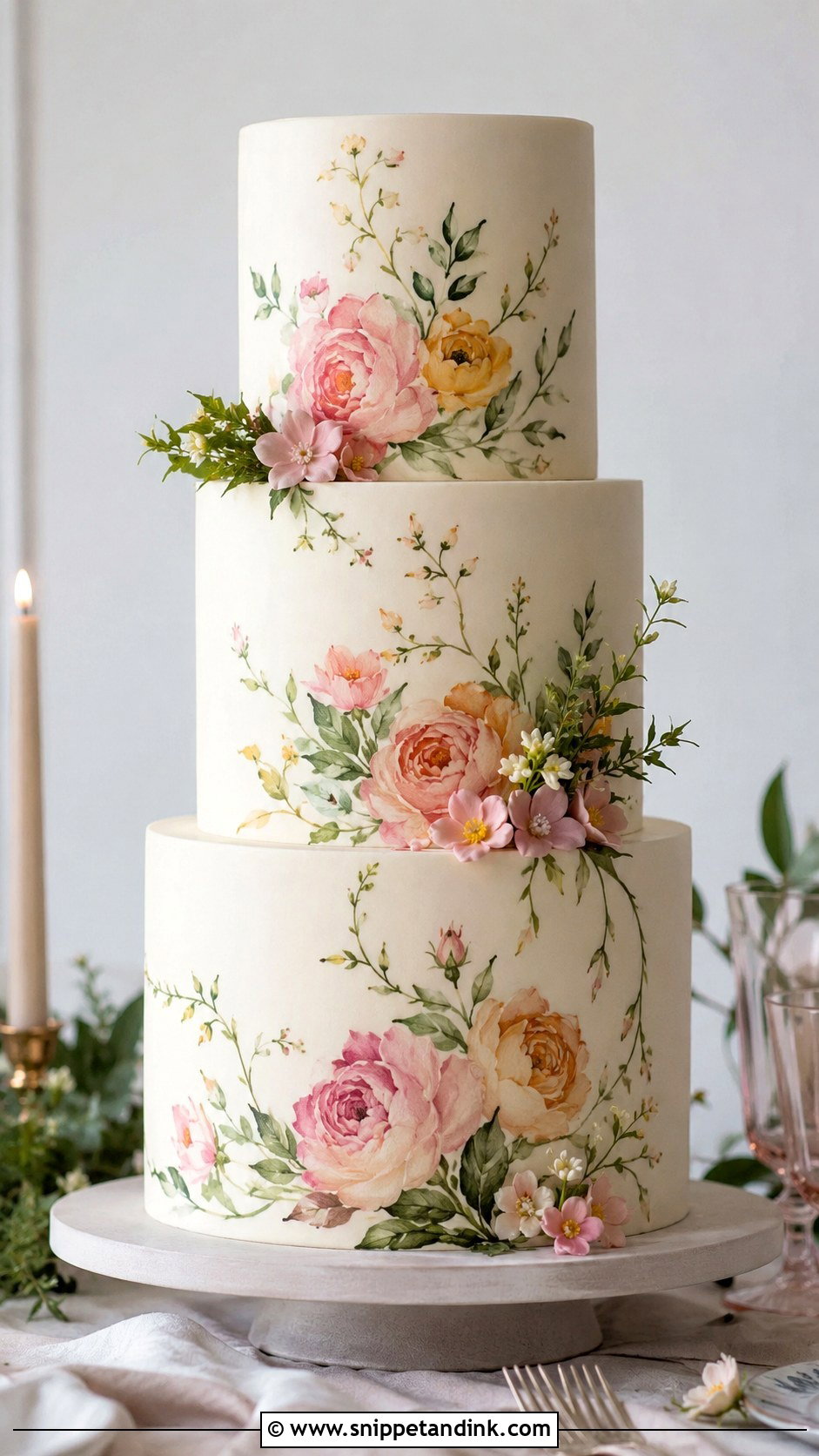
Here the flowers become part of the surface instead of sitting on it, with watercolor roses, fine vines, blue florals or garden branches wrapping each tier. Painting needs a firm, dry canvas, so I work on fondant or very smooth, well-chilled buttercream, and I thin the colors with alcohol so they dry fast instead of dissolving the sugar. A few fresh or sugar blooms add dimension, but too many hide the brushwork. Flavors like Earl Grey lemon, vanilla peach, almond raspberry or lavender honey suit an artistic couple.
18. Three Tier Floral Wedding Cake With Vintage Piping
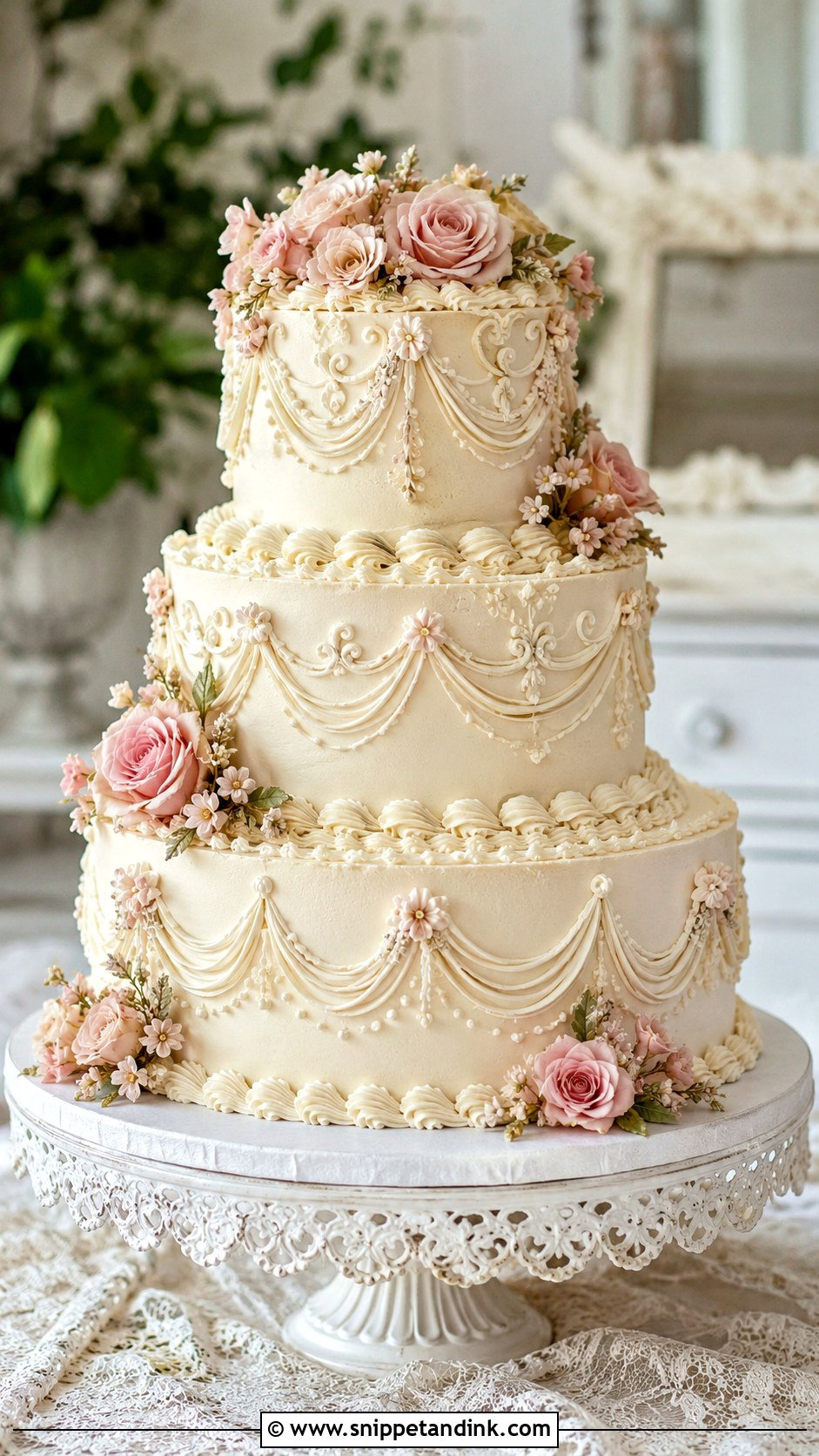
Lambeth-style overpiping is back: shell borders, swags, pearls and scrolls layered tier by tier. It looks nostalgic, and modern flowers stop it feeling dated. It’s slow, exacting work, and a stiff buttercream is the right medium, because a soft meringue buttercream won’t hold crisp shells in a warm room. I keep the palette to ivory, blush or pale champagne so the detail looks delicate rather than heavy, and a few roses or small sugar blossoms are plenty. Vanilla almond, red velvet, chocolate cream or lemon curd fit an estate or ballroom reception.
19. Three Tier Floral Wedding Cake With Blue Flowers
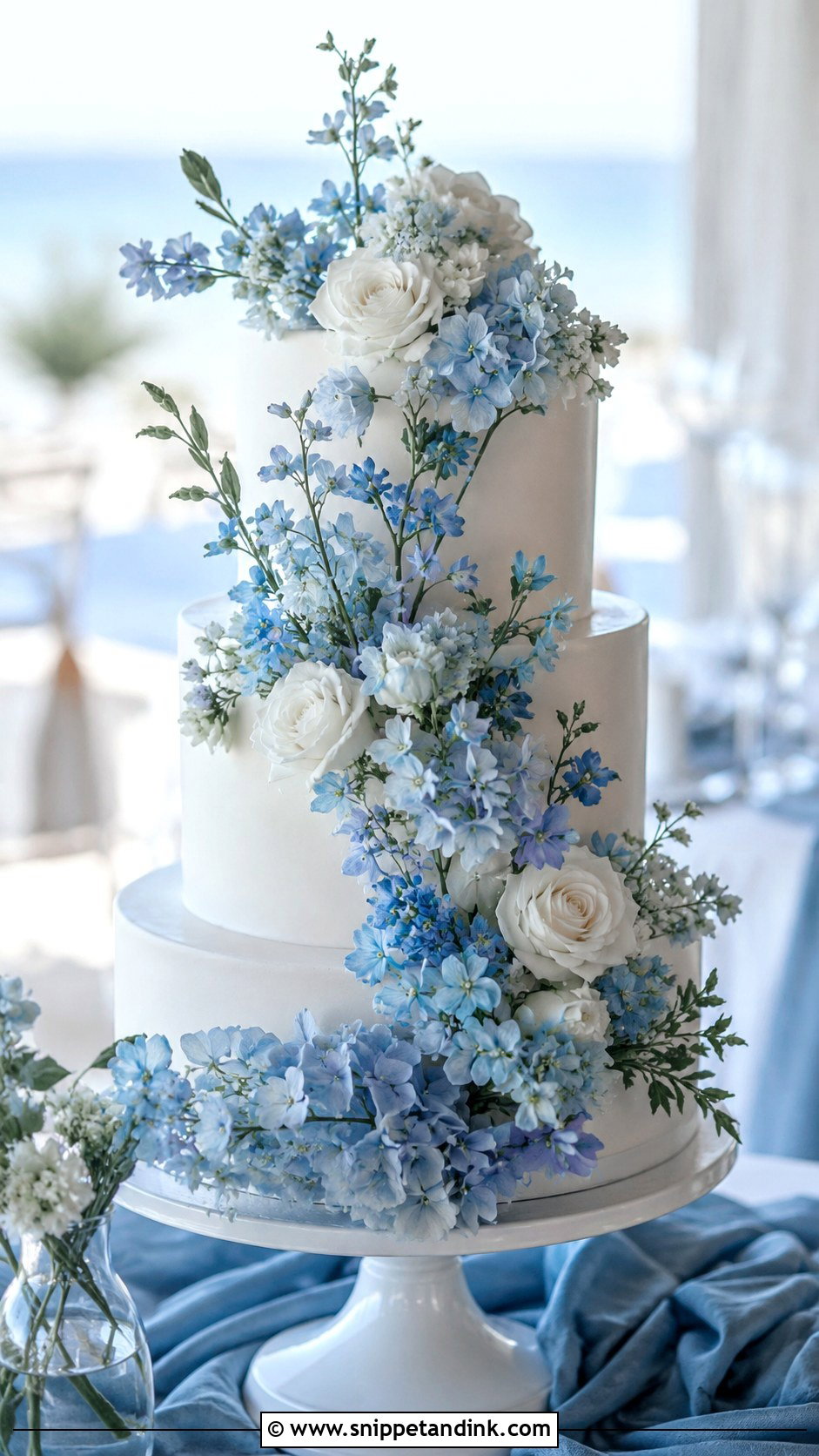
True blue is rare in nature, so blue cakes lean on hydrangea, delphinium and forget-me-nots, or on sugar blossoms tinted to match. Hydrangea is one I won’t push into frosting at all. It’s toxic, and it drinks so much water that it wilts fast once cut off from a source, so on a cake I’d use it only on a barrier or swap it for sugar. White or ivory frosting gives a crisp coastal look, and pale blush blooms soften it. A light watercolor wash adds depth. Lemon blueberry, vanilla cream, almond or white chocolate raspberry tie in the color.
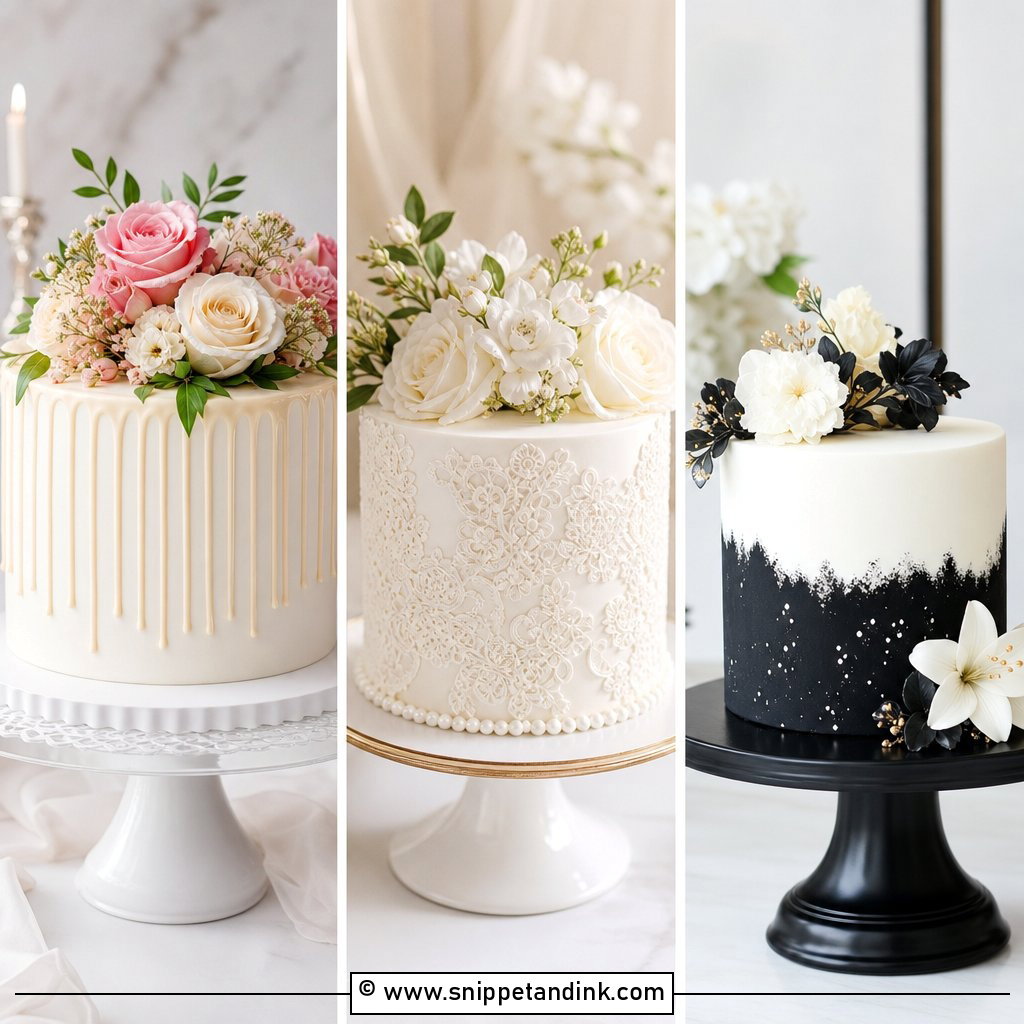
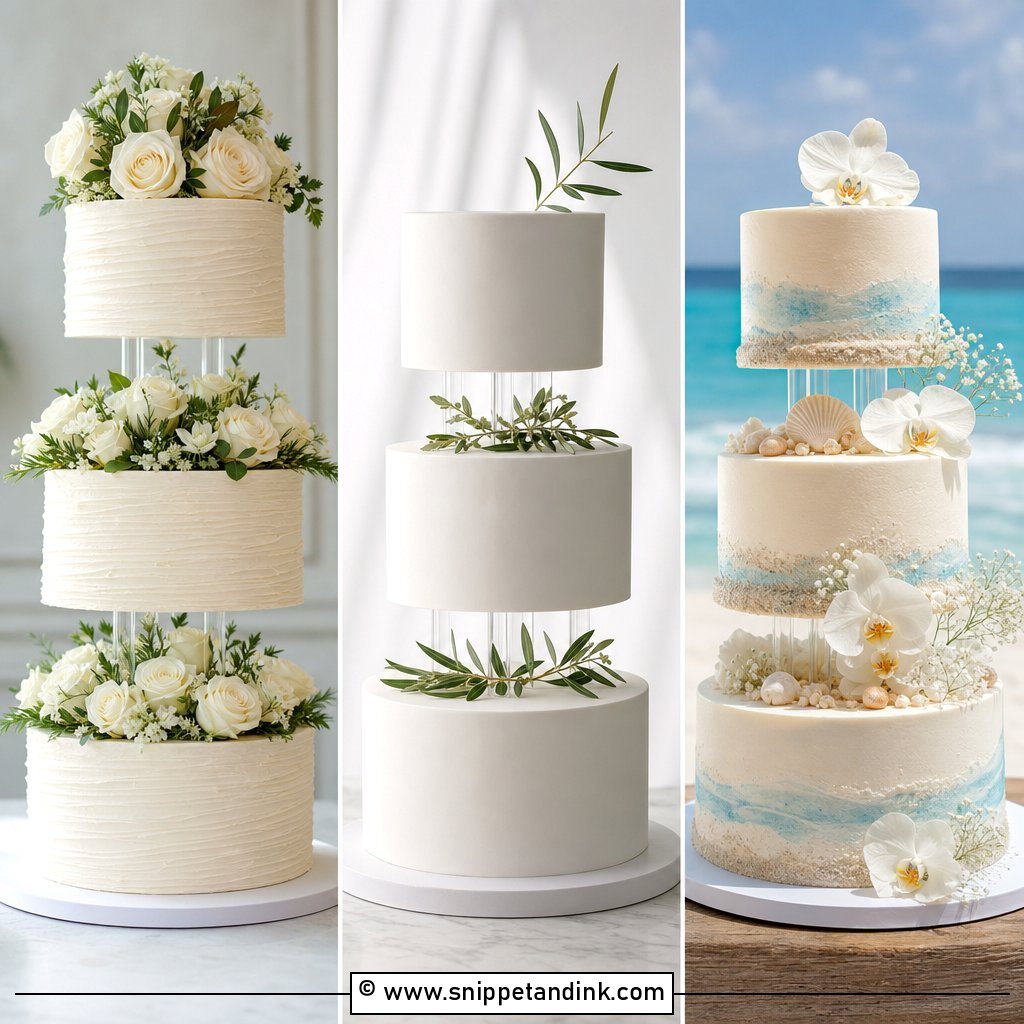


20. Three Tier Floral Wedding Cake With Fruit And Flowers
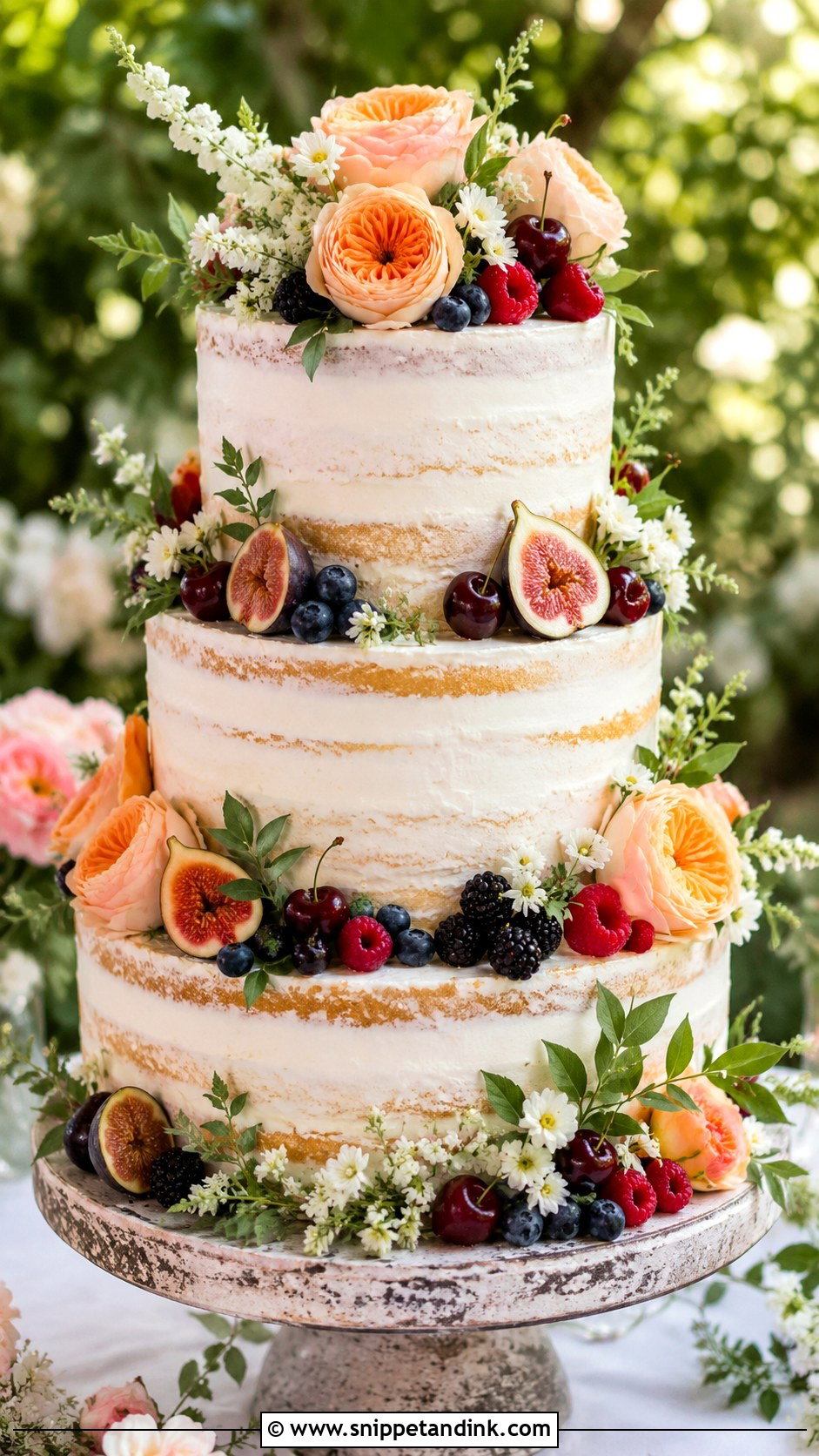
Fruit and flowers together suit late summer, when both are at their best. Berries, figs, citrus slices, grapes or cherries tuck between the floral clusters. Cut fruit weeps juice onto frosting within a few hours, so I use whole or halved pieces, glaze them lightly and add them at the venue. Semi-naked buttercream suits this most, though the exposed sponge dries out faster and shouldn’t sit uncut all evening. Match fruit to flavor: lemon with berries, vanilla with figs, almond with cherries, orange blossom with citrus. I’d point this one toward garden, vineyard-style, and summer weddings.
Which Real Blooms I Let Touch the Frosting
Most florist flowers were grown for vases, not food, and many are sprayed. So with fresh flowers I treat the cake as food first:
- Ask the florist for unsprayed or organic stems for the cake, kept apart from the centerpiece buckets.
- Wrap every stem in floral tape or set it in a food-safe pick or straw, so sap and water never reach the sponge.
- Keep toxic flowers off the cake or on a barrier such as a sugar plaque. Hydrangea, lily of the valley, sweet pea, foxglove, oleander and daffodil are on my list; ranunculus and anemone are mildly toxic too.
- Lift every decorative flower off before cutting, and tell the catering team which ones are edible.
Flowers grown to be eaten, like violas, pansies, calendula, cornflowers and unsprayed roses, are the only ones I’m happy to press straight into buttercream.
The Hours Between Delivery and the First Cut
Three tiers usually travel in separate boxes and get stacked at the venue, with dowels or straws in the lower tiers carrying the weight above. So the table needs to be set, level and out of direct sun before your baker walks in. A spot under a window or next to the band’s speakers is asking for trouble.
Heat, condensation and late dinners
Buttercream wants a cool room, and many bakers will refuse responsibility for a cake displayed outdoors in summer sun. Fondant has the opposite problem: a chilled cake meeting a humid room beads with condensation, which is why I let it come up to temperature slowly in its box. Fresh flowers go on last, ideally within an hour or two of guests arriving. If dinner runs late, ask the venue to cut sooner rather than later, because firm frosting and fresh petals look far better in the cutting photos than a cake that has wilted for five hours.
Let the Season and the Room Decide First
If you’re still undecided, look at what grows in your wedding month and how warm the reception room will be, then let those two facts narrow the list. White flowers on buttercream, burgundy blooms for autumn, pressed petals, painted tiers and sugar work all suit three tiers, but not every one suits every room. Taste matters as much as the look, so pick a flavor you’d happily order again on an ordinary weekend. Bring your florist’s flower list to the tasting and I can plan the cake flowers around it.
You'll Like These Ideas:





Leave a Reply