
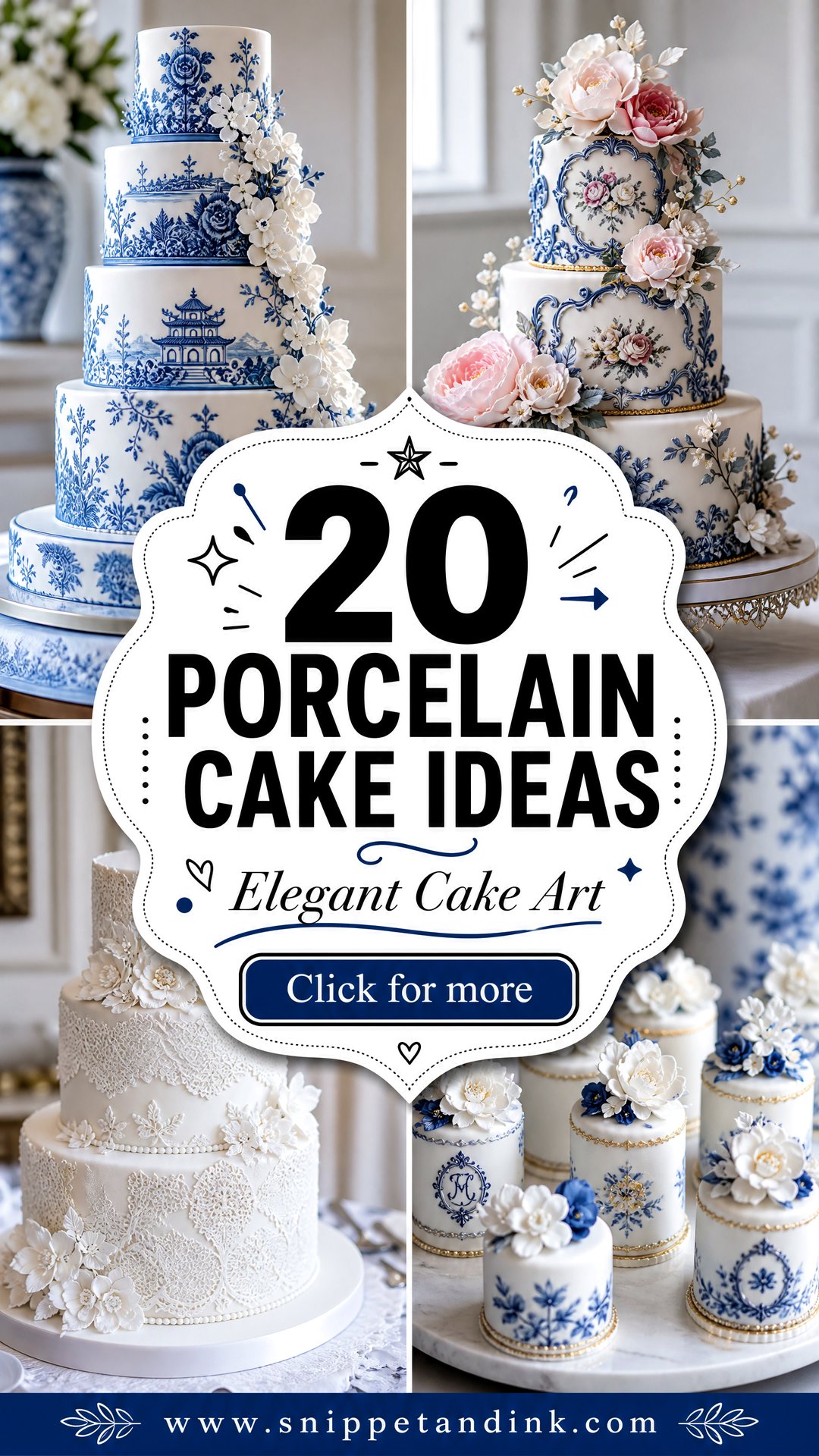
Porcelain cakes borrow from the china cabinet: heirloom plates, Delft tiles, chinoiserie vases and the plain glazed white of a good teacup. When I paint one, I’m aiming for that same restraint. The pattern needs white space around it, the blue has to stay crisp, and the tiers have to be smooth enough to pass for glaze. Some couples want a traditional cobalt design, others a softer watercolor or textured take. Below are 20 versions I’d happily put on a reception table, along with what each one asks of the baker and where it can go wrong.
The Brushwork Behind a China-Pattern Cake
Most couples assume every porcelain cake is painted by hand. Some are, and some aren’t, and the method changes the look, the price and the timeline.
Painted by Hand
I mix blue gel color with a little clear alcohol or lemon extract, which evaporates and leaves the pigment behind, and paint onto fondant that has firmed overnight. Fresh fondant is too soft and the brush leaves dents. It’s slow work, which is why hand-painted tiers cost more.
Printed or Stenciled
Edible printed sheets or wafer paper can reproduce a pattern quickly and precisely, which suits repeating tiles or a design copied from your own china. Stenciling with royal icing gives raised, crisp motifs. Both look cleaner and more uniform than painting, and many bakers combine them, printing a border and hand painting the main flowers. If the timeline is tight or the budget is firm, printing is an honest compromise: across a room guests rarely notice, though a close-up photo will show the difference.
1. Blue And White Porcelain Wedding Cake
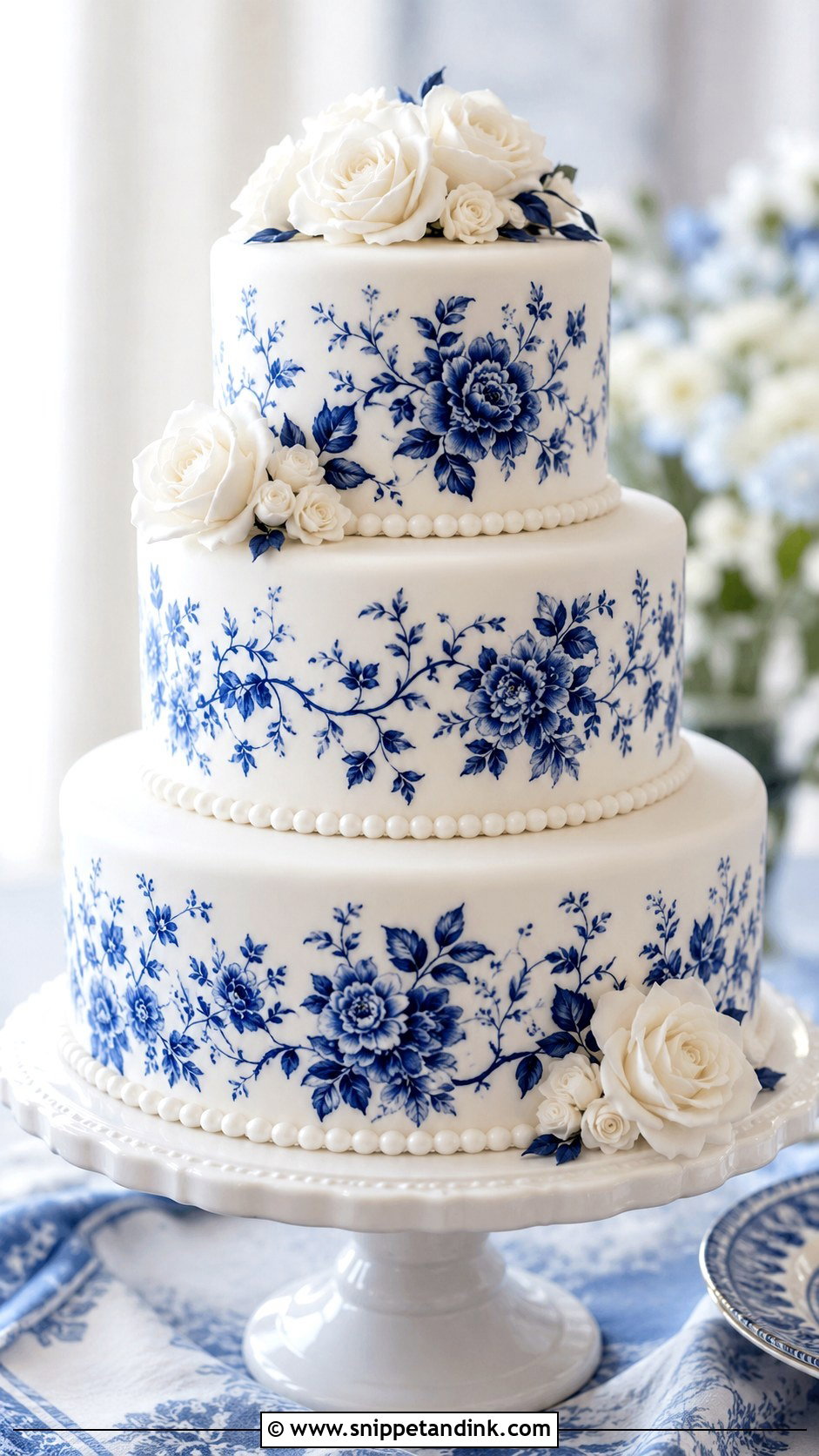
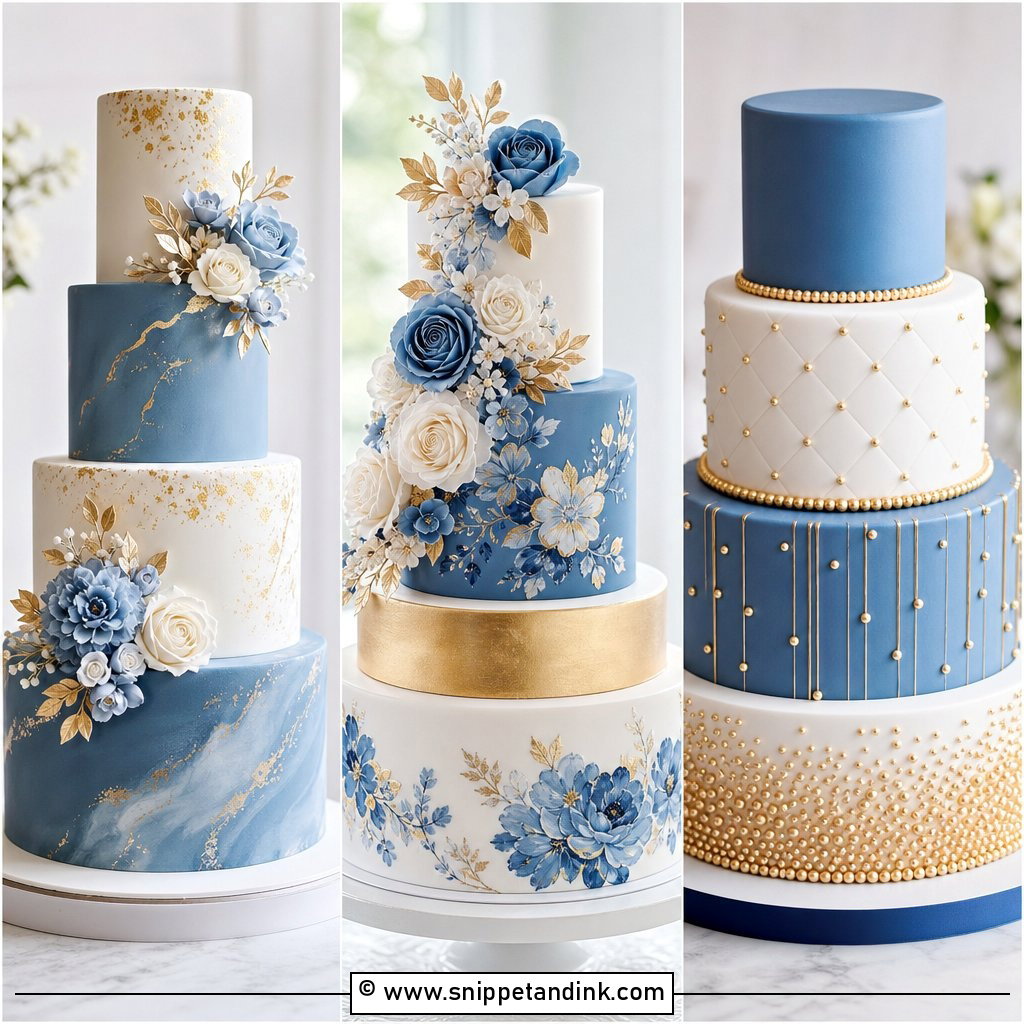
Cobalt on white is where this whole style begins. I start with smooth white fondant or very well-chilled buttercream, then paint florals, scrollwork or pottery borders in blue. Three tiers give room to vary the pattern: a simple top, a scenic middle, a bolder floral border at the base. I keep any extra decoration to white roses or a narrow pearl trim, because anything colorful competes with the blue. It slots easily into blue wedding decor.
2. Chinoiserie Porcelain Wedding Cake
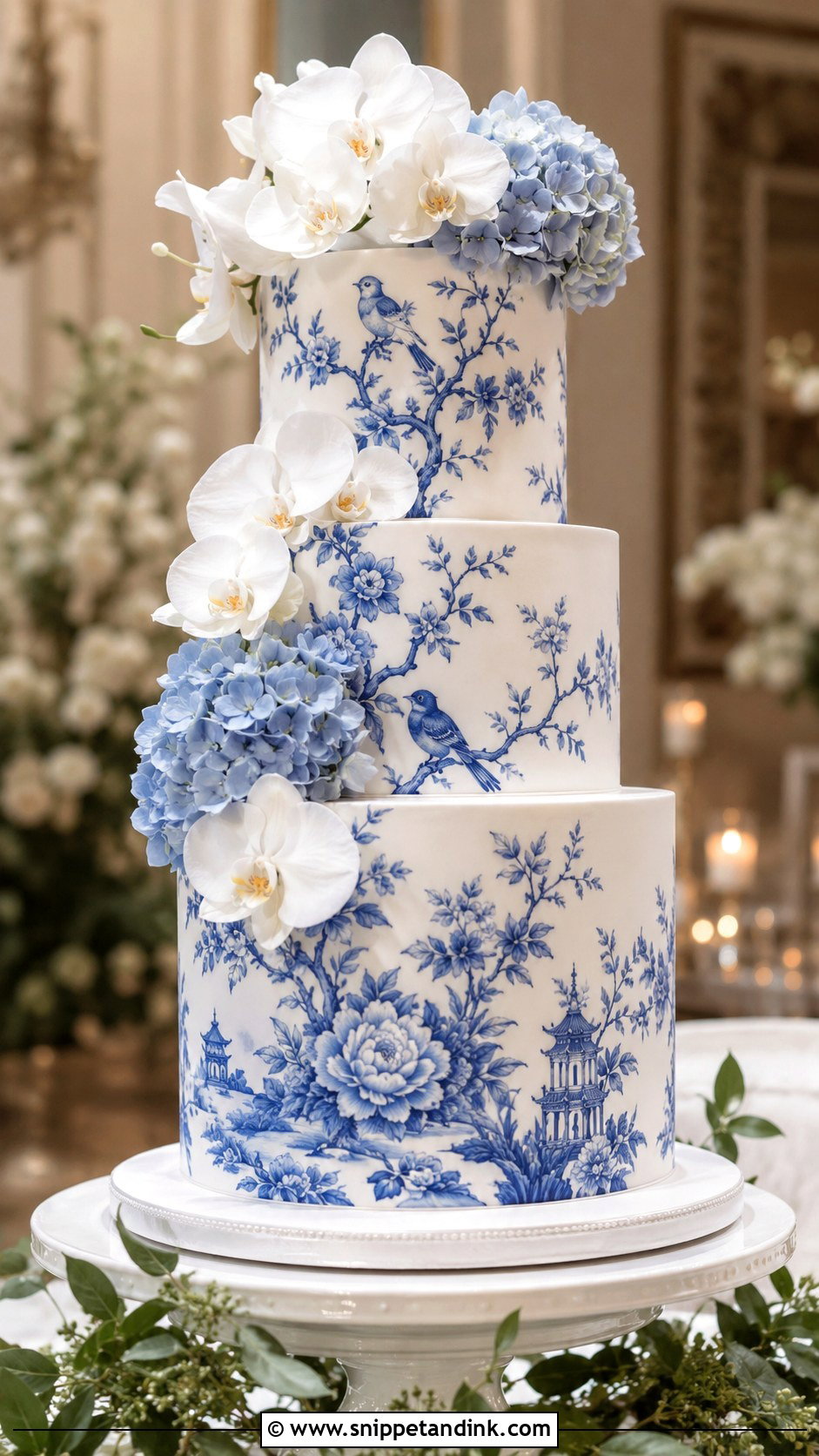
Chinoiserie is the most illustrative version: painted branches, small birds, garden scenes, peonies and climbing vines on a white cake. The temptation is to fill every gap, but the pattern reads as fine china only when the branches have room. A tall, slim tiered shape helps, almost like a ginger jar. I’d add flowers sparingly, perhaps a few white orchids or pale blue hydrangea, and skip glitter entirely; this design looks best with no sparkle at all.
3. Delft Blue Wedding Cake
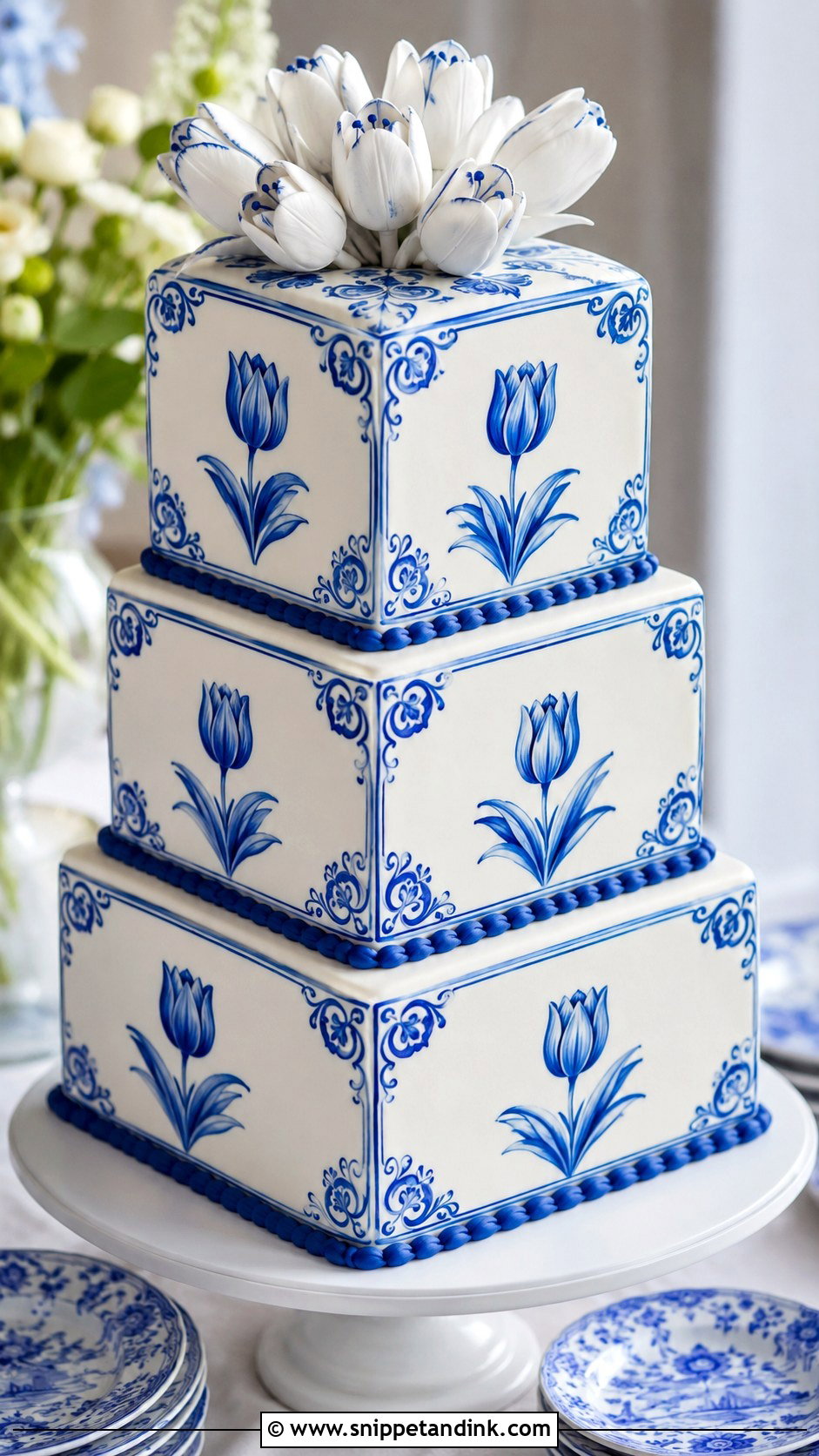
A Delft blue wedding cake follows Dutch pottery: tulips, small leaves, curling borders, windmills and tile-like corners. Square tiers make the most convincing version because each flat side becomes a tile; round tiers read more like a painted vase. Delft painting usually has looser, slightly uneven brushwork, so I don’t overwork it. White sugar tulips or a slim blue fondant edge finish it in a way that nods to the pottery.
4. Porcelain Floral Wedding Cake
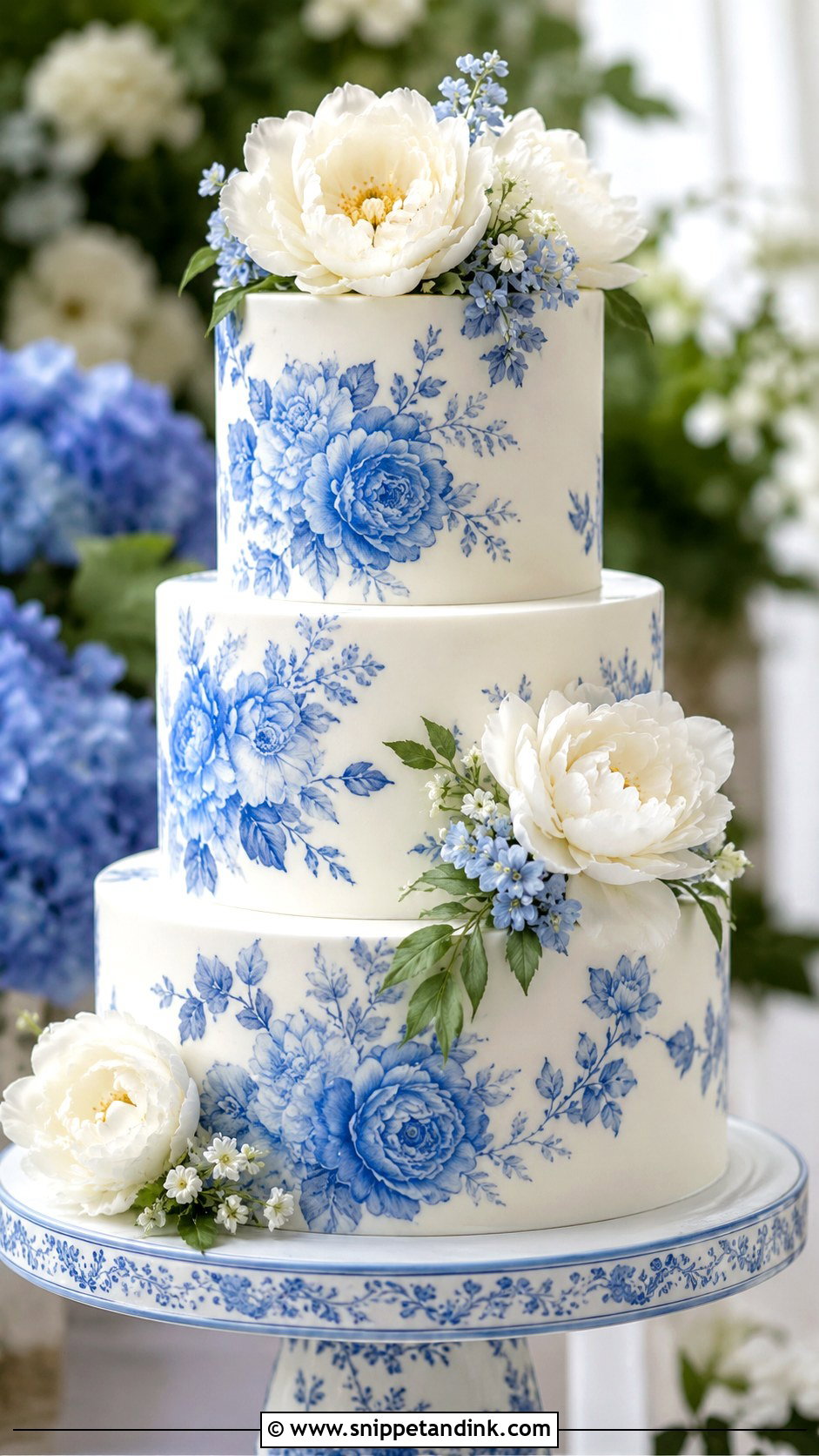
Painted flowers soften the porcelain look and make it feel romantic rather than formal. Blue painted roses, peonies, cherry blossoms or vines are brushed onto white fondant with very thin strokes, the way they’d appear on a china plate. I often add a few dimensional sugar flowers in the same shapes, so the painted pattern seems to grow off the cake. Inside, vanilla, almond or lemon keeps it classic. It’s a natural fit for spring and garden receptions.
5. Porcelain Tile Wedding Cake
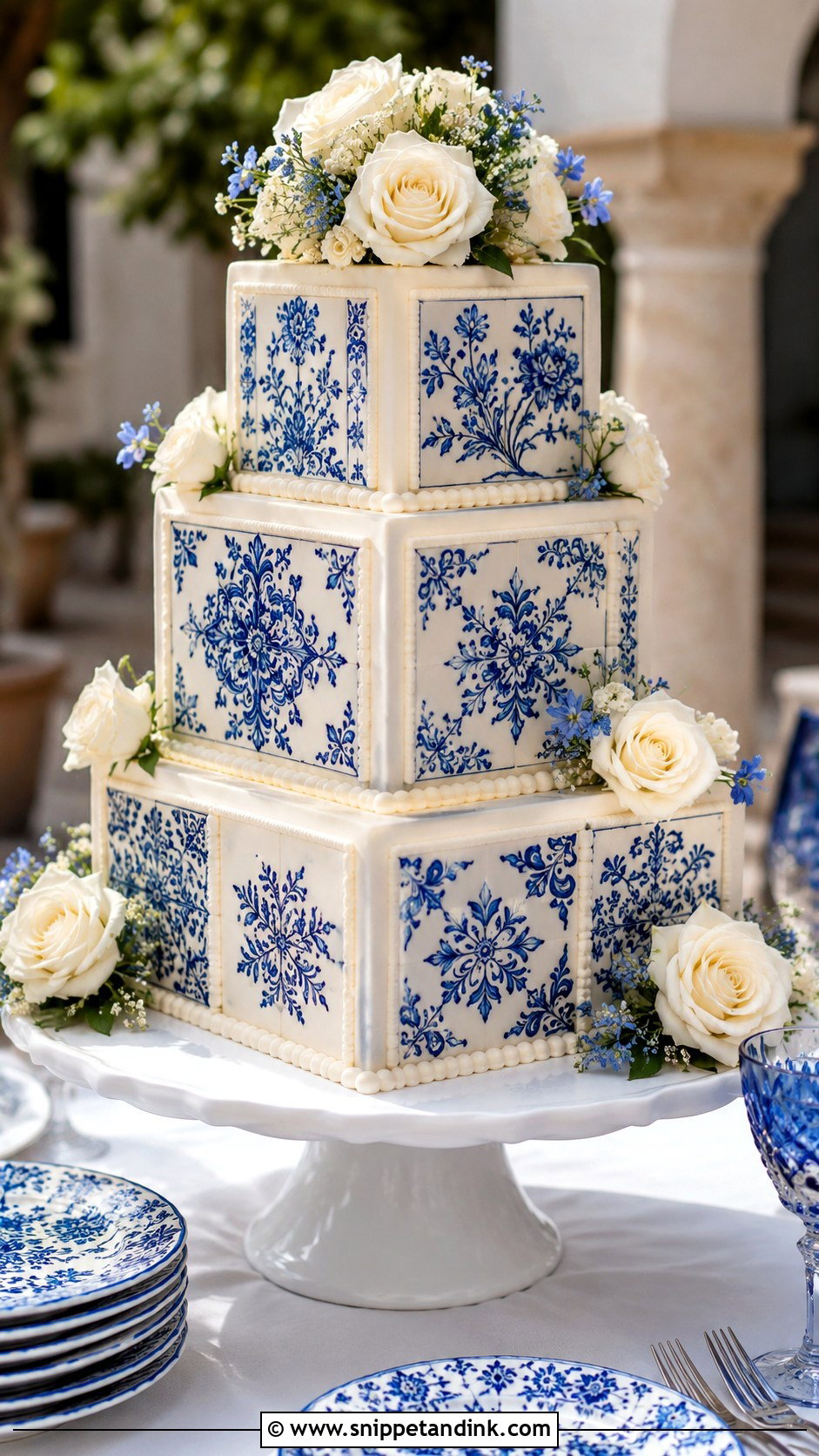
Tile cakes are the most structured way to wear this style. I divide each tier into square or arched panels and paint a repeating motif inside each one, which takes careful measuring before a single brushstroke. Square tiers give the clearest tile effect, though round ones can work with arched panels. A plain white stand and a few fresh flowers at the base are enough. Mediterranean and estate venues suit this one.
6. Hand Painted Porcelain Wedding Cake
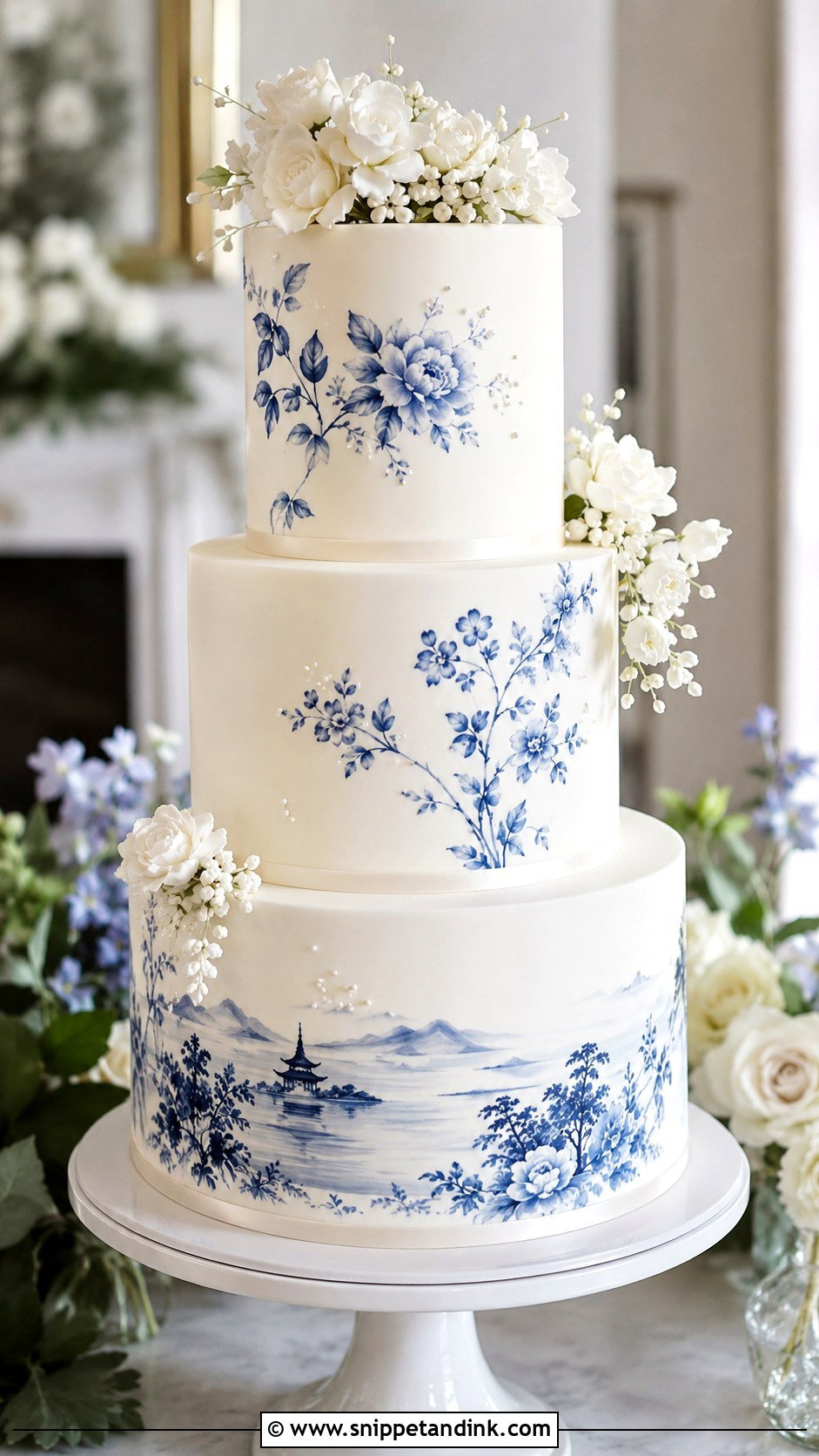
Hand painting is the slowest decoration I do, and you can see it in the result: real brush marks, slight shifts in tone, nothing printed. I’d ask for one main painted area per tier rather than full coverage, such as a floral spray, a branch or a small landscape. Fondant is the best canvas because it’s firm and smooth; buttercream must be chilled hard before painting or the brush drags. Tiny pearl dots or piped borders only if they support the painting.
7. Porcelain Buttercream Wedding Cake
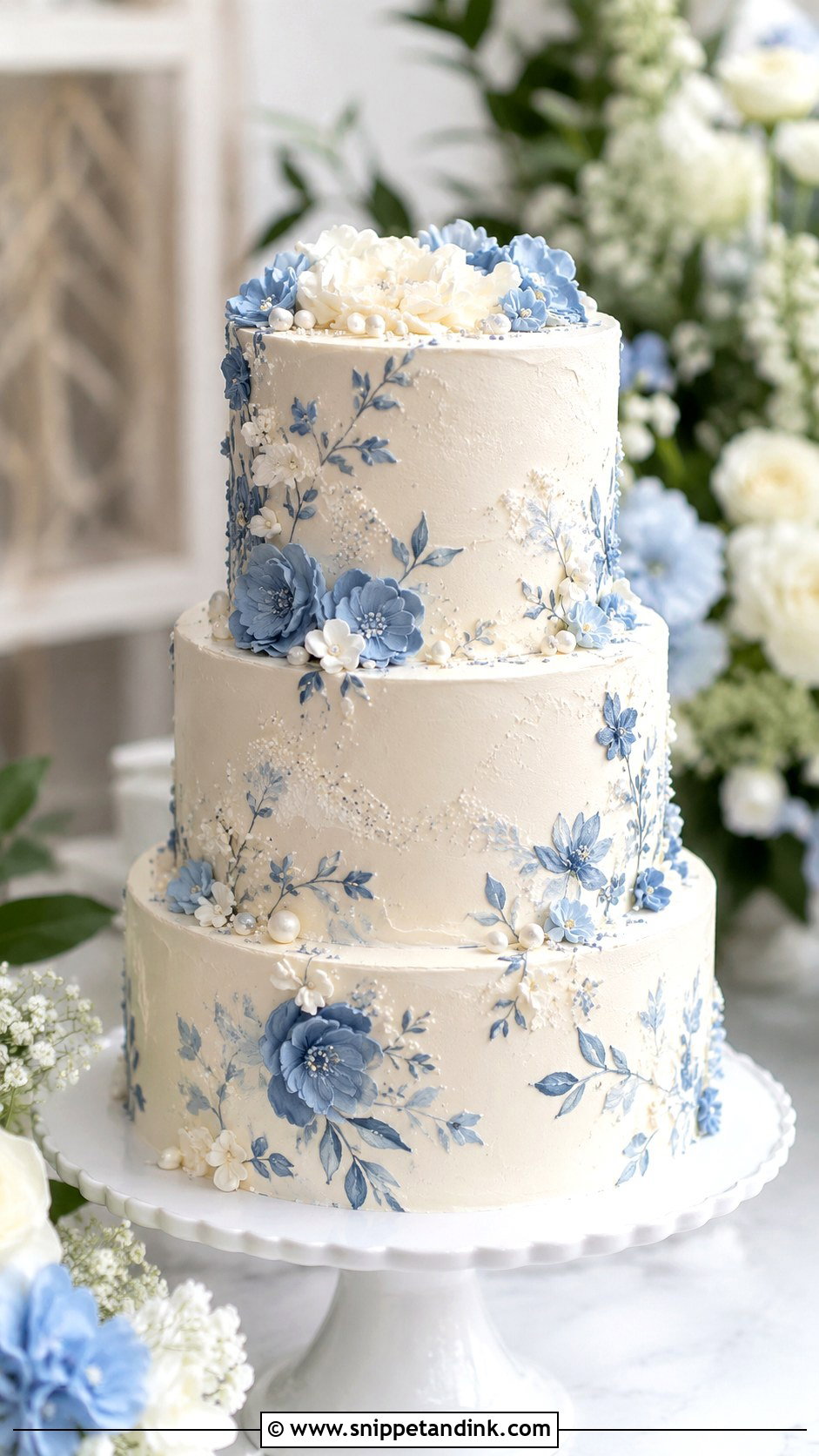
Buttercream gives a softer porcelain with a hint of texture, and many guests prefer the taste to fondant. I smooth it as flat as possible, chill it firm, then pipe or paint the blue detail. Palette knife flowers in blue buttercream suit it nicely. Pure white buttercream is difficult to achieve with butter, so most come out a pale ivory, which actually warms the look. Keep it away from sun and heat, since buttercream softens long before fondant.
8. Porcelain Fondant Wedding Cake
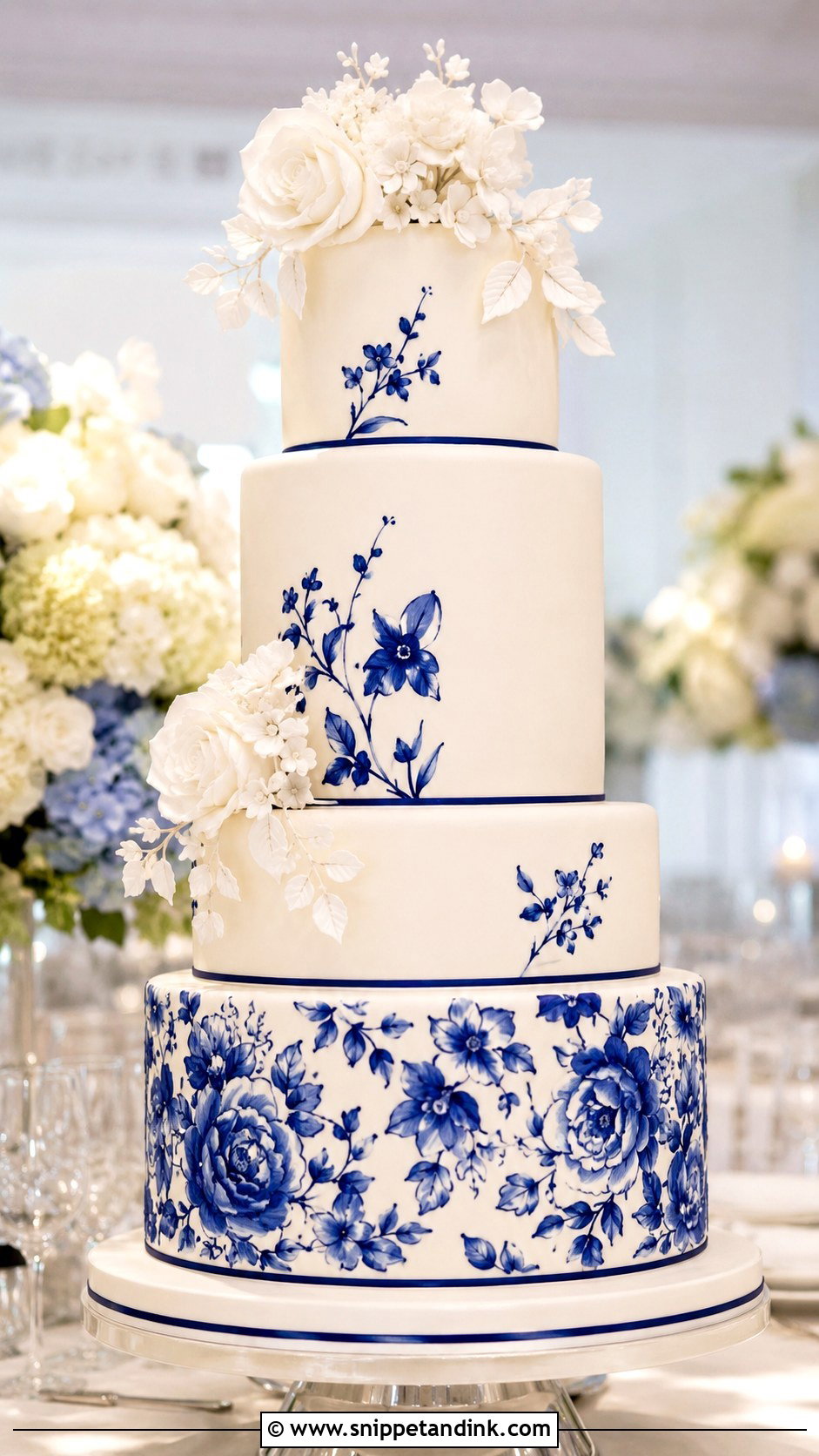
A porcelain fondant wedding cake gives the closest thing to glazed ceramic. Fondant over a firm ganache layer creates sharp edges and a smooth surface that takes fine painted lines and narrow borders cleanly. On a tall cake I’d put a full porcelain print on one tier and keep the others nearly plain, which looks far more expensive than painting all of them. White sugar flowers or a subtle monogram finish it for a formal reception.
9. Porcelain Cake With Sugar Flowers
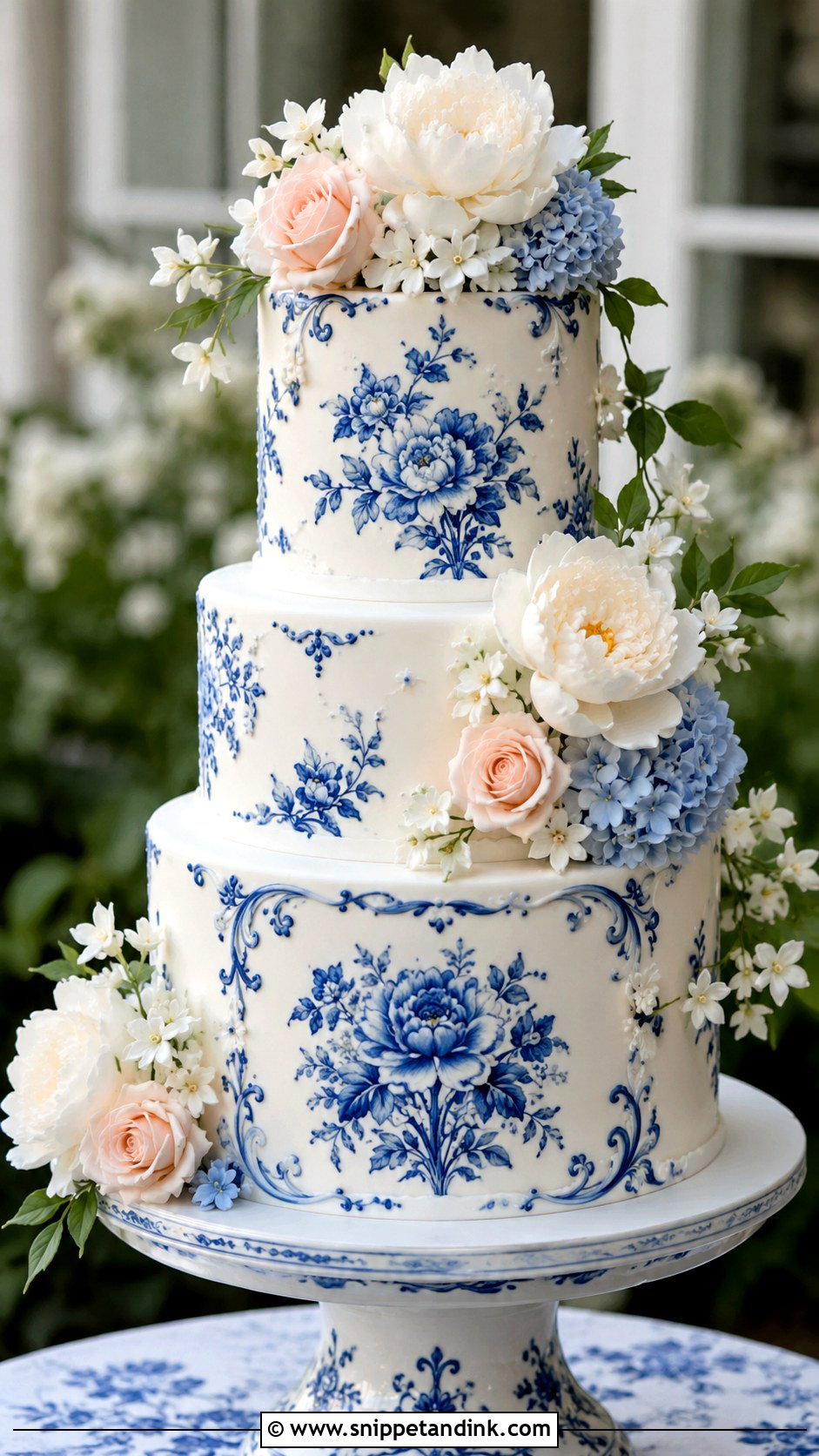
Sugar flowers add the dimension that flat painting can’t. White peonies, blue hydrangeas, pale blush roses or small jasmine blossoms all pair well. My rule is clusters, not cascades: a cluster on top, along one side or at a tier base, so most of the painted pattern stays visible. Sugar flowers are handmade petal by petal and take time, so they add to the cost, but they won’t wilt during a long reception.
10. Porcelain Cake With Gold Trim
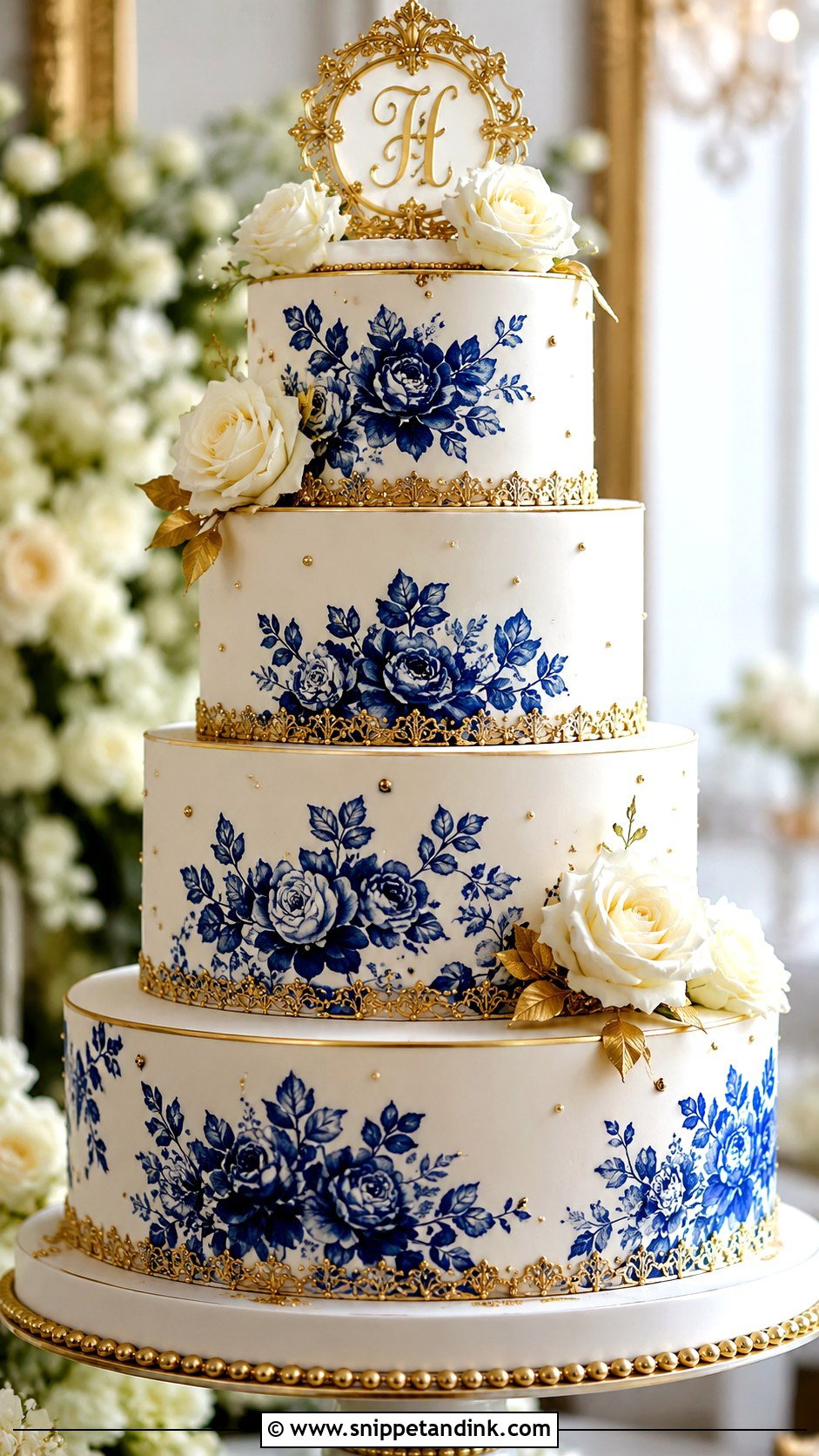
Gold is the classic partner to blue china, and it’s easy to overdo. I use edible gold paint or leaf for a narrow rim around each tier, tiny dots or a delicate monogram. Edible gold paint must dry fully before the cake is moved, or it smudges at the touch of a finger. Too much gold steals attention from the blue. It suits ballrooms, historic venues and formal tented receptions.
11. Porcelain Monogram Wedding Cake
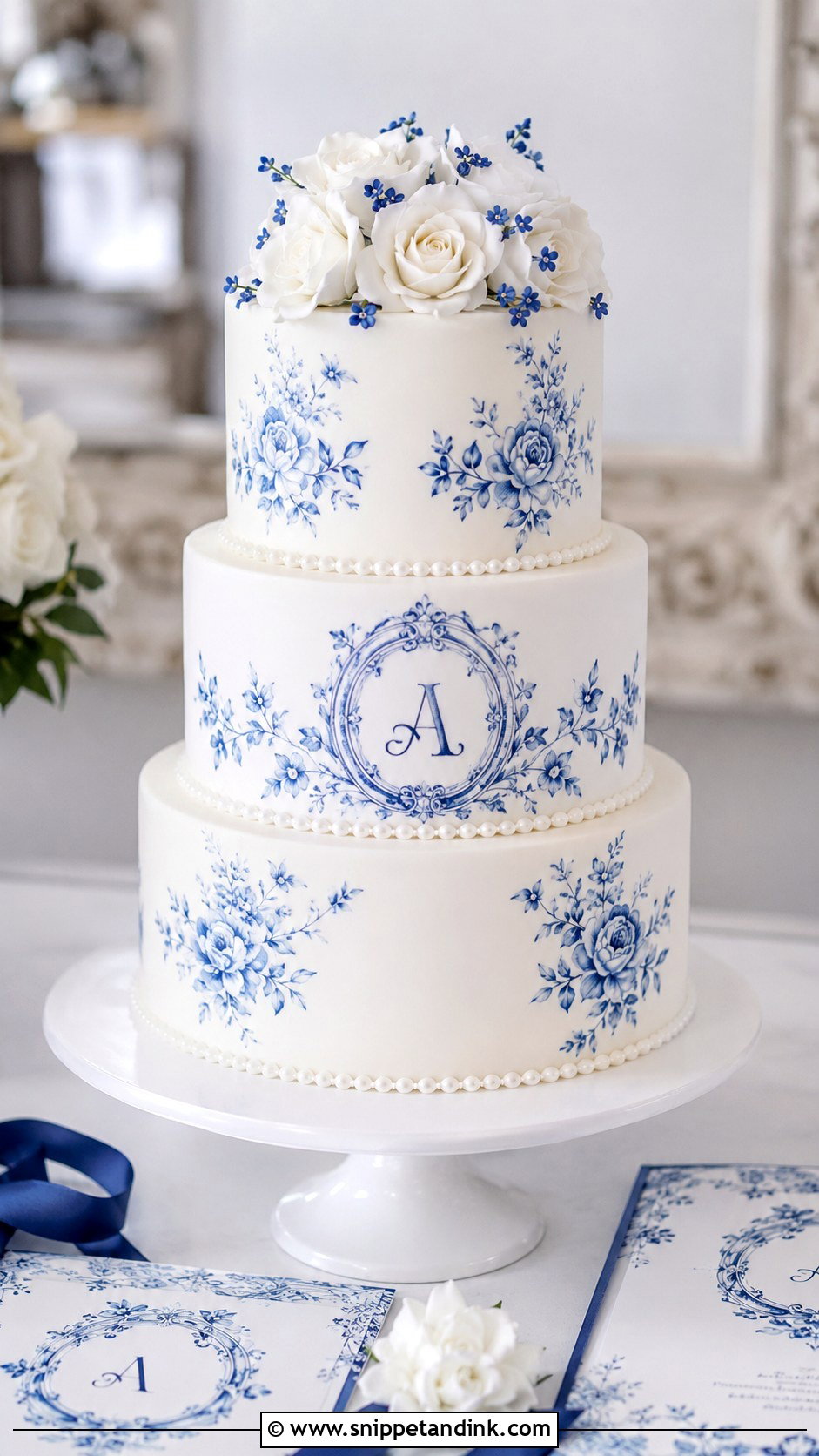
Initials painted on porcelain can feel personal without looking trendy. I paint them in blue, frame them with a small wreath, or set them on a fondant medallion. Size matters: large enough to read from across the room in photos, small enough not to feel like a logo. It’s worth matching the lettering to your invitation suite if it has a crest or monogram. A three-tier cake with the initials on the middle tier keeps everything balanced.
12. Porcelain Lace Wedding Cake
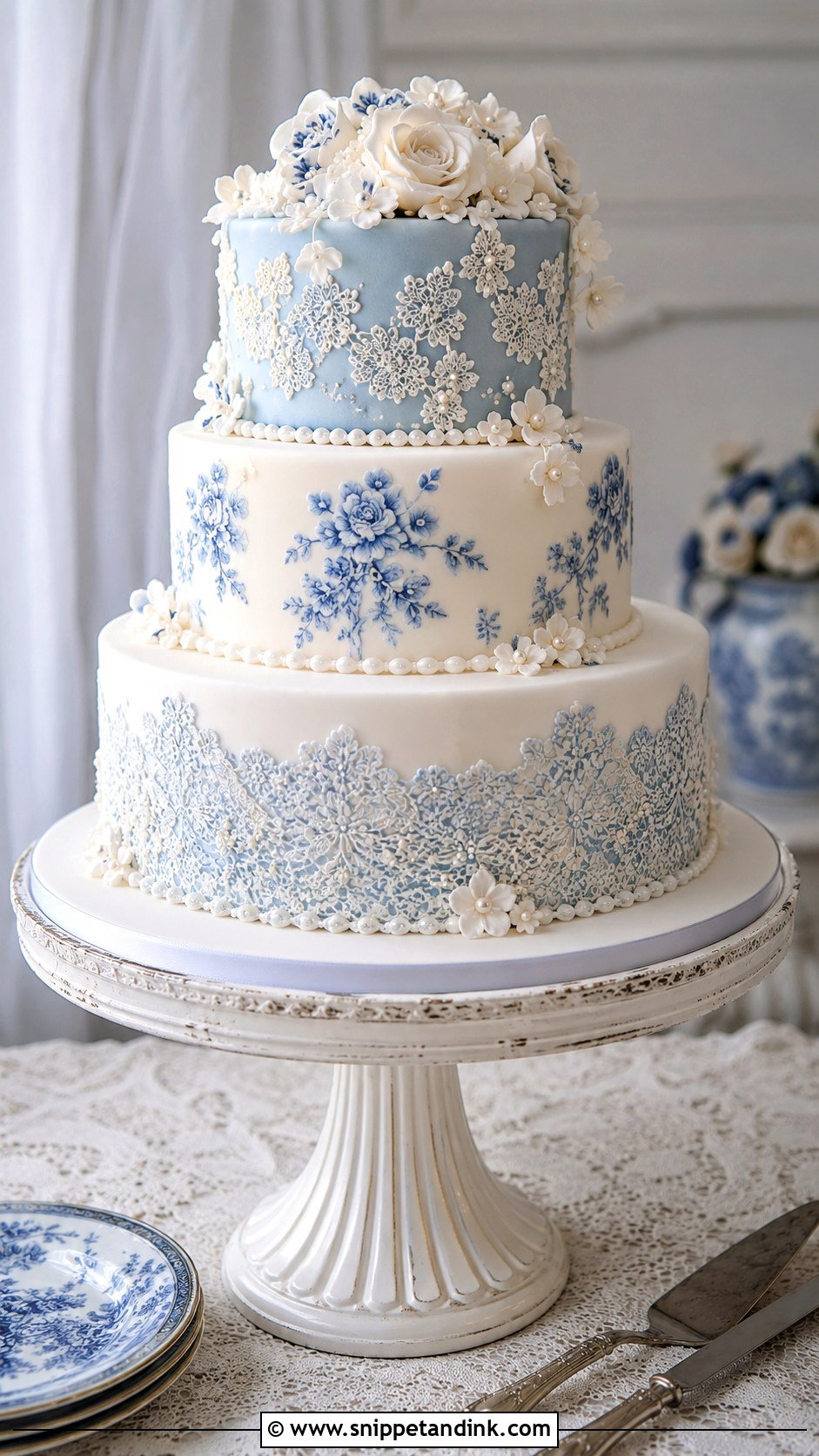
Lace and porcelain together are very bridal. I press lace texture into white fondant with a silicone mat, lay it over a pale blue or ivory base, and paint porcelain flowers in a few areas. Another version uses blue piping that mimics ceramic filigree. Keep flowers small so the lace stays visible. It pairs naturally with lace gowns and vintage table settings.
13. Porcelain Toile Wedding Cake
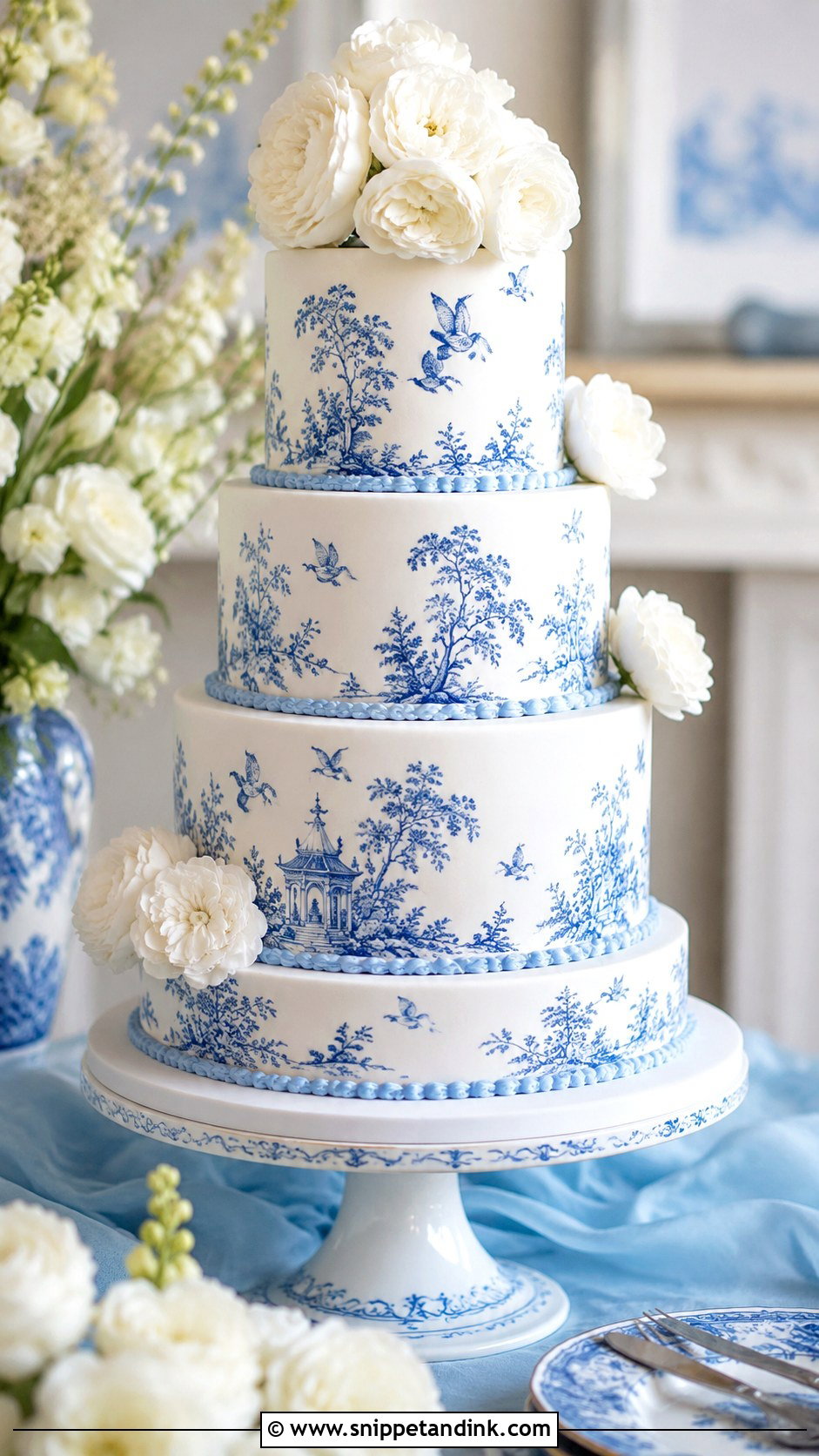
Toile is a French pattern of scenic blue artwork: gardens, trees, birds and small landscapes. On a cake, I simplify it heavily because a full toile print can look like wallpaper. One toile tier with plain white tiers above and below is often the most elegant option. It suits blue linens and white flowers. Almond, vanilla bean or lemon inside keeps the flavor as classic as the look.
14. Porcelain Watercolor Wedding Cake
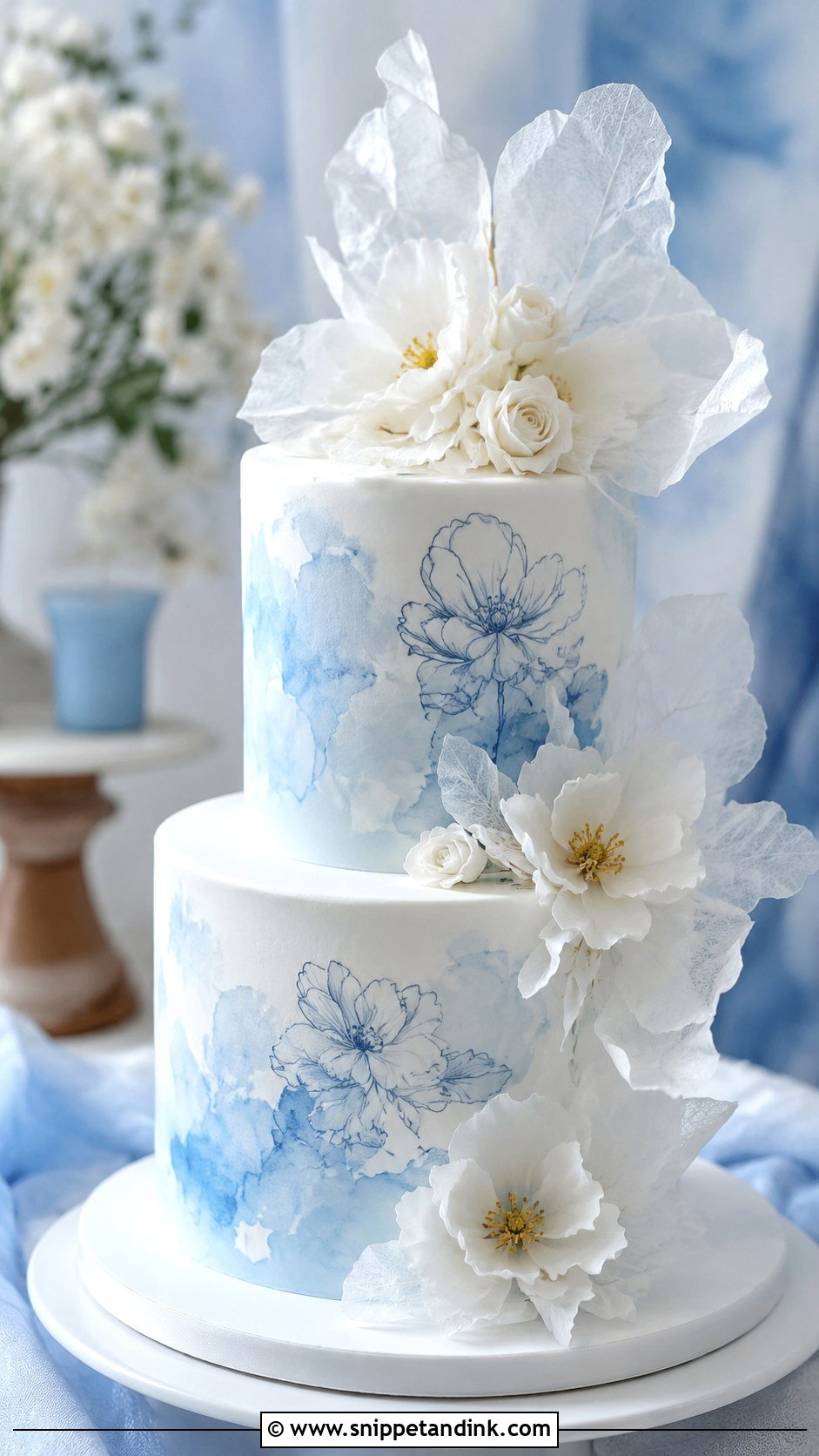
The watercolor version swaps sharp cobalt lines for soft washes of blue that look like diluted paint. I brush thinned color over fondant, letting it pool and fade, and I leave plenty of white so the cake still feels light. Once it dries, I layer hand-painted floral outlines or faint ceramic borders on top. Fresh white flowers or translucent wafer paper petals finish it. It suits coastal and outdoor weddings.

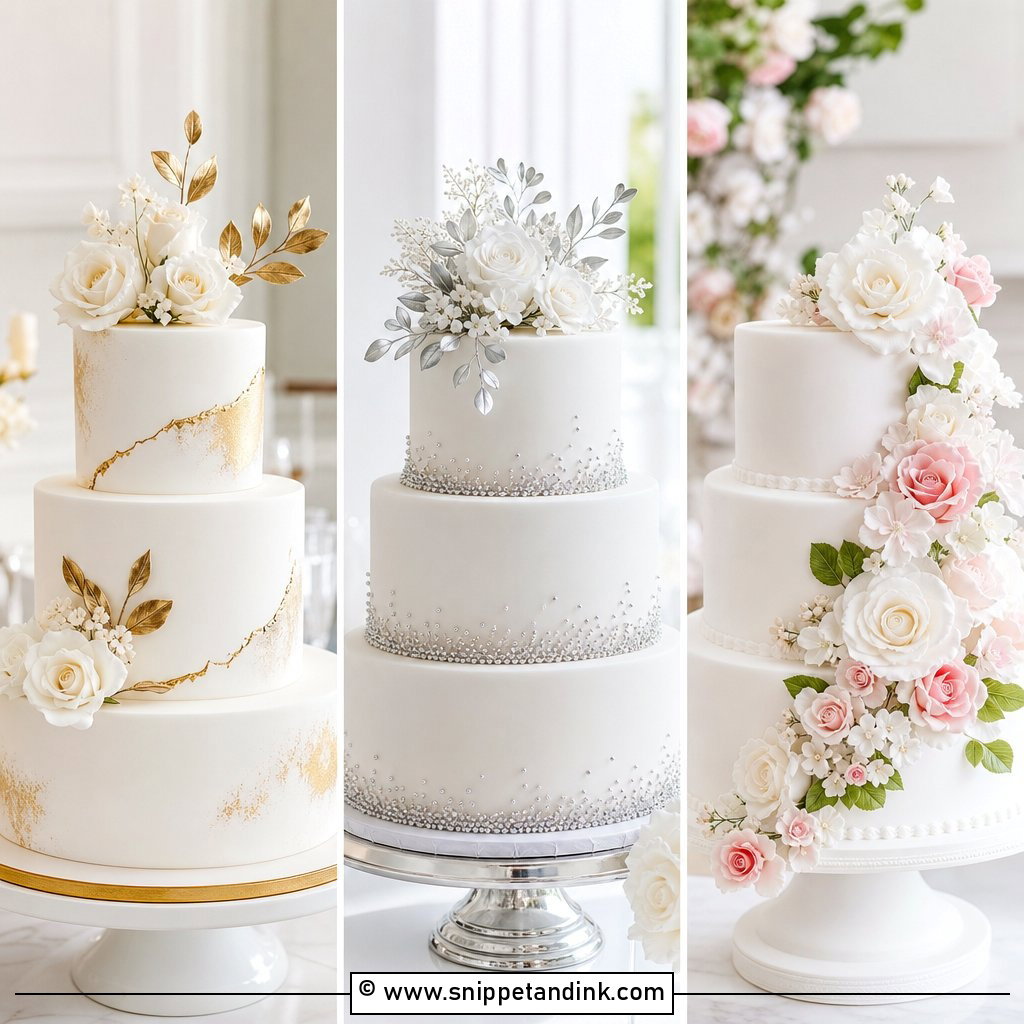
15. Porcelain Garden Wedding Cake
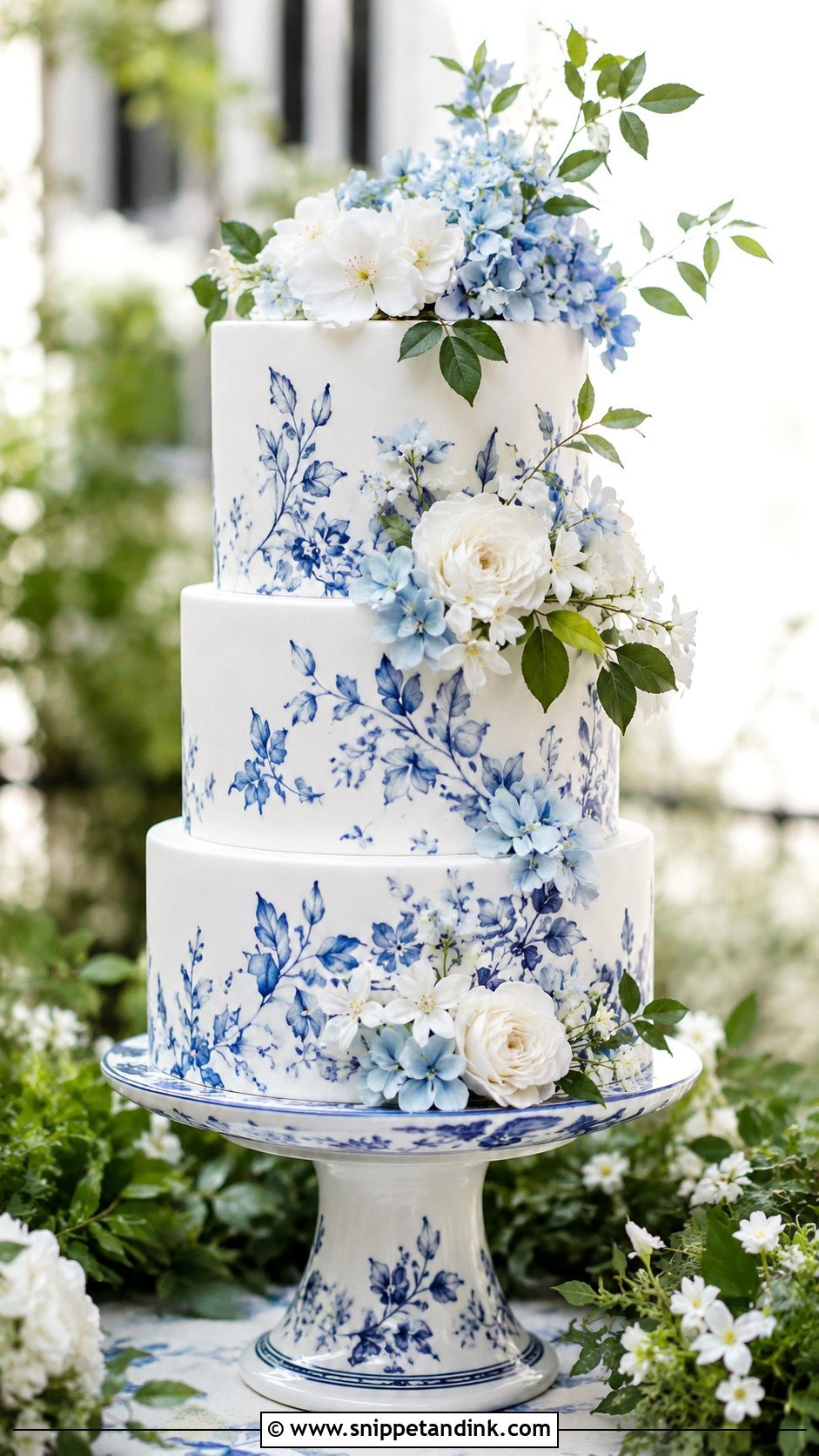
A garden version lets the pattern grow rather than repeat: painted vines, small leaves and soft flowers wandering across the tiers as if climbing them. I usually start the vine at the base and let it travel upward, so the eye follows it. Sugar flowers in white, dusty blue and pale green finish it naturally. A round three-tier cake on a simple white pedestal suits greenhouse and garden venues in spring and summer.
16. Porcelain Pearl Wedding Cake
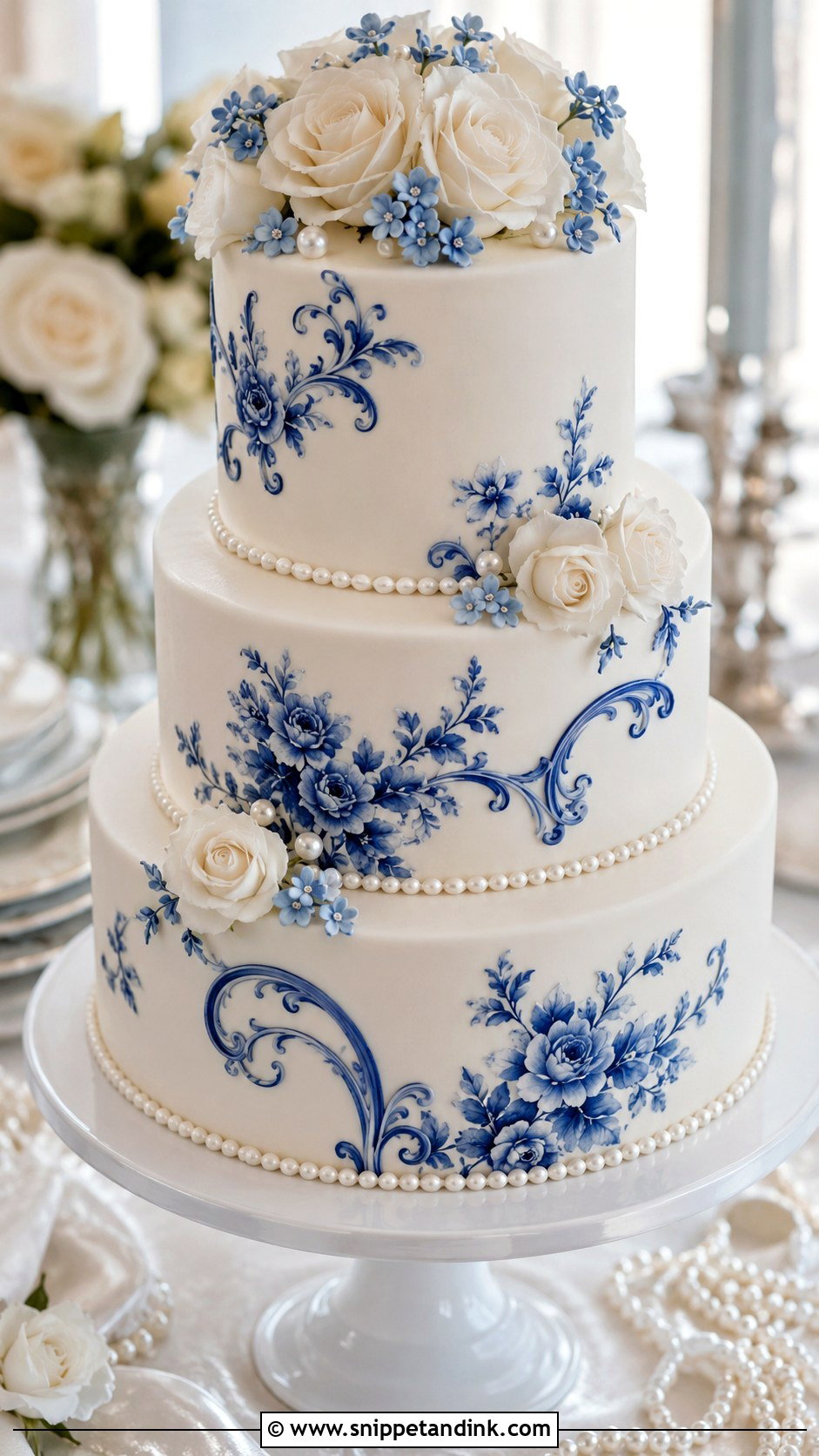
Pearls add a little shine to the matte porcelain look. I paint the blue florals or scrollwork first, then place small edible pearls along each tier edge by hand. Keep them small and even, as large pearls can look heavy against delicate painting. A single border at the base of each tier gives structure. This version pairs well with satin gowns and pearl accessories.
17. Porcelain Bow Wedding Cake
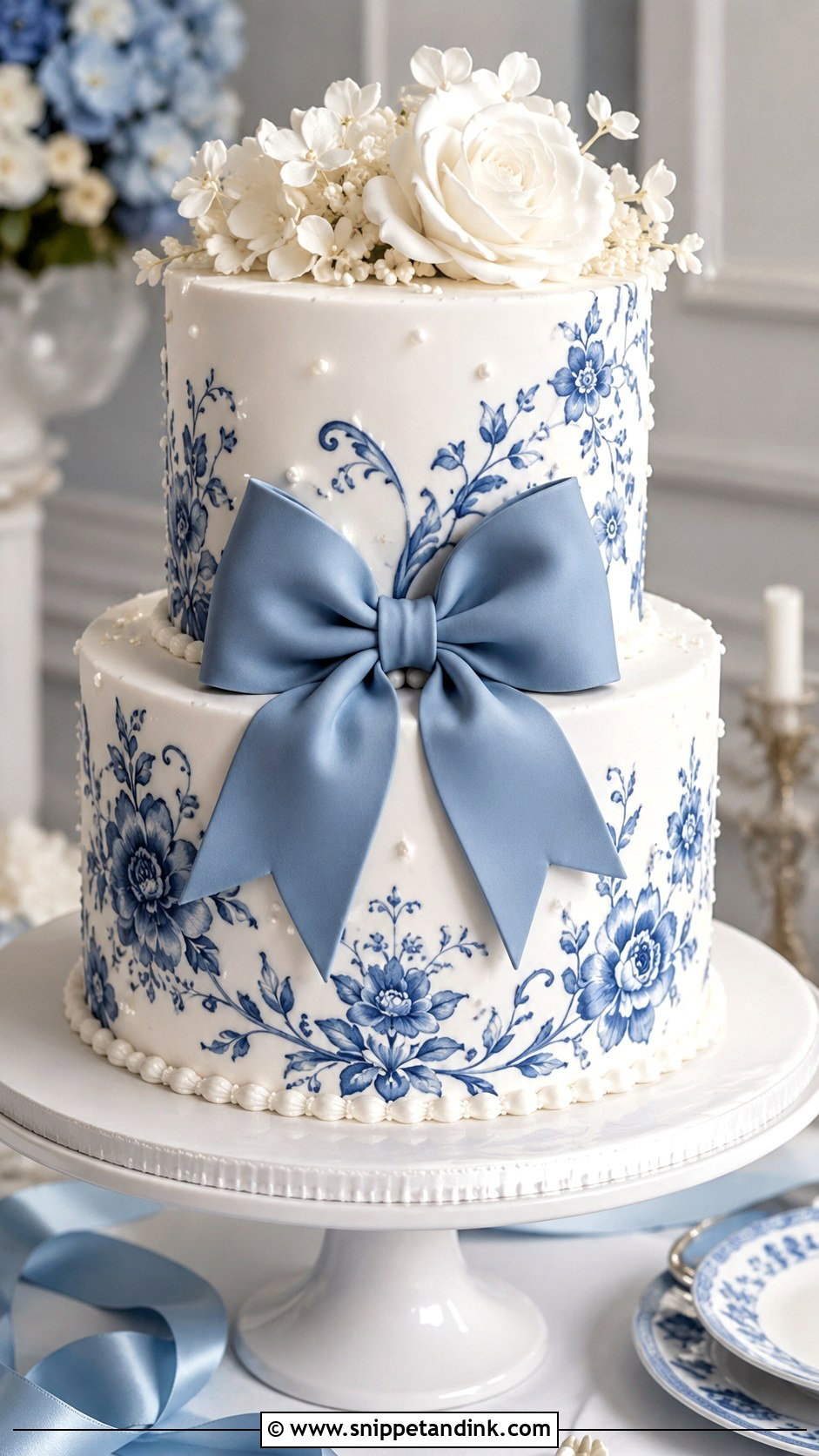
A single fondant bow can be the hero of a porcelain cake. I make bows ahead and let them dry firm so they hold their loops instead of sagging on the cake. A pale blue bow makes a sweet something-blue moment; a white bow with blue painted tails feels more custom. Keep it structured and smooth so it reads bridal rather than childish. It suits intimate weddings and brunch receptions.
18. Porcelain Ruffle Wedding Cake
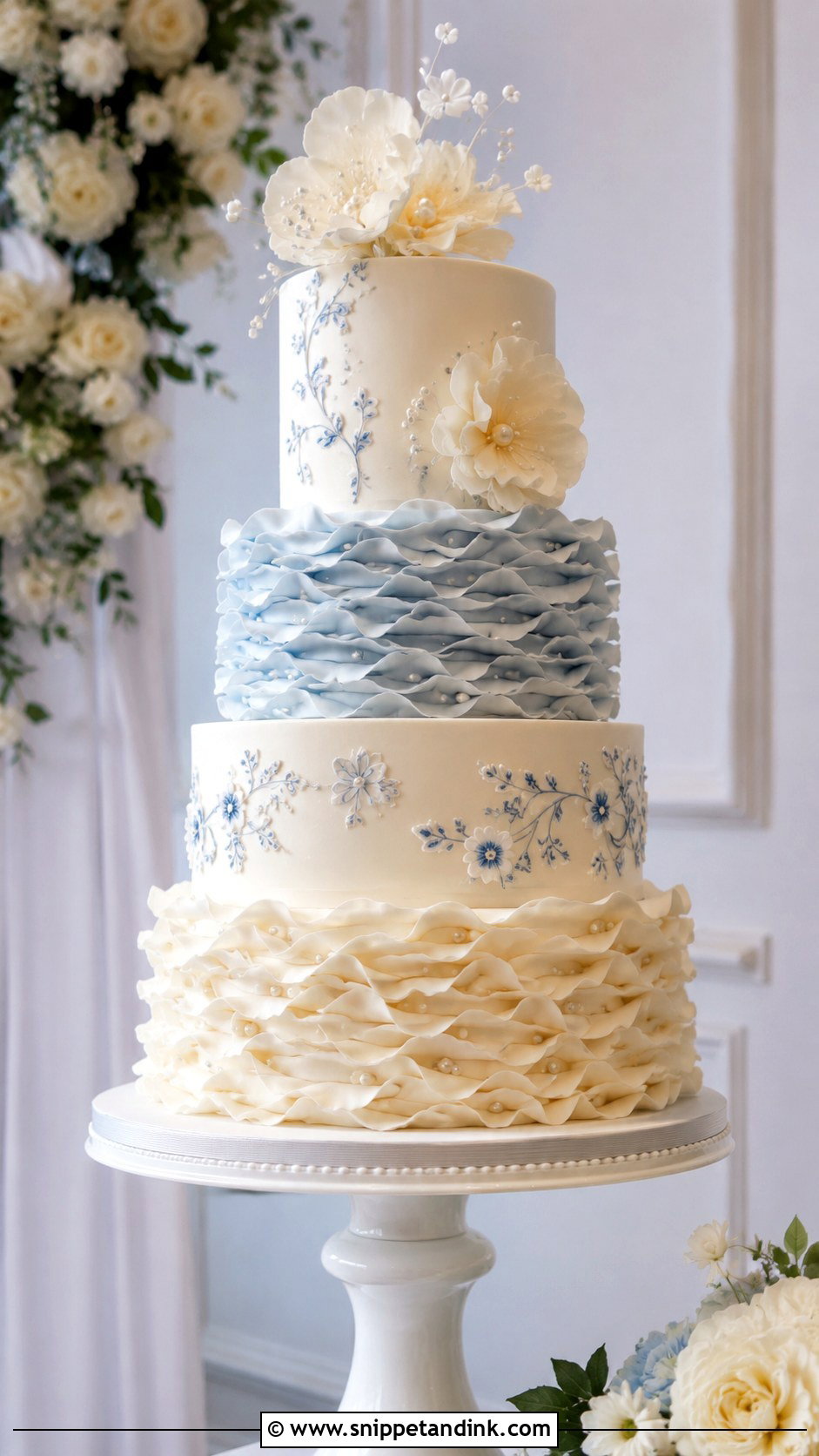
Ruffles add movement to what is usually a very smooth style. A porcelain ruffle wedding cake pairs one or two ruffled tiers with smooth painted tiers. Wafer paper ruffles are the lightest and most fabric-like; fondant ruffles hold shape better in humidity; buttercream ruffles taste best but soften in heat. A few white sugar flowers at the join between smooth and ruffled tiers tie them together.
19. Porcelain Blue Ombre Wedding Cake
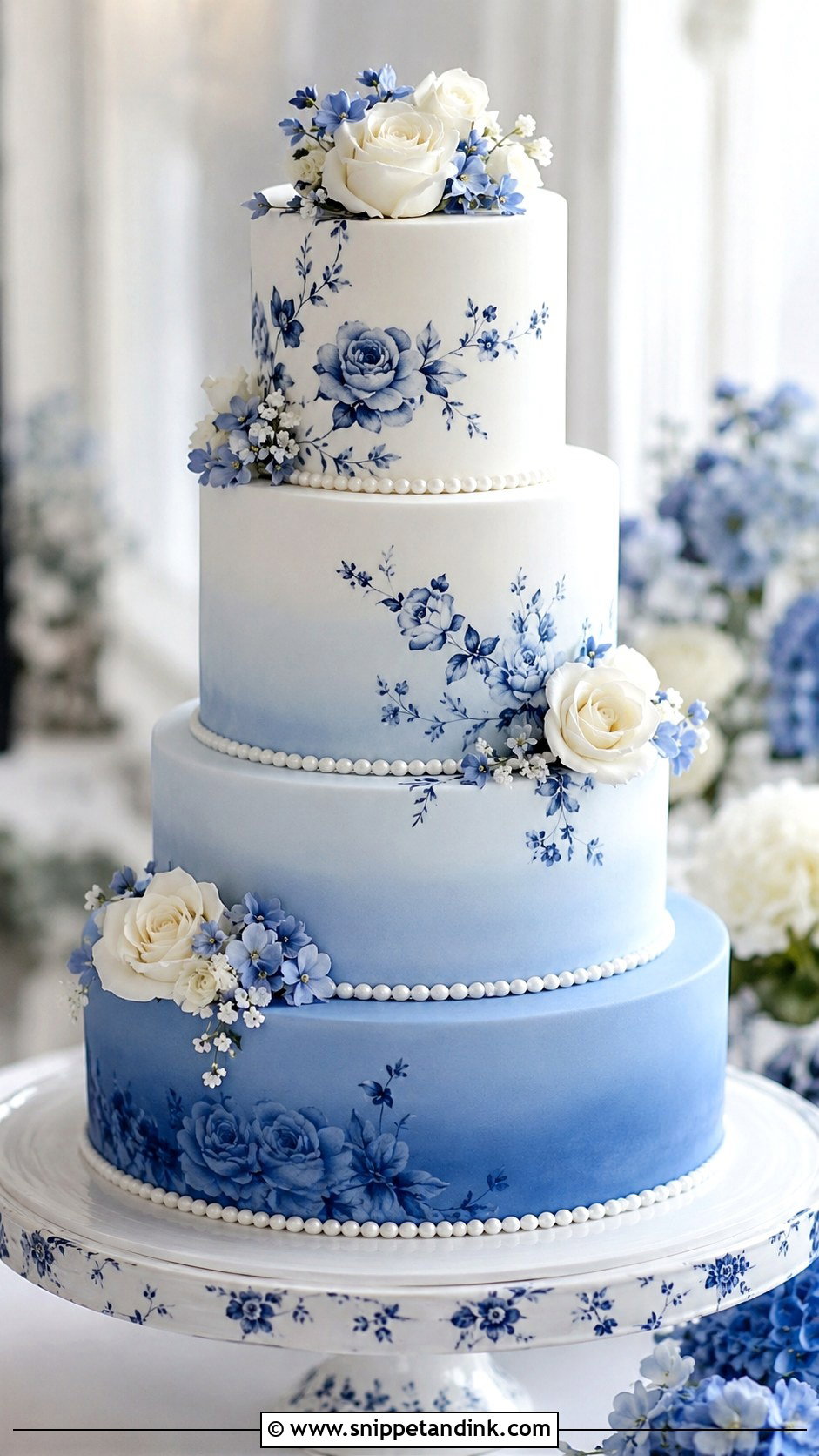
Ombre blue runs from a deeper shade on the bottom tier to pale blue and white at the top. I tint each tier separately rather than airbrushing, which gives cleaner steps between shades. Delicate porcelain florals or white piping over the gradient keep the china reference. Keep other decoration light so the color fade stays visible. It suits coastal weddings and soft blue palettes.
20. Porcelain Mini Wedding Cakes
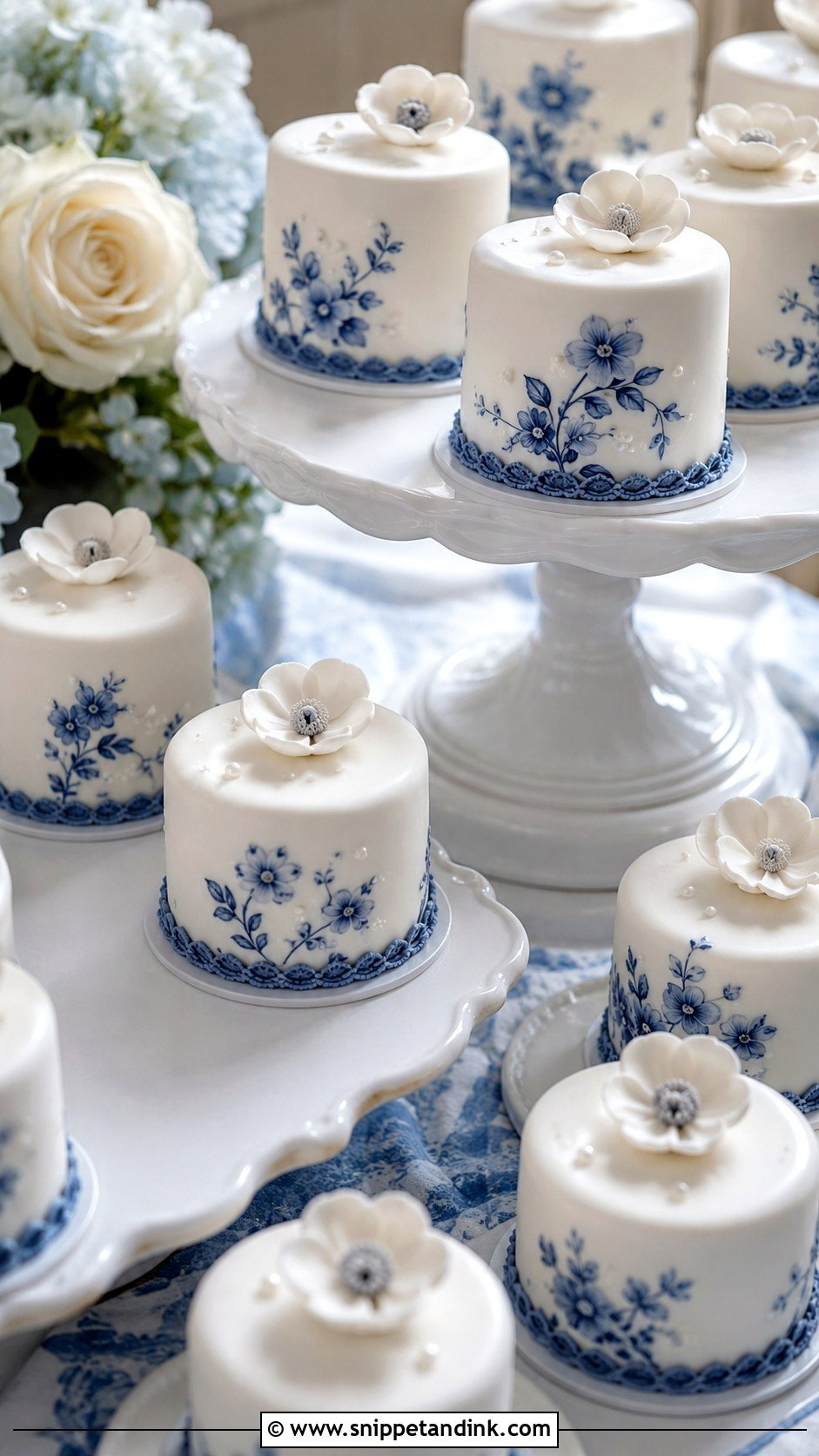
Porcelain mini wedding cakes give each guest their own small piece of china. Each one gets a smooth white finish, a tiny blue painted motif and a single sugar flower or pearl. Painting dozens of small cakes takes much longer than one large one, so expect the price to reflect that. I vary the motifs slightly, like pieces from the same dinner service. Packaged carefully, they can double as favors.
Bring a Teacup to Your Design Meeting
Blue is the hardest color to describe in words. Cobalt, navy, Delft and powder blue all look different on a cake, so bring something physical: a plate from a family set, your invitation, a swatch of linen or a ribbon from your bouquet. I match the paint to it under daylight and again under warmer lamp light, because blue can shift toward gray under warm bulbs.
Give your baker time. A heavily painted cake takes far longer than a plain one, and popular decorators often book several months ahead, so reach out once your venue and colors are settled.
Where the Cake Should Stand on the Day
- Keep it out of direct sunlight. Blue and purple food colors can fade in strong light within a few hours.
- Avoid moving a chilled cake straight into a hot, humid room. Condensation forms on the fondant and can make painted lines run.
- Place the table away from doors and dance floor traffic, since one bump can smudge fresh gold or paint.
- Ask the venue for a sturdy, level table; tall painted tiers need a stable base.
Leave White Space for the Blue to Breathe
The porcelain cakes I’m proudest of are the ones with the most restraint. Formal fondant with gold trim, soft buttercream with flowers, hand-painted blue scenes: they all work when the pattern has room, the flowers are used with care, and the shape stays clean. Look at your venue, your table settings and your invitations before you decide. Delft, chinoiserie, toile or watercolor, the right one will feel like it belongs to the rest of the day.
You'll Like These Ideas:



Leave a Reply