
The year’s gowns were unusually varied, which is wonderful for brides and hard on anyone trying to decide. The 2024 bridal trends I saw most in fitting rooms were clean satin, drop waists, corset bodices, bows, pearls, tinted fabrics and short reception dresses. For each dress below I’ve described how I’d style it from veil to shoes, and what I notice about the fit and fabric once a bride actually stands up in it. Read it with your venue and season in mind; a gown that looks right on a hanger can behave very differently at a beach in July.
Ordering a Gown Nine Months Out and the Fittings That Follow
Most brides underestimate how long a gown takes. Many designer dresses are made to order once you’ve paid, and production commonly runs four to six months, sometimes longer for heavily embellished pieces. I tell clients to start shopping around nine to twelve months before the wedding, so there’s still room for alterations without paying for rush fees.
- First fitting, about eight to ten weeks before: the seamstress pins the bodice, waist and hem. Bring the exact shoes and underwear you’ll wear.
- Second fitting, about four to six weeks before: check the changes, test sitting and walking, and decide on the bustle.
- Final fitting, one to two weeks before: a last check of fit, and someone from your wedding party learns how to bustle the train.
If your weight is likely to change, tell the seamstress at the start. A bodice can usually be taken in more easily than let out, so many brides order to their current measurements and adjust down.
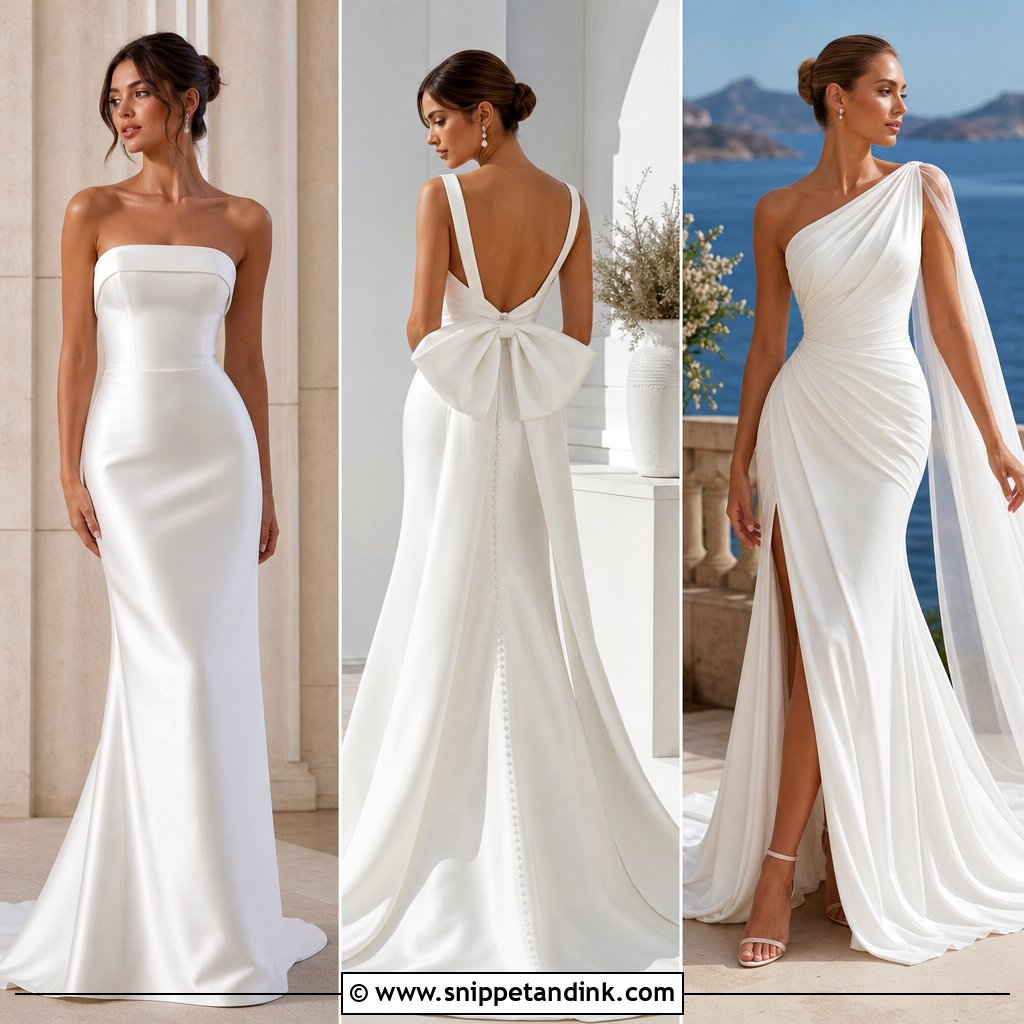
1. Strapless Satin Wedding Dress
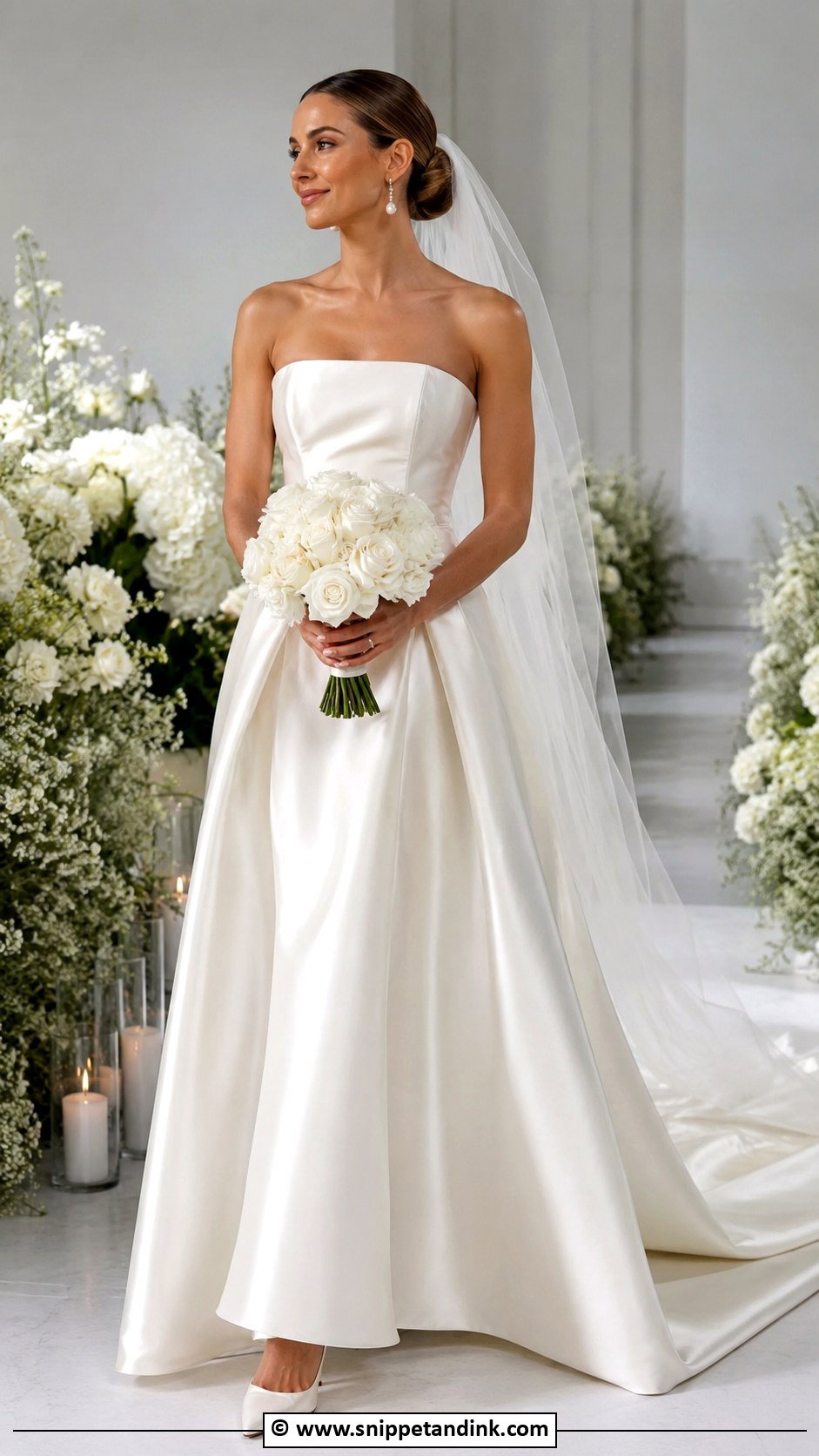
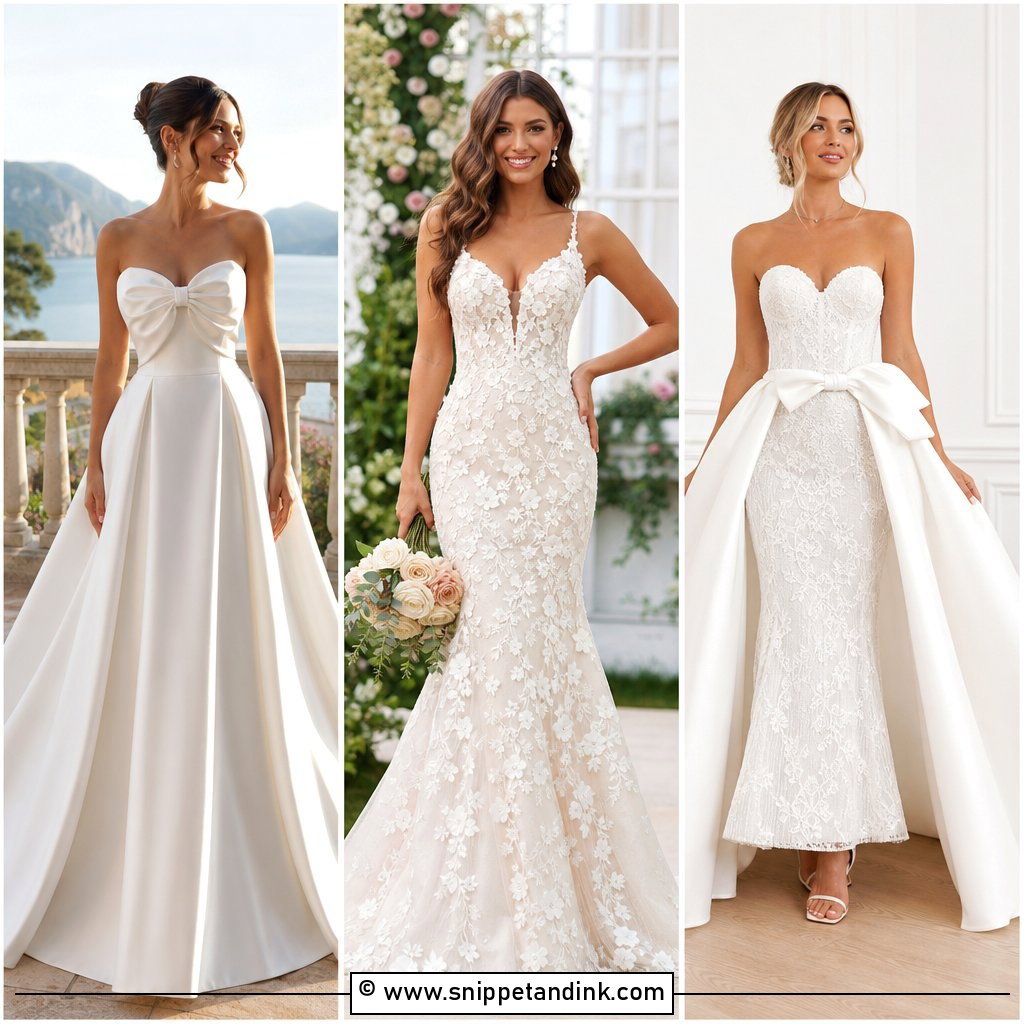
Strapless satin stays the most requested gown I style, and the reason it works is the bodice, not the skirt. A strapless bodice holds up through internal boning and a waist stay; if it’s fitted loosely, you’ll be tugging it up all night. I make brides raise their arms and sit at every fitting. With a low bun, pearl drops and a long veil, the neckline stays clean, and a small rose or ranunculus bouquet keeps attention on the shape.
2. Drop Waist Wedding Dress
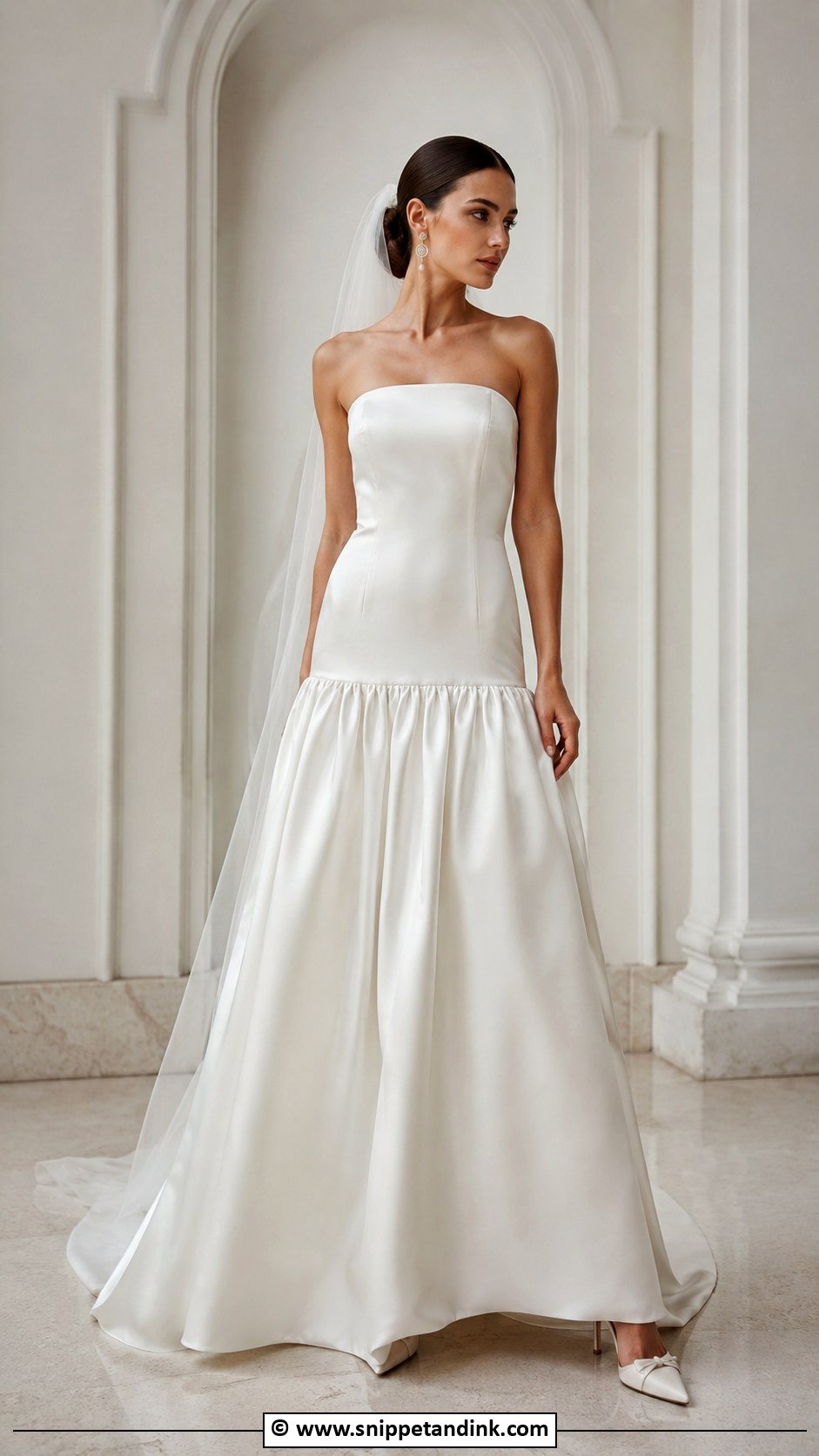
The drop waist moves the seam down to the hip, which lengthens the torso and lets the skirt start lower. It’s flattering on long-waisted brides; on a short torso, it can make the legs look shorter, so I always try one against a natural-waist version before deciding. Mikado gives it a crisp, architectural shape, while lace softens it. Slingback heels, small crystal studs and a sheer veil keep the vintage reference subtle.
3. Basque Waist Wedding Dress
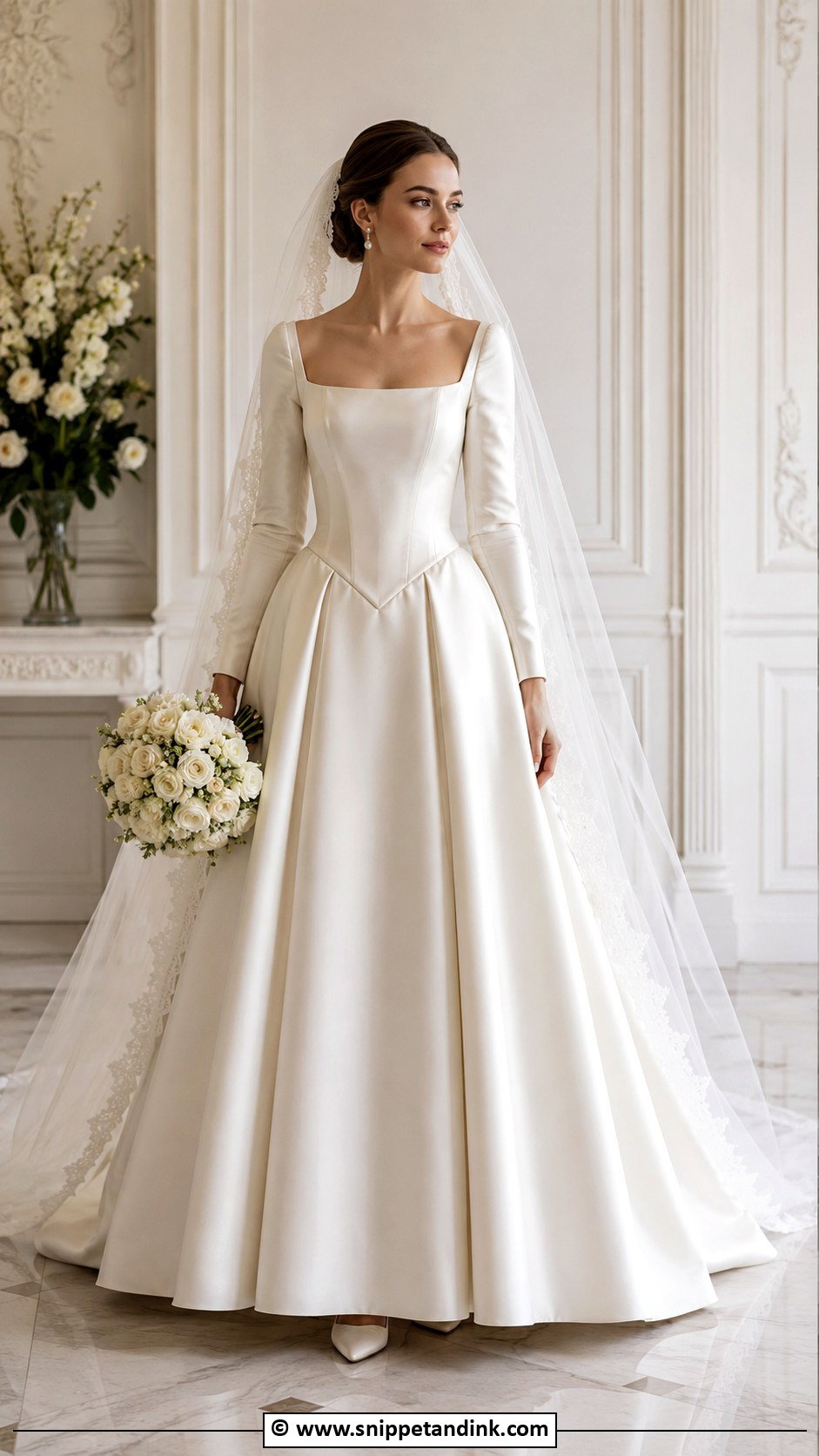
A basque waist wedding dress dips into a V at the front waist, and that point draws the eye down the center of the body. That’s why it looks so slimming. The fitting challenge is keeping the point centered; if the bodice shifts, the V skews to one side in photos. I pin it carefully at the second fitting. Satin pumps, a cathedral veil and a low chignon let the waistline stay visible.
4. Lace Long Sleeve Wedding Dress
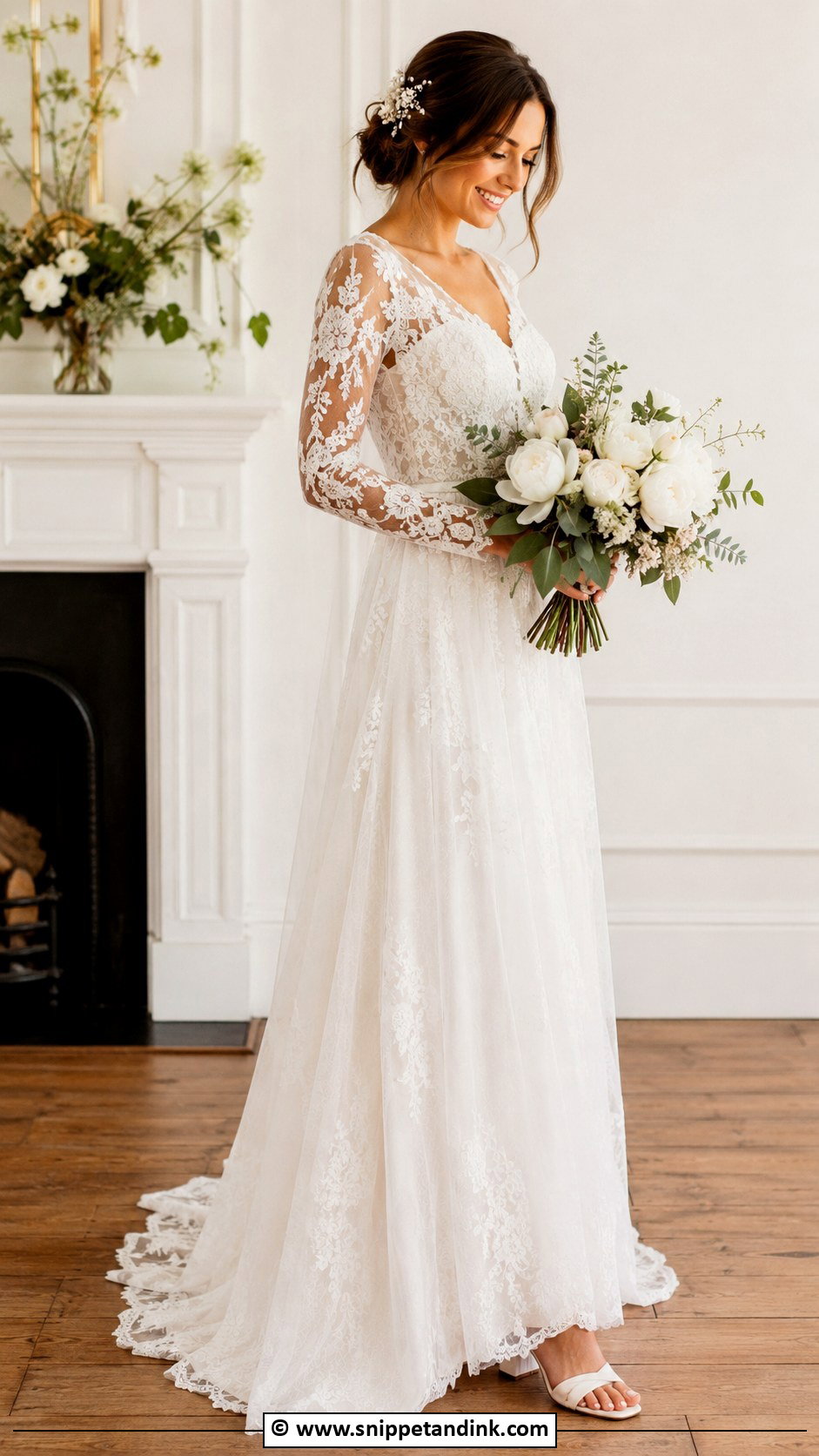
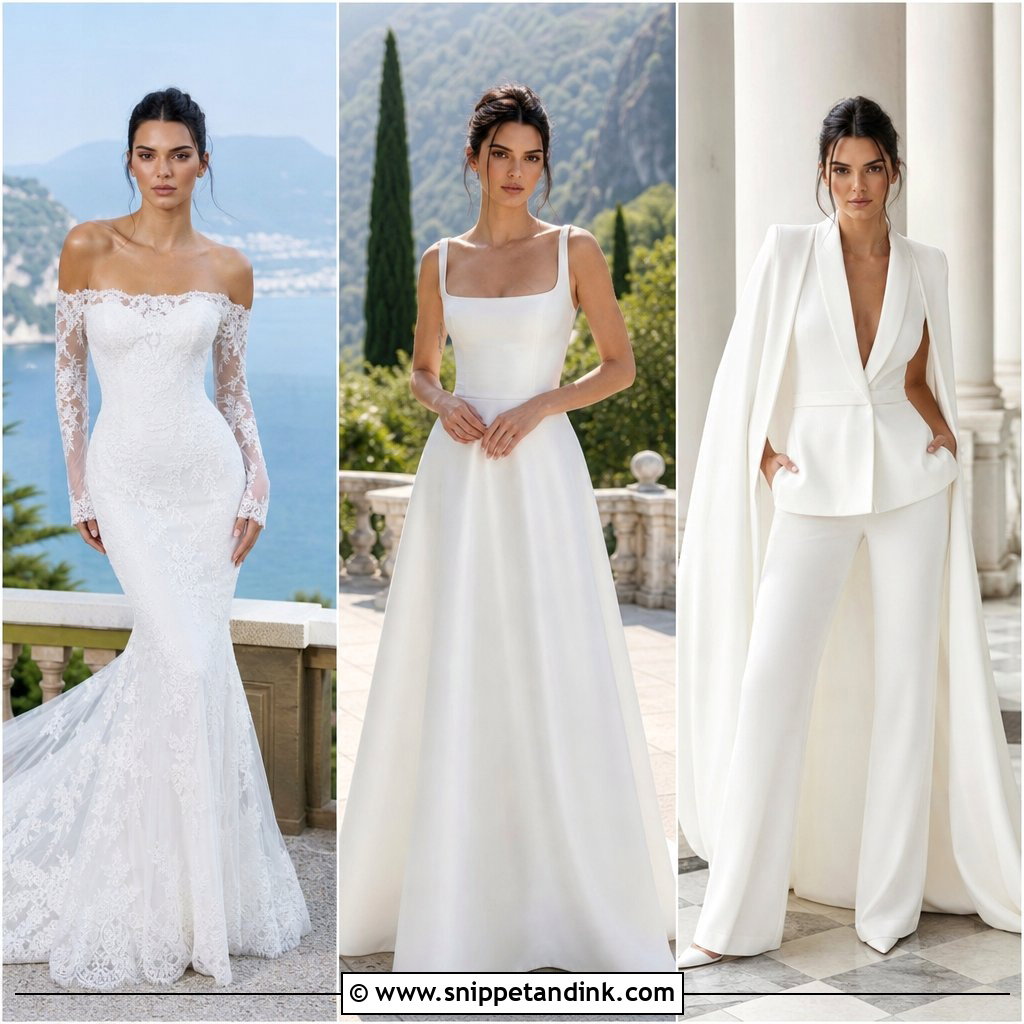
Long lace sleeves are the gown I suggest for fall, winter and church ceremonies, though they suit spring too if the lace is fine. Check how the sleeves are set before you buy. Lace sleeves without stretch can restrict your arms when you hug or lift the bouquet, and they’re hard to let out later. A nude lining reads modern; an ivory one is softer. Block heels, a fingertip veil and pearl pins keep the texture as the main detail.
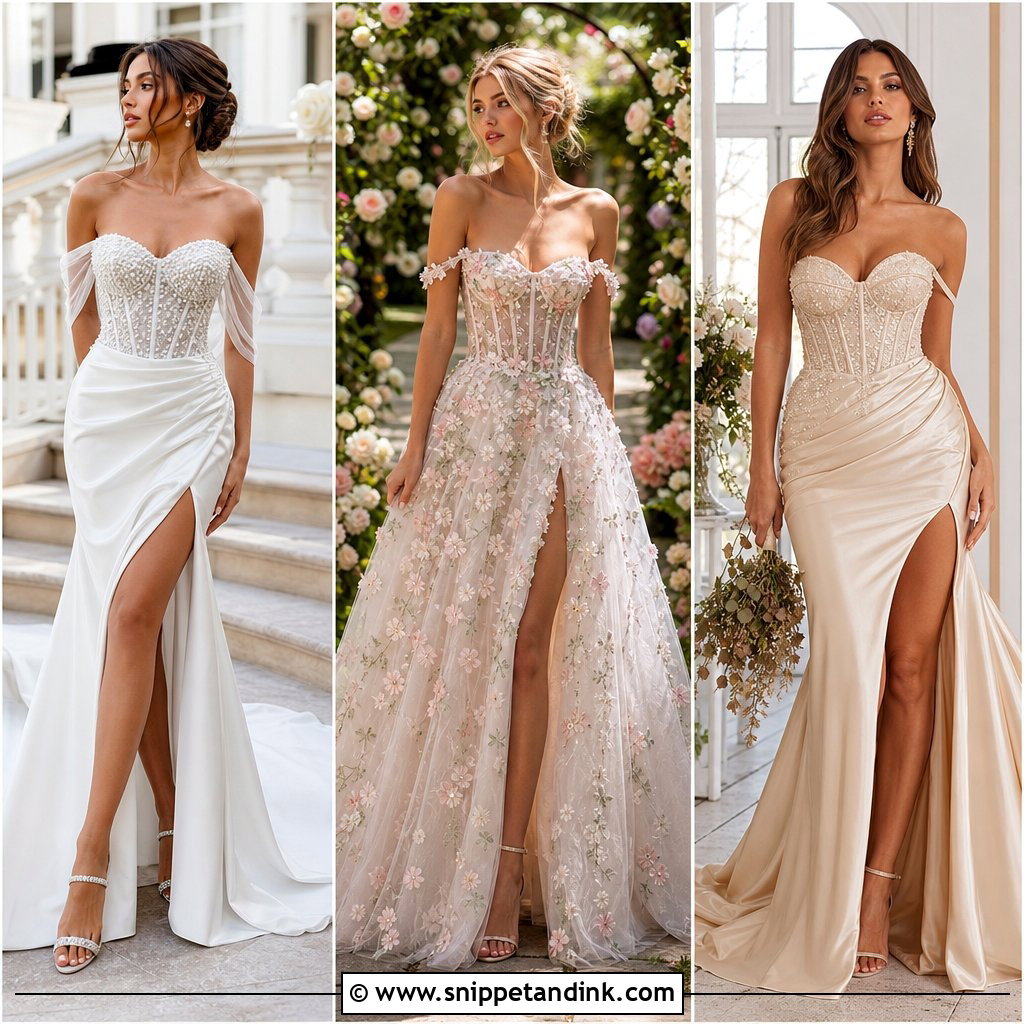
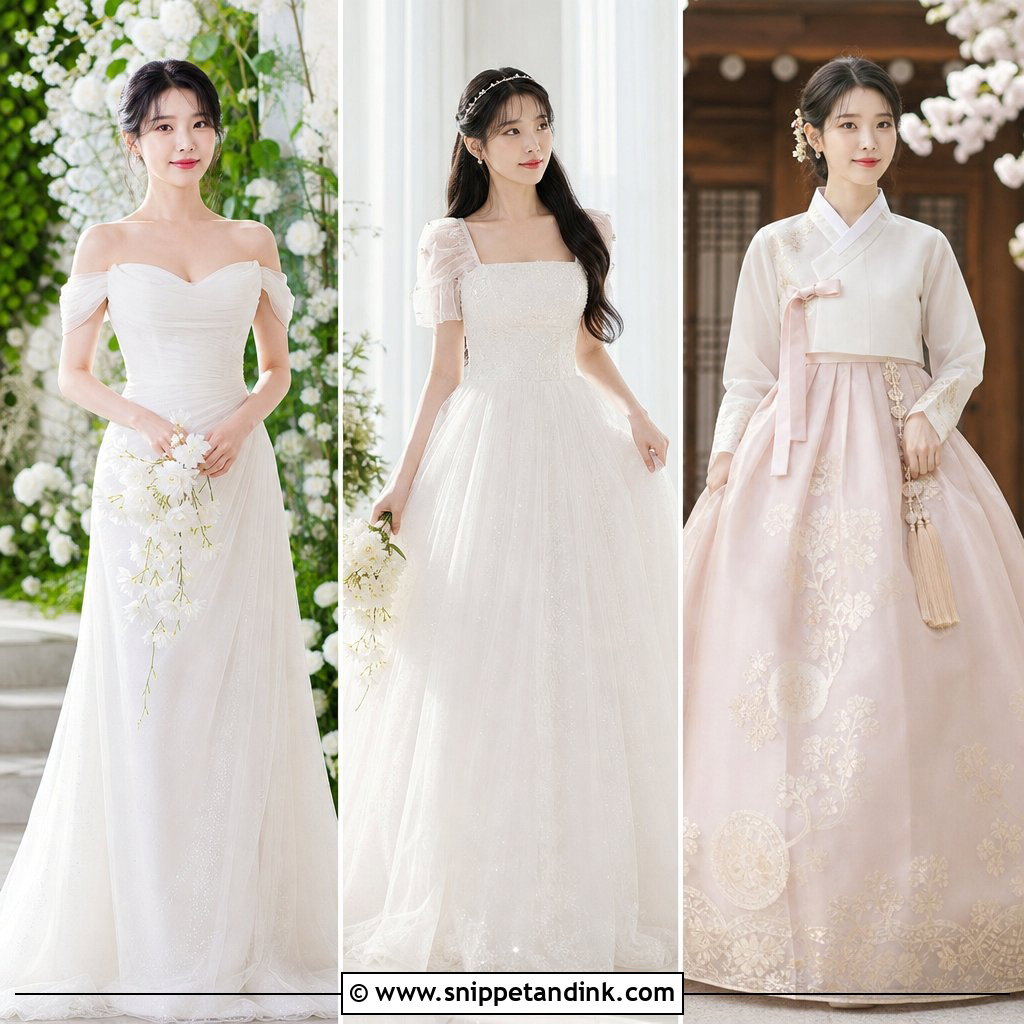
5. Off The Shoulder Wedding Dress
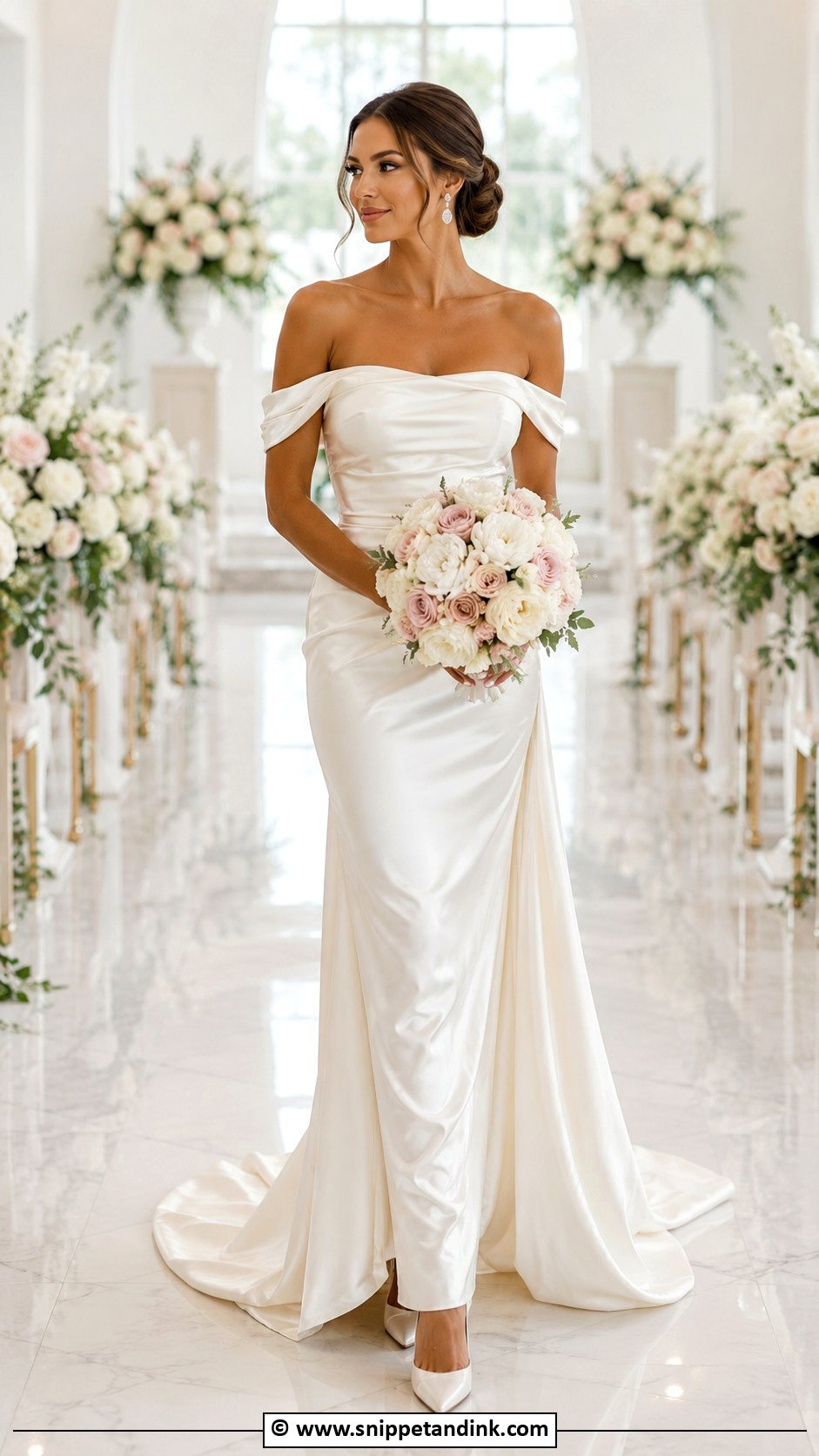
Off the shoulder frames the collarbones, but it also limits how far you can lift your arms, which surprises a lot of brides at the reception. I test this by asking them to mime a first-dance hold. A fitted bodice with a gentle A-line skirt balances the wide neckline. Soft waves tucked behind the ears or a smooth updo show it best, with drop earrings and a round bouquet of pale flowers.
6. Square Neck Wedding Dress
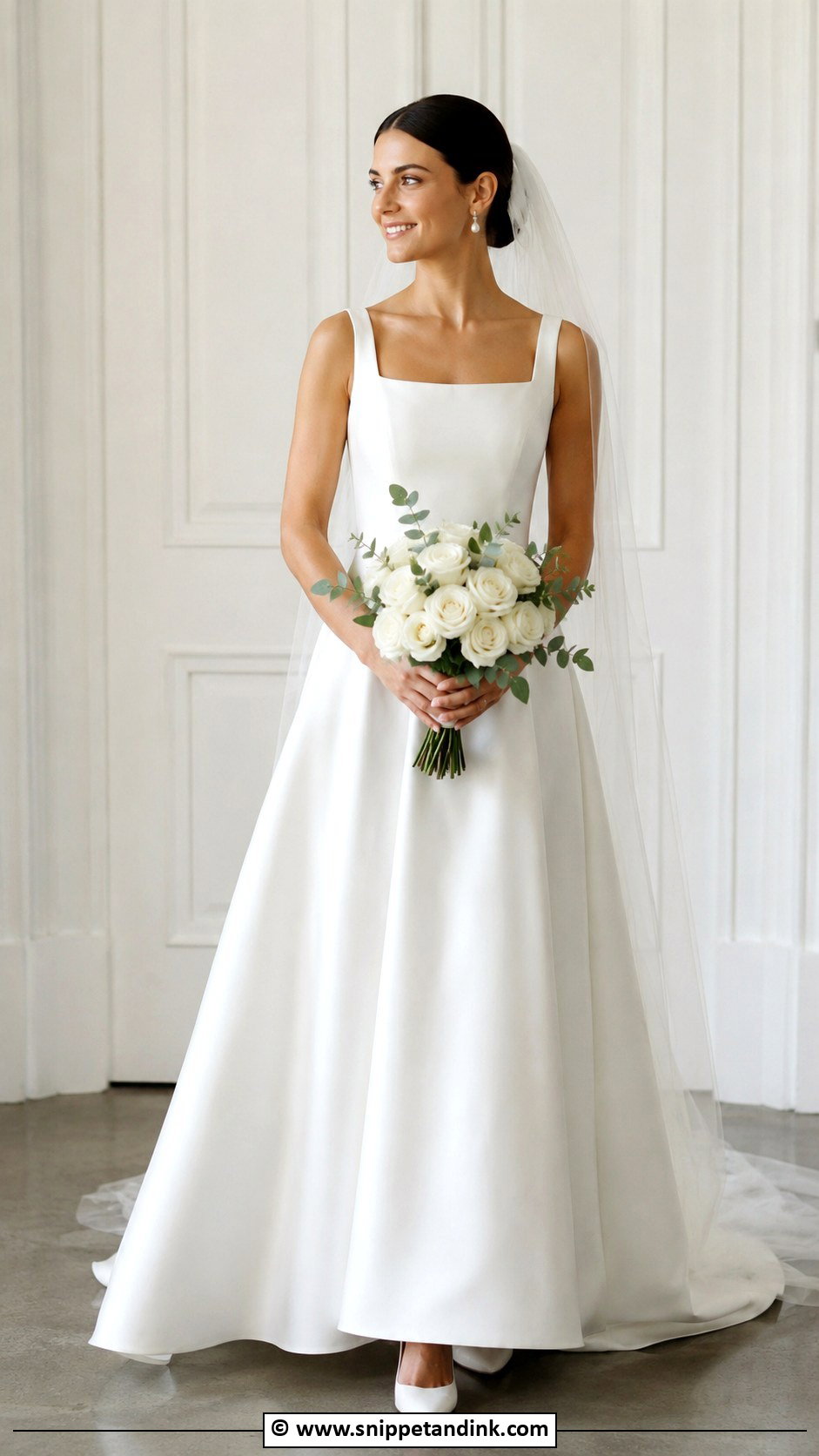
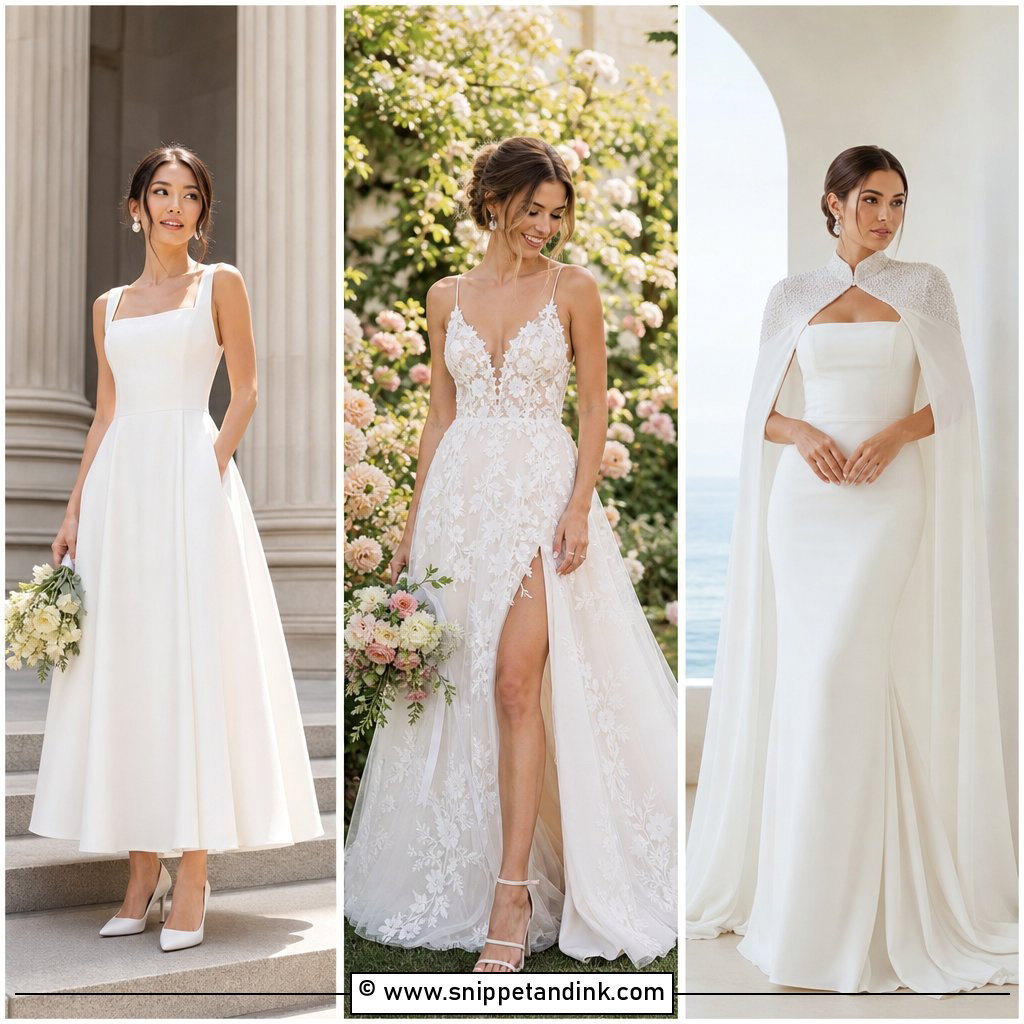
A square neck is one of the easiest bodices to wear for a full day, because it gives coverage and support without the tension of a sweetheart. It frames the upper chest in a straight, modern line. In crepe it reads minimal; in lace it softens. I’d pair it with small pearl earrings and a half-up style, and add a white rose and eucalyptus bouquet. Low ivory heels make the twelve hours easier.
7. High Neck Wedding Dress
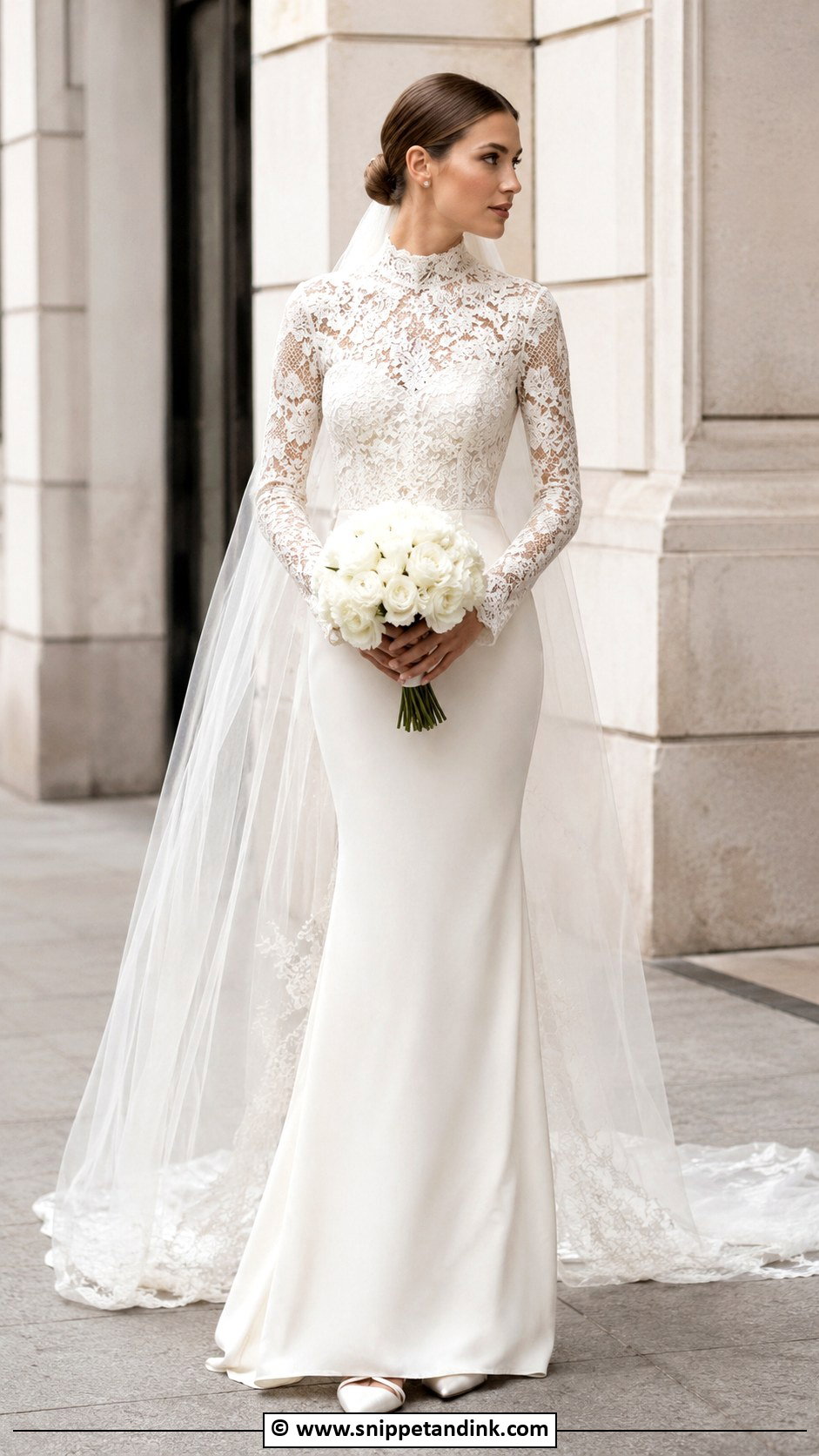
High necks are graceful when the fit at the throat is right, and uncomfortable when it isn’t. I check that two fingers slide between the collar and the neck. Lace, crepe and satin all work, with a fitted waist and either a slim or soft A-line skirt. Since the neckline already finishes the top, jewelry stays tiny, usually studs. A low bun keeps hair off the collar, which matters for city weddings and formal ceremonies.
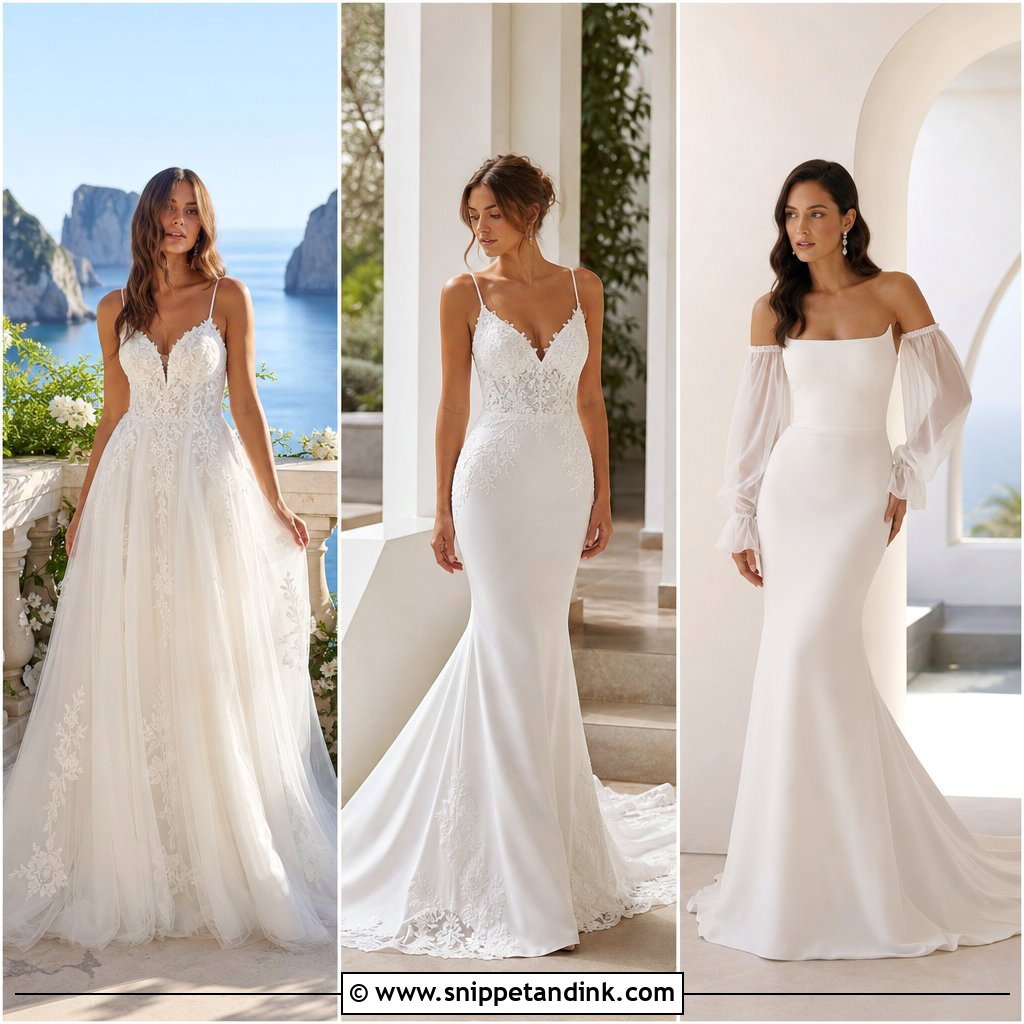
8. Minimalist Crepe Wedding Dress
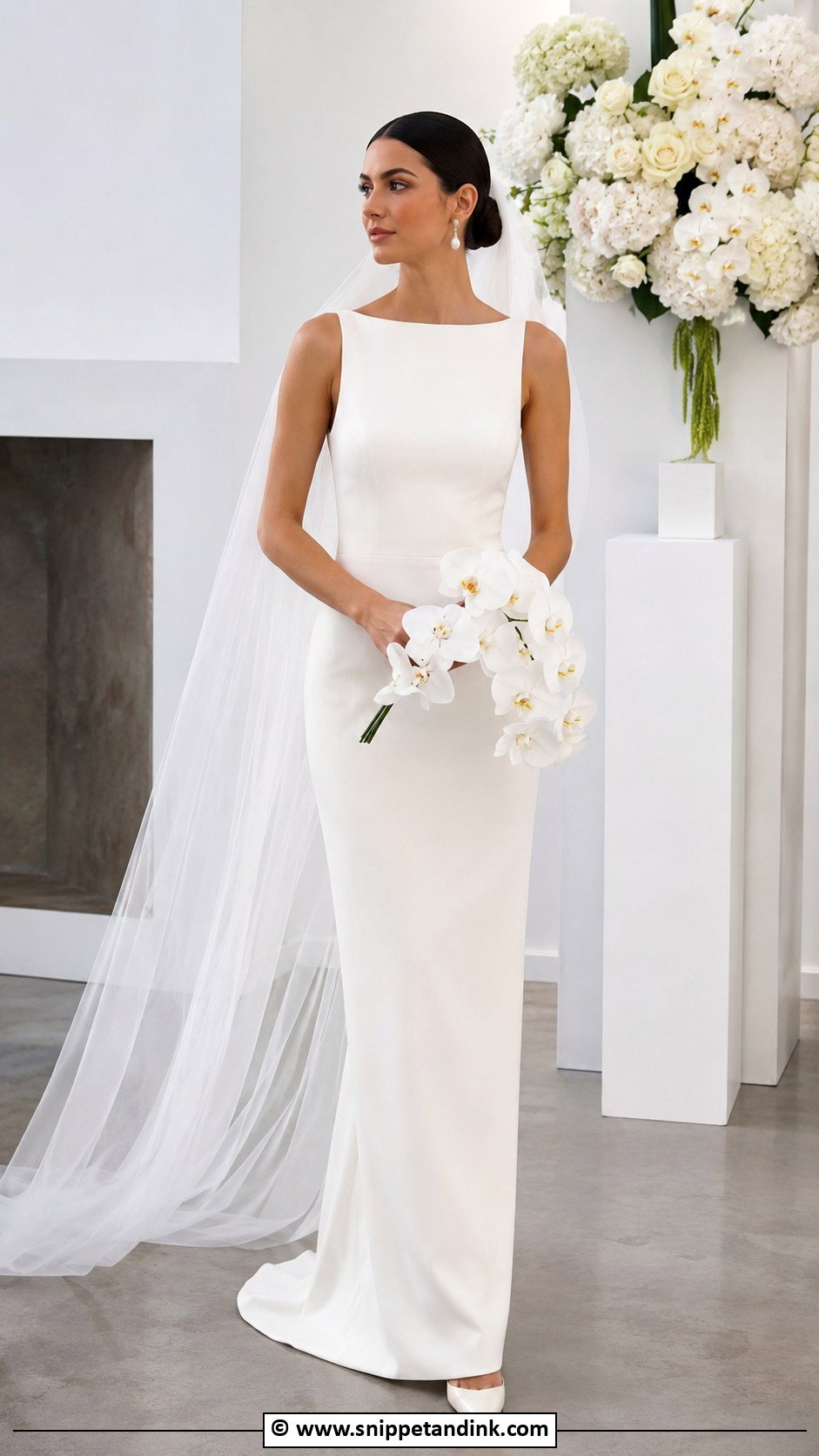
Crepe has no texture to hide behind, so every seam has to sit perfectly flat. That’s the honest trade-off of a minimalist gown: it looks expensive only when the tailoring is precise. In a column or fit-and-flare shape, it gives the quiet look many brides want for modern venues and courthouse ceremonies. Sculptural pearl earrings, pointed pumps and a long plain veil keep it from feeling too stark. White orchids or calla lilies suit the clean lines.
9. Pearl Embellished Wedding Dress
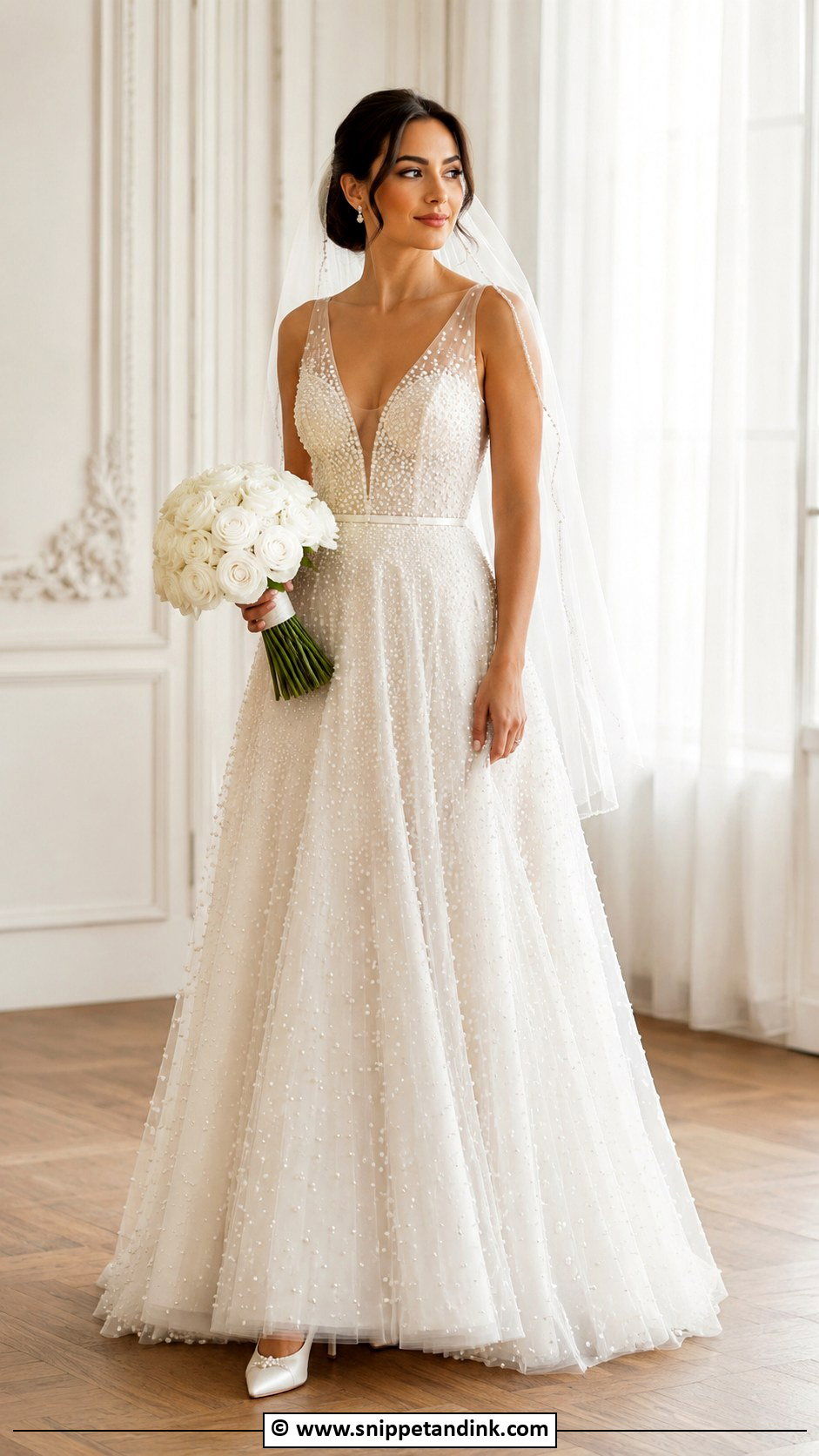
Pearls on tulle catch light softly rather than sparkling, which reads well in close-up photographs. The practical note is weight: a heavily pearled bodice or sleeve pulls downward, so I check how the straps hold by the end of a fitting. Choose a simple A-line, sheath or soft ball gown and let the pearls carry the detail. A clean veil with little trim and a rose and baby’s breath bouquet avoid competing textures.
10. Floral Applique Wedding Dress
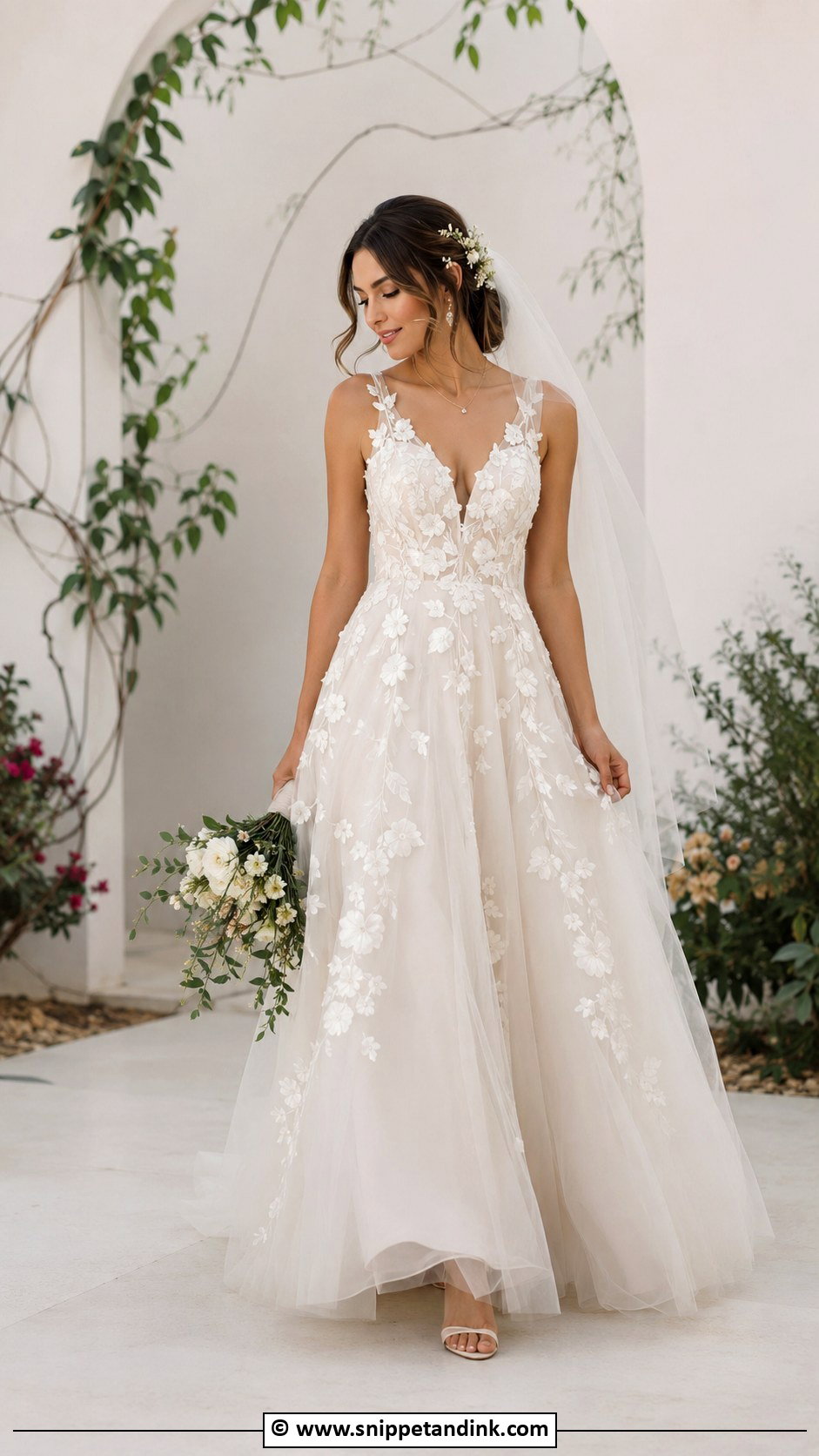
Floral appliqué gives a gown dimension, and the 2024 versions ranged from scattered blossoms to raised, almost sculptural flowers. Raised appliqués can catch on a veil, so I suggest a cut-edge veil without lace trim for these dresses. A sheer overlay or tulle skirt lets the flowers stand out. Floral hair pins and a simple white bouquet with greenery tie it together for outdoor ceremonies and spring weddings.
11. Bow Back Wedding Dress
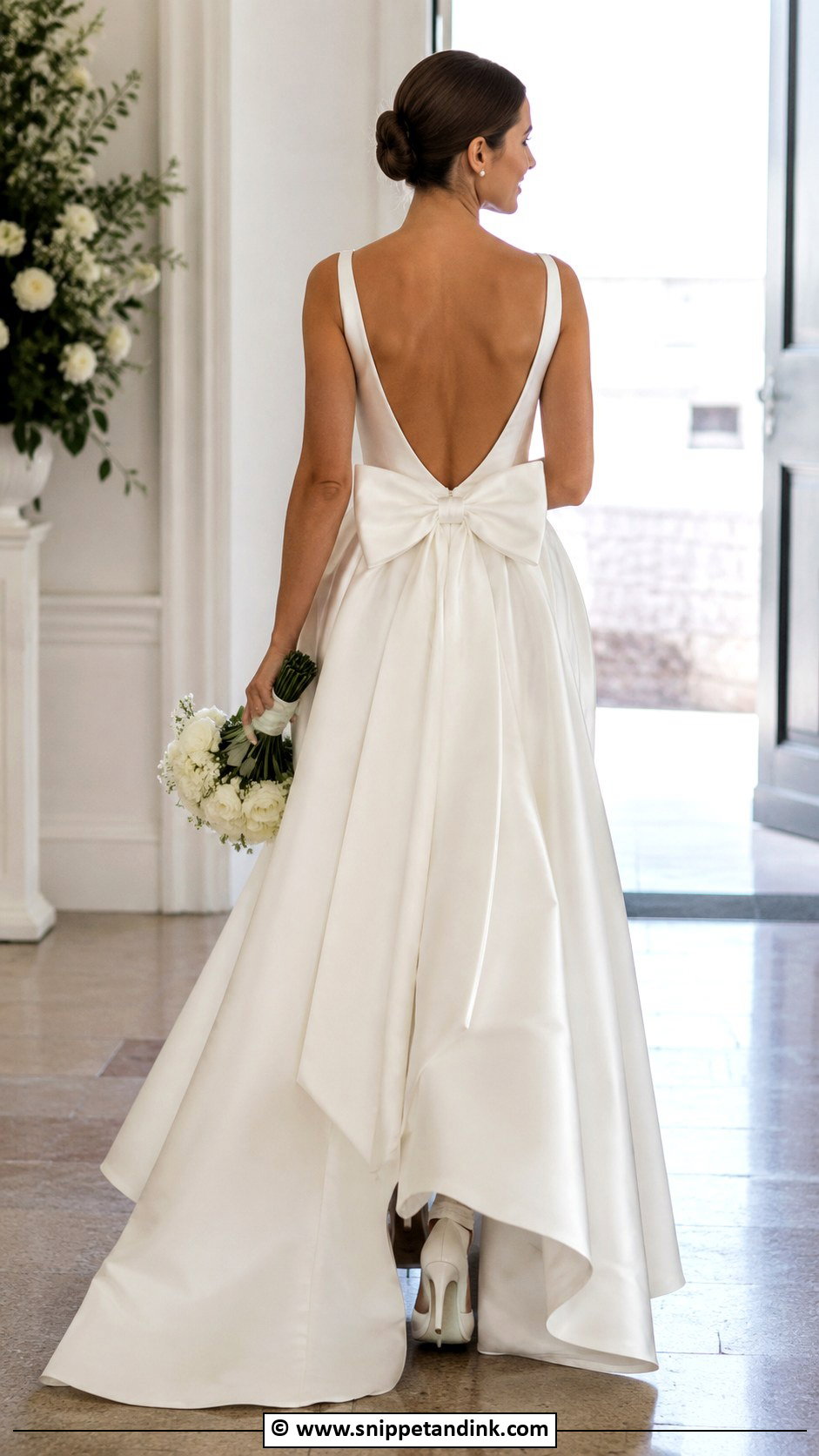
With a bow back, the gown’s best moment is when you walk away from guests, so the front should be plain. A simple satin or mikado body holds a large bow in shape; a soft fabric bow wilts by evening unless it’s interlined. If the bow is oversized, I’d skip the veil or choose one that falls short of it. A smooth bun keeps the back clear for the recessional and the ceremony exit.
12. Corset Bodice Wedding Dress
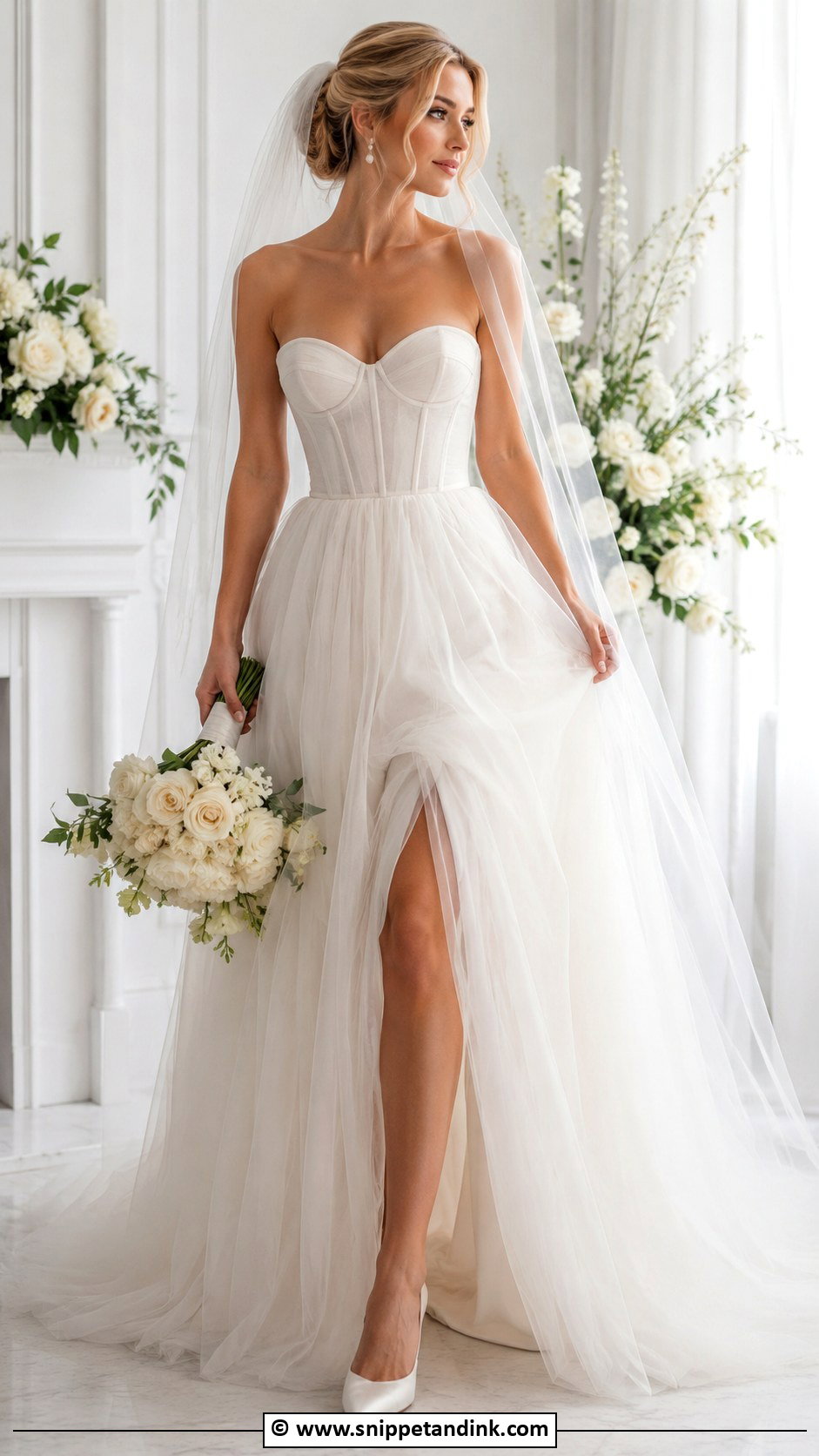
A corset bodice wedding dress gives real support, and in 2024 the boning was often visible on purpose. Real boning should curve with your ribcage; plastic boning that bends outward when you sit is a sign of a poorly made bodice. Pair it with tulle, satin or lace skirts, depending on how soft you want the effect. Dainty earrings, a sheer veil and a garden rose bouquet keep the construction as the focus.
13. Sheer Sleeve Wedding Dress
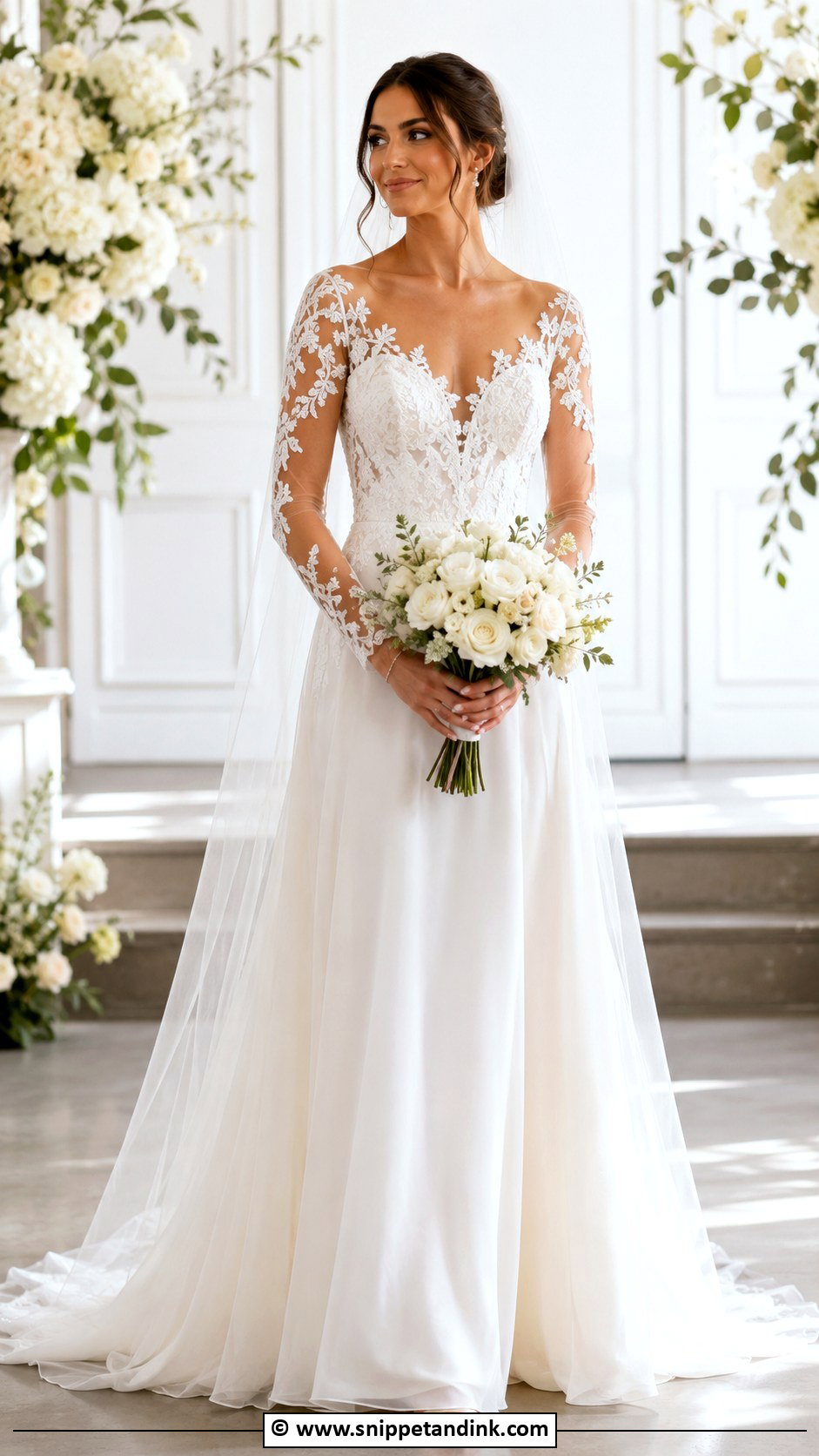
Sheer sleeves give coverage without weight, which is why I steer brides toward them when they want long sleeves for a spring or indoor wedding. Tulle sleeves with pearl or lace details look light in photos. The thing I watch is the cuff; a sheer sleeve that ends at the wrist bone can bunch when you hold flowers. A fitted bodice, a flowing skirt and simple ivory heels round out the look.
14. Short Wedding Dress
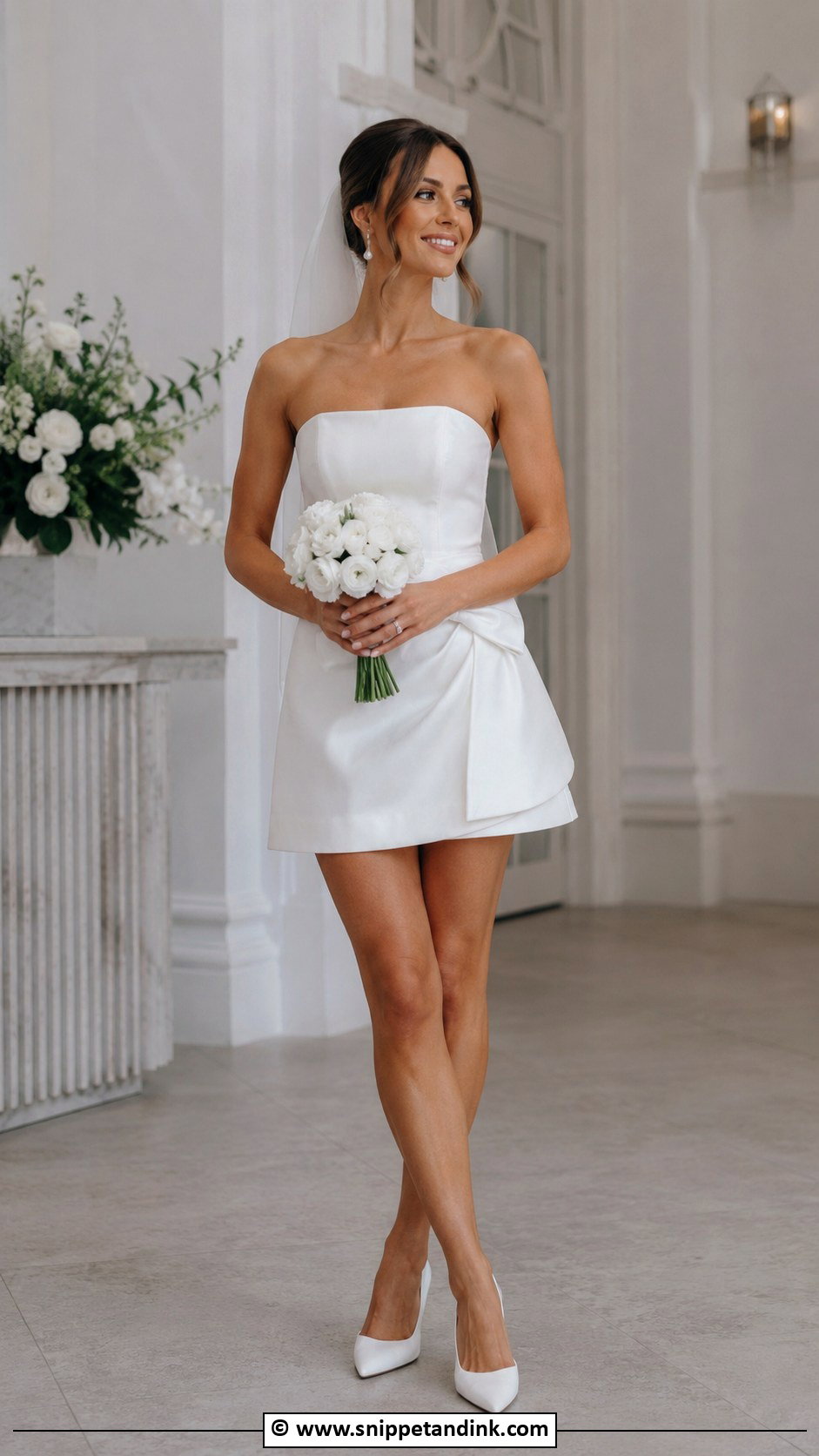
Short dresses suit civil ceremonies, receptions and brides who would rather dance than hold up a train. The 2024 minis had bows, feathers and structured shapes, and those details make a short dress unmistakably bridal. Shoes become a feature, so I treat them as part of the dress fitting. Pointed pumps, slingbacks or ballet flats all work. A short veil or bridal headband and a compact bouquet finish it.
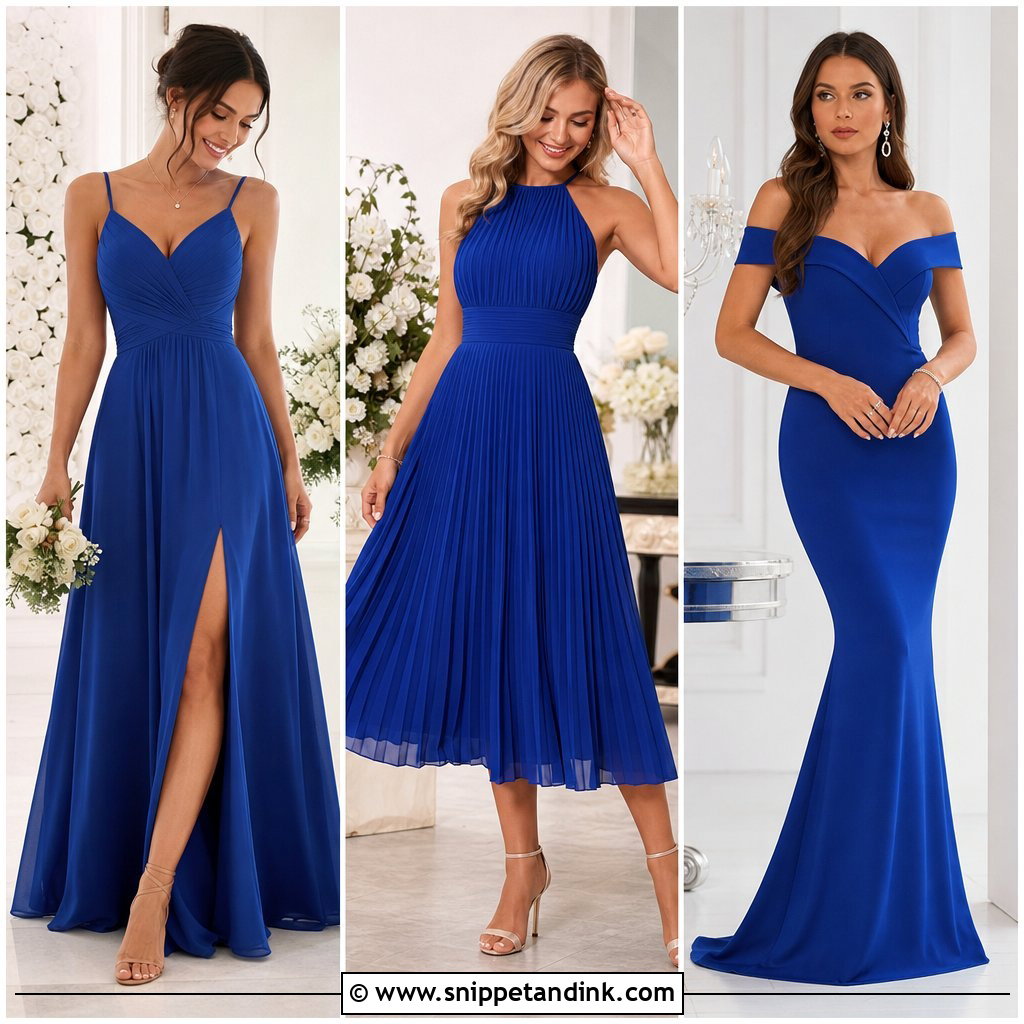

15. Tea Length Wedding Dress
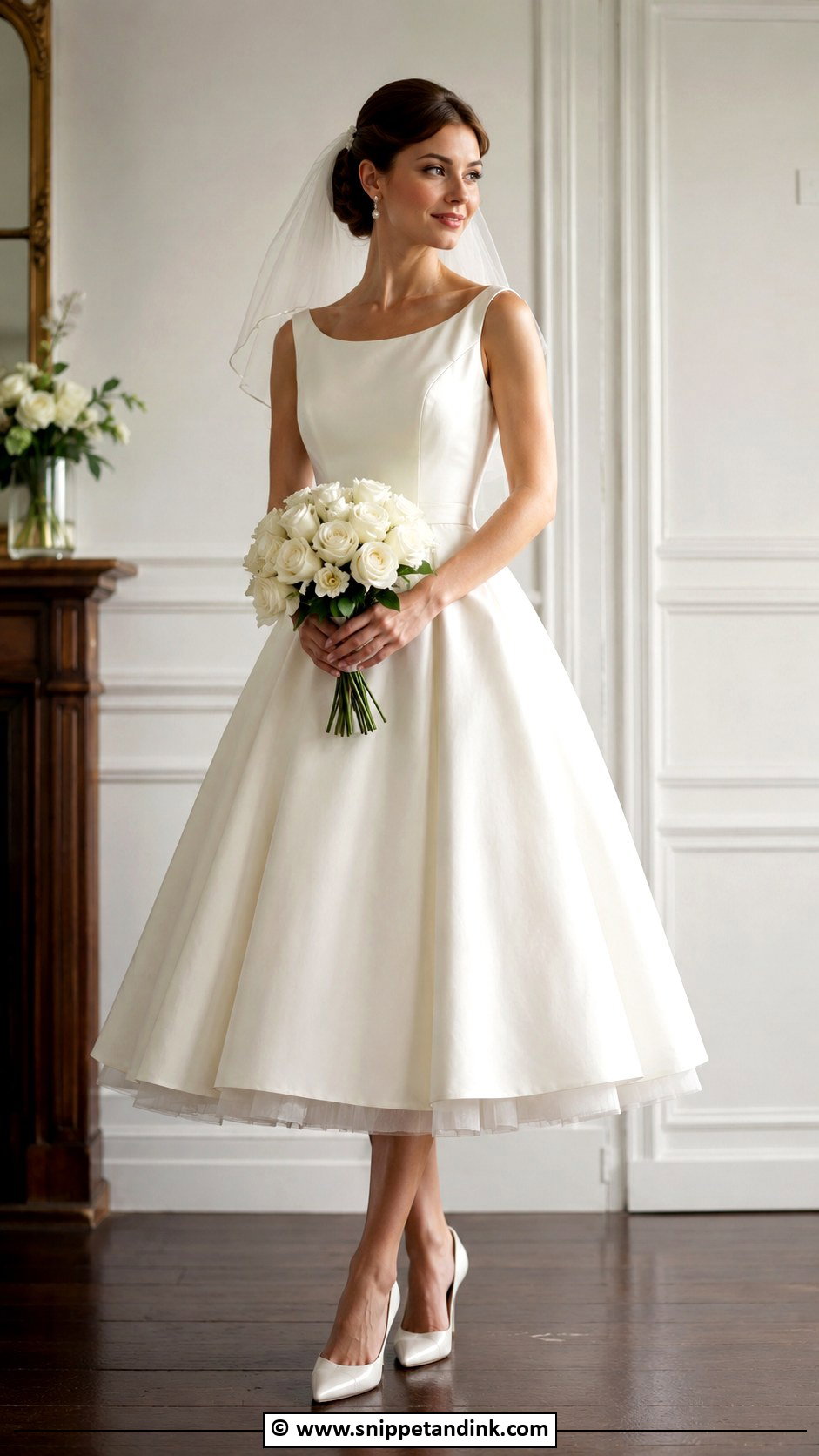
A tea length wedding dress falls between the knee and the ankle, and that gives a vintage mood without a floor-length hem to manage. Satin or organza holds the full skirt well; lace softens it. I suggest a petticoat for fullness, and I check that it doesn’t peek when the bride sits. Pointed heels, pearl earrings, a short veil and gloves give a retro flavor. Daisies or white roses keep it sweet for garden and courthouse weddings.
16. Ball Gown Wedding Dress
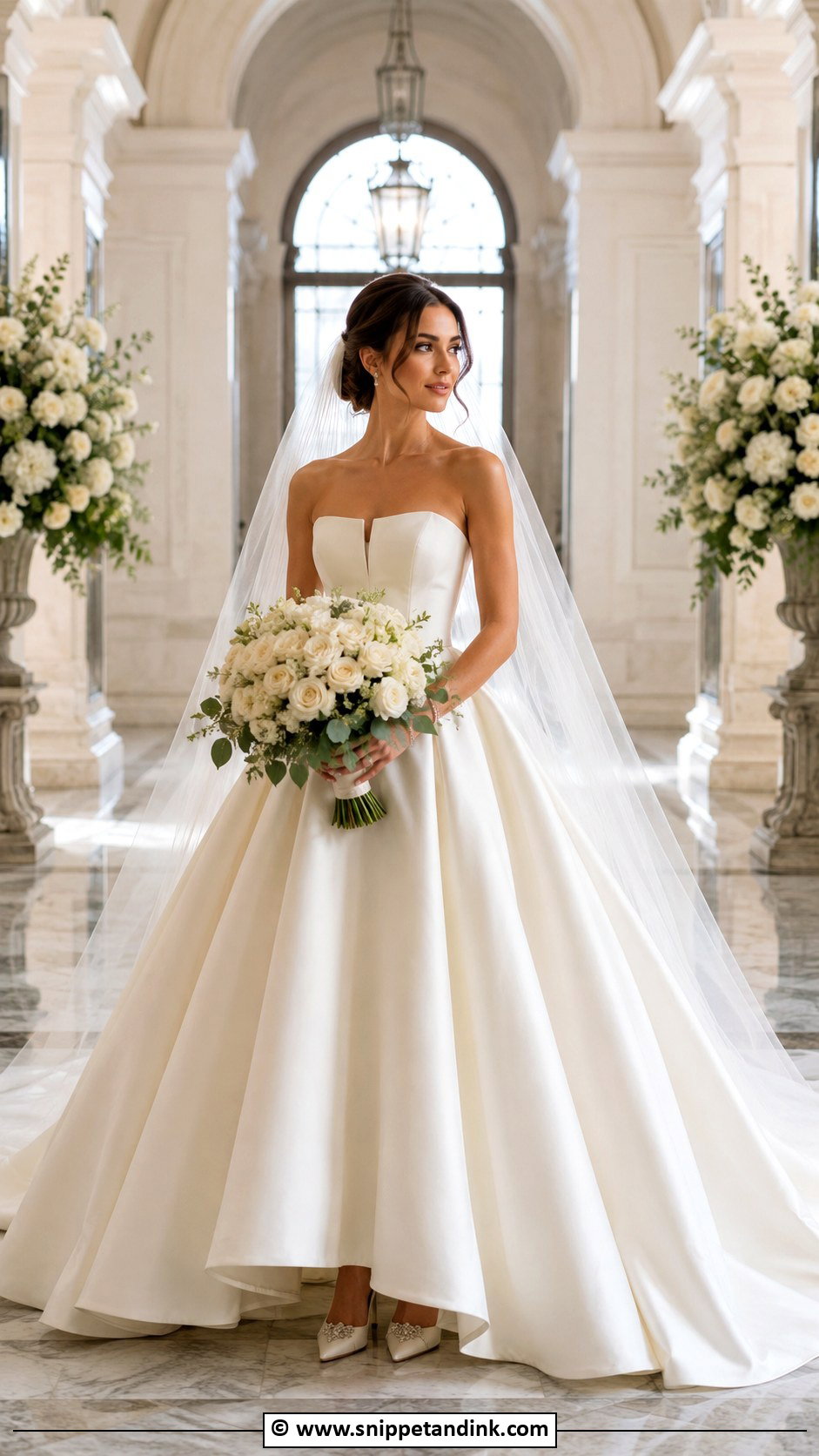
A ball gown wedding dress needs space, and I always ask about the aisle width and the venue doors before recommending a full skirt. The 2024 versions came with cleaner bodices and mikado or layered tulle skirts that keep shape without hoops. Volume means accessories should be scaled up: a long veil and a structured bouquet balance the skirt. Small earrings and elegant heels keep the top half calm.
17. A Line Wedding Dress
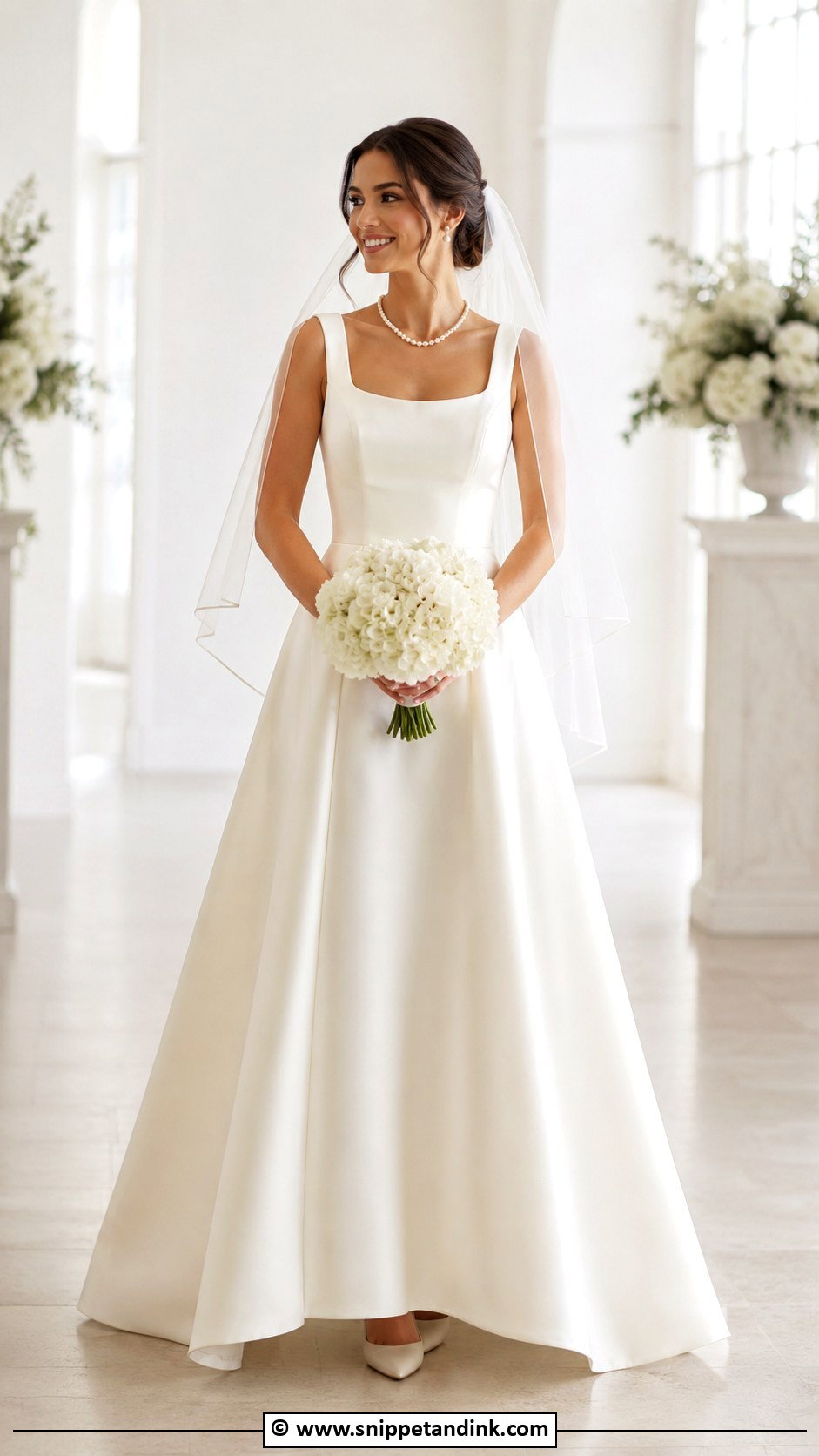
A-line is the silhouette I suggest most often when a bride is unsure, because it fits through the bodice and widens gently from the waist without exaggerating anything. It’s also the easiest shape to sit, walk and dance in. Satin, lace, organza and tulle all work. Choose the bodice you’re most comfortable in, whether that’s strapless, square or off the shoulder. A medium-length veil, simple pearls and a hydrangea or rose bouquet complete it.
18. Mermaid Wedding Dress
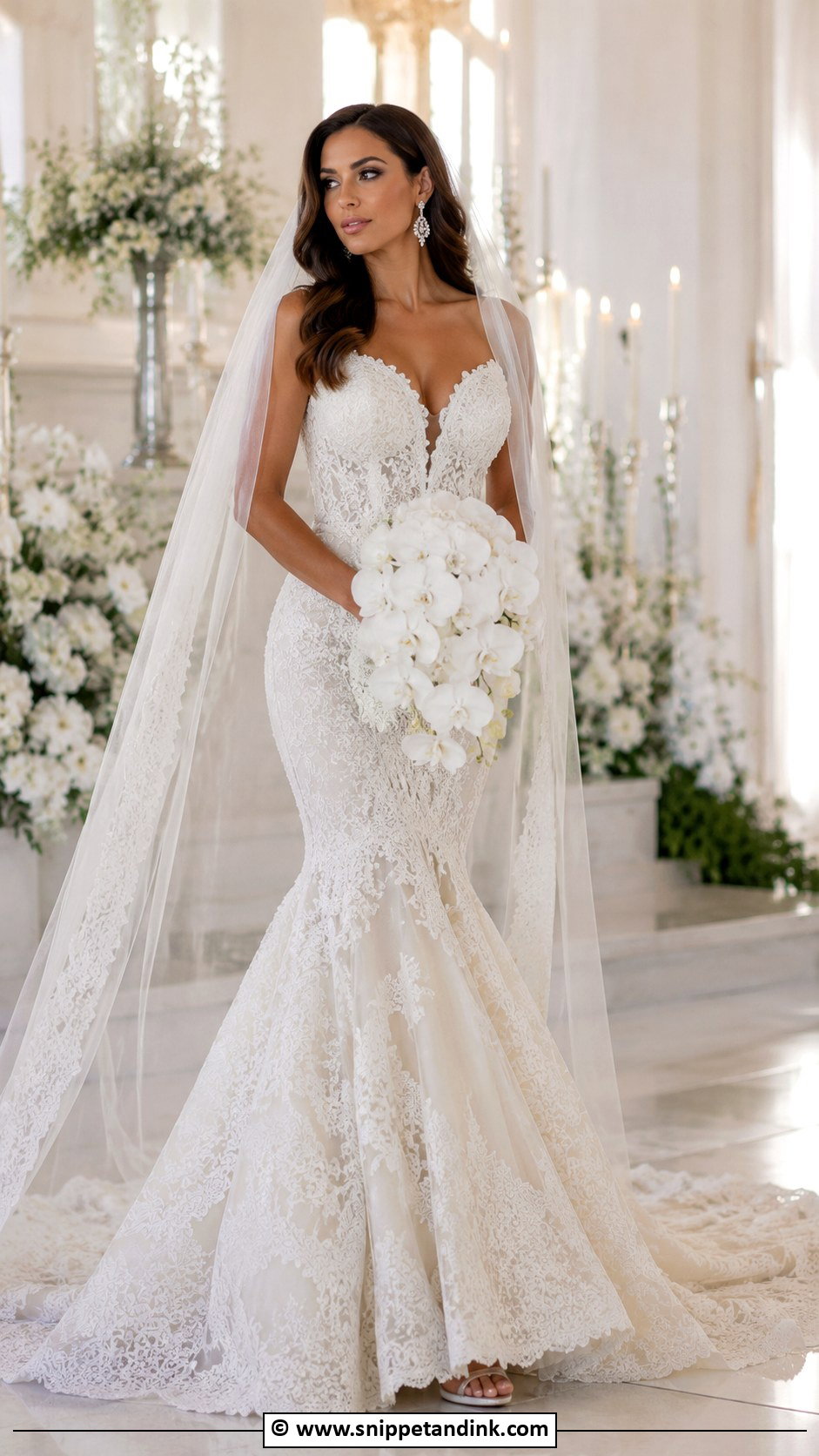
Mermaid gowns fit closely through the hips and flare near the knee, which looks dramatic in photos and restricts your stride. I have brides walk stairs and sit in a mermaid before ordering. The flare point matters: too low and you’ll shuffle, too high and it becomes a trumpet. Lace, crepe and beaded fabrics hold the shape best. Mid-height heels, a sleek veil and soft waves balance the fitted line.
19. Column Wedding Dress
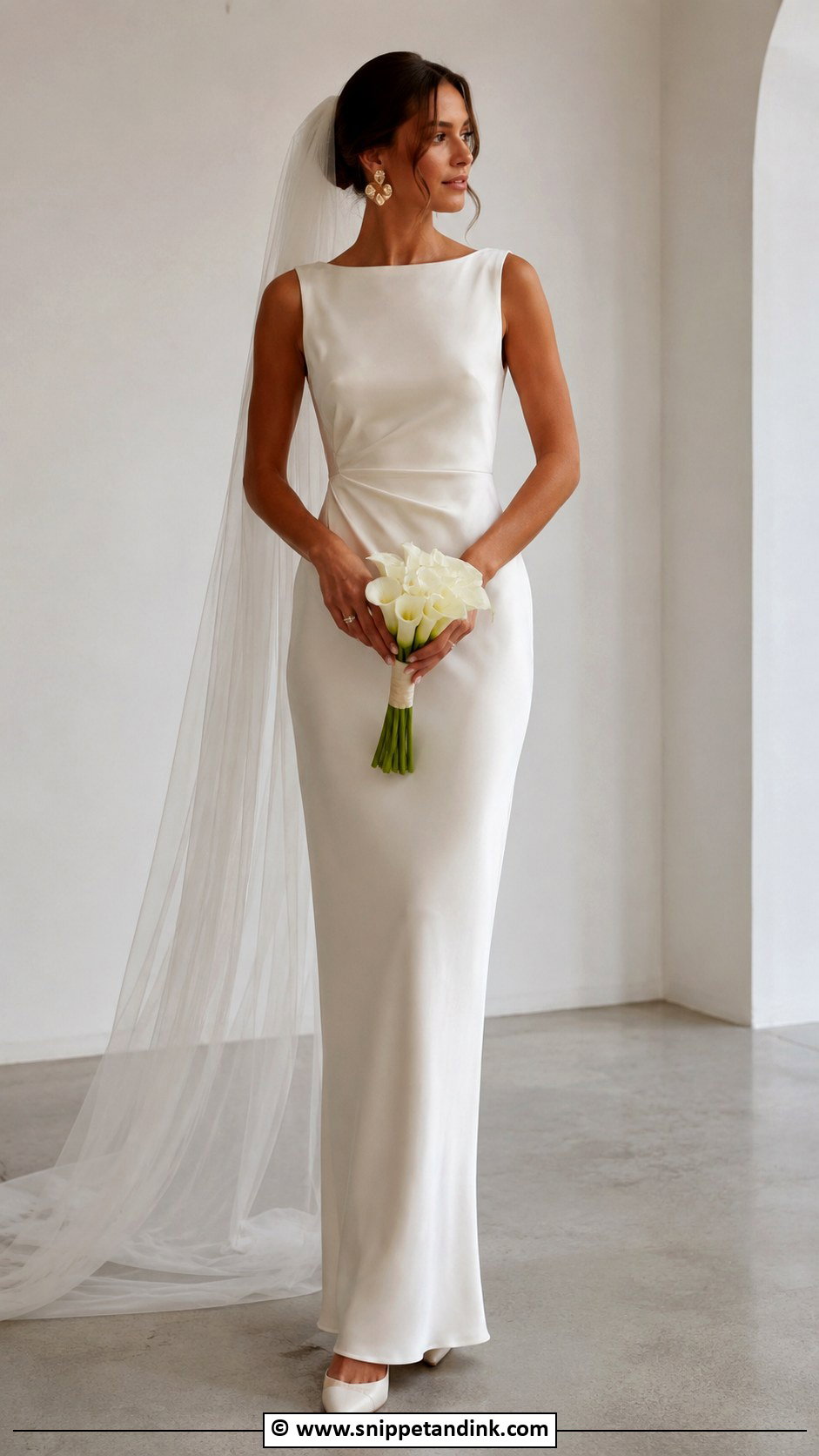
A column falls straight from the shoulder or bust without a flare, so it’s comfortable and moves easily. It’s honest about the body, though, which some brides love and some don’t. Crepe, satin and silk are the usual fabrics. Sculptural earrings, a long veil and pointed heels give it a modern bridal look. Destination weddings and intimate ceremonies suit a column, especially with a small orchid or calla bouquet.
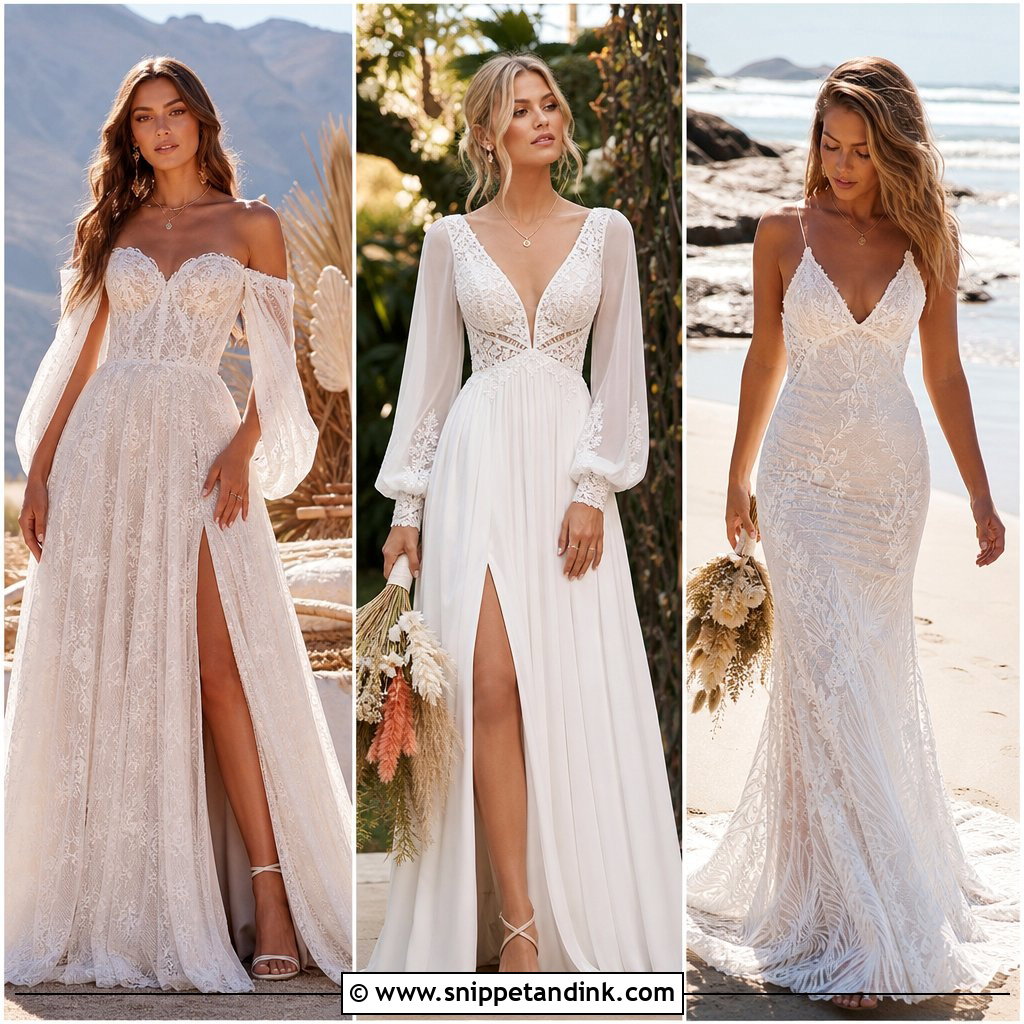
20. Slip Wedding Dress
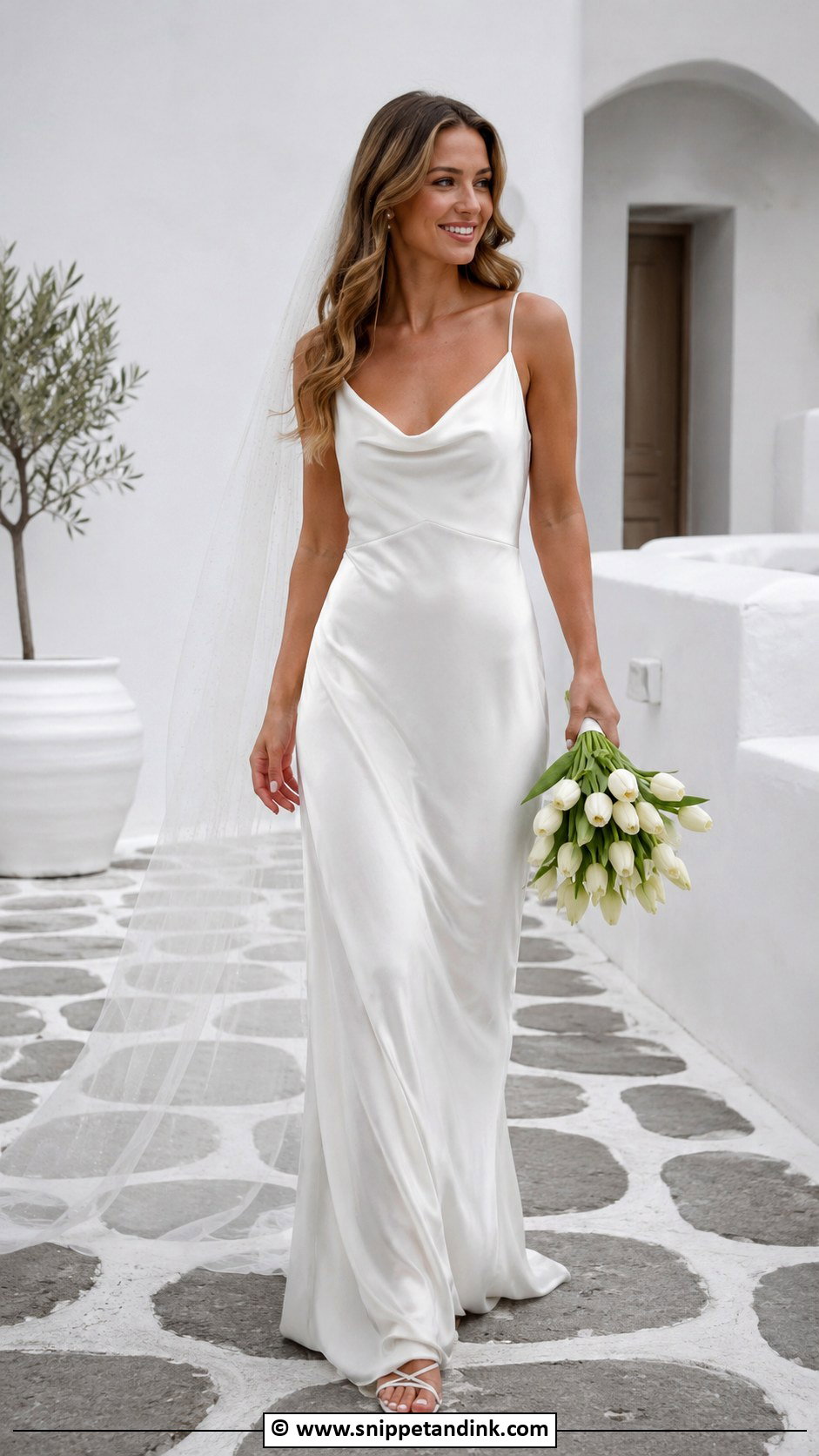
Slip dresses cut on the bias cling and move with the body, which is exactly why they need careful underwear planning. I have brides bring smooth, line-free underwear to every fitting. Silk and charmeuse drape best; cheap satin shows every crease. Strappy ivory heels, pearl studs and a sheer veil keep it bridal, and a tailored cape adds coverage for a ceremony. It suits beach venues and modern restaurants with relaxed timelines.
21. Convertible Wedding Dress
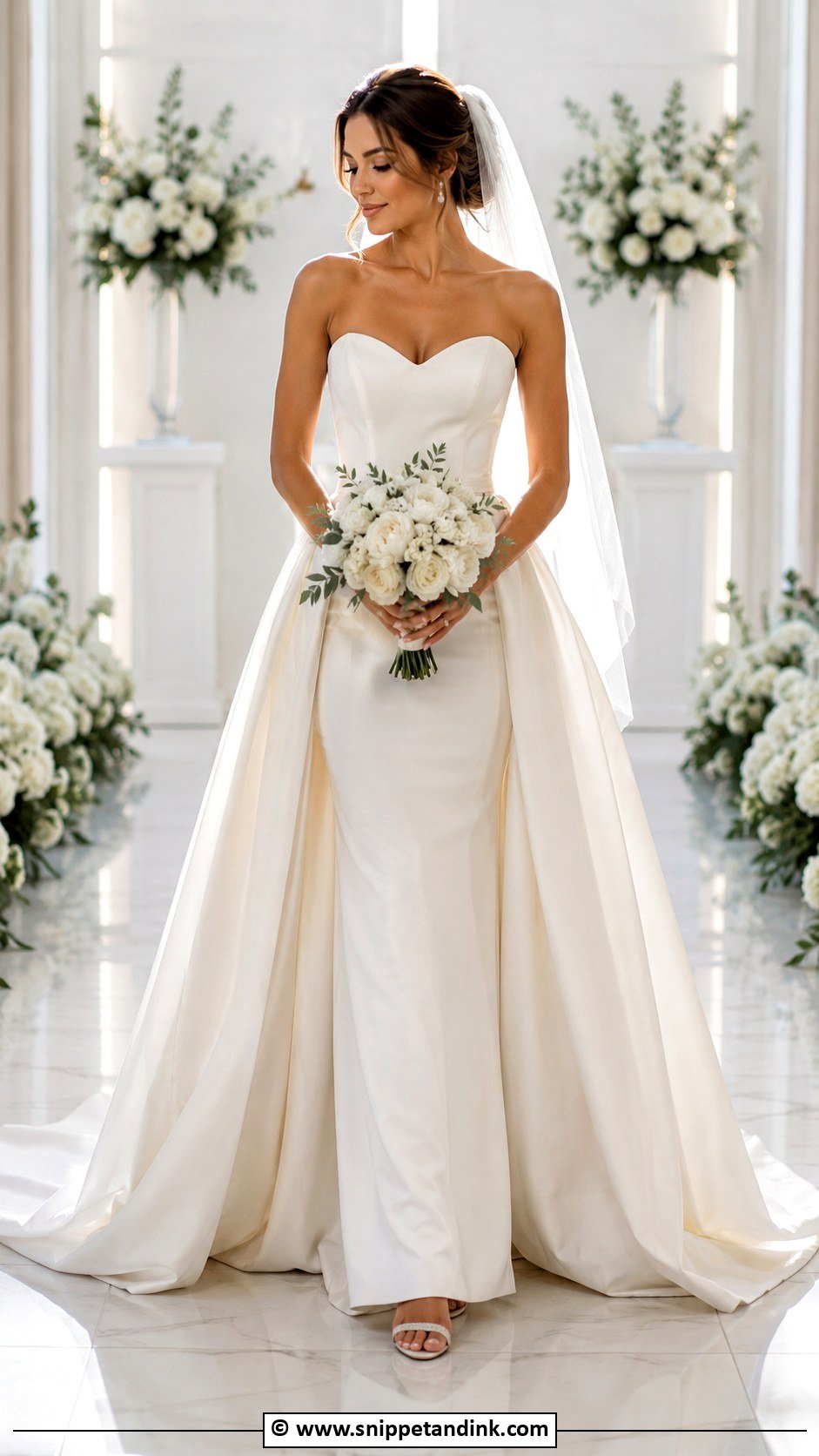
A convertible dress gives you two looks without a second gown, and the practical value is real: the ceremony version can be formal, and the reception version lets you dance. Detachable overskirts, removable capes and sleeves that come off are the common options. I practice the change with a bridesmaid at the final fitting, because hooks and snaps are fiddly under pressure. Switch to statement earrings or bolder shoes once the layer is removed.
22. Detachable Overskirt Wedding Dress
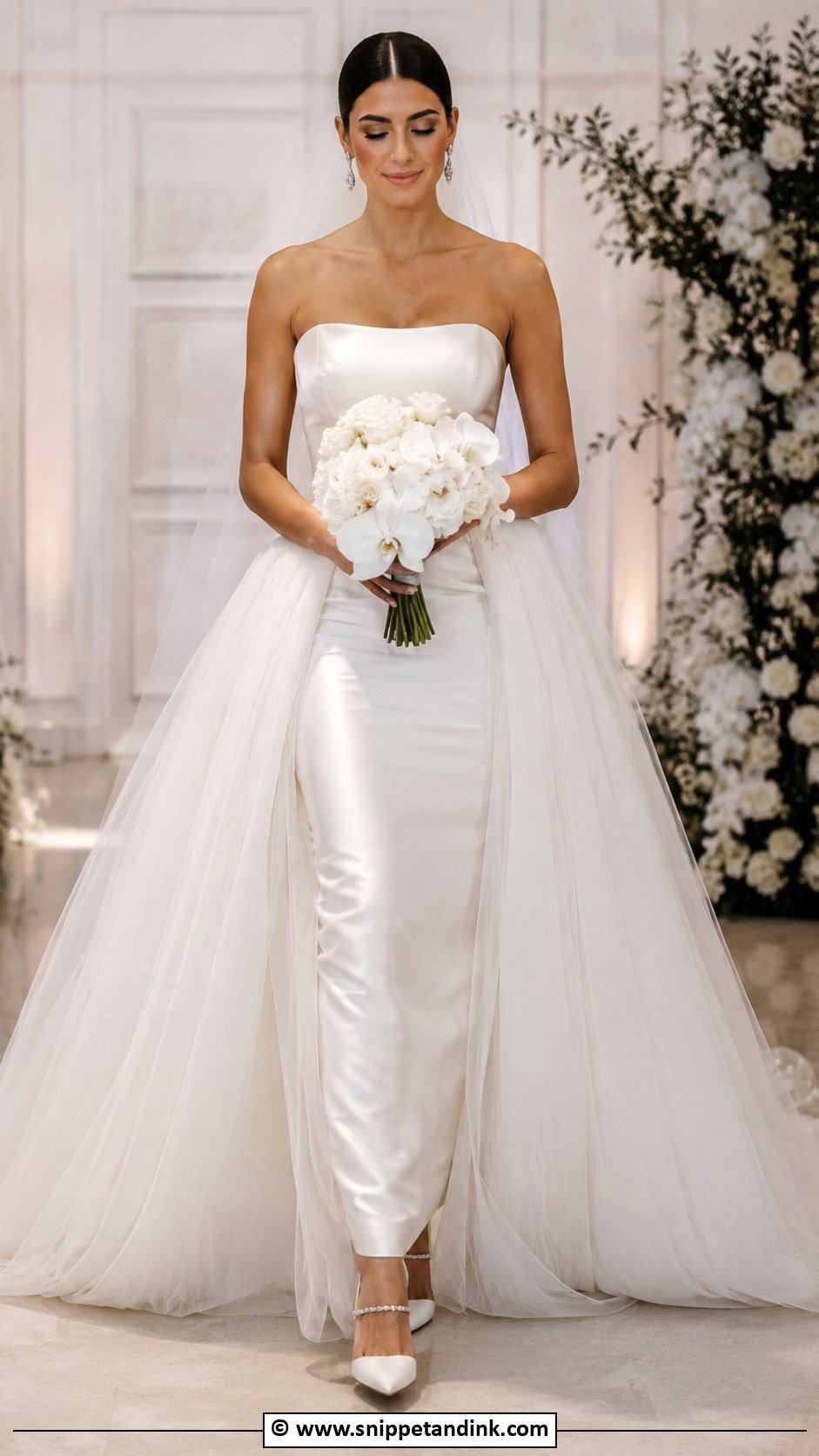
A detachable overskirt wedding dress gives you ball-gown volume for the ceremony and a fitted dress for the party. Satin, tulle and organza overskirts all work, depending on the gown underneath. The overskirt needs a secure waistband, so check that it doesn’t shift when you walk. Wear secure heels and a long veil for the formal moment, then take the overskirt off before dinner for an easier evening.
23. Wedding Dress With Cape
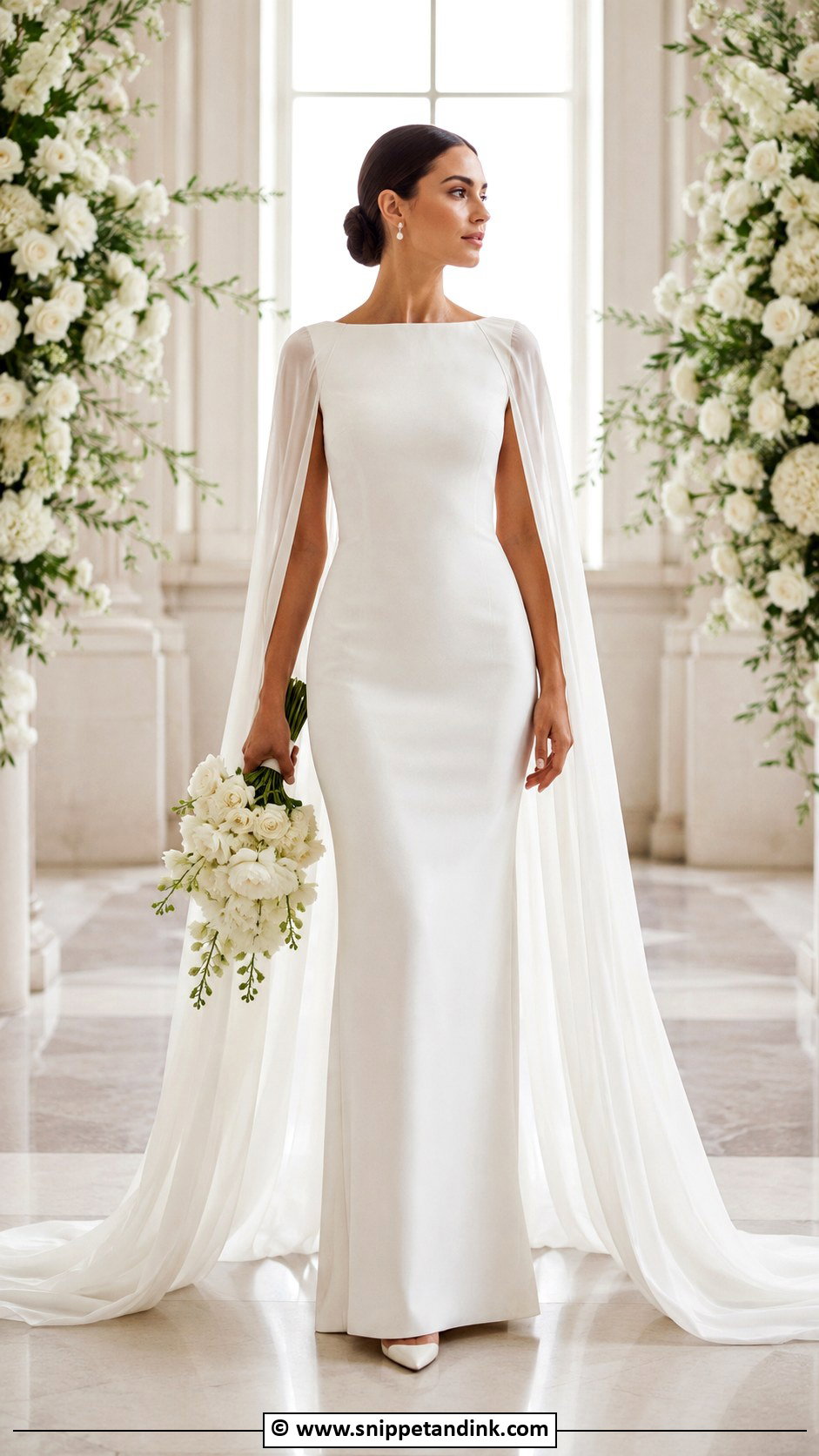
A cape replaces a veil and adds movement from behind, which is where guests watch you longest during the ceremony. Sheer, lace-trimmed and pearl-detailed capes all suit column, strapless and clean satin gowns. A cape attached at the shoulder can pull the bodice back, so I check the anchoring points carefully. A low bun shows off the back and shoulders. Long-stemmed flowers balance the length.
24. Wedding Dress With Gloves
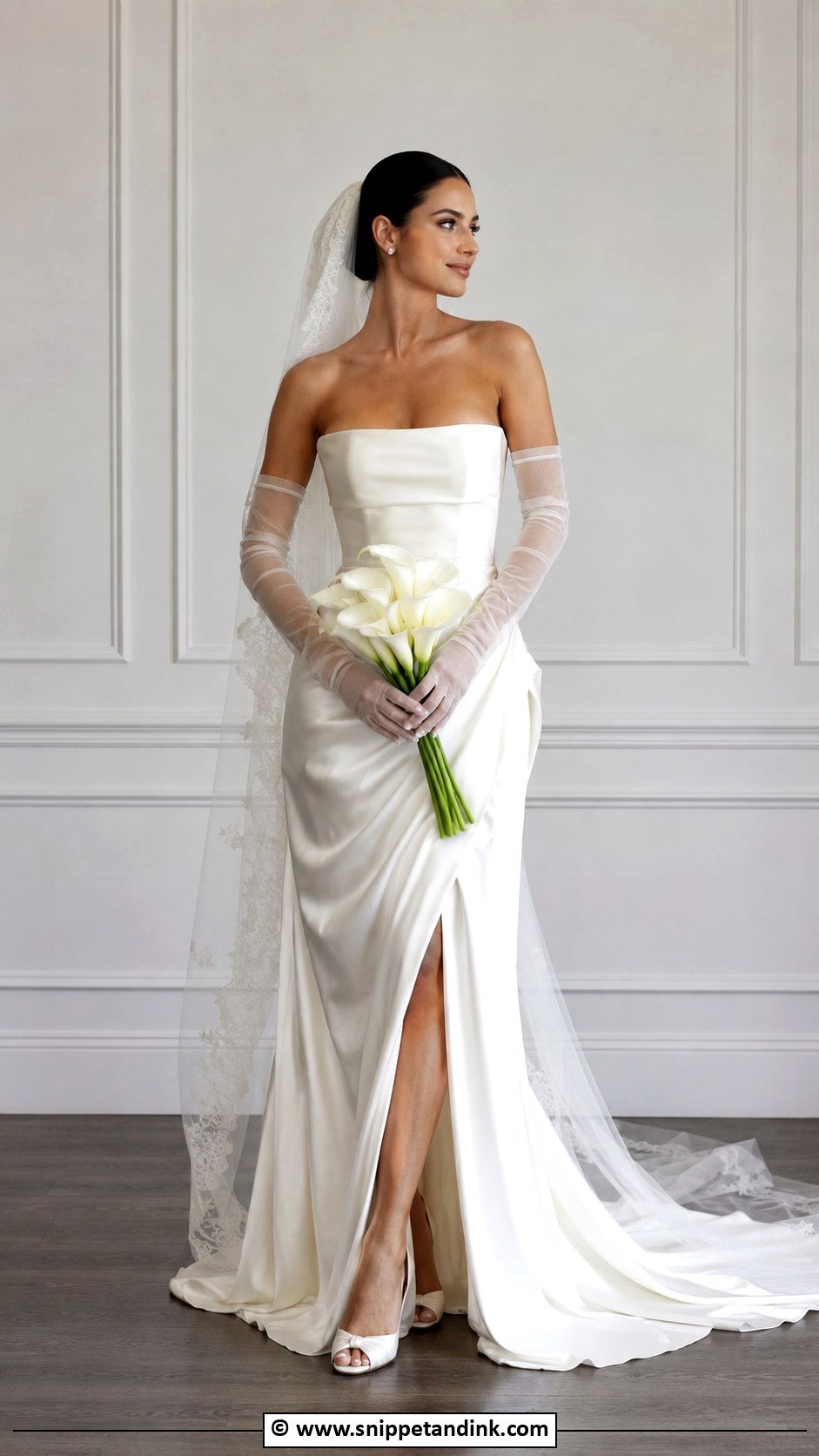
Gloves are the detail that makes a dress look styled rather than simply worn. Opera length suits strapless gowns; short gloves suit square necks and off-the-shoulder cuts. Sheer gloves are easier for ring exchanges, but I always plan when to remove them, usually just before the vows. Satin gloves can slip, so a little fashion tape helps. Keep the rest clean: small earrings, a sleek updo and a classic veil.
25. Wedding Dress With Veil
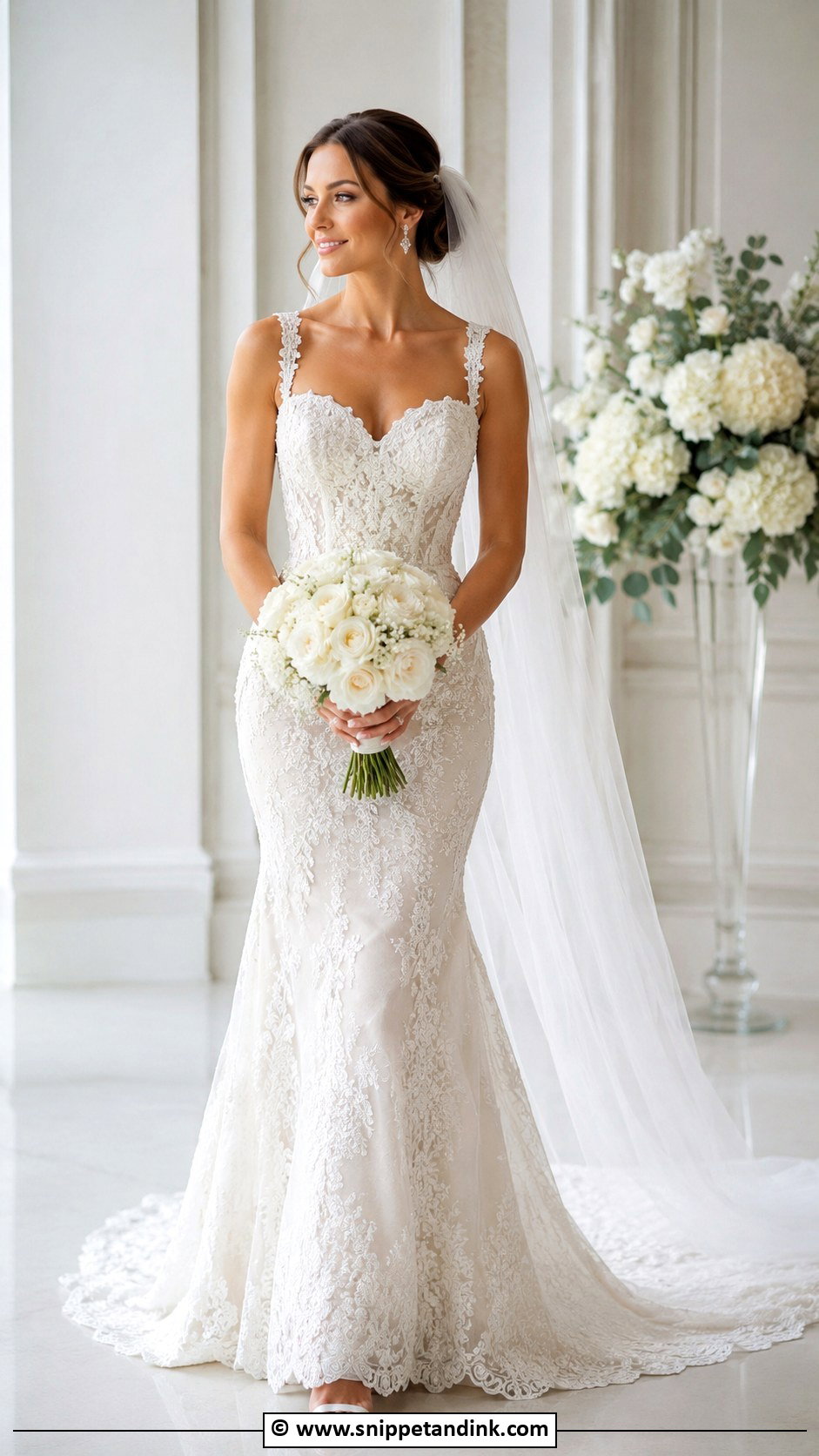
The veil should answer the dress. A plain veil suits a heavily embellished gown; a lace or pearl-trimmed veil suits a simple one. I put the veil on at the final fitting, because the comb’s position changes how the hair needs to be styled. A cathedral length looks dramatic for the aisle but needs a bustle plan for the reception. A fingertip veil is easier for hugging guests and dancing.
26. Blush Wedding Dress
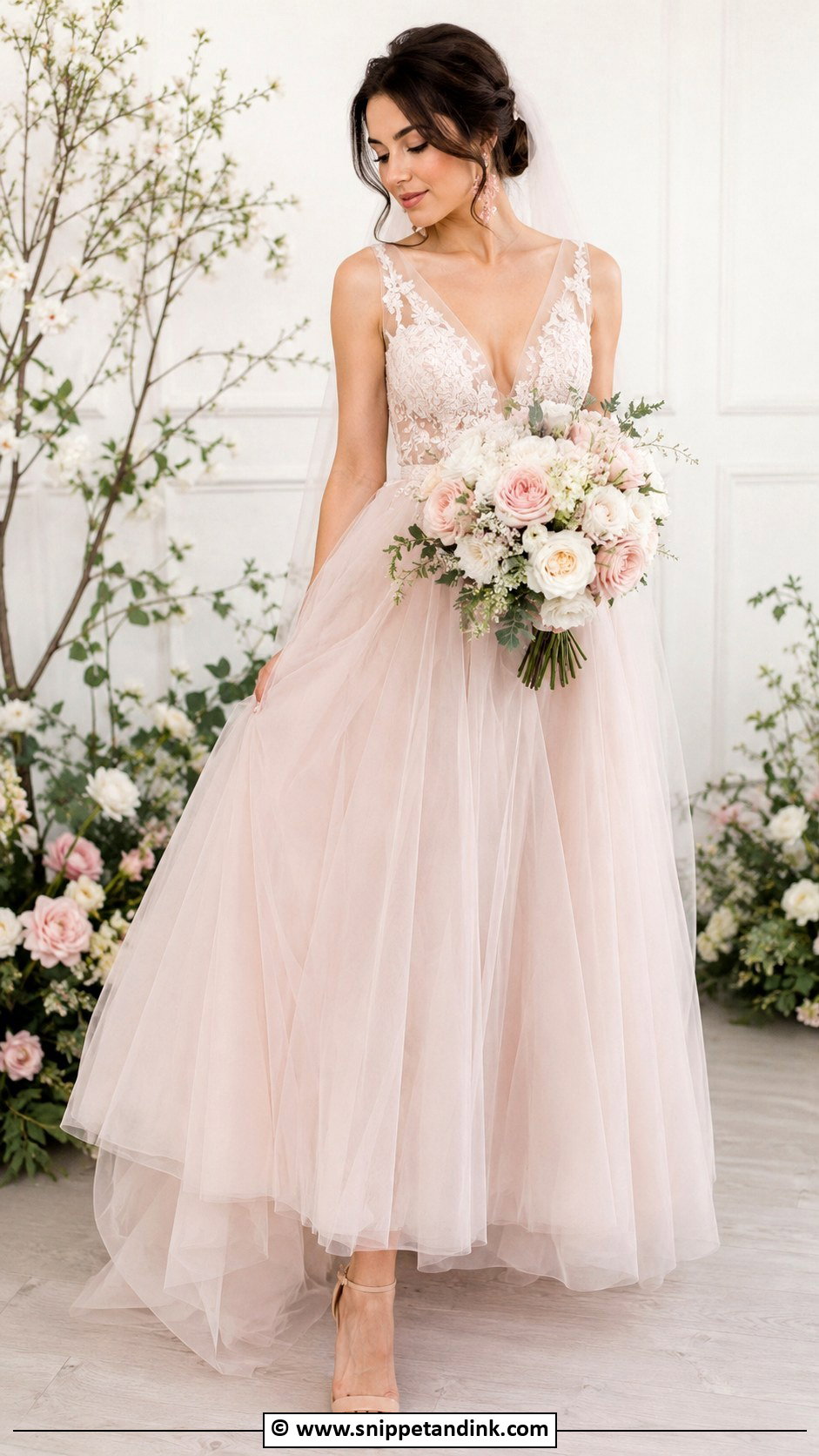
Blush works when the pink is clearly intentional, not when it’s barely there and looks like aged white in photos. I check the shade in daylight and in the venue’s lighting if I can. Tulle gives a soft effect, satin a richer one. Ivory or nude heels and rose-toned earrings tie it together, along with a bouquet in blush and cream. Spring garden venues show it best.
27. Champagne Wedding Dress
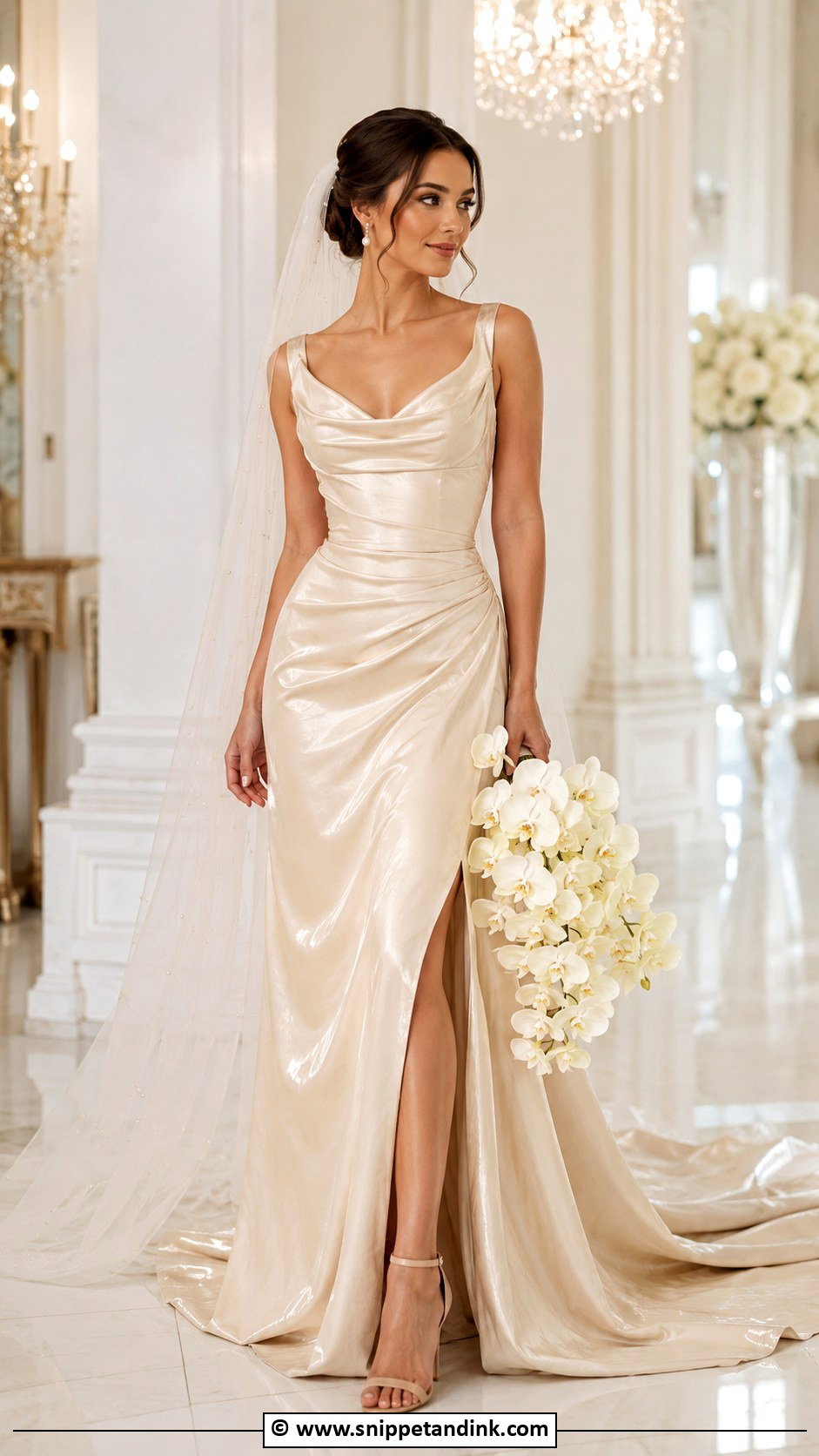
Champagne gives a warmer glow than white and flatters a wider range of skin tones, which is why I suggest it to brides who find bright white harsh on them. It looks richest in satin, beaded tulle and layered fabrics. Match the veil to the gown’s tone; a bright white veil against champagne makes the dress look yellow. Cream roses, white orchids and pearl or crystal earrings suit evening celebrations.
28. Floral Print Wedding Dress
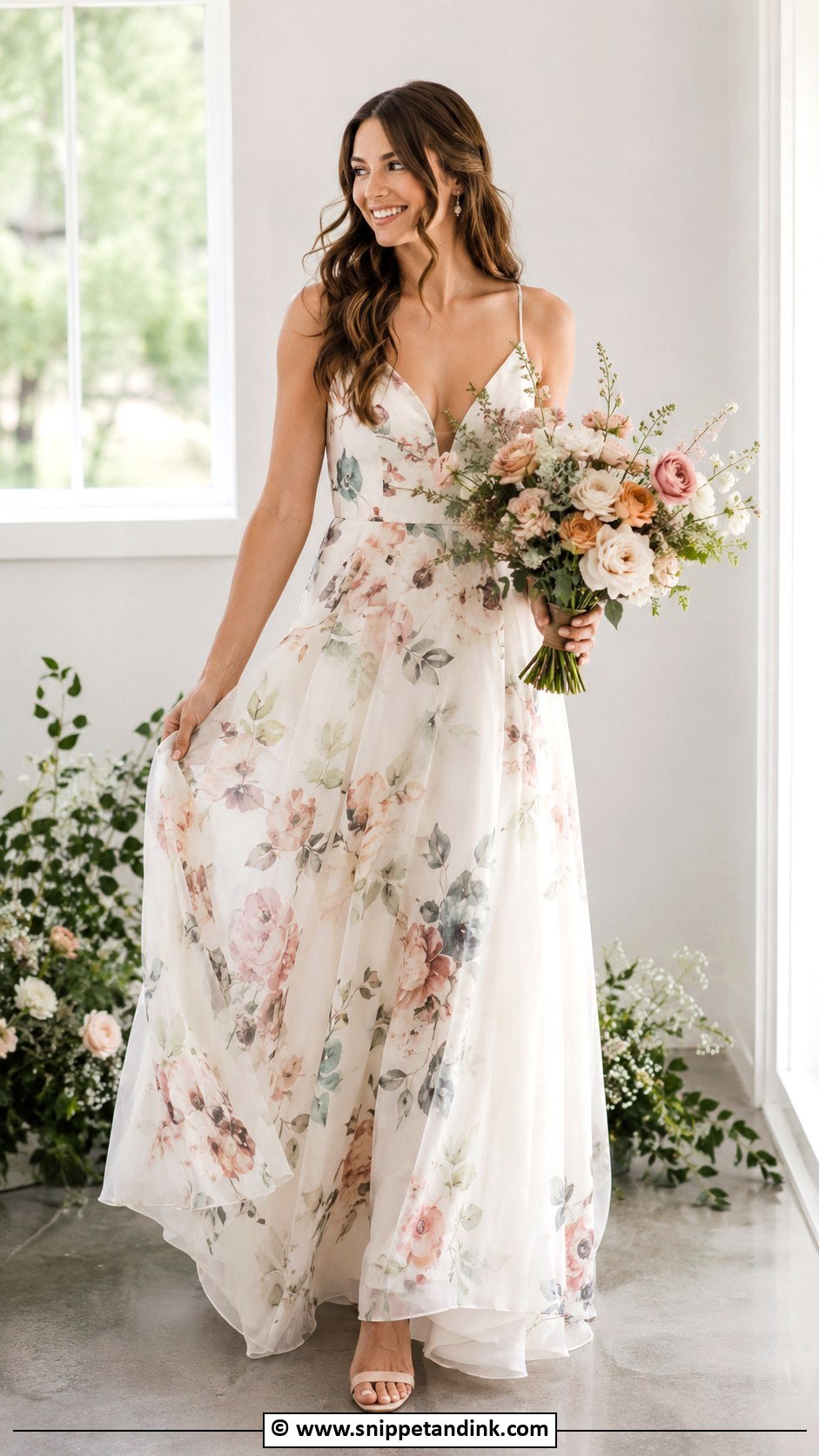
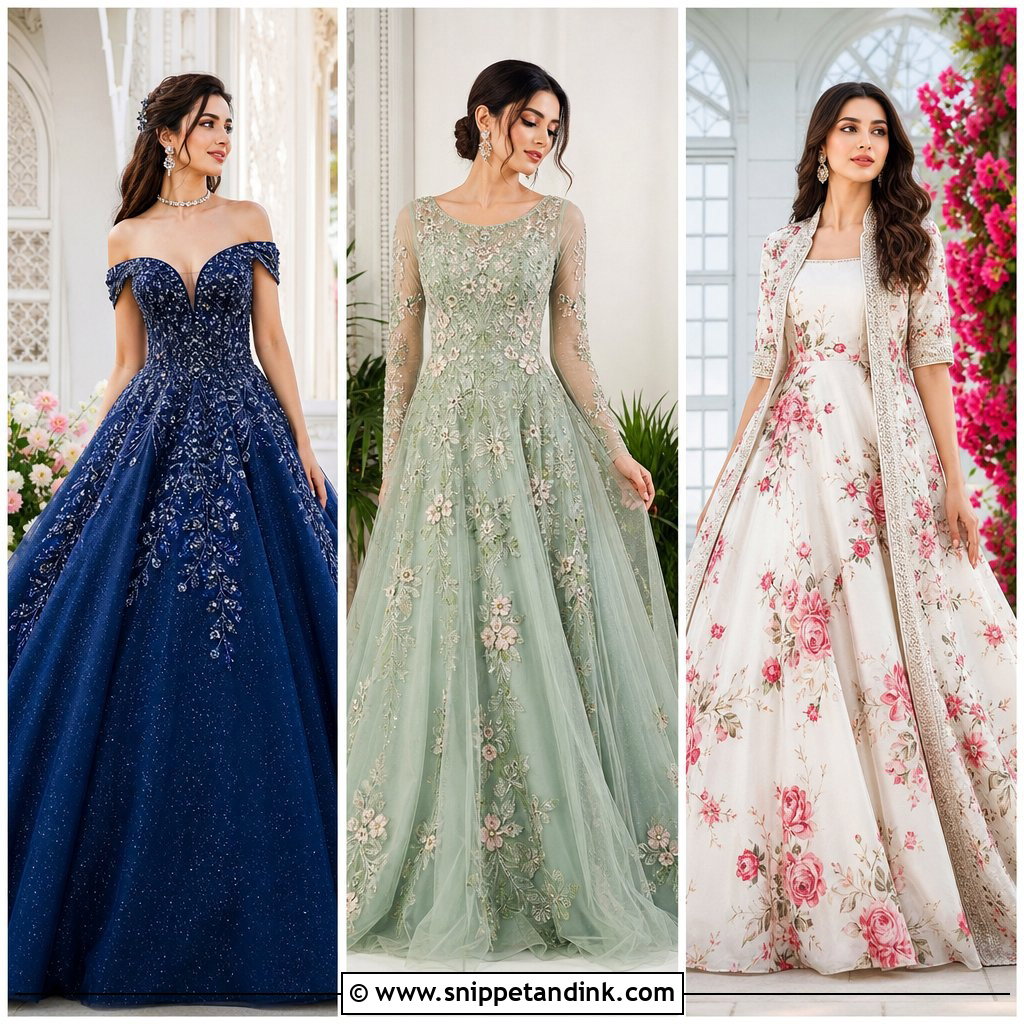
Printed florals bring personality without the weight of appliqué, and they suit outdoor and spring weddings well. My one guideline: the bouquet should pick up one or two tones from the print rather than introduce new colors, or the whole look becomes busy. Ivory, blush or nude heels keep the print as the focus. Minimal jewelry and a soft veil, or none at all, let the dress lead.
29. Beaded Wedding Dress
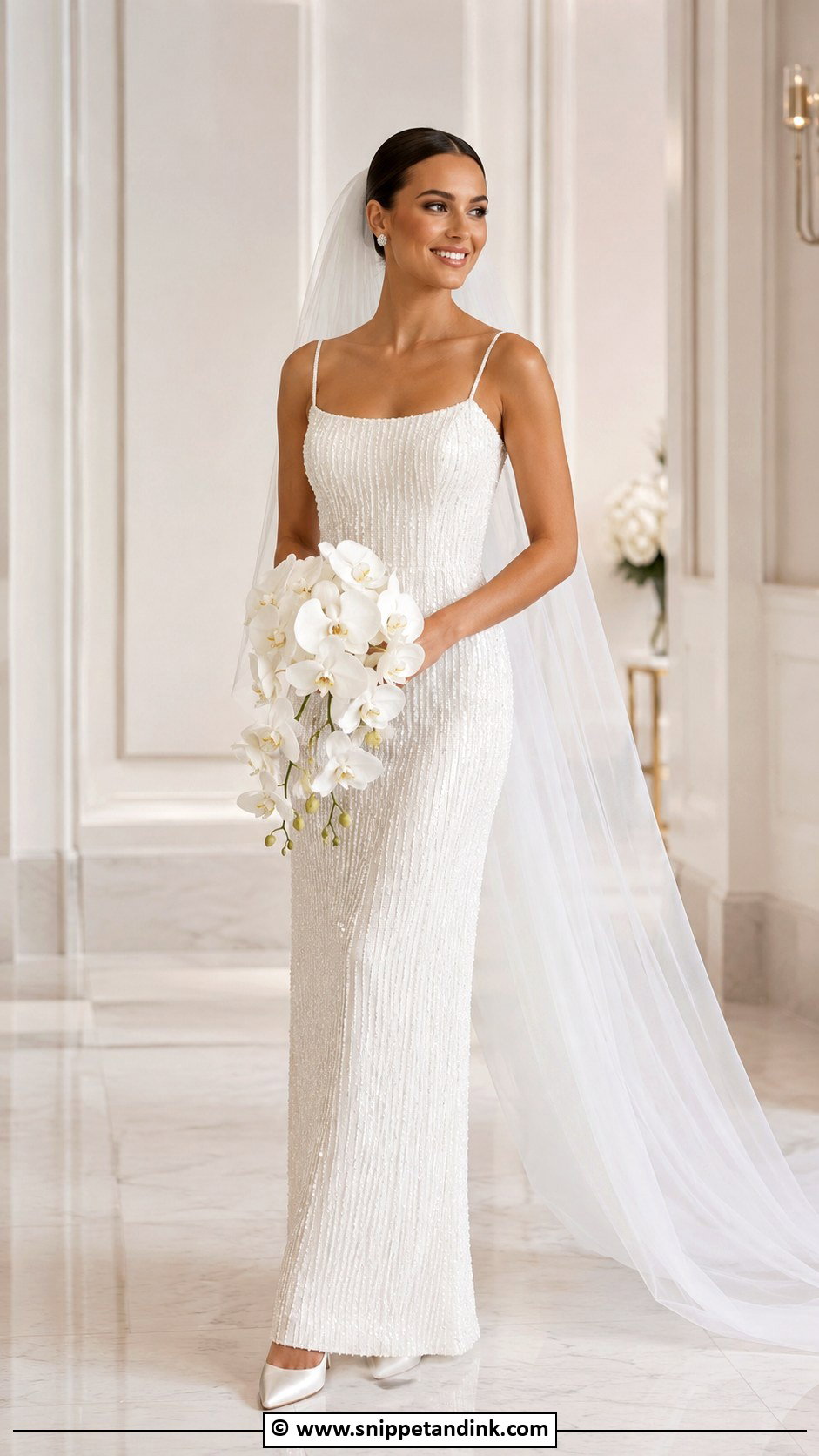
Beading adds weight, sometimes a lot of it, and I tell brides to wear the gown for at least twenty minutes at a fitting to feel whether the straps and seams hold. Heavy beading also snags veils, so pair it with a plain edge. In 2024, I saw beading on column gowns, sheer overlays and geometric patterns. Crystal earrings, satin heels and a sleek hairstyle suit evening and formal venues, where the beads catch light.
30. Reception Wedding Dress
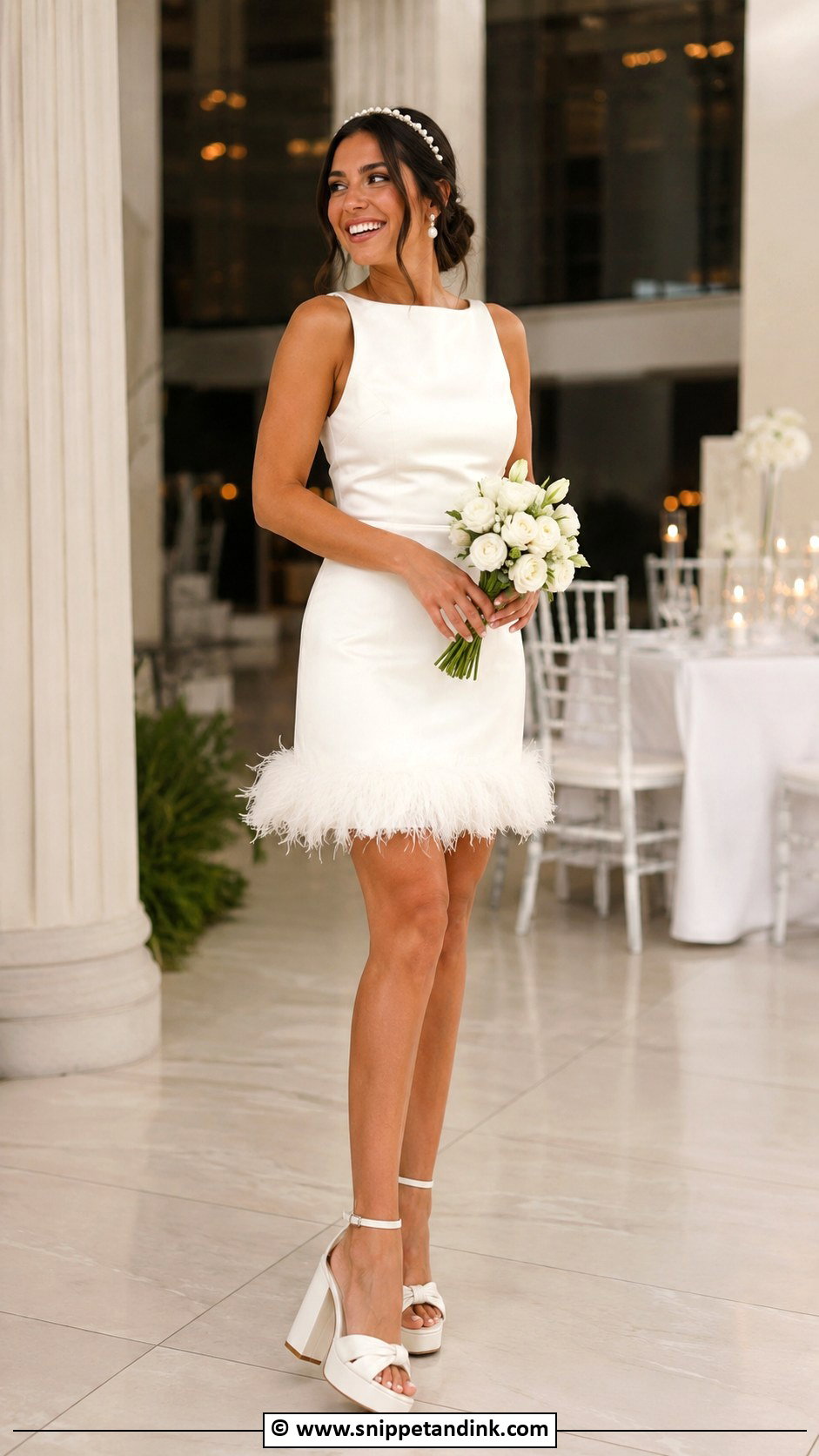
A reception dress gives you a lighter outfit for dancing and greeting guests after a formal ceremony gown. Mini dresses, satin slips, feather hems, bows and simple columns were all popular. Choose something you can sit, walk and dance in, and plan where and when you’ll change, ideally with a bridesmaid to help with the fastenings. Statement heels, pearl earrings and a hair bow or short veil keep it bridal.
What Happens to the Gown the Morning After
Brides often leave the dress in a heap on a hotel chair, and that’s where stains set. I’d ask a bridesmaid or relative to take it home the night of the wedding and lay it flat or hang it by the inner loops, never by the shoulders of a heavy gown.
Cleaning before stains set
Get it to a cleaner who handles wedding gowns within a few weeks. Sugar from champagne and cake can be invisible on day one but turn yellow-brown over months as it oxidizes. Point out every spot you know about, including hems that dragged through grass, so they can be pretreated.
Storing it for years
- Use acid-free tissue in the folds and an acid-free box or breathable cotton bag, not plastic, which traps moisture.
- Keep it somewhere cool, dark and dry, away from attics and basements.
- Refold it along different lines every year or two so creases don’t become permanent.
- Store a beaded or heavily embellished gown flat, since hanging stretches the seams.
Will You Still Be Comfortable in It at Midnight?
From clean satin and corset bodices to printed florals, overskirts and short reception dresses, 2024 gave brides real choice. The gowns that work best are the ones chosen with the venue, the season and a full day of movement in mind. Shoes, veils, jewelry, flowers and hair shift the mood more than people expect, so try the full outfit together before the final fitting. Then refine the small things until it feels like you.
You'll Like These Ideas:






Leave a Reply