
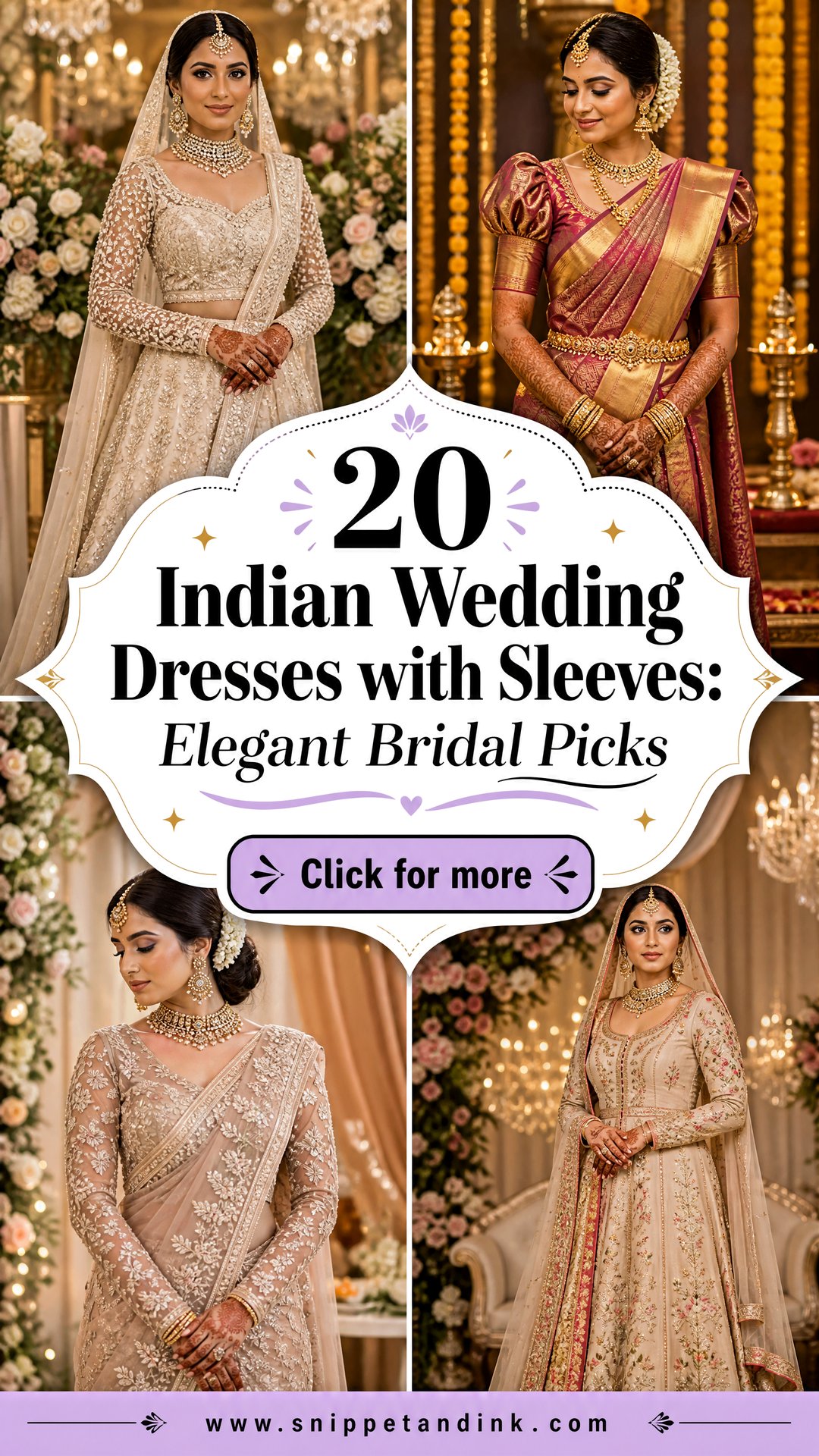
Sleeves change an Indian outfit more than people expect. They decide how warm you’ll be, how your arms look in the varmala photos and how much of your mehndi shows. The looks below range from traditional bridal lehengas and silk sarees to contemporary gowns, sharara sets, and fusion ensembles, with sleeves from airy net to structured elbow cuts and dramatic bell shapes. Sleeves also give embroidery somewhere to go, so you’ll see zari borders, threadwork, sequins, pearls and lace carried down the arm. At fittings, sleeves are the part I adjust most often, because a sleeve that looks right standing still can pull the moment you raise your hands.
Fitting Sleeves You Can Still Raise for the Varmala
Most sleeve problems come from the armhole, not the sleeve. A low, roomy armhole feels comfortable in the trial room, but it actually restricts you: lift your arm and the whole bodice rises with it. A higher, closer armhole with a well-shaped sleeve cap lets the arm move on its own. That’s the first thing I adjust on a sleeved blouse.
At your fitting, run through the movements you’ll really make, wearing the jewelry you plan to wear:
- Raise both arms above your head, as for the garland exchange.
- Reach forward with both hands, as if taking a plate or hugging someone.
- Bend your elbow fully and hold it there for a few seconds.
- Sit down and fold your hands in your lap.
- Slide your bangles on and check the cuff still closes over or above them.
Net, organza, brocade and velvet barely stretch, so the ease has to be built in. If a fitted full sleeve still pulls after the armhole is corrected, ask whether a small gusset under the arm or a soft stretch lining can be added. Both are invisible from outside.
1. Red Bridal Lehenga With Full Sleeves
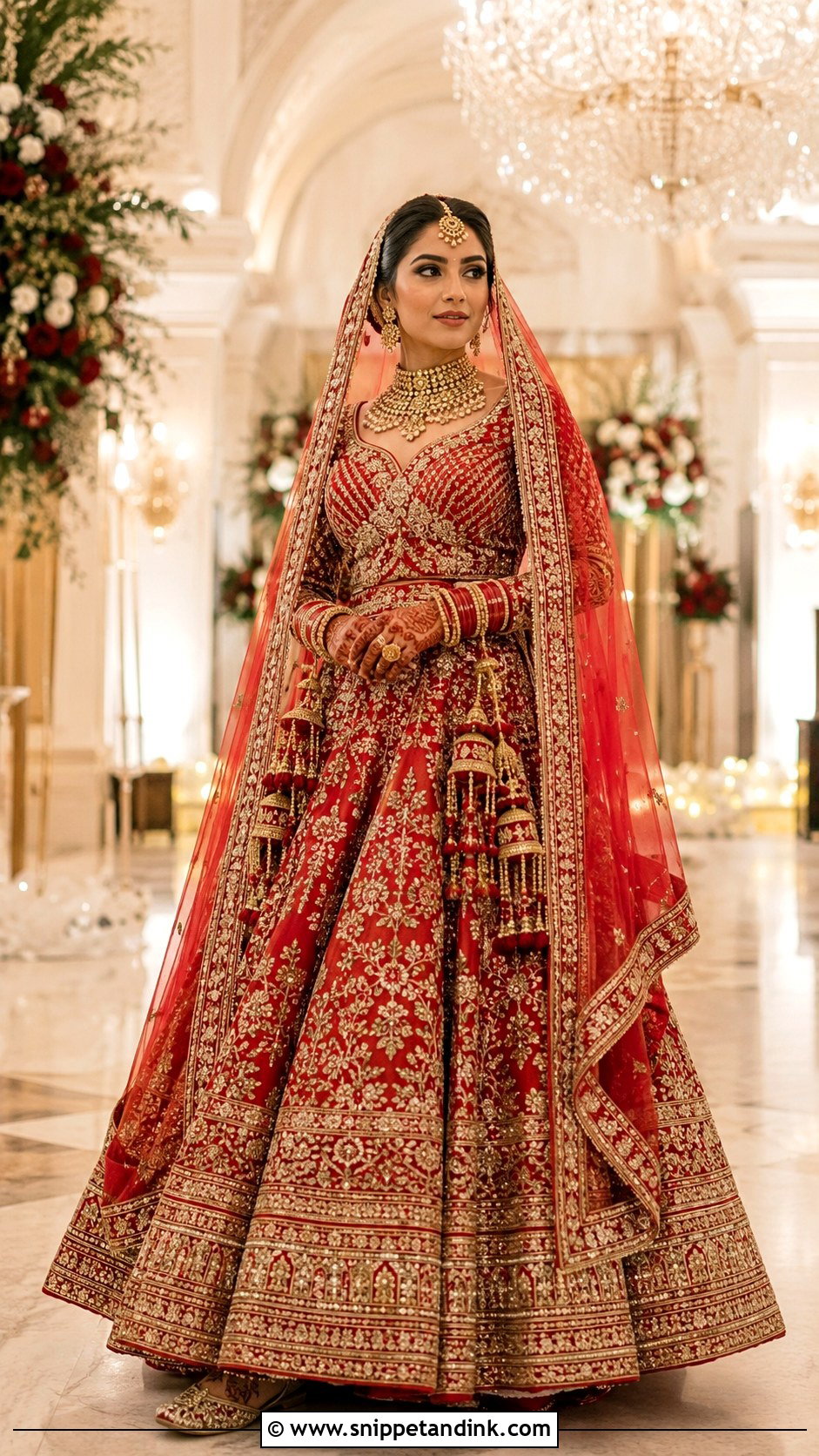
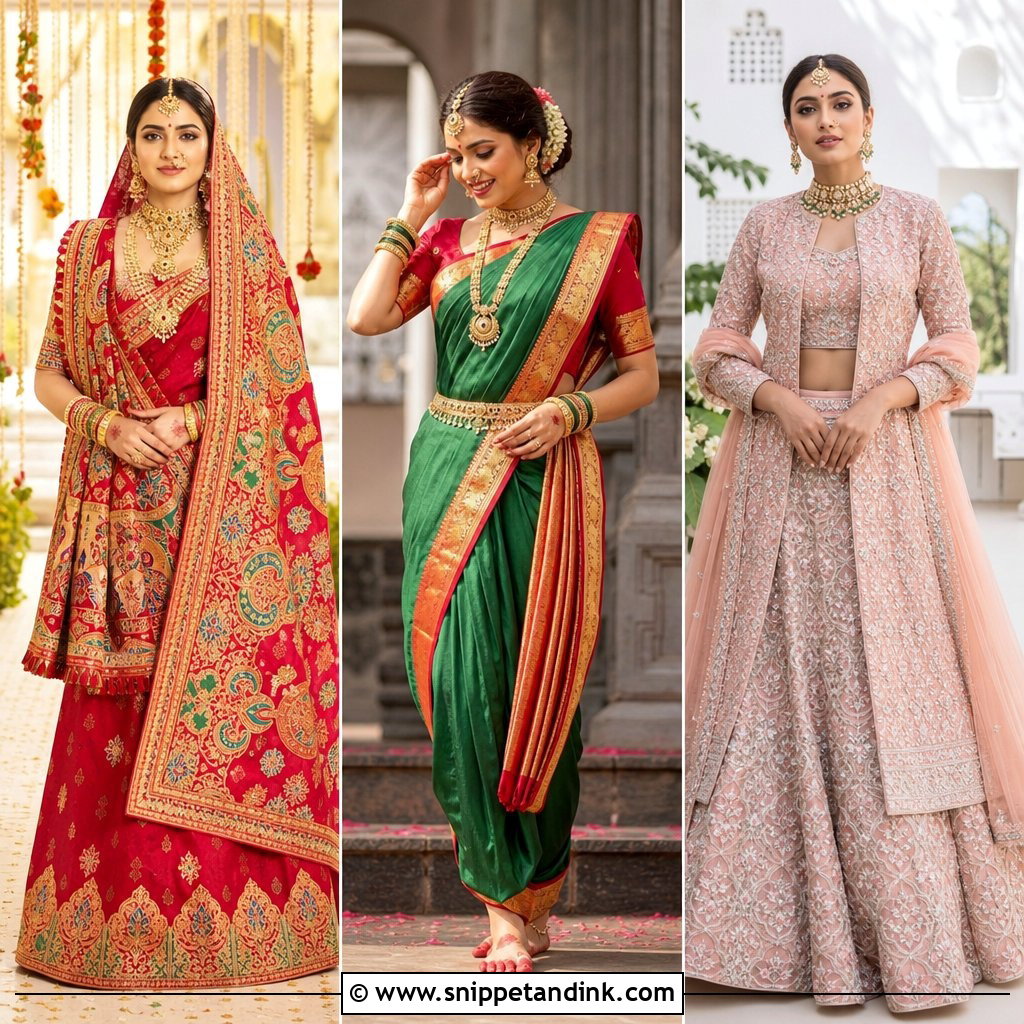
Full sleeves on a red bridal lehenga look classic, but only if the work stays light enough at the elbow to bend. I ask for zari, zardozi or antique gold embroidery that runs from bodice to cuff and thins out across the inner elbow, where heavy work bunches and scratches. A high or softly rounded neckline balances fitted sleeves. Pair the blouse with a coordinated flared skirt and a lightweight embroidered dupatta over the head or across one shoulder. A gold choker, matching earrings, stacked bangles and a maang tikka complete it, with embroidered juttis under the hem. For a main ceremony, few silhouettes are more traditional.
2. Maroon Velvet Lehenga With Long Sleeves
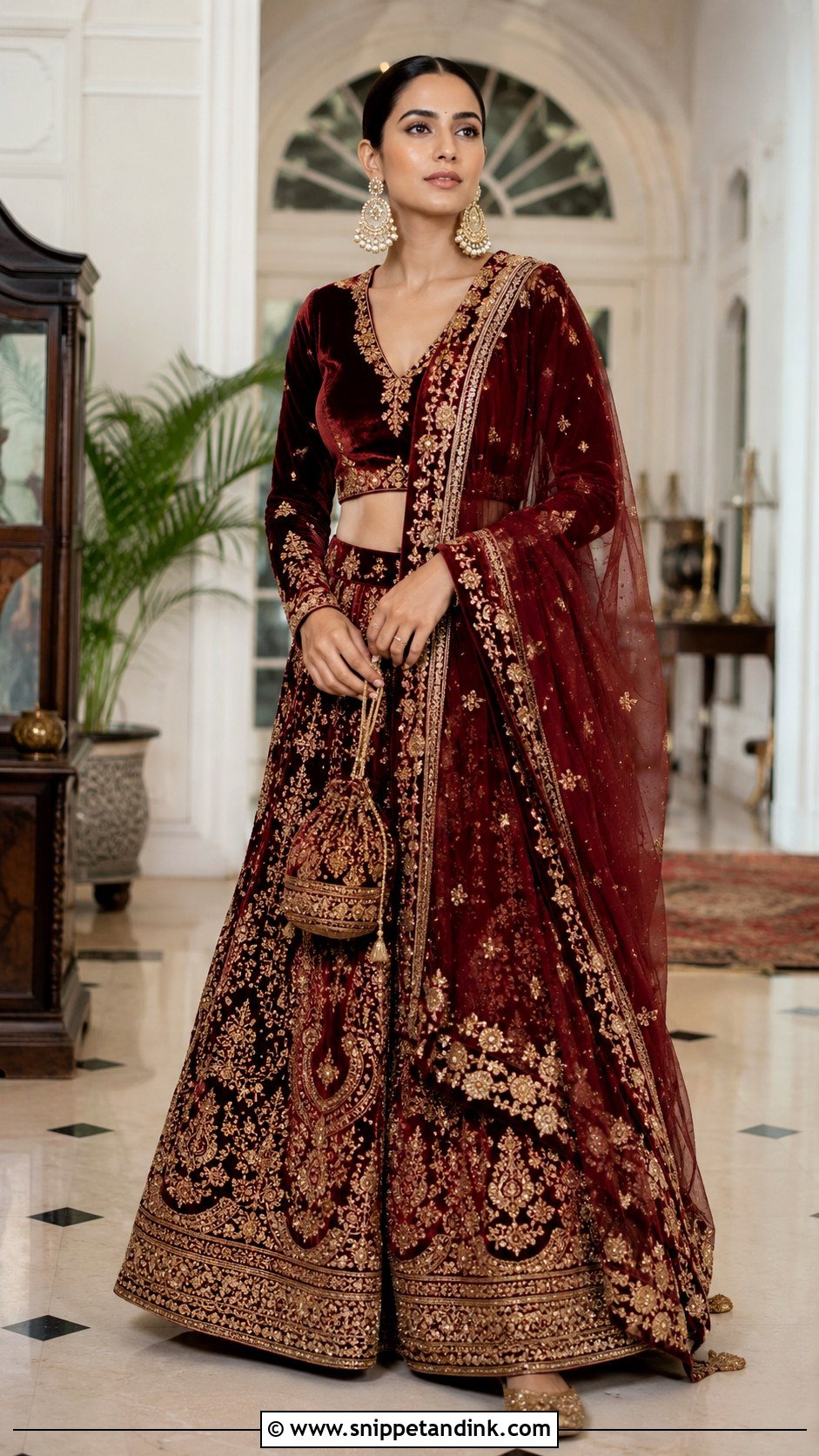
Velvet with long sleeves is a winter look and nothing else; in warm weather the sleeves alone will wear you out. The pile gives maroon real depth, and gold embroidery brightens it. Choose a tailored velvet blouse with a modest V-neck, defined shoulders and fitted wrist-length sleeves. Velvet has little give, so I fit these sleeves with the arm bent rather than straight, or they bind at the elbow. Keep the skirt’s embroidery at the waist and border so the outfit doesn’t crowd. A sheer maroon or muted gold dupatta adds softness. Polki earrings, a statement ring, a small potli and cushioned gold juttis suit it, with a low bun that keeps the neckline and sleeves in view.
3. Pastel Pink Lehenga With Sheer Sleeves
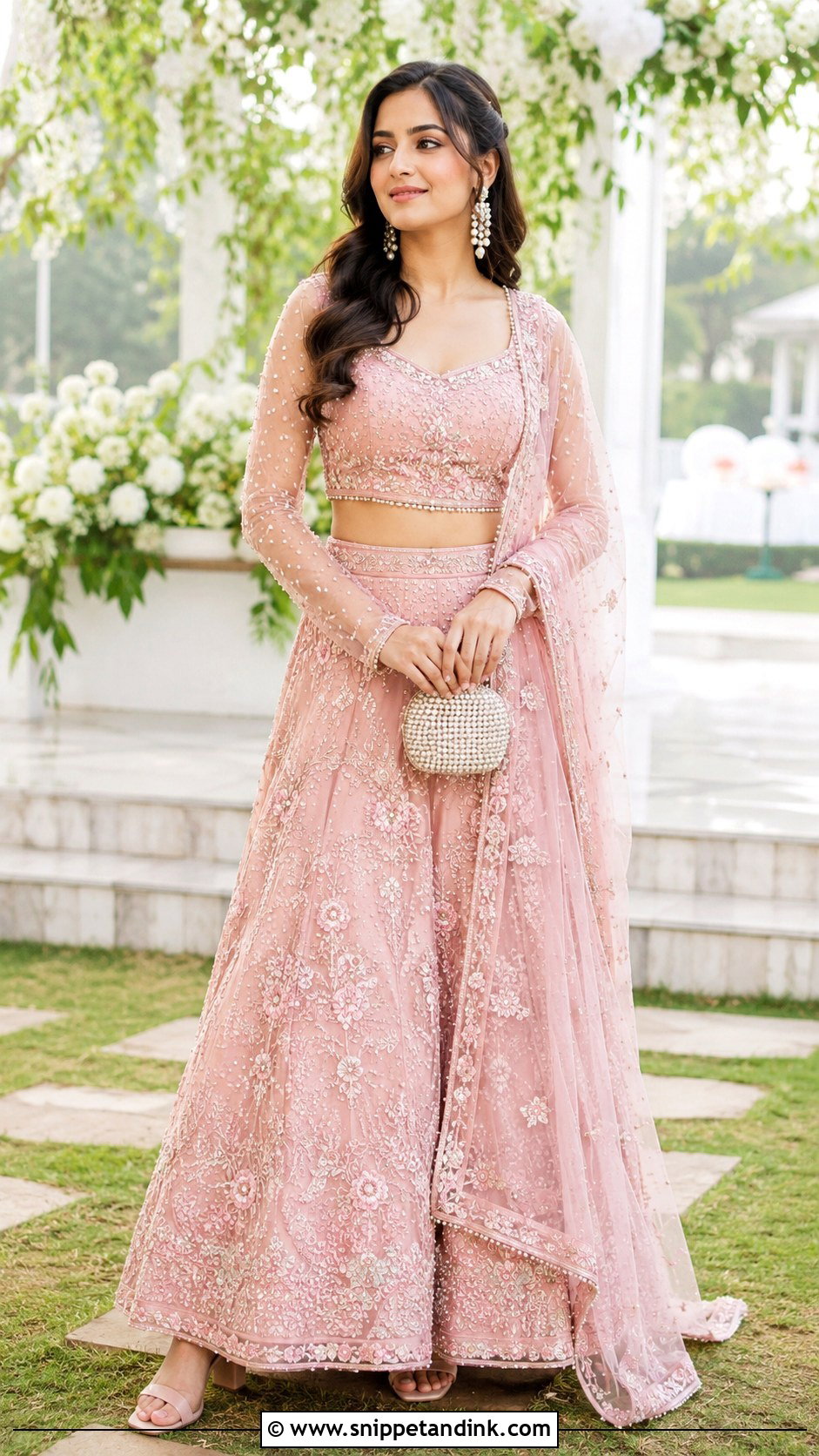
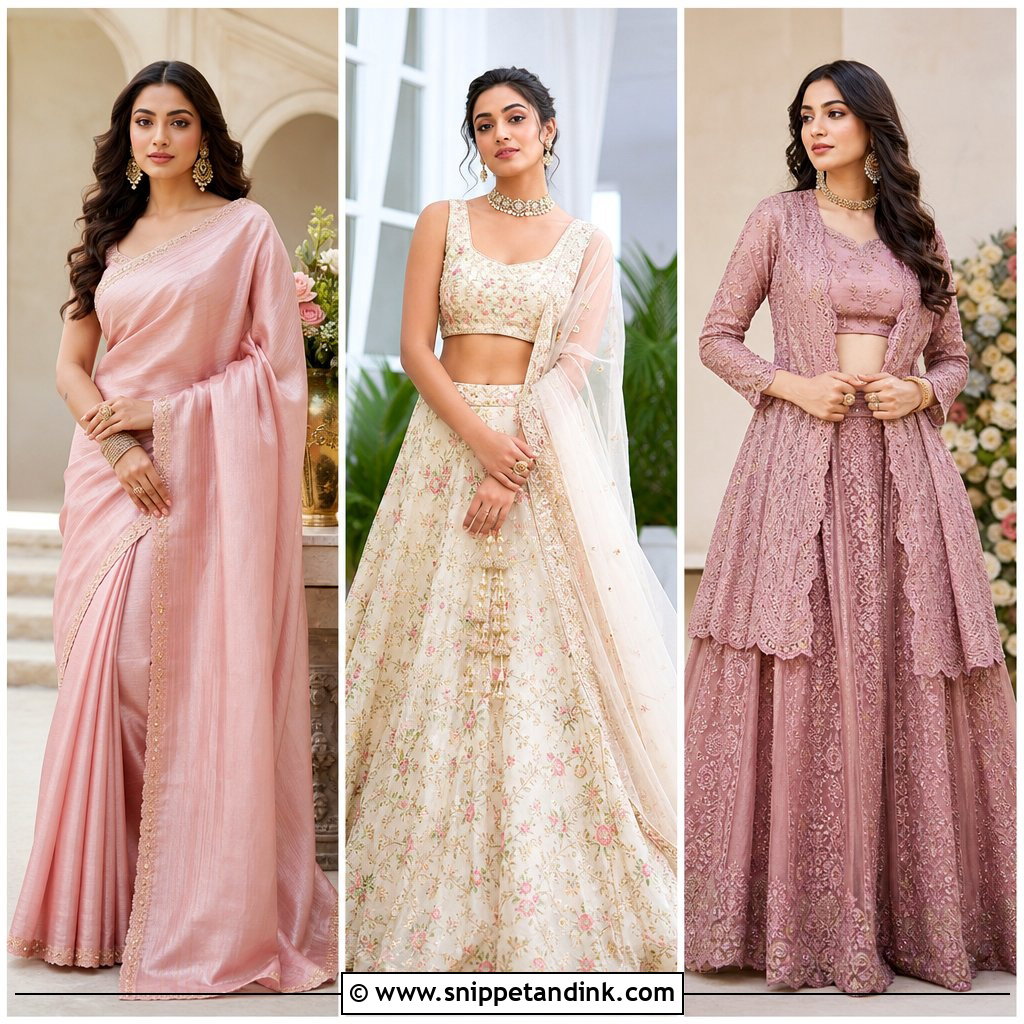
Sheer net sleeves let a pastel pink lehenga stay airy while still covering the arms. Look for a lined bodice with transparent sleeves scattered with pearls, sequins or small floral appliqués. Turn the blouse inside out before you buy. Net edges are scratchy, and a good tailor binds the sleeve seams with soft tape so they don’t rub the underarm raw. Pair the blouse with a flowing pink skirt in silver threadwork or tonal embellishment, and drape a matching net dupatta loosely over one shoulder. Pearl drops, a slim bracelet, a crystal-trimmed clutch and silver or blush block heels keep the shine gentle. It suits daytime ceremonies, garden venues and brides who’d rather not wear red.
4. Ivory Bridal Lehenga With Pearl Sleeves
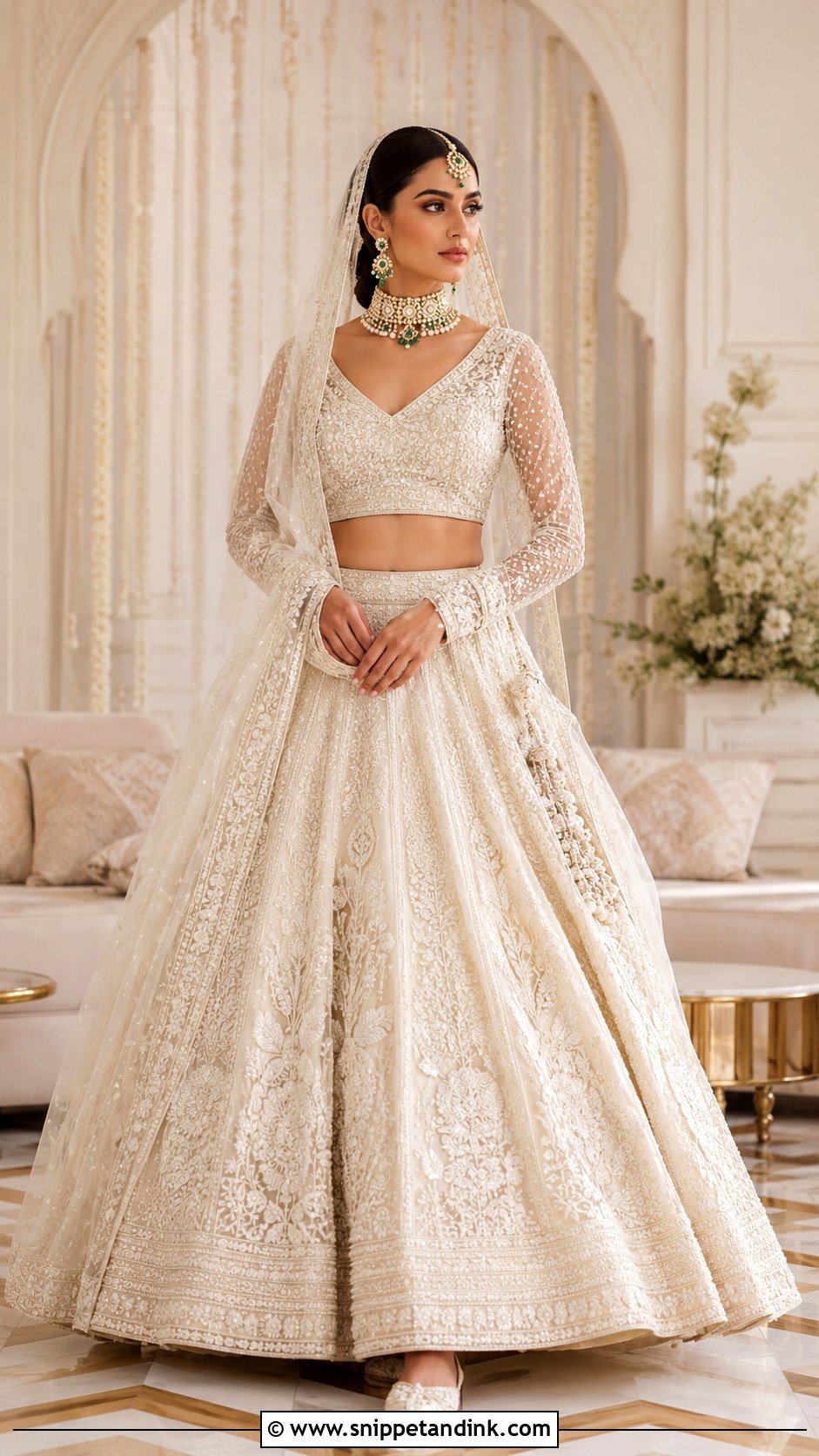
Pearls stitched from shoulder to cuff make ivory feel modern without any color at all. Choose a fitted blouse with a structured neckline and full net sleeves, then a voluminous ivory skirt with tonal embroidery, subtle sequins or delicate florals. Pearl sleeves are heavier than they look, since each pearl is a small weight hanging off the net, so I ask for a fine tulle lining that helps the sleeve keep its shape. A sheer pearl-bordered dupatta can go over the head with another across the arms. Emerald or ruby jewelry adds contrast; pearls, kundan earrings and a matching choker keep it monochrome. Ivory embroidered juttis and a sleek bun finish it. Leave enough ease to lift your arms freely during the rituals.
5. Gold Lehenga With Elbow-Length Sleeves
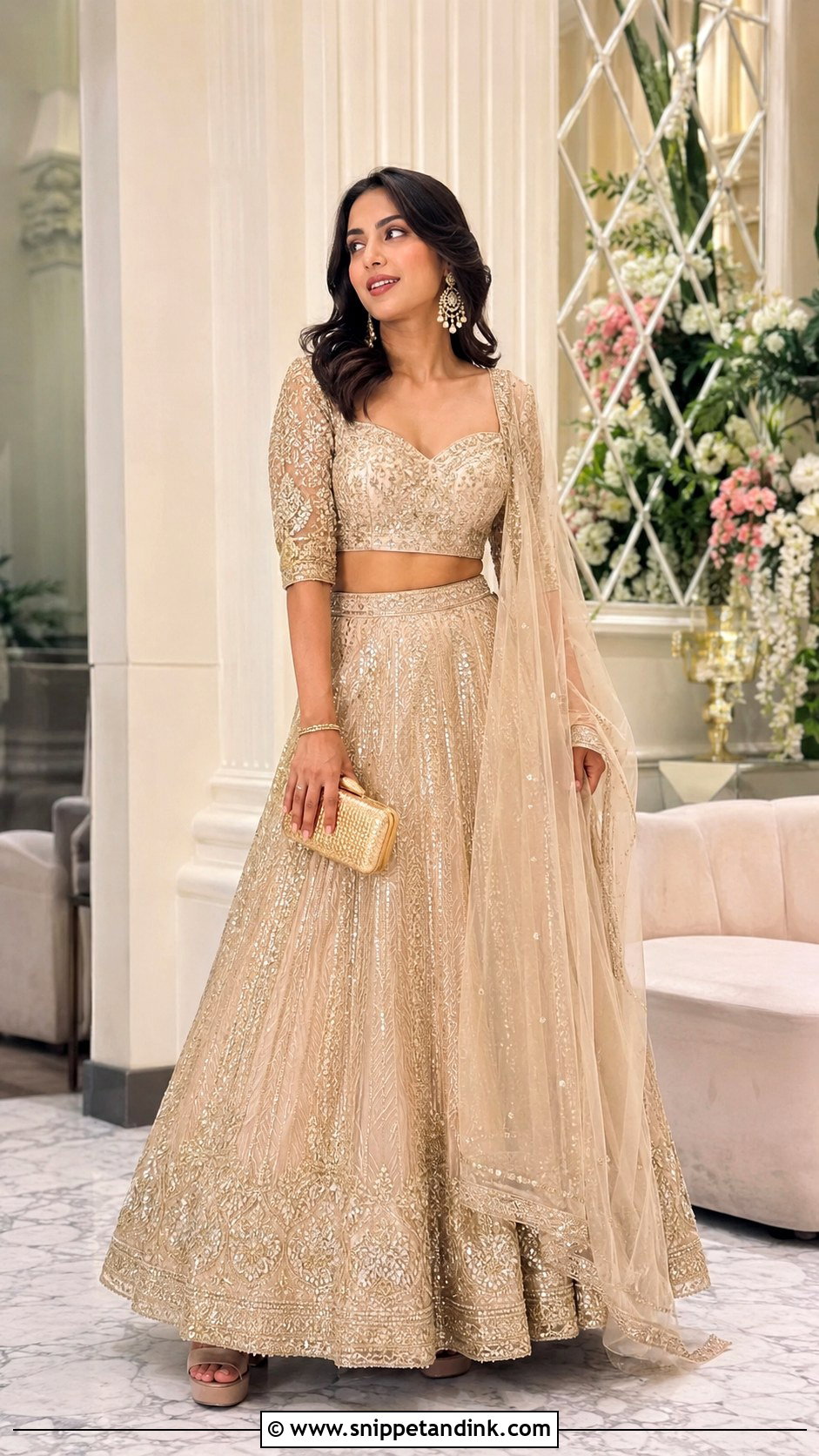
Elbow-length sleeves are a bride’s practical friend: real coverage above, and plenty of room for bridal bangles and statement bracelets below. Choose a blouse with a square or sweetheart neckline and dense work across the bodice, paired with a champagne, antique gold or beige skirt in coordinated metallic work. All-over gold can look flat in photographs unless something breaks it up, which is why a light organza dupatta helps here. Kundan earrings, a delicate necklace and a structured gold clutch suit it, with neutral platform heels underneath. Scale the embroidery and jewelry up and it’s bridal; scale them down and it suits a sister or close relative.
6. Banarasi Silk Saree With Three-Quarter Sleeves
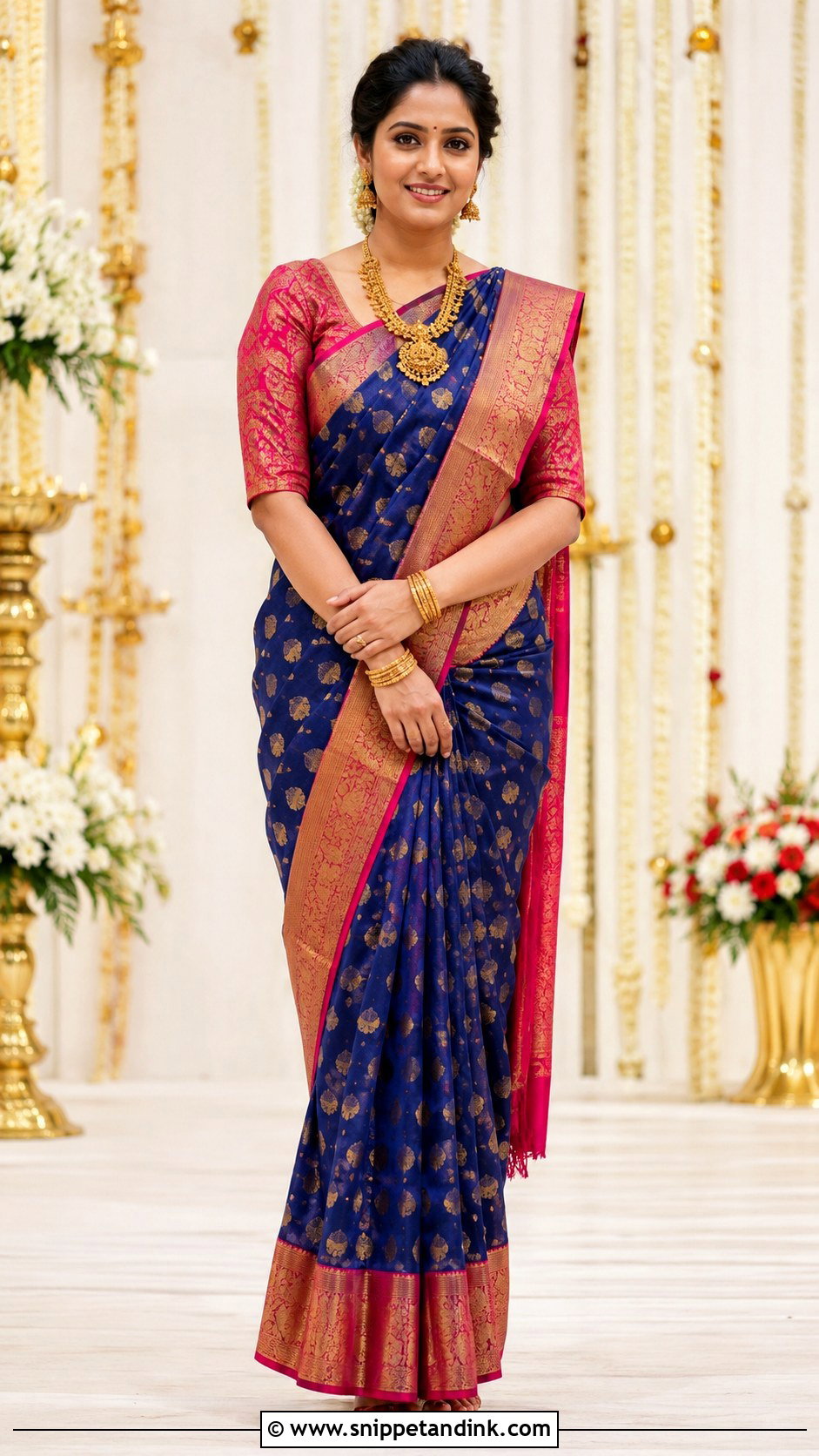
A Banarasi silk saree with a three-quarter-sleeve blouse is dignified and comfortable for a traditional ceremony. Choose red, green, purple or royal blue with a contrasting gold woven border, and have the blouse made in silk that repeats one of the saree’s colors. Three-quarter sleeves end below the elbow, and I set the hem where the forearm is slimmest so it never cuts across the arm at its widest point. A boat neck or round neckline is the classic shape. Drape the pallu neatly over the shoulder so the motifs show. A temple-style necklace, earrings, gold bangles, a small bindi and a flower-trimmed bun complete it, with padded metallic sandals or low block heels.
7. Kanjeevaram Saree With Puff Sleeves
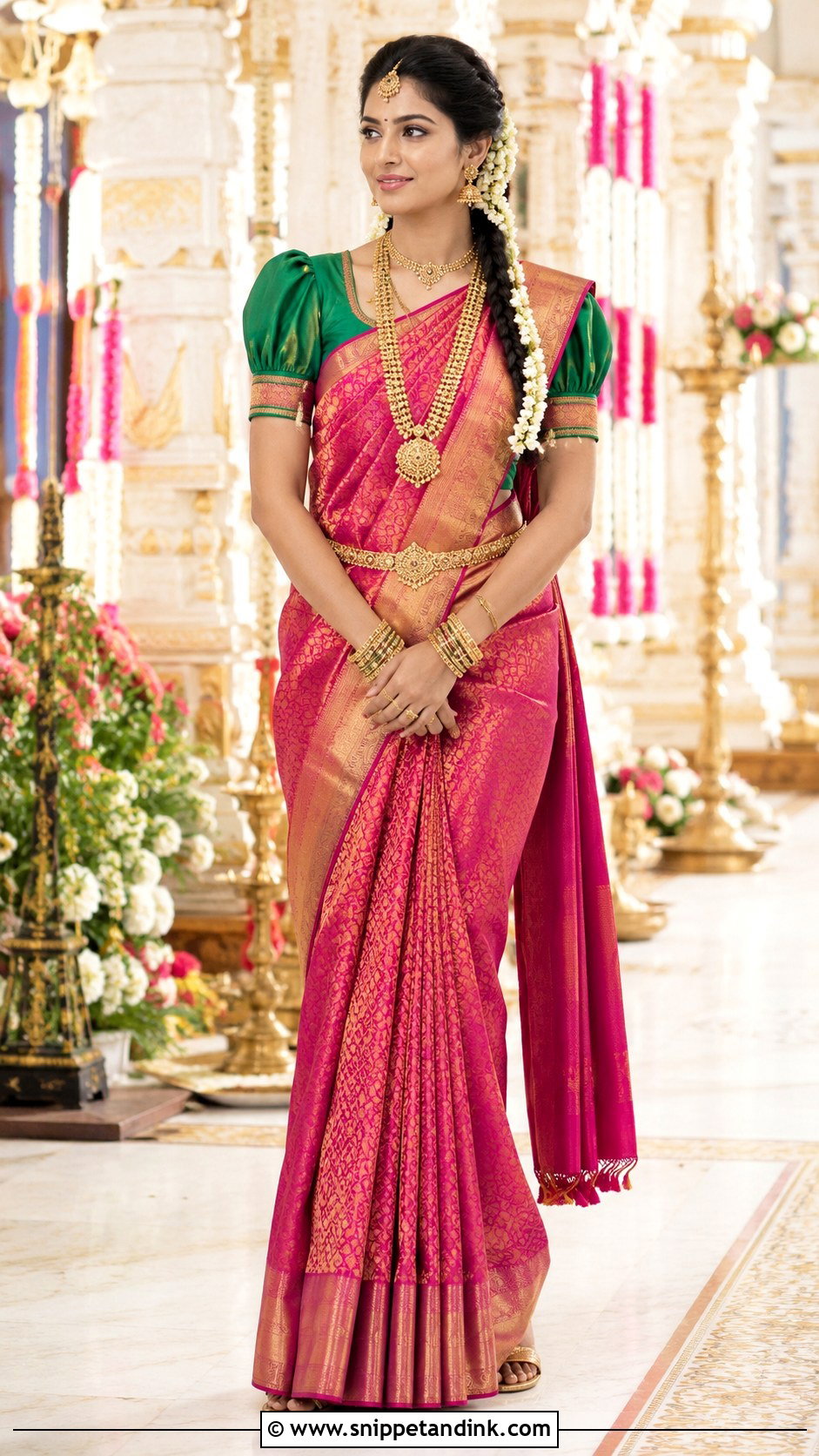
Puff sleeves give a Kanjeevaram saree a vintage feel that suits South Indian ceremonies. Choose a richly colored silk with a broad zari border and a contrasting blouse with short, structured puffs. Silk holds a puff well, but keep the volume controlled; a big puff right beside a broad border makes the two fight for attention. Clean shoulder seams and a fitted waist keep the blouse flattering. A long gold necklace with a shorter choker, matching jhumkas and traditional bangles complete it. Arrange your hair in a braid or low bun accented with jasmine flowers, and finish with gold sandals. Brides, mothers and guests who love traditional textiles all wear this well.
8. Embroidered Saree With Full Net Sleeves
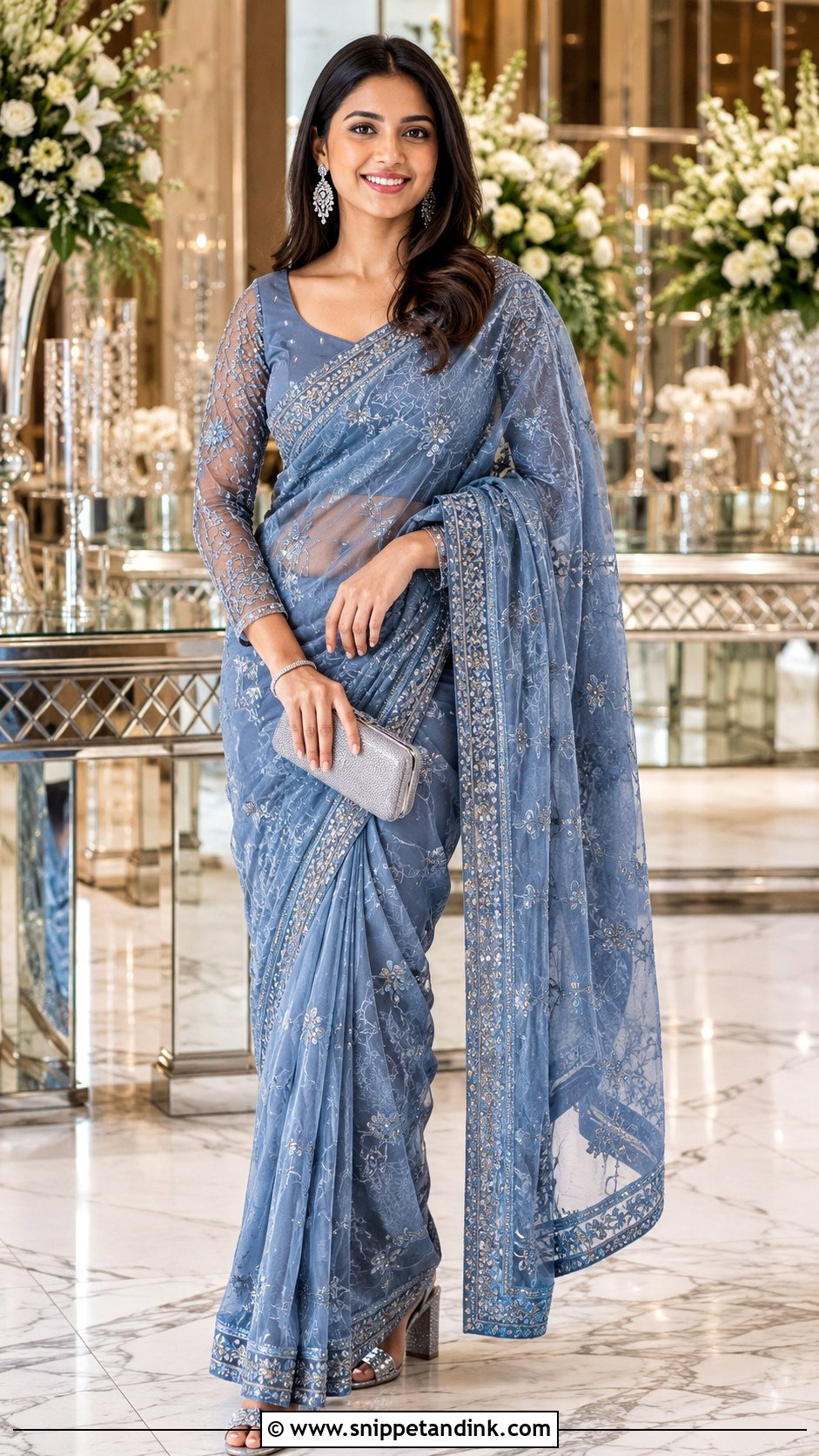
Full net sleeves turn a simple embroidered saree into an evening outfit. Start with a lightweight saree in dusty blue, mauve, champagne or deep green, then choose a fitted blouse with a lined bodice and full sheer sleeves carrying motifs from the border. Since the sleeves carry the detail, keep the neckline simple. Pin the pallu at the shoulder rather than letting it slide, because net sleeves catch on a loose pallu’s embroidery every time you move your arm. Crystal earrings, a slim bracelet and a metallic clutch are enough, with pointed block heels or embellished sandals. A sleek ponytail or low bun keeps the sleeves on show.
9. Floral Organza Saree With Balloon Sleeves
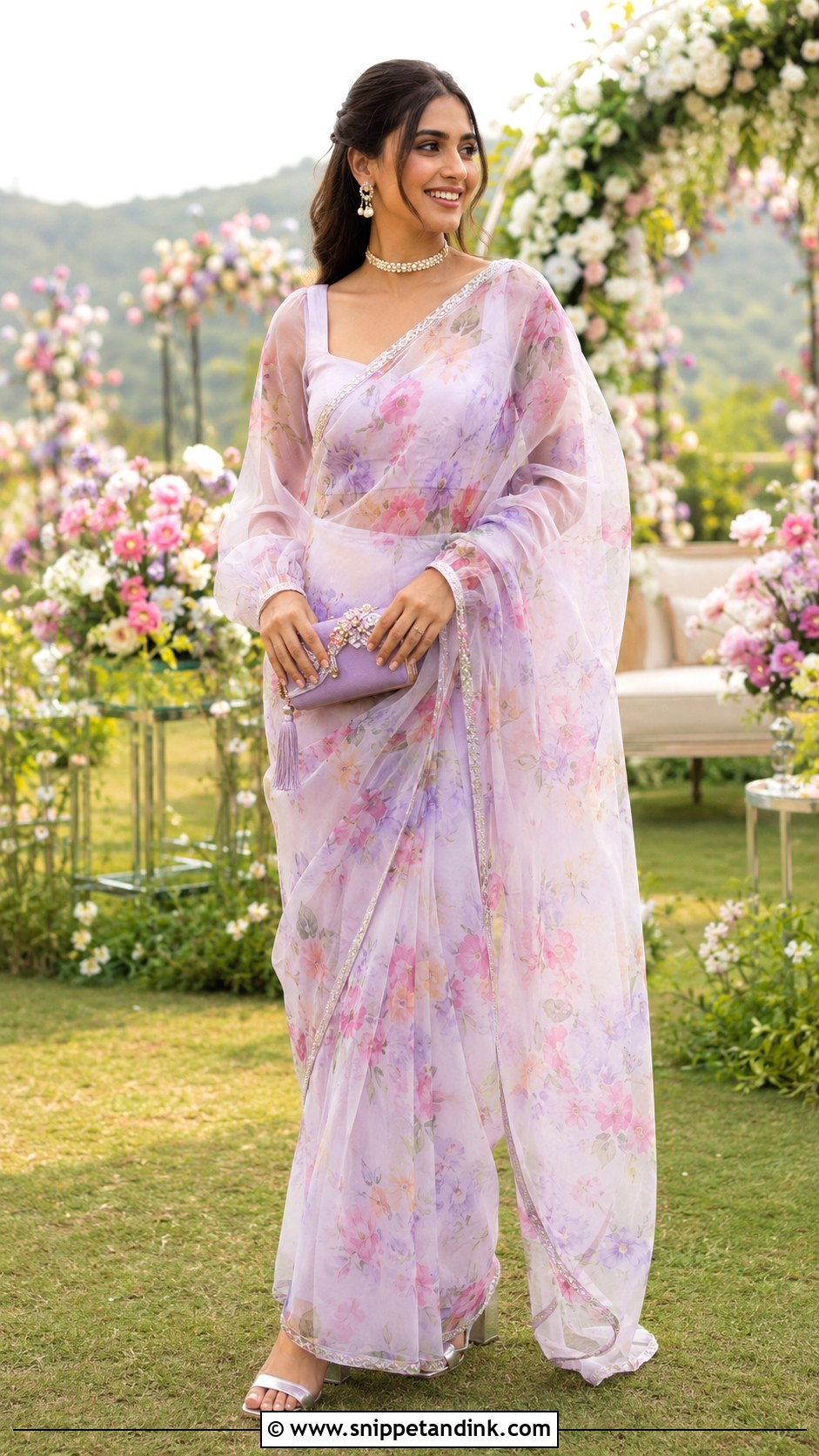
Balloon sleeves gathered at the wrist suit organza’s crispness. Choose a floral printed or embroidered saree in peach, lavender, mint or powder blue, and a fitted blouse with sheer balloon sleeves. Keep the bodice streamlined to balance the volume at the arms. An honest caution: balloon sleeves aren’t for a ritual where you’ll handle fire, flower petals or food, because the gathered fabric drags through everything. Pearl earrings, a delicate choker and a small pastel clutch support the color, with nude, silver or matching block heels. A loose bun or soft waves suit it, and it shows best at a daytime reception or engagement. Match the petticoat to the saree so nothing shows through.
10. Anarkali Suit With Long Embroidered Sleeves
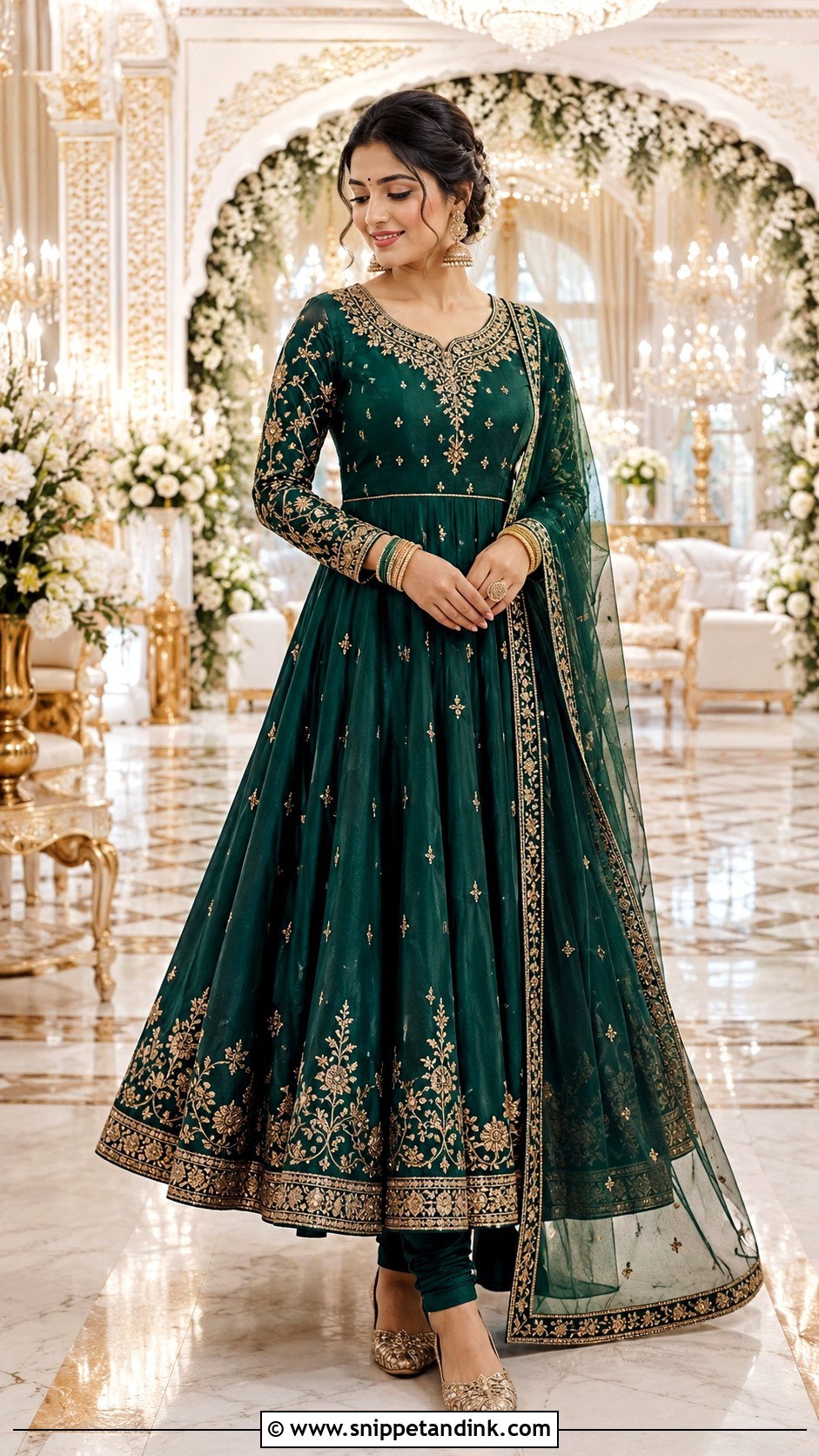
Long embroidered sleeves on a floor-length Anarkali pull attention to your hands, so I pair them with good mehndi and very few rings. Choose a fitted bodice, defined waist and generous flare. Vertical embroidery through the bodice lengthens the line, and detailed cuffs frame the wrists. Wear it with slim churidar and a sheer dupatta over one shoulder. Jewel tones suit evening; peach, sage and soft yellow suit daytime. Jhumkas, a small bindi, a few bangles and embroidered juttis complete it, with a center-parted low bun. Ask for a short zip or hooks at the cuff, because a fitted long sleeve is surprisingly hard to get a hand through. For guests, it gives a lehenga’s drama in one easy piece.
11. Jacket Anarkali With Full Sleeves
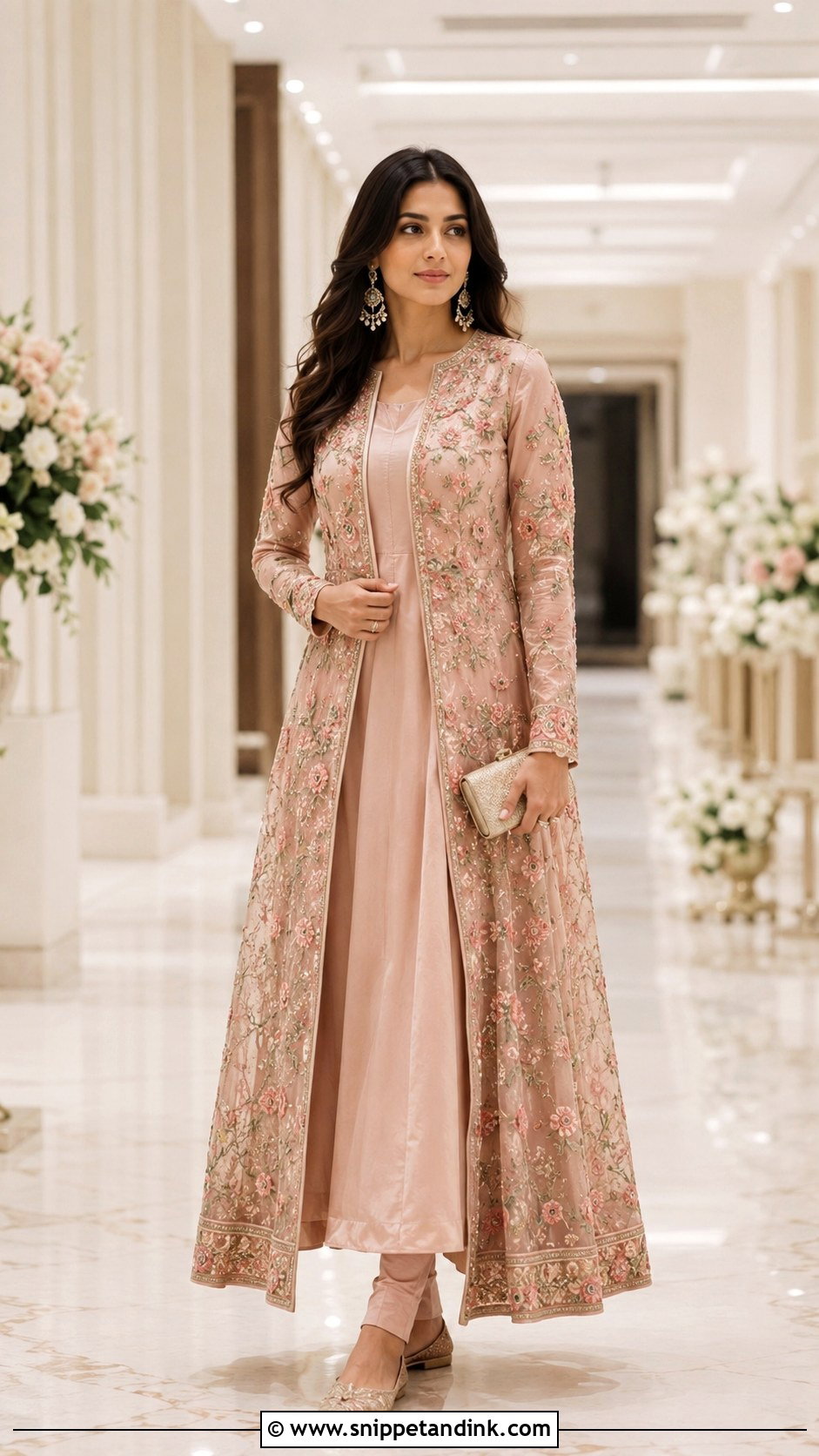
A full-sleeved jacket over an Anarkali gives you sleeves without committing to them all night. Start with a simple sleeveless or short-sleeved Anarkali and add a long embroidered jacket that ties lightly at the waist or stays open. Floral threadwork, mirror accents or delicate sequins can run down the jacket sleeves. Keep the inner dress a solid coordinating color so the jacket leads. Fitted pants and pointed juttis go underneath, and statement earrings, a slim ring and a compact clutch are plenty. The open vertical line flatters many figures. I like this for venues with fierce air-conditioning, because the jacket comes off for dancing and goes back on for dinner.
12. Chikankari Anarkali With Bell Sleeves
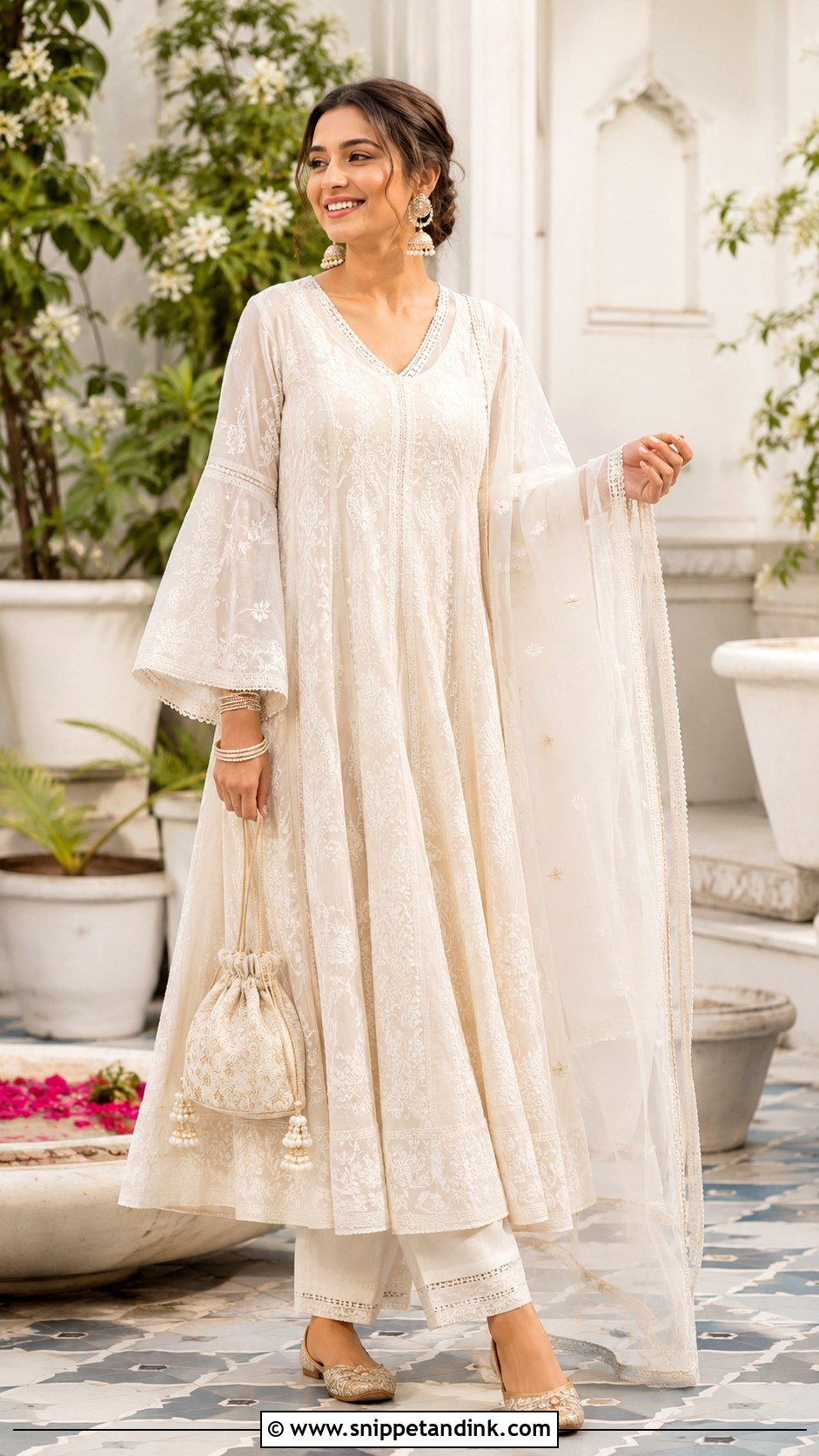
Bell sleeves on a chikankari Anarkali feel relaxed but festive. Choose ivory, blush, pale blue or pistachio with a comfortable lining and the embroidery running onto the sleeves. The flare should start below the elbow; if it begins higher, the sleeve swings into your plate at dinner. Pair it with straight pants or a narrow churidar in the same color and a lightweight organza dupatta with a fine border. Pearl jhumkas, a slim bangle set and a small potli keep it gentle, with metallic juttis or low heels. It suits daytime events, and a jeweled choker with a polished low bun makes it formal enough for evening.
13. Sharara Suit With Flared Sleeves
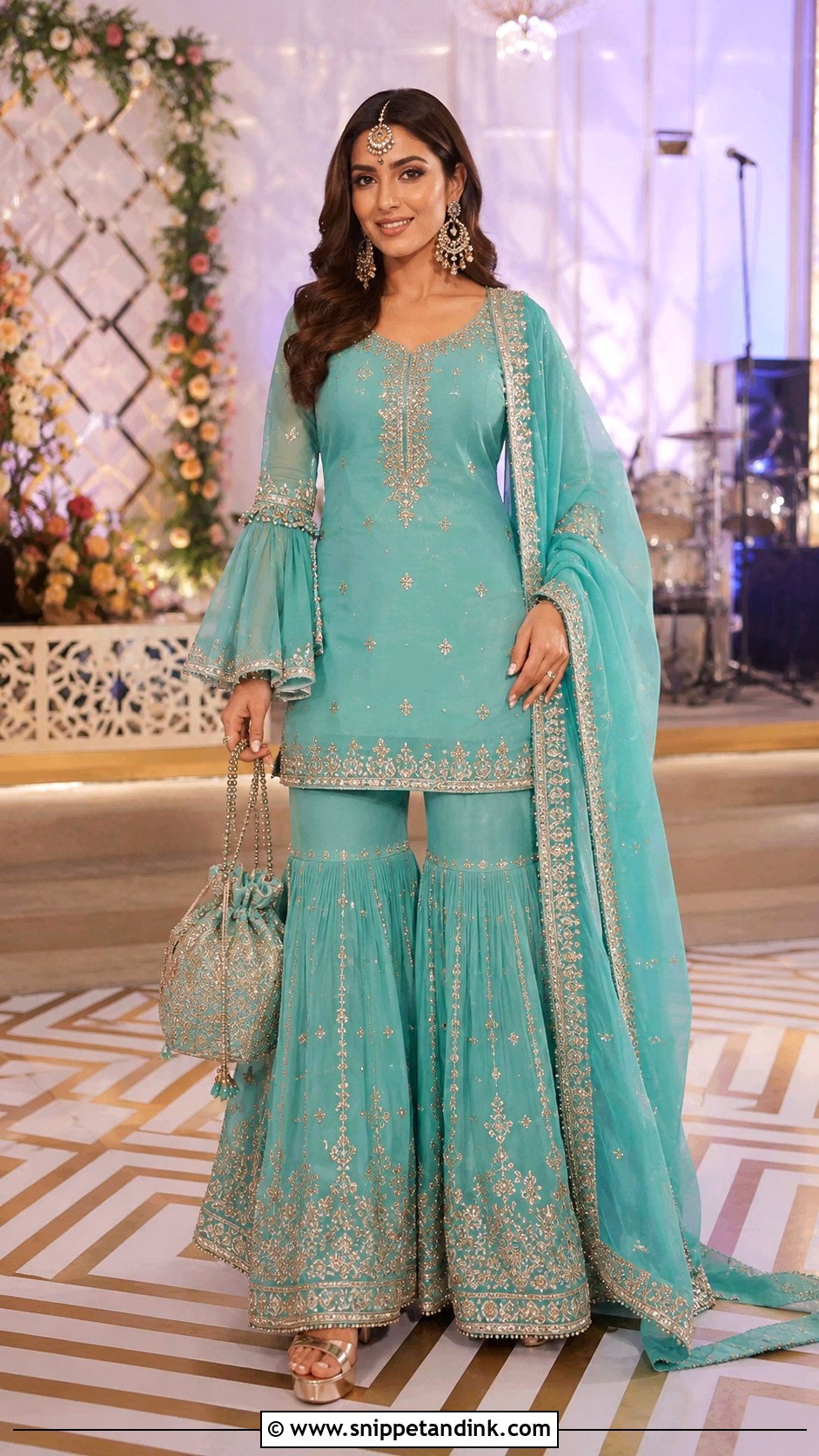
A sharara suit with flared sleeves balances movement above and below. Choose a short fitted kurta with sleeves widening below the elbow, worn with high-waisted sharara pants. Repeat the embroidery at the neckline, cuffs and pant border so the halves connect. Keep the dupatta light and pinned to one shoulder, because a flowing dupatta on top of flared sleeves and flared pants is simply too much moving fabric. Chandelier earrings, a delicate maang tikka, a beaded potli and platform sandals or block heels finish it. Turquoise, magenta, mustard, emerald or coral suit a celebration. Sleeves should stop above the fingertips so dancing and eating stay easy.
14. Gharara Suit With Elbow-Length Sleeves
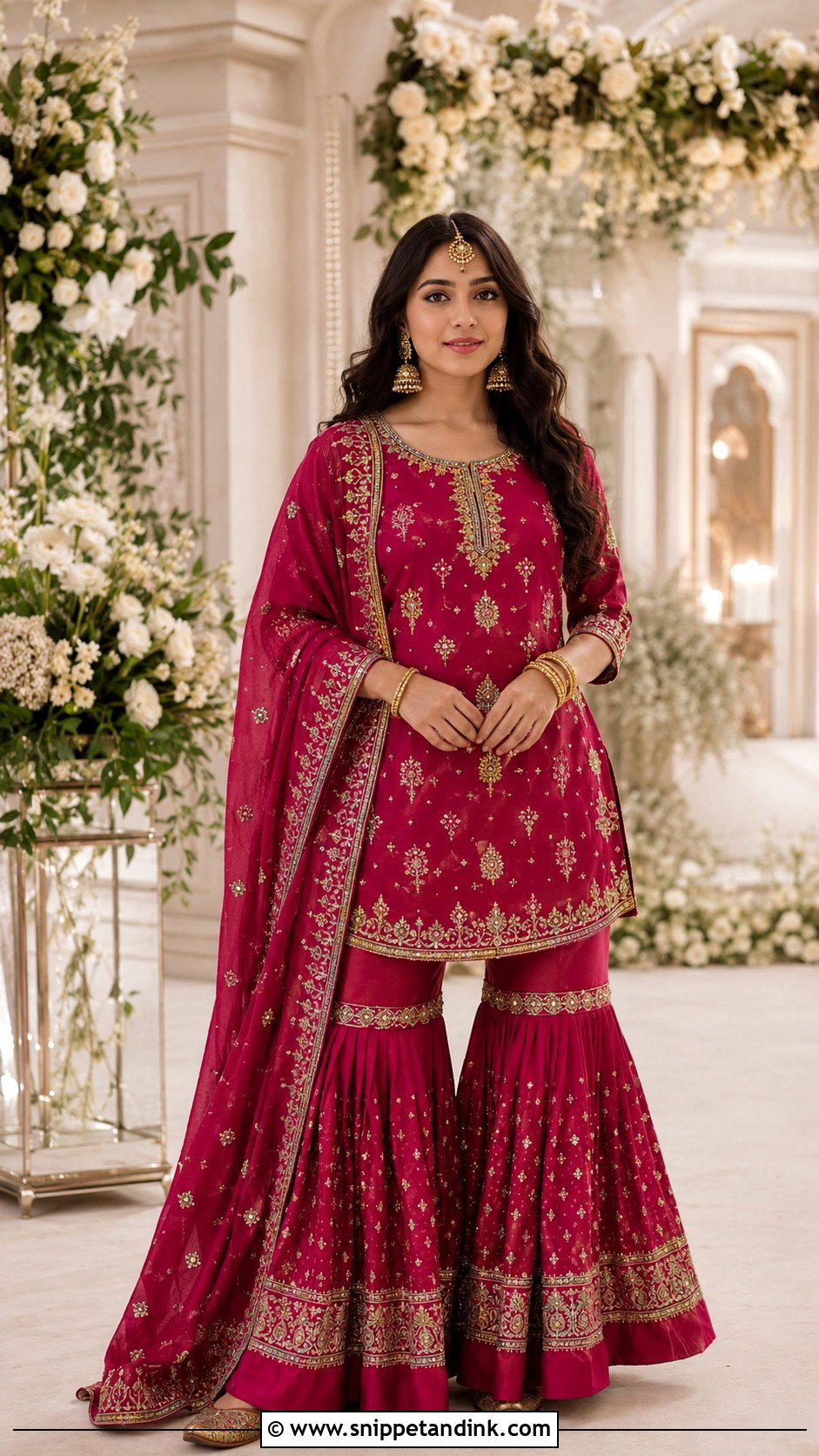
Elbow-length sleeves keep a gharara suit traditional and comfortable. The short kurta should fit smoothly through the shoulders and carry embroidery that echoes the gharara’s knee seams, and elbow sleeves have room for zari borders, gota or fine thread without weighing down the arm. A light dupatta over one shoulder or across both arms, jhumkas, bangles and a small maang tikka complete it, with pointed juttis or stable block heels. Rich colors suit evening, pastels daytime. Keep the kurta ending near the upper thigh so the flare shows. When I fit elbow sleeves, I check the cuff with the arm bent; a band that feels fine straight digs in the moment you hold a glass.

15. Palazzo Suit With Cape Sleeves
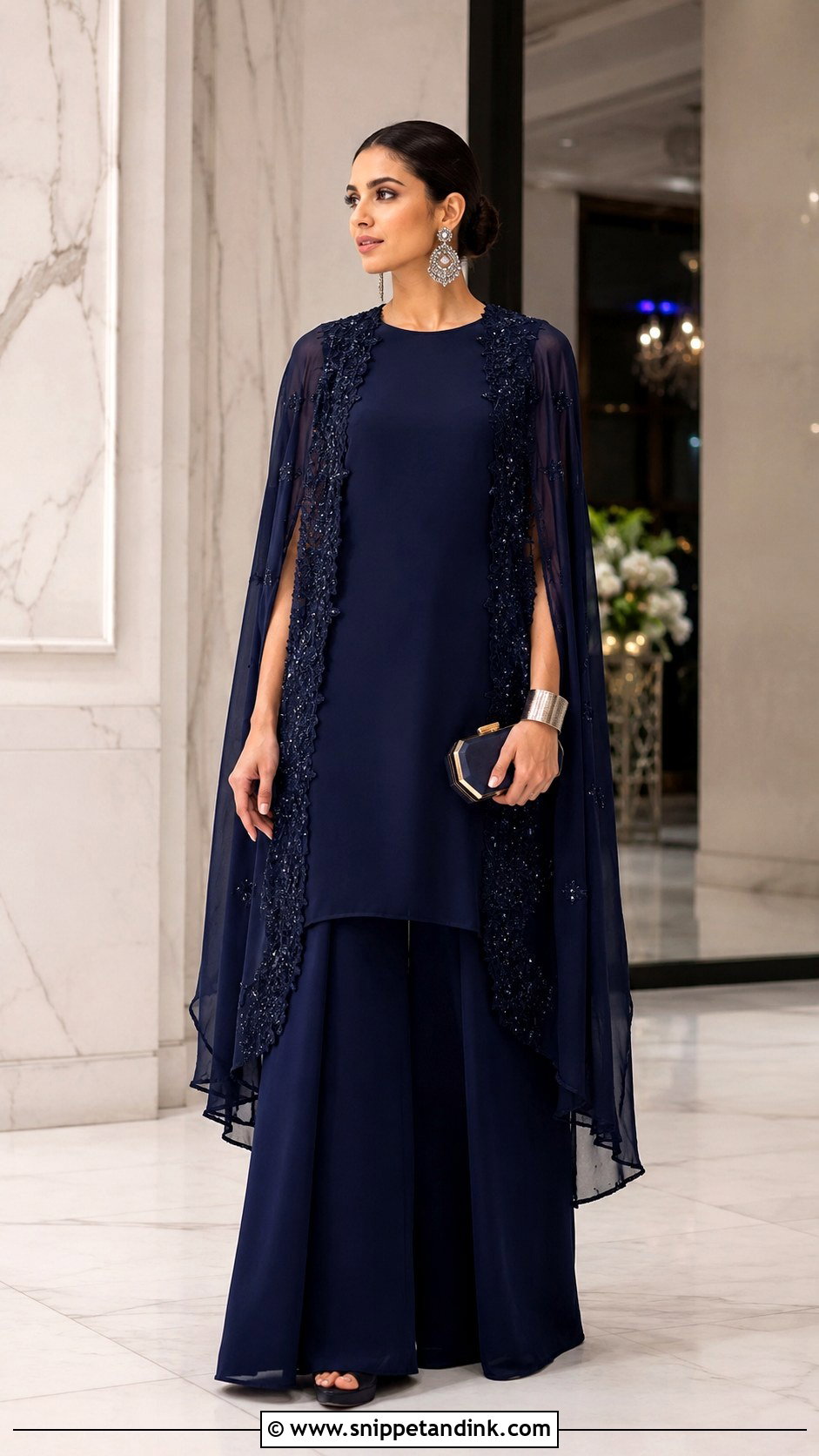
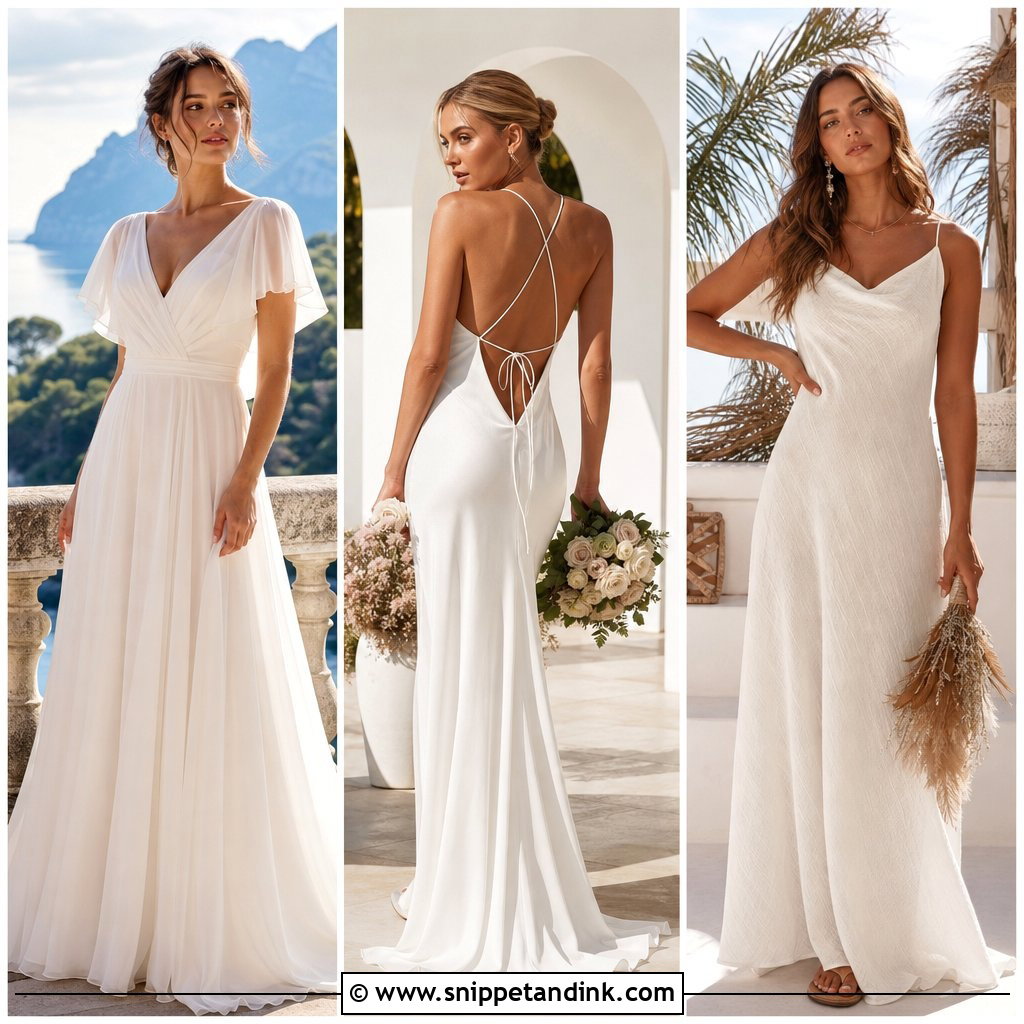
Cape sleeves replace the dupatta on a palazzo suit with a sheer layer attached at the shoulders. Choose a fitted or gently flared tunic over wide-leg palazzos. Embroidered borders, beadwork or scattered sequins define the cape without weighing it down, and one color throughout makes the layers look intentional. Statement earrings, a cuff and a box clutch suit it, with platform heels or wedges to keep the hems off the floor. Because cape sleeves are open underneath, they suit women who want the look of sleeves without fabric clinging to their arms in a warm room. It’s formal yet easy to move in at a reception. Keep your hair off the shoulders so the cape’s line shows.
16. Indo-Western Gown With Bishop Sleeves
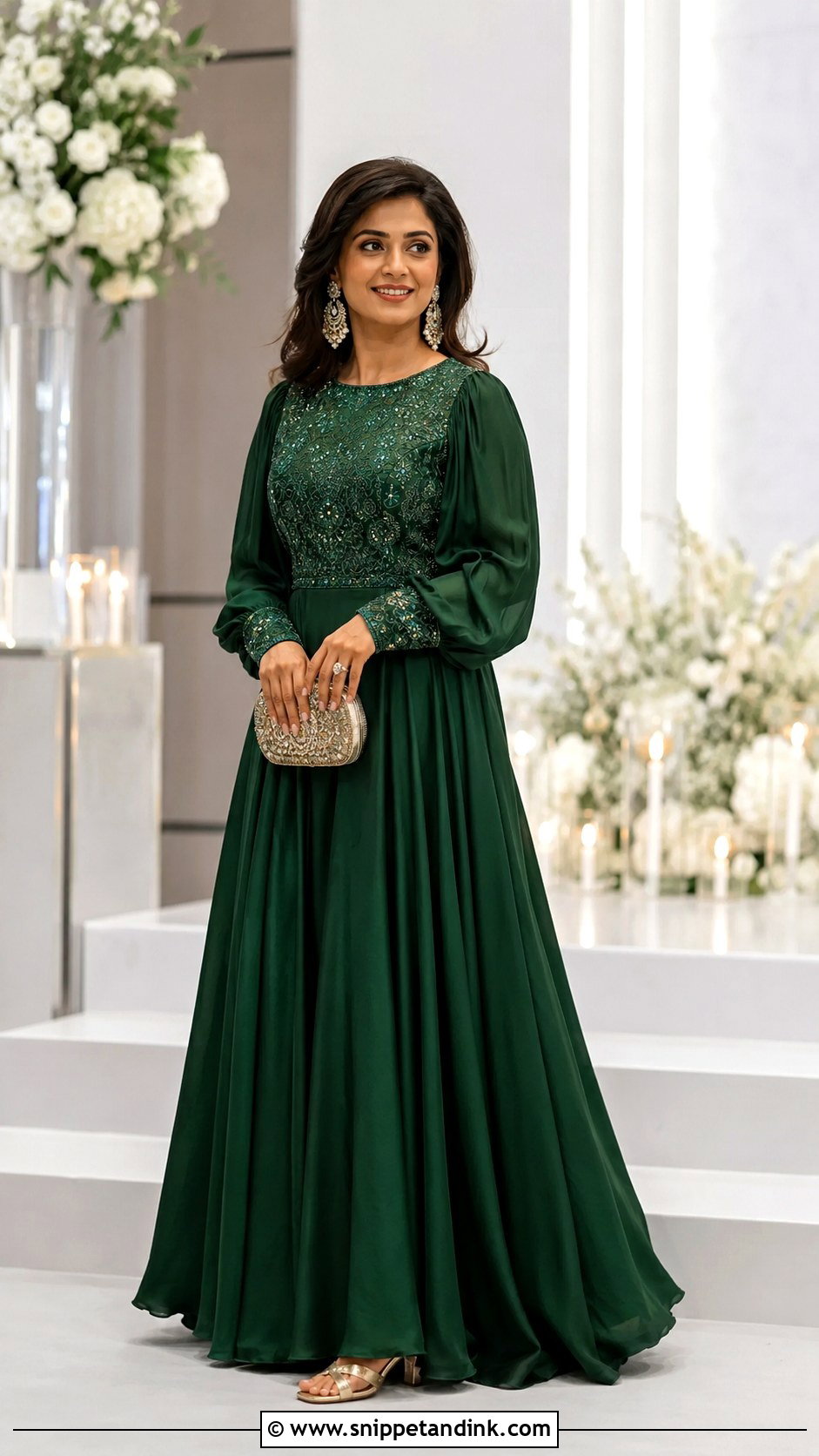
Bishop sleeves are full through the arm and gathered into a cuff, and they bring a romantic shape to an Indo-Western gown. Look for a fitted bodice, defined waist and a floor-length skirt with enough flare to walk. Velvet and crepe give structure for winter; georgette and satin move more softly. Zari motifs, mirror work or a beaded waist panel give it a festive identity. Statement earrings, a jeweled clutch and metallic heels finish it, minus the necklace if the neckline is worked. The gathered fabric needs room to puff, so I check that the cuff is snug but the armhole generous. A high bun shows the sleeves best. It suits a reception, engagement celebration, or formal fusion wedding.
17. Peplum Lehenga With Three-Quarter Sleeves
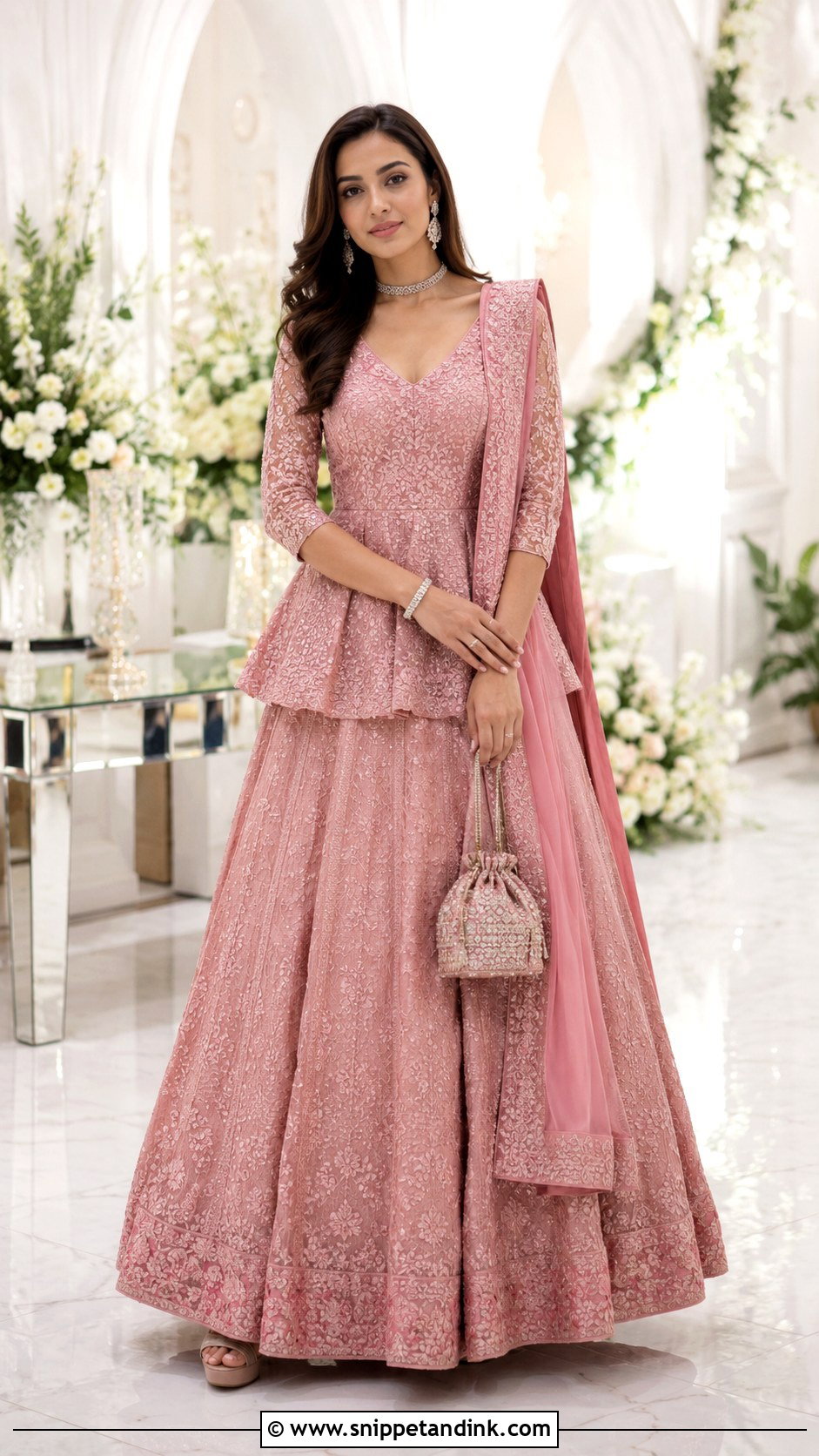
Three-quarter sleeves with a peplum top give comfortable coverage and a clear waist. Choose a fitted peplum flaring gently over the top of the skirt, with embroidery at the cuffs and matching beadwork on the bodice. A moderately flared lehenga keeps volume down at the waist, and a narrow dupatta over one shoulder leaves the peplum visible. Drop earrings, a slim choker and a structured potli complete it, with embellished juttis or low platforms. A tailor can adjust the peplum’s length and flare until it ends at the right point for your figure. I also look at where the sleeve hem and the peplum hem fall with arms relaxed; when they line up, the outfit looks planned.
18. Cape Lehenga With Attached Sleeves
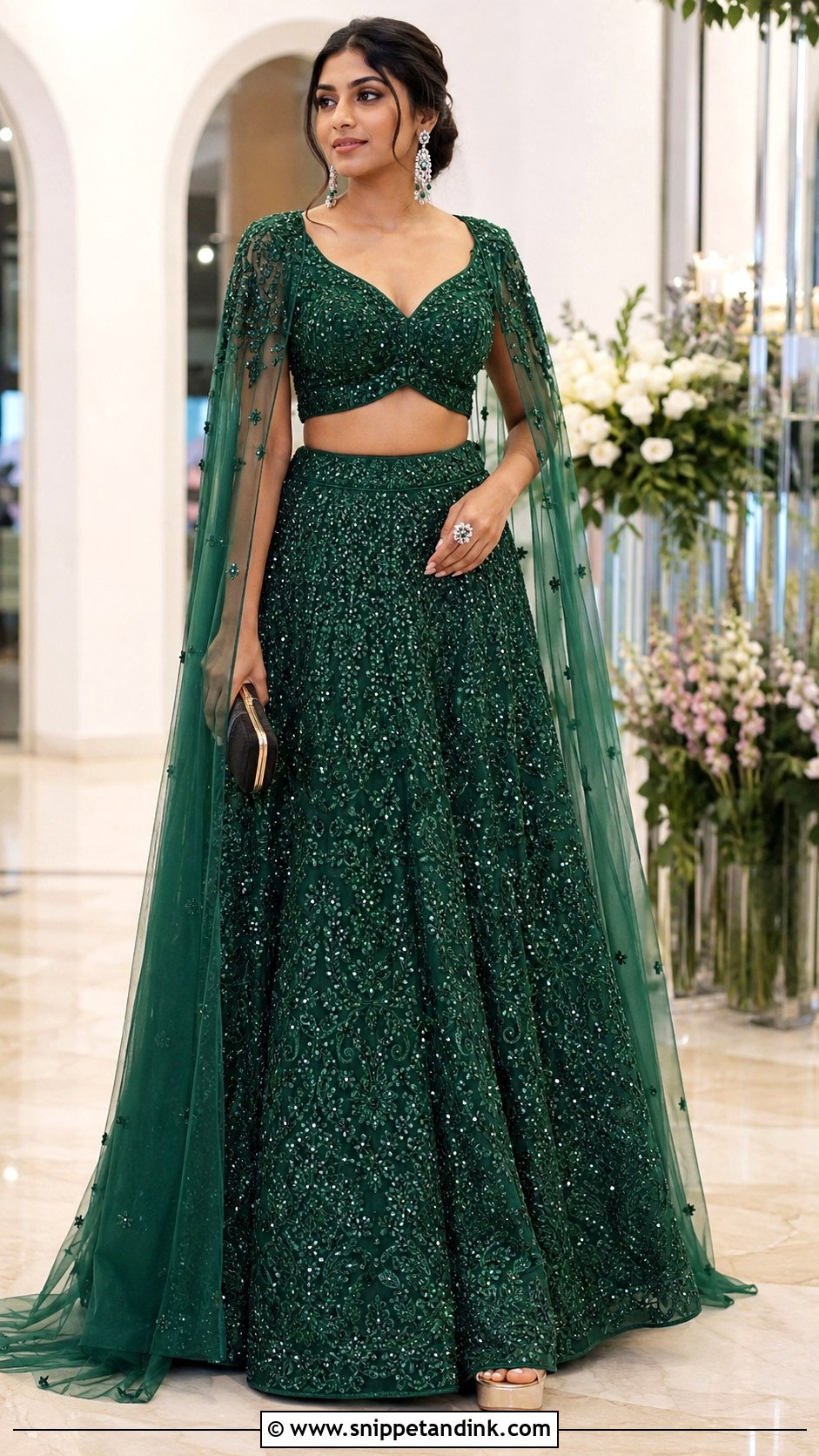
A cape lehenga with attached sleeves keeps the drama and simplifies the styling. A fitted blouse and coordinated skirt sit under a sheer cape joined at the shoulders and shaped into loose sleeves. Sequined borders, floral appliqués or scattered beads should echo the lehenga’s work, and a lightweight fabric lets the cape float. With no dupatta to manage, a busy reception gets easier. Long earrings, a cocktail ring, a compact clutch, platform heels and a low ponytail or bun complete it. One color, whether navy, wine, emerald or champagne, keeps it sophisticated. I always check a caped sleeve with the arm raised, since the cape can ride up and pull the back unevenly.
19. Bridal Salwar Kameez With Full Sleeves
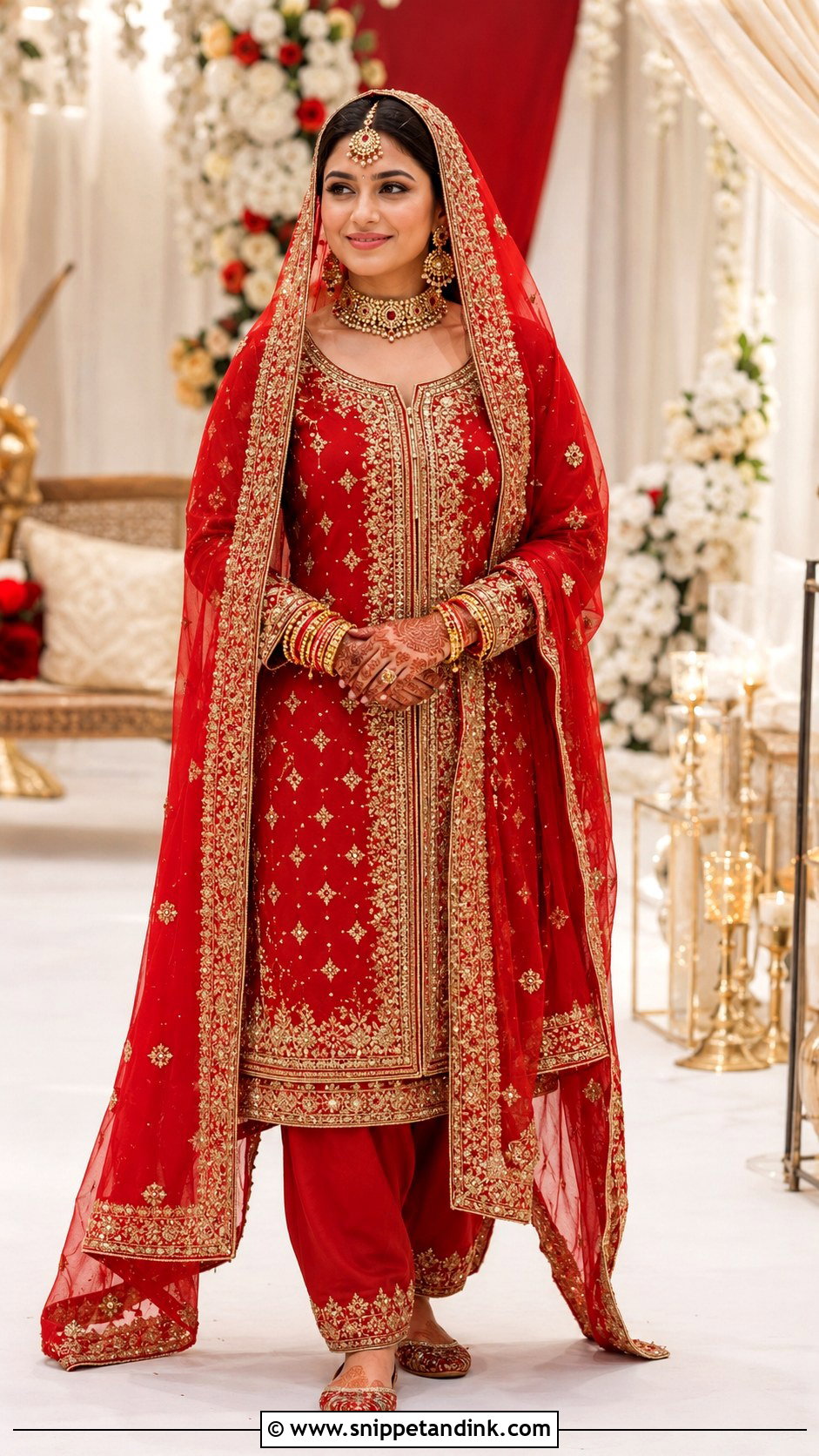
Not every bride wants a lehenga, and a full-sleeved salwar kameez is the comfortable traditional alternative, especially for ceremonies with long sitting. Choose a knee-length or slightly longer kameez embroidered at the neckline, front panel, cuffs and hem, a salwar with generous room, and a heavily bordered dupatta over the head or shoulder. Red, maroon, fuchsia and deep orange are traditional; ivory and soft pink are quieter. A choker, jhumkas, bangles, a maang tikka and embroidered juttis complete it. Full sleeves need a smooth lining and cuffs loose enough for your hands, and if you’ll wear a chooda, the cuff has to clear the bangles or sit above them.


20. Fusion Saree Gown With Draped Sleeves
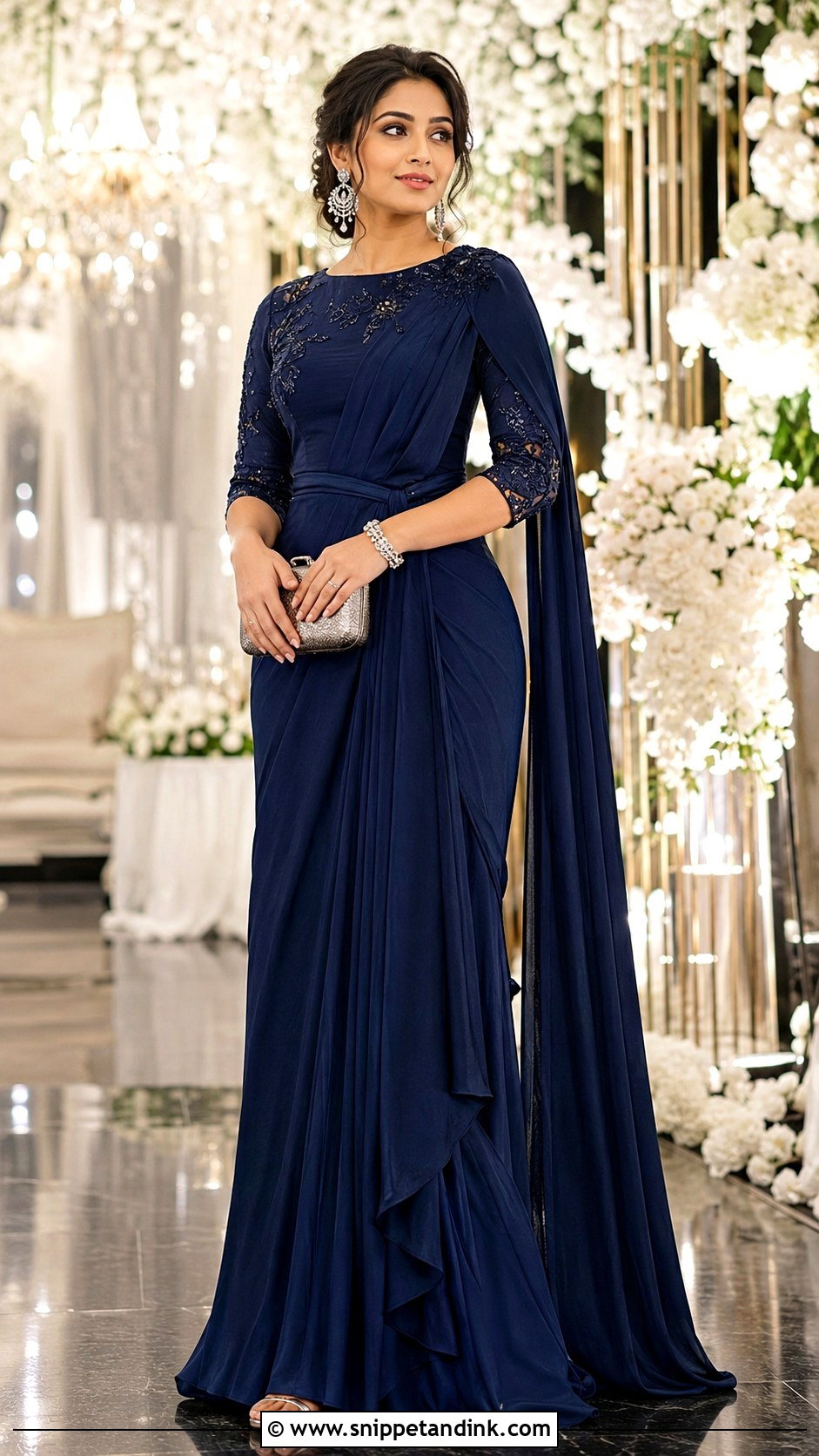
A fusion saree gown with draped sleeves gives you a saree’s look in one piece. Look for stitched pleats, a defined waist and an attached pallu falling from the shoulder. Full or three-quarter draped sleeves add coverage while continuing the fluid line. Jewel-toned crepe, georgette or satin with an embroidered border suits evening. Chandelier earrings, a statement bracelet and a metallic clutch go with heeled sandals that keep the hem lifted. Draped sleeves can twist at the seam if the fabric was cut off-grain, so I check that both sleeves hang the same way before signing off an alteration. Smooth waves or a sculpted low bun keep the shoulder clear.
How Mehndi, Chooda and Weather Settle Sleeve Length
Bridal mehndi often runs well up the forearm, sometimes to the elbow. Opaque full sleeves hide all of that artwork; sheer net sleeves let it show through softly; elbow and three-quarter lengths leave it on full display. I ask brides how much they want the design seen before we settle on a sleeve.
Bangles change the answer too. A Punjabi bride’s chooda stacks up the forearm and is usually worn from the wedding morning onward, and a fitted full sleeve simply won’t pass over it. Three-quarter, elbow or flared sleeves are kinder choices, or a full sleeve with a cuff opening wide enough to sit above the stack.
Then think about heat. Full silk or velvet sleeves in a summer marquee are draining, while net or organza sleeves give you coverage with air moving through. In a cold month, a fully lined long sleeve can mean skipping a shawl that would hide your outfit in every photograph.
Sleeves That Move the Way You Do
Sleeves add coverage, warmth and room for embroidery to almost every Indian silhouette. Traditional red lehengas, Banarasi sarees, embroidered Anarkalis, sharara sets and fusion gowns each wear them differently. Think about the season, the venue and how much you’ll move before choosing heavy work or layered fabric. Tailoring makes the biggest difference, particularly at the shoulders, elbows and cuffs. Let jewelry support the neckline and sleeves rather than compete with them, then add comfortable shoes, a manageable dupatta and a bag that suits the outfit.
You'll Like These Ideas:





Leave a Reply