
Pink is the color I get asked about most once couples see how far it stretches: a whisper of blush on smooth tiers, a raspberry Lambeth cake, a fuchsia ombre for a late party. The wedding cake trends I see in consultations right now lean toward textured buttercream, sugar and pressed flowers, hand painting, heavy vintage piping and fruit, and the pinks have deepened from pastel into rose and berry. The useful part is that one color family can sit happily in a barn, a hotel ballroom or a garden. Below are thirty pink cakes, with what I would actually tell you about each one at the tasting table.
Why Pink Frosting Rarely Matches the Swatch You Bring
Pink is the trickiest color I mix, and it helps to know why before you fall for a photo. Most pinks come from gel color stirred into buttercream or kneaded into fondant, and they behave in three ways that surprise couples.
- Pink keeps developing after mixing. A buttercream that looks right at noon is often a shade deeper by evening, so I mix slightly lighter than the target and let it rest.
- Butter is yellow. In an all-butter frosting a cool pink drifts toward peach or salmon, which is why meringue-based buttercream or a whitening step gives truer blush.
- Pinks and purples fade in strong light. A cake displayed in direct sun or under bright lamps for hours can pale noticeably, especially on the side facing the light.
Bring a physical swatch, a ribbon or a bridesmaid fabric sample, rather than a phone photo, since screens shift color. I hold the swatch against a mixed sample in daylight and again under warm light. If you want color from fruit, such as freeze-dried raspberry or beet, expect a softer, dustier pink and a faint flavour.
1. Blush Pink Wedding Cake
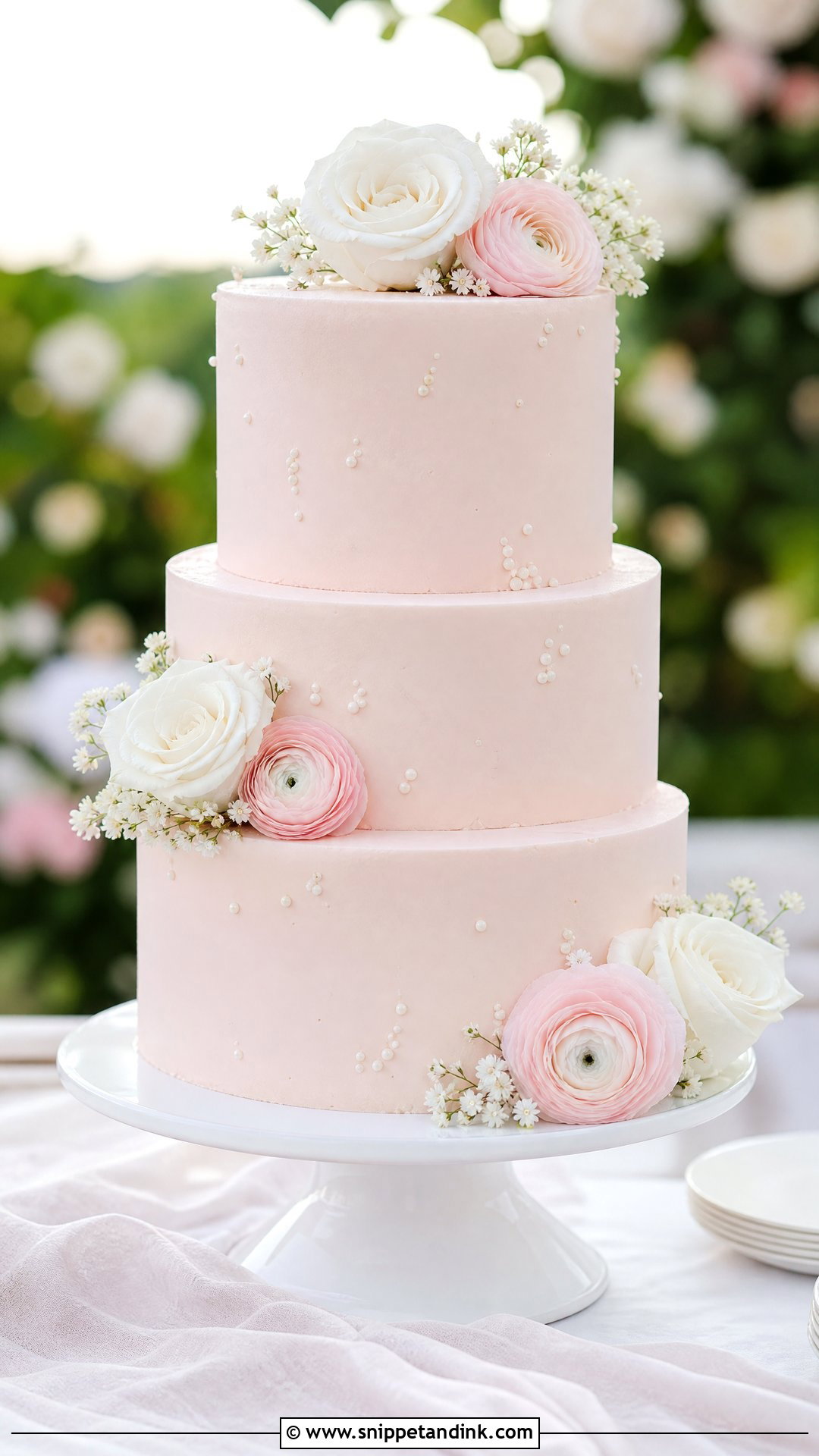
Blush is the shade I steer nervous couples toward, because it reads as color in person and almost as ivory in photos taken under warm reception light. I mix it a touch darker than the swatch they bring, since buttercream blush tends to look paler once it sits next to white flowers. A smooth finish shows every air bubble, so if your baker works in a warm kitchen, a faint spatula texture is the safer request. Keep the roses and ranunculus off-centre for a modern line, and pair it with vanilla, almond or pink champagne sponge.
2. Pink Buttercream Wedding Cake
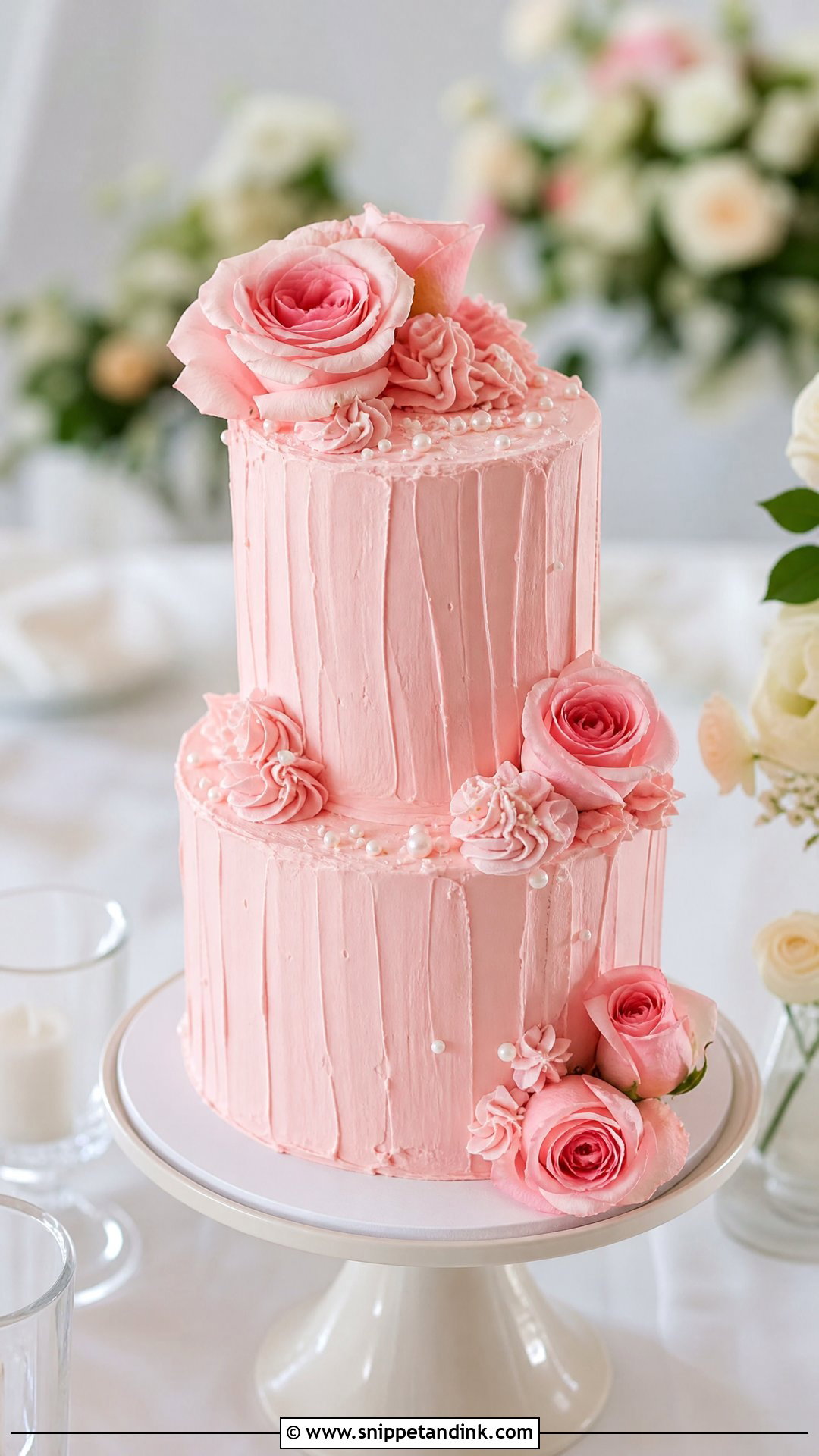
Buttercream is my default for pink because the color sits in the fat and looks soft rather than painted. The catch is that butter is yellow, so a true cool pink needs a little help, otherwise you drift toward salmon. Swiss meringue buttercream is paler and takes color more cleanly than an all-butter American frosting. Ridges, combed lines or a palette-knife texture give movement without adding cost. I like raspberry or lemon fillings here, since the slightly sharp flavour cuts the richness of a full buttercream coat.
3. Pink Fondant Wedding Cake
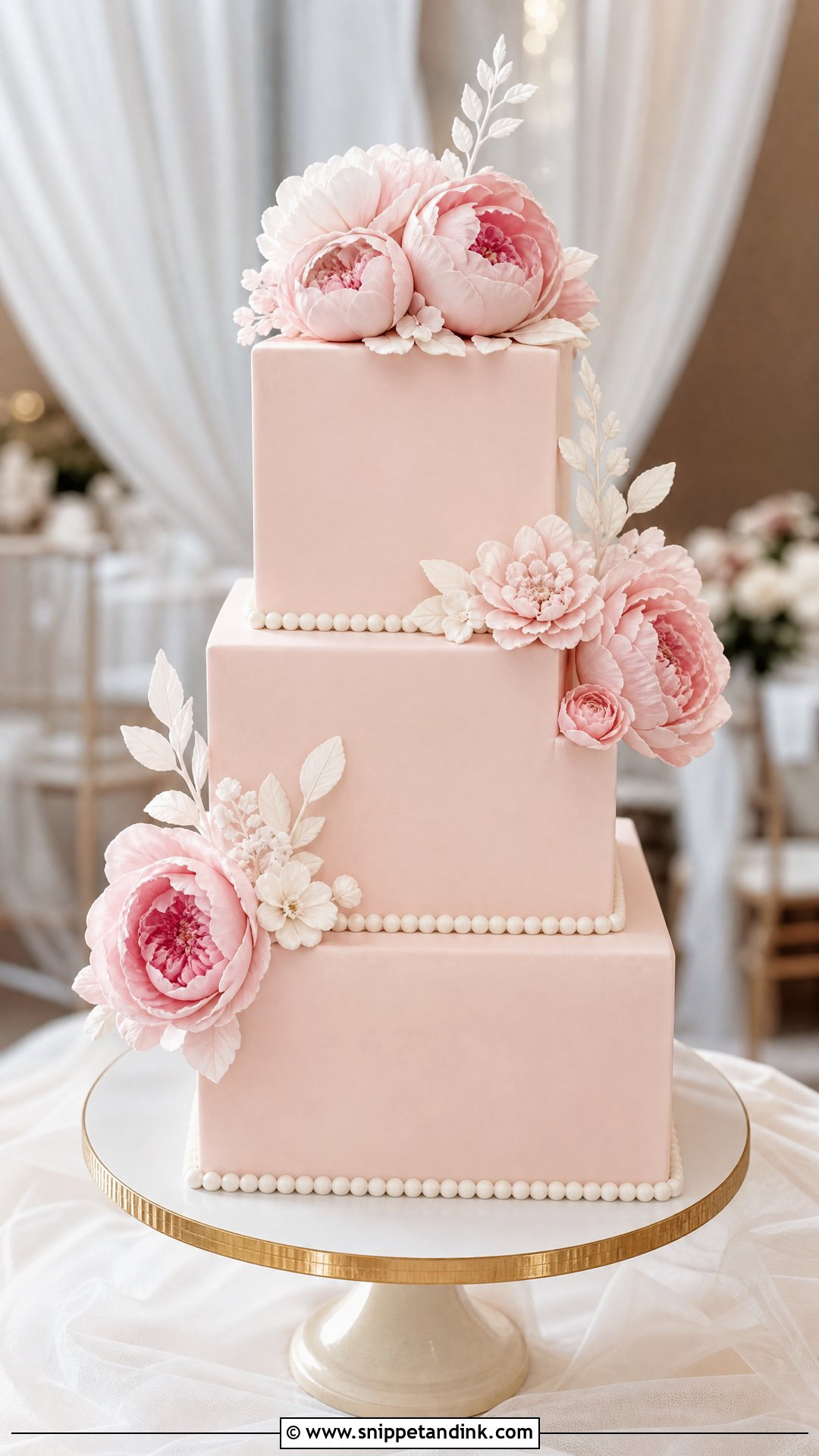
Fondant gives you the knife-sharp edges and porcelain surface that formal venues suit, and it protects the sponge underneath for longer on a long display. Pink fondant is pre-colored or kneaded with gel, and I always knead extra in one batch so every tier matches; a second batch is almost never the same shade. Dusty rose or mauve looks more grown-up than candy pink in this finish. Ask what sits under the fondant: a layer of ganache or buttercream there is what makes those corners crisp and what makes the slice taste of something.
4. Pink And White Wedding Cake
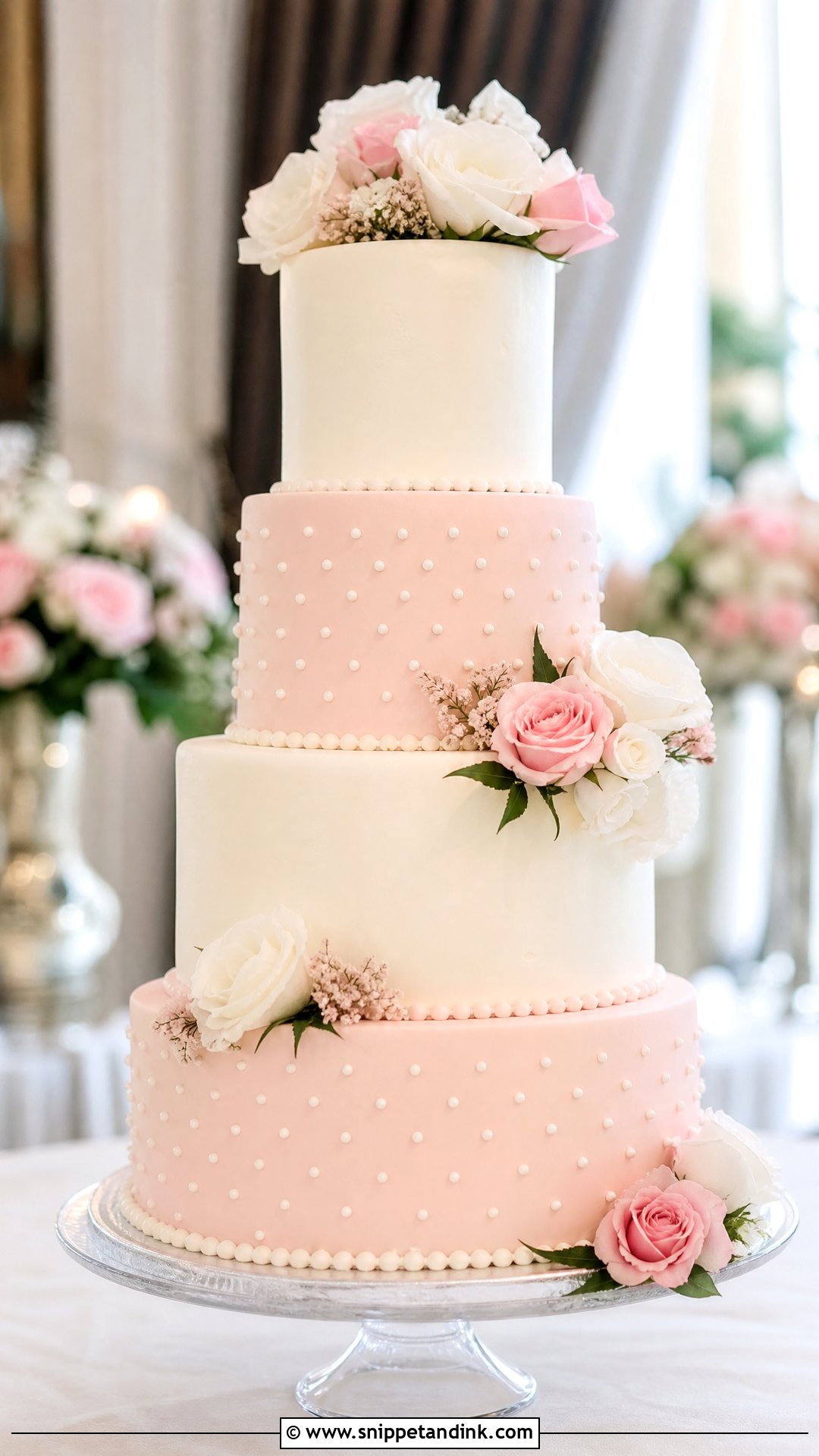
This is the combination I recommend when one of you loves pink and the other is not sure. White tiers with pink flowers read as traditional; pink tiers with white piping read bolder; alternating tiers sit in between. Contrast is the reason it works, because white piping on pink is easy to see from across the room, while pink on pink can blur. Bright white is hard to get in buttercream, so expect ivory unless you ask for a whitening step. Classic sponges like vanilla, almond or lemon suit it.
5. Pink Floral Wedding Cake
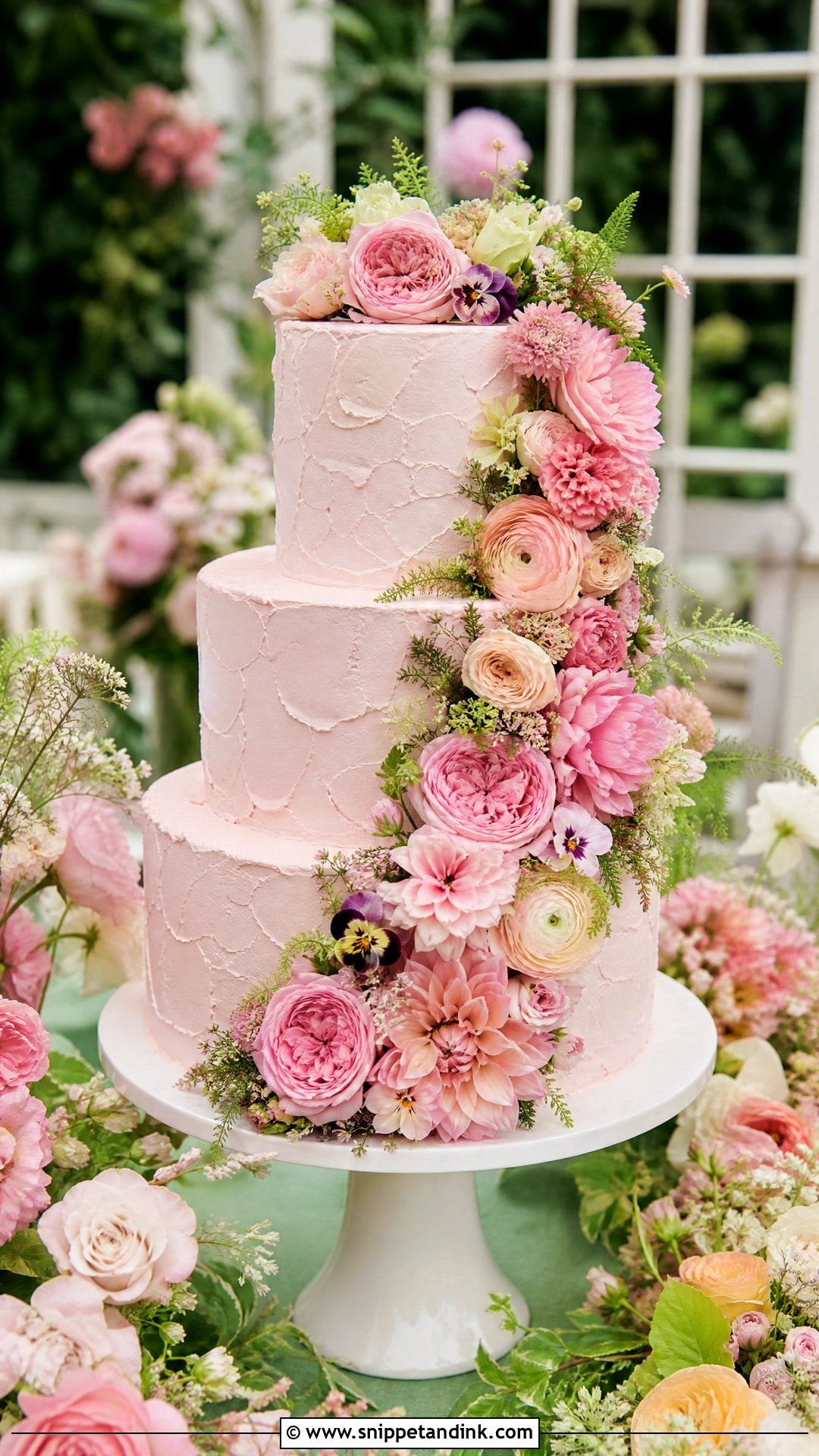
Flowers can be fresh, sugar, wafer paper or piped, and that choice is usually decided by budget and by the venue rather than by taste. If you go fresh, the flowers must be grown without pesticides and the stems wrapped or set in picks so sap never touches the cake; I talk to the florist directly about this. Keep the palette inside the pink family so it looks planned. A diagonal cascade adds height, a cluster at the base and top keeps it calm. I avoid tucking flowers into every gap, because a cake buried in blooms photographs as a flower arrangement.
6. Pink Rose Wedding Cake
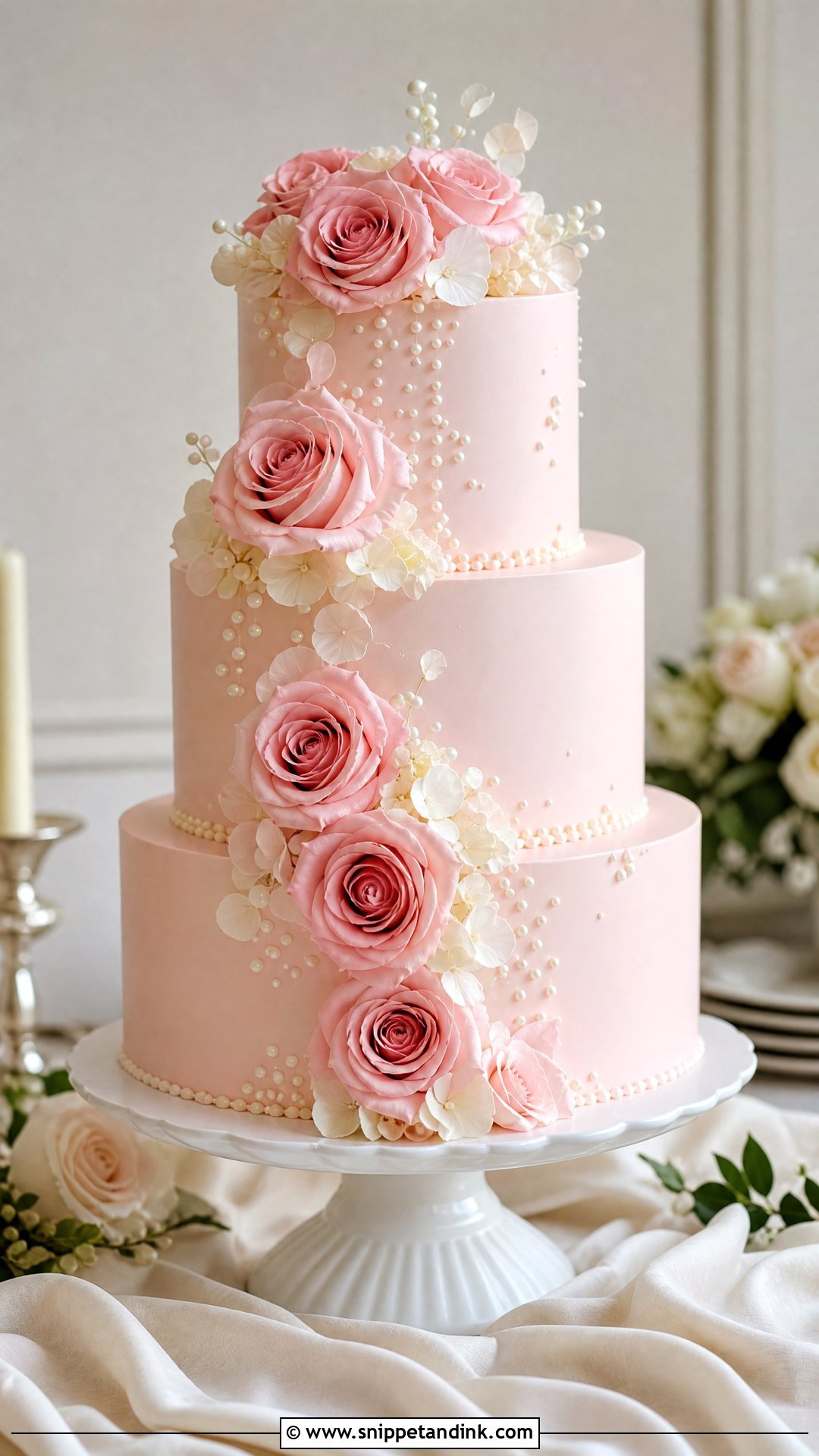
Roses are the easiest flower to match to a bouquet since they come in every pink from pale blush to deep raspberry. For a formal cake, sugar roses hold their shape all evening and can be made any month of the year. Fresh roses look softer, but they need food-safe barriers and they start to droop under a warm marquee after a few hours. A three-tier cake with one rose cascade down one side is the version I build most. Small pearl dots add texture without crowding the petals.
7. Pink Ombre Wedding Cake
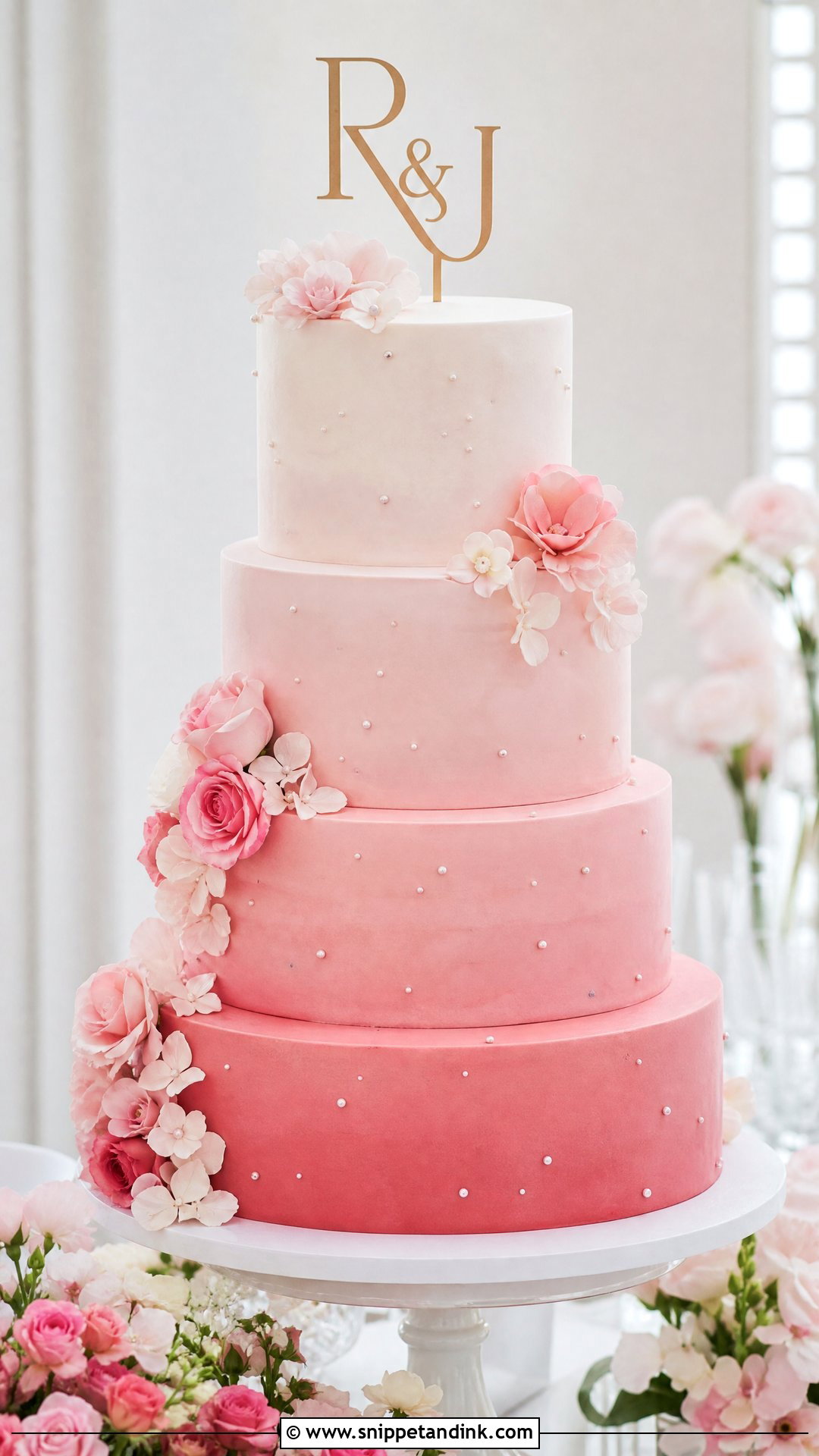
An ombre only looks graceful if the steps between shades are small. On a three-tier cake I mix four or five tones and blend each band into the next, rather than three blocks of color. White to blush, blush to rose, or pale pink to raspberry all work; the darkest shade usually goes at the bottom so the cake looks grounded. Buttercream ombre is softer, fondant is cleaner and more graphic. Keep decoration light, and if you can, echo the color inside with a strawberry or raspberry sponge.
8. Pink Drip Wedding Cake
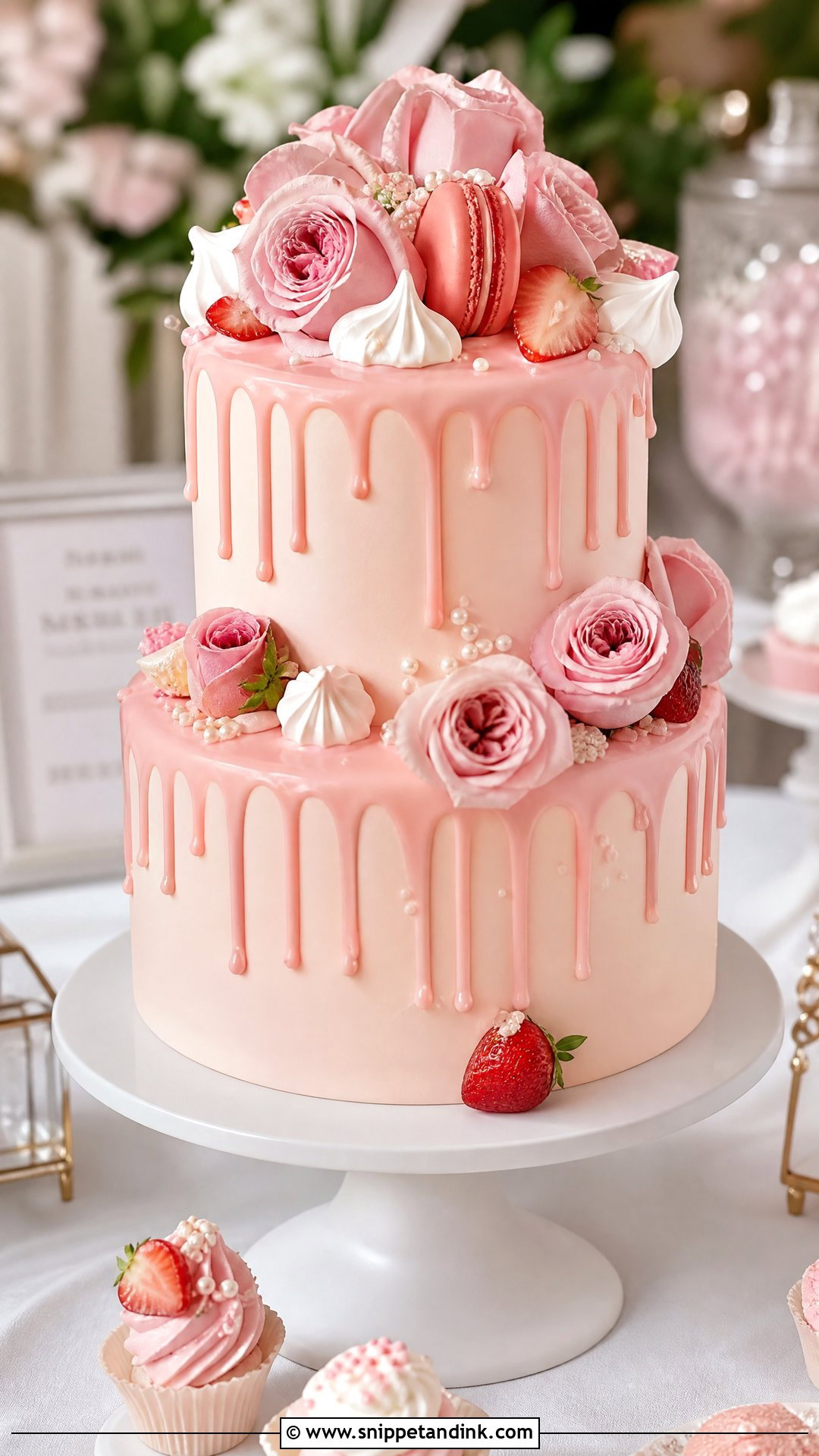
A drip is a ganache job, and white chocolate ganache tinted pink is the version I trust because it sets and holds its line. Temperature decides everything: poured too warm it runs to the board, too cool it sits in blobs. That is why drips belong on chilled, smooth buttercream tiers. For a wedding I keep the drip short and even, then load the top with macarons, roses, berries or meringues. It suits smaller and brunch receptions, and vanilla, almond, chocolate or berry fillings sit well underneath.
9. Pink Champagne Wedding Cake
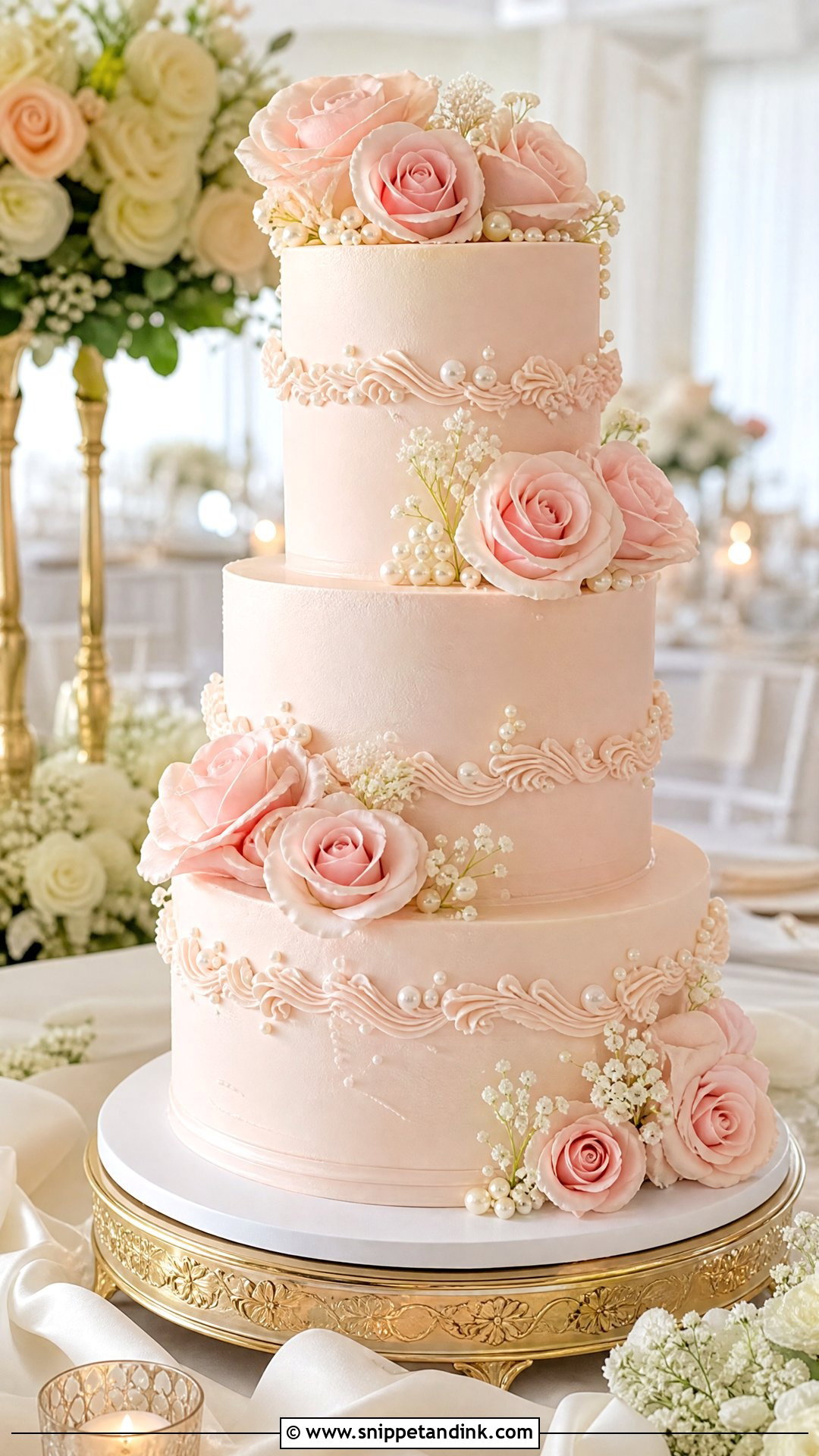
Pink champagne is a flavour first and a look second, so I let the decoration stay quiet. The sponge is usually a light vanilla cake with sparkling wine and a little pink color, and most of the alcohol cooks off, though I still mention it to couples with guests who avoid it. Strawberry, raspberry or vanilla bean fillings keep the slice pale and pretty when it is cut. Blush buttercream, pink fondant or a soft ombre all suit it. Hotel ballrooms and evening receptions are where I see it ordered most.
10. Pink Vintage Wedding Cake
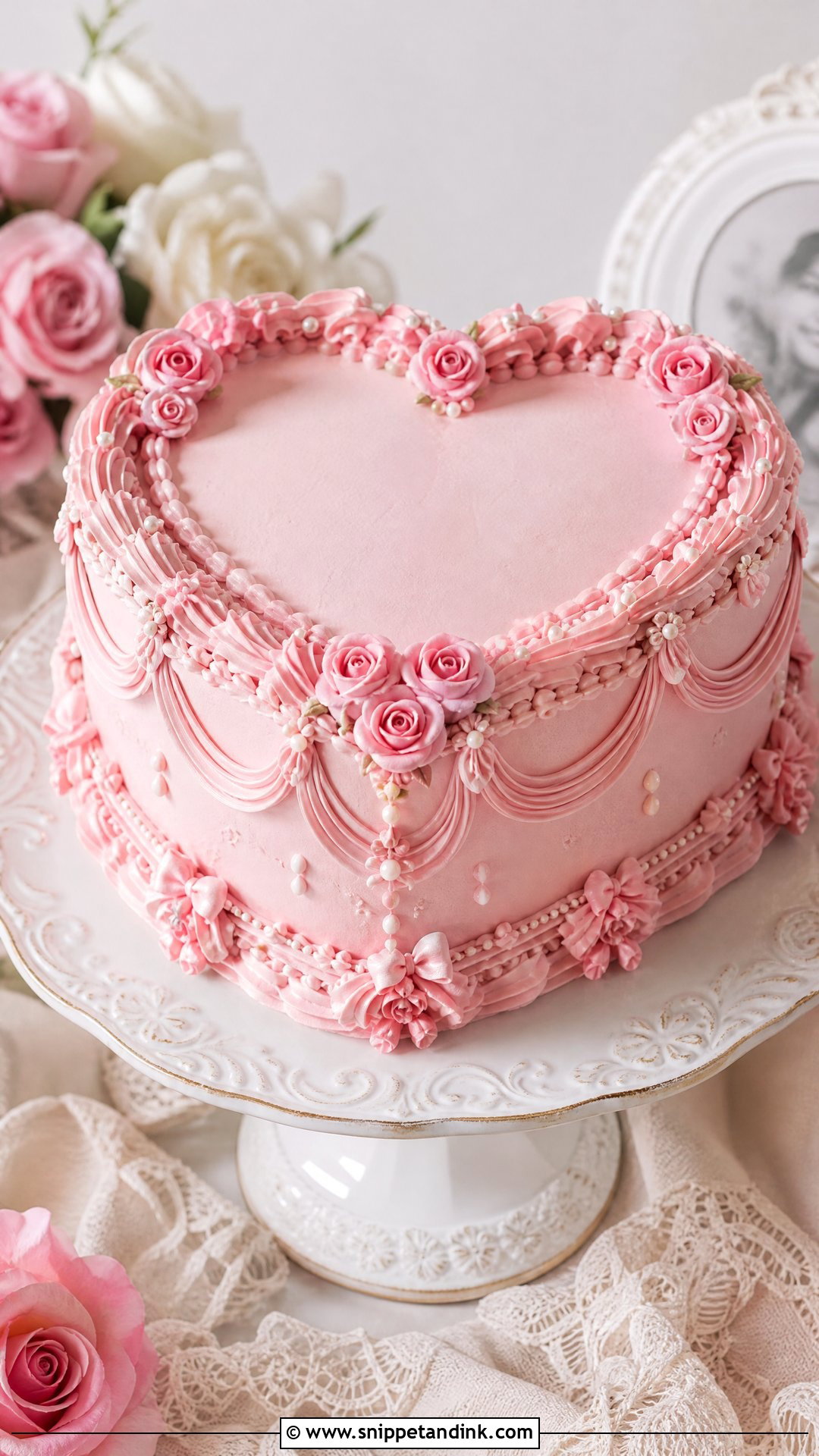
Vintage pink means shell borders, swags, bows and pearl dots, the piping vocabulary of older celebration cakes. Pale pink reads sweet and retro; a deeper rose looks more editorial in photos. This style is heavy on labour, so it costs more than its size suggests, and it is best in a cool room since buttercream piping softens and sags in heat. Keep every color in the same pink family. Glacé cherries suit a playful wedding; sugar roses are the more bridal choice.
11. Pink Lambeth Wedding Cake
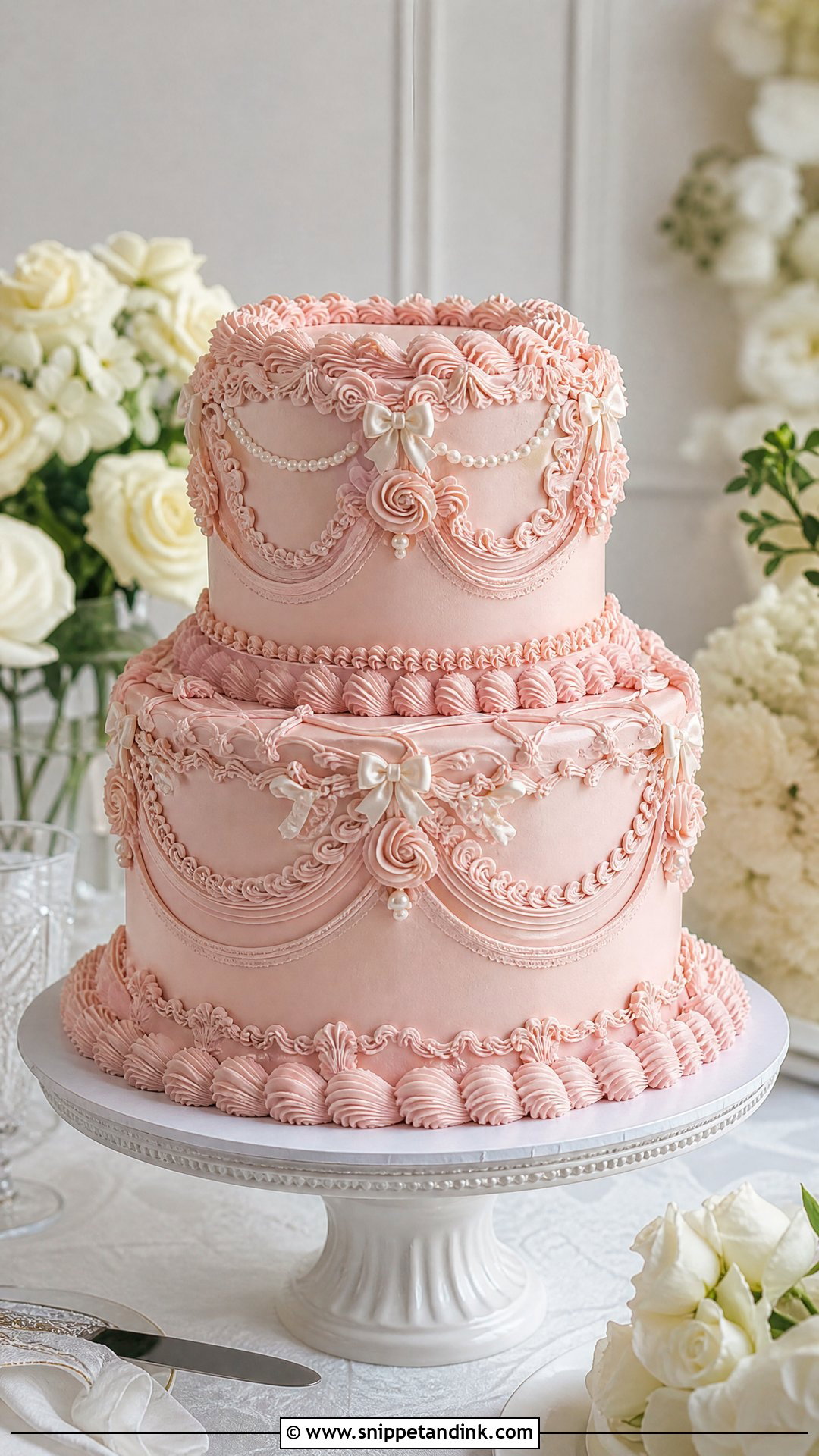
A pink Lambeth wedding cake is overpiping in layers: scrolls, shells and borders piped on top of each other until the cake looks carved. It takes hours of steady piping and a stiff buttercream or royal icing, so I book it early and never promise it for an outdoor summer slot without shade. Two tiers suit an intimate dinner; three tiers become the centerpiece of the room. Bows, pearls or a few sugar flowers finish it. Keep the flavour crowd-friendly, vanilla raspberry or almond, and let the piping do the talking.
12. Pink Heart Wedding Cake
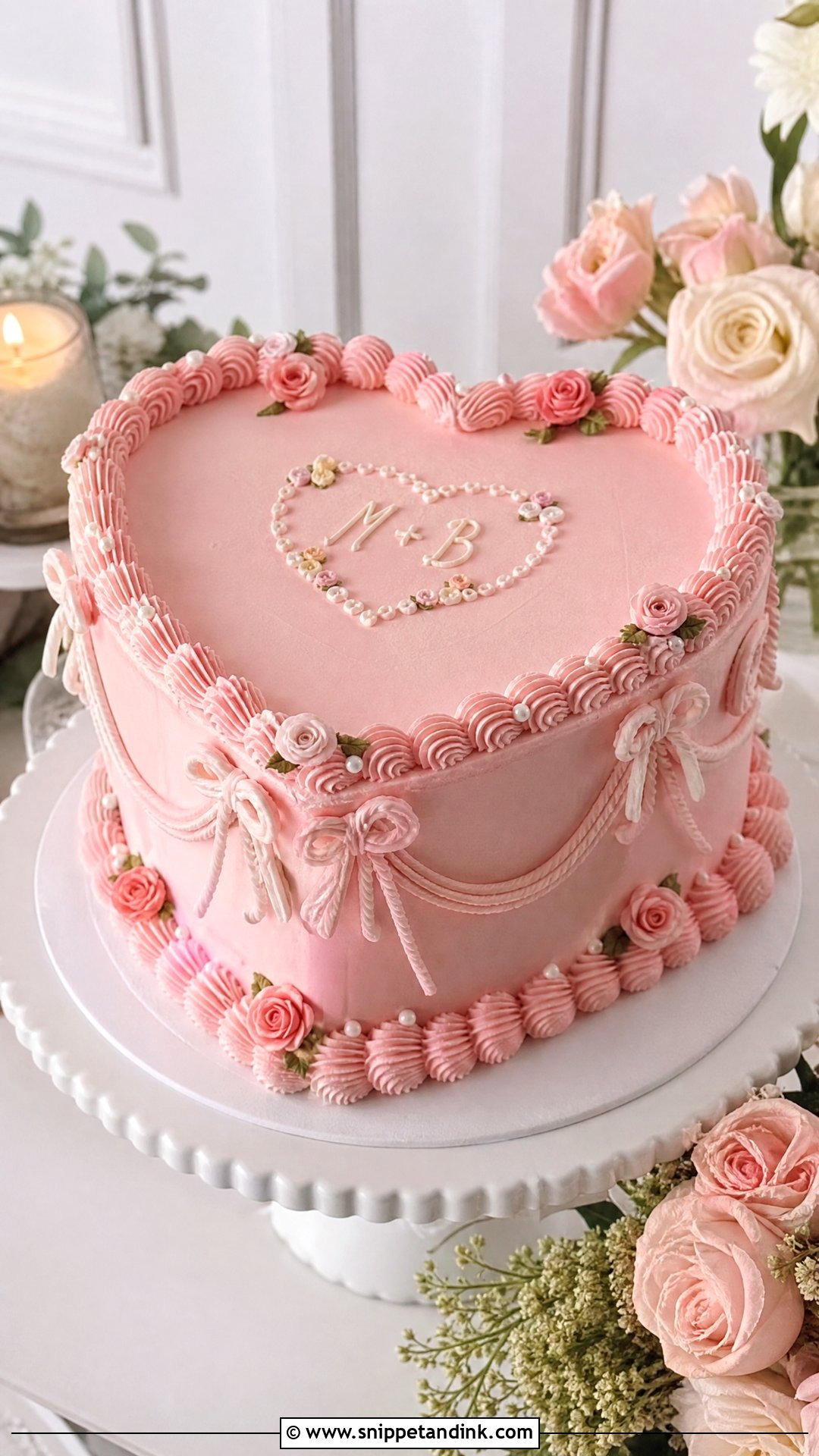
A heart shape changes how a cake serves, so I usually suggest it as a cutting cake for a small wedding, or alongside sheet cake and cupcakes for a bigger one. It is charming with vintage piping, and blush keeps it bridal while hot pink makes it playful. Pearl borders, a few sugar roses, piped bows or a short piped message on top are plenty. Heart tins are harder to fill and stack evenly, which is one reason I rarely build heart tiers above two.
13. Pink Tiered Wedding Cake
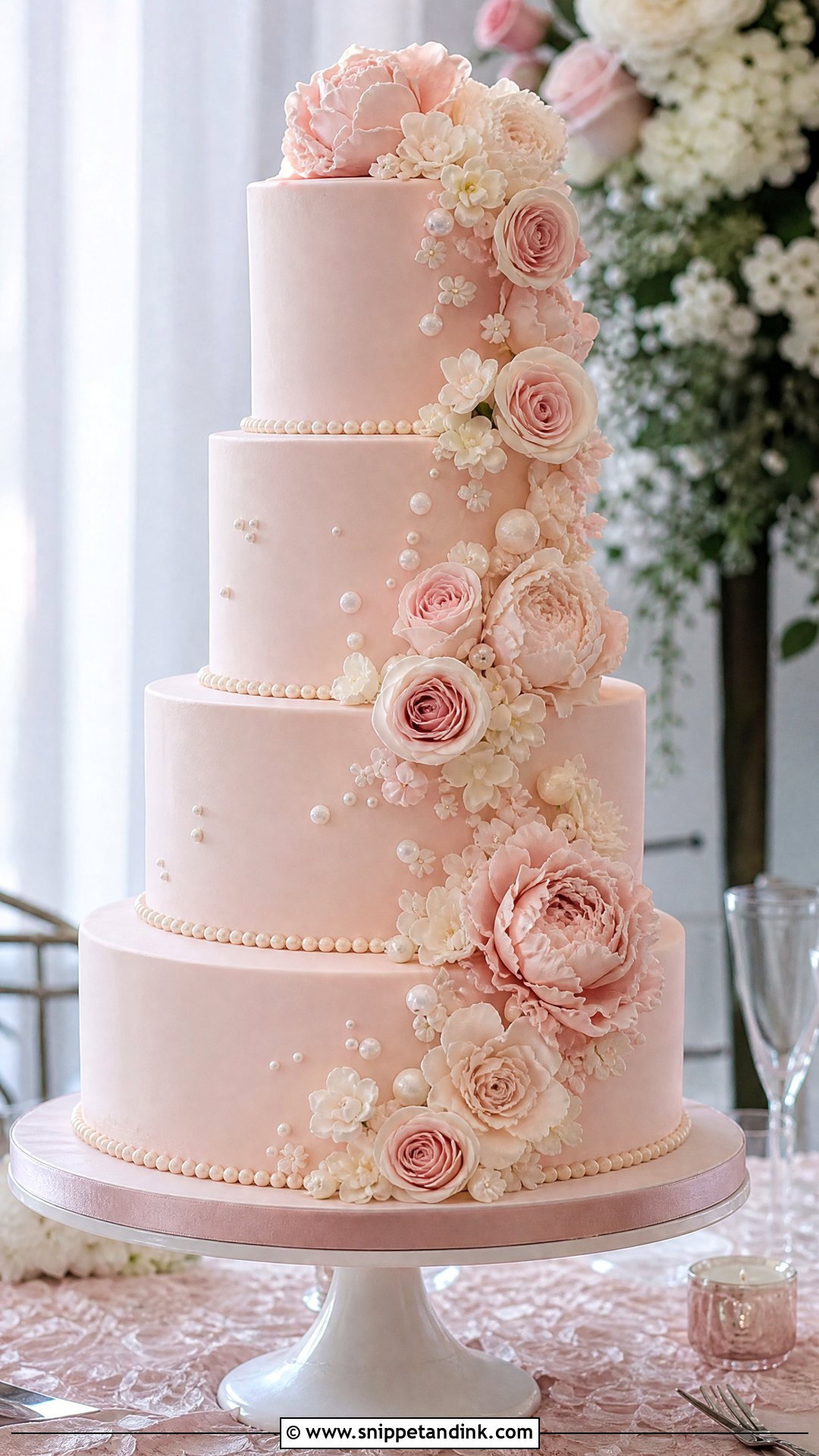
Tiers give height, and height is what makes a cake part of the decor rather than a dessert sitting on a table. Three tiers is the classic count; four or five suit a large room with high ceilings, where a short cake looks lost. Every stacked tier needs internal dowels and a cake board, which is something worth asking about if a quote seems low. Choose one finish and carry it through every tier, then run flowers on a diagonal for movement.
14. Pink Two Tier Wedding Cake
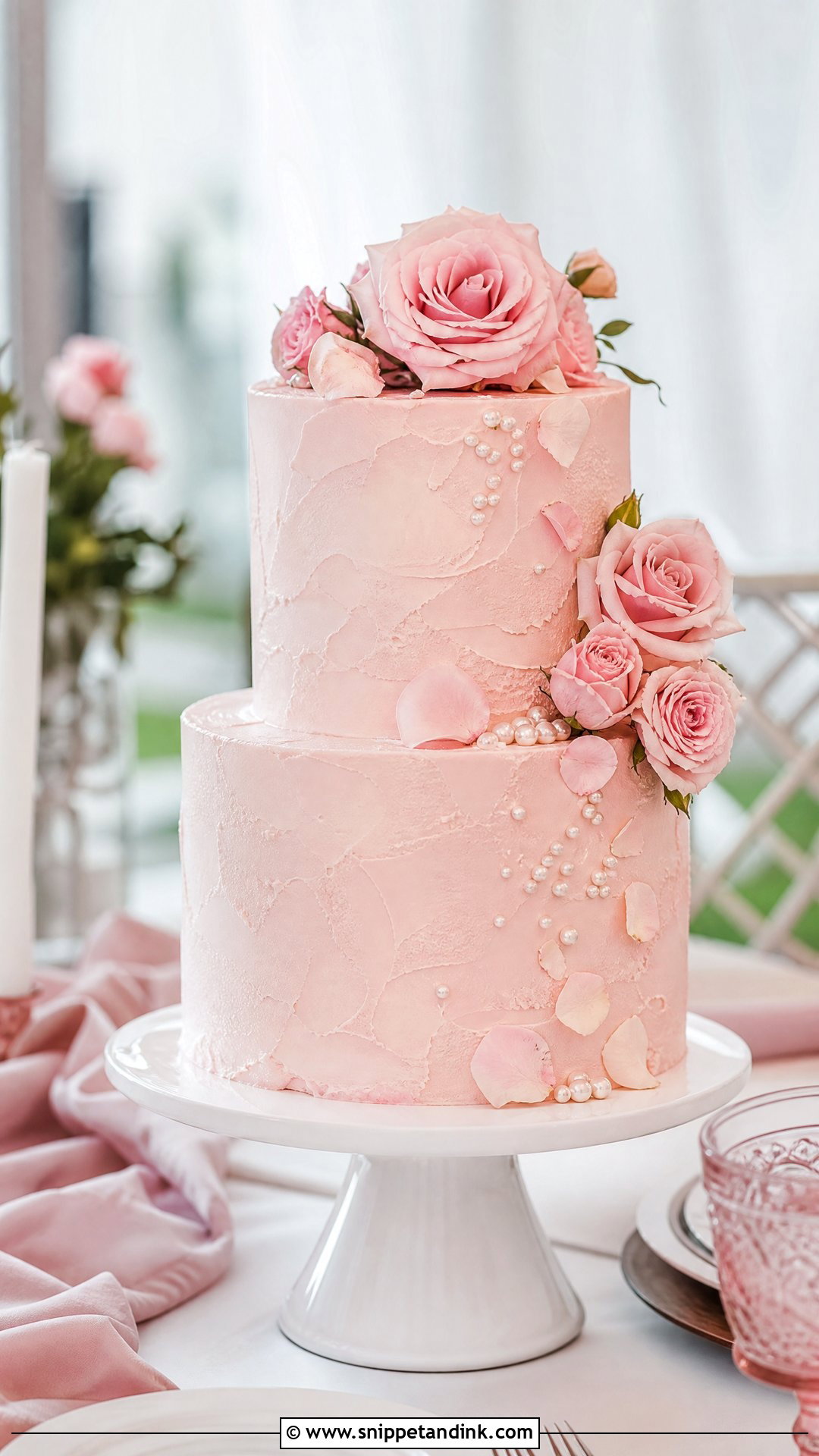
Two tiers is the size I build most for elopements, restaurant dinners and backyard receptions. It still gives you a proper cutting moment without paying for cake nobody eats. A taller bottom tier, often called a double barrel, makes a small cake look grander for very little extra serving. Keep it smooth with a few flowers, or add piping and pearls. Pink champagne, vanilla strawberry, lemon raspberry and almond all suit it, and it sits comfortably beside a larger dessert table.

15. Pink Square Wedding Cake
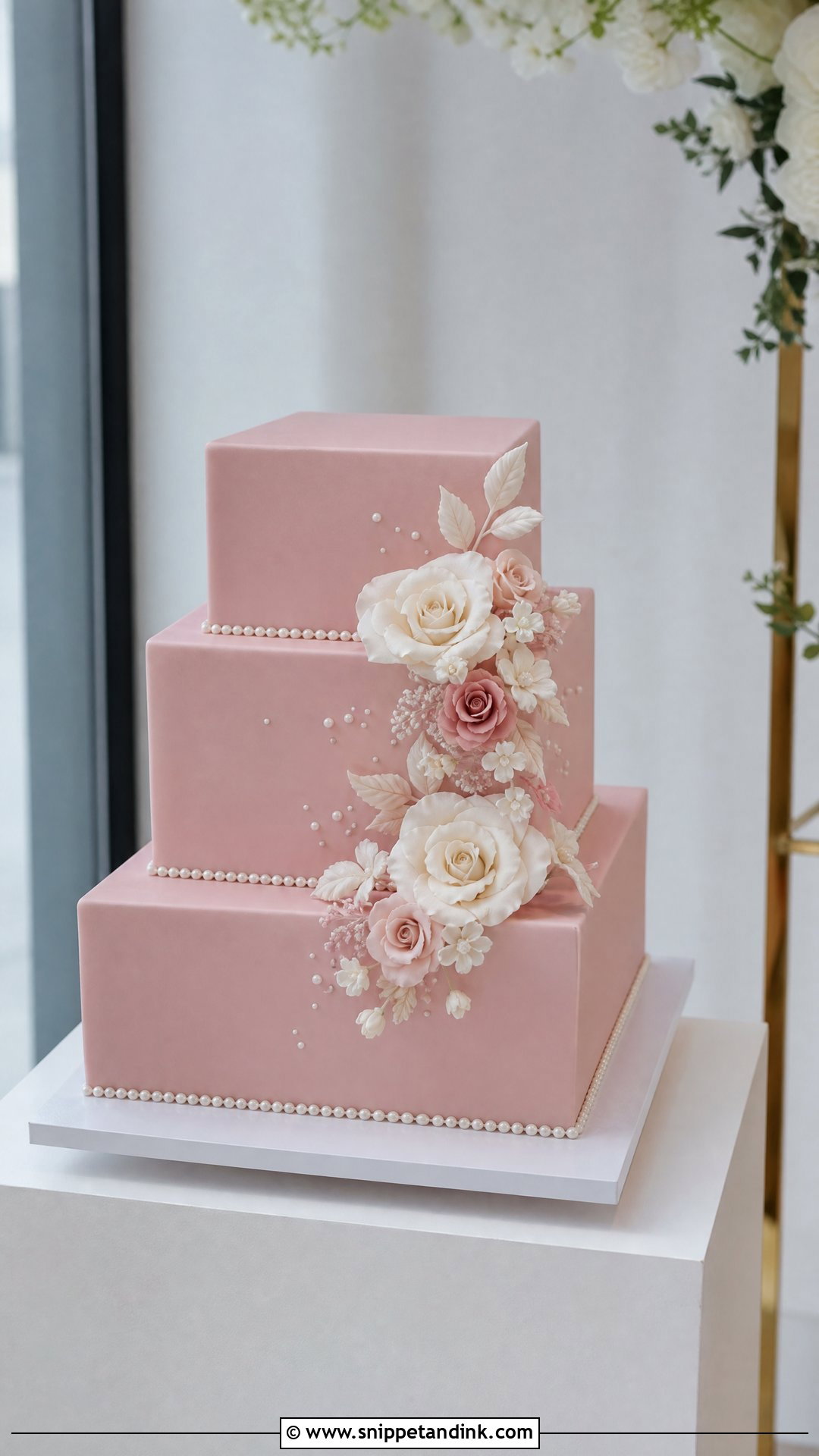
Square tiers look architectural, and they are honestly harder to finish well; getting four sharp corners on every tier takes time, so I prefer fondant or a ganache base for this shape. Soft pink stops it from looking severe; dusty rose adds a grown-up edge. One floral cluster or a fine line of piping is enough. Stacking the tiers straight feels formal, while turning each one a few degrees gives movement. It suits gallery spaces, modern venues and hotel receptions, with vanilla raspberry or almond cream inside.
16. Pink Watercolor Wedding Cake
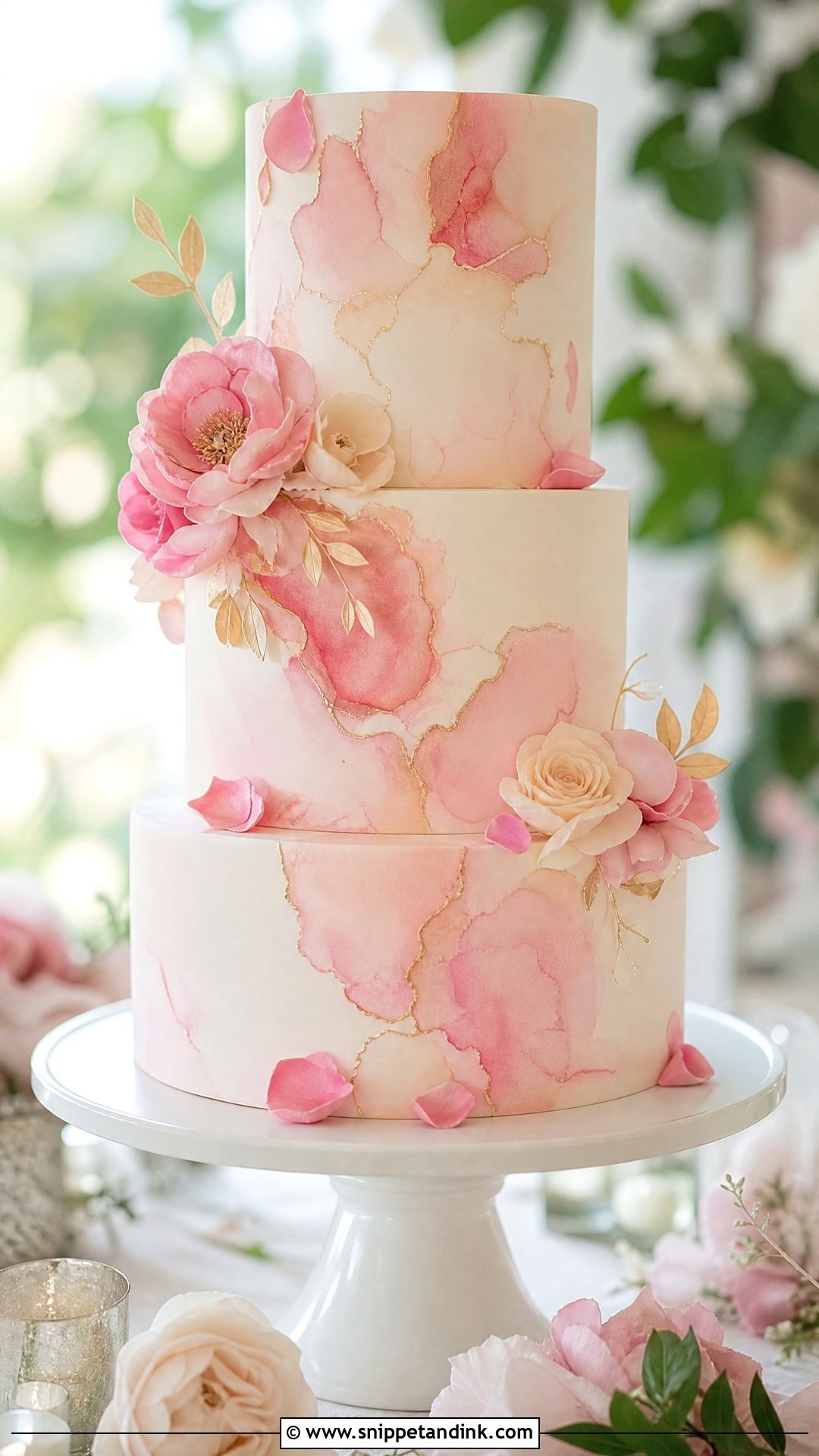
A pink watercolor wedding cake is painted, layer over layer, in thin washes of blush, rose and pale peach. I paint onto fondant or very well chilled buttercream, because a soft surface smears when the brush drags. The color is usually gel thinned with a little clear alcohol or water, so ask about it if alcohol matters to you. Thin gold lines, a few sugar flowers or pressed petals finish it. It suits spring and garden weddings, and a simple vanilla, lemon, strawberry or almond sponge keeps the inside as calm as the outside.
17. Pink Marble Wedding Cake
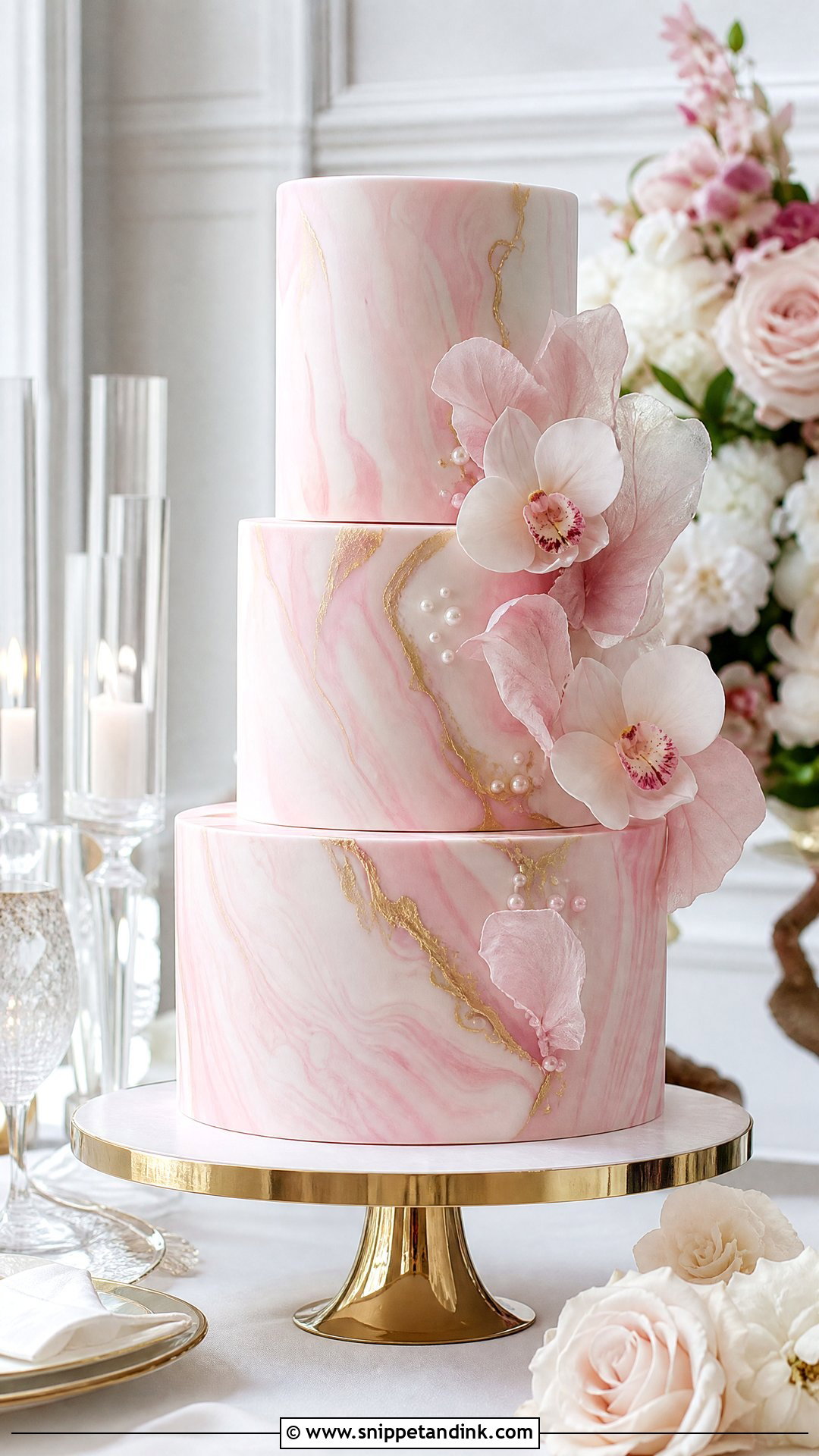
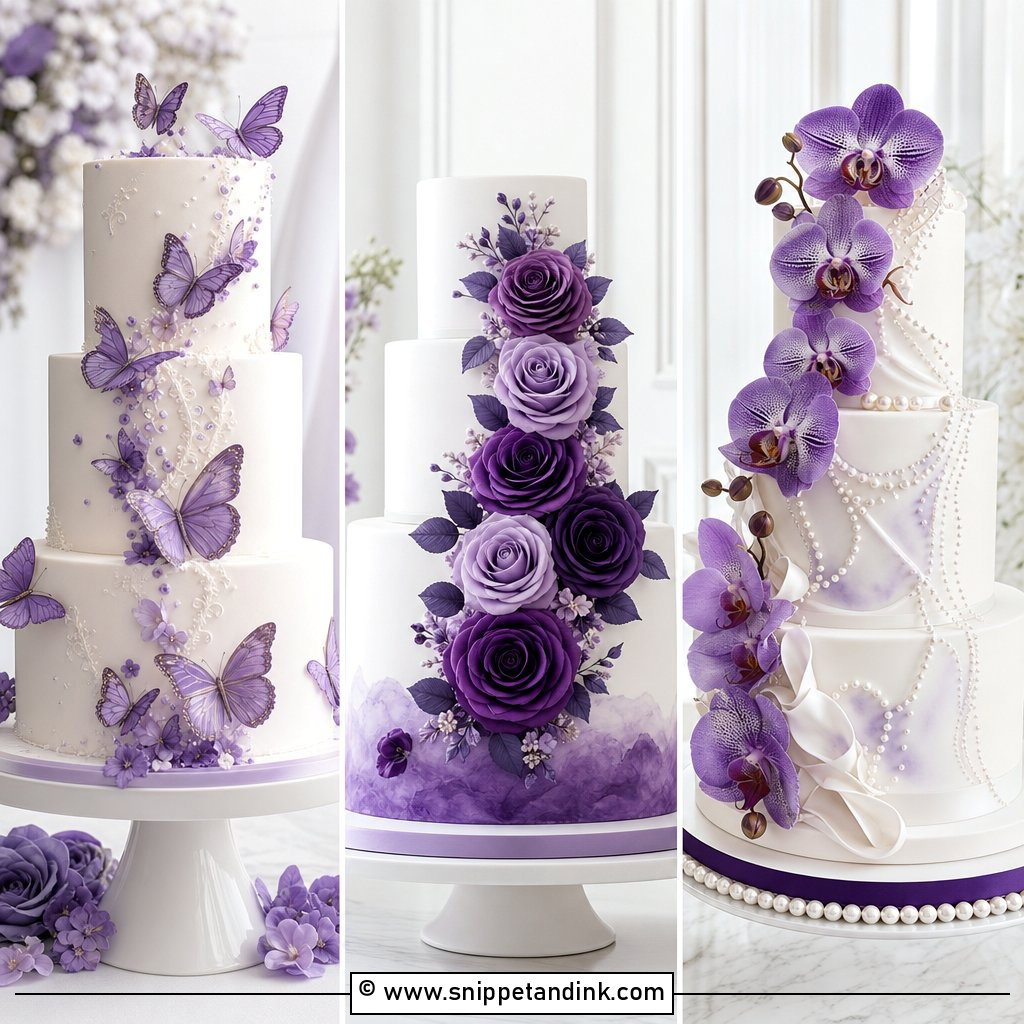
Marbling is done by twisting colors into the fondant before it is rolled, and no two sheets come out the same, which is part of the appeal. Blush, white, rose and a touch of gold read as stone rather than as a pink cake. Buttercream marbling is softer and less defined. I keep decoration to a few sugar orchids or wafer paper petals so the pattern stays visible, and I usually put the boldest veining on the front. Vanilla bean, raspberry cream or strawberry almond suit it.
18. Pink Ruffle Wedding Cake
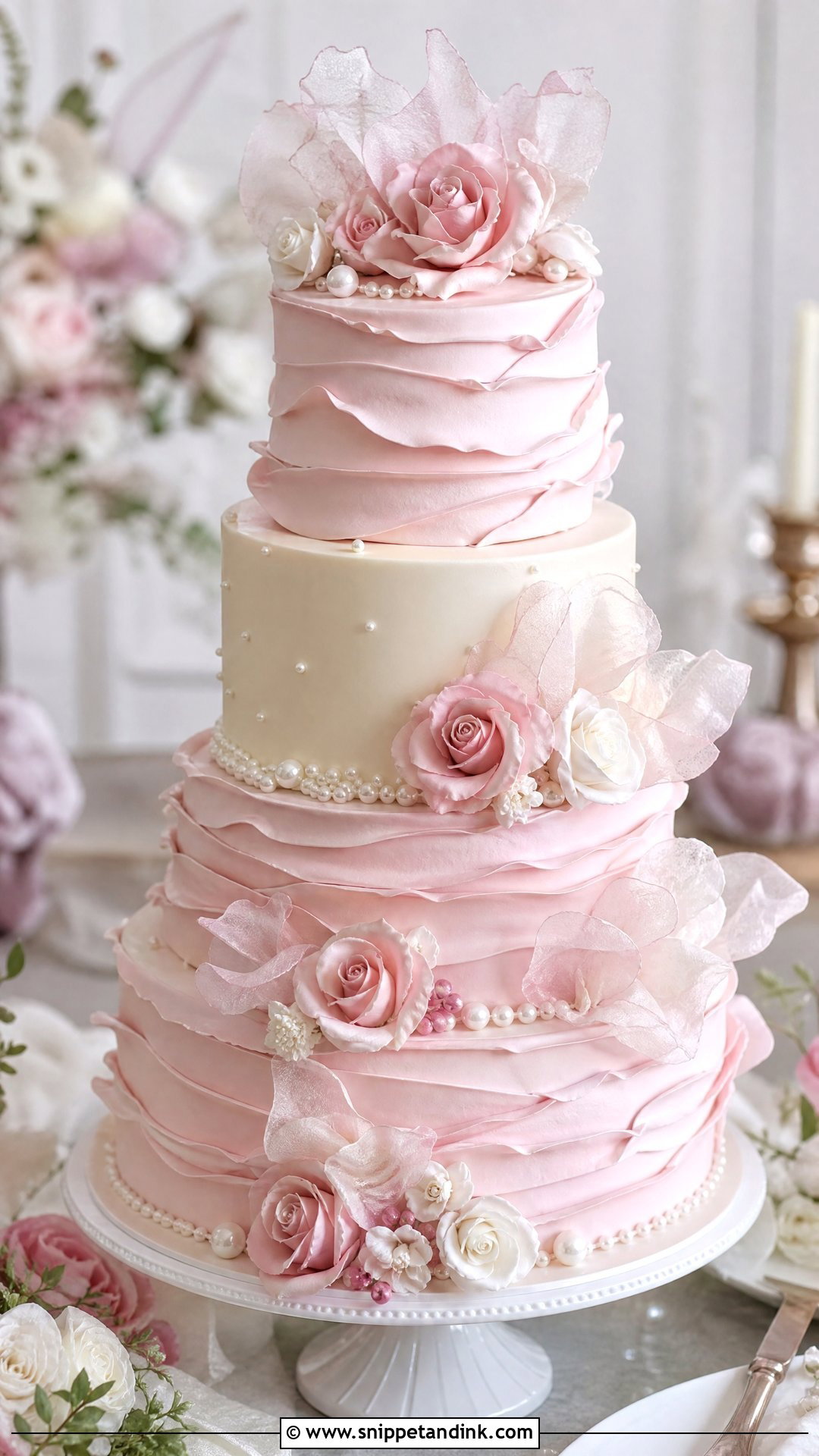
A pink ruffle wedding cake can be made three ways, and each behaves differently. Buttercream ruffles look soft and touchable but soften in heat. Fondant ruffles hold structure. Wafer paper ruffles are light and modern, though humidity makes them curl, so I would not choose them for a steamy outdoor tent. Blush suits a garden wedding, rose suits evening. If a fully ruffled cake feels like too much, one ruffled tier between two smooth ones gives the texture without the weight.
19. Pink Pearl Wedding Cake
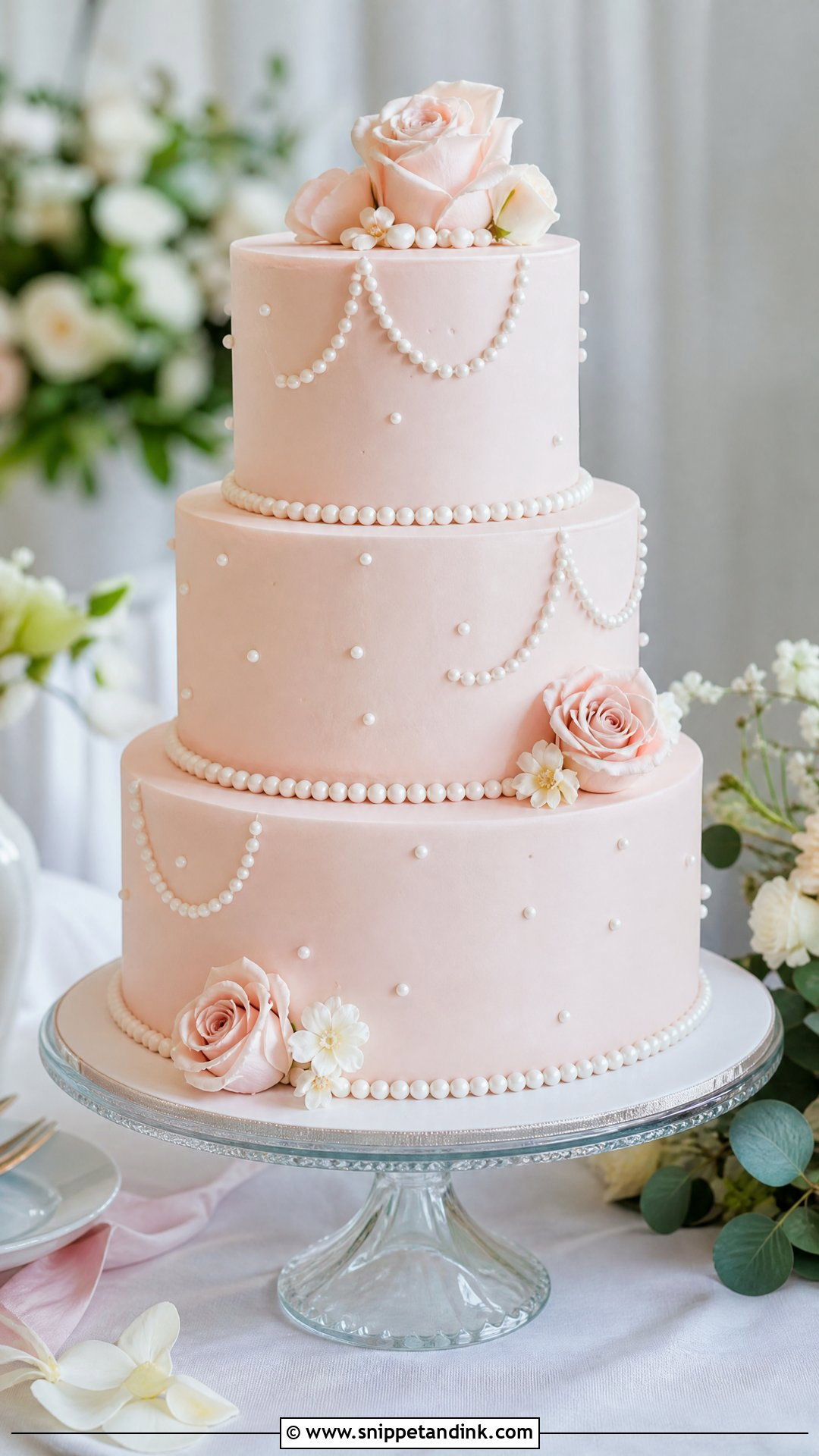
Pearls on pink catch reception light and give the cake a soft glow. They can be scattered, run as neat borders, or cover a whole tier, which takes patience since each one is set by hand. Edible sugar pearls are hard on teeth, so I keep large ones to borders and use smaller ones where guests will bite. Blush buttercream with white pearls is romantic; dusty pink fondant with pearl strands is more formal. Almond, vanilla, pink champagne or raspberry cream sit well inside.


20. Pink Gold Wedding Cake
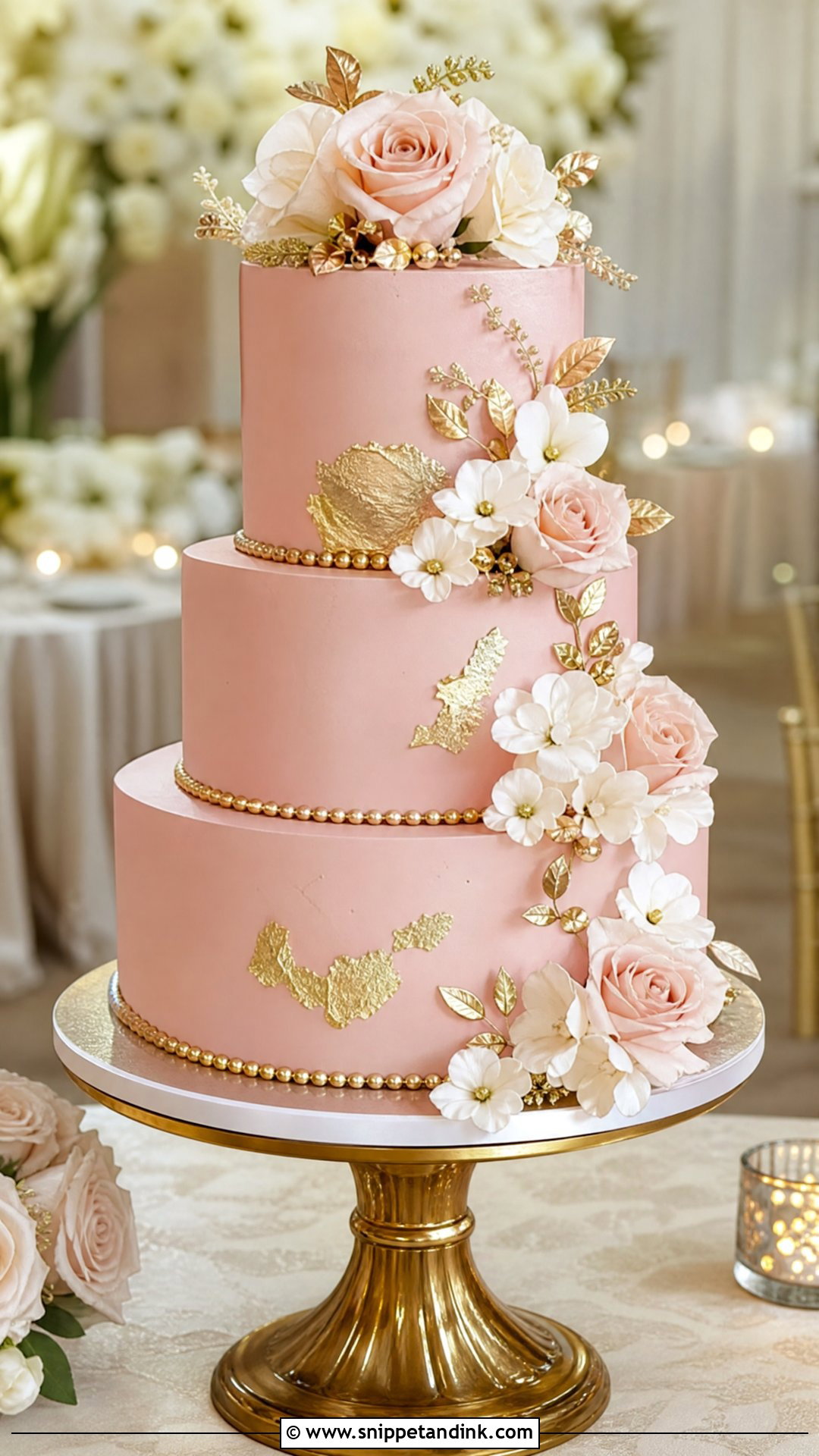
Gold on pink goes wrong when there is too much of it. I use it in one place: a painted edge, a few gold leaf patches, or a metallic topper. Edible gold leaf is real metal and the lustre dusts sold for cakes are not all edible, so I only use products labelled as edible on anything a guest will eat. Blush and rose both work with gold, on smooth buttercream or fondant. White flowers soften it, deeper roses add drama. Vanilla bean, almond, strawberry or raspberry keep the inside classic.
21. Pink Sugar Flower Wedding Cake
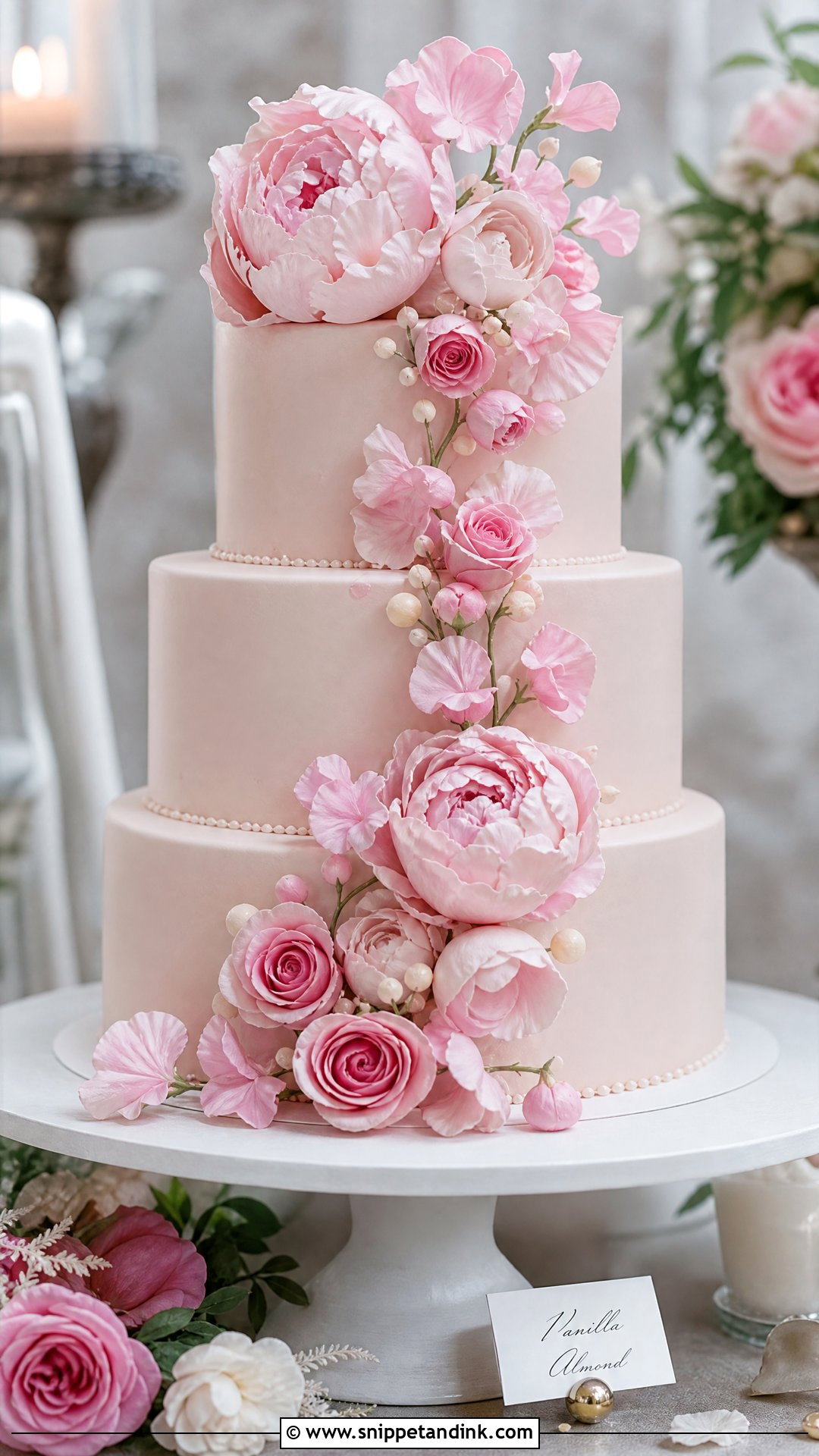
Sugar flowers are the answer when you want blooms that will not wilt over a long reception. Each petal is rolled thin, wired, shaped and dried, which is why they need ordering weeks ahead and why they can be matched to your bouquet in a shade fresh flowers cannot always give in that season. They are also the safe route when the florist cannot source pesticide-free stems. They are not usually eaten, so many couples keep them afterward. Cascade them, cluster them at the base, or crown only the top tier; peonies, roses, ranunculus and sweet peas are the favorites.
22. Pink Pressed Flower Wedding Cake
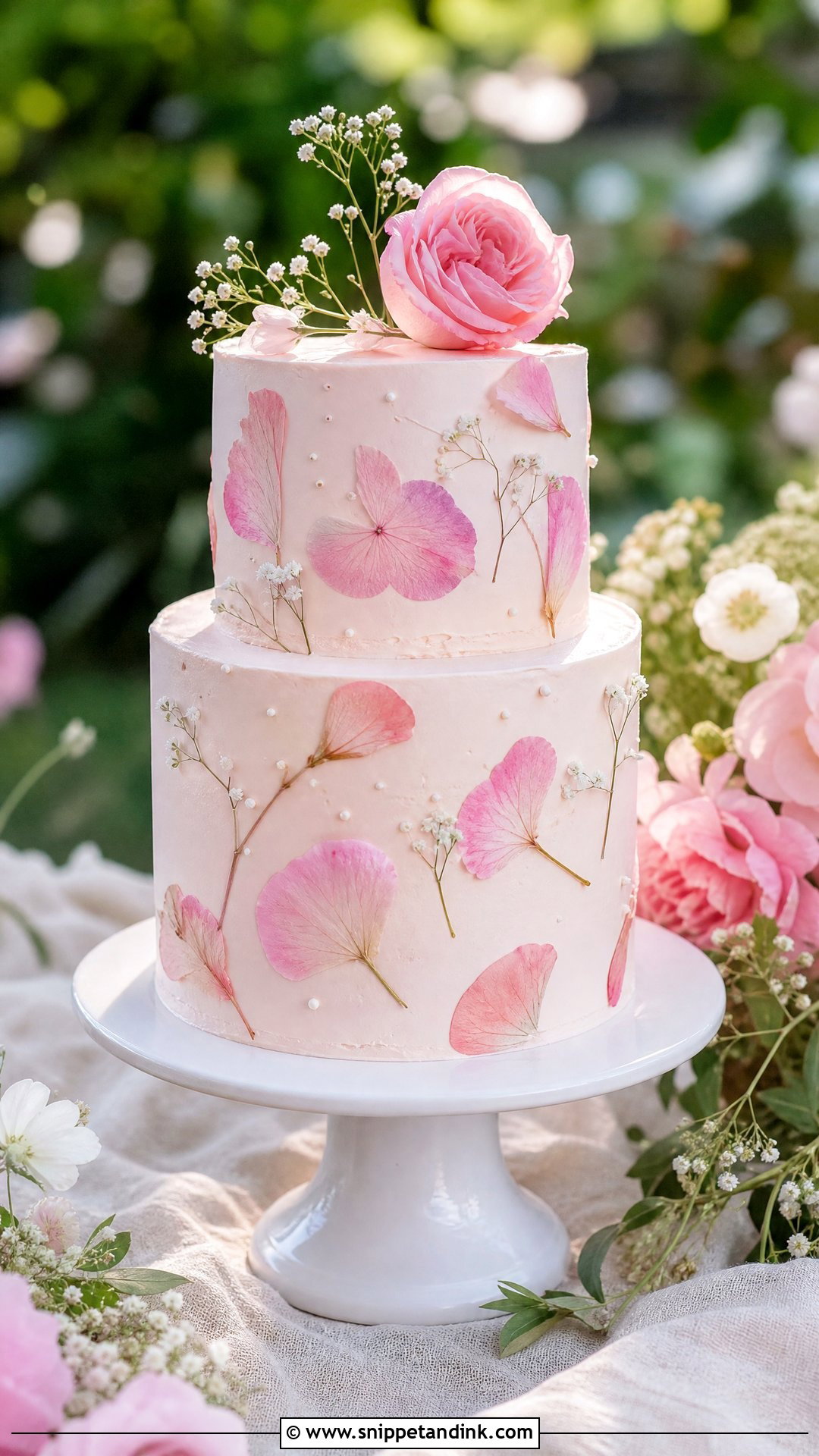
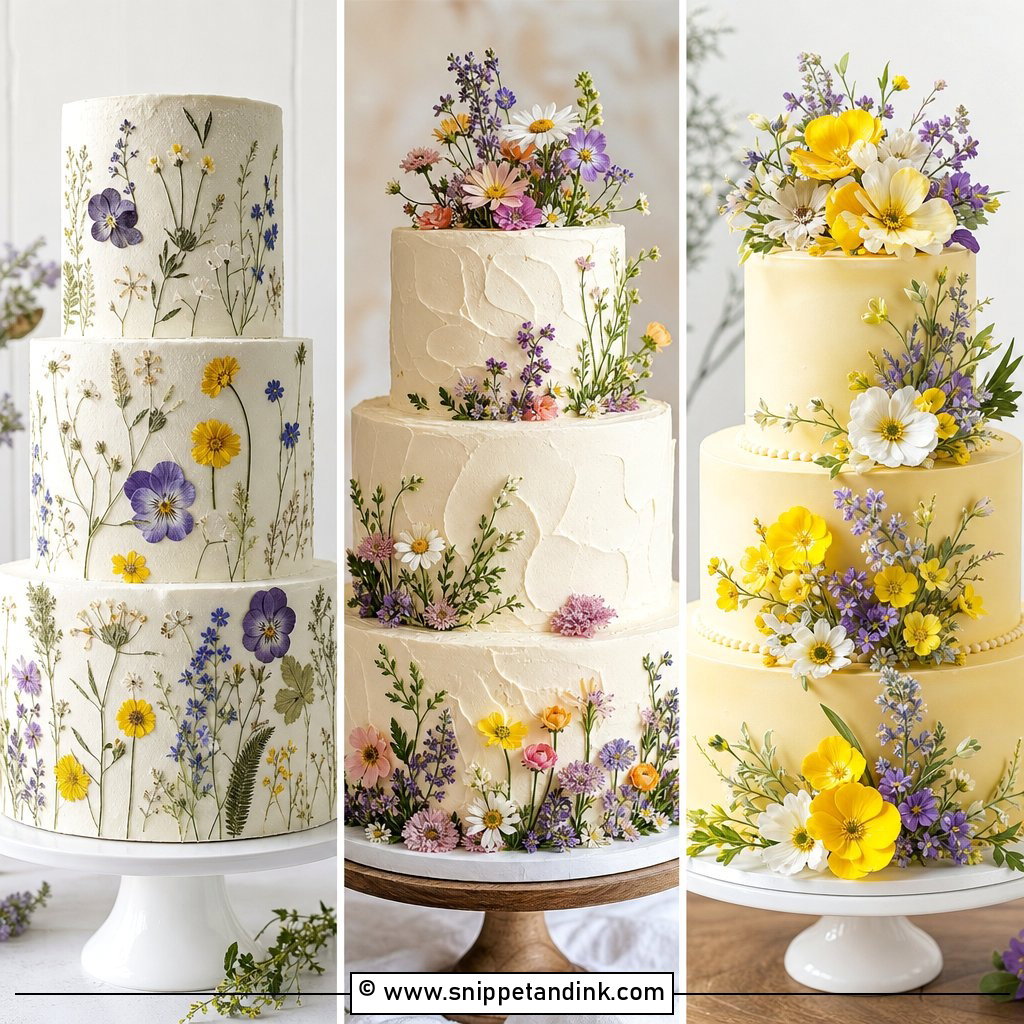
A pink pressed flower wedding cake uses flat, dried edible blooms pressed onto the surface. I only use flowers grown and sold as edible, since a pressed petal sits right against the frosting and gets eaten. They stick best to fresh buttercream or lightly dampened fondant, and they need space around each one or the cake looks cluttered. Semi-naked feels rustic, smooth buttercream feels finished. Lemon raspberry, vanilla, honey or almond all suit the garden mood.
23. Pink Semi Naked Wedding Cake
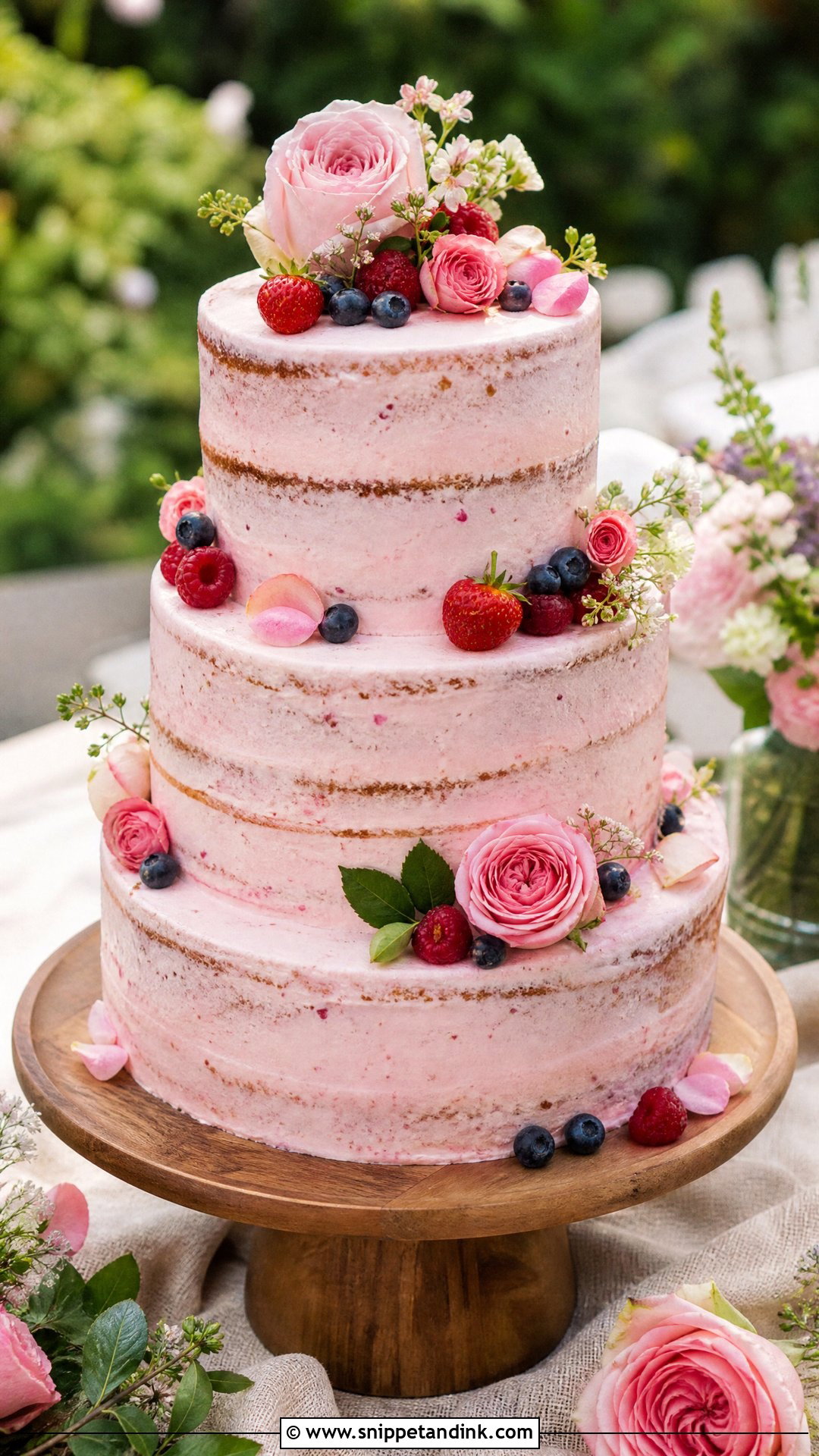
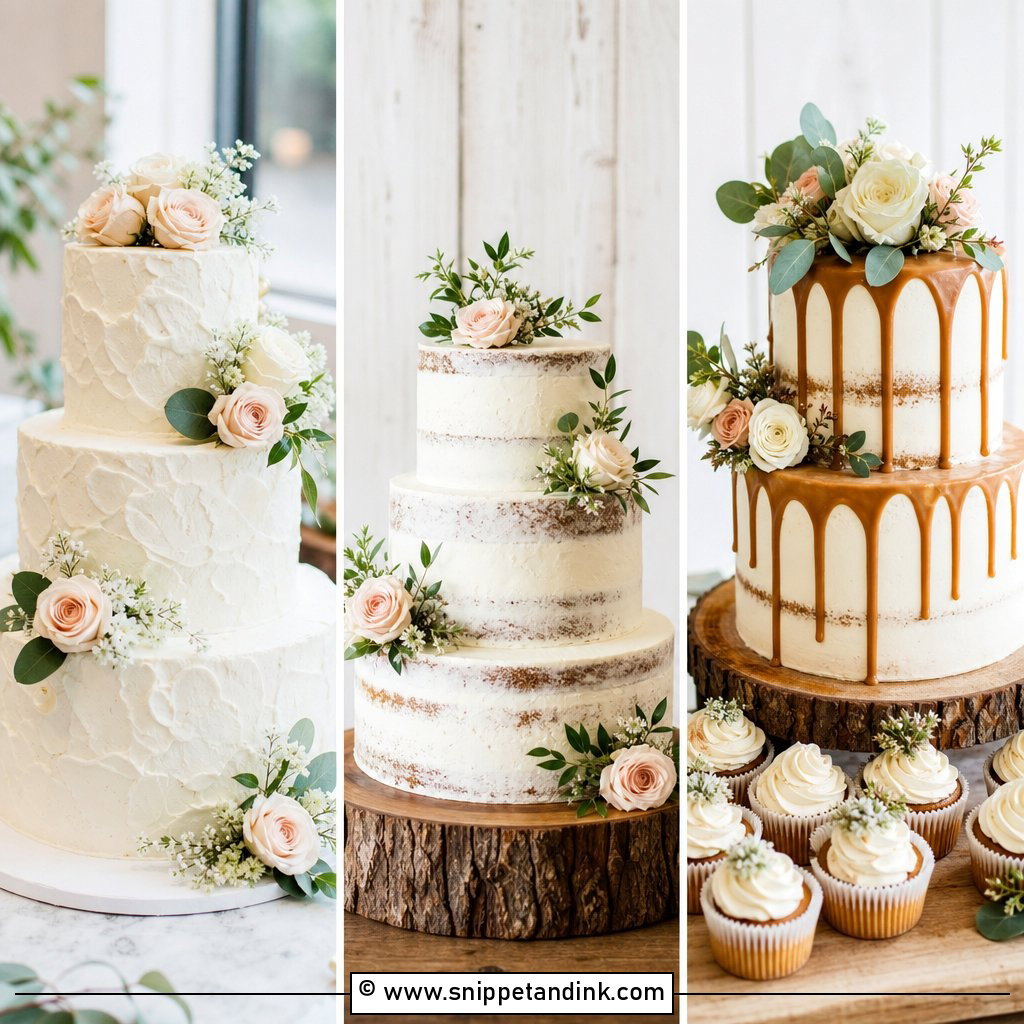
Semi-naked means a thin scraped coat that lets the sponge show, and that thin coat is exactly why it dries out faster than a fully frosted cake. I bake it as close to the day as I can and keep it covered until it goes out. Blush buttercream between layers or a pale pink scrape keeps the color. Berries, roses, edible petals and a little greenery give texture. It belongs at relaxed garden, barn and outdoor receptions, and the flavour carries it: strawberry, vanilla bean, lemon raspberry or almond.
24. Pink Sheet Wedding Cake
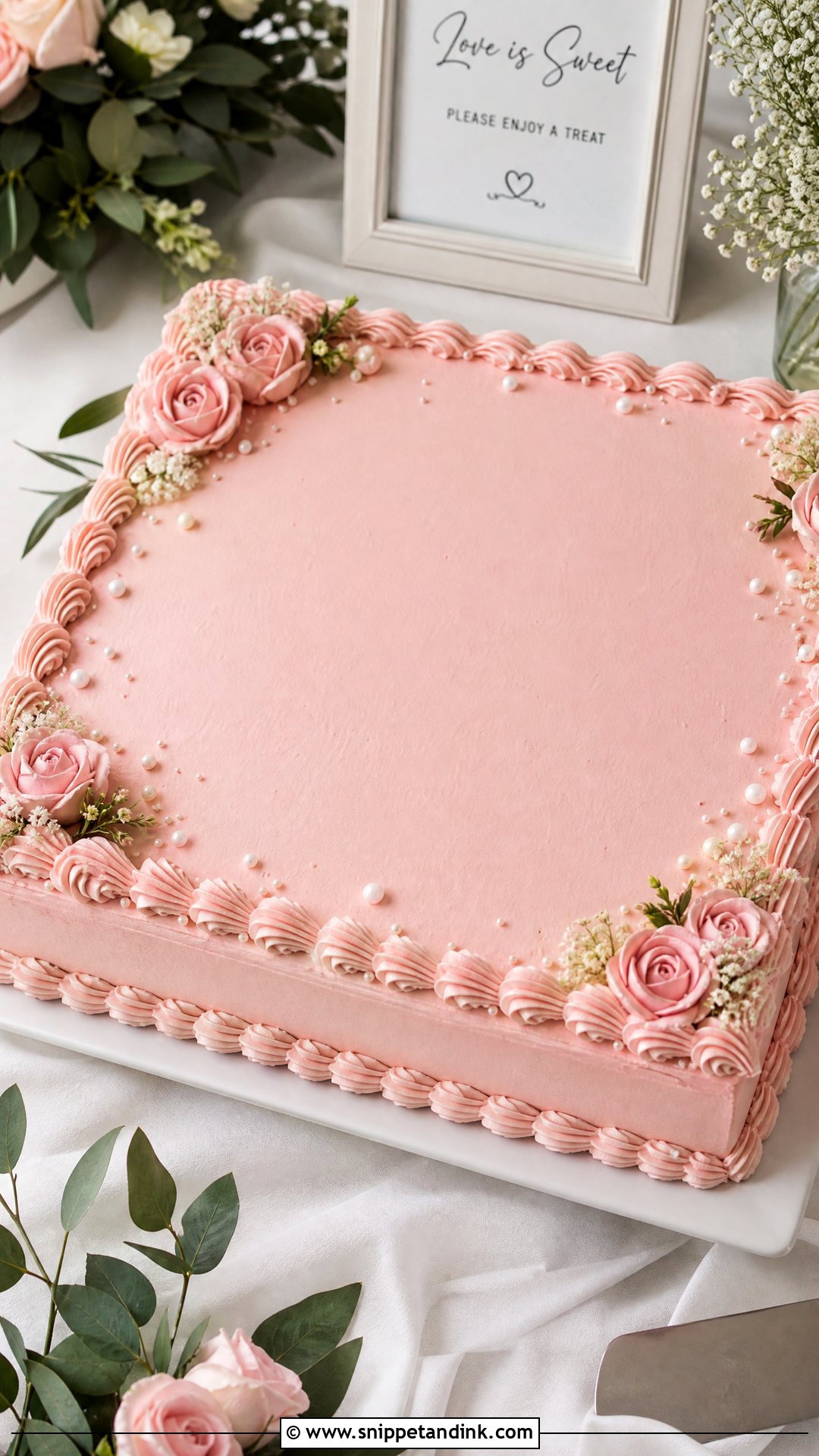
Sheet cake is the practical half of many wedding cakes. Some couples display a decorated one and cut it in front of guests; many more keep a small tiered cake on the table and a sheet cake in the kitchen, so service is quick and the budget stays sane. A visible one can look wedding-worthy with smooth pink buttercream, piped borders, edible flowers and pearls. It slices fast and cleanly, which is why I suggest it for large guest lists. Vanilla strawberry, chocolate raspberry, lemon and almond are the flavours couples pick.
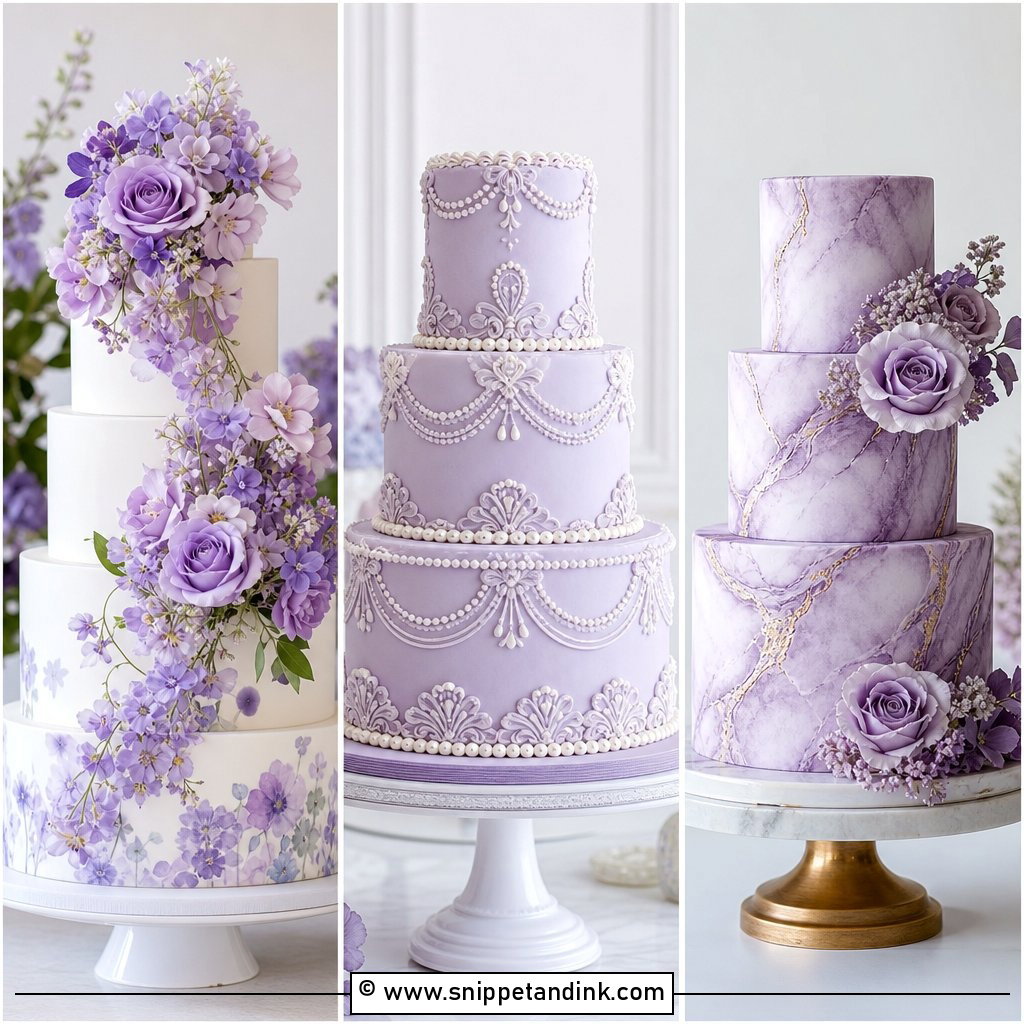

25. Pink Cupcake Wedding Cake
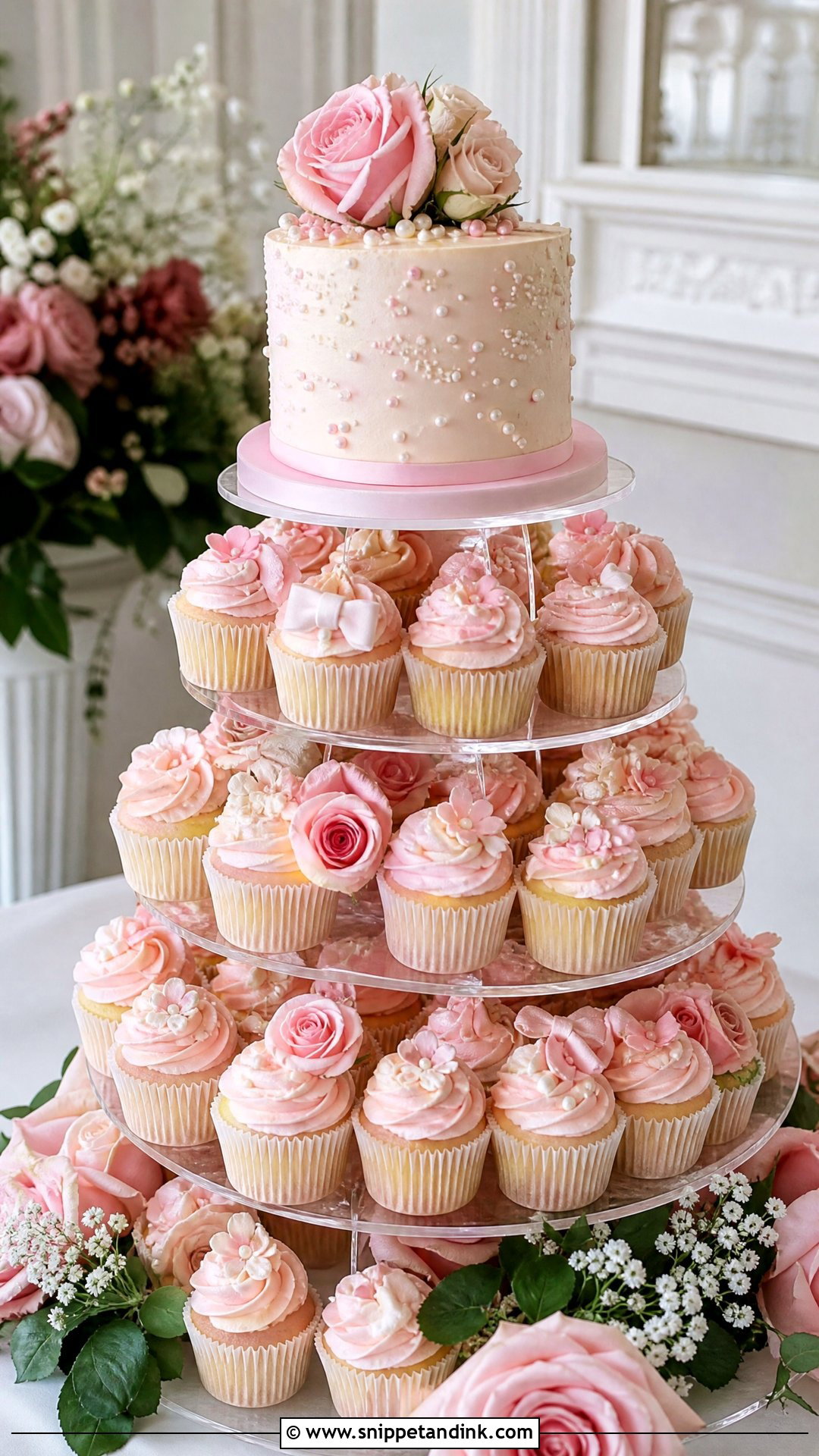
A pink cupcake wedding cake arranged on a tiered stand gives you height without slicing, and a small cutting cake on top keeps the traditional photo. Cupcakes let you offer several flavours at once, such as vanilla, strawberry, lemon, chocolate raspberry and pink champagne. Blush swirls, mini sugar flowers, pearls or tiny bows keep them bridal. Plan on roughly one per guest plus a small margin, because guests often take a second when there is a choice.
26. Pink Mini Wedding Cakes
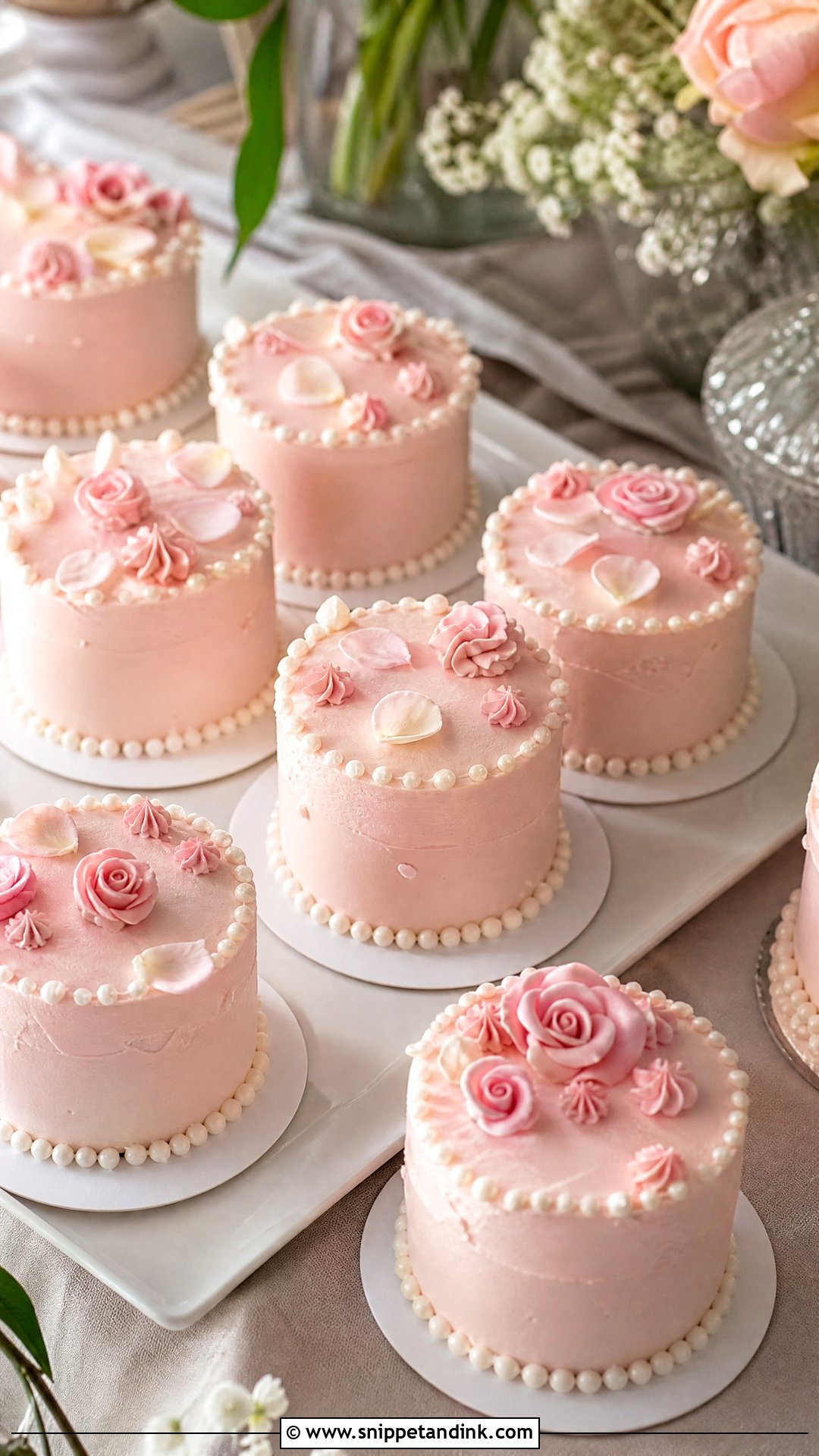
Mini cakes look generous because each guest gets a finished cake of their own, but they are the most labour-heavy option on this list, since every one is filled, coated and decorated separately. That cost is the honest trade-off. Round, square or heart shapes all work; keep each one simple with a single flower, a pearl border or a buttercream swirl. They shine at seated dinners and intimate weddings. Offering two or three flavours, strawberry, vanilla, lemon raspberry or almond, keeps the production manageable.
27. Pink Macaron Wedding Cake
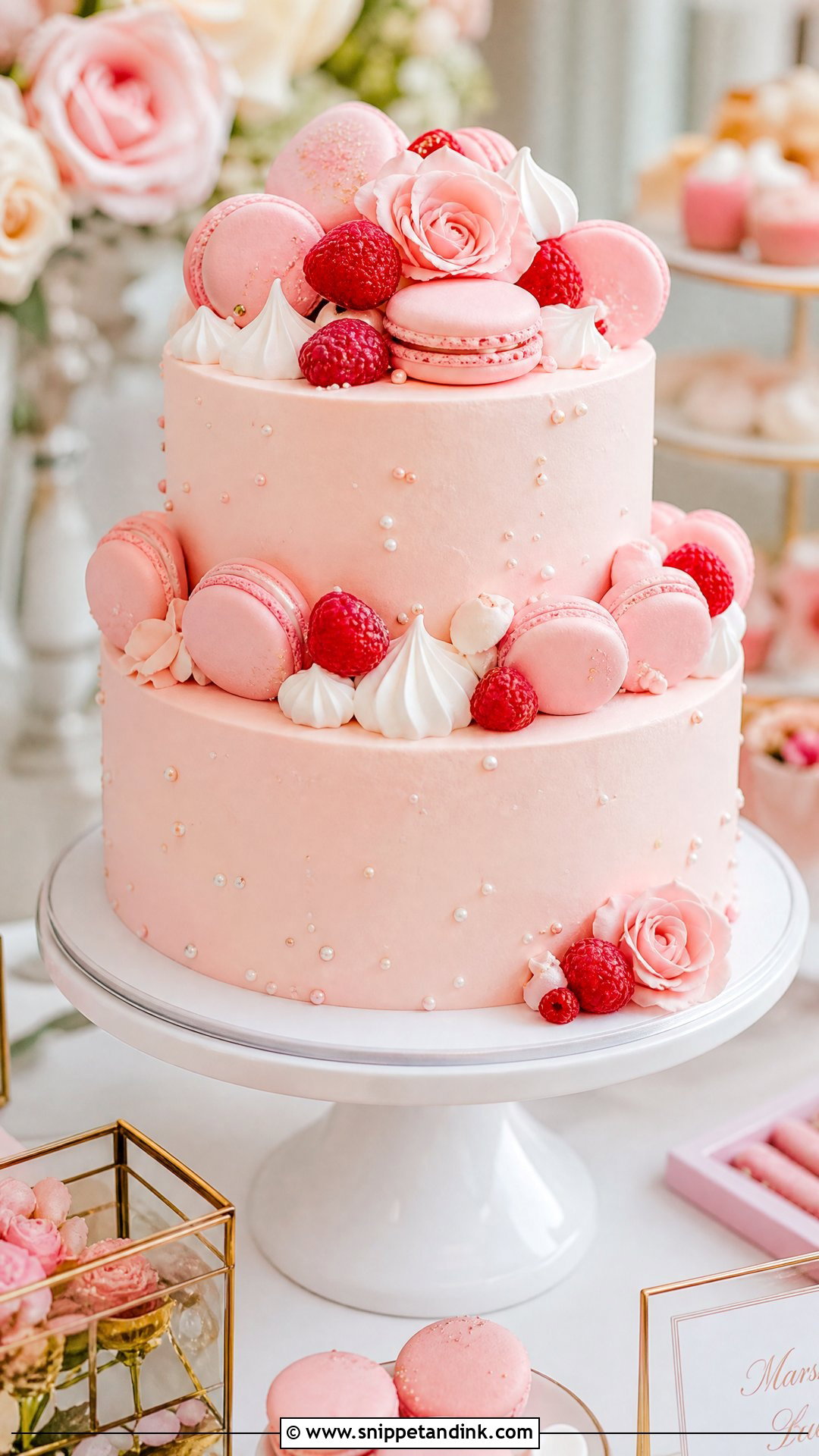
Macarons add color and height around a tall centerpiece, but they are fragile in humidity: the shells soften and the fillings can bleed if they sit out in a warm room. I attach them close to service rather than the night before. The main cake can be blush buttercream, white fondant or rose ombre, with macarons around the tiers or across the top, plus sugar roses, raspberries or meringues. Raspberry, vanilla, pistachio rose, strawberry and almond shells give a range of pinks.
28. Pink Strawberry Wedding Cake
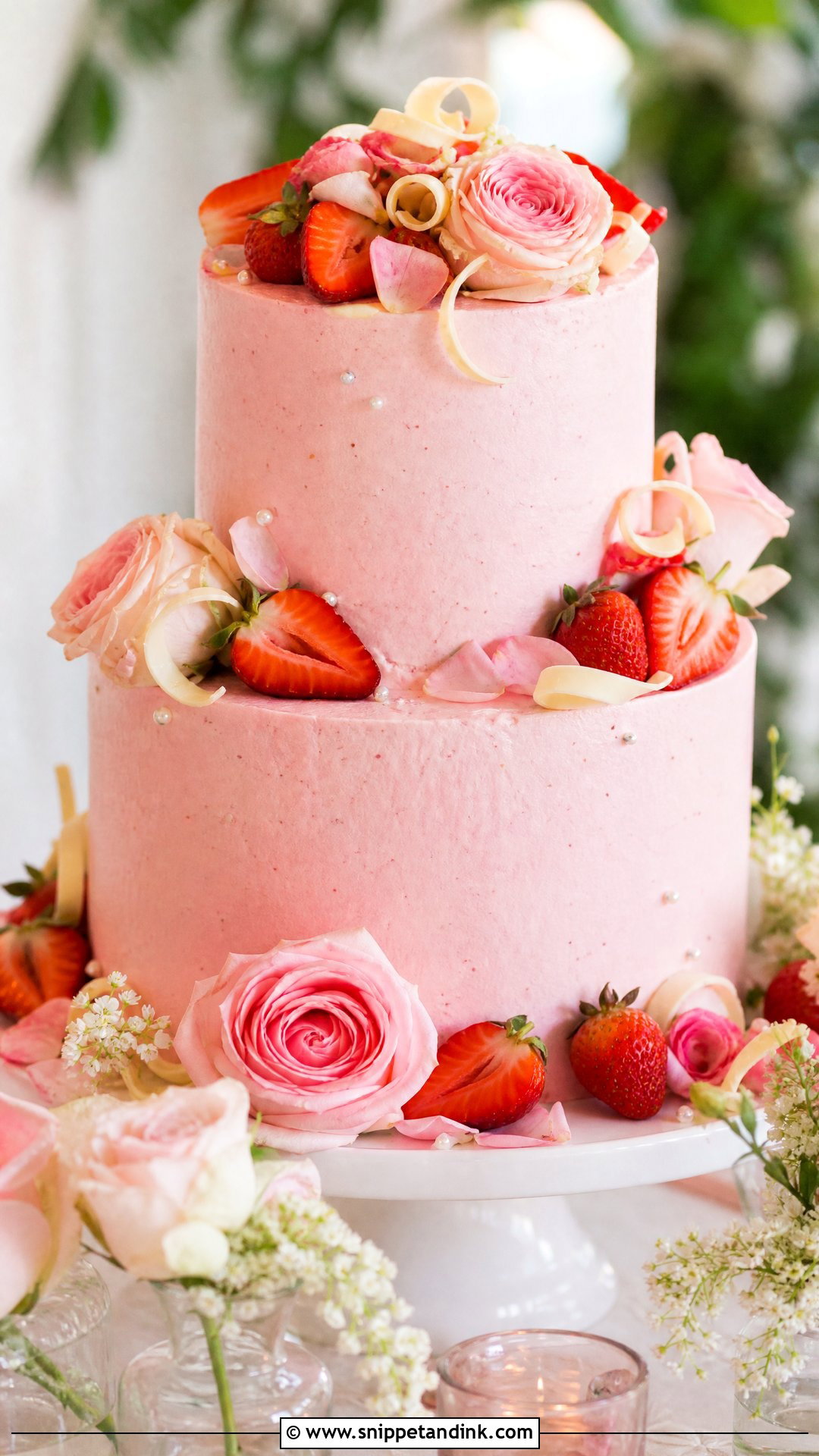
The color can come from strawberry buttercream, strawberry filling or a pale pink outside. Fresh strawberries are where I get careful: once cut, they leak juice into the frosting, so on a display cake I use them whole and add them late. A layered slice with a strawberry compote stripe looks good on the plate and tastes familiar to every guest. Whipped frosting is light but does not hold in heat, so I would use it only indoors. Keep berries in small groups rather than piled high.
29. Pink Raspberry Wedding Cake
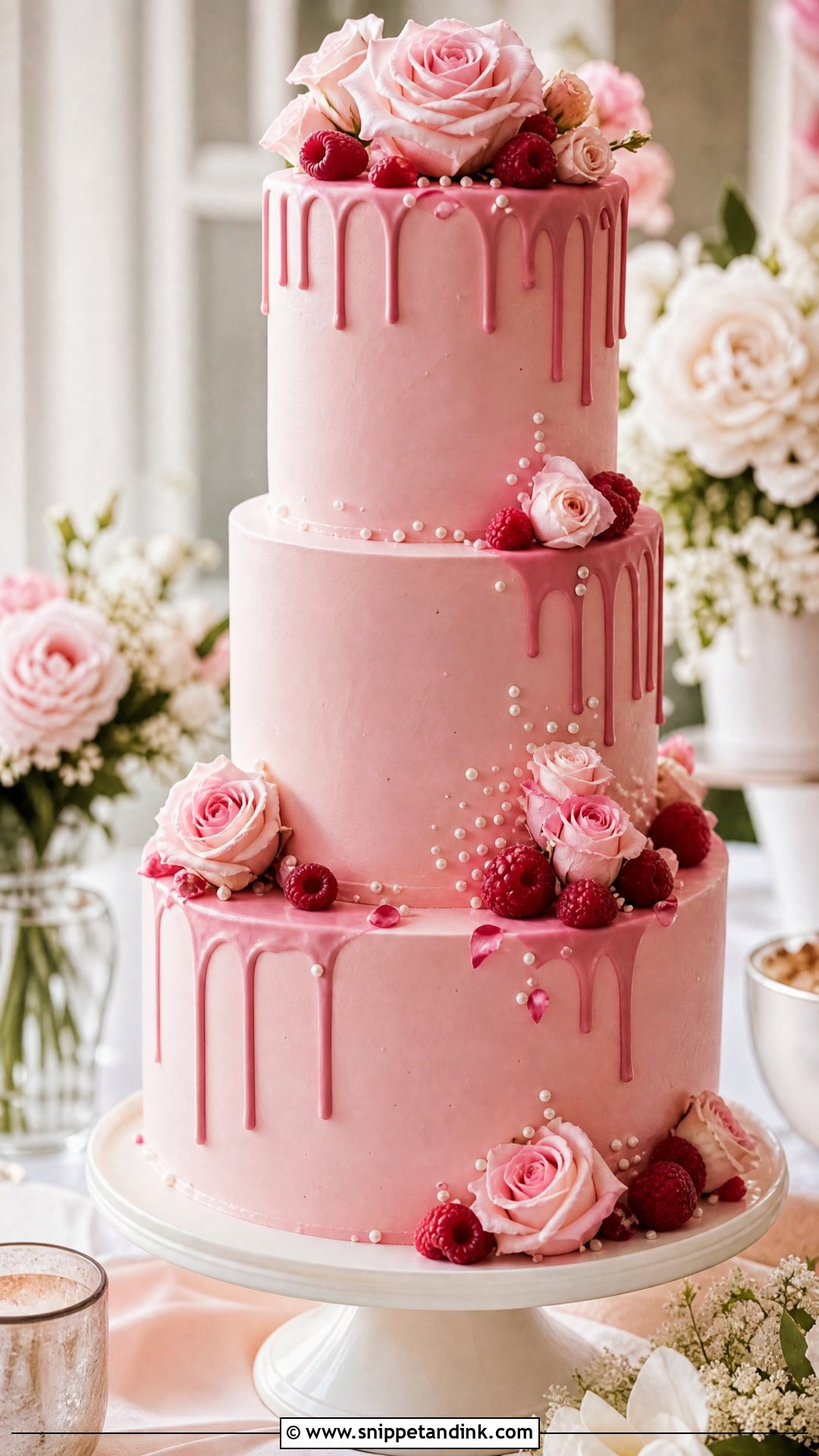
Raspberry gives a sweet-tart filling with natural color, which is why I recommend it to couples who find most wedding cake too sweet. A raspberry compote or curd sits well between vanilla, almond, lemon or chocolate layers. Outside, blush buttercream, rose frosting or a raspberry-tinted drip all suit it. Fresh raspberries are delicate and crush easily, so they go on last. The same cake can look rustic with a scraped finish or polished with smooth buttercream.
30. Pink Pistachio Wedding Cake
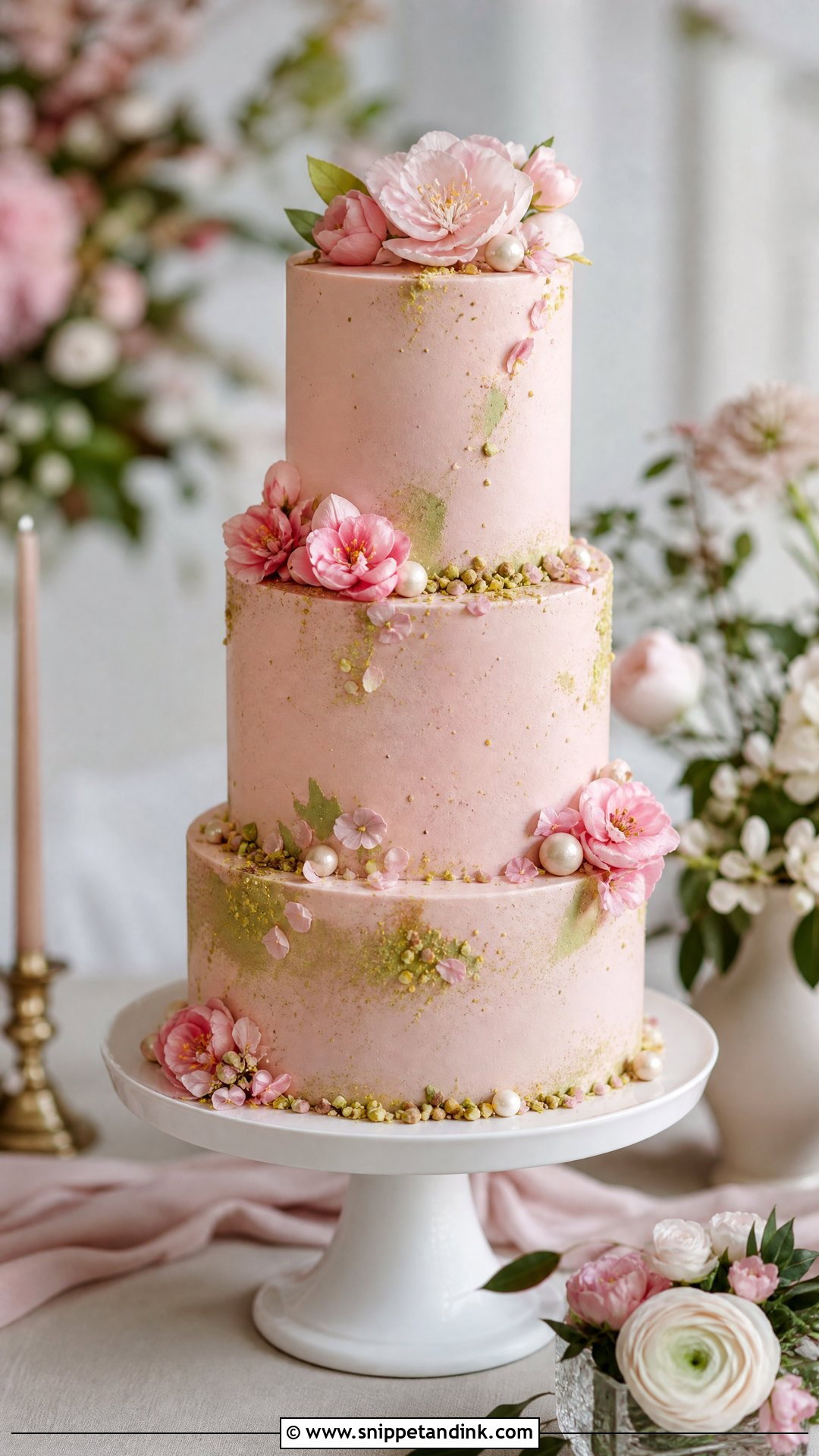
Pistachio and pink is the pairing I suggest when a couple wants something a little different without going strange. The pale green sponge shows up the moment the cake is cut, against blush or rose frosting outside. Pink sugar flowers, crushed pistachios, edible petals or a hint of green on the outside tie it together. Nuts are the big caution: I flag pistachio with the caterer for allergy labelling and often make a nut-free tier. Semi-naked feels organic, smooth buttercream feels refined; pistachio rose, raspberry or vanilla all work.
Warm Rooms, Fresh Berries and the Hours Before Cutting
A wedding cake often sits on display for three or four hours before anyone cuts it. That gap is where pink cakes fail, and most of it is temperature.
Buttercream versus a hot marquee
Butter starts to soften well below summer tent temperatures. Piping slumps, ruffles droop and tiers can lean. I ask for a shaded, cool spot away from windows and dance floor lights, and I deliver as close to the reception as the venue allows. If the room will be hot, fondant over ganache is far steadier than buttercream.
Fruit and fresh flowers
Cut strawberries and raspberries weep juice into frosting, so they go on whole and late. Fresh flowers need to be grown without pesticides, and I wrap or pick every stem. Never let a florist push bare stems straight into the cake.
Working Out How Much Cake Your Guest List Needs
Wedding portions are smaller than birthday slices, usually a finger of cake about an inch wide, so a tiered cake serves more people than its size suggests. When I quote, I start with the number of guests who will actually be there for cutting, not the full invite list, since some leave early and children often eat less.
If the tiered design you love is bigger than your guest count, keep it small and add a kitchen sheet cake in the same flavour. If it is smaller, cupcakes or mini cakes on the same table fill the gap. Prices vary a lot by region and by how much hand work the design needs, so ask for a quote on two sizes before you settle.
Settling on One Pink and Letting the Cake Follow
Pink stretches from soft to loud, vintage to modern, simple to dramatic, which is why it suits so many receptions. Blush buttercream fits a garden ceremony, a pink Lambeth cake brings personality to a stylish party, tiered fondant feels formal, and cupcakes or mini cakes feel relaxed. What usually decides it in my consultations is the venue temperature, the guest count and the flavours you both love. Pick one pink direction, bring a swatch, and let the frosting, decoration and shape support it.
You'll Like These Ideas:











Leave a Reply