
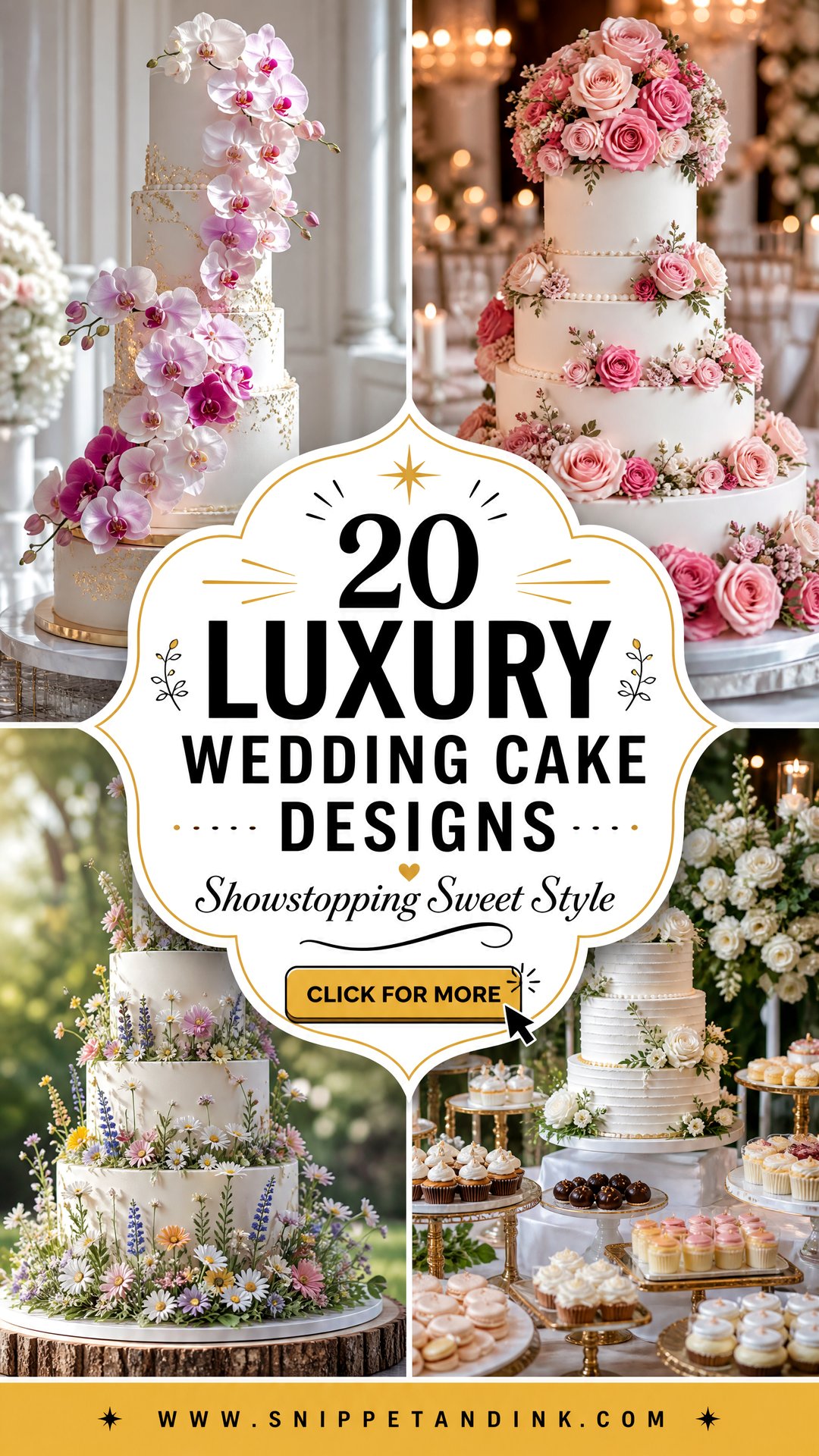
When couples ask me for a luxury cake, they rarely mean the biggest one in the room. They mean a cake that looks made for their wedding: the right finish for the venue’s light, flowers that echo the bouquet, a shape that suits the room, and a sponge that people go back for. Classic white tiers, pearls and fresh flowers are still the most requested, but I’m seeing more sculpted shapes, painted color and old-fashioned piping on my order sheets. The 20 designs below are the ones I’d put in front of a couple at a tasting, with notes on how each one is made, how it holds up and when I’d steer you elsewhere.
Where the Money Goes in a High-End Cake
Couples are often surprised by luxury cake quotes, so here’s what actually drives them. The sponge and buttercream are a small part of the cost. Time is the big one.
- Sugar flowers. A single realistic garden rose can take hours, petal by petal, plus drying time. A cascade of them is days of work.
- Finish. Razor-sharp edges, hand piping and painting all take longer than a rustic finish.
- Structure. Tall, square or sculpted cakes need extra boards, dowels and sometimes a central rod.
- Delivery and set-up. Large cakes are usually stacked or finished at the venue, which means travel time and a second person.
Pricing varies a lot by region and baker, so compare quotes for the same design. If the budget is tight, I’d keep the expensive detail on the top tiers, use dummy tiers for height, or swap some sugar flowers for fresh ones. Popular designers book months ahead for peak season, so contact them as soon as your date and venue are confirmed.
1. White Floral Wedding Cake
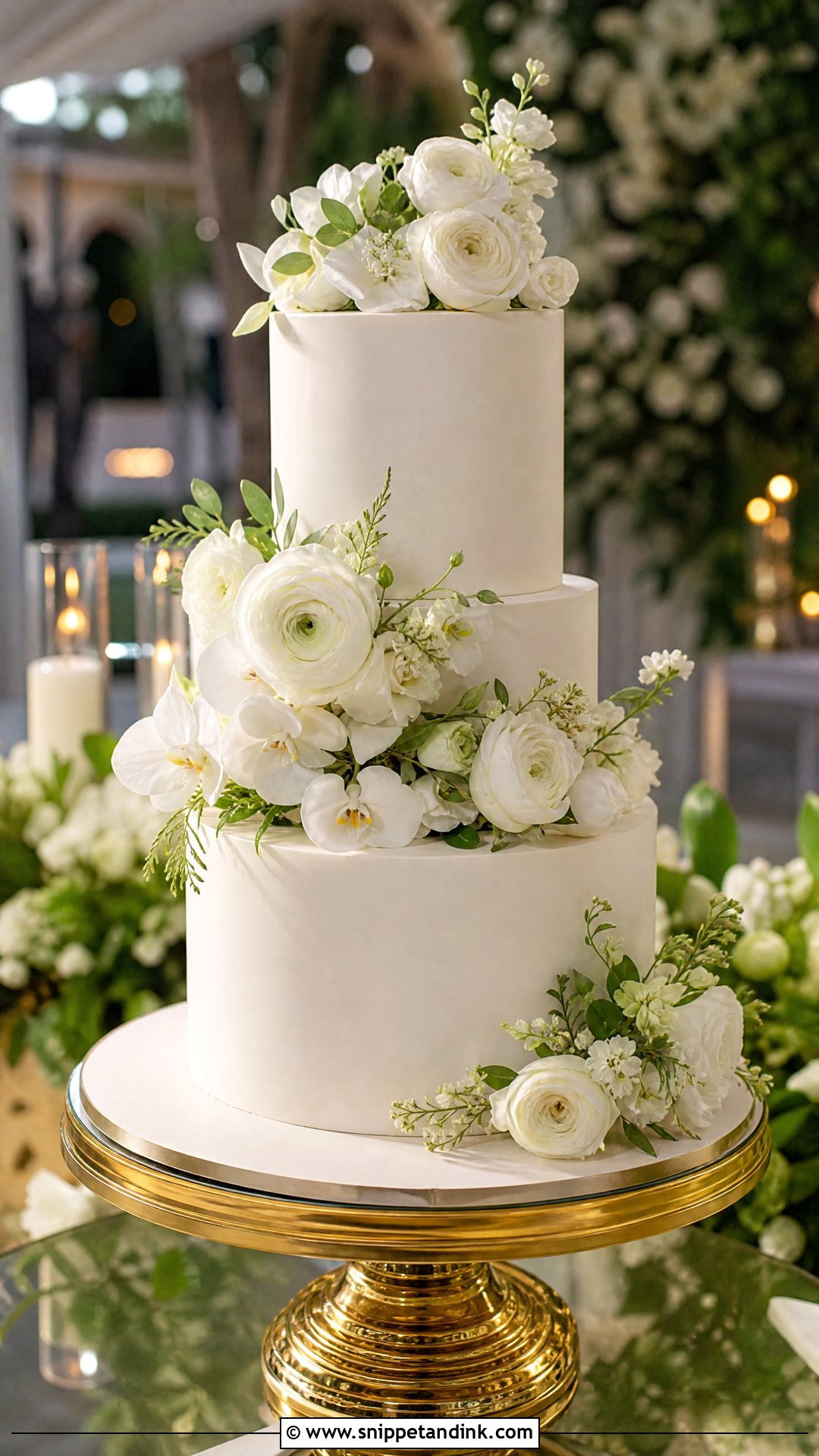
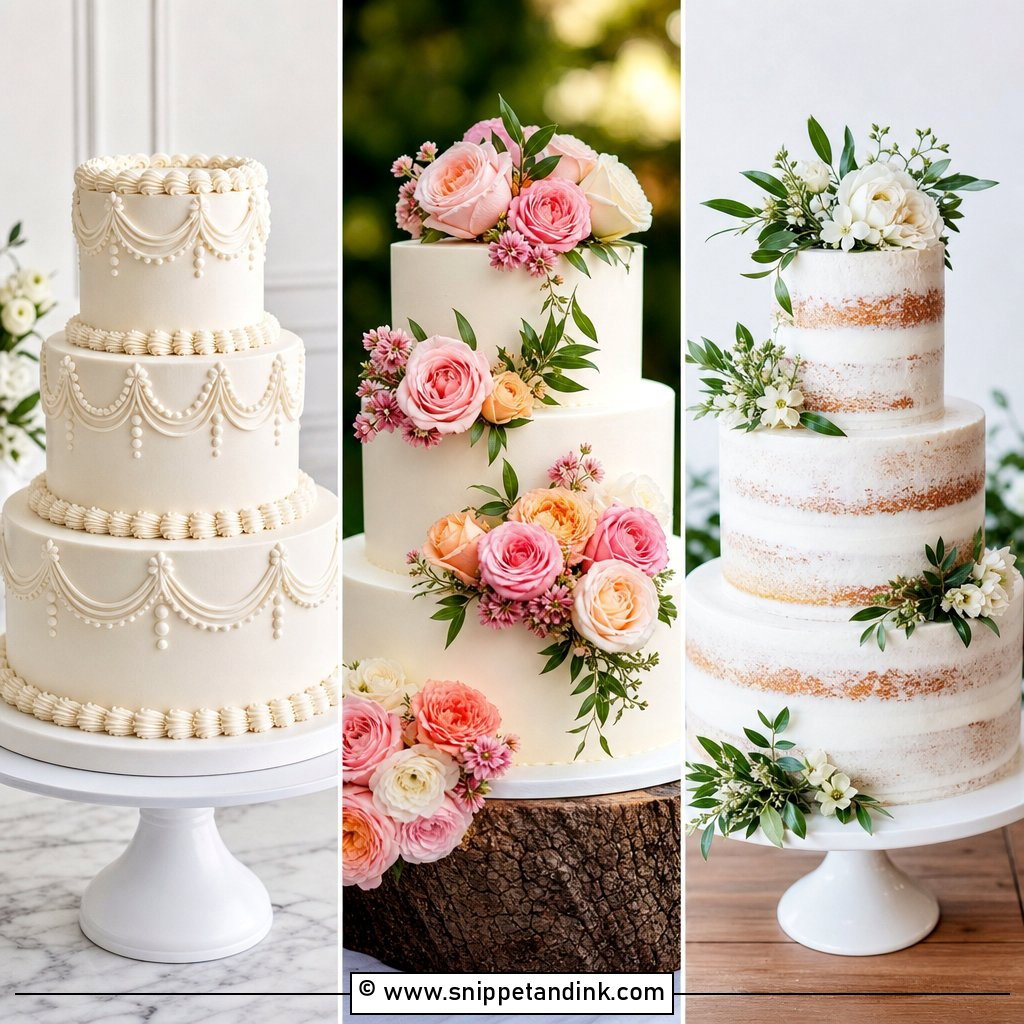
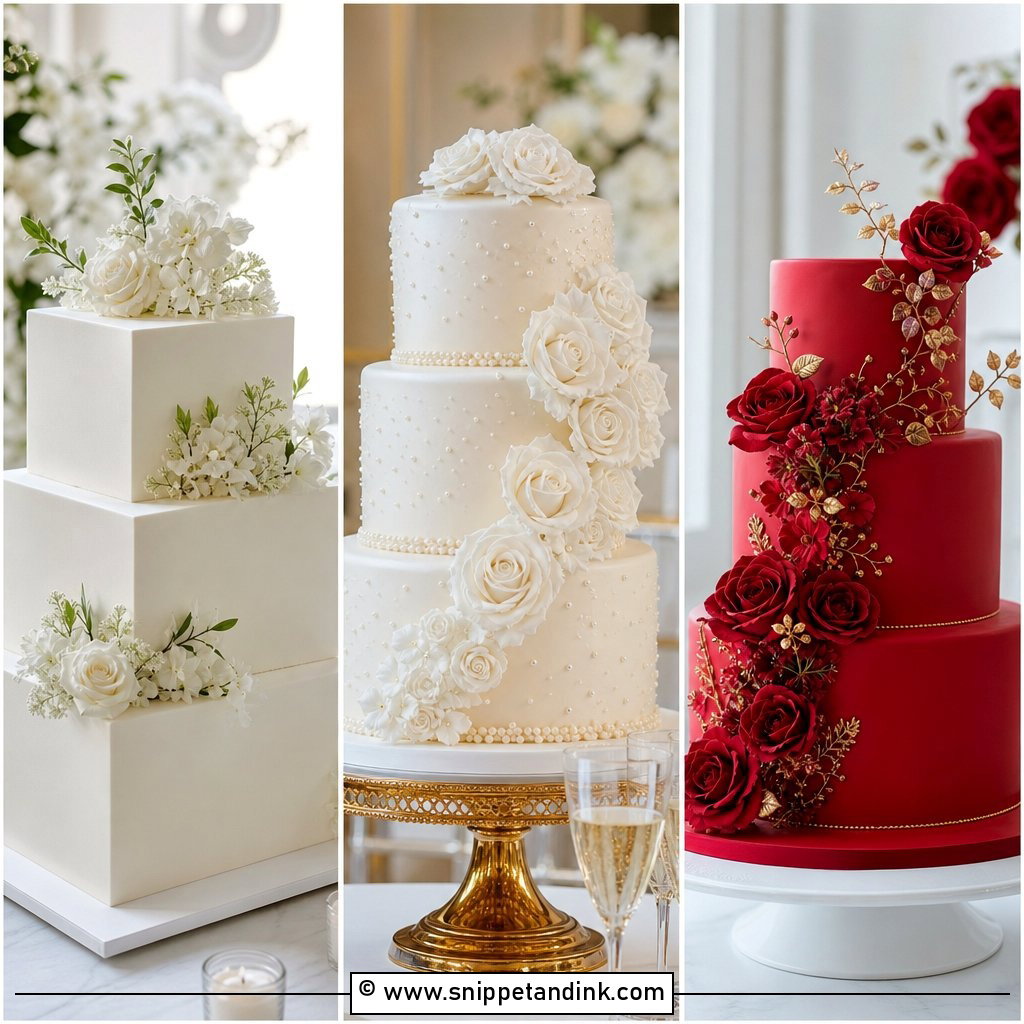
A white floral wedding cake only looks expensive when the flowers are grouped. I place blooms in two or three natural clusters, usually stepping down one side, instead of a ring on every tier, so the white surface has room to breathe. Garden roses, ranunculus and orchids work; any fresh flower that touches the cake must be pesticide-free and wrapped or put into a food-safe pick. Sugar flowers cost more because each petal is made by hand, but they can be kept afterward and don’t wilt under warm lights. Ivory, blush and pale green sit nicely against white.
2. Pearl Wedding Cake
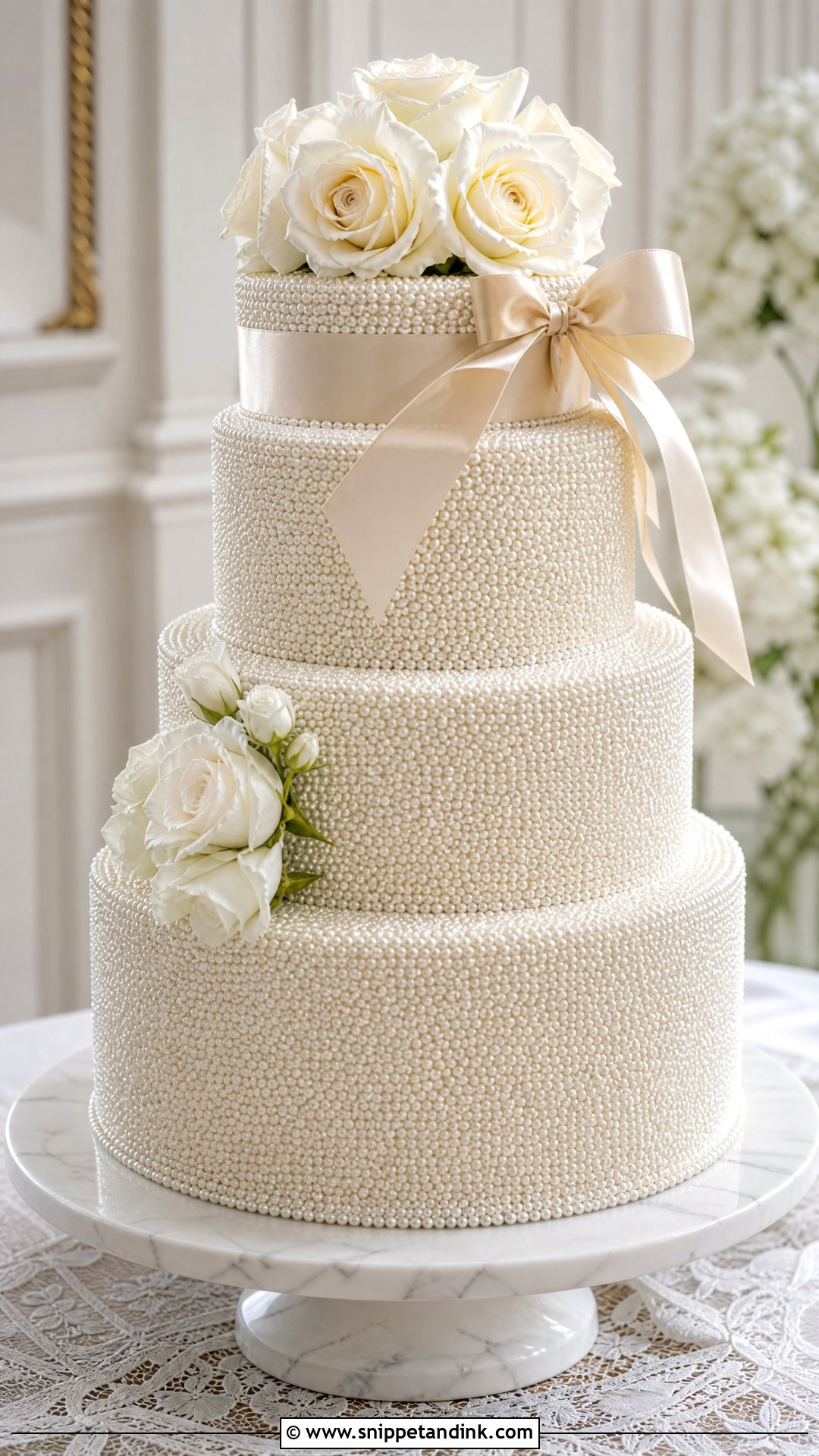
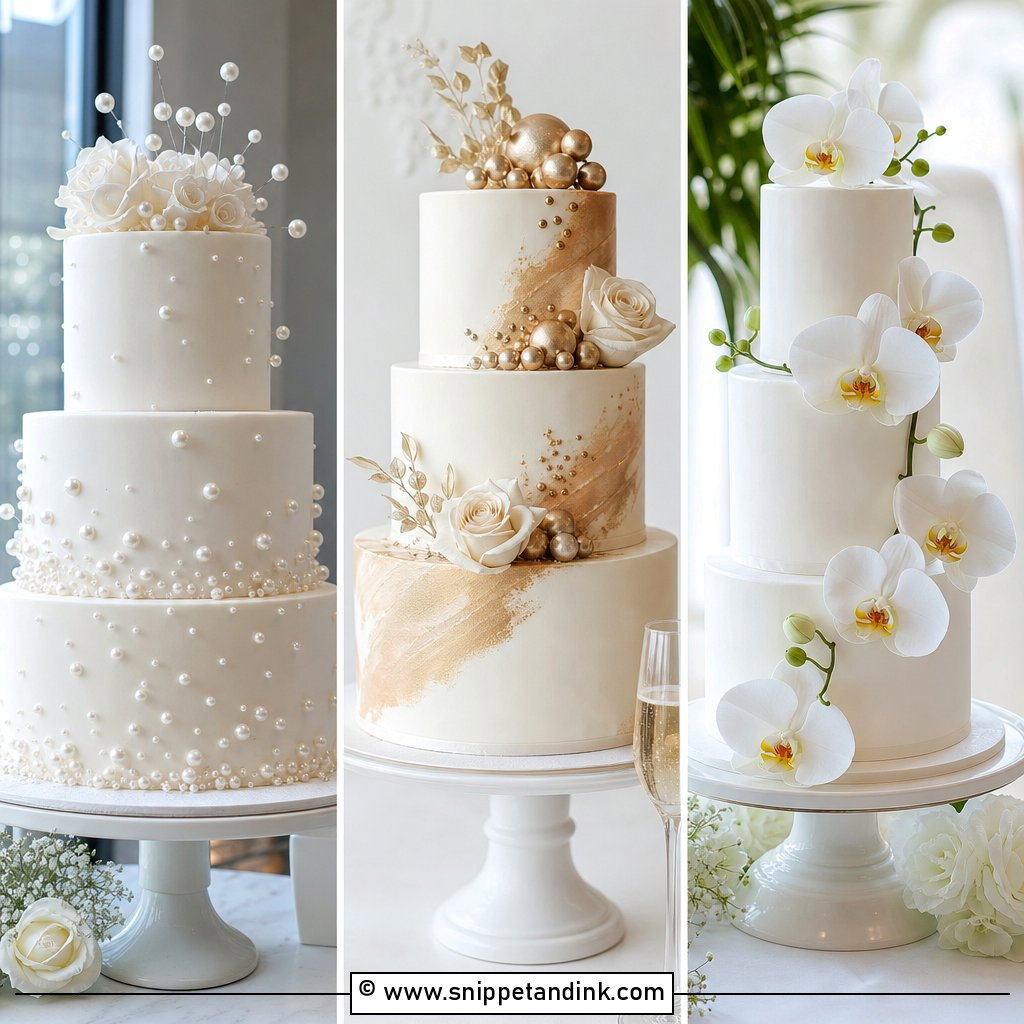
Edible pearls need a perfectly smooth surface, which is why I nearly always put them on fondant. On buttercream the sugar pearls slowly sink and soften as the icing warms. Placed in neat rows they look like beading on a gown; scattered, they read softer. I’d pair them with a satin ribbon or a single cluster of white roses, nothing more. Keep the palette pale so the shine of the pearls, not color, does the work.
3. Gold Wedding Cake
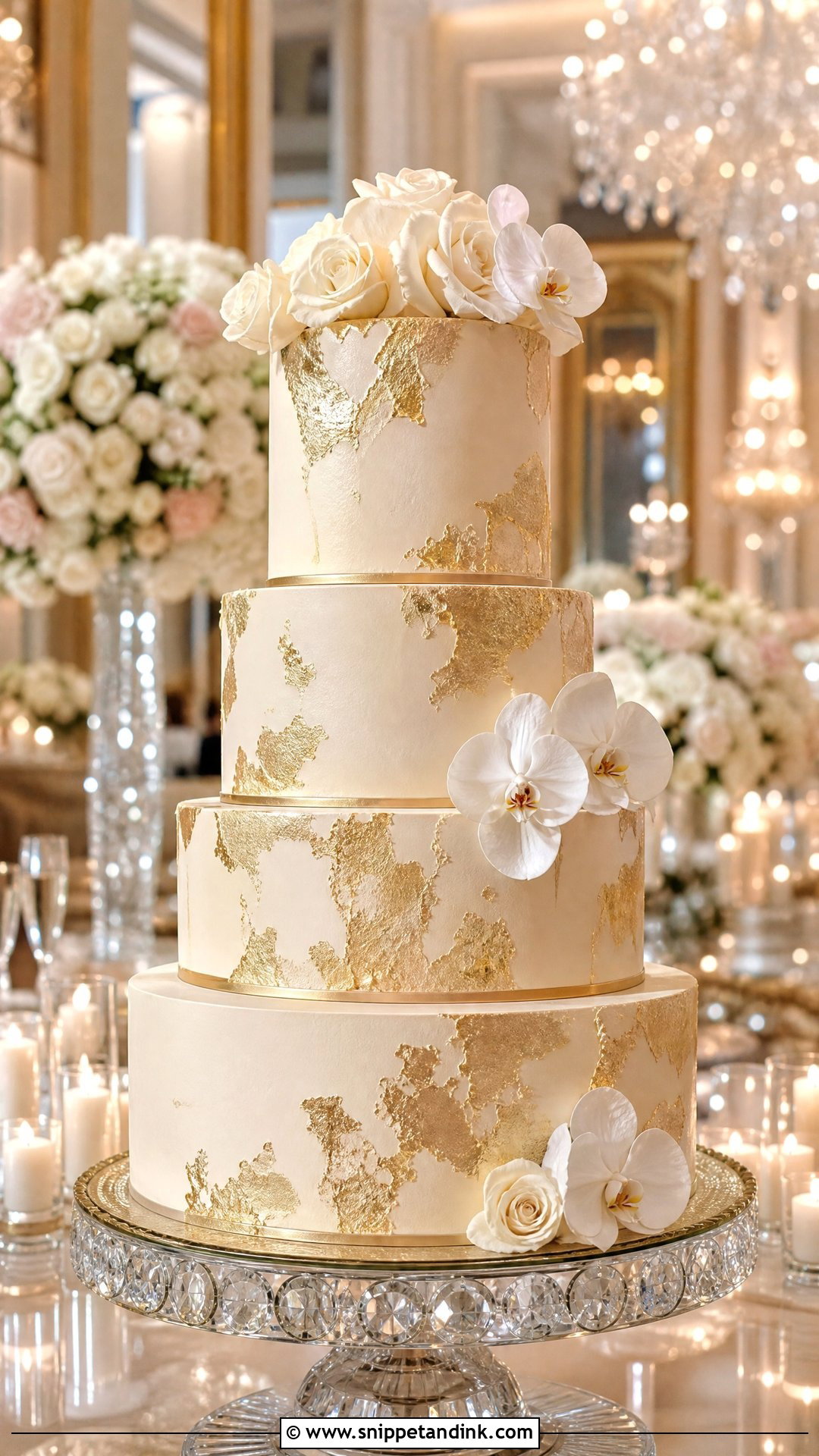
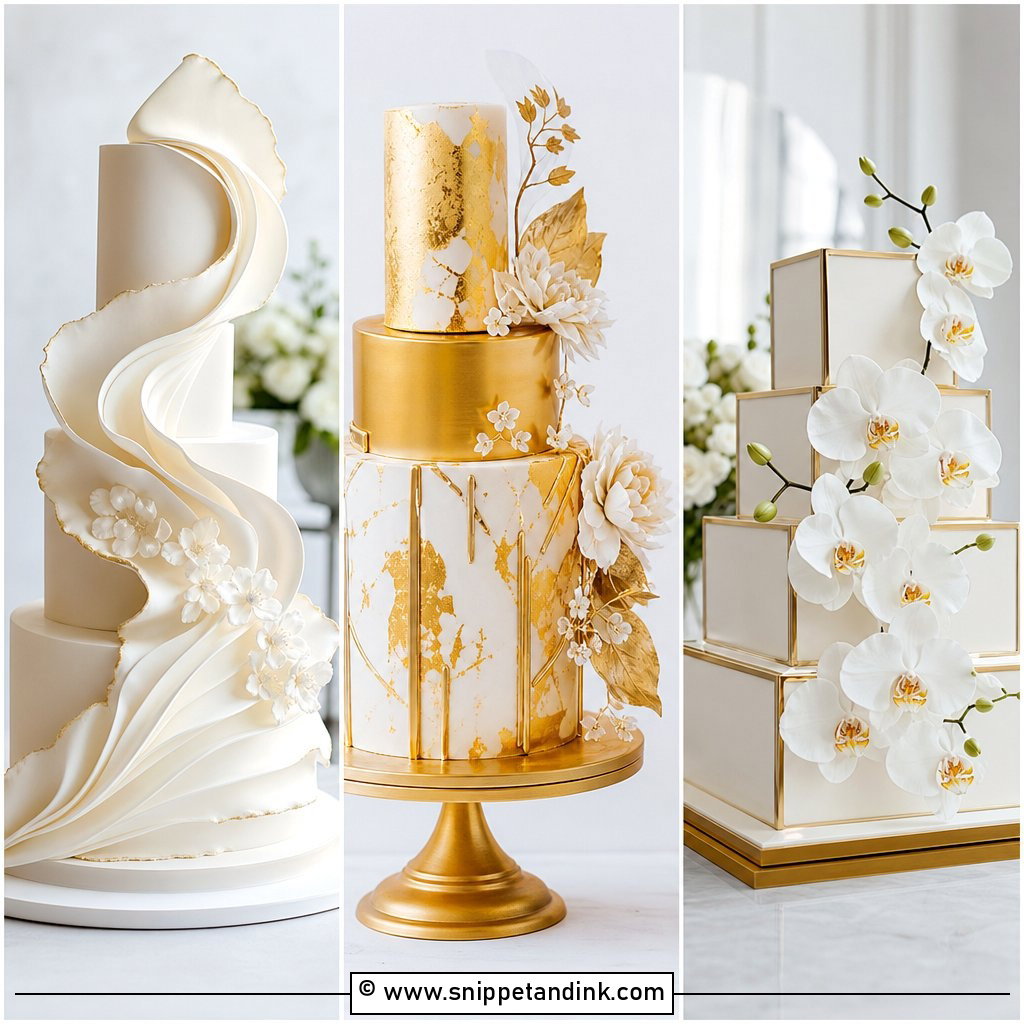
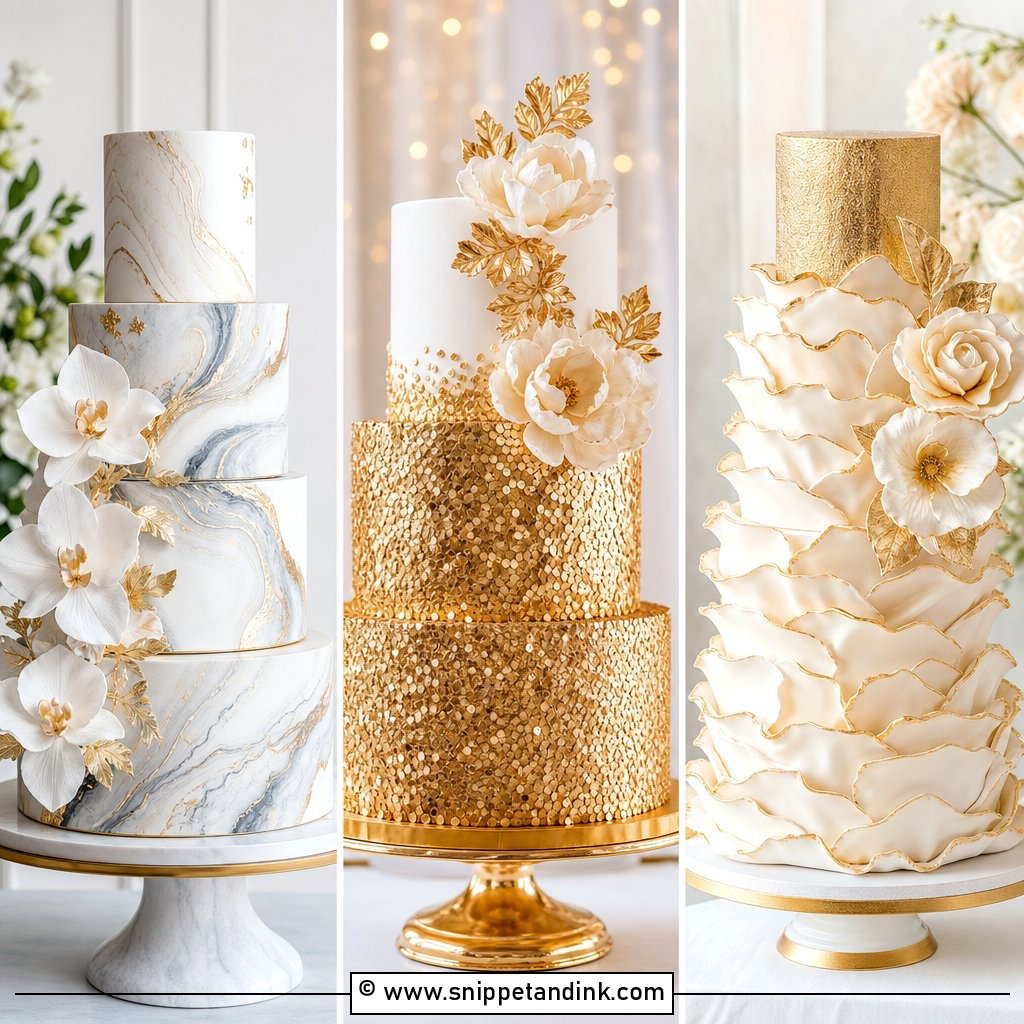
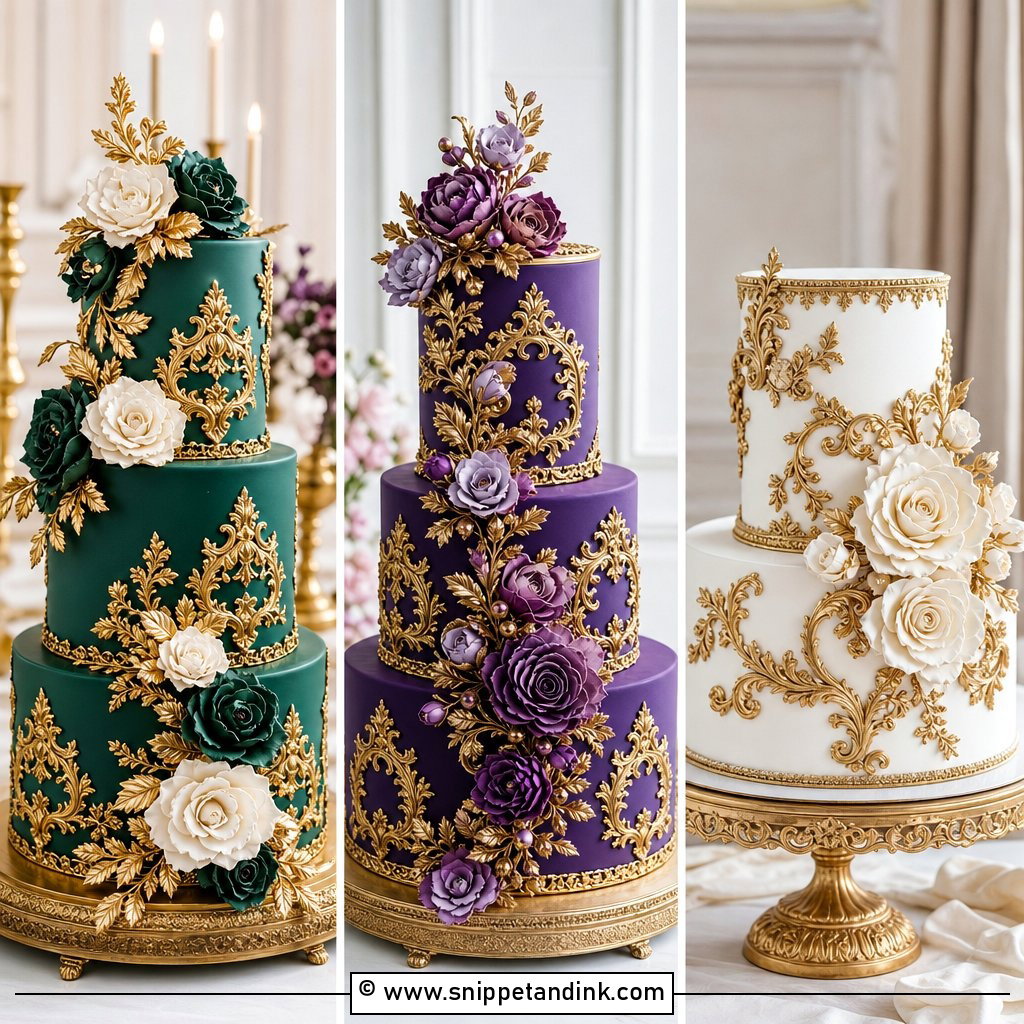
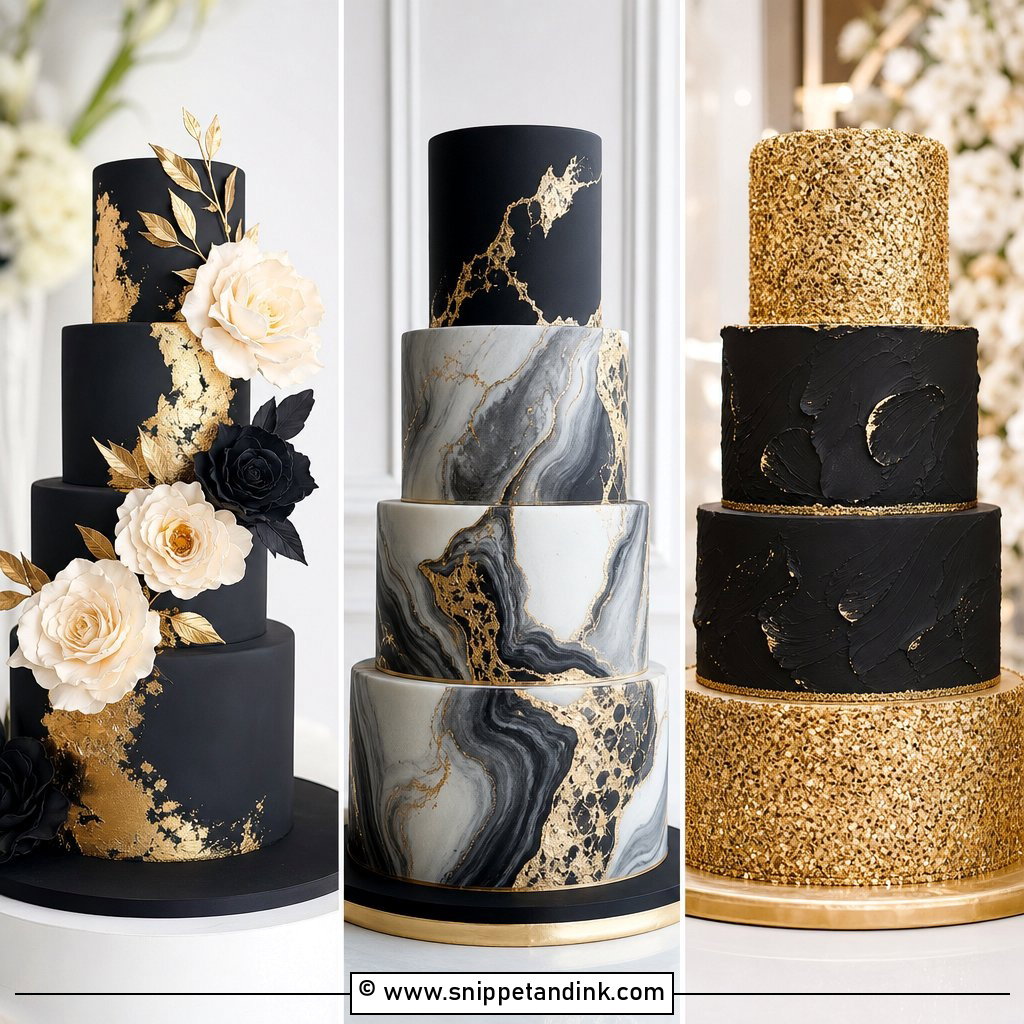
Gold is the detail I most often talk couples out of overdoing. A whole tier in gold leaf can look heavy and the edible leaf is fragile and costly; a brushed band, a thin rim on each tier or a few torn flakes of leaf feel far richer. Gold works against white, ivory, champagne or soft beige icing, with white orchids or sugar petals for contrast. It glows under warm evening light, so it suits hotel ballrooms and evening receptions more than a midday garden.
4. Black And White Wedding Cake
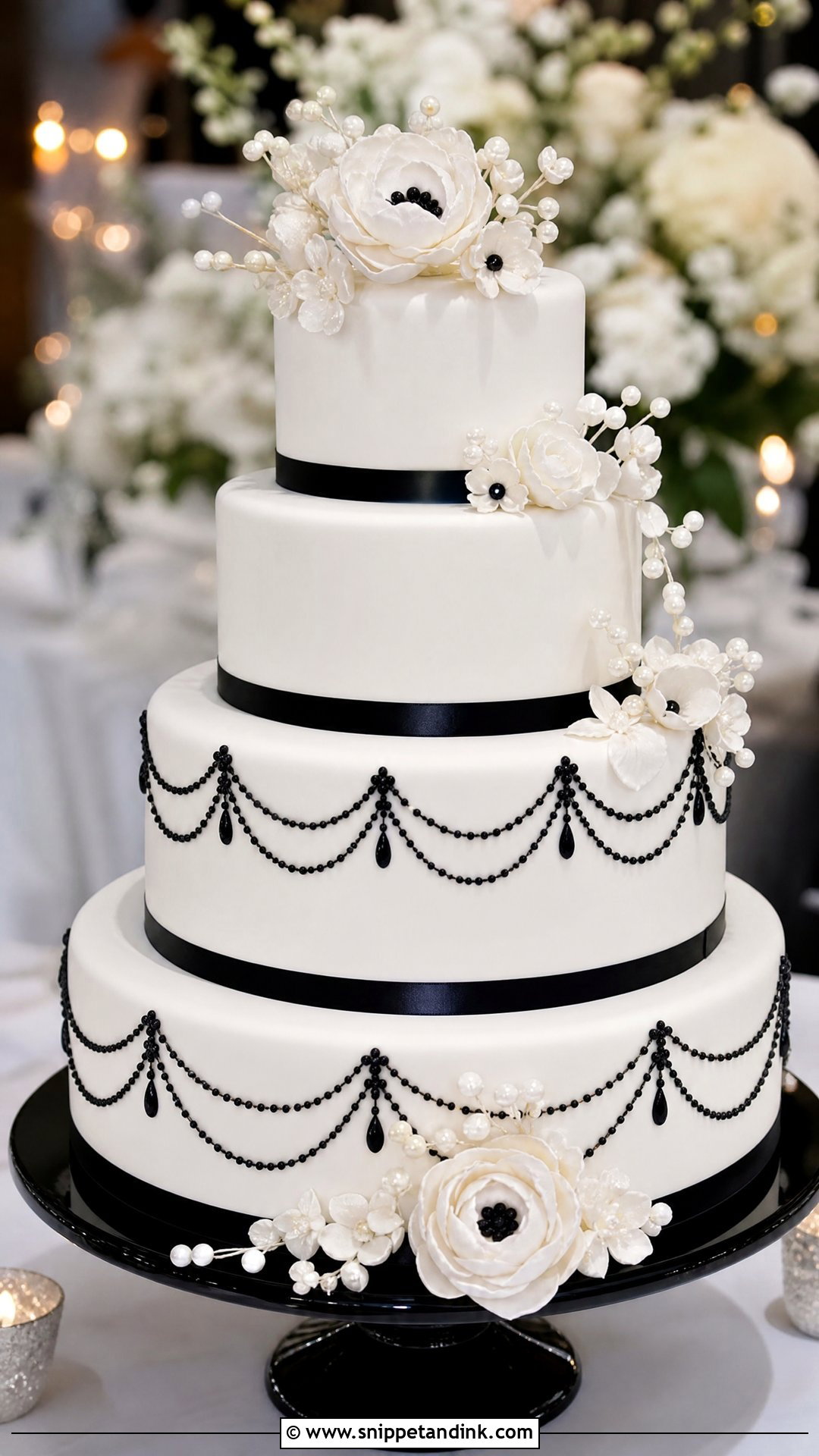
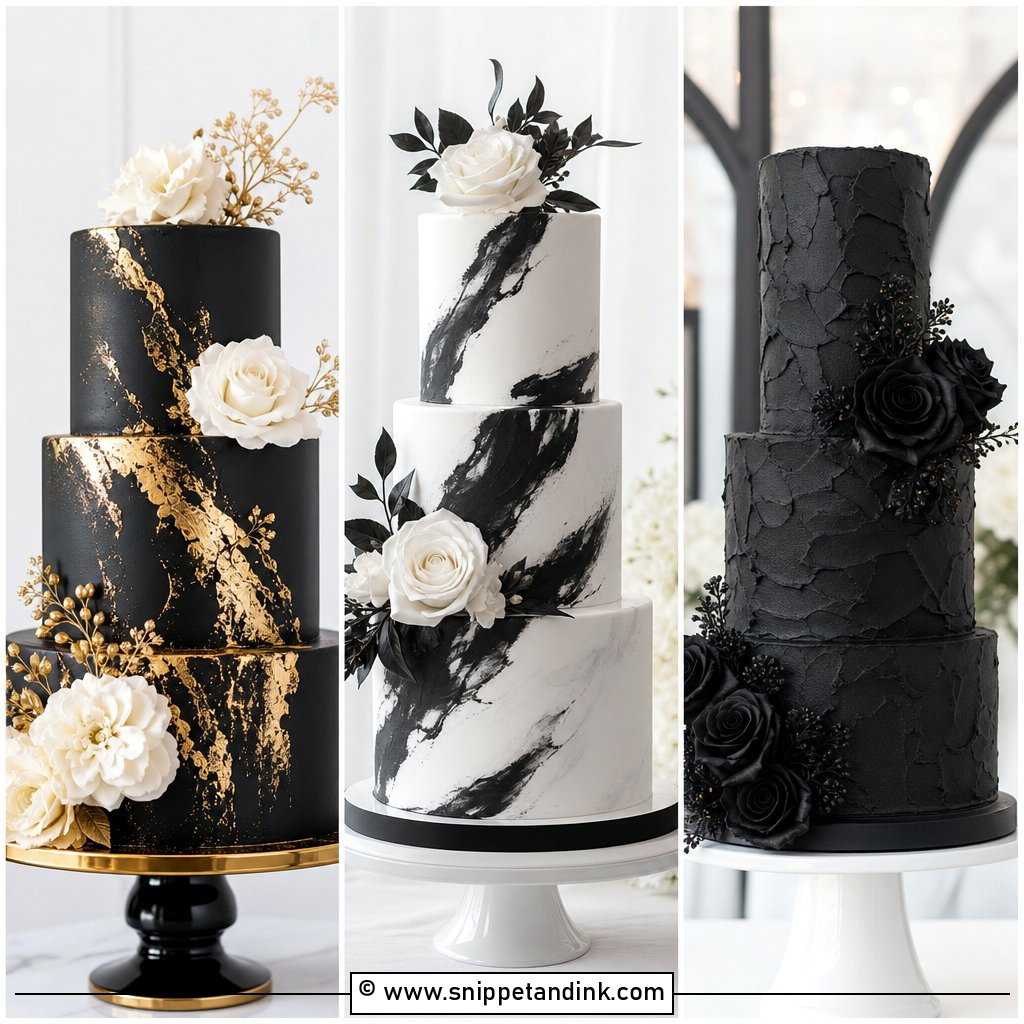
Black icing is tricky, which is why a black and white wedding cake works best with black used as an accent. Deep black needs a lot of coloring, it can taste bitter and it stains lips and teeth, so I keep it to piping, ribbon or a single painted floral on a white base. One black accent per tier looks tailored rather than heavy. White sugar flowers or pearls soften the contrast. It suits tuxedo dress codes, marble floors and modern venues.
5. Vintage Wedding Cake
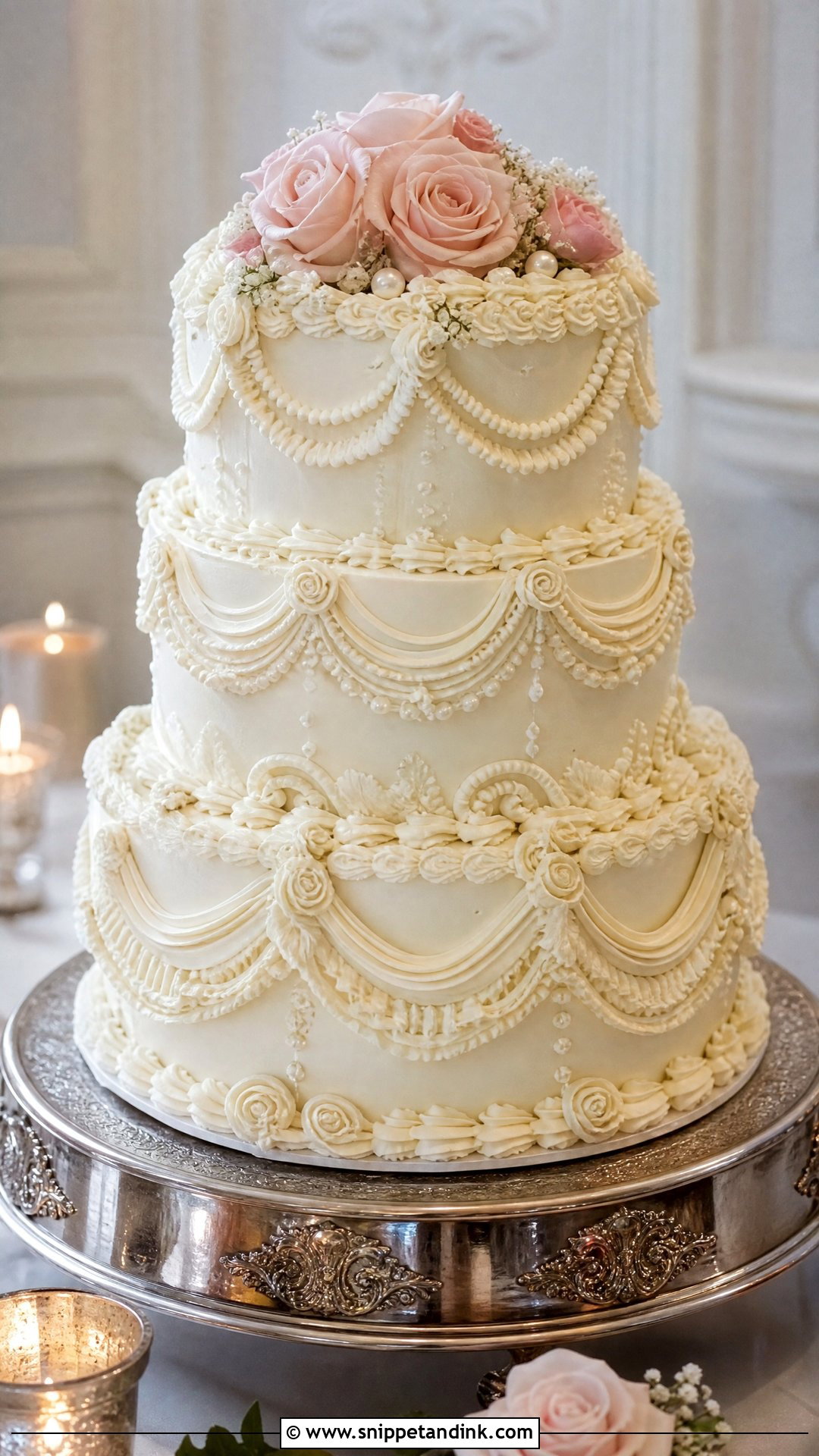
The vintage cake is all about detailed piping: shell borders, swags, rosettes and piped bows. It’s mostly done in buttercream or royal icing by hand, so it takes time and needs a firm, well-chilled surface to pipe onto. What separates a luxury version from a bakery-shop one is evenness: consistent spacing and a strong tier shape. Ivory, blush and pale blue are lovely with it. Cherries, pearls or small roses finish it, and it sits well beside a vintage gown and candlelit tables.
6. Sculptural Wedding Cake
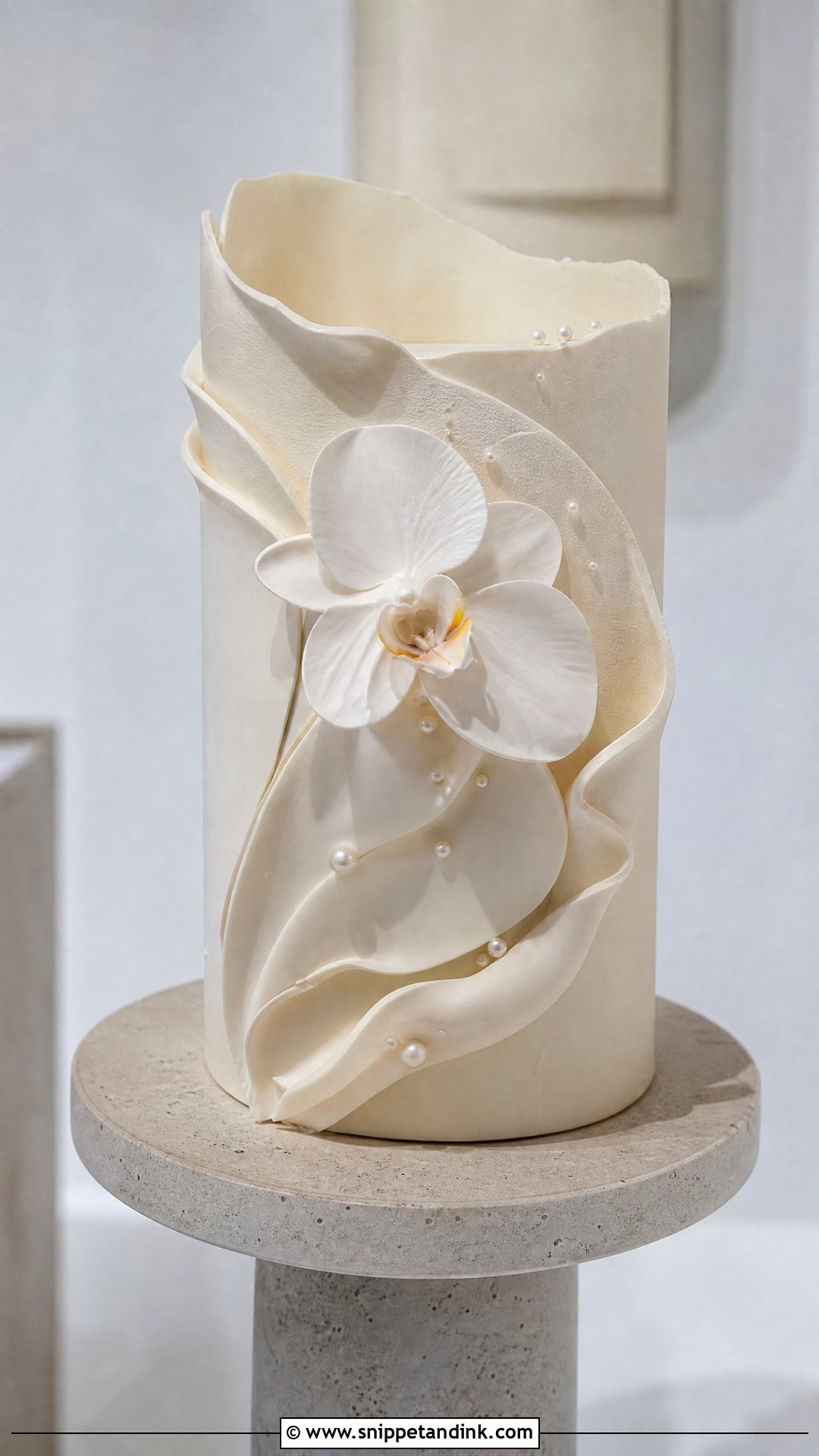
A sculptural cake replaces neat stacked tiers with curves, asymmetry, waves of icing or folds that look like fabric. The structure is the hard part: unusual shapes need internal supports and sometimes dummy sections, and I plan them on paper before baking. Keep the color simple, white, ivory, stone or pale blush, since the shape is the feature. One bloom at most. It suits modern venues and gallery spaces, and I’d be wary of it at an outdoor summer reception where soft curves can slump.
7. Draped Wedding Cake
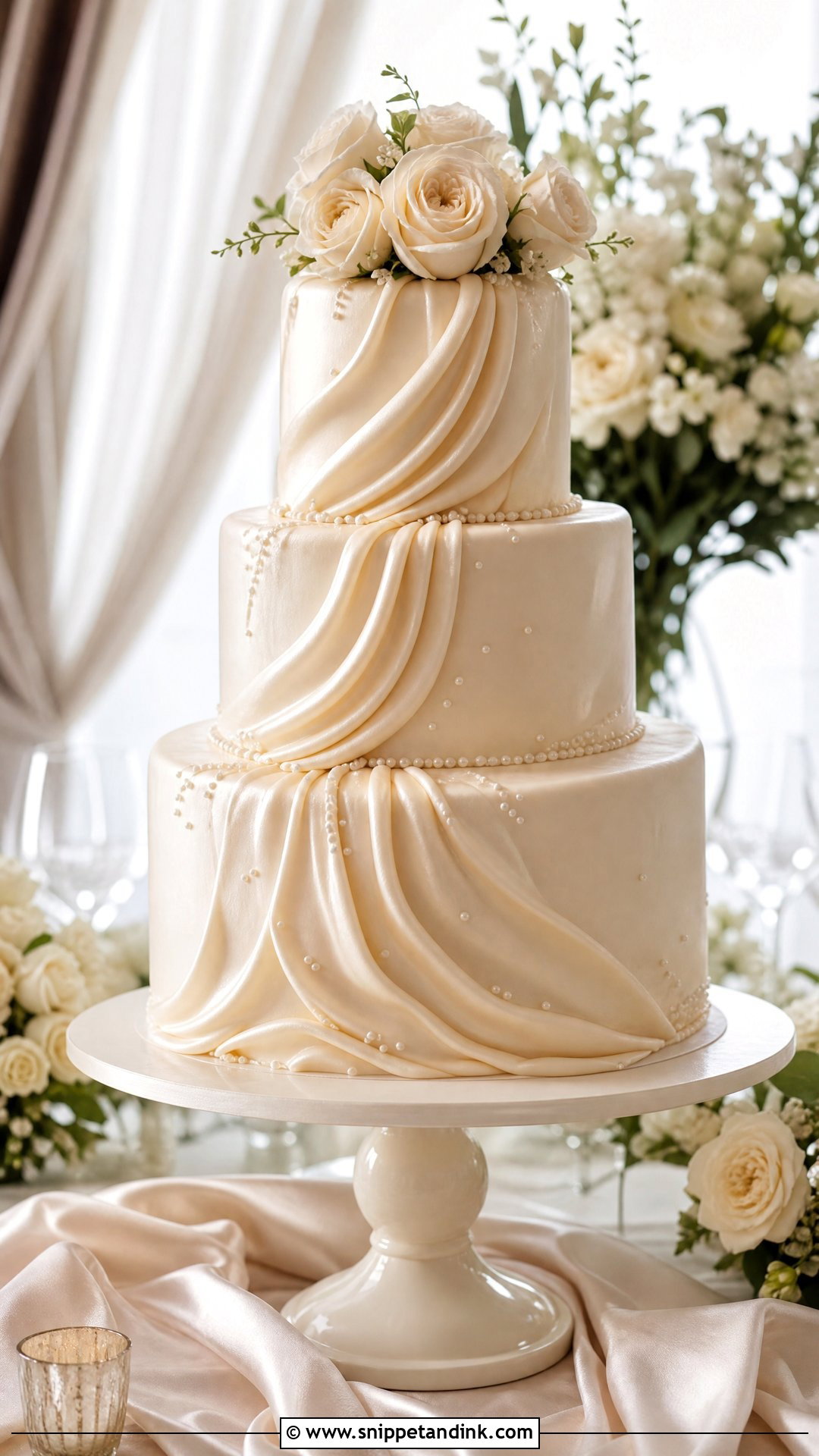
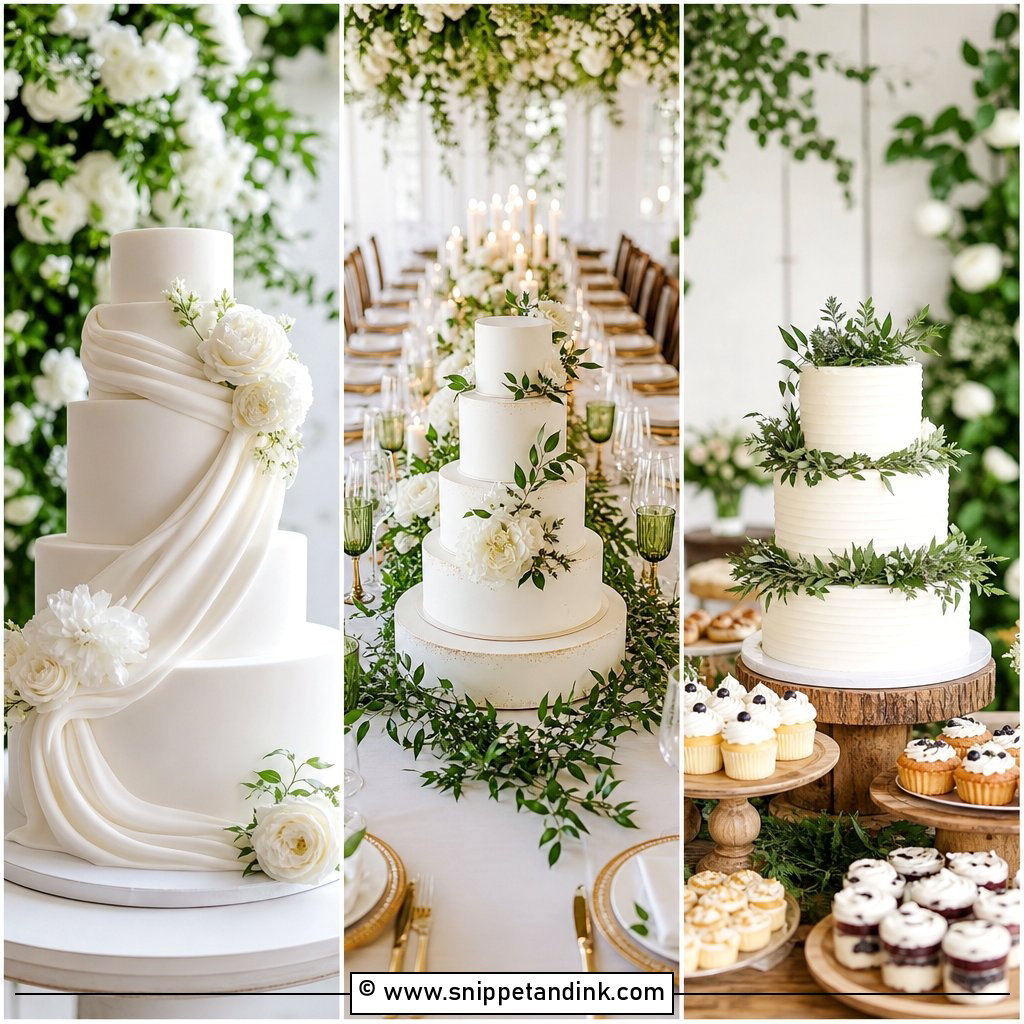
Draped fondant mimics the folds of a gown, and it’s one of the few designs where fondant is clearly better than buttercream, because only rolled sugar paste can be gathered and folded like fabric. The folds are added on site or just before delivery, as they can crack if the cake travels too far. Ivory and white are classic; champagne, blush or pale grey add warmth. Small pearls or a metallic edge add detail. Silk linens and candlelight complete the effect.
8. Lace Wedding Cake
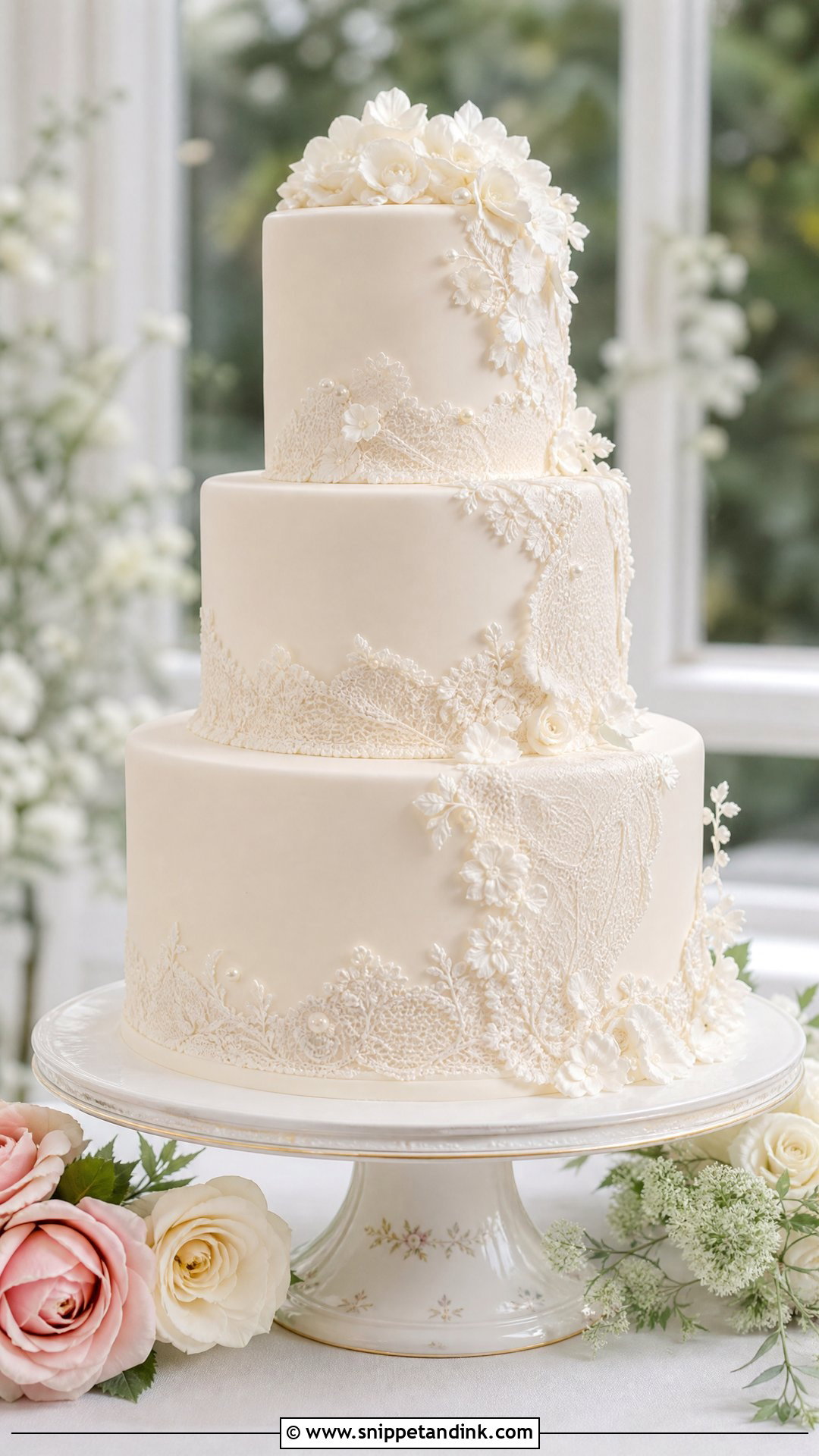
Lace can tie a cake to the bride’s gown or the invitation. I make it with piped icing, fondant cutouts, stencils or set edible lace sheets, and I’ll often ask for a close-up photo of the dress lace so I can echo the motif. Crisp detail matters more than coverage; one lace tier often looks richer than all of them. White on white is classic; ivory lace on a champagne base feels warmer. A few fresh or sugar flowers soften the structure.
9. Ruffle Wedding Cake
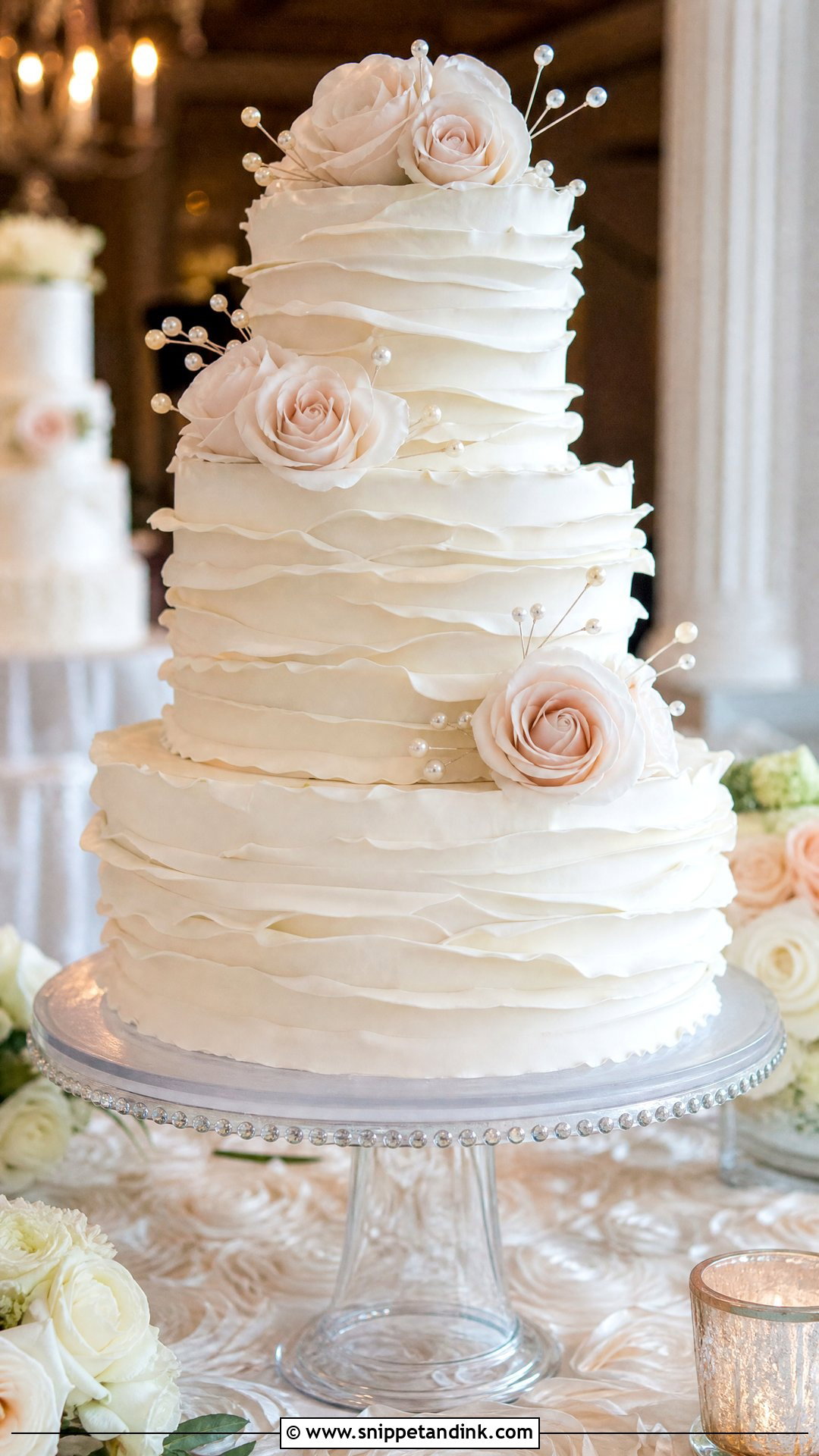
A ruffle wedding cake covers one tier or the whole cake in thin layers that catch the light. Fondant ruffles hold their shape better; buttercream ruffles are softer and taste better but don’t love heat. It’s a natural match for a dress with tulle or organza. Keep flowers to a minimum so the folds stay the focus. White looks classic, blush or ivory gives a couture feel.
10. Minimalist Wedding Cake
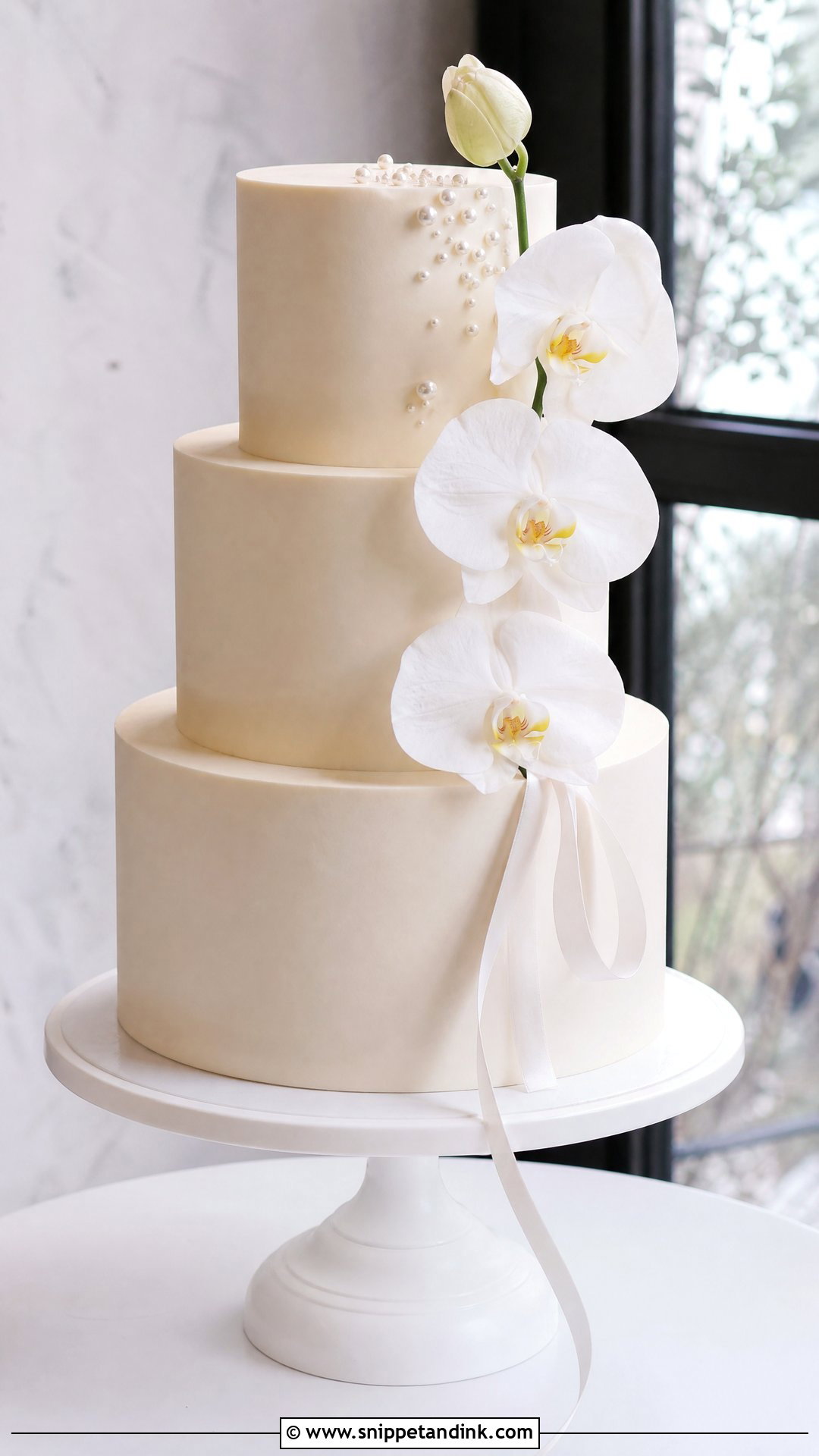
Minimal cakes are where you see the baker’s skill most clearly, because nothing hides an uneven edge or a bulge. Sharp edges, clean tiers and good proportions make a cake look expensive before any decoration goes on. Ask to see unfiltered photos of a baker’s plain cakes before you book one for this design. White, ivory, taupe or soft beige suits it, with one orchid stem, a silk ribbon or a single line of pearls.
11. Tall Tiered Wedding Cake
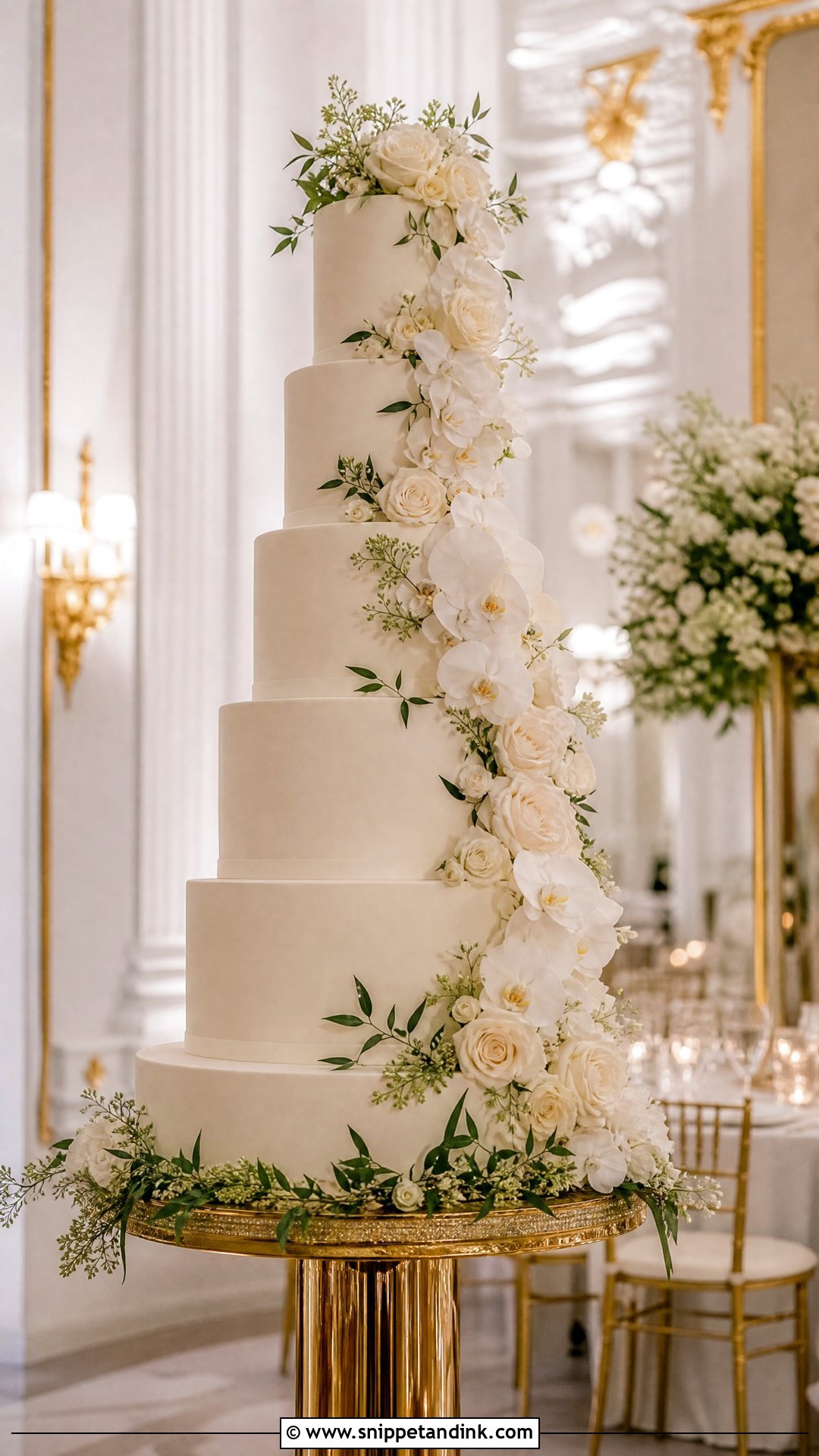
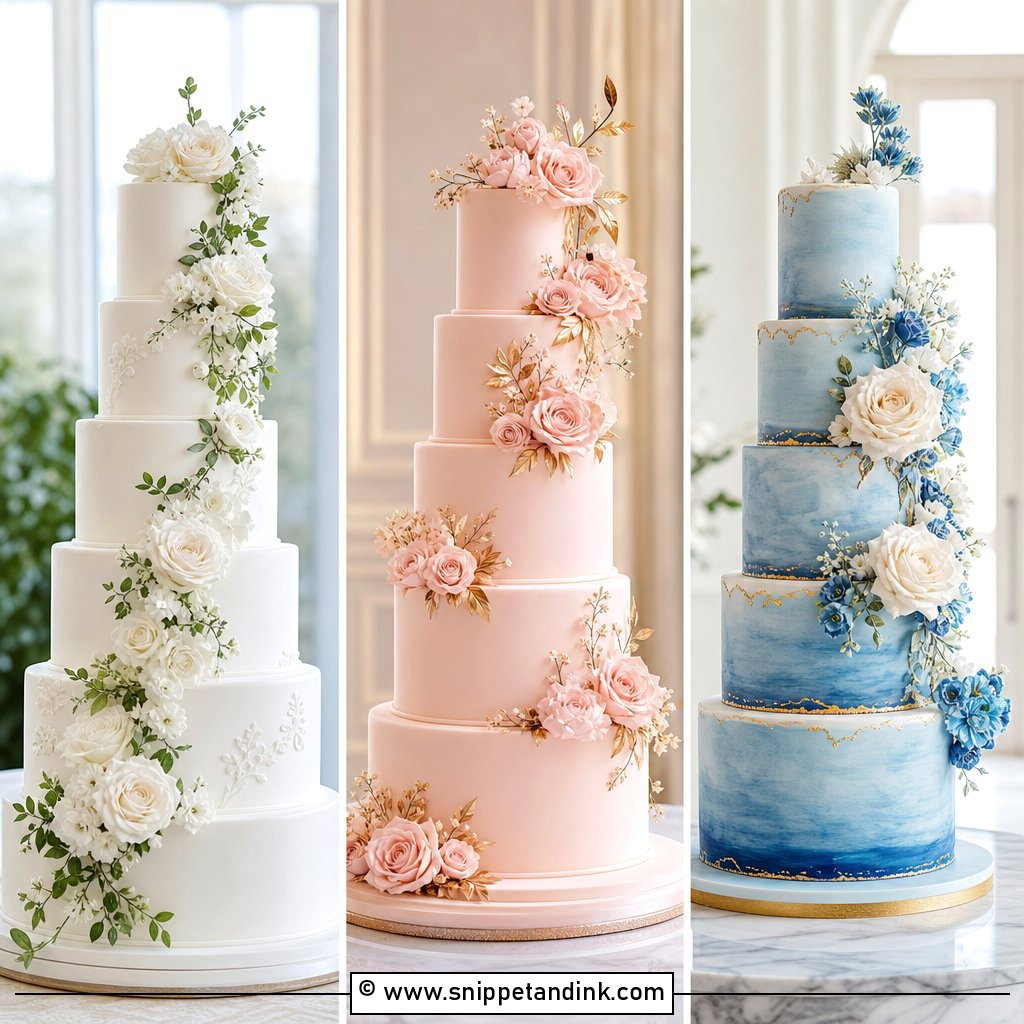
Height makes the entrance in a large room, and a tall tiered wedding cake often isn’t all cake. Many tall designs include one or more polystyrene dummy tiers, iced to match, with extra sheet cake cut in the kitchen for serving. That keeps cost down and makes the tower more stable. Every real tier needs dowels and a board underneath. Flowers can cascade down one side. It suits high ceilings and a traditional cake cutting.
12. Square Wedding Cake
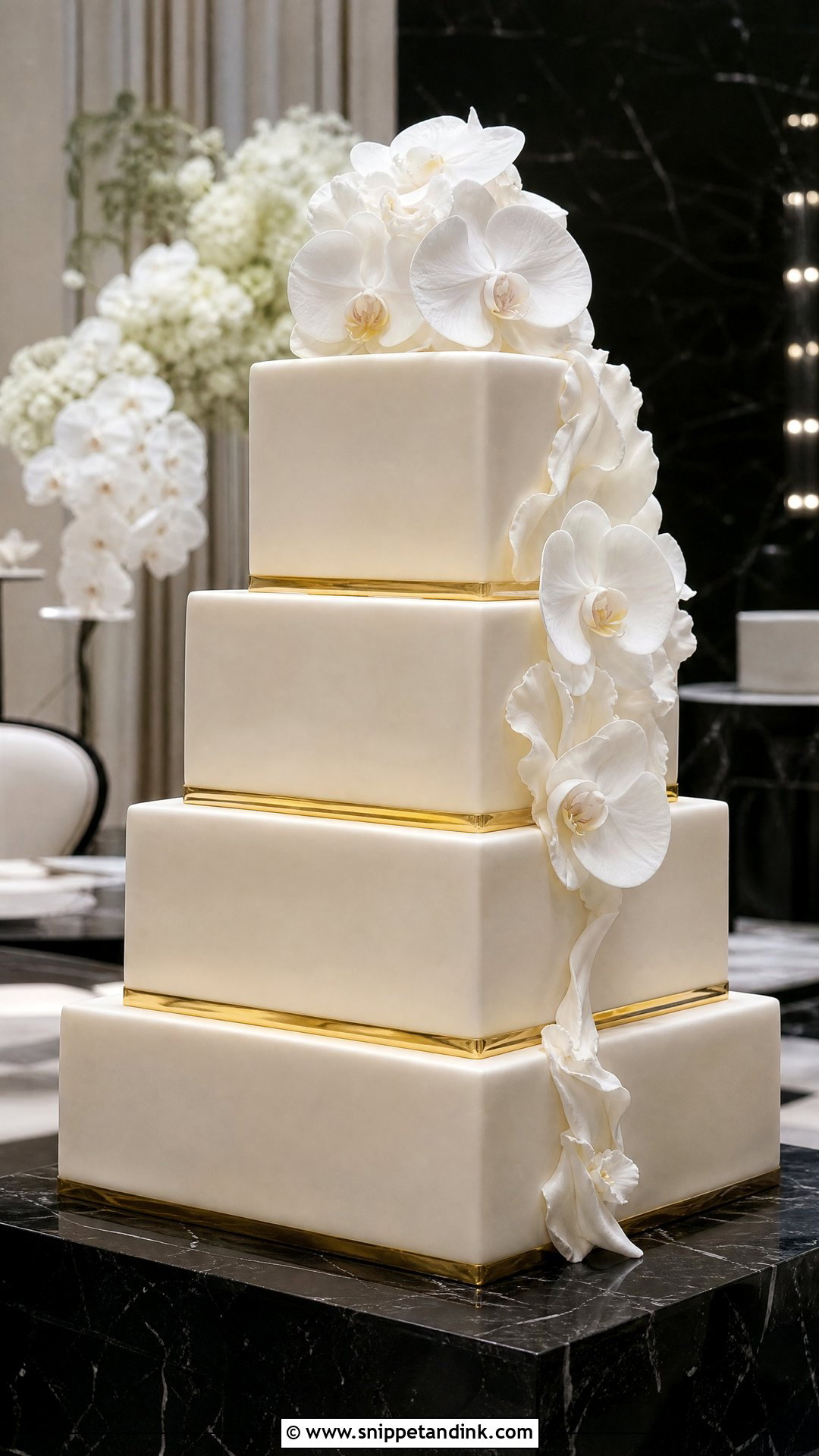
Square tiers look crisp and architectural, but they’re harder to make than round ones; corners are the first place icing cracks or bulges. I recommend fondant or a very sharp, well-chilled buttercream finish. Metallic trim, white orchids or a single diagonal flower arrangement add detail. The lines photograph strongly, so a square cake suits contemporary weddings and rooftop venues.
13. Marble Wedding Cake
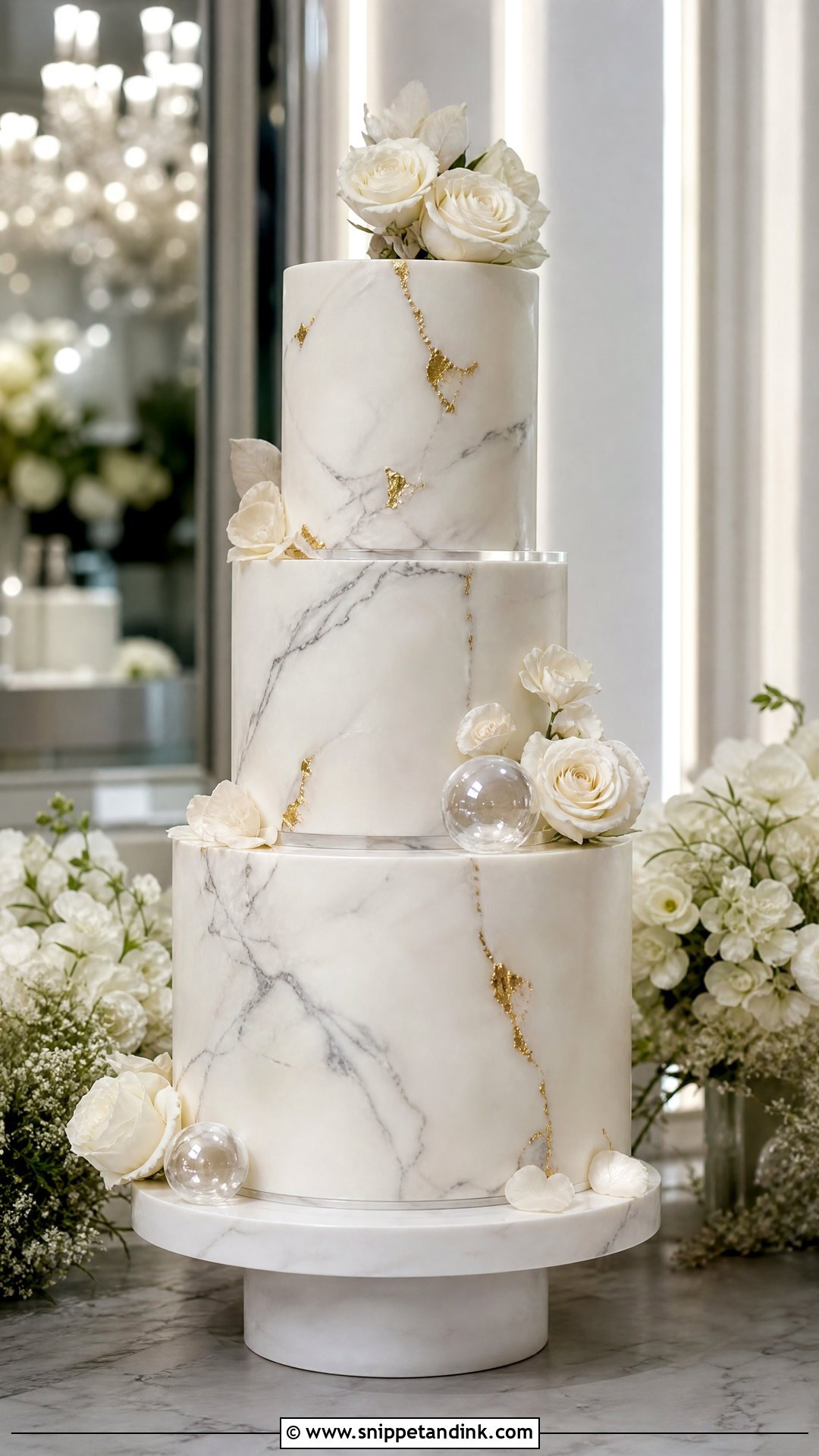
Marble effect comes from streaks of colored fondant rolled together or veins painted on with food coloring. Soft grey veining on white is the classic; beige, blush or champagne versions are gentler. The mistake I see is veining that’s too dark and busy, which reads as concrete in photos. Gold leaf, white roses, orchids or clear acrylic separators finish it. It suits modern ballrooms and neutral palettes.
14. Watercolor Wedding Cake
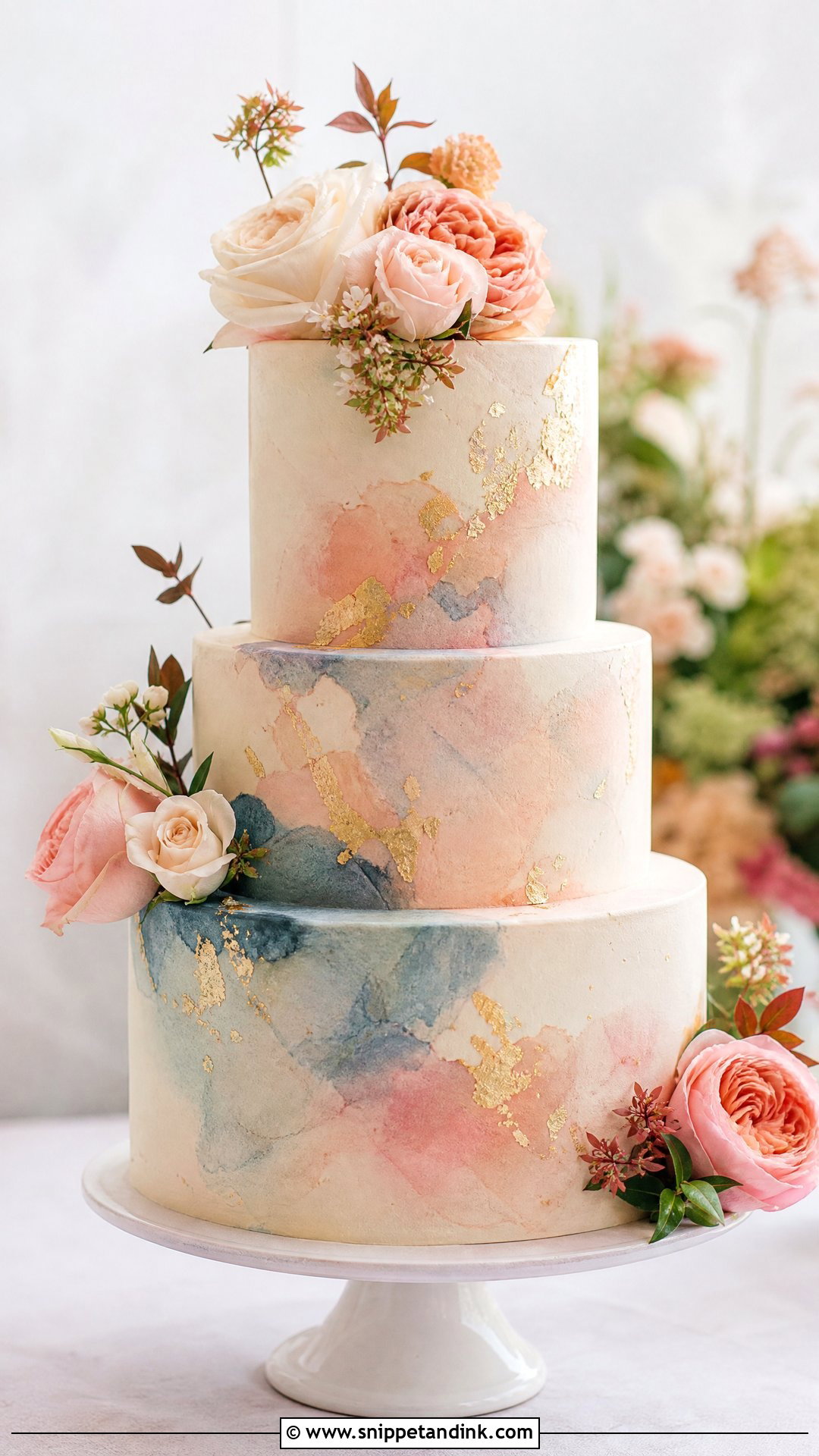
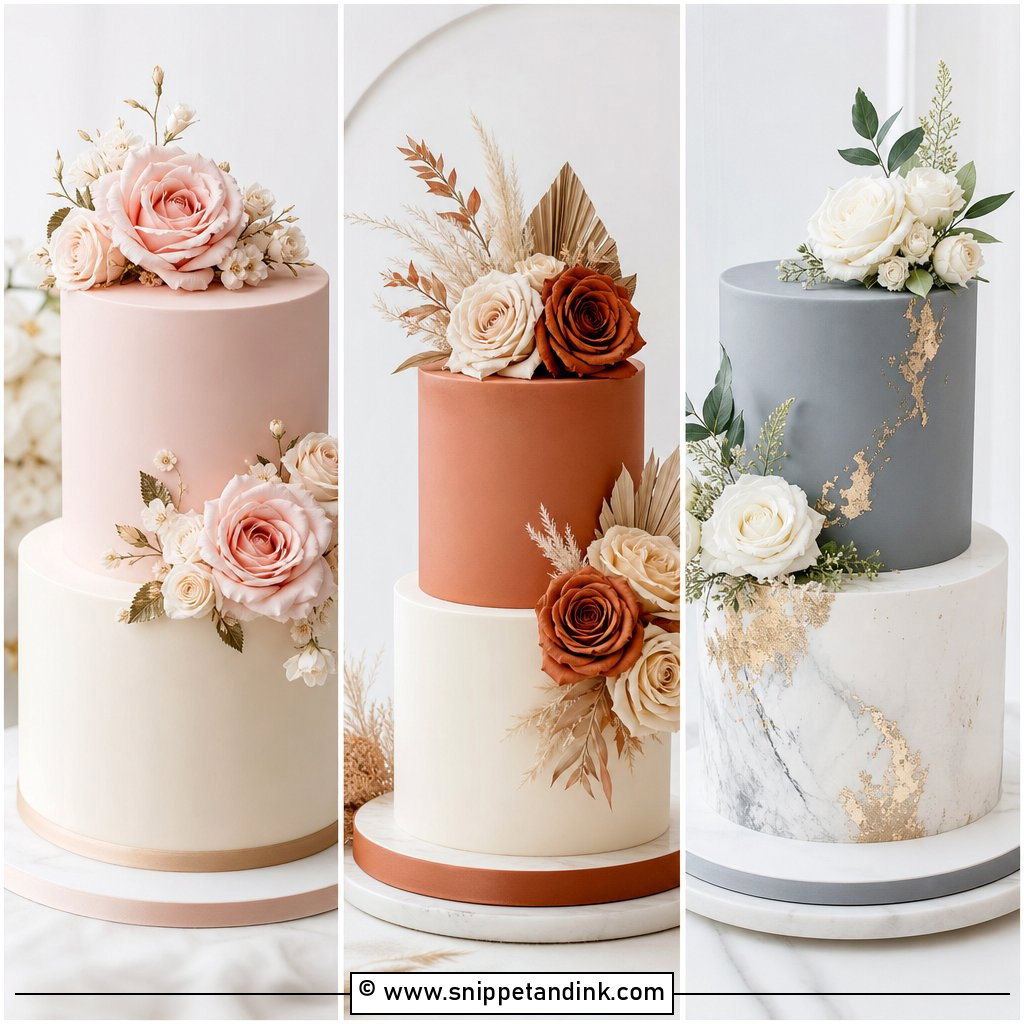
Watercolor cakes are painted with diluted food coloring onto buttercream or fondant, in pale blush, dusty blue, lavender, peach or champagne. The best ones build the color in light layers, much like a fine art invitation. It’s an easy way to match the floral palette subtly. Fresh flowers, gold leaf or sugar petals add dimension. It suits spring weddings and garden venues.


15. Orchid Wedding Cake
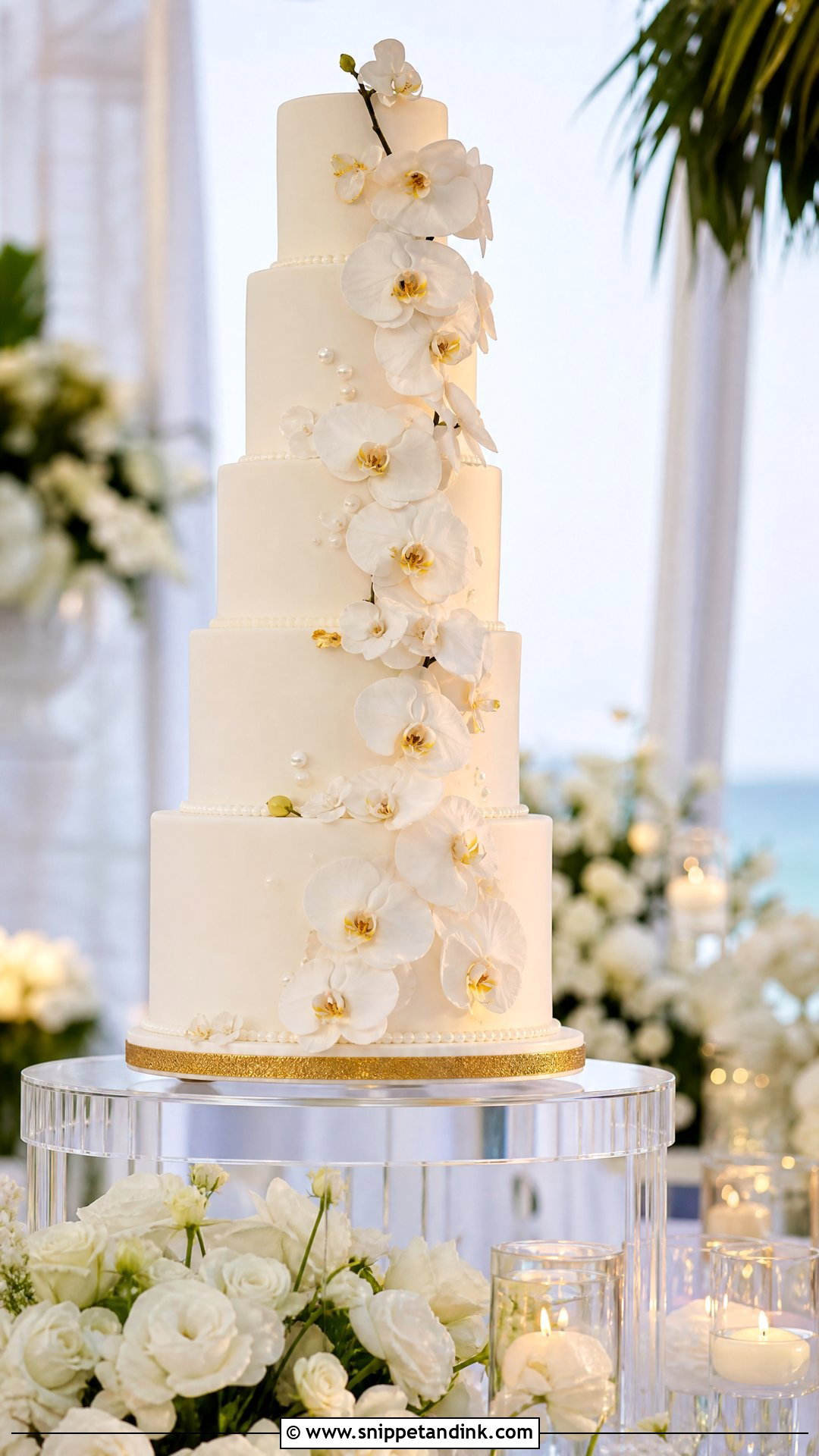
An orchid wedding cake works because orchid blooms are flat and structured, so they sit neatly against smooth icing. Phalaenopsis orchids hold up well out of water, which helps on a long reception. They can cascade down tall tiers or sit in a single side cluster. Keep the base simple: white fondant, ivory buttercream or a pearl finish. Gold accents or clear separators make it modern; for a destination wedding, orchids look fresh without feeling casual.
16. Rose Wedding Cake
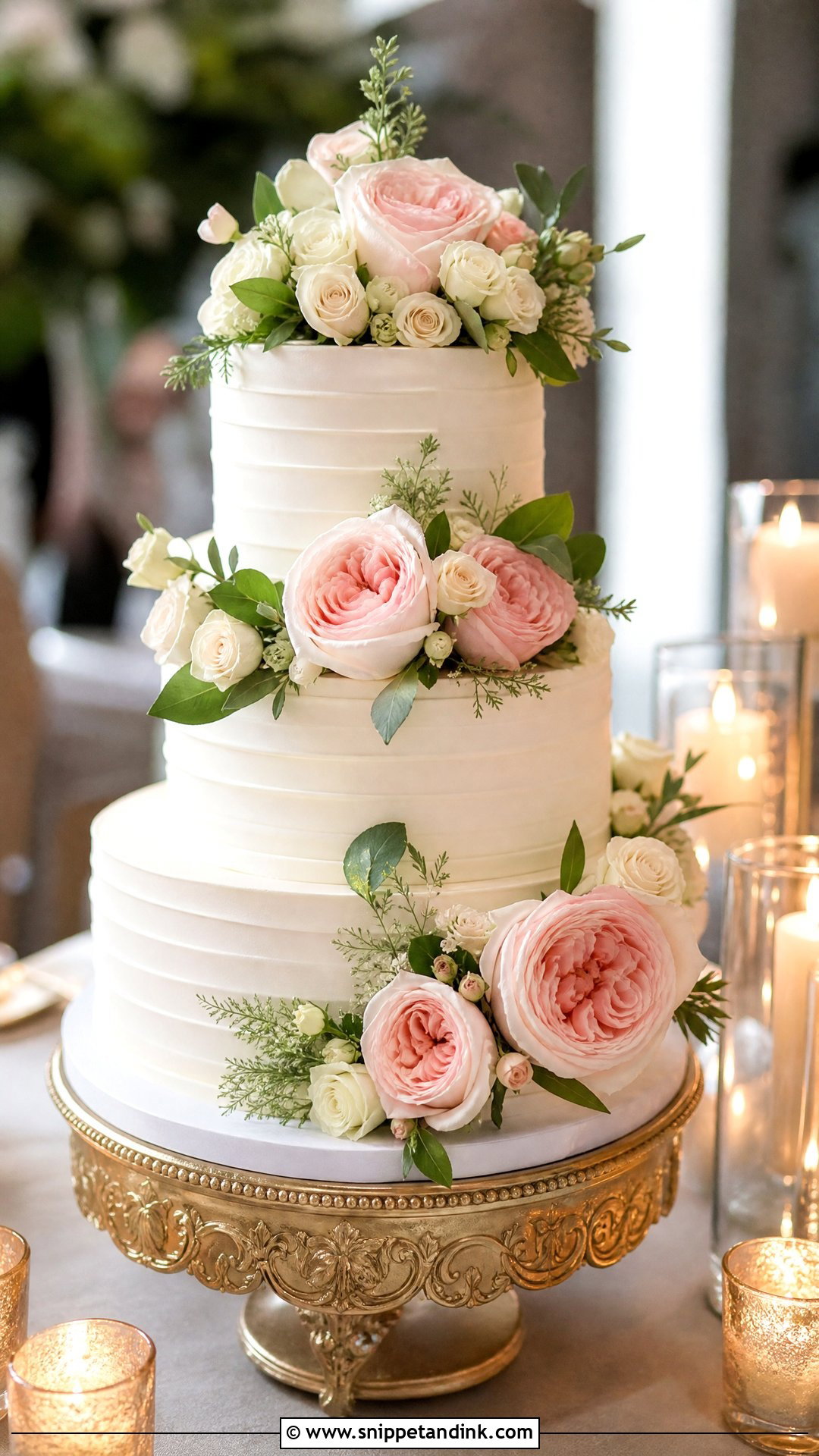
Roses are the most adaptable cake flower. Garden roses, spray roses or sugar roses in ivory, blush, mauve or champagne give a soft look; deep pink or red against white is more dramatic. Placement is what makes it look luxurious, with clear shape and movement instead of random dots. Fresh roses need their stems wrapped and their leaves removed before they touch the icing. It fits gardens, estates and ballrooms equally well.
17. Champagne Wedding Cake
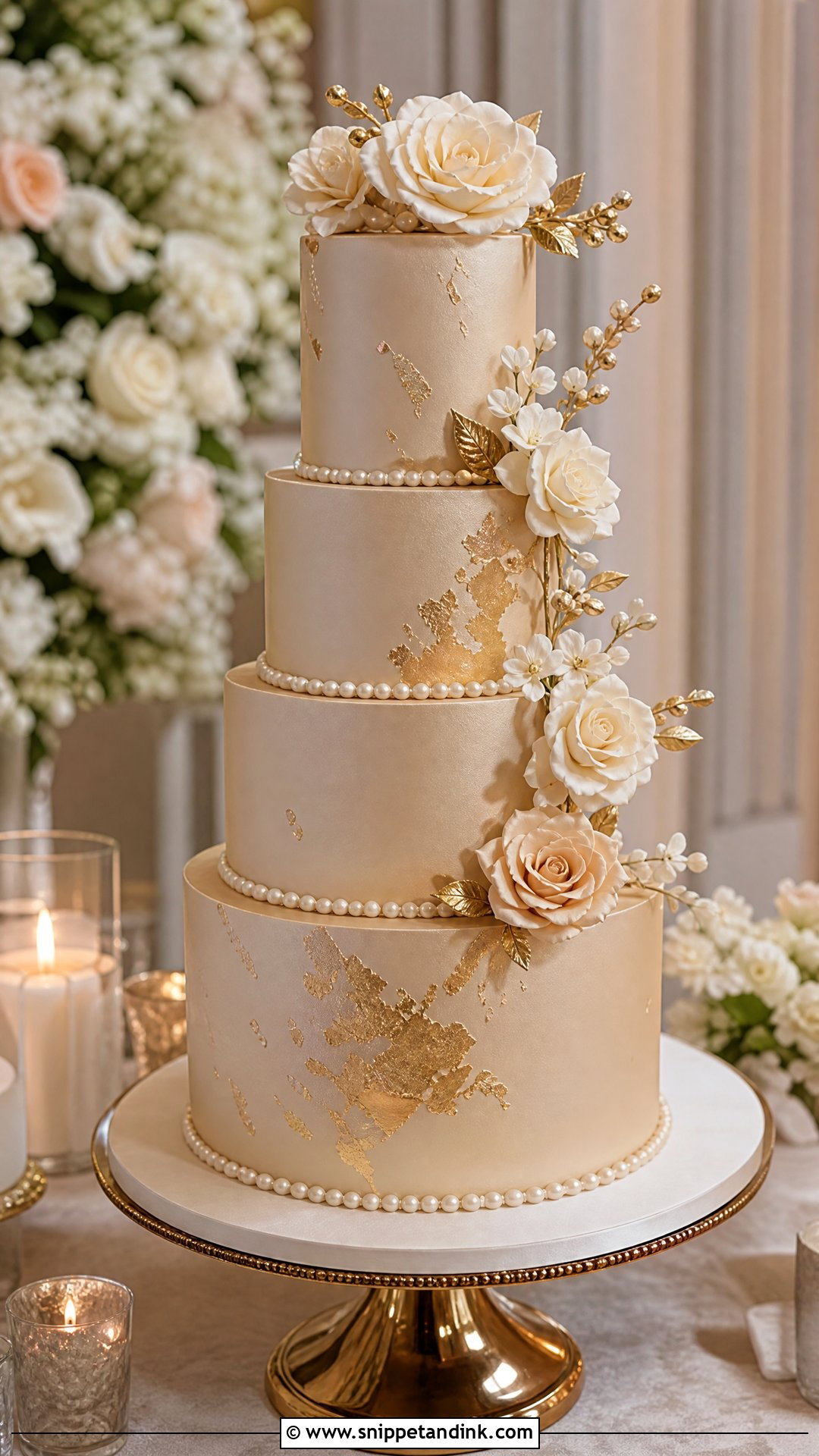
Champagne icing is my suggestion when bright white looks too stark next to an ivory dress. The beige-gold tone glows in candlelight and pairs well with cream flowers and metallic details. A satin sheen or a subtle texture gives it depth; flat beige can look dull. Pearls, satin ribbon, gold leaf or sugar flowers all suit it. It’s a strong choice for evening receptions and neutral palettes.
18. Blush Wedding Cake
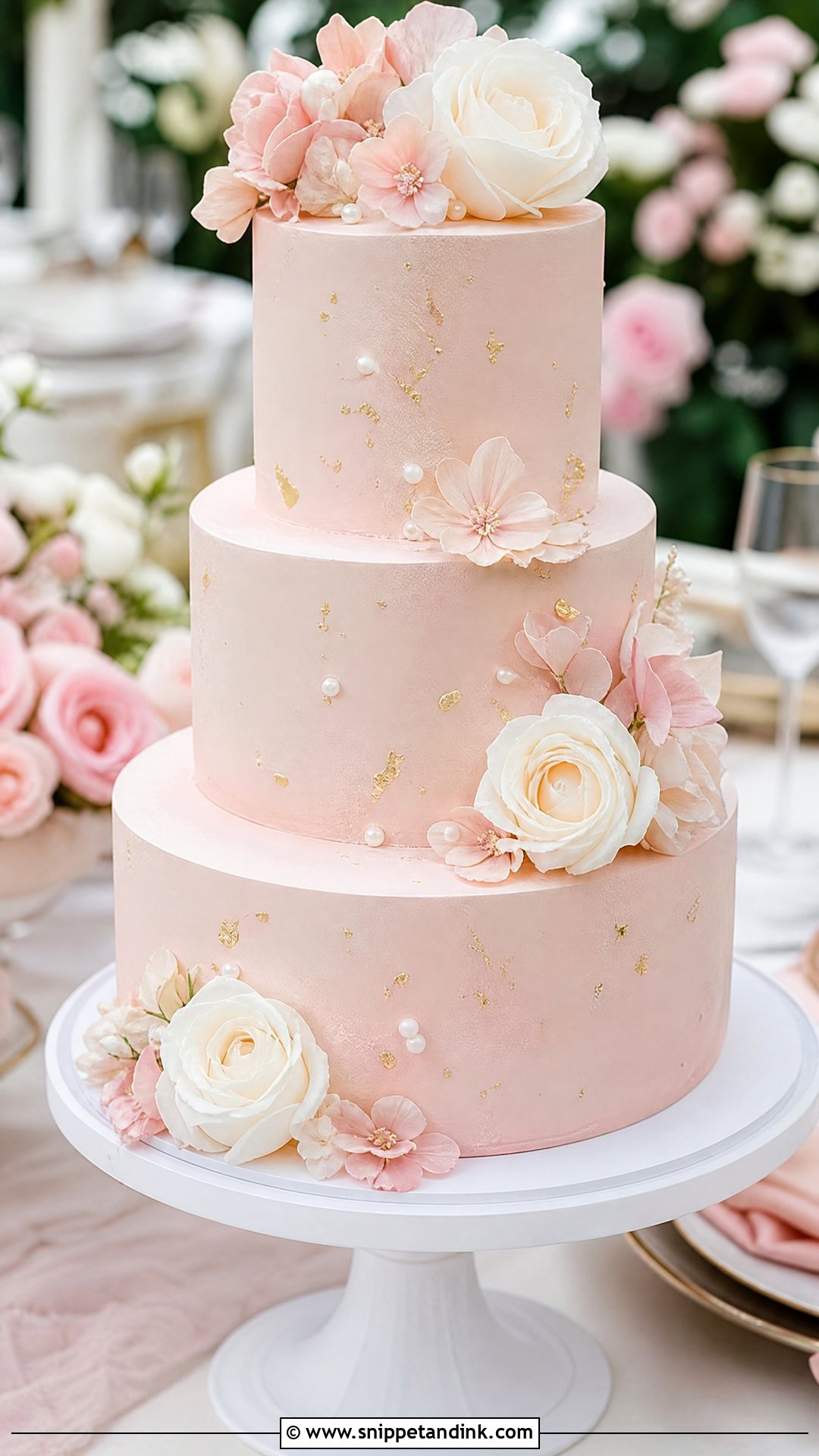
Blush can range from barely pink to dusty rose. I mix it to match a flower from the bouquet rather than a paint chip, because the cake will sit next to real flowers in every photo. Bright pink looks childish; muted tones look grown-up. White flowers, gold accents, pearls or ruffles all work on blush. It suits garden weddings, spring receptions and elegant indoor venues.
19. Cake Meadow Wedding Cake
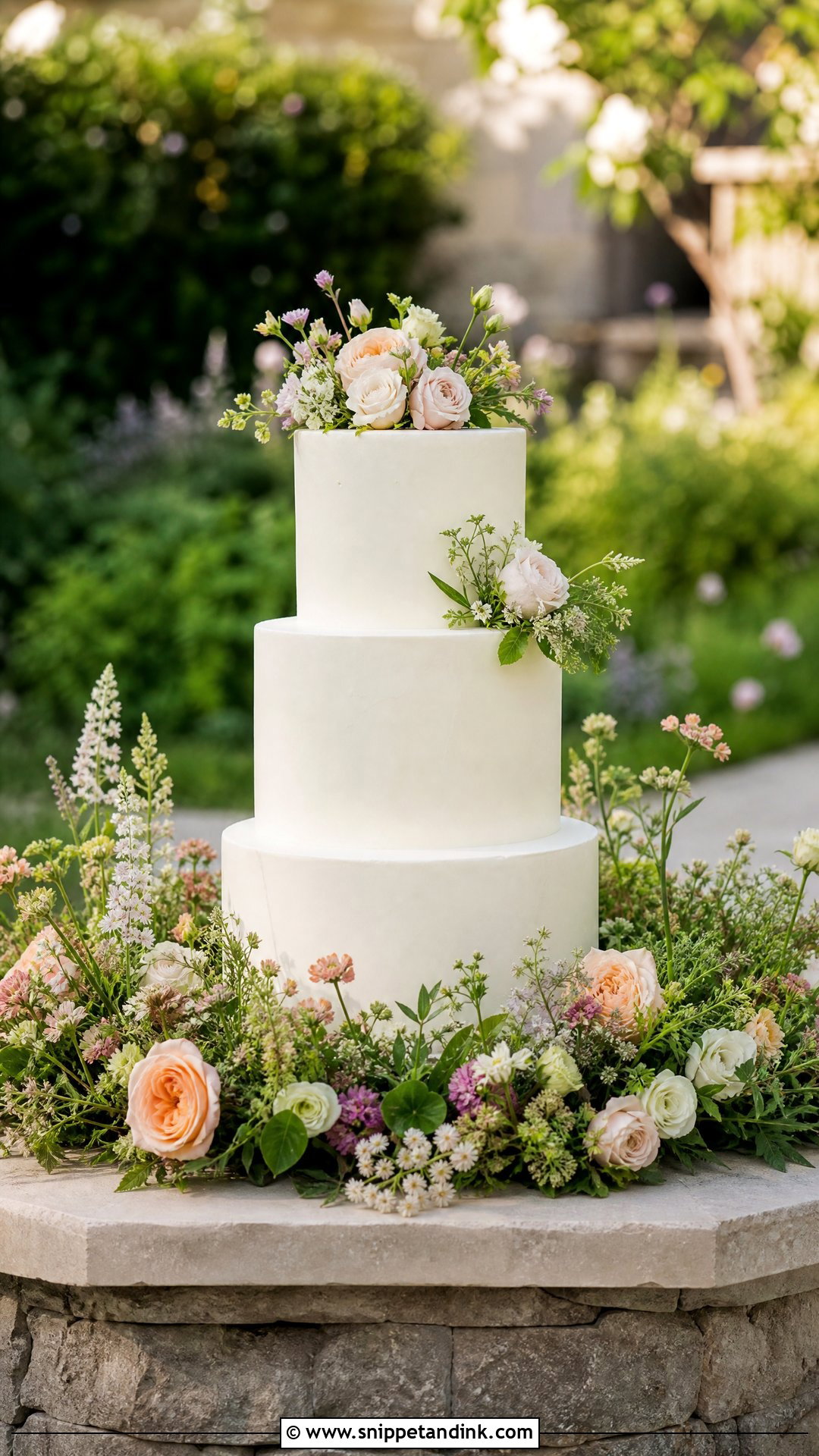
A cake meadow surrounds the base of the cake with low flowers and greenery, so the cake looks as if it’s growing out of a garden. The cake itself stays plain, smooth white or ivory. I coordinate this with the florist ahead of time, since the arrangement is theirs and the stand height decides how much of the cake shows. Keep the flowers low enough that the full tier shape is visible. It suits outdoor and tented receptions.
20. Dessert Table Wedding Cake
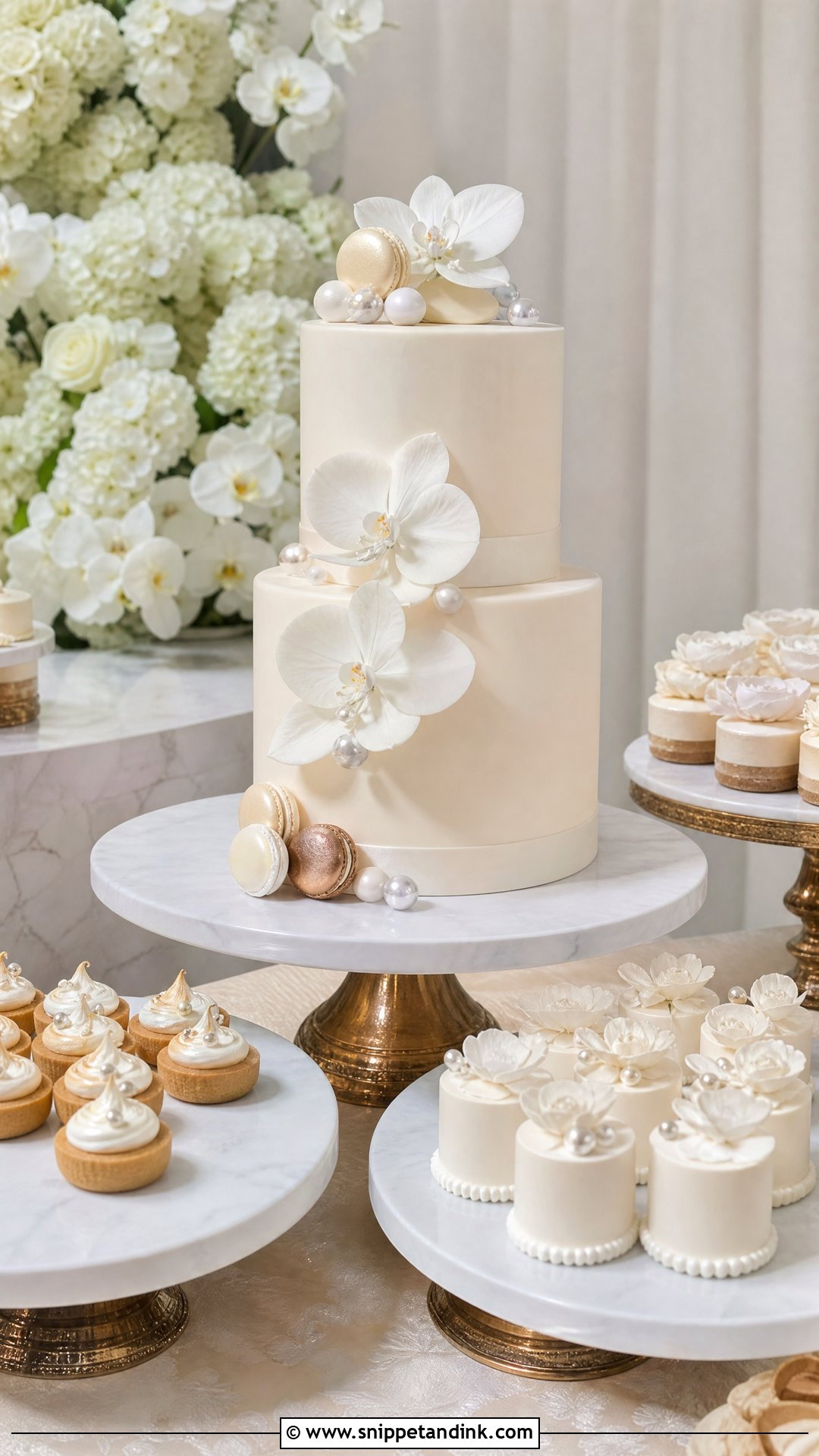
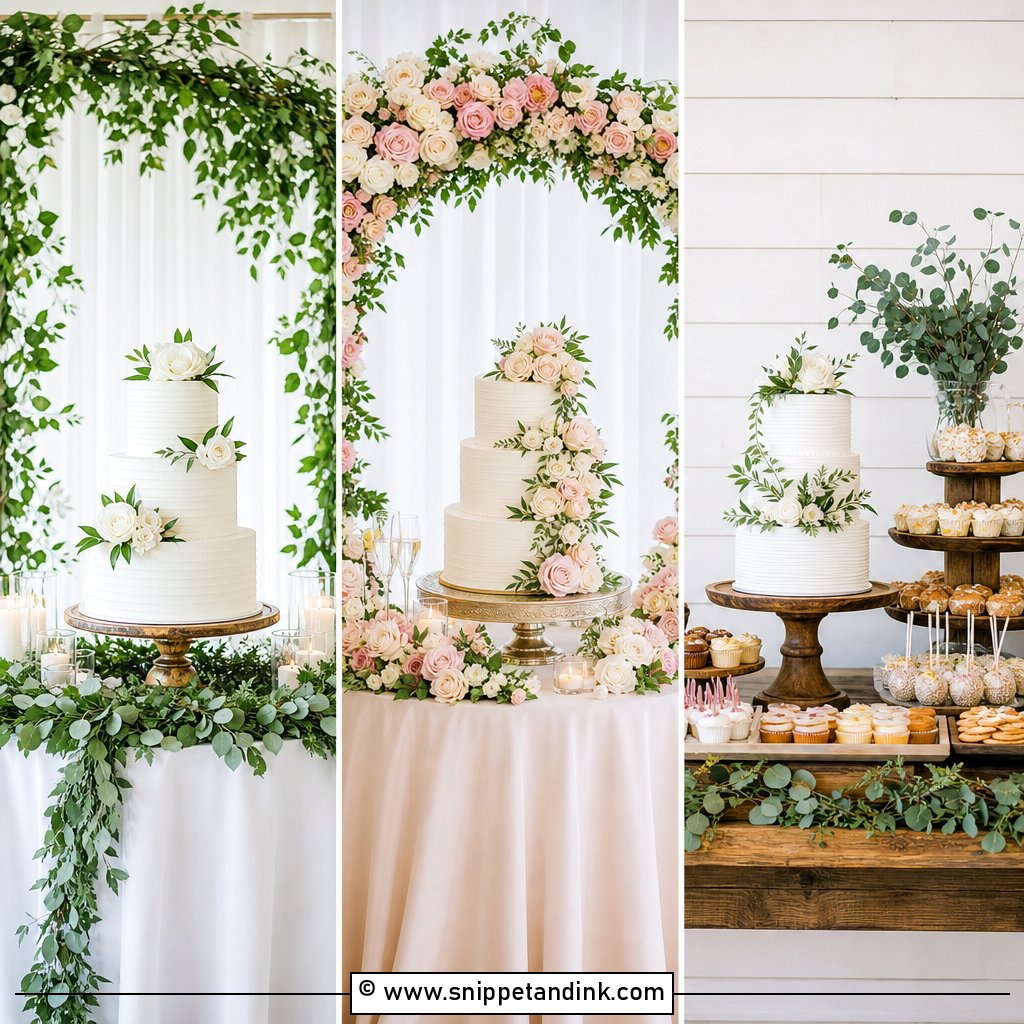
A dessert table lets the main cake be smaller and more detailed, surrounded by macarons, mini tarts, cream puffs or petite cakes in matching colors. Matching stands, linens, florals and labels keep it looking planned. The main cake should still sit highest or at the center. If you’re on a budget, this is a sensible route: a smaller showpiece cake costs less, and guests still get plenty of choice.
Fresh Flowers and Food Safety on a Wedding Cake
Real flowers look wonderful, but they’re not grown to be eaten, and several popular wedding flowers are toxic. Lily of the valley, hydrangea, sweet pea, foxglove and oleander should never touch a cake, and many cake designers also keep baby’s breath off the icing. I only use flowers grown without pesticides and checked as safe for food contact.
- Wrap every stem in florist tape and food-safe wrap, or insert it into a plastic posy pick, so sap and stems never touch the cake.
- Remove leaves and thorns before placement.
- Put a thin layer of wax paper or a small sugar disc under flower heads that rest on the icing.
- Remove all flowers before the cake is cut and served.
Heat, Travel and the Hour Before Cutting
A buttercream cake left in a warm marquee will soften and can lean within an hour or two. Fondant holds up better in heat but sweats when a chilled cake is moved into humid air. For summer and outdoor weddings, I place the cake in the coolest spot, out of direct sun and away from the dance floor speakers, which vibrate. Ask your venue where the cake will sit and when it will be delivered; ideally it arrives shortly before guests do and is cut within a few hours. Ask too who will cut and serve it, and whether the venue charges a cake-cutting fee.
Bring the Venue Photo and Guest Count to Your Tasting
The cake that looks most luxurious is rarely the tallest; it’s the one that fits the venue, the flowers and the mood, finished cleanly. Before your tasting, save a few designs you like and notice what they share: shape, color, texture, flowers, height. Bring those notes, a photo of the venue and your guest count to your baker. That gives us enough to design something that is truly yours.
You'll Like These Ideas:


Leave a Reply