
Round tiers are the shape I bake more than any other, and not because couples lack imagination. A circle looks right from every angle a guest can stand at, it cuts cleanly into portions, and it suits a garden as easily as a ballroom. It also makes the cake-cutting photo easy, since there’s no awkward corner pointing at the camera. What changes from one round cake to the next is the finish: textured buttercream, pressed flowers, vintage piping, fruit, colour or sculpted detail. Below are the finishes I’m asked for most, with what each one needs and who I’d steer away from it.
Sizing Round Tiers So the Cake Looks Balanced
Most of what makes a round cake look polished happens before any decoration: the diameters, the heights and the stand. Couples rarely ask about these, but they’re the first thing I sketch.
- Steps between tiers: even steps look calm, often two or three inches of diameter per tier. A big jump between the bottom two tiers makes the top half look perched.
- Tier height: a standard tier is roughly four inches tall; a taller tier of five or six inches looks more modern and gives more room for decoration.
- The board and stand: I like the stand to sit a little wider than the bottom tier. A stand that’s too small makes even a good cake look precarious.
- Table and backdrop: a tall, narrow cake looks lost in front of a wide window, while a short, wide one suits a long table.
If you’re not sure how big to go, give your baker the guest count and tell them whether other desserts are being served. They can then suggest sizes that feed the room and look in proportion.
1. Round Buttercream Wedding Cake
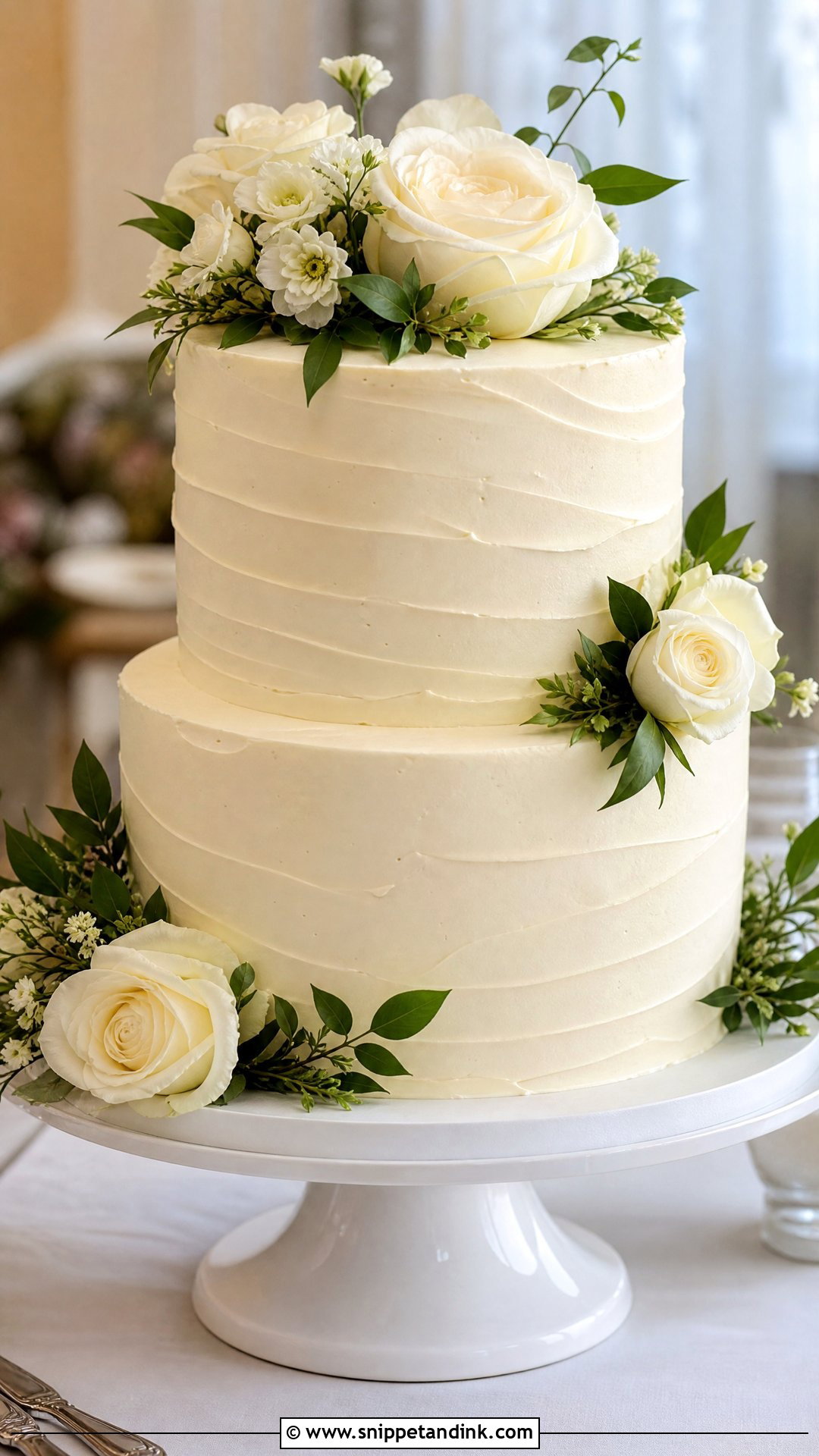
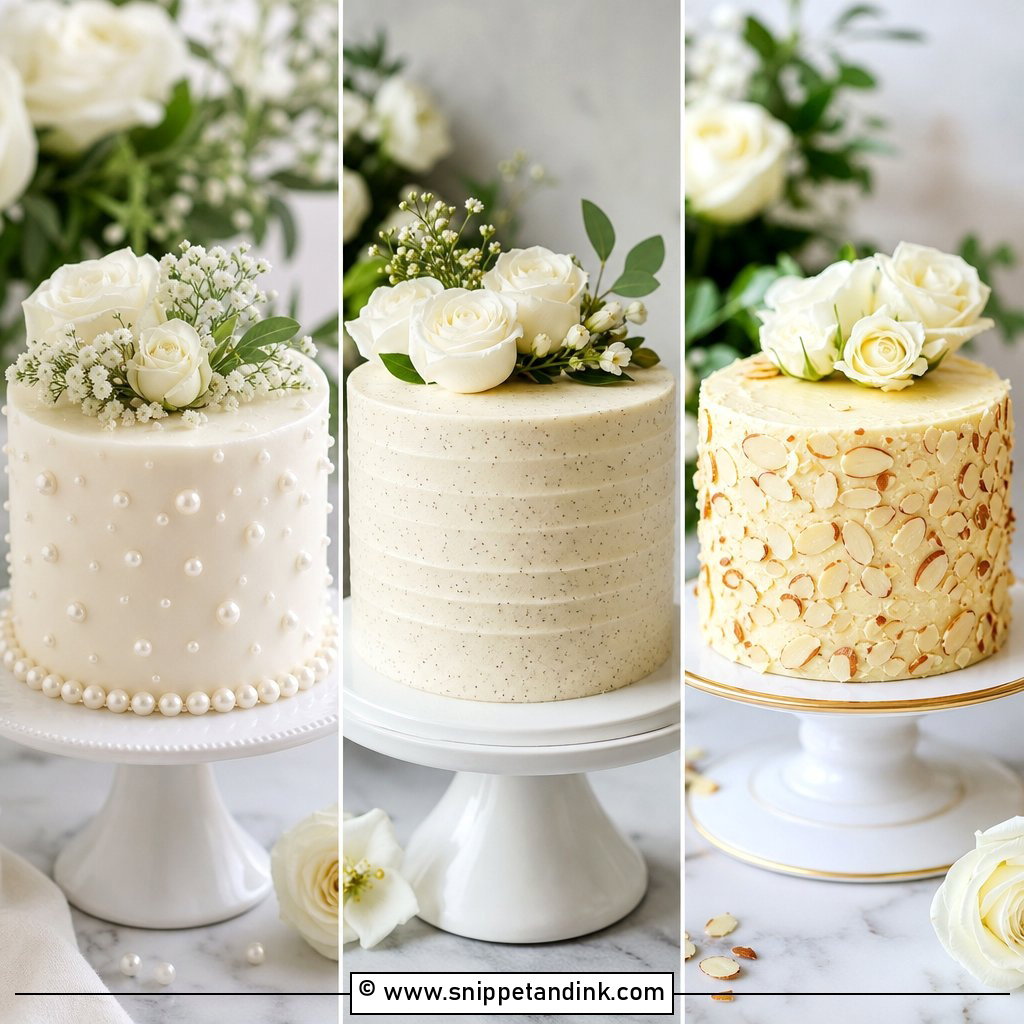
Buttercream on a round cake is the easiest finish to love and to eat. A smooth ivory coat looks clean; a few deliberate spatula marks look handmade. I’d use it for gardens, barns, country clubs and small restaurant weddings, as long as the room isn’t hot, because buttercream softens well before fondant does. White blooms, a little greenery or a pearl border are enough decoration. Vanilla, almond, lemon or champagne sponge keeps the bite light under it.
2. Round White Wedding Cake
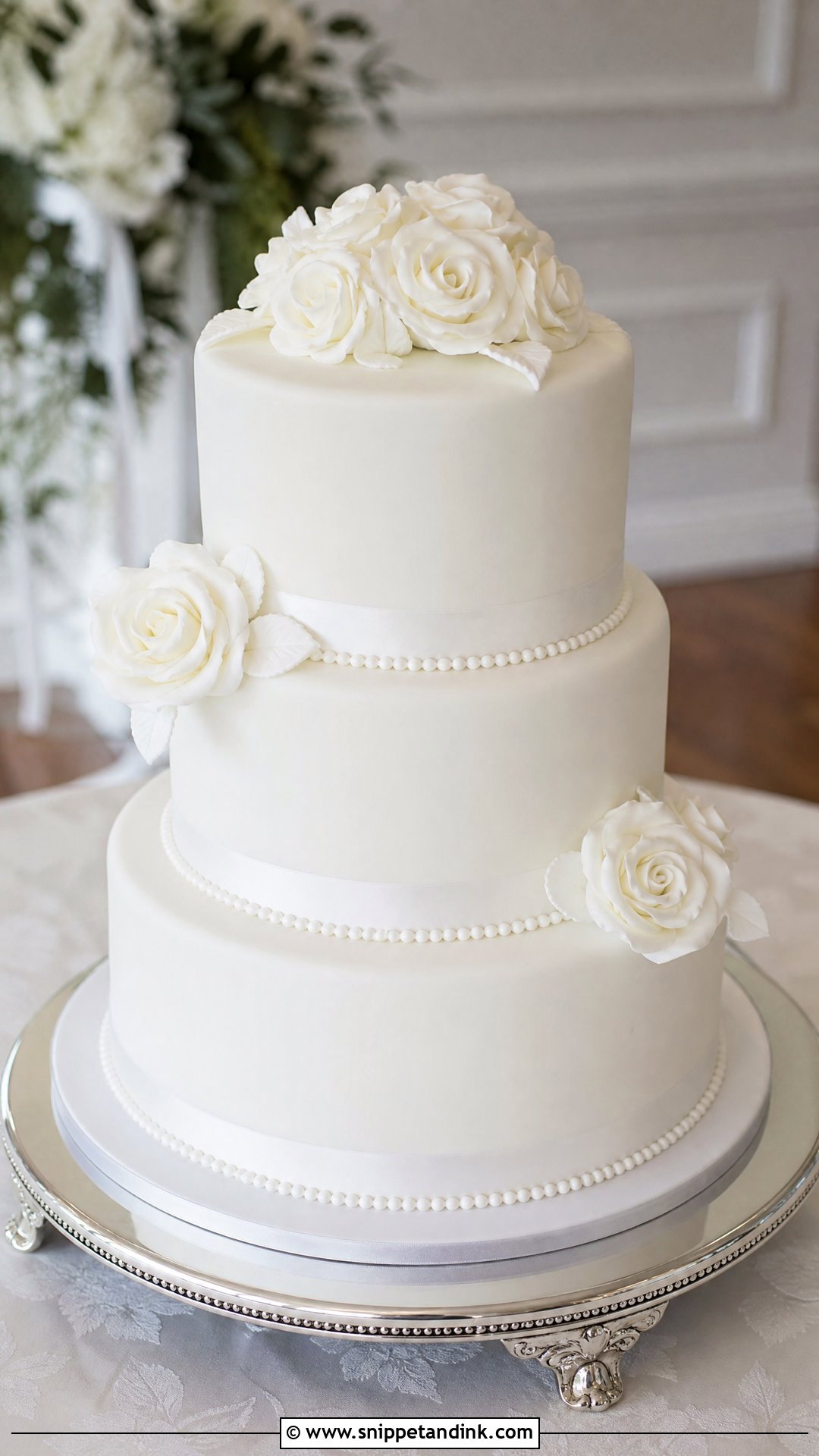
All-white round tiers look traditional and bright, and they’re more of a decision than they seem. Fondant gives a crisp, true white; buttercream made with butter leans ivory unless it’s whitened. Ask yourself which white your dress is before you choose. Restraint is the real detail here: a few white roses, sugar flowers, tiny pearls or a ribbon at each tier’s base. Churches, formal receptions and black-tie rooms suit it, where clean lines carry the look.
3. Round Floral Wedding Cake
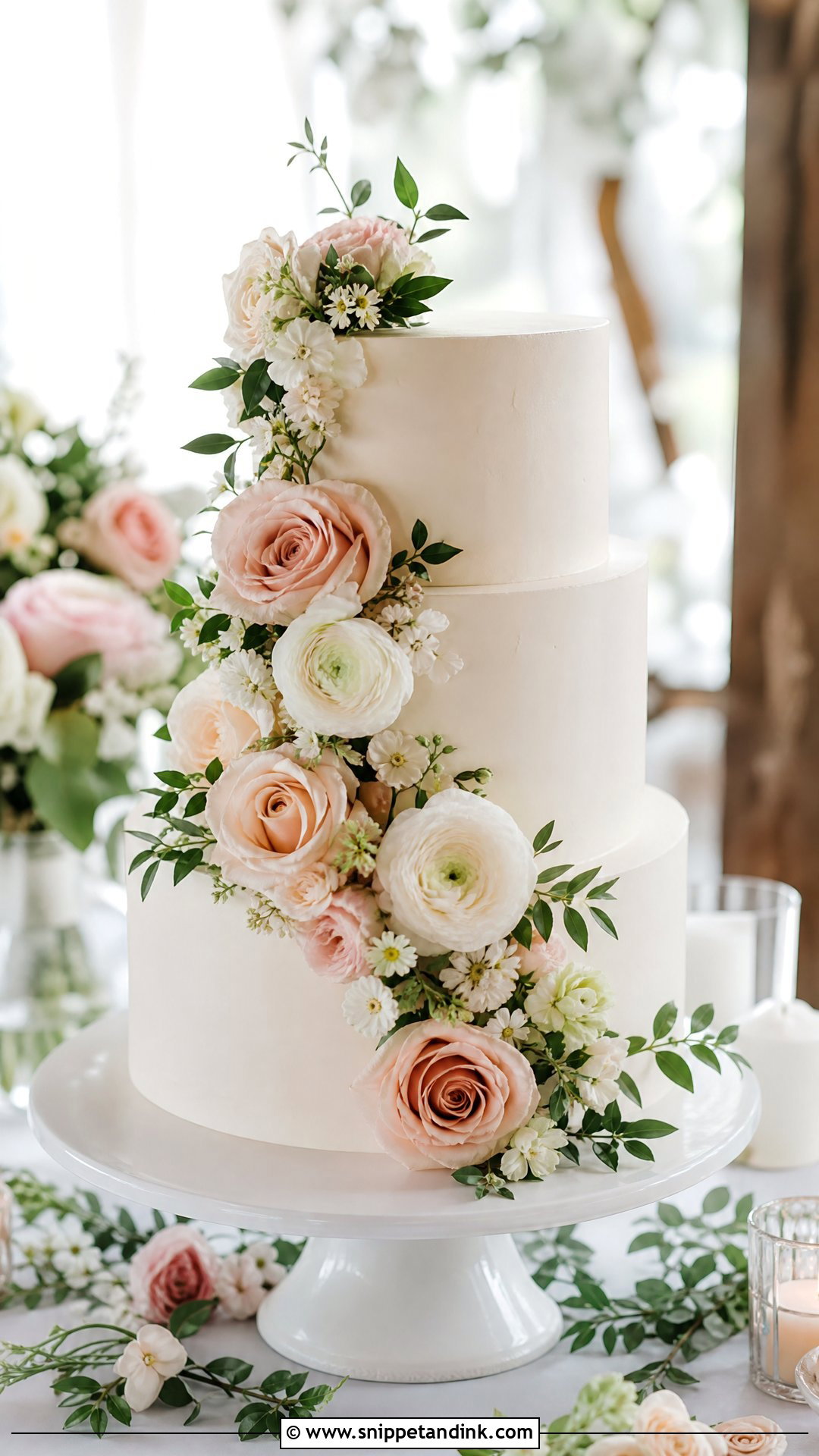
Fresh flowers turn a plain round cake into the centrepiece of the room, especially when they come from the same order as the bouquet. Roses, peonies, ranunculus and edible blooms all work on an ivory base. I treat hydrangea differently: it’s toxic and drinks a lot of water, so it wilts quickly out of a vase and shouldn’t touch the icing. A cascade, flowers between tiers or a gathered crown on top are the three usual placements. Vanilla bean with berry filling or lemon with elderflower buttercream keeps the flavour as light as the look.
4. Round Pearl Wedding Cake
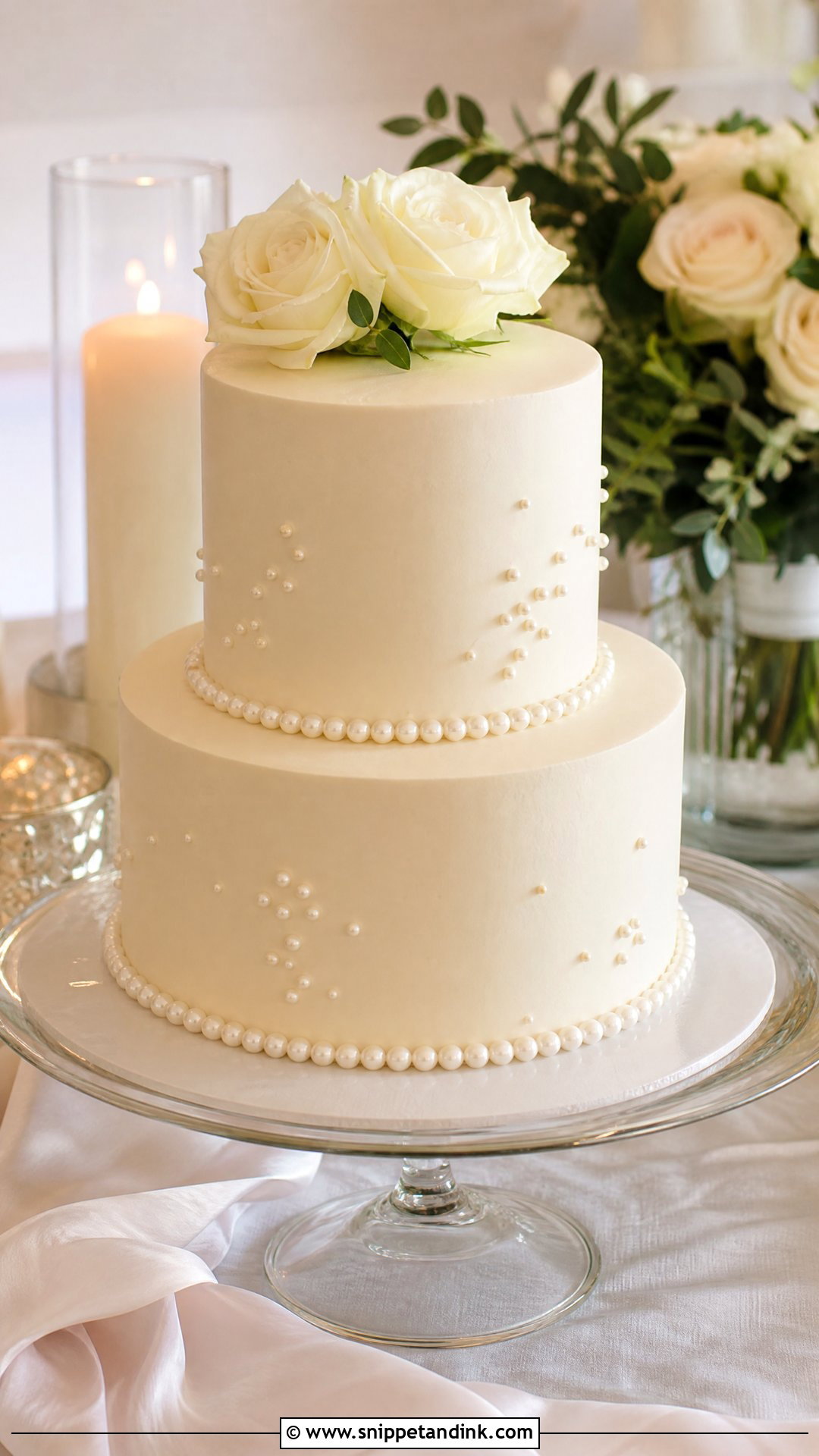
Pearls catch light softly on smooth white or ivory, which is why they work best on a clean finish rather than texture. I place them around each tier’s base, scatter them across the sides or set them in vertical lines for a tailored look, and every bead goes on by hand with tweezers. Keep flowers minimal so the pearls stay the focus. Satin dresses and pearl jewellery tie in naturally. Almond cake with vanilla buttercream and raspberry filling suits it well.
5. Round Vintage Wedding Cake
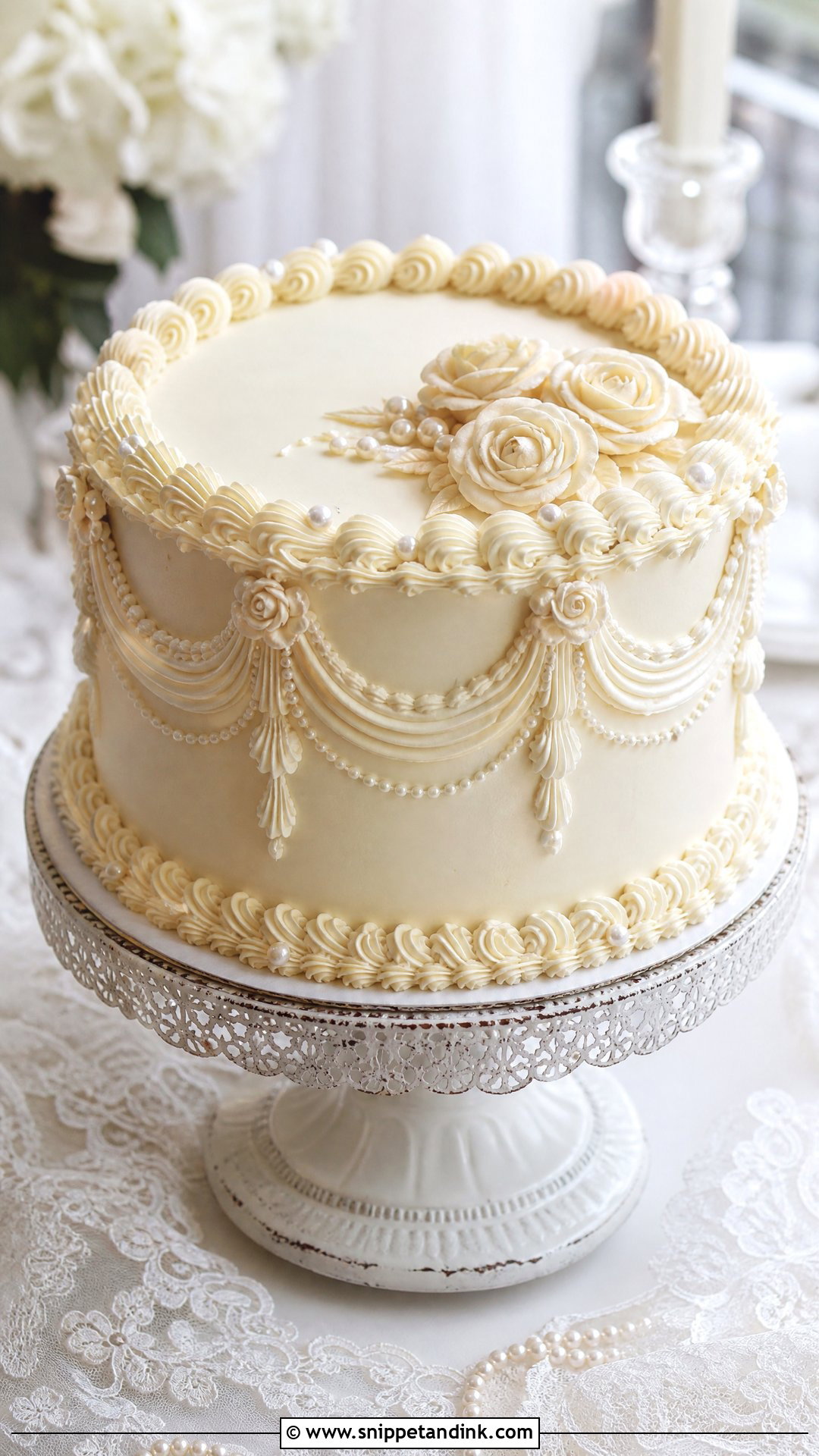
Vintage piping, with its shells, swags and layered borders, has come back hard. It looks best on a single tall round or a two-tier cake in ivory, blush or pale blue. Cherries on top push it toward retro; buttercream roses and pearls keep it bridal. I pipe these freehand, so no two borders are identical, which is exactly the appeal. Small weddings and romantic rooms suit it. In a warm marquee, piped buttercream detail softens and slumps, so plan for a cool room.
6. Round Lambeth Wedding Cake
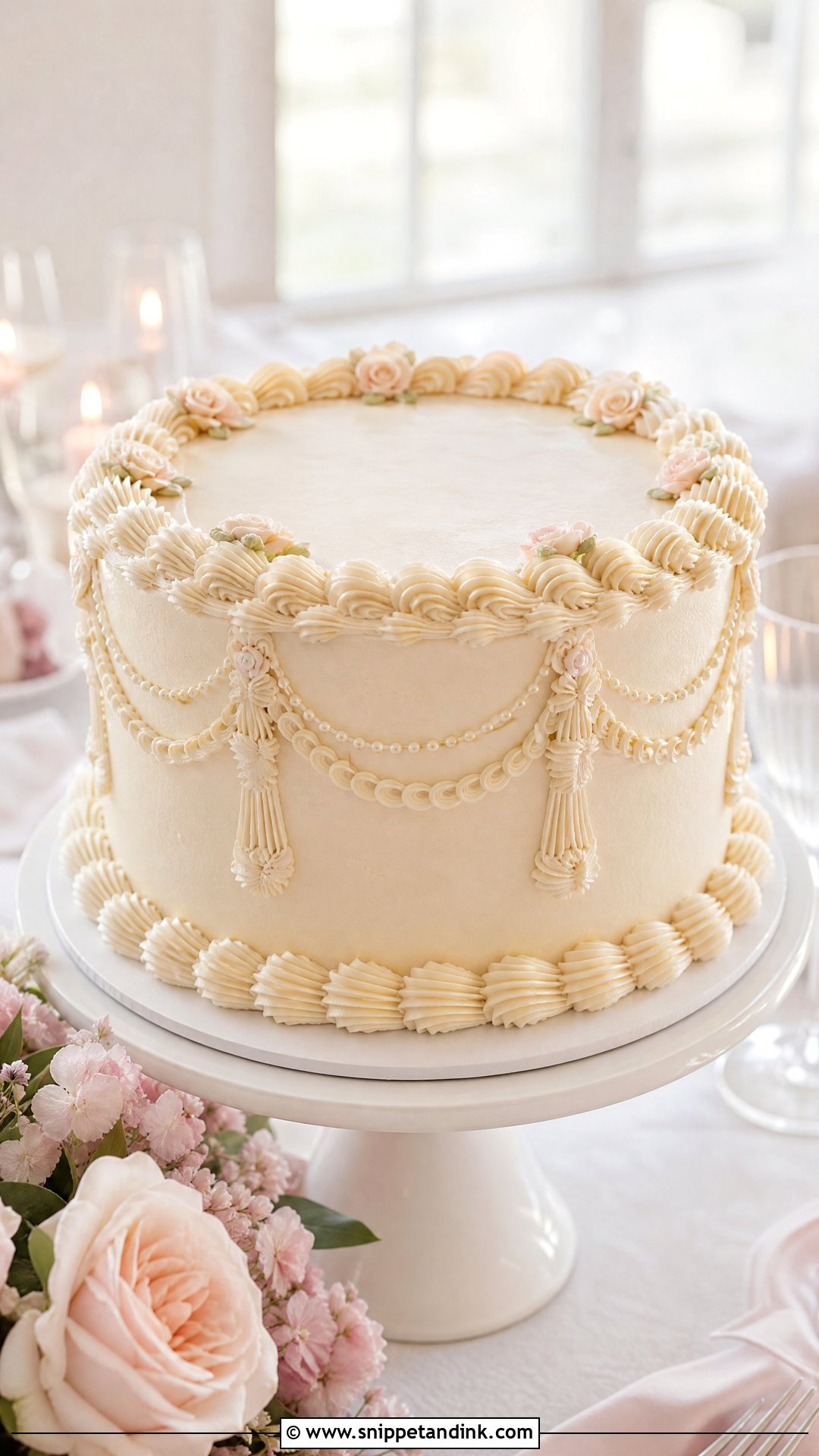
Lambeth takes vintage piping and doubles it: borders piped over borders until the pattern stands well proud of the cake. One tall round tier in this style is enough for a smaller wedding, and it’s the cake I’d suggest if you want boldness without colour. Ivory, soft pink, cream or pale sage all work. A firm buttercream or royal icing holds the layers; a soft meringue buttercream can sag under the weight. Fresh flowers, a small bow or pearls on top, and vanilla almond, chocolate raspberry or red velvet inside.
7. Round Naked Wedding Cake
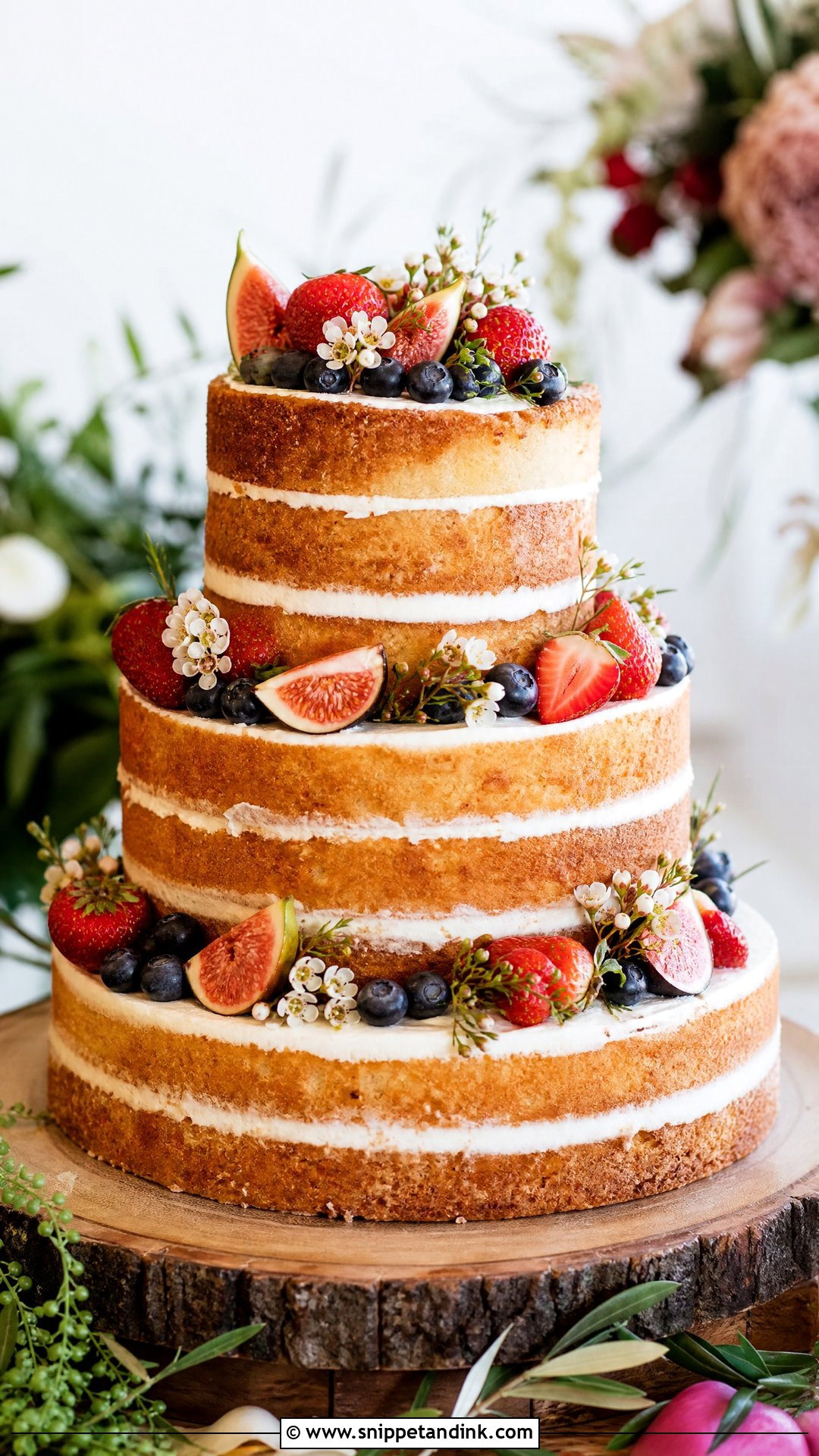
Strictly, a naked cake has no outer frosting at all, while the thin coat many bakers use is semi-naked. Either way, the sponge is on show, so the layers must be level and evenly filled. Berries, figs, herbs and small flowers suit gardens and outdoor weddings. Flavour matters more than usual because there’s nothing to hide behind: vanilla with strawberry, lemon cake with blueberry compote, or spice cake with cream cheese frosting. Exposed sponge dries out, so I finish these as close to delivery as possible.
8. Round Semi Naked Wedding Cake
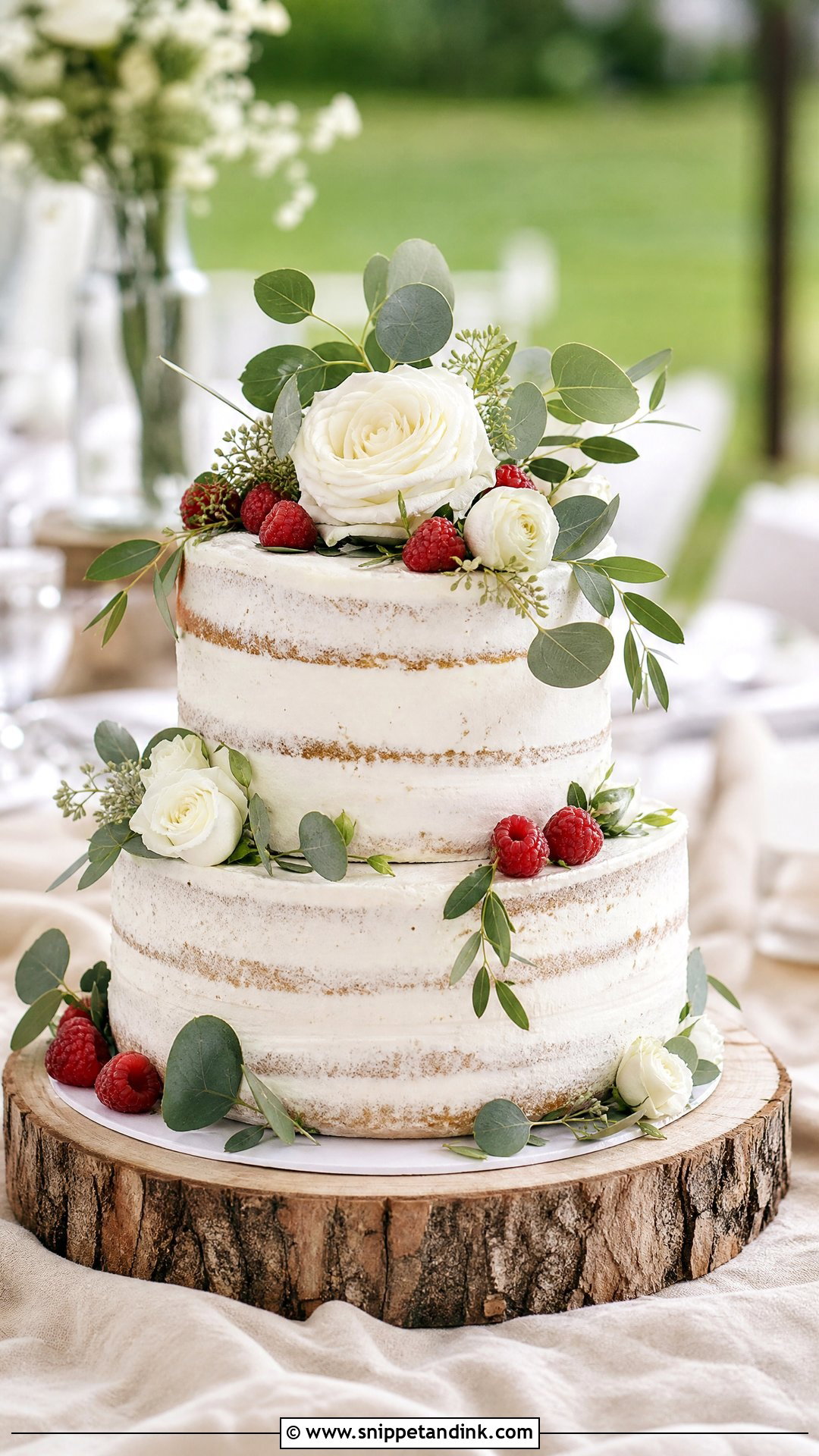
Semi-naked is my answer for most barn, vineyard and backyard weddings. A thin scraped coat smooths the sides and protects the sponge better than bare cake, while some layers still show. Greenery, small white flowers, berries or dried citrus slices finish it. Seasonal flavours make it feel thought through: lemon raspberry in spring, vanilla peach in summer, carrot with cream cheese frosting in autumn.
9. Round Gold Wedding Cake
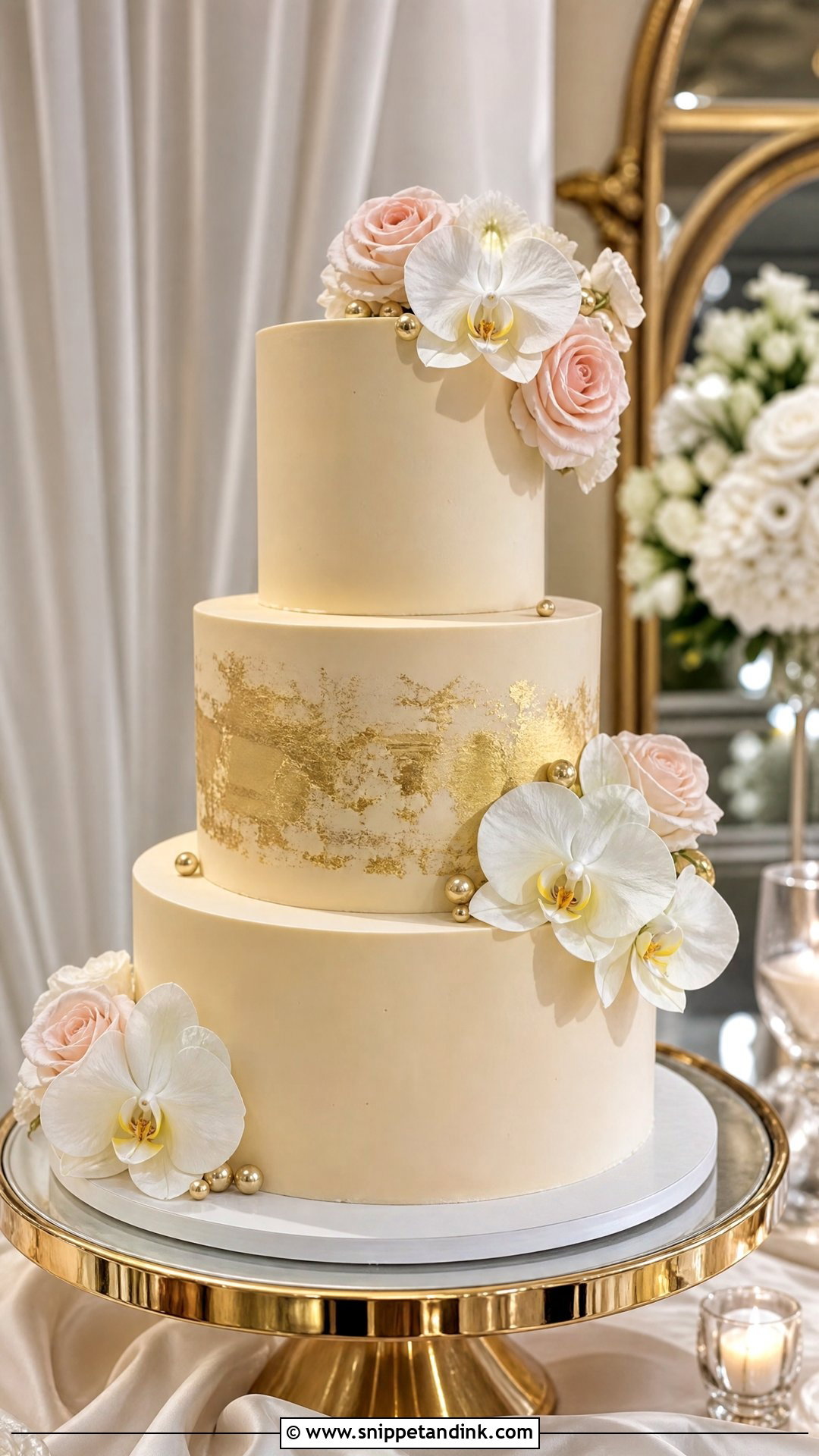
Gold works on a round cake at any height, from a single painted tier to a fine leaf edge. Leaf looks rich and uneven in a good way; brushed lustre looks softer. I pair it with ivory buttercream, white fondant, blush flowers or plain greenery so the cake isn’t busy. Candlelit ballrooms and evening receptions suit it. Gold leaf needs a firm, dry surface to stick to, so it sits better on fondant or chilled buttercream than on soft frosting. Vanilla champagne, caramel or almond with honey buttercream fit the mood.
10. Round Blush Wedding Cake
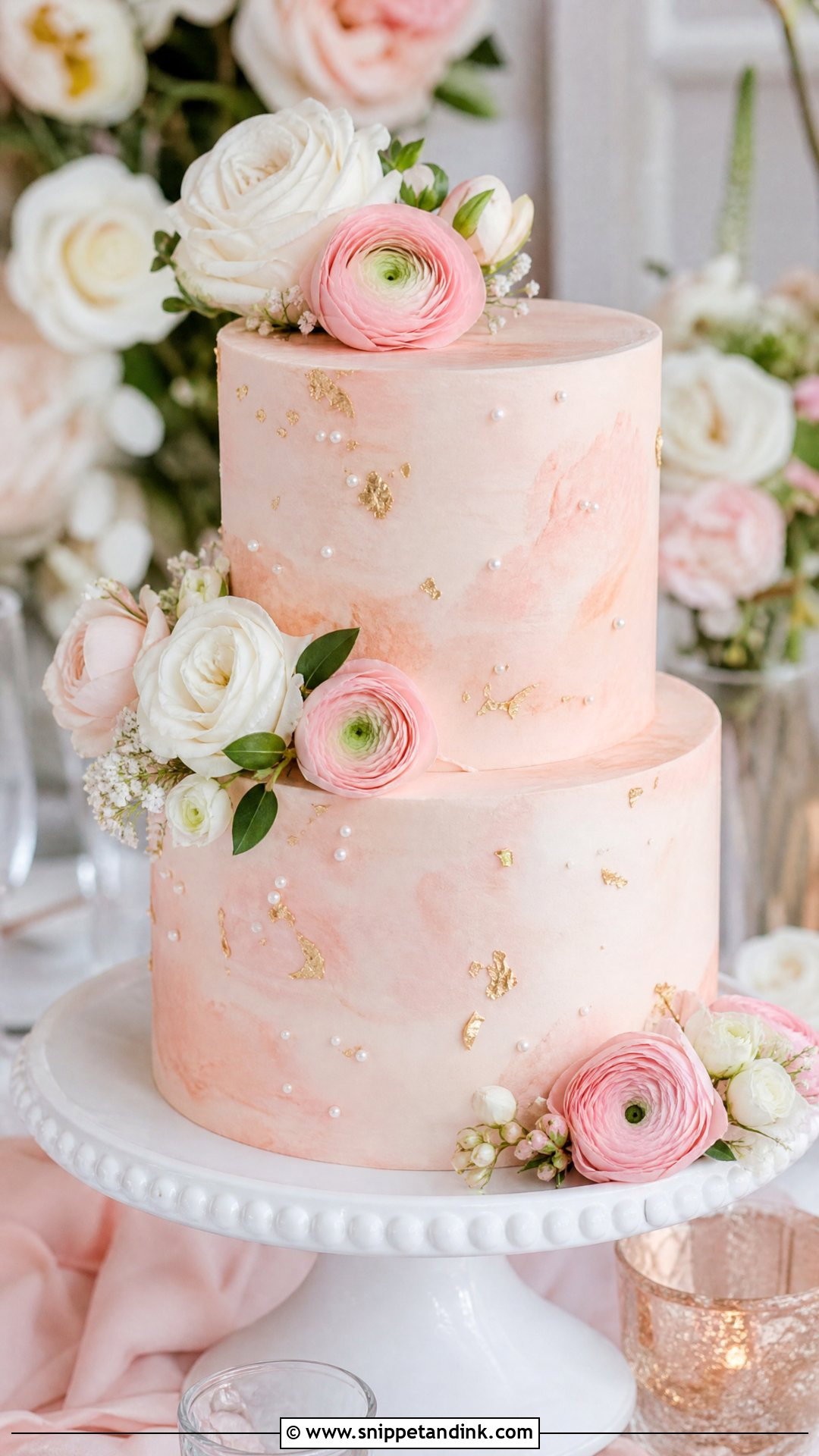
Blush can mean barely pink, dusty rose or a warm peach, and those are three different colours once they’re in icing. I mix a swatch from your bouquet or bridesmaid fabric and check it in daylight. Smooth buttercream, delicate piping or a watercolour finish all suit it, with white roses, pink ranunculus, pearls or a touch of gold. Spring weddings and gardens are the natural home. Strawberry champagne, vanilla rose, raspberry almond or white chocolate sit well with it.
11. Round Sage Green Wedding Cake
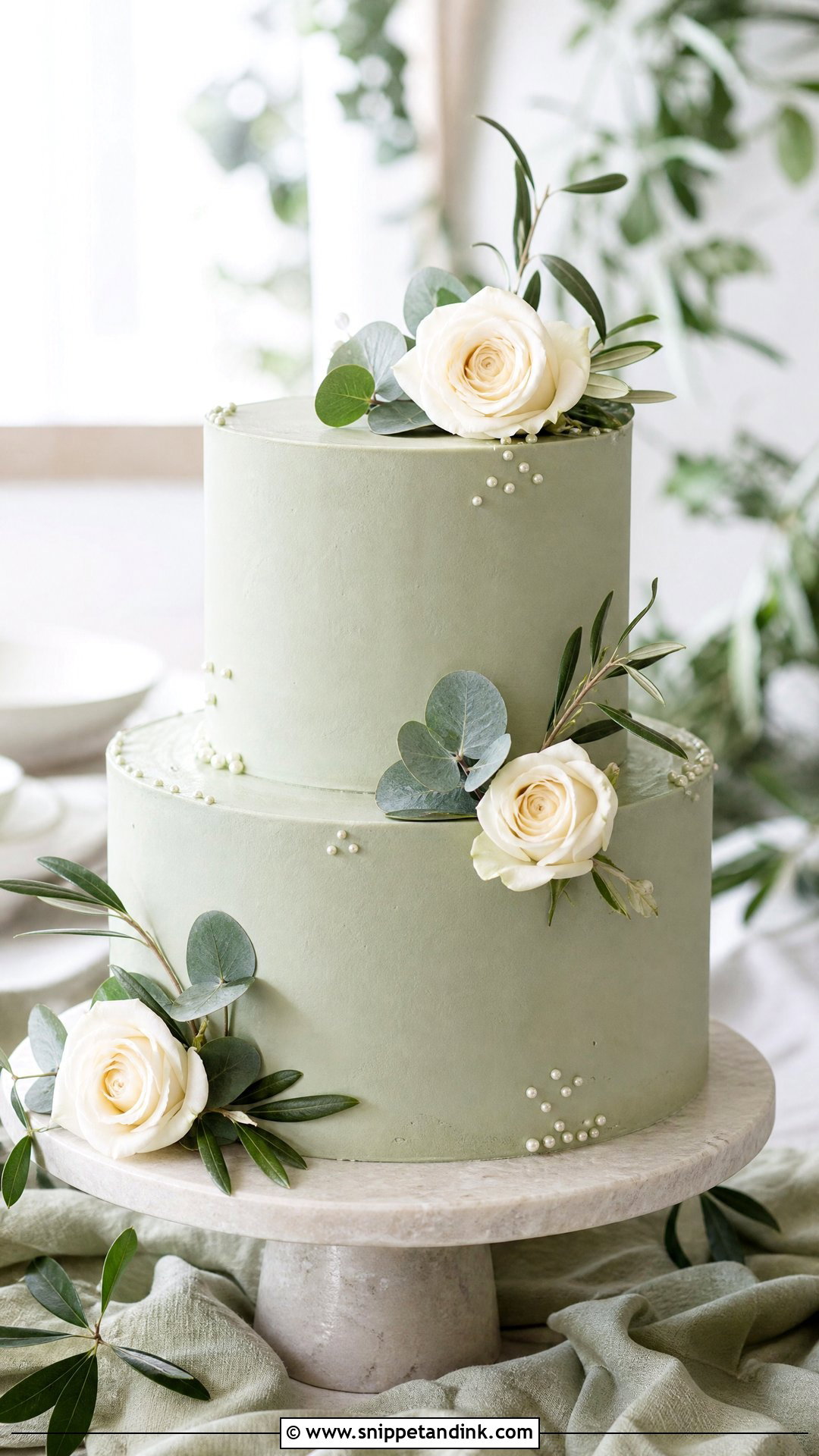
Sage is muted green, and a little goes a long way. One sage tier between ivory tiers often looks better than a whole sage cake. It sits beside eucalyptus, olive branches, ivory flowers and neutral tables. Smooth finishes look modern; textured ones look organic. Greenhouses, outdoor venues, barns and minimalist rooms suit it. Pistachio, vanilla bean or lemon with a herb-infused buttercream make the flavour match the colour.
12. Round Blue Wedding Cake
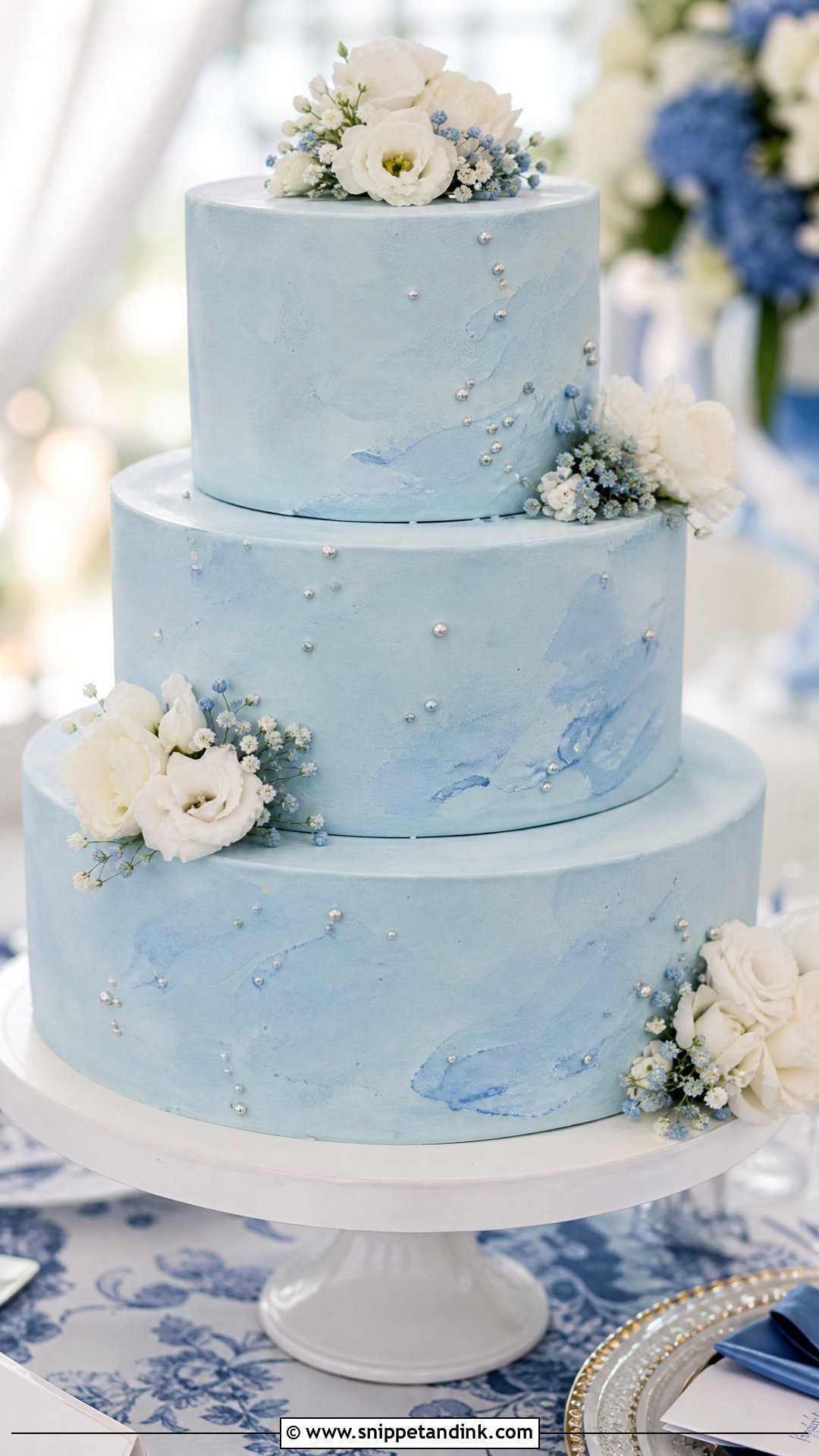
Pale blue, dusty blue and navy each change the cake’s mood. Pale blue reads romantic, dusty blue reads elegant, and navy reads formal. A blue base with white flowers is the safe route; watercolour shading, pearls or silver accents cool it further. Coastal and blue-and-white palettes suit it. Navy takes a lot of colouring, so I often use it on one tier or a ribbon band rather than the whole cake. Vanilla blueberry, lemon, almond or coconut fit.
13. Round Black And White Wedding Cake
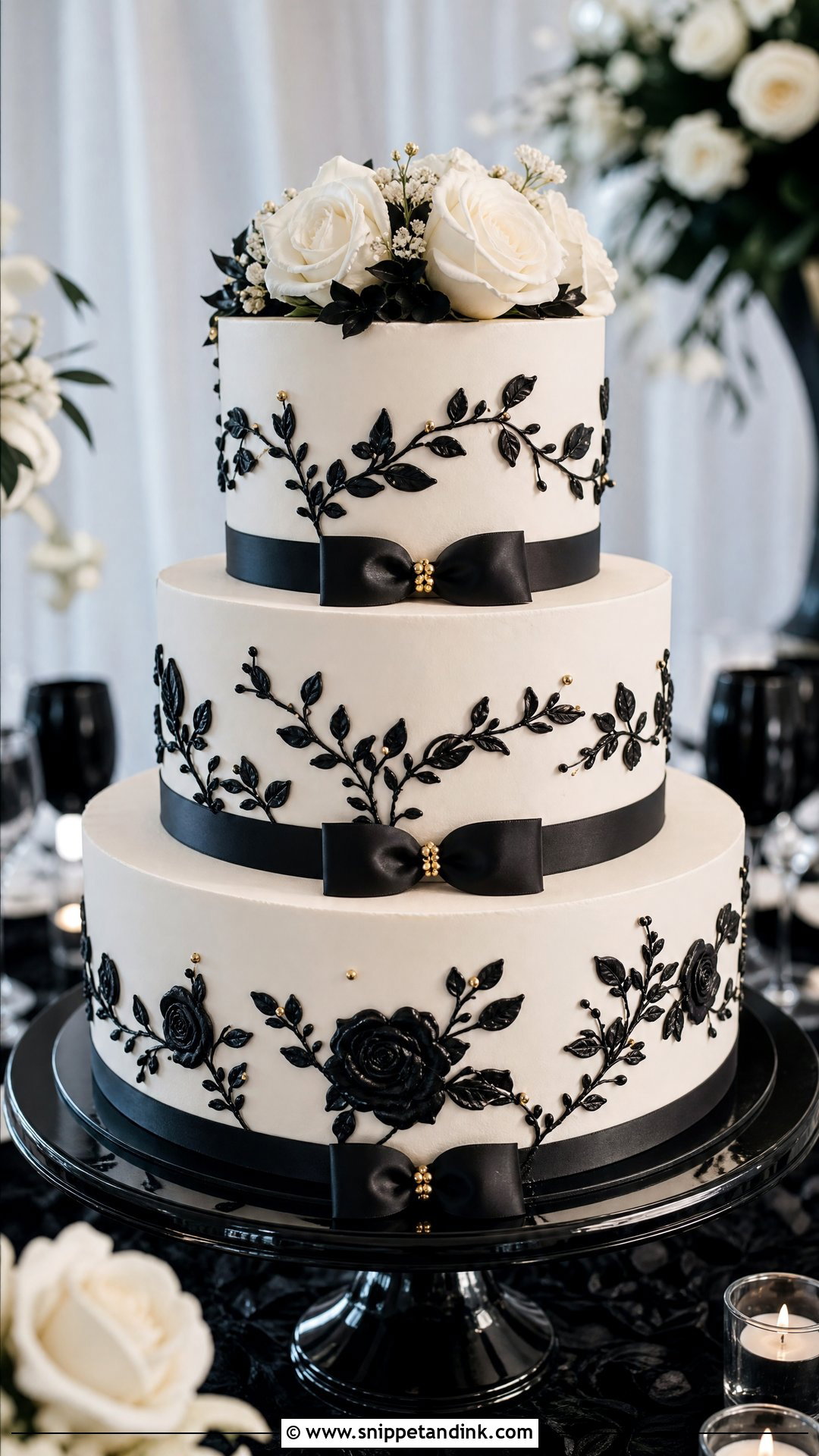
Black and white gives a cake a fashion edge, and a round shape stops it looking harsh. White tiers with black ribbon, black piping, delicate black florals or one black bottom tier are the main options. I keep black to details where I can; large areas of black icing need so much colouring they can stain teeth and taste bitter. White roses, anemones, pearls or a gold touch finish it. Dark chocolate with vanilla buttercream, cookies and cream or black cocoa cake carries the contrast inside.
14. Round Minimalist Wedding Cake
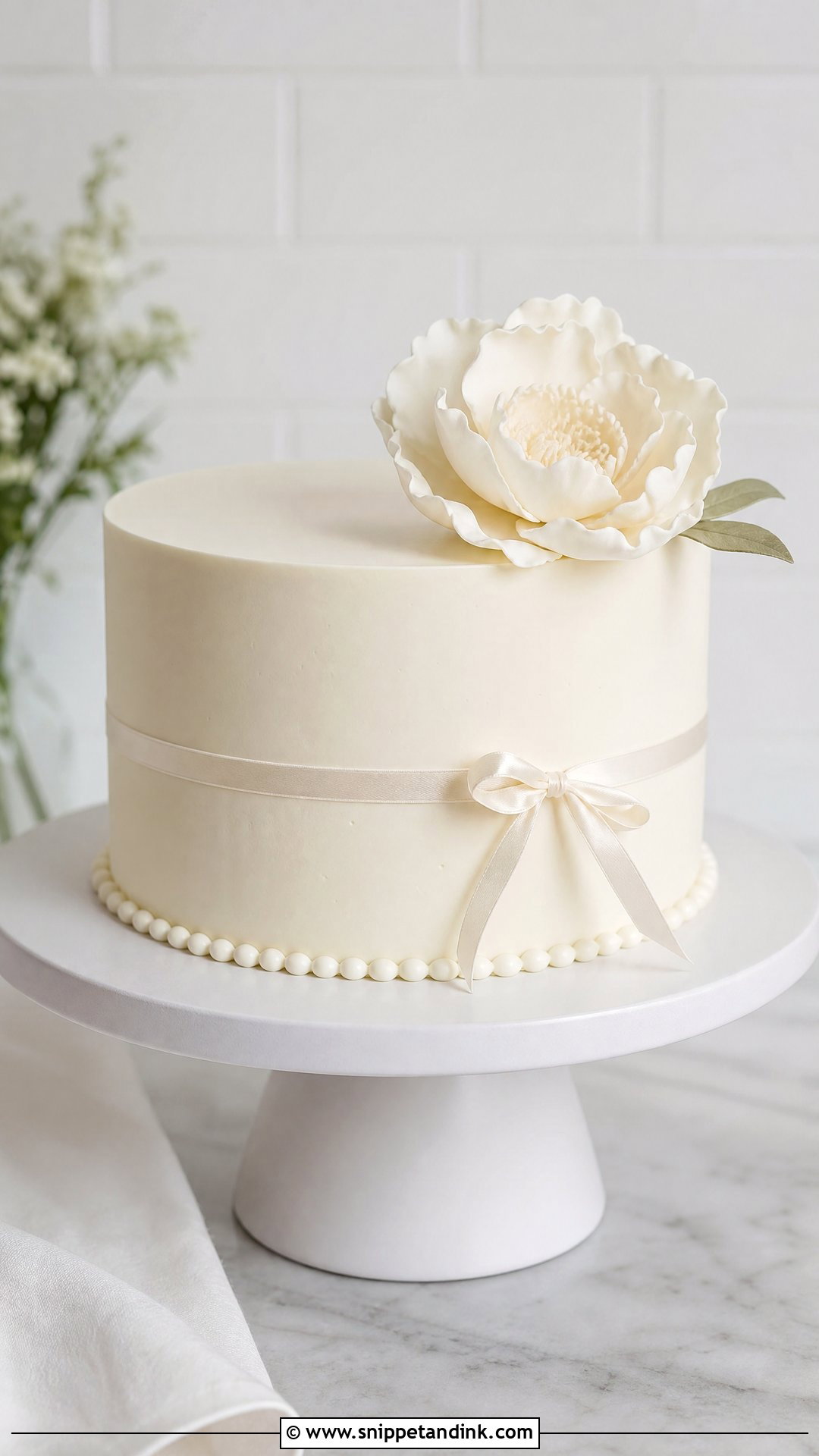
Minimal cakes are harder than they look, because there’s nothing to cover a dent, an air bubble or a wavy top edge. I spend longer smoothing these than decorating anything else on this list. Soft neutrals, a smooth finish and one decoration: a single sugar flower, a silk ribbon, a small cluster of blooms or a textured edge. Modern venues, courthouse weddings and small dinners suit it. Vanilla bean, lemon olive oil, almond or coconut keep the flavour as clean as the look.


15. Round Textured Buttercream Wedding Cake
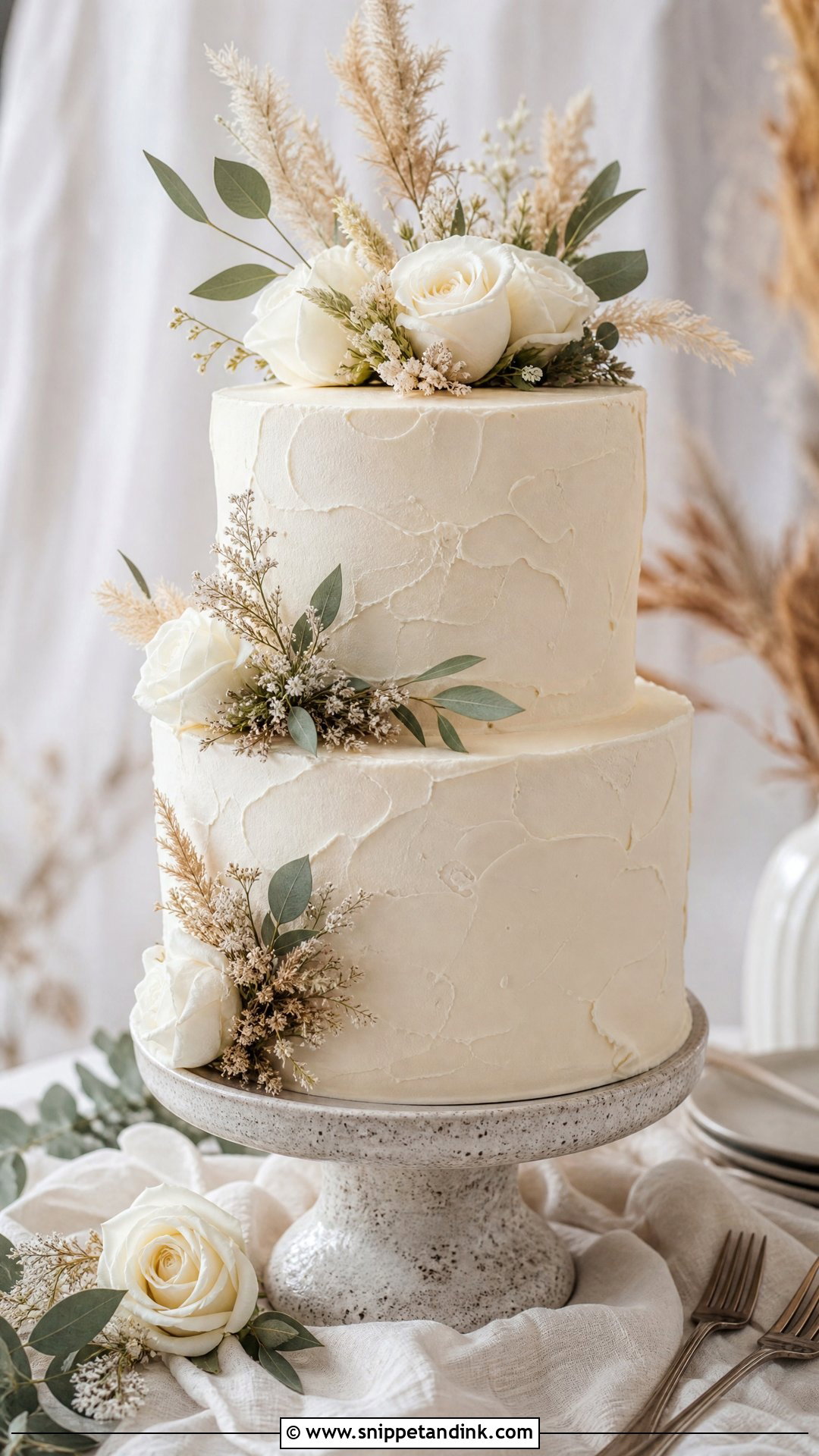
Texture hides the small scuffs every cake picks up in delivery, which is one reason I like it for outdoor or long-display weddings. Combed lines, brushed strokes, plaster-like sweeps or hand-swept ridges catch light and make even a white cake interesting. Fresh flowers, dried grasses or fruit can sit on it, or nothing at all. Boho, rustic, garden and contemporary rooms all suit it. The flavours I’m asked for most under it are vanilla bean, lemon elderflower, almond raspberry and chocolate espresso.
16. Round Ruffle Wedding Cake
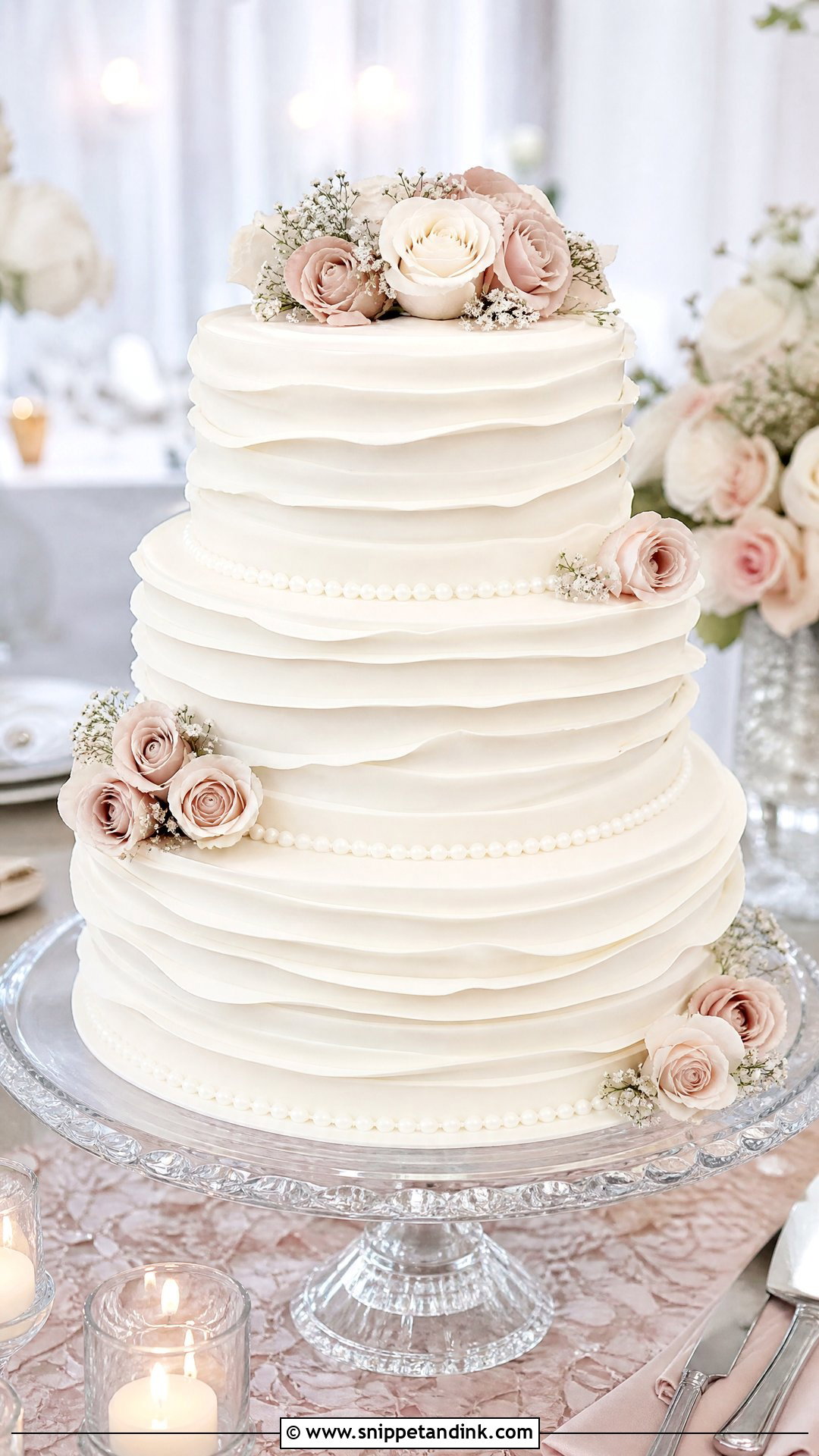
Ruffles look like fabric, and they behave differently depending on what they’re made of. Fondant ruffles are thin frills attached one row at a time; they hold their shape but add weight. Buttercream ruffles are piped with a petal tip and taste better, but soften quickly in warmth. A full cake of ruffles, one ruffled tier or a ruffled base all work. White and ivory are classic; blush or champagne ruffles look softer still. Roses, orchids or pearls finish it, with vanilla almond, champagne, coconut or white chocolate raspberry inside.
17. Round Pressed Flower Wedding Cake
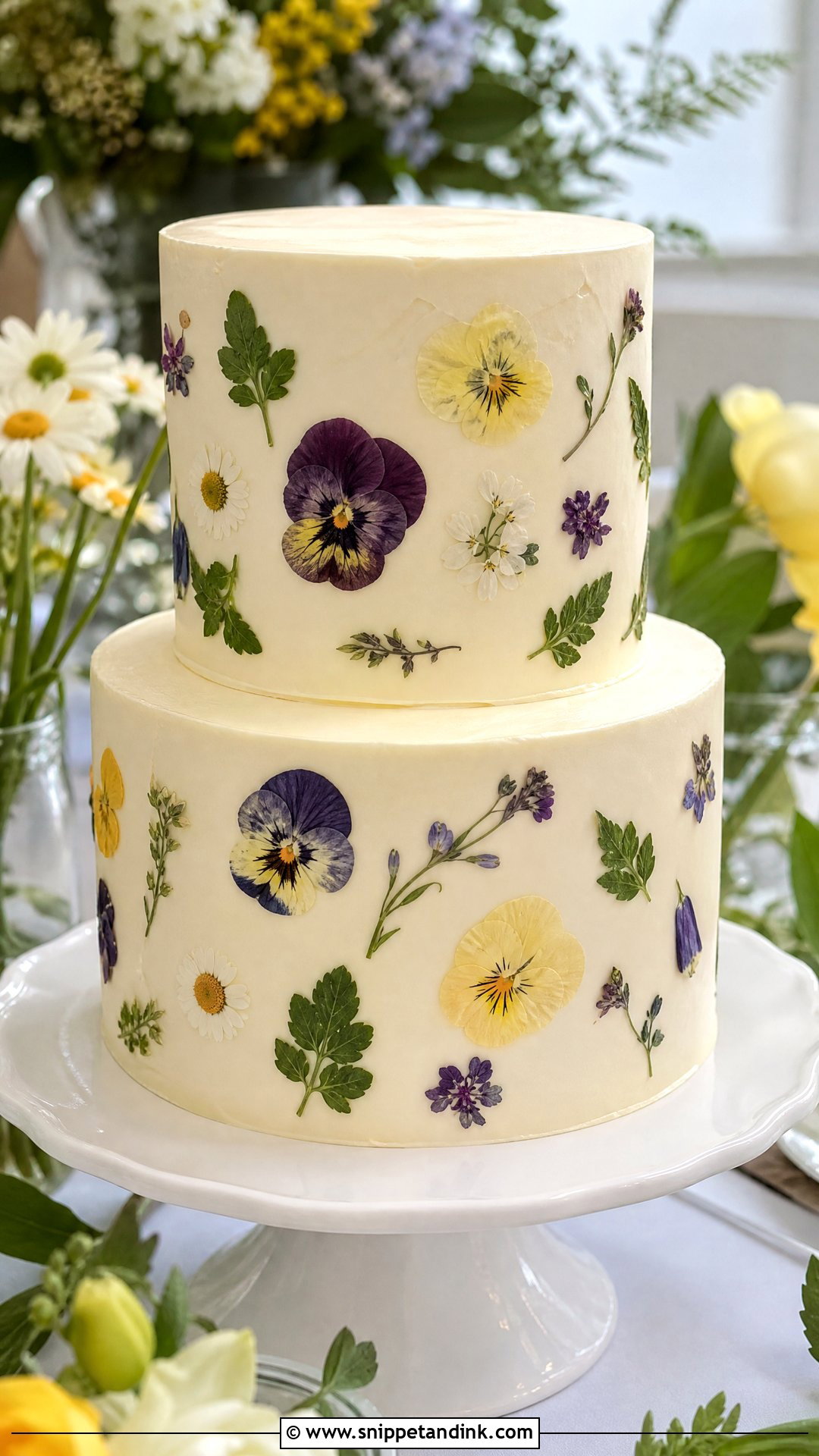
Pressed flowers look delicate because they are. They’re laid onto the icing by hand, and on moist buttercream they can darken or curl over a long day, so I apply them as late as possible or onto a firmer surface. Only flowers grown for eating belong on the cake. A pale ivory or white background makes the colours stand out. Spring weddings, gardens and outdoor receptions suit them. Lemon lavender, vanilla honey or elderflower cake complements the botanical look.
18. Round Fruit Wedding Cake
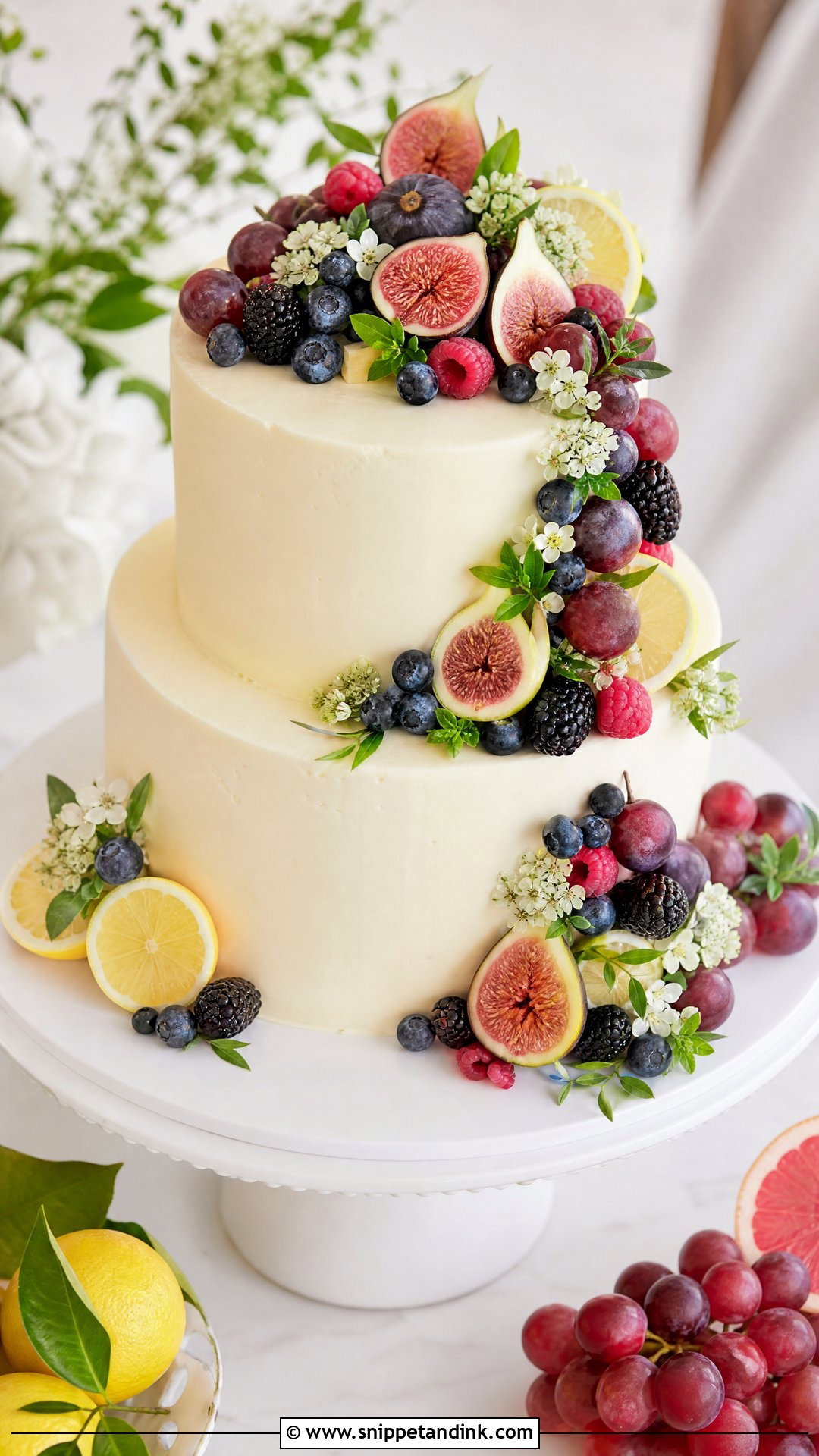
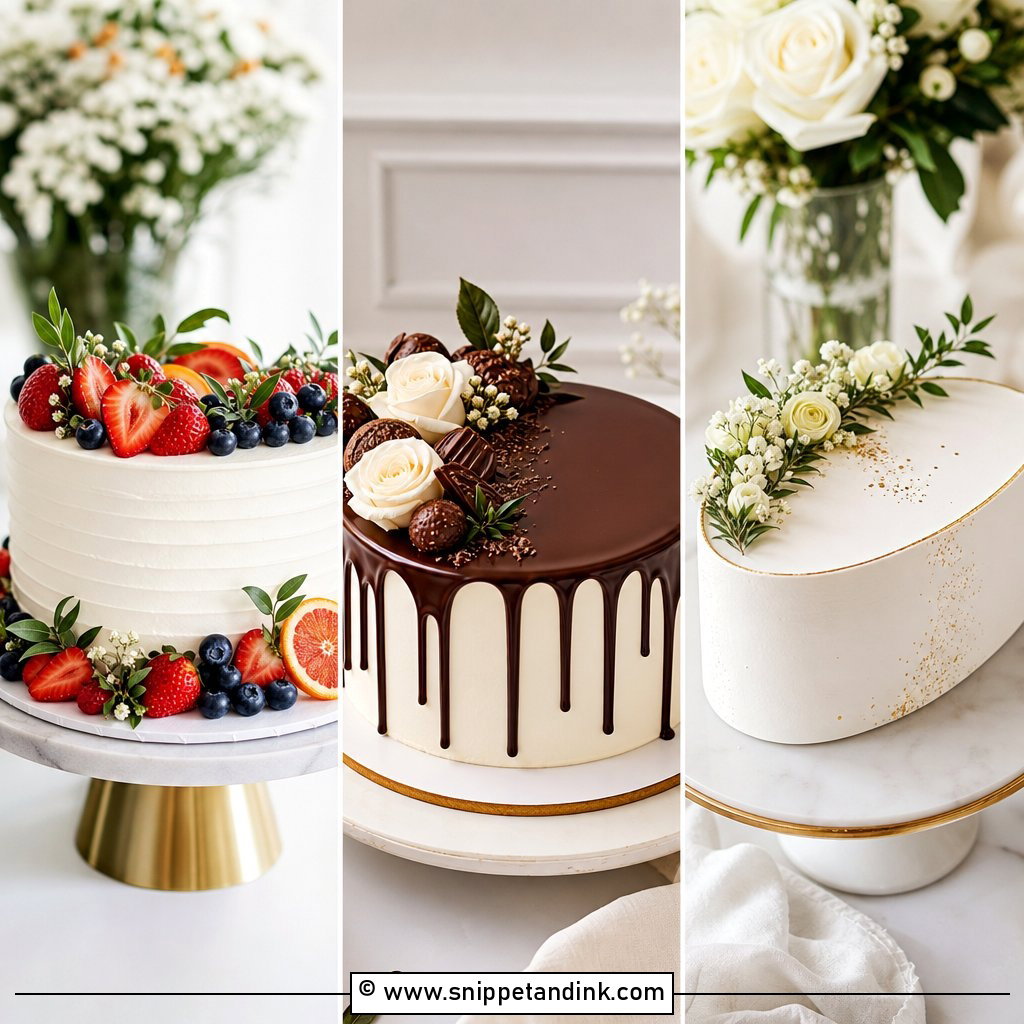
Fruit makes a cake look generous, but cut fruit leaks juice and browns. Whole berries, cherries, grapes and figs hold best; sliced pears and citrus need adding on site. Figs, berries, citrus, grapes, cherries or pears can sit on top, trail down a side or fill gaps between tiers. Summer weddings, outdoor receptions and farm-to-table menus suit it. Keep the frosting simple so the fruit looks clean. Vanilla with berry filling, lemon with curd or almond with apricot preserves all work.
19. Round Boho Wedding Cake
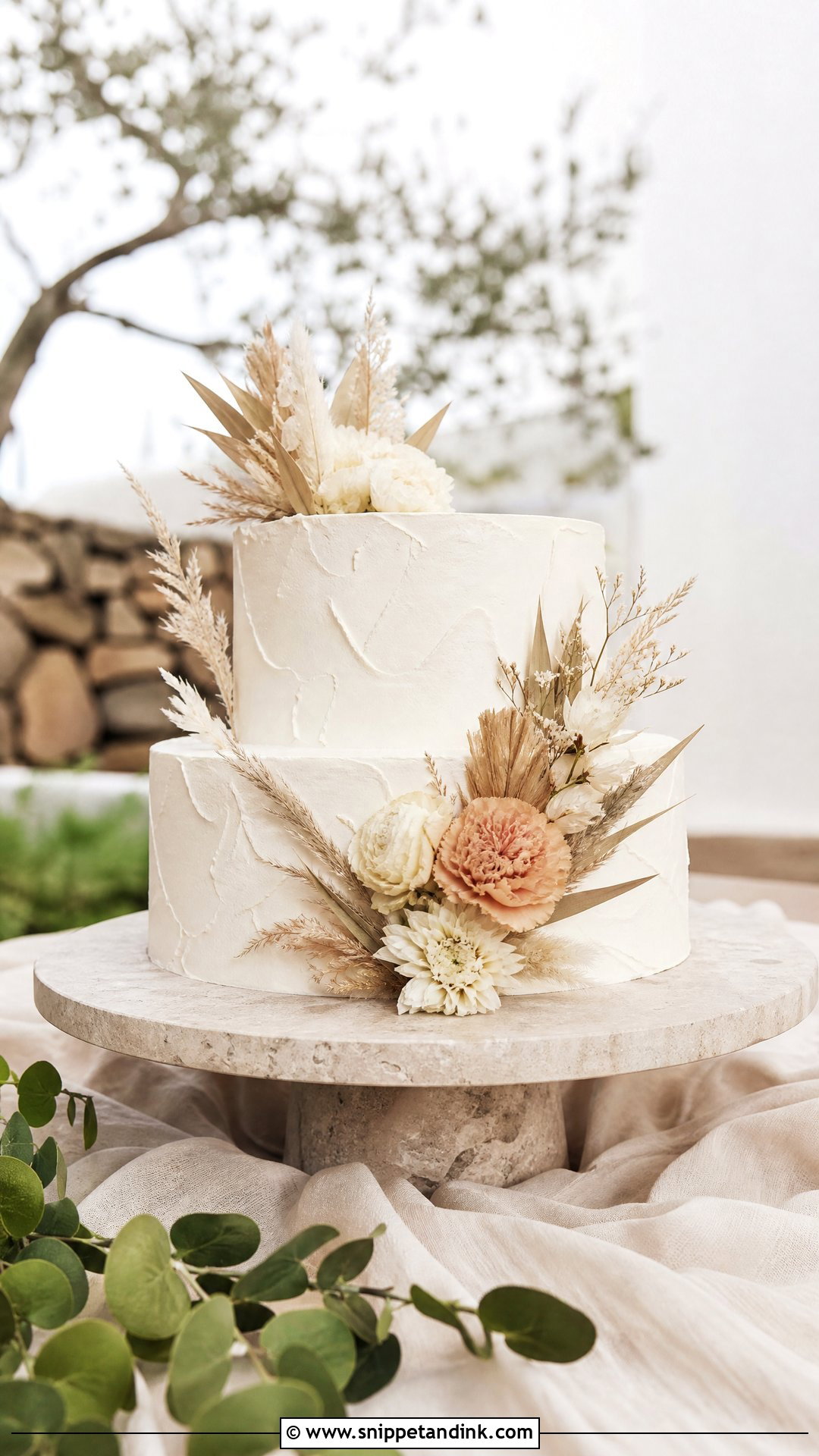
Boho cakes mix texture and earthy colour: ivory buttercream, dried grasses, small flowers, pampas-style accents and warm neutrals. Dried grasses shed, so I seal them in food-safe wrap where they touch the cake, or keep them to the stand. A semi-naked finish, brushed buttercream or matte fondant all suit it. Flowers in terracotta, beige, cream or muted peach tie it to the palette. Honey almond, chai spice, vanilla caramel or lemon thyme match the warmth. Tents, outdoor venues and desert settings suit it.

20. Round Rustic Wedding Cake
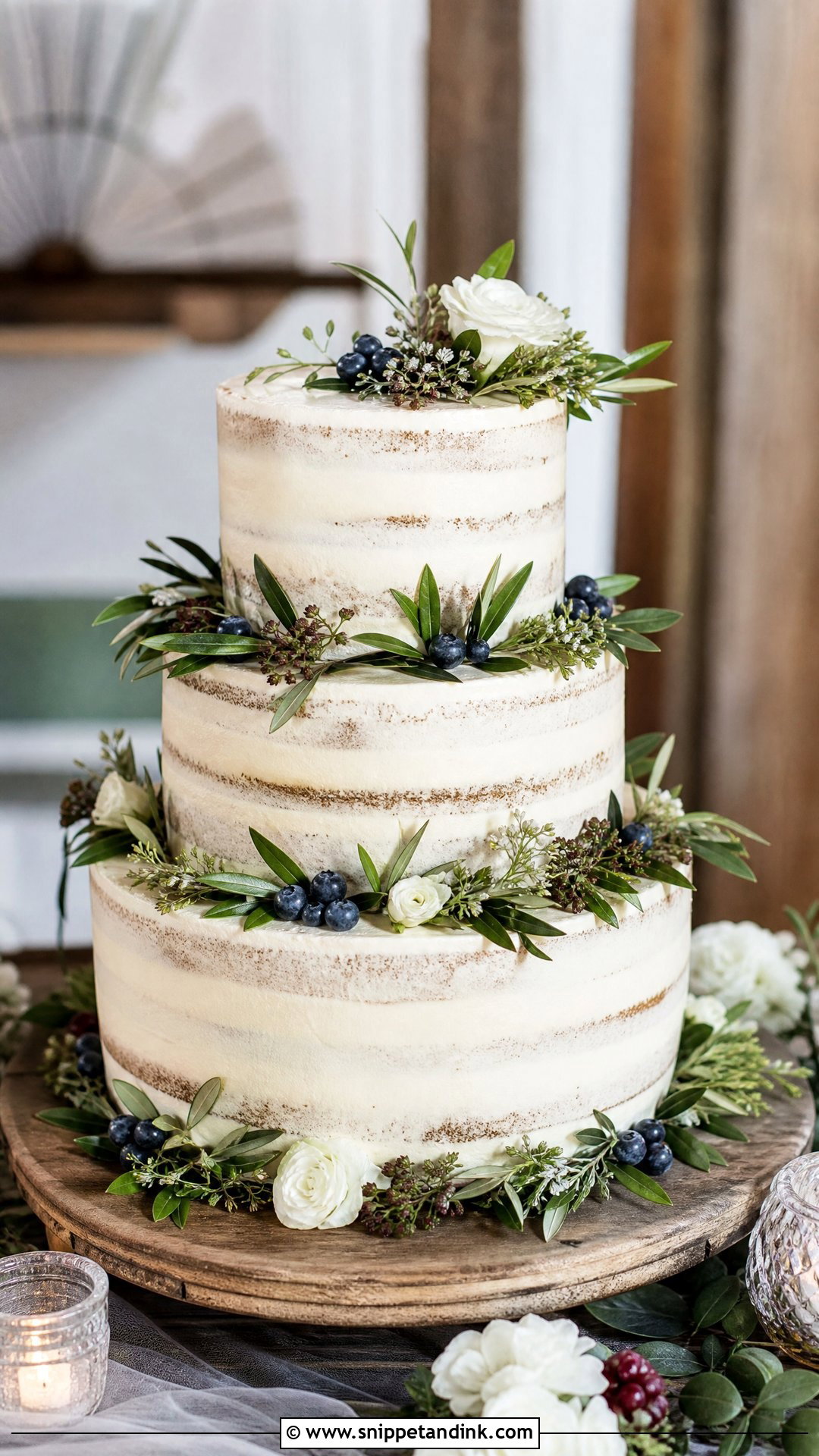
Rustic is about relaxed decoration, not a careless cake. Buttercream texture, exposed layers, fresh greenery, berries or small white flowers, all arranged a little asymmetrically, suit barns, farms, lodges and backyards. Underneath, the tiers still need dowels and level layers. A wooden stand grounds the display. Carrot, vanilla bean, spice, chocolate and lemon berry are the flavours that fit, and the result should feel homemade in the warmest sense while holding up like a professional cake.
21. Round Garden Wedding Cake
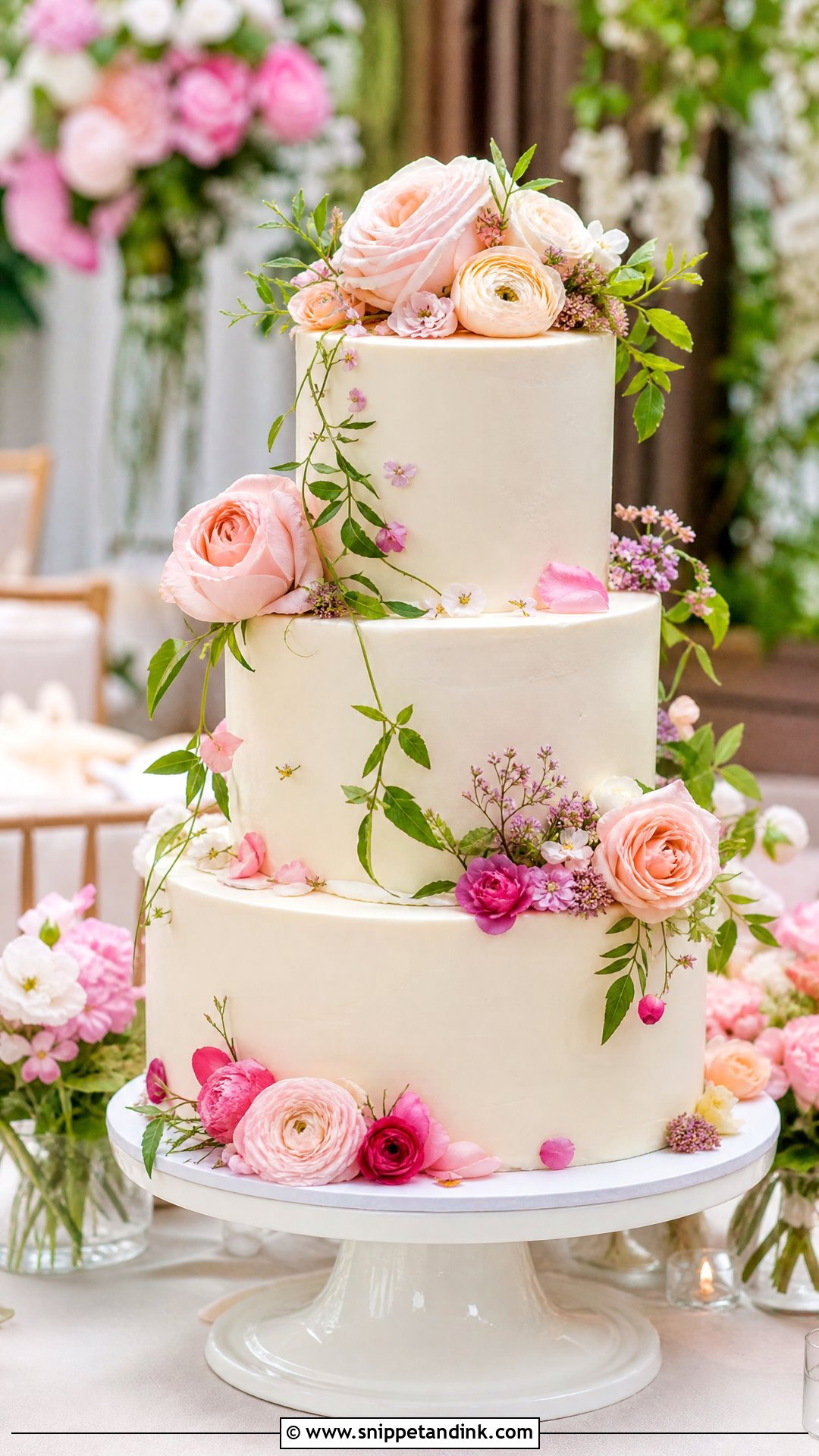
Garden cakes borrow their height from the flowers rather than the tiers. Soft buttercream, fresh blooms, trailing greenery and pastel colour give it movement. Roses, sweet peas, ranunculus, pansies and edible petals create the effect, and I ask the florist to hold back stems from the same order so the cake matches the tables. Spring and summer ceremonies, greenhouses and outdoor receptions suit it. Lemon elderflower, vanilla raspberry, strawberry or lavender honey keep the flavour light.
22. Round Beach Wedding Cake
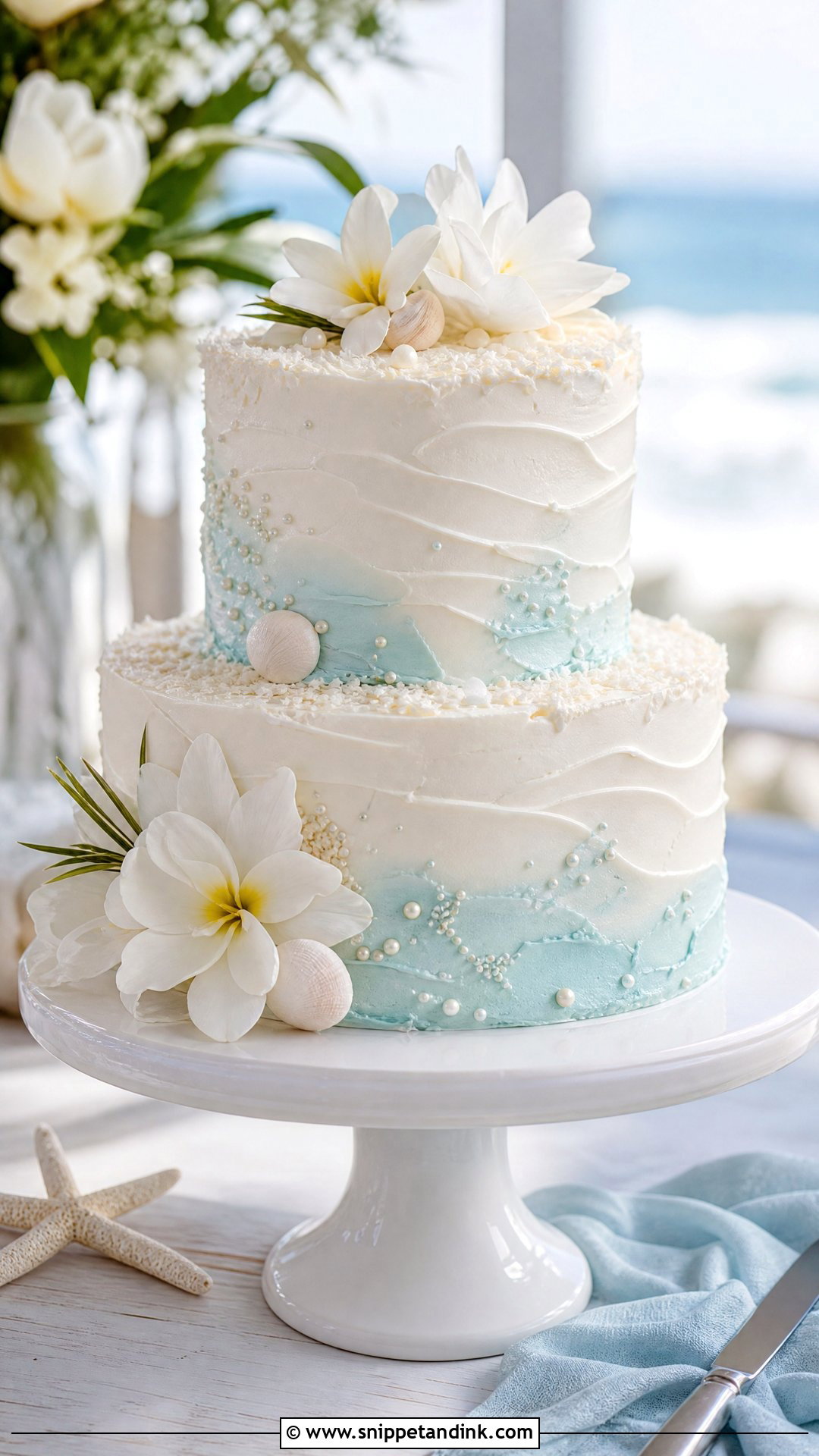
Sun and salt air are hard on a cake, so a beach round should be designed to survive first. Soft white or ivory frosting with pale blue accents, pearls and tropical flowers looks right; a subtle wave texture or fine coconut flakes adds a coastal touch. Put shells on the table, not on the cake. I’d only send buttercream to a beach reception if it can stay in shade until it’s cut. Coconut, key lime, lemon, pineapple or vanilla with a rum-flavoured filling suit the setting.
23. Round Two Tier Wedding Cake
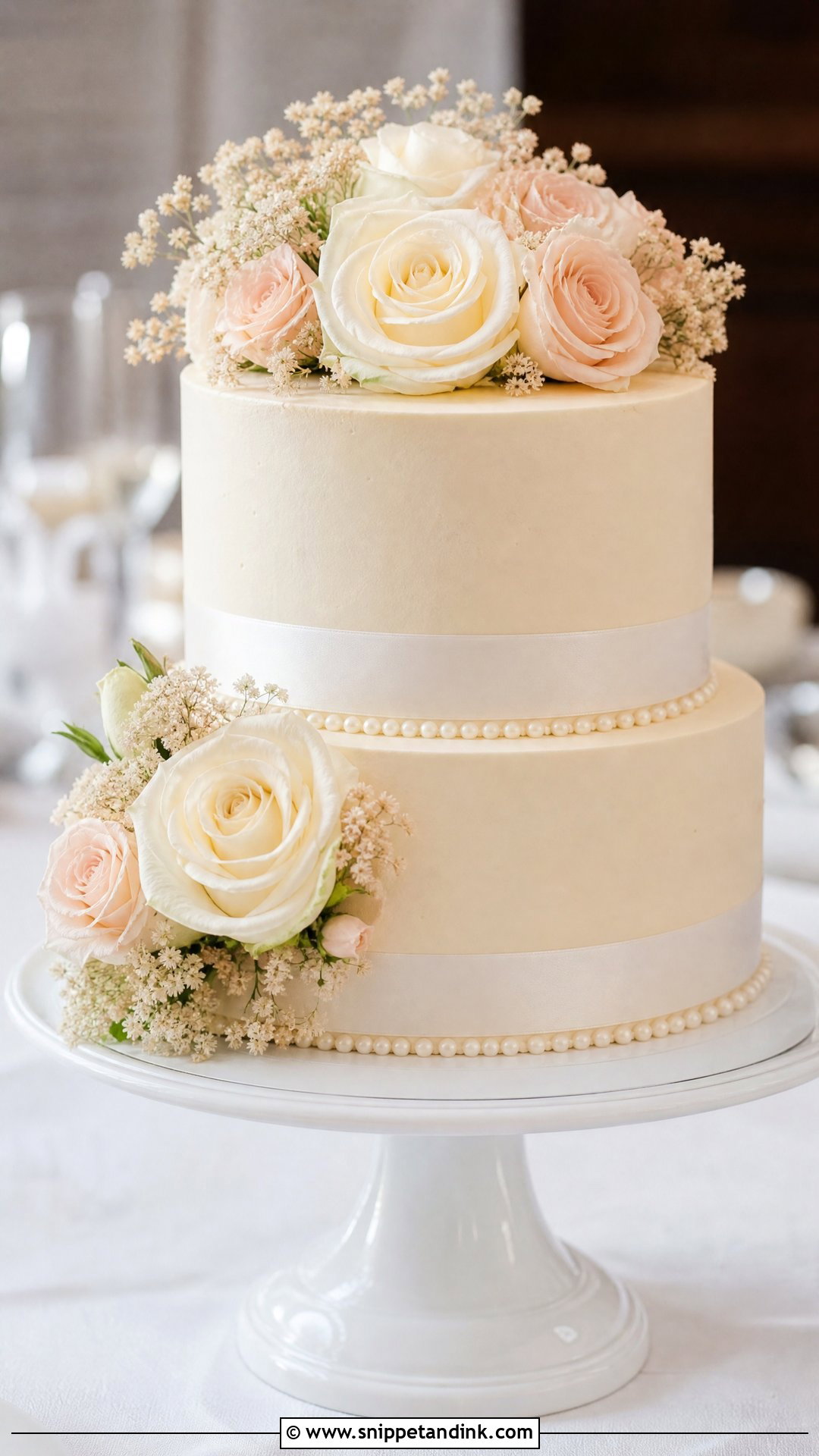
Two round tiers suit small and medium weddings and keep cost sensible. The bottom tier carries the visual weight, and the top tier can be cut, kept or treated purely as decoration. Smooth buttercream, fresh flowers, a ribbon wrap or a pearl border all look right. I often make one tier coloured and one plain for contrast. Vanilla, almond, chocolate, lemon and red velvet all work, and a taller bottom tier makes two tiers look far grander.
24. Round Three Tier Wedding Cake
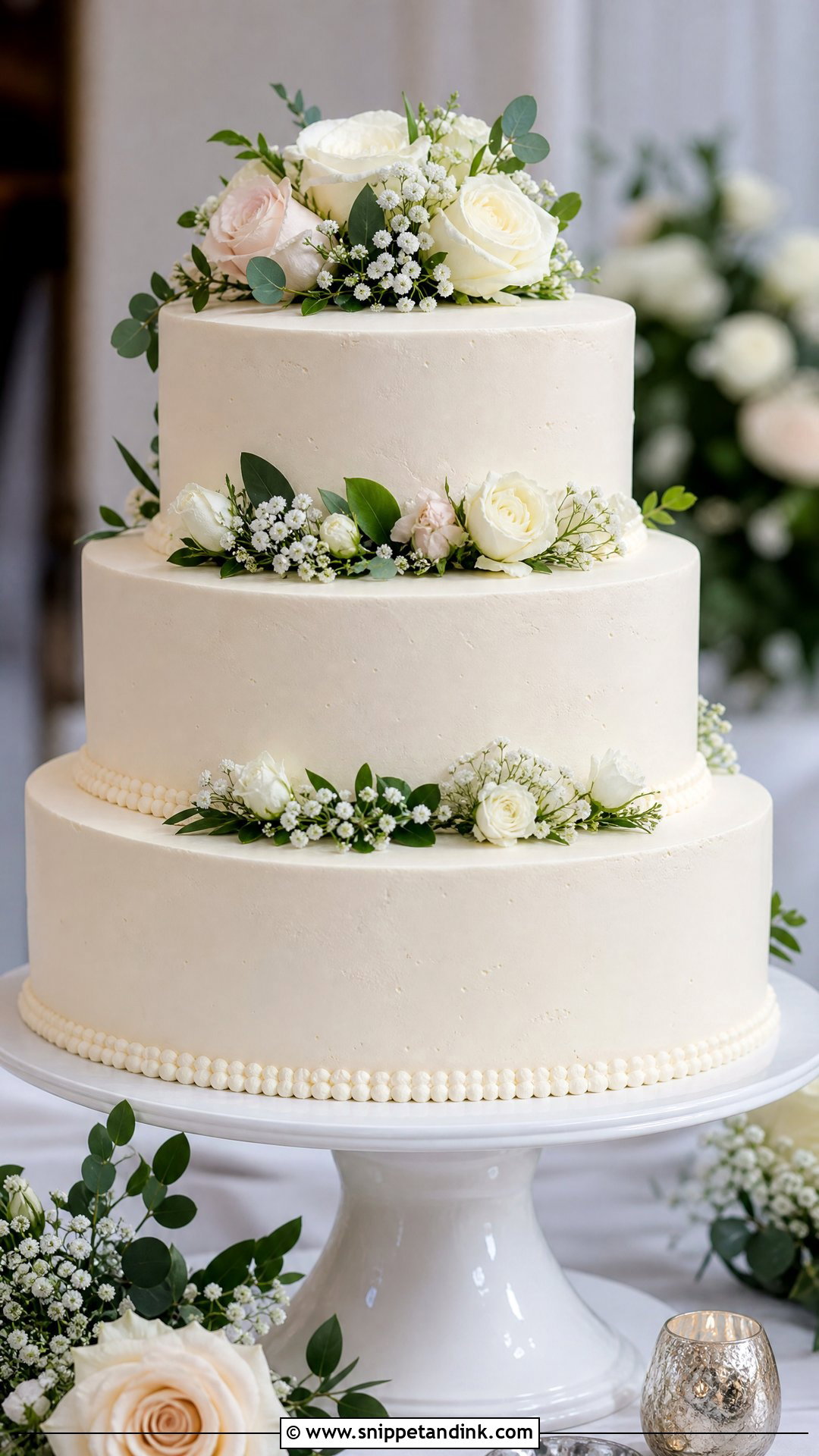
Three round tiers is the shape most people picture when they hear the words wedding cake. It suits plain or decorated designs, flowers between tiers, texture or a mixed finish, and it holds its own as a centrepiece in a larger room. Different flavours per tier give guests choice, perhaps vanilla raspberry, chocolate ganache and lemon elderflower. I’d just make sure the caterer knows which tier is which before they start cutting.
25. Round Single Tier Wedding Cake
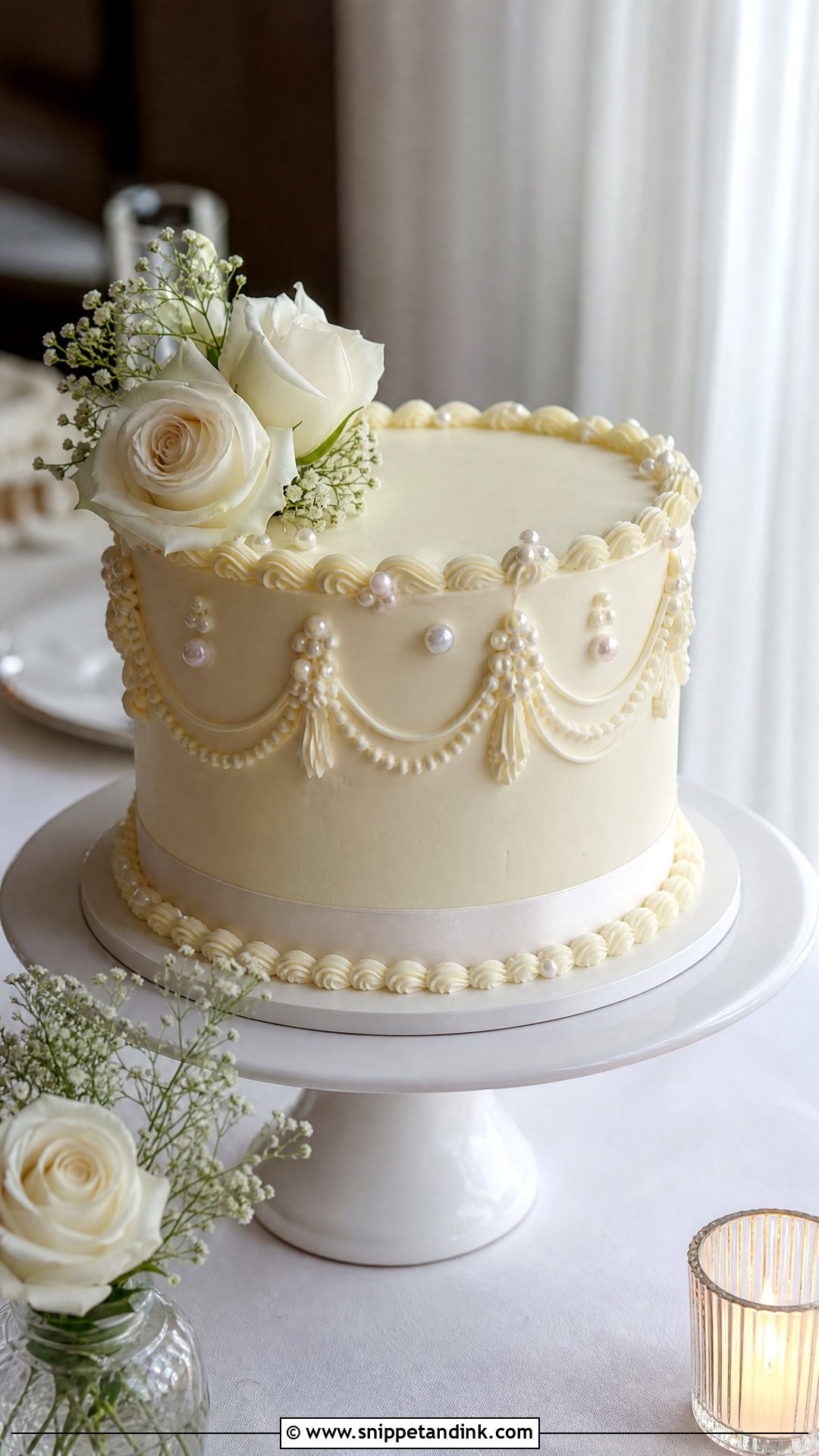
One round tier is plenty for micro weddings, elopements and courthouse ceremonies, or when other desserts carry the servings. I usually make it taller than a standard tier so there’s enough side for decoration: vintage piping, fresh flowers, texture, fruit or a smooth minimal finish. It’s an easy cake to photograph during the cut. Choose a flavour you genuinely love, since there’s only one. Almond raspberry, chocolate, lemon or vanilla bean are dependable.
26. Round Tall Wedding Cake
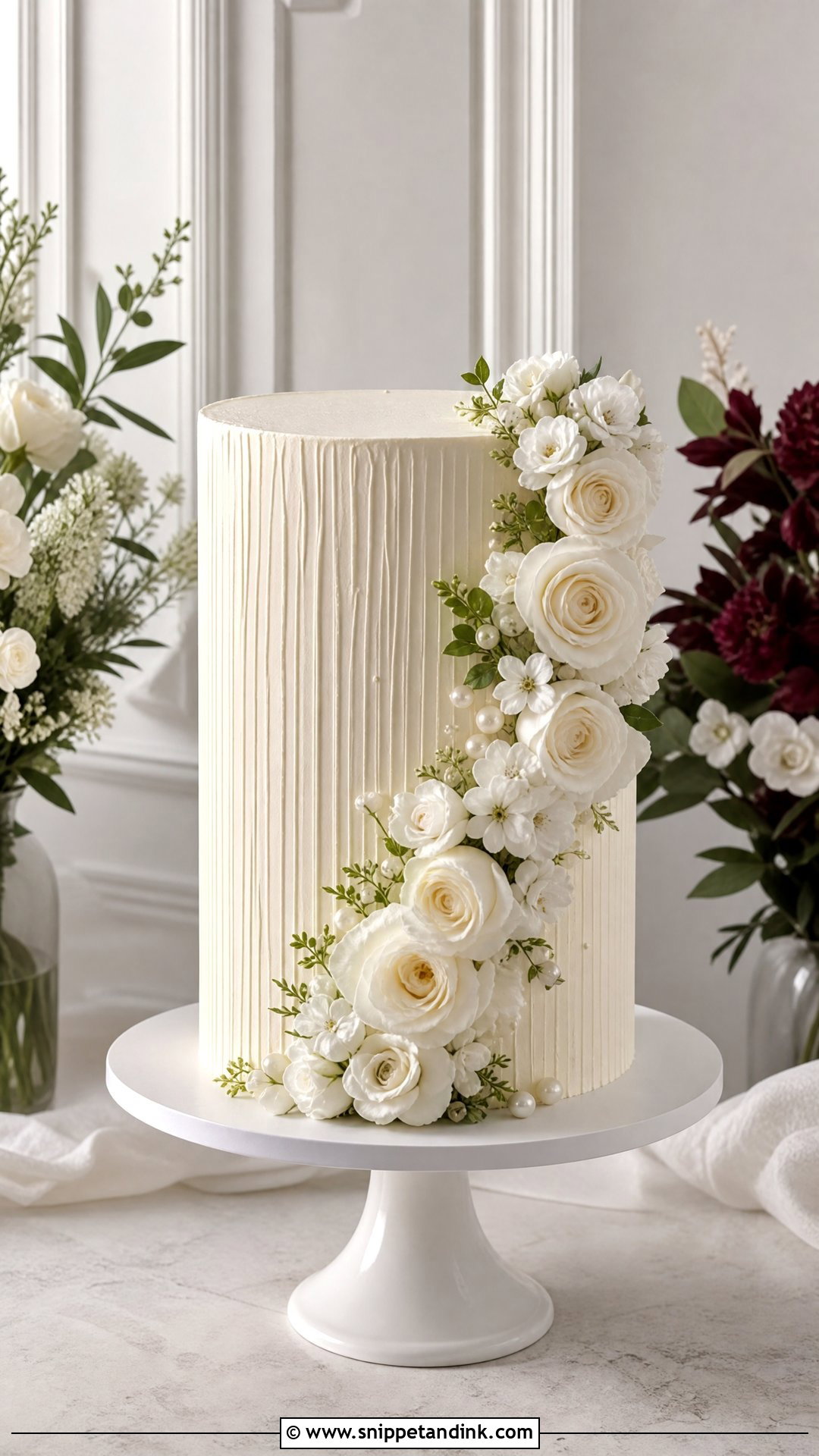
Tall single rounds, often double-height tiers, look modern and give a lot of presence for a small guest list. They’re two cakes stacked on a board inside one covering, so they need internal supports like any tiered cake. Vertical texture, cascading flowers, pearls or a ribbon at the base suit the extra side surface. Inside, chocolate mousse, vanilla strawberry, red velvet or coconut cream give a slice with many visible layers. Mousse fillings need to stay chilled, so tell your venue.
27. Round Watercolor Wedding Cake
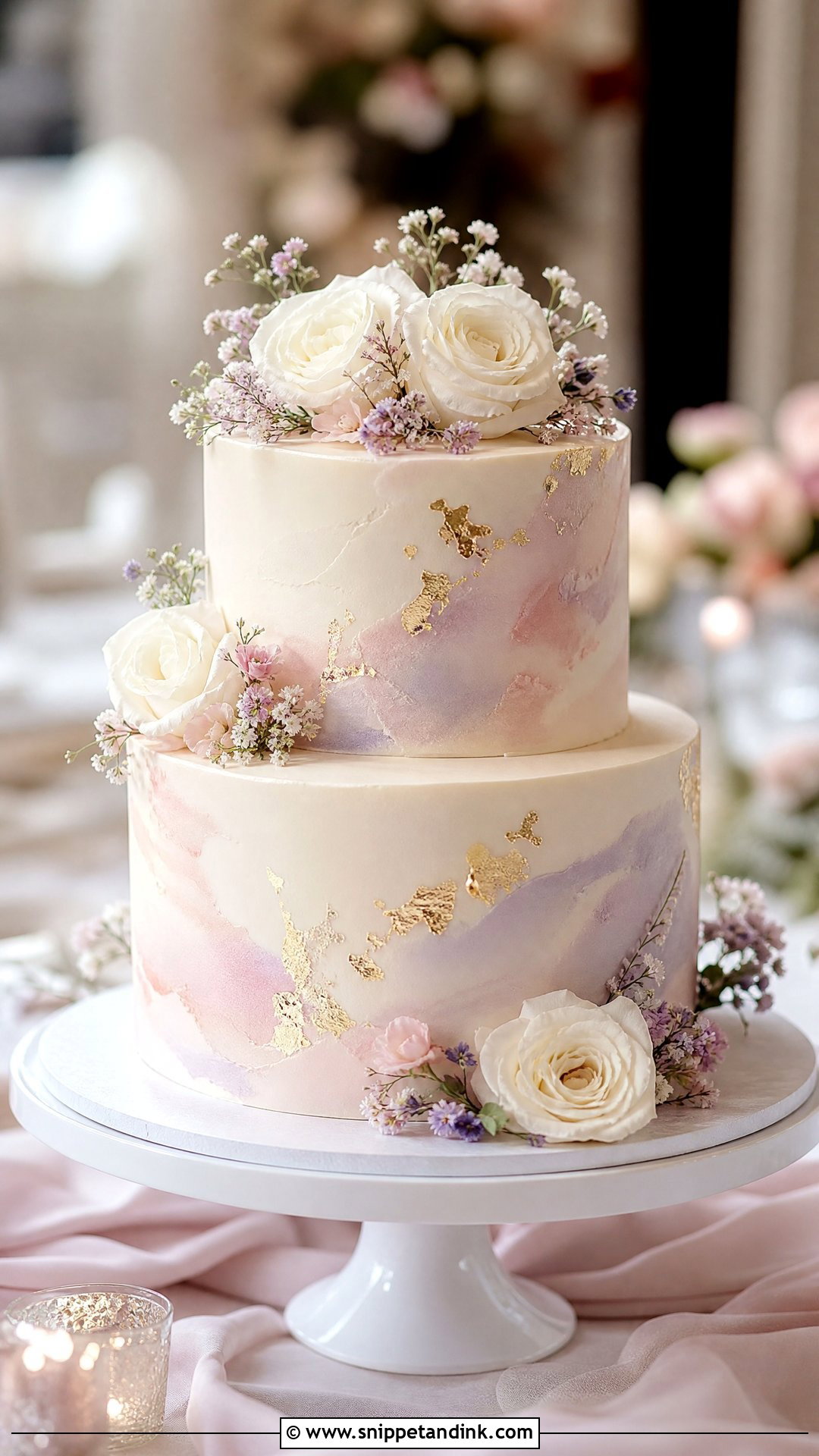
A round watercolor wedding cake adds colour quietly. I blend two or three tints of buttercream with a palette knife, or paint thinned colour onto fondant, in blush, blue, lavender, peach or sage. More than three shades turns muddy. Simple flowers, a little gold leaf or a plain white top tier balance it. The colours can echo your invitations, bridesmaid dresses or florals. Lemon, vanilla berry, champagne or lavender honey fit the soft palette.
28. Round Marble Wedding Cake
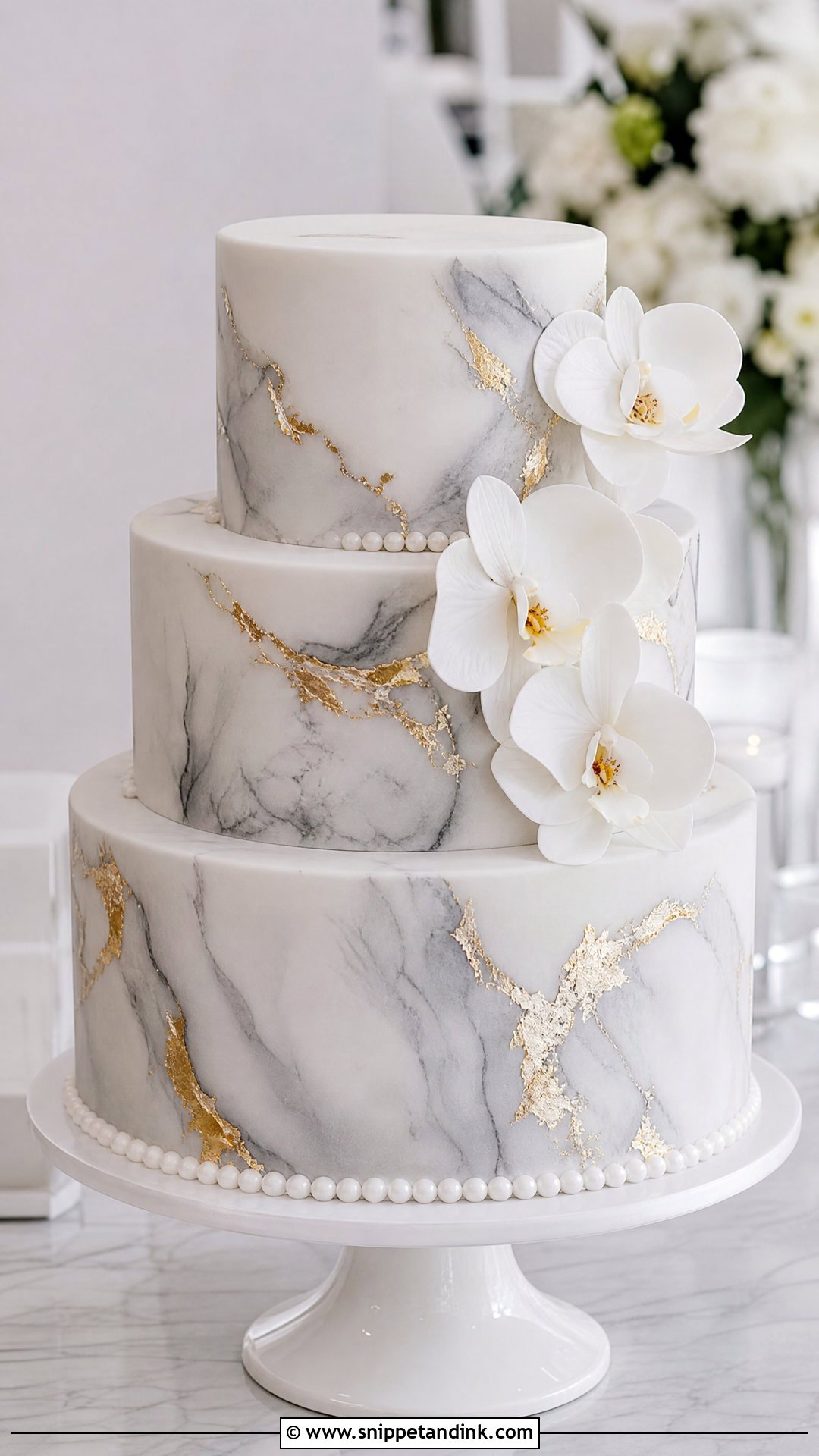
Marbling is done in the fondant itself: two colours kneaded together just enough to streak, then rolled out, so every cake is one of a kind. Grey and white, blush and ivory, or sage and cream all work. It needs smooth fondant or a very clean buttercream; on texture, the effect is lost. Gold leaf, white flowers or a simple acrylic topper finish it for modern venues, galleries and hotels. Vanilla bean, chocolate, almond or espresso inside.
29. Round Drip Wedding Cake
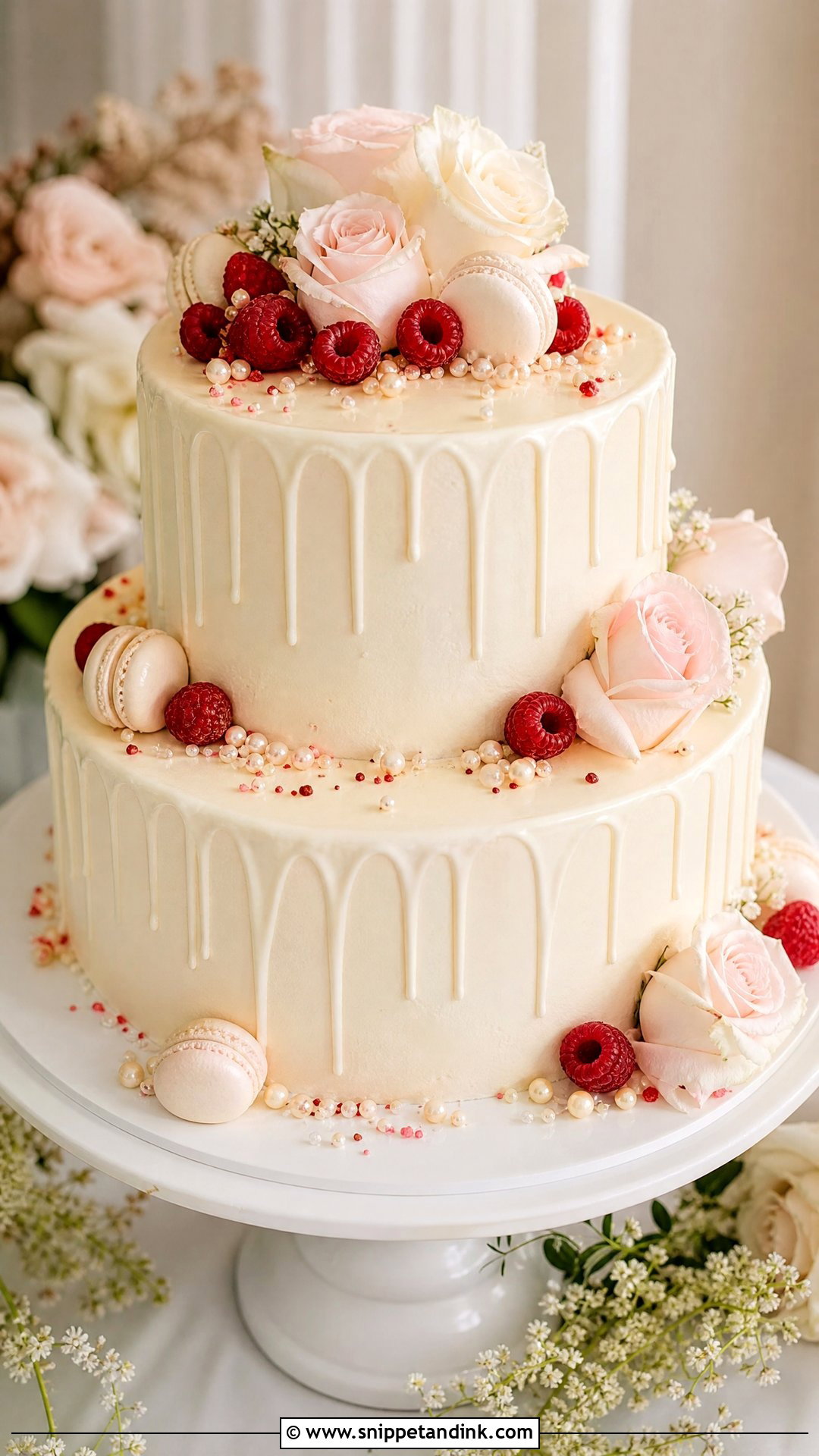
Drips look casual, but a wedding drip has to be controlled. The ganache or glaze has to be at the right temperature: too warm and it runs to the board, too cool and it sits in lumps. I test a single drip on the chilled cake before going round. White chocolate, caramel, dark ganache or coloured glaze over an ivory or blush base keeps it bridal. Flowers, macarons, fruit or pearls on top fill it out. Chocolate salted caramel, vanilla raspberry, lemon blueberry or white chocolate strawberry all suit.
30. Round Monogram Wedding Cake
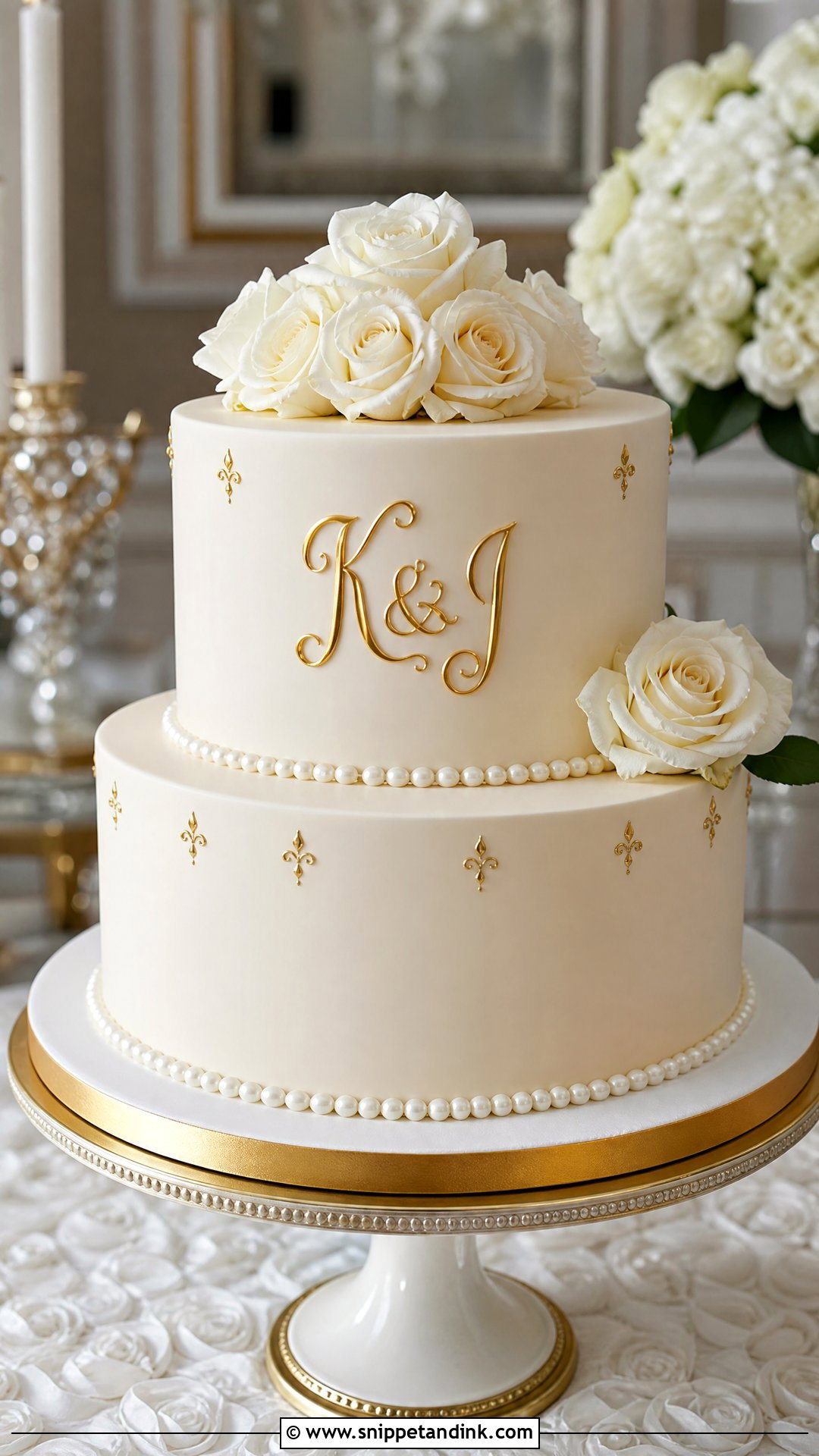
Initials make a cake personal in one small detail. They can be piped, painted, embossed into fondant or set on top as a small topper. A clean buttercream or fondant background lets them stand out. I match the lettering style to the invitation suite so paper and cake look related. Flowers, pearls, a ribbon or gold accents can frame the letters. Formal receptions, estates and ballrooms suit it, in ivory and gold or white and blush. Vanilla champagne, almond or chocolate raspberry fits.
What Happens When the Cake Arrives
Delivery is where months of planning meet a real room, so it helps to know how it usually goes. Most bakers deliver a few hours before the reception, either already stacked in a cool van or in separate tiers that are stacked at the venue. The cake table should be set, level and in its final spot before we arrive, because moving a finished cake even a few feet is the riskiest thing anyone can do to it.
Three things I check before I leave
- That the cake isn’t in sunlight that will reach it later in the afternoon, or beside a heater, speaker or busy doorway.
- That the venue coordinator knows who is cutting, whether the top tier is being kept and where the knife and server are.
- That fresh flowers were added cleanly and nothing is resting directly on soft icing.
Ask your photographer to shoot the cake details before guests come in. It’s the only time the table is perfectly clear and the icing hasn’t had hours in a warm room.
A Circle Takes Almost Any Finish You Give It
Round tiers are the most forgiving starting point a cake can have, which frees you to put your energy into the finish. Romantic weddings tend toward florals, blush, ruffles or pressed flowers; cleaner rooms toward minimal buttercream, marble, sage or a monogram; relaxed receptions toward rustic, semi-naked, fruit-topped or boho. Let your venue, guest count and the temperature of the room narrow it first, and the finish you’re drawn to will usually still be on the list.
You'll Like These Ideas:








Leave a Reply