
White and gold is the combination I’m asked for most, and it can look either very traditional or very current depending on finish, shape and how the gold is applied. White keeps a cake bridal; gold adds warmth under candlelight. The cakes that work don’t rely on a single gold stripe. They use the silhouette, the frosting texture and the display together, so the whole table reads as one design. The twenty ideas below cover ballrooms, gardens, hotels and tiny elopements, with notes on how each technique holds up between the kitchen and the last slice.
Not All Gold Is the Same Gold
Cake gold comes in more tones than people expect, and the most common complaint I hear after a wedding is that the cake’s gold didn’t match the gold everywhere else. Edible gold leaf is a warm, true yellow gold. Gold dusts and paints range from bright yellow to soft champagne to a pinkish rose gold. Under warm candlelight they all look warmer; under cool daylight a champagne gold can look almost silver.
Bring something gold from your wedding to the tasting: a foiled invitation, a charger plate, a piece of the cake stand, even a photo of the venue’s light fittings. I can hold my paints against it and match the tone before anything goes on a cake.
- Brushed brass and antique decor suit a deeper, warmer gold.
- Champagne linens and blush flowers suit a pale champagne gold.
- Rose gold cutlery or stationery suits a rose-toned dust, not yellow leaf.
- Mixed metals in the room are easiest with leaf, because real gold reads as “gold” next to almost anything.
1. White And Gold Tiered Wedding Cake
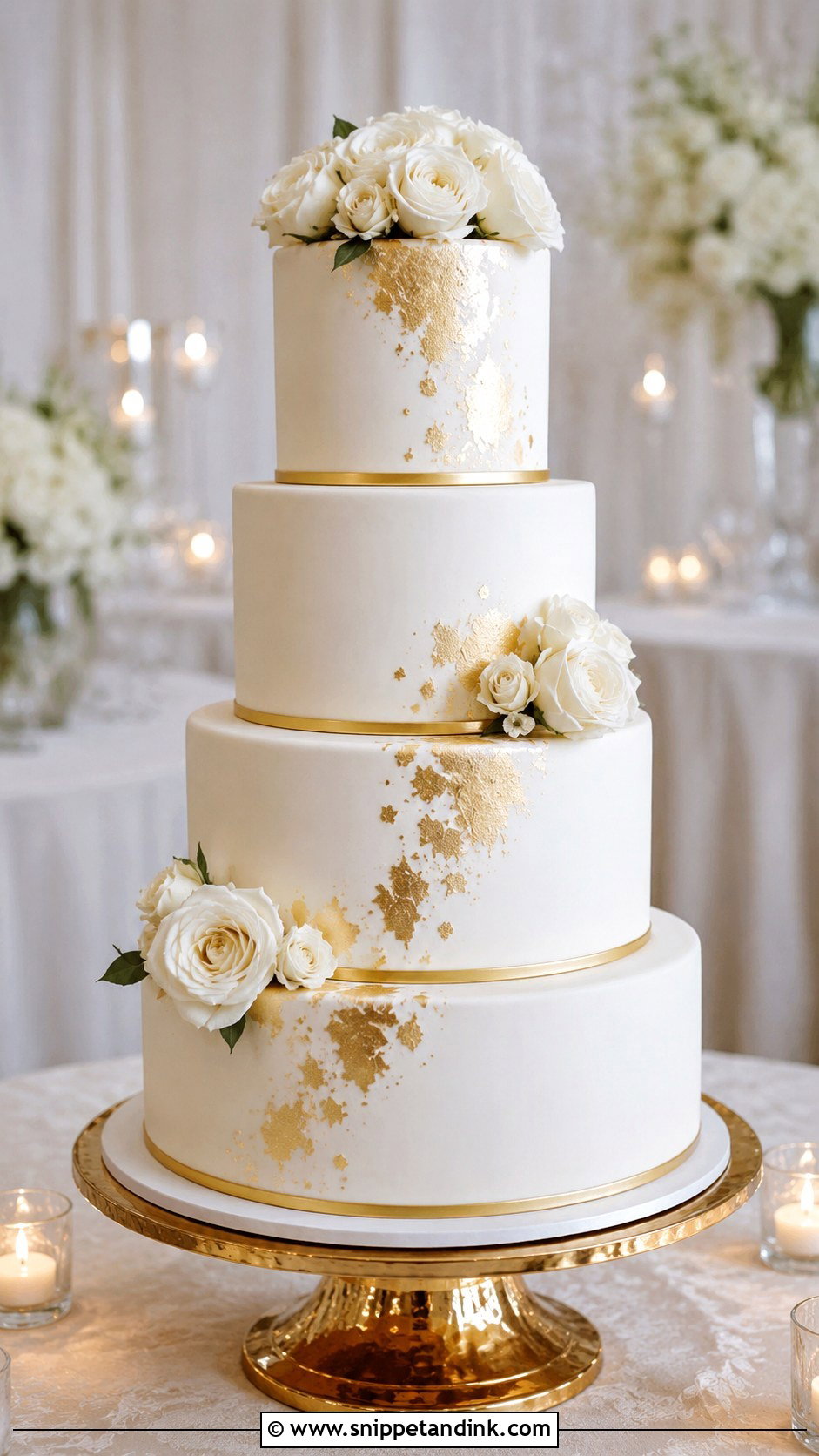
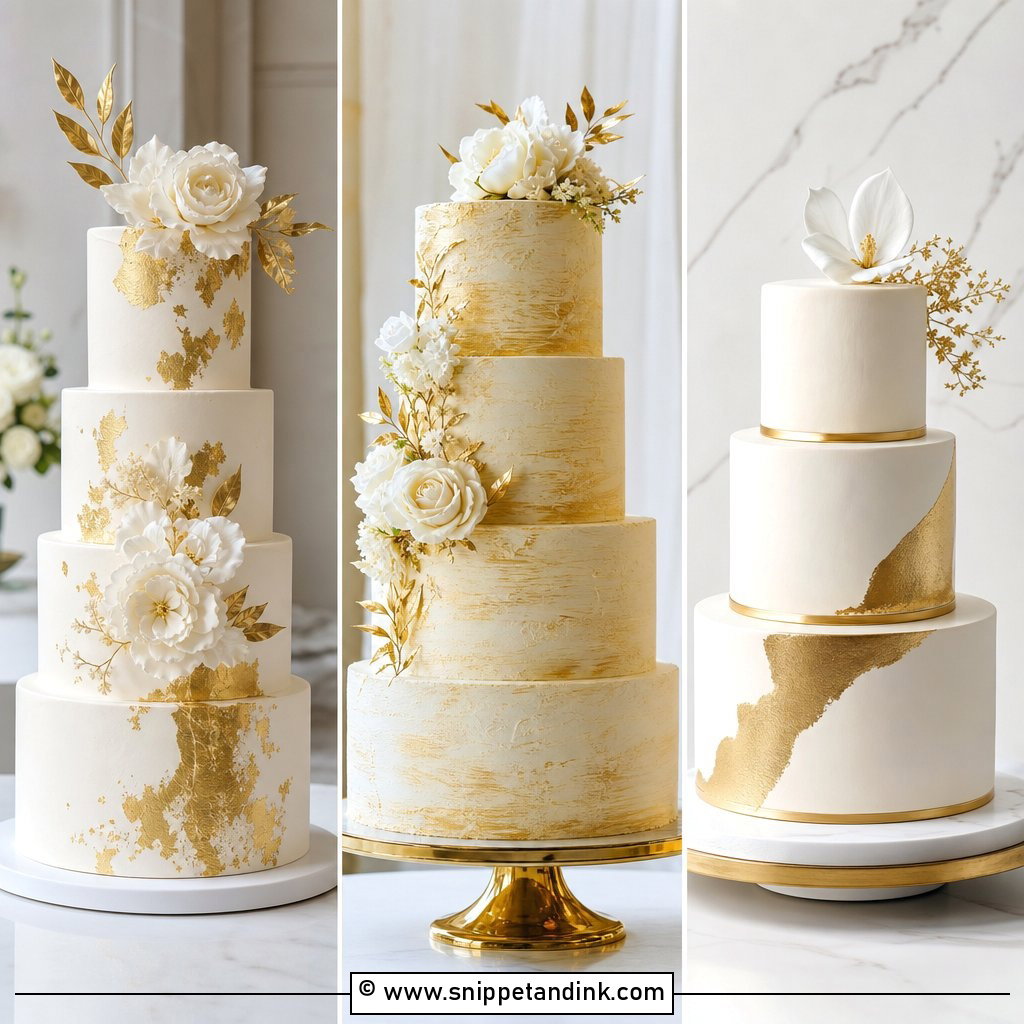
Height reads as formal, and a white and gold tiered wedding cake of three or four tiers is still the strongest choice for a big reception. White fondant on most tiers with one gold-accented tier gives contrast without busyness, and gold can come in as thin bands, painted edges, small leaf details or fine piping. Soft white flowers sit near the base or between tiers. Four tiers need a central dowel through every level, and I’d always stack them on site. On a gold stand with candles and plain linens, nothing else needs to compete.
2. White And Gold Buttercream Wedding Cake
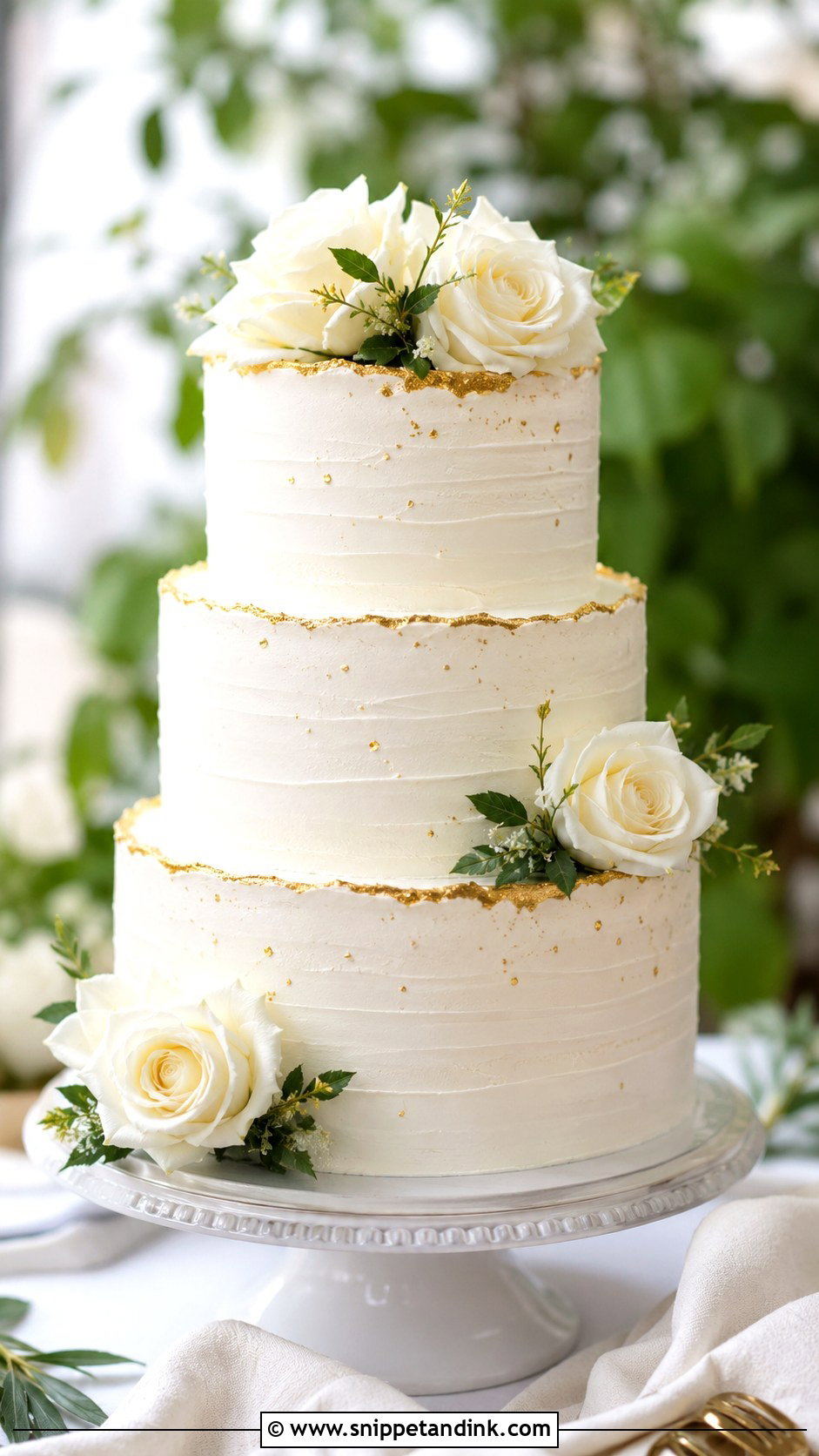
Buttercream relaxes the whole palette. Gentle horizontal lines, soft spatula marks or a smooth semi-matte surface make the cake feel less like a ballroom piece and more like something made by hand. Gold works as a rough painted edge, a thin drip, or flecks placed unevenly. I chill the cake hard before painting gold on buttercream; on a soft surface the brush just pushes frosting around. White roses, ranunculus or sugar flowers suit it, and it fits gardens and smaller rooms better than formal halls.
3. White And Gold Marble Wedding Cake
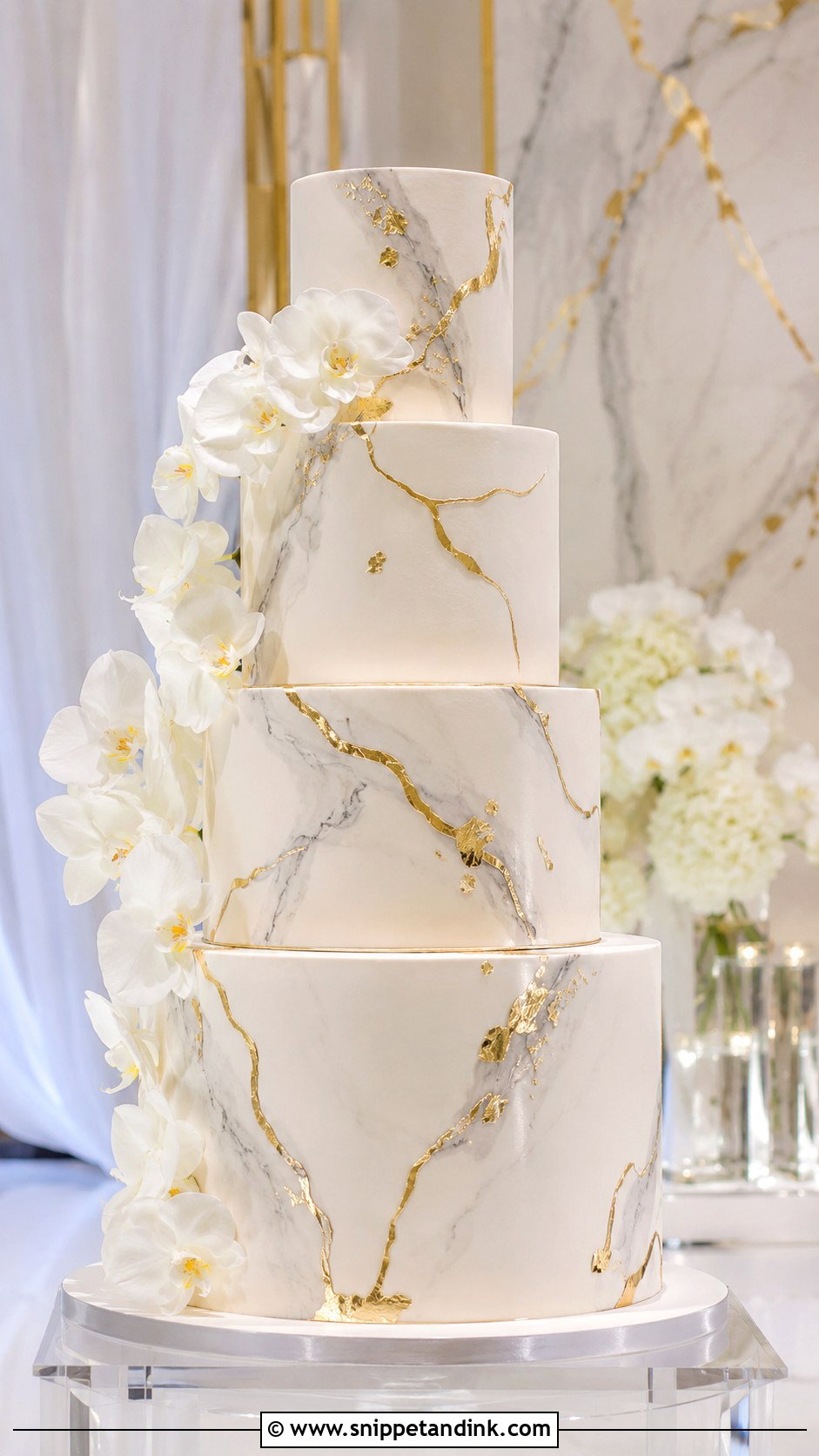
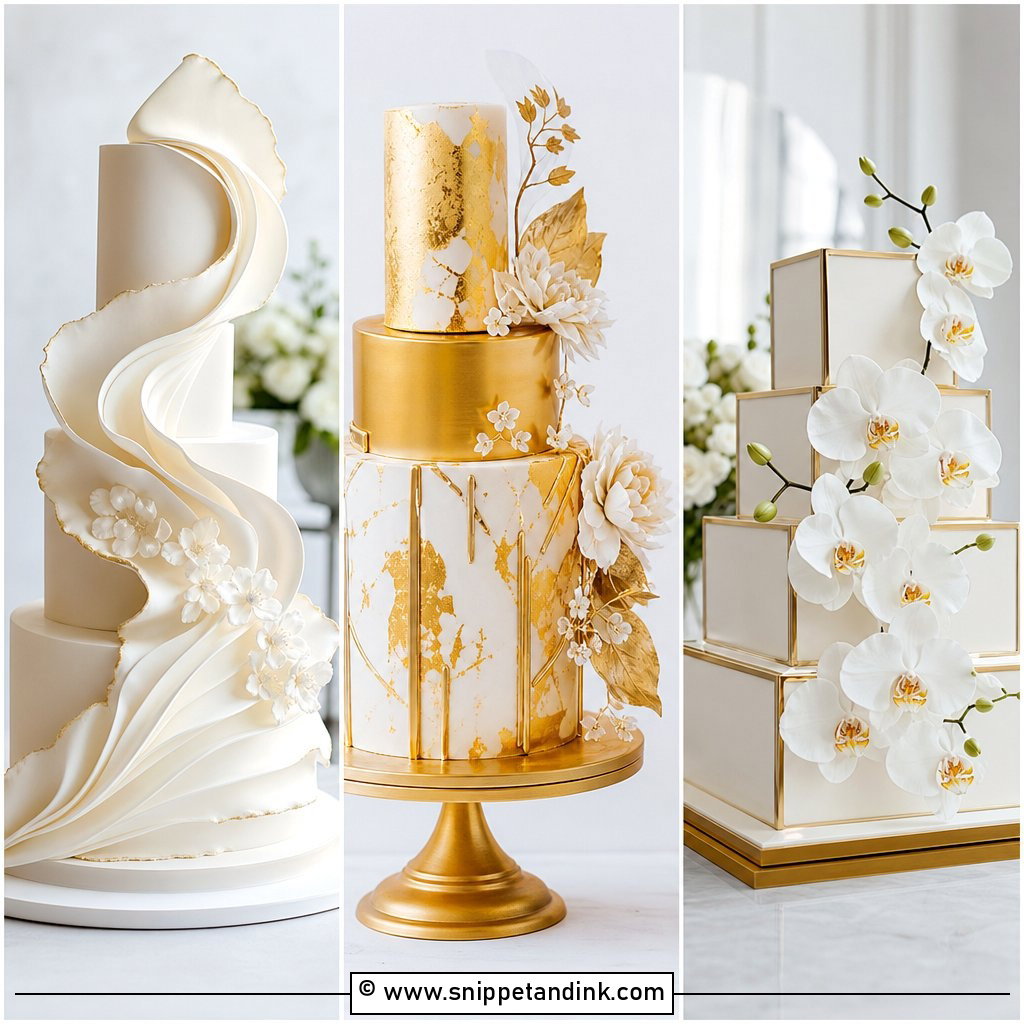
Marble is the most architectural look here. White, ivory and soft grey blended into fondant, with gold veining painted on afterward, gives a stone-like surface that needs tall tiers and clean edges to show the pattern. Keep flowers minimal: a few white orchids, some gold leaf, or clear acrylic risers between tiers to add air. Real marble veins wander and break, so I paint them with a fine brush in uneven lines; perfectly parallel veins look printed. Hotel weddings and black-tie receptions suit it best.
4. White And Gold Drip Wedding Cake
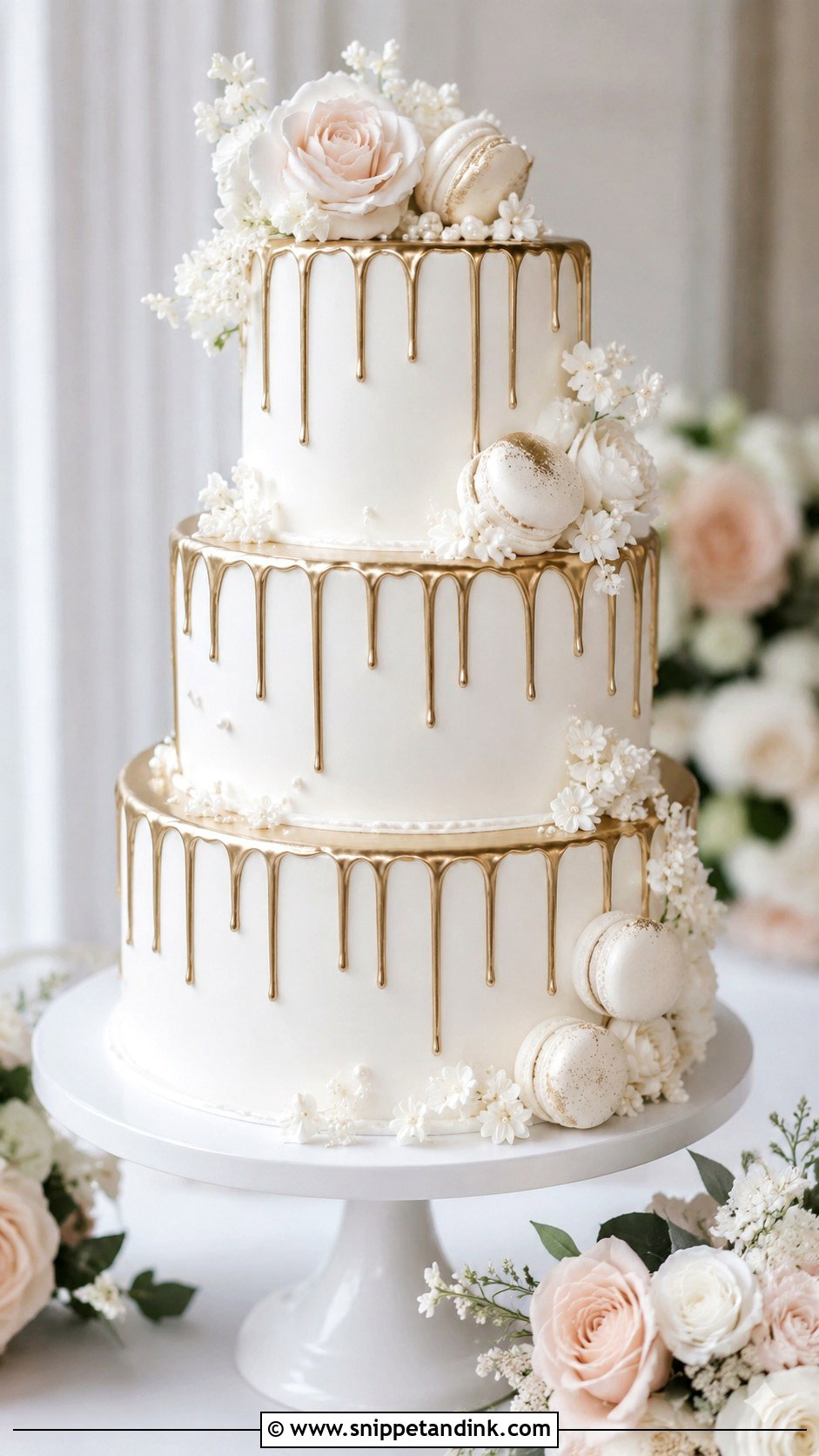
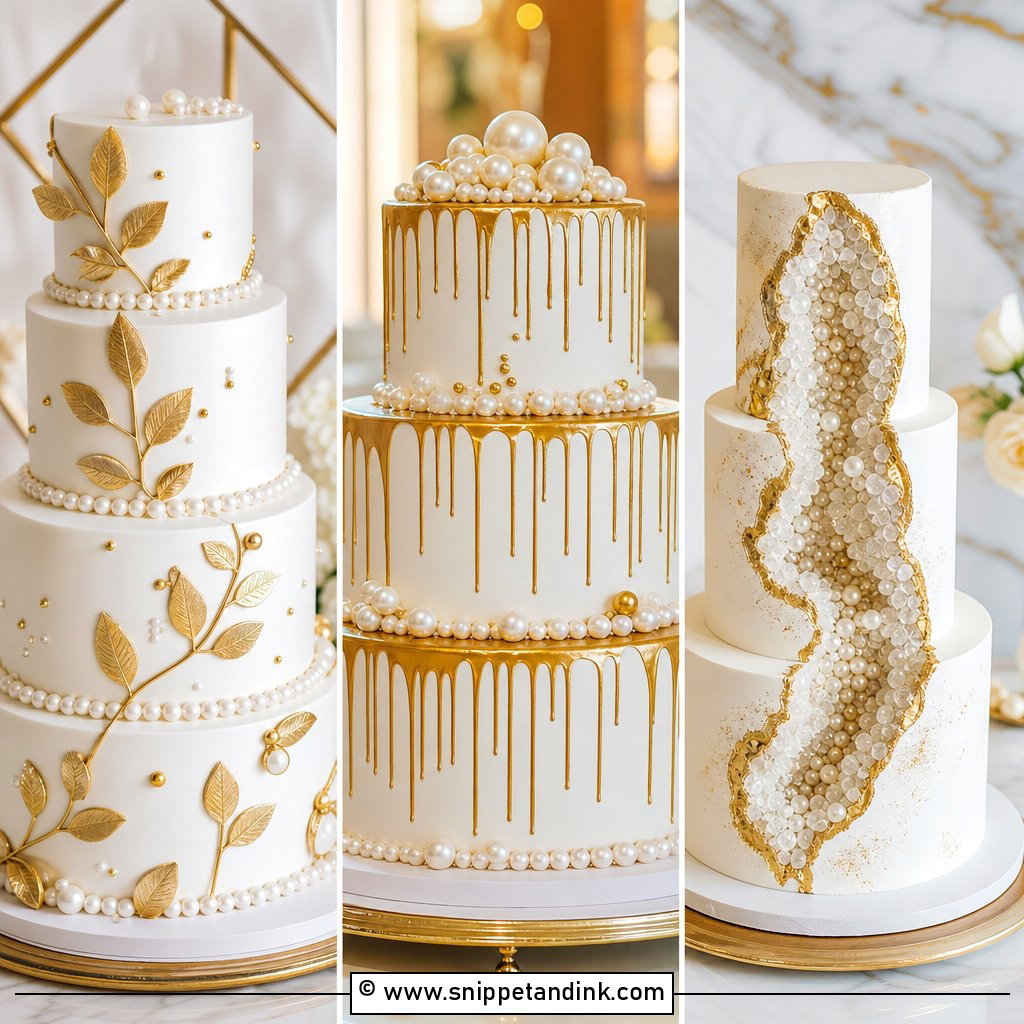
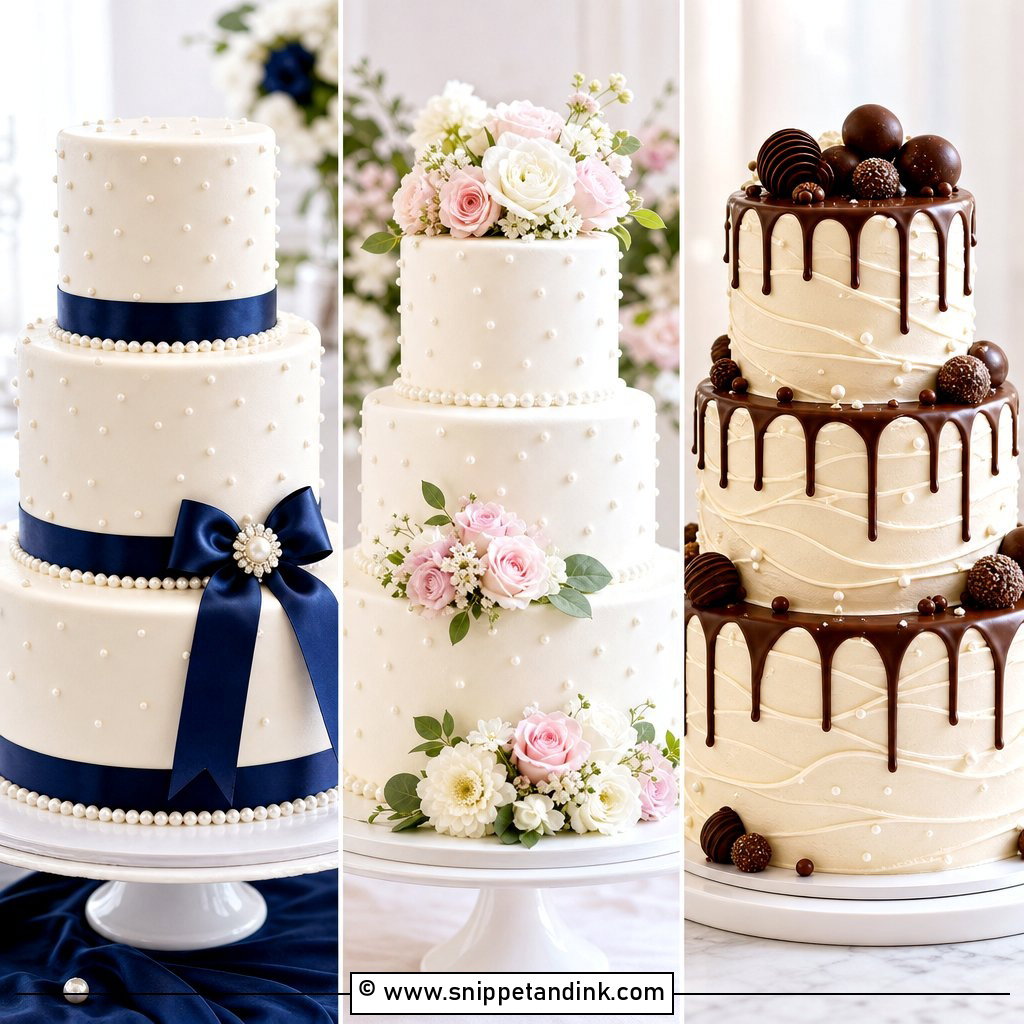
The drip has to look deliberate. I set a smooth white buttercream or ganache surface, chill the cake, then run the drip so it stops at uneven lengths partway down. Choose a soft metallic gold drip painted over set white chocolate ganache rather than a thick yellow coating, which looks flat and cheap in photos. White macarons, pearl sprinkles or a few sugar flowers on top. It suits a modern reception or a late-night dessert table more than a formal hall.
5. White And Gold Floral Wedding Cake
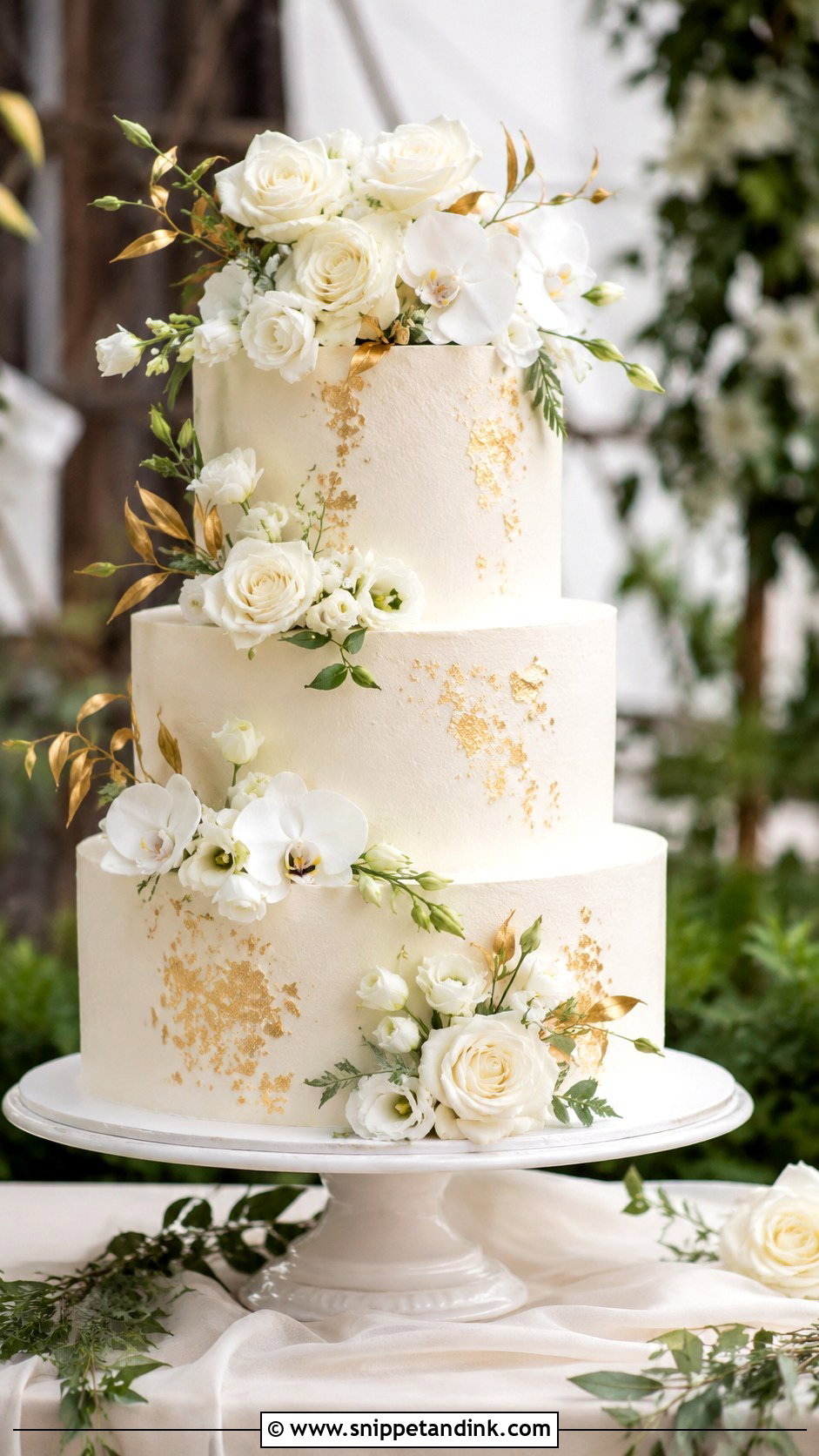
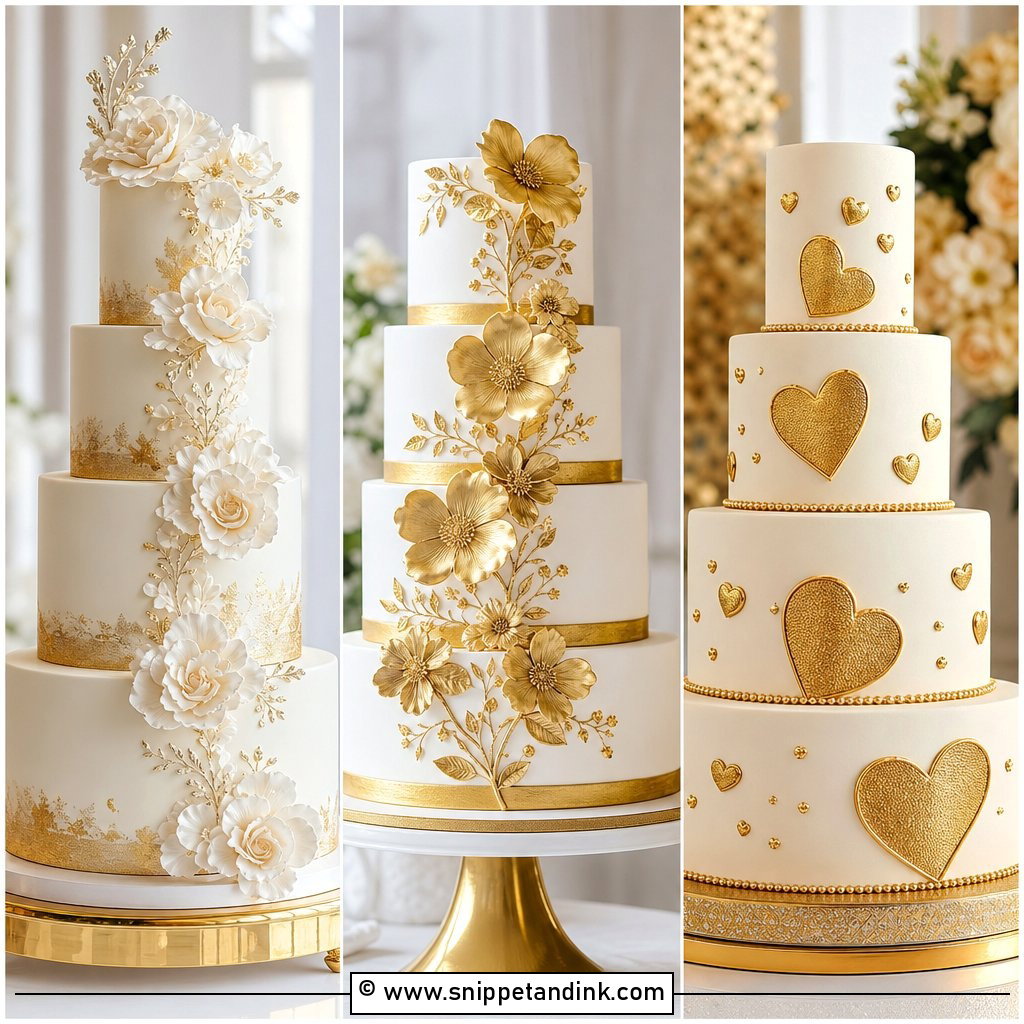
Flowers make the pairing romantic with the least effort. Start with a white cake, build in white blooms and keep gold small: painted sugar leaves, slim borders, a little edible leaf between the blossoms. Roses, orchids, lisianthus and baby’s breath all suit, depending on season. The flowers should look grown into the cake, not dropped on at the last second, which means planning their placement with your baker before the day. Fresh stems must be unsprayed, wrapped, and kept out of the sponge. Gardens, estates and candlelit rooms are where this shines.
6. White And Gold Pearl Wedding Cake
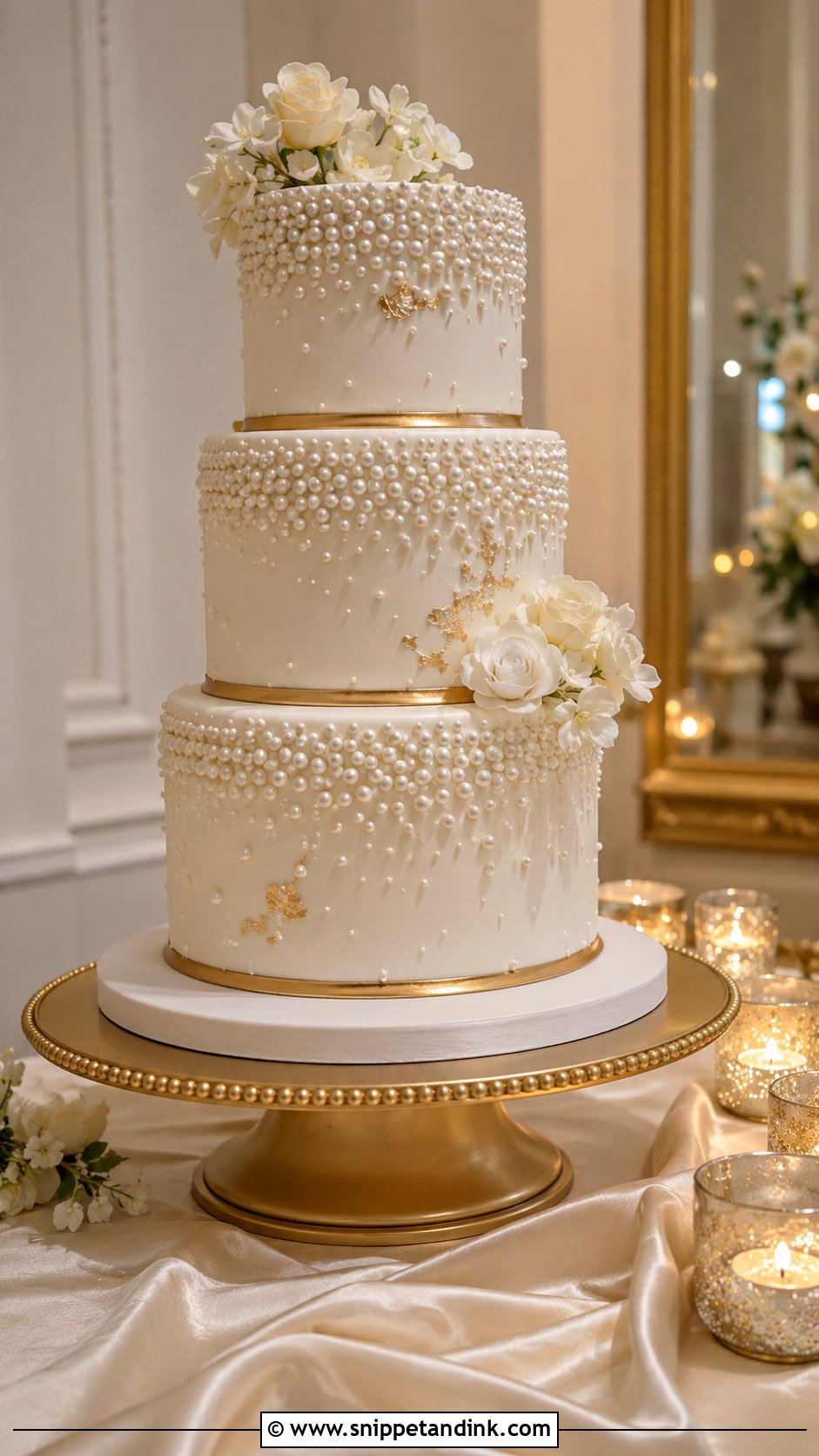
Pearls bring a bridal softness that pairs naturally with gold, and placement decides the mood. Small edible pearls at the base of each tier plus a few gold bands look clean and classic; one tier covered in pearl texture with the rest smooth looks more ornate. Gold leaf, brushed trim or a monogram finishes it without overload. Sugar pearls lose their sheen in humidity, so on a muggy summer day I add them last. This one belongs with satin gowns and pearl jewelry.
7. White And Gold Lambeth Wedding Cake
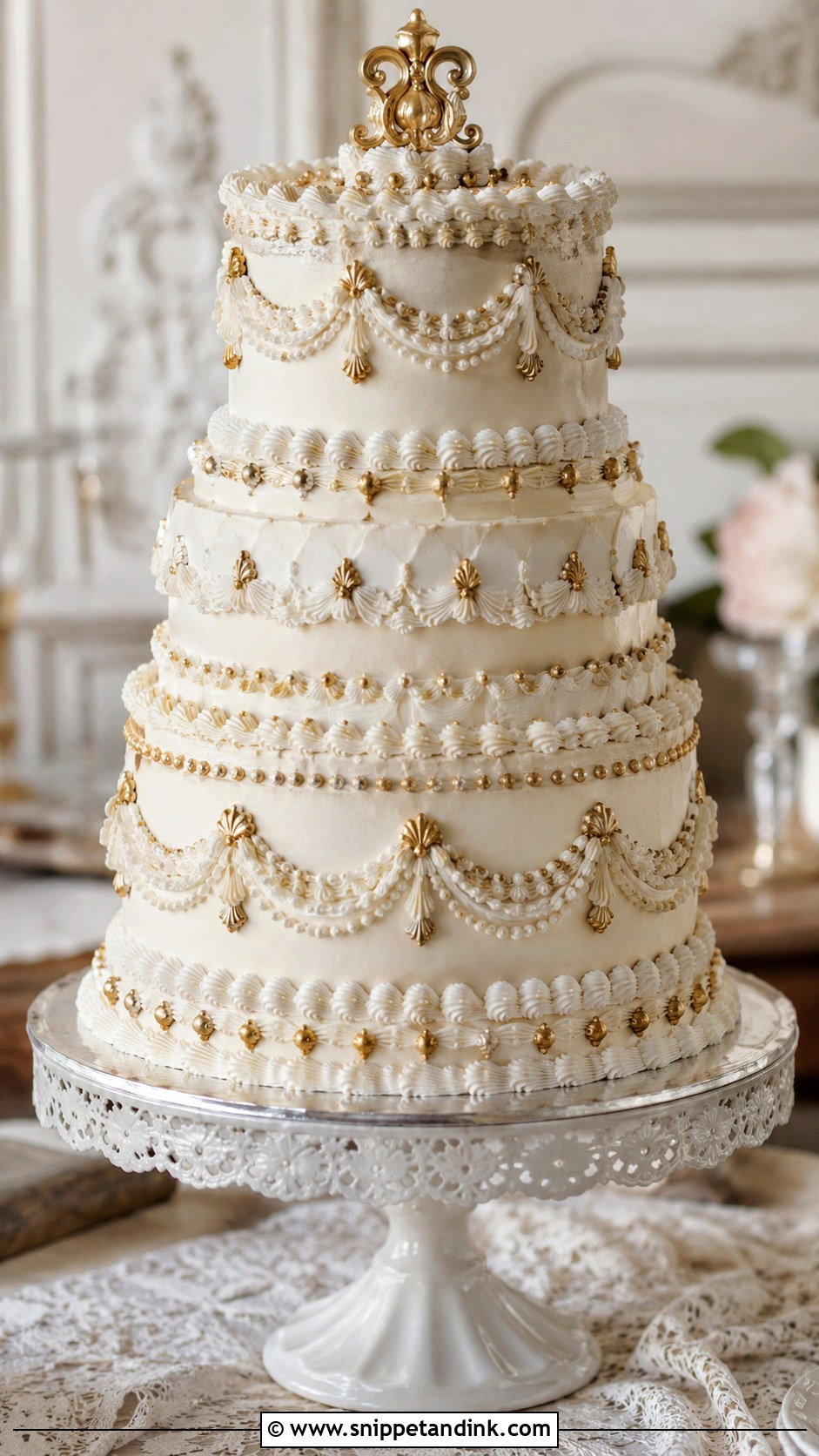
Lambeth is the most joyful piping style there is: overpiped borders, shells, swags, bows and ruffles stacked into real height. If you love vintage piping, this is the fullest version of it. White keeps all that detail elegant, and gold should only touch the edges or a few borders, since gilding every scroll turns it heavy. The piping is done in buttercream or royal icing over many hours, and buttercream Lambeth softens in a warm room, so check the venue temperature. Tall tiers keep it fresh rather than old-fashioned.
8. White And Gold Geometric Wedding Cake
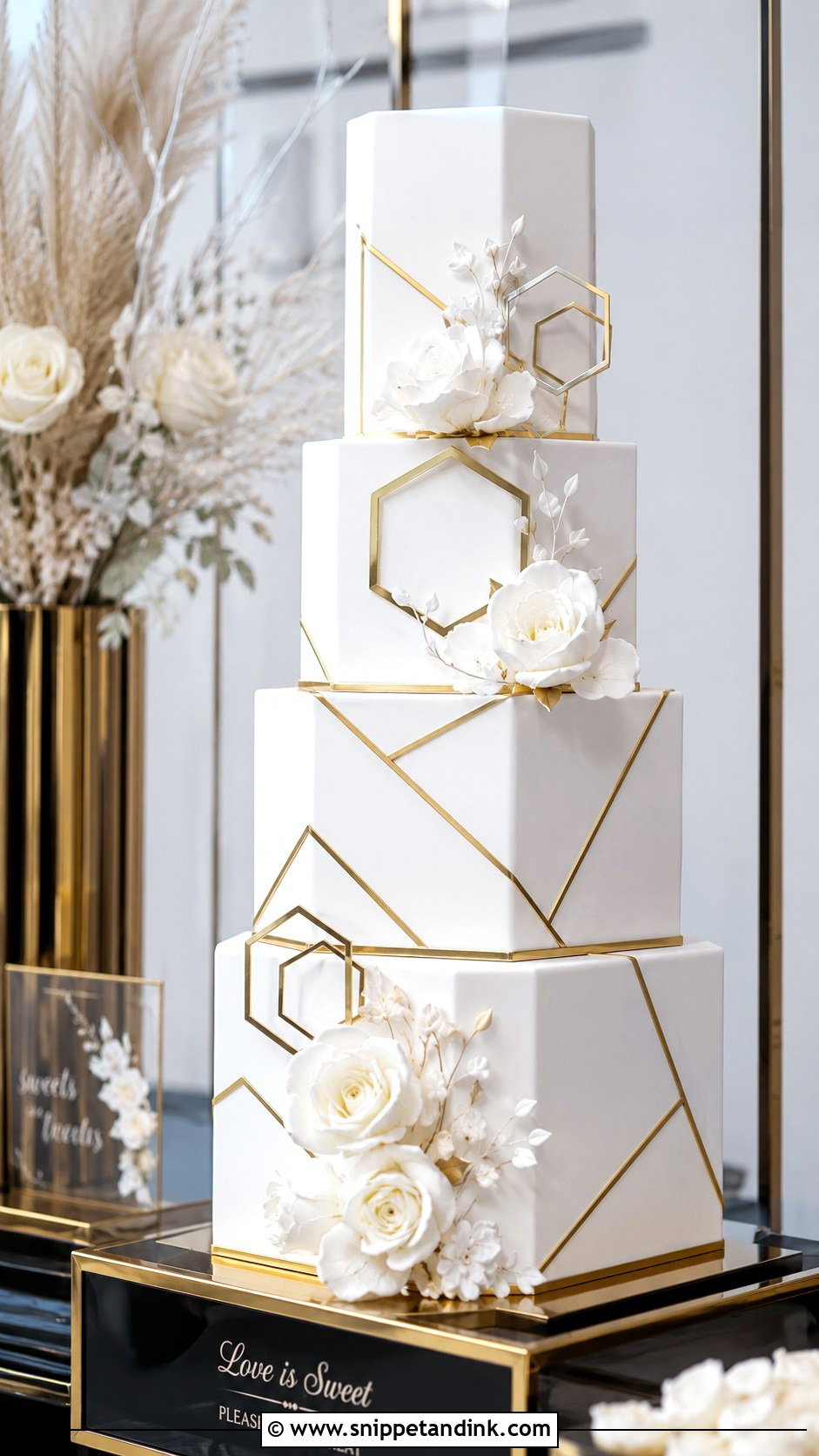
If flowers and ruffles aren’t you, a white and gold geometric wedding cake gives the palette a sharp modern edge. Angled panels, hexagon tiers, gold outlines and stacked shapes replace decoration with structure. Fondant is essential here because the facets depend on crisp edges, and I cut hexagon tiers from round cakes with a template so each side matches. White keeps it from feeling cold. It sits well in a minimalist venue with black accents and acrylic signage.
9. White And Gold Tall Wedding Cake
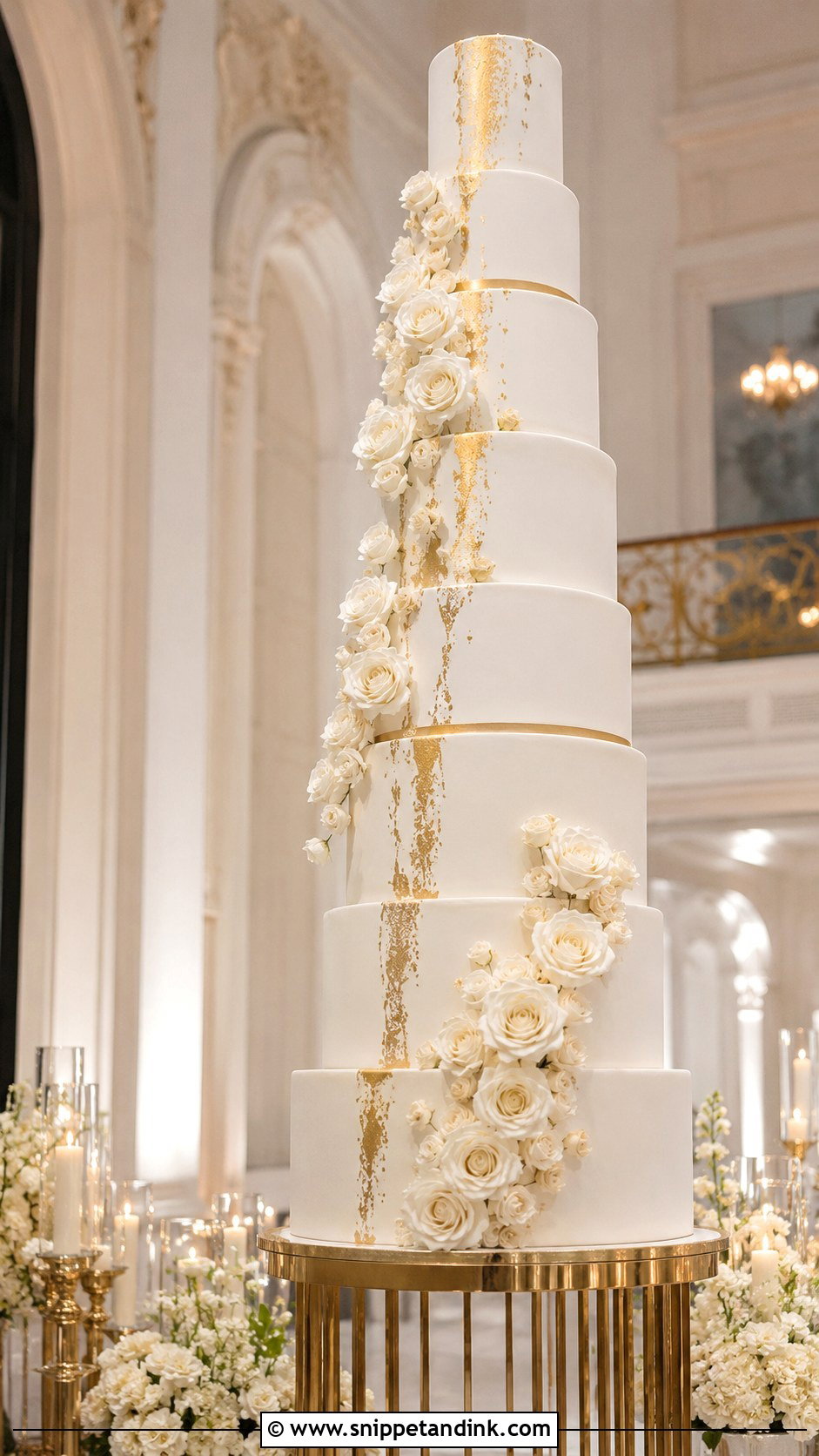
Extra-tall tiers create drama even with very little decoration. Slim stacked tiers, or a mix of tall and standard ones, with a smooth white finish and vertical gold details such as leaf trails, slim bands or a cascade of flowers, all pull the eye upward. Each extra-tall tier is really two cakes on a hidden board, so it needs its own internal support. In a room with high ceilings or big floral installations, a short cake disappears; this one doesn’t.
10. White And Gold Square Wedding Cake
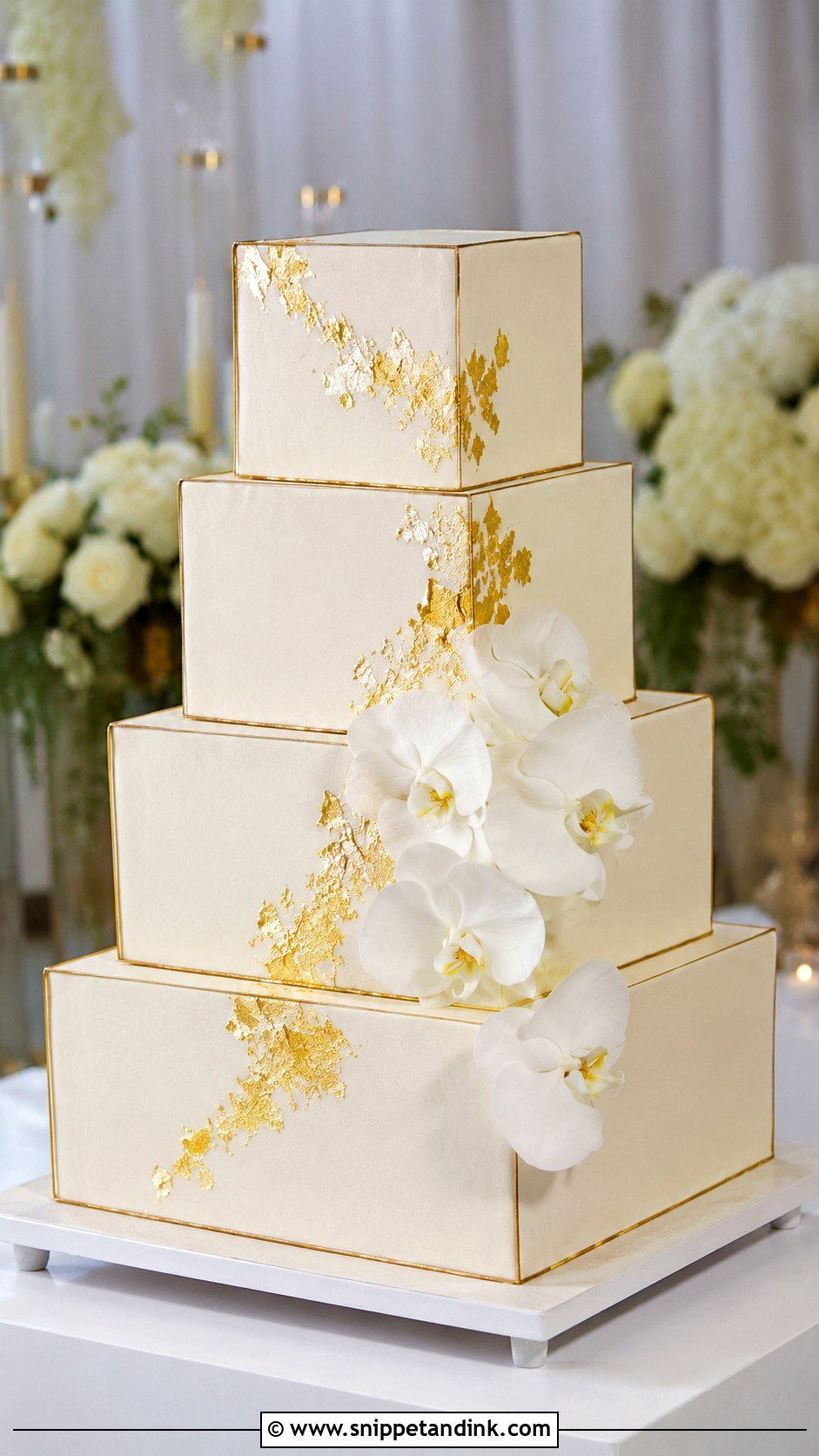
Square tiers feel structured and a little unexpected. The corners take thin gold trim beautifully on white fondant, and you can stack the tiers evenly or rotate each one a few degrees for movement. Marble, gold leaf or a single cluster of white flowers suit it. Buttercream square corners soften as the room warms, so I’d only choose buttercream here for a cool indoor venue. Square cakes also slice into very even portions, which caterers appreciate.
11. White And Gold Single Tier Wedding Cake
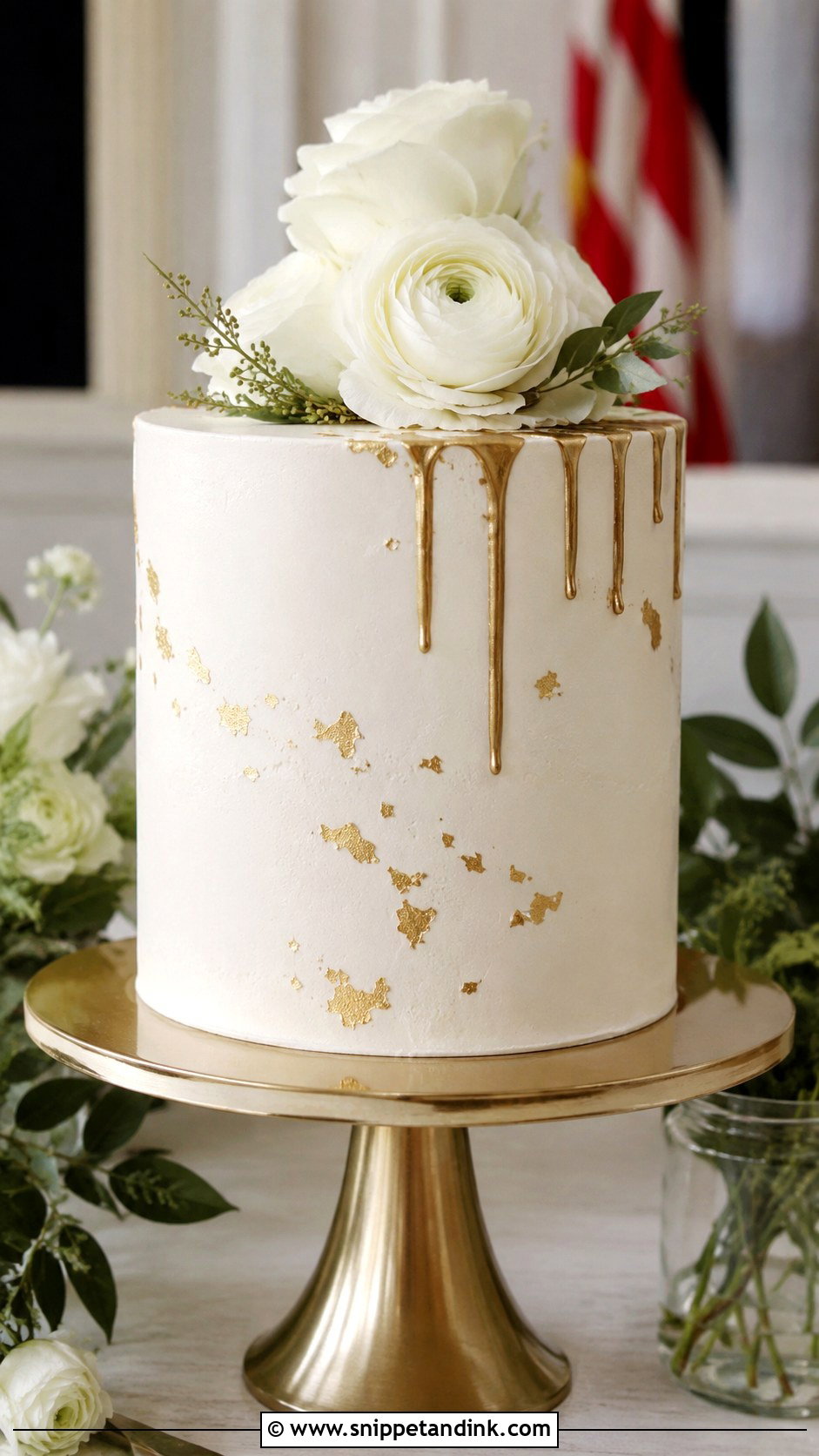
One tier is plenty for an elopement, a courthouse lunch or a micro wedding, as long as it has one clear feature. I make it tall, smooth in white buttercream, and give it either gold leaf, a small drip or a cluster of white blooms, not all three. Gold initials or a small topper make it personal. Set it on a raised stand so it holds its own on the table. A tall single tier gives roughly the same servings as a short two-tier, but it looks more deliberate in photos.
12. White And Gold Two Tier Wedding Cake
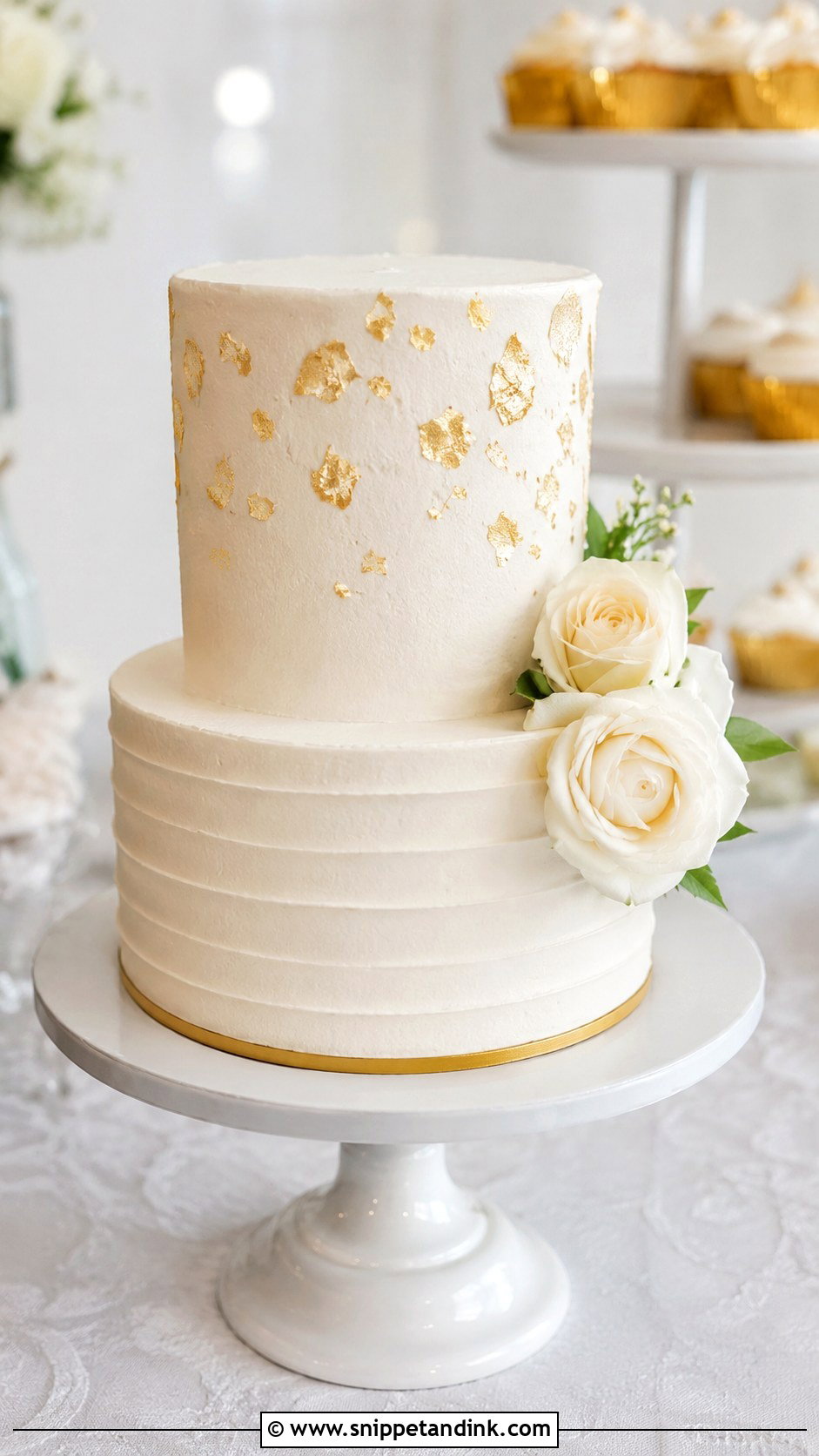
Two tiers sit between simple and formal, and they suit more wedding sizes than people expect, especially alongside cupcakes, cookies or a dessert bar. I give the bottom tier the visual weight and put the detail, gold leaf, piping or a soft drip, on the top tier where the eye lands first. White buttercream keeps it approachable. A low stand with flowers around the base suits it better than a tall pedestal.
13. White And Gold Naked Wedding Cake
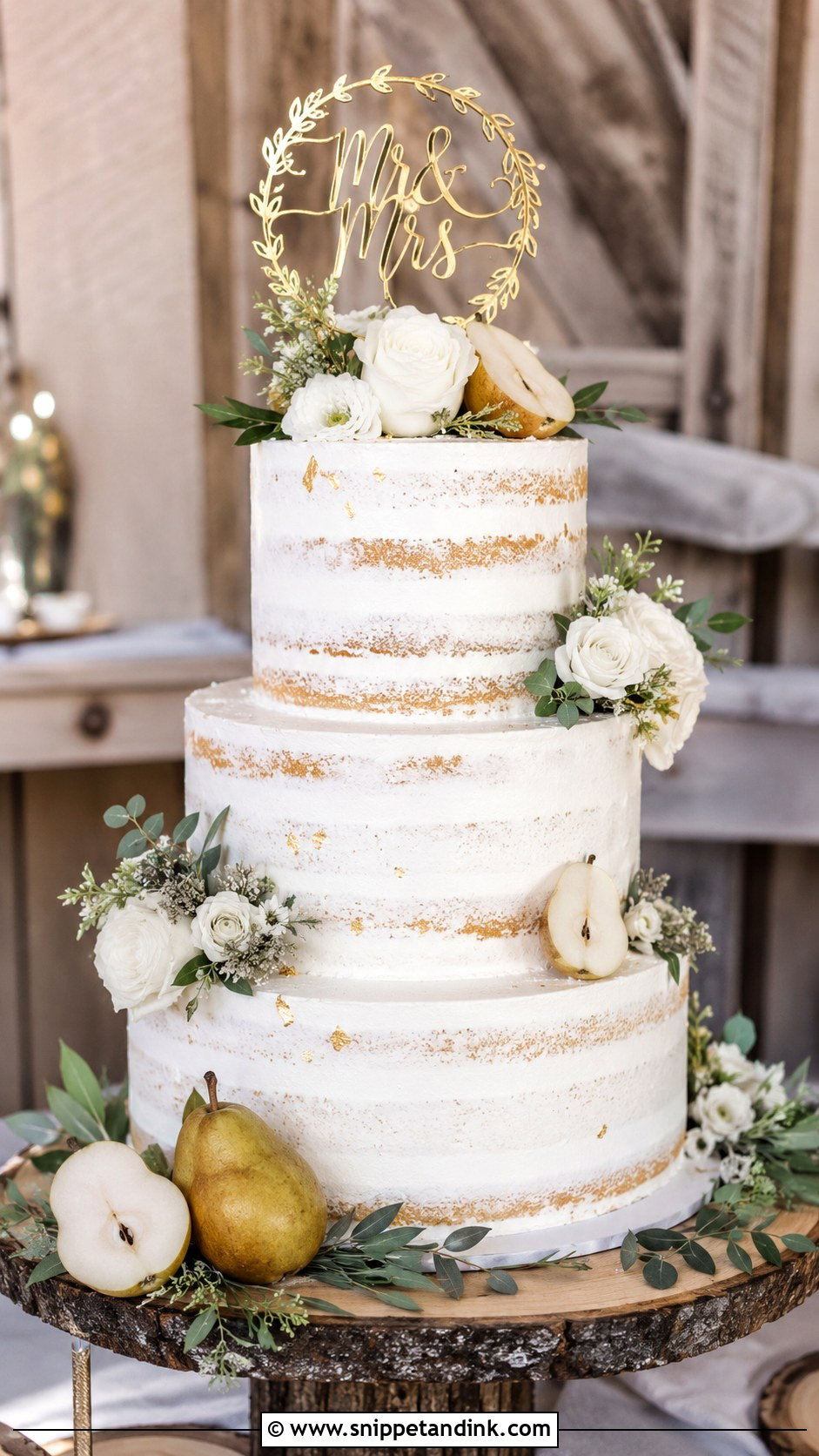
A naked cake shows its layers, so the sponge itself becomes part of the color scheme. Pale vanilla, almond or champagne sponge keeps the look soft; a dark chocolate layer would fight the white. The frosting is thin but clean, with enough buttercream to frame each layer. Gold goes on sparingly: a few leaf accents, a small topper, flecks near the flowers. Exposed sponge dries quickly, so I assemble close to the event and keep it out of the sun. Fresh figs, pears or light greenery suit barns and outdoor receptions.
14. White And Gold Ruffle Wedding Cake
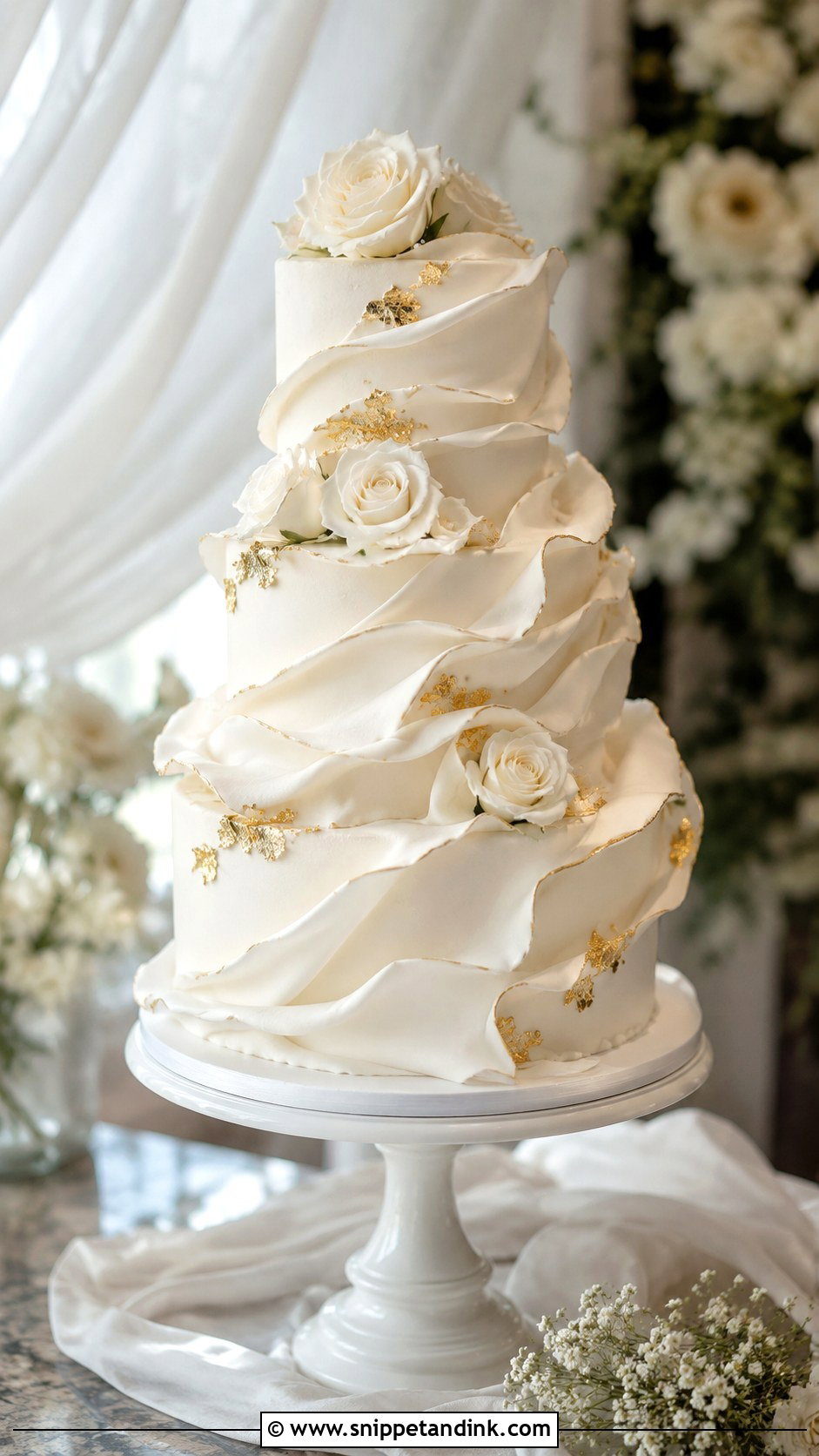
Ruffles bring movement and an obvious link to the dress. They can be piped in buttercream or cut from thin fondant and layered as waves, vertical folds or petals. The texture is already busy, so gold should stay small: a gold top tier, thin base trim, or bits of leaf tucked into the folds. Fondant ruffles are rolled very thin and dried just enough to hold their curve; too thick and they look heavy rather than airy. Romantic gowns and soft florals suit it.
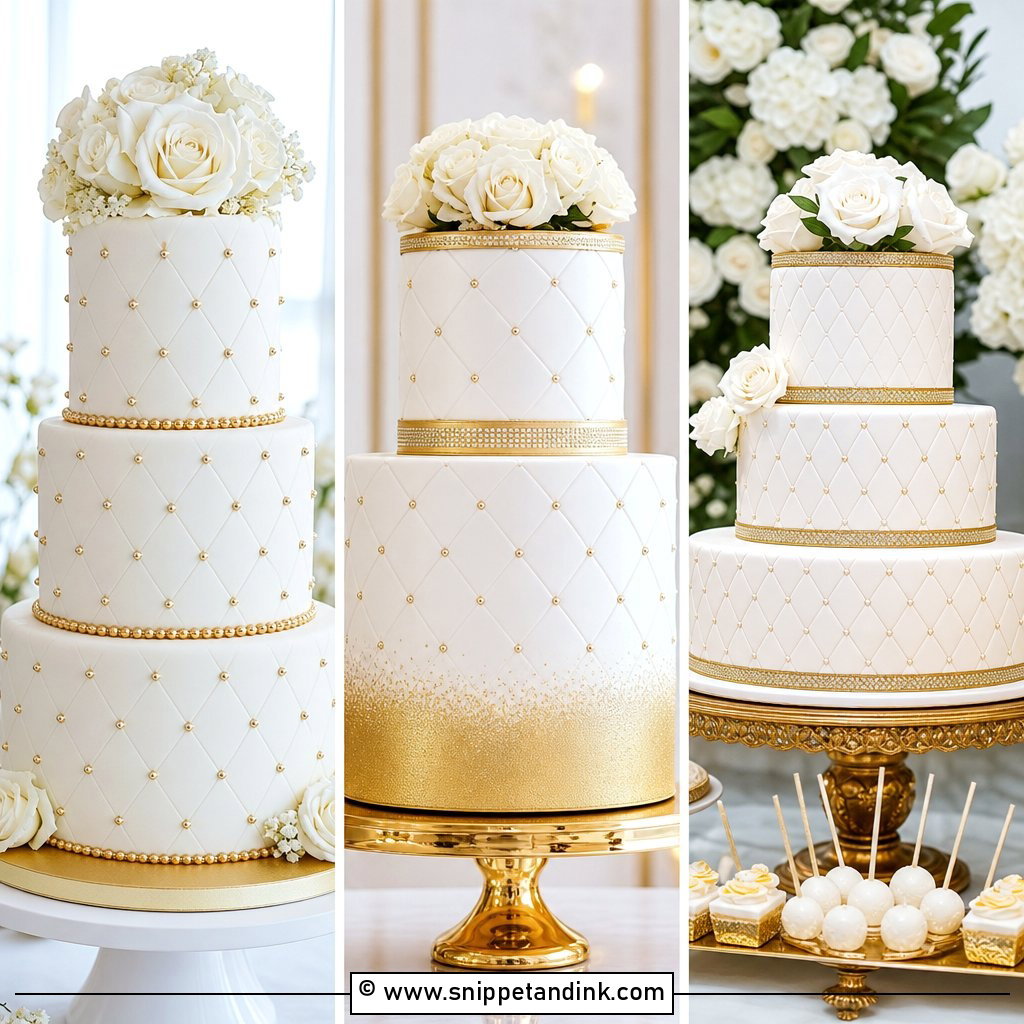
15. White And Gold Monogram Wedding Cake
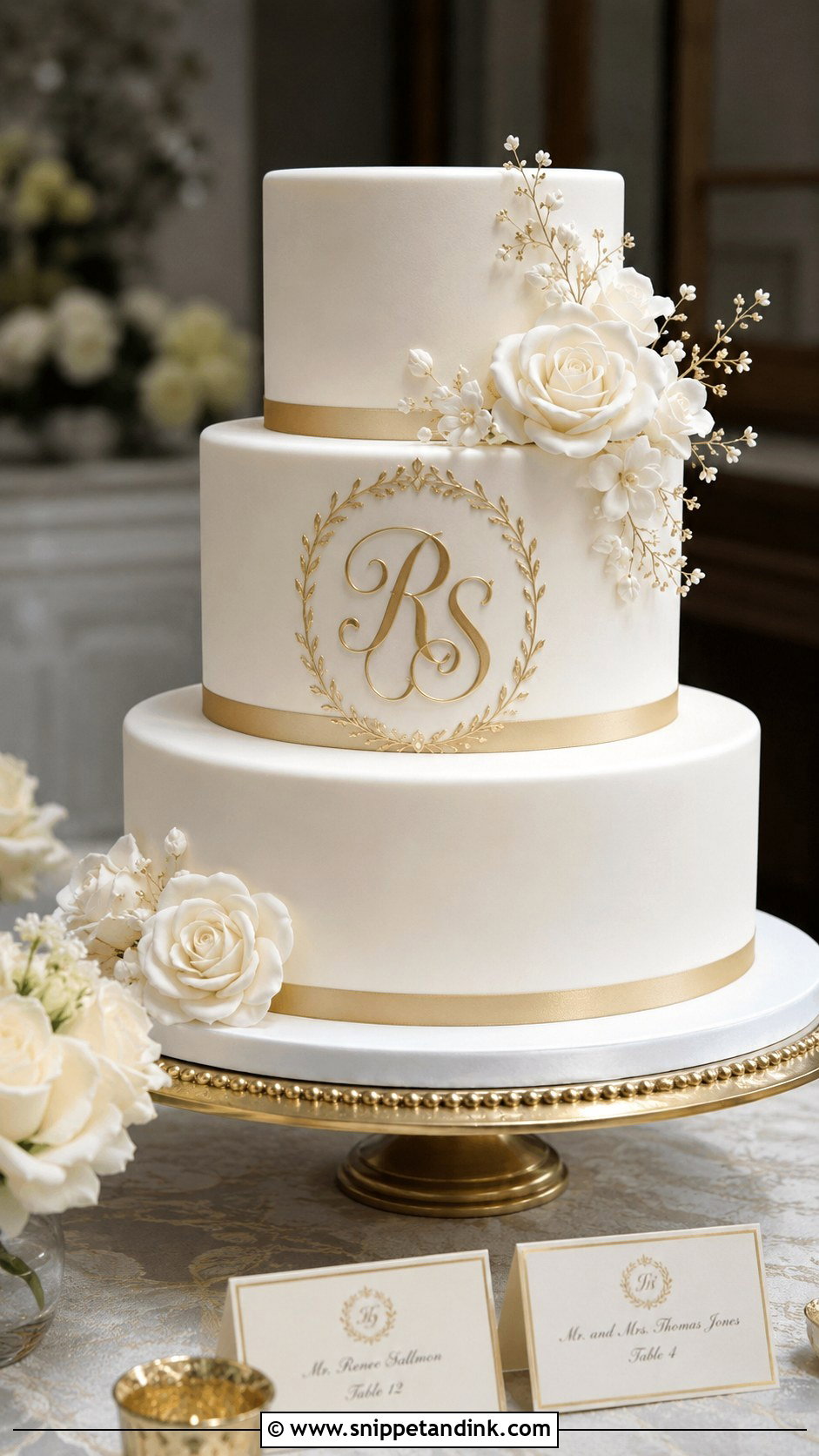
A monogram is the simplest way to make a white and gold cake yours. The initials can sit in gold on the front tier, on a topper, or inside a framed fondant plaque, with the rest of the cake left clean: smooth white fondant, thin gold bands, a few white flowers. Bring your invitation to the tasting so the baker can match the lettering. A monogram copied from the stationery ties the invitation to the dessert in a way guests do notice.
16. White And Gold Fondant Wedding Cake
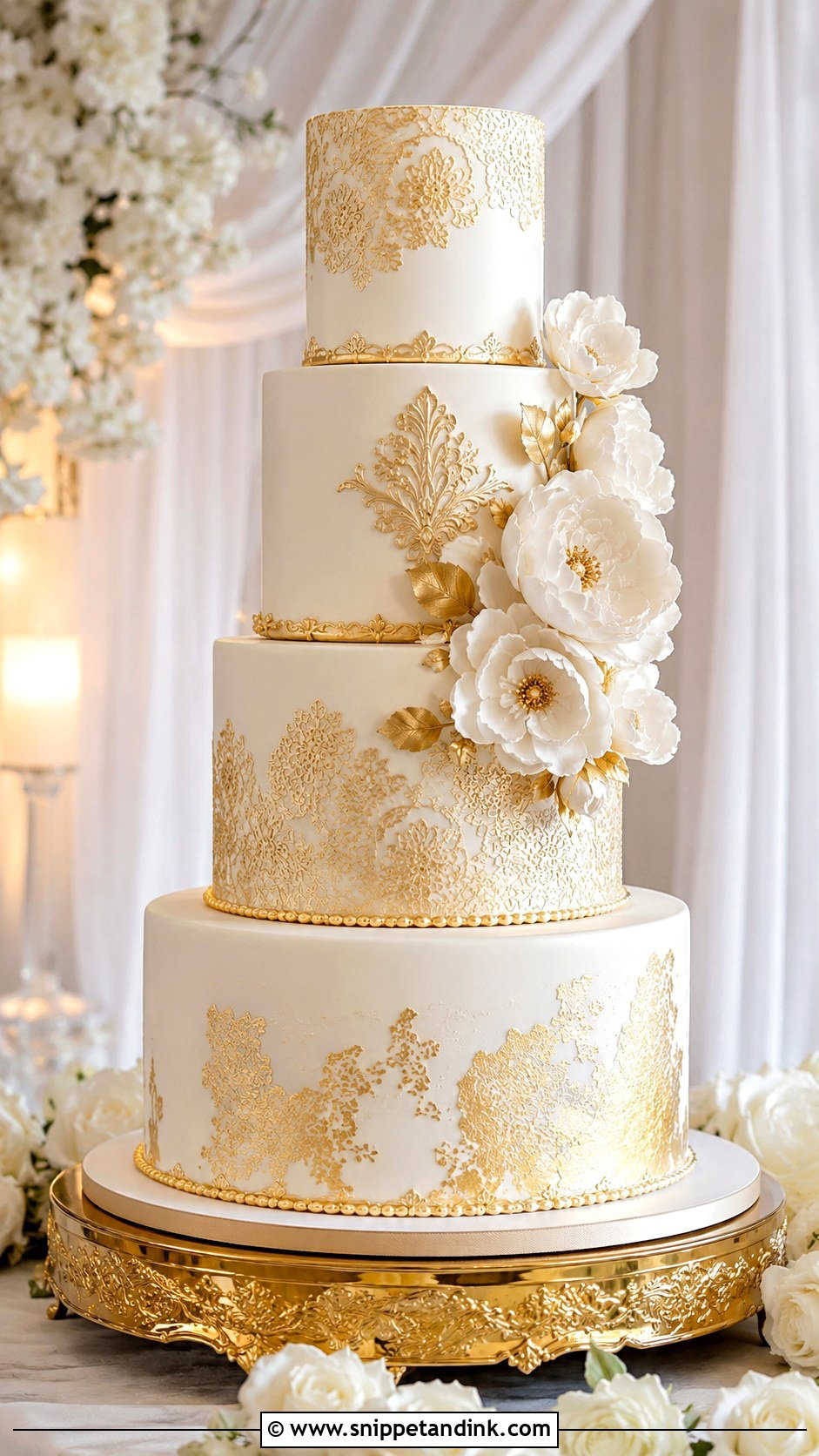
Fondant gives the flawless finish: smooth sides, crisp corners and clean shapes that soft frosting can’t match. Gold works on it as painted lace, metallic bands, edible leaf, molded appliqués or stencil work, and it stays where it’s put. It’s often recommended for warm-weather weddings, and it does hold structure better than buttercream in heat, but fondant sweats in humidity, especially when a chilled cake meets a warm room. Ask your baker how they handle that. White sugar flowers make it refined; one bold gold tier keeps it modern.
17. White And Gold Textured Wedding Cake
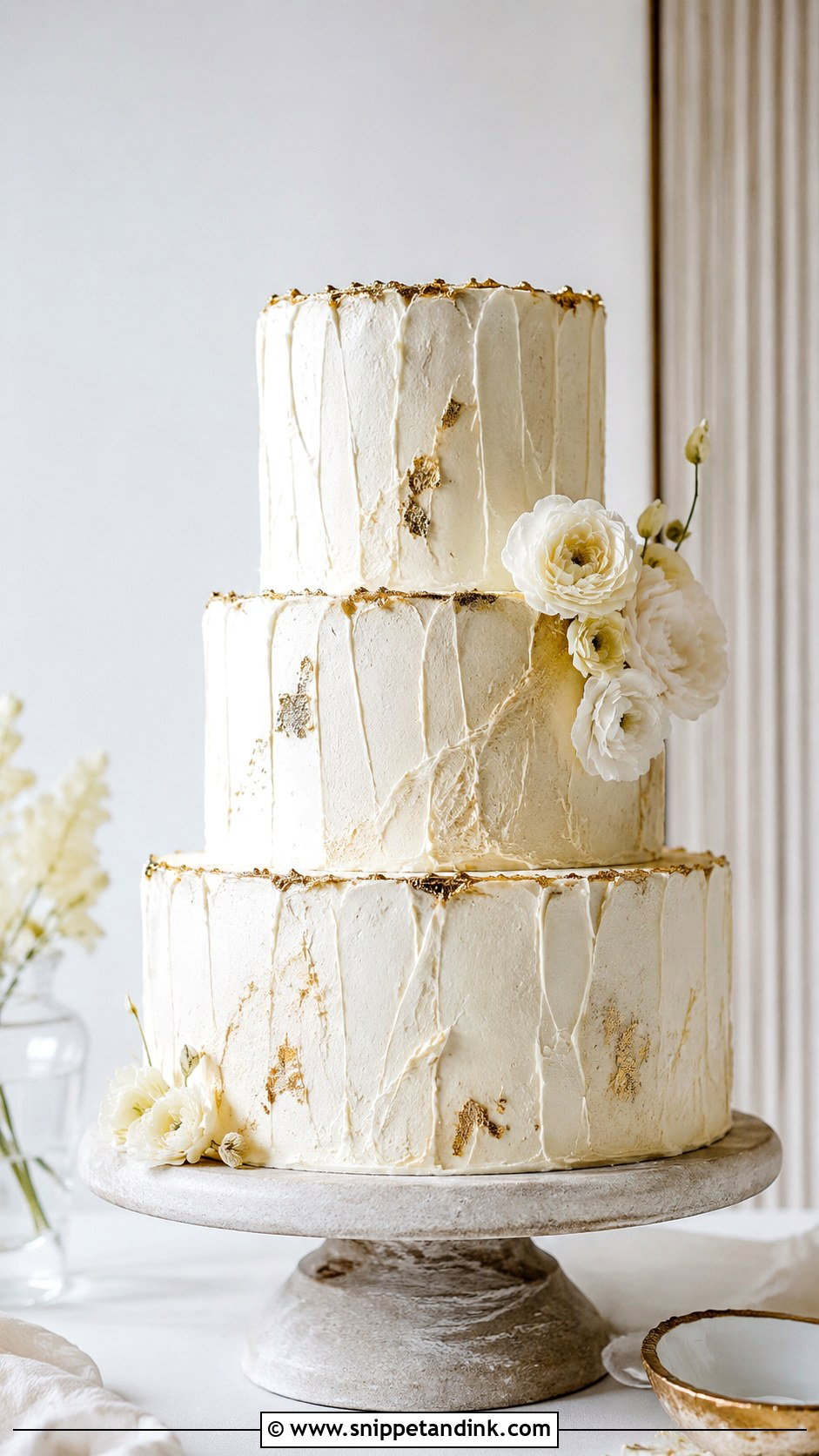
Texture makes a simple palette feel rich. Ridged buttercream, stucco-style frosting, pressed fondant, quilting or palette-knife strokes give the surface depth, and gold should pick out that texture rather than cover it. A rough gold edge, brushed patches or small leaf accents catch the raised parts and leave the hollows white. That contrast is what makes it look handmade and artistic. Light grazes across raised frosting in photos, so the cake looks deeper on camera than flat designs. Keep flowers simple and let the surface lead.
18. White And Gold Orchid Wedding Cake
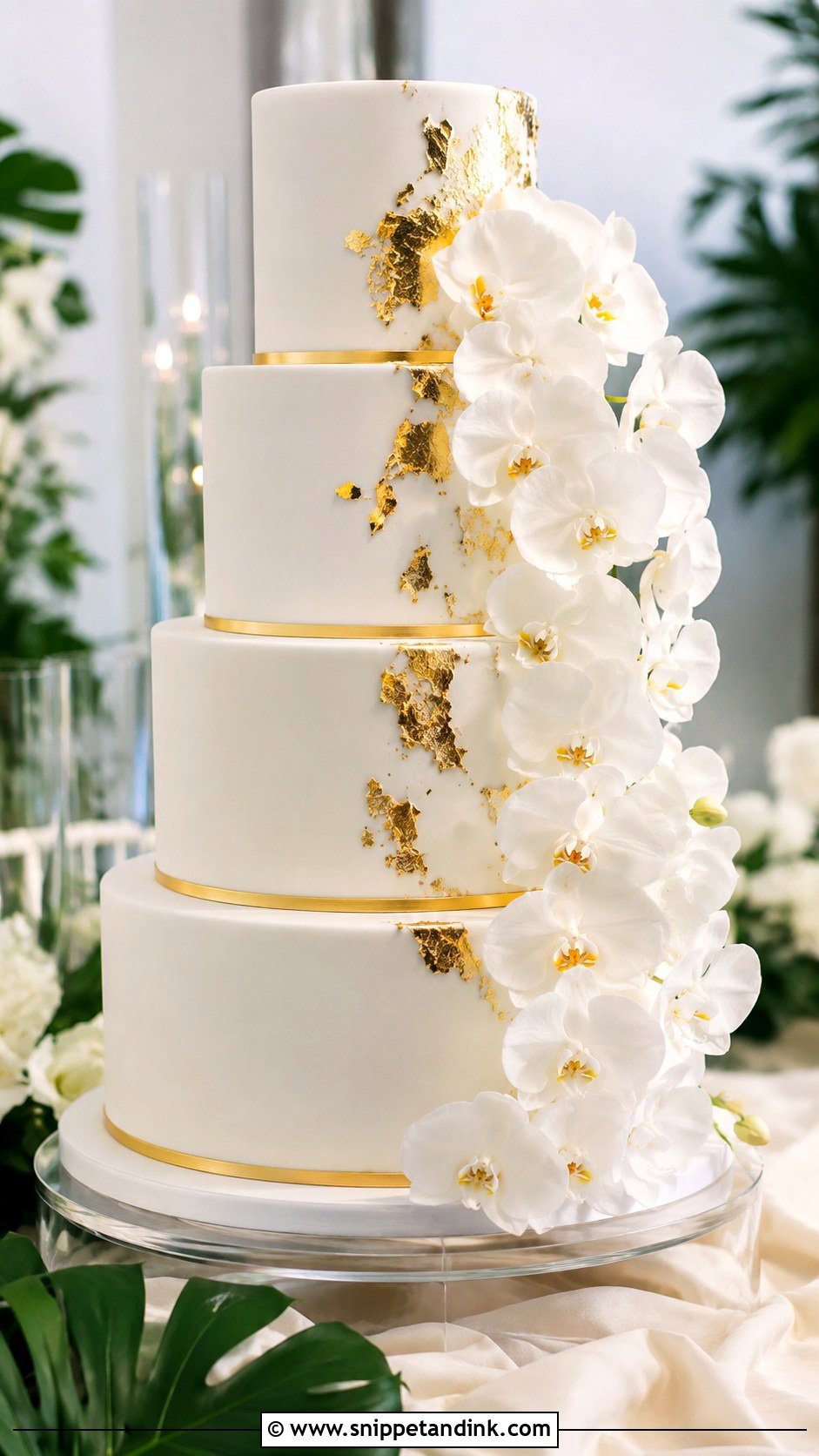
Orchids give a white and gold cake a sculptural, slightly tropical feel without looking casual. Their shape adds movement while matching the bridal palette. I pair them with smooth white fondant or buttercream and add gold leaf, thin bands or soft painted strokes. A cascade down one side gives height. Real orchids bruise easily and brown where they’re handled, so sugar orchids are worth considering for a long reception. They suit destination weddings, hotels and modern gardens, and couples who find roses too expected.
19. White And Gold Rosette Wedding Cake
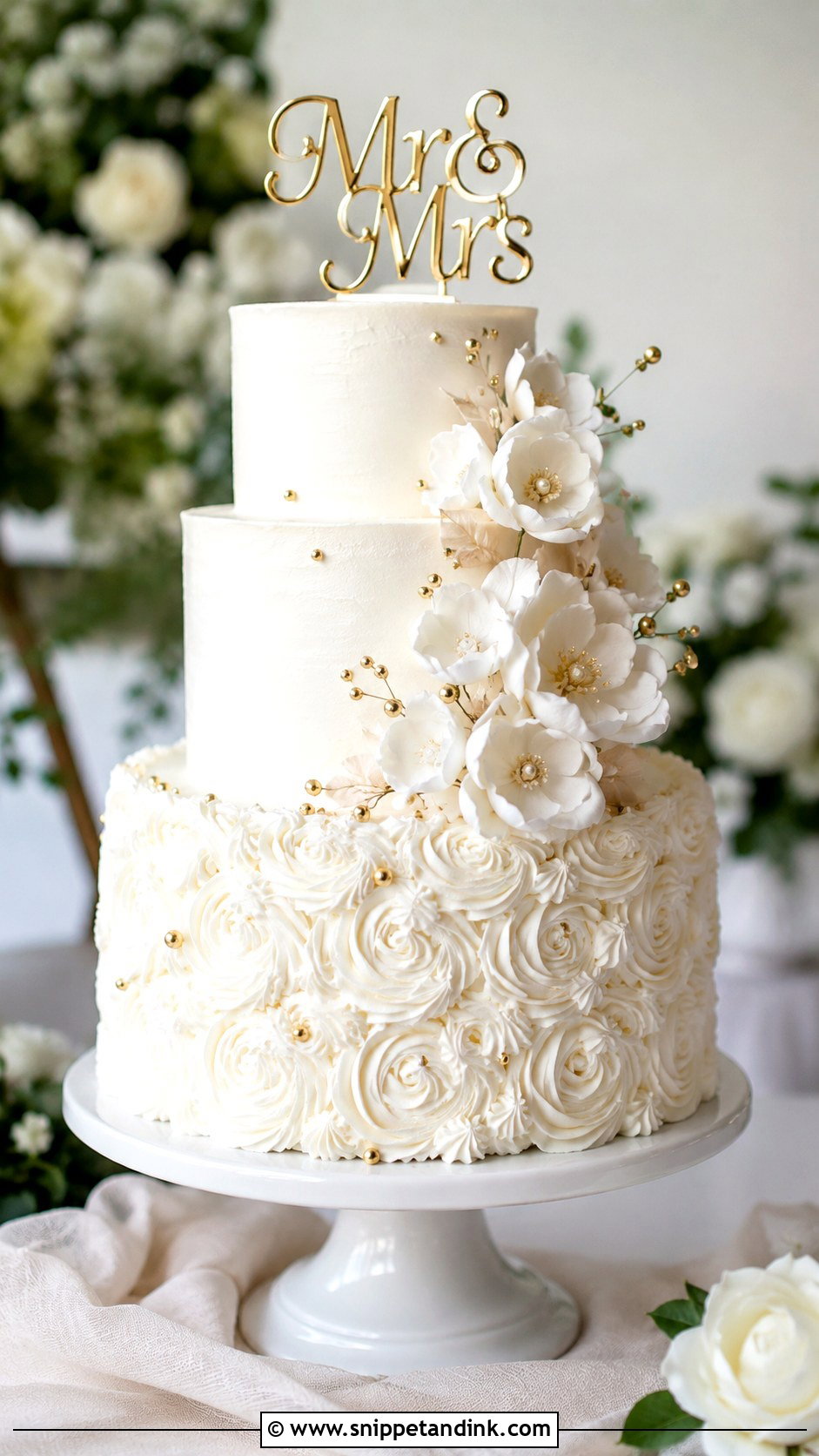
Rosettes give fullness without a floral budget. A white and gold rosette wedding cake can be covered entirely, wrapped on one tier, or patterned only on the bottom tier. White or ivory frosting keeps it bridal. Gold appears as a topper, slim bands, pearl-gold details or a few painted touches on the rosette edges. I pipe rosettes in a stiff buttercream so they keep their swirl after hours at room temperature; a soft mix slumps into blobs.



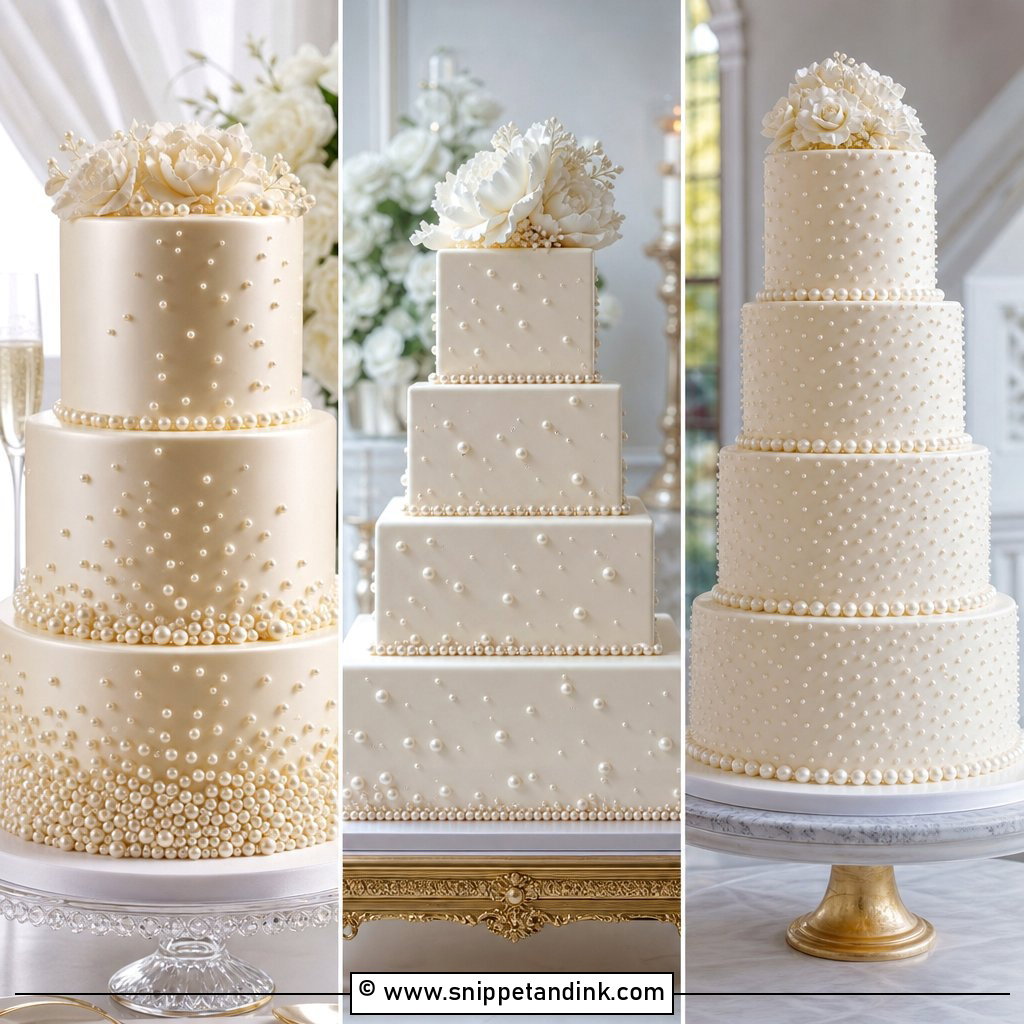
20. White And Gold Sequin Wedding Cake
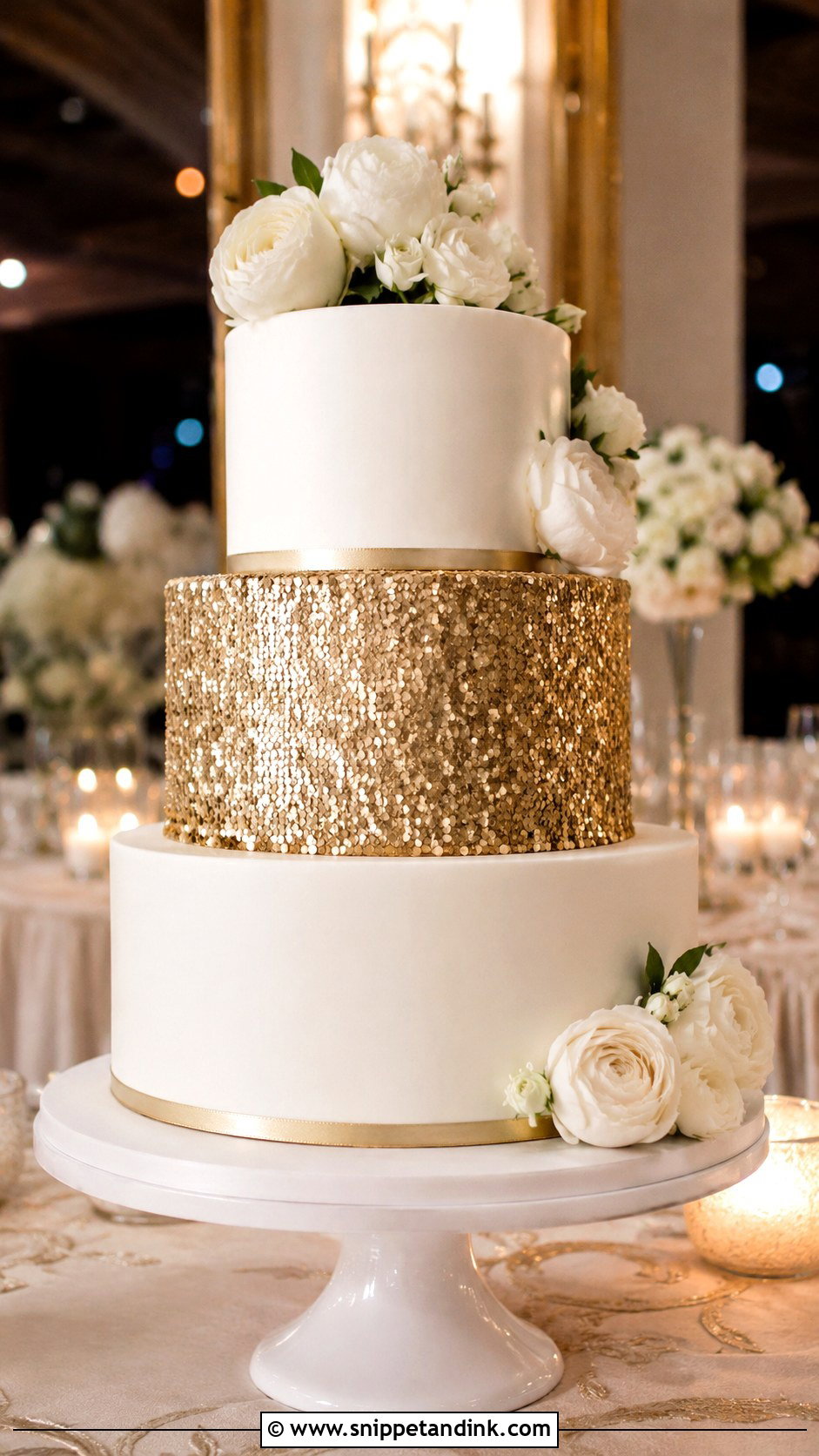
For sparkle that still looks classy, keep the sequins to one tier between smooth white ones. Edible sequins, gold confetti or metallic sugar pieces can create the effect, and every bakery has its own method. Keep the shape simple and the flowers minimal, because the sequin tier already does the talking. Candlelight makes it glitter in a way overhead lighting doesn’t, which is why it belongs at evening receptions. A white stand and soft ivory flowers finish it.
Where White Cakes Go Wrong at the Venue
White frosting shows everything, so the hours between delivery and cutting matter more for these cakes than for darker designs.
Sunlight
A cake table next to a big window looks lovely at three o’clock and causes trouble by five. Direct sun softens buttercream, can yellow a pure white finish and makes gold paint glare in photos. Ask for the cake table in shade, away from heaters and the dance floor speakers, which vibrate more than you’d think.
The fridge-to-room jump
If a cake comes out of a cold fridge into a warm, humid room, water beads on the surface. On white fondant that leaves spots, and it can streak painted gold. I let the cake come up to temperature in its box before it’s set out, and I’d ask the venue not to refrigerate it unless the cake designer has said to.
Who touches it
White fondant picks up fingerprints, and the person most likely to leave one is a helpful relative straightening a flower. Agree in advance who sets up the table and who moves the cake for cutting, and keep a clean cloth and a small brush with your planner for any crumbs or dust.
Start With the Room, Then Decide Where the Gold Goes
White and gold can be classic, modern, romantic or glamorous, and the difference comes from shape and finish, not color. Look at the venue, the dress, the flowers, the linens and the lighting before you settle on a design. A marble cake suits a modern hotel; buttercream and fresh flowers suit a garden. Tall tiers bring drama, a single tier feels intimate, and texture adds depth without adding color. Get the balance of white and gold right for your room, and the cake will look like it belongs there.
You'll Like These Ideas:








Leave a Reply