
A wedding dress is only half of what people see. The veil, shoes, jewellery and hair either support the gown’s line or fight it, and most of my styling work happens after the dress is already chosen. So each look below pairs a gown with the accessory I’d actually put with it, from a pearl-edged veil on satin to ballet flats under tulle and a hat over boho lace. I’ve added notes on fit, fabric and what tends to go wrong, because the prettiest pairing still fails if you can’t sit, walk or hug in it.
Veil Lengths and Where They Land on a Gown
Many of the pairings below hinge on the veil, and length changes everything. A veil that ends in the wrong place cuts the dress in half visually, so I choose it by where it falls against the gown’s details:
- Birdcage and blusher. Face-length, so they suit short and vintage dresses and leave the whole gown visible.
- Elbow. Ends around the waist. Good for detailed bodices, as long as it doesn’t stop exactly at a waist seam.
- Fingertip. The most versatile, landing around the hips. Easy to wear all evening.
- Chapel. Reaches the floor and slightly beyond, so it pairs with gowns that have a short train.
- Cathedral. Trails well past the train. Lovely in a long aisle, but plan to remove it after the ceremony.
Match the colour too. Veils come in white, diamond white and ivory, and the wrong one looks grey or yellow next to the dress, so I always hold the veil sample against the gown itself.
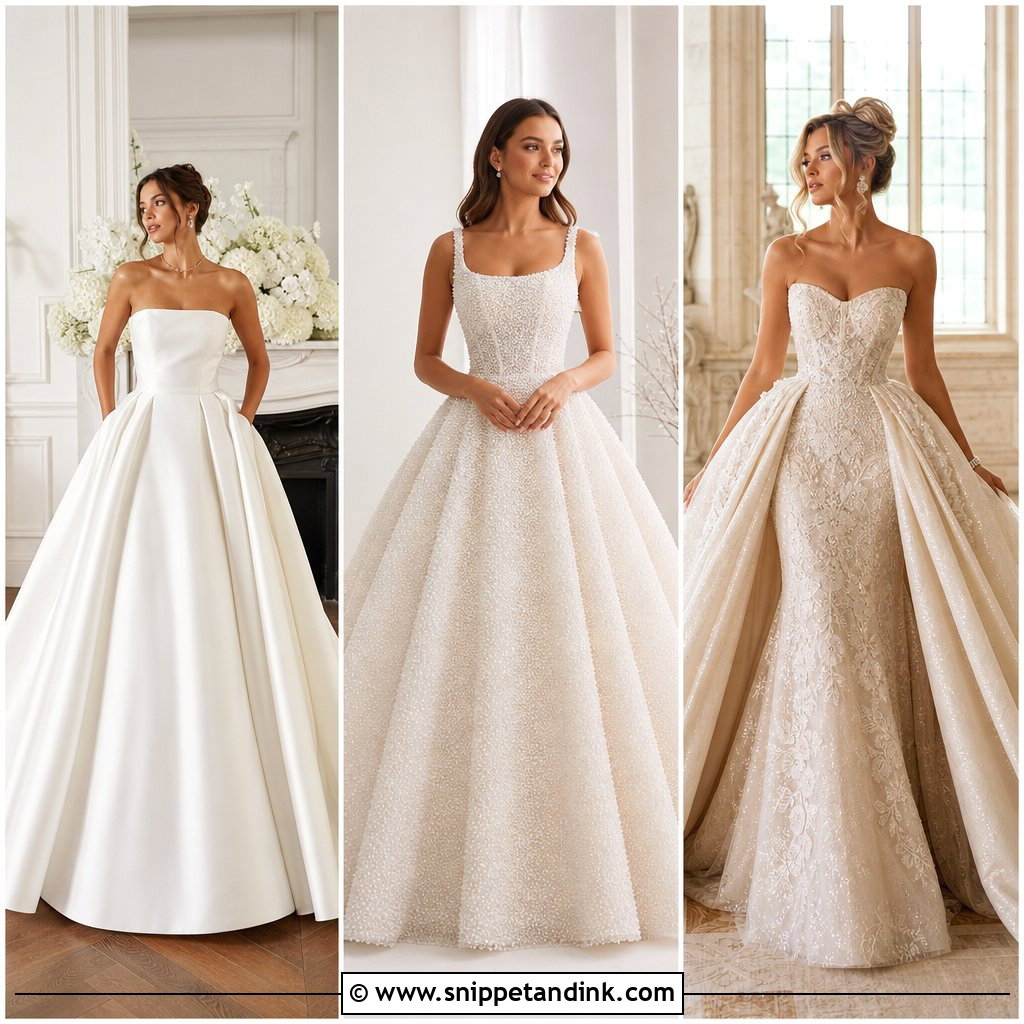
1. Satin A Line Bride Gown With Pearl Veil
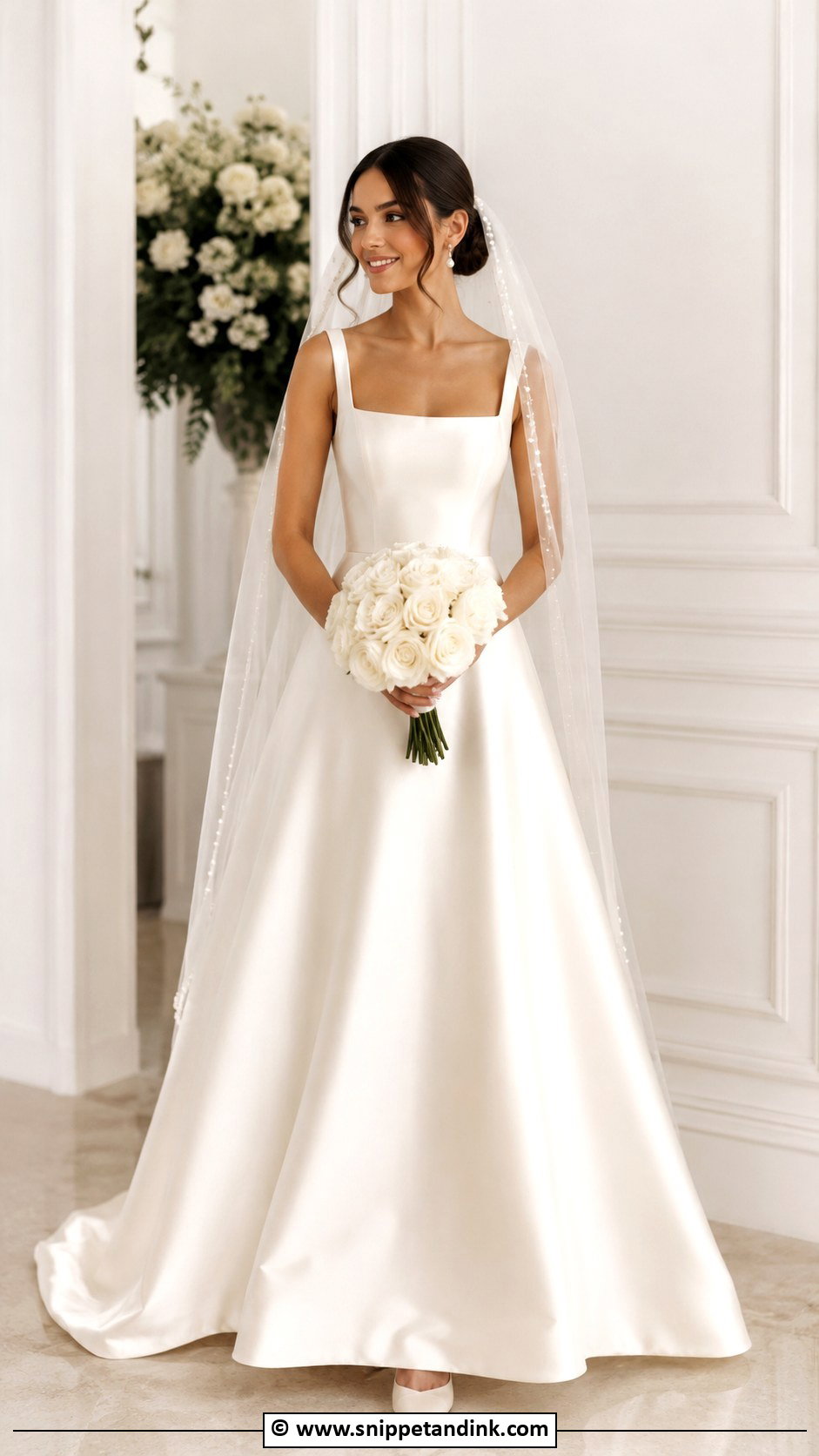
Satin in an A-line is the shape I’d show a bride who doesn’t know where to start. The bodice gives definition, the skirt skims the hips, and satin has enough body to hold that line without boning everywhere. A pearl-trimmed veil echoes the sheen. Keep the earrings small, because pearl on the veil and pearl at the ears is already a pair. White roses, ranunculus or orchids in a plain bouquet won’t compete with the fabric.
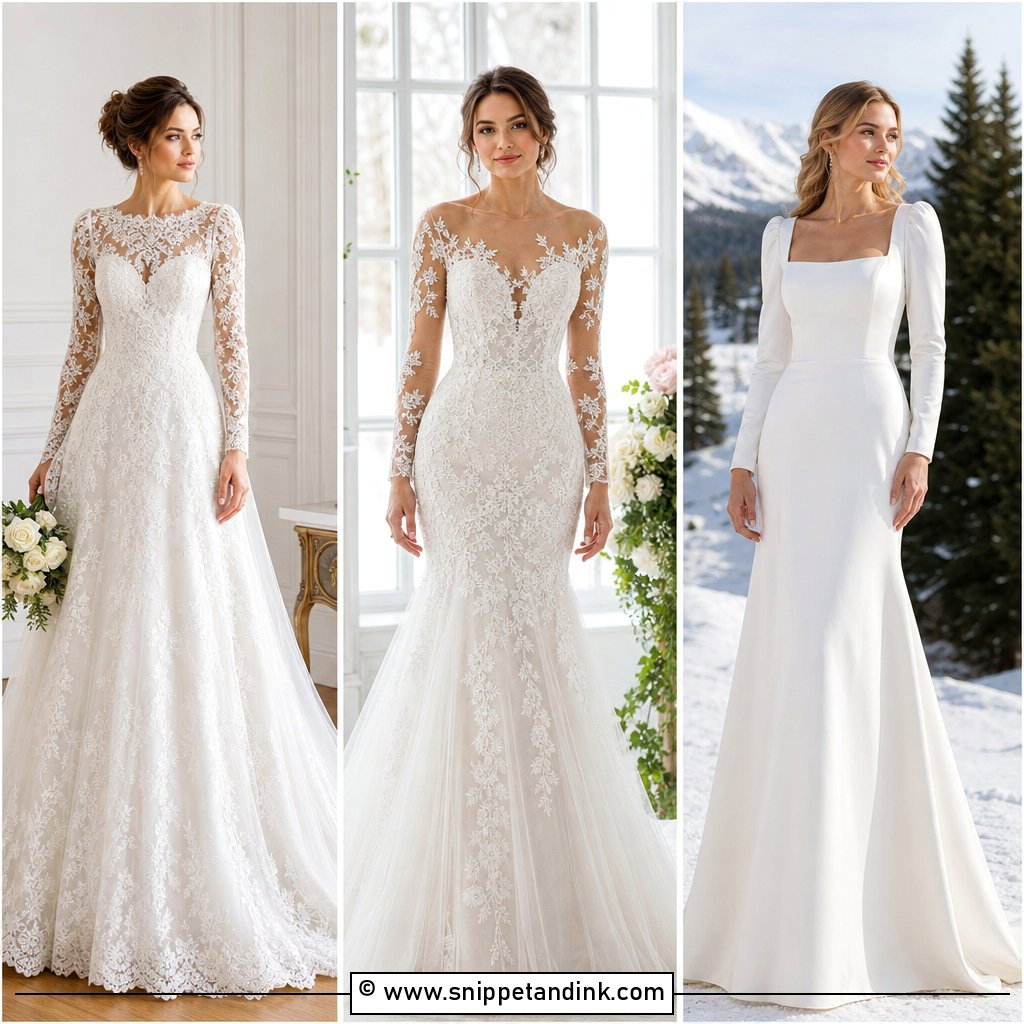
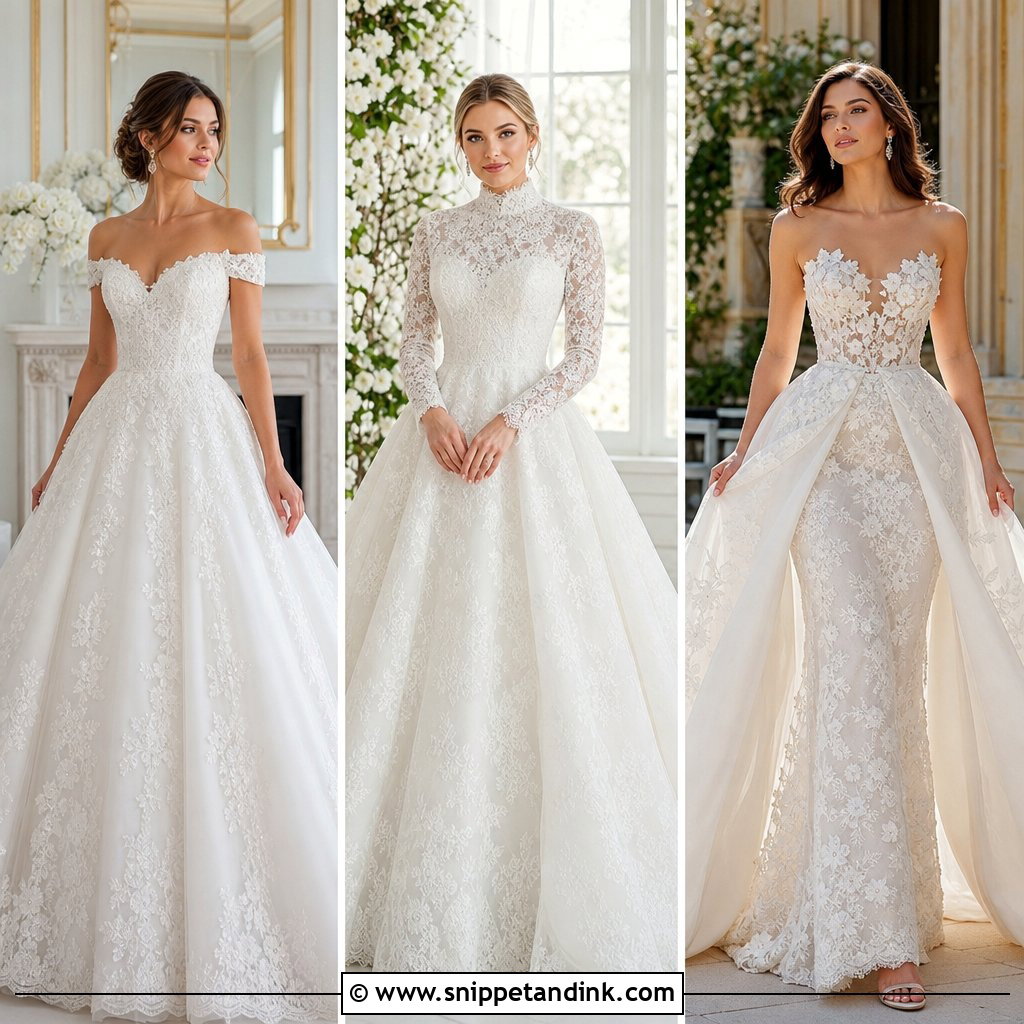
2. Lace Long Sleeve Bride Gown With Low Bun
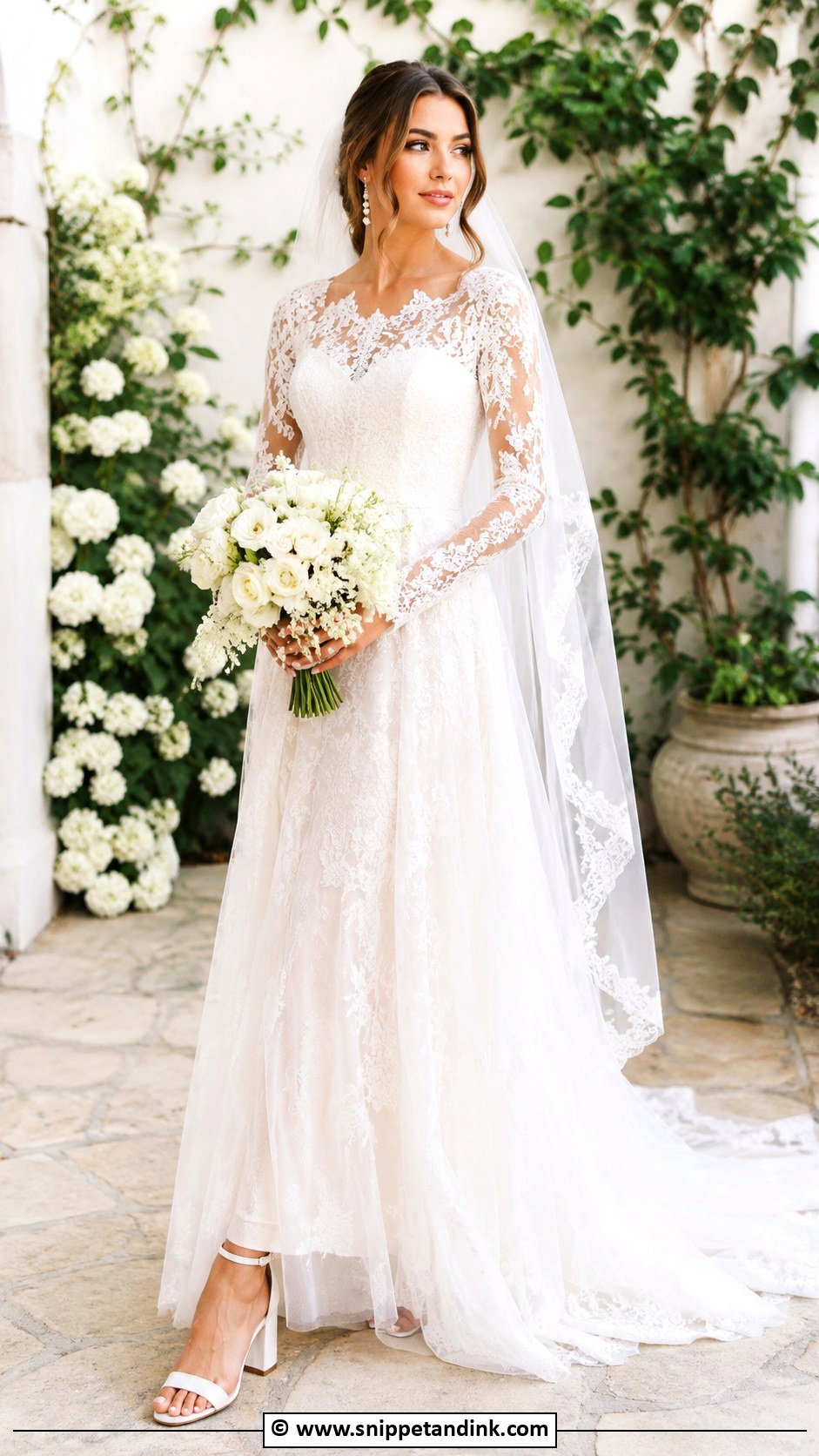
Soft lace sleeves are the ones to look for. Stiff, heavily corded lace can scratch the inner arm and restrict movement, while fine Chantilly or a light tulle-backed lace drapes and moves. A lined bodice keeps the look covered without heat. I pair it with a low bun because a high updo leaves a lot of bare neck against all that sleeve. If the pattern is busy, let the earrings be plain pearl drops and nothing else.
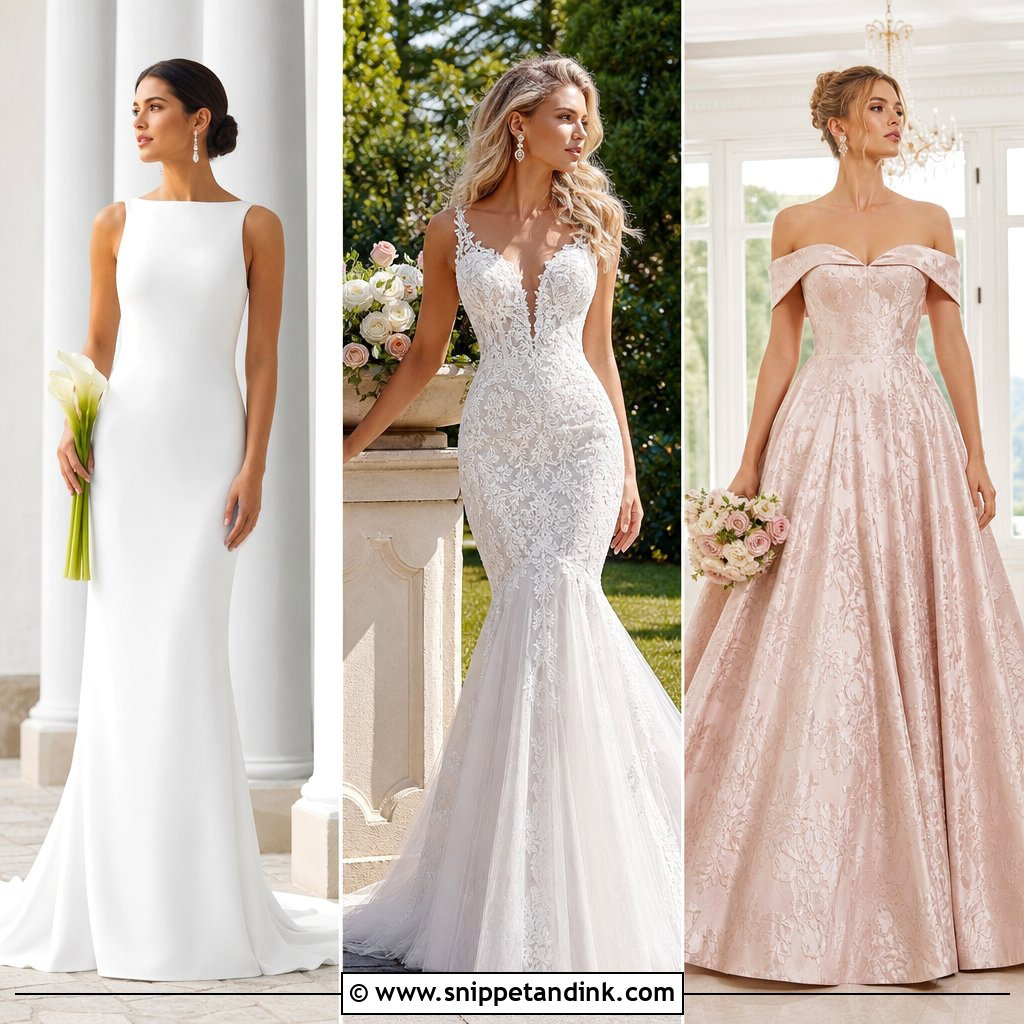
3. Minimalist Crepe Bride Gown With Cathedral Veil
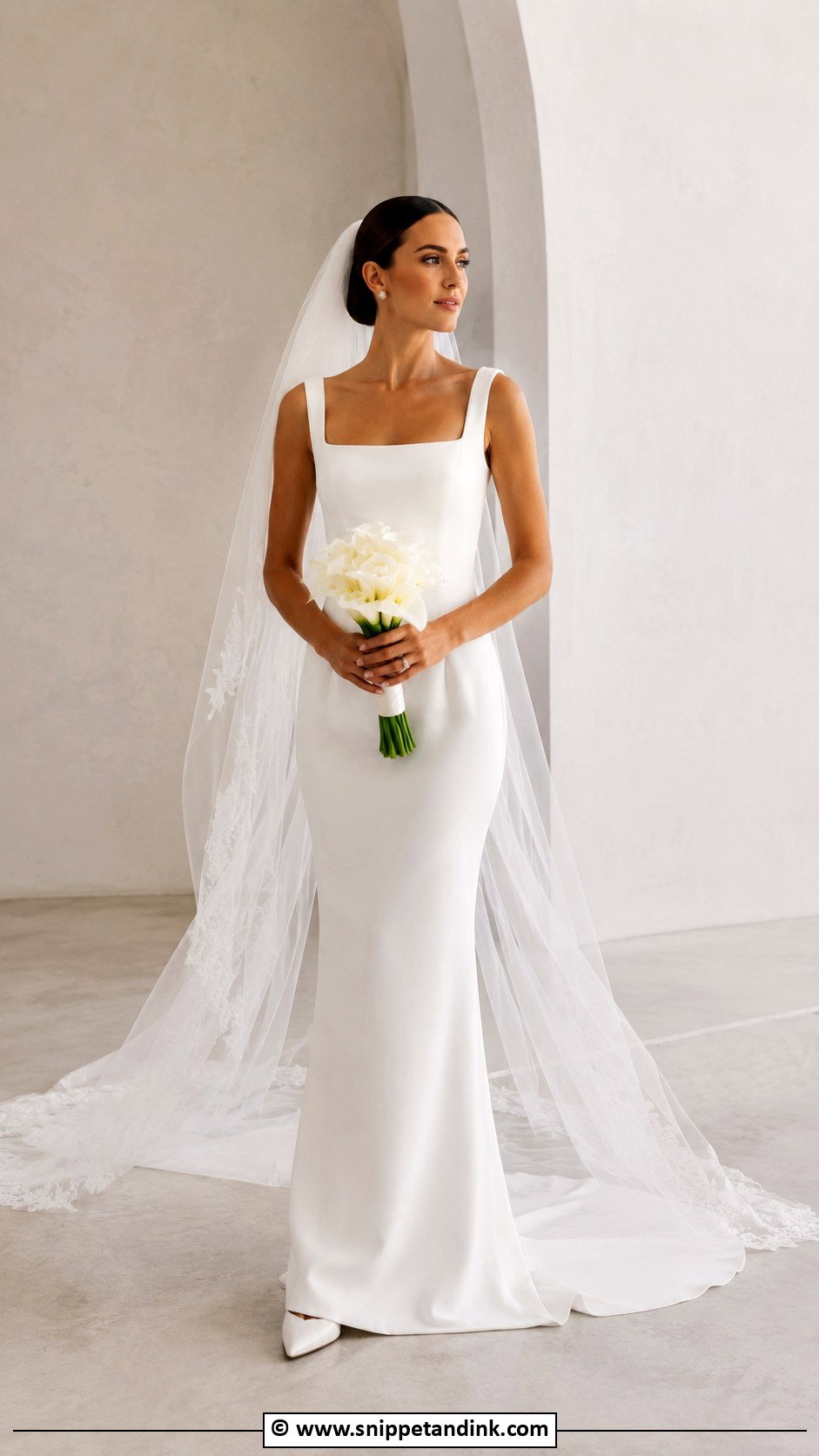
Crepe has nowhere to hide, which is exactly its appeal. A square neck, column skirt and short train look modern in photos and won’t date. The cathedral veil provides the ceremony drama, and taking it off afterwards gives you a sleeker reception look without a change. Because crepe shows every line underneath, sort your undergarments before the first fitting. Studs and pointed pumps are all it needs.
4. Off Shoulder Bride Gown With Tulle Skirt
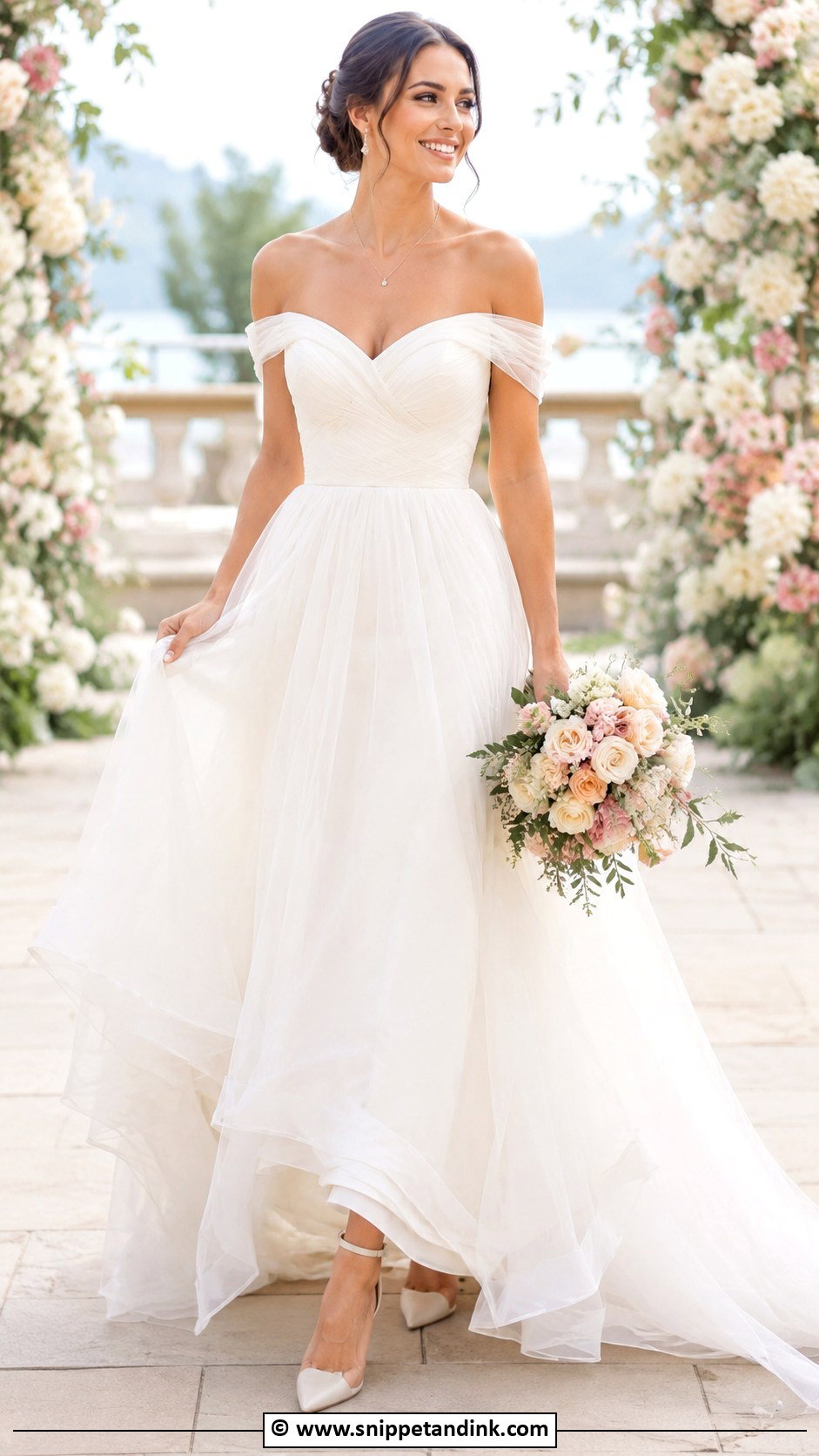
Tulle gives you volume for very little weight, so it’s the most comfortable full skirt to wear for hours. Off-shoulder straps rest on the upper arm, which limits how high you can lift your hands, so test a hug in the fitting room. Light boning in the bodice stops the neckline creeping down. Choose a veil in the same tulle shade, since ivory veil over diamond-white tulle shows as two colours. A loose updo keeps the shoulders visible.
5. Basque Waist Bride Gown With Full Skirt
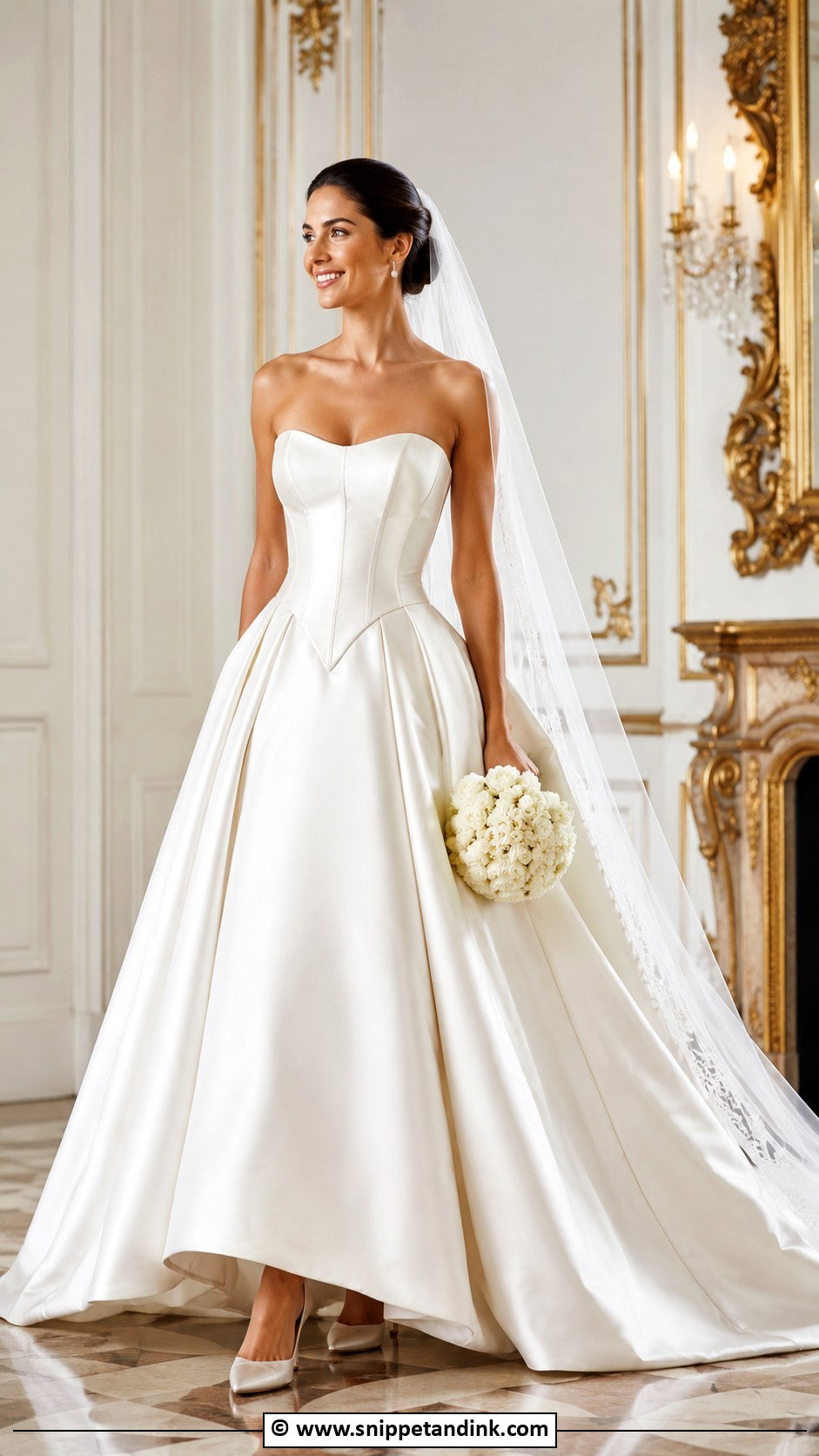
That dipped V at the waist lengthens the torso, and it’s often the answer for brides who feel short-waisted in a standard ball gown. The full skirt balances the fitted bodice. My job with this shape is to keep the waistline the focus, so I avoid sashes and belts that would cut across it. Satin pumps, a long veil and a sleek bun keep everything else quiet. It reads vintage without looking costume.
6. Drop Waist Bride Gown With Sheer Gloves
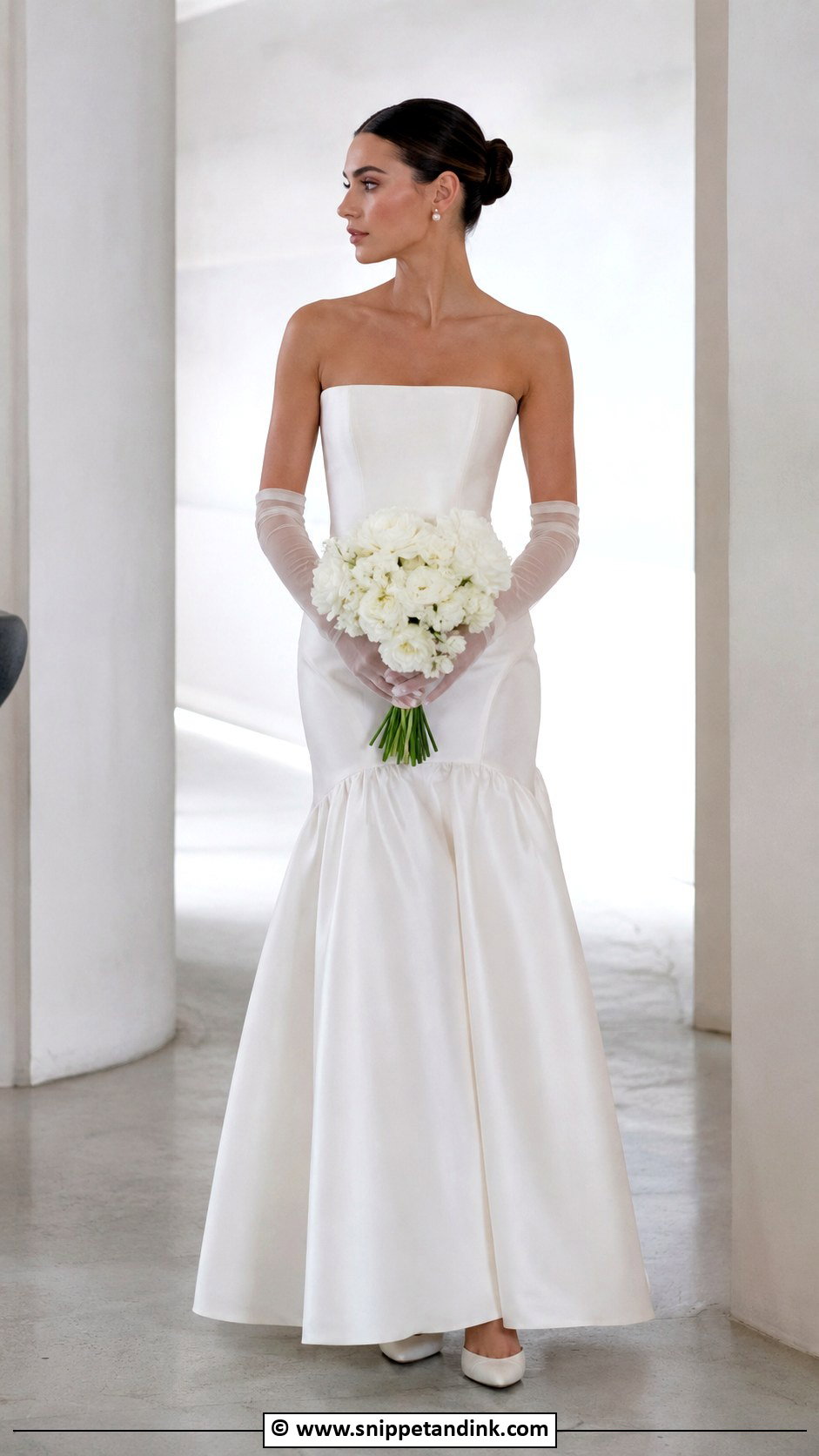
Sheer gloves suit a drop waist because both feel a little old-Hollywood. The lower waist creates a long torso and works with either a full or slim skirt. Choose soft structure so the seam sits flat across the hips instead of digging in when you sit. One tip on gloves: wrist or elbow-length sheer gloves need to come off for the ring exchange, so tuck the fingertips into a pocket or hand them to your maid of honour first.
7. Strapless Ball Gown Bride Gown With Tiara
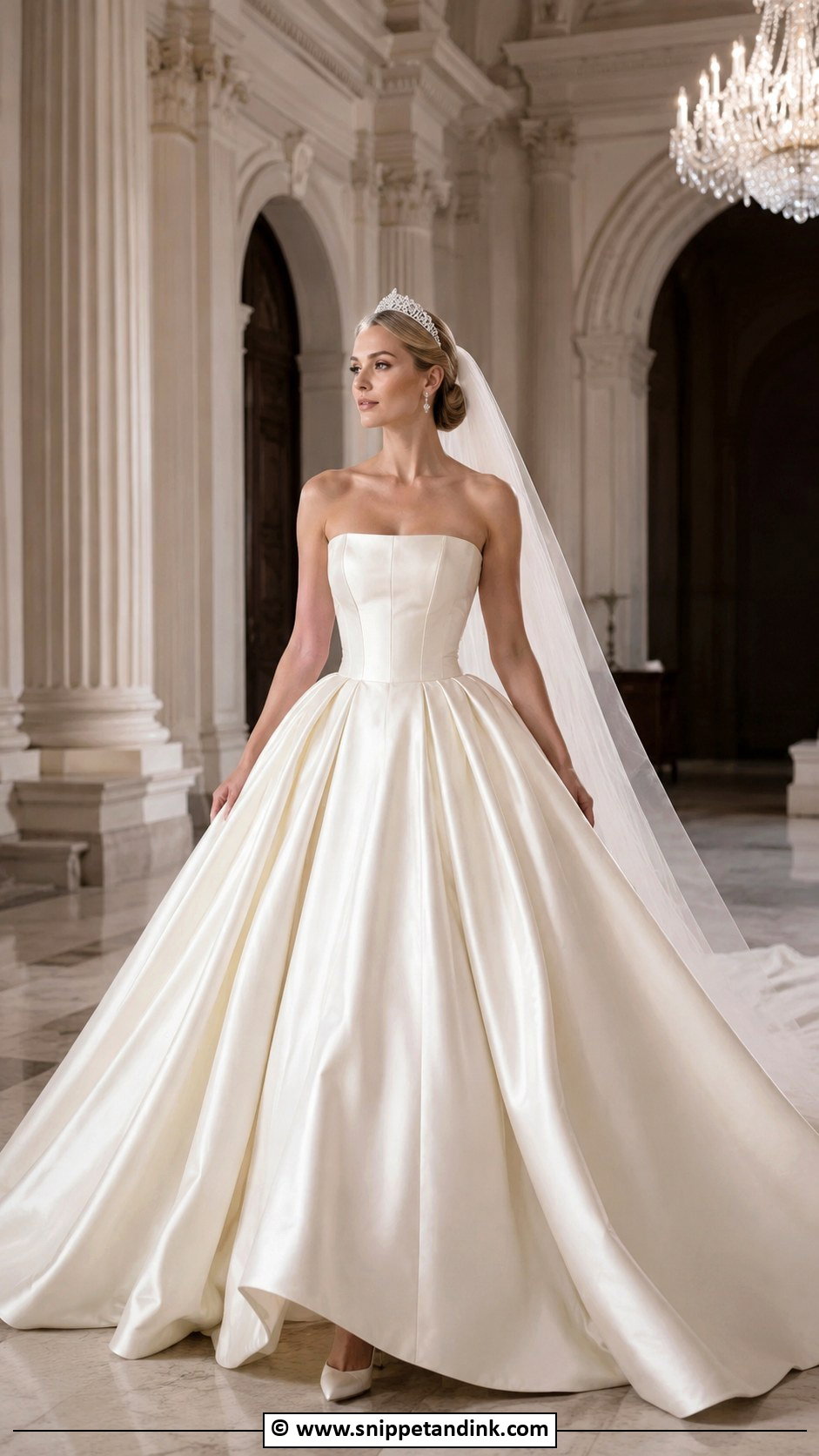
A strapless ball gown makes the biggest entrance, and a tiara is the one accessory I’d allow to match its scale. Everything else stays simple: satin heels, a soft veil, classic earrings. The fit at the top edge of the bodice is crucial. If it gapes when you lean forward or digs into the underarm, it’ll need adjusting, because you’ll be tugging at it all evening otherwise. Measure the doorways and the car if the skirt is very wide.
8. Mermaid Bride Gown With Beaded Veil
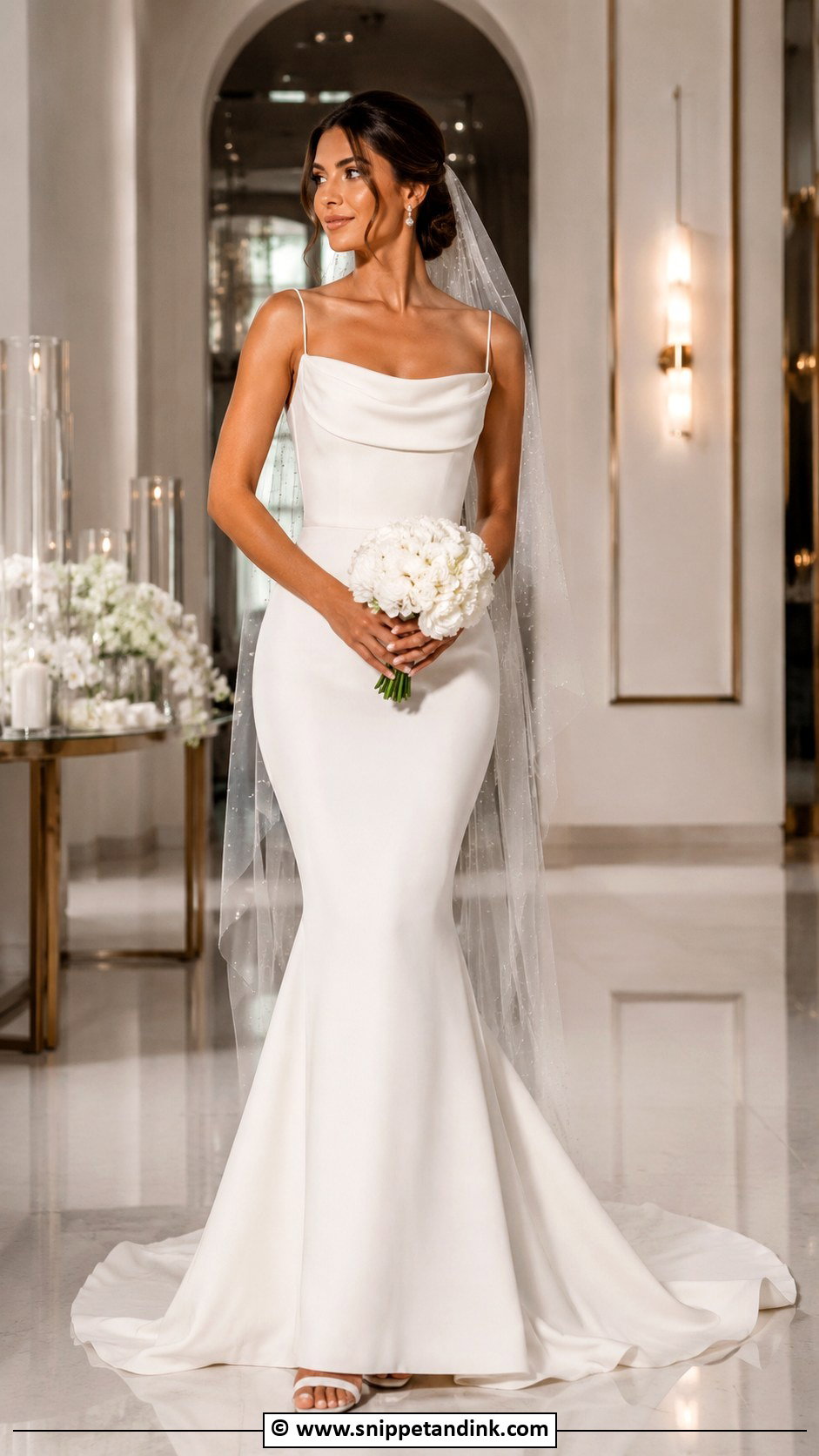
Mermaid gowns fit close through the hips and flare at or below the knee, so the height of that flare decides how you’ll walk. A flare at the knee restricts your stride and makes stairs slow; one at mid-thigh is easier. Wear the heel height you’ll marry in at every fitting so the flare falls correctly. A beaded veil adds sparkle, which means the bouquet and jewellery can stay compact and plain.
9. Square Neck Bride Gown With Satin Pumps
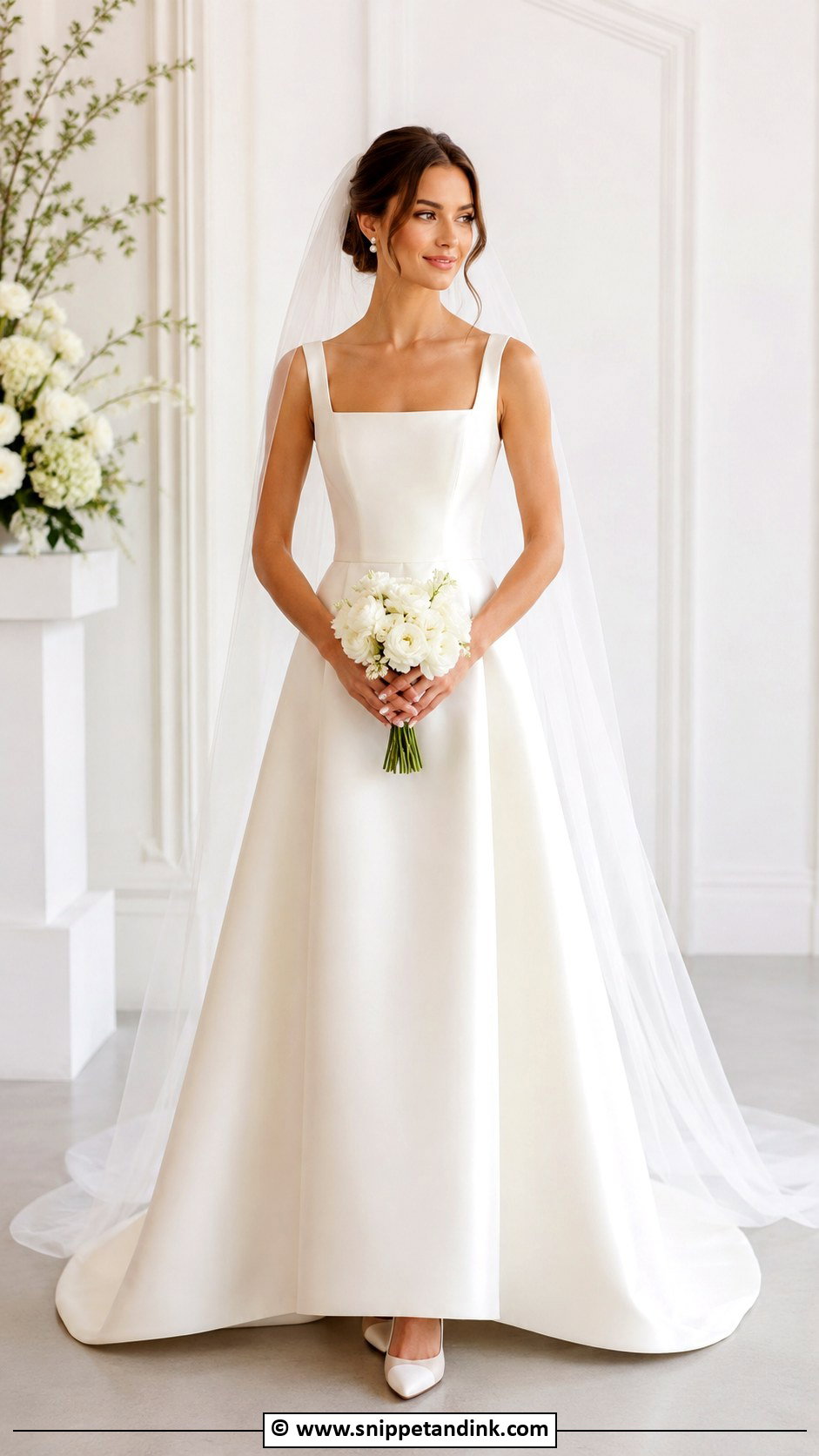
Square necks suit most body types and stay put better than strapless, since the straps carry the weight. I like the neckline in satin, crepe or mikado, which keep the corners crisp; soft lace can let them sag. Satin pumps and small pearl earrings complete it. A low bun or tucked waves leaves the space around the face open, which is the whole point of the shape.
10. V Neck Bride Gown With Floral Lace Train
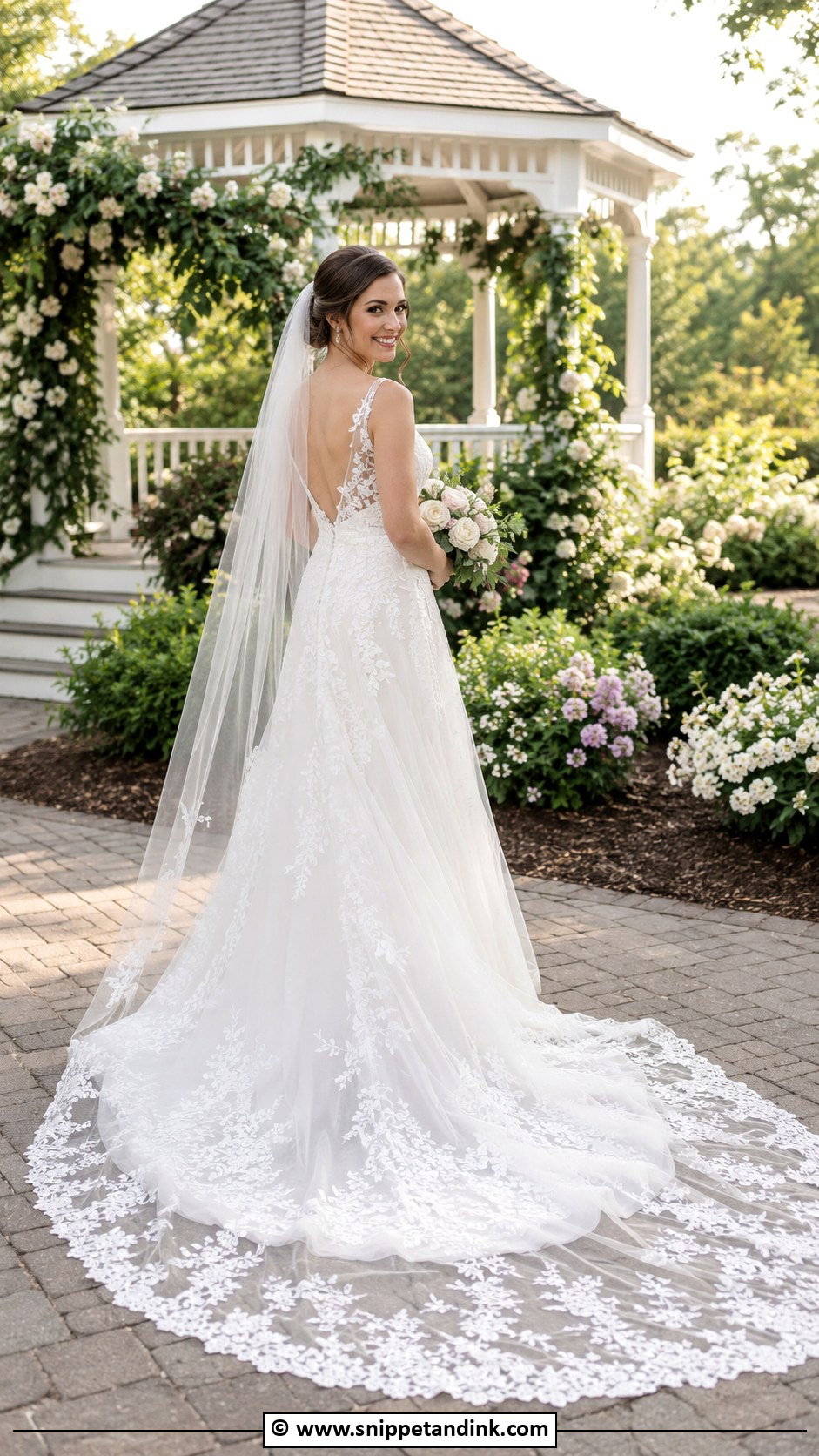
A V neck lengthens the upper body, and a floral lace train gives the back view something to say during the ceremony walk. Check the depth of the V while seated, not just standing. A plunge that looks fine upright can gape when you lean forward to sign the register; fashion tape or a tiny mesh insert fixes it. Choose a veil short enough, or sheer enough, to let the lace train show. Half-up hair keeps it relaxed.
11. High Neck Bride Gown With Sleek Updo
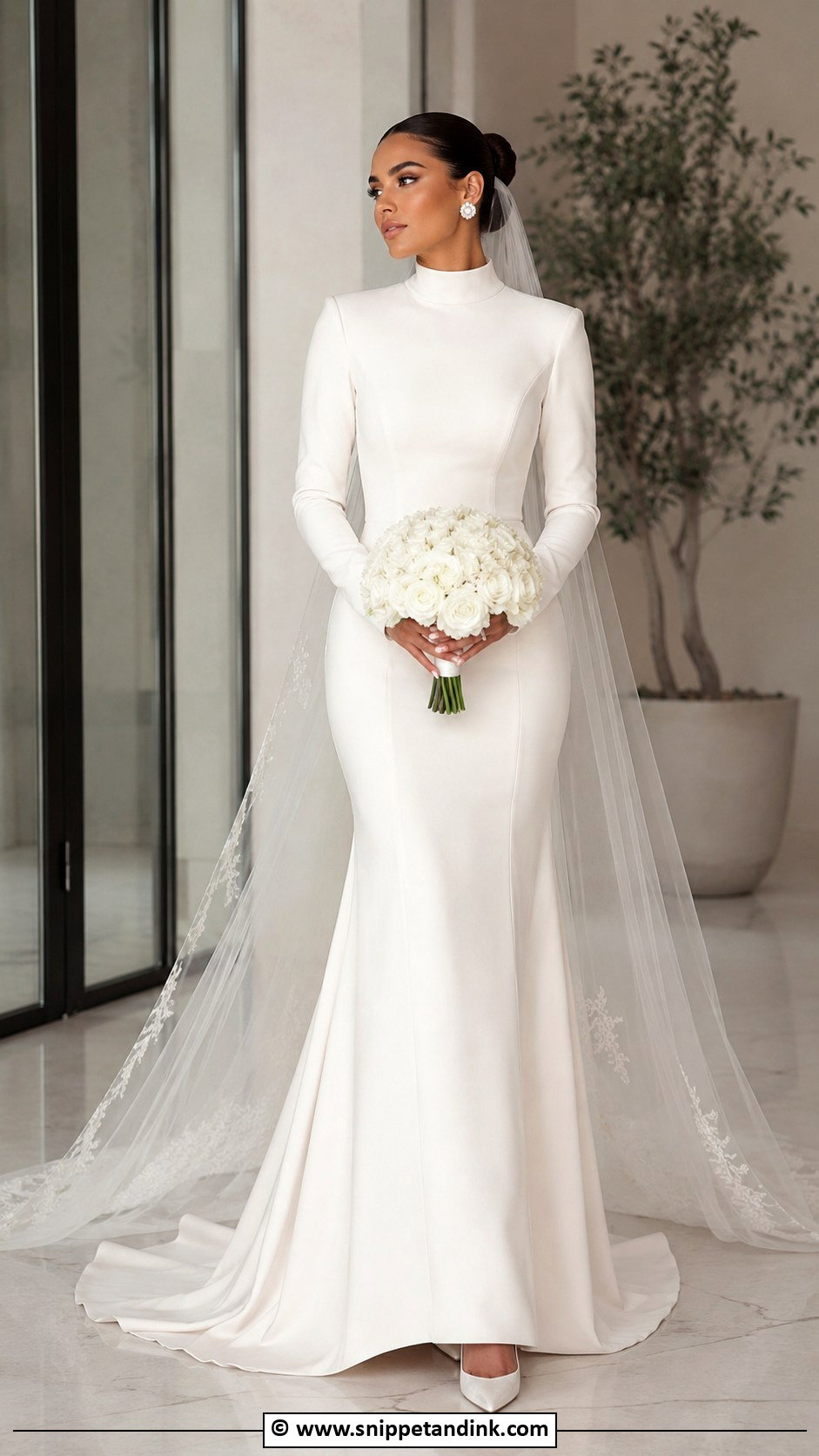
High necklines cover a lot of skin, so lifting the hair is what keeps the look from feeling heavy. A sleek updo opens the face and shows the line of the collar. Skip the necklace entirely; statement studs or small pearl drops are plenty. Crepe and satin give a sharper look, lace and organza a softer one. In summer, a high neck can feel warm by the afternoon, so I’d choose a breathable lining.
12. Corset Bride Gown With Organza Skirt
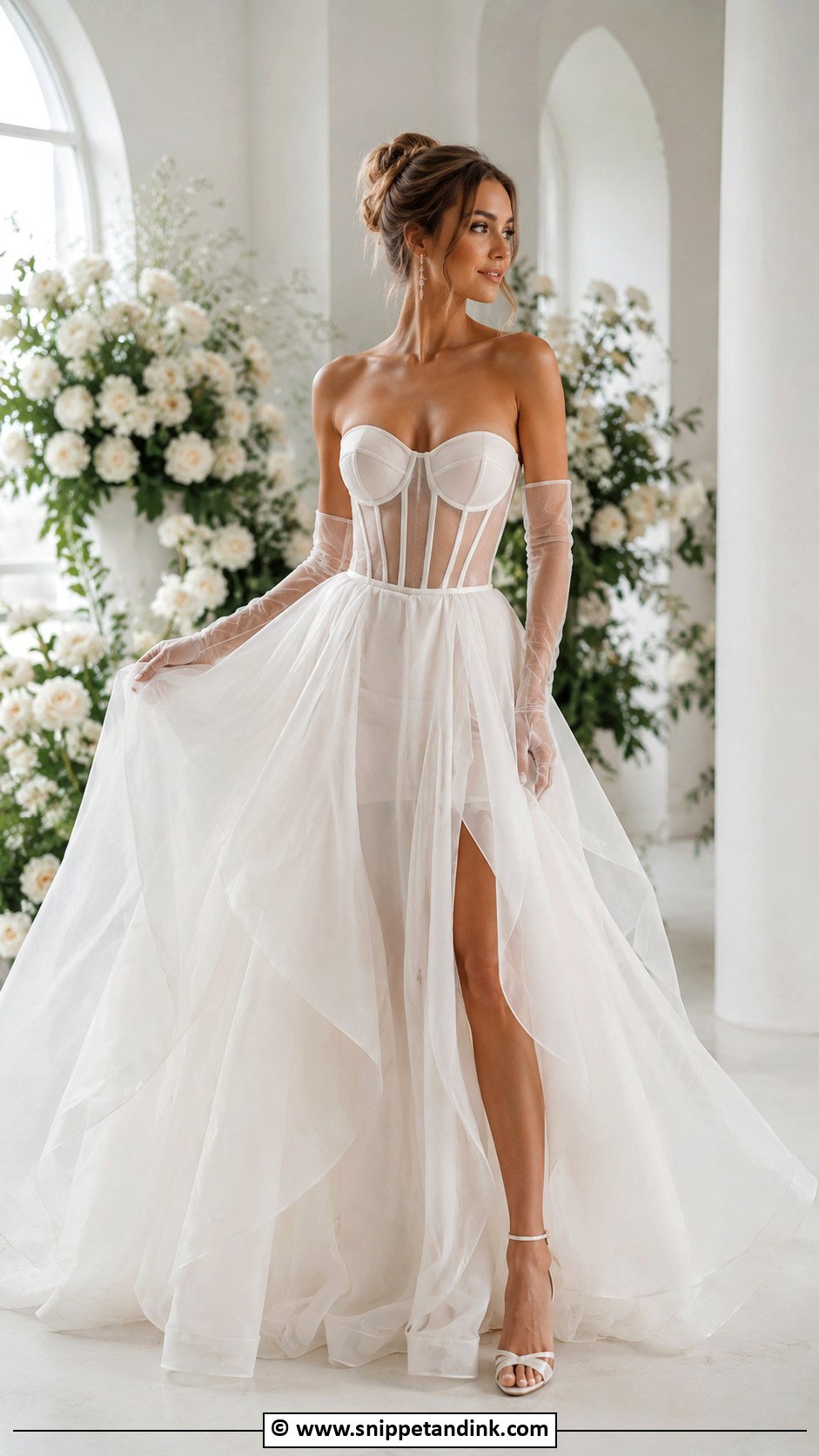
Organza is crisper than tulle, so it holds a fuller, floatier skirt with fewer layers. Under a corset bodice it gives shape on top and air below. The corset needs to support without digging; sit down, breathe deeply and lift your arms at the fitting. Sheer gloves suit the romantic feel. Organza creases more than tulle when crushed, so steam the skirt after the car ride.
13. Floral Applique Bride Gown With Soft Waves
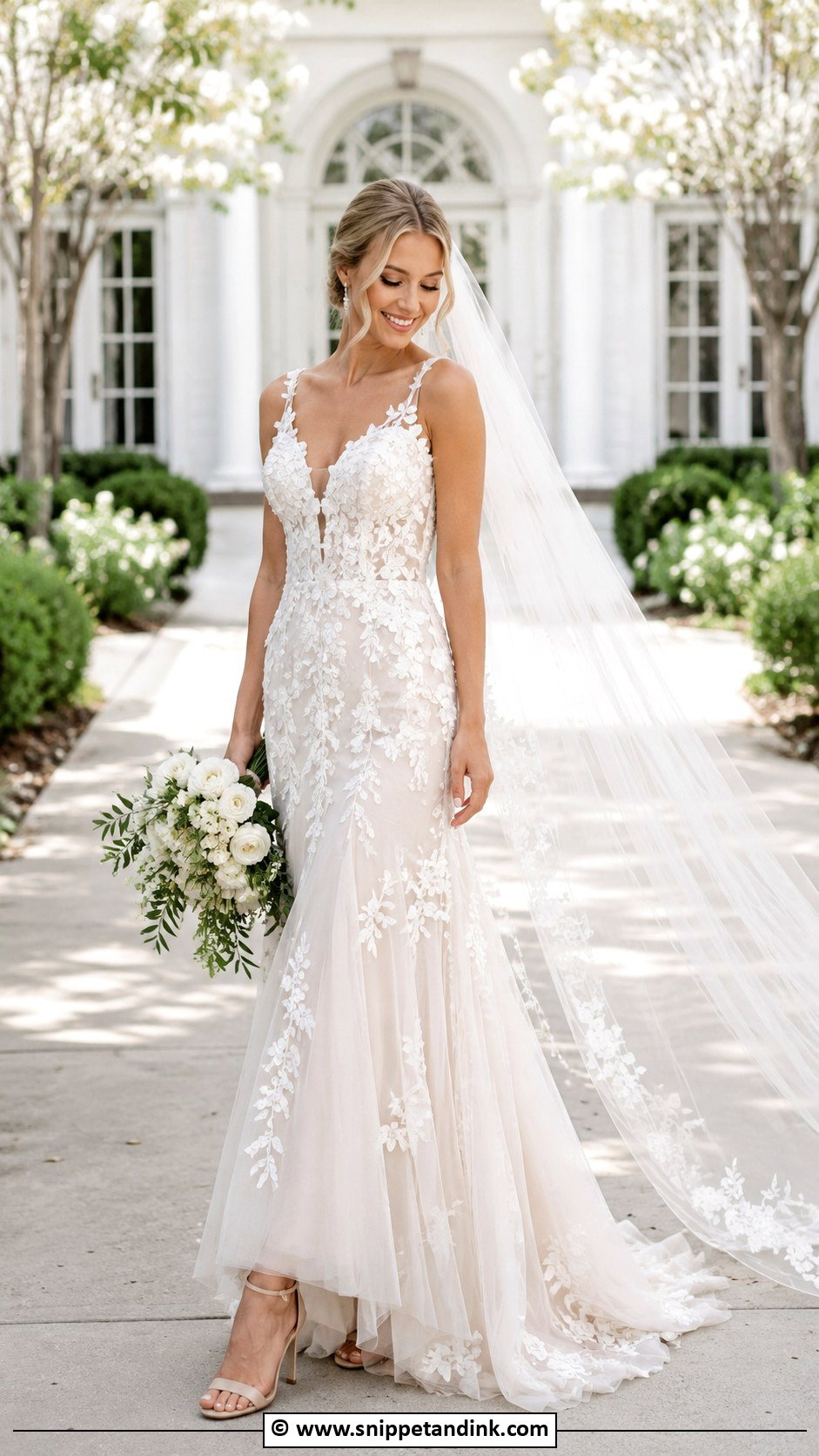
Appliques look most natural when they’re scattered across the bodice and sleeves and fade out down the skirt, rather than covering every inch. A sheer veil lets the flowers show through instead of hiding them under a heavy edge. Raised petals can catch on bracelets and a veil comb, so I check where those sit before the day. Soft waves and a bouquet of white and greenery fit an outdoor spring wedding.
14. Beaded Bride Gown With Simple Jewelry
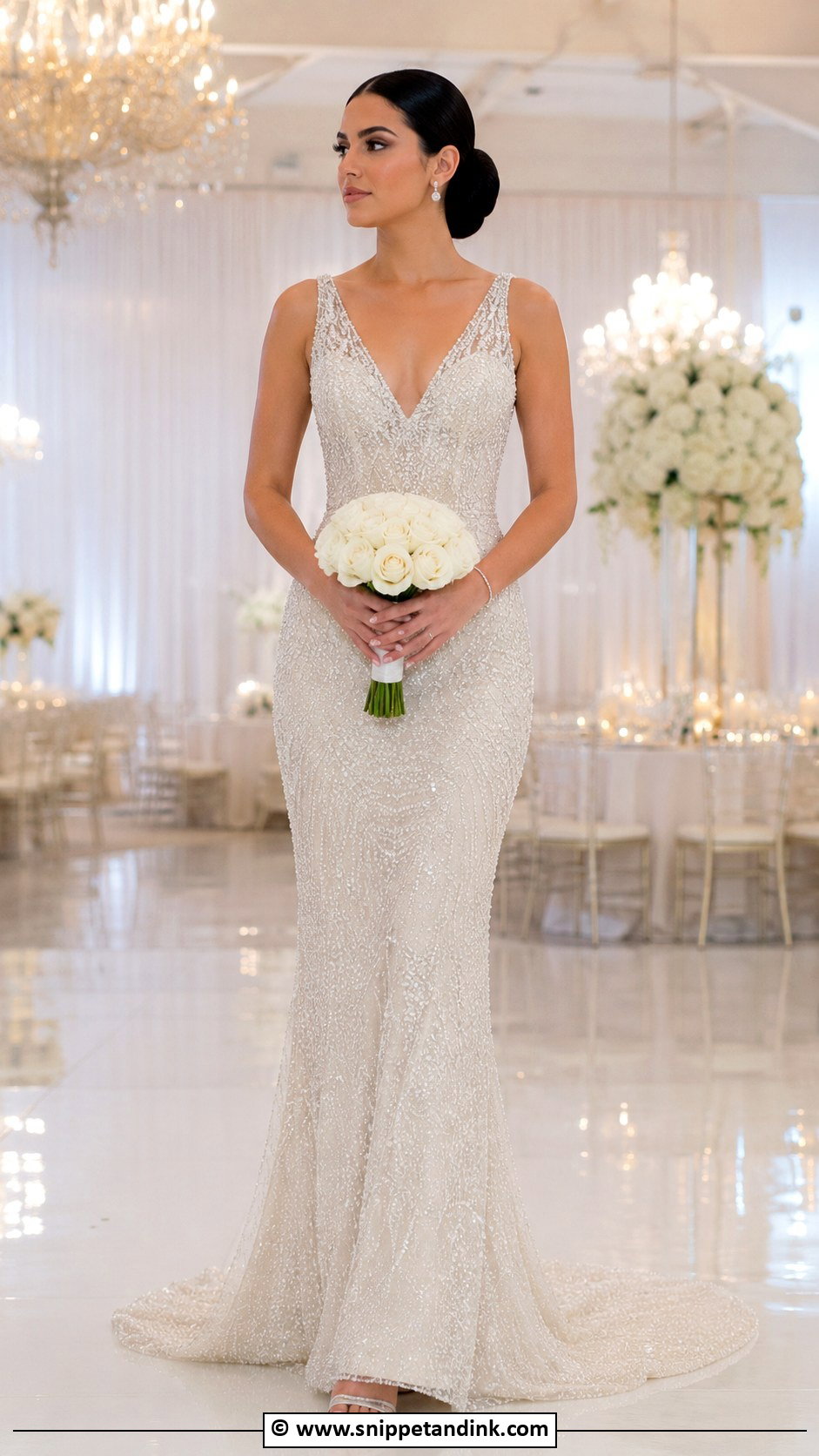
Beading is made for evening light. Under candles and warm uplighting it glints, while in harsh midday sun it can look flat. The more shimmer in the dress, the less jewellery I add: small earrings and a fine bracelet. Heavily beaded gowns are noticeably heavier and the beads can scratch, so check the inside of the arms and the lining. Skip the veil if the back is beaded; you’ll want it seen.


15. Tulle Ball Gown Bride Gown With Ballet Flats
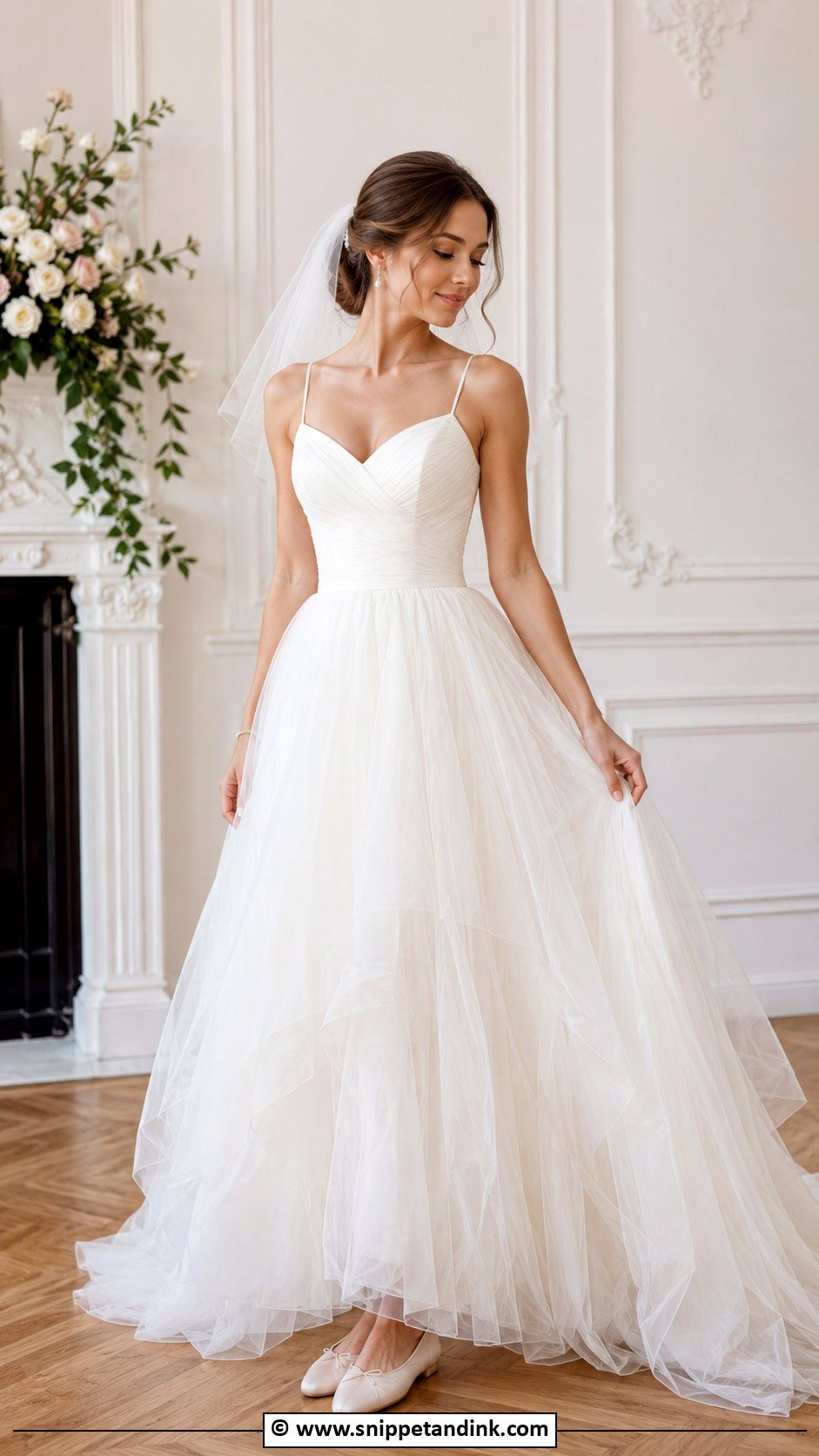
Ballet flats under a tulle ball gown are a comfort choice I fully support for outdoor venues, lawns and long portrait sessions. The thing to remember is hemming. A gown hemmed for heels will drag several centimetres when you switch to flats, so decide which shoes you’ll wear before the hem is cut. A fitted bodice, a simple veil and a neat bun keep the volume in the skirt.
16. Sheath Bride Gown With Long Veil
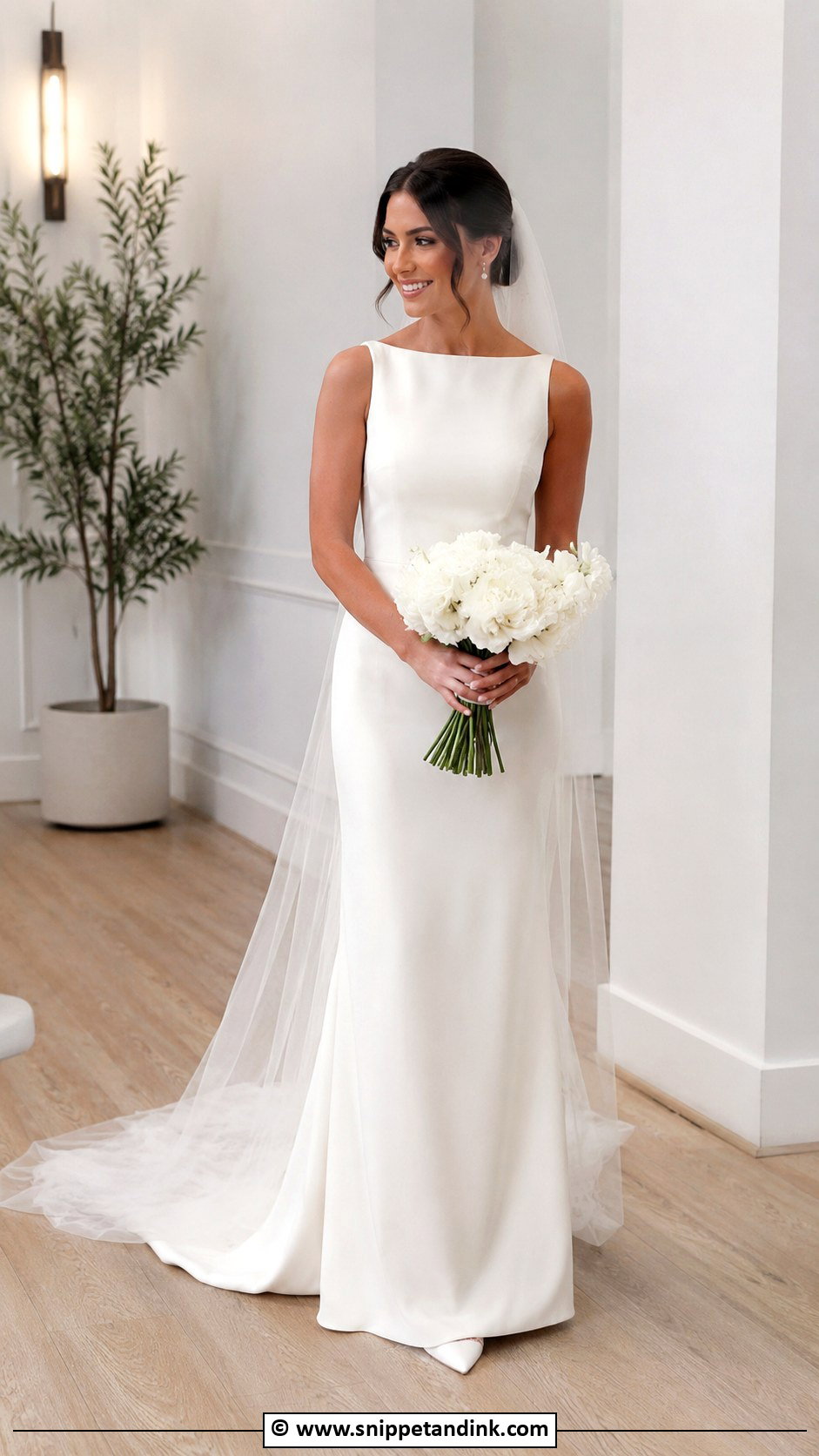
A sheath drops in a straight line from the shoulder and follows the body lightly. It moves easily and suits small venues and destination weddings where a big skirt would crowd the space. Crepe, satin and light lace all work. The long veil adds ceremony presence, then comes off for the reception. Because the shape is so simple, the fit at the hips and back has to be exact, so allow time for alterations.
17. Tea Length Bride Gown With Block Heels
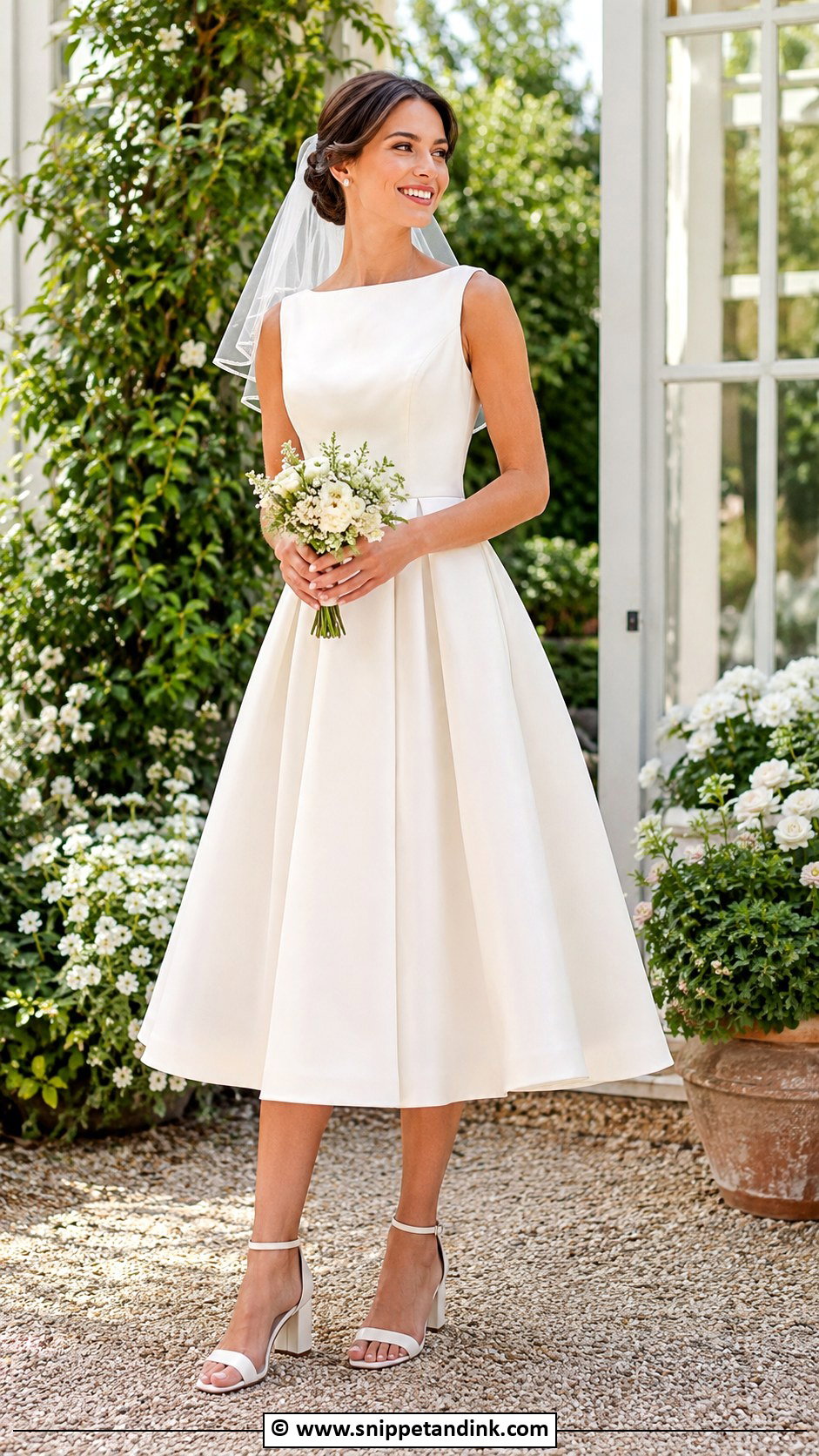
A tea length bride gown puts your shoes in every photo, which is why I choose them before the dress is hemmed. Ivory block heels are steady on grass and gravel. A structured bodice keeps the shorter length looking bridal rather than like a party dress. Pearl studs and a short veil or bow suit its proportions. Keep the bouquet small, because big blooms swamp a shorter skirt.
18. Short Bride Gown With Bow Veil
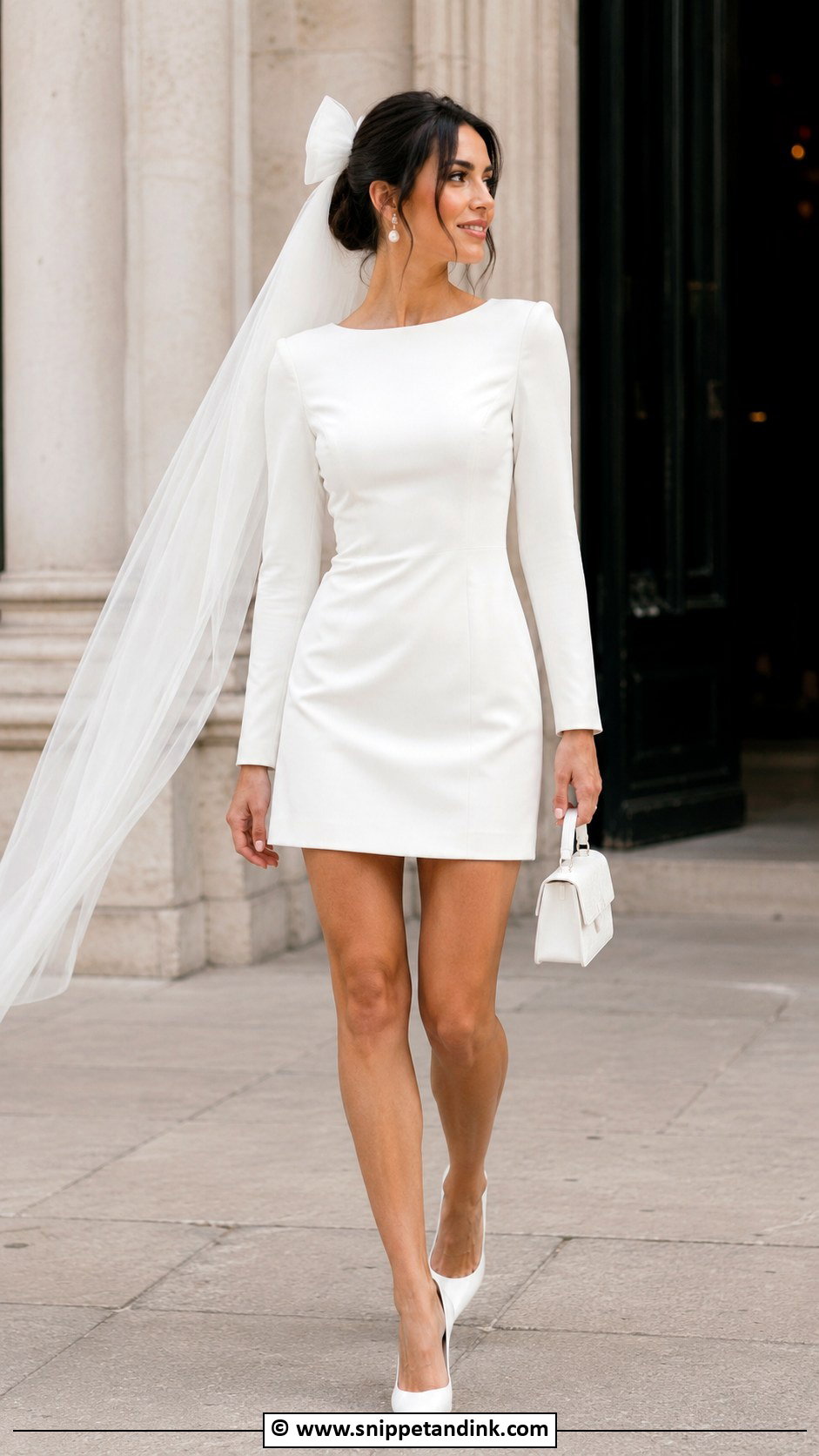
A short bride gown needs one strong bridal detail to stop it looking like a cocktail dress: satin with tailored seams, feather trim, lace sleeves or a sculptural bow veil. Pick one, not all of them. Pointed pumps or slingbacks suit city venues; flats are fine on grass. A short hem rides up when seated, so check the length on a chair before buying.
19. Convertible Bride Gown With Detachable Overskirt
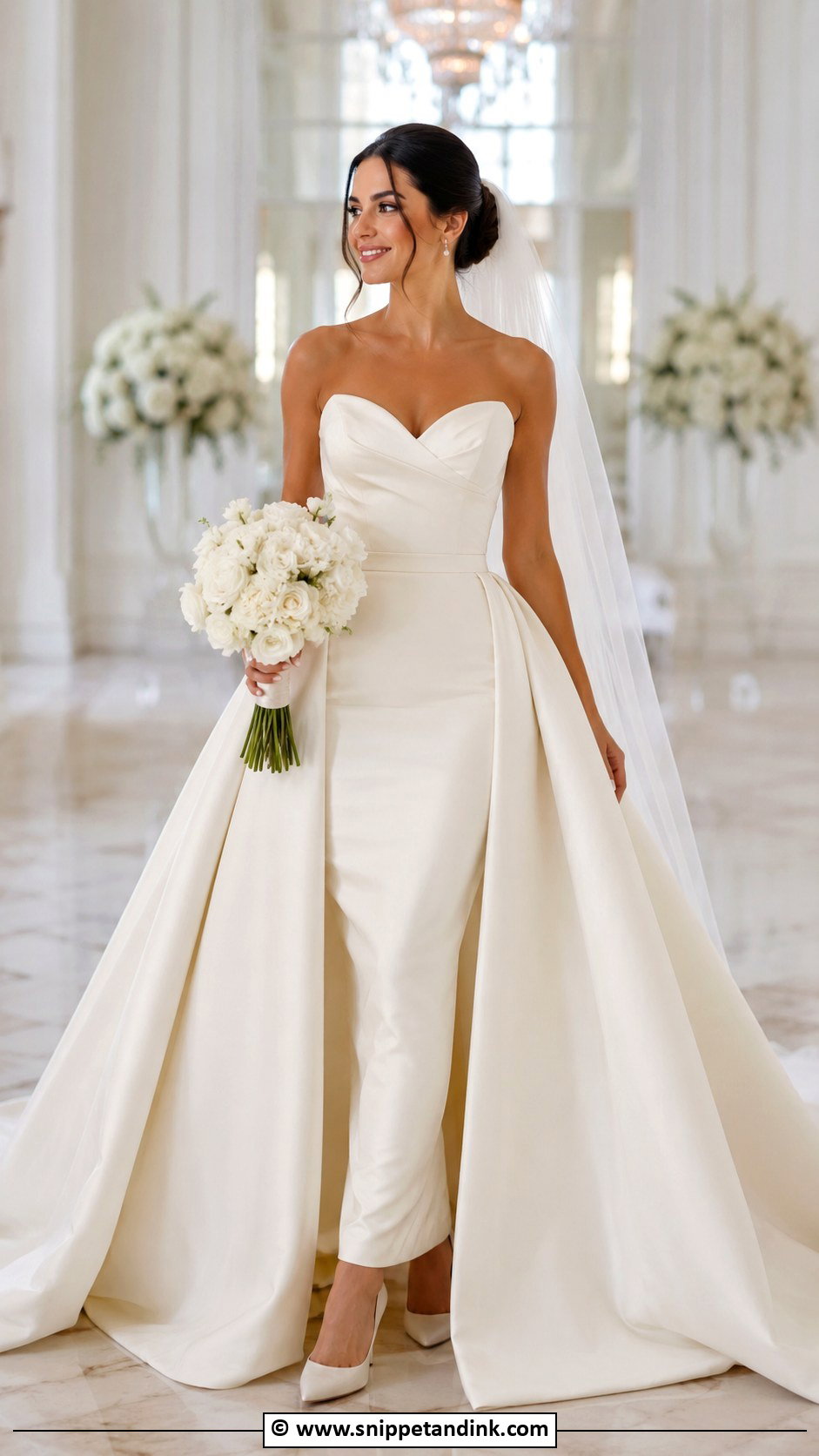
Convertible gowns give you a full ceremony skirt and a lighter dress for dancing. The overskirt’s fastening is the detail I always inspect. Hidden hooks or snaps around a waistband sit flat and come off quickly; ties and buttons slip. Practise removing it with whoever will help on the day. When it comes off, I’d swap the veil for bolder earrings so the reception look feels deliberately different.
20. Slip Bride Gown With Pearl Choker
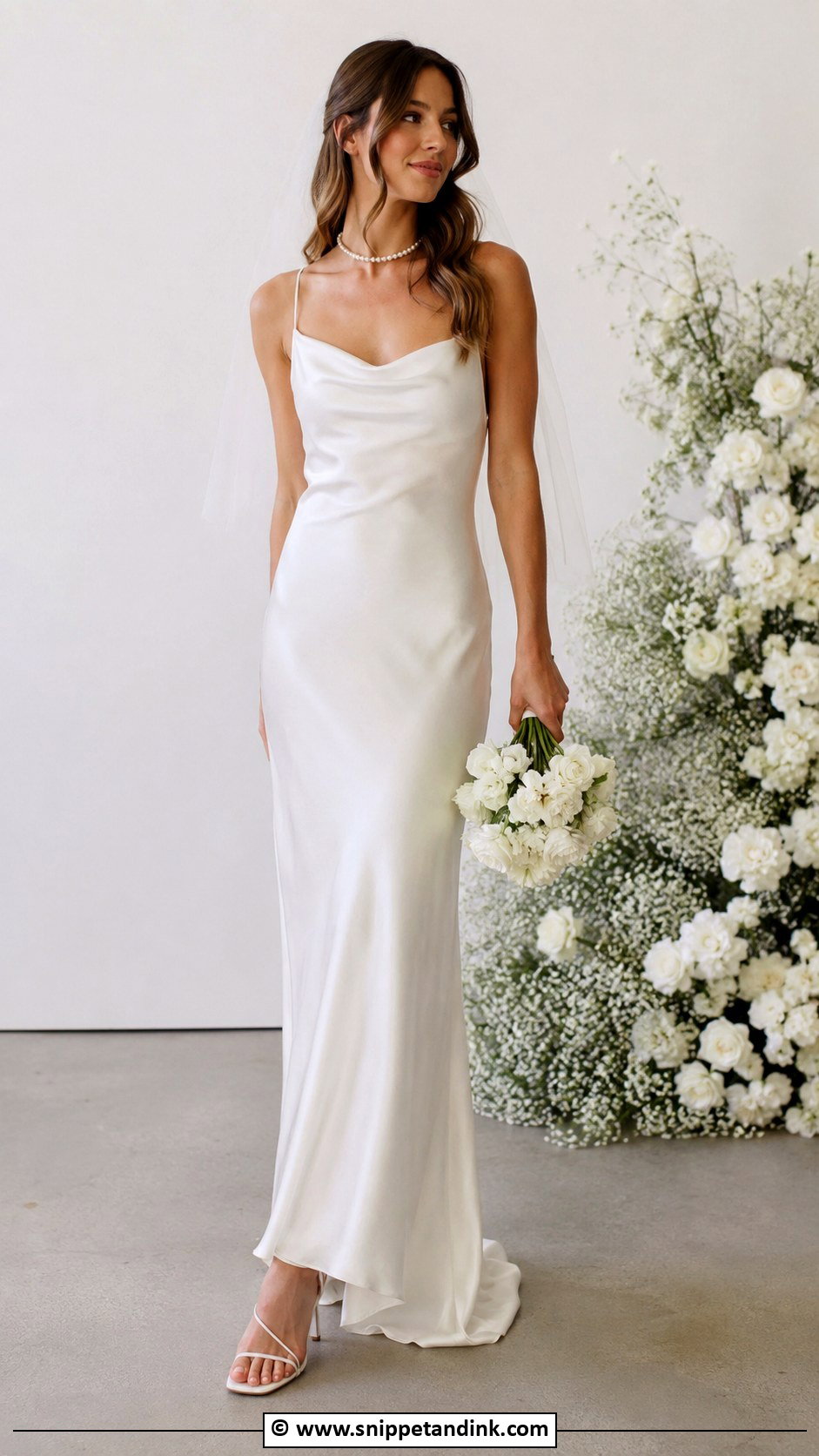
A slip in bias-cut silk or satin skims the body, and its simplicity puts all the pressure on fit. Straps need adjusting so the neckline sits level, and the hem should graze the floor in your shoes without pooling. The pearl choker gives the plain neckline its bridal note. Strappy ivory heels and relaxed waves or a neat bun keep it light. Choose a slightly heavier satin if you’d like less cling at the hips.
21. Boho Bride Gown With Wide Brim Hat
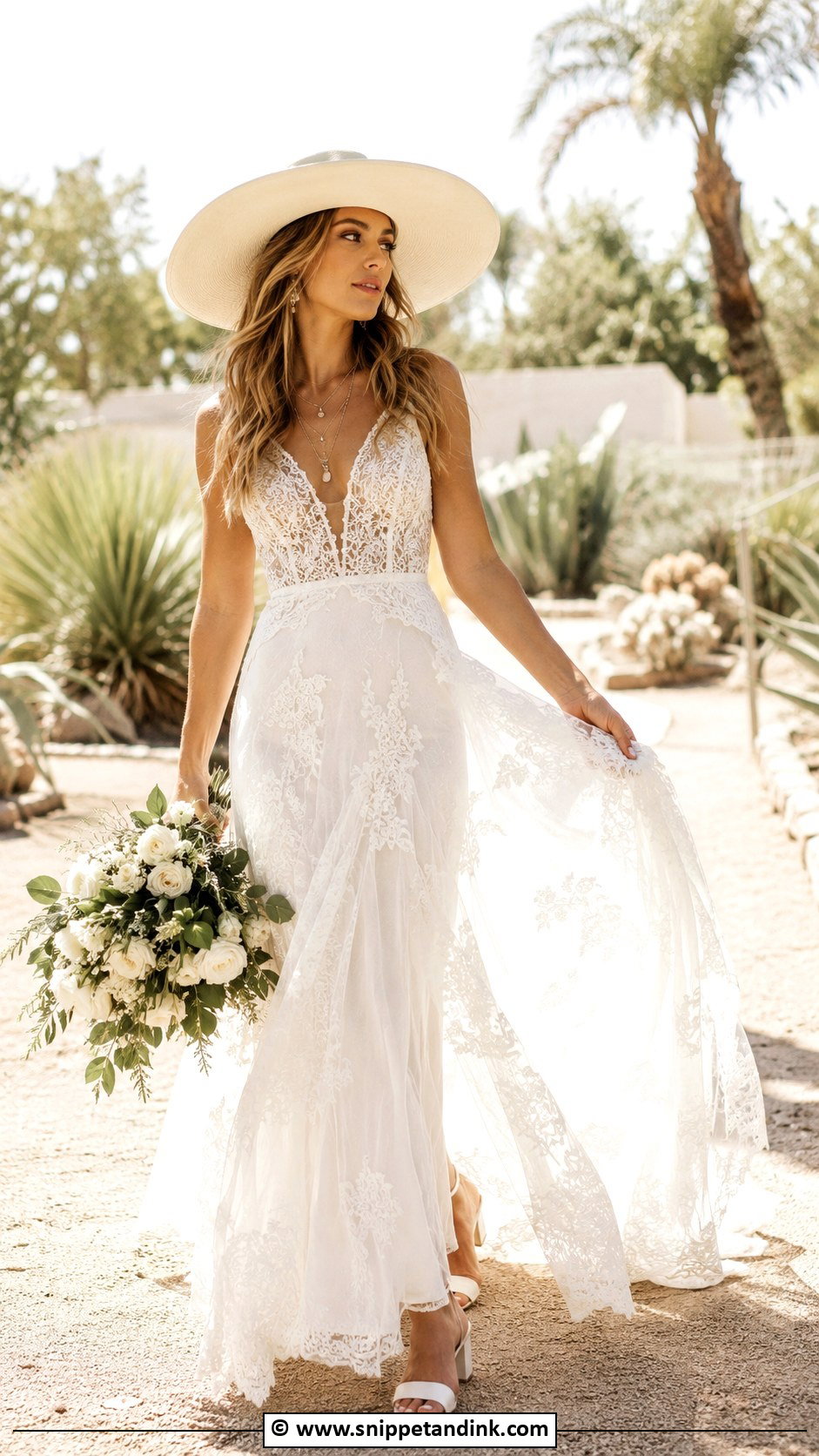
Boho gowns feel relaxed, with soft lace, flutter sleeves, light embroidery and a flowing skirt. A wide-brim ivory hat can stand in for a veil outdoors, but a brim shades the eyes, so talk to your photographer about the sun’s angle before choosing one. Low block heels cope with grass and sand. I keep jewellery to a few fine layers and let the dress’s texture carry the look.
22. Vintage Bride Gown With Birdcage Veil
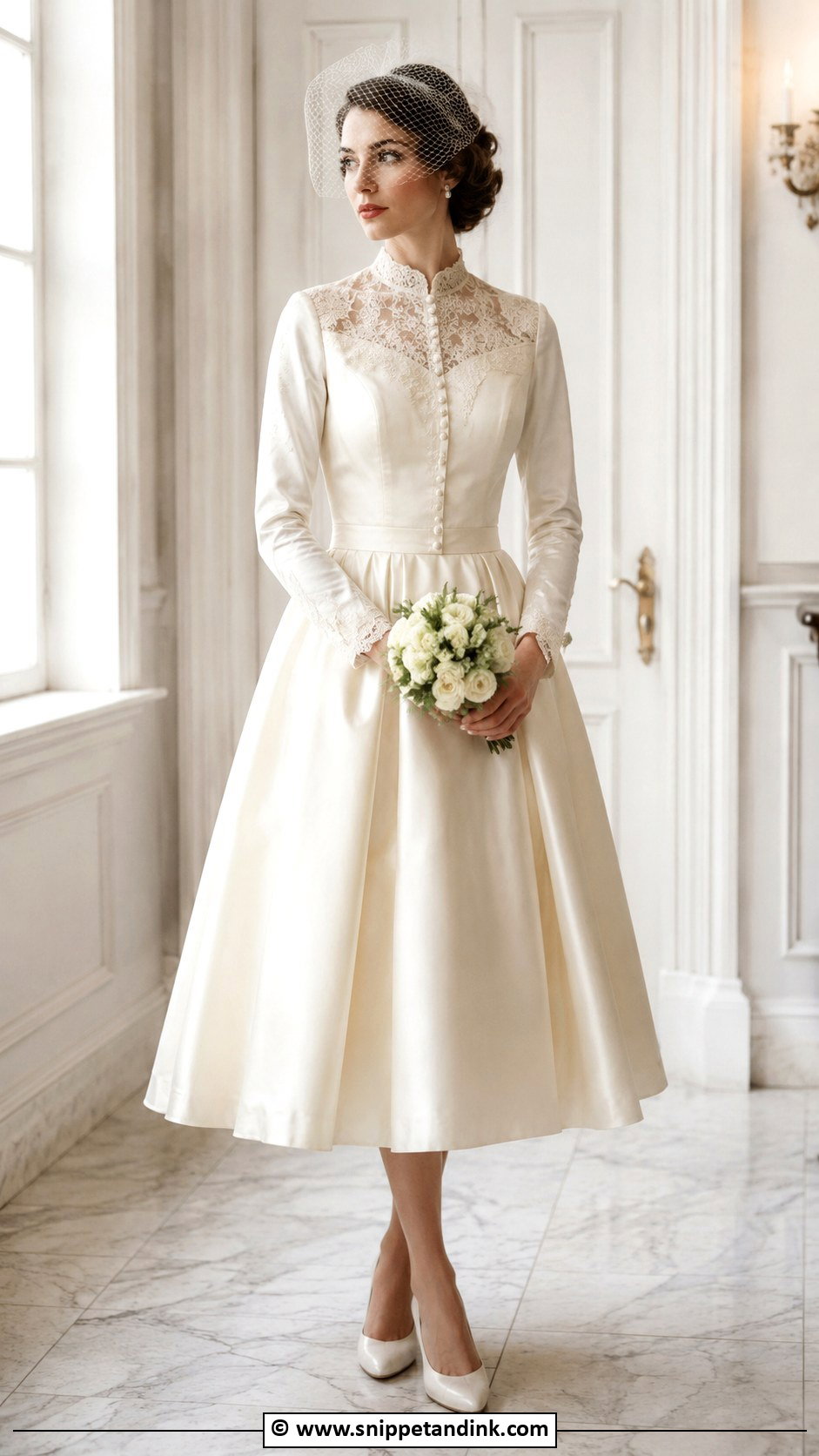
Vintage can mean an heirloom, a redesigned family gown or a new dress with vintage details like lace collars, satin buttons, puff sleeves or a tea-length hem. A birdcage veil suits all of them without hiding the face. If you’re working with older details or an inherited dress, have a specialist check the fabric before any alterations; old silk can split along seams. Modern tailoring is what keeps it looking current.
23. Plus Size Bride Gown With Off Shoulder Neckline
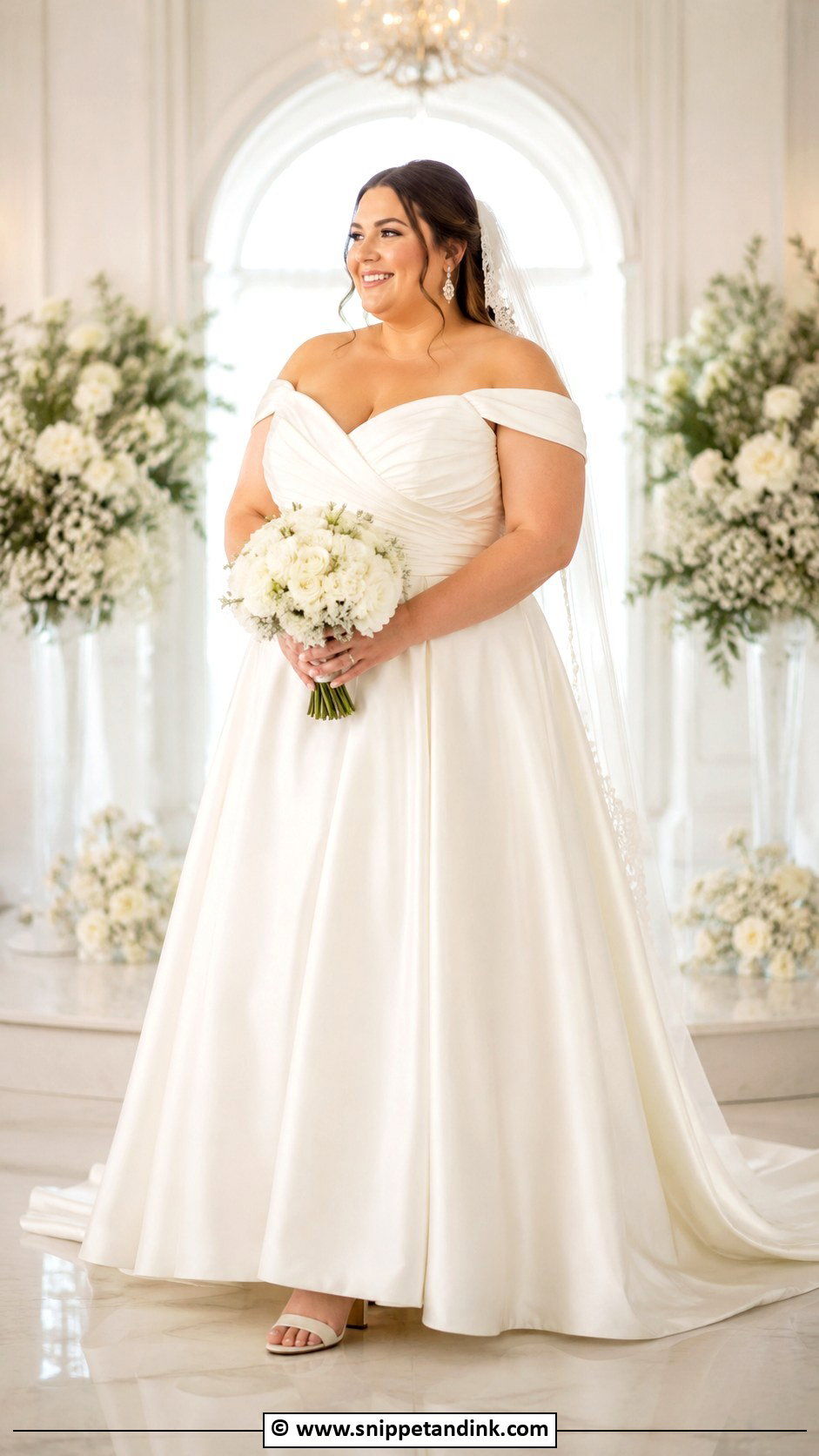
A plus size bride gown with an off-shoulder neckline frames the shoulders and draws the eye up. What matters most is built-in support: a structured inner bodice, a waist stay and smooth lining that won’t ride up. A-line, ball gown and fit-and-flare all work depending on preference. Make sure the straps sit on the arm without cutting in. Earrings with some length keep attention near the face.
24. Maternity Bride Gown With Empire Waist
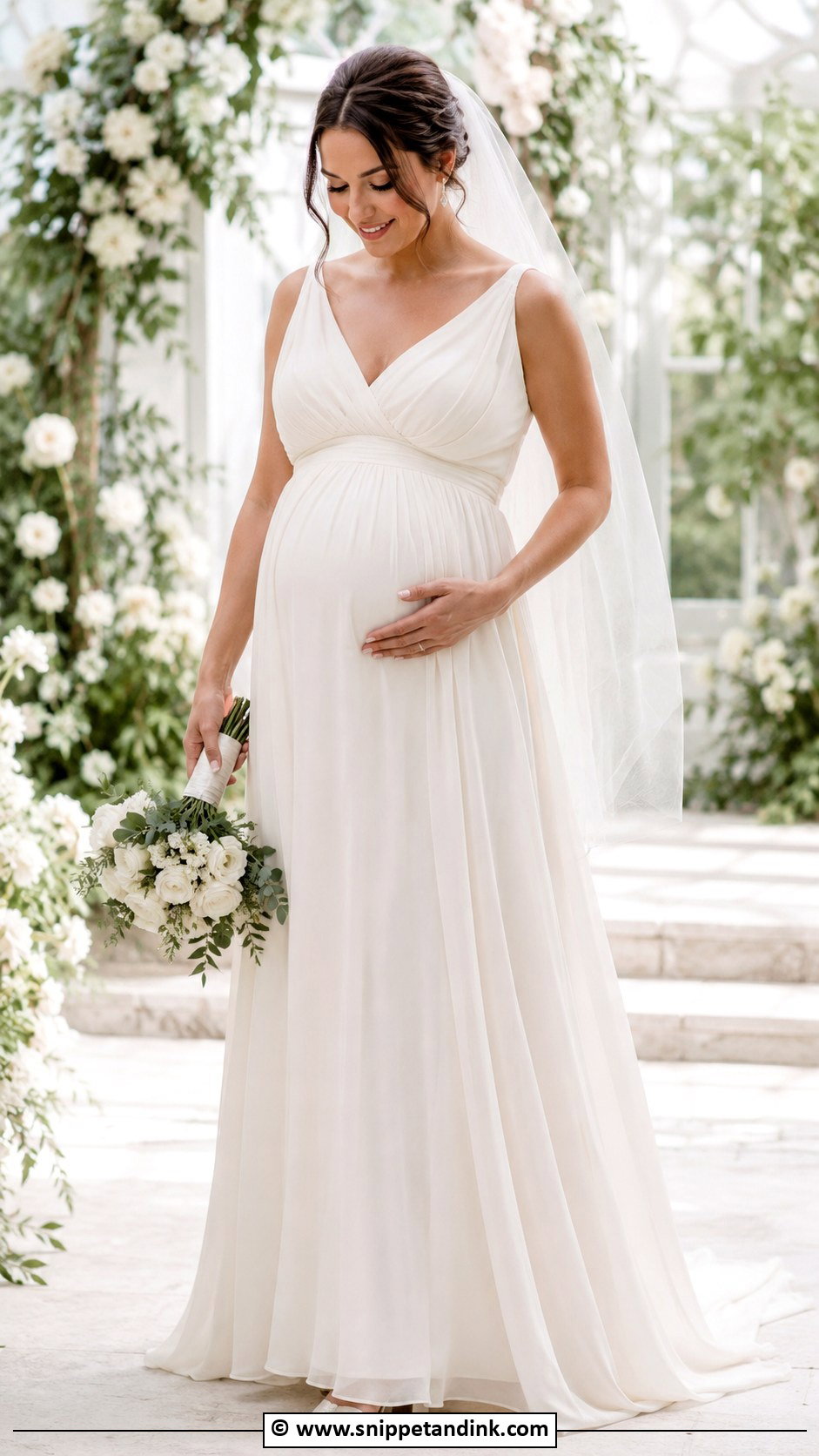
An empire waist sits above the bump and lets the skirt fall freely, which is why it’s the classic shape for a maternity bride gown. Chiffon, soft tulle and stretch crepe are kinder than stiff fabrics. Timing matters more than style here. I schedule the final fitting as close to the wedding as possible and favour a lace-up back, since the bump can change quickly in a few weeks. Low block heels and a loose updo keep you comfortable.




25. Reception Bride Gown With Feather Trim
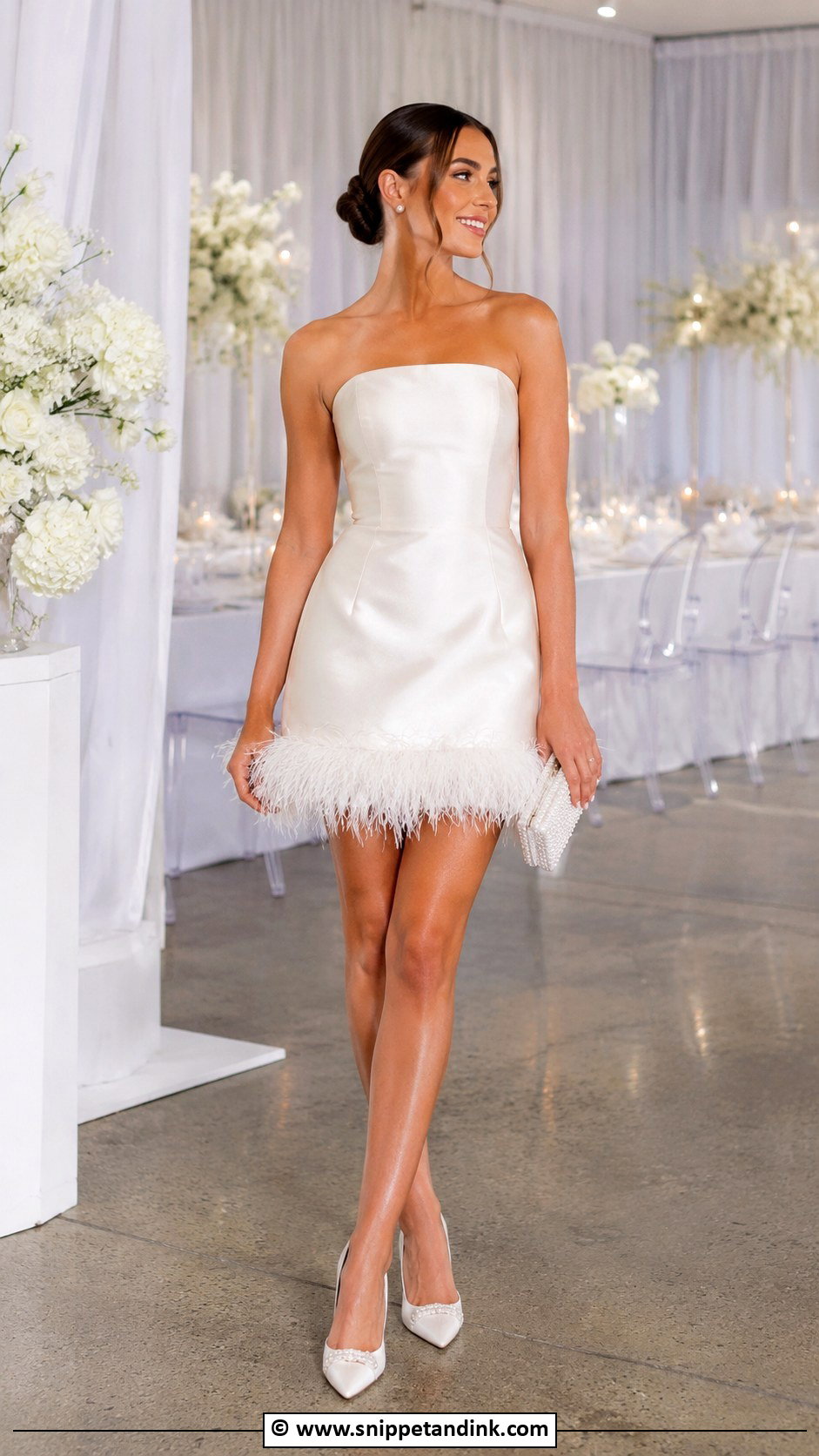
A reception dress with feather trim is fun to dance in, whether it’s short, midi or a slim column with feathers at the hem or cuffs. Keep the rest sleek: pointed heels, pearl studs, a small clutch. Feathers shed a little and flatten if crushed, so hang the dress on its own before the evening and avoid sitting on a feathered hem. It gives a clear change from a formal ceremony gown.
What Happens to the Train Once the Aisle Is Done
Any gown with a train needs a bustle, the system of hooks, buttons or ribbon loops that lifts the train off the floor for dancing. Your seamstress adds it during alterations, and the type depends on the skirt. An over-bustle lifts the train up to the back of the waist; an under, or French, bustle tucks it underneath in soft folds; a ballroom bustle hides it so the hem looks even all round.
Bring the person who’ll do it on the day to your final fitting and let them practise twice. Bustles with many points are easy to get wrong in a dim corridor, and I’d number the ribbons with a small tag if there are more than three.
After the Wedding, Before Stains Set
Have the dress cleaned by a specialist within a few weeks. Sugary drinks and sweat leave marks you can’t see at first that turn yellow over months. For storage, I advise acid-free tissue and a breathable box or cotton bag, never plastic, which traps moisture. Heavy gowns shouldn’t hang by their straps for long periods, as the weight stretches the bodice out of shape.
One Strong Accessory Per Gown Is Usually Enough
Every gown above has one accessory that suits it best, and most of the time that’s all it needs. Choose the dress for your venue, the season and how long you’ll be in it, then add the veil, shoes and jewellery that echo its line. If you find yourself adding a fourth or fifth statement piece, take one away. The dress will look better for it.
You'll Like These Ideas:









Leave a Reply