
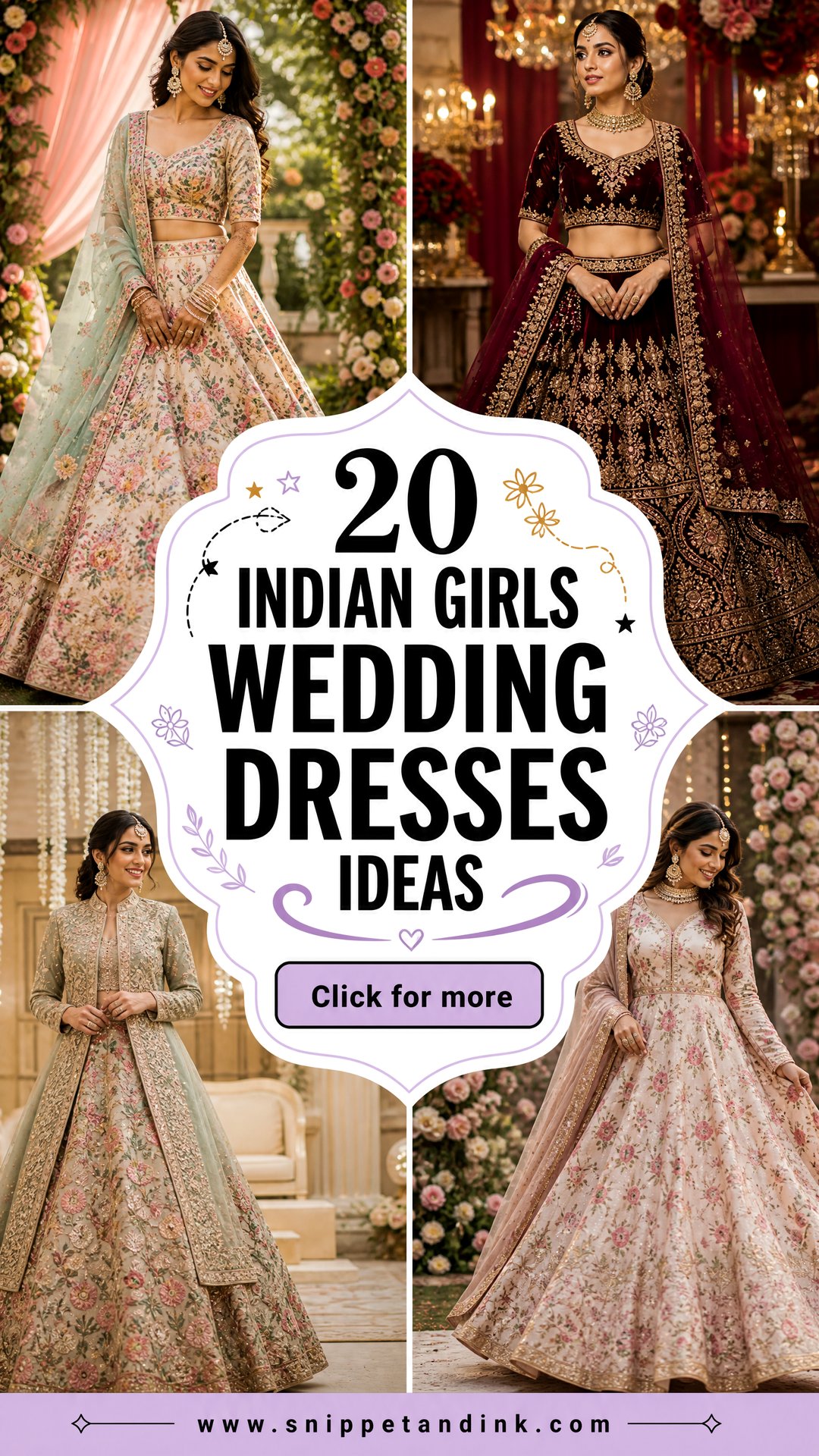
I always ask clients to look at complete outfits before they look at individual pieces. A lehenga that looks wonderful on a hanger can feel completely different once the blouse, dupatta, shoes and jewelry are added. The twenty looks below cover lehengas, sarees, suits and fusion pieces, and they’re meant for brides as well as sisters, cousins, bridesmaids and younger guests. For each one I’ve noted the fabric, footwear and jewelry I’d pair with it, plus who it suits and who it doesn’t. As a rule of thumb, keep lighter fabrics for daytime functions and save dense embroidery for the evening, and settle on how much coverage you want before you fall in love with a neckline.
How Heavy Is Too Heavy for a Lehenga?
Weight is the question nobody asks in the shop and everyone feels at the wedding. A heavily worked bridal lehenga can weigh several kilos, and almost all of that hangs from your waist. Zardozi, stones, velvet and layers of cancan net add up quickly.
When I take a client shopping, I ask her to hold the skirt up by the waistband for a full minute. If her arms are tired, her hips will be after three hours of rituals. A few things make a heavy outfit easier to carry:
- A broad, well-fitted waistband with a proper hook and drawstring spreads the load. A narrow band digs in.
- Embroidery concentrated at the hem and border, with a lighter body, keeps the flare without the full weight.
- A net or georgette dupatta instead of a worked silk one takes weight off the shoulder.
- A cancan built into the lining, rather than a separate petticoat, is cooler and lighter.
For guests and bridesmaids, I’d honestly keep it light. You’ll be standing, dancing and hugging people all evening, and an outfit you want to change out of by nine o’clock wasn’t the right one.
1. Red Bridal Lehenga Wedding Dress
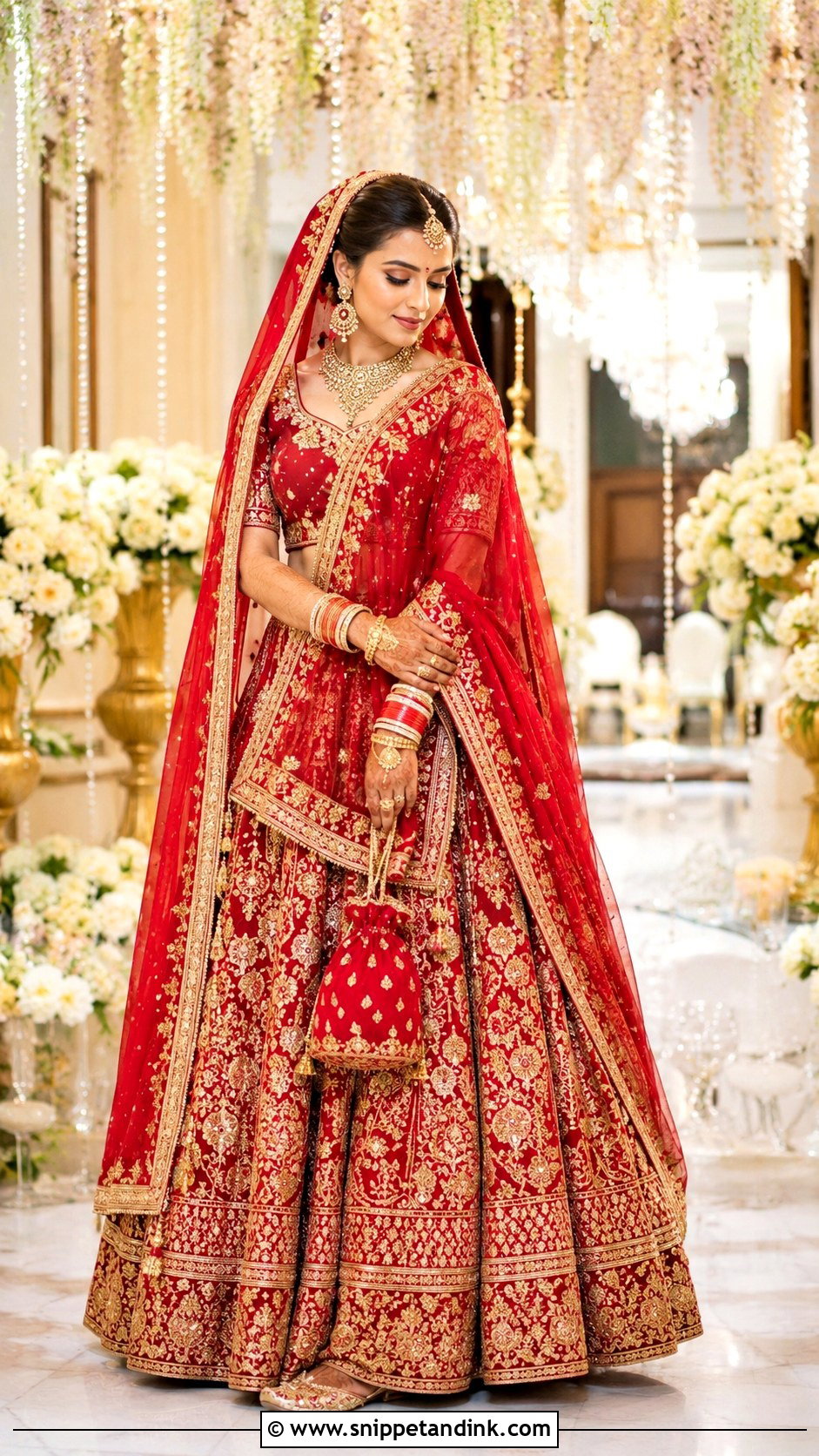
A red lehenga is still the outfit most brides picture first, and silk or raw silk carries the color best because it holds the zari and beadwork without sagging. I fit the blouse with elbow sleeves when the bride wants coverage, and I plan the dupatta as two pieces if she’ll wear one over the head: a light one there, the heavier one over the shoulder. Gold jhumkas, a delicate maang tikka, stacked bangles and embroidered juttis. Scale matters: small motifs suit a petite frame, while a tall bride can carry broad borders and more flare. Keep the makeup luminous rather than heavy, so the red does the talking.
2. Pastel Floral Lehenga Wedding Dress
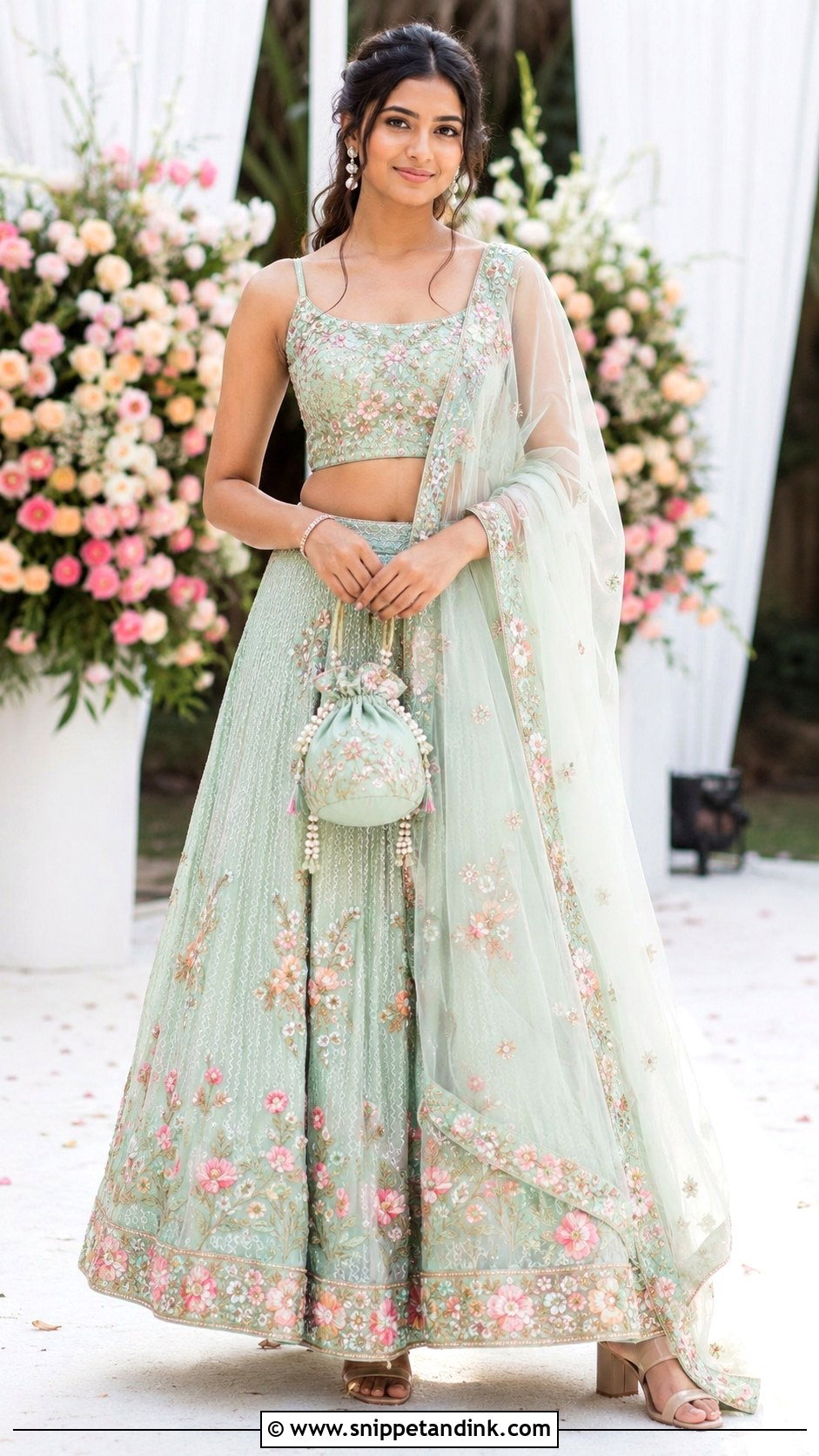
Pastel lehengas suit daytime weddings, and I prefer floral threadwork over heavy embellishment here because pastels show the weight of beads in the way the skirt hangs. Mint, blush, lilac, peach or powder blue all work with a coordinated blouse and a light net or organza dupatta. When the lehenga mixes several colors, I pick one of them for every accessory. Pearl earrings, a slim bracelet and a compact potli are enough, with nude block heels or embellished flats. This is my usual suggestion for bridesmaids and sisters, and a loose wave or simple braid keeps it young.
3. Banarasi Silk Saree Wedding Dress
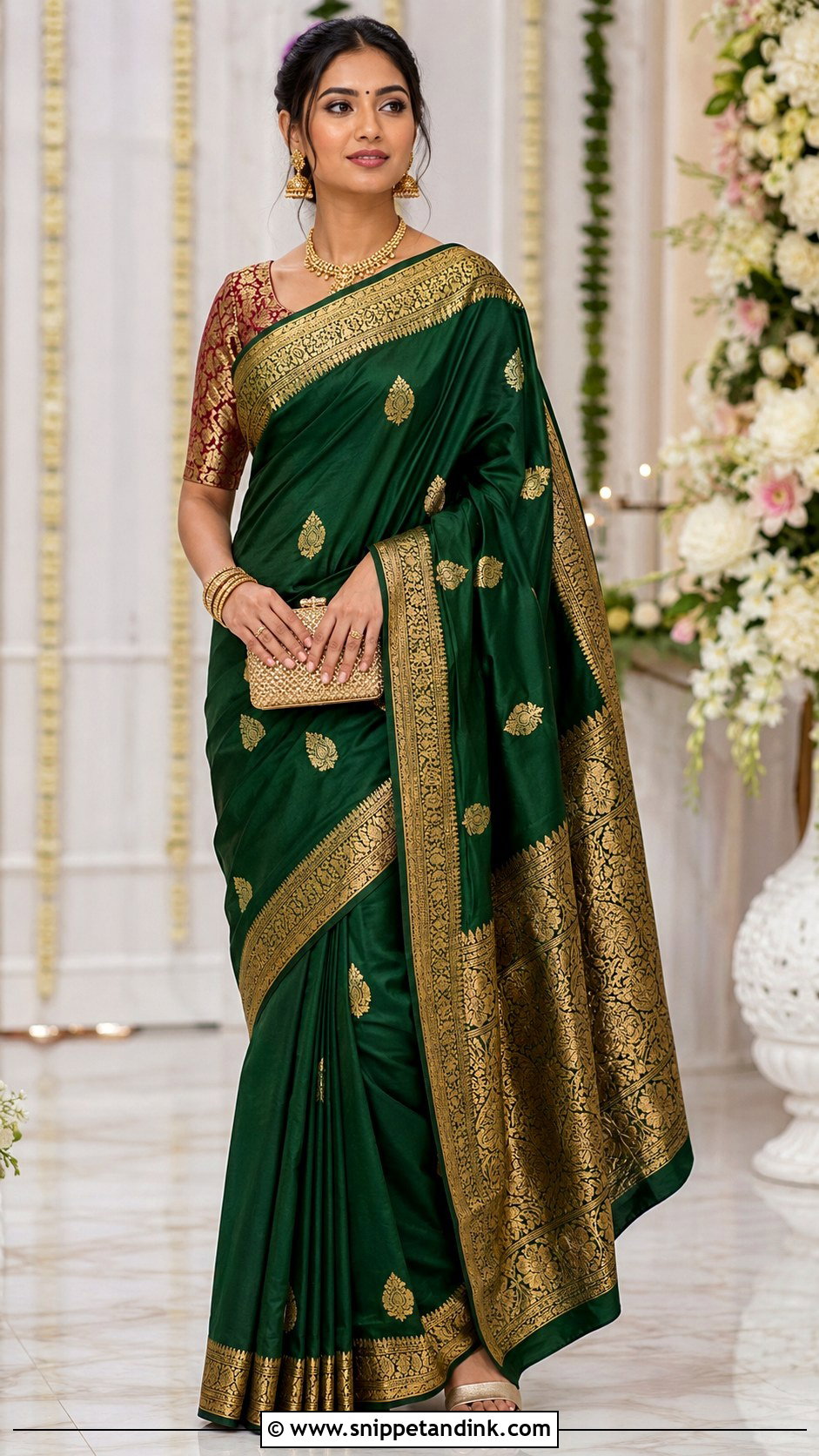
The glow of a Banarasi silk saree comes from its zari weave, and that sheen gives an outfit formality before any jewelry goes on. Emerald, royal blue, deep pink and plum with a gold border are dependable. A brocade blouse can match or bring in a contrasting jewel tone. Banarasi silk is slippery, so I pin the pleats at the waist and the pallu at the shoulder before the first greeting. Gold earrings, bangles, a small bindi and a structured clutch finish it. Low block heels handle a saree hem far better than stilettos. If you prefer a cleaner look, wear one statement necklace and nothing else.
4. Kanjivaram Silk Saree Wedding Dress
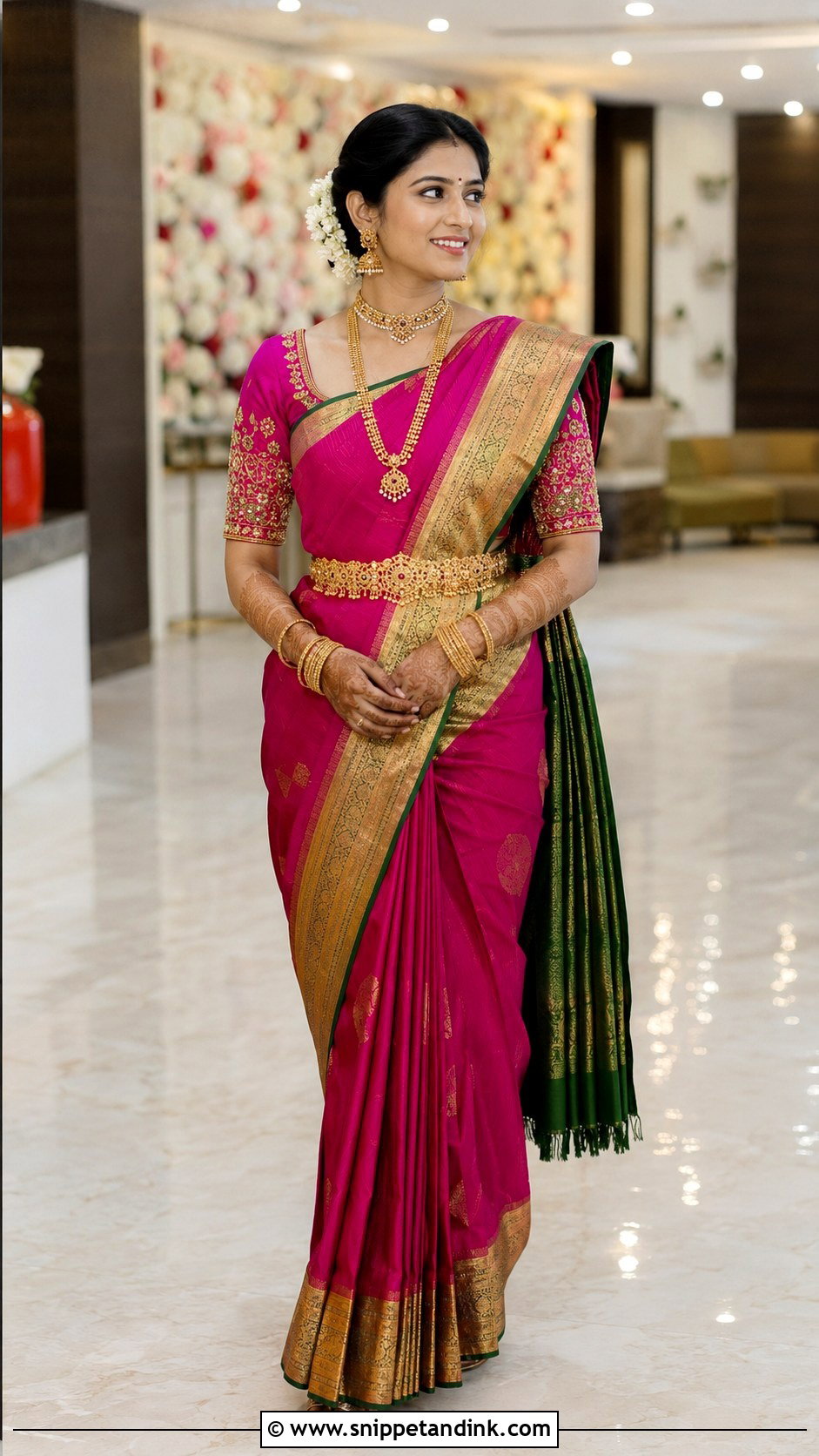
Kanjivaram silk is woven with a heavier yarn than most sarees, and the contrast border is often woven separately and joined to the body. That’s why the borders look so crisp. Magenta with green, turquoise with pink or mustard with maroon are classic. A fitted short-sleeve blouse keeps the traditional character, and a square or round neck leaves room for a necklace. Temple jewelry, gold bangles, a small bindi and metallic sandals complete it, with fresh flowers around a smooth bun where the occasion suits. The silk is stiff, so pleats must be even or they fan out at the hip. Carry a compact potli, not a big bag.
5. Embroidered Anarkali Wedding Dress
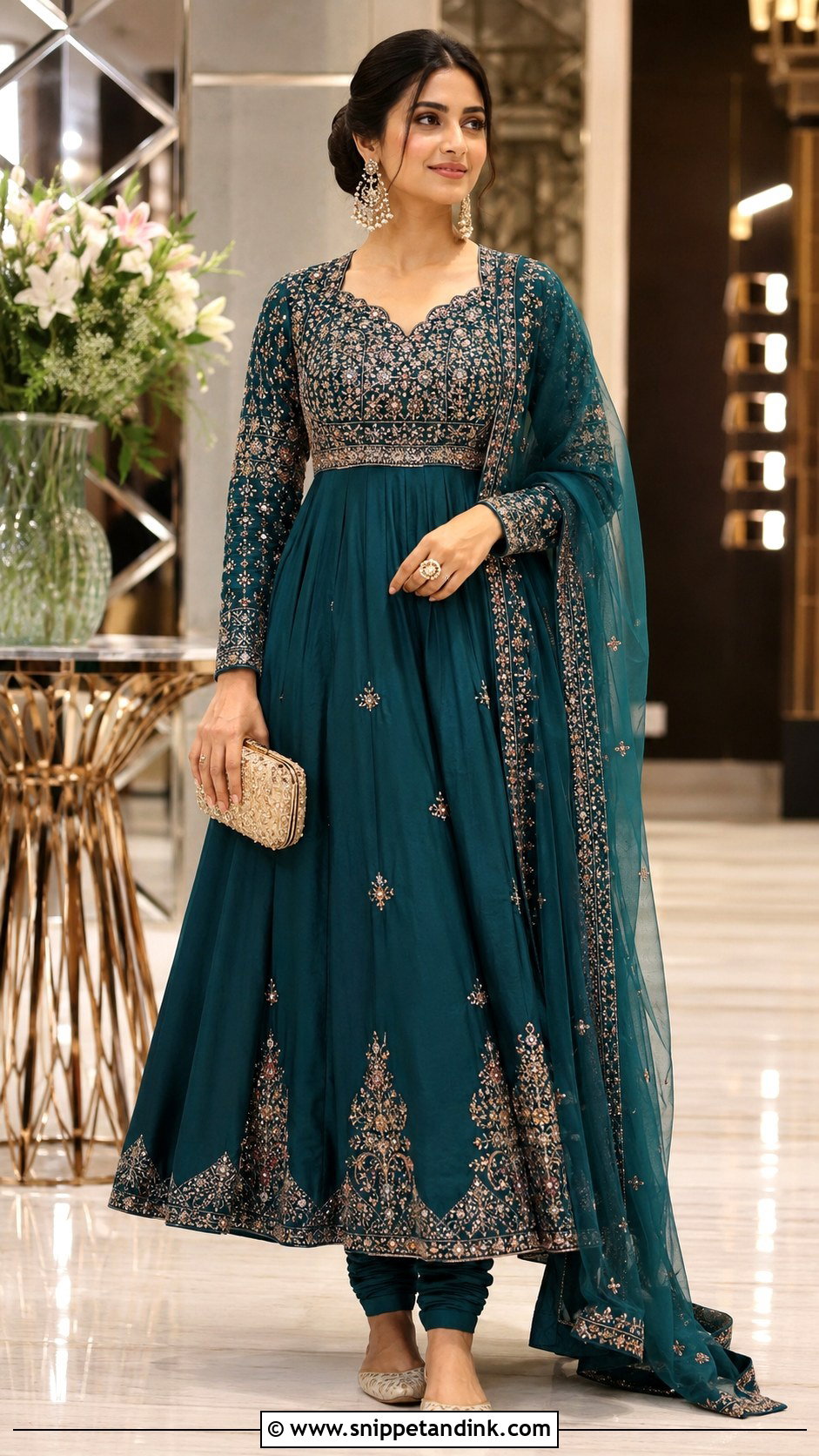
An embroidered Anarkali is comfortable for long hours because all of its structure sits at the bodice. Choose a floor-length design with a fitted bodice, defined waist and generous flare. Deep teal, wine, navy and forest green work in the evening; rose pink or pale blue feel lighter by day. Wear slim churidars and a soft dupatta over both arms or one shoulder. Chandeliers, one statement ring and a small clutch are enough. The check I always make is the hem: walk across the room in your shoes. If the Anarkali brushes the floor, it’ll collect every crumb at the buffet.
6. Sharara Suit Wedding Dress
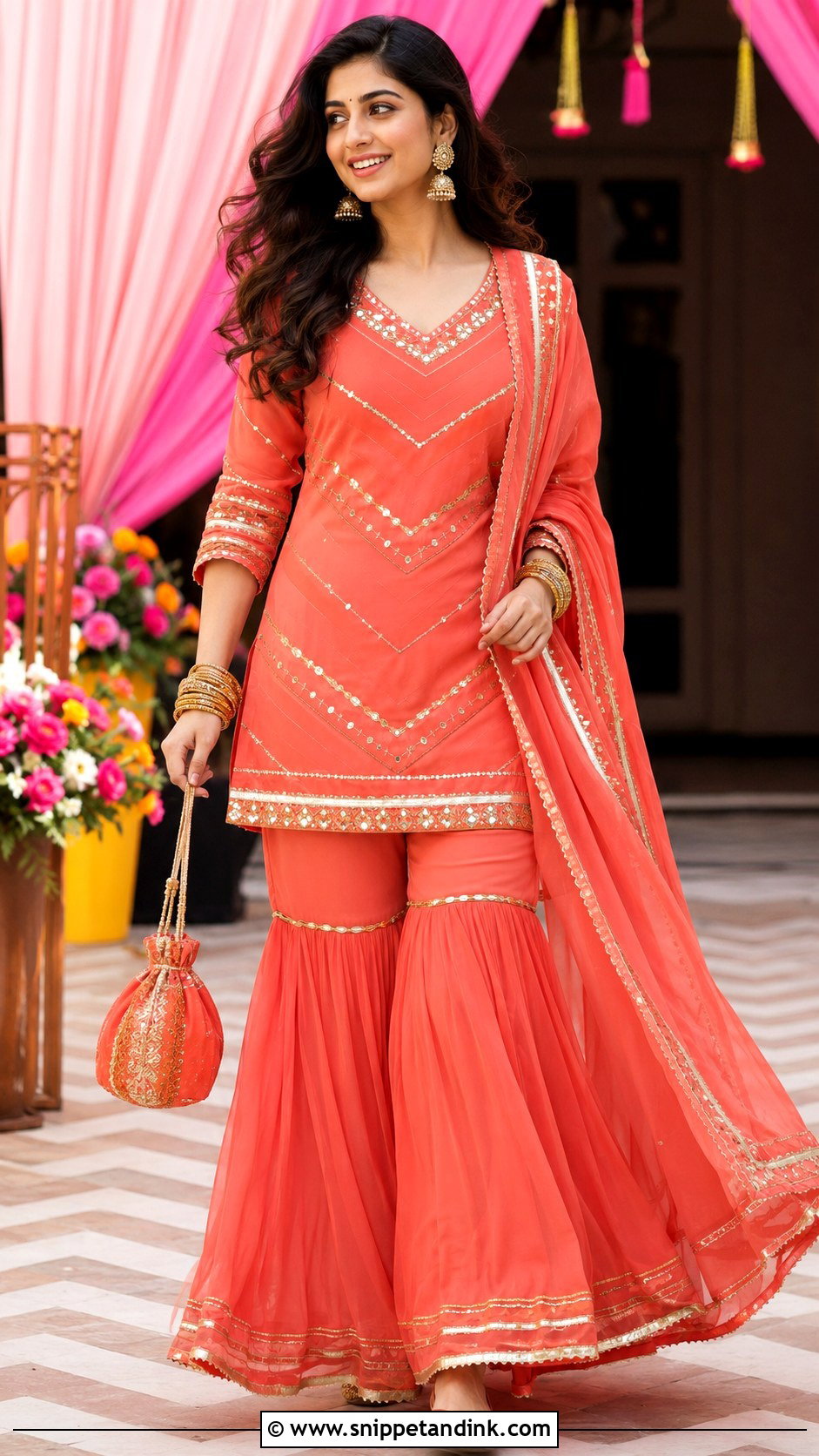
A sharara suit gives the volume of a lehenga in separate pieces, so it’s easy to dance in and easy to re-wear. Build it around a short or mid-length kurta and flared pants in georgette, silk or light organza. Gota patti, sequins or threadwork give a festive finish without stiffness. A longer kurta gives coverage; a short one shows the flare. The fit I watch is at the waist and the inseam, because a sharara that isn’t adjusted to your height drags and frays at the hem within an evening. Jhumkas, stacked bangles and juttis complete it for a mehndi or sangeet.
7. Gharara Set Wedding Dress
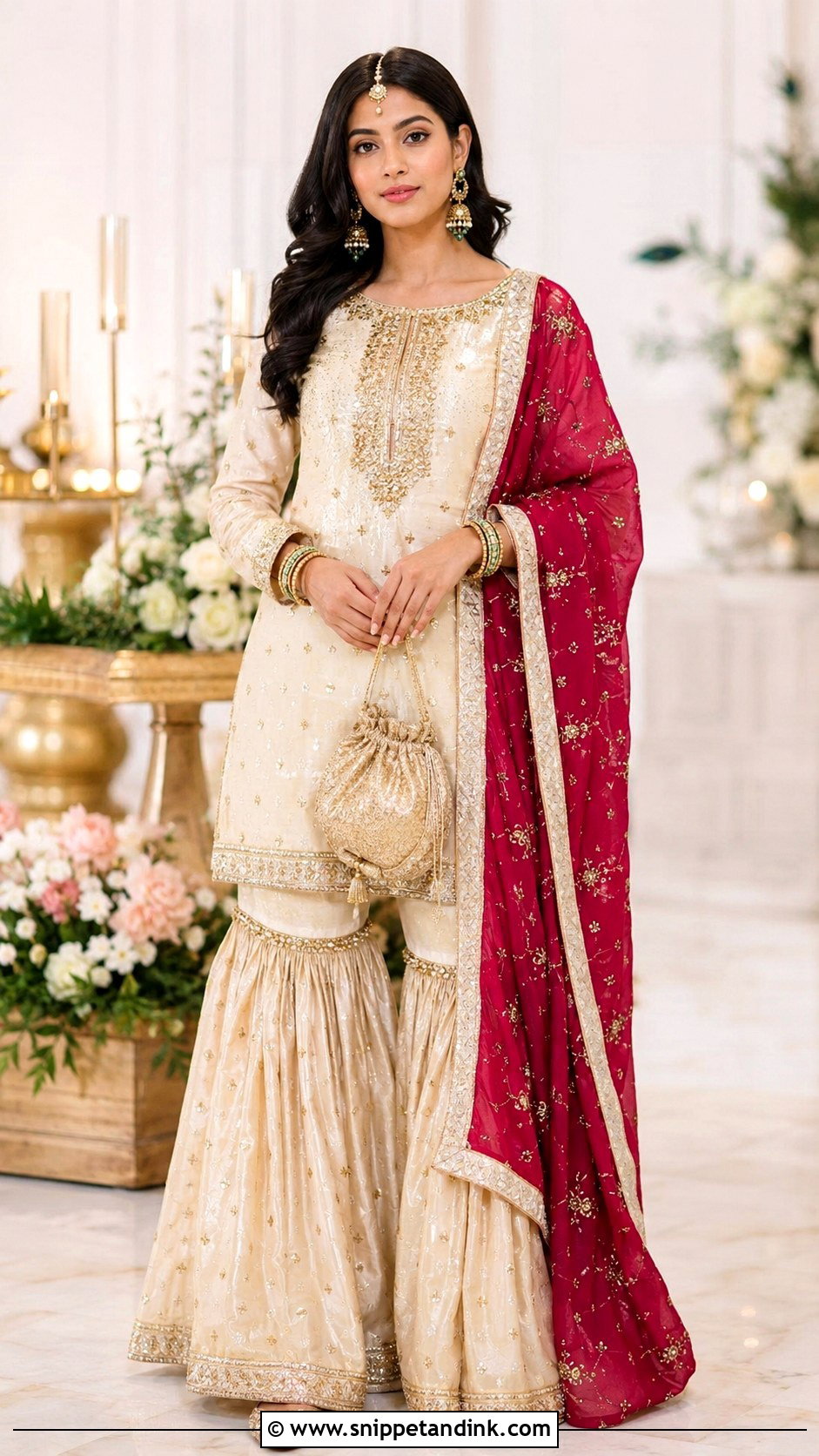
A gharara gets its shape from gathers at the knee, where the fitted upper leg meets a fuller flare below. I pair it with a short embroidered kurta in silk, brocade or georgette, and a contrasting dupatta with a worked border. Ivory and gold look refined; jewel combinations suit evening functions. The pants carry a lot of volume, so the kurta has to fit closely, and a small potli suits the proportions better than a handbag. Traditional earrings, a maang tikka, bangles and pointed juttis. A braided bun keeps the hair neat while you move.
8. Indo Western Saree Gown Wedding Dress
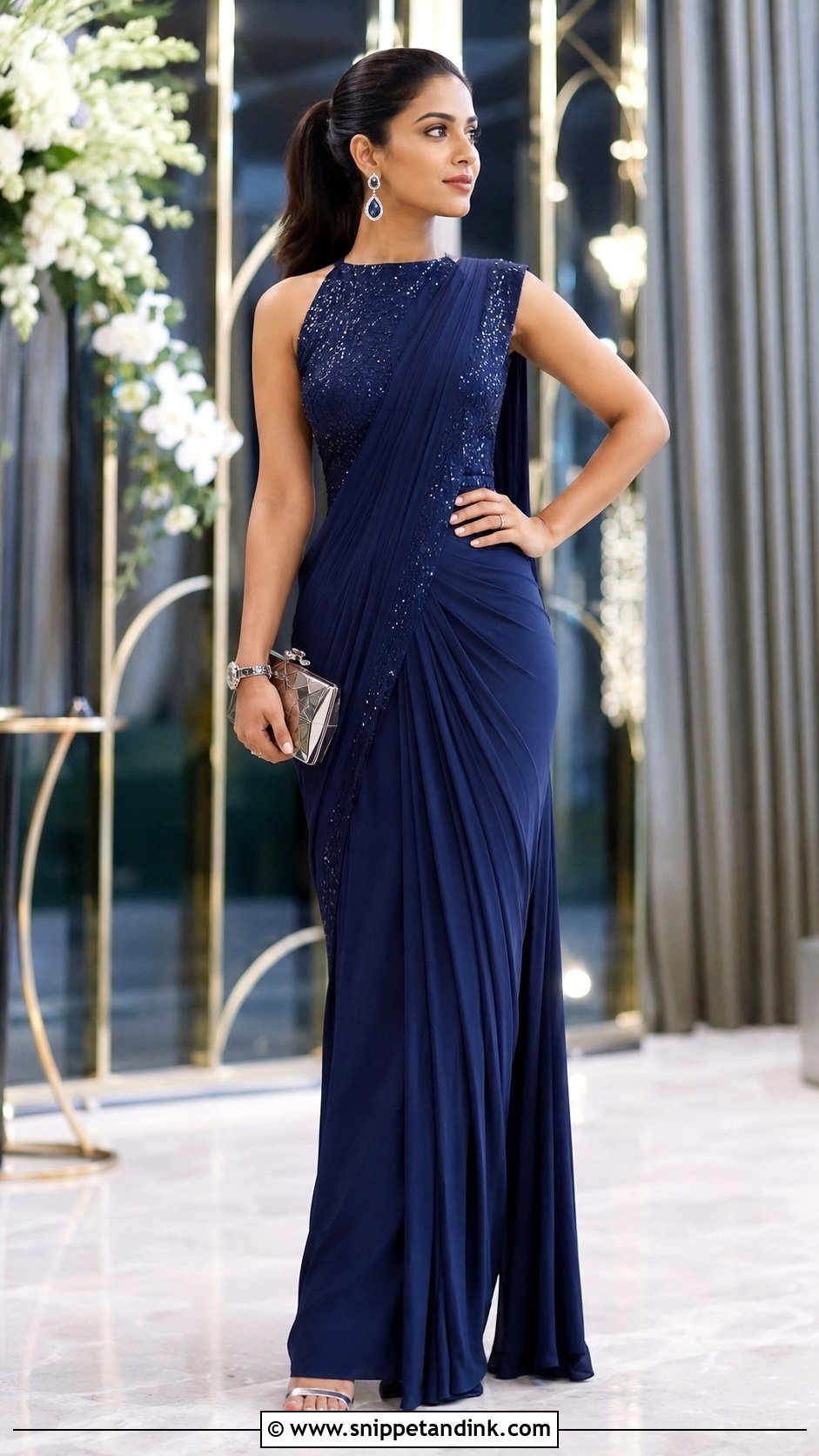
What if you want the drape of a saree without managing pleats? A saree gown has a fitted dress underneath with the drape stitched or fixed in place. Sapphire, dusty rose, emerald or champagne with subtle sequins on the bodice and pallu suit a reception or a modern venue. I check the drape length with the shoes on; a pallu that’s too long gets caught under the heel the first time you turn. Statement earrings, a metallic clutch and streamlined heels finish it. Skip heavy necklaces when the neckline is already decorated, and keep the hair sleek.
9. Velvet Lehenga Wedding Dress
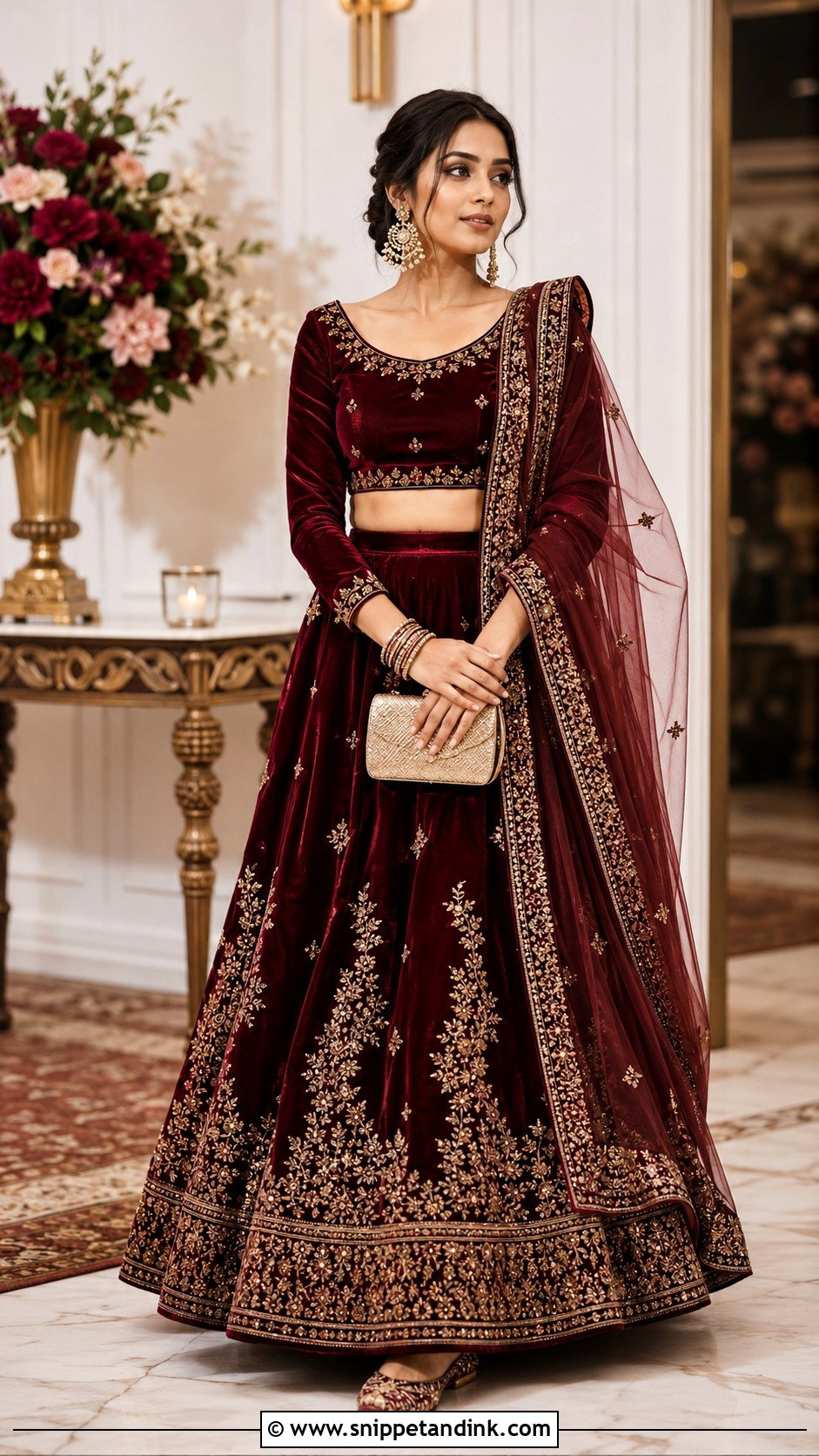
Velvet is a cool-weather fabric, and in a winter evening ceremony nothing else gives quite that depth of color. Deep maroon, bottle green, navy and plum show the pile best. I keep the gold embroidery restrained, because velvet already looks rich and dense work makes it very heavy. Pair it with a fitted blouse and a light net dupatta. Antique earrings, coordinated bangles and closed juttis suit the season. Velvet has no give, so I have clients sit during fittings; a waistband that feels fine standing can dig in once you’re seated for an hour. A center-parted bun suits its formality.
10. Mirror Work Lehenga Wedding Dress
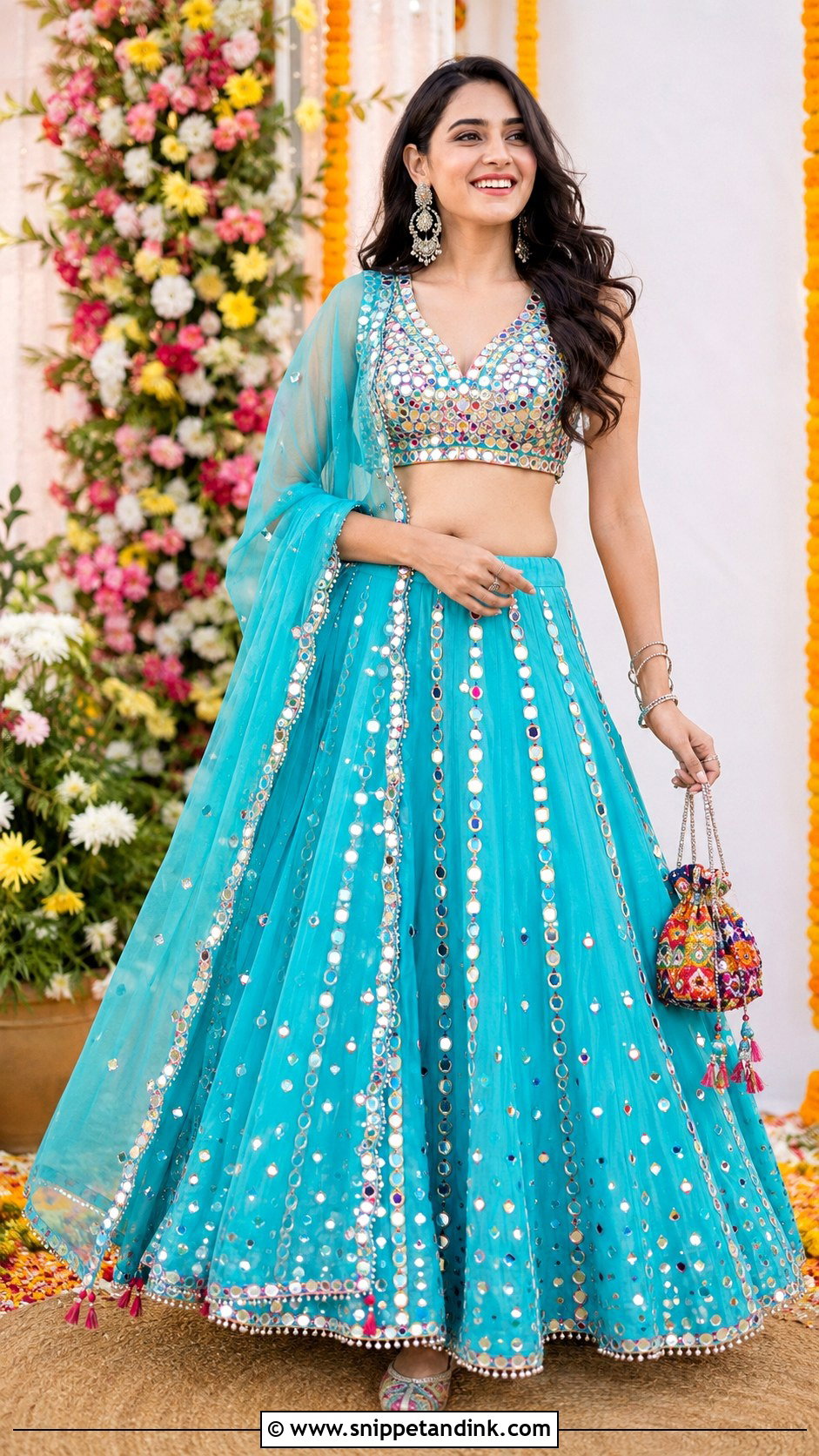
Mirror work is traditional craft from Gujarat and Rajasthan, and a bright mirror-work lehenga in turquoise, coral, yellow, fuchsia or purple makes a colorful mehndi or sangeet outfit. A fitted blouse and a light dupatta with a simple border are enough. The mirrors already sparkle, so I keep accessories quiet: oxidized silver earrings, slim bangles, a fabric potli. Turn the blouse inside out before buying. Mirror work needs a smooth lining behind it, or the edges scratch your skin after a few hours of dancing. Flat juttis and a high ponytail or braid suit it.
11. Organza Saree Wedding Dress
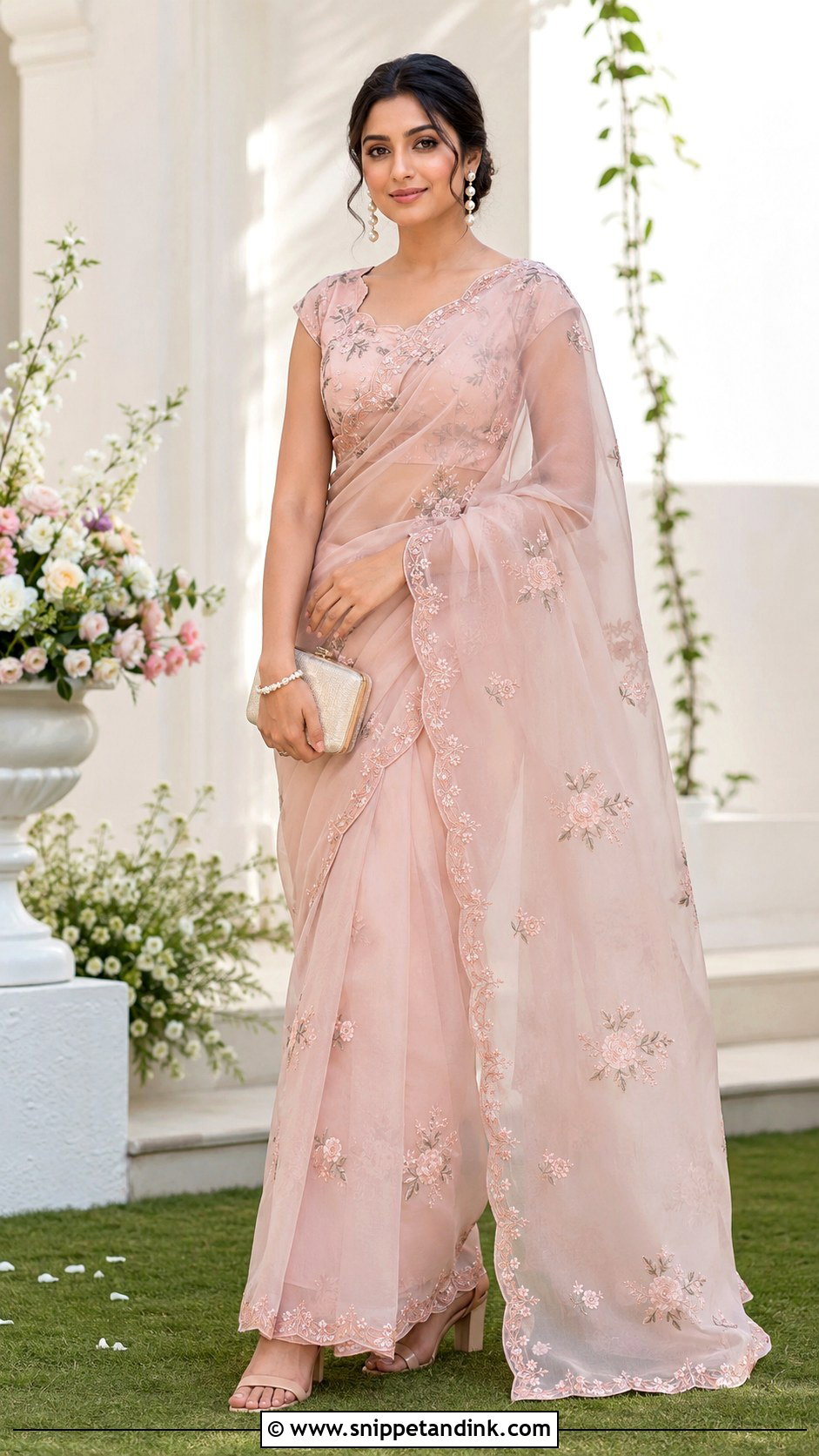
Organza takes light in a way silk doesn’t, so a pastel organza saree looks soft yet keeps a structured shape. For daytime, choose floral embroidery, a scalloped border or subtle beadwork, with a sleeveless, cap-sleeve or elbow-sleeve blouse in a matching color. The fabric puffs up, so I make the pleats narrow and pin them flat. Pearl earrings, a delicate bracelet, nude block heels and a box clutch keep it light. Don’t carry a shoulder bag; the strap crushes the pallu. It sits nicely between a printed saree and silk in formality.
12. Jacket Lehenga Wedding Dress
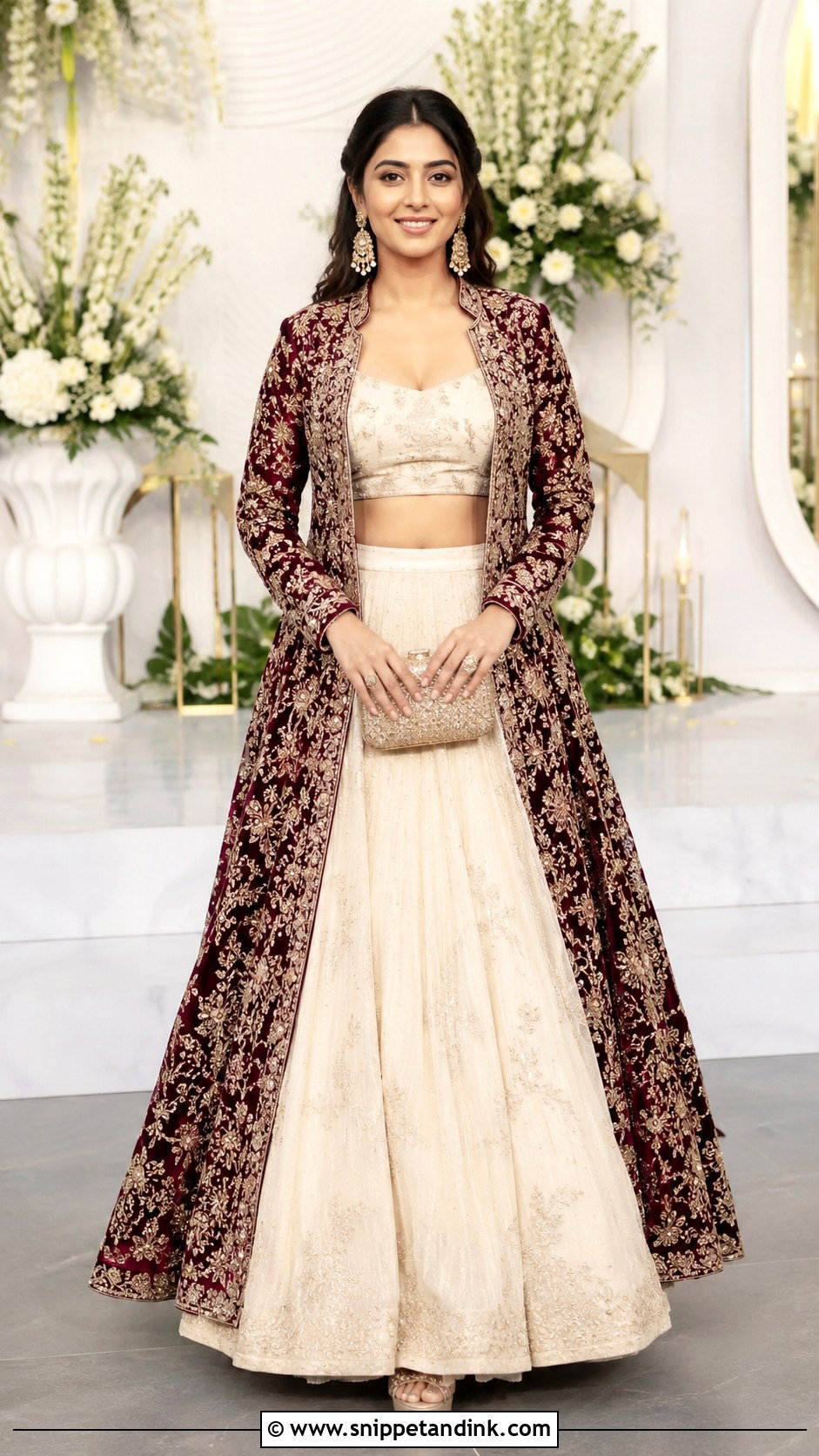
A long embroidered jacket turns a simple lehenga into a layered outfit with real structure. Start with a plain skirt and fitted blouse, then add a floor-length open jacket with threadwork, sequins or worked borders. Monochrome lengthens the figure; a contrasting jacket makes the layers obvious. A dupatta is optional here. I’d choose a light jacket if there’s dancing or warm weather, because a heavy one is the first thing guests take off and then the outfit loses its point. Drop earrings, a slim ring, platform heels or juttis and swept-back hair finish it.
13. Palazzo Suit Wedding Dress
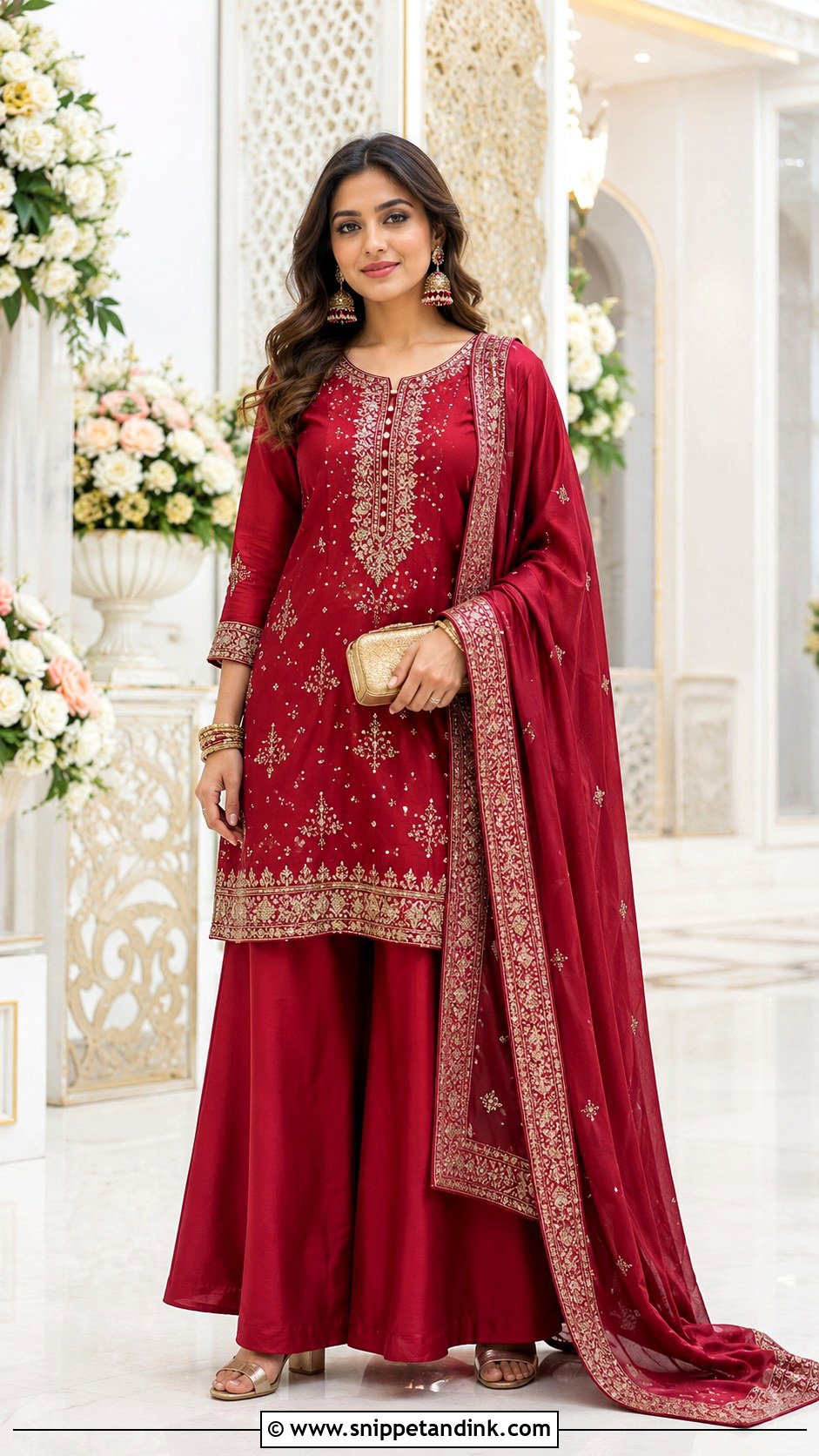
For long wedding days, I put a lot of clients in palazzo suits. They’re comfortable without looking casual, and they suit anyone who prefers modest coverage. Pair wide silk or georgette pants with a straight embroidered kurta to the knee and a dupatta with a decorative border. Pastels suit daytime functions; navy, ruby and emerald go richer for evening. The palazzo hem should sit just above the floor in your shoes. Jhumkas, bangles, a compact clutch and low block heels finish it, and a new dupatta and jewelry make it a fresh outfit for the next wedding.
14. Peplum Sharara Wedding Dress
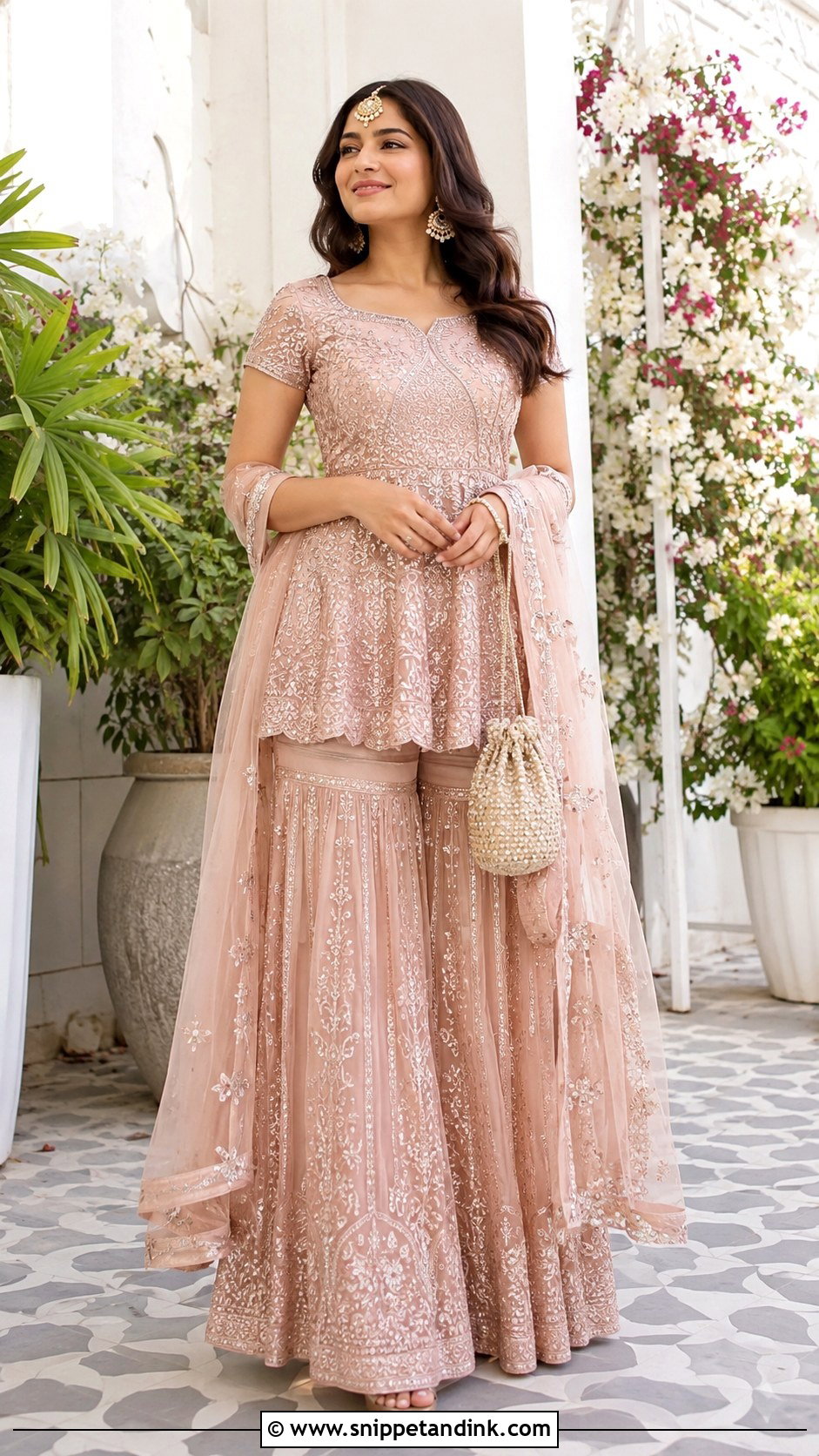
A peplum top gives a sharara a defined waist. I check the peplum length carefully: it should end near the upper hip, so it balances the flare of the pants without covering it. Choose a fitted embroidered peplum over wide sharara pants, with a coordinated or contrasting dupatta. Blush, mint, lavender, ivory and powder blue feel fresh by day, while deeper shades suit the evening. Medium earrings, a delicate maang tikka, platform sandals and a compact potli suit it. Skip a long necklace if the top is worked across the chest. Sisters and bridesmaids wear this one well.
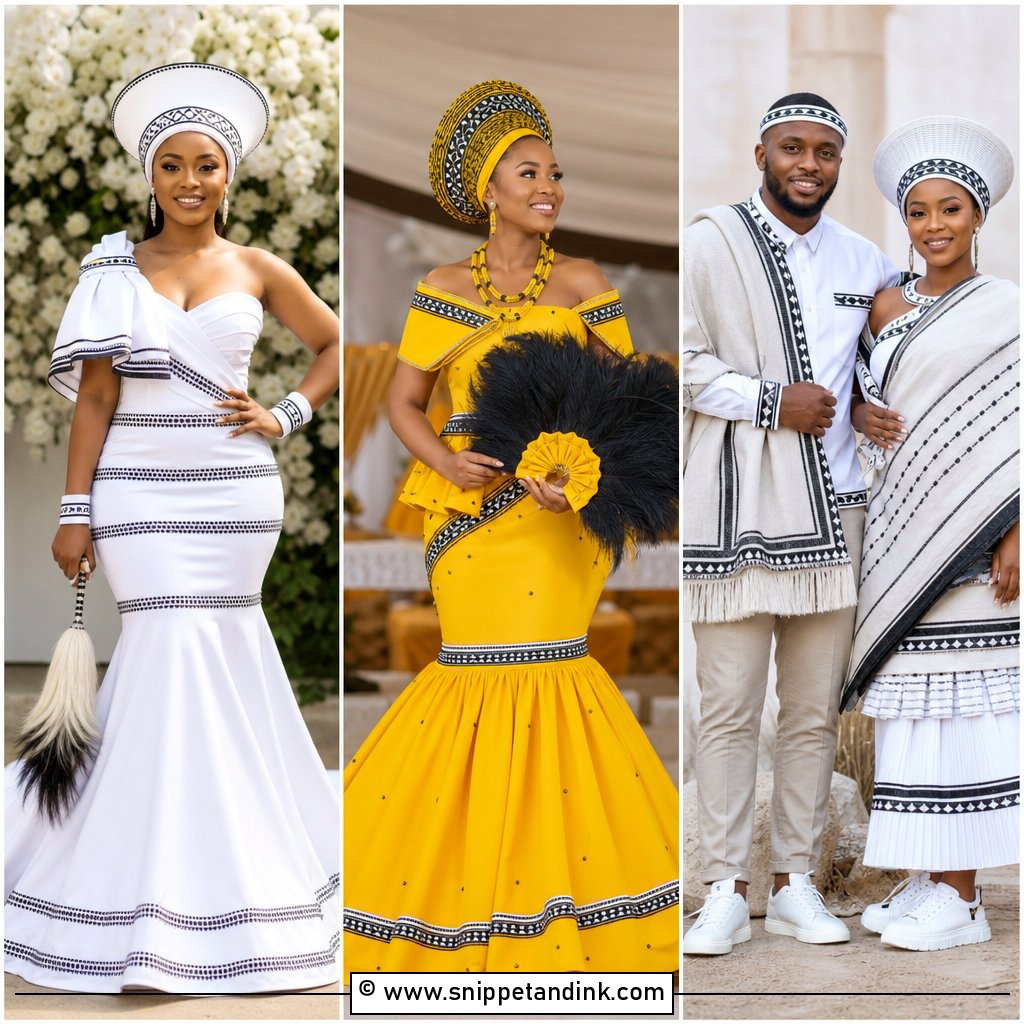
15. Chanderi Silk Suit Wedding Dress
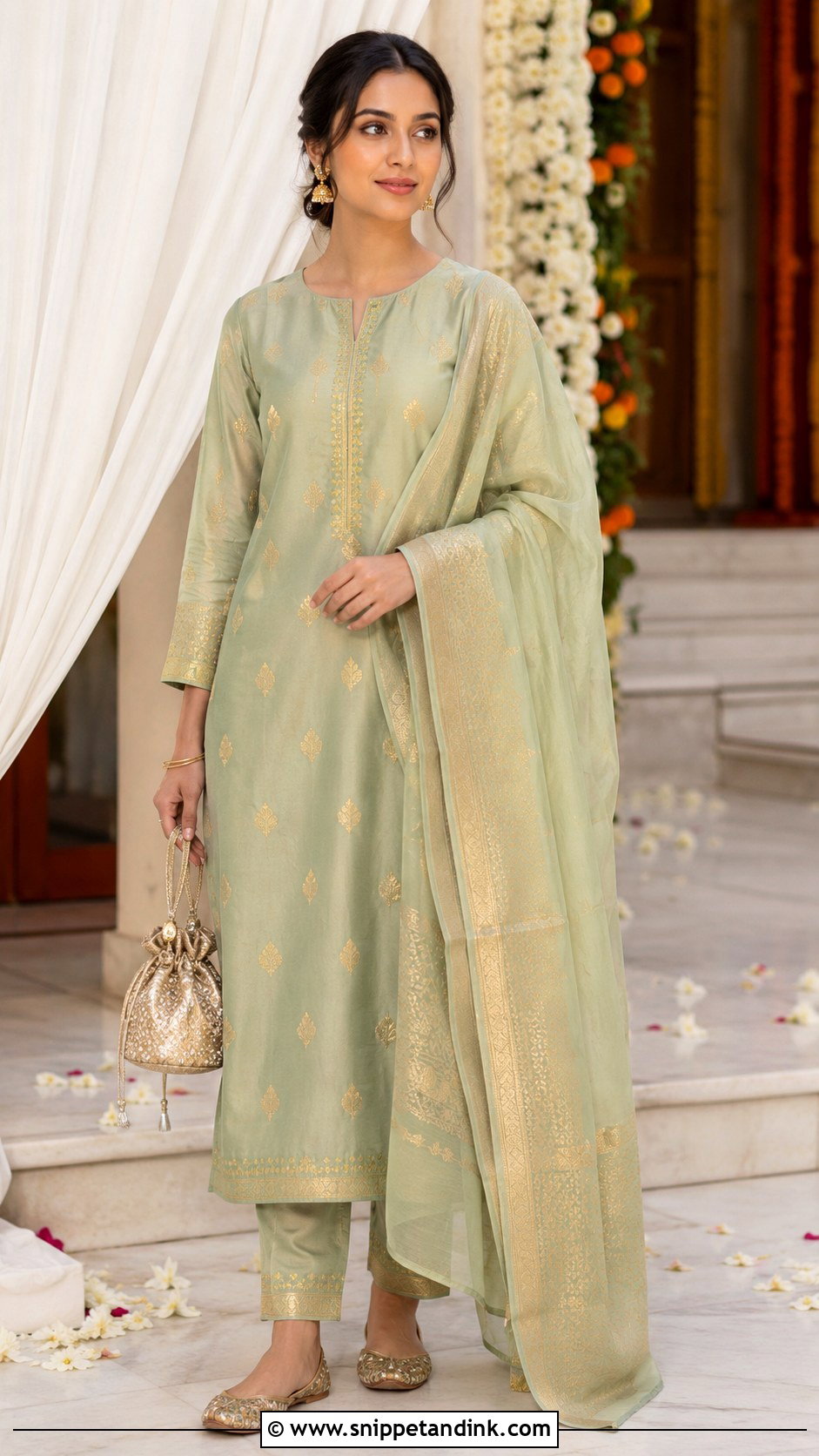
Chanderi is woven from a silk-cotton blend in Madhya Pradesh, and it has a fine sheen and a light, crisp hand that stays comfortable in warm weather. A straight kurta with gold motifs, narrow pants and a dupatta with a woven border make a quiet, polished outfit for daytime ceremonies and family gatherings. Coral, pistachio, sky blue and soft maroon are festive without fuss. Small gold earrings, slim bangles and embroidered flats are enough, with a delicate necklace if the neckline is plain. For more formality, change only the dupatta to one with heavier edging and carry a metallic potli.
16. Half Saree Wedding Dress
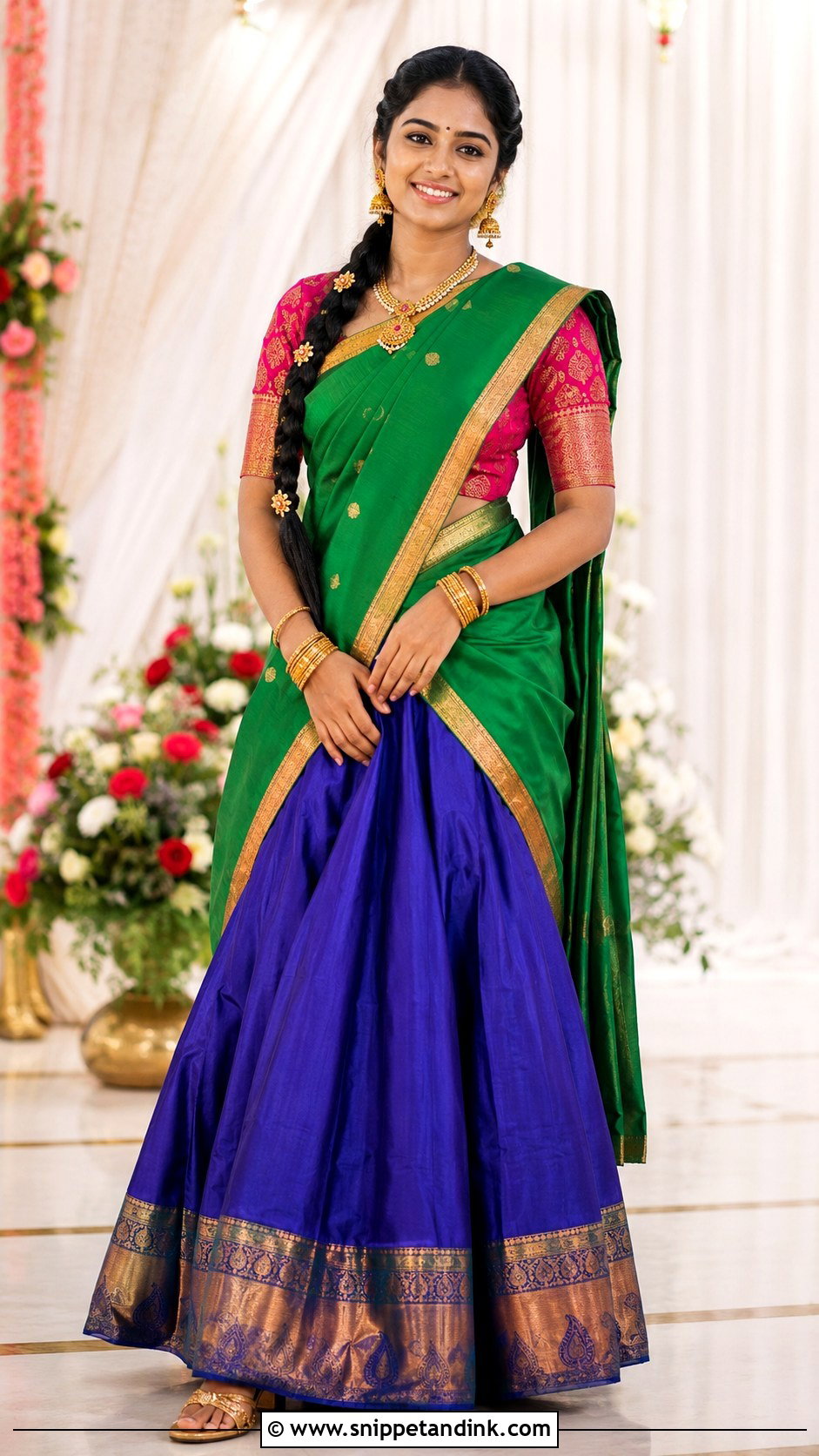
The half saree is three pieces: a long skirt, a fitted blouse and a dupatta draped like a pallu. In South Indian families it’s traditionally worn by young girls, which is why I suggest it for a cousin or younger sister at a family wedding. Contrast the pieces in green, pink, blue or purple and tie them together with matching borders or embroidery. A silk skirt, brocade blouse and richly edged dupatta look right. Pin the dupatta at the shoulder and the waist, or it slides during the day. Gold earrings, bangles, a small bindi, juttis and a decorated braid finish it. For less contrast, keep all three pieces in one color family.
17. Cape Lehenga Wedding Dress
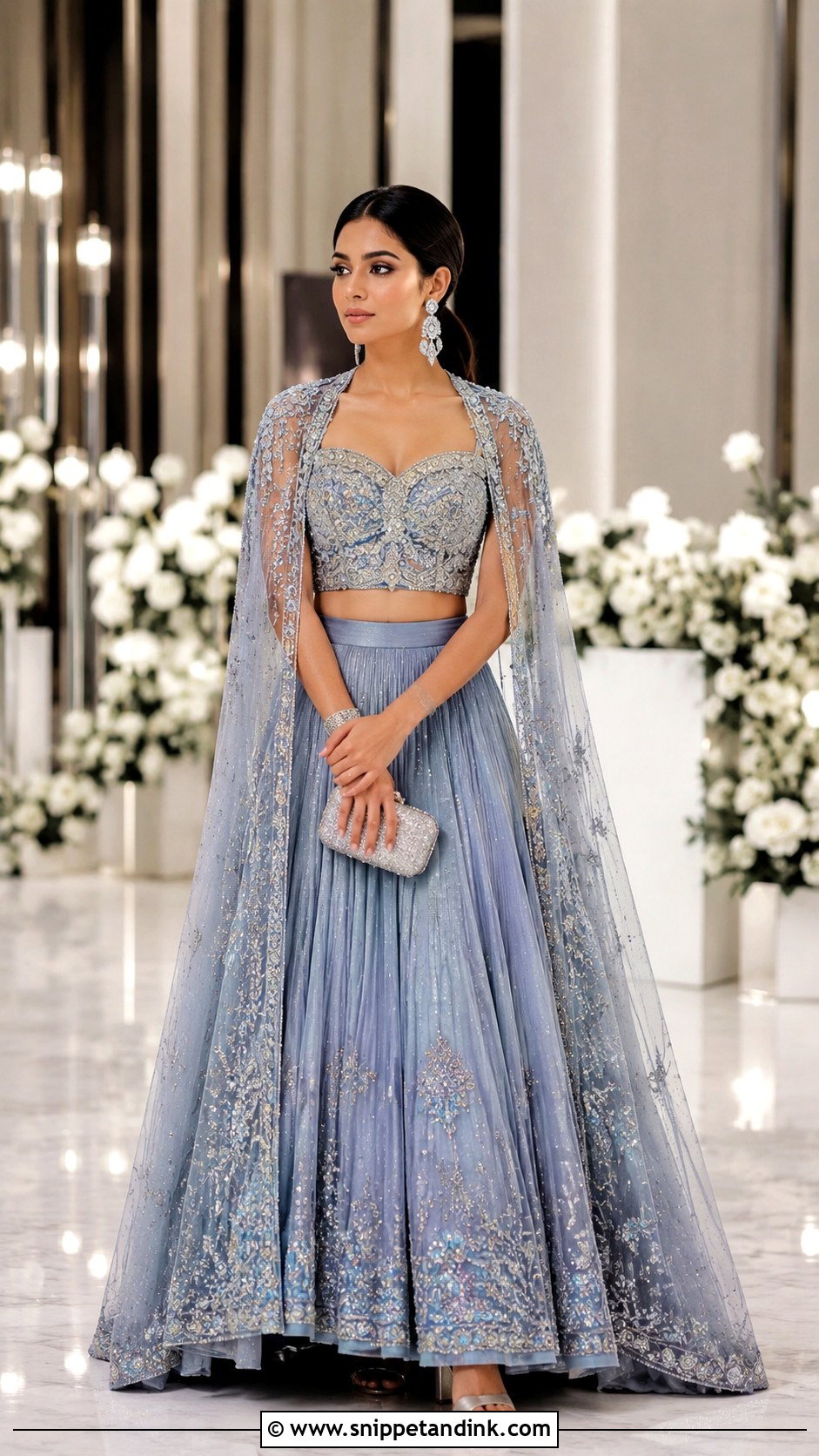
A cape lets you skip the dupatta and still have movement around the shoulders. Choose a fitted blouse, flowing skirt and cape that falls to the elbow or waist; floor-length capes are dramatic but harder to dance in. Tonal shades like dusty blue, mauve, sage or champagne keep it modern. I check two things in the trial room: that the cape doesn’t snag on bangles, and that its edge doesn’t catch on the blouse embroidery when you lift your arms. Drop earrings, a cuff, a compact clutch and block heels suit it, with hair tucked back. Best at receptions and engagements.
18. Floral Anarkali Wedding Dress
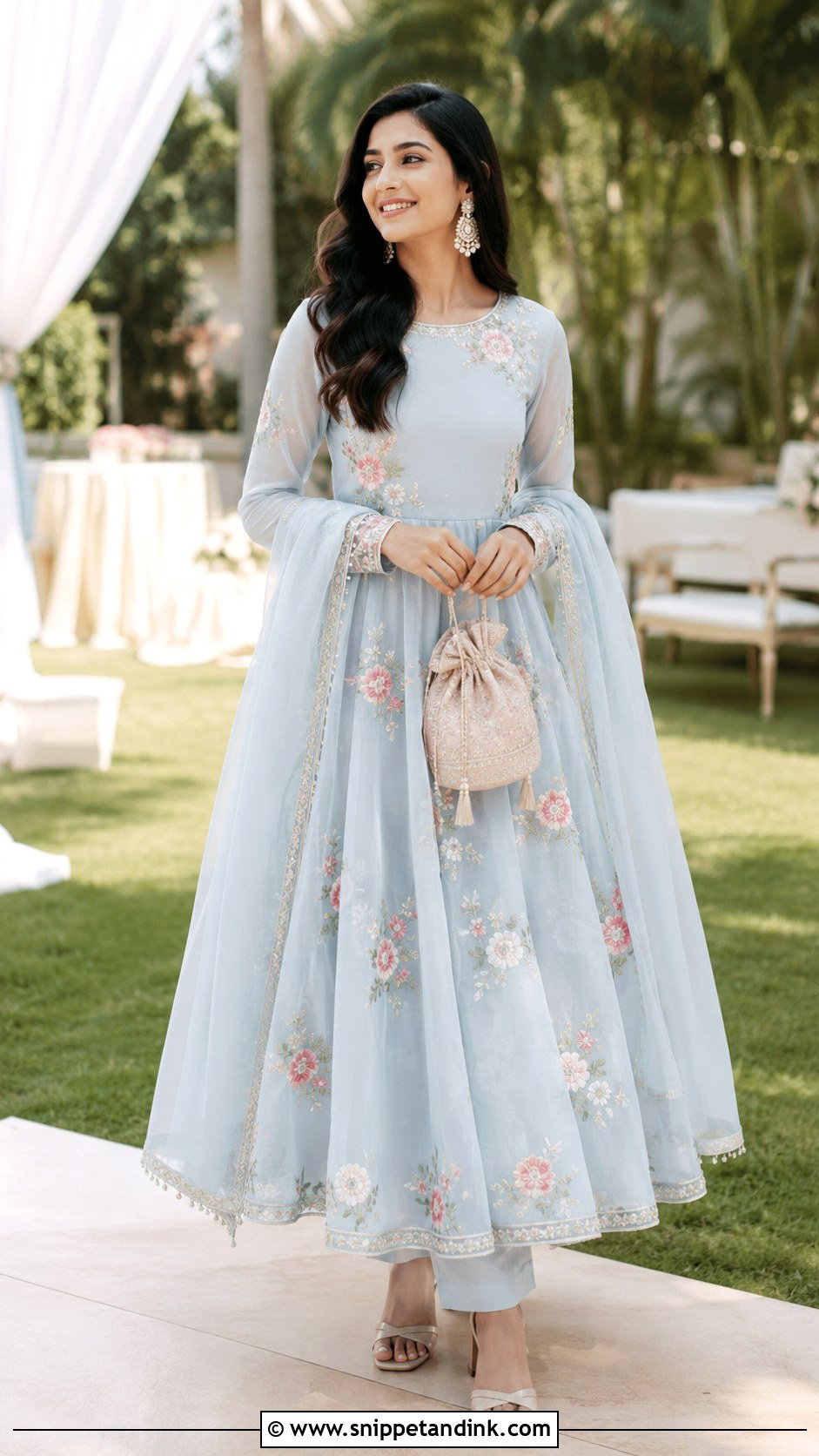
Floral Anarkalis are forgiving across ages and body types, which makes them one of my easiest recommendations for a daytime wedding. Choose a long flared design with printed flowers, embroidered blossoms or appliqué, and a fitted bodice with a defined waist so the print doesn’t overwhelm the figure. Narrow pants, a light dupatta, pearl or stone earrings and neutral block heels complete it. My jewelry rule follows the print: a large print needs very little jewelry, while a small print can take a noticeable necklace. Repeat one of the smaller print colors in your potli.
19. Kurta Skirt Wedding Dress
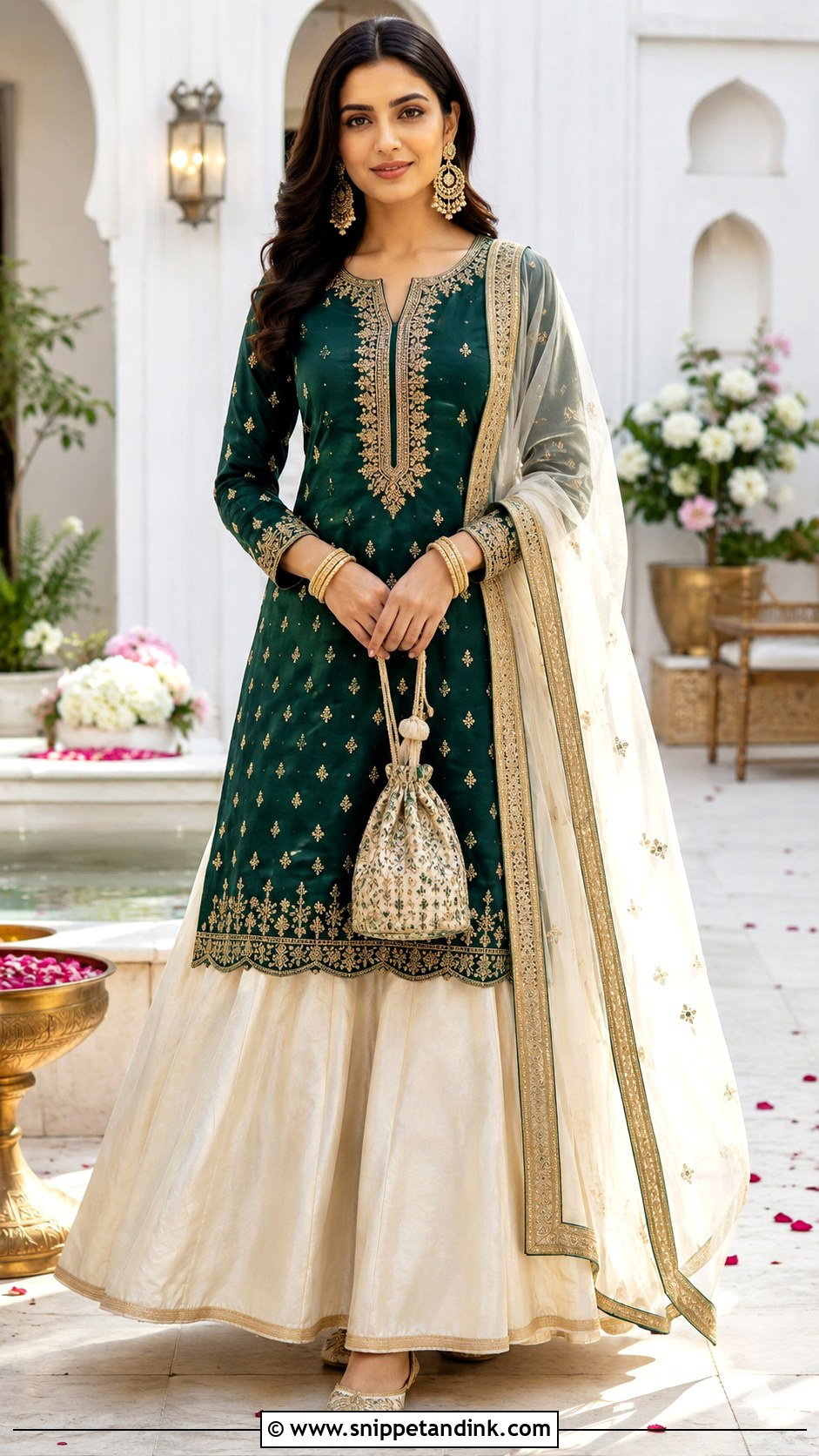
A kurta with a skirt offers excellent repeat value. Pair a fitted embroidered kurta with a full ankle or floor-length skirt; a short kurta shows off the skirt, a longer one adds coverage. Match the colors for a sleek line or pair a jewel-toned kurta with a neutral skirt. A slim belt can define the waist, but I’d skip it if it cuts across the embroidery. Add a light dupatta, statement earrings, bangles and juttis, plus a small potli. After the wedding, each piece pairs with simple tops or pants.
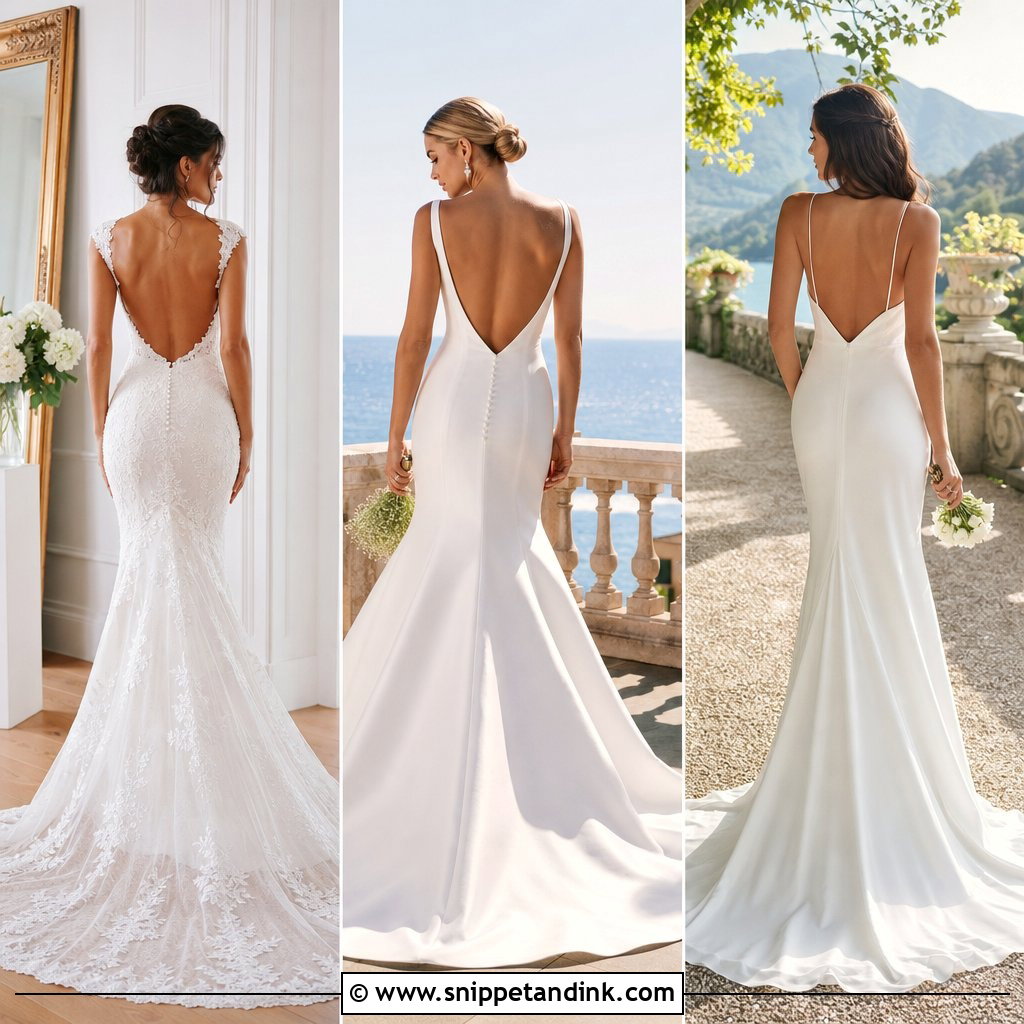
20. Pre Draped Saree Wedding Dress
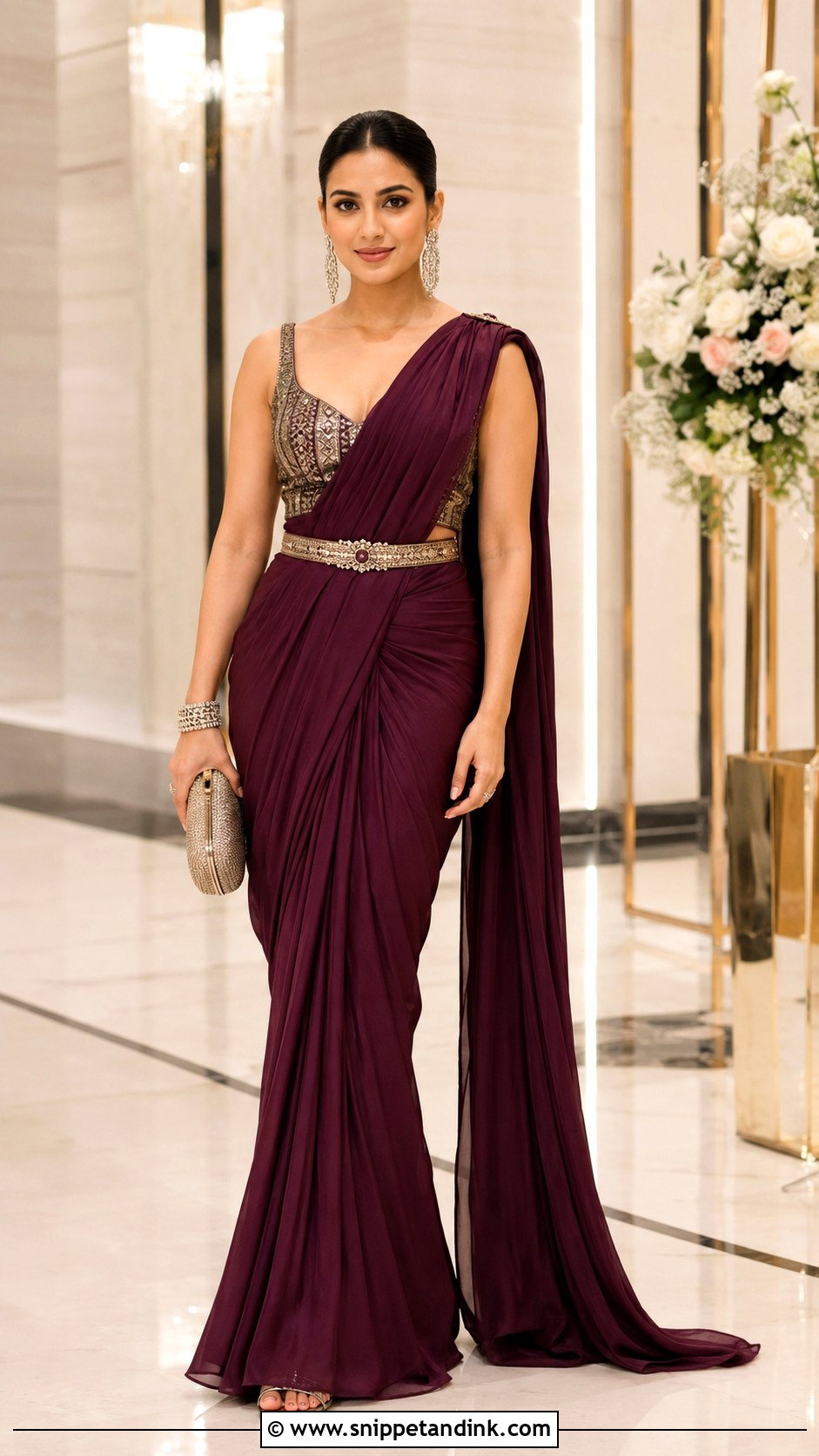
A pre draped saree is the outfit I recommend to girls who’ve never draped one and don’t want to spend the evening adjusting it. Look for stitched pleats, a secure waistband and an attached pallu, with a fitted embroidered blouse in the same shade or a metallic contrast. Jewel colors suit formal receptions, pastels suit daytime. A belt helps hold the drape and defines the waist. Chandeliers, a statement bracelet, a small clutch and stable heels finish it, with sleek hair in a bun or ponytail.
Blouse Fittings Need Three Appointments, Not One
Of every piece on this list, the blouse is the one most likely to go wrong, and it’s the one in every close-up photo. I plan three fittings for it.
- First fitting: measurements and the cut. Decide the neckline, sleeve length and closure now. Back hooks look neat but need a helper; side zips are easier on your own.
- Second fitting: wear the actual bra you’ll wear on the day. Check that straps don’t show and that the blouse doesn’t ride up when you raise your arms.
- Final fitting: wear the whole outfit, with jewelry and shoes. Sit, bend and dance a little. This is where most last-minute changes are caught.
Leave room in the timeline. In wedding season, many tailors are booked weeks out, and a blouse that is fitted too early may need taking in or letting out again if your weight shifts before the day. I’d aim to finish the final fitting about two weeks before the wedding.
Built-in cups and a lining that breathes
Ask for built-in cups if you prefer not to wear a separate bra, and a soft cotton lining under silk or brocade. Synthetic linings trap heat badly at summer weddings.
A Hem, a Blouse and a Waistband Decide How It Feels
The outfit you’ll remember is the one you could sit, walk and dance in. Check the event, venue, weather and dress code first, then choose a silhouette that gives you the coverage and movement you want. Lehengas bring volume, sarees bring drape, suits bring comfort, and fusion pieces give a modern option without losing the festive mood. Finish with shoes you’ve worn in, jewelry that matches the outfit’s weight and a bag you can actually carry. Then spend money on tailoring. A correct hem, a well-fitted blouse and a comfortable waistband matter more than any embellishment.
You'll Like These Ideas:


Leave a Reply