
Ndebele bridal dressing is built on colour, geometry and beadwork, and the patterns have roots in the painted walls of Ndebele homesteads. A bride can go fully traditional, wear a modern gown with beaded panels, or split the day between the two. When I style these looks, the first conversation is never about the dress shape. It’s about which ceremony each outfit is for, who in the family is making or lending beadwork, and how much the bride needs to walk, greet elders and dance. Below are 25 ways to build the look, with head-to-toe styling for each, from beaded column gowns to a white dress that only borrows the trim.
Ndebele Bridal Pieces Your Family May Expect to See
Ndebele beadwork is made by women, and traditionally the colours, shapes and garments say something about the wearer’s age and marital status. That’s why I never treat these pieces as plain accessories. Before we design anything modern, I sit down with the bride and an older relative and go through which traditional items belong to the wedding.
- Nyoga: the long beaded train that hangs from the back of the bride’s cape and moves along the ground as she dances.
- Linaga: the cape the nyoga hangs from, traditionally worn around the shoulders.
- Idzila: copper and brass rings for the neck, arms and legs, linked to the bond of marriage.
- Jocolo: the five-panelled marriage apron, traditionally made for the bride by her mother-in-law and worn on special occasions afterwards.
Names and customs vary between families and regions, so treat this list as a starting point for that conversation, not a rulebook. Some pieces are given, not bought, and some belong only to a particular stage of the ceremonies. Knowing that early stops you from ordering something your family planned to provide.
If you’re adding Ndebele pattern to a modern gown, I’d always commission the beadwork from Ndebele beadworkers instead of buying mass-printed trim. The hand-stitched geometry looks different up close, and the work stays with the community it comes from.
1. Ndebele Beaded Wedding Dress
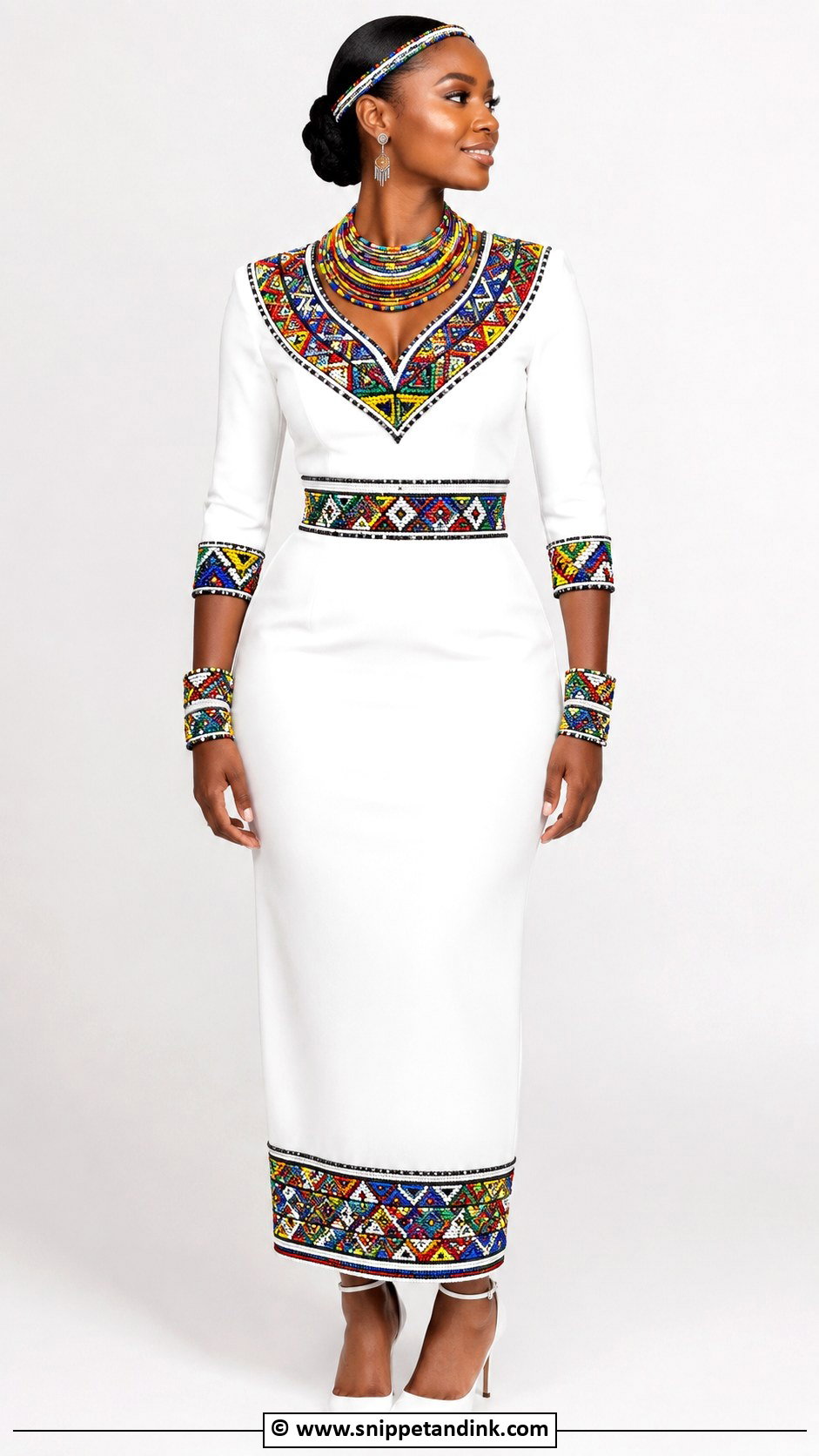
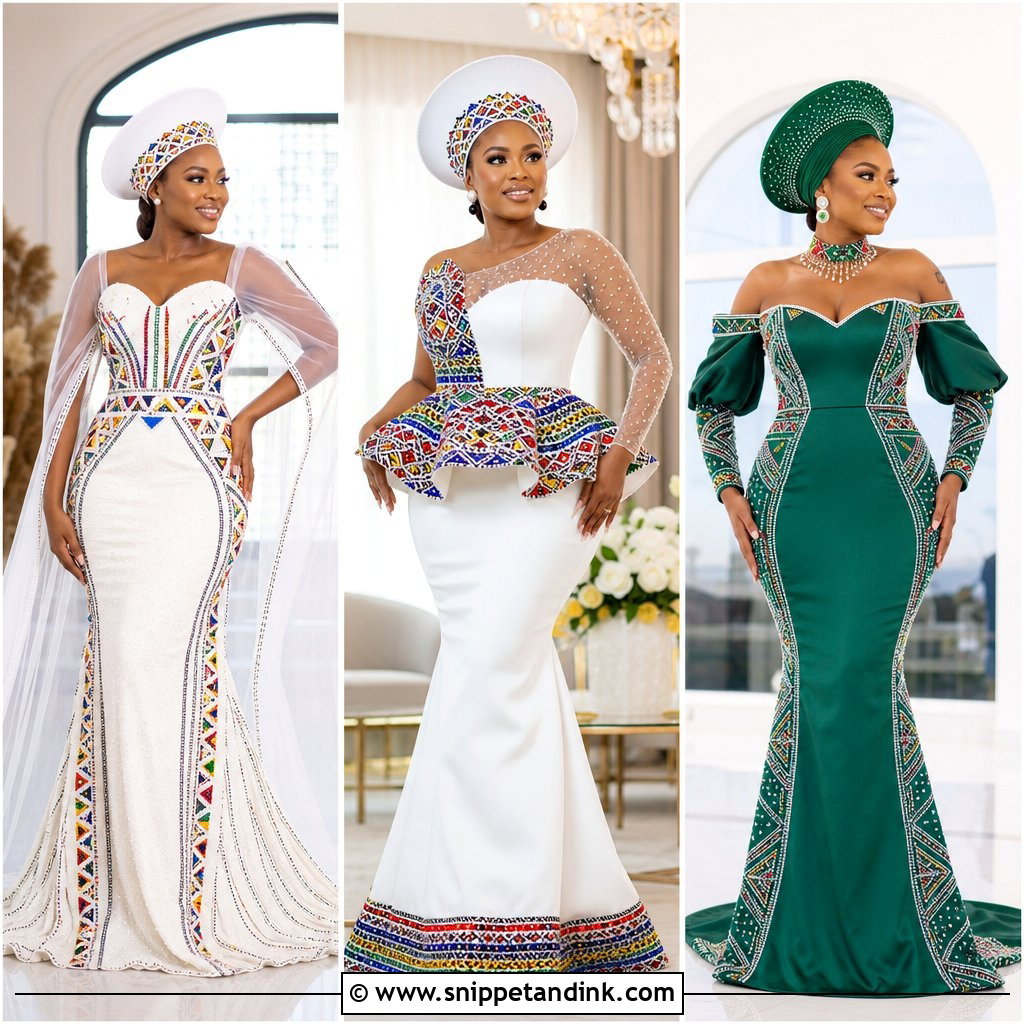
Here the beadwork is the dress. Colourful geometric panels at the neckline, waist, sleeves or hem sit best on a fitted gown, mermaid or straight column, because a flat surface keeps the pattern from distorting. White, cream or black under the beads makes every colour read brighter. I add layered beaded necklaces, matching cuffs and a neat headwrap or beaded band, then keep the shoes plain in white, black or metallic. Beaded panels are heavy, so I always check that the gown has a waist stay to carry the weight off the shoulders.
2. Ndebele White Wedding Dress
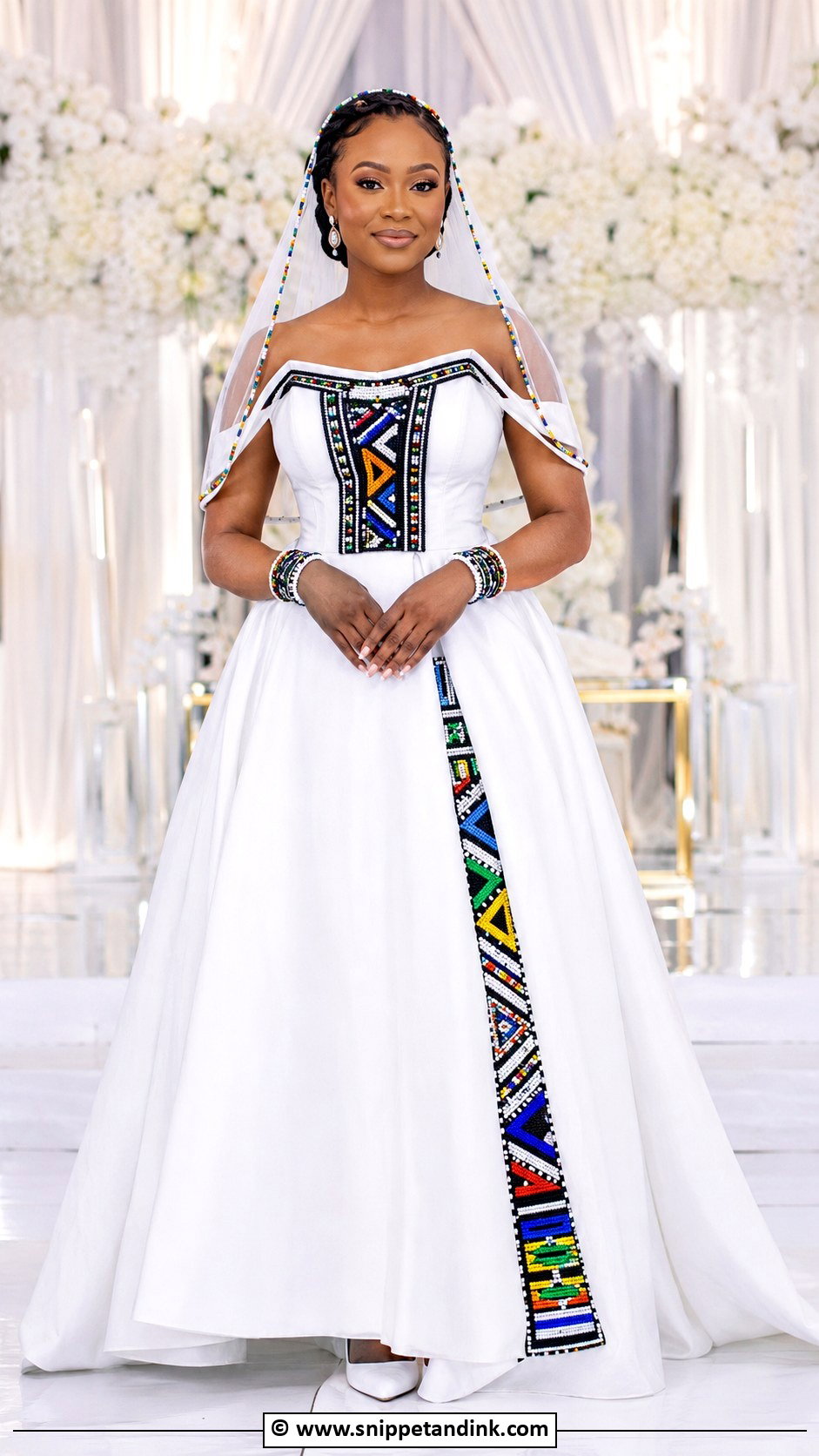
A white base gives you a classic bridal outline with the culture worked into the edges. Start with a white A-line, ball gown, or fitted dress, then place Ndebele beadwork along the bodice, cuffs, collar or train. I prefer beadwork on a detachable collar or sash for this version, because white silk can’t go into the same cleaning process as hand-beaded panels. A beaded veil, a bold necklace and bracelets complete it. White pumps or low block heels keep you steady through a long day.
3. Ndebele Traditional Wedding Dress
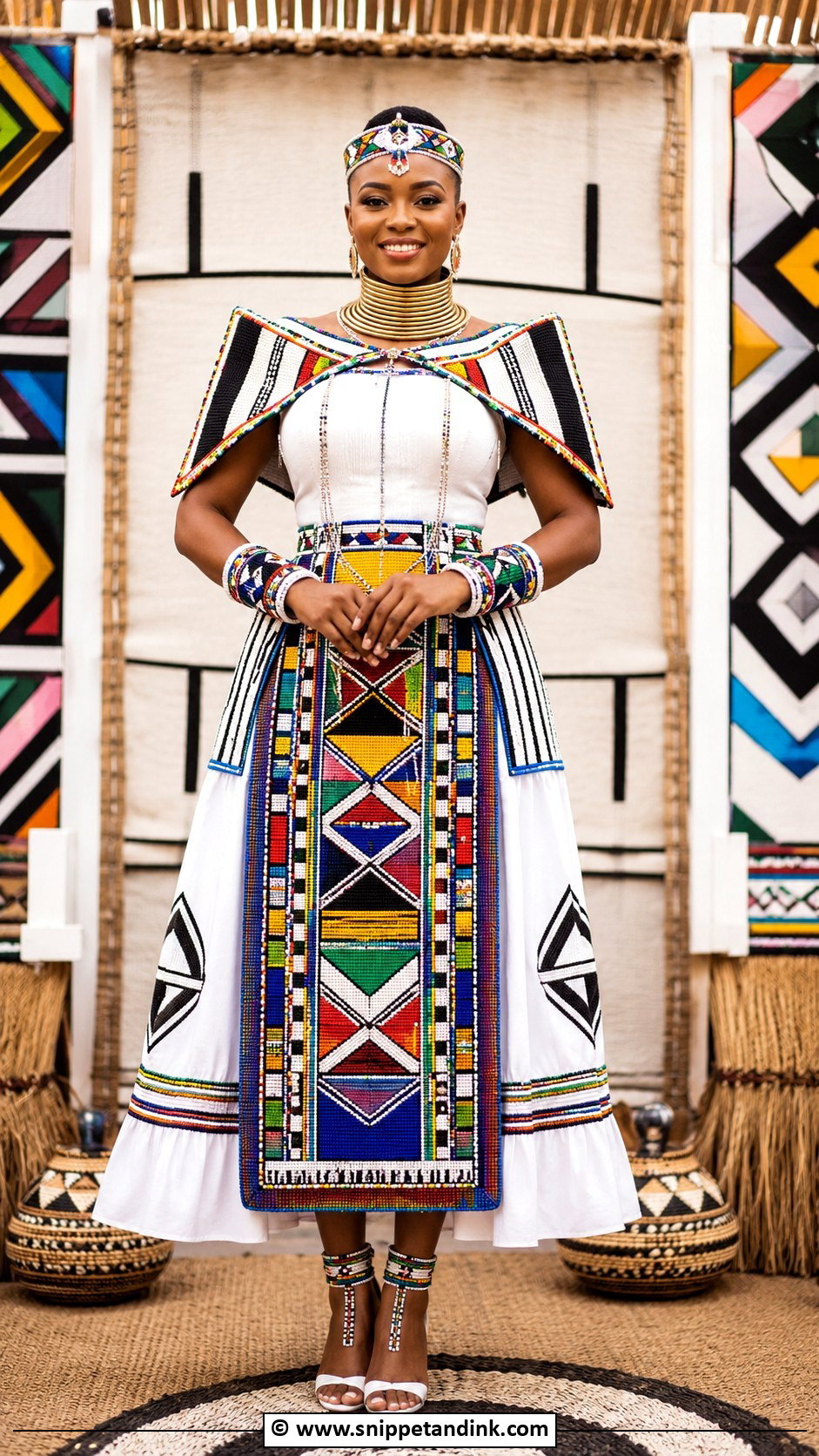
A fully traditional outfit can include a structured skirt, a beaded apron, patterned fabric, neck and arm rings, cuffs and a beaded headpiece. Several of these pieces carry meaning about marriage and family status, so before I style a single item I ask the bride’s mother or aunts which ones belong to this stage of the wedding and who traditionally provides them. Keep the silhouette clean and let each piece be seen. Comfortable heels or embellished flats matter if the ceremony involves dancing outdoors on uneven ground.
4. Ndebele Mermaid Wedding Dress
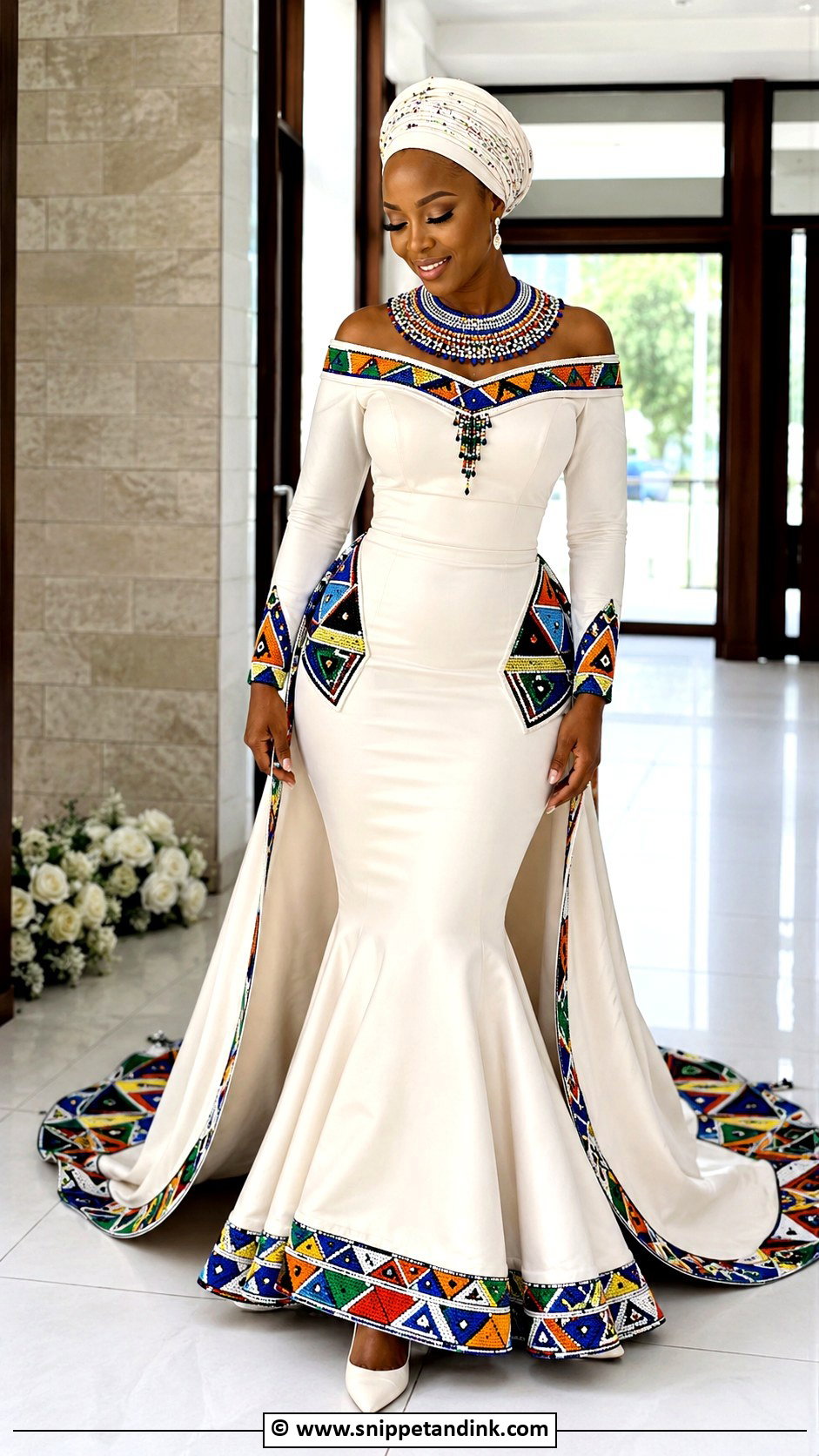
The mermaid gives the most modern outline here: fitted through the body, flared at the knee, with beadwork placed across the neckline, sleeves, hips or lower skirt. If you want more drama, add a detachable beaded train or a patterned overskirt just for photos. Beads at the hips need care, though. They take the most strain when you sit, so I ask for that section to be stitched onto a firm underlayer. A sleek headwrap, beaded collar and stacked bracelets balance the shape, with pointed heels or platforms set to the hem length.
5. Ndebele Ball Gown Wedding Dress
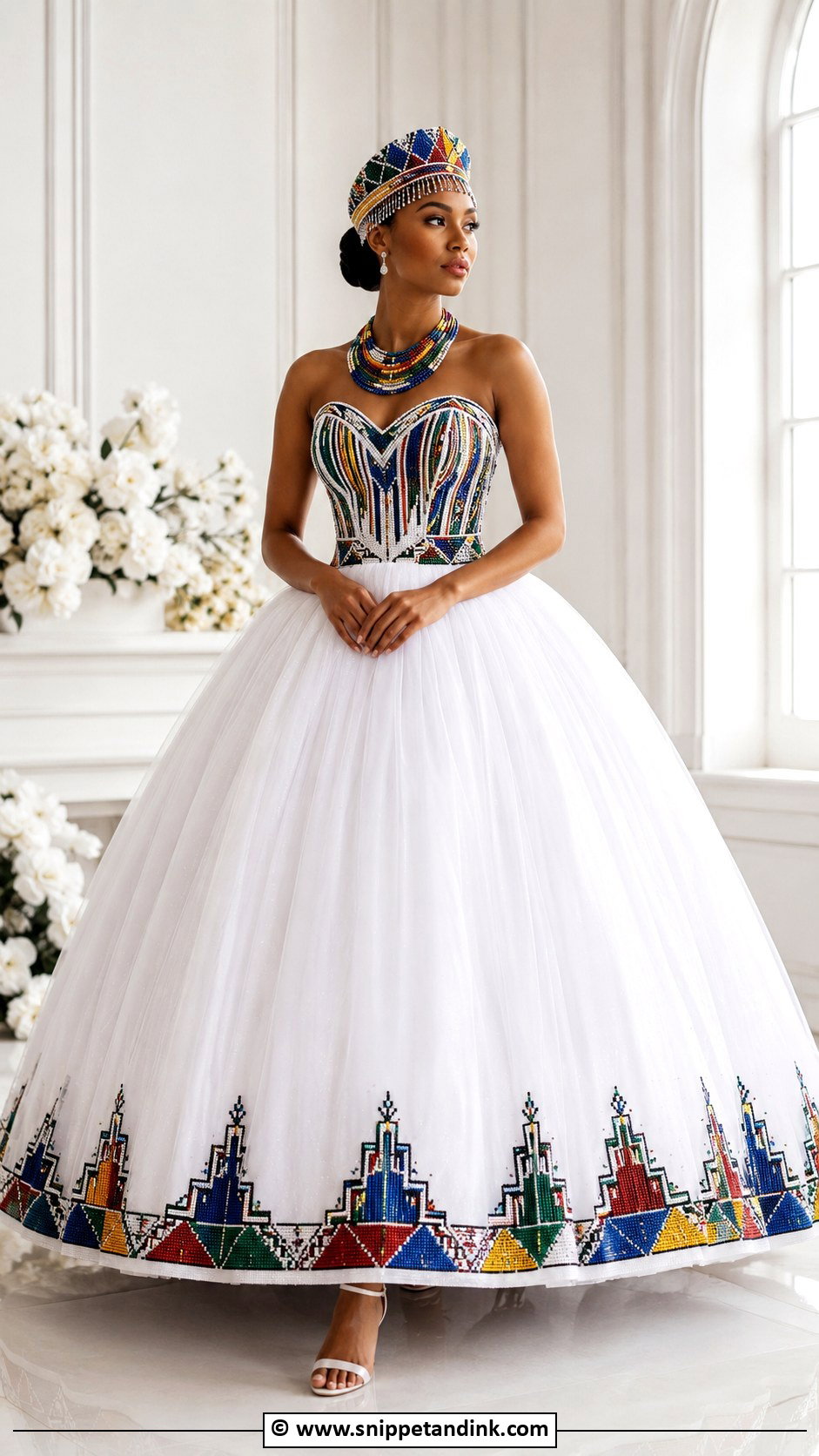
Volume makes a grand moment, and a ball gown carries it best. The skirt can be satin, tulle, organza or printed fabric while the bodice holds the detailed beadwork. Patterned borders near the hem push it toward tradition. One thing I watch: a beaded hem on a full skirt drags on stairs and gravel, and those beads are the first to come loose, so lift the border a few centimetres off the floor. Add a beaded crown-style headpiece, a layered necklace and simple earrings, with stable shoes under all that skirt.
6. Ndebele Off Shoulder Wedding Dress
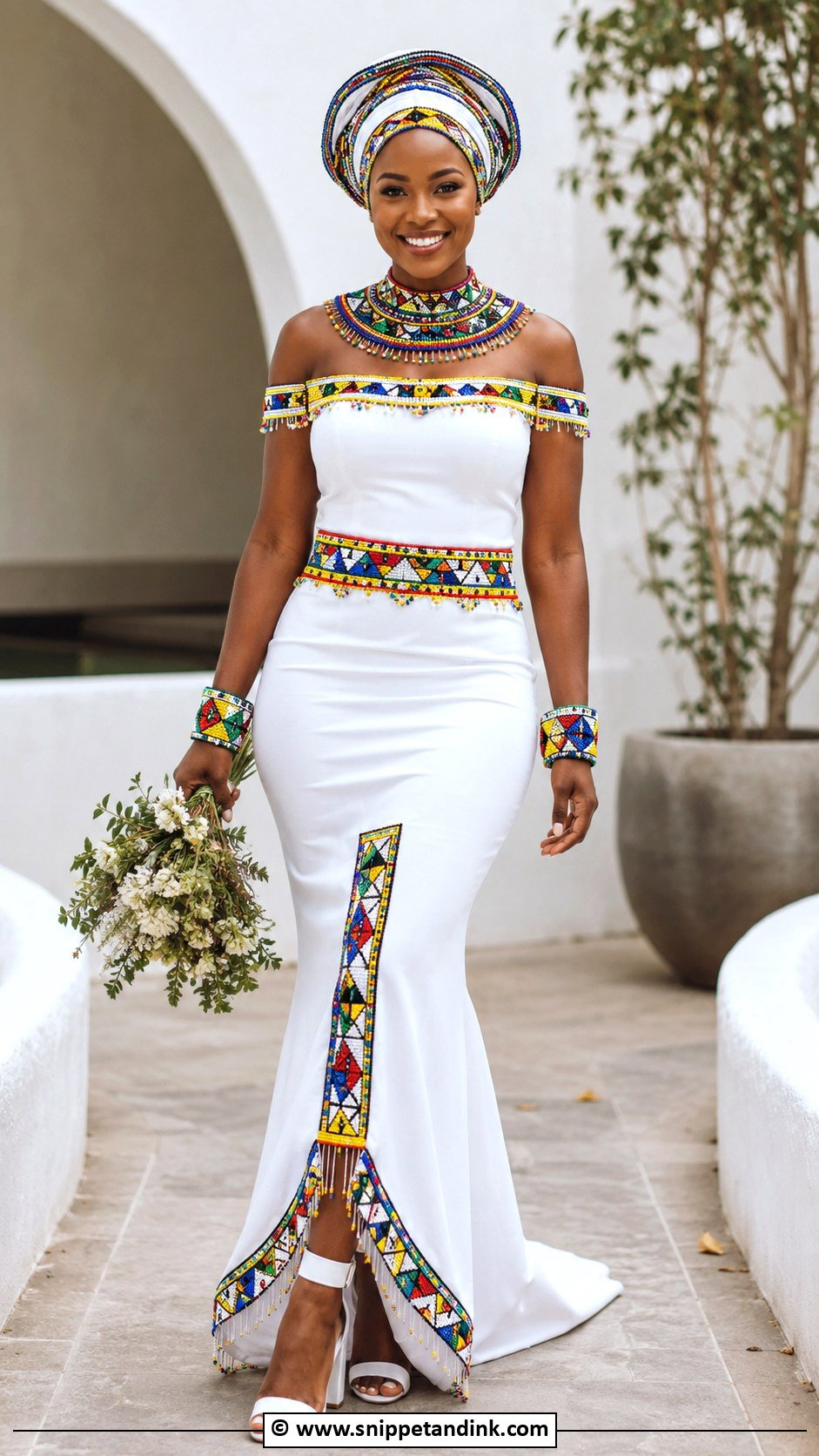
An open neckline is the best canvas for a big beaded collar, layered necklaces or neck rings. Fitted, A-line and mermaid shapes all work. For a softer result, keep the fabric white with bright beaded accents; for a bolder one, bring in black, red, blue or yellow pattern. A heavy collar can pull an off-shoulder neckline down, so I test the two together at the fitting and sometimes add a clear strap or a hidden hook to anchor them. Finish with a matching headwrap and simple heels.
7. Ndebele Long Sleeve Wedding Dress
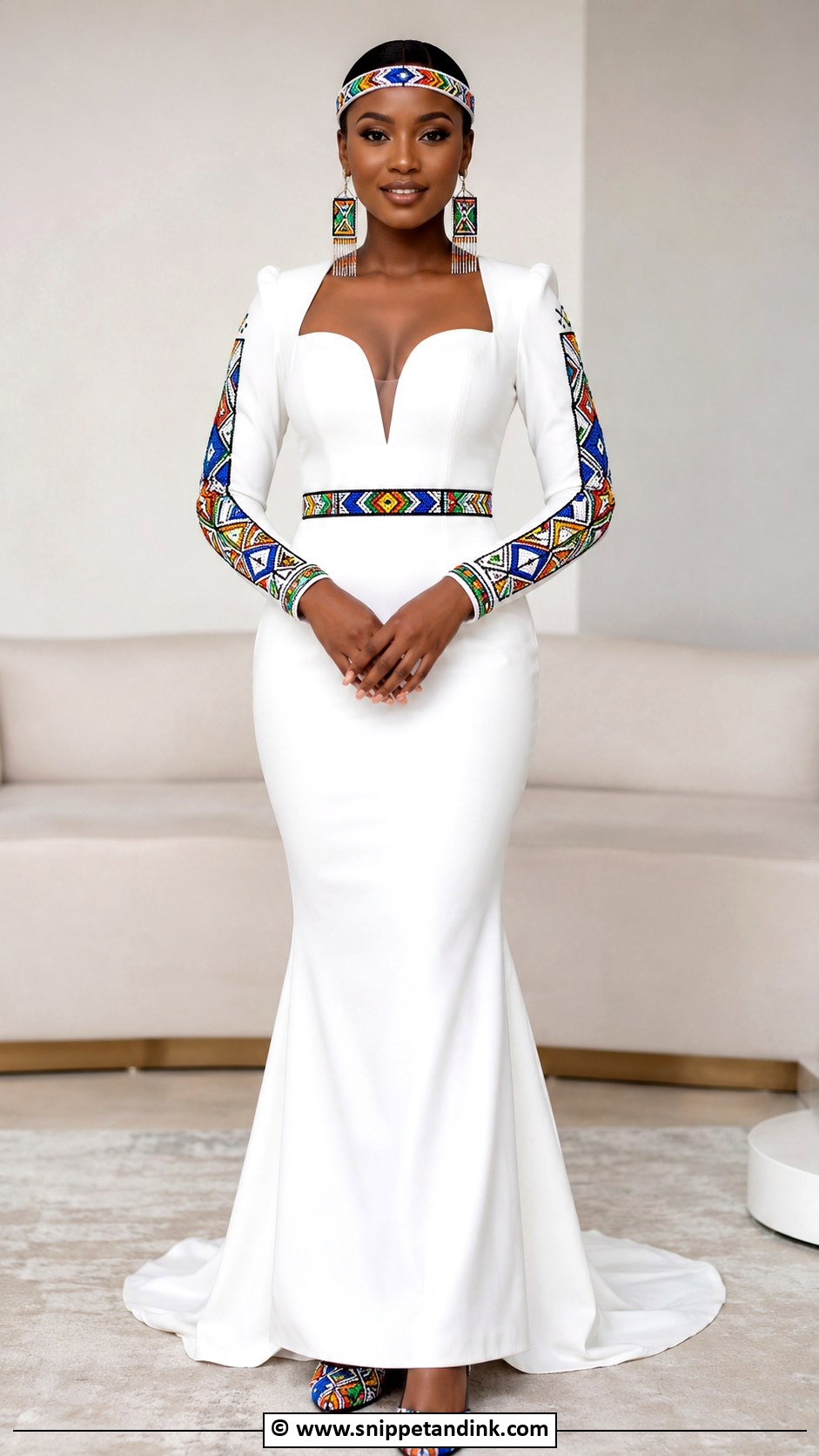
Sleeves give beadwork room to run. A fitted sleeve looks sleek; a slightly flared one feels more ceremonial. You can let the sleeves carry the whole pattern over a clean bodice, or repeat the design at the waist and hem. I check elbow movement carefully on beaded sleeves, because a stiff panel across the inner elbow digs in every time you lift a glass or hug a relative. Pair it with a beaded headband, a smooth updo, structured earrings and closed-toe heels or flats. It suits cooler weather and formal rooms.
8. Ndebele Lace Wedding Dress
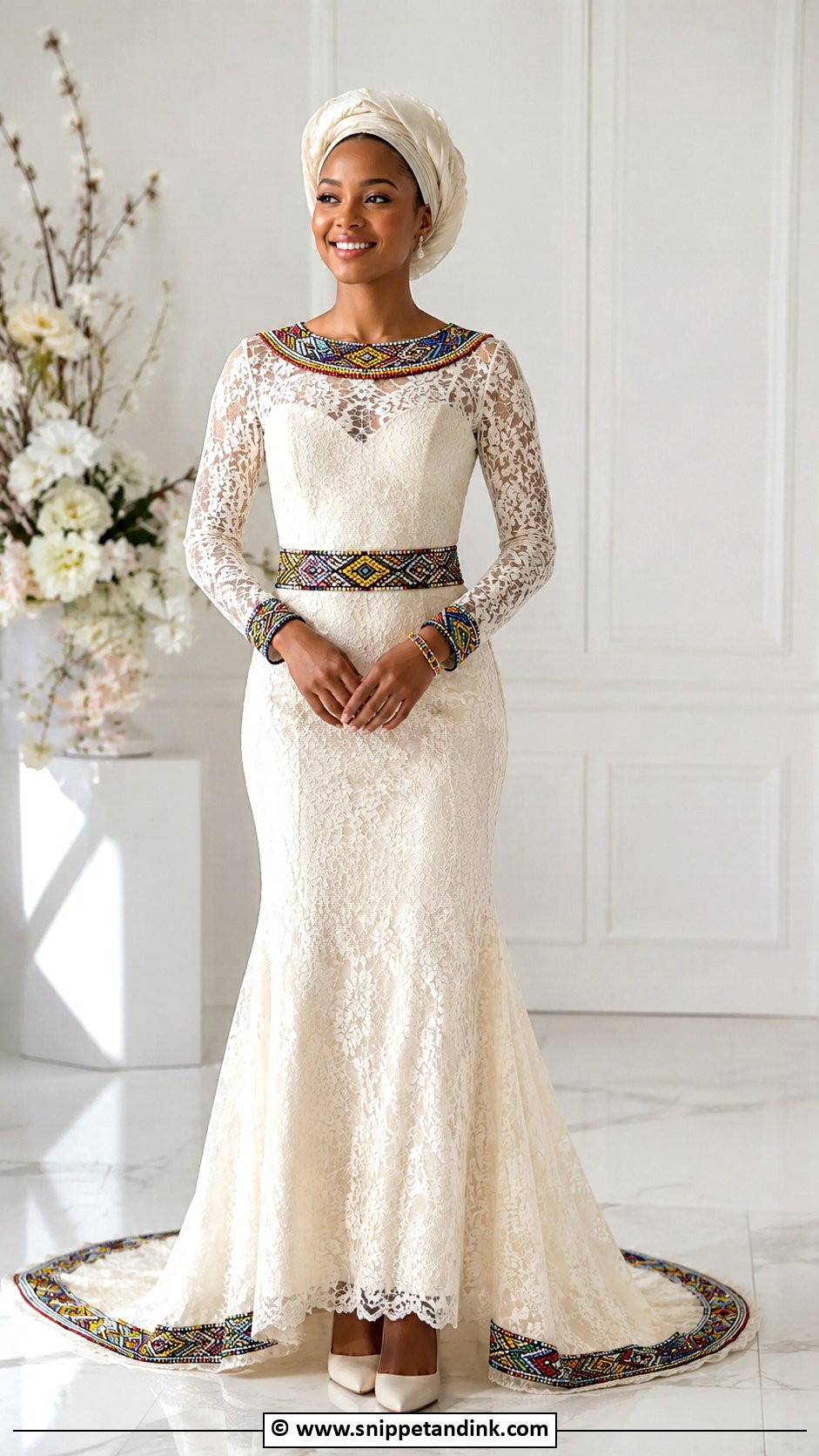
Lace and Ndebele beadwork pull in opposite directions, delicate against graphic, and that tension is the point. Try a lace bodice with a plain skirt and a colourful beaded belt, or lace sleeves with patterned cuffs and neckline trim. White lace is the classic base, but ivory, champagne or soft blush hold bright beads just as well. I’d limit accessories to a beaded necklace, small drops and a bracelet if the lace is busy, with satin pumps or simple sandals.
9. Ndebele Two Piece Wedding Dress
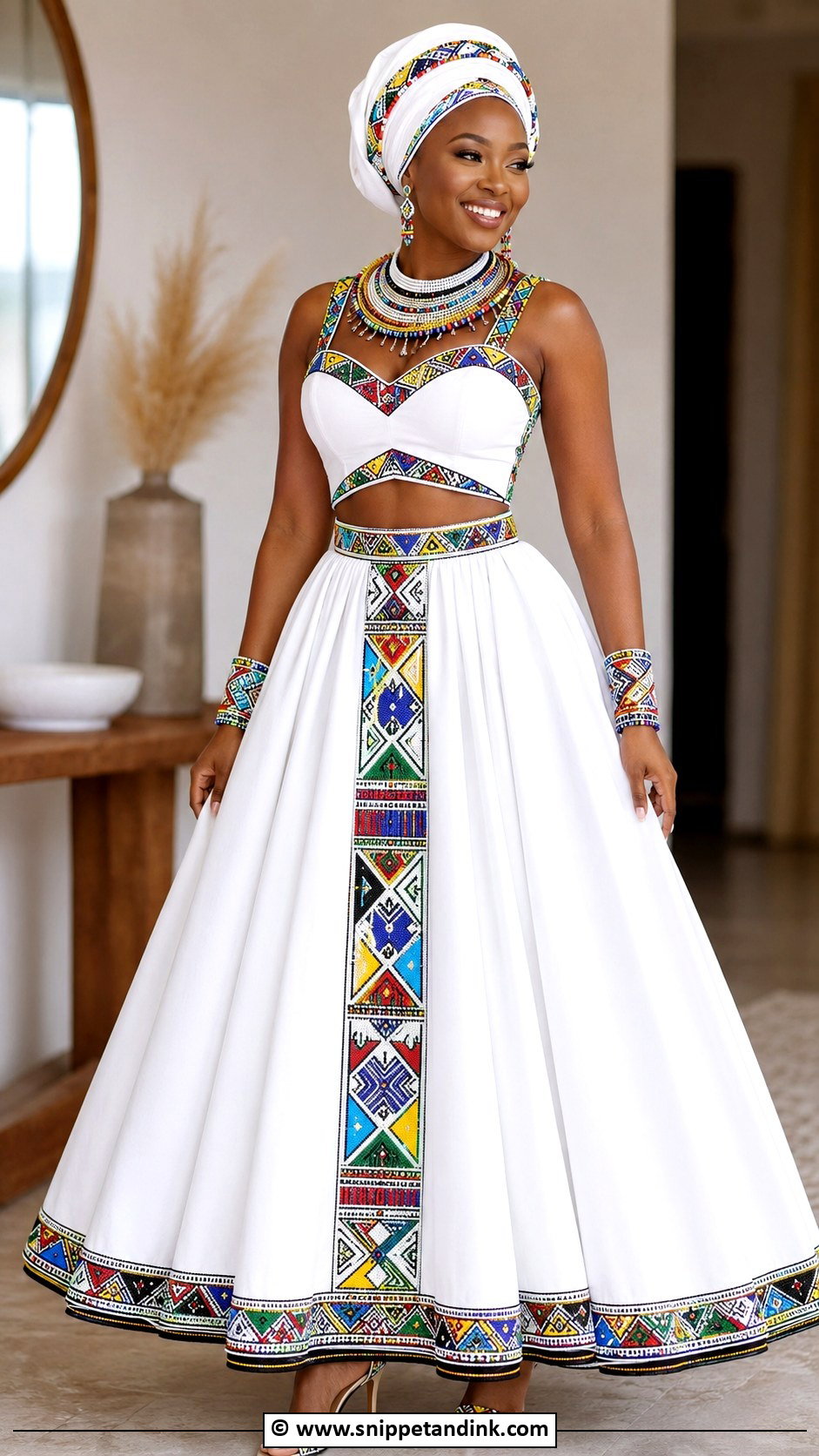
Two pieces are the most practical choice for a long day. The set might be a cropped top with a high-waist skirt, a fitted blouse with a flared skirt, or a structured peplum top with a straight skirt. Repeat the beadwork on both pieces, at the neckline, waist, sleeves and hem, so they read as one outfit. I like this for brides who’ll be dancing and greeting family for hours, since the top can be swapped later in the day. A matching headwrap and beaded cuffs finish it, with heels, wedges or decorated flats to suit the venue.
10. Ndebele Peplum Wedding Dress
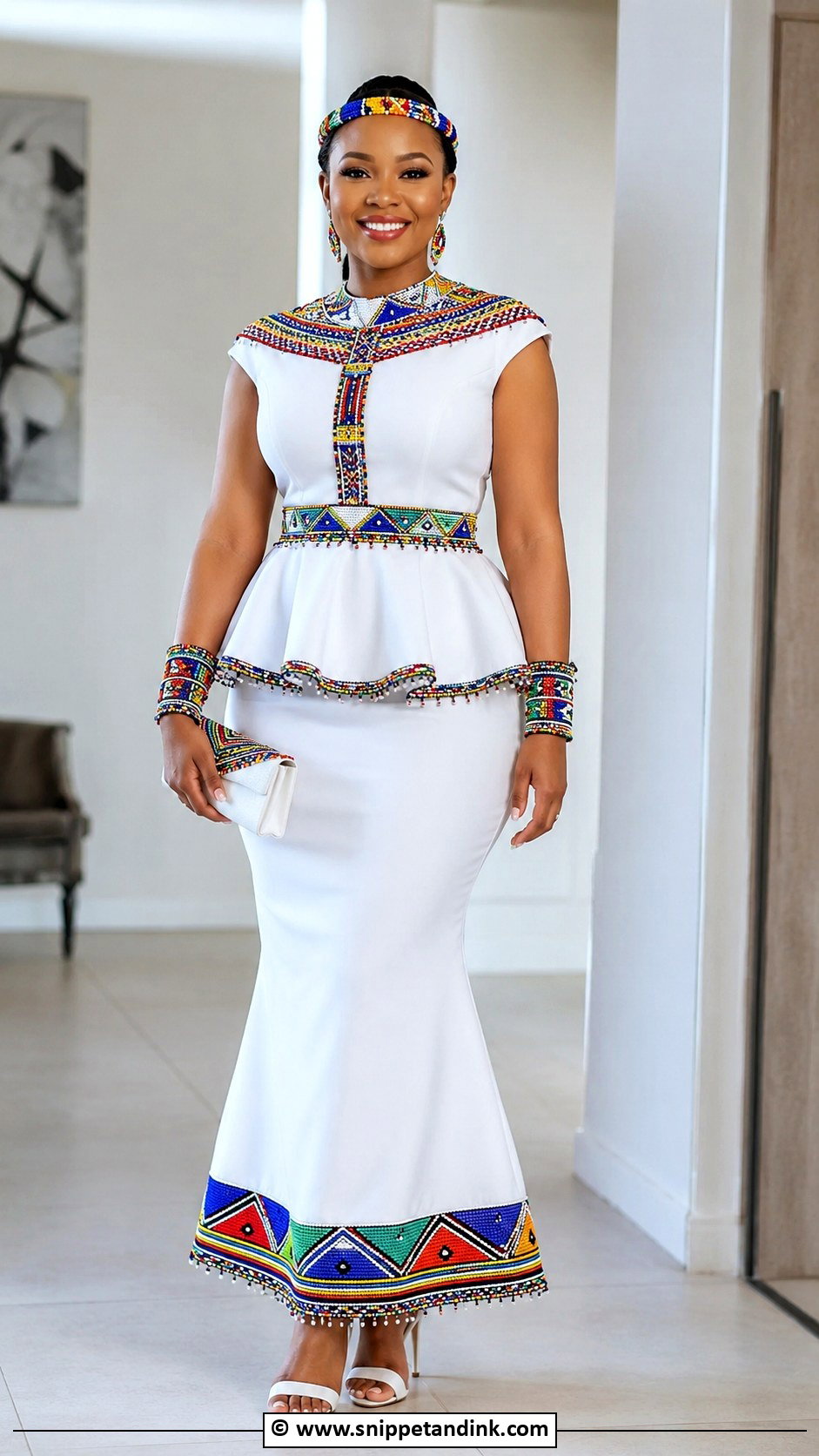
A peplum defines the waist and gives a tailored, formal finish. It can sit over a pencil, mermaid or full skirt. Beadwork around the peplum edge, neckline and sleeves keeps the outfit balanced, and the peplum hides the waistband join neatly, which is why I use it a lot on two-part ceremonial outfits. A white base reads bridal; black gives sharper contrast. A beaded headpiece, a neat clutch and elegant heels complete the styling.
11. Ndebele Cape Wedding Dress
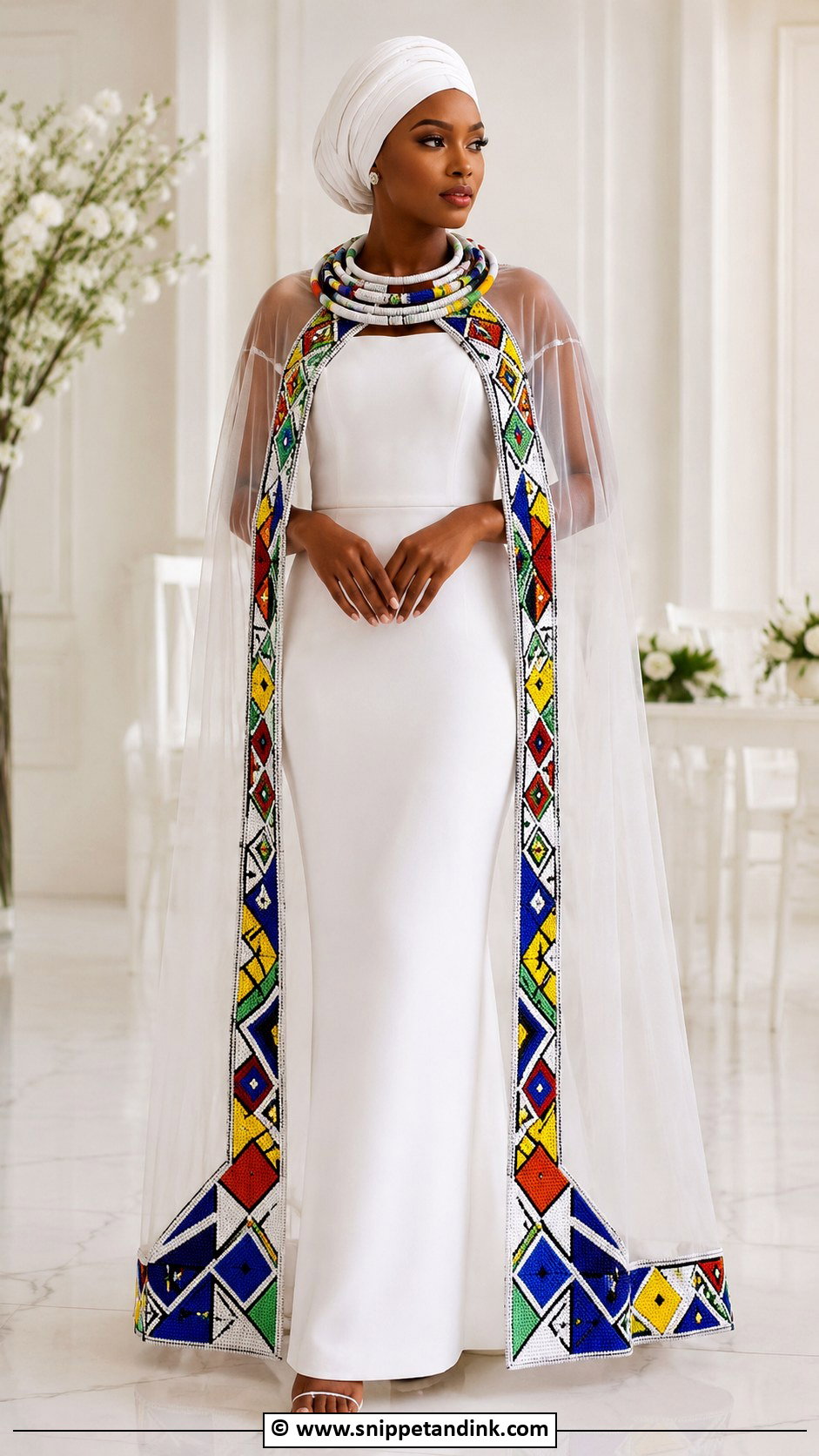
A cape gives you an entrance without a heavy veil. It can be sheer, satin, printed or edged with beadwork, worn over a fitted dress, column gown or simple A-line. Geometric trim across the shoulders and back shows best in full-length photos taken from behind. Beaded cape edges are heavy and swing, so I weight-test them by having the bride turn quickly; anything that slaps against the arms needs a lighter border. Keep the rest calm with a sleek headwrap, one bold necklace and minimal earrings.
12. Ndebele Train Wedding Dress
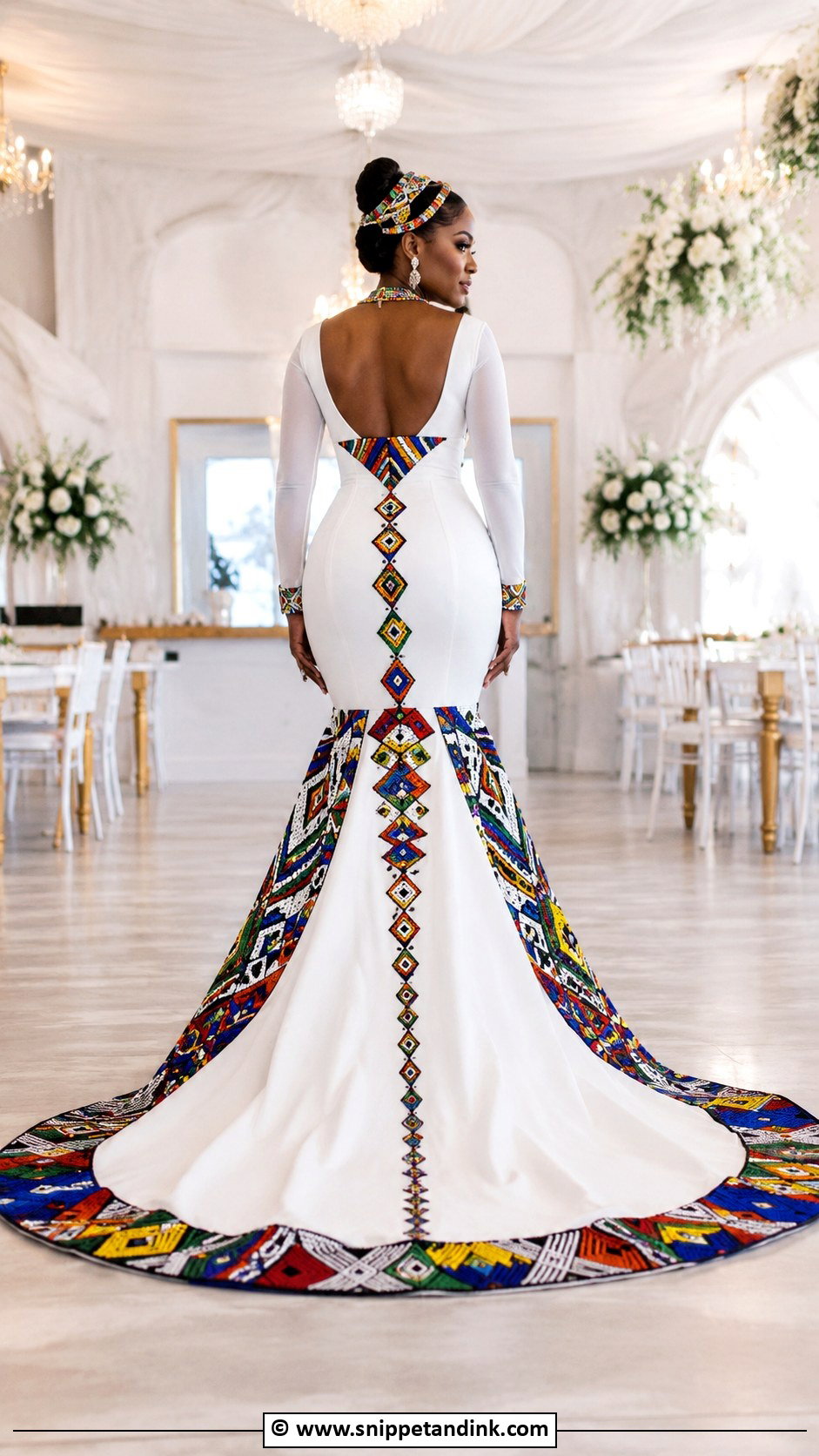
The long train has deep roots in Ndebele bridal dress, and a modern version can be plain white fabric with beaded borders or fully covered in bright geometric pattern. I almost always suggest making it detachable, with a sturdy hook-and-loop or button system, because you’ll want to dance without someone stepping on it. If the train is bold, keep the front of the dress simpler. Add a beaded headpiece, wrist cuffs and clean heels.
13. Ndebele Print Wedding Dress
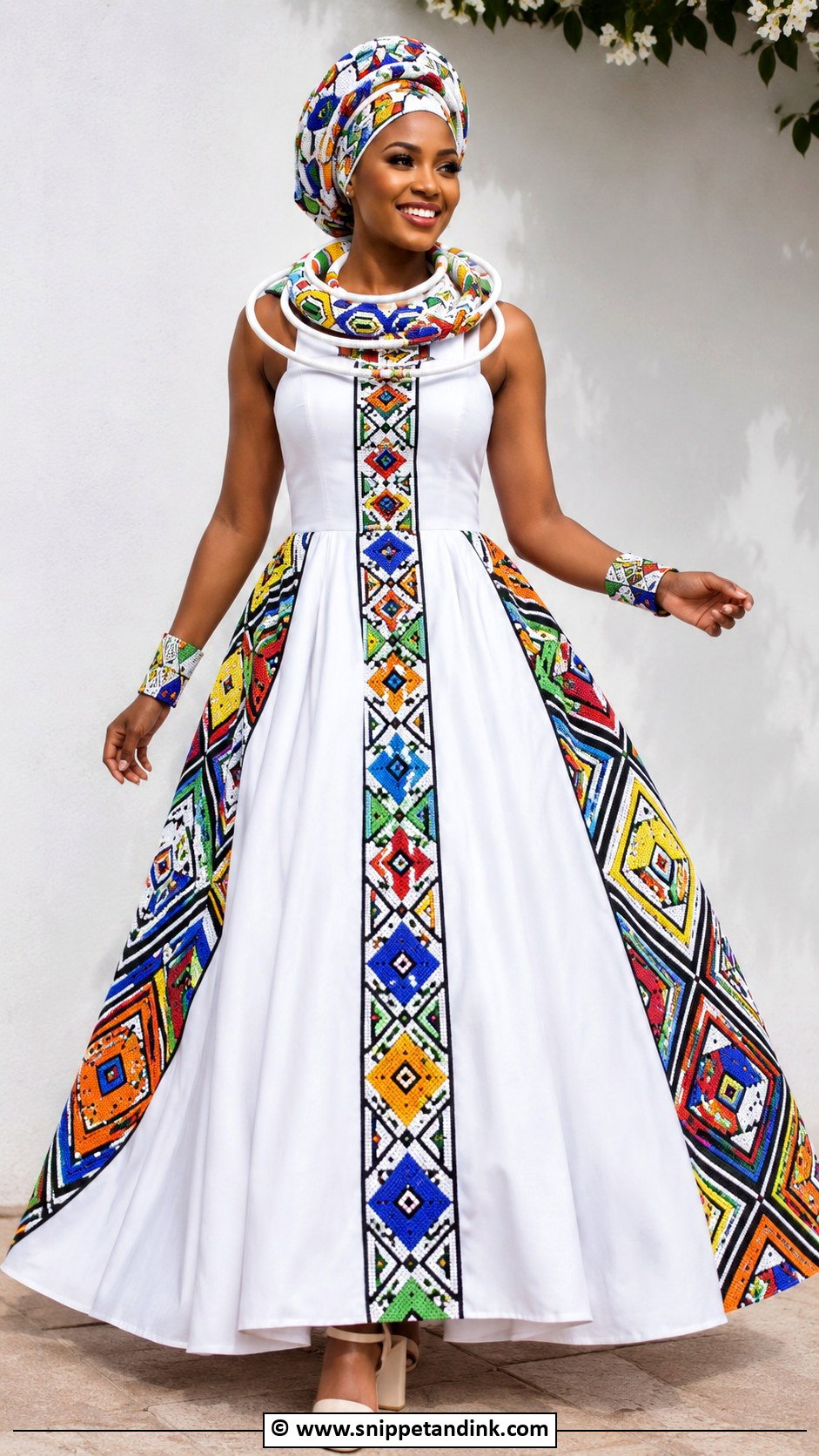
Printed fabric is the quickest way to bring Ndebele geometry into a gown, either across the whole dress or as panels on the bodice, skirt, sleeves or train. Keep the cut simple: an A-line, wrap dress, column gown or high-low skirt with a matching headwrap. I pull beaded jewelry colours directly from the print so nothing fights. One honest note: printed patterns aren’t the same as handmade beadwork, so if the meaning matters to your family, combine the print with at least one beaded piece made by an Ndebele beadworker. Neutral shoes ground it.
14. Ndebele Black Wedding Dress
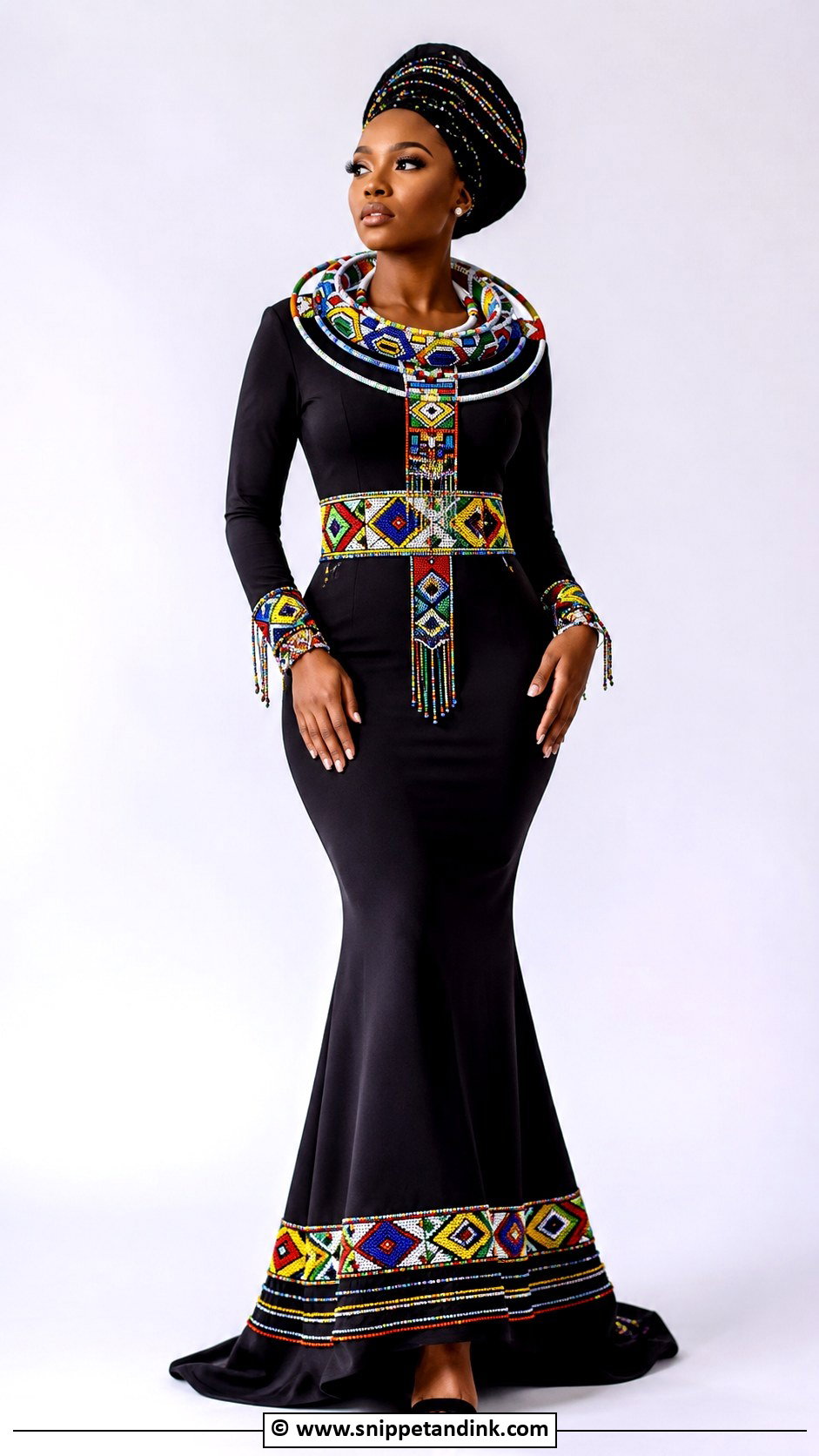
Black makes red, yellow, blue, green and white beadwork look sharper than on any other base. A fitted gown, ball gown or two-piece with colourful trim at the neckline, waist, cuffs and hem all suit it, and a black headwrap with beaded detail pulls everything together. If the neckline is busy, keep the earrings small. Some families read black differently at a wedding, so I always suggest checking with the elders before ordering. Black heels or metallic sandals finish the look.

15. Ndebele Red Wedding Dress
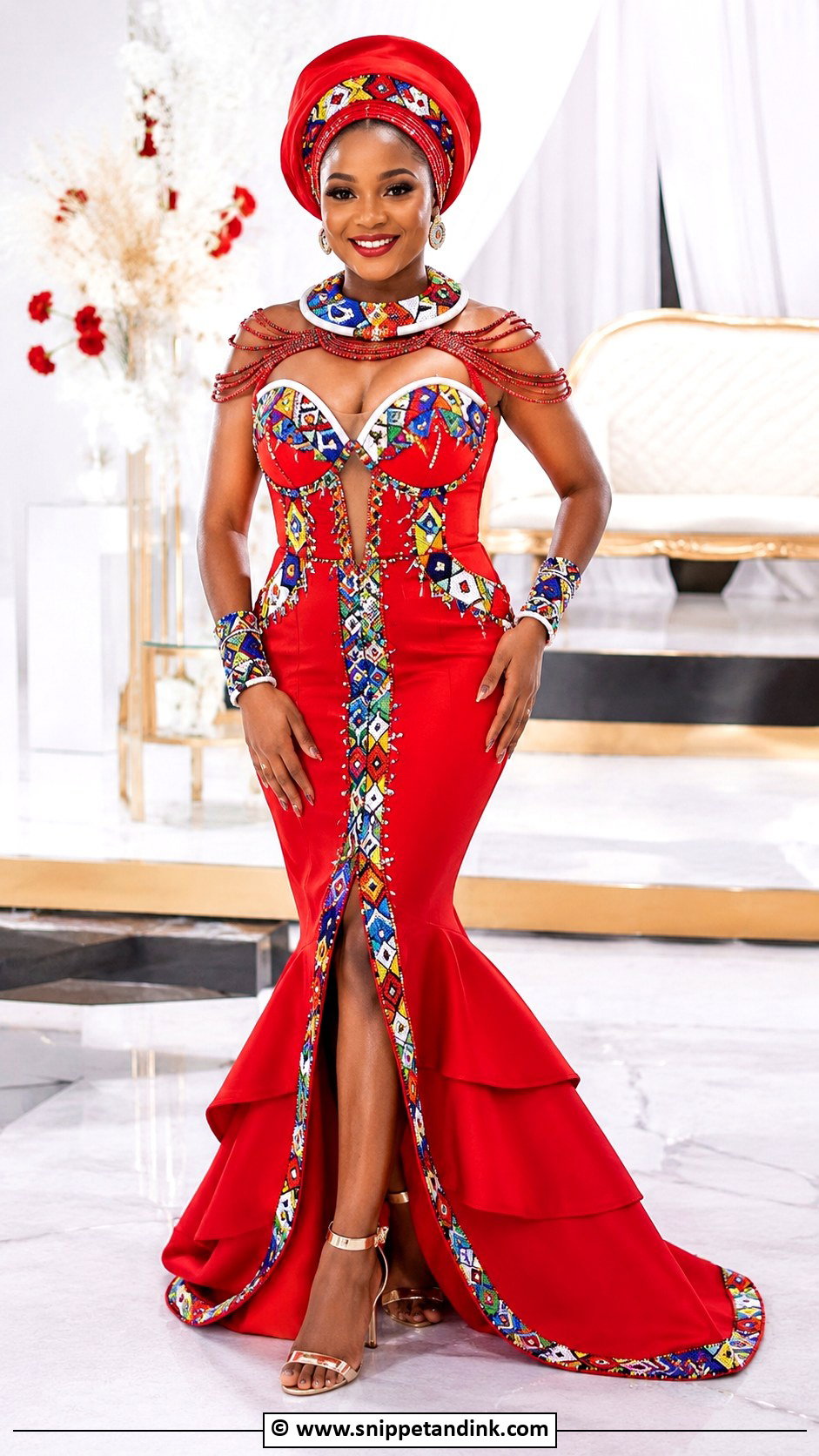
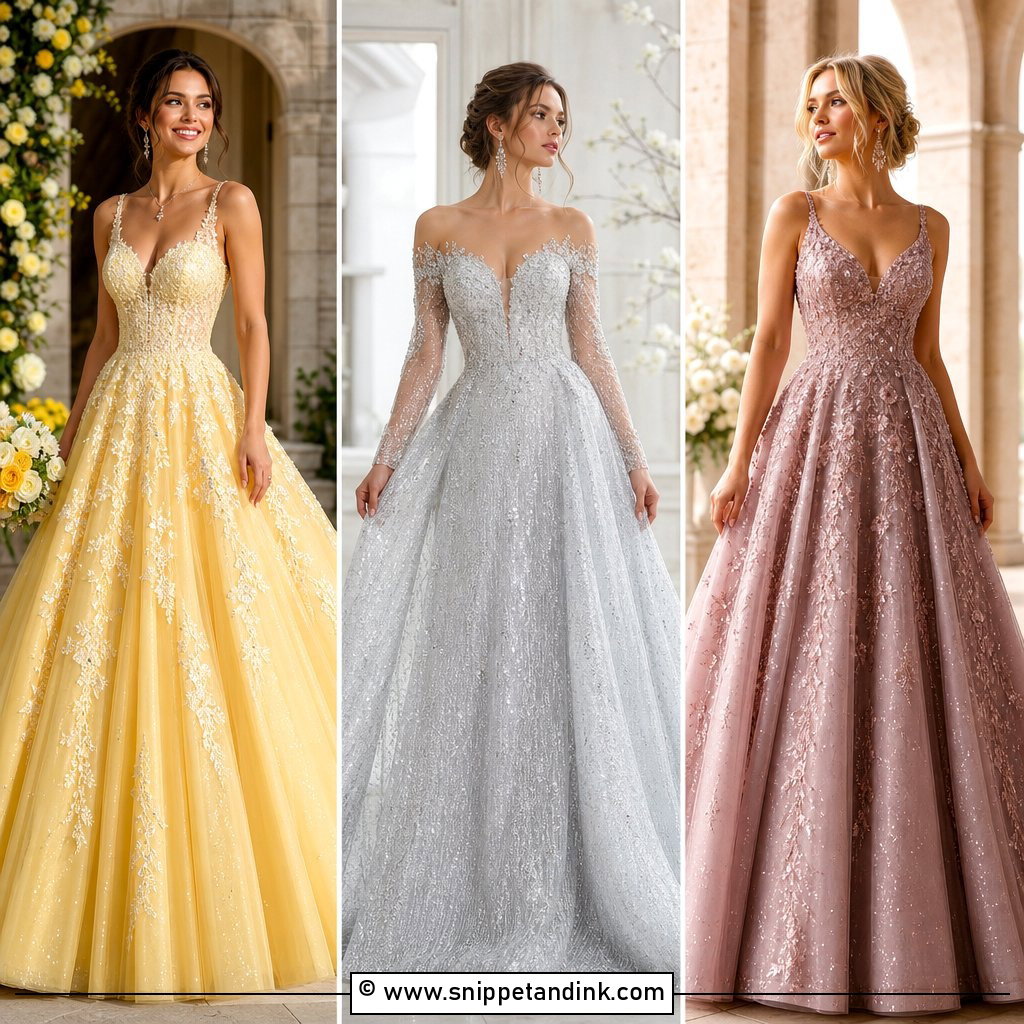
Red is warm and festive, and it sits comfortably with black, white, yellow, blue and green beadwork. Choose a red mermaid, A-line gown or structured two-piece with Ndebele trim across the bodice and hem. A matching red headwrap looks polished; a beaded headband looks more traditional. Gold or black heels suit the colour. With this much colour I ask the makeup artist to keep the lips in the same red family or go neutral, because a clashing pink becomes the first thing people notice in photos.
16. Ndebele Blue Wedding Dress
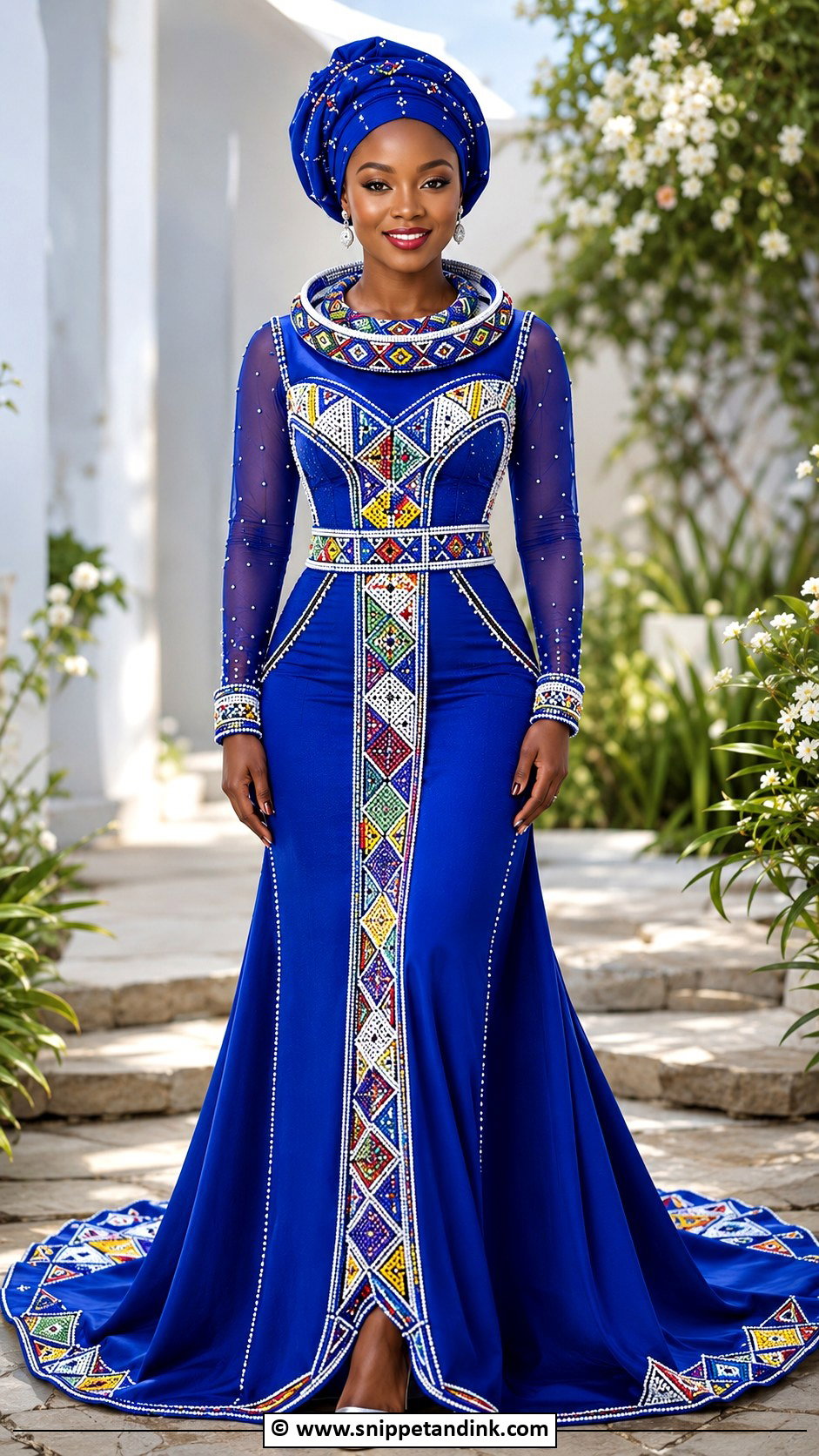
Blue feels fresh and a little unexpected. Deep blue, cobalt and turquoise all carry Ndebele beadwork well. A blue gown with white and yellow geometric accents looks bright and modern; navy with multicolour beading feels more formal. Cobalt is the shade I’d choose for outdoor photos, since it stays saturated against green grass and dry winter veld alike. Pick a fitted dress, cape dress or full skirt for the mood of your ceremony, then add a matching headwrap, beaded collar and silver, white or nude shoes.
17. Ndebele Yellow Wedding Dress
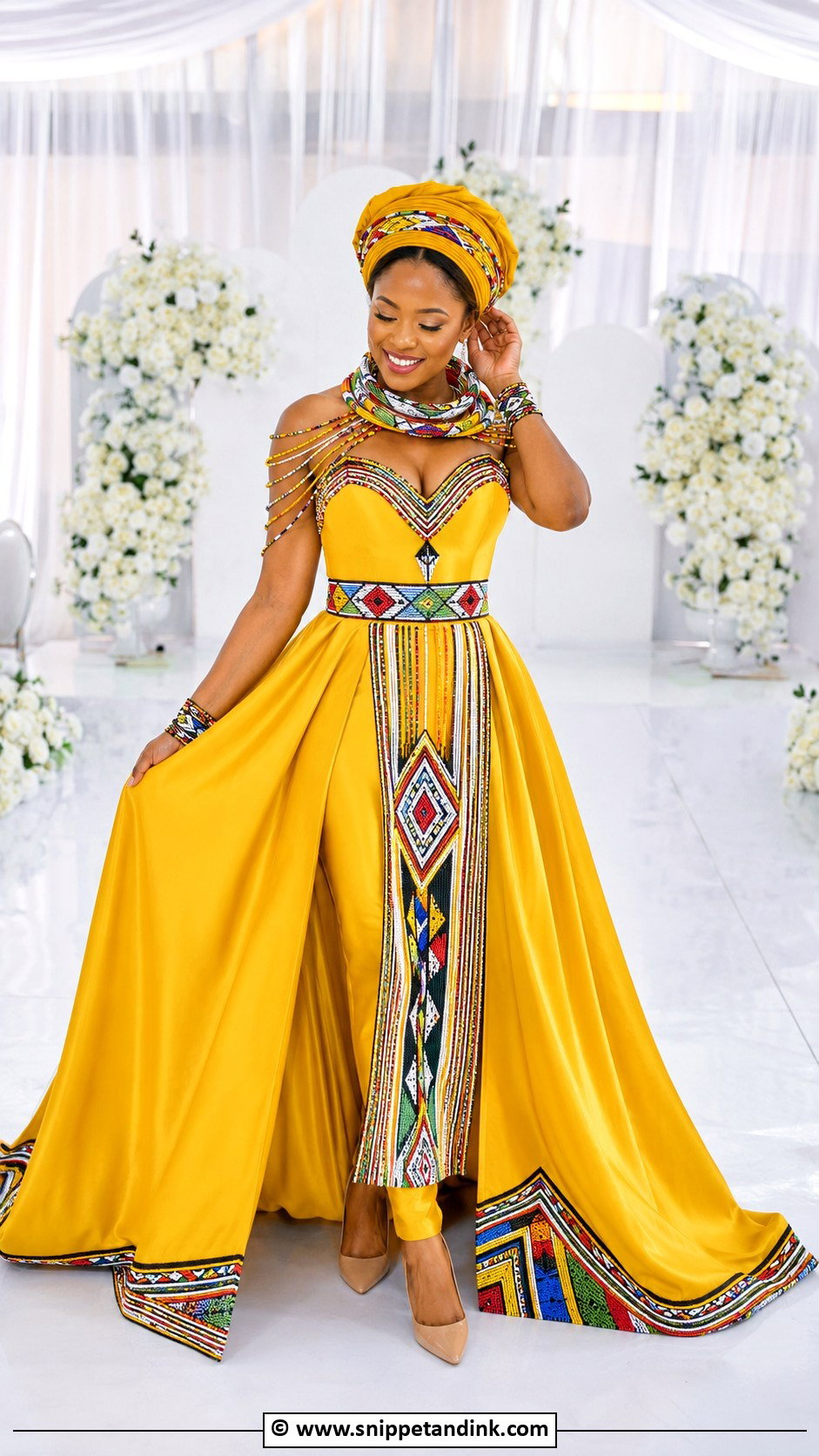
Yellow is pure celebration, and it needs clean shaping to stay bridal. A golden-yellow A-line, fitted dress or peplum outfit with beadwork in black, white, blue, red and green works well. Very bright yellow can wash out lighter skin near the face, so I sometimes keep the bodice deeper gold and let the brightest shade sit in the skirt. A matching headwrap gives a strong outline, a beaded necklace adds tradition, and nude, white or gold shoes keep it polished.
18. Ndebele Green Wedding Dress
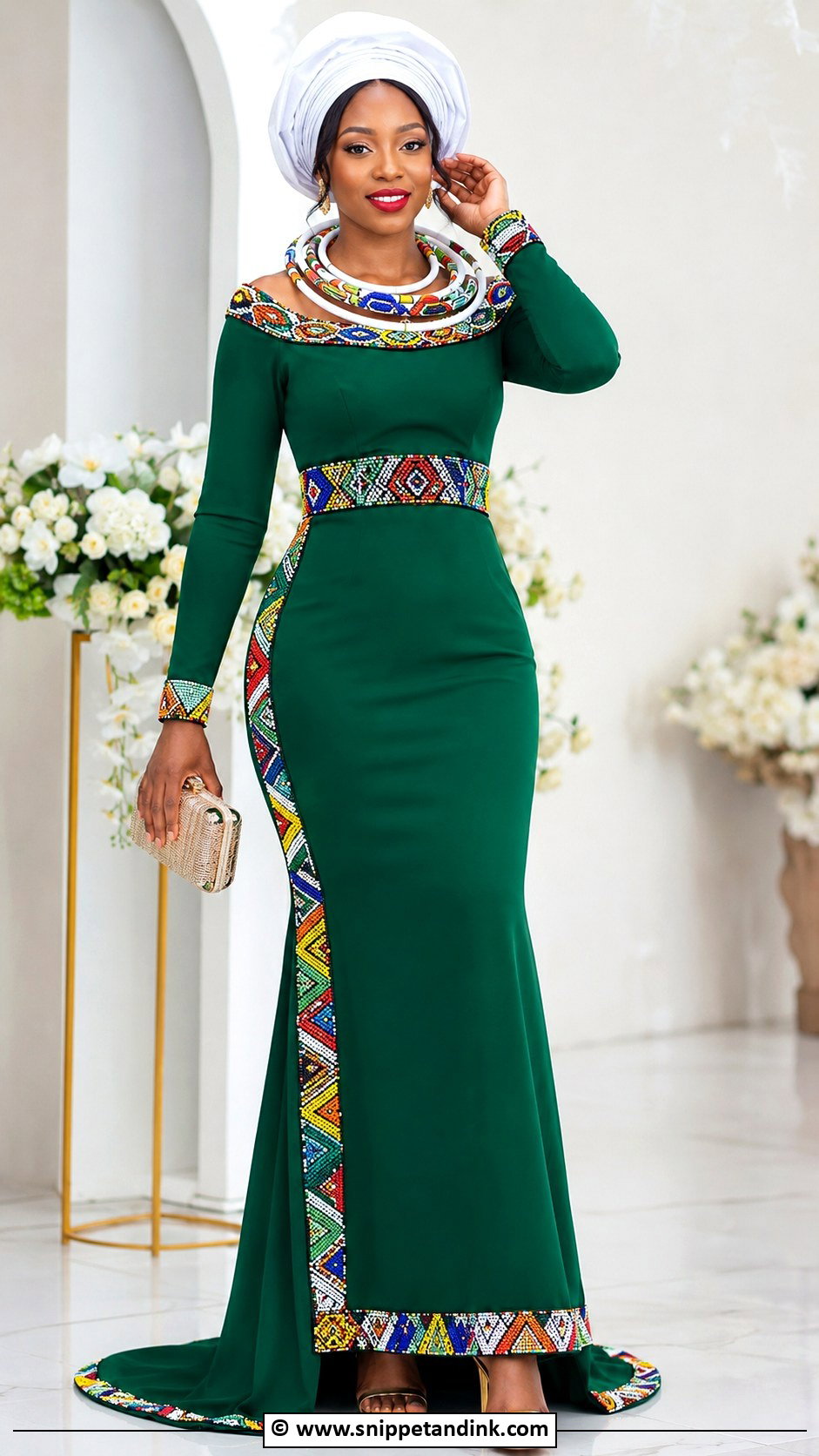
Emerald, forest and grass green all give a rich, grounded base for colourful beads. A fitted green gown with Ndebele trim feels sleek; a full skirt feels ceremonial. Place beadwork around the neckline, waist, cuffs and skirt edge. A green or white headwrap with beaded jewelry ties it together. I choose shoe colour last, after seeing the dress in daylight, since emerald can lean blue and forest green can lean brown. It’s an easy choice if red and white feel too expected.
19. Ndebele Shweshwe Wedding Dress
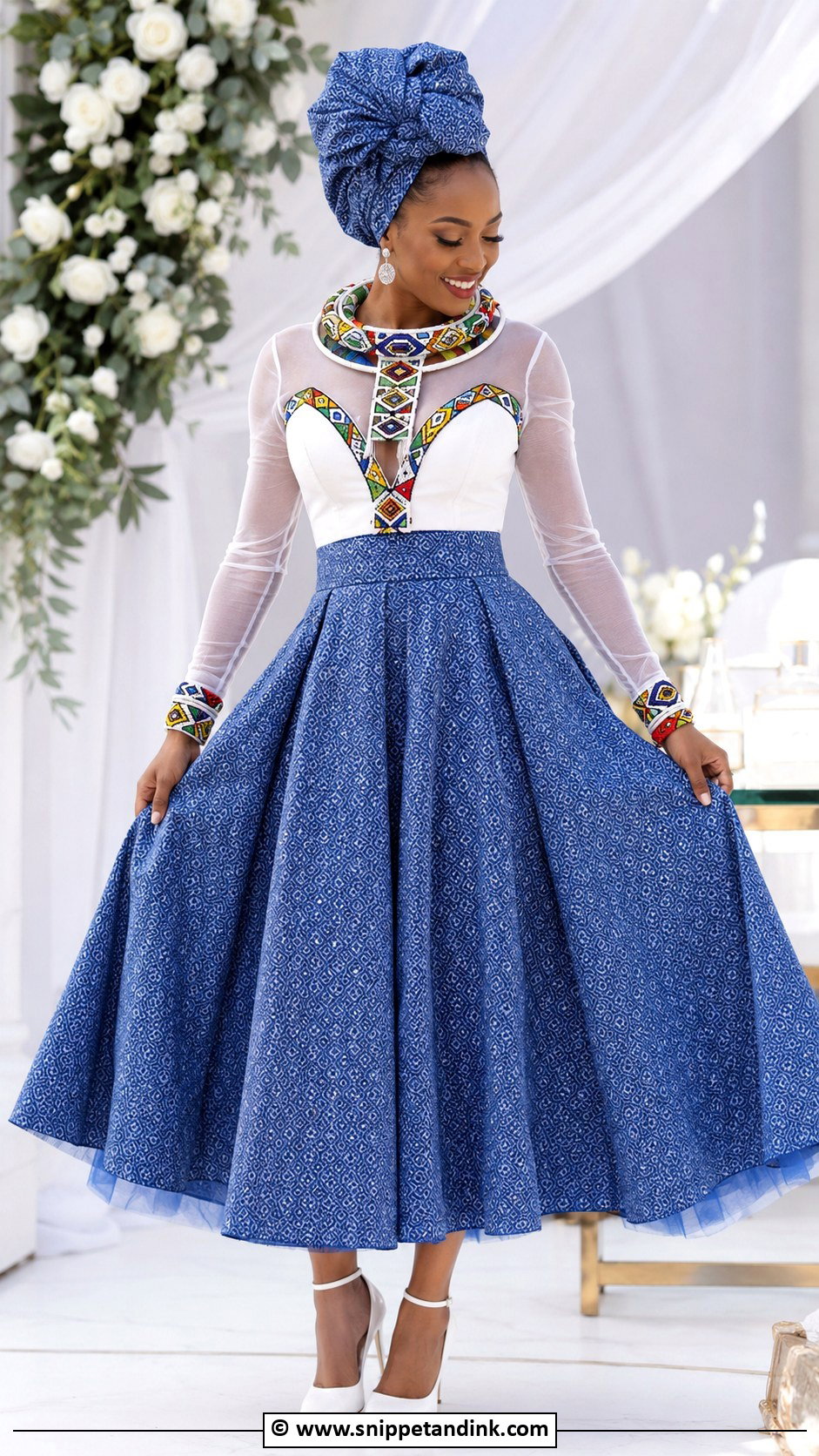
A Ndebele Shweshwe wedding dress mixes South Africa’s printed indigo cotton with Ndebele beadwork. Shweshwe can form the skirt, sleeves, peplum or a detachable train, while the beads bring texture to the bodice. Blue, brown, black, red and green prints all work. Shweshwe arrives stiff and can shrink slightly on its first wash, so I ask the dressmaker to pre-wash it before cutting. A matching headwrap, beaded necklace and clean heels finish it; keep the shape simple so print and beads don’t compete.

20. Ndebele Makoti Wedding Dress
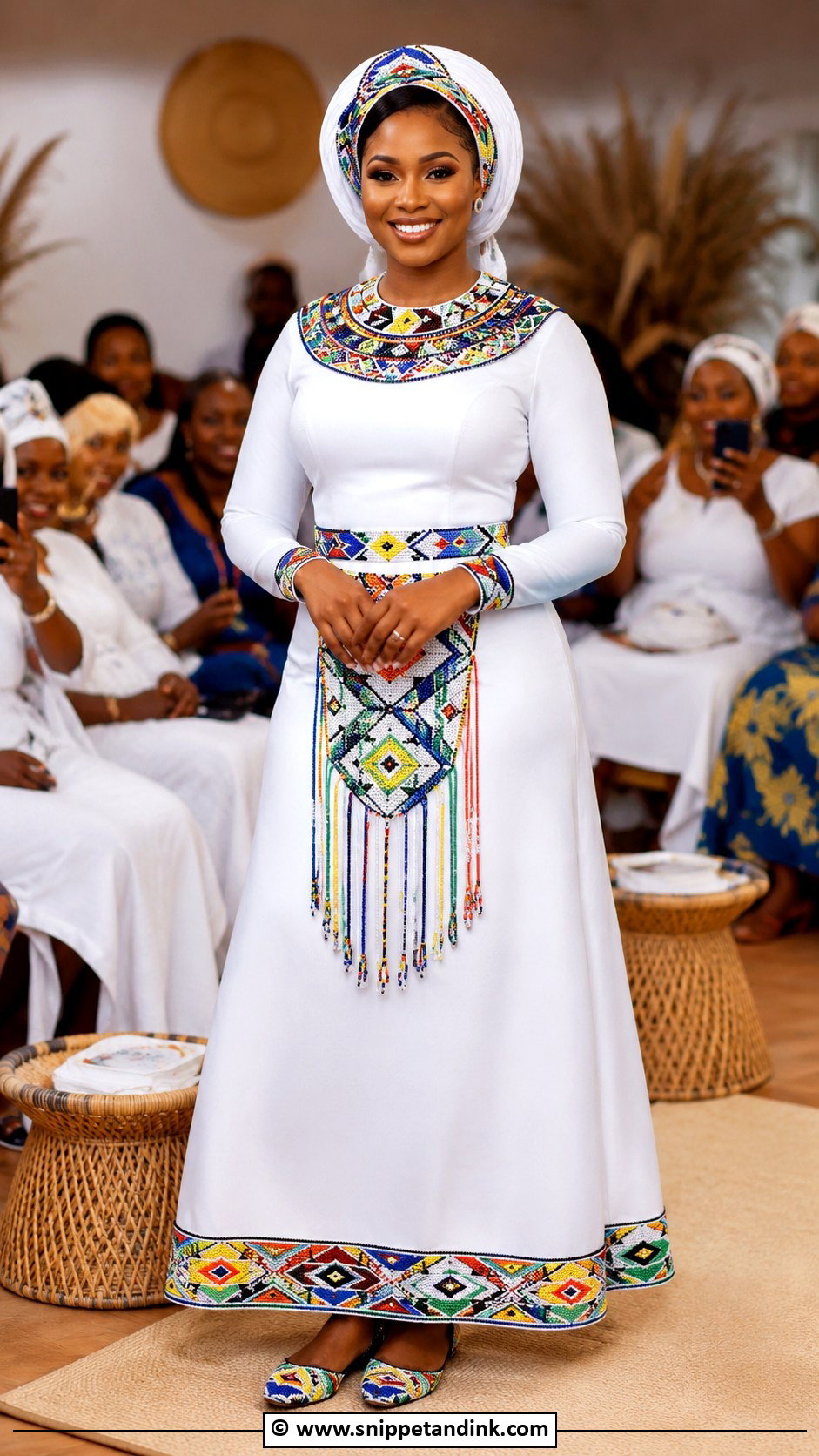
The makoti outfit is about respect and practicality. A modest shape works best: a long skirt with a matching top, a wrap dress or a tailored gown with sleeves. Beadwork at the neckline, wrists, waist and hem gives it depth. A headwrap, an apron-inspired beaded piece and comfortable shoes complete it. A makoti spends much of the day moving, serving, greeting relatives and taking part in rituals, so I fit this outfit for kneeling and bending, not just standing. It should feel dignified and easy to wear from morning to night.
21. Ndebele Plus Size Wedding Dress
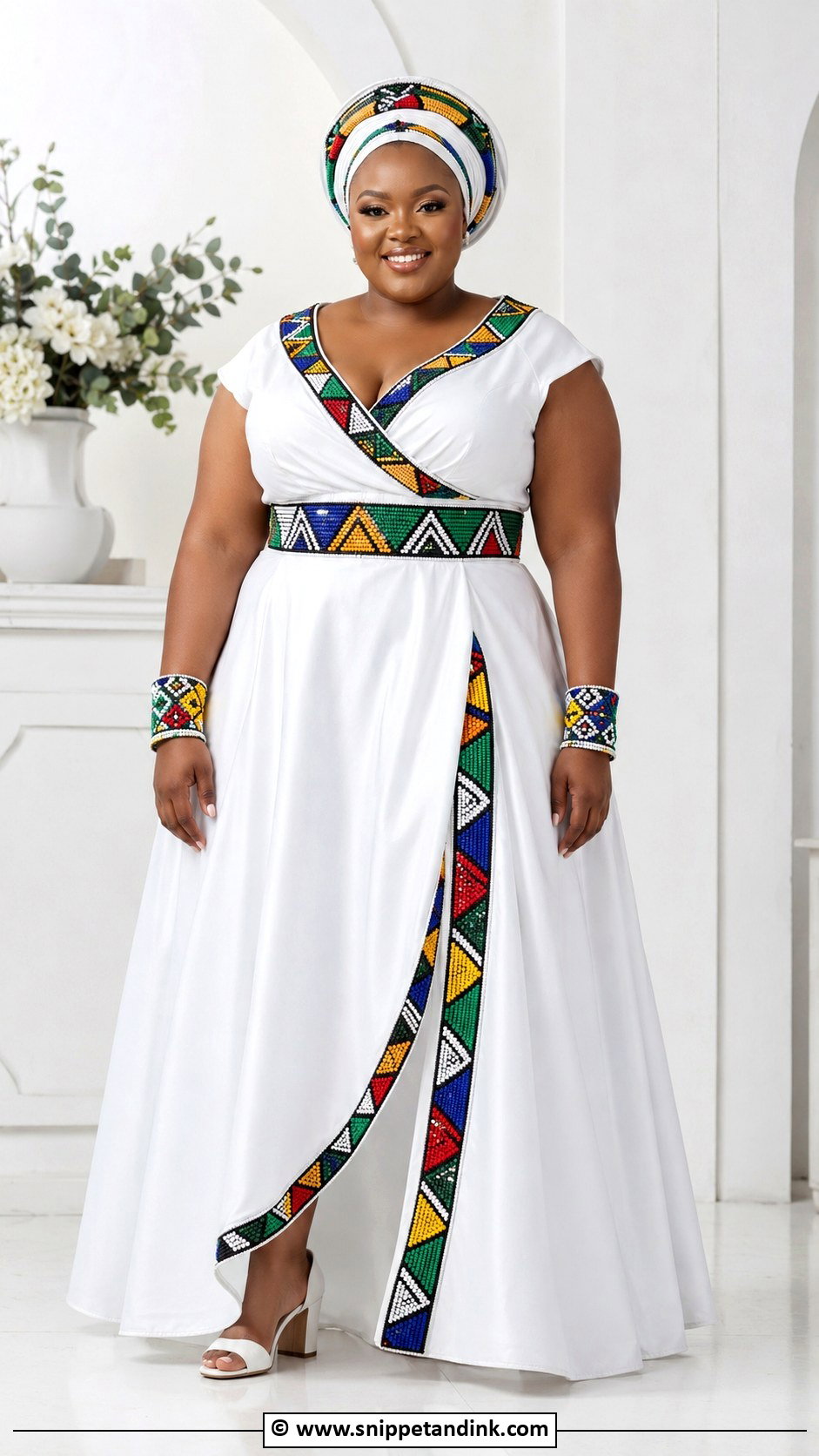
For plus-size brides, the beadwork becomes a tool for shaping. Supportive tailoring, smooth lining and a silhouette you can move in come first; A-lines, fit-and-flare, wrap bodices, peplums and structured columns all work. I place the strongest beaded panel where the bride wants the eye to go, whether that’s the neckline, the waist or the hem. A wide beaded belt defines the waist without squeezing. Block heels or embellished flats, a matching headwrap and balanced jewelry finish it.
22. Ndebele Simple Wedding Dress
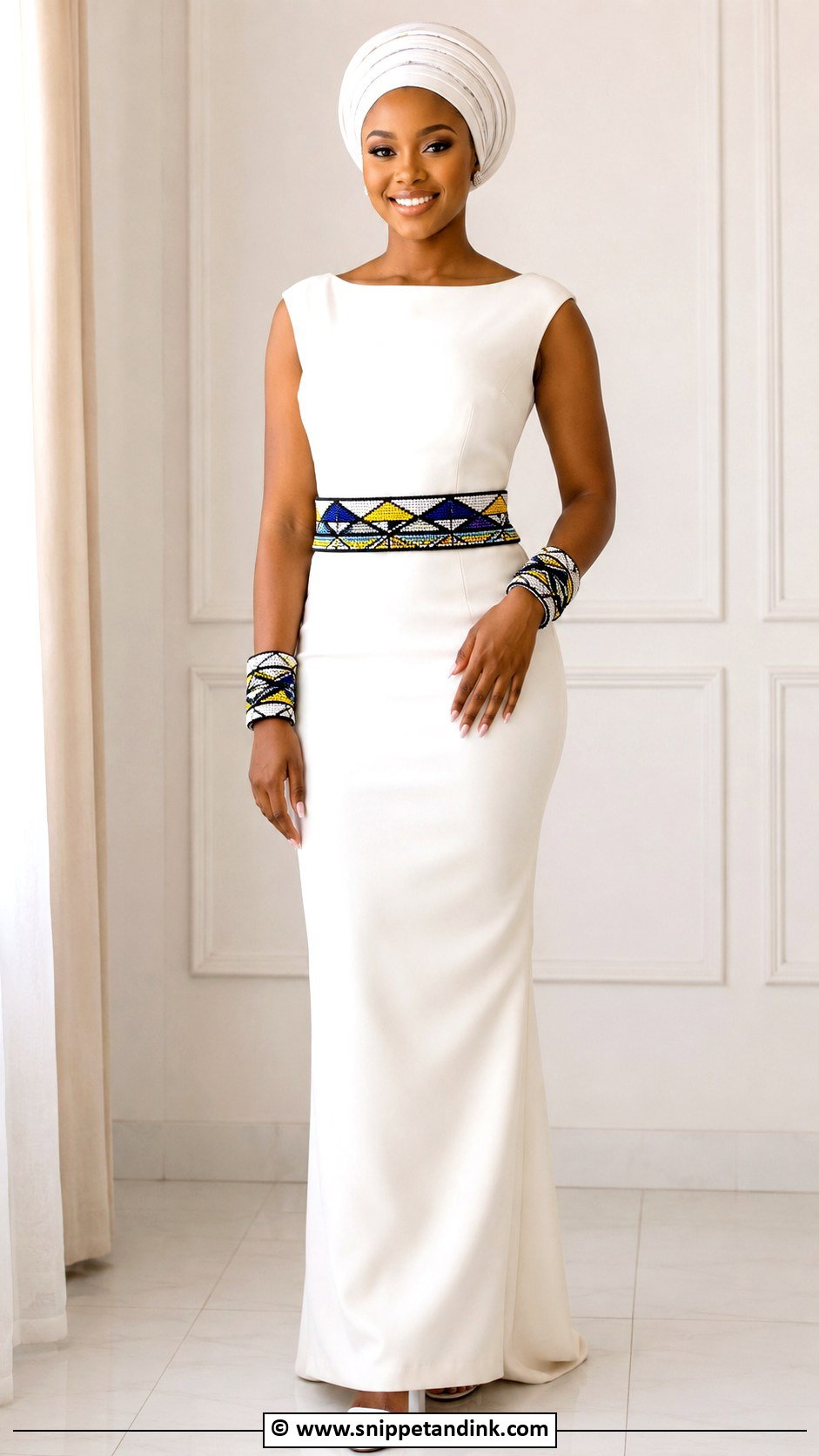
Restraint is the whole idea. Start with a plain white, cream, black or single-colour gown and add just one or two strong Ndebele elements: a beaded collar, a patterned belt, decorated cuffs or a geometric border at the hem. Each detail gets space. I like this version for civil ceremonies and small weddings, and because detachable beaded pieces can be worn again at family events later. A neat headwrap, small earrings and comfortable heels finish it.
23. Ndebele Modern Wedding Dress
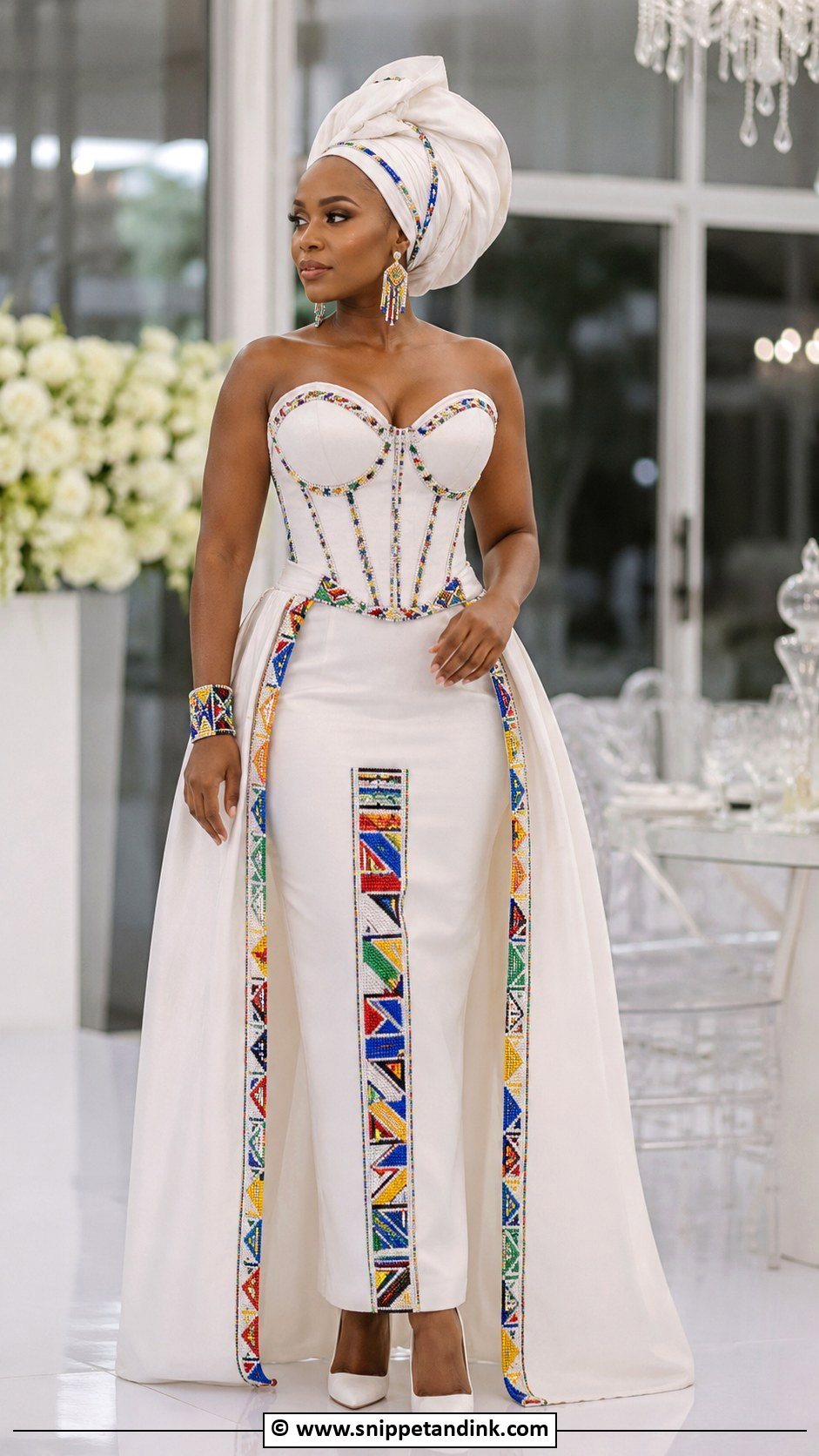
Modern tailoring meets traditional pattern here: clean corset bodices, sleek skirts, detachable overskirts, asymmetric necklines, cape sleeves, or structured trains finished with beadwork. Balance is the hard part. When the shape gets very fashion-forward, I keep the beadwork recognisably Ndebele, with proper geometric placement, so the outfit reads as heritage and not costume. A white gown with colourful panels looks fresh; black or cobalt looks bolder. Finish with a sculpted headwrap, beaded earrings and simple heels.
24. Ndebele Reception Wedding Dress
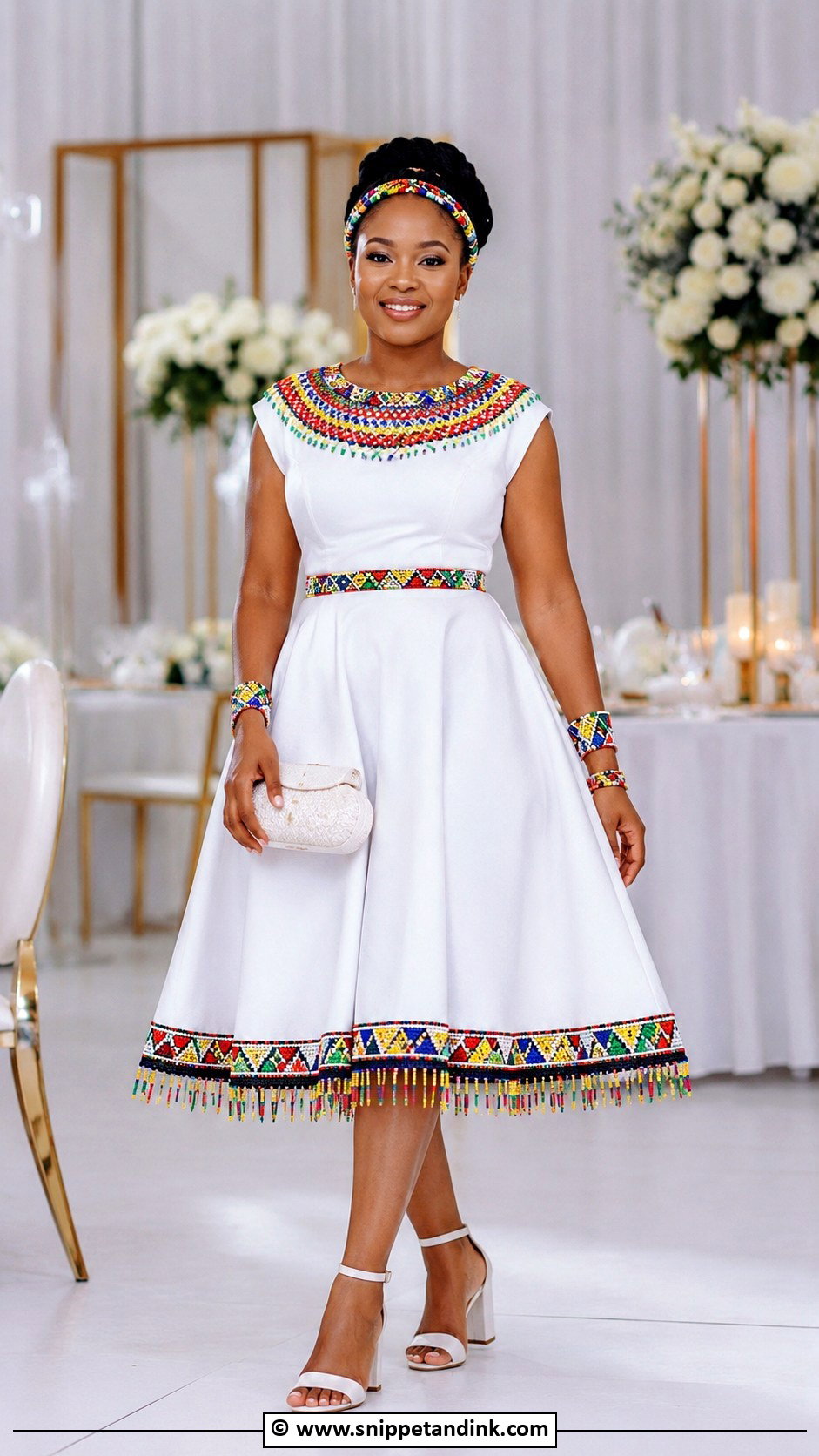
By the reception, most brides want less weight. If your ceremony outfit is heavy, change into a shorter train, slimmer skirt or two-piece. A knee-length, midi or fitted long dress with beadwork still reads bridal and lets you dance. I plan the change so it takes no more than a short break, with someone ready to fold the ceremony beadwork flat rather than tossing it over a chair. Add a beaded belt, headband, bracelets and comfortable block heels or flats. A brighter colour makes a fun second look.


25. Ndebele Bride And Groom Outfit
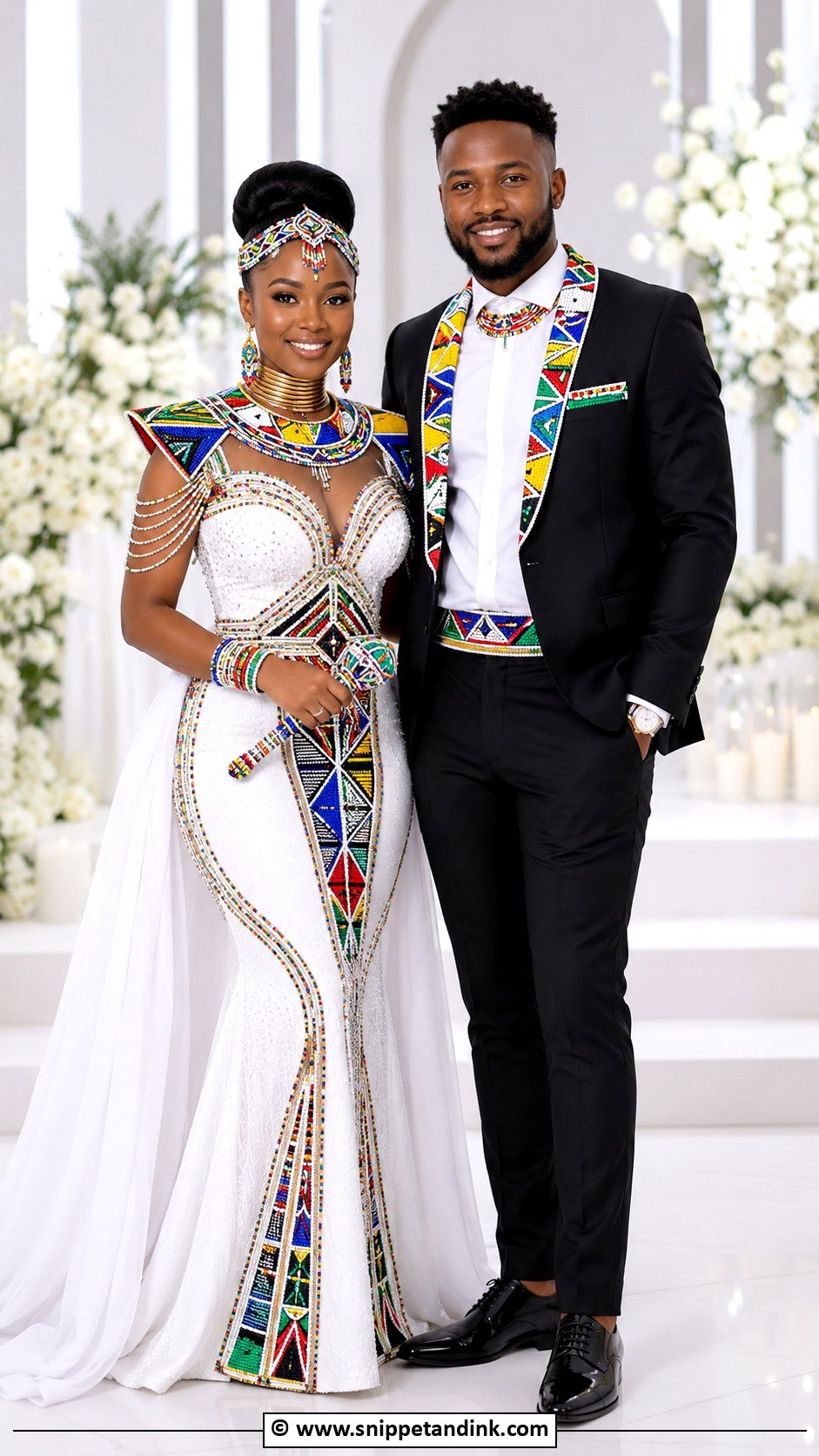
Couples look strongest when they coordinate without matching exactly. The bride wears the beaded gown, patterned skirt or modern dress; the groom picks up the theme with a print jacket, beaded collar or trim on a shirt and trousers. Agree on one shared palette, such as white with multicolour beads, black with bold panels or blue with yellow accents. I keep the groom’s beadwork to one or two places so the bride stays clearly the focus. Matching cuffs or headpieces tie the pair together in photos.
Getting Hand Beadwork onto a Gown Without Damage
Hand beadwork is slow, so plan it first. A collar or cuffs can take weeks; a full panel or train takes much longer. I give the beadworker fabric swatches from the gown before she chooses bead colours, because white beads beside an ivory dress can look grey, and the reverse.
What I ask the dressmaker to build in
- A firm underlining behind every beaded panel, so the weight doesn’t drag the fabric out of shape.
- Hooks, snaps or a sewn-on tape so heavy panels can come off before the gown is cleaned.
- A smooth lining behind beads that sit against bare skin at the underarm or neck.
- A final fitting with every beaded piece attached, including the headpiece and rings.
After the wedding, store beadwork flat in acid-free tissue and never on a hanger. Hanging slowly stretches the threads, and long beaded trains in particular can sag out of shape. Keep pieces out of direct sun so the colours don’t fade, and if they’re family heirlooms, return them clean and folded the way they came.
Beads, Fit and Family Approval Make the Outfit
The strongest Ndebele bridal outfits feel personal and are planned piece by piece: the shape, where the beads sit, the headpiece, the shoes and how you’ll move through each ceremony. Get those right and the outfit is easier to wear and reads clearly in photos. Above all, choose a design your family recognises and you feel proud to wear, whether that’s a white gown with beaded trim, a bold print or a full traditional set.
You'll Like These Ideas:







Leave a Reply